

It didn’t just fly. It thundered. The Antonov An-22 was a 176,000-pound Cold War workhorse whose unmistakable sound echoed for 60 years.
Cargo planes have an unmistakable sound. Seasoned avgeeks can identify a plane just by the sound it makes as it’s flying overhead. The original C-5 was unique with its TF-39s screaming. The C-133 had a distinctive whine. The C-17’s aggressive roar from its P&W F-117 engines lets you know it’s going to stop in less than 2,000 feet once it touches down. And the C-130’s four fans of freedom make an unmistakable sound that has inspired generations for over 70 years!
But there’s another, lesser-known turboprop whose sound was also unmistakable. It’s the Antonov An-22.
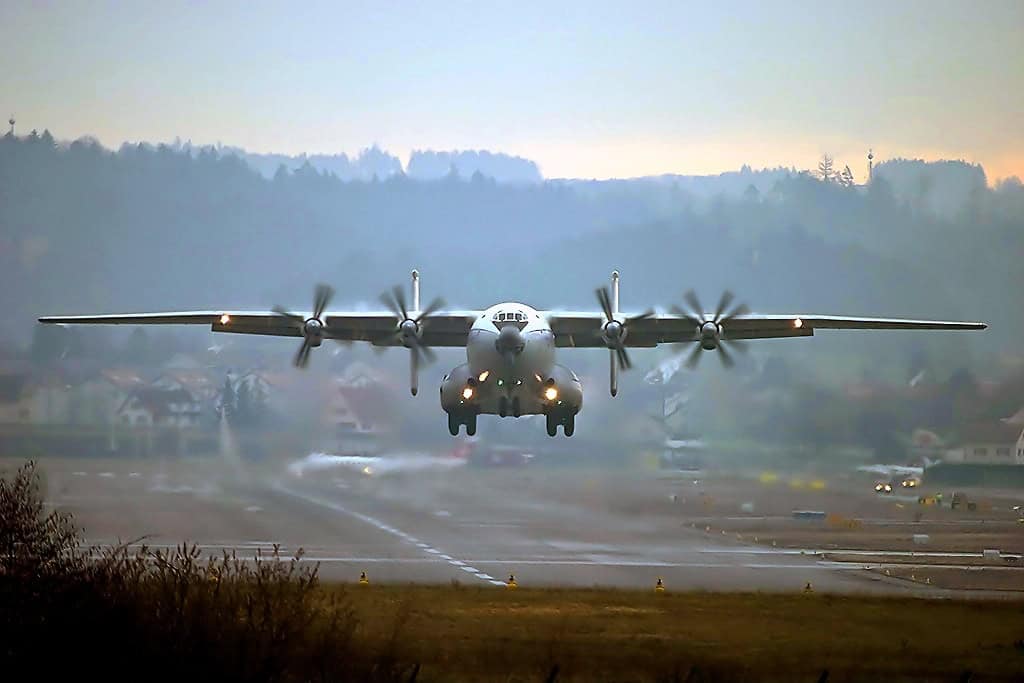
The An-22 first flew on 27 February 1965. It was designed as a strategic airlifter capable of landing on short, austere runways throughout the Soviet Union. The plane required a crew of between 5 to 8. Up front, the aircraft was fully pressurized and could carry up to 28 passengers. The aft compartment was only partially pressurized.
The An-22 was powered by four turboprop engines, each with two counter-rotating props. A total of 68 An-22s were built between 1965 and 1976.
By the late 2010s, the Antonov An-22 was more of a legend than a common sight. In Russia, only a few were still listed with the 76th Military Transport Air Squadron in Tver. Officially, there were six planes, but only about half could actually fly. Still, there was discussion about keeping them in service into the 2030s.
Antonov Airlines in Ukraine kept one civilian An-22 flying until 2020. This plane, registered as UR-09307, was the last commercial connection to the An-22’s Cold War roots. In 2022, it was damaged during the early days of Russia’s invasion of Ukraine, ending its role as the final civilian operator.
By mid-2024, it seemed Russia had retired the An-22 as well. Reports showed the remaining planes were no longer flying, and one, RF-09309, was sent to Yekaterinburg to be put on display instead of being readied for more flights.
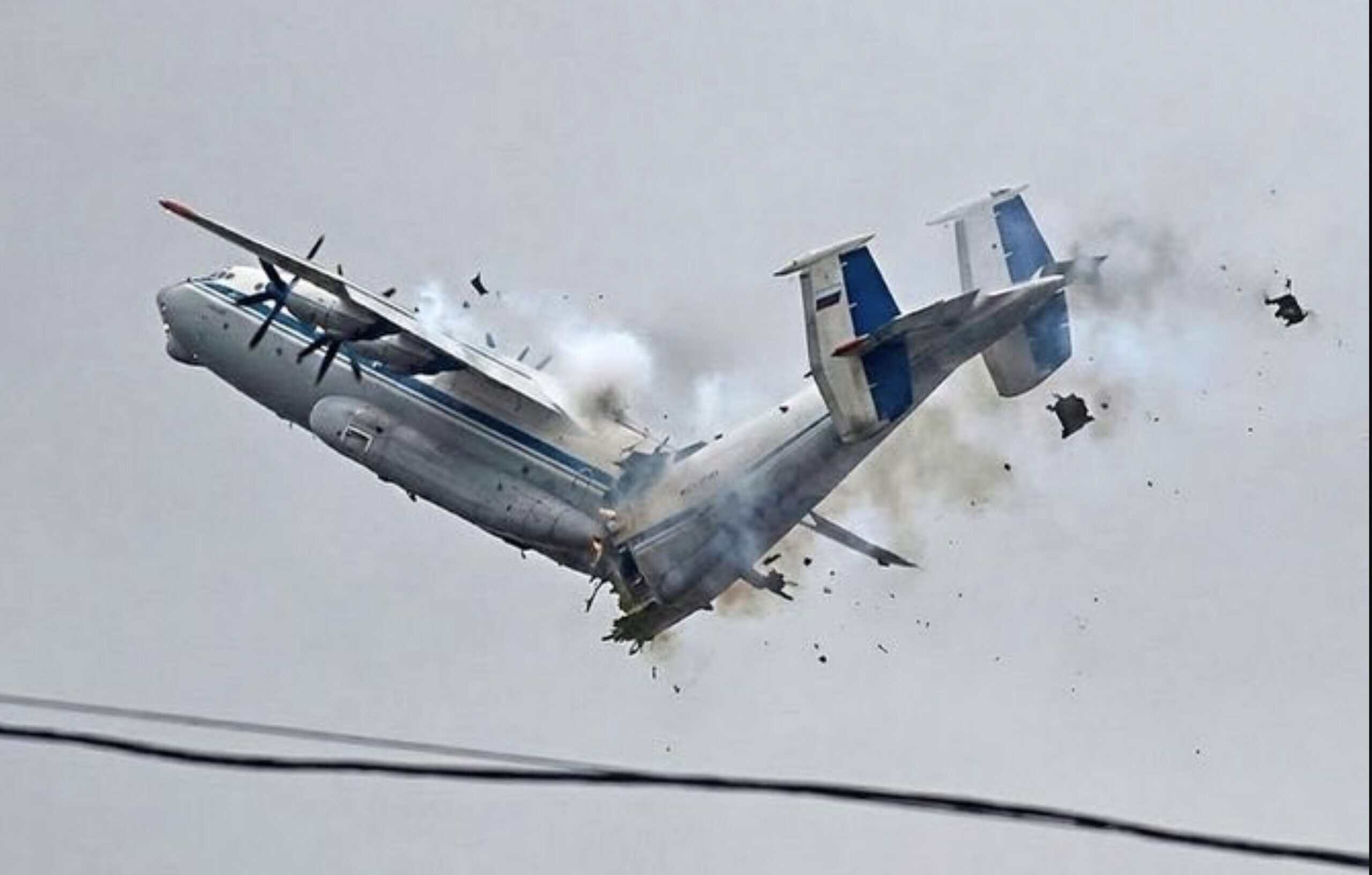
Tragically, the last known An-22 crashed in the Ivanovo region northeast of Moscow on 9 December 2025. All seven people on board were presumed dead. Witnesses said the large turboprop appeared to break apart in the air. After this crash, the era of the world’s largest turboprop transport was over.
The An-22 could carry up to 176,000 lbs of payload. By comparison, the C-17 can carry around 170,000 lbs of cargo/passengers.
Bonus: Why does the An-22 have two tails?
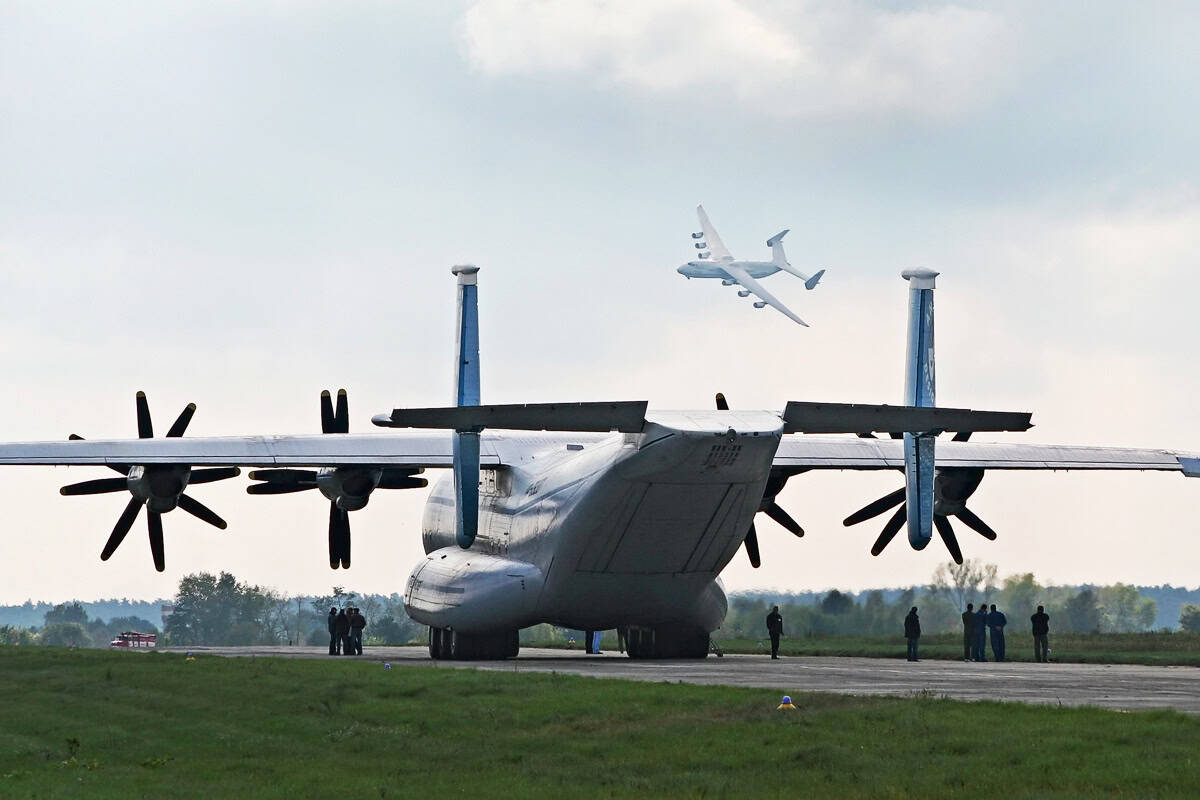
Here’s one for trivia night. The An-22 looked pretty similar in shape to the An-12, just with two tails. The second tail reduced the tail’s height requirement and improved engine-out performance.
Also, if you need to wow your friends at trivia night, the NATO reporting name for the An-22 was ‘Cock’. And now you know.

It has contra-rotating props, not counter.