

Artemis-I Will Test the Spaceflight System Designed to Carry Astronauts to the Moon and Back
America is going back to the moon, and this week NASA confirmed they are targeting August 29, 2022 to launch the first mission. The announcement came on the 53rd anniversary of the first moon landing with Apollo 11, and will kick off a new era of human space exploration to establish a permanent lunar presence.
NASA has named the new program Artemis, after Apollo’s twin sister and Goddess of the Moon in Greek mythology. This first mission is called Artemis-1, and will mark the first launch of the most powerful rocket in the world, the Space Launch System (SLS), to send a new spacecraft developed by Lockheed called the Orion crew capsule farther than any spacecraft built for humans has ever gone before.
Artemis-I will be an un-crewed flight test of the entire integrated system, from the ground support, to launch of the SLS, to checkouts of the spacecraft, flight to lunar orbit, and return to Earth. NASA wants to validate that everything works as designed, before launching the first astronauts on Artemis-II.
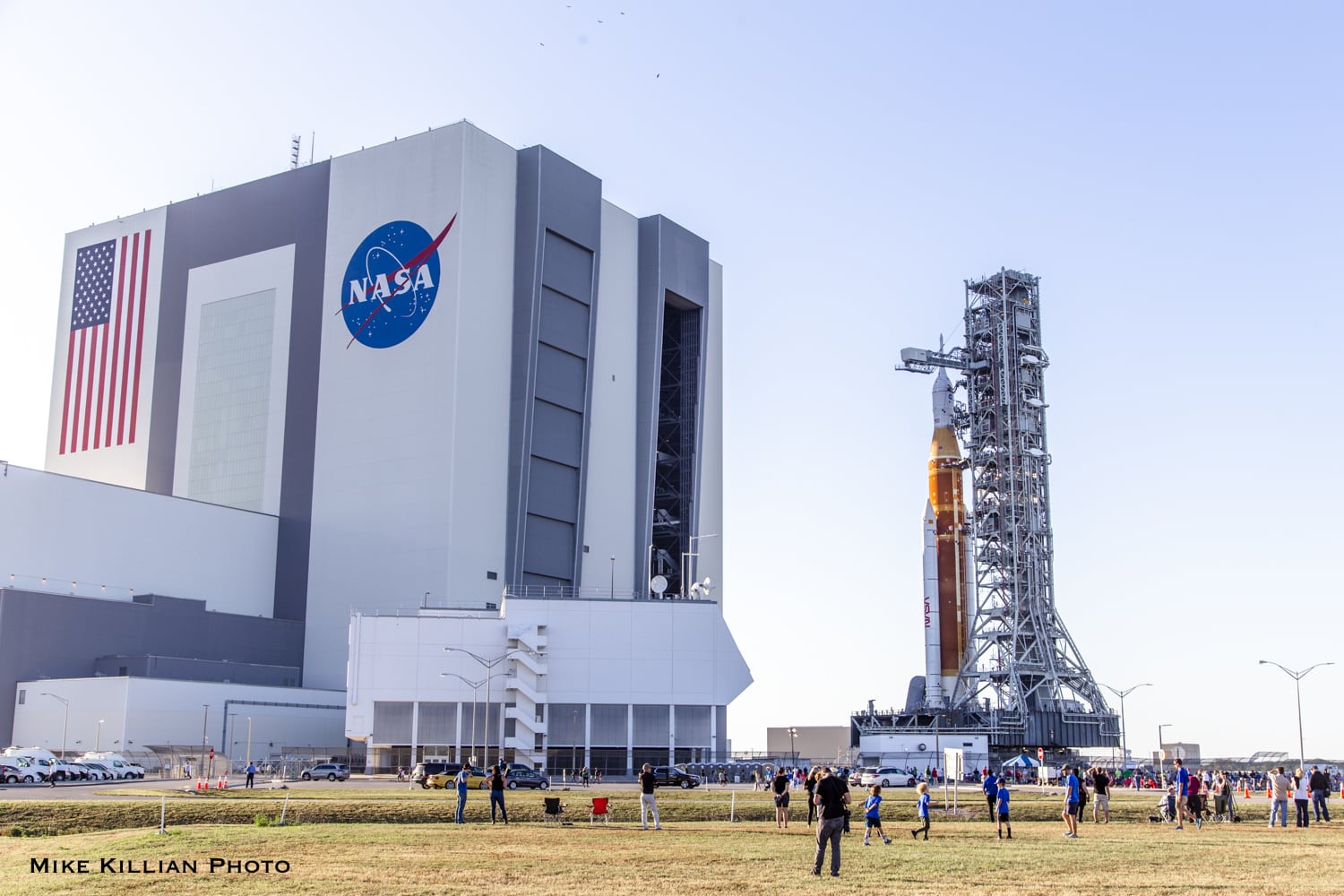
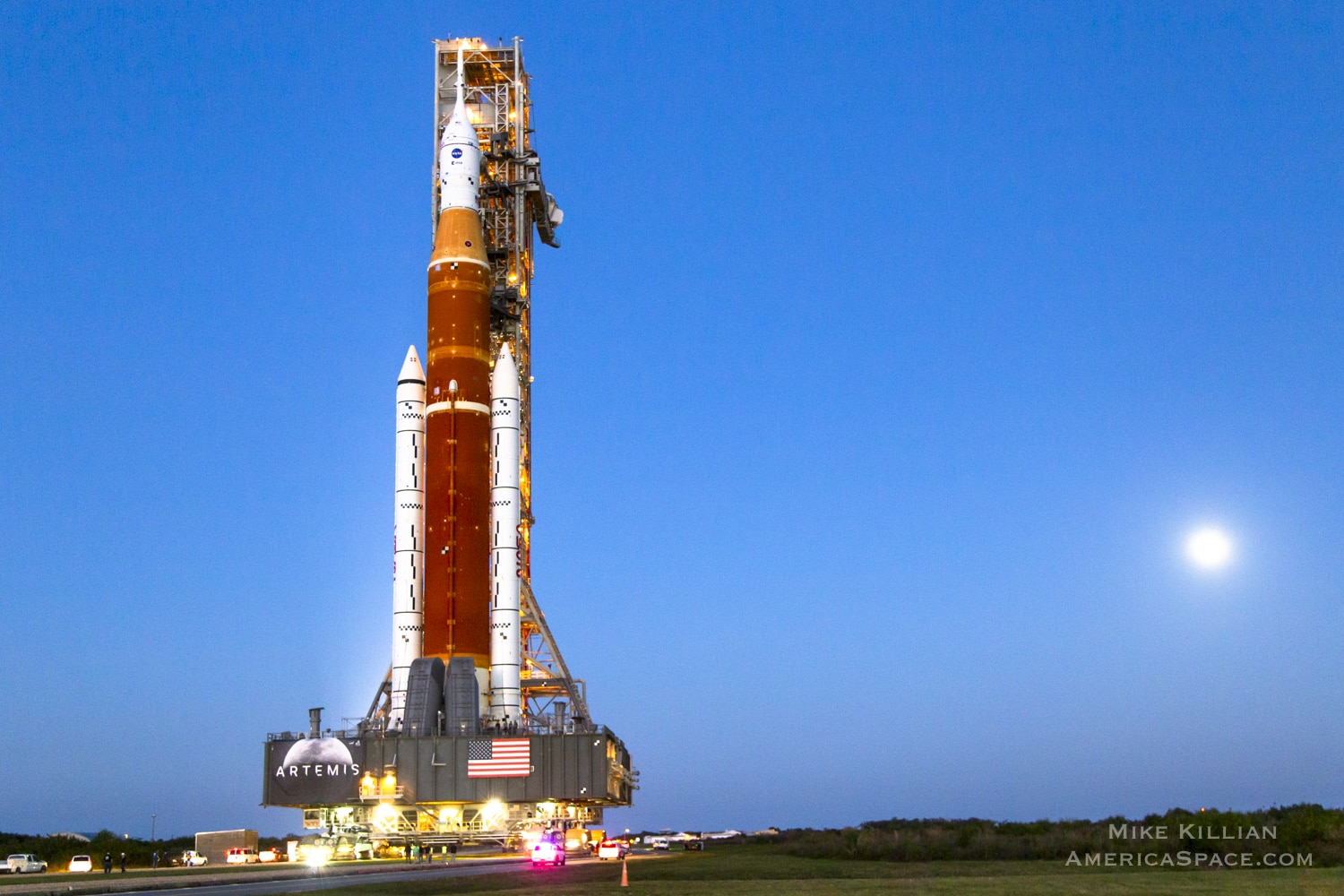
The SLS and Orion may look like its Apollo predecessors, but the similarities end there. The 322-ft tall stack is taller than the Statue of Liberty, and more powerful than Apollo’s Saturn V moon rockets. NASA went with a similar design for Artemis because putting a crew on top of a rocket is the safest way to launch them.
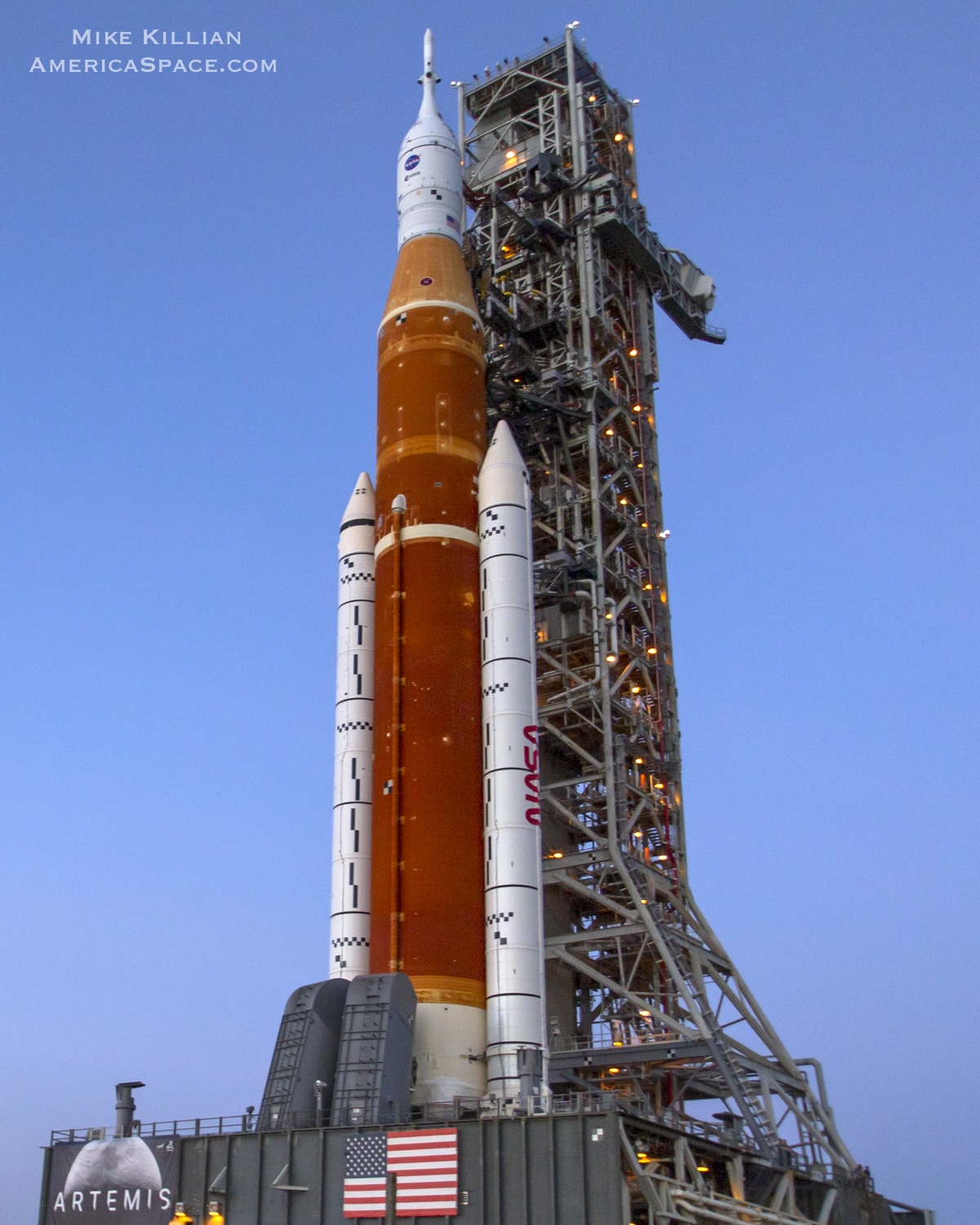
Both space shuttles Challenger and Columbia were lost due to damage on launch, killing 14 astronauts (the damage to Columbia occurred on launch, but did not kill the crew until their re-entry). A capsule allows for an abort shot away from a failing rocket, and a capsule is also the safest way to bring them home. You can read about Orion’s Abort System HERE, and watch an actual Orion abort test HERE.
Even Elon and SpaceX know that, which is why they also fly astronauts on capsules (their existence is only thanks to NASA contracts by the way, which seeded their entire development).

Artemis not only builds on Apollo, but also incorporates heritage space shuttle hardware, namely four former space shuttle main engines (RS-25s) and twin solid rocket boosters (SRBs), to launch the mammoth booster with enough force to send a crew to the moon. Combined, the engines and SRBs will produce nearly 9 million lbs of thrust, 15% more than the Saturn V and more than 31 times the thrust of a 747 jumbo jet.
The RS-25s are all veterans of numerous space shuttle missions, but have been modified and upgraded to produce more power, adapted to the new SLS performance requirements and hotter, more violent operating environments. They all have new controllers too (brains), and additional insulation to protect them.

NASA has conducted many tests on the engine mods for several years at Stennis Space Center near New Orleans, to validate the upgrades and certify the engines for their new mission.
A full Green Run test campaign was done last year too, where engineers evaluated the integrated functionality and performance of the rocket’s core stage’s avionics, propulsion and hydraulic systems, culminating in a full-duration test fire of all four RS-25 engines. The vehicle believed it was launching, with everything doing exactly what it will on launch day, while in reality the core was strapped down to an enormous test stand.
Those engines, developed by Aerojet Rocketdyne, were arguably the best ever made – reusable, reliable and powerful. But their final flights will be on SLS, as they will go to the bottom of the Atlantic with the rocket’s core stage once its fuel is spent. NASA has enough engines for the first 4 missions, with non-reusable RS-25 versions being manufactured for missions beyond that.
The SRBs too have been modified and lengthened over their prior space shuttle design. Northrop Grumman, who manufactures them, also added new avionics, propellant grain design, case insulation, eliminated the recovery parachutes, and have tested the new SRBs several times at their facility in Promontory, Utah (just this week they did another test). The SRBs are even painted with a throwback NASA worm logo for Artemis-I, paying tribute those who came before, on which the new Artemis era is built on.
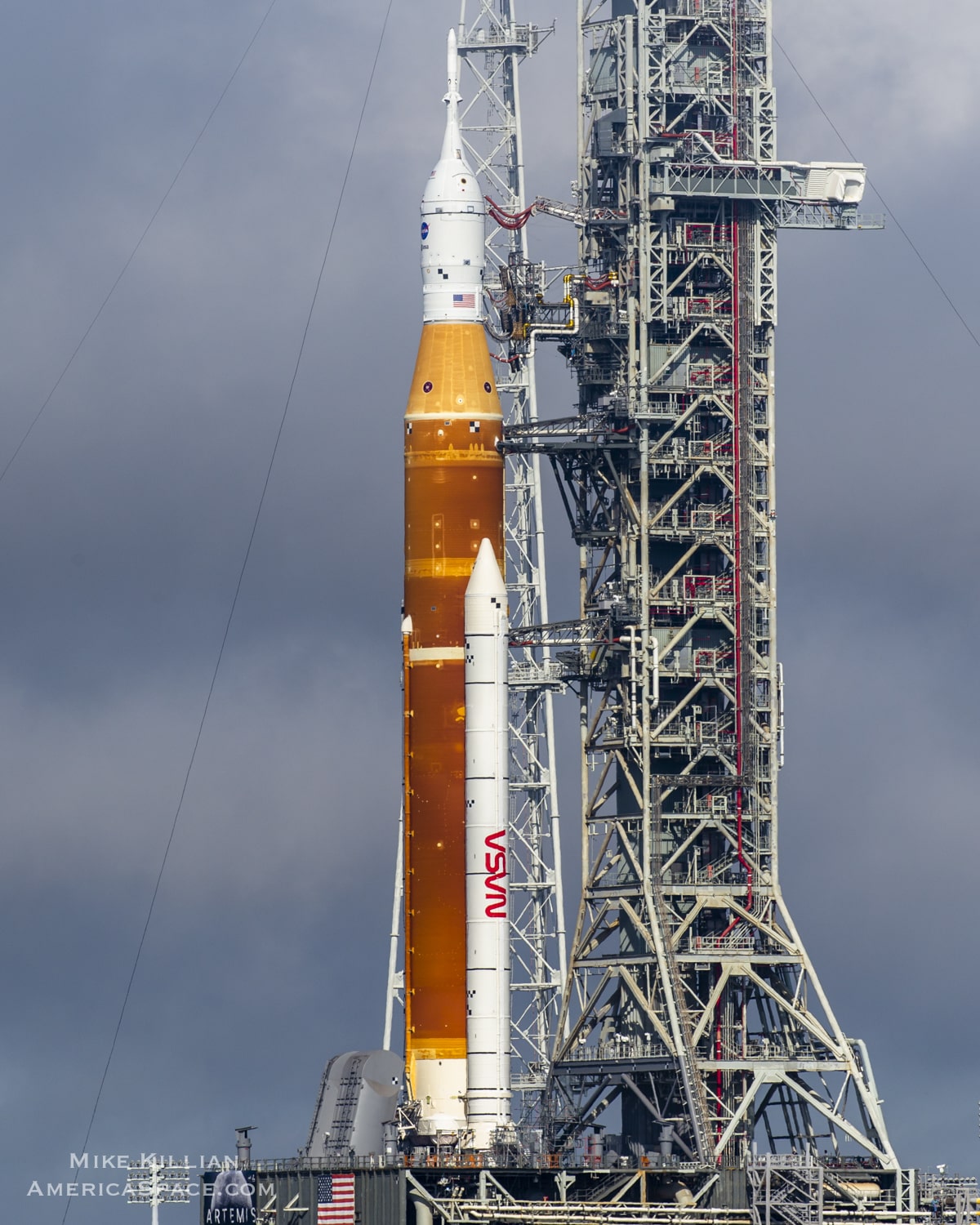
Each SRB is 17 stories tall, and combined, they will provide more than 75% of the SLS rocket’s thrust during the first two minutes of flight.
The Orion spacecraft itself is far more advanced then the Apollo’s command module, and builds on all of NASA’s cumulative knowledge gained from human spaceflight ever since. It is 30% larger, will utilize solar panels for power, and comes with massive advances in computing power and electronics over technology dating from half-a-century ago.

Glass cockpit displays with flatscreens and computers have replaced hundreds of switches, gauges and dials, and it can carry more crew on longer missions – up to 4 astronauts for up to 3 weeks (you can read more in-depth about the new spacecraft HERE from NASA).
A new AI and videoconferencing technology will be tested on the mission as well, called Callisto, which will feature Amazon’s Alexa and screens that display Webex by Cisco.
You can read all about it HERE, but basically the idea is much like Captain Kirk talking to his ship’s computer in Star Trek. Future crews may be able to ask Alexa about their spacecraft, mission, subsystems, telemetry and more, while also being able to share information over a screen with other crews and people on Earth, much like a Zoom call now. Current users of Alexa-enabled devices at home will even be able to command “Alexa, take me to the Moon,” to get live updates throughout the Artemis-I mission.
Orion, however, is only the ride to and from the moon. NASA and industry partners are working on putting a lunar gateway into orbit, where Orion will dock and astronauts can stage their surface missions from. Click HERE to read more from NASA about the gateway.
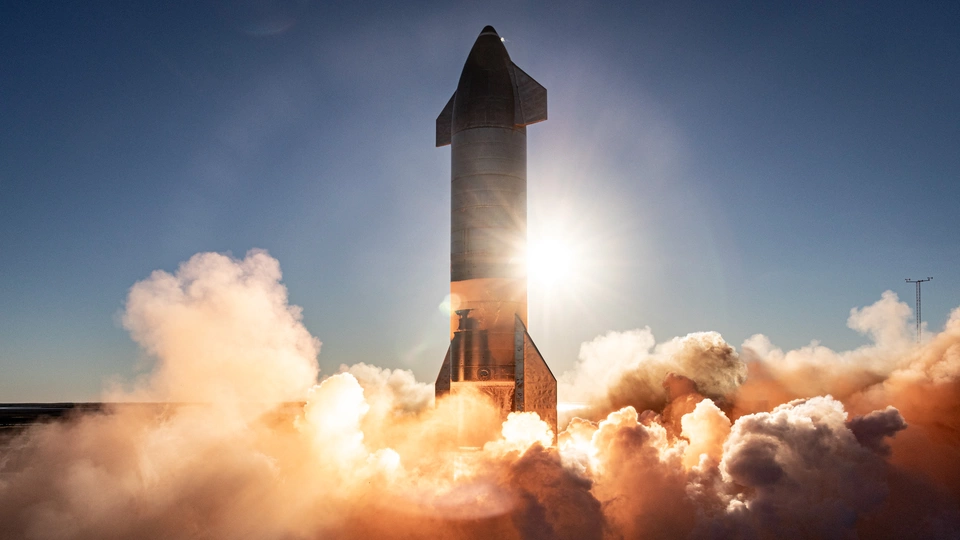
NASA has awarded SpaceX a contract to use their Starships for Artemis landing missions, which is currently under development in Texas (click HERE for more info). The first landing is, for now, planned on the Artemis III mission in the later half of the 2020s, which will see the first woman and person of color, as well as probably the first non-American, to walk on the moon.
For now though, let’s get back to Artemis-I, where it will all soon begin. The rocket and spacecraft are currently undergoing final flight preparations in NASA’s iconic Vehicle Assembly Building at Kennedy Space Center in FL, and will roll out to the launch pad some time in mid-August, carried atop a behemoth Crawler Transporter that is itself larger than a Major League Baseball infield.
The whole four-mile journey will move at just 0.8 mph, and take about 11 hours to move. In total, the gigantic crawler will be moving 21 million pounds of hardware to launch pad 39B (including its own weight of 6.6 million pounds).
A mannequin has been installed in Orion’s Commander seat, wearing a full first-generation Orion Crew Survival System spacesuit, outfitted with various sensors to provide data on what crews will physically experience. His seat is also instrumented, to record acceleration and vibration data. Engineers will compare the flight data with ground-based vibration tests done with the same manikin, and humans, to correlate performance prior to the first crewed flight on Artemis II.
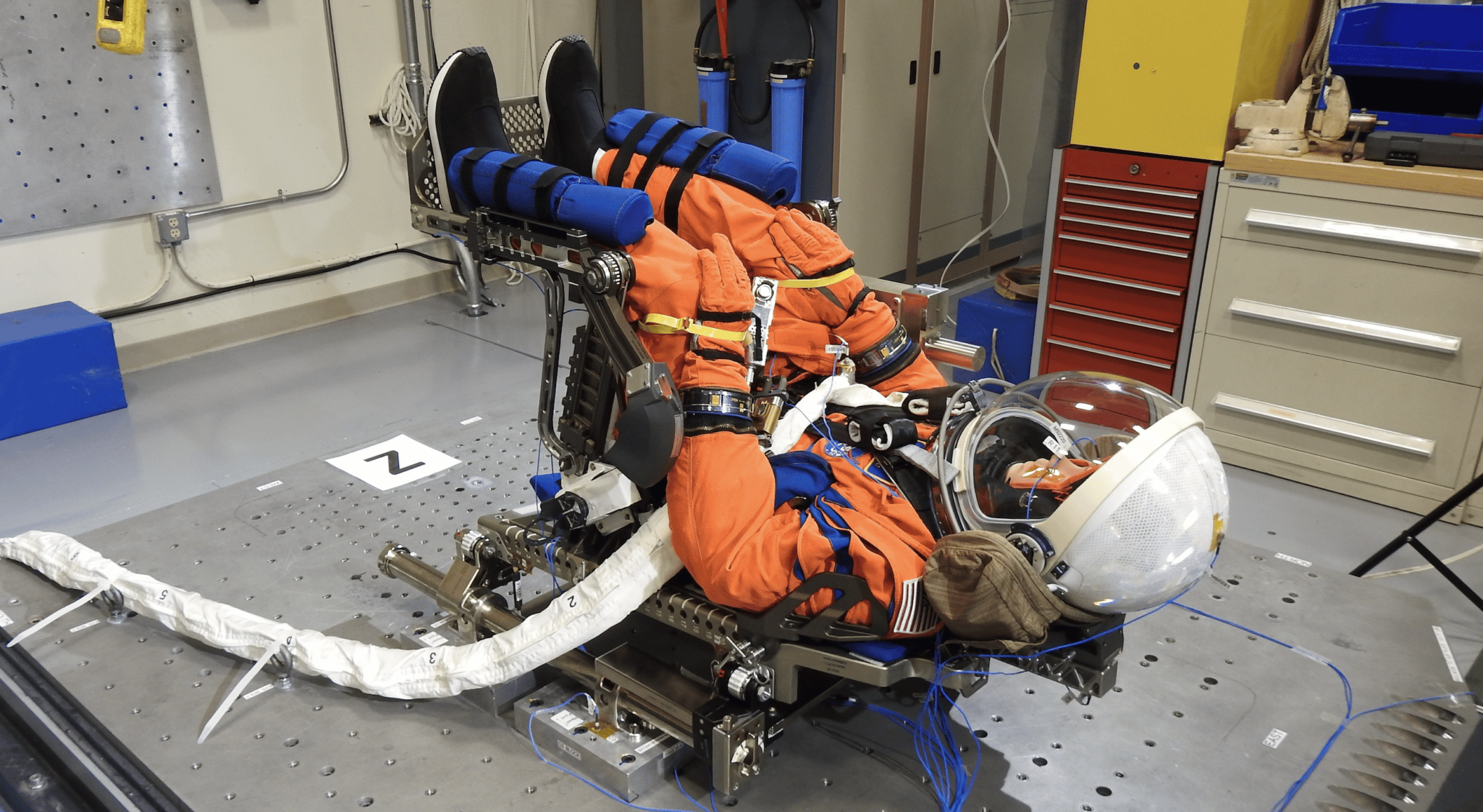
Two other mannequin torsos will be onboard too, measuring radiation exposure and testing out new radiation-shielding vests, which you can read more about HERE.
The first opportunity for NASA to launch Artemis-I is August 29, 2022 at 8:33 a.m. EDT, with a 2-hour launch window available. But they have two other opportunities currently available as well, which are September 2, 2022 at 12:48 p.m. EDT and September 5, 2022 at 5:12 p.m. EDT.
Once launched, Orion will fly some 280,000 miles from Earth and thousands of miles beyond the Moon on a mission lasting 4-6 weeks. Upon arriving at the moon, it will fly 62 miles above the surface, and then use the Moon’s gravity to propel it into a deep retrograde orbit 40,000 miles above the surface, where it will fly and test for 6 days. Orion will then descend back into a low orbit and brush past the surface again at 60 miles to perform its engine firing to break away from the moon’s gravity, and then head back to Earth.
Orion will stay in space longer than any ship for astronauts has ever done without docking to a space station, and will return home faster and hotter than any before it.

On re-entry, the spacecraft will slam into the atmosphere at 25,000 mph, before parachuting gently into the Pacific Ocean 60 miles off the coast of Southern California, where a U.S. Navy San Antonio-class LPD amphibious transport dock ship (LPD) from San Diego will be waiting.
Such ships, like the USS Anchorage (LPD-23), have a well deck at the waterline to allow other boats to dock. Or in this case, a spacecraft. Helicopter crews will monitor Orion as it descends and slowly splashes down, while Navy divers and NASA personnel in inflatable boats maneuver alongside it to attach a winch line and other lines, then pull it into a specially designed cradle inside the ship’s well deck.
Such capability means future crews can be recovered directly from Orion in open-water, or remain onboard in rougher seas as the capsule is pulled straight into the ship.
The ships also provide immediate medical care if needed, and helicopters can fly crew to shore. Recovery teams have conducted many tests over the last several years, both in NASA’s giant pool at Johnson Space Center learning to secure Orion and crews, and in the open ocean recovering flown test articles and mock capsules, day or night.
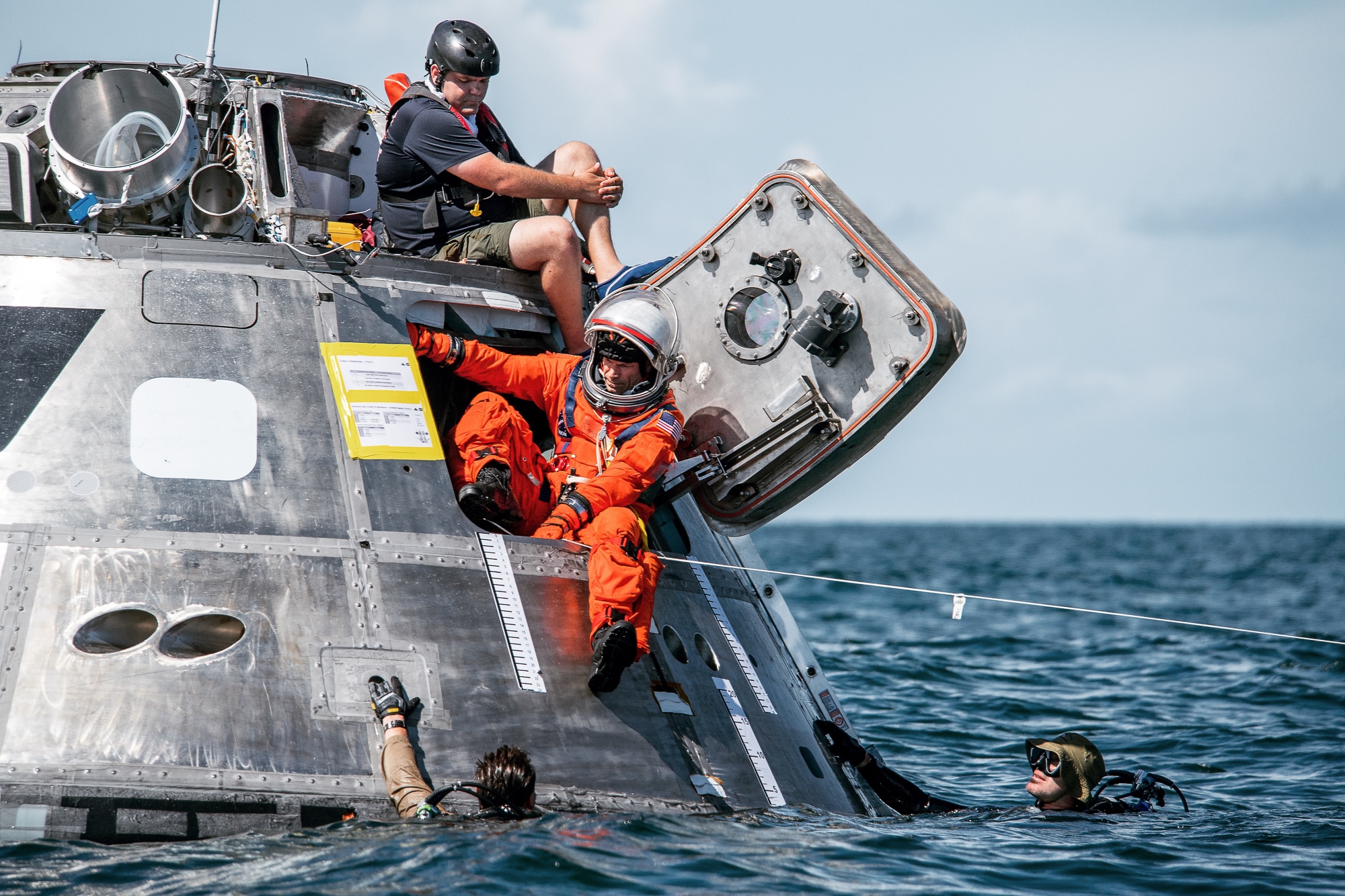
Click HERE to read more in-depth about the recovery operations.
Data from Artemis-I will allow NASA to fine-tune operations for the first crewed mission on Artemis-II, currently slated to launch in 2025.
AvGeekery will share the launch LIVE on launch day, stay tuned for updates as NASA prepares over the coming weeks.
