

Navy aircraft carriers were forever changed by a simple but revolutionary invention. Learn how one design shift reshaped flight deck operations and carrier aviation history.
The advent of the angled deck revolutionized United States Navy (USN) aircraft carrier operations. Invented by Royal Navy Captain (later Rear Admiral) Dennis Cambell, the angled deck began as a way to land heavier and faster jet-powered aircraft in a direction offset from the rest of the flight deck so that if a recovering aircraft were unable to engage a cross-deck arresting pendant, it would be able to accelerate and make another pass.
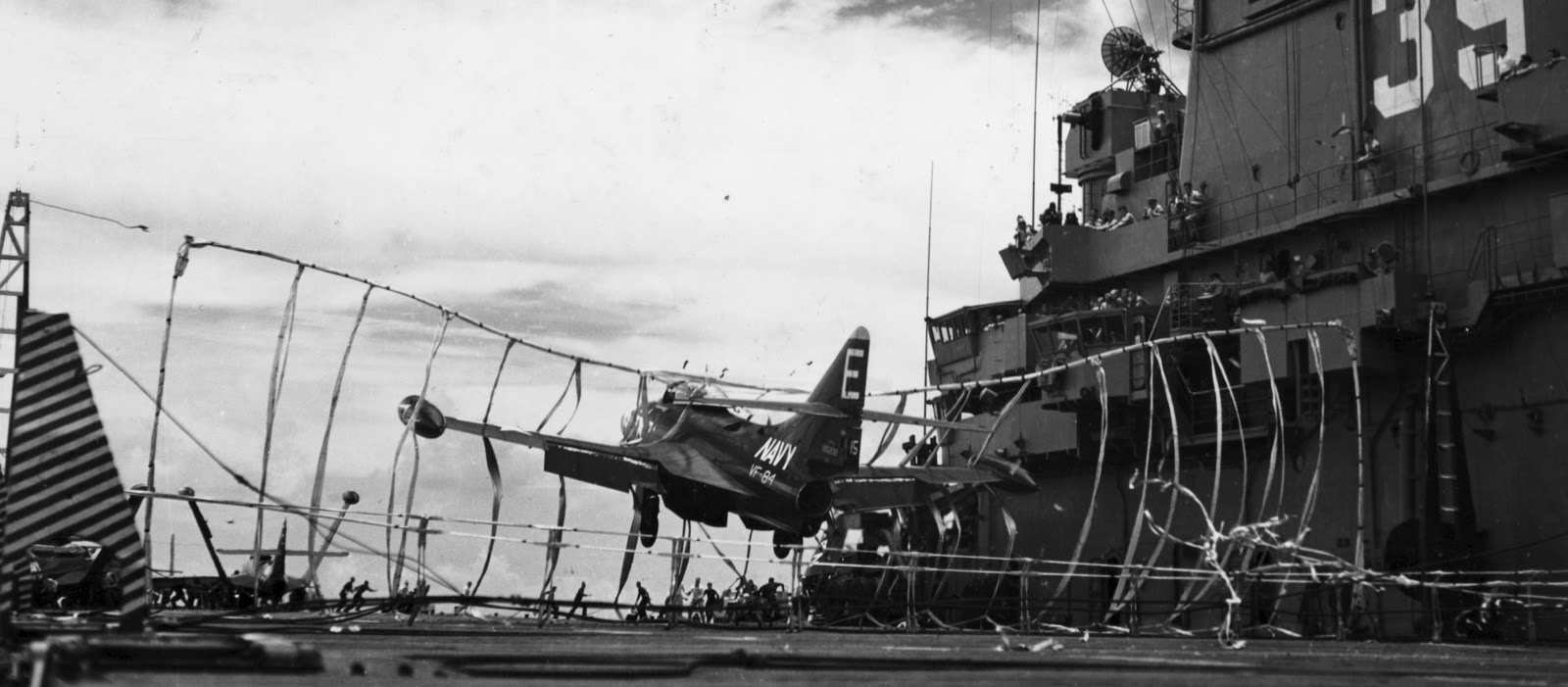
On the axial deck carriers, such a missed recovery, referred to as a bolter, would usually result in the recovering aircraft being damaged in a barrier or barricade engagement. Or worse, the recovering aircraft could end up missing the barricade and plowing into parked aircraft on the forward portion of the flight deck.
As US Navy Captain, naval aviator, and astronaut Wally Schirra said, “In those days, you either had an arrested landing or a major accident.”
After a modification program performed at the Brooklyn Navy Yard, completed in December of 1952, the Essex-class aircraft carrier USS Antietam (CV-36) was the first carrier to conduct true angled deck testing, including full arrested landings.
In early January 1953, the angled deck proved its mettle to US Navy aviators and to the British later that year. The preliminary testing consisted of a total of 350 day and 26 night approaches using several different carrier-based aircraft flown by Naval Air Test Center pilots out of Naval Air Station (NAS) Patuxent River.
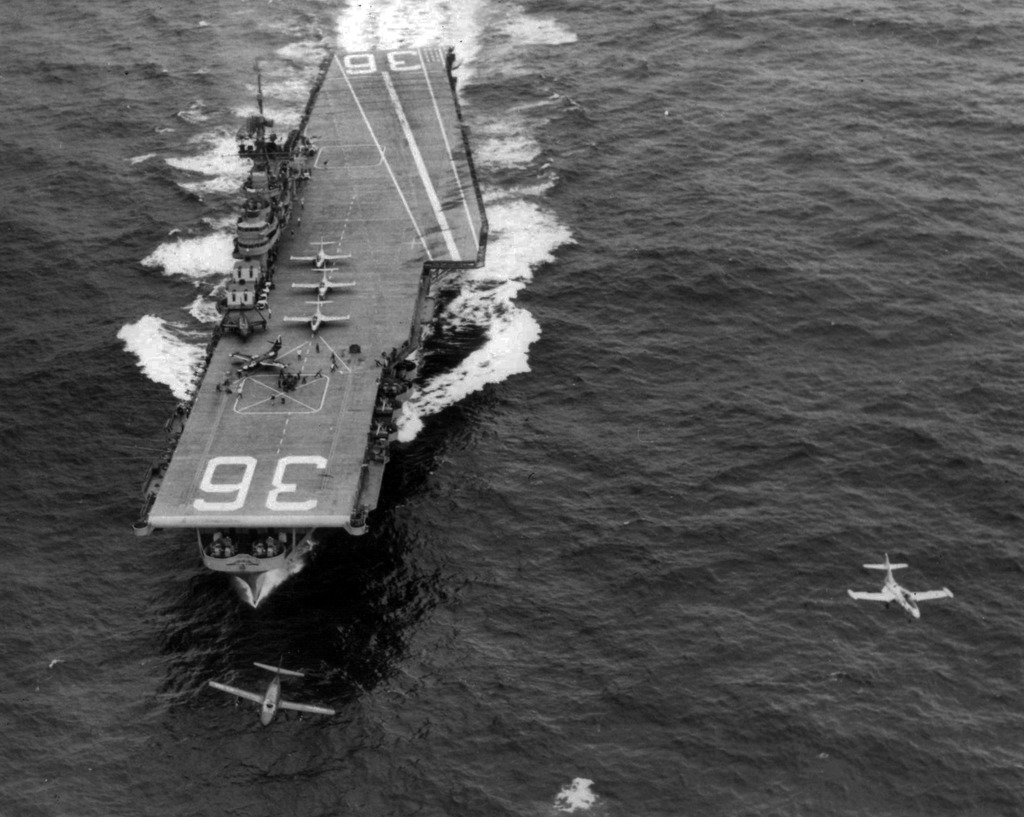
With the newly formed Carrier Air Group Eight (CAG-8) embarked, some of whose pilots were new to their aircraft with less than 50 hours of jet time, the Antietam left for Cuban waters to see how inexperienced pilots handled the Navy’s new carrier flight deck geometry.
Although the CAG-8 aviators experienced a few minor mishaps, there were no aircraft losses. Overall, the “nuggets” handled the angled deck much better than expected and far better than their inexperience would likely have enabled them to handle an axial deck configuration.
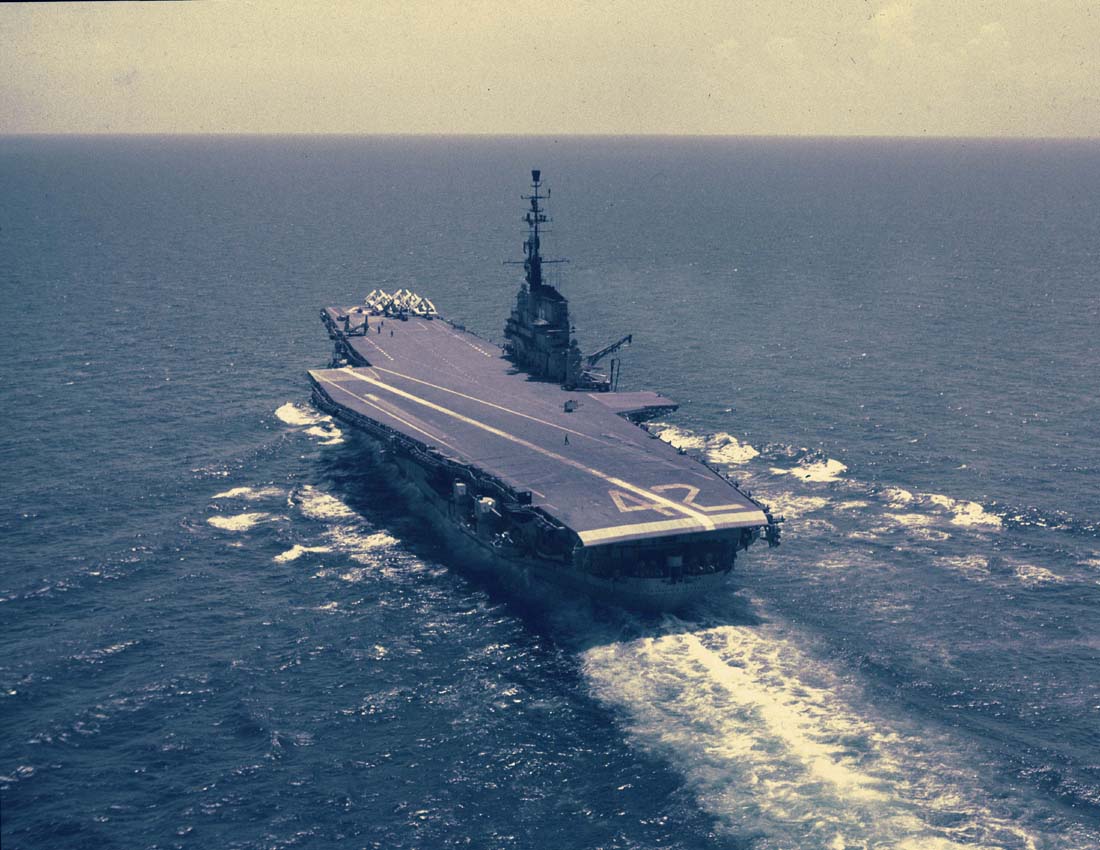
Fourteen Essex-class carriers were modernized to include angled decks along with mirror landing systems, improved arresting gear, and enclosed bows, among other modifications, under the Ship Control Board 125 (SCB-125) upgrade program.
The Midway-class aircraft carriers received angled decks and similar improvements under the SCB-110 and SCB-110A upgrade programs.
The Forrestal-class and all subsequent American aircraft carriers operating fixed-wing naval aircraft came equipped with angled decks and other improvements. Oh sure, the landing area foul lines look different now, but the angled deck has proven to be far more than a cosmetic change. It fundamentally altered how aircraft are recovered at sea, dramatically improving safety, efficiency, and sortie generation.
More than seven decades later, carrier pilots still fly the same basic angled approach pioneered in the early jet age. Technologies have evolved, aircraft have grown faster and heavier, and flight decks have become more complex, but the core concept remains unchanged. For more than 72 years, the angled deck has quietly done its job, every day, on every modern carrier, shaping naval aviation in ways few inventions ever have.
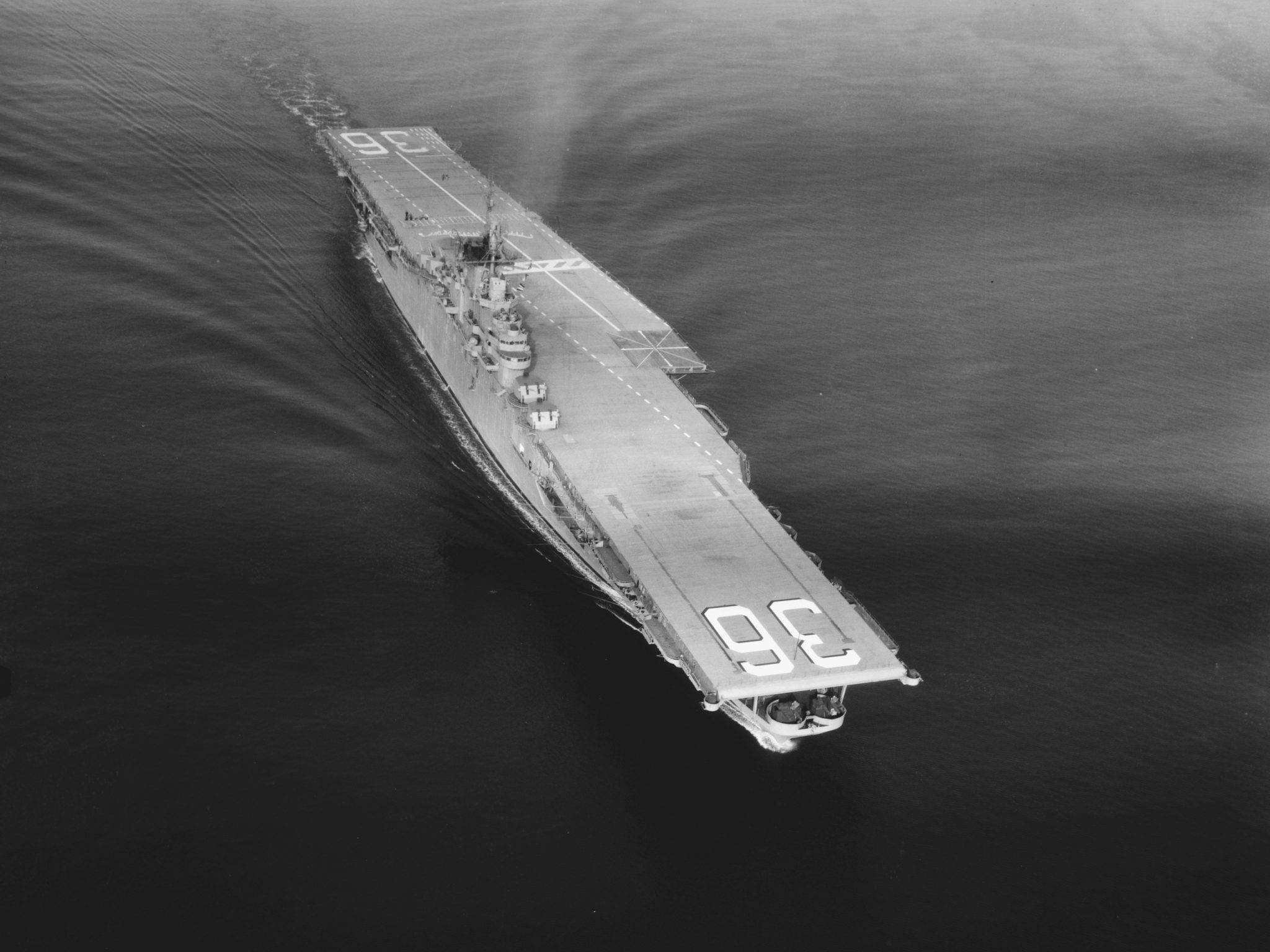
The 1955 film “The Angled Deck Carrier” includes extensive footage of approaches to and recoveries aboard the modified Essex-class carrier USS Antietam (CV-36) as well as mishap footage from other carriers.
Aircraft featured in the film include Grumman F9F-5 Panthers, F9F-6 Cougars, and S2F Trackers, McDonnell F2H Banshees and F3H Demons, Vought F7U Cutlasses, Douglas AD Skyraiders and F4D Skyrays, North American FJ Furies, and Piasecki HUP Retrievers.
Enjoy!
