

If Looks Were All It Took They Might Have Had Something
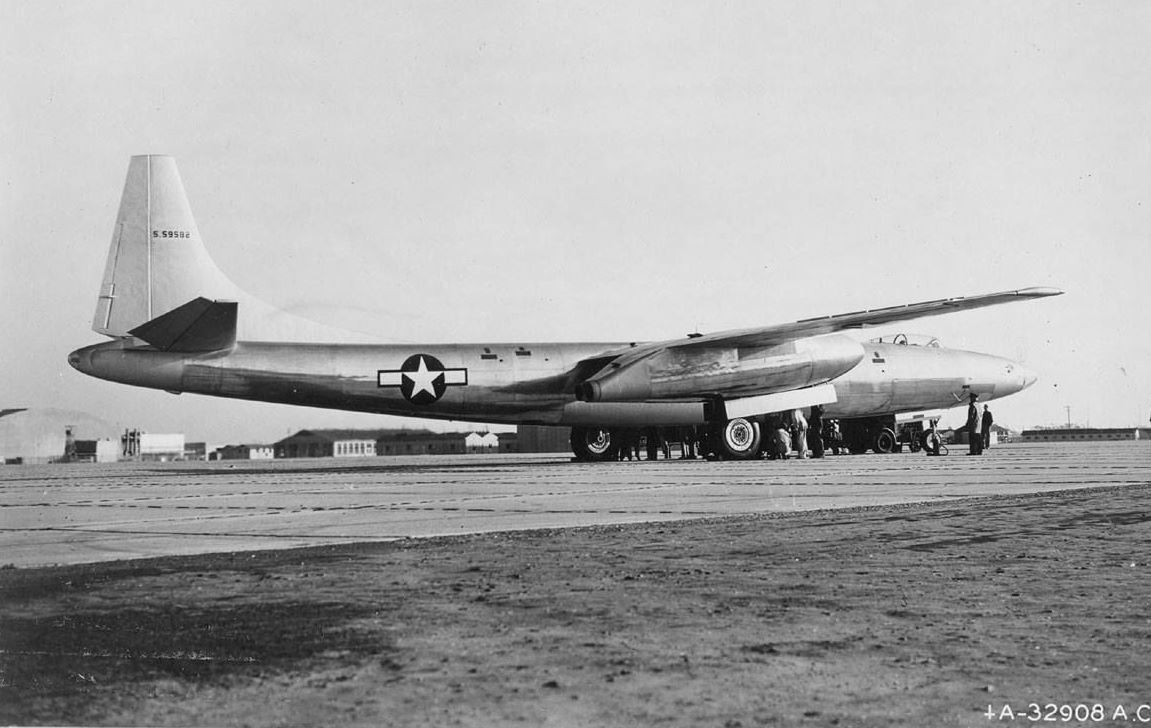
When Convair built the single XB-46 prototype medium bomber during the late stages of World War II, it was designed to become the Air Force’s first jet-propelled medium bomber and to compete with the German Arado AR 234 Blitz jet bombers then in development.
But when the war ended, the program fell victim to budget cuts. Eventually, Convair had to choose between two development programs. The XB-46 program was ultimately superseded by the XA-44, a smaller design featuring swept-forward wings that also proved unsuccessful in the end.
The Class of the Class of ’45?
The XB-46, together with the North American XB-45 and the Martin XB-48, were referred to as the “Class of 45” at the time of their development. North American eventually produced 145 short-lived B-45 Tornado bombers for the Air Force. Martin’s 6 jet-engine straight-wing design never got past the prototype stage. Boeing…well, Boeing was working on the B-47, which, as we know, eventually became the Air Force’s choice for the role, but not before it morphed several times during development.
Shades of the B-24
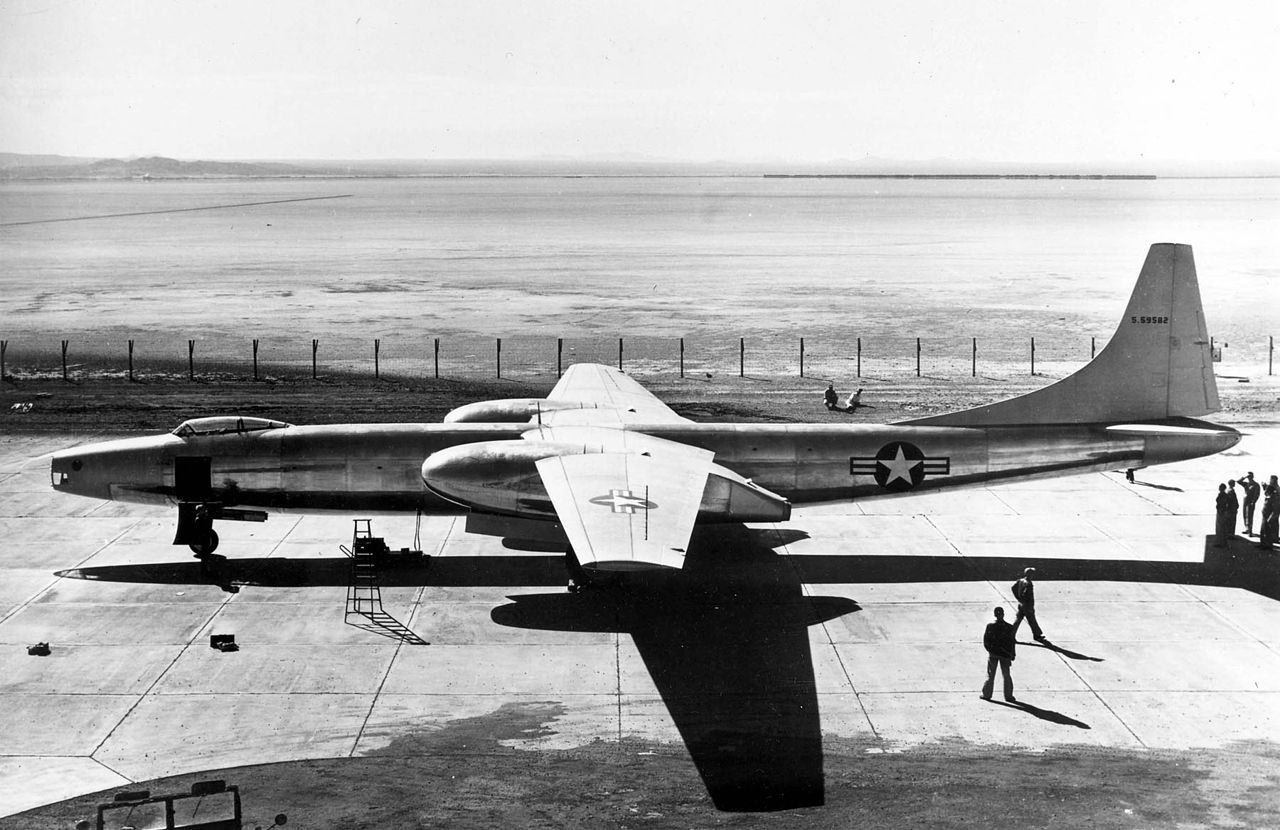
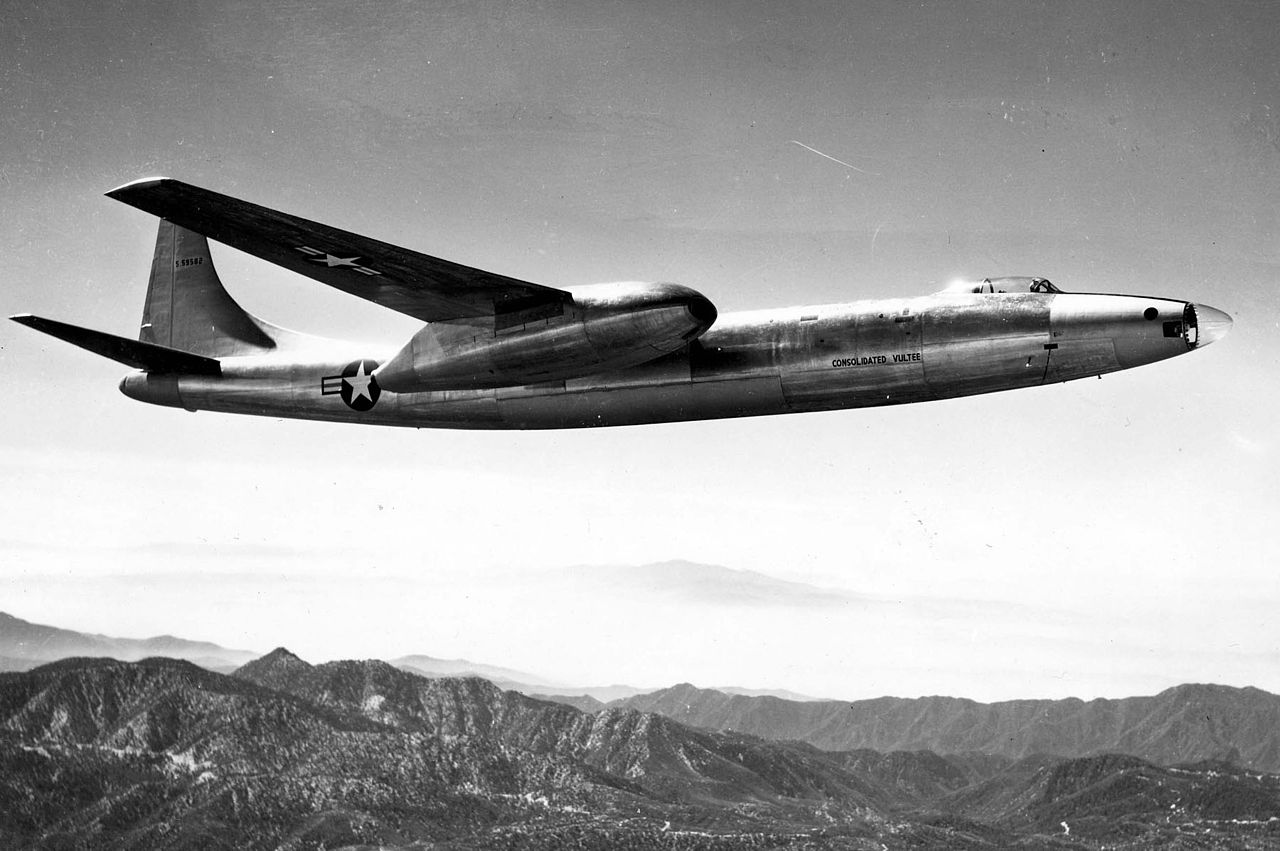
The XB-46 (Air Force serial number 45-59582) was completed in 1947 as a stripped-down prototype lacking mission equipment. It flew for the first time on 2 April 1947, and was quickly dubbed “The Needle.”
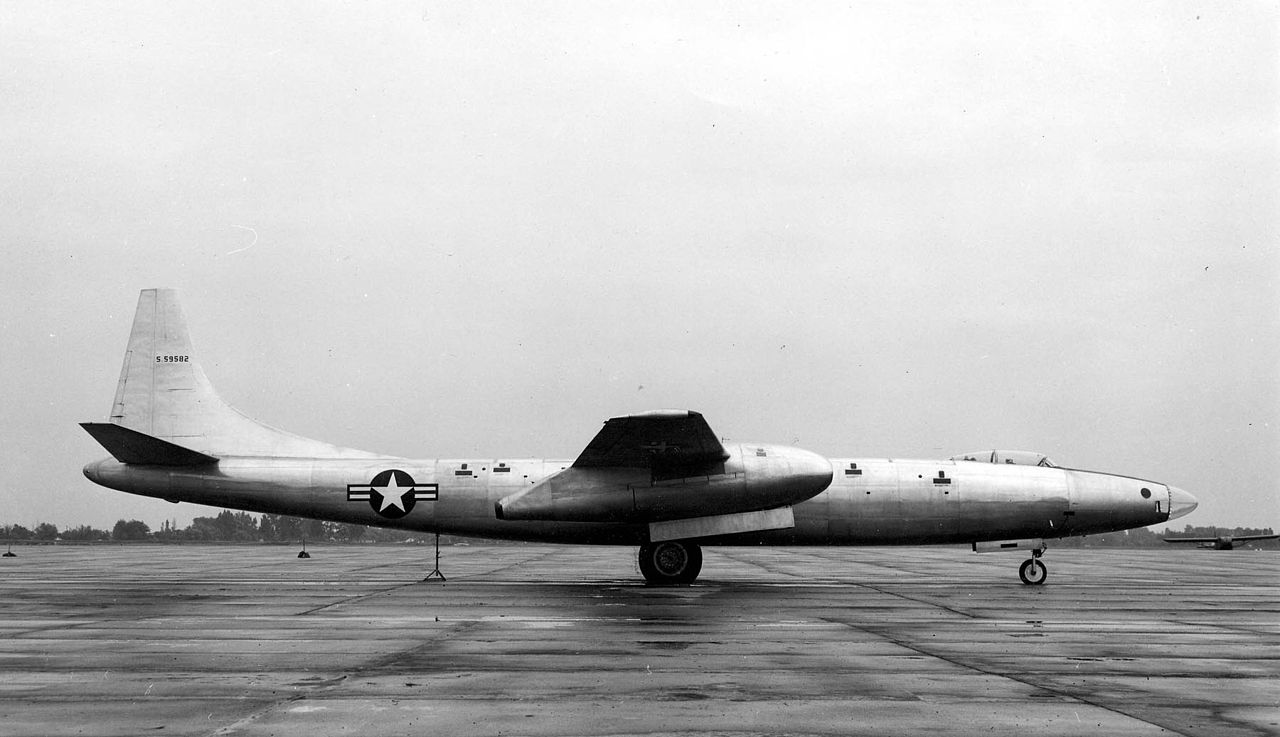
Shoulder-mounted Davis (high-aspect) wings spanning 113 feet (roughly the same span as the B-24 Liberator) supported a tapered fuselage 105 feet long. Powered by four Allison J35-C3 axial-flow turbojets (built by Chevrolet) and mounted in pairs in wing-mounted nacelles, the aircraft was striking in appearance.
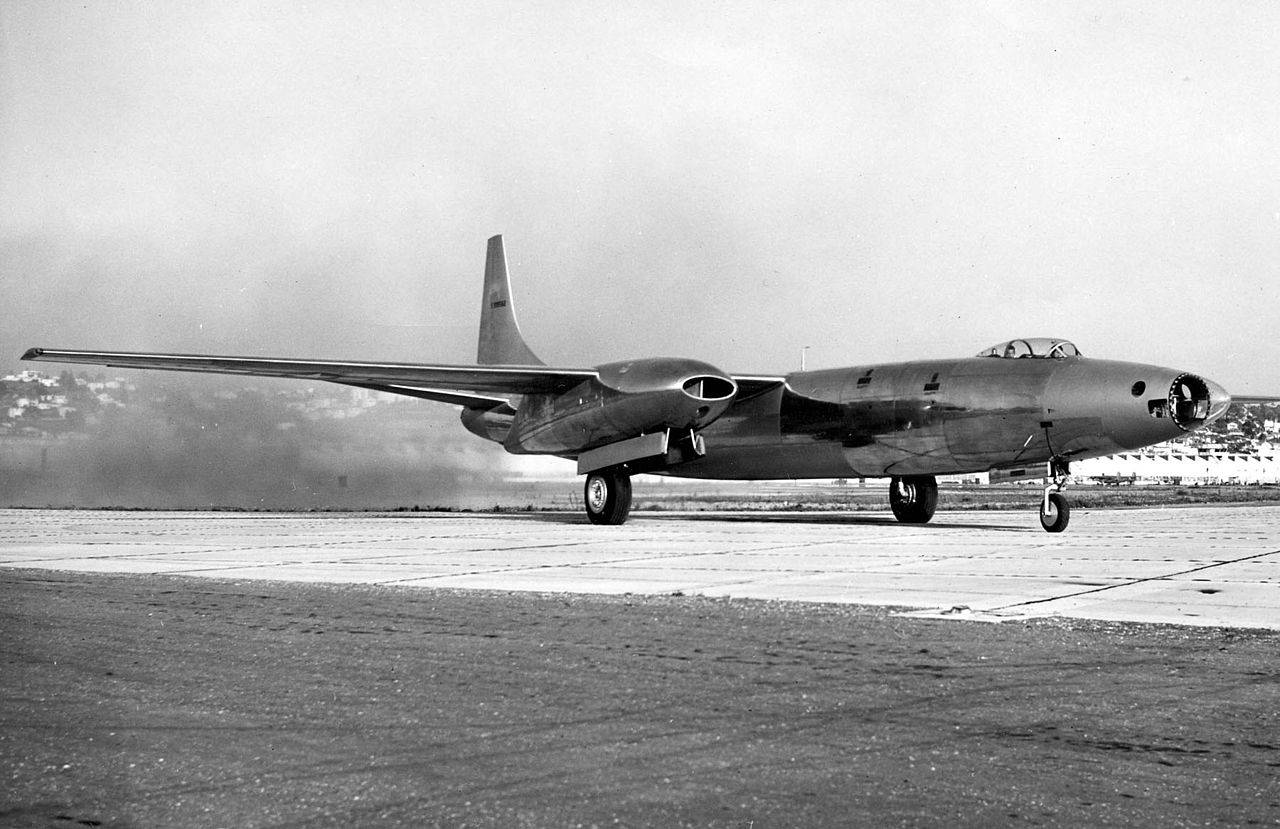
The bomber carried a crew of three in its pressurized fuselage: pilot and co-pilot seated in tandem under a forward-fuselage fighter-type canopy and a bombardier-navigator-radio operator behind a B-26 Marauder-esque transparent nose.
Testing Ground-Breaking Technologies
Had the bomber been ordered into production, it would have been armed with a pair of .50-caliber machine guns mounted in an Emerson tail turret, controlled by the APG-27 remote fire control system. The J-35 engines powering the prototype airframe would have been swapped for the improved General Electric J47 engines.
As it was, the airframe was primarily used for testing the unique aerodynamic and system engineering features contained in the design. Specifically, the flight control system utilized pneumatic rather than hydraulic, manual, or electrical control lines and systems.
Close But No Cigar for the Needle
In flight, the bomber was praised by its test pilots, both from Convair and the US Army Air Force alike, for its handling qualities. However, although stability and control were excellent during 64 flights totaling 127 hours, the engine de-icing and cabin air systems required additional engineering work. The most serious problem was likely the vertical oscillations caused by harmonic resonance between the wing and the spoilers.
Actually installing the fire control system probably would have forced a major redesign of that shapely fuselage, too. In the end, the program was cancelled before flight testing was even completed. The B-45 had already been ordered into production, and the B-47…well, we know the rest of that story!
The End of the Line
44 additional hours of Convair flight testing were flown from Palm Beach Air Force Base (AFB) in Florida during 1948 and 1949. Investigations into excessive noise, tail vibration, and stability and control issues occurred during this final period of flight testing. Taken out of service in 1949, the aircraft spent a year on the ground before heading to Eglin AFB in Florida to have its unique pneumatic control systems tested at that base’s large climate facility. The aircraft was finally scrapped in February 1952.
Bonus Video
Here’s a video of featuring some clips of the graceful and shapely XB-46 uploaded by airailimages.
10.12.17
