Home Blog Page 124

Lose Your Sh*t Aboard Fat Albert – The Blue Angels’ C-130 Bird

040924-N-1539M-003 Houston, Texas (Sept. 24, 2004) Ð ÒFat Albert,Ó the Blue Angels' C-130 Hercules transport aircraft, banks-in in preparation for final over Houston, Texas. Fat Albert, home based at Naval Air Station Pensacola, Fla., has been flying relief missions into Pensacola following the devastation of Hurricane Ivan. On this mission, Fat Albert ferried pilots and maintenance personnel from Pensacola based Training Air Wing Six (VT-6), to their evacuated aircraft in Houston, Texas. U.S. Navy photo by Photographer's Mate 2nd Class Saul McSween (RELEASED)

Houston, Texas (Sept. 24, 2004) Fat Albert, the Blue Angels’ C-130 Hercules transport aircraft, banks-in in preparation for final over Houston, Texas. Fat Albert, home based at Naval Air Station Pensacola, Fla., has been flying relief missions into Pensacola following the devastation of Hurricane Ivan. On this mission, Fat Albert ferried pilots and maintenance personnel from Pensacola based Training Air Wing Six (VT-6), to their evacuated aircraft in Houston, Texas. U.S. Navy photo by Photographer’s Mate 2nd Class Saul McSween (RELEASED)


Hey, hey, hey. The Blue Angels’ “Fat Albert,” the demonstration group’s support transport, puts on a solo show.

The Blue Angels flight demonstration team, made up of Navy and Marine pilots, have been performing since 1946. Here’s a “bet you didn’t know” fact about the Blue Angels – in addition to the F/A-18 Hornets flown for the precise maneuvers, there’s a C-130T Hercules that also performs.

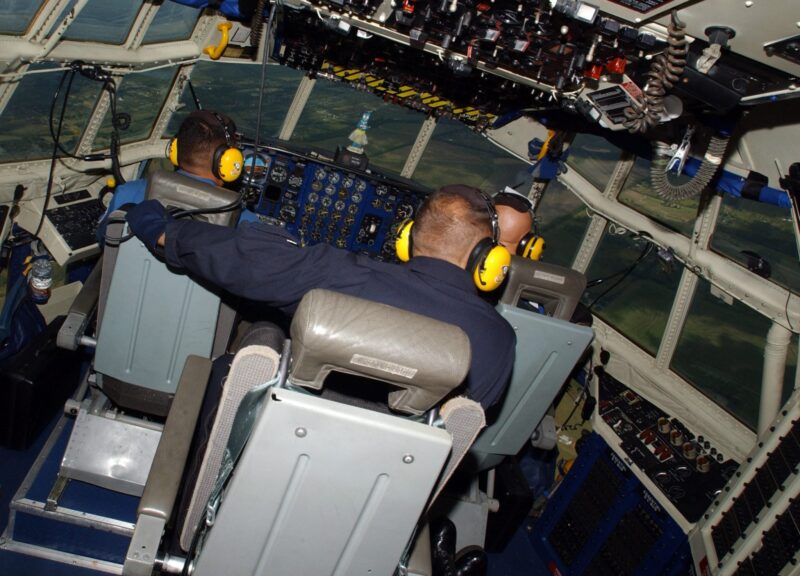
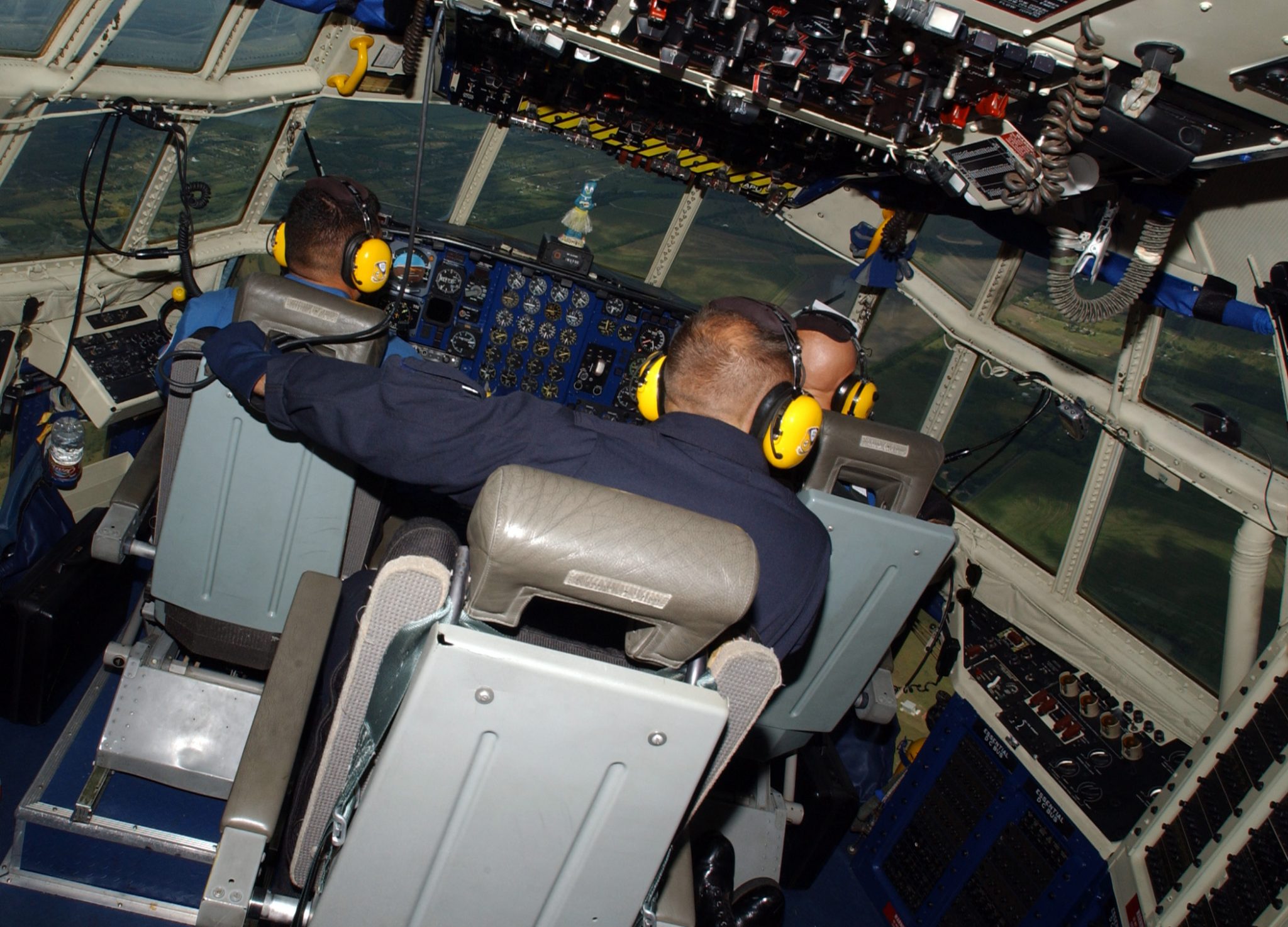
Nicknamed “Fat Albert,” the C-130’s primary assignment is transporting spare parts, equipment and support personnel between performances. Flown by an all-Marine flight crew of three officers and five enlisted personnel, Fat Albert puts on a solo demonstration including low-level runs and breath-taking banking moves.

When it first started putting on demonstrations in 1975, the C-130 was used for Jet Assisted Take Offs. However, that was eliminated in 2009 because of a dwindling supply of rockets.

You can check out the cockpit video of Fat Albert in action at a recent air show and here’s a link to what it looked like from the ground.


It takes Badass Maintainers to Keep The A-10’s “Brrrt” Going Strong

0

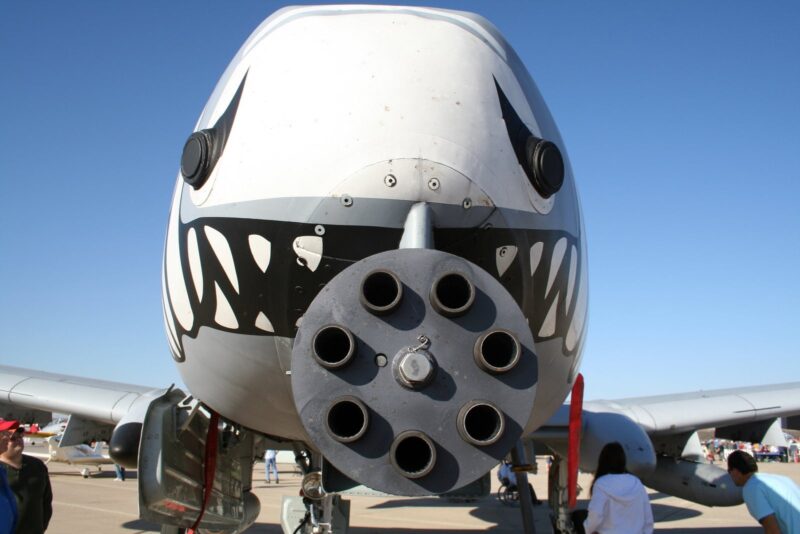
The A-10 is always a popular topic with the Avgeekery.com crowd. A few weeks ago, we wrote about the Warthog’s main weapon, the General Electric GAU 8 Avenger Gatling gun and its distinctive 2-second “brrrrrt.”

That gun is one of the most powerful aerial weapons in existence, capable of delivering 70 rounds of 30 mm ammo in one second. A two-second burst – the “brrrrrt” – can deliver a kill shot on a heavily-armored vehicle – just ask the Iraqui army.

While the pilots who fly the A-10 get to pull the trigger for those two-second bursts, the ground crew members who maintain the gun and load the two ammo cans play just as big a role.

And when those guys in the hangar and on the runway get word of how effective an A-10 was in supporting ground troops, they move around with a bit more zip in their doodah.

17 Skydivers, 1 Calm Pilot, A Crash Landing … And Everyone Walked Away

DiveCrash2

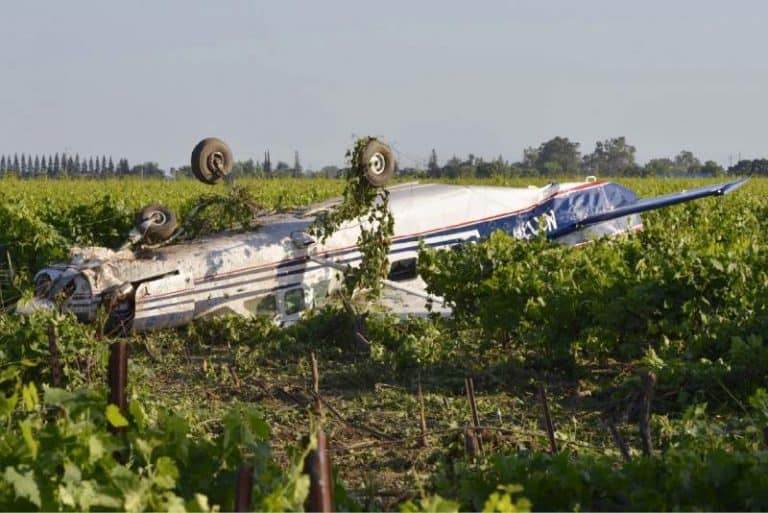
Experience this scary crash landing – the pilot and 17 skydiver passengers walked away.

The question that skydivers are often asked: “Why would you want to jump out of a perfectly good aircraft?”

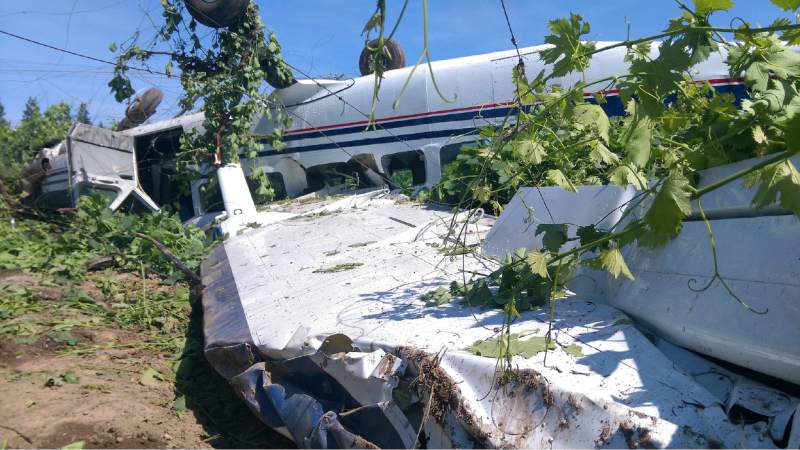
A group of parachutists never got to jump out of the airplane that was carrying them. When its engine quit soon after takeoff, its pilot was skilled enough to execute a crash landing that allowed everyone to survive (the pilot walked away with a bloody noise.

This incident occurred last Saturday in Lodi, Calif. The single-engine Cessna 208 from the Parachute Center Skydiving School was carrying 17 skydivers when the plane “experienced trouble shortly after taking off.”

The pilot attempted to return to the airport but had to settle for a crash landing in a vineyard. He was able to fly under power lines but the plane’s tail apparently clipped a pickup truck and that caused the plane to flip belly up upon landing. The pilot also was able to avoid a house that is located next to the vineyard.

When you watch the video, be advised there are some curse words uttered shortly after landing, so this is NSFW. But after expecting to skydive out of the plane, you can’t blame some of the passengers for some salty language after surviving a crash landing.

[youtube id=”AWLHIEZ_1Nc” width=”800″ height=”454″ position=”left”]

The Most Innovative 747 Conversion Yet – Rolling Art Gallery

BurningMan747a

The Jumbo Jet re-imagined as a rolling art gallery.

We’ve written several times about 747s are being re-purposed for uses other than carrying passengers. Most recently, we reported on a story of a company who has converted a Jumbo Jet into the world’s largest firefighting aircraft.

But now we’ve come upon perhaps the most unique use for a 747 – even if it has nothing to do with flight.

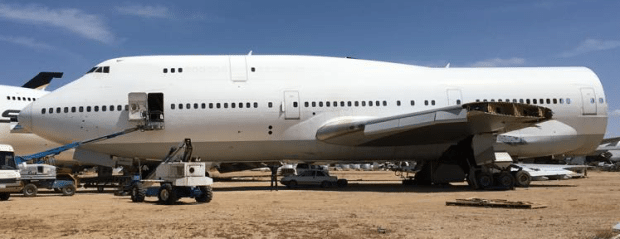
The Big Imagination Foundation of Venice, Calif., is converting a 747-300 – or part of one – into “the biggest art car in the history of Burning Man.” That event which takes place in a temporary community built in Nevada’s Black Rock Desert is a perfect place for a Jumbo Jet converted into a rolling art exhibit.

Here are the three phases of the conversion (Phase One has been completed):

Phase One: Clean out, and cut off the tail and wings.

Phase Two: Reconstruct the upper deck and refinish the cockpit, cut the upper section of the fuselage, and prep the upper fuselage for transport.

Phase Three: Reconstruct the lower deck interior, install the decks over the wings and upper deck canopies, unbolt the wings/landing gear and prep for lower fuselage transport.

When completed, the fuselage will be 132-feet long, 24-feet wide, and 20-feet tall. The moving team will consist of a semi with 12-axle trailer, five highway patrol officers, two bucket trucks, two pilot vehicles, a transportation captain, and a documentary film crew.

The trip to Nevada for Burning Man, which runs from Aug. 28 through Sept. 5, should be a spectacle for the drivers sharing the road with half a 747 on wheels.

The Big Imagination Foundation is accepting donations to help fund the project. You can visit the website to donate and to learn more about it.

This Plane Went Around At The Most Dangerous Airport In The World And Survived

Lukla2

Climbers planning to scale Mt. Everest first have to get past landing at the world’s most dangerous airport.

Two months ago we published a week-long series on some of the world’s most dangerous landing strips (the links to those posts can be found in this roundup.)

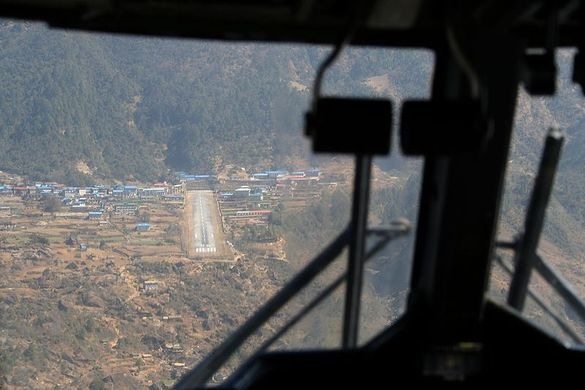
So what is considered the world’s scariest/dangerous airport? The strip of asphalt in Lukla, Nepal – which also happens to be the gateway to Mt. Everest, one of the world’s most challenging mountain climbs.

This “airport” is at an elevation of 9,100 feet. The tarmac is 65 feet wide by 1,500 feet long. At the southern end, there’s a 2,000-foot drop into a valley. At the opposite end, the runway ends in a stone wall and a hairpin turn. Pilots have to hit their mark when landing.

The runway has a gradient of 12 percent, sloping down toward the valley. That upward slope helps slow planes on landing to the north but creates even more excitement on takeoffs as planes are angling down – toward the valley – when they’re supposed to be heading up.

The video below of this Twin Otter of Tara Air shows a rare “go-around.”  On final approach an aircraft has to be stable.  That means that they are lined up with the centerline, at the correct airspeed and have a descent rate that is within tolerances.  In any approach, a go-around is a challenging maneuver.  At Lukla, a late go around could easily result in CFIT or Controlled Flight Into Terrain.   In this video of an aborted landing at Lukla, the pilot chose to bank left.  He veered off into the valley, below the horizon.  He dropped off-camera (which led to a heart-in-the-throat feeling for viewers like us) until the plane reappears for a (successful) landing.

Trivia note: The official name of this landing strip is Tenzing-Hillary. In 2008, the airport was renamed for Sir Edmund Hillary, not the two time presidential candidate.In January 2008 the airport was renamed in honor of Sherpa Tenzing Norgay and Sir Edmund Hillary, the first people to reach the summit of Mount Everest in 1953. Their climbing adventure/accomplishment didn’t include landing at the airport, which had yet to be built.

[youtube id=”8LD5JhGMxow” width=”800″ height=”454″ position=”left”]

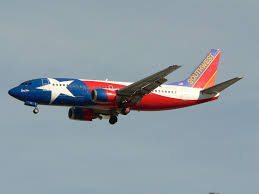
Southwest Airlines Retires Lone Star One, One Of Its First Unique Liveried Planes

LoneStarOne

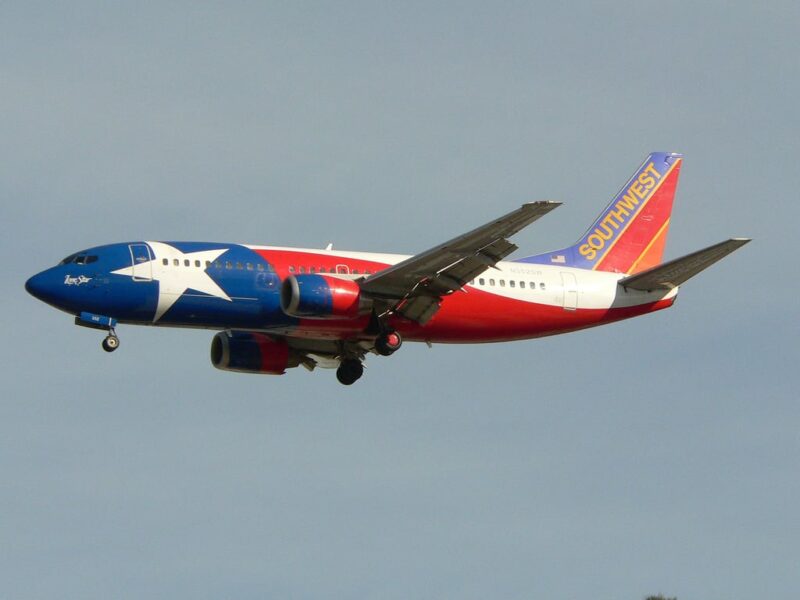
Lone Star One, a 737-300 that was one of Southwest Airlines first uniquely liveried planes, has been retired.

Southwest Airlines announced this week that one of its special 737s would be retired. Lone Star One, N352SW, a 737-300, has been pulled out of service.

The plane made its debut in November 1990 and was the first Southwest aircraft to feature a state flag – the Texas state flag, in recognition of its home state.

The plane is retiring but the airline said that a new Lone Star One will make its debut later this summer.  This time on a 737-700NG aircraft.

The Dallas-based airline has a rich history in distinctive color schemes for selected planes in its fleet.  Southwest’s first special livery aircraft made its debut on May 23, 1988. The 737-300 (N334SW) was painted as a Killer Whale from nose to tail, in partnership with Sea World of Texas.

The Lone Star livery was second in line. The airline has partnered with the NBA, Sports Illustrated for its swimsuit issue and has celebrated the states it serves with state-flag liveries.

Boston Airborne posted a video of it flying in the Northeast just 10 months ago.  Today, it is at its final resting place in Tuscon, Arizona waiting to be parted out and cut for scrap.

[youtube id=”AZ1LoR0omJo” width=”800″ height=”454″ position=”left”]

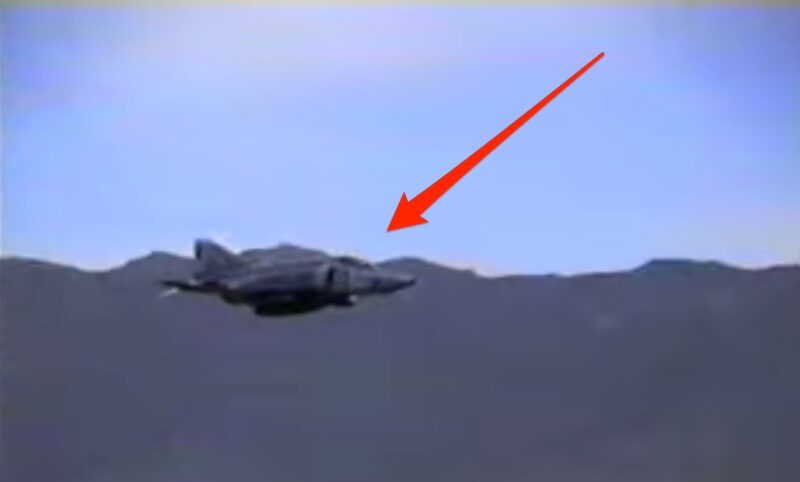
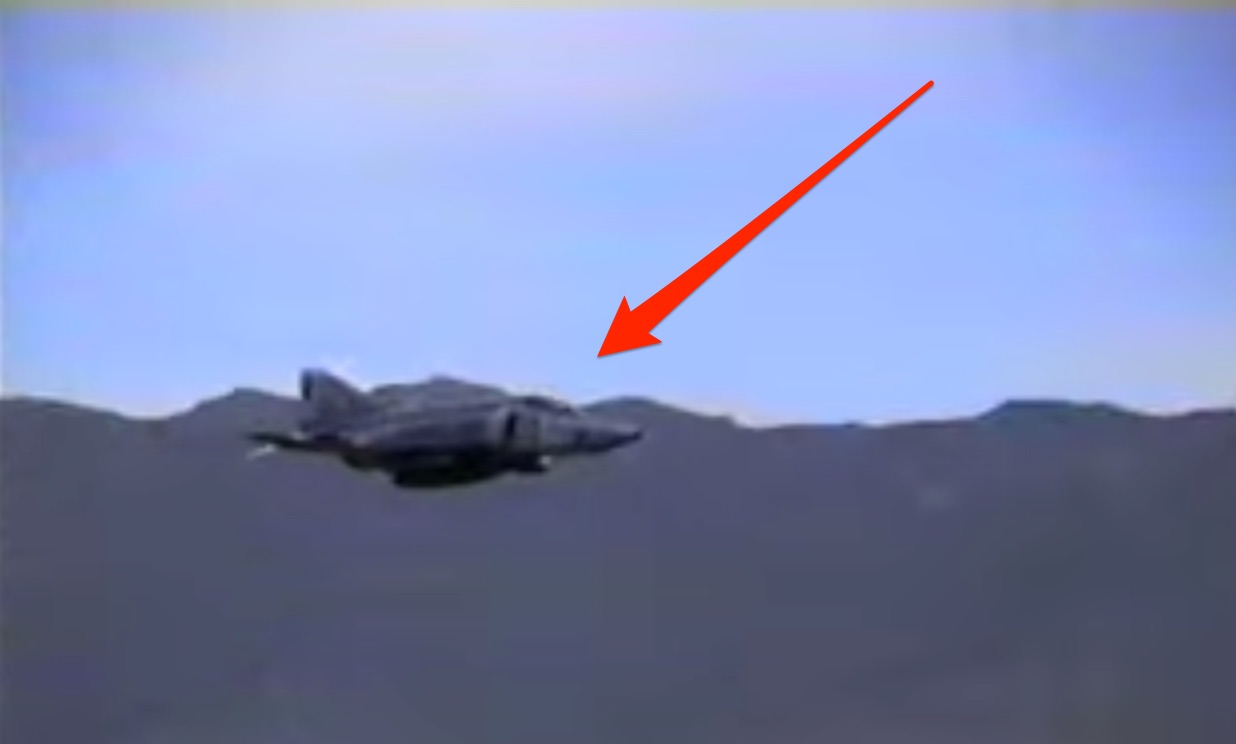
F-4 Phantoms Low Level, Full Throttle: A Rare Treat of J79 Powered Roar

rf4low

These Air National Guard F-4 Phantoms provide some thrilling action with their powerful low-level passes.

If you … love the smell of jet fuel in the morning.

And if your morning starts with an alarm sound that’s the roar of a fighter engine at full throttle.

Then this video is for you.

Most videos like this one, which last five minutes, is accompanied by some sort of musical sound track (probably Kenny Loggins’ “Danger Zone” from “Top Gun.”) And, apparently the original version did have a musical background.

But these F-4 Phantoms of the Reno Air National Guard making dozens of low-level passes at full throttle needed ambient sound. So, the musical sound track was ditched for this version of the video – which captures the F-4s breaking the sound barrier.

For those needing a little historical background, here’s the 411 on the F-4.

The Phantom is a two-seat, twin engine supersonic fighter that was developed my McDonnell Douglas. The F-4 was a fighter/bomber that proved its versatility during the Vietnam War. Originally developed for the Navy, it was so popular that the Air Force and the Marines each adapted a version.

When it first debuted, the F-4 set 15 different world records. The Phantom proved it could arrive quickly and in a bad mood. It could reach Mach 2.2 and could lug more than 18,000 pounds of weapons on nine external hard points.

[youtube id=”9khQr1iOPfs” width=”800″ height=”454″ position=”left”]


Combining Star Wars ‘Dogfights’ With ‘Danger Zone’ Is A Perfect Mashup

Loggins

Sure it’s a little bit of a stretch for Avgeekery.com but we’re pretty sure that any video with Danger Zone in it is fair game.

Aerial combat (well, space combat, actually) from Star Wars movies with the “Danger Zone” soundtrack by Kenny Loggins? Kick the tires and light the fires, we’re there.

Two years after Star Wars hit theaters in 1977, Kenny Loggins scored a Grammy with his single “This Is It.” And then in 1986 Loggins had the theme song for “Top Gun.”

How are these movie/music facts connected? They’re not.

At least not until someone had the brilliant idea to take Loggins’ “Danger Zone” – the hard-driving, perfect song from the 1980s hit – and use it as the musical backdrop for the video of spaceships clashing in the various Star Wars flicks. Shout out to Weston Wong for a masterful job of melding the music with the video.

Which brings to mind these questions:

Even though the battles between the good guys and the bad guys flying X-wings and TIE fighters take place in space and in a galaxy far, far away … are they still classified as dogfights?

Luke Skywalker is a great name, but he didn’t have a nickname like Lt. Pete “Maverick” Mitchell, did he?

If Luke “used the force” did Maverick use the force of Goose’s dog tags?

If not for Kenny Loggins’ songs, would “Top Gun,” “Footloose” and “Caddy Shack have been the big hits they were?

Whatever happened to Kenny Loggins?

Star Wars has been part of seven different sequels/prequels – why hasn’t Hollywood decided to crank out a “Top Gun II?”

[youtube id=”9EFMWiBQQrk” width=”800″ height=”454″ position=”left”]

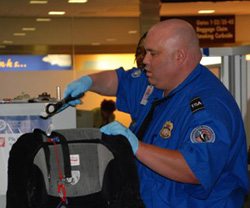
Airlines, Passengers Have Had Enough With TSA Security Lines But Will It Change?

Airlines and their customers are fed up with the long lines and delays. They’re as mad as hell at the TSA and they don’t want to take it anymore.

[youtube id=”QMz_RQuTBlI” width=”800″ height=”454″ position=”left”]

That’s Peter Finch, who won the Best Actor Oscar for his portrayal of mentally ill newscaster Howard Beale in the great 1970s movie “Network.” His rant would be a perfect theme for air passengers this summer.

With the summer travel season approaching and the United States’ commercial airlines gearing up for full-capacity flights, the specter of nightmarish-long security lines has air carriers and airports ready for the complaints.

Most of those disgruntled passengers take out their frustrations on the airlines – especially if the security line causes them to miss a flight – or the airport itself. Complaining to the TSA is likely to lead to a strip search. The procedures have barely changed and aren’t any speedier than when the security was ramped up after 9-11.

Congress spent three hours putting TSA Administrator Peter Neffenger on the hot seat Thursday about the dysfunction of the organization he runs and the long lines facing passengers.

Delta has offered to assign some of its staffers to help the TSA this summer. The TSA is warning that staffing shortages and a lack of funds to pay for overtime will create a lack of manpower at check points.

“The customers don’t distinguish security when coming through the airport between Delta and TSA,” Delta CEO Ed Bastian said during a recent media event at its Atlanta headquarters. “Security is something that, in our opinion, is a joint responsibility of both TSA and the airline, and we will do our share to help.”

The Port Authority of New York and New Jersey – which is in charge of the three major airports in the New York City area – along with Atlanta’s Hartsfield-Jackson Airport have sent scathing letters  (yeah, those always work, don’t they?) to the TSA that if the screening process isn’t improved, they’re prepared to privatize the passenger screening process.

The Atlanta airport is working with Delta Air lines and TSA to experiment with Innovation Lines at Hartsfield. The new procedures are similar to the systems being used at London’s Heathrow and Amsterdam’s Schiphol airports.

Two I-Lines are scheduled to come on line at Atlanta’s south domestic terminal checkpoint later this month. Here’s how they work:

  • Baggage bins automatically move to a separate conveyor belt if a TSA agent IDs them as suspicious.
  • Baggage bins automatically recirculate after they move through the security machine.
  • The I-Line includes special “divestiture” areas where passengers can take off shoes, belts, etc. at their own pace.

Of course, the irony is that last week the lines at the Atlanta airport were even longer – the TSA closed the south security checkpoint for three weeks of testing of the new I-Lines. Progress can indeed be painful.

If the program is successful in Atlanta, it could be implemented at other airports. Until then, the frustrations will remain high.

The New York/New Jersey Port Authority letter to the TSA mentioned the “inadequacy of TSA passenger screening,” fears of widespread “customer dissatisfaction” and described wait times as “abysmal.”

From mid-March to mid-April, there were hundreds of times that passenger waits lasted more than 20 minutes – and sometimes more than 55 minutes, the letter said.

You can blame carry-on bags, the TSA, or the cheap fares. The bottom line is that it doesn’t look like lines are getting shorter anytime soon.

A Familiar Look For Piedmont Reappears

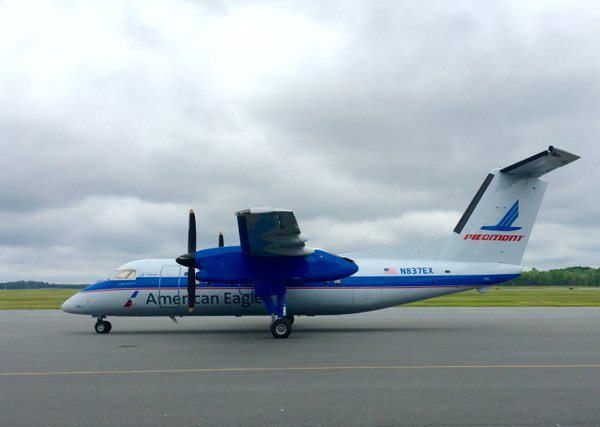
Piedmont2

Bringing back an original color scheme and look for a Piedmont aircraft.

Piedmont Airlines, which began flying under the American Eagle brand in October of 2015 after the merger of American Airlines and US Airways, which became final in 2013. The regional airline serves Philadelphia plus three other locations in Pennsylvania, Virginia and Maryland.

American Eagle repainted one of its Dash 8 fleet carriers in the Piedmont original colors and debuted the new color scheme this week.

The original Piedmont has a rich history.  It first flew in 1961.  In the 1980s, it rapidly expanded on the east coast of the US before being purchased by US Air.  US Air, later US Airways, renamed one of its regional subsidiaries as as Piedmont.  Today, they fly a fleet of Dash 8s and EMB-145s under the American Eagle brand.

Full Power: Massive 757 Does High-Speed Flyby Followed By Unrestricted Climb


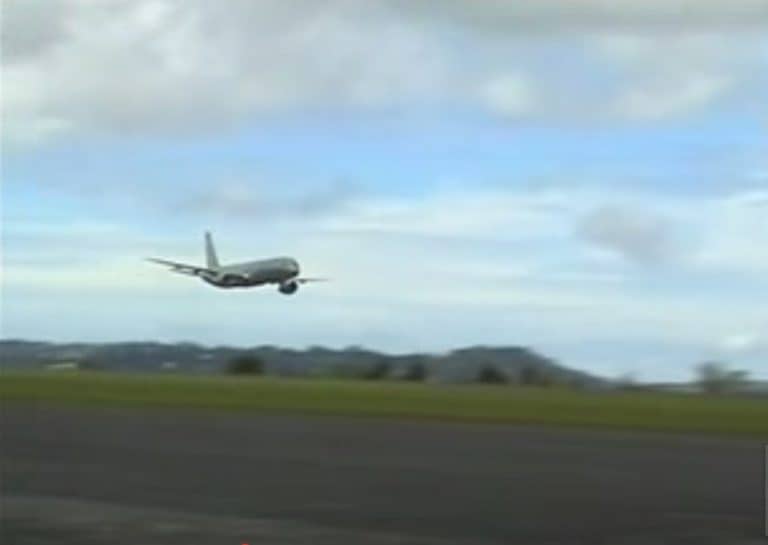
This lightweight 757 does a low-level fly-by followed by a cloud-piercing climb.

If you are an avgeek, you’ll love watching this video.  We’re suckers for unrestricted climbs of our favorite aircraft.  The 757 is definitely on the list.

The 757 was developed to take the place of the popular 727. A narrow-body, single-aisle commercial aircraft, it was designed for airlines facing higher fuel prices. The new plane’s design used lighter materials and featured better aerodynamics.

Plus, the twin-engine design improved fuel efficiency. The 757 was built to save 20 percent of fuel consumption. The power-to-weight ratio made it possible for it to operate from shorter runways plus serve airports where the air was hotter and thinner.
The 757 Is an Overpowered beast of an airliner

The 757 was a narrow-body aircraft with a high-lift wing and the power plants capable of carrying a hefty load of freight and cargo. When this lightly-configured jet with new Rolls Royce engines was allowed to go full throttle and head for the ceiling, it could put on quite an impressive show.  

This video was posted on Youtube by Historical Machines TV.  We’re grateful for them posting some beautiful footage.

Bonus video below!

Additional video of another performance was posted on Youtube by roderm.  See the video below.

It’s A Bird … It’s A … Fish? Nope, It’s Super Guppy The Ultra Rare NASA Airplane

Guppy2

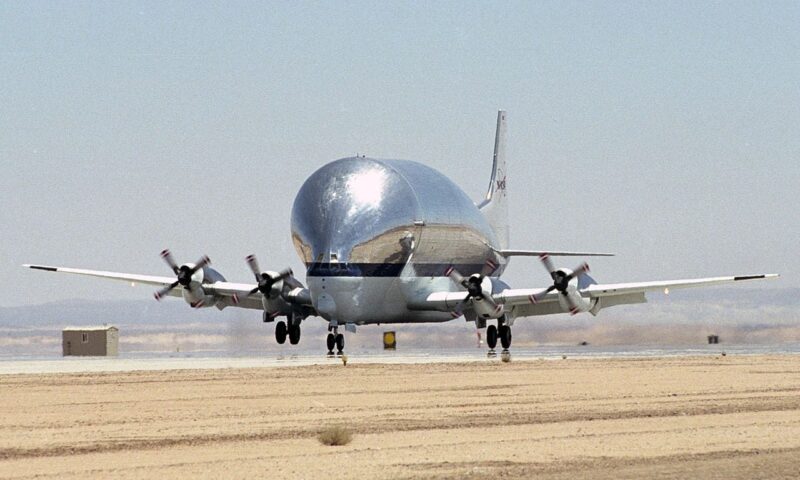
For 50 years, NASA’s Super Guppy transport aircraft has carried and delivered over-sized cargo to keep the space program moving.

There are aircraft that are inherently beautiful and graceful. Either on the tarmac or in flight, they elicit admiring glances.

To be quite frank and blunt, the Super Guppy isn’t one of those aircraft.

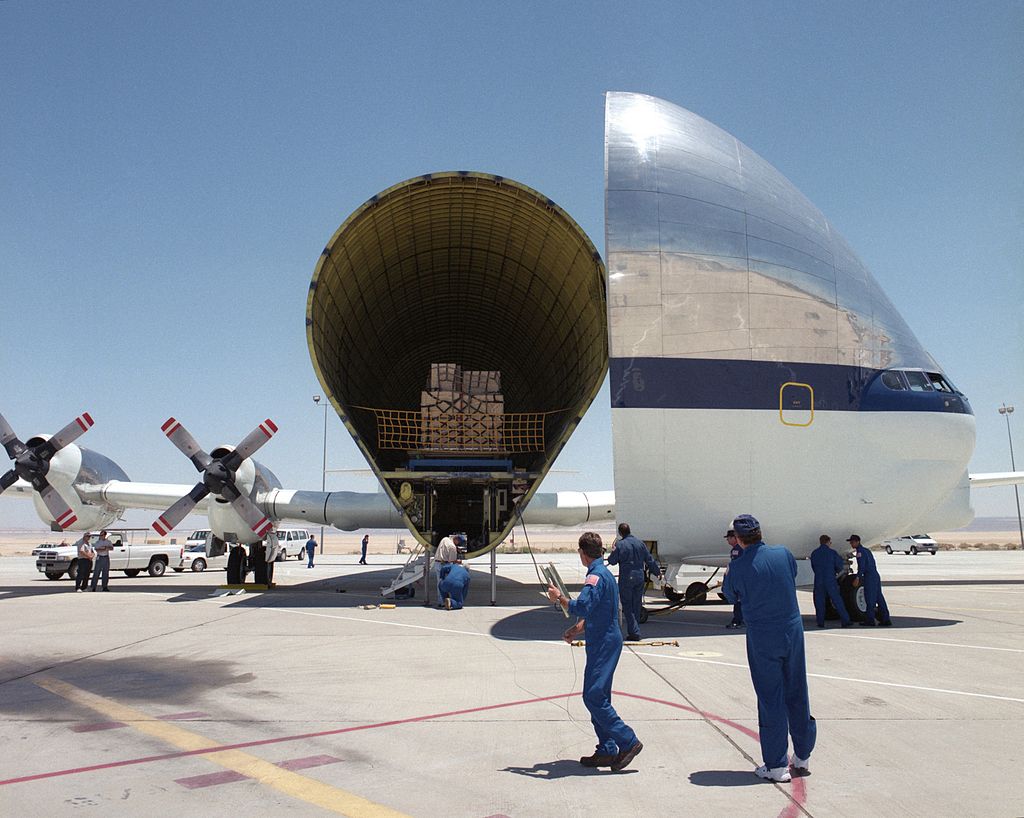
It’s swollen fuselage, from a side view, does give it a fish-like appearance. But as typically the case in a plane that has an unusual appearance, this plane has been modified for a specific purpose. It transports oversized components for NASA and has been on the job for half a century. From Saturn booster rockets to the Hubble Telescope, the Guppy has swallowed and moved cargo that has helped keep the space program moving.

Early versions were modified from the C-97J Turbo Stratocruiser. Later versions were constructed from scratch, using only the cockpit, wings, tail, and main landing gear. A four-engine turboprop, the Super Guppy also has had engine modifications to improve power and range.

This aircraft also features full frontal … cargo loading. A unique hinged nose swings open 110 degrees to permit easy loading and off-loading.

This particular Super Guppy mission was a four-hour flight between between Ellington Field, Texas and Wright-Patterson Air Force Base, Ohio. The cargo was a Crew Compartment Trainer for the Space Shuttle to be displayed at the National Museum of the United States Air Force.

[youtube id=”MnBTc7ningY” width=”800″ height=”454″ position=”left”]

OPINION: Let’s Support U.S. Developing The A-29 Super Tucano

Photo by Nardisoero
Photo by Nardisoero

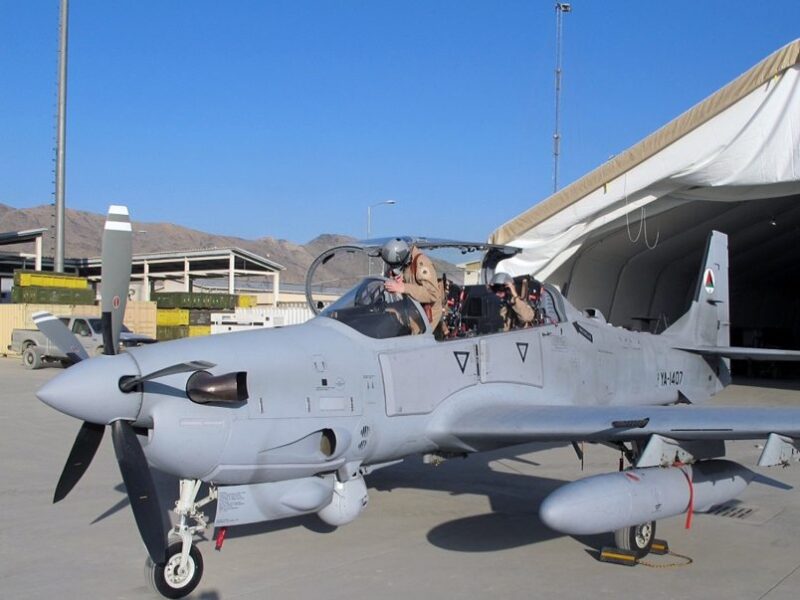
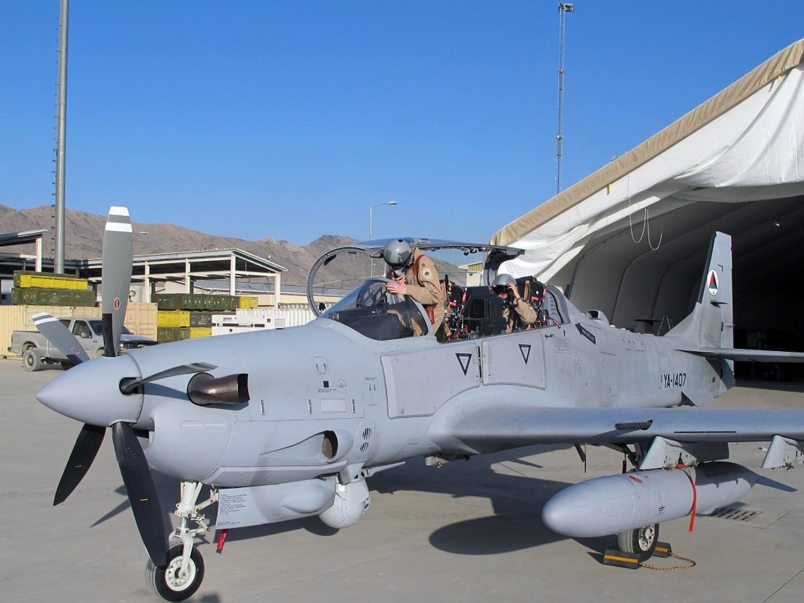
The A-29 Super Tucano has the qualities needed for effective ground support in this era of modern warfare … so let’s add it to the U.S. arsenal.

Place this in the “Everything Old Is New Again” file.

Modern warfare, in particular the fight against terrorism, has created a new demand for a ground support military aircraft. The A-10 Warthog continues to be outstanding in its role of providing accurate fire and weapons on enemy ground positions.

But going back to a single-engine, propeller driven, ground support attack aircraft makes sense – even if it resembles the war birds that flew during World War II.

The development of the A-29 Super Tucano, also known as the Embraer EMB 314 Super Tucano has provided a ground attack plane that can get the job done. Unfortunately, as this story points out, Congress failed to OK the funding for the Air Force to add the A-29 to its arsenal.

So why a turboprop plane? The A-29 can fly at low speed at low altitude and operate in desert-like heat. It also has the fuel capacity and economy to stay on station for long periods of time. The Super Tucano can be configured in single-seat and twin-seat models.

The A-29 has .50 cal machine guns (one in each wing), and features five hard points under the wing and a fuselage that can carry up to 3,300 pounds of additional weapons. The hard points also can be configured to carry auxiliary fuel tanks.

The A-29 is also cheaper to operate, requiring about $1,000 per hour in the air. By contrast, the A-10 costs about $11,500 per hour while the controversial F-35 Joint Strike Fighter costs about $30,000 per hour of flight.

In January, the Afghan Air Force (AAF) acquired four A-29s, the first of 20 set to be delivered over the course of the next few years.

“The A-29 light attack aircraft is a versatile aircraft that brings a number of critical capabilities to the AAF,” said U.S. Army Colonel Michael T Lawhorn, director of public affairs for NATO’s Operation ‘Resolute Support’ in Afghanistan, said. “These include close air support, armed escort, and armed over watch.”

If the Defense Department is resolute in its desire to eventually retire A-10s from active service, it should ask ground troops what sort of close-support aircraft they would prefer to replace it with knowing that the other options are the F-35 or a limited number of F-16s. Given the choice between nothing and a capable weapons system, they’d probably vote for the A-29. Too bad that’s not the process.

Chemtrail Planes Are Real! (Sarcasm.) Two 727s Converted To Help Contain, Disperse Oil Spills

727oilspill

A company in England that helps fight oil spills has converted two Boeing 727s to serve as chemical-dispersing delivery aircraft.

Ocean oil spills can be disastrous to the environment. When a significant amount of oil is accidentally released, the response time is critical. Before the spill spreads, containment and chemical dispersing are two of the main weapons.

Chemical solutions are used to break up the slicks into smaller droplets, which are then mixed by the water’s natural movement. Delivering those solutions early helps to prevent large slicks from reaching shore and fouling beaches.

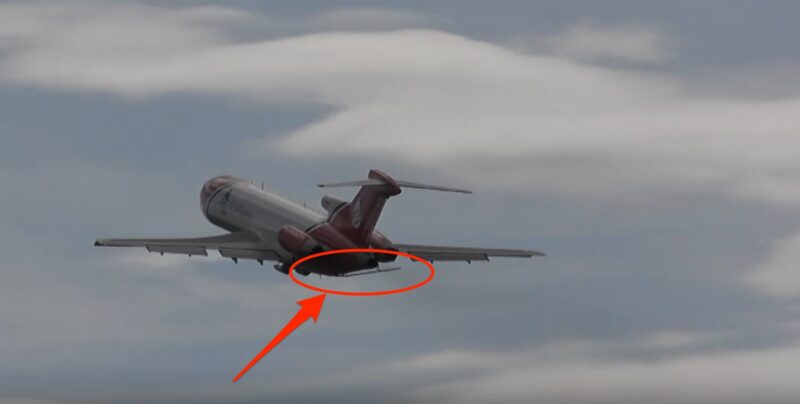
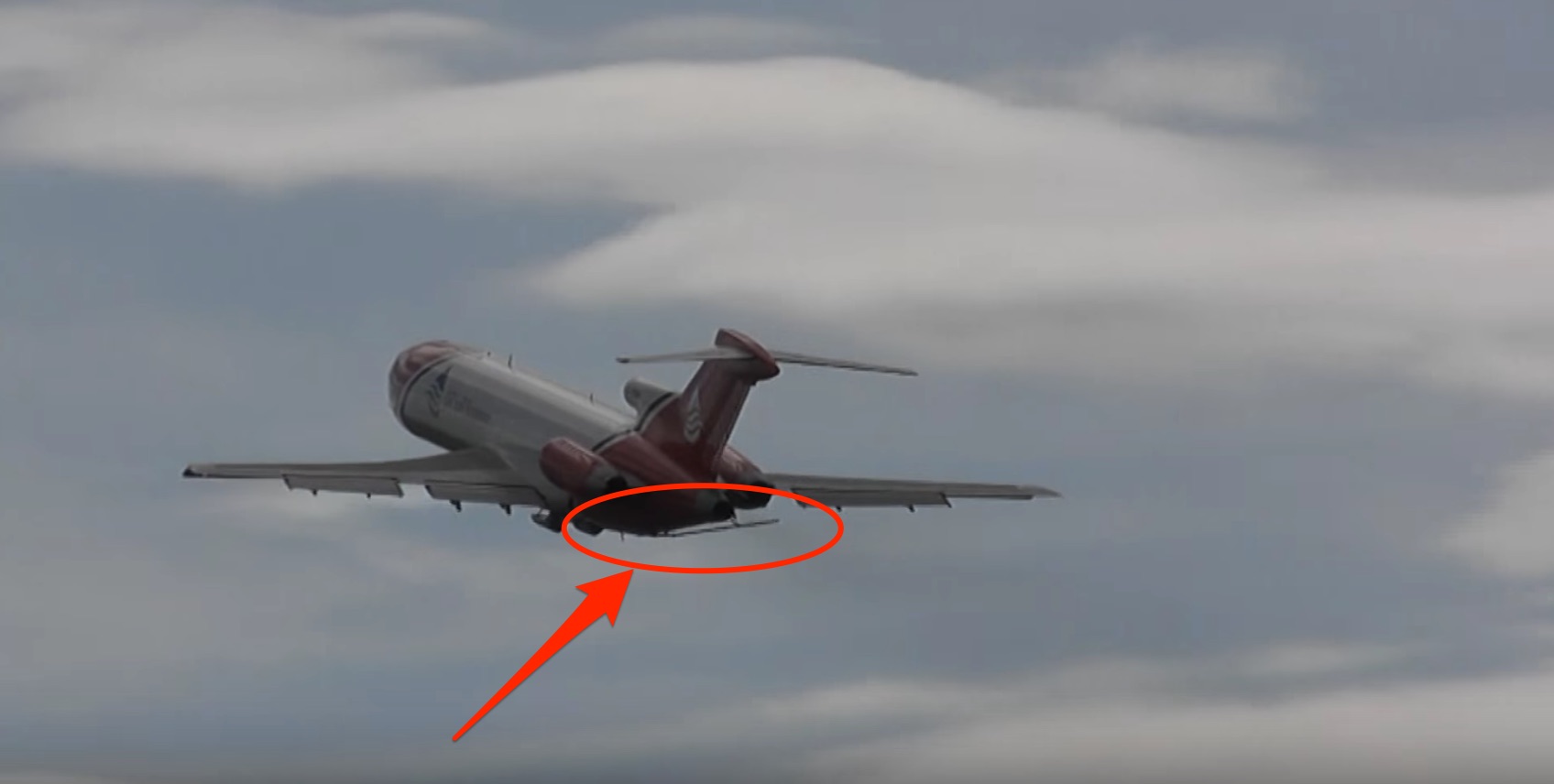
Oil Spill Response Limited (OSRL), a company based in England, as converted two Boeing 727s to serve as quick-response delivery systems to fly to the site of a spill and spray oil dispersant chemicals.

The 727s, previously owned by FedEx, have had to undergo significant alterations to gain compliance. The United Kingdom’s Civil Aviation Authority (CAA) ruled that the dispersant liquid used to break up oil slicks should be treated as flammable. That led to the aircraft being classified to carry flammable cargo.

The advantage of using aircraft to deliver oil-dispersant chemicals are obvious. First, they can arrive much quicker than ships that are sent to do the same job. Previously, ORSL used Hercules transports but the 727 has a definite speed and range advantage over the four-engine propeller-driven transports.

OSRL has one 727 that will be loaded with oil dispersant chemicals and on-call 24-7. The other 727 will be used to deliver cargo to help defer the company’s expenses but can quickly be converted to serve as another delivery system.

In the video below by miar2006, you can clearly see the spray bar below.  Eat your heart out Chemtrail fans!

(If you’re into the technical aspects, here’s the company report on the 727 project.)

The Week In Review: A Look Back At The Stories And Videos Of The Last Seven Days

737-200
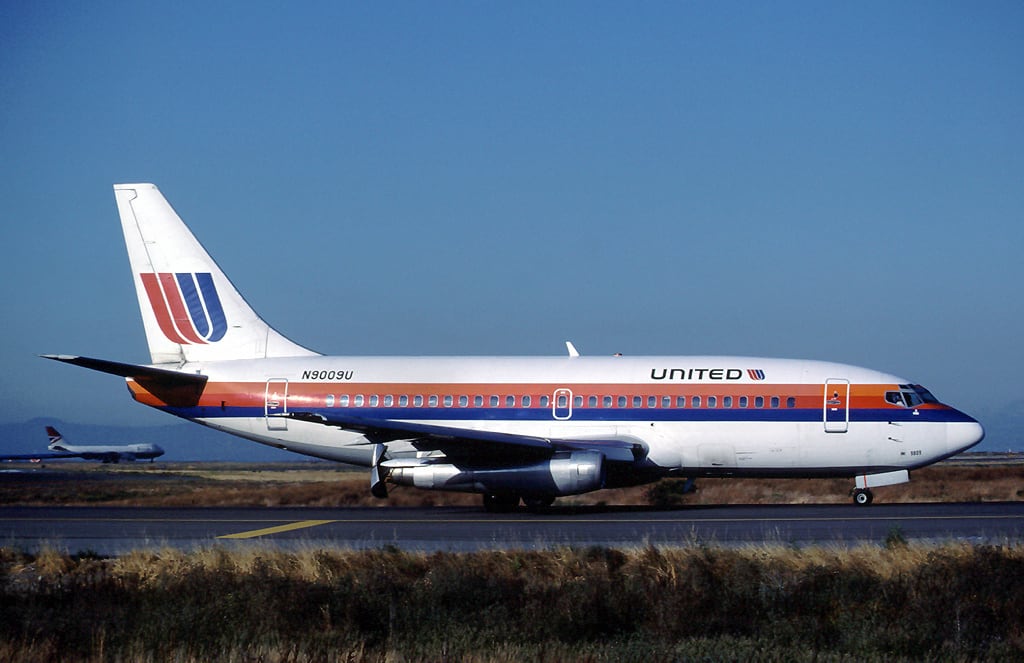
We continued our love fest with the venerable Baby Boeing 737-200.

The week that was – a compilation of Avgeekery.com stories and videos from the last seven days.

Happy Mothers Day, Avgeeks!  Don’t forget to call your mom.  Here are two stories this week that honor women who did the extraordinary.

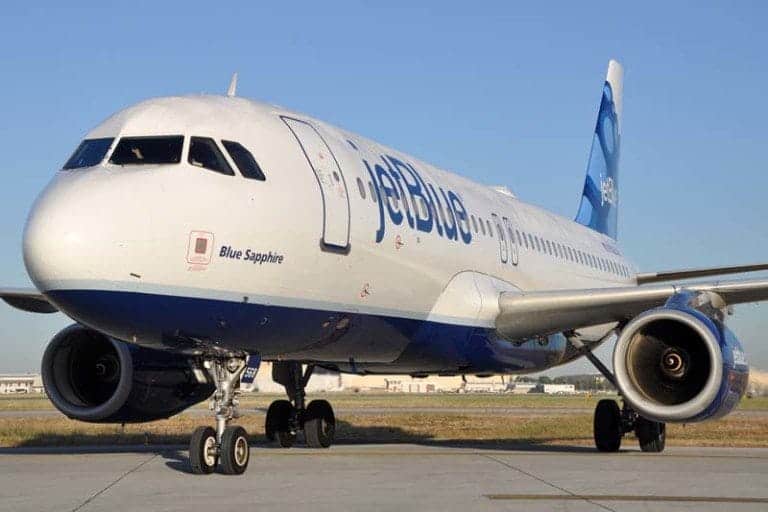
JetBlue offered another great promotion for passengers on a recent flight by turning tears into cheers.

Our weekly “Flashback Friday” tells the little-known story of the women whose math skills helped launch our space program.

—————

With the passage of another week, Avgeekery.com looks back and offers a one-stop post that shares all of the other stories and videos posted during the last seven days that our readers loved. Just click and enjoy.

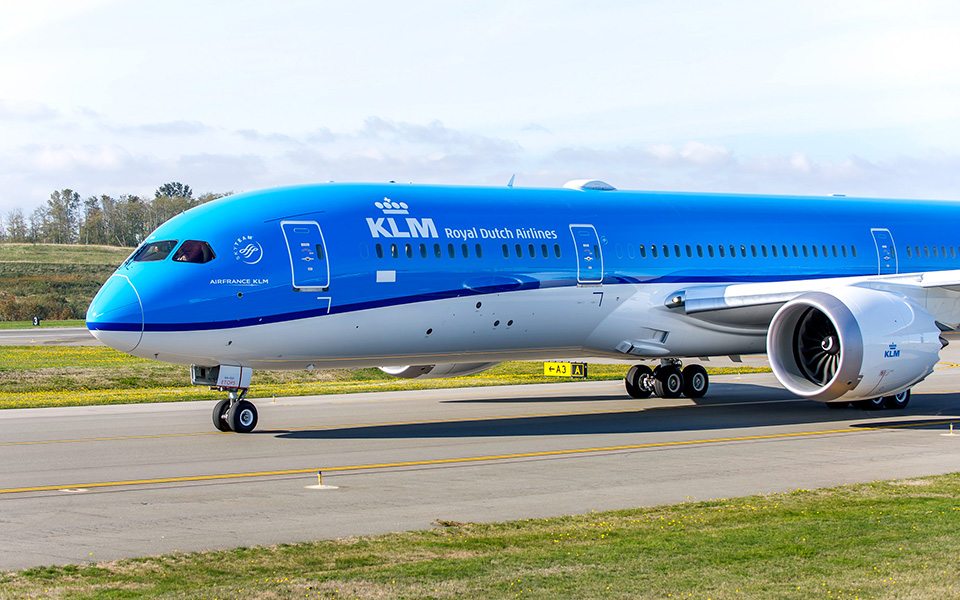
Would you be surprised to know that the Boeing 787 Dreamliner, the cutting edge of commercial aircraft, is equipped with a … propeller?

An experienced pilot recalls his time flying the 737-200 – a “pilot’s airplane.”

A wonderful documentary worth your time about the “Silent Wings” – courageous glider pilots in World War II.

This Chicago-area skydiving club got a rare treat – jumping from the bomb bay of a World War II-era B-17.

The Lockheed Super Constellation’s four engines give a new definition to the term “flame out.”

A decade ago, WestJet celebrated the retiring of its 737-200 aircraft with a double fly-by buzzing of the airport tower.

The versatility of the 747 is displayed as “The Spirit of John Muir” debus as the world’s largest fire-fighting aircraft.

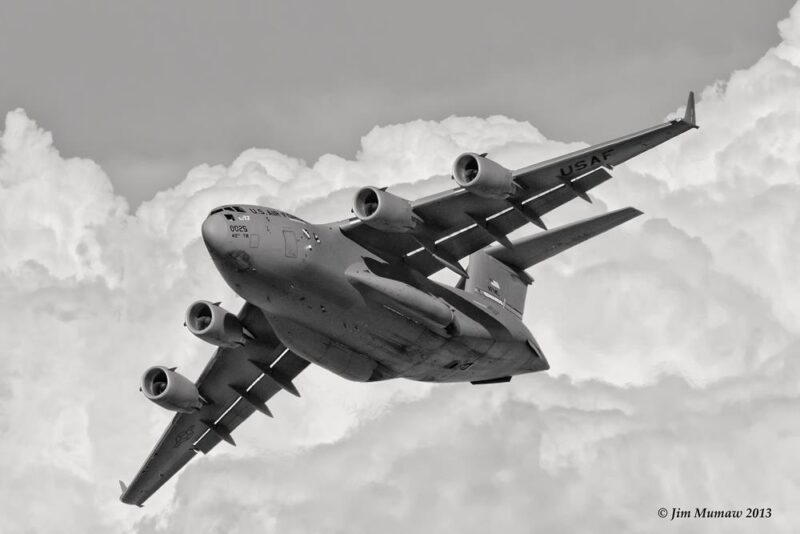
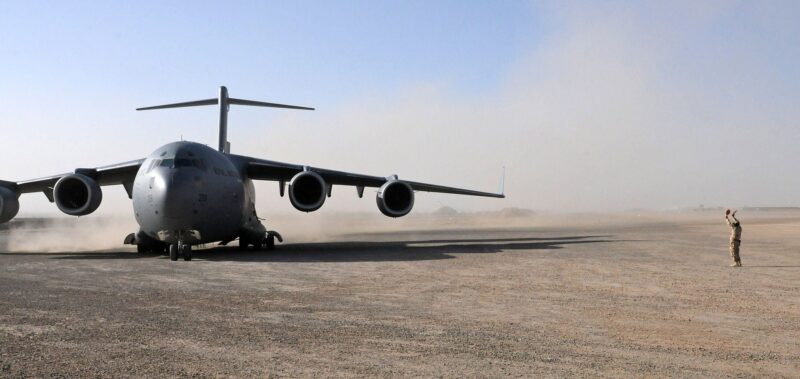
The C-17 Globemaster proved its “off-road” capability by making a delivery on a dirt runway.

JetBlue offered another great promotion for passengers on a recent flight by turning tears into cheers.

Why Is There A Propellor on the Boeing 787 Dreamliner? Meet the Ram Air Turbine

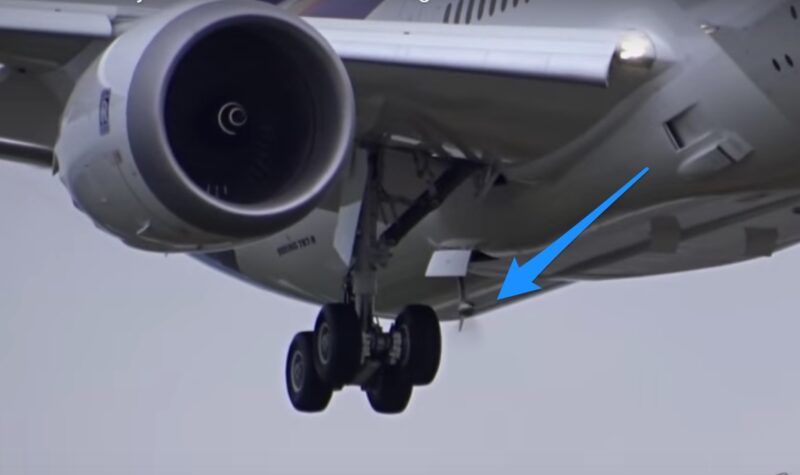
 Did you know that the 787 can deploy a propellor underneath its fuselage?  It’s called a Ram Air Turbine or RAT.  

Not the furry animal, silly. The 787 Ram Air Turbine is a propellor that provides an auxiliary source of electrical power in the case of dual engine failure.

If you look closely at the video below, you’ll see that this video shows testing of the Dreamliner 787 ram air turbine (RAT). It’s a small propeller installed on each side of the fuselage that can be used as an additional source of power in the event of a dual engine loss.

Every Boeing 787 has a Ram Air Turbine
Photo by Boeing.

It generates its power from the airstream by ram pressure.  The RAT is meant only as an emergency power source for the aircraft in the event that both engines fail.  It provides enough electrical power to power only one of the 3 electric hydraulic systems on the jet.  If you have to use it for real, you are having a really bad day.

787’s Ram Air Turbine Is Tested Regularly

The RAT is tested before delivery.  It’s also tested occasionally during revenue service.  Once the RAT is deployed, it can’t be retracted.  It has to be stowed by maintenance personnel after landing.

The Dreamliner is an amazing aircraft, but it has had its fair share of problems, even lately.  We reported recently on Avgeekery.com, that the FAA is requiring some Dreamliner engines to be replaced as part of an emergency directive.

Icing issues on certain models of the General Electric engines on Dreamliner led to the Federal Aviation Agency to issue a directive to “urgently modify” those engines.

The General Electric engine model GEnx-1B PIP2 is in question. Planes that are equipped with both engines of that model could potentially experience a catastrophic loss of both engines in flight.

WAAAAAAH!!!!! On This JetBlue Flight, Passengers Cheered Crying Babies

 Baby

Wailing babies on a long flight are enough to make grown-ups cry but this JetBlue promotion turned tears into tickets.

Anyone who flies commercially understands that it’s best to expect the unexpected. Weather delays, mechanical issues, flight crews arriving late because their flight was late are among the curve balls that can make for a miserable travel experience.

And if you’re a parent who is traveling with young children – babies especially – you brace for the challenges of making sure the young ones don’t scream/cry for a three-hour trip. If your child decides being at 35,000 feet is going to make his/her inner ears hurt, you’re in for the longest flight of your life.

Credit JetBlue with another great promotion (this one from a few months ago was chronicled on Avgeekery.com). On April 15, the airline offered a “FlyBabies” promotion on a flight from New York City’s JFK to Long Beach, Calif.

Flight attendants announced that on that flight “crying babies” would be a good thing. For each crying baby, JetBlue would offer all the passengers on the flight a 25 percent discount. Four criers equaled a free flight for each passenger.

After the first wail, the passengers started cheering and clapping each time a baby started to cry. By the time the plane landed after the seven-hour flight, all 140 passengers had earned a free roundtrip ticket on JetBlue.

“We weren’t necessarily sure what to expect from folks on board, it was interesting to watch,” JetBlue spokesperson Morgan Johnston said. “We started seeing people really want to entertain the kids and make it a comfortable environment on board.

“We’ve had this ongoing mission to inspire some humanity, and we thought this was something we could weigh in on.”

http://money.cnn.com/2016/05/03/pf/jetblue-free-flight-flybabies/

The airline and its advertising agency has turned the video from the flight into a Mother’s Day commercial that it hopes brings awareness to the stress parents feel when they’re traveling with toddlers.

“People smile at babies everywhere, except on planes,” said Elizabeth Windram, JetBlue’s director brand management and advertising (and a mother of a toddler). “For Mother’s Day, we wanted to acknowledge how moms (indeed all parents and caregivers) often feel stressed while traveling with children.”

Two thumbs up for JetBlue for the clever promotion of their airline and for making people aware that cute babies cry sometimes when stuck on a seven-hour flight.

[youtube id=”xQyfu1LrOSM” width=”800″ height=”454″ position=”left”]

This Massive C-17 Doesn’t Mind Getting Dirty To Deliver A Payload

Rugged and versatile, the C-17 Globemaster doesn’t need a paved runway to make deliveries.

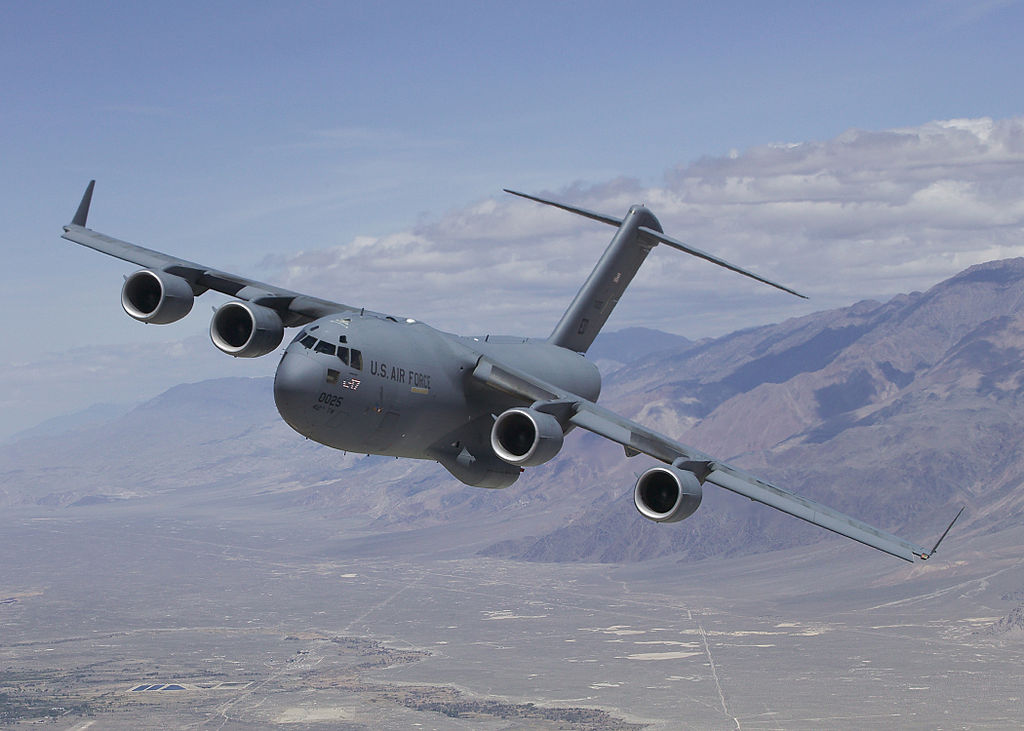
The C-17 Globemaster can be considered a master of its domain. The four-engine transport is the perfect component for the modern U.S. military and its ability to rapidly deploy troops and equipment anywhere in the world.

The Globemaster can also be described as the four-wheel off-road vehicle of the U.S. air fleet. It’s rugged enough that it doesn’t need a paved runway. The C-17 doesn’t mind getting dirty.

C-17Globe

This video is a prime example of the C-17 delivering cargo to an area that is near the front lines. A hard-packed dirt runway is sufficient for both landing and takeoff.

The C-17 has the cargo space to deliver a 69-ton M-1 Abrams battle tank. But on this mission, the cargo is a Boeing AH-64 Apache attack helicopter. The Globemaster’s cargo bay can be converted to handle either pallet cargo or rolling stock like the Apache.

The AH-64 is versatile in that there’s some assembly required after delivery. Being able to stow and transporter a helicopter requires attaching the four blades after landing. The ground crew also must work as a team to de-plane the copter as even with the large accommodation of the C-17’s interior, it’s a tight fit.

[youtube id=”hJjbaofaISo” width=”800″ height=”454″ position=”left”]

Flashback Friday: Get To Know The Rocket Girls

RocketGirls

In the early days of that helped launch our space program, “Rocket Girls” served as human computers.

If you’re searching for a last-minute Mother’s Day gift (if so, shame on you) and the lady in your life likes to read about trail blazing women, there’s a great book available.

Rise of the Rocket Girls: The Women Who Propelled Us, from Missiles to the Moon to Mars tells the story that few people know about. While the machines that have helped the United States lead the way in exploration are called “man-made” there was a group of women who in the early days were human computers.

During World War II, the Jet Propulsion Laboratory in Pasadena, Calif., was ground zero for research into the rocket power that would eventually help the American space program break the bonds of earth. What eventually became NASA was staffed by a number of women whose “beautiful minds” could crunch numbers. In those days, making calculations of speed, direction and power had to be done by hand.

In the words of Macie Roberts, one of the women working the problems with bulky calculators, pencils and graph paper, the criteria was: “look like a girl, act like a lady, think like a man and work like a dog.”

Author Nathalia Holt spent hours trying to track down the women who worked at JPL in the early days. While Holt says that “something magical happened there” it wasn’t without familiar challenges.

“There (are stories of) sexual harassment in the book—aeronautical engineering is a very male-dominated field, even today— but this was a strong group of women with a woman supervisor,” Holt said. “I think they did a remarkable job looking out for each other. And the men at the lab came to accept them as colleagues. Some male engineers even brought them onto studies and included them as co-authors on publications. At the time that was not common at all, and it really changed their career options.

“Most of the women I talked to felt very strongly about the role of mentoring the next generation.”

Even when the computers became more sophisticated to help with the calculations, women continued to have a tremendous behind-the-scenes impact on the space program. This book helps shed some light on their contributions.

“In a time before the digital devices that we’re used to today, it was humans that were doing the calculations,” Holt said. “And so you needed these teams of people — many of whom were women, especially during World War II — and they were responsible for the math.

“There is hardly a mission that you can find in NASA that these women haven’t touched.”


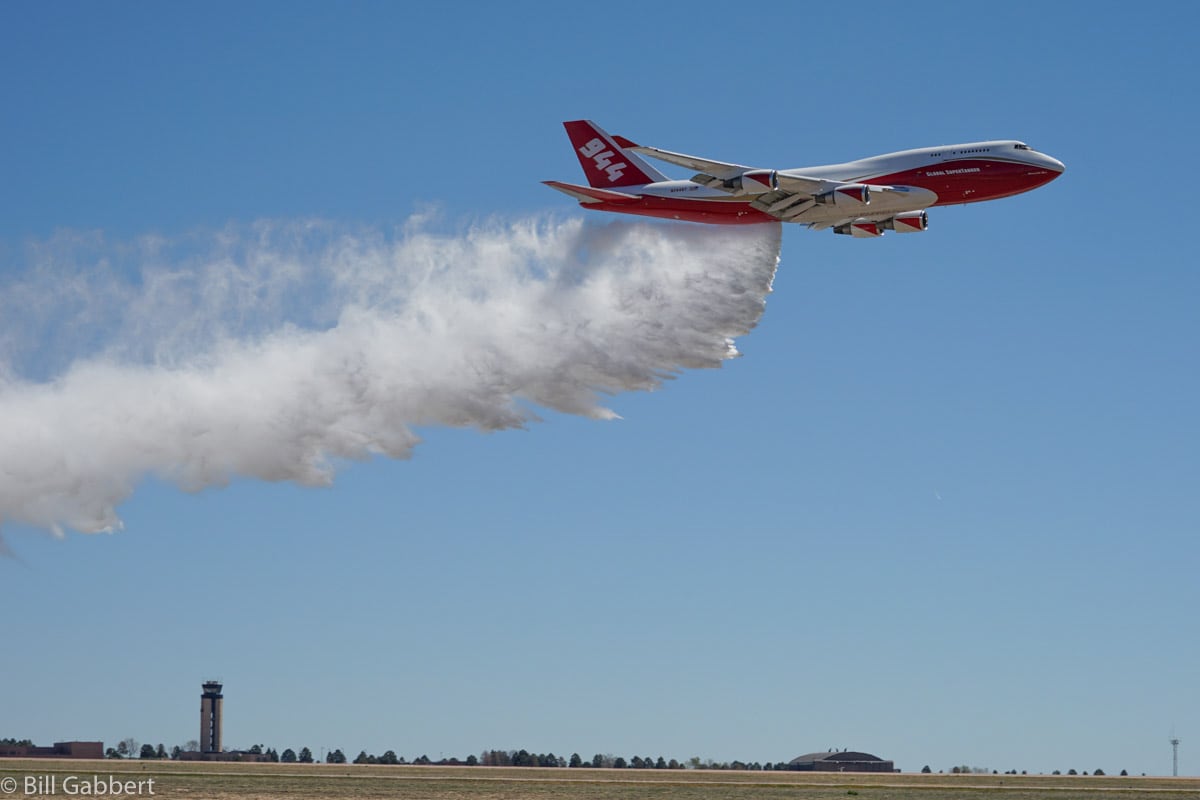
The Spirit Of John Muir: A 747 Converted Into The World’s Largest Fire Fighting Aircraft

Photo credit: Bill Gabbert, Fire Aviation

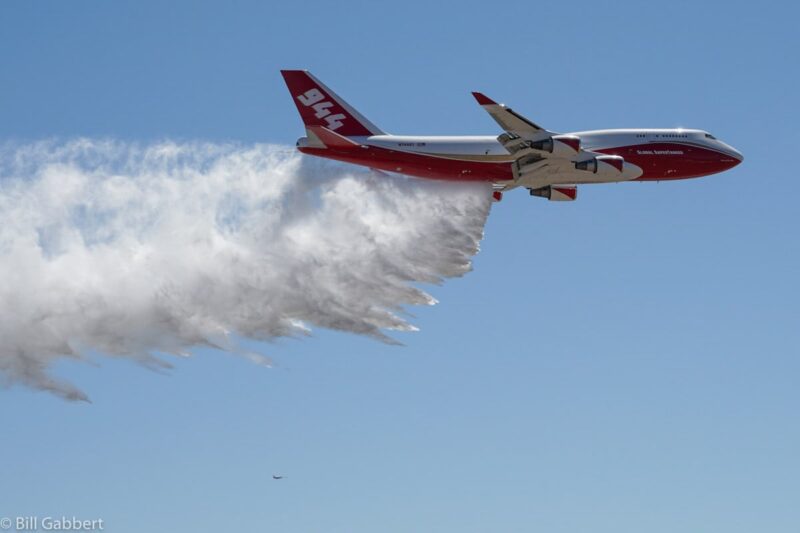
It’s a bird … it’s a plane … no, it’s Super Tanker, a 747 converted to the world’s largest fire-fighting aircraft.

With most 747s being retired as commercial airliners, the history-making four-engine jet still has several valuables uses. A few months ago, Avgeekery.com wrote about seven ways that the 747 is being re-purposed. One of those involved its possible use to fight forest fires.

Here’s what we wrote then:

Evergreen International Aviation, a company based in Oregon, converted four 747 cargo planes into aircraft that could deliver nearly 20,000 gallons of water and/or fire retardant chemicals. The company hoped to use its big plans to drop big loads to help fight fires.

Alas, the business model never worked out as government agencies preferred to continue using smaller planes. Evergreen filed for Chapter 7 bankruptcy. Last year, Global SuperTanker Services, LLC stepped in and took over Evergreen’s planes and plans. The use and effectiveness of 747 super tankers has yet to be determined.

That determination has now happened.

The Spirit of John Muir will officially make its debut Thursday at its home base in Colorado Springs, Colo. (John Muir, also known as “John of the Moutains,” was a Scottish-American naturalist who in the second half of the 19th century was an advocate for preserving the United States’ wilderness.)

Global SuperTanker Services, LLC converted the B747-400 freighter into the world’s newest Very Large Air Tanker (VLAT). It has almost twice the capacity of the next biggest aerial tanker. It can carry 20,000 gallons of water or fire retardant which can be released in single or multiple drops at variable rates. That allows the plane to deliver its payload in a tailored response to the firefighting needs.

Last year more than 10 million acres burned in the worst wildfire season in American history. The fire season is about to start again and there are warnings that 2016 could be worse.

The John Muir will stand at the ready and from its base in Colorado Springs will be able to quickly reach fires in the western United States.

“The Spirit of John Muir differs from other firefighting planes not just because it is capable of variable rate drops,” said Jim Wheeler, President and CEO of Global SuperTanker, “as the world’s largest aerial firefighting asset, the John Muir can fly 600 miles per hour for long ranges at efficient altitudes, reaching and combatting any fire in the Western U.S. in less than three hours.”

Wheeler points out that destructive wildfires are becoming a global problem. The John Muir can fly anywhere in the world in under 20 hours.

Want to watch the video?  Input password: GlobalSuperTanker

https://vimeo.com/165346505