Home Blog Page 125

Why was the C-5 Galaxy Nicknamed FRED?

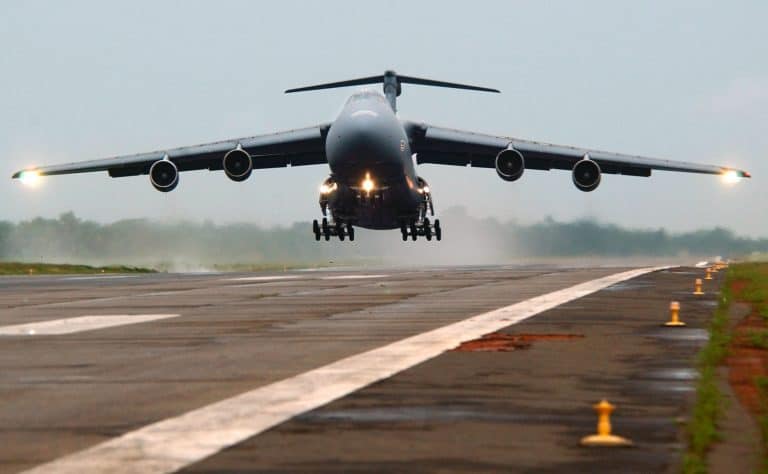
The Lockheed C-5 Galaxy is the largest transport plane of the United States Air Force. It’s larger than the Lockheed C-141 Starlifter and can carry almost twice the load of a C-17 Globemaster.

The C-5 has been in operation since 1969 but it had a rocky start. The development and testing led to cost overruns and created financial difficulties for Lockheed. Once the planes entered service, cracks in the wings grounded the aircraft until the problem was solved.

FRED Had a Huge Cargo Hold

To best serve the military, the C-5 FRED was built with a cargo hold big enough to carry bulky equipment. Its cargo capacity is 135 tons and it can accommodate up to six Boeing AH-64 Apache helicopters or five Bradley Fighting Vehicles at one time

The Galaxy has a range of 2,760 miles and a cruising speed of 570 mph. The cargo is one foot longer than the entire length of the first powered flight by the Wright Brothers at Kitty Hawk.

Many were not fans of the massive C-5 FRED

The C-5 has plenty of detractors because of its reputation as a gas guzzler and the need for constant maintenance. The ground crew who service the Galaxy has named it FRED – F***ing Ridiculous, Economic/Environmental Disaster.

Aviation historian Robert F. Dorr is blunt in his assessment of the C-5:

“After being one of the worst-run programs, ever, in its early years, it has evolved very slowly and with great difficulty into a nearly adequate strategic airlifter that unfortunately needs in-flight refueling or a ground stop for even the most routine long-distance flights. We spent a lot of money to make it capable of operating from unfinished airstrips near the front lines, when we never needed that capability or had any intention to use it.”

Be that as it may, the development and eventual deployment of the C-5 proved to be a trail blazer for modern-day commercial aircraft. By building “the biggest plane possible” Lockheed was able to provide a template for development of planes like the 747 and the L-1011.

C-5M, FRED Upgraded

However, the C-5M Super Galaxy is an upgraded version with new engines that are more fuel efficient and upgraded avionics. It can fly higher and has a shorter takeoff roll (as seen in the video below)

The Warthog’s GAU 8 Gatling Gun Is Bad-Ass Lethal Weapon–Watch It In Action

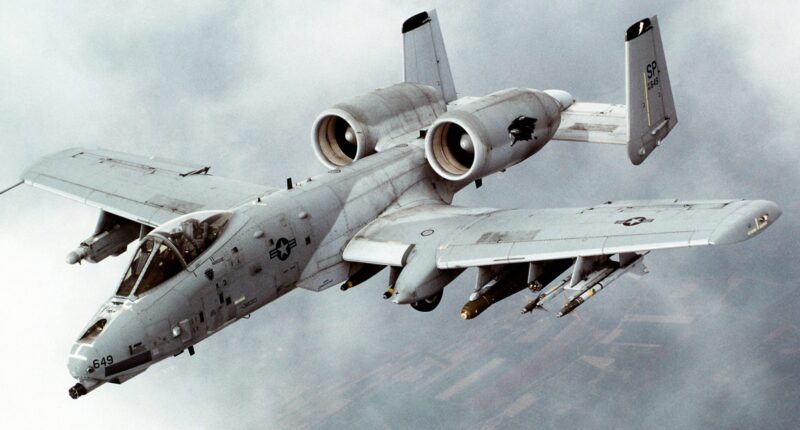
The A-10’s “flying cannon” and its 30mm shells makes it a friend to U.S. ground troops and a nightmare to the enemy.

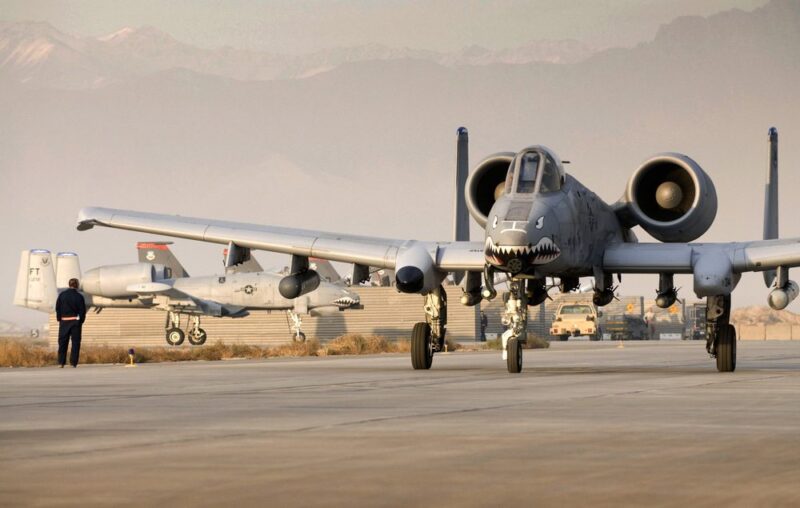
GatlingHere at Avgeekery.com we are contractually obligated to regularly feature the A-10. Why? The Warthog has proven to be one of the most durable and efficient ground support aircraft in military aviation history. And it’s as cool as it’s klunky.

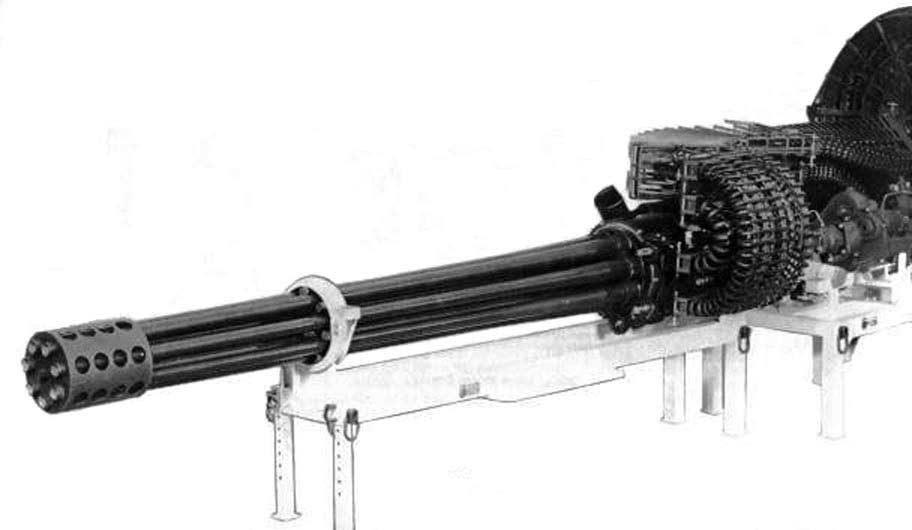
The A-10 can carry a variety of weaponry but the plane was built as a firing platform for the General Electric GAU 8 Avenger Gatling gun. Basically, it’s a flying cannon. Hydraulically driven and featuring seven barrels, it spits out 70 rounds per second. With a loaded ammunition drum, the entire weapon weighs about 4,000 pounds.

A “combat squeeze” produces a two-second burst that delivers 112 rounds of 30mm ammunition with devastating effect. The blink-of-an-eye firing means that on most missions, the A-10 is equipped with enough ammo to make about nine strafing runs.

In addition to the fact the GAU 8 delivers a powerful punch that’s accurate, there are two other unique factors to the A-10’s main weapon.

First, it’s mounting.

Because the gun’s recoil forces could push the entire plane off target during firing, the weapon itself is mounted laterally off-center, slightly to the port side of the fuselage center line, with the actively “firing” barrel in the nine o’clock position (when viewed from the front of the aircraft), so that the firing barrel lies directly on the aircraft’s center line. The firing barrel also lies just below the aircraft’s center of gravity, being bore sighted along a line 2 degrees below the aircraft’s line of flight.

Second, the sound of those two-second bursts is memorable. Instead of the rat-a-tat-tat of machine guns, the A-10’s Gatling gun sounds like … a piece of paper being ripped. It also could be analogous to … well … flatulence.

Which is probably the sound the enemy makes when they see a Warthog swooping for a strafing run.

[youtube id=”IRK6SVLAoQA” width=”800″ height=”454″ position=”left”]

Russian Pilots Apparently Like Top Gun And Buzzing The Tower

sU33two

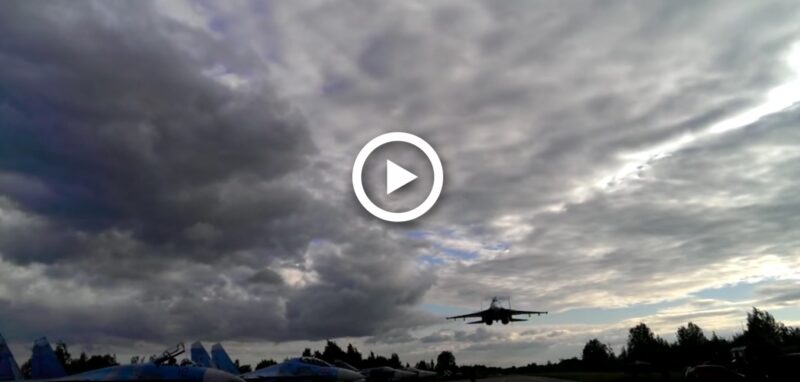
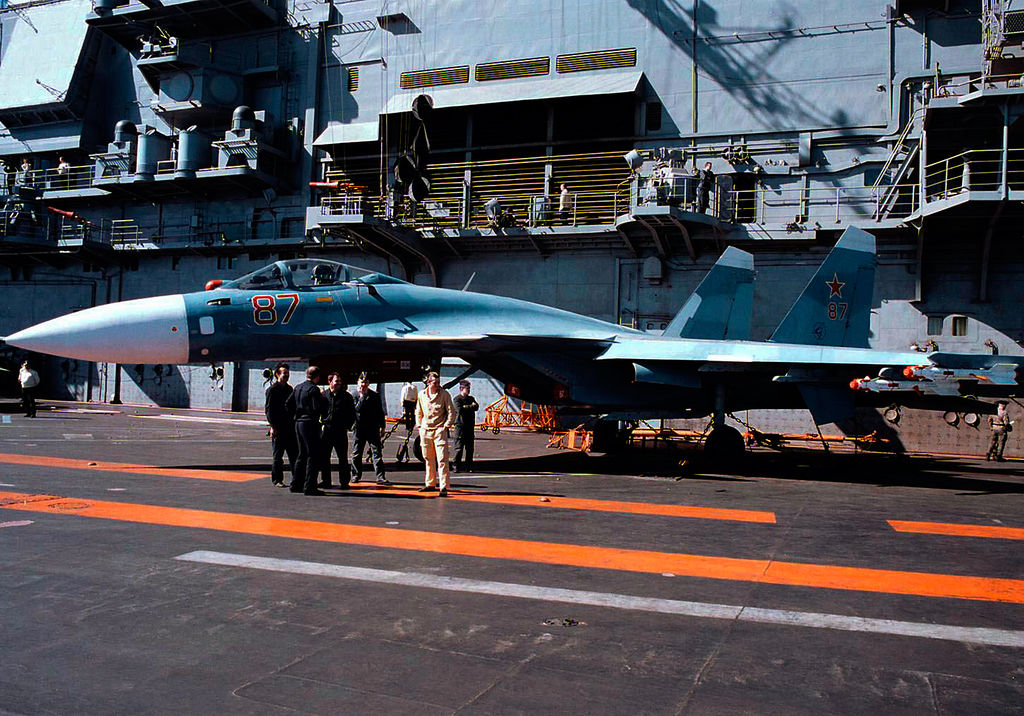
A rare glimpse of the Russian SU-33 making a low-level pass – twice.

For a neutral observer, there’s nothing as exciting as being up close and personal as a military jet does a low-level buzzing of the deck.

That’s exactly what’s depicted in our featured video. A Russian Sukhoi SU-33 makes two passes just off the tarmac. The speed, power and sound is impressive.

(And this video is reminiscent of a much more serious incident that happened recently involving the USS Donald Cook in the Baltic Sea. Two Russian SU24s made 20 passes at the warship, coming within 1,000 yards and just 100 feet off the waves. Perhaps the Russian pilots had been watching Top Gun and declined to request a fly by.)

Catching a glimpse of the SU-33 (which is designated as Flanker-D by NATO) is rare. It was designed as all-weather carrier-based twin-engine, twin-tailed air fighter and came into service in 1998. However, when the Soviet Union dissolved, the Russian Navy was scaled back and only about three dozen SU-33s were produced.

The SU-33 has a maximum speed of Mach 2.17 (1,430 mph) and a service ceiling of 55,800 feet. It’s range is nearly 1,900 miles.

Russia’s only aircraft carrier, the Admiral Kuznetsov, is reported to be deploying to the Mediterranean Sea. Its air wing will be comprised of the SU-33, SU-25UTG and Mikoyan MiG-29K.

[youtube id=”ePeE0jDj2ec” width=”800″ height=”454″ position=”left”]

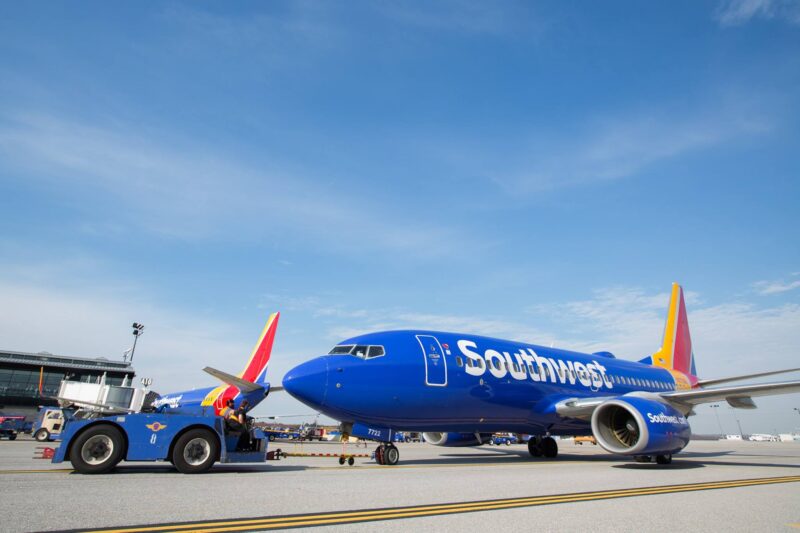
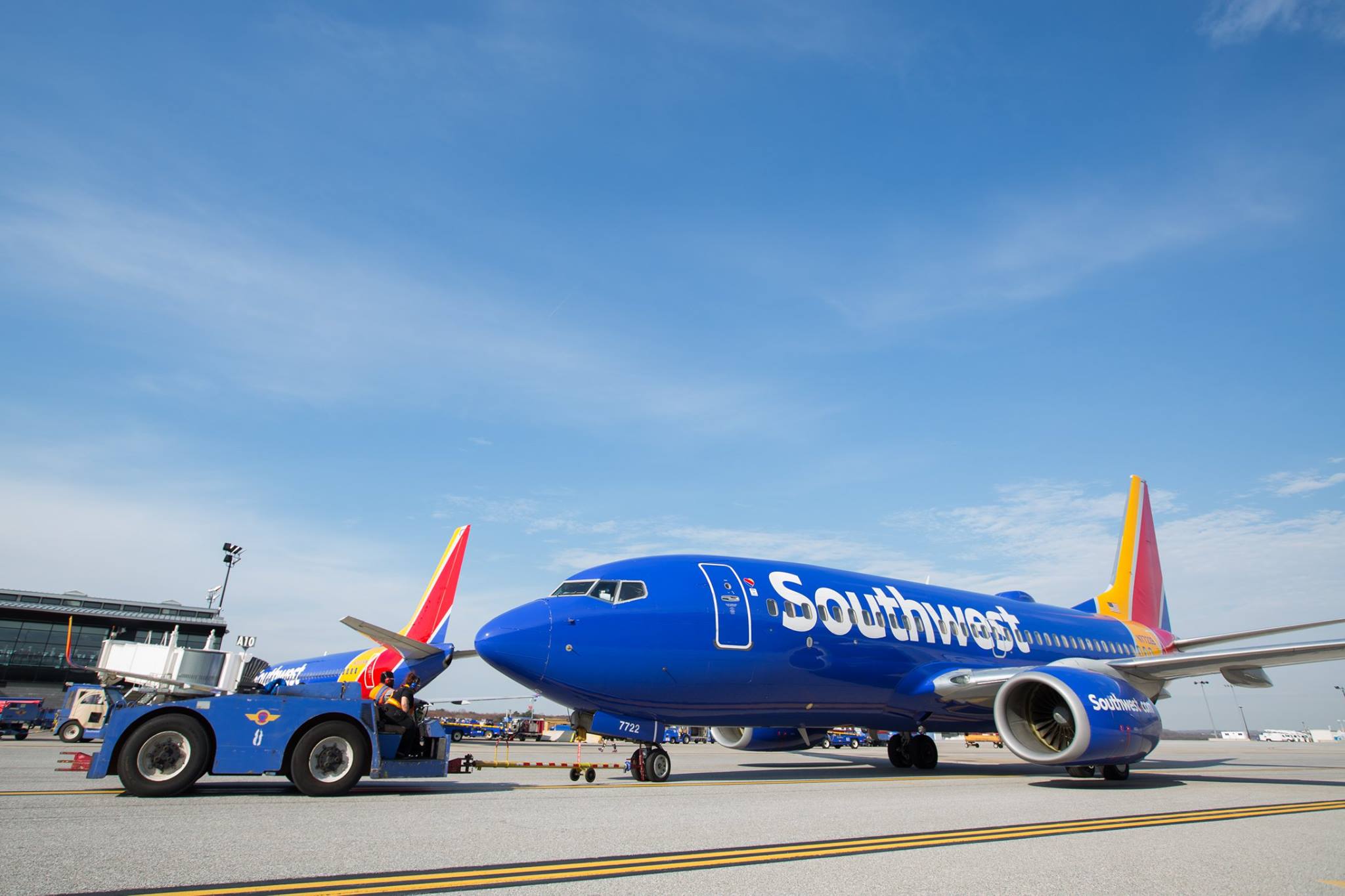
Southwest Analysis: Profits Up, Large Classic 737 Retirement On The Horizon

0

southwest1

Southwest Airlines made $511 million in first quarter and its pilots would like their new contract settled by getting a bigger piece of the pie.

Southwest Airlines last week announced better-than-expected first-quarter profits – clearing $511 million – as Southwest is benefiting from the same factors driving up profits for the industry – low fuel cost and high load factors.

At the same time, Southwest announced it is accelerating plans to retire the 737-300s in its fleet. The original time line had those planes coming off line in 2022, then it was moved to 2018. Now, Southwest President and CEO Gary Kelly announced that the company plans a “hard stop” and will take place a year earlier.

“This is a viable and manageable solution, although not preferred,” Kelly said in a statement. “This accelerated retirement of the Classics will result in fewer aircraft and lower available seat mile growth in 2017 than previously planned.”

That means that over 100 737-300s will be retired over the next 18 months.  This is in addition to the remaining 12 737-500s that are scheduled to be retired by the end of September of this year.

Why would Southwest pump the brakes on growth?

News of this type never happens in a vacuum and the report of record profits along with taking approximately 50 of the 737 Classics out of action invites some between-the lines thinking.

The airline industry rides a roller coaster of cycles and right now the ride has reached the top. Profits are high as the price of oil (and jet fuel) is at record lows. Coupled with most flights departing at near capacity, profits are up.

Southwest and its pilots have been trying to agree to a new contract. The pilots have been working under a deal signed in 2012 that expired three years ago. They are seeking compensation that would rank as the highest in the industry plus have the company make larger contributions to retirement plans.

With Southwest reporting high earnings, the pilots obviously believe they deserve a cut. No pilots, no profits.

Kelly said it’s not meant to be a warning shot at pilots…

The announcement to move up the retirement of the 737-300s could be interpreted as a warning shot by Southwest. Kelly denied that theory.

“This is not a shot (at the pilots’ union,” Kelly said. “Contrary to the way our industry has worked in the past, this is not the way we do business here at Southwest. We’re here to take care of our people. Clearly accelerating this retirement is not a good thing for our employees. It’s not a bad thing either. We’re not at war with our people. We’re at war with our competitors.”

One of the reasons Southwest is pulling the 737-300s out of service is that delivery of the new Boeing 737-8 MAX aircraft is expected to be head of schedule. Those aircraft are more fuel efficient and carry more passengers – a win-win for Southwest.

However, the pilots’ union says the MAX isn’t listed in the current labor agreement as an aircraft they can fly. Southwest disagrees.

“They cannot fly the MAX without a new contract,” said Jon Weaks, the union’s president.

Another twist in the story involves the Federal Aviation Administration. The agency has yet to decide on the training needed for pilots flying the MAX. If the FAA says that pilots cleared to fly the current 737-800 (the MAX’s predecessor) can fly the MAX, then the Southwest pilots will lose negotiating leverage.

“We have been working with our pilots’ union, Southwest Airlines Pilots’ Association, to mitigate this issue through segmenting the classic flying, but that effort has been unsuccessful,” Kelly said. “Given the FAA is not expected to complete training requirements until next year, the only solution now is to avoid flying both the classics and the MAX (at the same time).

“We have to have every pilot trained to sit in every cockpit. It’s all or nothing.”

Southwest expects to receive its first plane in the third quarter of 2017, while Boeing says the delivery may come sooner.

“It’s a freight train coming down the track,” said Casey Murray, the head of the Southwest pilot union’s negotiating committee, said in an interview. “We can see the light and they can, too.”

 

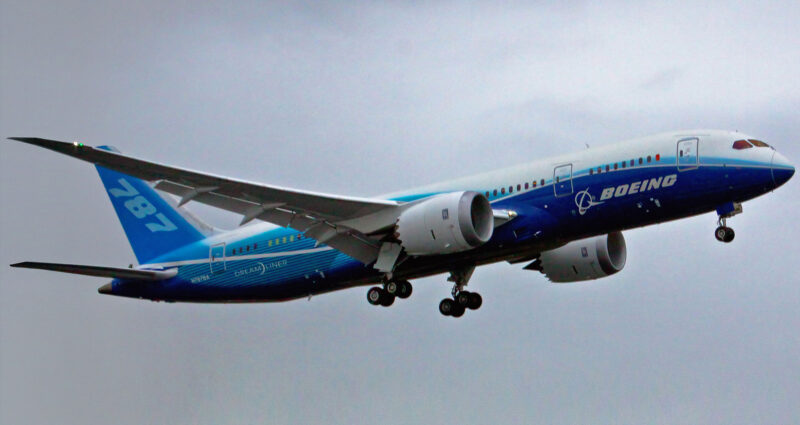
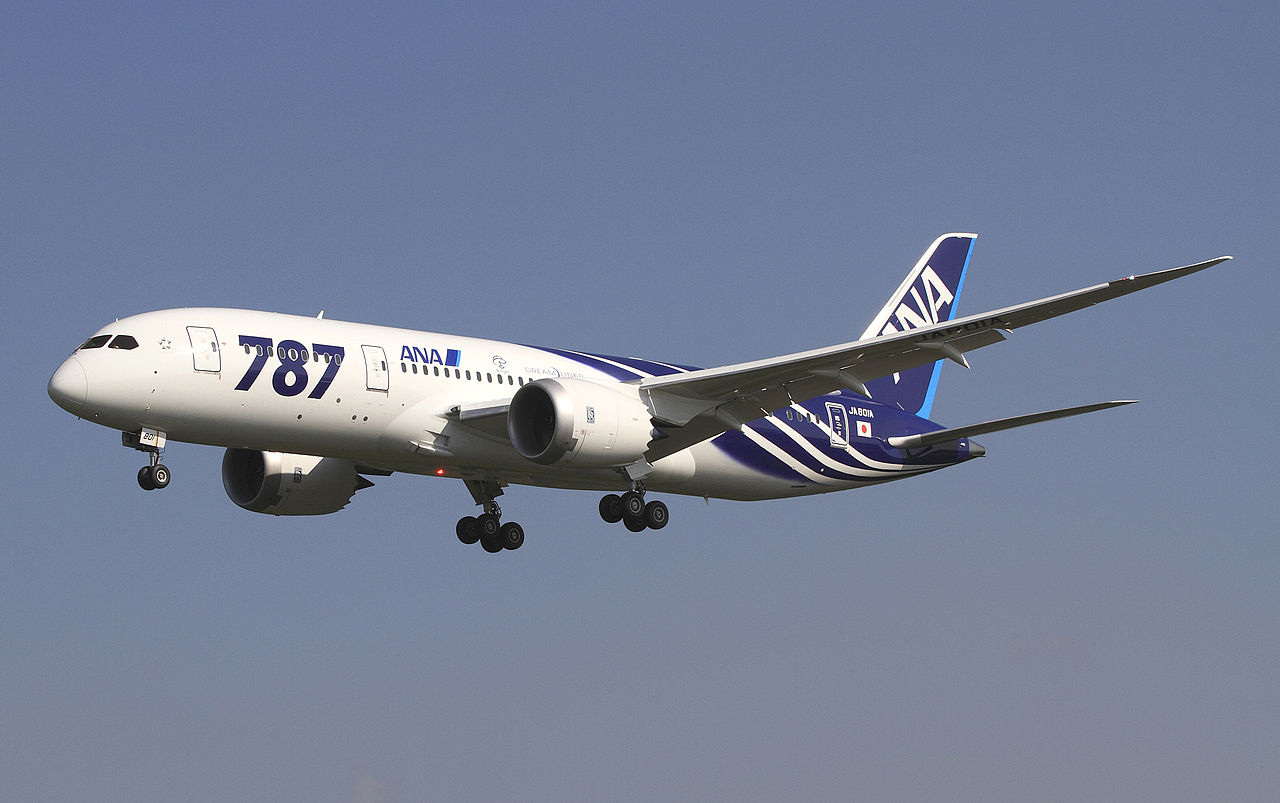
FAA Directive Orders Repairs To Engines On Some 787s

787pic

Icing issues on certain models of the General Electric engines on Boeing 787 Dreamliners led to FAA to issue directive to “urgently modify” those engines.

According to a directive issued Friday by the Federal Aviation Agency directive, the engines on Boeing 787 Dreamliners must be “urgently modified.” The General Electric engine model GEnx-1B PIP2 is in question. Planes that are equipped with both engines of that model could potentially experience a catastrophic loss of both engines in flight.
The FAA directive says in part of its directive:

“The urgency of this issue stems from the safety concern over continued safe flight and landing for airplanes that are powered by two GEnx-1B PIP2 engines operating in a similar environment to the event airplane. In this case both GEnx-1B PIP2 engines may be similarly damaged and unable to be restarted in flight. The potential for common cause failure of both engines in flight is an urgent safety issue.”

Airlines have until the first week of October to fix the problem. A directive has been issued to pilots of 787s with those model engines to follow a new in-flight ice-removal procedure. That procedure says when ice buildup above 12,500 feet is suspected or if an indicator light confirms it, pilots are advised to rev each engine at 85 percent of full throttle every five minutes.

A Jan. 29 incident heightened the urgency for the FAA directive. A Japan Airlines (JAL) 787 shut down in midair and couldn’t be restarted. The right engine failed about 90 miles from Tokyo’s Narita Airport on a flight from Vancouver, B.C. The pilots were able to land with one engine. The 787’s other engine was an older model and the FAA said the left engine incurred only “minor damage during the icing event and continued to operate normally.”

The report on the JAL incident said that ice had built up on the fan blades before the trouble occurred. The engine model had been upgraded (and certified by the FAA) and the newer version had reduced a tiny gap between the fan blades and the engine case. The JAL plane’s engine experienced ice breaking loose, causing the fan blades to rub against the case and causing a shut down. The engine could not be restarted.

The FAA did not issue an “emergency” directive but because of the danger to the flying public, action will be immediate. The FAA reported that the problem affects 176 Dreamliners at 29 airlines; that’s about 44 percent of the worldwide fleet.

GE has altered the manufacturing process of the PIP2 engine model to increase the fan-tip clearance. GE spokesman Rick Kennedy said rework on about 40 airplanes has been completed. He added that the work to modify the engines takes about 16 hours and can be completed without removing the engines from the wings.

Twin-engine jets have taken over the commercial aviation industry. The newest birds, particularly those manufactured by Boeing, feature GE engines that are touted for their fuel efficiency, thrust and reliability.

And reliability is crucial when an aircraft jam packed with passengers is reliant on two engines. When both are disabled it takes a miracle like the one conjured up by Captain Chesley “Sully” Sullenberger in 2009. His calm maneuvering saved 155 passengers by guiding US Airways Flight 1549 to a crash landing in the Hudson River. Both engines on the Airbus A320 were disabled by colliding with a flock of geese.

You can read the FAA document about the engine issue here.

The Rare Air of The AN-255 Cossack: A One-Off Giant Bird

0

If you ever get into a trivia contest in a bar or other location that requires you to display your vast knowledge, keep this information in mind.

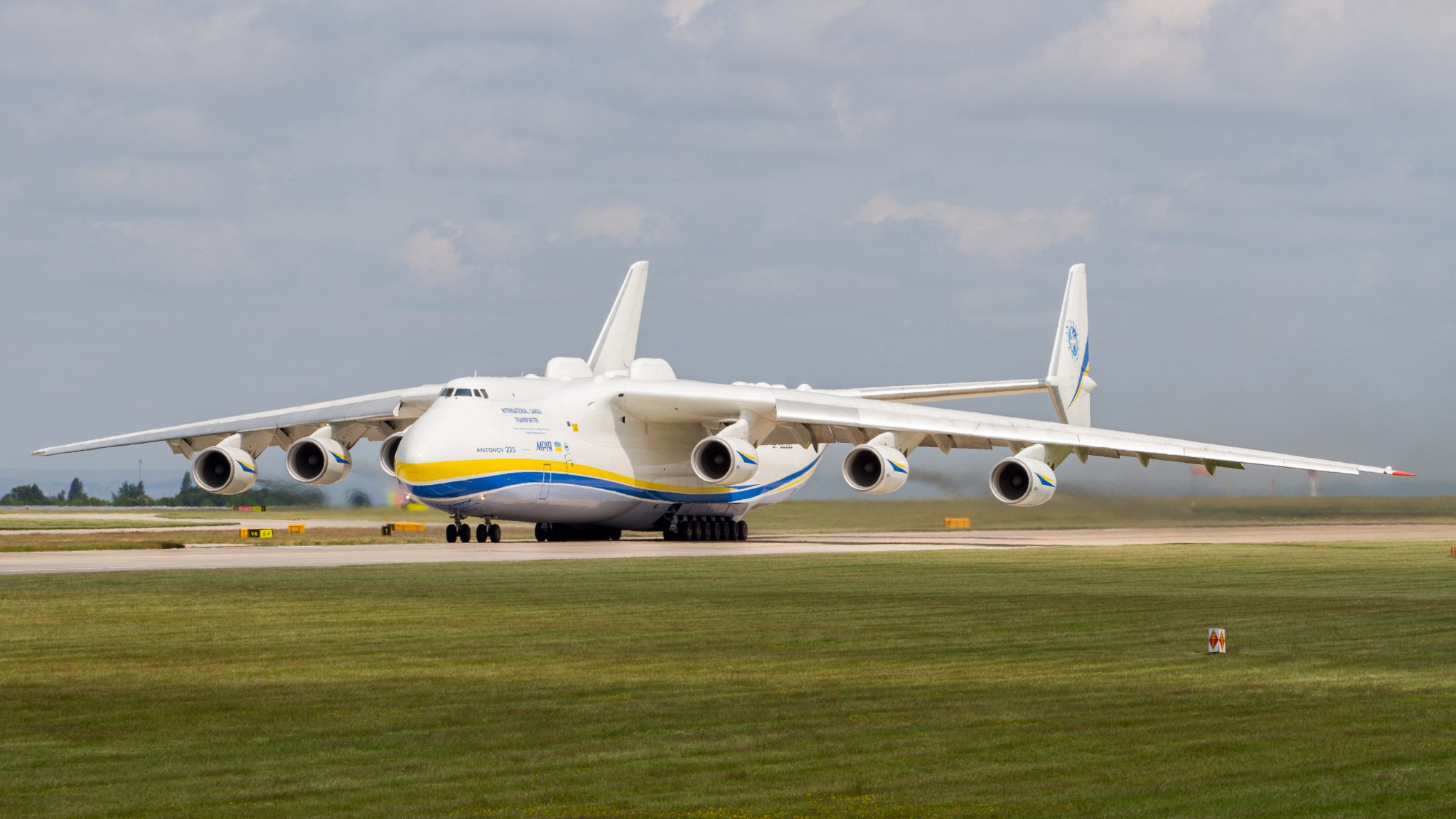
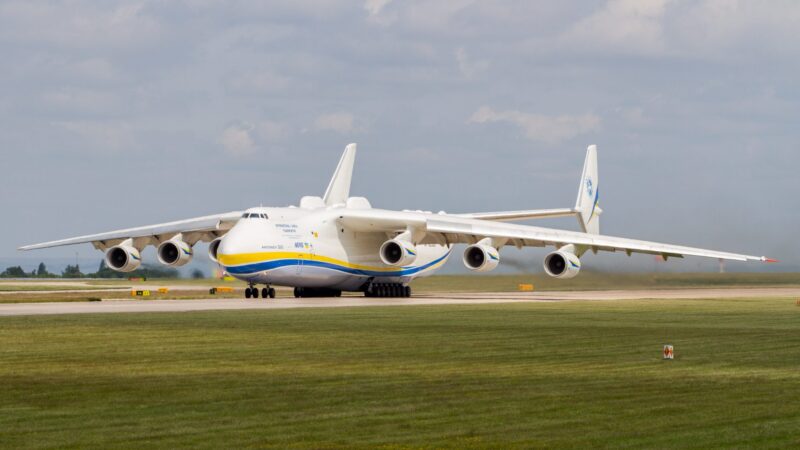
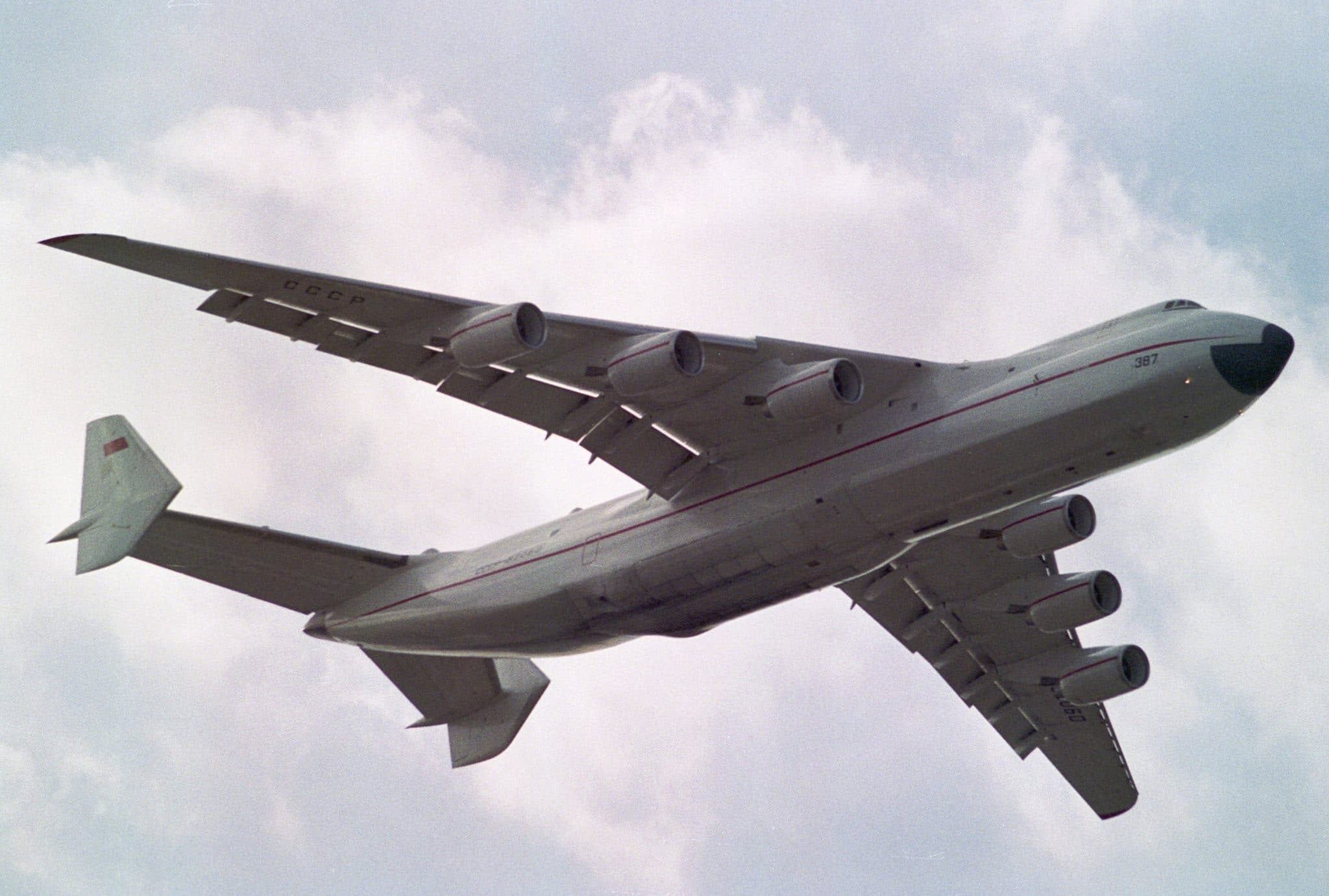
When and if the subject gets around to the world’s largest aircraft, remember that the Antonov An-225 Mriya (Dream or Inspiration), also known as the “Cossack,” qualified as the longest and heaviest airplane ever built. Its original purpose was to ferry the Russian space shuttle. In the United States, that job was handled by a modified 747 – which looks like a Lear jet compared to the Cossack.

[youtube id=”6sggQqdvqHs” width=”800″ height=”454″ position=”left”]

Some facts about the world’s largest plane.

Wingspan: 290 feet.

Wing square footage: 9,740 square feet (nearly a quarter of an acre).

18pweqltdmglvjpg
Image via Public Domain

Length: 275 feet 7 inches.

Height: 59 feet 5 inches

Fuselage diameter: 63 feet.

Power plants: 6 Progress D-18T turbofan engines each putting out 51,000 pounds of thrust.

Antonov An 225 Mriya at 1990 Farnborough Airshow Andrew Thomas
Image via Andrew Thomas

Built by Russia in 1988 as a military cargo plane, only one was ever built. The aircraft was destroyed during on 24 February 2022 by invading Russian forces in Ukraine. But watching the giant jet lumber into the air was a goose-bump experience.

The An-225 was the workhorse of the Antonov Airlines fleet in Russia. It was the go-to cargo aircraft when it comes to hauling something that skeptics say, “You can’t put that in an airplane.”

In August of 2009, a generator for a gas power plant in Armenia was delivered by the An-225. The cargo weighed in at 189 tons.

When the An-225 was built, the Cold War was in its final days. When the Soviet Union broke up, its space program languished and there wasn’t much need for the world’s largest aircraft. However, it enjoyed a rebirth as a specialized cargo hauler.

Antonov 225 Mriya 6835041784 RAF YYC
Image via RAF-YYC

Week in review: Here’s what happened this week in the world of Aviation on Avgeekery

0

AFF2016 Rob Edgcumbe 014 C59F0719

If you missed any of our posts from this week, here’s a roundup with clickable links.

So, how was your week? If you’re into aviation stories, we hope that you thought this was a good week at Avgeekery.com.

A sobering story about a drone that apparently collided with a British Airways Airbus A320 as it was landing at Heathrow Airport.

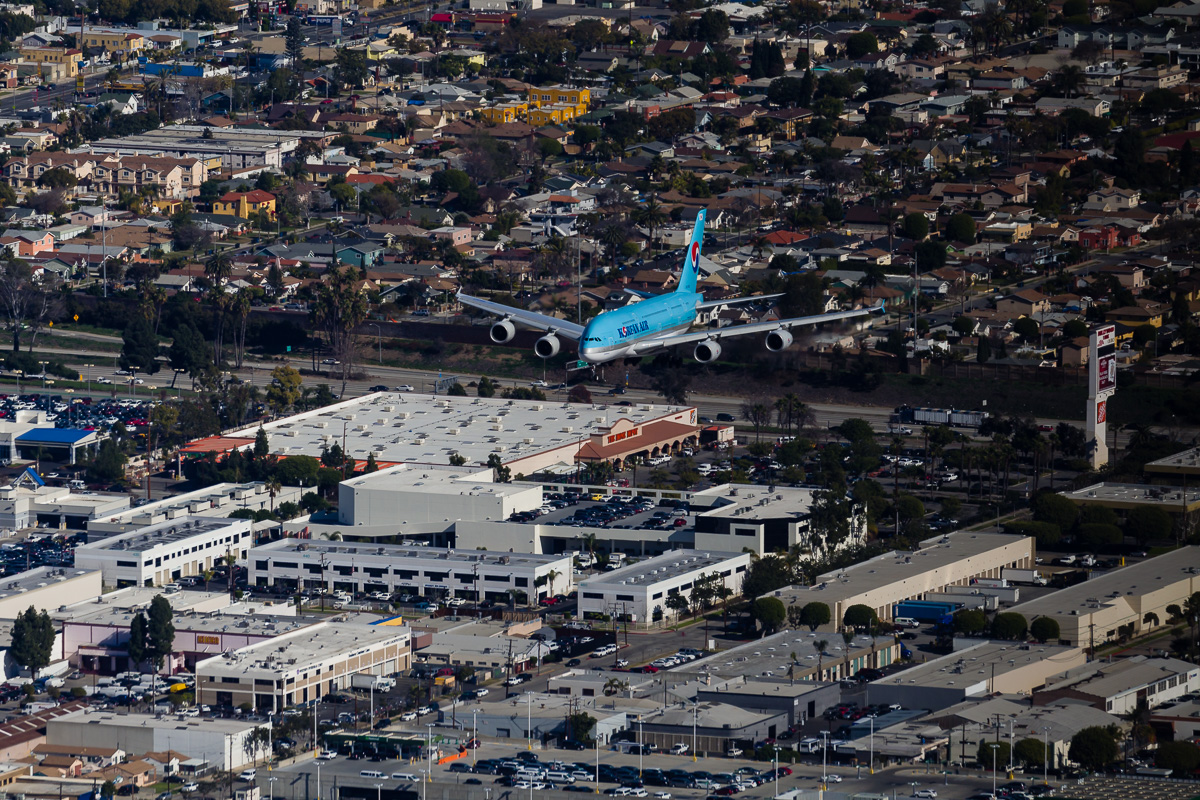
Plane spotting from a helicopter at LAX – what could be better?

Avgeekery.com has a crush on the A-10 Warthog. Here’s another example, this video of an A-10 delivering 2,500 rounds from its 30mm gun.

Read about GE9X engine, the world’s biggest jet engine with the most thrust, and watch a video of the engine getting fired up for a test.

A House subcommittee is asking the Air Force to study the cost and feasibility of restarting the F-22 Raptor.

This week’s edition of Flashback Friday highlighted a record-setting flight in 1961 by a pioneering female aviator.

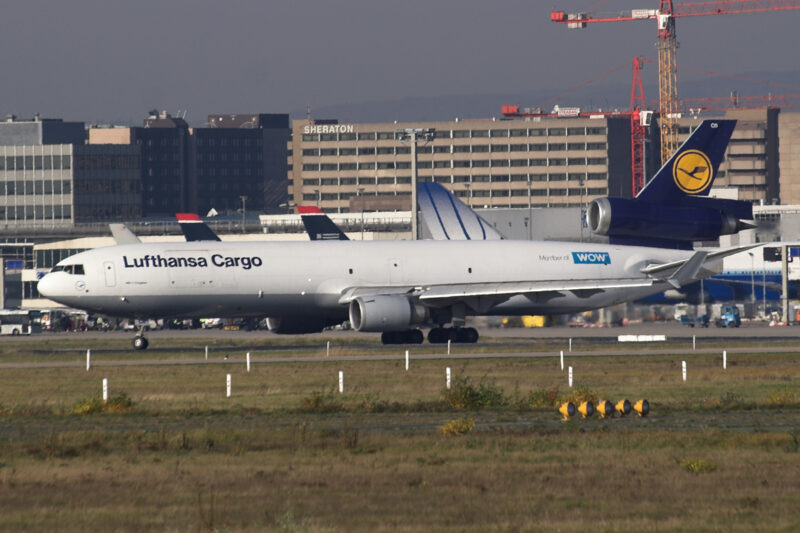
The Last of The Tri-Jets: Circling the globe in a MD-11 While Hauling Everything Under The Sun

The movie “Around The World In 80 Days” won the Academy Award for Best Picture. This video of a Lufthansa Cargo flight around the globe is just as worthy…well almost.

What’s it like to fly around the world in 66 hours? (Actually, it was 68 hours because of a two-hour delay on the final leg.)

For a Lufthansa MD-11F cargo plane, the hauling of freight from Germany and back again involves crew changes and logistics that boggle the mind. From Frankfurt to Chicago to New Zealand to Australia to Malaysia to Pakistan to United Arab Emirates to Frankfurt.

Hauling 90 tons of cargo requires precise judgment on takeoff and landing. An aborted takeoff could create shifting that could damage the cargo. During landings, because of the weight the MD-11 has to come in “hot” at 180 mph and hit the runway precisely in order to have enough concrete for its roll out.

Like passenger aircraft, time spent on the ground is money wasted. Moving cargo from Point A to Point B involves loading and unloading that is quick but not hurried. The ground crews are different at different airports so keeping on schedule can be challenging.

And each airport/destination has quirks. In New Zealand, for example, the entire interior of the plane had to be sprayed to kill any germs to prevent them from being transmitted from the previous location.

Especially when the MD-11 is flying over the Pacific, it’s tough to not think about the crash scene that started Tom Hanks’ survival/adventure in “Castaway.”

If you enjoy travel, piloting cargo planes would be a great career. The pilots and co-pilots featured in this video had some length trips of six hours or more but when they arrived at their destinations they went off duty and had two days to explore.

One motto for cargo flights could be “if it fits, it ships.” Between one of the world’s most expensive luxury cars to horses, the flights shown carried a wide variety of cargo.

The three-engine MD-11, built by McDonnell Douglas, was originally built as a wide-body passenger jet to service long routes. Now, most have been turned into cargo planes. The amount of cargo they can carry is equivalent to carrying about 900 passengers.

Our compliments to Sven Herold whose production company filmed and produced this video.

[youtube id=”sh5U-w_9NuI” width=”800″ height=”454″ position=”left”]

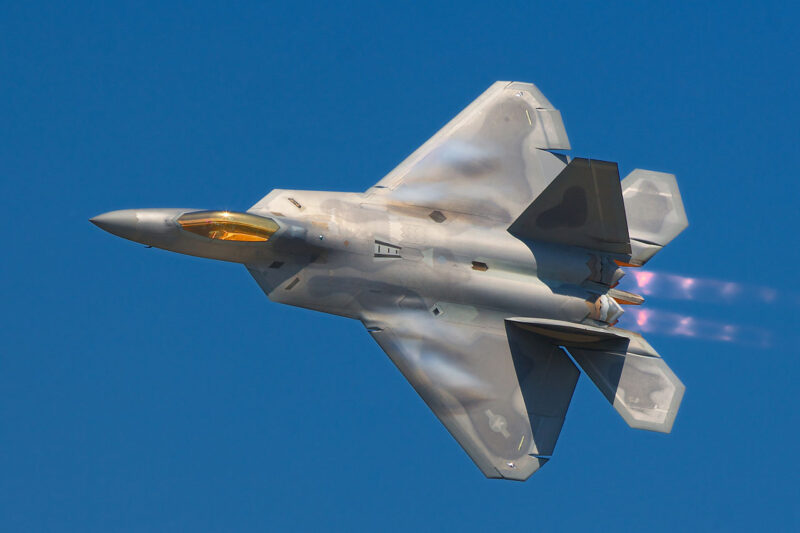
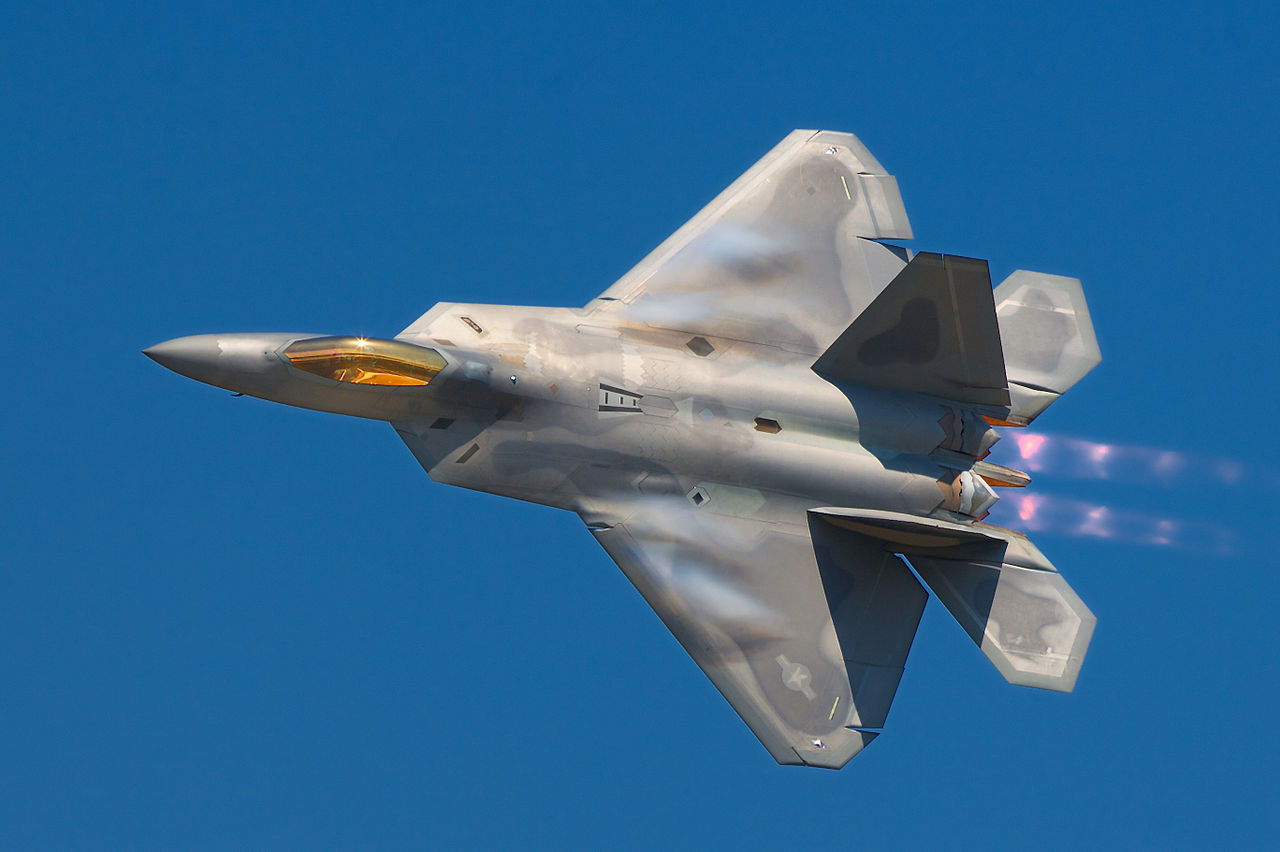
Stealthly Return? Production restart of F-22 Raptor could be in works

0

F-22

House subcommittee asks Air Force to submit study to restart production of F-22 Raptor.

The House Armed Services subcommittee on tactical air and land forces is indicating that production of the Lockheed Martin F-22 Raptor could resume. The committee is directing the Air Force to report on the cost and feasibility of restarting the assembly line.

The original contract with Lockheed Martin called for 749 of the fifth-generation stealth fighters to be produced. But the high cost of the planes and budget pressures trimmed the order to 381. But the final delivery number was just 196, with187 of those being operational fighters.

In 2011, then-Defense Secretary Robert Gates shut down the program, citing the high cost. Plus, the U.S. was preparing to focus funding and development for the F-35 Joint Strike Fighter.

The F-22 saw its first action against ISIS in September of 2014 and there is an increased interest in Congress to fortify the nation’s defenses.

The Air Force has been directed to submit a study by January of 2017 on producing another 194 F-22s.

In February, the Air Force denied a report that it was looking into a ballpark estimate as to the cost of restarting F-22 production. A report in 2011 indicated it would cost $2 billion to crank up the production lines. That report also indicated that building just 75 F-22s would cost $17 billion – based on 2008 dollars.

The House Armed Services Tactical Air and Land Forces subcommittee’s markup for its section of the 2017 defense policy bill has the following section:

“In light of growing threats to U.S. air superiority as a result of adversaries closing the technology gap and increasing demand from allies and partners for high performance, multi-role aircraft to meet evolving and worsening global security threats, the committee believes that such proposals are worthy of further exploration.”

As the House sub-committee continues to assess the defense budget, the F-35 JSF program continues to be assessed. The F-35 costs $300 million per aircraft and has struggled to overcome design flaws and production issues. The Air Force has been conducting test flights and mock dogfights as the F-35 strives to become operational.

Watch GE Fire Up The GE9X Engine–The World’s Biggest Jet Engine With The Most Thrust

0

Firing_Up_the_First_GE9X_Engine_-_YouTube

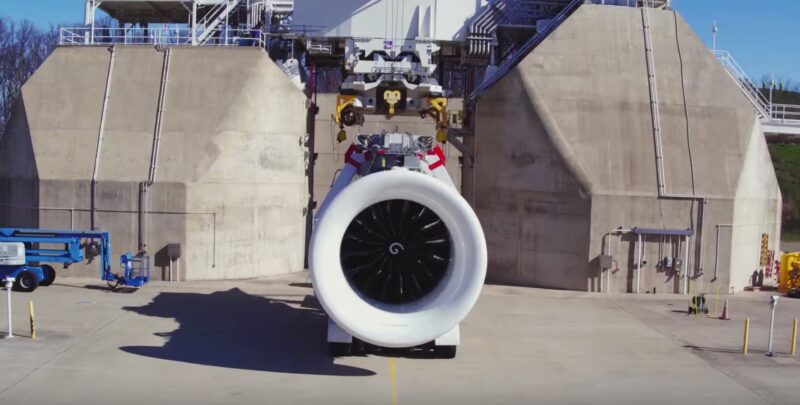
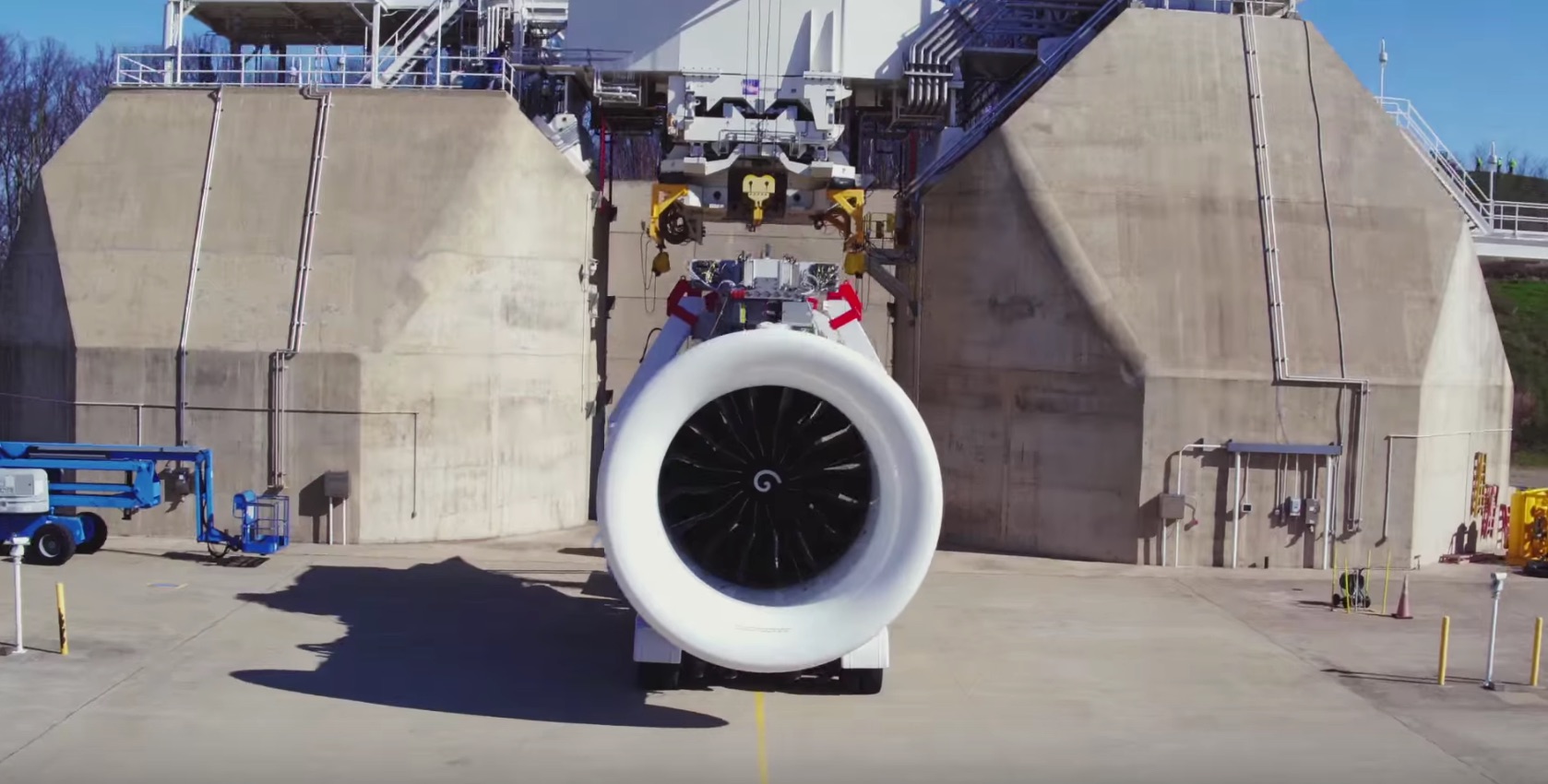
Boeing’s 777-9 will be powered by the world’s biggest engines – the GE9X.

General Electric has developed the GE9X to power the new Boeing 777-9. It will deliver a thrust of 105,000 pounds and its fan diameter of 133.5 inches is the largest GE has ever produced. The GE9X is the world’s largest jet engine, which is what the Triple Seven needs to fly and will make it the largest and most-efficient twin-engine aircraft in the world.

https://www.youtube.com/watch?v=nurk_4zpx-s

The aviation industry has evolved over the last two decades with Boeing and Airbus developing wide-body commercial aircraft that satisfied the needs of the world’s major airlines. For airlines to grow their bottom lines they needed fuel-efficient planes that would carry hundreds of passengers on long-distance routes, particularly across the Pacific.

The engines to power the new designs needed to evolve – in some cases more radically than the planes themselves.

Restrictions were lifted in the early 1990s that enabled commercial aircraft flying over 10,000 miles. Airlines and manufacturers were able to utilize aircraft with just two engines. To do that however, those engines had to be ultra-reliable and have enough power for the wide-body aircraft needed to maximize revenue.

GE was able to find the golden ticket. Instead of upgrading its previous engine models, GE engineers basically reinvented the wheel.

The GE-90 series, which has produced the world’s largest and the most powerful turbofan engine, earned a place in the Guinness World Records book by producing127,000 pounds of thrust. It was powerful and efficient.

The turbine fans were so large that the blades were made of revolutionary carbon fiber material. Those blades were larger and lighter, providing a double dip of more power and less weight. Plus, the blades are more durable, reducing maintenance costs. Coupled with fuel efficiency, airlines were thrilled to have their planes powered by the GE-90 series of engines.

Another GE engine breakthrough involved the compressor which also boosted the thrust to record levels thanks to improved pressure levels.

The GE-9X, which will power the Boeing 777, has an improved compressor that will reduce fuel consumption by 10 percent.

For comparisons of three major jet engines in use, here’s a video of the Pratt & Whitney PW4000, the Rolls Royce Trent 800 and the General Electric GE-90 performing during takeoff.

Feel the Brrrtt! See Spectacular Cockpit Footage of the A-10 Launching 2,500 Rounds From Its 30mm Gun

0

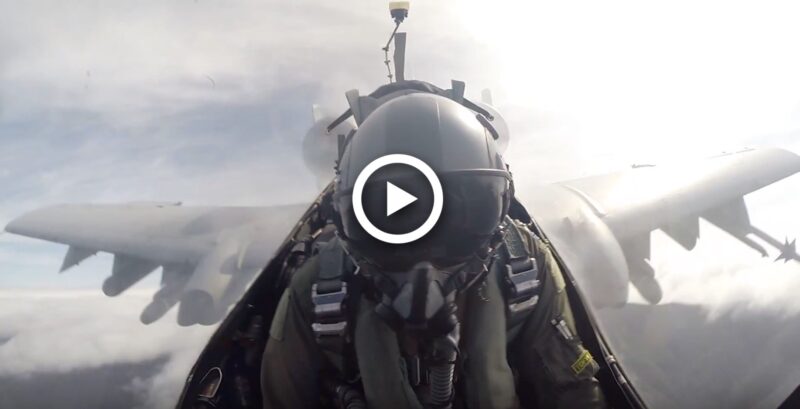
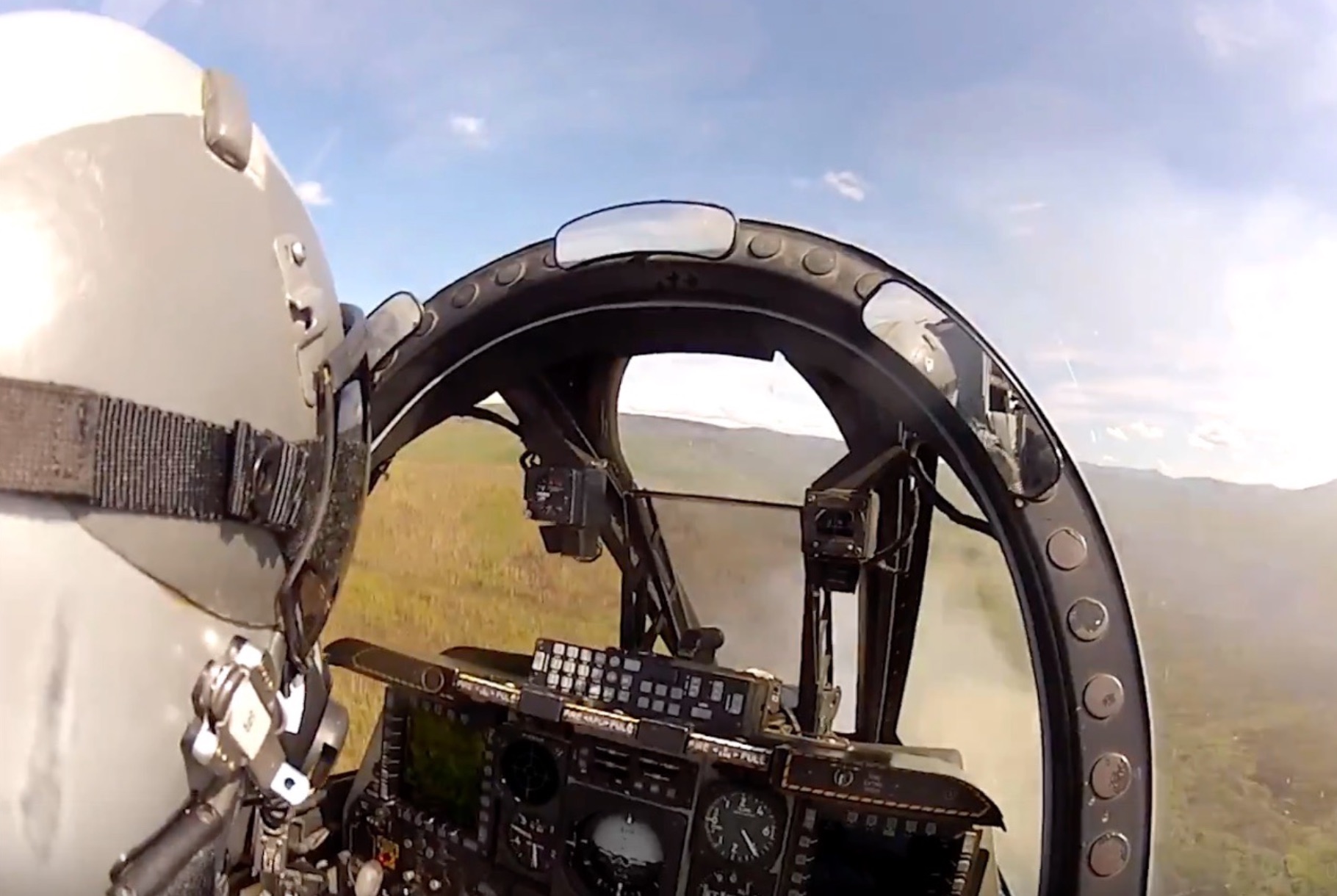
Everyone knows that the A-10 is a wicked beast of a fighter jet.  What it lacks in speed, it makes up in grit.  The Warthog has a giant 30mm Gatling Gun as its primary weapon.  In just one minute, the A-10 can fire a s^*t ton of lead with deadly accuracy.   Enemies cower in fear but for ground pounders, ‘brrrt’ is the sound of victory.a10cockpiut

Now, thanks to the magic of GoPro cameras, you can ride along in the cockpit as skilled A-10 pilots deliver lead to those who would do us harm.  The creator of Chipcast Productions hopes you’ll enjoy this Warthog treat.  In a chat with Avgeekery, Chip told us how many rounds of ammunition the A-10 can really disperse.  He said:

4000 rounds/min, 66/second. 49 for the first second due to barrel spin-up, half second of spin up (19 rounds), then full rate after that (~30 for the second half-second)

The video wasn’t shot on just one sortie.  The A-10 can’t hold that much lead.  But based on timing, Chip insisted that the video shows a total of 2,500 rounds. He also mentioned that he really enjoys sharing the his love for the A-10 with others.

I really enjoy putting these videos together to share the experience of flying the A-10. Offering a glimpse of what it is like to fly the best CAS and CSAR platform ever created is rewarding on many levels. Friends of mine show their family and friends what they do each day, and the fans of the A-10 get as close to a ride-along as will ever be possible in the mighty Hawg!

Thanks Chip!  Avgeekery is proud to have you as a friend!

[youtube id=”XnscJMzQXFs” width=”800″ height=”454″ position=”left”]

Spotting From the Sky At LAX–Here’s How You Can Live The Ultimate Avgeek Fantasy

If photographing airliners is your thing, you may well be looking for a way to get something a little different to the norm. One company has put together an opportunity to do just that. Rob Edgcumbe headed to Los Angeles to fly with Star Helicopters.

AFF2016 Rob Edgcumbe 003 C59F0397Los Angeles International Airport (or LAX) is a destination for a wide variety of airlines and airliners. The large market it serves and its geographic location for trans Pacific flights means it attracts operators from around the globe. Whether it is from Europe, the Middle East, Eastern Asia or Australasia, each day will see a large number of planes arriving and departing. Consequently, LAX is a Mecca for those who want to photograph airliners.

The airport has a number of good locations for photography. Imperial Hill is a popular spot as is the park by the In’n’Out Burger. There are a number of other locations that can provide a different view of the arriving and departing aircraft. However, an almost unrestricted view can be achieved from above the airport. Normally, such a location would be out of bounds for photography work. However, Star Helicopters has come up with an approach that makes this feasible.

Located at nearby Hawthorne Airport, Star Helicopters provide a number of different services from flight training through sightseeing tours to charter work. Their LAX photo flights are the result of close coordination with the FAA air traffic controllers at LAX. They have identified a number of sectors over the airport in which a helicopter can operate without creating a hazard to the normal airline operations. It is feasible to move between these sectors during a flight provided you don’t do it too often. Consequently, you can get a variety of different perspectives on a single flight.

The usefulness of each area depends on what you are looking to achieve and the time of year. The angle of the sun in winter versus summer will mean that different locations will provide the best lighting conditions in different seasons. Sometimes you will also need to compromise on your light angles based on the amount of traffic and its direction.

AFF2016 Rob Edgcumbe 013 C59F0667LAX has north and south runway complexes. Both will be in use most of the time and the arrival of interesting aircraft at similar times may mean you have to make a judgement call about what you try to get. This may result in getting some shots that may be backlit. For some photographers, this will make the shots uninteresting. Others may be willing to accept this in order to get their shots. Fortunately, the pilot at Star Helicopters may be one step ahead of you. Paul was my pilot and he had worked with a large number of photographers so was familiar with the sort of things that would work and was ready to put the helicopter in the right place at the right time.

Picking when to fly can be assisted by checking out the scheduled times of the flights of interest. Websites like Flightaware will give you histories of arrival and departure times so you can decide what are the planes of interest and when they are likely to be appearing. The helicopter is chartered on a time flown basis so you can stay up as long as you deem necessary (within the limits of the aircraft and pilot of course!)

AFF2016 Rob Edgcumbe 035 C59F2282While you may know what you are looking to photograph, during my first flight with Star I discovered things are not as easy as you might imagine. First, it is not always readily apparent which runway complex certain aircraft will use. The helicopter is on the radio frequency with the tower for one side of the airport so will hear what is coming on that side. It won’t hear what is coming on the other, though. Second, it is a lot harder to pick out the aircraft as they are on final than I expected. You are above the aircraft so they have the suburban landscape behind them on approach. This makes them a lot less conspicuous. Picking them out takes practice and I missed a few of interest until they were on the ground. This can be frustrating so keeping track of predicted arrival times when airborne is important. Everything doesn’t show up exactly when predicted but they will usually be pretty close to the forecast time.

There are a number of good shots available. Getting planes as they are close to touchdown with the ground apparently very close beneath them is cool. Famous landmarks might be a good background as do the threshold markers or the point of touchdown with the smoke from the tires. Chasing a departure is also good and the longer view as they climb out over the beach line is nice. Some angles are not possible based on the restrictions on operating areas. You work with what you have available. In the quiet periods, you can change your focus to some more general concepts. It is worth looking for interesting angles and shots of the terminals with multiple aircraft parked.

What gear to take is an obvious question. I shot with a 100-400mm lens. While helicopters have a reputation for vibration, I have shot from a Robinson R44 a few times and I find them to be quite smooth provided they are not moving too fast. Hovering can bring some vibrations and the risk of shooting through the heat of the exhaust but, on the whole, it is a good platform to work from. The doors are removed so you have very little restriction on where you are shooting. If you don’t like the idea of sitting next to an open door at 1,500’, this might not be for you. My experience, though, is that people who initially find this uncomfortable gradually get used to the environment and end up having a good time.

AFF2016 Rob Edgcumbe 001 C59F0388Having you cameras well strapped to you is vital with the doors off. It also means that changing lenses is not to be considered. Aside from the possibility of blowing a bunch of dust into your body with the lens off, having a loose lens is not acceptable from a safety point of view. If you want to get some wider shots, the only option is a second camera. This is definitely worth having along if you can. Having spent that much on the flight, why not get as much as you can from it.

Aside from some cool photos, what did I take away from this flight. Most importantly, it was a lot of fun. Being somewhere so different is really interesting and, while others may have got similar shots before you, it is an opportunity to get a lot of images unlike anything you have taken before and very quickly. I also learned a lot about the things you need to do to get what you are after. My goal on the first flight was to get whatever I could and be happy with that. Having done so, I now have some ideas about what I would want to do next time. I flew in the middle of the day so the light was high and traffic was heavy. Next I would consider some other times of day and maybe plan on some specific aircraft from planned angles.

The whole exercise has inspired me to think about what I will do in future and it gave me renewed enthusiasm for something that had started to get a bit “samey”. I enjoyed working with Star Helicopters immensely and will happily fly with Paul again in the future. I was a bit lucky that we had great weather given it had been poor the week before and got cloudy the day after but I will take good luck any time. If you want to give it a try, have fun!

Drone apparently collided with British Airways Airbus A320 during landing at Heathrow Airport

British Airways Airbus A320. Credit: British Airways.

Drones and commercial aircraft incidents/close calls are on the rise.

It’s a frightening question but it has to be asked: How long until there’s a commercial air disaster that’s caused by a drone?

Unfortunately, we might get an answer sooner than we want.

A British Airways jet landing at Heathrow Airport Sunday afternoon was struck but an unidentified flying object. The pilot said a drone struck near the front of the aircraft when it was about 1,700 feet in the air. Authorities are investigating but as of Monday afternoon there were no updates and no evidence.

The Airbus A320, which started its journey in Geneva, landed safely. There were no injuries and no apparent damage to the aircraft.

“Thankfully the aircraft landed safely but the incident highlights the very real dangers of reckless, negligent and sometimes malicious use of drones,” Chief Superintendent Martin Hendy, head of Metropolitan Police Service’s Aviation Policing Command said in a statement. “We continue to work with the Civil Aviation Authority and other partners to tackle this issue and ensure that enthusiasts who fly drones understand the dangers and the law.”

The popularity and proliferation of drones have created cloudier skies. Despite authorities regulating that drones not be operated near airports, their small size makes drones difficult to track and thus difficult to regulate.

Steve Landells, flight safety specialist for the British Airline Pilots Association (BALPA), said: “Frankly it was only a matter of time before we had a drone strike given the huge numbers being flown around by amateurs who don’t understand the risks and the rules.

An analysis of Federal Aviation Administration data from a five-month period from August 2015 to 2016 reported 519 incidents involving passenger aircraft and unmanned drones. The rate of close calls between drones and aircraft in the U.K. is also rising.

The British Airways incident was minor. However, a drone being sucked into an engine while a plane is landing could lead to a catastrophe. An engine ingesting a foreign object and either shutting down or exploding would leave the flight crew with few options given that their allies – altitude and speed – would be unavailable.

Avgeekery.com has posted this article about drone ownership and this one about a company – ironically considering the BA incident, based in England – about the development of a drone capture device.

But it would appear that the only effective deterrent is stressing the education and training of drone operators in order that they understand that, for drones, the air space around an airport is a no-fly zone.

This Firm Perfected How To Capture Fast Jets in 4k. The Results Are Stunning

High_Velocity_Aerial_Filming_on_Vimeo

Blue Sky Aerial & Specialist Filming has control of the skies when it comes to high-tech and high-definition video.

Filming realistic and high-definition aerial scenes requires specialized video equipment. Some of the videos you see on Avgeekery.com are eye-catching but not as spectacular as those shot by Blue Sky Aerial & Specialist Filming.

One of the challenges of such filming is capturing images that are moving at high speed. Getting rock-solid images at that speed required development of a specialized video system. Blue Sky’s owners asked Gyro-stabilized Systems in Nevada City, Calif., to develop the technology and equipment.

The Blue Sky portfolio/highlight reel displays some of the stunning video that can be produced.

[vimeo id=”162088181″ width=”800″ height=”454″ position=”left”]

Flyboard: This Might Be The REAL Hoverboard

Flyboard®_Air_Test_1_-_YouTube

Watch this video and you’ll probably say, “I have got to get me one of those.”

If you thought Marty McFly’s hover board was “da bomb” in “Back To The Future II” then you’ll be seriously impressed with this.

Zapata Racing has developed the Flyboard, an Independent Propulsion Unit that allows the user to fly safely over the water. The prototype is not available for sale but if you want more information you can contact site@zapata-racing.com.

B-52s Arrive in Qatar – Ready To Kick ISIS Ass

Photo by Jim Mumaw
Photo by Jim Mumaw

B-52s bombers replace B-1s at air base in Qatar.

About a month ago, Avgeekery.com reported that ISIS had better start building a better bomb shelter because the BUFFs were coming.

Make that present, not future, tense.

U.S. Air Force B-52 bombers – affectionately called Big Ugly Fat Fellows – arrived at Al Udeid Air Base, Qatar, over the weekend to join Operation Inherent Resolve. The number of B-52s was not disclosed but those on hand will support the American-led campaign against the Islamic State group.

“The B-52 will provide the coalition continued precision and deliver desired airpower effects,” Lt. Gen. Charles Q. Brown Jr., commander of U.S. Air Forces Central Command and Combined Forces Air Component, said in a release. “As a multi-role platform, the B-52 offers diverse capabilities, including delivery of precision weapons and the flexibility and endurance needed to support the combatant commander’s priorities and strengthen the coalition team.”

The B-52s, as the enemy will soon learn, are able to loiter over the battle field for extended periods of time and deliver precision-guided weapons at multiple targets.

Not that we have any desire to aid the ISIS fighters, but good advice would be to dig deep … or get ready to duck.

Avgeekery.com Exclusive: A Q&A With Former Thunderbird Pilot Josh Boudreaux

Josh5

Behind the scenes of the Thunderbirds in this in-depth interview with T-bird and Air Force Academy alum Major Josh Boudreaux.

U.S. Air Force major Josh Boudreaux ended his time as a member of the Thunderbirds on Feb. 16. He’s now working at NORAD and flying F-16s with a promotion to Lt. Colonel looming.

The 35-year-old Boudreaux grew up in Covington, La., and started dreaming of becoming a pilot when he was 10. He attended the Air Force Academy, graduating in 2003 after majoring in Mechanical Engineering with a minor Math. He earned a Masters with ERAU. M.S. Management, Air Command and Staff School – Air University, Maxwell Air Force Base.

He spent time as an F-16 instructor pilot and has 3,600 hours of military jet time, 2,100 hours in the F-16 with 490 combat hours during seven deployments.

Major Boudreaux was gracious to take the time for this question and answer story with Avgeekery.com.

Question: When did you first fall in love with aviation and become an “avgeek”?

Boudreaux: I wanted to be a pilot since age 10 when my brother started flying.  He joined the Air National Guard and introduced me to F-15s (he was a crew chief).  He started flying single engine prop aircraft in college as he worked on a degree in aviation.  I first flew with my Ear, Nose, and Throat physician when I was 12 and I was hooked.  I applied to the Air Force Academy (as well as West Point, Annapolis, and a few other schools) after the end of my junior year of high school and got accepted to all of them by Christmas of my senior year.

I started ground school with my JROTC detachment at age 17 (while applying to colleges during the second half of my junior year).  I started flying at the end of March 1999 and I soloed on my 18th birthday (17 days after I started flying and about 11 hours of flight time).  I felt like I had started a little late, but most of my time prior to this was spent playing sports (I was co-captain of the wrestling team and a state finalists).

In retrospect, the extra years of maturity and time spent competing in athletics made me a better and more motivated student.  I received my pilot’s license after 43 hours of flight time and three months of training.

Question: How challenging was it to get accepted into the Air Force Academy?

Boudreaux: I did not think getting into the Academy was extremely difficult, but you have to meet the expectations and standards (SAT/ACT, GPA, sports, physical conditioning, extra-curricular, leadership roles).

Knowing where the bar is and performing at or above that level is important and the preparation (grades, extra-curricular, essays, letters to Senators and recommendations) starts your freshman year of high school or earlier.  I hear some high schoolers saying things like “I joined X club or volunteered for Y event because it would look good on my resume.”

I think that is the wrong approach.  Potential candidates should be involved with certain groups or volunteer for certain activities because it’s the right thing to do or because they genuinely want to be part of something bigger than themselves.  The experiences and lessons learned make you a well-rounded person and expose you to people and events that open your understanding and provides perspective.

Question: What were your experiences and challenges at the AFA?

Boudreaux: Staying at the Academy, especially the first two years, was much more difficult.  You are given more work than you could ever accomplish in the time provided.  You are forced to prioritize your tasks, time manage and ask others for help.  Every day you fail at something and for the 1,300 studs that have rarely failed at anything, it is a big piece of humble pie.

You give up so many freedoms that your high school friends take for granted as they attend civilian colleges.  Your individual identity is stripped and you are constantly being evaluated.  Your limits are pushed every single day.  People are quitting every week as the bar continues to rise and you question if you made the right decision.  By the end of Basic Cadet Training you emerge better than you started and you have a huge boost in confidence, not just in yourself, but in your team/squadron.  Then the tough part starts.

You spend the first six weeks just trying to make it to the next meal.  Now you start a long road of Academics mixed with physical training and mental stress brought on by upperclassmen who are constantly correcting you or quizzing you on knowledge of the Air Force and history of the Academy.  I could go on forever about the experiences and subsequent nightmares caused by the constant stressors, but to sum it up – in the end you become a better person who is extremely efficient with your time and very good at memorizing and retaining information (which pays huge dividends later in life at pilot training).

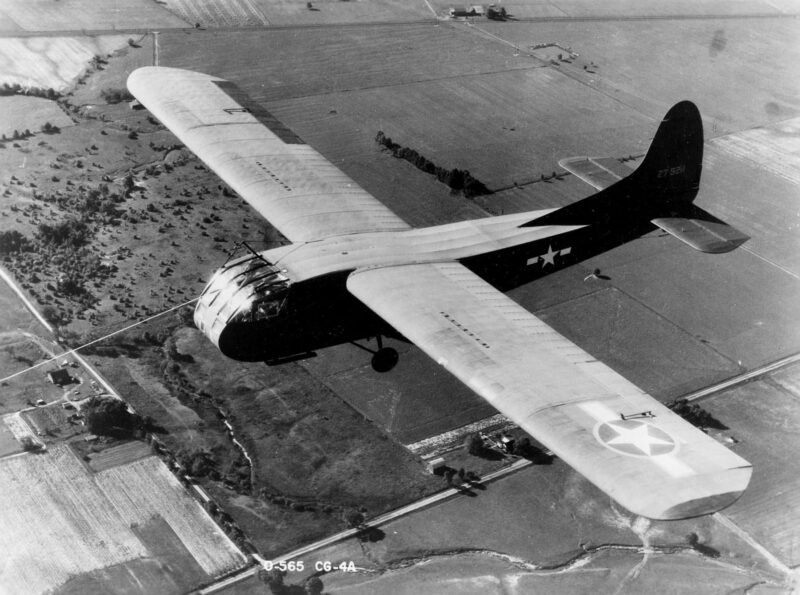
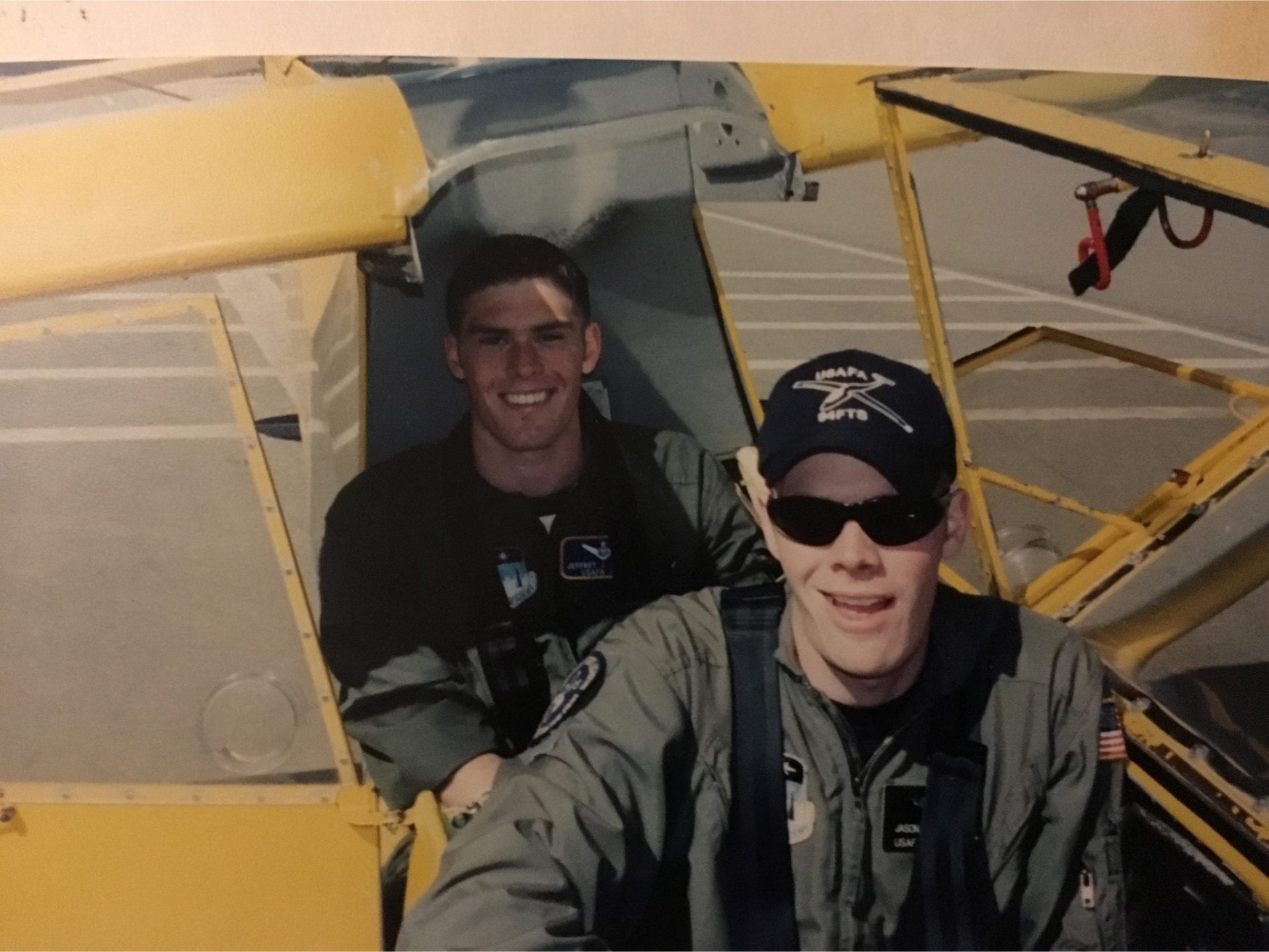
After the first year, the opportunities presented were amazing.  I got to jump out of airplanes, fly gliders and small airplanes as well as jump in the back seat of an F-15 over summer break … twice.  I was fortunate enough to get selected as a glider instructor pilot and a glider cross-country competition pilot.  I originally was recruited to wrestle (more like allowed to be on the team), but after my first year I knew I had more potential as a pilot than a wrestler.  Since everyone is on scholarship, it was an easy decision to leave the team and spend more time at the airfield (although I wish I could have done both).

Josh6

Question:  What are some of the core philosophies that they teach at the AFA that remain with you?

Boudreaux: Integrity, honesty, work ethic and being true to yourself and those that depend on you.
Do what is right, don’t care about who gets the credit … it all works out the way it is supposed to, eventually.

Although I did not know it at the time – surrounding yourself with great people.  It is amazing how much you can accomplish and how much of a better person you become simply by associating with people that are better than you.  I imagine the opposite is true as well.  Think of those organizations where almost everyone there has a bad attitude or an excuse – those traits are learned and adopted.  Conversely, at the Academy, cadets are always doing amazing things and lifting one another up or challenging each other.

Question: After graduation, you went to pilot training, what was the greatest challenge that you faced while going through flight school?

Boudreaux: I had a great time at Undergraduate Pilot training (UPT). The way to be a better student, was to be a great instructor to your classmates.  If someone needed help, lend a hand and don’t be afraid to ask for help either.  Everyone wants you to do well and finish, but there are only so many flights they can provide you with.

The majority of the learning had to occur outside the classroom.  Chair flying and study sessions were critical.  That’s when the training I received at the Academy paid off.  Time management and task prioritization was a must.  I had a great class, roommate and instructors that made it an incredible experience.  You are having so much fun, you forget you constantly pull 12 hours a day at work and another four hours at home or at a buddy’s house studying and preparing for the next ride, test or check ride.

My married friends had a little more distraction at home, but typically did not have to make their own dinner, so we combined our strengths and I would lead some of the study sessions while their wives fed us.  We took turns at different tasks.  One guy made flash cards, while another summarized key points, numbers, etc.  We constantly quizzed each other and even stopped by the houses of upperclassmen to gather lessons learned so we did not make the same mistakes.

Question: As a fighter pilot, can you explain the types of missions and deployments you’ve experienced?Josh7

Boudreaux: As an F-16 pilot, we are the jack of all trades. The jet is extremely capable and so must the pilot be.  Offensive counter-air, defensive counter-air, Air Interdiction, Close Air Support, Suppression of Enemy Air Defenses, Destruction of Enemy Air Defenses, Maritime Support, Non-traditional ISR, Armed over watch, Air Combat Patrols (protecting the POTUS and homeland) and of course the building block or part-task training of BFM, ACM , TI, BSA.

We can fight our way in, drop ordnance, and fight our way out.  One pilot, but typically a 4-ship or 8-ship working in concert with a larger package of aircraft and ground/space/cyber support.

We deploy frequently six months at a time with a four-onth spin-up, but we must be ready to fight at any time.


Question: You became a pilot in the Thunderbirds, the Air Force’s demonstration unit. What was that process like?

Boudreaux: It is an application process with an interview and three different cuts.  You start with about 30 to 40 qualified individuals and end up with three after three rounds of separate reviews and interviews.

If you get to the second step, you already have demonstrated the skills to fly the demo.  The last interview round is more about you, how you interact with the current team and what you bring to the recruiting/retainment mission. (i.e. how you tell the Air Force story and communicate with people).

Also, understand that I am just talking about the process to become a demo pilot.  While there are only six demo pilots and 12 Officers, there are 120 people on the team with over 30 different specialties.  The process is slightly different, but the outcome is the same – getting the right person to do the job and represent the Air Force.

Question: How did you get the word that you had been selected?

Boudreaux: The officers on the current team all called me from the road (during a show weekend) and congratulated me.  I was in Italy at home about to have dinner and they were in the States about to start their flight briefing.

Question: What’s been the best part about flying for the Thunderbirds?

Boudreaux: The people. I got to live and work with some of the greatest people in the world.  It was ridiculous how efficient and effective the team was because we all worked towards the same mission.  You never heard, “that’s not my job” or “I can’t do that.”  If someone needed help, everyone around them jumped in to get it done.  Each person’s job directly affected another.

Also, you had to start each day understanding that no matter what you had going on in your life or in your area, you will probably meet someone that will only have one interaction with someone from their military – you owe it to that person and to each of the 312,000 Airmen serving to be the best ambassador you can be.

When you put on that tight, fitted flight suit, it’s not about you…it’s about what you stand for and the people you represent.

Question: Those that have witnessed the Thunderbirds in action marvel at the tight formations and intricate maneuvers. How do you gain the confidence to fly like that?

Boudreaux: Practice and trust in one another.  You don’t just walk out on the field and start hitting home runs or pick up a guitar and play “Stairway to Heaven.”  You practice.  You accept that you will suck at first, but always take the opportunity to learn and get better.  Never accept anything less than absolute perfection. Although you may rarely or never achieve perfection, it should always be your goal.

Question: What’s your best memory of three years of flying for the Thunderbirds?

Boudreaux: The excitement of my family when I got home from a show (not because I was a Thunderbird, but because they got to spend one day out of the week with me).  My wife and three boys are my biggest fans and I could not have gotten through all the time away from them without their support.  Take nothing for granted.

Question: Is there a misconception the general public has about Thunderbird pilots?

Boudreaux: That we are prima-donnas.  We are nothing special, just trying to do our best every day.  Most of us would love to just walk around and see the air show, but are schedules are so jam packed and we are doing a lot of work behind the scenes to get the jets to various locations and perform the show with the utmost safety.

Question: The Thunderbirds fly the F-16 Viper, which has been in service for over 40 years – any thoughts on if it’s time for a change?

Boudreaux: No. The Viper is the best jet for a six aircraft show and you could not do it as efficiently and with the same effect with another fighter.

Question: What’s your advice for any youngsters who were like you and dreamed of becoming Air Force pilots or even just learning to fly?

Boudreaux: Do it.  It starts with an idea and some motivation.  No one is going to do it for you. Do not listen to people that say you can’t.  I have heard all kinds of excuses and most of just trying to disguise the fear of failure.  It is not for everyone, but if it is for you it is the best job in the world.

Josh2

It’s Like Being There: Watch This Cockpit Video Of Airbus Flight

A cool view from the cockpit during an Airbus A320 flight.  Swiss has really upped their video game as of late.  If you recall, they recently posted a video of a 777-300 inaugural flight from New York Kennedy Airport.

The walk around inspection, followed by de-icing, the cockpit checklist and a foggy takeoff. Follow this Swiss Airbus A320 from takeoff to landing on its journey across Europe.

[youtube id=”9PwheSmpir0″ width=”800″ height=”454″ position=”left”]

Southwest Commercial Reminds Us When Flying Was A Pleasure, Not A Pain

Hot pants, go-go boots and a 737 buzzing a “flight attendant” as she pitches Southwest Airlines.

Southwest Airlines from its start in 1967 has been known for its differences from other airlines. Way before political correctness became a thing, the airline’s flight attendants were, well, ahem … unique. They dressed in hot pants and go-go boots; the hiring pool was long-legged dancers, majorettes and cheerleaders.

That’s evident and displayed in this commercial from 1972. “First-class legroom?” “Free cocktails for everyone?” What kind of business model is that?

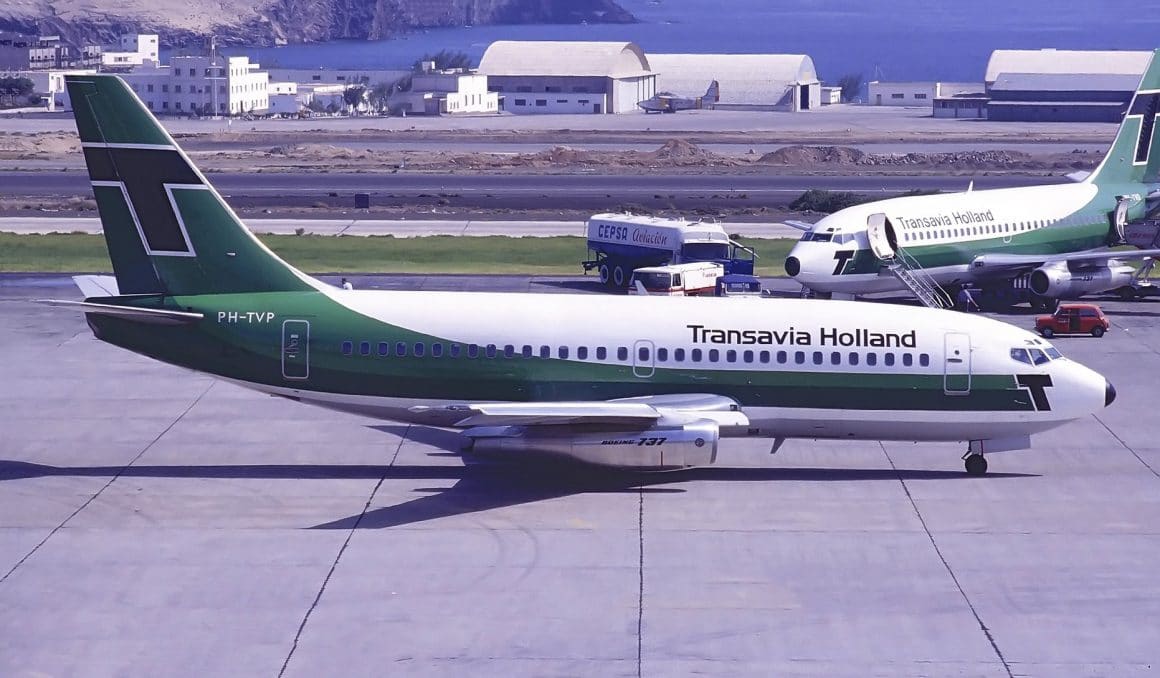
What’s interesting about this commercial is that this was done “live” with a real Southwest plane taking off and buzzing the spokeswoman. No CGI, folks.  Just a smokey, sexy 737-200. And you have to wonder if the lady nailed it on the first take?

[youtube id=”TR7JApjgIGw” width=”800″ height=”454″ position=”left”]

Chicago Cubs, American Airlines provide a special spring training trip

How a youth baseball team from Chicago went to Arizona for spring training.

We’re just a week into the major-league baseball season has been cranked up for just over a

Combine a major-league baseball player who wants to make a difference for the youth in his city with the help of a major airline and you’ve got this story.

Chicago Cubs first baseman Anthony Rizzo wanted to help out the RBI junior all-stars by flying the team to Arizona for spring training. American Airlines pitched in for the transportation.

If you ever had dreams of being a big-league ball player, you can imagine how great an experience it was for these youngsters to meet Cubs players and play a game on the team’s minor-league field.

RBI stands for Reviving Baseball in Inner Cities and is baseball’s program designed to promote the game of baseball to teenage boys and girls.