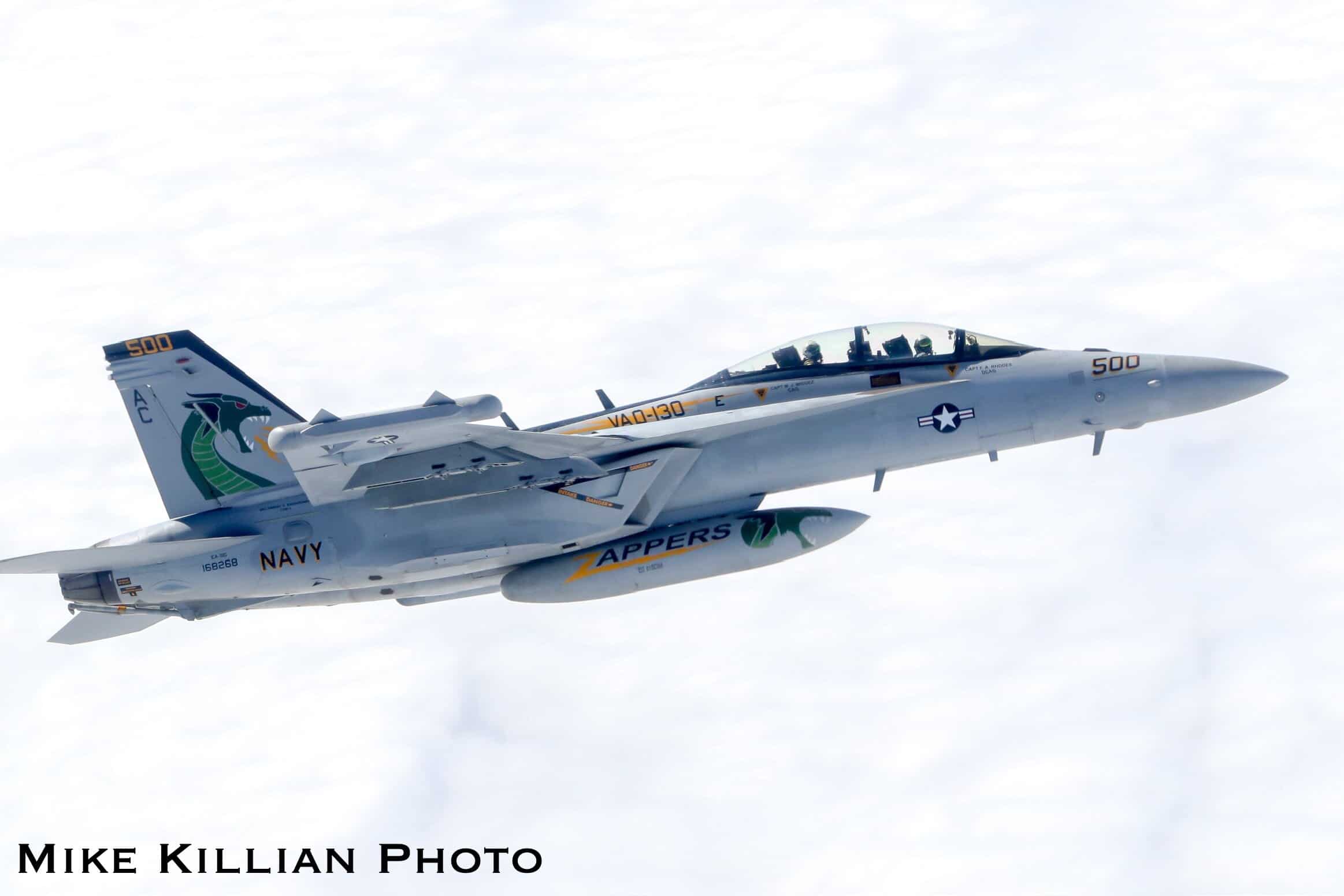
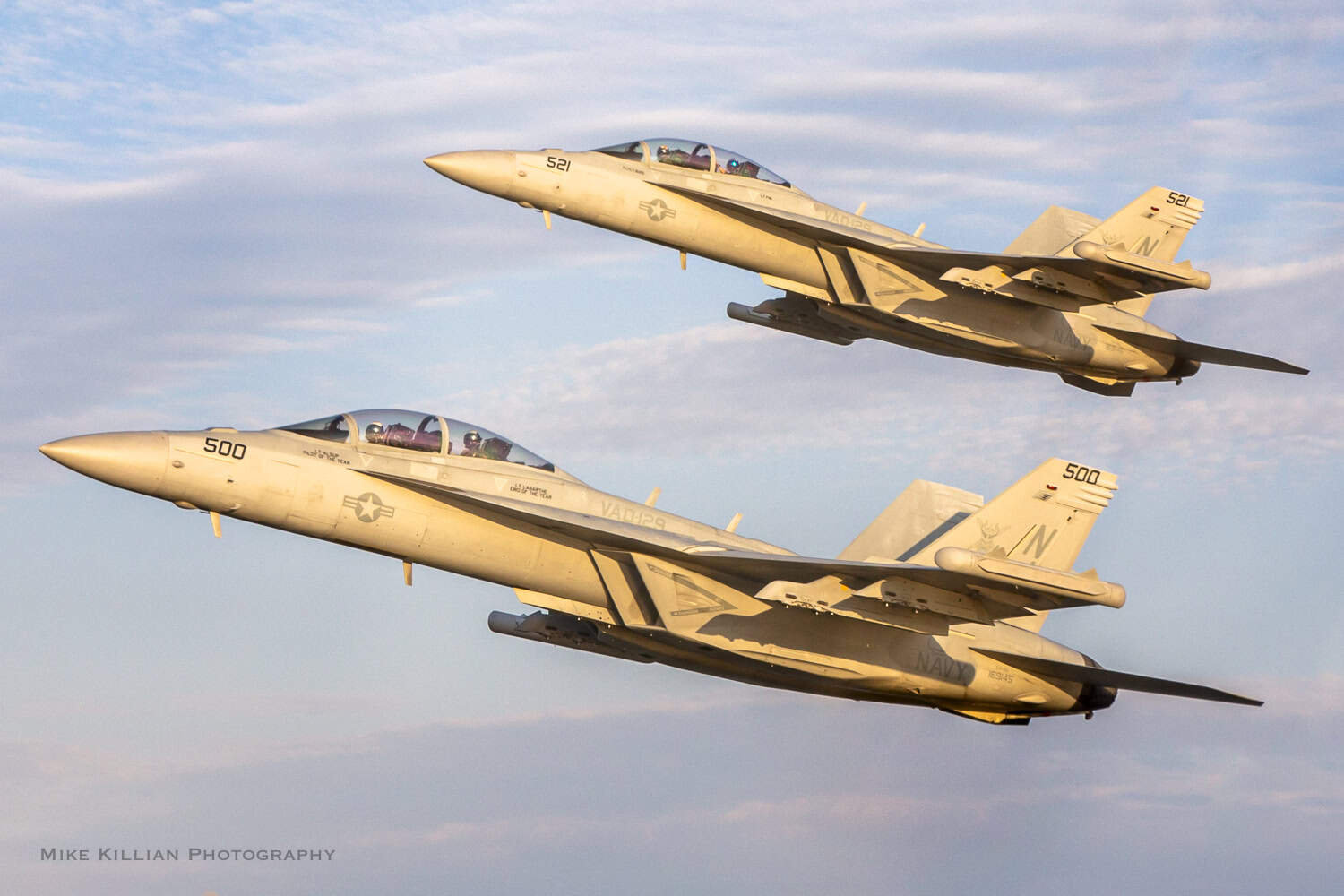
Navy officials say a Growler crew died in a jet crash near Mount Rainier earlier this week in Washington state.
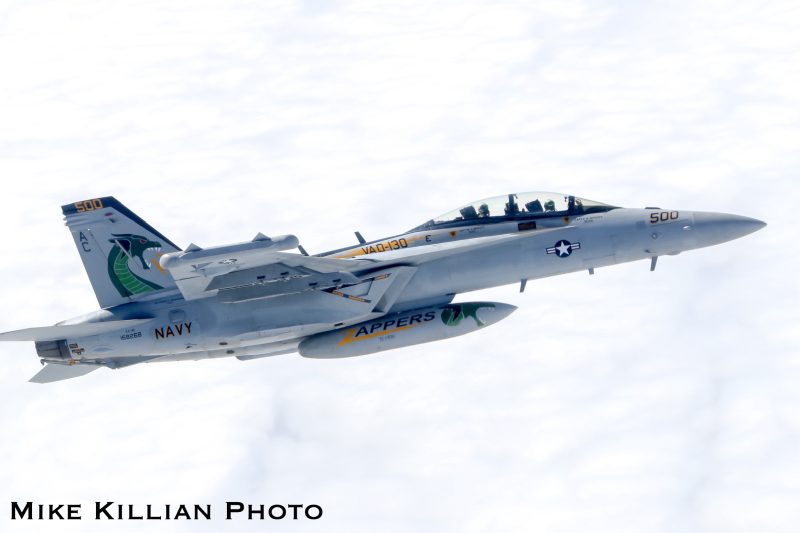
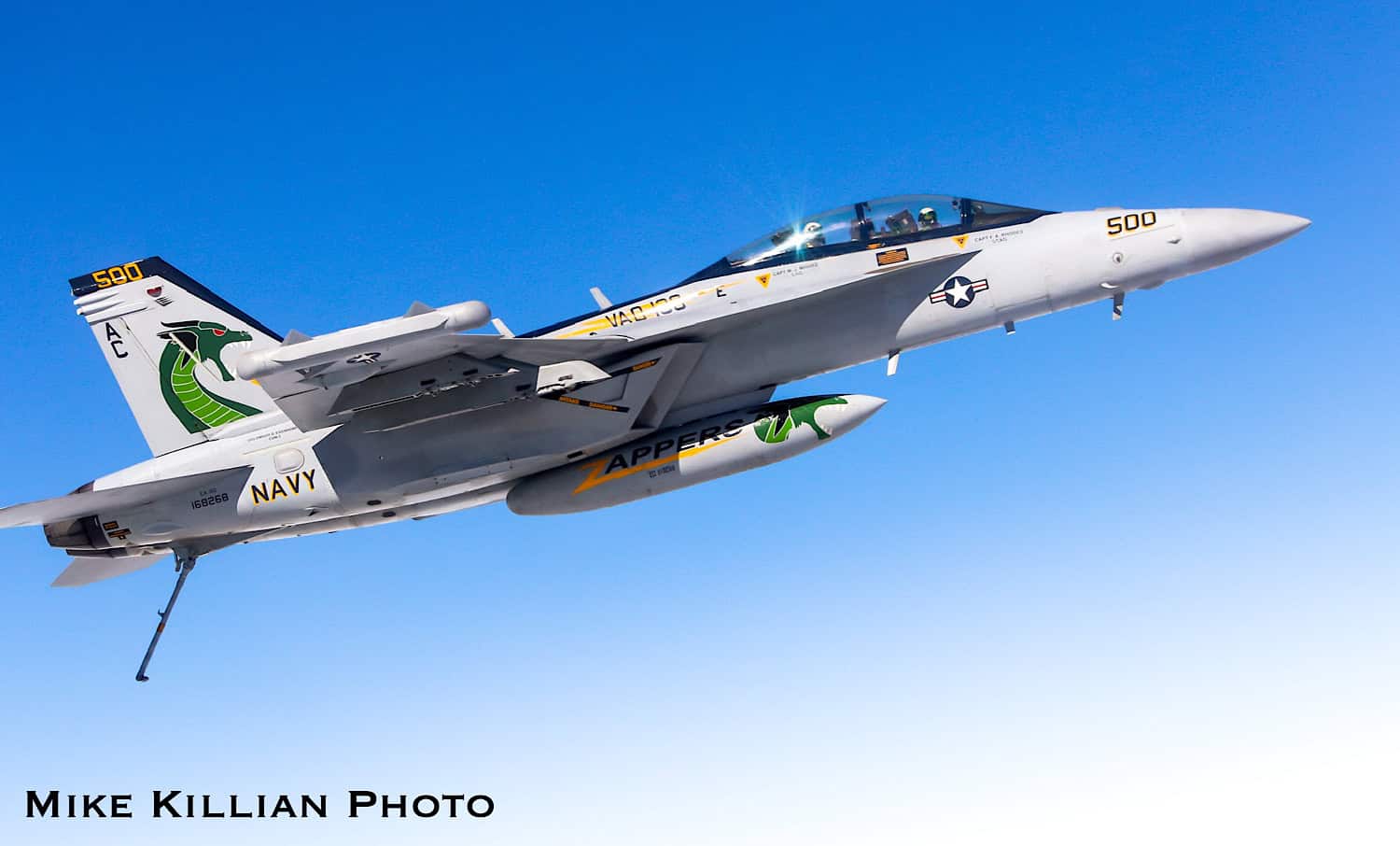
Efforts have been underway for several days to find the crash site and 2 crew members from Electronic Attack Squadron VAQ-130, the ZAPPERS. Operations have now shifted from search and rescue, to recovery.
A map shared by the Yakima County Sheriff’s Office shows where a Navy EA-18G Growler crashed east of Mount Rainier on October 15, 2024. (Photo courtesy: Yakima County Sheriff’s Office)
Crew of 2 went down during a routine training flight Oct 15
Multiple search and rescue assets were involved, including a Navy MN-60S helicopter, to find the crash and crew. Efforts focused on an area 30 miles west of Yakima, challenged by mountainous terrain, cloudy weather, and low visibility.
Aerial crews eventually found the crash site, resting on a mountainside east of Mount Rainier.
Photos via navy
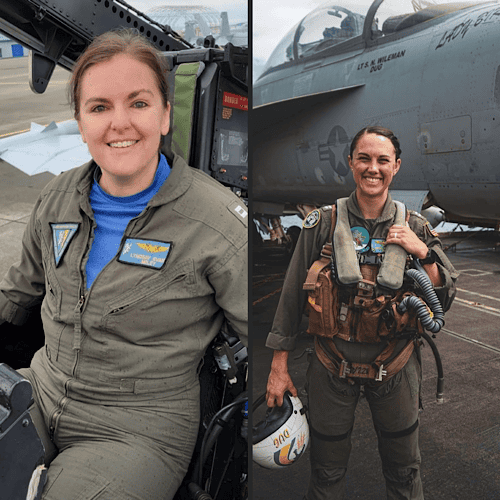
The Naval Aviators lost are Lt. Cmdr. Lyndsay P. Evans, 31, a Naval Flight Officer from California, and Lt. Serena N. Wileman, 31, a Naval Aviator from California.
“It is with a heavy heart that we share the loss of two beloved Zappers,” said Cmdr. Timothy Warburton, commanding officer of VAQ-130. “Our priority right now is taking care of the families of our fallen aviators, and ensuring the well-being of our Sailors and the Growler community. We are grateful for the ongoing teamwork to safely recover the deceased.”
Personnel on site continue to search the expansive area, recovering debris and planning for the long-term salvage and recovery effort.
The cause of the crash is under investigation.
Navy Says Growler Crew Died in Jet Crash Near Mount Rainier 6
The ZAPPERS are the oldest Electronic Attack squadron in the US Navy
The Zappers had just returned stateside too, following a combat deployment as the only EA-18 Growler squadron with Carrier Air Wing 3.
They served on the aircraft carrier USS Dwight D. Eisenhower (CVN-69) in support of Operation Prosperity Guardian in the southern Red Sea, where they executed strikes against Houthi-controlled areas in Yemen.
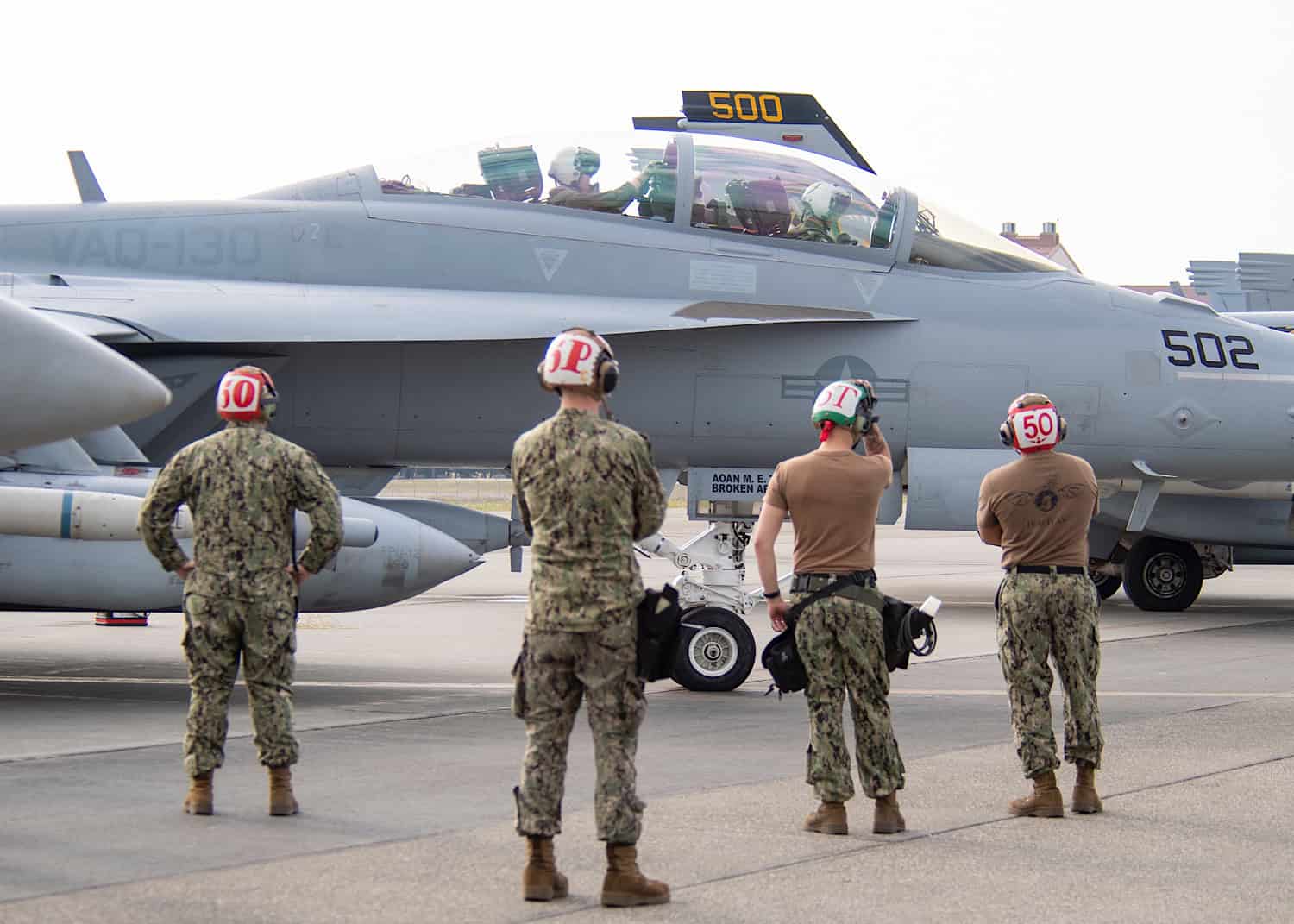
U.S. Navy Electronic Attack Squadron 130 plane captains wait on the flightline for pilots of an EA-18G Growler to complete pre-flight checks prior to a training sortie (U.S. Air Force photo by Staff Sgt. Ryan Lackey)
They are the oldest electronic attack squadron in the Navy. The Zappers are also the first Growler squadron in Navy history to score an air-to-air kill.
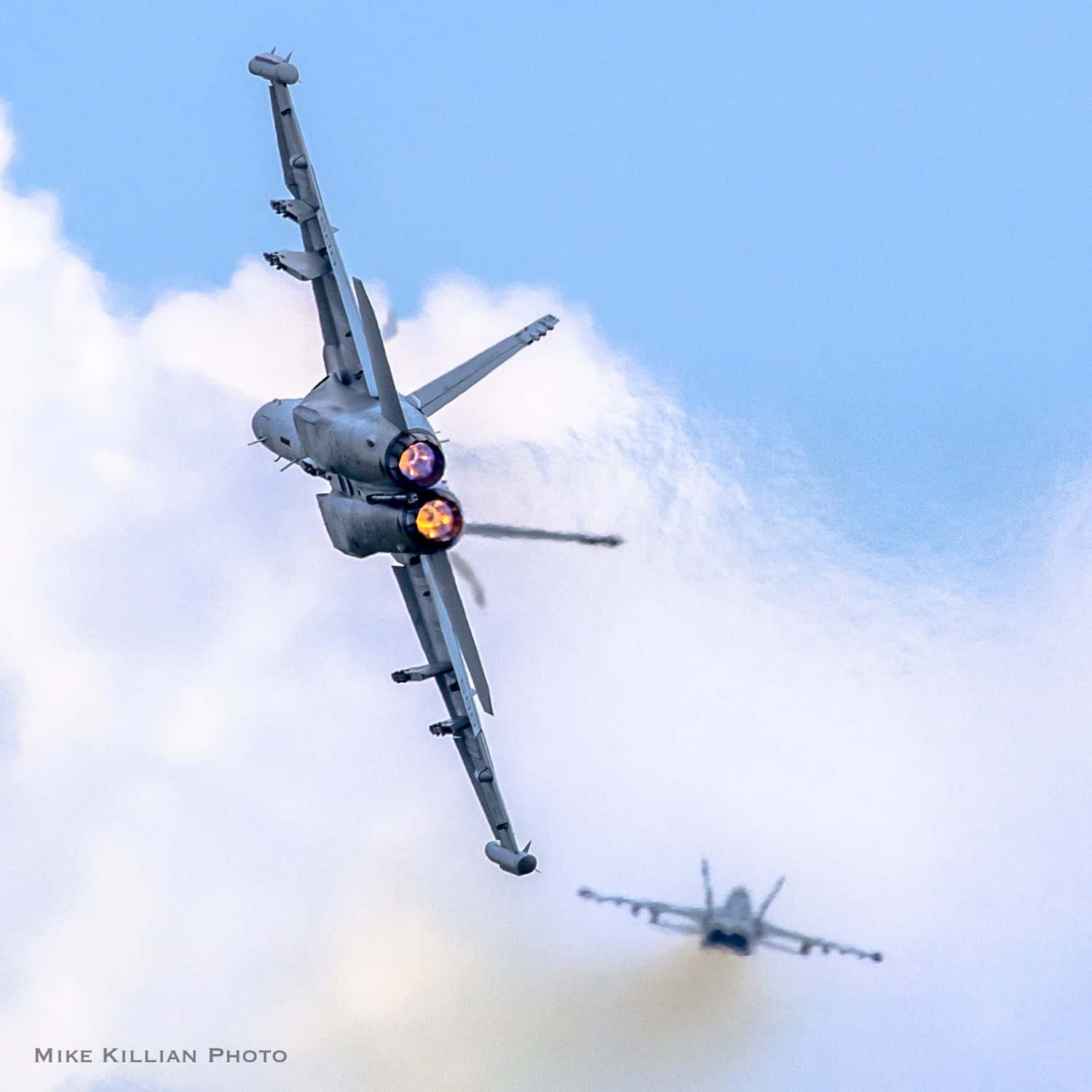
Based on the Super Hornet airframe, the two-seat, twin-turbofan Growlers integrate the latest electronic attack technology. They jam and blind the enemy before a single shot need be fired.
The Airlifter known as Aluminum Overcast Might Have Been a Million Rivets Flying In Close Formation, But They Hauled It All Whenever Called.
The last of 448 Douglas C-124 Globemaster II airlifters rolled off the assembly line in 1955. These versatile and reliable transport aircraft served for 24 Cold War years and carried all manner of cargo around the world.
“Old Shaky” was the prevalent nickname for the airplane, but Aluminum Overcast and Boneshaker were used to refer to the C-124 as well. The Globemaster II was developed from the original Globemaster, the C-74, which was designed by Douglas as a heavy transport during World War II.
Here’s a video about Old Shaky uploaded by the Air Mobility Command’s YouTube page TheAMCMuseum. Enjoy and then read on!
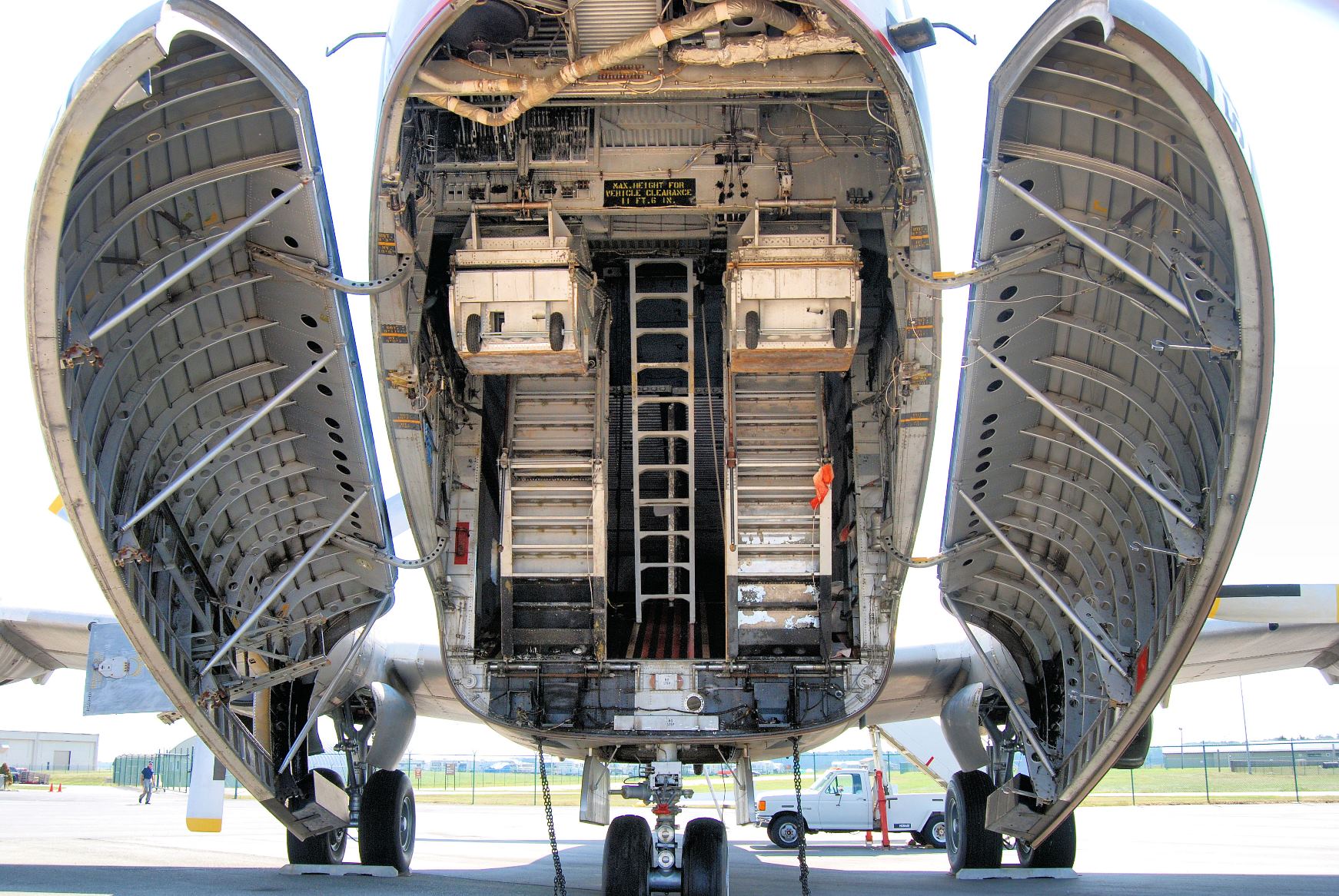
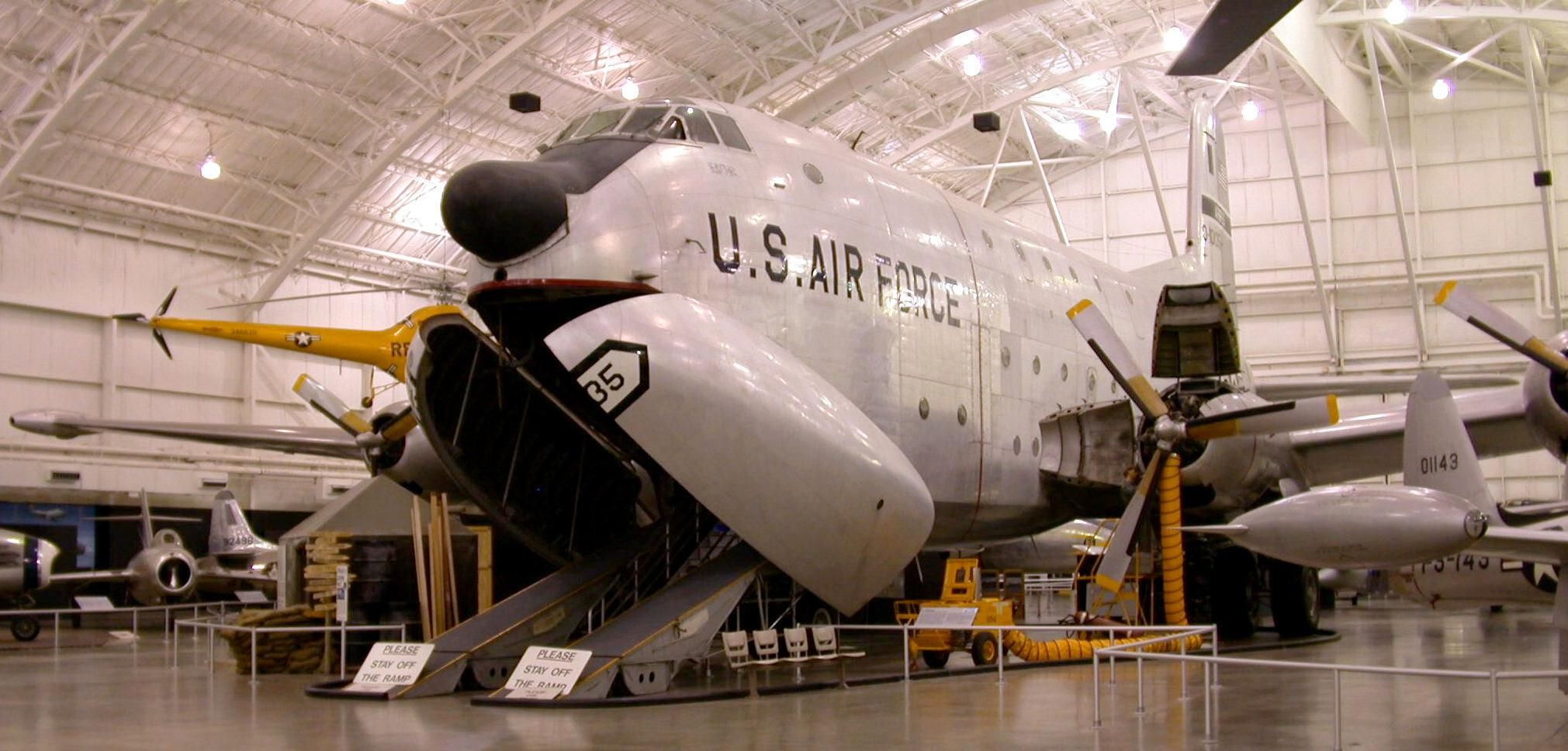
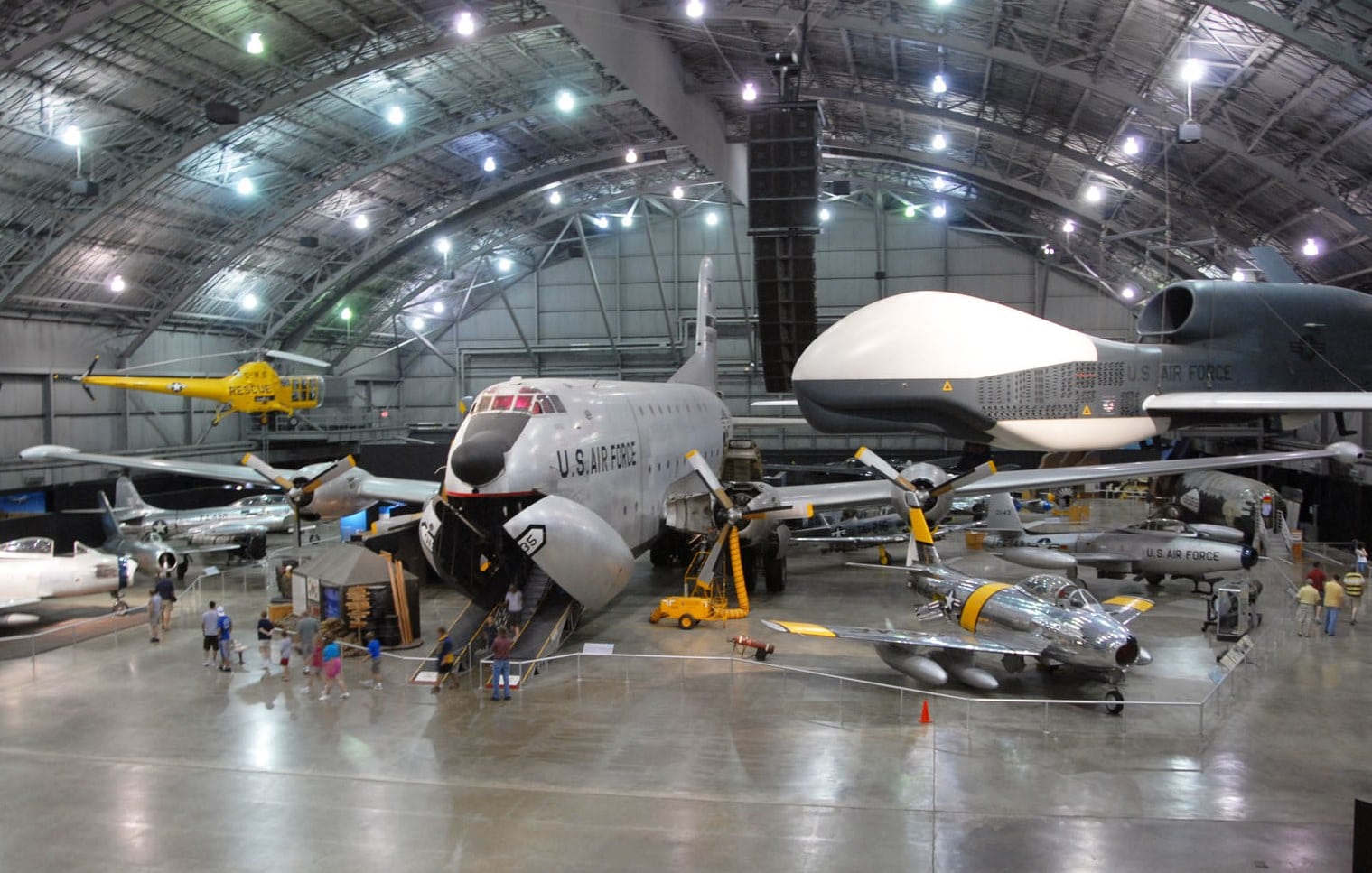
C-124 clamshell doors with ramps retracted. Photo Courtesy Air Mobility Command Museum
Singularly Unique Development of the Original Globemaster
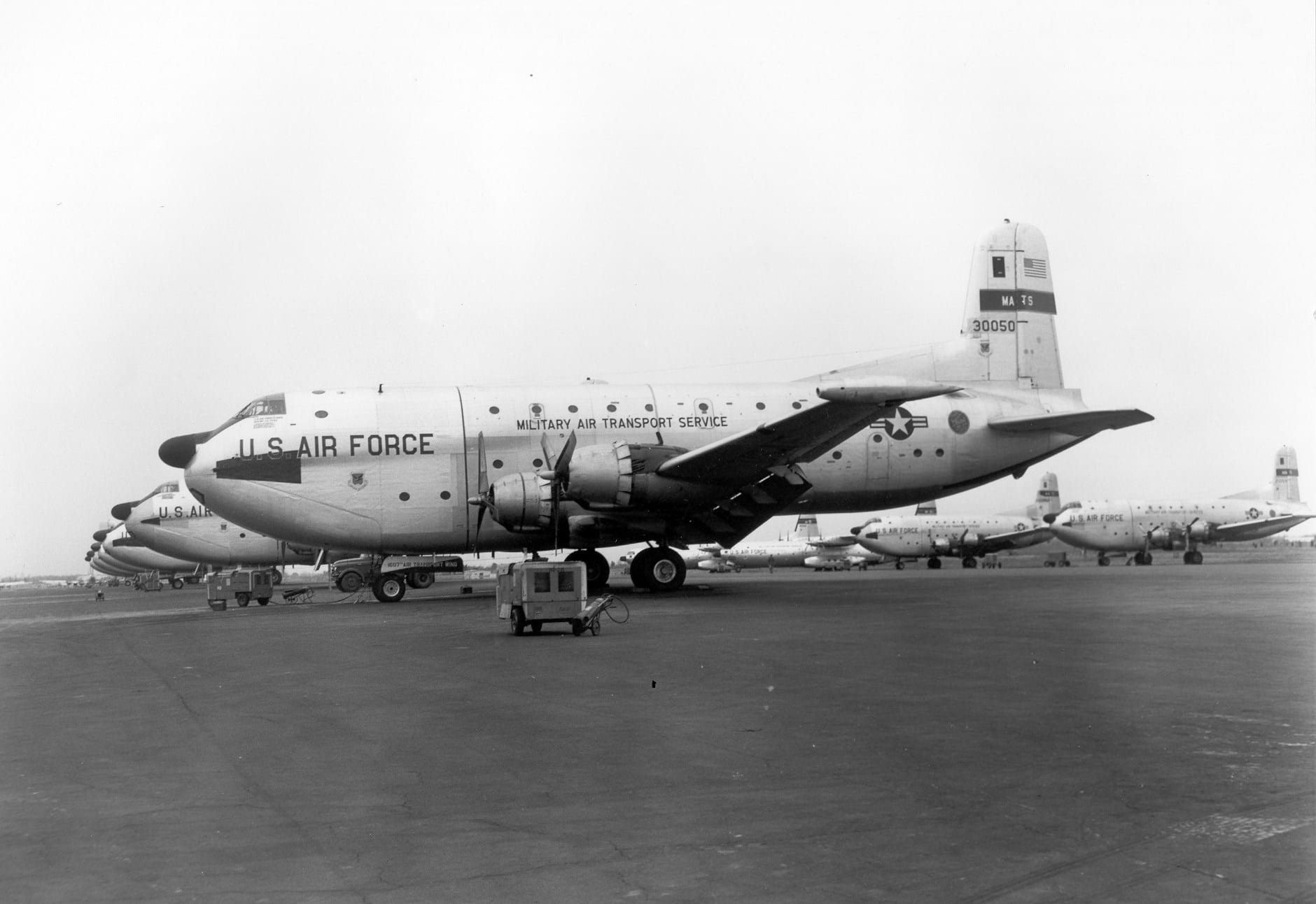
The C-124 was first flown on 27 November 1949, following approximately two years of development work on the C-74. The initial C-124A variants began service with the Military Air Transport Service (MATS) in 1950.
The design of the aircraft was influenced to some degree by the Berlin Airlift. As such, the C-124 was capable of carrying considerably larger cargo without disassembly than other available airlifters. C-124As were powered by a quartet of Pratt & Whitney R-4360 Wasp Major 28-cylinder radial engines. The cargo hold was accessible via a pair of clamshell doors located under the cockpit and forward of the nose landing gear, as well as a cargo elevator located under the aft fuselage.
With wings spanning 174 feet and standing nearly 50 feet tall, Old Shaky would never be confused with any other airlifter.
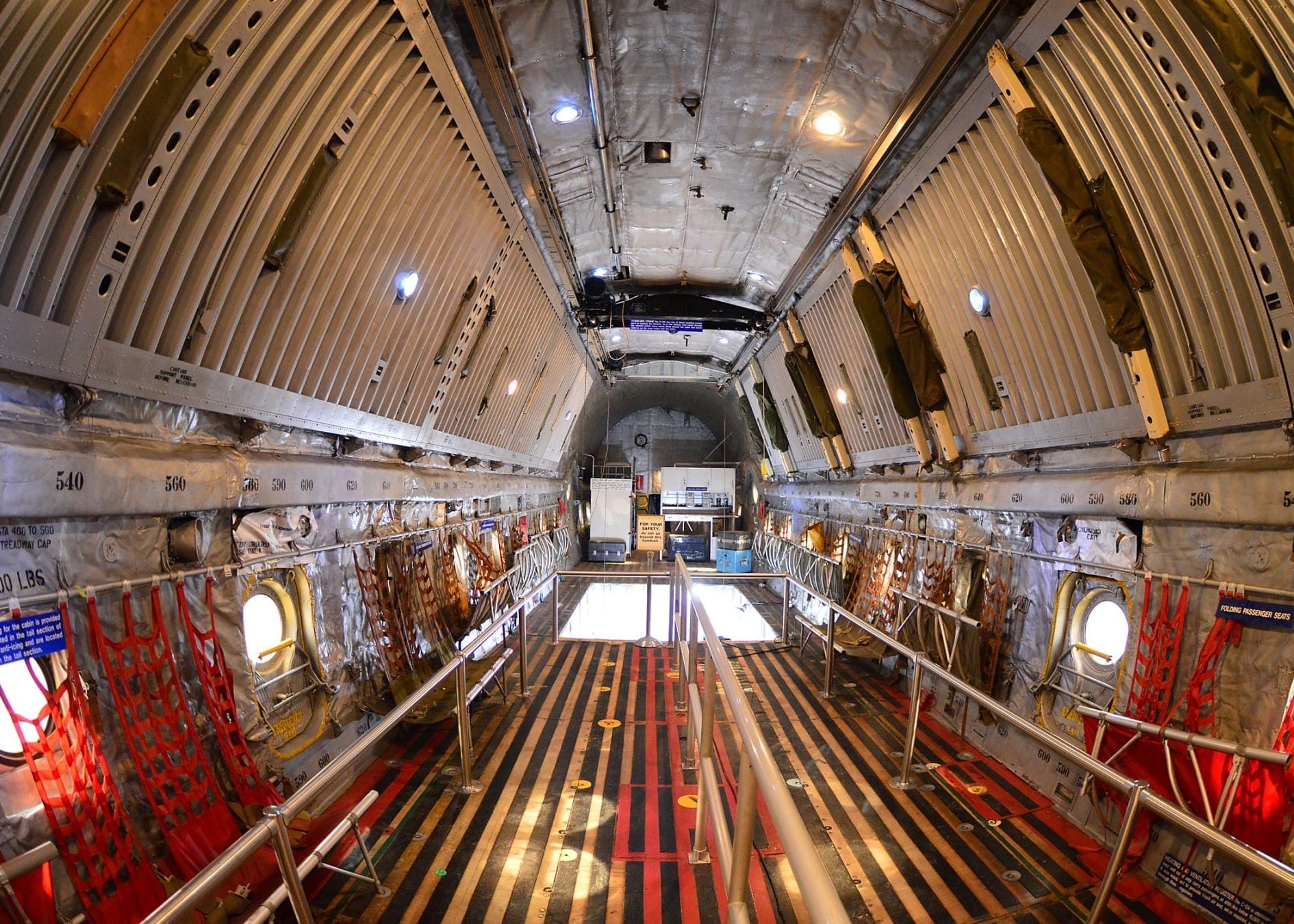
C-124 cargo hold looking aft. Photo courtesy Air Mobility Command Museum
Flexible Cargo Cavern
Inside the cargo hold, there were two decks of available floor space, though the upper deck was often folded up against the fuselage sides. Just one look at the exterior profile of the fuselage reveals the huge amount of available space inside the hold. The airlifter could lift a wide range of military equipment.
Once inside the Globemaster II, equipment could be moved in the cargo hold via a pair of internal 8,000-pound hoists. 200 fully-equipped troops in double-deck mode or 127 litter patients could ride inside the cavernous space. There wasn’t much that wouldn’t fit inside Old Shaky in those days, and the airlifter could tote a little more than 34 tons of cargo.
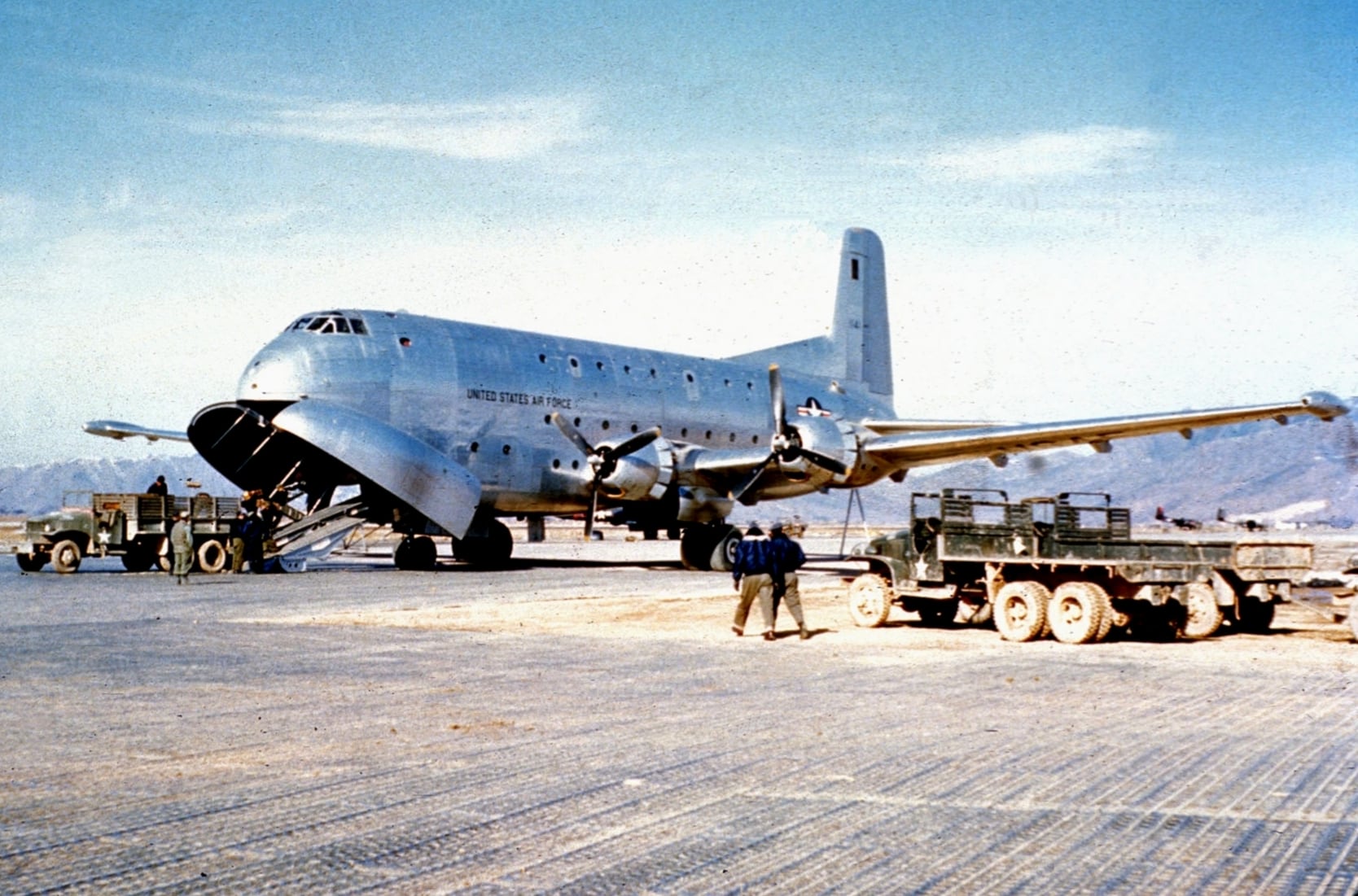
C-124A unloading in Korea. Official US Air Force Photograph
Around the World, Taking Days to Get There
The first real test of the C-124 was the Korean War. C-124As were used to support United Nations troops in the region. Globemaster IIs also supported the cold-weather research being conducted by the scientists at Operation Deep Freeze in Antarctica.
Old Shaky visited every continent and most of the countries on them. Whether it was humanitarian aid, heavy cargo, support for the Suez, Lebanon, or Taiwan Straits Crises in the 1950s, the Congo Airlift or the Berlin Airlift in the 1960s, or just the regular MATS routes like The Snow Goose, The Benefactor, or The Dateliner, C-124s plied the skies continuously—and at a cruising speed of 230 miles per hour, I do mean continuously.
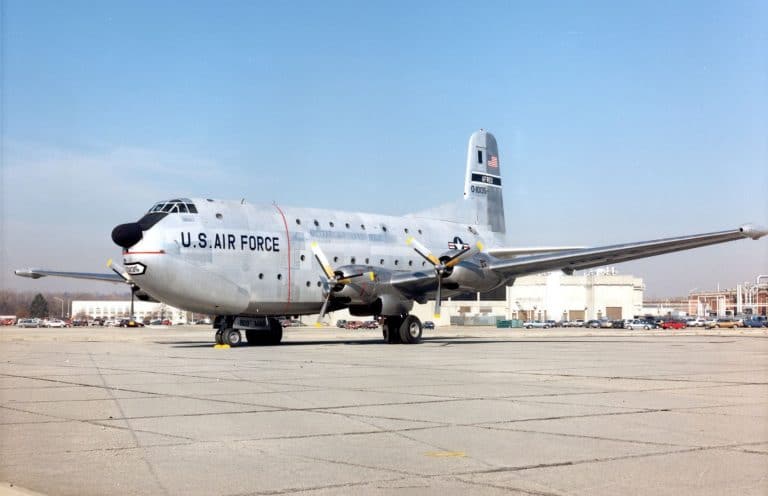
C-124C in display. Official US Air Force Photograph.
Serving in SAC
Globemaster IIs served in MATS, carrying primarily garden-variety cargo —some of it critical and some not so much. However, C-124s also carried cargo for Strategic Air Command (SAC), most of which would go boom, and a significant number that would go high-order boom. Fifty C-124s worked for SAC between 1950 and 1962.
They carried not only those special weapons but vehicles used to deliver them- specifically the SM-75A / PGM-17 Thor intermediate-range ballistic missiles (IRBMs) along with others.
A secondary duty for SAC-gained Old Shakys was carriage of SAC personnel between installations and preparation for the many exercises and inspections that took place in those days. But SAC, just like every other C-124 user, had to use a “kickstand” to keep the tails in the air and not sitting on the ramps thanks to the plane’s short-coupled landing gear.
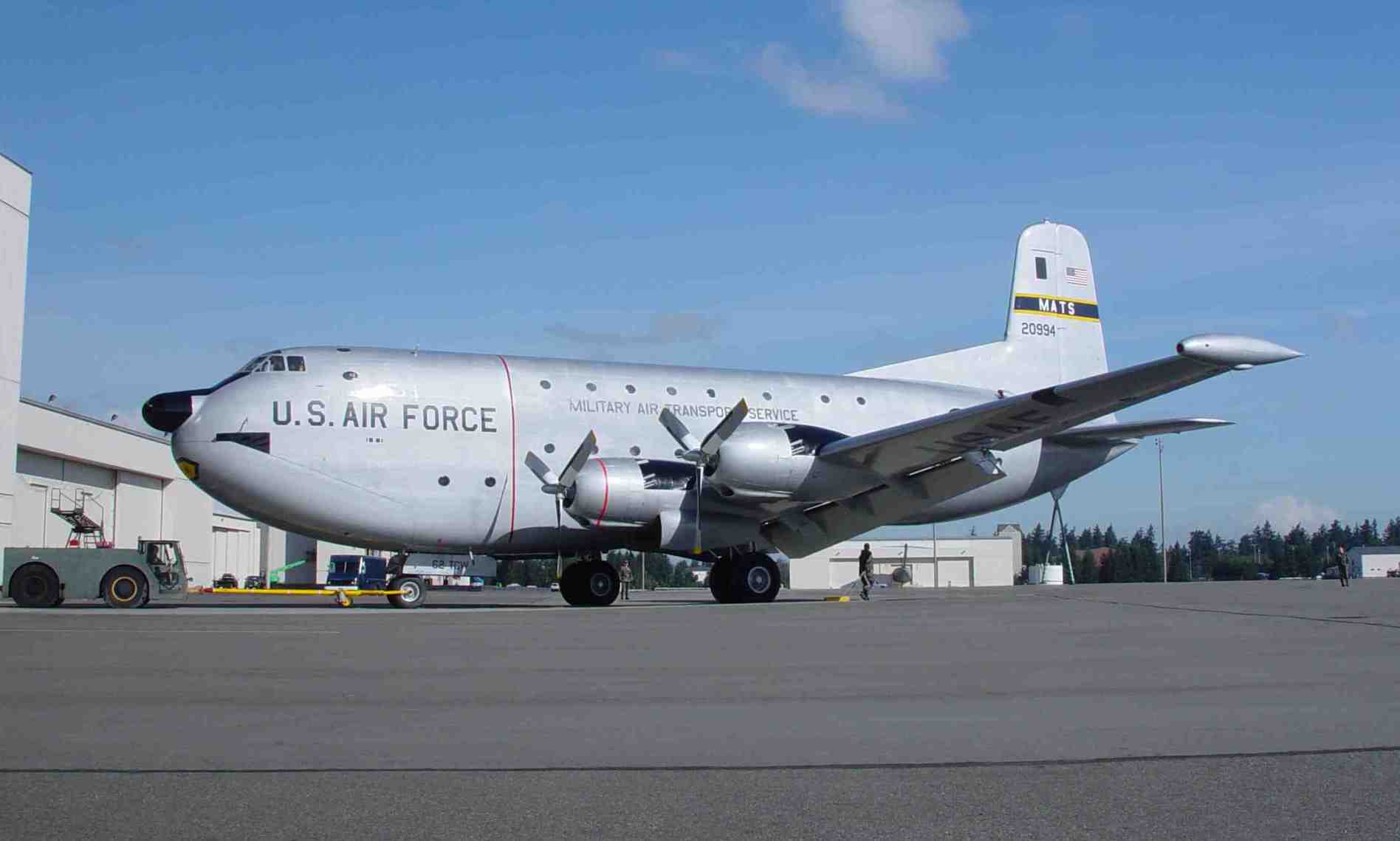
C-124C. Official US Air Force Photograph
Building a Better Boneshaker
The C-124s evolved over time, with the ultimate Boneshaker model being the C-124C. Newer and more powerful engines, increased fuel capacity, and a nose-mounted APS-42 weather radar radome that resembled nothing so much as a thimble stuck on the nose of the veteran airlifter differentiated it from the earlier C-124A variant.
But the things that most casual observers mis-identify on the C-124C are those devices attached to the wingtips. What they’re not, however, are tip tanks. They’re actually Janitrol combustion heaters used to heat the voluminous cargo hold and de-ice the wings and tail surfaces. The earlier A-model aircraft were modified to bring them to C-model specification.
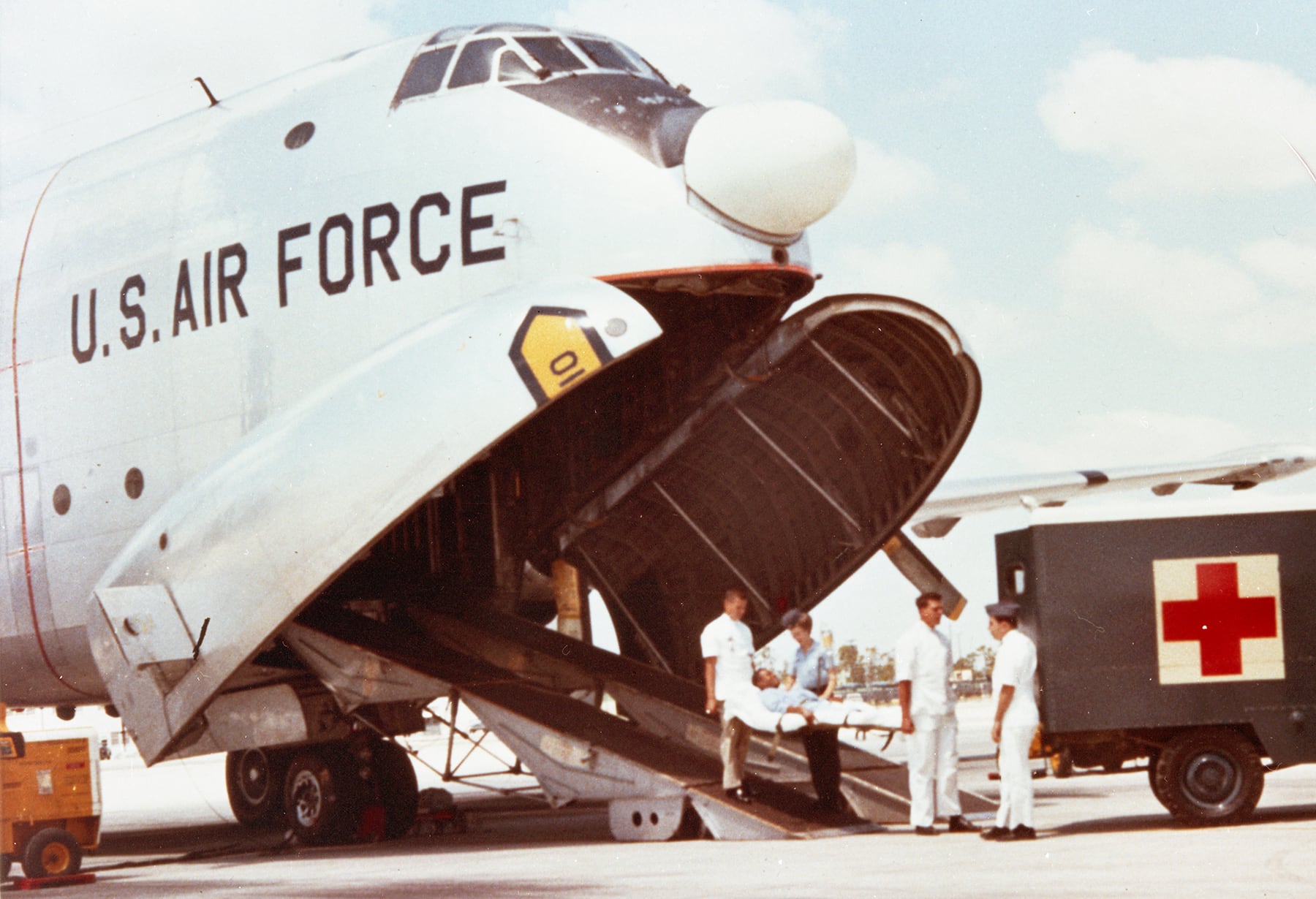
C-124C unloading Vietnam wounded. Official US Air Force Photograph
MATS, MAC, and to War in Vietnam
Following the service with MATS and after 1966, Military Airlift Command (MAC) C-124s continued to support the war in Vietnam. The cargo-hauling capabilities of the C-124, along with the follow-on turbine-powered Douglas C-133, were heavily utilized to support the war in Southeast Asia, even during the initial availability of the next generation of jet-powered airlifters like Lockheed’s C-141 Starlifter and C-5 Galaxy.
Nothing else in the inventory could transport the outsized equipment needed in-theater until the C-5 came along.
Once the next-generation airlifters became available in numbers, Old Shaky went to work for the Air Force Reserve (AFRES) and later the Air National Guard (ANG), and by 1970, there were no more C-124s serving with front-line active MAC units.
C-124C. Official US Air Force Photograph
Epitaph for Old Shaky
Although the prototype YC-124B was built to investigate the viability of a turbine-powered Old Smoothie tanker by replacing the Wasp Major radial engines with General Electric T-34 turbines (the same engines used on the C-133), there really were no efforts aimed at prolonging the service life of the Globemaster II.
They had a great run, and their replacements with turbine (Lockheed C-130) and jet (C-141 Starlifter and C-5 Galaxy) power were capable of carrying on the work so ably done by Old Shaky.
The last C-124Cs in service were retired by the 165th Tactical Airlift Group, Georgia ANG, in September 1974. Several of these grand old workhorses are now enshrined in museums.
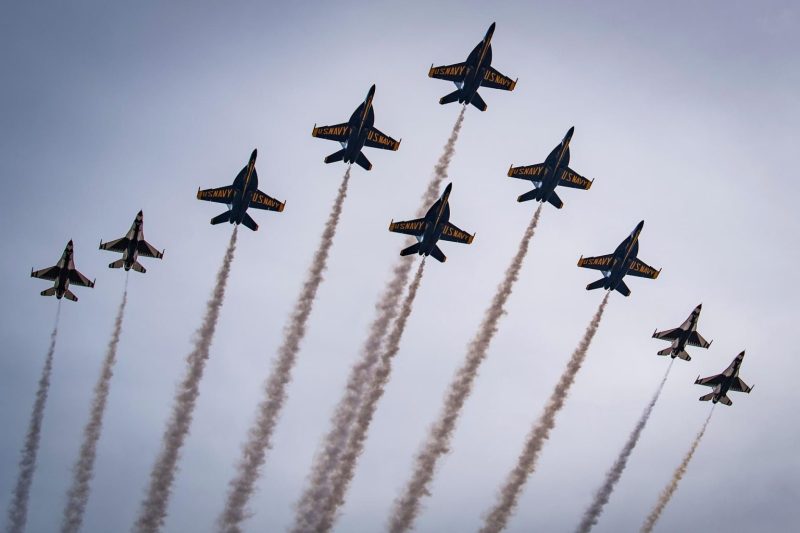
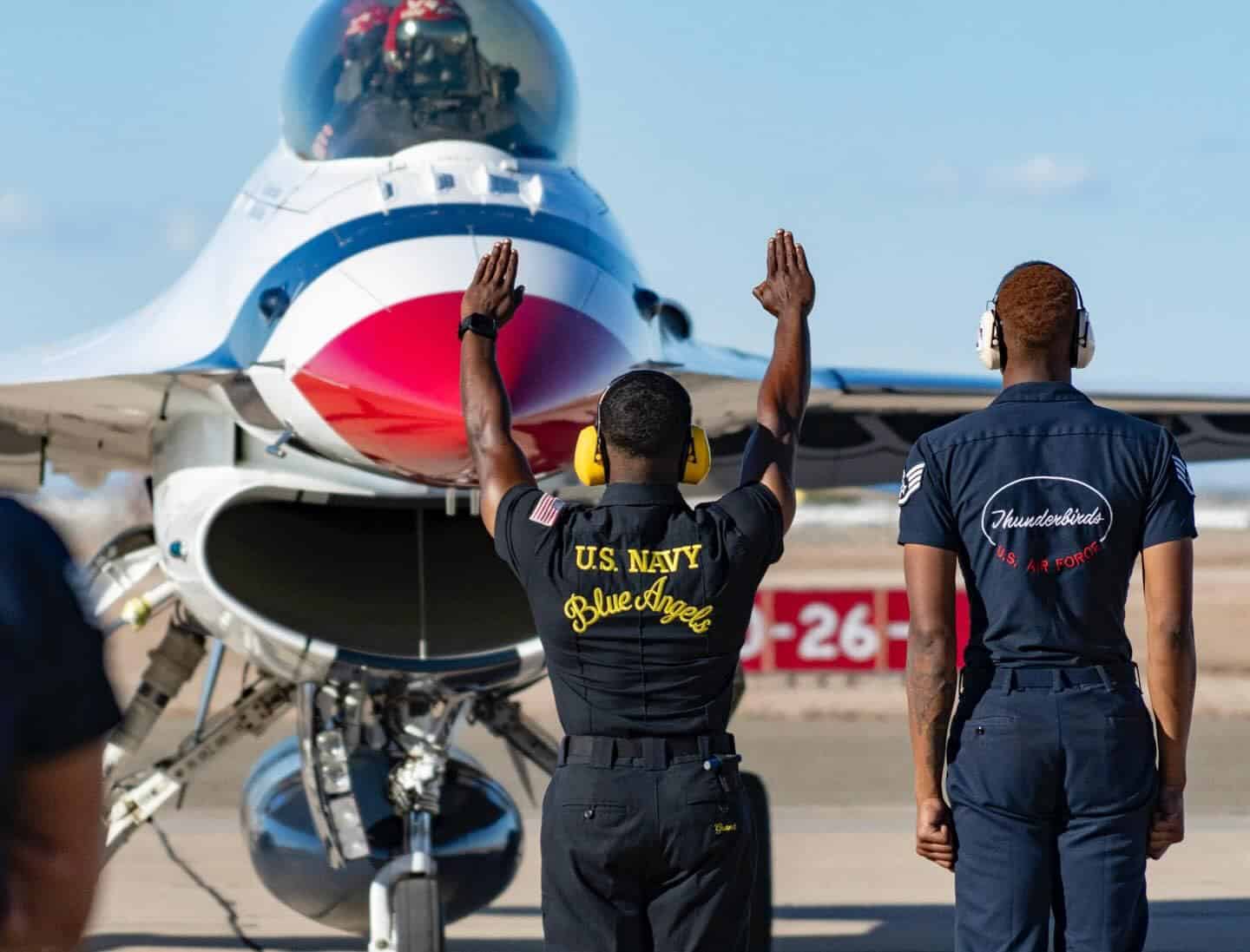
The Blue Angels and USAF Thunderbirds will both fly in the upcoming NAS Pensacola Blue Angels Homecoming Air Show Nov 1-2. It’s a very rare public get-together for both teams, and the only opportunity this year to see it at a public event.
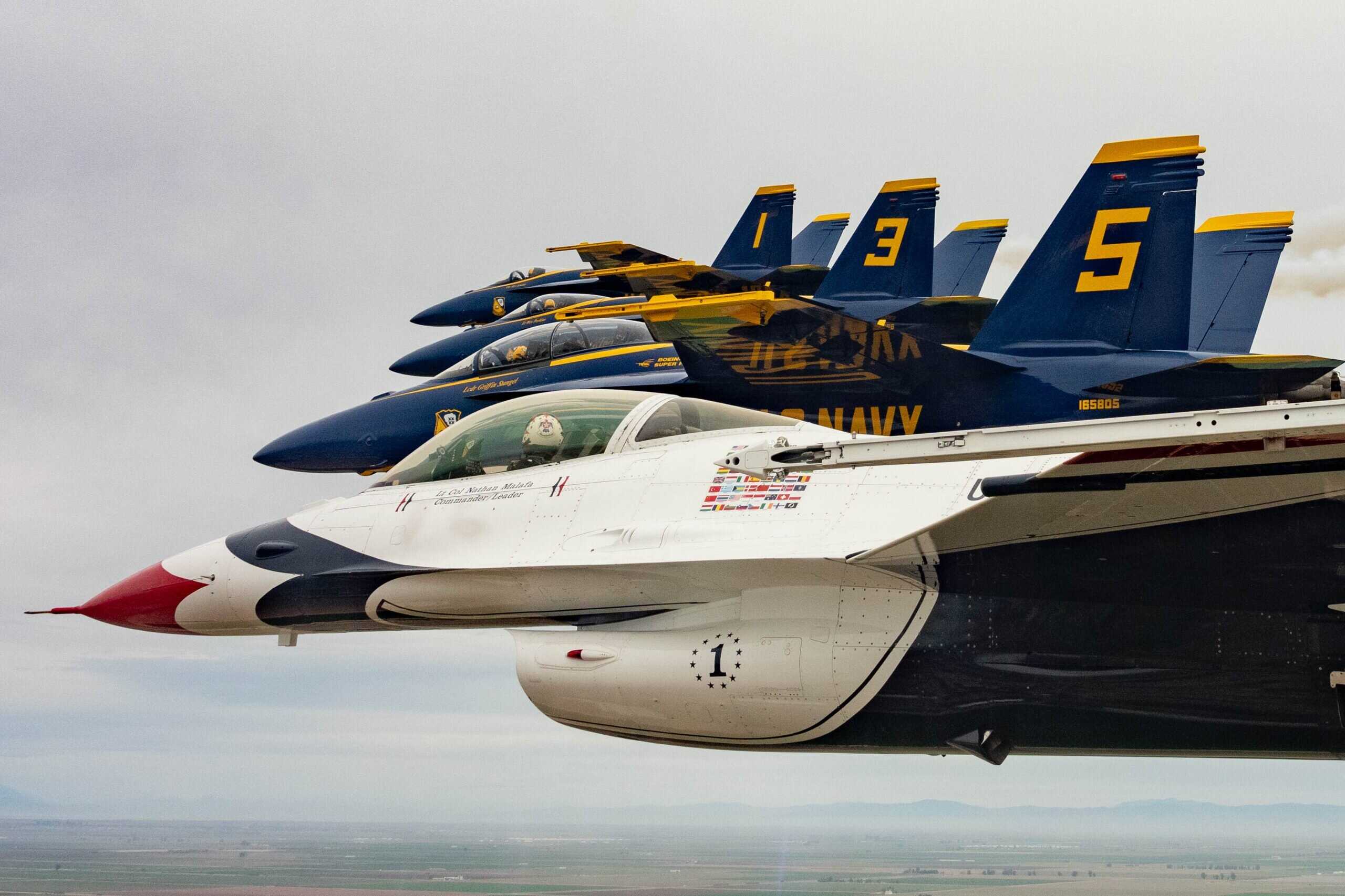
Photo credit: blue angels / thunderbirds
Both teams have conducted joint training together each winter for the last 5 years, most recently in March 2024 when the Thunderbirds visited the Blues’ at NAS El Centro. Each team represents different military branches, but both share a similar mission.
Both teams are now on the tail-end of a very busy air show season, performing across the United States week after week. The Pensacola show will be the last for both teams in 2024.
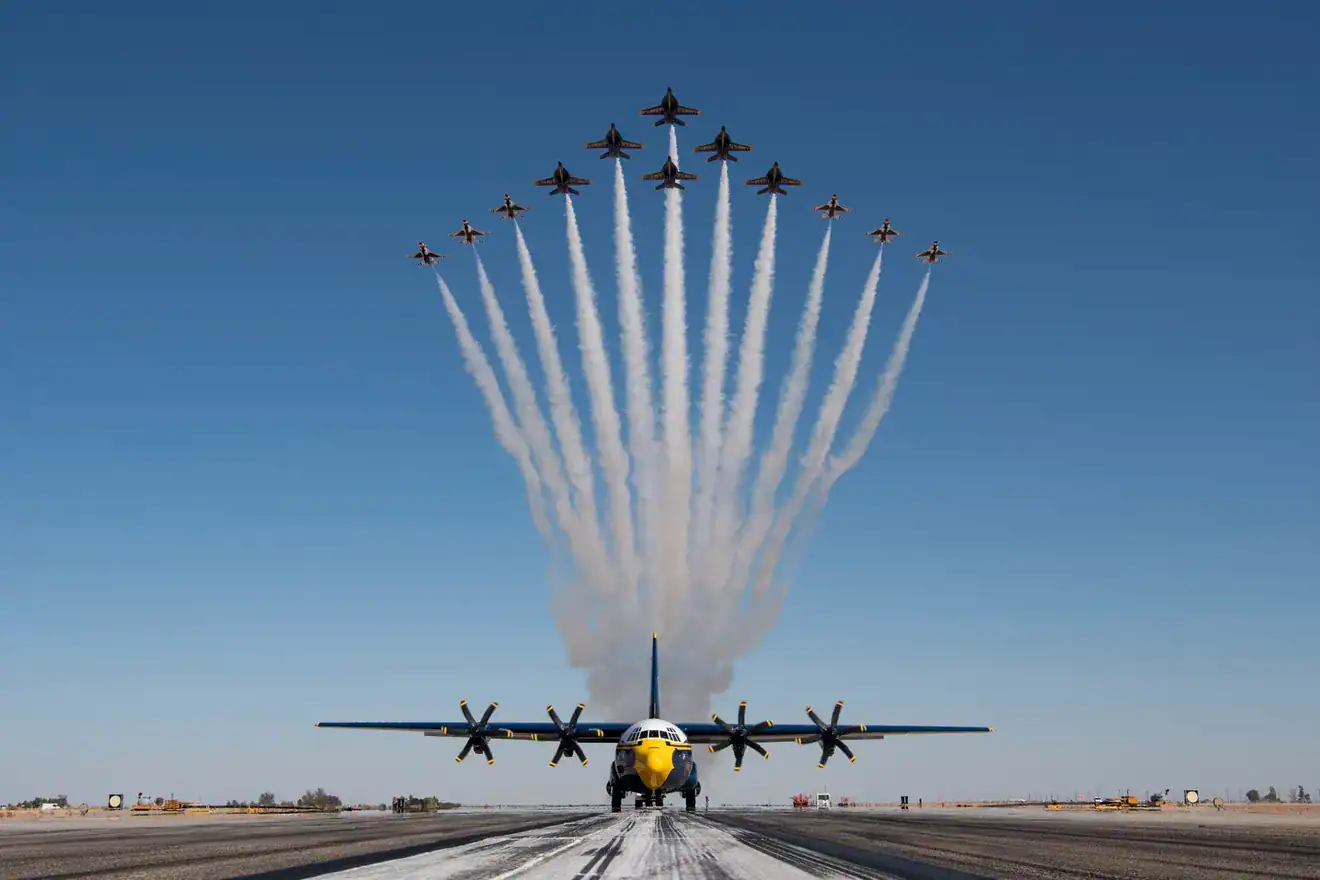
Both teams together in a super delta over fat albert (photo credit blue angels)
A rare appearance together at the home of the Blue Angels
“Having our military’s top flight demonstration teams perform at the ‘Cradle of Naval Aviation’ will undoubtedly be an experience you won’t want to miss!” said Capt. Terry Shashaty, NAS Pensacola’s commanding officer.
“The Blue Angels and Homecoming Air Show are ingrained in the identity of Pensacola. We are proud to host a family-friendly event showcasing the capabilities and precision of both the Navy and Air Force teams as well as our civilian performers!”
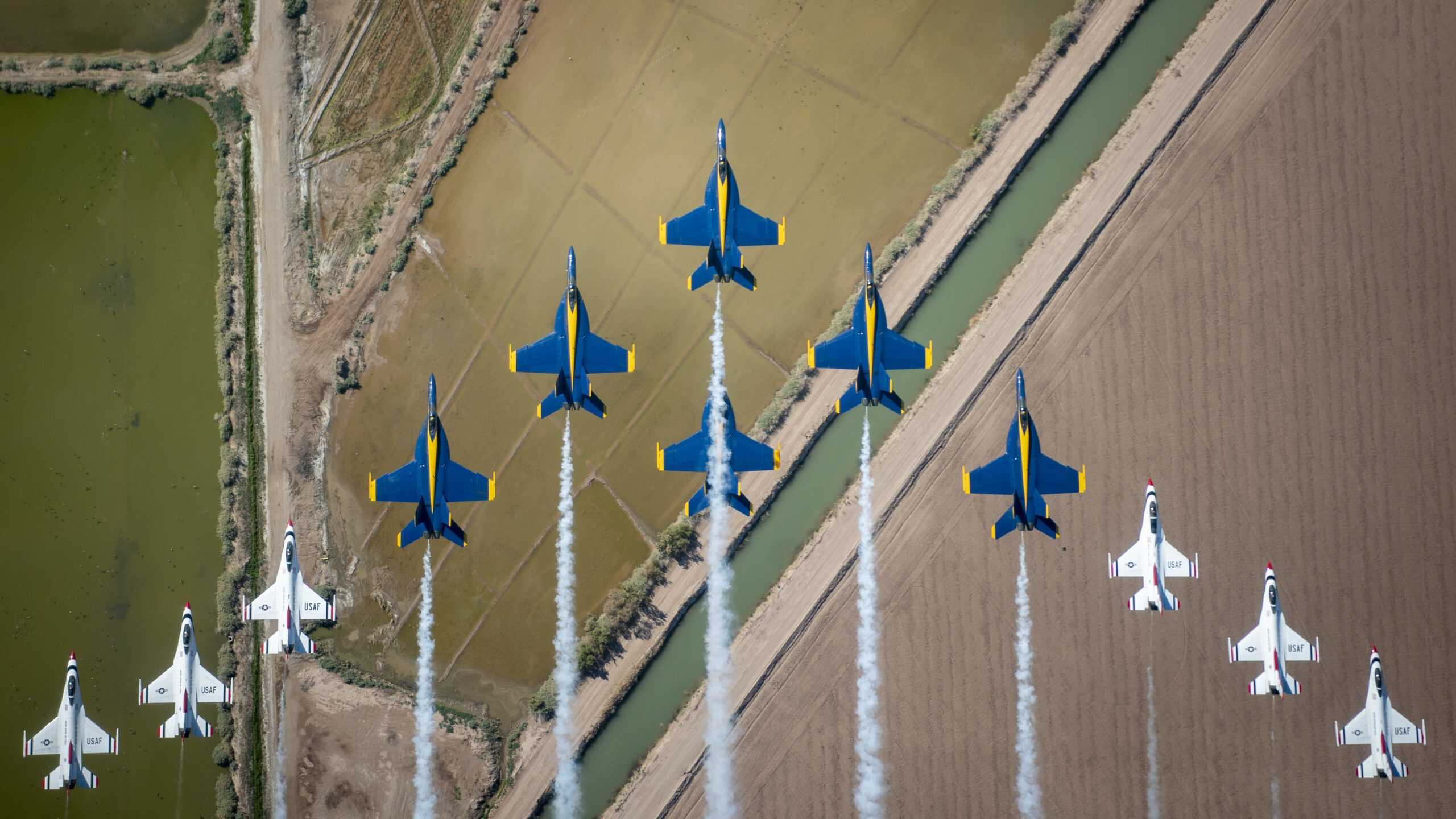
The United States Air Force Air Demonstration Team “Thunderbirds” conduct a ‘Mega Delta’ with the Blue Angels over Navy Air Facility El Centro, February 26, 2024 (U.S. Air Force photos by Staff Sgt. Breanna Klemm)
“Our demonstrations showcase the incredible milestones a team can accomplish when they work together,” says Thunderbirds leader Lt. Col. Nathan Malafa.
“It’s an honor to perform alongside our Navy counterparts; we both started building the foundations of our 2024 teams together in El Centro and will end our seasons together in a display of excellence.”
The United States Air Force Air Demonstration Team “Thunderbirds” conduct a ‘Mega Delta’ with the Blue Angels over Navy Air Facility El Centro, February 26, 2024 (U.S. Air Force photos by Staff Sgt. Breanna Klemm)
While rare, it’s not the first time both teams have got together at an air show
While it is rare to see both teams together at any air show, it has happened before. They both appeared at Point Mugu in 2023.
They also flew the “Super Delta” together during a National Memorial Day parade in 2021, in addition to the America Strong flyovers during Covid in 2020. Both teams also appeared together at the Kansas City air show in 2021.
Both teams will fly together on Oct 30 ONLY
The United States Air Force “Thunderbirds,” and the U.S. Navy “Blue Angels” perform joint training over Naval Air Facility El Centro, California, March 1, 2022 (Usaf photo by Staff Sgt. Andrew D. Sarver)
While both teams will be at the air show Nov 1-2, they won’t be actually flying together. Each team will fly their demos separately (officially, for now).
Both teams have however scheduled a Super Delta flyover of the Pensacola area on Oct 30 at 11:30am. Points along the planned flight path include Johnson Beach, Pensacola Beach, Oriole Beach and Palafox St.
The crew of 2 went down east of Mount Rainier during a routine training flight. As of 1pm ET today, they have not been located, and neither has the wreckage.
Multiple assets involved to find the crash and crew
According to a Navy spokesperson from the crew’s base at NAS Whidbey Island, multiple search and rescue assets are involved including a Navy MN-60S helicopter, to find the crash and crew.
“We ask that everyone keep the members of the Growler and NASWI community and their families foremost in their thoughts and to be respectful of their privacy during this difficult time,” said the base in a social media update this morning.
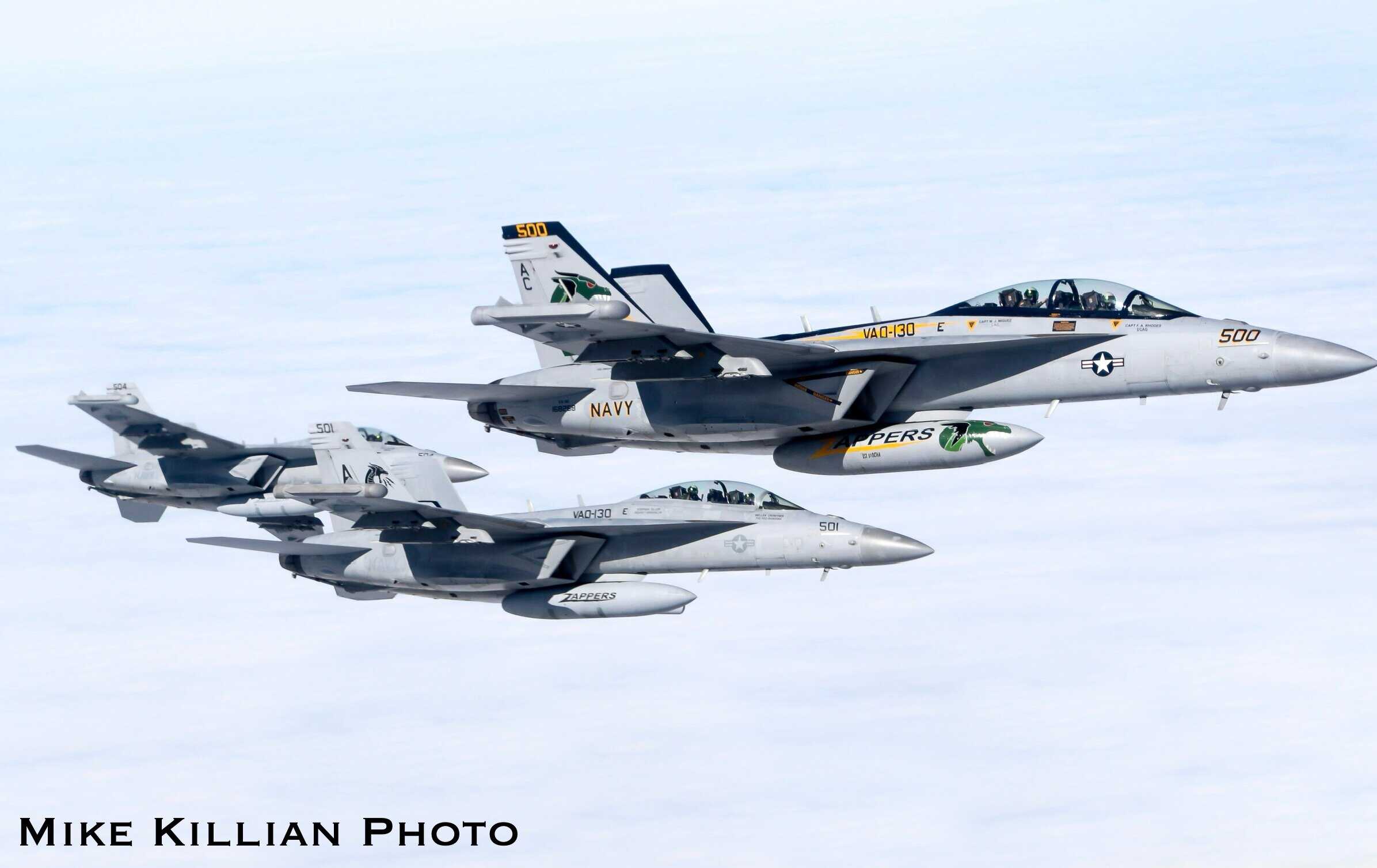
VAQ-130 Zappers (Mike Killian photo)
Crews are searching in the area 30 miles west of Yakima. Responders are facing mountainous terrain, cloudy weather, and low visibility.
The cause of the crash is under investigation. More information will be released as it becomes available. We will update here.
UPDATE OCT 17 – wreckage found
VAQ-130 plane captains wait on the flightline for pilots of an EA-18G Growler to complete pre-flight checks prior to a training sortie (U.S. Air Force photo by Staff Sgt. Ryan Lackey)
The following update was provided by the Navy on Oct 16:
“Just after 12:30 p.m. PDT, aerial search crews located the wreckage of the EA-18G Growler that crashed on Oct. 15. The site rests on a mountainside east of Mount Rainier. The status of the two crew members is unknown while the search effort continues.
An Emergency Operations Center has been established on NAS Whidbey Island to coordinate response efforts. The Navy is making preparations to deploy personnel to the remote area that is not accessible by motorized vehicles.
Mike killian photo
“I am thankful for the tremendous teamwork displayed by the NAS Whidbey Island squadrons — VAQ, VP, VQ, TOCRON 10 and SAR — as Team Whidbey continues to respond to our tragic mishap,” said Capt. David Ganci, commander, Electronic Attack Wing, U.S. Pacific Fleet. “I am also grateful to local law enforcement, responders, and tribal communities whose partnership has been essential in planning our critical next steps for access to the site.”
VAQ-130 is the oldest Electronic Attack squadron is the US Navy
The Zappers had just returned stateside too, following a combat deployment as the only EA-18 Growler squadron with Carrier Air Wing 3. They served on the aircraft carrier USS Dwight D. Eisenhower (CVN-69) in support of Operation Prosperity Guardian in the southern Red Sea, where they executed strikes against Houthi-controlled areas in Yemen.
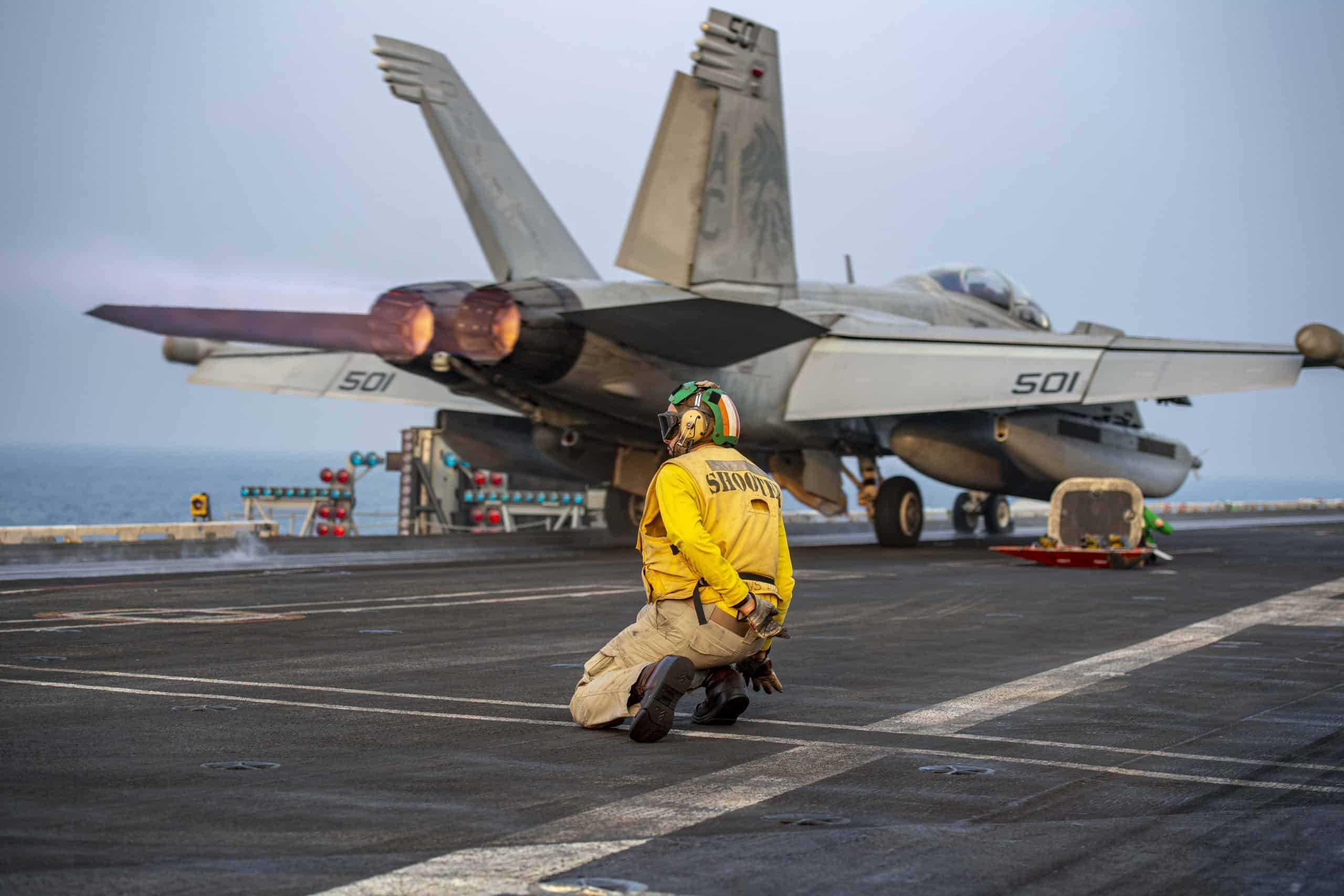
U.S. Navy Lt. Parker Bailey signals the launch of an E/A-18G Growler, attached to the “Zappers” of VAQ-130, aboard the aircraft carrier USS Dwight D. Eisenhower (CVN 69) in the Gulf of Oman Nov. 20, 2023 (Navy photo by Mass Communication Specialist 3rd Class Janae Chambers)
They are the oldest electronic attack squadron in the Navy, and the first Growler squadron in Navy history to score an air-to-air kill.
Based on the Super Hornet airframe, the two-seater, twin-turbofan Growlers integrate the latest electronic attack technology. They jam and blind the enemy before a single shot need be fired.
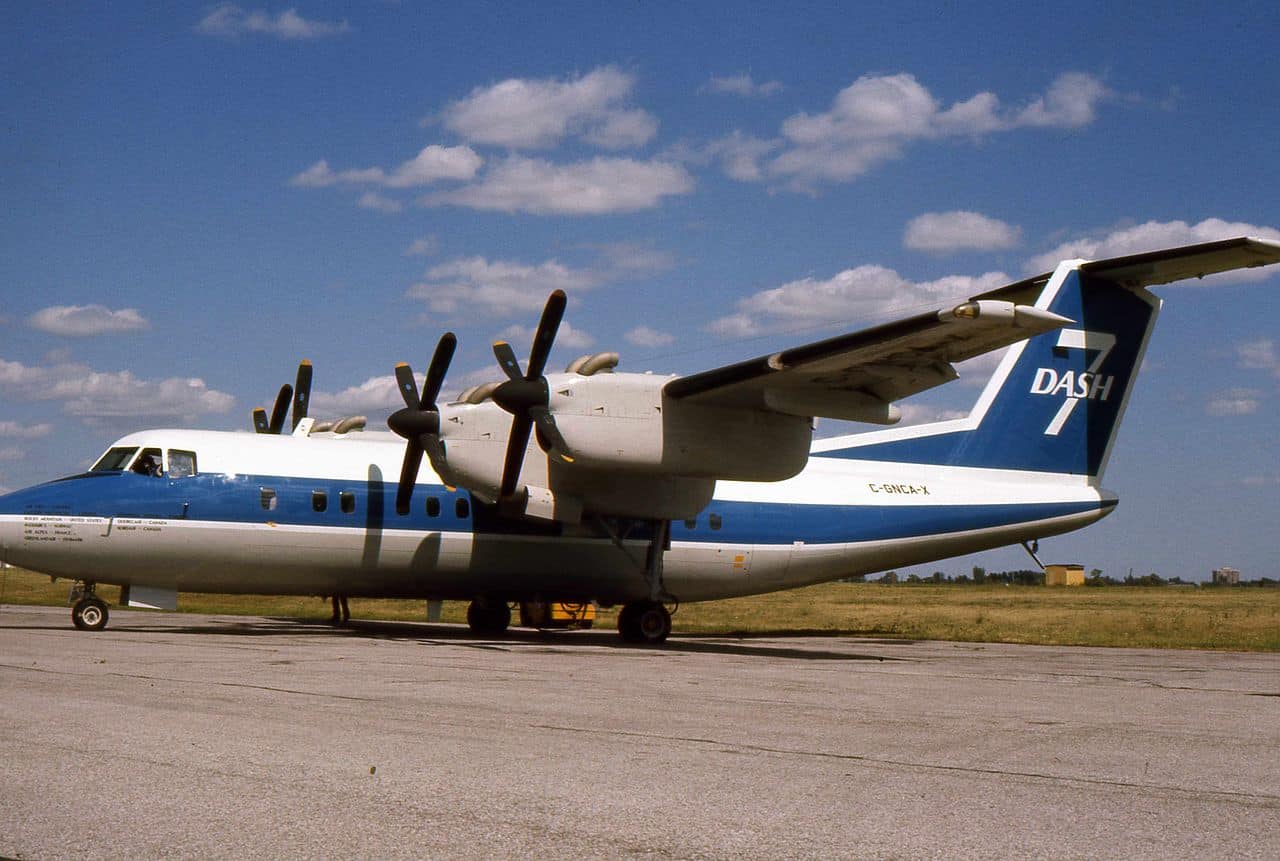
The de Havilland Canada DHC-7, which was later named “Dash 7,” was the seventh and then-largest capacity aircraft to emerge from the Toronto and Downsivew, Ontario, manufacturer. It also served as the threshold to the turboprop regional airliner market, but incorporated the same STOL features that were often needed because of Canada’s topographical challenges.
“Specializing in short takeoff transport has led de Havilland Canada into a whole new world—building small, economical airliners for the feeder and commuter services, whilst tenaciously keeping the lead in short-field bush operation,” according to C. Martin Sharp in DH: A History of de Havilland (Airlife Publishing, Ltd., 1982, p.374).
DHC-7 Design Origins
A Seaborne Airlines de Havilland Canada DHC-6 Twin Otter seaplane | IMAGE: Seaborne Airlines (Silver Airways) on Facebook
1968 market studies indicated the need for a lager regional airliner to replace the DHC-6 Twin Otter or complement it on higher-demand routes. As a more ambitious design, it was to be powered by double the number of turboprop engines than its predecessor, accommodate double the number of passengers, and feature a 26,500-pound gross weight, but retain short takeoff capability.
Because it anticipated STOLport construction near city centers to avoid longer, surface journey times to existing, outlying airports, de Havilland Canada felt uniquely qualified to produce such a design that would require no more than a 2,000-foot runway.
A DHC-7 on the ramp. Image: Piergiuliano Chesi, CC BY 3.0 , via Wikimedia Commons
As the seventh in the de Havilland Canada family of trainers, utility types, and transports, BAE Systems described it as “a four-engine STOL regional airliner drawing on de Haviland Canada experience with the Beaver, Otter, and Twin Otter,” according to its website.
“Designed and built by the de Havilland Aircraft Company of Canada at Downsview, Toronto, the DHC-7 was part of a family of aircraft specifically developed for use in the rough Canadian wilderness and capable of facing its wide-ranging weather conditions.”
DHC-7 Design Features
Considerably deviating from its rugged, DHC-6 Twin Otter predecessor, the larger DHC-7 featured four 1,120-shp Pratt and Whitney PT6A-50 turboprops encased in wing leading edge-mounted nacelles that drove four-bladed, fully-feathering, 11.3-foot-diameter, slow-turning (at 1,210 rpm) Hamilton Standard propellers.
Pressurized, it accommodated up to 54 four-abreast passengers in a wide-look cabin with enclosed overhead storage compartments and an aft galley, lavatory, and garment closet.
DHC-7 Takes Off
Registered C-GNBX, the first prototype first flew on March 27, 1975 and was granted its type certificate two years later, on May 2. Its short takeoff and landing performance, consisting of a seven-degree glideslope and a 35-foot landing reference height, was approved under Federal Aviation Regulations (FAR) Parts 25 and 121.
The result was a quieter, more modern, airline-standard turboprop regional aircraft in the Convair 580, Fokker F.27 Friendship, and Hawker Siddeley HS.748 class, but with STOL capabilities.
DHC-7 Operators
Launch customer Rocky Mountain Airways took delivery of its first DHC-7-100—the fourth produced—on February 3, 1978. Optimized for its tourist route structure that consisted of high-elevation, short-field ski resort-serving airports, it operated to Avon Airport, which is located in a mountain valley and provides access to Vail. As a STOLport, it was controlled by Rocky Mountain itself and was the popular destination of Denver-originating passengers.
Some of its other challenging routes included those to Steamboat Springs, whose 4,452-foot runway was at a 6,882-foot elevation, and Telluride, in the San Juan Mountains, whose 9,078-foot elevation was one of the highest in the US. It served the latter destination as a Continental Express carrier.
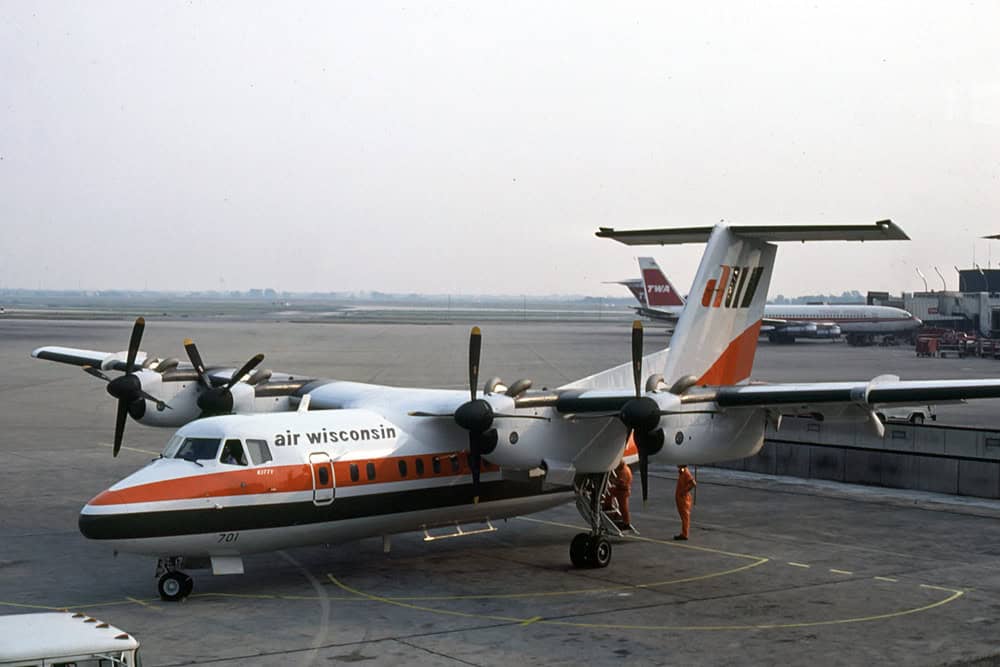
Air Wisconsin DHC-7. Image: Richard Silagi, CC BY-SA 4.0 , via Wikimedia Commons
Other DHC-7 US operators included Air Oregon, Air Pacific, Air West, Air Wisconsin, Atlantic Southeast (ASA), Crown Airways, Era Aviation, Golden West, Gulfstream International, Henson, MarkAir Express, Paradise Island Airlines, and Rio Airways.
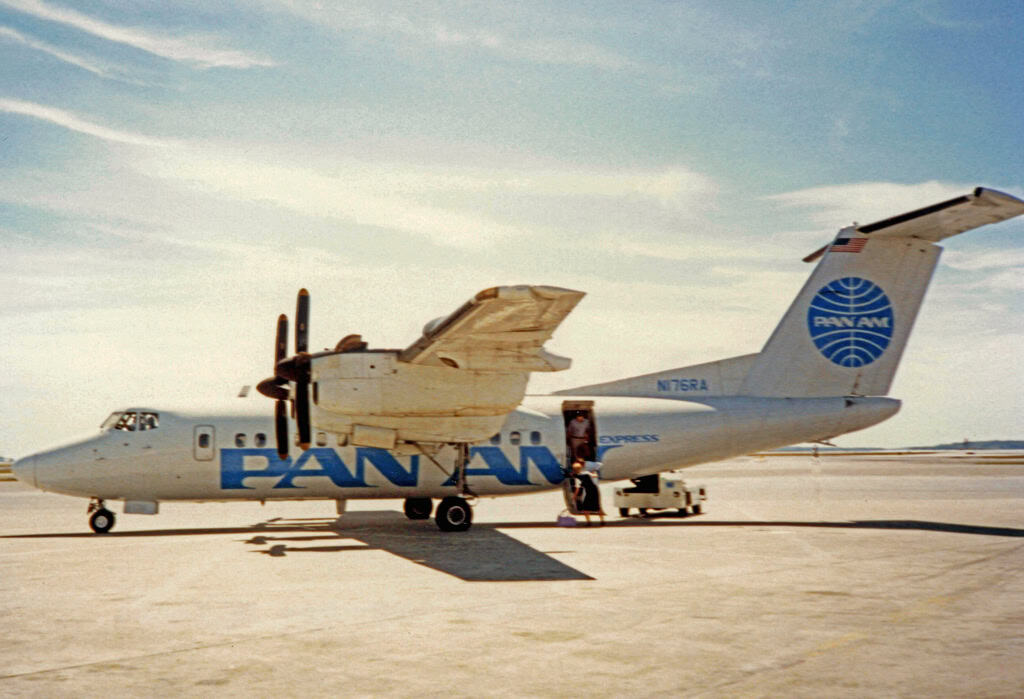
Pan Am Express operated the DHC-7. Image: RuthAS, CC BY 3.0 , via Wikimedia Commons
These and other carriers often provided two-letter code-share agreement services with major-affiliated carriers, wearing the liveries of Allegheny Commuter, Continental Express, the Delta Connection, Pan Am Express, and Trans World Express.
Hawaiian Airlines specifically constructed a 3,000-foot runway in Kapalua, Maui, for its DHC-7 operations, beginning service with the type on May 1, 1987.
Ransome Airlines, which operated independently and as both an Allegheny Commuter partner and Pan Am Express, uniquely operated from “stub” runways, particularly at Washington-National Airport, touching down on one of the nonactive or cross-strips and then holding short until ground clearance was given to taxi.
DHC-7’s Performance Enabled Additional Access
The result of an FAA-approved plan, its operation was preceded by demonstration of the Dash-7’s ability to execute a VFR approach during the loss of an engine and then bank away. Because the operation did not require the acquisition of a sometimes-unavailable landing slot, it was able to serve destinations to which it would otherwise have not had access.
Wardair of Canada took delivery of the second DHC-7 on June 8, 1978.
“Soon after, it carried Queen Elizabeth II and the Duke of Edinburgh during a royal tour in Alberta,” according to Frederick K. Larkin in “DHC-7: The Quiet STOL Multi-Tasker” (SkiesMagazine, July 8, 2019). “After that, it was hauling everything from containers of mineral concentrate and building materials to personnel and perishables.
Nine months later, the same aircraft shuttled senators and 55 tons of goods between CFB Alert on Ellesmere Island and an ice camp near the geographic North Pole.”
The DHC-7 was one of the few types certified to operate from London City STOLport, in the city’s Dockland region. Steep approaches and its short, single airstrip left Brymon Airways and London City Airways little choice but to acquire the type.
Program Conclusion
Despite the DHC-7’s flexibility, only 113 of all variants were built when production ceased in 1988, although the type certificate was ultimately transferred to Viking Air of British Columbia in 2005.
As the largest commuter-regional airliner then available, it was only attractive to carriers whose routes required 50-passenger capacities and its four engines increased operating costs over those of similar types.
The envisioned city center-proximity STOLports never materialized, leaving airlines to operate from larger, existing airports where steep approaches and low touchdown speeds were not needed.
And, perhaps creating its own competition, de Havilland Canada designed its twin-engine DHC-8 successor, which seated between 37 and 70 passengers in tis three main versions and operated longer sectors at 25-percent greater speeds on half the number of powerplants.
This Replacement For The Venerable EA-3B “Electric Whale” Only Served For Eight Very Busy Years
In 1991, the last Navy EA-3B Skywarrior was retired after 40 years of service. The last Douglas EA-3B Electric Whale, 146448, assigned to Fleet Air Reconnaissance Squadron TWO (VQ-2) Batmen, went to the boneyard later that year.
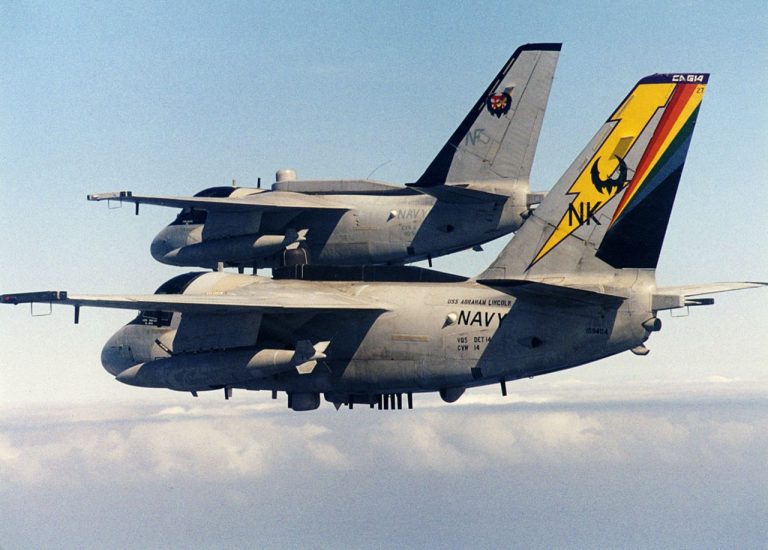
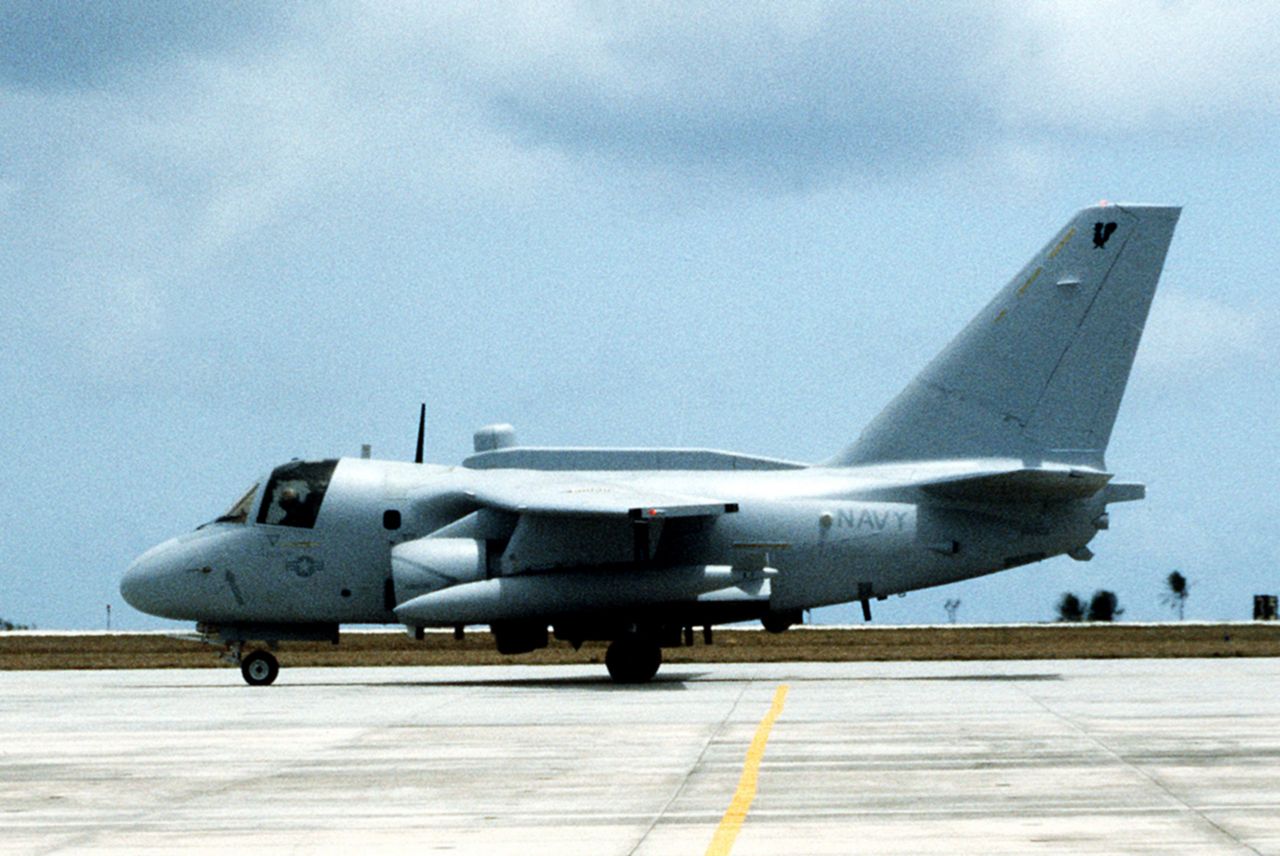
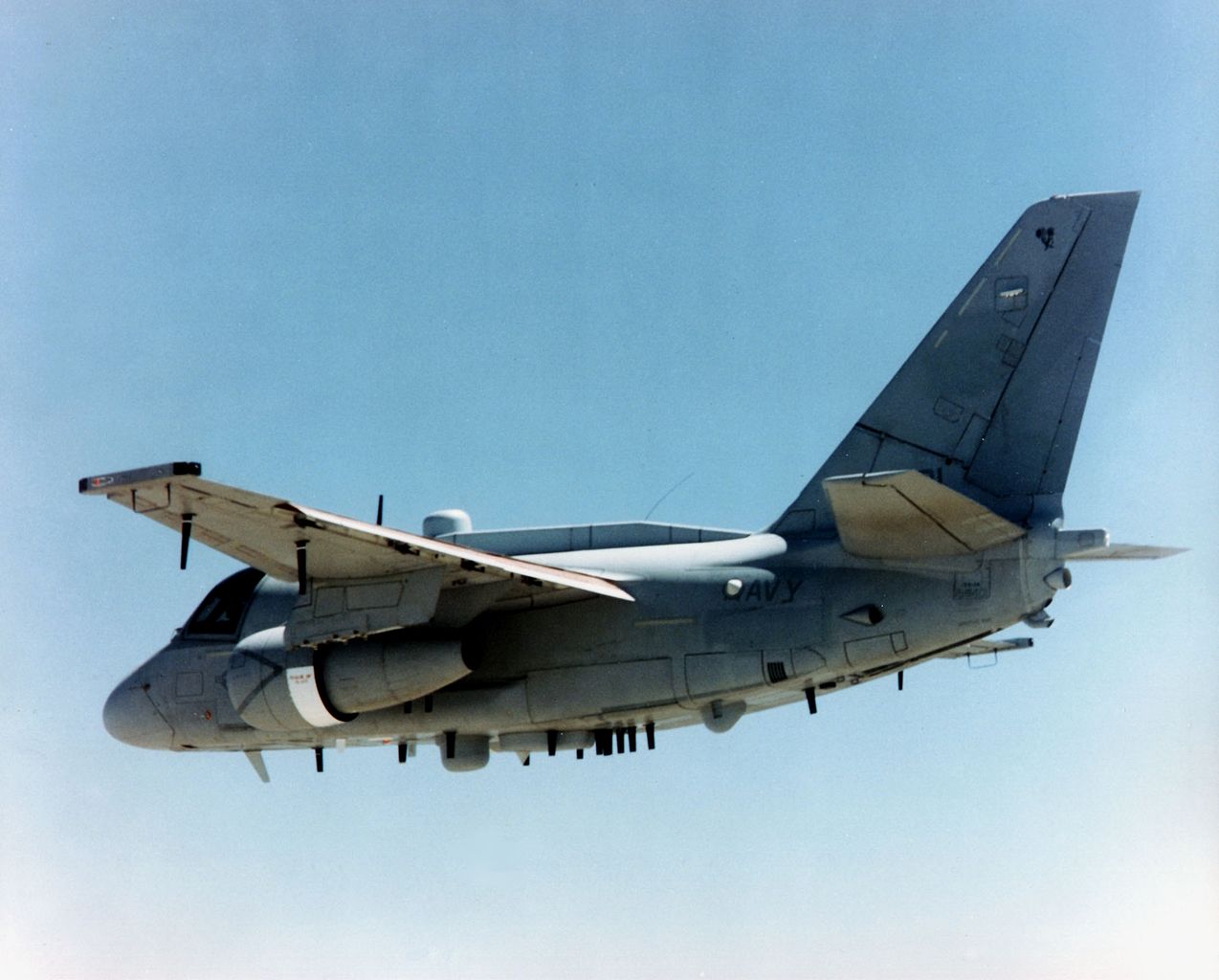
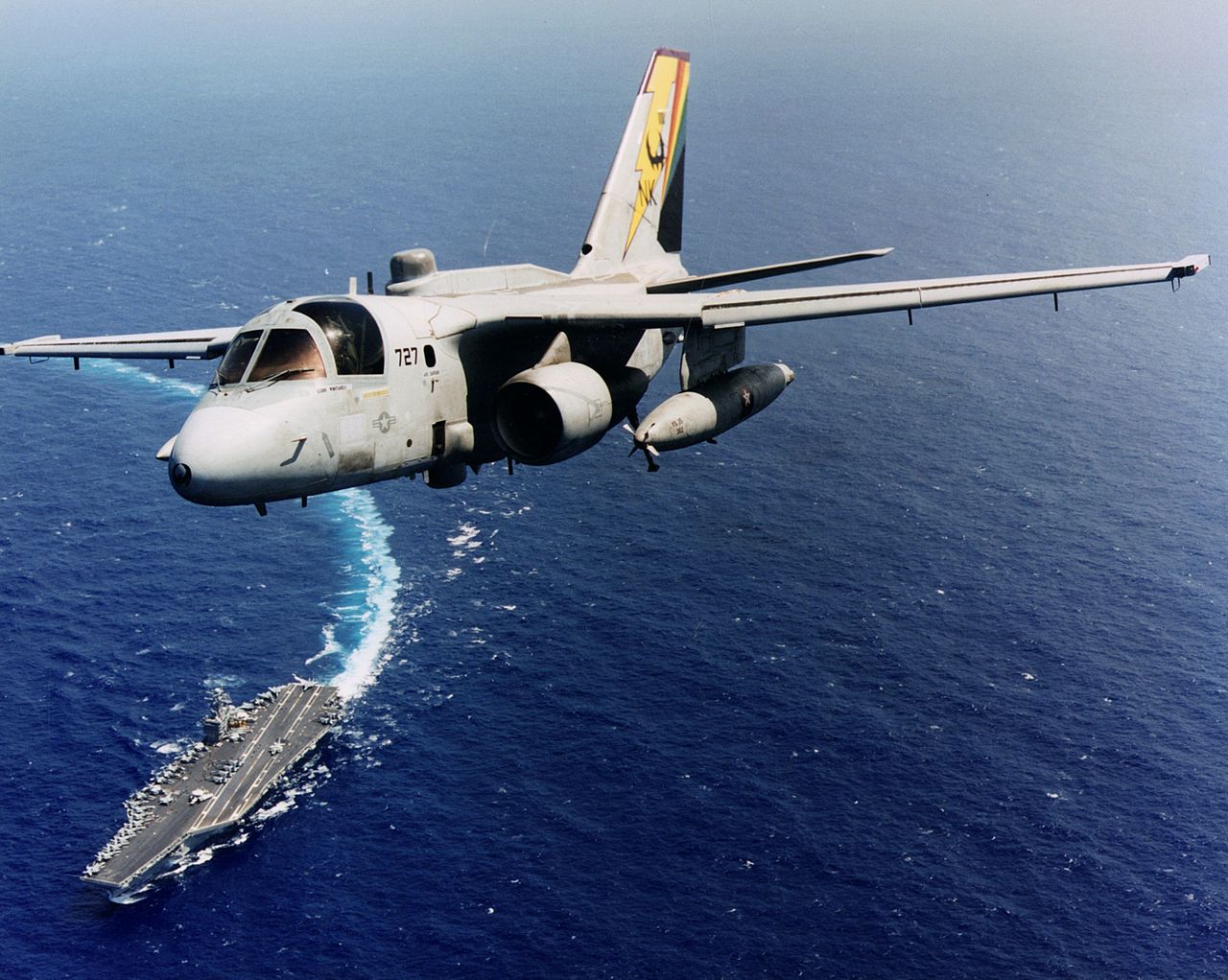
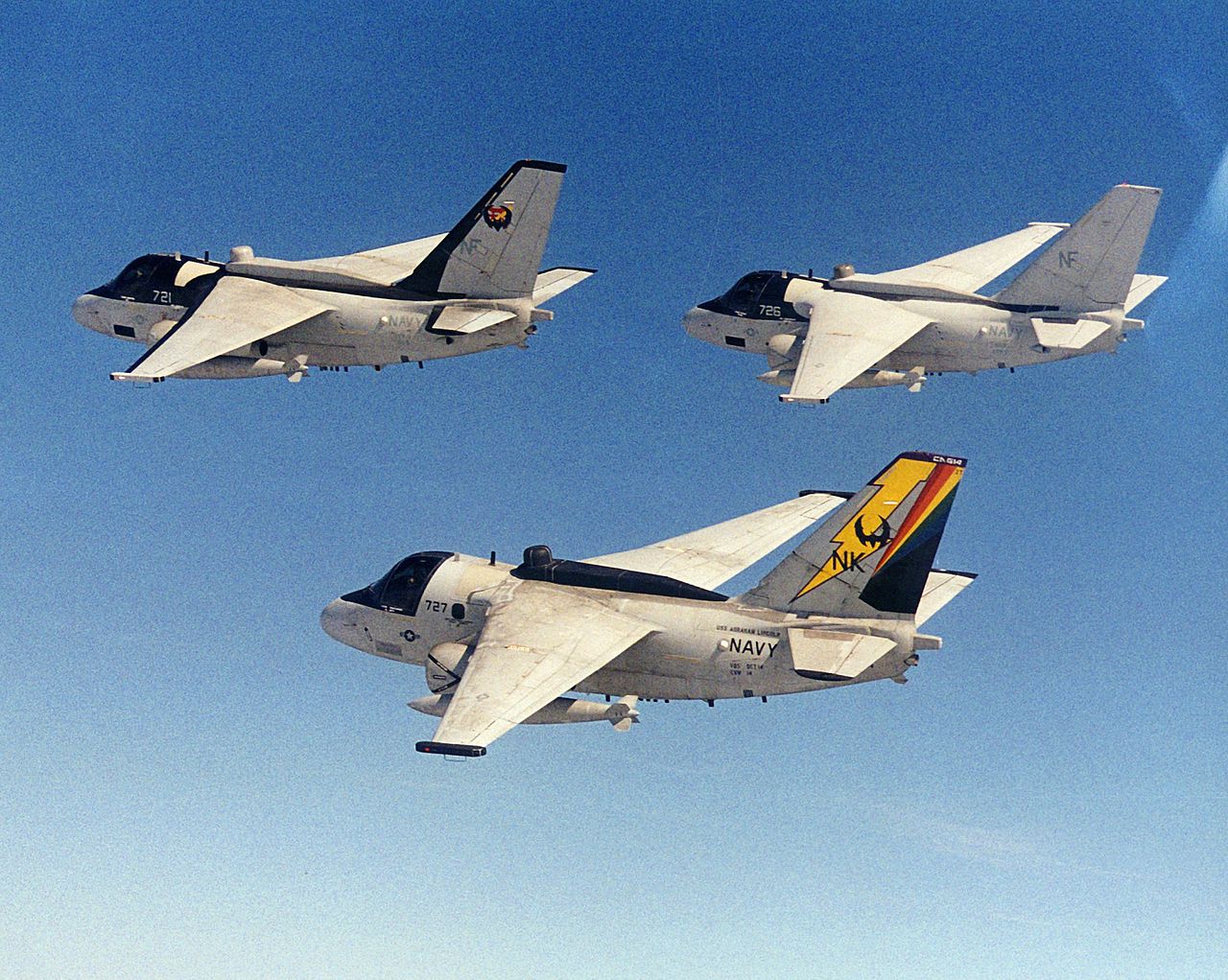
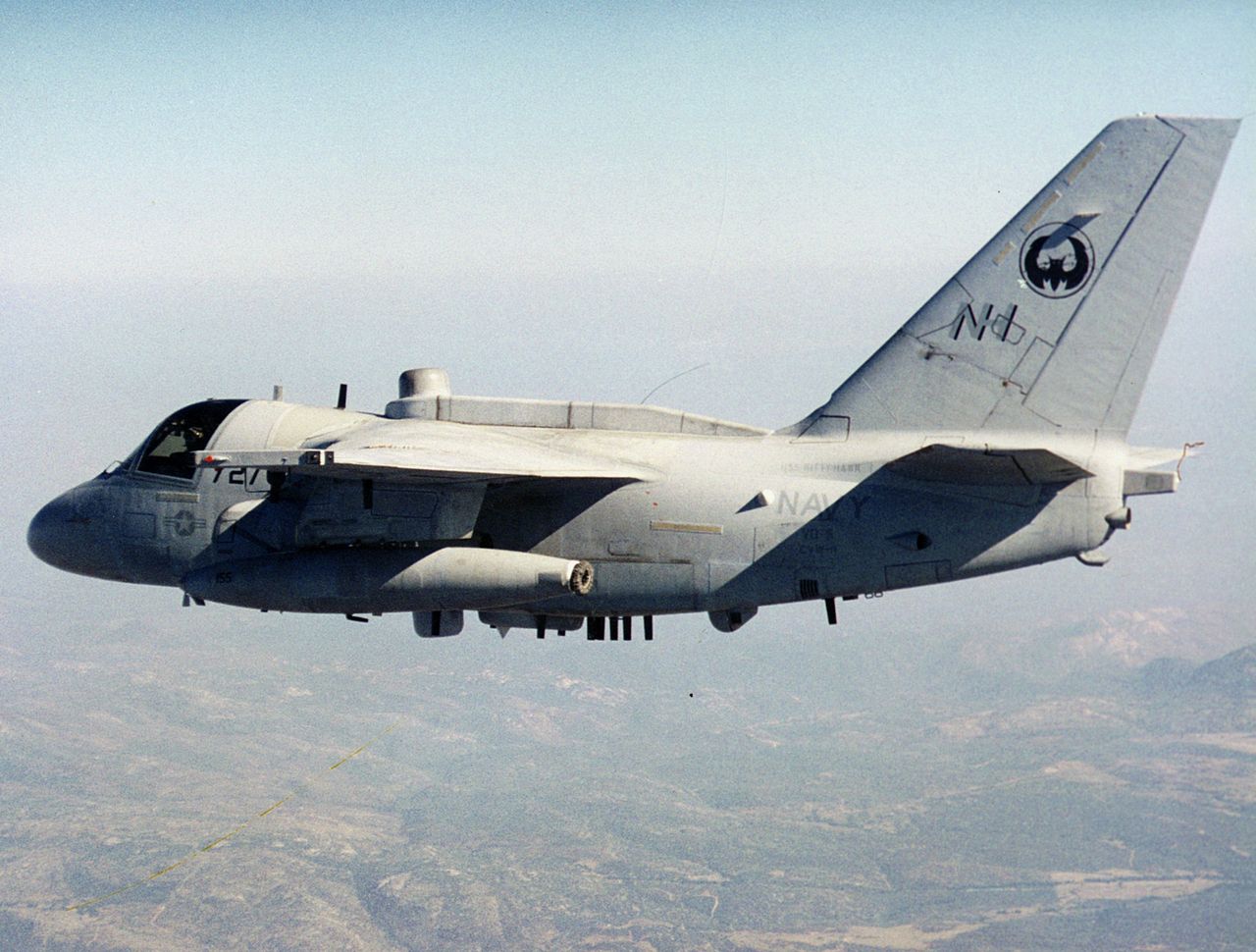
The Lockheed ES-3A Shadow was intended to replace the venerable EA-3B and perform its electronic reconnaissance and countermeasures/signals intelligence (SIGINT) work aboard US Navy aircraft carriers. Over two years, between 1991 and 1993, Lockheed modified 16 existing S-3A Viking airframes to ES-3A Shadow standard.
Only the six US-3A Viking CODs joined the ES-3As as production variants of the base S-3.
Official US Navy Photograph
Shadowy Black Boxes Aboard
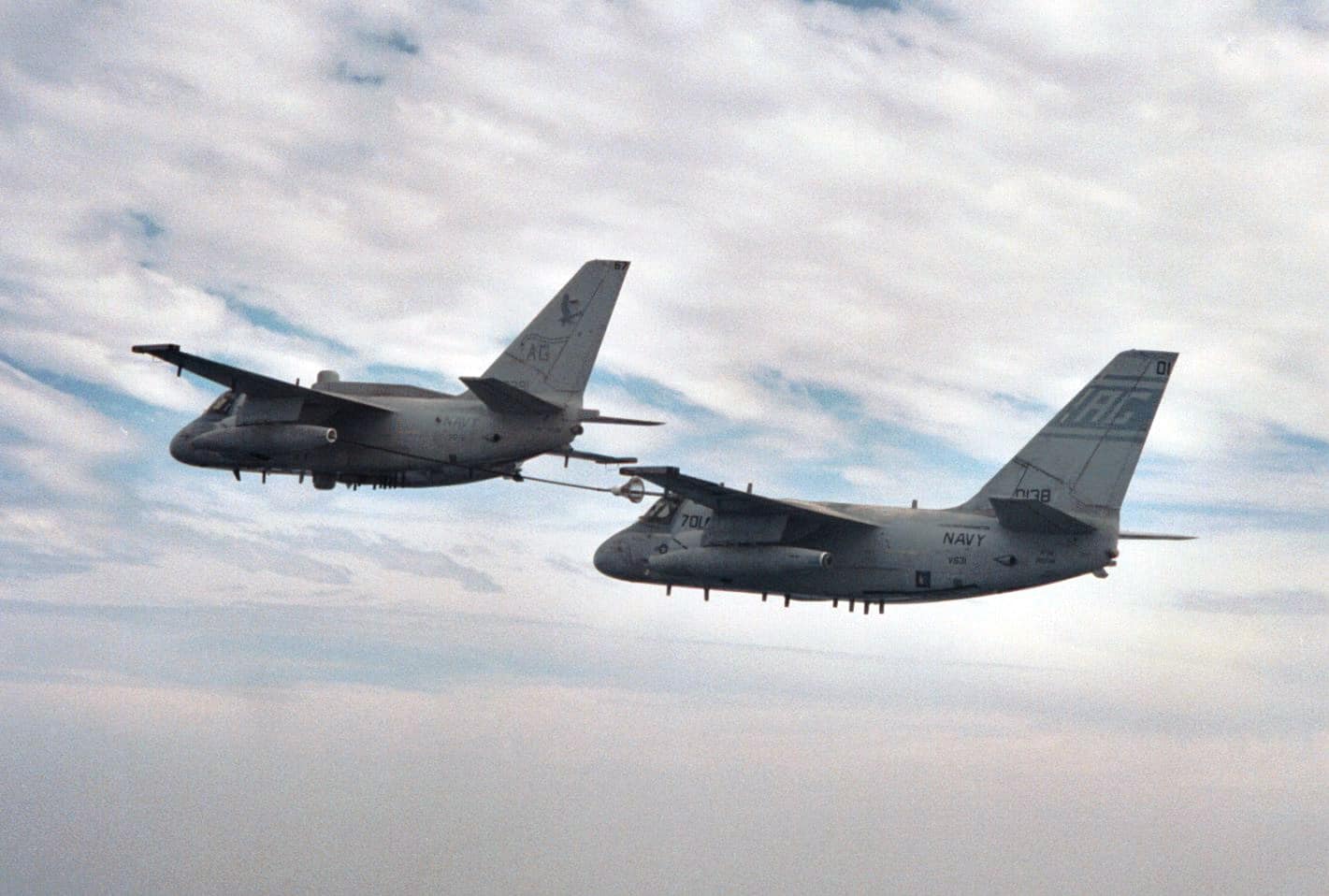
Though literally packed to the gills with electronic black boxes and festooned with lumps, bumps, and blades (more than 60 of them) the Shadow’s ability to do its job was provided in large part by the Aries II suite of electronics used in Lockheed’s land-based EP-3E Orion. Though the standard Viking antisubmarine warfare (ASW) electronics suite was removed, including the magnetic anomaly detector (MAD) boom in the tail, the Shadow retained the Viking’s ability to pass gas and was used in the airborne tanker or “Texaco” role at times.
Official US Navy Photograph
Still Gotta Texaco
Crewed by a pilot, a naval flight officer (NFO) in the co-pilot seat, and two systems operators, the advanced Aries II sensor, navigation, and communications systems allow the Shadow’s four-person crew to collect and distribute high-quality data and information through a variety of channels to the carrier battle group. This gave the battle group commander a clear picture of potential airborne, surface, and sub-surface threats.
Missions flown by the VQ detachment included over-the-horizon detection, classification, and targeting using passive sensors, strike support, war at sea, reconnaissance, and, of course, airborne refueling via “buddy” store.
Official US Navy Photograph
They Sure Did Get Around
Only two squadrons operated the 16 Shadows: Fleet Air Reconnaissance Squadron FIVE (VQ-5) Sea Shadows and VQ-6 Black Ravens. VQ-5 was based initially at Naval Air Station (NAS) Agana on Guam but moved to Naval Air Station (NAS) North Island at San Diego during the mid-1990s. VQ-6 was based at NAS Jacksonville in Florida on the East Coast. Both squadrons were assigned eight airframes, which were usually split into four two-aircraft detachments for their deployments aboard aircraft carriers.
Official US Navy Photograph
Sudden and Ignominious End
VQ-5 participated in operations off Korea in 1994 and off Taiwan during the Third Taiwan Strait Crisis in March of 1996. Operation Southern Watch and Operation Desert Fox provided the Sea Shadows with plenty of work, but Desert Fox was the last hurrah for the Sea Shadows. They were disestablished shortly after returning from their final deployment aboard USS Carl Vinson (CVN-70). VQ-6 deployed 13 times aboard seven different aircraft carriers and worked Bosnia, Southern Watch, and Desert Fox. The Black Ravens, too, were disestablished after their last deployment aboard the carrier USS Enterprise (CVN-65).
Official US Navy Photograph
What Were They Thinking?
The ES-3A Shadows were decommissioned by the end of September 1999 after only eight years in service, primarily because the cost of upgrading the Shadow’s mission equipment to retain the ability to communicate with other (read newer) SIGINT assets. Rather than update the Shadow, it was replaced instead by the Lockheed EP-3E Aries II.
By the end of 1999, both VQ-5 and VQ-6 had been disestablished, and their aircraft sent to the AMARG boneyard. At first, the aircraft were stored in ready reserve status, but by 2003, their parts were needed to keep their by-then short-lived S-3B Viking cousins in the air. Despite their disproportionately high sortie rate, no ES-3As were lost to mishaps during their short but intense careers.
If Looks Were All It Took They Might Have Had Something
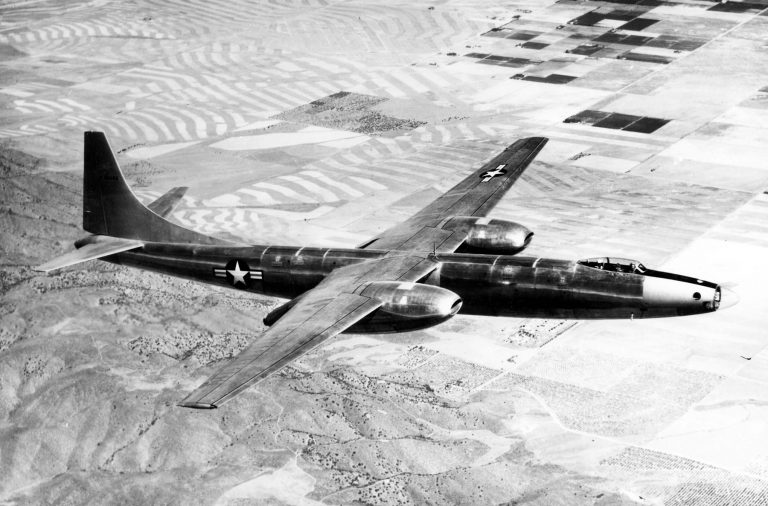
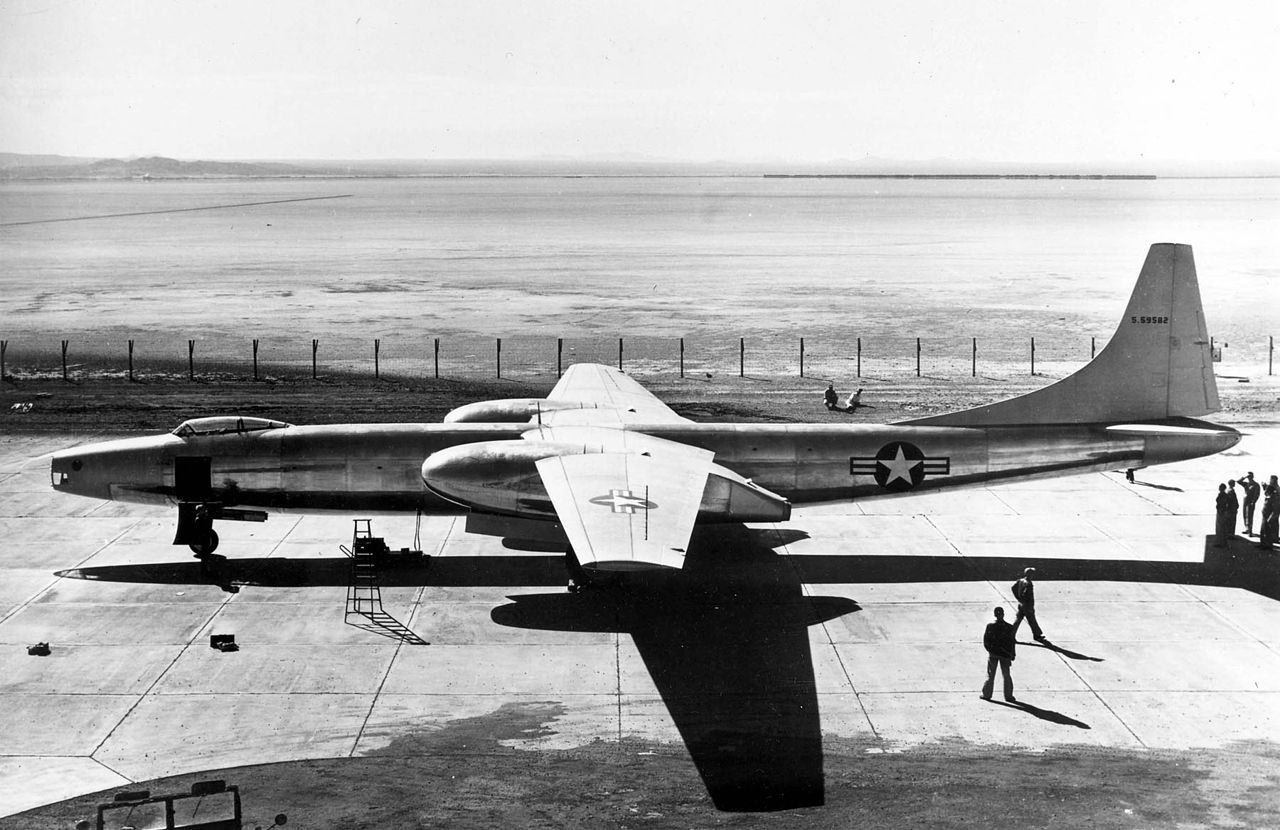
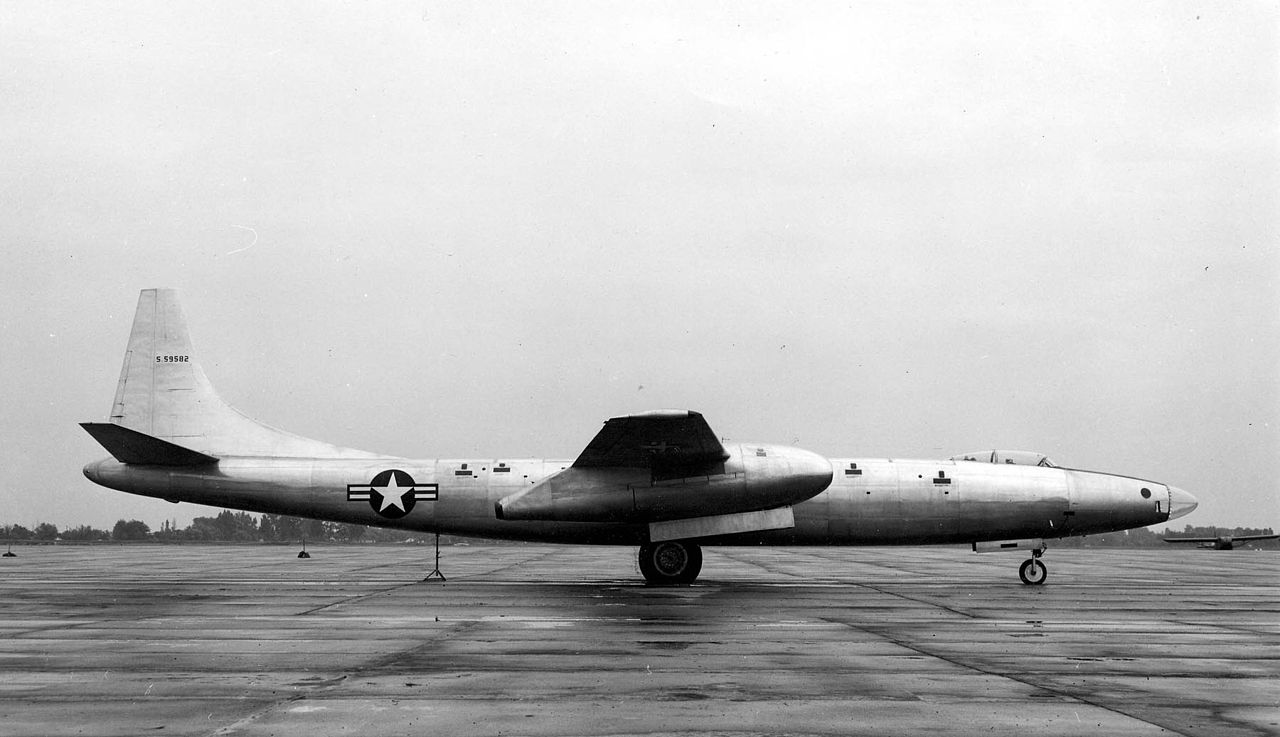
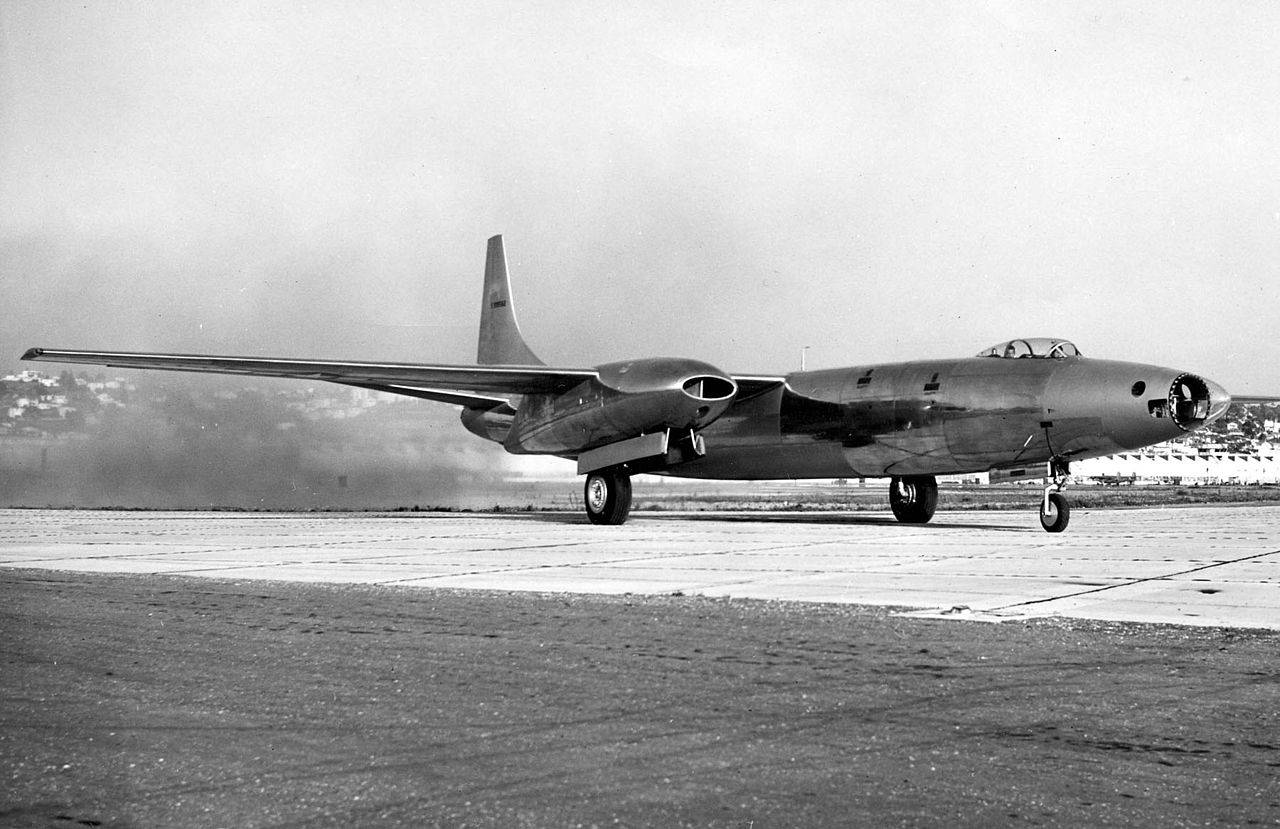
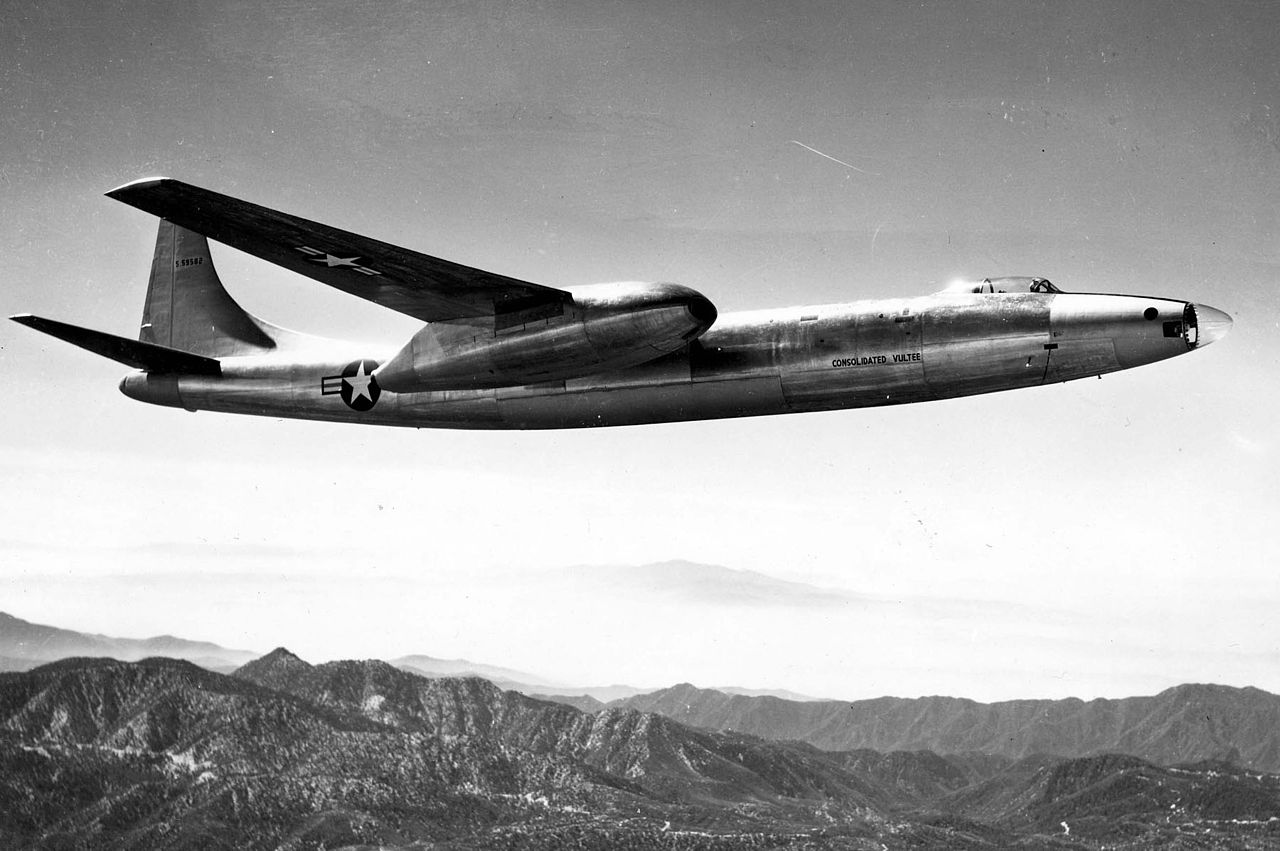
When Convair built the single XB-46 prototype medium bomber during the late stages of World War II, it was designed to become the Air Force’s first jet-propelled medium bomber and to compete with the German Arado AR 234 Blitz jet bombers then in development.
But when the war ended, the program fell victim to budget cuts. Eventually, Convair had to choose between two development programs. The XB-46 program was ultimately superseded by the XA-44, a smaller design featuring swept-forward wings that also proved unsuccessful in the end.
OFFICIAL US AIR FORCE PHOTOGRAPH
The Class of the Class of ’45?
The XB-46, together with the North American XB-45 and the Martin XB-48, were referred to as the “Class of 45” at the time of their development. North American eventually produced 145 short-lived B-45 Tornado bombers for the Air Force. Martin’s 6 jet-engine straight-wing design never got past the prototype stage. Boeing…well, Boeing was working on the B-47, which, as we know, eventually became the Air Force’s choice for the role, but not before it morphed several times during development.
Official US Air Force Photograph
Shades of the B-24
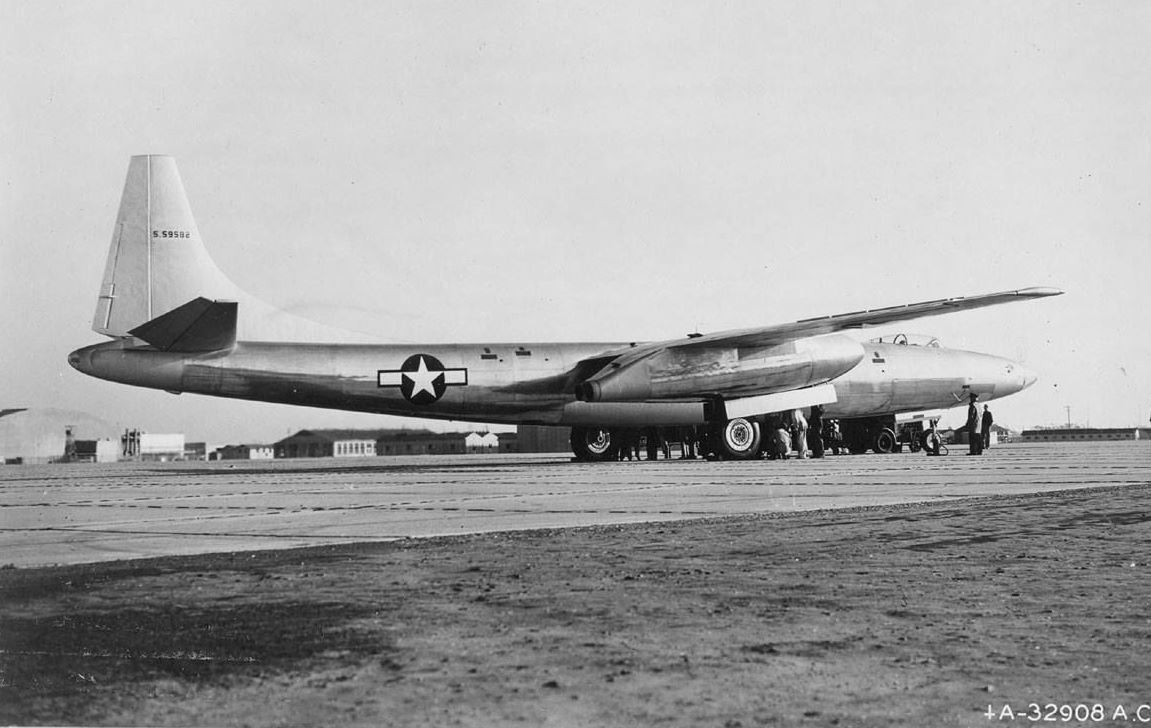
The XB-46 (Air Force serial number 45-59582) was completed in 1947 as a stripped-down prototype lacking mission equipment. It flew for the first time on 2 April 1947, and was quickly dubbed “The Needle.”
Shoulder-mounted Davis (high-aspect) wings spanning 113 feet (roughly the same span as the B-24 Liberator) supported a tapered fuselage 105 feet long. Powered by four Allison J35-C3 axial-flow turbojets (built by Chevrolet) and mounted in pairs in wing-mounted nacelles, the aircraft was striking in appearance.
The bomber carried a crew of three in its pressurized fuselage: pilot and co-pilot seated in tandem under a forward-fuselage fighter-type canopy and a bombardier-navigator-radio operator behind a B-26 Marauder-esque transparent nose.
Official US Air Force Photograph
Testing Ground-Breaking Technologies
Had the bomber been ordered into production, it would have been armed with a pair of .50-caliber machine guns mounted in an Emerson tail turret, controlled by the APG-27 remote fire control system. The J-35 engines powering the prototype airframe would have been swapped for the improved General Electric J47 engines.
As it was, the airframe was primarily used for testing the unique aerodynamic and system engineering features contained in the design. Specifically, the flight control system utilized pneumatic rather than hydraulic, manual, or electrical control lines and systems.
Official US Air Force Photograph
Close But No Cigar for the Needle
In flight, the bomber was praised by its test pilots, both from Convair and the US Army Air Force alike, for its handling qualities. However, although stability and control were excellent during 64 flights totaling 127 hours, the engine de-icing and cabin air systems required additional engineering work. The most serious problem was likely the vertical oscillations caused by harmonic resonance between the wing and the spoilers.
Actually installing the fire control system probably would have forced a major redesign of that shapely fuselage, too. In the end, the program was cancelled before flight testing was even completed. The B-45 had already been ordered into production, and the B-47…well, we know the rest of that story!
Official US Air Force Photograph
The End of the Line
44 additional hours of Convair flight testing were flown from Palm Beach Air Force Base (AFB) in Florida during 1948 and 1949. Investigations into excessive noise, tail vibration, and stability and control issues occurred during this final period of flight testing. Taken out of service in 1949, the aircraft spent a year on the ground before heading to Eglin AFB in Florida to have its unique pneumatic control systems tested at that base’s large climate facility. The aircraft was finally scrapped in February 1952.
Bonus Video
Here’s a video of featuring some clips of the graceful and shapely XB-46 uploaded by airailimages.
Today, United Airlines revealed its most extensive international expansion in its 98-year history, adding eight new destinations to its Summer 2025 schedule.
With these new routes, United is setting itself up for its most ambitious summer schedule ever, flying to more international destinations than any other U.S. airline.
Next summer, United will launch service to Ulaanbaatar (Mongolia), Kaohsiung (Taiwan), Nuuk (Greenland), Palermo (Italy), Bilbao (Spain), Madeira Island (Portugal), Faro (Portugal), and Dakar (Senegal). This list of new destinations is a massive expansion for the Chicago-based carrier, pushing into new regions while bolstering its position in existing European, Asian, and African markets.
Our biggest international expansion ever is here and…
New York/Newark – Nuuk, Greenland Tokyo/Narita – Ulaanbaatar, Mongolia New York/Newark – Madeira Island, Portugal New York/Newark – Palermo, Italy Washington, D.C. – Dakar, Senegal Tokyo/Narita – Kaohsiung, Taiwan New… pic.twitter.com/ozXHpIuv0H
United Airlines Will Become the First U.S. Carrier to Fly to Greenland
Runway and terminal expansion underway at Nuuk International Airport (GOH) | IMAGE: Greenland Airports on Facebook
Amid a growing tourism industry in the Danish territory of Greenland, United will operate to Greenland for the first time in its history. In fact, it will become the first time a U.S. airline has ever had scheduled service to the world’s largest island.
Service to Nuuk will begin on 14 June. Nuuk is the capital of Greenland and plans to open its new international airport next month. Typically, flights to Greenland operate to Kangerlussuaq Airport (SFJ), where travelers can connect via Iceland or Denmark. Air Greenland, headquartered in Nuuk, operates its long-haul international flights to Denmark from Kangerlussuaq. The opening of Nuuk International Airport (GOH) will make this remote Arctic destination–just over four hours from New York– more accessible than ever. As the only nonstop U.S. service to Greenland, travelers will enjoy a rare opportunity to explore one of the world’s most pristine natural environments.
United will operate the seasonal, twice-weekly flight from Newark Liberty International Airport (EWR) with a Boeing 737 MAX 8.
Mainland Europe Will See Boosted United Service
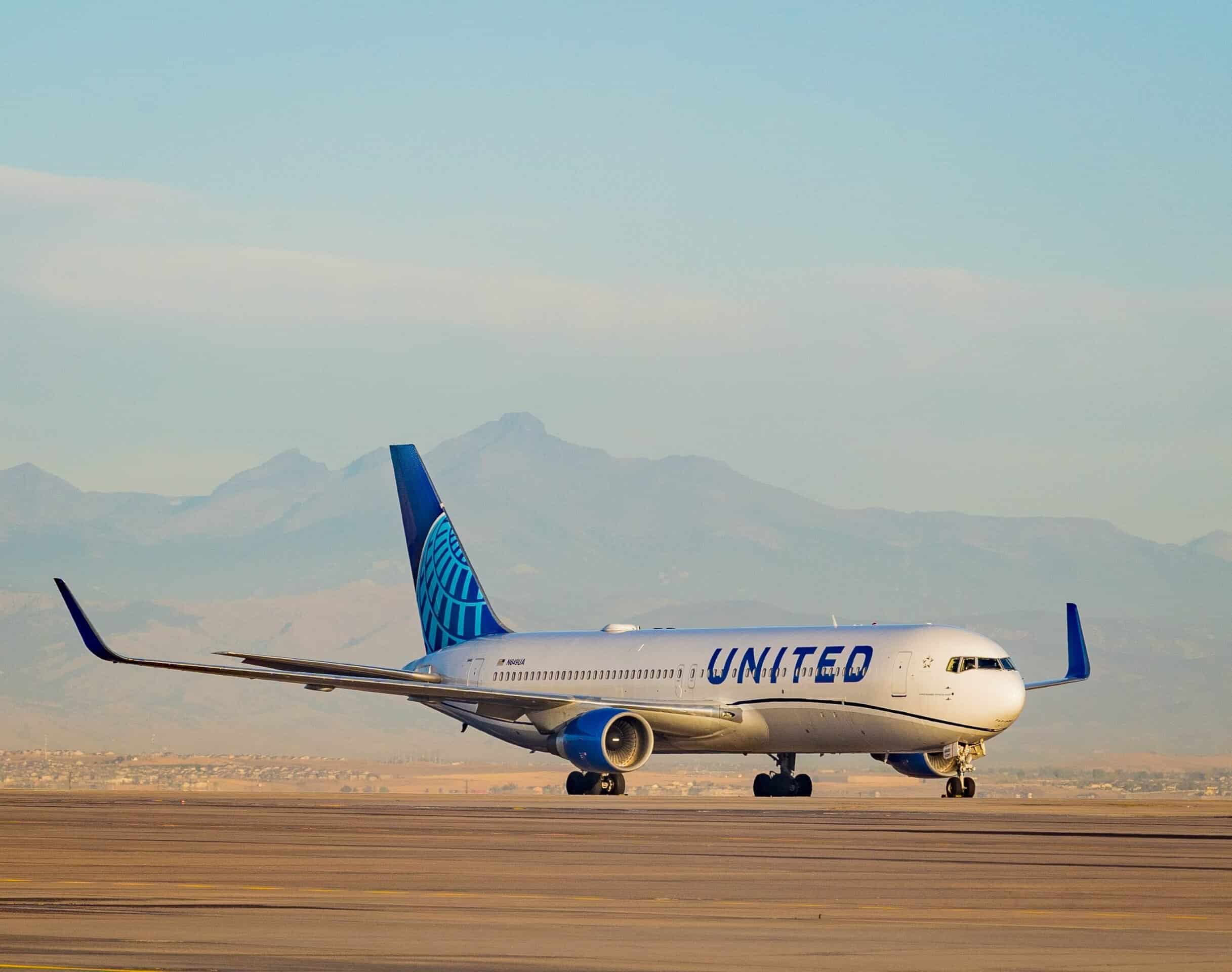
A United Airlines Boeing 767-300 | IMAGE: United Airlines
In addition to Nuuk, United’s Summer 2025 expansion plans include several other exciting European destinations.
Italy: The carrier will launch its first-ever service to the Italian island of Sicily. New flights to Palermo’s Falcone Borsellino Airport (PMO) will begin on 21 May aboard a Boeing 767-400 from EWR. This seasonal, thrice-weekly service puts Palermo in United’s growing portfolio of Italian destinations, including Rome, Milan, Naples, and Venice.
Spain: Travelers heading to northern Spain’s Basque Country can now book direct flights to Bilbao starting on 31 May. United will operate this seasonal route three times a week from EWR, complementing its existing service to other Spanish cities like Palma de Mallorca, Tenerife, and Barcelona. United will operate a Boeing 757-200 on the route.
Portugal: United is also expanding its service to Portugal, adding two new destinations: Madeira Island and Faro. Flights to Madeira’s Cristiano Ronaldo International Airport (FNC) will begin on 7 June aboard a Boeing 737 MAX 8, while service to Faro International Airport (FAO) in the Algarve region will launch on 16 May aboard a Boeing 757-200. Both routes will operate out of EWR, giving travelers more access to Portugal’s stunning coastlines, cultural sites, and, of course, its famous wine regions. With these additions, United will fly to five Portuguese cities, including Lisbon, Porto, and Ponta Delgada.
Some Summer Flights to Europe Will Begin Earlier than Ever
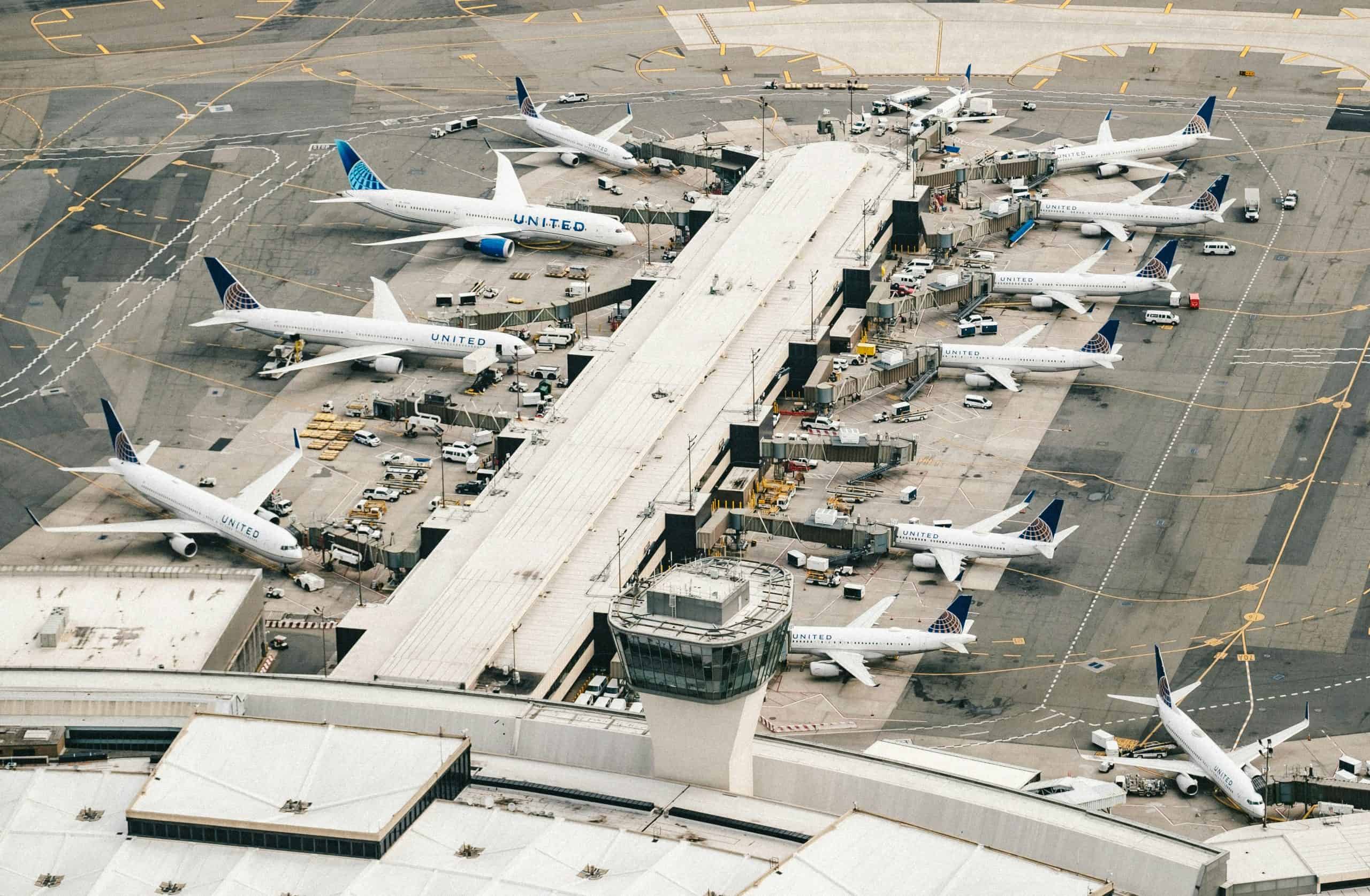
United Airlines jets at San Francisco International Airport (SFO) on 09 May 2024 | IMAGE: Photo by David Syphers on Unsplash
United’s summer 2025 schedule includes these new destinations and ramps up service to several other European cities. The carrier will add more flights between EWR and Palma de Mallorca, Spain (PMI); Dubrovnik, Croatia (DBV); and Athens, Greece (ATH), while also launching earlier seasonal service to Venice, Italy (VCE) and Barcelona, Spain (BCN).
As United gears up for next summer, it will begin operating more transatlantic flights earlier in the season. Travelers can expect flights to ATH (06 March), VCE (29 March), and BCN (01 May) to kick off before the traditional summer season begins. Additionally, the carrier will launch the following nonstop flights to and from Europe:
San Francisco International Airport (SFO) to BCN | 01 May | Boeing 777-200
Chicago O’Hare (ORD) to ATH | 01 May | Daily | Boeing 787-10
Washington Dulles (IAD) to VCE | 22 May | Daily through 25 September, then 4x weekly | Boeing 767-300
IAD to Nice Côte d’Azur Airport (NCE) in France | 24 May | Seasonal, 4x weekly | Boeing 767-300
United’s Intra-Asian Network will Connect Japan and Mongolia
A United Airlines Boeing 777-200 lands at Tokyo Narita (NRT) on 12 February 2018 | IMAGE: Masahiro TAKAGI from Ichikawa, Chiba, Japan, CC BY 2.0 , via Wikimedia Commons
United’s European expansion is complemented by a fairly robust Asian expansion, including a growing intra-Asian network of flights from Tokyo Narita (NRT).
Mongolia: Service to Ulaanbaatar, Mongolia, will begin on 1 May from NRT. Ulaanbaatar is Mongolia’s capital city and home to the country’s only international airport. The carrier will operate a Boeing 737-800 for the seasonal, thrice-weekly service to Chinggis Khaan International Airport (UBN). It will be United’s first foray into Mongolia and the only U.S. airline to offer service to UBN.
Taiwan: Flights to Kaohsiung, Taiwan’s second-largest city, will begin on 11 July. United will operate daily flights between Kaohsiung International Airport (KHH) and NRT aboard a Boeing 737-800. This new route complements United’s existing SFO and Tapei (TPE) service.
United also plans to launch a year-round nonstop flight between NRT and Koror, Palau. It was the only U.S. airline to serve Palau, a remote Pacific nation comprising over 350 islands. Service to Roman Tmetuchi International Airport (ROR) from NRT will begin on 02 April. The daily service will utilize a Boeing 737-800.
Africa and Central America are Part of United’s Expansion, Too
United Airlines jets parked at Newark Liberty International Airport (EWR) on 07 Aug 2021 | IMAGE: Photo by Chris Leipelt on Unsplash
Senegal: Rounding out United’s eight new destinations is Dakar, the capital of Senegal. The carrier plans to begin year-round, thrice-weekly service to Blaise Diagne International Airport (DSS) from IAD beginning on 23 May. This service, operated with a Boeing 767-300, will complement United’s existing African service to Cape Town (CPT) and Johannesburg (JNB), South Africa; Accra, Ghana (ACC); and Lagos, Nigeria (LOS). United also flies seasonally to Marrakesh, Morocco (RAK).
United’s Central American network will also see additional flights in 2024, including service to Mexico’s Puerto Escondido International Airport (PXM). The carrier will utilize an Embraer E175 Mesa-operated regional jet to the city from Houston’s George Bush Intercontinental Airport (IAH). The service will be year-round but limited to one flight per week.
San Jose, Costa Rica, will finally connect to the last of United’s seven hub cities when the carrier begins service to Juan Santamaria International Airport (SJO) from SFO on 22 May. This route will utilize a Boeing 737-8 MAX.
United will also begin previously announced flights from EWR to Dominica’s Douglas-Charles Airport (DOM) on 15 February.
A Summer of Adventure Awaits
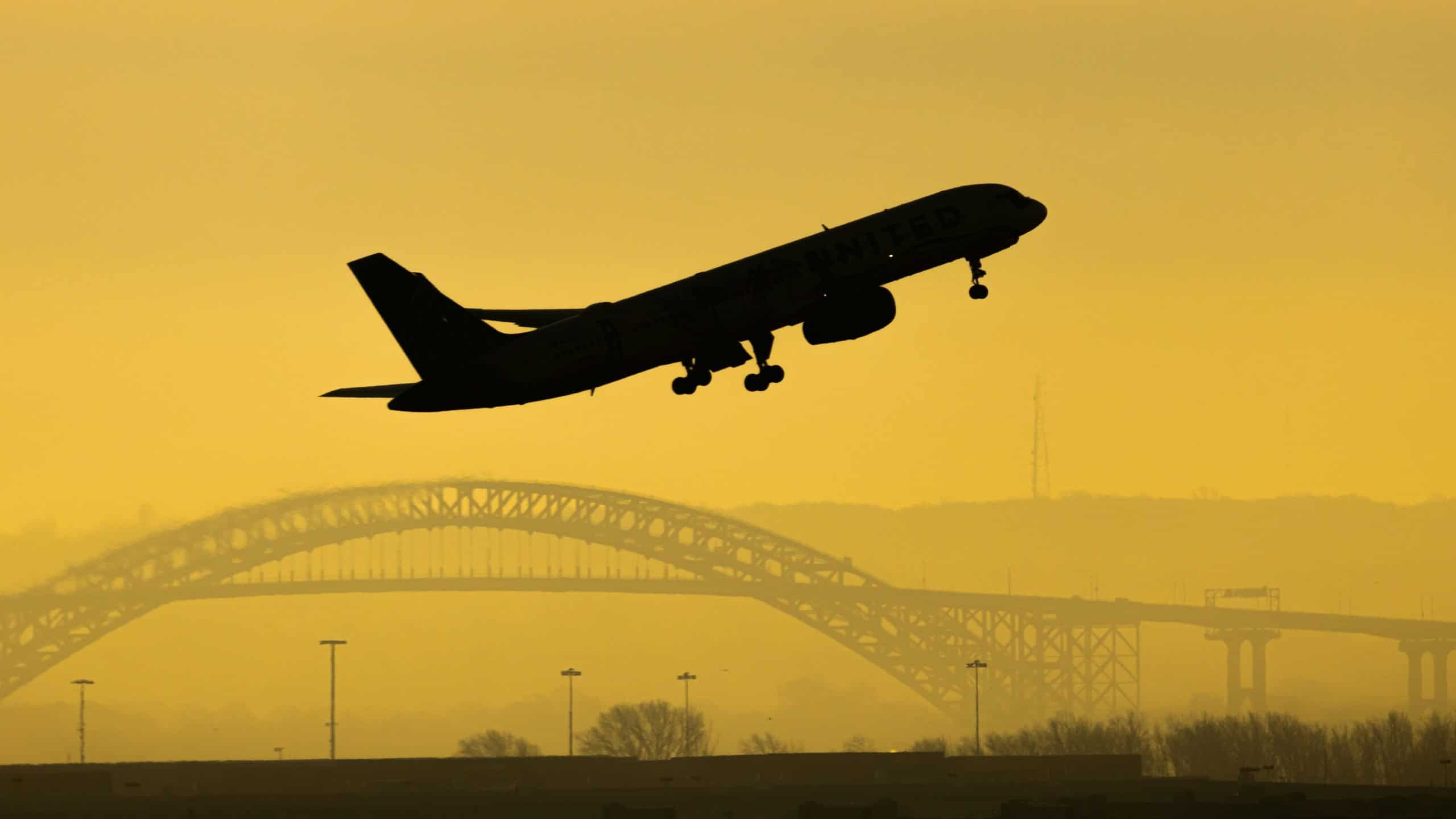
A United AIrlines jet departs from Newark Liberty International Airport (EWR) on 29 Jul 2020 | IMAGE: Photo by Bing Hui Yau on Unsplash
United’s Summer 2025 schedule is one of the most unique expansions in the carrier’s history. It introduces these eight new destinations and significantly bolsters its strong transatlantic and global network.
This list of well-established and emerging destinations opens up opportunities for leisure and business travelers to explore regions often underserved by U.S. carriers–or not served at all.
By the numbers, United will offer more than 760 transatlantic flights to over 40 cities next summer, topping all other U.S. carriers. Altogether, United will operate 800 daily international flights to 147 destinations worldwide, with 40 nonstop routes that no other major U.S. airline flies.
What route are you most excited about? I’d love to be aboard the first flight to Nuuk, as it has been a lifelong dream of mine to visit Greenland.
The Douglas A-26/B-26 Invader Fought in Three Big Wars and Many Smaller Ones
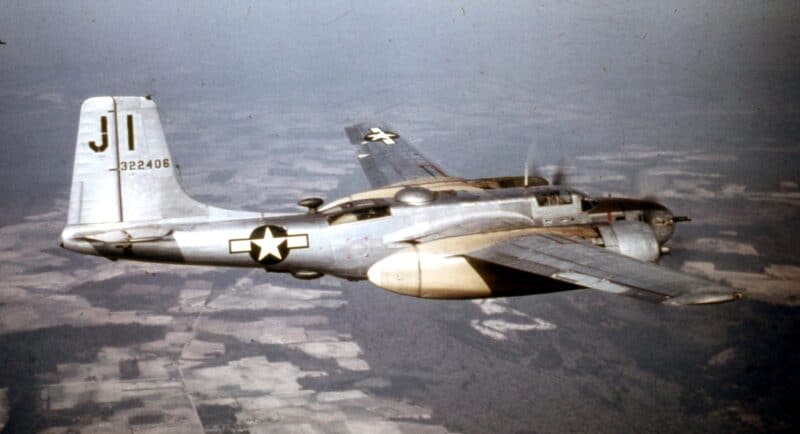
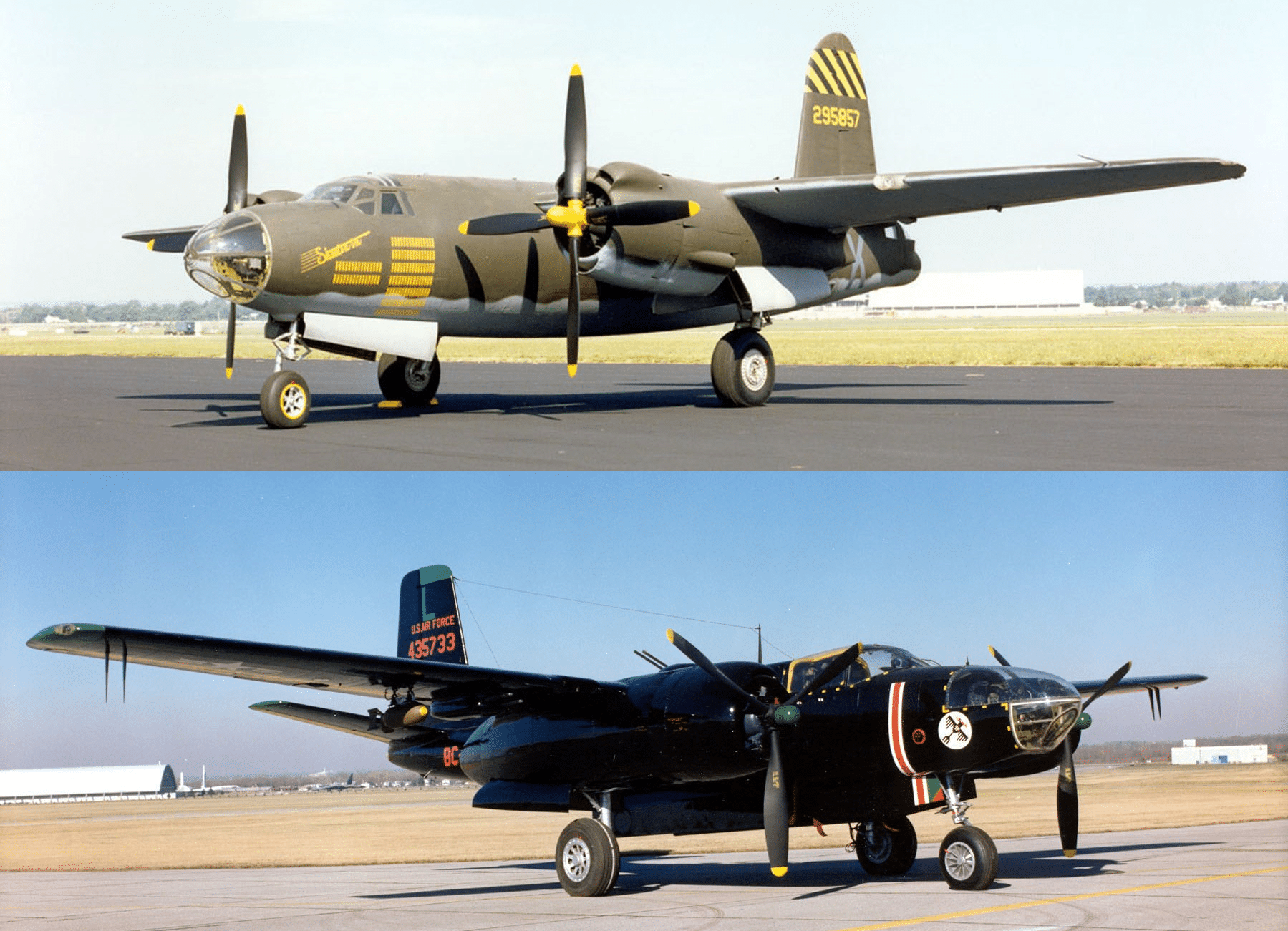
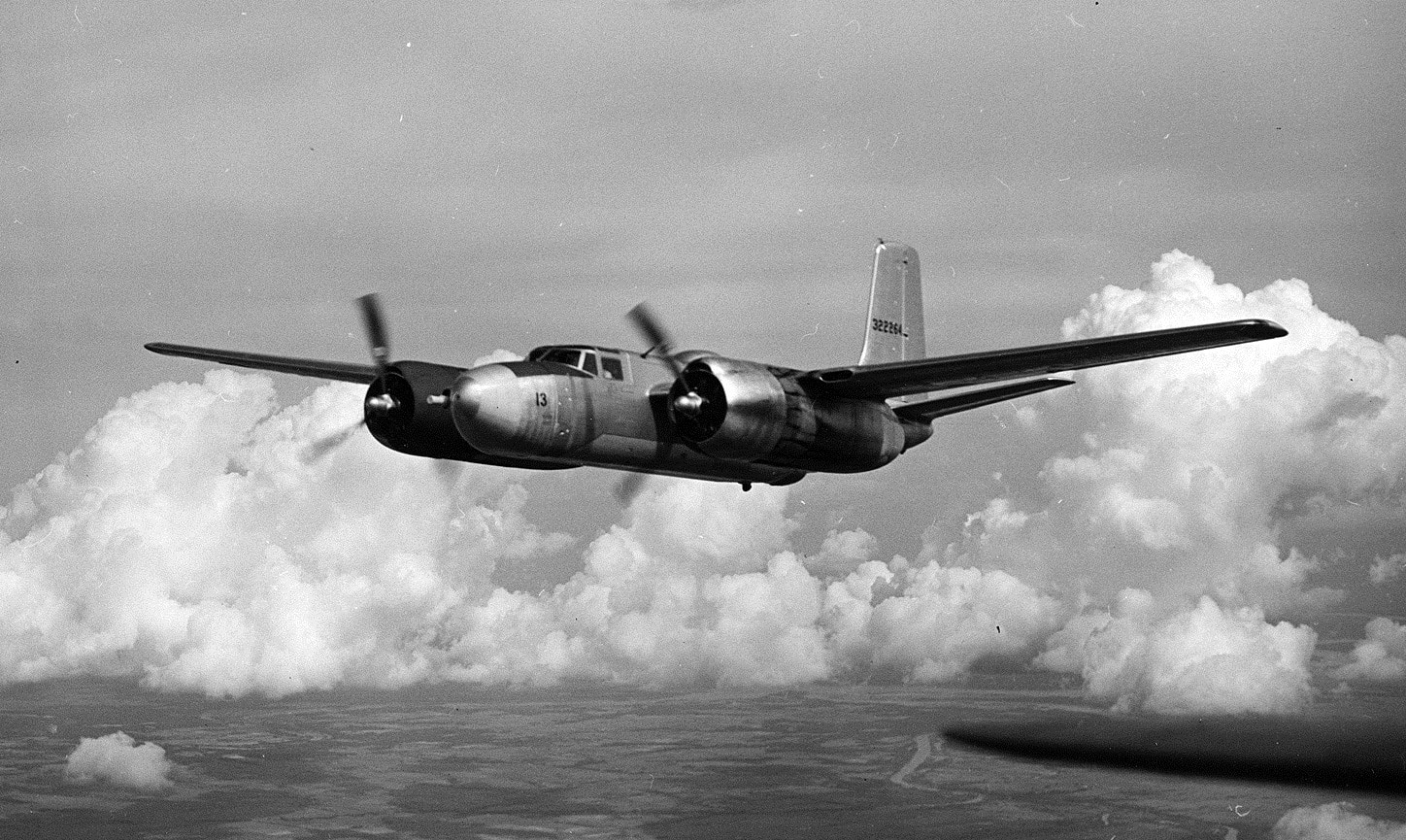
The Douglas A-26 Invader was created as a replacement for the company’s previous twin-engine attack aircraft, the very successful DB-7 Boston/A-20 Havoc. The A-26 Invader didn’t become the B-26 Invader until 1948. By that time the new US Air Force was no longer flying the previous B-26, Martin’s B-26 Marauder medium bomber, having retired the last of them the previous year, so the redesignation of the A-26 to the B-26 made sense. But the two aircraft were vastly different in design if not mission.
Martin B-26 Marauder (top) and Douglas A-26 Invader (bottom). Ironically by the time the A-26 wore these colors it had taken over the B-26 designation. Images via national museum of the us air force (NMUSAF)
Designed by Legends
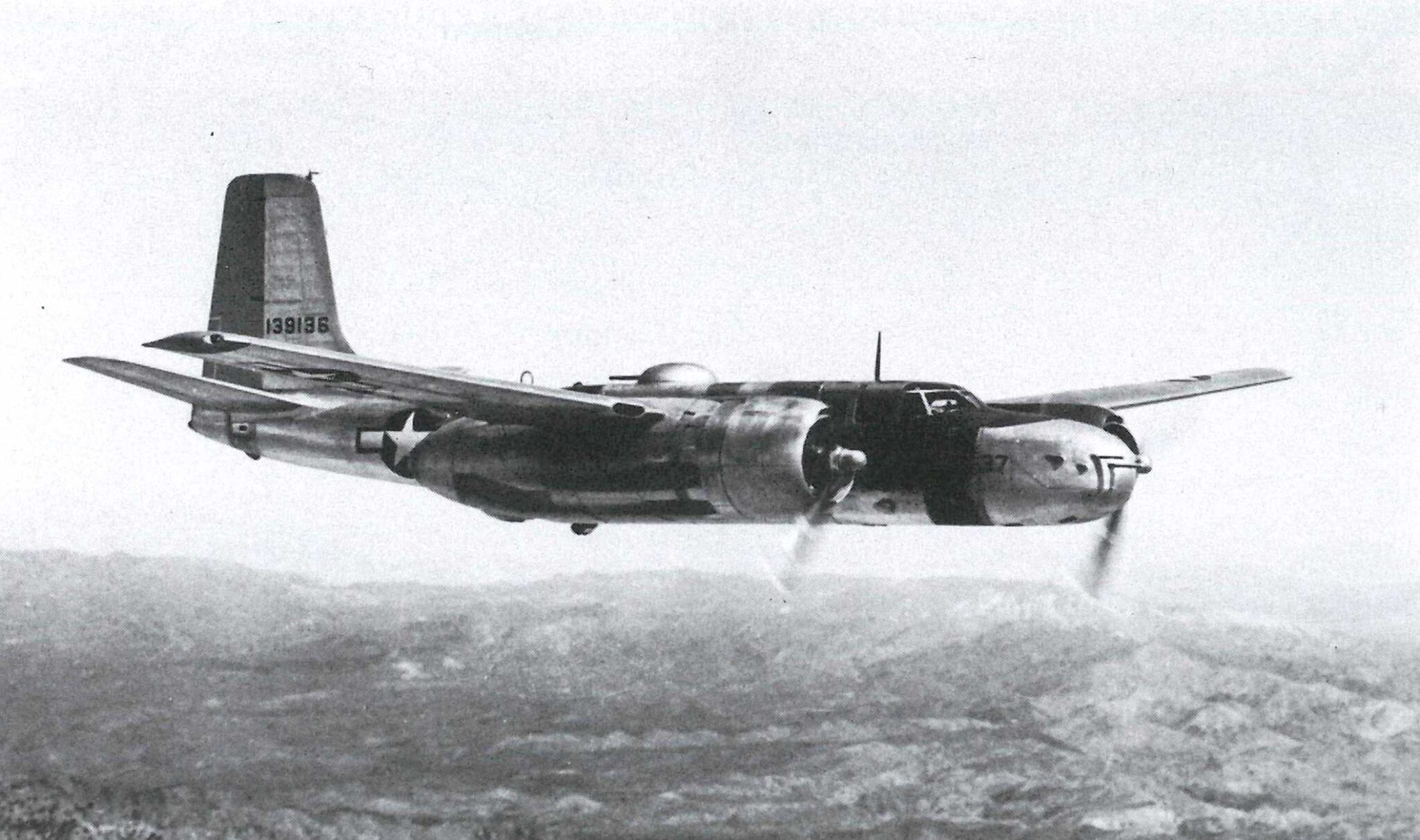
The A-26 was designed beginning in 1940 by none other than the renowned Ed Heinemann, along with Robert Donovan, Ted R. Smith and A.M.O. Smith. A full-scale mock-up of the A-26 was inspected by the US Army Air Corps in April of 1941. A contract for development was awarded the following June. Design highlights included a high shoulder-mounted laminar flow wing section with squared off wingtips, pronounced dihedral, and a pair of 2,000 horsepower Pratt & Whitney R-2800-27 Double Wasp radial piston engines mounted in tight-fitting nacelles turning three-bladed Hamilton Standard Hydromatic constant-speed propellers, a boxy fuselage with a conventional squared-off empennage, and tricycle landing gear. The A-26 was about three feet longer with a nine foot longer wingspan and 80 square feet more wing area than the A-20. The A-26 also outweighed the A-20 by about three tons when empty.
A-26b image via Nmusaf
Interchangeable Parts
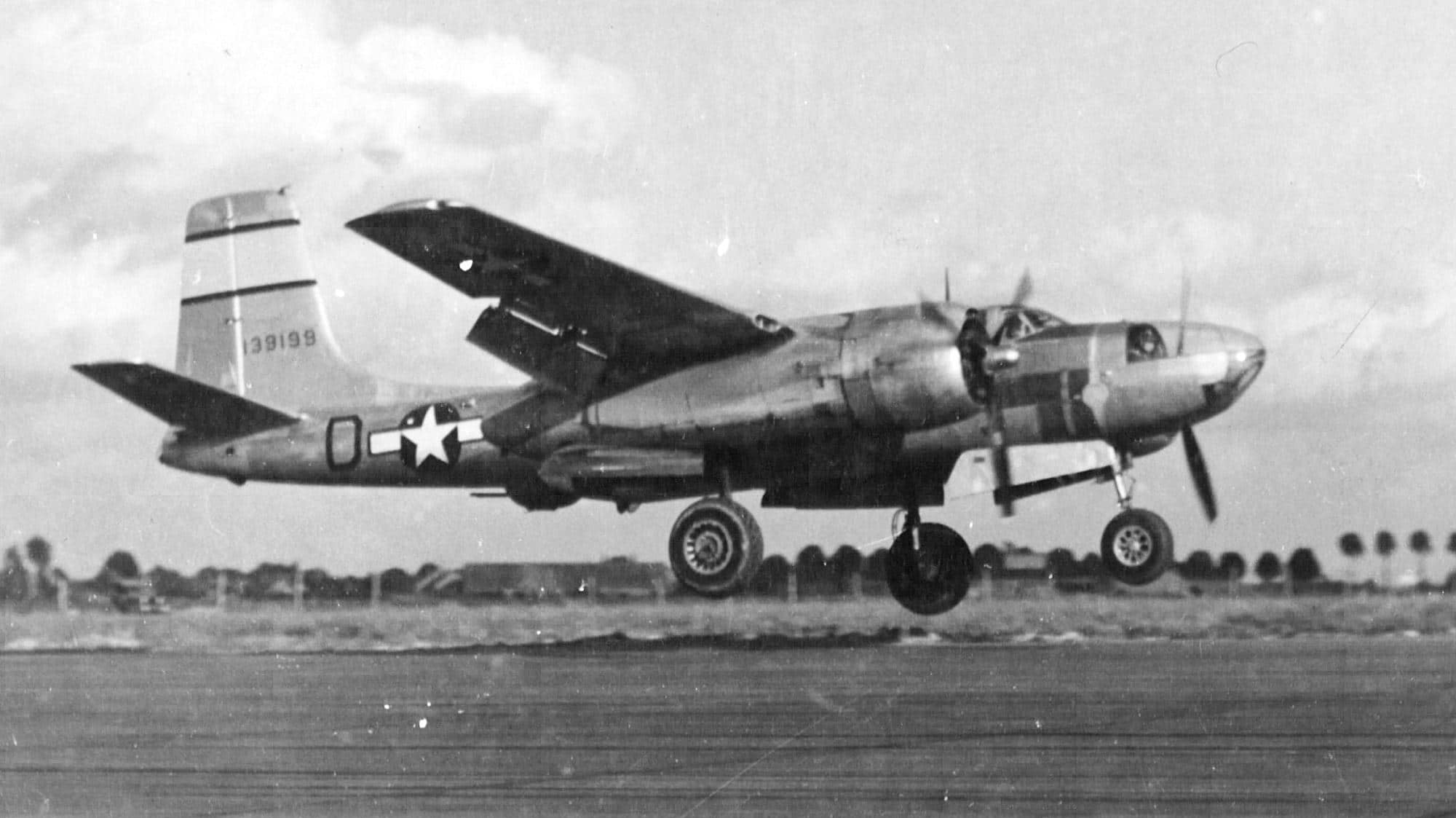
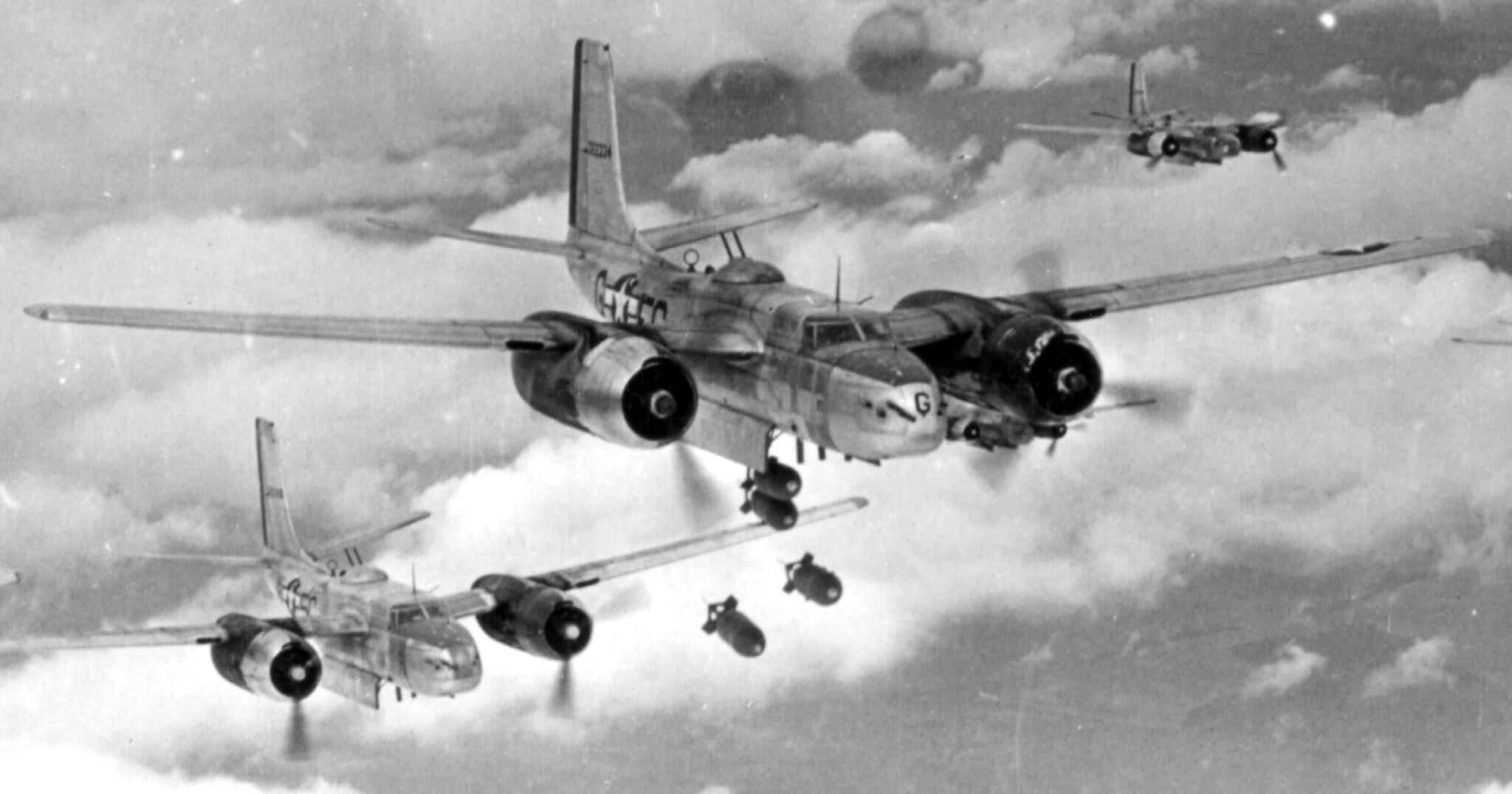
A-26s were manufactured in two different basic configurations. The A-26B was normally equipped with what was called the All-Purpose Nose, which mounted six or later eight forward-firing .50 caliber machine guns, although it was possible to mount 20 millimeter cannons or even a 75 millimeter howitzer in lieu of some or all of the .50s. The A-26C had the Bombardier Nose, which included a Norden bombsight, two fixed forward-firing .50 caliber machine guns, and clear unframed Perspex in the nose. But either nose configuration could be swapped for the other by the ground crews in just a few hours. This gave the A-26 tremendous operational flexibility.
a-26C image via nmusaf
Heavily Armed
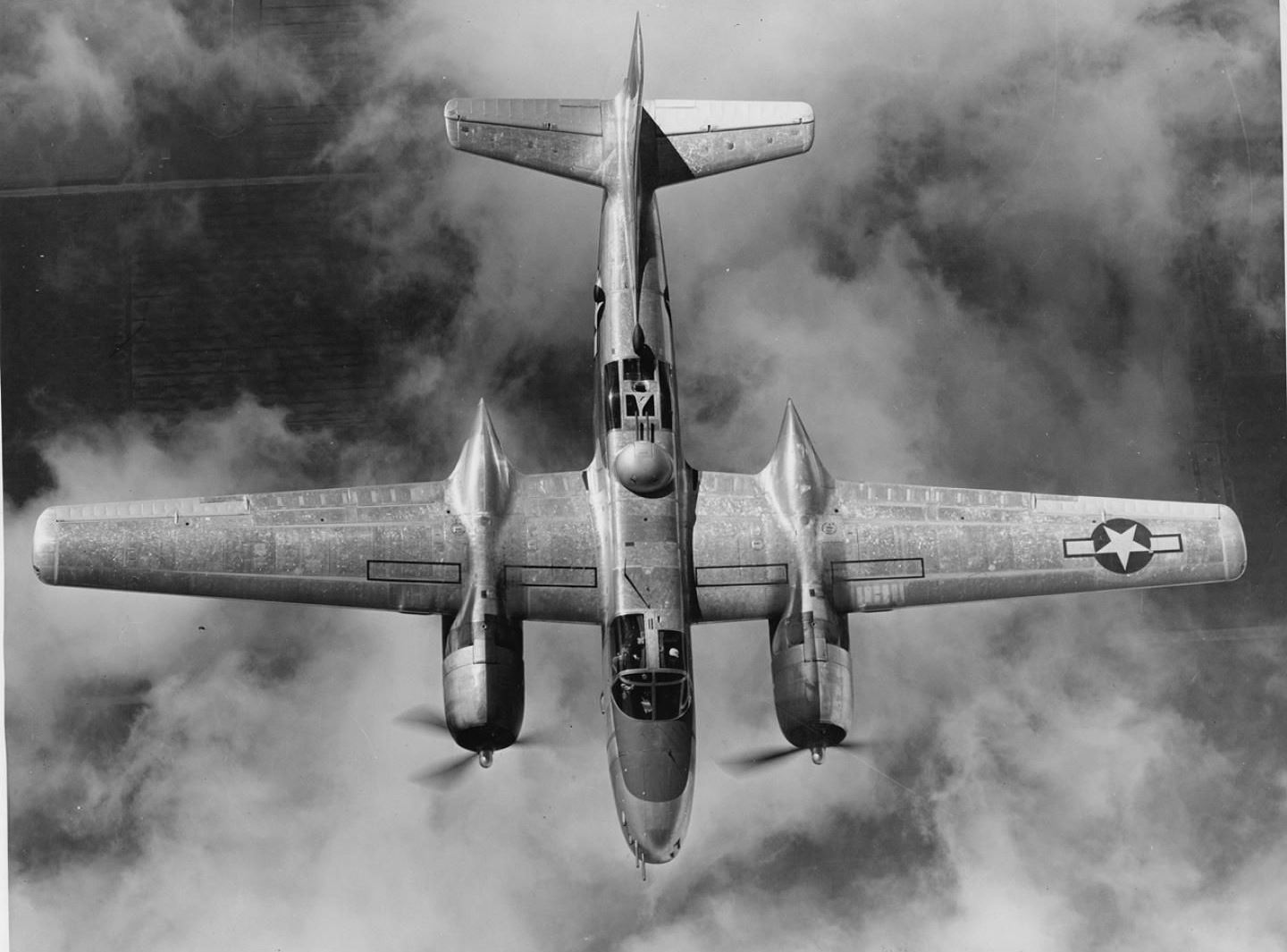
The A-26 was crewed by three- pilot, navigator/bombardier, and a gunner who operated the remotely controlled ventral and dorsal gun turrets, each of which had a pair of .50 caliber machine guns. The navigator/bombardier’s duties were determined by which nose his A-26 was wearing on a given mission. In the C the B/N rode in the nose, but in the B he sat with the pilot. Later production A-26s were equipped with three .50 caliber machine guns in each wing when the All Purpose Nose armament went from six to eight .50s, giving the A-26B 14 forward firing .50s- 18 if both turrets were aimed forward. A-26s with wing-mounted .50s also received rails for carriage of seven rail-mounted High Velocity Aerial Rockets (HVARs) under each wing.
a-26b image via nmusaf
Initial Findings
The prototype XA-26 Invader flew for the first time on 10 July 1942. Aside from some engine cooling issues which led to cowling modifications and the elimination of the spinners from the propellers and issues with the nose gear that resulted in the redesign of same, the A-26 fairly sailed through testing. Pilots reported it was a sweet-flying aircraft with excellent performance and predictable handling. Later the original A-26 flat canopy was replaced with a dual-clamshell design which provided better visibility beginning in late 1944.
A-26B in the southwest pacific. image via nmusaf
To War in the Pacific…Sort of
The A-26B went to war beginning in August of 1943 with General George C Kenney’s Fifth Air Force in the Southwest Pacific. A-26Bs first went into combat on 23 June 1944. Pilots of the new aircraft found that although they were fast, outward vision from the cockpit was limited by the engine nacelles, making the A-26B inadequate for the low-level attack work for which the Fifth Air Force became famous. In fact Kenney was quoted as saying, “We do not want the A-26 under any circumstances as a replacement for anything.” Ouch! So Fifth Air Force A-20G Havocs flew alongside the few A-26B Invaders in the area for the rest of the war- but the A-26B never replaced the A-20 Havoc or the North American B-25 Mitchell medium bomber in Fifth Air Force service. Some A-26Bs did see duty with the Seventh Air Force on Okinawa but arrived too late to see significant combat.
A-26Bs in the eto. image via nmusaf
To War in Europe. For Real This Time
In the European Theatre of Operations (ETO) the Ninth Air Force began receiving A-26Bs in late August of 1944. The 553rd Bomb Squadron (BS) of the 386th Bomb Group (BG) took the A-26B to war beginning on 6 September 1944. No A-26Bs were lost during eight missions, resulting in the Ninth Air Force buying in- so much so that they said their war-weary A-20 Havocs and B-26 Marauders were ready for replacement by the Invader. Invaders were used by several more Ninth Air Force squadrons for bombing, strafing, night interdiction, and even tactical reconnaissance. The Twelfth Air Force also began using A-26Bs in the Italian campaign beginning in January of 1945 and also reported exemplary results with their new Douglas attackers.
A-26Bs dropping on italy. image via nmusaf
For More of the Invader Story Bang NEXT PAGE Below
Nashville International Airport (BNA) is celebrating a new transatlantic flight announcement for the second time in a week.
Just last week, BNA officials announced that Icelandair would commence European service from Music City in 2025. Aer Lingus is following in Icelandair’s footsteps, announcing it will begin nonstop flights to Dublin Airport (DUB) in Ireland next April.
Aer Lingus and Icelandair Join British Airways at BNA
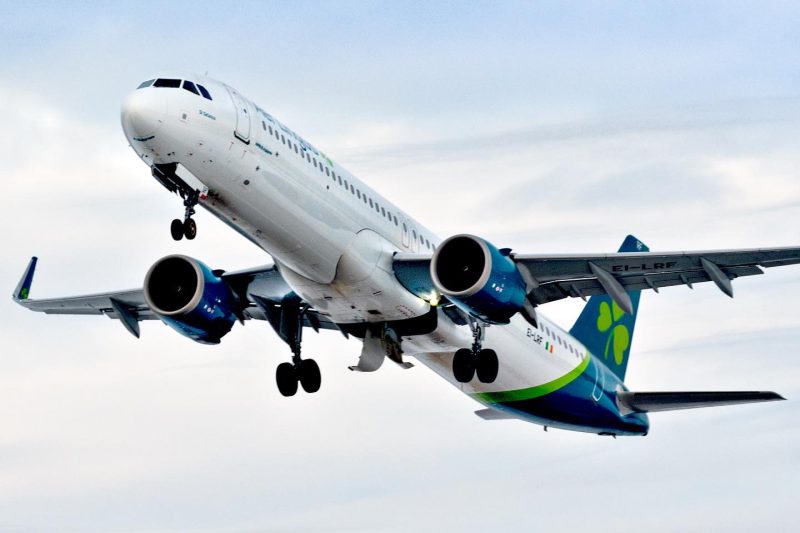
Dublin-Based Aer Lingus will use 184-seat A321neos for its Dublin to Nashville route | IMAGE: Aer Lingus
Dublin-based Aer Lingus and Icelandair will complement BNA’s existing (and only) transatlantic service offered by British Airways.
BNA-DUB flights will begin on 12 April 2025. The carrier will fly the route four times weekly: Tuesdays, Thursdays, Saturdays, and Sundays. Flights will be operated by a narrowbody Airbus A321neo, which features 168 seats in economy and 16 lie-flat seats in Business Class.
A quick search on the Aer Lingus website shows Flight 76 departing from BNA at 1840 and arriving in DUB the next morning at 0850. For the return trip, Flight 77 departs DUB at 1405 and arrives back at BNA at 1710.
Aer Lingus will join Icelandair as BNA’s newest European airline. On 26 September, BNA officials announced Icelandair will begin service to Keflavík International Airport (KEF) in Iceland’s capital city of Reykjavik on 16 May 2025. Icelandair will operate the flight four times weekly (Monday, Wednesday, Friday, and Sunday) with a Boeing 737-800 MAX. The seven-hour flight will feature 144 economy seats and 16 seats in Icelandair’s business class product, Saga Premium.
Currently, only British Airways offers transatlantic flights from BNA, with daily service to London Heathrow Airport (LHR). The carrier recently upgauged from a Boeing 787-8 to the larger capacity Boeing 777-200, which features 272 seats and its Club Suite premium product.
A British Airways Boeing 787-8 Dreamliner at the gate at BNA | IMAGE: Nashville International Airport on Facebook
British Airways first began flying out of BNA in 2018. However, the carrier suspended operations twice between 2020 and 2022 before what appears to be a permanent stay in Music City. Prior to British Airways’ arrival in 2018, BNA had been without transatlantic flights for 22 years.
Southwest Adds International and Domestic Routes from BNA
A Southwest Airlines Boeing 737-8 MAX (N8735L) taxis at BNA | IMAGE: Nashville International Airport on Facebook
Not to be outdone, Southwest is also adding international capacity at BNA. The carrier announced in late August that it will begin nonstop service between BNA and Los Cabos International Airport (SJD) in Cabo San Lucas, Mexico, and Punta Cana International Airport (PUJ) in Punta Cana, Dominican Republic. Service to both cities will begin on 8 March 2025.
Southwest’s international expansion at BNA comes amid domestic expansion for the carrier. On 25 September, Southwest unveiled six new destinations from BNA, including:
Albuquerque, N.M. | Albuquerque International Sunport (ABQ)
Albany, N.Y. | Albany International Airport (ALB)
Jackson, Miss. | Jackson-Medgar Wiley Evers International Airport (JAN)
Memphis, Tenn. | Memphis International Airport (MEM)
Providence, R.I. | Rhode Island T.F. Green International Airport (PVD)
Tulsa, Okla. | Tulsa International Airport (TUL)
In addition, Southwest recently announced new service to Indianapolis International Airport (IND) from BNA starting on 6 March 2025.
Southwest’s robust Music City expansion comes on the heels of the opening of its 12th crew base at BNA in May 2024.
Canada and Mexico Are In, Germany Is Out
An Air Canada Airbus A220-300 and an American Airlines Airbus A319 rest at the new international terminal at BNA | IMAGE: Nashville International Airport on Facebook
Other international service at BNA includes routes to six Canadian destinations operated by WestJet, Flair, or Air Canada. BNA also boasts nonstop flights to Cancun, Mexico (CUN) with Southwest, American (seasonal), and VivaAerobus (seasonal).
BNA appeared to be on the cusp of announcing service to Frankfurt, Germany, with German carrier Discover Airlines. However, plans for this service came to an abrupt halt last month.
Nashville is Part of Aer Lingus’ North American Expansion Plan
Aer Lingus Airbus A330-200 “St. Columba” | IMAGE: Aer Lingus on Facebook
Aer Lingus’ plan to serve Nashville follows its continued North American expansion into mid-sized cities such as Cleveland (CLE), Minneapolis-St. Paul (MSP), Denver (DEN), and Hartford (BDL).
Including Nashville, Aer Lingus will serve 17 US destinations and one Canadian destination from either Dublin, Shannon (SNN), or Manchester, England (MAN). The list of North American destinations include:
Boston (BOS) *from DUB and SNN
Chicago (ORD)
Cleveland (CLE)
Denver (DEN)
Hartford (BDL)
Las Vegas (LAS)
Los Angeles (LAX)
Miami (MIA)
Minneapolis (MSP)
Newark (EWR)
New York (JFK) *from DUB, SNN, and MAN
Orlando (MCO) *from DUB and MAN
Philadelphia (PHL)
San Francisco (SFO)
Seattle (SEA)
Toronto (YYZ)
Washington Dulles (IAD)
Globally, Aer Lingus serves 97 destinations with a fleet of Airbus A320s, A321s, and A330s.
Reserved For When You Absolutely Positively Had to Get to WestPac ASAP
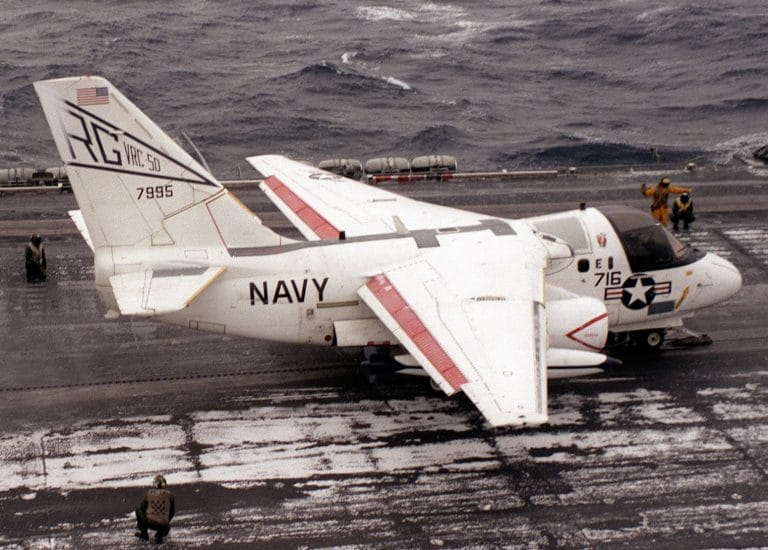
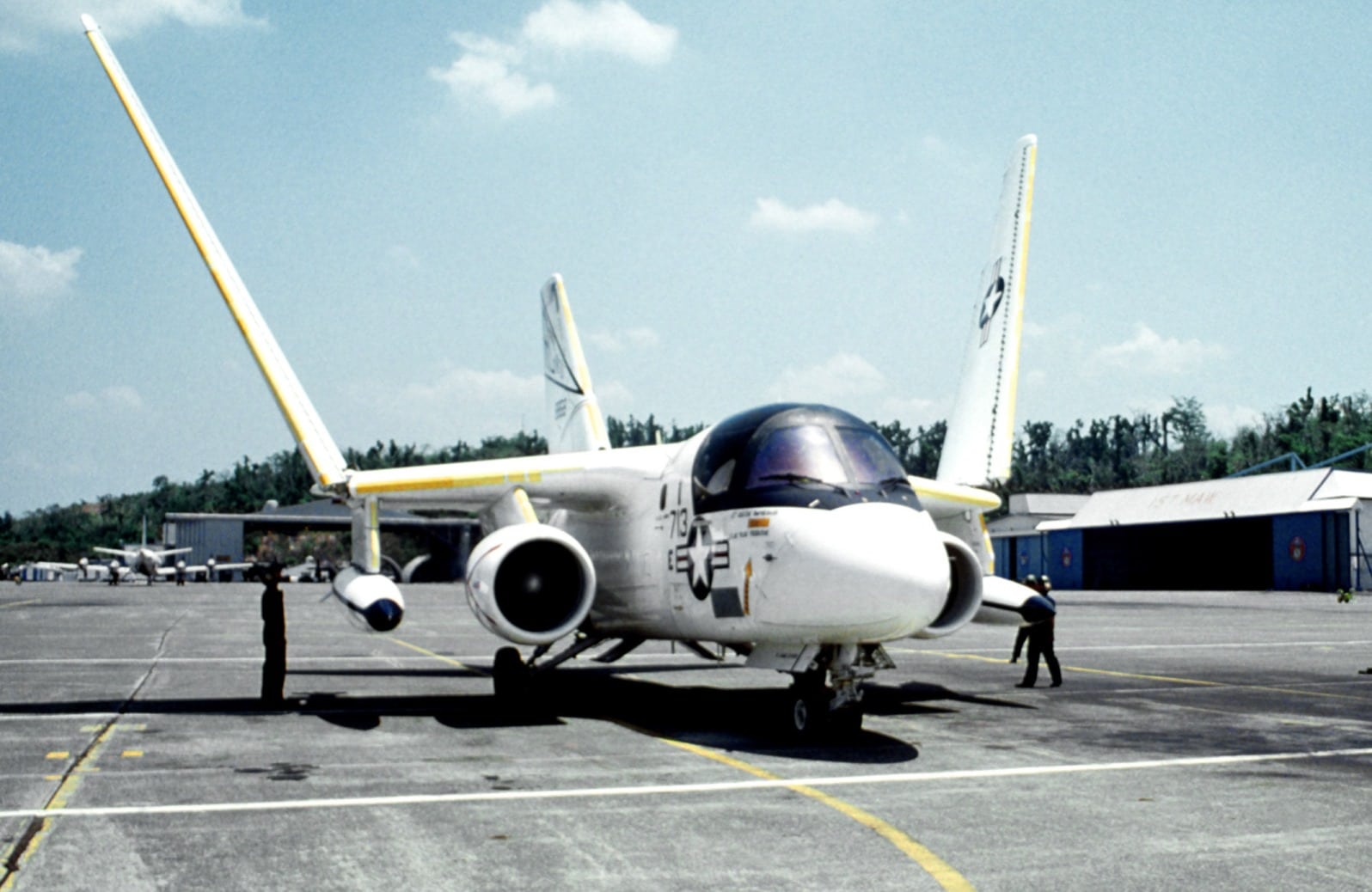
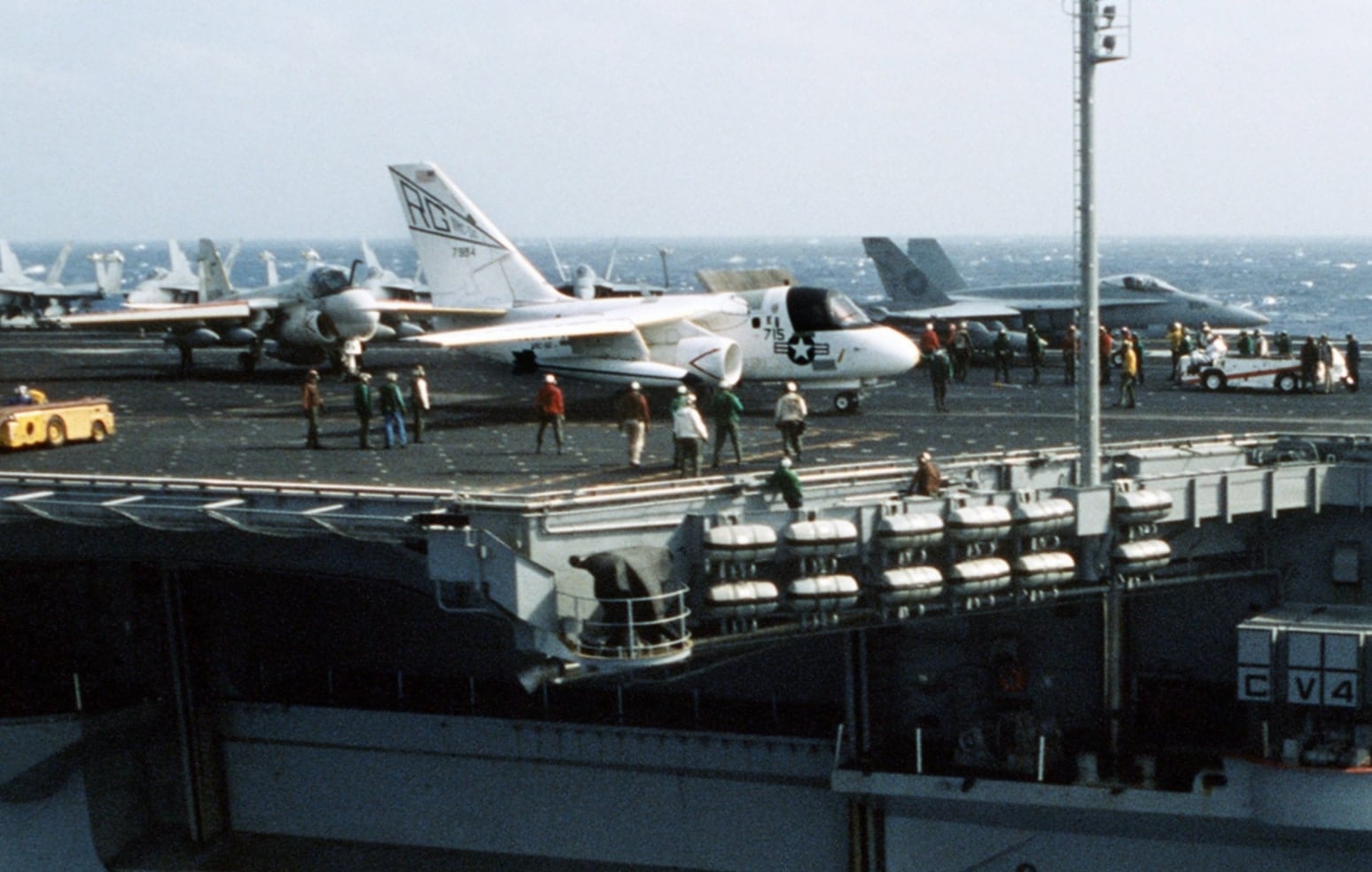
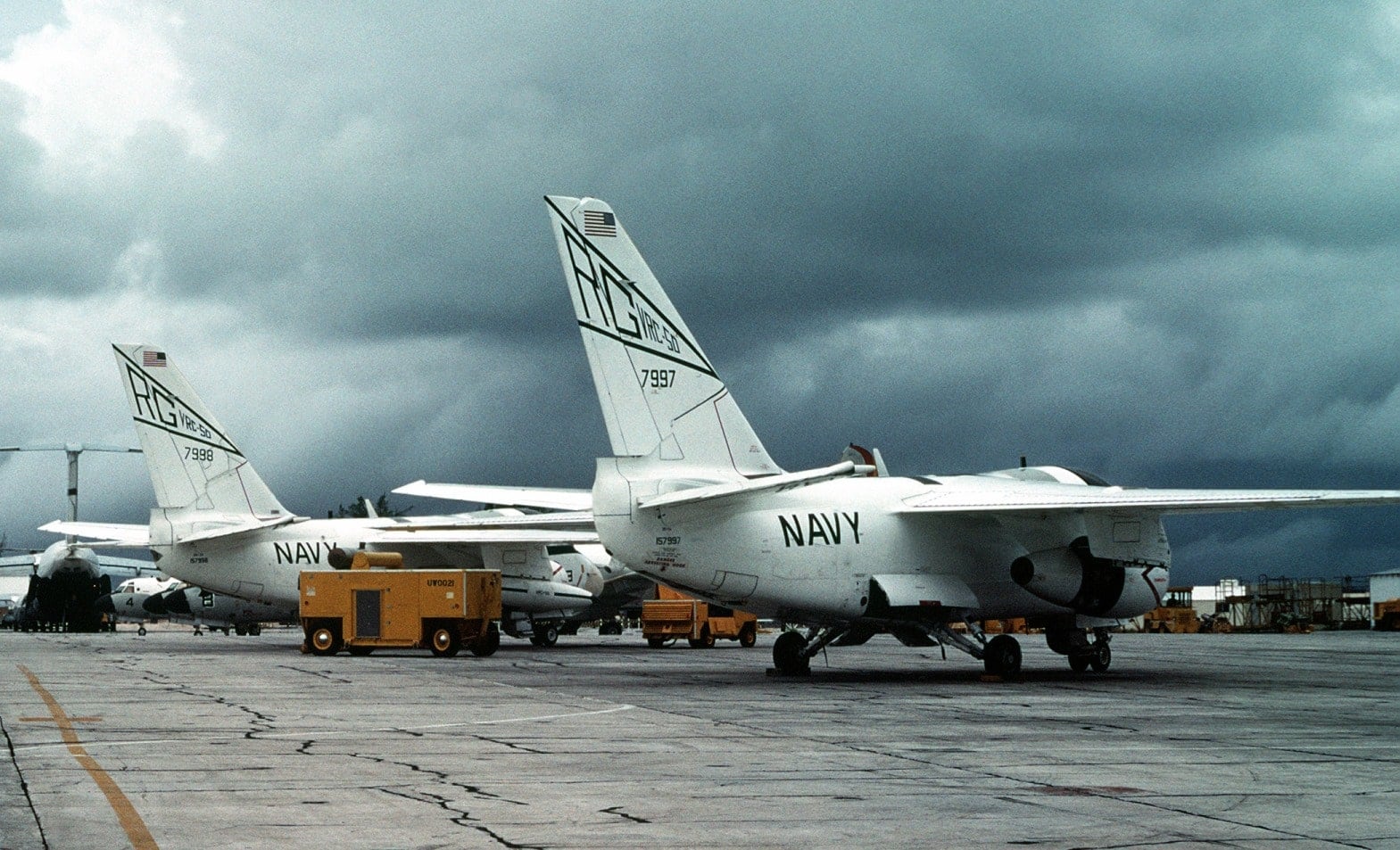
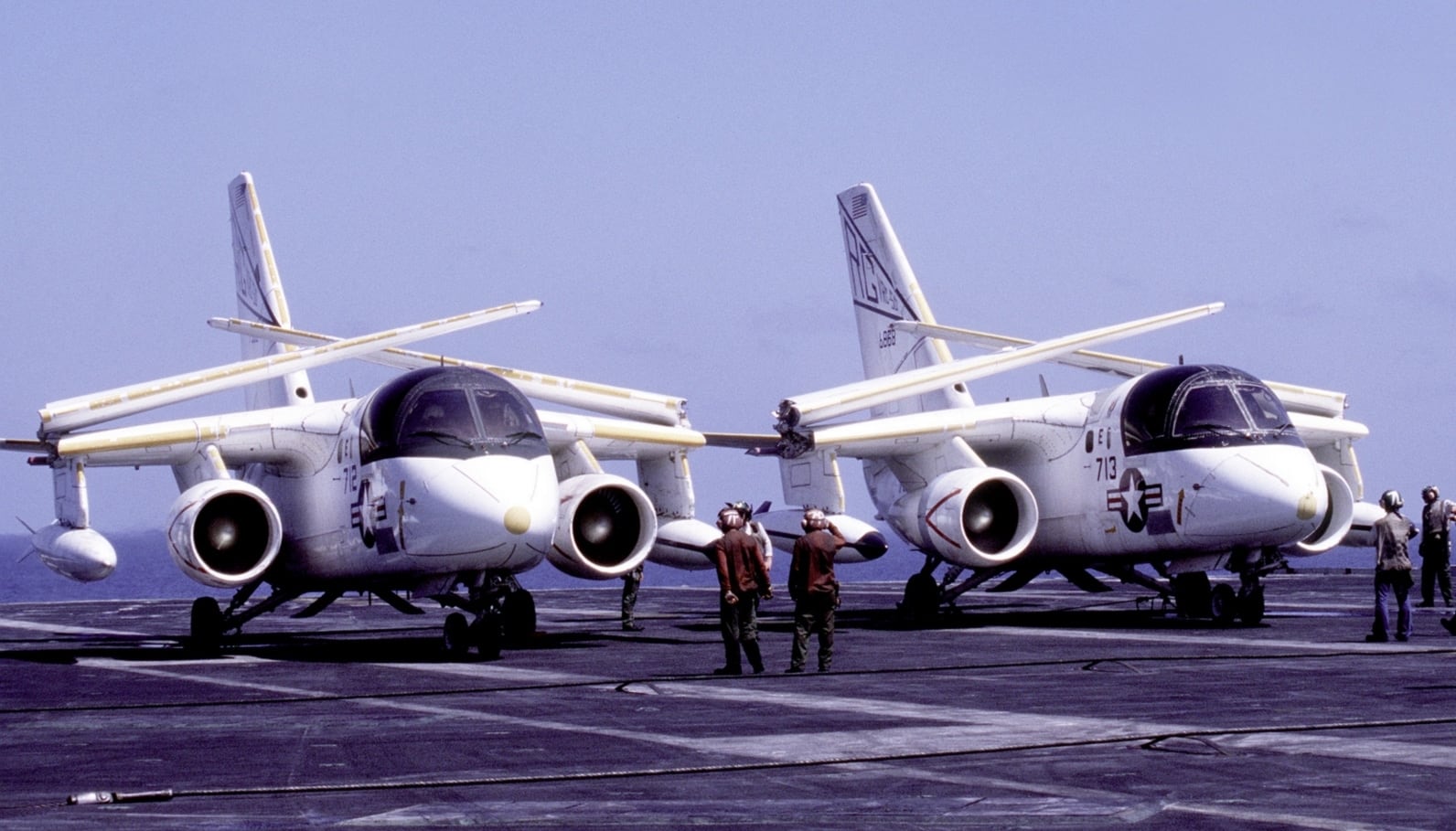
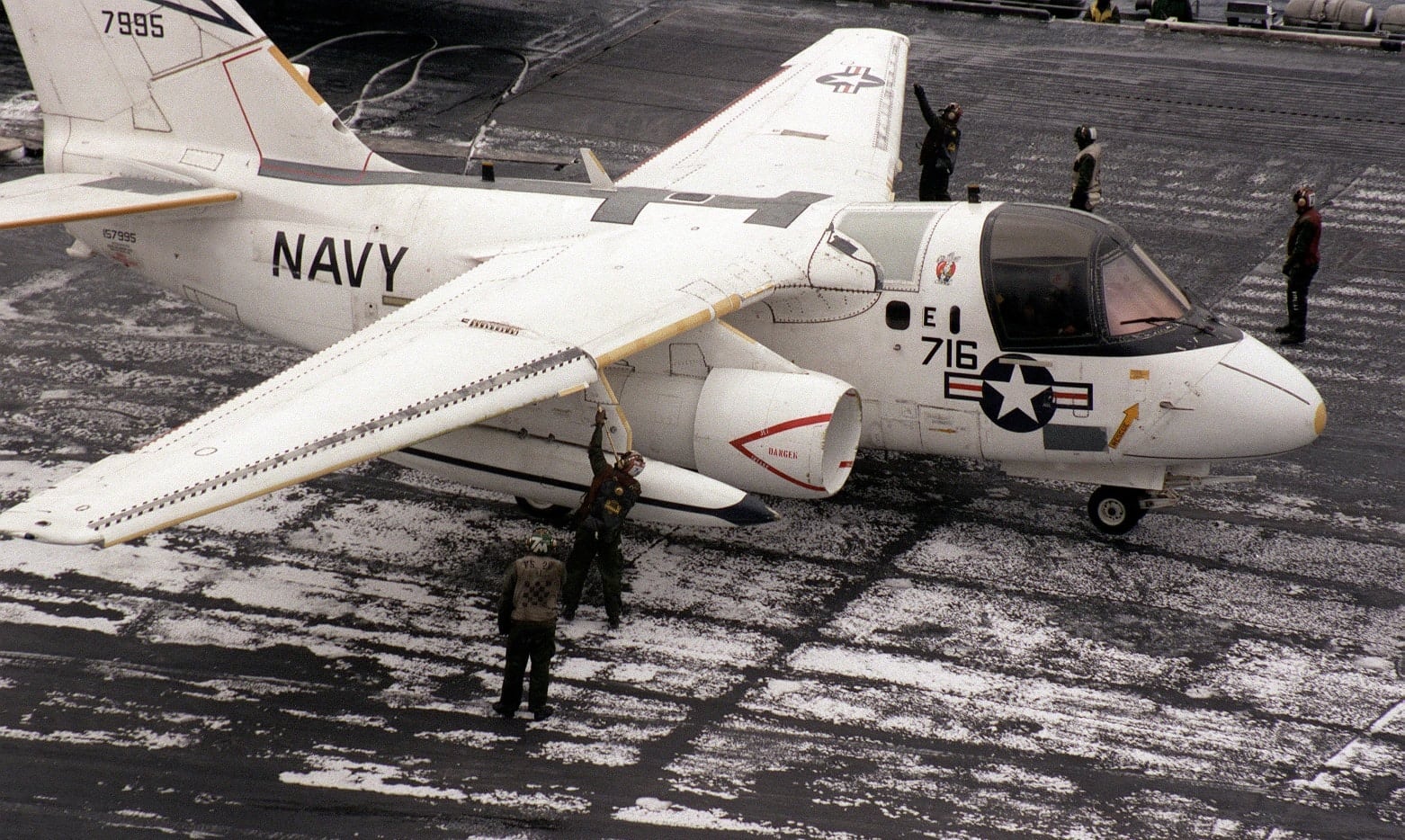
Fleet Tactical Support Squadron FIVE ZERO (VRC-50) Foo Dogs flew a variety of aircraft between their establishment in 1966 and their disestablishment in 1994. They were redesignated as a Fleet Logistics Support Squadron in 1976. The squadron flew Grumman C-1A Traders and C-2A Greyhounds, North American CT-39 Sabreliners, and Lockheed C-130F Hercules airlifters. But one of the most interesting, and little known, aircraft flown by the Foo Dogs was the Lockheed US-3A Viking Carrier Onboard Delivery (COD) variant.
VRC-50 US-3A unfolds at Cubi Point. Image via US Navy
There Can Be Only Six
One reason the US-3A is not exactly a household name is that Lockheed built only six of them. They built a total of 188 S-3 airframes. Most of them were S-3A/S-3B Viking antisubmarine warfare (ASW) jets. Sixteen of those were converted into ES-3A Shadow electronic intelligence (ELINT) variants. But only six US-3A COD variants were built. Five out of the six were converted from early pre-production flight test aircraft. One reason Lockheed was able to do this was the uncommonly smooth development cycle of the Viking. Another reason is that the US-3A was the follow-up to an entirely different Lockheed COD proposal. Well, not entirely…
VRC-50 US-3A aboard the Midway. Image via US Navy
Successful COD Formulas
Lockheed recognized the success Grumman experienced with their C-1A Trader COD aircraft, developed from their S-2 Tracker ASW platform and sharing many of its components but with a modified higher-volume fuselage. The C-2A Greyhound was developed from the E-2 Hawkeye. So Lockheed proposed an offshoot of the Viking sharing some components but with a larger higher capacity fuselage, rear cargo ramp, and uprated engines. The Navy decided to continue with the C-2A as the primary COD solution, but saw the value in a small number of minimally modified Viking CODs. The result: the US-3A- sometimes referred to as Miss Piggy.
VRC-50 US-3As at Diego Garcia. Image via US navy
Built for WestPac and Beyond
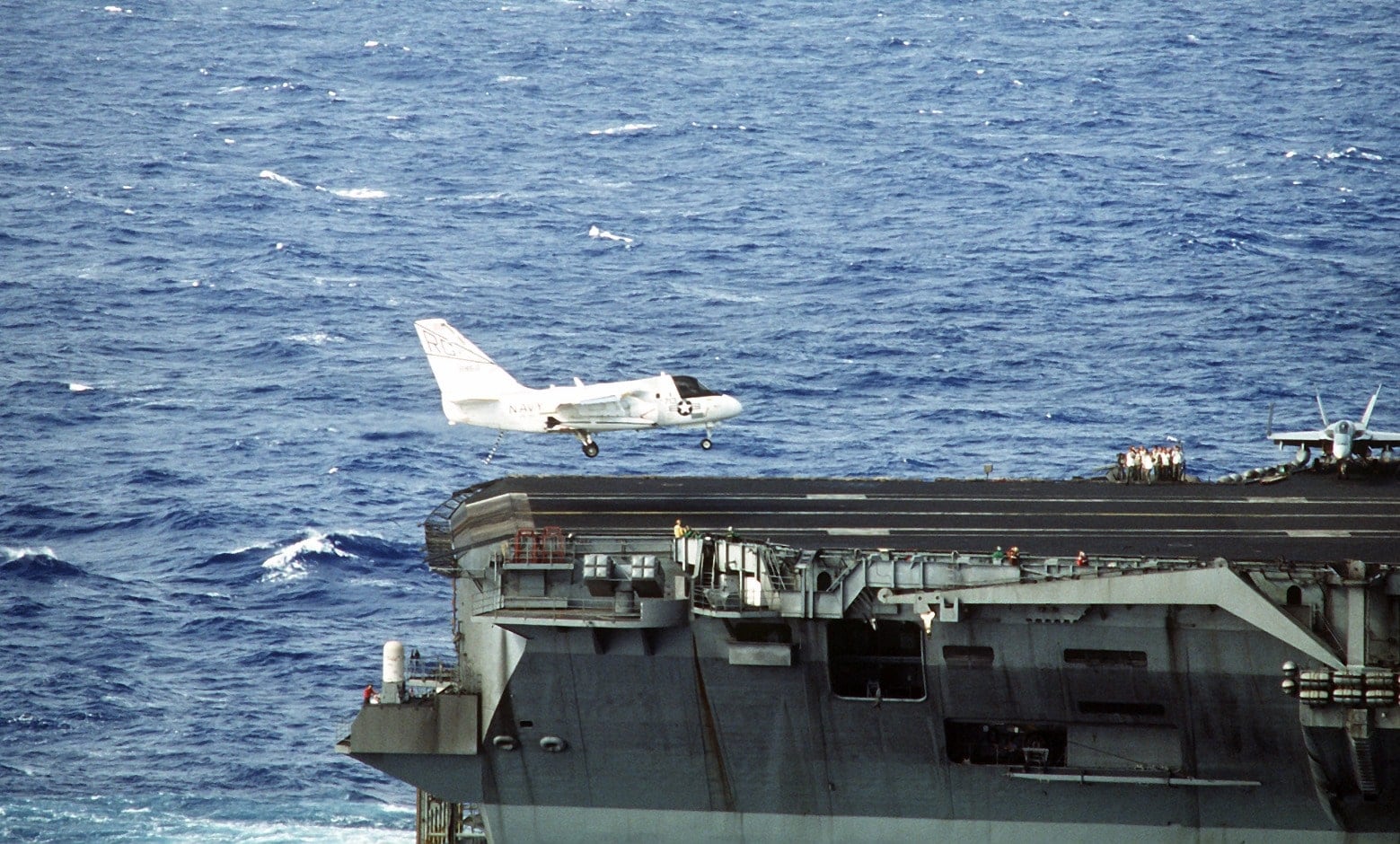
All of the US-3A CODs served with VRC-50 out of Naval Air Station (NAS) Atsugi in Japan, NAS Cubi Point in the Philippines, Andersen Air Force Base (AFB) on Guam, and their homeport of NAS San Diego when not deployed, which really wasn’t very often. They also frequented places like Diego Garcia in the middle of the Indian Ocean (or near enough, you can see it from there). These aircraft supported aircraft carriers serving in the Western Pacific (WestPac) and points further west- as far as the Gulf during Desert Shield and Desert Storm. They were of course faster than their slightly larger contemporary, the Grumman C-2A Greyhound, but could not haul outsize cargo such as jet engines like the Greyhound (still – at least for now) can.
VRC-50 US-3As on the Hawk. Image via US Navy
Stripped-Down Heavy Hauler
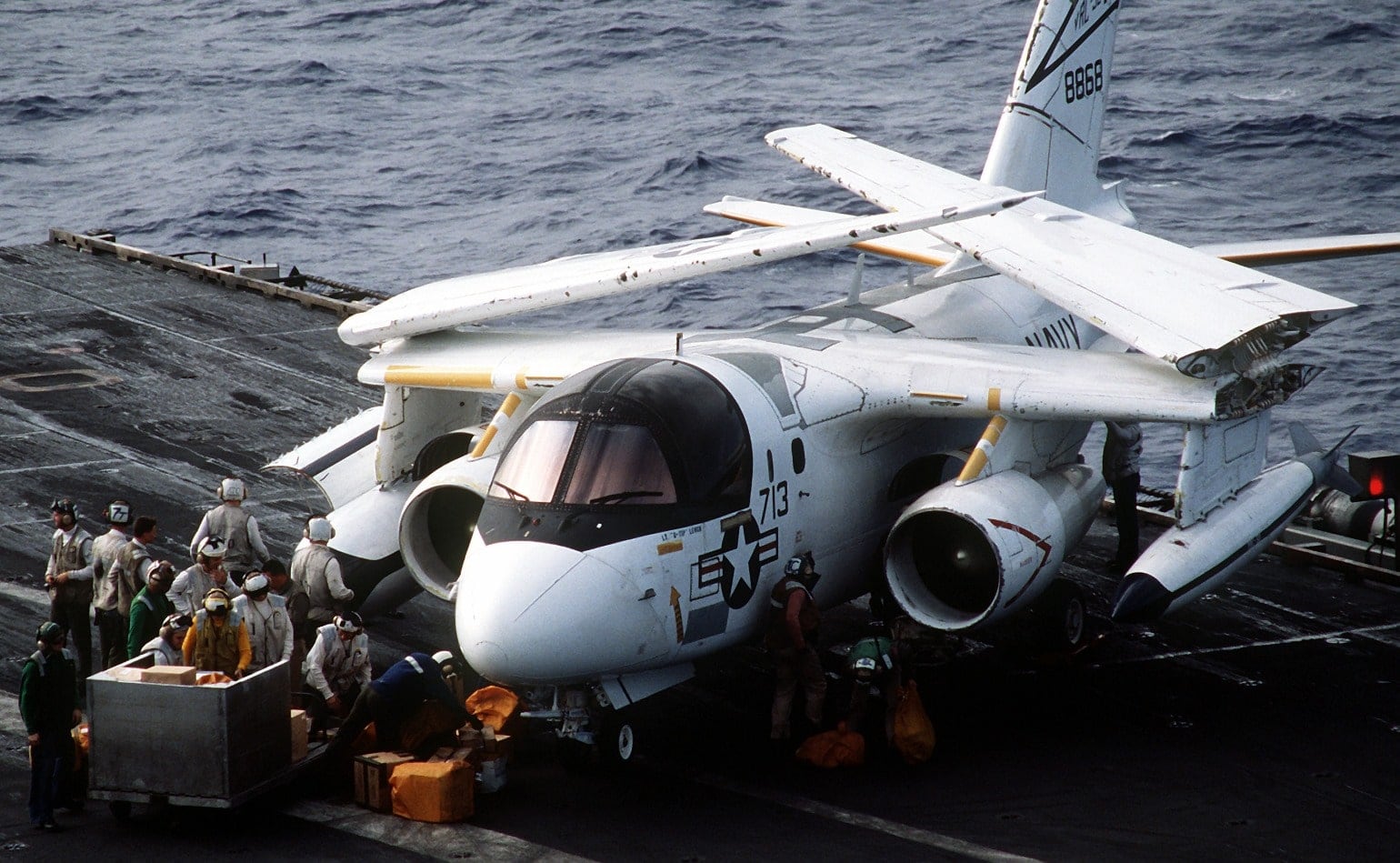
US-3As were stripped of their ASW mission crew of a tactical coordinator (TACCO) and a sensor operator (SENSO) along with their crew stations and all mission-related equipment carried in the aft fuselage. This left enough room inside the stripped out Viking for six passengers seated on removable/reconfigurable seats and/or up to 4,680 pounds of cargo. Already longer-legged than the Greyhounds, US-3As also retained their ability to refuel in midair – extending their range even more. Unique to the US-3As were the 1/3-width window added to both sides of the forward fuselage. For VIPs who absolutely positively had to get there ASAP and for equally important but size-limited cargo, these white-painted Viking CODs were the way to go.
VRC-50 US-3A. Note the extra window. Image via US Navy/National Archives
The Blivets That Outlived Their Owners
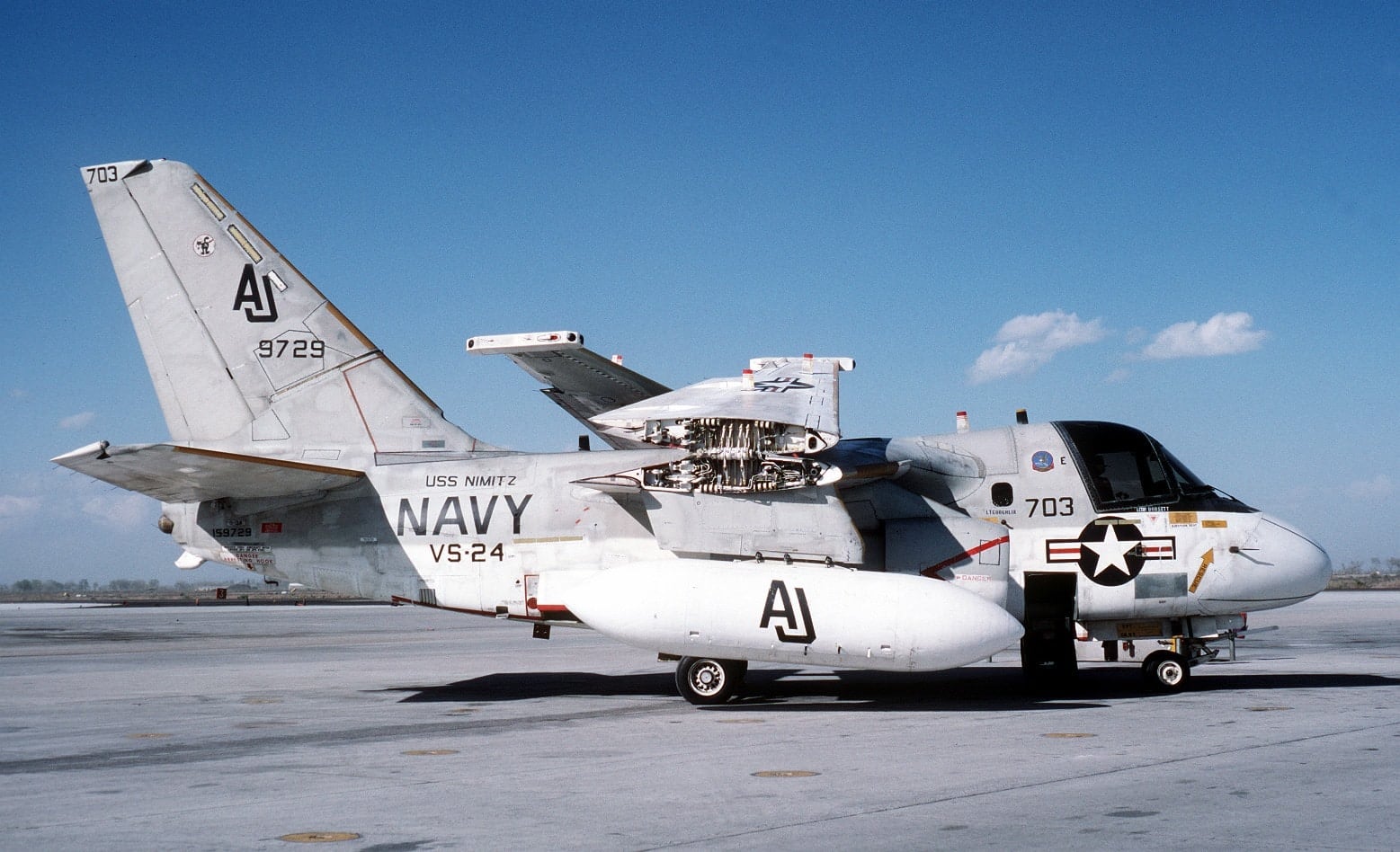
Even the weapons bays of the US-3As were modified to carry cargo. US-3As also carried specially built cargo pods hung from their underwing pylons. These “blivets” were swapped with drop tanks when range was of paramount importance. After the US-3As were retired, the blivets were sometimes seen hung on fleet S-3A and S-3B Vikings. The US-3A Bureau Numbers (BuNos) were 157994, 157995, 157996, 157997, 157998, and 158868. The pre-production aircraft all served at one time or another with Viking Fleet Replacement Squadron (RAG) VS-41 Shamrocks before conversion to US-3A and many went back to VS-41 after they were retired by VRC-50 during the mid-1990s.
VS-24 Scouts S-3A Viking with a blivet underwing. Image via US Navy
Could Have Been a Whole New Texaco
157998 served briefly with VS-21 Fighting Redtails, VS-31 Topcats, VS-37 Sawbucks, VS-28 Gamblers, and VS-33 Screwbirds configured as a US-3A between 1979 and 1981 before going to VRC-50. 157996 was also the sole KS-3A Viking tanker demonstrator. The jet was configured with a retractable centerline drogue, conformal tanks in the weapons bay, extra-large drop tanks, and plumbing mods. During the late 1970s, the lone KS-3A refueled every Navy jet type equipped with a probe before duty with VRC-50. Unfortunately, 157996 was also the only US-3A loss. On 20 January 1989, 157996 went down at sea while on approach to Subic Bay, taking the lives of the crew of two flying the jet that day.
VRC-50 US-3A aboard the Lincoln. Image via US Navy
Languishing in the Desert But Not Ignored
At the time this piece was written there were 92 Viking airframes stored at the 309th Aerospace Maintenance and Regeneration Group (AMARG) at Davis-Monthan AFB in Arizona. The recent announcement that the Navy has (finally) awarded a contract to build aerial refueling drones to extend the range of its short-legged tactical jets makes many wonder why those Vikings, many of which still have plenty of operating life left, haven’t been utilized. I know – it’s an old argument, but any discussion about Vikings is a good discussion. Because War Hoover. And Texaco. And Miss Piggy!
VRC-50 US-3A about to trap on the Lincoln. Image via US Navy
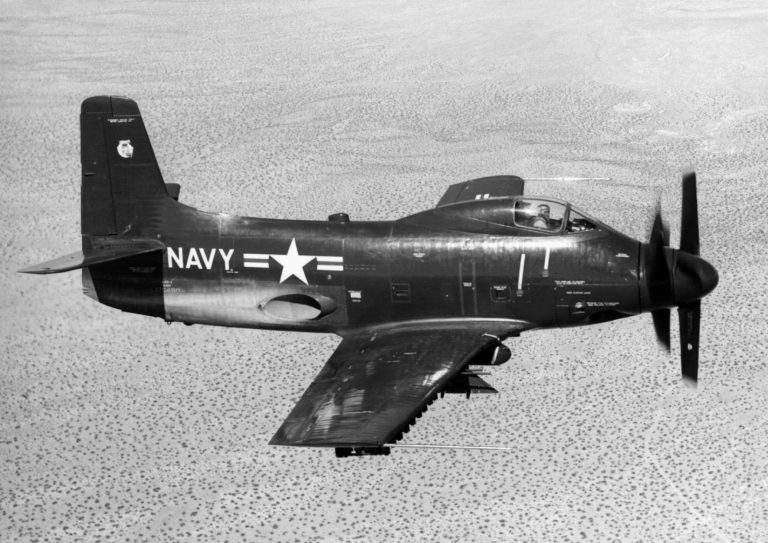
If You Want To Win At Aviation Trivia You’d Best Study the Skyshark
The Douglas A2D Skyshark is the answer to several aviation trivia questions. What aircraft came between the Douglas AD Skyraider and the A3D Skywarrior? The A2D Skyshark, of course.
What was the first gas turbine-powered prototype built for use on escort carriers? Also, the A2D Skyshark.
What Douglas product broke the streak of highly successful Navy and Marine Corps attack aircraft from the Skyraider to the Skyhawk? You guessed it—the Skyshark. But the Skyshark wasn’t a total waste…
Official US Navy Photograph
Trying to Compensate for Jet Engine Deficiencies
The A2D was developed in response to a request from the Navy Bureau of Aeronautics (BuAer) for a turbine-powered, propeller-driven attack aircraft. The request, put forth on 25 June 1945, came in part because BuAer realized that the jet engine designs of the day were far from fuel efficient enough to make operation of aircraft powered by them from aircraft carriers practical.
11 June 1947 was the next significant date in the Skyshark’s development- the Navy gave Douglas an initial order for a total of 12 A2D Skysharks. There was a plan in place to order 331 more of them…but the aircraft had to prove itself first.
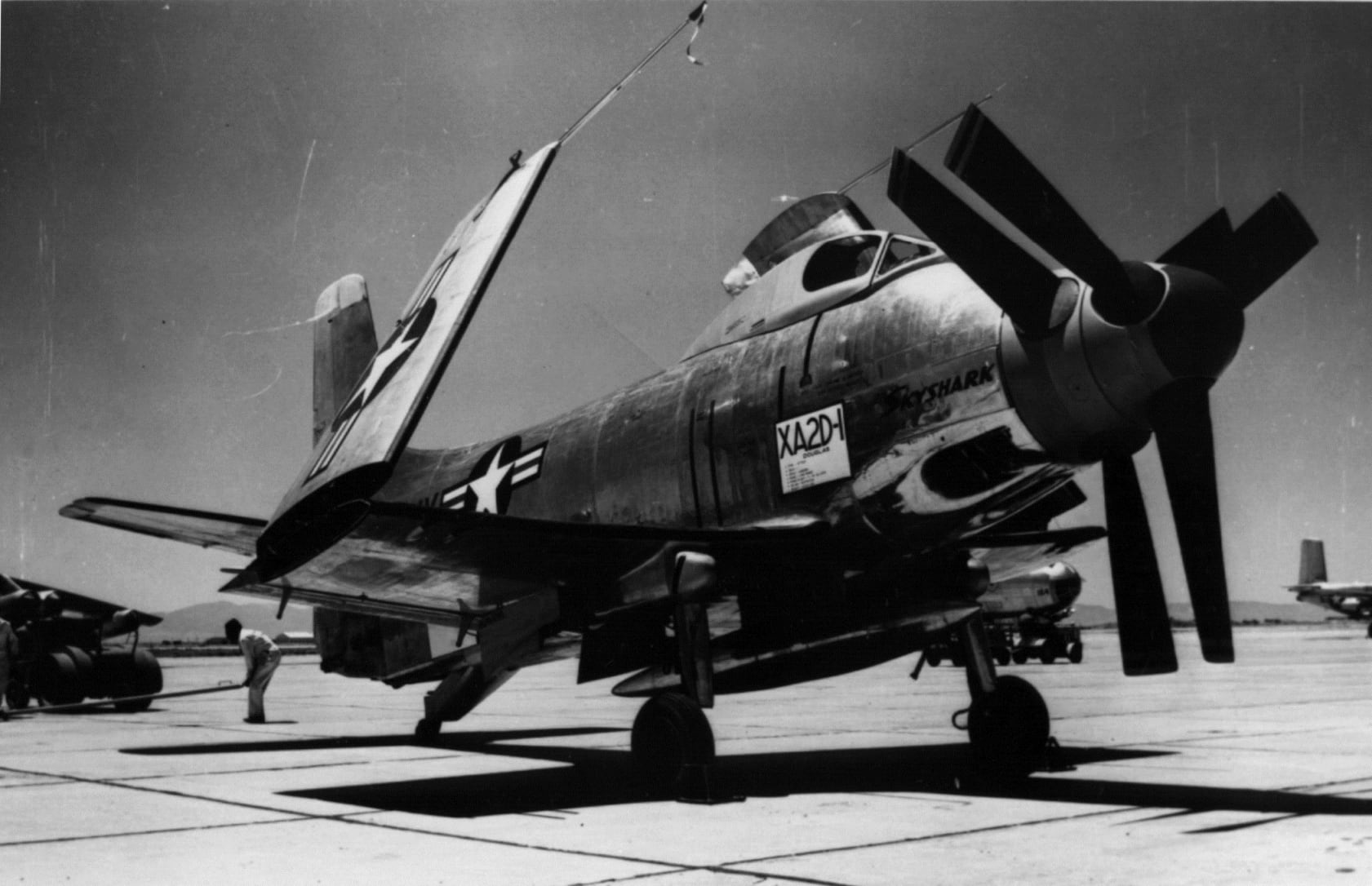
Official US Navy Photograph
Intended for Use From CVEs
Another reason for BuAer’s insistence on turboprop power was the requirement for the aircraft to be capable of operation from Casablanca-class escort carriers. The AD Skyraider was underpowered and large for deployment aboard escort carriers. The biggest practical difference between piston engines and gas turbine or turboprop power was the power-to-weight ratio. When compared to reciprocating engines like the R-3350, the turboprop engine itself ran at near full power and RPM all the time, with delivered thrust being controlled by propeller pitch.
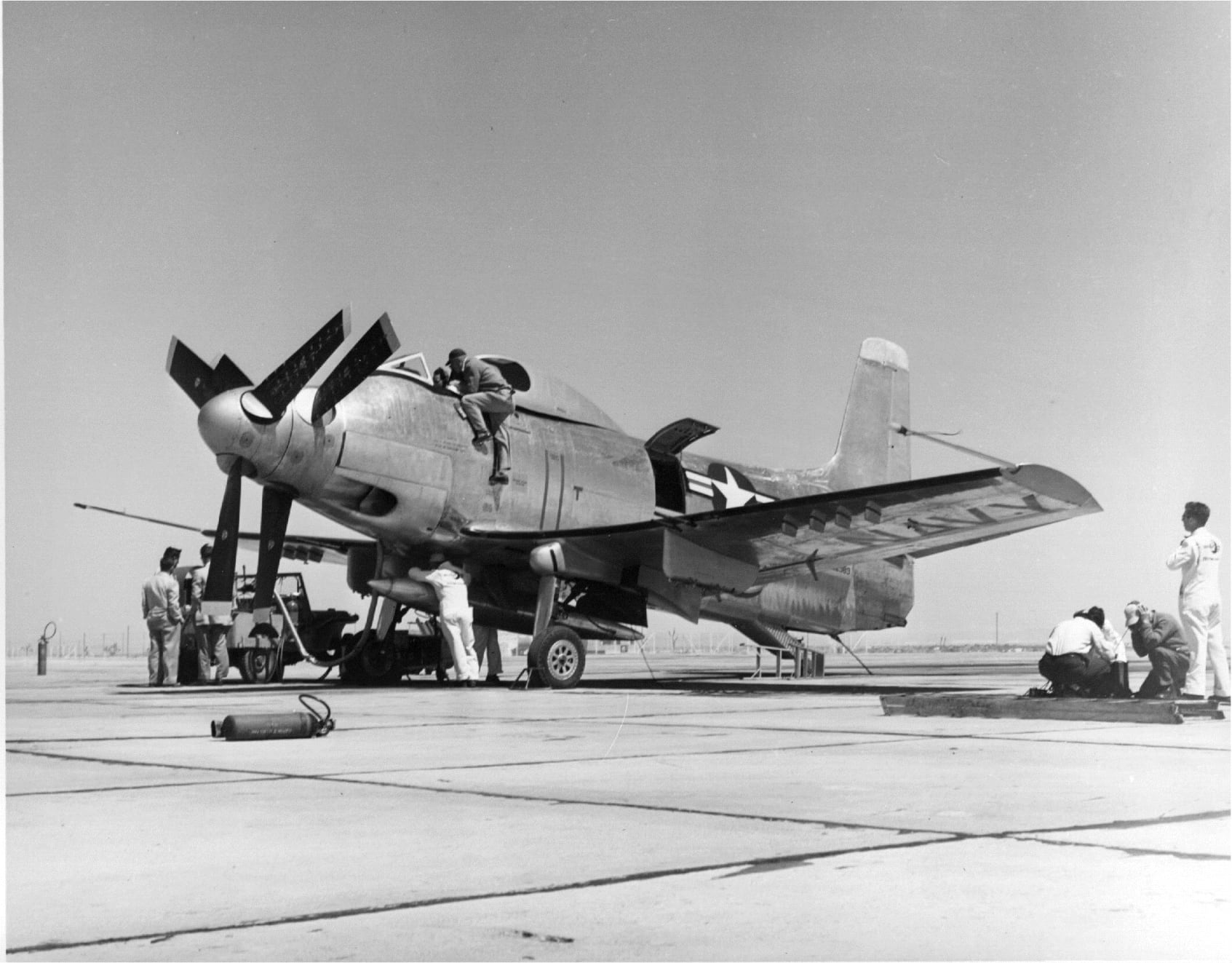
Official US Navy Photograph
Turbine Power Misapplied
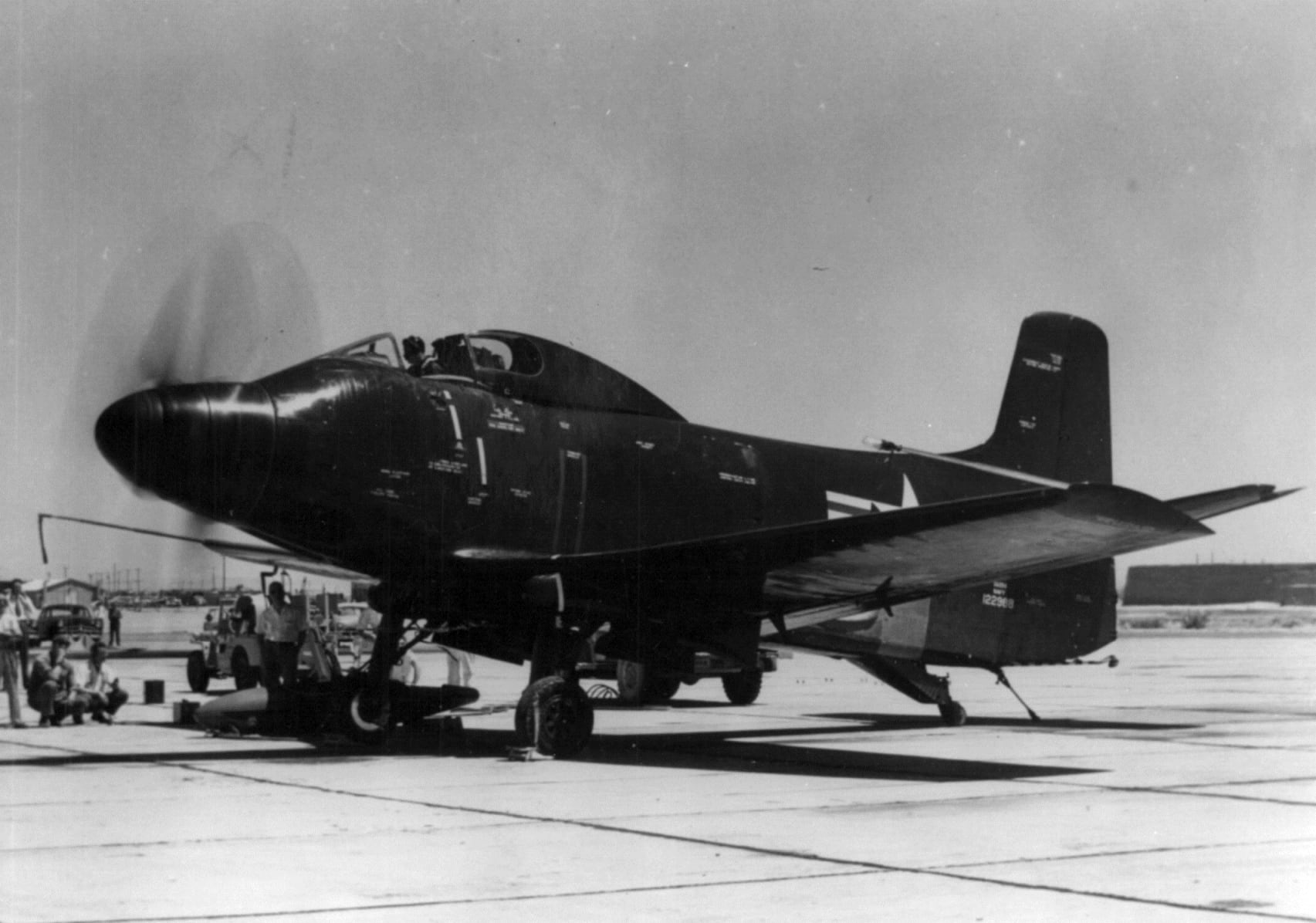
There was certainly a family resemblance to the Skyraider from which the Skyshark was developed, but the Allison XT-40-A2 engine in the A2D, which consisted of two T38 engines linked to a common gearbox, produced more than twice the horsepower of the R-3350 in the Able Dog. The dual 14-foot contra-rotating propellers were required to handle all the additional horsepower and turn it into thrust. The thickness of the A2D wing root actually decreased by five percent, and the tail surface area and height increased substantially. The A2D ultimately became an almost entirely new aircraft.
Official US Navy Photograph
The Jets Finally Come Through
It took until 26 March 1950 to finalize the development of the engine and propeller. On that date, the XA2D-1 flew for the first time at Edwards Air Force Base. But only 14 flights, totaling 20 hours, later, the aircraft crashed, killing Navy test pilot Commander Hugh Wood.
It would take sixteen months to work through the cause of the crash and engineer fixes for the remaining XA2D-1s. At that time, sixteen months was an eternity in aerospace engineering, and the jet-powered aircraft being developed then effectively shot down the Skyshark.
Official US Navy Photograph
There Was No Quit in Douglas
However, the development of the A2D continued for some time. Allison finally delivered a production-spec engine in 1953. But while testing another XA2D-1 with the production-spec engine installed, that Skyshark shed its propellers due to a gearbox failure. When the Navy started mothballing the escort carriers, there was no longer any need for the A2D. Work on the Skyshark still continued, but when Douglas rolled out a ready-to-fly turbojet-powered A4D Skyhawk in 1954, it spelled the end for the Skyshark program.
Official US Navy Photograph
For Want of a Better Turbine Powerplant
Douglas built 12 A2D Skysharks, including the two prototypes and 10 pre-production aircraft. Most were scrapped or destroyed in accidents, and only one has survived to this day. But the Skysharks flew for many months after the Navy formally terminated the A2D program in August of 1954—the same month that saw the first flight of a new turboprop airlifter, the Lockheed C-130 Hercules.
The following year, the Army was watching a demonstration of the first (of many to come) gas turbine-powered helicopter, the XH-40. You know that helicopter today as the Bell UH-1 Huey. And of course, Allison went on to produce turboprop power plants for thousands of aircraft.
FJ Furies Came in Several Flavors But All Were Mostly Sabres at Heart
North American Aviation (NAA) is justifiably famous for producing the B-25 Mitchell medium bomber and the P-51 Mustang fighter for the US Army Air Corps and later the US Air Force. However, when it came to producing carrier-based aircraft for the US Navy and Marine Corps, NAA’s significance faded in comparison to that of Douglas, Grumman, and Vought. In fact, NAA only produced one fighter for the Navy- the FJ series of jet-powered fighters.
FJ-1 Furies image via NNAM
Created from the Same DNA
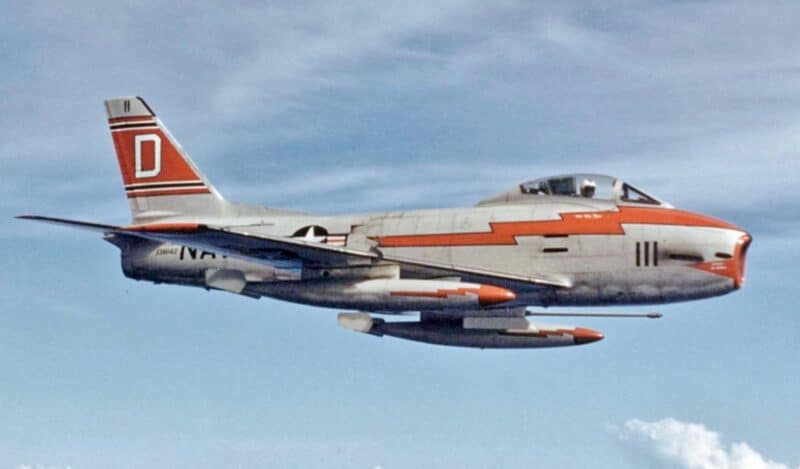
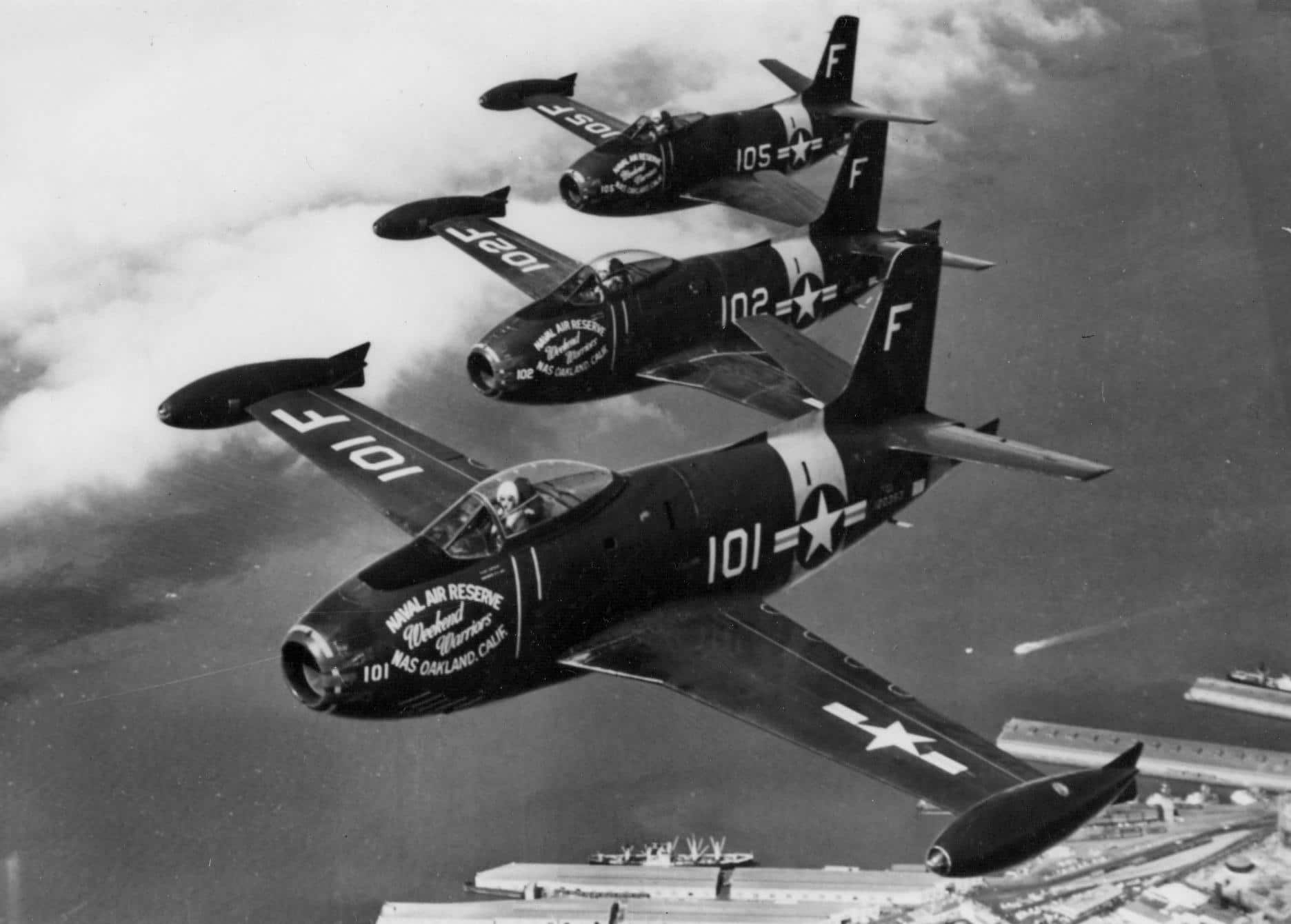
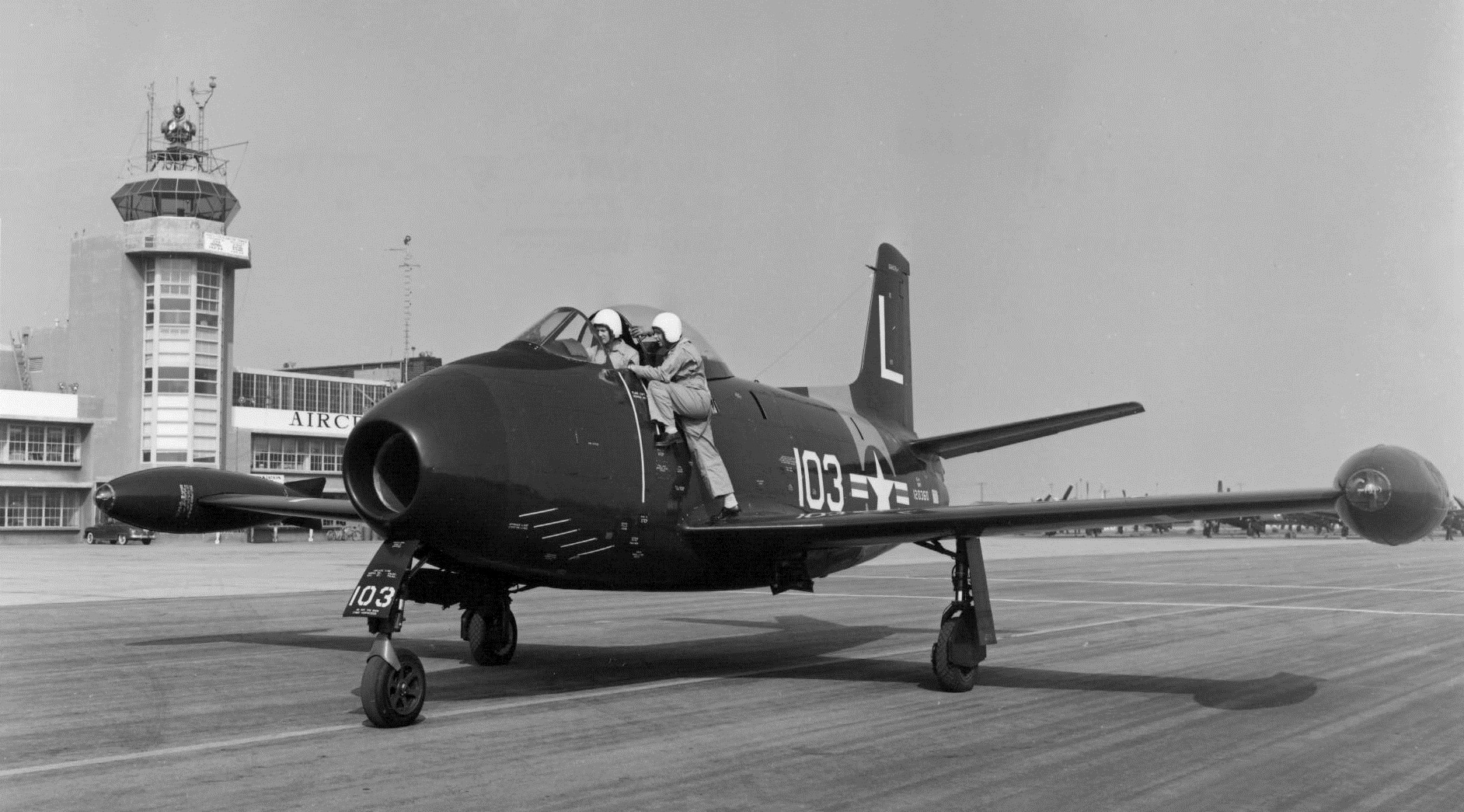
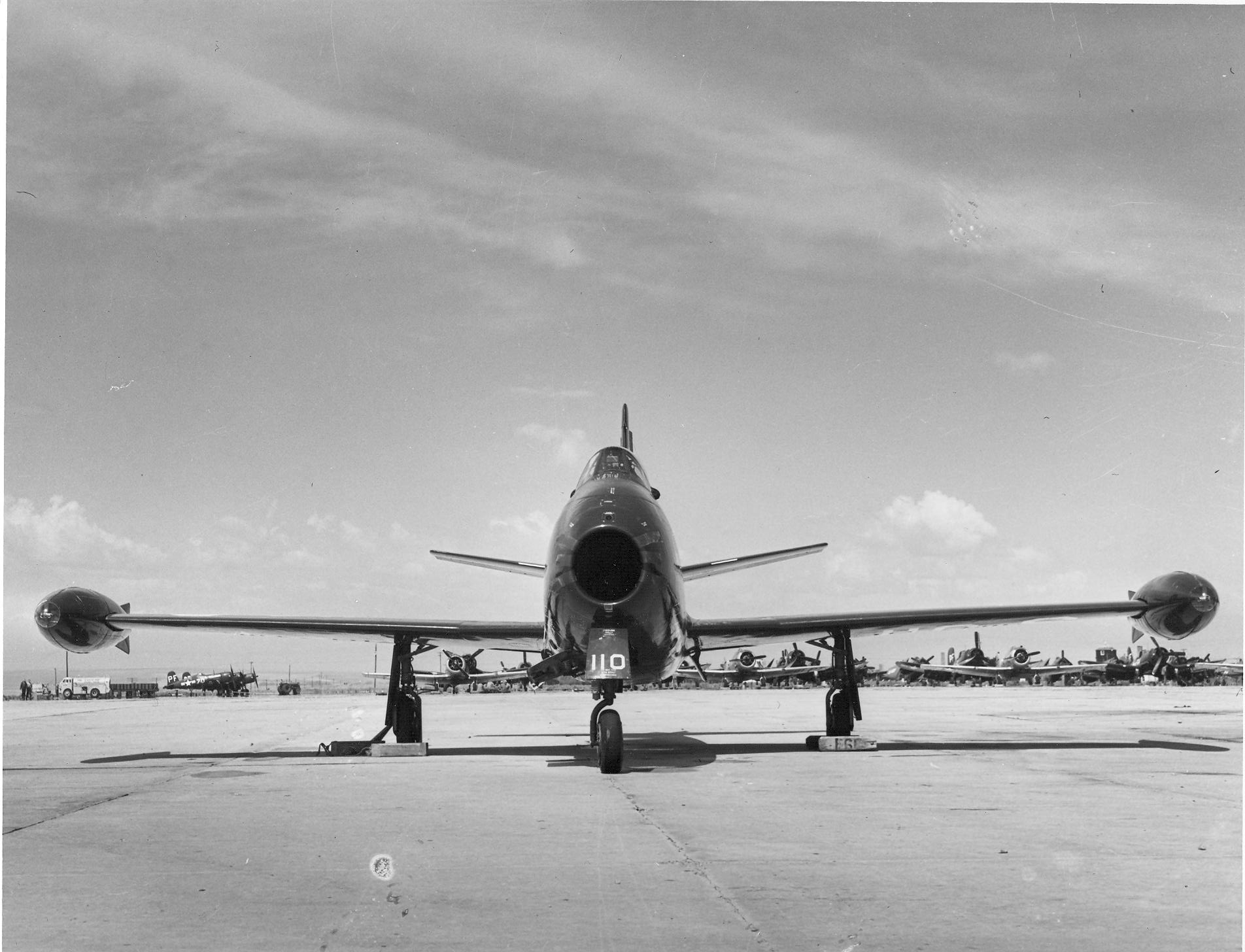
NAA leveraged several assemblies from the P-51 Mustang to produce their first jet-powered fighter, the FJ-1 Fury. The straight-winged FJ-1 incorporated tail surfaces, wings, and a canopy/cockpit derived from the Mustang. But NAA didn’t limit this approach to their first Naval fighter design. The original design for the eventually legendary F-86 Sabre was essentially the same aircraft as the FJ-1. It wasn’t until swept wings replaced the straight wings on the Sabre and the Fury that either design became the jets we associate with those names today.
FJ-1 Fury image via NNAM
Going Straight
During late 1944, the US Navy was preparing for a potential invasion of Japan, likely sometime during late 1945 or early 1946. As a result of the need to have jet fighters available to the Navy for Operations Olympic and Coronet, the Navy ordered four carrier-based jet-powered fighters: The Vought XF6U-1 Pirate, the similar products from McDonnell, the McDonnell XFD-1 Phantom, the McDonnell XF2D-1 Banshee, and the North American XFJ-1 Fury.
FJ-1 Fury image via NNAM
The First Fury
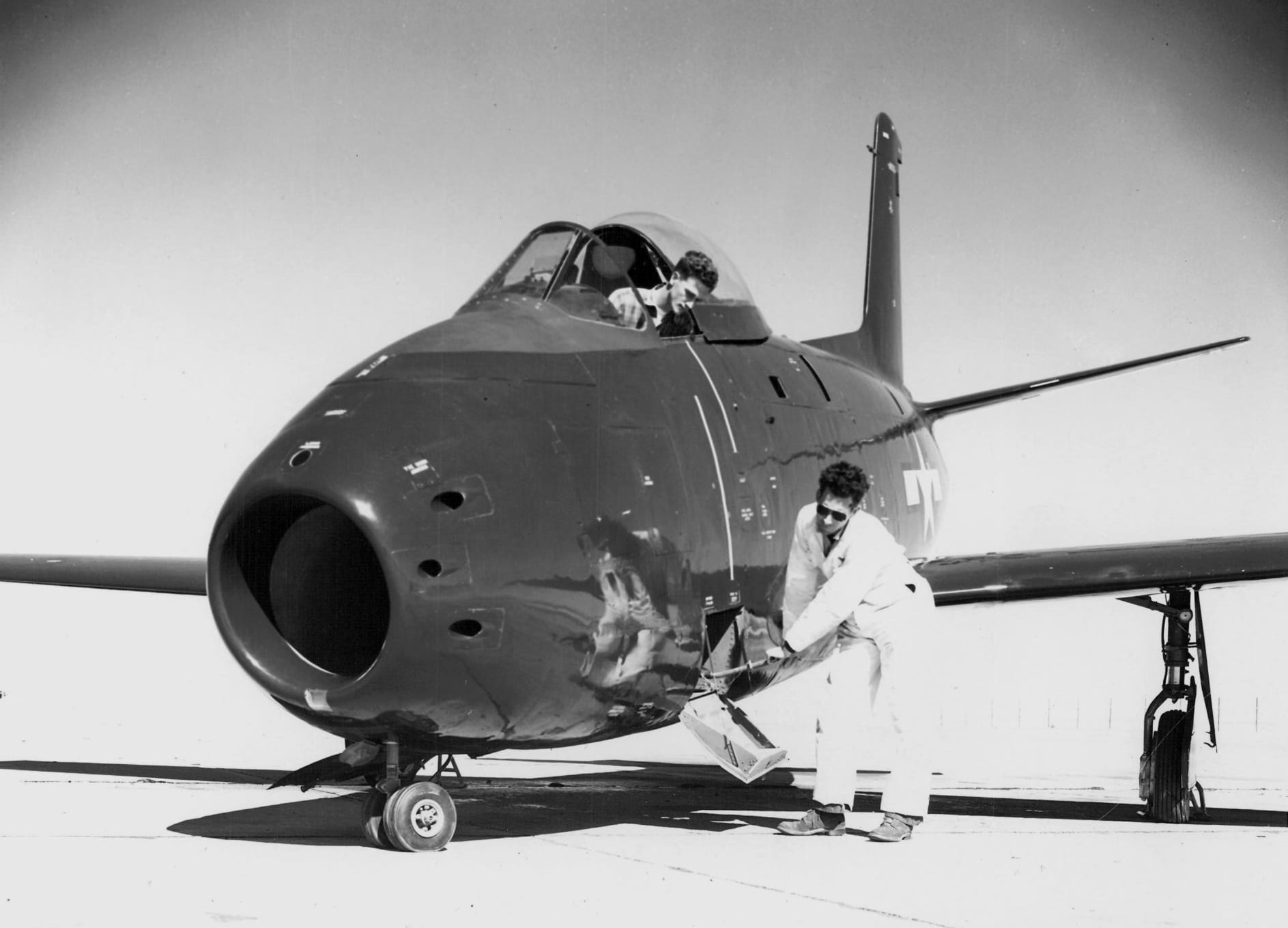
NAA plan NA-134 produced the XFJ-1, a single-engine jet-powered design with low-mounted straight wings, conventional empennage with pronounced dihedral for the horizontal surfaces, and a straight-through engine intake/exhaust configuration. The wings had retractable, slatted air brakes on the upper and lower surfaces. Powered by a General Electric J35 axial-flow turbojet producing 4,000 pounds of thrust and armed with six .50 caliber machine guns, the XFJ-1 looked good enough that the Navy ordered 100 of them in May of 1945. The jet flew for the first time on 11 September 1946.
FJ-1 Fury on the boat image via NNAM
Heading to the Boat
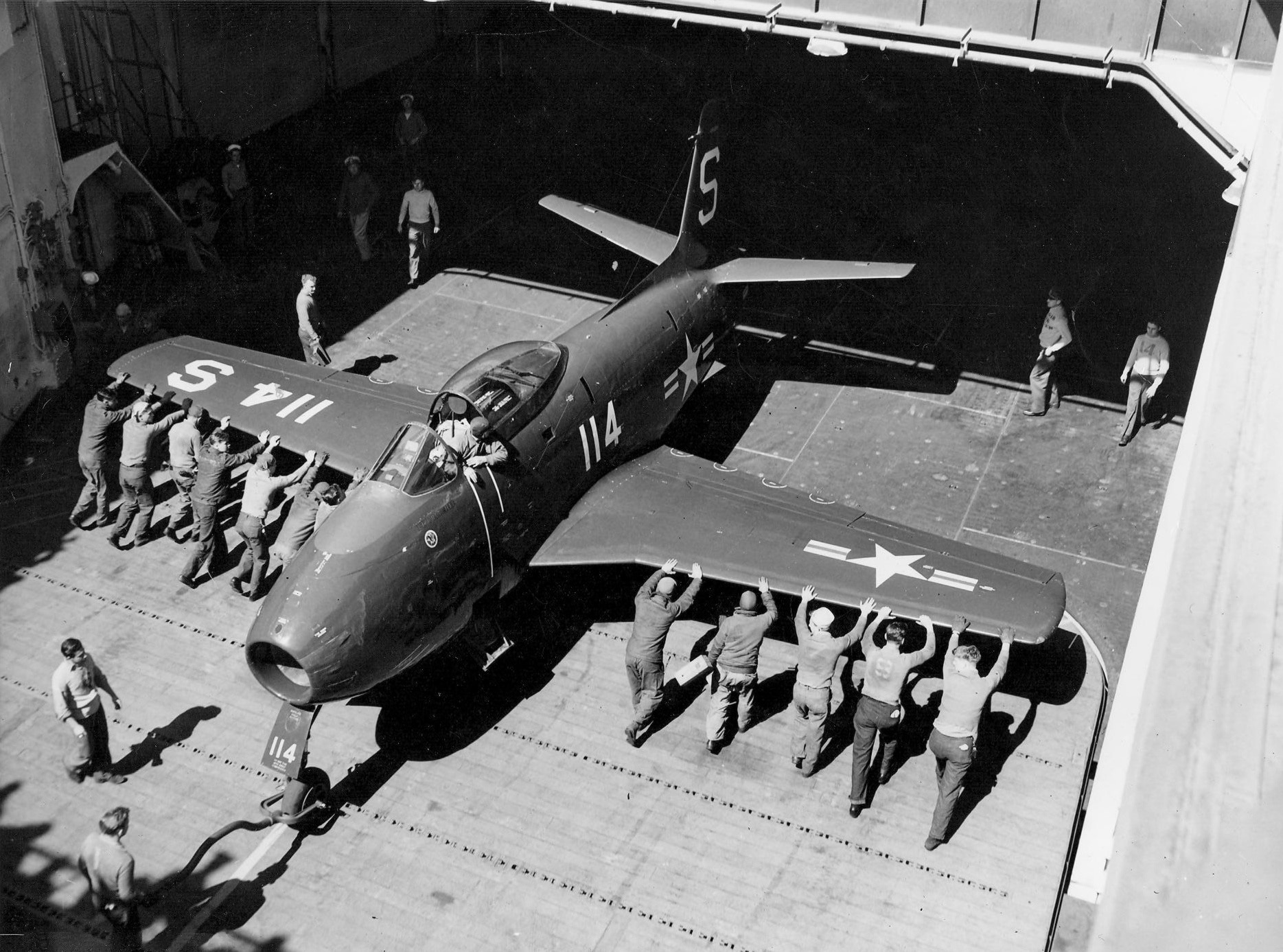
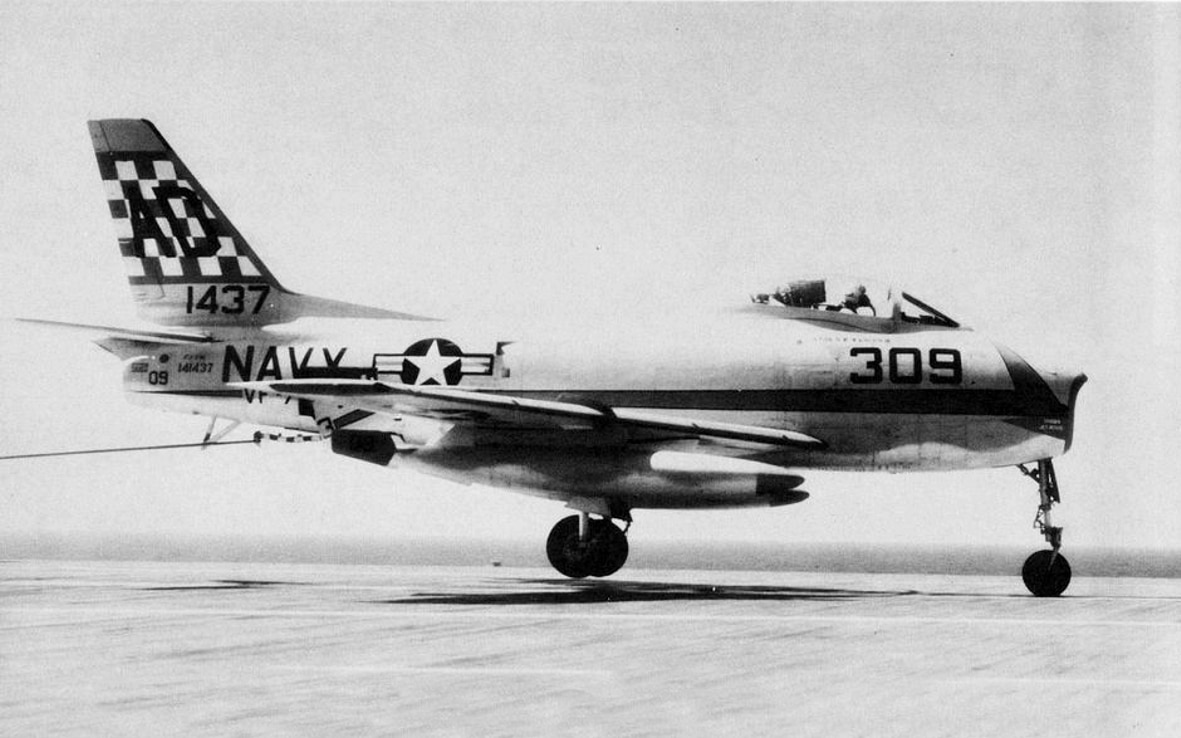
Only 30 examples of the FJ-1 ever entered service with the Navy, all of them between October 1947 and April 1948 with VF-5A. On the production aircraft, the wing-mounted air brakes were replaced with fuselage-mounted air brakes. Like the early McDonnell F2H Banshees, the FJ-1 was equipped with a small wheel co-mounted on the modified nose wheel strut, allowing the jet to kneel with its nose low (and its tail elevated) so it could be tucked under the tail of the aircraft parked in front of it aboard the boat. On 16 March 1948, VF-5A operated from the Essex-class aircraft carrier USS Boxer (CV-21) for the first time.
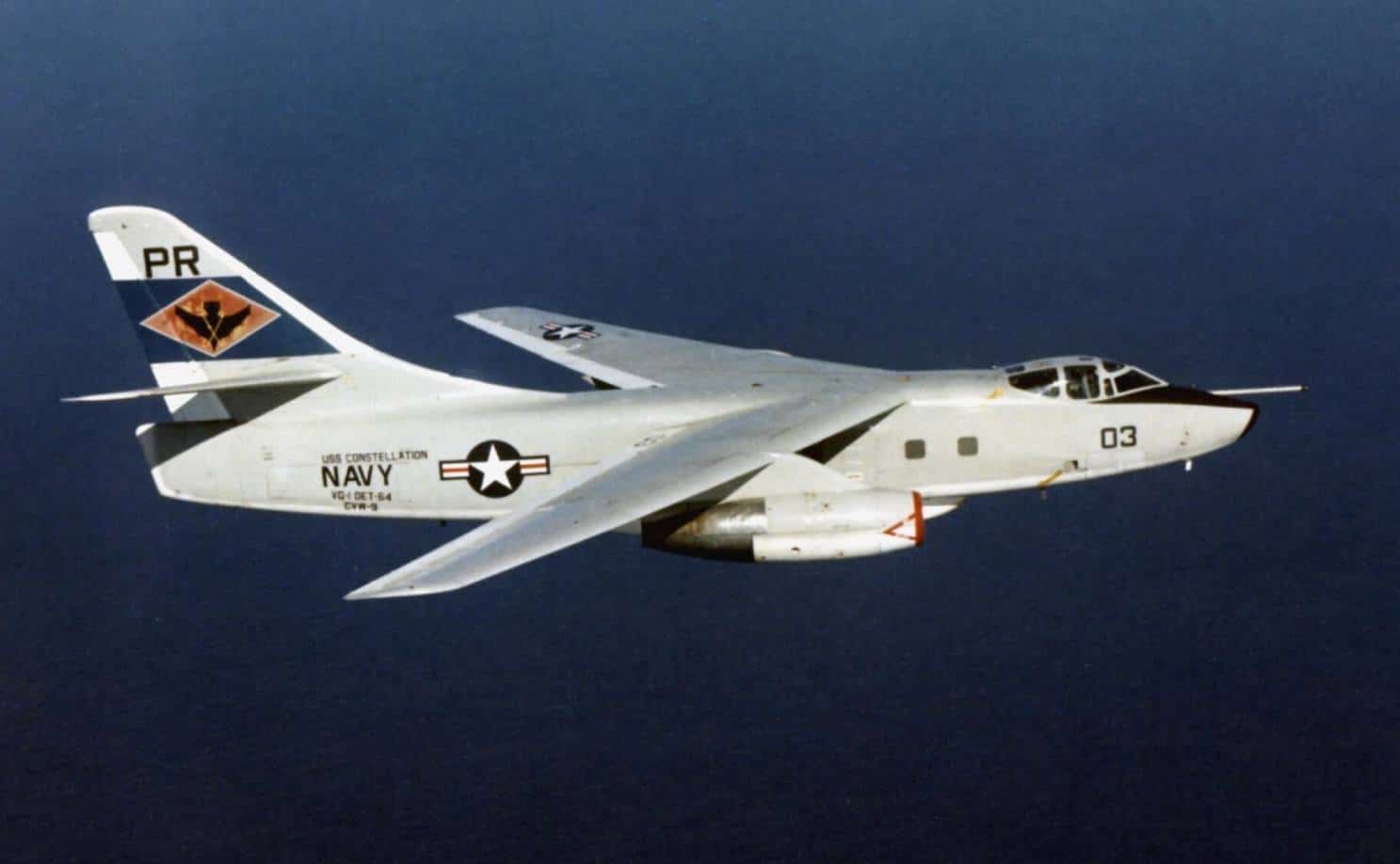
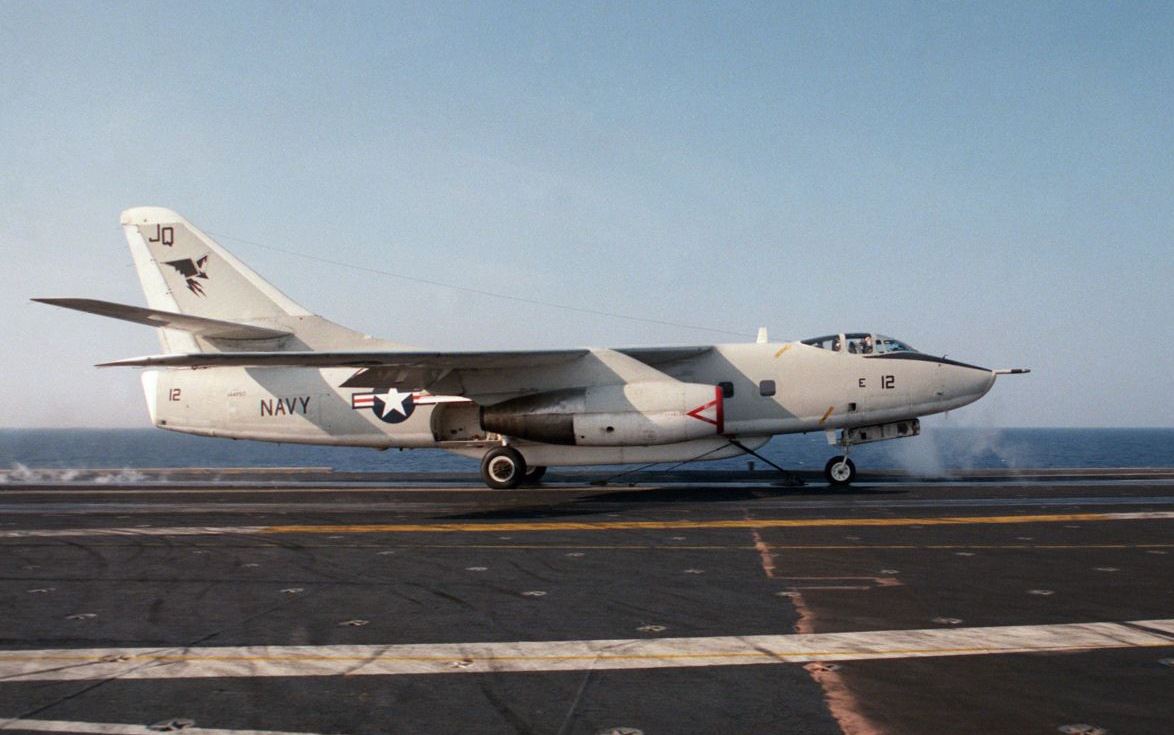
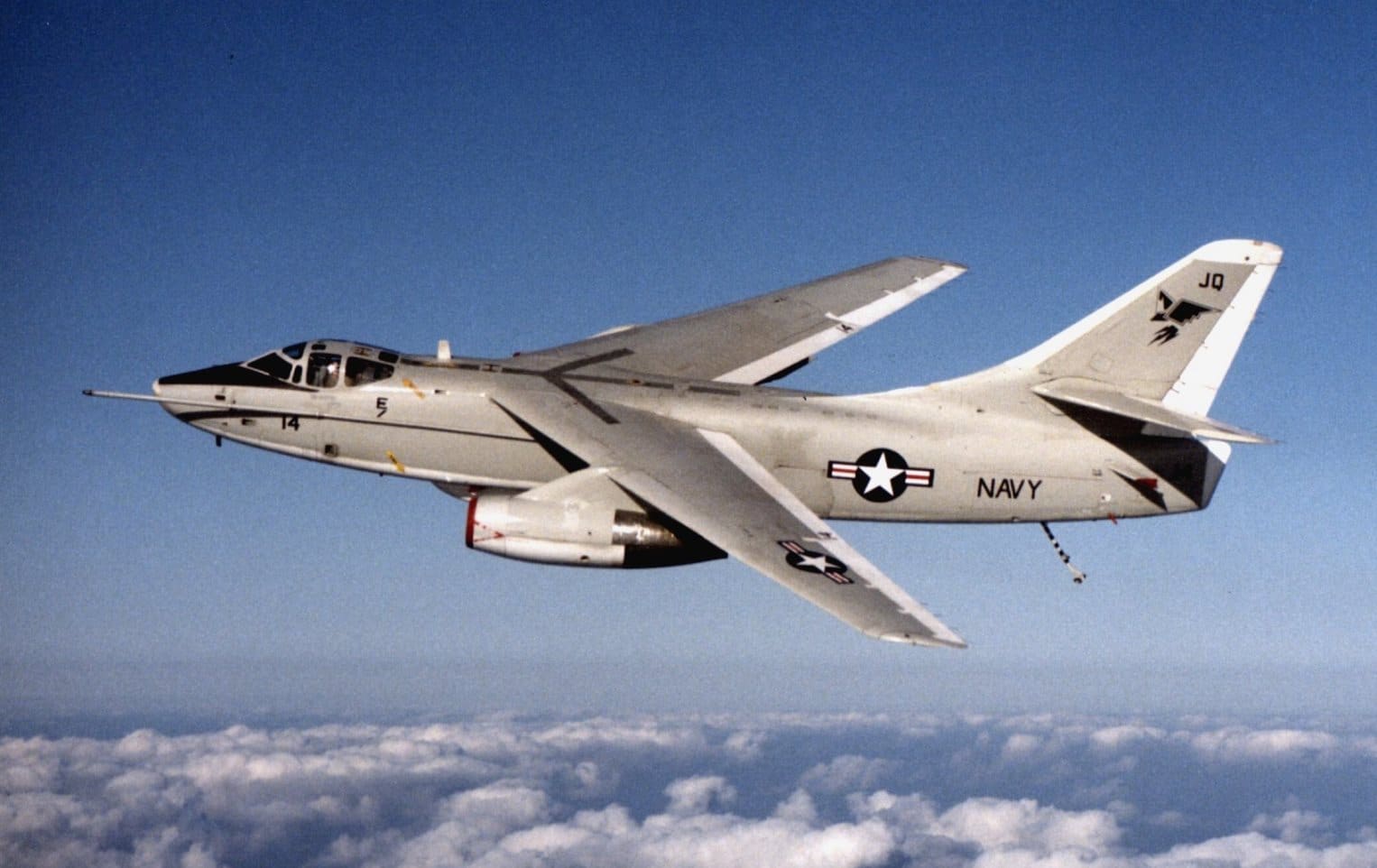
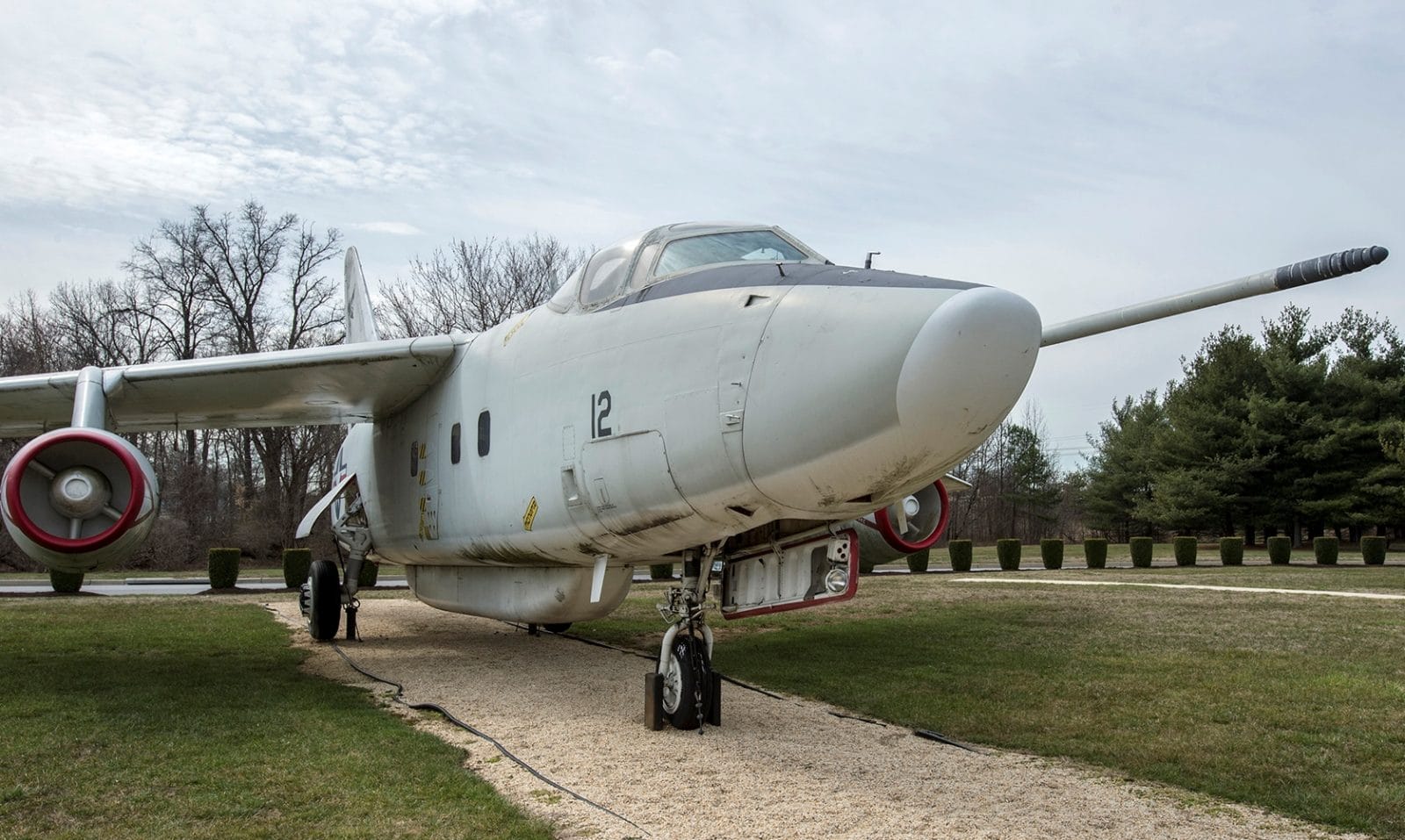
The Douglas A3D Skywarrior was the largest and heaviest aircraft to regularly operate from US Navy aircraft carriers. They were not restricted to the Forrestal-class “supercarriers” either. They operated from the Essex-class carriers fitted with angled decks and steam catapults, as well as the Midway-class carriers. Although fitted with folding wings and a folding vertical stabilizer, the Whale was still huge on a carrier deck.
VQ-2 EA-3B on deck. Image via US Navy
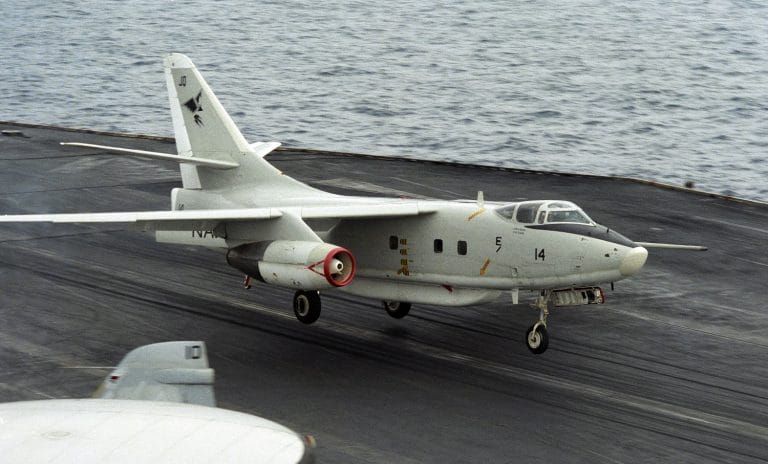
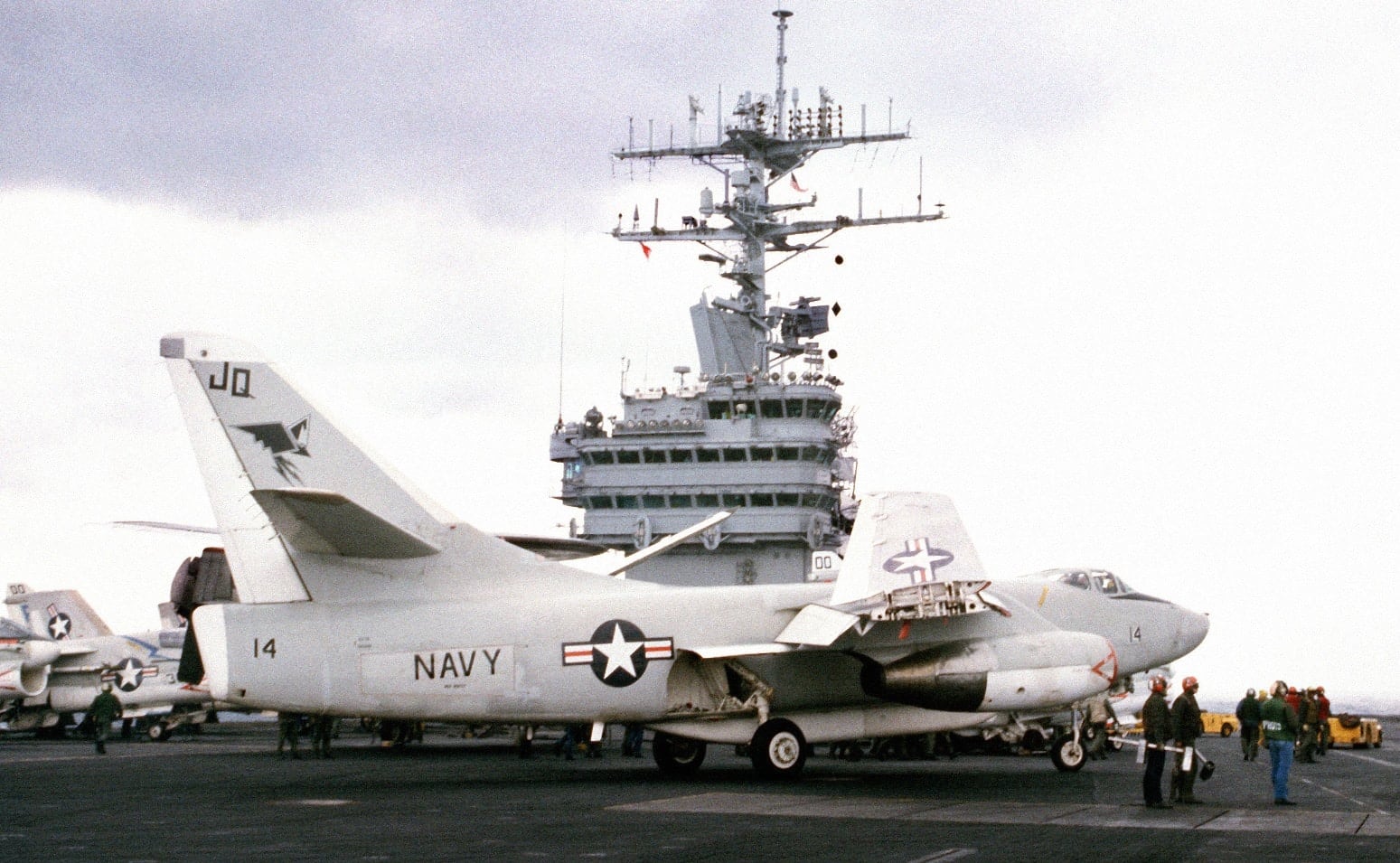
Skywarriors were modified to perform a number of roles in the fleet. While some early A3D-1s (later A-3As) were converted for specialist roles, the A3D-2 (later A-3B) was the basis for the majority of fleet Whales. A3D-2Ps (later RA-3Bs) were equipped with a photo reconnaissance package. A3D-2Qs (later EA-3Bs) were modified for electronic warfare/electronic intelligence (ELINT) work. KA-3Bs were tankers. EKA-3Bs were set up for both electronic warfare and tanking. Other Whale variants were built, but they seldom, if ever, saw a carrier deck.
VQ-1 EA-3B. Image via US Navy
The EA-3B was the longest-serving carrier-based variant. Fleet Air Reconnaissance Squadron ONE (VQ-1) World Watchers and VQ-2 Batmen/Sandemen embarked detachments of EA-3Bs aboard carriers for decades. These two squadrons lost relatively few Whales while operating from carrier decks, but on 26 February 1970 VQ-2 lost EA-3B BuNo 144851 when a cold catapult shot put the jet into the water approximately 300 yards in front of the Midway-class carrier USS Franklin D. Roosevelt (CVA-42)- which promptly ran the inverted but partially intact aircraft over.
Lost that day were pilot Lieutenant Commander Roger B. Thrasher, navigator Lieutenant Thomas L. Walls, and Aviation Ordnanceman First Class Floyd R. Bond. Incredibly, even though he was run over by the ship and nearly chewed up in her screws, Plane Captain Aviation Structural Mechanic 2nd Class Sam Rozier survived!
VQ-2 EA-3B. Image via US Navy
On the night of 25 January 1987, EA-3B BuNo 144850 “Ranger 12” operating from the carrier USS Nimitz (CVN-68) in the eastern Med made five passes at the ship before attempting to tank from a Vought A-7 Corsair IIcarrying a buddy store. Ranger 12 damaged the buddy store during the attempt, making a bingo departure to Crete impossible.
With no other tanker available in time, the carrier rigged the barricade and prepared to take the Whale aboard. However, the jet’s approach was slightly high, and the barricade was rigged too low, resulting in only the nose gear catching the top of the barricade. The jet was not arrested, but instead careened down the deck, breaking in half before going over the side.
VQ-2 EA-3B. Image via US Navy
But there was a glimmer of hope. The forward section of the Skywarrior remained afloat for nearly 13 minutes, during most of which a search and rescue (SAR) helo was overhead. But the crew did not make it out of the stricken jet.
Though the Nimitz searched for three days, no trace of the crew was ever found. Lost aboard Ranger 12 that night were pilot Lieutenant Alan A. Levine, navigator Lieutenant Commander Ronald R. Callander, intelligence evaluator Lieutenant Stephen H. Batchelder, junior evaluator Lieutenant James D. Richards, Aviation Electronics Technician Second Class Richard A. Herzing, and Cryptologic Technicians Third Class Patrick R. Price and Craig H. Rudolf. Herzing was aboard the jet that night in place of another AT so he could earn his coveted 100 Traps patch.
National Vigilance Park EA-3B display. Image via NSA
News of the loss of Ranger 12 was not widely released, at least in part due to the still-secret nature of the ill-fated Whale’s mission. However, the loss of Ranger 12 added another seven men to the list of 210 others who had lost their lives due to shootdowns or accidents while serving aboard US Navy airborne electronic reconnaissance/signals intelligence aircraft. Of course, other Skywarriors were also lost. The Navy retired the EA-3B in October 1991 after the last hurrah for the Whale– Desert Shield and Desert Storm.
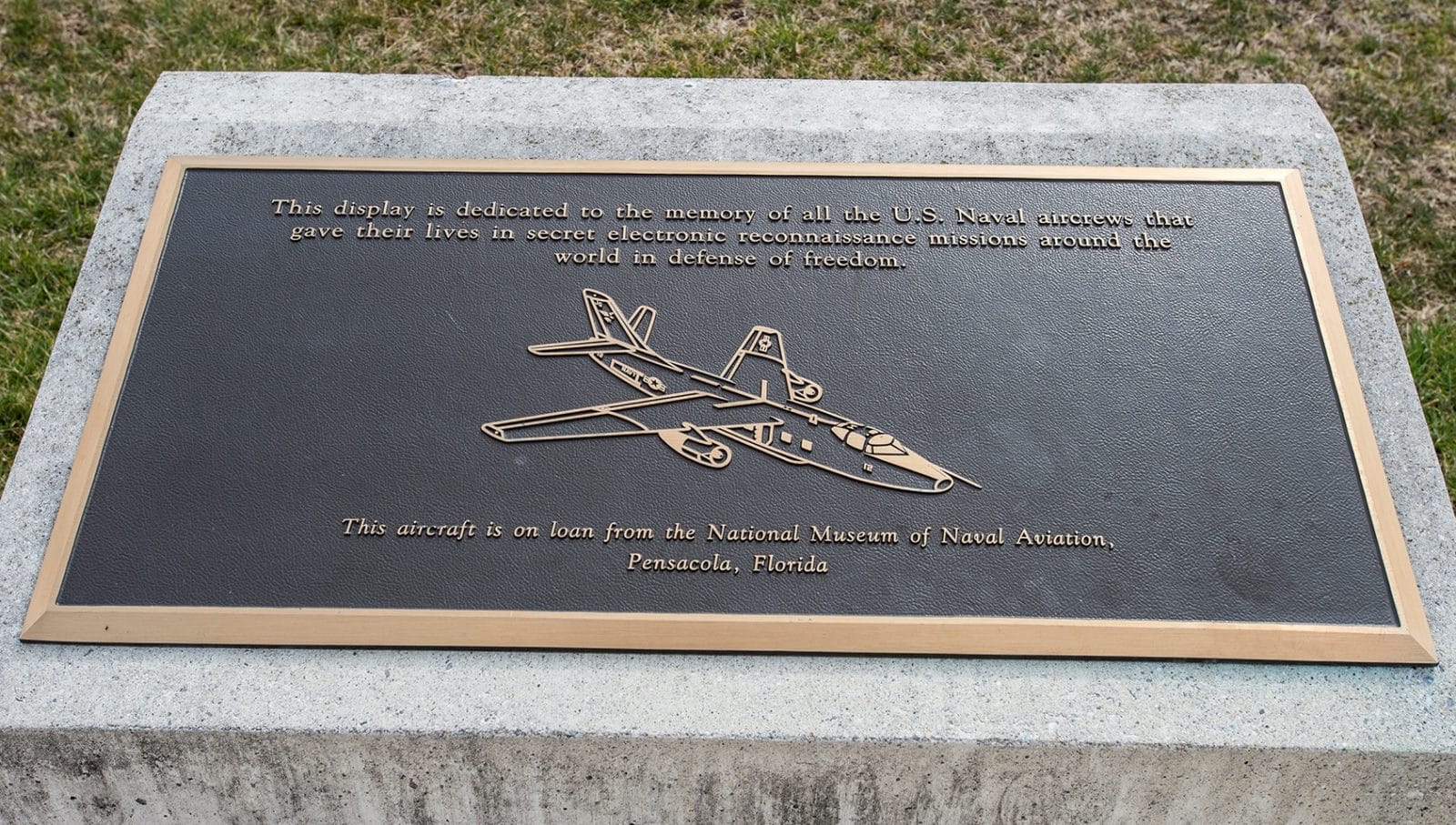
Today, an EA-3B Skywarrior is displayed in the National Security Agency’s National Vigilance Park and painted to represent Ranger 12 while serving aboard the Nimitz. A second EA-3B is displayed aboard the museum ship USS Yorktown at Patriots Point Naval and Maritime Museum in Charleston, South Carolina.
National Vigilance Park EA-3B dedication plaque. Image via NSA
With Performance To Burn and Armed Like a Battleship, The F7F was Limited to Land-Based Use for Most of its Service
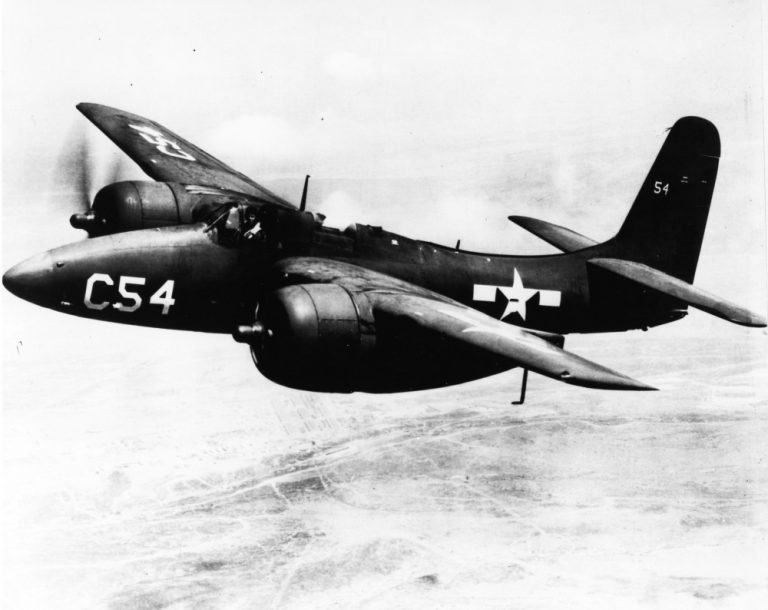
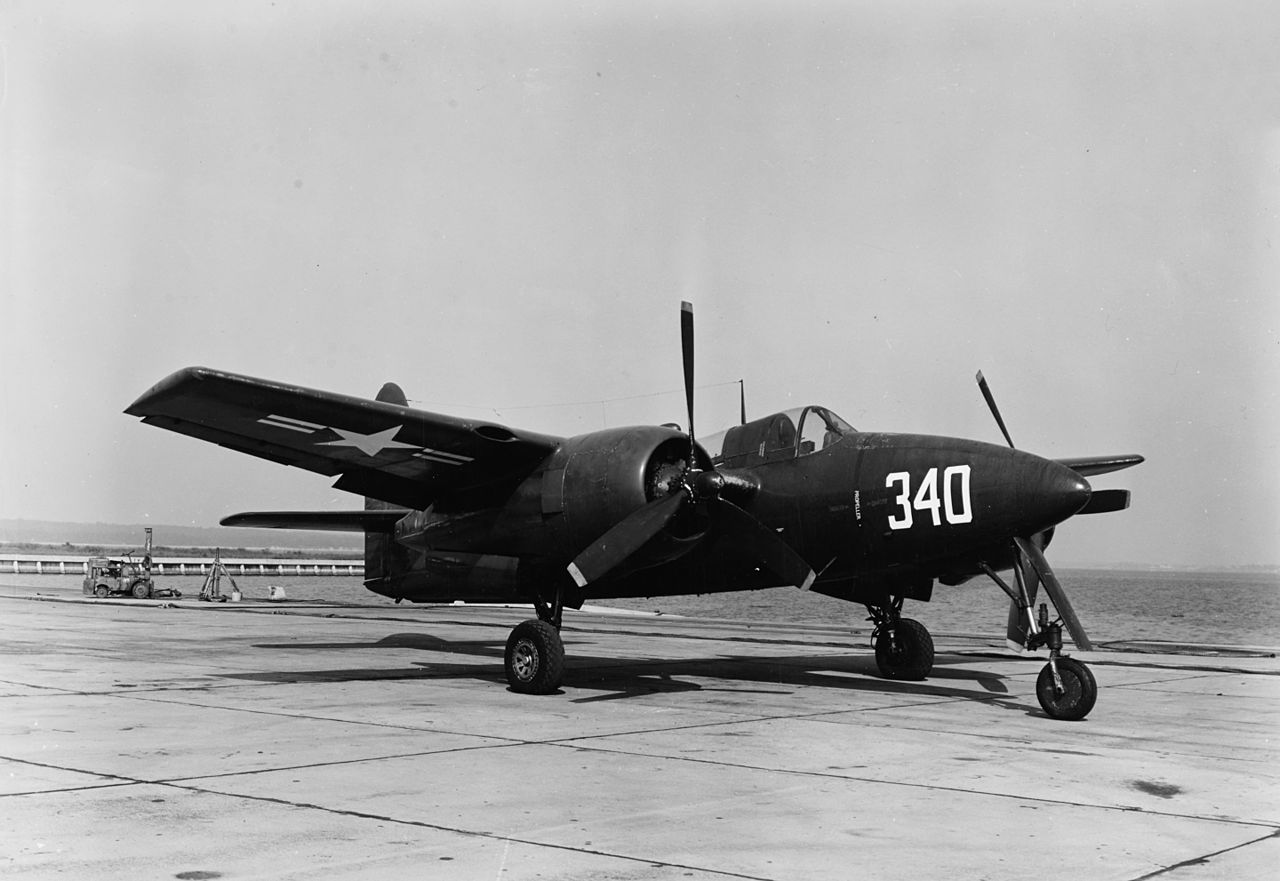
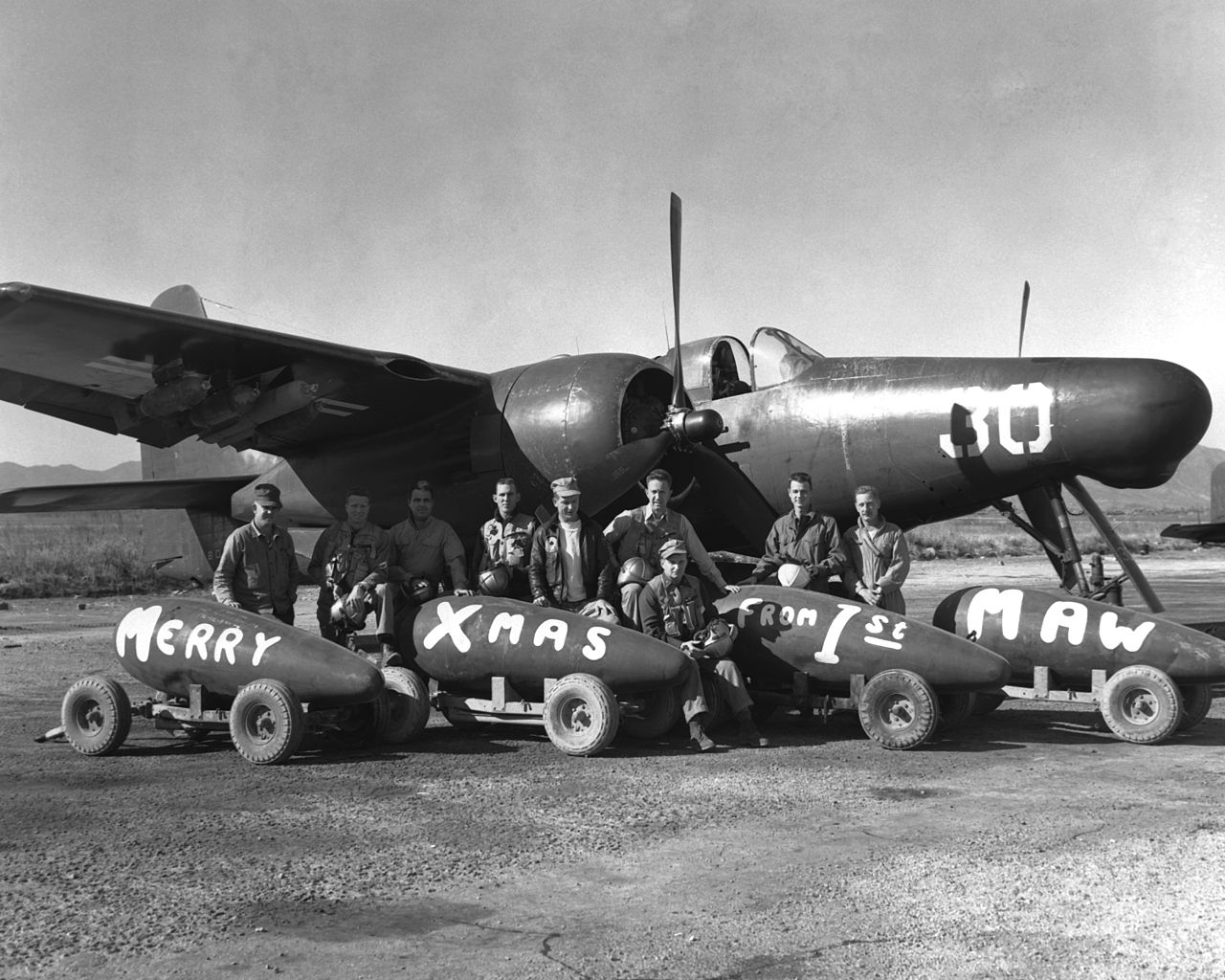
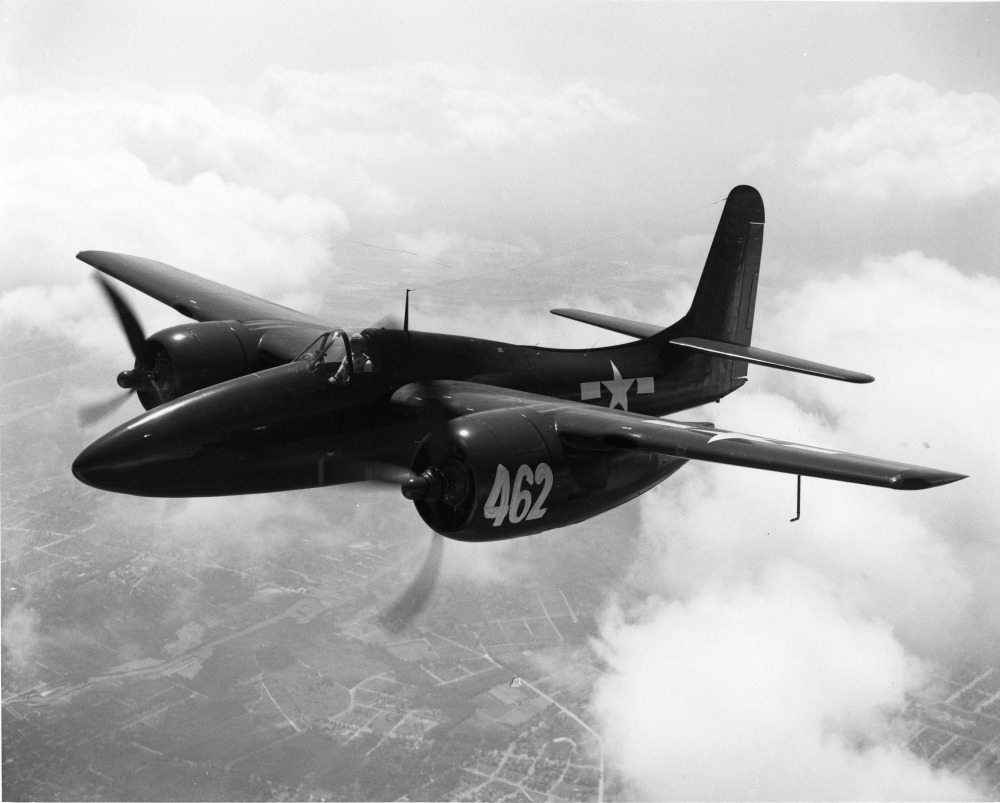
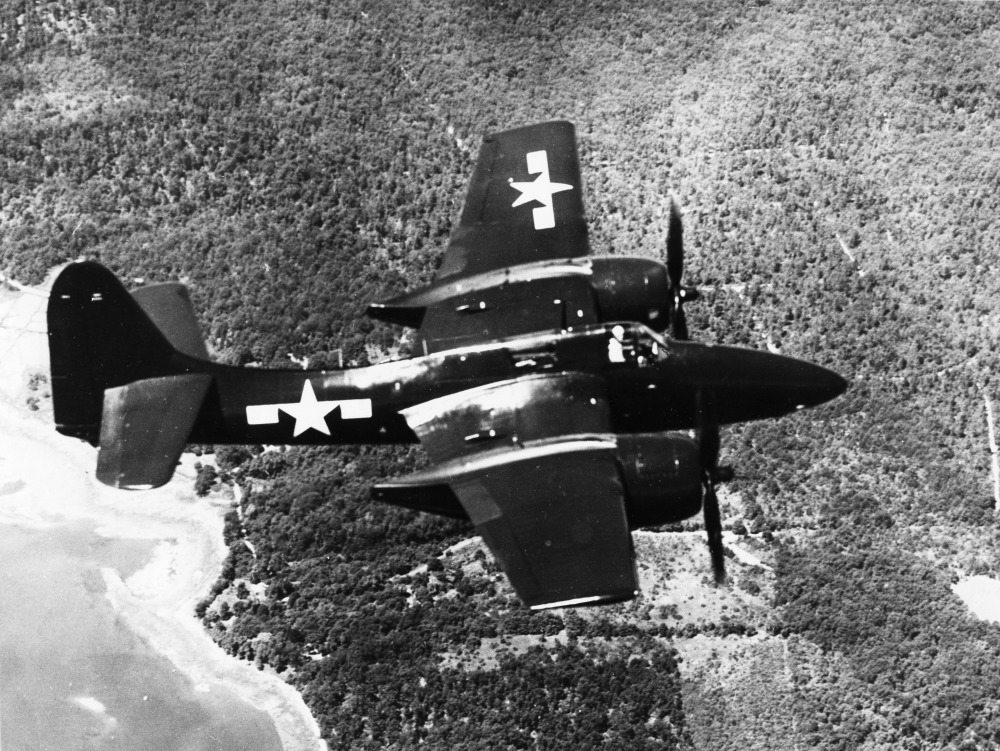
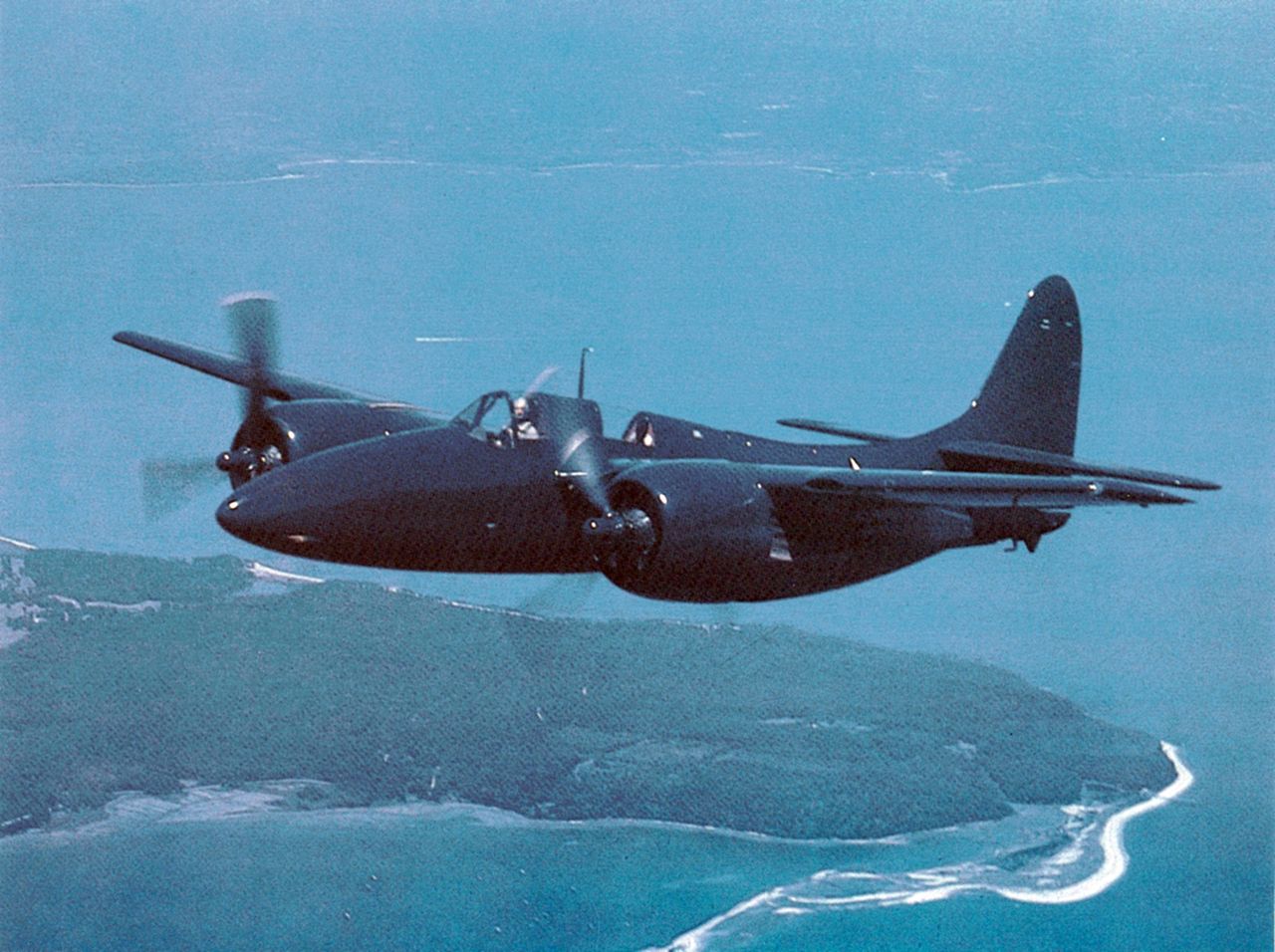
World War II and postwar Grumman fighter aircraft were always named for cats. Wildcat, Hellcat, Bearcat, Panther, Cougar, Tiger, Tomcat…you get the idea. One of the lesser known but perhaps the most impressive of the Grumman cats was the F7F Tigercat. Developed during World War II as an escort or convoy fighter, the Tigercat was produced in small numbers but was one of the most aesthetically pleasing designs ever to come off the drafting tables at Grumman.
Official US Navy Photograph
The First Tomcat
Grumman was granted a contract for the XF7F-1 Tomcat (yes…Tomcat) in June of 1941. The aircraft was designed to, according to Grumman, “outperform and outgun all existing fighter aircraft.” They drew a lithe and graceful looking twin piston-engined airframe that carried four wing root-mounted 20 millimeter cannons and four fuselage-mounted .50 caliber machine guns. They also designed in wing and fuselage hard points in order to mount rockets and bombs- even torpedoes.
And those twin engines were none other than the ultra-reliable and commonly available Pratt & Whitney R-2800 Double Wasp 2,100-horsepower radials turning three-bladed propellers. The Tigercat was the first carrier-based aircraft equipped with tricycle landing gear.
Official US Navy Photograph
“The Best Damned Fighter”
Navy ace Test pilot Captain Fred Trapnell, who flew the F7F for the first time on 2 November 1943, remarked that it was the “best damned fighter” he had ever flown. The 4,200 available horsepower was said to provide excellent acceleration and short takeoff rolls on standard days. Even today, the performance of the Tigercat makes it a coveted warbird, competitive racer, and thrilling airshow performer. However, the twin engines, heavy armament, and inherent flexibility of the design also brought drawbacks.
Official US Navy Photograph
The Drawbacks of a Sweet Design
Heavy weight, high approach and landing speeds…not conducive to carrier operations- even from the envisioned Midway-class super carriers. Although the Tigercat was 71 miles per hour faster at sea level than the gold standard of the day —the Grumman F6F Hellcat —it would be a challenge to operate them from flat-tops. Fairly early during development, the name of the aircraft was changed to Tigercat.
The Tomcat moniker would be used for the Grumman F-14- the next twin-engine Grumman Naval fighter aircraft. Deliveries of F7Fs began in mid-1944, but the aircraft did not see combat before the end of the war.
Official US Marine Corps Photograph
Not the Best Damned Fighter for Carriers
Although the F7F was heavy and fast on approach, it failed carrier suitability testing due to poor single-engine directional stability and tailhook design issues.
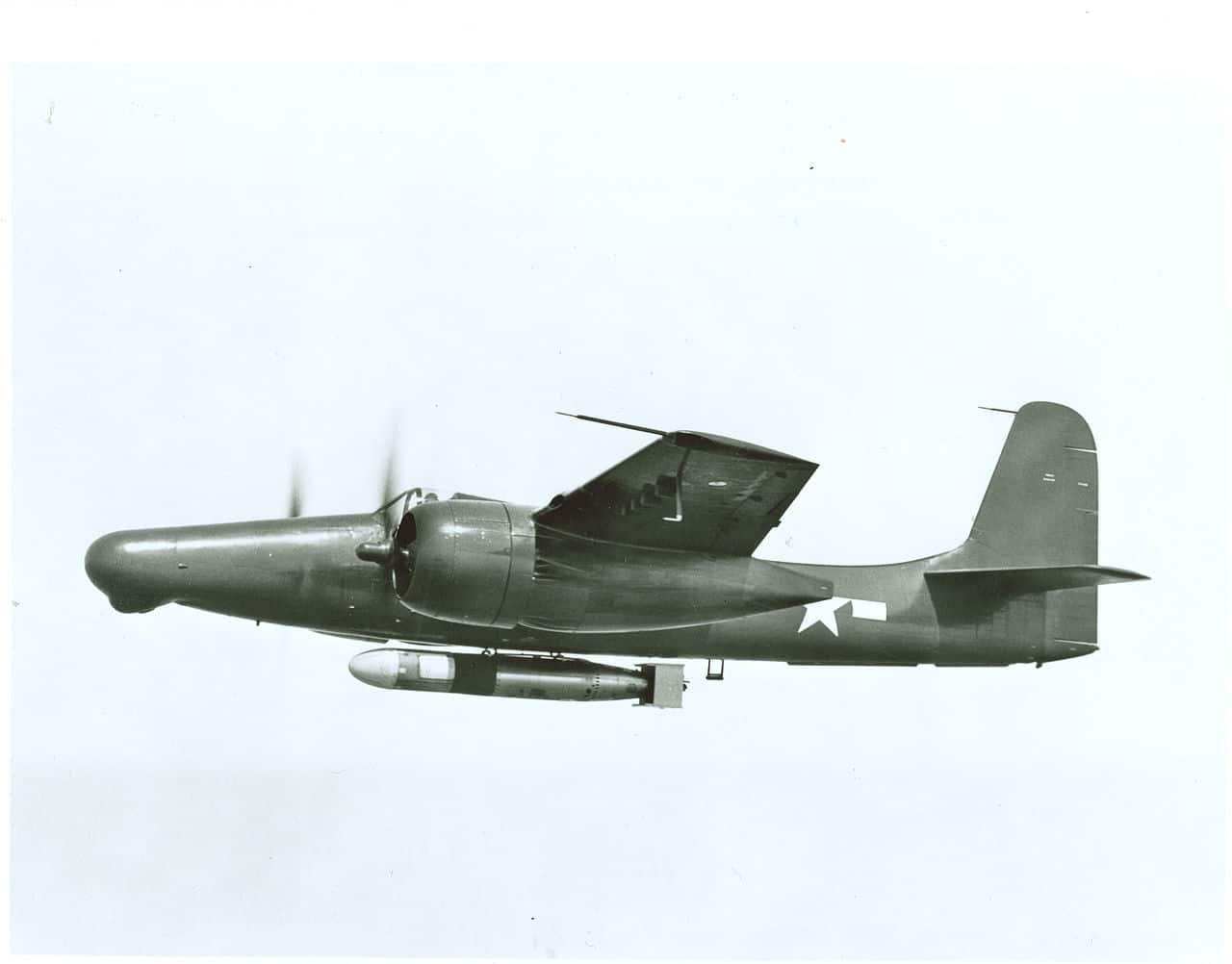
Many production F7F-1Ns and F7F-2Ns were fitted with the Sperry APS-6 intercept radar and utilized by the Marine Corps from land bases. F7F-2Ns also carried a dedicated radar operator. The F7F-3 variant was powered by uprated R-2800-34W engines and modified to address the initial carrier suitability issues; however, it also failed due to wing structure and loading problems. However, F7F-3s were built and used as single-seat day fighter-bombers (F7F-3), two-seat night fighters (F7F-3N), photographic reconnaissance aircraft (F7F-3P), and electronic warfare variants (F7F-3E).
Official US Navy Photograph via Ray Wagner
Not Exactly a Huge Victory Tally
Operationally, the Tigercat saw combat during the Korean War with Marine Corps Night Fighter Squadron VMF(N)-513 Flying Nightmares. Their F7F-3N Tigercats flew night interdiction, night interceptor, and day fighter missions early in the war. The Flying Nightmares shot down a pair of North Korean Polikarpov Po-2 biplanes during their combat in Korea. However, these were the only aircraft shot down by VMF(N)-513, and they were the only squadron to see combat in Korea.
Official US Navy Photograph via Ray Wagner
Improvements Came Too Late
By the time the F7F-4N two-seat night fighter model was introduced, it had been sufficiently upgraded to pass carrier suitability trials. However, by then, Grumman was already focused on its next generation of fighters – jets like the F9F Panther. The F7F-4N was the final variant of the Tigercat and a carrier-based two-seat night fighter. However, of the 364 Tigercats completed when production ended in 1946, only 13 were F7F-4N models. Many of the remaining F7Fs were used as drone control aircraft, and several flew as fire-bombers primarily during the 1960s and 1970s. Today, there are at least seven Tigercats flying in civilian hands and several others on static display.
Official US Navy Photograph
BONUS VIDEO
Here’s a video of a gorgeous restored warbird F7F uploaded by none other than Planes of Fame
Lessons Learned Designing and Building the XB-19 Were Applied to the B-29 and the B-36
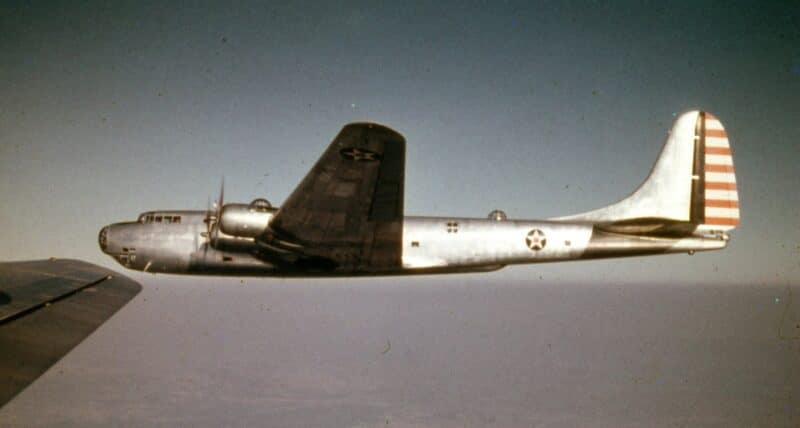
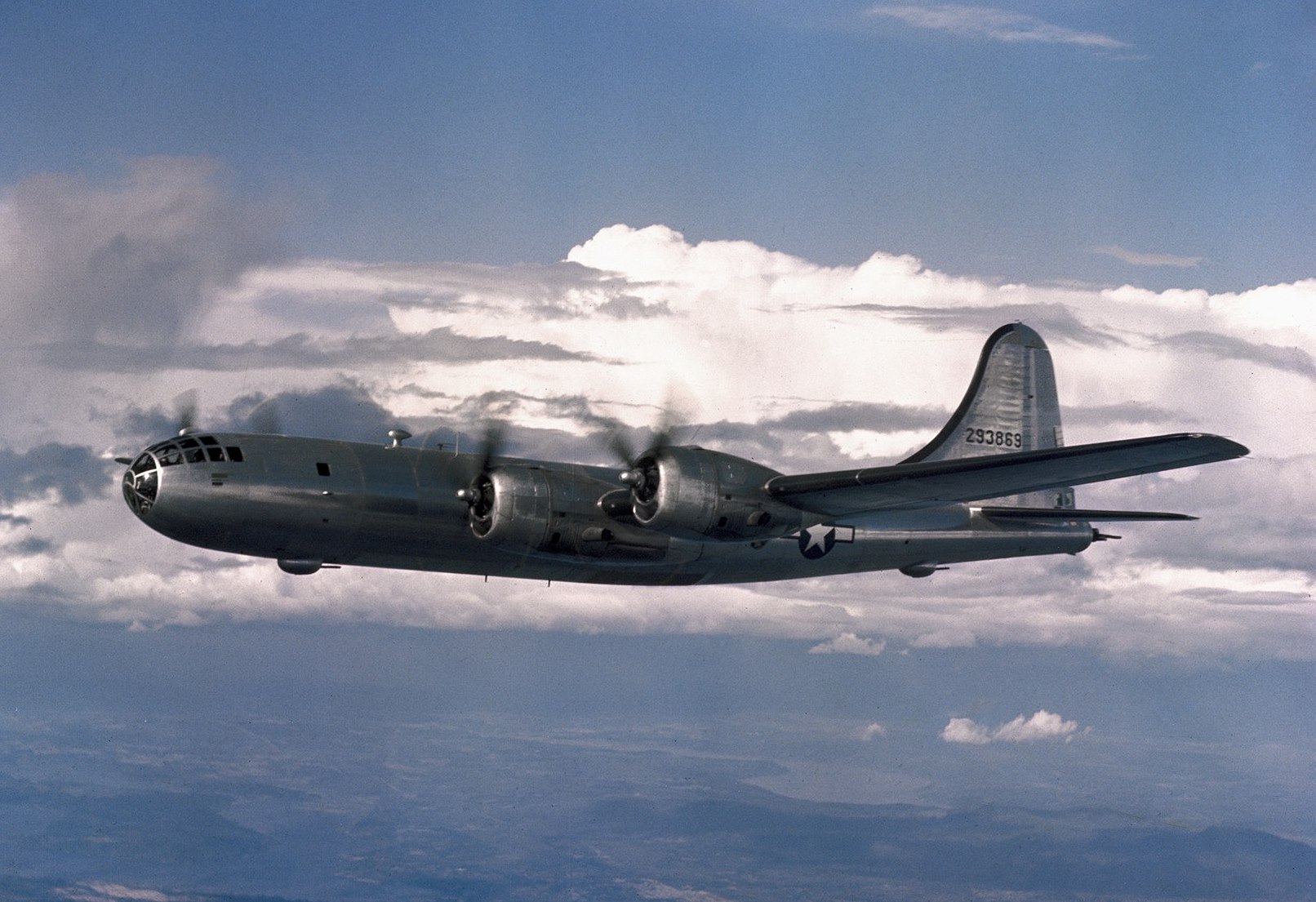
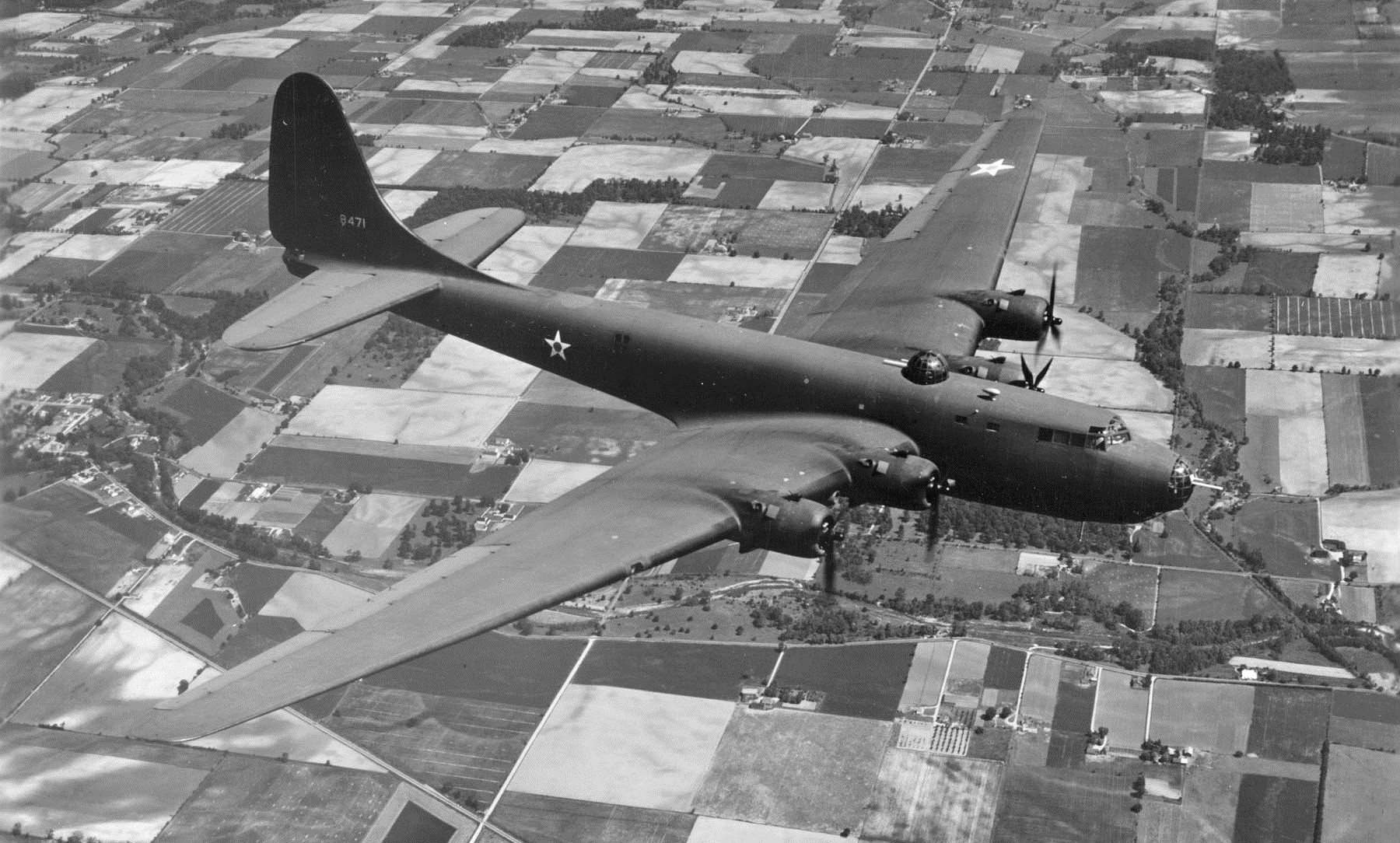
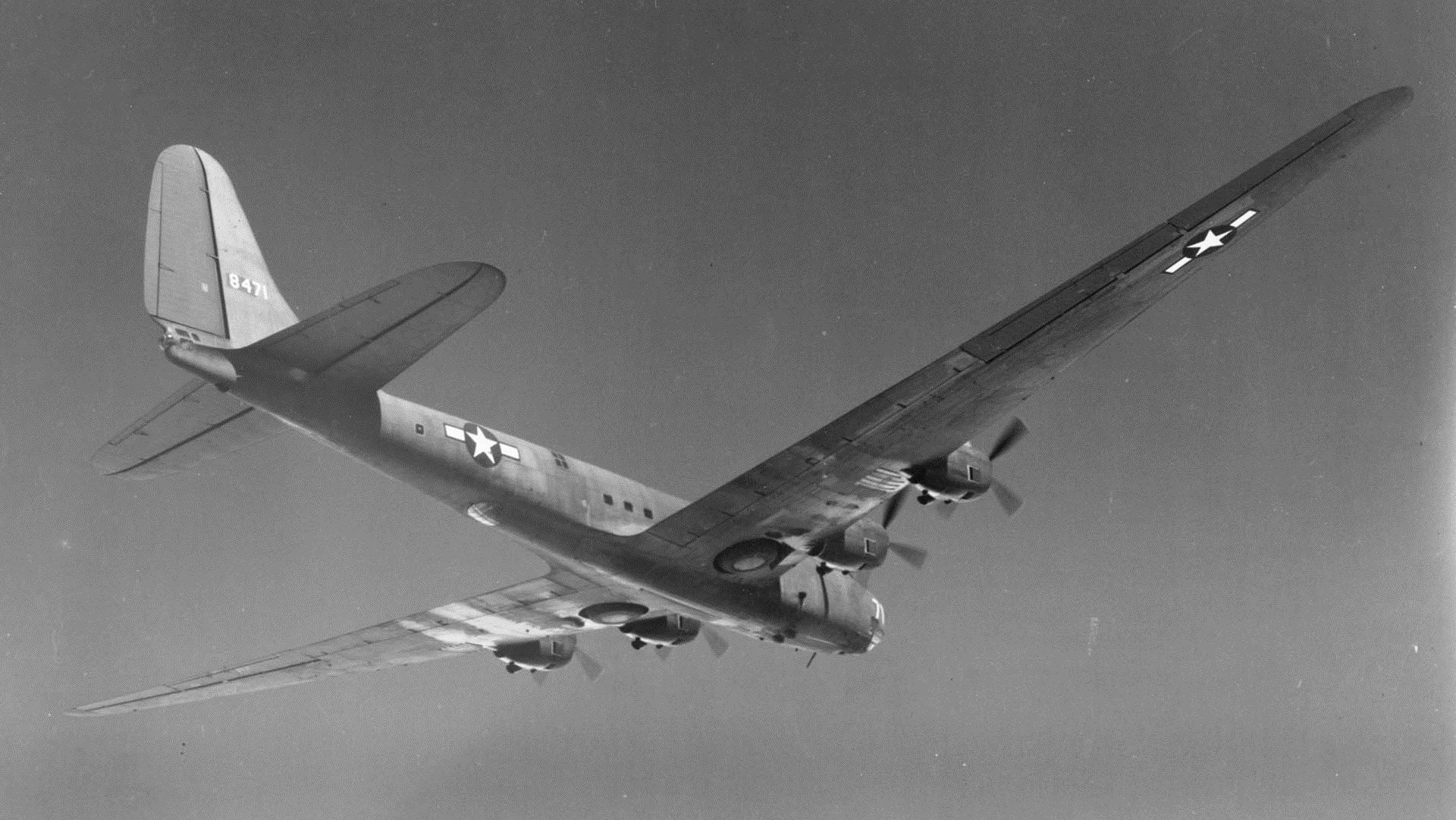
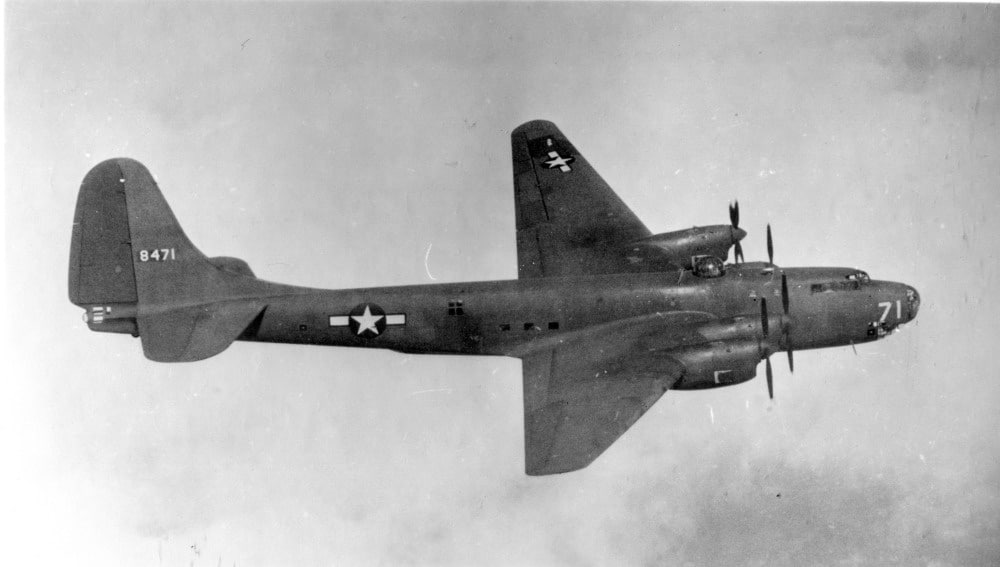
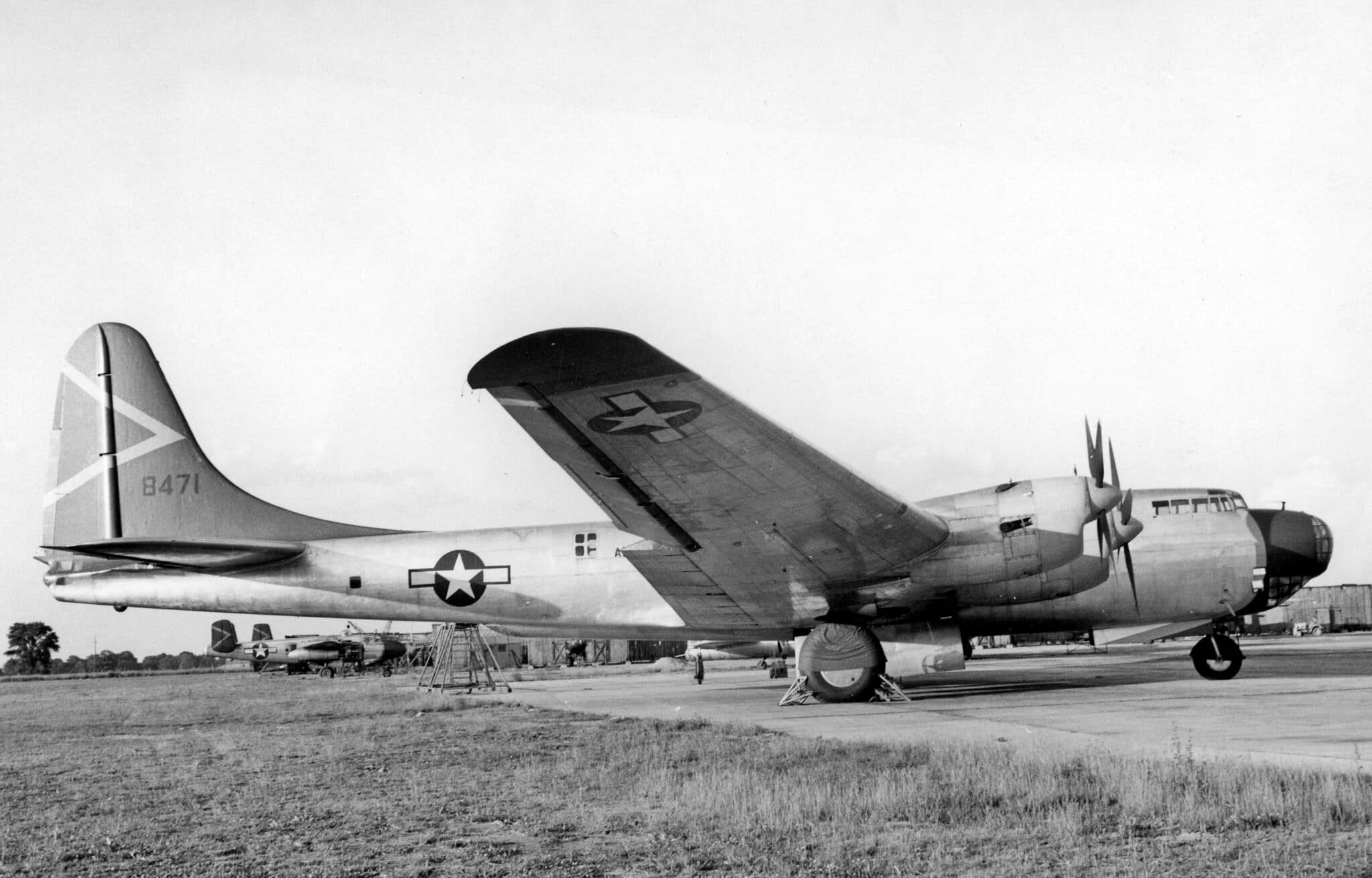
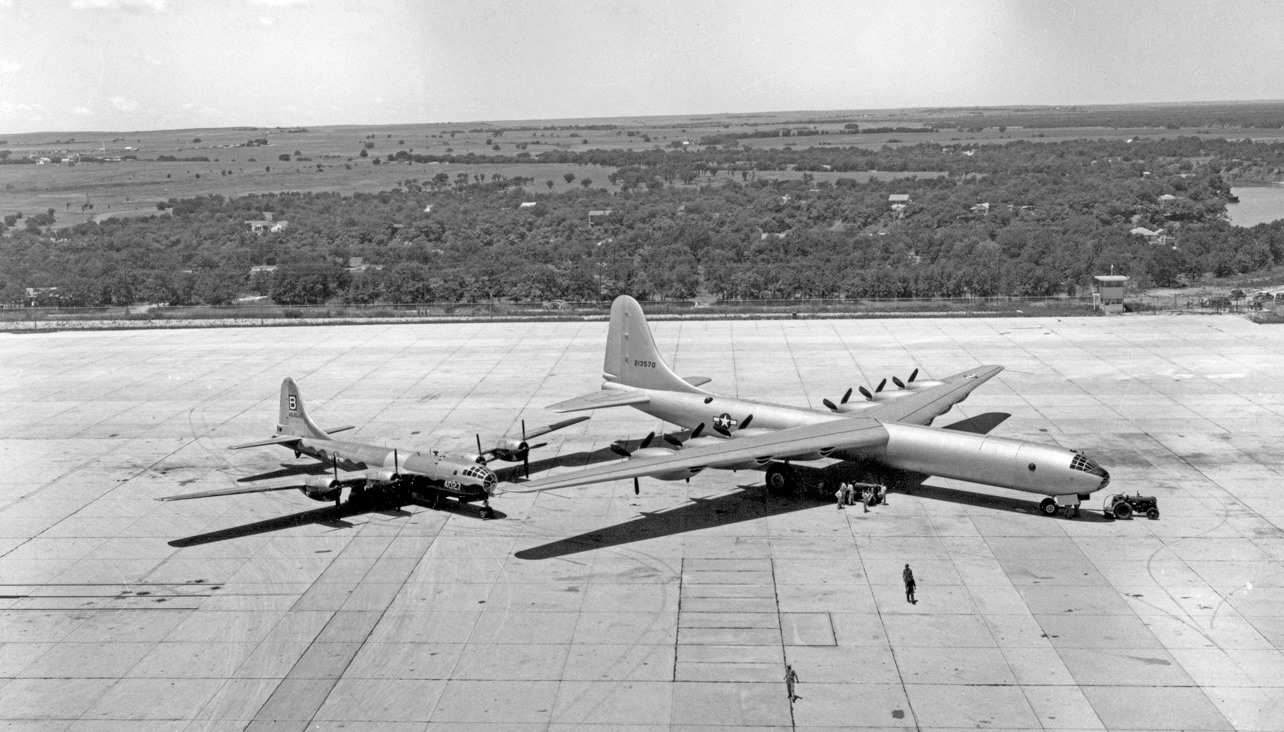
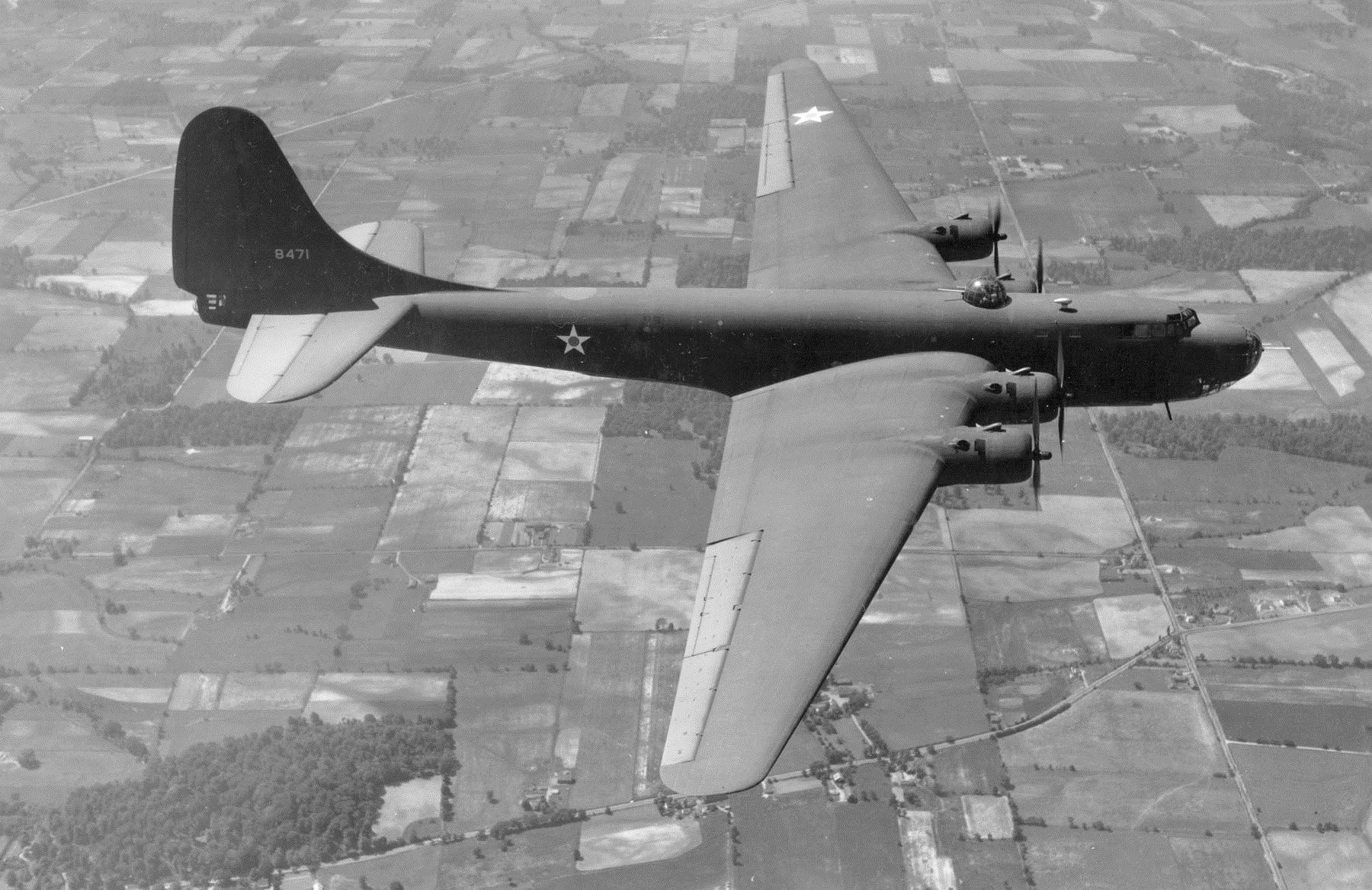
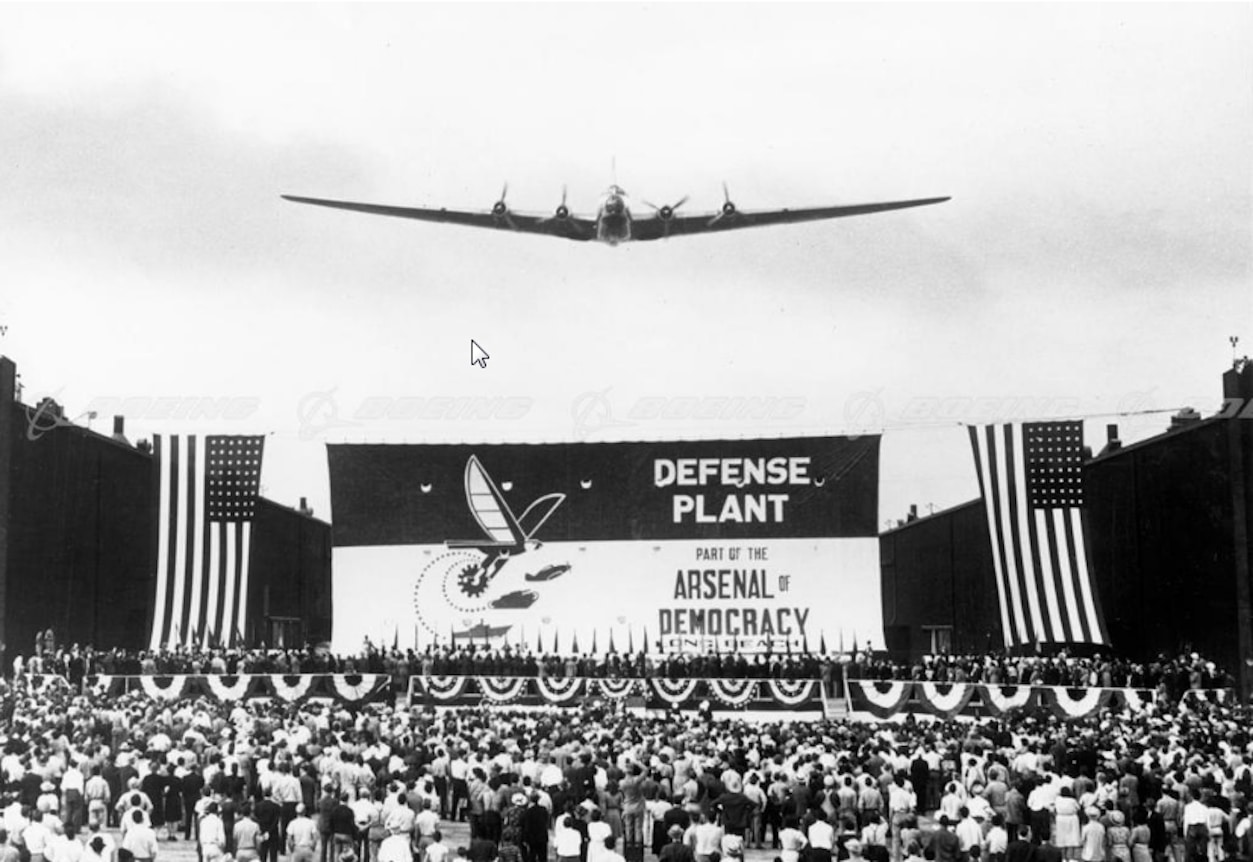
The Douglas XB-19 was the largest four-engine propeller-driven aircraft ever flown. It was the largest American aircraft flown until the Consolidated B-36 Peacemaker appeared in 1946. Until then, it dwarfed almost every other aircraft in the world by a considerable margin and wasn’t much smaller than the B-36. However, even though only one example was built and the design never went into production, a considerable amount of the engineering required to get the aircraft in the air was later applied to the Boeing B-29 Superfortress as well as the Peacemaker. And Project D definitely took the best Douglas had.
Boeing B-29 in flight. Image via NMUSAF
Top Secret Project D
Project D was a Top Secret US Army Air Corps project intended to push the limits of the envelope and discover the limits of aeronautical engineering when it came to long-range bomber aircraft. Project D began on 5 February 1935. Only Douglas and Sikorsky showed interest in the project. The Douglas design received the designation XBLR-2 (Experimental Bomber Long Range-2) on 9 July 1935. Sikorsky’s design was designated XBLR-3. Douglas built a vast new hangar to house the project. Wooden mockups of both designs were inspected in March 1936.
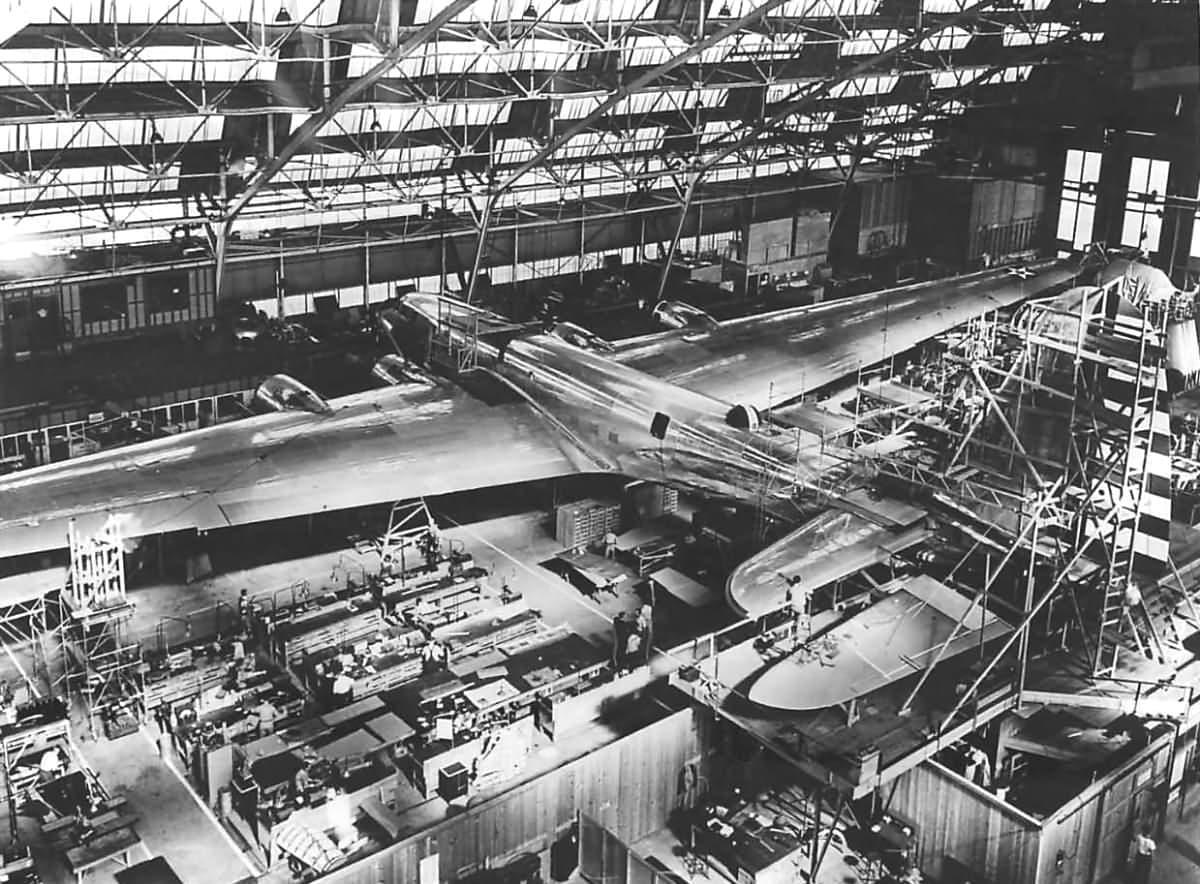
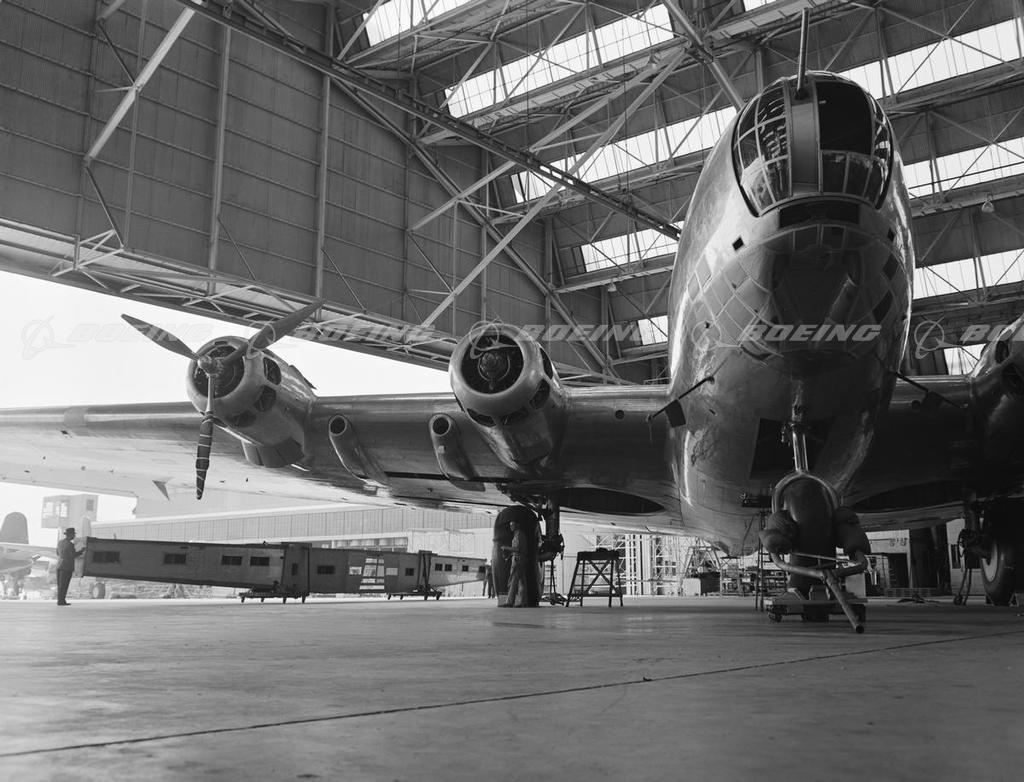
XB-19 under construction. Image via NMUSAF
Bigger Takes Longer
The Douglas design was chosen over the Sikorsky XBLR-3 design, and work on the XBLR-2 continued, albeit slowly. The original completion target was 31 March 1938. This proved to be an unrealistic goal. One reason was that the gigantic aircraft was to be equipped with fully retractable tricycle landing gear- a first for an aircraft of such size and weight. In addition, the state of the economy (and lack of funds for aeronautical research and development) during the late 1930s, as well as the other challenges associated with designing and building such a massive aircraft, and delay after delay beset the program.
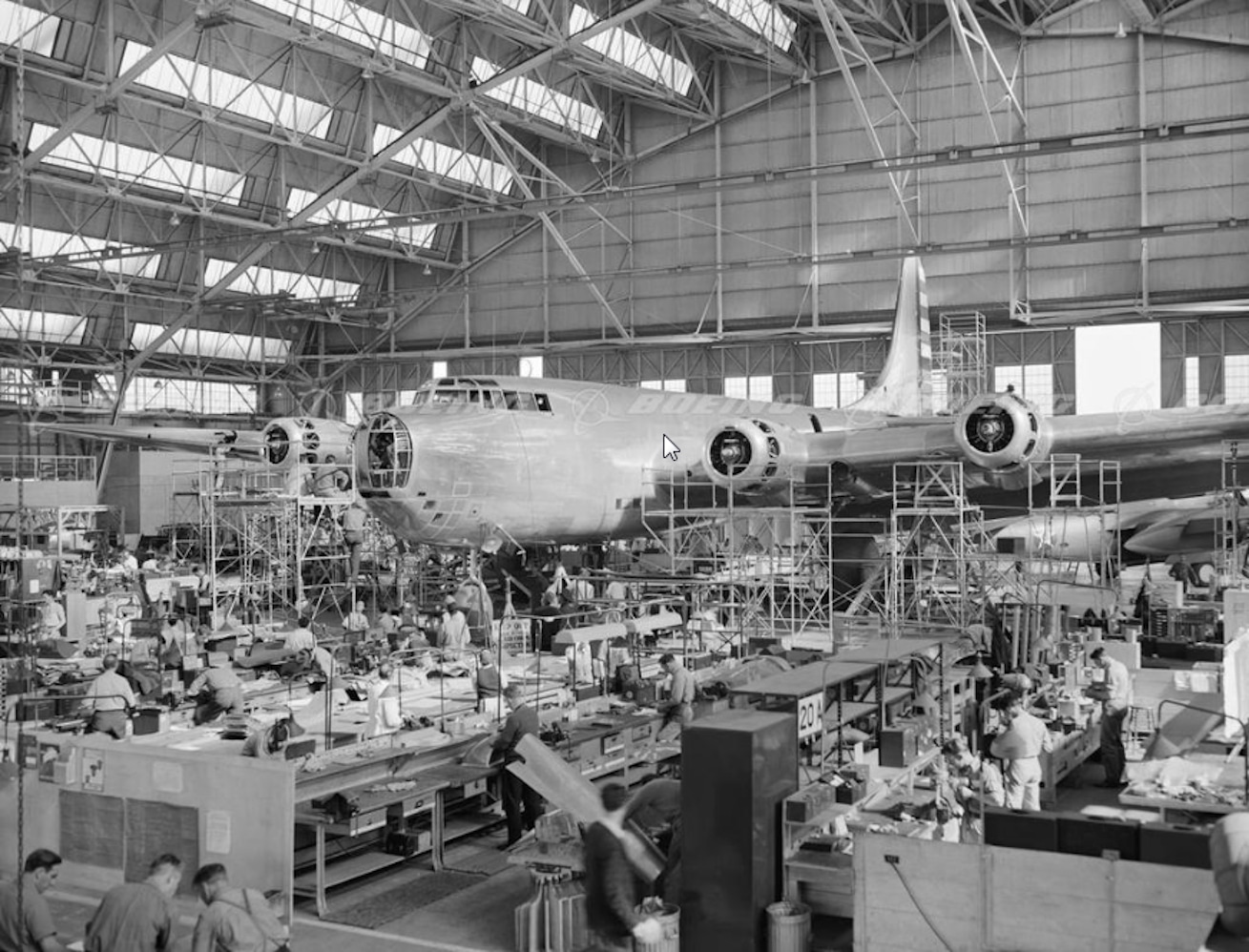
XB-19 under construction. Image via Boeing
Delays Delays Delays
Another challenge was the powerplants intended for use on the XBLR-2. As originally drawn, the aircraft was to be powered by six engines of at least 2,000 horsepower each. By the time construction began, the bomber was to be powered by four Allison XV-3420-1 V24 cylinder liquid-cooled inline engines.
The XV-3420 was essentially a pair of Allison V-1710 V12 cylinder liquid-cooled inline engines co-mounted and coupled via a gearbox to drive a single propeller. However, on 2 November 1936, Douglas decided to use four Wright R-3350 Duplex-Cyclone 18-cylinder air-cooled radial engines instead of the Allison powerplants. Delays delays delays.
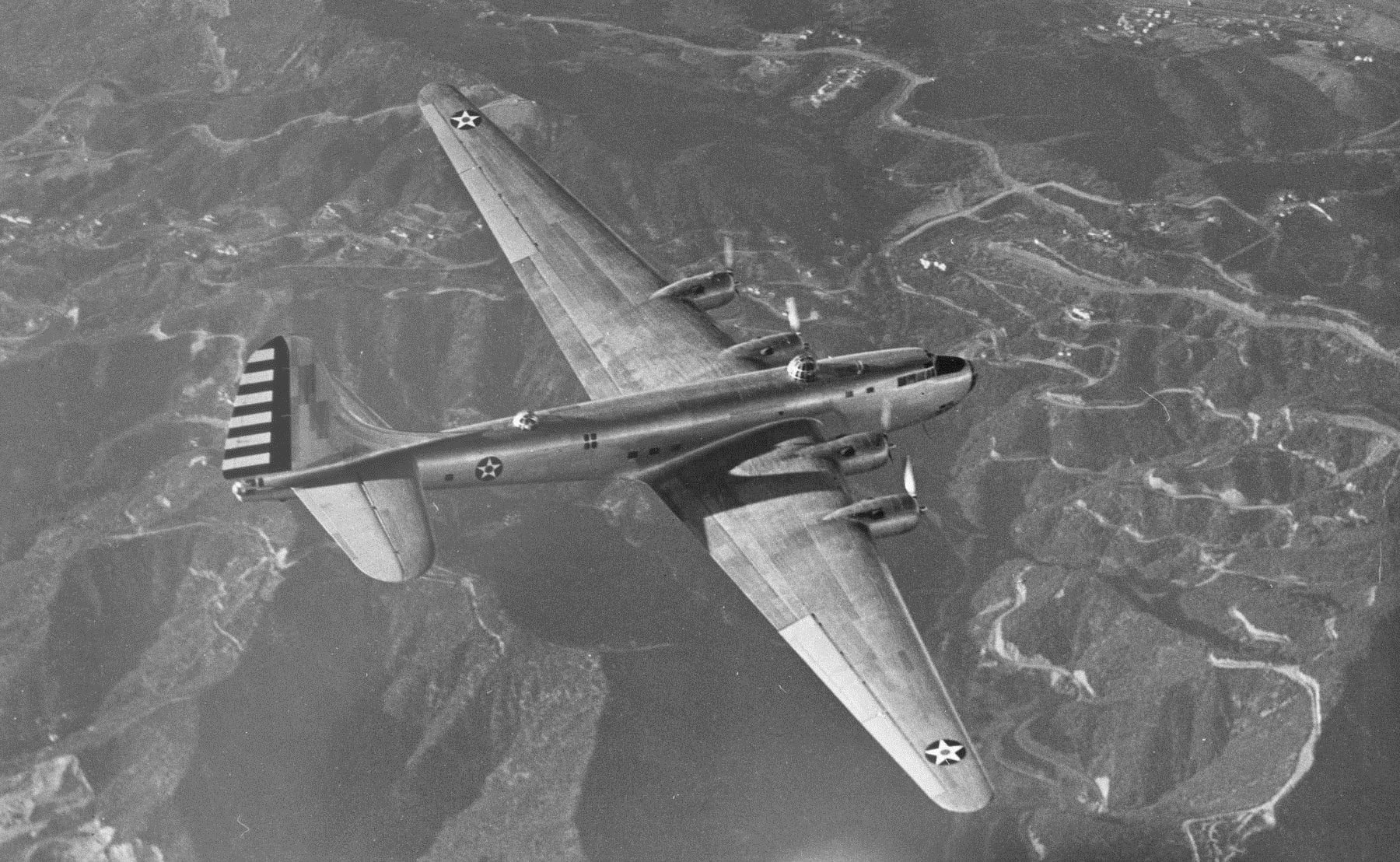
XB-19 Image via Boeing
Funded, Then Nearly Cancelled
Now designated the XB-19, the big Douglas bomber was finally funded on 8 March 1938. Douglas, already working on other designs that would eventually help win World War II, and straining to manage all of the critical work, recognized the limited benefit of continuing work on the XB-19. Douglas recommended the project’s cancellation, but the US Army Materiel Division wouldn’t quit on the XB-19. But they did remove the XB-19 from the list of secret projects in 1940. This resulted in quite a bit of attention from the aviation press.
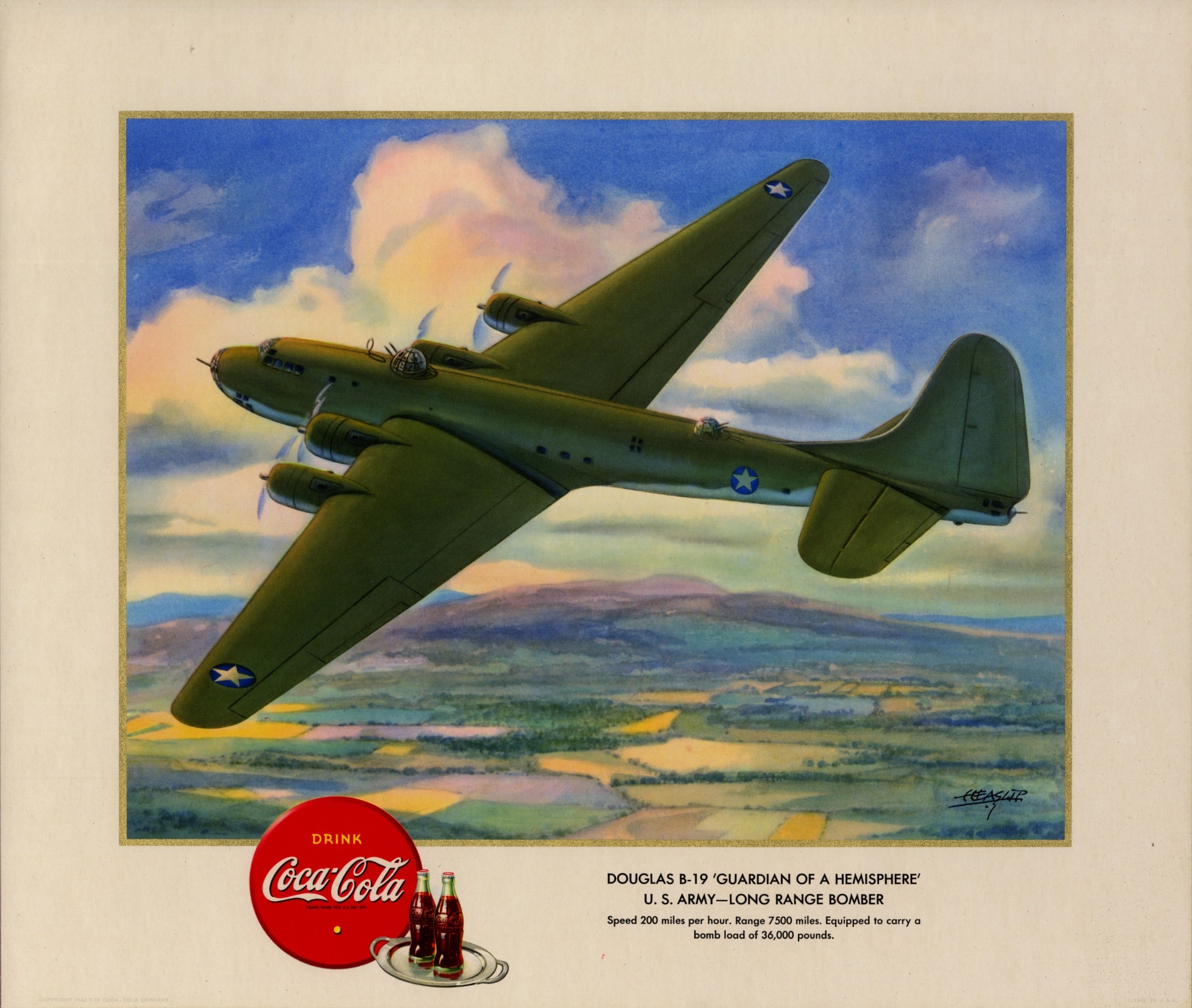
XB-19 appearing in a Coca-Cola ad. Image via Smithsonian
One of a Kind Monster
When completed in May of 1941, the XB-19 was a low-winged monoplane sitting on single-wheel tricycle landing gear with a wingspan of 212 feet. These wings were tapered with a straight trailing edge, swept back leading edge, a conventional empennage, and a maximum gross weight of 162,000 pounds.
The XB-19 was powered by those four nacelle-mounted Wright R-3350-5 radial engines rated at 2000 horsepower each at takeoff, turning three-bladed constant-speed propellers 17 feet in diameter. Total internal fuel capacity was 10,350 US gallons and could be augmented with an 824-gallon tank in the bomb bay. The XB-19’s maximum 37,100-pound ordnance payload could be carried in the bomb bay and/or on up to ten underwing racks.
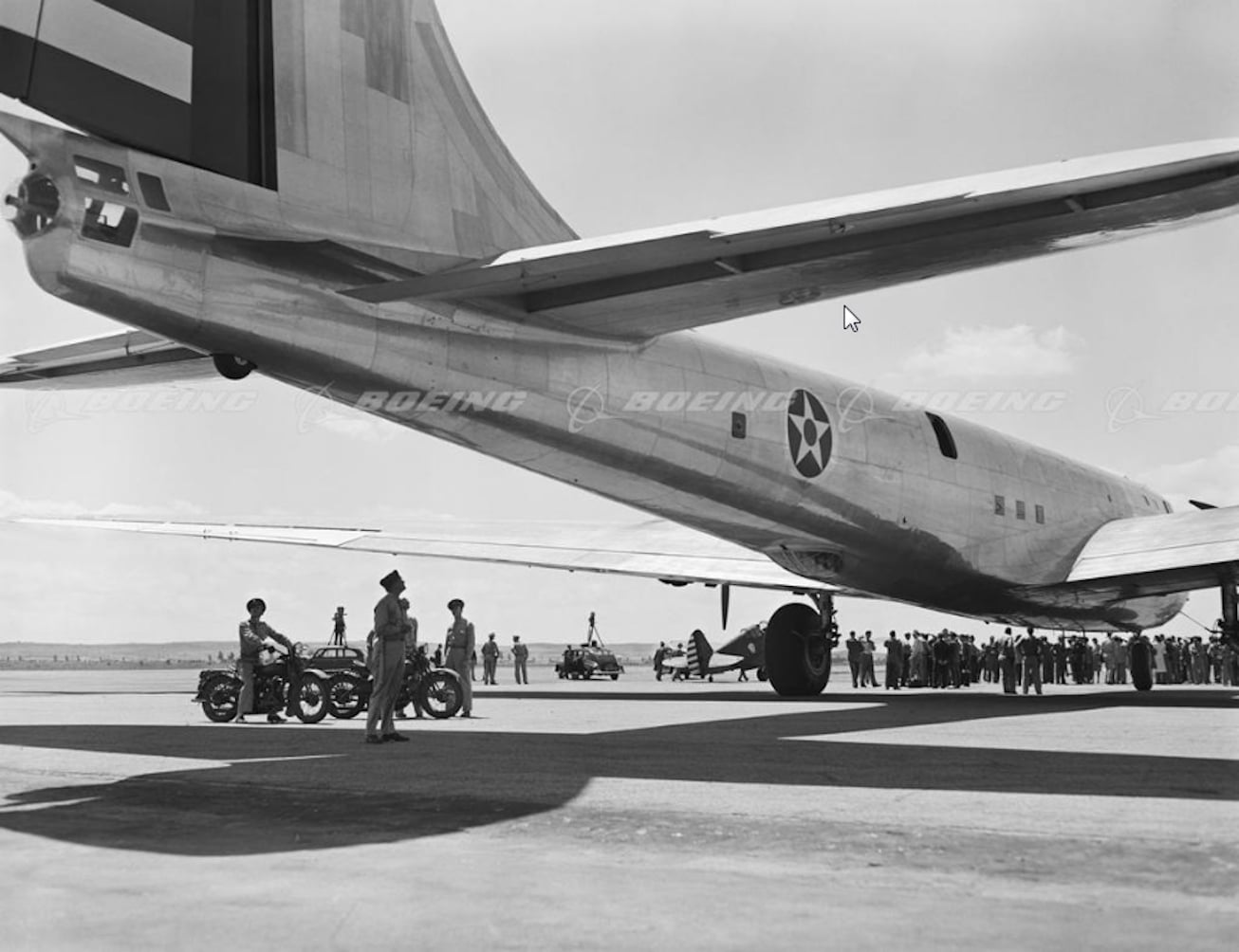
XB-19 tail. Image via Boeing
Firepower Aloft
The XB-19 was designed to bristle with defensive firepower fairly. Thirty-seven millimeter cannons and .30 caliber machine guns were to be mounted in the nose and forward dorsal turrets. Single .50 caliber machine guns were to be mounted in the tail, rear dorsal turret, ventral turret, and waist gunner’s positions on either side of the fuselage.
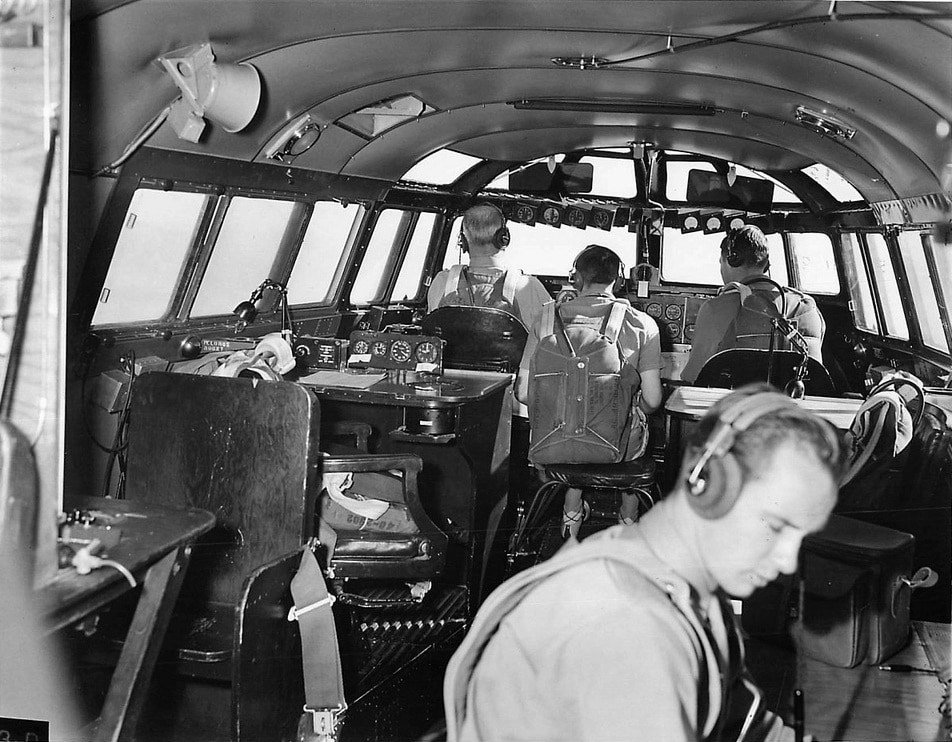
Single .30 caliber machine guns were to be mounted on both sides of the nose and just forward of both horizontal stabilizers aft. The XB-19 was to be crewed by a total of 16- pilot, copilot, aircraft commander, navigator, flight engineer, radio operator, bombardier, and as many as nine gunners.
XB-19 in flight. Image via NMUSAF
First Flight to the Army
The 55-minute first flight of the XB-19, USAAC serial 38-471, took place on 27 June 1941. The ginormous bomber was flown from Clover Field in Santa Monica over the March Army Airfield near Riverside so the Army Air Corps could begin evaluating it. Thirty hours of flight test time later, the XB-19 was tentatively accepted in October of 1941. But the attack on Pearl Harbor changed things up. The XB-19 was painted in olive drab over gray camouflage, its defensive armament was installed, and only four more test flights were conducted out west before the aircraft moved to Wright Field in Dayton, Ohio, on 23 January 1942.
XB-19 in flight. Image via NMUSAF
Initial Testing
It wasn’t until modifications, including the addition of improved brakes, took place that the Army Air Corps formally accepted the XB-19 in June 1942. With the exception of engine cooling challenges, which required the engine cooling flaps to be kept open during long flights and a 20-mile-per-hour reduction in maximum speed at 15,700 feet, the XB-19 proved to be relatively trouble-free during subsequent test flights.
XB-19A in flight. Image via NMUSAF
Fitted With the Original Engines
Ironically, after the XB-19 completed its flight testing in 1943, it was fitted with four 2600-horsepower Allison V-3420-11 turbo-supercharged, twenty-four-cylinder, liquid-cooled engines turning four-bladed propellers 19 feet in diameter. These engines were the production version of the engine that had originally been specified for the aircraft.
After the engine mods, the aircraft’s designation was changed to XB-19A. The XB-19A’s maximum speed rose by 50 to 275 miles per hour- still far slower than that of the B-29 and the eventual B-36. The XB-19A was then modified for use as a cargo carrier and flew critical war materiel back and forth across the country for the duration of World War II.
XB-19A in flight. Image via NMUSAF
The End of the Giant
The XB-19A took its last flight on 17 August 1946 when it was flown from Wright Field to Davis-Monthan Field in Arizona and placed in storage. It was scrapped there in June of 1949. The B-36 had flown for the first time nine days earlier.
XB-19A Image via NMUSAF
The XB-19 Compared to the B-29 and the B-36
So let’s compare the XB-19 with the B-29 and the B-36. At just over 132 feet, the XB-19 was 33 feet longer than the B-29 and 30 feet shorter than the B-36. At nearly 43 feet tall, the XB-19 was 15 feet taller than the B-29 but only four feet shorter than the B-36.
The XB-19’s wingspan was 212 feet, 71 feet longer than that of the B-29 and only 18 feet shorter than that of the B-36. The XB-19’s wing area was 4,492 square feet- about 2,756 square feet more than that of the B-29 and only about 300 square feet less than that of the B-36.
B-29 (left) and B-36 (right). Image via NMUSAF
The XB-19 weighed in (empty at 86,000 pounds, which was 11,500 pounds more than the B-29 and roughly half the weight of the B-36. The XB-19’s loaded weight was 39,000 pounds greater than that of the B-29, but only a quarter of what the B-36 weighed loaded. Range was only 350 miles longer than the B-29 and 300 miles shorter than the B-36.
The XB-19’s service ceiling was 8,000 feet higher than that of the B-29 and 4,000 feet lower than that of the B-36. Of course, the XB-19 could not reach the speeds both the B-29 and the B-36 were capable of. But in sheer size, it didn’t give up much to the B-36.
XB-19 in flight. Image via NMUSAF
XB-19 Trivia
In 1939, even before the XB-19 flew, it was estimated that the big bomber could also transport up to 215 fully-equipped soldiers.
By the time it flew for the first time, the formerly Top Secret bomber was so popular that President Franklin D. Roosevelt sent Donald Douglas a congratulatory telegram after the XB-19 made its maiden flight.
Although its massive size should have earned the XB-19 all manner of nicknames, there was never an official name given to the aircraft. It was referred to as a “flying laboratory” often. Behemoth seems to be the popular after-the-fact nickname.
[youtube id=”MKnnNJfVz7s” width=”800″ height=”454″ position=”left”] Thanks to AIRBOYD.
The Douglas Aircraft Company actually lost money on the XB-19. The Army only paid Douglas $1,400,064 for the aircraft, but Douglas spent nearly $4,000,000 on the project.
After the XB-19’s initial flight, it became clear that there was some delay between control inputs and responses. Test pilot USAAC Major Stanley M Umstead said of the big aircraft’s controllability, “You soon learned how to get out of a difficult situation before you get there.”
xb-19 flight deck. Image via NMUSAF
The XB-19 had a special compartment in the fuselage above the bomb bay with eight seats, six bunks, and a full galley intended for the relief crew (a couple of inflight mechanics and up to six relievers) and for the regular crew to prepare meals in flight during the bomber’s (projected) 24-hour missions.
The XB-19 had passages built into the lower wings, which gave the inflight mechanics direct access to the engines and accessories/engine-driven systems while the massive bomber was aloft.
[youtube id=”kk9fiReRHFw” width=”800″ height=”454″ position=”left”] Thanks to AIRBOYD.
Although the XB-19A was scrapped in 1949, its nose section inexplicably showed up in a scrap yard on Alameda Street in Los Angeles, where it remained visible until as late as 1955.
In early 1949, the US Air Force had plans to save the B-19 for eventual display, but at the time, the Air Force had no program to save historic aircraft, and the Air Force Museum had not yet been built. But although the aircraft was scrapped, two of its enormous eight-foot-tall main landing gear tires were saved. One was put on display at the Hill Aerospace Museum at Hill Air Force Base. The other has been on display at the National Museum of the United States Air Force for many years.
XB-19 flies over Long Beach plant dedication. Image via Boeing
When the Boeing B-47 Stratojet bomber entered service with Strategic Air Command (SAC) in 1951, it was the first swept-wing jet-powered bomber in service. Conceived initially during World War II, the design underwent several modifications during development, including the addition of a swept wing.
Early on, it was discovered that the aircraft was capable of advanced maneuvers previously considered impossible for an aircraft of its size and weight. This video highlights a series of tests flown during 1954 to learn the practical limits of the aircraft’s maneuverability. Thanks to YouTuber ZenosWarbirds for uploading this fantastic look at the B-47 and its ability to fly like a fighter or a strategic bomber.
Official US Air Force Photograph
The B-47 Needed to be Maneuverable
A bomber with the B-47’s maneuverability would be able to deliver weaponry using toss bombing. Essentially, the bomber would approach the target at low altitude and high speed, initiate a steep vertical climb, and release the weapon using its own momentum to “toss” the weapon toward the target.
The bomber would then pull through the vertical and fly the remaining half-loop, ending up on the reciprocal heading used for the bombing run or chosen egress course. Performed at high speed, the egress after a toss-bombing delivery would expose the attacking bomber to the least possible blast effects from the delivered weapon upon detonation. Thankfully, no B-47 ever actually toss-bombed a real enemy target!
Essentially, all side-firing gunships utilize the same principle. An aircraft flying a fixed altitude banking turn around a point on the ground (read target) can deliver fairly accurate firepower to that target from side-mounted guns firing perpendicular to the line of flight. This concept was first proposed way back in 1926 and demonstrated the next year. However, the concept languished for many years but never completely disappeared. Several airmen later advanced the idea, but it didn’t come to fruition until the early 1960s with the Project Gunship I program.
AC-47D Spooky. Official US Air Force Photograph
Gunships Become De Rigueur
The Douglas AC-47D Spooky gunship, better known as Puff the Magic Dragon, proved its usefulness right from the beginning of its use in Vietnam during 1964. In late 1967, the development of the gunship continued with the Fairchild AC-119G Shadow and AC-119K Stinger– both developments of Fairchild’s C-119 Flying Boxcar tactical airlifter.
AC-119G Shadow. Official US Air Force Photograph
Filling a Critical Airlifter and Gunship Gap
The Project Gunship II Lockheed AC-130A Spectre was also in use at the time, but was in short supply due to the Air Force’s need for standard C-130 Hercules airlifters to support the war in Vietnam and meet worldwide airlift commitments. Therefore, the Wright R-3350-powered AC-119 was also selected for the gunship role. 26 of them were converted from Air Force Reserve C-119Gs to AC-119G standard, and heavily utilized in Southeast Asia beginning in 1968.
Four 7.62 millimeter Miniguns on board AC-119G. Official US Air Force Photograph
A Better Puff with More Dragon Magic
Project Gunship III AC-119Gs took over the combat role of the majority of the AC-47D Puff gunships, which were turned over to the South Vietnamese as they were replaced. A more advanced aircraft than the AC-47D to begin with, the more heavily armed AC-119G Shadow mounted four side-firing 7.62 millimeter six-barrel GAU-1/A miniguns as well as an AVQ-8 xenon light, night observation sighting equipment, and an automated LAU-74/A flare launcher. Shadows primarily provided support to troops in contact (TIC) and airborne base defense.
AC-119K Stinger. Official US Air Force Photograph
The Smart Gunship
The AC-119G was also equipped with a General Precision fire control computer as well as a TRW fire control safety display to prevent friendly-fire accidents. Internal power for all the new equipment was supplied by a Garrett Industries 60 KVA auxiliary power unit (APU)- the same model used in the Boeing 727 commercial airliner. Ceramic armor was added, and APR-25 and APR-26 electronic countermeasures (ECM) gear were installed for enhanced crew survivability. The AC-119G carried 31,500 rounds of ammunition and 24 flares on a typical night interdiction mission.
The Epicenter of US Air Force Test and Development – Edwards Air Force Base – Materialized From Near-Nothingness
To those who first see it, the northwestern Mojave Desert is a parched and forbidding wilderness of coyotes and jackrabbits, ragged greasewood, and, of course, Joshua trees. It is a harsh land of sometimes stunning contrasts: griddle-hot days and bone-chilling nights, violent dust storms, bewildering mirages, and mesmerizing sunsets. Sounds like a perfect place to put a base for testing–Edwards Air Force Base.
Part of the dry lakebed that houses Edwards Air Force Base | Image via National Archives
Until the Southern Pacific Railroad arrived in 1876, the desert was primarily populated by occasional prospectors drifting endlessly in pursuit of elusive mineral wealth. In 1882, the Santa Fe Railroad ran a line westward out of Barstow toward Mojave and built a water stop at the edge of an immense dry lakebed called Rodriguez Dry Lake, roughly 20 miles southeast of Mojave. By the early 1900s, “Rodriguez” had been anglicized into “Rogers.”
Rogers “Dry” lake image via national archives
First formed in the Pleistocene Epoch and featuring an extremely flat, smooth and concrete-like surface, Rogers Dry Lakebed is a playa, or pluvial lake, that spreads out over 44 square miles, making it the largest such geological formation in the world.
Image via Mojave Desert Blog
The Homesteaders
In 1910, the Corum family settled at the edge of this lakebed. In addition to raising alfalfa and turkeys, they located other homesteaders in the area for a fee of $1 per acre. The Corum brothers earned contracts for drilling water wells and clearing land as those settlers moved in.
They also opened a general store and post office. Their request to have the post office stop named “Corum” was disallowed because there was already a Coram, Calif. So they simply reversed the spelling of their name and named it “Muroc.” Small, isolated homesteads dotted the land over the next 20 years.
image via national archives
The Airmen Arrive
The early homesteaders thought of Rogers Dry Lakebed as a wasteland. However, a visionary Airman commanding March Field, Lieutenant Colonel Henry H. “Hap” Arnold, saw it as a one-of-a-kind “natural aerodrome” that could be acquired at virtually no cost to the taxpayer.
Thus, Arnold established the Muroc Bombing and Gunnery Range in September 1933. This remote training site, now a small enclave within present-day Edwards, served the Army Air Corps’ bombers and fighters for several years.
The Muroc Bombing and Gunnery Range on the dry lakebed that would become Edwards Air Force Base | Image via National Archives
With the arrival of World War II, a permanent base sprang up to train combat flight crews. In July 1942, it was activated as a separate post and designated Muroc Army Air Base.
Throughout the war years, B-24s, B-25s, and other bombers thundered through the Muroc skies, and P-38s strafed the targets on the range as bomber crews and fighter pilots prepared to do battle overseas.
Muroc Maru image via national archives
For the Rest of the Edwards AFB Story Bang Next Page Below
Carrier Aviation in the late 1950s- Talk About a Time Machine!
Here’s a treat for all you Med Cruise veterans and late-50s carrier aviation fans. The video features the Essex-class aircraft carrier USS Randolph (CVA-15) and Carrier Air Group FOUR (CVG-4). The film, titled “A Force for Peace,” was shot during the 1957-1958 timeframe. The film features everything from Spads, Banshees, Cougars, and Furies to Whales, Fords, and Regulus missiles. The video was uploaded to YouTube by Periscope Film. Enjoy, and stick around for the lineups after the video.
The Randolph relieved the Forrestal-class aircraft carrier USS Forrestal (CVA-59) during July 0f 1957. Aboard the Forrestal during her 1957 Med Cruise was CVG-1 consisting of VF-14 Tophatters flying the McDonnell F3H-2N Demon, VF-84 Vagabonds flying the North American FJ-3M Fury, VA-76 Spirits flying the Grumman F9F-8B Cougar, VA-15 Valions flying the Douglas AD-6 Skyraider, and VAH-1 Smokin’ Tigers flying the Douglas A3D-1 Skywarrior.
USS Forrestal image via National Naval Aviation Museum (NNAM)
The Rest of Forrestal’s Air Wing
Also aboard Forrestal were Detachment 42 of VAW-12 Bats flying the Douglas AD-5W Skyraider, Detachment 42 of VA(AW)-33 Night Hawks flying the Douglas AD-5N Skyraider, Detachment 42 of VFP-62 Fighting Photos flying the McDonnell F2H-2P Banshee and the Douglas F3D-2T2 Skyknight, and Detachment 42 of HU-2 Fleet Angels flying the Piasecki HUP-2 Retriever.
FJ-3 Fury image via NNAM
Randolph Circa 1957
The Randolph’s 1957-1958 deployment with CVG-4 embarked began on 1 July 1957 and ended on 24 February 1958. With CVG-4 for this deployment were VF-22 Cavaliers flying the McDonnell F2H-4 Banshee (tail code AD), VF-173 Jesters flying the North American FJ-3M Fury (tail code AD), VA-45 Black Knights flying the Douglas AD-6 Skyraider (tail code AD), and Detachment 36 of VAH-7 Go Devils flying the massive North American AJ-2 Savage (tail code GL).
AJ-2 Savage image via NNAM
Detachments
Also aboard the Randolph for this Med Cruise were Detachment 36 of VAW-12 Bats flying the Douglas AD-5W Skyraider (tail code GD), Detachment 36 of VA(AW)- 33 Night Hawks flying the Douglas AD-5N Skyraider (tail code GE), Detachment 36 of VFP-62 Fighting Photos flying the Grumman F9F-8P Cougar (tail code GA), Detachment 36 of GMGRU-2 Redtails flying the North American FJ-3D Fury, and Detachment 36 of HU-2 Fleet Angels flying the Piasecki HUP-2 Retriever. After the conclusion of this deployment VF-22 and VF-173 were disestablished. VA(AW)-33 was redesignated VAW-33 in 1959. CVG-4 was redesignated Reserve Carrier air Group FOUR (RCVW-4) after this deployment.
VR-24 DET TF-1 Trader image via NNAM
The Roosevelt Makes an Appearance
A VR-24 DET Lifting Eagles Grumman TF-1 Trader (tail code RD) makes a brief appearance in the film. Intermingled with the footage shot aboard the Randolph is some footage shot aboard the Midway-class carrier USS Franklin D Roosevelt (CV-42). In that footage are shots of CVG-17 aircraft (tail code AL). During the Roosevelt’s 1957-1958 Med Cruise CVG-17 consisted of VF-171 Aces flying the McDonnell F2H-3 Banshee, VF-74 Be-Devilers flying the Douglas F4D-1 Skyray, VAH-3 Sea Dragons flying the Douglas A3D Skywarrior, and VA-175 Devil’s Diplomats flying the Douglas AD-6 Skyraider.
HUP-2 Retriever image via NNAM
More Roosevelt Air Wing Squadrons
Also aboard the Roosevelt in the Med at the time were Detachment 37 of VFP-62 Fighting Photos Flying the F2H-2P Banshee, Detachment 37 of VA(AW)-33 Knight Hawks flying the AD-5N Skyraider, Detachment 37 of VAW-12 Bats flying the AD-5W Skyraider, and Detachment 37 of HU-2 Fleet Angels flying the Piasecki HUP-2 Retriever. This was VAH-3’s last deployment before becoming a Fleet Replacement Squadron (FRS) for the A3D Skywarrior. VF-171 and VA-175 were disestablished after this deployment.
AD-6 and AD-5W image via NNAM
Flagships and Escorts
Also appearing in the film are the Des Moines-class heavy cruiser USS Salem (CA-139)- Sixth Fleet flagship, the Gearing-class destroyers USS Gearing (DD-710), USS Vogelgesang (DD-862), USS Harold J Ellison (DD-864), USS Dyess (DD-880), USS Bordelon (DD-881), and USS Furse (DD-882), along with the Fletcher-class destroyers USS Eaton (DD-510) and USS William D Porter (DD-579).
USS Randolph CVS-15 image via nnam
Randolph the Sub Hunter-Killer
After her 1957-1958 Med Cruise the Randolph went back to the Med as a CVA one more time with CVG-7 embarked. She was then redesignated an antisubmarine carrier (CVS-15) and deployed (again to the Med) several times with antisubmarine air groups CVSG-58 or CVSG-60 consisting primarily of Grumman S2F/S-2 Trackers, Grumman WF-2/E-1B Tracers, and Sikorsky HSS-2/SH-3 Sea King helicopters until her last deployment, which concluded on 1 September 1966.