The Fascinating Story of How the Last British Airliner Clawed Its Way to Success
Avgeekery contributor Brian Wiklem has released a riveting new book that tells the entire story about the BAe 146. The book tells the story behind the people who designed, built, and flew the original regional jet. It is available from LaJetee Press at https://www.lajeteepress.com.
These days, four-engine jetliners are a rarity at local airports. Sure, the Queen of the Skies, the Boeing 747, is still flying and relevant today, along with the Airbus A380 and even the Airbus A340. Those days are quickly coming to an end. But it’s no surprise flying two engines is less expensive than four, with engine and aerodynamic technology continuing to push the limits while requiring less fuel and less maintenance. So why on earth would an aircraft manufacturer begin designing and pitching a four-engine short-haul airliner? It’s complicated.
The Inside Story How BAe 146 Started the Regional Jet Revolution 4
Developing a Viable Four-Engine Short-Haul Airliner
Hawker Siddeley, competing against not only Fokker, Boeing, and McDonnell Douglas but also homegrown manufacturer British Aircraft Corporation, was looking to develop the next generation of short-haul aircraft. For nearly twenty years, many different ideas and iterations of short-haul aircraft bounced around internally, ultimately settling on what would become the HS146, now known as the British Aerospace (BAe) 146 series of aircraft. Hawker Siddeley was working on an aircraft that would appeal to state-owned carriers operating in less than ideal conditions, such as unpaved fields and more rural areas. But rather than a prop aircraft, it was working on a short-haul jetliner.
Image via BAe Systems
The Advantages of Four Burning
This aircraft could operate entirely independently of ground service vehicles. Baggage compartments were waist high for ground crew, and the aircraft could be equipped with airstairs, eliminating the need for additional vehicles and complexity, and operating from remote fields fully contained. And, with four jet engines, a loss of an engine wouldn’t mean an immediate return trip to the airport, nor the concern that a two-engine aircraft (with a loss of engine) would have only 50% power remaining. With four engines, a loss would be mitigated to only 25%.
There was only one problem: these state-owned carriers often didn’t have the financial ability to support buying not only a jet aircraft but a brand-new one. A second problem would burst onto the scene and shut down any airline’s ability to consider a four-engine jet: The oil crisis of 1973.
Oil Crisis Creates a Need For More Efficient Jets
By 1974, the crisis was in full swing because of the support Israel was getting from the United States due to the Yom Kippur War. A barrel of oil tripled in cost by the end of the year, and there was no sign of it slowing down. This was the worst possible time to launch a four-engine jetliner.
Between homegrown political battles to keep the project alive and the manufacturers’ insistence that it be terminated, ultimately, Hawker Siddeley won, and the HS146 was terminated. But in the long run, this came back and bit Britain’s aviation industry hard, with the government fed up with bailing out various aerospace manufacturers, including Rolls-Royce with the RB211 and the Concorde debacle.
Turmoil in the British Aviation Industry
The Queen’s BAE 146.
By 1977, the British government nationalized the aerospace industry under the 1977 Aircraft and Shipbuilding Industries Act in an attempt to save Britain from losing these industries. Enter the newly formed British Aerospace, where the government would fund and ultimately divest itself of its shares, concluding by 1985 its complete divestiture of British Aerospace, which would become a publicly owned and traded entity.
1977 saw the new board of directors argue about restarting the HS146 or continuing with the BAC Two-Eleven. Political considerations at play ensured the HS146 would continue on, and the BAC Two-Eleven would never make it off the drawing board. With the company moving forward with full-scale development and manufacturing, the world would change again, starting in the United States. Enter deregulation, where airlines were now free to fly and charge whatever they wanted.
The Industry Transforms Itself
Over the next ten years, the aviation industry worldwide would begin to shift away from state-owned carriers and move towards a free market, with airlines having to live and die by their own choices, pricing, and quality of service. The very market the HS146 was predicated on was disappearing quickly. Once the BAe 146 took its first flight, it began a tour to the two primary markets originally envisioned and viewed as its golden goose: The Far East (Japan, India, Thailand, Australia, Indonesia, and more), as well as a tour in Africa to numerous countries. These were the countries that BAe and originally Hawker Siddeley saw as customers, with state-owned carriers, rural operating conditions, and the need for a self-contained aircraft that desired jet service.
It was not to be. Not a single order came from the Far East (and it would be nearly eight years before an Australian and a Thailand-based carrier ordered the 146), and only one order came from Africa for a single aircraft. This was far from a sales success.
There’s More to This Story. Bang NEXT PAGE Below for More
There Wasn’t Much the Soviets Couldn’t Hang From This Versatile Bomber.
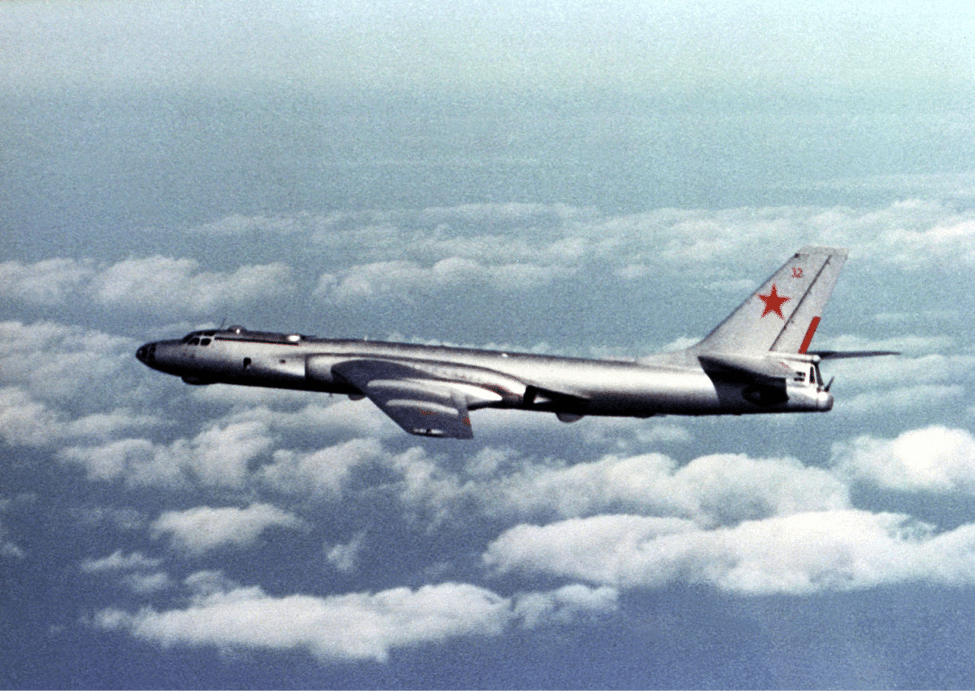
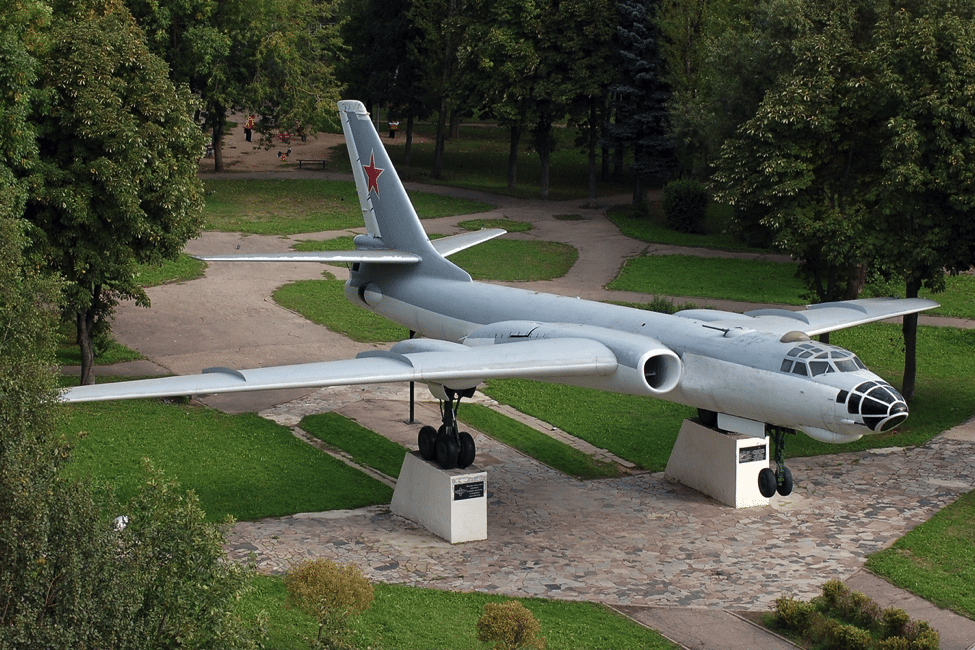
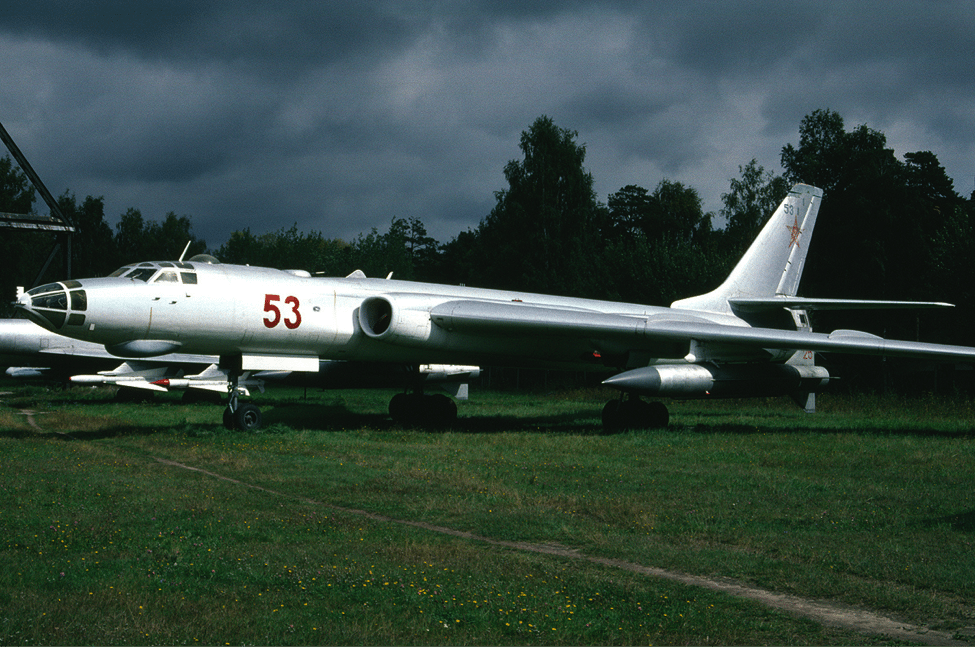
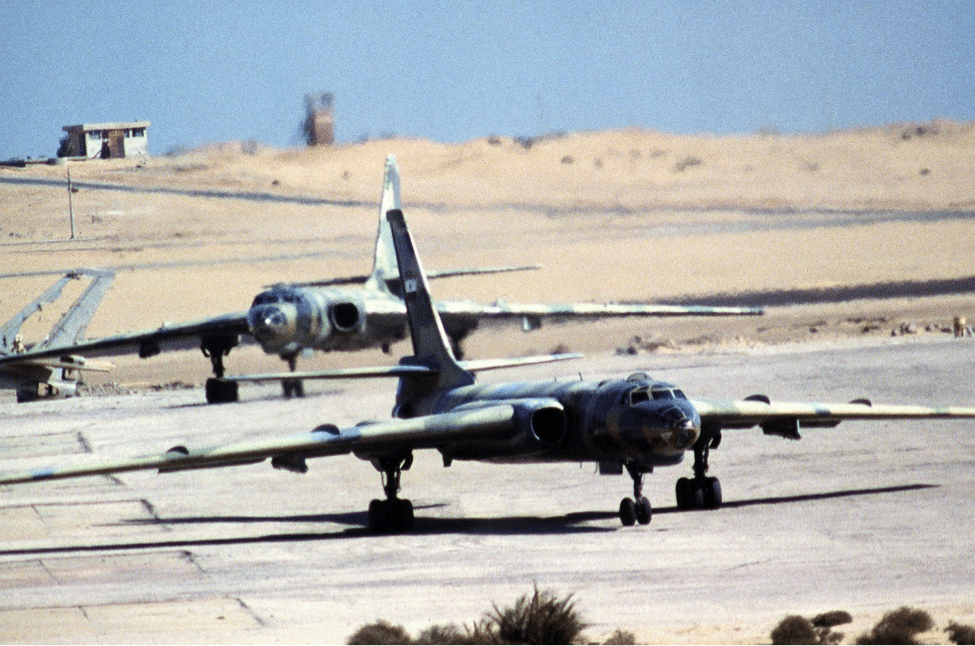
On 27 April 1952, Soviet test pilot N.S. Rybko flew the prototype that would eventually become the Tupelov Tu-16 Badger for the first time. The Tupelov Design Bureau had been drawing bombers since the 1920s. Old Andrei Tupelov (1888-1972) got his start working from designs penned by noted German designer Hugo Junkers. In fact, Tupelov’s first facility started life as a secret Junkers facility outside Moscow in 1925. Tupelov’s early designs were said to be influenced by Junkers, but it didn’t take long for Tupelov to begin work on some of the Soviet Union’s finest bomber aircraft.
Building a Better Bomber
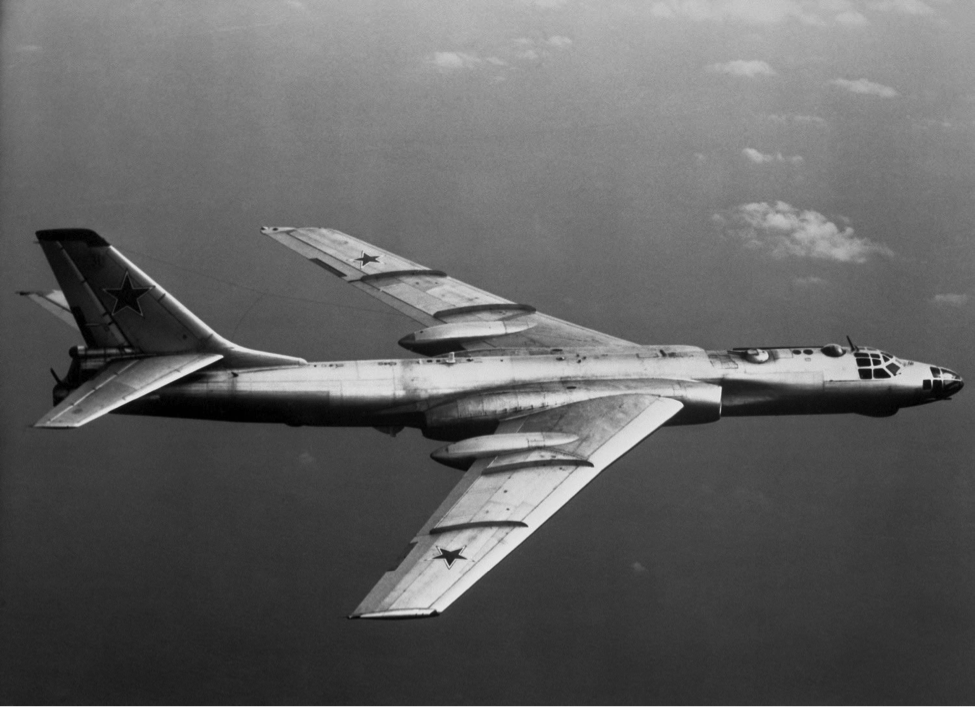
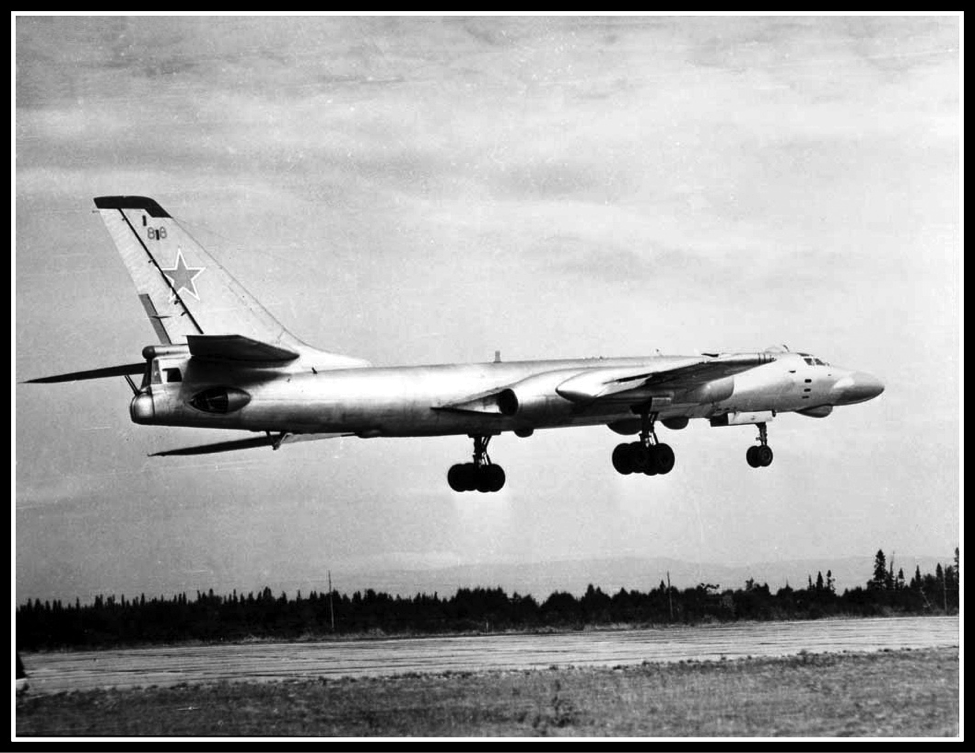
By June of 1950 the Soviet Union needed a bigger and more advanced jet bomber beyond the Ilyushin Il-28 Beagle. Tupelov’s design, the basis for the Tu-16, was initially designated Tu-88. The aircraft had swept wings and tail surfaces, was powered by two turbojet engines mounted in the wing roots, and boasted high-subsonic speed with 5,000-mile range and 11,000 pounds of payload. Defensive armament included 23 millimeter cannon twin-mounted in ventral, dorsal, and tail turrets. During State trials Tupelov received approval for full production of the bomber, now designated Tu-16.
Based on the B-29?
Although the initial Tu-16 prototype was an impressive aircraft, it was the second prototype that more closely met the design parameters. When first flown on 6 April 1953, again by the noted Soviet test pilot Rybko, the airframe was lighter, the nose was longer, fuel capacity had been increased, and defensive armament had been installed. Trials commenced and were completed a year later, with service acceptance another month after that. Tupelov’s design bureau had produced the Tu-4 Bull, a reverse-engineered version of the Boeing B-29 Superfortress. Observers believed the long, thin fuselage of the Tu-16 might have had its origins in the Superfort.
Seeing the Light of Soviet Days
On 29 October 1953, the first production Tu-16 was rolled out at Tupelov’s Kazan factory. Nine Tu-16s flew over the May Day parade in Moscow on 1 May 1954. 40 Badgers flew over the Tsushino Air Show in August of the same year. Once NATO became aware of the new Soviet bomber, it was assigned the NATO reporting name “Badger.” Thus began 40 years of service by the Tu-16 series to the Soviet Union, and later to its individual former states after the end of the Cold War. Including the Tu-104 civilian airliner version, the Tupelov design was adapted into some 30 separate variants.
Jacks-of-All-Trades
A total of 1,507 Badgers were built at three Tupelov factories between 1953 and 1963. Tu-16s became missile carriers, torpedo bombers, inflight refueling tankers, electronic countermeasures (ECM) aircraft, antisubmarine warfare (ASW) aircraft, reconnaissance and maritime surveillance aircraft, and search and rescue (SAR) aircraft. And of course bombers as well. Many of the Badgers built were reworked to perform other or additional roles as their service lives went on. Several Tu-16s were used as experimental testing aircraft and for systems and weapons trials. By the early 1960s the advent of the intercontinental ballistic missile (ICBM) forced many of the Soviet Badgers into early retirement or career changes.
Equipped as Tasked
The bomber version of the Badger carried a six man crew: The pilot, co-pilot, radar navigator/bombardier, and navigator/gunner flew in the forward fuselage.
The radio operator/gunner and tail gunner flew in the rear fuselage and tail. Badger bombers were used extensively during the Soviet war in Afghanistan. But Soviet bombers had to have range. They developed a way to extend range using inflight refueling, but the implementation was quirky. The tanker aircraft would trail a fuel hose off its starboard side wingtip. The thirsty Badger would try to link up with a receiver in its port wingtip.
The Soviets attempted the American hose-and-drogue method but were unable to make it work at first. They eventually got their own system ironed out, and every Badger was equipped to receive fuel while airborne using the wingtip method. Later, Badger tankers mounted a probe-and-drogue “basket” for refueling probe-equipped Soviet aircraft.
Not Your Father’s Orion
The Soviet navy developed the anachronistic Tu-16T torpedo bomber version of the Badger. Obsolete even before its introduction, most of them were reworked into the first versions of the Badger anti-submarine warfare (ASW) aircraft. Equipped with primitive sonobuoy data processing systems and aerial depth charges, these aircraft eventually carried anti-submarine torpedoes. The Badger made an excellent ASW platform, but the Soviets committed more Tu-95 Bear airframes to ASW than they did Badgers.
Missileers
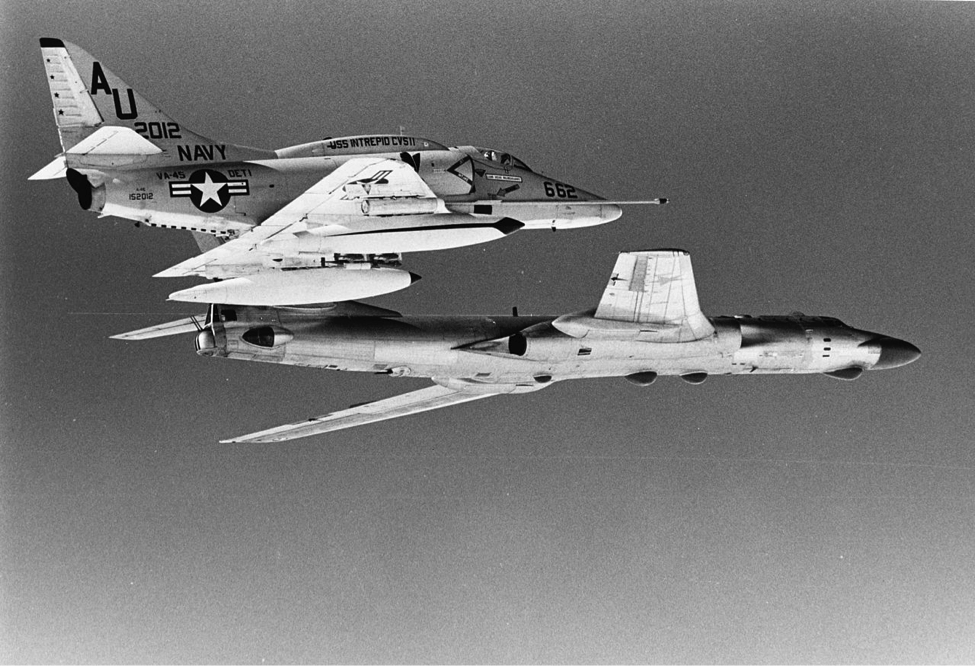
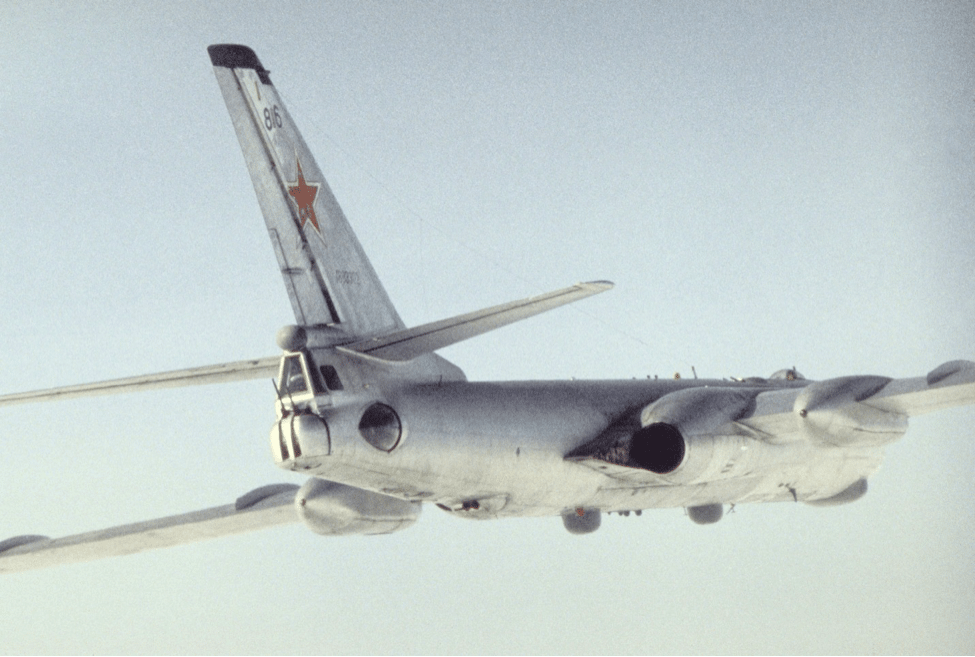
Many Badgers were used as missile carriers. The early Soviet missiles were large and heavy, requiring a bomber the size of the Badger to get them close enough to their targets (often American aircraft carriers) for them to be effective. The Badger could carry two of the AS-1 Kennel missile, which was a truly huge weapon. Badgers were modified to add radar in the nose and radio antennae to the vertical stabilizer. Use of the Kennel also required another crew member, who rode in a dedicated bomb bay mission pod.
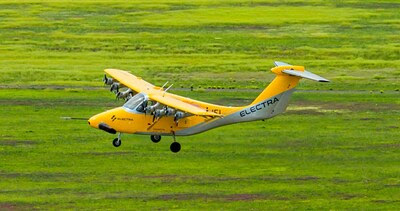
The U.S. Navy has awarded Electra a contract to begin exploring using ship-based eSTOL logistics aircraft in contested environments, to transport supplies and people.
Electra is developing a hybrid-electric, ultra-short takeoff and landing (eSTOL) aircraft to get in and out of small spaces quietly and safely, while flying fast enough to cover long distances. It combines the operational flexibility of a helicopter with the safety and economics of a fixed wing aircraft. Hybrid-electric power provides long ranges without the need for ground-based charging stations.
Filling a unique next-generation capability gap
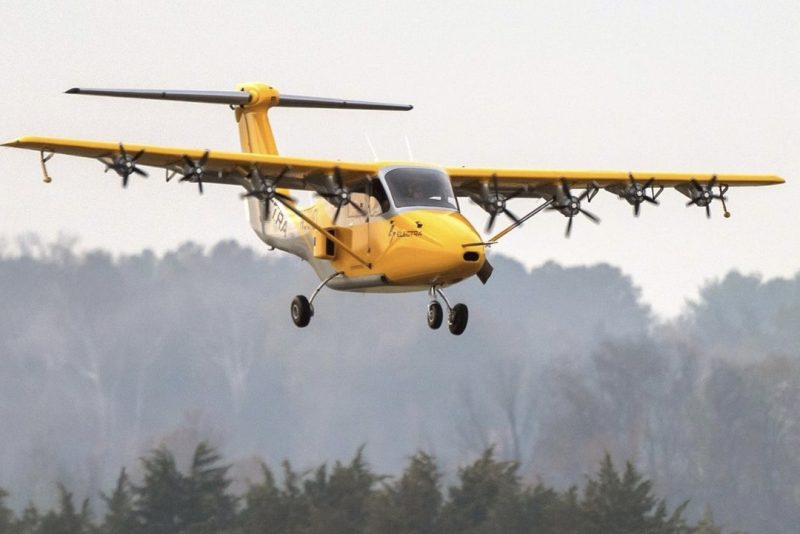
Electra estol tech demonstrator (credit electra)
The Navy knows they need to address next-generation aviation logistics challenges. The Pentagon also wants options for U.S. forces that can respond to new threats and challenges, while reducing carbon output from flight operations.
Electra’s eSTOL aircraft may be the solution to filling unique Navy capability gaps. Electra will work with Navy stakeholders to define specific contested logistics use cases and conduct a conceptual design study to evaluate how its plane can address those gaps.
“With our differentiated combination of hybrid-electric propulsion and a blown fixed wing, we can offer Pacific theater-relevant payloads and ranges, and the ability to operate from rough soccer field-sized spaces as well as many naval vessels and adjacent assets, all from day one,” says Ben Marchionna, Electra’s Director of Technology and Innovation.
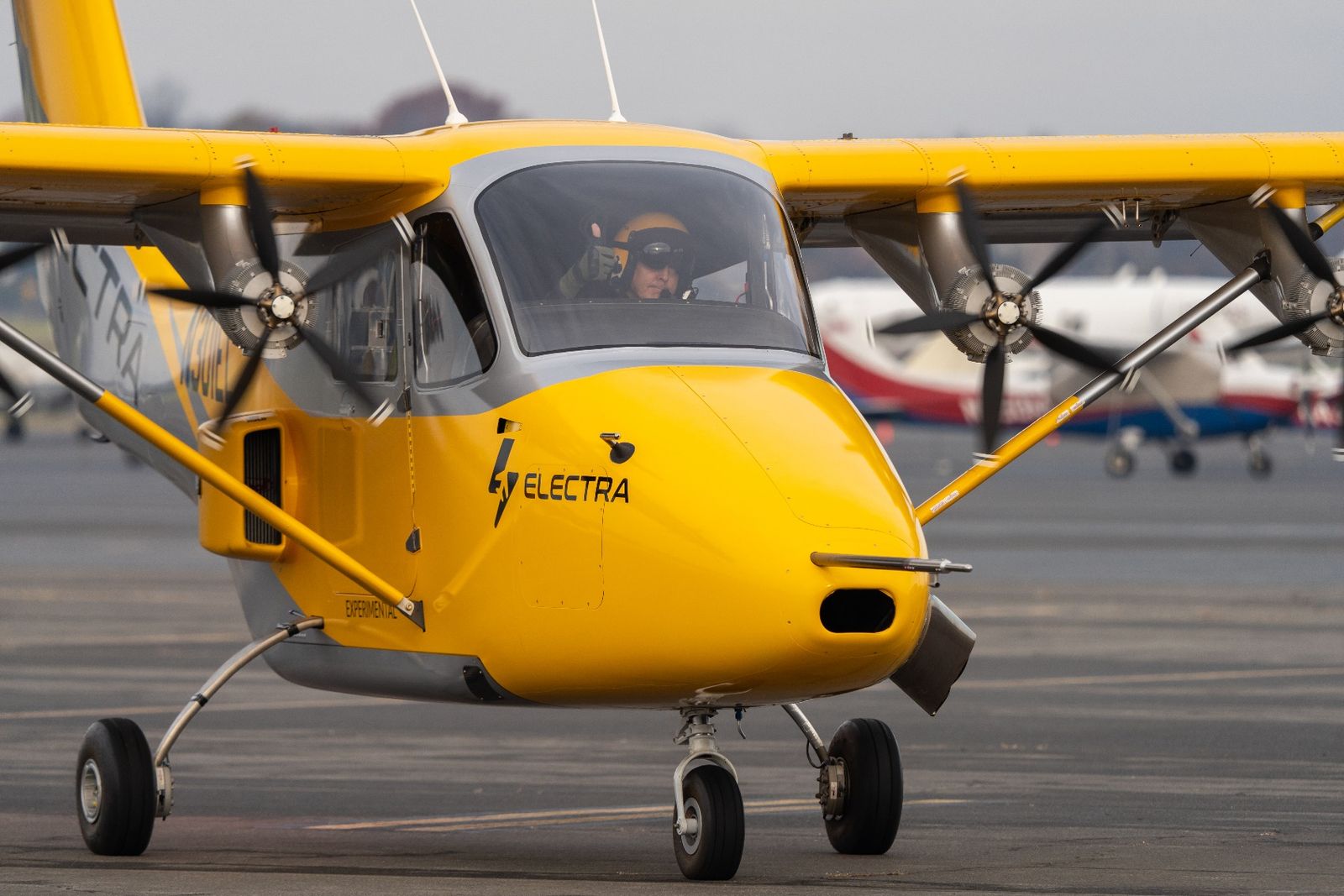
Credit electra
“Beyond boilerplate tactical logistics use cases, we also see this as an enabler for expeditionary power generation, mesh networking, and an essential node for Joint All-Domain Command and Control (JADC2) employment,” added Marchionna. “These are all game-changers for force modernization initiatives within the Navy and Marine Corps.”
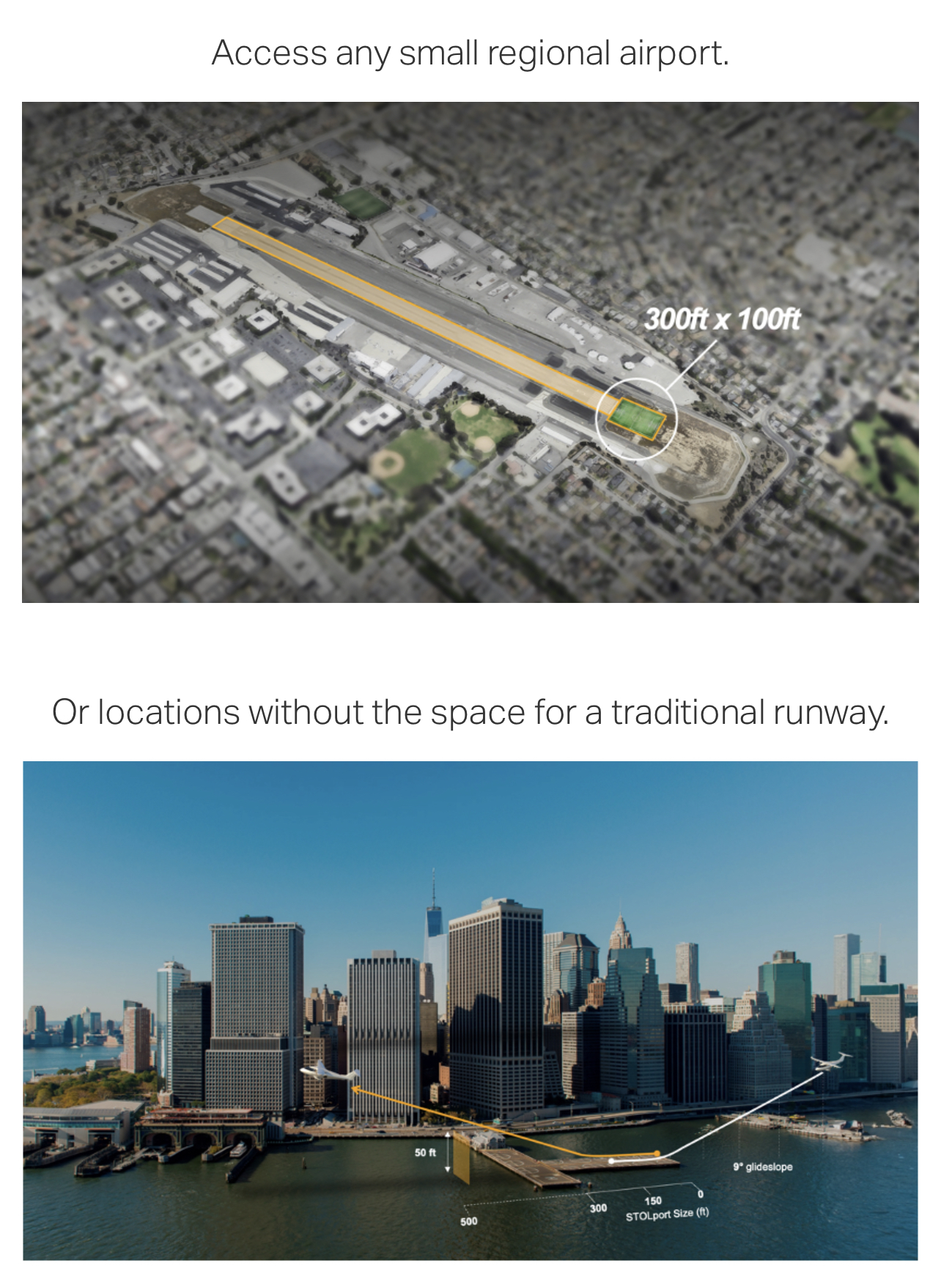
A plane that can takeoff and land in 1/10 the space required of a conventional aircraft, to access locations only a helicopter can, at a fraction of the energy required
Navy is Exploring Using Ship-Based eSTOL Aircraft 17
The company’s eSTOL plane uses a special “blown lift” aerodynamic technique. It employs 8 electric motors to significantly increase wing lift. This multiplies lift so the plane can takeoff and land at just 35mph.
It only needs a 300ft X 100ft area to takeoff & land, and only produces 75 dBA at 300ft. So it’s very quiet, and can access places most aircraft can’t. It can carry up to 9 passengers, each with a 50 pound bag, and cover 500 miles (with 45 minute reserve).
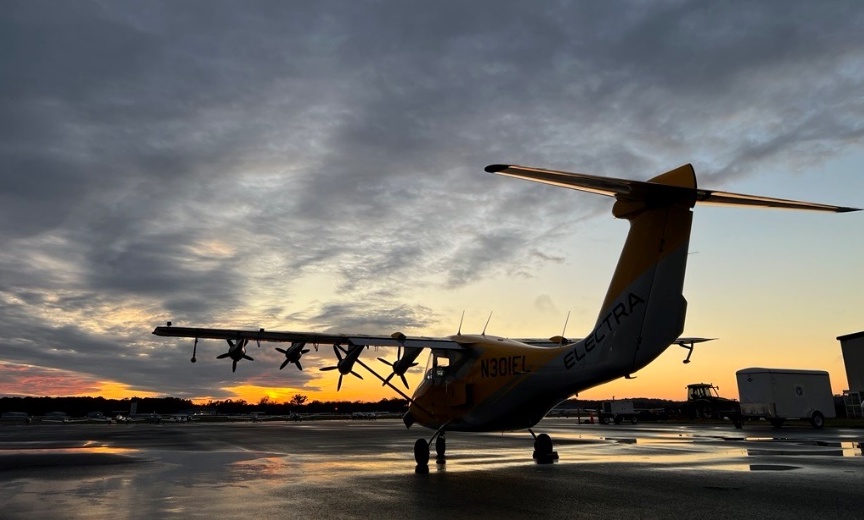
Electra’s technology demonstrator aircraft is already conducting flight tests
Electra’s technology demonstrator aircraft took to the skies for the first time for an all-electric test flight on November 11, 2023. It was followed by a hybrid-electric flight November 19. The first flight lasted 23 minutes and reached 3,200 feet, flying approximately 30 miles. The tests were conducted at Manassas airport in Virginia.
Electra says their plane will deliver 2.5x the payload and 10X longer range, with 70% lower operating costs than vertical takeoff alternatives. With far less certification risk.
Ongoing flight testing of Electra’s 2-seat eSTOL technology demonstrator aircraft showcases its capability to operate as a contested logistics platform with ground rolls as short as 150 feet. Electra’s production aircraft will carry 9 passengers or 2,500 pounds of cargo up to 500 miles. (Credit: Electra)
The Army and Air Force are also interested in Electra’s eSTOL aircraft.
And yes, it’s a fixed-wing. There’s no tilting of the wing or rotors for operation. So, it can be operated with a standard fixed wing pilot’s license.
Electra expects to start flight testing a full-scale prototype in 2026. They hope to bring the new plane to market by 2028, after achieving type certification under FAA’s Part 23 rules.
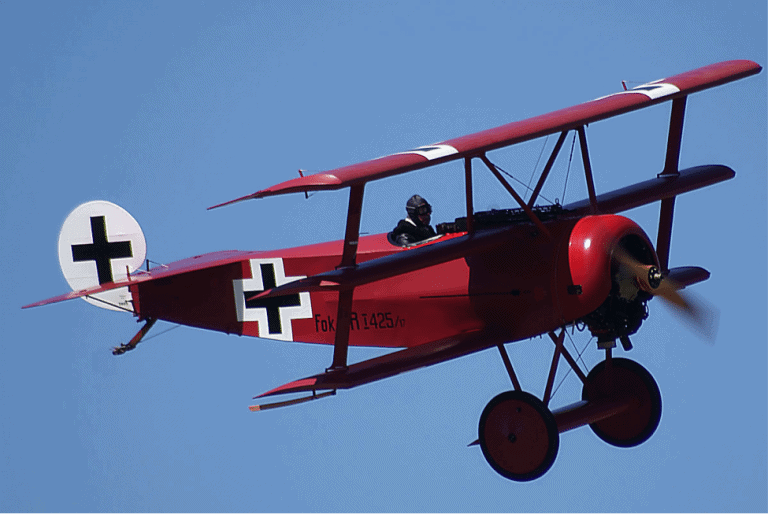
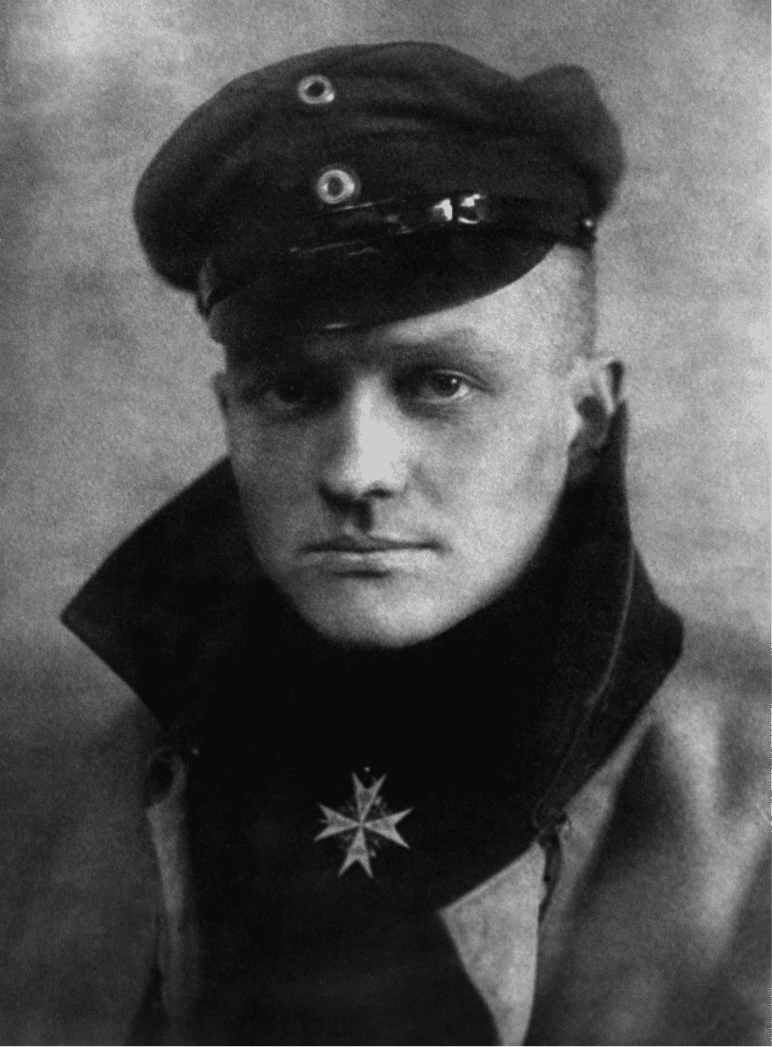
Manfred von Richtofen’s 80 Victories Was Tops For World War I
On 21 April 1918, German ace Manfred von Richtofen was killed in action. Accounts vary as to whether the “Red Baron” was brought down by British Empire (Canadian) SE5A fighters or by ground fire while engaged in a low-altitude dogfight. Richtofen’s death ended the career of World War I’s leading ace of the Imperial German Army Air Service, with 80 confirmed aerial victories.
Grounded With an Eye on the Skies
After his start in the cavalry, Richtofen began his career in the service as a reconnaissance officer on both the Eastern and Western Fronts, seeing action in Russia, France, and Belgium. Richtofen considered his talents wasted as a dispatch runner and telephone operator. When he was transferred to a supply assignment, he impulsively applied for and received a transfer to the Die Fliegertruppen des deutschen Kaiserreiches (Imperial German Army Air Service), later known as the Luftstreitkräfte. Manfred joined the flying service at the end of May in 1915, setting the stage for his future exploits in the air.
Early Unconfirmed Kills
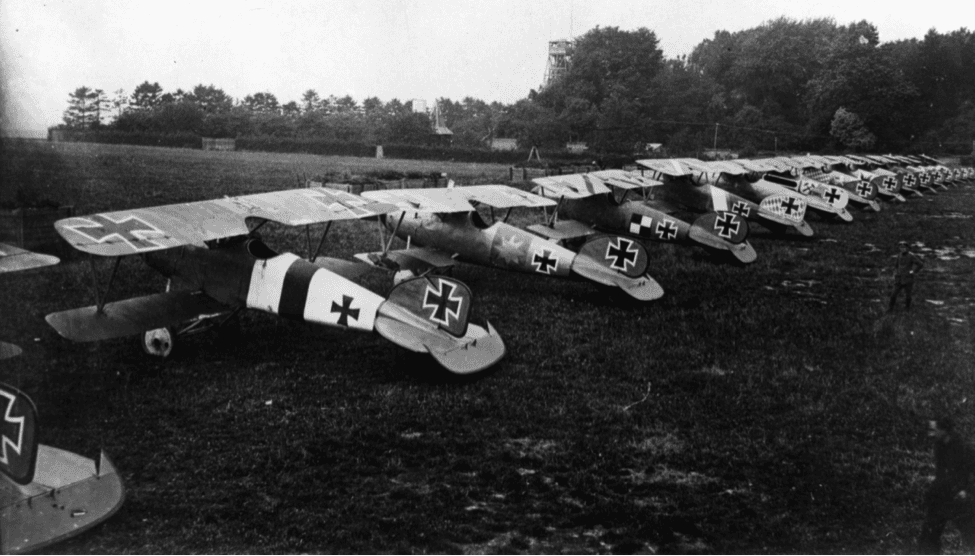
Richtofen scored an unconfirmed kill as an observer, then entered pilot training in October 1915 after meeting German ace Oswald Boelcke. Although he did not initially impress with his flying skills and even crashed on his first attempt, he persisted and gradually became proficient, eventually excelling with the German Albatros fighters. In April 1916, he scored another unconfirmed kill. Later, when Boelcke and Richtofen met again, Boelcke selected Richtofen for one of the first dedicated German fighter squadrons, Jagdstaffel 2.
First Victory and those Silver Cups
Richthofen scored his first confirmed aerial victory on 17 September 1916. This started a 19-month period during which he ordered silver cups engraved with the type of aircraft he shot down and the date of each victory. He collected 60 cups but had to stop the practice due to a silver shortage in Germany. Despite this, he continued flying and accumulating victories. His tactics were considered conservative but effective; he and his squadron typically attacked from above, with the sun at their backs—tactics still in use today.
Needing a More Agile (and Red) Fighter
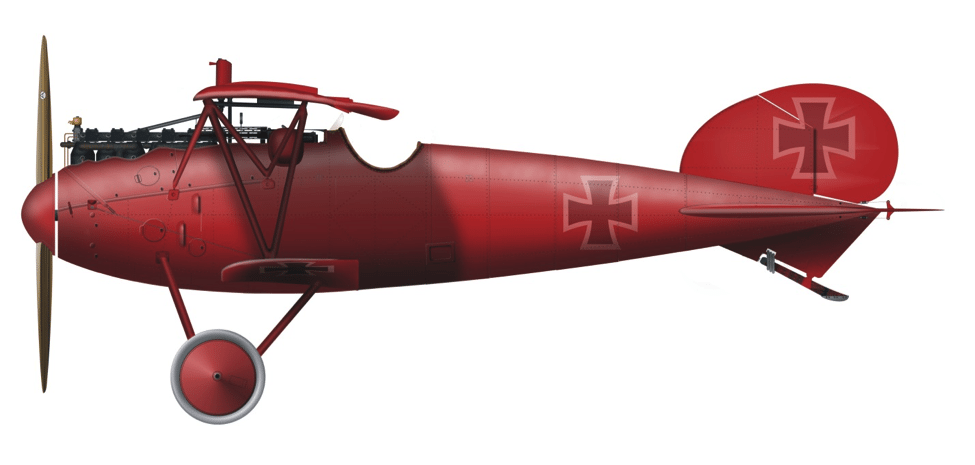
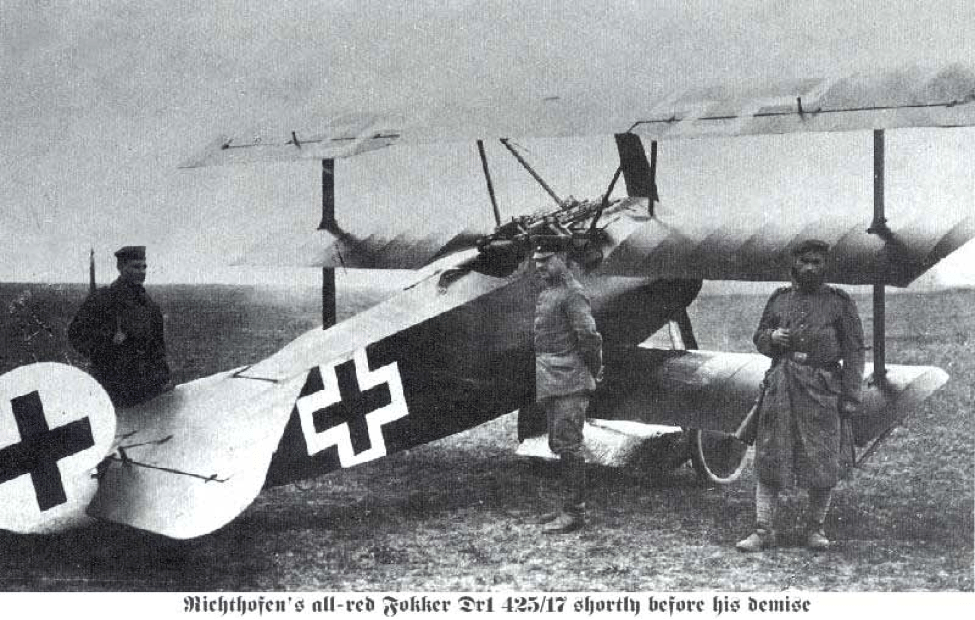
Richthofen’s victory over British ace Major Lanoe Hawker VC on 23 November 1916 convinced him that he needed a more agile fighter. He flew several versions of Albatros biplanes before flying the iconic Fokker Dr.I triplane. Of his 80 victories, Richtofen scored only 19 in the triplane, and those came after its wings were strengthened. The first time he painted his fighter red was in January 1917.
For the Rest of the Red Baron Story Bang NEXT PAGE Below
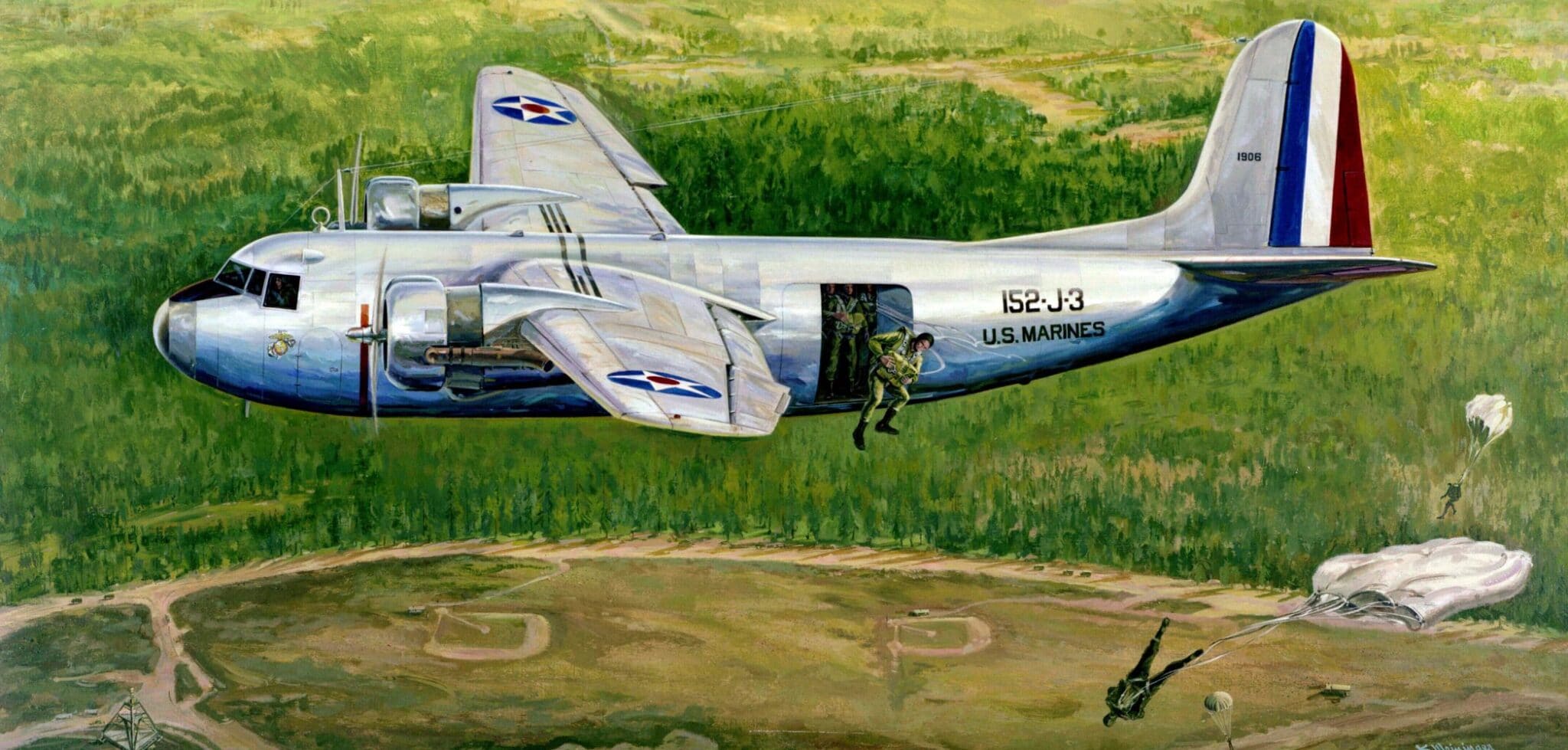
The C-82A Packet was a groundbreaking transport, but in the end, it just couldn’t hack it.
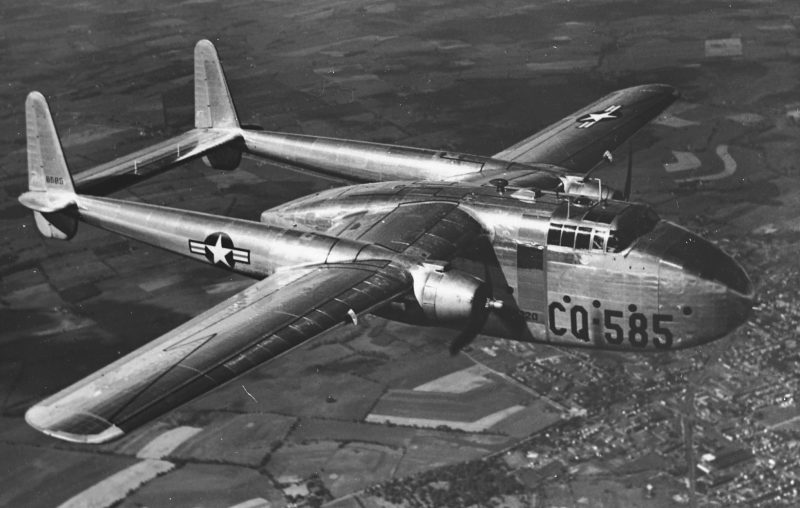
When Fairchild began the development of what would become their C-82 Packet to meet a 1941 requirement for a heavy-lift cargo aircraft, they referred to the design as the F-78. Initially, the aircraft was to be built using non-critical materials like plywood and steel (see the Bell XP-77 fighter) instead of aluminum. Fortunately, by 1943, the design specs changed, and the airlifter became an all-metal design. After a mockup of the design was approved in 1942, the Army Air Forces awarded a contract for a single prototype, which was then designated XC-82.
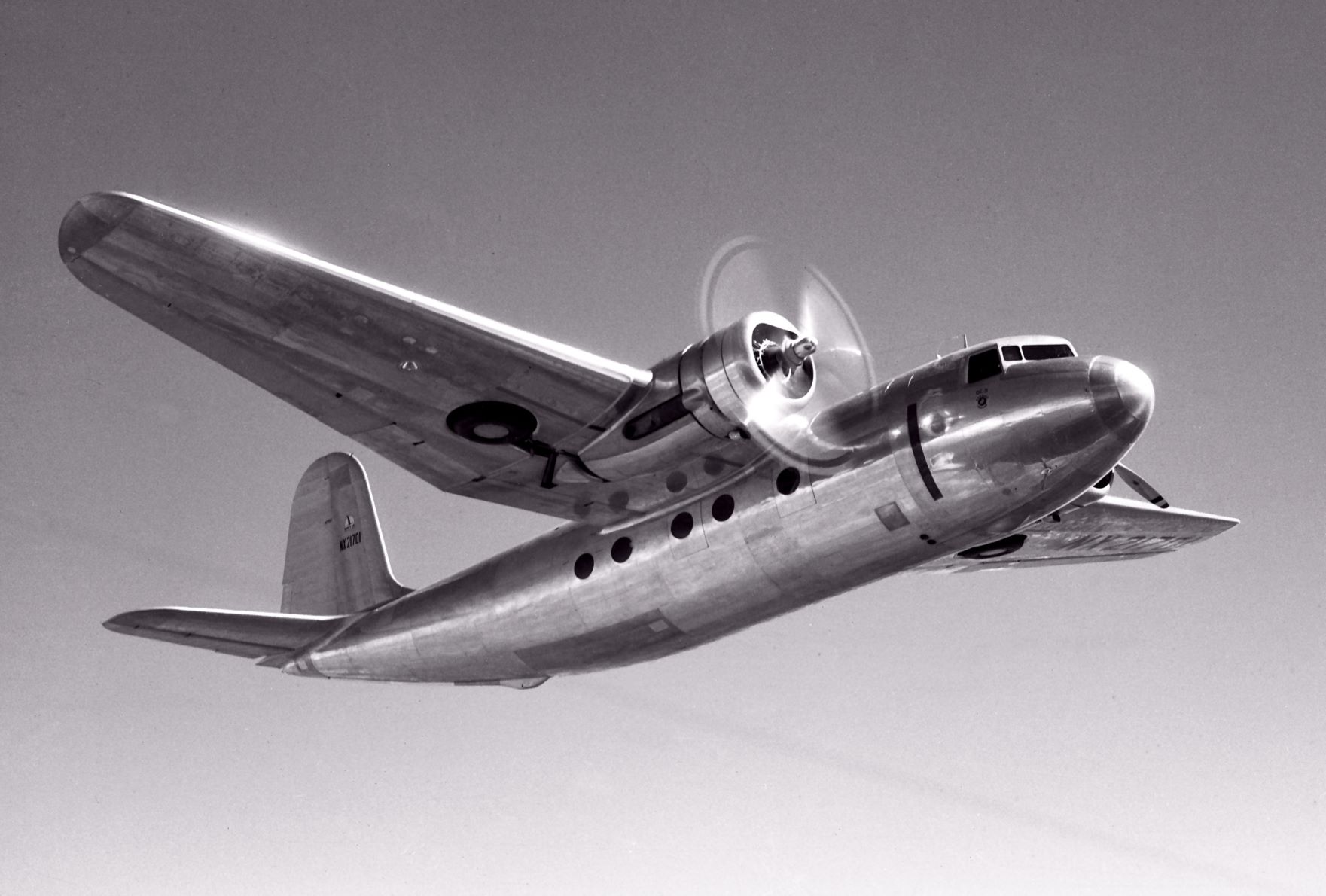
XC-82 “Packet” | Image via National Museum of the US Air Force
The Design Was Definitely Different
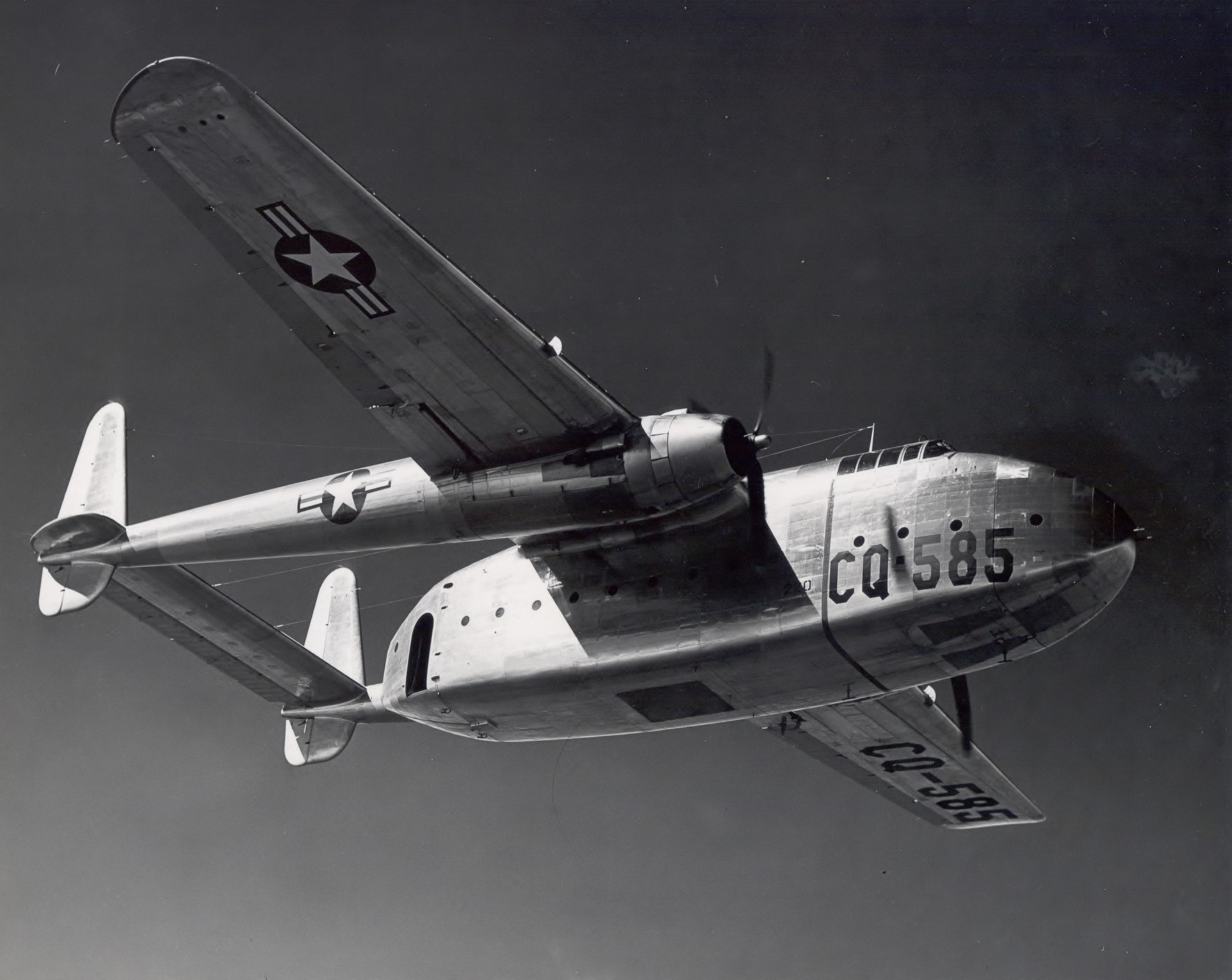
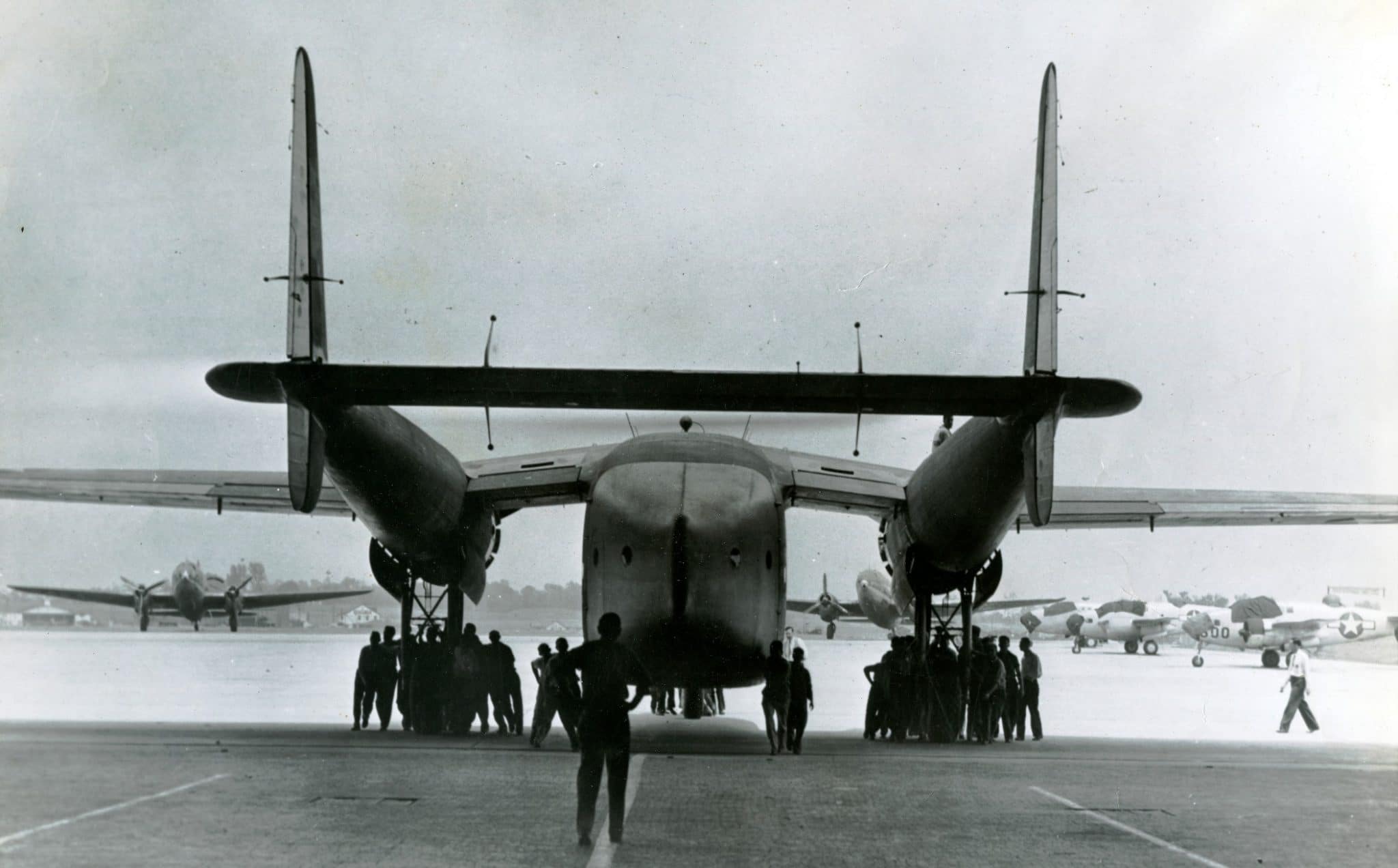
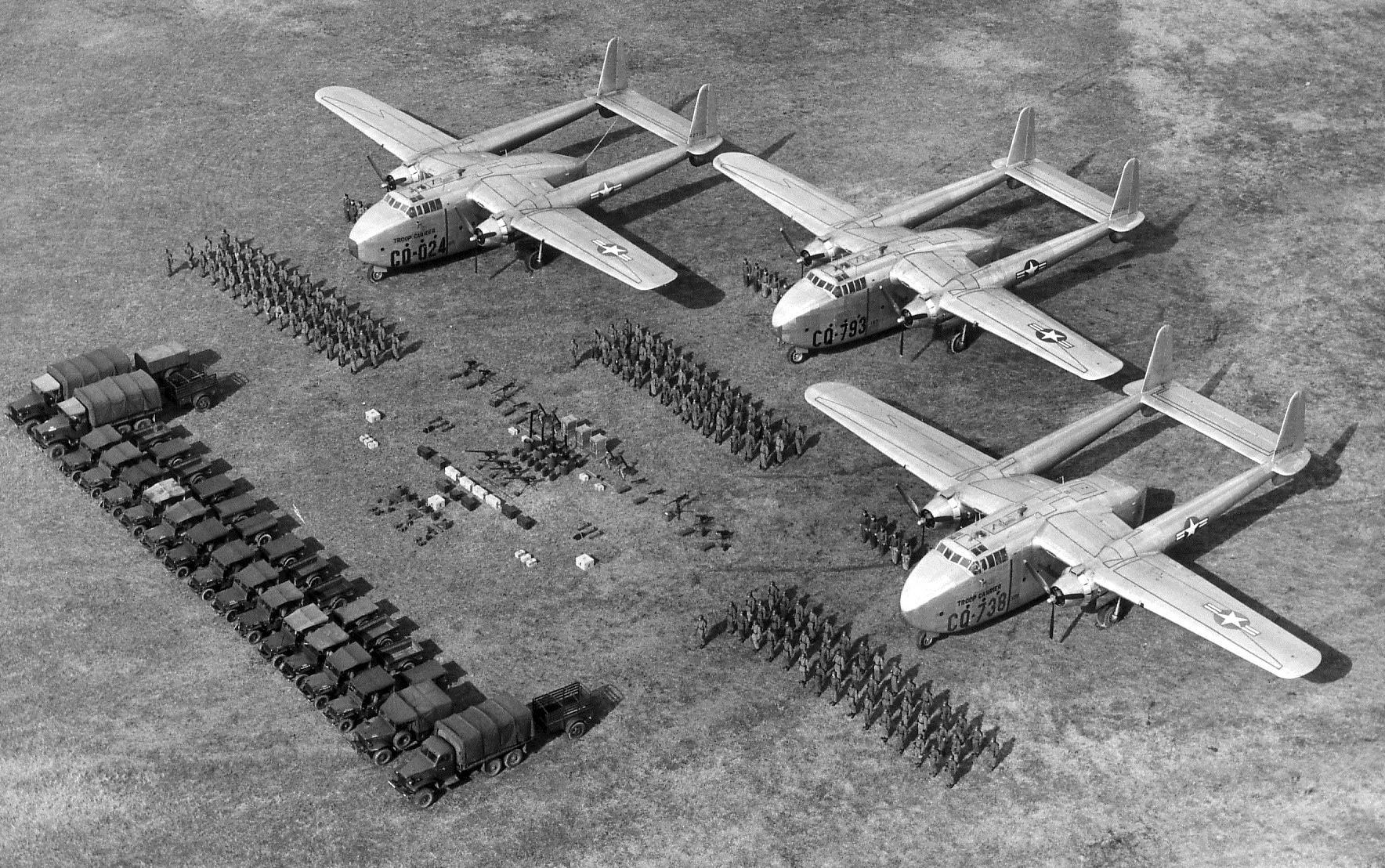
Fairchild’s design incorporated a high-mounted wing but with a center-mounted ground-accessible fuselage. Attached to the wings were twin booms, each extending aft and ending in a vertical stabilizer and rudder with a horizontal stabilizer and elevator mounted between the two vertical stabilizers. The wings had a pronounced anhedral angle between the fuselage and the inner booms to allow for manageable landing gear geometry. Power for the airlifter was provided by two 2,100 horsepower Pratt & Whitney R-2800-34 Double Wasp 18-cylinder radial engines mounted to the wings in leading-edge nacelles opposite the tail booms. The aircraft resembled nothing else as much as a squared-off up-sized Lockheed P-38 Lightning.
C-82 Packet | Image via National Museum of the US Air Force
Roomy and Accessible
The fuselage of the XC-82 was roomy- far roomier and easier to access than either the Curtiss C-46 Commando or the Douglas C-47 Skytrain- the workhorses of the USAAF’s Air Transport Command at the time.
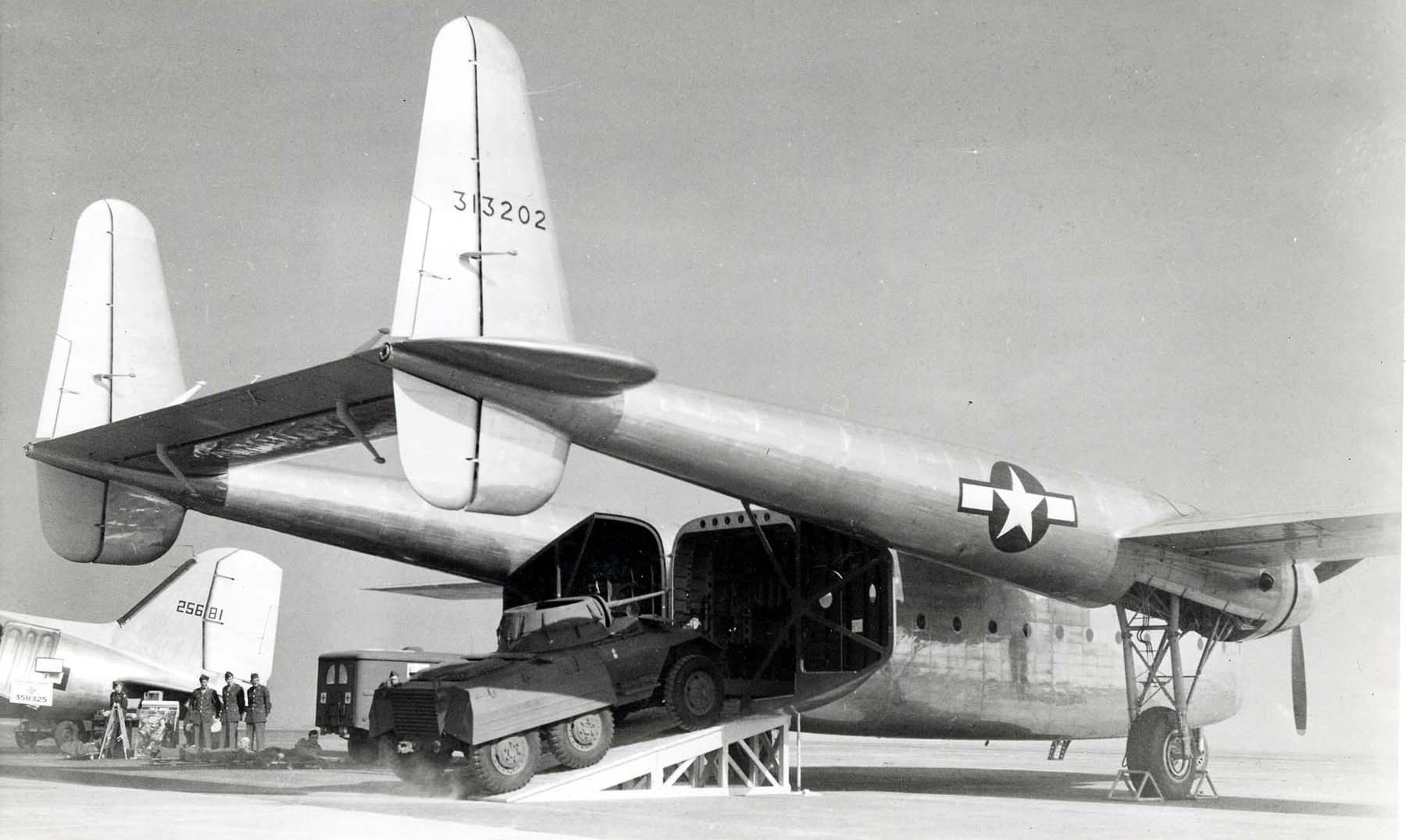
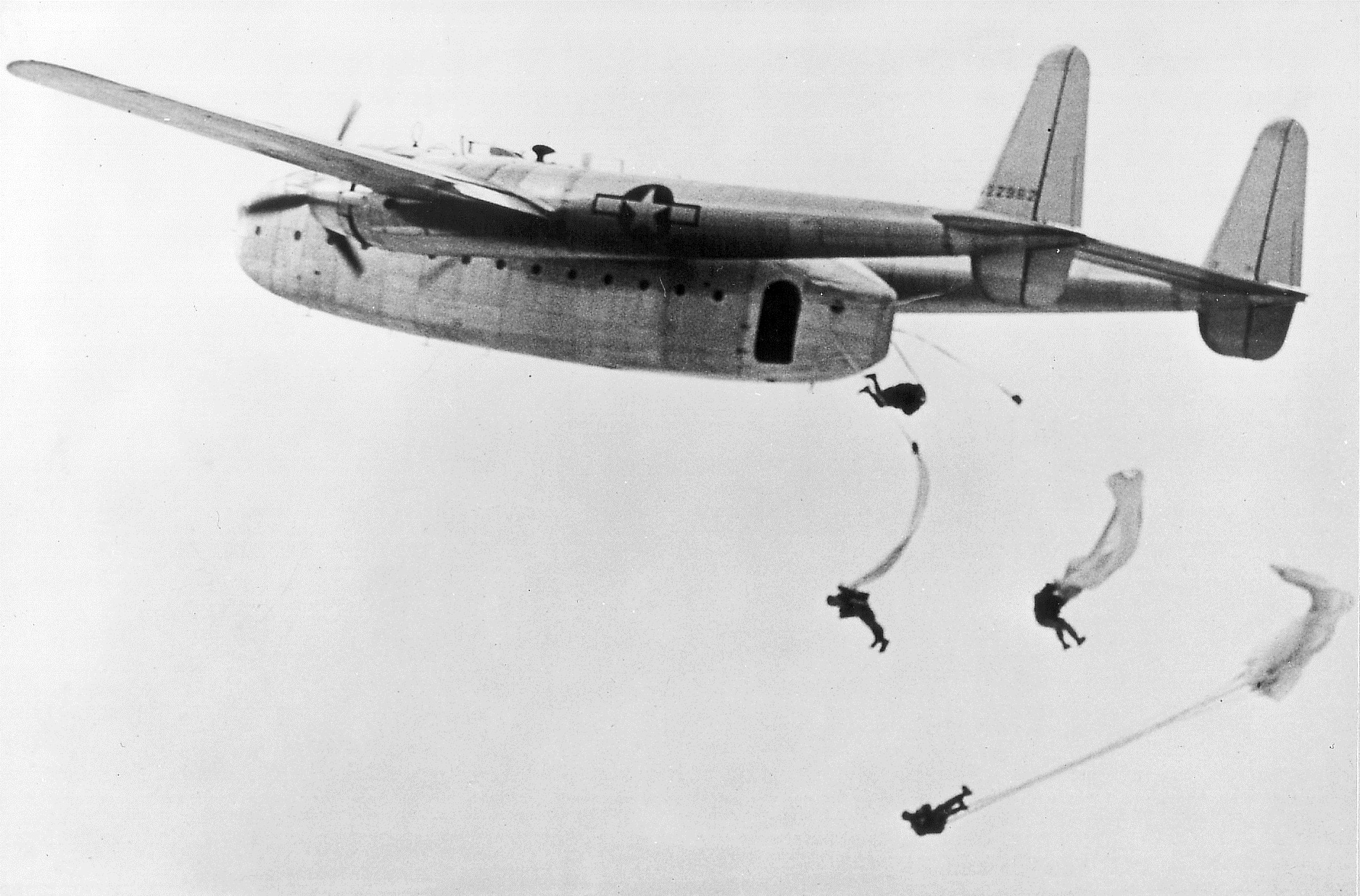
The aircraft was equipped with removable clamshell doors at the rear of the cargo hold, which allowed wheeled or tracked vehicles to be driven under the high-mounted empennage straight onto the aircraft via ramps. Personnel capacities were 42 fully-equipped paratroopers, 34 stretchers, or 78 persons in an emergency evacuation configuration.
The flight deck was roomy, too, capable of accommodating a flight crew of five with room to spare- but with no standing headroom. The aircraft was supported by heavy-duty retractable tricycle landing gear.
C-82 Packet | Image via National Archives
Flexible But Flawed
Envisioned as a multi-use airlifter built to execute cargo carrying, troop transport, paratrooper transport/drop, medical evacuation, and even glider towing missions, the Fairchild design was a groundbreaking design method.
Other airlifter designs were in development, but none were more capable or flexible (on paper) than the one from Fairchild. Paratroopers could simultaneously exit the aircraft on both sides of the rear cargo hold. But because the aircraft was conceived, designed, approved, and initially flown during wartime, some inadequacies were bound to be discovered.
And, indeed, some were.
Image via National Museum of the US Air Force
First Flight and First Problems
The prototype XC-82A flew for the first time on 10 September 1944. Fairchild began delivering C-82A production models built at their Hagerstown, Maryland assembly plant in June of 1945, but few were delivered before the war ended.
Once the aircraft entered service, those inadequacies became serious problems. The R-2800 engines, famous for powering several of the aircraft that helped win World War II, didn’t provide enough power for the C-82A. Inadequate, too, was the basic structural design of the airframe, especially for the loads it was expected to carry.
Image via National Archives
Best for Large But Lighter Loads
Fairchild named the C-82A the Packet after the small sailing ships that carried cargo between coastal seaports. During their relatively short operational service with Tactical Air Command Troop Carrier squadrons and the Military Air Transport Service, C-82s were used for transporting troops and cargo along with paratrooper deliveries and glider towing.
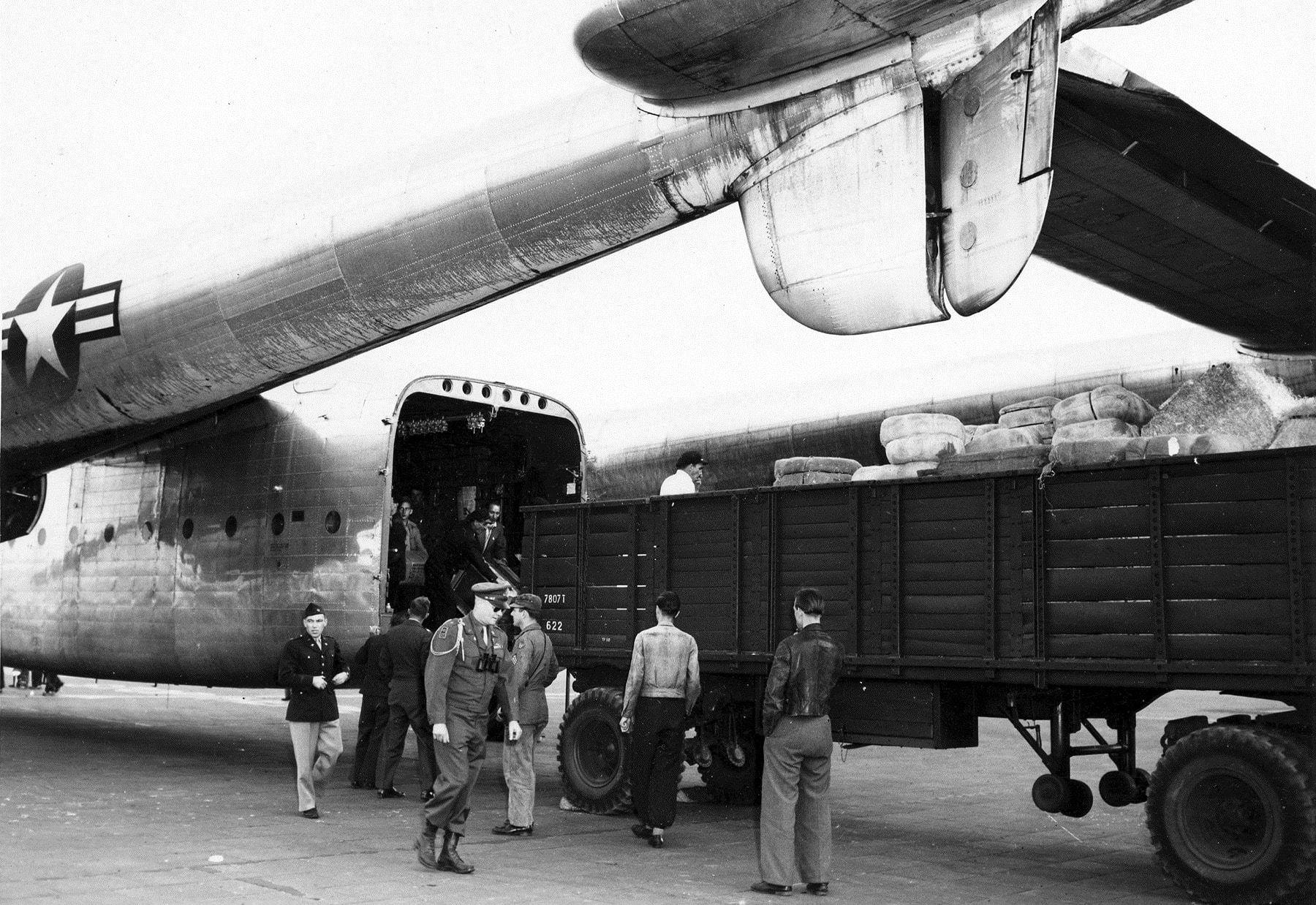
However, perhaps the C-82’s best contribution was as an outsized cargo hauler flying disassembled trucks and specialized airfield equipment into the Zone during the Berlin Airlift. Four C-82As working the Airlift were fitted with specialized delivery equipment and redesignated as JC-82As. Fairchild only delivered 220 C-82A Packets, all of which were retired by the Air Force by 1954. Although Fairchild’s airlifter saw a short career with the US Air Force, they served in other roles for many years.
Image via National Museum of the US Air Force
For the Rest of the Packet Story Bang NEXT PAGE Below
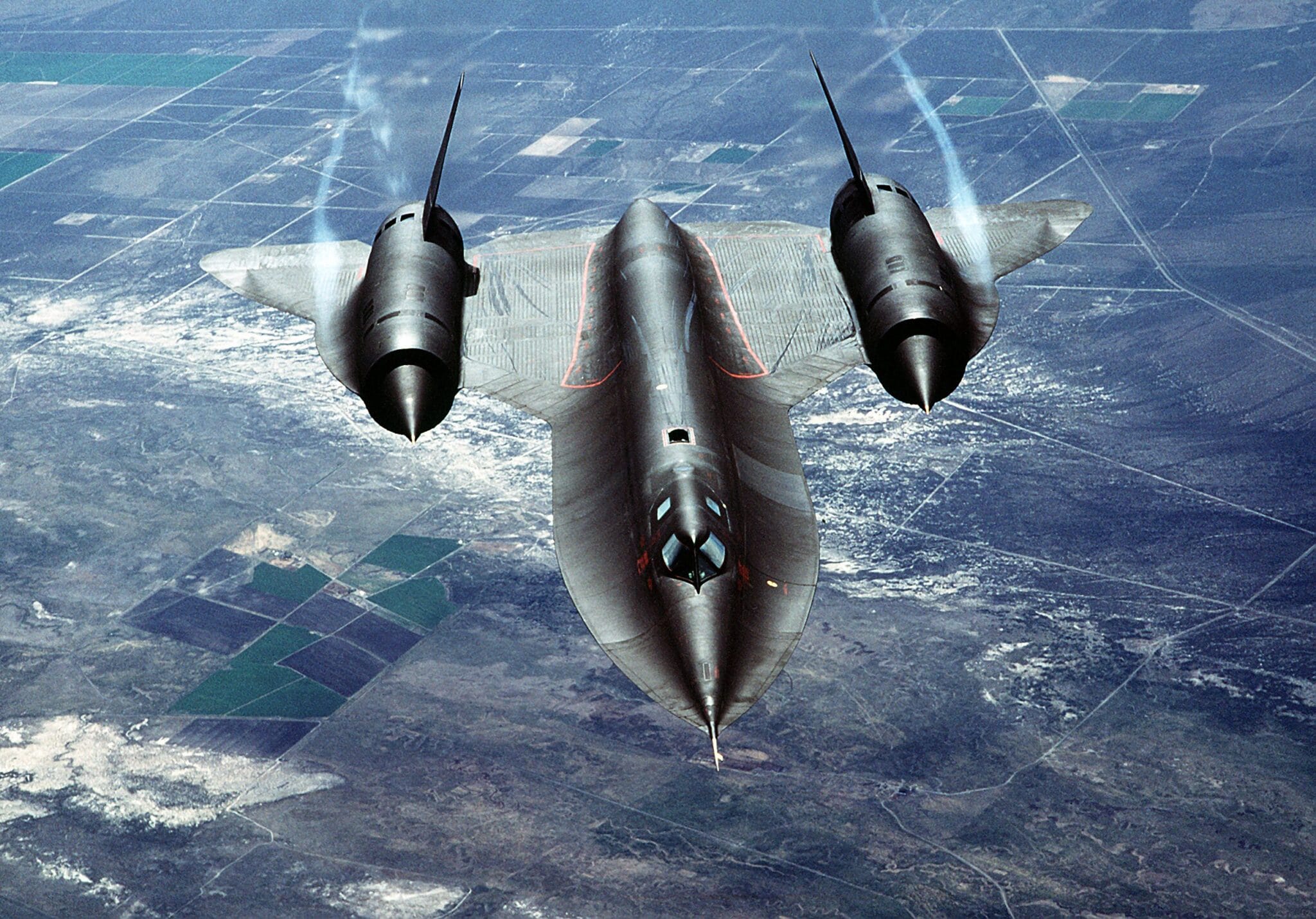
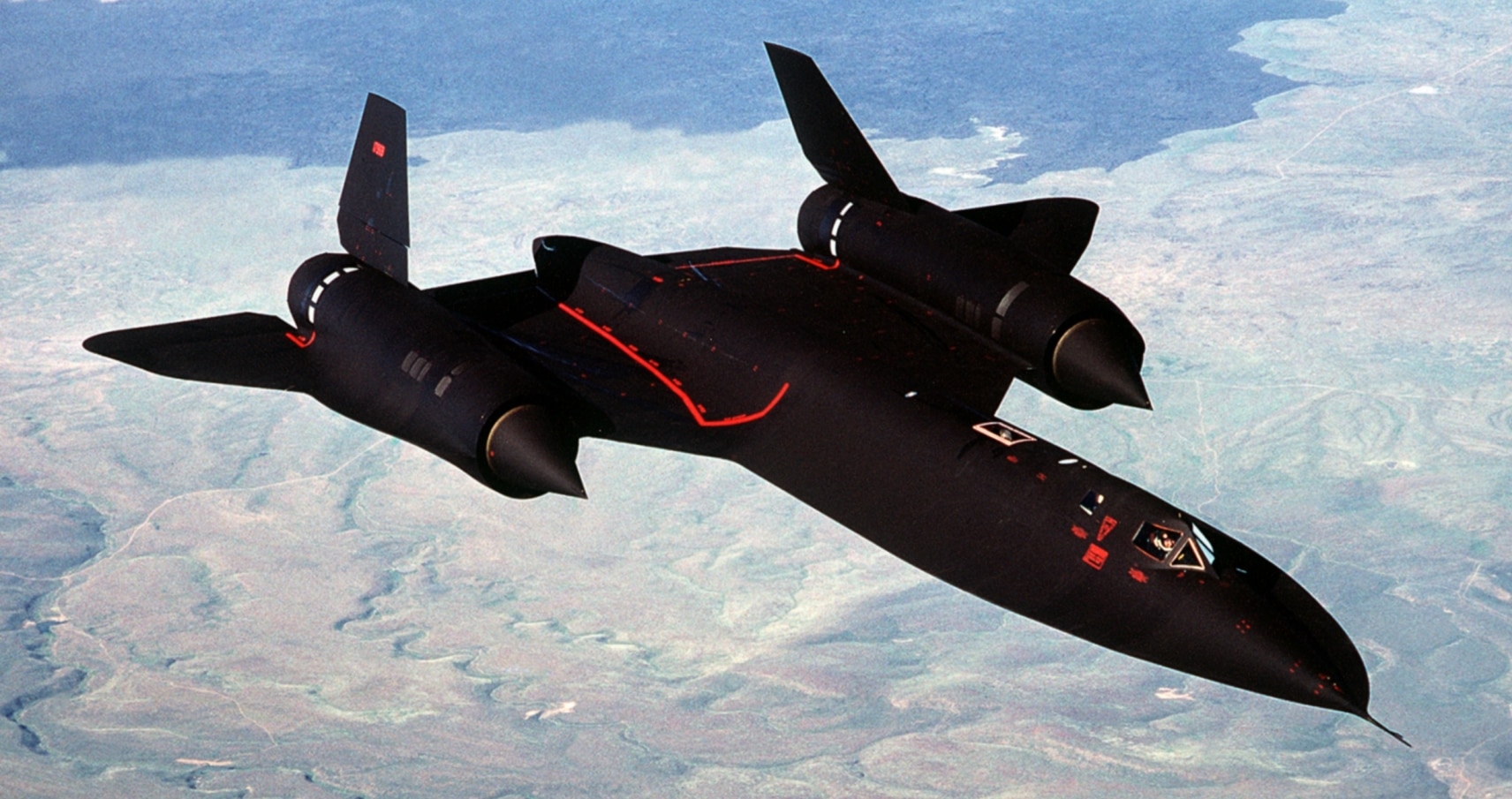
The Blackbirds Inhabited Okinawa for 22 Very Fast and Loud Years
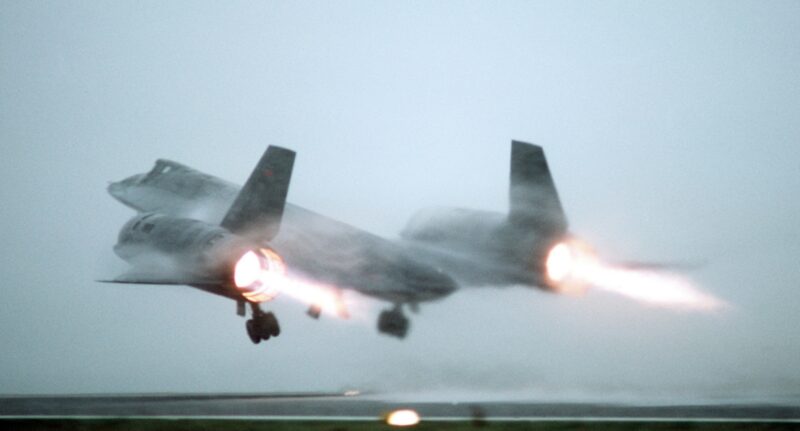
Lockheed’s SR-71A Blackbird flew missions all over the world between its introduction in 1966 and its retirement in 1998. One of the primary locations from which Blackbirds operated was Kadena Air Base (AB) on Okinawa. 9th Strategic Reconnaissance Wing (SRW) SR-71As began arriving at Kadena, AKA The Rock, on 8 March 1968. The movement of the jets from Beale Air Force Base (AFB) in California to Kadena was code-named Glowing Heat, while actual SR-71A operations out of Kadena were code-named Senior Crown. Watch one of the 9th SRW Blackbirds preparing for blastoff, and then doing just that, from runway 23R in this video uploaded to YouTube by Maximus Aviation.
By 15 March 1968 the Blackbirds were declared operational at Kadena. Six days later pilot Major Jerome F. O’Malley and reconnaissance systems officer Major Edward D. Payne flew SR-71A serial number 61-7976 on the first operational mission from Kadena. At first the operational SR-71A missions were code-named Black Shield, and later Giant Scale. The Blackbirds averaged about one sortie a week for nearly two years. But the SR-71As were averaging two sorties per week by 1970. Incredibly these maintenance-intensive machines were averaging nearly one sortie flown every day by 1972.
image via us air force
The Definition of Futility: Shooting SAMs at the SR-71A
The North Vietnamese fired off more than 800 surface-to-air missiles (SAMs) at the Blackbirds overflying their territory and taking their pictures. While deployed at Okinawa, the SR-71As (and their aircrews as well) were nicknamed Habu by the Okinawans, after a particularly deadly and bad-tempered pit viper indigenous to Japan. 2,410 SR-71A missions were flown out of Kadena over North and South Vietnam, Laos, Cambodia, Thailand, North Korea, the airspace contiguous to the USSR and China, and later four missions (11 hours each!) over the Persian Gulf states during the late 1980s. The last SR-71A left Kadena AB on 21 January 1990.
Five Airlines That Flew Aircraft You Probably Don’t Remember
A recent trend on social media is to ask the question, “Tell me a favorite baseball player who played for an unexpected team.” The answers are pretty entertaining if you are a baseball fan. For instance, did you remember that Ken Griffey Jr. played for the White Sox? Or that Pete Rose was once a Montreal Expo? The posts highlight stints from well known stars like Sammy Sosa, Jose Canseco, and Frank Thomas.
As avgeeks, it got us thinking. What if we asked a similar question about airlines? What airlines flew planes that most of us won’t remember? Here are five we came up with. Let us know how many you remembered and post more of your ‘rare air’ memories in the comments below.
Southwest and the 727
Southwest Airlines 727, operated by Braniff. Photo: Southwest
Southwest is known as a 737 airline through and through. Yet they flew they had 727s in their fleet twice during their half century of operation. The first time was part of a settlement between Braniff and Southwest. Braniff settled the lawsuit by providing a single 727 on lease as payment. (We wrote about it here a few years ago). Southwest also leased 727s in the early 1980s to cover their California expansion before enough 737-300s could be delivered.
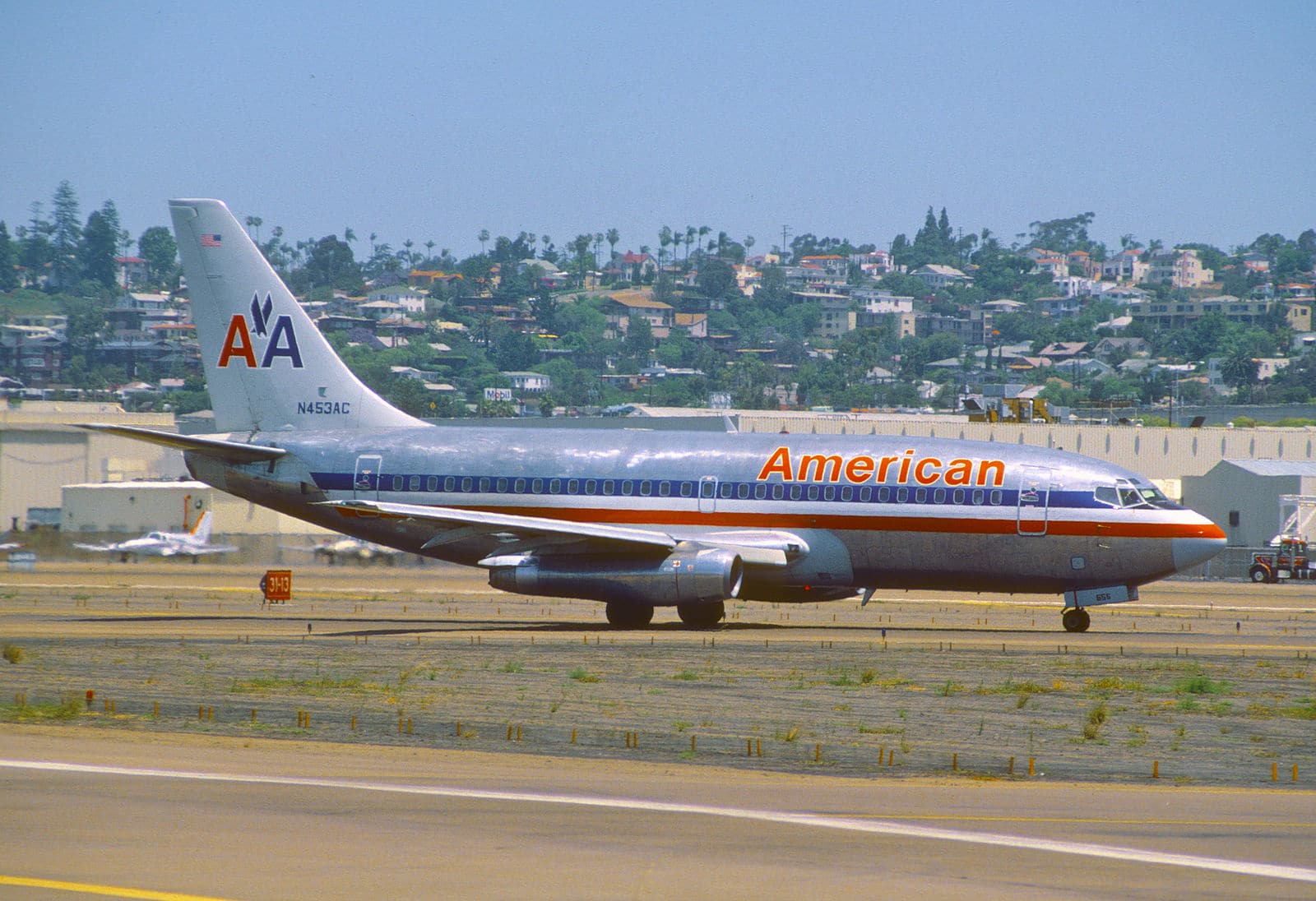
American Flew the 737-200
American Airlines Boeing 737-200. Photo by AeroIcarus (CC 3.0)
American Airlines is now a large 737 operator, flying both the 737-800 and 737-MAX8. Back in the 80s though, they primarily flew the 727 and MD-80 for their short and medium stage routes. When American acquired AirCal in 1987, they inherited a fleet of 737-200s and 737-300s. For a time, the 737-200 made its way into the silver bird livery. American sold the 737-300s to Southwest and 737-200s to other various carriers. All American Airlines 737s were disposed of by 1991.
America West and the 747
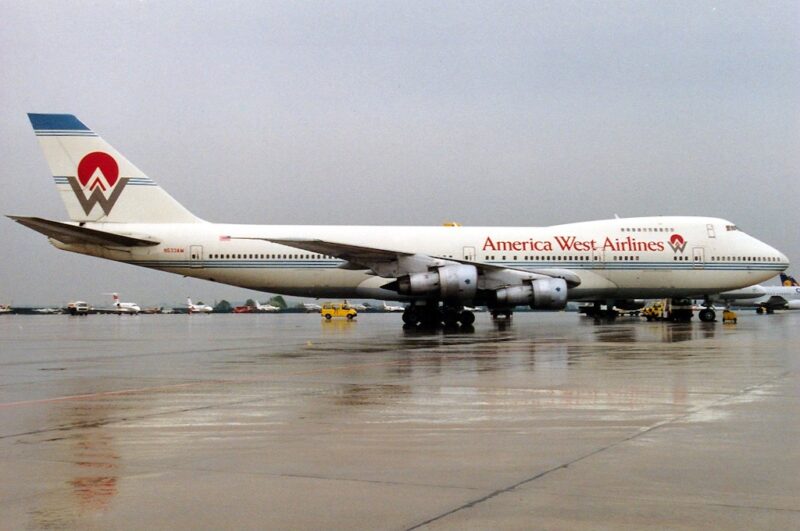
One of the original low cost carriers was America West Airlines. With deregulation in full swing, they planned an ambitious expansion to Hawaii and Japan with 747-200s. Unfortunately, the first Gulf War and subsequent down turn of the economy resulted in America West scuttling plans for long-haul expansion. They returned to their roots flying just 737s and A320s, eventually merging with US Airways, then eventually merging into American Airlines today.
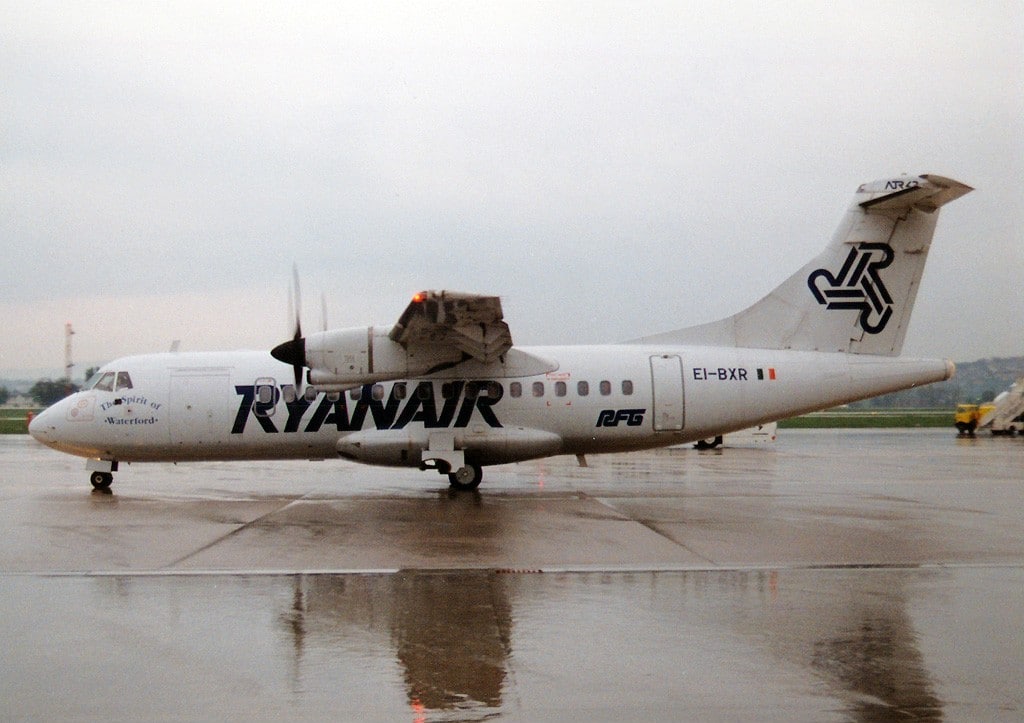
Ryanair and the ATR-42
Rare photo of a Ryanair ATR-42. Photo by: Torsten Maiwald (Wikipendia: GNU 1.2)
Ryanair is another prolific Boeing 737 operator that flew some lesser known aircraft. Today hundreds of Ryanair 737s ply the skies. They even operate a Boeing 737 MAX in a 200 seat configuration (ouch!). While Ryanair is one of the best known low-fare carriers in Europe today, most don’t realize that the airline started in the early 1980s as a very small carrier on select regional routes. During that time they flew Embraer 110s, BAC 1-11s and even ATR-42s for a year. The ATRs only flew with Ryanair for a year before being dumped in favor of other aircraft.
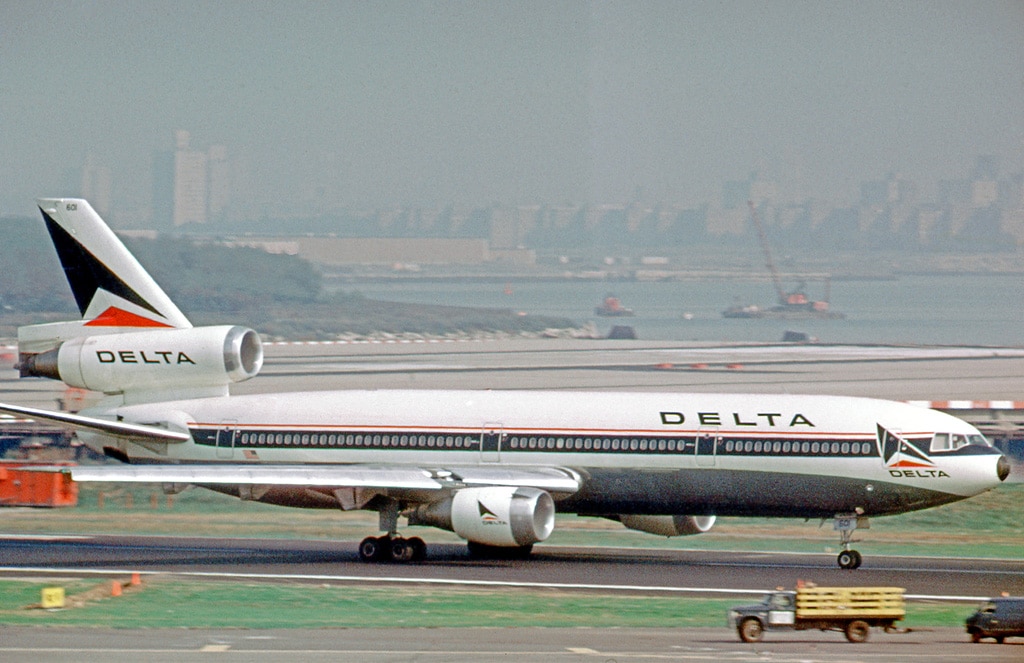
While Delta was known for its L-1011 and MD-11 operations, Delta also flew the DC-10 for two stints, one from 1975 to 1978 and another time in the late ’80s when they inherited a small DC-10 fleet after their merger with Western Airlines. The Delta Museum did a great writeup on their fleet. You can read more about it here.
What Other ‘Rare Air’ Planes Do You Remember? Post in the Comments Below!
CAPE CANAVERAL, Fla. — A new era of human spaceflight began in April 1981, as two NASA astronauts lifted-off aboard the first reusable winged spacecraft to set sail on the ocean of space.
Nothing is more associated with the 1980s as the space shuttle. In fact, Columbia’s maiden launch was the first video ever played when MTV first aired four months later.
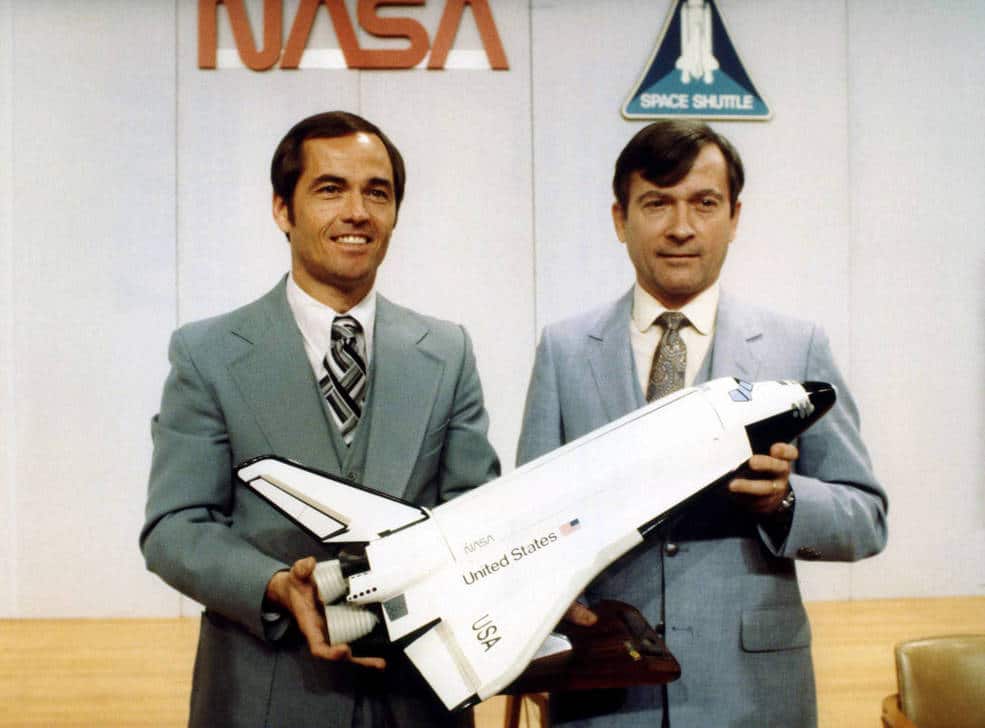
Astronauts John W. Young and Robert L. Crippen served as the flight crew for the first space shuttle flight. The historic mission of shuttle Columbia was the first of four test flights to demonstrate a shuttle could perform as planned.
Young was a veteran of two Gemini and two Apollo space missions, and Crippen was a rookie who had supported the Skylab missions. Each had trained for nearly four years in preparation for this flight.
STS-1: Robert Crippen and John Young pose at the Johnson Space Center a few weeks before launch. (NASA)
It was Young who was working on the surface of the Moon in 1972 when NASA informed him that the space shuttle was approved for development. “The country needs that shuttle mighty bad,” Young replied.
“I just thought it was a great first flight, and I was really lucky to have Bob Crippen with me because he knew all the software end to end,” Commander Young said during a NASA interview in 2006. “Of course, the vehicle is totally software controlled, pretty much, and I think there are 500 and something switches that goes through software on the vehicle.”
Historic First Space Shuttle Launch
Originally, lift-off was scheduled for April 10, however a computer software issue late in the countdown scrubbed the first attempt. Two days later, the countdown resumed and the astronauts entered Columbia’s flight deck.
“It was a pure test mission, and all we wanted to do was to prove that the system would work,” Crippen noted during a recent NASA interview. “Our job was to take-off, get into orbit, check out all the systems on (Columbia) and bring it in safely for a landing.”
STS-1: A new era of space flight begins as Columbia lifts-off from the Kennedy Space Center in 1981. (NASA)
Every step of this first launch was just that, a first. The entire space shuttle stack had never been flown together. It was truly a white-knuckle time as the countdown reached one minute.
“It was only when the count got inside of a minute that I turned to John and said ‘I think we might really do it’,” Crippen recalled. “I think it was at that point my heart rate went up to 130.”
At T-6 seconds, Columbia’s three main engines roared to life. The entire space shuttle lurched forward. Water at the base of the launch pad flowed to help dampen the thunderous vibrations in time for booster ignition.
As the countdown clock reached zero, the two solid rocket boosters ignited. A combination of smoke and steam billowed around historic launch pad 39-A, and America’s first space shuttle leapt from her pad.
“We have lift-off, lift-off of America’s first space shuttle,” NASA launch commentator Hugh Harris exclaimed at the moment. “And, the shuttle has cleared the tower!”
Two minutes into the launch, the twin solid rocket boosters separated. Columbia’s three main engines continued to burn for another six minutes.
“It was just like riding on glass,” Young said in 2006 after the boosters were jettisoned. “You could read the instruments while you were flying, so that was pretty good. It wasn’t shaking so bad you couldn’t read the instruments, and you could see, past the solid rocket motor stage, it worked great.”
‘Columbia, You’re Go for Orbit Ops’
Columbia, the gem of the new ocean, arrived in orbit nearly nine minutes after launch. Mission control worked with the astronauts to prepare the spacecraft for orbit operations. The astronauts first performed a burn by the untested orbital maneuvering engines to raise their altitude.
“We had a good time taking it around and seeing what the temperatures were going to be and flying different attitudes,” Young expressed of their time on-orbit.
“Checking those out and opening and closing the payload bay doors, and operating all the systems and firing the orbital maneuvering system’s engines to put us in various orbits, and it worked very well.”
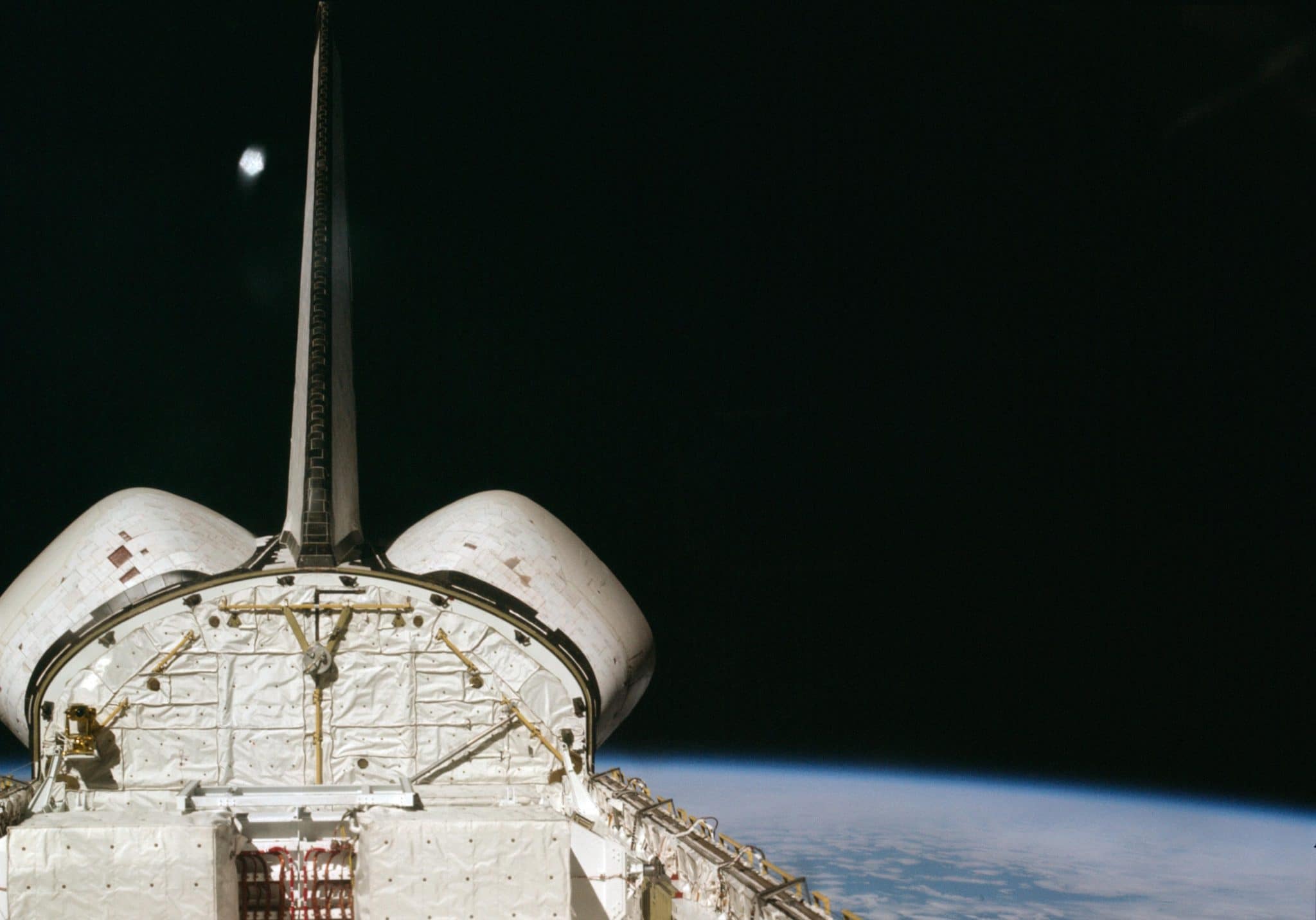
STS-1: A view of Columbia’s aft section and the missing tiles on her OMS pods on April 12, 1981. (NASA)
The shuttle’s two payload bay doors were opened, and a Ku-Band antenna to transmit TV was moved into position.
Once the crew left their flight seats and moved to the aft-facing bay windows, they became alarmed at what they saw. The vibration of the launch had shaken off several of the heat-resistant white tiles from each of the OMS pods.
Crippen radioed mission control and trained a cargo bay camera on the pods in a live video downlink. Tile experts in mission control quickly dismissed those missing tiles as not critical during reentry.
Behind the scenes at NASA, many worried about the possible loss of critical tiles on her belly. During this flight, there was no way for the astronauts to inspect the underside.
In all, NASA reported post flight that 16 tiles had been lost and 148 were damaged. The space agency added that a strong vibration at booster ignition shook free many of the tiles. The sound suppression water system at the launch pad would later be improved to avoid the tremendous shockwave again.
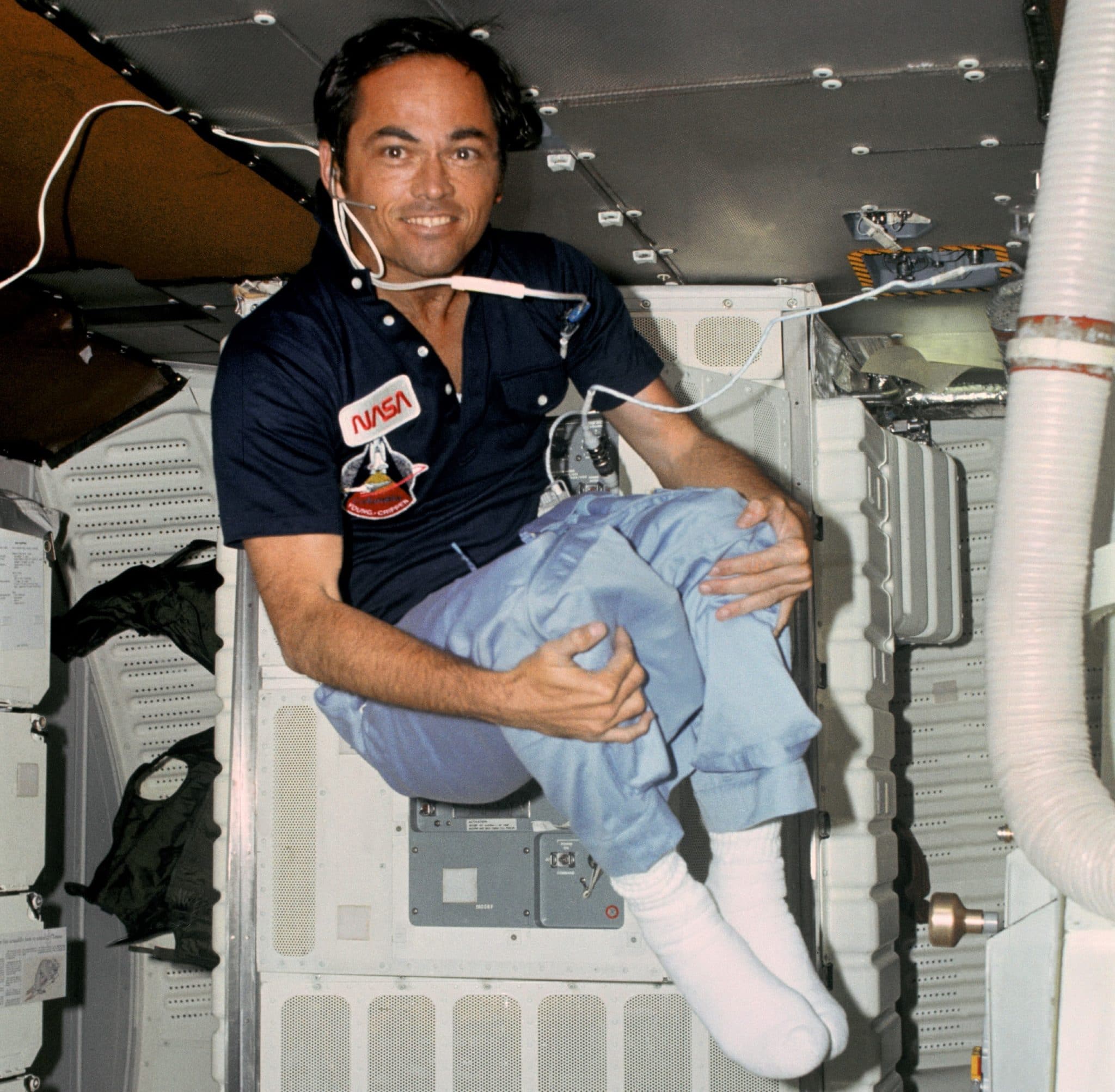
STS-1: Columbia’s pilot Bob Crippen enjoys microgravity during his first space flight in April 1981. (NASA)
While on orbit, Columbia’s payload bay included an experiments pallet. Scientific research included recording temperatures, pressures, and acceleration levels on and around the spacecraft.
The crew’s food menu was a huge improvement since the Apollo-era. Young and Crippen’s first meal consisted of frank furters and turkey tetrazzini, bananas, and apple juice.
First Winged Spacecraft Comes Home
Following two days in space, Columbia and her crew headed for home. Never had a winged spacecraft left orbit and reentered the Earth’s atmosphere.
The first space shuttle re-entry occurred northeast of Guam at just below 400,000 feet. A 16 minute communications blackout shortly began as Columbia flew an arc north of Hawaii.
NASA had test data from flying the non-space rated shuttle Enterprise during atmospheric flight tests. Enterprise had landed on a runway five times piloted by two separate crews in 1977.
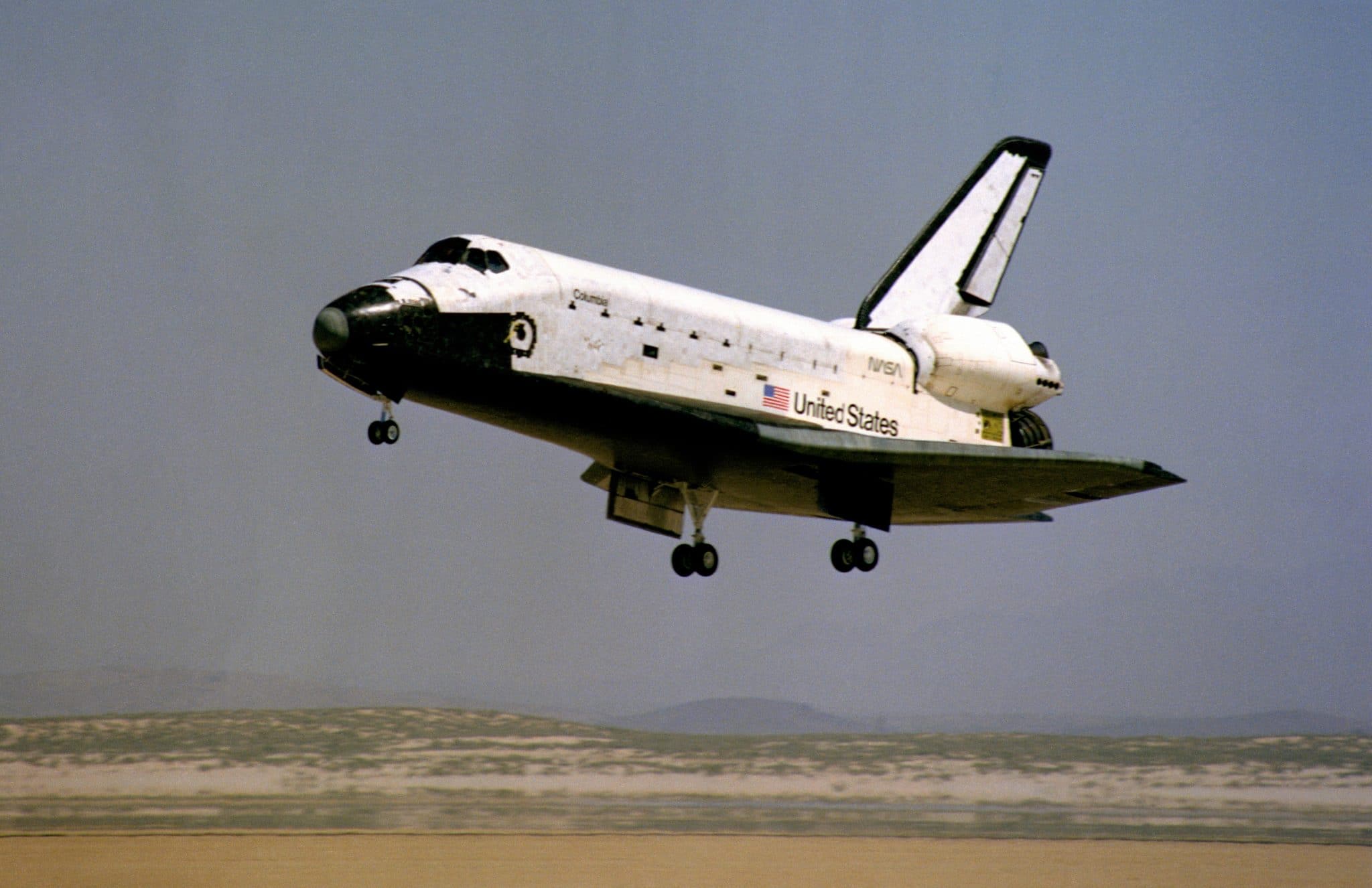
STS-1: The first true space shuttle landing following 54 hours in space on April 14, 1981. (NASA)
Columbia was a glider during her entire landing, and NASA referred to her as a “flying brick”. She had no engines to take her back around if she missed her approach to the runway.
Performing a series of S-turns to slow the spacecraft down, Columbia glided home with her nose pitched down. As Columbia crossed over the coastline of California and 134,000 feet above, Crippen radioed, “What a way to come to California.”
Young manually flew the previously unflown glider beginning at over eight times the speed of sound. Four minutes prior to landing, Columbia began to line up with the runway at Edwards Air Force Base.
Two NASA T-38 chase planes began flying on either side of the orbiter as Columbia dropped below 39,000 feet. The aircraft provided a then-unique live television view of the landing.
Chase one was flown by astronaut Jon McBride with George “Pinky” Nelson in the backseat. This chase called out the altitudes and speeds.
Chase two was piloted by Johnson Space Center pilot Dick Gray and photographer Pete Stanley in the backseat. Each chase aircraft had a back-up aircraft on stand by. All four aircraft had taken off about 45 minutes prior to the first shuttle landing.
During the final 25 seconds, Young pitched the nose up and Crippen dropped the landing gear. The orbiter glided in to a pinpoint landing.
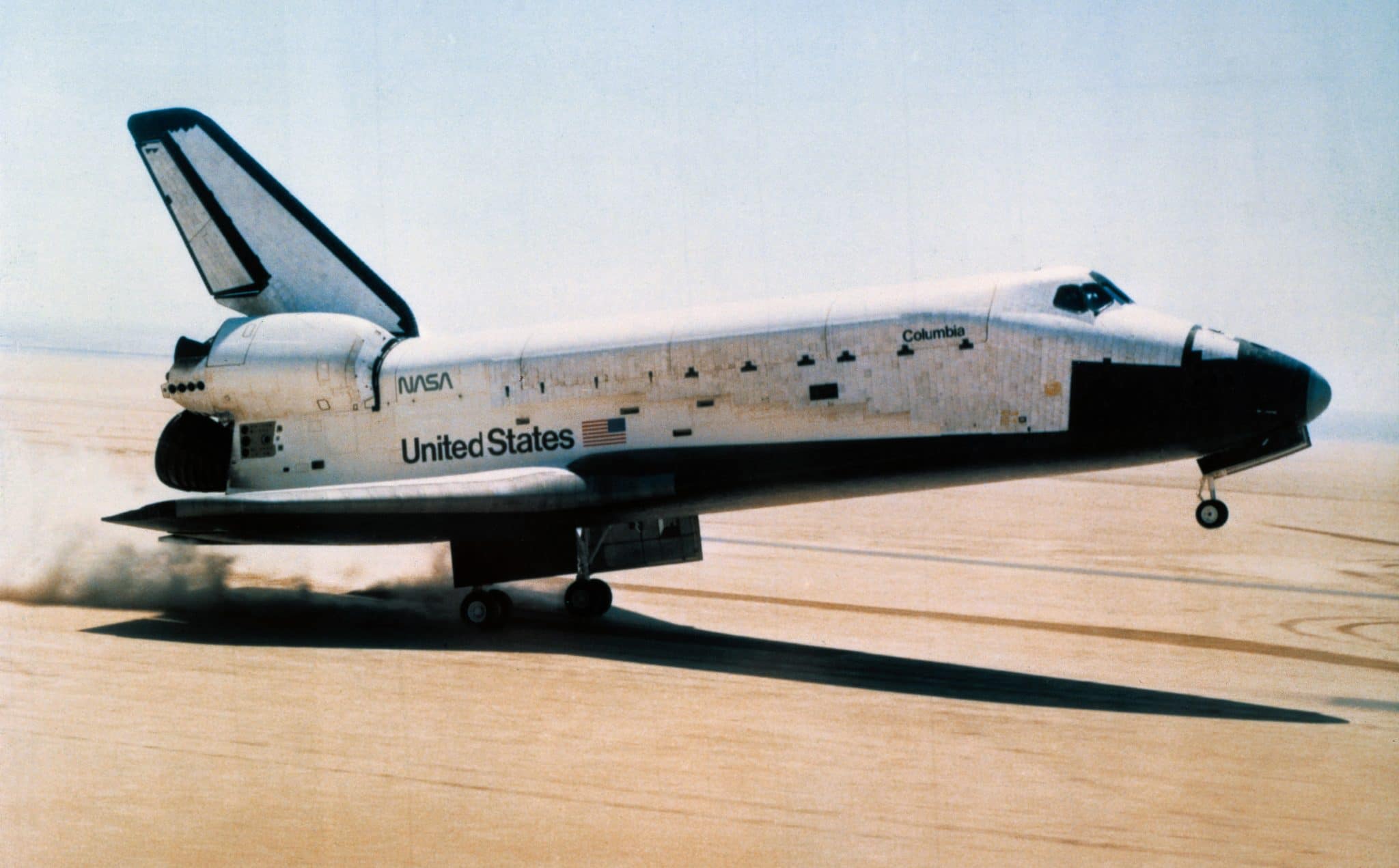
STS-1: Columbia touches down at Edwards Air Force Base in California on Apeil 14, 1981. (NASA)
As thousands of nearby crowds watched, the shuttle’s main gear touched down on the desert runway at 10:20 a.m. PST. Seconds later, her nose was guided down and dust blew up signaling she was home.
Jokingly, Young radioed Houston and asked if he could steer her toward the hanger. Fifty-four hours and 21 minutes after leaving the Kennedy Space Center, Columbia rolled to a stop on the dry lakebed one minute later.
Young left the spacecraft first and was greeted by NASA officials including George Abbey. The senior astronaut then walked around Columbia, and like a new father, was very excited with fists pumping and wearing a big grin.
Columbia had traveled 1.07 million miles and circled the Earth 37 times. Two weeks later, Columbia was back at the Kennedy Space Center following a cross country ferry flight a top a Boeing 747.
“It was a fantastic flying machine, but it was also a fragile one,” Crippen said. “It’ll be a long time before we have a vehicle that’s nearly as magnificent as the space shuttle was.”
“I sure enjoyed it and I appreciate all the work the people did down at the Kennedy Space Center to fix STS-1 to get it ready to go,” Young added. “The vehicle performed just like we thought it would, pretty much. We learned a bunch of things.”
In the summer of 1982, a short IMAX documentary Hail Columbia was released. It play in the theater of the Kennedy Space Center’s visitor’s complex. The film is available through a few online media sites.
(Charles A Atkeison reports on aerospace and technology. Follow his updates via social media @Military_Flight.)
This week, millions of people within a 100-mile-wide path across America witnessed a total solar eclipse. It’s one of the most incredible acts of nature you can ever experience. We wanted to use the opportunity to shine on the men and women serving, and figured intercepting a solar eclipse in T-38s with the USAF might do the trick.
The USAF agreed, so we linked up with the Euro-NATO Joint Jet Pilot Training Program (ENJJPT) at Sheppard AFB in Wichita Falls, TX, and began planning the mission.
Training NATO fighter pilots in America
Intercepting the Solar Eclipse in T-38s with the USAF 54
ENJJPT serves a critical role for NATO. It’s hosted by the USAF and conducted by the 80th Flying Training Wing, but its mission is to train NATO fighter pilots. Students from various nations (currently 14) come to ENJJPT to train alongside allies in the T-6A Texan and supersonic T-38C Talon.
ENJJPT’s integrated structure means, for example, an American student pilot may have a Belgian instructor pilot, a Dutch flight commander, a Turkish section commander, an Italian operations office, and a German squadron commander. The student pilots and staff instructors of today will be the leaders of NATO’s air forces of tomorrow.
Intercepting the Solar Eclipse in T-38s with the USAF 55
ENJJPT does much more than Undergraduate Pilot Training too. They also conduct Pilot Instructor Training, Introduction to Fighter Fundamentals, and IFF Upgrade Instructor Pilot training. About 200 students earn their wings at ENJJPT annually after a 55-week, three-phased training regimen. About 80 new instructor pilots are trained annually and up to 150 pilots transition through IFF each year, supported by over 1,400 military, civilian and contract personnel.
Training in Europe can be tough due to weather. North Texas provides ENJJPT with plenty of sun and airspace for the uniquely manned multi-national organization to train regularly.
Intercepting the Solar Eclipse in T-38s with the USAF 56
Building long-lasting international relationships
There’s also an arguably more important aspect of ENJJPT than the training itself. It’s the relationships and bonds that students build, sharing such a challenging experience.
As the saying goes, it’s a small world, with even smaller Air Forces, so airmen will run into each other while serving NATO. Having that common training and established relationships means they are ready to fly, fight and win together when called upon.
“The relationships made at ENJJPT carry-on throughout their careers,” said USAF Major Doug ‘POISON’ Holland, an instructor pilot and the USAF Senior National Rep (SNR) at ENJJPT. “You’re going to run into the same people again. Having that good relationship already established pays in dividends down the road.”
Some of these people eventually go on to leadership positions in their Air Forces too, bringing with them those bonds and relationships and common training established at ENJJPT.
Totality at 30,000 ft with ENJJPT and the “Boxing Bears”
Intercepting the Solar Eclipse in T-38s with the USAF 57
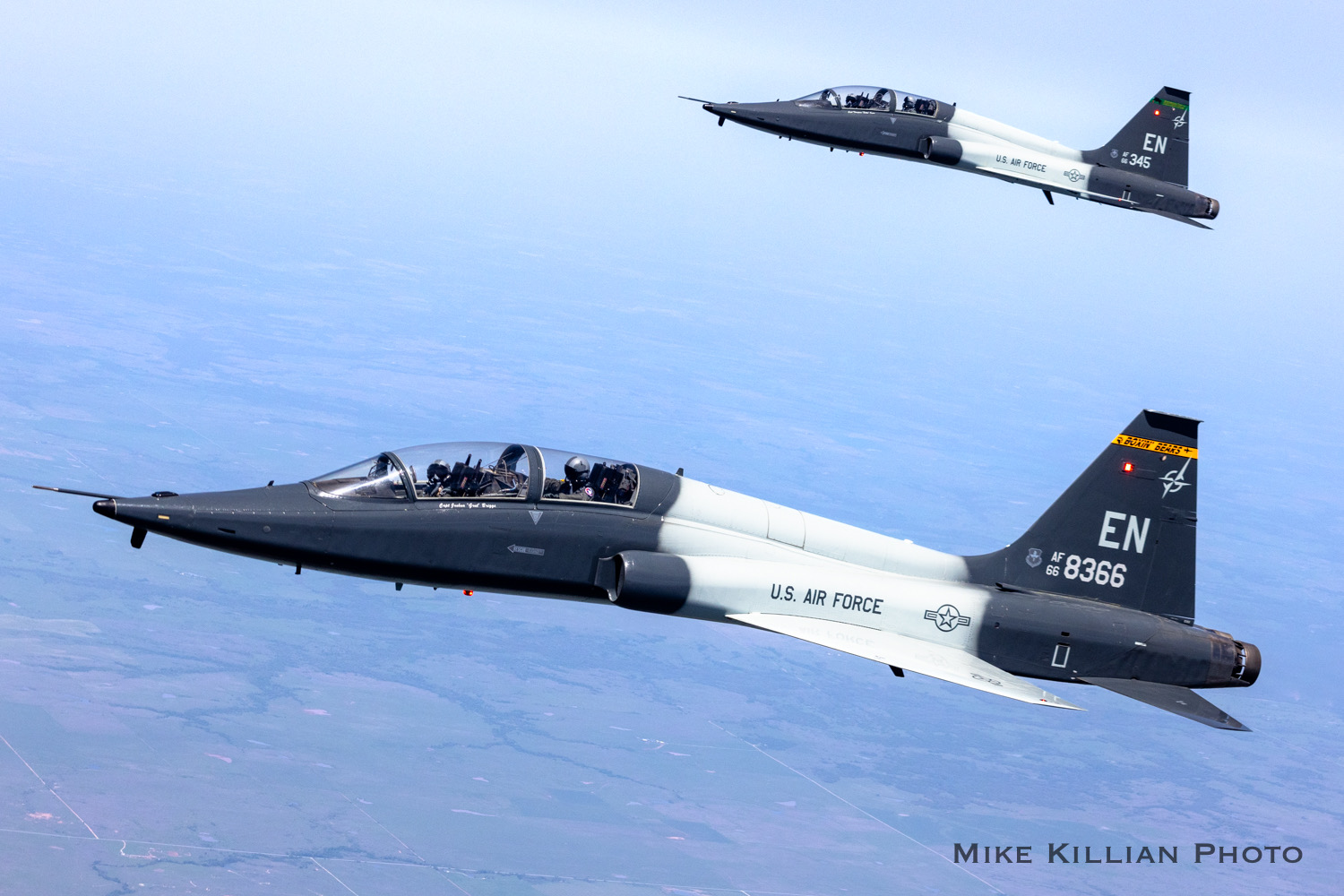
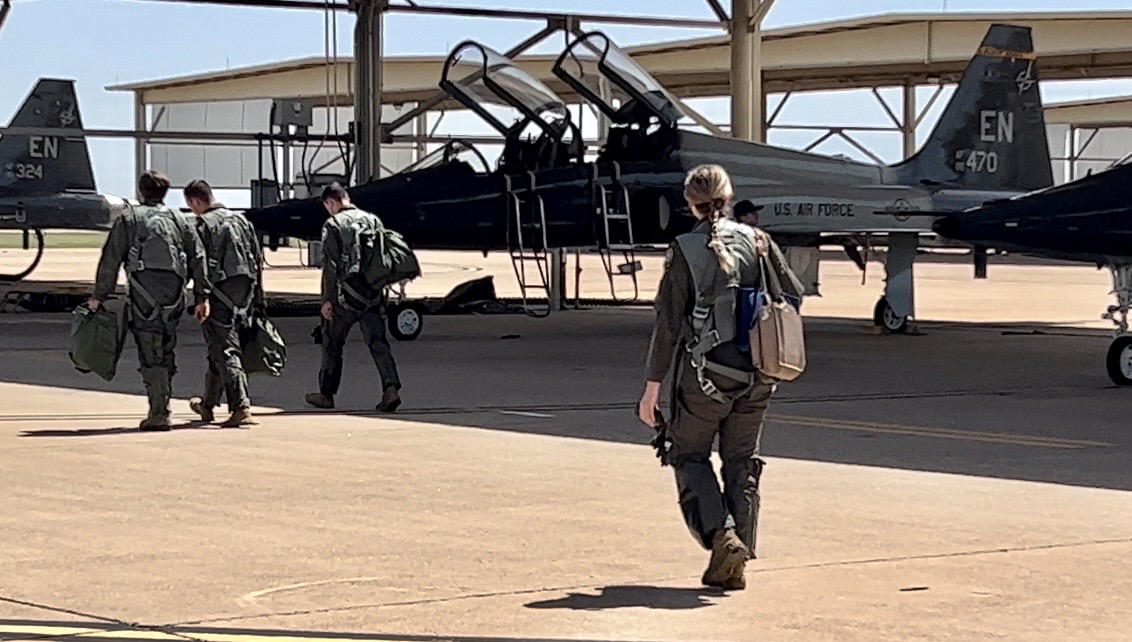
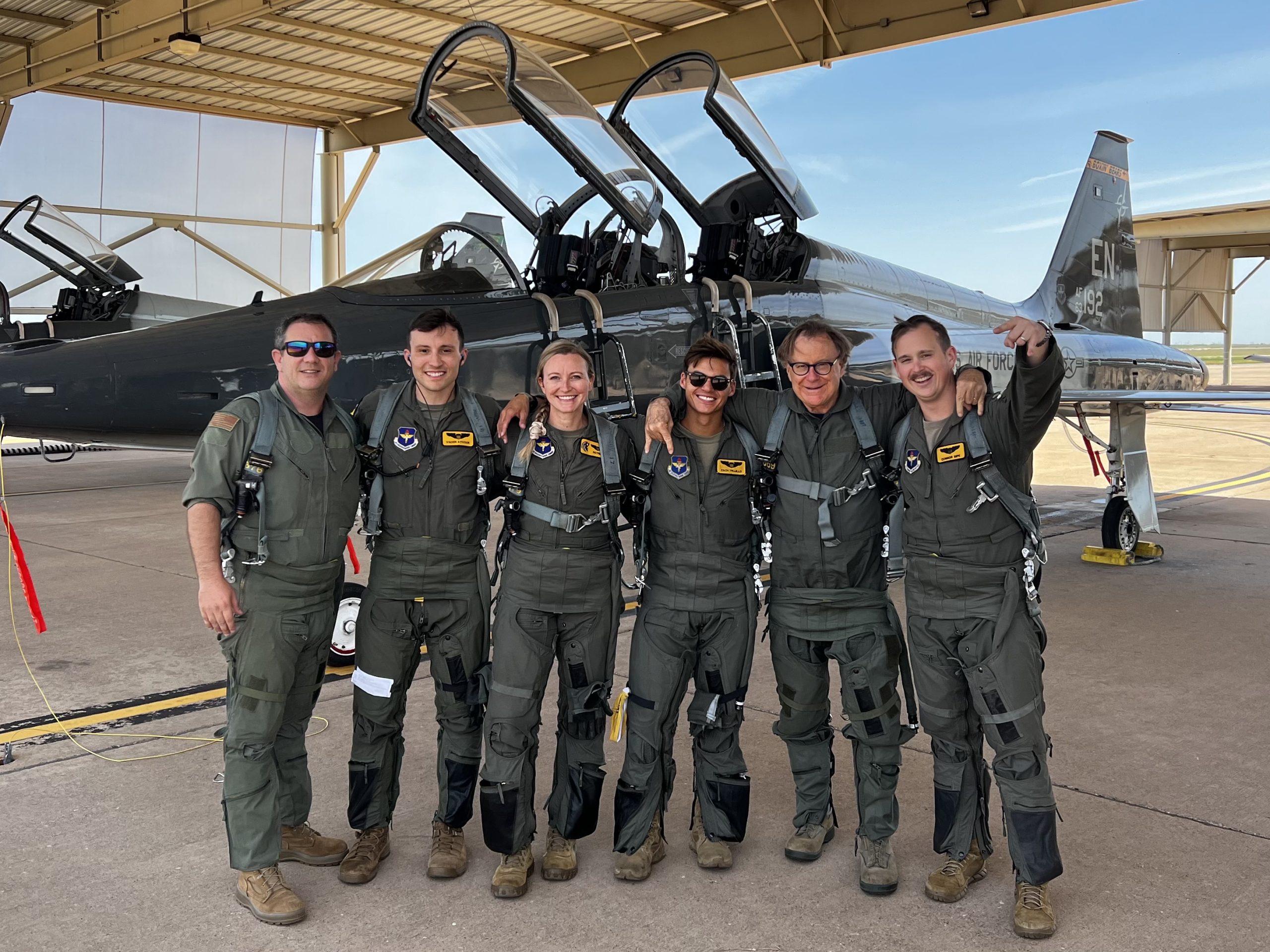
We arrived early to ENJJPT on the morning of the eclipse, to undergo the normal routine of medical checks, safety overviews and suit-up. The mission was handed to the 90th Flying Training Squadron, the “Boxing Bears”, with USAF Capt. Zach “JORTS” Trujillo as our pilot and flight leader.
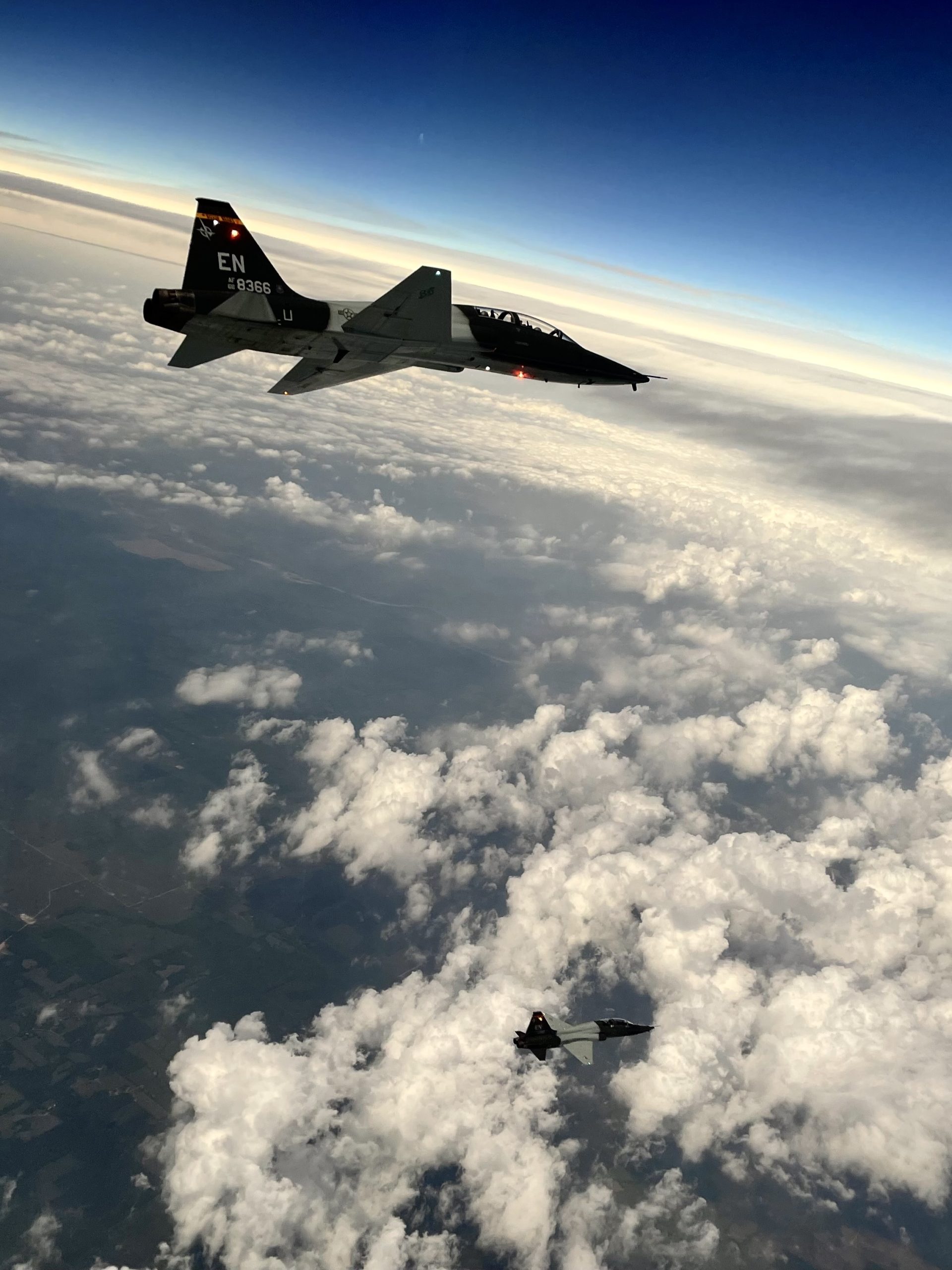
We were joined by 2 other Talons, flown by USAF Capt. Taylor “PETRIE” Bye and Capt. Connor “GUTTER” Sipe. A highly experienced crew of USAF ENJJPT instructors.
Intercepting the Solar Eclipse in T-38s with the USAF 58
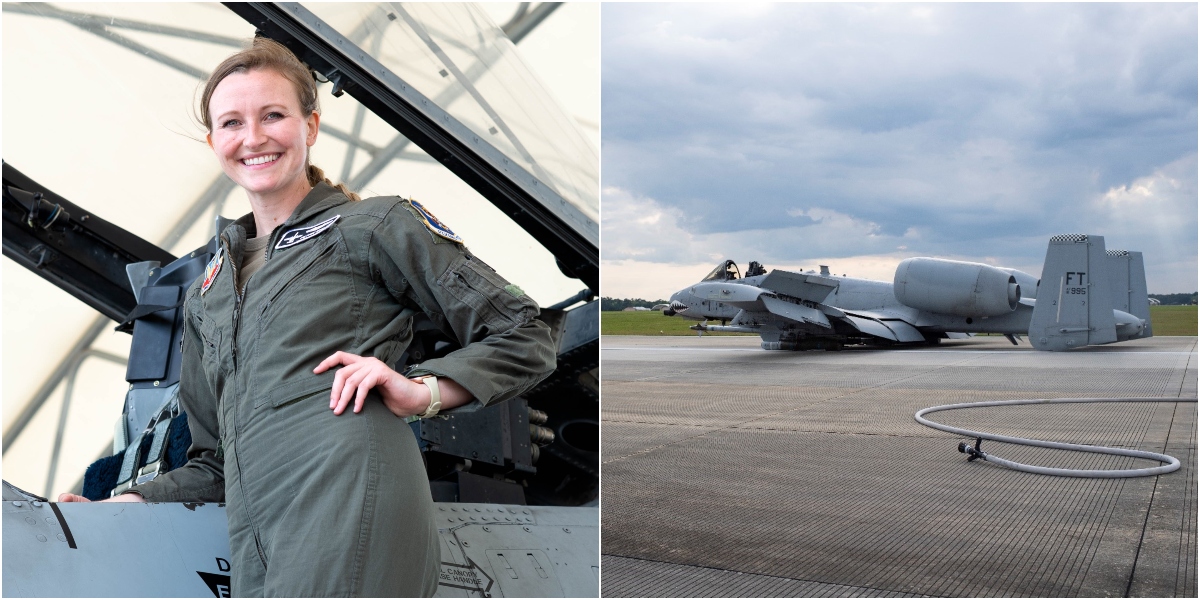
Petrie is the first woman to earn the Koren Kolligian Jr. Trophy to recognize her outstanding airmanship when she belly-landed a broken A-10C after a catastrophic gun malfunction in 2020.
The mission would mark Gutter’s 1000th flight hour too. Adventure Journalist Jim Clash from Forbes joined us as well (read his report here).
Intercepting the Solar Eclipse in T-38s with the USAF 59
The plan was to takeoff before 1pm to intercept totality NE of Dallas at 30,000 ft. We wanted to avoid most of the predictable congested air traffic around Dallas, but we would soon find out that was easier said than done. Our plan was to hit the northern edge of the eclipse shadow path of totality, as the moon’s shadow overtakes us on its path NE.
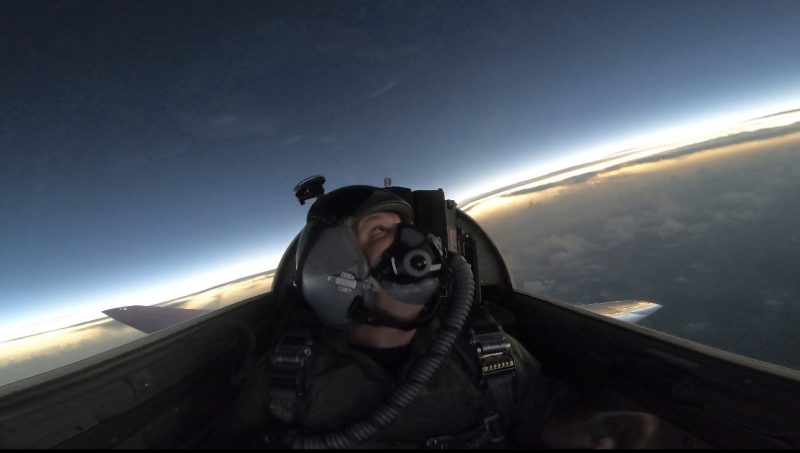
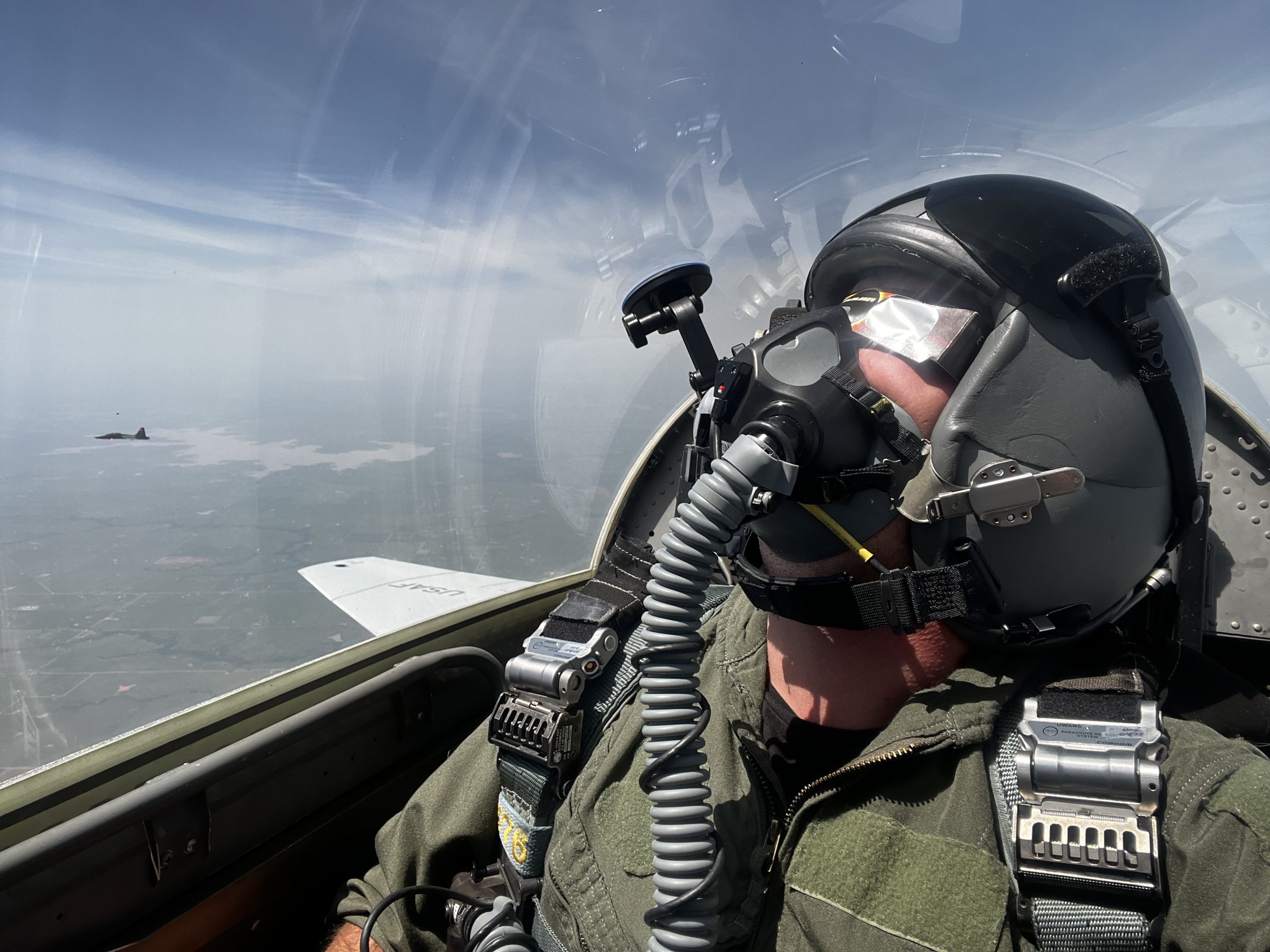
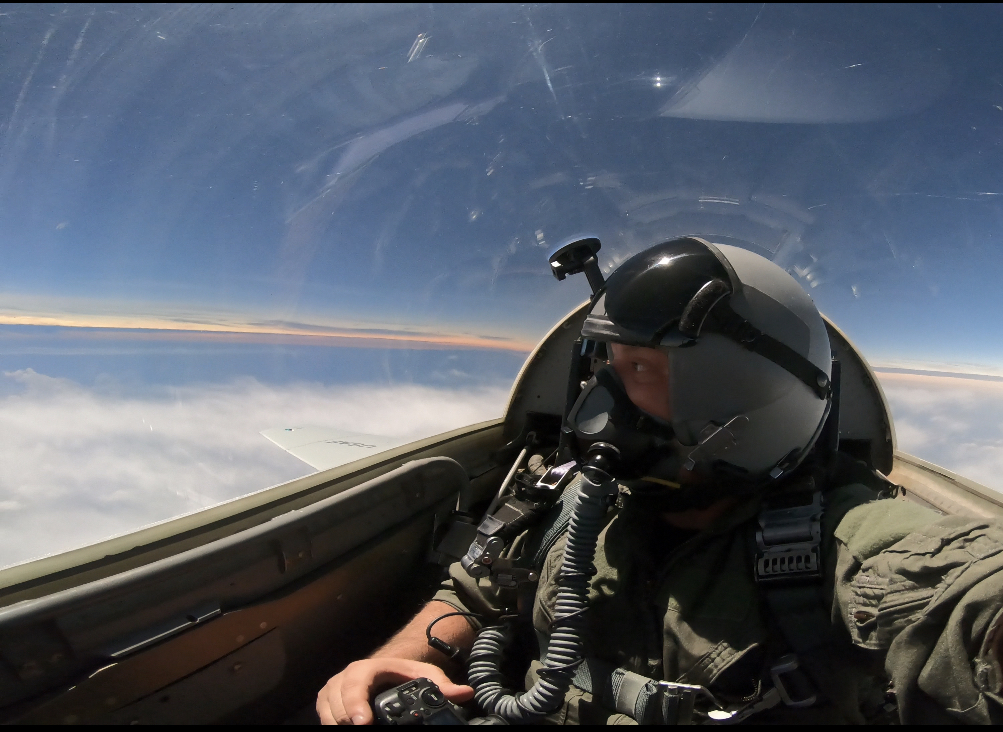
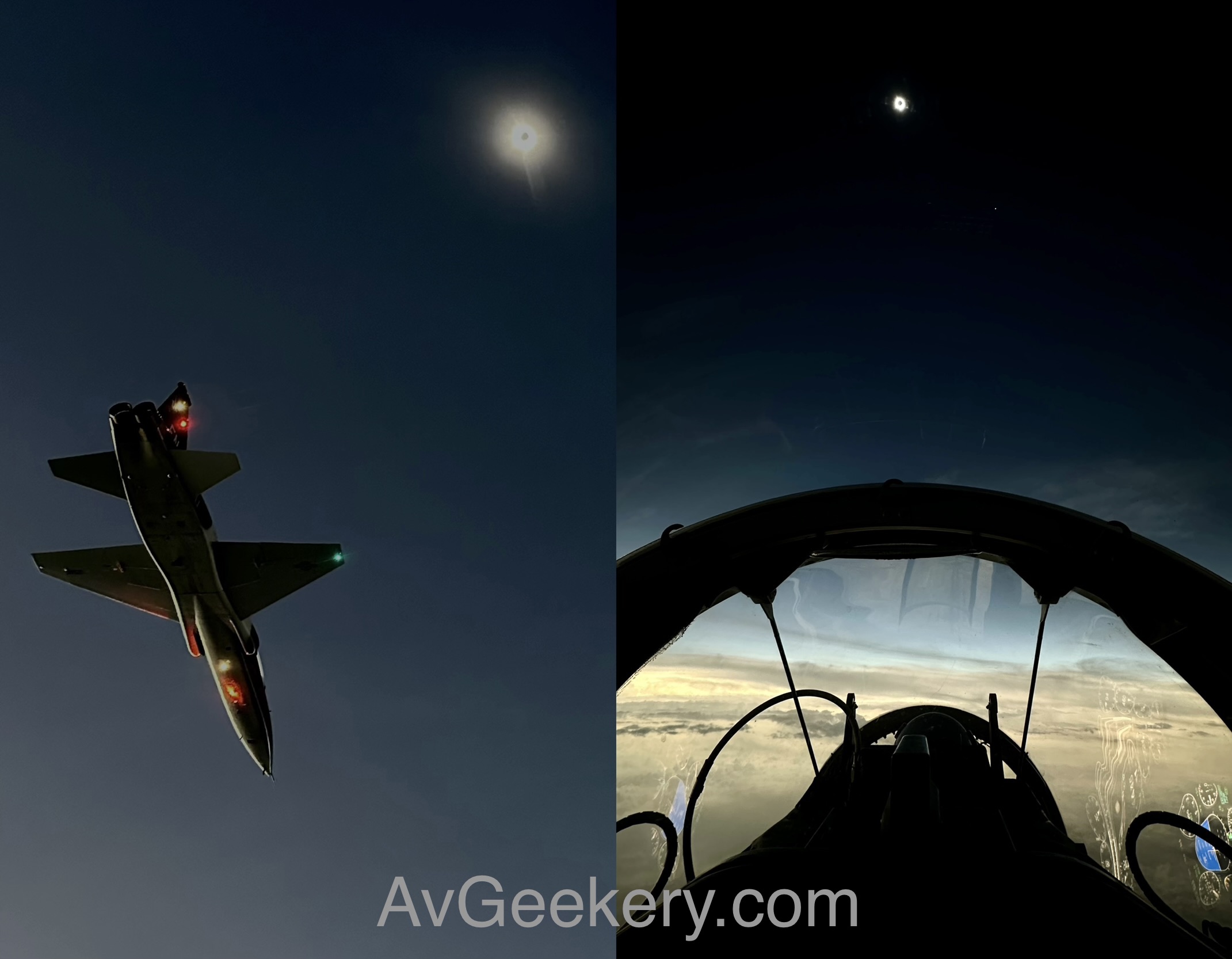
Totality was set to begin at 1:42pm, lasting just over 4 minutes. The eclipse was 50% partial when we took-off, giving us some opportunity to view through our solar eclipse glasses while in-transit to the intercept area. As we entered the airspace the lights and shadows in the cockpit took on an indescribable contrast and color, almost like silver, as the 115-mile wide shadow of the moon became visible, racing across Earth at 1,700 mph.
the shadow of the moon visible on the clouds in the background, as totality approachesIntercepting the Solar Eclipse in T-38s with the USAF 60
There were LOTS of other planes
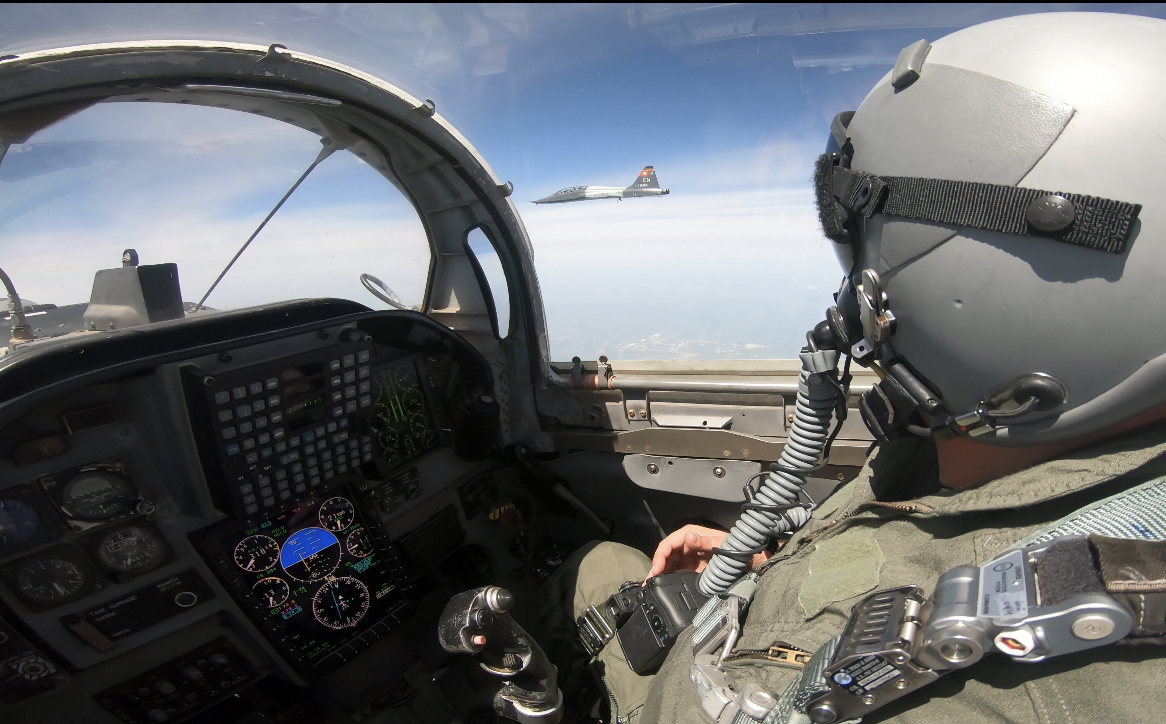
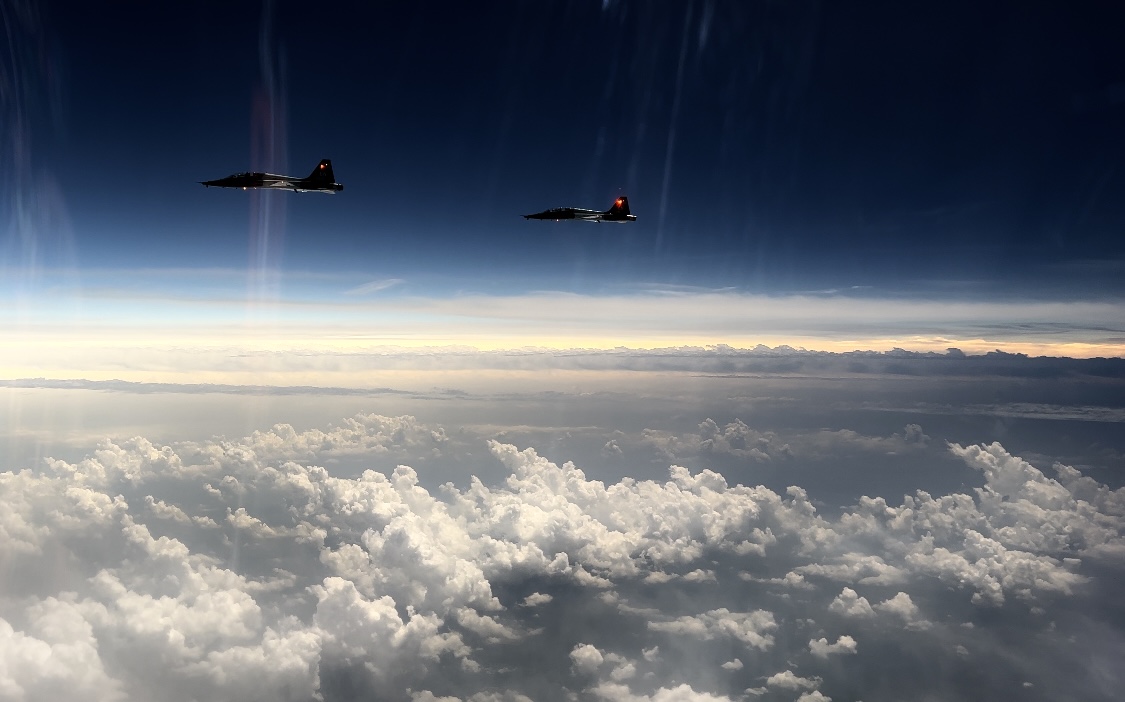
Our plan was to set the other 2 jets 1500 – 2000 ft away, up high in the totality, to capture zoomed in photos of them with the eclipse. However, a lot of planes were above and below us. ATC could not give us more vertical airspace. They were giving aircraft vertical blocks of just 1000 ft. It seemed every few seconds another aircraft would cross above or below.
We shot some wider pics and video clips, and intercepted on time on target, experiencing the eclipse in a way few ever have, or ever will. The crew really showed the professionalism and TOT capability to intercept anywhere, any time they are called on.
cockpit views from another ENJJPT squadron, captured by thompson knox and rico kruijsenmichael libiez captured a photo of us flying THROUGH his shot during totality! Very cool
Another crew captured the first pair of above images, taken by Thompson Knox and Rico Kruijsen. We even photobombed someone’s view from the ground. Not sure which of our crews he captured but it’s pretty cool. Our thanks to Michael Libiez for the shot!
Those 4 minutes felt like 60 seconds, and before we knew it we saw the diamond ring appear in totality and back came the sun. The silver lighting again filled the cockpit as the darkness brightened back into daytime in a matter of seconds.
The folks at ENJJPT are some of the best in the USAF and NATO
Entering totality, note the silver-like coloring of the scene from the 99% eclipsed sun (photo courtesy jim clash / forbes)Intercepting the Solar Eclipse in T-38s with the USAF 61
The folks at ENJJPT are some of the best in the military, and an amazing group of folks. They serve a critical role for the United States and NATO. We can’t thank them enough for the honor to visit and work with them. Especially for such a rare event! Another total solar eclipse won’t cross the mainland U.S. until 2044.
Sheppard AFB will be holding their air show April 27-28, if you’re in that part of the country we strongly encourage you to go! Say hi to the folks at ENJJPT, shake their hands and tell them AvGeekery sent you!
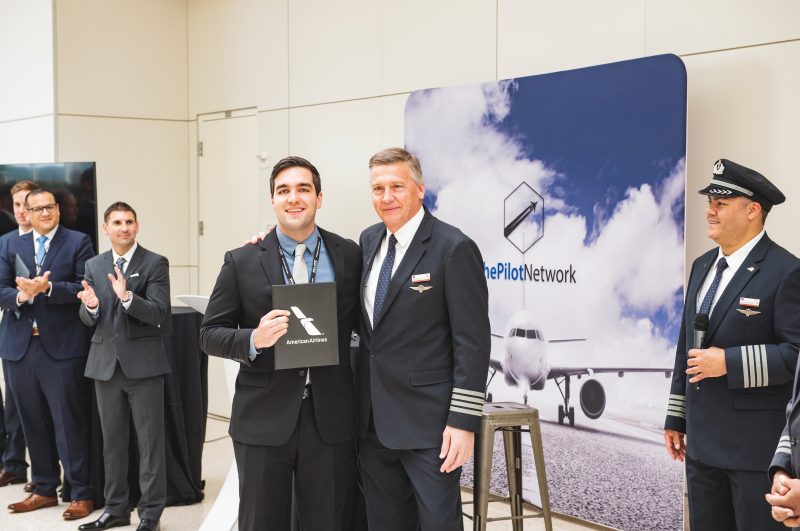
Author: Adam Uhan, Co-founder of The Pilot Network and Avgeekery Guest Contributor
This serves as a no holds barred sales pitch. Why try to couch it in something else? My name is Adam and you have probably never heard of me or The Pilot Network before. I have done the professional piloting thing for 22’ish years now and I have to say, it’s a pretty good gig. But you know that already. Whether you fly for fun or for funds, flying airplanes is something that is an all around wonder of the human race. I mean we went from looking up and thinking ‘what if’ to flying anywhere and everywhere (Antarctica, anyone?). That is pretty mind blowing when you sit back and think on it. Maybe most people don’t feel like we do, but pilots of every walk of life seem to still revel in the magic of flight. At least the ones I know seem to, but I digress. This article is a sales pitch, right?
About 12 years ago I started a group on a large social networking website. It was completely self-serving; can I get hired by a major airline, specifically one that carries boxes? And can I do this a little faster and easier than my predecessors had? I put a few hundred people I ‘knew’ into this group, asked a few questions about all things hiring at the airlines, and gave it a name – The Pilot Network.
Pay It Forward With The Pilot Network 64
There was only one real goal, besides my personal one, for the group: To pay it forward. To take the collective knowledge of us as aviators and pass it along to one another. The idea was to avoid the old way of ‘I had to go through blankity blank, so do you,’ and start to streamline how we do business when we weren’t slipping the surlies. Lots of people liked it. Lots of people thought it was kind of dumb. I didn’t really care. I only wondered if we could, as a group, help each other? Only time would tell.
One of the most unique parts of starting this on an existing platform was that it was pretty turnkey. Unlike the first iterations of forums and other information sharing platforms, we could actually see pictures and names of the people in our group. As a military pilot it kind of felt like how we connected in a military squadron, except online. This was something different and unique. Pretty sweet deal, if you ask me! Thank you enormous social media platform that was pretty much the only one of its kind at the time. After that, the next 12 years pretty much whizzed by.
Pay It Forward With The Pilot Network 65
“Ok, ok…history lessons are neat, but what are you trying to sell me” you may be asking. I guess I am not selling anything really. I just wanted to tell you about our group. Plain and simple. I want you to take away from these words that there is a group of over 30,000 pilots, from aspiring to retiring, who believe in the mantra ‘pay it forward’. What started as a small social media group has blossomed into an organization that wants the best for pilots in every stage of their career. With a podcast, a premium platform, and an annual conference things have changed since the early days of TPN. If we can continue to add fresh perspectives and ideas we can shape the future of aviation. Any which way you slice it, I think our entire aviation loving cohort can achieve a lot together, as long as we continue to work with one another.
A quick shout out to the Avgeekery.com team: They are huge supporters of The Pilot Network. Likewise! We love what Avgeekery does and the unique part of aviation the staff explores. We have tons of their articles posted in our group. Jeff Gilmore, founder of Avgeekery, has attended our expo, TPNx. When I want a fresh perspective on aviation news, history, or events I turn to TPN’s friends at Avgeekery.com. Thanks again for all you do!
The future of piloting airplanes is going to change a lot, and the best thing we can do is support our fellow aviators. I appreciate you taking the time to hear my little pitch. If you’re interested, check us out and let us know what you think. Hit me up at heyguys@thepilotnetwork.com if you want to chat, fire some slings and arrows, or just make a new friend. Fly safe!
PS-I failed with my original intent of The Pilot Network. I never got hired at the box carrying airline. Instead, I get to fly passengers all over the world and it is pretty cool. In fact, it is probably the place that was right for me all along. Who knew?!
The Russians Sure Got the Most They Could Get Out of Them
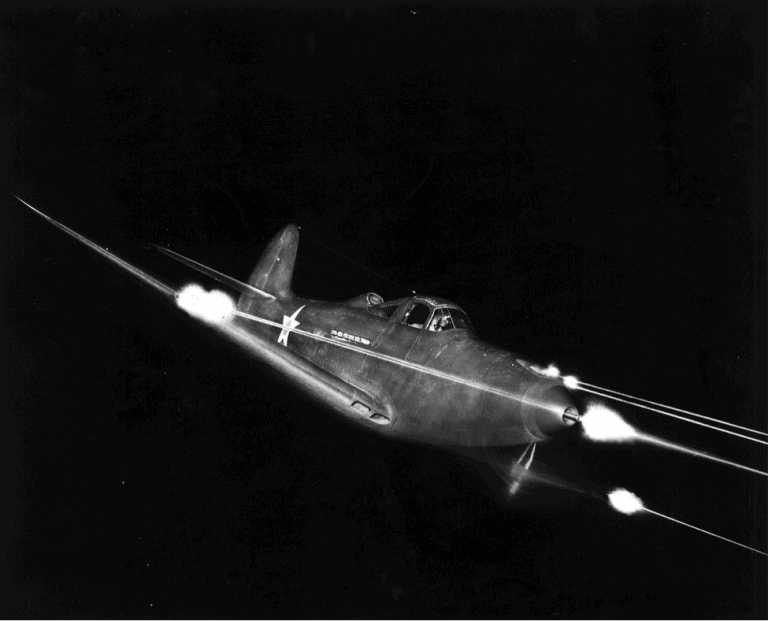
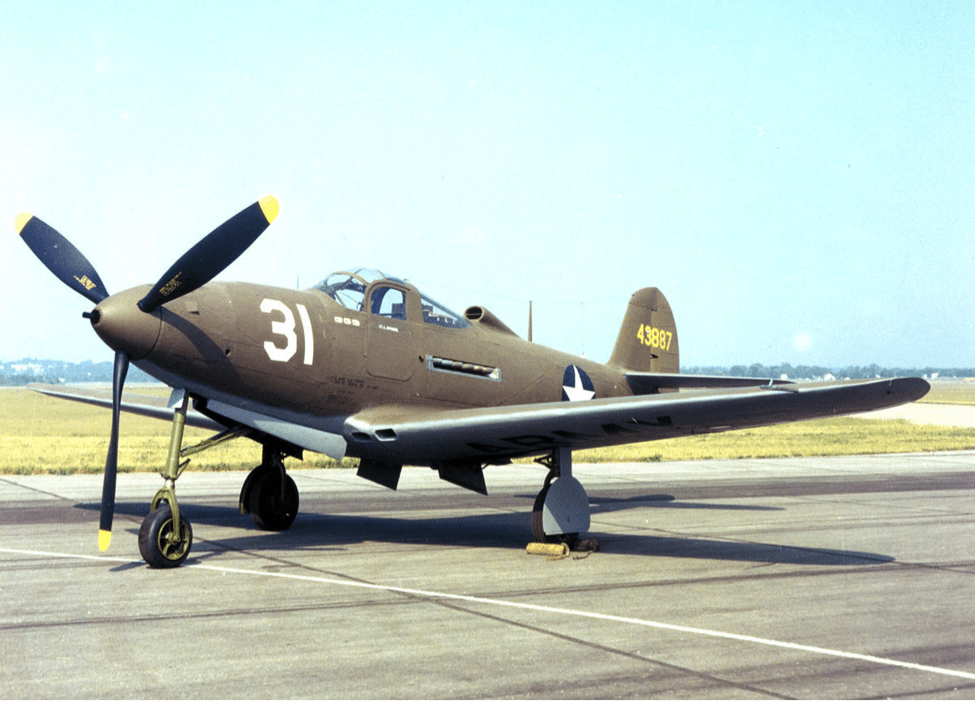
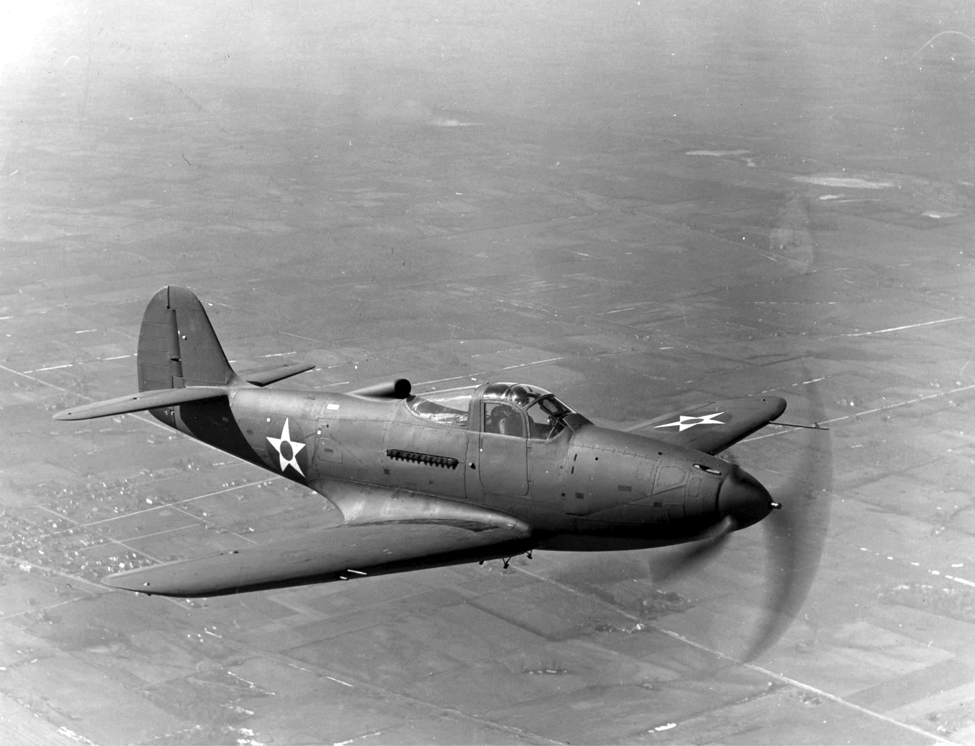
On 6 April 1938, the prototype Bell P-39 Airacobra lifted off from Wright Field in Ohio for the first time. The P-39 may well be the most under-appreciated American fighter aircraft ever built. This is in large part due to the fact that, as World War II unfolded, other, more advanced and suitable (read better) fighters made their way to American pilots tasked with defeating Axis machines in the air.
That was not the case for allies like Russia, which received thousands of P-39s through the Lend/Lease program and used them to rack up an impressive number of victories over their German opponents. As a ground attack platform and a low-level fighter, the P-39 had few equals.
Back-to-Front and Two Doors
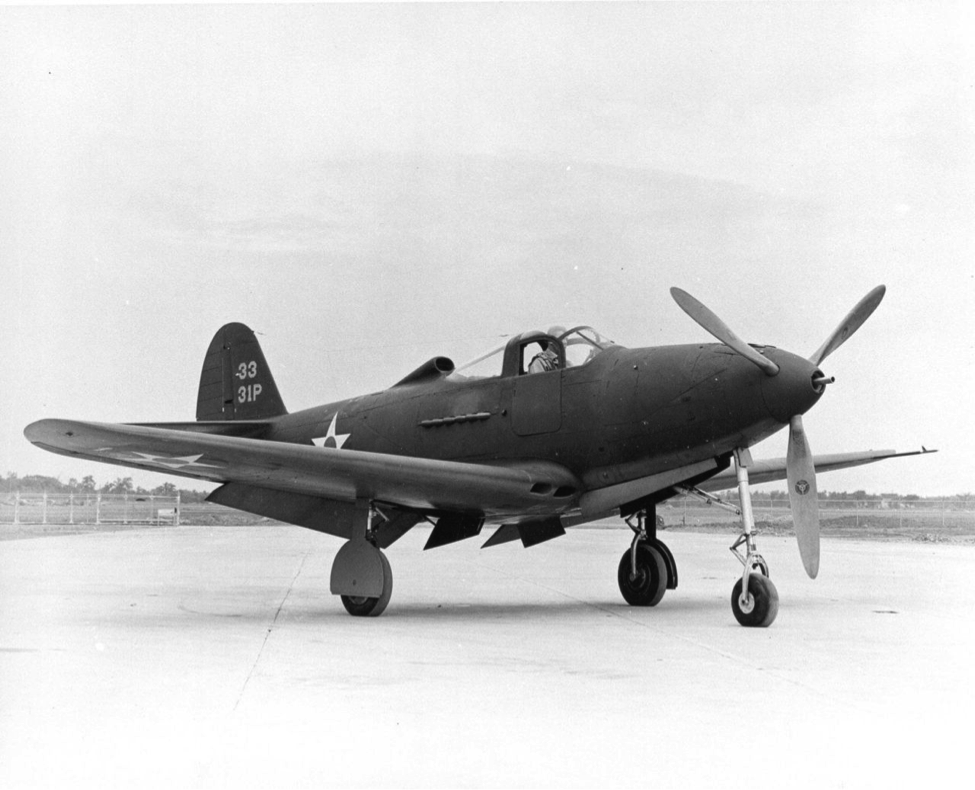
The unusual design of the P-39 placed the liquid-cooled, twelve-cylinder, inline Allison V-1710 engine in the mid-fuselage, behind the pilot, driving the three-bladed propeller via a ten-foot-long drive shaft. As a result, “car” doors with roll-down windows were used to access the cockpit from either side of the aircraft rather than the sliding canopy found on so many of the P-39’s contemporaries.
One of the primary performance handicaps of the P-39 was the lack of a turbo-supercharger, which was a liability when operating above 12,000 feet. A prototype mounted a turbo-supercharger, but the associated large intake and exhaust with ducting induced drag and weight penalties on the Airacobra.
The production aircraft would be equipped instead with a single-speed, single-stage supercharger after Bell elected to retain the aerodynamic efficiency of the design. It was said that the Bell designers regretted the decision to equip the aircraft with only the supercharger. The Airacobra was also one of the first American fighter aircraft to mount tricycle landing gear.
Designed Around a Cannon
One reason the P-39 mounted the engine in mid-fuselage was to utilize space in the nose of the fighter for its primary weapon, that 200-pound 90 inch 90-inch-long Oldsmobile T9 37 millimeter cannon, which fired through the center of the propeller hub. This allowed for the best possible stability and accuracy when firing the cannon.
But like all repeating guns mounted in aircraft, the T9 cannon was limited by minimal space for its meager 30 rounds of ammunition and was prone to jamming when fired as the aircraft maneuvered. Bell designers actually designed the P-39 around the cannon, which was a departure from previous design practice.
Two .50 caliber machine guns were mounted in the nose and synchronized to fire through the propeller blades. Wing-mounted .30 and .50 caliber machine guns, as well as the ability to carry bombs and drop tanks, were also incorporated into the design as it evolved. More about P-39 armament in this video uploaded to YouTube by PeriscopeFilm.
Not Getting to Play
The Airacobra was actually designated P-45 during trials. On 10 August 1939, an order for 80 aircraft was placed with Bell, but the designation was changed to P-39 before the first deliveries.
Experience in European air combat conditions revealed that self-sealing fuel tanks and protective armor (which the original P-39s lacked) were requirements, and the P-39 would have to have them. Therefore, the first score of P-39C aircraft was deemed unsuitable for combat.
The first P-39s to enter service with the United States Army Air Corps (USAAC) were the 60 P-39Ds, equipped with protective armor and self-sealing fuel tanks, which were assigned to the 39th Pursuit Squadron, also known as the Flying Cobras, part of the 31st Pursuit Group at Selfridge Field in Michigan.
IMAGE: National Museum of the US Air Force
Far Better Down Low
When the USAAC fighter units arrived in the European Theater of Operations (ETO) they were equipped with Supermarine Spitfire Mark Vs instead of P-39s. The reason was simple and predictable enough.
The P-39’s performance at altitude was simply inferior to the contemporary European fighters. But the P-39 was maneuverable enough, actually capable of out-rolling the Mitsubishi A6M2 Zero, the Grumman F4F Wildcat and F6F Hellcat, and the Lockheed P-38 Lightning at up to 265 miles per hour.
Nothing, however, could be done to improve the high altitude performance of the P-39. There just wasn’t any room in the fuselage to incorporate the turbo-supercharger required to make the Airacobra a better high-altitude performer without severe drag penalties.
For the Rest of the Airacobra Story Bang NEXT PAGE Below
The T-6 Was the Most Important Trainer of World War II
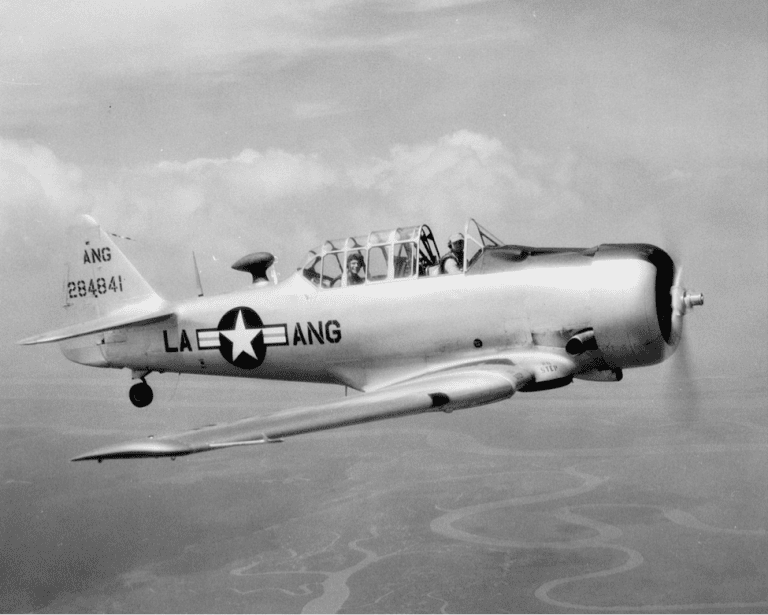
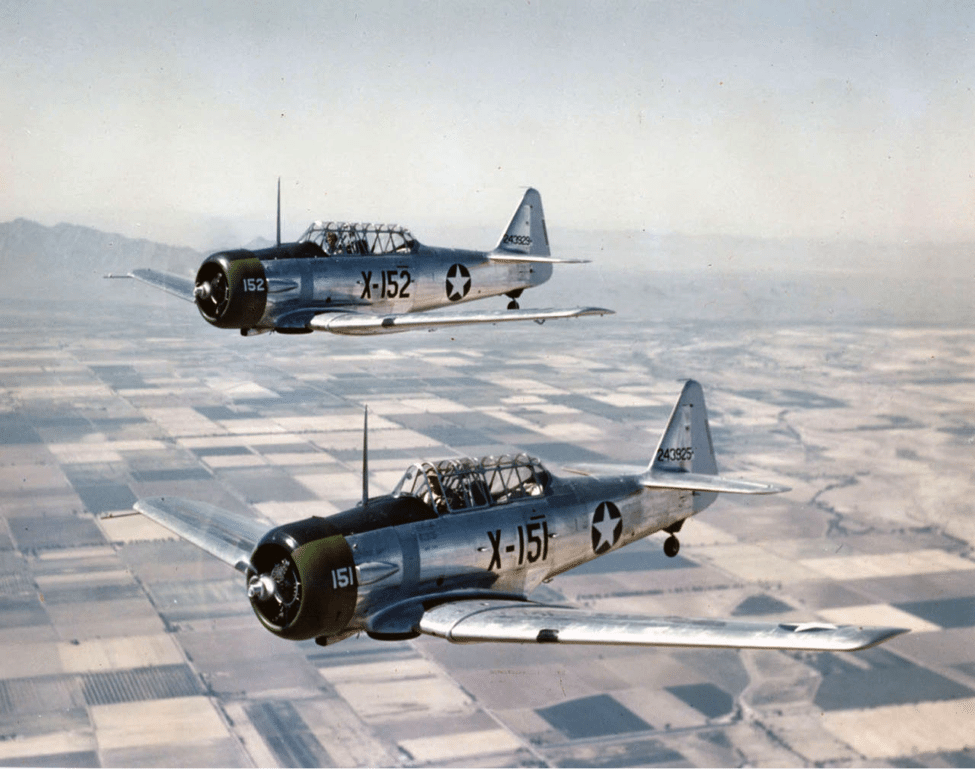
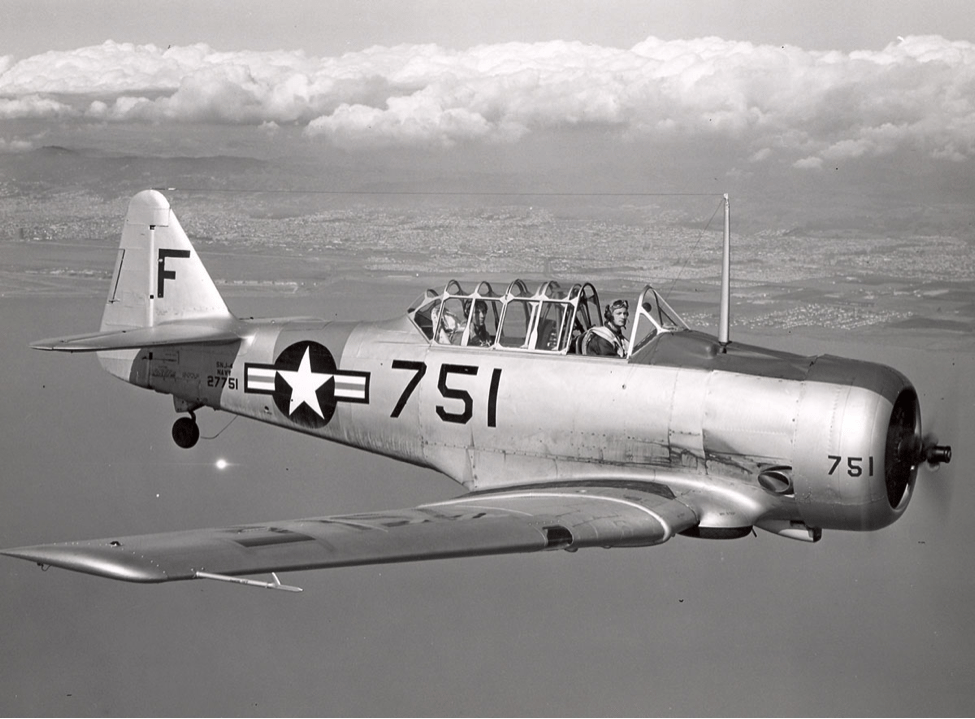
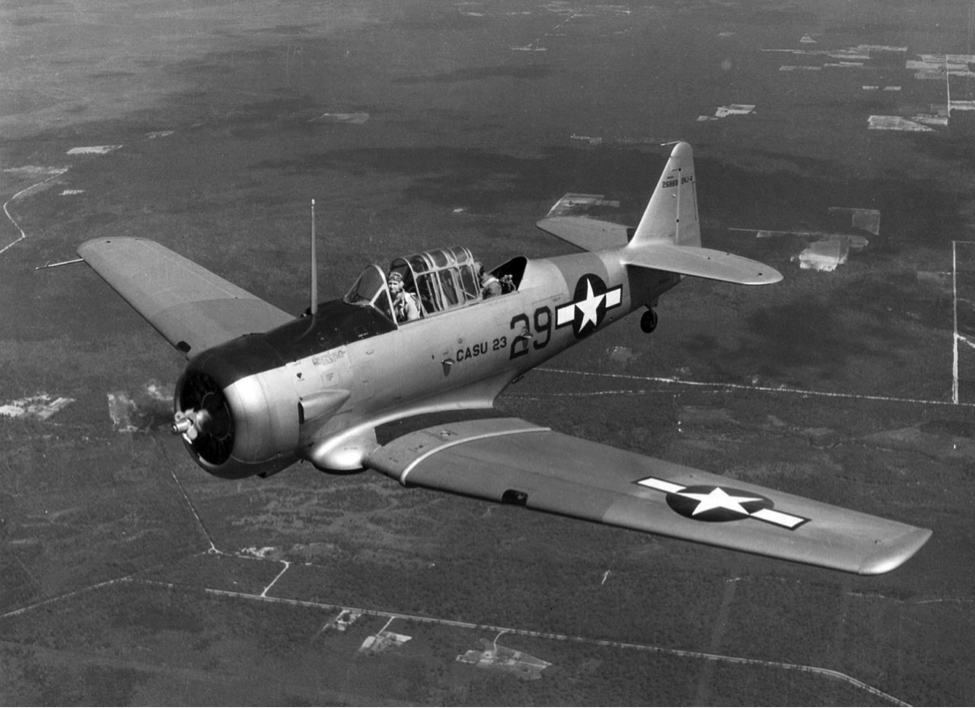
On 1 April 1935, the North American prototype that would become the T-6 Texan first took flight. The United States Army Air Corps (USAAC) referred to them as T-6 Texans. The United States Navy called them SNJs. The British Commonwealth called them Yales and Harvards.
More than 17,000 T-6s were built worldwide, and they were used to train hundreds of thousands of pilots. Given that so many of them were built, it’s fitting that more than 550 lovingly restored and maintained examples are still flying today- and their sound is unmistakable. That snarl heard as a T-6 (or more than one) flies past is unique.
Ultimate Sobriquet: Pilot Maker
Because most pilot training began in the cockpits of biplanes like the Boeing-Stearman Kaydets and the Naval Aircraft Factory N3N Yellow Perils, the T-6 was considered an advanced trainer when the first of them were introduced in 1937.
Later, it would become the first aircraft flown by many fledgling aviators before they began flying Beechcraft T-34 Mentors, North American T-28 Trojans, or Beechcraft T-34C Turbo Mentors as they progressed toward earning their coveted wings.
Eventually replaced entirely in the US military pilot training pipelines by those same Mentors and Trojans, Texans remained in use into the 1990s. No matter where it was flown or by whom, no matter whatever else it was called, North American’s T-6 trainer was also called the Pilot Maker.
Copied by the Japanese?
The genesis of the Texan was the North American NA-16 prototype. That aircraft, modified as the NA-26, was North American’s entry for the USAAC’s Basic Combat aircraft competition held during March of 1937. The NA-26 design went into production as the first T-6. From then the aircraft was developed with added features, more powerful engines, different canopy designs, and various armament configurations.
It wasn’t until the NA-78 design that the name Texan was used. Texans were also license-built by Canadian Car and Foundry and Noorduyn of Canada. Even Mitsubishi in Japan looked at building them before the war. Kyushu Aircraft Company used the NA-16 design as the loose basis for a limited-production intermediate trainer, the K10W1 (Allied reporting name “Oak.”)
Trainers Turned Into Fighters
T-6s were used primarily as advanced pilot trainers, but they also saw use as gunnery trainers, close air-support aircraft, forward air controllers, artillery spotters, crop dusters, fighter-bombers, mail carriers, pylon racers, and experimental testbeds. As forward air controllers during the Korean War, T-6 Mosquitoes flew 40,000 mostly low and slow (and exceedingly dangerous) sorties to find enemy positions and mark them for attention by fighter-bombers. The basic Texan design was also the basis for three fighter designs- the North American P-64 and the Commonwealth Aircraft Corporation (CAC) Wirraway, and, when further modified, the CAC Boomerang.
Over-Engineered For Good Reason
The essential T-6 Texan is powered by a Pratt & Whitney R-1340 Wasp engine turning a two-bladed Hamilton Standard propeller. It’s been said that because the airframe was built by North American, the engine by Pratt & Whitney, and the propeller by Hamilton Standard, the Texan was “the best built airplane that ever was” because those companies were considered to be the best at designing and building their respective products.
Put them all together and you’ve got one very strong airplane.
It’s a common sentiment among T-6 owners and fans that the airplane is (at least) 15% over-engineered- not bad for a design penned more than 90 years ago.
Slap a Tail Hook On There, Dilbert
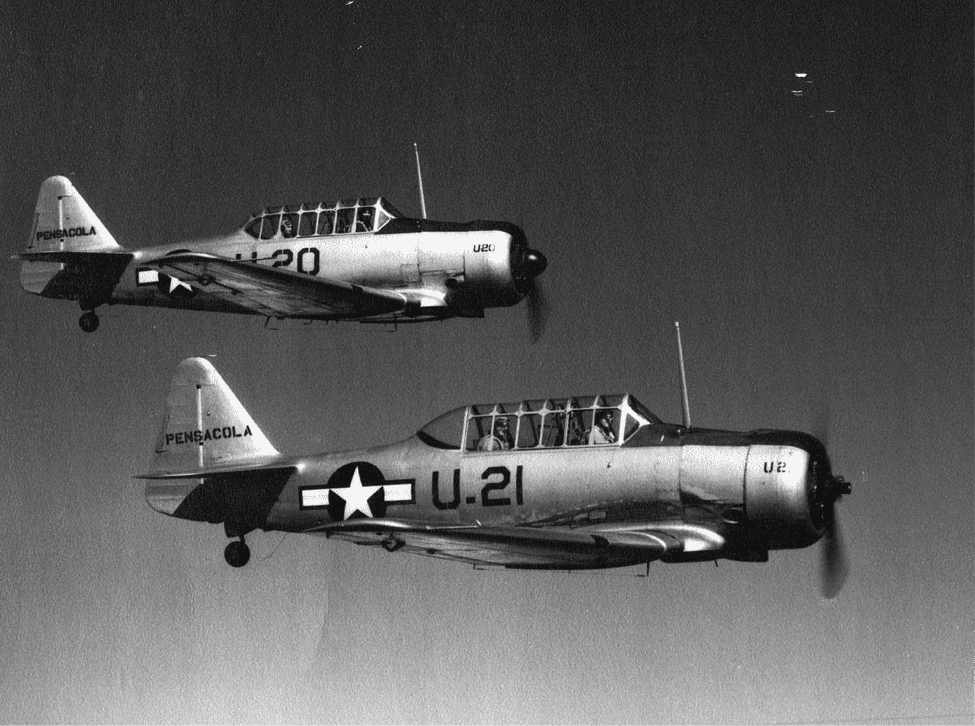
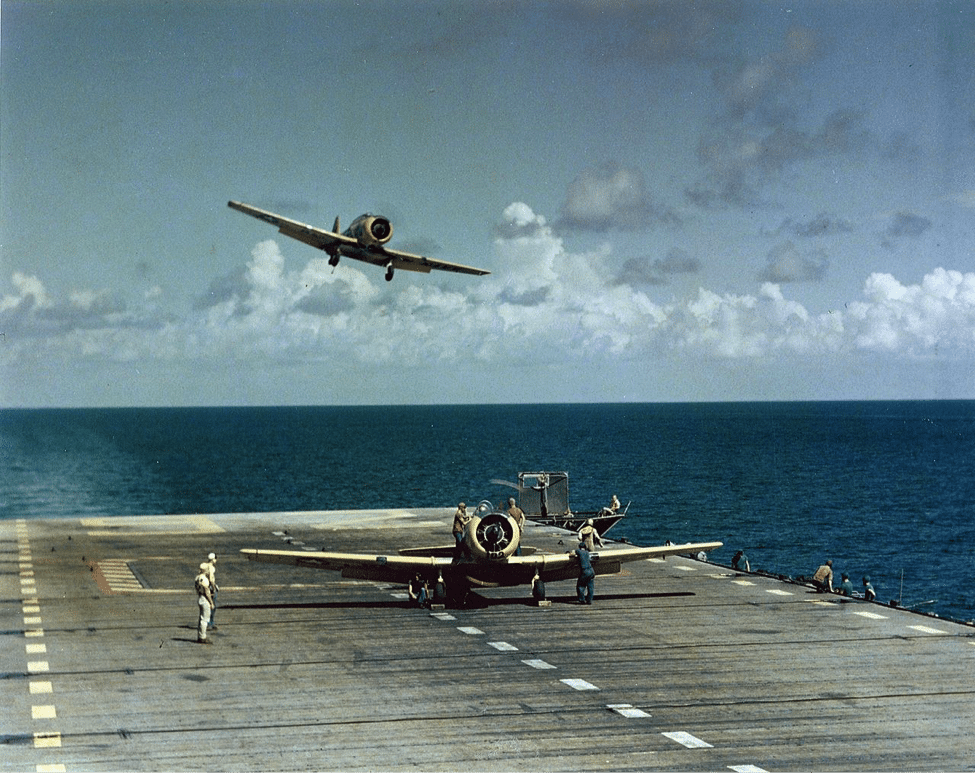
Navy SNJs trained prospective Naval Aviators to do more than just match their number of takeoffs to landings and fly competently in between them. They also taught them to land on aircraft carriers. The skies over the Florida panhandle teemed with snarling SNJs for many years as future stick jockeys began the process that would eventually lead to flying in the fleet (or ending up “haze gray and underway”).
When carriers like the USS Monterrey (CVL-26) cruised in the Gulf of Mexico off Pensacola, Florida, for carrier qualifications, SNJs with tailhooks bolted on would fill the carrier’s landing pattern. They resembled nothing as much as giant snarling yellow bees flying back and forth between their Naval Air Station (NAS) Pensacola hive and the carrier deck.
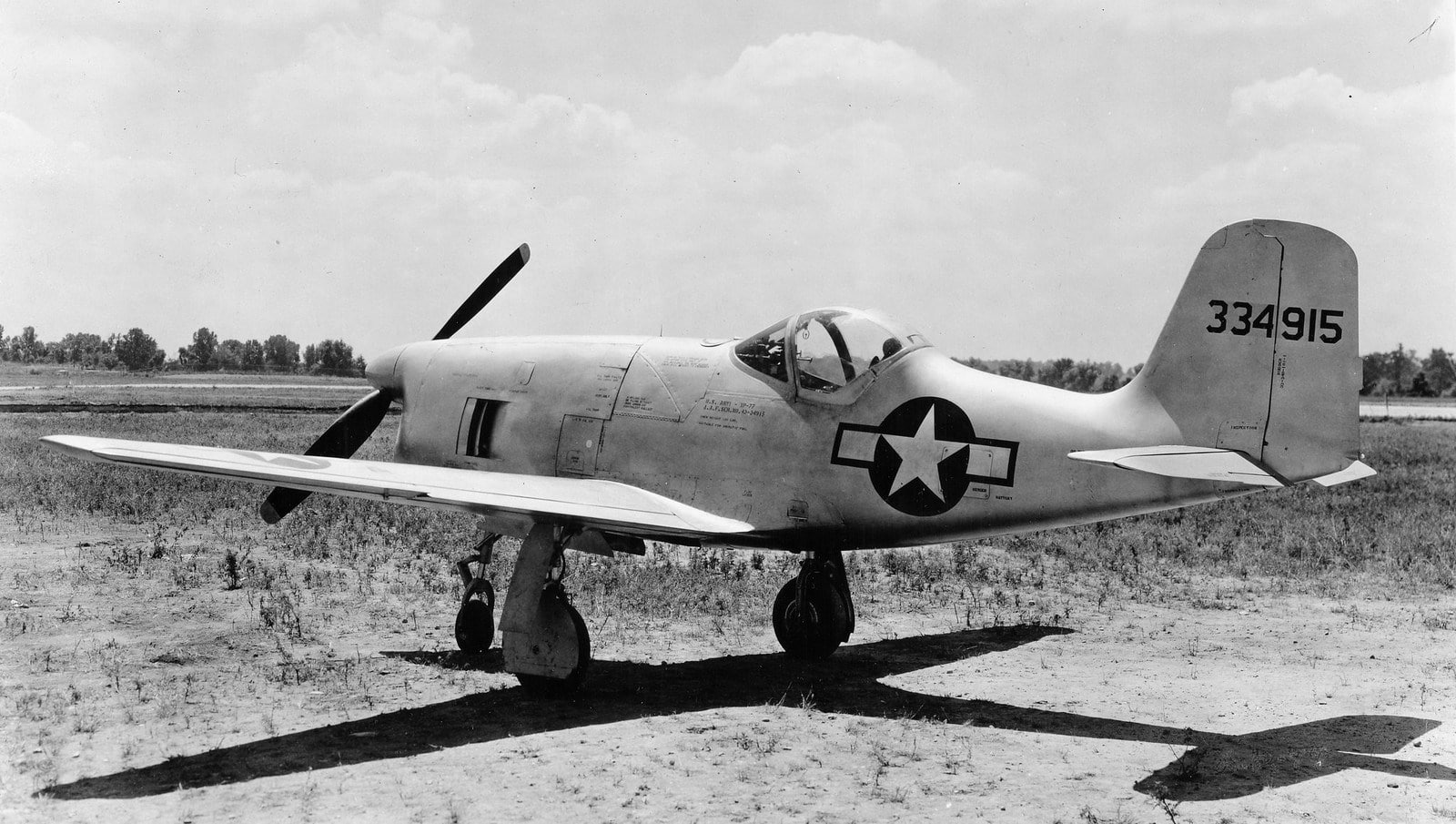
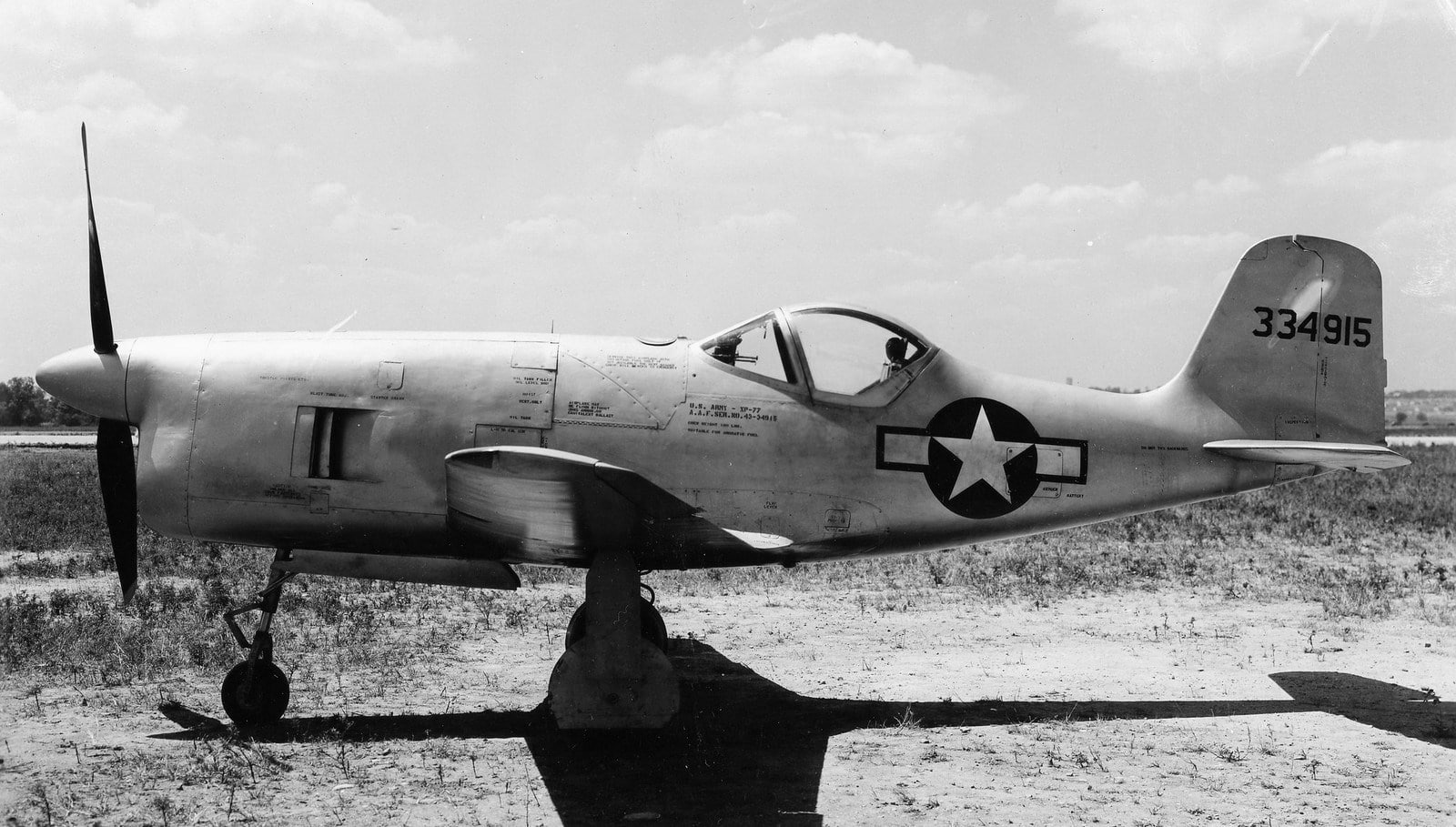
Challenges, Delays, and Shifting Priorities Doomed an Otherwise Interesting Concept known as the XP-77
Bell Aircraft has been around since 1935. The company built the much-maligned (in many ways unfairly) P-39 Airacrobra, the P-63 Kingcobra, the P-59 Airacomet, many of the early X planes, including the Mach meter-busting X-1, X-2, and X-5. During World War II the company also built 668 B-29A and B-29B Superfortress bombers under contract with Boeing. Later, the company branched off into helicopters, giving us the legendary UH-1 Iroquois (Huey) and AH-1 Cobra gunship among others. It would be wildly inaccurate to say that Bell’s designs were all winners, but several of them have made profound impacts on aviation. This story is about one Bell design that might have best been left on the drawing board.
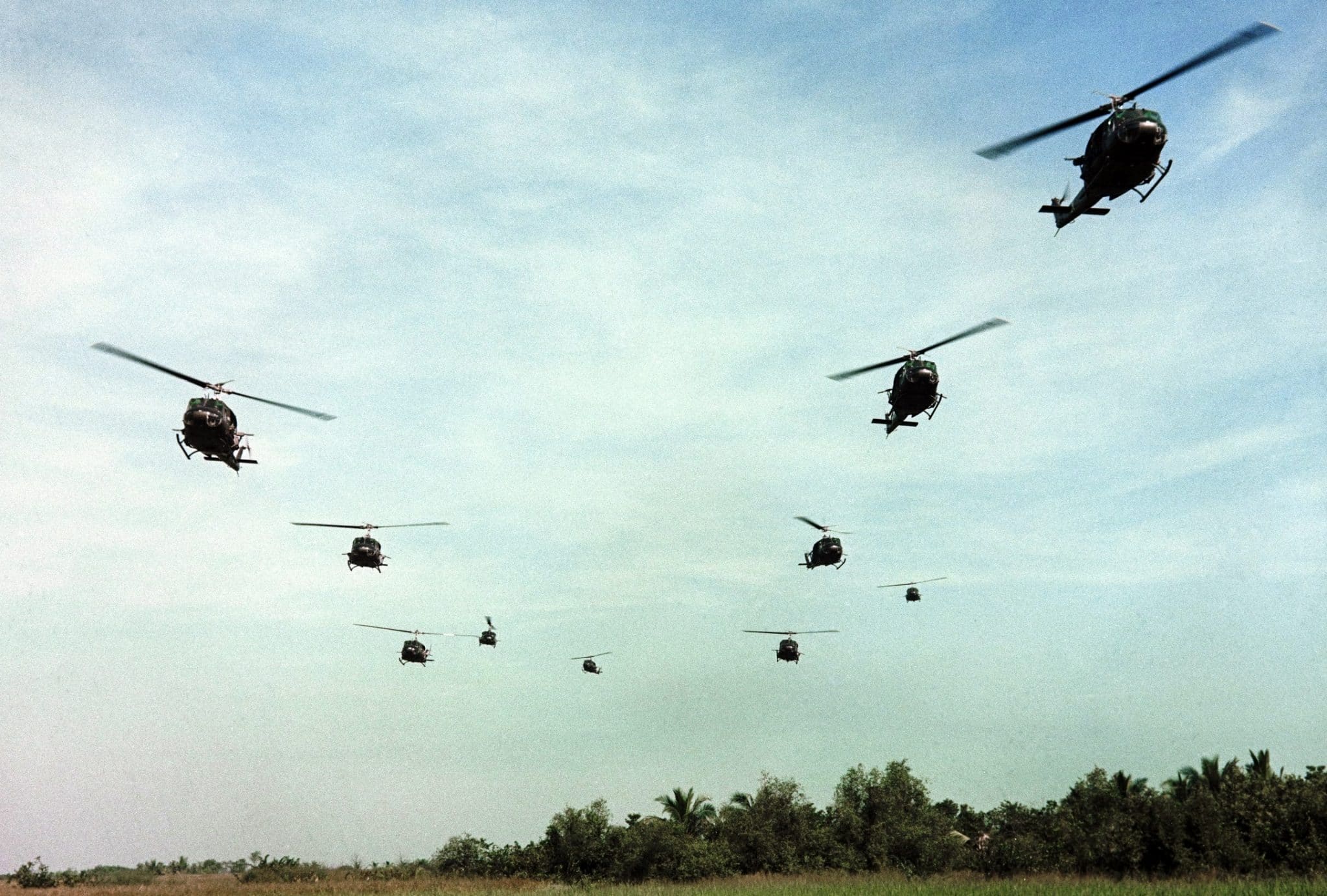
UH-1D Hueys in action. Image via National Archives
A Request is Made Before the War Begins
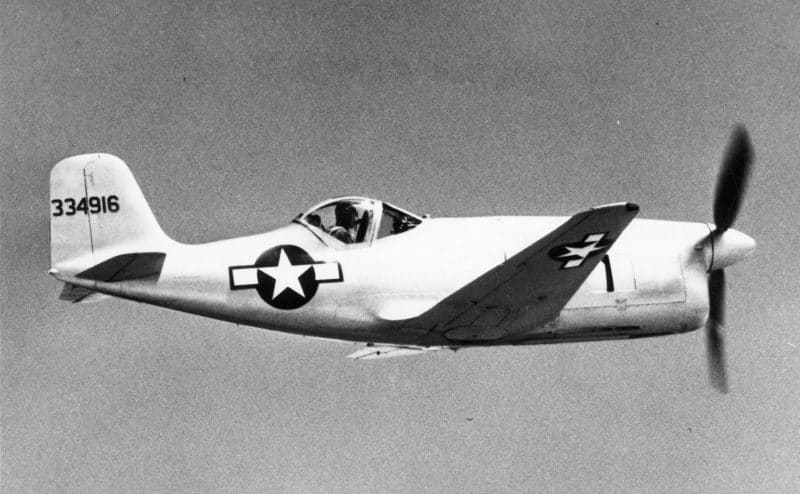
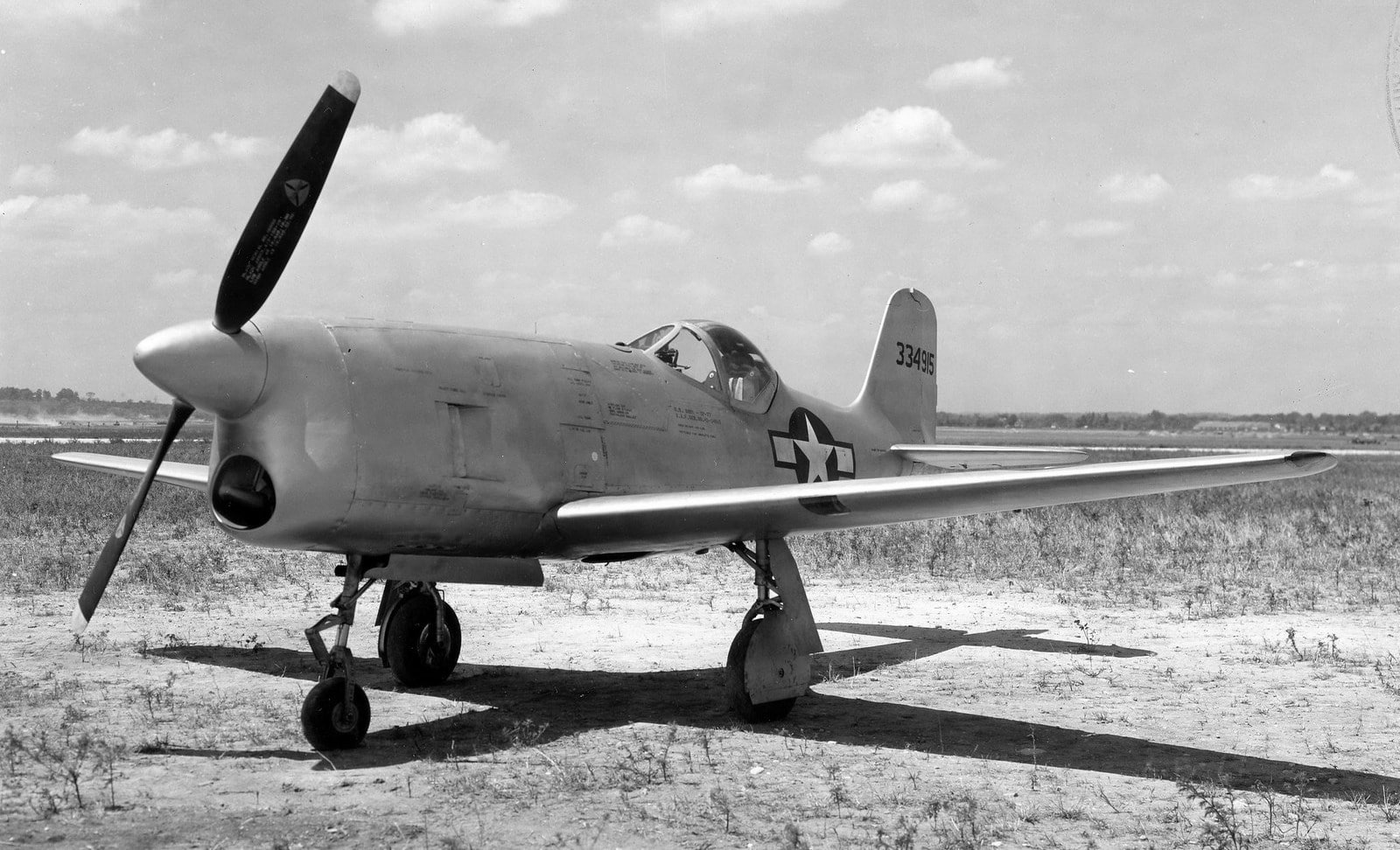
In October of 1941 the United States Army Air Corps (USAAC) approached Bell with a request. The pursuit aircraft of the time were all growing in size, weight, complexity, and cost. A smaller, lighter, more maneuverable (and faster) alternative was the goal of the inquiry. With remarkable prescience, the request also included a materials specification, as in the structure of the aircraft would need to utilize wood instead of “strategic” materials like aluminum. Bell designers drew up a low-wing monoplane made almost entirely of wood equipped with the Bell-trademark tricycle landing gear, a laminar-flow wing, conventional empennage, and a rear-mounted cockpit with a bubble canopy.
wind tunnel mockup of the tri-4. image via NACA/NASA
Designing a (supposed) Stellar Performer
Bell used a designation of Tri-4 for the new aircraft, which was engineer-speak for the 400 horsepower / 400 miles per hour / 4000 pound weight targets for the design. The plane was to be armed with a pair of .50 caliber M-2 machine guns (with only 200 rounds each) mounted in the forward fuselage and synchronized to fire through the propeller. A single 20 millimeter cannon, also forward mounted, was to be fired though the propeller hub in a manner similar to Bell’s P-39 and P-63. Power was to be provided by a Ranger XV-770-9 twelve-cylinder, inverted-V, air-cooled and supercharged engine capable of delivering 500 horsepower to the two-bladed propeller. It was thought that the aircraft would be capable of 410 miles per hour at 27,000 feet.
image via national museum of the us air force
Teeny Tiny Wooden Wonder?
The Tri-4’s outer skin was resin-bonded, stressed plywood that was in turn bonded to the conventional wooden frames using resins, glues, and old-fashioned nails. The fuselage and wing were bonded together using the same methods, as was the engine to the forward fuselage- without a vibration-isolating engine mount. The fuel tank, with a capacity of only 56 gallons, was mounted forward of the pilot with a sealed bulkhead between it and the cockpit. The Tri-4 was only 22 feet 10 inches long and eight feet two inches high. Wingspan was 27 feet six inches with a wing area of 100 square feet. These dimensions made the Tri-4 unique for a fighter design.
image via national museum of the us air force
A Mission and an Answer
The mission for the Tri-4 (later referred to as the D-6 and ultimately Design 32) was to be, in essence, point defense- a single-purpose, specialized weapon. The aircraft would be required to takeoff and climb to altitude quickly, and then intercept and engage enemy bombers raiding the installations under their protection. This assumed the enemy bombers would not be escorted by enemy fighters. Once the United States entered the war and the performance of Axis aircraft like the Mitsubishi A6M Zero-Sen came to light, the Tri-4 was considered to be a potential answer for lightly-built, highly-maneuverable foes.
image via national museum of the us air force
For the Rest of the XP-77 Story Bang NEXT PAGE Below
Lakeland Tower: “SPAR 28, you are cleared for a Practice Instrument Approach to Runway 05, Circle to Runway 09, cleared for the Option.”
SPAR 28: “Roger. SPAR 28 is cleared for the Practice Instrument Approach to Runway 05, Circle to Runway 09. Cleared for the Option.”
In the Spring of 2002, the 310th Airlift Squadron was busy training new Gulfstream pilots to fly the 4-star military commanders from our home base at MacDill AFB on the south side of Tampa Bay. Each weekday morning a training flight departed at 0800 for two hours of practice approaches at Ft Myers Airport and Lakeland Airport, rather than just beating up the pattern around MacDill. We called this “exporting the noise,” and it allowed our new pilots to train in the relatively new RNAV GPS approaches, as well as older NDB, TACAN, and ILS approaches.
Opportunity for a ‘collab’, but it wasn’t allowed
In late March 2002, Lakeland prepared to host their annual Sun -N- Fun Fly-In, second only to Oshkosh in size and spectators. One morning our Chief of Training, Major Bob Giddings, was conducting a training flight with numerous touch-and-goes and low approaches to the Lakeland runways. One of our favorite training scenarios was to fly the non-precision NDB approach to Runway 05, a fairly short runway, then level off at 500 feet and enter a left downwind for a circling approach to Runway 09. This usually ended in a touch and go landing for a practice short field landing to a full-stop and taxi back for another takeoff before returning to MacDill.
As Major Giddings completed the training profile, Lakeland Tower asked him if MacDill would be sending the new C-37 to the Sun-N-Fun airshow the following month. Bob said he didn’t know about that but would ask the question.
Regs are Regs
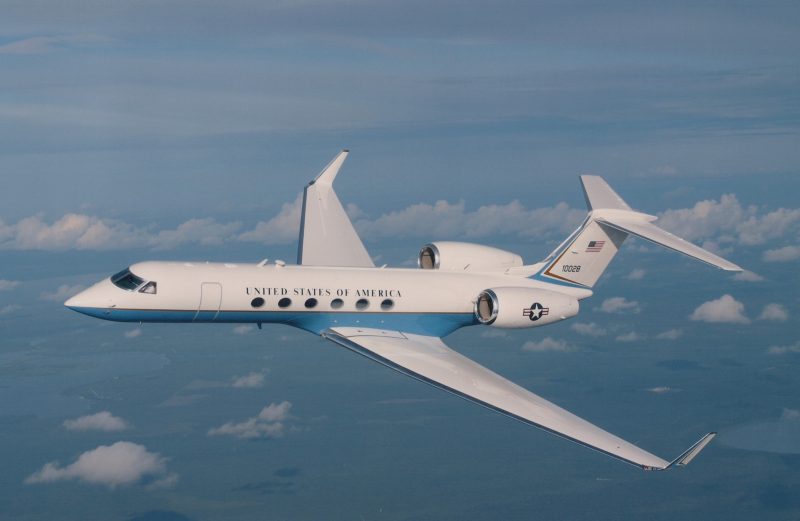
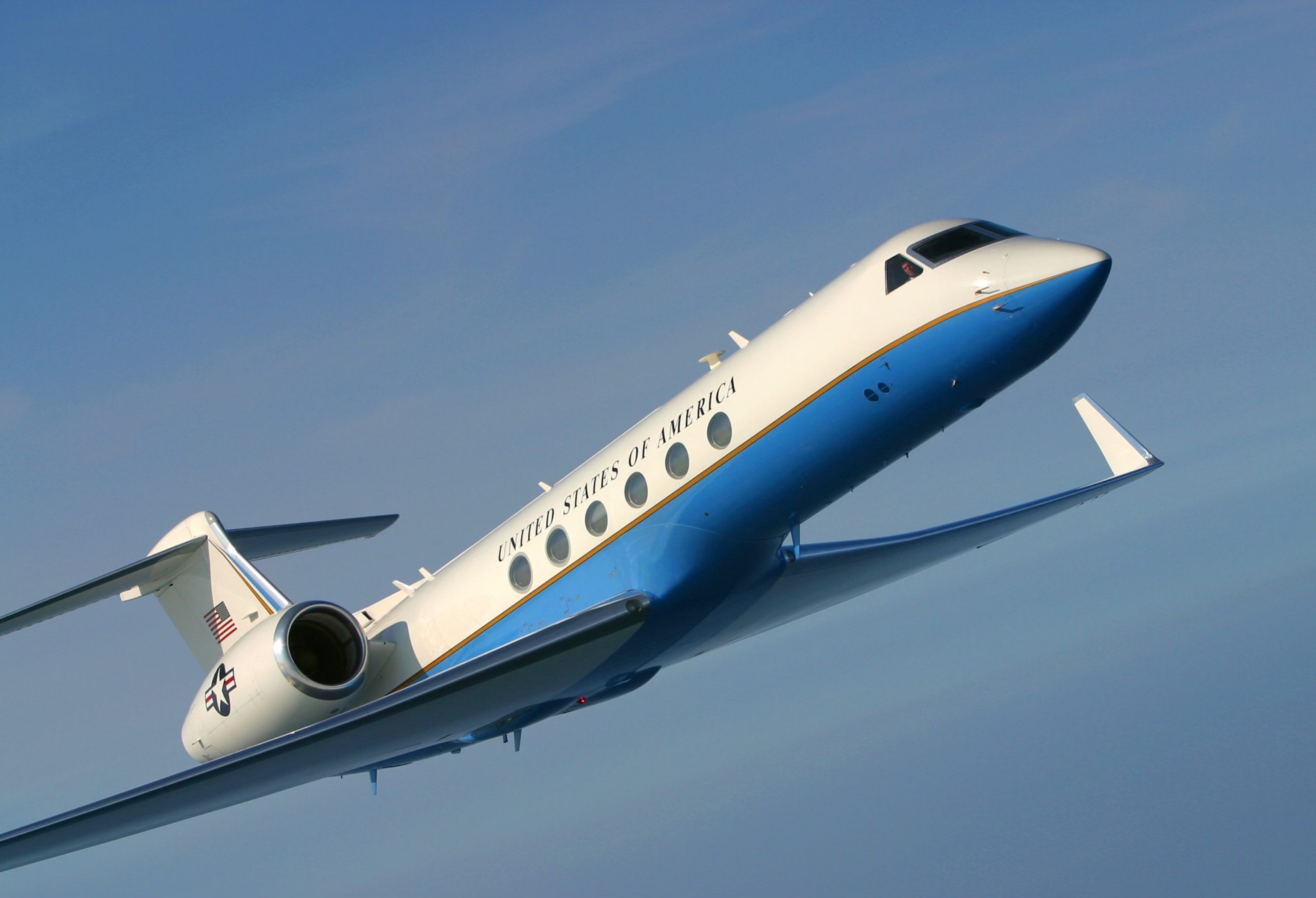
Upon landing at MacDill, Bob stopped by my Director of Operations (310AS/DO) office to tell me about his short conversation. Bob and I had both flown the Gulfstream at Andrews AFB prior to moving south a month earlier to create this new VIP airlift squadron. We both knew that our regulations prohibited using VIP aircraft, such as the C-37 (a brand-new G-V), the C-32 (B-757), or any other fancy blue and white aircraft in airshows. Whether it was for security reasons, or not wanting the public to damage our mahogany wood and blue leather interiors, I don’t know. We only knew it was “against regulations.” But Bob is a clever pilot.
“Well, you know Dave, I could file a flight plan with a 20-minute instrument delay at Lakeland and request the NDB to 05, Circle to 09, for a low approach.”
I told him that if the Sun-N-Fun Air Show Coordinator was okay with that request, then I was, too. Bob headed out the door to make some phone calls.
I love it when a plan comes together
Sun n' Fun: You Are Cleared for a PRACTICE INSTRUMENT APPROACH-Not a Flyover 82
A few weeks later, as hundreds of general aviation aircraft descended upon Lakeland Airport, Major Giddings prepared for another routine training mission, departing in the afternoon, instead of the usual morning takeoff. VIP pilots pride themselves in on-time arrivals down to the second and Bob approached Lakeland Airport right at the coordinated 3:00 ETA. Ten minutes earlier, the Air Boss directed that all aircraft land for a special inbound fly-over. With the skies now clear of small aircraft, SPAR 28 made its approach request. To cover our bases and prevent any possible accusations, Major Giddings radioed, “SPAR 28 requests a Practice Instrument Approach to Runway 05, Circle to Runway 09, for the option.” This emphatic request was unusual but it was on tape that this was a legal training maneuver and “not an airshow.” Clearance for the option allowed the pilot to land or go around.
Bob’s student descended toward the airport and began the NDB approach to Runway 05, which was now closed and only used to park hundreds of small aircraft. Leveling off at a chosen altitude of 500 feet, Bob and his trainee could see thousands of spectators in lawn chairs or standing alongside the stanchions gazing upward as the gleaming blue and white jet whistled overhead. Passing over show center at 500 feet the C-37 banked left, rolled out briefly, then banked left again, lining up with Runway 09. The sleek executive jet with United States of America painted above the six oval windows descended to 50 above the landing threshold when Bob commanded, “Go Around.”
The trainee thumbed the TOGA button on the autothrottles and the Rolls Royce engines revved up to 14,000 pounds of the thrust each as they pitched to 20 degrees nose high, pointing into the blue Florida sky. After a quick climb to 4,000 feet the Air Force crew thanked the Lakeland Tower for accommodating their ‘training request’ and switched frequencies to Departure Control for the short hop back to MacDill. Who knew training could be such a crowd-pleaser? The things we do for our country.
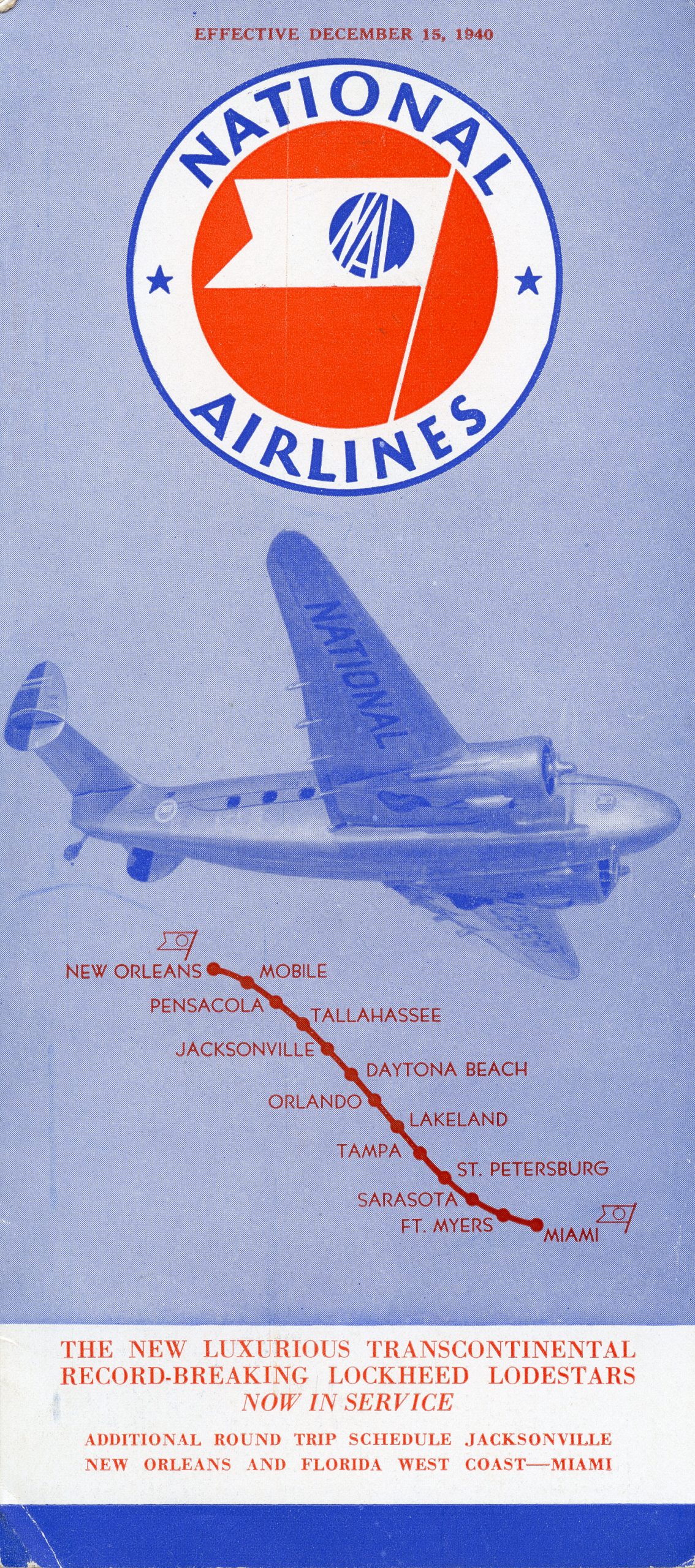
National Airlines got its start in 1934 when Ted Baker and his associate, Don Franklin, successfully bid for AM (Air Mail) Route 31 between St. Petersburg and Daytona Beach, Florida, via Tampa, Lakeland, and Orlando. Service was inaugurated on 15 October 1934, with Ryan Monoplanes which were soon replaced with Stinson A Tri-Motors.
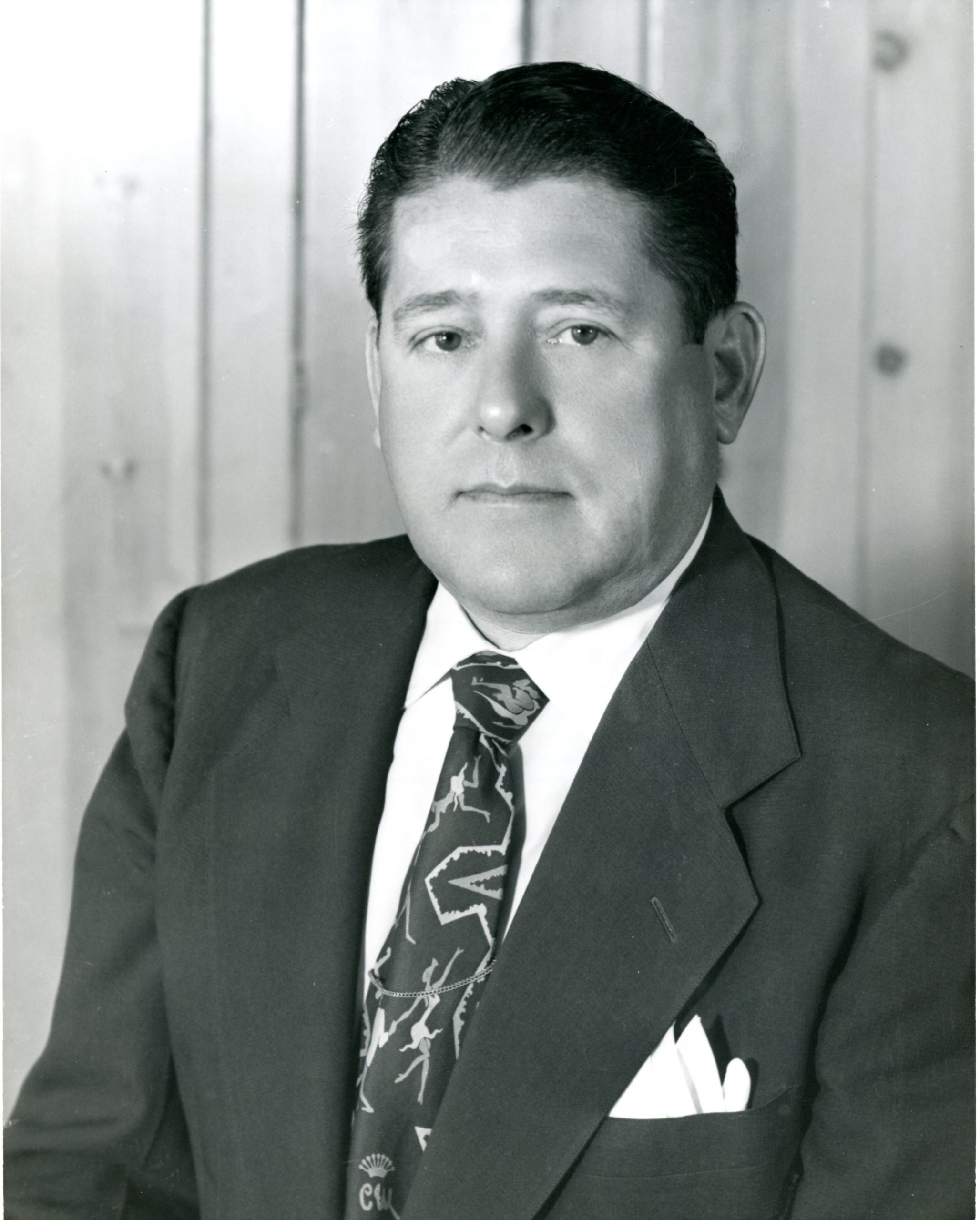
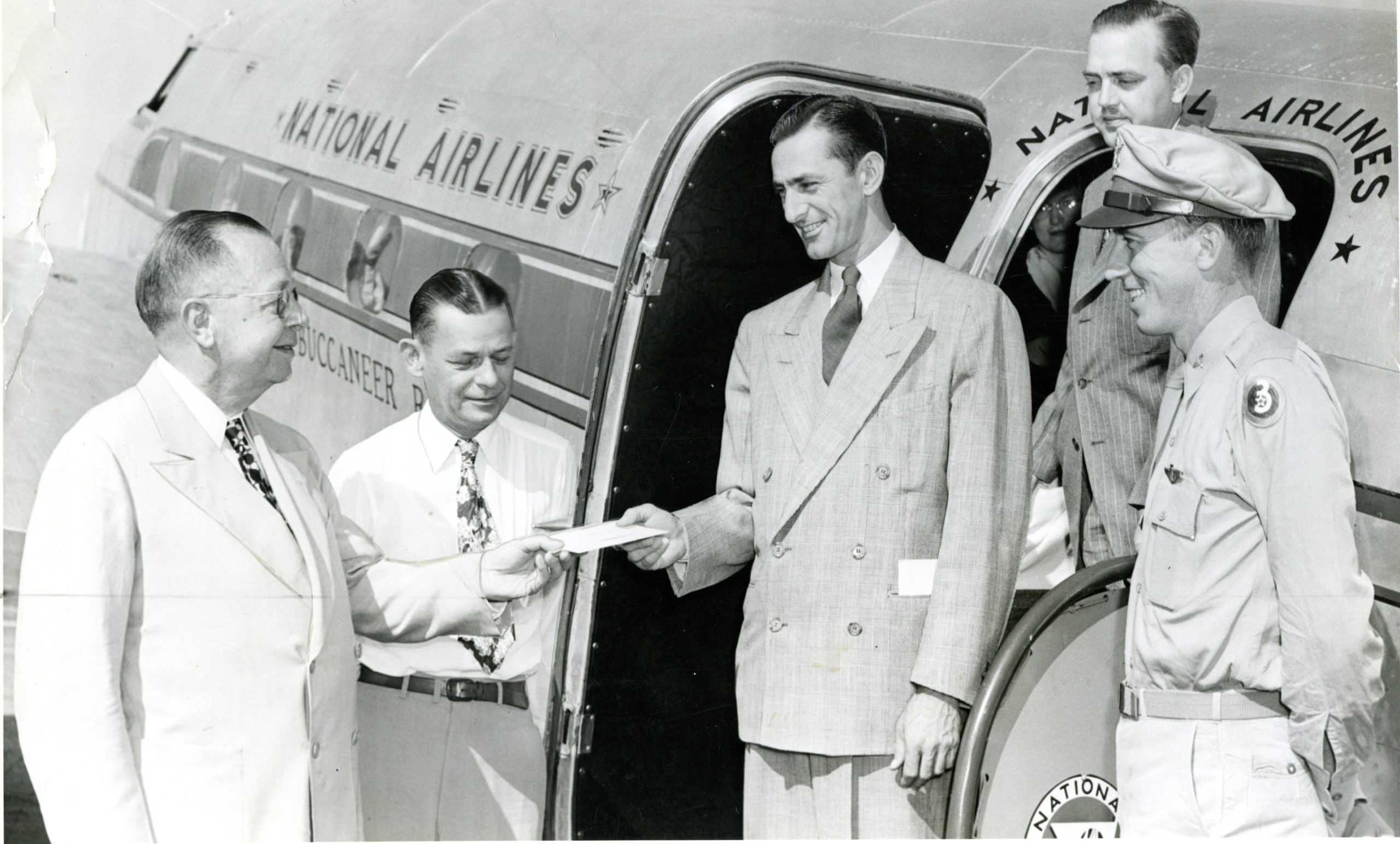
George Theodore “Ted” Baker was the force behind National Airlines for nearly three decades. His iron-fisted management style alienated employees and their unions until he professed to have a change of heart after a 1948 strike by the airline’s pilots. National Airlines Photo
Don Franklin left the enterprise and thereafter National Airlines was associated with just one leader (or, some would say, despot), George Theodore “Ted” Baker.
Baker would become a thorn in the side of Eastern Air Lines’ feisty general manager, ‘Captain’ Eddie Rickenbacker, for years to come. Both men were known for their volatile tempers.
National’s system was confined to the State of Florida until 1938. David H. Stringer Collection
NATIONAL GROWS
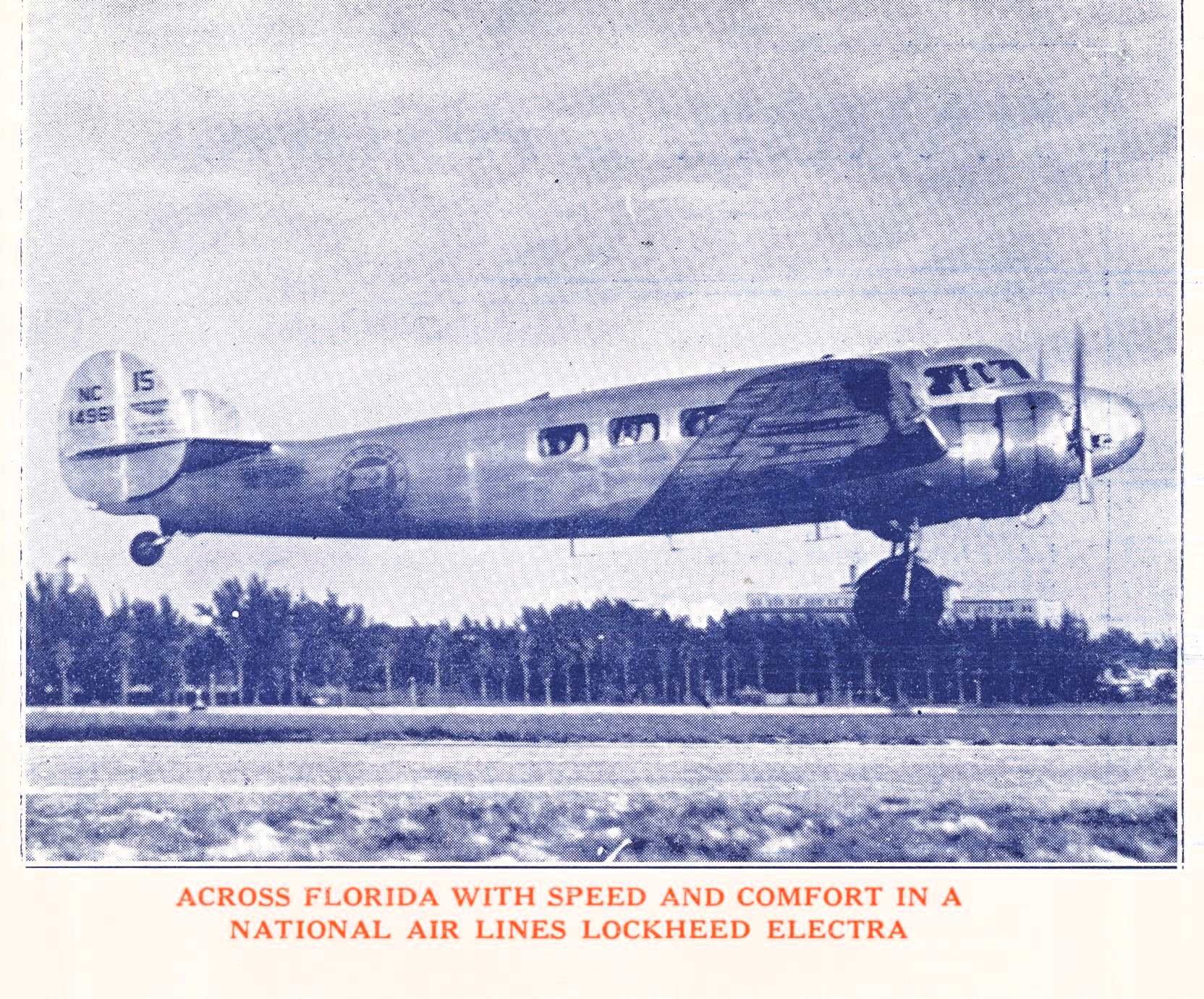
In 1937, much to Rickenbacker’s consternation, the Post Office awarded National a contract to fly between Tampa and Miami, enabling customers and mail from Tampa, Sarasota, and Fort Myers to connect with Pan American’s Caribbean and Latin American flights in Miami. Of course, Rickenbacker felt that Eastern should have been selected. National now had a meandering route from Miami to Daytona Beach, via St. Petersburg and Tampa. With the new service came new aircraft, 10-passenger Lockheed L-10 Electras.
10-passenger Lockheed L-10 Electras were added to the fleet after National was awarded a contract by the Post Office Department to carry mail (and passengers) from Tampa to Miami. David H. Stringer Collection
National successfully bid on the air mail contract from Jacksonville to New Orleans via intermediate points and service was inaugurated over this route on 1 November 1938. Against Rickenbacker’s objections, the CAB awarded National the authority to operate over the short segment from Daytona Beach to Jacksonville in competition with Eastern. This link joined together the two parts of National’s system: from Miami northward to Daytona and Jacksonville via Tampa, and from Jacksonville westward to New Orleans.
On November 1, 1938, National began service between Jacksonville and New Orleans. When the newly-formed Civil Aeronautics Board (CAB) closed the gap between Daytona Beach and Jacksonville, National wound up with a meandering route that extended from Miami to New Orleans. David H. Stringer Collection
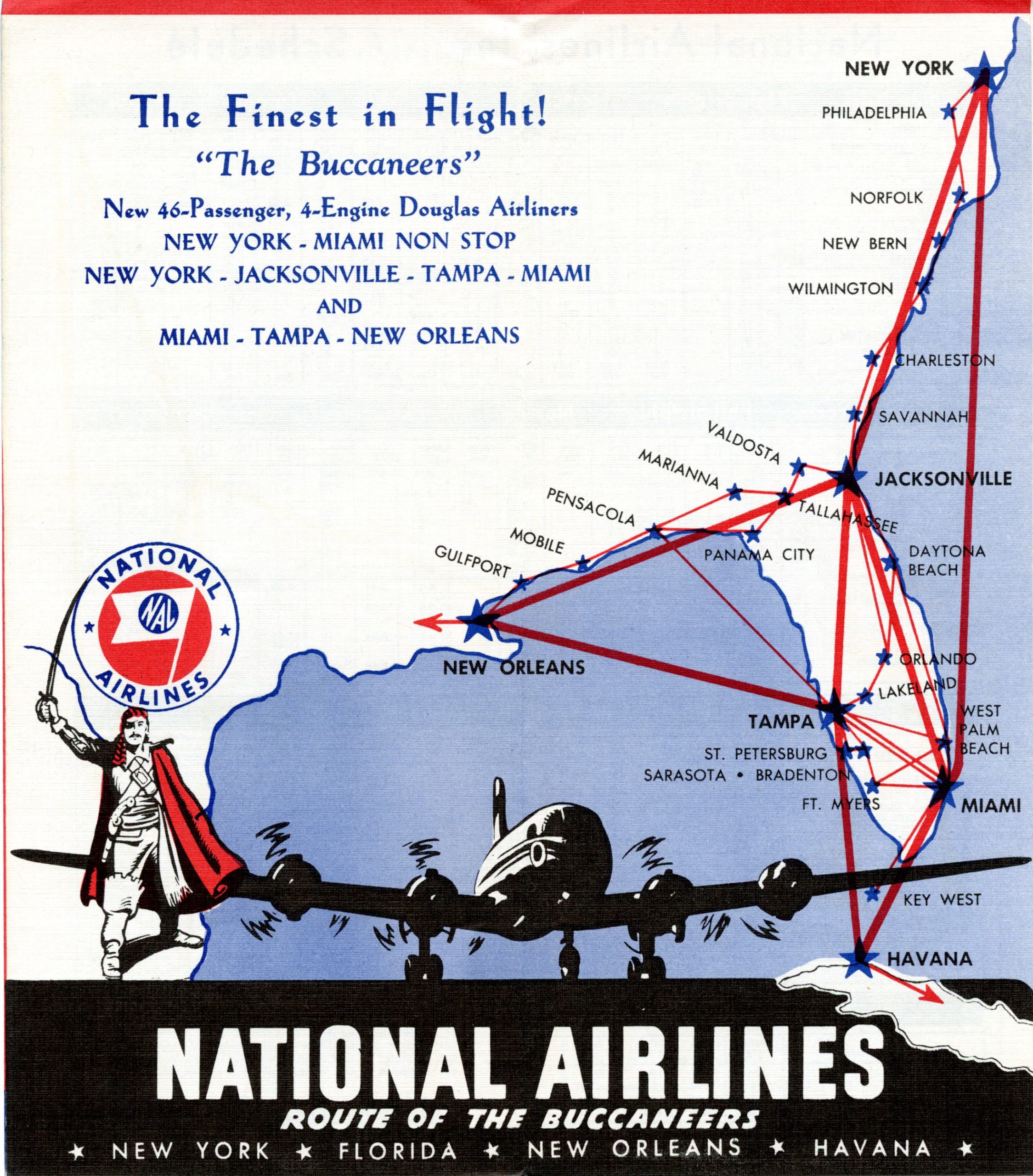
Ted Baker liked being thought of as a swashbuckling pirate stealing business from Rickenbacker. He christened his airline the “Route of the Buccaneers”, incorporating the image of a pirate with sword in hand as the company symbol.
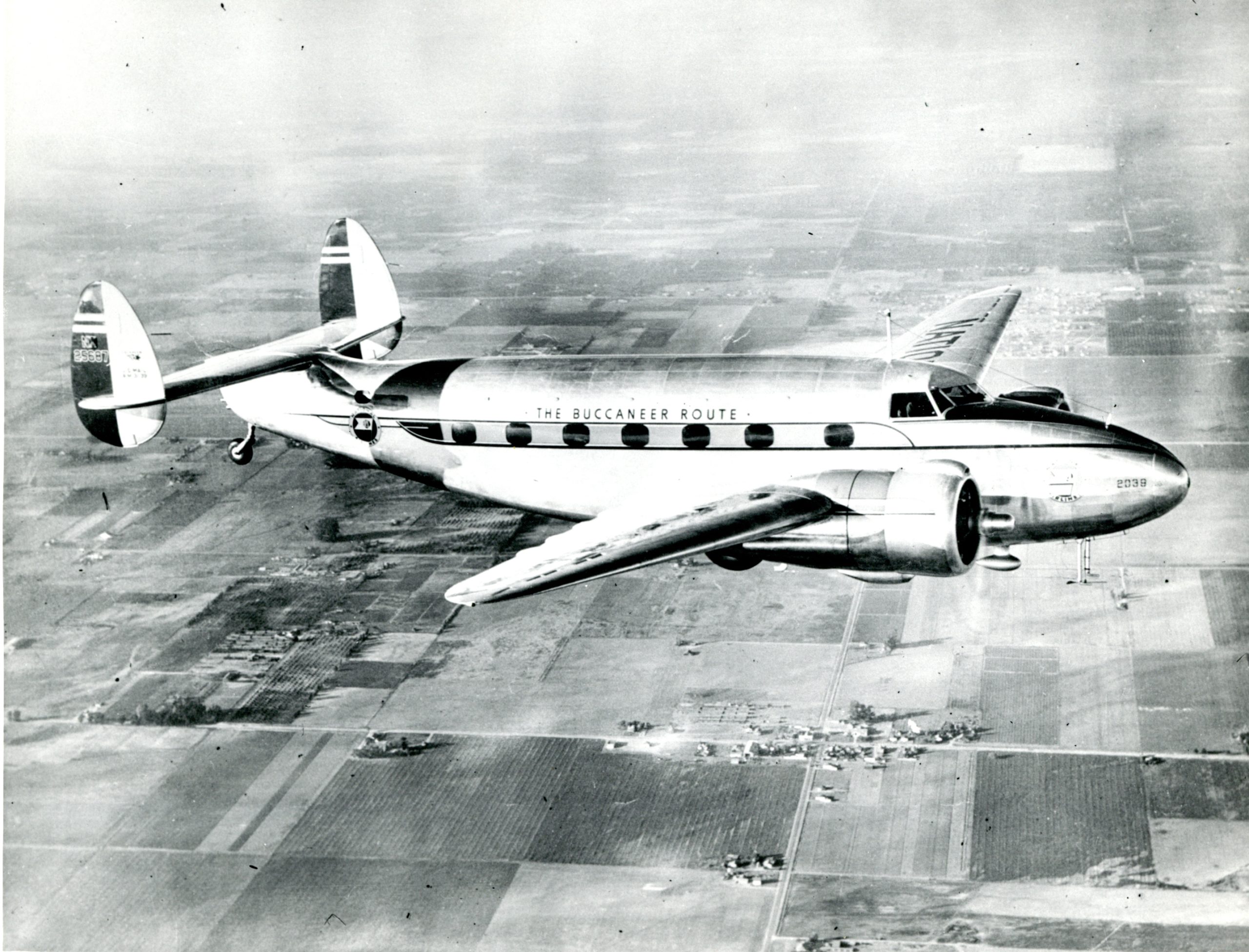
Baker chose Lockheed L-18 Lodestars for his fleet, bypassing the larger and more popular Douglas DC-3. National would be the only major carrier – trunk or local service – in the U.S.A. not to fly the DC-3. National Airlines Photo
LODESTARS INSTEAD OF DC-3s
Introduced to the nation’s airways in 1936, the Douglas DC-3 quickly proved itself to be an aircraft that could make a profit on revenue received solely from carrying passengers. It became the standard airliner for major carriers around the world.
But Baker felt that the DC-3’s 21-passenger capacity was too big for his needs. He decided to buy Lockheed’s ultimate twin-engine airliner, the 14-passenger L-18 Lodestar instead. National would hold the distinction of being the only major airline in the United States never to operate a DC-3.
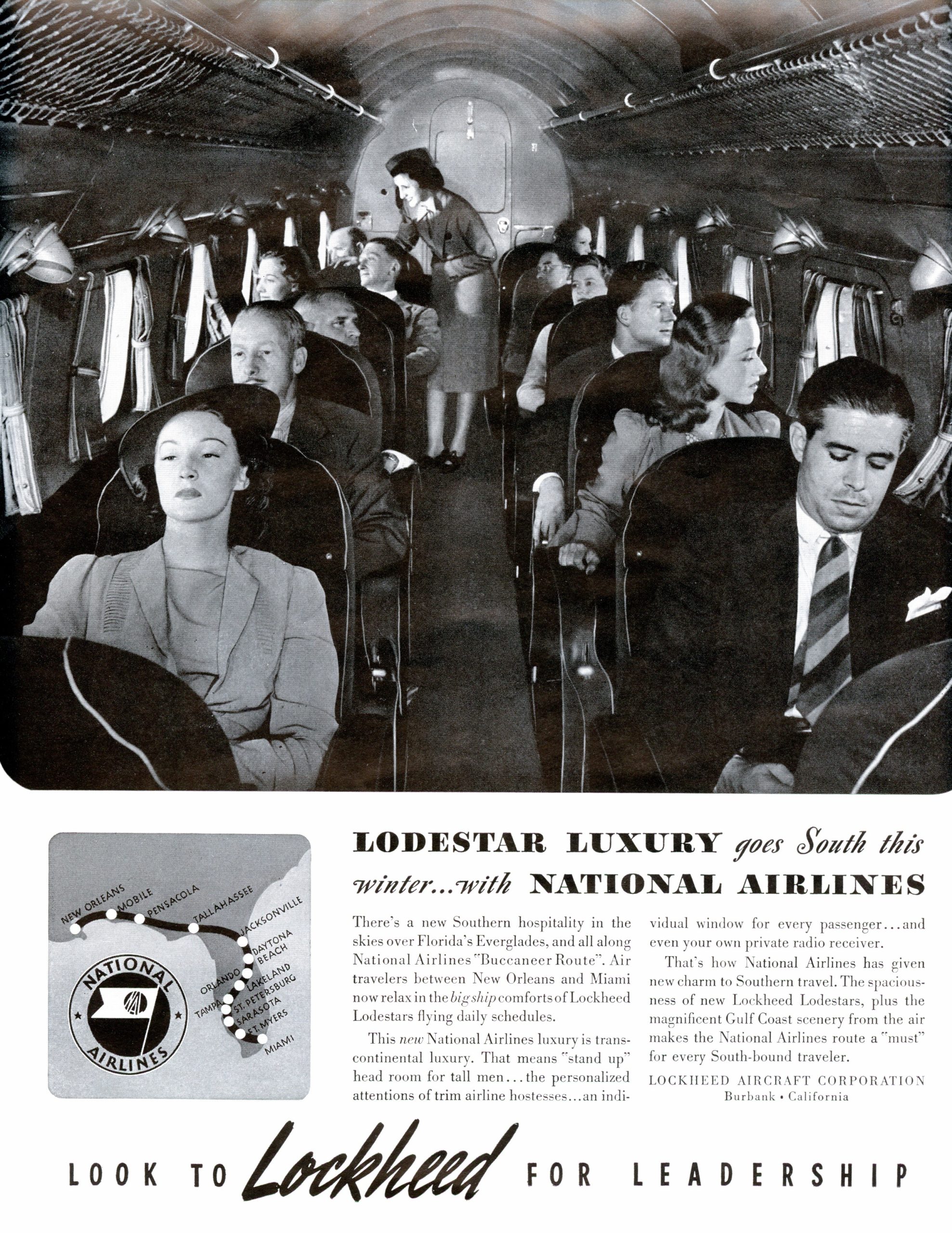
The Lodestar was not a graceful looking airplane. It sat low to the ground and sported twin-tail vertical stabilizers. Unlike the DC-3, with its 2 + 1 seating arrangement (later expanded to 2 + 2 by most airlines), the Lodestar was equipped with a single row of 7 seats on each side of the aisle. The wing-spar ran across the front of the cabin requiring two steps up to enter the cockpit. Ungainly as it appeared, the Lodestar’s advantage was speed. It cruised at 220 mph, compared to the DC-3’s 170.
This advertisement from Lockheed shows the interior of a Lodestar, which accommodated only 14 passengers. David H. Stringer Collection
BAKER VS. HIS PILOTS
Behind the scenes at National, all was not peachy. The pilots wanted to unionize and Ted Baker would have none of it. It was his airline and his employees would do as he said in exchange for what he paid them, and that was that.
In the early days, Baker would fire any pilot that was a union organizer. In 1942, Baker declared that “wartime emergency” forced him to pay pilots a lump sum amount each month instead of the hourly wage they were supposed to earn based on flight time. He relented after the CAB threatened to investigate his payroll practices.
The pilot’s gained membership in the Airline Pilots Association (ALPA), but Baker’s inability to build bridges with his own employees almost brought an end to his airline.
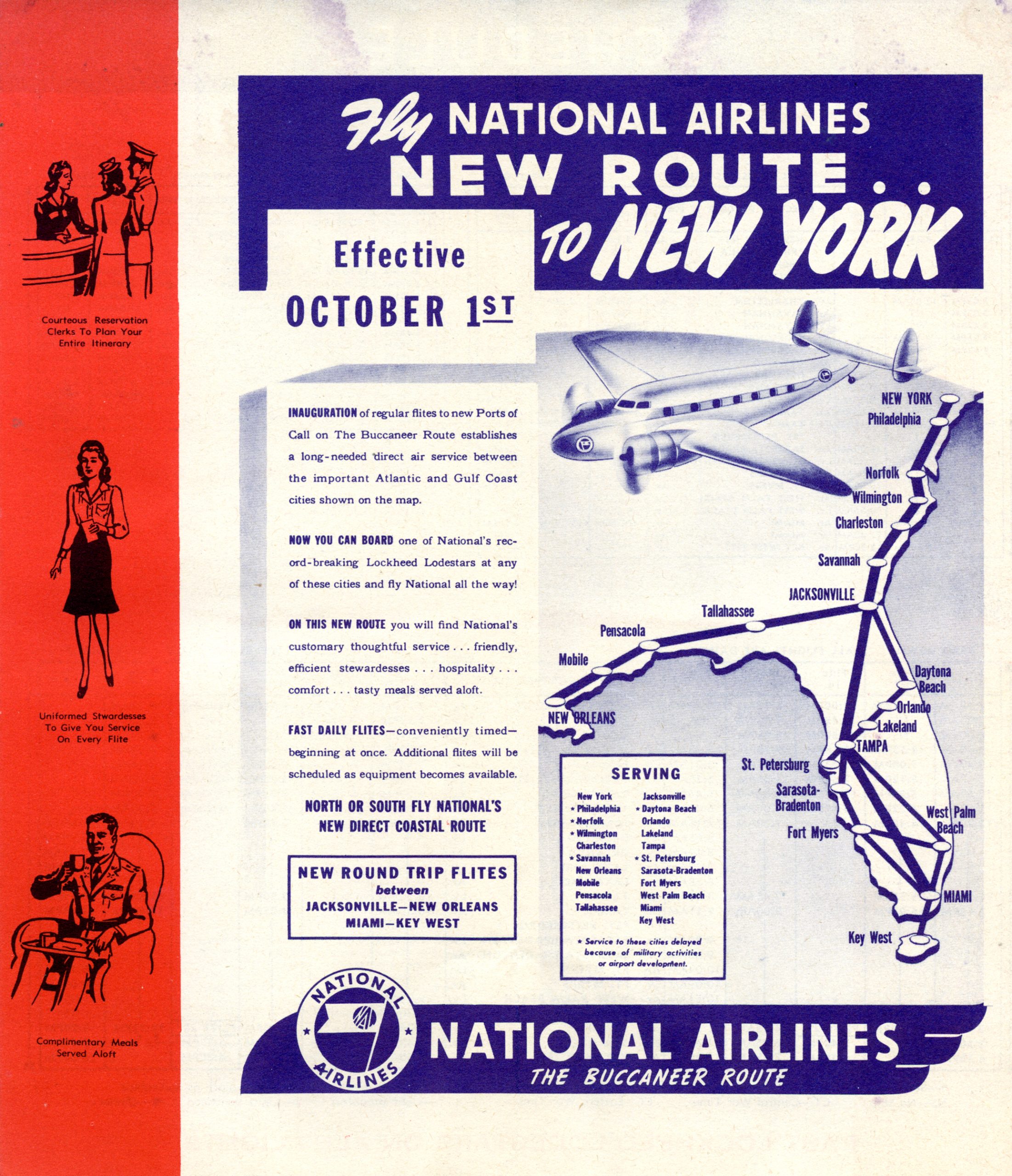
When National inaugurated service to New York in 1944, the only aircraft Baker had in his fleet to cover the new route were the Lodestars. David H. Stringer Collection
ON TO THE BIG APPLE
In 1944, the CAB handed Ted Baker a gift that would bring him into the major leagues. Authority was granted for National Airlines to operate between New York and Miami via several important intermediate cities. Prior to this, Eastern held a monopoly in the New York to Miami market. Some say that it was Rickenbacker’s constant complaining about the Democratic presidential administration of Franklin Roosevelt that prompted the CAB to allow National onto Rickenbacker’s most valuable route but, in truth, the busy East Coast market deserved two airlines competing for traffic.
National’s first flight from New York arrives in St. Petersburg, Florida. National’s Executive Secretary, Robert Forman, hands a letter from New York Mayor Fiorello La Guardia to the mayor of St. Petersburg. David H. Stringer Collection
Unfortunately for Baker, since he had chosen to forego purchasing DC-3s, the only aircraft he had available to fly this prestigious new route were his little 14-passenger Lodestars. Service was inaugurated to New York on 1 October 1944. Eastern was operating DC-3s in competition.
Douglas DC-4’s were added to the fleet in 1946. Baker had bested his foe, Eastern’s Eddie Rickenbacker, by introducing the 4-engine airliners several months ahead of Eastern. Baker dubbed his DC-4 flights “The Buccaneers”.
HEAVY METAL
After the war, in February 1946, Ted Baker got the upper hand on Capt. Rickenbacker when National introduced 46-passenger, 4-engine Douglas DC-4s, which had the range to offer non-stop service between New York and Miami for the first time. Still stuck with twin-engine DC-3s, Eastern would not introduce DC-4s on the route until several months later. Of course, Baker named his new non-stop service “The Buccaneer.”
The CAB awarded National another plum in 1946, the year that Ted Baker moved the company’s headquarters from Jacksonville to Miami. This award infringed on the territory of another airline pioneer, Juan Trippe of Pan American. National gained authority to serve Havana, Cuba, non-stop from both Miami and Tampa, and from New York via intermediate points.
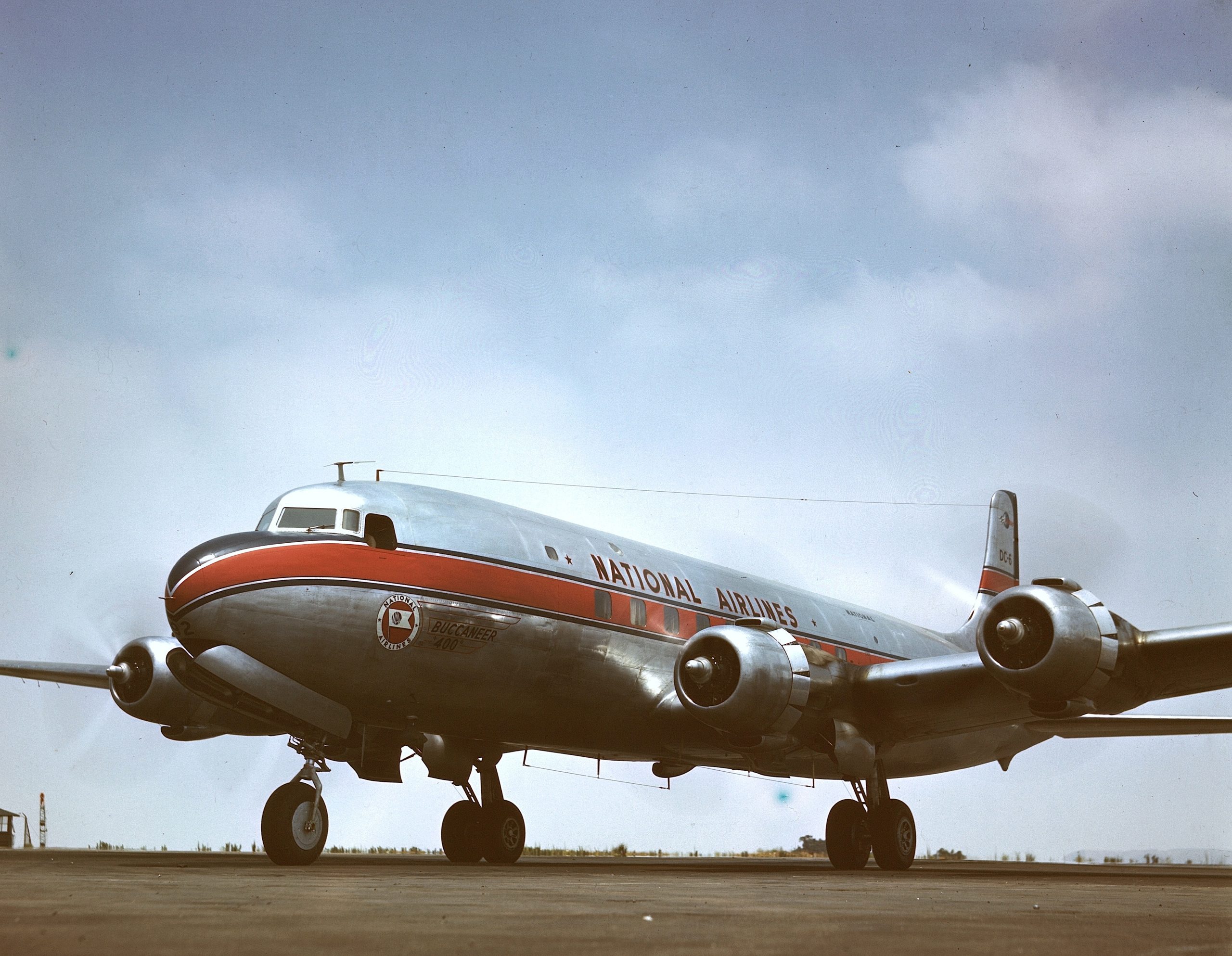
Modern, pressurized Douglas DC-6’s were added to National’s fleet in 1947. Douglas Aircraft Co. Photo
In 1947, Baker and Rickenbacker both put modern pressurized equipment into service non-stop between New York and Miami; Eastern introduced Lockheed L-649 Constellations in June, while National launched Douglas DC-6 flights in July.
LABOR RELATIONS
Unfortunately, employee relations at National had not improved. The pilots contended that Baker blatantly ignored their contract by violating seniority provisions and failing to comply with negotiated work rules. Other employee groups were similarly dissatisfied. On 26 January 1948, the airline’s reservationists and ticket agents went on strike over wage issues and working conditions.
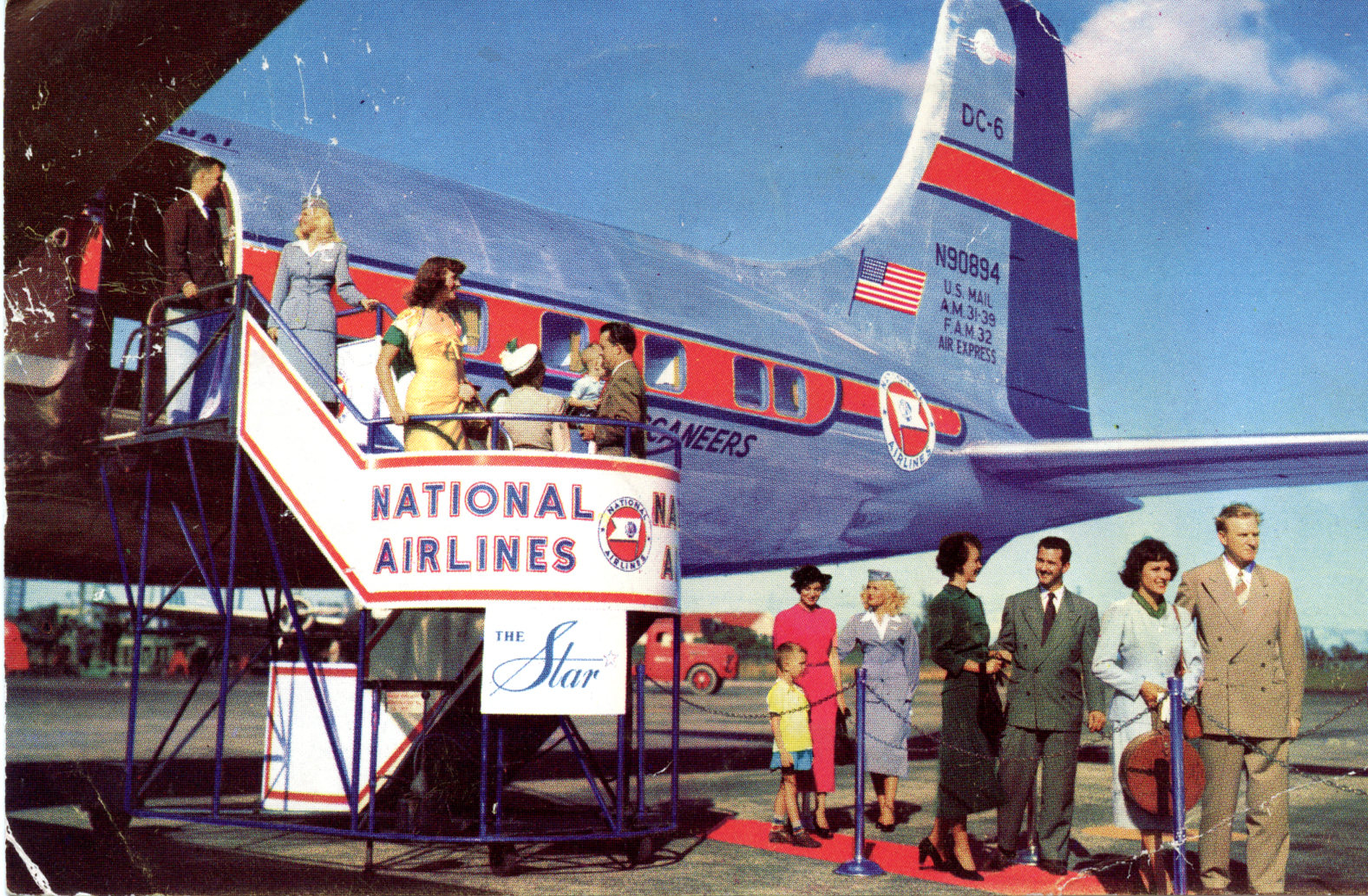
Passengers deplane from a DC-6 in this staged company photo. National Airlines Photo
It was Baker’s refusal to arbitrate a case involving a pilot, Maston O’Neal, that almost brought an end to National. During a hydroplaning incident while attempting to land his Lodestar on a wet and notoriously short runway, O’Neal had saved the lives of all of his passengers and crew, but had lost his airplane in the process. Baker fired the pilot.
On 3 February 1948, National’s pilots walked out on strike over the O’Neal incident. The strike did not end until the November 1948 presidential election, which Baker was hoping that corporate-friendly Dewey would win. Labor-friendly Truman won the election and Baker settled with the pilots’ union.
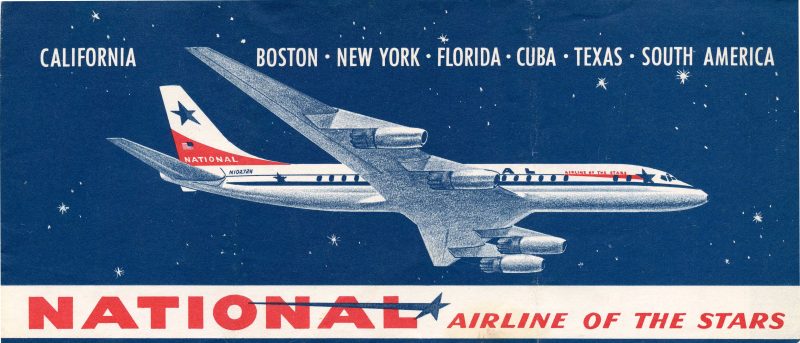
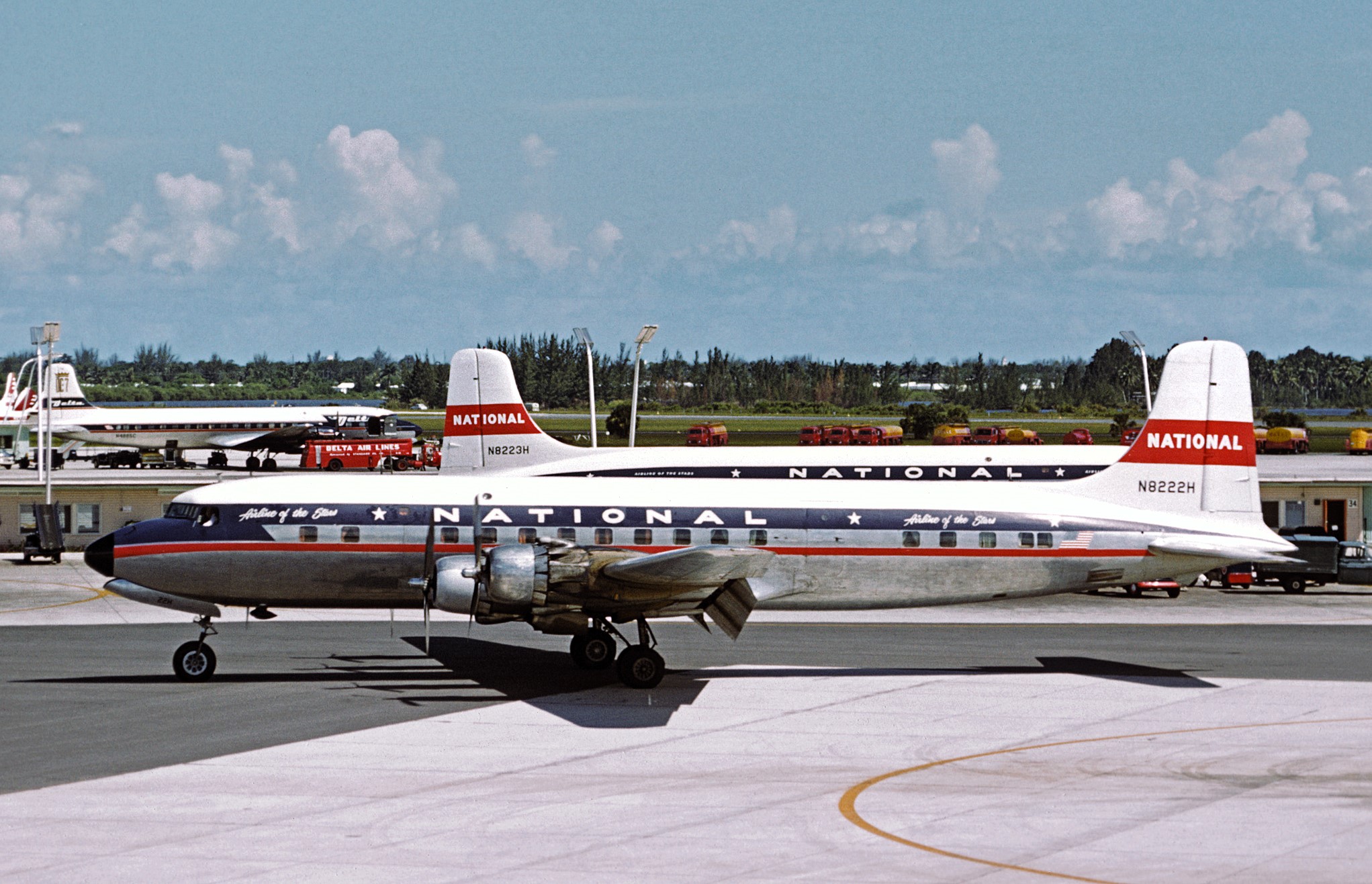
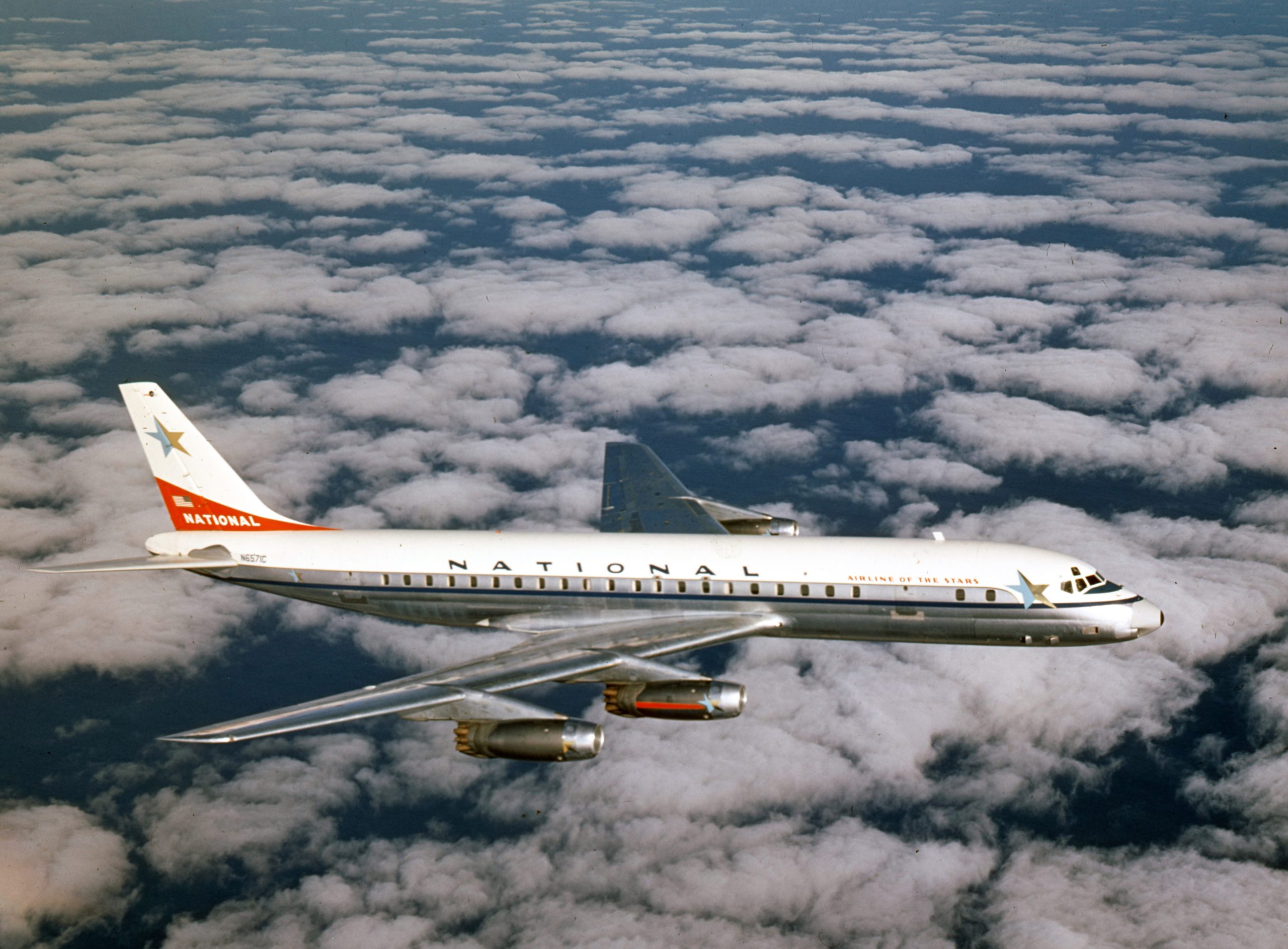
National got a complete makeover in the early 1950’s. A new aircraft livery was adopted, as seen on these two Douglas DC-6B’s. the Buccaneer image was dropped in favor of a new slogan – Airline of the Stars. National Airlines company photo
THE “AIRLINE OF THE STARS”
After joining a religious movement called Moral Re-Armament, Baker claimed to have had a change of heart after immersion into the group’s teachings of “cooperation, honesty, and mutual respect” to transform relationships between opposing parties. Baker announced to his employees that he had a new attitude toward his workforce at National Airlines. From that point forward, a truce was observed between management and labor, new contracts were negotiated, and everyone’s mission was to build National Airlines into the best carrier operating along the East Coast.
NATIONAL VS. EASTERN
Baker knew that Rickenbacker’s weakness was a lack of emphasis on in-flight service. Safety and reliability were paramount to Captain Eddie, with passenger comfort somewhat of an afterthought.
Baker hired Walter Sternberg to be his new Vice President – Sales. Sternberg previously worked for Rickenbacker who reportedly fired him over their differences about the quality of Eastern’s in-flight service, which Sternberg thought was lacking.
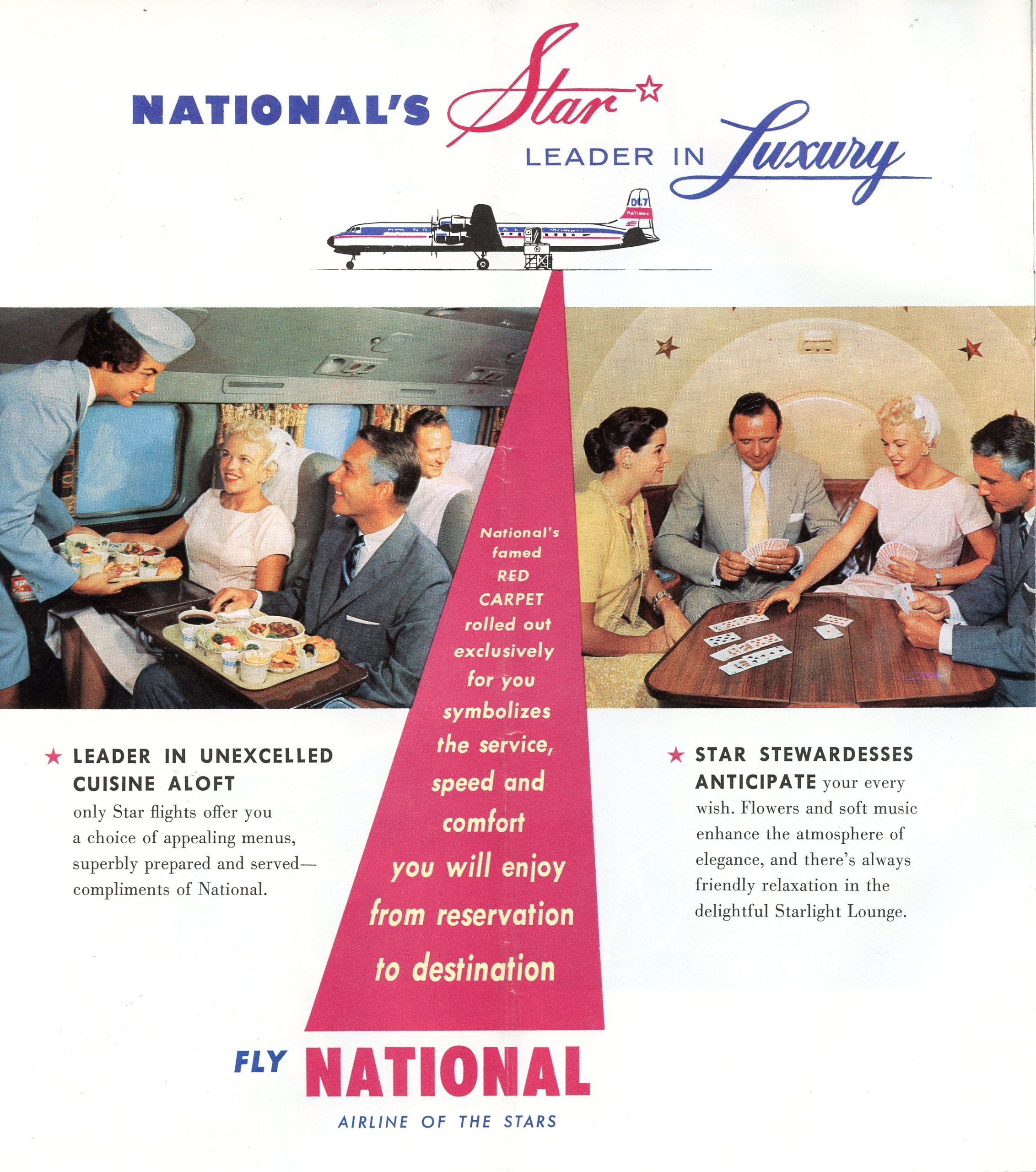
National’s ‘Star’ Flights incorporated red carpet boarding, plush seats, fresh cut flowers, filet Mignon dinners, and other amenities. David H. Stringer Collection
Sternberg dumped the “Route of the Buccaneers” slogan and rechristened National the “Airline of the Stars”, implying that celebrities of stage and screen, and even famous politicians, chose to fly National instead of the competition. A new livery was created and ‘Star’ flights featured a red carpet rolled out between the gatehouse and the aircraft for boarding and deplaning.
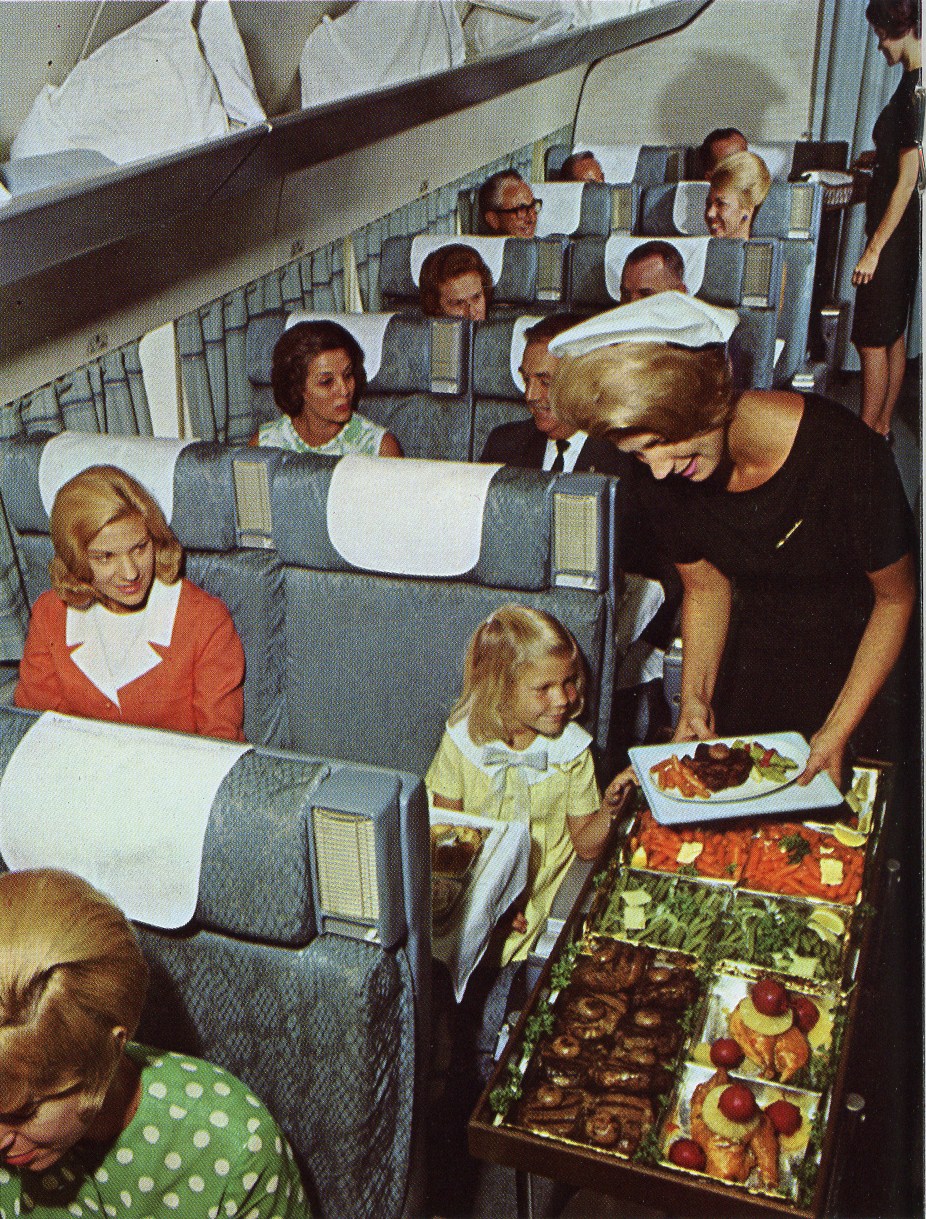
Aircraft interiors were refurbished with plush seats and DC-6s featured recorded music playing over the public address system while the aircraft was on the ground. Two-by-two seating, an advantage over two-by-three seating in part of Eastern’s Constellations, was touted. Fresh cut flowers were placed aboard each Star flight and filet Mignon dinners were served. The DC-6’s aft lounge area was rechristened The Starlight Lounge.
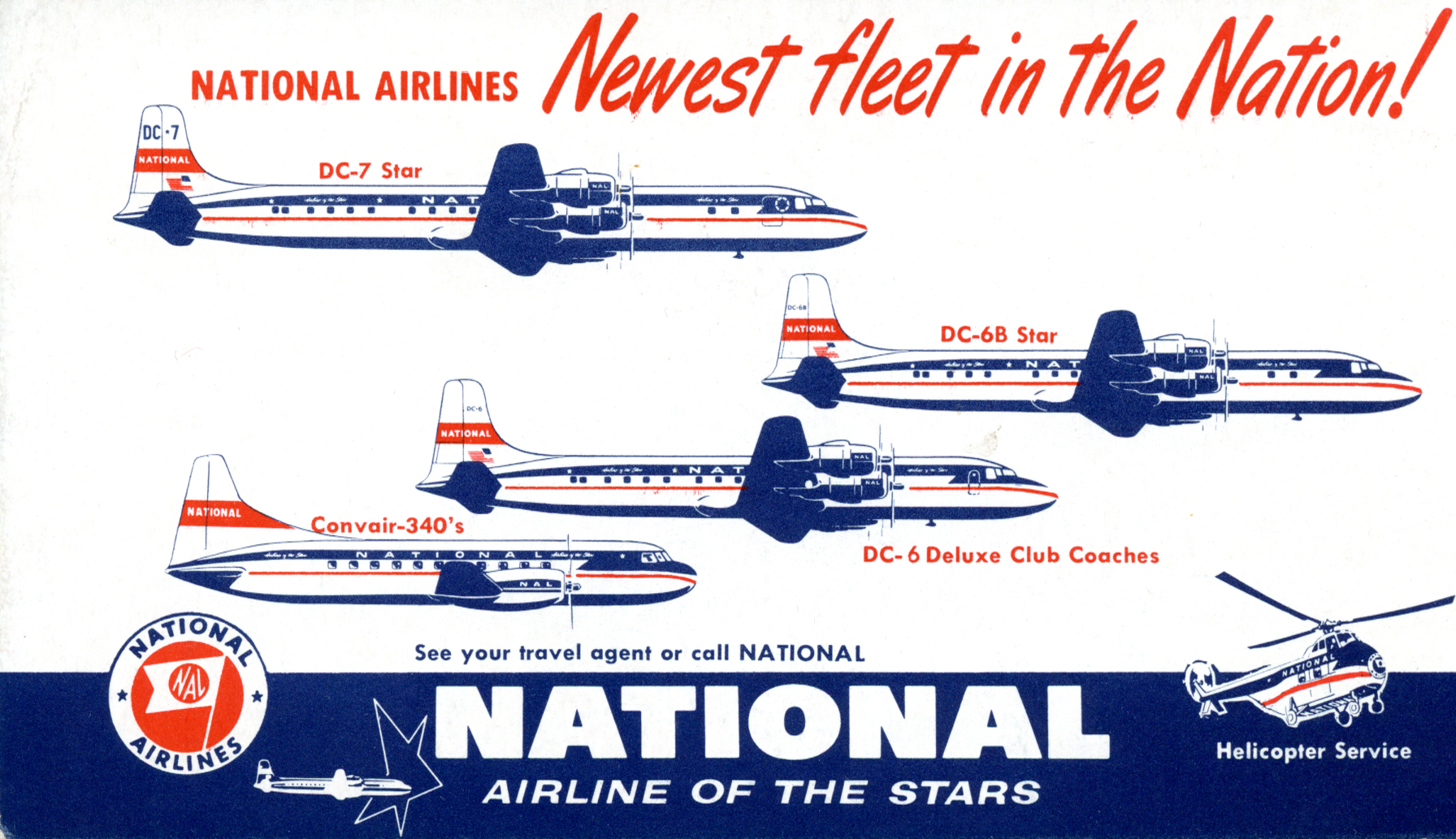
By the mid-1950’s, National was advertising the ‘Newest Fleet in the Nation’. David H. Stringer Collection
In conjunction with the new ‘Star’ theme, the company photographed celebrities boarding and deplaning its aircraft – everyone from Zsa Zsa Gabor to the Shah of Iran.
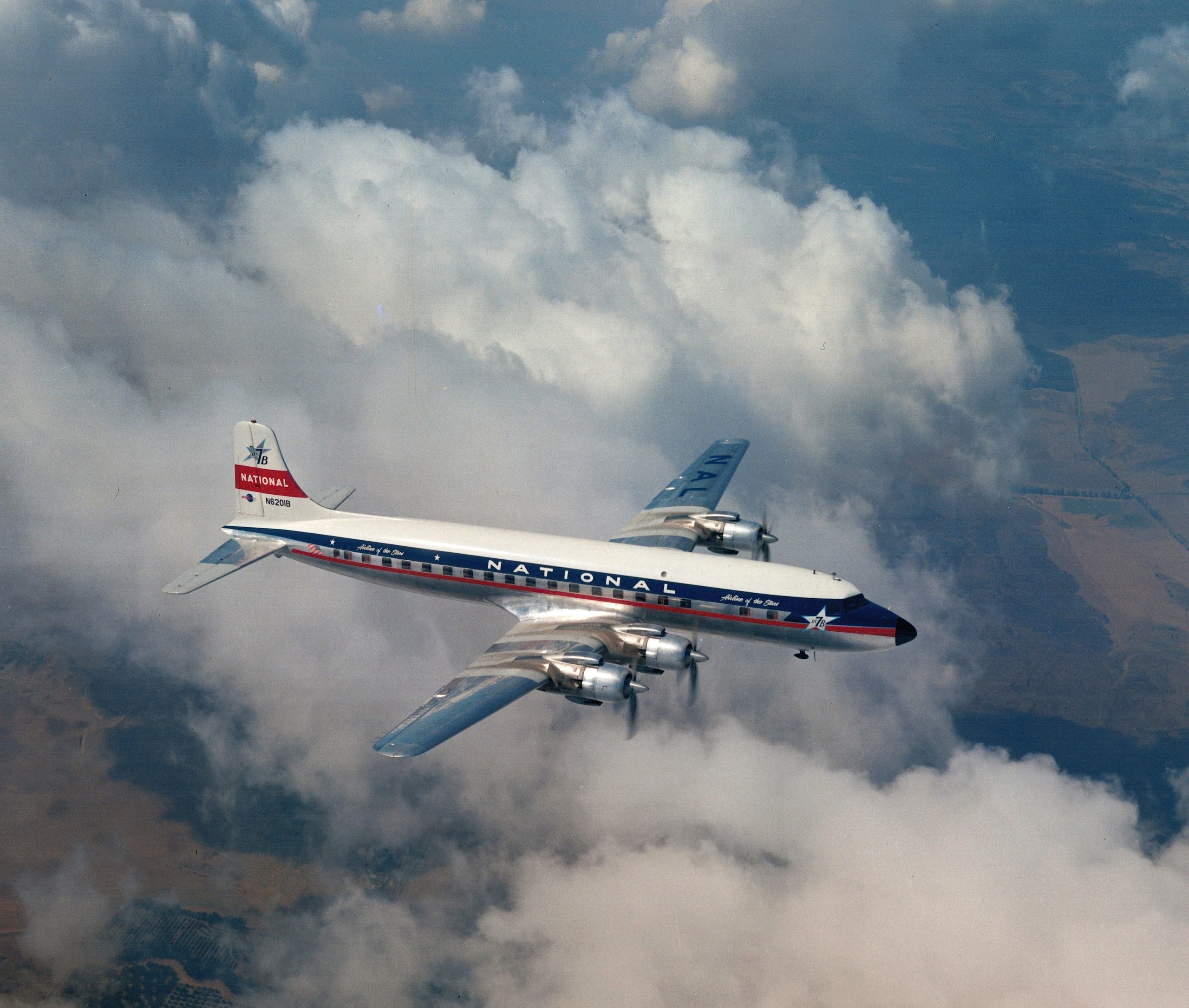
Douglas DC-7B’s were added to the fleet in 1957. Douglas Aircraft Company photo via Jon Proctor Collection
BAKER’S NEW ATTITUDE
As a gesture of good will, management voluntarily awarded the pilots a bonus of 5% before taxes for the 1952 fiscal year. It certainly appeared that Ted Baker had softened, but he still kept his company under tight control. Every expenditure of $500 or more had to be personally scrutinized by the boss, and he still yelled at his managers.
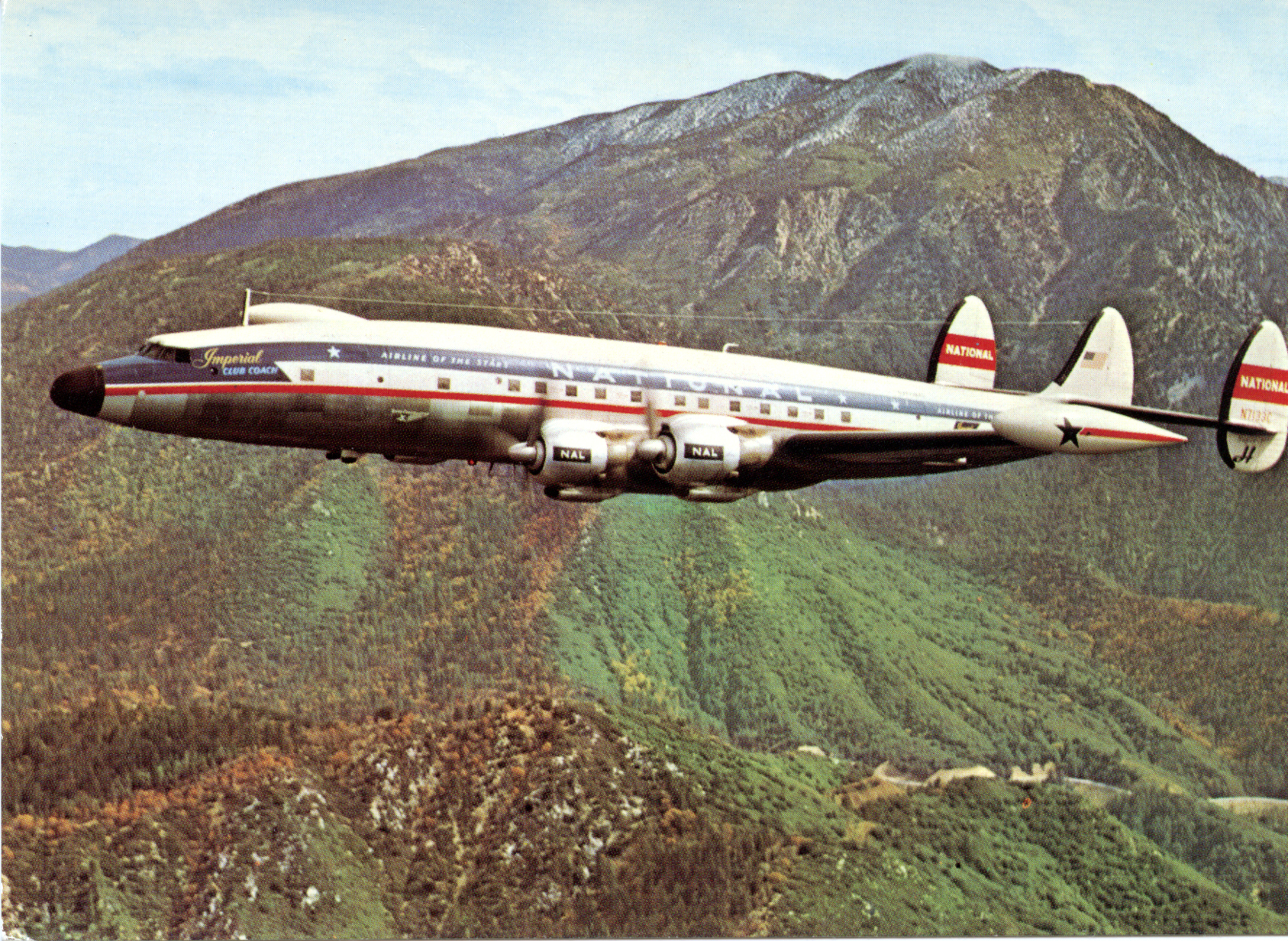
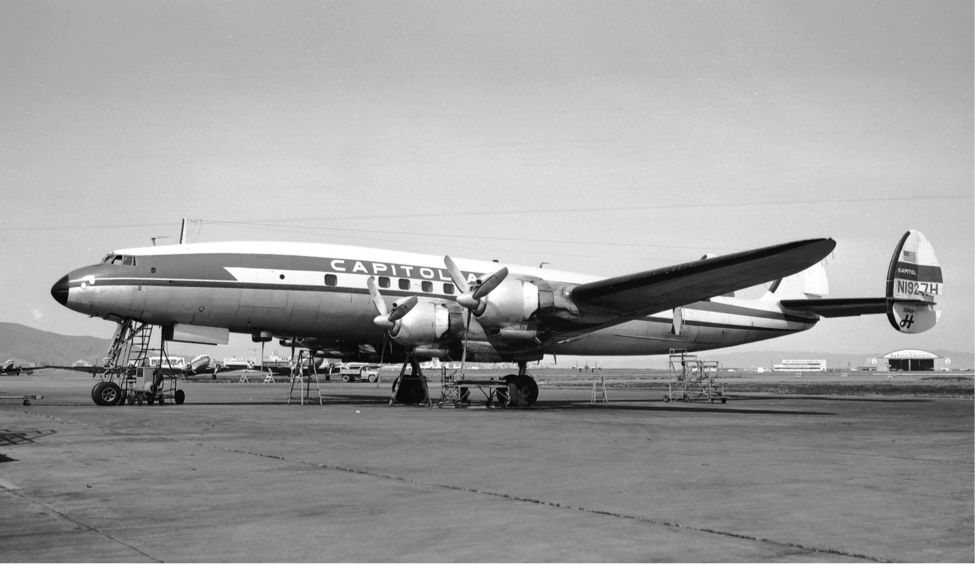
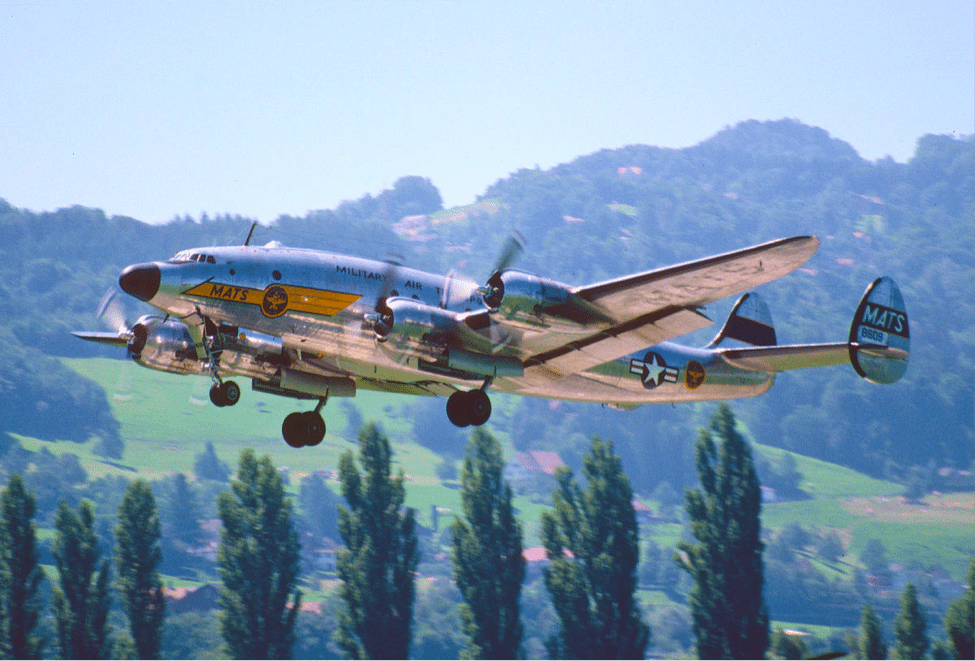
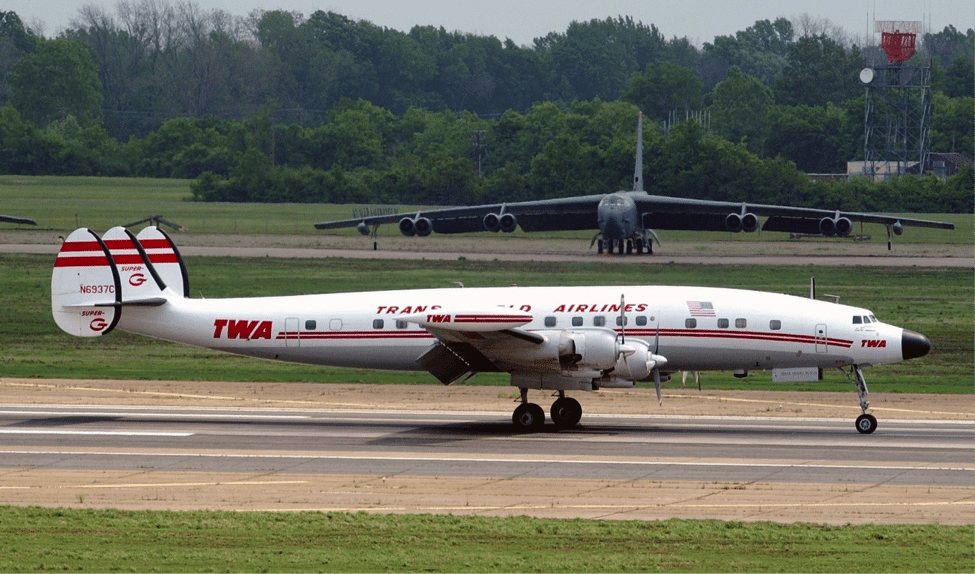
Another addition to National’s fleet in 1957 was the Lockheed L-1049H ‘Super-H’ Constellation. The Super-H’s were used for ‘Imperial Club Coach’ flights between New York and Miami. Lockheed Aircraft Co. Photo
Keeping pace with competitors, particularly Rickenbacker’s Eastern, Baker added modern equipment to National’s fleet throughout the 1950s: DC-6Bs, DC-7s, Convair 340s and 440s. In late 1957, he put the newest Douglas and Lockheed models into service: the DC-7B and the L-1049H “Super-H” Constellation.
Baker struck a deal with Pan Am’s Juan Trippe. National leased two Pan AM Boeing 707’s for use on New York-Miami flights during the 1958-59 winter season, thus making National the first airline to operate a jet on domestic flights within the U.S.A. David H. Stringer Collection
THE 707 COUP
In October 1958, Pan American became the first operator of the Boeing 707 turbojet, while BOAC introduced the Comet 4. The commercial jet age had begun.
Pan American was strictly an international carrier. 707s were not scheduled to be introduced domestically in the United States until early 1959, when American Airlines would place them in service between New York and Los Angeles.
Baker secretly worked out a deal with Pan Am’s Juan Trippe. Since winter was Pan Am’s low season on the North Atlantic and, conversely, it was National’s busiest time of year with sun-seekers heading to Florida, Trippe agreed to lease two of his new 707s to Baker for National’s use on the New York – Miami run, starting 10 December 1958. Once the ink was dry on the contract, Baker publicized his coup over Rickenbacker by issuing ‘America’s First Jet Service Timetable’. The publication proudly advertised the 707 schedules commencing in December, and National legitimately held claim to operating the first domestic jet service in the USA.
In 1960, National added its own jetliners – Douglas DC-8’s – to the fleet. David H. Stringer Collection
WESTWARD HO
By 1961, Baker’s airline was operating its own jets, DC-8s, over a network that extended west to California as a result of National’s selection by the CAB to fly the southern transcontinental route. Of course, Rickenbacker was livid and challenged the decision, but to no avail. The route award was tempered somewhat by the forced suspension of service to Havana after Fidel Castro rose to power in Cuba and political relations between that country and the U.S. soured.
National’s system map after winning an award from the C.A.B. in the 1961 Southern Transcontinental Route Case. Note new service to the West Coast. David H. Stringer Collection
CASHING IN THE CHIPS
Lewis B. “Bud” Maytag, Jr., was the heir to a washing machine manufacturing fortune, but his first love was aviation. He contacted Ted Baker to see if he was interested in selling his stake in National. Baker claimed that the company was not for sale, but he also let it be known that, for the right price, anything is for sale.
National Douglas DC-8, Series -21 model. Douglas Aircraft Co. Photo via Proctor-Livesey-Thomas Collection
Negotiations between Maytag and Baker proceeded amicably until Maytag found out that Baker had approached Continental’s president, Bob Six, to see if he would be interested in pursuing a Continental Air Lines purchase of National. He was.
Lewis B. “Bud” Maytag, Jr., heir to a washing machine manufacturing fortune, purchased a controlling interest in National Airlines from Ted Baker in 1962. National Airlines photo
Buccaneer Baker was playing one side against the other and, in the process, managed to increase the value of his National shares and, thus, force a better offer from Maytag. A new price was agreed upon and, in 1962, Ted Baker sold out to Bud Maytag and bid farewell to the airline that he had built from scratch.
Boeing 727’s were added to National’s fleet in 1964. This example was photographed by Jon Proctor at Orlando.
Ted Baker passed away in 1963 while on vacation with his wife in Vienna. The old pirate flew west leaving behind a storied legacy in American commercial aviation.
Maytag retired National’s piston engine aircraft, trimming the fleet down to Lockheed L-188 turboprop Electras, Boeing 727’s, and Douglas DC-8’s, eventually retiring the Electras. This DC-8 was photographed at New York (JFK) by Mel Lawrence in 1965.
MAYTAG CHANGES THINGS UP
Bud Maytag had his own vision for the company that he now helmed and one of the first things to go was the “Airline of the Stars” slogan, which was replaced by the rather uninspired “National Goes Where the Nation Grows”. This was superseded a couple of years later by the more lyrical catchphrase “Coast to Coast to Coast”, which reflected National’s system that served the Atlantic seaboard, the Gulf Coast, and the shore of the Pacific.
First Class service aboard a National DC-8. National Airlines photo
Maytag placed more turboprop Lockheed L-188 Electras and pure-jet Douglas DC-8s into service while retiring the company’s piston-engine aircraft. He eventually settled on two basic types: the Douglas DC-8 and the new Boeing 727, which was introduced in 1964.
In 1968, the company went through yet another update of its brand. A sunburst logo was adopted along with a new livery of yellow and orange. Onboard meals featured Florida specialties such as key lime pie. Soon after the new look was introduced, another new slogan was coined: “Is This Any Way to Run an Airline? You Bet It is!”
A National 727, featuring the Sunburst livery, is seen at New York (JFK) with a company Boeing 747 in the background. Photographed by Jon Proctor in 1971.
THE SEVENTIES
Like several other domestic carriers, National ordered the new wide-body Boeing 747. Two of the type entered service with the company in 1970, assigned to the popular New York – Miami and Miami – Los Angeles routes. The jumbo jets were sold in 1976 as a more suitable type for National’s route structure had supplanted them – the Douglas DC-10.
But the biggest step forward for National in the new decade was the inauguration of transatlantic service. In 1969, the CAB awarded the airline authority to operate non-stop between Miami and London. Service commenced on 15 June 1970. Later in The Seventies, National would inaugurate service to Paris, Amsterdam, Frankfurt, and Zurich.
National’s “Fly Me” advertising campaign of the 1970’s proved to be very popular – and very controversial. National Airlines photo
FLY ME
National’s most memorable ad campaign was launched in October 1971. Created with the idea of naming aircraft after female employees within the company, the “Fly Me – Fly National” campaign was an instant hit. Extending the gimmick beyond employees, National’s fifth DC-10 to enter service was christened Geraldine by comedian Flip Wilson, honoring the character that he had created on his TV show.
National’s name would disappear after issuance of this July 1980 Pan Am timetable illustrating the new uniforms to be worn by flight attendants of the now-merged companies. The National Airlines name would resurface twice again with companies unrelated to the original. David H. Stringer Collection
MERGER OF NATIONAL WITH PAN AM
Before President Jimmy Carter signed the Airline Deregulation Act into law in October 1978, management teams from Pan American and National worked out the terms of a merger, which would be more accurately described as an acquisition of National by Pan Am. Frank Lorenzo’s Texas International Airlines (TI) had been pursuing its own acquisition of National but Pan Am stepped in and purchased the stock from TI which that company had already accumulated.
The merger became official in January 1980, and a timetable of integrated schedules was issued in February carrying the names of both carriers on its cover. In July 1980, Pan Am issued the last timetable that would acknowledge National Airlines. On its cover was a photo of flight attendants modeling the new Pan Am uniform that would be worn by the in-flight personnel formerly employed by both carriers. It was the unofficial end of the company founded by buccaneer Ted Baker that had once called itself the “Airline of the Stars”.
Gail Halvorsen Lived a Life of Compassionate Service With Some Incredible Plot Twists Along the Way
This is the story of a man born in 1920 who grew up on farms in Idaho and Utah, dreaming about flying airplanes, always looking up when anything with wings flew over. He graduated from high school in 1939 and earned his private pilot license under the Civilian Pilot Training Program in September 1941. He quickly joined the Civil Air Patrol as a pilot.
When war came to the United States, Gail Seymour “Hal” Halvorsen did what many pilots did. In May 1942, at the age of 22, he joined the newly formed United States Army Air Forces (USAAF). From there, Hal’s life took a few unexpected turns.
Douglas C-54 Skymaster. image via us air force
Flying Anything With Wings
Gail Halvorsen said goodbye to life on the farm and hello to the Spartan School of Aeronautics in Miami, Oklahoma, where he underwent his initial flight training- ironically at a Royal Air Force Flying Training School for fighter pilots located there. After completion of his flight training (and receiving his RAF wings), Halvorsen was transferred to the USAAF and assigned instead to fly transport aircraft to Africa via Natal in Brazil, Ascension Island in the middle of the South Atlantic, and points east.
Pushing supplies to Ascension Island, driving a C-54 Skymaster or a C-47 Skytrain wasn’t glamorous, but it was important. Hal also ferried replacement aircraft to England, but he stresses he was never shot at- not even once. He maintained his single-engine piloting proficiency in Navy Douglas SBD Dautlesses down south of the equator for antisubmarine patrols. After all, he was an RAF-trained fighter pilot.
Douglas C-74 GLobemasters. image via us air Force
Called to Serve
After the War in Europe ended in May 1945, Gail Halvorsen flew personnel home from the ETO via the southern routes for a time, then returned to the United States and was still flying for Uncle Sam when the United States Air Force was born in 1947. When, on 24 June 1948, the Berlin Blockade began, Hal was a Lieutenant flying Douglas C-54 Skymaster and C-74 Globemaster transports out of Brookley Air Force Base (AFB) near Mobile in Alabama.
Transport pilots were immediately needed in Germany to supply the encircled city of Berlin. Halvorsen parked his new car, dropped everything, boarded a Europe-bound C-54 transport, and arrived in Germany on 10 July 1948.
There, he immediately began flying those old familiar Skytrains and Skymasters full of every kind of cargo imaginable to the desperate Berlin residents behind the wire.
unloading at Tempelhof. Image via US Air Force
Living In the Aftermath
A typical mission during the Berlin Airlift, quickly dubbed Operation Vittles, took Halvorsen over the ruins still present after World War II while on approach to Berlin-Tempelhof airport, where the supplies were unloaded and distributed.
Halvorsen flew as many as three missions daily down the 20-mile-wide air corridors into Berlin, occasionally with Russian fighters for very unwelcome company. Halvorsen had never seen such devastation as he saw in Germany, but there were signs of life amid the rubble around Tempelhof.
Children, fascinated by the near-constant stream of transports overhead, lined the barbed-wire fences around the airport. Lieutenant Gail Halvorsen saw them from the air.
C-47s at Tempelhof. Image via US Air Force
That Seminal Moment
On 19 July 1948, Gail Halvorsen took advantage of some time off to look around and capture some footage using his ever-present movie camera. He found himself near one of those groups of children on the other side of the airport fence while filming arrivals and departures of the transports, and decided to talk with them.
Now, the children, by this time, knew exactly how important those transports droning overhead were. In Halvorsen’s words, “I met about thirty children at the barbed wire fence that protected Tempelhof’s huge area. They were excited and told me that ‘when the weather gets so bad that you can’t land, don’t worry about us. We can get by on a little food, but if we lose our freedom, we may never get it back.‘”
LT. Gail Halvorsen in Germany. Image via US Air Force
The Beginnings of a Larger Plan
Halvorsen was in a rush to get back to Rhein-Main, but something (he maintains he doesn’t know exactly what) made him stop, reach into his pocket, pull out his last two sticks of Wrigley Double-Mint gum, and hand them to the kids. He instantly felt gnawing regret that he didn’t have enough for everyone. So he promised the kids that he would bring gum for everyone the next day- via air drop. When asked how the children would know which plane he was flying, Hal told them he would wiggle his wings for them as he flew over on his approach into Tempelhof.
Back at Rhein-Main airport near Frankfurt that night, Hal and his crew put their candy rations together and quickly realized air-dropping the candy to the children might not be such a great idea—somebody could get seriously hurt. The solution: handkerchief parachutes. The guys made three of them, and the next day, the first three-box candy air-drop mission went off without a hitch.
C-54 on approach to Tempelhof with children at the fence. Image via National Archives
The Candy Bomber Never Dropped an Actual Bomb
Hal and his crew, including “bombardier” navigator/crew chief Technical Sergeant Herschel C. Elkins, kept the aerial resupply missions going- on a fairly small scale. They air-dropped their entire candy and gum rations once a week over the next three weeks- always utilizing the C-54’s flare chute.
With each passing week, the crowd of children at the Tempelhof fence grew almost exponentially. Halvorsen was confident the kids didn’t know his identity, so he was getting away with the unauthorized candy-bombing, but increasing amounts of thank-you mail from the children and their parents reached Airlift commander Lieutenant General William H. Tunner.
When asked by Tunner to explain, Halvorsen was afraid his goose was well and truly cooked. But word of the “Berlin Candy Bomber” (Berlin Süßigkeiten Bomber) or “Uncle Wiggly Wings” (Onkel Wackelflugel) had also reached the Berlin press. Tunner said, “You almost hit a reporter in the head with a candy bar in Berlin yesterday. He’s spread the story all over Europe.” But rather than halting the missions, General Tunner actually embraced and expanded the effort, even naming it Operation Little Vittles.
Children with models of Berlin Airlifters. Image via National Archives
Maximum Effort
Operation Little Vittles officially began on 22 September 1948. At first, Hal and his friends and fellow transport crews provided the “ordnance” for the drops, but in short order, his entire squadron, and soon the entire base, were involved in the effort.
When word of Operation Little Vittles reached the United States, children, families, and confectioners from all over the country began contributing candy and handkerchiefs. In just a couple of months, the sheer volume reached unmanageable proportions, but Hal and his fellow pilots still had missions to fly.
They got a helping hand from Mary C. Conners, a college student in Massachusetts, who took charge of what had quickly become a project of national scope and scale. She worked with the National Confectioners Association to package the candy and make parachutes for them, staging the items through nearby Westover AFB.
c-54 dropping its payload (of candy) on target. Image via National Archives
What’s In a Name?
By this time, Hal and his fellow Little Vittles pilots were dropping candy every other day. The children of Berlin were provided with hope, candy, and perhaps a cavity or two.
The Air Force had built a rapport with the people of Berlin, remarkable in both its depth and speed- it would be years before that rubble around Tempelhof, reminding the people of Berlin of what (in large part) the US Air Force had inflicted on them so recently, would be cleared. But thousands of thank you letters and artworks from the children of Berlin were sent to the “Raisin Bombers” (Rosinenbomber) and to Halvorsen himself, who had also been dubbed “The Chocolate Uncle” (Der Schokoladenonkel), “The Gum Drop Kid“ (Das GumDrop Kid), and “The Chocolate Flier” (Der Schokoladenflieger) by then. One of the Berlin children later told Halvorsen, “It wasn’t [just] chocolate. It was hope.“
Gail Halvorsen with the kids at the fence. Image via US Air Force
For the Rest of the Candy Bomber Story, Bang NEXT PAGE below.
The Groundbreaking Douglas DC-5 Machine That Suffered From Bad Luck and Worse Timing
This is the story of the DC-5, the least popular Douglas aircraft ever built. In 1938, most companies in the United States were still trying to claw their way out of the Great Depression, but the Douglas Aircraft Company was flying high. Two years prior, the first Douglas DC-3 had entered commercial service, and the type became an immediate hit.
Douglas was turning out winners
Often described as the first airliner that could make money flying just passengers, without the additional revenue generated by transporting air mail and cargo, the order book for DC-3s was being filled by requests from airlines the world over. More than 10,000 examples would be produced – in both civilian and military variants – before production ceased in 1946.
The DC-3 was an outgrowth of the DC-1 and DC-2. The single DC-1 built served as a prototype for the improved production-line model, the 14-passenger DC-2. The DC-2 design was then enlarged and improved into an airliner that could transport 21 passengers in state-of-the-art comfort. That aircraft was the DC-3.
While dozens of DC-3s were being assembled at the manufacturer’s Santa Monica, California, facility, Douglas designers and engineers were busy creating the next models to join the DC (Douglas Commercial) line of aircraft.
The company’s 1938 Annual Report gave an update on the progress of the single DC-4 that had been built, which had made its first successful flight on June 7 of that year. This aircraft, which boasted four engines, a triple-tail, and a pressurized cabin, would be designated the DC-4E (Experimental) and did not resemble the single-tail, unpressurized production model DC-4 (and military variant, the C-54), which would eventually occupy the Santa Monica assembly line.
Like the DC-3, the DC-4 was a very successful design and hundreds of DC-4s and C-54s would be built during the early 1940s.
A NEW HIGH-WINGED DC-5 EMERGES
Also in the 1938 publication was a description of the next type in line, the DC-5. The Douglas Annual Report described it as a high-performance, high-wing, twin-engine monoplane capable of operation from smaller airports. The prototype was test flown in February 1939, and it demonstrated excellent performance.
THE DC-4E AND A DC-5 GRACE THE COVER OF DOUGLAS AIRCRAFT COMPANY’s 1938 ANNUAL REPORT. IMAGE COURTESY OF BOEING CO.
Though the DC-5 was designed to carry 16 passengers in three compartments, capacity could be adjusted to accommodate 14, 18, or 22 seats.
A Douglas Aircraft sales booklet explained that, because the wing was above the fuselage, “large oval windows are especially designed to provide wide, unobstructed vision from either side of the cabin [and] as propellers are located much farther from the fuselage than has been standard practice, a marked reduction in sound and vibration levels should be noted.”
DC-5 Had Unique Capabilities
The DC-5 offered short-airfield capability. It could take off in less than 1,000 feet with 16 passengers and a crew of four aboard – 1,500 feet if a 50-foot-high obstacle had to be cleared – no matter which set of approved Wright or Pratt & Whitney engines was installed.
The airliner sported a tricycle landing gear arrangement, which permitted the craft to sit level and low to the ground, allowing for easy passenger boarding and deplaning, and baggage and cargo handling. Because of its high-wing, low-to-the-ground design, refueling was uncomplicated, and the engines were easily accessible for maintenance when the aircraft was parked.
THE STORY OF THE DOUGLAS DC-5 128DOUGLAS DC-5 SALES BOOKLET. DAVID H. STRINGER COLLECTION
Douglas also employed the high-wing concept in the creation of its military DB-7 (A-20 Havoc) aircraft. Production of the DB-7s began at the company’s El Segundo factory in Southern California, the same place where DC-5s would be manufactured.
Orders began to trickle in: Pennsylvania Central Airlines (PCA – later renamed Capital Airlines) ordered six; KLM requested four; SCADTA of Colombia wanted two; and the original British Airways, which was in the process of merging with Imperial Airways to form BOAC, expressed interest in acquiring nine examples in August 1939.
In addition to civilian orders, seven were requested by the military: three for the U.S. Navy (designated R3D-1s) and four for the Marine Corps (R3D-2s).
TRICYCLE LANDING GEAR ALLOWED EASY ACCESS FOR MAINTENANCE CREW BECAUSE THE FUSELAGE RESTED LOW TO THE GROUND. DOUGLAS AIRCRAFT PHOTO VIA TOM LIVESEY
WAR BREAKS OUT IN EUROPE
The market for the DC-5 was shaky to begin with. It was designed specifically for “the short-haul operator serving a low-revenue territory”, a market that would not truly develop until 1945 when the Civil Aeronautics Board (CAB) began certificating local service (or “feeder”) airlines.
Just as the DC-5 was ready to make its debut, war broke out in Europe. The British government decided to spend money on military aircraft instead of DC-5s for British Airways. SCADTA in Colombia, which had been a creation of that nation’s German expatriate community, was forced to change ownership and merge with a competitor, forming AVIANCA. The DC-5 order was cancelled.
And in the United States, PCA’s management decided that their airline, too, could forgo the new Douglas airliner. That left only KLM’s order for four examples on the books along with the military variants. With the loss of several DC-5 orders, the decision was made to commit the El Segundo plant solely to the manufacture of military aircraft.
In all, only 12 DC-5s were built: the prototype plus four for KLM and seven for the Navy and the Marines.
The prototype aircraft found an unusual buyer. William (Bill) Boeing, founder of the Boeing Airplane Company, purchased the first DC-5 to use as his personal aircraft and christened it Rover.
WILLIAM (BILL) BOEING (2nd from left NEXT TO HIS WIFE BERTHA) ACCEPTS THE PROTOTYPE DC-5 FOR USE AS HIS PERSONAL AIRCRAFT ON 12 APRIL 1940. BOEING Co. PHOTO
IN SERVICE WITH KLM
KLM requested that three of its DC-5s be outfitted with 22 seats and one with 18. All four were intended for use on short-haul routes from Amsterdam, but with war engulfing Europe, KLM’s management redirected the DC-5s to its colonial divisions.
Two – PJ-AIW (christened Wakago, meaning Wild Goose) and PJ-AIZ (Zonvogel, or Sun Bird) – were delivered to Curacao, base of the Dutch West Indies division. The other two – PK-ADA and PK-ADB – were shipped to Batavia (modern-day Jakarta, on the island of Java), the headquarters of KNILM, KLM’s subsidiary in the Dutch East Indies (present-day Indonesia).
KLM ADVERTISEMENT FEATURING A DC-5 IN THE MAY 11, 1940 ISSUE OF AVIATION MAGAZINE. CHRIS BIDLACK COLLECTIONPJ-AIW, CHRISTENED WAKAGO (WILD GOOSE) WAS DELIVERED TO KLM’s WEST INDIES DIVISION. DOUGLAS AIRCRAFT PHOTO VIA BOEING CO.
After serving for a year in the Caribbean, the DC-5s based in Curacao were flown to the Douglas factory in Southern California to be dismantled and shipped to Batavia, where they would join the other two DC-5s serving with KNILM. PJ-AIW became PK-ADC, while PJ-AIZ (Zonvogel) was reregistered PK-ADD.
Now, KNILM possessed all four commercial DC-5s in existence. All went relatively smoothly until the Japanese forces invaded Java. PK-ADA was damaged and captured by the Japanese, who repaired it, then flew it to Japan, where it served the military for training purposes.
Filled with refugees, PK-ADB, -ADC, and -ADD evacuated to Australia that month (February 1942) under the command of KNILM crews.
AND THEN THERE WAS ONE
Wartime control of the three airliners was quickly taken from their Dutch operator and placed under the supervision of the Allied Directorate of Air Transport (ADAT). Under ADAT, Australia’s commercial airlines performed wartime duty by flying transport aircraft that had been requisitioned by the military. The DC-5s were given new call signs in Australia: they became VH-CXA, -CXB, and -CXC.
On 17 August 1942, VH-CXA was destroyed by fire at Port Moresby, New Guinea, after being struck during a Japanese air raid.
Then, on 6 November 1942, VH-CXB took off from Charleville, Queensland, en route to Brisbane. The aircraft made a forced landing on a strip east of Charleville after losing one of its engines. All on board survived, but the aircraft was written off and used as a source for spare parts.
The only DC-5 Left
That left one airworthy commercial DC-5 still in existence: VH-CXC, the former Sun Bird (Zonvogel), which had once plied the Caribbean skies.
In 1944, the sole remaining DC-5 airliner was released to Australian National Airways (ANA) for use on regular commercial services from Melbourne to Adelaide and Sydney, and to Hobart and Launceston on the island of Tasmania.
In July 1946, the Australian carrier retired the one remaining commercial DC-5 from service. All of the surviving military examples had been scrapped at the end of World War II. But that was not the end of the story.
COLORIZED PHOTO OF AN R3D-2, MARINE CORPS VARIANT OF THE DC-5. IMAGE FROM THE JON PROCTOR COLLECTION VIA TOM LIVESEY.
In June 1947, two gentlemen, Gregory R. Board and Gregory Hanlon, founded New Holland Airways to offer “luxury charter flights to all parts of the world”. The luxury flights consisted mainly of transporting Italian and Greek immigrants from southern Europe to Australia. The nation was sponsoring a postwar immigration drive, beckoning citizens of foreign countries to relocate to Australia. The government’s catchphrase for the drive was “populate or perish”.
In January 1948, New Holland Airways purchased the retired DC-5 from ANA and christened it Bali Clipper. The DC-5 made two round-trips to Athens, Greece, to collect emigres in March and April 1948. Then, in May 1948, the last remaining DC-5 departed Sydney for Rome on its final trip for New Holland Airways.
DC-5 No longer airworthy
Details are sketchy, but Mr. Board contacted the Australian Department of Civil Aviation (DCA) from Italy to inform them that the DC-5 was no longer airworthy. That wasn’t true. Apparently, on 28 May – in a deal consummated in a hotel room in Catania, Sicily – Mr. Board sold the DC-5 to an American named Martin A. Rybakoff. The DC-5 was purchased in the name of Service Airways, an outfit that was secretly acquiring aircraft for the then-forming State of Israel’s fledgling air force.
The aircraft served in Israel, where it was damaged in a hard landing at Ramat David Airbase in October 1948. That ended its flying career. The aircraft was moved to Lod Airport (today’s Ben Gurion Airport) for use in ground-training exercises. Eventually, the DC-5’s final resting place was a children’s playground.
WHY WAS THE DC-5 PROJECT A FAILURE?
Douglas Aircraft Company’s timing for the introduction of the DC-5 could not have been worse. The world would be engulfed in war in the years immediately following the aircraft’s introduction.
After the war, there were so many war-surplus C-47s (DC-3s) available at low prices that a new DC-5 would have been too expensive for most of the fledgling feeder carriers. Lockheed’s model 75 Saturn, a postwar product that closely resembled the DC-5, failed to sell for just that reason. Had the war not transpired, the fate of the DC-5 – and the Lockheed Saturn – may have been a lot different.
The basic design of the DC-5, which was revolutionary at the time, would finally find success in the late 1950s in the form of the Fokker Friendship and its American counterpart, the Fairchild F-27. Introduced in 1958, the F-27 sported a high wing with a low-slung fuselage. But the Fairchild and Fokker types could accommodate 36 – 40 passengers instead of just 16 – 22.
The DC-5 was the only DC-series airliner that did not prove successful. And only one airline in the world can claim to have operated a version of each Douglas Commercial (DC) model from the DC-2 through the DC-10: KLM Royal Dutch Airlines.
DC-5 IN FLIGHT. DOUGLAS AIRCRAFT PHOTO FROM THE JON PROCTOR COLLECTION VIA TOM LIVESEY.
General Jimmy Earned His Mach 2 Club Tie in a B-58 Hustler
On 15 March 1960, the first Convair B-58 Hustler became operational with Strategic Air Command (SAC).
One of the most impressive aircraft ever built, the Hustler was also expensive to operate, equipped with complicated systems that frequently required attention, tricky to fly, limited in its payload capacity, and in the end was rendered obsolete by the surface-to-air (SAM) missile. But to anyone who ever saw one in flight, the Hustler was absolutely unforgettable.
Raw Power and Unique Design
The B-58 prototype first flew on 11 November 1956. The design premise and intended mission of the B-58 was high-altitude supersonic penetration of Soviet airspace and release of multiple atomic bombs on targets for SAC.
Design highlights included its 60-degree raked delta wing, four underwing pod-mounted afterburning General Electric J79 engines, separate tandem compartments for the flight crew of three, a distinctive area-ruled fuselage shape, and a large centerline fuel tank/weapon pod.
Changing Times Changed the Mission
When the Soviets began deploying accurate surface-to-air missiles in the early 1960s, SAC was quickly convinced that the B-58 would not survive against the new-generation SAMs at high altitude. The mission profile of the B-58 went from what it was specifically designed to do to what it quite simply could not do.
Impressive Nonetheless
Whatever the B-58’s limitations, it was certainly revolutionary. Capable of sustained flight at Mach 2 speeds, the Hustler was so advanced that nearly all of the B-58’s systems had to be rethought and engineered from a new sheet of paper.
Coming as it did so soon after sustained supersonic flight had been achieved for the first time, B-58s were nearly otherworldly to the public.
Built for Crew Survivability
B-58 ejection seats were equipped with a protective shield or clamshell capsule that would shield the crew members- a completely new technology brought about by the prospect of ejection at Mach 2 speeds and 70,000-foot altitudes.
The capsule would float in water and provide independent oxygen to its occupant. Similar systems have been incorporated into new designs ever since.
That Soothing Voice…
Many of today’s military pilots ruefully refer to the audio warning systems in their aircraft as “Bitchin’ Betty.” Audio warning systems were pioneered in the Hustler, so in large part they have the B-58 to thank for “Bitchin’ Betty”, but Hustler crews called her “Sexy Sally.” How times have changed!
Actor Jimmy Stewart Talks Up B-58 Hustler, Scares Russians In This Rare Video 137
Accuracy Built In
Supposedly ten times more accurate than any previous bombing/navigation system, the B-58’s collection of AN/ASQ-42 “black boxes” enabled the aircraft to be, at least potentially, the most accurate atomic bomber in the Air Force arsenal. The B-58, thankfully, never did have to perform the mission for which it was intended.
The Payload
The Hustler mounted a single remotely aimed and controlled 20 millimeter Gatling gun in the tail for self-defense. The large centerline pod housed both additional fuel and a nuclear weapon that could be jettisoned in separate parts.
At various times, the B-58 carried up to four additional B43 or B61 atomic weapons on dedicated pylons mounted under its wing roots.
Convair F-102A
Bang NEXT PAGE below for the rest of the Hustler story- and the video!
“Shapely” and sexy…the L-749 Connie was also a key evolutionary step in the advancement of air travel.
On 14 March 1947, the first Lockheed L-749 Constellation took to the skies. The first Connie to have the fuel capacity and the resultant range to fly non-stop across the Atlantic Ocean, the L-749 also had strengthened landing gear and was eventually equipped with a nose-mounted weather radar system. One of the most easily recognized airliners ever, the Connie was said to have a “shapely” design.
The L-749 received certification in March of 1947. Air France took delivery of the first operational L-749 Constellation on 18 April 1947. In June, L-749 service soon began on Pan American World Airways’ “Round the World” service. Trans World Airlines (TWA), KLM, Cubana de Aviación, Línea Aeropostal Venezolana, and Avianca all began use of the L-749 Connie in 1947.
The United States Air Force ordered a militarized version of the L-749 Constellation designated C-121. The United States Navy also ordered the L-749 and designated it PO-1W. Eventually, the Navy re-designated it the WV-1.
In 1949, Lockheed began producing the improved L-749A. The L-749A had a strengthened fuselage, additional strengthening of the distinctly long-legged landing gear, a composite floor, slightly different engine cowlings, and new Curtiss Electric propellers.
Lockheed also offered a kit for current L-749 operators to perform their own upgrades to the L-749A standard.
South African Airways was the first customer for the L-749A. TWA operated 26 L-749As, making them the largest single customer for the type. TWA operated their –As until 1967. Production of the L-749A ended in 1951, after 119 had been built, allowing Lockheed to focus on the L-749A’s replacement, the L-1049 Super Constellation.
First taking flight on 14 July 1951 (the prototype first flew on 13 October 1950), the L-1049 Super Connie incorporated 550 improvements and modifications to the L-749. These included increased fuel capacity, improved heating and pressurization, rectangular passenger windows, and larger cockpit windshields. Eastern Air Lines ordered 10 aircraft and used them on their Miami-to-New York route. TWA ordered 14 of them.
On 17 February 1953, the L-1049C took to the air for the first time. Propelled by Wright R-3350 Turbo-compound engines, which had just been made available for civilian use, the –C was capable of faster speeds and climb rates than the original L-1049.
A distinctive feature of the L-1049C and its engines was the introduction of the new Power Recovery Turbine (PRT) system. Using each engine’s exhaust to turn turbines (similar to a turbocharger), the system was capable of adding 550 horsepower to each engine. The flame visible from the exhaust pipes of restored L-1049C engines is still a crowd-pleaser today.
The 48 L-1049Cs built by Lockheed were operated by Air France, Air India, Avianca, Cubana de Aviación, Eastern Air Lines, Iberia, Línea Aeropostal Venezolana, Pakistan International Airlines, QANTAS, Trans-Canada Air Lines, and TWA. KLM introduced the L-1049C on their Amsterdam to New York route in 1953.
The next Connie variant was the L-1049E. Twenty-eight of these radar-equipped Constellations were delivered to a total of eight airlines. The first of more than 100 L-1049G or “Super G” Super Constellations took to the skies for the first time on 17 December 1954. The Super G incorporated more than 100 additional refinements to the L-1049C. Sixteen airlines operated the Super G, but TWA was the one that gave it the Super G moniker.
The commercial follow-on to the Super G, the L-1049H, was a convertible cargo/passenger aircraft and first flew on 20 November 1956. Entering service with QANTAS a month after its first flight, the –H was fitted with uprated engines. It featured the ability to stow nearly all of the “furniture” associated with passenger service in the hold when carrying freight.
When the Boeing 707 and Douglas DC-8 jetliners started regular service, it spelled the beginning of the end for the Connie and Super Connie. Dominican carriers were the last commercial operators of the L-1049; however, the FAA banned them from flying over the United States in 1993 due to safety concerns.
Both the United States Air Force and the United States Navy operated military versions of the Constellation as transports, but were more effectively used as weather reconnaissance, airborne early warning and control (AEW&C), airborne television transmission, airborne command and control, and radar surveillance aircraft.
In Air Force service, the Connie was designated EC-121 or RC-121. Navy Connies were WV-1s. Navy “Willie Victors” worked in conjunction with radar picket ships off each coast of the United States as part of the Distant Early Warning (DEW) line during the Cold War, flying 14-hour missions and tasked with warning the nation in the event of a Soviet attack. They also functioned as Hurricane Hunter aircraft.
Air Force EC-121 and RC-121 aircraft flew Big Eye, College Eye, Rivet Top, Disco, and Bat Cat missions during the Vietnam War. Air Force EC-121s also contributed to Operation Kingpin, the 21 November 1971 attempted rescue of American prisoners from Son Tay prison in North Vietnam.
These specialized electronic warfare aircraft sported radomes bulging out of their shapely fuselages from the bottom, the top, or both. Blade antennae for the various electronics inside sprouted seemingly from everywhere.
The last military L-1049, the only NC-121K, was used by the Navy’s Electronic Warfare Squadron, VAQ-33 Firebirds, stationed at Naval Air Station Key West in Florida. Used to simulate the electronic emissions of “attacking” Russian aircraft until 1982, it was replaced by a dedicated DC-8-54 aircraft designated EC-24A in naval service.
Only two Lockheed Constellations remain airworthy today: the HARS “Connie” (VH-EAG) in Australia, and Bataan (S/N 48-0613) in the US, which was once General MacArthur’s transport and now flies with Lewis Air Legends after a complete restoration and custom VIP interior.
The Flexible SH-3 Was Designed to Hunt Soviet Submarines But They Did So Much More.
On 11 March 1959, the prototype Sikorsky SH-3 Sea King took flight for the first time. The Sea King and its derivatives have been hunting submarines, performing rescues, flying plane guard missions alongside aircraft carriers, shuttling American Presidents to and fro, plucking astronauts from the ocean after their return from space, and patrolling the seas from above, in the employ of dozens of nations, for 55 years and counting.
ASW First and Foremost
The impetus for the development of the SH-3 was submarines. Russian submarines, and lots of them. Fixed-wing aircraft, whether shore-based or carrier-based, are highly capable platforms but cannot prosecute a hostile submarine contact the same way a helicopter can. The Navy needed an improved anti-submarine helicopter to take over the missions performed by the piston-engine helo designs then in use.
More Power
The Navy observed the development of turboshaft engines with interest and approached Sikorsky with a requirement for an amphibious, twin-engine, turboshaft-powered helicopter that could take the in-close anti-submarine warfare (ASW) mission and run with it. Sikorsky delivered everything the Navy needed in the SH-3 Sea King.
An Entirely New Design
Equipped with a dipping sonar, armed with aerial torpedoes and depth charges, and with all-weather mission endurance capability of more than four hours, the SH-3 became a ubiquitous sight on aircraft carriers and shore air stations almost immediately. Sikorsky developed every system in the rotorcraft, from landing gear to rotor hub and nose to tail feathers.
Proof of Innovation
The twin-turboshaft power configuration of the SH-3 gave it enhanced reliability, increased payload capacity, and improved performance over single-engine rotorcraft. Carrier suitability trials conducted on board the aircraft carrier USS Lake Champlain (CVS-39) were completed by mid-1961. The trials included testing of the Sea King’s innovative automatic folding main rotor blades and tail assembly along with high-wind takeoffs and handling.
Biggest and Best
The Navy accepted the first operational SH-3As in September of 1961. At the time of its introduction, the Navy’s newest ASW helo was the largest amphibious helicopter in the world and the first operational turbine-powered, all-weather mission capable ASW rotorcraft in naval service.
A Good Thing Gets Recognized and Copied
Sikorsky continued to develop the SH-3 to enhance its capabilities, but right from the start, they realized that the Sea King could be a workhorse for other friendly nations as well. Over the years, the SH-3 (and its civil derivative, the S-61) has been license-built by other nations and utilized by scores of countries and companies.
The White House Lawn
Marine Corps squadron HMX-1 is the official “airline” of United States Presidents. Specially equipped SH-3s have been shuttling Chief Executives and other VIPs to and from the White House lawn since 1962. When the President is on board the rotorcraft, its callsign changes to Marine One, the same way the callsigns of the VC-25 Presidential transports do. Images of American Presidents boarding the green and white HMX-1 SH-3s at the White House are etched into the American consciousness.
It Can Be Done, But…
About that amphibious capability. The Sea King is capable of landing on water, but it isn’t a common occurrence. The amphibious hull enables the SH-3 to make a water landing. Between the watertight hull and deployable airbags in sponsons mounted to either side of the forward fuselage, the Sea King can float upright. However, surface conditions and winds are critical factors when considering a landing on water. Of course, the helo is equipped with conventional wheeled landing gear as well.
Staying in the Game
As time went by, SH-3s were reworked and updated to include more powerful engines and defensive capabilities such as infrared countermeasures (IRCM) to improve battlefield survivability. Improved ASW sensor suites enabled Sea Kings coming out of rework to prosecute contacts more efficiently.
Bang NEXT PAGE below for the rest of the Sea King Story

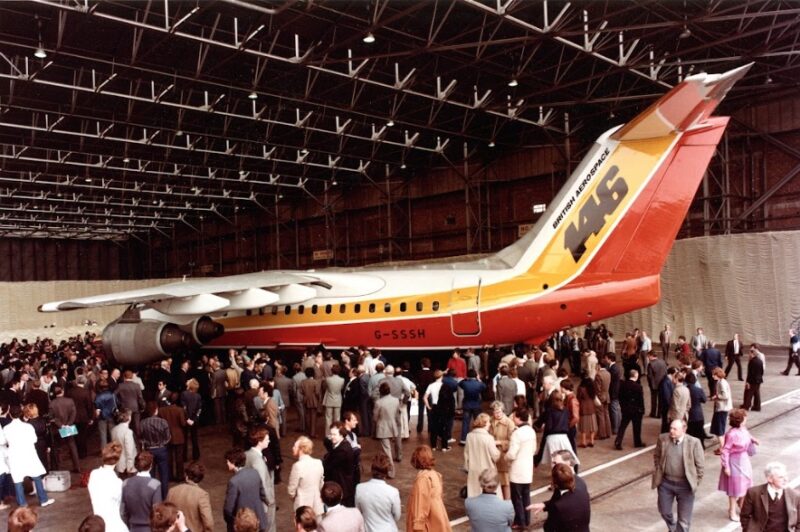
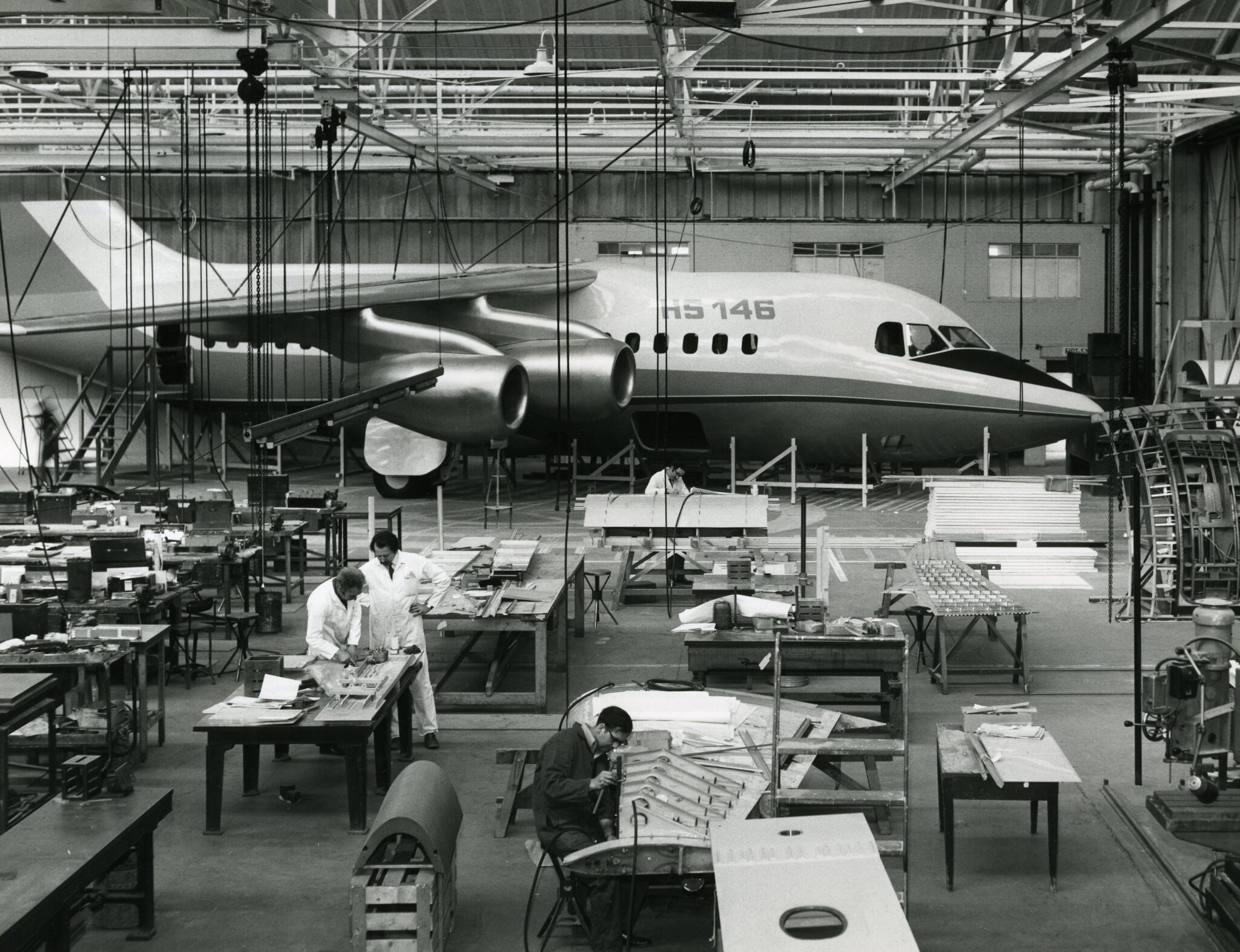
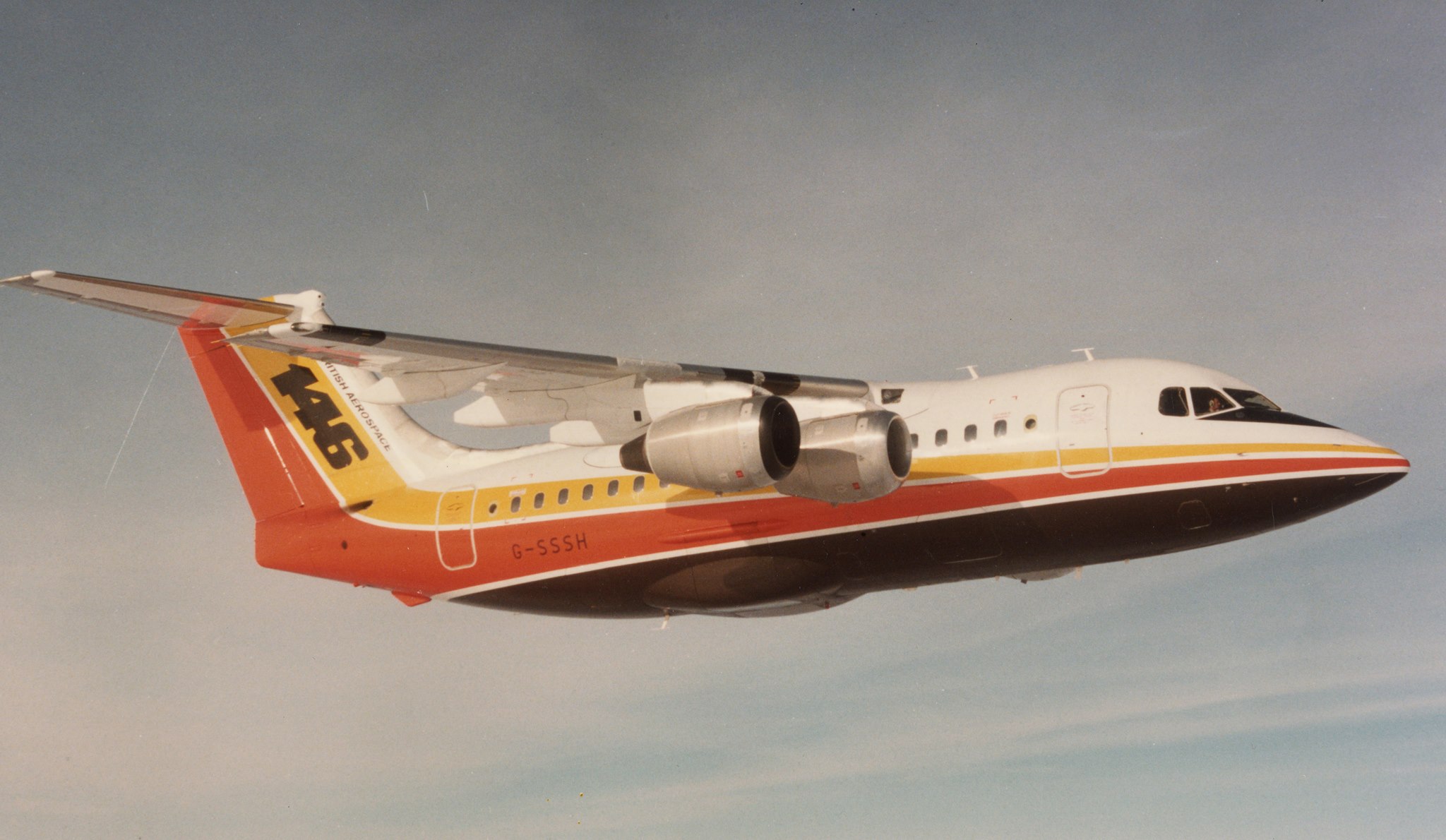

![[Honey] Badger Don’t Care: The Soviet Union’s Jack-of-All-Trades Jet Bomber](https://avgeekery.com/wp-content/uploads/2017/04/badger1-768x480.png "[Honey] Badger Don’t Care: The Soviet Union’s Jack-of-All-Trades Jet Bomber")