The Story of the Navy’s Best Kept-Quiet Cold War Boondoggle
Thefts of civilian and military aircraft for joyriding have occurred many times in the past. There’s that time US Army PFC Robert K. Preston stole a Huey and took it for a joyride around Washington D.C. Marine Corps LCPL Howard A. Foote once took a nighttime joyride around southern California in a VMA-214 Blacksheep Douglas A-4M Skyhawk. The military, for good reasons, tends to keep such thefts quiet. Perhaps the most publicized civilian joyride in recent memory occurred on 10 August 2018, when Richard Russell took off in a stolen Horizon Air Bombardier Dash 8 Q400 and flew it around the Puget Sound area before he perished when the aircraft crashed. But for sheer scale, range, raw flying ability, and relative obscurity, strap in and hold on because this one’s got them all beat.
VP-11 Neptune. Image via National Naval Aviation Museum
The Aircraft in Question
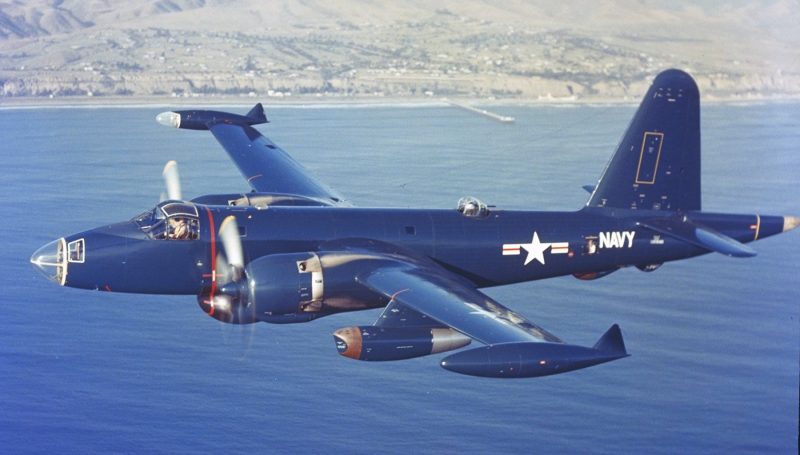
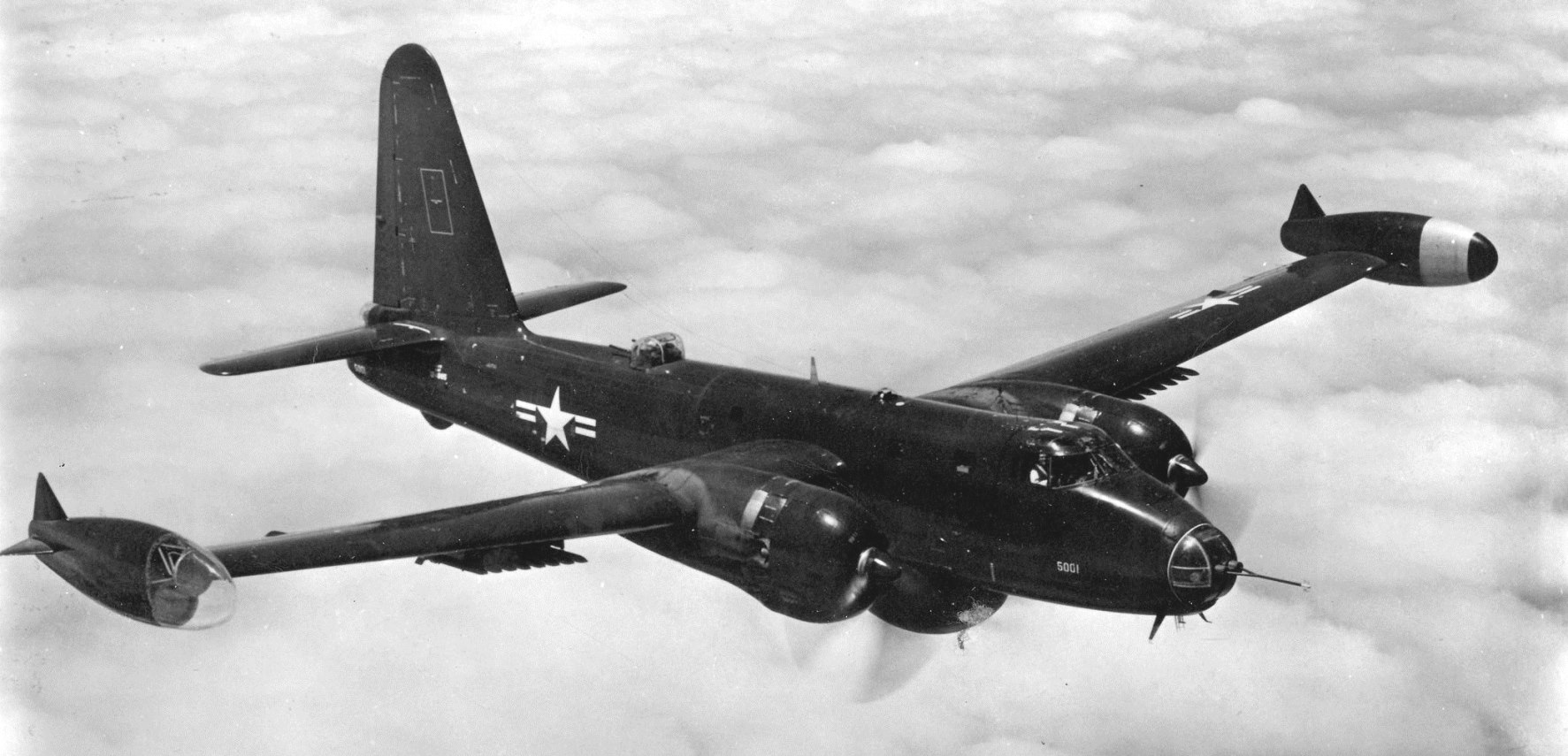
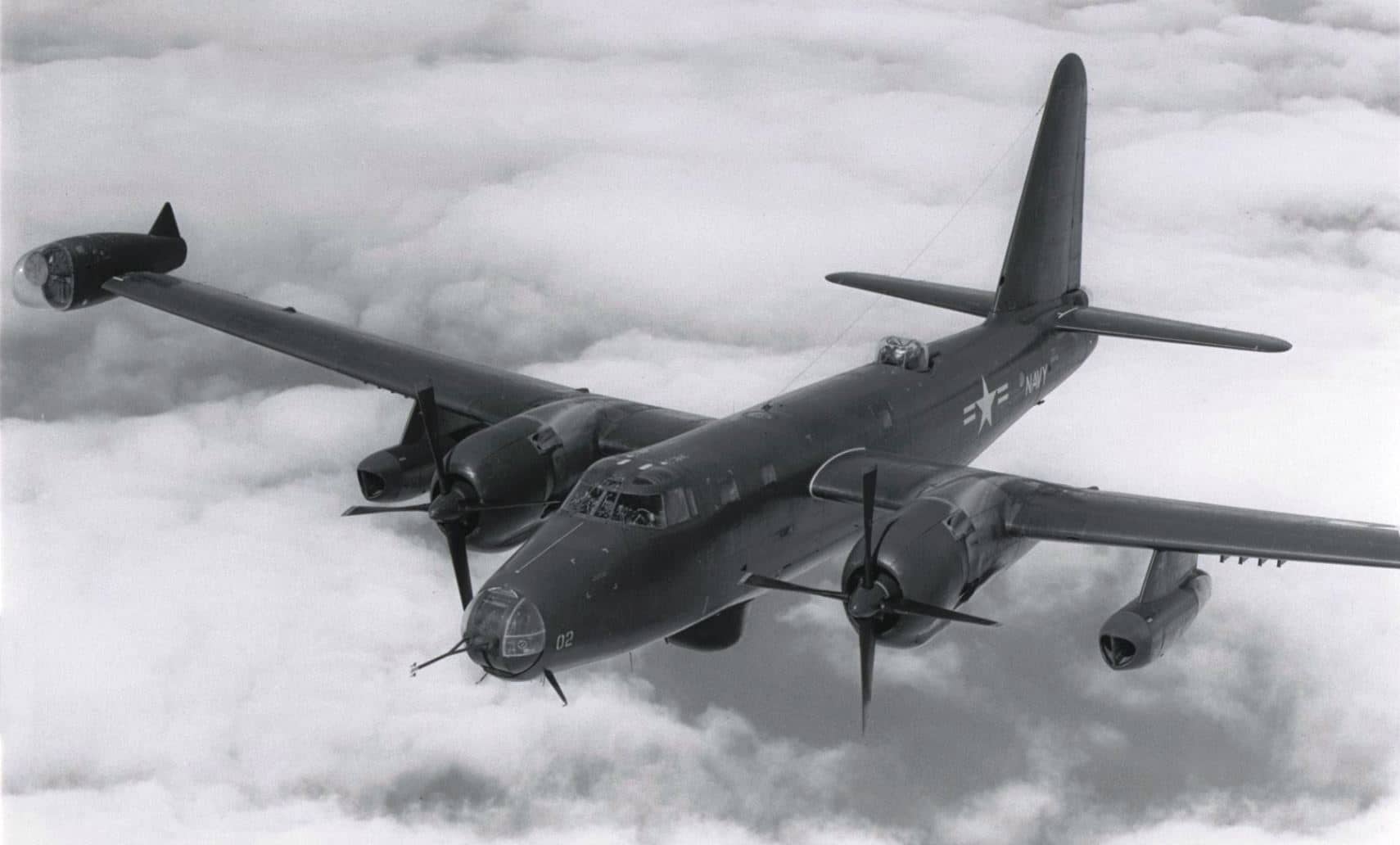
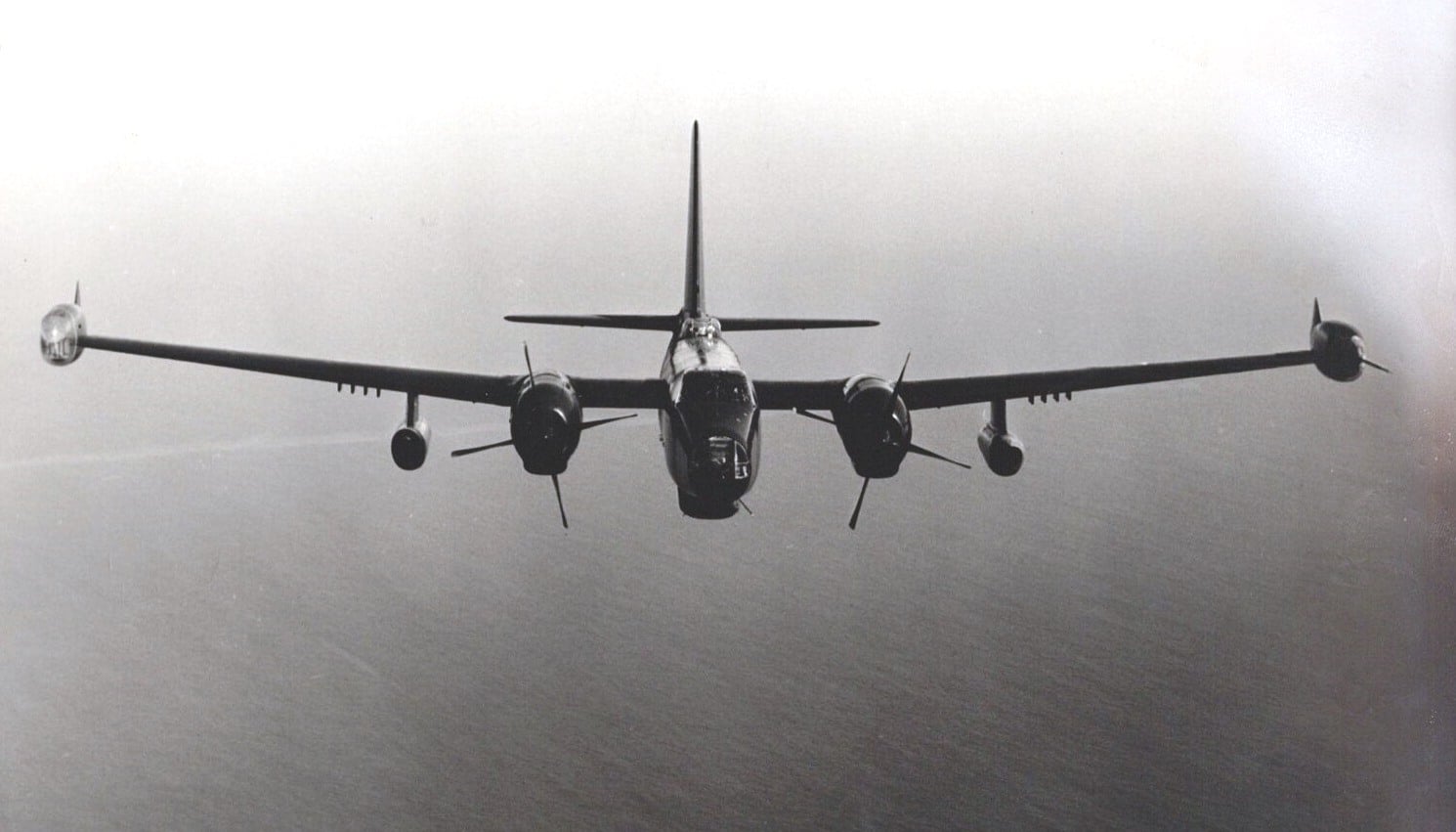
Oddly enough, the story begins with an aircraft. Lockheed P2V Neptune (Model 526) Bureau Number (BuNo) 131522 (MSN 426-5403) was constructed as a P2V-5 by Lockheed at their Burbank facility and accepted for service by the US Navy on 29 July 1954. The aircraft was initially fitted with an Emerson nose turret with two 20 mm cannon replacing the solid nose of earlier variants. The aircraft retained its dorsal and tail turrets. Other changes from previous Neptune variants included larger jettison-able wingtip tanks. The starboard tip tank was equipped with a traversable searchlight slaved to the nose turret. The port tip tank was equipped AN/APS-8 radar in the nose. The aircraft also carried the AN/APS-20 search radar in a ventrally mounted housing.
P2V-5. image via national naval aviation museum
Fleet Service and Early Storage
From Burbank 522 found her way first to Overhaul and Repair (O&R) at Naval Air Station (NAS) Jacksonville. From there the aircraft went west again to Fleet Aircraft Service Squadron ONE ZERO EIGHT (FASRON-108) at Burbank on 7 January 1955. The first patrol squadron (PATRON) to fly the aircraft was Patrol Squadron ONE ONE (VP-11) Proud Pegasus based at NAS Brunswick in Maine when 131522 arrived there on 15 February 1955. But, strangely, VP-11 flew the Neptune for less than a year before she was transferred to the Military Aircraft Storage and Disposition Center (MASDC) at Davis-Monthan Air Force Base (AFB) in Tucson, AZ. There she was placed in storage.
P2V-5F. Image via National Naval Aviation Museum
Back in the ASW Game and Bolting On More Power
Four months later on 19 March 1956, 131522 was transferred to VP-16 War Eagles at NAS Jacksonville. On 28 February 1957 the aircraft was transferred to the NARTU (Naval Air Reserve Training Unit) based at NAS Anacostia in Washington D.C. Nearly a year later on 3 March 1957 the patrol bomber was sent back to Lockheed for rework to P2V-5F specification. More power was bolted on, with a pod-mounted Westinghouse J34 jet engine added under each wing and the radial piston engines replaced with more powerful Wright R-3350-32Ws. The jet and piston engines both burned Aviation Gasoline (AVGAS). Four of the underwing rocket pylons were removed but payload was increased to 10,000 pounds.
P2V-5F. image via national archives
Heavy Mining and Globe-Trotting
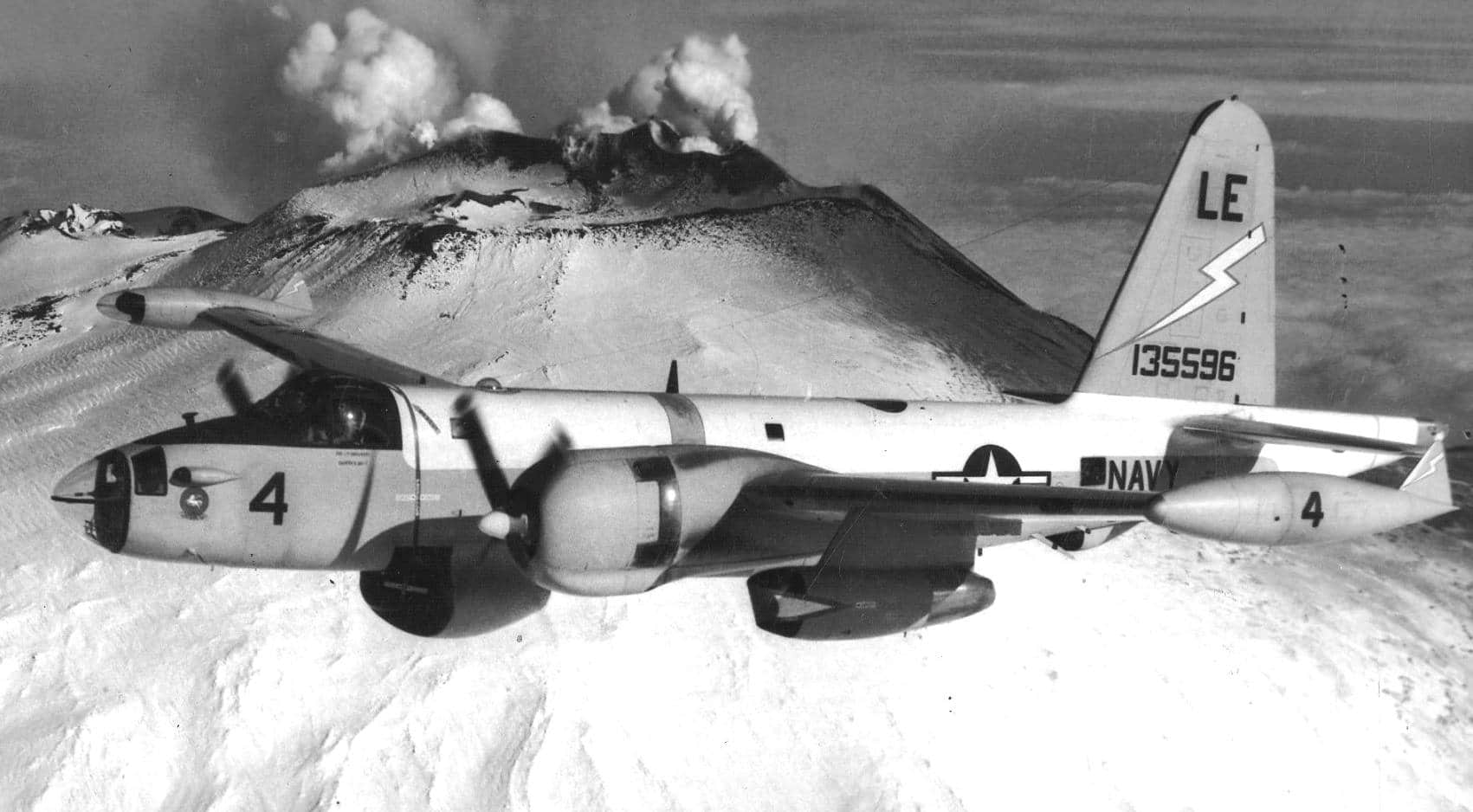
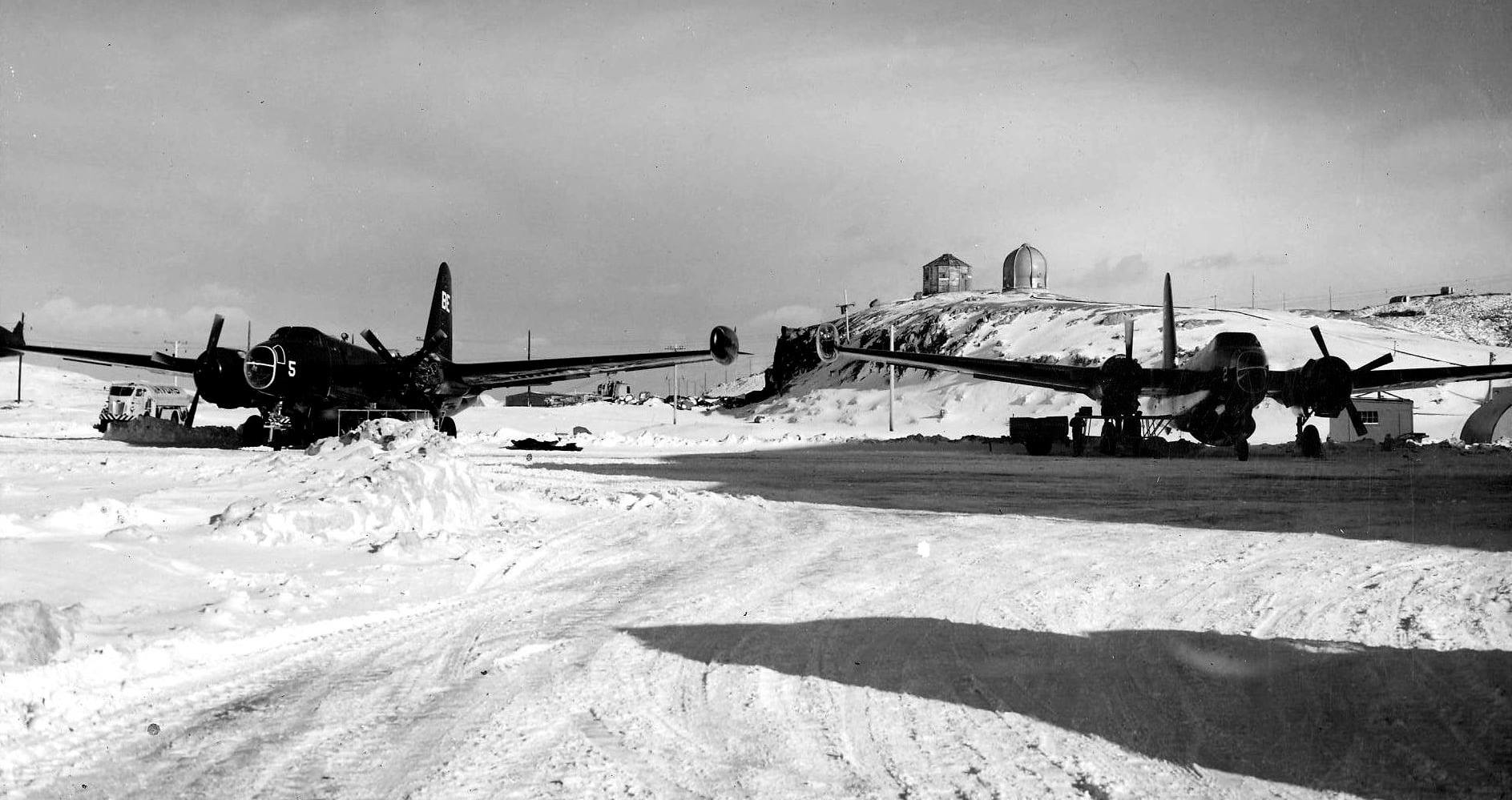
After rework, BuNo 131522 emerged as a P2V-5F and was sent to O&R at NAS Alameda on 25 May 1957. From there the aircraft crossed the country for more O&R, this time as NAS Norfolk. Most likely this time was used to make modifications necessary to enable the aircraft to carry out airborne mining missions, because on 27 March 1958 she was transferred to Attack Mining Squadron ONE THREE (VA[HM]-13) on the island of Malta in the Mediterranean. Upon return to CONUS on 30 November 1958 131522 went to NAS Chincoteague in Virginia for service with the Naval Air Ordnance Test Station (NAOTS). Active duty beckoned again in 1959, and the Neptune first answered the call on 31 January 1959 with VP-24 Batmen (formerly VA[HM]-13) out of frigid NAS Keflavik in Iceland. The next assignment for 131522 was with another fleet squadron- VP-8 Tigers out of NAS Norfolk beginning on 14 October 1959.
Neptunes in the cold. image via national archives
Back to Lockheed for Another Round of Mods
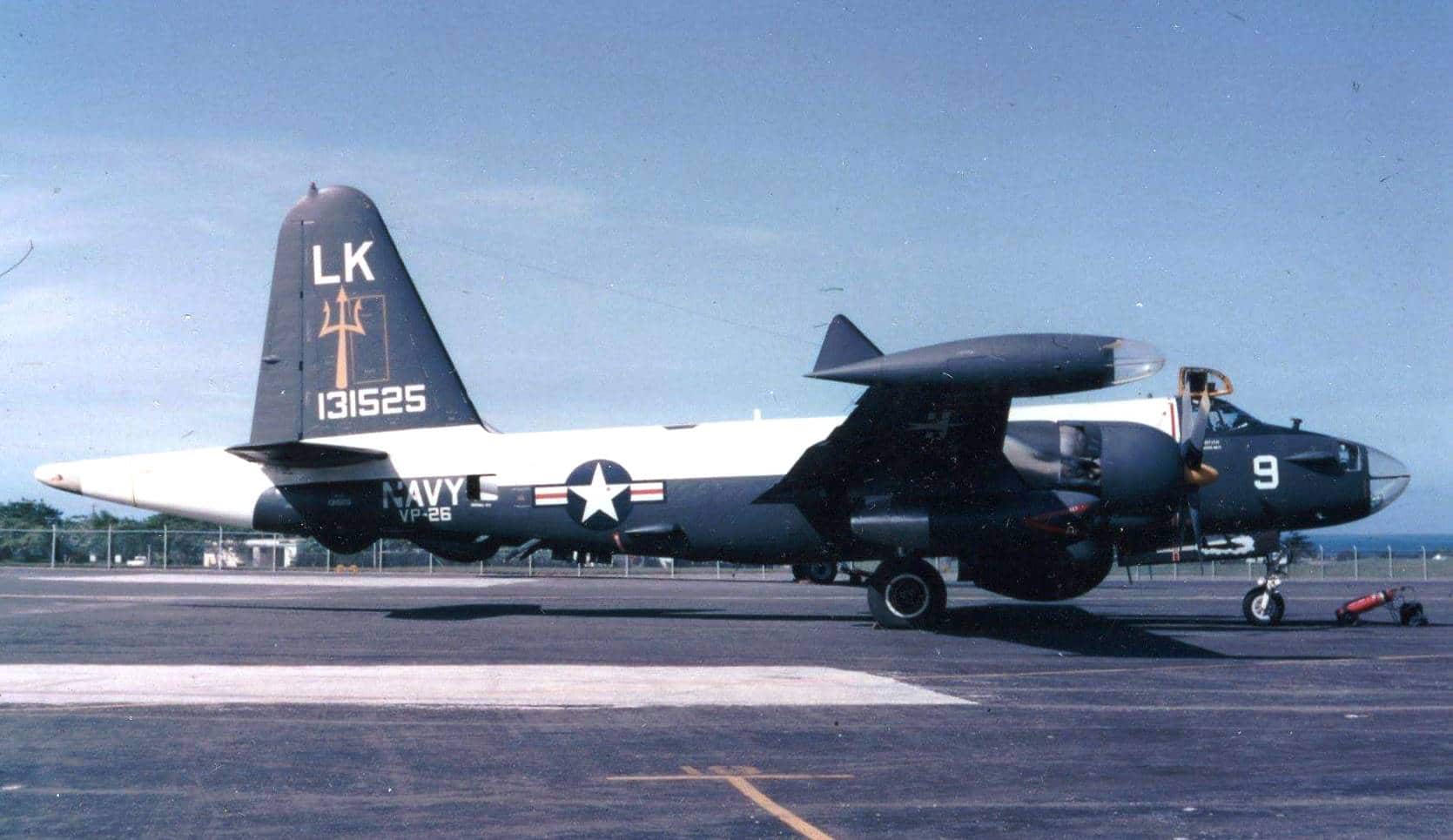
After a fairly short stint with VP-8, 131522 was flown to NAS Alameda for O&R and service with the Naval Bureau of Weapons (BuWep) on 4 January 1960. After her time in the Bay Area the aircraft headed south to Lockheed at Burbank for more rework. The nose gun turret was removed and a glass observation nose installed in its place. The dorsal gun turret was removed and its opening glazed over. The tail turret was removed and a Magnetic Anomaly Detection (MAD) boom was installed in its place. Crew accommodations and wingtip tanks were revised as well. By the time work on 131522 was complete it was nearly Labor Day weekend, 1960.
VP-26 P2V-5F. image via national naval aviation museum
Sun N Fun is gearing up for their 50th anniversary air show. The annual fly-in is a big draw for Central Florida, welcoming avgeeks and aviators from around the world to celebrate aviation for an entire week from April 9 – 14.
In 2023, the event hosted more than 200,000 people, with 3,500 aircraft. This year, they expect even more, with a theme highlighting the passion for aviation and recognition of the nearly 3,000 volunteers who help make the event happen.
For any pilots wanting to fly-in, the FAA has put out a video about arrival procedures and the NOTAM. Watch that above. More info here.
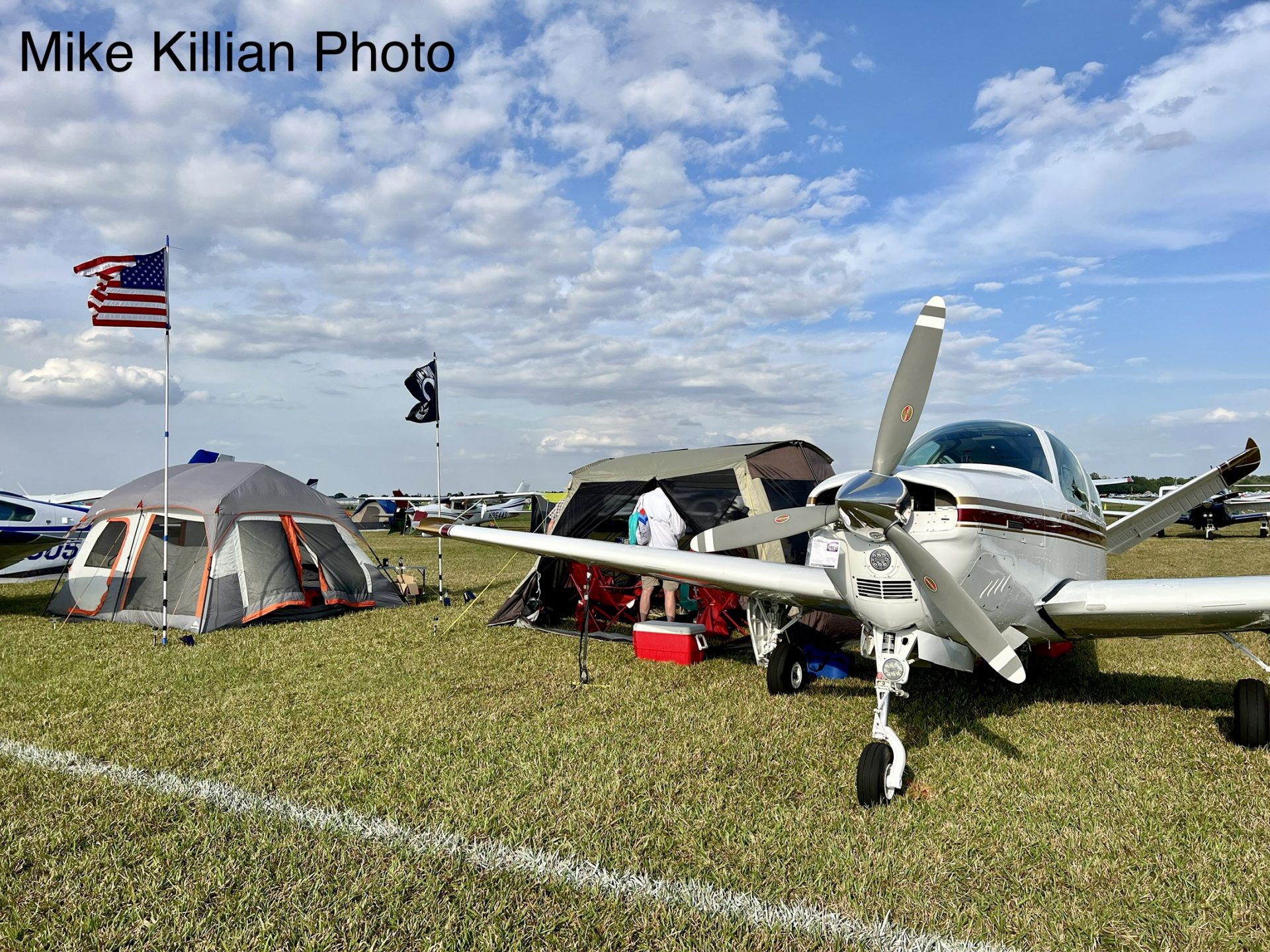
Pilots can book campsites with their planes. Tent and RV campers can also camp if they’d like. It’s a unique way to enjoy a week of flying. You can read more about those options here.
Sun n fun 2023 (mike killian photo / avgeekery.com)
Opening day concert and 600 exhibitors
An “Opening Day Concert” will kickoff the week on April 9, with musician Dylan Scott and special guest Sara Evans. More on that here.
Nearly 600 exhibitors and companies from across the U.S. and around the world will be on-site, showcasing their latest services, products, innovations and tech for aviation. Click here for a list of exhibitors who will be there, or to apply to be an exhibitor.
sun n fun 2022 (mike killian photo / avgeekery.com)
The biggest draw every year is, of course, the flying! Sun N Fun will hold an air show every day of the week from 1 – 5pm. Night air shows are also scheduled for April 10 and 13, which are always fun.
The daytime air shows
The U.S. Air Force Thunderbirds are headlining the show this year, performing on April 13 and 14. They are scheduled to arrive on April 11, and practice on April 12. Might be a little loud.
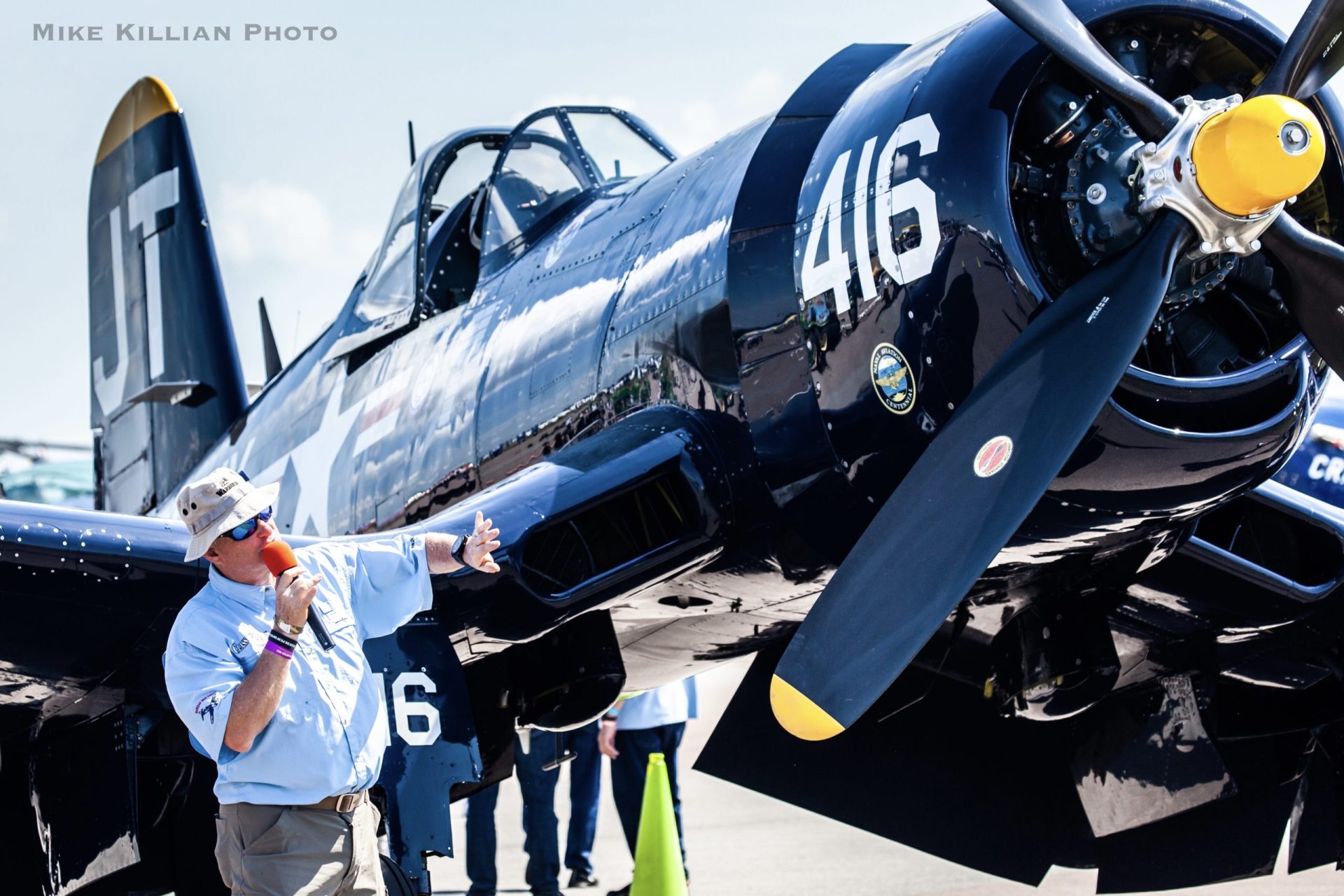
Pilot jim tobul giving a presentation about his F4U-4 corsair “korean war hero” at sun n fun 2023 (mike killian photo / avgeekery.com)
The show this year will host a lot of vintage warbirds, including Mustangs, Corsairs, T-28s, T-6s, B-25, an SBD Dauntless, an RC-45J Expeditor and many more. Some will be flying in the shows, others will be static, and some will even be offering rides.
The military is sending a lot of aircraft for static display. Some include A-10s, Apache and Black Hawk and Chinook helicopters, C-130s, F-16s and QF-16s, C-17, KC-135 and KC-46, even an MH-6 and MQ-1C, among others. Many privately owned jets will be attending as well, like L-39s and S-211s.
Aerobatic performers will be tumbling through the skies too, including the legendary Patty Wagstaff and World Champion aerobatics pilot Rob Holland. Several others will be performing as well.
A Hot Air Balloon launch from the main flight line is also planned for Saturday morning between 6:30 – 8:00am. If weather allows, the balloons will take to the skies and “chase” another balloon.
Sun n fun 2023 balloon launch (mike killian photo / avgeekery.com)
For a full list and schedule of each day and night show, click here. The list includes the order of performances, as well as the performers and planes they’ll be flying.
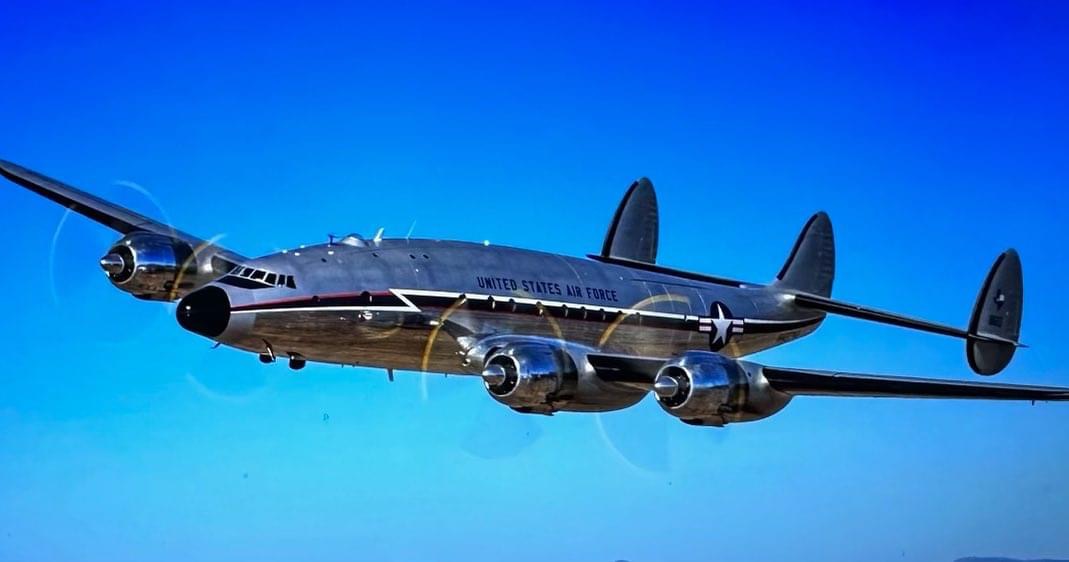
The recently restored Lockheed Constellation “Bataan” from Lewis Air Legends will even be there, arriving April 9 and flying in the show April 10. It will remain on static display until leaving April 13.
The night show April 10 will kickoff with the Polaris MiG-29 and Ghost Squadron at sunset. They are currently training to launch to space with SpaceX later this year on the Polaris Dawn mission. They will also fly in several day shows.
We met them recently and flew in their MiG-29 for a story about their upcoming space mission and the jet-flying aspect of their astronaut training. CLICK HERE to read all about it!
The USAF F-35A Demo Team will take to the skies after Polaris on April 10, with their new pilot and commander as the sun goes down. Read about the new pilot and team here.
The night show on April 13 will not feature the F-35. The US Navy will take care of that night with an F-18 Super Hornet demo.
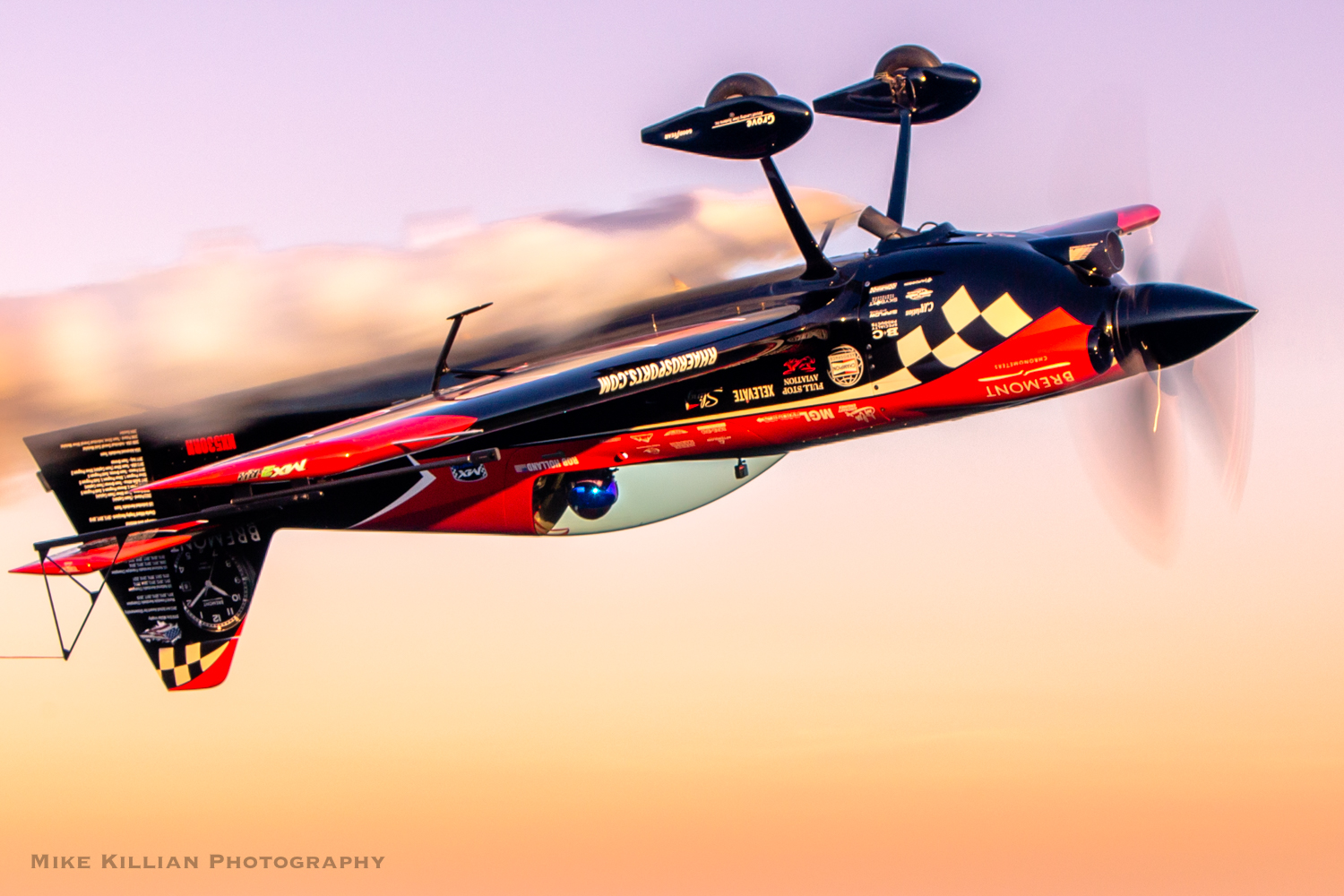
Titan aerobatic team after a night show at sun n fun in 2022 (mike killian photo / avgeekery.com)
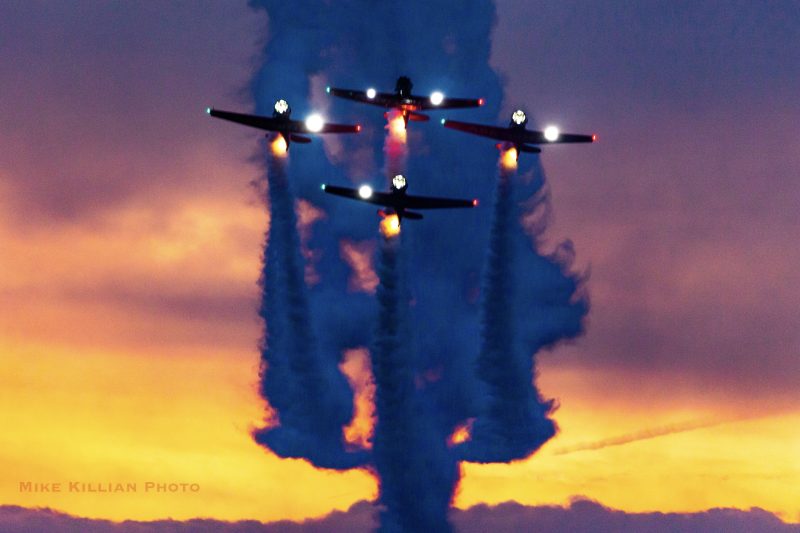
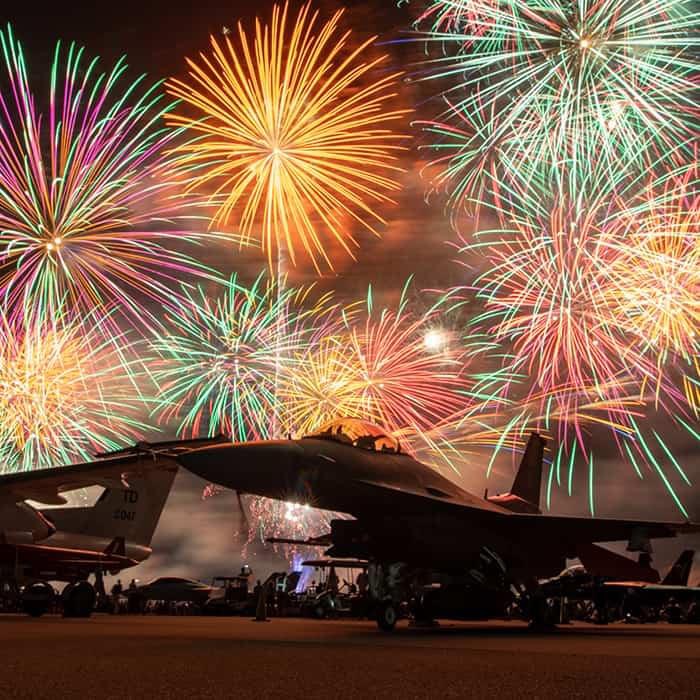
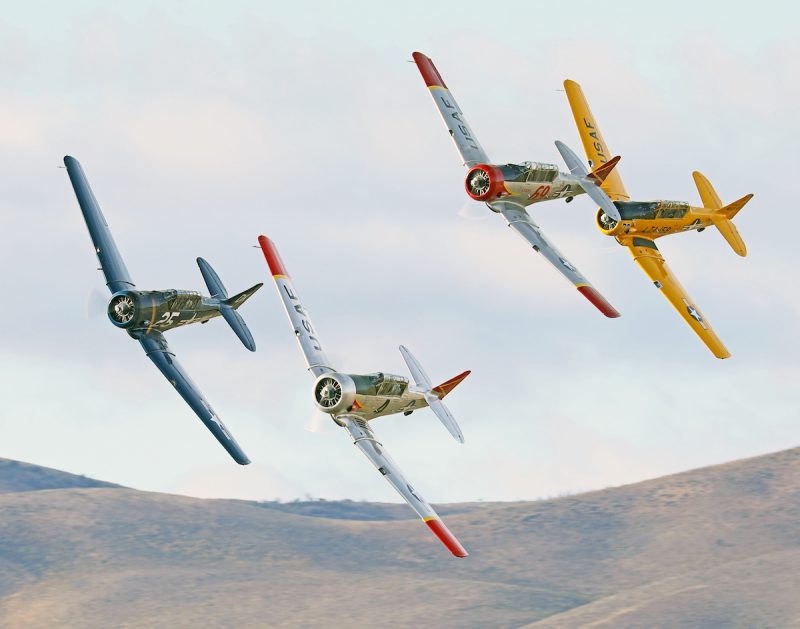
The Titan Aerobatic Team (formerly Aeroshell) will take their 4-ship of T-6 Texans into the sunset and fly as the sky turns dark on both April 10 and 13. Many other performers will take to the air after on both nights too, with lights and fireworks that shoot off their planes.
Fireworks will end the evening on both April 10 and 13.
Photo credit: Sun n fun
Visit Sun N Fun’s website for more info & tickets
Tickets to attend the show start at $45 per adult for a single day, and $20 for youth ages 11-17. Kids 10 and under are free. Weekly tickets are available also. General parking is $10 per day, with a weekly parking pass available too. Click here for details and to purchase.
There is far too much info to write about here about the upcoming Sun N Fun 50th anniversary. Needless to say, it will be a memorable event. Learn more by visiting https://flysnf.org.
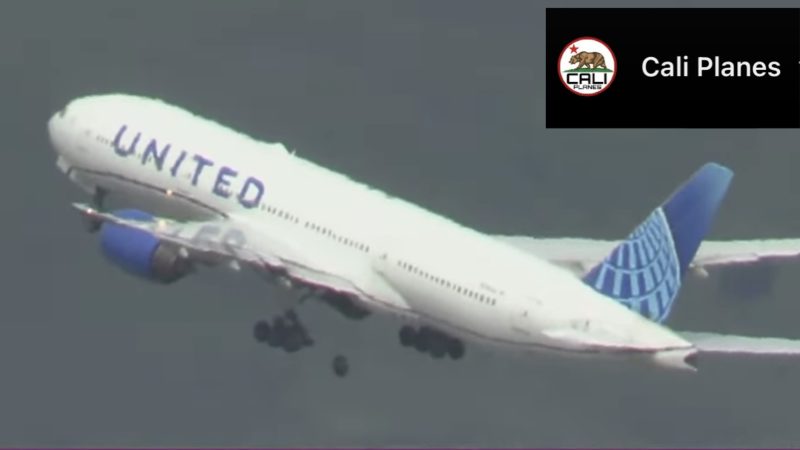
A United plane’s tire fell on some cars while taking off from SFO. The incident occurred shortly before noon, and it was even caught on video by YouTuber avgeek Cali Planes.
The 777-200 with 249 souls onboard was heading to Osaka, Japan. As soon as the plane was airborne, a tire fell off one of the main landing gear struts. It crushed some cars parked below in an employee parking lot. Fortunately, nobody was hurt.
ABOVE: YouTuber ‘Cali Planes’ caught the incident on video, skip to the 10:30 mark to see it
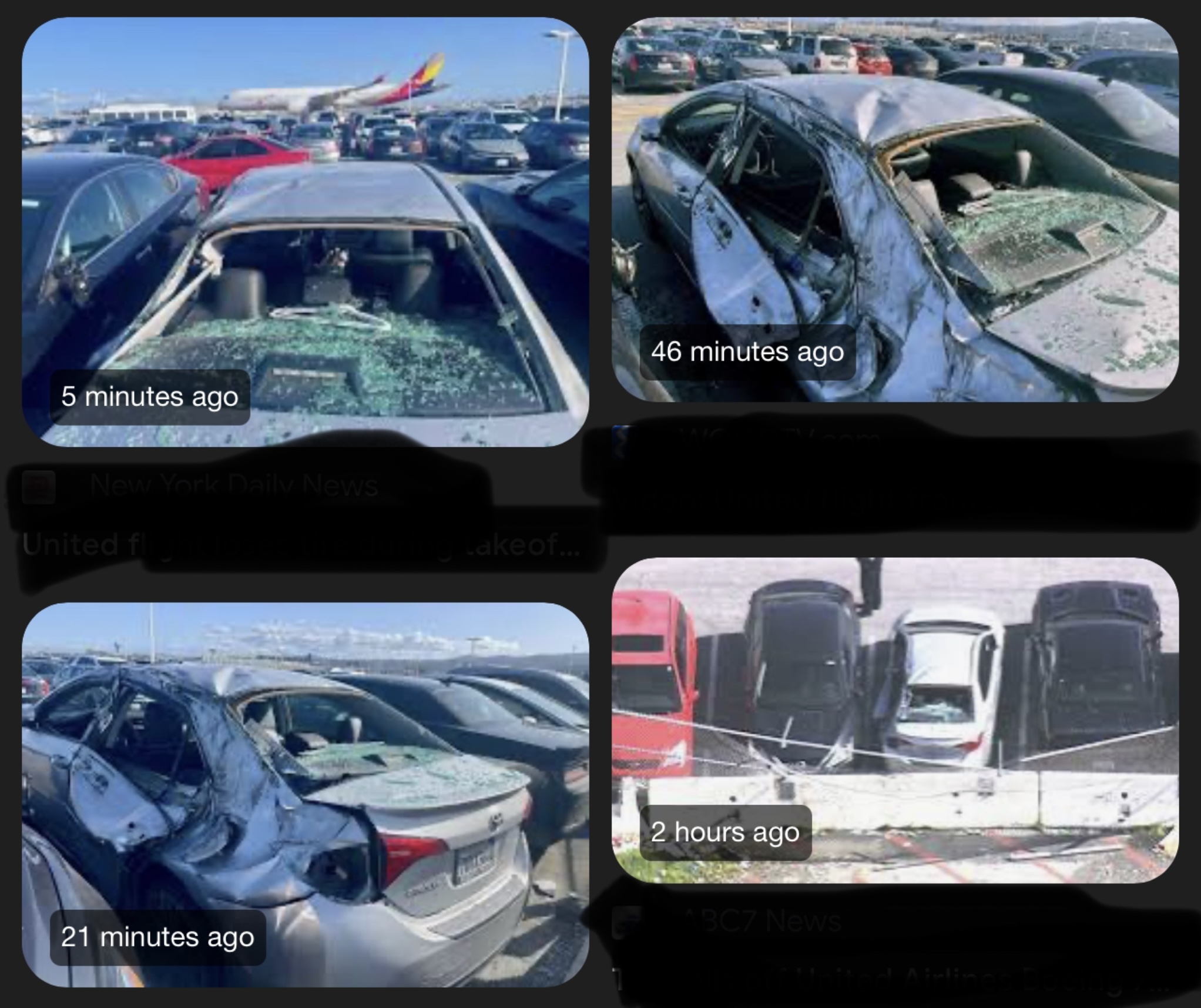
Several cars crushed
The other landing gear appeared to retract without issue. The plane was diverted to LAX and landed there without issue.
As many avgeeks already know, the planes can land just fine with a tire missing. The 777-200 has 6 tires on each of its mains. Still, some car owners tonight must be pretty unhappy. Several cars were hit, with shattered windows, crushed tops and severe damage observed on several.
Back at SFO the runway was closed for a short time to make sure there was no debris that could be a danger to other aircraft. It was reopened soon after and operations carried on as usual.
United releases statement
some of the damaged vehicles after a quick google search
“United flight 35 lost one tire after takeoff from San Francisco and landed at LAX.,” said United Airlines in a statement this afternoon. “Our team quickly arranged for a new aircraft to take customers to Osaka this evening.
“We’re grateful to our pilots and flight attendants for their professionalism in managing this situation,” added United. “We’re also grateful to our teams on the ground who were waiting with a tug to move the aircraft soon after it landed and to our teams in the airport who assisted customers upon their arrival. We will work with customers as well as with the owners of the damaged vehicles in SFO to ensure their needs are addressed.”
SpaceX is aiming for their third Starship flight test on March 14.
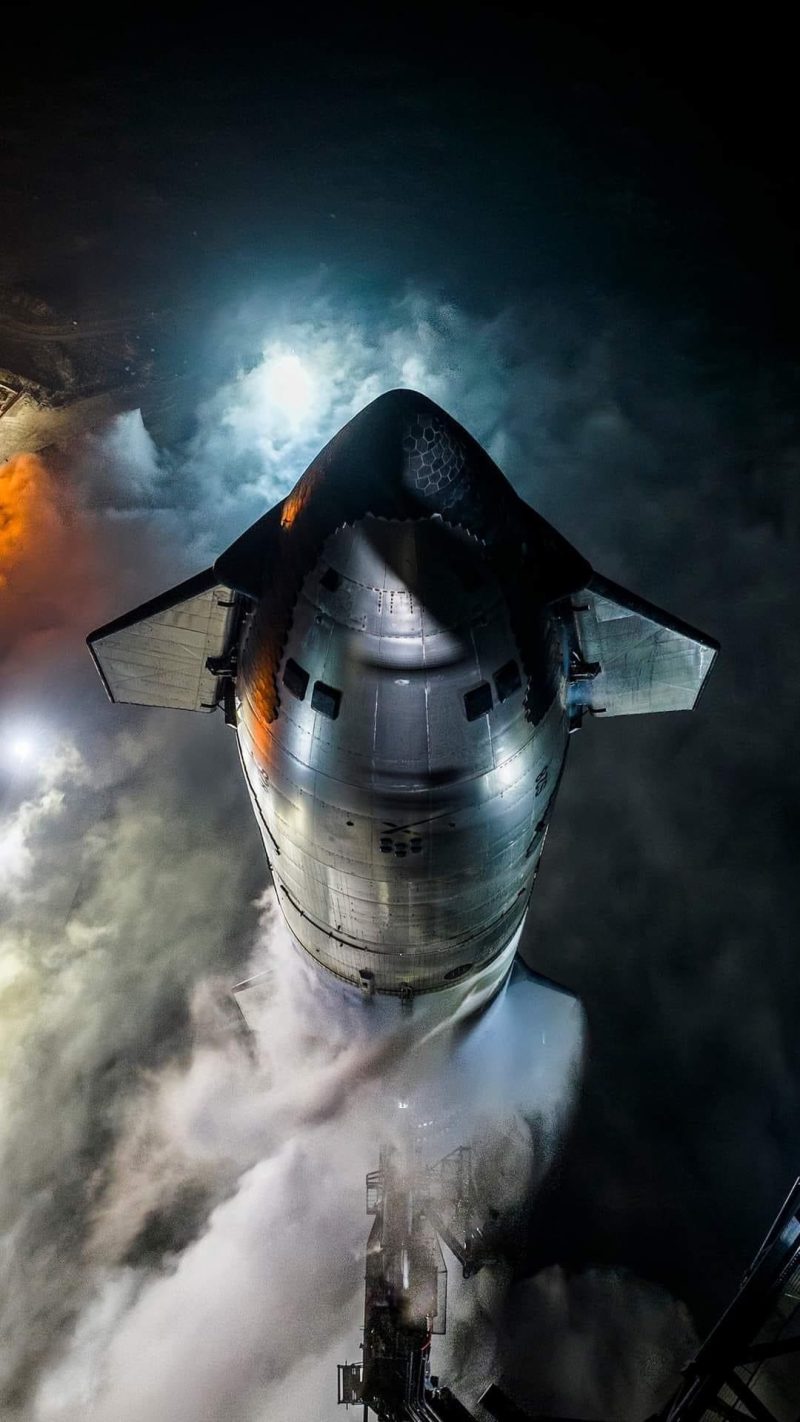
Starship completed its wet dress rehearsal for launch a few days ago at their “Starbase” in south Texas, located in Boca Chica near Brownsville. They loaded more than 10 million pounds (4600 metric tons) of propellant on Starship and its Super Heavy rocket, to ensure they are ready for launch on March 14.
Third time’s a charm?
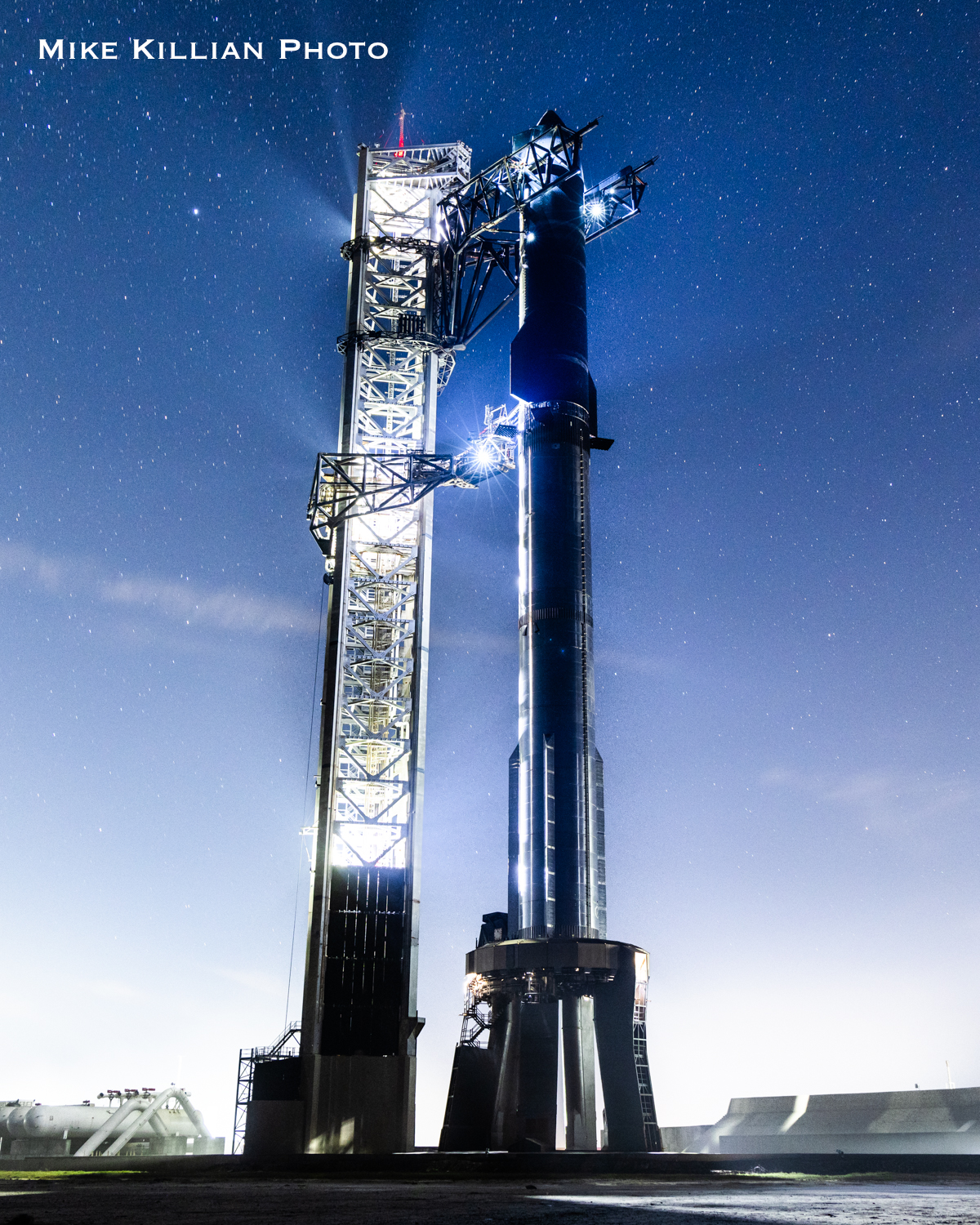
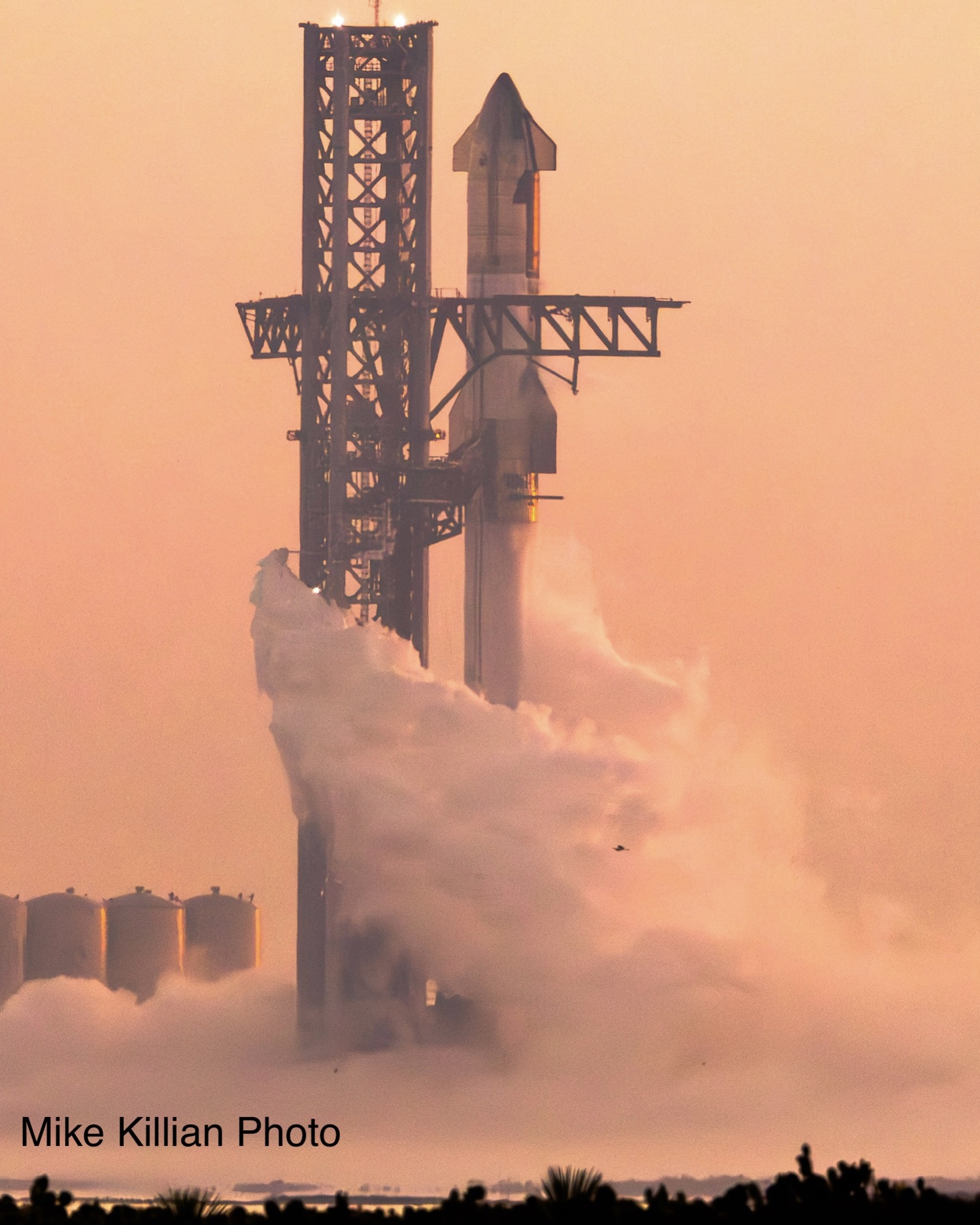
Starship on its launch pad at starbase, texas (mike killian photo / americaspace.com and avgeekery.com)
The Starship spacecraft and Super Heavy rocket are developmental prototypes. With each test and launch the vehicles are upgraded, evolving based on data engineers obtain from each test.
The first launch in 2023 destroyed its own launch pad, and blew up during ascent at high altitude. SpaceX made changes to the pad infrastructure and made some changes to the Starship and rocket, and launched the second test in late 2023. That test went much better, however the rocket again blew up shortly after separating from the Starship. The Starship itself failed to reach orbit.
SpaceX is Aiming for Third Starship Flight Test on March 14 (mike killian photo)
For this third test flight, SpaceX wants to see a successful liftoff and ascent to stage separation, and get Starship into orbit successfully. Both the rocket and spacecraft are being developed for reusability, similar to their successful Falcon-9 rockets and Dragon capsules. NASA contracts those to haul their astronauts and cargo/supplies to and from the International Space Station (ISS).
Here’s what SpaceX hopes to accomplish on Starship’s third flight
The Starship and rocket are further upgraded for this third test, but the test objectives and flight profile are also different from the previous 2 tests. This time, SpaceX wants to get Starship into orbit for an hour, with a safe splashdown in the Indian Ocean.
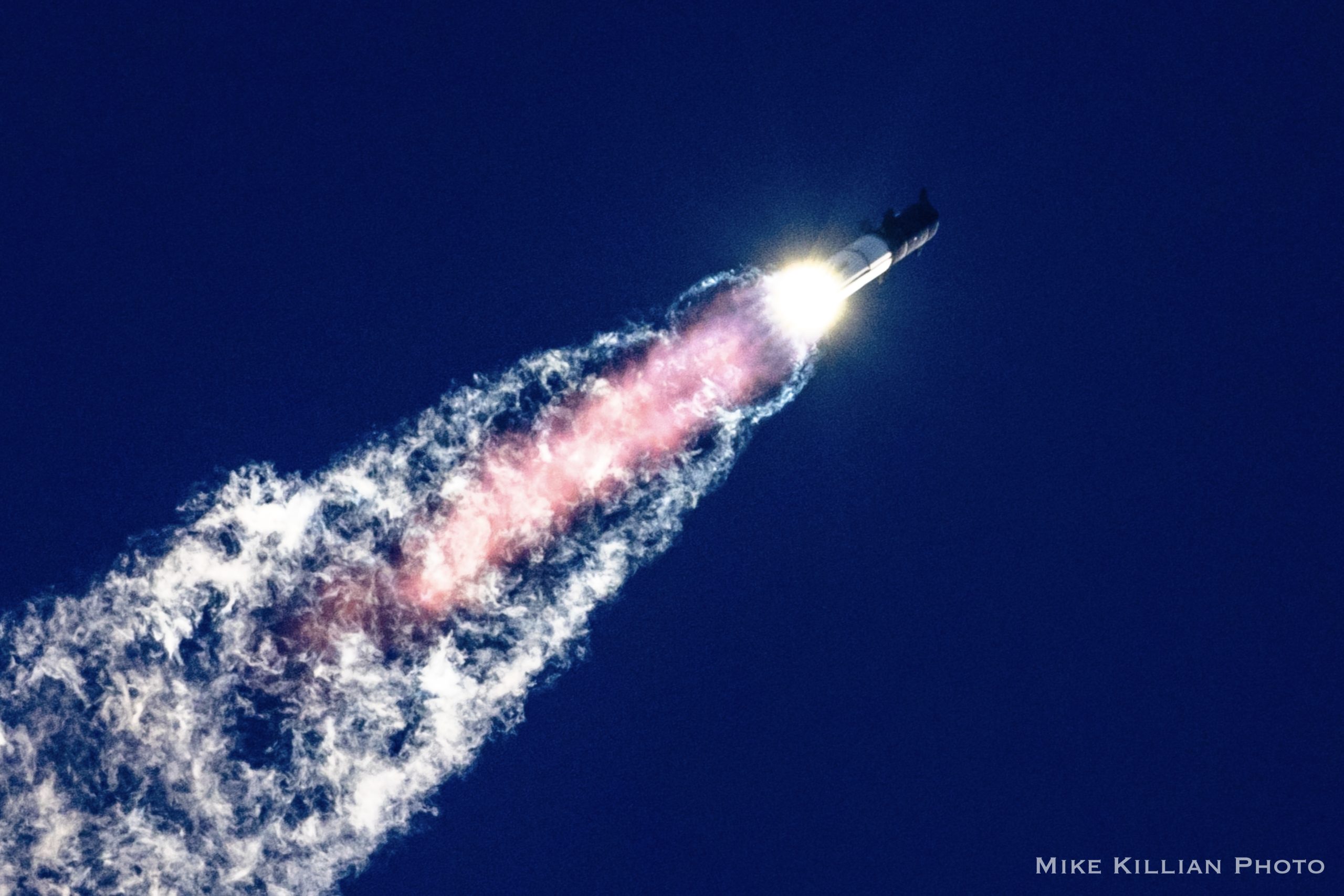
Starship-2 launch (mike killian photo / americaspace.com and avgeekery.com)
ABOVE: Watch Elon Musk discuss Starship’s upcoming 3rd flight test
In orbit, SpaceX plans to fire one of the spacecraft’s Raptor engines to demonstrate an in-space engine burn. They also want to test opening and closing a payload bay door, which would be used in the future to deploy Starlinks and other satellites. Think of it like a Pez dispenser.
Perhaps most importantly, SpaceX will try a propellant transfer in-flight, moving propellant from one tank to another within Starship. Elon Musk has a vision for eventual on-orbit refueling between Starships, and it’s a part of SpaceX’s blueprint to support NASA’s returning people to the surface of the moon for the Artemis program. However, that capability is a concern for NASA, because it’s an added complication.
The taxpayer and government has a vested interest in Starship
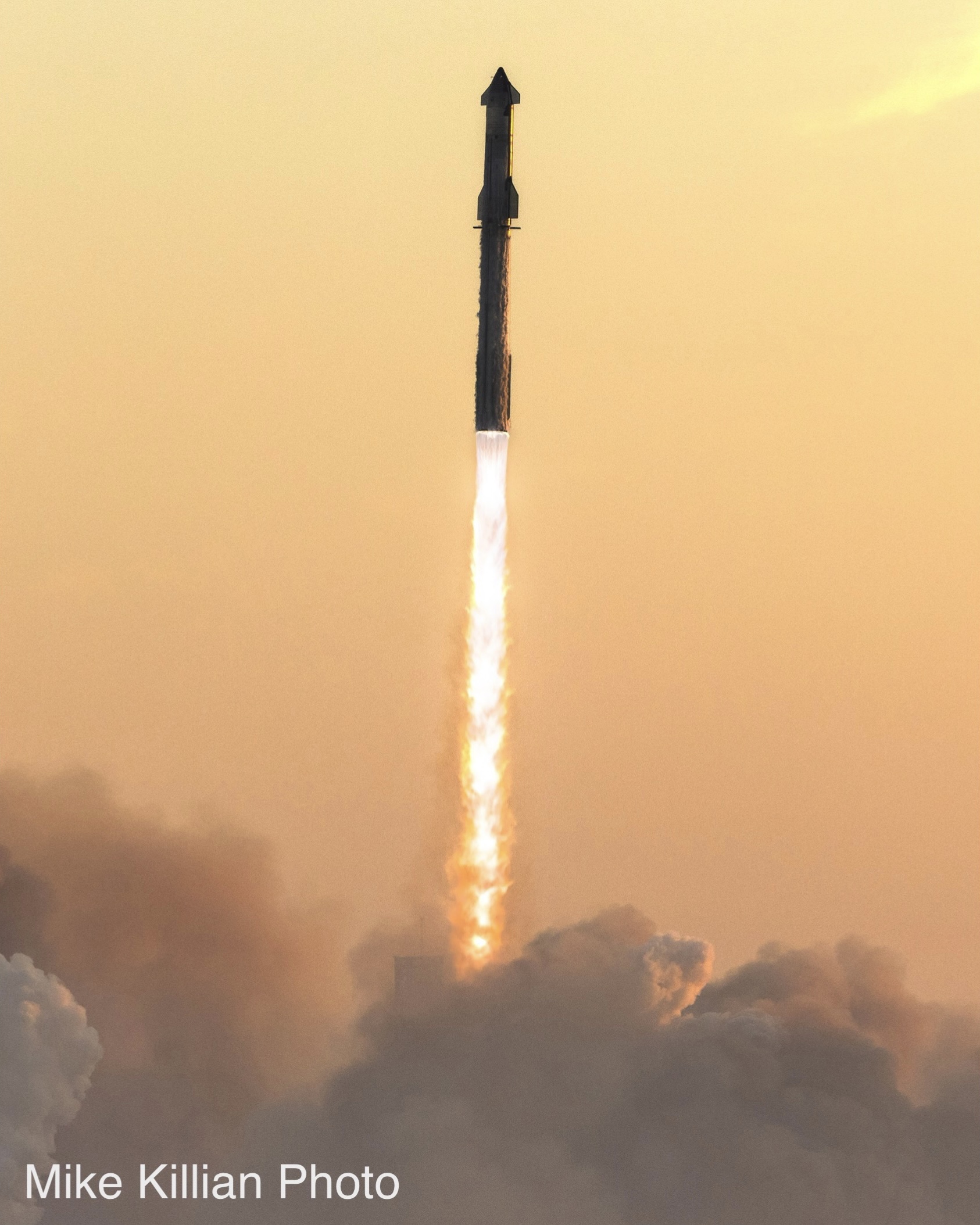
starship’s second flight test (mike killian photo / americaspace.com and avgeekery.com)
There is a lot riding on the Starship program. Not only does Elon Musk see Starship as the future for SpaceX to reach the moon and Mars, but NASA and the U.S. taxpayer are relying on SpaceX to get it right, and soon. NASA has contracted Starship to land their Artemis crews on the moon, at least for the first 2 landing missions on Artemis-3 and 4.
However, the longer SpaceX takes to get Starship safely operational, the longer it may take to land on the moon. China wants the moon too, and the U.S, government is not interested in letting them have it. The South Pole is rich with frozen water to sustain a long-term human presence. After all, water is a key ingredient in rocket fuel.
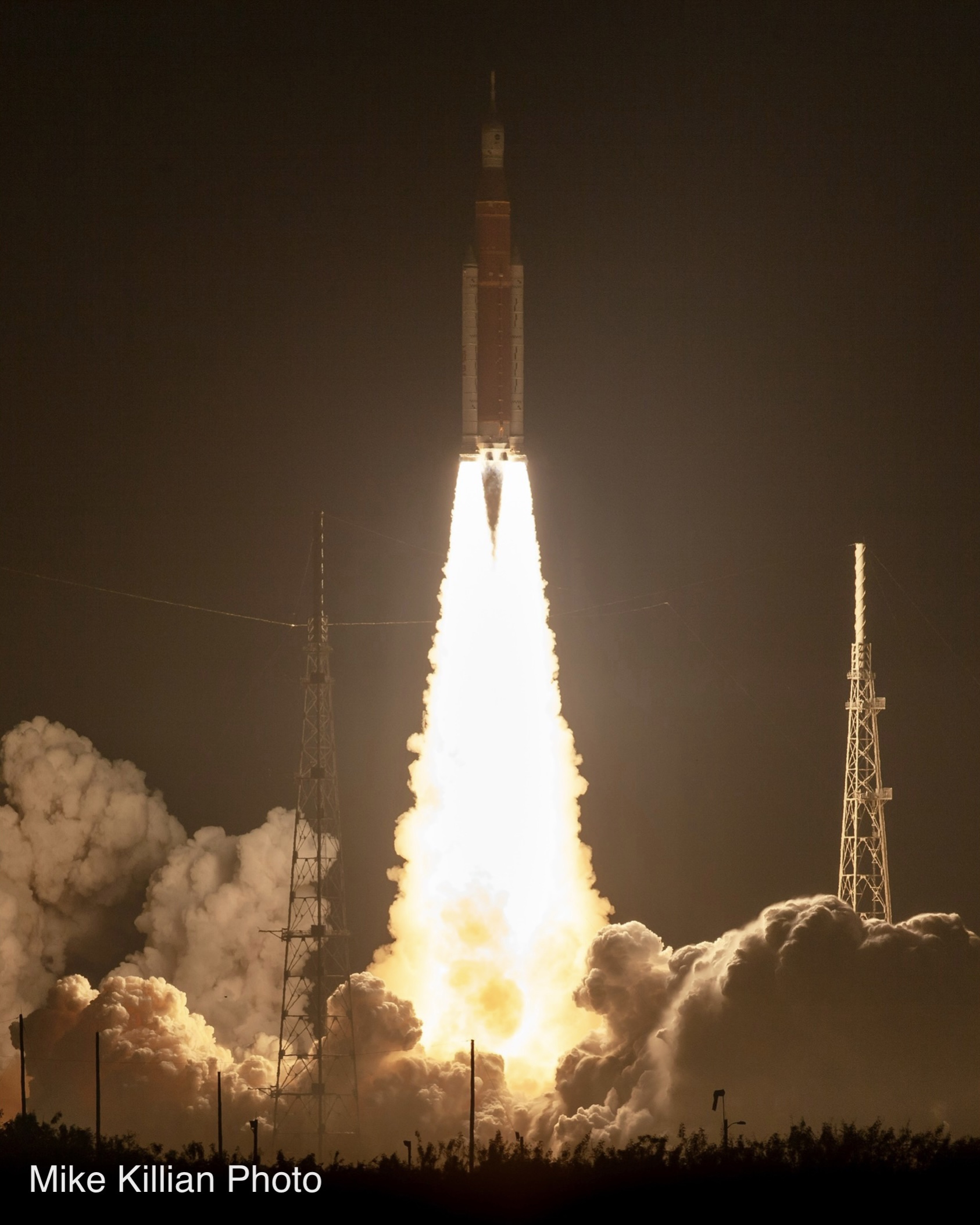
NASA artemis-1 with their sls rocket and orion spacecraft on an un-crewed flight test to the moon and back. The mission was virtually flawless (mike killian photo / AmericaSpace.com)
NASA plans to launch their first Artemis crew to the moon in late 2025, on a flight similar to Apollo 8. That crew will conduct various tests and ensure the Orion spacecraft is ready for the future crewed landing missions. Think of it as a dress rehearsal for landing Artemis-3.
For Artemis-3, Artemis will launch the crew on the SLS rocket and Orion spacecraft. SpaceX however will need to launch 2 Starships; 1 as a propellant tanker and another as the actual lunar lander. Both Starships would dock in-orbit to refuel the lander, and then the lander would fire its engines for the moon. The Artemis crew in Orion would dock with the Starship lander, and land on the moon. Then return to lunar orbit to dock again with Orion, and head home to Earth.
You need to watch this segment 60 Minutes just did about Starship and Artemis
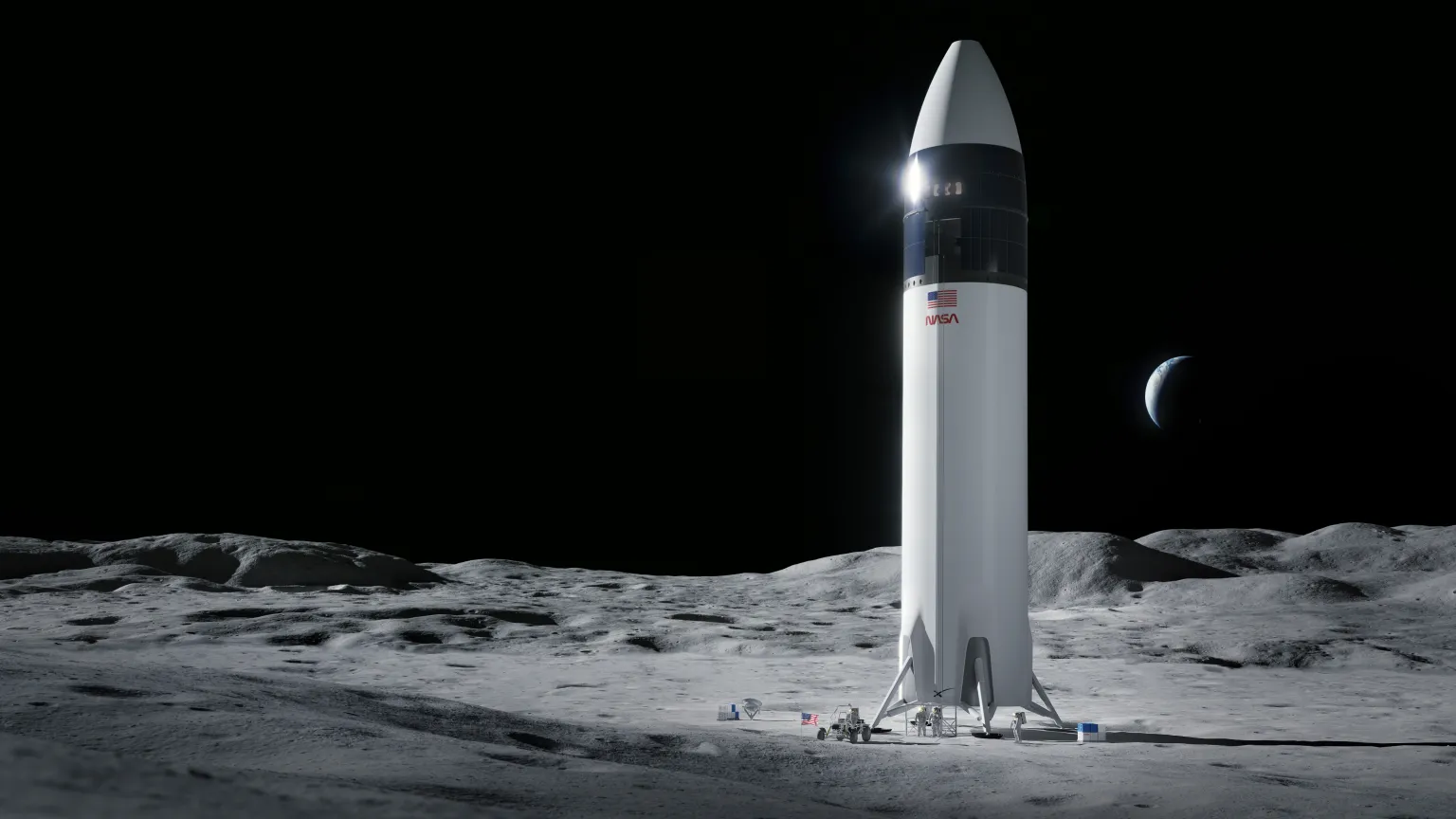
An illustration Of spacex’s starship for nasa’s artemis human landing system (spacex image)
However, NASA won’t put their crews on an unproven vehicle. SpaceX had to prove with many successful missions that Falcon 9 and Dragon were reliably safe, before NASA ever put their astronauts onboard. It will be no different for Starship. SpaceX will need to fly many safe and successful Starship missions, before NASA trusts it to land their astronauts on the moon.
It doesn’t seem possible that SpaceX and Starship can be ready in just 2 years. NASA wants to land in late 2026. Elon, however, recently stated that he expects Starship to be ready to land the first crew “in less than 5 years.”
“It absolutely concerns me because we need them to launch multiple times,” said NASA’s associate administrator Jim Free, in a recent interview with 60 Minutes (watch that above). “We have a contract with SpaceX that says they’re going to land our crew in the end of 2026.” SpaceX ignored their repeated requests for interviews for the story, which highlights some of the key issues to returning to the moon.
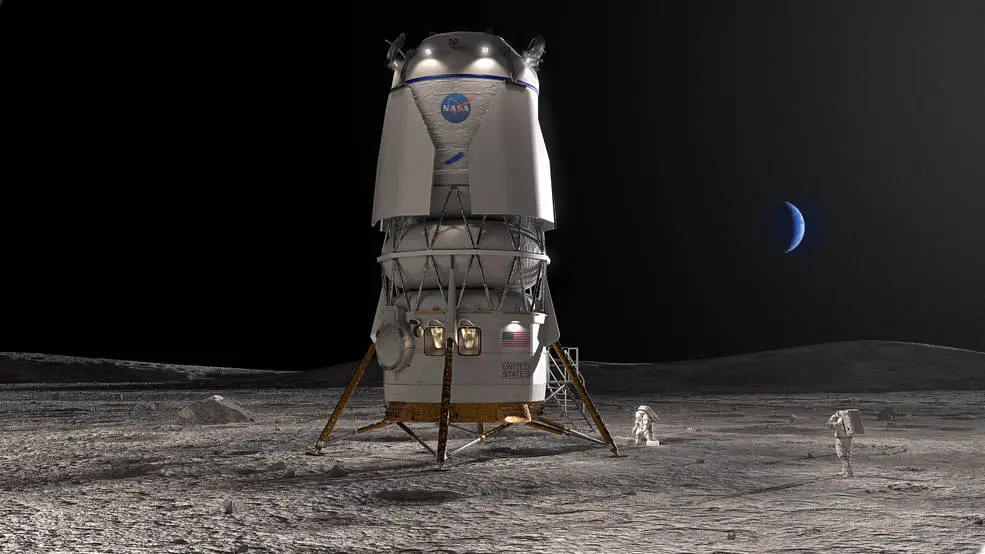
NASA also contracted another lander, Blue Origin
Artist’s concept of the Blue Moon lander. (Blue Origin image)
Free also touched base on the fact that NASA has a contract with Blue Origin for a lander. That is supposed to be the lander for Artemis-5, but he hinted that, if Starship isn’t ready and Blue Origin is, it’s something to consider.
You can read NASA’s press release about Blue Origin’s lander here.
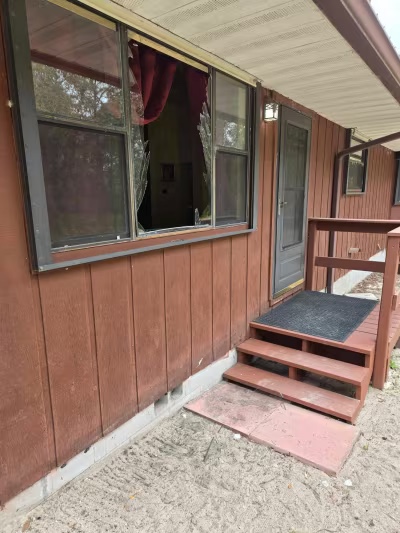
F-15s shattered homeowner’s windows while training in Florida during a recent low-altitude training exercise. Many residents across several towns reported various other property damage as well.
Residents in NW Florida (Putnam County) called the Sheriff Dept about it on March 2, 2024, unhappy that their homes were damaged and wanting to know what the heck was going on.
It destroyed my friggin house!
ABOVE: Listen to some of the 911 calls
”It destroyed my friggin house,” said one 911 caller. “I have major damage,” said another caller, adding “the lights were blown off the walls and ceiling, there’s glass everywhere.”
It’s unclear whether this was all due to a very low-altitude sonic boom, or a bomb drop. However the area in question is not a place where the USAF or USN are authorized for ordnance drops. Military pilots have used sonic booms before as a weapon in combat, to deter adversaries without actually having to kill them. It’s a very effective scare tactic.
Photo via news4jax
Other residents who called 911 reported attic doors blown off, and trailers moved off foundations. One caller said he could see the jets dogfighting the day prior to his south, and noted that the loud booms happened twice back to back. No callers reported seeing any clouds of smoke or fire from an explosion, such as bombs dropped by mistake. One caller did note a strange “gas” smell following the boom.
Florida is a state where most residents are very supportive of the men and women who serve. None of the callers seemed angered at the military in general, but rather were upset and alarmed that the incident happened. One caller even said the crews should go offshore to train, where they won’t affect residents below.
Florida Air National Guard Takes the Blame
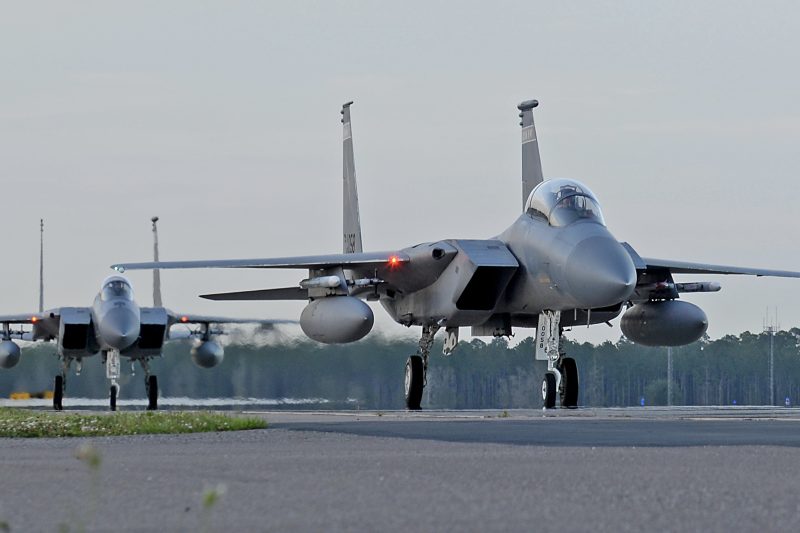
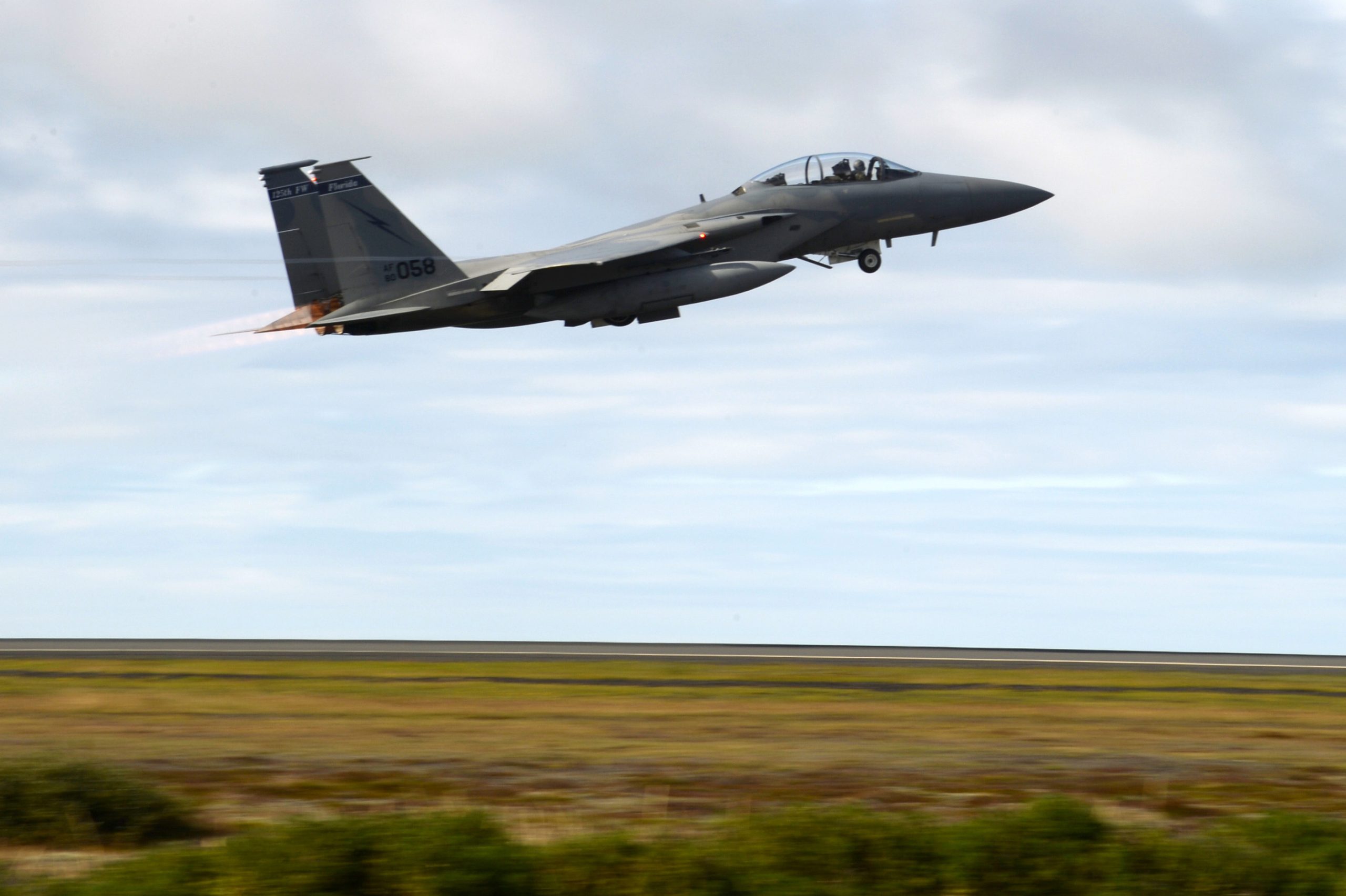
F-15C Eagle with the 159th Fighter Squadron, Florida Air National Guard (U.S. Air Force photo by Tech. Sgt. Staci Miller)
The F-15s involved are from the Florida Air National Guard (FL ANG). The FL ANG’s 125th Fighter Wing and 159th Fighter Squadron is based about 90 miles north in Jacksonville. FL ANG confirmed the incident to News4Jax, and has since opened an investigation. Naval Air Station Jacksonville said their crews were not involved, since many initially assumed it was them to blame.
“Florida National Guard command has directed that an investigation take place to determine the facts and implement any necessary measures to prevent this type of incident in the future,” the national guard said in a statement to News4Jax. “The Florida National Guard extends its deepest apologies for any resulting damage and the negative impact to the local community.”
FL air national guard F-15 with the 159th Fighter Squadron. (U.S. Air Force photo by Tech. Sgt. Staci Miller)
The FL ANG has established a phone line for those residents affected, should they choose to file a claim for the damages caused.
The FL ANG has not confirmed whether the damage was caused by a sonic boom, or a bomb drop.
Mike killian photo / avgeekery.com
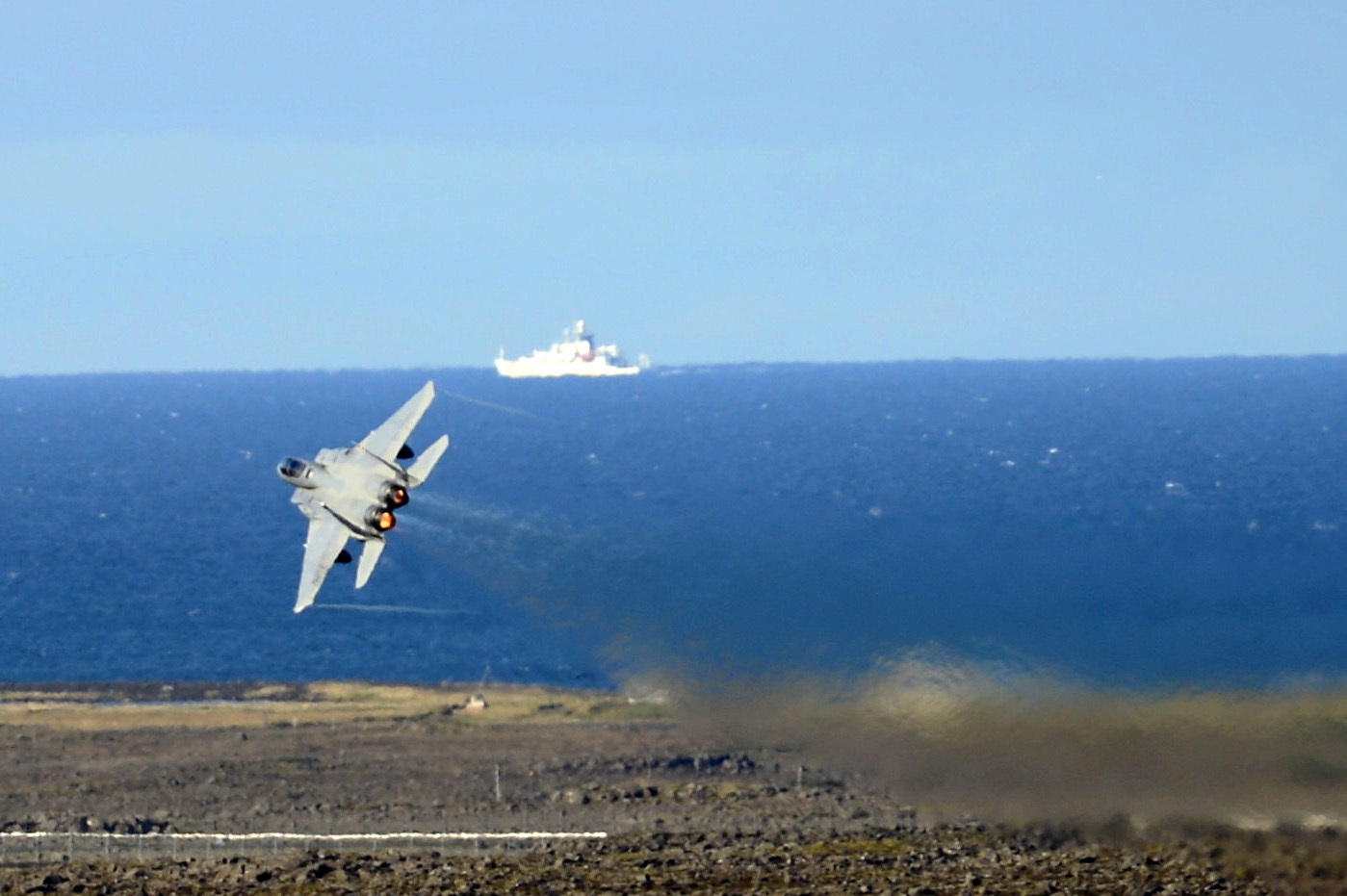
USAF and Navy aircraft typically train over the nearby Ocala National Forest, where land is set aside for them to drop bombs and conduct the kind of training required for them to fly, fight and win.
The FL ANG 125th Fighter Wing’s mission is to “provide air defense for the southeastern United States, as directed by the North American Aerospace Defense Command (NORAD) and United States Northern Command (USNORTHCOM), from Charleston, South Carolina to the southern tip of Florida and across the Florida panhandle.”
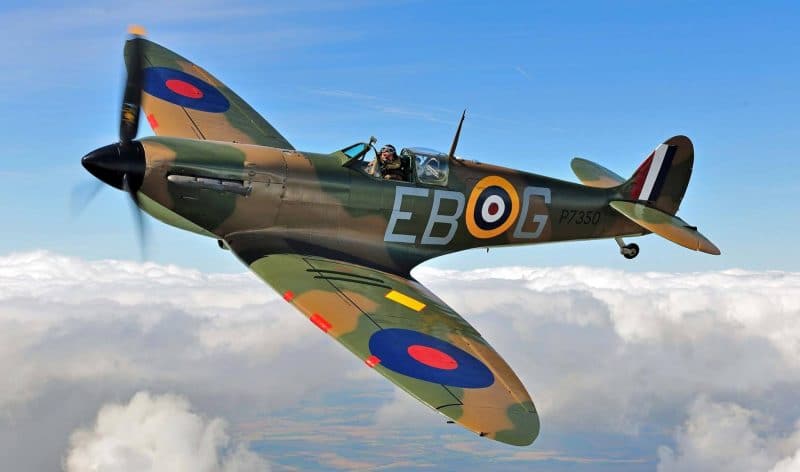
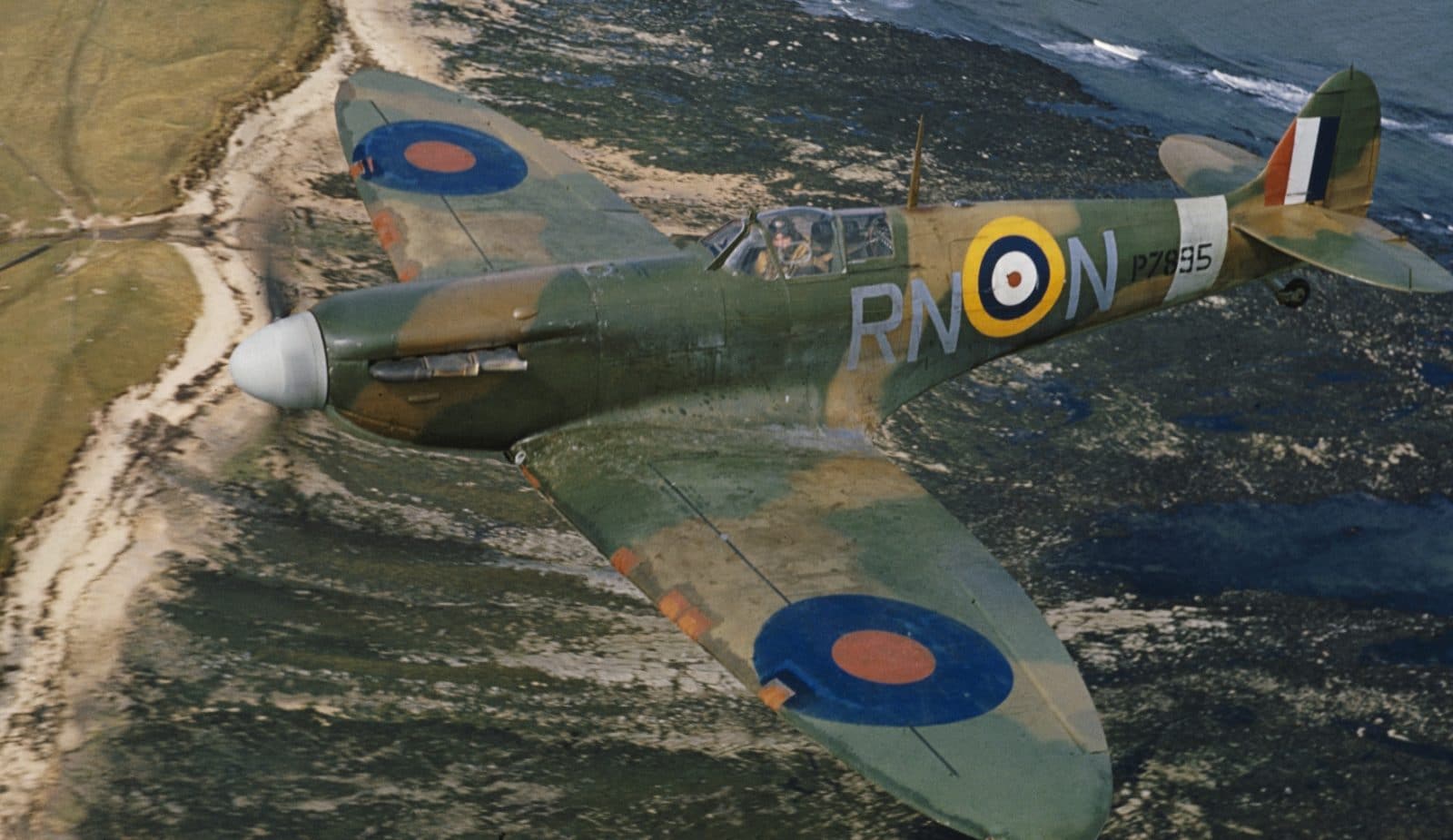
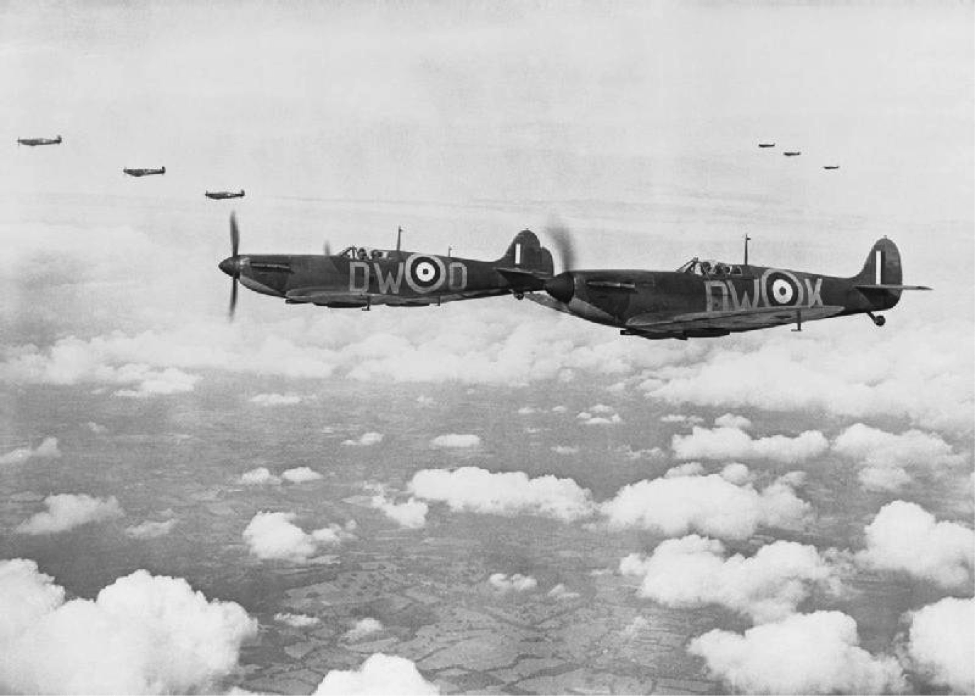
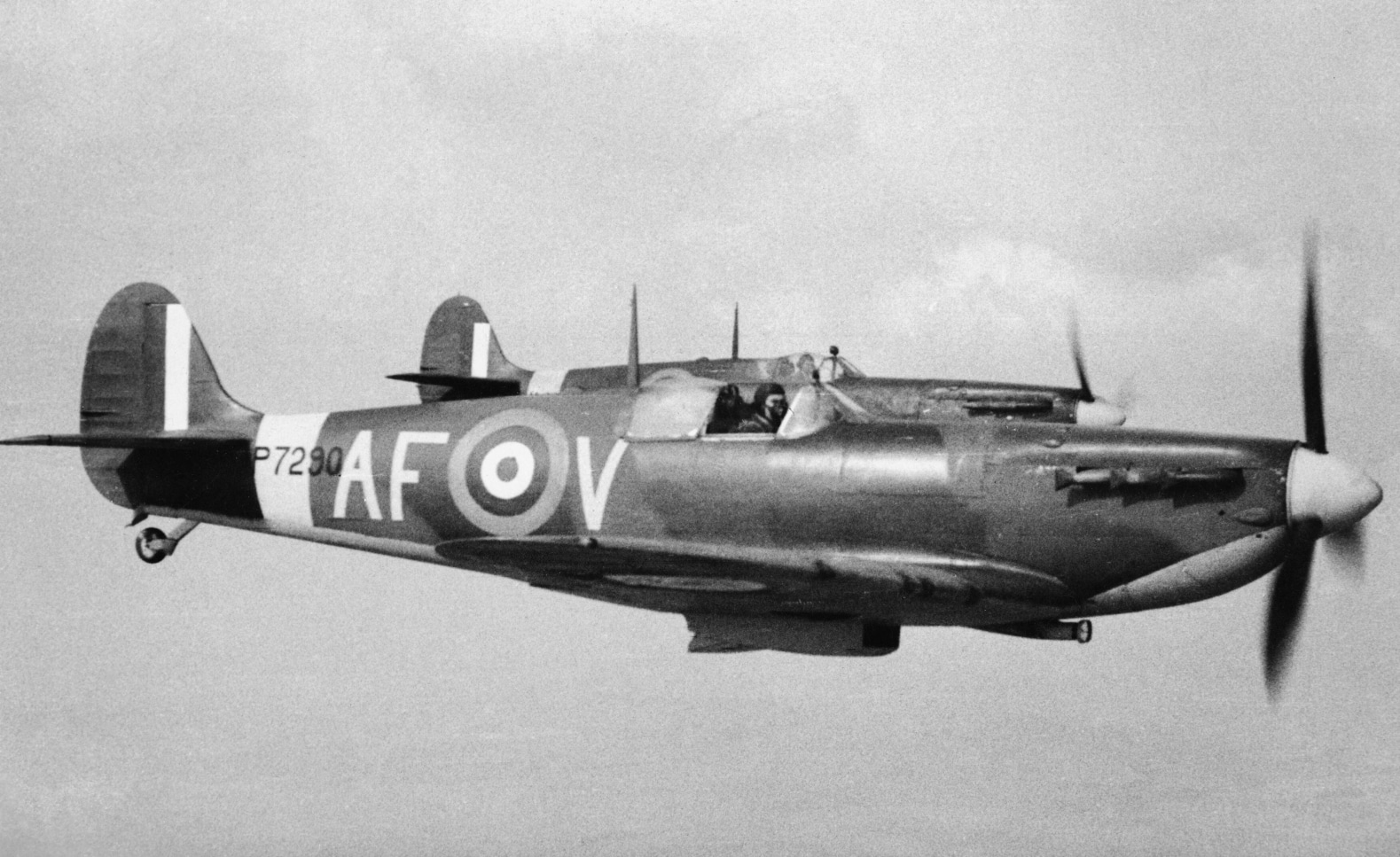
Nothing Says Battle of Britain like the Supermarine Spitfire
Highlights of our Supermarine Spitfire story:
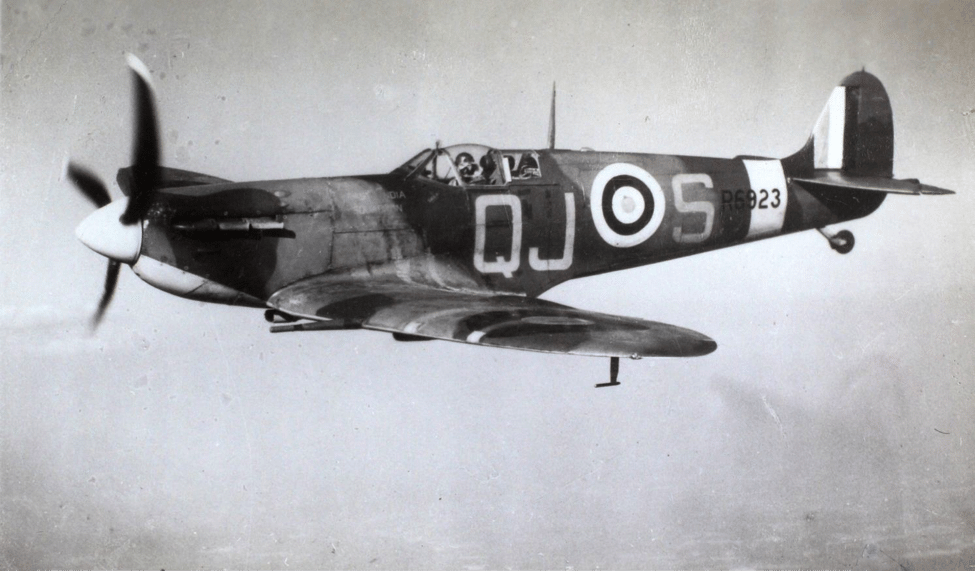
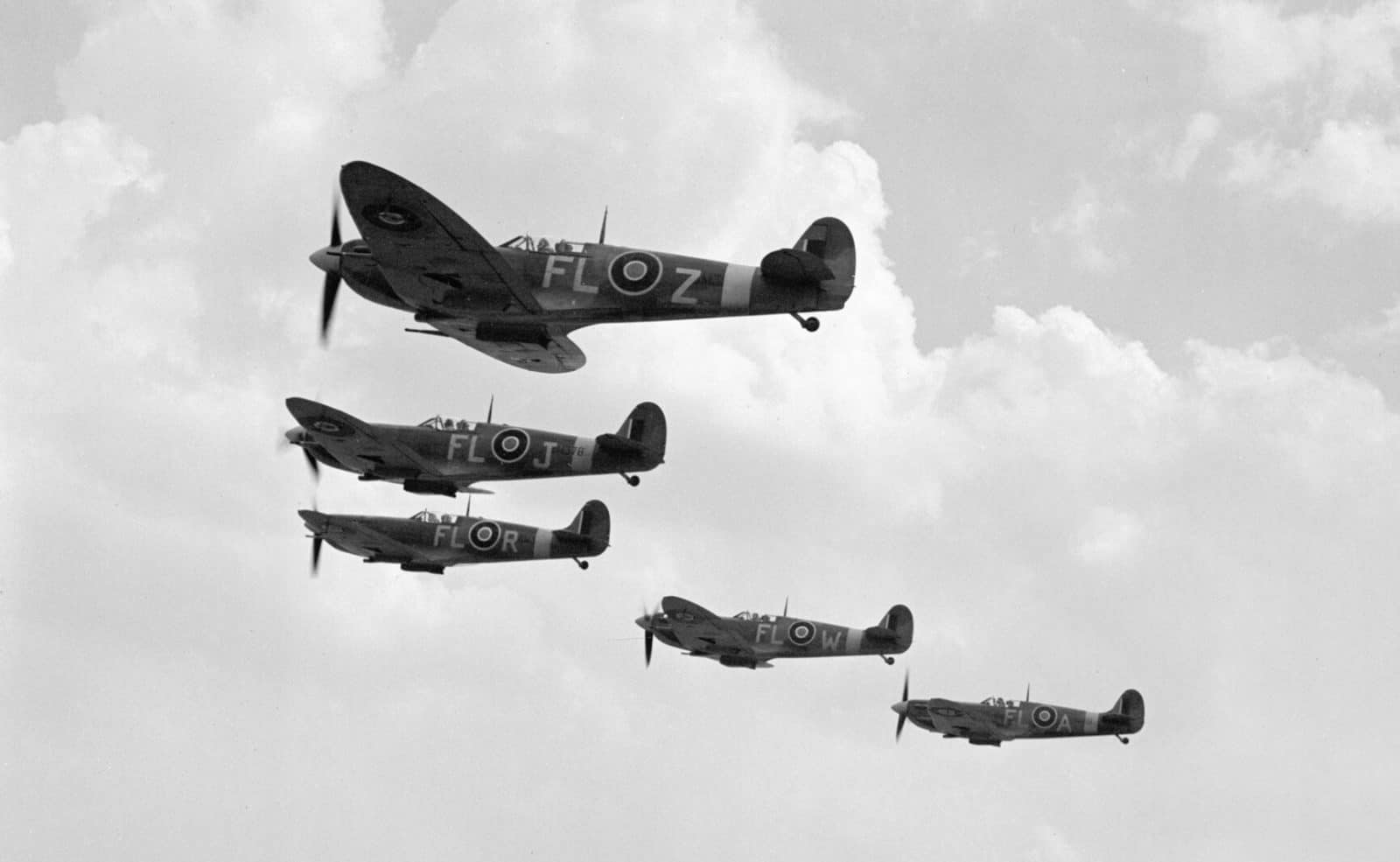
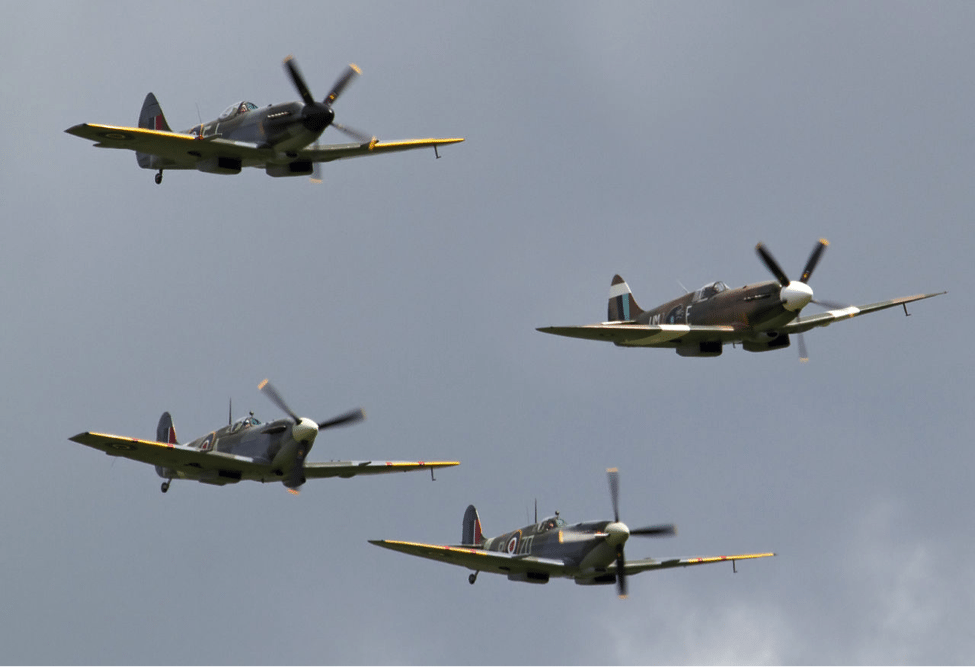
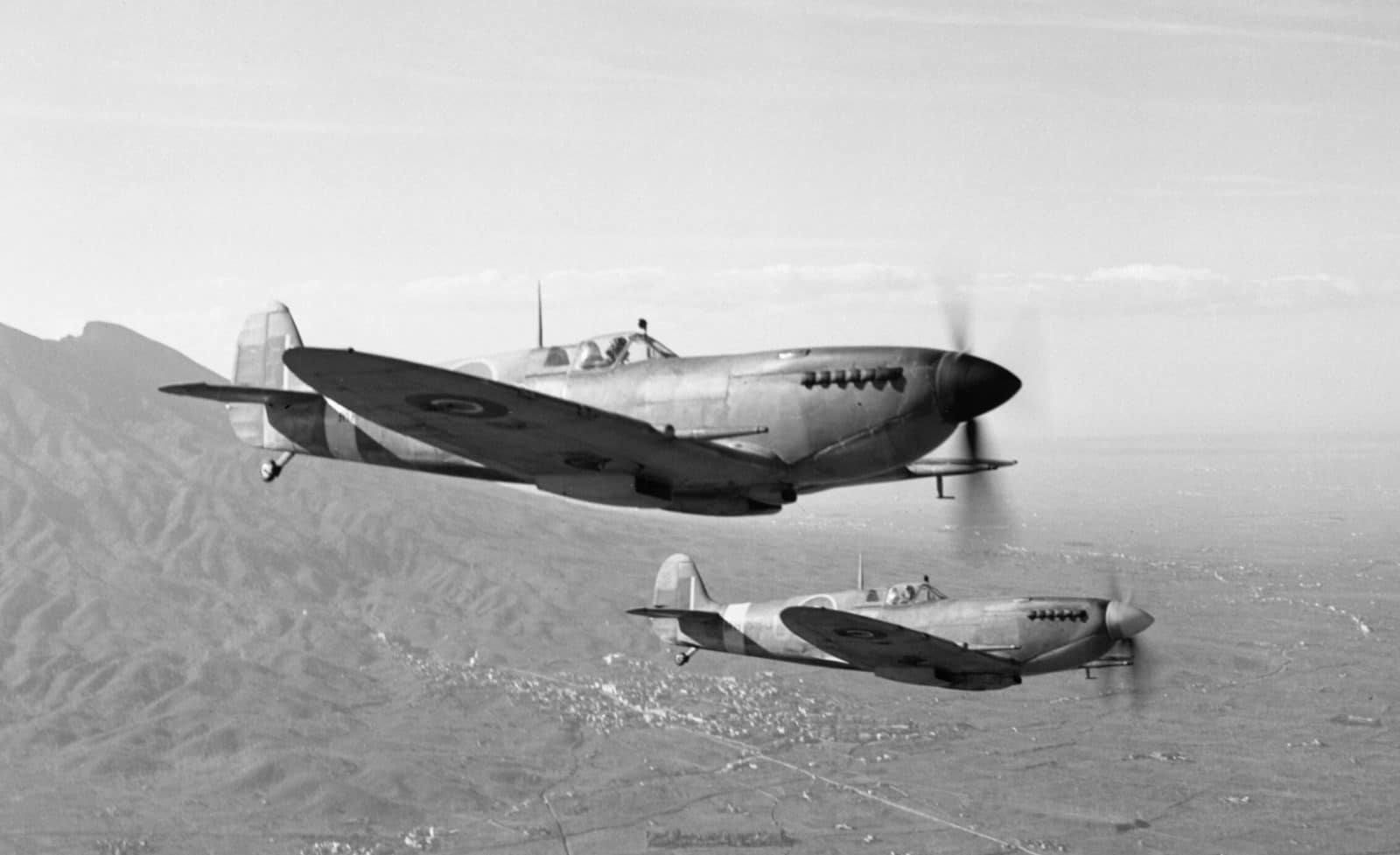
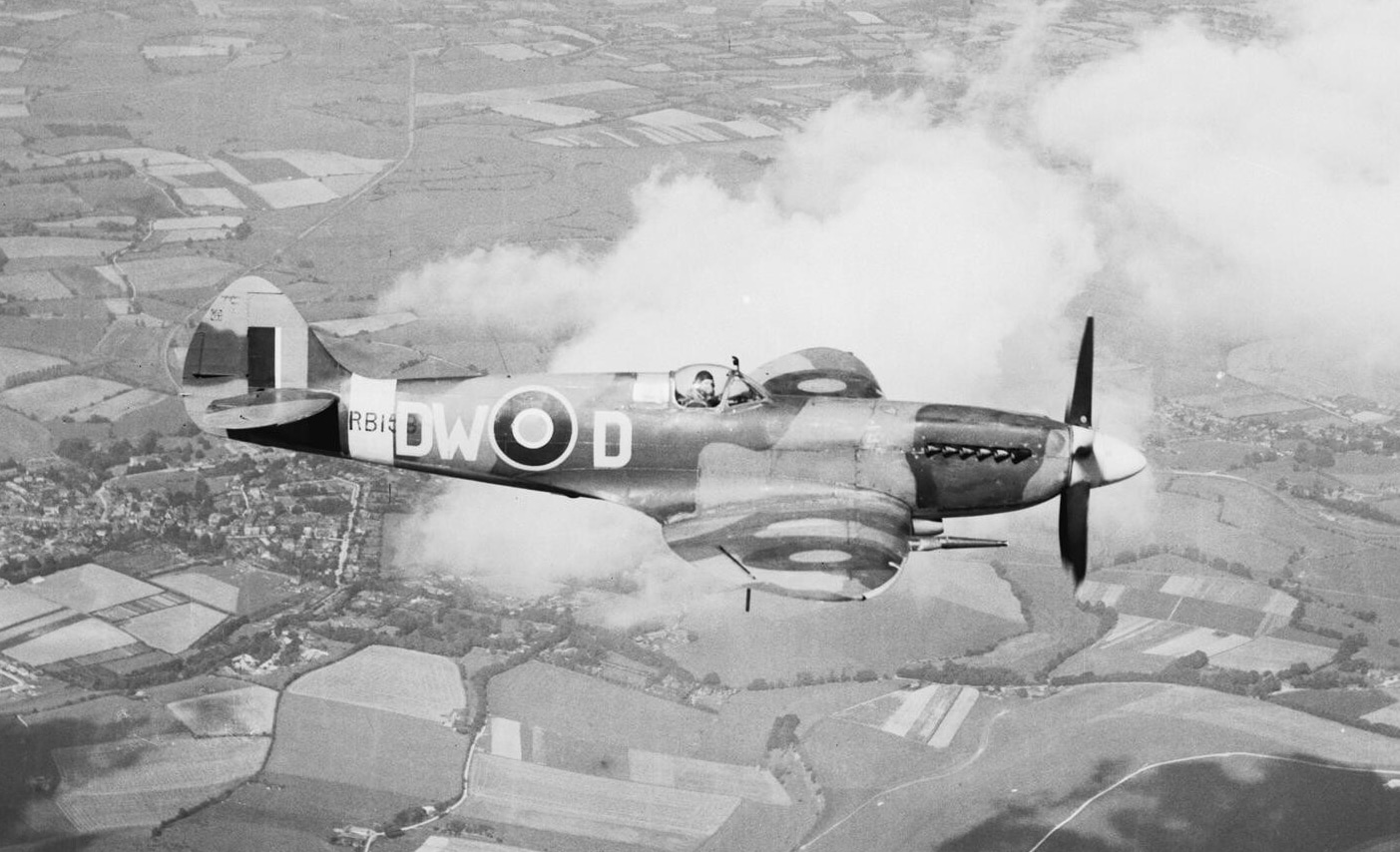
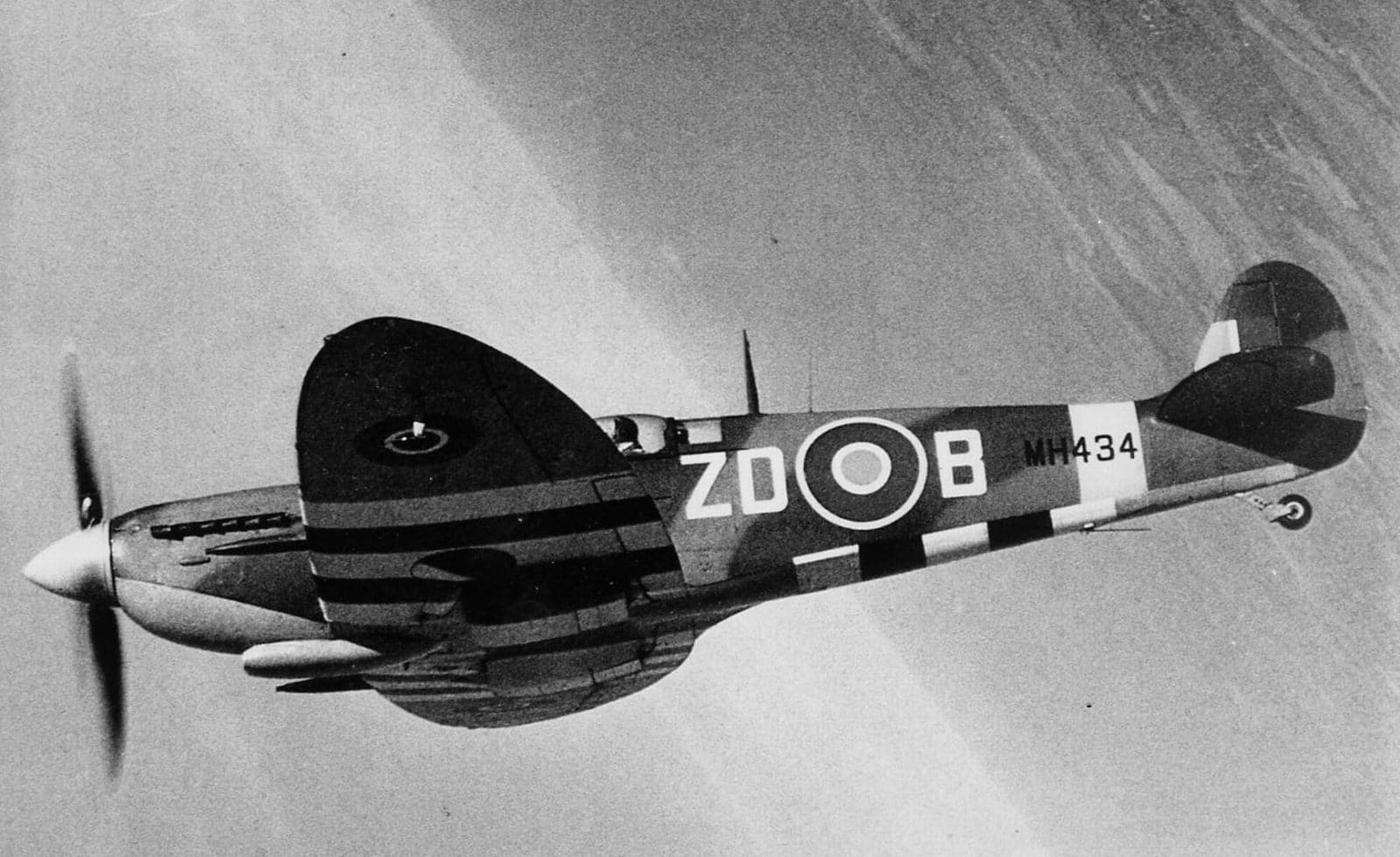
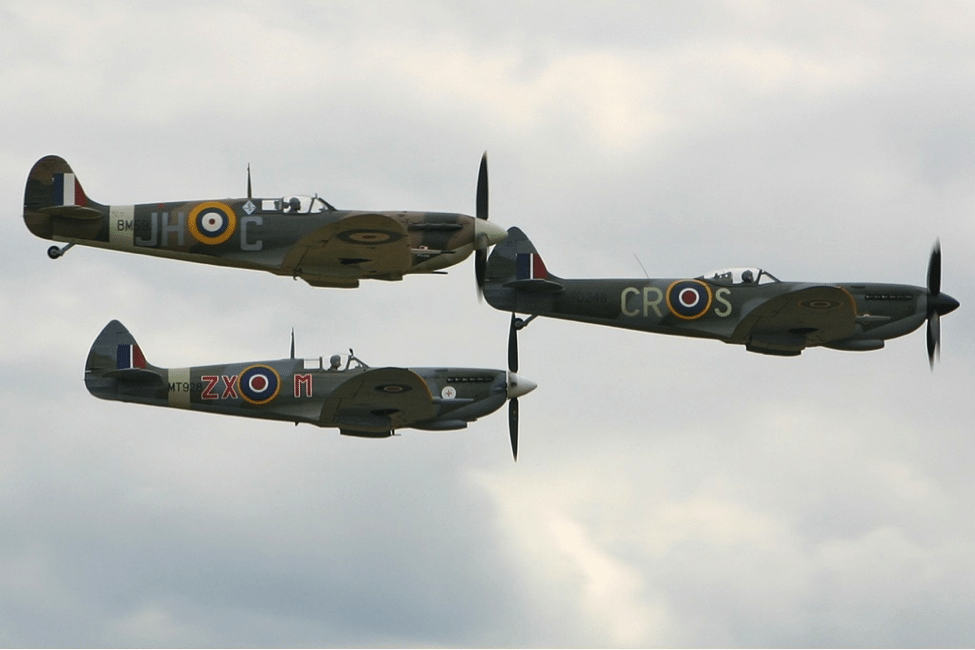
On 5 March 1936, at Eastleigh Aerodrome near Southampton, England, the prototype Supermarine Spitfire took to the skies for the first time. One of the most recognizable aircraft ever built and a favorite among warbird enthusiasts worldwide, the Supermarine Spitfire was one of the most important aircraft of World War II.
More than 20,000 Supermarine Spitfires produced were used by 33 countries, some of which continued to use them until the late 1950s. Because of its performance, versatility, and reliability, the Spitfire was the only British fighter aircraft to be produced continuously before, during, and after the Second World War.
Image via Royal Air Force
Those Wonderful Wings and Other Things
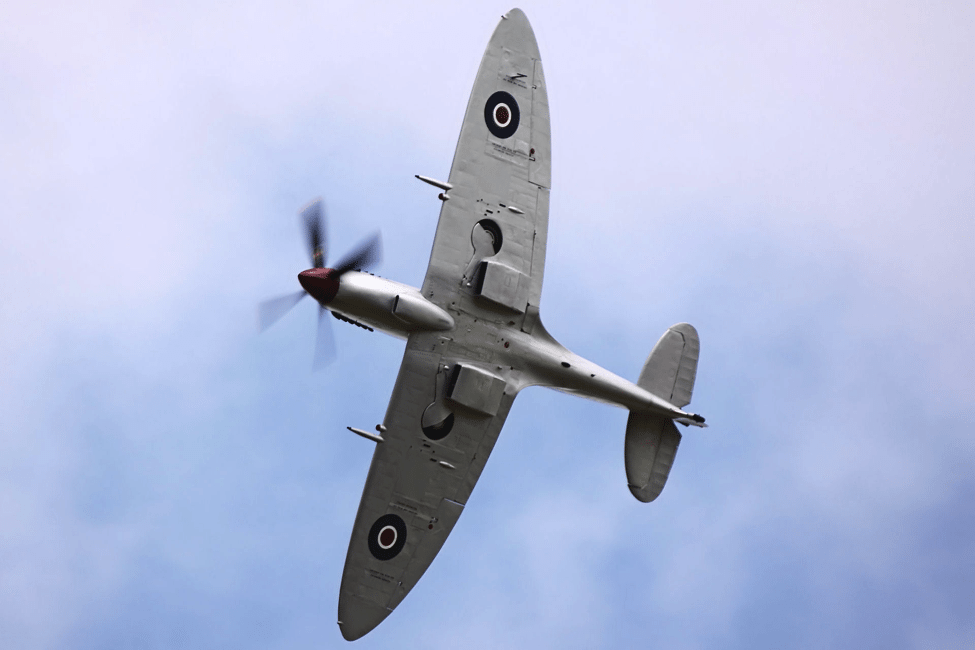
Supermarine designer R.J. Mitchell and his team applied their knowledge and experience with the Schneider Trophy-winning S5 and S6 seaplanes to create a design built around the Rolls-Royce Merlin engine and utilizing an elliptical wing shape.
The elliptical wing was a compromise between a thin, low-drag wing and the requirement to house weapons, fuel, and landing gear. It also became one of the most iconic wing platforms ever.
Good Things Come to Those Who Wait
The prototype, K5054, first flew only four months after the prototype Hawker Hurricane made its maiden flight. During subsequent test flights, it was discovered that a few changes were necessary, which were incorporated into the first production version—the Spitfire Mark 1.
Although the Royal Air Force (RAF) had ordered more than 300 Mark 1 Spitfires on 3 June 1936, it wasn’t until mid-1938 that the first of them (K9787) was delivered.
Overcoming a Slow Start
Production issues caused the delay, and similar issues with contractors, production facility availability, and labor would affect production thereafter. Although it took some time to resolve the production problems, the rate of production eventually rose to 320 Spitfires per month. By the time production ended at the primary factory in June 1945, they had built a total of 12,129 Spitfires (all Marks).
Distribution of Manufacturing
During the Battle of Britain (July 1940 to October 1940), the German Luftwaffe attempted to destroy the main Spitfire manufacturing plants. They eventually succeeded, but by that time, the tooling and jigs had been dispersed, and building Spitfires became sort of a cottage industry.
Components were manufactured in small shops and factories and then trucked to airfields for final assembly and flight testing before the RAF took delivery.
Convertible Wings
The Supermarine Spitfire’s calling card, those memorable elliptical wings, had detachable wing tips. It was not a complete wing redesign or factory modification to create the high-altitude fighter or clipped-wing versions of the Spitfire.
It was detaching the standard wingtips and replacing them with longer-span tips that gave the wings a more pointed appearance and added lift, improving high-altitude handling. Need a clipped-wing Spitfire? Then just remove the standard wingtips and bolt on a fairing.
Elliptical Shapes
The wings of the Spitfire were not the only elliptic airfoils employed on the aircraft. The horizontal and vertical stabilizers were also elliptical in shape. The size of both stabilizers increased as horsepower bolted to the firewall increased, but the distinctive elliptical shape remained throughout.
Supermarine Spitfire Into Service
The operational history of the Spitfire with the RAF started on 4 August 1938 when the first Mark I aircraft (K9789) entered service with 19 Squadron at RAF Duxford. Made famous during the Battle of Britain, the Spitfire never outnumbered the Hawker Hurricane during that most critical time in the war for the Brits. Hurricanes were primarily tasked with attacking the Luftwaffe bombers.
Spitfires achieved a higher kill ratio than the Hurricanes. Thanks to the Spitfire’s superior performance, they went up against the German fighters more often than the bombers.
A Murder of Aces
The roll call of RAF and Commonwealth aces who flew Supermarine Spitfires is full of well-known pilots. James E. “Johnnie” Johnson flew nothing but Spitfires throughout the war and achieved 34 aerial victories, making him the top Spitfire ace.
Robert “Bob” Stanford Tuck shot down a total of 27 aircraft, flying both Spitfires and Hurricanes, as did Douglas Bader, who scored 20 victories. Brendan “Paddy” Finucane scored all of his 28 kills in the Spitfire before he was lost in July of 1942.
Empire Aces
Commonwealth ace pilots who flew the Spitfire included George Beurling from Canada, who scored 31 and 1/3 victories. New Zealanders Colin Falkland Gray scored 27 kills, and Alan Deere was victorious 17 times. Australian Hugo “Sinker” Armstrong tallied 12 kills before he was shot down on 5 February 1943.
Much More Than a Single Battle
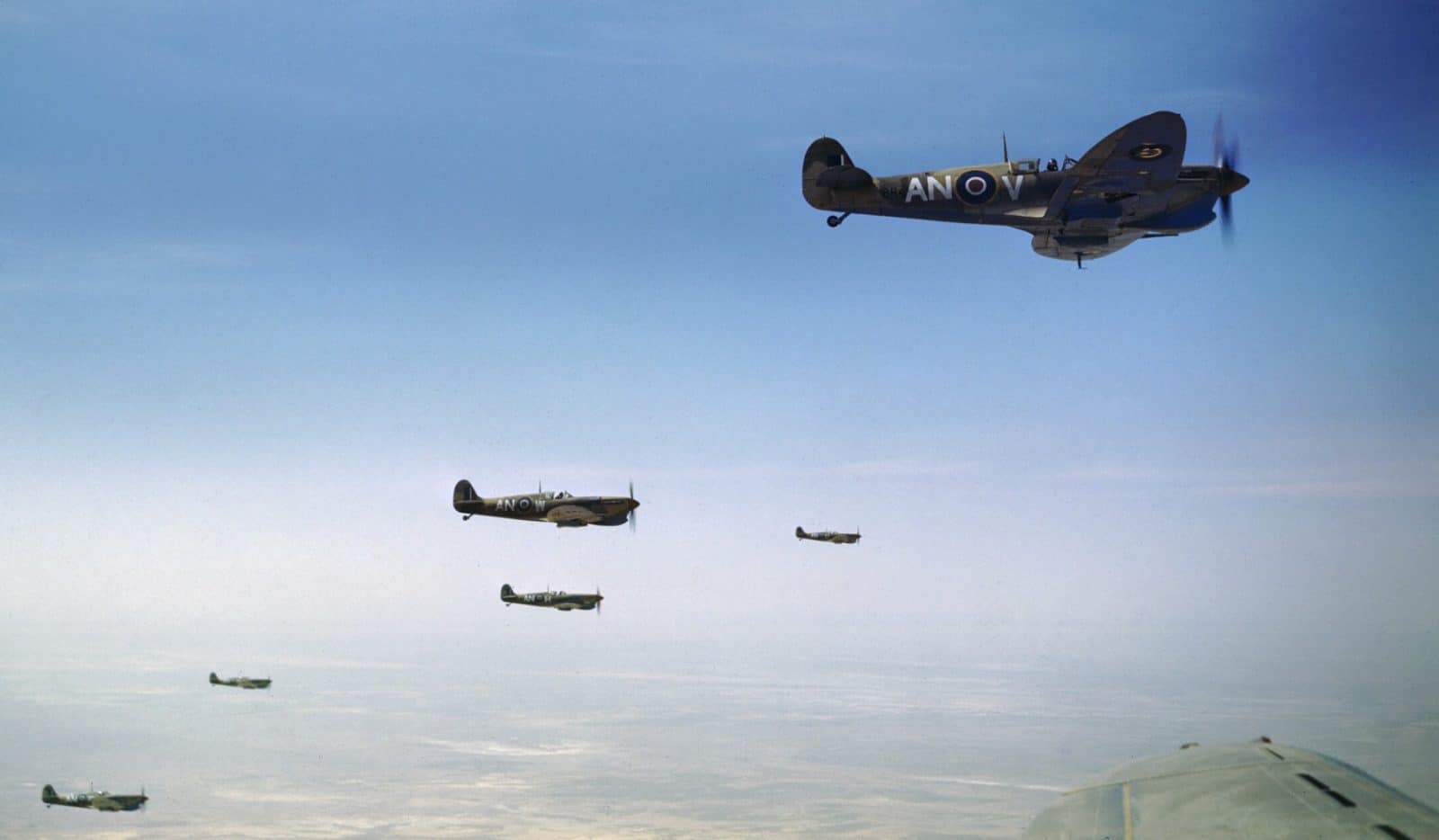
Seeing combat in the Battle of Britain was only part of the Spitfire’s legacy. In the Mediterranean and in the North African deserts, Spitfires tangled with German and Italian foes. Credited with capturing the first photographs of the German Freya and Wurzburg guidance radar installations, and the German V weapons testing site at Peenemunde in Germany, PR Spitfires flew countless photographic reconnaissance missions deep into occupied Europe and Germany.
Red Star Spits
The Spitfire served on the Eastern Front and in the Far East as well. On the Eastern Front, the Soviet Air Force took delivery of nearly 1,000 Spitfires (all Marks). Used primarily by the Soviets in the interceptor role, their Spitfires performed in some of the most challenging weather conditions encountered anywhere during the war.
At War in the Pacific
The Supermarine Spitfire found itself at a disadvantage going up against the Japanese Mitsubishi A6M Zero in the Far East. Like so many other pilots tasked with tangling with the nimble little Japanese fighters, Royal Australian Air Force (RAAF), Royal New Zealand Air Force (RNZAF), and RAF Spitfire pilots took their lumps but quickly adopted the familiar “slash and run” tactic used by American fighters. In essence, the tactic involved diving attacks that leveraged superior speed and diving capability.
Make one run on the enemy from above and exit quickly, then repeat as necessary. The Zero was a fine fighter, but it could not dive with the Spitfire, or with the American Grumman F4F Wildcat, F6F Hellcat, or Vought F4U Corsair either.
More Supermarine Spitfire on the NEXT PAGE (below)
Later this year, Polaris Dawn will launch on a private spaceflight with SpaceX from NASA’s Kennedy Space Center in Florida. We caught up with commander Jared ROOK Isaacman, and went flying in the Polaris MiG-29 for a look at their astronaut jet training.
The mission will lift-off from historic pad 39A atop a Falcon 9 rocket, on the Crew Dragon spacecraft “Resilience”. It will be quite a mission, and help further humanity’s reach for the stars while raising money for their charitable cause, St Jude Children’s Hospital.
Spacex dragon launch off pad 39a (mike killian photo)
Real spaceflight and a great cause to eradicate childhood cancer
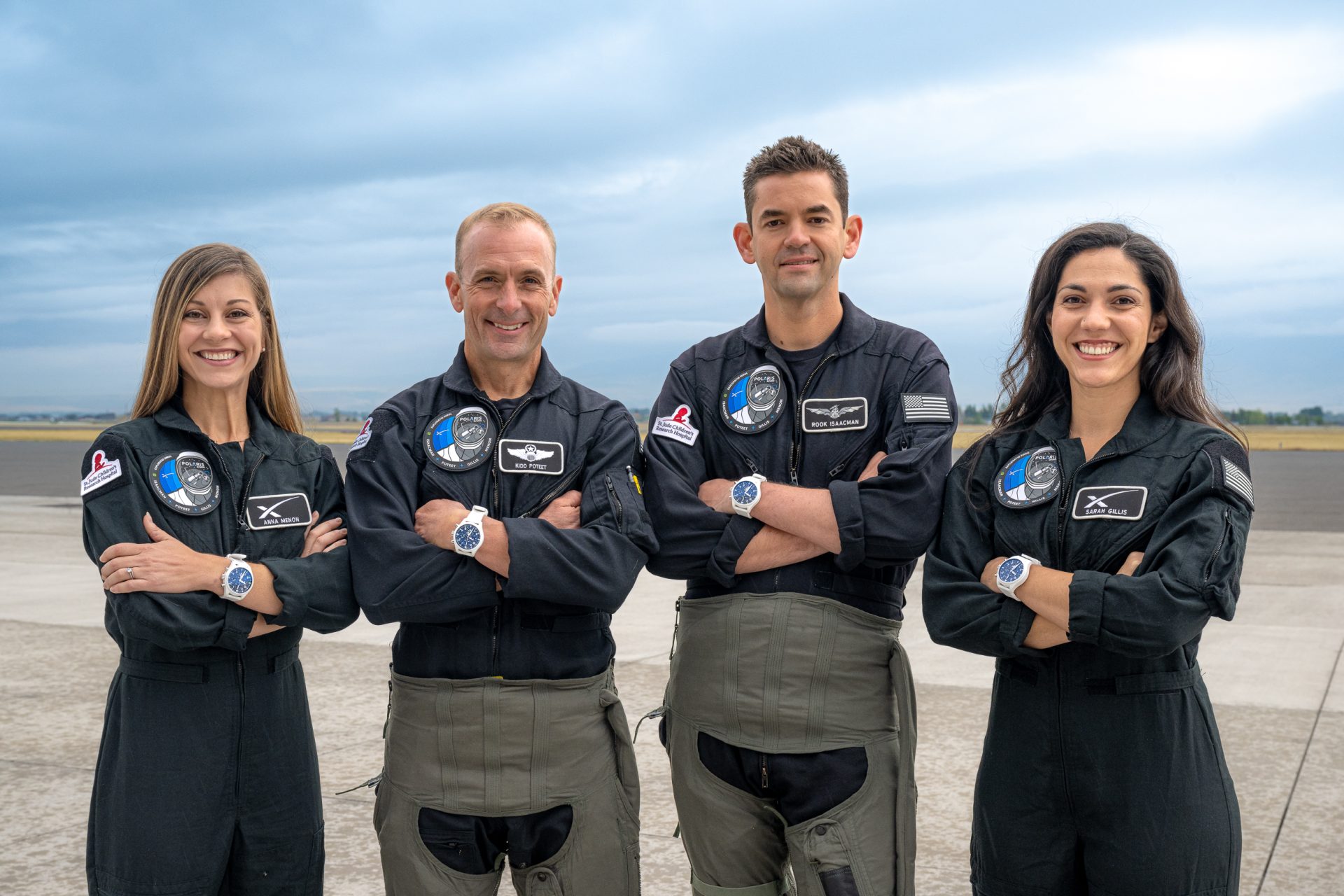
Polaris Dawn will take four commercial astronauts further into space than any humans since the Apollo moon landings. They will conduct 38 experiments from 23 institutions from around the world. It’s serious business, with serious objectives and specialized research. The crew will also conduct the first ever private spacewalk, some 700 kilometers above Earth.
“A big part of our mission is about testing and developing new technologies to open up space for everyone, but you can’t ignore some of the real problems we have here on Earth,” says Isaacman. “That’s why St Jude is a huge part of our mission.”
Isaacman himself has already been to space once before. He commanded the first all-civilian crew in 2021 on Inspiration4. They raised $250 million for St Jude, and inspired Isaacman to start Polaris, which will launch three missions in the coming years.
Highest Earth-orbit of any crew in history
“We’re embarking on a series of tech demonstration missions,” says Isaacman. “Building blocks, that will ultimately culminate in the first crewed launch of the SpaceX Starship.”
polaris dawn crew (spacex photo)
“For Polaris Dawn we’re going to fly the highest crewed Earth-orbit in history (over 1,400 km), surpassing the Gemini record. We will fly Dragon deeper into space than it has ever been. There’s a lot we can learn in the Van Allen radiation belts, and hopefully develop counter-measures against the radiation for future long-duration spaceflights.”
Polaris Dawn will also test and use SpaceX’s Starlink internet constellation in space, to demonstrate laser-based communications. Testing that will inform future evolutionary upgrades for the technology. Laser communications will be critical for future long-term crewed missions on the Moon and Mars.
A highly experienced hand-picked private crew
Jared isaacman, commander of the upcoming polaris dawn mission (photo by john kraus / polaris)
The crew are all well versed and experienced in aerospace operations. Isaacman has over 7,000 hours of flight experience, along with one spaceflight. He has ratings in multiple experimental and ex-military aircraft.
Isaacman co-founded the world’s largest private air force with Draken International, which helps train USAF and other pilots by role-playing the bad guys, He also holds several world records including two speed-around-the-world flights.
Kidd after a training flight for polaris dawn (mike killian photo / avgeekery.com)
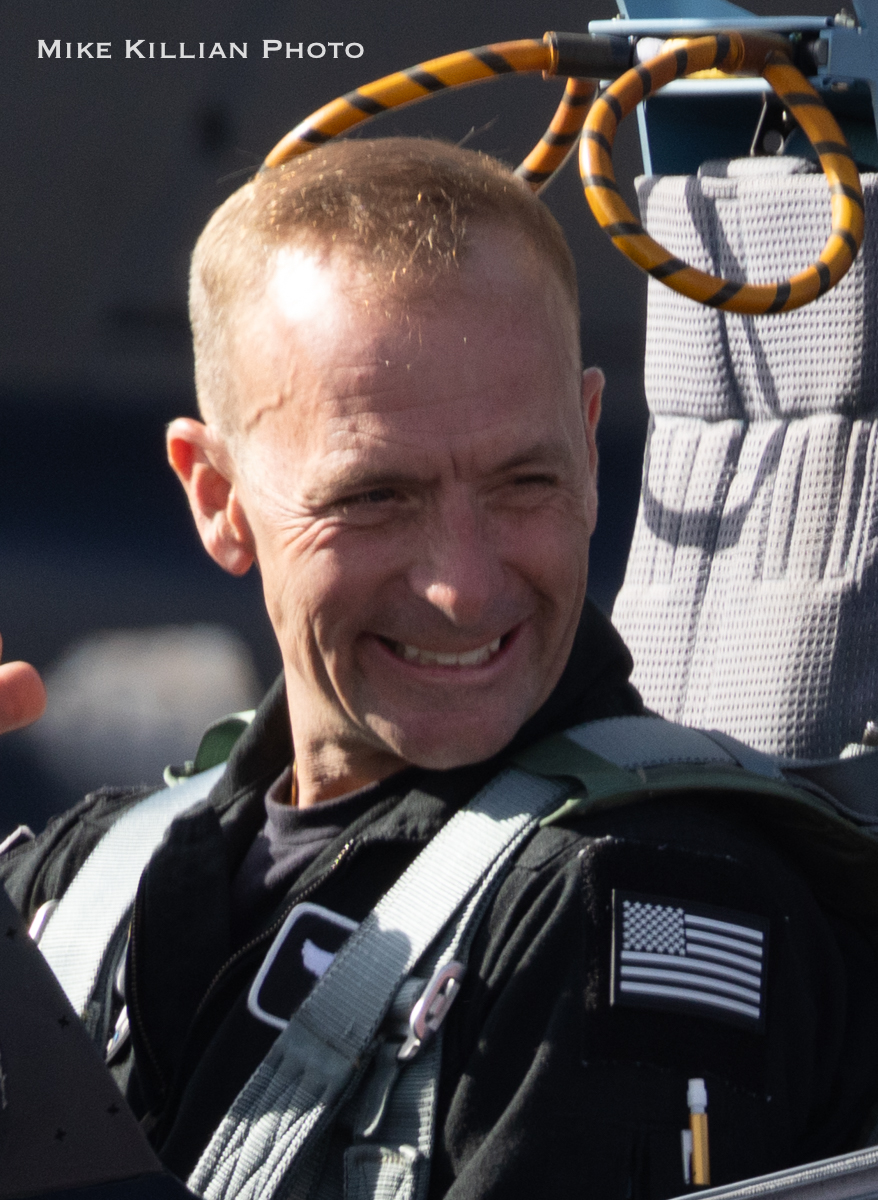
Retired USAF Lieutenant Colonel and fighter pilot Scott “KIDD” Poteet will be mission pilot. He’s a former Thunderbird and commander of the 64th Aggressor Squadron. Kidd brings over 3,200 flying hours in the F-16, A-4, T-38 and other aircraft, including 400 combat hours.
He served as Mission Director for Inspiration4. Both he and Rook will be joined by Mission Specialist/Medical Officer Anna Menon and Mission Specialist Sarah Gillis, who are both lead operations engineers at SpaceX.
polaris dawn crew (spacex photo)
Gillis is an experienced mission control operator, and was a lead astronaut trainer for Inspiration4. She was the first voice the crew heard when they strapped into the SpaceX Dragon, and the voice they heard as they launched off Earth. With SpaceX, she is responsible for the development of mission-specific curriculum and training execution for NASA and commercial astronauts who fly aboard the Dragon.
Polaris dawn mission specialist sarah gillis (john kraus photo / polaris)
Menon is a lead mission director and space operations engineer at SpaceX. She runs Mission Control, and was assigned to the families of Inspiration4 to be the one to translate the good and, if necessary, the bad news to them. Prior to SpaceX, she worked for seven years at NASA as a biomedical flight controller for the International Space Station, where she supported space station crews from mission control and helped integrate international partner engineers and medical care.
Polaris dawn MISSION SPECIALIST & MEDICAL OFFICER, anna menon (john kraus photo / polaris)
All four crew members worked closely together on Inspiration4. They built a unique bond and trust that will serve them well on Polaris Dawn.
Jet flying is still the most important training astronauts do
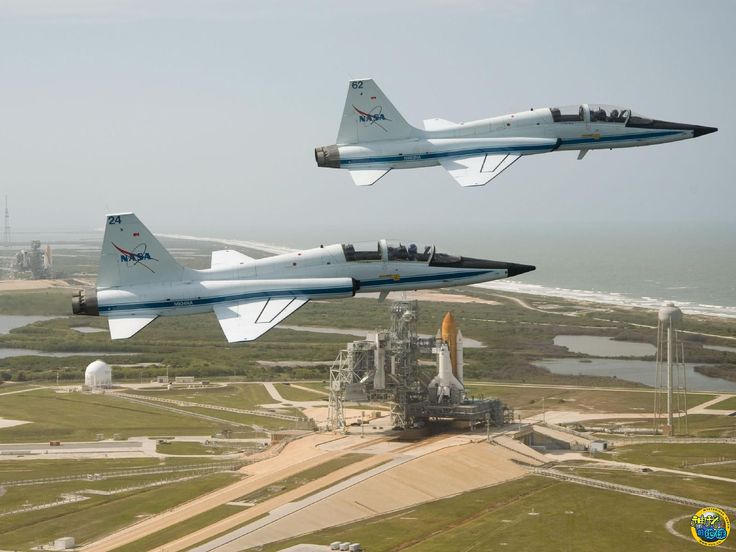
Fighter jet training has been at the heart of human spaceflight since the dawn of the space age. It still is too. NASA knew they would employ civilian astronauts from many backgrounds after Apollo, but without any extreme flying experience. Crews have been required to fly at least 4 hours per month in the agency’s T-38 Talons ever since, while commanders and pilots are required to fly 15 hours.
Nasa astronauts fly over a space shuttle (nasa photo)
Even with modern spacecraft’s ability to fly mostly autonomously, NASA still sees the need for jet training. It familiarizes crew with checklists, communication and situational awareness in a real, dynamic extreme flying environment.
“Jet flying is the most important training that we do,” says former NASA astronaut Terry Virts. “It’s the one place where we’re not in a simulator. It’s real flying and if you make a mistake, you can get hurt or break something or run out of gas. There’s a lot of things that happen in a jet that you can’t do in the simulator.”
“It’s a dynamic, G-intense environment where you can work on crew resource management, precision flying, working with avionics systems that have a lot of carry-over to what we see in Dragon,” adds Isaacman. “Most important, is it’s high consequence.”
“There’s no reset button like in a simulator.”
“There’s no reset button like in a simulator. You can’t just step out and say ‘ok we got that one wrong, let’s do it again’. You can walk out of the simulator, but in a jet, there is no escape. Neither is there in space. Flying is a totally different environment, and I think that’s important and keeps focus. On Inspiration4 we kept flying up until just a couple days before launch, and will continue to do that with Polaris.”
Commander isaacman flying the mig-29 (mike killian photo / avgeekery.com)
“We do a lot in the classroom and simulators, and go in centrifuges and do underwater training for EVA (spacewalks). However, you still need dynamic G-intense flying where you can work on complex operations in a high consequence environment,” adds Isaacman. “We fly the same spacecraft that NASA does, so we want the same training to prepare ourselves.”
The Polaris “Ghost Squadron”
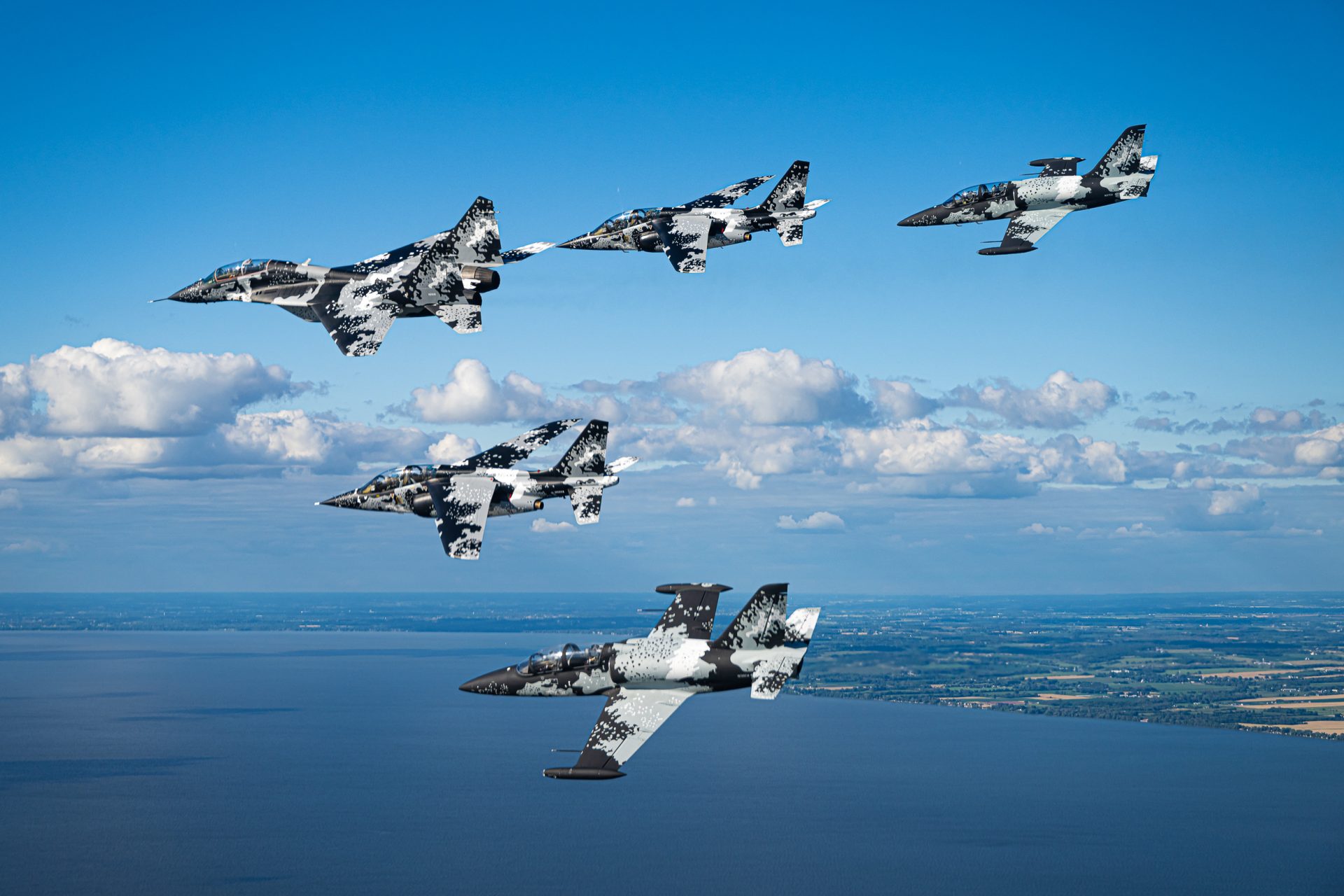
Polaris operates a fleet of privately-owned jets. They call it the Ghost Squadron, with the aircraft all painted in a ghost camouflage scheme. Polaris operates several L-39s, Alpha jets and a Russian MiG-29 Fulcrum, as well as a Bombardier business jet.
The slick ghost camo was the next generation paint from the Arctic camo of the former Black Diamond Jet Team. Issacman and others in Polaris were part of that team. Now, with a new era of flying to include the MiG-29, the paint scheme was elevated to the new ghost camo, and represents the snow-capped mountains of Montana where Polaris operates the jets out of.
The only civilian-owned currently flying MiG-29 in the world
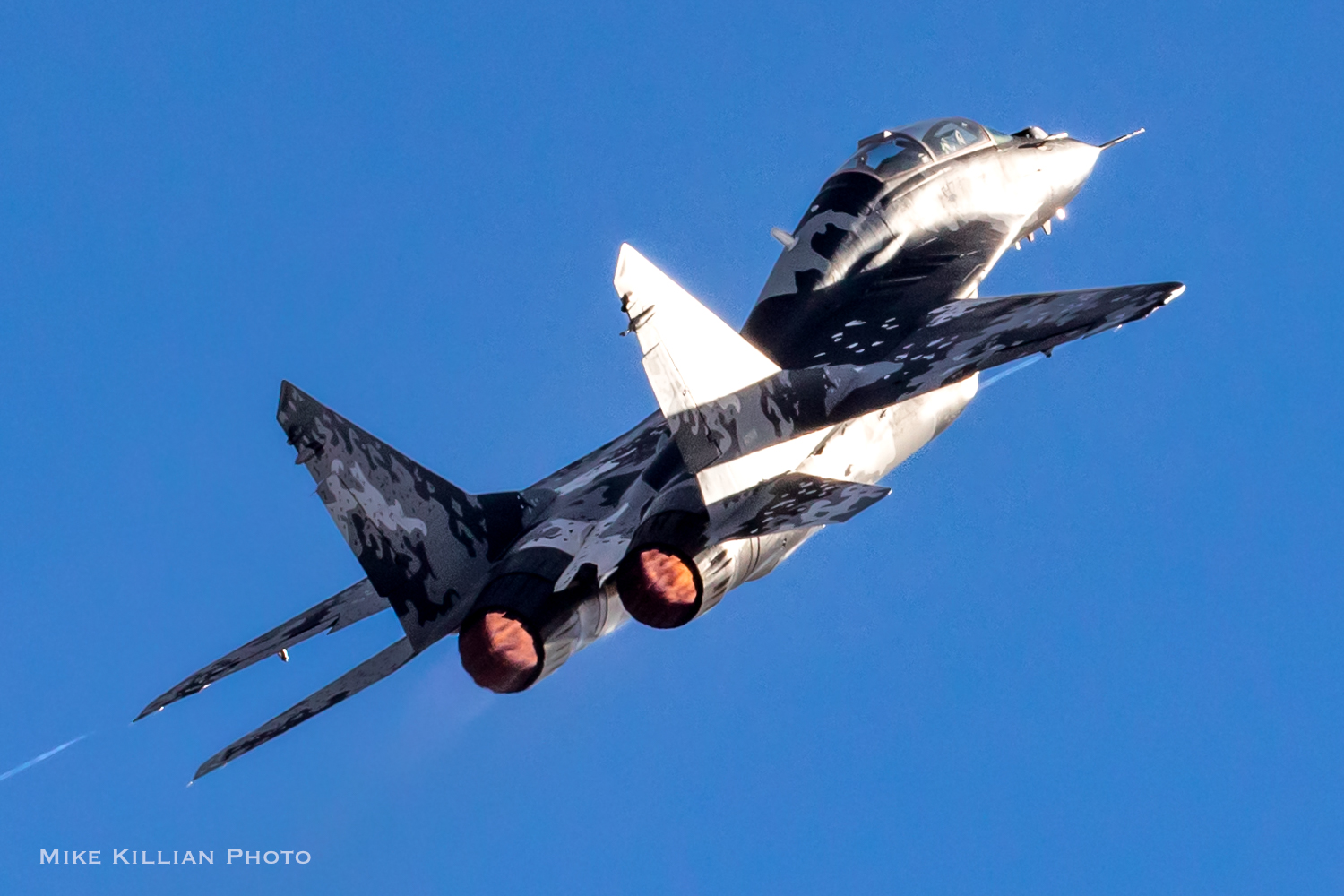
Polaris’ MiG-29 (N29UB) is currently one of the only airworthy civilian-owned MiG-29s in the world that is actually flying. Russia began producing MiG-29s in 1981, as an answer to America’s F-15 and F-16.
Mike killian photo / avgeekery.com
Isaacman purchased it from the estate of Paul Allen, after selling Draken in 2019. “I just knew it was the best MiG-29 in the world, and it has been serving us incredibly well for all of our commercial astronaut training,” he says.
It’s powered by a pair of Klimov RD-33 afterburning turbofan engines and was built in 1989, formerly operated by the Ukrainian Air Force. At the time Isaacman purchased it, it only had 570 flight hours on the airframe. It’s the fastest civilian owned warbird in the world.
mike killian photo / avgeekery.com
The MiG and other jets of the Polaris Ghost Squadron also support training for other aerospace organizations too. They fly at various air shows across the United States as well (click here for schedule), to help inspire the public and spread the word about St Jude. Polaris even flies St Jude donors, as a way to show their appreciation.
AvGeekery takes flight in the Polaris MiG-29
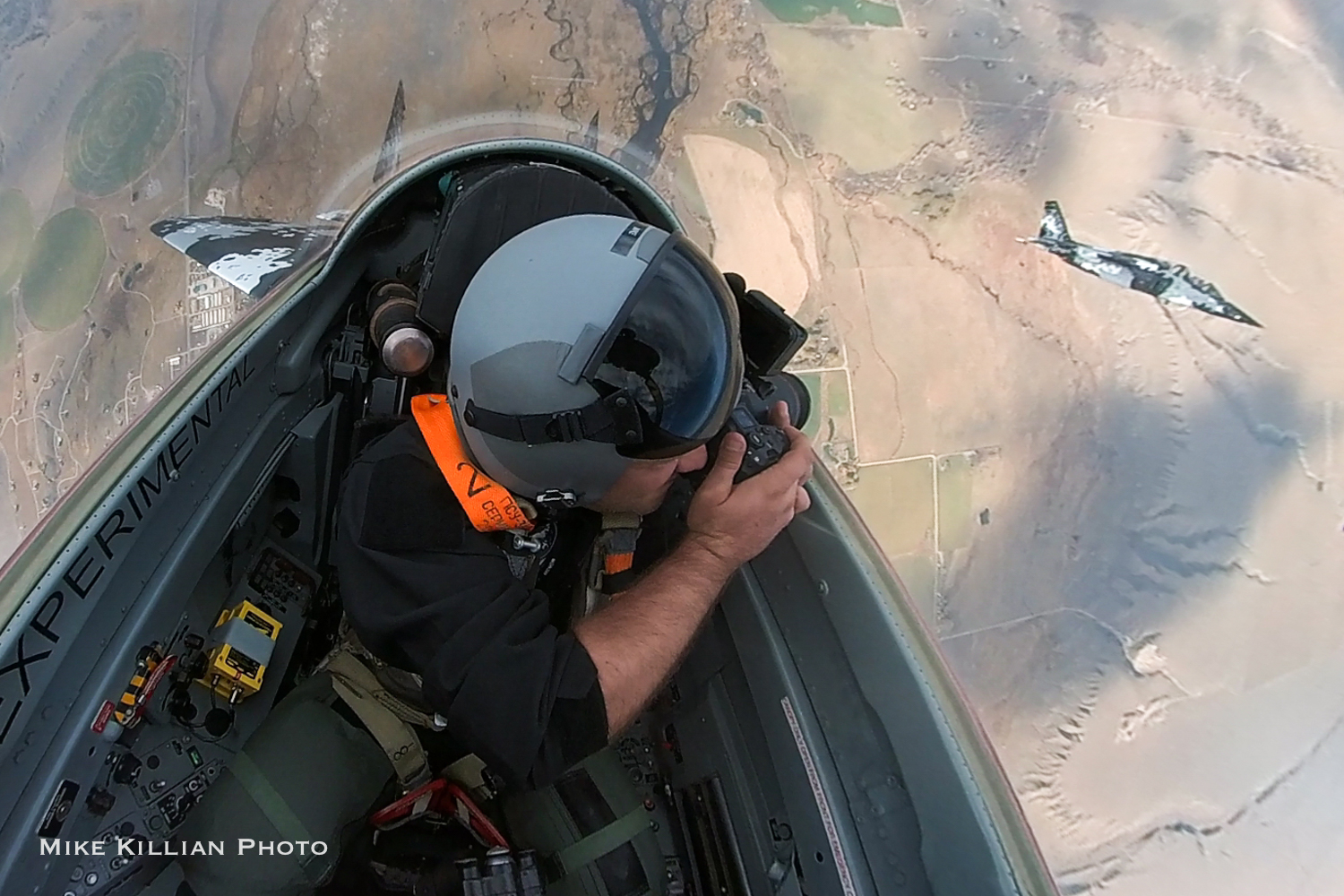
Isaacman took us flying in the MiG-29 for a taste of their commercial astronaut training, and to produce aerial images of Kidd flying one of the Alpha jets. The MiG-29 is capable of Mach 2, which is quite fast of course, but not nearly as fast as a rocket launching to Mach 22.
Mike killian photo / avgeekery.com
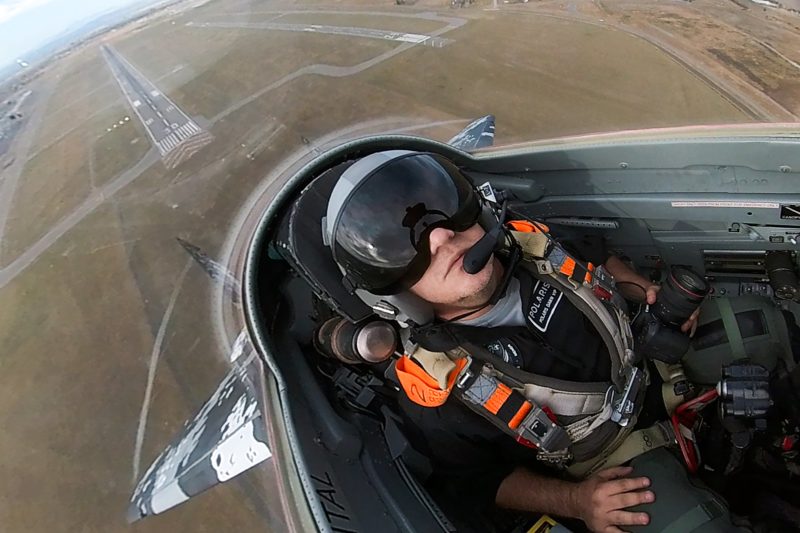
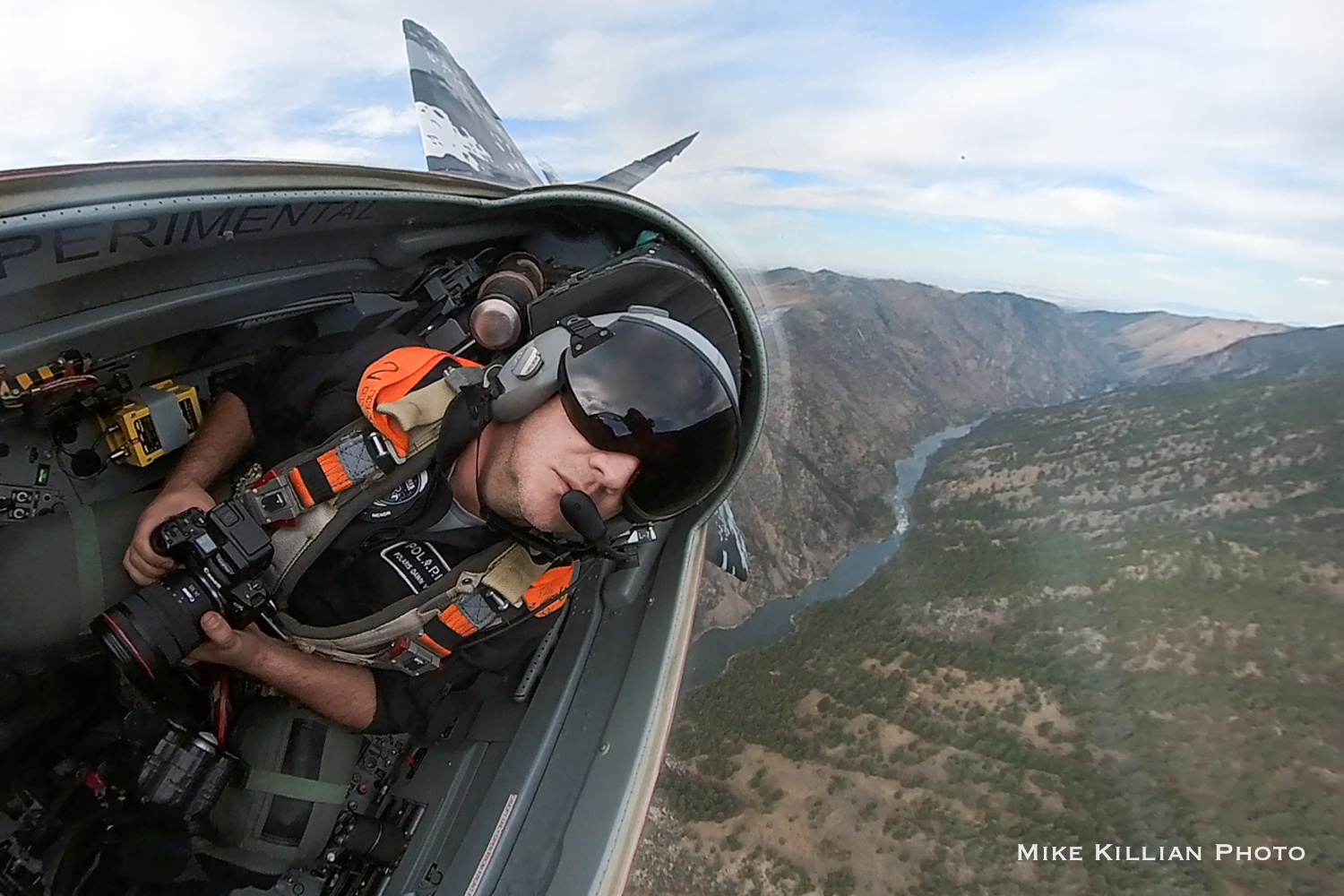
Nevertheless, the MiG-29 was a real kick in the pants. After a thorough briefing we suited up and got in the jets. The crew chief ensured I was strapped in correctly and gave me a thorough safety brief. Rook then gave me another safety brief, leaving nothing to chance, before getting in the cockpit to startup. We taxied out with a crowd waving, and headed for the runway.
Two Alpha jets joined on our right wing. That’s when Rook powered up and released the brakes, and off we went.
Flying in the Polaris MiG-29 for a Look at Their Astronaut Jet Training 68
Takeoff in one of the few civilian MiG-29s
Raging down the runway pressed in my seat we thundered skyward with twin afterburners blazing. We launched quickly into a hard right away from the airfield with a trail of black smoke in our wake, as the sound of our engines echoed across the region.
Backseat of the mig-29 (mike killian photo / avgeekery.com)
Flying in the Fulcrum felt as smooth as a Cadillac. We even dipped into a canyon and did some formation rolls with stunning views around Bozeman, Montana.
It’s not every day you get to fly with the commander of multiple space missions. It was a huge honor, and to do so producing aerial images of a veteran USAF pilot like Kidd was icing on the cake.
Flying in the Polaris MiG-29 for a Look at Their Astronaut Jet Training 69Kidd Flying one of the polaris alpha jets (mike killian photo / avgeekery.com)
Other training
The crew is deep into training for their upcoming flight. They’ve conducted jump dive training, scuba training to simulate working in weightlessness, and centrifuge and hypoxia training. They have summited 19,000-foot-high volcanos as team-building exercises, done skydive training, and have taken zero-G flights in a 727.
polaris dawn skydive training (john kraus photo / polaris)polaris dawn scuba training for working in weightlessness (polaris photo)Hiking a volcano (polaris photo)
Of course, they spend a lot of time in simulators and working closely with SpaceX too. They participate through every iteration of developing the new EVA (extravehicular activity) spacesuits for their historic spacewalk. It’s no small undertaking either.
Polaris Dawn will be the first crew to use a new SpaceX spacesuit for spacewalking
Both Polaris and SpaceX are very tight-lipped about the new suits. They will likely be similar to the EVA suits used by NASA on the International Space Station.
Eva training on a dragon mock-up at spacex hq (spacex photo)
Isaacman and his crew will be the first people to ever use the new suits in space, paving the way to a suit that can be mass produced at a reasonable cost. Building future bases on the Moon and Mars will require thousands of spacesuits. The development of this suit and the execution of the Polaris Dawn EVA will be a major step toward a scalable design for spacesuits on future long- duration missions.
As a developmental program a lot of the technology had not even been built yet when Polaris Dawn was originally announced two years ago. Not only does the new EVA spacesuit need to be developed, but the Dragon itself requires many modifications in order to fly to the high altitude that Polaris Dawn is aiming for, and support the planned spacewalk.
A crew dragon docked at the iss (nasa photo)
Modifying Dragon for the new spacesuits and first ever private spacewalk (and first spacewalk with a Dragon)
The entire Dragon will need to be depressurized for the spacewalk, in a similar way that NASA’s Gemini capsules were in the 1960s. So, all four crew members will need the new EVA suits, not just the actual spacewalker(s). With such limited space onboard, they won’t wear the traditional pressure suits other crews have for launch and re-entry. They will wear the new EVA suits.
“It’s not an airlock that has to be qualified to vacuum. The entire Dragon has to be done,” says Isaacman. “We’re also going to be using a higher rate of consumables, because we need to use using oxygen for cooling. So, we need a lot more tanks than a typical Dragon is equipped for, plus, the air needed to re- pressurize it.”
Polaris dawn mission pilot scott poteet learning to OPERATE the dragon (spacex photo)
NASA will be watching closely, as the next Polaris mission wants to boost the Hubble Telescope
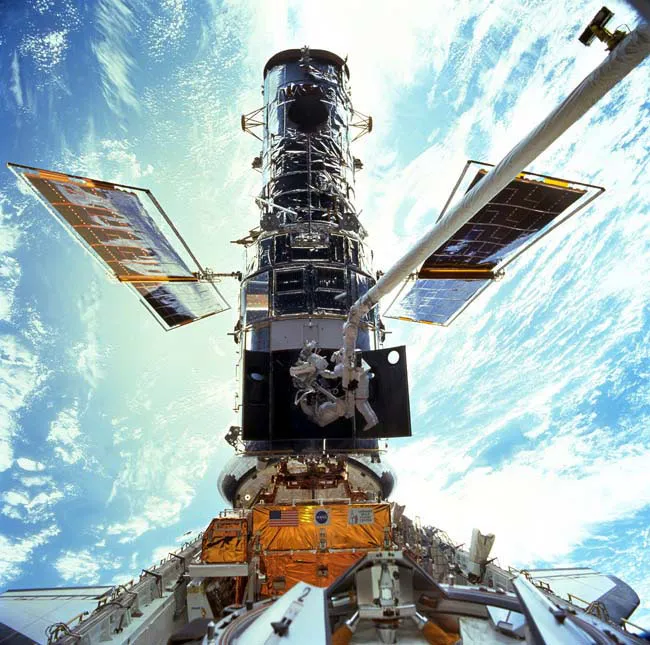
NASA will be paying close attention to the Polaris Dawn spacewalk too, because Isaacman wants to service the Hubble Space Telescope on Polaris’ second mission. The telescope has not been serviced since 2009, when space shuttle Atlantis STS-125 visited to extend the telescope’s life and capabilities.
However, time has no mercy, and over the last 15 years Hubble’s orbit has slowly been degrading. It’s currently at an altitude of about 330 miles, but will fall faster and faster as time goes on. If nothing is done, it will burn up in the atmosphere in the mid 2030s.
Nasa astronauts working on the hubble while docked to a space shuttle (nasa photo)
Isaacman says the mission would come at no cost to the government or tax payer, and would keep Hubble operating for an additional 15-20 years. SpaceX and Polaris pitched the idea to NASA. The agency then signed an unfunded Space Act Agreement to seriously study the idea.
Even if NASA decides against such a mission, they’ll probably have to launch a propulsion module to the telescope by the end the 2020s anyway, to ensure Hubble makes a controlled splash in the Pacific Ocean. So if they have to launch that anyway, why not launch Polaris to give it another 20 years of life instead?
Polaris dawn crew (john kraus photo / polaris)
The success of Polaris Dawn could be a key factor in that decision.
Polaris’ 3rd mission will be the first-ever crewed flight of the SpaceX Starship
Further down the line is Polaris’ third mission, the first crewed flight of SpaceX’s behemoth Starship. The company is currently conducting launch and orbital flight tests with prototypes of the new rocket and spacecraft in south Texas, as well as building infrastructure for Starship flights at Kennedy Space Center.
Starship in texas (mike killian photo)
NASA is also paying close attention to Starship. They’ve contracted Starship to land the first two Artemis crews on the moon later this decade, as part of NASA’s plans for a permanent human presence at the moon.
“Each mission should build off the previous one and hopefully much can be learned from the science, the research and all the technology we aim to demonstrate,” says Isaacman. “When Polaris is over, the first crewed Starship should have flown, and that is the vehicle that will open space to the many.”
Nasa has contracted starship for the first 2 artemis moon landings later this decade (nasa image)
A target launch date for Polaris Dawn has not yet been announced, but they and SpaceX hope to see it launch this year. The required modifications to Dragon and development of the new EVA spacesuit are the driving factors at this point, before a firm launch date is announced.
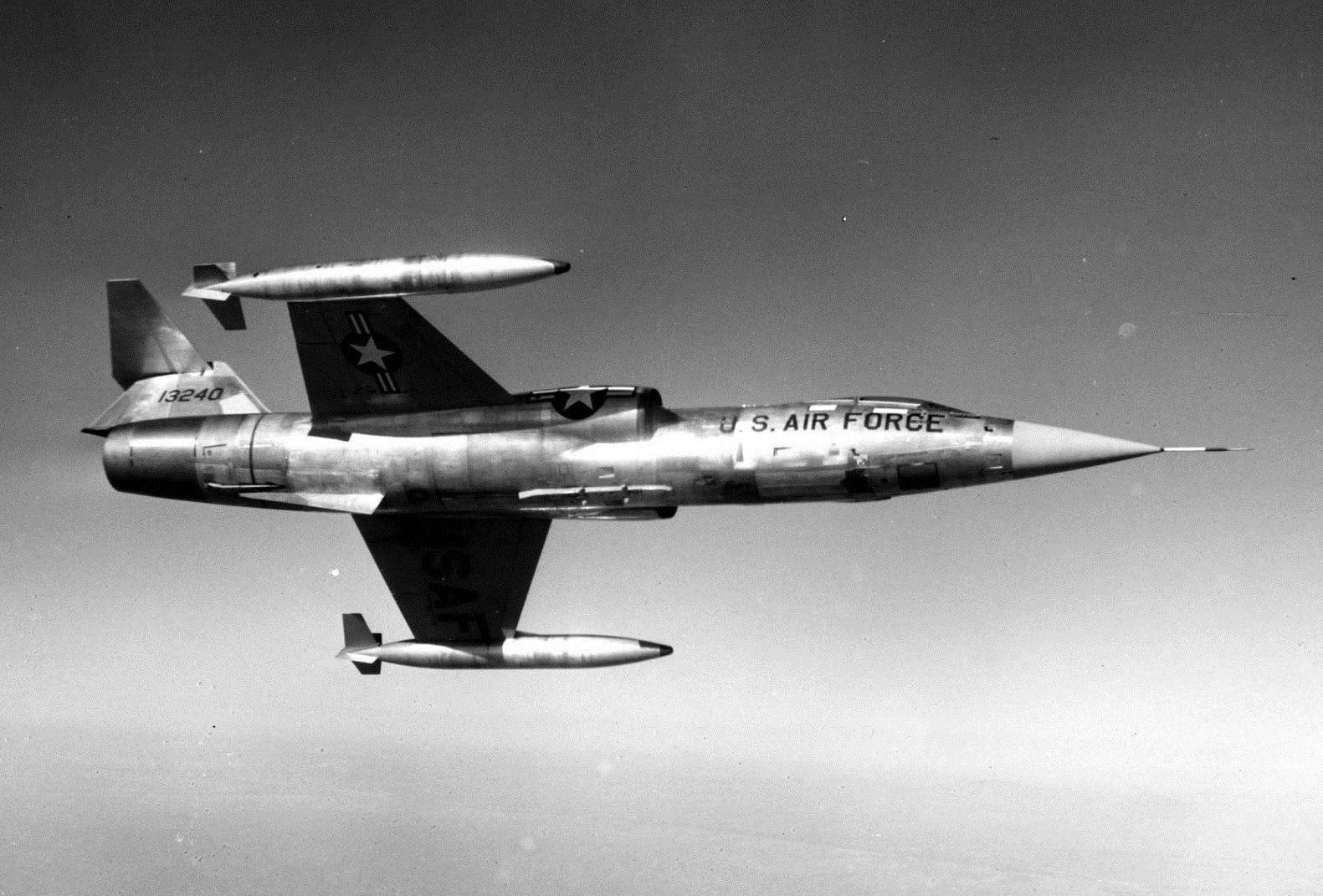
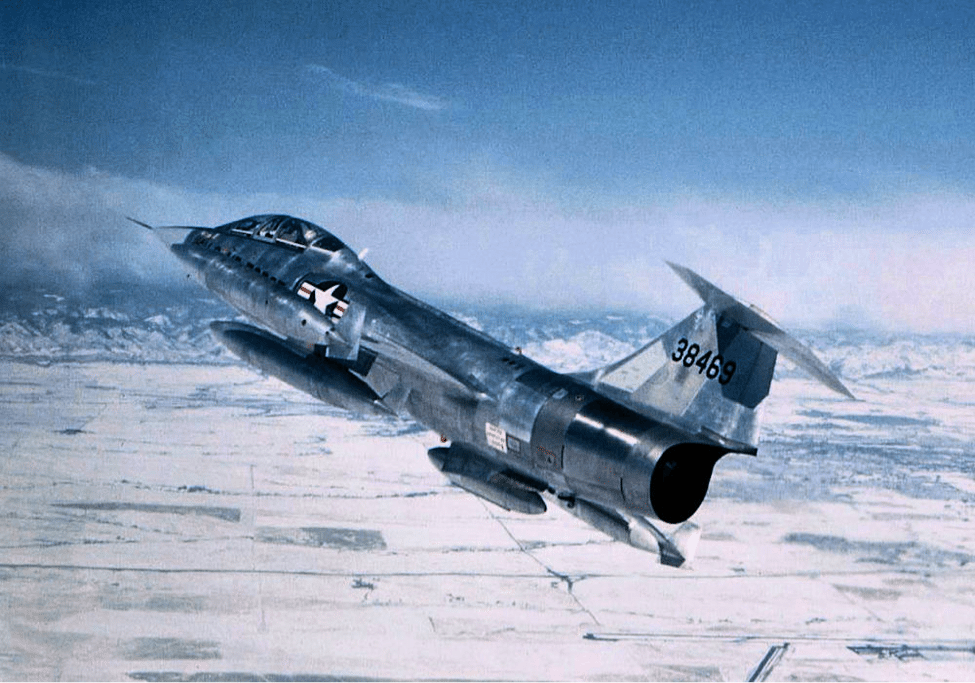
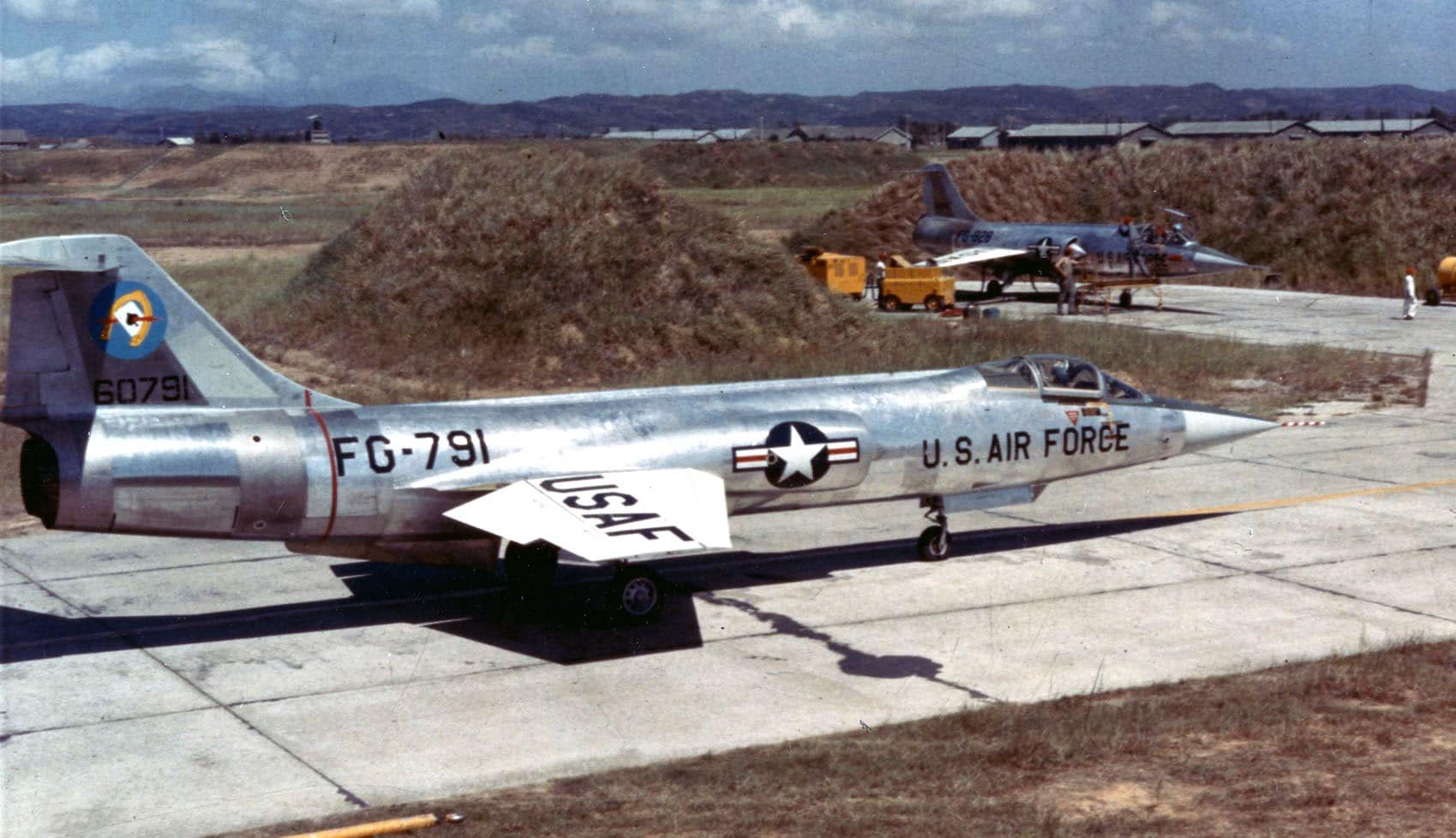
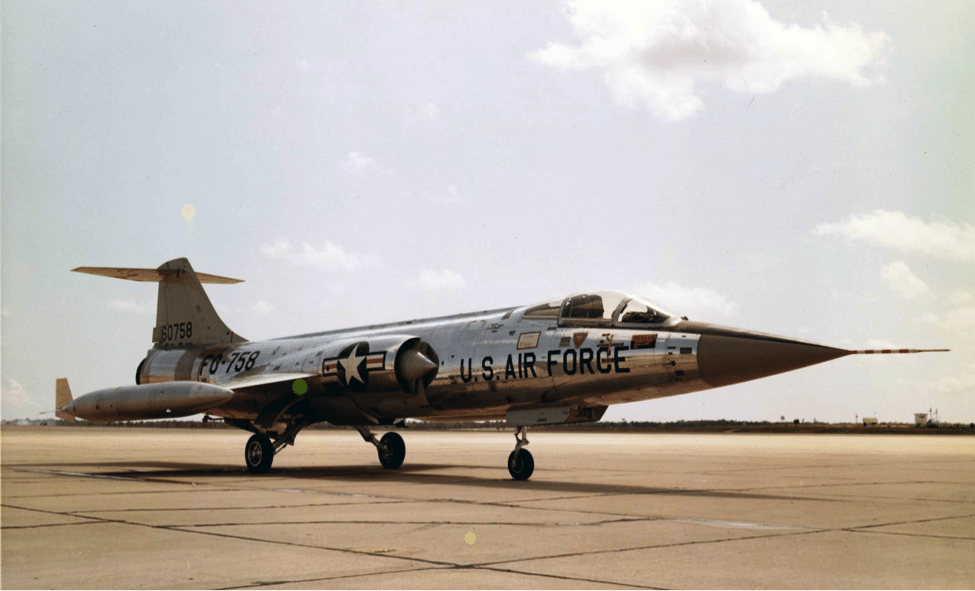
Lockheed’s F-104 Was Both Built by and Operated by NATO Countries For Nearly 50 Years
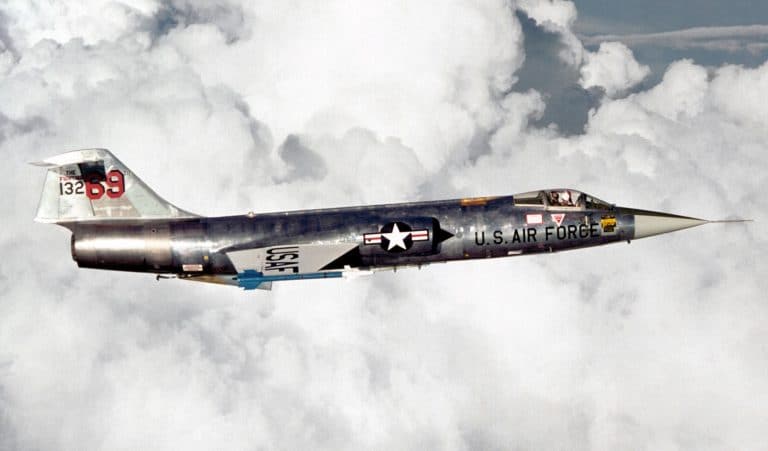
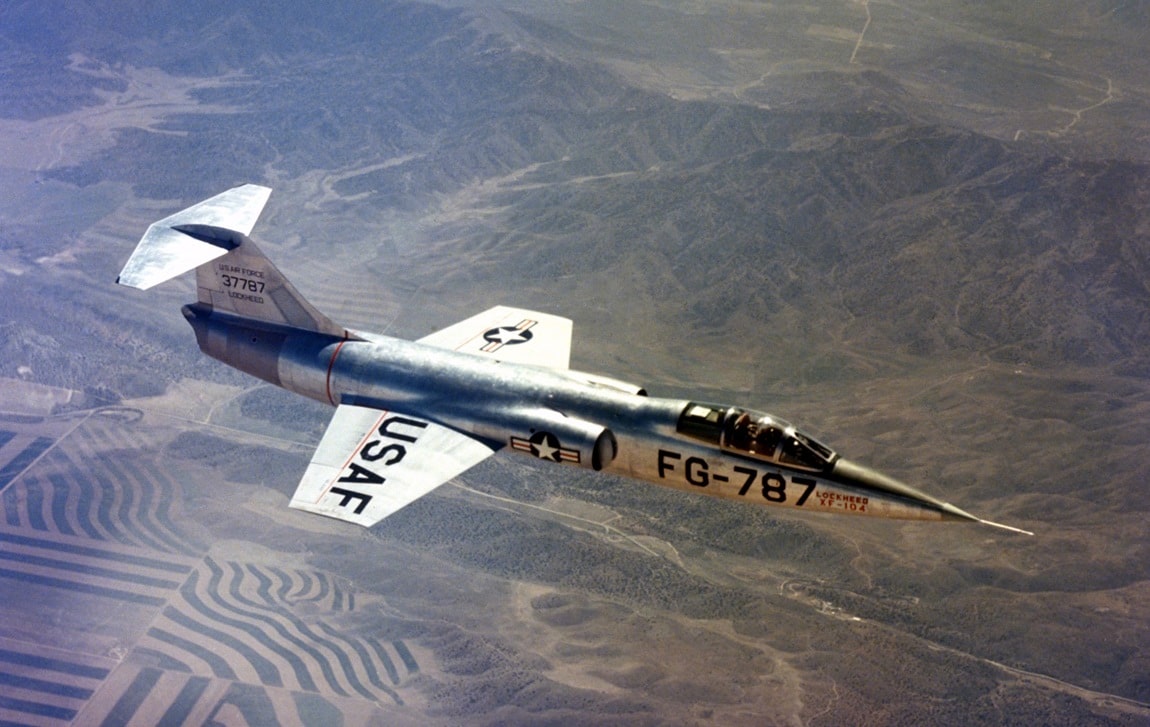
On 4 March 1954, after less than year had elapsed since contracted by the Unites States Air Force to design and build it, the first prototype Lockheed F-104 Starfighter took to the sky at Edwards Air Force Base in California.
All-Star Design Team
Known by nicknames like “zipper” and “lawn dart” but none so much as “the missile with a man in it”, the F-104 was designed by the famous Lockheed engineer Clarence “Kelly” Johnson. Later to be associated with such other notable aircraft as the SR-71 Blackbird and its derivatives, as well as the U-2 and the F-117 Nighthawk, Johnson basically built the smallest and lowest drag airplane possible around the most powerful engine available- the General Electric J79.
Creating a Need for a Breakthrough Design
Lockheed and Johnson presented the design for the F-104 to the Air Force in November of 1952. Based on the design alone, the Air Force created a General Operating Requirement (GOR) for a lightweight fighter to replace the North American F-100 Super Sabre. Although three other designs were contemplated, Lockheed was granted a development contract in March of 1953 for two prototypes to be designated XF-104.
Raw Power and Mods to Control It
Capable of sustaining speeds above Mach 2 and reaching altitudes as high as 48,000 feet in less time than it has taken you to read this far, the raw performance of the F-104 was impressive right from the beginning. The usual refinements were defined and incorporated into the design between prototypes and production aircraft, including landing gear and intake modifications, additional airframe strengthening, and the addition of a ventral fin to improve directional stability. These modifications to the pre-production F-104 prototypes yielded the initial production model. The first F-104A Starfighter entered service with the 83rd Fighter Interceptor Wing (FIW) on 26 January 1958.
Air Defense in Name and Mission
The 83rd, based at Hamilton Air Force Base in California, attained operational status on 20 February 1958. A total of four Air Defense Command (ADC) units were equipped with the F-104A. After a rash of accidents, the Air Force evaluated the A-model Starfighter and made the decision to reduce orders for the fighter from 722 examples to only 155. The F-104As were eventually transferred to Air National Guard (ANG) units.
The Choice for TAC
The next variant of the design, the F-104C, entered service with the US Air Force Tactical Air Command (TAC) as a multi-role fighter and fighter-bomber. In September of 1958, F-104Cs first equipped the 479th Tactical Fighter Wing based at George Air Force Base in California.
To War in Vietnam
F-104C Starfighters took a limited part in the Vietnam War. The 476th Tactical Fighter Squadron arrived in-country first, followed by the 436th Tactical Fighter Squadron three months later. Between April of 1965 and October of 1965, F-104Cs from these two squadrons flew a total of 2,935 combat sorties and lost a total of five Starfighters (to all causes).
For the Rest of the Starfighter Story Bang NEXT PAGE Below
The United States Air Force (USAF) produced the film “Special Air Warfare Forces 1965” to depict the formation and deployment of the 1st Air Commandos Group to Southeast Asia at the time.
Formed to train UAF pilots on older propeller-driven aircraft like the Curtiss C-46 Commando and Douglas C-47 Skytrain airlifters, Douglas B-26K Invader bombers, and North American T-28D Trojan counterinsurgency (COIN) aircraft, the group is still operational as the 1st Special Operations Wing (SOW). The film was uploaded to YouTube by PeriscopeFilm.
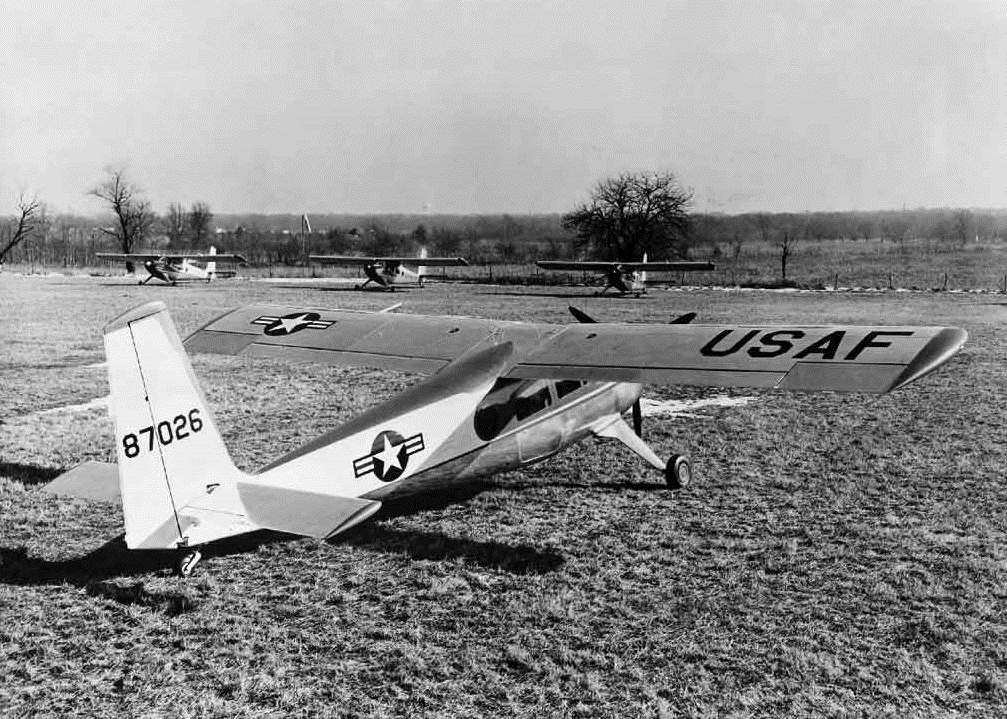
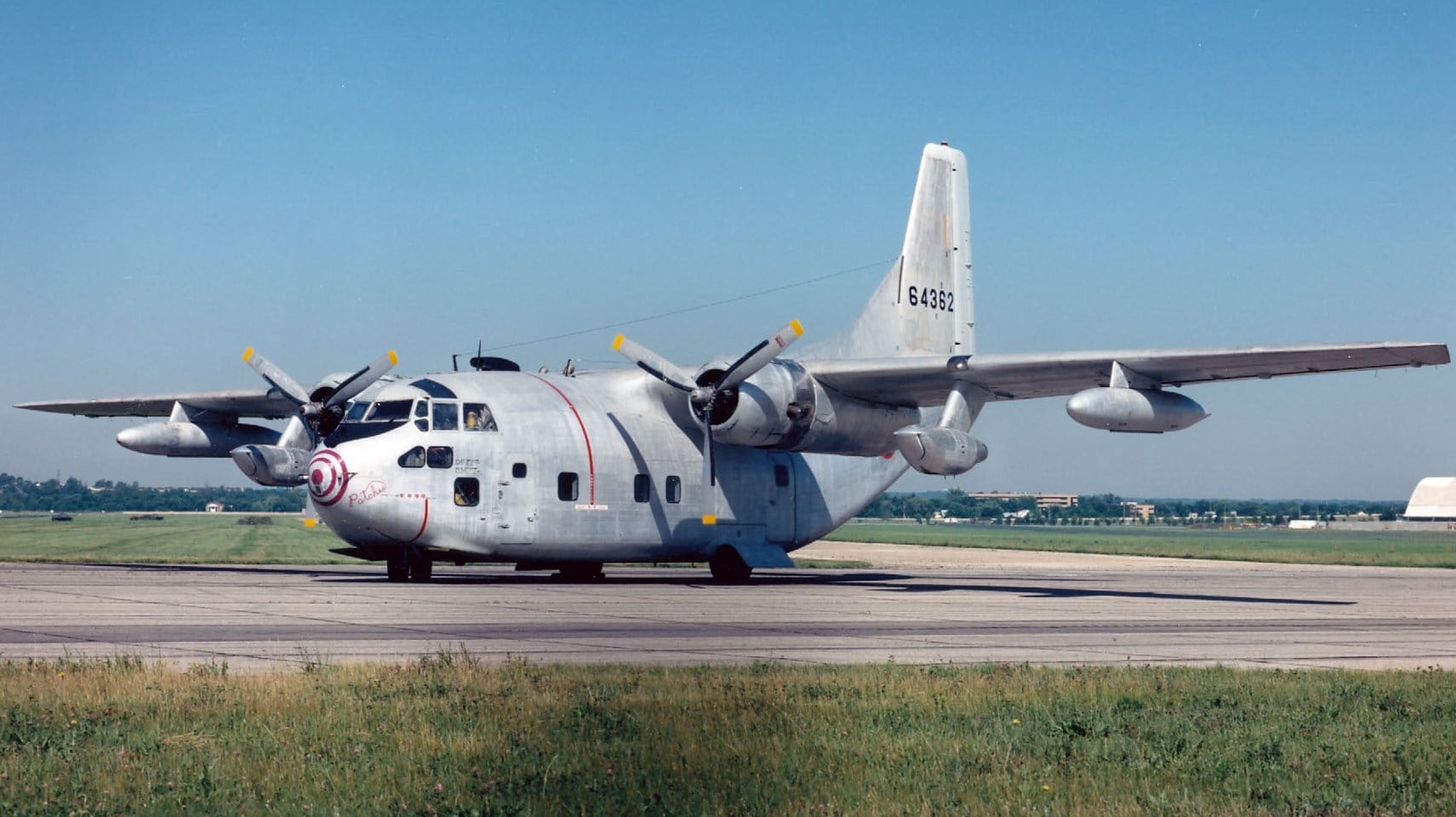
The 4400th Combat Crew Training Squadron (CCTS) went to work at Hurlburt Field near Mary Esther in the Florida panhandle in 1961 with precious few aircraft and only about 360 personnel. Initially equipped only with B-26Ks, T-28Ds, and C-47s, the Air Commandos expanded in 1964 and also flew Douglas A-1E Skyraider attack aircraft, Fairchild C-123 Provider airlifters, and single-engine Helio U-10 Courier utility aircraft, among others. Training foreign military pilots and crews (alongside the American COIN crews) was the group’s primary mission.
Official US Air Force photograph
Four USAF Air National Guard (ANG) units augmented the Air Commandos during the Vietnam War. The 143rd Airlift Wing, Rhode Island ANG traded in their C-46s for U-10As and U-10Ds. They later flew single-engine De Havilland U-6A Beavers in place of the Couriers and fly Lockheed C-130J Hercules airlifters today.
The 135th Airlift Wing, Maryland ANG flew C-46s along with Grumman SA-16 Albatross amphibians, and was tasked with the covert insertion, resupply, and extraction of Special Forces personnel. The 135th last flew Alenia C-27J Spartan airlifters.
Official US Air Force photograph
The 130th Airlift Wing, West Virginia ANG, also flew the C-46 and SA-16 and was tasked with missions similar to those assigned to the 135th Wing. Today, the 130th flies some of the few remaining Lockheed C-130H Hercules airlifters in the inventory.
The 129th Airlift Wing, California ANG was flying C-46s before becoming a part of the Air Commandos and traded them for U-10As and U-10Ds before flying U-6As. The 129th eventually flew Fairchild C-119 Flying Boxcars before becoming the 129th Rescue Squadron flying the MC-130P Combat Shadow variant of the Lockheed C-130 Hercules and the HH-60G Pave Hawk variant of the Sikorsky UH-60 Blackhawk.
Timing Was Not on the Side of This Interesting Alternative Technology Hauler
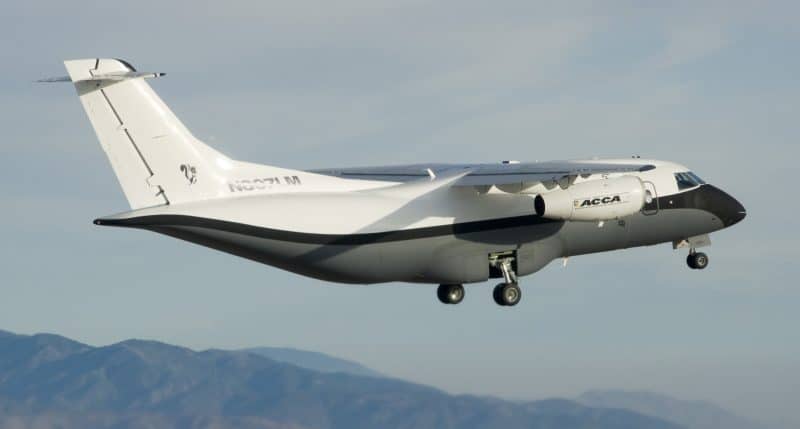
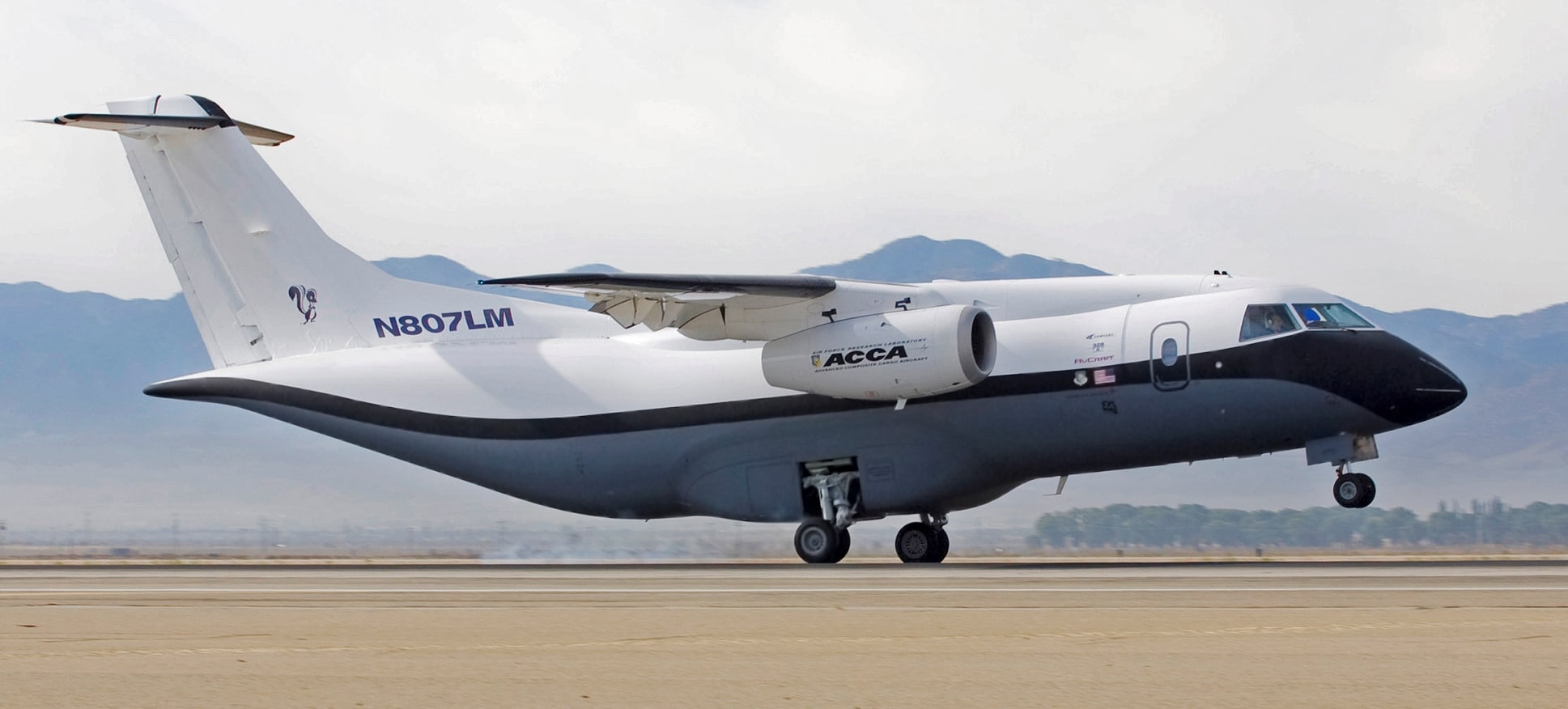
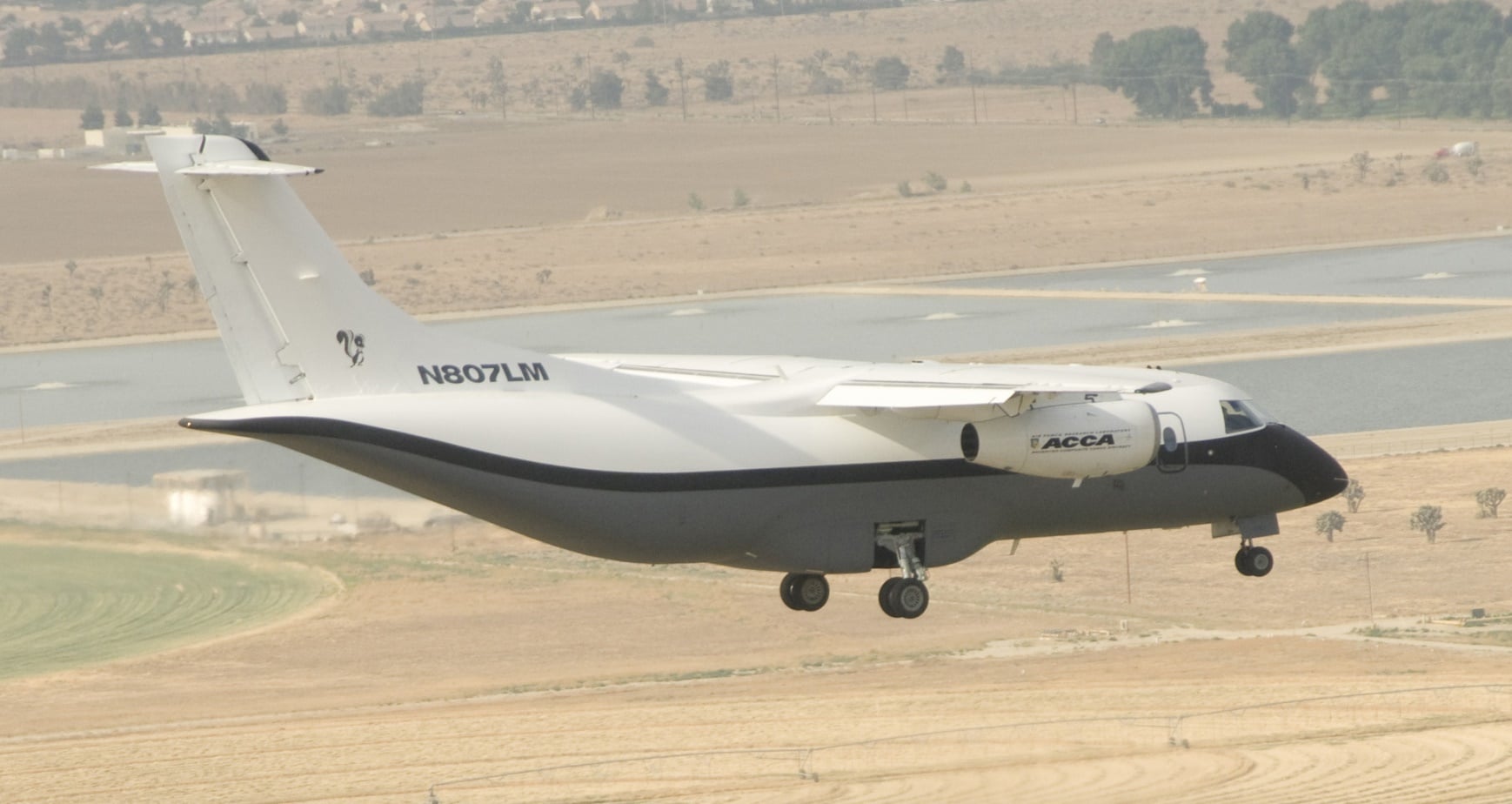
On 2 June 2009, the Carbon Comet lifted off from Lockheed Martin’s Advanced Development Programs facility (Air Force Plant 42) in Palmdale, California. It appeared at first glance to be a standard Dornier 328JET commuter jetliner. However, the aircraft, powered by a pair of underwing pod-mounted Pratt & Whitney PW306B turbofan engines, carried the civilian registration N807LM.
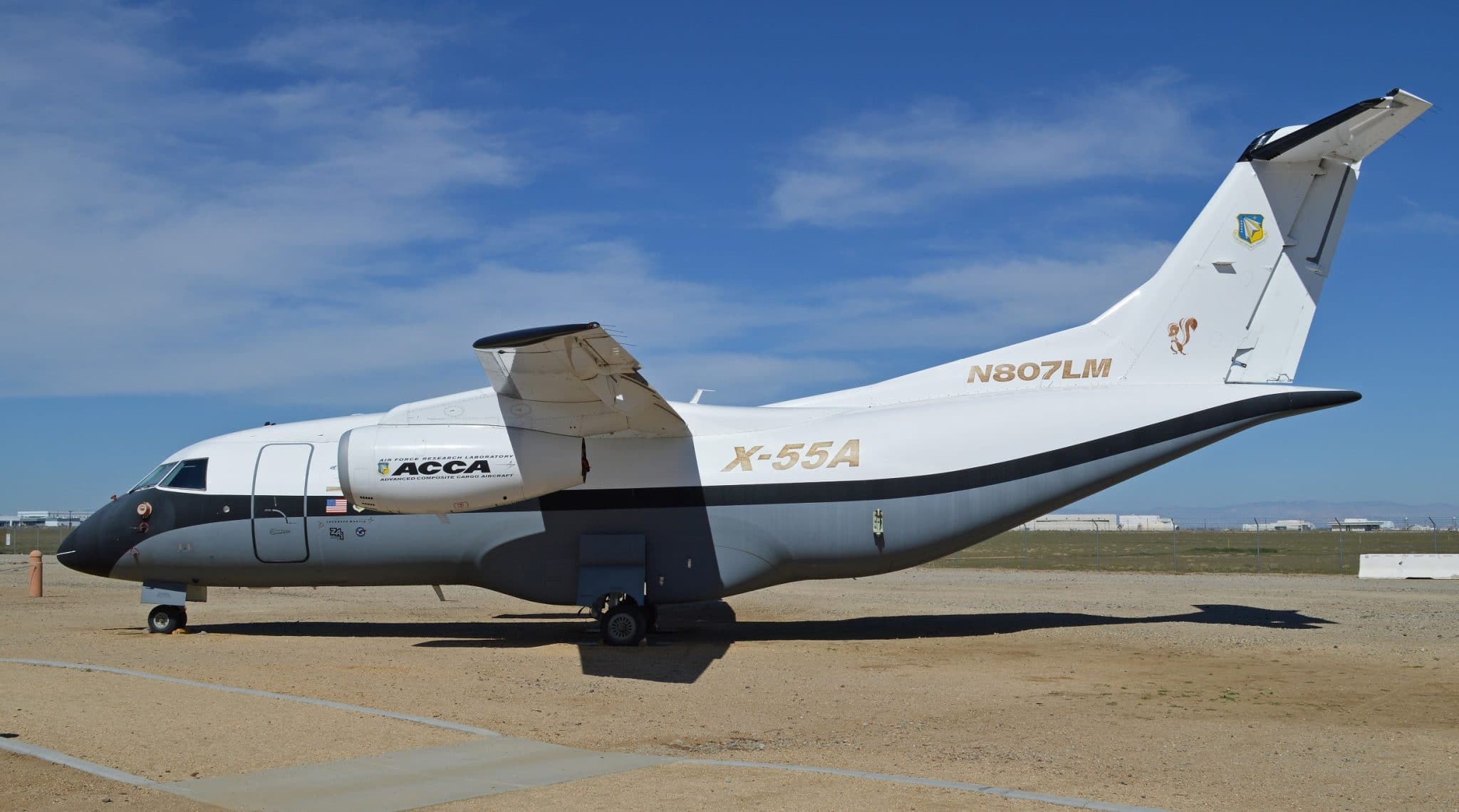
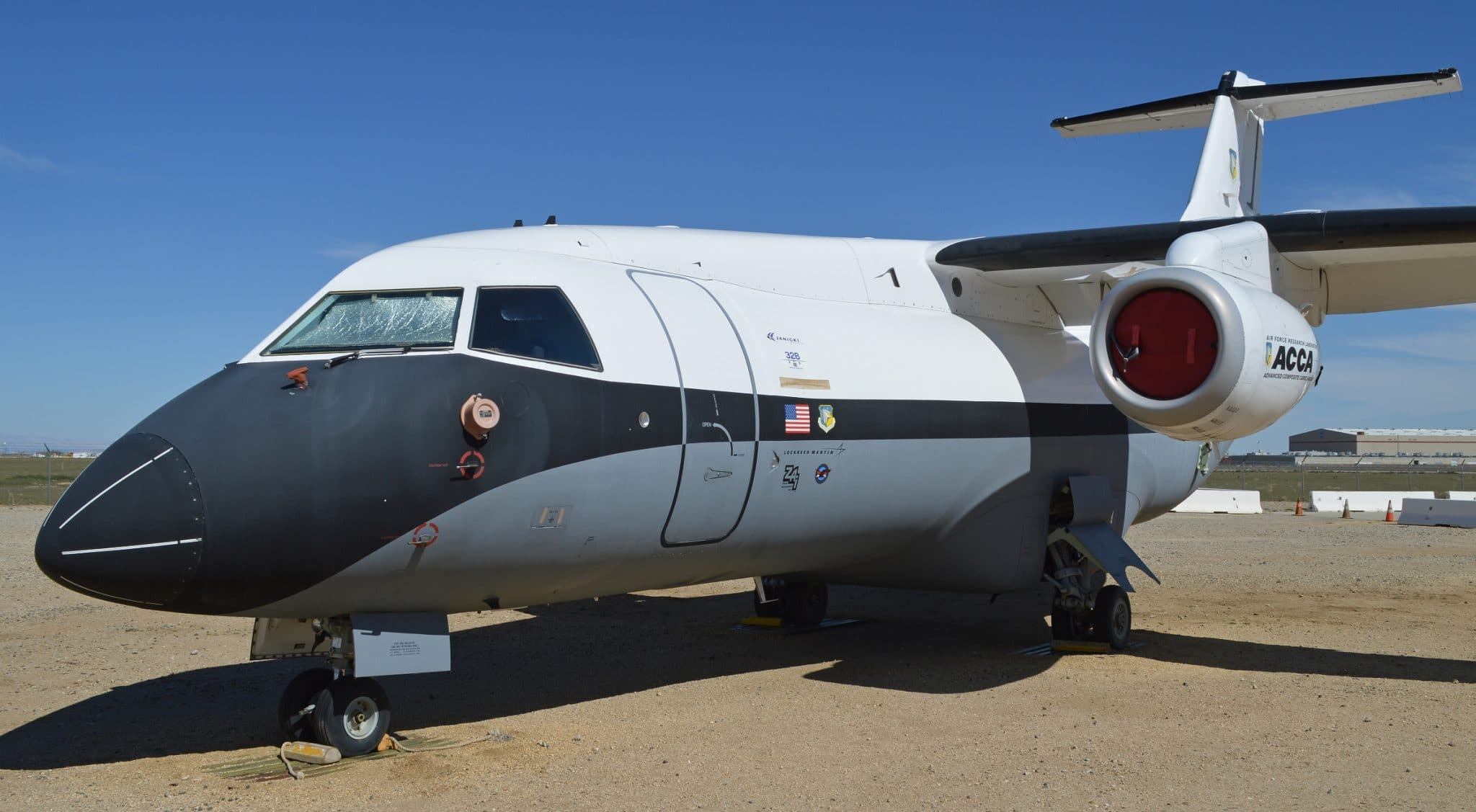
Each engine nacelle under the high-mounted wings was decorated with the acronym ACCA, which stood for Advanced Composite Cargo Aircraft. Perhaps the tipoff to the jet’s origins was the Lockheed Skunkworks logo conspicuously appearing on the vertical stabilizer. But this aircraft, like many of the flying machines born at Plant 42, was unique.
Image via NASA/Lockheed Martin
Origins of the Carbon Comet
The US Air Force Research Laboratory (AFRL) wanted to see what benefits a composite fuselage would bring to a small airlifter airframe. But at the time, while there was tremendous potential for the substitution and/or incorporation of advanced composite materials used to reduce aircraft structural weights compared to conventional metal structures, the aerospace industry was hesitant to implement them in new aircraft. AFRL launched the Composites Affordability Initiative (CAI) to address the perceived risks and barriers. Government laboratories, including NASA, worked collaboratively with aerospace contractors to develop the required advanced materials and manufacturing technologies. This 10-year AFRL-led research and development effort ultimately led to the Advanced Composite Cargo Aircraft (ACCA) experiment.
image via Lockheed Martin
Take Apart a Perfectly Good Jetliner…
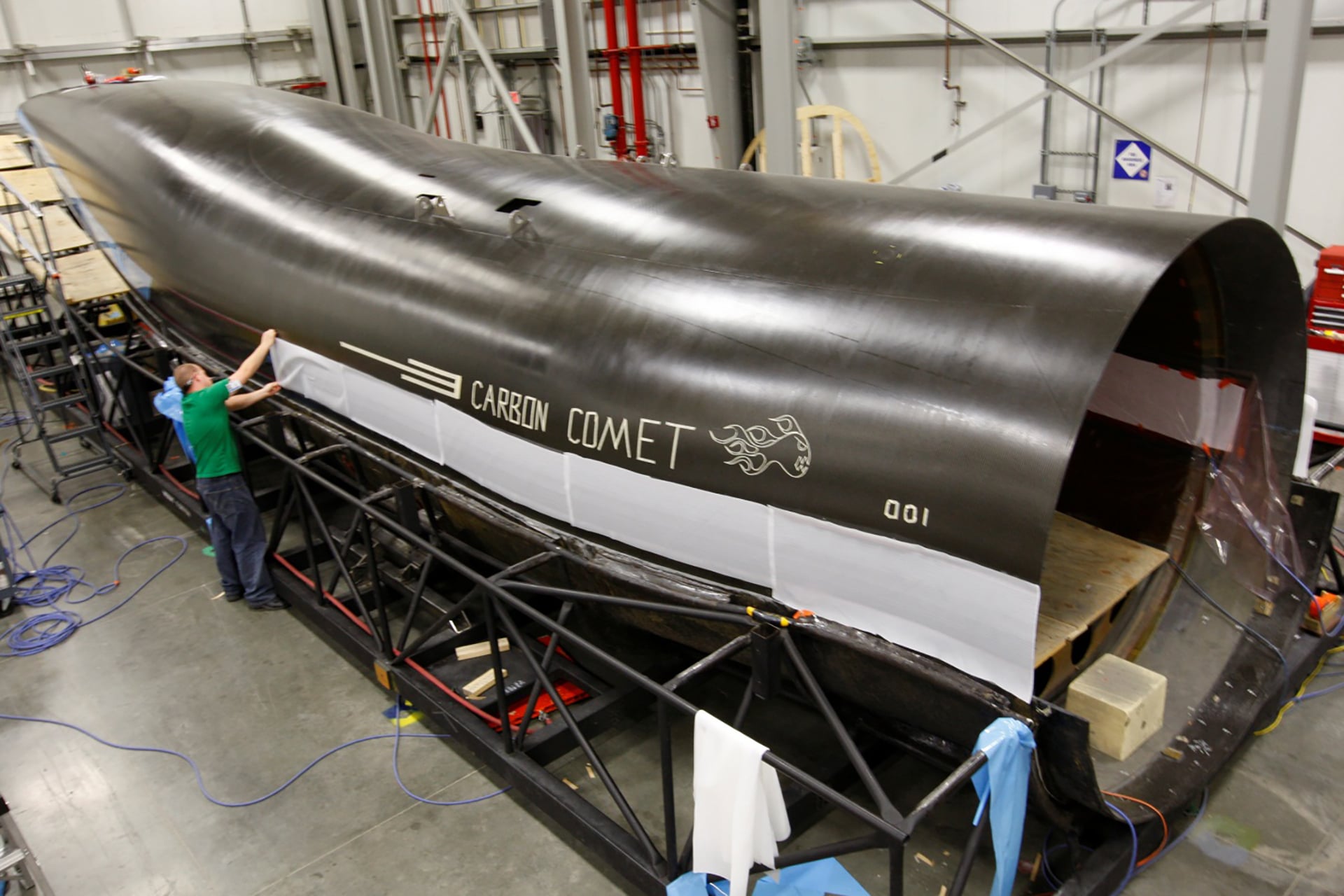
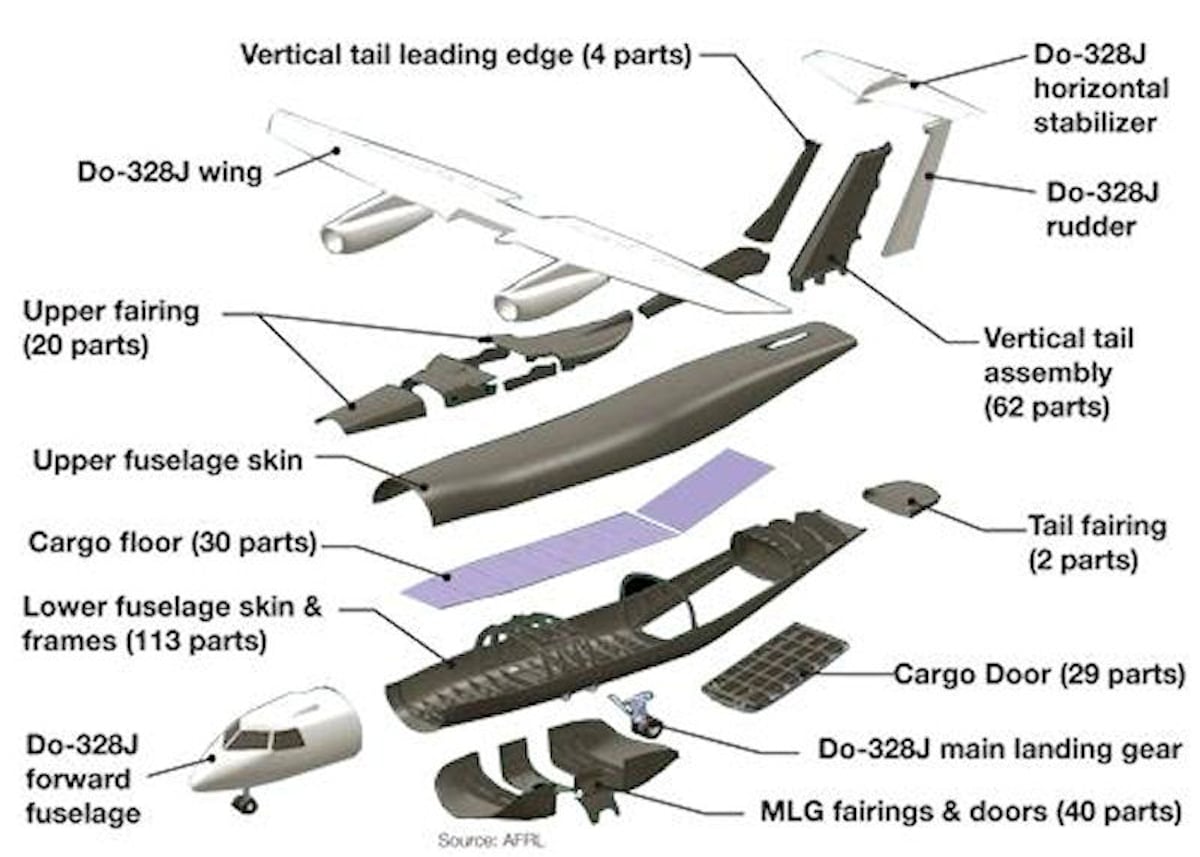
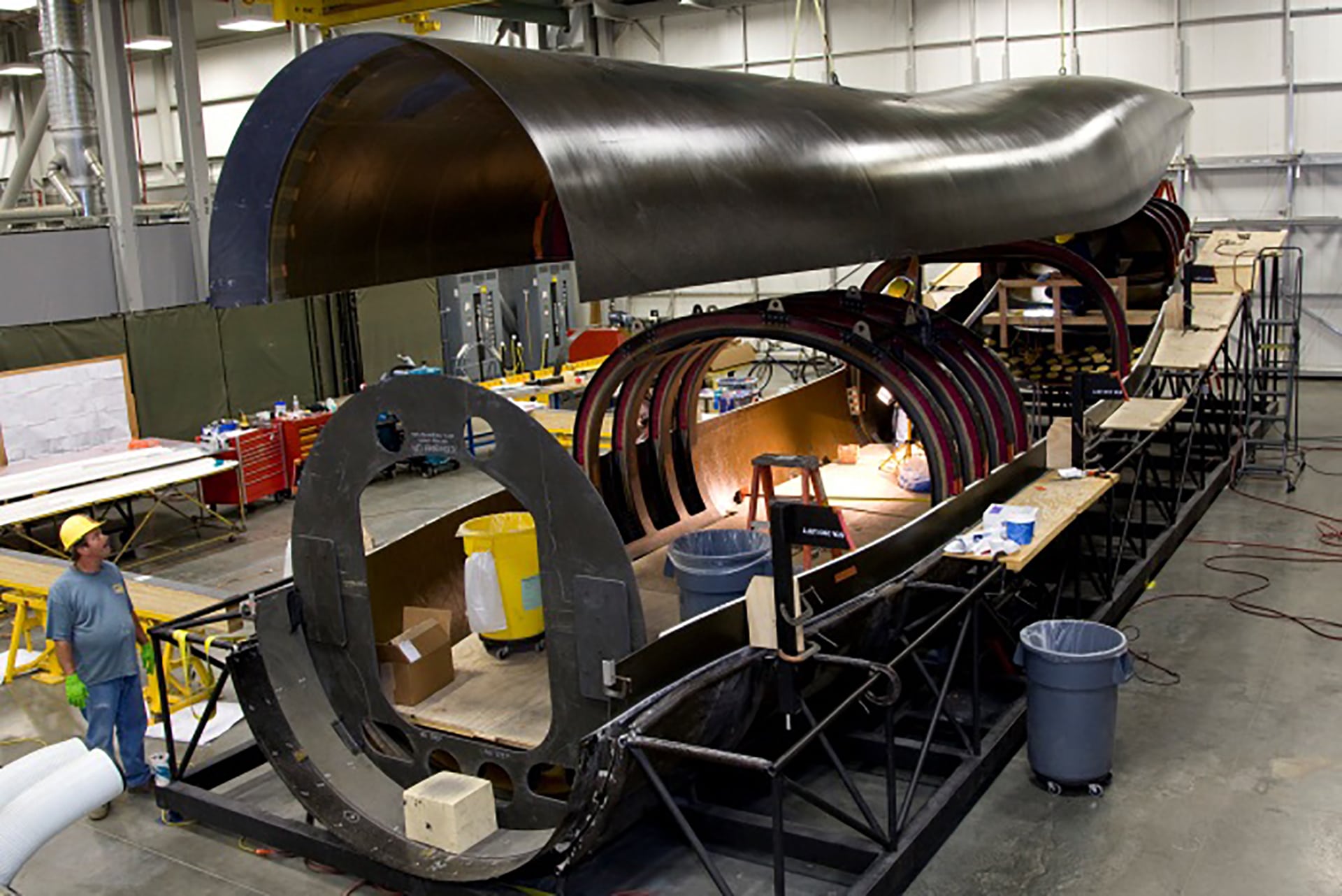
The Lockheed Martin X-55 did indeed begin life as a Dornier 328JET. But aft of the port side forward entrance door the fuselage was replaced by a light-weight advanced composite structure. The forward fuselage, wings, and horizontal stabilizer were then bolted back onto the new composite fuselage. The weight savings alone was impressive. The new structure was comprised of about 300 structural parts as opposed to 3,000 structural parts in the standard aircraft. Fasteners were reduced from 40,000 to 4,000. The fuselage was formed using two cured pieces (upper and lower) and bonding them together with interior strengthening frames- much like a plastic model fuselage might be glued together.
image via air force research lab
There Will Always Be Bugs
Challenges presented themselves along the way- one of which was mating the aluminum portions of the airframe with the composite portions. In fact the program was delayed by the need to build a second fuselage “shell” when the lower fuselage skin did not bond correctly. The Air Force designated the ACCA as the X-55A in October of 2009. While the program never advanced far enough for the Air Force to name the jet, Lockheed Martin engineers dubbed the lightweight little airlifter the Carbon Comet.
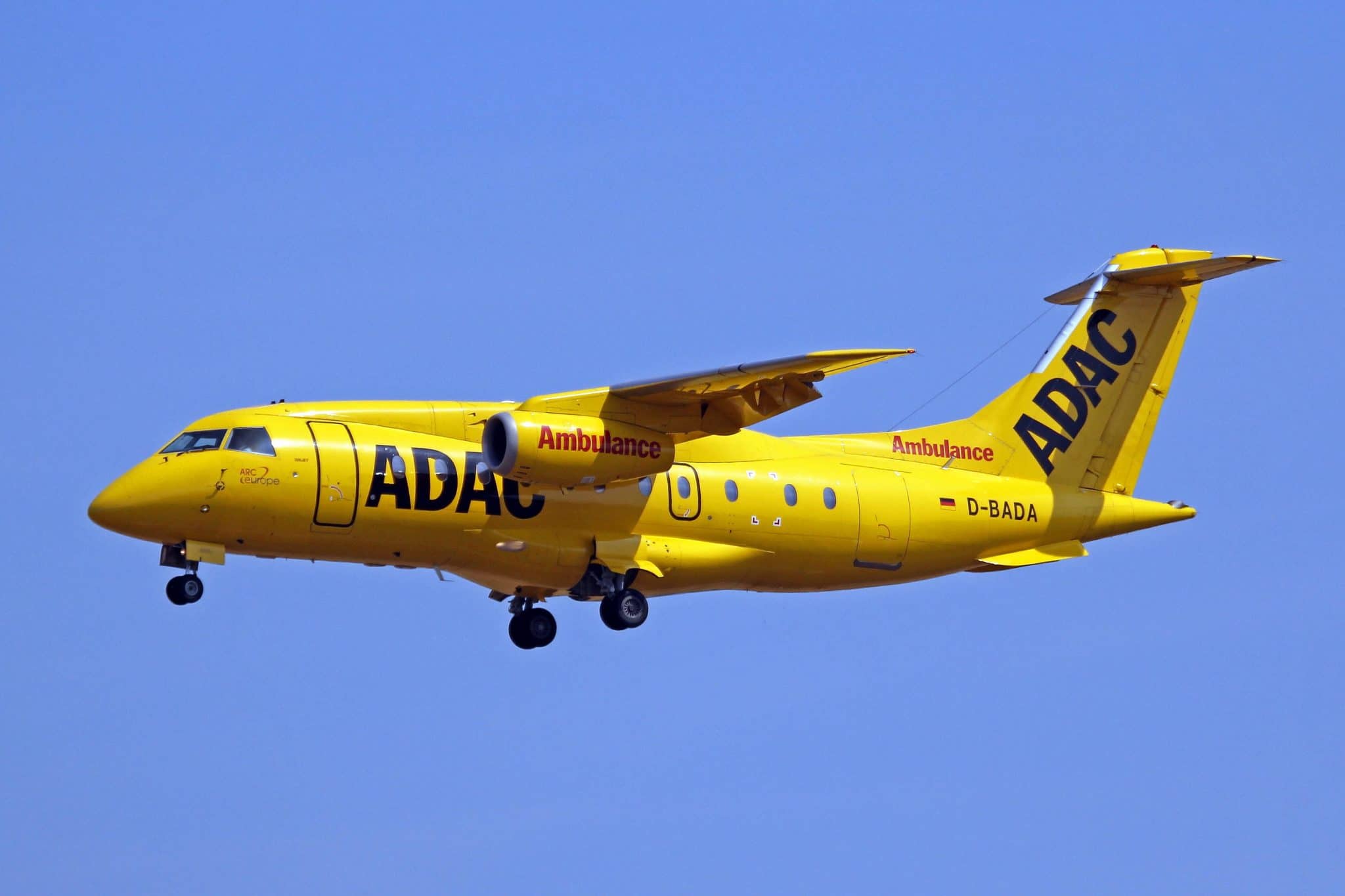
Standard dornier 328jet (image via ken fielding)
Competition and the COD
The Carbon Comet was selected for the project instead of a design by Aurora Flight Science that was based on the Antonov An-72 Coaler- itself somewhat similar to the Boeing YC-14 airlifter. As an airlifter the fuselage of the X-55A was wider than the standard 328JET fuselage at about 9 feet in diameter and equipped with aft clamshell doors with a rear-loading ramp. With a fuselage length of 55 feet, the X-55A is roughly the same length as the Grumman C-2A Greyhound, which has been the standard for the US Navy Carrier Onboard Delivery (COD) mission since entering service in 1966.
image via lockheed martin
The Last Word from Lockheed Martin
According to Lockheed Martin at the time, the ACCA was “the first of several steps intended to advance the readiness of multiple technologies needed for the next generation of theater airlift aircraft. The ACCA demonstrates how future aircraft designs and manufacturing processes can be tailored through the use of advanced composites and new structural concepts to significantly shorten design spans, reduce aircraft size and structural weight, accelerate manufacturing processes, reduce tooling costs and reduce assembly labor. Initial estimates suggest development cost could be reduced by 25 percent or more over today’s processes plus additional operating cost savings from less weight resulting in lower fuel burn.”
Historically, aircraft cost has been determined by the size and weight of the vehicle.
“With ACCA we are proving that while size does matter, it isn’t the be-all, end-all determination of aircraft cost”
image via nASA
Retirement and Some Interesting What-Ifs
The X-55A did not pan out. Part of the problem was that although Lockheed Martin, NASA, and plenty of other aerospace engineers worked on the materials they were difficult to work with on the scale required for an airframe the size of the Carbon Comet- or larger. But…if the X-55A had proved more practical, the aircraft might have itself been developed into a replacement for the aforementioned C-2A COD as a jet-powered COD aircraft. For that matter, Lockheed’s own S-3B Viking, which had recently been retired from service (or even the US-3A COD Viking) might have been rebuilt with a composite fuselage and become a jet-powered COD. Far-fetched? Perhaps, but stranger things have happened. Already. This year!
X-55A on display (image via ian wilson)
Today the Lockheed Martin X-55A Carbon Comet is on display at Joe Davies Heritage Airpark in Palmdale, California.
X-55A Carbon comet on display (image via ian wilson)
How They Made One of the All-Time Great TV Spots for Avgeeks
Down here in the Great State of Texas we’ve had an advertising/public service campaign called ‘Don’t Mess With Texas’ for more than thirty years now. Movie stars, crooners, politicians, Olympic athletes, Dallas Cowboys, Houston Oilers (y’all remember them?), heck they even got Chuck ‘Lone Wolf’ Norris himself to do a spot. Now back before the Confederate Air Force (CAF) became the ‘Commemorative’ Air Force, those Colonels got behind a Don’t Mess With Texas (DMWT) spot that only they could pull off. Here it is- as uploaded to YouTube by majormadmax. Stick around after you watch it a couple of times (we’ll wait) because the making-of video’s just on down the page a piece- and it’s a hoot too. Enjoy!
The CAF employed several aircraft during the shooting of the thirty second spot. Of course they used the B-17G in the final cut, but the CAF P-51D Mustang ‘Gunfighter’ and CAF FM-2 Wildcat ‘VF-41’ also participated in the shooting. The first aircraft to make a pass over the carefully chosen shooting site was a V-Tail Bonanza- flown by the pilots who would be barreling though in the B-17G ‘Sentimental Journey’ when shooting started in earnest. Here’s the making-of video uploaded to YouTube by Andrew. Oh- be sure to turn that volume up!
Have you ever seen a B-17 fly that low? Me neither! And it wasn’t just once- they must have flown more than 20 camera passes- some of them no more than 30 feet AGL. The footage for the spot was shot on 24 and 25 October 1990 on lonely stretch of State Highway 385 near the town of McCamey in West Texas. The P-51D and FM-2 just couldn’t stay close within safety margins due to all the turbulence that Flying Fort was kicking up so they didn’t make it into the spot, and that’s too bad.
CAF P-51D Gunfighter. Image via CAF
One Clean Campaign
Now the DMWT campaign began in 1985 with some bumper stickers. The late great Stevie Ray Vaughan appeared in the first TV spot, which first aired during the Cotton Bowl in 1986. They’ve made more than 60 TV spots and near enough that many more for radio (Shamu the killer whale did a radio spot)- and every one of them was simply awesome. Just like life in Texas. But remember y’all- Don’t Mess With Texas- or the Texas Confederate/Commemorative Air Force!
CAF FM-2 Wildcat (foreground) flying with a F6F Hellcat and an F8F Bearcat- grumman ironworks in action
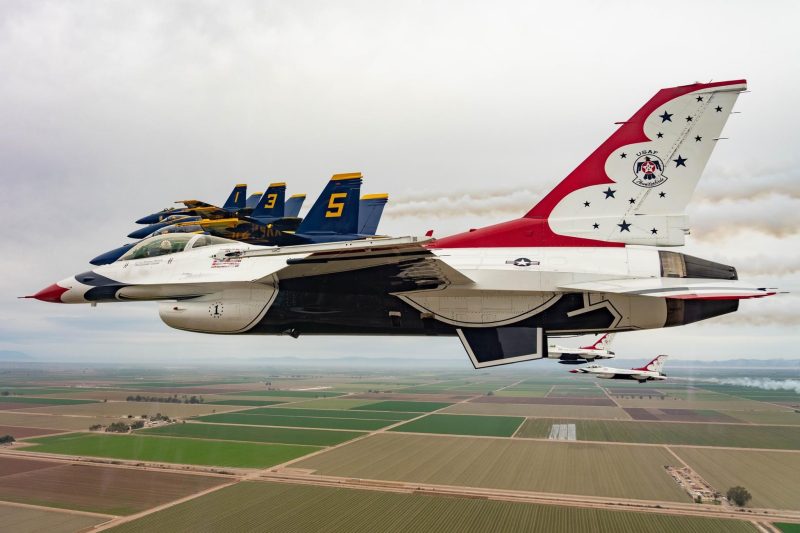
The U.S. Navy Blue Angels and U.S. Air Force Thunderbirds have just completed conducting joint training at NAS El Centro, CA.
El Centro is where the Blues conduct their 2-month winter training every year, before kicking off a busy air show season. The team has 64 flight demonstrations scheduled at 32 locations this year. Check out their schedules this year here.
Blue Angels and Thunderbirds Conduct Joint Training at El Centro 94Credit blue angels / thunderbirds
5th consecutive year of joint training
It’s the 5th consecutive year that both teams have come together for annual joint training. Even though they are different branches of the military, each team shares a similar mission.
“Engaging in collaborative training with the Thunderbirds allows us to exchange knowledge and skills,” says Blue Angels commanding officer and flight lead Cdr Alex Armatas.
Credit blue angels / thunderbirds
“Our Air Force counterparts truly grasp the level of commitment and effort required to execute flight demonstrations nationwide.”
During joint training the team’s do not put on any public performances. That however does not stop hundreds of avgeeks from descending on the perimeter of El Centro, aiming to capture photos and videos of both teams together. Each team conducts training flights separately and together, with similar profiles to the air show routine each will fly during the season. The crews mix with each other to learn from each other.
Busy air show season ahead
Credit blue angels / thunderbirds
Both teams are now about finished with their training seasons, and will be kicking off their first air shows later this month. The Blues are in their 78th year, and scheduled to perform their first show at El Centro on March 9.
The Thunderbirds are now in their 71st year. They are scheduled to kickoff their first air show of 2024 on March 23-24 at Luke Air Force Base, Arizona.
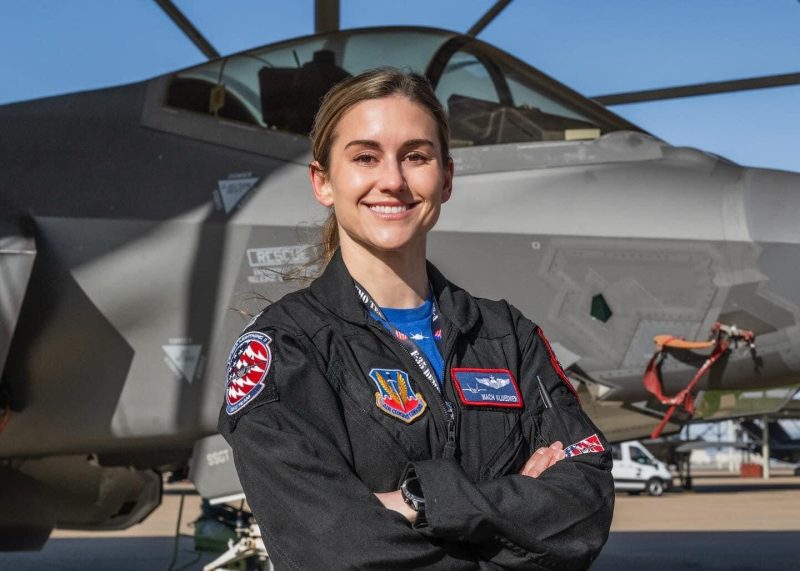
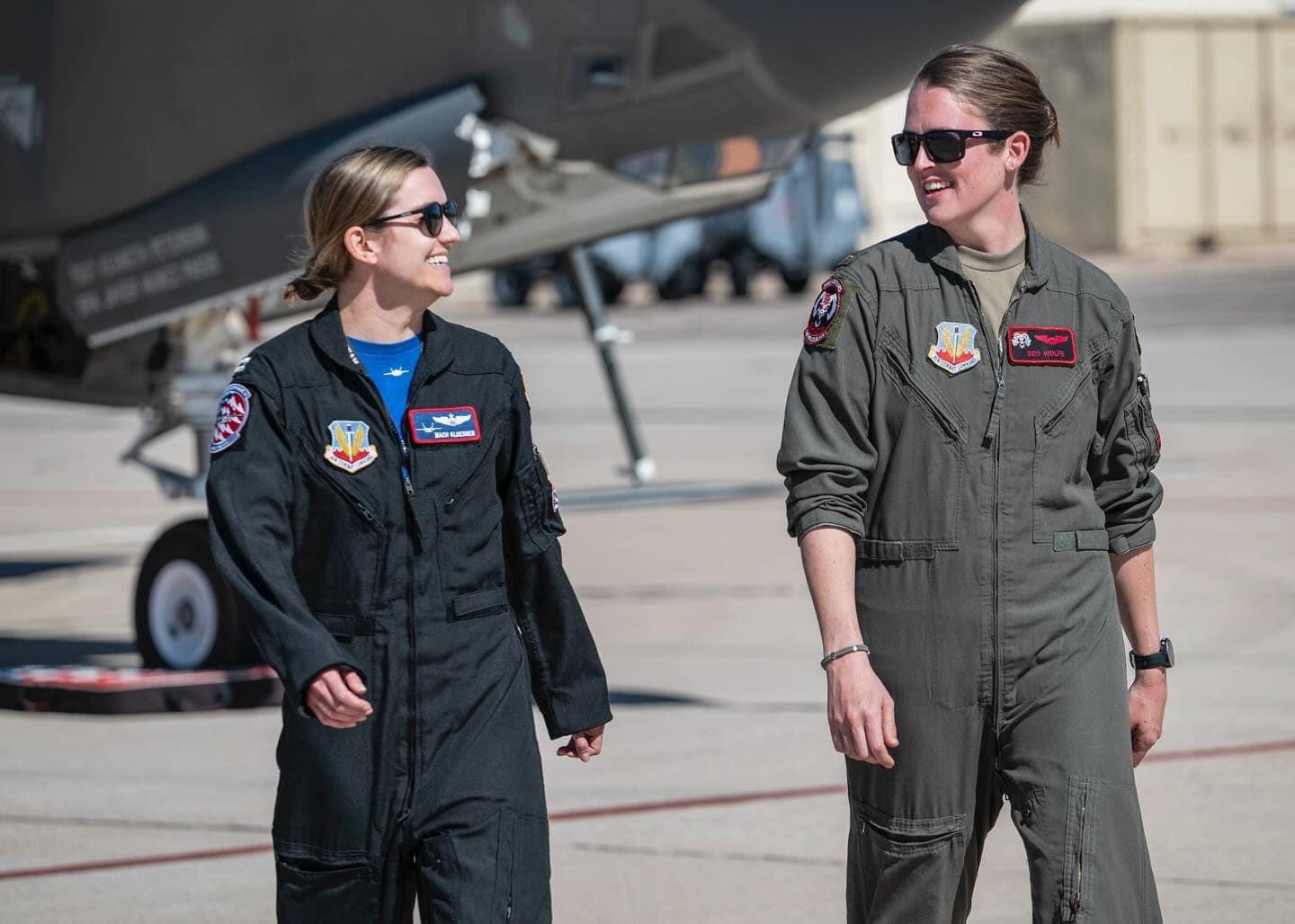
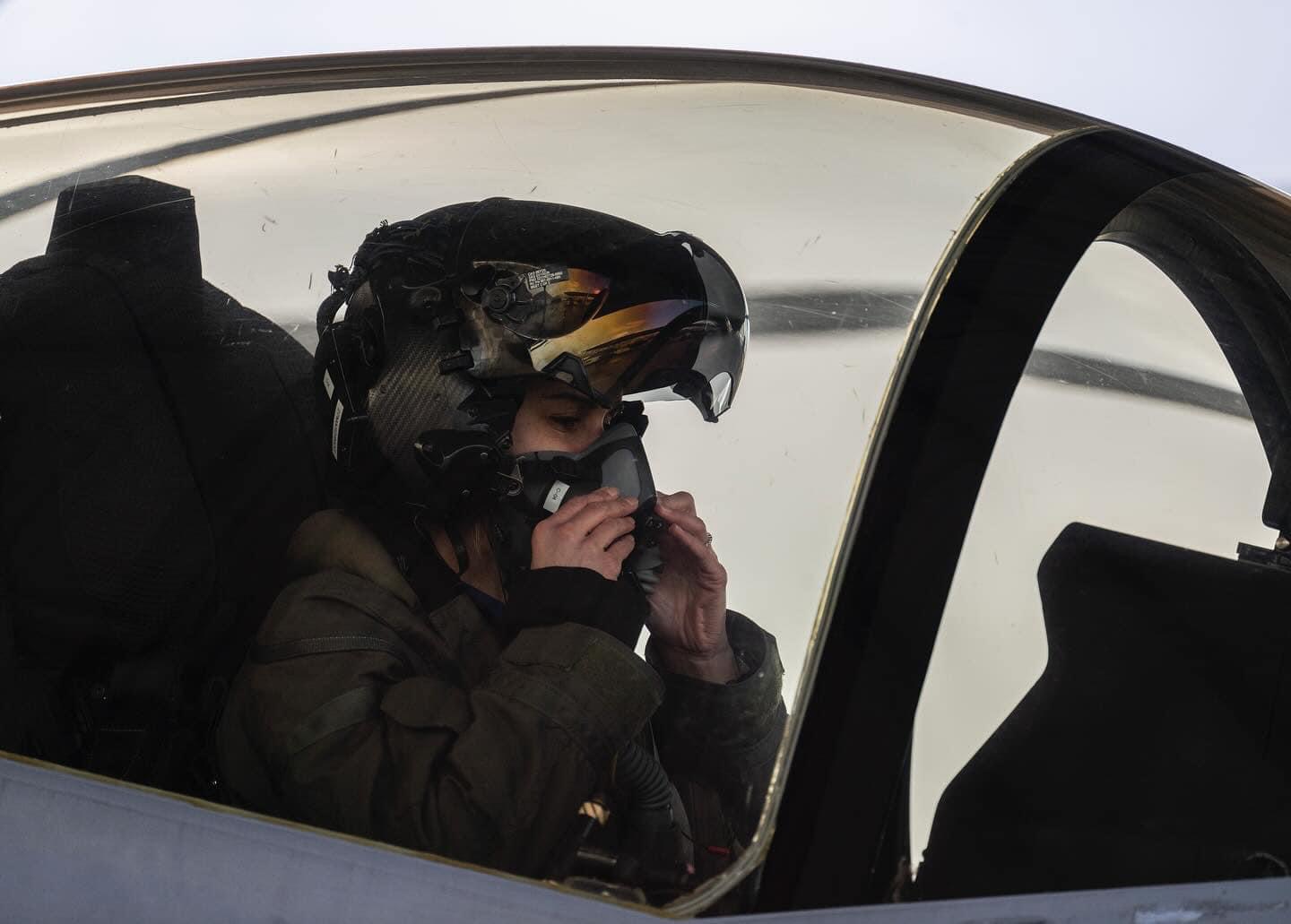
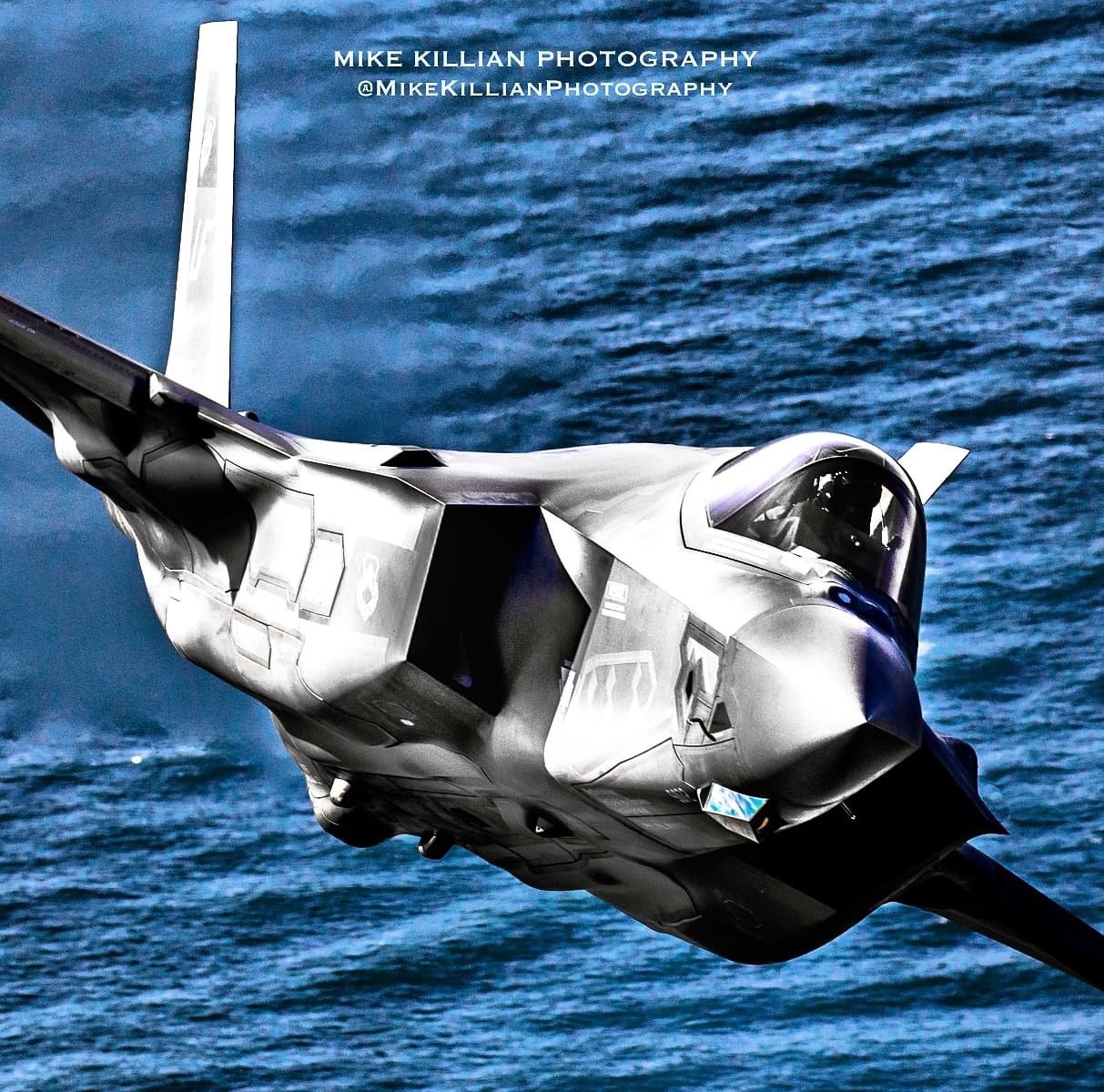
Meet the U.S. Air Force’s new F-35A Demo pilot and commander. Capt. Melanie Kluesner, call sign MACH, will showcase the Lightning II stealth fighter at air shows nationwide in 2024.
MACH comes onboard replacing the former demo pilot and team commander, Maj. Kristin “BEO” Wolfe. BEO has been the demo pilot since 2020, and has been training MACH over the last several months to get her certified to lead the team and fly demos for millions of spectators.
MACH (left) and BEO (right). Usaf photo
A veteran combat fighter pilot from a military family
Capt. Kluesner and the team come from the 421st Fighter Squadron, 388th Fighter Wing at Hill AFB, Utah. The veteran combat fighter pilot graduated from University of Southern California in 2014, and comes from a military family.
MACH brings over 1,000 hours of experience flying aircraft including the T-6A Texan II, T-38 Talon, F-16 Fighting Falcon, F-35B and of course, the F-35A Lightning II.
Mach in the f-35A lightning ii stealth fighter (usaf photo)
Her father is a former USAF fighter pilot, and also flew as a demo pilot in the 1980s was the Pacific Air Force’s F-16 Fighting Falcon demo team. Her mother was in the first graduating class of women from the Air Force Academy. She graduated pilot training as fighter qualified, but at the time women were not yet allowed to fly fighter jets for the USAF.
“It was a long road to get to where I am. There is nothing more rewarding than doing a job you love for something that’s bigger than yourself,” said Kluesner. “Being the demo pilot means spreading that message to the next generation. I’m really excited for the airshow season to begin.”
F-35A demo team (mike killian photo)
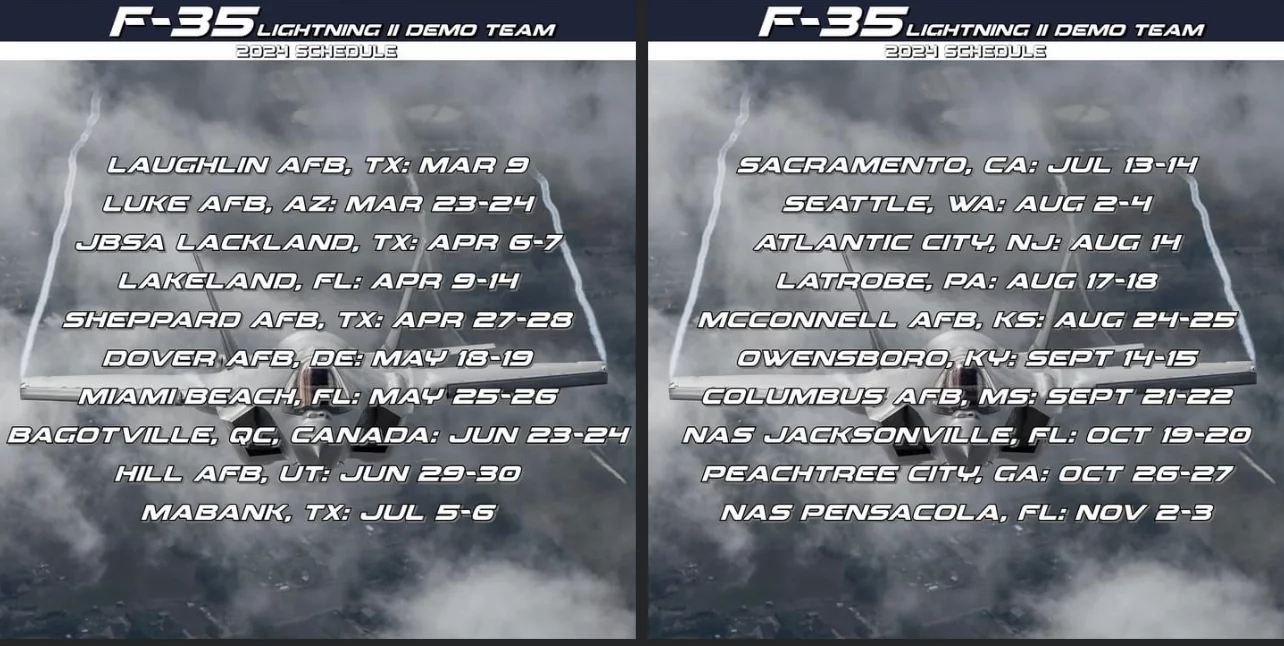
Team is scheduled to fly 20 air shows in 2024
MACH will command a traveling team of 14 maintainers and supporting personnel. They are scheduled to perform at 20 different shows this year, which is about 40 sorties.
“I think it’s really important for people to realize that if you want to be a fighter pilot or serve in the military, it doesn’t matter what you look like or that you fit the specific mold,” Kluesner explained.
Demo team 2024 schedule
“What does matter is being willing to stay disciplined, work hard, become a team player and care about serving your country. I’m humbled to be in this position. I hope everyone who watches the demonstration is inspired to dream big just like I was when I was a little kid.”
You can follow the team this year on Facebook to keep up with them.
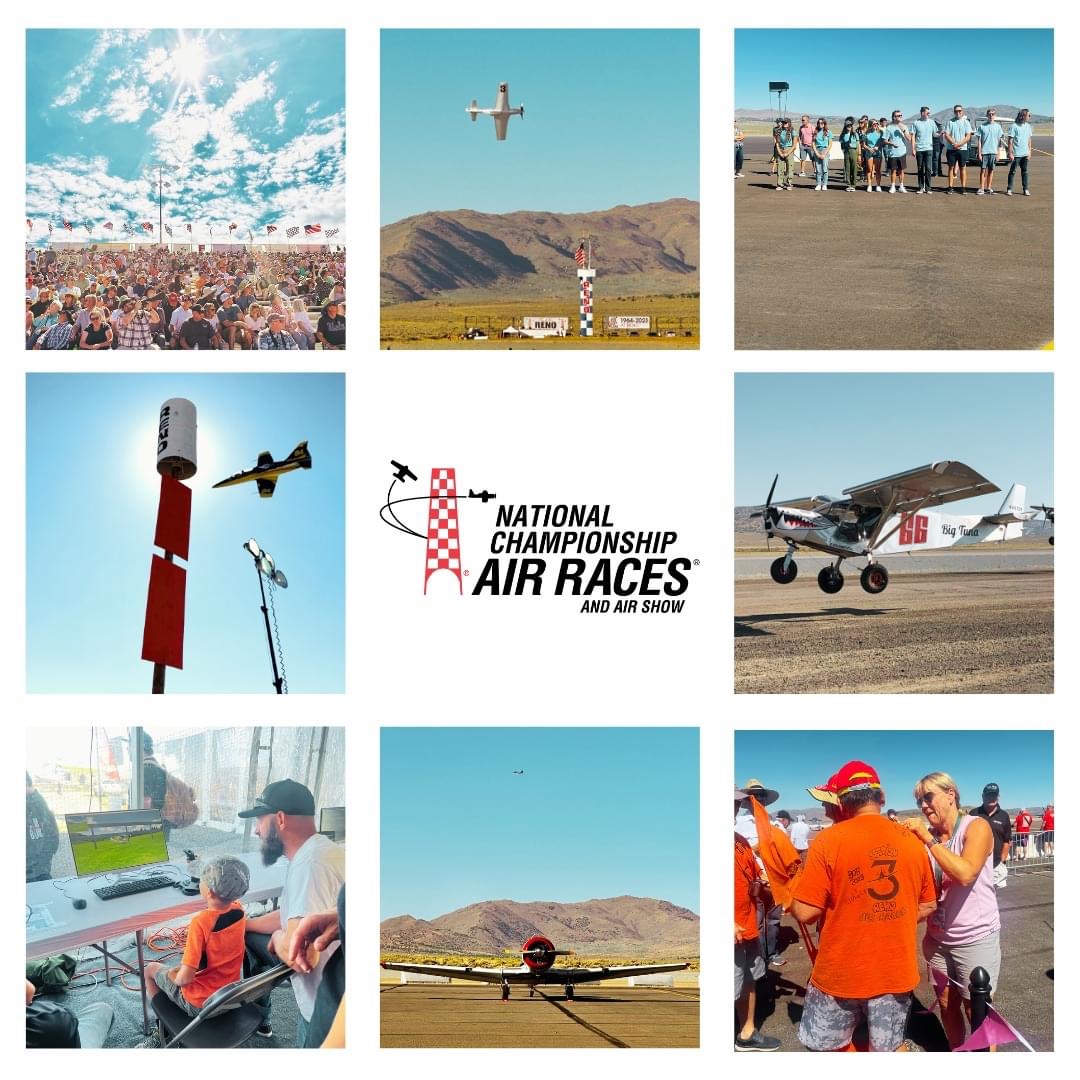
The Reno Air Racing Association (RARA) has announced the top 3 locations being considered for the future of the National Championship Air Races (NCAR).
Following the end of Reno, many communities expressed interest in hosting future races. However, only 6 submitted complete proposals. The 3 locations chosen as finalists are Casper, WY., Pueblo, CO. and Roswell, NM.
“We’ve been overwhelmed by the amazing, positive feedback we’ve received from the six bidding communities,” said Fred Telling, CEO and chairman of the board for RARA. “There were many elements to consider. We extend our sincere thanks to all the entrants who put in the time and effort to submit their carefully thought-out proposals. Through a rigorous vetting process, we feel confident one of these 3 locations will provide the elements our event needs.”
Site visit in roswell, nm (rara / ncar photo)
RARA board members, race pilot representatives and other committee participants visited all 6 locations. They considered each site’s ability to host large crowds, handle hundreds of aircraft and support the large race course needed.
Other 3 locations might be used for future expansion venues
The 3 locations that did not make the cut were Buckeye, AZ. Thermal, CA. and Wendover, UT.
“While these locations were not ultimately chosen to be the home of the next NCAR, they each have tremendous merit and value in their own right,” added Teller. “We will be reaching out to them to continue discussions on their potential as expansion venues.”
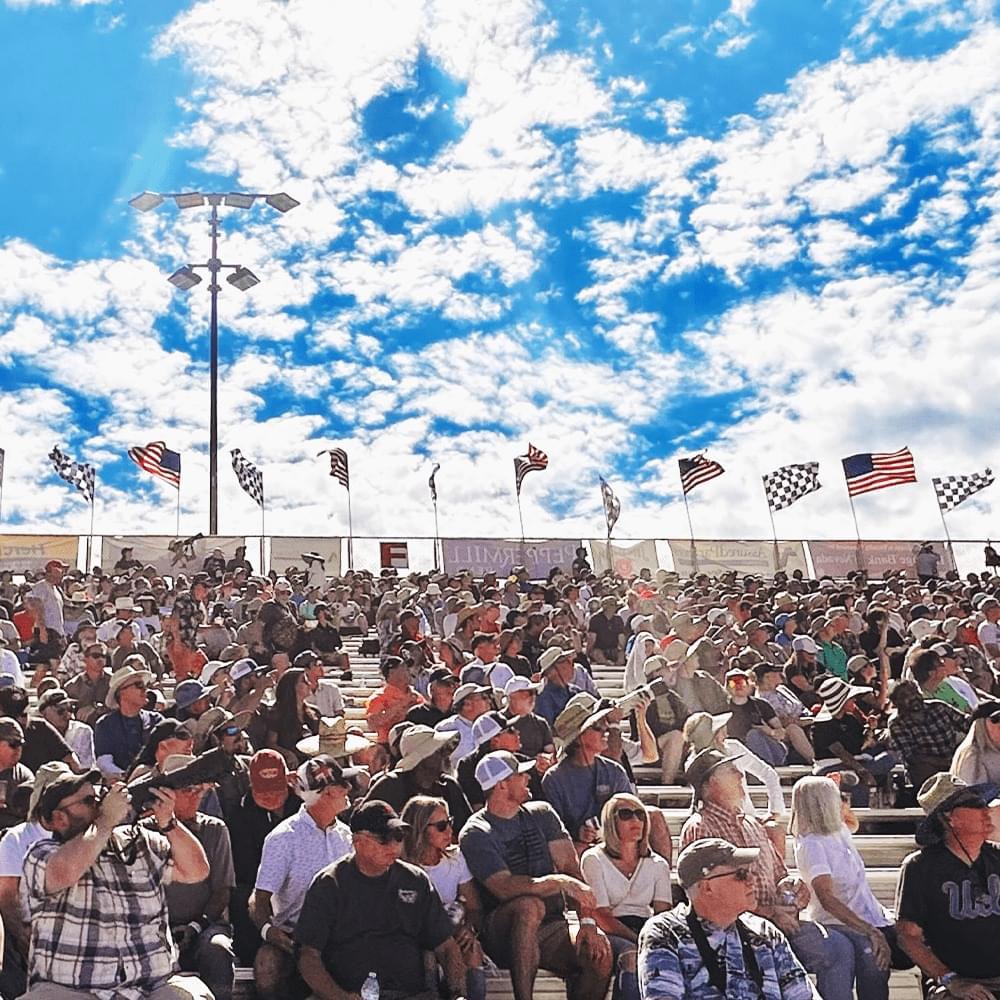
Spectators enjoying the races (photo rara / ncar)
“I’d be remiss if I didn’t mention the overwhelming support we’ve received from our September Family as we go through this process,” says Teller. “We are anxiously looking forward to welcoming everyone back to air racing in 2025.”
NCAR expects to make their decision on the location for the future air races in April.
7 December 1941…A Day of Heroes, Including The Pajama Pilot
7 December 1941, a day that every American of just about any age knows about, was the day the United States was physically attacked at Pearl Harbor. The attack launched the country into World War II, changing the way we lived, worked, and would fight in the future.
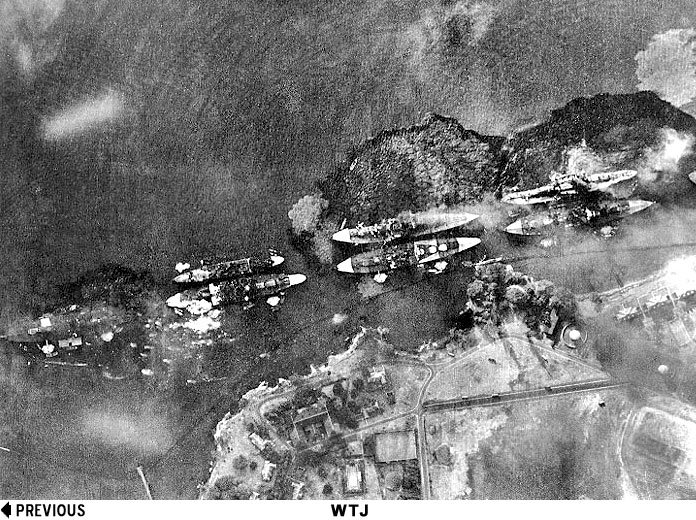
So much death and destruction occurred that morning. 2,403 American sailors and civilians died that day. 1,178 more were wounded. Nineteen US Navy ships and 347 military aircraft were damaged or destroyed. The attack was devastating both strategically and psychologically to the United States of America.
Pearl Harbor, 7 December 1941 (source: United States Navy)
But…It Was Also a Day of Heroes Including the Pajama Pilot
Phil Rasmussen was what you’d refer to as your average fighter pilot. He was born on 11 May 1918 in Boston, Massachusetts, to parents who had immigrated to the United States from Denmark years earlier. He led a normal life in the Boston area as a young boy and, after finishing high school, attended Gettysburg College in Pennsylvania. Upon graduating from college, Rasmussen enlisted in the US Army Air Corps and went on to fulfill his dream of becoming a fighter pilot, earning an assignment to the 46th Pursuit Squadron at Wheeler Field on the island of Oahu in Hawaii.
Pajama Pilot Spotted ‘Meatballs’ And Took Them Out
The 23-year-old Second Lieutenant was half asleep standing at his barracks latrine sink brushing his teeth in his purple striped pajamas when suddenly, out of the bathroom window he observed what appeared to be a small airplane barreling down on the not-so-distant flight line.
He saw an object drop from the aircraft. A few seconds passed and then tremendous explosions were first seen and then felt as huge fireballs erupted into the air. The aircraft pulled up hard and as it overflew his barracks Rasmussen identified large red circles, or “Meatballs” as the American fighter pilots called them, painted on the fuselage and wings. It was a Japanese Zero and it had just bombed Wheeler Field!
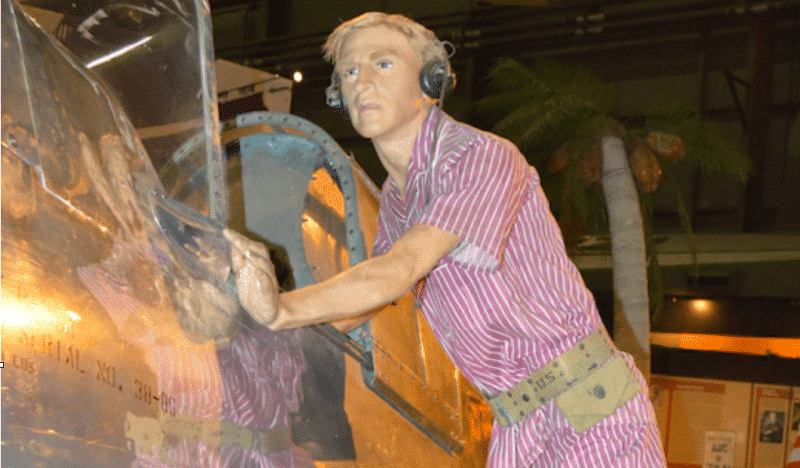
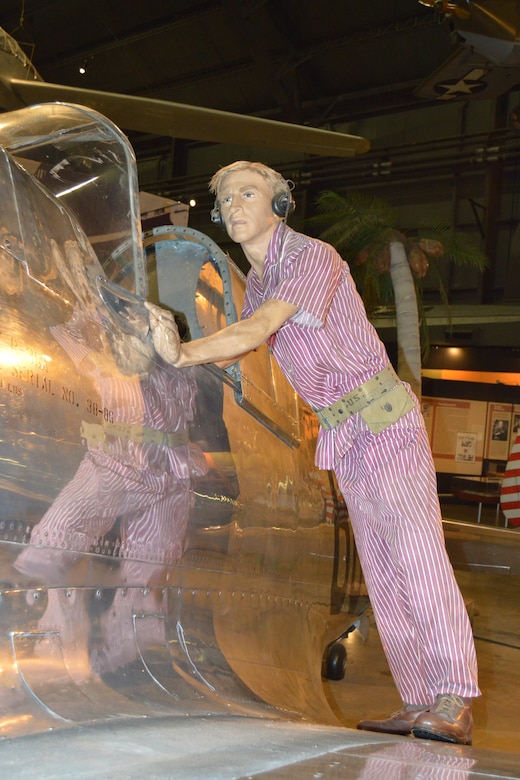
Curtiss P-36A Hawk diorama with portrayal of Lt Rasmussen in the WWII gallery at the USAF National Museum (source: United States Air Force)
Lined Up Wingtip to Wingtip
The soon-to-be Pajama Pilot wasted no time. He ran to his room, grabbed his shoes, his aviation headset, and his 45-caliber pistol and belt, and beat feet to the flight line…still in his pajamas.
In an attempt to foil potential Japanese sabotage, the command had decided to park aircraft wingtip to wingtip, allowing them to be guarded more effectively. However, this tactical error made for mouth-watering targets for the Japanese dive-bombing pilots.
Rasmussen watched as aircraft exploded all around him. A plane would be hit, causing a chain reaction that would ignite closely parked aircraft after aircraft. The entire fleet was going up in flames.
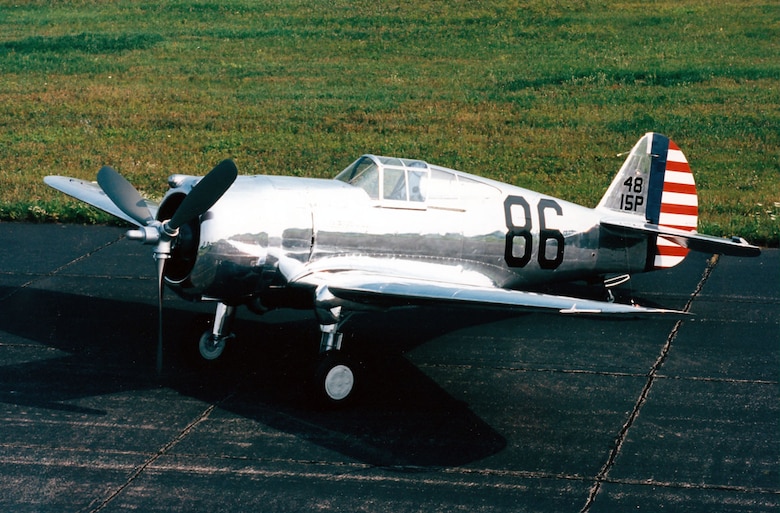
Curtiss P-36A Hawk (source: United States Air Force)
But further down the flight line stood several older Curtiss P-36A Hawks. They weren’t much to look at, but as far as Rasmussen was concerned, this wasn’t the time for beggars to be choosy.
Dogfights Over Kaneohe Bay in Pajamas
The Pajama Pilot and three other pilots scrambled to the aircraft, cranked the engines, taxied them to relative safety while they were armed up, and quickly got airborne during a lull in the attack. They formed up and flew east towards Kaneohe Bay, where eleven Japanese Zeros immediately engaged them. The four ships split up, each taking turns dogfighting with several bandits.
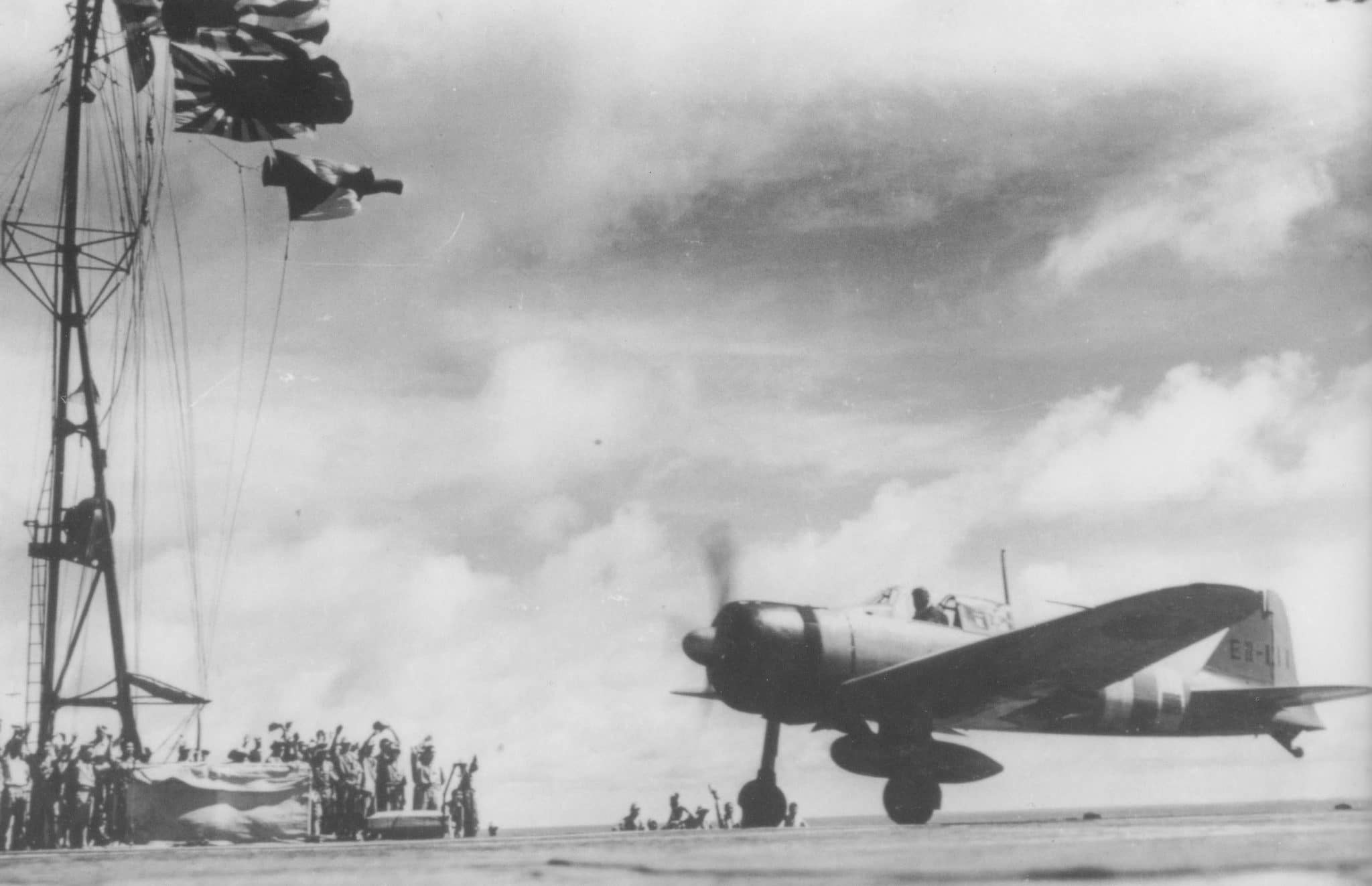
A6M-2b Zero taking off from IJN Zuikaku (image via National Archives
Rasmussen downed one Zero and damaged another even though one of his .30 caliber machine guns was jammed and a .50 caliber was only working intermittently. He was then engaged by a third bandit who flew straight at him in an attempt to ram his Curtiss fighter. While engaged head-on, Rasmussen also took hits from yet another Zero closing in on him.
Pearl Harbor fighter pilots (L to R) 2nd Lt. Harry Brown, 2nd Lt. Philip M. Rasmussen (the Pajama Pilot), 2nd Lt. Kenneth M. Taylor, 2nd Lt. George S. Welch, and 1st Lt. Lewis M. Sanders. National Archives photo
Rasmussen felt like he had hit a wall. His P-36A shuddered, and then his canopy exploded and departed the aircraft. Enemy bullets ruptured his hydraulic lines, leaving him with no ability to lower his landing gear or brake once on the ground. The cables running from his foot pedals aft to the rudder had been severed, making it impossible to control the yaw of the aircraft. On top of all that, his radio was reduced to a mangled mess of wires and pieces, leaving him with no communication capabilities.
Rasmussen’s damaged P-36A spun into the billowing clouds over Kaneohe Bay as he tried to maintain control of his aircraft. After breaking out of the weather at about 5,000 feet, he was able to right the badly damaged fighter, but then, once the initial shock of being shot up had worn off, he realized he had sustained injuries to his head when the canopy had exploded.
Crippled Landing
Rasmussen gingerly assessed the condition of his head, fearing he would find half of his skull missing. Luckily, his injuries were superficial as the flying plexiglass shards had simply knocked his headset off his head and threaded his hair with pieces of plastic.
Sec Lt Rasmussen and his battle-damaged P-36A Hawk. Note the missing tailwheel. (source: Wikipedia)
Rasmussen escaped into the billowing clouds and steered his crippled P-36A toward Wheeler Field, where he was able to successfully land without any hydraulics, braking, rudder control, or a tailwheel as he eventually discovered during his post-flight walk around. The Pajama Pilot was indeed lucky to be alive as his P-36A Hawk had been riddled with over 500 bullet holes!
The Pajama Pilot Was a Hero
Second Lieutenant Phil Rasmussen was awarded the Silver Star for his courageous acts in his P-36A over Kaneohe Bay on 7 December 1941. He continued to serve his country during World War II against the Japanese, getting his second kill in 1943.
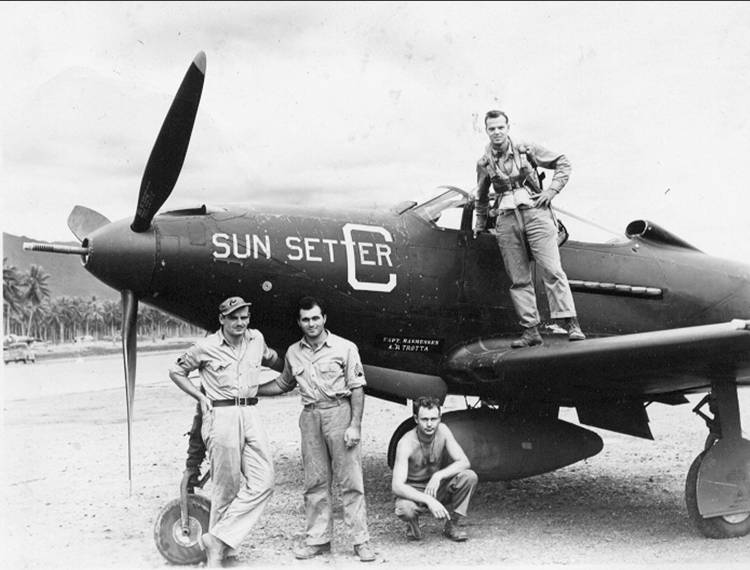
Lieutenant Phil Rasmussen (on wing) of his 7th Fighter Command P-400. (image via National Archives)
Rasmussen eventually earned a second Silver Star, four Air Medals, and the Distinguished Flying Cross. After 25 years of faithful service, Phil Rasmussen retired from the US Air Force as a Lieutenant Colonel in Florida. However, his legacy and story as the Pajama Pilot at Pearl Harbor continue to live on in the hearts and minds of aviation enthusiasts.
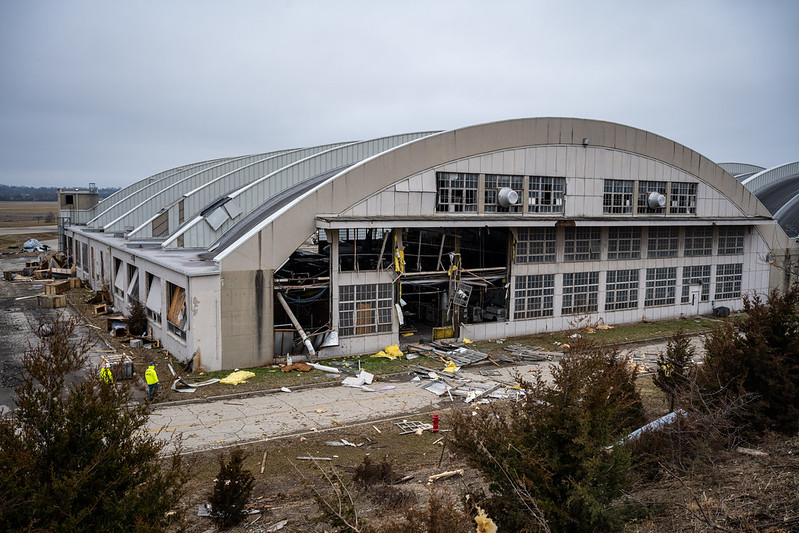
Wright-Patt AFB near Dayton, OH was hit by a suspected tornado early this morning. A severe weather outbreak battered the region overnight, signaling an early start to the spring severe weather season.
Wright-Patterson is home to the National Museum of the USAF, and home of the 88th Air Base Wing.
Credit Wright-Patterson AFB
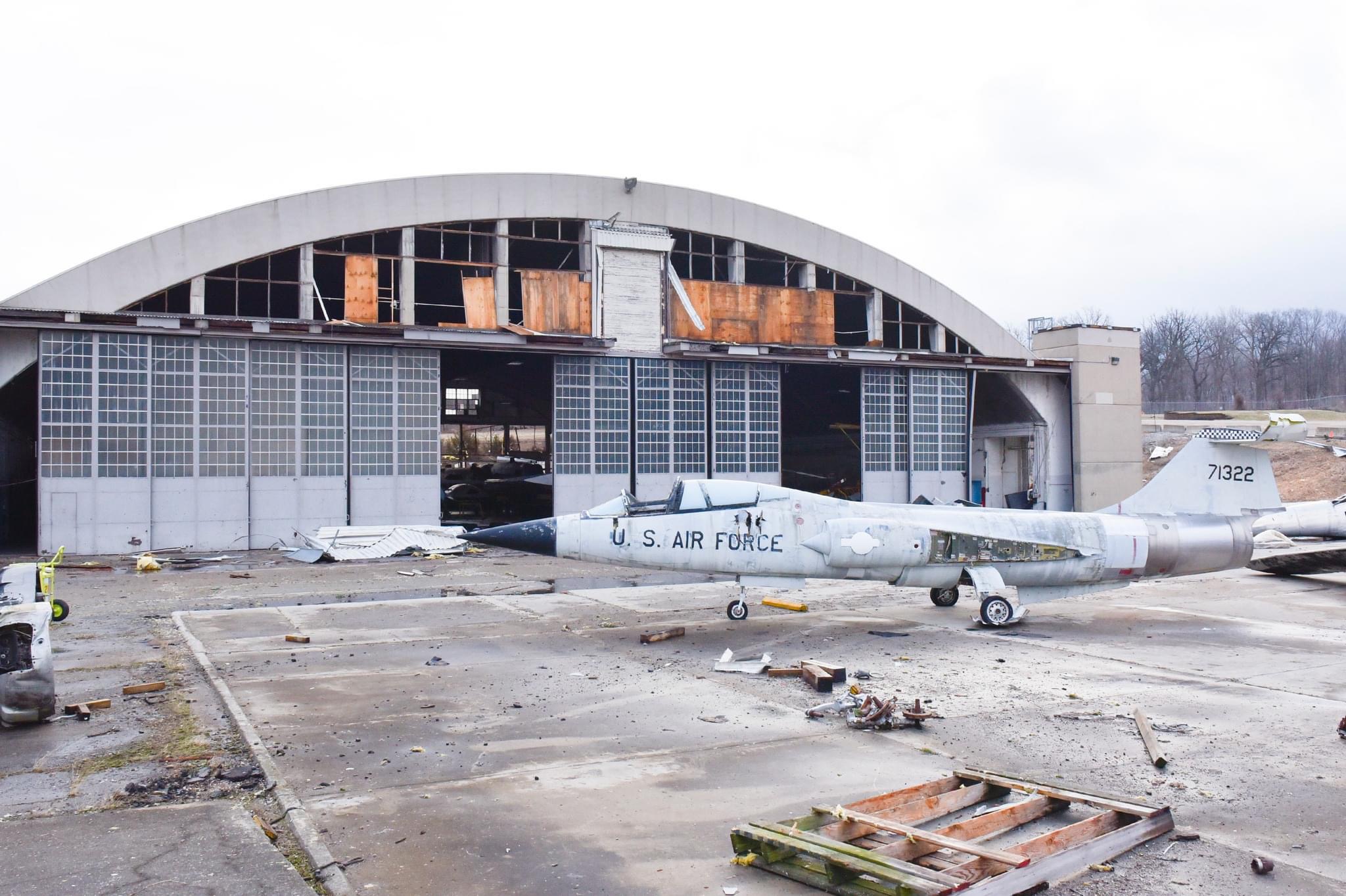
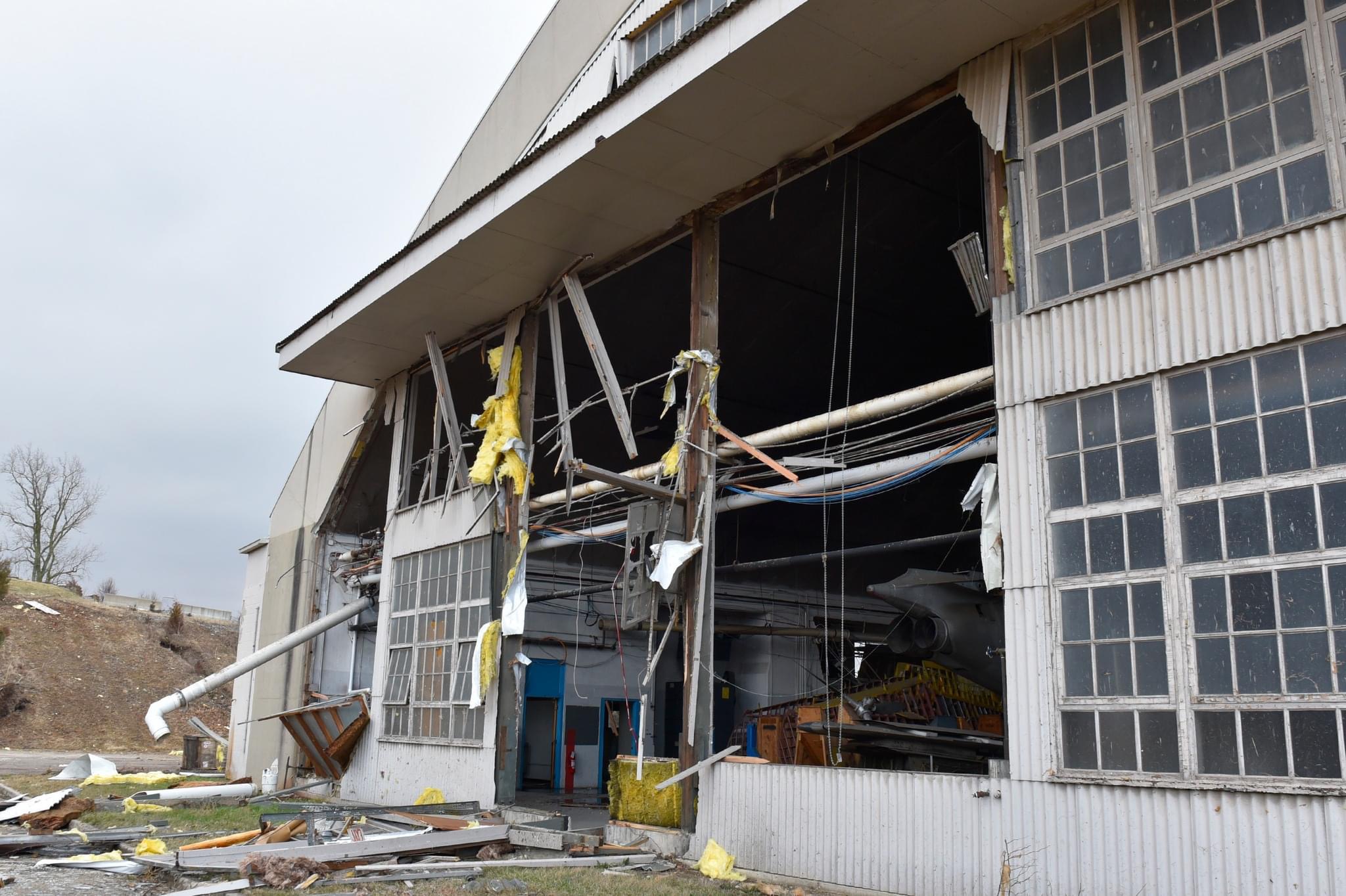
According to the 88th Air Base Wing, the National Museum of the USAF’s Restoration Hangar 4, Gate 22B (I-675 Gate) and several other buildings on the base’s ‘Area B’ was hit and took damage.
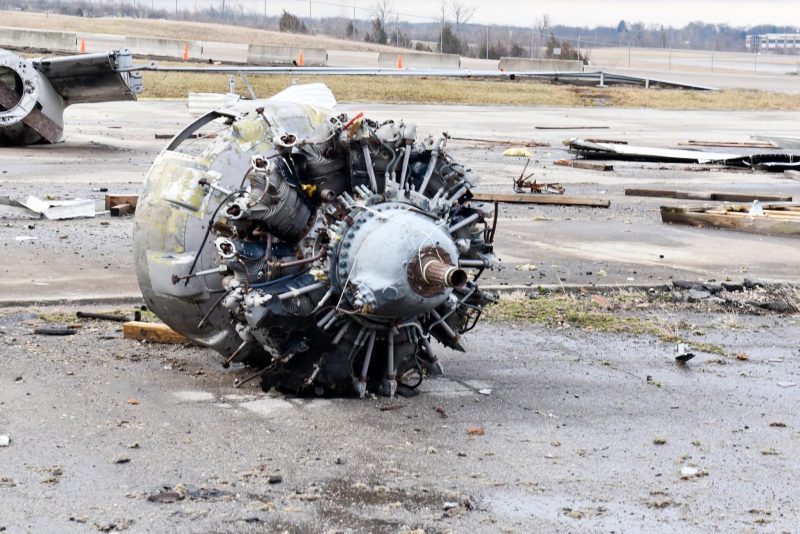
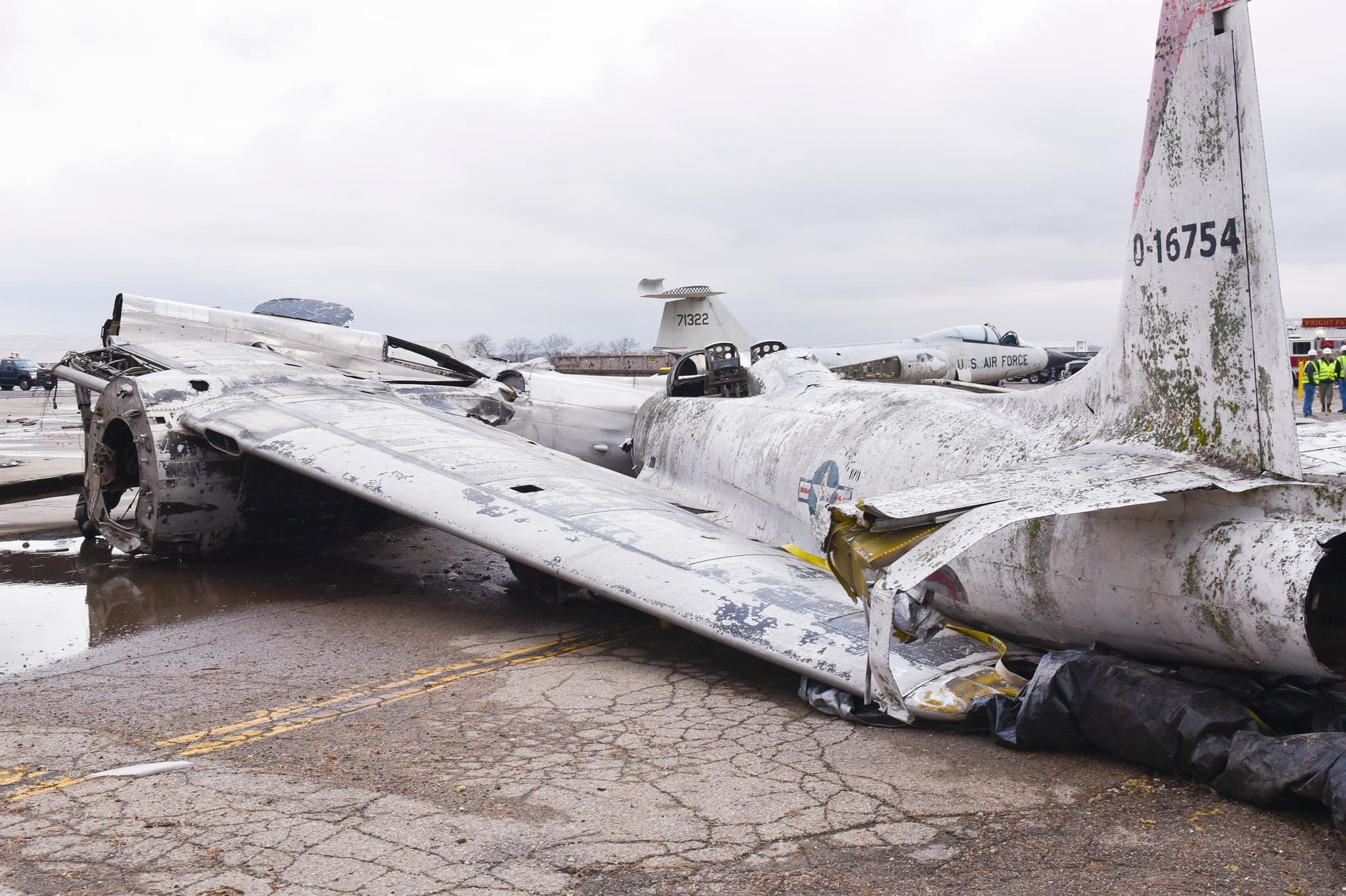
The 88th Civil Engineer Group, first responders and base safety personnel are assessing damage throughout the base. In photos released by the base, hangars appear half-destroyed on the outside, with plane engines and debris scattered around the grounds. Trees were uprooted and windows shattered. All tell-take signs of a tornado.
Credit Wright-Patterson AFB
“Our initial assessment from this morning’s storm is the damage is isolated to the southern side of Area B,” said Col. Travis Pond, 88th Air Base Wing and installation commander.
“Our initial focus right now is on safety and damage assessment. I can’t speak highly enough about our security forces, Fire Department and civil engineer Airmen for their quick response and hard work to assess damage and determine a path forward for restoring operations as quickly as possible.”
Credit wright-patt afb
Several tornadoes were reported across SW Ohio between 4:00-5:00am local time. A tornado warning to take cover was issued for the base at 4:43am.
The National Weather Service has since confirmed some of them. They are currently reviewing data to confirm more.
Wright-Patt AFB Hit by Suspected Tornado 113
Aircraft inside the museum’s restoration hangar were mostly undamaged, and everything outside the hangar was scheduled for disposal. Nobody was hurt.
Additional damage and cleanup photos can be viewed here.
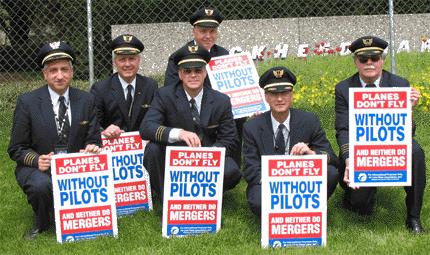
“Any normal person can handle an airplane,” said the owner of what would become American Airlines. Unions formed to counter safety issues and poor working conditions.
The early history of the Air Line Pilots Association (ALPA) union is singularly identified with David Behncke. Born on a farm in Wisconsin to immigrant German parents in 1897, Behncke joined the Army in 1916 and would get his pilot wings and a commission as a second lieutenant in 1917. Following his Army service, he flew around the Midwest and Great Lakes region in the 1920s with his own barnstorming outfit and participating in air races.
To supplement his income, he made a bit of a local name for himself in Illinois, flying custom-tailored suits from Chicago to various cities. This work brought him to the attention of Minneapolis businessman Charles Dickenson, who had just secured an air mail contract between Minneapolis and Chicago.
In 1926, Behncke became the first pilot for Dickenson Airlines on Air Mail Route 9. However, the struggling airline soon faced the loss of its contract. A group of businessmen from Detroit and Minneapolis, led by Lewis H. Brittin, acquired the airline and rebranded it as Northwest Airways—the forerunner of Northwest Airlines. Northwest moved into passenger transport like many of the air mail carriers of the day, and it was David Behncke who flew Northwest’s first passengers on 1 February 1927.
David L. Behncke, founder of ALPA (Wisconsin Aviation Hall of Fame)
An airline pilot’s fortunes in those days often waxed and waned at the whim of the airline owners. Before long, Behncke changed jobs and, by 1928, was flying for Boeing Air Transport out of Chicago, which later became United Airlines. It was during this transition period that Behncke began contemplating organizing airline pilots into a union that wouldn’t be limited to one airline but encompass pilots from other airlines as well.
Flying professionally in the 1920s was still a hazardous job. For many airlines, the attitude of the owners was typical for the 1920s, which espoused an accumulation of wealth with little regard for the workers. For the airlines of the day, this meant the pilots were often low-paid on top of what was already considered a hazardous job. Two main factors led Behncke to move forward with his plans for a pilots’ union.
The first one was, of course, the “robber baron” attitudes of the day. Even though the number of passengers was increasing, the air mail contracts were lucrative, and the US Post Office paid airlines by the pound. It wasn’t unusual in those days for airlines to mail heavy, useless items to pad their bill and get more from the Post Office. Many individuals who ran airlines became quite wealthy as a consequence, and for an average low-paid pilot who routinely saw the sorts of things done to boost air mail profits, it was unsettling.
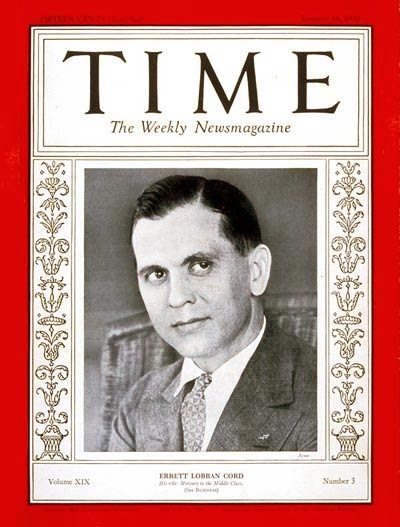
Many of the pilots of the day served in the First World War and were rightly proud of their service and felt that what was going on in those days was contrary to how they ended up with their pilots’ wings. The industrialist E.L. Cord, who was an early owner of what became American Airlines, for instance, wasn’t shy about stating his low regard for the pilots of the airlines he owned. “Any normal person can handle an airplane,” he declared in 1930.
The second factor was the practice of pilot pushing. Even with the carriage of passengers, there was tremendous pressure on pilots to fly with poorly repaired aircraft or in unsafe weather conditions. Many airlines offered financial incentives to pilots who would take a flight that had been turned down by a fellow pilot. With the Depression underway, there were plenty of out-of-work pilots to replace pilots who refused to fly for safety or weather reasons.
In the 1920s, there was a social organization of pilots called the National Air Pilots Association, NAPA. In 1928, while still working for what became United Airlines, Behncke was elected to a high position in NAPA. He urged the organization to take a vocal stand against pilot pushing by adopting the slogan “Don’t overfly a brother pilot!“ Unfortunately, only a small fraction of NAPA’s members were professional pilots, and Behncke’s proposals fell on deaf ears.
Behncke felt the financial incentives to fly in unsafe conditions were the worst evil of the profession. In fact, in 1928, most air mail pilots only had about a 25% chance of surviving several years flying the line. For many airline owners, the loss of an aircraft and a pilot was an easy cost to absorb, given the lucrative air mail rates of the day.
Behncke decided he had to form a union on his own, and by early 1931, word was out what Behncke was up to. Many of the airline heads who would later have formative roles in the US airline and commercial aircraft industry were quite intense in their anti-union opinions. The iconic head of United Airlines, for example, Pat Patterson, quite openly declared that “Nobody can belong to a union and fly for United!“. Gathering 24 trusted fellow pilots from other airlines, Behncke and the so-called “Key Men” met at the Morrison Hotel in Chicago on 27 July 1931 to form the Air Line Pilots Association, ALPA.
Because of the intense dislike of their activities by their respective employers, the “Key Men” were referred to by letter codes in an attempt to hide their roles from their employers. Bryon Warner of United, for example, was known as “Mr. A”.
While that date is considered the birth of ALPA, a year prior, Behncke did meet with a closed inner circle from three different airlines to set the wheels in motion for the 1931 meeting. They were Walter Hallgren and Lawrence Harris from American, R. Lee Smith of Northwest, J.L. Brandon of United, and another United pilot whose name is lost to history as he had switched to management not long after the 1930 meeting- the so-called “Lost Founder” of ALPA.
As membership of ALPA grew in that first year, Behncke had to move the operation out of his home and into a two-room suite at a Chicago hotel. Many pilots were tired of how they were treated at their respective airlines, but many airline managers were quite open in their threats to fire anyone joining ALPA. Many of the “Key Men” from the 1931 meeting did end up losing their jobs. And if the airline didn’t fire you for joining ALPA, they certainly did what they could to make you miserable.
TWA, for example, often shuttled pilots among different crew bases at short notice in an effort to make their families’ lives difficult as well. Schedules were often used punitively against anyone even suspected of ALPA membership. Many pilots who weren’t fired found themselves demoted from airliners to open-cockpit biplanes flying mail at night. Many airline managers felt they needed to stamp out ALPA quickly before it gained momentum. Eddie Rickenbacker of Eastern Air Lines, in particular, became a lifelong foe of the union.
In 1932, Behncke was working on getting ALPA affiliated with the American Federation of Labor (AFL) when a strike at a small airline thrust him and ALPA into the national spotlight. E.L. Cord was an aggressive businessman who, in a few short years via acquisition, headed an impressive industrial and transportation conglomerate that started with automakers of the day, given his background as an auto salesman for Auburn Auto.
In fact, Auburn Auto was one of his first acquisitions in 1924, turning the company around to the point it was introducing several new models a year, but this was accomplished by a ruthless attack on labor costs that would set the pattern of his business dealings in future corporate acquisitions. In short order, he acquired Dusenburg Automobiles as well as both Yellow Cab and Checker Cab.
He then moved into aviation, acquiring Stinson Aircraft (he was a private pilot who owned a Stinson Detroiter) and Lycoming Engines. Cord owned Stinson Aircraft when the company produced the Stinson Trimotor. It competed for airline orders with the Ford Trimotor, which cost $40,000. Cord’s eye towards draconian labor cost cuts meant he could offer the Stinson Trimotor for only $25,000.
In 1930, he decided to enter the airline business, seeing the profit potential with air mail subsidies. He started Century Airlines, which began flying in March 1931 with three daily round-trip flights between Chicago and St. Louis via Springfield and three daily round-trip flights between Chicago and Cleveland via Toledo. And quite naturally, Century Airlines flew Stinson Trimotors. He then set up other similar airlines around the nation, all with “Century” as part of their name.
In addition, he acquired other smaller carriers, like a small Texas-based outfit called American Airways. Lacking a lucrative air mail contract, Cord cut costs as far down as he could, reasoning that if he could operate his airlines at half the cost of the established airlines, air mail contracts those airlines had would be canceled and given to him.
With lower costs already, he stood to make a significant profit as a result. He had figured out he could pay pilots as little as $150/month at his Century Pacific operation between San Francisco and Los Angeles and still find pilots willing to work for him. Century Airlines, based in Chicago, had higher-paid pilots at $350/month, which was still quite a bit lower than the industry standard of the day. Since he was getting away with only $150/month with Century Pacific, Cord cut the salaries of the 25 pilots working at Century Airlines to $150.
The chief pilot at Century, Duke Skonning, called the rates “starvation wages” and wanted to bargain with Cord. Cord agreed to a 10-day period before instituting the new wage cut, but he had no intention of bargaining with the pilots who had already been disregarded. At the end of the 10-day period, as each Century flight arrived at Chicago Midway (called Chicago Municipal back then), each pilot was escorted off the plane by Cord’s guards and made to sign a new agreement for $150/month.
Every single pilot refused, setting off the first strike in the airline industry. Now locked out, those pilots showed up at Behncke’s door, led by their chief pilot, Duke Skonning, who told Behncke, “Well, here we are. We have been locked out. What is the Association going to do about it?“
E.L. Cord from the 18 January 1932 cover of Time Magazine (Time)
Behncke’s work to get affiliated with the AFL paid off quickly. Immediately, the AFL had its Chicago chapter work with ALPA and the striking pilots. Behncke asked each ALPA member at other airlines to chip in $25 to help pay the bills of the striking Century pilots. Soon, radio spots were airing throughout Chicago to bring attention to the Century strike.
Cord quickly hired strikebreakers, but before they could show up for work, ALPA members would meet with them to explain what was at stake. Most still went to work with Cord, but some stayed with ALPA with the promise of help finding a non-strikebreaking flying job. This infuriated Cord, who then sequestered his new hires under armed guard at the airport.
This, in turn, angered the City Council of Chicago, which didn’t like Cord treating city property as a prison. He was subpoenaed to appear before the council, but Cord snubbed them, further hurting his cause. The AFL made sure Congress knew of Cord’s actions, and this was how ALPA gained its first political ally- Representative Fiorello La Guardia from New York emerged to champion ALPA’s cause in Congress.
It spawned a friendship between David Behncke and La Guardia that lasted long after La Guardia became mayor of New York City. With congressional pressure on him, Cord sent a letter to each member of Congress referring to ALPA and the Century pilots on strike as communists- since most pilots had military backgrounds, this backfired on Cord and set many Congressional officials against him to side with ALPA.
Cord’s luck was running out fast, and in 1932, he gave up control (but not ownership) of his airline ventures. They were all folded into a holding company and, in short order, a few years later, rebranded as American Airlines. Cord dispatched one of his young executives to Texas to run the airline for him- an accountant named C. R. Smith, who would come to lead American Airlines until 1968. Putting Smith in charge was one of his concessions to Congress to avoid getting American’s air mail contracts canceled as a penalty.
By 1936, Behncke found pilot jobs for all of the striking pilots from Century Airlines. He also made sure all the strikebreakers at Century were exposed. In an editorial, Behncke first used the term “scab” to refer to airline labor practices. Many of those strikebreaking pilots found it difficult to find jobs in the industry. Behncke agreed to take them into ALPA for assistance in finding work, provided each striking pilot from Century Airlines found work first.
The Century Airlines strike gave ALPA national recognition, which wouldn’t have been possible without the AFL’s help and Fiorello La Guardia’s friendship. But with a newfound stature and friends in all the right places, many airlines that only a few years earlier tried to stamp out ALPA quietly acquiesced to its presence among its pilot ranks.
Sources: Flying the Line: The First Half Century of the Air Line Pilots Association by George E. Hopkins. The Air Line Pilots Association Press, 1982, pp 10-53. The Wisconsin Aviation Hall of Fame http://www.wisconsinaviationhalloffame.org/.
That One Time When a Distraction with a Dignitary Led to Almost Flying into Cumulus Granite.
Our month of European flying during Operation Busy Brewer included showcasing the B-52 to local dignitaries, including the US Ambassador to England. Our training sortie for the day was a simulated mine-laying mission over the Mediterranean Sea, south of Sicily. Instead of Major Glenn Lunsford (AC) commanding the flight, our B-52 demonstration flight was piloted by Lieutenant Colonel Northington, the new commander of our sister squadron, the 596 BS, also located at Barksdale AFB, Louisiana. Our crew had never flown with him before but knew he was an up-and-coming commander with stars in his future.
We departed RAF Fairford and, like our World War II forefathers in B-17s, pointed south over the English Channel toward France, where, by previous agreement, four French Mirage F1 fighters intercepted our American Stratofortress. Our flight continued over the Alps and down the Adriatic Sea along the east coast of Italy. With the ambassador seated on the instructor pilot jumpseat behind Lt. Col. Northington and Lt. Dan McMillan (CP), we descended through a dense layer of clouds to 400 feet above the ocean. I navigated our bomber westward to the Initial Point for Capt. Joe Wolf’s (radar nav – RN) mine-laying run, just south of Sicily.
Demonstrating a Training Mission
For this flight, our B-52 carried a metal training weapon but without a warhead or the means to disperse actual sea mines. On Joe’s command, the inert sea mine splashed into the sea and was scored by Navy observers from a nearby ship as we banked left in a wide 270-degree turn and headed back toward the eastern side of Italy. Climbing back up to 1000 feet and into the clouds, Lt. Col. Northington began chatting with the ambassador over the plane’s interphone, blocking our ability to chime in.
Flying Straight Towards the Rocky Coastline
Joe and I could see the mountainous coastline looming ahead from our green and black radar screens while the pilots flew westward in thick clouds. As a young 2nd lieutenant, I wasn’t being assertive enough with the high-ranking officer sitting above. Lt Alan McGreer (EWO) and Airman Mike Barker (gunner) became nervous as they heard Joe repeatedly trying to break into the VIP conversation.
“Pilot! If you don’t climb now, we’re all going to die!”
Capt. Joe Wolf
Unable to stand it any longer, Joe finally commanded, “Pilot! If you don’t climb now, we’re all going to die!” Alan and Mike reached for their ejection seat handles until we were sure we had cleared the “cumulus granite” directly ahead.
The DV Sat In The Seat!
Our bomber climbed back up to 30,000 feet, and the ambassador was invited to sit in Lt. McMillan’s copilot seat to the right of Lt. Col. Northington. Hours later, in the dead of night, it was time to descend over the English Channel and enter the traffic pattern of RAF Fairford. Ever the diplomat, our aircraft commander said to the ambassador, “Okay, sir, I think it’s time for Dan to get back into his seat.”
The ambassador replied, “What’s the matter? Don’t you trust me?”
Silence.
“Well, sir … Do you have any flight experience?”
“I have my private license in a Cessna 172,” our VIP replied.
Apparently, that answer satisfied Lt. Col. Northington. Without asking for input from the rest of us—three lieutenants and a captain—he began preparing to demonstrate a touch-and-go landing of our eight-engine bomber for the distinguished guest. Joe and I exchanged a wide-eyed glance, both a little uneasy about what was coming next.
After any touch and go landing the tower controller will query, “State your intentions,” asking the aircrew what approach and landing they request to fly next. Upon hearing, “State your intentions,” Joe dropped his mask and shouted to me (not over the interphone), “Live! We want to live!”
Soon, the ambassador relinquished his seat to our “Lieutenant Dan,” and we safely completed our training mission. To show his gratitude, Mr. Ambassador treated our crew to traditional post-mission beers. In the land of English and Scottish ales and Irish Guinness, our US Ambassador treated us to … Budweiser.
Official US Air Force Photograph
Glad to Get Back On The Ground
During our off-duty hours, we shopped and toured London. That year, the dollar was so strong that many of us bought cashmere sweaters, Waterford and Stewart crystal, and Wedgwood fine china. Joe, still single at this point, liked a blue and silver Wedgwood Amherst china pattern (it was Air Force colors, after all). He purchased the entire 64-piece set, telling me, “I don’t know who I’m going to marry, but I hope she likes my china.”
The B-52 had a huge storage compartment aft of the bomb bay, just forward of the tail. We packed our goods in the storage area and returned to the States. Upon arrival, we parked our three B-52s on the Barksdale flightline, and each crew downloaded its collection of British goods. Major Lundsford’s E-61 crew had the largest pile stacked beside our bomber. When our Wing Commander, Colonel Eugene Habiger, strolled by, he smirked, “Looks like you guys win the ‘Support the English Economy Award’.”
Canadian discount airline Lynx Air is calling it a day. The upstart discount airline promised to bring low fares to Canadian travelers. Just two years after commencing operations, the airline announced today that it will cease operations on Feb 26, 2024.
In a post on its Facebook page, the airline stated:
Canadian Discount Airline To Shut Down 119
According to the FAQ on the website, most travelers can expect to fly on their flights through February 25th. All ticket holders for flights after the 25th need to contact their credit card company as Lynx Air said they will not be able to assist with a refund.
Why did Lynx Air fail?
Lynx Air is the third name for an airline that evolved to service middle Canada. The airline rebranded to Lynx Air in 2021 with a focus on less served routes within Canada and leisure routes from Canada to the US. The airline operates a fleet of 9 Boeing 737-8MAX jets.
In a statement on its website, the airline shared the reason for the failure stating, “the compounding financial pressures associated with inflation, fuel costs, exchange rates, cost of capital, regulatory costs and competitive tension in the Canadian market have ultimately proven too steep a mountain for our organization to overcome. It is with a heavy heart we leave the skies.”
Helen Richey broke barriers, but her life was tragic.
In the early years, the journey into aviation was rough for women. They faced serious discrimination from male counterparts and had to fight for their place in the sky. Many ladies helped pioneer women in aviation, including Amelia Earhart, who became a household name, but Helen Richey was the first woman to become a commercial pilot.
Her story is one of a courageous underdog, passion, and pursuit of dreams, but also tragic darkness. She was born in 1909 in Pennsylvania and was drawn to the sky at an early age.
”It’s what I want to do with my life”
Meet Helen Richey: The First Woman Commercial Pilot 134
Richey had a knack for mechanical and technical things. Like most avgeeks, she grew up looking skyward any time she heard a plane, and frequented her local airstrip. Her first plane ride was on top of sacks of mail, tagging along with a friend and meeting other famous pilots, including Ruth Elder and Ruth Nichols. Richey was awestruck at seeing Nichols fly in, welcomed by journalists, photographers, and autograph-seekers.
In her biography, “Propeller Annie”, author Glenn Kerfoot stated that she told a friend, “I’m going to fly. I’m going to be good enough to earn money at it, too. It’s what I want to do with my life.”
Helen Richey when she was attending Curtiss-Wright flight school at Bettis Field. Photo Courtesy of San Diego Air & Space Museum
Her father wanted her to become a teacher, but Richey and her mother convinced him to support her dream. At 20, she enrolled in flying school and flew her first solo after only six hours of instruction. She earned her pilot’s license just two months later.
Entertaining, but not taken seriously
In a 1939 story with The Pittsburgh Press, Richey recalled her flight training. “The boys were skeptical of my joining the class at first, but no one really resented my being there. They kept me on my toes.Nothing delighted them more than to catch me on a difficult problem. I studied twice as hard so I wouldn’t give them that pleasure. When they saw I was trying to be a good sport and was sincere about flying, they accepted me as one of them.”
A young Helen Richey. Photo Courtesy of San Diego Air & Space Museum
Getting licensed to fly didn’t mean much for a career, especially not commercial, but you have to start somewhere. The same story reported that officials set up her final test for her license as nothing more than an entertainment program. Something to watch but not take seriously.
Making a name for herself: First Woman Commercial Pilot Helen Richey
The romance of the skies was blooming in the 1930s. Flying was a rarity, and records were being made and broken regularly. The press loved reporting on aviation and the public was excited to hear about it, especially if it involved women.
Helen Richey and her biplane. Photo Courtesy of San Diego Air & Space Museum
Richey’s first plane was an open-cockpit biplane, financed by her father. It wasn’t long before she started making a name for herself. She began flying aerobatic demos at an air show and found a place in barnstorming and air racing, which was in vogue back then. She won numerous trophies and competitions, including the Amelia Earhart Trophy at the Cleveland Air Races in 1932.
Richey, however, was just getting warmed up. She wanted a major record, and tagged up with another lady in late 1933, pilot Frances Marsalis, to make it happen.
Into the record books
Richey and Marsalis’ goal was to break the record for the longest time in-flight without landing to refuel. A cosmetics company called Outdoor Girl sponsored them. They chose a 1929 Curtiss/Curtiss-Robertson Model 56 Thrush as their aircraft.
Helen Richey and Marsalis on their record-breaking endurance flight. Photo Courtesy of San Diego Air & Space Museum
They took off from Miami and flew for 10 straight days over south Florida. Each lady took turns flying. Pilots Jack Loesing and Fred Fetterman flew another plane to provide supplies and fuel, using a basket on a tether to airdrop food, water, items for repairs, oil, suntan lotion, and rubbing alcohol.
Many Amazing Feats In The Skies
They refueled them 83 times, which was very risky business. Marsalis called it “wrestling with a cobra in a hurricane.” The ladies had to climb out of a hatch, grab the dangling fuel nozzle in the wind, and get it into their gas tank without spraying all over them or the engine, hitting them in the face, or damaging their plane, which is exactly what happened… twice.
Meet Helen Richey: The First Woman Commercial Pilot 135
The first incident occurred when the fuel nozzle hit the plane and punctured the protective cloth on the airframe. Richey leaned out of her cockpit and sewed it up. The second incident almost forced them to land when a supply basket ripped a hole in the wing. Richey climbed out onto the wing to fix that too and saved the flight.
Some newspaper photographers even caught a flight to capture the ladies, finding a naked Richey suntanning in the cockpit. The Associated Press reported that Marsalis then dove the plane into the clouds, hiding Richey as she put her clothes back on.
Meet Helen Richey: The First Woman Commercial Pilot 136
They landed in Miami after flying non-stop for 23,700 miles in 211 hours and 5 minutes, beating the previous record by 13 hours. Amelia Earhart sent her personal congratulations.
Sadly, Richey watched Marsalis die the following year in an air race accident. Richey won that race, but went into depression afterward, walking away from stunt flying and racing.
A dream realized, but only as a publicity stunt
She wanted to do less risky flying, and still had her ambitions fixed on becoming a paid commercial pilot. In 1934, she applied with Pennsylvania Central Airlines, which was competing for contracts with another carrier. They saw her as a positive publicity opportunity and hired her to draw attention to the new airline.
Her first commercial flight occurred on the last day of the year, flying a Ford Trimotor to deliver mail and passengers from Washington, D.C. to Detroit. It wasn’t long, however, before the discrimination against her would pressure her into resigning.
Resentment and Hurdles for Richey
Men in the company resented her being paid to fly and threatened to go on strike. The company only gave her a dozen flights through the first half of 1935, and Richey was only flying twice a month.
Even worse, the federal Bureau of Air Commerce strongly encouraged the company to restrict her to only daytime flying, and only in good weather. They didn’t, however, suggest that for any men.
Helen richey, june 1930 (Courtesy of the San Diego Air & Space Museum)
Despite this, and despite the press being patronizing of her accomplishment, Richey played it straight and took the blows. “My getting this job was constructive, not sensational. It makes it easier for other women fliers,” she told the media. “Flying isn’t physically tiring. You just have to know your air and navigation. We follow the radio beam all the way. We get frequent weather reports. There’s no guesswork. If fog settles over our next stop, we fly on or return. Our tank carries enough gas. Doesn’t it sound routine? It is.”
However, her male counterparts continued to give her the cold shoulder, and the Air Line Pilots Association refused to accept her membership.
Then The Story Broke
That’s when newspaper reporter Ernie Pyle broke the news that Richey’s hiring was a sham from the start, and the Department of Commerce was in on the scheme. She was only supposed to be employed a couple weeks, before being transferred into another role.
However, they underestimated the attention her hiring would bring. When the Commerce Dept asked why Richey was still flying after 2 weeks, Pyle reported that the airline’s president feared public “indignation.” He believed letting her go could backfire against the company.
That’s why they, instead, just limited her flying, more and more, in the hopes that the public would forget. When Pyle broke the news on the scheme, Richey declared she would not tolerate being a “fair weather flier.” She quit.
Richey kept flying elsewhere
Helen Richey focused on flying elsewhere. She soon joined the Bureau of Air Commerce, marking rooftops with location and directional information to assist other pilots. She even set two more records in 1936: piloting a lightweight single-seat plane to 18,448 feet (over 1,000 ft above the old record) and setting a women’s speed record for light planes.
Amelia earhart and richey (Courtesy of the San Diego Air & Space Museum)
Richey also joined Earhart in the 1936 Bendix Air Race. They flew in Earhart’s Lockheed Electra, the same plane in which Earhart and Fred Noonan vanished over the Pacific Ocean in 1937. Richey and Earhart finished 5th in the race.
In 1940, Richey became the first woman to earn her instructor’s license and became an instructor for air cadets. She then joined the American wing of the British Air Transport Auxiliary (ATA) in 1942, ferrying aircraft and materials from factories to frontline airbases around the British Isles.
Richey in her British Air Transport Authority uniform during World War II. Courtesy of the San Diego Air & Space Museum
Ernie Pyle, who became close friends with Richey, later remarked that she flew 10 different types of British airplanes and delivered more than 50 Spitfires. Pyle said Richey likened flying the Spitfire to “flying in a beautiful dream.”
She returned to America in April 1943 to be with her ill mother and joined the famous WASPs (Women’s Air Force Service Pilots). Richey was assigned to New Castle Army Air Base, where she logged more than 300 hours ferrying fighter planes, heavy bombers, and cargo planes between bases throughout America and Canada. She even taught other men how to fly.
Richey in her wasp uniform
The end of World War II left Richey without any paying pilot jobs
The sun, however, was setting on the WASPS and World War II. The WASPS were disbanded, and the war was soon over, leaving Richey again out of a job. Except now, the market was flooded with thousands of male military pilots returning from service to civilian life.
Unable to live her dream of an employed aviator, Richey became a ghost, locked away in her apartment to alcohol and books. Her friends tried to help her find work after the war, but Richey stopped showing interest. Her sister Lucille recalled that she had become quiet, depressed, and disconnected from her life.
Richey said she felt alive when she was flying (photo courtesy of the San Diego Air & Space Museum)
On January 7, 1947, at just 38 years old, Richey was found dead in her New York City apartment, after a friend tried to contact her the day prior. She was found in her bed, with an empty glass next to her. Toxicology tests confirmed that she had ingested an excessive amount of sleeping pills. Her death was ruled an apparent suicide, although there is no way to know if it may have been accidental.
Richey’s Feat Would Not Be Repeated Until The 1970s
It was not until 1973 that another American woman became the first female to fly for a major U.S. airline.
Meet Helen Richey: The First Woman Commercial Pilot 137
As Richey’s marker in McKeesport, Pennsylvania, reads, she is an inspiration for women in the aviation field all over the world who have faced discrimination or want to be pilots or work in the flight industry.