
Home Blog Page 44

Midwest Express: The Rise and Fall of the Best Care in the Air

Midwest Express was a unique niche airline that couldn’t adapt to market changes

Throughout the history of powered commercial flight, many airlines have come and gone. Some were akin to bananas, others could not move beyond accidents, and others were just…kinky. Midwest Airlines Express was none of these; it was an honest, hard-working airline based out of the Midwest with humble beginnings and tragedy along the way.

But, ultimately, the airline was swallowed up by a bigger fish. So let’s find out a little bit more about this ancient airline.

Midwest Express DC 9 10 N600ME at BOS 21581416254 G B NZ
image via G B_NZ

The Early Years

Midwest was was born in Neenah, Wisconsin, on the shores of Lake Winnebago, as the aviation subsidiary of the Kimberly-Clark Corporation. Yes, that Kimberly-Clark, as in Kleenex tissues and Kotex feminine products.

The airline first came into existence as a corporate aviation entity to transit K-C corporate suits and engineers between their Neenah headquarters and their paper mills across the nation.

They operated a fleet of small corporate aircraft out of Appleton’s Outagamie County Regional Airport (KATW- now Appleton International Airport). Eventually, their operation expanded from their in-house mission beginning in 1948 to an executive aircraft maintenance service known simply as K-C Aviation.

From here, K-C Aviation split off into separate entities, but the pure maintenance side of the company separated in 1969 and was finally bought out by Gulfstream in 1998 for $250 million.

125aq Midwest Express DC 9 32 N207ME@LGA18.03.2001 8075141374 AI
image via aero icarus

The Era of Deregulation

The infamous Airline Deregulation Act passed in 1978, and it radically altered how commercial air carriers operated. The changes were sweeping and took apart huge portions of red tape that kept a cap on how many airlines could use, get routes, etc. In effect, there was only closed competition in the airline industry.

The passing of the regulation was monumental because it cut out the red tape that has defined the industry for decades. The deregulation act put the power back into the free market and allowed open competition for routes and airports. A slew of new airlines came on the scene in the aftermath, some of which still exist.

Kimberly-Clark decided to expand on its successful experience as a maintenance and charter jet firm by creating an organic scheduled air carrier, Midwest Airlines with service hubbed at Milwaukee and later a smaller hub presence at Kansas City.

125ap Midwest Express DC 9 32 N207ME@LGA18.03.2001 5237584069 AI
image via aero icarus

Formation of a New Airline

Although some people recognized Midwest Express as a regional carrier, it’s more accurate to describe them as a national carrier that just happened to have a small fleet. While President Jimmy Carter approved the deregulation act in 1978, Midwest Express did not go wheels up until 1984, with a spartan fleet of two DC-9s and under 100 employees.

The original route structure was simple and mimicked their service locations from their years as a charter airline, opening up to Chicago and Atlanta out of Appleton. However, the growth pattern for Midwest Express was anything but meteoric, growing to 24 airplanes by 1996.

223cd Midwest Express Airlines MD 82 N809ME@LAS17.04.2003 Flickr Aero Icarus
image via aero icarus

“Best Care in the Air”

Midwest Express’ gameplan was a lot different than the cattle haulers of the time (and of this present time to be honest). First, they sacrificed seating on their aircraft as a standard feature to provide shoulder- and legroom for passengers, going with 2×2 seating rather than the standard 3×2 configuration of DC-9s.

Also…the cookies. Midwest Express was famous for its chocolate chip cookies, made fresh in-flight. Sure, gourmet meals were a selling point, but fresh cookies were the clincher.

While its growth was relatively slow, Midwest Express was profitable and well-liked for its perks, and it is fair to say that the problems they tried to correct are the same grievances we still gripe about today: lousy food (or no food) and cramped quarters.

With their slow but steady approach, Midwest Express slowly expanded operations to include Omaha, Florida, and West Coast options with their fleet of MD-80 aircraft. They also renamed their airline from Midwest Express to just Midwest to avoid confusion as a feeder airline.

Midwest Airlines MD 88 N701ME@LAX18.04.2007 463ic 4270307805 AI
image via aero icarus

The Tragedy of Flight 105

Midwest Express Flight 105 crashed shortly after takeoff on 6 September 1985, en route to its final destination of Atlanta.

The jet, a DC-9-14 registered as N100ME, departed runway 19R at General Mitchell IAP in Milwaukee on a standard route to Atlanta. Almost immediately upon departure, at approximately 1,000’ AGL, Flight 105 contacted the tower to declare an emergency after losing power in the starboard engine. The jet impacted terrain within a few seconds of declaring an emergency.

The NTSB would later find that the engine failed due to stress cracking from corrosion. The mechanical issue was survivable, but the pilot failed to apply the control inputs required to keep the aircraft in the air. All 31 souls on board the aircraft perished when the jet descended into terrain.

Midwest Express had an excellent safety record, but aviation is an inherently risky business. Several noteworthy near misses involving Midwest Express aircraft occurred over the years. The most notable was Flight 7 over the Hudson River on the morning of 11 September 2001. While on approach to arrive at LaGuardia, Flight 7 was directed out of the way of United Flight 175, which eventually struck the south tower of the World Trade Center.

Midwest Airlines Boeing 717 N925ME 16677727707 BriYYZ
image via BRIYYZ

Life in a Post-9/11 World

All the airlines were hit hard after 9/11, and Midwest was not immune to these challenges. They fell on hard times financially after having been profitable for over a decade.

Their Omaha hub moved to Kansas City, jets that had been flying 2×2 seating arrangements were reconfigured to 2×3 cloth seats, and the gourmet meals that had been standard fare served on china were reduced to buy-on-board.

The End and A (Possible) New Beginning

Midwest did not collapse; rather they were watered down into oblivion. They were acquired by TPG Capital and Northwest Airlines in 2007. Over the next couple of years, they lost a significant part of their fleet to avoid bankruptcy.

In 2008, Midwest was approached by Republic Airways Holdings as an airline for purchase. The deal was brokered in 2009 with the plan to conduct flight operations using Republic Airways codes but the aircraft would retain their distinctive blue Midwest liveries.

Their final flight occurred on November 2, 2009, and the next day Midwest was no more. It was just more or less an unfortunate case of death by a thousand paper cuts. In a world turned upside down by terrorist attacks, Midwest just never seemed able to catch her stride again.

In 2017, rumors emerged that Midwest would be relaunched, and by the summer of 2019, an initial route structure and locations had been released. They were in partnership with Elite Airways, but those plans have ended, according to the latest update (9 March 2020) on the Midwest Express website.

N171HQ Midwest Airlines Republic Airlines Embraer ERJ 190 100IGW 190AR cn 19000197 7173419067 TDC
image via tomas del coro

These Astronauts Will Do the First Private Spacewalk Next Week

Billionaire Jared Isaacman and his Polaris Dawn crew of commercial astronauts will do the first-ever private spacewalk next week. The crew arrived at NASA’s Kennedy Space Center in Florida today, ahead of their launch with SpaceX scheduled for August 27 at 3:38am eastern.

It’s the first in a series of Polaris spaceflights, which will culminate with the first crewed flight on a SpaceX Starship in the coming years.

We met Isaacman and some of his crew last year, flying with him in his MiG-29 alongside the Polaris Alpha jets for a glimpse of their flight training for the mission. Read all about that HERE.

The crew

The crew are all well versed and experienced in aerospace. Isaacman has already flown to space once, commanding the first-ever all-civilian crew on the Inspiration4 mission in 2021, which inspired the Polaris program. He has 7,000+ hours of flight experience, with ratings in multiple experimental and ex-military aircraft.

IMG 2338
JARED ISAACMAN, COMMANDER OF THE POLARIS DAWN MISSION (PHOTO BY JOHN KRAUS / POLARIS)

He also co-founded the world’s largest private air force, Draken, which helps train USAF and other pilots by role-playing the bad guys. Known by his call sign ROOK, he holds several world records including two speed-around-the-world flights.

Retired USAF Lieutenant Colonel and fighter pilot Scott “KIDD” Poteet is mission pilot.

IMG 2339
KIDD AFTER A TRAINING FLIGHT FOR POLARIS DAWN (MIKE KILLIAN PHOTO / AVGEEKERY.COM)

A former Thunderbird and commander of the 64th Aggressor Squadron, he brings over 3,200 flying hours in the F-16, A-4, T-38 and other aircraft, including 400 combat hours.

Rook and Kidd will be joined by Mission Specialist/Medical Officer Anna Menon and Mission Specialist Sarah Gillis, who are both lead operations engineers at SpaceX.

IMG 2340
POLARIS DAWN CREW (JOHN KRAUS PHOTO / POLARIS)

All 4 crew worked closely together on Inspiration4. They built a unique bond and trust that will serve them well on Polaris Dawn.

The mission

They will lift-off from historic pad 39A atop a Falcon 9 rocket, on the Crew Dragon “Resilience”. This isn’t a self-indulgent joy ride or suborbital tourist hop. The 4 astronauts will fly for 5 days, going further into space than any humans since the Apollo moon landings, aiming for an 870-mile-high oval-shaped orbit. In doing so they will achieve the highest Earth-orbit that any crew has ever flown (over 1,400 km), surpassing the Gemini record.

IMG 2331
SPACEX DRAGON LAUNCH atop a falcon-9 rocket OFF PAD 39A at kennedy space center (MIKE KILLIAN PHOTO / americaspace.com)

“We will fly Dragon deeper into space than it has ever been,” says Isaccman. “There’s a lot we can learn in the Van Allen radiation belts, and hopefully develop counter-measures against the radiation for future long-duration spaceflights.”

They will conduct 38 experiments from 23 institutions from around the world. It’s serious business, with serious objectives and specialized research.

IMG 2332
POLARIS DAWN MISSION PILOT SCOTT POTEET LEARNING TO OPERATE THE DRAGON (SPACEX PHOTO)

Polaris Dawn will also test and use SpaceX’s Starlink internet constellation, to demonstrate laser-based communications. Testing that will inform future evolutionary upgrades for the technology. Laser communications will be critical for future long-term crewed missions to the Moon and Mars.

The first-ever private spacewalk

The spacewalk will occur some 700 kilometers above Earth. The crew will be the first to ever use the new spacesuits developed by SpaceX.

IMG 2333
Illustration of a polaris dawn astronaut leaving dragon for the spacewalk (image credit spacex / polaris)

The Dragon itself had to be modified just for the spacewalk. It will need to be depressurized for the spacewalk, in a similar way that NASA’s Gemini capsules were in the 1960s. Without an airlock, they will need to decrease cabin pressure and raise the oxygen concentration.

It’s kind of like a scuba diver doing pre-breathing to avoid getting “the bends”, except the crew will begin the process soon after launch, taking 2 days to “pre-breathe” before the spacewalk. All 4 astronauts will need to wear the new suits too since they will be exposed to the vacuum of space. Isaacman and Gillis will do the actual spacewalking, tethered to the Dragon.

photo output 2
polaris dawn crew in their spacewalk suits (photo credit: spacex and polaris)

With such limited room onboard, they won’t wear the traditional pressure suits other crews have for launch and re-entry. They will wear the new spacewalk suits.

“It’s not an airlock that has to be qualified to vacuum. The entire Dragon has to be done,” says Isaacman. “We’re also going to be using a higher rate of consumables, because we need to use oxygen for cooling. So, we need a lot more tanks than a typical Dragon, plus, the air needed to re-pressurize it.”

Raising money for St Jude Children’s Hospital

IMG 2341
MIKE KILLIAN / AVGEEKERY.COM

While Isaacman and Polaris Dawn will execute serious business to advance the future of spaceflight and technology needed for it, they never forget problems here on Earth. Their cause is St Jude Children’s Hospital, raising money for them every step of the way.

The Inspiration4 mission did the same, raising $250 million. One of the crew members was even a previous resident.

You can learn more about Polaris and donate to their cause HERE.

12/01/01: The Last Day of TWA – A Sad Day For Aviation

December 1, 2001 was a sad day in St. Louis. For over 77 years, TWA provided commercial service to millions of passengers around the globe through its hub at St. Louis Lambert International Airport (STL). This day would be the last day of TWA as they ceased operating as an independent airline.

The Proud Heritage of TWA

TWA L-1011 TriStar
TWA L-1011 TriStar | IMAGE: By Eduard Marmet – Website: http://www.airliners.net/photo/Trans-World-Airlines/Lockheed-L-1011-385-1-15-TriStar/0495450/&sid=ef90d1d08558c8f71d97d02bd42ed3bf, CC BY-SA 3.0, https://commons.wikimedia.org/w/index.php?curid=16625562

TWA, also known as Trans World Airlines, was in service for 77 years, from 1924 to 2001. TWA’s corporate history dates back to 1930. The airline was originally formed to create a transcontinental route from New York City to Los Angeles in a Ford Trimotor aircraft, with intermediate stops along the way.

Along with American, United, and Eastern, TWA was one of the “big four” domestic airline companies in the United States.

Howard Hughes acquired control of Trans World Airlines in 1939 and expanded it to serve Europe, Asia, and the Middle East during its heyday. Hughes gave up control of Trans World Airlines in the 1960s.

From 1967 to 1972, TWA was the world’s third-largest airline in terms of passenger miles flown. In 1969, TWA carried the most transatlantic passengers of any airline.

Icahn Ran the Airline Into the Ground

The nineties were a devastating decade for Trans World Airlines. The airline bounced back and forth between holding companies. TWA became heavily in debt and filed for Chapter 11 bankruptcy twice in the early 1990s.

The explosion of TWA Flight 800 didn’t help matters any. Flight 800 was a Boeing 747 on its way to Paris in 1996 when it exploded, killing all 230 people onboard.

Dec 1, 2001 was the "Last day of TWA" as the airline operated its final flight.
Dec 1, 2001 was the “Last day of TWA” as the airline operated its final flight. Photo Rich Lemonie (CC BY-SA 4.0)

In the late ‘90s, Trans World Airlines began a turnaround plan. New jets like the 717-200 and 757 were meant to revitalize the flailing airline. However, a terrible ticketing revenue setup with activist investor Carl Icahn and the economic downturn in 2000 doomed TWA once and for all.

The End: American Buys TWA

TWA/American hybrid livery on a Boeing 757
TWA/American hybrid livery on a Boeing 757 | IMAGE: By Sunil Gupta – Gallery page http://www.airliners.net/photo/TWA-Airlines-%28American/Boeing-757-231/0200640/LPhoto http://cdn-www.airliners.net/aviation-photos/photos/0/4/6/0200640.jpg, GFDL 1.2, https://commons.wikimedia.org/w/index.php?curid=27398783

December 1, 2001 – The Last Day of TWA  

December 1st, 2001 holds a sad place for Avgeeks and former employees of TWA. If you mention the date to them, they’ll instantly recall that it was the ‘last day of TWA’. The employees of TWA operated the last flight with the same professionalism that they had shown for 77 years.

TWA Was A Merger of Should Have and Could Have Been’s.

American Airlines purchased the airline in 2000. The slogan “Two great airlines. One great future.” was meant to highlight the opportunity of the new ‘merged’ airline. The merger was supposed to be a good thing. St. Louis provided a reliever hub for American’s overcrowded O’Hare hub.

TWA’s fleet of MD-80s was also supposed to provide American with additional capacity. The TWA purchase by American was going to unlock an additional midwest reliever hub, save the airline, and provide American with additional capacity for east-west travel that had previously been growing in demand.

Unfortunately, the terrorist attacks on September 11th meant that much of TWA’s infrastructure was superfluous and would be dismantled instead. Most of TWA’s pilots and flight attendants were also furloughed. St. Louis Lambert Airport became a shell of its former self.

American eventually pulled down many of TWA’s former routes by 2003. By 2005, American’s presence in St. Louis was mainly to its other hubs with a few high-performing spoke routes that survived the cuts.

Today, Trans World Airlines is remembered fondly for its people and its initial history of innovation. The airline lives on (sort of) in the form of an American Airlines heritage jet. The Boeing 737-800 still flies in a modified TWA livery that still occasionally surprises passengers in the terminal as they see the jet taxiing. There is also a Trans World Airlines hotel at JFK that proudly serves up 1960s nostalgia.

NEW dsc00056 original
American’s TWA heritage 737-800 rolls out of a paint factory in Peru, Indiana, on 16 Nov 2015. Credit: American Airlines

No Tug Needed: DC-9, 727, 717, C-130, and C-17 Powerbacks

Airline operations are much more standardized and efficient than they used to be. Back in the 1990s, JetA fuel prices hovered around 50 cents a gallon. That meant that while fuel efficiency was important, time and labor was often more valuable than fuel efficiency to achieve profitability.
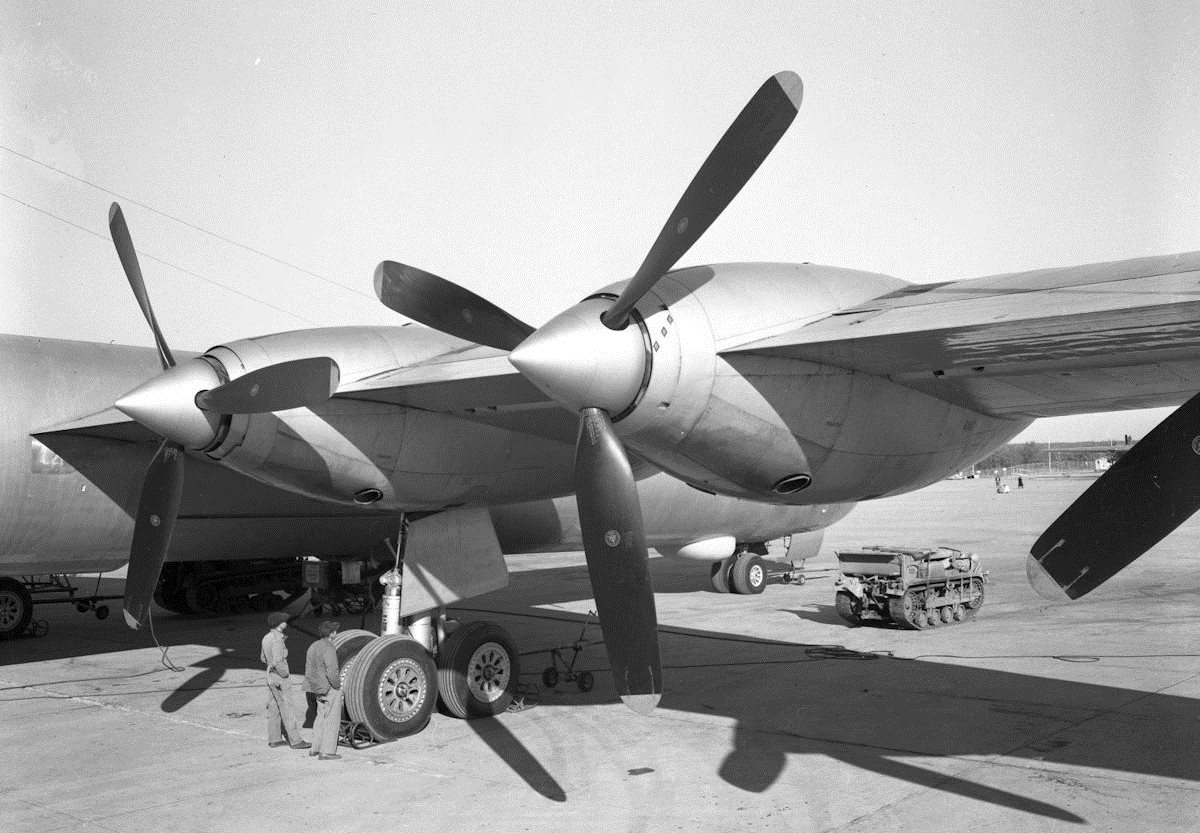
One unique aspect of that era was the operational use of powerbacks. Powerbacks are the use of thrust reversers to push back from a gate instead of a tug. Using TRs has a couple of advantages as well as a host of disadvantages too. One advantage is that you don’t need a tug. Tugs, like all vehicles require maintenance and constant TLC. They are used, abused, and reused tens of times each day for many years. So it isn’t surprising that they occasionally break down. Additionally, connecting and disconnecting the tug takes time and labor. It’s a few minute savings of time and it takes less people for a powerback. On the other hand, a powerback uses a few hundred pounds of jet fuel, it creates a FOD hazard on the ramp and it can injure any staff near the engines plus its really loud.

[powerkit_posts title=”Other unique stories” count=”1″ category=”commercial” tag=”” ids=”” orderby=”date” order=”DESC” time_frame=”12 months” image_size=”pk-thumbnail” template=”list”]

We first posted a story of a JustPlanes video showing an American Airlines MD-80 powering back from the gate. The story was pretty popular on our site. Being avgeeks, we decided to dig a bit further on the internet to see other aircraft that did (or still do) powerbacks.

Powerbacks are extremely rare today. Most airlines stopped doing them in the early 2000s as the cost of fuel soared and many T-tail aircraft were retired. While we totally understand why most airlines don’t do them anymore, they are still pretty exciting to watch. Here are a few more aircraft that have done/or still do powerbacks:

Boeing 727

Ikerazo with a video of a private 727 powering back at Coruna Airport

Northwest DC-9 in Old Colors

C-17 Powerback in Manila (Video by AranRueda)

AirTran 717 by Michael Watkins

C-130 Powerback by Datong Sun

Title photo is screenshot of a Northwest DC-9 powerback by Bazukavia.

Jetlines Grounded: The High Cost of Low-Cost Carriers in Canada

On Wednesday, Canadian discount airline Canada Jetlines ceased operations less than two years after its first flight.

The sudden collapse occurred just days after a significant leadership shakeup, including the resignation of CEO Brigitte Goersch. The Mississauga, Ontario-based airline had recently announced the need to raise additional capital to continue its operations, but these efforts proved unsuccessful.

According to a press release from the airline, its ability to continue depended on securing “adequate financing and to grow the airline to the point where it can commence profitable operations.” 

Despite exploring various financing options, including strategic transactions, debt, and equity financings, the airline failed to obtain the necessary funds to stay afloat. 

Canada Jetlines Joins a Growing List of Defunct Canadian Carriers

Artist rendering of a Canada Jetlines Airbus A320 over the Toronto skyline
Artist rendering of a Canada Jetlines Airbus A320 over the Toronto skyline | IMAGE: Canada Jetlines

Jetlines, which mainly served warm-weather destinations in the U.S., Caribbean, and Mexico, called the move temporary and indicated plans to file for creditor protection. 

Jetlines’ short lifespan highlights the difficulties faced by low-cost carriers in Canada. The airline is the third Canadian carrier to cease operations within the last year, following Lynx Air and Swoop’s closures in February 2024 and October 2023, respectively. Additionally, Jetlines is the 11th Canadian low-cost airline to launch and subsequently shut down since 2000.

In an interview with CBC News in February 2024, former CEO Eddy Doyle pointed to high taxes and competition from major carriers like Air Canada and WestJet as significant challenges for discount airlines in Canada.

Additionally, the country’s vast geography and lower population density compared to the U.S. make it difficult for airlines to sustain profitable operations over long distances.

Jetlines Operated Four Airbus A320 Aircraft

Canada Jetlines Airbus A320-200
A Canada Jetlines Airbus A320-200 | IMAGE: Canada Jetlines on X

After a ten-year struggle to get off the ground, Canada Jetlines’ first flight took place on 22 September 2022.

The carrier operated a fleet of four all-economy Airbus A320-200 aircraft and initially planned to expand to 15 aircraft by the end of 2025. However, financial difficulties and the inability to secure sufficient capital forced the airline to scale back its ambitions.

In January 2023, the airline ended its intra-Canadian flights to focus on warm-weather destinations and aircraft leasing during the summer months. Even as recently as May 2024, Jetlines officials said they planned on operating seven aircraft by the end of the year. 

According to its website, Jetlines served a total of ten destinations at the time of shutdown, including: 

  • Cancun, Mexico (CUN) 
  • Fort de France, Martinique (FDF) 
  • Fort Lauderdale, FL (FLL) 
  • Miami, FL (MIA) 
  • Montego Bay, Jamaica (MBJ) 
  • Orlando, FL (MCO) 
  • Puerto Plata, Dominican Republic (POP) 
  • St. Petersburg–Clearwater, FL (PIE) 
  • Toronto, Ontario (YYZ) 
  • Tulum, Mexico (TQO) 

Jetlines also operated a robust charter network. 

The Company was ‘Scrambling’ to Survive

Canada Jetlines Airbus A320-200
A Canada Jetlines Airbus A320-200 | IMAGE: Canada Jetlines on X

Canadian Aviation expert John Gradek noted that Jetlines was barely hanging on toward the end. 

“They were just going month-to-month, trying to scramble and get as much cash as they possibly could to meet the payroll and the lease cost on the airplanes,” Gradek told CBC News. 

The airline’s collapse leaves a gap in what was becoming an increasingly saturated Canadian airline market. While airlines like Jetlines, Lynx, and Swoop all provided needed competition, the reality is that there are only so many people to fill the seats.

With three fewer carriers, Air Canada, WestJet, and Air Transat are now the dominant players. Other Canadian carriers include Porter Airlines, Flair Airlines, and Sunwing. Multiple regional and cargo carriers are also based across the enormously vast country. 

What’s Next After Jetlines?

A Canada Jetlines Airbus A320 inside a hangar at Toronto Pearson International AIrport
A Canada Jetlines Airbus A320 inside a hangar at Toronto Pearson International Airport (YYZ) | IMAGE: Canada Jetlines

Jetlines’ demise also underscores the ongoing challenges facing the Canadian aviation industry. Despite the promise of low-cost travel, the market conditions in Canada have proven to be a formidable barrier, leading to the downfall of yet another aspiring carrier.

Will Jetlines be the final contender in the quest to capture the hearts of budget-minded Canadian travelers? It’s doubtful. But it’s tough to see any new low-cost carrier enter the market with any measure of success as long as the dominant players continue to rule the skies of the Great White North.

Scorpion: Northrop’s F-89 Was Air Defense During the 1950s

All This Pioneering Jet Did Was Defend Our Airspace Effectively for Nearly 20 Years

Northrop’s F-89 Scorpion all-weather interceptor was the first of its kind. Developed as a replacement for the company’s P-61 Black Widow, the Scorpion was one of the first American jets to be armed with guided missiles, and the first combat aircraft to be armed with an air-to-air nuclear weapon- the unguided but still deadly Douglas AIR-2 Genie rocket. Northrop built 1,050 Scorpions, but they weren’t all created equal.

F-89 Scorpion
Image via USAF

Lots of Competition

The US Army Air Forces (USAAF) first issued a specification for a new all-weather interceptor in late August 1945. The specification was revised a few months later with a top speed requirement of 520 miles per hour- the kind of speed only possible using jet propulsion. The specification also called for radar-controlled guns mounted on turrets.

The competition to build the new interceptor was between Northrop and Bell Aircraft, Consolidated-Vultee, Douglas Aircraft, Goodyear, and Curtiss-Wright, all of whom submitted at least one design proposal. By March 1946, two designs were left in the running- the Curtiss-Wright XP-87, one of four designs submitted by Northrop, the N-24.

F-89 Scorpion aircraft lineup
Image via USAF

Designed-In Simplicity

The N-24 was powered by a pair of Allison J35 axial-flow turbojets mounted under its swept wings in a straight-through arrangement- intakes and exhausts directly into and out of the engines. Eventually, wind tunnel testing dictated a change to a thin straight wing with split ailerons capable of acting as conventional control surfaces, flaps, and speed brakes as needed.  

The empennage went through some design changes, but ended up mounted high to avoid any effects from the engine exhaust. The design evolved to seat both pilot and radar operator in tandem under a single canopy, and the removal of the turret-mounted guns.

F-89 Scorpion
Image via USAF

Early Jet Engines Stall Another Design

First flown on 16 August 1948, at Edwards Air Force Base (AFB), the prototype designation changed to XF-89 soon thereafter. Painted black with that high-mounted tail, the nickname Scorpion for the jet was probably inevitable. But to the surprise of very few, the J35 engines were found to be inadequate as power plants for the jet.

In fact, after talking it over with the pilots who had flown the three designs in development at the time (including the Douglas XF3D Skyknight), the decision to build the Lockheed F-94 Starfire as an interim measure was made. Eventually, the Scorpion won out thanks to its higher speed and development potential.

4525119456 67942b3c4a o
Image via USAF

Building a Better Scorpion

Continued development of the F-89 resulted in the engines being upgraded to the more powerful J35-A-33 turbojet engine with afterburner. Excess weight was removed from the aircraft, and the forward gun turret was replaced by a Hughes Aircraft-designed six-gun nose housing the AN/ARG-33 radar with an E-1 fire-control system.

The Scorpion also picked up permanent wingtip fuel tanks and ease of maintenance improvements. The crash of the prototype following an appearance in the John Wayne movie Jet Pilot resulted in a revised lower aft fuselage fairing and engine exhausts, along with a revised empennage with elevator balancing weights.

Northrop F 89B
Image via USAF

Still With the Engines!

Once production of the F-89B began in 1950, the jets entered service with the 84th Fighter Interceptor Squadron (FIS) Black Panthers in June of 1951. The Bravos had a revised nose with the AN/APG-33 radar and six 20 millimeter T-31 cannons with 200 rounds each. Underwing pylons could carry up to 16 5-inch rockets or 3,200 pounds of ordnance. The problem with the Bravo was, inevitably, those J35 engines. The F-89C was an incremental improvement of the breed with internal elevator balancing weights, but structural issues with the wings grounded all Scorpions until 194 of the F-89A, Bs, and Cs were refit. It wasn’t until the F-89D variant that Northrop got the Scorpion moving. Sort of.

F89 D Scorpion Air Force interceptor 1958
Image via USAF

Mighty Mouse

The Scorpion Delta saw a major change up front. First flown on 23 October 1951, the F-89D lost the guns in its nose and picked up a new radar- the AN/APG-40 with the Hughes E-6 fire control system and an AN/APA-84 computer. The jets were armed with 52 2.75-inch Mighty Mouse Folding Fin Aerial Rockets (FFARs) mounted in the forward portion of each wingtip tank and could carry drop tanks on underwing pylons.

682 Deltas were built, achieving a kill ratio of 1-0 thanks to the successful engagement (but not destruction by arms) of a runaway Grumman F6F-5K Hellcat drone. Drone controller Scorpions were designated DF-89 and mainly came in DF-89A, DF-89B, and DF-89D flavors.

19gw4lk2qyb26jpg
Image via USAF

Still at the Drawing Board

As the F-89 continued to suffer from thrust deficiencies in service, proposed F-89E and F-89F variants were proposed and rejected. The F-89G would also have incorporated yet another improved radar and fire control system, but paired with the new Hughes radar-guided GAR-1 and infrared-guided GAR-2 (AIM-4) Falcon air-to-air missiles.

When the F-89H entered service in 1954, it was equipped with the Hughes E-9 fire control system (similar to that used in the Convair F-102 Delta Dagger) and sported even larger wingtip fairings housing three Falcons and 21 FFARs on each wing. However, the development of the fire control system lagged, and the Hotel was phased out of service quickly.

050322 F 1234P 017
Image via USAF

Rebuilding to Defend a Nation

The F-89J was the final Scorpion variant to enter service. It was not a new-build Scorpion. Rather, the F-89Js were rebuilt F-89Ds. The F-89J was equipped with 600-gallon wingtip fuel tanks and underwing pylons for carriage of one unguided Douglas MB-1 (AIR-2) Genie rocket. Up to four Falcon missiles could be carried in addition to the Genies.

The first Air National Guard (ANG) unit to fly F-89s was the 176th FIS of the 128th Fighter Interceptor Wing (FIW) Wisconsin ANG. F-89Js served with Air Defense Command (ADC) until 1960 and ANG squadrons until 1969. During Operation Plumbbob in 1957 at the Nevada Test Site, an F-89J fired the only live AIR-2A Genie rocket with a W-25 warhead for the John Shot.

12322467 10208317897204700 610390263203370313 o
Image via USAF

Still the Best Option During a Turbulent Time

The F-89 Scorpion was this country’s air defense interceptor during a large part of the 1950s. Though no F-89 ever fired a shot in anger, Scorpions did a vitally important job that few ever even knew was being done. A total of 36 USAF and 17 ANG squadrons flew the Scorpion. Thanks to the pace of jet engine development at the time, the jets were always underpowered and slow to respond, resulting in accident rates entirely unacceptable today.

Those low-mounted engines picked up debris constantly, but retractable screens were added to reduce that issue. More reliable and powerful Allison J35-A-47 engines eventually powered the Scorpions that remained in service through the 1960s. Most Scorpions ended their service lives after being replaced by McDonnell F-101B Voodoos or Convair F-102s.

F 89J North Dakota ANG in flight 1960s
Image via USAF

This video featuring the F-89 Scorpion was uploaded to YouTube by PeriscopeFilm

[youtube id=”Pjoi_u3E9DA” width=”800″ height=”454″ position=”left”]

Hawaii Martin Mars Flies Last Flight With Snowbirds Escort

0

On Sunday, 11 August 2024, the aviation world witnessed a retirement flight of an aircraft that has been so instrumental in keeping people and property safe, particularly in Western Canada. It was a final sendoff for the Hawaii Martin Mars, the only remaining flying Martin Mars aircraft in the world.

The Last Flight of Hawaii Martin Mars

This wasn’t any retirement flight though, Hawaii Martin Mars was sent off to retirement in style with an escort by the Snowbirds. That’s right, the Canadian demo team escorted the venerable aircraft to its final retirement home at the B.C. Aviation Museum.

Hawaii Martin Mars flew its last flight from Port Alberni to Patricia Bay. Patricia Bay is located near Victoria International Airport.

What Made Hawaii Martin Mars So Special

Martin Mars was an aircraft designed by Martin Company back in World War II. It flew missions for the Navy with the goal of using it as a patrol bomber. By time it was ready for service, the mission was obsolete. The Navy used it for a short period as a cargo aircraft before retiring the fleet.

If the story ended there, the only notable factors would be that the aircraft was large and it was sea based. Like some veterans, the Mars’ true calling came after its military service.

In 1959, Forest Industries Flying Tankers (FIFT) bought four of the seaplanes and converted them to tanker duties in Canada. The Mars was perfectly suited for the role. It had the capability of landing on bodies of water and scooping up 7,200 gallons (27k liters) in just over 20 seconds.

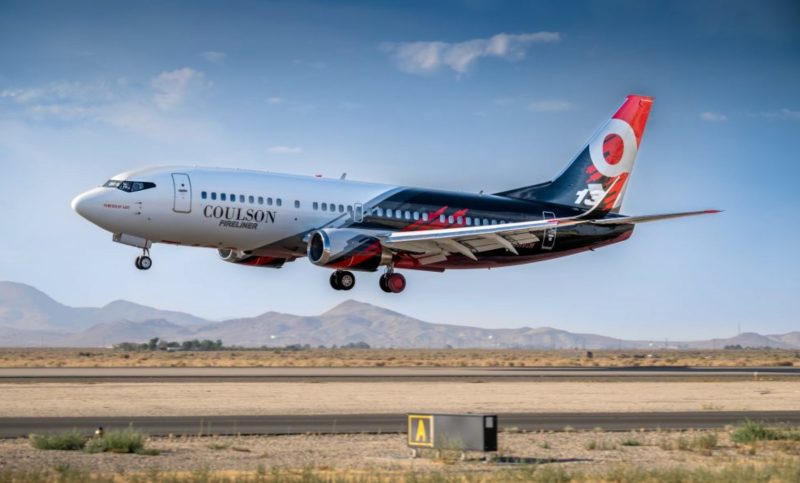
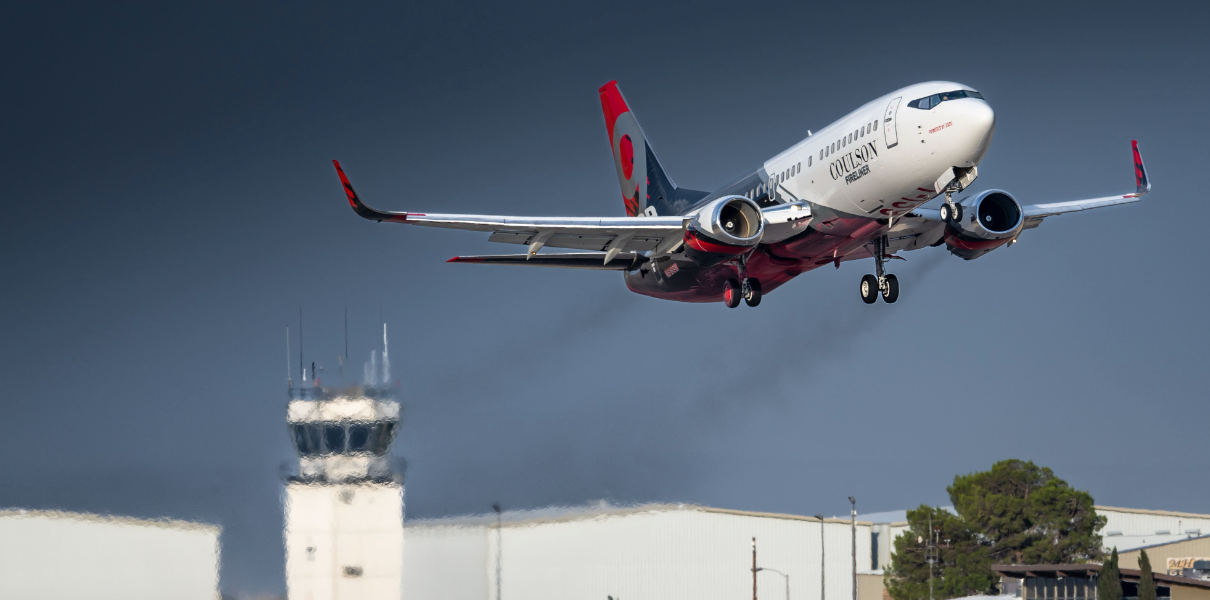
The fleet of Mars aircraft saved the day numerous times, particularly in the dense and isolated forrest fires that affected Canada. Hawaii Martin Mars was transferred to Coulson in 2007. It flew its last mission in 2013. By then Coulson had incorporated a fleet of Boeing 737s, CH-47s, and C-130s to fight fires with more modern tactics.

Preparing For One Final Flight

Hawaii Martin Mars flew fire suppression missions for 47 years. But the rarity of the fleet and the required maintenance for a 75+ year old aircraft took its toll. It also meant that more modern aircraft had the ability to turn quicker with less maintenance and required upkeep. In 2013, the Canadian government did not extend a contract to Coulson for the Martin Mars. It was the end of its flying career.

The aircraft last flew in 2016 when it flew over Oshkosh. It then sat idle for 8 years. But over the past few months, a maintenance team brought Hawaii Martin Mars back to life. Then over the past two weeks, the aircraft conducted an engine run, water taxi tests, and then test flights in preparation for its final flight. The B.C. Aviation Museum put together a great video highlighting its preparation. You can see it below.

Last Sunday, the old Hawaii Martin Mars flew one last flight to her resting place. All 10,000 lbs of horsepower serenaded the skies of the Pacific Northwest as the Snowbirds flew in formation to send her off. The aircraft will become the centerpiece of the collection at the B.C. Aviation Museum. An exhibit will be ready next year.

F-4 MiG-Killers: Israeli Phantoms at Ofira – The Yom Kippur War of 1973

0

Many a tale of MiG-killing F-4s has been told over the decades, including numerous accounts from various conflicts involving Israel. Among the more interesting, and controversial, of these is the story of two Israeli F-4 MiG-killers at Ofira.

F-4 MiG-killers
F-4 Kurnass of 107 Squadron, Israeli Air Force – Israeli Defense Forces photo via Ed Okun

The Yom Kippur War

On the afternoon of 6 October 1973, the Yom Kippur War began with a massive Egyptian air attack on Israeli military installations. Among the targets was Israeli Air Force (IAF) Base Ofira, near Sharm el-Sheikh on the southern coast of the Sinai Peninsula.

The Egyptians caught the Israelis unawares, as the attack took place on Yom Kippur, one of the holiest of Jewish days. The nation of Israel was at rest. But not all were sleeping.

Egyptian military activities during the previous weeks had led to suspicions of an impending attack on israel. The morning of Yom Kippur, warnings to those in government from the night before saw the Israeli military placed on alert.

At IAF Base Ofira, two McDonnell Douglas F-4 Phantoms of 107 Squadron stood alert, ready to take off in minutes.

F-4 MiG-killers
IAF F-4E in a hardened aircraft shelter – Israeli Defense Forces photo via Ed Okun

Named ‘Kurnass’ (Heavy Hammer) by the Israelis, the F-4 was relatively new to the IAF inventory. The Israelis had done well in combat with their French-supplied Mirage IIIs. But a French arms embargo during the late 1960s forced Israel to look elsewhere for aircraft.

The war in Vietnam had produced many F-4 MiG-killers, and Israel had taken note. Soon a deal was struck with the USA, and the first F-4E Phantoms were delivered to Israel in 1969.

Orders? We Don’t Need No Orders!

One Kurnass was crewed by pilot Amir Nachumi and navigator Josef ‘Yossi’ Yavin. The other was flown by Daniel Shaki with navigator David Regev in the back seat. Each jet was armed with several AIM-9 Sidewinders and the 20mm cannon built into the snout.

MiG Ofira 003
Egyptian Air Force MiG-17 – Enhanced still from an Egyptian Air Force Film

Shortly before 2PM, a force of unknown aircraft was detected on radar, approaching Ofira from the southwest. These turned out to be 20 Egyptian Air Force (EAF) MiG-17s with an escort of 8 MiG-21s.

But the base ground controller at Ofira was hesitant to scramble the F-4s.

F 4 Ofira 009
Israeli Defense Forces photo via Ed Okun

Amir Nachumi didn’t wait for the word. On his own initiative, he taxied out to the closest of Ofira’s two runways, followed by Shaki. The controller was yelling at him, saying that orders from a higher command did not allow for a scramble.

In Nachumi’s words:

“I decided that the orders were 400 kilometers away and they didn’t know what was going on. I cranked the engine and told my number two to do the same and to scramble as quickly as possible.”

One account tells of how Nachumi simply ignored the controller, and switched the radio off. Your author hasn’t been able to confirm whether this actually happened or not, but he’d like to think that it’s true.

F 4 Ofira 010
Israeli Defense Forces photo via Ed Okun

Anyway, the pair of F-4s immediately took off to the northeast. And just in time.

There Were Almost No F-4 MiG-Killers at Ofira

Looking behind him during the climb-out, Nachumi saw multiple smoke plumes along the runway where the F-4s had been just moments earlier. ‘Twas a narrow escape.

The pair headed east, out over Tiran Island, to take stock of the situation before turning back toward Ofira. Nachumi directed Shaki to the west of the airfield, while he himself went to the east.

F-4 MiG-killers over the Mediterranean Sea
Israeli Defense Forces photo via Ed Okun

Quite quickly, each Israeli pilot latched onto two different MiG-17s.

Israeli F-4 MiG-Killers Get to Work

Heading northeast, away from Ofira, Nachumi knocked down the first MiG with an AIM-9 Sidewinder. With this victory, Nachumi gained membership to the relatively small, exclusive club of Israeli F-4 MiG-killers.

Avoiding fire from his victim’s wingman, Nachumi then turned back toward the airfield, shaking his antagonist and searching for more MiGs.

Approaching the field, he came across a pair of MiG-17s making an attack run from the north. Seeing the big Kurnass coming at them, the MiG pilots aborted their run and climbed away to escape.

Mig-17s
Original image source: Ed Okun “Modeling Military History”

Meanwhile, Shaki, who’d chased his MiG all the way back to Ofira, finally bagged his quarry with a Sidewinder. The flaming MiG slammed into the ground near the entrance to the airfield. One more member of the Israeli F-4 MiG-killer club.

MiG Ofira 002
Egyptian Air Force MiG-17 down at Ofir – Israeli Defense Forces photo via Wikipedia

Guardians Guarding Guardians

Operators of a Hawk surface to air missile (SAM) battery guarding Ofira held their fire, so as not to hit the F-4s. Seeing another pair of MiG-17s lining up on the SAM site, Nachumi gave chase.

Hawk Ofira 001
Israeli Defense Forces photo via Wikimedia

These MiG pilots also spotted their antagonist and took evasive maneuvers in an attempt to escape to the northeast.

Nachumi made a gun pass on one of the MiGs, which turned hard port to evade. Turning with the MiG, Nachumi took a shot with the 20mm, but nissed. He then felt a ‘thump’ from somewhere in the airframe, and thought that the jet was hit.

F-4 MiG-killers over the Med.
Israeli Defense Forces photo

Continuing his turn and losing track of the MiG, Nachumi headed back to Ofira once more. He soon sighted yet another pair of MiG-17s approaching the field from the north.

At this point he noticed that the Phantom was unable to keep up with the MiGs. He and his back-seater, ‘Yossi’ Yavin, soon realized that their starboard engine had gone out.

A brief brainstorm lead to the conclusion that the engine probably stalled while ingesting expelled gasses from the gun.

After a quick re-light, Nachumi gained on the MiGs, caught them south of the field, and nailed one of ’em with an AIM-9. The MiG came down right at the coast, not too far from the airfield.

F 4 Nachumi Ofira 001
Nachumi chases a MiG-17 at Ofira – Screen from YouTube Video by ‘Not a Pound for Air to Ground’

F-4 MiG-Killer Forces a MiG’s Mistake

Turning back to the northeast, Nachumi then spotted another pair of MiGs making a run on the base communications area. Unlike the other Egyptians, these two turned into Nachumi’s approach,and headed straight for him in a head-on pass.

One of the Egyptians let loose with the unguided rockets his jet was carrying. The rockets impacted the ground in front of Nachumi, but caused no damage to his Kurnass.

MiG Ofira 004
Egyptian Air Force MiG-17 – original image Source: National Archives and Records Administration

It’s speculated that the pilot may have mistakenly fired the rockets instead of his guns. We’ll never know, though, because the only guy who knew for sure isn’t around to tell the tale.

Nachumi fired another Sidewinder which probably went straight up the jet’s intake, turning the MiG into a flaming mass of burning flame. It came down east of the airfield.

That was now three down for Nachumi.

F-4 MiG-Killers Mop Up

Off to the West, Shaki had just bagged his second MiG-17, joining an even more exclusive club. Both Saki and Nachumi had now become double F-4 MiG-killers.

F 4 Ofira 006
Daniel Shaki in the cockpit of an F-4 – Israeli Defense Forces photo via Ed Okun

But they weren’t quite done yet. Turning port, to the west and away from his second kill, Shaki was bounced by a pair of MiG-21s. Coming in too fast, they overshot and Shaki blew the wingman out of the sky with a Sidewinder.

MiG Ofira 007
Original Image: israeli Defense Forces via Ed Okun

Maneuvering hard to evade the Kurnass, the lead MiG-21 led Shaki out over the water at wave-top height. In his frantic attempts to escape from the F-4, the MiG driver apparently bounced off the water one or twice.

MiG Ofira 005
Egyptian Air Force MiG-21 – original image Source: National Archives and Records Administration

Some accounts state that he went in. Whatever the case, Shaki was now running low on fuel and turned back north, toward the airfield.

Nachumi was at this time engaged with a final pair of MiG-17s over the east end of the field. He downed one of them with a Sidewinder, his fourth kill of the day. This MiG came down not too far from Nachumi’s third victim.

Low on fuel, both F-4s recovered at Ofira, along with four IAI Neshers of 144 Squadron from Etzion Airbase. The Neshers had been sent to help out, but missed the show by minutes. Goin’ jessie in afterburner the whole way, they were also low on fuel.

F 4 Ofira 004
Captain Amir Nachumi is ‘Baptized’ after a combat mission – israeli Defense Forces photo via Ed Okun

The two Kurnass crews had claimed seven Egyptian MiGs: six MiG-17s and one MiG-21. And apparently the entire scrap lasted just six minutes.

It probably seemed like an eternity to the F-4 MiG-killers of Ofira.

Avelo Airlines: Its History and Where It Flies

0

Avelo Airlines is a scheduled discount airline that flies domestic routes to under-served locations within the USA. Headquartered in Houston, Texas, Avelo flights run mainly up and down the East and West Coasts, with plans for limited international flights.

Avelo Airlines: Origins as Casino Express

First established as Casino Express Airlines in 1987 by casino owner Tod McClaskey, the airline began operations in 1989. A charter outfit, Casino Express initially flew its Boeing 737-200s exclusively for McClaskey’s Red Lion Hotel and Casino in Elko, Nevada.

Casino Air 002
Casino Express Postcard

The airline’s niche market soon began to wane, however, and Casino Express looked to expand its operations. In 1994 it flew scheduled weekend-only flights from Elko Regional Airport to Portland, Oregon, and Seattle, Washington.

The airline also briefly operated a single 737-200 for the start-up airline Tahoe Air in 1999.

Tahoe Air 001
Richard Silagi photo – Wikimedia Commons

XTRA Airways

Tod McClaskey went West in 2003, and in December of 2005 Casino Express was acquired by the partnership of CXP Management and Avion Group.

The name was changed to Xtra Airways and operations expanded across the USA, as well as internationally on a limited basis.

Xtra Air 001
Cory W. Watts photo – Wikimedia Commons

The airline’s customer base also expanded to include sports teams, the press corps, government agencies, and various VIPs.

Beginning in 2007, XTRA Airways flew contract for Direct Air, based in Myrtle Beach, South Carolina. They used a pair of 737-400s in this role through 2012, when Direct Air suspended operations and filed for bankruptcy.

Xtra Direct 001
Alan Radecki photo – Wikimedia Commons

September of 2016 brought a high-profile charter contract for the airline. Two of XTRA’s Boeing 737s were hired to fly Hillary Clinton around the USA for her 2016 presidential campaign.

Xtra Clinton 001
Owen O’Rourke photo – Wikimedia Commons

Avelo Airlines

In August of 2018, XTRA was acquired by Andrew Levy, former United Airlines executive and Allegiant Air co-founder. His intent was to switch from charter operations to a scheduled ‘ultra-low-cost’ service.

Xtra Air 002
Alf van Beem photo – Wikimedia Commons

Levy’s main goal was to offer flights to and from places where few if any major airlines had a presence. By doing so, many people who would not otherwise fly, because of cost or inconvenient location, could now travel by air.

An early investor document from the last days of XTRA airways stated:

“Ultra-low-cost carriers in the USA are unreliable compared to others around the world, and rely too much on primary airports. XTRA will seek out lower-cost, second-tier airports.”

XTRA Becomes Avelo Airlines

Headquarters were moved to Houston, Texas, and in April of 2021, it was announced that XTRA would be renamed to Avelo Airlines.

Avelo 001
OrangeRye – Wikimedia Commons

Scheduled operations began on 28 April 2021, with a flight originating from Avelo’s base at Hollywood Burbank Airport, California. The destination was Charles M. Schulz–Sonoma County Airport in Santa Rosa, California.

Avelo 004
Timothy Powaleny photo – Wikimedia Commons

Avelo initially offered flights to eleven un-served West Coast destinations. Its fleet at the time consisted of three Boeing 737-800s, but this number had doubled by the end of 2021.

Avelo Airlines Expands

By the end of 2021 Avelo had established a second base at Tweed New Haven Airport, Connecticut, with most flights going to Florida. Tweed has since become Avelo’s most active base, offering flights to 26 destinations across the Eastern USA.

In 2022, Avelo Airlines established three bases at Orlando International Airport, New Castle Airport in Wilmington, Delaware, and Raleigh–Durham International Airport, North Carolina.

Avelo 002
Vincent Games photo – Delaware River and Bay Authority

A sixth base at Harry Reid International Airport in Las Vegas, opened in 2023, but has since moved to Charles M. Schulz–Sonoma County Airport.

Avelo Airlines in 2024

As of mid 2024, Avelo Airlines West Coast flights run mainly to thirteen destinations within the states of California and Oregon. Other destinations include Colorado, Nevada, and Washington.

On the East Coast, Avelo offers flights across the entire Eastern USA. These include locations in the Carolinas, New York, Georgia, Illinois, Michigan, Missouri, Tennessee, and the District of Columbia.

In February 2024, Avelo announced plans to add several aircraft to its fleet, and in July revealed expansion plans to include 18 new routes, and two new bases. One at Bradley International Airport in Hartford, Connecticut and the other at Lakeland Linder Airport, Florida.

Most significantly, Avelo Airlines announced international service to Mexico and Jamaica, beginning in November of 2024.

Avelo 003
Wikimedia Commons

Mission Accomplished- Avelo Found Its Niche

Alevo Airlines has found a niche for itself, offering low-cost airfare to largely casual travelers. People who simply wanna visit family and friends, or take the aerial equivalent of a road trip.

People who wouldn’t otherwise fly because of the high cost, or because they live too far from the nearest major airport.

As Andrew Levy once said, “There’s a lot of room for more airplane seats in the United States.”

Pittsburgh’s $1.57B Airport Transformation Nears Final Stages

A massive transformation project at Pittsburgh International Airport (PIT) is over 70 percent complete. 

PIT’s Terminal Modernization Program (TMP), a $1.57 billion project, is well underway. Its aim is to create a more efficient, passenger-friendly airport that meets the needs of 21st-century travelers. This ambitious program is more than just an upgrade; it’s a complete reimagining of how an airport should function in today’s world, prioritizing speed, convenience, and sustainability.
A New Airport for a New Era

Aerial view of the new terminal at Pittsburgh International Airport
An aerial view of the ongoing construction of the new landside terminal at Pittsburgh International Airport (PIT) | IMAGE: Pittsburgh International Airport via Facebook

At the heart of the TMP is a new 811,000-square-foot terminal that will be the hub of PIT’s operations. This facility will replace the airport’s current landside building, which opened in 1992 and was designed primarily for a hub-and-spoke system. Back then, PIT was a major hub for USAir, later US Airways, before the airline dehubbed the airport in 2004. 

At its peak, USAir alone operated more than 540 daily flights and over 20 million passengers annually at PIT. Following 9/11, the subsequent downturn in air travel, and two US Airways bankruptcies, PIT was decimated. 

Today, PIT operates more as an origin-and-destination airport. Just over 9.19 million passengers boarded flights at PIT in 2023, and while that number may be impressive, the existing infrastructure no longer meets the needs of this market.

The new terminal will streamline the passenger experience significantly. For instance, the time it takes to get from curbside to airside will be reduced by 50 percent, and the time to get from international arrivals to curbside will decrease by a whopping 67 percent.

This improvement is particularly welcome to travelers who currently face multiple drop-off points, three floors to navigate, two woefully inefficient TSA checkpoints, and an underground train ride. Additionally, with the current setup, airlines must handle international passenger bags twice to deliver them to baggage claim—a process that will be eliminated with the new design.

Aerial view of PIT new terminal
An aerial view of the progress at Pittsburgh International Airport | IMAGE: luisvidal Architects via X

Simplifying the Passenger Journey

Inside the new terminal at Pittsburgh International Airport
Progress continues on the construction of PIT’s new landside terminal | IMAGE: Pittsburgh International Airport via Facebook

One of the major criticisms of the current PIT facility is its complexity. The layout includes multiple areas for ground transportation pickups, which often confuses travelers, especially those unfamiliar with the airport.
The new terminal will address these issues with a simplified design that includes a multi-modal complex parking structure, miles of new roadways, and a three-level terminal bridge. These changes will significantly reduce the distance and time needed to navigate the airport, making the passenger journey smoother and simpler.

Furthermore, the new terminal will feature a single, consolidated TSA checkpoint that will offer over twice the space of the current two checkpoints combined.

TSA lines at PIT
Passengers wait in a long line at the PIT TSA checkpoint | IMAGE: Pittsburgh International Airport via Facebook

Unfortunately, passengers traveling through PIT during construction have been experiencing horrendous wait times at the TSA checkpoints, underscoring the need to address the overutilization of the existing TSA infrastructure. Designed for a different era of air travel, PIT’s current security checkpoints struggle to keep up with demand.

The new checkpoint will allow passengers to move through security quickly and efficiently, reducing wait times and stress.

Highlighting the Natural Beauty of Western Pennsylvania

Inside the new terminal at Pittsburgh International Airport
Steel columns, which will mimic the trees of western Pennsylvania, rise from the floor at PIT’s new terminal | IMAGE: Pittsburgh International Airport via Facebook

The TMP isn’t just about improving efficiency; it’s also about creating a more pleasant and aesthetically pleasing environment for travelers. The design of the new terminal takes inspiration from the natural beauty of western Pennsylvania.

Over the last few weeks, workers painted the steel tree columns to emulate the region’s foliage and installed wood constellation ceiling paneling, featuring 4,000 lights to mimic the night sky. The terminal’s terrazzo flooring will feature leaves that appear to fall from the tree columns, further reinforcing the natural theme.
In addition to its design elements, the new terminal will offer state-of-the-art amenities. Floor-to-ceiling windows will provide stunning airfield views, making PIT a haven for avgeeks and plane spotters. The terminal will also feature four separate outdoor spaces, including two past security where passengers can relax outside before their flights.

The airside terminal, which will connect to the new landside terminal via a connector bridge, will also undergo significant renovations. These include updated restrooms, concessions spaces, and gate areas, with a focus on enhancing comfort and convenience.

The new gate areas will feature seating with power outlets, LED lighting, high-top tables, and soft seating for families. The gate areas are being redesigned in collaboration with airlines, allowing for customization that meets the specific needs of PIT’s 15 different carriers.

Progress at Pittsburgh International Airport's new terminal
Ceiling installation underway at PIT | IMAGE: @PITairport via X

Parking at Pittsburgh International Airport will be a Whole Lot Easier

Exterior view of the new terminal at Pittsburgh International Airport
An exterior view of the roadway approaches to Pittsburgh International Airport’s new landside terminal | IMAGE: Pittsburgh International Airport via Facebook

Sustainability is a key focus of the TMP. The new terminal will soon receive electricity, signaling progress towards a facility that is not only modern but also environmentally responsible. The project also aims to reduce operational costs, which have been high due to the complexity and age of the current facility.

The existing terminal includes a labyrinth of escalators, elevators, and moving walkways, all of which are expensive to operate and maintain. The new design simplifies these elements, reducing maintenance costs and the airport’s carbon footprint.

The baggage claim system, which has been a source of frustration for many passengers, will be noticeably faster and more efficient. This improvement is significant in an era where passengers expect quick and uncomplicated service at every stage of their journey.

The new terminal also feature a new parking garage with 5,000 spaces—three times the current number—making it easier for travelers to park and access the airport. Other features in the new garage include EV charging stations, rental car spaces, rideshare service pickup and drop-off spaces, and an environmentally-friendly deicing system for the entrance and exit ramps.

New parking structure at Pittsburgh International Airport
A crane hoists the final beam in the topping off ceremony of PIT’s new 5,000-spot parking structure | IMAGE: Pittsburgh International Airport via Facebook

The AirMall Lives On: Retail to Expand at PIT 

The center core in the airside terminal  at Pittsburgh International Airport
While much of the focus on PIT’s transformation project is on the new landside terminal, the existing airside terminal will also undergo a massive revamp | IMAGE: Pittsburgh International Airport via Facebook

As of this writing (August 2024), the Terminal Modernization Program is over 70% complete, with a completion date set for early- to mid-2025. Significant progress is evident all around the facility, with walls going up on the new customer service building that will house rental car companies and other services. The airside terminal is also receiving a major facelift, with renovations that will align it with the design and functionality of the new landside building.

The retail offerings at PIT will also see a significant expansion, with 15 new concessions added to both the landside and airside terminals. These additions mark the airport’s largest retail expansion in over a decade. Notable additions include Shake Shack, which will join various other food and retail options that will remind travelers of PIT’s prime AirMall days.

As Opening Day Draws Near, PIT Focuses on Continued Growth

Aerial view of PIT transformation
Aerial view of the ongoing construction at PIT | IMAGE: luisvidal Architects via X

Much like the City of Pittsburgh’s stunning revival following the decline of its steel industry, Pittsburgh International Airport is undergoing a complete rebirth. PIT’s transformation is more than just a construction project; it’s a redefining moment for the airport’s role in the region and its service to passengers.

This fall, Pittsburgh International Airport’s 15 airlines will serve 62 destinations with 171 peak-day departures. Although PIT is a shadow of what it once was at the height of its days as a USAir hub, officials are optimistic that new routes–particularly international ones–will take flight in the years to come. 

As business increases, PIT will be more than ready to meet this demand once the new terminal and renovated facilities open next year.

Avgeekery will continue to bring you updates as opening day draws near. 

To read more about the Terminal Modernization Program at Pittsburgh International Airport, read this.

To look at artist renderings of what the new terminal will look like once complete, click here.

The Rise and Fall of Reno Air and the Amazing Hybrid American Transition Fleet

When you think of now-defunct domestic airlines throughout the years, you probably remember the big ones — Eastern, Pan Am, etc. In reality, there have been many small airlines that have popped up around the country, only to cease operations after a few years in the air, or become swallowed up by one of the carriers that’s still around today.

Such is the case with Reno Air, a small commercial airline out of Reno that began in 1992 with its first nonstop flight from Reno to Seattle. It grew to establish other hubs in Nevada, Las Vegas, and San Jose. It offered flights to many points in the western half of the United States and internationally into Canada.

An idea born from industry pros

Founded by industry guys from Frontier (the 1950-1986 version, not the animal-clad, low-cost aircraft we see today) and Midway Airlines, both of which had at that point become defunct, Reno Air seemed to be growing rapidly after its 1992 establishment, quickly expanding its service and creating new hubs. From the start, it seemed they would have a relationship with American Airlines, as their 1993 hub at San Jose would be leased gate space from American, and they joined up with the AAdvantage program to give their flyers credit on Reno Air flights. Soon, they would be calling themselves “the biggest little airline in the world.”

The airline’s 1996 web page is still online, offering up all the nostalgic air travel feels you could want. A button advises you the site is best viewed on either Netscape Navigator or Microsoft Internet Explorer (which, don’t worry, the graphic says, it’s free), and interested travelers are urged to call on what looks to be a MicroTAC Ultra Lite.

At the time, the airline’s slogan was “Discover a Better Low Fare Airline.” They noted that, unlike other low-cost airlines, they provided advanced seat selection, advanced boarding passes, a frequent flyer program (AAdvantage), a first class (which you could upgrade to for only an extra fee of $25), and a new jet fleet. All of this, though, did not keep Reno Air from feeling some painful competition from Southwest.

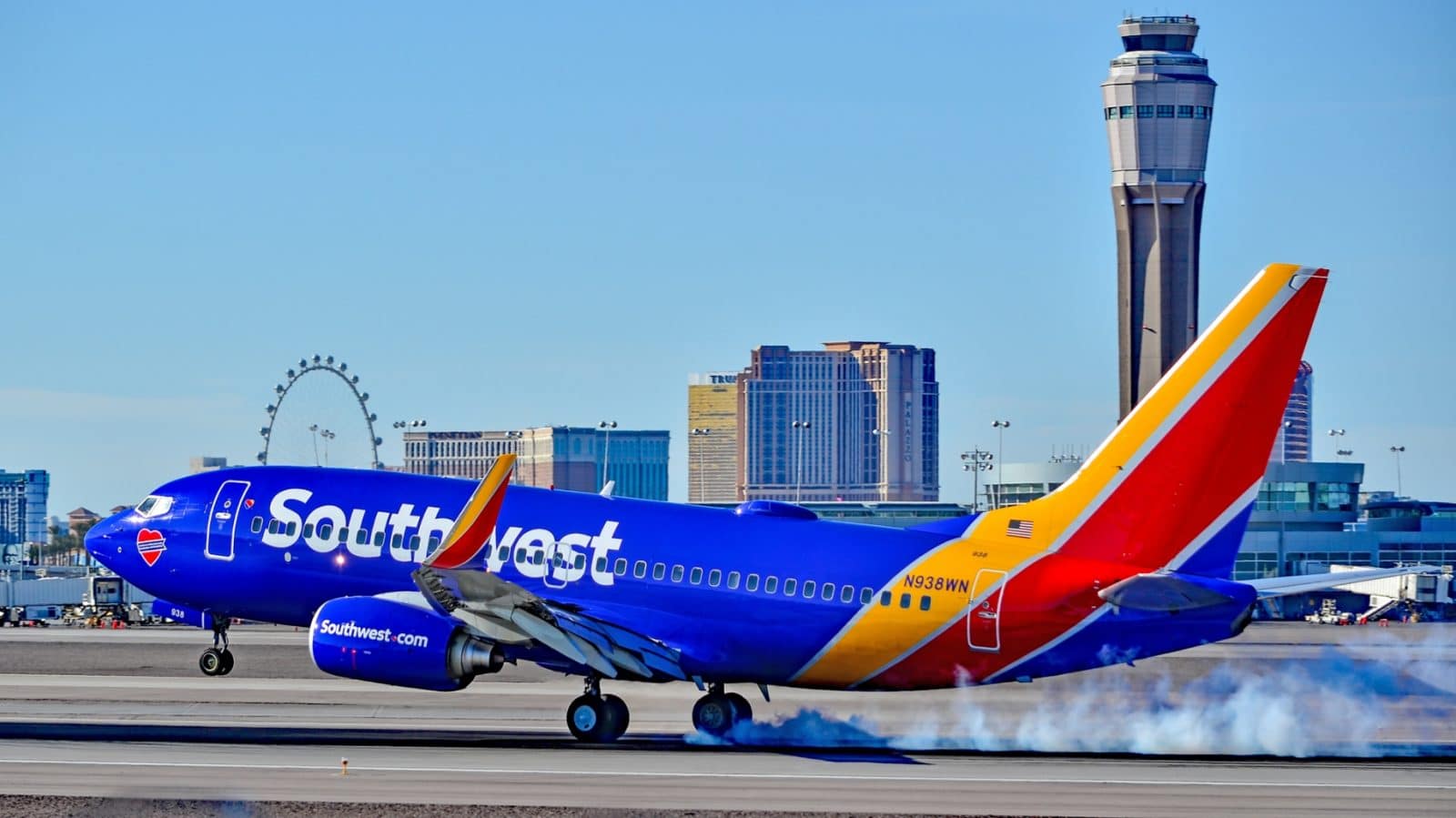
On 30 August 1999, Reno Air would fly their last, as they were acquired by American Airlines, which was looking to expand its reach on western north-south routes, which just so happened to be Reno Air’s specialty. At the time, American kept on Reno Air’s aircraft, simply repainting the fuselage, but the various McDonnell Douglas MD-80 and -90 series jets were retired after 9/11, to reduce capacity.
The Amazing hybrid Reno Air/American Airlines Fleet

One of the most unique things about the acquisition was how the repainting of Reno Air’s fleet was done in such a piecemeal fashion. American had to repaint the aircraft, but needed to keep the RenoAir operation flying to the maximum extent possible. This led to minor modifications of the scheme during scheduled downtime with an eventual repaint for the aircraft. Additionally, American decided against keeping the MD-87 and MD-90 subfleets. So those aircraft never received the full livery. Surprisingly, though, American did paint the MD-90 in American colors with a white fuselage.

raa14
The standard Reno Air Scheme on a MD-80. Photo by Matthew Desatoff.
raa7
A Reno Air MD-80 with the titles removed but tail still painted. Photo by Matthew Desatoff.
raa11
A Reno Air MD-87 with the titles removed and part of the tail painted. Photo by Matthew Desatoff.
raa6
A temporary AA adorns the partially scrubbed Reno Air tail. Photo by Matthew Desatoff.
raa12
Only the Reno Air colors remain on the rudder of this MD-80. Photo by Matthew Desatoff.
raa9
A Reno Air MD-90 is painted in all white with just the underbelly or Reno Air remaining. Photo by Matthew Desatoff.
raa8
Another Reno Air MD-90 looks even more barren with just a hint of former Reno Air scheme with the black nose shield. Photo by Matthew Desatoff.
raa5
AA temporary titles adorn this MD-80. Photo by Matthew Desatoff.
raa4
With the Reno Air colors removed, this MD-80 is only denoted as American by the small sticker on the tail. Photo by Matthew Desatoff.
raa3
Full American colors are applied to a white MD-80 fuselage. Photo by Matthew Desatoff.
raa2
Full American Airlines colors are applied (with white instead of bare metal) to this former Reno Air MD-87. Photo by Matthew Desatoff.
raa1
The ultra-rare white MD-90 in full American Airlines scheme. Only 5 aircraft were painted like this one. The fleet was discarded to the desert and later picked up by Indonesia’s LionAir. Photo by Matthew Desatoff.

Reno Air returns…sort of

However, this would not be the end for Reno Air. Back in 2015, American Airlines brought Reno Air’s spirit with a Retrojet tribute and a special amenity kit for first-class passengers. In November 2015, a Boeing 737-800 was rolled out with livery in Reno Air colors. The tribute was part of an overall attempt by American to honor those airlines that have been absorbed by its brand over the years, such as TWA and AirCal.

635826761705586070 NEW aa reno livery original
Photo: American Airlines

Reno Air still has a following of individuals who were impacted by the airline’s presence. An online community offers memberships that even come with an @renoair.net email address, primarily targeted at former employees.

Editor’s Note: Special thanks to Matthew Desatoff for his many unique photos.

JAL Flight 123: How A Shoddy Repair Job Seven Years Earlier Brought Down a 747

Amazingly, There Were Survivors of the Impact, But Rescue Efforts Were Inexplicably Delayed

On Monday, 12 August 1985 at 1812 local time, Japan Airlines Boeing 747SR-46 jetliner serial number 20783/230 registered as JA8119 and operating as JAL Flight 123 or JAL 123, departed runway 15L at Tokyo Haneda Airport bound for Osaka International Airport with 524 souls on board- 3 flight crew, 12 flight attendants, and 509 passengers.

The jet had entered service on 28 January 1974 and had accumulated more than 25,000 airframe hours and more than 18,800 cycles. The 747 was flying its fifth of six planned flights that day.

JA8119 at Itami Airport 1984
JA8119. By Harcmac60 [CC BY-SA 3.0 (https://creativecommons.org/licenses/by-sa/3.0) or GFDL (http://www.gnu.org/copyleft/fdl.html)], via Wikimedia Commons

An Experienced Crew on the Flight Deck

The flight deck was manned by 49-year-old Captain Takahama Masami of Akita, Japan. Masami’s logbook indicated about 12,400 total flight hours, with about 4,850 of 747 time.

The First Officer was 39-year-old Sasaki Yutaka of Kobe, Japan. Yutaka had about 4,000 total flight hours, 2,650 of which were in the 747. The Flight Engineer was 46-year-old Fukuda Hiroshi of Kyoto, Japan. Hiroshi had approximately 9,800 total flight hours and 3,850 in 747s.

MyPhotoJal 02 JA8143
Sister ship to JA8119. By Communi core by S.Fujioka [GFDL (http://www.gnu.org/copyleft/fdl.html) or CC-BY-SA-3.0 (http://creativecommons.org/licenses/by-sa/3.0/)], via Wikimedia Commons

A Seven-Year Period Between Cause and Effect

Seven years prior to the flight from Haneda to Osaka on 2 June 1978, JA8119 had suffered a tail strike while landing at Osaka as JAL 115. The aircraft sustained damage to the rear fuselage and was inspected and repaired as needed (IRAN) by Boeing.

One of the repairs made was to add a splice plate on the aft pressure bulkhead. This repair was improperly made. The ensuing seven years of the jet’s regular operations gradually weakened the aft pressure bulkhead. The repair failed 12 minutes into the flight of JAL 123 at an altitude of 23,900 feet and at a speed of 300 knots over Sagami Bay at 1824 local time.

The resulting rapid decompression brought down the cabin ceiling near the aft lavatories, damaged the unpressurized fuselage aft of the pressure bulkhead, caused the vertical stabilizer and rudder to depart the aircraft along with the tailcone containing the auxiliary power unit (APU), and, worst of all, severed all four hydraulic lines routed through the area.

JAL 747 6074175447 JA8104
Sister ship to JA8119. By clipperarctic (JAL 747) [CC BY-SA 2.0 (https://creativecommons.org/licenses/by-sa/2.0)], via Wikimedia Commons

Uncontrolled Descent Into Mountainous Terrain

The flight crew immediately squawked 7700 and broadcast their Mayday call. Tokyo Center suggested JAL Flight 123 divert to Nagoya, but Masami wanted to try to return to Haneda. Conventional control of the 747 ended when hydraulic pressure dropped to zero, rendering the ailerons, elevators, and yaw damper inoperative.

The aircraft began to oscillate in the pitch and yaw axes. The crew tried lowering flaps and gear, but directional control was only possible via differential throttle settings- eerily similar to UAL 232 four years later. By the time the aircraft reached an altitude of 13,500 feet, it was uncontrollable. The aircraft descended below 7,000 feet and climbed to over 13,000 feet before losing radar contact.

JAL Flight 123 crash site
JAL Flight 123 crash site. Image via Japan Times

Four Survivors – But the Count Could (and Should) Have Been Higher

After clipping a wing on one ridge and slamming into a second ridge, JA8119 impacted the ground inverted at coordinates 36°0′5″N, 138°41′38″E and 5,135 feet up on Osutaka Ridge near Mount Takamagahara, Ueno, Gunma Prefecture, 62 miles from Tokyo. Some passengers survived the crash but died of their injuries at the scene.

A US Air Force Lockheed C-130H from the 345th Tactical Airlift Squadron (TAS) found the crash site first. Despite US Marine Corps, US Navy, and US Air Force personnel being ready and waiting to deploy to the crash site, their assistance was inexplicably declined by Japanese authorities. In the end, only four of the 524 souls on board JAL Flight 123 survived the crash, making this the deadliest single-aircraft accident in aviation history and the second-deadliest overall after only the Tenerife 747 collision.

JAL 747 200 JA8015 at LHR 28013627026JA8105
Sister ship to JA8119. By G B_NZ (JAL 747-200 JA8015 at LHR) [CC BY-SA 2.0 (https://creativecommons.org/licenses/by-sa/2.0)], via Wikimedia Commons

The Legacy of JAL Flight 123

The accident had a wide-reaching effect in Japan. JAL paid $6.7 million to the victim’s relatives without admitting liability for the accident. JAL’s president resigned, and a maintenance manager committed suicide. The engineer who inspected the jet and signed off on the repair also committed suicide. Flight number 123 was never used by JAL again.

The route became Flight 127. JAL gradually switched from flying 747s to Boeing 767 and 777 aircraft and sent its few remaining 747s to the boneyard in 2011. The following video with cockpit voice recorder (CVR) audio of the last minutes of JAL Flight 123 was uploaded to YouTube by KaykEigh. WARNING: Not for the faint of heart.

[youtube id=”Xfh9-ogUgSQ” width=”800″ height=”454″ position=”left”]