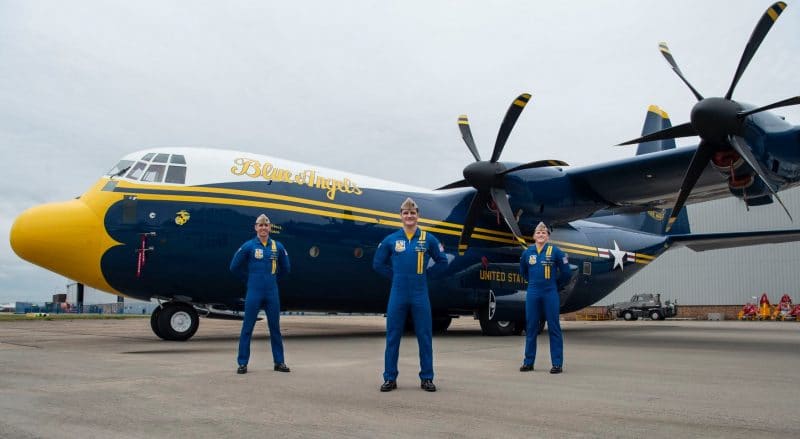
PENSACOLA, Fla. — The Blue Angel’s newest cargo and personnel aircraft, known as “Fat Albert” has joined with her crew in the United Kingdom to conduct final flight tests prior to their homecoming flight to Florida.
The all-Marine crew for the C-130J Super Hercules are in Cambridge, England, to perform a series of flight tests. Her flight crew, including Capt. Beau Mabery, Capt. Rick Rose, and Capt. William Huckeba, will then fly Fat Albert back to the United States in mid-July.
“Over the next few weeks, team members will conduct a series of maintenance tests,” LTJG Chelsea Dietlin, Blue Angels public affairs officer said on Tuesday. “(They) include an aircraft systems operational check out and a functional check flight, prior to completing the transatlantic flight to the United States.”
Bert’s eight member crew includes SSgt. Anthony Black, GySgt. Mike Burgess, SSgt. Chris Carter, MSgt. Jason Glatfelter, and GySgt. Chris Maxheimer. They are “responsible for transporting road-crew personnel, supplies, and equipment to and from each show site throughout the season,” Dietlin added.
Fat Albert has been a crowd favorite at air shows for 50 years, performing during the first 12 minutes of the Blue Angels flight demonstration prior to the jets performance. (Charles Atkeison)
This Super Hercules, C-130J Bureau Number (BuNo) 170000, will become the fourth Fat Albert cargo craft over the past 50 years. Last year, the Navy’s flight demonstration squadron retired number three due to age and performance.
On Tuesday, the Blue Angels released a striking image of the newly painted Fat Albert with her pilots. The aircraft received a new, updated blue, gold, and white paint job while at the Marshall Aerospace and Defense plant last February.
Marshall has supported C-130 aircraft around the globe for five decades. During the last seven months, they have updated the aircraft’s flight control systems and given Bert a new paint job.
“You will notice a couple changes to the paint scheme,” LTJG Dietlin explained. “The flight surfaces now have yellow tips, similar to our F/A-18s, 2 stripes run down the side of the aircraft and the iconic white top has been changed to a tear drop design.”
If approved, the Blue Angels C-130J’s first air show site will be Thunder Over Michigan. The two day air show begins August 29 in Ypsilanti near Detroit.
(Charles A. Atkeison reports on aerospace and technology. Follow his updates via social media @Military_Flight.)
TYLER, Texas — The first large-scale airshow of the year will take place Saturday as military jets and aerobatic planes salute America’s independence during the Thunder over Cedar Creek Lake Air Show.
U.S. Air Force jets have been cleared to perform, and will join warbirds and aerobatic planes during the single-day airshow. The flying is scheduled to start at about 5:10 p.m. CDT, and conclude four hours later.
“The Cedar Creek Lake air show performance takes place entirely over the water,” Lynn Thomas, president of the Cedar Creek Veterans Foundation, told AvGeekery.com on Monday. “You can watch the action packed evening free from your boat on the lake or the surrounding area.”
The Air Force F-16 Viper Demonstration Team’s primary jet “Venom” performs on June 18, 2020. (USAF)
The F-16 Viper, A-10 Warthog, and F-35A Lightning II will thunder across Cedar Creek Lake. The popular military aircraft were recently cleared to perform on July 4th.
Led by pilot Maj. Garret “Toro” Schmitz, the F-16 Viper will demonstrate the multi-role fighter. Sporting a new viper snake paint job, the jet will perform tight maneuvers and fly near the speed of sound.
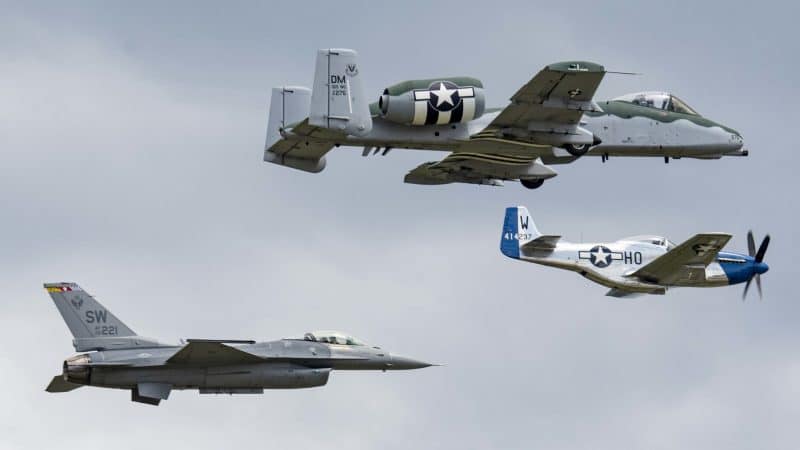
Maj. Cody “ShIV” Wilton pilots the A-10C Thunderbolt II. The crowd-favorite aircraft will join other aircraft for the Air Force Heritage Flight.
F-35A Demo pilot Capt. Kristin “Beo” Wolfe will showcase the handling of the nation’s fifth-generation fighter jet. Capt. Wolfe, who serves as the team’s commander, is the Air Force’s first female single-ship demonstration pilot.
“The F-35 demonstration team serves to showcase the capabilities of the F-35A Lightning II, but also to showcase our Airmen and the Air Force way of life,” Capt Kip Sumner, F-35 Demo Team spokesperson said on Monday. “When we travel to different air shows across the country, we’re there to recruit, engage and inspire the next generation.”
The 15th annual Cedar Creek Lake event was started by local MiG-17 pilot Randy Ball. World War II-era aircraft attending include a B-17 Flying Fortress, C-47 Skytrain, and P-51 Mustang.
Aerobatic pilots Matt Younkin, Mike “Spanky” Gallaway, Kevin Miller, and the Texas-based formation flying team Falcon Flight are also scheduled to perform.
MiG 17 Pilot Randy Ball lights the fires on take-off during a 2018 air show performance. (Charles Atkeison)
The air show has grown to become a popular charitable fundraiser for local veterans.
“Thunder Over Cedar Creek Lake is a fundraiser hosted by the CCVF and proceeds go to assist East Texas veterans,” Thomas said. “CCVF is making a difference in the lives of veterans, donating almost $300,000 to veterans’ charities since its inception.”
“Many people enjoy the airshow each year not realizing that the purpose is to raise money for East Texas Veterans,” she added.
Thomas said air show guests and those interested can donate online. CCVF is a 501c 3 organization and all donations are tax deductible.
(Charles A. Atkeison reports on aerospace and technology. Follow his updates via social media @Military_Flight.)
Proposed business jet brings marries ultra efficiency of new Airbus offering with potentially uber luxurious cabin.
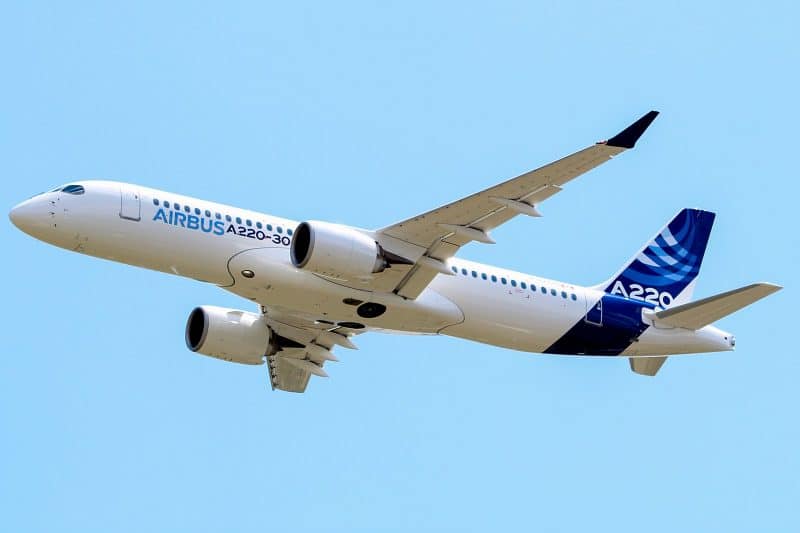
A new airplane design is always an exciting revelation, often striking the proverbial creative match of other great minds. In this vein, the Airbus A220 has evoked fresh interest, evolving a 120-150 passenger airliner to an ultra-modern corporate concept.
The A220 was designed by Bombardier Aerospace and marketed as the CSeries, though the program was later sold to Airbus. It made its first flight in 2013 and awarded type-certification in late 2015. It entered service as a passenger airliner in December 2016.
Conceptually, it achieves 20% lower fuel-burn with half of the noise of previous generation aircraft using Pratt & Whitney PurePower PW1500G turbofan engine. The A220 shares 99% of line-replaceable units and the same family of engines, a major incentive for operators. Pilots transition seamlessly between the A220-300 and A220-100, reducing training costs and easing the curve. Of course, one challenge for Airbus is that the type rating is transferrable to other airliners in their portfolio.
About the proposed business jet
Kestrel Aviation selected this airframe for an emerging market share: next gen airliner capability for the corporate traveler. Their concept seats 10-32 passengers in complete luxury, with a mission profile serving transatlantic, middle eastern and Asian destinations. Their prototype offers a 7-zone cabin, with 3 fixed stations (galley/entry, main lavatory, and a master suite featuring a full bathroom) and 4 customizable area configurations. Bannering industry-first super-size bandwidth communications, passengers can relax in a next-gen media lounge with a 75” television.
Designed in collaboration with Camber Aviation Management and Pierrejean Aviation, their proprietary expertise achieves these milestones and simultaneously reduces both design and certification costs. While currently just a prototype, the cool-factor is certainly jawdropping. It will be interesting to see if further developed.
Prop Gun is One of the Best Movie Spoofs We Have Ever Seen
There are some great gag films out there. Class videos are sometimes seriously entertaining too. We’ve managed to dig up some of the best, and we’re always looking for more. This one was uploaded to Vimeo by Prop Gun P-3 and stars Patrol Squadron ONE (VP-1) Screaming Eagles. We’ll have much more about the rich history of the Screaming Eagles after you enjoy their hilarious send-up of the movie we love to slam- but inexplicably tune in whenever it appears on the guide anyway.
Born to Combat German Unterseeboots
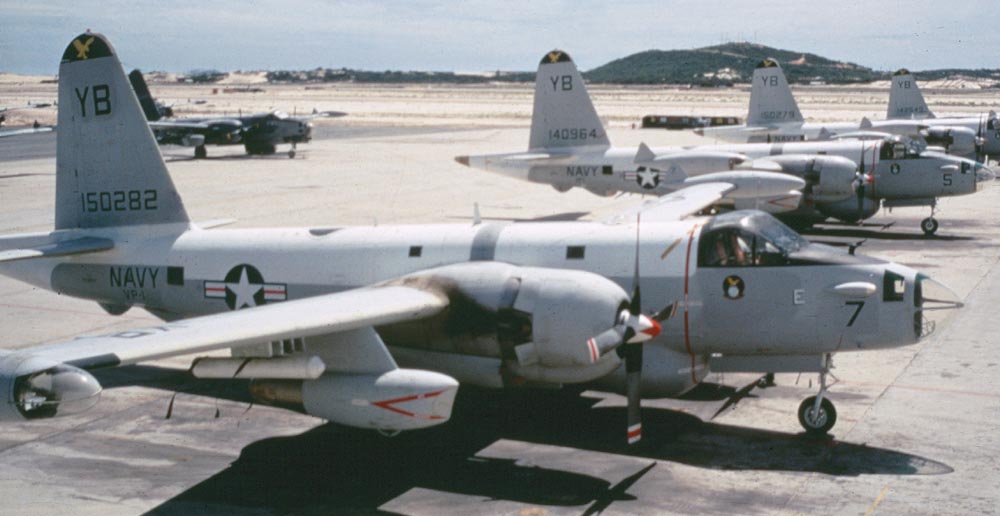
The history of VP-1 gets a little confusing, so try to keep up. VP-1 as we know the squadron today was originally established as Bombing Squadron 128 (VB-128) Fleet’s Finest at Naval Air Station (NAS) DeLeand in Florida on 15 February 1943 flying Lockheed PV-1 Ventura patrol aircraft. VB-128 later moved to NAS Floyd Bennett Field in New York, Reykjavik in Iceland, and San Juan and Ensenada Honda in Puerto Rico. With the U Boat threat diminished in the Atlantic the squadron was transferred to the Pacific theatre, arriving at NAS Alameda in California on 26 September 1944. VB-128 was then redesignated Patrol Bombing Squadron 128 (VPB-128) on 1 October 1944.
PV-1 Ventura. Image via National Naval Aviation Museum
Pacific Vagabonds
The Fleet’s Finest made their way to NAS Kaneohe in Hawaii by 6 October 1944. Training flights from Kaneohe to Midway kept the squadron busy until a 21 December 1944 move to Owi Airfield at Papua in New Guinea. VPB-128 moved to Guiuan at Samar in the Philippines and received new PV-2 Harpoon patrol bombers on 28 February 1945. From that point forward VPB-128 was in the thick of the fighting in the Philippines, flying anti-submarine, anti-shipping, and strike missions against Army-designated land targets.
PV-2 Harpoon. Image via National Naval Aviation Museum
Home for New Steeds
VPB-128 was redesignated Patrol Squadron 128 (VP-128) in May of 1945 and soon thereafter moved to Tinian in the Marianas to fly sea patrol and weather reconnaissance missions. With the end of the war VP-128 moved to Kadena in Okinawa and was redesignated (yet again) as Medium Patrol Squadron (Landplane) One (VP-ML-1). The unit finally returned to the States in March of 1947, arriving first at NAS North Island in San Diego. There VP-ML-1 transitioned to another Lockheed maritime patrol aircraft- the Lockheed P2V Neptune. After the transition to Neptunes was complete, the Fleet’s Finest moved to NAS Whidbey Island in Washington on 13 January 1948 and was later that year (finally) redesignated Patrol Squadron ONE (VP-1).
image via national archives
To War in Korea
VP-1’s first combat deployment from Whidbey was to Naha Air Force Base (AFB) on Okinawa arriving on 7 August 1950. There the squadron was tasked with patrolling the Formosa Straits and interdicting enemy supply vessels. Combat operations commenced on 19 August 1950. VP-1 eventually deployed to Naha four times during the Korean War. During the mid-1950s the Navy decided to demonstrate the P2V Neptune’s worldwide reach. On 21 April 1955 VP-1 (the entire squadron) departed Whidbey on the first around-the-world flight by a patrol squadron. When they returned to Whidbey on 5 May 1955 the value of the Neptune had been proven and it’s future service secured.
image via us navy
WestPac With the Fleet’s Finest
VP-1 deployed to Southeast Asia for the first time on 7 October 1964. Over the next eight years the Fleet’s Finest deployed detachments to such garden spots as Tan Son Nhut, Da Nang, and Camh Ran in South Vietnam, MCAS Iwakuni in Japan, Sangley Point and Cubi Point in the Philippines, and U-Tapao in Thailand.
Fighter Mafia: A series of articles dedicated to Colonel John Boyd, Thomas P. Christie, Pierre M. Sprey, Chuck Myers, Colonel Everest Riccioni, Harry Hillaker, Walt Fellers, Dr. Raymond Leopold, James Burton, Colonel Mike Wyly, and Franklin “Chuck” Spinney – the Fighter Mafia and Acolyte core; an independent, free-thinking group of pentagon analysts, pilots, and engineers that demonstrably changed the culture, theory, and production of air combat assets.
“Who’s The Best Pilot You Ever Saw?”
Many of us self-proclaimed aviation geeks that watched this movie scene from “The Right Stuff” humbly muttered “me of course” just loud enough for any fellow viewer’s benefit! However, according to Franklin C. (Chuck) Spinney, one distinctive man held that honor – Colonel John Boyd.
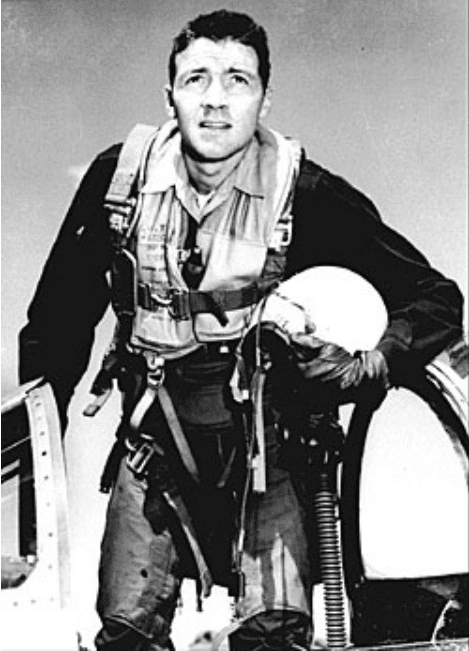
John boyd in korean war: official us government photo
Why would Spinney, a non-flying research engineer, bestow such an accolade upon Boyd (commonly referred)? Perhaps Boyd held ACE status for combat kills? No he did not. Maybe Boyd commanded large fighter squadrons? Again he did not. Surely Boyd distinguished himself aeronautically through combat performance over many conflicts? Alas, not that either. Boyd flew combat missions in Korea, instructed at the USAF Fighter Weapons School, then spent a career in the Pentagon. So why did Spinney consider Boyd the Greatest Fighter Pilot? Read on and find out.
Background
Originally from Erie, Pennsylvania, John Boyd’s humble beginnings originated shortly after his birth in January, 1927 when his traveling salesman father, Hubert, passed away in 1930 from pneumonia. Boyd’s mother Elsie, desiring to maintain a strong image, reared the family through the depression. During high school, Boyd first slipped the surly bonds of earth most likely sealing his aeronautic enthusiasm.
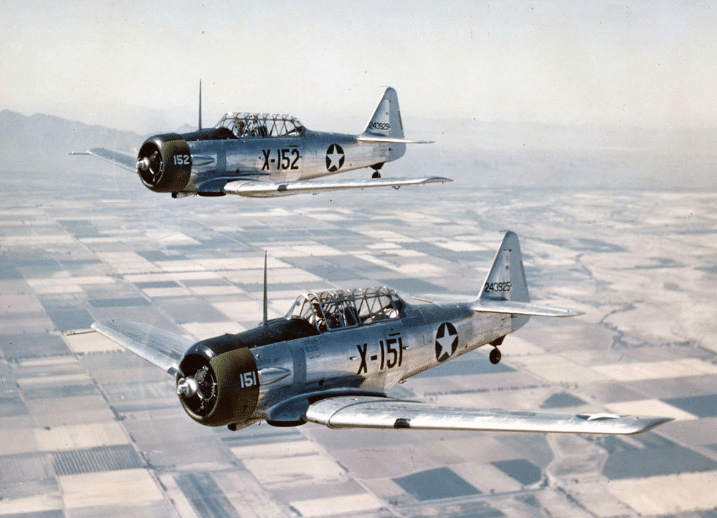
Two U.S. Army Air Forces North American AT-6C-NT Texan trainers (s/n 42-43925, 42-43929) in flight near Luke Field, Arizona (USA), in 1943: official usaf photo
Earning His Wings
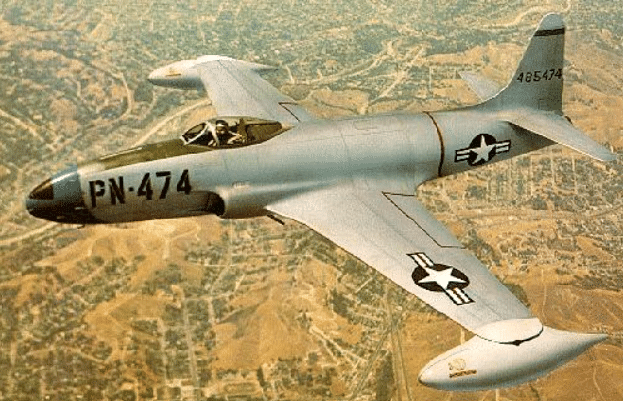
Boyd enlisted in the U.S. Army Air Forces in April, 1945 as an 18-year- old swimming instructor and served in Japan from January 1946 to January 1947. After serving overseas, John received a Bachelor’s degree in Economics and commission from the University of Iowa through the Reserve Officer Training Corps. Boyd excelled in pilot training flying the North American T-6 Texan and completed pilot training in 1951. During fighter bomber escort training, Boyd piloted the Lockheed F-80 Shooting Star then completed North American F-86 Sabre training.
F-80 Shooting star: official usaf photo
To War in Korea
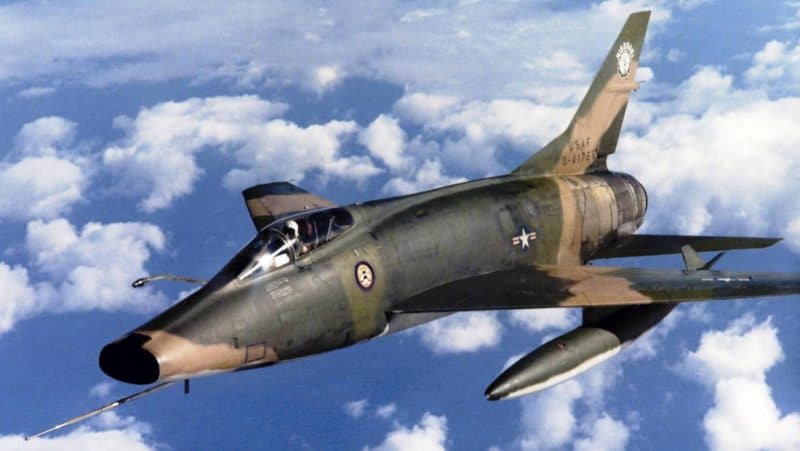
The US Air Force (USAF) sent John Boyd to Suwon Air Base in South Korea as an F-86 Sabre pilot where he flew 22 combat missions. Though MiGs and MiG kills remained elusive for Boyd, he quickly became the most proficient fighter pilot in the squadron. His exemplary talents and passion for aviation led fellow pilots to request briefings and tactics instruction. Boyd accepted the challenge and developed briefings on aerial tactics, and thus began Boyd’s next 40 years of original thinking and teaching. The Korean War ended and Boyd reported for duty at Nellis Air Force Base (AFB), Nevada in 1954 to complete Advanced Flying School.
image via US Air Force
USAF Fighter Weapons School
Upon graduation from the Advanced Flying School, Boyd immersed himself in the process of changing then-current air-to-air combat training. Post World War II, the USAF oriented its mission toward long range bombing at high altitude and all but dismissed air-to-air combat. Boyd quickly became the most knowledgeable person in the Air Force regarding tactics during aerial combat and began training at the USAF Fighter Weapons School in 1955. Upon completion of his FWS training Boyd remained at Nellis as an FWS instructor.
When It Comes to Safety, No Other Industry Has Evolved as Quickly as Aviation
In comparison with other industries, in a span of one hundred years, has anything evolved so marvelously as aviation? With planes, we mastered distance. Distance, achieved through precise navigation, was once a thing of crinkly paper charts, and instrumentation, reliant upon intricate gears and gyro mechanisms. Pilots followed needles into and through the clouds and, given the improbability of all that, humans handled it with respectable capability. Smart people kept going, kept pushing.
image via national archives
The Best of Times?
Has general aviation (GA) already enjoyed its peak, perhaps in the dawn and rise of the jet age? Some aviators recognize the heyday of the market as being the 1960s and 70s, given the number of aircraft manufactured. Many shudder in reflection of the 1980s, a notoriously rough decade in which production plummeted and mostly ceased altogether. However, something interesting sparked in the 90s, a tsunami of technology. Although difficult to pinpoint the mechanism of change, there was a catalyst.
image via cessna
Revolutionary and Evolutionary
While planes haven’t changed all that much, but the technology has, dovetailing in the vein of safety. Was it Mooney with the gen one autopilot, a wing-leveler, of the 1960s? How about Garmin and the Global Positioning System (GPS) in 1995, with the humble handheld 195, a tiny screen of grey dots? The Cirrus SR20, launched in 1999, with the revolutionary type-certified ballistic parachute technology?
image via cirrus
GPS Begat Glass Cockpits
Garmin had sold 3 million GPS devices in the form of fifty products by the year 2000. Garmin then began working with a subsidiary of famed parcel-carrier United Parcel Service (UPS) to develop a line of panel-mounted GPS products for their fleet of aircraft. This launched the research and subsequent development of the integrated cockpit systems that revolutionized the commercial and corporate aviation industry– and hence, the GA market.
Image via cirrus
Benefits for Experimental Aviation
The modern GA pilot has the luxury of choice in the platform in which they choose to fly, most elementally in the form of certified or experimental category aircraft. While the concept of experimental, or kit-built aircraft, was born in the 1950s, technology has driven the rise of this market to 33,000 strong, according to the Experimental Aircraft Association. A fascinating segment of the general aviation market, experimental aviation boasts the appeal of cost savings, among other worthy ideals. For example, having an autopilot aboard has been a notoriously expensive and therefore, a luxury item rather than an incredibly effective safety tool. The advent of digital technology made it possible to equip a single-engine land airplane comparably, and affordably, to what was and is available to the certified market.
image via bill walton
And the Award Goes to…
What was the most important advance in GA safety? Was it the development of the Cirrus aircraft, or Garmin’s revolutionary GPS navigation-based systems, or comprehensive Flight Management System (FMS) offerings from Dynon or even Avidyne? Whatever came first, the chicken or the egg of this incredible technology, is not what matters. What matters is that the feature- and option-rich selection is at the fingertips of the general aviation consumer. Even better than that is one need not be uncommonly affluent to enjoy these benefits.
image via dynon
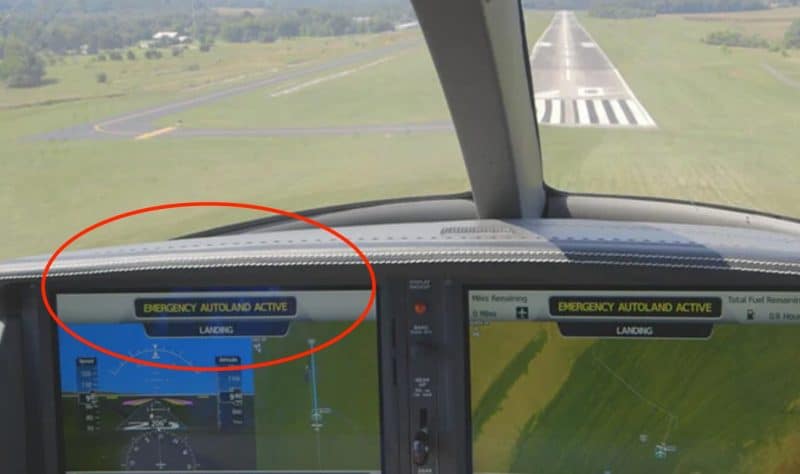
For more (including a really cool video of a Cirrus Vision Jet landing itself), tap NEXT PAGE below.
These MC-130Js Can Go Places and Do Things You Don’t Need to Know About
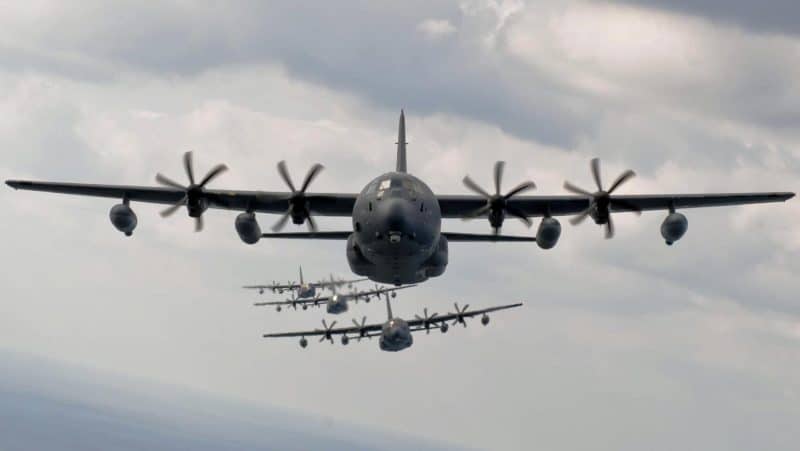
The United States Air Force (USAF) has operated the Lockheed MC-130J Commando II since 2011. These shadowy we-were-never-there special operations-centric airlifter/tankers operate around the world, but you’ll have a hard time proving it. So when not one or two, but four of them show up flying the Mach Loop in Wales it’s a happening. The mesmerizing video footage and crisp still images captured while the MC-130Js flew four laps through the Mach Loop were captured by and uploaded to YouTube by Dafydd Phillips. More about the Commando II after the video.
According to the US Air Force, the Commando II flies “clandestine, or low visibility, single or multiship, low-level air refueling missions for special operations helicopters and tiltrotor aircraft, and infiltration, exfiltration, and resupply of special operations forces (SOF) by airdrop or airland intruding politically sensitive or hostile territories.” The MC-130J primarily flies missions at night to reduce probability of visual acquisition and intercept by airborne threats. Its secondary mission includes the airdrop of leaflets (yawn). We already know the J series Hercules are capable of some absolutely incredible aerial feats.
MC-130J Commando II. Image via US Air Force/DVIDS
Sophisticated Yet Unapproachable
From the Air Force sales glossy, the MC-130J Commando II features the new Enhanced Service Life Wing (ESLW) along with an advanced two-pilot flight station with fully integrated digital avionics, fully-populated Combat Systems Operator (CSO) and auxiliary flight deck stations, 13 color multi-functional liquid crystal displays, head-up displays, fully integrated navigation systems with dual inertial navigation system (INS) and global positioning system (GPS), fully-integrated defensive systems, low-power color radar, digital moving map display, and new Rolls-Royce AE 2100D3 turboprop engines spinning six-bladed, all-composite Dowty propellers.
MC-130J COmmaNDO II. Image via US Air FOrce
Fully Loaded- Even Before the Payload
Also present in the MC-130J are a digital auto pilot, improved fuel, environmental and icing-protection systems, enhanced cargo-handling system, the Universal Air Refueling Receptacle Slipway Installation (UARRSI), dual air refueling pods, Electro Optical/Infrared (EO/IR) System, dual satellite communications (SATCOM) systems for voice/data, 60/90 kilovolt-ampere (kVA) generators, increased DC electrical output, loadmaster/scanner restraint system, and Large Aircraft Infrared Countermeasures (LAIRCM) provisions. Talk about loaded!
MC-130E COMBAT TALON I (Left) and MC-130P COMBAT SHADOW SPecial Operations Airlifters. Image via US Air Force/DVIDS
Replacing Spec Ops Legends
The MC-130J has largely replaced the aging fleet of 37 special operations-dedicated MC-130E Combat Talon I and MC-130P Combat Shadow airlifter/tankers. The original name for the MC-130J was Combat Shadow II in honor of the MC-130P but was renamed in 2012 to Commando II. Previous special operations Hercules variants were modified after they were built to include mission equipment, but the Commando II was the first to be built from the wheels up as a spec ops airlifter/tanker. The first MC-130J was delivered in 2011.
MC-130E Combat Talon I. Image via US Air Force/DVIDS
Is That Overworked CSO Paid Double or What?
Commando IIs operate with a 5-member crew. The Combat Systems Operator (CSO) navigator and the enlisted flight engineer positions, previously part of the Combat Shadow crews, were eliminated in the MC-130J. So in the Commando II the remaining CSO handles electronic warfare, navigation, and aerial refueling. The 522nd Special Operations Squadron (SOS) was the first unit to operate the MC-130J Commando II. MC-130Js operate primarily out of RAF Mildenhall in the UK and Kadena Air Base in Japan when forward deployed and from Hurlburt Field in Florida and Kirtland Air Force Base in New Mexico when stateside. Just don’t tell them we mentioned it!
MC-130J Commando IIs out of Kadena. Image via US Air Force/DVIDS
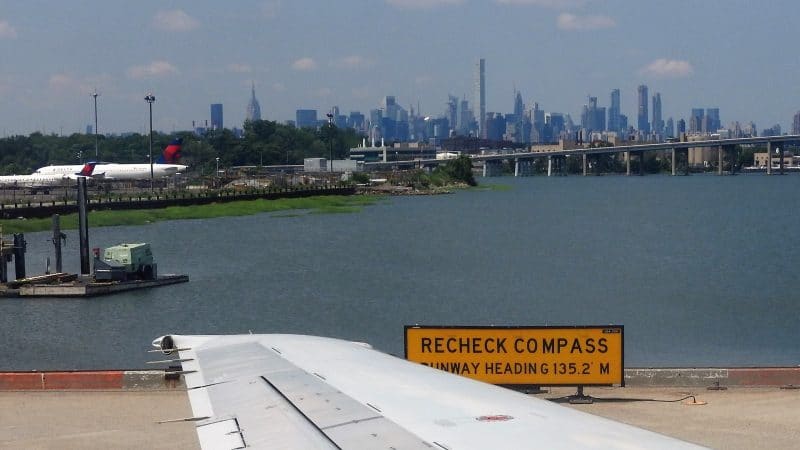
There’s something truly mystical about disconnecting the automation and holding thousands of pounds of heavy metal and thrust in the palm of your hand. For every pilot, the chance to truly “fly” an airplane is a blessing; the chance to do it without the constraints and restrictions of your typical localizer and glideslope while meeting the aspects of safety/regulation? Priceless. Yanking and banking into LaGuardia (KLGA) on the Expressway Visual 31 is just one of the few visual approaches that affords an aviator the chance to become one with the machine…and with a view!
Billy Joel said it best, “I don’t have any reasons, I left them all behind. I’m In a New York State of mind…” As the concrete jungle boasts its skyscrapers to the left side, your eyes dart back and forth between instrumentation and visual cues.
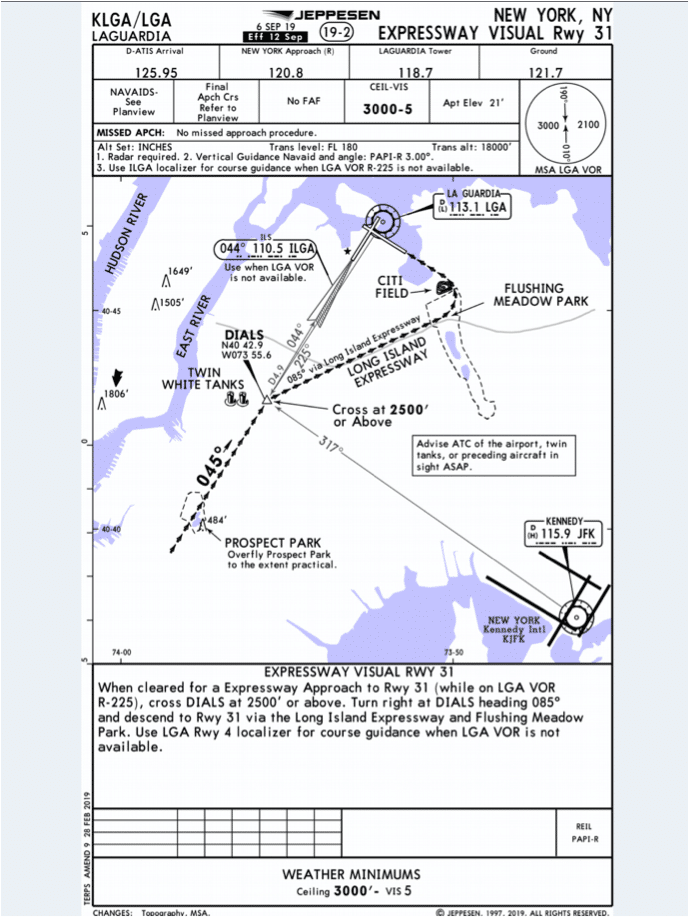
Twin white tanks are typically the iconic landmarks for pilots to initiate a right turn and begin their shallow descent to Runway 31 at LGA via the Long Island Expressway and Flushing Meadow Park. As Citi Field comes into view, you dip your wing left and wave to the Mets as you roll out and transition to final for 31. Configured, confident, and still questioning how they let you do this for living…you smoothly make those final adjustments with pitch and power, letting that rubber on your wheels smoothly kiss the pavement. Ladies and gentlemen, welcome to NYC.
Flying Into LaGuardia Takes Preparation and Planning
As with every approach, essential planning and preparation is key. Timely configuration must be accounted for in an effort to reduce the chance of ‘falling behind the aircraft’. Crossing DIALS higher than 2500’ feet sets the stage for a high final and subsequently high sink rates, excessive control inputs and a fairly unstable approach (GO AROUND!) Moreover, it is imperative to continue the descent and avoid the tendency to slightly ‘level off’ as you bank left around Citi Field. When you factor in some wind, minimal separation, and speed constraints…you’ve certainly got your hands full!
A relatively rare Jeppesen visual approach plate. (Not for navigation…Illustrative purposes only)
In an age of automation and regulation, gone are the days of ‘Cowboy Flying’ where stabilized approach criteria never existed, and go-arounds were only for the weak. With safety at the forefront of everything we do, unleashing the inner desire to truly manipulate the controls can often be restrained and frankly frowned upon.
Nevertheless, it is approaches like the Expressway Visual 31 that remind us that we are indeed commanders of our ships. As we guide our hands back onto the yoke and slip our thumbs over the autopilot disconnect button, as the altitude alerter chimes and NY Approach tells us to transition to Tower frequency, there’s a brief lapse in time where everything seems to trickle to a halt. And In that final turn, as Runway 31 comes into grand view, you can’t help but crack a smile and realize…you’ve got the best job in the whole world.
Have hope. Airline pilot hiring will resume – because it must!
Theologian Thomas Fuller wrote this in 1650 intending that hope exists regardless of unfortunate circumstances. Given the state of the airlines and economy in the past six months due to the coronavirus – few could have forecast the negative impact to the aviation industry. U.S. regional airlines like Compass and Trans States stopped operations.
Most major passenger airlines have decreased passenger capacity 85% or more and participated in the grant/loan program offered by Congress. The likelihood that some airlines may furlough employees on October 1st exists considering the current passenger count of 441,255 constitutes only 16.5% of the 2.6 million passengers from a year ago. However, as the economy recovers and passengers resume traveling, due to the Age 65 mandatory retirement for currently employed airline pilots – the hiring WILL resume, and most likely to the aggressive pace before.
Delta Connection EMB-170. Photo: Avgeekery
The International Air Transport Association (IATA) forecasts an annual average global passenger growth rate of 3.7% over the next 20 years . The largest U.S. airline pilot employers (Delta-14,500+, American-15,000+, United-13,300+, FedEx-5000+, Southwest-9,800+, UPS-2,900+) employ almost 61,000 pilots currently. Of those, 67% will reach mandatory retirement age 65 by 2033 according to airlinepilotcentral.com. The rough total number of all Regional (22,000), National (19,000), Cargo (13,000), and Legacy (43,000) pilots sums to just over 101,000. The six aforementioned airlines constitute over 60% of all commercial pilots in the U.S. and will be the genesis for any future hiring.
The following chart depicts these six individual airlines and their Age 65 retirement forecast from 2020 through 2033.
Note that some airlines peak at different times and some have a more level retirement number. By adding each airline together by year, we can get an aggregate amount of retirements over the same time period.
The Darkest Before The Dawn For Airline Pilot Hiring 30
In 2025 – nearly 3,000 current pilots will retire that year and serves as the peak of forecasted Age 65 retirements. The last chart indicates the retirement projection for those currently flying in those six airlines.
The Darkest Before The Dawn For Airline Pilot Hiring 31
As the chart indicates, by 2033, these six companies could absorb nearly all the regional, national, and cargo pilots that are flying today. With the IATA’s forecast of 3.7% annual passenger growth, these charts do not indicate any growth of carriers. However, applying just a 1% growth in hiring would result in an additional 9,000 pilots to these companies over the same time period. Hopefully, the new dawn of hiring overtakes whatever darkness may occur in the next year.
PENSACOLA, Fla. — The Navy’s Blue Angels are officially four weeks from their first public performance as the Pensacola Beach Air Show moves forward across the Emerald Coast.
Committee members with the annual air show announced Wednesday the event remains on schedule for July 8-11. The Blue Angels will be joined by several top aerobatic performers during Red, White and Blues Week.
Air show officials also announced new guidelines in the hopes of keeping massive crowds from gathering. The show will be four full days and the aerobatic box will cover Pensacola Beach and Perdido Key.
The Navy’s Blue Angels perform a pass before Pensacola Beach Airshow guests in 2018. (Charles Atkeison)
“After multiple meetings between the Santa Rosa Island Authority staff and air show performers, the staff proposes the SRIA continue planning the 2020 Pensacola Beach Air Show in July,” Robbie Schrock, Director of Administration with Santa Rosa Island Authority, explained. “The air show program this year is built around social distancing in observance of the Centers for Disease Control and Prevention recommendations for the COVID-19 virus.”
New this year, the air show will be a full four-day event, with each day having a full show. SRIA hopes this will allow the public more opportunities to watch the flight demonstrations.
A complete air show schedule is expected on June 26. The flying will also begin along the beach before noon each day.
Civilian aerobatic acts scheduled to perform include Skip Stewart, Gary Ward, and Kevin Coleman. They will begin the flying with the Blue Angels concluding each day.
Blue Angels left wing pilot Maj. Frank Zastoupil flies in the diamond formation during a recent training flight over Naval Air Station Pensacola and Pensacola Beach. (U.S. Navy/ MC2 C. Gordon)
Schrock also notes there will be no air show center point this year. This is in keeping with CDC guidelines so that crowds do not bunch up on the beach in front on the marker.
“There is simply just something extra special about watching your hometown heroes perform over the most beautiful place in the world, Pensacola Beach,” Schrock said. “It doesn’t matter how many times I have seen them perform, I literally still get chills watching them.”
(Charles A. Atkeison reports on aerospace and technology. Follow his updates via social media @Military_Flight.)
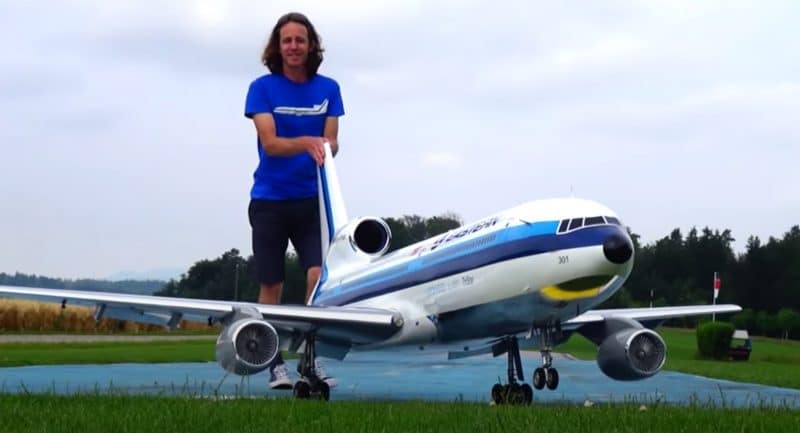
If you’ve been a reader of Avgeekery for a little while, you’ll know that we have a soft spot for amazing remote controlled aircraft. We first highlighted the giant Virgin 747 model. Then we also did a story about a pretty fantastic A-10 Warthog model that shot real Nerf darts at ground targets. When we found this L-1011 model on YouTube we had to share it with our fans.
This giant Eastern Airlines L-1011 TriStar is absolutely spectacular. It features an actual turbojet engine combined with working flaps, gear, strobe lights, and even an accompanying remote control tug. The jet itself is huge and it used the full RC runway on takeoff plus some from its home base in Switzerland.
The Lockheed L-1011 itself holds a special place in many avgeeks hearts. It was designed at about the same time as the DC-10. The real jet featured advanced avionics and amenities ahead of its time but teething problems with its engines and tough economic times led to less than 300 jets total being sold. It also led to Lockheed exiting the passenger jet market in favor of the more lucrative and steady defense industry.
Still, we salute Dominik for his faithful giant RC model creation and we thank RCHeliJet for sharing another fantastic video.
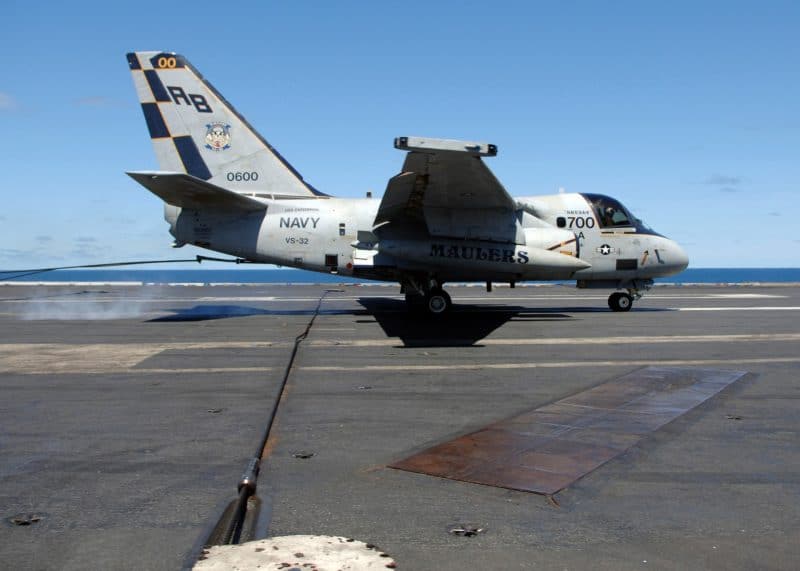
VS-32’s Storied History Came to a Close Not Long After They Made This Awesome Viking Video
Sea Control Squadron THREE TWO (VS-32) Maulers completed their final combat deployment aboard the aircraft carrier USS Enterprise (CVN-65) when they returned to Naval Air Station (NAS) Jacksonville on 15 December 2007. During this, the final deployment for a full Lockheed S-3 Viking-equipped squadron, the Maulers flew 960 sorties totaling more than 2,200 flight hours and logged more than 950 carrier landings. VS-32 supported ground forces in Afghanistan and Iraq by conducting maritime security operations while operating at sea for 180 days. Enjoy the Maulers starring in the last Hoover combat cruise as uploaded to YouTube by Triple Nickel.
During CVW-1’s 7 July 2007 – 19 December 2007 OIF deployment aboard the Big E, in addition to the Maulers, the Air Wing consisted of VFA-211 Fighting Checkmates flying the McDonnell Douglas (Boeing) F/A-18F Super Hornet, VMFA-251 Thunderbolts, VFA-136 Knighthawks, and VFA-86 Sidewinders flying the McDonnell Douglas (Boeing) F/A-18C Hornet, VAQ-137 Rooks flying the Grumman EA-6B Prowler, VAW-123 Screwtops flying the Grumman E-2C 2000 Hawkeye, and HS-11 Dragonslayers flying the Sikorsky HH-60H Rescue Hawk and SH-60F Sea Hawk helicopters.
Image via US Navy
VS-32 Deployed
VS-32 first deployed aboard the escort carrier USS Palau (CVE-122) in 1950. Since then the Maulers have deployed as part of Anti-Submarine Air Group FIVE FOUR (CVSG-54) aboard the Essex-class antisubmarine carriers USS Lake Champlain (CVS-39), USS Essex (CVS-9), USS Randolph (CVS-15), USS Wasp (CVS-19), and USS Tarawa (CVS-40) among others and several other CVEs as well.
USS Lake Champlain (CVS-39) with VS-32 STOOFs on deck. image via US Navy
Deploying With the Hoover
VS-32 became a component of CVW-1 in 1976, deploying with CVW-1 most often aboard the carrier USS America (CVA-66) fourteen times. CVW-1 also deployed aboard the carrier USS John F Kennedy (CVA-67) six times, the USS Dwight D Eisenhower (CVN-69) once, the USS Theodore Roosevelt (CVN-71) twice, the USS George Washington (CVN-73) once, the USS Harry S Truman (CVN-75) once, and finally the Big E four times before disestablishment.
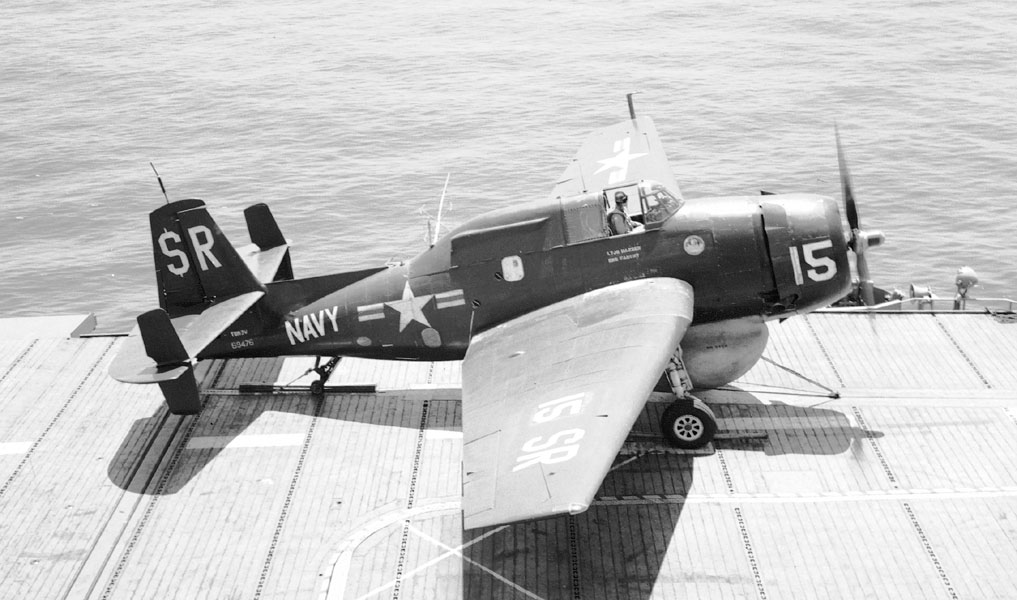
VC-32 TBM-3W. image via us navy
The Norsemen Started Something Special
VS-32 traces its origins back to 31 May 1949 when they were established as Composite Squadron THREE TWO (VC-32) Norsemen at NAS Norfolk. Initially equipped with Grumman TBM-3E and TBM-3W Avenger– some of the first carrier-based airborne early-warning radar aircraft, VC-32 was redesignated Air Anti-Submarine Squadron THREE TWO (VS-32) on 20 April 1950.
VS-32 Stoof. Image via US Navy
Flying the Stoof
After moving to NAS Quonset Point in 1951 the Norsemen transitioned to the Grumman S2F Tracker in 1954. In October of 1973 the East Coast VS squadrons moved en masse to NAS Cecil Field near Jacksonville in Florida. At that time the Norsemen became the Maulers(Author’s note- well they MIGHT have become the Maulers then- see the Trivia section below for more). VS-32 completed their transition to the Lockheed S-3A Viking in 1975, and later to the S-3B in 1990. After NAS Cecil was BRACed to death in 1999 the VS squadrons took up residence a few miles east at NAS Jacksonville until the VS community was shut down for good in 2008.
Image via US Navy
Taking the Silver and the Gold
The Maulers earned themselves ten Commander, Naval Air Force Atlantic (COMNAVAIRLANT) Battle “E” awards. They also picked up six Capt. Arnold J. Isbell trophies for excellence in anti-submarine warfare (ASW) and six Admiral Jimmy Thach awards for meritorious achievement by an ASW squadron. Safety was always a primary consideration for VS-32 and their 15 Chief of Naval Operations Safety “S” awards lead the way for VS squadrons. A couple of Lockheed-Martin Golden Wrench awards for maintenance excellence and an Arleigh Burke award for the most improved squadron also reside in the storied squadron’s trophy case.
Maulers S-3B. image via US Navy
Maulers Trivia
What’s in a name, and when/why do they change? VS-32 provided a bit of a head-scratcher. Anthony Touchette, a PR2 with VS-32 from 1979 to 1981, contacted us and provided proof that the Maulers were still known as the Norsemen as late as 1981- several years after their switch from flying Stoofs to Hoovers and their move from QP to Cecil- the most logical time for a nickname change and confirmed via multiple sources when this piece was written. But JFK cruise books backed up Touchette’s assertion. So when did the Norsemen become the Maulers? Well probably not 1973!
VS-32 S-3A Hoover with the Norsemen patch displayed above the modex. Official US Navy photograph
Naval History and Heritage Command (NHHC) responded to Anthony, saying, “We had our historians look into this nickname confusion for you and here is what they found: No reference to either nickname (is) listed in the 1966 through 1977 Command History Reports (CHR). Starting in at least 1978, the nickname given in squadron’s records in the respective file folders in the Fleet Aviation Command collection was “Norsemen.” Then, starting in 1983, until their disestablishment circa 2007, the nickname given in the same types of records was “Maulers.” No indication of why the name was changed. We found no records with either nickname listed in the squadron’s file folder in the Insignia–Archives sub-collections.” Thanks to Anthony Touchette for reaching out and letting us know about the squadron’s nickname conundrum. Let’s go with the NHHC version- the Norsemen became the Maulers in 1983.
During their S-3A transition training, Maulers flight crews and maintainers also received training on the systems the Viking shared with the Lockheed P-3 Orion as well as systems common to other aircraft. From there the personnel were transferred to NAS North Island for immersive training at the S-3 Replacement Air Group (RAG) squadron, VS-41 Shamrocks.
VS-32 initially received 11 S-3A Vikings as opposed to the VS-standard ten aircraft. The eleventh jet was provided as a ready spare parts airframe or ‘hangar queen” right from the start.
VS-41 Shamrocks S-3A viking in 1979. image via us Navy
VS-32’s first S-3A Viking deployment was aboard the USS John F. Kennedy (CVA-67) in 1976. The deployment featured North Atlantic and Arctic Circle operations and proved the S-3A’s ability by performing successful detection, localization, tracking, recording, and visual sightings of several Red Fleet submarines shadowing the Kennedy and her escorts.
On 20 February 1991 during Operation Desert Storm, VS-32 became the first S-3B squadron to engage, bomb, and destroy a hostile vessel- in this case an Iraqi gunboat. Piloting the Maulers jet was LCDR Bruce Bole.
Fallon Mauler. image via us navy
In July 1997 VS-32 became only the second VS squadron to deploy with the AGM-65F Maverick Air-to-Surface missile system and worked to determine the weapon’s safe and effective tactical employment profiles and performance envelopes. The Maulers were also the first VS squadron to fire Mavericks from two different aircraft.
Sea Control Squadron THREE TWO was officially deactivated effective 30 September 2008 in a deactivation ceremony on 25 September 2008.
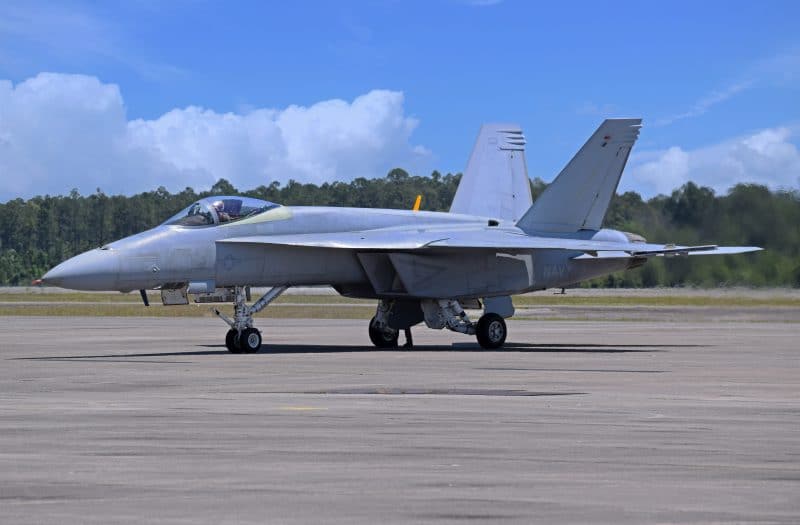
PENSACOLA, Fla. — Boeing Aerospace delivered its first modified Super Hornet on Wednesday to begin an evaluation period prior to becoming a new Blue Angels jet next season.
A gray F/A-18E Super Hornet arrived at Naval Air Station Patuxent River in Maryland to begin its evaluation and flight testing. The aircraft is expected to arrive at the Blue Angels home base NAS Pensacola this summer.
The squadron will replace the current F/A-18C/D Hornets with the larger jets to begin their 75th anniversary year. The pilots and aircraft maintainers will begin training this November with at least eight of the Super Hornets delivered.
“The Super Hornet is an iconic representation of excellence in naval aviation,” Admiral Pat Walsh (Ret.), vice president of U.S. Navy & Marine Corps Services for Boeing, said on Wednesday. “As Boeing continues to support the operational fleet of Navy Super Hornets, we are excited to see this platform enter a critical phase of its journey to joining the team.”
Walsh, who served as a pilot with the Blue Angels between 1985 to 1987, was all smiles during the announcement.
As summer turns to autumn, gray F/A-18 E/F Super Hornets will receive their blue & gold high gloss paint just like the current classic Hornets. (Image: 514th AMW/2020)
Boeing is currently modifying older Super Hornets into Blue Angels jets at the company’s Cecil Field facility in Jacksonville. The aerospace manufacture is adding new equipment to the former Navy and Marine fleet jets.
“Major modifications include the addition of an oil tank for the smoke-generation system, fuel systems that enable the aircraft to fly inverted for extended periods of time, civilian-compatible navigation equipment, cameras and adjustments for the aircraft’s center of gravity,” Boeing spokesperson Jessica Carlton added.
The Navy’s Flight Demonstration Squadron’s 2021 schedule has been shortened to only 28 show sites. This will give the squadron an extra month to practice close formation flying in the new aircraft. Next season will kick-off in April at NAS Jacksonville.
The 2021 show schedule for the U.S. Navy flight demonstration squadron. (U.S. Navy graphic/Released)
The squadron will also add three new pilots in July to replace this season’s out going pilots. Three current pilots will return, and they each have Super Hornet piloting experience.
Current Blue Angels Boss, Commander Brian C. Kesselring, flew Super Hornets during his combat deployments aboard USS Harry S. Truman. He graduated from TOPGUN, the Navy Fighter Weapons School, in 2008.
Blue Angels solo pilot LCDR. Cary Rickoff and advance pilot LT. Julius Bratton will return in 2021 as the two solo pilots. Each flew Super Hornets during fleet operations.
(Charles A. Atkeison reports on aerospace and technology. Follow his updates via social media @Military_Flight.)
BILOXI, Miss. — The Air Force Reserves Hurricane Hunters are performing multiple flights this week into Tropical Storm Cristobal, gathering weather data to forecast the storm’s path and intensity.
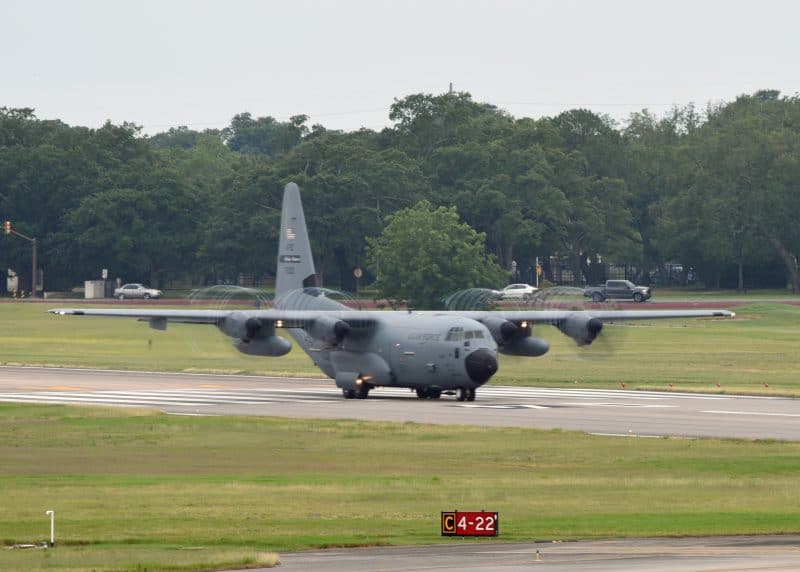
As the third named tropical storm spins over southern Mexico, Keesler AFB’s 53rd Weather Reconnaissance Squadron is working around the clock today. The squadron has ten WC-130J Super Hercules aircraft they rotate to perform several fixed mission flights into the center of Cristobal each day.
The storm is forecast to push northward on Friday, and begin its landfall over Louisiana late-Sunday evening. Gradual strengthening is expected as the system moves across the warm gulf waters.
The Hurricane Hunter’s Mission
Each fixed mission flown by the 53rd WRS collects weather data such as temperature, wind speed and direction, and surface pressure. Each C-130J crew also fly an alpha pattern to help locate the center of a named storm.
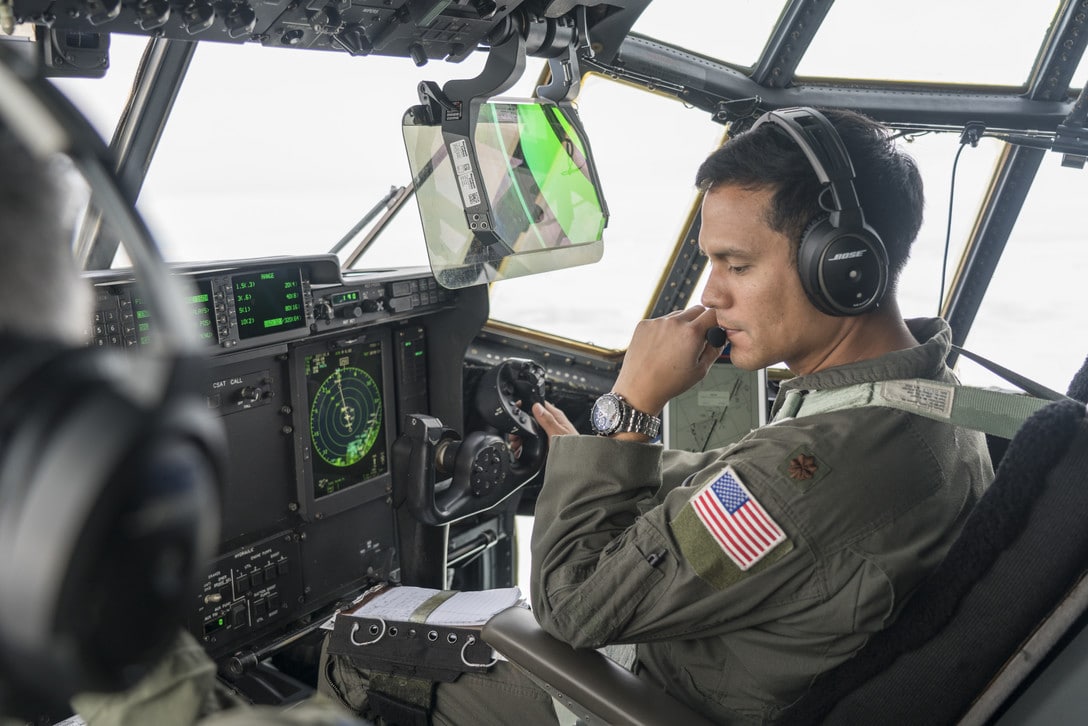
Hurricane Hunter pilot Maj. Jesse Rosal communicates with his crew during a fixed mission. (USAF)
As the system becomes a named storm, the C-130Js will fly at higher altitudes from 5,000 to 10,000 feet based on the storm’s intensity. Each aircrew may fly through the storm’s center up to six times per flight to locate the low-pressure center.
The Hurricane Hunters remind the public that radar and weather balloons are not available in large areas of the Gulf of Mexico and the Atlantic Ocean. The 53rd’s flights gather exact information and then relay it to the National Hurricane Center.
aerial reconnaissance weather officer MAJ. JEREMY DEHART reviews data prior to sending the data to the National Hurricane Center. His location is in the forward right side of the C-130J’s cargo bay. (USAF)
“Satellites are great these days, but they’re still missing a lot of information that cannot be collected via satellite,” Capt. Black added. “It is important we get into the storm environment and sample in three dimensions: what’s going on in the storm by releasing our dropsondes, observing the surface of the water, and getting all the data at flight levels to create that big picture of the storm to be ingested by forecast models and minimize errors.”
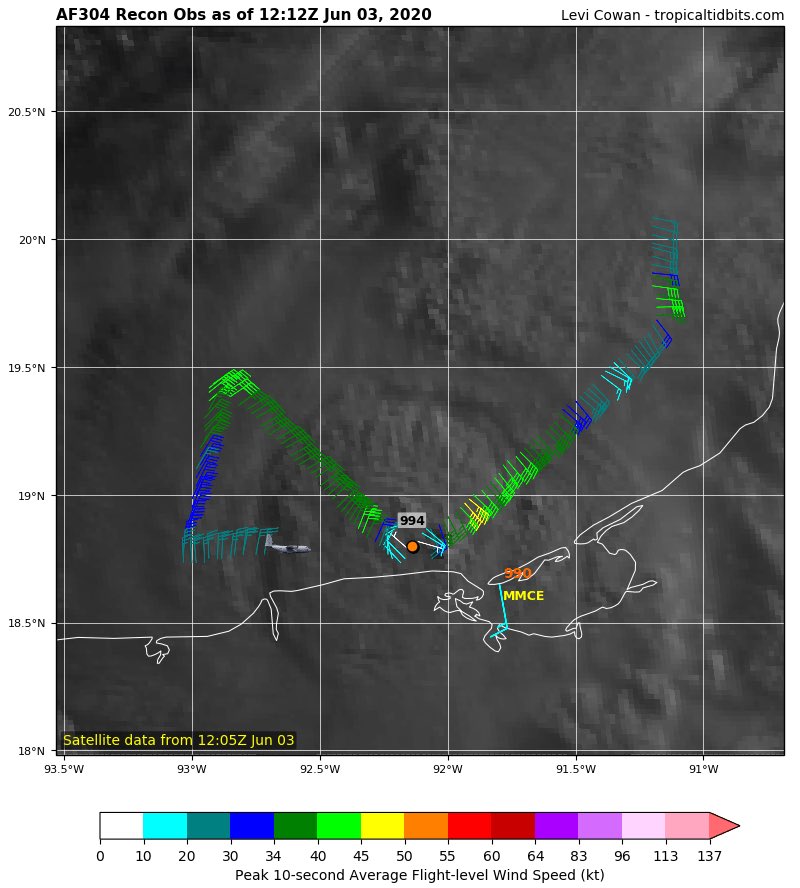
Hurricane Hunters record Cristobal’s wind speed and central pressure on Wednesday. (USAF)
While inside the storm, the aircraft will launch several parachute buoys to collect weather data. The aircrews relay weather data from the aircraft’s sensors and the dropsondes by satellite to the hurricane center. This in turn provides the NHC with exact data to assist in creating new forecasts and storm warnings.
The 53rd Weather Reconnaissance Squadron will also perform extended flights over the Pacific to investigate active systems. During recent years, the aircraft flew into hurricanes in the eastern Pacific and near Hawaii.
(Charles A. Atkeison reports on aerospace and technology. Follow his updates via social media @Military_Flight.)
The Queen Of The Skies Is rapidly disappearing from the skies
When you think of international travel, most passengers still conjure up memories of the iconic jumbo jet. The 747, with its famous curves, four engines and swept back wings, evokes a memory of regal air travel. While the era of luxury travel for most travelers is long gone, up until February of this year, many passenger 747s were still plying the skies.
Then the dreaded Corona virus (COVID-19) hit the industry. International travel was decimated as many nations banned international travel in an attempt to slow the spread of the virus. In response to the unprecedented economic downturn, nearly every airline responded with drastic cuts to their schedules.
Airline travel in the US was down 95% at one point in April. Although the numbers have started to trend upwards, major airlines like Delta, United, and American have cut their scheduled by over 50% and publicly stated that they have no plans to return to pre-pandemic levels anytime soon.
How has the downturn affected the 747 fleet?
As a passenger carrier, the Boeing 747 was already in decline. Major US airlines retired their fleet back almost two years ago. The only US airline still flying the 747 in a passenger configuration is Atlas Air. Your only opportunity to fly on one of their planes is via charter. With the exception of airlines flying the Boeing 747-8i model, most major airlines already had plans to retire their fleets of the jumbo jet. COVID-19 just accelerate those plans. Here are just some of the passenger carrying 747s headed to the boneyard:
KLM
KLM retired their fleet of Boeing 747-400 jets last month. BriYYZ from Toronto, Canada / CC BY-SA (https://creativecommons.org/licenses/by-sa/2.0)
KLM retired their fleet of Boeing 747-400 jets in April. Prior to COVID-19, they had anticipated that they would fly the type into 2021 but the dramatic decline in traffic forced them to move the retirement up by over a year.
Qantas
Qantas will retire their 747’s by the end of June. Vismay Bhadra / CC BY-SA (https://creativecommons.org/licenses/by-sa/4.0)
Even before COVID-19, Qantas had plans to retire the jumbo jet by the end of 2020. The virus accelerated those plans. The small remaining fleet of 747-400s will be retired by June of this year.
Virgin Atlantic
Virgin has retired their fleet of 7 Boeing 747-400s with immediate effect. MercerMJ / CC BY-SA (https://creativecommons.org/licenses/by-sa/2.0)
Virgin Atlantic announced this month that they were closing their operations at London’s Gatwick Airport and would retire their remaining fleet of 747-400s immediately.
British Airways
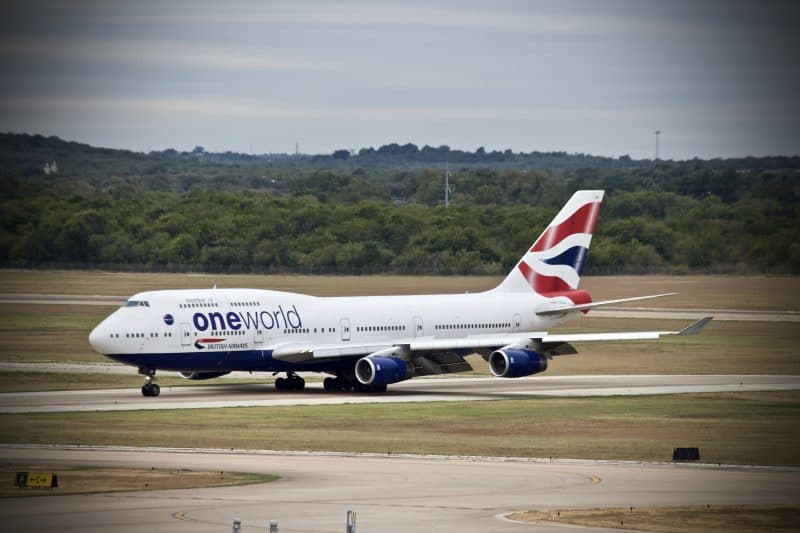
British airways is the largest operator of the Boeing 747-400 fleet in a passenger configuration. Eluveitie / CC BY-SA (https://creativecommons.org/licenses/by-sa/3.0)
British Airways is the largest operator of the Boeing 747-400 fleet in a passenger configuration. The airline originally intended to operate the type until 2024. At the beginning of the year, they had 28 jets. They accelerated the retirement of 2 jets due to COVID-19. They are now looking at streamlining their fleet with a full retirement possible by 2021.
Where can you still fly the 747 after The Corona Virus Pandemic?
The good news is that up until 2016, Boeing still produced the Boeing 747-8i. This upgraded passenger queen still flies for Korean Air, Lufthansa, and Air China. While there have been rumors of each airline trimming their fleet, no airline has announced that they will retire their Boeing 747 fleets as of yet.
The Queen of the Skies will soldier on, especially for cargo airlines. Cargo airlines like UPS and AtlasAir have benefited from the decline in passenger air travel as cargo has shifted largely to their networks. Cathay Pacific also flies a sizable fleet of 747s in a cargo configuration.
The Boeing 747 isn’t dead yet, UPS ordered 14 jets back in 2018. Deliveries for that order are expected to be complete by 2022. No word on whether Boeing will continue to produce the aircraft. The backlog of deliveries will approach single digits next year.
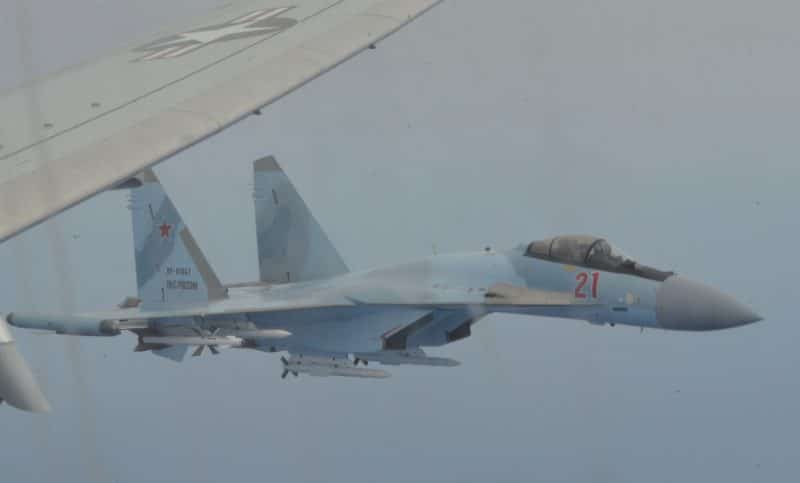
PENSACOLA, Fla. — Two Russian Su-35BM jets flew very close off both wings of a U.S. Navy P-8A Poseidon aircraft over international waters on Tuesday in an action the U.S. naval forces deemed was “unsafe and unprofessional”.
Assigned to the U.S. 6th fleet, the P-8A aircraft was on a flight over the Eastern Mediterranean before it was intercepted by the two Russian aircraft. The Navy added that this was the third “unsafe interaction” following two similar incidents over the same area in April.
Two Russian Su-35 unsafely intercept a P-8A Poseidon assigned to U.S. 6th Fleet over the Mediterranean Sea May 26, 2020. (US Navy)
The U.S. Navy blasted the Russian Air Force for unsafe flight after two Su-35s flew very close on Tuesday. (U.S. Navy)
The Russian Air Force Sukhoi Su-35s, each clutching four advanced missiles, pulled within a few feet of the wing tip of the P-8A. The Russian twin-engine, single seat jets restricted the P-8As flight for 64 minutes.
“The intercept was determined to be unsafe and unprofessional due to the Russian pilots taking close station on each wing of the P-8A simultaneously, restricting the P-8A’s ability to safely maneuver,” The U.S. Naval Forces Europe-Africa public affairs said late Tuesday. [youtube id=”OS_uc5jXHA0″ width=”800″ height=”454″ position=”left”] The wording of the Navy’s public statement calls attention to the continued endangerment by the Russian aircraft. The 6th Fleet is worried the continued aircraft bullying will “increase the potential for midair collisions”.
“The unnecessary actions of the Russian SU-35 pilots were inconsistent with good airmanship and international flight rules, and jeopardized the safety of flight of both aircraft,” The 6th Fleet added. “We expect them to operate within international standards set to ensure safety and to prevent incidents.”
The Poseidon, which began its operational history in 2012, is a modified Boeing 737-800 jet. Armed with torpedoes, it serves as an anti-surface, anti-submarine warfare.
(Charles A. Atkeison reports on aerospace and technology. Follow his updates via social media @Military_Flight.)
Odds Are You’ll Never Fly On An MD-80 or MD-90 Again…But there is still time!
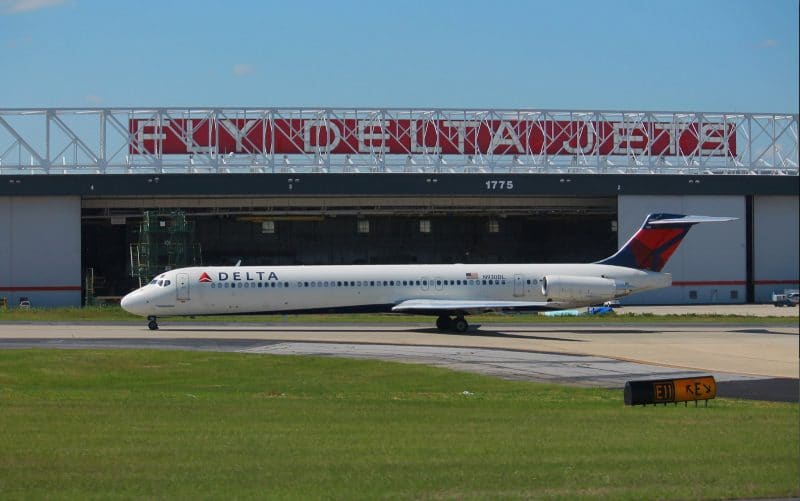
The end always comes sooner than you think. Just a couple of months ago and we were all thinking that Delta would retire their MD-88s at the end of this year and their MD-90s in a couple of years. COVID-19 has resulted in a much accelerated timeline for these T-tailed airliners. This is about more than the retirement of an airplane. This is truly the end of an era for McDonnell Douglas aviation.
Last year we chronicled the retirement of American Airlines’ McDonnell Douglas MD-80. A few years back we also lamented KLM’s retirement of the MD-11. Well the day has finally come that by the end of next week, there will no longer be any pre-merger MD scheduled passenger jet flying in the United States.
On June 2nd, Delta airlines will fly its final MD-88 and MD-90 flights. In normal times, this would have been a massive celebration but these aren’t normal times. Passenger traffic is beginning to rebound but it is still 90% less than levels seen a year ago. Most major airlines have drastically adjusted their schedule and fleet plans to adjust to these ‘challenging times.’ So that means that there will be a muted ceremony followed by a series of flights to the MD-88 and MD-90 boneyard located in Blytheville, Arkansas.
Final flight will end 80 year relationship with Douglas Aircraft Company
This header might sound controversial but it is true. The MD-88 and MD-90 were the last McDonnell Douglas jets that Delta Air Lines purchased first hand. It is true that their Boeing 717 (formerly MD-95s) will continue to soldier on for the next few years at least. And while Delta will retire a portion of their 717 fleet, a smaller group of T-tail jets will fly on. However, those jets were acquired second-hand as part of a lease takeover deal with Southwest Airlines (who acquired them as part of a merger with AirTran) back in 2012.
Delta was a loyal customer to Douglas and later McDonnell Douglas. They acquired the first DC-3 in 1944 and flew almost every major variation of DC-jets from the DC-6, to the DC-7, DC-8, DC-9, the DC-10 (for a short while) and then the MD-88, MD-90, and the MD-11. Today, Delta is a mix of Airbus and Boeing.
There is still time to fly on an MD-80 and MD-90
Delta will retire their MD-90 fleet on June 2, 2020. Photo: aeroprints.com / CC BY-SA (https://creativecommons.org/licenses/by-sa/3.0)
Although the industry is in a funk, Delta will still plan to commemorate their final MD-88 and MD-90 flights. According to Delta, “In a nod to the T-tail jet’s name, Delta Flight 88, a McDonnell Douglas MD-88, will depart on its last scheduled revenue flight on the morning of Tuesday, June 2, from Washington-Dulles International Airport to our hub in Atlanta. Earlier that same morning, Delta Flight 90, operated by an MD-90 aircraft, will fly from Bush Intercontinental Airport in Houston to ATL.
Once on the ground in Atlanta, the aircraft will join several other MD-88s and MD-90s as they fly to Blytheville, Ark., where they will be officially retired from the fleet.” There is still time to fly on a McDonnell Douglas bird. Although tickets for the final flights are sold out, there are still tickets available for flights this week. Don’t wait, this is your last chance. The MD-90 will officially enter boneyard status as of June 2nd as all MD-90s will retire.
Although some third world and charter MD-80 operators remain, no scheduled US or European operators of the type will remain after June 2nd. There is a near zero chance that any MD-90 will ever fly again as Delta was the last operator of the type.
There are still limited opportunities to fly on a MD-80 if you make the effort. Your best bet to fly on a MD-80 after June 2 is either to find a scheduled charter by World Atlantic Airlines or find a smaller airline in Central America, Iran or Africa that is still flying the type.
Back in 1988, a Boeing 737-300 glided to a safe landing on a New Orleans Levee
Although ‘the miracle on the levee’ doesn’t stick the same as ‘Sully’s Miracle on the Hudson’, TACA flight 110 was truly a miracle. On May 24, 1988, a brand new TACA Boeing 737-300 departed from Belize to New Orleans on a scheduled flight with a distance of about 875 nautical miles. Passengers enjoyed the relative quiet of a new Boeing 737-300 enroute. The first three quarters of the flight were uneventful.
At the controls was Captain Dárdano. He was a very experienced pilot in command of the Boeing that day with a lucky track record even in challenging situations. Years earlier he was shot in the head during the civil war in El Salvador while on the ground before he was supposed to pilot an air taxi flight. Dárdano lost an eye in that incident. Despite his disability, he still managed to become a commercial pilot for TACA.
TACA 110’s Descent Takes It Into Bad Weather
On descent, the captain noticed weather up ahead. Utilizing the radar, the crew attempted to fly between large cells on descent. This is a common technique for pilots to utilize as they deviate around weather. Unfortunately, the radar was not painting additional embedded weather in between the two primary weather cells that were depicted.
FLT CREW NOTED GREEN & YELLOW RTRNS ON WX RADAR WITH SOME ISOLATED RED CELLS, LEFT & RGT OF INTENDED FLT PATH. BFR ENTERING CLOUDS AT 30,000′, CAPT SLCTD CONTINUOUS ENG IGNITION & ACTIVATED ENG ANTI-ICE SYS. CREW SLCTD ROUTE BET 2 CELLS, DISPLAYED AS RED ON WX RADAR. HVY RAIN, HAIL & TURBC WERE ENCTRD. AT ABT16,500′, BOTH ENGS FLAMED OUT.
-NTSB Accident investigation Report for TACA Flight 110
Passing 16,500 feet, both CFM-56 engines flamed out due to heavy rain and hail. Captain Dárdano then started the APU to regain electrical power and attempted to restart the engines. An airstart did not work. Utilizing the starter, the crew did note that the engines began to light off. While both restarted, the crew could not get either engine to advance beyond flight idle. Even worse, the #2 engine showed that the EGT temperature was excessively high.
At this point, the crew recognized that it was unlikely that they would regain power. While armchair critics might question their next move, according to the NTSB report, they elected to shut down both engines to avoid further engine damage. They had few choices at this point. They were too far away from New Orleans International Airport to make a deadstick landing. Their choices were to land on water or find an alternate field. ATC attempted to guide the stricken jet towards New Orleans’ Lakefront Airport. While in the final decent, they recognized that they wouldn’t have enough energy to make it to Lakefront. Call it luck or prayer, but on the approach path to Lakefront Airport, there was a levee. It was long enough for a Boeing 737 to land.
The miracle deadstick landing of a Boeing 737
The experienced captain of the jet landed on the grass levee. The AP article from 1988 about the incident featured an interview with a passenger on the flight: ″It was a very smooth landing,″ said passenger July Mora, a travel agent from New Orleans. ″I thought we were at the airport. I was surprised to learn we had landed on a levee.″
The nosecone of tACA Flight 110 after flying through a Thunderstorm. (Image: faa)
All 45 passengers and crew safely exited the aircraft. They had survived with barely a scratch. The aircraft itself was in relatively good shape. After an engine change and minor repair, it was flown to a maintenance facility for additional inspection. The jet was eventually sold to a lessor, reregistered, and ended up flying with successfully with Southwest Airlines for a number of years until the jet was finally retired from service in December 2016.
The NTSB later released a report stating that the engines should have continued to provide power even while flying through that level of precipitation. At the time, FAA water ingestion certification standards did not adequately reflect precipitation amounts likely encountered in actual flying conditions. Recommended changes included keeping a minimum power setting of greater than 45% N1 and restricting the use of autothrottles in heavy precipitation. Additional changes were incorporated into the CFM-56 engine design:
Spinner profile change from conical to a combination elliptical and conical (spinner shape called coniptical) to guide the hail radially outward
Cutback splitter that allows more ingested rain and/or hail to be centrifuged out by the fan rotor, away from the core, and into the fan bypass flow
Increased number of variable bleed valve (VBV) doors that allowed additional rain and/or hail to be extracted from the core flow path at low engine rotational speeds
We found a rare and incredible interview with Captain Dárdano on Youtube
On Youtube, there is an hour plus long interview with Captain Dárdano. In the video, he described the event and his thoughts at the time of the incident. It’s a bit long but interesting to hear him recount the miracle landing on the levee.
In the interview, Captain Dárdano cited that the crew lacked training for such an event. At the time there were no checklists for dual engine flameout. He cited his experience and a bit of luck for a “beautiful, beautiful landing.” After landing, he told a funny story of a passenger rushing off the jet right as the flight attendant opened the chute. The passenger jumped out the door without the slide inflated. Fortunately, the slide rapidly inflated just under the passenger as she was about to land. The full interview is below.
Morris Air was ‘the’ low-cost breakout airline of the 1990s. In an era that featured way more startup airlines than successes, Morris Air was one of the few on track to become a competitive force in the US.
It was an airline so good that it made Southwest Airlines nervous. So much so that they bought the airline just a few years after founding.
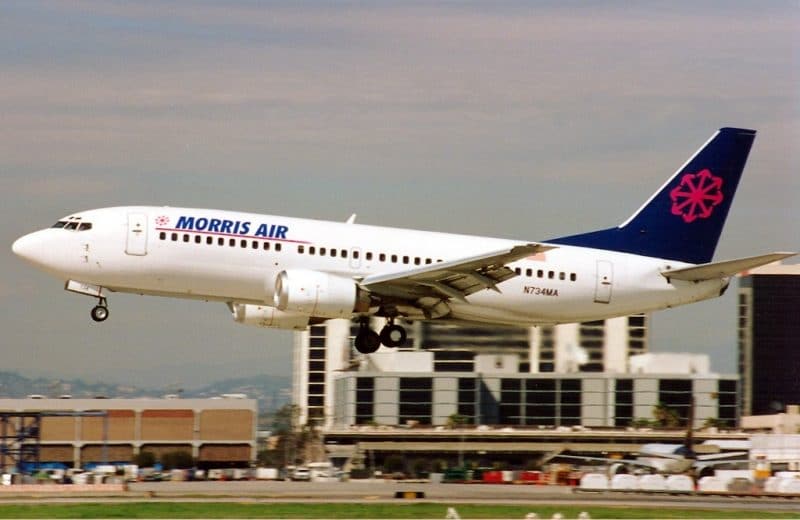
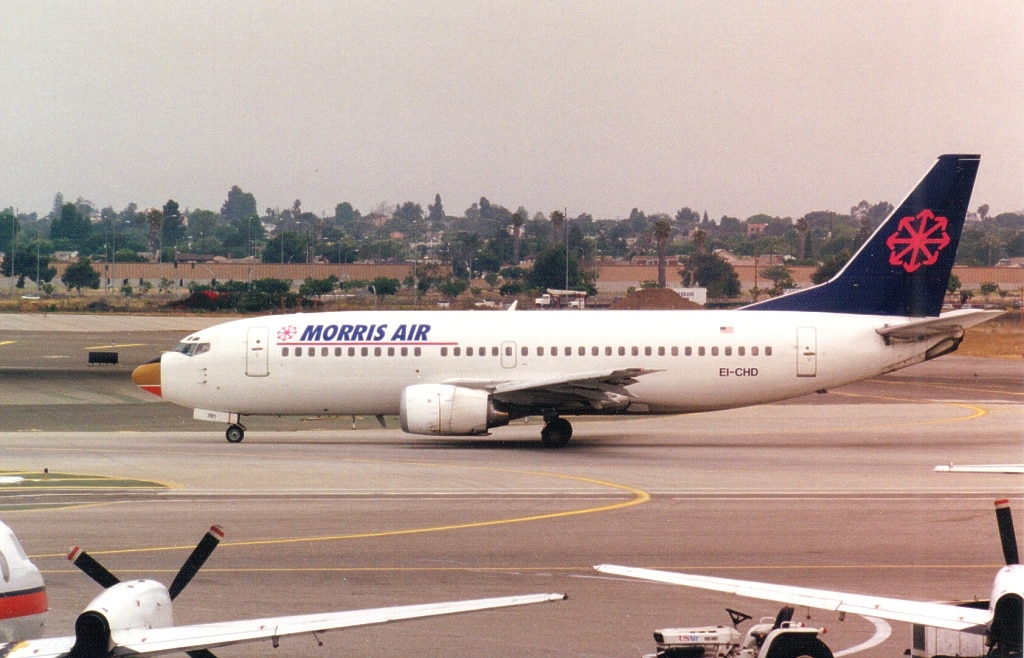
A Morris Air Jet at LAX with a Southwest nose. (Photo: Alan Radecki Akradecki/CC BY-SA 3.0)
June Morris: The Woman Behind It All
Morris Air was founded by businesswoman June M. Morris. Morris’s foray into entrepreneurship started in 1970 with the founding of her travel agency, Morris Travel, which is credited with bringing low-cost flights to Utah, where she was based.
Eventually, Morris Travel launched Morris Air 14 years later in 1984. The charter service offered charter flights and travel packages all across the West Coast, and even as far afield as destinations such as Hawaii and Alaska.
Morris, however, did have a partner in the business, one that would go on to become far more famous in the aviation industry than herself — David Neeleman. As many of you know, David who would later have had his hand in WestJet, JetBlue, Azul and the forthcoming airline Breeze.
While building her brand, Morris was also smartly keeping a close eye on Southwest. One New York Times article even claimed she modeled Morris Air completely after Southwest. The writer attributed this claim to her low fares; budget, economy-class service; and fleet of Boeing 737 jets.
As CEO, Morris was said to have a unique business and management style. This resulted in unprecedented innovations such as the e-ticket. Back in the 90s, all tickets were still paper.
Morris Air was the first airline ever to invent e-ticket travel, thanks to one employee’s ingenuity. Southwest often gets the credit — though more on that later.
The Rise of Morris Air
Morris Air started small as they transitioned from charter to scheduled service. It was based out of Salt Lake City International Airport. Technically, until 1992, these charter flights were operated by Ryan International and Sierra Pacific Airlines. In 1992, Morris Air obtained its FAR 121 operating certificate and began operating as an independent carrier.
By this time, Morris Air provided service to 28 destinations on the West Coast. It eventually expanded its fleet to include 25 Boeing 737-300 jets.
A year later, in 1993, Morris Air received recognition as Utah’s top woman-owned-and-operated business, and the United States’ 33rd top woman-owned-and-operated business.
In 1993, Morris Air was offering more than 1,000 flights each week. Destinations were scattered all over destinations, mostly in the western US.
This success would not go unnoticed in the aviation industry.
Southwest takes note…then buys it
In 1994, June Morris turned her attention elsewhere, citing health issues. It was the perfect opportunity for Southwest to make its move and solidify its presence on the west coast while removing a formidable competitor.
Morris sold Morris Air to Southwest Airlines in a stock exchange worth $129 million. At the time, Southwest was about eight times the size of Morris Air. The purchase gave Southwest more than two dozen additional destinations it previously did not have. It also gained a new Salt Lake City hub, which it hoped to use to compete with Delta Air Lines.
Southwest has called the acquisition “the largest growth of its kind in our company’s history.” Although the Southwest hub never really materialized, other cities like Seattle, Portland and San Jose grew a sizable amount with the acquisition.
The acquisition was a tremendous boost for Southwest. Southwest gained routes, aircraft, and even incorporated some of Morris Air’s innovations. In particular, Southwest integrated Morris Air’s ingenious e-ticketing idea.
This was what eventually led to Southwest receiving credit as the first airline in the world to offer ticketless travel. Morris herself was also offered a spot on the Southwest Airlines Board of Directors, where she remained for more than a decade.
As for David Neeleman, he went on to serve on Southwest’s Executive Planning Committee for a while. Due to non-compete clauses, he was prevented from founding another airline in the US for a period.
He became the CEO of Open Skies, a touch screen airline reservation systems company acquired by HP. Later, he assisted with the founding of both WestJet and eventually JetBlue.
Neeleman then went on to found Azul in Brazil. He’s planning his return to the US airline industry with a new airline called Breeze that is supposed to begin service sometime in late 2020.
There is nothing more beautiful than an air to air photo of an airplane. A high quality image of heavier than air machine in its native environment gets every avgeek excited. Have you ever wondered what it takes to get the perfect shot?
It is a complex endeavor to conduct an air to air photo shoot. The perfect photo requires planning, patience, and precision. Jessica Ambats is a renowned aviation photographer, pilot who possesses all three of those qualities in spades. She’s releasing a new book on her air to air photography adventures called Jet Dreams. The book is filled with with dramatic, high-quality air-to-air photos of owner-flown jets.
If you’ve been around aviation for any length of time, you are bound to have seen some of her amazing work in magazines, executive offices, and FBO lobbies. We sat down with Jessica to learn more about her amazing career and forthcoming book.
Meet Jessica Ambats, The Air to Air Aviation Photographer 64
Our interview with air to air photographer Jessica Ambats
You are also a pilot yourself, when did you realize that flying and photography were the perfect mix for a career?
I always viewed flying and photography as two separate interests, and it took some time to realize I could combine them to create a career. Years after college, I attended a symposium hosted by the International Society for Aviation Photography. I was in awe of all of the speakers. I met accomplished aviation photographers and it was a huge inspiration to me. That event was my lightbulb moment.
Did you grow up around airplanes?
I grew up interested in aviation, but not around airplanes. As a kid, I loved to watch my dad go hang-gliding. But it wasn’t until much later that I realized flying was an attainable goal. I earned my private pilot license at Santa Monica Airport, and later seaplane, instrument and multi-engine ratings.
Let’s talk a bit more about air to air photography. Can you tell us more about the preparation necessary to do an air to air photo flight?
Quite a bit of planning takes place before each shoot. It starts with having a clear vision of what I want to accomplish. I research backdrops by studying sectional charts, satellite maps, and other photos, until I find the perfect location. If it’s in a busy airspace, my formation pilot will coordinate in advance with ATC. I then schedule a date that works for everyone – this is often the hardest part of the entire process! I plan our prep/brief/launch times around sunrise or sunset. I also use an app to calculate where the sun angle will be – this helps me determine in advance exactly where we will orbit for photos. My team of excellent pilots is what really makes the difference in having a safe and successful shoot.
Meet Jessica Ambats, The Air to Air Aviation Photographer 65
What type of modifications have you made to your plane to be able to get the perfect shot?
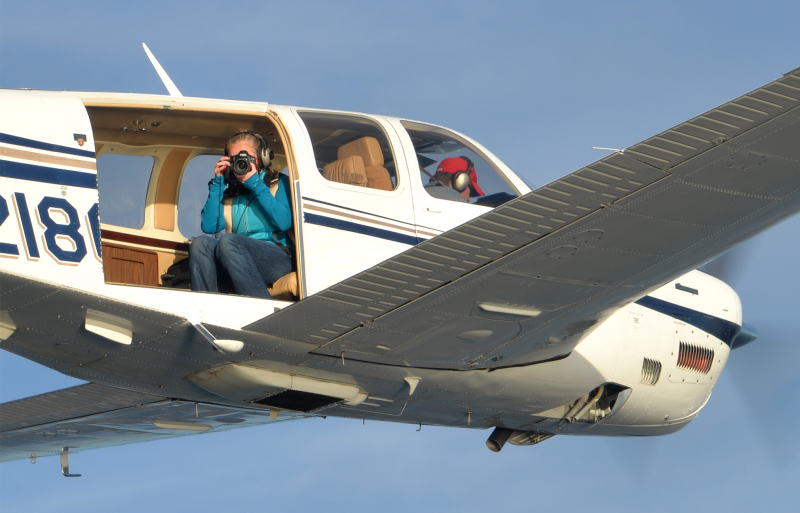
For Bonanza photoships, we remove the rear doors and the last row of seats. I sit in the middle row facing backwards. This gives a large, clear area for me to shoot from. I wear a harness that is attached to multiple points inside the Bonanza.
What’s your favorite photo shoot thus far?
There have been many amazing shoots, but one that comes to mind was over New York City, of four Citation Mustangs and a P-51 Mustang. We captured many New York landmarks, including One World Trade Center, Central Park, the Brooklyn Bridge and the Statue of Liberty. Our large formation of aircraft, next to busy airspace, was an awesome undertaking. But, New York being my hometown is what made this shoot most special. As we flew overhead and I looked down at the city, I remembered myself standing down there as a young child, looking up and dreaming. It felt like I had come full circle.
A dissimilar four ship formation over New York City. Photo: Jessica Ambats
There have been many amazing shoots, but one that comes to mind was over New York City, of four Citation Mustangs and a P-51 Mustang.
– Jessica Ambats
You are already an accomplished pilot, magazine editor, and photography. Now you are going to add author to that list too. What inspired you to put out a book?
I’ve wanted to create a book for a long time. Being grounded during the pandemic has allowed time to finally focus on it. Through my work shooting owner-flown airplanes, I’ve gotten to know a very interesting group of individuals. Many of them dreamed of flying as kids and have fascinating, self-made success stories. I want to share their inspirational stories along with my collection of air-to-air work.
At Avgeekery, we’re always trying to inspire the next generation to explore a career in aviation. To be honest, things are looking a little tough these past couple of months, especially for people who are pursuing a traditional airline career. What advice do you have for them?
An airline career takes persistence and resilience. The aviation industry is affected by ups and downs in the economy more than many other industries. Anyone interested in aviation has to really love it and be creative about ways to build time. That said, there are many other ways to have a career within aviation: engineering, design, sales, marketing… and even photography!
Air to air Photography with Sean D. Tucker. Sean wrote the forward for JEssica Ambats’ book Jet Dreams.
We’re pretty sure that her book will be a hit in the aviation community and beyond. Jet Dreams features 160 pages of photography plus a forward by world-famous aerobatic pilot Sean D. Tucker. If you are interested in supporting her work and/or purchasing her book, check out her Kickstarter here.
Jessica Ambats’ new book titled Jet Dreams will feature over 100 of her best air to air photos.