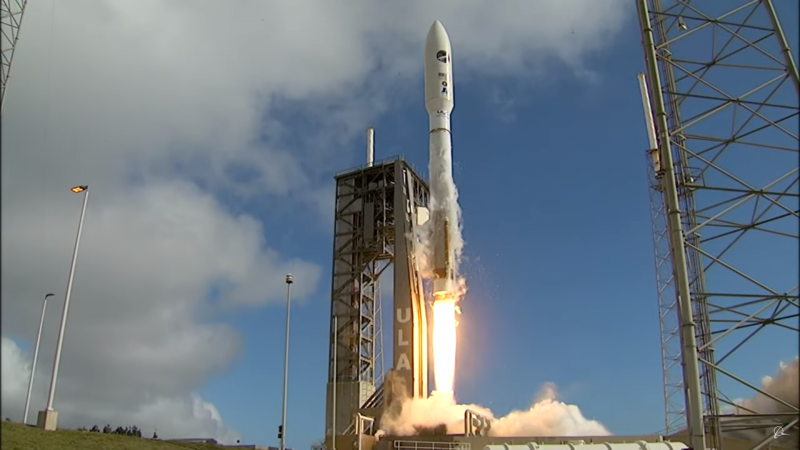
CAPE CANAVERAL, Fla. — The U.S. Space Force’s uncrewed X-37B space shuttle lifted off into the skies over America’s Space Coast on Sunday to begin military science research in space.
This sixth flight of the X-37B program is the first under the management of the Space Force. As the previous five flights under the Air Force were top secret, several payloads have been announced for this mission.
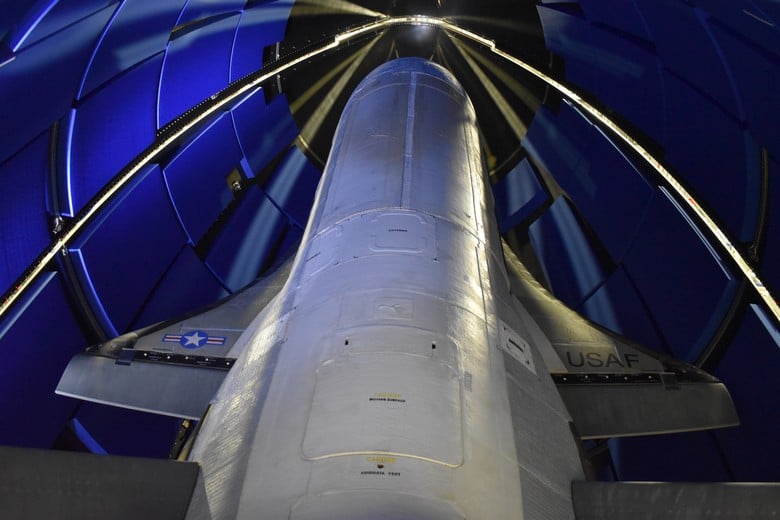
Based at the Kennedy Space Center, there are two Orbital Test Vehicles in service. They are serviced in a building once used to prepare NASA’s space shuttle fleet for flight. The X-37-B is 25:100 scale compared to NASA’s orbiters.
The encapsulated Space Force X-37B a few weeks prior to the sixth launch in the program’s history. (ULA)
The last X-37B broke the program’s space duration record in October 2019 after spending 780 day in low Earth orbit. Combined, the two spacecraft have logged seven years and 10 months in space, and nearly one billion miles traveled.
Launch and the Mission Ahead
A United Launch Alliance Atlas V 501 thundered away from Cape Canaveral AFS at 9:14:00 a.m. EDT, on Sunday. The rocket’s 860,200 pounds of thrust pushed the second X-37B craft toward space beginning its third flight. [youtube id=”DRf2MTAlQTo” width=”800″ height=”454″ position=”left”] The Atlas V began its trek northwest out over the Atlantic waters. Five minutes into the flight, the two payload fairing halves separated exposing the X-37B to space.
“This launch is a prime example of integrated operations between the Air Force, Space Force, and government-industry partnerships,” Air Force Chief of Staff Gen. David Goldfein stated on Thursday. “The X-37B continues to break barriers in advancing reusable space vehicle technologies and is a significant investment in advancing future space capabilities.”
The Atlas V main stage separates from the Centaur upper stage four minutes after launch on Sunday. (ULA)
The two spacecraft are owned by the U.S. Air Force. The U.S. Space Force is in charge of the launch, on-orbit operations, and landing.
“This sixth mission is a big step for the X-37B program,” Randy Walden, Director and Program Executive Officer for the Department of the Air Force Rapid Capabilities Office, said on Friday. “This will be the first X-37B mission to use a service module to host experiments.”
The addition of a service module will allow the space plane to include more research experiments. A satellite deployment is scheduled later in the flight.
The winged spacecraft will likely stay aloft for over one year, and may break the last mission’s endurance record. At the flight’s conclusion, the X-37B will return home and land at the Kennedy Space Center.
ULA dedicated Sunday’s launch to healthcare professionals, first responders, and the military working across the frontlines of COVID-19. “We join the U.S. Air and Space Forces in honoring those affected by the virus,” the commercial space company added.
(Charles A. Atkeison reports on aerospace and technology. Follow his updates via social media @Military_Flight.)
COVID-19 pandemic opens up busy airports to private and military flyers
Airlines are flying significantly less flights due to the massive drop in air travel due to the COVID-19 pandemic. Although travel is beginning to recover, daily traveler numbers are still down around 90% from the same period last year. This news is devastating for the aviation industry, but it has allowed a very unique opportunity for some aviators.
Over the past couple of weeks we’ve seen sporadic YouTube videos of same brave general aviation pilots pop up on the web who have flown into some of the largest commercial airports in the country.
Prior to the pandemic, it would be extremely difficult to fly into an airport like New York LaGuardia or Chicago O’Hare in a single engine Cessna or RV-8. Impossible in some cases due to the sheer volume of traffic. Many of these airports these days are like ghost towns enabling some very creative cross countries.
Still, it isn’t easy just to hop in a plane and fly
With ‘Stay at Home’ restrictions in full force in some areas of the country, it isn’t always easy to rent a plane or find an instructor to fly in challenging class B airspace. If you own your own plane, or have access to one, it is possible though. We’ve even seen one pilot who made a cross-country flight between New York’s three major airports. We’ll show you the videos on the next few pages.
Tour de New York in an RV-8
Our first video that peaked our interest in this concept comes from YouTuber Life in the FL. He owns an RV-8 and has some great general aviation content of his flying adventures. In this episode, he filed a triangle route between New Jersey’s Newark airport to LaGuardia and then New York’s Kennedy airport. On a normal day, he would have been cussed out by a New York controller. In this video though, the controller just makes a slight chuckle, scoffs at him a bit, and then provides clearance for his requested route.
It is interesting to note that in this video, he only requests a low approach. It’s about as low as you can go when flying a plane, but we love the creativity to avoid a full stop and the fees that would most likely result in a landing at three of the most busy airports in the nation.
Next up: A KC-10 Does a Touch and Go at New York LaGuardia
LOS ANGELES — The Air Force Thunderbirds returned to the skies over California on Friday to perform a series of flyovers as they continue to salute the medical workers and employees on the frontlines of Covid19.
America’s Ambassadors in Blue performed flights across several medical facilities and hospitals over San Diego and north to Carlsbad. The squadron then aerial refueled before continuing on to flyover Los Angeles.
The six F-16 Fighting Falcon jets departed their home near Las Vegas at 11 a.m. PDT, to begin the short trip to southern California. A seventh F-16 also took-off with the team to provide ATC support and aerial photography.
“It is an honor for our team to salute the countless Californians who have committed to keeping the communities safe during this difficult time in our nation,” Thunderbirds flight leader Lt Col John Caldwell said on Thursday. “We hope to give onlookers a touching display of American resolve that honors those serving on the frontline our fight against COVID-19.”
The Thunderbirds skirted along the U.S.-Mexico boarder before turning north toward San Diego at 12 p.m. Beautiful weather around San Diego greeted the flight squadron.
The Thunderbirds fly in formation over the USS Midway Museum on Friday. (U.S. Navy/ MC2 R. Breeden)
Flying away from northern San Diego, the Thunderbirds grabbed some jet fuel out over the Pacific waters. A KC-10 Extender from Travis AFB provided the aerial refueling for the seven aircraft.
The Thunderbirds later resumed their America Strong flyover as the entered Los Angeles airspace at 1:35 p.m. Flying north over the City of Angels, they made an aerial loop flying west and then south down the coastline before heading east.
As the six jets and chase aircraft flew over Long Beach at 1:52 p.m., something unusual happened. Thunderbird 6 Capt. Kyle Oliver was forced to break right and away from the tight delta formation for a few seconds. He then rejoined with no issue.
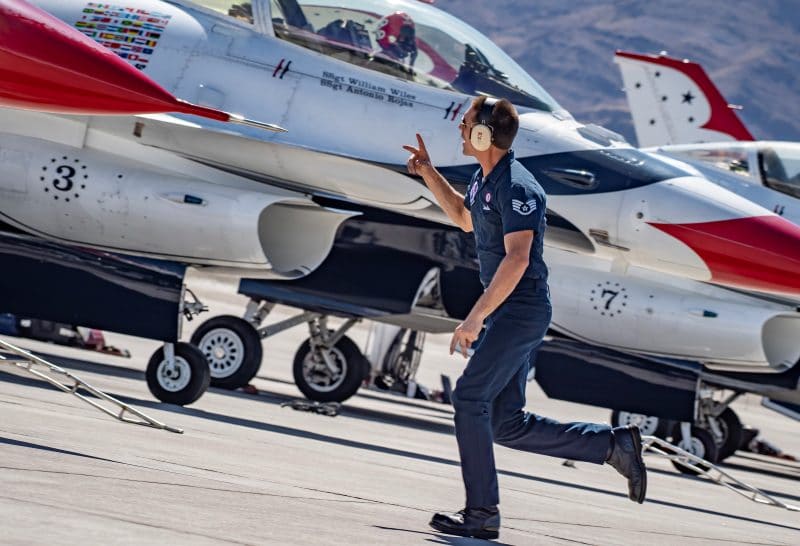
The Air Force Thunderbirds prepare to takeoff for an America Strong flyover across southern California at Nellis Air Force Base, Nevada, on May 15, 2020. (U.S.A.F./SSgt. C. Bush)
Video from Los Angeles ABC7 showed the jets flutter a second prior to Capt. Oliver’s break away. The effect forced the team’s route to change slightly.
“Due to the unexpected high concentration of air traffic, the (Thunderbirds) pilots had to modify the flight path during the flyover to ensure operational and public safety,” Thunderbirds public affairs officer Capt. Remoshay Nelson told AvGeekery.com. “It was because of unexpected traffic.”
After aerial refueling with the KC-10 for a third time within four hours, the KC-10 returned to Travis AFB. The Thunderbirds, meanwhile, continued to for one final five minute flyover — from Thousand Oaks to Santa Clara.
(Charles A. Atkeison reports on aerospace and technology. Follow his updates via social media @Military_Flight.)
PENSACOLA, Fla. — The six blue and gold jets of the U.S. Navy’s Blue Angels honored the healthcare professionals and first responders with extended flyovers across Nashville and Little Rock on Thursday.
Flying across sunny skies, the Navy’s Flight Demonstration Squadron continued their flights over medical facilities across the eastern United States. Government support for their America Strong flights are tied into money already appropriated for their air show season. [youtube id=”op6BRVHO4mU” width=”800″ height=”454″ position=”left”]
“The America Strong initiative is a way for the Blue Angels to show appreciation to the thousands of nurses, doctors, firefighters, grocery store employees, military personnel, and many others who are at the front line of the pandemic response,” Blue Angels Boss Cmdr. Brian Kesselring said on Wednesday. “This is our opportunity to salute each American in the fight against COVID-19.”
The Blue Angels departed their home base at NAS Pensacola at 10:23 a.m. CDT, soaring into partly cloudy skies over the Emerald Coast. In an unprecedented move, the Blue Angels provided a unique view of their taxi and take-off.
the Blue Angels flyover Nashville, including Nissan Stadium, on May 14, 2020. (US Navy/ MC2 C. Hendrix)
As the Blue Angels powered up their aircraft and began their move on the Florida runway, the team broadcast live video from inside the cockpit of an F/A-18D Hornet. A live microphone helped capture the feel of being inside the cockpit of the military jet.
The Blue Angels arrival over south central Tennessee was met by two KC-10 Extenders from JB McGuire-Dix-Lakehurst in New Jersey. The two Air Force aircraft began refueling the Navy jets at 11:35 a.m., as they flew in multiple oval patterns of the area.
The Blue Angels first flyover began east of Smyrna, Tennessee, and moved in a V-shape track to the south and then west of the city. The squadron’s delta formation then flew west to Franklin, and then northward to Nashville.
The Navy’s flight demonstration squadron approach Little Rock on Thursday. (U.S. Navy/ MC2 C. Hendrix)
Cars along Nashville’s interstates and local roads slowed and pedestrians stopped to look toward the city’s skyline at the jets performed several passes beginning at 12:09 p.m. The six jets and one chase plane flew over the skyline, smoke-on, as they thanked the local healthcare employees.
The Blue Angels then raced west toward Memphis to rejoin with the twin KC-10s to refuel again. Two larger jets with three smaller jets following behind.
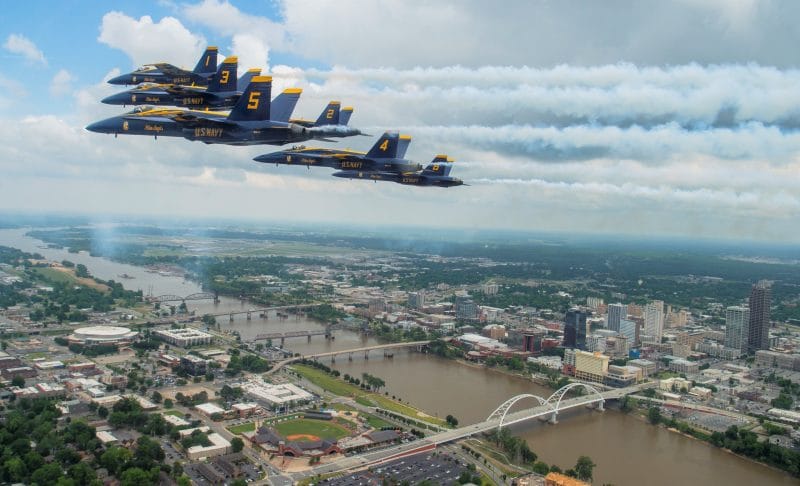
The Navy’s jet team arrived over western Little Rock at about to perform a flyover along the Arkansas River. The brief five minute flyover circled the capital city’s downtown district before heading off to the east.
As the sun set over the Pensacola Naval Training Facility, no new set of flyover locations have been announced by the team. The probability that the team’s Covid-19 flyovers have concluded looms on the horizon, or will they fly one final set of cities in a few days.
(Charles A. Atkeison reports on aerospace and technology. Follow his updates via social media @Military_Flight.)
PENSACOLA, Fla. — The Navy’s Flight Demonstration Squadron soared into the blue skies over Florida on Friday to perform a series of extended flyovers to salute healthcare professionals and essential personnel.
The Blue Angels are performing a series of flights every few days to thank the medical facilities and hospital staff. The squadron is performing a series of flights over the eastern United States during May. [youtube id=”_m4aRRks-B0″ width=”800″ height=”454″ position=”left”] “The America Strong initiative is a way for the Blue Angels to show appreciation to the thousands of nurses, doctors, firefighters, grocery store employees, military personnel, and others who are at the front line of the pandemic response,” Blue Angels Boss and flight leader Cmdr. Brian Kesselring said on Thursday. “This is our opportunity to salute each American in the fight against COVID-19.”
The Blue Angels departed their home base at NAS Pensacola to begin the short hop over to the skies above Jacksonville. Flying in a six-aircraft delta formation, the squadron flew smoke-on over the Atlantic coastline starting at 11:39 a.m. EDT.
New Jersey’s 305th Air Refueling Wing refuel the Blue Angels F/A-18 Hornets on May 8, 2020. (MC1 Jess Gray)
As the squadron left Jacksonville airspace en route to Miami they were met by an Air Force aircraft. Two KC-10 Extenders from Joint Base McGuire-Dix-Lakehurst’s 305th Air Refueling Wing, refueled the Blues’ F/A-18 Hornets twice on Friday.
The KC-10s refueled the jets over the St. Augustine prior to the Jacksonville flyovers. They again rejoined with the Navy squadron east of Lake Okeechobee prior to Miami.
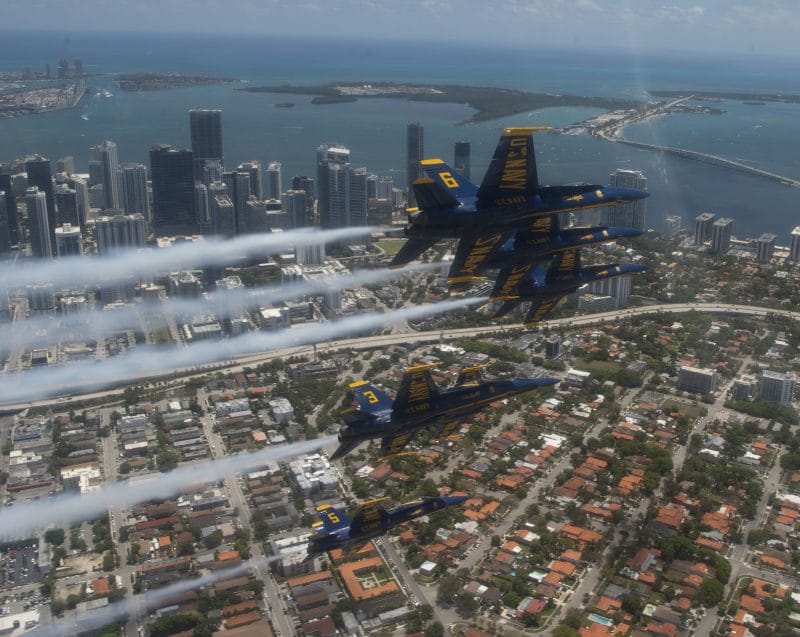
The Blue Angels arrived over north Miami at 1 p.m. to first flyover Boca Raton Medical Center. They flew over several more hospital facilities as they flew as far south as Homestead.
Six Sun-lite blue and gold jets then turned north to flyover medical facilities across western Miami. They concluded over West Boca Medical Center at 1:26 p.m.
The Blue Angels will likely announce a new schedule of location flyovers on or before Monday. With their air show season delayed until at least July, the Blue Angels are focused on America Strong flights.
(Charles A. Atkeison reports on aerospace and technology. Follow his updates via social media @Military_Flight.)
The Crew Punched Out Just in Time, But the Jet Flew On Without Them
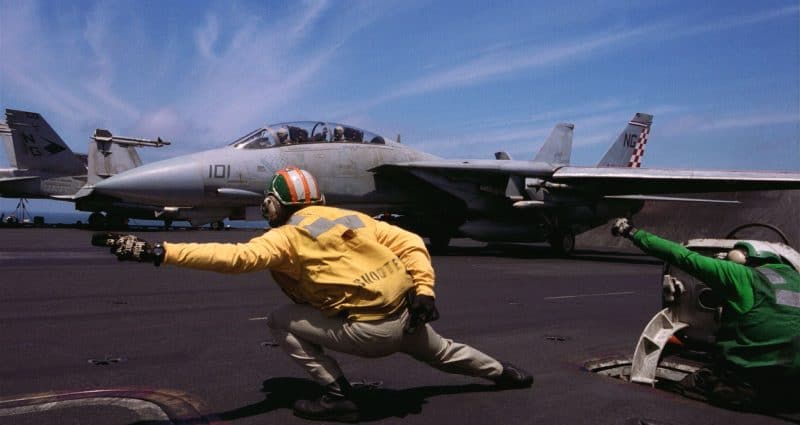
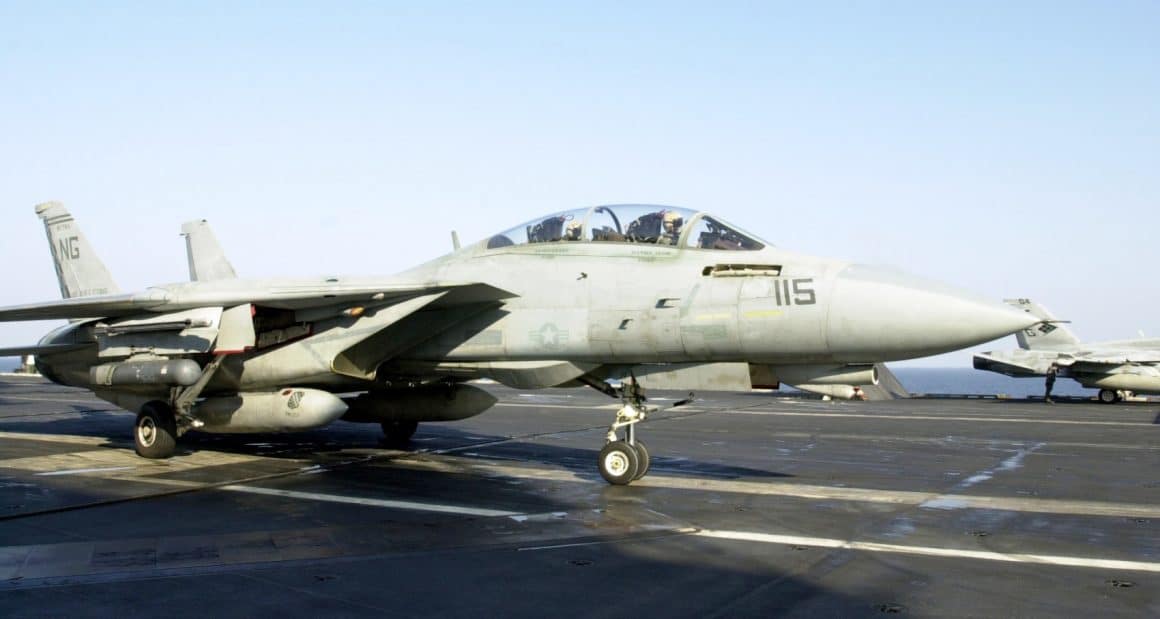
The 8th of March 2002 dawned over the ships of Carrier Group 7 in the northern Arabian Gulf like so many had before. The Nimitz-class aircraft carrier USS John C. Stennis (CVN-74) was on her third deployment and her second with Carrier Air Wing NINE (CVW-9) embarked in support of Operation Enduring Freedom (OEF) at the time. Fighter Squadron TWO ONE ONE (VF-211) Fighting Checkmates were the only fighter squadron operating Grumman F-14A Tomcat fighters from the deck of the “Johnny Reb.” The maintenance troops were doing a great job with those old birds though-on 8 March 2002 VF-211 had 8 of its 10 jets available for sorties.
Section shot of VF-211 F-14A tomcats. image via us navy
Low at the Start, Right for Lineup
When it came time to recover the airborne jets, at 1821 local time F-14A Tomcat BuNo 158618 wearing modex 104, approached the JCS for recovery. The crew of the jet, pilot Lieutenant Robert “Mornin'” Woods and RIO Commander Douglas “Ogre” McGowan (a CVW-9 staffer) using callsign Nickel 104, started low but corrected and flew a fair pass over the ramp, engaging a cross-deck pendant with their tailhook. Normally the pilot of the jet throttles up to ensure that if a hook skip or cross-deck pendant failure occurs, the jet will retain enough energy to motor off the angle and back into the sky. But that’s not how things went for Nickel 104.
USS John C Stennis (CVN-74) with CVW-9 embarked in 2003. Image via US Navy
Split-Second Decision
The jet snagged a wire and the engines throttled up alright, but the tailhook separated from the aircraft not far from the end of the normal runout- which is to say not far from the forward edge of the angle deck. The crew of the jet (reportedly the RIO Ogre), believing they did not have enough energy to remain airborne after flying off the angle, initiated the ejection sequence before running off the angle. However, as Ogre and Mornin’ rocketed out of the now-doomed Turkey, the jet only then appeared to go to full zone 5 afterburner. Shed of the weight of the canopy, crew, and their seats, the Tomcat turned skyward and continued to fly right out of the camera frame after the crew departed the aircraft-more or less straight up! We’re told the jet flew up through the stack and then did a hammerhead, coming back down and hitting the water a few hundred yards from the JCS.
Nickel 105 in flight. image via national naval aviation museum
Dude, Where’s My Jet?
Thankfully, both Mornin’ and Ogre ejected successfully from the Turkey without incident (no Goose scenario) and were fished out of the Gulf by an HS-8 Eightballers HH-60H Rescue Hawk helo. Neither crew member sustained serious injury, although they were both probably about an inch shorter after their rides up the rails. Below are two video angles of the mishap, the first showing the PLAT camera view and the second the deck camera view-both uploaded to YouTube by ilikechinesefood. More about Nickel 104 after the videos.
Built in 1972, Nickel 104 was a Grumman F-14A-60-GR Tomcat assigned the Bureau number 158618. As the 19thTomcat off the line, 618 was one of the oldest remaining operational Tomcats in service. The jet went into service first as a manufacturer’s test airframe before going to VX-4 Evaluators in 1976 where the jet wore side number 30. After serving with VX-4, 618 was stored at the AMARG boneyard in 1982.
158618 while serving with VF-201 hunters out of NAS Dallas. image via NZAV8A
Texas Tomcat Time
When the Naval Air Station (NAS) Dallas-based Naval Reserve fighter squadrons transitioned from F-4N Phantom IIs to F-14A Tomcats, 618 was refurbished along with BuNos 158613 through 158617, 158620, 158624, 158626, and 158637 and modified to block 130 standards for service with VF-201 Hunters and VF-202 Superheats. After wearing side number 112 while serving with VF-201, 618 was transferred to VF-41 in February of 1999 after VF-201 transitioned to F/A-18A Hornets (becoming VFA-201) in January of 1999. The jet then went to VF-211 in April of 2001, initially wearing side number 104. Sometime before 8 March 2002 618 also probably wore modex 105. F-14A 158618 was the last F-14A model (and next to last overall) operational accident resulting in the total loss of a Tomcat.
Ops aboard the stennis. image via us navy
It Takes a Carrier Air Wing
During their 11 November 2001-28 May 2002 OEF OSW deployment aboard the Stennis, CVW-9 consisted of VF-211 Fighting Checkmates flying the Grumman F-14A Tomcat, VMFA-314 Black Knights, VFA-146 Blue Diamonds, and VFA-147 Argonauts flying the McDonnell Douglas (Boeing) F/A-18C Hornet, VAQ-138 Yellow Jackets flying the Grumman EA-6B Prowler, VAW-112 Golden Hawks flying the Grumman E-2C Hawkeye, VS-33 Screwbirds flying the Lockheed S-3B Viking, HS-8 Eightballers flying the Sikorsky HH-60H Rescue Hawk and SH-60F Seahawk helicopters, and a deployment from VRC-30 Providers flying the Grumman C-1A Greyhound COD.
VF-211 F-14A Tomcat vaping. image via us navy
Definitely a Combat Cruise for the Tomcat
CVW-9 flew 10,600 combat sorties, logged 54,390 hours, and dropped 275,000 pounds of ordnance during the 107 days of combat flight operations during this deployment. The flight deck crew recovered 9,600 arrested landings. Well, make that 9,599. VF-211 directly supported the three-week-long battle Operation Anaconda, flying 1250 combat sorties, logging 4200 combat hours and dropping 100,000 lbs of ordnance resulting in the 2002 VADM “Sweetpea” Allen Precision Strike Award for the Fighting Checkmates. On their return to CONUS VF-211 transitioned to CVW-1 aboard the Big E. After their next two deployments, VF-211 became VFA-211 upon their transition to the F/A-18F Super Hornet in 2004.
VF-211 F-14A tomcat
Supporting Cast
During this deployment, Carrier Group 7 consisted of the Stennis, the Ticonderoga-class guided missile cruisers USS Lake Champlain (CG 57) and USS Port Royal (CG 73), the Arleigh Burke class guided missile destroyer USS Decatur (DDG 73), the Spruance-class destroyer USS Elliot (DD 967), the Oliver Hazard Perry-class guided missile frigate USS Jarrett (FFG 33), the Supply-class fast combat support ship USS Bridge (AOE 10), the Los Angeles-class fast attack submarines USS Jefferson City (SSN 759) and USS Salt Lake City (SSN 716), and the Canadian Halifax-class frigate HMCS Vancouver (FFH 331).
VF-211 F-14A aboard the Stennis. image via us navy
Answers Still Missing-Your Help Needed!
As to the cause of the tailhook failure, there is no publicly available accident investigation report for the mishap. However, there are those who claim corrosion control in the tailhook mount was to blame. Others say the hook assembly itself failed near the mount. There was also conflicting data regarding the modex worn by 618- some sources indicated 104 but most indicated 105. Also missing is 158618’s modex while with VF-41. Any additional information about Woods or McGowen would be appreciated. If anyone was there and can shed light on the event, please contact me so I can update the story. We will fully credit any reliable source!
UPDATE: Thanks to readers Scott Eanes for providing the information about the jet’s flight path post-ejection, Scott Miller for LT Woods’ perfect callsign, and Ron Vaught for Ogre’s given name. Reader TheRaider Brad gave me some pretty solid clues as to the modex 158618 was assigned on 8 March 2002 and Ogre’s rank. Reader Ed Galvin provided Ogre’s status as a CVW-9 staffer. Thanks to all who provided information!
VF-211 Tomcat rockets off the deck of the JCS. image via us navy
PENSACOLA, Fla. — The Navy’s Blue Angels honored the healthcare professionals fighting on the frontlines of Covid-19 on Wednesday during a series of flyover salutes in Texas and Louisiana.
The flights across four major U.S. cities were flown on National Nurses Day. The squadron also recognized first responders, local military, and other essential personnel working to improve life during the crisis.
Six blue and gold F/A-18 Hornets performed flyovers of healthcare facilities in Dallas, Fort Worth, and Houston before concluding the day over New Orleans. This was their third day of Operation America Strong, and their first without the Air Force Thunderbirds alongside.
the Blue Angels concluded Wednesday with several low flyovers of New Orleans. (US Navy/ Eric Garst)
The Thunderbirds had departed Naval Air Station Pensacola on Monday to return home to Nellis AFB in Nevada. They plan to announce a new set of flyover salutes this week over several western cities.
“America Strong is about showing how much we, as a nation, count on our frontline responders and that we have their back just like they have had ours,” Blue Angels Boss Cmdr. Brian Kesselring expressed on Tuesday. “They have always been there for us all, holding our nation together, even more so during this pandemic.”
Flying at 400 m.p.h. across each city, the Blue Angels aligned in a six plane delta formation — smoke-on. The popular flyovers were greeted in each location by cheers and applause under sunny skies.
The flyovers began at 11:00 a.m. CDT, as the Blue Angels delta approached Dallas from the north. Leading a six column smoke trail, the jets began to zig-zag with a series of left and right banks. [youtube id=”5PT9diOkFro” width=”800″ height=”454″ position=”left”] Sixteen minutes later, the Blue Angels began their approach over Fort Worth to the west. A huge S-turn maneuver aligned the squadron to flyover AT&T Stadium in Arlington before moving into downtown.
“This one hits closer to home, as we will be flying directly over the hospital area in Dallas where I was born, and the area where I lived until age 4 just southwest of Dallas,” Blue Angels left wing pilot Major Frank Zastoupil said on Tuesday. “Thank-you Texas and all the frontline COVID responders there, this one is for y’all and everyone whose lives have changed during this challenging time.”
The Blues then flew south to conduct a series of Houston flyovers. The squadron concluded with a smoke-on salute over NASA’s Johnson Space Center at 1 p.m.
The Blue Angels delta formation performs above Houston on May 6. (Nathan Moeller/Astro95Media.com)
The Blue Angels turned their jets eastward toward New Orleans for the final flyover of the day. Crowds lined streets across the Crescent City and around southern Lake Pontchartrain.
The jets departed eastern New Orleans at 2:05 p.m. to return home to NAS Pensacola. The Blue Angels had logged nearly 1900 miles roundtrip.
“Make sure to look to those around you in your communities and realize how incredibly strong we can be when we come together,” Maj. Zastoupil added.
The Blue Angels will fly again on Friday as they perform America Strong flights over Miami and Jacksonville. The squadron will likely make a special pass above the Kennedy Space Center.
(Charles A. Atkeison reports on aerospace and technology. Follow his updates via social media @Military_Flight.)
smoke on! the blue angels captured above the woodlands headed south toward houston. image via john waltona fantastic day for a fly over in houston. image via john walton
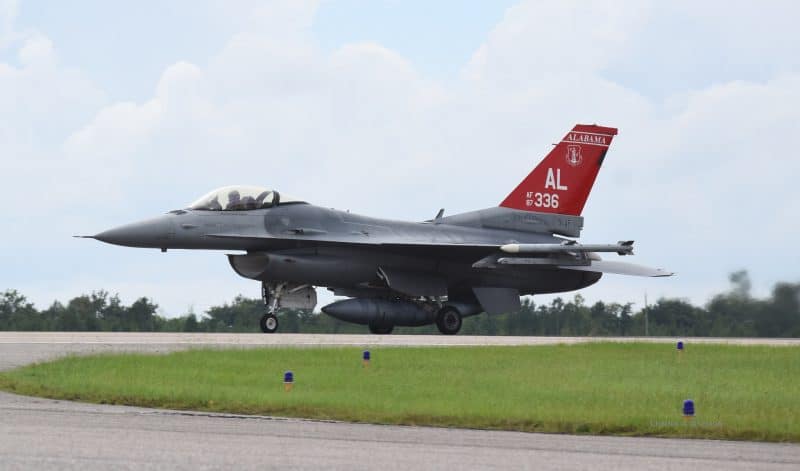
MONTGOMERY, Ala. — Six F-16 Fighting Falcons performed a series of flyovers across Alabama on Tuesday as the Air Force continues their salute of Covid-19 frontline medical employees.
The Red Tails of the 187th Fighter Wing based at Dannelly Field near Montgomery began the flyovers at noon. Three sets of two F-16s flew across the cities of Auburn, Tuskegee, Montgomery, Tuscaloosa, Decatur, Mobile, and Dothan. [youtube id=”jo1FFUbcIFc” width=”800″ height=”454″ position=”left”]
Weather kept the jets from flying near a few locations forcing pilots to shift their flight plans. The squadron announced late Tuesday they plan to make it up to those who missed the flyovers due to weather.
“It is a distinct honor to express our gratitude and that of our fellow Alabamians for the heroes on the frontlines of COVID19 with this showcase of American airpower,” 187th Fighter Wing commander Col. Ed Casey said on Monday. “It’s our hope that these F-16 flyovers offer residents and workers in these communities pride in our state, hope for our country, and resolve in our fight against the coronavirus.”
Several F-16s have an all-red paint scheme on their vertical stabilizer in honor of the World War II heroes of the Tuskegee Airman. The Red Tails’ pilots of yesteryear paved the way for minority representation in today’s Air Force.
(Charles A. Atkeison reports on aerospace and technology. Follow his updates via social media @Military_Flight.)
America took her first steps into space in May 1961, led by anaval aviator Alan Shepard beginning a new voyage of exploration upon the ocean of space.
On the heels of Russia’s successful launch of the first human into Earth orbit, NASA sped up work to launch the United States first astronaut.
Strapped inside the cone-shaped Mercury spacecraft atop the Redstone rocket was Alan B. Shepard, Jr. A naval aviator since 1947, Shepard had been selected to ride the rocket first five moths prior to launch.
Roger, liftoff and the clock has started!
Liftoff!
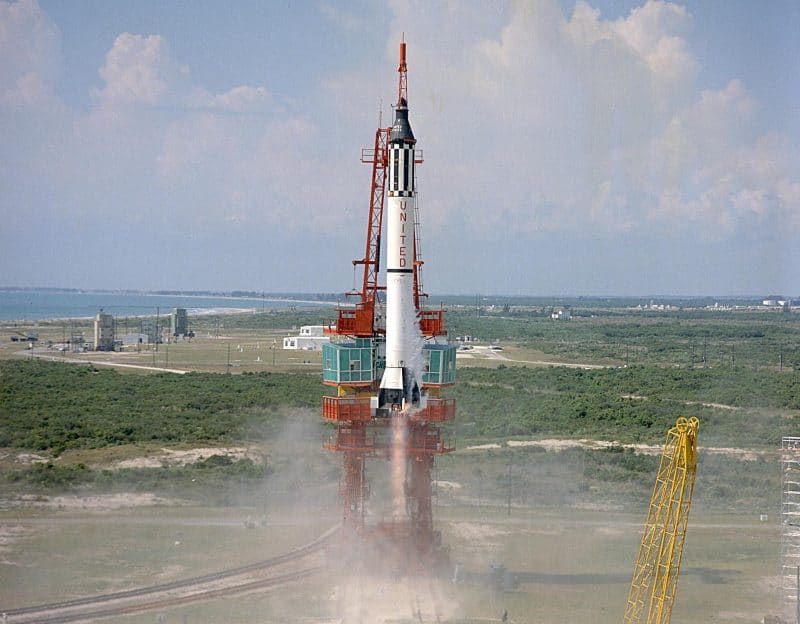
At 9:34 a.m. EDT on May 5, 1961, Shepard rocketed from Launch Complex 5 at Cape Canaveral aboard the Mercury spacecraft Freedom 7. The candlestick rocket soared into the blue skies powered by 78,000 pounds of thrust.
“Roger, liftoff and the clock has started,” Shepard radioed Mercury Control at the Cape.
His Redstone rocket separated 144 seconds after lift-off, and immediately Shepard began to pilot the Mercury spaceship. He fired the thruster jets on all axes which allowed the commander to change the ship’s attitude.
To view the Earth below, America’s first astronaut used a periscope which was deployed after booster separation. No other American had flown as high.
Shepard photographed the Atlantic Ocean off Cape Canaveral about 110 miles high. (NASA)
Alan Shepard Saw a Beautiful View of Space
“On the periscope, what a beautiful view,” Shepard radioed to the controllers at the Cape. “Cloud cover over Florida, 3 to 4 tenths near the eastern coast. Obscured up to (Cape) Hatteras.”
Five minutes into the flight, Freedom 7 reached its apogee of 116.5 miles altitude. Ten seconds later, three retro rockets fired on schedule to orientate the craft for its brief reentry.
Suddenly, like a cannonball, his small craft came back down toward the Atlantic Ocean. Freedom 7 splashed down 303 statue miles east of the Cape 15 minutes, 22 seconds after leaving Cape Canaveral.
Spacecraft recovery 302 miles east of Cape Canaveral. The green trail is a location dye marker. (NASA)
Shepard’s successful flight is outlined in an official NASA document first published in 1961.
Shepard would walk on the moon during Apollo 14 in February 1971, before retiring from NASA and the Navy in 1974. He had logged nine days of spaceflight.
Our Conversation with Alan Shepard
During an exclusive interview with Alan Shepard in 1995, I asked him how the space program of today differs from what he experienced during the 1960s and into the 1970s? His words from 25 years ago remain true today as we turn the corner with flights to the moon.
Alan Shepard: “I think as far as NASA’s concerned, yes. The difference as far as the general public’s concerned is that the pure excitement of the early days is gone because, “so we’ve done that. What do we do tomorrow?”, kind of routine. The fact that the public in general is excited about exploration made the lunar missions a very well recognized, well appreciated phase.”
“The folks that are flying today are just as dedicated as we were even knowing ahead of time that they are not going to receive the same kind of appreciation and recognition that those of us did in the early days.”
Alan Shepard: A humble leader
Charles A Atkeison: Do you consider yourself the Christopher Columbus of the modern age?
Alan: “I really don’t. I consider myself very fortunate to have been allowed to make a couple of space flights for the United States. I recognize a few of us get a lot of attention, but literally hundreds of our close associates are the ones that did all the work.”
“I remember saying in May of 1961 at the White House, when I received a medal from President Kennedy acknowledging that these hundreds, yes thousands of dedicated individuals on the ground are the ones to whom the accolades of the day should go. And I still feel that very strongly.”
Naval aviator and NASA astronaut Alan B. Shepard and Charles A Atkeison at the Kennedy Space Center.
Charles: I remember the scene, Kennedy drops your medal during the presentation. What went through your head right then?
Alan: “Well, we almost banged heads ’cause both of us (Shepard laughs) … it was kind of cute. ‘Cause Jack said, “Here”, and Jackie (Kennedy) said, ‘No. No, Jack, pin it on.’ So then he recovered and pinned it on. So we had a lot of fun with that.”
His favorite flight
Charles: Do you consider both of your flights equal, as the first American in space and going to the moon?
Alan: “The only thing that is common to those two flights as I’m concerned was a certain round of personal pride and satisfaction. Not only to have been chosen to make these two missions, but also to be able to relatively, ah, expertly complete both of them.”
One year earlier, Shepard co-authored the book Moon Shot: The Inside Story of America’s Race to the Moon. The best selling book later became a made-for-TV mini-series.
Today, at the Kennedy Space Center Visitors Complex, guests are greeted by a towering bronze statue of America’s first astronaut. It serves as a reminder for future generations of a man who did so much to propel this country into the final frontier.
(Charles A. Atkeison reports on aerospace and technology. Follow his updates via social media @Military_Flight.)
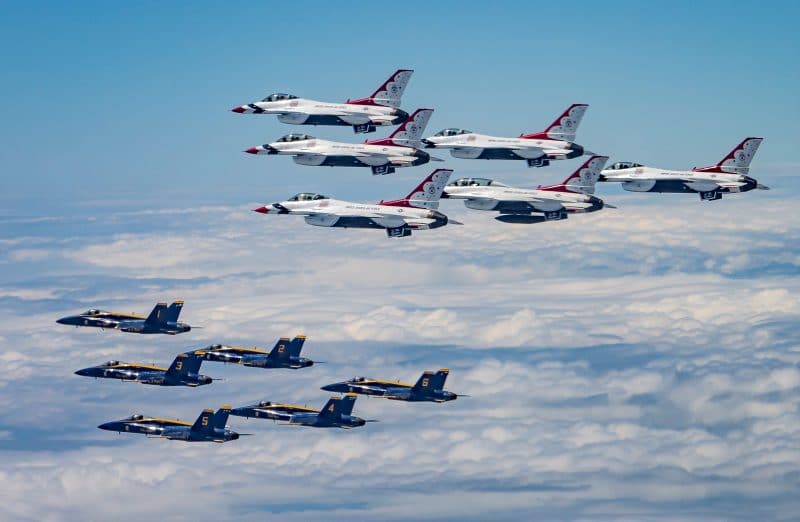
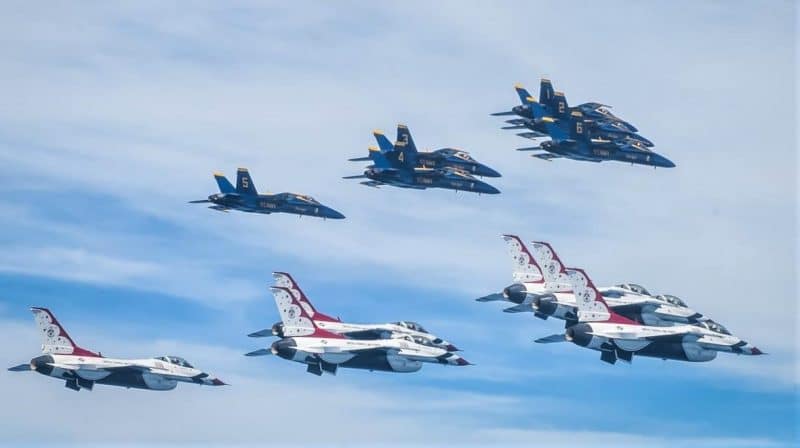
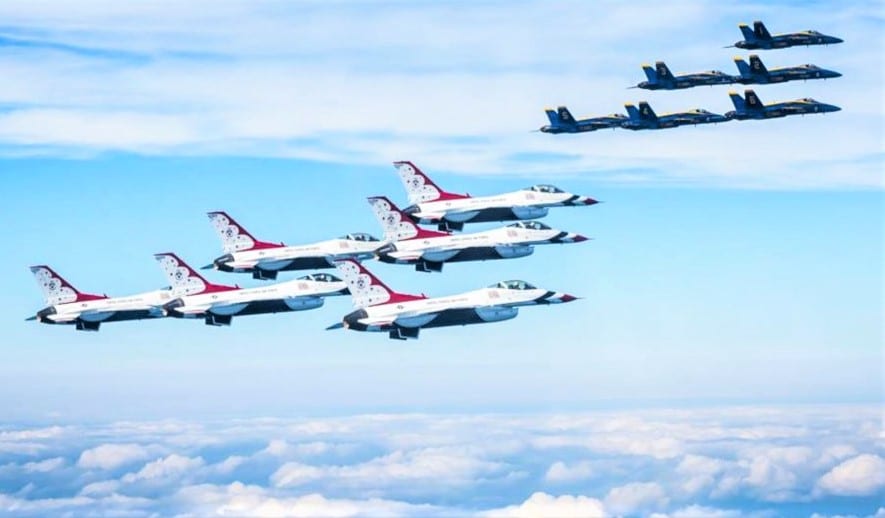
ATLANTA — The Navy’s Blue Angels and Air Force Thunderbirds returned to the skies in joint formations on Saturday to conduct a second series of flyovers to thank professionals on the frontlines of Covid-19.
Crowds on the ground cheered and applauded as the two military flight squadrons flew over Baltimore, Washington, D.C., and Atlanta. The Blue Angels and Thunderbirds are flying to salute America’s nurses, doctors, first responders, and the other essential employees.
The Thunderbirds six F-16 Fighting Falcon jets and the Blue Angels six F/A-18 Hornets flew in precision formation and stayed on schedule. Their non-stop, six-hour roundtrip flight covered nearly 2,400 miles.
“We are honored to fly over these cities in a display of national unity and support for the men and women keeping our communities safe.” Thunderbirds commander and pilot Lt. Col. John Caldwell said on Friday. “These flyovers are a gesture of goodwill on behalf of the entire Department of Defense to the heroes of the COIVD-19 pandemic.”
Military Jet Teams Begin America Strong Flyovers
The Blue Angels and Thunderbirds departed Pensacola at 9:21 a.m. EDT, for their first flyover in Baltimore. Moments later, the teams were met over south of Atlanta by four KC-10 Extender aircraft for the first aerial refueling of the flight.
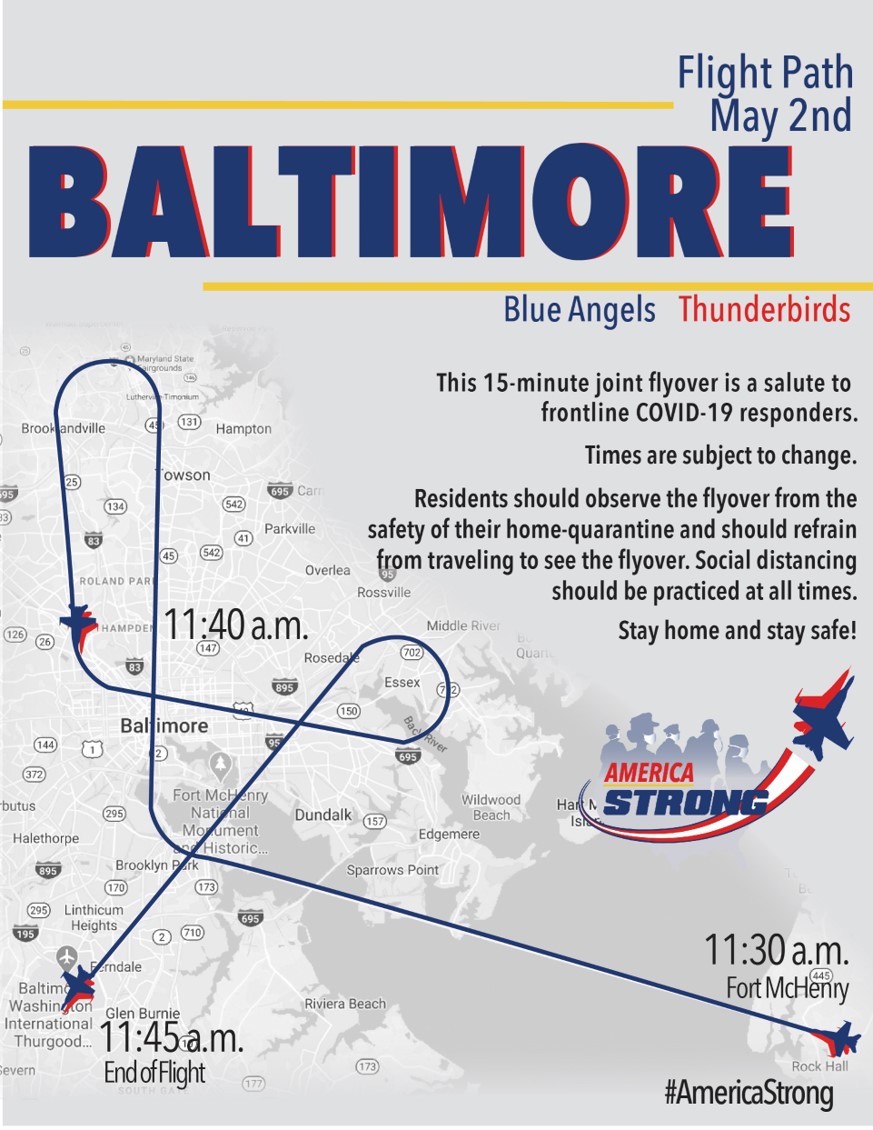
Keeping on a tight schedule, the jets arrived over historic Fort McHenry to begin their first flyover at 11:29 a.m. The two squadrons of 14 jets then flew over Baltimore, making a series of loops over local hospitals.
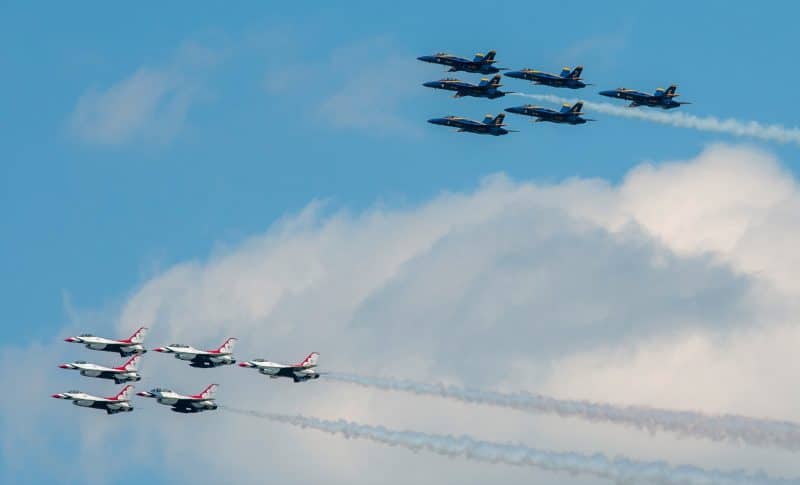
The Thunderbirds and Blue Angels fly over the Pentagon near Washington D.C., on May 2, 2020. (USAF)
“It was really awesome as I’d never seen a flyover before, and so it was very exciting to see for the first time,” Minnie Wilson, a physician’s assistant at Johns Hopkins Hospital in Baltimore, said. “It’s really flattering that they appreciate us that much because I feel like they do so much for our country. It makes the job a little more special.”
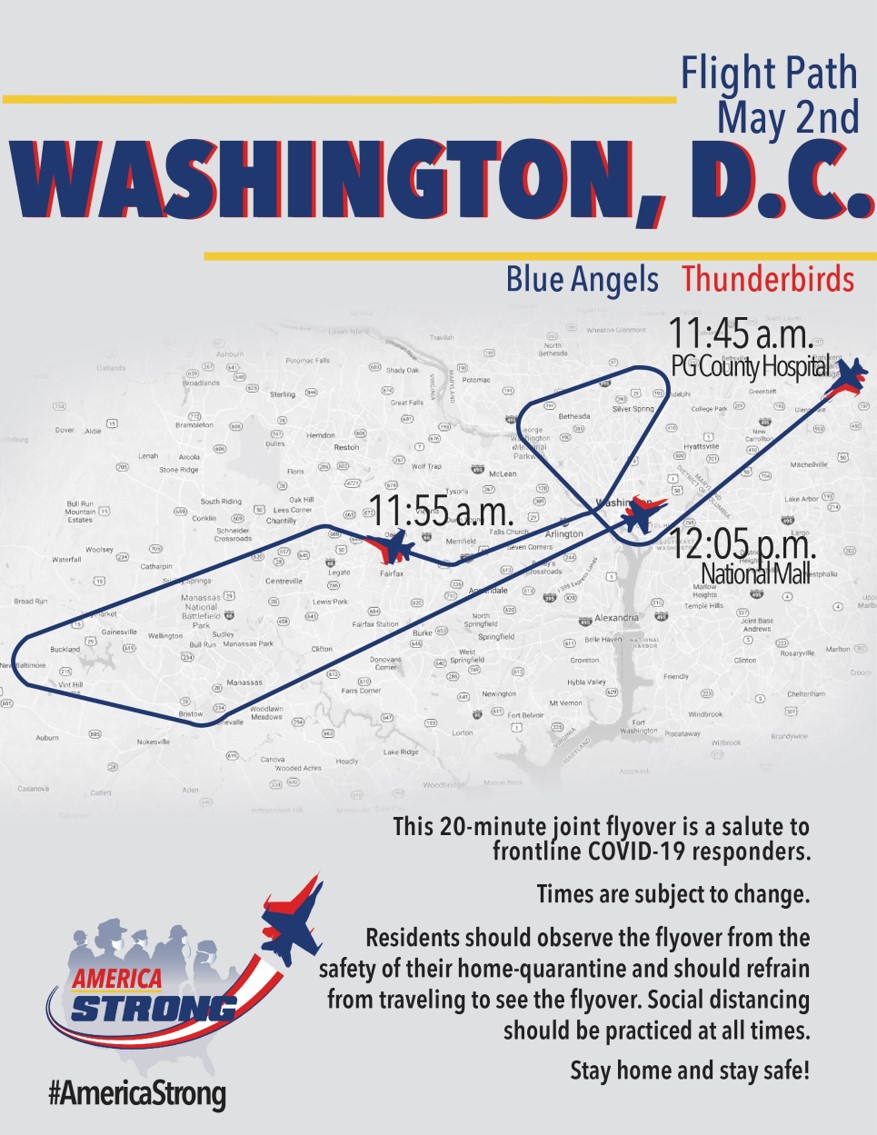
“The teams next flew the short route to Washington, D.C., flying over the National Mall and the U.S. Capitol building. Their route also took them over northern Virginia just west of the Nation’s Capital.
In a patriotic salute, the Thunderbirds and Blue Angels flew shoulder-to-shoulder past the Washington Monument. They then flew easterly down the Mall to more cheers from spectators.
The Thunderbirds prepare to take off for a series of flyovers on Saturday. (USAF/ Maj. R. Geoffroy)
The jets were then fed more fuel during aerial refueling from four KC-10s. The two teams and a chase aircraft pilots also took a short break for a snack.
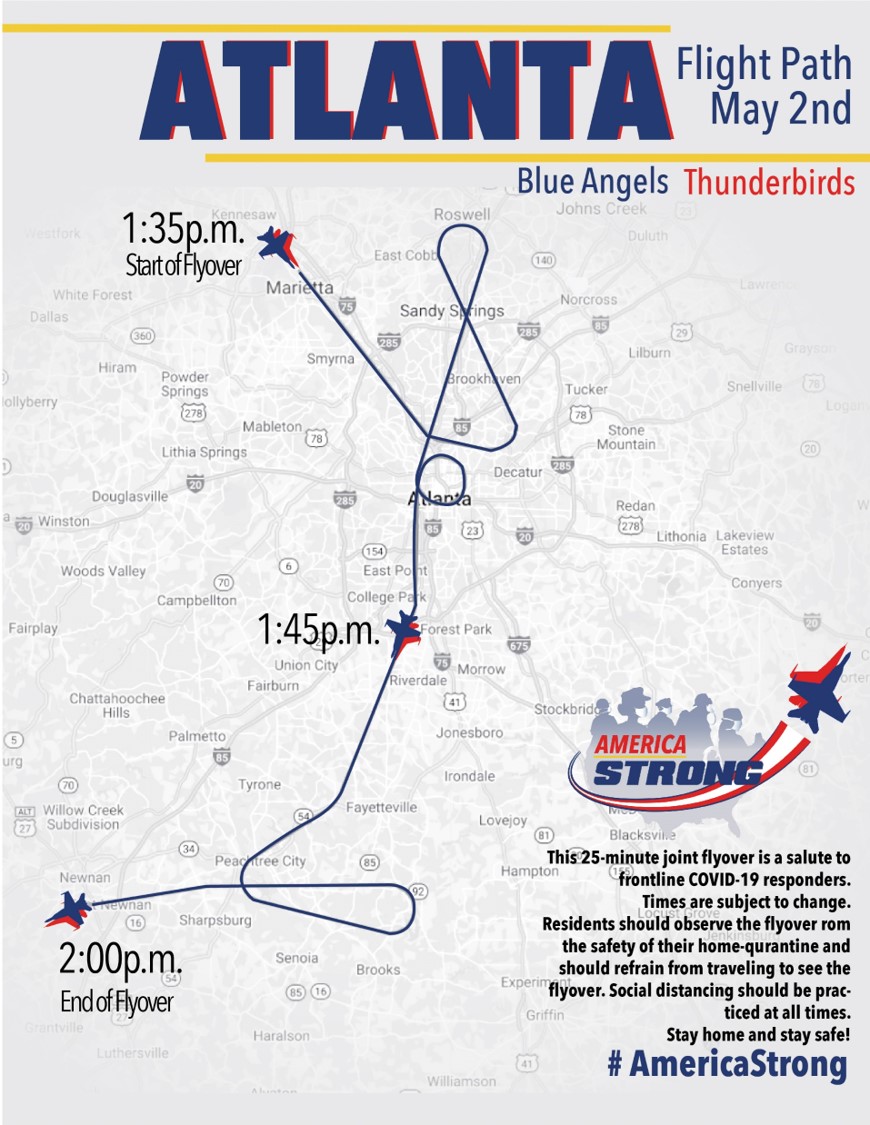
Sunny skies greeted the flight teams over metro Atlanta as they arrived at 1:34 p.m. Crowds gathered in downtown Atlanta’s Centennial Olympic Park to witness the rare joint flyovers.
The two squadrons will perform more flyovers next week, however the two teams maybe flying separately. The cover more ground, the teams could fly over separately locations in the southeast.
(Charles A. Atkeison reports on aerospace and technology. Follow his updates via social media @Military_Flight.)
PENSACOLA, Fla. — The Nation’s Capitol, Baltimore, and Georgia will greet the Navy’s Blue Angels and Air Force Thunderbirds on Saturday as they continue their flyover salute of America’s healthcare professionals.
America’s two military flight demonstration teams completed a marathon set of flyovers across the northeast on Tuesday. They now turn their attention to a series of smoke-blazing joint flights in new regions of the country.
The flight tracks for May 2, 2020, America Strong flyovers. Click on each to expand the map. (DoD)
“We are honored to fly over these cities in a display of national unity and support for the men and women keeping our communities safe.” Thunderbirds commander Lt. Col. John Caldwell said. “These flyovers are a gesture of goodwill on behalf of the entire Department of Defense to the heroes of the COIVD-19 pandemic.”
Fourteen military jets will fly smoke-on during the first planned flyover beginning in Baltimore, Maryland. They are scheduled to begin at 11:30 a.m. EDT, and last around 15 minutes
The two squadrons will then fly the short route to Washington D.C. to begin a 20 minute flight formation at 11:45 a.m. Expect to see several awe inspiring photographs as they fly across the White House, Capitol Building, and the National Mall.
The fourteen formation jets and a chase jet will then aerial refuel as they track southwest toward north Georgia. The flyovers in Atlanta will begin at about 1:35 p.m. and last for 25 minutes.
“America Strong is a way for both teams to show appreciation to the thousands of doctors, nurses, first responders, and essential workers out there serving on the frontline day-in and day-out,” Blue Angels Boss Brian Kesselring said on Thursday. “This is an extraordinary and unprecedented time but we will get through this. We are all in this together.”
Applause and cheers will greet the Blue Angels and Thunderbirds across D.C., Baltimore, Atlanta on May 2. (USAF/ SSgt. Cory Bush)
The Blue Angels and Thunderbirds will then return back to NAS Pensacola, and prepare for their next set of flyovers as early as Monday.
The Thunderbirds remain on track to perform during the Wings Over North Georgia airshow near Atlanta in October. The two-day event will be one of the few air shows in which the Air Force squadron publicly performs.
“The past several weeks have been filled with changes most of us have never seen in our lives,” Airshow President John Cowman stated on Thursday. “As we look to the future, careful consideration has been given to incorporating procedures and guidelines to host a safe and exciting event. We will continue to make adjustments to our plans as new guidelines are issued by local, state, and national authorities.”
Editor’s Note: The military will release their aerial track maps on Friday. We will update this story once they are released.
(Charles A. Atkeison reports on aerospace and technology. Follow his updates via social media @Military_Flight.)
PENSACOLA, Fla. — The Navy’s Blue Angels and Air Force Thunderbirds performed their first joint public flyovers in the northeast on Tuesday to salute America’s healthcare professionals and the military.
In what was likely the longest single-day journey for both squadrons, the Navy and Air Force jets executed a busy schedule. The combined 15-jets unofficially flew over 2,600 miles (4,184.29 km), during a non-stop seven-hour journey.
The Blue Angels and Thunderbirds fly over Philadelphia during Tuesday’s America Strong flyover. (U.S. Navy)
Under the blue skies of metropolitan New York, two squadrons flew in two delta formations, smoke-on, beginning at noon EDT. Their expanded flyover began over The Bronx, south to New York City, and around to Newark, NJ.
The jets then flew east to Brooklyn and past the Stature of Liberty before circling over to fly over Long Island. The 40-minute salute concluded with a long pass from Long Island Sound to White Plains and south over New York City.
[youtube id=”XwwAnEJAT5M” width=”800″ height=”454″ position=”left”] Flying at about 400 m.p.h., each aircraft flew in close formation above crowds lining city streets and roof tops. Applause and cheers from the crowds welcomed the America’s two military jet aerobatic teams.
The pilots were then met by several Air Force KC-135 Stratotankers once an hour for aerial refueling. Each refueling pause allowed the pilots to consume healthy light snacks in their cockpit. There was no stopping on the ground for these aircraft.
The Air Force Thunderbirds fly over New York City, New York on April 28, 2020. (USAF SSgt. C. Bush)
“We are incredibly honored to have the opportunity to salute those working on the frontline of the COVID-19 response, we are in awe of your strength and resilience,” Blue Angels Boss Brian Kesselring said on Monday. “Thank you to all of those in essential industries keeping our nation moving forward. We will get through this. We are all in this together.”
A second extended flyover began over central New Jersey at 1:45 p.m. The jets flew northwest to Trenton, circled around, and flew south down I-295 to Philadelphia.
Smoke-on, the two delta formations made four passes across Philly’s metropolitan area. The jets then made their way south along the Delaware River to Wilmington at 2:17 p.m. to conclude the day’s events.
the U.S. Navy Blue Angels fly above Stamford Hospital in Stamford, Connecticut, during the America Strong Newark and New York City flyovers on Tuesday. (USANG SSgt. S. Tucker)
The Thunderbirds and Blue Angels are expected to announce the next flyover locations on Wednesday.
(Charles A. Atkeison reports on aerospace and technology. Follow his updates via social media @Military_Flight.)
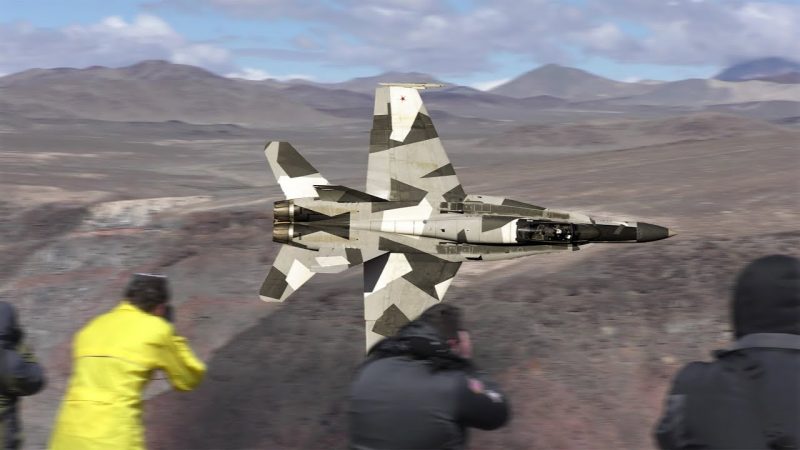
These Are Some of the Last Videos of Jets Flying Low and Fast in Star Wars Canyon.
There was a place where the sound of freedom tore the sky and thundered across the landscape like nowhere else on earth. That place was Rainbow Canyon. Situated close to the western boundary of Death Valley National Park in California, the area is better known as Star Wars Canyon. Cut from the Santa Rosa Hills by lava from volcanic activity millions of years ago, the geology of the area strongly resembles that of the home planet of ‘Star Wars’ characters Luke and Anakin Skywalker- Tatooine.
VFA-151 vigilantes F/A-18E Super Hornet. image via us navy
The particular terrain feature, the canyon connecting the Owens and Panamint Valleys, at the end of the Sidewinder low level route is also referred to as the “Jedi Transition”. In use as a low-level training area since World War II and part of the R-2508 Training Complex, the area is restricted for use by military aircraft only and is normally administered by Edwards Air Force Base (AFB). But how the training route is flown changed after a dark day at the of July 2019.
US Navy Lieutenant Charles Z. Walker. image via us navy
When VFA-151 Vigilantes F/A-18E Super Hornet pilot Lieutenant Charles Z. Walker crashed in the canyon on 31 July 2019 the low-level training route was closed. Jet aircraft are still observed flying in the area, and even over the Jedi Transition into the Panamint Valley, albeit at 1,500 feet AGL, but the low-level flights were prohibited after Walker perished in the canyon. Rest in Peace Lieutenant. These HD videos (totaling well north of an hour’s worth) were shot prior to the crash and uploaded to YouTube by ManteganiPhotos.
Lockheed Put The Strategic in Strategic Reconnaissance With These Aircraft
The proverbial top-secret black cat was well out of the bag when Lockheed produced their promotional film “The Blackbirds Are Flying.” The YF-12A, SR-71A, and SR-71B made up the family of Blackbirds depicted in the film.
The film touches on many of the special materials, equipment, and crew requirements the Air Force Flight Test Center and the 9th Strategic Reconnaissance Wing had to consider when operating these Mach 3±capable jets. Enjoy the film uploaded to YouTube by Periscope Film.
Those Precious Few SR-71 Blackbirds
The Blackbirds served with the US Air Force from 1964 until 1998, although only a few jets were still operational after 1989. NASA operated a few of them for another year, finally retiring them in 1999. Lockheed’s famed Skunk Works turned out only 32 of them.
Operational accidents claimed 12 of them, but to its credit, although they were commonly flown over hostile territory and came under fire on many of those flights, none were ever lost due to enemy action.
SR-71B image via US Air Force
Impressive Even Now
The SR-71A was the main production variant. The SR-71B was a trainer variant. After the crash of one of the two two-seat SR-71B trainers, the single SR-71C was pieced together from two partial airframes to provide a second pilot training jet.
Blackbird statistics throughout the life of the program come out to 11,008 mission flight hours (2,752 of them at Mach 3+) during 3,551 mission sorties flown. Blackbirds flew a total of 53,490 flight hours (11,675 of them at Mach3+) over 17,300 total sorties flown.
UPDATE: This feature has been updated with Tuesday’s schedule.
PENSACOLA, Fla. — The Navy’s Blue Angels and the Air Force Thunderbirds announced Friday that several joint flyovers across the United States will begin Tuesday to salute healthcare professionals and the military.
Operation America Strong will see each squadron fly a six-jet delta formation either together or separately. Some U.S. cities will see one squadron, while the larger cities will have both perform side-by-side.
“Flyovers in Newark, New York City, and surrounding boroughs will start at noon, and last approximately 35 minutes,” The Thunderbirds and Blue Angels announced on Saturday. “Flyovers in Trenton will start at 1:45 p.m. and last approximately 10 minutes. Flyovers in Philadelphia will start at 2 p.m. and last approximately 20 minutes.”
[youtube id=”0Q1_8IFWhC8″ width=”800″ height=”454″ position=”left”] The Thunderbirds and Blue Angels will fly across select areas hit the hardest by COVID-19. The complete schedule with locations is expected by this Wednesday. Each team flight will occur every one-to-two days until the middle of May.
“We’re excited to fly over cities across America as our way of saying thanks to the healthcare workers, first responders, and all the people who selflessly run into the breach working to keep America strong,” Gen. Dave Goldfein, Chief of Staff of the Air Force, and Adm. Michael Gilday, Chief of Naval Operations, said in a joint release Friday. “This is also our way of showing that we are all in this together and that America’s spirit will prevail.”
In the release, the Blue Angels and Thunderbirds laid out several flyover guidelines. The extended flyovers are designed to avoid contact with military bases and the public.
“Both teams are implementing various measures to maintain personnel and community safety,” the joint team release said. “This includes air-to-air refueling during transit and no scheduled stops en route to reduce potential exposure to the virus.”
A series of flyovers in May will salute healthcare professional and the military. (Glenn Watson/2018)
The Thunderbirds departed their home at Las Vegas on April 20 to fly cross country to NAS Pensacola — the home of the Blue Angels. The two teams spent the week performing a series of practice flights from the air base.
“For two demo teams with two different branches there’s a friendly rivalry there, but really we have the same mission,” Thunderbird Lead Solo pilot Maj. Michelle Curran said recently. “For us to be able to come down here to the Blue Angels home turf is huge for both teams in learning.”
On Wednesday, the Thunderbirds added red, white, and blue smoke to their formation and solo practices. Both squadrons have always used white smoke during air show performances.
America’s air show season may be grounded, but the Thunderbirds have not. Since April 11, the Air Force squadron has conducted two separate extended public flyovers of Las Vegas and Colorado.
Updated Flyover Schedule (EDT):
April 28… Newark, NJ / New York City ….. 12 p.m.
April 28… Trenton, NJ ………………………………… 1:45 p.m.
April 28… Philadelphia ……………………………….. 2 p.m.
Ed. note: AvGeekery.com will update this story to include the complete flyover schedule.
(Charles A. Atkeison reports on aerospace and technology. Follow his updates via social media @Military_Flight.)
NELLIS AFB, NV — The popular television series The Six Million Dollar Man featured a fictional test pilot turned astronaut who flew to the Moon and served as a pilot with the Air Force Thunderbirds.
The Six Million Dollar Man was Col. Steve Austin, “the world’s first bionic man”. Based on an actual crash of a NASA M2-F2 Lifting Body, Col. Austin survived a fictional crash by being fitted with bionic legs, a bionic arm, and a bionic eye fused to his biology.
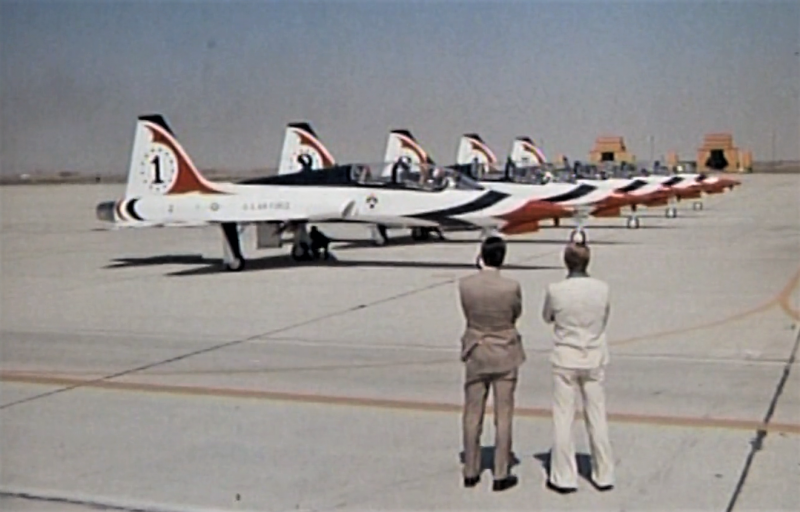
A few years later, Col. Austin went undercover with the Thunderbirds during the episode “The Thunderbird Connection”. The plot had the squadron of five T-38A Talon jets travel to a fictional Middle East country to save the life of a young prince.
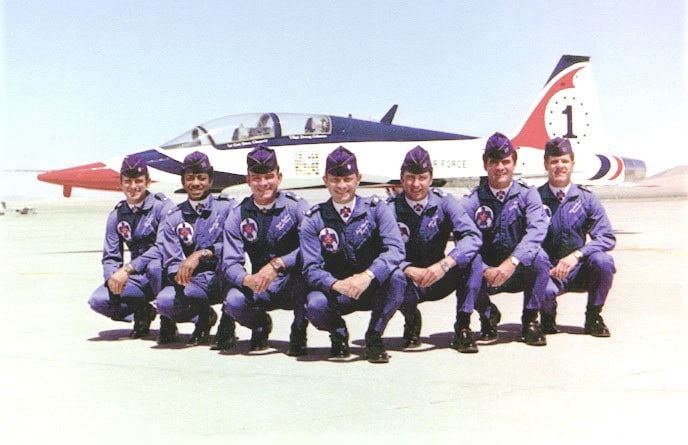
A fictional Middle East ruler greets the Air Force Thunderbirds during “The Thunderbird Connect”. From R to L, an actor played Thunderbird 1; a real unnamed Thunderbird was #2, Lee Majors as #3; Real Thunderbird Capt. Lloyd W. Newton is #4; and an unnamed real Thunderbird is number five. (NBC)
Watch ‘The Thunderbird Connection’ Free on NBC
The episode first aired on November 28, 1976, and is now available on NBC-TV streaming for free. The nearly two-hour episode is divided into part one and part two. It is listed as 1976’s second-most-watched television show.
The episode features original Thunderbirds inflight views and cockpit video. Some of the video is grainy, but serves as historic footage from their flights. The story was also filmed in part on the flightline of Nellis AFB — the home of the Thunderbirds.
The 1976 Air Force Thunderbirds perform a special maneuver Designed for “The Six Million Dollar Man”. (USAF)
America’s Ambassadors in Blue had received the T-38A Talons two years earlier due to the oil crisis. It used far less oil than their McDonnell Douglas F-4E Phantom II. The aircraft is the only training jet flown by the squadron.
“In 1974, a spreading fuel crisis inspired a new aircraft for the team, the T-38A Talon,” Thunderbirds public affairs officer Capt. Remoshay Nelson explained. “Although the Talon did not fulfill the Thunderbirds tradition of flying front-line jet fighters, it did demonstrate the capabilities of a prominent Air Force aircraft.”
Maj. Chris G. Patterakis served as the actual Thunderbirds commander and flight leader during 1975 and 1976. In the Six Million Dollar Man episode, fictional Paul Miller is Thunderbird one.
THE OFFICIAL 1976 AIR FORCE THUNDERBIRDS PILOTS PORTRAIT. (USAF)
Of the four other pilots, Steve Austin serves as Thunderbird 3. In 1976, the squadron’s first African-American pilot Capt. Lloyd W. “Fig” Newton served as the actual slot pilot. Newton is one of the five pilots featured, although he and two other real Thunderbirds are not credited.
The evening the TV show originally aired, the real Thunderbirds were spending the night at MacDill AFB near Tampa, Florida. Their planned flight demonstration earlier that day had been cancelled due to weather. They returned to Nellis AFB the next morning.
(Charles A Atkeison reports on aerospace and technology. Follow his updates via social media @Military_Flight.)
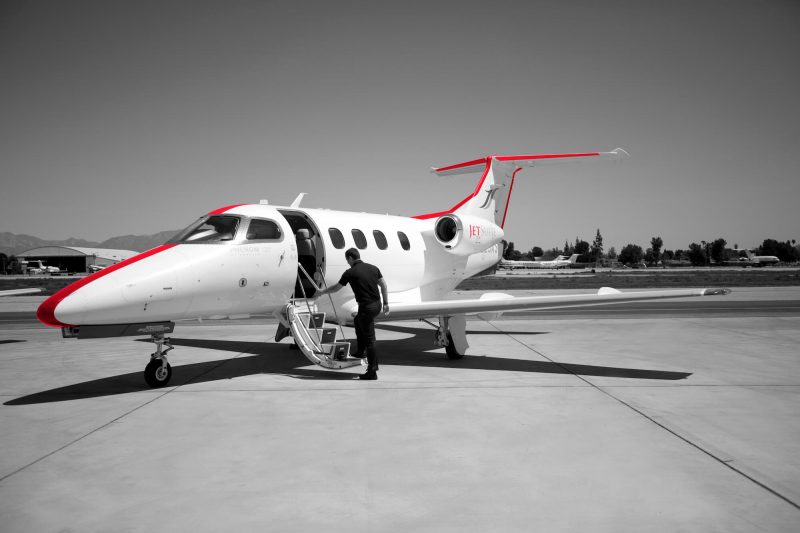
JetSuite, the innovative private jet company suspends service. Their scheduled subsidiary JSX continues to operate.
JetSuite, the private jet service carrier, suspended service this past week. It joins a growing number of air services and airlines who have suspended service as part of the COVID-19 pandemic striking the globe.
In a statement on their website, JetSuite posted,
“The COVID-19 pandemic and resulting state of emergency around the country has caused an unforeseeable, dramatic downturn in the entire aviation industry and our business in particular. As a result, effective April 15, 2020, we have grounded our fleet and furloughed most of our crewmembers. For those of you who were scheduled to fly this week or in the weeks ahead, please accept our deepest apologies for this sudden, but unavoidable and necessary, cancellation of all flights until further notice. With our call center now closed, you may contact us by email at guestservices@jetsuite.com so we may gather your information and follow-up accordingly.”
JetSuite started as a service flying EMB Phenom 100 and 300s and later added the Legacy L650. When they first started service, they were seen an an innovator in the private jet industry. They offered Suite Deals to rent the jet on empty positioning legs. Average people could rent the small private jets for around $1300 total. At $300-$400 per seat, the cost to fly a small group in a private jet rivaled last minute tickets between popular destinations like LA and Las Vegas.
A video posted on YouTube back in 2018 by Ryan Bomar profiled the service and the private jet experience onboard a Phenom 100.
There is currently no indication wether the private jet component of JetSuite plans to return. It is important to note that they didn’t declare bankruptcy or officially state that they are permanently shutting down the private jet service in their statement.
JSX, Their Airline Subsidiary, Is Still Flying
JSX is JetSuite’s subsidiary offering scheduled service on the west coast. That service has not been affected by JetSuite’s suspension of their private jet service.
Back in 2016, JetSuite started offering scheduled service called Jet Suite X, now known simply as JSX. They fly a fleet of Embraer EMB-135 jets outfitted with just 30 leather seats. We profiled the airline back in 2019. The jets has wifi and extended leg room. Free snacks and alcoholic drinks are served onboard. The true market differential for the airline is that they offer service from private jet terminals meaning that passengers could avoid security and show to their flight just 15-20 minutes prior to departure.
JetSuite Packs Up Shop Due To COVID-19, JSX Continues Service 44
The airline has implemented COVID-19 safety protocols and has waived changed and cancellation fees. The airline also offers charter service on their EMB-135 fleet.
Call this video a window into the past. It is amazing to think that in just 40 years, every single type of plane featured in this video is now retired. Most of them are now proverbial beer cans.
In this great video by Youtube user VideofromGeorge, you’ll see a host of Boeing 727s, DC-10s, a DC-8 stretch, and even a North Central Convair CV-580.
North Central was a ‘local service carrier‘. A few months after this video, North Central merged to become Republic Airlines. Republic eventually became part of Northwest Airlines. Northwest eventually merged with Delta Air Lines.
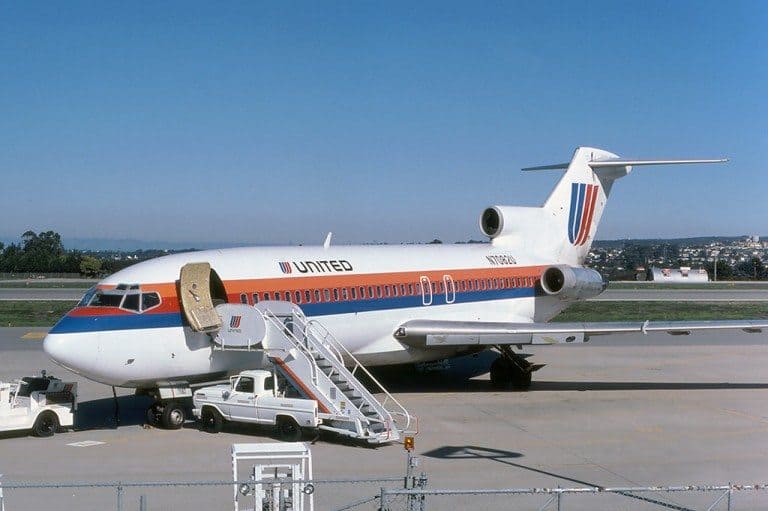
Much like today, Chicago was dominated by United Airlines. At the time, it was the largest airline in the city. American Airlines also had a significant presence back in the day. Today, they are the second largest carrier at O’Hare.
DENVER, CO — The Air Force Thunderbirds performed a series of flyovers across Colorado on Saturday to honor the COVID-19 health care workers and salute the graduates of the Air Force Academy.
Under overcast skies, America’s Ambassadors in Blue timed the flight with exact precision. Six F-16 Fighting Falcon jets performed a delta formation salute across the Centennial State.
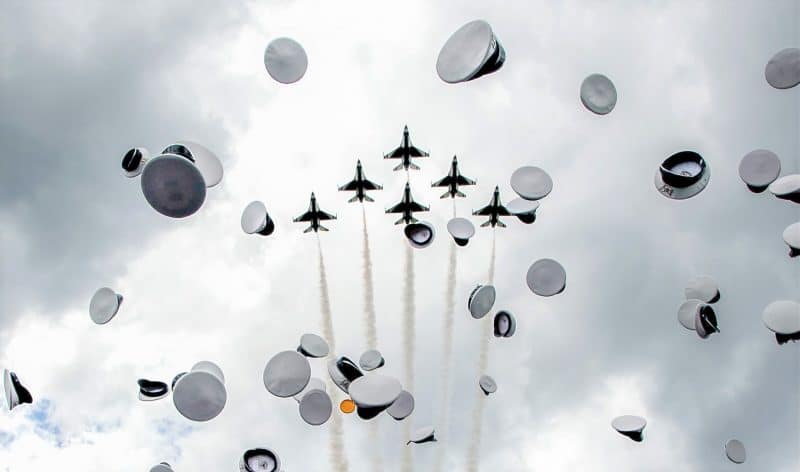
A flyover of Colorado Springs and the Air Force Academy at 12:33 p.m. MDT, began the squadron’s flying event. Due to the coronavirus outbreak, the Thunderbirds traditional air show over the academy’s graduates had been cancelled.
Air Force Academy class of 2020 graduation. The video picks up prior to the Thunderbirds flyover. (USAF)
The Air Force Academy‘s class of 2020 graduation has been noted as being historic. The cadets are the first class to graduate in April, and the first class to commission officers into the new United States Space Force.
“The Thunderbirds are thrilled to continue on a tradition of culminating the Air Force Academy graduation and welcoming our newest second lieutenants into our Air Force,” said Lt. Col. John Caldwell, Thunderbirds commander and leader. “We are proud to provide this one defining moment for these young American’s lives as they become officers in the world’s greatest Air Force.”
America’s Ambassadors in Blue salute the Air Force Academy Class of 2020 Graduation. (USAF)
The extended flyover began at 1:29 p.m. MDT, over the north Colorado town of Greeley. The squadron performed westward to Windsor and Fort Collins. The formation then began a southward flight along Interstate 25 to Loveland, Longmont, Boulder, Denver, and Buckley Air Force Base.
Lead solo pilot Maj. Michelle Curran said, “(I’m) looking forward to seeing all the mountains and snow in beautiful Colorado while supporting all the frontline workers against COVID-19.”
The Thunderbirds needed to aerial refuel a few times during the afternoon. They later traveled across Fort Carson and Pueblo prior to returning home to Nellis AFB near Las Vegas.
“Our team is honored to extend our heartfelt gratitude to the countless Coloradans working every day to support their communities during this difficult time in our nation,” Caldwell added prior to the flight. “We want Coloradans to look up from their homes and enjoy the display of American resolve and pride while keeping frontline responders in their hearts.”
(Charles A. Atkeison reports on aerospace and technology. Follow his updates via social media @Military_Flight.)
The Most Famous Spitfire Has More Acting Credits Than Any Other Airworthy Spit
Avgeeks everywhere appreciate the art of the low pass. Whether it’s a prop job or jet, watching an aircraft fly at low altitude and high speed just puts warmth in the heart of aerospace fans. Many of the low passes observed today are, in some way, attempting to emulate the low pass featured in this video.
Withstanding The Test of Time
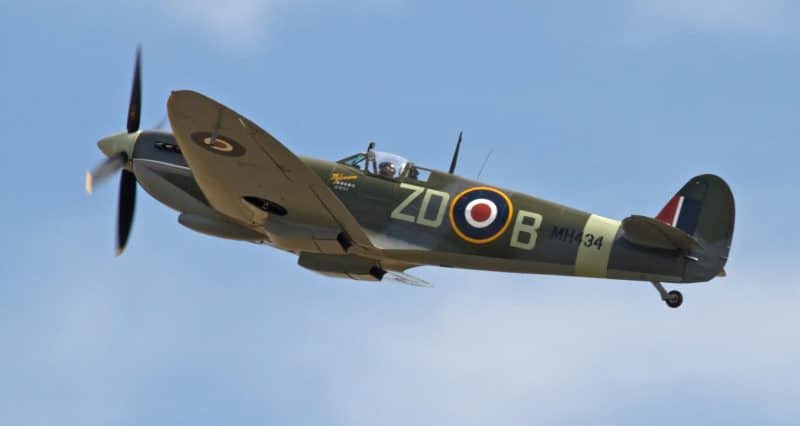
The classic and still-awesome clip was shot for use in a documentary about the Supermarine Spitfire on the occasion of its 60th Anniversary, which occurred in 1996. Flying the Spitfire, LF Mark IXb serial MH434, was Ray Hanna.
Hanna (1928-2005) was a former Royal Air Force (RAF) Red Arrows demonstration team pilot, and accomplished stunt pilot, and at the time was the owner of MH434. Hanna also was a personal friend of the presenter who was forced to duck when the Spitfire roared by him.
MH434 image via alan wilson
Every Movie Star Starts Somewhere
Spitfire Mk. IX MH434 was completed at the Vickers Castle Bromwich assembly plant during the summer of 1943. The aircraft was first flown during August of 1943 by chief Supermarine test pilot Alex Henshaw.
The most famous Spitfire went into action later that same month with RAF 222 Squadron based at RAF Hornchurch. The Spitfire saw combat on multiple occasions, scoring 2 ½ victories and damaging another Luftwaffe fighter before being stood down and placed in storage in March of 1945.
MH434 image via John5199
Combat and That First Credit
MH434, the most famous spitfire, next served with 322 Squadron, Koninklijke Luchtmacht (Royal Netherlands Air Force), beginning in 1947- primarily as a ground attack machine- but never in Holland. The aircraft was shipped to the Dutch East Indies and was the first Spitfire reassembled in Java after that lengthy journey by ship.
MH434 suffered a wheels-up landing while there but went back to Holland by ship. The aircraft was returned to service in 1953 with the Belgische Luchtmacht (Belgian Air Force) as an advanced training aircraft, assigned first to the Advanced Pilot School at Koksijde and later to 13 Wing at Brustem where its primary mission was target towing.
MH434 ended up on the Belgian civil registry in 1956. It was during this time in Belgium that MH434 first appeared on screen in The Longest Day.
MH434 image via breitling
You’ve Seen This Spit Before
Purchased and brought back to the UK by British airline pilot Tim Davies in 1963, the Spitfire appeared in several movies during the 1960s (full list below) and was sold to the Chairman of Cathay Pacific Airways after starring in the film Battle of Britain. After a memorable appearance in A Bridge Too Far, Ray Hanna bought MH434 in 1982 and started up the Old Flying Machine Company around the aircraft.
The aircraft underwent a comprehensive overhaul during the winter of 1994-1995. When not made up for movie roles, MH434 still wears the colors of its original outfit- RAF 222 Squadron.
Ye Olde Flying Machine
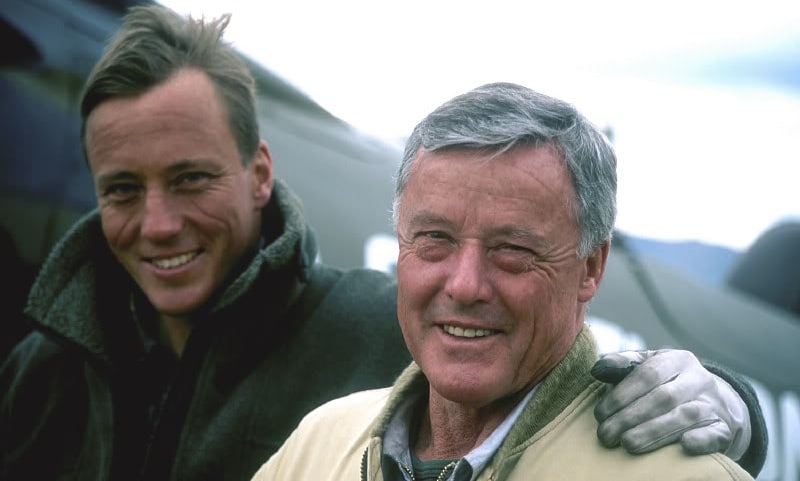
Ray Hanna (1928-2005) and his son Mark Hanna (1959-1999) were the driving force behind the Old Flying Machine Company. They flew warbirds in the movies listed herein, with Mark taking the lead and flying memorable scenes in Empire of the Sun, Air America, Saving Private Ryan, Memphis Belle, and Tomorrow Never Dies.
Mark perished from injuries sustained when the restored Hispano Aviación HA-1112 Buchon (essentially a license-built Merlin-powered Messerschmitt Bf-109G) he was flying crashed in Spain. Ray continued flying and passed away due to natural causes in 2005.
Mark (left) and Ray (Right) Hanna. Image via the Old Flying Machine Company
Bang NEXT PAGE below for the full list of MH434’s screen credits and more great videos!