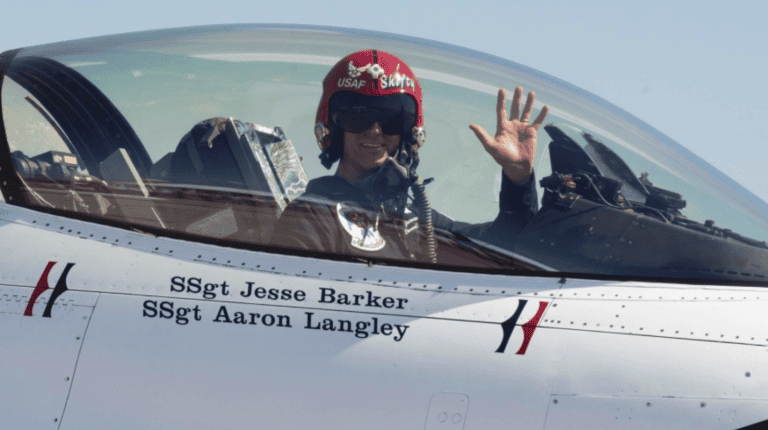
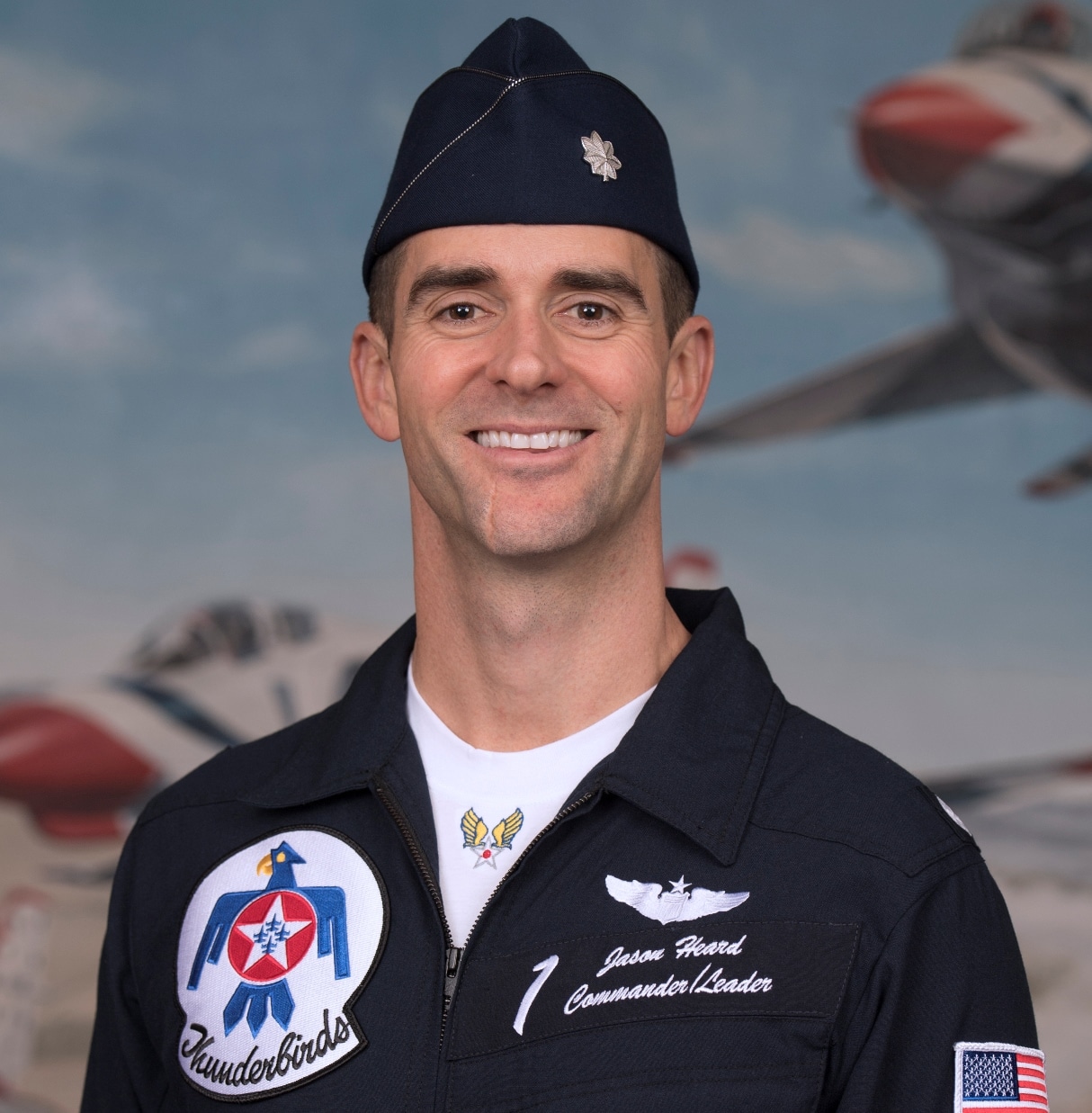
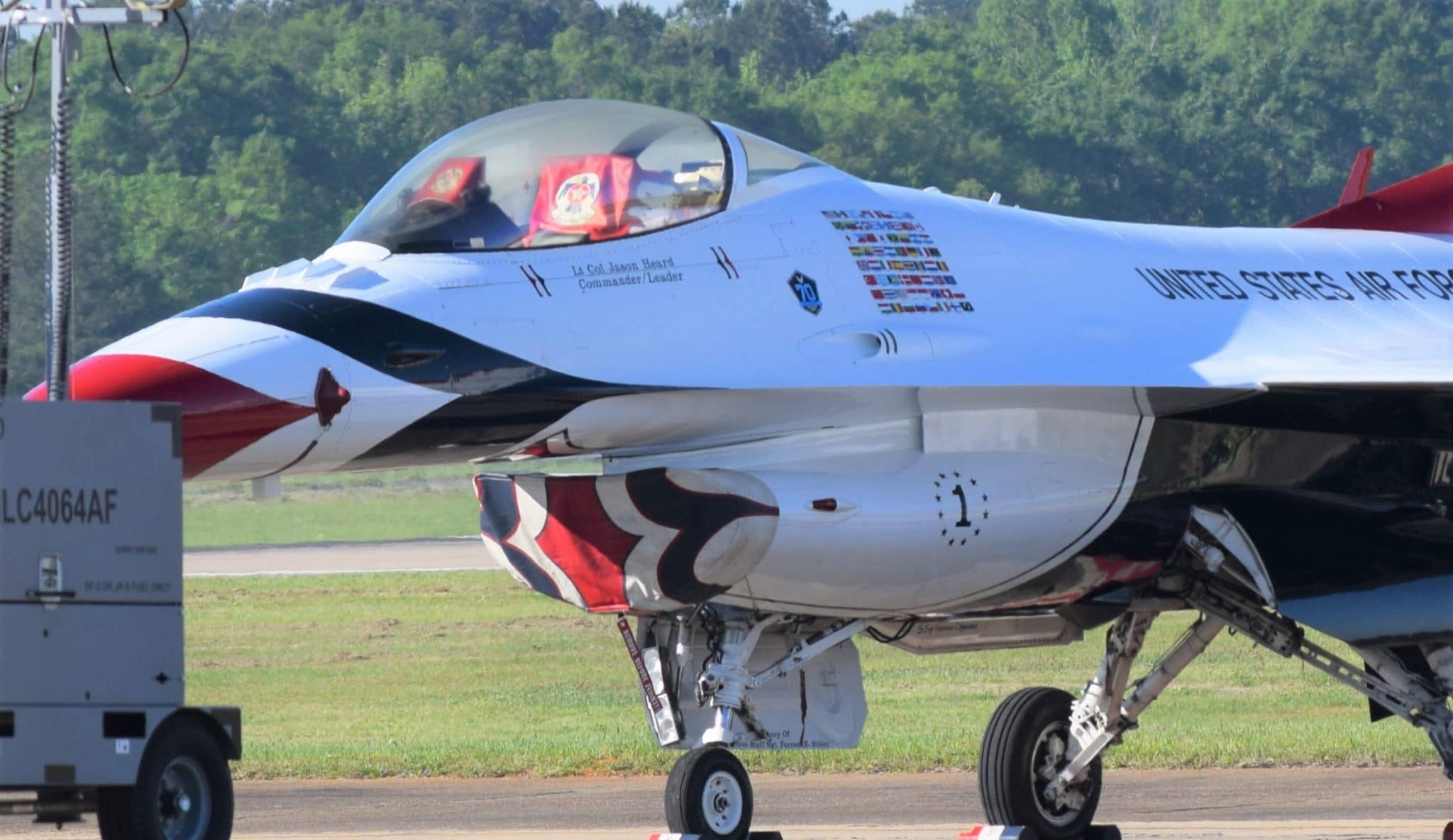
PENSACOLA, Fla. — The squadron commander of the Air Force Thunderbirds was removed from his job last week in a decision based on a loss of confidence by his superiors during his single year as the team’s leader. Although the Air Force did not elaborate on the reason’s behind Lieutenant Colonel Jason Heard’s dismissal, he departs five months following the crash and total loss of a nearly $28 million F-16D Viper jet prior to an Ohio air show.
Official US Air Force photograph
“This was an incredibly difficult decision to make, but one that is ultimately in the best interests of the Thunderbird team,” Brigadier General Jeannie Leavitt, 57th Wing Commander, said on Wednesday. “I am personally grateful for Jason’s dedication to the 2017 season.”
A Thunderbird jet flipped upon landing on the wet runway at Dayton International Airport on June 23. The pilot, Thunderbird narrator Capt. Erik Gonsalves, was approved by Heard to take a fellow Thunderbird crew member up for a familiarization flight at noon. Upon landing, the jet flipped after traveling in excessive speed following touchdown, injuring only Gonsalves, the Air Force said.
Photo by: Charles A. Atkeison
Heavy rainfall and gusty winds had occurred during the morning leading up to and during the flight. The Air Force disclosed one month ago that the aircraft’s canopy was wet from rainfall during landing. The crash lead to the Thunderbirds cancelling their two show performances that weekend.
Lt. Col. Heard’s removal officially occurred on November 20, one week following the U.S. Air Force Air Demonstration Squadron’s final performance of the year. Heard had served only one season with the Thunderbirds as the team’s flight commander. “While he led a highly successful 2017 show season featuring 72 demonstrations over 39 show sites, concerns arose that his approach to leading the team was resulting in increased risk within the demonstration, which eroded the team dynamic,” Air Force spokesperson Major Ray Geoffroy said on Wednesday.
Heard, who’s pilot call sign is “Shifty”, assumed command at Nellis, AFB in Las Vegas during a January 6 ceremony. Lt. Col. Kevin Walsh, who served as the Thunderbirds operations officer during 2016 and 2017, will take over as temporary commander during December.
(Charles A. Atkeison reports on aerospace and technology. Follow his updates via social media @Military_Flight.)
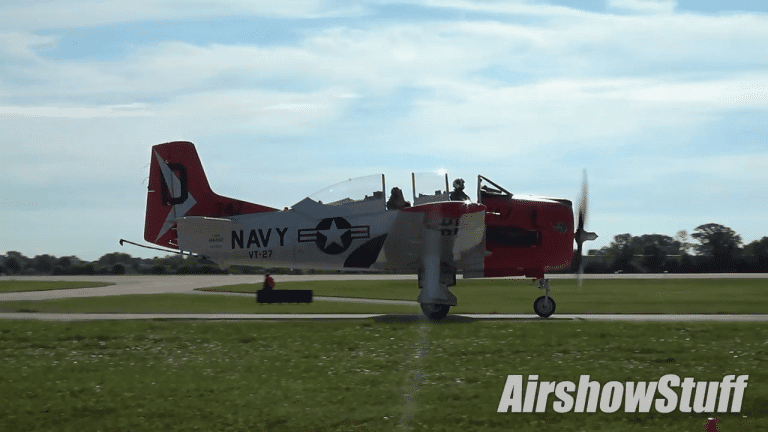
If you stick around Oshkosh long enough you’ll see just about every kind of airplane imaginable. This video clip of arrivals and departures was shot by our good friends at AirshowStuffVideos adjacent to runway 36 on the Tuesday at EAA AirVenture 2017. Tuesday is a great day to be watching, because aircraft are still arriving but there are plenty of aircraft already in attendance that want to kick the tires, light the fires, and get up into the blue.
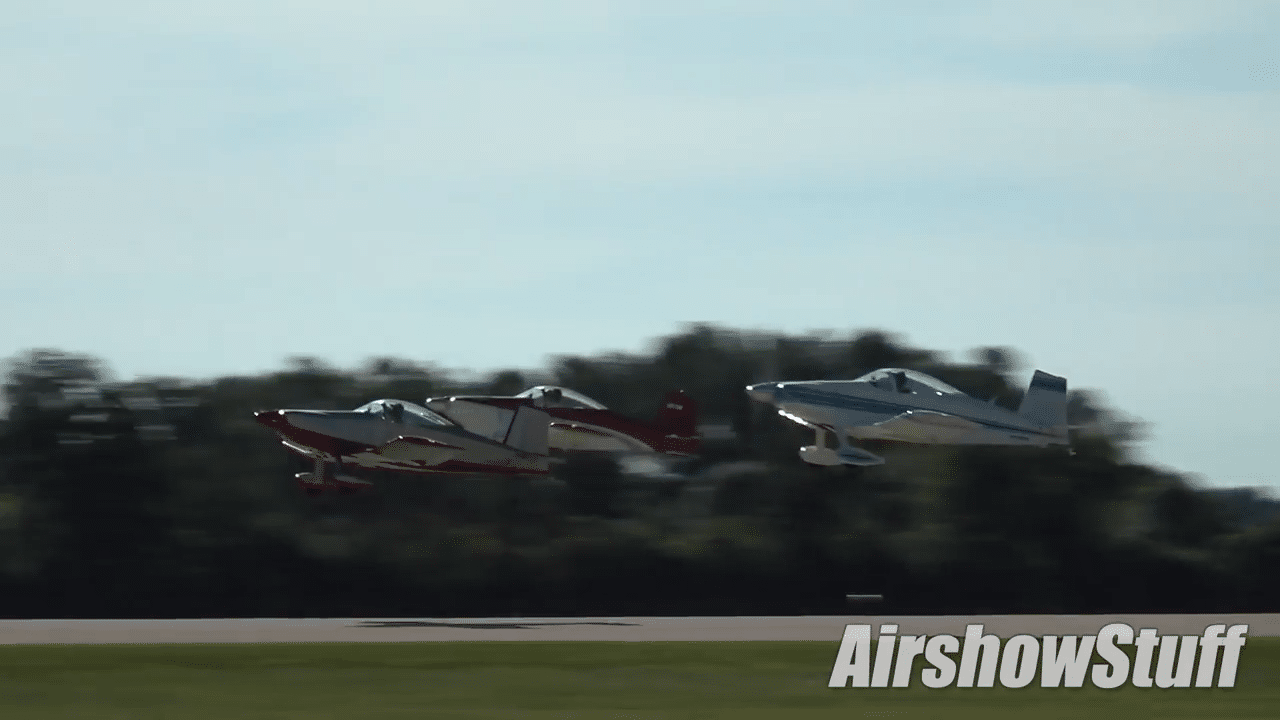
The clip starts off with a Turbine Legend taxying by, followed by some Piper Cherokees. The Aeroshell Aerobatic Team T-6s land on 36. A Cessna 180 taxis by followed by four North American T-28 Trojans chugging along. Next we see a Beechcraft Baron and another Piper Cherokee. You builders and fans of homebuilts will like the three-ship formation takeoff of Thorp T-18s caught looking awesome. I know at least one of those pilots!
Image captured from AirshowStuff Videos upload
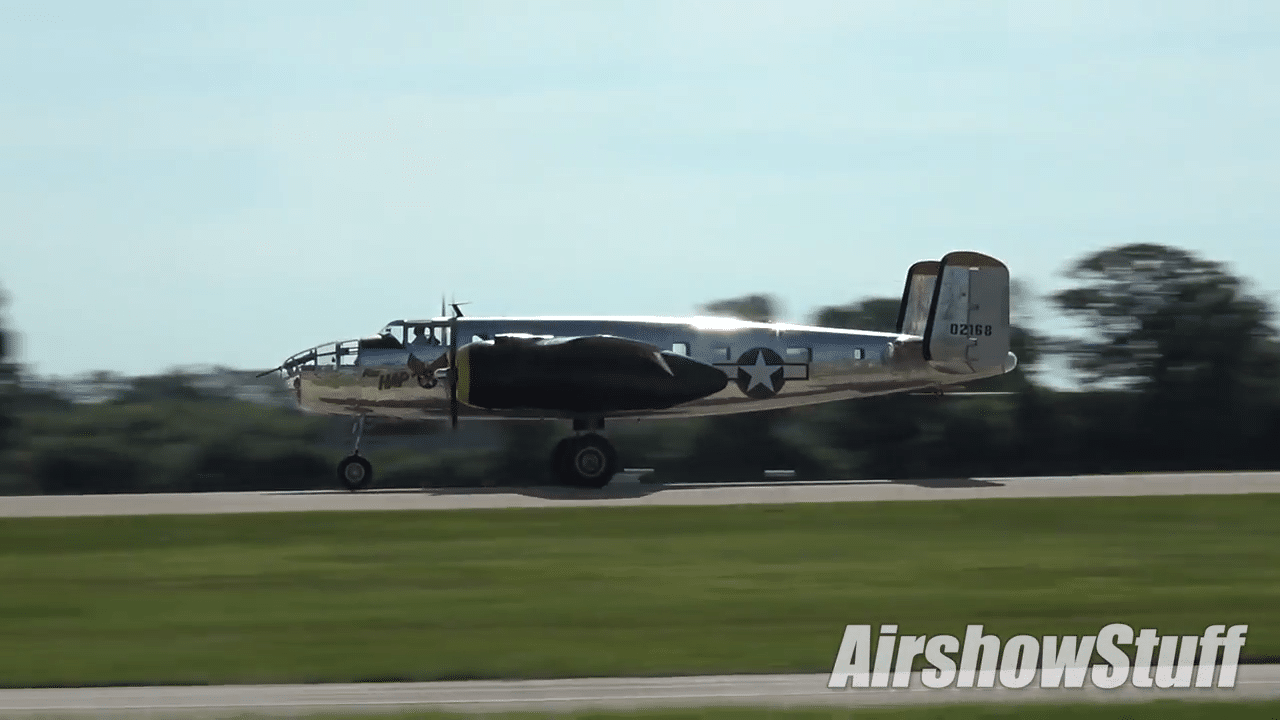
Two Phillips 66 Aerostars Yak-52 TWs taxi by next, followed by a C-47/DC-3 takeoff. Those four T-28s that taxied by earlier get into the blue quickly after that, followed by one of several Ford Trimotor appearances. A North American B-25 Mitchell lands. But that’s not just any old B-25. That’s the fourth B-25 built, delivered in 1940, and the oldest living B-25 on the planet! There are also a smattering of Piper Cubs and even a V Tail Bonanza. Once you been there you’ll know why people often exclaim: Only at Oshkosh! Will you be there next year?
The future of the double-decker A380 superjumbo jet was thrown into question last week when a huge order cancellation from Emirates put a gaping hole in Airbus’ future order book. Now comes additional bad news for the A380. A380s are being returned to lessors who have no customers for the used jets. So leasing company Amedeo is moving to its plan B.
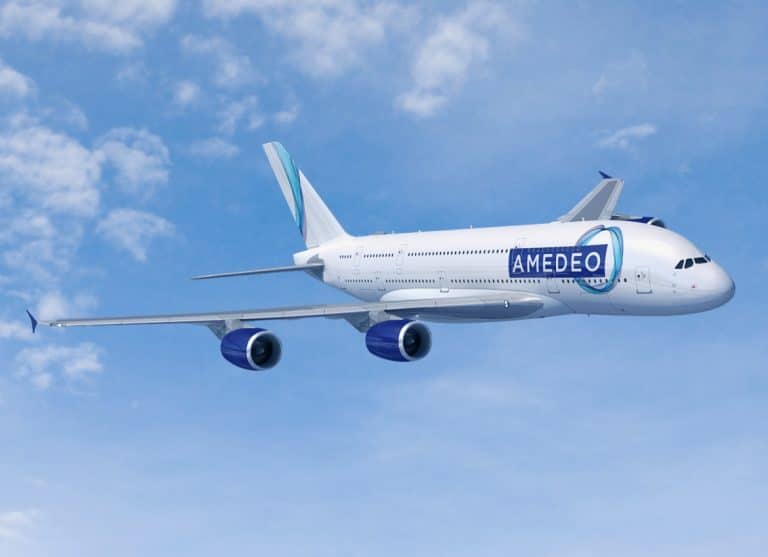
Amedeo is starting an airline-for-hire type service using its fleet of Airbus A380s. The plan includes leasing seats and cabin crew to traditional airlines, as well as Expedia, Google, and market disrupters like Airbnb. Amedeo CEO Mark Lapidus told CNBC that he plans to lease to a handful of airlines and offer the service to other companies, not necessarily just those in the aviation industry. It sounds like he wants to start a charter company, but is the A380 the right jet for the market?
Two Big Challenges in Amedeo’s Plan:
Limited Markets where the A380 can fly
One could argue that superjumbo jets like the A380 and 747 are going the way of the dinosaur. But fans say flying on one is unlike anything else. Simply ascending the steps to the second level of an A380 or 747 double decker is exciting. The question is whether the experience appeals enough to consumers to keep them booking flights under the Amedeo leasing program.
These planes consume a lot of fuel. Airline executives are putting laser-like focus on fuel efficiency. New two-engine aircraft like the Airbus A350 and Boeing 777 can carry a similar number of passengers almost the same distance while burning less fuel thanks to improvements in engines and carbon fiber composites.
These problems that plague the sale of the A380 to major airlines could also be the Achilles heel for Amedeo’s new leasing program. If airlines do not want to buy these mammoth aircraft, reasoning could follow that they may not want to lease them either.
Infrastructure Costs of Starting a New Airline Could be a Giant Roadblock
Another possible roadblock for Amedeo is the infrastructure cost of starting up an airline. First and foremost, there are regulations that are challenging in any environment. The issue of crews, ownership, proving flights, and maintaining aircraft is expensive. Some countries are also preparing to impose new taxes to support the U.N. Millennium Development Goals.
And regulations are not the only challenge. The amount of money going out the door to suppliers adds to the financial headaches for a start-up like Amedeo. According to mckinsey.com, more than 60% of an airline’s cost base goes to suppliers. Amedeo has to establish relationships with suppliers and unless they start driving a large amount of business to them, they are unlikely to receive the best pricing on those services.
The problem with lowering supplier costs is that most of them can set prices as they see fit because there is little or no competition, making them sort of oligopolies. For example, many cities only have one airport. And at those airports, there are usually no more than two caterers, two host-system providers, and maintenance.
Even if Amedeo overcomes all these issues, the track record for airlines to succeed is not very long. A number of airlines have failed just this year. The list of airlines that went bust early on is very long. Wikipedia hosts a list of now-defunct U.S. airlines that goes on for several pages. Running an airline with A380s? That’s a big unknown.
A more likely scenario: Excess A380s might be scrapped, even though they are less than 15 years old
The long-range passenger jet market has been under pressure for quite some time. The down cycle in orders is most apparent in the market for wide-bodies like the A380. More and more airlines are retiring the wide-bodies and as a result, used A380s are now potentially set to flood the leasing market.
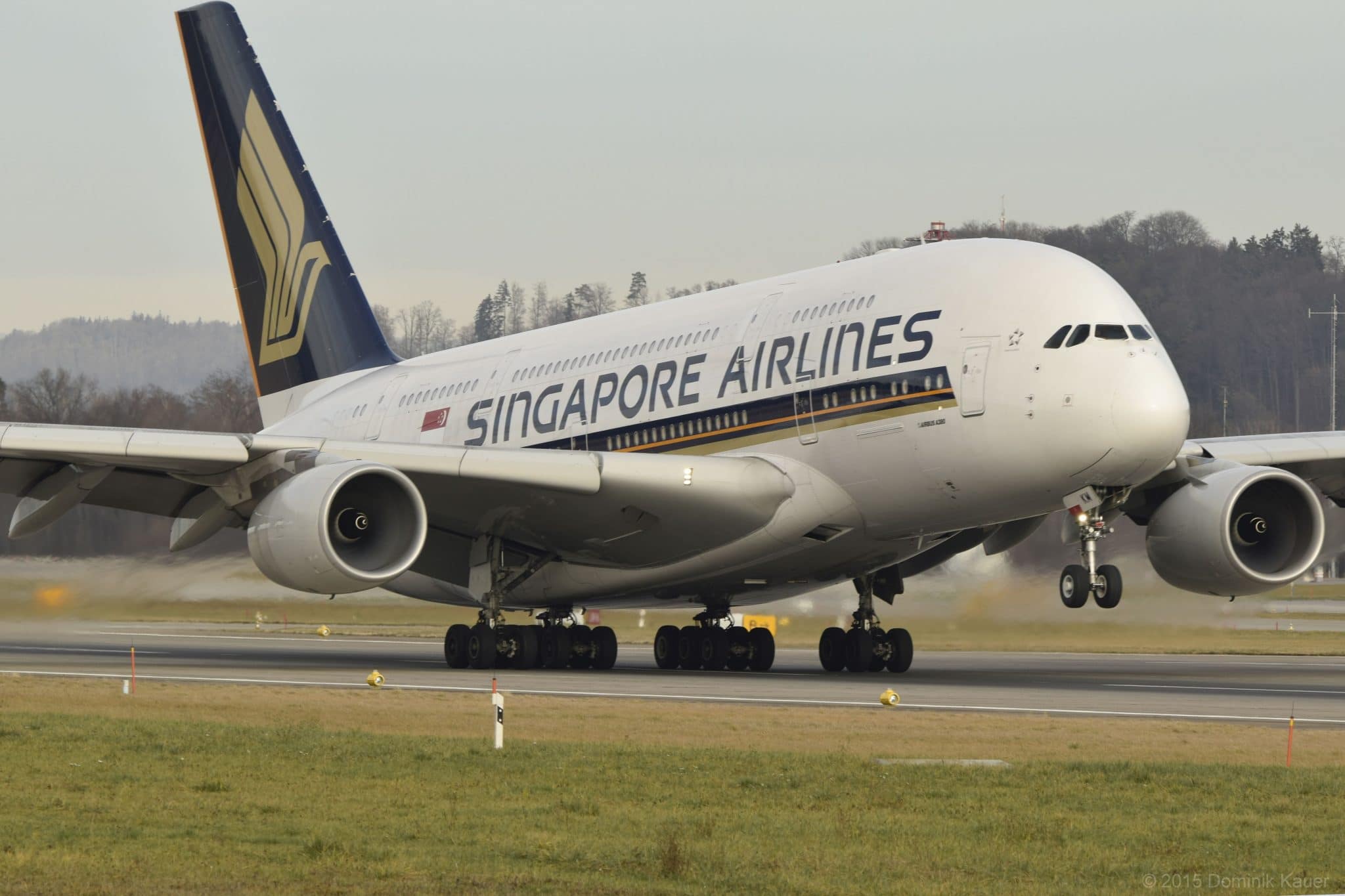
Singapore Airlines Airbus A380-84. Photo dxme from Schweiz (CC BY-SA 2.0)
Singapore Airlines is retiring five A380s from their fleet over the next year. They already returned one in October and the next four will be put out to pasture in 2018. Dr. Peters, from the German leasing company that owns A380s has not yet found a new customer for the aircraft either.
The Singapore Airlines jets that are being retired are only ten years old and will be on the market alongside the Amedeo owned jets. As more and more airlines are ridding themselves of the world’s largest passenger planes, the market could become so over-saturated that some Singapore A380s may even be disassembled to be sold for spares
Still, Amedeo’s CEO is Confident In His Venture’s Success
In spite of the obvious challenges, Amedeo CEO Mark Lapidus insists his new company is being built on solid ground. He asserts that other operators have not understood the A380’s capabilities and did not optimize its capability.
Lapidus said, “With the A380, Airbus started with: ‘It’s a big piece of real estate; do what you want to do.’ That has not helped with the key factors that are great on this aircraft, which are the lowest seat-cost economics of anything flying today or in five years.”
Mr. Lapidus says the Amedeo 380 program will help airlines add routes and maintain service in difficult financial environments. Amedeo anticipates the long-haul aircraft will appeal to airlines that only want to lease a small number of A380s to serve global routes while avoiding large upfront costs paid to Airbus. Lapidus says he only needs three or four carriers to come on board to make the system work and is confident that non-aviation companies like the AirBNBs and Expedias of the world will round out the roster to help support their A380 powered airline.
Grab your popcorn, this will be a fun show to watch…
The United States Air Force isn’t messing around lately in Afghanistan. They are on a roll! Over the past week, deployed crews in Afghanistan launched F-22 strikes against Taliban drug facilities. This is was first such coordinated strike against drug making facilities. These facilities produce most of Afghanistan’s drugs that are exported. The profits from these drugs line the Taliban’s pockets.
Official US Air Force Photograph
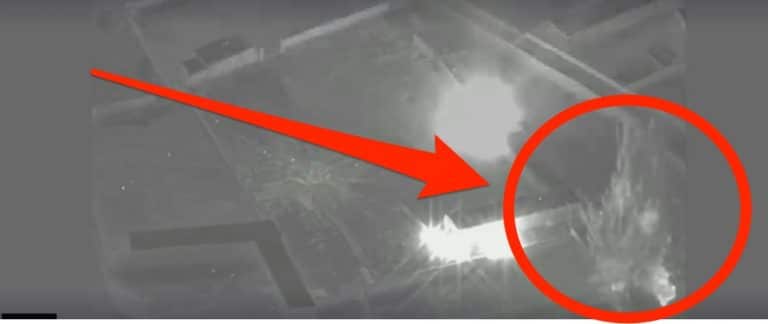
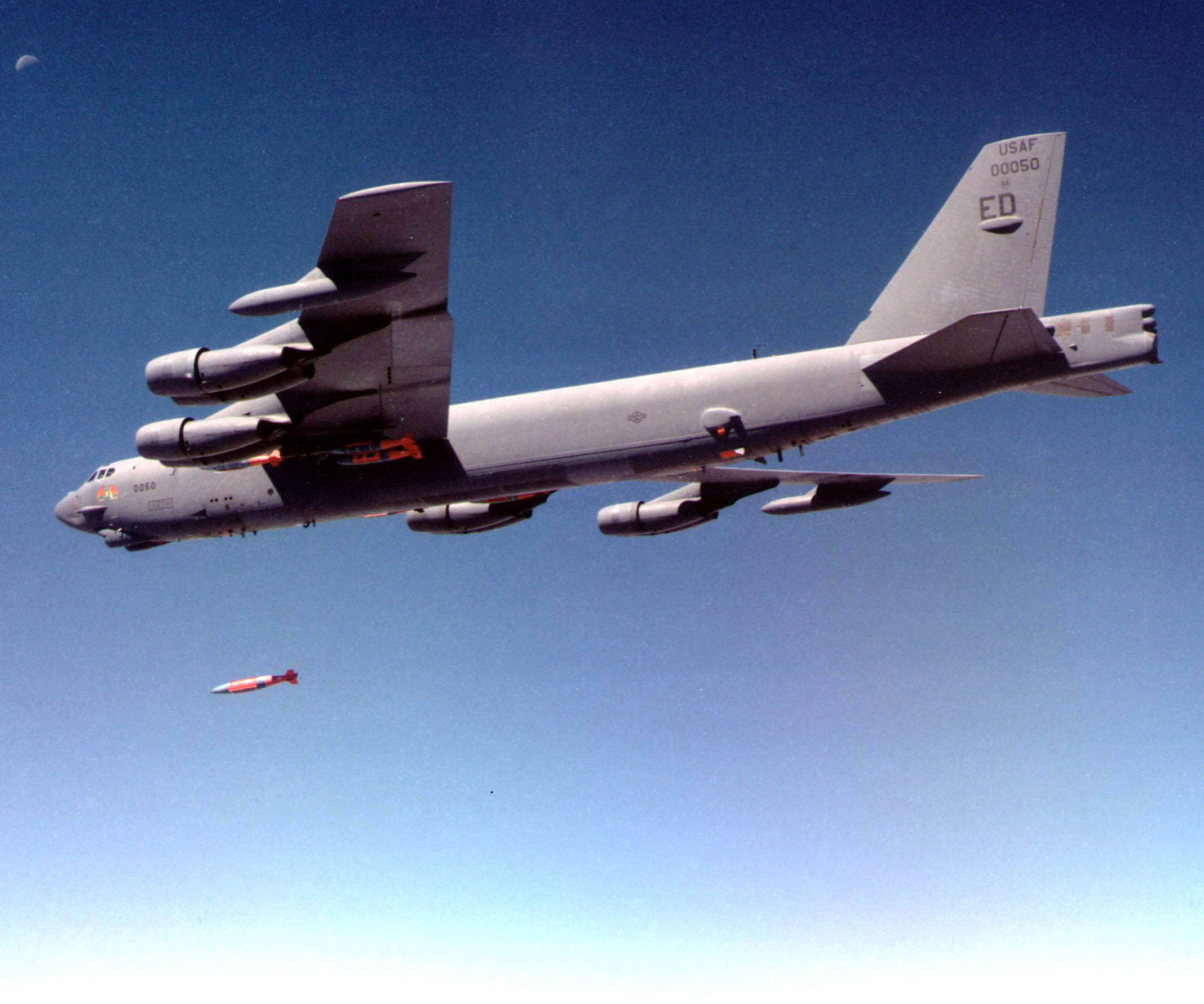
Then today, the Air Force posted footage of the mighty B-52 BUFF obliterating a Taliban bomb making facility in Afghanistan. According to Airman magazine,
A USAF B-52 bomber recently struck a Taliban homemade explosives production facility in Helmand province. The large secondary explosion visible in the video is evidence the facility was storing a significant amount of explosives.
That’s air power!
About the B-52 BUFF
The Boeing B-52 is the Air Force’s oldest active bomber. The B-52 is expected to serve until the 2040s. With potential service life extensions, including possible re-engining of the fleet, the jet might even be the first actively flying jet that approaches 100 years of service.
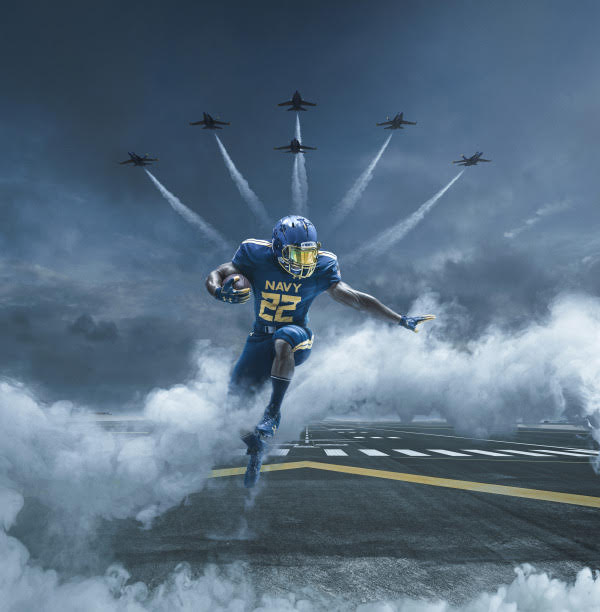
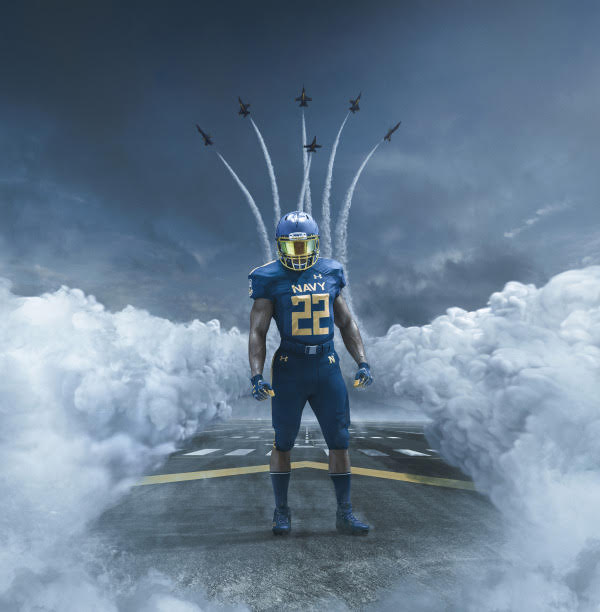
PENSACOLA, Fla. — As the Midshipmen take the field for the 118th Army-Navy Game, their uniforms and helmets will honor the Navy’s elite flight demonstration squadron, the Blue Angels.
The annual football game will be played from Philadelphia’s Lincoln Financial Field on December 9 (CBS-TV).
“Although the uniform departs from our customary characteristics, this tribute to the Blue Angels reflects the enthusiastic pride and appreciation we have for the Navy’s premier flying team and the motivation they convey to Navy football and the fleet at large,” said Naval Academy Director of Athletics Chet Gladchuk on Monday.
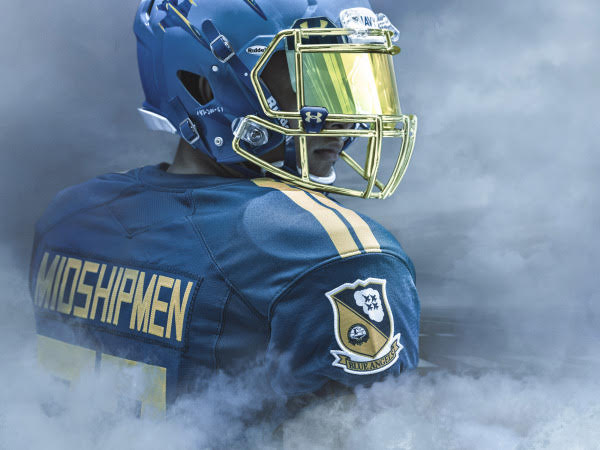
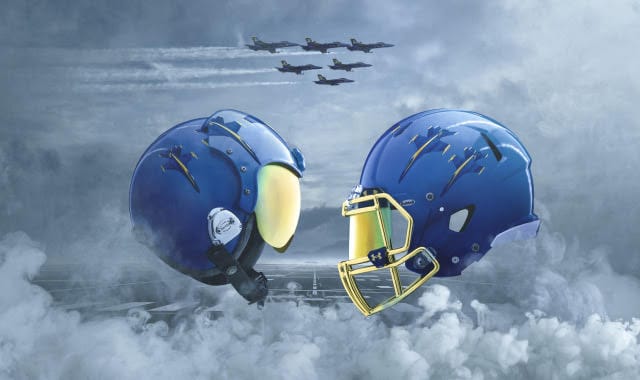
The hand-painted blue helmets will depict the Blue Angels delta formation with smoke-on, and include a golden visor similar to that used by the pilots and a golden mask. The six demonstration pilots perform at air shows across North America each year aboard the F/A-18C Hornet jets.
“This year we partnered with the Naval Academy to use the Army-Navy Game to honor the incredible pilots that make up the Blue Angels,” Gladchuk added. “Anyone who has had the privilege of watching the Blue Angels perform knows there is no show quite like it. It inspires and excites all who stand witness and we couldn’t think of a better way to pay homage to their great feats than creating a uniform that pays tribute to them.”
The Midshipmen will wear the American flag on their left sleeve, and the official Blue Angels insignia shield on their Under Armor uniform’s right sleeve. Their jersey number font will match that on the jet’s vertical stabilizer.
The Blues pilots have worn blue Under Armor gloves while in the cockpit during their forty-minute flight demo for the past few years. The Blue Angels wrapped up their 71st airshow season on Nov. 11 over their home base at Naval Air Station Pensacola.
(Charles A. Atkeison reports on aerospace and technology. Follow his updates via social media @Military_Flight.)
This Will Be the Best Retro Airline Film You’ll See All Week!
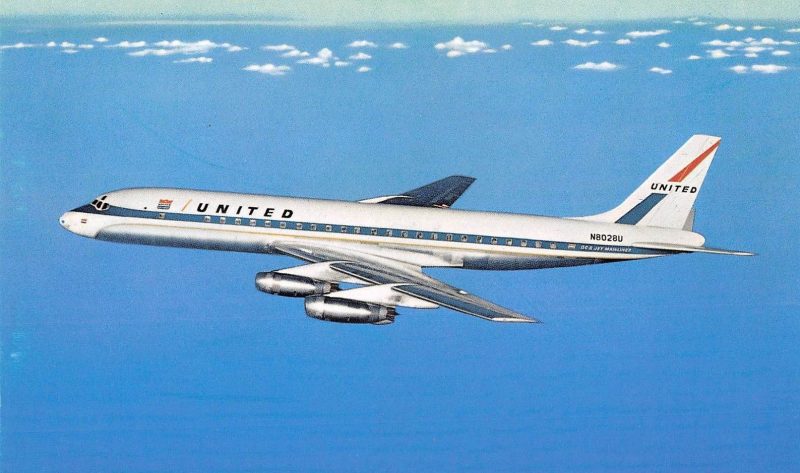
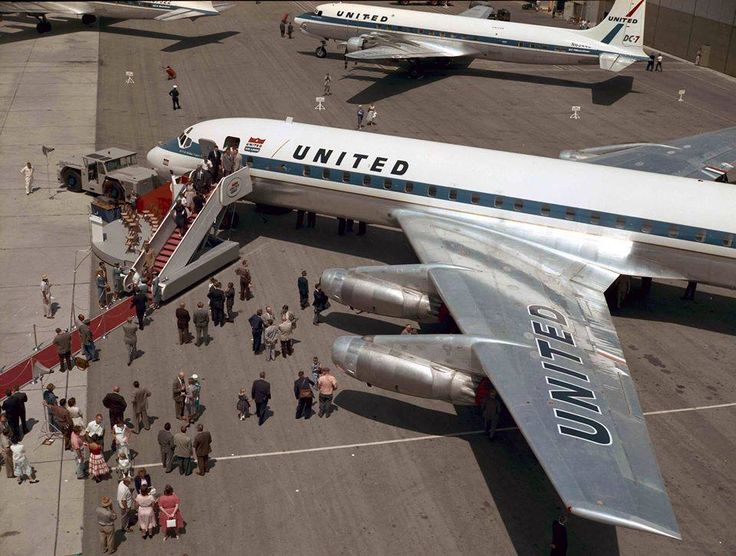
When Cate & McGlone of Hollywood produced the film “JET MAINLINER Flight 803” for United Airlines in 1960, the subject of the film, the Douglas DC-8-21 airliner, had been in production for only a few months. Many of United’s initial batch of DC-8s were DC-8-11s which were upgraded to DC-8-12s and subsequently brought up to the DC-8-21 specifications over the next few years. United eventually became the largest DC-8 operator. The film, uploaded to Youtube by PeriscopeFilm, stars the United Airlines DC-8-21 Jet Mainliner.
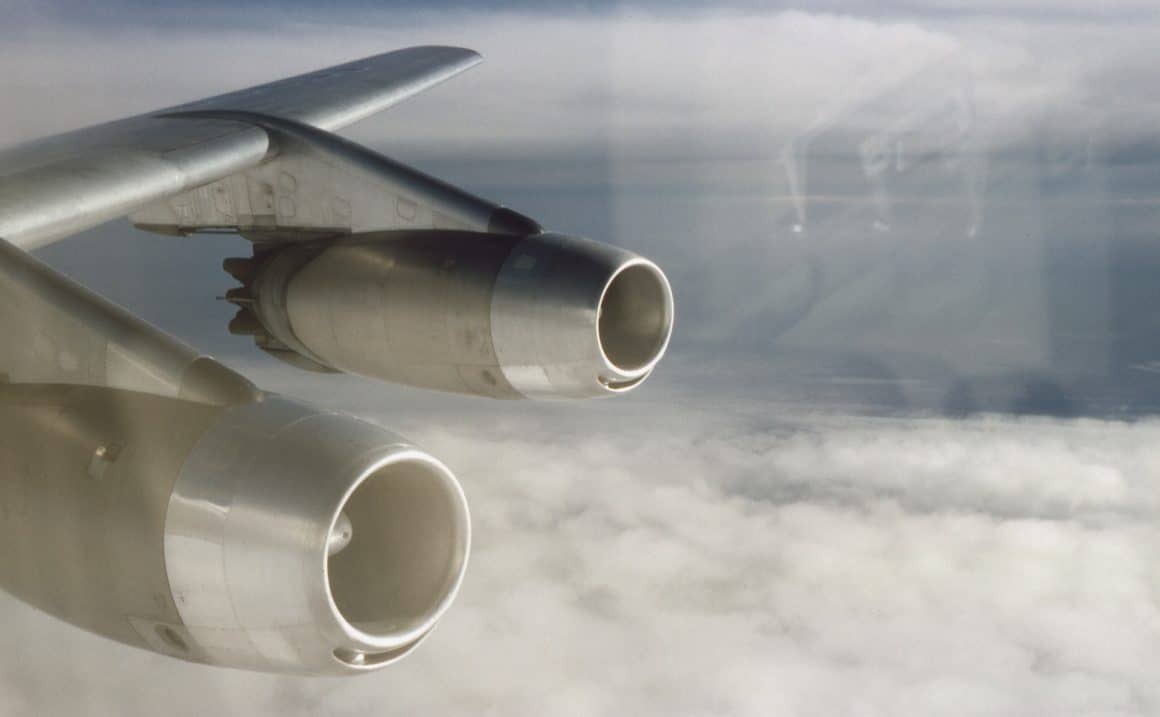
DC-8-21s were powered by Pratt & Whitney JT4A-3 axial-flow turbojet engines producing 15,800 pounds of thrust each without water injection. United began flying them in 1960 after beginning operation of DC-8-11s in 1959. A natural competitor with its contemporary, the Boeing 707, the Douglas DC-8 was produced in smaller numbers (556 airframes as opposed to 865 707s) but was a popular alternative to Boeing’s comparable airliner. DC-8s were upgraded (primarily engines) and produced in more variants (added fuselage extensions) than the 707.
image via clipper arctic
The film highlights just about every aspect of United’s DC-8 operations at the time. From food service to airframe production; flight planning to DC-8 interior amenities; flight deck simulators to historical equipment used by United. The film also features some outstanding air-to-air photography of the United DC-8-21 in flight. The two aircraft featured in the film, N8004U (SN45281) and N8005U (SN45282), were both delivered to United in late 1959. United operated DC-8s between 1959 and 1992, eventually replacing them primarily with Boeing 757-200s.
The last Space Shuttle mission landed on July 21, 2011. Since that date, Americans have had to rely on Russian Soyuz rockets to the International Space Station. Getting there isn’t cheap. The Russians charge almost $60M per seat! America is still officially scheduled to return to human spaceflight in 2018. But recent certification delays of Space X’s and Boeing’s capsules have called into question whether any human-carrying commercial operations will happen next year.
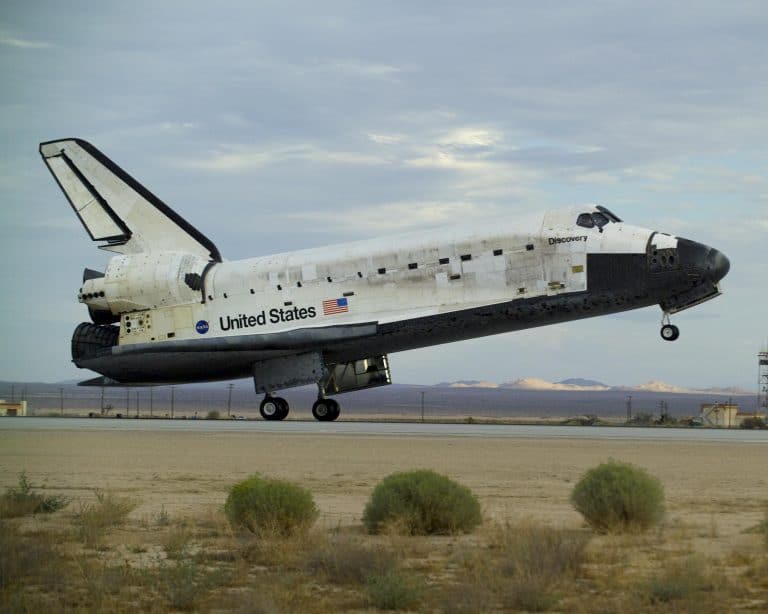
While the Space Shuttle never truly lived up to its promises, it was a truly beautiful space craft to watch. The Shuttle had an approach unlike any other. When it descended from the heavens, it fell like a rock. The shuttle had a 15-20 degree nose low deck angle. That’s 5-7 times steeper than your typical commercial airliner on descent. The descent was unpowered too, with only a set of APUs to power the critical systems and flight controls. On final approach, the shuttle continued its steep dive and only gracefully lifted its nose at the last second. The shuttle’s pilot then lowered the gear, as the commander flared just before touch down. Early arrivals of the shuttle were met with much fanfare. But this one of Discovery touching down at Edwards in 2009 barely received a few seconds of airtime on the local news. Shuttle landings were never routine but they became common. Now they are becoming a distant memory.
Why did we stop flying the space shuttle?
Many people will ask, why aren’t we still flying the space shuttle? That’s a good question! The Space Shuttle was a magnificent piece of engineering but it never fully lived up to its hype. First of all, the shuttle was dangerous. Two hull losses in just over 100 flights is not a good track record.
Shuttle tiles were effective but delicate. Photo: NASA
Decisions made in the 1970s to cut costs were leading to added risks to the program that couldn’t be solved or rectified. Money ‘saving’ decisions like the solid-rocket boosters or SRBs meant that we had no way to turn off the giant motors once lit. Engineers adapted and overcame but the risk was ever-present. Because the shuttle was mounted on the side of the stack, the craft would always be susceptible to foam and ice damage on liftoff. Other technologies like the individual thermal protection tiles were insanely delicate and prone to cracking. This all added up to a vehicle that was amazing but risky. Every flight was a test flight.
Will we ever see another Space Shuttle?
Probably not. Many engineers and enthusiasts see the space shuttle as a deviation from the progress that NASA was making in the 1950s and 1960s. The Shuttle was only capable of low earth orbit. It was heavy, expensive to maintain, and diverted billions of dollars away from projects that could’ve established a permanent presence on the Moon or Mars. While we will probably never see such a complex hybrid-rocket/space plane again. Projects like the forthcoming Dream Chaser and the Air Force’s secretive X-37 will mean that spacecraft that land like a plane will continue to be invested in and developed.
After getting off to a rocky start, Bombardier’s C-Series jets are uniquely positioned to become the next big thing in aviation. That is, if they do not incite an international trade war first.
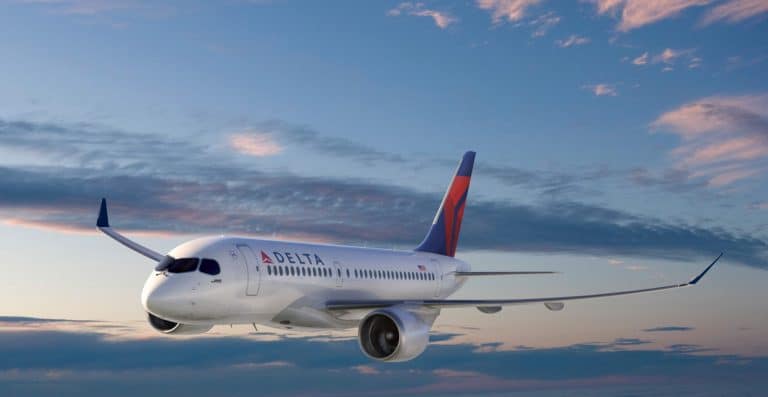
Last spring, Boeing accused plane maker Bombardier of receiving financial backing from the government of Canada that helped it maintain the struggling C-Series program. Boeing filed suit against Bombardier, accusing them of then selling the aircraft to Delta Airlines for “absurdly low prices” which Boeing said unfairly penalized their own 737 program.
Bombardier, of course, denied those claims, stating that large discounts are extremely common in the aerospace industry. Canadian Prime Minister Justin Trudeau stated that he believed Boeing “is pursuing unfair and aggressive trade action against the Canadian aerospace sector.”
In defense, a spokesperson told CNNMoney, “We like competition. It makes us better. And Bombardier can sell its aircraft anywhere in the world. But competition and sales must respect globally-accepted trade law.” Delta called the case “without merit.”
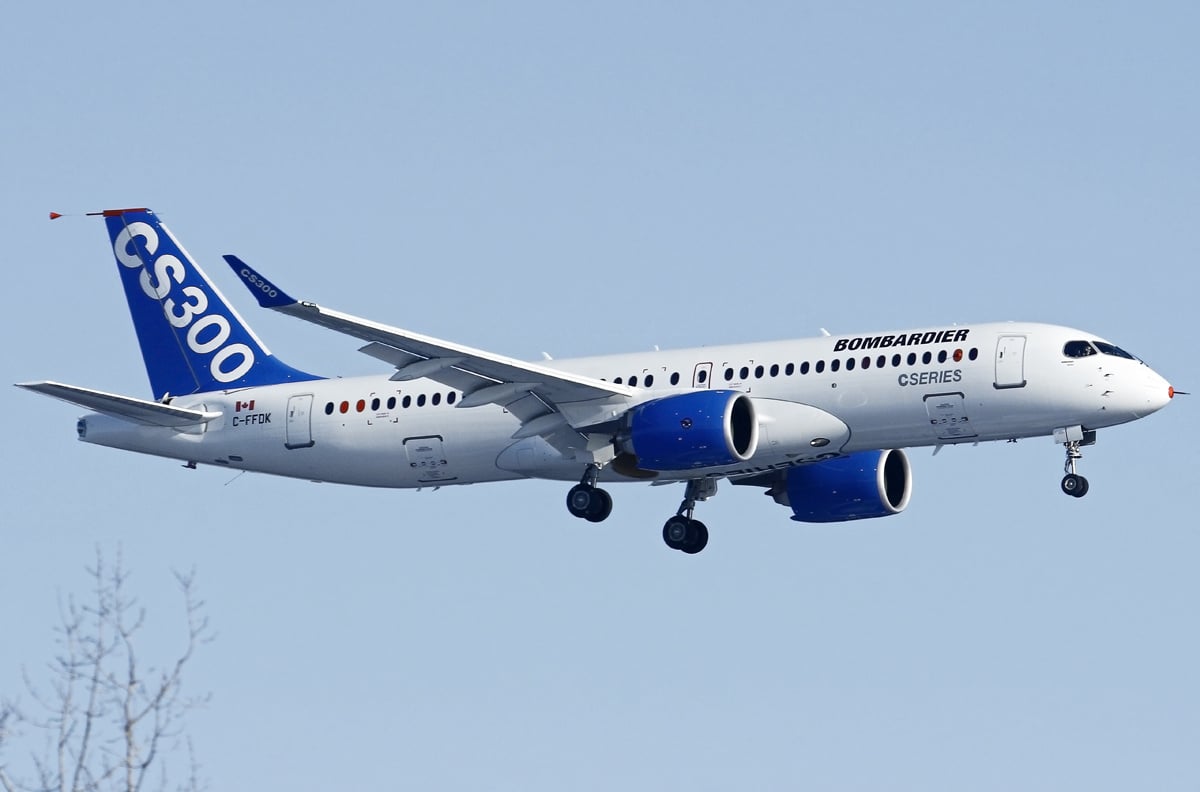
Bombardier BD-500-1A11 C-Series CS300 on finals after its first flight. Photo By Gilbert Hechema [GFDL 1.2 (http://www.gnu.org/licenses/old-licenses/fdl-1.2.html) or GFDL 1.2 (http://www.gnu.org/licenses/old-licenses/fdl-1.2.html)], via Wikimedia CommonsMeantime, in September, the U.S. government backed Boeing in the lawsuit and recommended a huge tariff on each C-Series delivery into the country. After the tariffs were announced, in an unexpected move that resembles players in a chess game, Airbus swooped in and acquired a majority stake in the C-Series program, moving manufacturing to its plant in Alabama and moving the plane front and center in Boeing’s woes over worldwide aircraft sales.
The C-Series controversy is having a ripple effect. Canadian and U.K. leaders threatened to scrap a deal with the Royal Canadian Air Force for Boeing F/A-18 Super Hornet fighters worth $5.2 billion if the case wasn’t dropped. The issues also raised unemployment concerns in Ireland. The C-Series’ wings are manufactured at a plant in Belfast which employs over 1,000 people.
Even from the early days, the C-Series program was beset with problems. The first planes were supposed to be rolled out in 2013 but the complexity of the brand-new aircraft led to a three-year delay in its market introduction and sent the manufacturing program billions of dollars over budget.
Is the C-Series Worth All the Fuss? Here Are 6 Reasons Why We Think So…
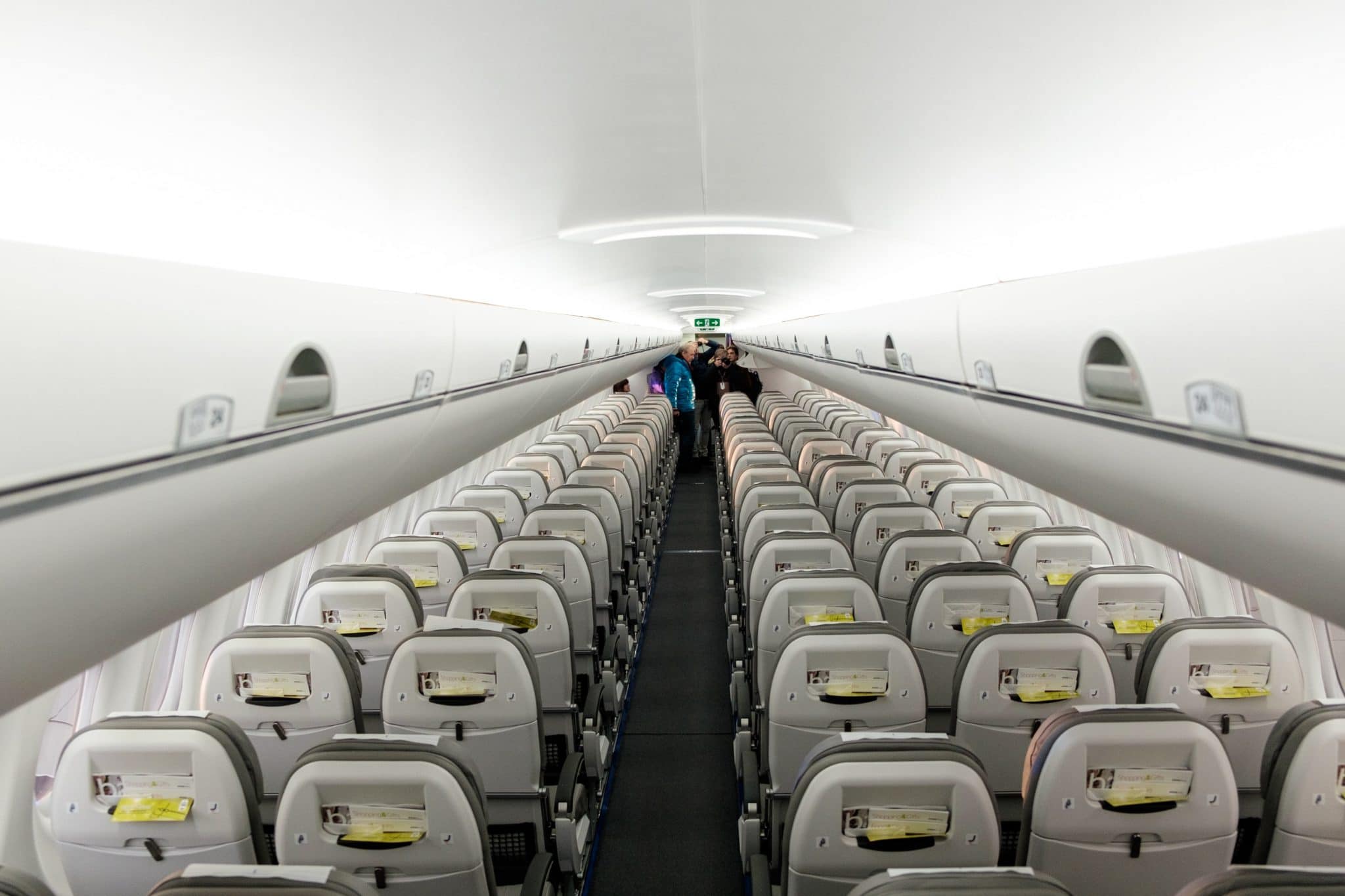
The cabin of the CS-100 is roomy. It blurs the line between regional jet and airliner. Photo Kārlis Dambrāns from Latvia (Attribution 2.0, Wikipedia (CC BY 2.0))
The C-Series jets may be worth the fuss for passengers and operators for several reasons. The airplanes are roomy, quiet, fuel efficient, and technologically advanced. The benefits of flying the new C-Series include:
1. A roomy cabin
The jet’s cabin is roomy and comfortable. It has 110 seats, a wider aisle, large overhead bins, and bigger windows. Passengers can stretch out, enjoy the view, and there is still plenty of room for the beverage cart to pass by. There are about half the number of middle seats when compared to larger planes and those seats are wider by an inch.
2. Lightweight construction
Bombardier has introduced new technology, making the wing skins with a technique using liquid infusion inside an autoclave that creates panels that are lighter than metal. The fuselage is manufactured using lightweight aluminum-lithium alloy.
The C-series features Pratt & Whitney’s geared turbofan. It improves fuel efficiency by using the gear to disconnect the rotation speeds of the fan and low pressure turbine, widening the fan diameter and doubling the bypass ratio. This means that the C-Series has an engine with lower maintenance costs and better fuel efficiency.
4. Amazing efficiency from a sleek, modern design
The new airframe and state-of-the-art engine technology deliver a 20% fuel burn advantage over other aircraft in the same class. According to the Bombardier website, the C-Series burns only 2 liters of jet fuel per 100 kilometers per passenger. The savings rank high in importance to carriers, since fuel costs are their number one variable. While Airbus and Boeing have modernized jets, they both lack a clean sheet design that the C-Series offers.
5. Advantages of scale thanks to Airbus
With the existing partnership between the two, Bombardier has access to Airbus’ substantial product and sales support infrastructure. Bombardier also gains access to Airbus’ manufacturing base and substantial supply chain.
6. Long Legs To Connect New Markets
These new planes can make domestic tertiary markets viable, which is similar to what the 787 did for international markets. Longer range jets make more connections feasible. These secondary routes would eliminate the number of connections for passengers and provide a direct route to their secondary market destinations. The C-Series offers the ability to connect disparate small to medium size markets like never before.
Some historical parallels between the C-Series And The MD-80
This past year’s developments in the Bombardier program are similar the the MD-80’s challenges thirty years ago. Like the C-Series, the MD-80 program was teetering on the brink of disaster in 1982, when McDonnell Douglas made a deal to lease twenty MD-80s to American at a super-heavy discount. American then went on to commit to 67 orders and 100 options in 1984, and as of 2002, was flying more than 360 MD-80s.
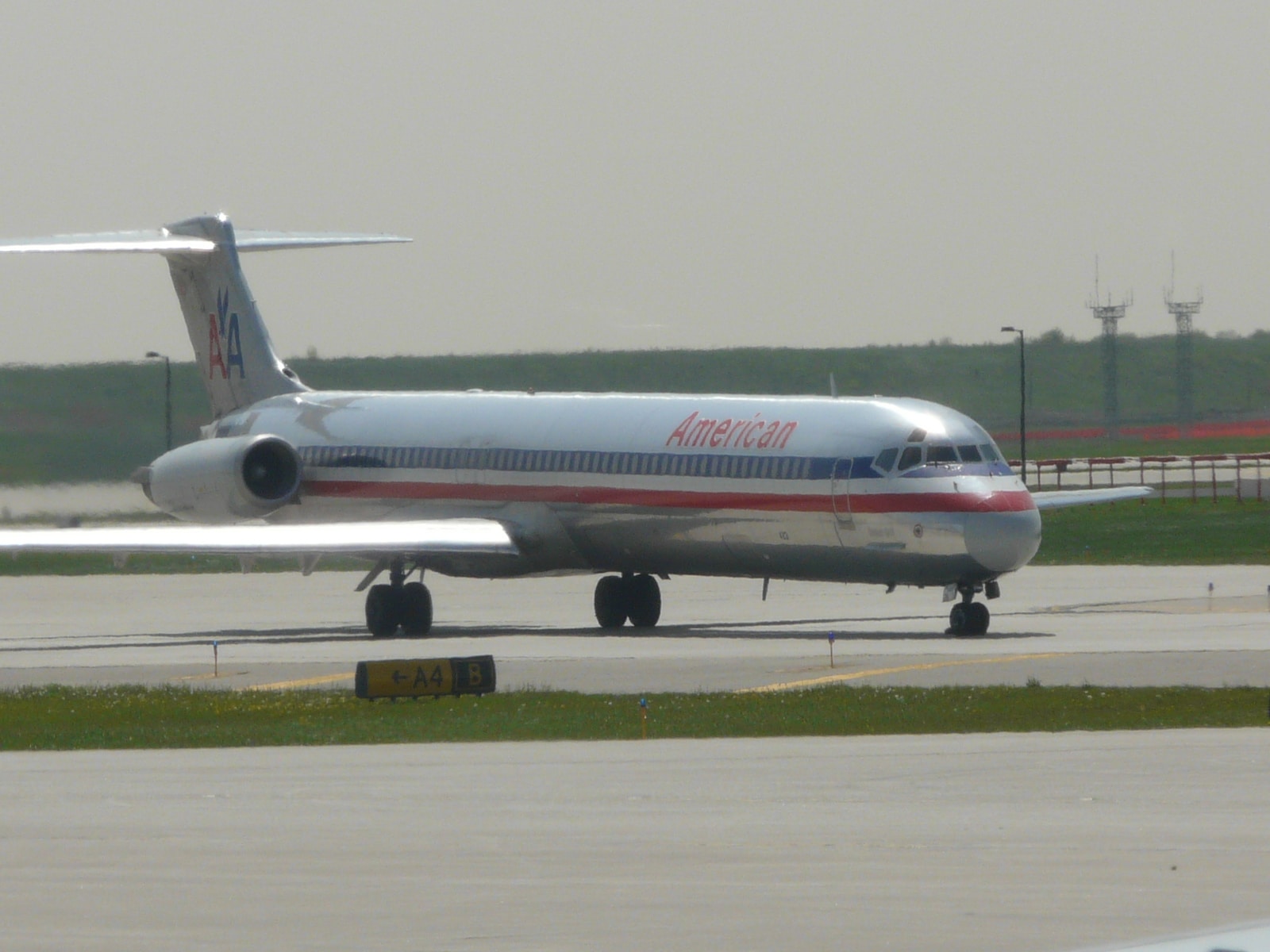
American Airlines will retire its fleet of MD-80s by 2019. Photo: Piotrus, Own Work (wikimedia commons: Attribution 2.0 Generic (CC BY 2.0)
American Airlines’ success with the MD-80 brought attention to the struggling series. Other airlines started buying the planes once they knew that the MD-80 was selling. Alirlines like Alaska Airlines, Aeroméxico, China Eastern Airlines, China Northern Airlines, US Airways and Delta all ordered the MD-80. Many other airlines also purchased the stretched DC-9. American only recently announced that it will be retiring all its MD-80s by the year 2019. American will replace the ‘mad dogs’ with the 737-800 and -8 MAX.
Will Bombardier’s C-Series actually meet with the same success as the MD-80 or will international trade wars prevent it from reaching its potential? It has a fighting chance thanks to the boost provided by Airbus and Delta. With Boeing’s accusations hanging in the air, only time will tell.
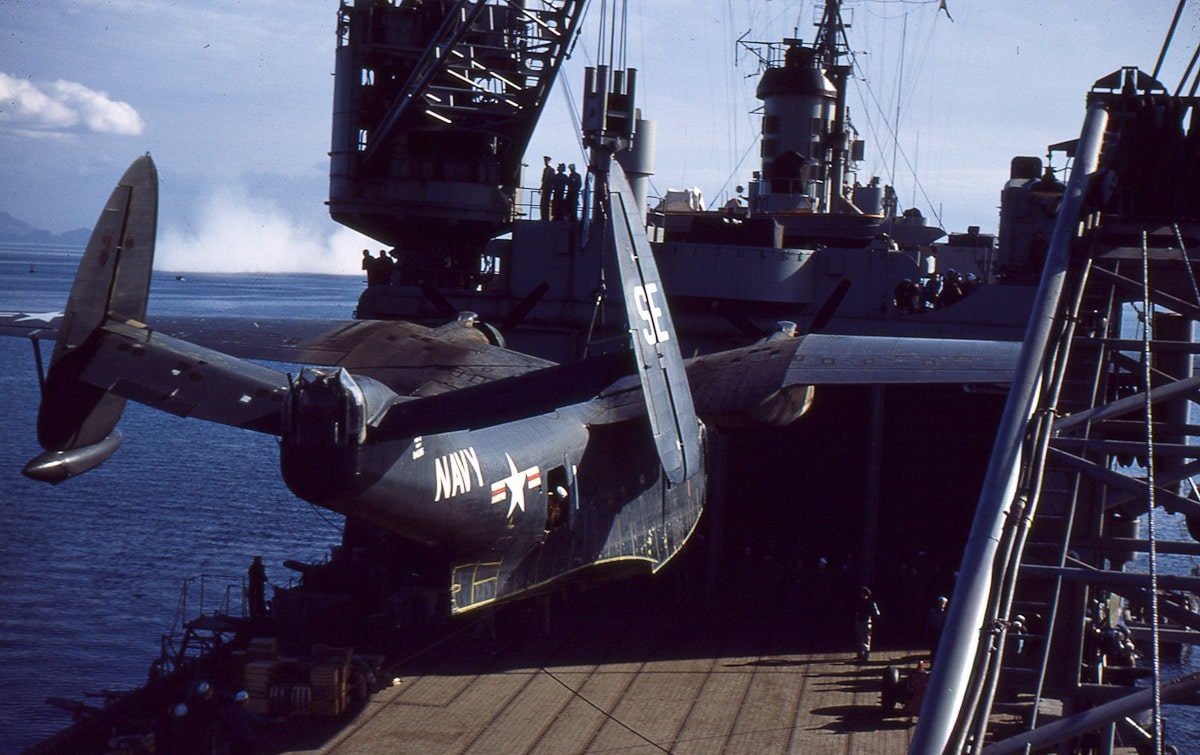
This video, transferred from 16 millimeter film, documents VP-731 (later VP-48) operating Martin PBM-5 Mariners from Naval Station Sangley Point in the Philippines. VP-731 was activated in response to the outbreak of war in Korea. Initially deployed to Buckner Bay in Okinawa with the support of seaplane tender USS Suisun (AVP-53), VP-731 also operated from Sangley Point with the support of seaplane tender USS Salisbury Sound (AV-13). VP-731 flew patrol missions over the Formosa Strait and the Chinese coast from both locations. This silent but colorful film was uploaded to YouTube by PeriscopeFilm.
At the end of May 1952 VP-731 went WestPac again, this time operating out of Marine Corps Air Station (MCAS) Iwakuni in Japan and supported by seaplane tenders USS Gardiners Bay (AVP-39) and USS Kenneth Whiting (AV-14). During this deployment the squadron flew missions over both Korean and Formosan waters. VP-731 got right to work, flying missions by June 1st 1952. Two Chinese MiG-15 fighters killed two crewmen aboard a VP-731 Mariner when they attacked the flying boat over the Yellow Sea west of Korea.
Image courtesy Smithsonian National Air and Space Museum
First flown on February 18th 1939 and entering service with VP-55 in September of 1940 wearing the familiar yellow wings and silver fuselage color scheme, the Mariner was built in both flying boat and amphibian versions like its contemporary, the Consolidated PBY Catalina. Martin built 1,366 Mariners (all variants). In addition to the United States Navy and Coast Guard, Mariners were operated by Argentina, Australia, the Netherlands, the United Kingdom, and Uruguay. VP-50 retired the last operational US Navy Mariners in 1956. Uruguay’s Mariners served until retired in 1964.
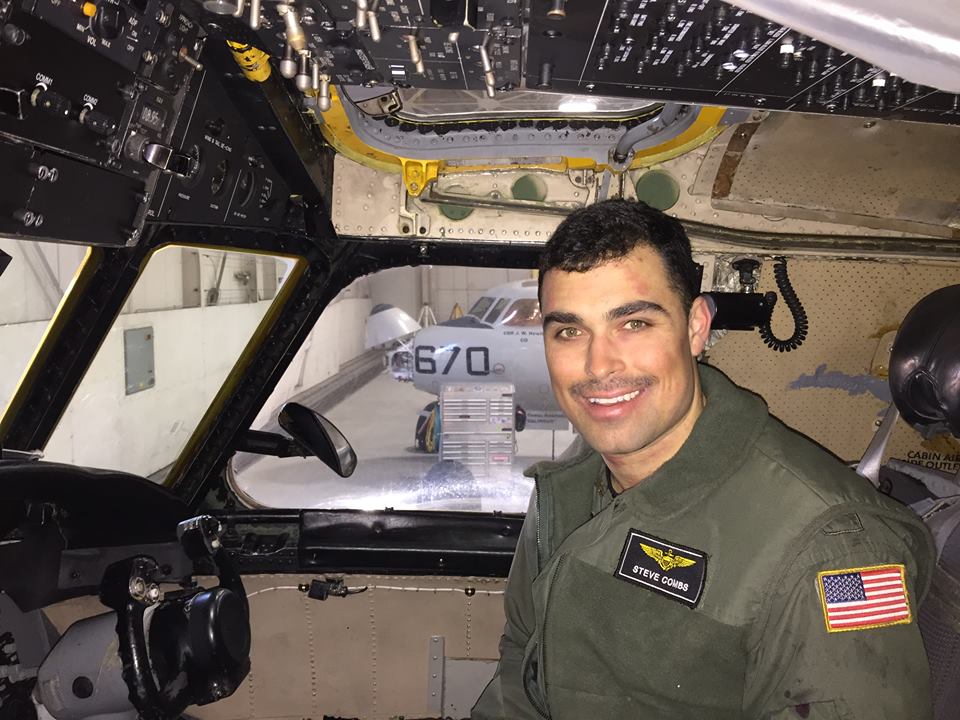
Lieutenant Steven Combs. Official US Navy photograph
Lieutenant Combs, who was a native of Florida, was assigned to VRC-30 aboard the carrier USS Ronald Reagan (CVN-76). LT Combs had previously flown with VAW-120 Greyhawks. His other previous duty stations include the Center for Security Forces Detachment Kittery Point at Portsmouth in New Hampshire and Training Wing 4 at Naval Air Station (NAS) Corpus Christi in Texas. Combs’ awards include the National Defense Ribbon and the Navy Battle “E” Ribbon.
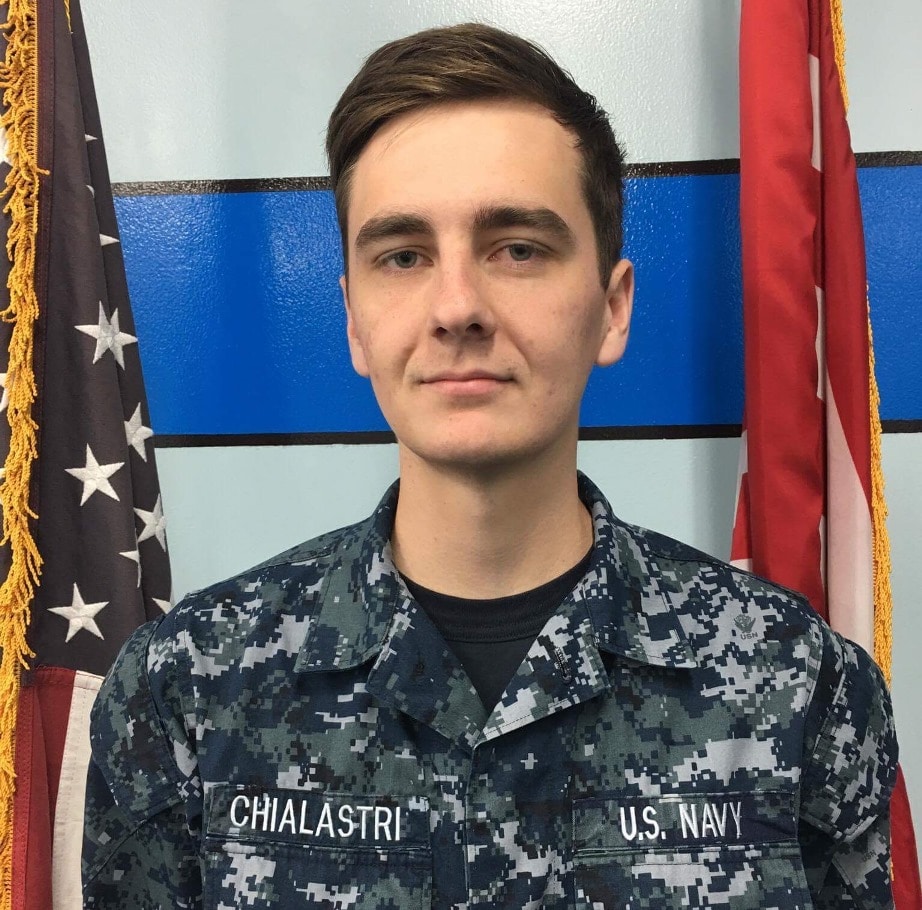
Aviation Boatswain’s Mate (Equipment) Airman Matthew Chialastri. Official US Navy photograph
Airman Chialastri, who was a native of Louisiana, was also assigned to the Reagan. ABEAN Chialastri had previously served aboard the amphibious assault ship USS America (LHA-6), with Patrol Squadron Thirty (VP-30) Pro’s Nest based at NAS Jacksonville in Florida, and also at the Center for Security Forces Detachment Kittery Point. Chialastri’s awards include the National Defense Ribbon.
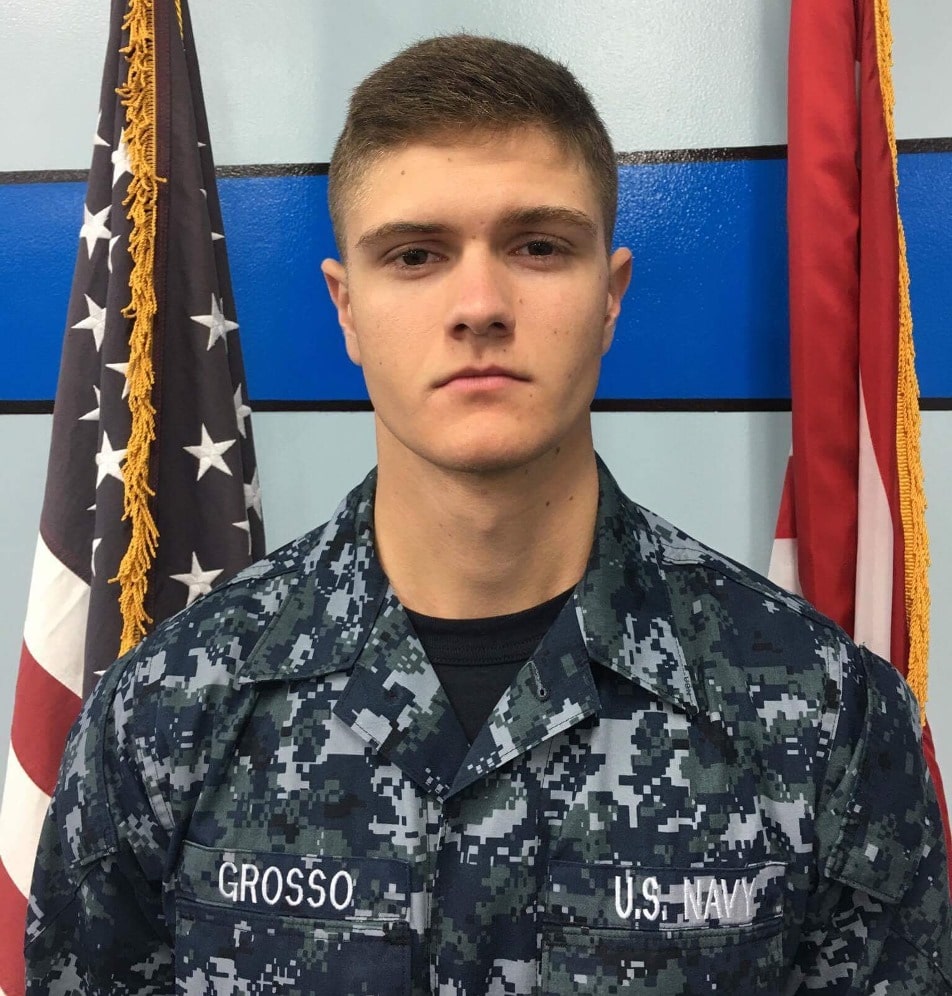
Aviation Ordnanceman Airman Apprentice Bryan Grosso. Official US Navy photograph
Airman Apprentice Grosso, who was also a native of Florida, was also assigned to the Reagan. AOAA Grosso’s previous duty stations include the Naval Air Technical Training Center at NAS Pensacola in Florida and the Naval Recruit Training Center Great Lakes in Illinois. Grosso’s awards include the National Defense Ribbon.
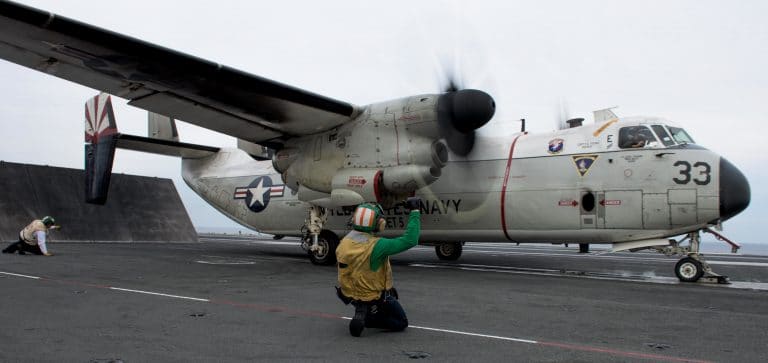
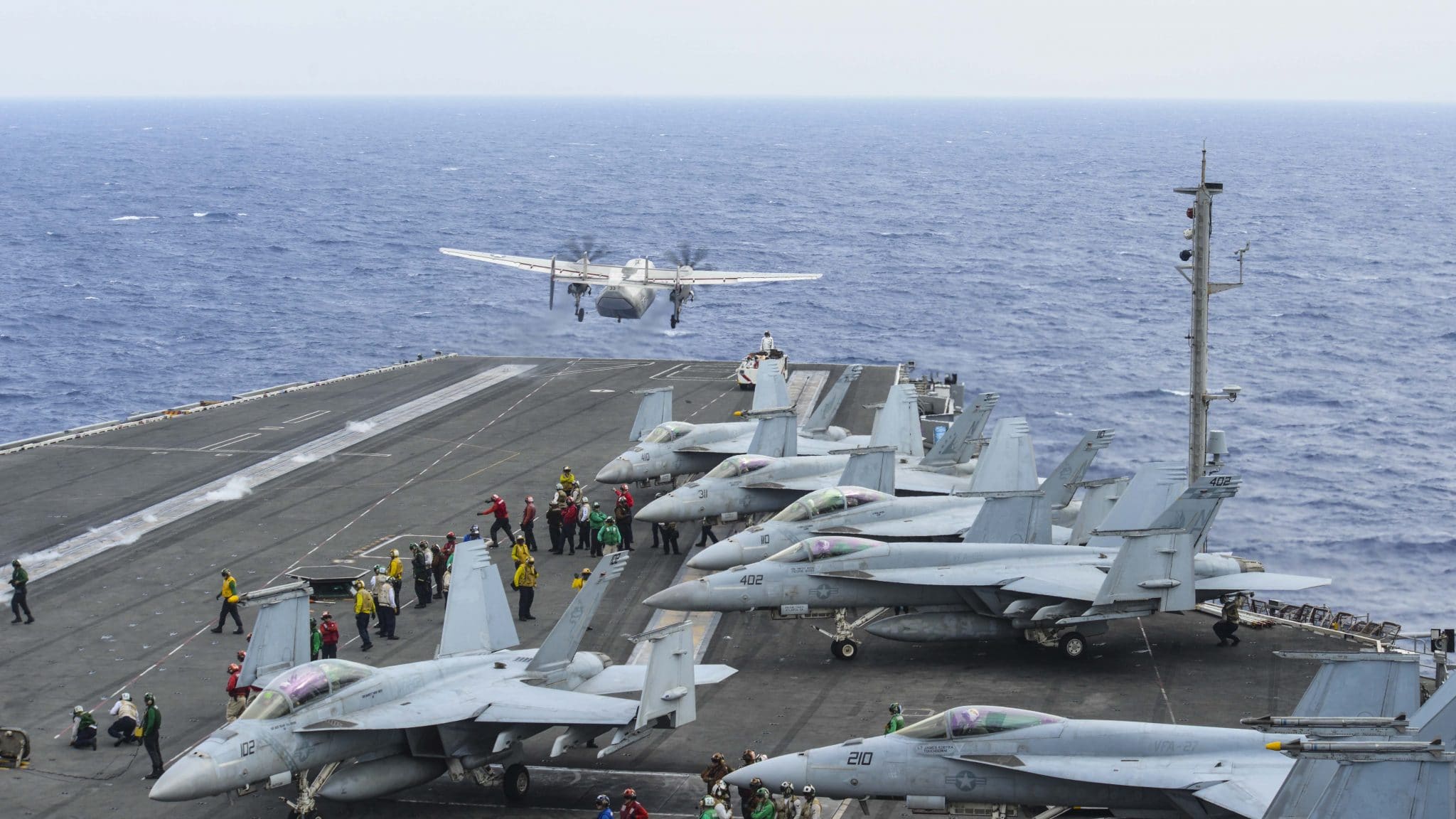
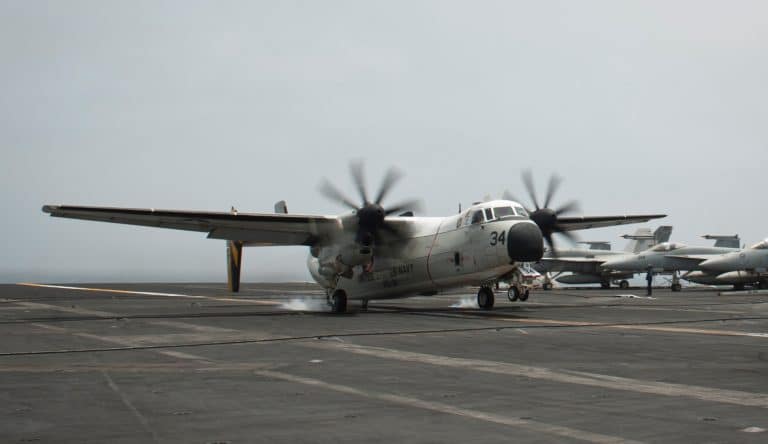
VRC-30 Det 5 C-2A(R) has just launched from CVN-76. Official US Navy Photograph
“Our thoughts and prayers are with the families of these Sailors,” said Vice Admiral Phil Sawyer, commander of U.S. Seventh Fleet, in the Navy’s release. “Their service and sacrifice will be lasting in Seventh Fleet and we will continue to stand the watch for them, as they did bravely for all of us.”
The introduction of nuclear weapons at the end of the Second World War had a profound influence in many combat doctrines and none nowhere else as much as that of airborne reconnaissance. In November 1945, General Henry “Hap” Arnold of the US Army Air Forces warned the US government that in the future, American leaders would require “continuous knowledge of potential enemies, including all aspects of their political, social, industrial, scientific and military life” if the United States was to avoid a surprise attack with nuclear weapons.
Traditional reconnaissance doctrines had the use of airborne assets in support of ongoing combat operations. General Arnold and many of his contemporaries at the dawn of the Cold War recognized that airborne reconnaissance was needed to provide an assessment and early warning of potential enemies, namely the Soviet Union that was rapidly tightening its grip on Eastern Europe. The start of the Berlin Blockade in June 1948 pressed the issue further that up-to-date reconnaissance was needed of the Soviet Union should tensions escalate to an all-out conflict. Interestingly while the highest levels of the US government tried to determine the best way to make such an assessment, the United States Far East Air Forces (FEAF) based in Japan took the initiative to begin its own assessment of Soviet forces in their region in response to the rising tensions during the Berlin Blockade.
The commander in chief of the US FEAF, Major General George Stratemeyer, ordered the 8th Tactical Reconnaissance Squadron and its Lockheed RF-80 Shooting Stars to begin a series of covert overflights of the Soviet Far East. Based at Yokota Air Base, Stratemeyer ordered the 8th TRS to deploy to Misawa AB on the northern Japanese home island of Hokkaido. Two pilots were selected with 1st Lieutenant Bryce Poe as the primary pilot for the secret missions to assess Soviet air strength in the region. The RF-80s were modified with larger wingtip tanks for longer range. Poe was instructed that if the coastline was free of clouds, dash into Soviet airspace, photograph the targets and dash back out and head back to Misawa as fast as possible.
Flights began just three years after the war
The first reconnaissance overflight (and USAF jet reconnaissance mission) of the Soviet Union took place on 10 May 1948 with 1Lt. Poe departing Misawa AB to overfly targets on Kuril Islands. Missions were flown to photograph targets on Sakhalin Island as well further to the north. The first overflight of the Soviet mainland took place on 10 March 1950 to photograph bases around the port of Vladivostok. Most of the airfields Poe had photographed were full of not just only Lend-Lease Bell P-39 Airacobras and P-63 Kingcobras, but also late model Lavochkin piston fighters like the La-9 and La-11. Although jet powered, the RF-80s had increased drag and lower speeds with the larger external tanks needed for the recon missions which cut down on the performance margin over the Lavochkin fighters which often tried to give chase to the missions.
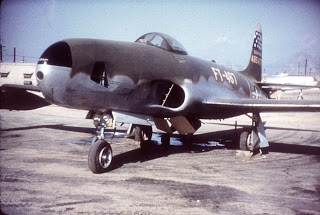
Lockheed RF-80 with the enlarged camera nose section (Wikipedia)
What was impressive about these first overflights is that they were done at the initiative and discretion of General Stratemeyer without any prior clearance from Washington and they were done in the face of significant technical and logistical obstacles. The reconnaissance cameras used on the RF-80 were designed for piston-engined aircraft and lacked the capability to do stereo images in a high speed aircraft like the RF-80. Spare parts were in constant short supply and given that Misawa at the time was on the far northern part of a still rebuilding Japan, insuring even basic food rations for the 8th TRS personnel deployed north proved challenging. Many F-80 units based in Japan at the time found themselves the subject of “moonlight parts acquisitions” so the secret overflights could continue.
Despite the failure of the Berlin Blockade which was finally lifted on 11 May 1949 and the formation of NATO, tensions remained high with the first detonation of a Soviet atomic bomb on 29 August 1949 followed by Mao Tse-Tung’s Communist victory in China on 1 October 1949 over the Nationalists.
With Stalin feeling more confident about the Soviet posture on the world stage, on 25 June 1950, the North Korean Army smashed across the DMZ on the Korean Peninsula, igniting the Korean War. In order to prevent further escalation the conflict, American reconnaissance pilots were instructed to avoid Chinese and Russian air space, however, the advance of North Korean forces meant that 1st Lt. Bryce Poe was called upon again by General Stratemeyer to begin a new set of secret overflights. In August 1950, he was called to FEAF HQ to again deploy out of Misawa and fly a series of missions against Soviet airfields in the region. While Soviet fighters tried more aggressively to intercept the RF-80s, none came close to getting shot down. By this point, the intelligence from Poe’s flights was deemed critical by the Joint Chiefs of Staff and on 28 July 1950, the JCS requested official permission from the Secretary of Defense, Louis Johnson, for overflights of Chinese bases on the coasts adjacent to the Korea.
Just four days later, President Truman gave his approval and again, because of his prior expertise, 1st Lt. Bryce Poe flew the missions against Chinese coastal targets and additional missions by other pilots were flown against Chinese ports opposite of Taiwan to make sure no amphibious assault preparations were underway to move against Taiwan.
More capable platforms became necessary
By the summer of 1950 discussions had been taking place at the Pentagon about using the more-capable North American RB-45 Tornado for overflight missions of Chinese and Soviet targets, but the aircraft being a bomber, it was felt at the time to be too politically risky, particularly as the Pentagon was seeking authority for overflights of Soviet targets in Europe as well as in the Far East. By this point Allied fortunes in the Korean War had improved following the landings at Inchon. Poe was once again called to FEAF HQ for a third set of covert overflights but the other pilot that he had been working with on the prior sets of overflights had been killed in action, so for this next set of missions, Bryce Poe would be the only pilot flying. Due to the secrecy of the missions, Poe did all his own flight planning. He was told by General Douglas MacArthur and General Stratemeyer what information they needed and Poe himself figured out the targets, routes, photographic equipment, times and altitudes. Despite the ongoing war in Korea, Poe found that the defensive posture of the Soviet airfields had only modestly increased, but as a precaution, F-80 Shooting Star fighters would meet Poe on his outbound leg to make sure no Soviet fighters were trying to tail him.
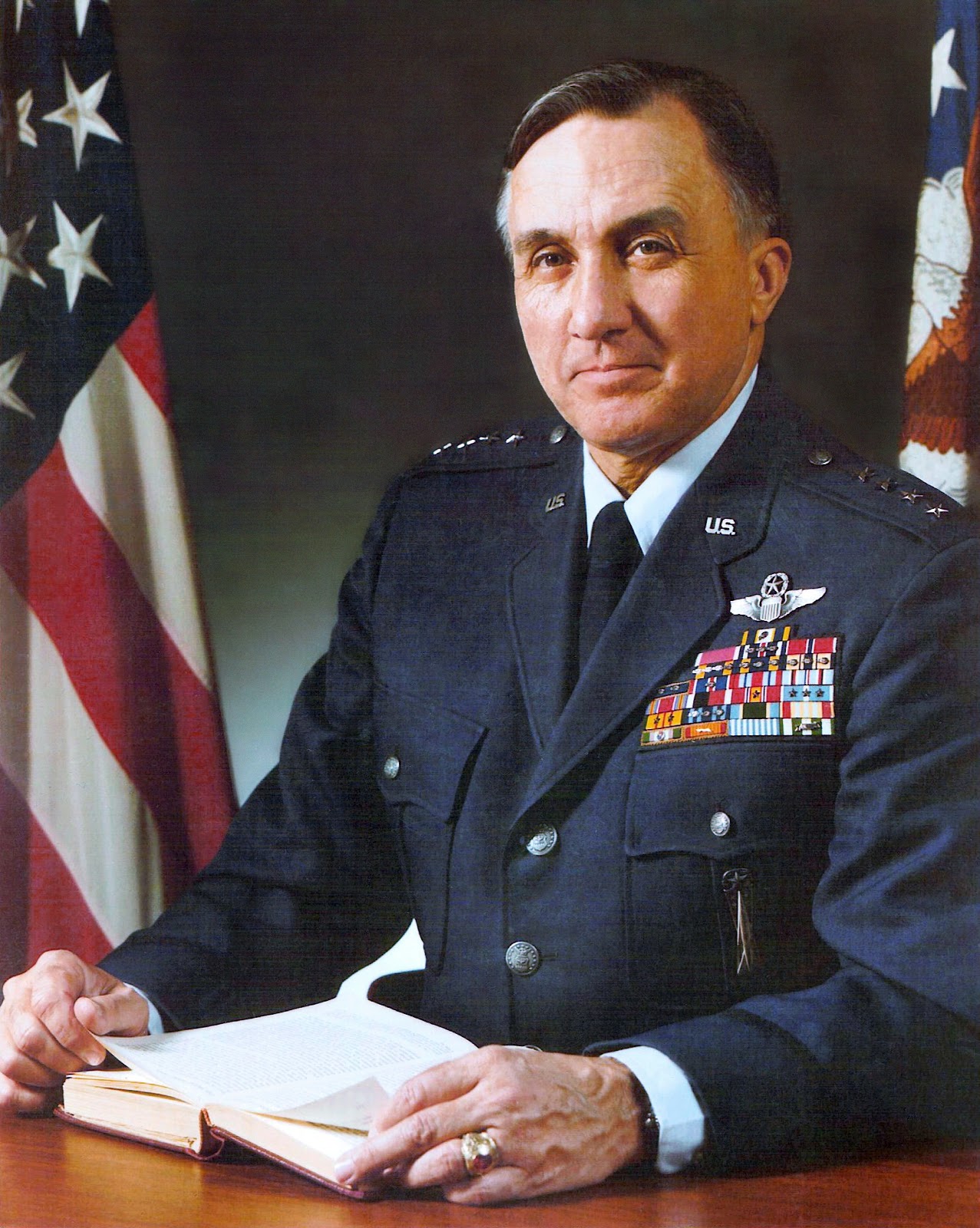
Major General Bryce Poe II before retirement
Once he landed, the film was developed by one warrant officer and Poe himself did all the photo interpretation work and then hand carried the imagery to brief General MacArthur as well as General Stratemeyer and his FEAF deputy. It was a remarkable degree of authority given to a 1st lieutenant! Stratemeyer felt only barest minimum of individuals needed to be involved in the secret overflights. Bryce Poe rotated back to the United States in January 1951 after making nineteen secret overflights of Chinese and Soviet territory as well as 90 unclassified tactical reconnaissance missions in support of operations in Korea. After Korea, Poe flew as an exchange pilot with several NATO nations before serving as the executive officer to General Bernard Schriever at the Western Development Division where ICBM development was taking place. He then served as an Atlas ICBM missile officer with the Strategic Air Command before returning to reconnaissance in time for Vietnam. As vice-commander of the 460th Tactical Reconnaissance Wing, he flew 213 recon missions in the RF-4C Phantom in Vietnam. He later commanded the 26th Tactical Reconnaissance Wing with the United States Air Forces Europe. Following his USAFE assignments, he assumed command positions with the Ogden Air Logistics Center in Utah and at Wright Patterson AFB in Ohio. He retired in 1981 as a very decorated four-star general and veteran of two wars, flying west on 20 November 2000.
Sources: Shadow Flights: America’s Secret Air War Against the Soviet Union by Curtis Peebles. Presidio Press, 2000, pp 4-39
Retired pilot Jay Laclan shares his reflection on a building that used to be the epicenter of pilot culture on Friday nights. It was a place to drink, talk with your hands, grapple, and eat dinner with your spouse or chat with a few attractive ladies…sometimes all of the above. Today, clubs are a mere shell of what they used to be. They are typically colocated with the enlisted club. Few pilots shell out the money to join. The drink specials are lame, the food is ‘meh’. And nearly every pilot is afraid to throw back more than a single beer for fear of getting involved in an alcohol related incident.
It’s a different era today. Not all changes were bad. It’s a good thing that men and women can both serve today. It’s a good thing that women are more respected and healthy lifestyles are encouraged. But you’d be hard pressed to find flying squadrons as close-knit today as they were back then. Here’s Jay’s reflection and look back at the ‘good ‘ole days’ at the Club.
Within one twenty-year military generation, the military clubs for separate ranks faded into consolidated messes that could barely keep themselves in business. While clubs at the more isolated bases struggled on and broke even due to lack of competition, those in larger metropolitan areas made so little money that other recreational centers, such as the golf course and recreational rental stores, had to support the clubs.
This degradation happened for two primary reasons—the OWCs and the social shift encouraged and embraced by the military services—which militated against smoking and drinking.
When I ventured into the Big Spring, TX, Webb AFB club during my first weekend in town, the O’Club pulsed with activity in all areas—the bar, the lounge, the restaurant, and, most enticingly for me, the stag bar, the nemesis for the OWC.
The stag bar, the smallest yet most densely populated club area, operated under the rule that women were not allowed through the door and were not allowed even to contact their husbands or boyfriends within the bar. If any wife should try to contact one of the pilots barricaded within the premises, that pilot would have to buy the bar an expensive round of drinks. This attempt at contact would be obvious in these days before cell phones, because the call had to come in through the bar phone answered by the bartender.
While pilots drank, sang, laughed, postured, and performed simulated aerial maneuvers with their hands inside the stag bar, their significant others fumed outside the door. Dinner reservations were missed, babysitters earned overtime, and women grew increasingly frustrated waiting for mates who had seemingly forgotten they were there.
Gogo girls were common at O’club.
I often found myself placed uncomfortably in the middle of this angst as a single officer. When I would venture out of the stag bar to see how long I had to wait to be seated for dinner, one or more wives would accost me sternly, instructing me to tell captain so-and-so to “get his ass out of there right now” because their name had been called for seating.
I would assure them I would do so and would then disappear back into the forbidden zone with the message.
Often, captain so-and-so would be in the middle of a self-promoting recitation of one of his incredible flying exploits and would not want to be bothered by a lowly student delivering an unwanted message. This also gave the captain a chance to display to his peers that no woman could tell him what to do!
“Tell her I’ll be out when I’m good and ready!” he would slur, to the cheers of his compatriots.
I could not deliver this message as dictated, of course. I would tell the wife he was in the middle of a professional discussion and would be out soon. This would only work once, however. The next round trip would be somewhat terser. I would only hold up my hands in self-defense and tell the wife that I had told him and there was little more I could do.
This pilot safe zone in the stag bar allowed the O’Club to break even all by itself. Liquor of all descriptions flowed freely and profitably for the bar from four in the afternoon until well after midnight. The (eventual) spillover to the restaurant allowed clubs to prosper.
Go-go girls provided the final straw for the OWC. I had first encountered this phenomenon at the OTS bar in San Antonio just weeks before. As the band played on a large stage before several hundred officer trainees and their instructors, two young women danced the frug, the watusi, and the twist on circular pedestals in front of the stage. As the girls pranced and twisted in their bikinis, tassels and fringe swaying and thrashing about, males who had suffered significant sensory deprivation for weeks and months at the school would surround them, offering rapt attention to their efforts. As I stood within easy reach of one of these sensuously writhing females, I had to use the utmost self-control to avoid doing something truly unfortunate.
The OWC finally went to war on go-go girls and stag bars. The hands that rocked the cradle could also rock the male establishment, starting with the wing commander’s wife pulling the chain on the commander. No more impenetrable safe zones for drunken pilots, no more go-go girls. Nirvana, from the pilot’s perspective, denied!”
***
(Excerpt from “Flying the Line, an Air Force Pilot’s Journey,” book one. Book series web site: saigon-tea.com.)
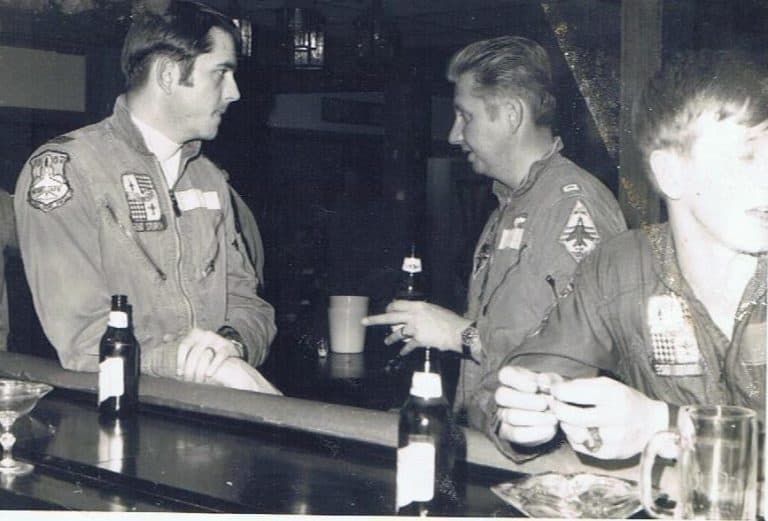
Photo of the Webb AFB stag bar in 1970 and Go-go girls.
The Navy Wanted You to Know All About Pax River After Watching the Film “Test Port.” Who Served There?
When the film “Testport” was produced in 1971, Naval Air Station (NAS) Patuxent River, or Pax River, had been in operation since 1943. Pax River is located in St. Mary’s County, Maryland, where the waters of the Patuxent River and Chesapeake Bay meet. Located about 90 miles from Norfolk, Virginia, and 65 miles south of the nation’s capital, the 14,500-acre complex includes the main air station in Lexington Park, Webster Outlying Field in St. Inigoes, Navy Recreation Center Solomons in Calvert County, and Bloodsworth Island Range in the Chesapeake Bay. Enjoy this retrospective about Pax River uploaded to YouTube by AIRBOYD.
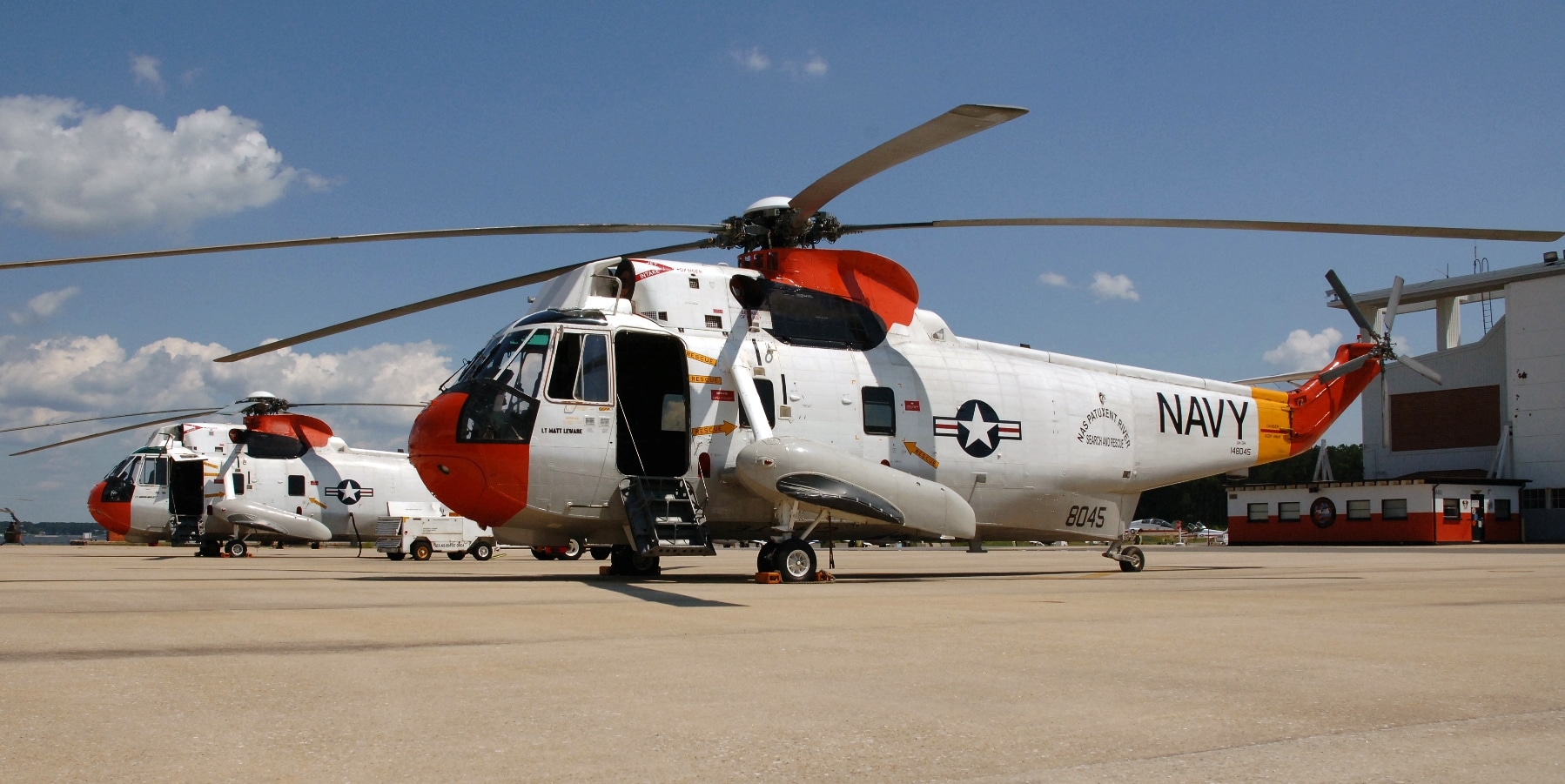
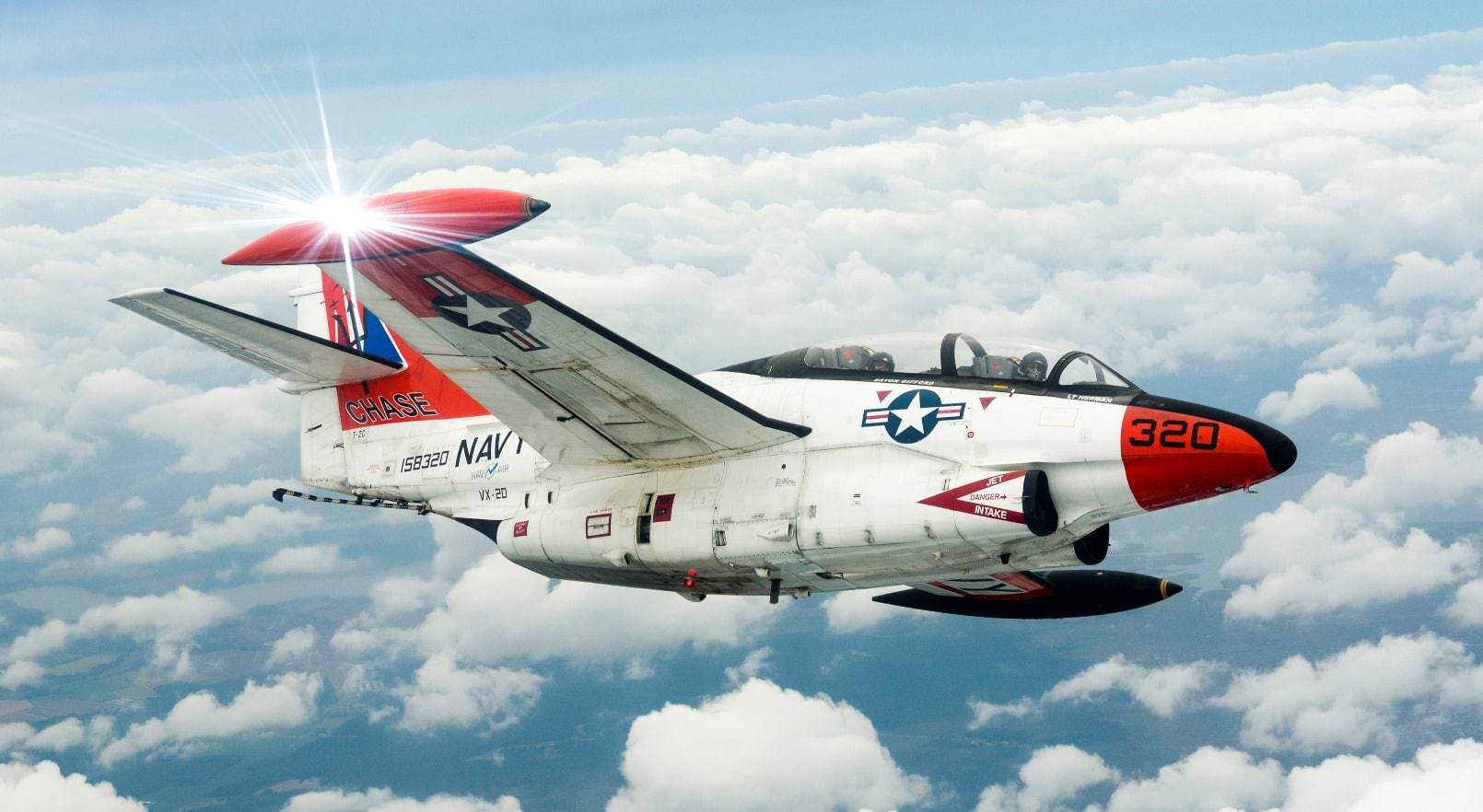
Pax River base flight Sikorsky SH-3 Sea Kings. Official US Navy photograph
Still Keeping the Leading Edge Sharp
“Where the future of Naval Aviation begins” is Pax River’s slogan. Today, Pax is host to the Naval Air Systems Command (NAVAIR) and Naval Air Warfare Center Aircraft Division (NAWCAD) headquarters along with some 50 other tenant activities. The U.S. Naval Test Pilot School (USNTPS), Air Test and Evaluation Squadron ONE (VX-1) Pioneers, Air Test and Evaluation Squadron TWO ZERO (VX-20) Force, Air Test and Evaluation Squadron TWO ONE (HX-21) Blackjack, Air Test and Evaluation Squadron TWO THREE (VX-23) Salty Dogs, and Scientific Development Squadron ONE (VSX-1) Warlocks all call Pax River home.
Also featured in the film is the Tactical Support Center for submarine surveillance. Astronaut and USNTPS graduate Pete Conrad narrates a portion of the film. Appearing in supporting roles are the United States Coast Guard Cutter Gresham (WAVP-387), the Gearing-class destroyer USS Gearing (DD-710), and plenty of the thousands of support personnel who made, and still make today, a place like Pax River function.
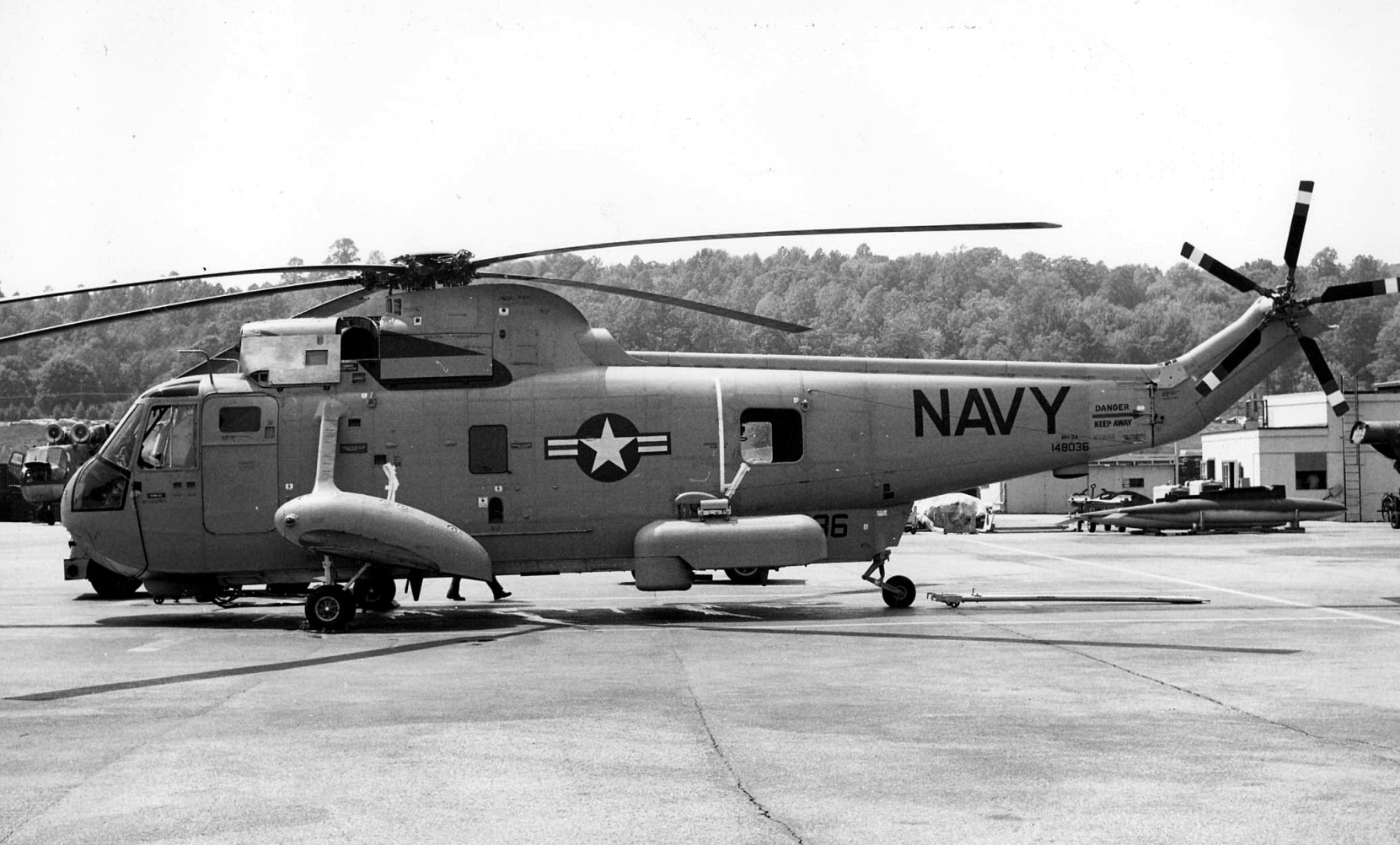
Sikorsky HH-3A CSAR Sea King. Official US Navy photograph
Did You Catch It? Did You Hear It?
Here’s a detail you might have missed. The helicopter that executes the water pickup of the simulated downed pilot is a HH-3A Combat Search and Rescue (CSAR) Sea King. Isn’t it funny how so often helicopter footage is accompanied by the wrong audio?
The much anticipated deal between Emirates Airlines and Airbus fell apart last week. Emirates was supposed to have ordered additional A380 jumbo jets. The deal, supposedly solidified only with a handshake, had been planned as a highlight for the Dubai Air Show.
With a wink and a promise, the expectation was that Emirates would order between 36 and 38 of the Airbus jumbo jets with a price tag of between $16 to $18 billion. Even the Associated Press was reporting, “The order is expected to be one of the highlights of the November 12 to 16 event (Dubai Air Show).”
Airbus was definitely courting Emirates. Earlier this month in Hamburg, Germany Airbus SE made a grand gesture of handing over the 100th A380 to Emirates. But just a few days later amidst all the pomp and circumstance, the bubble burst when Emirates decided instead to do $15 billion dollars worth of business with Airbus’ arch rival, Boeing.
Emirates unexpected decision to back away has shaken confidence in the relationships between the plane manufacturers and their main clients. Airbus CEO Tom Enders put it succinctly, explaining the interdependency this way, “Emirates has become synonymous with the A380, and the A380 with Emirates.” The ties are so close that the flagship Airbus 380 model may not survive without UAE support. Emirates represents more than half of the A380’s whole order book. Both Emirates and Airbus officials have refused to publicly comment.
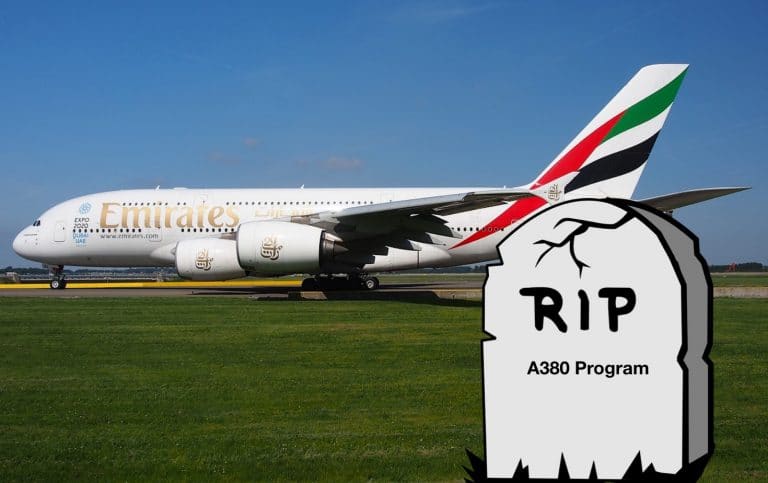
Without Emirates, the program is dead
Airbus clearly needed the plan for additional orders to move forward to ease backlog and production concerns. Airbus sales chief John Leahy, known for shrewd sales pitches, had tied his retirement to the pending sale. But in just a couple of days time, the deal turned to dust when UAE voiced concerns about Airbus’ commitment to continue developing the A380 and reluctance to be left as the biggest operator of a jumbo jet that had reached the end of its production lifecycle.
The breakdown of an agreement was multifaceted. Emirates asked Airbus to do a buy back of some older jets. Engines were an additional concern for the order. Emirates also had no solid go-forward plan in place with Rolls-Royce, who makes the massive engines. In 2015, Rolls-Royce won its largest order contract ever with Emirates to power 50 A380s. To win Emirates’ business and displace the U.S. Engine Alliance, Rolls-Royce offered ambitious fuel consumption targets and maintenance agreements. Under CEO Warren East, Rolls began to retrench from their promise. They also began to question an earlier promise for an upgrade to the Trent 900 turbine that powers the A380. To add more complexity to the matter, Engine Alliance production of their A380 engine is scheduled to end in 2018. The future of that partnership depends on iffy funding agreements with parent companies General Electric and Pratt & Whitney. If Rolls Royce does not do engine upgrade as promised and Engine Alliance evaporates, there is no viable engine option for the massive airliner.
Emirates went smaller instead
Emirates ended up ordering billions of dollars worth of aircraft at Dubai but not the A380 as promised. Instead, smaller aircraft such as the 787, variants of the Airbus A320NEO and Boeing 737 MAX were ordered. Softening the blow somewhat for Airbus, a U.S. buyer inked a deal with Airbus a few days ago for 430 narrow body aircraft.
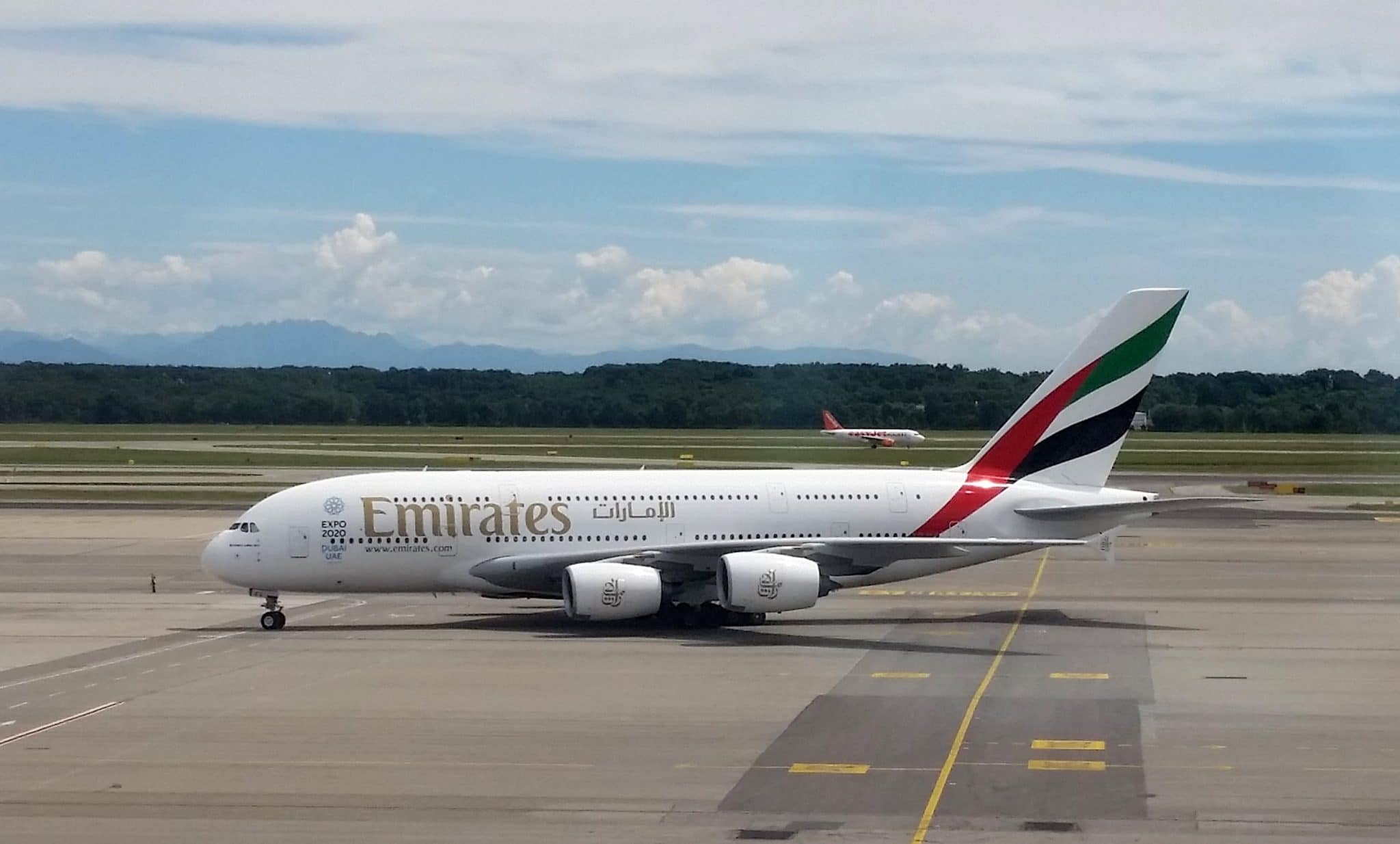
An Emirates Airbus A380 Jumbo Jet. Photo Tanweer Morshed (CC BY-SA 4.0)
The Last Gasp for the jumbo
Meantime Airbus COO Fabrice Bregier told Bloomberg TV that there is still a small chance the program could be rescued by the end of the year. For the first time, Bregier spoke about the size and scale of the decision now facing Airbus and said any future deal with Emirates would require a solid pledge by the carrier to stand by the A380 and may even include upgrades to the jumbo jet in the future, stating, “If we finalize it we will be committed to producing this aircraft, I believe, for at least for the next 10 years.”
Editors note: An earlier version of the story incorrectly described the engine choices that Emirates faced with a new A380 order. The latest version of the story has been corrected to reflect the two options.
The training film “Target Nevada” was produced by the United States Air Force (USAF) Air Photographic and Charting Service along with the Lookout Mountain Laboratory in Hollywood. The film depicts the USAF’s role in the Atomic Energy Commission’s Continental Test Program at the Nevada Test Site during the early 1950s. The film was uploaded to YouTube by atomcentral.
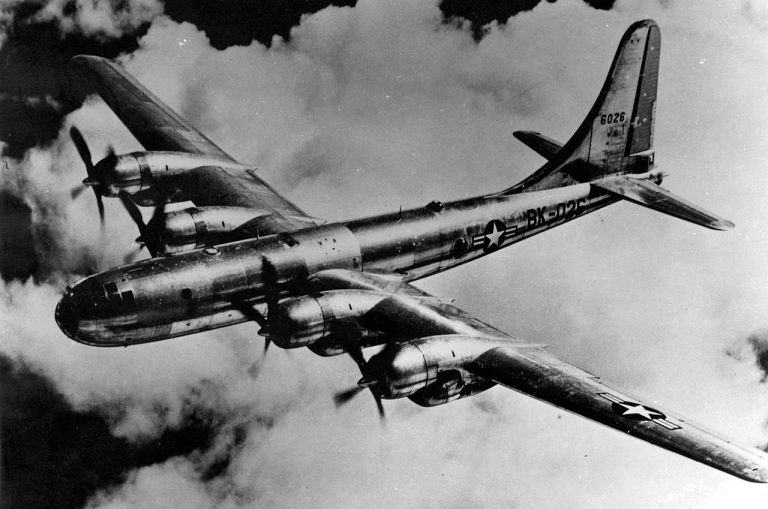
On January 27th 1951, a Boeing B-50D Superfortress based out of Kirtland Air Force Base (AFB) in New Mexico released Ranger Able from approximately 20,000 feet above Frenchman Flat. The weapon detonated at about 1,000 feet altitude. Ranger Able’s nominal yield was one kiloton, which was the smallest yield produced by any nuclear detonation thus far.
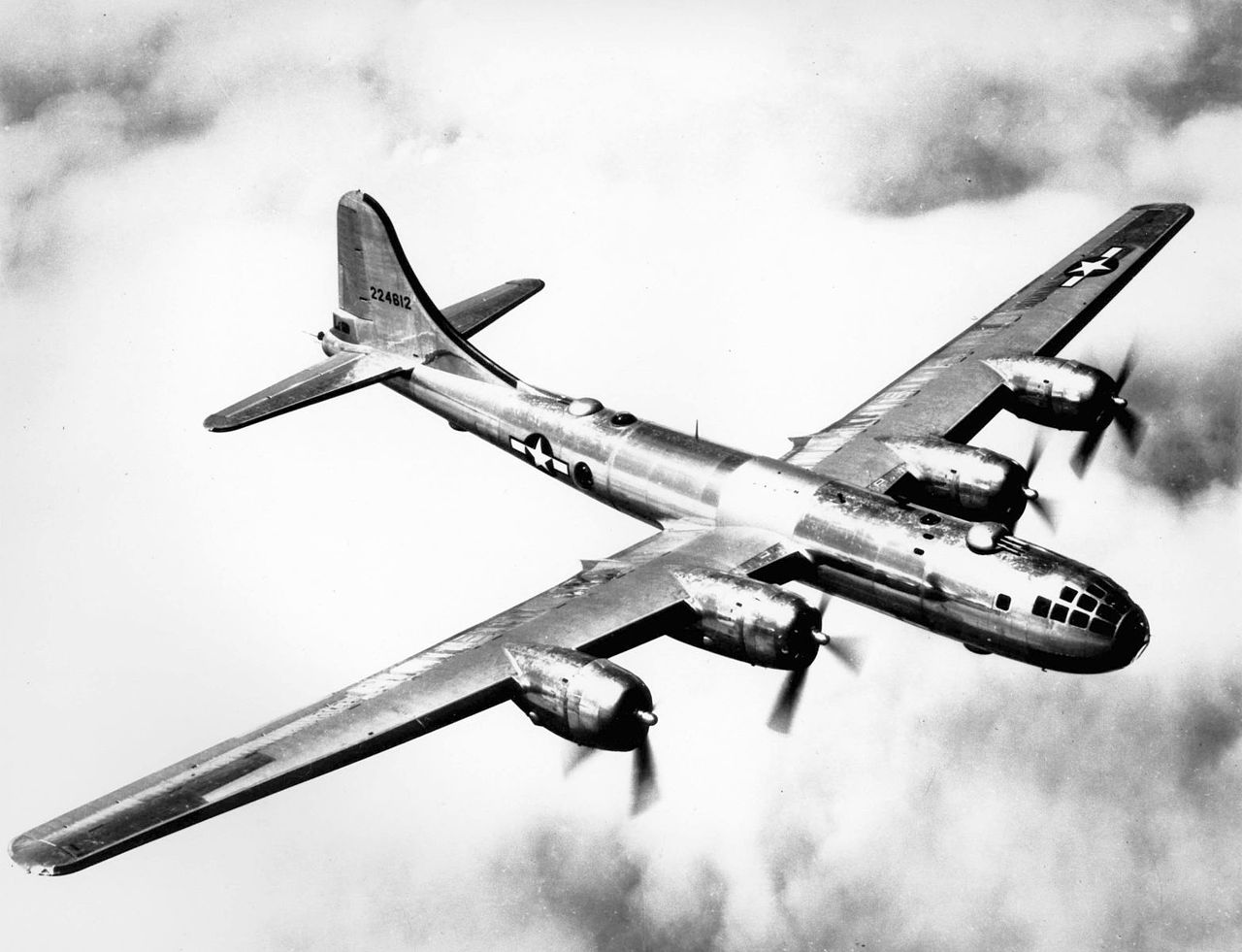
Boeing B-29. Official US Air Force photograph
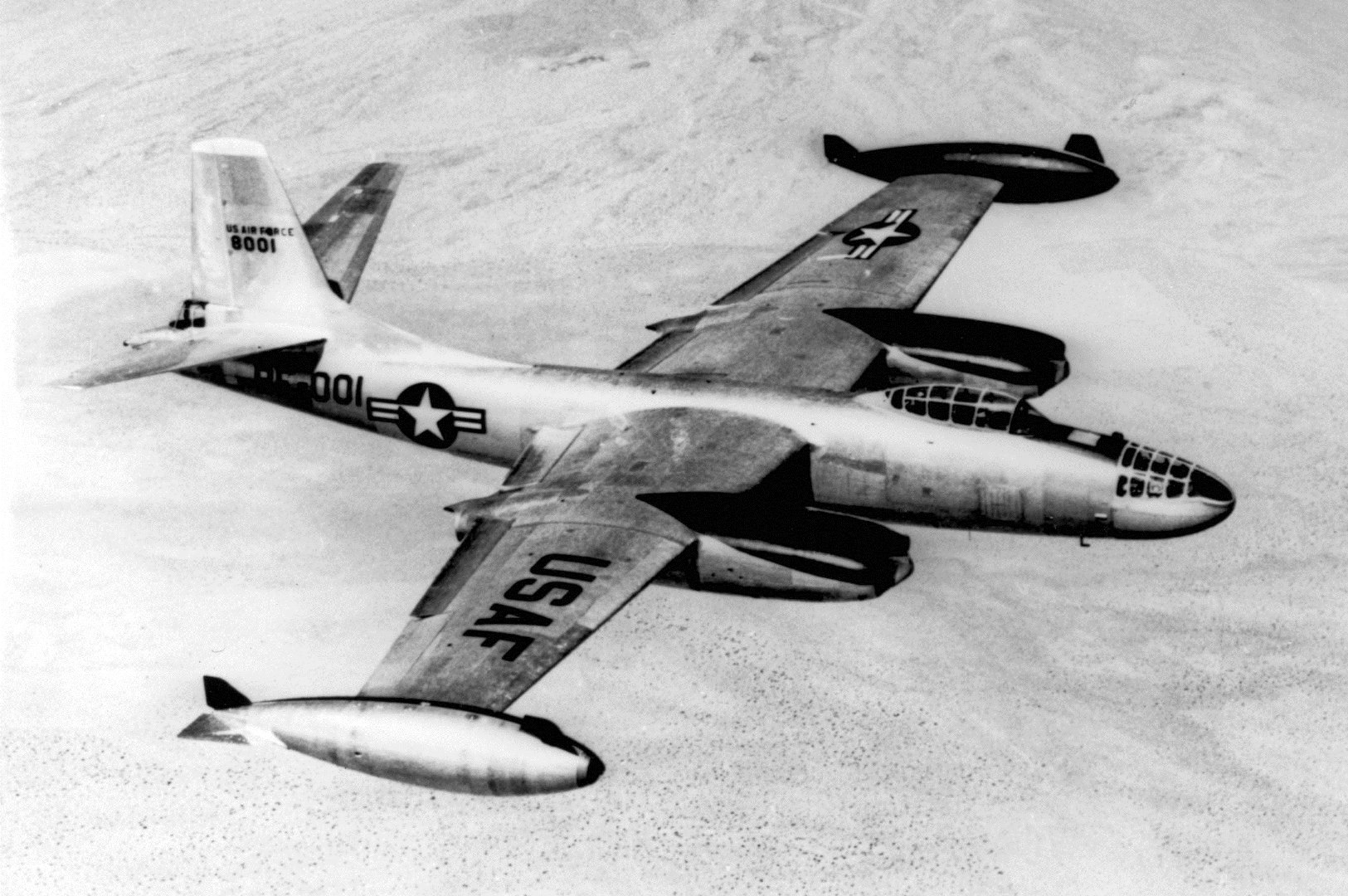
Over the forty years that followed, the AEC and the USAF used the Nevada Test Site for 1,021 of the 1,149 “test shots” detonated by the United States during the Cold War. Air Force aircraft involved in the testing and support activities shown in the film include Boeing B-29 Superfortress particle sniffers, B-50 Superfortress delivery bombers, and B-47 Stratojet bombers, Convair B-36 Peacemaker bombers, North American B-45 Tornado bombers, Republic F-84 Thunderjet and North American F-86 Sabre fighters, Douglas C-47 Skytrain particle sniffer and C-54 Skymaster transports, and even some very rare (13 total) YH-12B helicopters built by Bell.
North American B-45 Tornado. Official US Air Force photograph
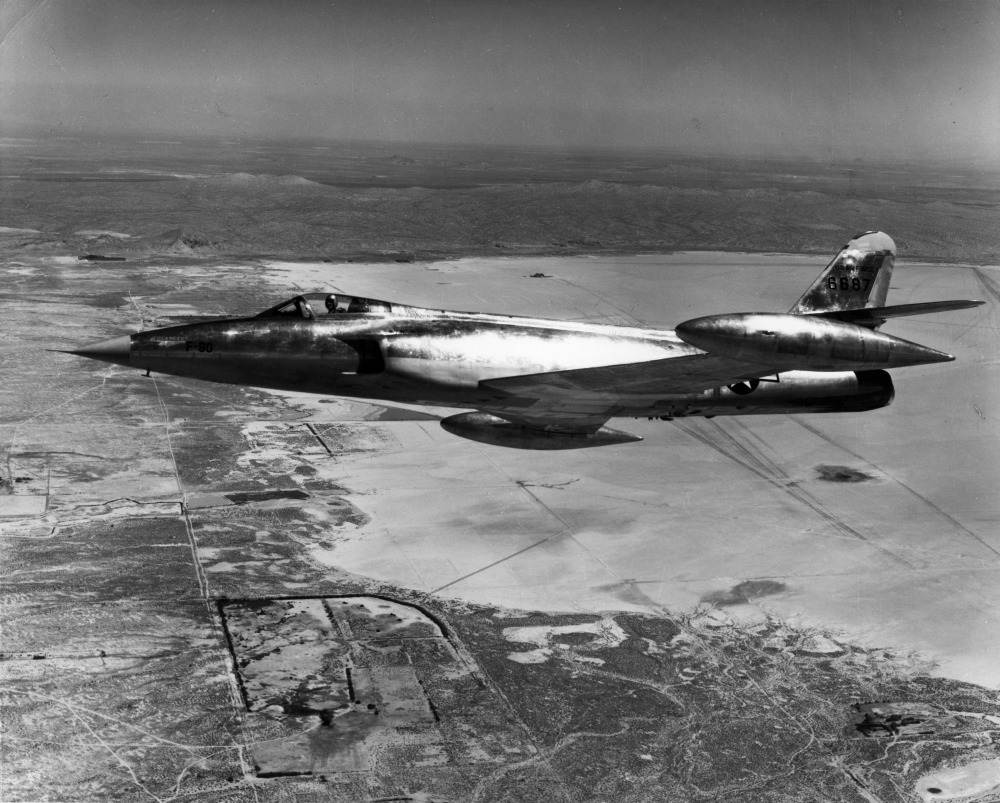
The film also shows some of the aircraft used to measure the effects of the blast on aircraft located in the blast and heat zones. It’s a bit hard to watch if you’re a warbird lover, because Boeing B-17 Flying Fortress and B-29 and B-45 bombers, Republic P-47 Thunderbolt and F-86 fighters, and one of the only two Lockheed XF-90 prototype jet fighters ever built are seated too close to the detonations for comfort. Or survival, although the XF-90 that appeared in the film (46-0688), though badly damaged, is now at the National Museum of the United States Air Force in Dayton.
UPDATE: The Navy has now identified the three missing sailors. Read the story here.
UPDATE:
The US Navy has ended its rescue efforts for three personnel missing since Wednesday November 22nd when the Grumman C-2A(R) Greyhound in which they were flying crashed in the Pacific Ocean while flying to the aircraft carrier USS Ronald Reagan (CVN-76). According to Navy Times, the crash of the VRC-30 Providers Detachment 5 We Deliver COD aircraft was the first fatal C-2 crash in 40 years. The last fatal C-2A crash was in 1973, when a Greyhound lost power to both engines and crashed into the Mediterranean Sea, killing seven of the 10 on board the aircraft.
“Our thoughts and prayers are with our lost shipmates and their families,” Rear Adm. Marc Dalton, Commander, Task Force 70, said in a Thursday news release. “As difficult as this is, we are thankful for the rapid and effective response that led to the rescue of eight of our shipmates, and I appreciate the professionalism and dedication shown by all who participated in the search efforts.”
ORIGINAL STORY:
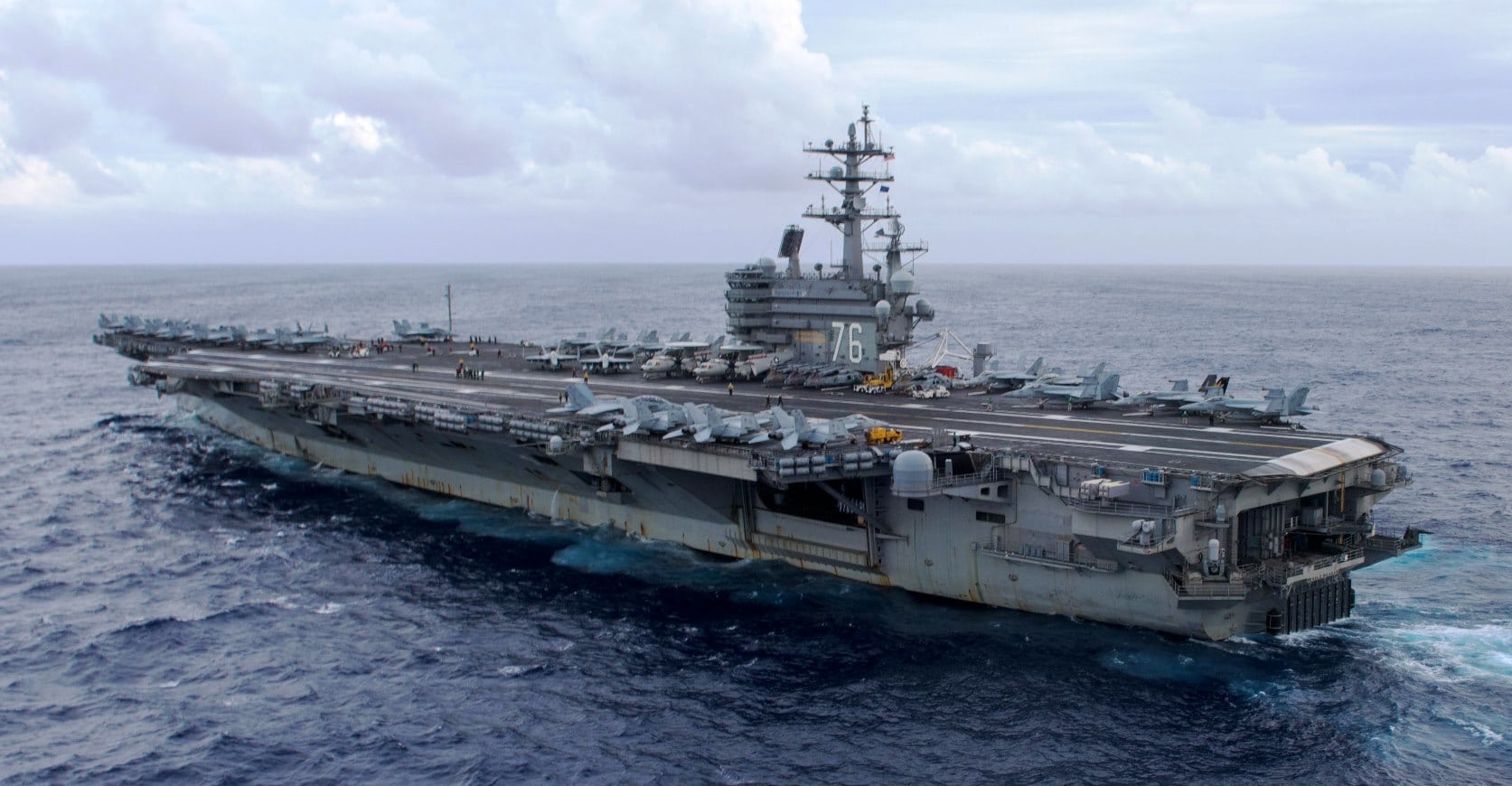
On November 22nd 2017 at approximately 1523 local time a VRC-30 Providers Detachment 5 We Deliver Grumman C-2A(R) Greyhound carrier onboard delivery (COD) aircraft crashed in the ocean roughly 500 miles southeast of Okinawa. The COD was en route from Marine Corps Air Station (MCAS) Iwakuni to the aircraft carrier USS Ronald Reagan (CVN-76) operating in the Philippine Sea. The COD was carrying a total of 11 passengers and crew, eight of whom have been rescued and are receiving medical care aboard the Reagan.
Official US Navy photograph
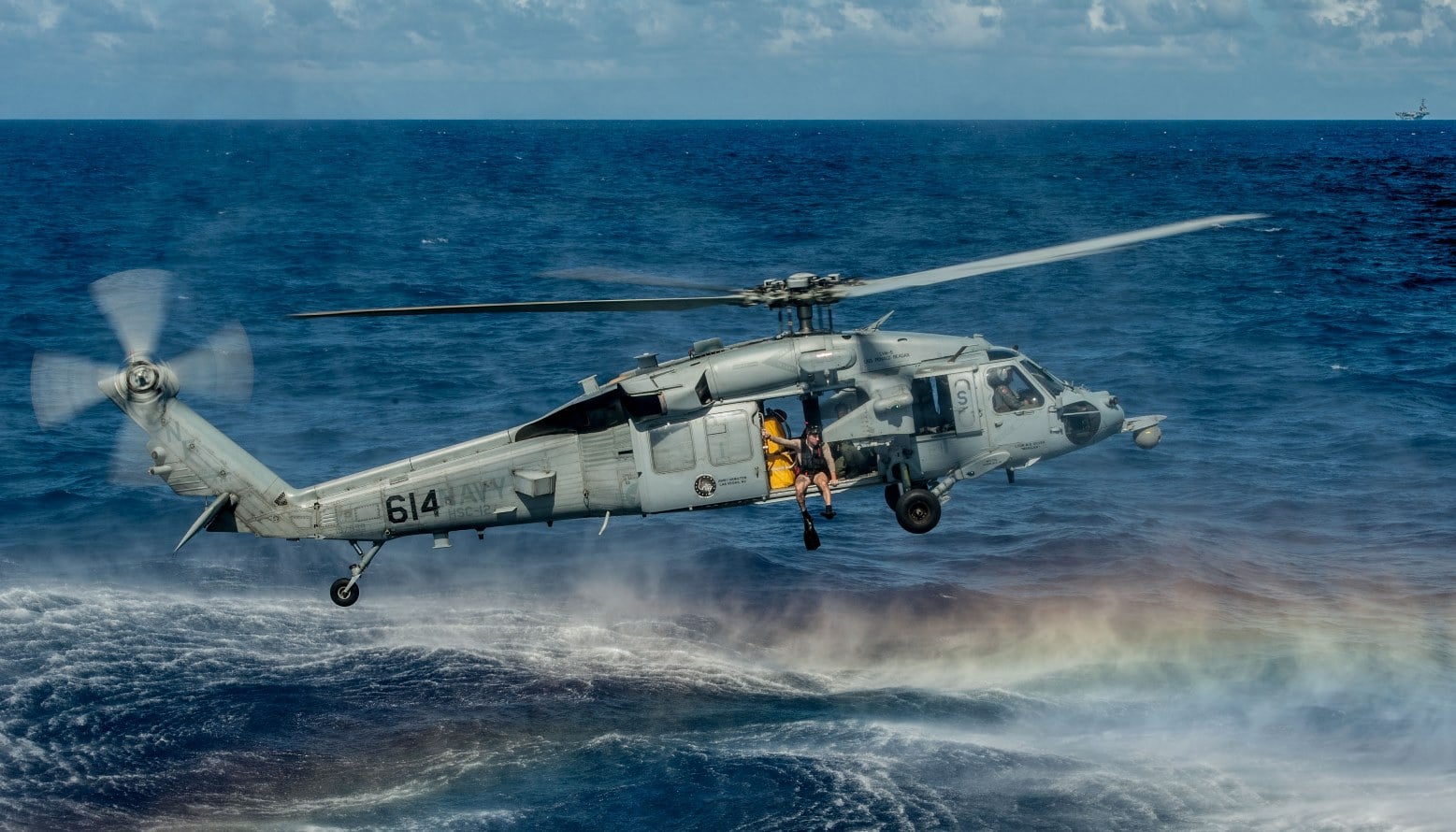
Search and rescue (SAR) efforts are ongoing in the area. HSC-12 Golden Falcons Sikorsky MH-60S Seahawk helicopters from the Reagan rescued the survivors located so far. The Reagan and her Carrier Strike Group 5 are currently operating with the Japanese Maritime Self-Defense Force (JMSDF) Helicopter Carrier JS Kaga (DDH 184) and Hatakaze-class destroyer JS Shimakaze (DDG 172). The Japanese ships are assisting in the SAR efforts.
Official US Navy photograph
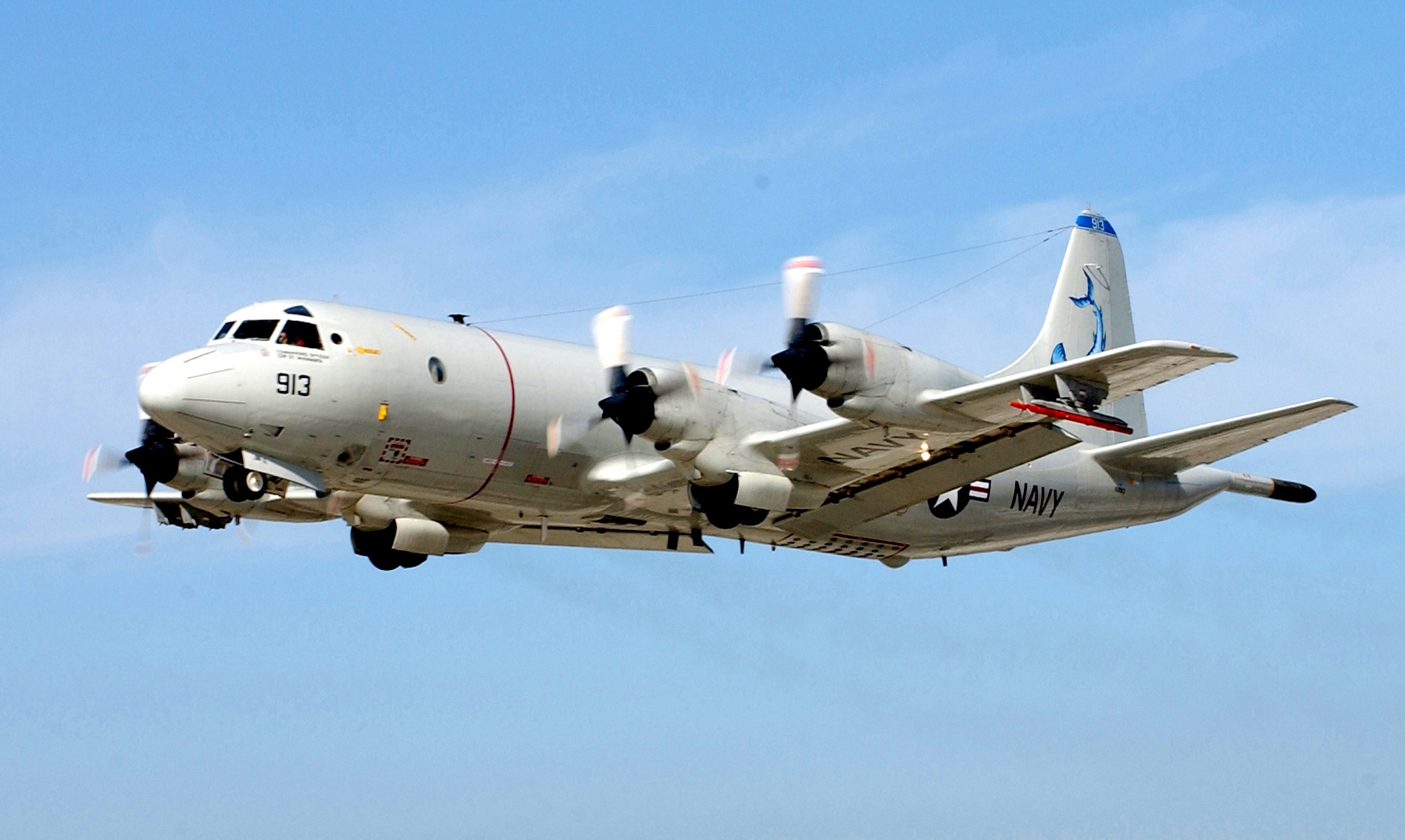
Additional US Navy assets assisting in the SAR efforts include the Arleigh Burke class guided-missile destroyer USS Stethem (DDG 63), HSM-77 Saberhawks MH-60R Seahawk helicopters from Carrier Air Wing FIVE (CVW-5) aboard the Reagan, VP-8 Fighting Tigers Boeing P-8 Poseidon maritime patrol aircraft, and VP-40 Fighting Marlins Lockheed P-3C Orion maritime patrol aircraft. The cause of the mishap has not yet been determined but an investigation is underway. We will update this story as more information becomes available.
Delta Air Lines giveth. And Delta Air Lines taketh away.
You could call it robbing Peter to pay Paul, but both international and domestic routes are affected by recent decisions made by the Atlanta-based airline.
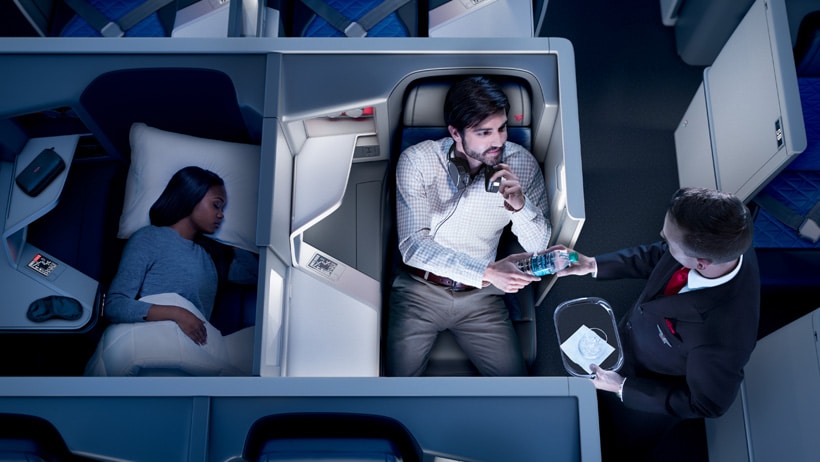
Delta’s premium Delta One seat features a full recline option and additional space. Photo: Delta
Delta is adding Delta One service to routes between New York and Las Vegas, Seattle and San Diego. This premium business class option includes perks like flat beds and various enhancements and means there are a total of seven domestic routes that now offer Delta One service.
Nice. But where will these internationally configured 757s that fly these routes come from?
The Smooth Operator
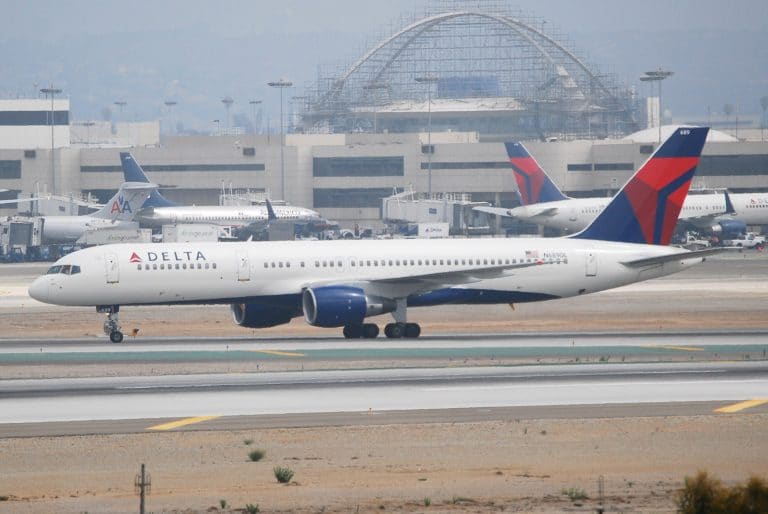
Lately, Delta has been flying more wide body aircraft between LA and New York, leading observers to wonder how the carrier has enough planes to cover all the new Delta One routes. So Delta, being the smooth operator that it is, has announced that they will be flying configured 757-200s on several transatlantic flights instead of the more luxurious wide body airplanes, which will now be deployed domestically on the Delta One routes.
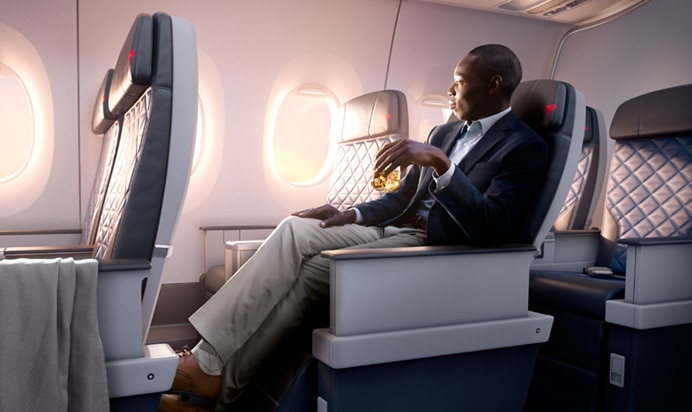
This is a bit of a downgrade for passengers traveling abroad, since the 757-200s narrow bodies have recliner first class seats situated at the front of the plane rather than full flat seats. This equates to a premium economy class (Premium Select) but is by no means equivalent to the typical business class offering. Essentially this means business class is being replaced by Premium Select on these transatlantic routes.
Delta Airlines Premium Select seats feature a reclining seat and more legroom but lack the space and recline upgrades that some Delta premium travelers have become accustom to on long-haul flights. Photo: Delta Air Lines
Delta provides product parity with Ultra-low cost carriers
As of May 3, 3018 routes affected include New York JFK to Reykjavik, Iceland and New York JFK to Shannon, Ireland; as well as New York JFK to Ponta Delgada, Portugal beginning May 24, 2018. Competition has been increasing between domestic carriers such as Delta and European budget airlines like Icelandair and WOW, who operate nonstop routes to Reykjavik. The lower-cost European players offer a business class option that resembles domestic first class, which is why one could argue that Delta’s offering makes sense since it is comparable to what is currently on offer by Icelandair and WOW. But to be truly competitive on these routes, Delta will likely have to slash prices. Flying the narrow bodies will allow Delta to sell seats at a lower price point but the lack of a premium option might deter higher fare business traffic.
Additionally, some transatlantic markets cater more to leisure travelers, so it seems as if Delta made the decision at least partially based on the fact that there is more premium demand on domestic routes, so offering the business class option with flat beds just makes more sense here. Just keep in mind that if you fly any of the above-mentioned international flights, starting in May of next year, you will be limited to the Premium Select option.
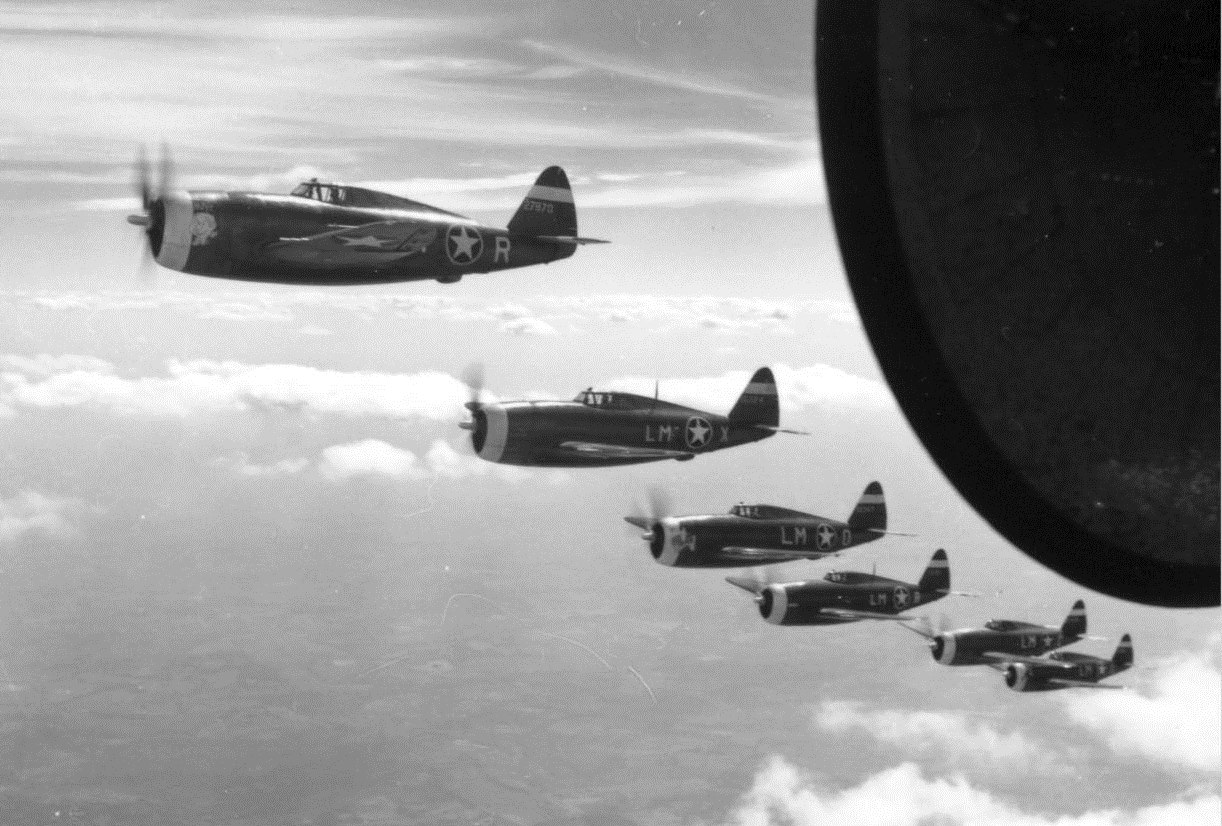
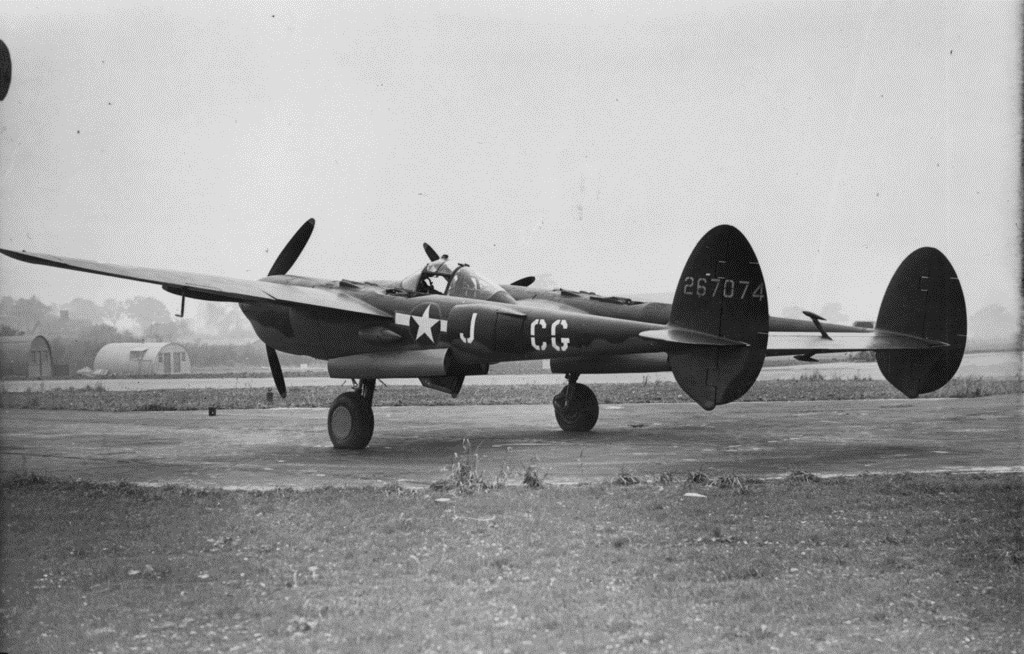
The film “The Thunderbolts: Ramrod to Emden” portrays the effort and determination that went into a typical long range escort mission (known as a ramrod mission) flown by the United States Army Air Corps (USAAC) VIII Fighter Command. The particular mission in the film was flown on October 2nd 1943. The mission planning and preparation process, beginning with the call from VIII Air Force Headquarters the previous day and moving forward all the way through field orders and preparation of the Republic P-47D Thunderbolts and Lockheed P-38H Lightnings that will fly the mission, is depicted in the film. The film was uploaded to YouTube by airailimages.
62nd Fighter Squadron P-47D Thunderbolts. Official US Air Force photograph
The film also includes a smattering of combat footage and the return of the fighter groups to their bases in England. The P-47Ds appearing in the film belong to the 334th, 335th, and 336th Fighter Squadrons of the 4th Fighter Group Flying Eagles and the 61st, 62nd, and 63rd Fighter Squadrons of the 56th Fighter Group Zemke’s Wolfpack. The P-38Hs were assigned to the 38th, 338th, and 343rd Fighter Squadrons of the 55th Fighter Group Fightin’ 55th. Boeing B-17 Flying Fortress bombers appearing in the film belonged to the 95th and 96th Bombardment Groups of the 4th Bombardment Wing. Among the many notable fighter pilots who flew this escort mission were future Thunderbolt aces Robert S. Johnson and Francis S. Gabreski, who was then in command of the 61st Fighter Squadron.
38th Fighter Squadron P-38H Lightning. Official US Air Force photograph
Laughlin Air Force Base cancelled all flying through the Thanksgiving holiday after yesterday’s crash that killed one pilot and injured another. The name of the deceased has not been released yet pending next of kin notifications. Meanwhile, Laughlin AFB’s Wing Commander also released a heartfelt statement this evening about yesterday’s crash. See below:
Words can’t express the true feeling that the members of Team XL feel as we grieve through the loss of one of our teammates. Due to our next of kin notification policies, we are unable to release the name of our fallen Airman at this time, but I can assure you that our number one priority is making sure that our service members and loved ones are taken care of and provided the proper services to get through this difficult time. After extensive reflection, we decided to suspend flying for today and tomorrow, leading into a previously-scheduled holiday break.
The Air Force is a close-knit family, and the loss of one of our own affects all of us. Please take a moment to look to your left and right, and if your teammates are struggling, assist in any way you can. You have resources–our chaplains and mental health professionals stand at the ready to support all of Team XL in this time of sadness.
Our thoughts and prayers are also with the family and friends of our injured pilot who was transported to Val Verde Regional Medical Center. Every day, our pilots take a risk as they step into the cockpit; even though we do not know what each day will bring, we are consistently reminded of the sacrifices that they make to ensure the safety of this great nation and to train the next generation of flying Airmen.
The Air Force is working alongside local authorities on the scene. We are committed to conducting a thorough investigation of the events.
I express my deepest condolences to the family of our fallen pilot from yesterday’s events. Here at Laughlin, we share in the sorrow felt by loved ones, but we must not forget the valuable contribution to our country and the impact on our organization.
I guarantee you we are doing everything we can to investigate what happened and ways to prevent future incidents.
– Colonel Charlie Velino
47th Flying Training Wing, commander
UPDATED: Nov 20, 2017 8:34 PM CT:
Laughlin AFB released an updated statement. One pilot is deceased and another one is injured.
One pilot is dead, and one was transferred to Val Verde Regional Medical Center when an Air Force T-38 Talon assigned here at Laughlin Air Force Base, Texas, crashed at around 4 p.m. today approximately 14 miles northwest of the base near Spur 454 and U.S. 90 in Del Rio, Texas.
Laughlin and local emergency responders are on scene.
The names of the pilots are being withheld for next of kin notification.
A board of officers will convene to investigate the incident.
“Our biggest priority at this time is caring for the family and friends of our Airmen,” said Col. Michelle Pryor, 47th Flying Training Wing vice commander. “We are a close knit family, and when a tragedy like this occurs every member of the U.S. Armed Forces feels it. Our people take top priority, and we are committed to ensuring their safety and security.”
Original Story:
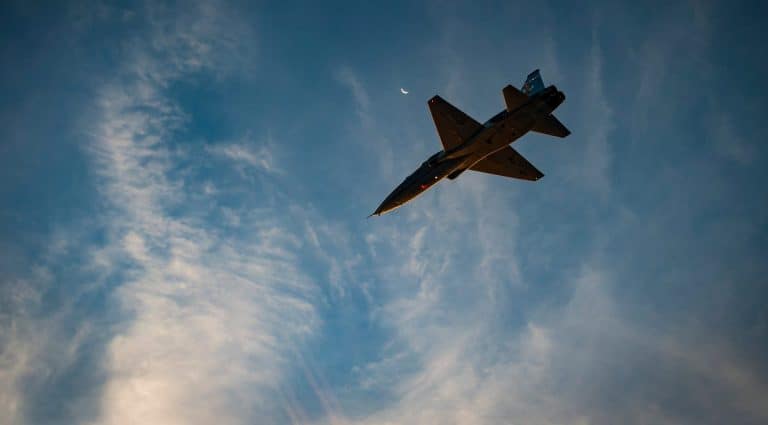
A T-38C aircraft crashed today near Del Rio, Texas. The aircraft was assigned to Laughlin Air Force Base in Del Rio, Texas. There is no word yet on the condition of the pilot or pilots.
Laughlin AFB released the following on Facebook.
The T-38 is a high performance jet aircraft primarily used to train pilots at Undergraduate Pilot Training. Student pilots are typically ‘tracked’ or are selected to fly the T-38 after a six month stint of flying the T-6 primary trainer. T-38 student pilots then usually receive fighter and bomber assignments after graduation. The aircraft first flew in 1959. The jet has undergone extensive avionics modifications over the past decade and is now known as the T-38C. The Air Force is evaluating T-38 replacements under the T-X program.
This is a breaking news story. We will update as we receive more information.
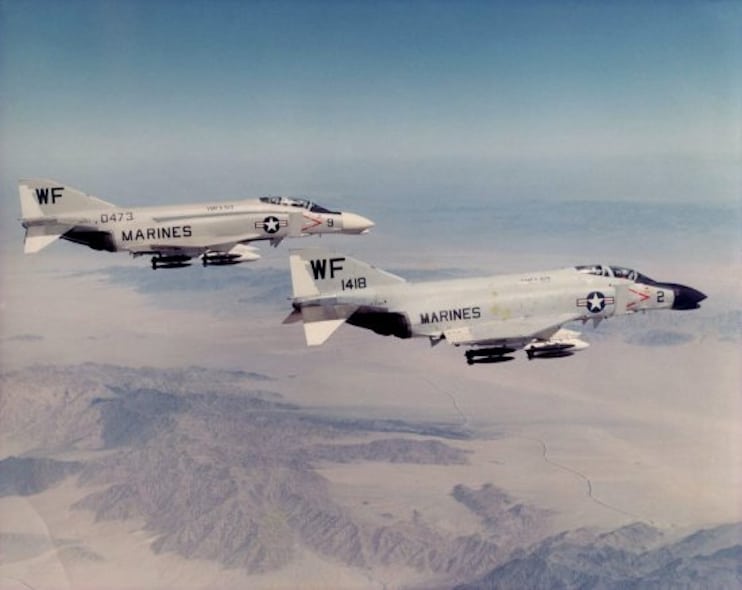
When the US Naval Photographic Center and the United States Marine Corps (USMC) produced the training film “The Golden Challenge” in 1966, Marine Air was already heavily involved in the war in Vietnam. Aviators exiting the training pipelines could expect to deploy to Southeast Asia sometime during their first few years in most operational Marine Corps fighter or attack squadrons. This film, uploaded to YouTube by PeriscopeFilm, follows Second Lieutenant Larry Thornton through the process of becoming a Marine Aviator.
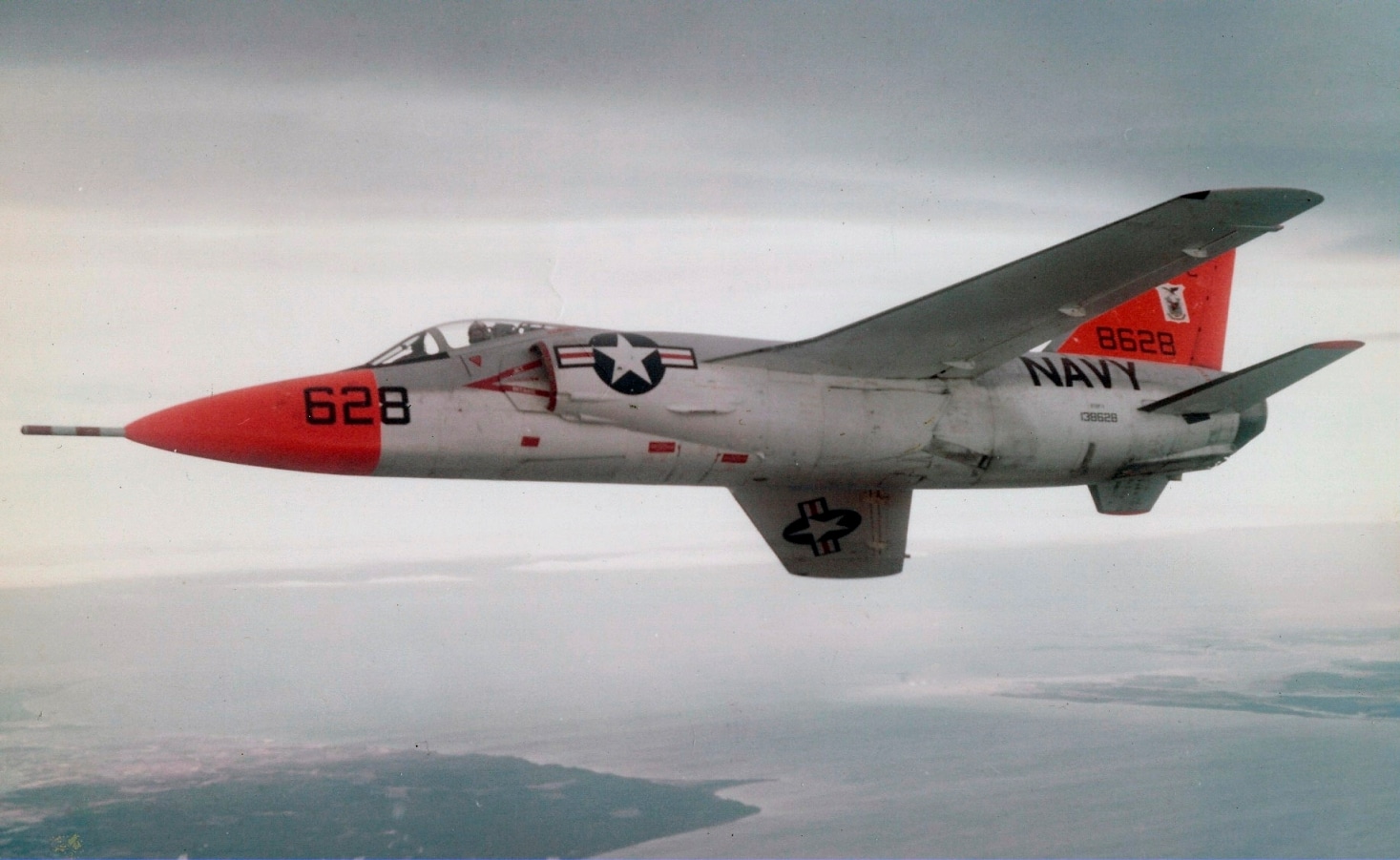
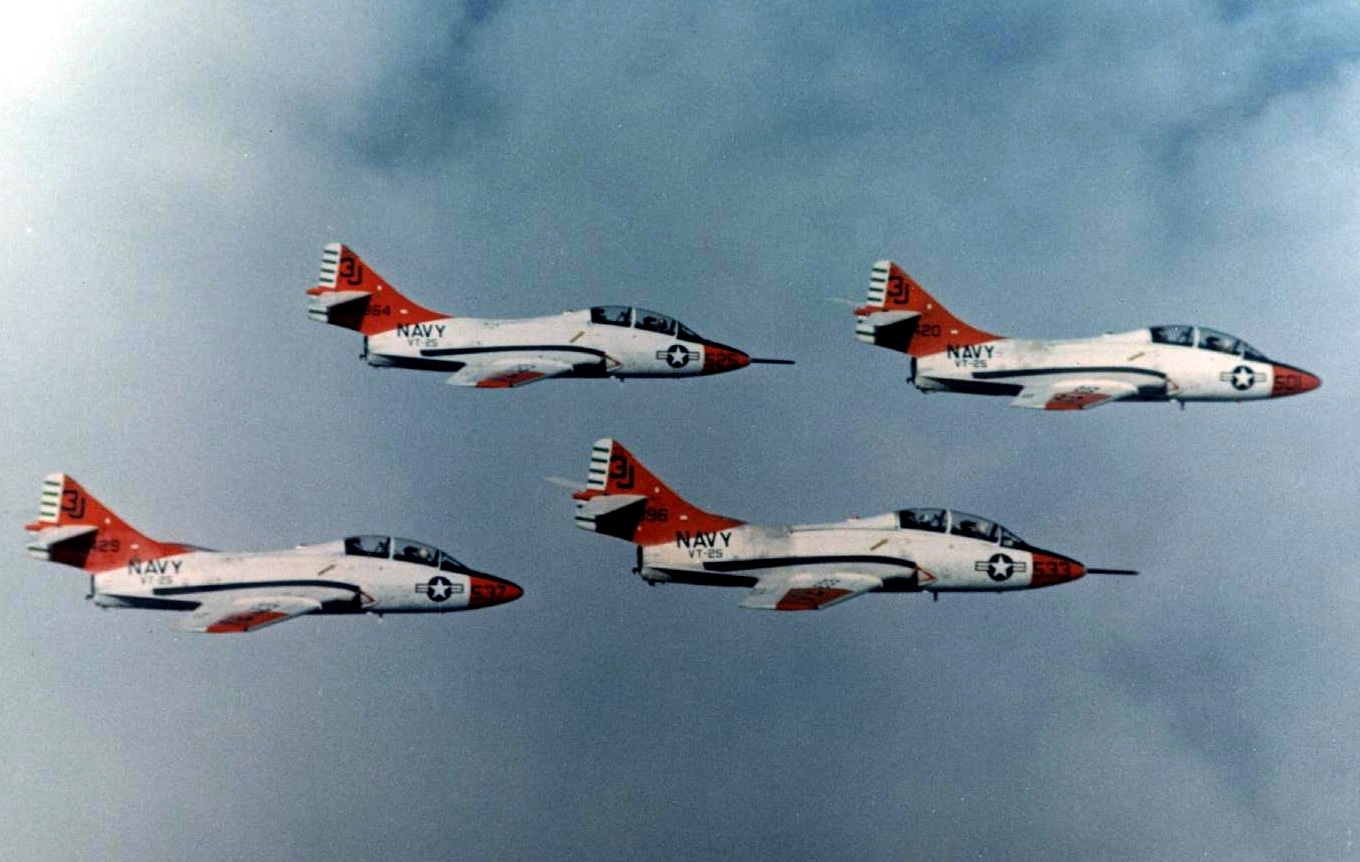
Larry begins his aviation training flying VT-1 Eagles Beechcraft T-34 primary trainers and VT-4 Warbucks Rockwell T-2A Buckeye jets. Thronton then progresses through his training to carrier qualification performed on the carrier USS Lexington (CVS-16). Also seen in the film are Bell HTL and Sikorsky SH-34 Seabat helicopters from HT-8 Eightballers. Grumman F9F-8 Cougar and F11F Tiger jets from Naval Air Station (NAS) Beeville-based VT-25 Cougars represent the next stops in Thornton’s training pipeline.
Official US Marine Corp photograph
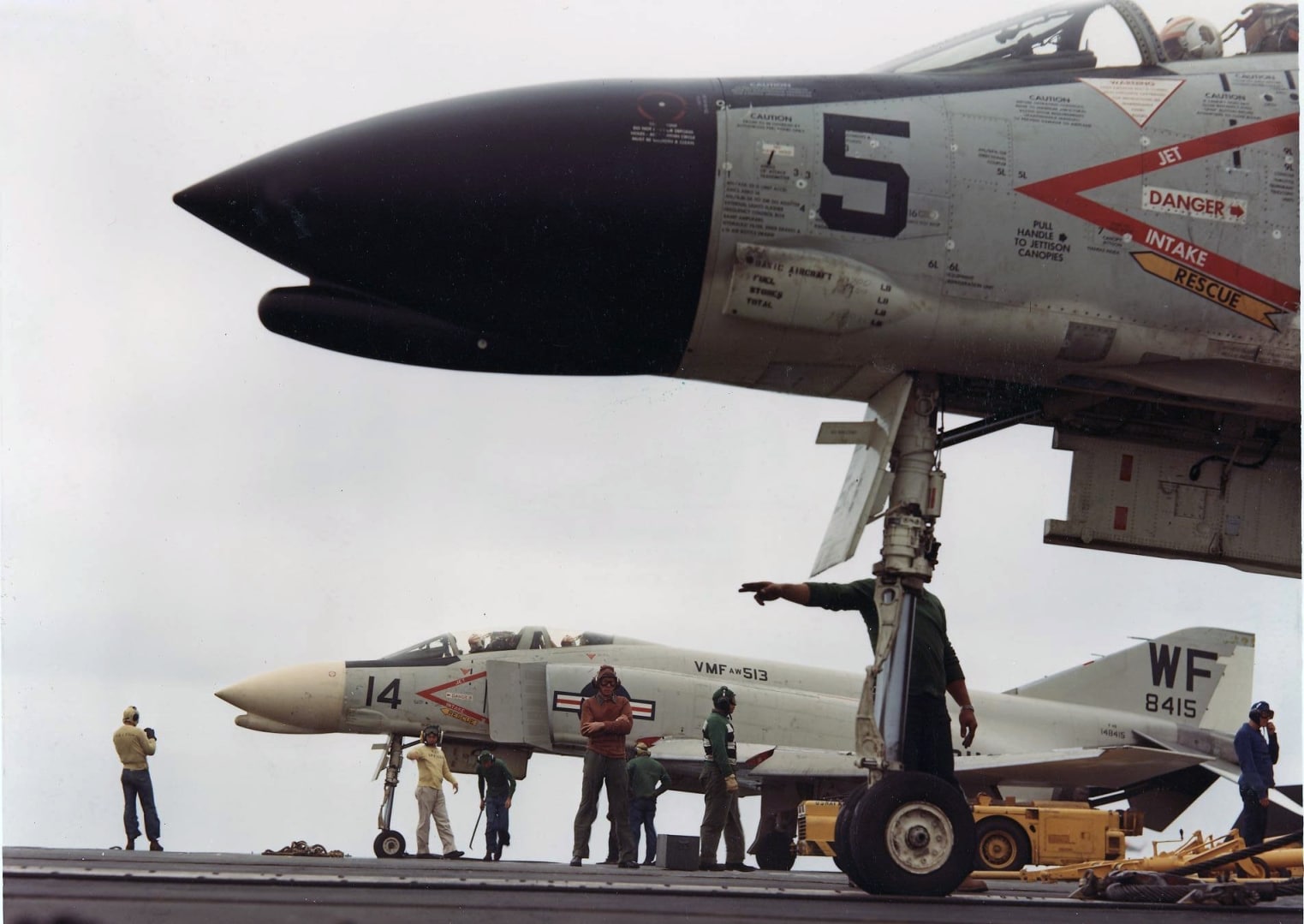
After Thornton earns his coveted Wings of Gold he is assigned to VMF(AW)-513 Nightmares flying simulated close air support (CAS) missions from the deck of the carrier USS Franklin D Roosevelt (CVA-42) during one of the many full-scale amphibious assault training exercises that took place back then. Lots of things going boom and Marines running on smoky beaches realistically convey the organized chaos of an amphibious assault.
Official US Navy photograph
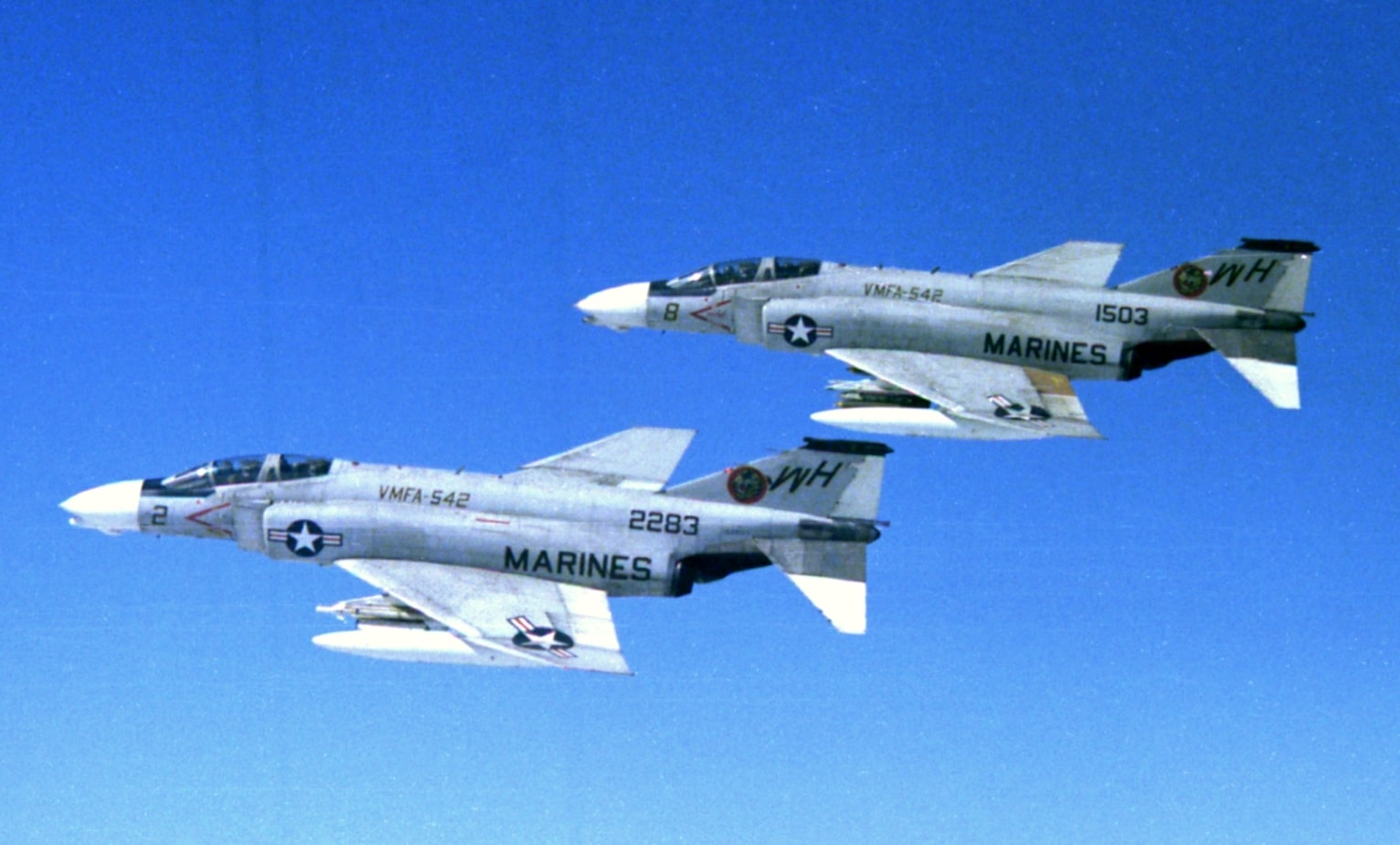
VMFA-115 Able Eagles make appearances flying their McDonnell Douglas F-4B Phantom IIs as do some Marine Corps VMF-232 Red Devils Vought F-8 Crusader jet fighters, Lockheed KC-130 Hercules tankers, and Sikorsky CH-34 Choctaw assault helicopters. A little bit of North American F-100 Super Sabre footage sneaks its way in as well. Some Marine Air Douglas A-4 Skyhawks appear toward the conclusion of the film.