

Breeze Airways has plans to more than double its footprint by the end of the decade.
On 3 April 2025, at the CAPA (Centre for Aviation) Airline Leader Summit in Dublin, Ireland, Breeze Airways CEO David Neeleman took the stage as a keynote speaker for a candid conversation with APEX (Airline Passenger Experience Association) Global CEO Dr. Joe Leader. Their conversation explored innovation, strategic shifts, and the reorientation of the airline industry toward traveler priorities. Neeleman’s insights offered a deep look into Breeze’s founding philosophy and its path forward as a five-year-old, Utah-based carrier. Here’s how Neeleman is steering Breeze to connect underserved communities with a modern, passenger-focused approach.
A Mission to Serve the Underserved

Neeleman, the serial airline founder behind JetBlue, Azul, WestJet, and Morris Air, has built Breeze on lessons learned from his past ventures. He has shaped Breeze Airways to serve travelers in markets others bypass.
“I’ve spent my whole career trying to make flying better for people who don’t live in the biggest cities,” Neeleman said. “Breeze finally lets us connect those dots with nonstop service, great aircraft, and a simple, affordable experience.”
Breeze sets itself apart from legacy and most low-cost carriers (Avelo Airlines’ model is very similar) by targeting unserved and underserved routes.
“From day one, we knew we didn’t want to be just another airline trying to squeeze into the same crowded markets,” Neeleman stressed. “We wanted to go where the need existed, where people had been ignored—cities where the only options involved long drives to bigger airports or hours of connecting flights through hubs.”
Routes like Erie, PA (ERI) to Tampa (TPA), Ogdensburg, NY (OGS) to Washington Dulles (IAD), or Charleston, SC (CHS) to Los Angeles (LAX) exemplify this approach. By focusing on point-to-point flights, Breeze spares passengers the hassle of layovers and packed terminals, bringing convenience to communities long underserved.
The Airbus A220: The Heart of the Breeze Airways Fleet

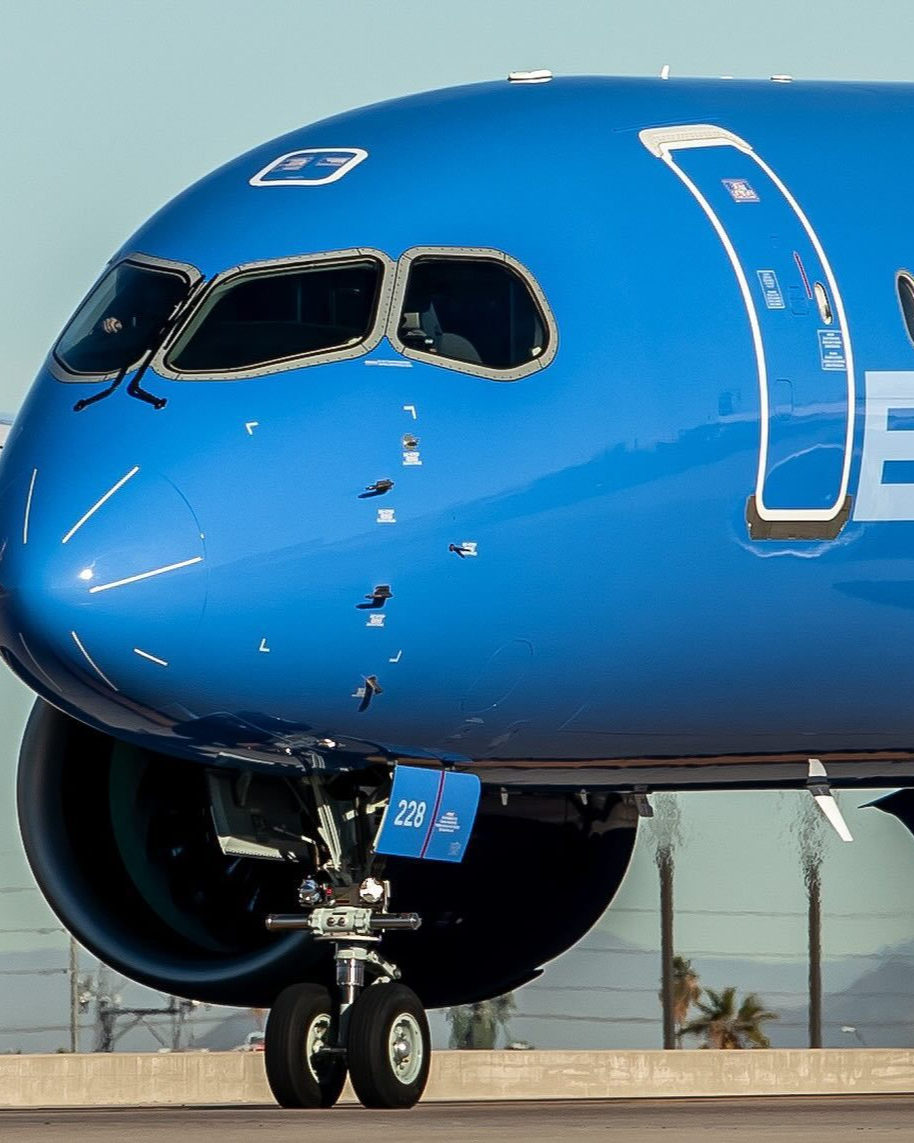
Central to Breeze’s strategy is its fleet, dominated by the Airbus A220-300. As of May 2026, Breeze operates 66 aircraft, primarily A220-300s, with the Embraer 190s largely transitioned out of scheduled service (retained mainly for charters or backup).
Breeze’s A220-300 fleet features two different layouts. The standard carries 137 passengers in a 2-3 configuration, with 12 premium “Ascent” seats in a 2-2 layout at the front. The more premium-heavy version features 36 Ascent seats and a total capacity of 126 passengers.
Neeleman remains unequivocal about the A220’s role. “The A220 allows us to fly coast-to-coast efficiently with a better onboard experience than any other aircraft in its class,” he said. “It’s quiet, fuel-efficient, and passengers love the cabin layout.”
The Ascent seats reduce capacity by just one seat per row, enabling Breeze to offer a first-class-like product on an ultra-low-cost carrier (ULCC) budget. With dozens more A220s on order and steady deliveries continuing, Neeleman sees endless possibilities.
“Every time we put one into service, we expand the map of where we can fly nonstop,” he noted.
The shift to an all-A220 scheduled fleet has streamlined operations for long-haul routes like transcontinental flights while keeping costs low and comfort high.
Digital Innovation: A Mobile-First Airline

Breeze strikes a balance between low fares and a superior experience through its from-scratch design and “mobile-first infrastructure.” As Neeleman put it, “We built the airline around the idea that your phone is your boarding pass, your check-in agent, and your help desk. We didn’t want long lines, printed itineraries, or call center wait times.” The Breeze app is the hub for booking, checking in, managing flights, and accessing support, streamlining every step for passengers. By eliminating call centers and paper-based processes, Breeze empowers its team to prioritize meaningful interactions with travelers.
Smart automation further enhances efficiency. “We use automation to solve what machines can handle, so our people can focus on what matters,” Neeleman explained.
Breeze’s systems proactively spot and resolve issues before they disrupt passengers. Coupled with gate-to-gate Viasat Wi-Fi on its A220s, this digital foundation keeps travelers connected and comfortable. It’s how Breeze delivers a high-end feel at ULCC prices—a defining feature of its approach.
Thoughtful Growth and Employee Ownership
Neeleman stressed that Breeze has scaled deliberately to “protect reliability and employee morale.” He described the airline’s growth as “thoughtful,” fostering a culture where employees feel like owners. “That sense of ownership makes a huge difference,” he said. By keeping operations lean and proactive, Breeze aims to resolve issues before they escalate, maintaining both passenger satisfaction and staff morale.
Looking ahead, Neeleman envisions Breeze serving 150 cities by 2030, sticking to its steady, measured approach. “There are still so many places in the US that don’t have nonstop service—and that’s just the beginning,” he said.
Breeze has since expanded internationally, launching service to destinations in Mexico (e.g., Cancún), the Caribbean (including Punta Cana and Montego Bay), the Bahamas (Nassau), and Costa Rica (San José), among others. The interline partnership with Azul Brazilian Airlines continues to connect Breeze’s domestic routes with Azul’s Brazilian network, making travel to secondary cities in both countries easier. “It’s a natural fit,” Neeleman said. “We’re connecting the dots between two airlines that share the same DNA—great service, great people, and nonstop routes where others don’t fly.”
More of the Same, Done Better

When Leader asked what Breeze would look like by 2030, Neeleman’s answer was simple: more of the same, done better. Breeze will expand its US network, using the Airbus A220 to serve more underserved markets with unmet demand. International growth is now underway and accelerating, but the core focus remains on removing travel hassles for passengers.
“We’ve built Breeze to remove the hassles, reduce the connections, and let people fly the way they’ve always wanted to,” Neeleman concluded. “That mission won’t change—it will only grow.”
In an era when the phrase “budget airline” can feel a bit…questionable…Breeze’s journey showcases strategic innovation at its best.
Innovation doesn’t always mean flashy new tech or crowded hubs. In Breeze’s case, it’s simply about connecting the dots where others haven’t looked and treating guests like humans, not numbers.
EDITOR’S NOTE: This story was originally published on 14 April 2025, and was updated in May 2026 with the most recent fleet, route, and network information.