Home Blog Page 114

This Might Be The Perfect Avgeek Video To Closeout 2016 and Start 2017

0

Grab a beer or a glass of wine, play this clip and let 2016 fade away…

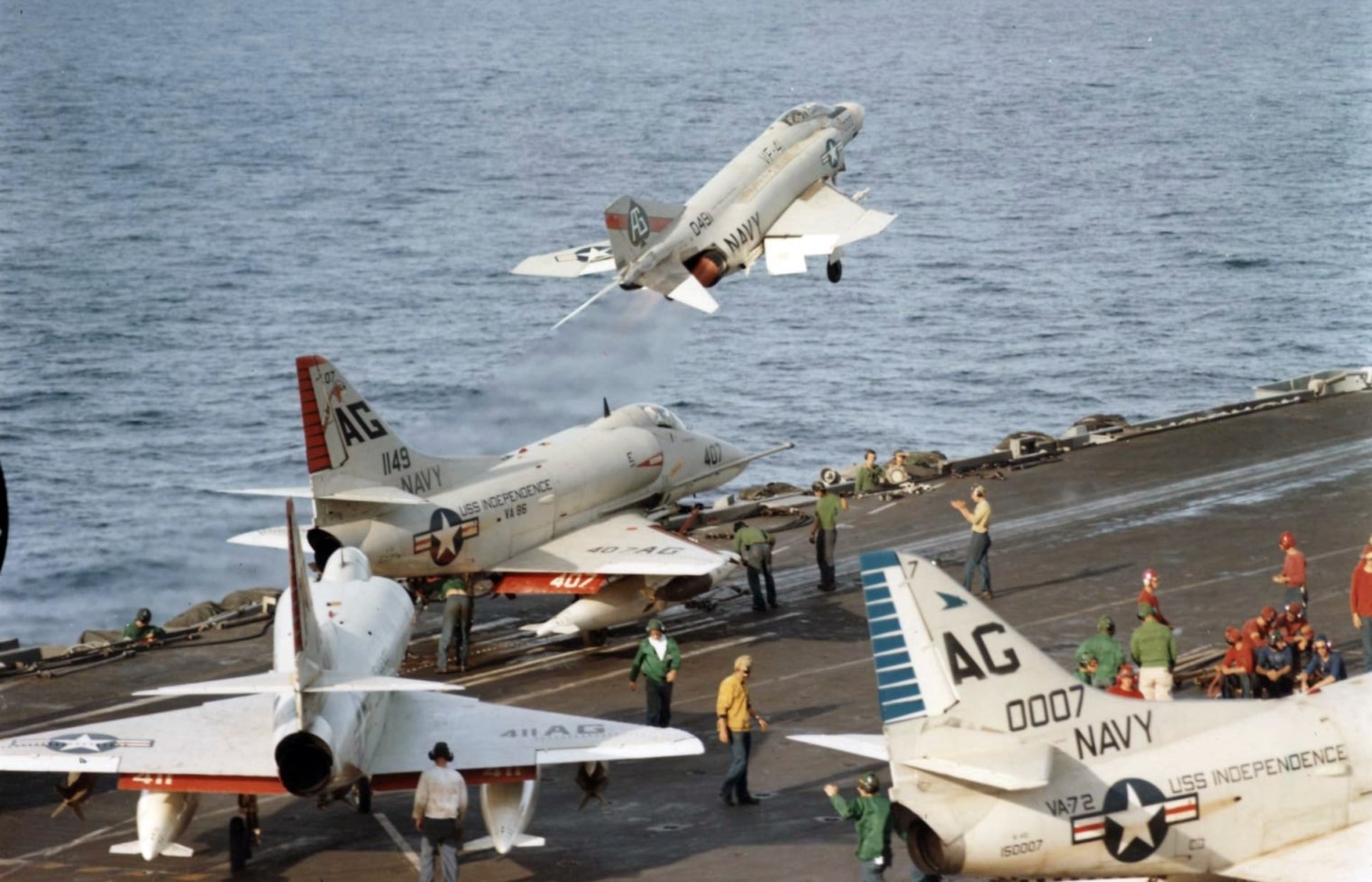
2016 was an interesting year to say the least.  In addition to a number of political events and celebrity losses, we also saw a number of unique aviation events.  We saw the retirement of the beloved F-4 Phantom.  We dealt with a number of tragic crashes including a number of them that were pilot error.  With each crash we learned something but a basic lesson is to not push the envelope whether that is weather or fuel or most likely pushing the envelope.  On the positive side, we saw some amazing airshow flying with the A350 and 787 both taking to the skies for some impressive displays.  We also were graced with some kick ass pilot training videos and Air France’s retirement of their 747s.

As we get ready to kick off 2017, I was trying to find a clip that would set me in the right mind frame to reflect on the year.  I wasn’t even looking for an aviation video but I came across this one.  It’s time-lapse footage of arrivals at London’s Heathrow Airport.  It’s oddly soothing to watch A320 and heavy after heavy make their final descent.

Wishing you a very happy 2017!  Thanks for being part of Avgeekery.

[youtube id=”fgHjVvqLXV8″ width=”800″ height=”454″ position=”left”]

EXCLUSIVE INTERVIEW: Meet The Last US Air Force F-4 Pilot

2

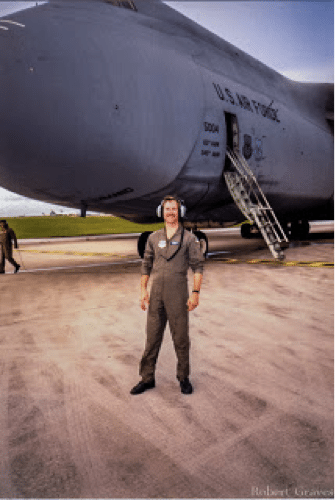
fb_img_1482932363731_1482951972751Lt. Col. (Ret) Jim “WAM” Harkins is a bad ass.  He’s the quintessential fighter pilot who bleeds blue and loves flying.  WAM flew A-10s and F-16s on active duty before retiring and continuing to fly as a civilian F-4 instructor. On December 21, 2016, he had the honor of flying one of the absolute last F-4 sorties for the US Air Force. We spoke with him to hear his story. Enjoy!

1.) At Avgeekery, we always have to ask… When did you first know you were an Avgeek?

I went for a glider ride with my Dad when I was 10. I hated it because everyone was “old” (30s and 40s) and it was pretty scary! I went back a few years later, for some reason, and there just happened to be other youngsters there. We took over that club (Long Island Soaring Association “LISA” in NY) and I started accumulating FAA certificates on my birthdays. I also got into airshows then, and barely remember the Thunderbirds flying F-4s.

2.) You’ve had a pretty amazing career. How did you get started in aviation?

I soloed a glider on my 14th birthday, got my private glider on my 16th birthday, and did my commercial/CFIG on my 18th birthday. I also got my PPL on my 17th birthday and was a tow pilot in LISA. There was not a lot of money in the family, so my plans were to go to a local NY university and be an aeronautical engineer. Since I couldn’t afford to buy my ratings at a college, I figured I might as well work on aircraft. Luckily, one of the LISA members had a son at the USAF Academy (USAFA) and mentioned there was FREE soaring there! The rest is history! After receiving the Outstanding Cadet in Soaring Award at USAFA, I went on to fly A-10s in England for 5 years (1500 hours, and Weapons School Graduate), Jaguar Exchange in Scotland for 3 years (700 hours), and F-16s for 9 years in Korea, Arizona (Luke AFB), Egypt and Arizona again (1500 hours).

3.) Every pilot has had days where the world just feels right. Tell us about your favorite flying story.

I just did it. My last flight in the QF-4 was amazing. Quickest 45 minutes of my life, and my cheeks hurt from smiling so much. Plus I shared it with hundreds of my closest friends at Holloman AFB, NM and 1.5 million of my other “phriends” with the 4K 360 video camera that Airman Magazine put in my cockpit.

A close second was my solo attempt at probe and drogue refueling in the RAF Jaguar during my exchange tour. I was upgrading to Combat Ready in the RAF Jaguar so I could deploy with them in the first Gulf War. I was the first American to obtain that status. I was pretty nervous, but managed one short hook-up just before reaching “Bingo” fuel and having to return home! After landing there was a lot of commotion in a back room…turns out the RAF Jaguar pilots had bet on whether I would be able to successfully take any air-to-air gas. Lots of money was lost that day! Due to the quickness of the first Gulf War, my rotation was cancelled and I went back to Scotland to instruct in the Jaguar.

4.) You’ve been a Phantom driver for quite a while. What will you miss most about not flying the F-4 anymore.

The Phantom Phanatics for sure! This last year has been like a Rock Band tour! The F-4 was the star, and I was the bus driver. Met a lot of the same people along the way, but there were new characters at every stop. I signed everything imaginable, answered millions of questions, and posed for thousands of photos. I also met war heroes, family of war heroes, and friends I hadn’t seen in decades. I lived another entire Fighter Pilot life these last 9 years.

fb_img_1482424181734_1482951973596

5.) How many total hours in the F-4 did you finish up with?

1180 hours in the past 9 years as a civilian QF-4 Fighter Pilot. It was the last US 1000 hour patch in the F-4, and it was a chapter in my life that I could never have imagined or written better! Not a lot of Fighter Pilots get to fly Fighters into their late 50s, much less a Civilian in the iconic Phantom!

Lt. Col. Ron King, left, and Jim Harkins, both pilots from the 82nd Aerial Targets Squadron, Detachment 1, Holloman Air Force Base, New Mexico, talk with Col. Dana Pelletier, 75th Mission Support Group commander, during a QF-4 Aerial Target aircraft static display at Hill AFB, Oct. 25. (U.S. Air Force photo by Paul Holcomb)

More questions, videos and photos on the next page!

INTERVIEW: Meet Self-Professed #AirlineGeek And Author Of “America’s Local Service Airlines”

10 questions with the man who unlocked the history of the small and medium sized airlines that first connected America by air.

There are people who work in the aviation industry and people who love the aviation industry.  There are some rare people who fit both those criteria.  Meet David H. Stringer, an accomplished author, aviation professional, and a self professed avgeek, more specifically an “airline geek”.

Hanging out with David is fascinating.  He has a near encyclopedic knowledge of the airline industry. He’s leveraged that knowledge and a passion for research to author one of the most comprehensive books about the local service airlines of the 1950s and ’60s. His book does more than just chronologically document overlooked aviation history. It brings to life some of the most fascinating airlines that connected hundreds of small and medium sized cities all across the United States.

His book is available for purchase rom Amazon, from BarnesandNoble.com, and directly from the publisher.  To purchase an autographed copy of the book directly from David, click on the Facebook page and click the “Shop Now” button or click here.

The Interview:

1.) Tell us how you fell in love with aviation…

I got hooked when I took my first flight at age 7.

2.) Would you consider yourself an Avgeek?

More specifically, I’m an airline geek. I guess you’d call me a Commercial Av – geek.

3.) You served much of your professional career as a flight attendant. In today’s environment, flight attendants are sometimes treated poorly by passengers. How was your experience? Do you look back fondly on that time?

I flew for 32 years and it was a fantastic career! I interacted with literally thousands of people…. everyday folks, politicians, celebrities. And the camaraderie among airline employees is unlike that in any other industry. As for f/a’s being treated poorly… there have always been some unhappy, unpleasant people in this world. But the nice people far outnumber the miserable. I often tell this story: After having 100 passengers on a flight, we’d be saying “goodbye” to each of them at our destination. Ninety-nine of those people would either smile or say “thank you”, or “nice flight!” or return some other pleasantry. Then one of those one hundred people would say “That was the worst flight ever! I’m never flying this airline again.” And, of those 100 people, who would be the one person that we’d remember? The unhappy passenger because we’d wonder what we did or didn’t do that resulted in them being so unhappy. And oftentimes we’d realize that there was nothing we could have done differently that would have made him / her any less miserable. You can’t take it personally. But try to remember the 99% that enjoyed themselves.1976-08-27-dhs-on-steps-of-dc-9-14-ship-971-lambert-field-stl-photo-by-dot-bradley-1-copy-1

4.) What was your favorite memory of flying for a major airline?

Too many to share.

5.) You have a particular passion for classic airliners and airlines. In fact your first book is on the local service airlines that used to have networks across the US. What do you find so fascinating about these types of airlines that used to exist?

I’m a history geek, too. I had a double major in college: history and political science. And you have to remember that, when my fascination with airlines began… when I was a kid and in my teen years… all of those airlines still existed. The Locals were particularly interesting because they brought air service, in good-sized airliners, to small city airports throughout the U.S. The residents of many of those cities had better commercial transportation alternatives in the 1950s, ’60s, and ’70s than they have today. And with good transportation comes the possibility of commerce and industry. I took my first flight on one of those local service airlines and, years later, I went to work for that airline (Southern Airways).

local-service

6.) Out of all the airlines that you’ve profiled, what is your favorite airline?

We’re talking about airlines of the past… I tend to like the underdogs, the carriers that had to fight for survival. Northeast Airlines comes to mind, and Capital Airlines, which was an innovator. Capital shook up the U.S. airline industry when it introduced the British turboprop Vickers Viscount on its routes. It can also be argued that the Viscount was partly responsible for Capital’s demise. For a few short years the company had the upper hand with this advanced-technology aircraft, but then the jet age dawned and Capital was stuck with a large fleet of “yesterday’s” airplanes.

7.) Ok, we have to know. What is your favorite plane? Why?

Airliners of the past… the Douglas DC-3 and the Vickers Viscount.

The DC-3 was an amazing airplane. It was the game-changer in the airline industry. Its sturdiness made passengers feel safe and it made money for the airlines. Thousands of them were built and they flew everywhere. It was also the first type I ever flew on.

The Viscount was a dazzling step forward. Next to the proud, lumbering piston-engined aircraft of the day, this sleek turboprop airliner would always make its presence known with its whistling Rolls Royce engines. It was truly the link between the piston age and the jet age.

Among the aircraft that I worked, I tell people that “I was raised” on DC-9s. I literally spent years aboard that aircraft: -10s, -30s, -50s, MD-80s (which were called DC-9 Super 80s when they first came on-line).

My claim to fame is that I worked the very last Martin 404 flight for Southern Airways, which happened to be the last flight of a piston-engined airliner operated by a certificated carrier in the United States.

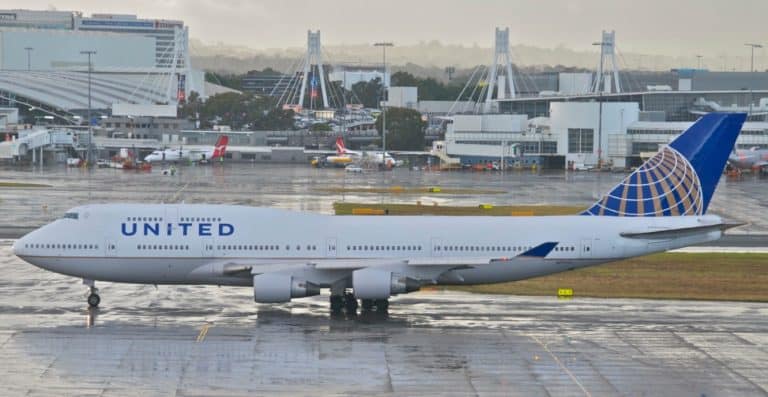
In later years, my absolute favorites to work aboard at Northwest were the Boeing 747 and the Airbus A319. The 747 was just a huge, sturdy machine that radiated a feeling of safety and spaciousness. On the opposite end of the spectrum, the 319 was just the right size, an intimate environment for domestic flights… kind of like returning to DC-9-30 days.

(Photo: Wikipedia)
(Photo: Wikipedia)

8.) With essentially 4 ‘mega’ US airlines now, do you find the industry boring?

Pretty much. But it is still an industry like no other.

9.) Now that you’ve written a book, what’s your next project?

As the History Editor of AIRWAYS Magazine and a member of the Editorial Board of TAH – The Aviation Historian (a British publication), I’m always working on an airline history article. Let me interject here that the most important thing about recording history is to get the story right. You need to double-check your facts and check your sources. A lot of misinformation gets printed and, once it’s out there, it is very hard to retract or correct.

My next major project? I’d like to expand the local airlines book further, giving even more in-depth coverage to each of the carriers. After that, I’d like to write another book: the definitive story of America’s supplemental airlines, which were derisively called the “non-skeds”.

10.) What advice do you have for people who are interested in a career in aviation?

Follow your dream and don’t get discouraged. If you want to work for an airline and you are turned down by one carrier, apply with another. Stay focused and keep trying.

Landing The Shuttle “Glider”Was Helped By Heads Up Display


Shuttle2
The HUD – Heads Up Display – provided crucial data to pilots when the Space Shuttle glided home for landings.

The Space Shuttle was a combination space craft and glider. It was launched into space thanks to two solid rocket boosters plus an external fuel tank that helped fuel the Shuttle’s three main engines. Once in reached zero gravity in space, the size and weight of the Shuttle wasn’t an issue.

Landing was accomplished by firing its Orbital Maneuvering System thrusters to decelerate and re-enter the Earth’s atmosphere. In higher atmosphere the shuttle used a reaction control system and then as it descended it was controlled by “fly-by-wire” hydraulically actuated flight surfaces.

All in all, a neat trick for a 110-ton “glider.”

The pilot/commander also had the advantage of a Heads Up Display (HUD) system that has become a major boon to pilots, particularly of military aircraft and more modern airliners.

The HUD is an optical mini-processor that displays flight data on the glare shield. Without taking his/her eyes off the view of the horizon, the pilot can stay up to date on crucial information. This keeps pilot situational awareness high.

During a crucial phase of descent like shuttle landings – there’s no opportunity for a “go around” – the less the pilot is distracted by shifting his vision, the better.

Deployments Suck — Creative Marshaling Makes It Better

0

Maintainers Make Long Days More Tolerable

Let’s not beat around the bush here…deployments suck, especially around the holidays.  It doesn’t matter whether you are in the desert or stationed in a cooler climate for an exercise.  The fact remains that you are away from your family, you sleep with smelly roommates, and you probably eat the same rubber chicken every day for lunch and dinner.  About the only thing this is good about deployments is that you lose weight and get in better shape. That’s usually because all there is to do besides work and sleep is to lift a few “kila-pounds” after your shift.

But when things get tough, the humor gets going.  Maintainers and crew chiefs are known for keeping things light-hearted even though they have an extremely challenging job.  While some will call it bad dancing, we’ll call it “creative marshaling”.  Here are a few of our favorites:

Prehistoric Taxi and Arrival

As if the ancient KC-135 wasn’t old enough. The maintenance crew matches the jet’s age with a ridiculous T-Rex marshaling job.  After a long flight to fuel up the fighters and bombers, it made for a humorous surprise ending to the day. (Originally posted to People of the Deid Facebook page)

Short Shorts and Horse Heads

While tiny shorts and horse heads are pretty trite these days, it’s still pretty unexpected to get marshaled out by a unicorn in short shorts. Poor pilots.  They never knew what was coming.

[youtube id=”np1RXE1ym0c” width=”800″ height=”454″ position=”left”]

NSFW…

This dude invented the whip.  Or something like that.  Way back in 2007, he was filmed creatively marshaling a bomber crew.  The rumor is that in addition to gaining YouTube fame, he also ended up in a bit of trouble.

[youtube id=”FxJt41xzfcQ” width=”800″ height=”454″ position=”left”]

Bonus: Army Helos and Hip Hop

The Army has some characters too.  Check out these decent crew chief dance moves.

[youtube id=”-96L5b7sRhE” width=”800″ height=”454″ position=”left”]

[shopify embed_type=”product” shop=”custom-model-planes.myshopify.com” product_handle=”kc-135r-stratotanker-customized-model-airplane” show=”all”][shopify embed_type=”product” shop=”custom-model-planes.myshopify.com” product_handle=”rockwell-b-1b-lancer-1-100-scale-model” show=”all”]


Are You Ready For Your Next Flight?

Editor’s Note:  Whether you fly a Cessna 172 or an F-16, the preflight is an essential part of a safe and successful flight.  As part of a series, retired F-16 pilot Nate “Buster” Jaros will share his perspective on how he prepared for a flight.


What are some things people prepare for? Some people prepare for school. They do their homework, they read the required passages, and they get ready for their classes. They sharpen their pencils too. Some people prepare for trips also. They carefully pack important items and take special care to pick out the right clothes they will need on their trip. Don’t forget the bathing suit!Cessna172cockpit

People prepare. We have to, it’s who we are and how we operate. We all think through what might happen in the future, based on past experience and prepare for all possible contingencies, or at least the most possible and likely ones. That’s how you know to pack an umbrella if traveling to London, right?

How do you prepare for a flight in your General Aviation airplane? What is it that you do, based on what might happen in the future to prepare yourself and your aircraft to take to the skies? In aviation, this concept of preparation is commonly called the preflight.

There are many techniques and countless pages written on the unexceptional preflight. I’d say that no one particular set of instructions or concepts is right or wrong, or more correct than the others. They all have their merits, unless you subscribe to the “kick the tires, lights the fires” philosophy, then in that case you’re just flat out wrong. I hope you’re a better, safer and more contentious pilot than that. But you must prepare to go fly, this is life and death we’re talking about here.

I’m not going to waste your time by listing out hundreds of preflight items that you have heard before. Things like ‘check the flap travel’ or ‘feel for nicks on the prop leading edges.’ No. I’m not going to insult your intelligence. I am assuming that you are already doing the things you were taught and what your POH says you should be checking. I am assuming that you are preflighting your own self and your aircraft in a typical fashion.

Instead, we’re going to talk about the things that maybe you haven’t heard before, and some techniques that maybe you didn’t know. Let’s see what we can uncover.

When does the preflight of your aircraft start? Well for me it begins the instant I lay eyes on my plane. Whether it was an F-16 I was flying that day, or my humble Bonanza, when I first see the plane, I begin. I look at what is around the plane. Are there benches, light stands, boxes or other impediments? What about drips or leaks? Any of those under the plane? Are the struts and/or tires low? Basic stuff right? Being a detective here, at this point in your preflight, before you even get to the plane can tell you a lot about what has happened since it last flew and has been sitting on the ground. Use this detective concept and even without touching the aircraft see what information about its condition you can glean.

image

I once found an oxygen fill port door open on an F-16, not a typical occurrence, but I spotted it easily and with a glance. I asked my crew chief what was up, and sure enough…no oxygen had been serviced from the previous flight. Look for those differences. The little things. It can be that easy. And take note of what stands out as you approach the airplane.

Additionally, you should know what things can kill you. Or really ruin your day. I spend a little extra time on the gear and brakes, the fuel, as well as the flight controls and engine. I spend a little less time counting rivets, or nuts on a panel, things like that. What stuff is really going to hurt you or the plane? Look for that. I might check the lights and flaps, but I can land my Bonanza without lights and flaps…so those items are lower on the priority list. I’m not advocating carelessness, but rather knowing the critical systems and how they operate, and what they should look like during a preflight. What items can bite you?

1024px-thumbnailDo I spend a lot of time looking in the engine tail-pipe of the F-16, no. I could look in there all day and not know that it was about to fail, or be a good engine. What I look at is the various sensors and indicators on and around the engine and jet that indicate problems. I also note at how it starts and what numbers and operational limits are exceeded, if at all. How does it ‘feel’ and ‘sound’ when it lights off? Is this a normal start up sequence, or not? What is my engine trying to tell me when a needle fluctuates abnormally on startup? Get the idea?

I few pilots sometimes report that they heard a funny noise on start-up, or during gear retraction. Guess what? Something is amiss and your plane is “talking to you.” Quite often those are the issues that can cause failures later. Do you have the knowledge and patience to listen?

There is another concept that I adhere to. It’s called the three-strike rule. It was passed down to me by my Air Force instructors. Basically, if you have three strikes before a flight, something is wrong and it’s time to stop and re-evaluate the purpose of the sortie at hand. Or even cancel the flight. This technique is a little more intangible, but I find a lot of experienced pilots follow this rule, or something similar.

The ‘three strike rule’ goes something like this. Maybe during planning you determine the weather on the route or destination is pretty bad, doable, but bad. That is strike one. That is one thing already telling you that something is different. Then you do your walk around and slice your finger on a sharp part of the airplane. You can bandage it up and proceed, it’s not that bad. Strike two. Then after startup, tower can’t find your flight plan in the system. Maybe it’s because you forgot to file one! (This has never happened to me). Strike three.

preflightThe three strikes can be anything that you deem as significant. Dropping a pencil or misplacing your keys may not be strikes. However, forgetting things, being clumsy, and some acts of God might all be significant enough to warrant a pause, or even a mission cancel. I know it’s a bit superstitious, but when the strikes start to pile up, it’s time to listen.

Lastly, in the USAF we are taught to do one last thing after the preflight “walk around” checks and just before hopping in the cockpit. Go out in front of your aircraft, maybe 30-50 feet off the nose…and just look at it. Yep just look at it. You’d be surprised how many weird or wrong things you can find. Ever hear of someone taking off with the pitot covers on, or cranking the engine with a tow bar still attached to the nose wheel, or trying to taxi with the chocks still in? Yep, it happens. If you take the time to go out front and just look at the plane, nothing more, you will be surprised on what you can find, and what you might catch. Give it a try.

These preflight techniques are pretty simple, but they can save your bacon someday, just as much as checking weather, or counting bolts on an aileron, or testing the tire pressures. In my mind they all have equal importance in helping any pilot prepare for his or her flight.

Good luck, be prepared and fly safe!

A Bad Luck Crash and a Complex Design Doomed the XB-70 Bomber

3

The Mach 3+ Valkyrie Was One of Those Programs That Outran Available Technology

The ability to travel Mach 3 is a difficult feat. At those speeds, the aircraft must disperse the heat that builds up on the skin. Aircraft at that speed also have to deal with shifting CG at supersonic speeds, along with stability and compressibility challenges. With all those challenges in mind, it’s even more amazing that large air breathing bombers, like the XB-70, as well as reconnaissance and transport jets flew supersonic in the 1960s.

North American XB 70 on ramp ECN 1814
XB-70 at Edwards AFB. Image via USAF

Uniquely Powerful Engines for a Unique Aircraft

Powered by 6 General Electric YJ-93-3 afterburning turbojet engines putting out a combined 119.000 pounds of thrust (172,000 horses in afterburner), the XB-70 Valkyrie was a beast. The bomber flew higher than 60,000 thousand feet regularly and with the ability to maintain greater than Mach 2.5 throughout the whole duration of the flight. The aircraft was expected to be one the most lethal assets since the enemy could not fly either as fast or as high. At Mach 2.5+, it would be very difficult to shoot down such a speedy jet.

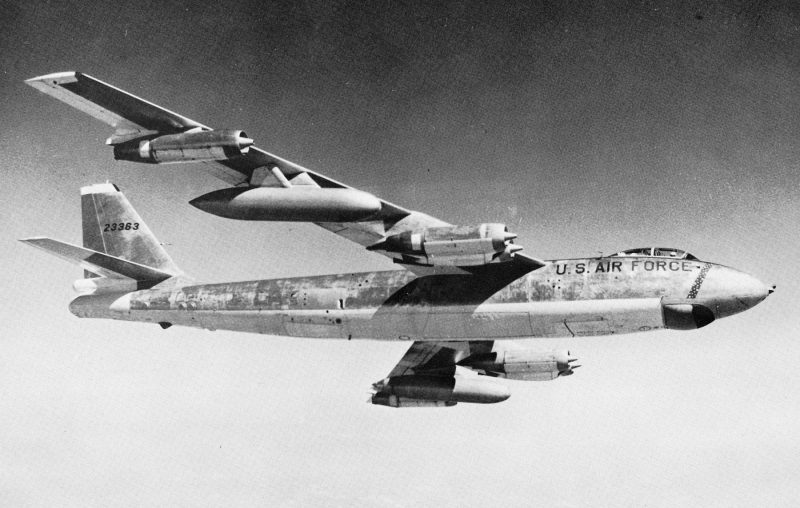
North American XB 70A with Convair B 58A chase aircraft
North American XB-70A Valkyrie with Convair TB-58A chase aircraft. Note singed paint from sustained supersonic speeds. Image via USAF

Another North American Aviation Creation

Designed for the United States Air Force(USAF) by North American Aviation, the XB-70 was designed to be the next generation bomber. Made of mostly stainless steel and boasting a unique delta wing and canard surface design, the aircraft was both advanced and a potential game changer during the Cold War.

XB-70 in flight.
XB-70A. Image via USAF

Bad Luck and Trouble

Unfortunately, the XB-70 never reached its full potential. The jet faced a number of teething problems. One was its sheer size. The jet was also very complex with challenging fuel and flight control systems. Those problems reached a crescendo when one test vehicle was lost to bad luck during a mid-air collision with an F-104 Starfighter chase plane that occurred during a photo flight. With high operating costs and a limited mission, the project was abandoned in 1969. America would not have another supersonic bomber until the B-1 program was revived in the early 1980s. There is currently one XB-70 on display at the National Museum of the United States Air Force.

XB-70 on the runway.
XB-70 at the USAF Museum in Dayton. Image via USAF

This video report about the XB-70 test program was uploaded to YouTube by PeriscopeFilm. Enjoy.

[youtube id=”qzAWfFJqaQc” width=”800″ height=”454″ position=”left”]

Sonic Boom! The Last USAF F-4s Went Out With A Bang!

0

Retiring QF-4s performed supersonic pass during last flight at Holloman.

The last US Air Force QF-4s took to the skies on December 21, 2016.  Those flights capped a full 58 years of F-4 Phantoms gracing the skies of the United States.  Avgeeks from all over the country gathered to watch and photograph an active F-4 flying one more time.

Those gathered got a bonus. They didn’t just hear the roar of the mighty General Electric J79 engines.  They also heard the mighty F-4 Phantom power past Mach 1 as the tell tale sonic booms were heard by everyone present.  No damage was reported.

Here’s a great video of the happening posted by Skyes9.

[youtube id=”gegJ1821jHA” width=”800″ height=”454″ position=”left”]


The Flying Boat Mothership Was An Attempt To Fly Passengers and Mail Across The Atlantic

The Shorts-Mayo Combination was an attempt to cross the Atlantic with a useful load.

A recent article on “Mother Ships” prompted recollection of a much earlier pairing of two aircraft—a Shorts Empire Class flying boat and a smaller Shorts four-engine float plane.

In the 1930s, the challenge was to design an airplane that could make the Atlantic Crossing carrying revenue generating passengers or mail. The Shorts Empire Class flying boats, with a crew of five, could carry up to 18 passengers and more than 4,000 pounds of cargo and mail, and it was a profitable aircraft on the European side of the Atlantic. To make the crossing from Great Britain to North America, however, passengers and cargo had to be replaced with fuel.

Aircraft engineers knew that an airplane could maintain flight at greater weights than it could take off with. Major Robert H. Mayo, Technical General Manager at Imperial Airways proposed the Shorts-Mayo Composite with a smaller float plane, that carried 1000 pounds of mail, mounted on top of a modified version Shorts Empire class flying boat. The larger flying boat would lift the float plane to its cruising altitude, they would separate, and Mercury would proceed to North America.

The pair of aircraft consisted of a Shorts S.21 Empire Class flying boat, the “Maia,” fitted with a structure that supported the smaller Shorts S.20 “Mercury” float plane on top. The bottom of the fuselage/hull of the redesigned flying boat had a flared bottom making it wider than the rest of the fuselage. This provided more planing surface under the hull, necessary for the greater takeoff weight. Other design changes included larger control surfaces, a larger wing with the engines mounted farther from the hull to make room for Mercury’s floats.

Mercury was a smaller aircraft, crewed by a single pilot and a navigator. During takeoff, Mercury’s flight controls were locked in a neutral position. Only the trim tabs were operational. Mercury was attached to Maia at three points. The attaching mechanism allowed some movement so that the pitch of the float plane could be adjusted in flight. Three lights in the cockpit indicated when Mercury was in fore-to-aft balance.mm_short_mayo_composite_scan

Upon reaching Mercury’s separation altitude, the pilots first released two of the three attachments. The third attachment released automatically at 3000 pounds of force. When released, Mercury automatically climbed up and away and Maia dropped, providing safe separation.

The first flight test was made in February 1938, completing a successful separation. Additional tests were conducted over the next several months. The first operational flight with passengers in Maia and mail in Mercury was flown in July 1938. After separation, Mercury continued west to North America—a flight that took more than 20 hours. Meanwhile, Maia turned east toward Europe with 10 passengers and luggage.

This, the only Shorts-Mayo Composite built, continued to operate into December 1938. During this time, the Mayo Composite also launched Mercury on flights to Alexandria, Egypt and South Africa. By the end of 1938 longer range flying boats had been developed with more powerful engines and higher payloads, making the combination unnecessary.

The fates of both aircraft were determined by World War two. Maia was destroyed 1941 in a German bombing raid at her mooring in Poole Harbour, while Mercury was used as a reconnaissance aircraft. It was soon replaced by newer aircraft, after which it returned to Shorts factory where it was broken up to recycle the aluminum needed for the war effort.

[youtube id=”bYtazEBQ1K8″ width=”800″ height=”454″ position=”left”]

Resources:

A Century of Flight, Ray Bonds, Salamander Books Ltd, 2003

YouTube: https://www.youtube.com/watch?v=bYtazEBQ1K8


A Guy Tries To Buy a Harrier Jet With Pepsi Points. Then Sues Pepsi For The Jet.

0

Seven million points is quite alot of soda to consume.  That never phased John Leonard.  He was determined to get a free Harrier jet.

The Harrier Jet first devolved in the 1960’s as a joint project between the United States and the United Kingdom. The Harrier was later redesigned and produced by McDonnell Douglas. It had its faults but it brought about a new era of aviation with the ability to be a vertical takeoff and landing fighter jet. A Rolls Royce engine, the ability to take off vertically, the ability to carry several thousand pounds, and advanced equipment meant the jet fit a niche role in each nation’s defense. The jet isn’t cheap though. At $30M a copy, Harriers are national assets, definitely not a prize giveaway for a soda company…wait, what? Check this story.

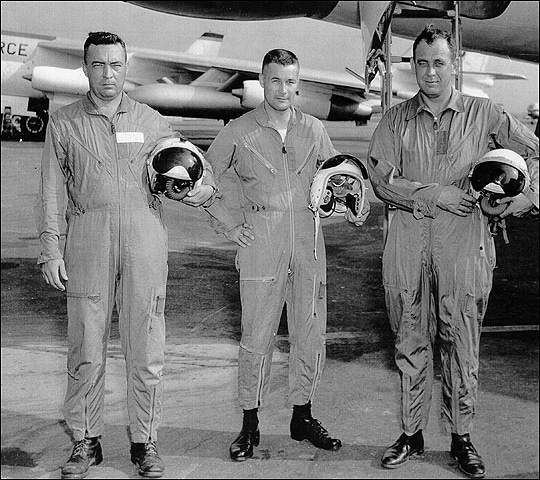
Back in the late 90s, Pepsi positioned itself as the ‘un-cola’. The cool, hip soda company tp counter the ‘lame’, stodgy, old-people Coca-Cola company. As part of their advertising campaign, Pepsi was touting a Harrier Jet in a commercial advertisement for their “Pepsi Points” program. It was shown that one could acquire the aircraft for 7 million points. That’s quite alot of soda to consume.  Here’s the commercial:
[youtube id=”ZdackF2H7Qc” width=”800″ height=”454″ position=”left”]

Enter John Leonard and your daily dose of aircraft humor. After some quick thinking and a little math, Leonard had intended to get himself a real Harrier jet. Unfortunately, it didn’t quite go as planned. Even after he got the points, Pepsi didn’t pay up. Leonard even took Pepsico to court. He lost the case. It certainly does make for a good story and a laugh today though. Take a look at the video and see how John Leonard attempted to acquire the aircraft. If only it could be that easy… and cheap.

[youtube id=”h7XliS0DYRo” width=”800″ height=”454″ position=”left”]

[shopify embed_type=”product” shop=”custom-model-planes.myshopify.com” product_handle=”av-8b-harrier-1-46-scale-mahogany-model” show=”all”][shopify embed_type=”product” shop=”custom-model-planes.myshopify.com” product_handle=”mcdonnell-douglas-av-8b-harrier-ii-usmc-1-48-scale-model” show=”all”]

This Fighter Instructor Is Crazy (And We Love It!)

0

“Go Get Him! Kill him!”Like a rallying cry in Gladiator, this IFF (Introduction to Fighter Fundamentals) instructor emphasizes the importance of the kill instinct for fighter pilots.

There is no doubt that our world has become much more politically correct over the past few years. There are admittedly some good things that have come of it.  No one is a fan of blatant discrimination or sexism.  But many will say that the PC culture has gone too far.  Many lament the loss of fighter pilot culture as the squadron bar is renamed ‘the heritage room’. Posting a picture of a pretty girl on your desk could get you red dotted these days. Many in the Air Force forget that the goal is to be a lethal force–ready to make the enemy die for his country.
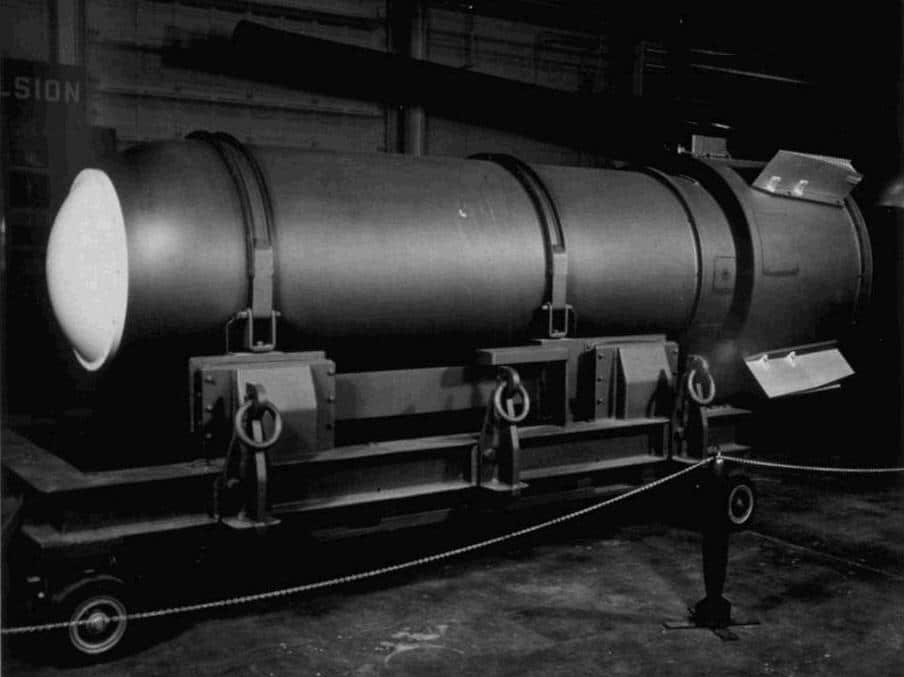
That’s why we love this video.  It’s good, ole’ school fighter pilot instruction right there.  You have an IP who is sceaming at his student to kill the other guy during a mock dog fight.  The student probably isn’t sure if the IP is joking or serious.  Odds are he’s stressed and anxious and having the time of his life too!  You know that the instructor has made a lasting impression though. If he is ever in that situation in real combat, the ghost of the IP’s voice will surely be reverberating in his head as he lines up for the kill.

IFF is a required program for newly graduated pilots from Air Force Undergraduate Pilot Training.  During the IFF program, pilots will learn about BFM (Basic Fighter Maneuvers) and build situational awareness for flying in a tactical environment (where the bad guy wants to kill you). They’ll fly it in an AT-38C. Passing this program is a requirement to continue onto a fighter training program in an actual fighter jet.

Today, we salute you Mr. Old-school IP.  You make the Air Force a slightly more fun place.

[youtube id=”JQORXWmGMGk” width=”800″ height=”454″ position=”left”]

[shopify embed_type=”product” shop=”custom-model-planes.myshopify.com” product_handle=”t-38-talon-customized-model-airplane” show=”all”]

The Longest Flight With No Alternate Airports Requires Perfect Fuel Calculations

0

ETOPS_diagram

Making sure the fuel supplies are more than adequate is crucial when flying the longest route in the world with no alternate landing site.

Say you’re driving on an Interstate, probably somewhere in the Western United States where there are long stretches of highway and nothing else.

You notice the fuel warning light come on and you wonder where and how far to the nearest gas station. As you worry about running out of fuel, one thing you know – you’re safe on the ground, even if the engine coughs to death after exhausting the final fumes.

Now transfer the low fuel scenario to an airplane flying from the West Coast to Hawaii. That’s the longest stretch – nearly 2,500 miles – for a plane with no alternate landing options. Nothing but the blue sky above and the bluer Pacific below.

Even with commercial airlines moving to twin-engine aircraft, flying extended distances such has the mainland to Hawaii remains safe. Aviation rules call for aircraft and flights to be ready for emergencies if one of the engines becomes disabled. Running out of fuel with nothing but water for 360 degrees is not acceptable.

In April this year, a United Airlines flight bound for Honolulu from San Francisco had to pull a U-turn two hours into the flight. Stronger than expected headwinds influenced the pilots to make an overly cautious – and smart – decision to not risk a disaster.

“When the headwinds are greater than what were expected, and are going to be sustained for four or five hours of flight, you’re simply not going to be able to land with your legal minimum of fuel,” ABC aviation expert John Nance said. “It doesn’t mean you’re going to run out, but it means you’re not going to be legal. That’s when you have to turn around.”

Safety rules require commercial flights to have enough fuel to reach the intended destination, hold for 30 minutes and then have another 45 minutes of fuel to land at alternate airport. (If you’ve been on a flight diverted from your original destination, you know the drill.)

In 1989, a Trans World Airlines jumbo jet developed a fuel leak on a flight to Hawaii. The leak was discovered when it was too late to turn back. Instead of landing in Honolulu, the plane made it safely to the closest airport – Hilo International Airport on the island of Hawaii. The plane reportedly had four minutes of fuel remaining when its wheels hit the tarmac.

Check out this historical account of the harrowing and heroic early days of attempts to fly from the West Coast to Hawaii.


The F-101 Could’ve Been Legendary But It Had One Fatal Flaw

0

The F101 “Voodoo” was a lean mean supersonic jetfighter machine with a nasty pitch-up problem.

Designed by McDonnell in the 1950’s , the F-101 was used by the United States Airforce and the Canadian Royal Air Force. The F-101 saw many unique roles in its 20+ year career. Originally designed to be a fighter-bomber, the aircraft quickly moved on into reconnaissance and continued to serve as a “utility infielder” of sorts with interception duties and a training role. Unfortunately, despite some of its advanced capabilities and its speed (for the time), there was a nasty little aerodynamic issue which caused the aircraft had a serious “pitch-up” problem that while improved, was never fully fixed.

Pitch-up: What is it?

aoapitchup
The F-101 (f101) had a terrible pitch up problem.

Pitch-up is a type of aggravated stall that commonly occurs in aircraft of this wing type. An aircraft can stall at any time if the AOA is exceeded.  In this case though, pitchup could occur and cause stability issues that actually would lead to a stall. The pitch-up was caused by downwash on the stabilizer during high AOA that causes both a pitch up from the downward force and a reduction in the effectiveness of the stabilizer itself.  Essentially, the jet would become unstable.

The pitch-up tendency was actual double wammy against stable flight. If uncorrected, this issue could cause departure from controlled flight. Luckily, the Air Force was aware of these problems and created training videos concerning what needed to be done to correct the issue mid-flight. This video was put together to train pilots how to avoid the envelope where pitch-up was most likely to occur.

Time Leads to Better Understanding of F-101 Characteristics

Now it’s easy to look back on these early training videos and think how boring it must have been to watch them.  But put yourself in the position of the crew for a moment. Here you were about to fly one of the most advanced fighters of the day and you were being told that if you exceed seemingly normal AOA’s, you could depart controlled flight and not be able to recover.  It would make me pay attention. That’s for sure!

The F-101 flew with the RCAF and the US Air National Guard until 1982.  Canada flew their jet until the F-18 replaced it in the late 1980s.

Whistling Death: F4U Corsair Is Proof You Can Recover From Setbacks

0

If You Fail at First, Try, Try Again. – F4U Corsair

The F4U Corsair was a beefy, powerful fighter that played a significant role in both WWII and the Korean War. The original intent for the aircraft was that it would be used by the United States Navy as a carrier aircraft. Unfortunately, that vision was never realized due to several different issues that plagued the aircraft. The issues were significant and affected a number of aspects of the aircraft. Issues with the landing gear, stability, drag, and precision control on approaches all plagued what was supposed to be an amazing carrier fighter. The aircraft performed so poorly that the Navy could not utilize it. The project was almost canceled but the Corsair received a new chance at life with the Marine Corps who decided to make use of them as ground deployed aircraft.

With one of the largest Pratt & Whitney engines available at the time and a rather large prop, the Corsair did prove to be a useful addition to the Marines. Over time, the issues with the Corsair were corrected. The Navy eventually adopted the aircraft, the Royal Navy, and the New Zealand Royal Air Force followed.  The fighter evolved into an indispensable tool for both the Navy and the Marines.  The aircraft ended the war with an impressive 11:1 kill ratio.  Proof that early setbacks in life, war, and airplane design can be overcome.

This documentary-style video gives a unique look at those who flew the Corsair and the incredible versatility of this classic aircraft. There are still several actively flying F4U-1s around the United States.

[youtube id=”MQCBJOVTzLY” width=”800″ height=”454″ position=”left”]

Boeing’s T-X Takes Flight For The First Time

0

In less than 36 months, the supersonic trainer jet has transformed from idea to production version of jet.

On December 20th, the Boeing T-X supersonic trainer took to the skies for the first time.  The jet took off from St. Louis International Airport for a 45 minutes inaugural flight.

The twin tailed, single-engine jet is designed to replace the T-38 Talon for advanced fighter training as part of the SUPT (Undergraduate Pilot Training) program.  The jet is designed to make it simpler for pilots to transition from training to 5th generation fighters.

Steve Schmidt was the test pilot for the first flight.  In a Boeing press release, he said, “The cockpit is intuitive, spacious and adjustable, so everything is within easy reach.”

The competition for the T-X trainer is crowded.  At least 5 companies are in the running to replace the T-38 jet.  The first jet is expected to replace the T-38 in 2024.

[youtube id=”0hVxFCI_hjg” width=”800″ height=”454″ position=”left”]

[shopify embed_type=”product” shop=”custom-model-planes.myshopify.com” product_handle=”t-6-texan-ii-customized-model-airplane-navy” show=”all”][shopify embed_type=”product” shop=”custom-model-planes.myshopify.com” product_handle=”t-6-texan-ii-customized-model-airplane” show=”all”][shopify embed_type=”product” shop=”custom-model-planes.myshopify.com” product_handle=”t-38-talon-customized-model-airplane” show=”all”]

Epic Battle Between F-4 Phantom and F-8 Crusader Was One For The Ages

0

This is a scene we’ll never see live ever again.

There is nothing quite like a dogfight between two great aircraft, and this video gives us just that. The F-8 Crusader and the F-4 Phantom, two absolute classics and greats, and a constant rivalry between pilots of each aircraft. This is an amazing back and forth video example when two kings of the sky meet.

The Vought created F-8 Crusader was used both within the United States Navy and Marine Corps in the 1950’s. Dubbed “The last of the gunfighters,” the crusader had the ability to travel at Mach 1.2 and a large Pratt & Whitney turbojet engine to run it all. Equipped with a 20 mm Cannon in later versions, there was also a decent fire power and the aircraft continued to operate over 40 years.

On the other hand, you have the F-4 Phantom was a late 1950’s creation and produced by McDonnell Douglas. The phantom was also used by the United States Navy and Marine Corps, but also by the United States Air Force. It could travel speeds greater than Mach 2. The fighter was finally retired from active USAF service on December 21, 2016.

Round one…fight!

When it comes down to it, both aircraft served their intended purposes well and were greats of their times. This certainly is an interesting video. We won’t spoil it for you. We’ll let you watch how it ends!

[youtube id=”QprQcfr45fk” width=”800″ height=”454″ position=”left”]

Holiday Delivery: The Time We Delivered The Christmas Turkey To Turkey

Troops don’t magically get food delivered to their bases.  It was done by crew dogs like us!

One of the missions my unit was regularly assigned to was to provide ration supply operations for United Air Forces Europe’s bases.  Families and service members stationed overseas depend on the base commissary system to provide the traditional comfort food we rely on to celebrate our national holidays. Amazing as it may sound, canned pumpkin, cranberry sauce, and frozen turkeys aren’t casually stocked in the local towns and villages near our overseas bases. They have to get there somehow!  We were that somehow.

The Turkey Trot

The Turkey Trot was one of the most desirable missions in the 37th Airlift Squadron. The trip was usually 2-3 days, included interesting stops on the Mediterranean Sea and access to “the alley” a much-storied strip of Turkish shops near the base. The Turkey Trot was a practically a squadron institution. Crew members would bring their leather jackets to a vendor that would offer new liners, pocket designs and sew flags into their coats. Another offered hundreds of morale patches or even custom designed patches that could be picked up by the next crew coming through. Many of us had custom suits tailor-made and then eagerly awaited the next mission to bring them home. The variety of offerings made us feel like Aladdin flying into an Arabian bazaar.

We departed Ramstein with our load for Aviano Air Base in Italy. After refueling, we continued our trek over the Adriatic and landed at Incirlik Air Base in Turkey. We off loaded our cargo at lightning speed, coordinated our departure time for the next morning, and then rallied to go off base to shop.ltag

The Fresh Meat Flights

mudjatsBefore our flight home, we hit up the commissary for some lunch. There was a notice was posted conspicuously in the freezer section:

THE LAST FRESH MEAT FLIGHT BEFORE CHRISTMAS IS SCHEDULED TO ARRIVE DECEMBER 8TH.

At that moment I realized the significance of the eight pallets of rations we had flown from Ramstein Germany to Incirlik Turkey. The documents authorizing the shipment indicated that we were flying a C-130J packed full of fresh fruits, vegetables & meat packaged in 600lb of dry-ice.

Our flight that day was the last ration supply mission before Christmas. And from the back of our C-130J we delivered the fruits, vegetables and the Christmas Turkey to Turkey through the ‘magic’ of airlift! It was one of those rare days when we got to see the direct impact of our airlift operation.

When I got home I shared my pictures with my kids and joked with them about it being a photo from inside Santa’s sleigh. Unfortunately, my kids became worried because they thought that all they were getting for Christmas was turkey.  They remained on their best behavior for the rest of the holiday season. Ho Ho Ho!

[shopify embed_type=”product” shop=”custom-model-planes.myshopify.com” product_handle=”c-130j-30-customized-model-airplane” show=”all”][shopify embed_type=”product” shop=”custom-model-planes.myshopify.com” product_handle=”lockheed-c-130-hercules-gunship-1-84-scale-mahogany-model” show=”all”]


This Average Looking Plane Was Literally Where The US Air Force Was Born

The Original Air Force One Was, known as Sacred Cow has a special place in US Air Force history.

In 1943, President Franklin D. Roosevelt became the first sitting US president to fly in an airplane. The aircraft was a Navy-owned, but civilian operated Boeing Clipper 314, the Dixie Clipper. General “Hap” Arnold, then commander of the US Army Air Force (USAAF), preferred that the president be flown by an Army Air Force’ aircraft and crew. The USAAF contracted with the Douglas Aircraft Company to build a military transport specifically for the special needs of the president.

Douglas VC-54C built specifically for President F. D. Roosevelt. (2016, USAF Photo)

The “OG” Air Force One

The Douglas VC-54C “Skymaster” was the first purpose-built presidential aircraft. The aircraft was officially designated “The Flying White House.” However, because the aircraft was heavily protected by security on the ground, ramp personnel often referred to the aircraft as the “sacred cow.” Overhearing the attendants working on the ramp, the name “Sacred Cow” was bestowed on the aircraft by the press.

Modifications to the aircraft included a conference room with a large desk. One special feature is an elevator behind the passenger cabin to lift Roosevelt in his wheelchair into the airplane. The aircraft could accommodate 15 passengers. As a security measure, the original serial number (displayed on the aircraft) was changed prior the Roosevelt’s first flight.

Special elevator to lift President Roosevelt in his wheelchair into the aircraft (Photo: Jeff Richmond).

Roosevelt used the “Sacred Cow” only once—on his historic late-WWII trip to the Yalta Conference in the USSR to meet with British prime minister Winston Churchill and Soviet premier Joseph Stalin and in the USSR in February 1945. The trip to Yalta was Roosevelt’s only flight in the aircraft before he died two months later in April.

Post WWII meeting in Yalta, 1943. Left to right: Prime Minister Winston Churchill, President Roosevelt, and Premier Joseph Stalin.

The Sacred Cow remained in presidential service during the early years of President Truman’s Administration. In 1947, the “Sacred Cow” became the “birthplace” of the United States Air Force when, aboard the aircraft, Truman signed the National Security Act of 1947 that established the Air Force as an independent service.

The sacred cow only flew for a few years

In 1947 military officials ordered a modified DC-6 (military VC-118) to replace the VC-54C “Sacred Cow.” Nicknamed “Independence” for Truman’s hometown in Missouri, this VC-118 had state-of-the-art communications equipment, a presidential stateroom in the aft fuselage, plus seating for 24 passengers.

You can tour the plane today

The “Sacred Cow” is on display and open for walk-throughs at the National Museum of the Air Force. It was recently transferred to the Presidential Collection in the new wing of the museum. Previously, the Presidential Collection had been crowded into a hangar at Wright-Patterson AFB.

President Roosevelt's VC-54 presidential aircraft being transferred to the new wing of the National Museum of the US Air Force in Dayton, Ohio. (2016, USAF Photo)
President Roosevelt’s VC-54 presidential aircraft being transferred to the new wing of the National Museum of the US Air Force in Dayton, Ohio. (2016, USAF Photo)

TECHNICAL NOTES:
Crew:
Seven (plus 15 passengers)
Engines: Four Pratt and Whitney R-2000 engines of 1,450 hp each
Maximum speed: 300 mph
Range: 3,900 miles
Ceiling: 22,300 feet
Weight: 80,000 lbs. (loaded)
Serial number: 42-107451 (displayed as 42-72252)

“The Flying White House,” a.k.a., the “Sacred Cow,” at Yalta, 1943.

[shopify embed_type=”product” shop=”custom-model-planes.myshopify.com” product_handle=”douglas-c-54-skymaster-1-72-scale-mahogany-model” show=”all”][shopify embed_type=”product” shop=”custom-model-planes.myshopify.com” product_handle=”boeing-vc-25-747-air-force-one-1-100-scale-model” show=”all”]

BREAKING VIDEO: Cargo 727 Airliner Crashes Through Fence in Colombia

0

Reports say the 4 crew died in the crash.

A Boeing 727-200 Cargo aircraft operated by Aerosucre has crashed on departure to ElDorado Airport in Colombia.  Reports say that the wreckage was found approximately 5 miles from the runway departure end at Puerto Carreno airport.

Eyewitness videos posted on Youtube by Sebastian Salazar H show the Boeing 727 rotating at the end of the runway but not lifting off the ground.  The jet then clips the fence and crosses a dirt road before lumbering in the air in a desperate attempt to gain altitude.

[youtube id=”eb6YIZQw7EA” width=”800″ height=”454″ position=”left”]

In a second video, you’ll see the damaged 727-200 attempting to return to the field. At around 35 seconds in the video fuel or vapor appears to be trailing from the wings with the jet steeply banked.  Tragically, the aircraft impacts the ground at around the :50 second point in the video.

[youtube id=”6r_Vokp-InE” width=”800″ height=”454″ position=”left”]

Other video surfaces of the same Boeing 727 departing this field weeks earlier.

Puerto Carreno Airport (ICAO:  SKPC) in Colombia is a relatively short field by modern standards.  The runway is only 5,906 feet long.  While that is long enough for a 727 to operate, it does require careful planning of both fuel, cargo loading, and accurate TOLD prior to departure.  In October, a video was posted of the same cargo operator departing from the same runway.  In the video, the lumbering 727 rotates at what appears to be the very end of the concrete runway.  The 40 year old Boeing clears the fence by only about 10-15 feet at the departure end.

[youtube id=”Syl3tCqKbSs” width=”800″ height=”454″ position=”left”]

The crash of the Boeing 727 represents the second major airliner to crash in Columbia in less than a month.  Last month a BAE 146 crashed just 10 miles short of the field when the airliner ran out of fuel, killing 71 on board. Only 5 survived.

These Monstrosities Fly…Sorta. Can You Guess What They Are?

0

It was huge and very efficient.  But it never was adopted beyond the USSR because of one little problem…

An Ekranoplan is perhaps one of the strangest looking and performing vehicles out there. Technically not an aircraft, yet resembling one, the Ekranoplan is known as a “ground effect vehicle” or a “wing-in-ground-effect” or “WIG.” It is designed to make use of ground effect and fly quickly and efficiently while extremely low to the ground or water. They can be incredibly large, yet very fuel efficient, and used regular land or water.

Although resembling an aircraft, perhaps a seaplane, and seemingly behaving like a hovercraft, it is neither. A ground effect vehicle relies entirely on staying in the floating like stage of flight. Most cannot even take off as the wing shape is intended only for these close to the ground flights. Several different wing designs have been considered and used when it comes to ground effect vehicles, including a type of delta wing concept and a tandem wing concept. In this video, the Ekranoplan is featured with its shorter than normal wing and unique design.

Mild success but the idea hasn’t taken off yet.

The Ekranoplan is Soviet designed and one of the most successful and largest ground effect vehicles out there. The most popular and used Soviet Ekranoplan is the A-90 Orlyonok. Used for quick transport the Olyonok served for several years within their military and proved to be a useful addition. While the production and use was canceled and with the fall of the Soviet Union, the project was taken over elsewhere but also dropped. Today, several companies and militaries are still interested in ground effect vehicles and it will certainly be interesting to see how things pan out for them.  One challenge these vehicles face is rough seas.  They can’t fly above the weather so they rely of traveling in calm waters and in areas above freezing.  The idea is great but their usefulness is marginal.

Title photo by Fred Schaerli.