Home Blog Page 129

How Does an Airline Go Bankrupt with Fuel This Cheap?

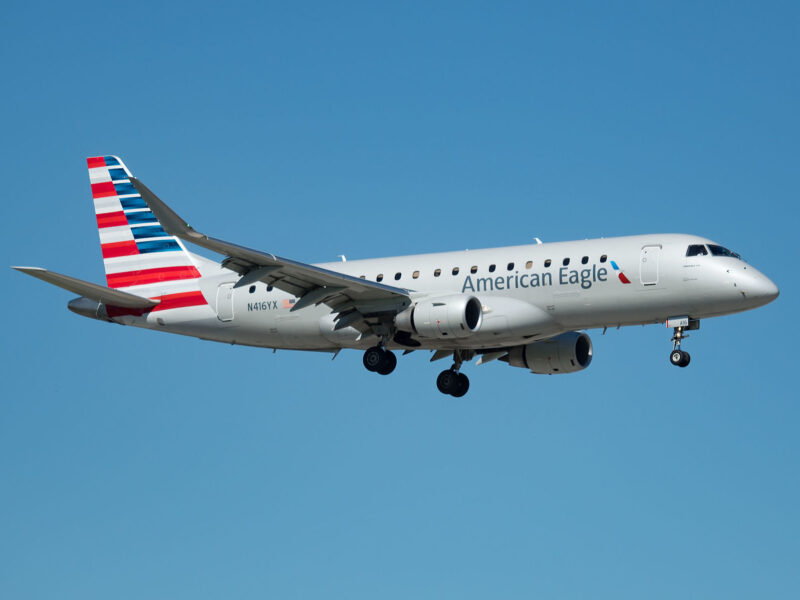
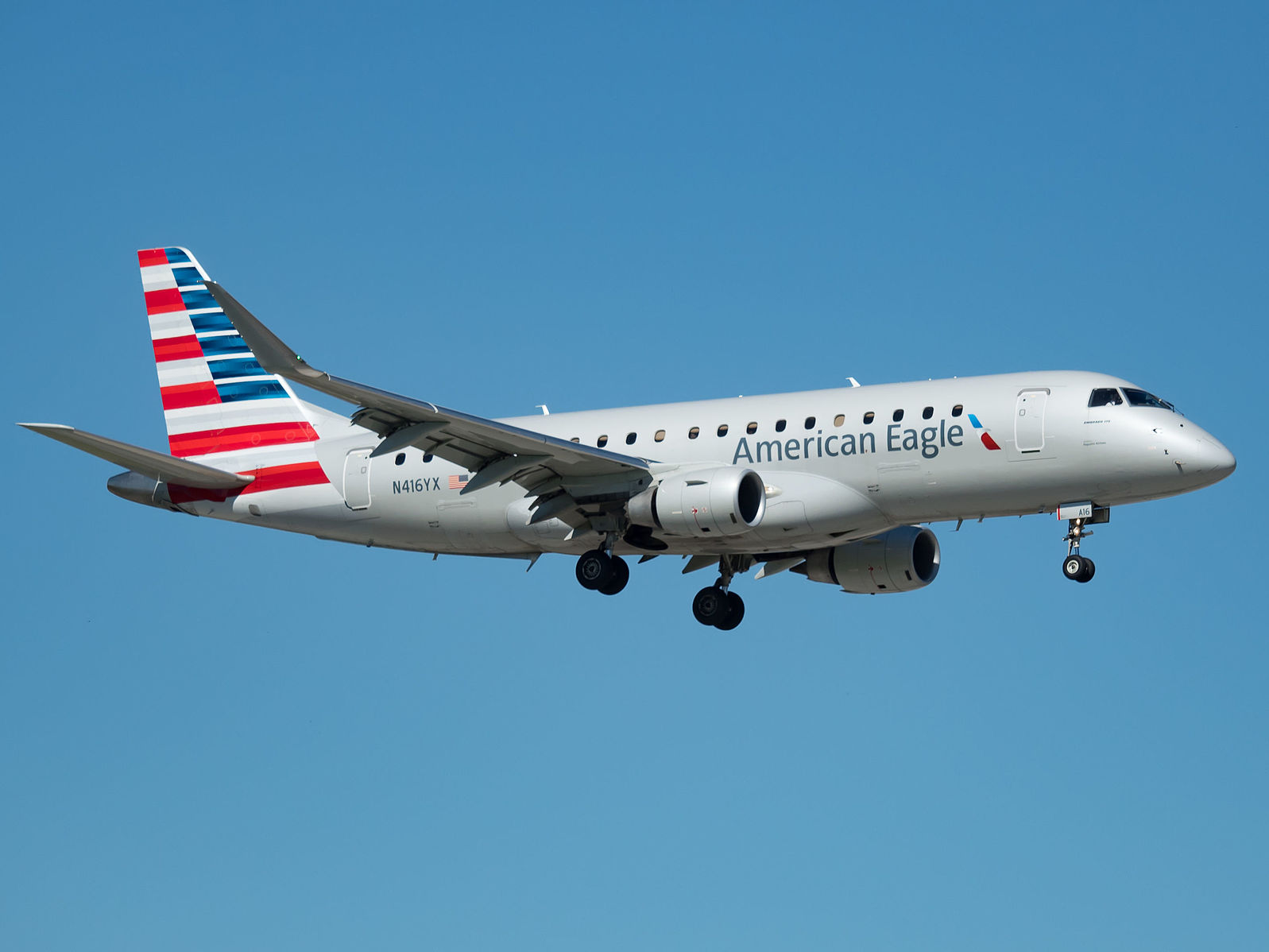
American Eagle Embraer ERJ-175LR at Miami International Airport. Photo by: Venkat Mangudi

In the cyclical airline industry, these should be the good times.  What gives?

Earlier this week Republic Airlines declared bankruptcy stating that a lack of pilots resulted in lost revenue due to grounded flights. Anyone in the travelling public reading this story must be confused as to how an airline can go bankrupt in this time of cheap fuel. After all, planes are jammed full and stories of record profits being set by airlines abound.

To understand all this, it is important to note that Republic isn’t a “real” airline in the customary sense. That is, you can’t go online and buy a ticket on Republic Airlines. Republic, like most “regional” airlines, is simply a provider of aircraft and crews to their major airline partners. Their aircraft are flown under the banners of American Eagle, United Express, and Delta Connection.

The agreements which bind Republic and other similar airlines to their partners, known as “capacity purchase agreements”, delineate the terms under which aircraft and crews are provided to fill the schedules dictated by those major airline partners. Once signed, as with any contract, the terms are set. And again, as with any business contract, there are likely a host of penalties imposed for non-performance of the terms of those contracts. This is all routine business stuff.

Revenue Restricted but Costs Unbound

The regionals, then, are bound on the revenue side of their ledger by the contracts they’ve signed. They don’t get to raise prices on their flying customers because they don’t really have any. Their customers are the major airlines with whom they have signed contracts. Passengers are the cargo who incidentally happen to be on the airplane. You can easily see how incentives are aligned for the “enhanced” customer experience that most regional airlines provide.

The only way for a regional airline to increase profit, then, is by reducing costs.

One cost input that most likely wasn’t considered highly variable was that of labor, specifically pilots. One of the main reasons the regional airline model even exists is that it functioned as an end run around union contracts at the major airlines. Several decades ago major airline unions (ALPA, APA) allowed loopholes in their contracts allowing their airlines to outsource the operation of smaller aircraft thinking that the amount of flying would remain small.

That was a strategic mistake for the unions as “regional” airlines grew unabated using new fast and capable jets. Regional airline enplanements grew from 27 million passengers in 1985 to about 160 million passengers in 2014 taking a huge bite out of the flying done by the unionized pilots at the major network carriers. The reduced costs from the regional airline operations also allowed the major airlines to field a competitive response to the explosive growth of younger low cost carriers (LCCs), notably Southwest.

The Model Breaks Down

That model more or less worked because younger pilots were willing to accept the low wages offered by the regional carriers in exchange for the flight hours they needed to apply for a job at the major airlines where the money is. In a sense it was a deal with the devil because the existence of the low paying regional jobs came at the expense of the higher paying flying at the majors. It might have been considered an industry wide “B” scale, but the model persisted.

With the crash of Colgan 3407 and the subsequent legislation which raised the minimum hours required for any pilot to work at a regional by five times, the wheels have apparently come off. Any pilot who wishes to work for any commercial airline must now have a minimum of 1500 hours.

This new requirement has effectively shut down the pipeline for new pilots. As the major airlines now must hire thousands of pilots to replace retiring pilots, the regionals are losing pilots faster than they can be replaced causing them to cancel flights for a lack of pilots.

Republic itself was losing around 40 pilots per month and couldn’t cover their schedule. This meant lost revenue. Last year Republic was even sued by Delta for breach of contract in not fulfilling its obligations, the irony being that Delta is hiring away many of Republic’s pilots.

A result of the pilot shortage is a bidding war for the fewer pilots remaining available for hire. One need only click over to the Republic corporate home page to see multiple appeals to prospective pilots. For pilots with the requisite number of hours, it’s a good time to be looking for a flying job.

As far as the Republic bankruptcy is concerned, this is nothing more than a renegotiation opener by Republic to gain more favorable terms with its major partners while avoiding the penalties in its existing contracts. As the pilot shortage worsens, fares will likely increase and service to smaller cities is likely to be curtailed or ended.

Are We any Safer?

A good way to start a bar fight or internet brawl on a pilot forum is to question the need for the higher hours requirement. It should be noted that both the Colgan pilots far exceeded the new hours requirements. The problem in that crash was identified as a weak captain and fatigue. It should also be noted that the Air Force routinely puts its pilots in the seat of advanced fighter and multiengine heavy transport aircraft with only about 200 hours of experience. I know because I was one of them.

That said, it appears to be highly unlikely that the 1500 hour requirement will be relaxed any time soon. The topic is simply too much of a political hot potato. My guess is that we will see more shrinkage and possible bankruptcies of regional airlines along with major airlines bringing some of that flying in-house in order to keep ahold of their pilots.
747th Heaven – Seven Ways The 747 Has Been Utilized

The Jumbo Jet, aka The Queen Of The Skies, has assumed many forms. As reported recently on Avgeekery.com, the 747 is being phased out by most of the commercial aviation providers. But since its inception in 1970, the 747 has been put to use in a variety of ways.  While its beauty is unmatched, its real claim to fame is its versatility.

We’d like to list 747 different ways that the jet has been used…but even The Queen isn’t that versatile. Here are seven different uses in which the 747 has excelled.

To deliver its latest devices, Samsung enlisted a fleet of 747s. Credit: Samsung.
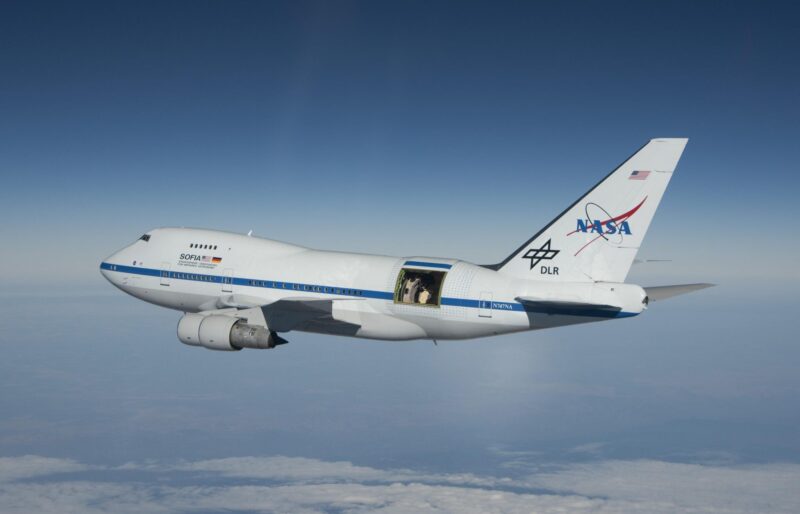
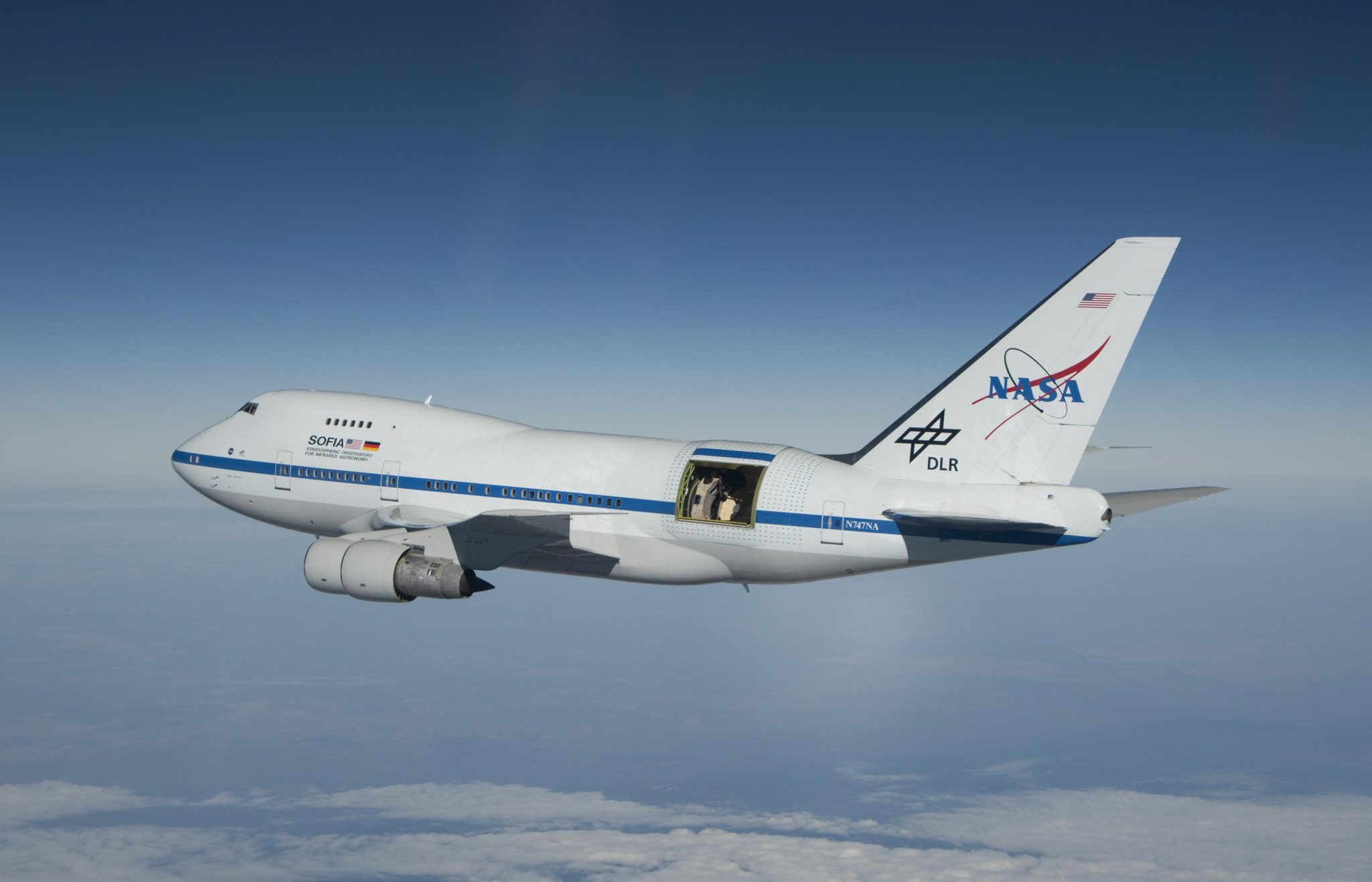
SOFIA Observatory in flight. Credit: NASA

Flying Observatory

This month NASA is using a 747 as an airborne platform for SOFIA – Stratospheric Observatory for Infrared Astronomy. A heavily modified Boeing 747 Special Performance aircraft is able to fly near the edges of the atmosphere, thus providing better visibility than observatories on earth. Cloudy nights prevent and/or limit star gazing.

This 747 carries a 17-ton, 8-foot telescope that is mounted behind a sliding door in the side of the fuselage. The door measures 16-by-23 feet. The fuselage was shortened by 55 feet, which increases its performance capacities.

Its range and ceiling make it perfect for studying the stars and planets. It can stay airborne for over 12 hours and has a range of over 7,000 miles plus a ceiling of 45,000 feet. That allows it to fly above the troposphere. Water vapor obscures infrared light and only .2 percent of the Earth’s water vapor is above the troposphere.

Thus ends today’s science lesson but we still have more unique 747s below!

U.S. Navy photo by Photographer’s Mate 2nd Class Daniel J. McLain

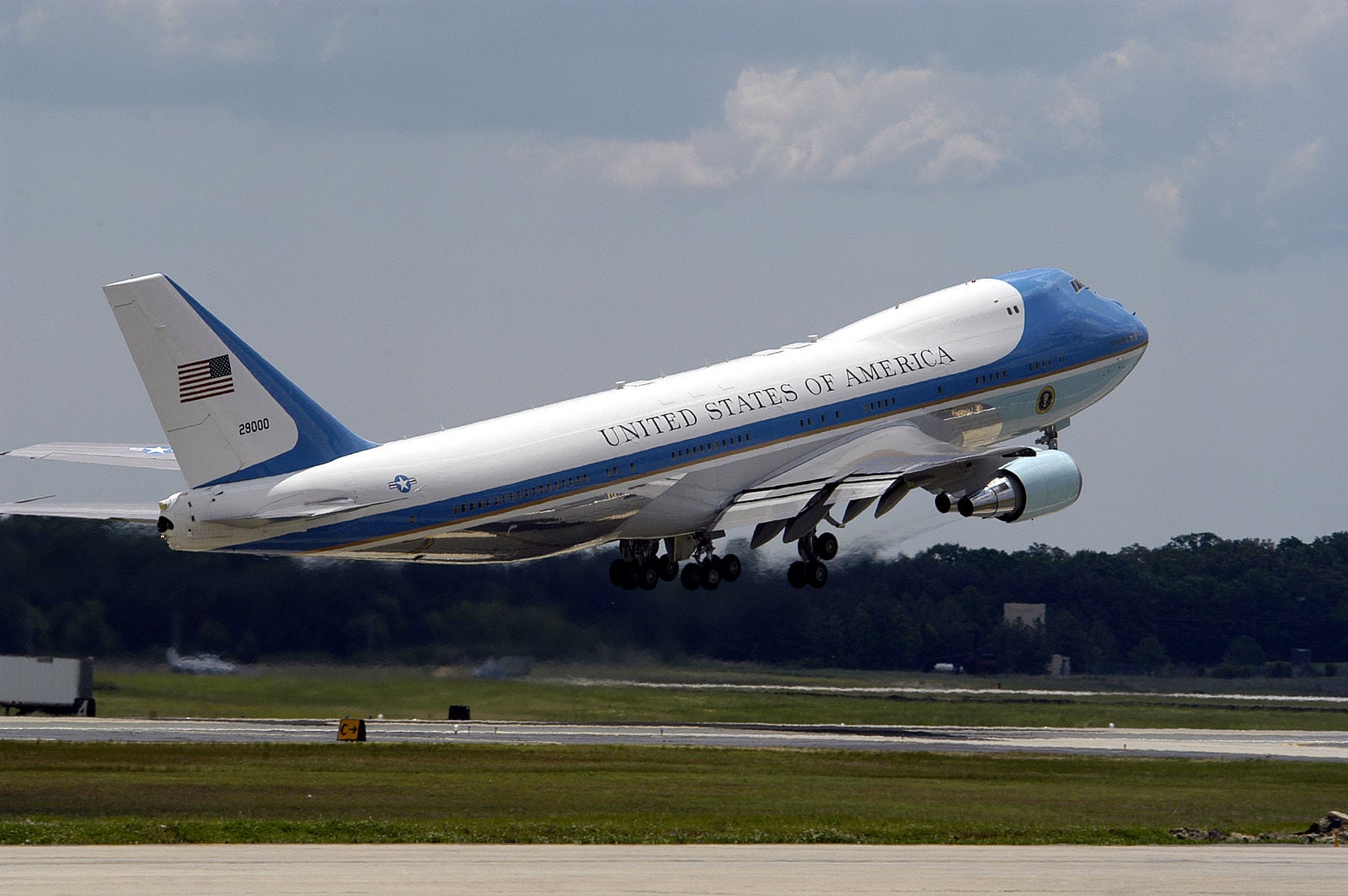
Air Force One

Since 1970, a version of the 747 has served as Air Force One, one of the modern icons of America. Currently the Air Force employs two Boeing VC-25A, which are specifically configured and highly customized Boeing 747-200B series aircraft.

The ability to stay airborne and be refueled, along with its size, makes it a perfect mobile headquarters for the Commander in Chief. Plus the 747’s four engines provide a safety margin not found on current the larger two-engine commercial jets.

The two planes currently in use are about to reach the end of their 30-year life spans. In January, the U.S. Air Force awarded Boeing an initial contract worth $25.8 million to produce the next generation. Boeing will customize its 747-8, its latest model, to become the next Air Force Ones. The new aircraft should be in service by the end of this decade.

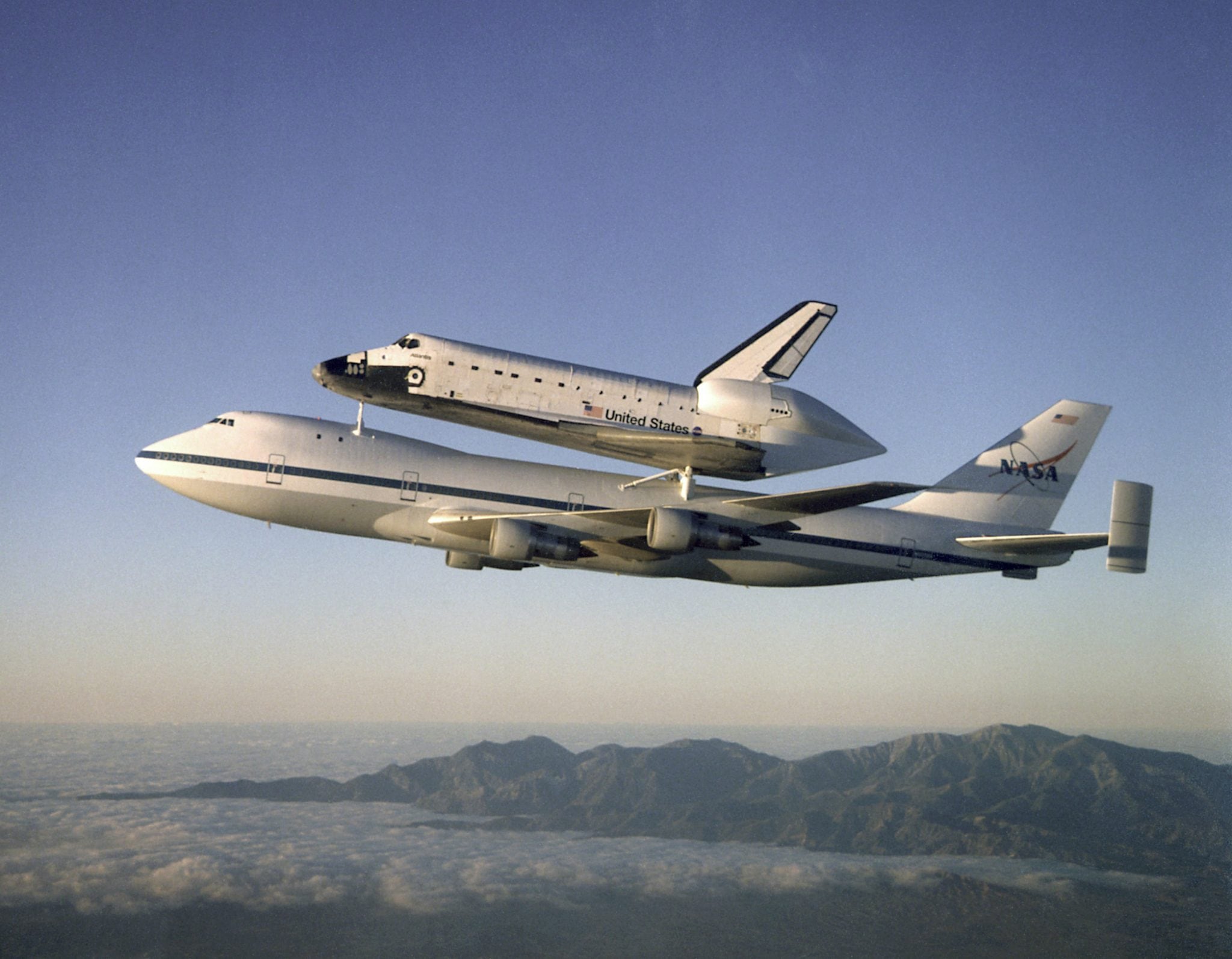
The Space Shuttle Atlantis is carried on the back of a 747. Credit: NASA

Space Shuttle Ferry

The end of the space shuttle program in 2011 ended one of the great spectacles in aviation. Space shuttles were launched in Florida but often landed at Edwards Air Force base in California.

To transport the 83-ton spacecraft back to its starting point, two specially equipped 747s were used. Equipped with two additional vertical stabilizers, the 747s flew at 285 mph at 13,000 to 15,000 feet when transporting the shuttle.

Late last month, NASA unveiled an exhibit at Space Center Houston. NASA 905, one two modified 747s that transported the space shuttle, is being displayed at Independence Plaza. On top of the 747 is a replica space shuttle called Independence. Visitors can go inside each craft.

The 747 Supertanker during the 2010 Carmel forest fires in Israel. Credit: ShacharLA

Fire Fighting

Evergreen International Aviation, a company based in Oregon, converted four 747 cargo planes into aircraft that could deliver nearly 20,000 gallons of water and/or fire retardant chemicals. The company hoped to use its big plans to drop big loads to help fight fires.

Alas, the business model never worked out as government agencies preferred to continue using smaller planes. Evergreen filed for Chapter 7 bankruptcy.

Last year, Global SuperTanker Services, LLC stepped in and took over Evergreen’s planes and plans. The use and effectiveness of 747 super tankers has yet to be determined.

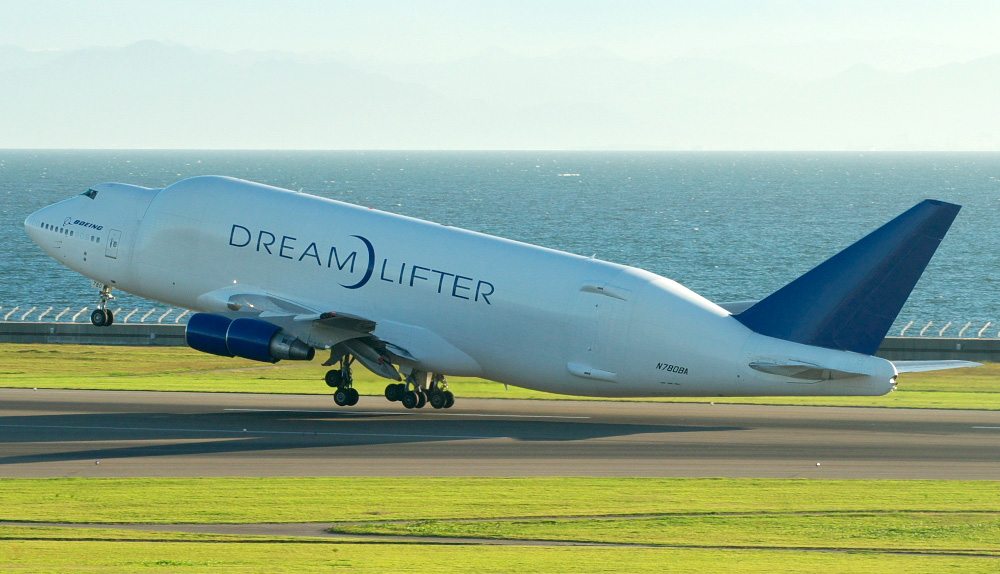
A 747 Dreamlifter takes off. Credit: Yamaguchi Yoshiaki

Dreamlifter

If you want to see a tricked-out 747, consider the Dreamlifter, aka Large Cargo Freighter.

The 747 is one of the most recognizable aircraft because of its “bulge” in the fuselage that extends from the cockpit aft. The Dreamlifter accentuated and expanded that bulge for nearly the entire length of the fuselage.

At 65,000 cubic feet (1,840 cubic meters) the cargo hold is the world’s largest. The tail swings open to load cargo. Boeing uses the Dreamlifter to transport aircraft parts for the 787 to its assembly plants around the world. The modified 747 went into service in 2007.

In 2013, Atlas Air Boeing 747 Dreamlifter en route from John F. Kennedy International Airport to McConnell Air Force Base in Wichita, Kan., mistakenly landed eight nautical miles away at Colonel James Jabara Airport.

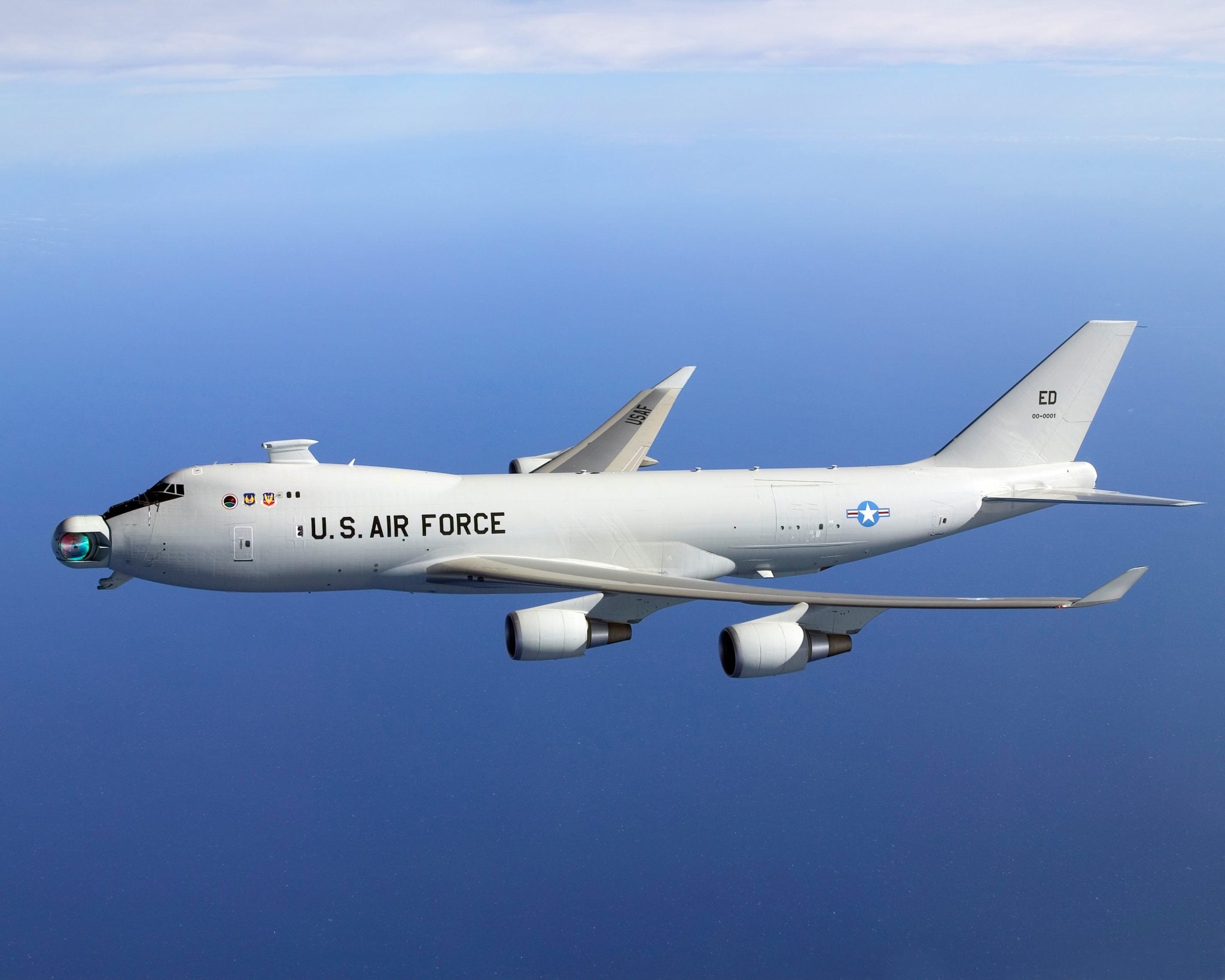
Airborne Laser Testbed known as the YAL-1A. Credit: US Air Force

Weapons Platform

About 20 years after Star Wars, the U.S. Air Force tried out its own “light saber.” In 1996, funding was approved and tests began to equip a 747 with a nose-mounted laser. The Airborne Laser Testbed was part of the U.S. Department of Defense’s Missile Defense Agency

The 747 was equipped with a chemical oxygen iodine laser that could track and destroy a missile during its boost phase. Six years ago during a test flight the system successfully tracked and destroyed a missile.

However, prohibitive expense of the project and the plane’s limited range led to the project being de-funded and shelved.

Samsung747Jumbo Jet Gimmicks

The 747 is such an iconic plane that companies and businesses like to come up with ways to garner attention.

A year ago, when Samsung was launching its GalaxyS6 and Samsung Galaxy S6 edge, it wanted to make sure supply would equal demand. The company enlisted a fleet of 747s to get the devices delivered.

Boeing, which manufactures the 747, is based in Seattle and has a long history with the NFL’s Seattle Seahawks. The team’s recent success led to Boeing doing special paint jobs on 747s each of the last two years. Last season, Boeing’s Seahawks-themed paint job went on a newly designed 747-8 freighter with an up-graded paint job.

Boeing 727 Freighter Lands Safely in Guam Without Nose Gear

0

A venerable 727 cargo jet made a safe landing without a nose gear.  Video is below.

Asia Pacific Airlines operates a fleet of 3 727-200 cargo aircraft. (Screenshot from website at www.flyapa.com)

If you follow our site closely, you know that we at Avgeekery have a soft spot in our heart for the Boeing 727. There are very few flying examples left. By now, most airlines and major cargo operators have retired them. There are a few operating for smaller outfits around the world though. One of the remaining operators is Asia Pacific Airlines who operates a 727-200 with winglets.

On Feb 26, tail number N86425, a 37+ year old Boeing 727 arrived at Guam International Airport and realized that its nose gear would not extend. After completing a touch and go maneuver (apparently in an attempt to jiggle the nose gear free), the aircraft made a second landing attempt and completed textbook emergency landing. Despite gusty winds, the pilot held the nose off the ground for as long as possible while still ensuring he had elevator effectiveness to slowly and gently lower the nose. No word on damage yet.

Video was posted by KUAM news on Feb 26 (local).

Startling video of the Asia Pacific Airlines cargo plane making an emergency landing at the Guam International Airport, after it’s nose wheel failed to come down.

Posted by KUAM News on Thursday, February 25, 2016

Meet Instagram’s Most Creative #Avgeek Photographer

1

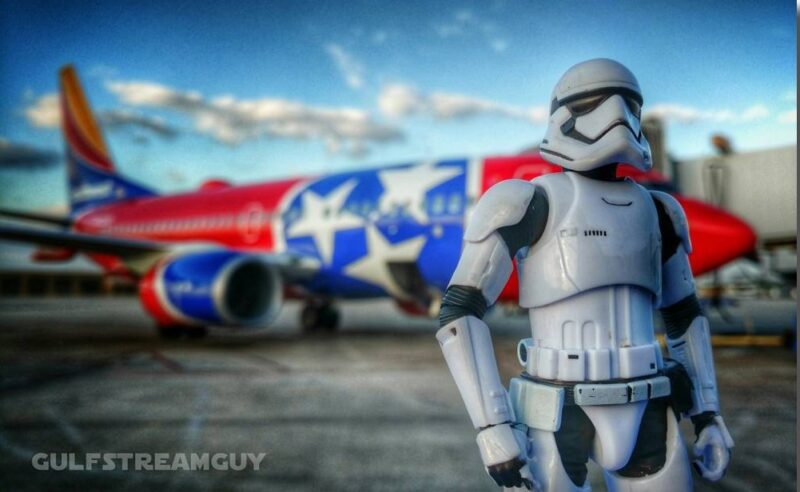
GulfstreamGuy’s photos feature scenes that stir the #avgeek’s imagination.

Everyday, thousands of people post amazing airplane photos on Instagram.  But few people are able to take a photo of a flying machine and turn it into a work of art that stirs the imagination.  Jason Hamm, aka GulfstreamGuy, has that unique talent for mixing photography and creativity to produce thoughtful scenes combining action figures and airplanes.  His popular Instagram account features over 12,000 fans! We recently sat down with Jason to learn more about his aviation passion.

1.) Tell us a little about yourself. When did you first realize you were an avgeek?

swagulfstreamguyMy name is Jason Hamm, I’m 42 years old and I’ve been married to my wife, April, for 15 years. I have 2 kids. My daughter, Savanna, is 11 and my son, William, is 7.

I was born in Germany as an air force brat and so I have always grown up around aviation. I can remember waking up to the sounds of local B-52s in Grand Forks AFB, North Dakota doing their morning engine run-ups and I used to LOVE hearing the raw power they filled the morning air with! It was actually so loud I can remember having to yell at my friends while trying to talk to them as they stood next to me!

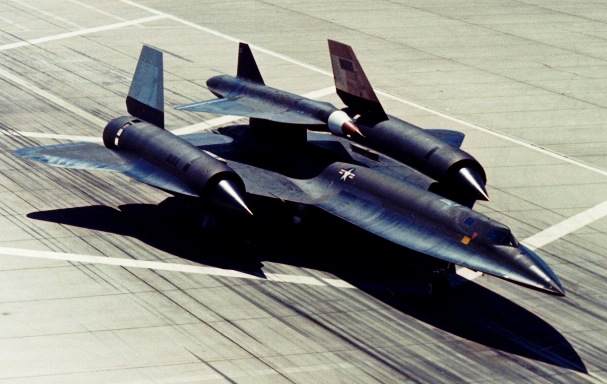
I always think back to a time while I was in North Dakota and my dad took me down to the flight line fence to see one of the most amazing airplanes I had ever seen in my life. The long sleek black fuselage was unlike I had ever seen before. My dad just kept referring to it as the “Blackbird”! I saw this SR-71 and I KNEW I needed to learn more about aircraft!

2.) Besides taking great photos, what do you do for your day job?

Well, thank you for the compliment! I’m very proud to say I am a ramp agent for Southwest Airlines here in Little Rock at the Clinton National Airport. I’ve been working at the airport since 1993 in some form or fashion. I was a refueler, I worked at a private flight department, an FBO, and I worked for Northwest for almost 10 years before eventually landing my current career at the LUV airline!

3.) Your Instagram account has some of the most unique aviation photos.

gsg2Thanks! When I started getting involved with aviation photography I tried doing the “spotting” type of photos. This, of course, being aircraft landing, taking off, and taxiing. I’ve never been able to capture these type of shots with any type of proficiency and there are so many aviation photographers who excel in these type of shots so I set my sites on capturing images that the general public may normally do not get to see. These include ramp shots and up close shots, heck, maybe even shots from WITHIN the wheel well of a 737!!

I also have learned the use of HDR (High Dynamic Range) in my photos of Instagram (Thanks, Snapseed!!) to give many of my photos a certain “painting-like” look to them. HDR, I’ve found, has to be done carefully to avoid giving the photos a over saturated fake look. I am my own worst critic so if the photo pleases me, I will post it. I literally have thousands of photos I will not show anyone because they weren’t up to my standards.

4.) On Instagram, you frequently combine figurines and airplane models while shooting pictures of real jets. Where did you get this idea?

About a year and a half ago I was looking through Instagram accounts and I did a search for Star Wars. I came across this account buy the name of Matt, aka “Captain Kaos” (stuckinplastic.com). His gallery has not only some of the best action figure photography I’ve ever seen but also he incorporates an amazing original story or paragraph to each one. I thought it would be a fun idea to put my love of Lego figures (and eventually Star Wars Black Series figures) together with the aircraft I’m surrounded with for a few shots now and again. The response has been great! I’m always thinking ahead and I look at EVERYTHING around me for ideas.

5.) What’s your favorite #avgeek memory?

gulfstreamguy I have a few but one of my favorite avgeek memories happened on December 9, 1999. That’s the day I proposed to my wife, April. She had never been on a plane before and I wanted to make her first time special. Thanks to the LIT Southwest Ops personnel, all of the flight crew knew about it in advance and all I had to do was get up in front of everyone during the flight and ask April to come up to the front of the plane as I got on one knee and asked for her hand in marriage. I’m thankful she she said yes!

The aircraft I proposed to her on was a Southwest 737-200 (N64SW) that was eventually retired and sent to the desert. However, this 732 eventually was turned into a corporate jet for Sonic restaurants and then sold and re-registered as N500VP. The funny part of that story is on the day we got married, right after the ceremony, we were both starving from not eating all day so we stopped by a Sonic restaurant to get something to eat! I guess some things were just meant to be!

Thanks Jason!  If you are an #avgeek with an interesting story to share, send an e-mail to avgeekeryblog@gmail.com.

Watch This Guy Try To Sell You a Used F-4 Phantom (NSFW)| VIDEO

Sell an F-4 Phantom guy.

Now Were Talking Aim-9M’s are standard…and we’ve got Martin Baker Bucket Seats.

Those of us who are old enough to remember know that there’s probably nothing worse than good ‘ole Cal Worthington trying to sell you a used automobile on TV.  His commercials were so annoying that they stuck in your head. Well now we’ve uncovered that there might actually be something worse.  This skit of an F-4 Phantom pilot trying to sell you a used F-4 while doing an impression of Cal Worthington features horrible acting with terrible camera work, and yet somehow it will still make nostalgic #avgeeks laugh.

Sell an F-4 Phantom guy's inspiration.
YouTube screen capture of video posted by: lugnutsoldcrap

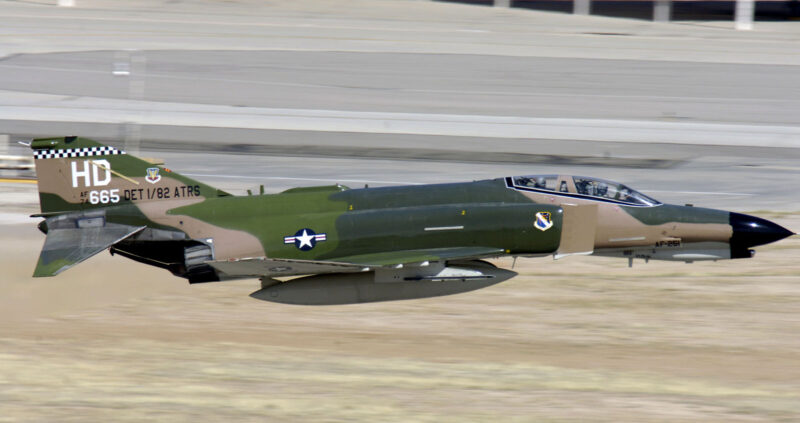
The Cal Worthington impersonator actually appears to be an F-4 Phantom pilot from the 113th Tactical Fighter Squadron that was based at Terre Haute, Indiana.  Back in 1991, the base transitioned from an F-4 unit to F-16s.  Terre Haute continued to fly the F-16 until 2007 when the flying mission ceased as part of the 2005 BRAC decision.  Today, the 181st Intelligence Wing at the base processes UAV data feeds and provides intelligence to support units around the world.

Crazy Cal: A War Hero

While Cal Worthington was best known as the semi-famous owner of the Worthington Auto Group who appeared in countless commercials and died a very wealthy man, he was actually a decorated airman and war hero first. Cal served in World War II.  He flew 29 missions over Germany in the B-17.  He received 5 air medals and a Distinguished Flying Cross that was presented by Jimmy Doolittle himself.

[youtube id=”pg8-mx4KGK8″ width=”800″ height=”454″ position=”left”]

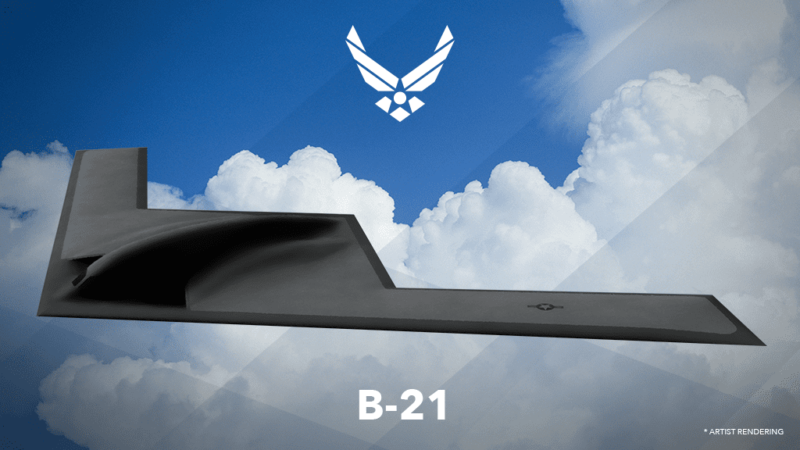
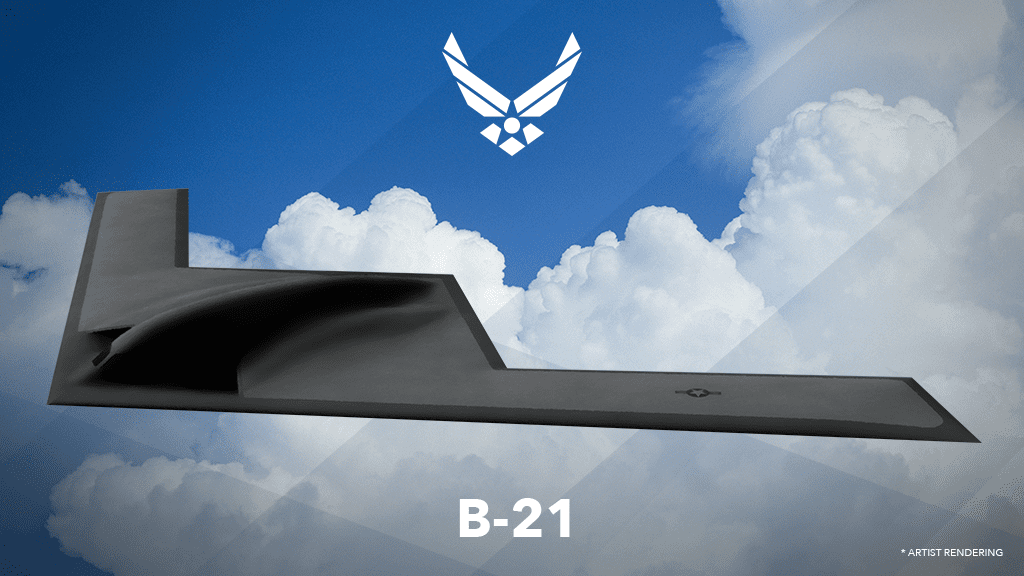
Air Force Unveils Next Generation Bomber, The B-21

b21bomber

Air Force displays rendering of new stealth bomber for the first time.

Dear ISIS and other (potential) enemies of America: You mess with the bull, you get the … B-21.

Friday U.S. Air Force Secretary Deborah Lee James revealed an artist’s concept design and the designation of the next generation long-range strike bomber. James was speaking at the Air Warfare Symposium in Orlando, Fla.

James said the B-21 will let the Air Force launch from the continental U.S. and deliver airstrikes on any location in the world.

“The B-21 has been designed from the beginning based on a set of requirements that allows the use of existing and mature technology,” James said.

The new stealth bomber has a designation but not a name. The LRS-B was tagged B-21 because it will be the first new stealth bomber of the 21st century. James is opening up the naming of the B-21 to U.S. airmen.

“So we have an image, we have a designation, but what we don’t yet have, we don’t yet have a name,” James said, “and this is where I’m challenging and I’m calling on every airman today … to give us your best suggestions for a name for the B-21, America’s newest bomber.”

The contract has been awarded to Northrup Grumman, which also built the B-2. Analysts say the program will be worth around $80 billion in total, providing a boon to Northrop and its key suppliers, but the Air Force has said only that it expects to pay $511 million per plane in 2010 dollars.

The contract to build 100 B-21s was awarded in October but the announcement has been held up as federal auditors reviewed a protest from Boeing and Lockheed Martin. The B-21 program also figures to encounter scrutiny from Congress.

The artist rendering of the B-21 closely resembles the B-2 Spirit Stealth Bomber. The plan is for the B-21 to be operational in the middle of the next decade.

So, ISIS, if you’re still around by then … beware.


Hot Links: A Roundup Of This Week’s Stories You Might Have Missed – Just Click And Read

Avgeekery.com invites you to close out your week and spend some TGIF time getting caught up on some stories of interest that you might have missed over the last few days.

Astronaut Scott Kelly. Credit: NASA/Robert Markowitz

MOST IN SPACE: When Scott Kelly returns to Earth next week, he will come back holding the record for most days in space by a U.S. astronaut. He will have spent nearly a year in the International Space Station. Kelly has been in space four times but this mission has produced some interesting facts and figures.

EMBRAER ROLLOUT: Embraer’s dominance in small to mid-size commercial aircraft received another boost when the Brazilian company rolled out the E190-E2, the first E2 jet. The aircraft is scheduled to make its maiden flight in the second half of this year and be in service in 2018.

EMERGENCY, EMERGENCY: DFW Airport, one of the nation’s busiest, had to handle two emergency landings in a 12-hour period this week.

UNION NEWS (NOT DUES): American Airlines pilots formed their own union over 50 years ago but a former union executive thinks that it’s time for the AA pilots to increase their clout by rejoining the larger Air Line Pilots Association.

WHY AIRFARES ARE HIGH: A writer who knows the airlines and travel industry explains why airfares are high even though commercial carriers are raking in profits and benefiting from lower fuel prices.

HARTSFIELD SEMANTICS: Atlanta’s Hartsfield-Jackson International is not a favorite among air travelers. Perhaps that’s because it’s the busiest – more flights equal more delays equal more people equal long lines. The airport’s claim as the world’s “busiest” has now been changed to “most-traveled.” That’s probably not gonna reduce the wait time at Starbucks, though.

NEW TERMINAL IN DUBAI: Concourse D opened at Dubai International Airport this week. It cost $1.2 billion and will increase capacity from 75 million to 90 million passengers per year. (By the way, Atlanta, Dubai claims it has the world’s busiest airport.)

DON’T FENCE ME IN: A few weeks ago Avgeekery.com wrote about tips for drone owners. At the recent Singapore Airshow there was talk of installing GPS chips in drones and then using electronic “fences” to prevent drones from flying where they shouldn’t.

RIP: Capt. Eric “Winkle” Brown, who was England’s version of Chuck Yeager, died this week at the age of 97. He was the most decorated pilot in the Royal Navy and held three world records including flying 487 different types of aircraft.

TEEN DIES OF INJURIES: A 16-year-old who was among the passengers in the helicopter crash in Hawaii has died. The copter crashed in the water near Pearl Harbor and the accident was captured on video.


The F-4 Phantom Was A Big, Fast, Heavy and Popular Fighter. Here are 8 Reasons why it was Awesome!

For over three decades, McDonnell’s F-4 Phantom was the world’s most popular fighter-bomber. It first flew on 27 May 1958 and entered service in 1960. It served a prominent role in Vietnam. Over 5,000 F-4s were produced.

Not only was the F-4 a staple for the US military, but it was also operated by the armed forces in 11 other nations. In Israel, Phantoms were key players in several conflicts, and Iran used a large contingent of F-4s in the Iran-Iraq War. Three countries still use Phantoms in front-line service.

So why was the F-4 such a durable plane and so popular with the pilots who flew the Phantom? Here are eight reasons:

  1. McDonnell Aircraft, based in St. Louis, was tasked with developing a fighter for the “next war.” The Navy wanted a twin-seat, twin-engine aircraft that could operate at high altitude at supersonic speed. The F-4 was the result. The Phantom is like an All-Pro NFL linebacker – rugged size and jaw-dropping speed. It could reach Mach 2.2 and carry more than 18,000 pounds of weaponry.
  2. After becoming operational, the F-4 established its superiority. In just over two years of test flights, the Phantom set 15 world records, including speed and altitude.
An F-4 Phantom on a bombing run in Vietnam. Credit: U.S. Navy National Museum of Naval Aviation.
  • Ironically, the F-4 was a fighter without an on-board gun. It was designed to fire rockets – Sparrows and Sidewinders. Later models added an M61 Vulcan rotary cannon. Because rockets tended to miss their targets, the cannon gave pilots a backup and a security blanket. In dogfights with MiGs in Vietnam, the cannon and the heat-seeking Sidewinders were the only effective weapons.
  • The F-4 was initially developed for the Navy but the plane was soon in service for all branches of the U.S. military. The versatile Phantom could carry out recon missions, was outstanding in dog fights and could provide air support for ground troops.
  • The Phantom was packed nose to tail with high-tech gear – radar, missile fire control, advanced navigation systems, an analog air-data computer – and it marked the beginning of the two-seat fighter. The back seater served as fire-control/radar officer, navigator and in later versions of the F-4 with dual pilot controls was also capable of flying the plane.
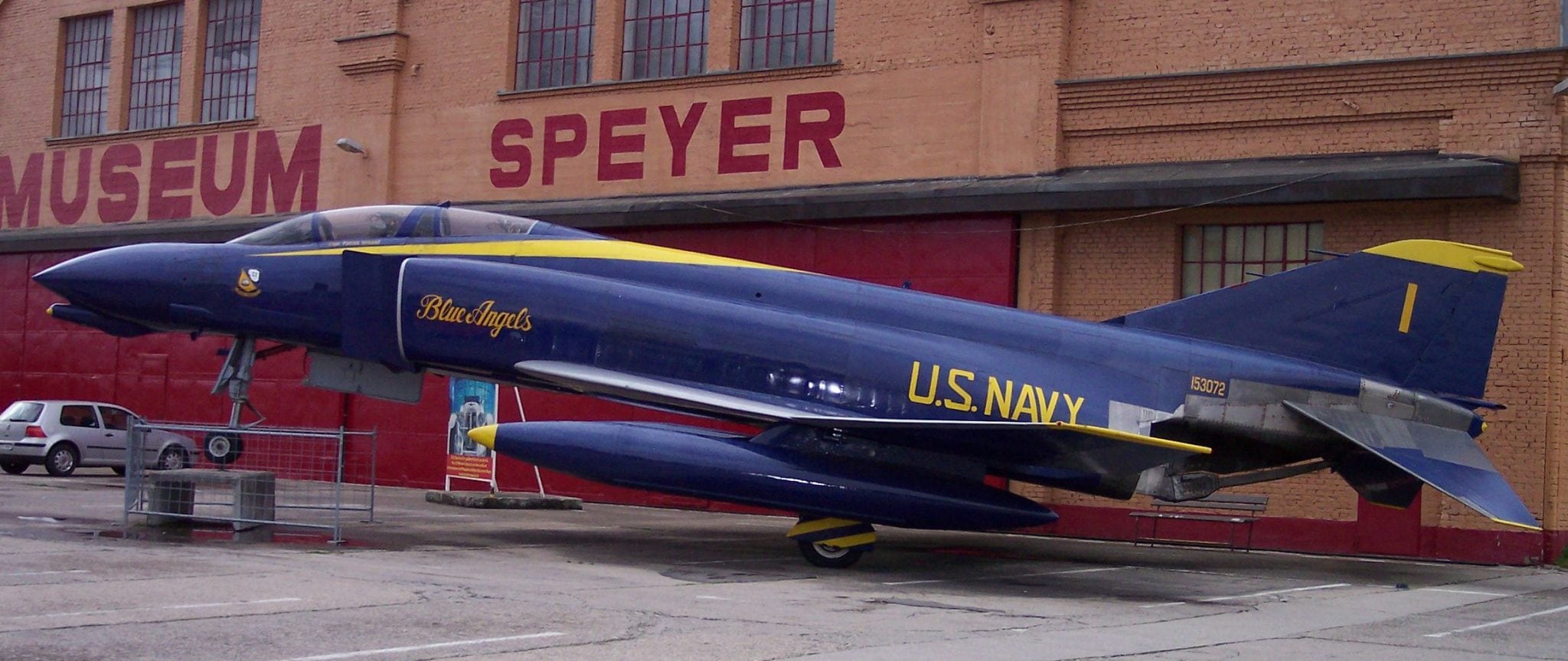
    mcdonnell_douglas_f_-_4j_phantom_blue_angels
  • The size, speed and power of the F-4 made it an awesome sight in flight. The Phantom is the only aircraft that was used by the United States’ two flight demonstration teams – the Air Force’s Thunderbirds and the Navy’s Blue Angels.
  • 2.25.16

    Getting Pumped Up About The Hybrid Airship

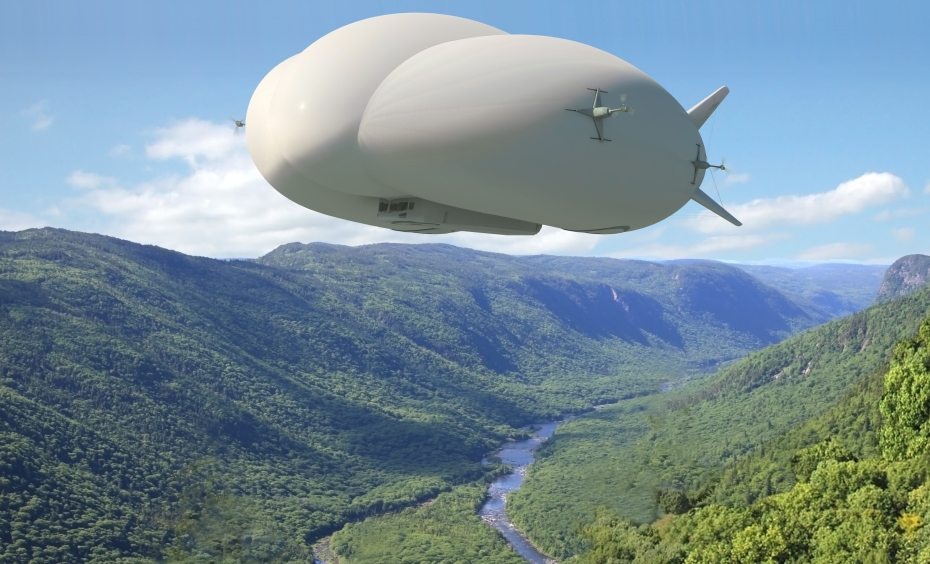
    Artist rendering of the Hybrid Airship being developed by Lockheed Martin and Hybrid Enterprises. Credit: Lockheed Martin.
    Artist rendering of the Hybrid Airship being developed by Lockheed Martin and Hybrid Enterprises. Credit: Lockheed Martin.

    It can carry more than a C-130 and fly over 1,000 miles at a fraction of the cost.

    Everything old is new again. At least, that’s how the saying goes. And that appears to apply to blimps.

    Also known as airships, they were on the leading edge of man’s attempts to leave the Earth’s gravitational pull. For most of us, the word associated with “blimp” is “Goodyear.” That company and others have advertised by providing blimps for aerial shots at major sports events, football games in particular.

    For the last 20 years, Lockheed Martin and Hybrid Enterprises have been working on making blimps relative for the 21st century. They’ve developed the Hybrid Airship and its purpose could be hauling cargo to and from remote locations.

    Two other companies are developing similar aircraft. Hybrid Air Vehicles, based in England, has developed the Airlander 10 and Thales has the Stratobus, a high-altitude blimp that the company describes as an autonomous, stationary stratospheric platform.

    Specifically, it’s thought that the Hybrid Airship could unlock resources in Africa that could be worth billions of dollars. The helium-powered blimp can carry up to 20 tons, has a range of more than 1,000 miles and a top speed of 60 knots.

    More importantly, it doesn’t need a runway. Unlike other airships, it doesn’t need to be tethered to a mooring tower. The Hybrid Airship has four landing pads similar to a hover craft that allows it to land on a variety of surfaces.

    “When you build a project in a remote area, you always have to start with a road, a railway line, and a power line before you build the smelter,” Robert S. Stewart, head of African mining firm Interop AG, told CNN.com. “With an airship you can fly straight in, without even an airport, just an area the size of two or three football fields.”

    The new giant blimp has caused the Federal Aviation Administration to redefine the rules for such a craft. Lockheed-Martin and the FAA have worked for more than a decade to define criteria. Last November, the FAA approved a project specific certification plan for the Hybrid Airship.

    The FAA’s approval for the certification plan gave Lockheed Martin the green light to start production. Each “super blimp” is expected to cost $40 million. Final FAA certification is needed and Hybrid Enterprises hopes its super blimp will be in operation by 2018.

    Those of us at Avgeekery.com hope that the Hybrid Airship’s official debut is accompanied by Led Zeppelin’s “Stairway To Heaven.”

    This Badass Song About Their Favorite Fighter Jets Was Written By Real Fighter Pilots | VIDEO

    Real pilots wrote the most ornery songs about pilots, planes, and the daily grind of the Air Force.

    The Dos Gringos band are better fighter pilots than singers and song writers. (That’s a compliment, guys.)

    They penned this little ditty about their favorite military aircraft. It’s catchy and the singing is above average. (That assessment comes from a below – way below – average singer.) Caution about some of the language – it’s NSFW so either be careful where you watch or plug in your earphones.

    As fun as the song is, the aerial footage that goes along with the music is top shelf.

    [youtube id=”335GdTqtyLs” width=”800″ height=”454″ position=”left”]

    Sobering Facts Regarding Aviation Emissions And Global Warming

    Spoiler alert! Chemtrails aren’t real but the world of aviation isn’t exactly environmentally friendly either.

    The debate over climate change is also a debate about scientific facts and research. According to the research and the numbers from various sources, it’s ironic that a fair amount of air pollution comes from aircraft. The urge to get from here to there as quickly and as often as possible has created growth in passenger and cargo flights worldwide.

    If the aviation industry were a country, it would rank in the top 10 in terms of carbon dioxide emissions. All flights worldwide account for about 2.5 percent of global CO2 emissions. Left unchecked, those emissions are estimated to grow by two to four times over the next three decades. And, aviation emissions could help push global warming over the 2 degrees Celsius line, which is the recognized goal to limit temperature increases.

    Atmosfair, a German organization, calculates that a roundtrip flight from, say, Denver to New York produces the equivalent of nearly a year’s worth of emissions from a car, and more than the annual emissions of an average person living in India.

    In addition to carbon dioxide, planes also emit nitrogen oxides, sulphur oxides, black carbon and as well as water vapor that can form heat-trapping clouds. Also, because these emissions take place in the upper troposphere, the effects are magnified.

    Since 1978, American commercial airlines have improved their fuel efficiency by 120 percent. United and Southwest airlines have each announced they plan on trying alternative fuels. But alternative fuels are still in the experimental phase and there’s no guarantee enough can be produced to meet the high demand.

    The Environmental Protection Agency is working on rules to address carbon dioxide emissions from aircraft. Its findings are due in April. The U.S. produces about a third of the global aviation emissions. The EPA was forced to formulate a plan after it was sued by environmental groups.

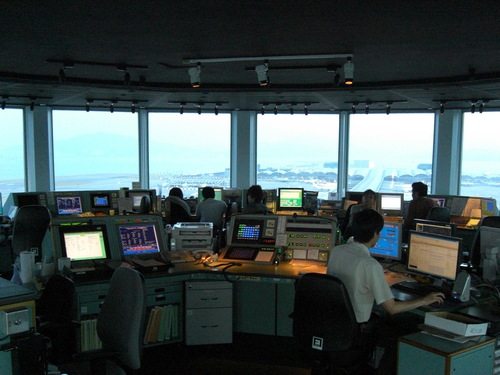
    Inside_the_Airport_Control_TowerAir pollution from planes in Europe is to rise by nearly half in the next two decades, according to the European Aviation Environmental report. Its findings are based on flights over the last 25 years. The report said that aircraft emissions of nitrogen oxides – which are linked to lung damage – has doubled since 1990 and are expected to increase by 43 percent over the next two decades.

    Regulating aircraft emissions is a global issue. Regulating flights that leave one country and land in another is difficult unless each country has the same emissions standards.

    Alice Bows-Larkin is an atmospheric scientist at the Tyndall Centre for Climate Change Research at the University of Manchester. She believes that reducing the number of planes in the sky is the only way to keep emissions at an acceptable level. She hasn’t flown since 2005.

    “Flight is the most carbon-intensive activity that we can do,” Bows-Larkin said. “We need to do something sooner rather than later. Time is massively against us.”

    Boeing Introduces 737-800 BCF Freighter, First Delivery in late 2017

    0

    Boeing will introduce the 737-800 BCF freighter by the end of 2017. Source: Boeing
    Boeing will introduce the 737-800 BCF freighter by the end of 2017. Source: Boeing

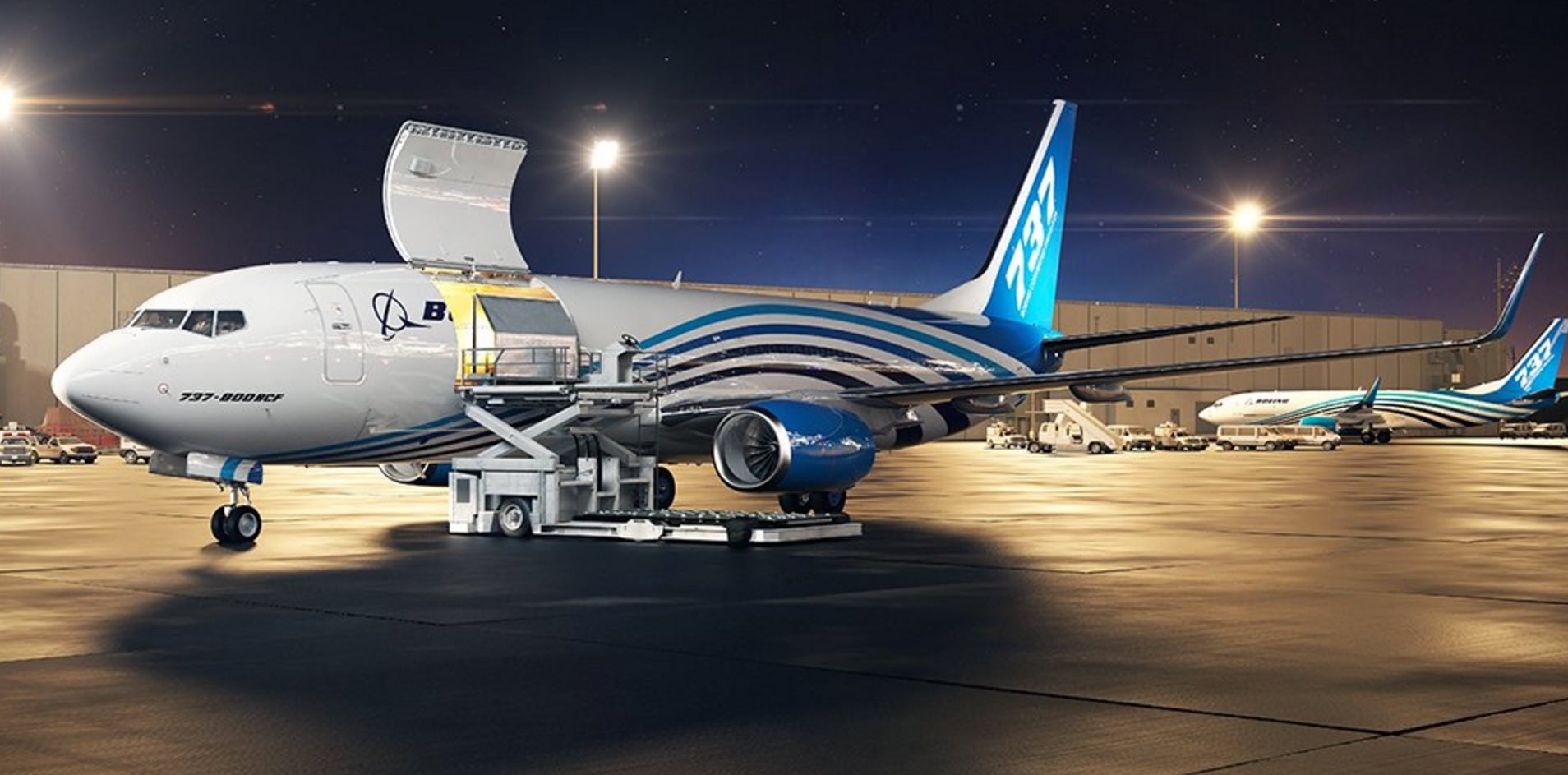
    Boeing today announced the launch of its 737-800 converted freighter. The 737 cargo series will be in the air by the fourth quarter of 2017 and the company says it is has commitments for up to 55 conversions from seven different customers.

    The 737-800 is the first Next-Generation 737 that Boeing has offered for conversion. This standard-body converted freighter will primarily be used to carry express cargo on domestic routes.

    The Next-Generation 737 provides exceptional value to express freight carriers through its superior payload, range, reliability and efficiency,” said Stan Deal, senior vice president, Commercial Aviation Services, Boeing Commercial Airplanes. “While the recovery of the global cargo market has been slow, we see demand for freighters, such as the 737-800BCF, that will carry express cargo on domestic routes.

    “Over the next 20 years, Boeing forecasts customers will need more than 1,000 converted freighters the size of the 737, with China’s domestic air freight carriers accounting for nearly one-third of the total market.”

    Boeing is continuing its practice of converting passenger planes for cargo purposes. Making this move with the 737 will allow for converting planes as more are retired from passenger service. It will also provide a high-capacity mid-range cargo carrier which will be particularly valuable to the growing Asian market.

    Once modified, the 737-800 will include a large main-deck cargo door, a cargo-handling system plus accommodations for up to four non-flying crew or passengers. Boeing says the 737-800BCF will be able to carry up to 52,800 pounds of cargo. There will be 5,000 cubic feet of cargo space on the main deck, complemented with an additional 1,540 cubic feet of cargo space at the lower cargo holds.

    Boeing says the conversions of existing passenger airplanes will take place at select facilities located near conversion demand. That will include the company’s facility in Shanghai.


    The Day We Lost A SR-71 (M-21) While Testing A James Bond-like Drone | VIDEO

    The Drone was supposed to fly over Soviet territory then air drop its film before self destructing.

    Over 50 years ago, in the height of the Cold War, spying on the Soviet Union from the air was a major endeavor.  If you’ve seen the movie “Bridge Of Spies”, you may recall that it was based on the Soviets shooting down a U-2 spy plane and capturing its pilot, Francis Gary Powers, in 1960.

    A few years later after the Powers’ incident, the U.S. had developed the Lockheed SR-71 “Blackbird” reconnaissance aircraft. But instead of risking pilots over Soviet territory, the SR-71 was used to launch a drone that would make a photography pass, drop its payload safely and then self-destruct.

    This video shows a test that ended in disaster in May of 1966, destroying both the drone and the SR-71 and resulting in the death of Launch Control Officer Ray Torick.

    [youtube id=”GMyC2urCl_4″ width=”800″ height=”454″ position=”left”]

    Is Next Major Air Show A Barometer For International Aviation?

    The next big international airshow will take place in England. The Farnborough Air Show in July will help determine if the international aviation industry is ascending, descending or maintaining altitude.

    That will no doubt be a debate over the next six months considering that last week’s Singapore Airshow wrapped up with several mixed messages.

    While Asia, and China in particular, should provide a booming market for both aircraft production and commercial aviation, there are concerns about the stability of the global economy. Plus, with saber rattling taking place in North Korea and China, there is uneasiness about political and military clashes in the region.

    Also, with oil prices at record lows and leading to lower prices for jet fuel, there is less urgency for airlines to start phasing out jets that aren’t as fuel efficient as new models.

    The 2014 Singapore Airshow did $32 billion (U.S. dollars) in business while this year’s event reported just $12.3 billion. However, the event organizer said there were 40 deals that have not been announced, up from the 24 undisclosed deals in 2014. That would appear to indicate that there’s neutral growth.

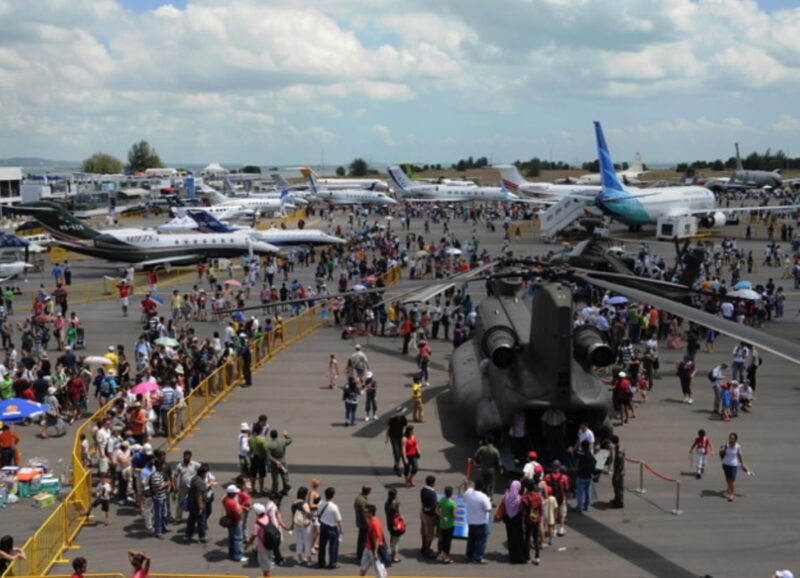
    The Singapore event drew the usual number of exhibitors and featured its largest display of static aircraft with over 60 commercial, private, military and experimental aircraft.

    Gulfstream's G650 is the company's largest and fastest business jet with a top speed of Mach 0.925. Credit: Wikipedia.
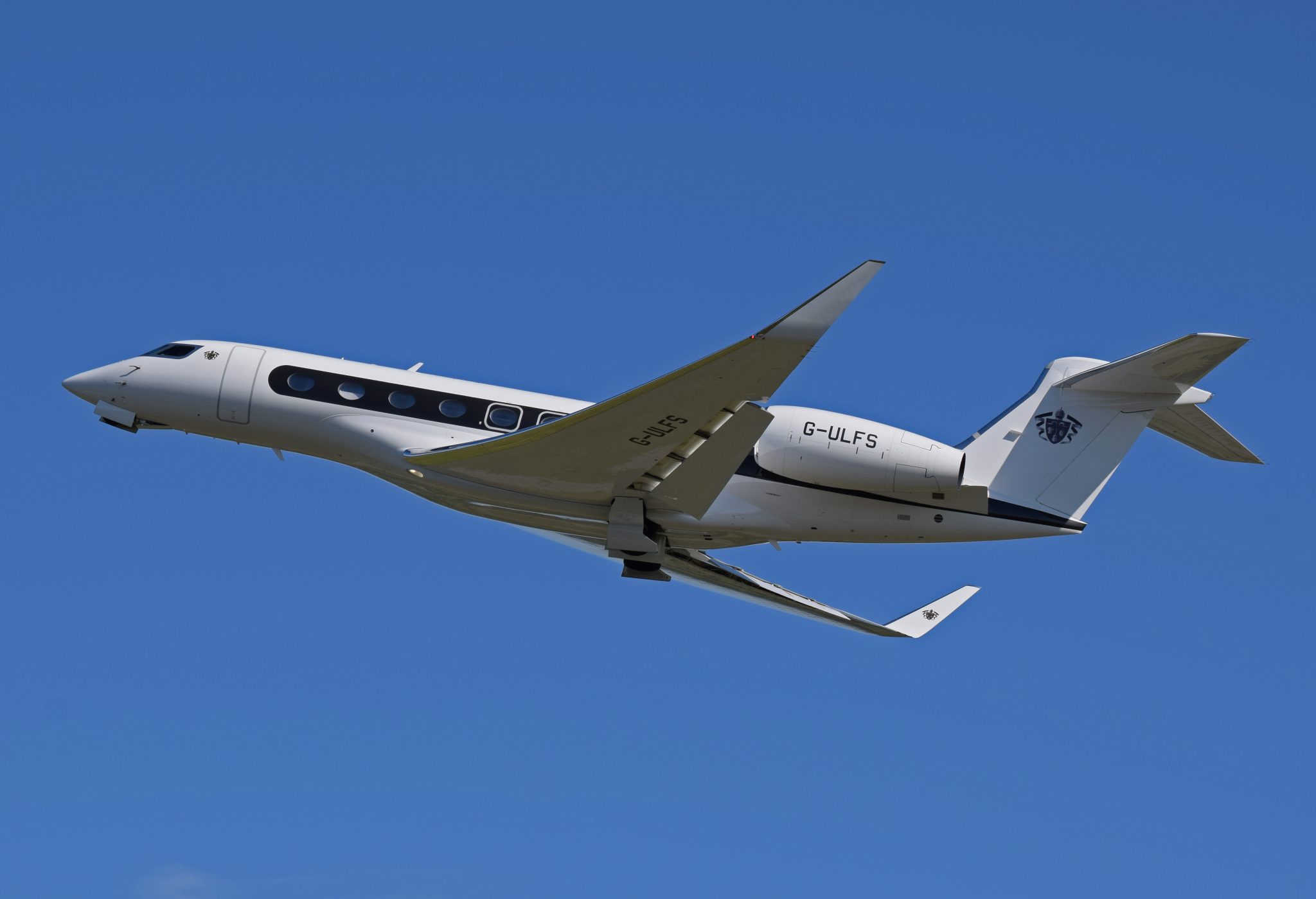
    Gulfstream’s G650 is the company’s largest and fastest business jet with a top speed of Mach 0.925. Credit: Wikipedia.

    Business Aviation Continues Growth

    One of the growth areas is personal/business aviation. The lines for private viewings of business jets at the year’s Singapore Airshow were long – about as long as the waiting list to purchase a new business net. One manufacturer said the earliest delivery would be 2018.

    Gulfstream and Embraer each had their top-of-the line business jets on display. In the last decade, world-wide business jets have nearly doubled and a Honeywell Aerospace report estimates the world will need 9,200 new business jet deliveries by 2026.

    Airbus To Challenge Boeing’s 777

    With the Farnborough Air Show more in its back yard, Airbus Group SE plans to add some intrigue to the event.

    Airbus said this week it plans to preview plans to produce a larger version of its A350 jetliner. The move is a counter punch to Boeing’s 777X, which can haul 425 passengers. The A350 stretch model would offer more seats.

    “We’re starting to conclude that perhaps there is such a market and now we’re talking to key airlines about what we might be able to do in that market but no final decision has been made,” Airbus’s chief salesman John Leahy said in an interview at the Singapore Airshow. “We’ll certainly be able to give you an update at Farnborough.”

    And Farnborough might provide a heat check on the world’s aviation business.  Despite weak sales, Boeing and Airbus have manufacturing backlogs. As one might expect of a Chief Operating Officer, Airbus’ Leahy is optimistic.

    “Some people are saying we’re in the middle of a bubble,” Leahy said. “But reality is, the only thing that worries me is to not be able to deliver the aircraft our customers have ordered.”


    Innovations And Technology Leading To Smaller, Affordable Aircraft

    Three IconA5s fly in formation. Credit: Iconaircraft.com
    Three IconA5s fly in formation. Credit: Iconaircraft.com

    Advancements in technology and innovations are coming at a staggering pace. Consider what our great, great grandparents had in their world and now consider what wonders and advancements our children will encounter.

    Advancements in flight are particularly coming at warp speed. Man was earth-bound until 1903 and 66 years later, man was walking on the moon.

    Now that we’ve got all that philosophical perspective out of the way … the cutting edge in civilian aviation involves breakthroughs in light, small aircraft that puts civilian aviation in the range for many more people.

    In short, it’s not your father’s Cessna anymore.

    According to a recent CNN article, a number of start-up companies are building planes that seat from two to five people that have long range and are fuel efficient. Some of the planes feature collapsible wings and can be stored in the same garage where you park your SUV.

    The U.S. Federal Aviation Administration defines “small” (also called “light”) aircraft as “an aircraft of 12,500 pounds or less maximum certificated takeoff weight.” (Depending on the category, according to the FAA, small airplanes can reach up to 19,000 pounds maximum takeoff weight.)

    Source: Cobalt
    Source: Cobalt

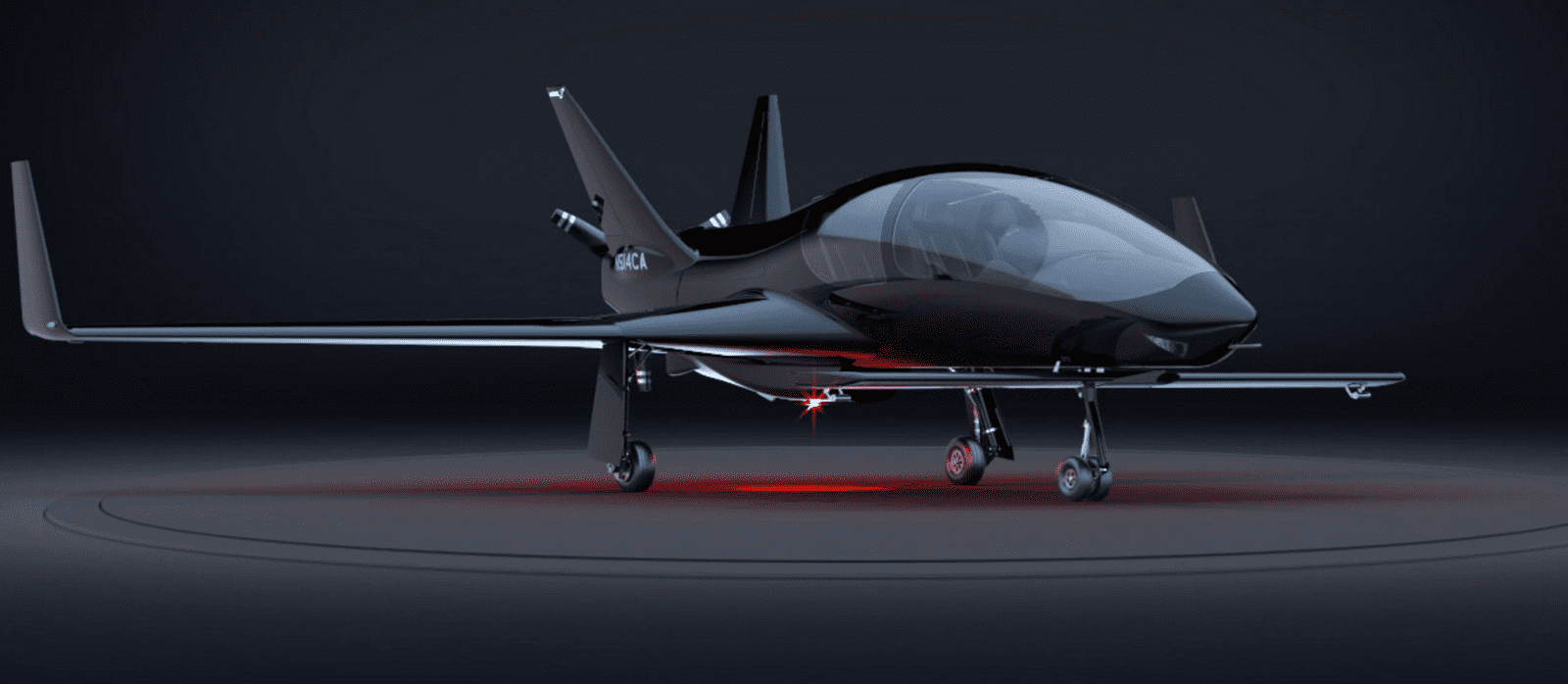
    David Loury, a French-born California-based entrepreneur David Loury is close to launching the Cobalt Valkyrie-X (cue Wagner’s “Ride of the Valkyries”). The plane has sleek, sports car looks and is powered by a single piston engine mounted at the rear of the aircraft. It seats five and can travel from London to most of Western Europe without refueling. It has a top speed of nearly 300 MPH.

    The company is taking pre-orders with a base price of around $700,000.

    Icon Aircraft, a California-based company, has unveiled a two-seat foldable seaplane called the Icon A5. The company claims that “awesome comes standard.”

    The base price is $197,000 but tricked-out versions will cost up to $250,000. It can be flown by people with sport pilot license, which can be obtained in about half the time it takes to qualify for a standard pilot license.

    Plus, with its foldable wings it fits in most car garages and can be towed over land.

    Aviation designer Burt Rutan, best known for his involvement with SpaceShipOne, has designed the SkiGull. Much like the Icon A5, its folding wings allows it to be housed in a single-car garage.

    The fuselage hangs below the single engine, gondola fashion, and the cockpit accommodates two. Perhaps the most unique aspect of the SkiGull is its retractable and flexible ski system. It allows the aircraft to land in rougher water than most sea planes. The skis also have small wheels that allow the plane to land on snow or grass.

    Much like the innovations in the phone/communication industry, it appears that designers are combining with technology to make aircraft safer and more versatile. Can we be that far away from this?

    [youtube id=”uz7nlgAjcvM” width=”800″ height=”454″ position=”left”]


    UPDATE: American Airlines Drops Suit Against Internet Provider Gogo

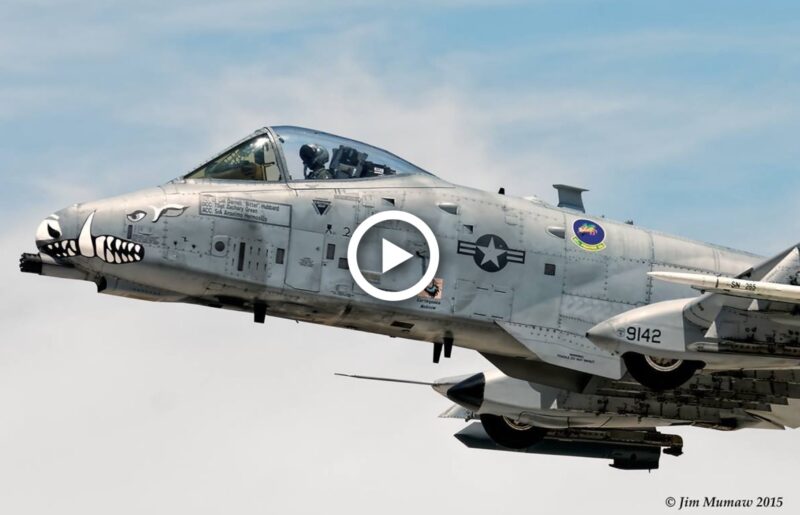
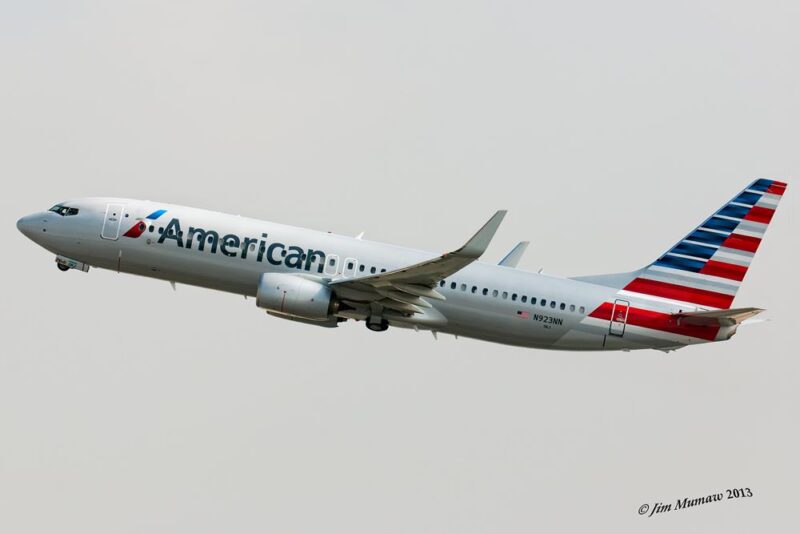
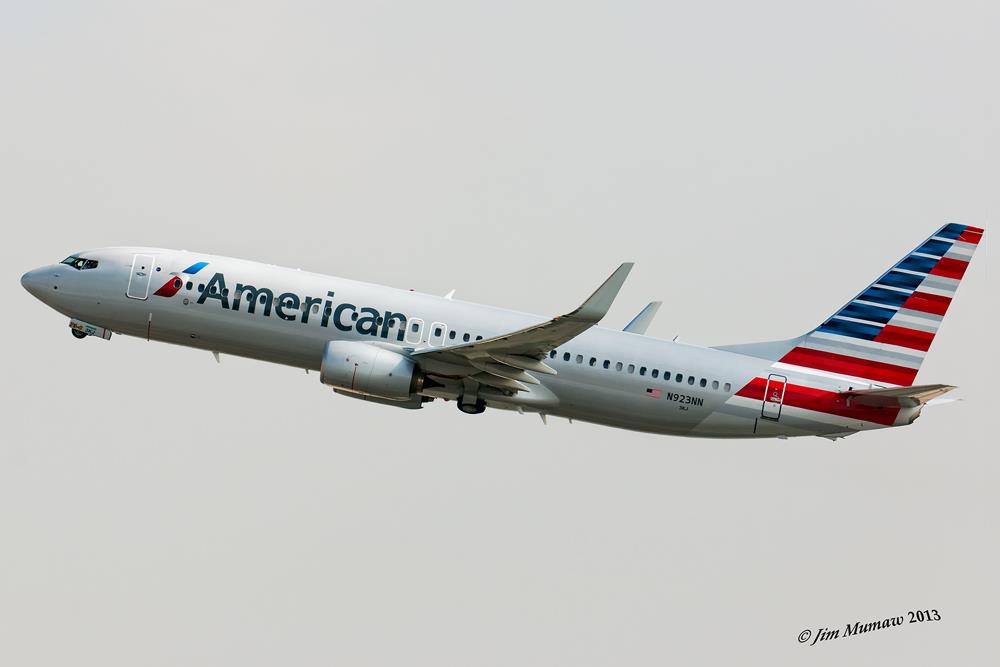
    Photo by Jim Mumaw
    Photo by Jim Mumaw

    American Airlines still wants its customers to experience faster in-flight Internet service. Gogo, which currently provides that service, might continue in that role. What won’t happen – for now, at least – is litigation.

    As reported on Avgeekery.com, last week AA filed a lawsuit against Gogo but Monday the airline announced it had withdrawn the suit. American originally filed the suit to announce it intended it to enforce a contract clause with Gogo.

    To avoid litigation, Gogo said it wouldn’t oppose American’s desire to seek competing offers of faster WiFi on its 200 aircraft.

    Gogo, the largest in-flight wireless provider in the country with nearly 9,000 aircraft, said it will submit a bid to install its latest satellite-based system on the 737s which American says have the slowest WiFi.

    Southwest Airlines Unveils “Tennessee One” | VIDEO

    Source: Southwest Airlines
    Source: Southwest Airlines

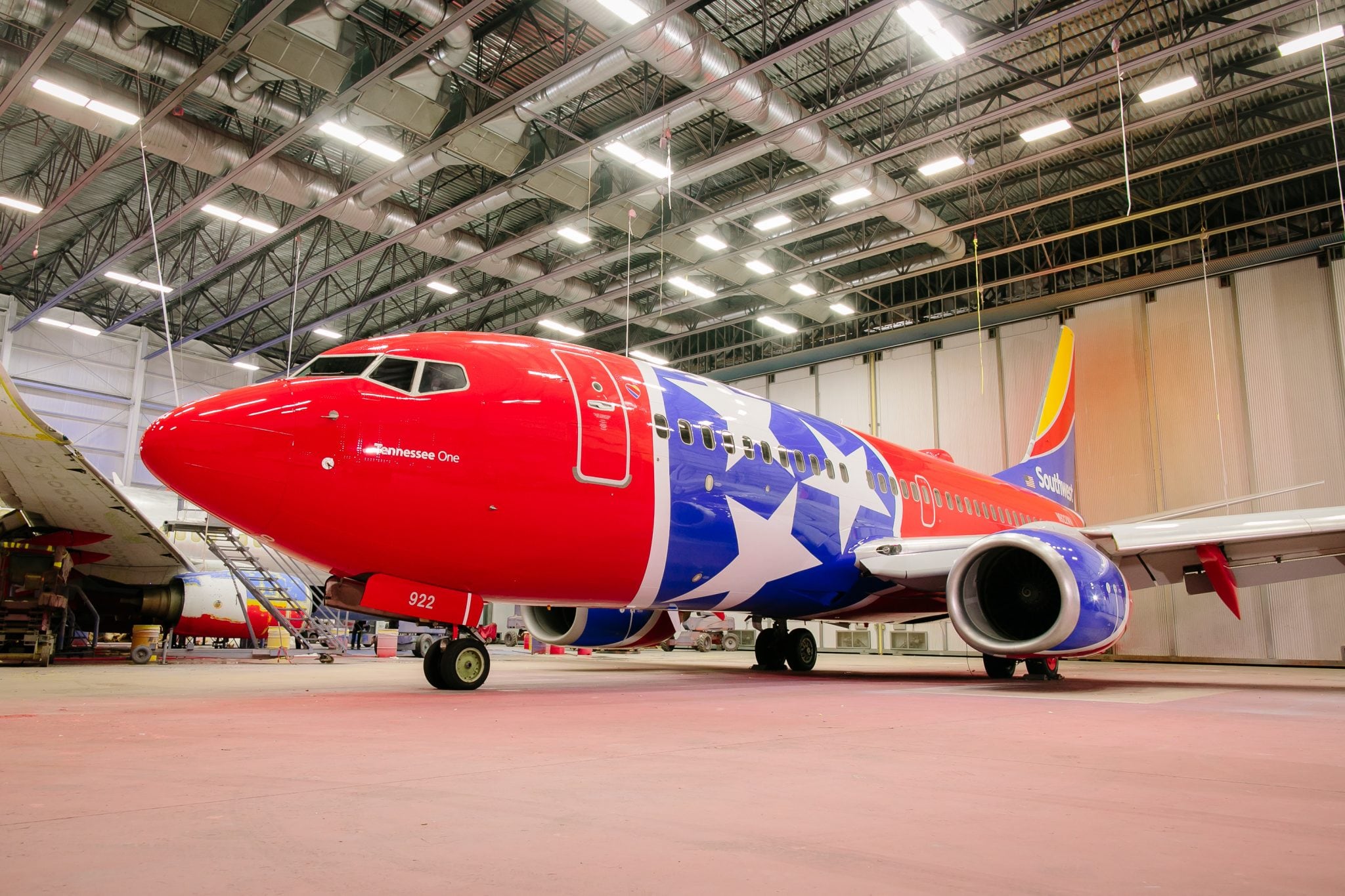
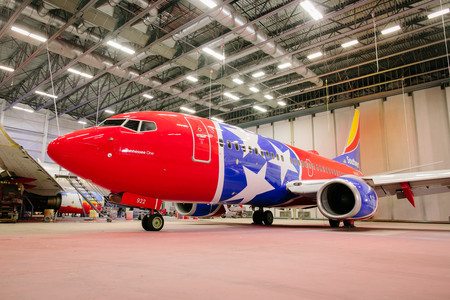
    Dallas-based Southwest Airlines celebrated more than 30 years of service to Nashville by unveiling the carrier’s latest specialty aircraft: “Tennessee One.” The Boeing 737-700 is painted with an artist’s rendition of the Tennessee state flag. (See video below.)

    Ceremonies took place Monday in Nashville with live music performances by Republic Nashville Recording Artist, A Thousand Horses, and Columbia Recording Artist, Maren Morris. Employees, customers and community members then boarded Tennessee One and flew to Memphis.

    During the flight, Tennessee native and RCA Records Nashville Recording Artist, Chris Young, along with Republic Nashville Recording Artist, Cassadee Pope, serenaded the passengers in crew. Upon arrival in Memphis, local favorite Ghost Town Blues Band provided more music.

    As part of the celebration, Southwest announced special fare sales to Nashville and Memphis from select destinations.

    Tennessee One joins ten other 737s in the Southwest fleet that carry unique, state-themed paint schemes: Arizona One, California One, Colorado One, Florida One, Illinois One, Lone Star One (Texas), Maryland One, Missouri One, Nevada One, and New Mexico One.

    [youtube id=”H4XpnqkLz1A” width=”800″ height=”454″ position=”left”]


    These F-16 Warriors Build The Next Generation of Fighter Pilots | VIDEO

    Training_an_F-16_pilot_at_Luke_Air_Force_Base_-_YouTube

    America’s Next Generation of F-16 Warriors Are Trained At Luke AFB

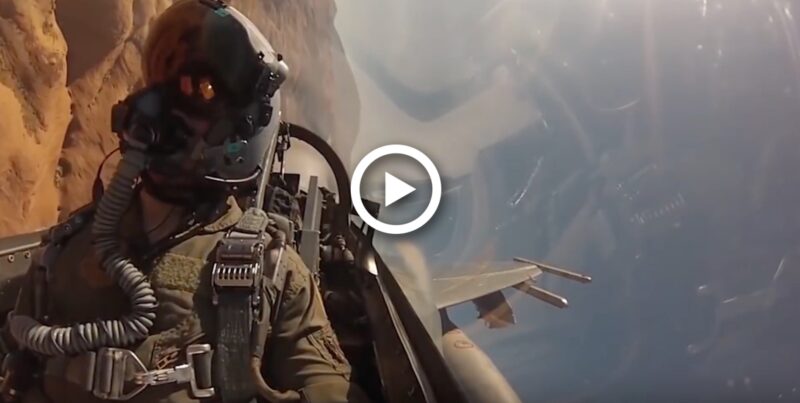
    The words “training, practice and instruction” can be applied to any job or business. But when it comes to preparing fighter pilots to be the best in the world, “training, practice and instruction” are words whose definition are refined. Two of the instructor pilots at Luke Air Force Base in Arizona discuss what goes in to their jobs during the F-16 Basic Course for pilots.
    In any military discipline, training is never the same as combat. Simulation is just that – there are no real targets, no lives at stake, no opposition fire. The goal of the instructors is to instill a mindset that winning is everything, that second place means you’re dead, that training to a razor’s edge is the only way to get maximum performance from the pilot and the aircraft.

    [youtube id=”k1jhq6YvA3A” width=”800″ height=”454″ position=”left”]

    The End Of Days For The 747 Jumbo Jet

    Photo by: Simon Sees
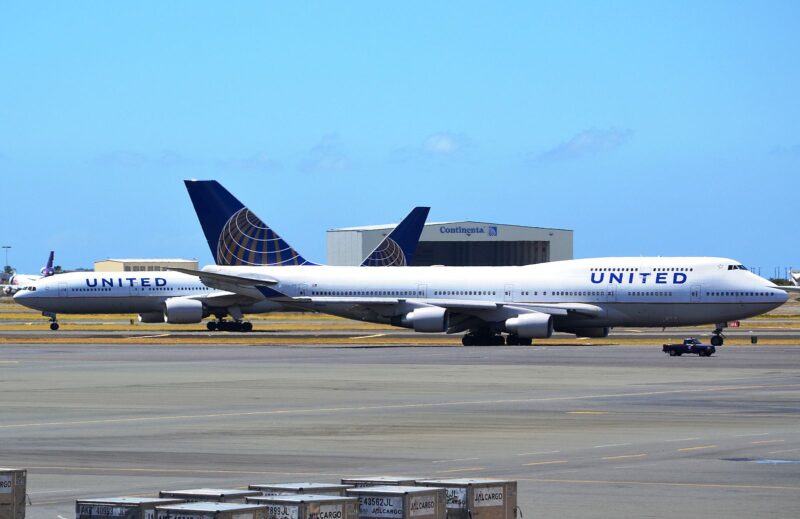
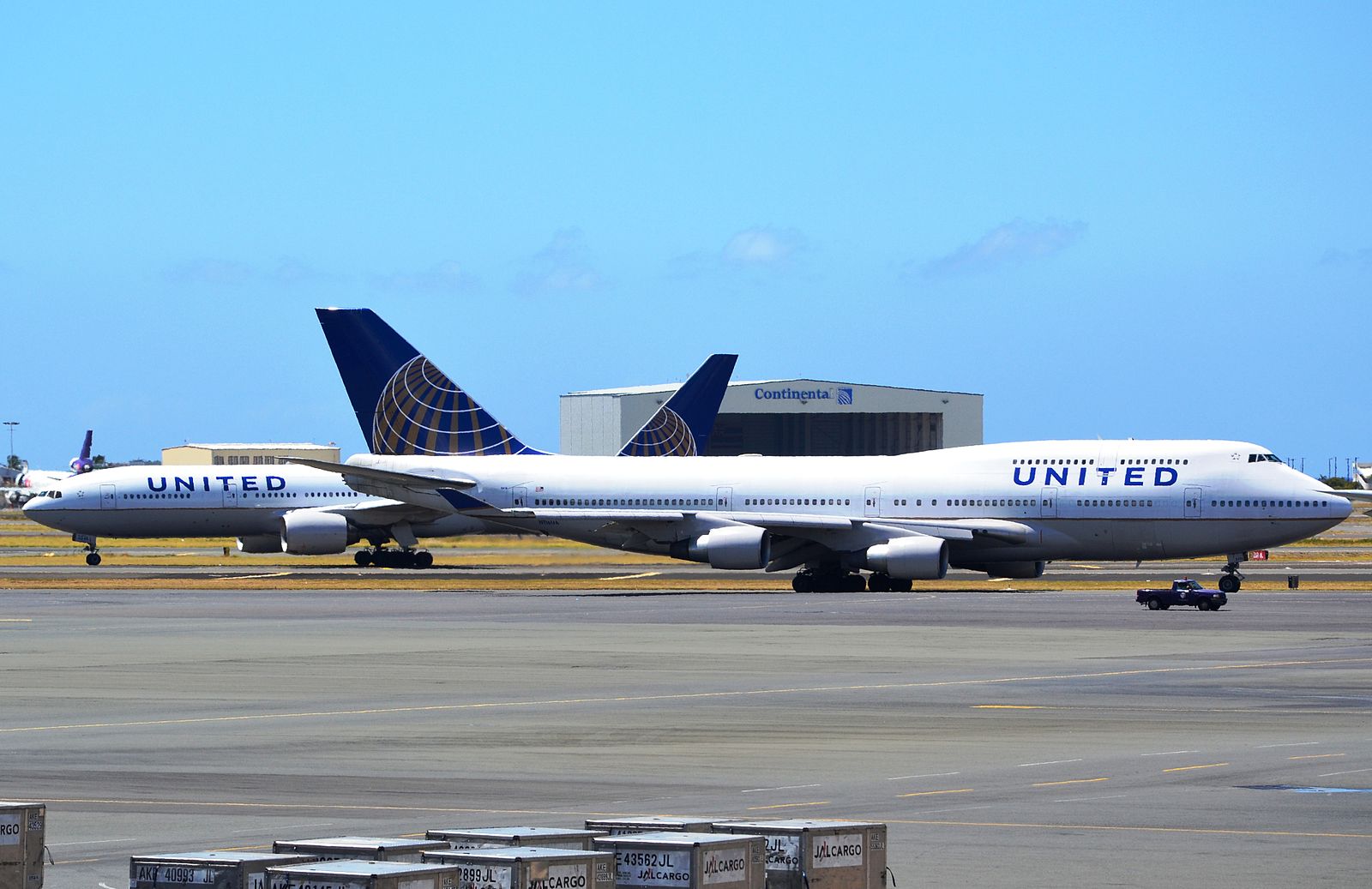
    United will end all 747 service by 2018.  They join a growing list of airlines who have retired or will retire the famous dual decker jet in the next few years. Photo by: Simon Sees

    The Boeing 747’s time as a passenger jet appears to be slipping away.

    Just over a month ago, Air France had its last commercial 747 passenger flight when flight 439 traveled from Mexico City to Paris. That signaled the end of 45 years of Air France flying the Jumbo Jet.

    Brian Sumers, a Los Angeles-based journalist and expert on commercial aviation, reported that United Airlines told its pilots Friday that the company’s plans to retire its 747s could be accelerated. United said that 2018 is the earliest it could stop flying 747s but the planes could remain in service until 2020.

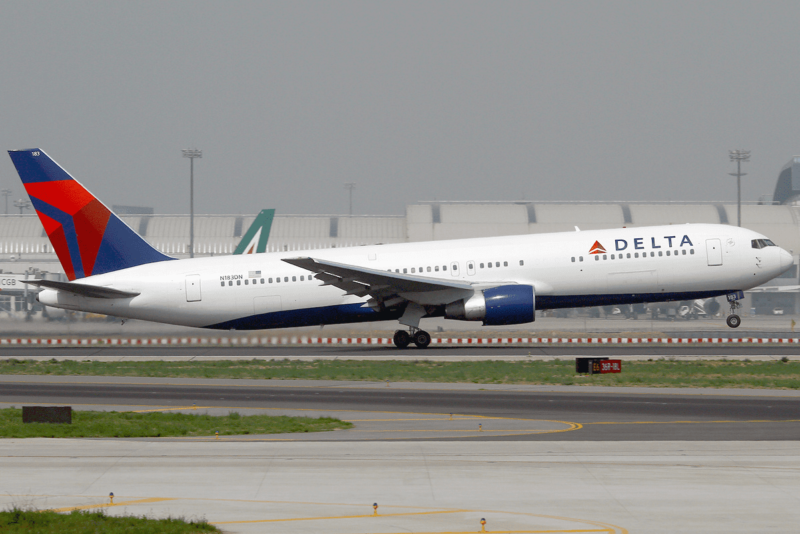
    Delta is in the process of phasing out its 747s and expects to have all 16 retired by next year.

    According to CAPA’s data base, there are 221 747s that are in service as commercial aircraft. One third of the 747s are operated by three airlines: United, British Airways and KLM.

    Even Boeing’s most efficient 747-8 has a hard time competing with Boeing’s 777 and 787 and the Airbus models. Those high-capacity planes have two engines and being more modern, they’re easier to service.

    The 747 started flying commercially in 1970 and since then the four-engine wide-body has been one of the most recognizable aircraft in the world. The fuselage has a distinctive hump just behind the cockpit, which gave the interior a second level for privileged passengers. The Jumbo Jet helped revolutionize air travel, hauling hundreds of passengers to faraway destinations.

    The 747 took over as Air Force One in 1990 and it also served as the transportation for the Space Shuttle, which piggy backed from the West Coast to Florida perched on top of the 747. Those who were able to see an iconic jet flying with an iconic spacecraft on top will never forget the sight.

    Earlier this year, Boeing announced it was reducing production of 747 jets to just six a year.  Passenger versions will continue to be offered but the primary focus will shift to selling the cargo version.  Boeing has said that they see the 747-8 fitting a niche for outsized cargo for some time to come. Also, Boeing is in the process of modifying a commercial 747-8 that will be the next Air Force One. There will be three of those planes, as the government needs to have two ready to fly at all times while the third is being serviced. The new Air Force Ones are expected to be in service in 2020.

    Roundup: A Meaty Buffet Of Stories Including Commercial Flights Plus Update On Hawaii Copter Crash

    A frequent nightmare for frequent fliers is waking up in a cold sweat after a dream about being stuck on a flight that never ends.

    The “Nightmare On Delta Flight 944” happened this week. It was the usual imperfect perfect storm of circumstances and bad luck. About 160 passengers were on Monday’s flight from Punta Cana in the Dominican Republic to New York City’s John F. Kennedy International Airport.

    Bad weather, turbulence, two diverted landings and uncoordinated responses by the airline led to plenty of disgruntled passengers.

    Why, How Airline Connections Are Missed

    Perhaps there was a traveler on Delta 944 who was connecting for that flight and ran too late to make the connection. That would have been fortunate for that passenger, missing out on a 30-hour excursion.

    But some of us have experienced the frustration of our flight of origin being delayed and creating a mad dash to make the connecting flight. And the unluckiest folks are the ones who think they have raced through the terminal and made it to the gate with time to spare … only to find out that the door has been shut and the gate agent has thrown up a human road block.

    This post on crankyflier.com helps explain why airlines are capricious when it comes to holding connecting flights.
    Virgin America Perplexed By Bare Fare Competition

    The emergence and success of low-fare, no-frills airlines, combined with lower fuel prices, has created some tough choices for major carriers. For instance, in markets where Spirit operates, the larger carriers who offer more full service are faced with the prospect of dropping fares.
    Virgin America, which in the past two years has started operating flights out of Dallas Love Field, is balking at selling cheap seats. An executive for Virgin calls it a “very toxic fare environment.” The airline is willing to fly with empty seats rather than sell them at low fares.

    “We are not going to fly passengers at rates that will not make money,” Virgin America chief executive officer David Cush said on a Thursday conference call with analysts. “We are going to make sure we get an average ticket value up to where its sustainable and we can earn a return, and we’ll take the hit on load factor.”

    Southwest Rates As Top 10 Most-Admired Company

    Commercial airlines are in the business of customer service but they’re also committed to making a profit while moving millions of passengers safely for departure to arrival. Translation: They can’t make everybody happy. And the passengers who complain that they didn’t get enough peanuts create stressful work environments.

    When it was founded over four decades ago, Southwest Airlines has tried its best to make its passengers happy and, more importantly, keeping its employees happy. When your flight attendant or gate agent is in a good mood, it helps defuse issues with cranky travelers.

    Southwest ranked No. 7 – the only airline in the top 10 – in FORTUNE’s 2016 list of World’s Most Admired Companies. So, get those resumes printed and fill out those applications, youngsters.

    Update On Hawaii Helicopter Crash

    Last night Avgeekery.com posted the dramatic footage and story of the helicopter crash in Hawaii nearly the USS Arizona Memorial at Pearl Harbor.

    Here’s an update on the bystanders who jumped in to help pull the five passengers from the water plus new details about the crash and the survivors’ conditions.