Home Blog Page 130

Roundup: Hiring Up At AA, SWA Plus More News

Photo by: Algkalv
Photo by: Algkalv (wikipedia user)

In the 15 years since the terrorist attacks on Sept. 11, the United States airline industry has been trending down. The bad news has included higher fuel prices, delays at times caused by added security along with legacy airlines consolidating and going bankrupt

Over the last decade, U.S. airlines have eliminated over 150,000. However, decreasing oil prices has led to lower fuel prices plus the consolidation of four major carriers has helped the industry turn the corner.

The airline industry has added 13,000 full-time workers, another increase from smaller growth in 2014. American Airlines and Southwest Airlines have added more than 8,000 positions during a 12-month period that ended in November.

More Growth For Easy Jet?

In another indication that the airline industry is on the upswing, Easy Jet expects to continue growth that started six years ago. The budget airline believes that the Europe’s airline sector is headed for further consolidation and opportunities for growth.

“I definitely think there will be consolidation in Europe,” said Carolyn McCall, chief executive for Easy Jet. “If you actually look at the whole of Europe, we still see massive opportunities for growth.”

Economic Concerns Cloud Singapore Airshow

As evidence of the two previous stories in this roundup, a growth in incomes through Asia has spurred more air travel. That’s good news for the airline industry.

This week’s bi-annual Singapore Airshow is a major showcase and aerospace leaders from around the world are gathering to see and be seen. But there’s an undercurrent of tension and uncertainty because of the issues facing the global economy.

The aerospace industry has seen growth each of the last eight years. And while tumbling oil prices mean airline fuel prices are reduced, there are concerns the economy in China and Japan.

We Told You To Be Careful With Your Drone

Sean Riddle could have saved himself a lot of time and trouble had he just read a post on Avgeekery.com.

Riddle, 28, spent several hours in a holding cell in New York City after he operated a drone near the Empire State Building. Riddle was filming footage for a video project he was putting together for connecting nonprofits.

After researching on Google (he apparently missed this site), Riddle thought his quick drone flight would be legal. He even asked a couple of nearby NYC police officers who cleared his flight plan. Unfortunately, things got complicated, Riddle was arrested, arraigned and released.


Hear Engines Purr On This C-133 Cargomaster One Last Time

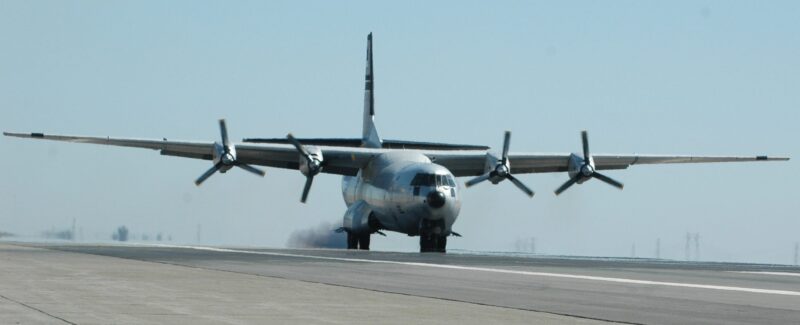
Fly Along on the Last Flight of the Last Remaining Airworthy C-133 Cargomaster in this Gorgeous Video from 2008.

The C-133 Cargomaster was the US Air Force’s only turboprop strategic airlifter.  Built by Douglas between 1956 and 1961, the plane served as the primary method to lift large and outsized cargo throughout the world during the 1960s.  The Cargomaster remained the primary strategic airlifter until the arrival of the C-141 Starlifter in the mid-1960s and the C-5 Galaxy in 1970. Bonus video below!

[youtube id=”s02i9PgGkDA” width=”800″ height=”454″ position=”left”]

Making a Second Living in Retirement

The aircraft in this video was originally known as AF56-1999.  It retired as a MAC asset but was sold to the Cargomaster Corporation where it was registered as N199AB. According to Wikipedia, “the aircraft was never certificated by the FAA for civilian operation, and could only be flown as a government aircraft, mostly for the State of Alaska. N199AB was based at ANC and was flown as a transport until 2004, carrying cargo, such as pipeline sections. It also flew frontend loader trash trucks and heavy equipment to the Alaskan bush, i.e., Point Hope, Point Lay, Wainright, Barrow, Deadhorse, Barter Island, and Anatovich Pass in April 2006.”

The C-133 Featured At California Museum

The beautiful last flight video below was shot by famed videographer Gregory Sheffer who owns the production company INVERSION.  The video shows the last flight of N199AB that took place on August 29, 2008.  One of the crew members put together a great video and photo album showing photos of the last flight.  On his site, he recalls the final flight by saying:

“C-133A N199AB arrived at Travis this morning only about 25 minutes late from filed flight plan ETA. The planned flyover before landing did not take place due to a wing overheat warning that occurred just as it arrived. Some observers noted puffs of black smoke coming from number three engine as the plane appeared over the Travis area. As much as we C 133 fans were hoping for the magic sound and sight of a low level full power flyby, prudence dictated an immediate landing. The landing was perfect, the pilots greased it in. The plane taxied through a shower from the fire trucks, then parked and was turned wide open for visitors including the cockpit area.”

The aircraft is currently stored at the Travis Heritage Center at Travis Air Force Base in Fairfield, California.

BONUS:  Here’s video of the final landing that was shot from the approach end of runway 21R at Travis Air Force Base

[youtube id=”F0Q2awGv_Fg” width=”800″ height=”454″ position=”left”]

These Are Words You Never Want To Hear From A Controller

0

“Where in God’s Name are you going?”

[youtube id=”yrYGoJTj0RU” width=”800″ height=”454″ position=”left”]

Those are six words you never want to hear from an air traffic controller.  Air traffic controllers and pilots have a very unique working relationship.  Using the radio, controllers issue clearances and pilots repeat the clearances back.  The confirmation of every clearance ensures that mistakes are at an absolute minimum. While basic, this systems keeps aviation exceedingly safe and a testament to the professionalism of both pilots and controllers.

Most mistakes occur because of a misunderstanding or a mental error on the part of a controller or pilot.  In the video below by Daniel Mori, you’ll hear a pilot verbally confirm the heading that ATC assigned him.  When he starts to turn the airplane in that direction, the controller raises his voice and asks, “where in God’s Name are you going?”  Those words are enough for any professional pilot’s stomach to drop.  After a brief exchange, the controller assigns a new heading and backs down from his aggressive tone.  When the pilot offers to call him on the ground, the controller declines, most likely realizing that it could have been his mistake all along.


Up In The Air For Presidents’ Day: Highlights of Presidential Flight

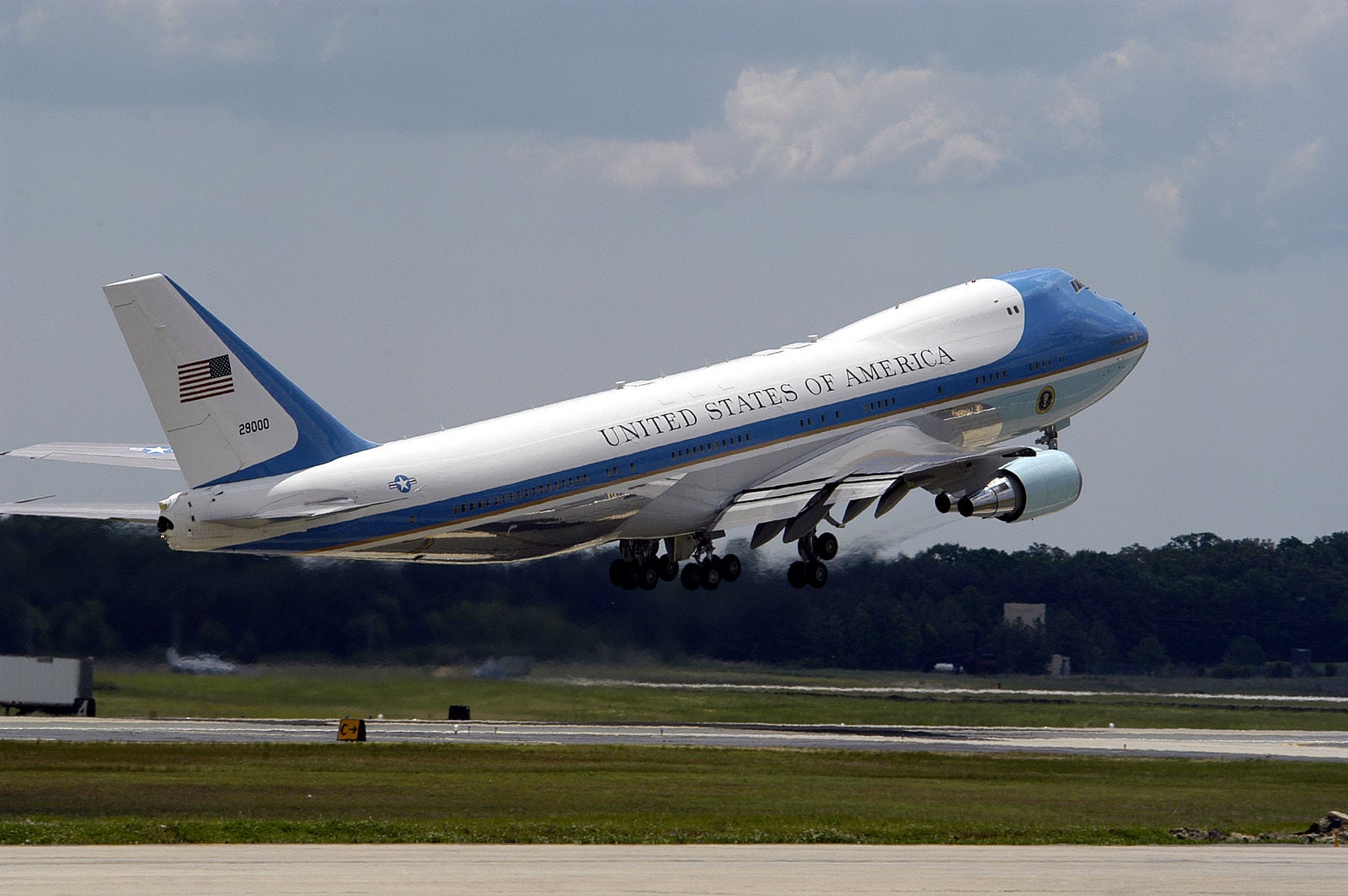
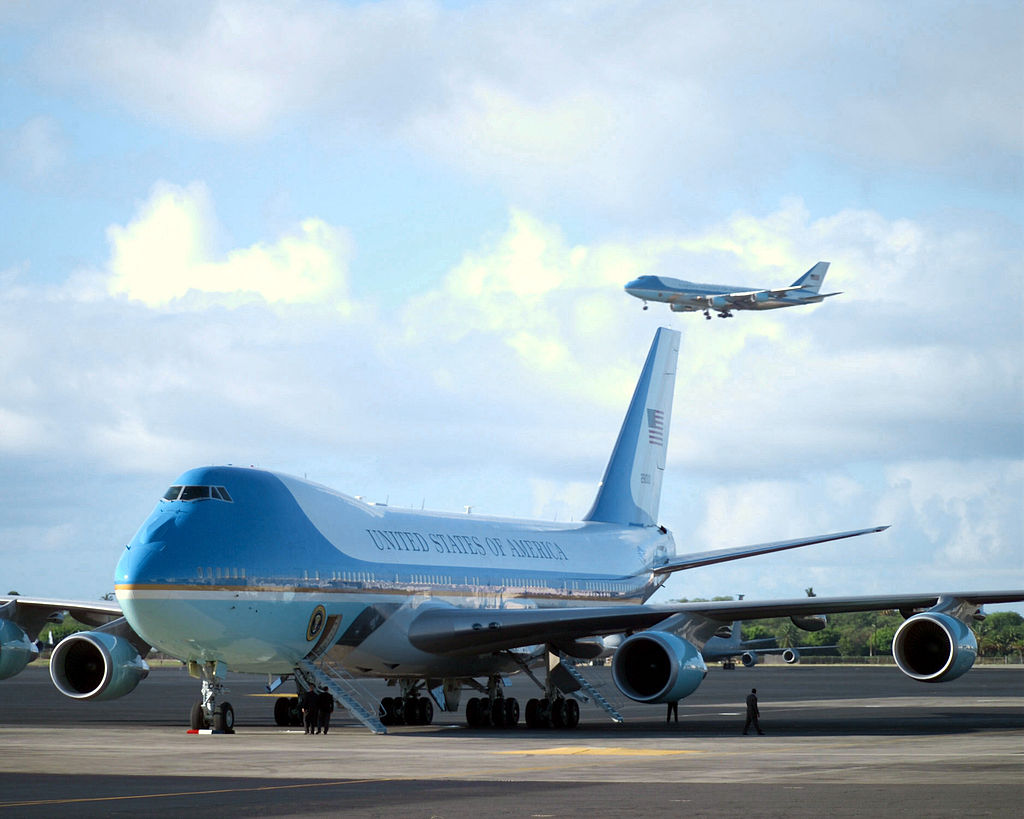
U.S. Navy photo by Photographer’s Mate 2nd Class Daniel J. McLain

President’s Day provides an opportunity to review the history of how the Commander In Chief has been involved with flight.

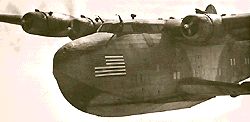
President Roosevelt was the first to fly in a plane – a curious occurrence because it happened 40 years after the Wright Brothers’ first flight. Perhaps the urgency of POTUS traveling by air hadn’t occurred prior to January of 1943 when Roosevelt boarded a Boeing 314 flying boat, the Dixie Clipper and flew across the Atlantic to Casablanca. That meeting with Winston Churchill announced the demands for an unconditional surrender of the Axis powers.

In 1932, Roosevelt had flown to Chicago to accept the Democratic nomination for President. His trip to Casablanca was a necessity and highly secretive. Until then, air travel for a sitting president was considered too dangerous.

Ironically, a month after FDR’s trans-Atlantic flight, the Pan-Am Yankee Clipper crashed during landing in Lisbon, Portugal, killing 24. Had that happened before the trip to Casablanca, would officials have deemed it safe for FDR to fly?

First Lady Was First

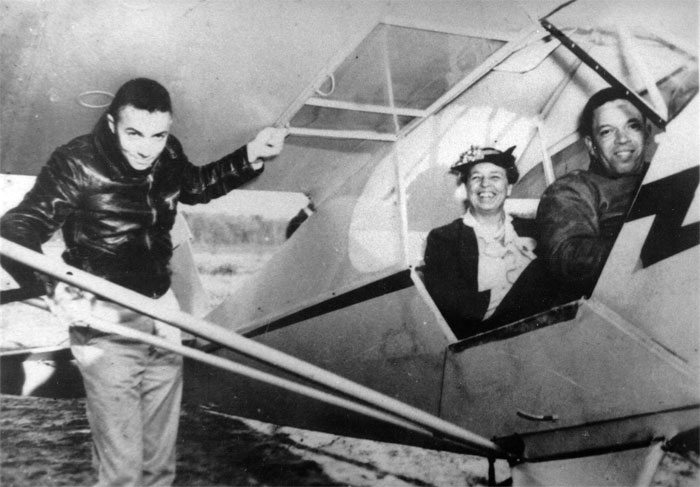
tuskegee_flightA decade before her husband became the first President to fly, Eleanor Roosevelt became the first First Lady to take to the air.

Following a White House dinner with Amelia Earhart and other guests on April 20, 1933, Mrs. Roosevelt, Earhart and some of the guests went to Hoover Field, which is now where the Pentagon is located. They flew in a Curtis Condor twin-motor Eastern Air Transport plane on a trip between Washington D.C. and Baltimore.

Eleanor Roosevelt also played a major role in the advancement of the Tuskegee Airmen, the black aviators who distinguished themselves during WWII. During a visit to the Tuskegee Army Air Field the First Lady requested a flight. Chief Civilian Flight Instructor Charles Alfred Anderson obliged and the flight lasted over an hour. Photos of her visit received wide distribution and helped remove racial obstacles the Tuskegee Airmen faced in their quest to serve their country.

Bush A Decorated WWII Aviator

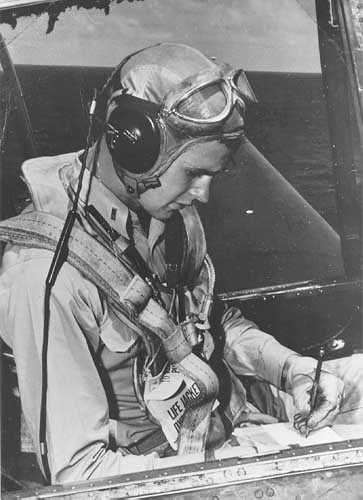
TBF_GeorgeBush

George H.W. Bush went on to become the nation’s 41st President. In World War II, he became one of the Navy’s youngest pilots. He flew the carrier-based TBM Avenger torpedo bomber and completed 58 combat missions. He ditched once and survived being shot down once. Bush, who had not turned 19 when he received his wings, was awarded the Distinguished Flying Cross and three Air Medals.

Dwight Eisenhower, by the way, received his pilot’s license and completed his first solo flight in 1937 but never qualified for Army wings. He went on to command the Allied forces that defeated Germany and served two terms as President.

Air Force One

AFOne
Another way in which the presidency and flight is connected is Air Force One. Technically, Air Force One is any aircraft with POTUS on board.

In 1944, FDR created the Presidential Pilot Office which eventually became the Presidential Airlift Group, which is part of the White House Military Office. And in 1990 President George H.W. Bush became the first Chief Executive to fly in the modified Boeing 747.

The first jet-powered Air Force One, a Boeing 707, was first used in 1962 by President Kennedy. That plane also served as the somber setting when President Johnson was sworn in after JFK’s assassination in 1963.

The Great F-111 Aardvark of the Outback

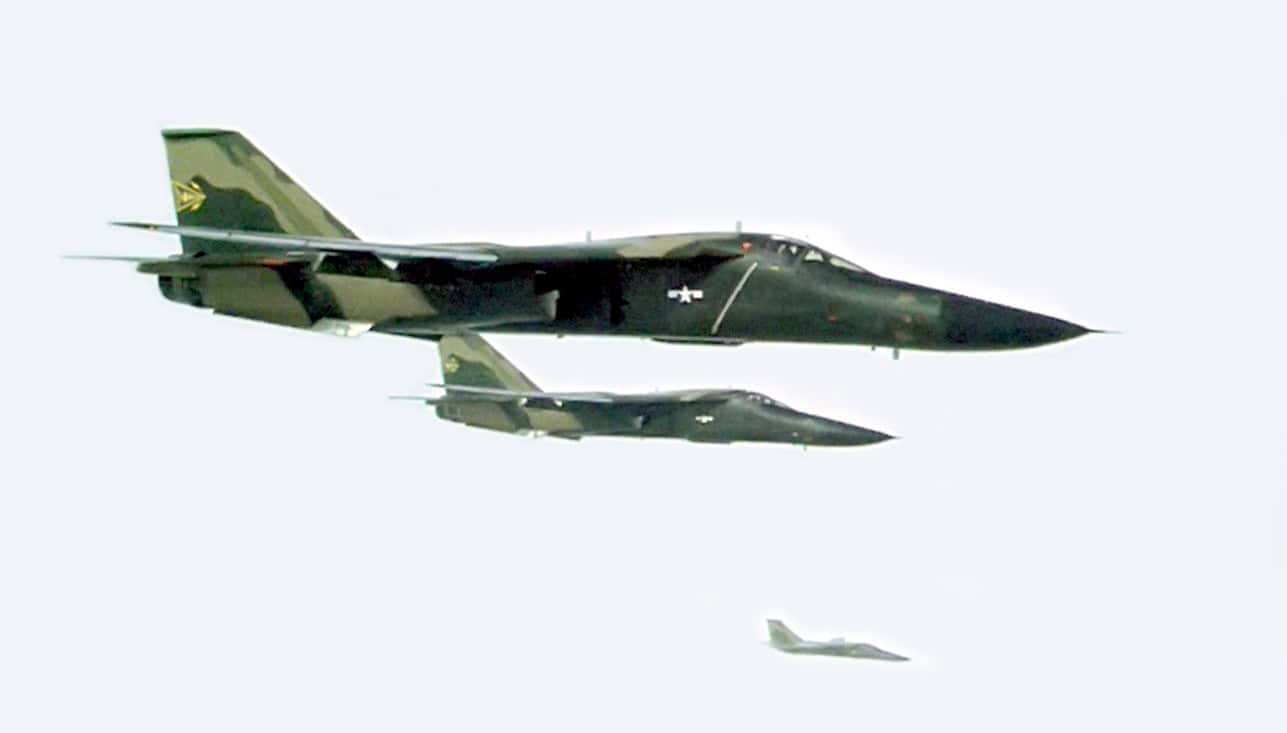
The F-111 Aardvark made its combat debut with the US Air Force in 1967. The jet was the world’s first variable geometry swing wing aircraft. The Aardvark – not exactly a sexy name for a multi-purpose fighter – came on line just in time to see major action in Vietnam.

F-111 Ardvark
USAF F-111s over Vietnam 1968. Image via US Air Force

The standard description of the F-111 goes something like this: The General Dynamics F-111 Aardvark was a supersonic, medium-range interdictor and tactical attack aircraft that also filled the roles of strategic bomber, aerial reconnaissance, and electronic-warfare aircraft in its various versions.

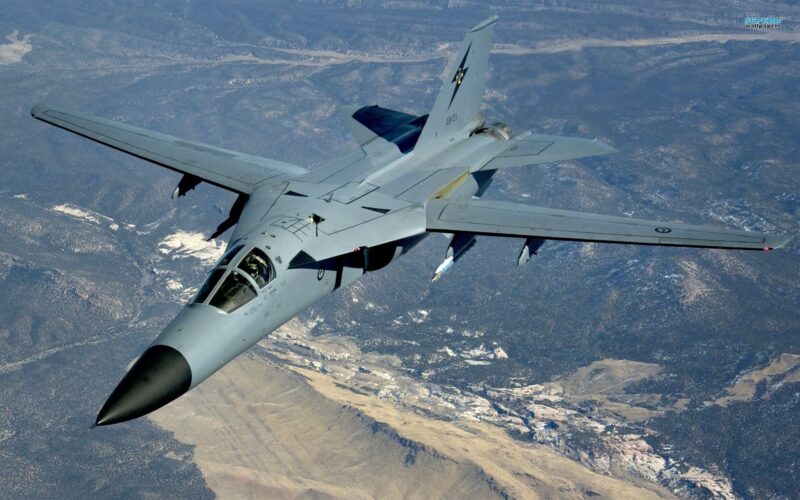
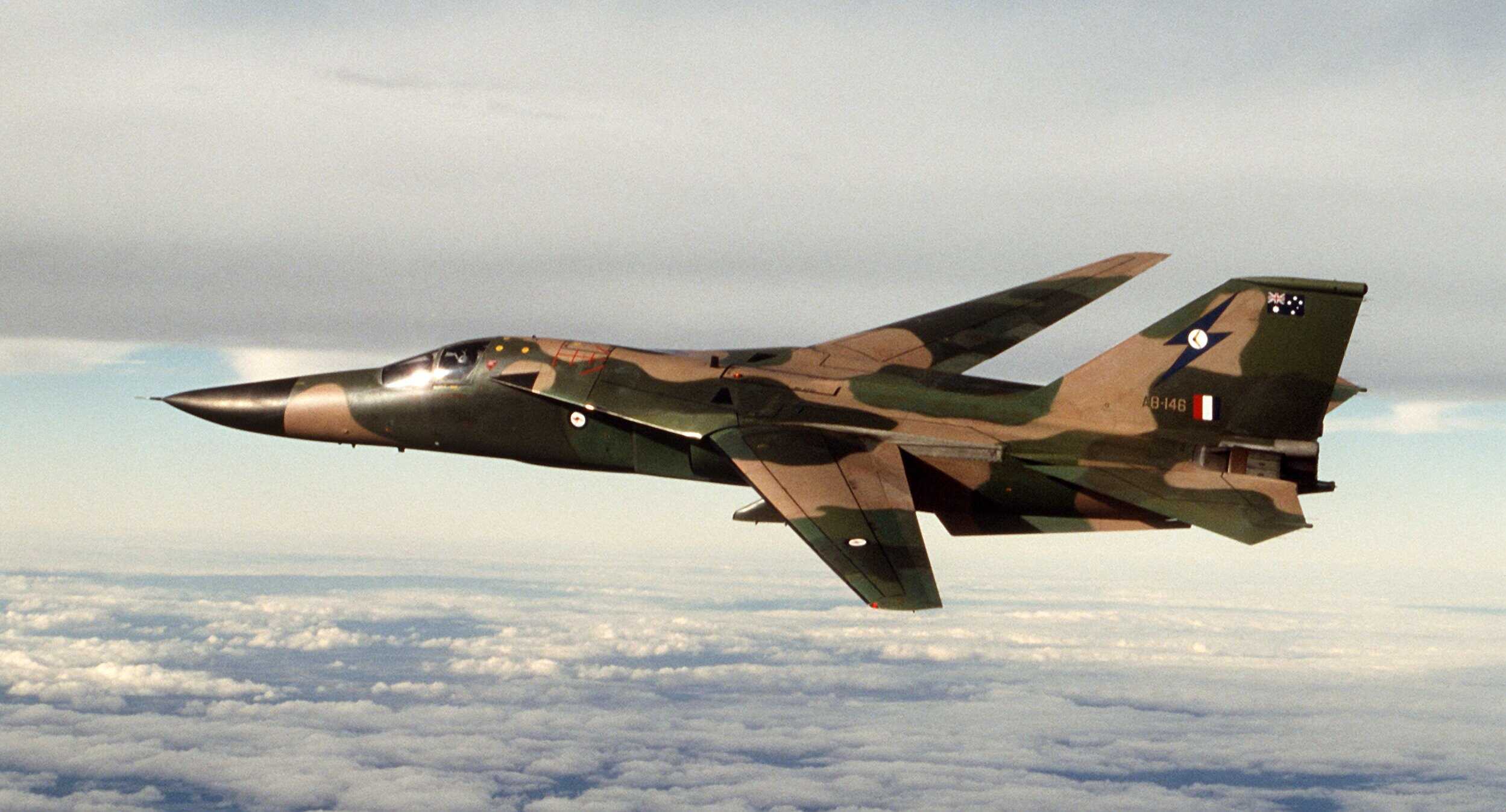
Developed in the 1960s by General Dynamics, it first entered service in 1967 with the United States Air Force. The Royal Australian Air Force (RAAF) also ordered the type, and after delays caused by wing design issues, began operating 24 F-111Cs in 1973.

DF ST 87 12346a
RAAF F-111C. Image via US Air Force

The F-111 Aardvark Enters Service In the Land Down Under

Over the ensuing years the RAAF modified four of the F-111Cs to RF-111C reconnaissance aircraft. in 1981 the Aussies purchased four former USAF F-111As as attrition replacements. To keep the type in service the Australian Government decided to purchase up to 18 more USAF F-111s (G models this time) in 1992.

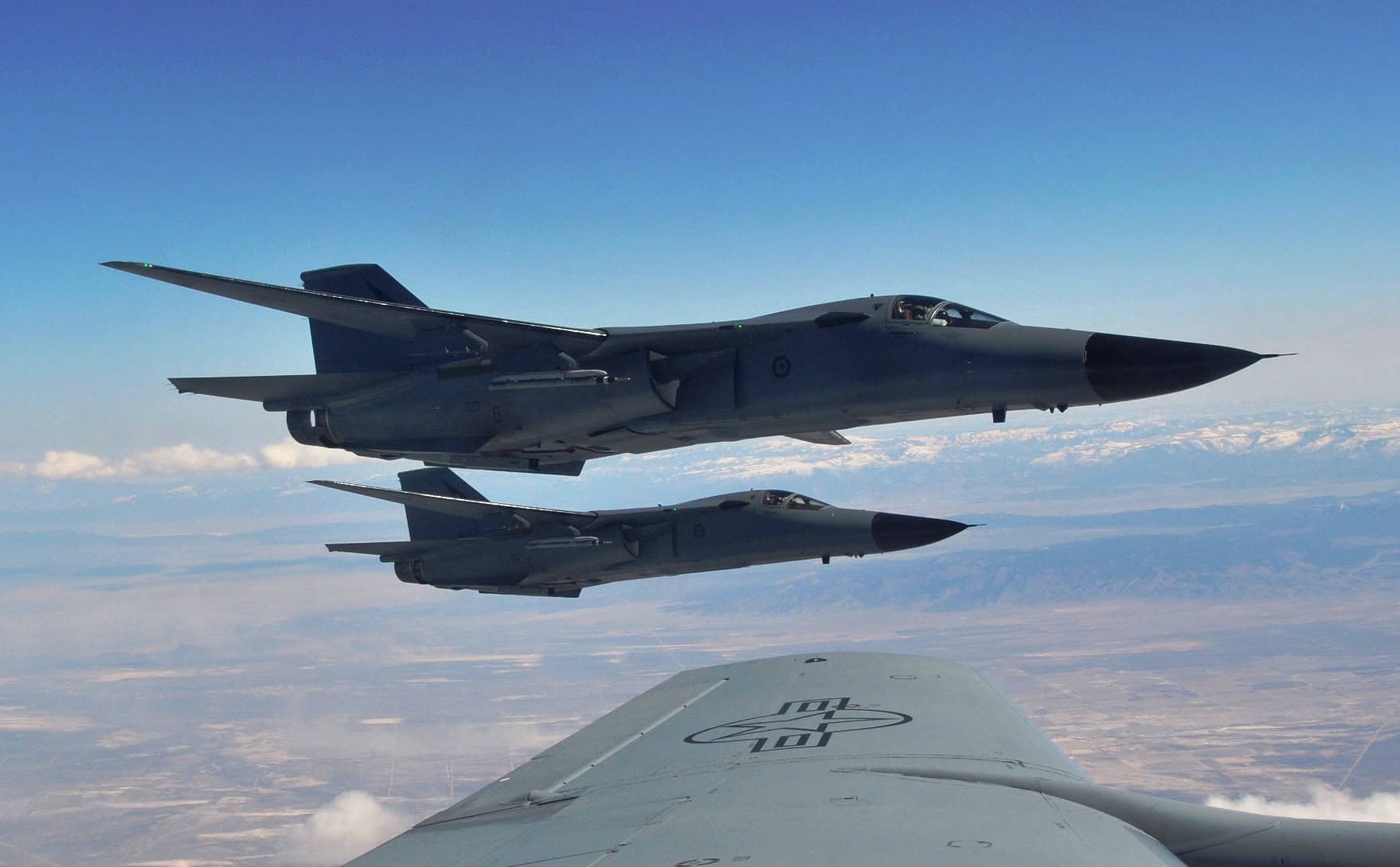
15 F-111Gs were delivered between 1993 and 1994. The USAF actually held several F-111 airframes at the boneyard to keep the Australian jets flying. All of the total of 15 F-111Gs were retired by 2007. All 28 of the F-111Cs were all withdrawn from RAAF service by 2010.

040309 F 8732E 006
RAAF F-111Gs. Image via US Air Force

F-111 Aardvark Conducts a Dump and Burn

Enjoy this video of a RAAF Aardvark doing the “dump and burn”- dumping fuel and lighting the afterburner. resulting in an impressive flaming trail in the sky!

Bigger Seats Bill Squashed Plus Other Airline News

0

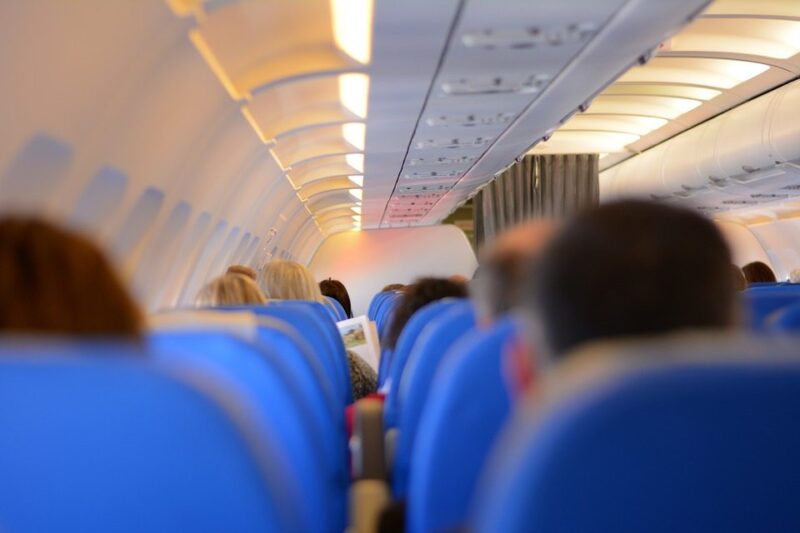
paxAs expected and predicted, legislation that would have mandated size standards for airline passenger seats was defeated in a committee vote Thursday. The vote was 33-26 as the House transportation committee was voting on amendments to a bill to fund the FAA.

The story about the proposed legislation was reported earlier this week here on Avgeekery.

Sponsored by Rep. Steve Cohen, D-Tennessee, the “Seat Egress in Air Travel Act” – or SEAT Act – would have been a hit with air travelers who have experienced a loss of personal space in coach seating. But Cohen is more concerned about safety when it comes to passengers on packed flights having to exit in case of an emergency.

During debate in the committee before the vote, Cohen said airline seats are “hard to get out of” and “they keep getting smaller and smaller.”

“We’re down to four major carriers and they do what they want,” said Cohen, referring to recent mergers of the nation’s large airlines.

Cohen said he pledges to continue to fight for the legislation.


Turkish Airlines Plans More Growth

If you’re a fan of Batman, you’d probably love the chance to fly to Gotham City. But you can’t, because it doesn’t exist.

But that’s not preventing Turkish Airlines from piggybacking on the upcoming “Batman vs. Superman” film to drum up business. And the airline is aiming for big business.

Turkish Airlines, which has been growing like a weed for the last decade, announced its week that it plans to grow capacity by 21 percent in 2016. It plans to increase its fleet from 299 to 339 by year’s end.

Officials Say Somali Bomber Targeted Wrong Plane

One of last week’s big stories was the bomb that was set off on a Daallo Airlines A321. According to officials from Daallo, the bomber, who was the only person killed in the explosion, was meant to be on a Turkish Airlines flight.

Turkish Airlines decided to cancel a scheduled flight from Mogadishu to Djibouti. The airline decided the weather was too bad to fly. Daallo Airlines, which is based in Djibouti, brought its plane to Mogadishu to transport the 70 passengers stranded by the Turkish Airlines cancellation.


Military Aviation Roundup – Training, Scrapping, Selling, Fainting

Here’s some military aviation news capsules with fresh-served hot links to the complete stories. Cleared for takeoff and reading.

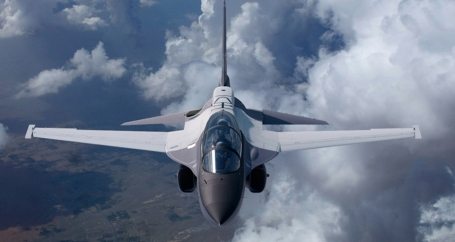
Lockheed Martin
Lockheed Martin

Lockheed Martin Plans New Training Aircraft

With the so-called “5th Generation” aircraft in the planning, development and building stages, training pilots to fly to those planes is a problem that needs solving. The current T-38 won’t handle the job. (The last item in this post deals with the F-35, one of the “5th Generation” aircraft.)

Lockheed-Martin announced that it will offer the the T-50A in the U.S. Air Force’s Advanced Pilot Training (APT) competition. Developed by Lockheed Martin in cooperation with Korea Aerospace Industries (KAI). Lockheed Martin also said it has selected its facility in Greenville, S.C. to serve as the Final Assembly and Checkout (FACO) site.

According to the Lockheed Martin news release, “the T-50A delivers the fighter-like performance and capabilities needed to eliminate 5th Generation training gaps and inefficiencies. There is no more effective or affordable way to train the next generation of pilots to fly, fight and win.”

Funding For Carrier-Based Drone Apparently Scrapped

The Defense Department released its budget proposal for 2017 and there is no funding for the proposed armed drone that would be based on aircraft carriers.

The program has seen fits and starts since it was first proposed nearly three decades ago. Billions have dollars have been spent in development and planning of the robotic jet that would take off from carriers and bomb targets.

Designated as the Unmanned Carrier Launched Airborne Surveillance and Strike (UCLASS), there was $818 million in funding in the Defense Department budget the last two years. A new budget line of $89 million for a “Carrier Based Aerial Refueling System” apparently replaces the UCLASS.

Indonesia To Buy 10 Russian Fighter Jets

Indonesia’s defense minister says his country has agreed to buy 10 Russian Sukhoi Su-35S multirole fighter jets. Indonesia has announced it will decommission U.S. F-5 Tiger fighter jets and purchase the Russian aircraft as replacements.

Originally, Indonesia planned to buy 16 of the Russian fighters but scaled the order back to just 10. As part of the agreement, Russia will include pilot training.

According to  IHS Jane’s Defense Weekly: “The Su-35S is a single-seat, twin-engine upgraded fourth-generation super-maneuverable multirole fighter powered by two AL-117S turbofan engines, and featuring fifth-generation aircraft technology, including “a sophisticated avionics suite based on a digital information management system, a cutting-edge radar with a long-range aerial target acquisition and increased multiple-target tracking/engagement capabilities, and enhanced thrust-vectoring engines.”

F-35 Not For The Faint-Hearted

The F-35 Lightning II has been nothing but trouble. Some say it has design flaws and that Lockheed Martin rushed development and went solo with much of the plane’s design. The F-35 been headache for the Defense Department because it’s behind schedule and over budget.

Now, it apparently can cause fainting spells.

Air Force Maj. Gen. James F. Martin Jr. was speaking about the F-35 at a media briefing Wednesday at the Pentagon when he experienced a dizzy spell. It was later reported that he had been suffering from a cold.

Assistant Air Force Secretary Carolyn Gleason tried to prop up and help Martin. On the video, she could be heard to joke, “That’s what the F-35 will do to ya.”

That’s either funny or ironic – the Pentagon reported this week that the F-35 needs more engine changes. And that’s more bad news for the troubled program.

[youtube id=”jyjrbmauF1o” width=”800″ height=”454″ position=”left”]

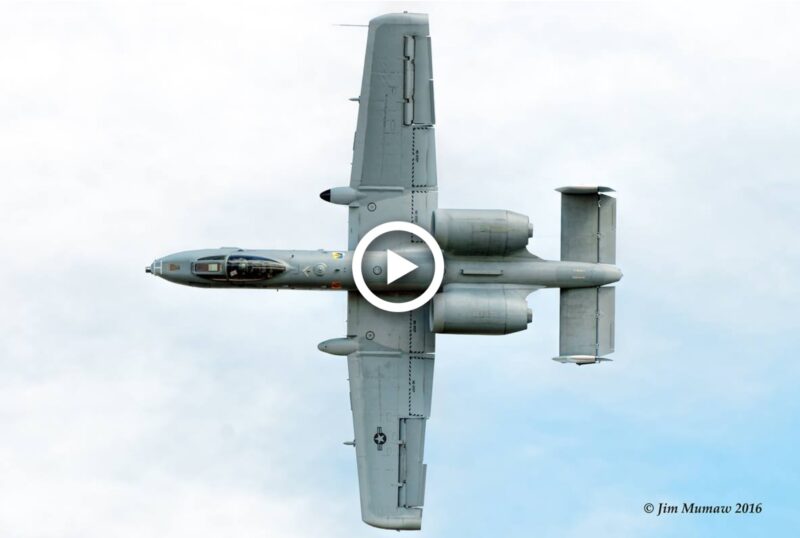
8 Reasons Why The Enemy Hates The A-10 Warthog

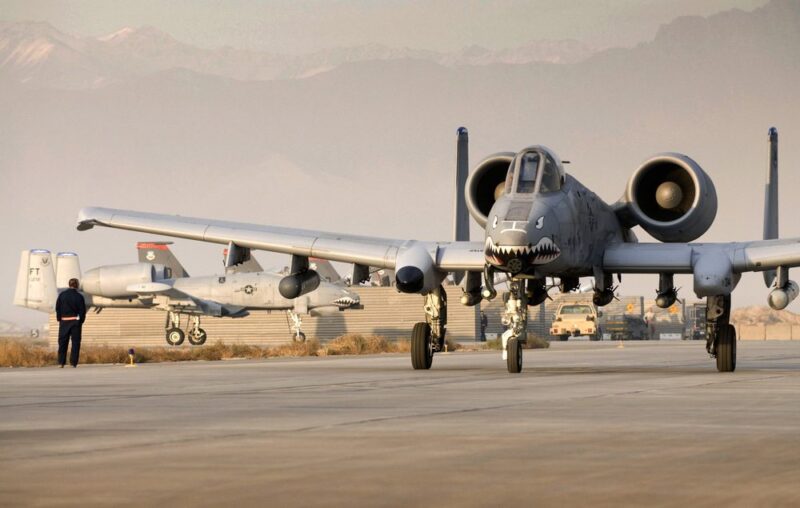
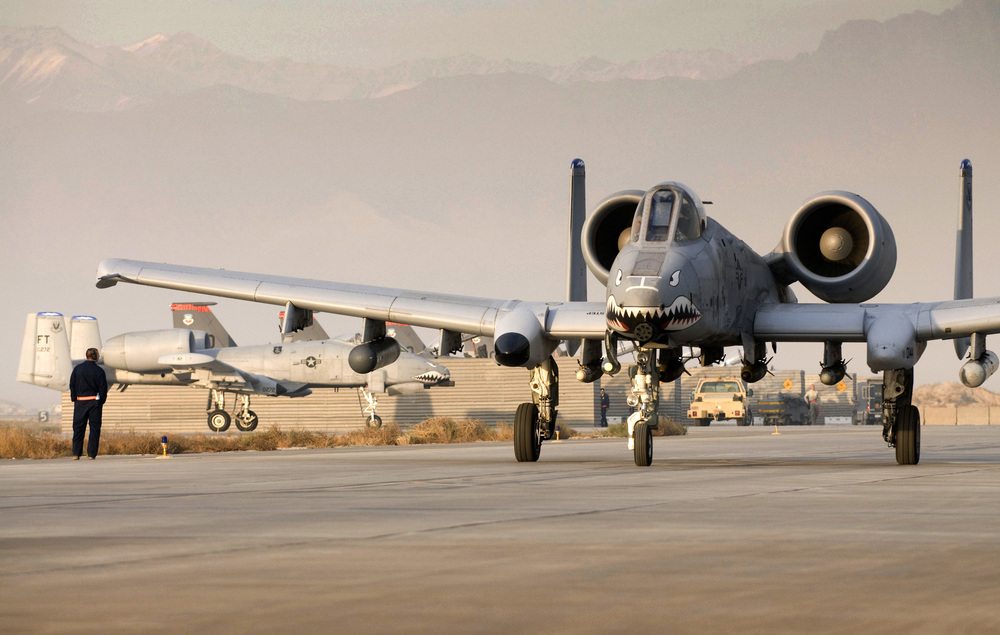
An A-10 Thunderbolt II, piloted by Capt. Eric Fleming, prepares for takeoff at Bagram Air Field, Afghanistan, Dec. 2. The teeth painted on the nose of the aircraft symbolizes the legacy of the fighter squadron, dating back to the famous "Flying Tigers" of WWII. (U.S. Air Force photo by Staff Sgt. Samuel Morse)(Released)
An A-10 Thunderbolt II, piloted by Capt. Eric Fleming, prepares for takeoff at Bagram Air Field, Afghanistan, Dec. 2. The teeth painted on the nose of the aircraft symbolizes the legacy of the fighter squadron, dating back to the famous “Flying Tigers” of WWII. (U.S. Air Force photo by Staff Sgt. Samuel Morse)(Released)

Perhaps the best measure of a fighting weapon/machine is how much it’s loved by its friends and hated by its enemies. In that case, the Fairchild Republic A-10 Thunderbolt II belongs near the top of any list of military assets deployed by the United States.

The Thunderbolt name harkens back to World War II and the P-47 Thunderbolt, a rugged fighter that was best-deployed when used against ground targets. The A-10 has two alternate nicknames – Warthog and Cross of Death. The latter tag was bestowed by Iraqi troops during the first Gulf War because of the A-10’s shape and its lethal qualities.

Warthogs have been deployed to fight ISIS and remains an integral part of the U.S. arsenal. Last month the Department of Defense admitted that plans to scrap the A-10 have been … scrapped.

Here are eight reasons why the A-10 is an airplane that strikes fear into the hearts of enemy ground forces.

  • Close support. One Presidential candidate claims he’ll “carpet bomb” ISIS. Those in the know understand that precise targeting of lethal firepower is more effective. The A-10 has a top speed of 400 mph but can stay aloft at 150 mph. Its ability to fly low and slow enhances the ability to target enemy positions.
  • Durability. The A-10’s twin engines are positioned close to each other and between the rear stabilizers. This allows the Warthog to fly on one engine and helps disguise engine exhaust. The A-10 is also able to absorb ground fire because of …
  • Heavy-duty armor. Those who fly the A-10 appreciate that the designers didn’t scrimp on protection. The cockpit and portions of the flight control system sit in the “bathtub” – 1,200 pounds of titanium aircraft armor. It can withstand direct hits from armor-piercing projectiles up 23 mm. That’s rather important when flying low and slow over enemy positions.
  • Versatility. Many of the parts on the Warthog are interchangeable. That means it’s easier to maintain, especially at forward positions where the facilities might be crude. Easier and faster maintenance increases the number of combat sorties.
  • Runway friendly. The A-10 has short takeoff and landing capabilities so it can operate from airstrips closer to the front lines. That means less time getting to and from “work.”
  • Diverse weaponry. The A-10 is a flying buffet of lethal weapons. According to military.com, the Warthog can carry “general purpose bombs, cluster bomb units, laser guided bombs, joint direct attack munitions or JDAM, wind corrected munitions dispenser or WCMD, AGM-65 Maverick and AIM-9 Sidewinder missiles, rockets and illumination flares.”
  • One big gun. In the nose of the A-10 is a GAU-8 Avenger, a seven-barrel, Gatling-type cannon. It’s been said that the Warthog – which wasn’t built to look sleek or pretty – is a plane designed around a gun. The A-10’s main fixed weapon is designed to fire armor-piercing depleted uranium and high explosive incendiary rounds. It’s the main reason surviving Iraqi tankers have recurring nightmares.
  • Endurance. The A-10 exemplifies the old saying of “if it’s not broke, don’t fix it.” The A-10’s efficiency and reliability has rebuffed efforts to mothball it. The pilots who fly it love its ruggedness. The ground troops it supports love its ability to unleash hell on the enemy.

We’ll leave the final word to Arizona Republican Martha McSally, a member of the Senate Armed Services Committee and retired Air Force colonel who flew the A-10: “With A-10s deployed in the Middle East to fight ISIS, in Europe to deter Russian aggression, and along the Korean peninsula, administration officials can no longer deny how invaluable these planes are to our arsenal and military capabilities.”

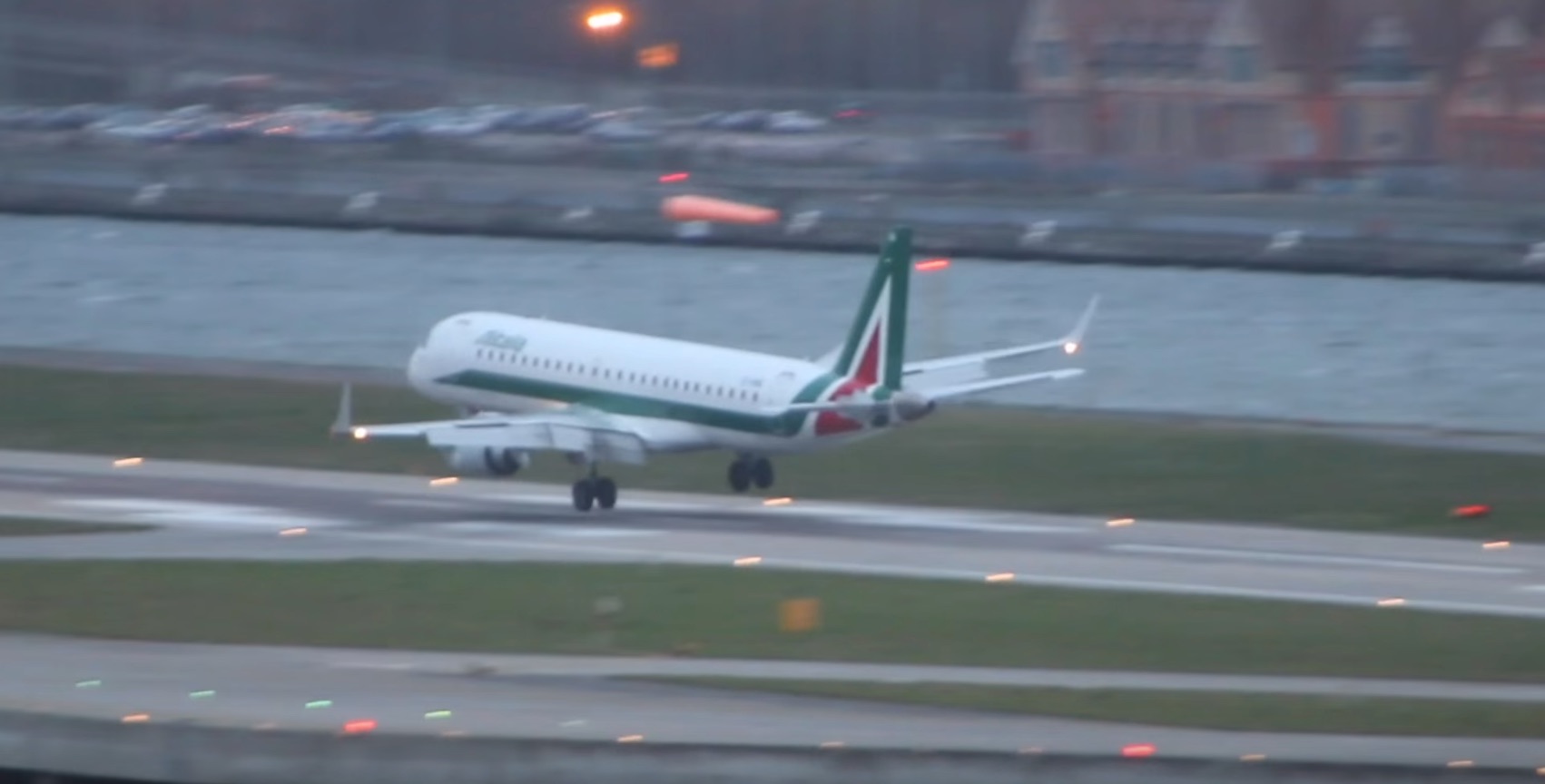
Unstable Go Around At London City During Storm Imogen

Video Capture from Wynter Blathwayt's video
Video Capture from Wynter Blathwayt’s video

Alitalia aborts landing at LCY during Storm Imogen

Storm Imogen slammed the UK on Monday, February 8th with winds of up to 100 mph.  While London did not face the worst of the storm, the city still experienced strong wind gusts and rain from the wintry blast.

London City Airport is located in the heart of London.  The airport is one of the most difficult airports to land a commercial airliner.  With a runway less than 5,000 feet and a required approach that is significantly steeper than normal, even approaches in beautiful weather pose challenges for experienced pilots.

Storm Imogen made landings extremely difficult.  Alitalia flight AZ222 from Milan attempted an arrival during intense wind gusts that were clocked up to 37 mph.  The flight landed hard and attempted a go around.  This is known as a balked landing.  When the pilot attempted to execute the go around procedure, he or she appeared to under-rotate pitching the aircraft slightly forward before the power of full throttles kicked in to complete the go around procedure.  There appeared to be no change in flap setting either.  Gear was retracted but later than a normal rotation.

Pilots must always be prepared for a go around, especially during periods of gusty winds or bad weather.  It is equally as important to go around during a balked landing versus trying to save a poor approach.

[youtube id=”XqDlqns3Z2U” width=”800″ height=”454″ position=”left”]

Legislation Attempts to Give Back Personal Space On Planes

0

Photo by: Rene Ehrhardt
Photo by: Rene Ehrhardt, Source: Wikipedia

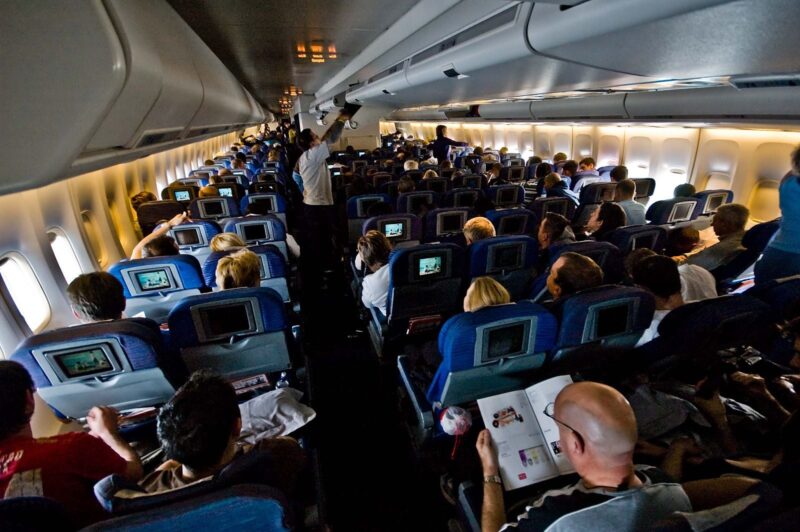
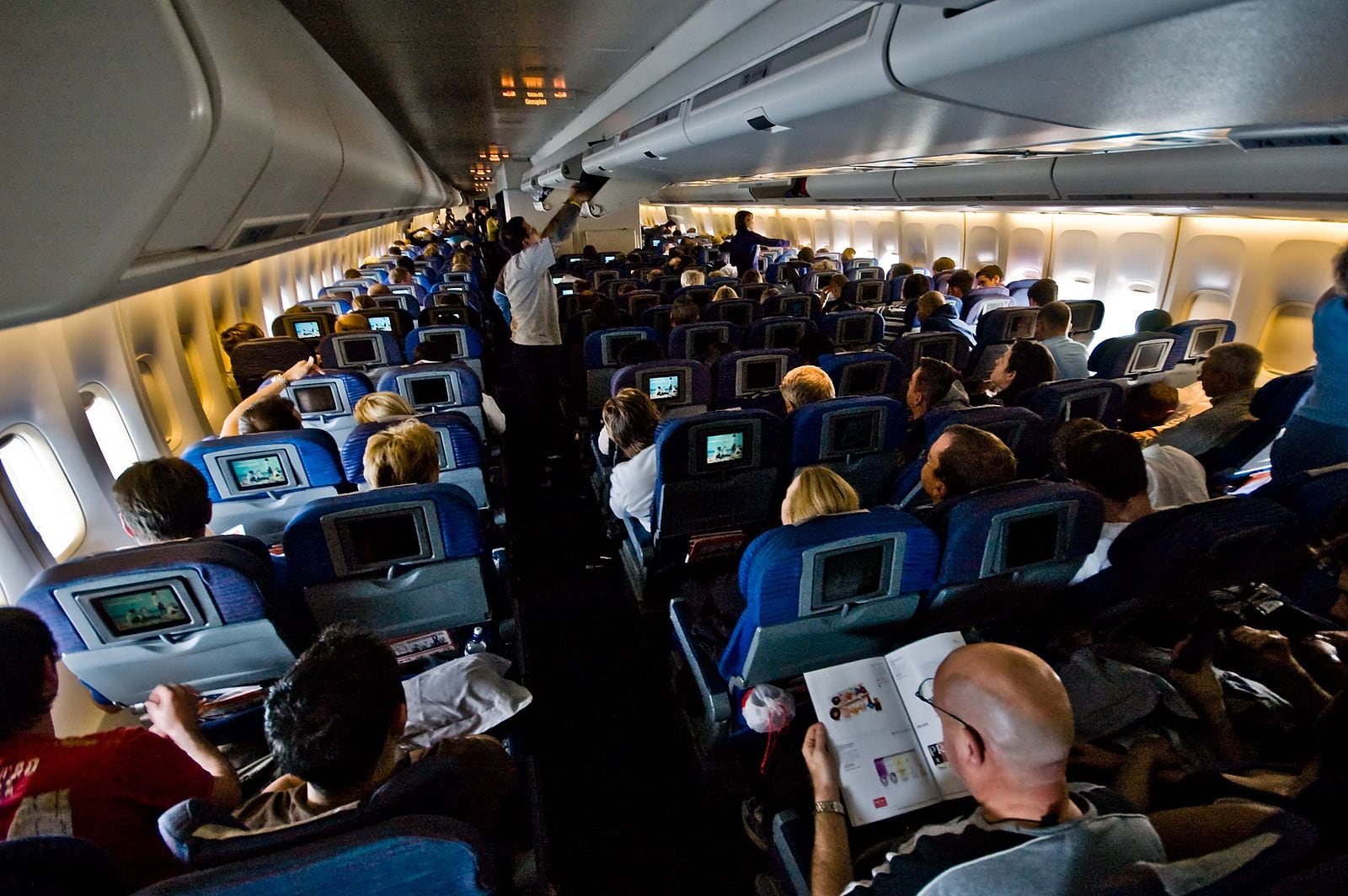
Legislation attempts to make air travel more comfortable.  Is it a good thing?

If you have long legs or a wide body, commercial air travel has become claustrophobic – even if you’re not claustrophobic. (If most of your flights are in first or business class, this story will not be of interest.)

Commercial airlines are all about making money. That means they’ll squeeze a quarter to make a dollar. And that means that short of stacking passengers like pallets of cordwood, they’ll do everything and anything to put as many butts in as many seats as possible.

Thursday, the House Transportation and Infrastructure Committee’s Subcommittee on Aviation will vote on a bill sponsored by Rep. Steve Cohen, a Democrat from Tennessee. The “Seat Egress in Air Travel Act” – or SEAT Act – is an amendment to the Federal Aviation Administration (FAA) Reauthorization.

Apparently, there’s little chance of Cohen’s bill passing. But God bless him for trying.

The airlines are installing smaller seats that add to a row of seating. The seats are also lighter, which reduces fuel. According to Cohen, since the 1970s the average distance between rows of seats has shrunk from 35 inches about 31 inches. The average width of an airline seat has dropped from 18 inches to about 16 ½.

“Shrinking seats raise safety and health concerns, and it’s time for the FAA to take action,” Cohen said in a statement released to the media. “The FAA requires that planes be capable of rapid evacuation in case of emergency, yet they haven’t conducted emergency evacuation tests on all of today’s smaller seats.

“Doctors have also warned that deep vein thrombosis can afflict passengers who can’t move their legs during longer flights. Consumers are tired of being squeezed both physically and fiscally by airlines.”

Spirit CEO’s Comments Boost Stock Price

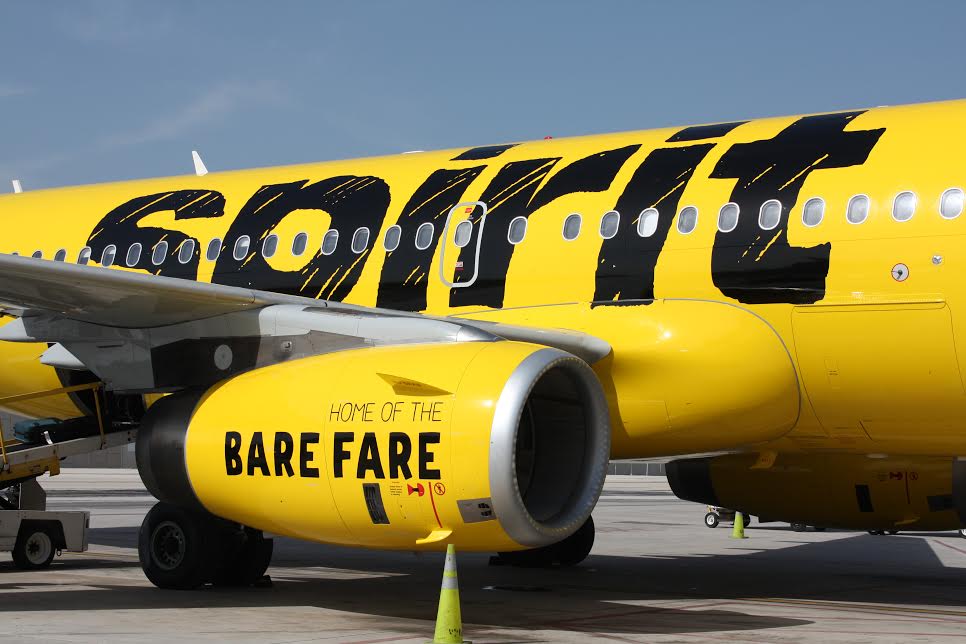
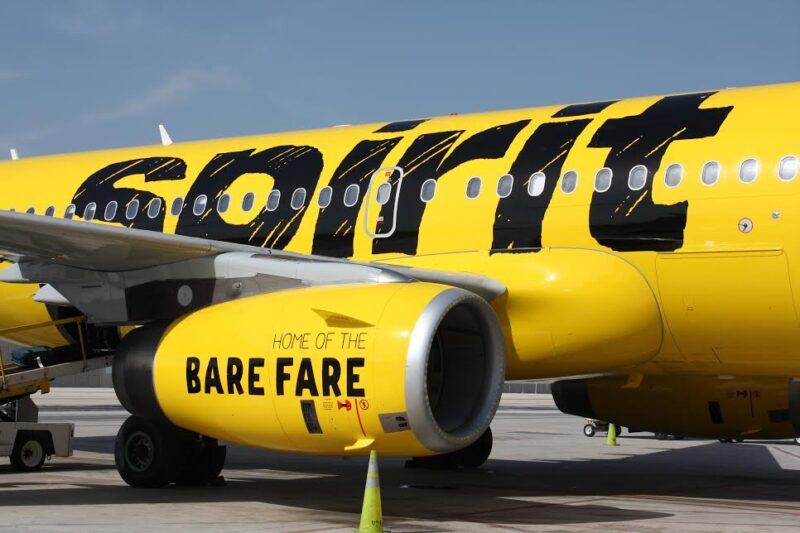
Spirit Airlines plans strategic expansion while improving customer service.

Spirit Airlines, the “Bare Fare Carrier,” expects to tweak and improve its operations as the airline industry continues to evolve. That’s the message delivered by new CEO Bob Fornaro, who spoke publicly for the first time Tuesday during Spirit’s fourth-quarter earnings call.

Fornaro said Spirit will continue its hub-to-hub scheduling. But as lower fuel prices influence the major carriers to drop fares and compete with Spirit’s ticket prices, the CEO said his airline might consider expansion into smaller and mid-size markets.

“I don’t see a change in those (hub-to-hub) markets,” Fornaro said. “(The strategy) produced very good results and still produces very good results … Going forward we will be much more open to a broader view of routes. We will be just as focused on midsize markets. I think we will be less predictable going forward … in the way we pick routes.”

Spirit went into 2015 with an aggressive plan to expand its carrying capacity by 30 percent. This year, the plan is to expand by 20 percent and Fornaro said that 15 to 20 percent will probably remain as the yearly growth goal.

Spirit reported strong earnings each quarter of last year and overall revenue improved 9.6 percent to $519.8 million. However, the company’s stock fell nearly 50 percent in 2015. Shares were up as much as 10 percent Tuesday after investors heard the comments from Fornaro, who has been on the job about a month.

Spirit has challenged the legacy airlines by charging passengers for any and all extras beyond air fare. Checked bags don’t fly free. Neither do carry-on bags. There’s also a charge for premium seats and advance seat selection. (So far, no charge for use of the tray table or reclining your seat.)

The no-frills approach allowed Spirit to increase its non-ticket revenue per passenger flight segment from $5 to $55 from 2006 to 2014.

Planning For The Future

Fornaro, who was previously at AirTran, emphasized that Spirit will need nimble planning to face the future.

“We’ve got a fleet plan that will take us in excess of 100 airplanes in a couple of years,” he said. “We have to make sure operational planning is in sync with the fleet plan, rather than being behind.

“We need to get ahead of things. As we go to airports, we are generally the last person in the airport with the worst gates … We need to put together plans before the fact rather than after the fact.”

Other important takeaways from Fornaro:

  • Spirit will work on improving operational reliability, particularly in terms of luggage handling and on-time arrivals/departures.
  • It will attempt to slightly reduce aircraft utilization, which is now at 12.5 hours a day.
  • The airline will increase the number of spare aircraft and increase crew management staffing levels so crews are available when they are needed.
  • Improving customer service/satisfaction is important. “I think if we can provide low fares with a positive reputation, it will be good for business,” Fornaro said.

For those who prefer to drill down into quarterly reports, here is The Wall Street Transcript’s investor update on Spirit.

Score! World’s Longest Touchdown Catch

Worlds_Longest_Touchdown_Catch__-_YouTube

If you score after this play, we’ll let you dab.

Devin Super Tramp‘a video for the big game didn’t disappoint.  The ‘play’ started out inside the cargo compartment of an L100 (civilian C-130).  The football was passed out the back of the plane, the play started.  While descending at over 160 mph, the football changed hands.  Then the receiver pulls the cord and parachutes down to the field only to face one more defender. The end is worth the wait…

The video was sponsored by Pepsi and Papa Johns.

[youtube id=”Q31kbzuz79o” width=”800″ height=”454″ position=”left”]

So You Want A Drone? Here Are Some Tips To Get Started.

0

Photo by: Marco Verch

Drones are an amazing tool that requires its users to act responsibly.

If you have disposable income or you have a rich (and hopefully not crazy) uncle, there’s a chance that you’re the owner of one of the new high-tech toys: a drone. So, you own a drone. Assuming you’re not planning on launching attacks on ISIS, you’ll be using your drone for recreation and fun.

But the skies are not always friendly. Don’t assume that controlling your drone is as easy as playing Call Of Duty. With a drone, the reset button doesn’t erase either crashing your toy or running afoul of the FAA. Neither option is pleasant.

So, here’s a list of suggested steps and tips to follow.

Research Your Purchase

If Uncle Warren decided to spend his money on a time share in Bermuda – and that disposable income is burning a hole in your pocket – you might want/need to buy your drone.

There is a wide range of choices. The “very small” can be had for less than $100 while the “large” variety can set you back $3,000. Here’s one site that can help with your research. And remember – Google is your friend.

Register Your Drone

Before you even un-box your drone, it’s best to get it registered with the Federal Aviation Administration. Look, the temptation once you’ve unwrapped your toy is to play with it. But if you haven’t registered with the FAA, you’ll be breaking the law.

It costs $5 to register and you can do it online at the FAA’s Unmanned Aircraft Systems Registration site. (Simply visiting “Unmanned Aircraft Systems Registration” increases your “cool” factory by five.)

Registration applies to UAS “weighing more than 0.55 pounds (250 grams) and less than 55 pounds (approx. 25 kilograms).” You’ll need to provide your name, home address, e-mail address and the make and model of your drone. Your registration lasts three years before you must renew.

Don’t Be ‘That Guy’

You know, “That Guy.” The one who doesn’t read the directions. The guy who likes to say “Hey, watch this” or, “Don’t worry, I got this.”

Admit your ignorance, remove the instruction manual from the box and read it. Do. Not. Fly. Your. Drone. Before. Reading. The. Instructions.

“That’s not to say, drones don’t require significant skill, practice, and patience to master. On the contrary, their simplicity is deceptive and to that end, many newbs go into them with unreasonable expectations.”
HowToGeek.com

Your favorite video game has a reset button. Your drone has a button or a sequence of buttons that activate the “return home” feature. Memorize that procedure or your drone’s first flight could end up in the next county.

Two other boxes to check before the maiden flight. Make sure you understand the startup procedure and also check to see that the firmware is up to date. With technology advancing at warp speed, even new drones might not have the latest GPS or software data.

Where To Fly

OK, this section is where you get to roll your eyes. What follows is basic common sense. Don’t be offended, but “sense” isn’t that “common.”

Particularly for your first flight, you want a large open area without trees, power lines or a lot of people. If you live in an urban area, this might require a road trip.

Learning how to control your drone’s flight requires patience and practice. It’s best to start with maneuvers as simple as lift off, hovering and landing. Next, attempt some basics like flying your drdone in a box pattern, a circle and a figure eight.

Here’s where we’ll pound home some more of that “common” sense. DO NOT FLY YOUR DRONE NEAR AN AIRPORT OR AIR FIELD WHERE PLANES ARE TAKING OFF OR LANDING. There have been some close calls between planes and drones. Be smart and let’s continue to avoid any tragedies.

If you want some more tips on where/how to fly, the FAA provides some good tips here.
When To Fly

Again, we dip into the “common sense” well. The old saying of “there are old pilots and there are bold pilots but there are no old bold pilots” typically refers to flying conditions (weather). Check the forecast and the conditions before you put your drone in the air. If you decide to fly on a windy day, your drone might experience what Dorothy’s house did in the “Wizard of Oz.”

Before You Go Pro With Your GoPro

Technology has made drones available to the public. Photo and video technological advances have also made drones addicting. Most drones have built-in photo/video capabilities, Being able to get the “bird’s eye view” is alluring.

But before you think you’ll make money through the pictures or video you capture, be advices that if you plan on using your done for profit, you’ll need to apply to the FAA for a commercial exception.

Join A Club

Earlier in this post it was mentioned you want to avoid flying in areas where there are groups of people. However, instead of droning alone, you might want to consider seeking out other drone pilots in your community.
First, flying your drone with other drone enthusiasts is more enjoyable. Also, if you have questions about your drone, connecting with people online will no doubt allow you to communicate with folks who have experience and knowledge.

Lucy In The Sky With … Doritos?

0

IMG_0308

Skywriting takes advertising to a whole new level.

Skywriting – planes using smoke to write messages in the sky – isn’t a lost art. It’s more of an underused art. Companies that want to fly their messages above Big Events typically resort to slow-flying planes towing message banners.

But give it up for Doritos. The snack company’s ad agency not only nailed one of Super Bowl 50’s memorable in-game commercials, it also gained attention by using skywriting.

Sunday’s weather was highly cooperative. The sky above Santa Clara was azure and alluring. It provided the perfect “parchment” for writing with smoke.

Doritos not only had the chip name spelled out in the sky along with some other messaging, it also aroused curiosity by having the skywriters form triangles with the smoke.

That led some on the ground to wonder about hidden messages (“Is this from the Illuminati?” “Did trigonometry teachers pay for this?” “Is this a Silicon Valley in-your-face message from North Carolina’s Research Triangle?”)

But all you had to do was read between the “three” lines – the triangles were merely representing the shape of Doritos chips.

The mystery added to the message. Advertising is about drawing attention to your product and – as evidenced by the fact you’re reading this story – Doritos was as dominant as Denver’s pass rush.

IMG_0308[youtube id=”Brfc9c4W9v4″ width=”800″ height=”454″ position=”left”]


These Are The Top 6 Epic Football Game Flyovers

flyover
YouTube screen capture from video uploaded by Cliff Dooman. ( https://www.youtube.com/channel/UCM_6Z5wUl-dIsDR6ql67HYg)

Land of the free, home of the brave. ‘merica.

Football game flyovers are a symbol of american power and pride. A flyover after a national anthem represents the culmination of soulful singing, perfect timing, and precision execution. While many fans get to experience the roar of the jets, the actual work behind the scenes is intense. Every single second and point on the route of the flight is planned out. Contingency plans are developed. Clocks are hacked to the exact microsecond. All in the hopes that things will go perfectly.

For a pilot actually executing the flyover though, the best you can hope for is to ‘break even’ and maybe get introduced to the stadium crowd at halftime. Egos have been bruised from poorly timed flyovers. Careers have been ruined by flyovers that were just a little too amazing. In fact, most of the most epic flyovers resulted in some sort of punishment by commanders. Flyovers are cool but they aren’t worth sacrificing safety or a career. Enjoy our list of the top 5 epic flyovers of all time.

6.) Four ship of F-15C flyover Gillette Stadium

In what might be the best example of an awesome flyover that didn’t lead to any punishment, these four bad ass pilots had perfect execution.  Just as the singer finished his last note, the Eagles came screaming in low, fast, and loud.

[youtube id=”lzFucqDElyE” width=”800″ height=”454″ position=”left”]

5.) Largest NFL Flyover Ever

On October 13th, 42 civilian aircraft took to the skies over Arrowhead Stadium.  Prior to kickoff, they flew in a tight wedge formation wowing the crowd below. It was the largest formation of aircraft ever flown over a NFL stadium.  To our knowledge, the record still stands.

[youtube id=”Z_DPWJy4xcU” width=”800″ height=”454″ position=”left”]

4.) F-15 Eagles Shake Up The Jacksonville Jaguars

Perennial basement-dwelling Jaguars could use a pep talk from time to time.  The front office was hoping that 4 x 47,500 lbs of thrust blasting through their stadium at a low altitude could wake the team up. Unfortunately, the epic flyover didn’t help that much.  The Colts beat the Jaguars 34-24.

[youtube id=”_dTmrSI0bts” width=”800″ height=”454″ position=”left”]

3.) Pilots Grounded After Wake Forest Flyover

These two F-18 pilots probably didn’t start the day expecting that it would be their last sortie.  But all it took was an ‘altimeter error’ that wasn’t corrected until after the low pass.  This flyover from 2009 caused quite an uproar.  The Navy disciplined the two pilots by grounding them permanently.

[youtube id=”LamqUAM2PX4″ width=”800″ height=”454″ position=”left”]

2.) The “One Time Good Deal” Flyover That Stripped a Retiring Pilot Of His Wings

On a crisp Iowa evening at Kennick Stadium in 2010, a four ship of T-38s flew a very epicly low and fast flyover.  The pilots involved in the flyover were disciplined.  According to Military.com, the jets flew just 16 feet above the pressbox.  The formation lead, who was on his final flight of his career before retirement, was later stripped of his wings.  While the flyover was lower than allowed and faster than planned, it looked relatively safe.

[youtube id=”qmEF6M1t-DE” width=”800″ height=”454″ position=”left”]

1.) What Was This Guy Even Thinking?

While the Iowa flyover was lower than allowed and faster than planned, it looked relatively safe.  That’s more than what we can say about our #1 most epic football flyover.  Back in 2000, this F-18 Naval aviator decided to buzz the stadium.  This flyover is ridiculous and dangerous.  It’s worth watching if only to remind us that planes are awesome, but pilots can make dumb errors in judgement all for the thrill of the potential adulation.  We’re just glad no one was hurt.

[youtube id=”4ufA8j3XAhc” width=”800″ height=”454″ position=”left”]

Terror Attack: Did Somali Airline Bomber Exit, Stage Right?

0

The investigation continues but the latest update regarding the in-flight explosion on a Somalia airliner indicates that the suspected bomber was the only person killed.

Investigators have identified Abdullahi Abdisalam Borleh, a 55-year-old Somalia national, whose body was recovered after he was ejected from the Airbus A321-111 after the explosion. Authorities believe military-grade TNT was hidden in a laptop that caused the explosion last Tuesday.

Members of the FBI have arrived in Somalia to help with the investigation.

“This was a sophisticated attack … so we reached out to our international partners,” Abdisalam Aato, a spokesman for the Somalian Prime Minister, told CNN.

Only fortunate circumstances prevented a catastrophic crash. The bomber was seated on the right side of the aircraft in a row above the wing. Daallo Airlines Flight 3159 had just taken off and between 12,000 and 14,000 feet when the bomb detonated.

If the explosion had occurred at cruising altitude – above 30,000 – there could have been two deadly outcomes. The bomb could have set off a secondary explosion in the fuel tank or the de-pressurization of the cabin at that altitude could have ripped apart the fuselage.

Video taken by a passenger on the plane shows the hole caused by the explosion. Once it landed safely, pictures taken by investigators show the skin of the fuselage curled outward, plus soot from the blast trailing toward the tail. That further supports the theory that it was an on-board explosion. Also, explosive residue has been found around the blast area.

The pilot was able to land the plane at Mogadishu, the capital of Somalia. The airline said there were “approximately” 70 passengers on board and that two of them suffered injuries.

A source that spoke with CNN said that authorities believe the attack was orchestrated by the al Qaeda affiliate Al Shabaab, which has had a long-running battle with Somalia. The country’s transportation minister has confirmed that the incident was an act of terrorism and that the blast was not a technical failure of the aircraft.

Below are two videos showing the aftermath from the explosion including the emergency descent and inspection of the damage upon arrival:


[youtube id=”ljjPjzv21FY” width=”800″ height=”454″ position=”left”]

[youtube id=”gzrpua6JHfE” width=”800″ height=”454″ position=”left”]

Boeing 747 Departs Air France Fleet With Stunning Flyby

Air France gives final salute to the Boeing 747

Last month, Air France flew its final revenue flight with a 747 aircraft. The “Queen of the Skies” was first adorned in the Air France livery way back in 1970. For over 45 years, Air France jumbo jets crisscrossed the world, flying thousands of passengers every day. Back then, the Boeing 747 was the largest aircraft in the world. It represented a new era of luxury and convenience.

[youtube id=”Ul7LE_oWdHw” width=”800″ height=”454″ position=”left”]

Recently though, the 747 became more expensive to operate and maintain. Air France’s fleet of 747-400s were approaching 25 years old. With more modern Airbus A380s and Boeing 777’s in the fleet, Air France made the decision to simplify their long-haul fleet by retiring their remaining 747s.

In a very classy goodbye, Air France partnered with the 12-ship Patrouille de France demonstration team to fly one last formation flight with the venerable Boeing across France. It is an amazing sight to see a Boeing 747 in any formation, but to watch the jet adorned with 12 Alpha jets surrounding it almost makes it appear to be a send-off to greener pastures. For Air France’s last 747 though, the final destination will most likely be the desert in the southwestern part of the United States.

The Y-20: A (Big) Chinese Knockoff

Xian_Y-20_at_the_2014_Zhuhai_Air_Show

The Y-20 Looks Awfully Familiar to a C-17 Globemaster

China has a reputation for producing knockoff products (“knockoff” in this case being a softer term than “counterfeit”).  Perhaps the biggest knockoff, size-wise, has been produced by China’s Xian Aircraft Industrial Corporation. The Y-20 military transport plane has many similarities to the United States’ Boeing C-17 Globemaster III. Not only do photos show an uncanny similarity, the Y-20 is also similar to the C-17 in terms of overall size and weight plus cargo capacity.

After about eight years of development, the Y-20 made its maiden flight in January of 2013 and made its public debut at the Zhuhai airshow in China in November of 2014.
(In what was regarded as a controversial decision, the U.S. military sent a C-17 to the airshow. The cost and the politics were criticized, but perhaps the U.S. wanted to have an “in your face” on-site comparison of the two heavy transports.)

While China has proved to be adept at copying designs, the country has had trouble developing engines powerful enough to power those designs. In the case of the Y-20, it uses Soloviev D-30 engines made by Aviadvigatel, a Russian company. Still, those engines have trouble measuring up to those manufactured by General Electric, Pratt & Whitney or Rolls-Royce.

Robert M. Farley, an assistant professor at the University of Kentucky’s Patterson School of Diplomacy and International Commerce, told the New York Times that engine designs have plagued China’s aircraft and aerospace ambitions.

“The problem with Chinese engines is that they’ve been remarkably unreliable,” Farley said. “Engines require extremely tight tolerances in construction; even small errors can lead to the engine burning out.”
A lack of engine power could explain why the Y-20 is a smaller in size in a side-by-side comparison to the C-17. The Y-20 wingspan is 148 feet and its length is 154 feet. The C-17 checks in at 170 in wingspan and 174 in length.

The United States developed the C-17 to help its military adopt to global rapid deployment demands. The ability to transport troops and equipment long distances – in essence, using an “air bridge” – is something that China’s military obviously believes is a necessity.

The Y-20 also has design elements seen in the Airbus A400M and the Antonov An-70 (first developed by the Soviet Union). Imitation is indeed the sincerest form of flattery.

China has been under a Western arms embargo since 1989. Popular Mechanics reports that the country has faced numerous claims of using hackers and spies to seek out military technology secrets from around the world.
According to DefenseWorld.net, U.S. officials claim that the Y-20 was developed using designs from Boeing that were stolen. In 2009, a former Boeing employee was convicted of selling C-17 technical details to China.
The Y-20’s codename is Kunpeng, the mythical bird of ancient China that can fly for thousands of miles. The Y-20’s Wikipedia says that “within the Chinese aviation industry itself, the aircraft is more commonly known by its nickname Chubby Girl.”

Apparently, China has yet to copy political correctness.

<iframe width=”560″ height=”315″ src=”https://www.youtube.com/embed/vIh2VQpsYkI” frameborder=”0″ allow=”accelerometer; autoplay; clipboard-write; encrypted-media; gyroscope; picture-in-picture” allowfullscreen></iframe>

This LearJet Flies In Formation With A 787 And Captures Beautiful Footage

What do you do when you want to show off your brand new Boeing 787? You make an epic air to air video with some captivating footage courtesy of  the experts at Wolfe Air Aviation!

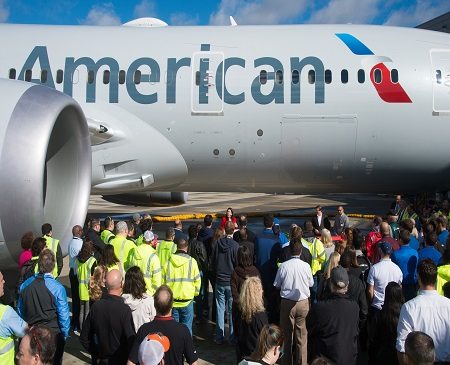
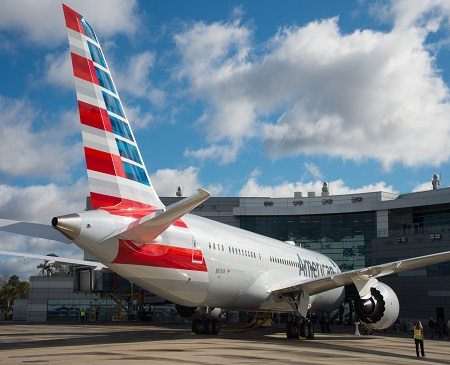
This video takes a behind the scenes look at the making of Boeing 787 promotional footage for use by American Airlines (AA) in future advertisements and safety videos. Boasting technological innovations such as carbon fiber construction, a lower cabin altitude, larger windows, and video in every seat, among many other features, the 787 embodies AA’s commitment to building a modern and cutting edge fleet for its customers. Indeed, such aircraft are the cornerstone of “The New American”. Currently, 13 Boeing 787-8s ply the skies for American with a further seven on order (another one of which just rolled off the assembly line in Charleston, SC and recently commenced flight testing). AA’s commitment to the 787 goes further with 22 larger 787-9 aircraft on order, the first of which should arrive the last quarter of 2016.

[youtube id=”xfRclcwh4bE” width=”800″ height=”454″ position=”left”]

Formation Flying Requires Close Coordination

While the beautiful 787 and American Airlines take center stage, this video also highlights the amazing work done behind the camera by the pilots and coordinators at Wolfe Air Aviation. Needless to say, flying two dissimilar aircraft very close together requires immense skill and prior proper planning. Since 1980, Wolfe Air Aviation has provided such skill and planning (and high tech equipment) for air to air shots and air to ground shots on everything from airline and military promos to blockbuster hits. Such hits include The AvengersIron ManAir Force OneExecutive Decision, and The Hunt for Red October among others. The Wolfe Air fleet includes one Learjet 25B, one Cessna Skymaster 337, and one Eurcopter AS350 ASTAR. With these different tools in their filming toolkit, Wolfe Air can capture anything you need from the skies, and the beautiful AA 787 footage showcased here is no exception. Enjoy the view Avgeeks!

This Beautiful Video Reminds us How Amazing Aviation Is Today

zurichairport

With all the hassles associated with air travel today, it’s easy to forget how amazing aviation really is. Machines that weigh up to one million pounds deliver people, and cargo to anywhere in the world in less than a day. Every single day millions of people safely travel throughout the world.  They careen at hundreds of miles per hour in the sky with spacing as little as 1,000 feet apart vertically.  It’s not luck that nearly every flight happens without incident. It’s a testament to every professional who works to make travel routine. The ramp personnel, gate agents, air traffic control, pilots, and flight attendants all play a role.

This video is a tribute to all of the crew and staff at Zurich airport in Switzerland.   It was produced by Ruesch Productions Aviation Cinematography.

[youtube id=”ov7WQJWKaVc” width=”800″ height=”454″ position=”left”]