Home Blog Page 207

Boeing 727 Freighter Lands Safely in Guam Without Nose Gear

0

A venerable 727 cargo jet made a safe landing without a nose gear.  Video is below.

Asia Pacific Airlines operates a fleet of 3 727-200 cargo aircraft. (Screenshot from website at www.flyapa.com)

If you follow our site closely, you know that we at Avgeekery have a soft spot in our heart for the Boeing 727. There are very few flying examples left. By now, most airlines and major cargo operators have retired them. There are a few operating for smaller outfits around the world though. One of the remaining operators is Asia Pacific Airlines who operates a 727-200 with winglets.

On Feb 26, tail number N86425, a 37+ year old Boeing 727 arrived at Guam International Airport and realized that its nose gear would not extend. After completing a touch and go maneuver (apparently in an attempt to jiggle the nose gear free), the aircraft made a second landing attempt and completed textbook emergency landing. Despite gusty winds, the pilot held the nose off the ground for as long as possible while still ensuring he had elevator effectiveness to slowly and gently lower the nose. No word on damage yet.

Video was posted by KUAM news on Feb 26 (local).

Startling video of the Asia Pacific Airlines cargo plane making an emergency landing at the Guam International Airport, after it’s nose wheel failed to come down.

Posted by KUAM News on Thursday, February 25, 2016

Meet Instagram’s Most Creative #Avgeek Photographer

1

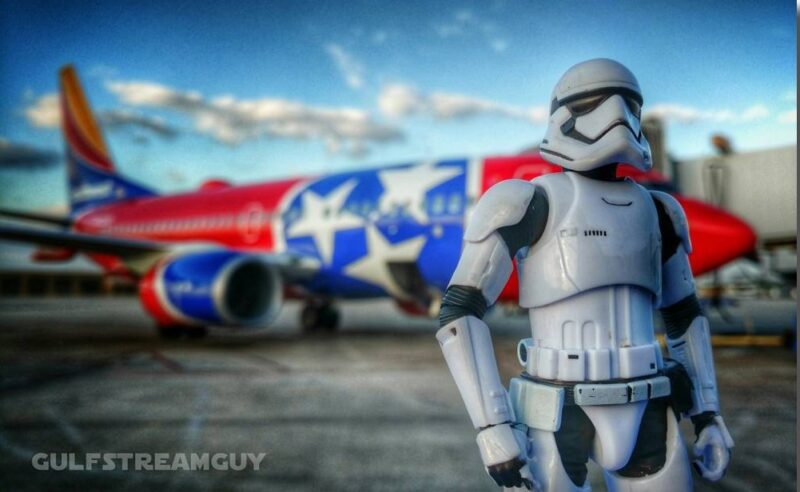
GulfstreamGuy’s photos feature scenes that stir the #avgeek’s imagination.

Everyday, thousands of people post amazing airplane photos on Instagram.  But few people are able to take a photo of a flying machine and turn it into a work of art that stirs the imagination.  Jason Hamm, aka GulfstreamGuy, has that unique talent for mixing photography and creativity to produce thoughtful scenes combining action figures and airplanes.  His popular Instagram account features over 12,000 fans! We recently sat down with Jason to learn more about his aviation passion.

1.) Tell us a little about yourself. When did you first realize you were an avgeek?

swagulfstreamguyMy name is Jason Hamm, I’m 42 years old and I’ve been married to my wife, April, for 15 years. I have 2 kids. My daughter, Savanna, is 11 and my son, William, is 7.

I was born in Germany as an air force brat and so I have always grown up around aviation. I can remember waking up to the sounds of local B-52s in Grand Forks AFB, North Dakota doing their morning engine run-ups and I used to LOVE hearing the raw power they filled the morning air with! It was actually so loud I can remember having to yell at my friends while trying to talk to them as they stood next to me!

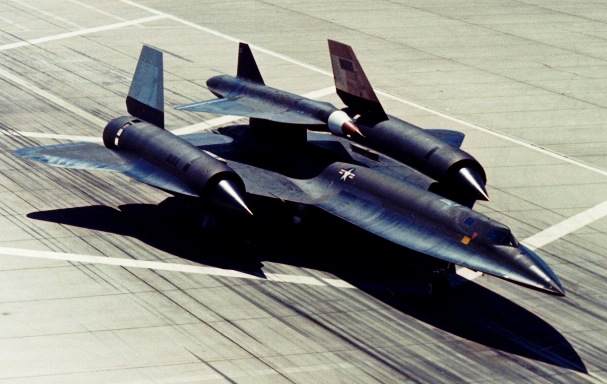
I always think back to a time while I was in North Dakota and my dad took me down to the flight line fence to see one of the most amazing airplanes I had ever seen in my life. The long sleek black fuselage was unlike I had ever seen before. My dad just kept referring to it as the “Blackbird”! I saw this SR-71 and I KNEW I needed to learn more about aircraft!

2.) Besides taking great photos, what do you do for your day job?

Well, thank you for the compliment! I’m very proud to say I am a ramp agent for Southwest Airlines here in Little Rock at the Clinton National Airport. I’ve been working at the airport since 1993 in some form or fashion. I was a refueler, I worked at a private flight department, an FBO, and I worked for Northwest for almost 10 years before eventually landing my current career at the LUV airline!

3.) Your Instagram account has some of the most unique aviation photos.

gsg2Thanks! When I started getting involved with aviation photography I tried doing the “spotting” type of photos. This, of course, being aircraft landing, taking off, and taxiing. I’ve never been able to capture these type of shots with any type of proficiency and there are so many aviation photographers who excel in these type of shots so I set my sites on capturing images that the general public may normally do not get to see. These include ramp shots and up close shots, heck, maybe even shots from WITHIN the wheel well of a 737!!

I also have learned the use of HDR (High Dynamic Range) in my photos of Instagram (Thanks, Snapseed!!) to give many of my photos a certain “painting-like” look to them. HDR, I’ve found, has to be done carefully to avoid giving the photos a over saturated fake look. I am my own worst critic so if the photo pleases me, I will post it. I literally have thousands of photos I will not show anyone because they weren’t up to my standards.

4.) On Instagram, you frequently combine figurines and airplane models while shooting pictures of real jets. Where did you get this idea?

About a year and a half ago I was looking through Instagram accounts and I did a search for Star Wars. I came across this account buy the name of Matt, aka “Captain Kaos” (stuckinplastic.com). His gallery has not only some of the best action figure photography I’ve ever seen but also he incorporates an amazing original story or paragraph to each one. I thought it would be a fun idea to put my love of Lego figures (and eventually Star Wars Black Series figures) together with the aircraft I’m surrounded with for a few shots now and again. The response has been great! I’m always thinking ahead and I look at EVERYTHING around me for ideas.

5.) What’s your favorite #avgeek memory?

gulfstreamguy I have a few but one of my favorite avgeek memories happened on December 9, 1999. That’s the day I proposed to my wife, April. She had never been on a plane before and I wanted to make her first time special. Thanks to the LIT Southwest Ops personnel, all of the flight crew knew about it in advance and all I had to do was get up in front of everyone during the flight and ask April to come up to the front of the plane as I got on one knee and asked for her hand in marriage. I’m thankful she she said yes!

The aircraft I proposed to her on was a Southwest 737-200 (N64SW) that was eventually retired and sent to the desert. However, this 732 eventually was turned into a corporate jet for Sonic restaurants and then sold and re-registered as N500VP. The funny part of that story is on the day we got married, right after the ceremony, we were both starving from not eating all day so we stopped by a Sonic restaurant to get something to eat! I guess some things were just meant to be!

Thanks Jason!  If you are an #avgeek with an interesting story to share, send an e-mail to avgeekeryblog@gmail.com.


Watch This Guy Try To Sell You a Used F-4 Phantom (NSFW)| VIDEO

Sell an F-4 Phantom guy.

Now Were Talking Aim-9M’s are standard…and we’ve got Martin Baker Bucket Seats.

Those of us who are old enough to remember know that there’s probably nothing worse than good ‘ole Cal Worthington trying to sell you a used automobile on TV.  His commercials were so annoying that they stuck in your head. Well now we’ve uncovered that there might actually be something worse.  This skit of an F-4 Phantom pilot trying to sell you a used F-4 while doing an impression of Cal Worthington features horrible acting with terrible camera work, and yet somehow it will still make nostalgic #avgeeks laugh.

Sell an F-4 Phantom guy's inspiration.
YouTube screen capture of video posted by: lugnutsoldcrap

The Cal Worthington impersonator actually appears to be an F-4 Phantom pilot from the 113th Tactical Fighter Squadron that was based at Terre Haute, Indiana.  Back in 1991, the base transitioned from an F-4 unit to F-16s.  Terre Haute continued to fly the F-16 until 2007 when the flying mission ceased as part of the 2005 BRAC decision.  Today, the 181st Intelligence Wing at the base processes UAV data feeds and provides intelligence to support units around the world.

Crazy Cal: A War Hero

While Cal Worthington was best known as the semi-famous owner of the Worthington Auto Group who appeared in countless commercials and died a very wealthy man, he was actually a decorated airman and war hero first. Cal served in World War II.  He flew 29 missions over Germany in the B-17.  He received 5 air medals and a Distinguished Flying Cross that was presented by Jimmy Doolittle himself.

[youtube id=”pg8-mx4KGK8″ width=”800″ height=”454″ position=”left”]

Air Force Unveils Next Generation Bomber, The B-21

b21bomber

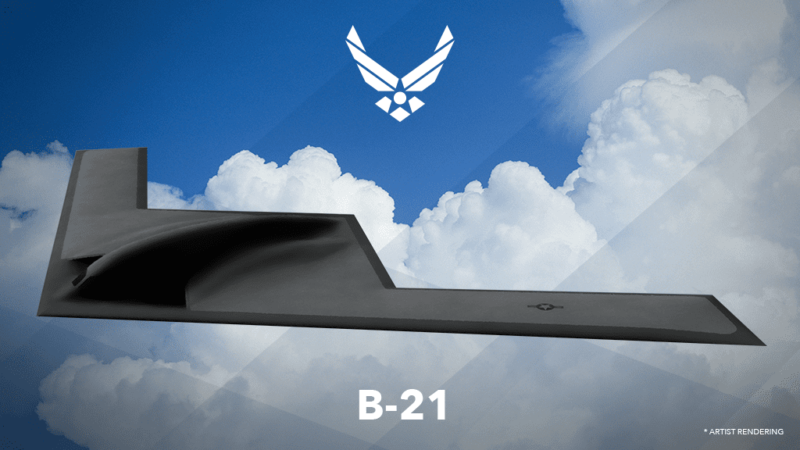
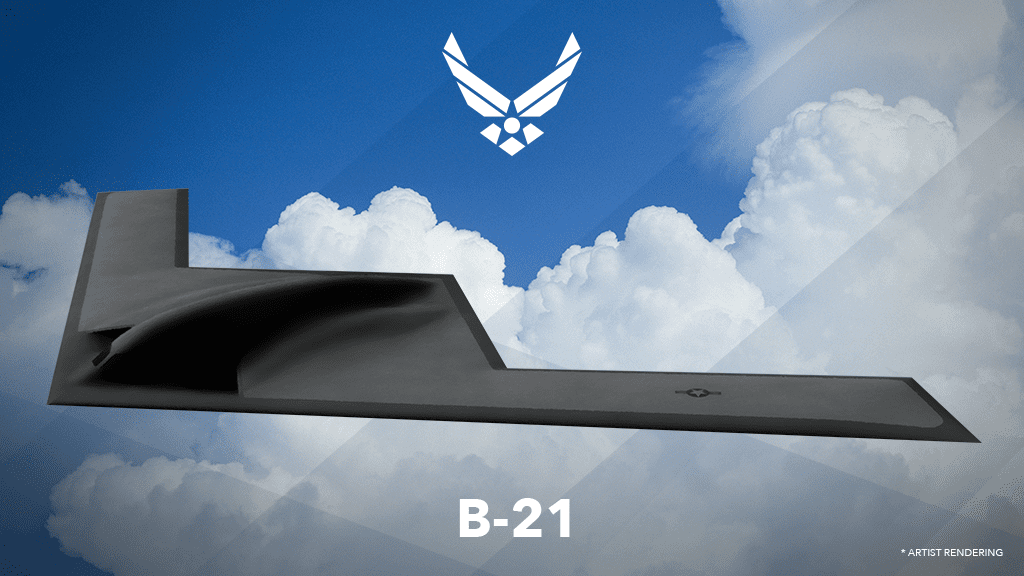
Air Force displays rendering of new stealth bomber for the first time.

Dear ISIS and other (potential) enemies of America: You mess with the bull, you get the … B-21.

Friday U.S. Air Force Secretary Deborah Lee James revealed an artist’s concept design and the designation of the next generation long-range strike bomber. James was speaking at the Air Warfare Symposium in Orlando, Fla.

James said the B-21 will let the Air Force launch from the continental U.S. and deliver airstrikes on any location in the world.

“The B-21 has been designed from the beginning based on a set of requirements that allows the use of existing and mature technology,” James said.

The new stealth bomber has a designation but not a name. The LRS-B was tagged B-21 because it will be the first new stealth bomber of the 21st century. James is opening up the naming of the B-21 to U.S. airmen.

“So we have an image, we have a designation, but what we don’t yet have, we don’t yet have a name,” James said, “and this is where I’m challenging and I’m calling on every airman today … to give us your best suggestions for a name for the B-21, America’s newest bomber.”

The contract has been awarded to Northrup Grumman, which also built the B-2. Analysts say the program will be worth around $80 billion in total, providing a boon to Northrop and its key suppliers, but the Air Force has said only that it expects to pay $511 million per plane in 2010 dollars.

The contract to build 100 B-21s was awarded in October but the announcement has been held up as federal auditors reviewed a protest from Boeing and Lockheed Martin. The B-21 program also figures to encounter scrutiny from Congress.

The artist rendering of the B-21 closely resembles the B-2 Spirit Stealth Bomber. The plan is for the B-21 to be operational in the middle of the next decade.

So, ISIS, if you’re still around by then … beware.


Hot Links: A Roundup Of This Week’s Stories You Might Have Missed – Just Click And Read

Avgeekery.com invites you to close out your week and spend some TGIF time getting caught up on some stories of interest that you might have missed over the last few days.

Astronaut Scott Kelly. Credit: NASA/Robert Markowitz

MOST IN SPACE: When Scott Kelly returns to Earth next week, he will come back holding the record for most days in space by a U.S. astronaut. He will have spent nearly a year in the International Space Station. Kelly has been in space four times but this mission has produced some interesting facts and figures.

EMBRAER ROLLOUT: Embraer’s dominance in small to mid-size commercial aircraft received another boost when the Brazilian company rolled out the E190-E2, the first E2 jet. The aircraft is scheduled to make its maiden flight in the second half of this year and be in service in 2018.

EMERGENCY, EMERGENCY: DFW Airport, one of the nation’s busiest, had to handle two emergency landings in a 12-hour period this week.

UNION NEWS (NOT DUES): American Airlines pilots formed their own union over 50 years ago but a former union executive thinks that it’s time for the AA pilots to increase their clout by rejoining the larger Air Line Pilots Association.

WHY AIRFARES ARE HIGH: A writer who knows the airlines and travel industry explains why airfares are high even though commercial carriers are raking in profits and benefiting from lower fuel prices.

HARTSFIELD SEMANTICS: Atlanta’s Hartsfield-Jackson International is not a favorite among air travelers. Perhaps that’s because it’s the busiest – more flights equal more delays equal more people equal long lines. The airport’s claim as the world’s “busiest” has now been changed to “most-traveled.” That’s probably not gonna reduce the wait time at Starbucks, though.

NEW TERMINAL IN DUBAI: Concourse D opened at Dubai International Airport this week. It cost $1.2 billion and will increase capacity from 75 million to 90 million passengers per year. (By the way, Atlanta, Dubai claims it has the world’s busiest airport.)

DON’T FENCE ME IN: A few weeks ago Avgeekery.com wrote about tips for drone owners. At the recent Singapore Airshow there was talk of installing GPS chips in drones and then using electronic “fences” to prevent drones from flying where they shouldn’t.

RIP: Capt. Eric “Winkle” Brown, who was England’s version of Chuck Yeager, died this week at the age of 97. He was the most decorated pilot in the Royal Navy and held three world records including flying 487 different types of aircraft.

TEEN DIES OF INJURIES: A 16-year-old who was among the passengers in the helicopter crash in Hawaii has died. The copter crashed in the water near Pearl Harbor and the accident was captured on video.


The F-4 Phantom Was A Big, Fast, Heavy and Popular Fighter. Here’s 8 Reasons why it was Awesome!

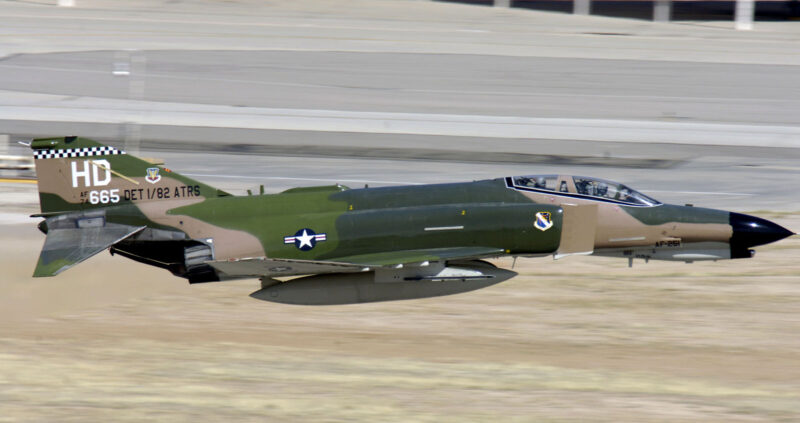
For over three decades, McDonnell’s F-4 Phantom was the world’s most popular fighter-bomber. It made its debut in 1960 and served a prominent role in Vietnam. Over 5,000 F-4s were produced.

Not only was the F-4 a staple for the U.S. military, it was operated by the armed forces in 11 other nations. In Israel, Phantoms were key players in several conflicts and Iran used a large contingent of F-4s in the Iran-Iraq War. Seven countries still use Phantoms in front-line service.

So why was the F-4 such a durable plane that was also popular with the pilots who flew the Phantom? Here are eight reasons:

  1. McDonnell Aircraft, based in St. Louis, was tasked with developing a fighter for the “next war.” The Navy wanted a twin-seat, twin-engine aircraft that could operate at high altitude at supersonic speed. The F-4 was the result. The Phantom like an All-Pro NFL linebacker – rugged size and jaw-dropping speed. It could reach Mach 2.2 and carry more than 18,000 pounds of weaponry.
  2. After becoming operational, the F-4 established its superiority. In just over two years of test flights, the Phantom set 15 world records including speed and altitude.

    An F-4 Phantom on a bombing run in Vietnam. Credit: U.S. Navy National Museum of Naval Aviation.
    An F-4 Phantom on a bombing run in Vietnam. Credit: U.S. Navy National Museum of Naval Aviation.
  3. Ironically, the F-4 was a fighter without an on-board gun. It was designed to fire rockets – Sparrows and Sidewinders. Later models added an M61 Vulcan rotary cannon. Because rockets tended to miss their targets, the cannon gave pilots a backup and a security blanket. In dogfights with MiGs in Vietnam, the cannon and the heat-seeking Sidewinders were the only effective weapons.
  4. The F-4 was initially developed for the Navy but the plane was soon in service for all branches of the U.S. military. The versatile Phantom could carry out recon missions, was outstanding in dog fights and could provide air support for ground troops.
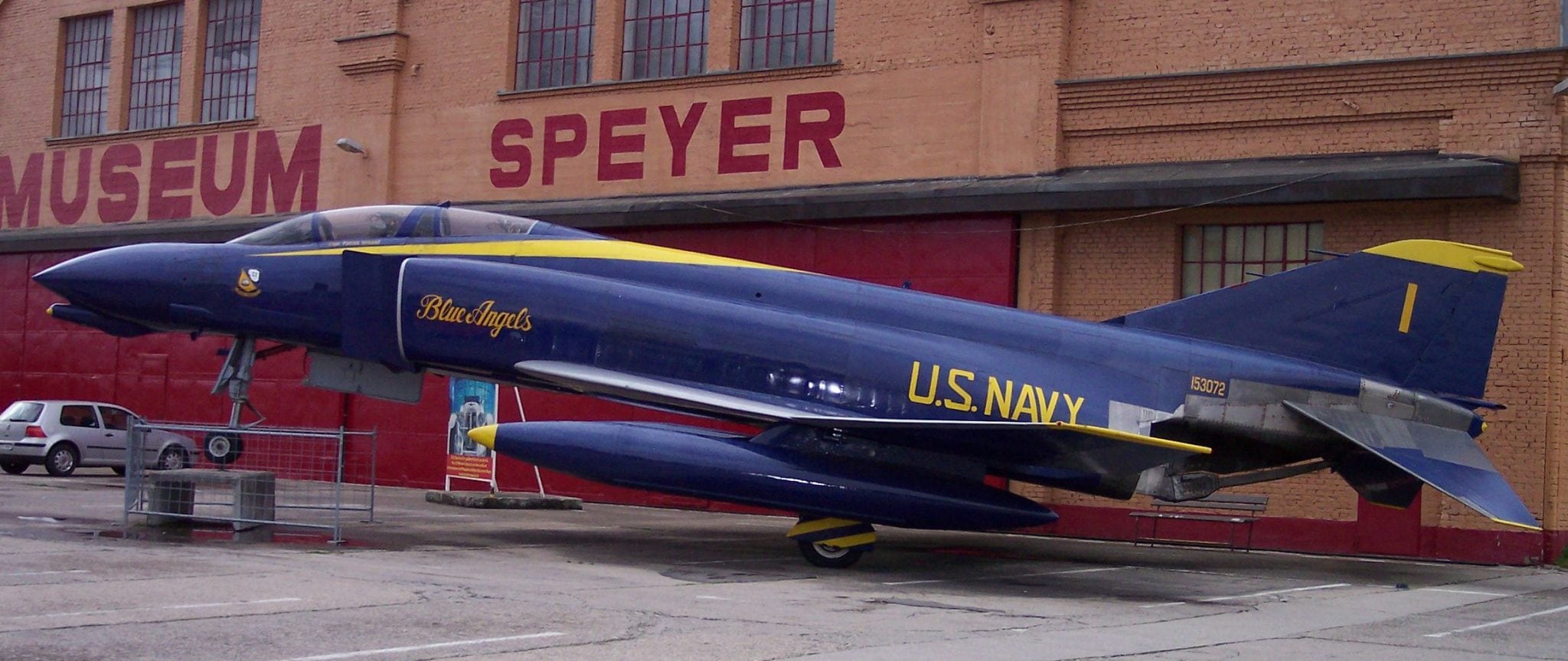
  5. The Phantom was packed nose to tail with high-tech gear – radar, missile fire control, advanced navigation systems, an analog air-data computer – and it marked the beginning of the two-seat fighter. The back seater served as fire-control/radar officer, navigator and in later versions of the F-4 with dual pilot controls was also capable of flying the plane.mcdonnell_douglas_f_-_4j_phantom_blue_angels
  6. The size, speed and power of the F-4 made it an awesome sight in flight. The Phantom is the only aircraft that was used by the United States’ two flight demonstration teams – the Air Force’s Thunderbirds and the Navy’s Blue Angels.
  7. The popularity of an aircraft can be measured by the nickname(s) given by the men who fly those aircraft. Officially designated as the “Phantom” the F-4 also earned a long list of nicknames. It shot down a number of Soviet-buit MiGs, earning the description as the “World’s Leading Distributor of MiG Parts.” It was also known as Snoopy, Rhino, Double Ugly, Old Smokey, the Flying Anvil, Flying Footlocker, Flying Brick, Lead Sled, The Big Iron Sled, The St. Louis Slugger and Old Bent Wing because of its unique up-angled wing tips.
  8. In the 1960s, NASA needed a chase plane to film rockets they were test launching for the space program. The F-4’s twin General Electric J79 engines enabled the Phantom to track a Titan rocket for 90 seconds as it reached Mach 1. Retired colonel Jack Petry was one of the chase pilots who filmed the rocket launches. “Absolutely beautiful,” Petry told Air&Space Magazine of the experience. “To see that massive thing in flight and be right there in the air with it – you can imagine the exhilaration.”

    [shopify embed_type=”product” shop=”custom-model-planes.myshopify.com” product_handle=”desktop-mcdonnell-douglas-f-4e-phantom-ii-1-48-scale-mahogany-model” show=”all”][shopify embed_type=”product” shop=”custom-model-planes.myshopify.com” product_handle=”mcdonnell-douglas-f-4g-phantom-wild-weasel-1-48-scale-mahogany-model” show=”all”][shopify embed_type=”product” shop=”custom-model-planes.myshopify.com” product_handle=”custom-mahogany-fighter-bomber” show=”all”]

Getting Pumped Up About The Hybrid Airship

Artist rendering of the Hybrid Airship being developed by Lockheed Martin and Hybrid Enterprises. Credit: Lockheed Martin.

It can carry more than a C-130 and fly over 1,000 miles at a fraction of the cost.

Everything old is new again. At least, that’s how the saying goes. And that appears to apply to blimps.

Also known as airships, they were on the leading edge of man’s attempts to leave the Earth’s gravitational pull. For most of us, the word associated with “blimp” is “Goodyear.” That company and others have advertised by providing blimps for aerial shots at major sports events, football games in particular.

For the last 20 years, Lockheed Martin and Hybrid Enterprises have been working on making blimps relative for the 21st century. They’ve developed the Hybrid Airship and its purpose could be hauling cargo to and from remote locations.

Two other companies are developing similar aircraft. Hybrid Air Vehicles, based in England, has developed the Airlander 10 and Thales has the Stratobus, a high-altitude blimp that the company describes as an autonomous, stationary stratospheric platform.

Specifically, it’s thought that the Hybrid Airship could unlock resources in Africa that could be worth billions of dollars. The helium-powered blimp can carry up to 20 tons, has a range of more than 1,000 miles and a top speed of 60 knots.

More importantly, it doesn’t need a runway. Unlike other airships, it doesn’t need to be tethered to a mooring tower. The Hybrid Airship has four landing pads similar to a hover craft that allows it to land on a variety of surfaces.

“When you build a project in a remote area, you always have to start with a road, a railway line, and a power line before you build the smelter,” Robert S. Stewart, head of African mining firm Interop AG, told CNN.com. “With an airship you can fly straight in, without even an airport, just an area the size of two or three football fields.”

The new giant blimp has caused the Federal Aviation Administration to redefine the rules for such a craft. Lockheed-Martin and the FAA have worked for more than a decade to define criteria. Last November, the FAA approved a project specific certification plan for the Hybrid Airship.

The FAA’s approval for the certification plan gave Lockheed Martin the green light to start production. Each “super blimp” is expected to cost $40 million. Final FAA certification is needed and Hybrid Enterprises hopes its super blimp will be in operation by 2018.

Those of us at Avgeekery.com hope that the Hybrid Airship’s official debut is accompanied by Led Zeppelin’s “Stairway To Heaven.”

This Badass Song About Their Favorite Fighter Jets Was Written By Real Fighter Pilots | VIDEO

Real pilots wrote the most ornery songs about pilots, planes, and the daily grind of the Air Force.

The Dos Gringos band are better fighter pilots than singers and song writers. (That’s a compliment, guys.)

They penned this little ditty about their favorite military aircraft. It’s catchy and the singing is above average. (That assessment comes from a below – way below – average singer.) Caution about some of the language – it’s NSFW so either be careful where you watch or plug in your earphones.

As fun as the song is, the aerial footage that goes along with the music is top shelf.

[youtube id=”335GdTqtyLs” width=”800″ height=”454″ position=”left”]

Sobering Facts Regarding Aviation Emissions And Global Warming

Spoiler alert! Chemtrails aren’t real but the world of aviation isn’t exactly environmentally friendly either.

The debate over climate change is also a debate about scientific facts and research. According to the research and the numbers from various sources, it’s ironic that a fair amount of air pollution comes from aircraft. The urge to get from here to there as quickly and as often as possible has created growth in passenger and cargo flights worldwide.

If the aviation industry were a country, it would rank in the top 10 in terms of carbon dioxide emissions. All flights worldwide account for about 2.5 percent of global CO2 emissions. Left unchecked, those emissions are estimated to grow by two to four times over the next three decades. And, aviation emissions could help push global warming over the 2 degrees Celsius line, which is the recognized goal to limit temperature increases.

Atmosfair, a German organization, calculates that a roundtrip flight from, say, Denver to New York produces the equivalent of nearly a year’s worth of emissions from a car, and more than the annual emissions of an average person living in India.

In addition to carbon dioxide, planes also emit nitrogen oxides, sulphur oxides, black carbon and as well as water vapor that can form heat-trapping clouds. Also, because these emissions take place in the upper troposphere, the effects are magnified.

Since 1978, American commercial airlines have improved their fuel efficiency by 120 percent. United and Southwest airlines have each announced they plan on trying alternative fuels. But alternative fuels are still in the experimental phase and there’s no guarantee enough can be produced to meet the high demand.

The Environmental Protection Agency is working on rules to address carbon dioxide emissions from aircraft. Its findings are due in April. The U.S. produces about a third of the global aviation emissions. The EPA was forced to formulate a plan after it was sued by environmental groups.

Inside_the_Airport_Control_TowerAir pollution from planes in Europe is to rise by nearly half in the next two decades, according to the European Aviation Environmental report. Its findings are based on flights over the last 25 years. The report said that aircraft emissions of nitrogen oxides – which are linked to lung damage – has doubled since 1990 and are expected to increase by 43 percent over the next two decades.

Regulating aircraft emissions is a global issue. Regulating flights that leave one country and land in another is difficult unless each country has the same emissions standards.

Alice Bows-Larkin is an atmospheric scientist at the Tyndall Centre for Climate Change Research at the University of Manchester. She believes that reducing the number of planes in the sky is the only way to keep emissions at an acceptable level. She hasn’t flown since 2005.

“Flight is the most carbon-intensive activity that we can do,” Bows-Larkin said. “We need to do something sooner rather than later. Time is massively against us.”

Boeing Introduces 737-800 BCF Freighter, First Delivery in late 2017

0
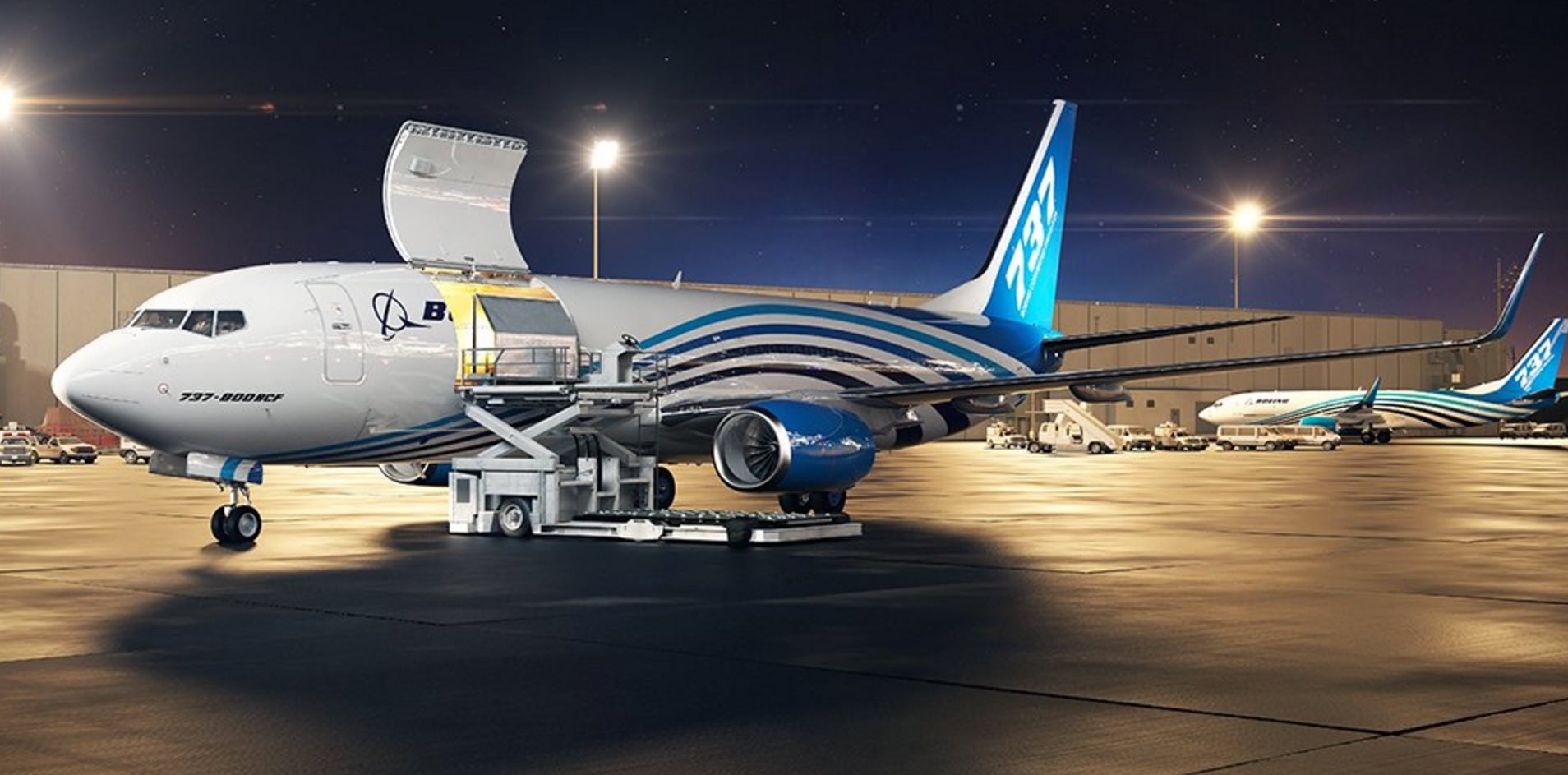
Boeing will introduce the 737-800 BCF freighter by the end of 2017. Source: Boeing

Boeing today announced the launch of its 737-800 converted freighter. The 737 cargo series will be in the air by the fourth quarter of 2017 and the company says it is has commitments for up to 55 conversions from seven different customers.

The 737-800 is the first Next-Generation 737 that Boeing has offered for conversion. This standard-body converted freighter will primarily be used to carry express cargo on domestic routes.

The Next-Generation 737 provides exceptional value to express freight carriers through its superior payload, range, reliability and efficiency,” said Stan Deal, senior vice president, Commercial Aviation Services, Boeing Commercial Airplanes. “While the recovery of the global cargo market has been slow, we see demand for freighters, such as the 737-800BCF, that will carry express cargo on domestic routes.

“Over the next 20 years, Boeing forecasts customers will need more than 1,000 converted freighters the size of the 737, with China’s domestic air freight carriers accounting for nearly one-third of the total market.”

Boeing is continuing its practice of converting passenger planes for cargo purposes. Making this move with the 737 will allow for converting planes as more are retired from passenger service. It will also provide a high-capacity mid-range cargo carrier which will be particularly valuable to the growing Asian market.

Once modified, the 737-800 will include a large main-deck cargo door, a cargo-handling system plus accommodations for up to four non-flying crew or passengers. Boeing says the 737-800BCF will be able to carry up to 52,800 pounds of cargo. There will be 5,000 cubic feet of cargo space on the main deck, complemented with an additional 1,540 cubic feet of cargo space at the lower cargo holds.

Boeing says the conversions of existing passenger airplanes will take place at select facilities located near conversion demand. That will include the company’s facility in Shanghai.


The Day We Lost A SR-71 (M-21) While Testing A James Bond-like Drone | VIDEO

The Drone was supposed to fly over Soviet territory then air drop its film before self destructing.

Over 50 years ago, in the height of the Cold War, spying on the Soviet Union from the air was a major endeavor.  If you’ve seen the movie “Bridge Of Spies”, you may recall that it was based on the Soviets shooting down a U-2 spy plane and capturing its pilot, Francis Gary Powers, in 1960.

A few years later after the Powers’ incident, the U.S. had developed the Lockheed SR-71 “Blackbird” reconnaissance aircraft. But instead of risking pilots over Soviet territory, the SR-71 was used to launch a drone that would make a photography pass, drop its payload safely and then self-destruct.

This video shows a test that ended in disaster in May of 1966, destroying both the drone and the SR-71 and resulting in the death of Launch Control Officer Ray Torick.

[youtube id=”GMyC2urCl_4″ width=”800″ height=”454″ position=”left”]

Is Next Major Air Show A Barometer For International Aviation?

The next big international airshow will take place in England. The Farnborough Air Show in July will help determine if the international aviation industry is ascending, descending or maintaining altitude.

That will no doubt be a debate over the next six months considering that last week’s Singapore Airshow wrapped up with several mixed messages.

While Asia, and China in particular, should provide a booming market for both aircraft production and commercial aviation, there are concerns about the stability of the global economy. Plus, with saber rattling taking place in North Korea and China, there is uneasiness about political and military clashes in the region.

Also, with oil prices at record lows and leading to lower prices for jet fuel, there is less urgency for airlines to start phasing out jets that aren’t as fuel efficient as new models.

The 2014 Singapore Airshow did $32 billion (U.S. dollars) in business while this year’s event reported just $12.3 billion. However, the event organizer said there were 40 deals that have not been announced, up from the 24 undisclosed deals in 2014. That would appear to indicate that there’s neutral growth.

The Singapore event drew the usual number of exhibitors and featured its largest display of static aircraft with over 60 commercial, private, military and experimental aircraft.

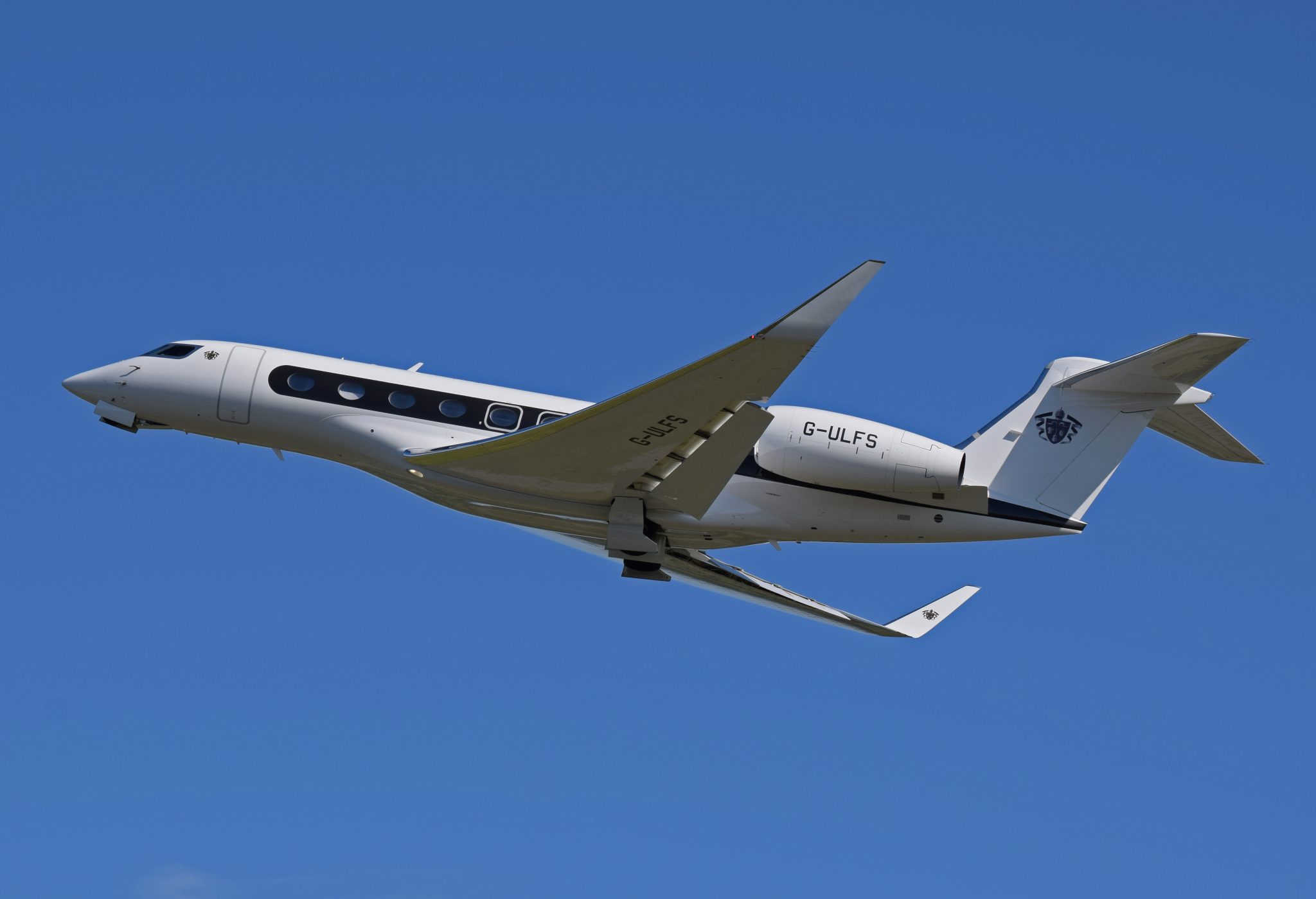
Gulfstream's G650 is the company's largest and fastest business jet with a top speed of Mach 0.925. Credit: Wikipedia.
Gulfstream’s G650 is the company’s largest and fastest business jet with a top speed of Mach 0.925. Credit: Wikipedia.

Business Aviation Continues Growth

One of the growth areas is personal/business aviation. The lines for private viewings of business jets at the year’s Singapore Airshow were long – about as long as the waiting list to purchase a new business net. One manufacturer said the earliest delivery would be 2018.

Gulfstream and Embraer each had their top-of-the line business jets on display. In the last decade, world-wide business jets have nearly doubled and a Honeywell Aerospace report estimates the world will need 9,200 new business jet deliveries by 2026.

Airbus To Challenge Boeing’s 777

With the Farnborough Air Show more in its back yard, Airbus Group SE plans to add some intrigue to the event.

Airbus said this week it plans to preview plans to produce a larger version of its A350 jetliner. The move is a counter punch to Boeing’s 777X, which can haul 425 passengers. The A350 stretch model would offer more seats.

“We’re starting to conclude that perhaps there is such a market and now we’re talking to key airlines about what we might be able to do in that market but no final decision has been made,” Airbus’s chief salesman John Leahy said in an interview at the Singapore Airshow. “We’ll certainly be able to give you an update at Farnborough.”

And Farnborough might provide a heat check on the world’s aviation business.  Despite weak sales, Boeing and Airbus have manufacturing backlogs. As one might expect of a Chief Operating Officer, Airbus’ Leahy is optimistic.

“Some people are saying we’re in the middle of a bubble,” Leahy said. “But reality is, the only thing that worries me is to not be able to deliver the aircraft our customers have ordered.”