Home Blog Page 26

Back When a U-2 Spy Plane Operated From an Aircraft Carrier

The U-2 Dragonfly was not only tested on a carrier; the jet also successfully carried out a CIA spy mission.

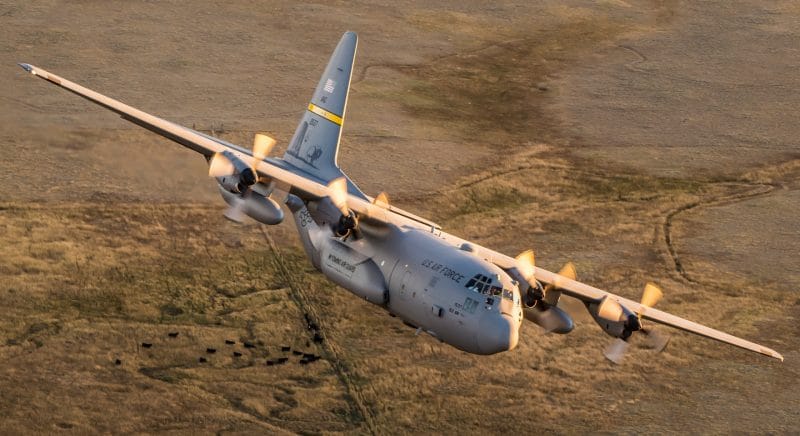
A while ago, we wrote an article about a C-130 that did carrier trials. As hard as it is to believe, a Lockheed KC-130F Hercules tanker conducted a series of test landings and takeoffs from the deck of the USS Forrestal (CVA-59).  The crew made 29 touch-and-go landings, 21 full-stop landings, and 21 unassisted takeoffs. They were deck-run takeoffs (without catapult assist) while weighing from 85,000 pounds all the way up to 121,000 pounds.

The KC-130 wasn’t the only unique aircraft trialed by the Navy. Did you know that a U-2 was actually tested on an aircraft carrier as well?

Less than a year after the KC-130 conducted tests, the U-2 attempted to land on the deck of the USS Ranger (CVA-61). The U-2, specially modified and known as a U-2G, had additional equipment added to it in order to support carrier ops. The plane had strengthened gear and a tail hook to enable carrier operations.

Why did they need a U-2 on an aircraft carrier?

At the time, the CIA saw the U-2 as the ideal observation and spy platform. Unfortunately, the U-2 was also a very sensitive platform–both militarily and politically. Just a few years earlier, Francis Gary Powers’ U-2 was shot down over the Soviet Union. Many of the United States’ most trusted allies worried that hosting the spy aircraft could lead to riling up the then very powerful and influential Soviet Union.

Thus, Operation Project Whale Tale was launched. It was conceived as a way to launch necessary spy activities in both areas that were previously difficult to access. A side effect was to avoid any political entanglements from launching from allied territories.

U2carrierlanding
Back When a U-2 Spy Plane Operated From an Aircraft Carrier 3

Was it a standard U-2?

The U-2 that they used for the test was an off-the-shelf U-2 with some important modifications. The modified spy jet, then renamed the U-2G, required strengthened landing gear and internal structures to handle the loads of a carrier landing. It also needed an arrestor hook.

The pilots selected for this program trained on the modified aircraft. Learning to operate the aircraft in such tight spaces was no small feat. Remember that landing a U-2 is no easy feat, even under normal conditions. Visibility in the aircraft is poor. This is due to the aircraft’s design and the pilots wearing a visibility-limiting spacesuit in a tight, fighter-like cockpit. On short final, the spy plane pilot is talked down by a guide vehicle (usually a sports car) that rendezvous with the aircraft on the runway.

Below is a video of a typical U-2 approach, highlighting the challenge of landing a U-2 on an 8,000+ foot runway, courtesy of our friends at AirshowStuff.

It wasn’t perfect but, landing a U-2 on a carrier was possible!

According to an excellent synopsis in Air and Space Forces Magazine, testing began in 1963 when a standard U-2 with the aforementioned modifications was hoisted onto the deck of the Kitty Hawk. Lockheed test pilot Bob Schumacher took off with a full fuel load and a deck run of 321 feet. A CIA report on subsequent landing tests stated that “the aircraft bounced, hit hard on one wingtip, and then barely managed to become airborne again before reaching the end of the deck.”

After reviewing the test data, the U-2 was further modified with flight control modifications, like spoilers, to increase control and decrease lift for the more precise carrier landings. The upgraded model became known as the U-2G. The first successful (and uneventful) landing occurred on 2 March 1964.

USS Kitty Hawk CIA
Back When a U-2 Spy Plane Operated From an Aircraft Carrier 4


Just two months later, the CIA selected the U-2G for assignment in an operation known as Operation Fish Hawk. The mission was to observe French nuclear activity in the South Pacific. The U-2 was the perfect aircraft for such a feat.

According to the CIA website, “The U-2G took off successfully on 19 May 1964, but cloud cover obscured a number of the targets, so a second mission was authorized for 23 May. This sortie succeeded brilliantly, capturing high-quality photographs of all targets. The after-action report read, “From an operational and security standpoint, this was one of the most successful operations of this nature ever conducted by the United States.” Detailed analysis of the photography resulted in an in-depth report in August 1964 that fully answered questions concerning the major aspects of the French nuclear program.”

Why Did the U-2 carrier program end?

While the mission was successful, the U-2 carrier program did not last. The reasons for its demise were twofold. By the mid-1960s, the U-2 was no longer the only choice for observation and high-quality imagery missions. Other platforms were emerging that offered better and safer ways to spy. High-resolution spy space satellites, as well as the much faster SR-71, were becoming a reality.

The other catalyst behind the demise of the sea-based U-2G was the fact that the aircraft was never ideal for an aircraft carrier. After all, the U-2 had a large footprint on a relatively small deck of carriers from that day. Besides its relatively large size, operating a giant glider-winged jet that is notoriously squirrely from such a small flight deck was always risky.

With better options, it became almost a no-brainer to back away from such a difficult program.

Spirit Airlines Files for Bankruptcy Amid Rising Financial Pressures

Spirit Airlines, the Florida-based ultra-low-cost carrier, has officially filed for bankruptcy protection as it battles to restructure its finances.

Once celebrated for pioneering low fares with numerous add-on fees, the airline has struggled to keep up with industry challenges and mounting debt obligations. 
Breaking Point: Debt, Rising Costs, and a Merger That Never Materialized

Spirit Airlines and JetBlue Airways
A Spirit Airlines jet taxis past a JetBlue Airbus at the gate at Fort Lauderdale-Hollywood International Airport (FLL) | IMAGE: Photo by Randolph Rojas on Unsplash

Spirit’s bankruptcy follows unsuccessful attempts to secure a merger with Frontier Airlines, which could have provided much-needed financial support. The two budget carriers initially announced plans to merge in 2022, but Spirit shareholders ultimately opted for a competing offer from JetBlue Airways.

However, a federal judge blocked the JetBlue deal earlier this year due to antitrust concerns, leaving Spirit without a strategic partner. A renewed attempt at merging with Frontier fell through in recent months, forcing Spirit to seek other means of financial survival.

Facing a $1.1 billion bond maturity deadline and higher-than-anticipated costs, Spirit turned to bankruptcy as a path forward. The airline has been working closely with most of its bondholders to devise a restructuring plan that would allow it to continue operations.
This plan, known as a “prearranged” chapter 11, would eliminate current shareholders’ equity in the airline. According to Spirit, the restructuring should not impact unsecured creditors, employees, or vendors, meaning customers with tickets and travel credits will not be affected.

Spirit Airlines put out the following statement following its bankruptcy declaration on Monday 18 November: 

“Spirit has entered into an agreement with our bondholders that is expected to reduce our total debt, provide increased financial flexibility, position Spirit for long-term success and accelerate investments providing Guests with enhanced travel experiences and greater value. Part of this financial restructuring includes filing a “prearranged” chapter 11.”  

Financial Pressure and Operating Losses

Spirit Airlines Airbus A320-271N
Spirit Airlines Airbus A320-271N | IMAGE: Spirit Airlines via Facebook

Spirit’s latest financial disclosures, submitted alongside the bankruptcy filing, paint a picture of an airline facing intense economic pressure. Higher operating costs, diminished profit margin, engine woes, and revenue losses were all cited as contributing factors.

Spirit reported that third-quarter revenue was $61 million lower than expected, partly due to the airline’s recent decision to eliminate fees for changes and cancellations. This shift, aimed at enhancing customer satisfaction, ended up limiting revenue streams that Spirit has historically relied on.
Spirit’s unique business model, which relies on ultra-low base fares with extra fees for everything beyond a basic seat, has been its defining characteristic and a significant revenue driver. However, as economic challenges rise and competitors adapt to similar pricing strategies, Spirit’s fee-driven model has become more challenging to sustain. 

Efforts to Stabilize Finances: Reduced Growth and Asset Sales

Spirit Airlines Airbus A321-271N
A Spirit Airlines Airbus A321-271N at the gate | IMAGE: Spirit Airlines via Facebook

To stabilize its finances before filing for bankruptcy, Spirit implemented several cost-cutting measures, including scaled-back growth plans, furloughing pilots, and the sale of some aircraft.

Just recently, Spirit finalized a $519 million sale of 23 planes to GA Telesis, providing short-term financial relief. However, these steps proved insufficient to address the looming debt deadlines, including the requirement to refinance bonds by a late December deadline with its credit card processing partner.

These measures underscore Spirit’s difficult position. While Spirit was once the darling of budget-conscious travelers, offering low fares with plenty of add-on options, the airline industry’s current financial climate has made it increasingly challenging for ultra-low-cost carriers to remain profitable.

Spirit’s growth potential has been limited by high operational costs and increased competition from larger airlines that have adopted similar pricing models, making Spirit’s market advantage less distinctive.

What Spirit’s Bankruptcy Means for the Low-Cost Airline Market

Spirit Airlines at MYR
A pair of Spirit Airlines Airbus aircraft at Myrtle Beach International Airport (MYR) | IMAGE: Myrtle Beach International Airport via Facebook

With Spirit now in bankruptcy, the impact on the U.S. low-cost airline market could be substantial. Spirit has stated its intent to continue operating flights throughout the restructuring process, and its agreements aim to protect existing ticket holders and employees.

As Spirit works through the restructuring, it may ultimately emerge as a leaner company with revised financial structures, potentially allowing it to compete more effectively in the long term.
For competitors like Frontier, Spirit’s bankruptcy presents an opportunity to strengthen its own position in the budget travel market without the potential challenge of a merged Spirit-Frontier entity. Meanwhile, other major U.S. airlines, such as Southwest and American Airlines, may benefit from less competitive pricing pressure from Spirit as it focuses on rebuilding. 

The broader impact on customers, however, remains to be seen. While Spirit’s bankruptcy is not expected to impact flights, customers may find fewer ultra-low-cost options in the near term as Spirit reconsiders its pricing model and competitive approach. Depending on how Spirit emerges from restructuring, travelers could see changes in the range and availability of Spirit’s budget-friendly fare options.

According to Spirit, customers can use tickets, credits, and loyalty points as usual. In addition, the Free Spirit loyalty program, Saver$ Club perks, and credit card terms will all remain intact during bankruptcy. 

Positioning Itself for Long-Term Success

Screenshot from Spirit Airlines' bankruptcy information page
A screenshot from Spirit Airlines’ bankruptcy information page | IMAGE: SpiritGoForward.com

Spirit’s fate is a byproduct of the challenges associated with ultra-low-cost air travel. While the model has provided immense value for budget-minded travelers, it leaves airlines particularly vulnerable to cost fluctuations and competition from both budget and legacy carriers.

If Spirit successfully completes the restructuring, it could demonstrate a path forward for other low-cost airlines facing similar financial challenges. However, if Spirit struggles to adapt, it may signal the need for a revised approach to ultra-low-cost air travel in the United States.

As Spirit moves forward, its restructuring will likely involve some tough decisions, not only on financial fronts but also on its overall business strategy. Spirit can recalibrate and establish a more resilient foundation by reexamining its approach to low-cost air travel.

In the meantime, its bankruptcy filing signals an uncertain period for Spirit Airlines that will redefine its role in the budget airline market. Spirit expects to complete the bankruptcy process during the first quarter of 2025. 

Spirit Airlines encourages customers and shareholders to visit SpiritGoForward.com for the latest information. 

Come Onboard a KC-46 Pegasus at McConnell AFB!

In November 2024, we visited McConnell AFB for a KC-135 sortie to refuel the Thunderbirds. We also got to see the latest tanker in America’s fleet. Come on board a KC-46 Pegasus with us at McConnell AFB!

In the video below, watch as CMSgt Seth Thomas of the 931st Air Refueling Wing shows us the next era of tankers. He’s a senior enlisted leader at McConnell with 25 years of experience.

Watch our tour of the KC-46 Pegasus! Video by Mike Killian

The folks at McConnell AFB are writing the book on KC-46 maintenance

America’s tanker fleet is aging quickly. In early 2024, the KC-10 flew its final mission and is now retired. Plans are also in motion for the KC-46 to also replace KC-135s, which will begin retiring in 2027.

McConnell is currently home to 18 KC-135 and 24 KC-46 tankers, supported by over 1,000 maintenance personnel.

480A6608 Enhanced NR
The business end of a KC-46 as the boom undergoes maintenance (Mike Killian photo)

The first KC-46 was delivered to McConnell in 2019. They are writing the book on maintaining and operating the Pegasus, even flying around the world with one earlier this year for 45 straight hours.

“With McConnell AFB being the main operating base #1 for the KC-46, a lot of things such as books and technical orders are written by our airmen here,” says Thomas. “Yes, Boeing has a maintenance plan. We translated those from the maintenance manuals that they have into the technical orders that the Air Force uses. So, a lot of the tools, the test equipment, and guidance that we use to do aircraft maintenance was done on the backs of our airmen at McConnell AFB.”

IMG 4222
CMSgt Seth Thomas of the 931st Air Refueling Wing shows us a KC-46 Pegasus at McConnell AFB, Kansas (Mike Killian photo)

Pegasus is luxury compared to the old Stratotankers

Going on board a Pegasus, the most visible difference is how much more comfortable the crew is. Yes, it matters, especially in combat.

For example, gone are the days when the boom operator had to lie down in the back of the plane. Sure, it’s cool watching the aircraft receive fuel 20 feet from your face, but with modern tech, it’s just not necessary.

KC-46 Pegasus boom operator station
The boom operator’s station on a KC-46 Pegasus (Mike Killian photo)

With the Pegasus, the boom operators now sit just behind the flight deck. Their station has comfy chairs and 3D screens, which they watch with 3D glasses, to see what they and the receiving aircraft are doing, thanks to external cameras.

So, which plane do boom operators like more?

”Opinions vary,” says Thomas. “Pegasus is more technologically advanced. It’s easier on the boom operator and much more comfortable. A KC-135 boom station can be quite hot or cold, and you’re lying down, but it’s more hands-on. You can feel everything moving, whereas the Pegasus is set up to refuel just visually with a remote system.”

Pegasus utilizes an advanced KC-10 boom, a center-mounted drogue, and wing aerial refueling pods. Thus, it can refuel multiple types of receiver aircraft, including foreign nationals, on the same mission. Some can refuel two planes simultaneously from special “pods” under the wings.

The plane also has much more comfortable seating and crew quarters. There is even a galley onboard, complete with refrigeration and a coffee maker.

IMG 4220
CMSgt Seth Thomas shows us the galley and crew quarters (Mike Killian photo)

The KC-46 is also equipped to fly other critical missions besides just refueling

The KC-46 is also multi-purpose. It can fly other missions as needed, such as transporting pallets of cargo or flying aeromedical evacuations.

”We can load up in the KC-46 and deploy anywhere in the world,” added Thomas. “We can bring our maintainers and all the parts and pieces we need to set up a forward operating base. Wherever that may be in the world, we can do that with the KC-46. A lot of times, if we’re refueling fighters going to the fight, we will fly there and pick up their maintainers and parts and equipment, and ferry their fighters to their forward location.”

The USAF intends to buy 179 KC-46s for $4.9 billion

KC-46 Pegasus refueling a Navy Super Hornet
KC-46 Pegasus refueling a Navy Super Hornet (photo by Navy Lt. Zach Fisher)

The Air Force intends to buy 179 of the tankers from Boeing, under a $4.9 billion contract. Rollout of the Pegasus has not been without issue, as most of you have seen in the headlines over the last several years. However, the folks who work on and fly them see a bright future for the KC-46.

The Air Force is considering seven bases as the hub for the KC-46 and says it will make that decision by 2027. The first of eight planes is scheduled for delivery in 2031.

480A6620 Enhanced NR
CMSgt Seth Thomas (left) and CMSgt Craig Webb (right). Mike Killian photo

We also met CMSgt Craig Webb of the 22nd Air Refueling Wing, and had the opportunity to sit down with him and Thomas for a chat.

Taking care of both the Stratotanker and Pegasus

Below are some excerpts from our chat, published in Forbes by journalist Jim Clash, with whom we teamed up.

480A6650 Enhanced NR
CMSgt Craig Webb (Left) and CMSgt Seth Thomas (right). Mike Killian photo

“There are shared challenges for both,” says Webb. “You might think the newer airplane is easier because there are plenty of manufacturers that make the parts. That’s not always the case. The more KC-46s we acquire, the more parts we need, and that projected need was all based on program-level decisions made 10-15 years ago.

“With the 135, sure, there are issues where companies making parts are now seeing demand go down. If there’s something else that’s a better business model, they are going to go there. Many have gone out of business, too.”

IMG 4135
KC-46 cockpit (Mike Killian photo)

“Our biggest challenge, shared on both platforms, is integration. It’s easy to say the 135 is a 70-year-old airplane. However, of the components and systems on it, very few go back to the 1960s. Some of them are now from 2023 and 2024. The 135 doesn’t have the same engines and avionics as it used to. So how these new parts integrate with a 70-year-old airplane is challenging in itself.”

“The 46 is custom-built, with systems either military-specific or from variants of the 767. How those things integrate can be challenging, too.”

Our sincere thanks to both gentlemen for their time, as well as everyone at MConnell AFB serving our country.

11 Injured During Turbulence on Lufthansa International Flight

0

An international trip to Frankfurt, Germany wasn’t without a rough patch or two. During a shaky experience, close to a dozen people on board the Lufthansa aircraft were injured, including six crew members.

The flight occurred during an overnight Monday flight. Despite the “brief” episode of turbulence, the Boeing 747-8 jumbo jet landed successfully in Germany with medical staff tending to injured passengers and crew members.

Turbulence on Lufthansa

A total of 329 passengers and 19 crew members were en route from Buenos Aires, Argentina to Frankfurt, Germany. At one point during the flight over the Atlantic Ocean, the aircraft shook heavily.

No more than 11 people on board were reportedly injured, including six crew members and five passengers.

The aircraft landed safely on Tuesday at 953 General Mountain Time, in which injured passengers received immediate medical treatment.

A Lufthansa spokesperson responded to the media for comment on the incident. The spokesperson explained that the turbulence occurred during a “intertropical convergence zone”. This zone refers to a band of low pressure where winds from the northeast and southeast meet near the equator.

E6F14CE4 84D8 4D61 9B04 D40550BC1C78
Credit: Lufthansa

The spokesperson stressed that the incident did not affect the aircraft or endanger the passengers once the turbulence ended. “The safety of the flight was not endangered at any time,” the spokesperson wrote.

The airline stressed that passengers must fasten their seatbelts as soon as they take their seats, though more than half the people injured on board consisted of crew members. Details of the injuries on board were not available, though Lufthansa confirmed all the injuries were considered “minor”.

Back in May, a Singapore Airlines flight suffered major turbulence over Myanmar. The plane took off from London, England on the way to Singapore. The aircraft dipped 54 meters in mere seconds, lifting unsecured passengers towards the ceiling, then back down into the aisle and seats.

One passenger died from a heart attack while 104 more were injured on the flight to Singapore.

NFL and NBA Team Travel: How Air Travel Impacts Performance and Success

0

NFL and NBA team travel arrangements are highly dependent on logistics and cargo, as well as player comfort, performance, and playoff success.

Travel, especially air travel, often contributes to the success or failure of teams in the National Football League (NFL) and National Basketball Association (NBA). Teams in both leagues travel often throughout their seasons, requiring extensive planning and preparation.

While air travel is equally important for both leagues, each has different requirements and challenges in ensuring its trips are efficient and comfortable.

Logistics of Air Travel Key to Success of NFL and NBA Teams

The two leagues have very different travel needs, although both travel mainly by air. NFL teams play 16-game seasons, with one game per week, including eight away games. NBA teams play 82 games from October through May, with half being away games. If teams make their playoffs, they travel even more.

Shoes packed for NBA team prior to away game is an example of NFL and NBA team travel needs.
Shoes packed for NBA team prior to away game. | Image: NBA

One of the biggest differences in air travel for the leagues is in the cargo they carry. NFL teams carry 53-man rosters, and NBA teams have 15 players. In addition, NFL teams travel with about 180 players, coaches, and staff members, while NBA teams take about 50.

NFL teams typically bring about 15,000 pounds of cargo to away games. This includes uniforms, extra shoes, specific gear for inclement weather, medical supplies, and sideline communication equipment.

NBA teams take about 2,500 pounds of gear to away games, but that can add up to more than 100,000 pounds over their long season. All of this must be ready for air travel, and equipment staff begin preparing months before the season begins.

luggage and other cargo loading for flight to NFL away game.
Luggage and other cargo loading for a flight to an NFL away game. | IMAGE: Miami Dolphins

Charters and Other Options for NFL and NBA Team Travel

Because of the passenger and cargo requirements, NFL teams usually fly on large, wide-body jets like Boeing 767s, 777s, or Airbus A330s. Many teams charter flights with American Airlines, Delta, United, and Hawaiian Airlines. However, this is not always an economical arrangement for the airlines.

A typical scenario for a team like the New Orleans Saints becomes problematic for airlines that don’t maintain large hubs near their cities. In this case, the chartered airline would have to fly their empty jet from a hub like Dallas to New Orleans and transport the team to an away game.

In this scenario, the chartered jet would sit unused for about 48 hours, then fly the team back to New Orleans after the game. Finally, the aircraft could fly back to its hub.

This would be expensive for the airlines, as they would only charge the teams for two to three hours of flight time for a short trip. In recent years, this system has led several airlines to cancel their charter service for NFL teams, forcing teams to find different travel options.

Some NFL teams, like the Miami Dolphins, have begun using dedicated charter companies. The Dolphins fly on Atlas Air’s 747-400, which is a good arrangement for the team as the jet contains enough first- and business-class seats for the passengers.

The team reserves the aircraft for the season, eliminating scheduling problems. The Dolphins go as far as reserving the same flight attendants for each flight, creating consistency for each trip.

The NFL Miami Dolphins charter this 747-400 for the season from Atlas Air.
The NFL Miami Dolphins charter this 747-400 for the season from Atlas Air. | image: Atlas Air

Two NFL Teams Buy Their Own Aircraft

Two other NFL teams, the New England Patriots and Arizona Cardinals, have turned to a different option for their air travel and purchased their own aircraft. The Patriots own two Boeing 767-300s, and the Cardinals have a Boeing 777-200ER. Both teams painted their aircraft with the team colors and logos. The Patriots jets are operated by Omni Air while the Cardinals 777’s are operated by Gridiron Air.

Patriots
The New England Patriots Purchased Two Boeing 767-300s and painted them with team colors | image: new england patriots

NBA Teams Fly with Less Cargo, but Far More Often

The NBA has different air travel needs. With a much longer season and more flights than the NFL, it has fewer passengers and cargo on each trip. NBA teams use chartered flights and might fly about 300 times during the regular season and playoffs.

This affects both the type of aircraft and the operator. Most NBA teams opt for narrowbody jets like the A320 or 737, while NFL teams have gravitated towards 767, 777, A330, and 747 charters over the past few years.

NFL and NBA Team Travel Must Take Athletes’ Size and Equipment Into Consideration

The athletes are typically large, with the average NFL player weighing about 6’2″ and 245 pounds, and the average NBA player weighing 6’6″ and 215 pounds. Add to this the fact that there are about 455 NFL players who weigh 300 pounds or more and about 33 NBA players at least seven feet tall, and it becomes obvious that these athletes will not easily or comfortably fit in regular airline seats.

To ensure the athletes’ comfort, this requires different seating options than on regular commercial aircraft. The Patriots and Cardinals have only first- and business-class seats on their jets, which are larger and more comfortable than coach seats. For air travel on most teams, the standard seating arrangement is for players to have open seats next to them, giving them more room.

Player Comfort During Air Travel Linked to Better Performance in NBA

The NBA also ensures its players have enough room and are comfortable. While player comfort is nice, it is not the only concern for the teams. The league has looked at the impact of travel on player performance. The Human Exercise and Training Laboratory at Central Queensland University in Australia performed a study, “The Negative Influence of Air Travel on Health and Performance in the National Basketball Association: A Narrative Review.”

They found that NBA players spend significant time crossing time zones and flying at over 30,000 feet. The review concluded that this often results in players being tired and leads to decreased performance and more injuries. With this evidence, the NBA and other companies are now studying ways to reduce the negative impacts of travel on the players.

The NBA is taking a major step by leasing a fleet of 13 customized VIP Airbus A321neo aircraft for the teams. The league also plans to contract with Delta Airlines to operate the jets. Another company, Comlux, will customize the aircraft interiors with features like seats that lie flat like beds, humidifiers, lighting that Airbus claims will reduce jet lag, and pressure systems to keep the cabin altitude at less than 6,000 feet when flying at 30,000 feet.

The NBA is leasing 13 AirBus A321neo passenger jets for team travel. | image: Airbus
The NBA is leasing 13 Airbus A321neo passenger jets for team travel. | image: Airbus

Technology to Reduce Negative Effects of Air Travel for Athletes

Nike and Teague are also collaborating on a project to design aircraft interiors to make travel better for athletes. They are creating the interiors to emphasize recovery, circulation, sleep, and thinking. These interiors will include advanced features like in-flight biometric systems to diagnose and treat injuries, placing ice and compression sleeves into aircraft sidewalls to promote healing, and installing organic light-emitting diode (OLED) and touchscreen monitors.

Image showing design for aircraft interior designed for athletes.
Image showing the design for an aircraft interior designed for athletes.
By Teague and Nike. | Image: Teague

All of this is expensive, but NFL and NBA teams are very valuable, and both leagues recognize the importance of supporting and protecting their athletes. Air travel is a significant factor for both leagues. NFL teams average about 24,000 miles of air travel per season, and NBA teams travel even more, averaging between 40,000 and 50,000 miles. Athletes in both leagues spend more time in the air than they do playing. Both leagues must find ways to ensure travel leads to better performance and more victories.

Woman Gives Birth at American Airlines Terminal in Miami

0

A woman gave birth to a baby boy on the floors of Miami International airport Tuesday evening. The woman received assistance from Miami police officers, U.S. Customs and Border protection agents, and airport staff.

After the successful delivery, paramedics escorted the mother and her child to the hospital.

Baby on Board

On Tuesday after 1700 local time, Miami-Dade Fire Rescue responded to a medical call at the Miami airport. Officers found that an unnamed female passenger’s water broke and was proceeding to give birth near Checkpoint 1 at the North Terminal, which is used exclusively by American Airlines.

According to 911 dispatch conversations, the dispatcher reported the incident as a “possible miscarriage”.

Miami-Dade Fire Rescue Spokeswoman Helen Avendano recalls reports of the scene to the media. She claimed the mother had plenty of assistance from law enforcement and airport employees to help deliver the baby.

Video footage of the woman and her baby was obtained by 7 News Miami.

Later on in the dispatch call, officers can be heard exclaiming “It’s alive!” and “We got a boy!”.

Following the birth at the American Airlines terminal, paramedics confirmed to arrive at the scene seven minutes later. They would rush the mother and her baby to the hospital.

Citing patient privacy laws, Avendano had no further information to share about the mother or her newborn child.

American Airlines Boeing 787
An American Airlines Boeing 787-9 from London Heathrow on short final for Runway 24R at LAX | IMAGE: Dave Hartland

An airport employee claims the mother was in between flights and was waiting to fly to another state. The employee speculated what might have happened had the mother’s water broke during one of the flights.

Other Notable “Air” Deliveries

Back in March of this year, a pilot left his cockpit to help deliver a baby during a flight from Taiwan to Thailand. The mother was giving birth inside one of the cabin’s bathrooms. The 18-year veteran had no prior experience in delivering.

In August 2021, a woman gave birth inside a bathroom at Norfolk International Airport in Virginia. Two months earlier on Father’s Day, another birth took place at Miami Airport. The mother named her newborn daughter “Mia”, named after the airport’s code, “MIA”.

Japan Airlines Places Order for 100 eVTOL Aircraft

Japan Airlines has laid the groundwork to place a large order of electric-vehicle-takeoff-and-landing (eVTOL) aircraft. Together with the Sumitomo Corporation, the airline formed a joint venture known as the Soracle Corporation.

Soracle is set to create an advanced air mobility (AAM) operation in Japan, designed to offer air transportation to passengers within Japan’s largest cities. These cities include Tokyo, Osaka, Hokkaido and others.

Japan Airlines Flying Low

To build a fleet of air taxis, Soracle has placed a $500 million-dollar order with Archer Aviation. The order is for 100 of the company’s flagship aircraft, known as the “Midnight”.

The deal also requires Archer to work with the Japanese Civil Aviation Bureau (JCAB) to obtain the necessary certification for Archer’s aircraft to fly legally in Japan. Soracle will also work to obtain permits to legally own and operate the aircraft.

While the deal was made official on 7 November, the contract signing actually took place in September in Tokyo. Chief Commercial Officer Nikhil Goel and Senior Director of Strategy and Business Development Andrew Cummins represented Archer at the event.

Cummins shares his thoughts in a recent press release outlining the deal:

“We’re proud to stand with Soracle ahead of this new era of flight—together, we are committed to bringing an innovative, sustainable and convenient transportation alternative to the country.”

Soracle Chief Executive Officer Yukihiro Ota also had remarked on the agreement:

“Through the operation of eVTOL aircraft, Soracle aims to enrich lives and society by creating more accessible air transportation services in Japan. We will provide safe and reliable services to passengers by making the most of the wealth of knowledge we have accumulated at Japan Airlines and Sumitomo Corporation.”

Archer and Soracle plan to conduct the first public flight at some point during World Expo in 2025.

About Archer Air Taxis

Founded in San Jose, California in 2018, Archer Aviation has been at the forefront of air taxi manufacturing and design. The company has previously reached a deal with United Airlines in 2021 involving the delivery of “hundreds” of aircraft for $1.5 billion.

Archer has also landed a deal with Southwest Airlines. Both airlines will use Midnight to fly passengers across Los Angeles, Chicago, and New York City as early as 2025.

Stellantis also invested $400 million into Archer to help the company produce up to 650 aircraft yearly. Stellantis is the automobile manufacturer that owns Jeep, Dodge, and many other brands.

Japan is seeing a bright future for air taxi services. Toyota Motors has pledged close to $1 billion into Joby Aviation towards the production and delivery of air taxis. Earlier this month, Toyota operated its first Joby test flight in Japan.

WestJet Passengers Can Receive Cut of $12.5M in Baggage Fee Settlement

0

Last month, a WestJet baggage fee settlement proposed by the Evolink Law Group was approved by the Supreme Court of British Columbia. WestJet has yet to admit liability.

Now, those that have been wrongly charged a certain baggage fee by the airline can get a share of $12.5 million. There are multiple ways that passengers can make a claim, and they have until February of next year to do so.

About the WestJet Baggage Fee Settlement

Back in June, a plaintiff stated that WestJet charged passengers for a checked bag that was advertised as free, according to a policy that was in effect at the time.

The class action lawsuit is open to any traveler that flew with the Canadian airline. This includes Canadian residents and those that live abroad.

Here’s a rundown of the time period in which the free checked bag rule was supposed to be in effect:

Type of FlightTime Period
Domestic FlightFrom October 29, 2014 to July 29, 2017
International FlightFrom 6 January, 2016 to 27 February, 2019
Those that flew with the airline within these time frames and paid for a checked bag can file a claim.

If there was any other time you paid for a checked bag during a time in which it was advertised as a free bag, you can also file a claim.

How to Join the WestJet Baggage Fee Settlement

The easiest way to file a claim is to submit a form online. Click on the blue “Enter Online Filing Site” button to get started. You will need credentials such as flight information and proof of payment. This way, the law firms know for sure you were unjustly paid for a bag.

If the Claims Administrator has already emailed you regarding this class action lawsuit, you can click the link within the email. The link will have a pre-populated claim form already filled out for you before you send it.

Alternatively, you can print the form in paper by going to this link. You will also need to provide proof of payment along with your form. Send the credentials and form to this address:

WestJet Settlement Administrator
c/o A.B. Data, Ltd.
P.O. Box 173103, Milwaukee, WI
53217

Those that file a claim don’t have to pay any fees. Attorney and court costs are already covered in the $12.5 million amount.

How Much Could Passengers Get?

The compensation that affected passengers will receive is a pro rata amount. This amount depends on how many valid claims are received and the rate of each claim.

The settlement notes that there are some restrictions on how much each passengers can received based on the fare option that was paid for:

“The settlement provides that distribution for each approved claim will not exceed $45 for class members on or after July 6, 2017, and $18 for class members before July 5, 2017.”

In addition, if you’ve paid this fee multiple times, you can only get compensation for up to three checked bags.

Passengers have now until 10 February, 2025 to file a claim and receive compensation.

Epic Aerial Refueling Adventure: AvGeekery Flies with the Thunderbirds!

The USAF Thunderbirds recently finished their 2024 air show season in Pensacola with the Blue Angels, but they needed a tanker to make it back home to Nellis AFB. Come with us as AvGeekery goes flying for an epic Thunderbirds aerial refueling mission!

The cross-country mission was tasked to the 22nd Air Refueling Wing and 350th Air Refueling Squadron RED FALCONS, based at McConnell AFB in Wichita, Kansas.

Fly along with AvGeekery and the 350th Air Refueling Squadron and the Thunderbirds!

McConnell AFB is home to 18 KC-135s, one of which was our plane for the mission. They also house 24 KC-46s (currently the only base to operate both aircraft). With McConnell located in the center of the country, it makes sense.

Thunderstorms nearly scrubbed our mission

Pilot Maj. Greg Rettler (left) and copilot Capt. Cody Devan (right), begins to taxi out for takeoff from McConnell AFB for our aerial refueling mission
Pilot Maj. Greg Rettler (left) and copilot Capt. Cody Devan (right), begins to taxi out for takeoff from McConnell AFB (Mike Killian photo)

The plan was to conduct several aerial refuelings of all 8 Thunderbird jets (two 2-seaters for media rides, plus the 6 demo jets), saving them the trouble of having to hop across the country landing repeatedly for gas.

We don’t need to remind our readers how important tankers are, or their role as the backbone of global air dominance. As the crews say, nobody kicks ass without tanker gas!

480A6437 Enhanced NR
The flight deck of our KC-135 (Mike Killian Photo)

Thunderstorms around Wichita almost scrubbed our mission. However, under the expertise of pilot Maj. Greg Rettler and copilot Capt. Cody Devan, we were able to go wheels-up on-time.

We climbed to about 30,000 ft and headed SE, dodging storms along the way, heading for a point where the team would join us for their first aerial refueling.

IMG 3847
Epic Aerial Refueling Adventure: AvGeekery Flies with the Thunderbirds! 39

In the meantime, Senior Airman Martin Hekking got busy in the boom station to prepare for refueling.

Meeting the Thunderbirds at 28,000 ft

We enjoyed the views flying over supercells that were causing trouble below us, before the team joined off our wings thirsty for gas. I headed to the boom with Hekking, along with Adventure Journalist Jim Clash from Forbes, to capture imagery.

Senior Airman Martin Hekking operating the boom for the aerial refueling of the Thunderbirds 28,000 ft over Mississippi (Mike Killian photo)
Senior Airman Martin Hekking operating the boom, refueling the Thunderbirds 28,000 ft over Mississippi (Mike Killian photo)

Hekking has conducted thousands of “contacts” in his career, refueling more jets and bombers than he can count. The kind of experience you’d expect for such a mission. He was right at home.

I’ve been privileged to embed on many tanker missions over the years, but it never gets old.

480A6380 Enhanced NR
Maj. Jake “Primo” Impellizzeri, Thunderbird 4, and Maj. Tyler “Slasher” Clark, Thunderbird 3 (Mike Killian Photo)

We descended to 28,000 ft, cruising at 425 mph, with our eyes glued to the small windows in the boom station, anticipating the first jet’s approach.

480A6316
Thunderbird approaching for aerial refueling 28,000 ft over the Mississippi River (Mike Killian Photo)

Before we know it, Hekking confirmed visual and the first Thunderbird approached as we flew high over the Mississippi River.

480A6314
Epic Aerial Refueling Adventure: AvGeekery Flies with the Thunderbirds! 40

One by one each Thunderbird took on a few thousand pounds of gas. Both the tanker crew and team made it look easy, even though we were hitting turbulence along the way.

480A6321 Enhanced NR
Mike Killian Photo

The Thunderbirds said thank you to the tanker crew with a smoke-on Delta formation

The team then came together behind the boom, and formed up their signature Delta maneuver with 6 jets in very close formation and smoke-on.

480A6410 Enhanced NR
Mike Killian Photo

It’s one thing to see at an air show, but quite another at nearly 30,000 ft. It’s their way of saying thank you to the tanker crew for their help.

480A6354
Mike Killian Photo

The team then spread out across the sky as we cruised over Texas, hidden under clouds below us. They gave me some great enthusiasm for the photos, waving and making sure I got some cool shots of them saying hello.

480A6380 Enhanced NR 2
Mike Killian Photo

After another refueling for each jet, we surfed the cloud-tops together for a bit, and then said farewell and went our separate ways with mission accomplished.

Mission Accomplished

Our return to McConnell was uneventful, as most of the weather had moved on. We landed, shook hands, took some photos together and headed for the squadron building to debrief and call it a day.

IMG 3744
Epic Aerial Refueling Adventure: AvGeekery Flies with the Thunderbirds! 41

The crew were all very cool and gave us a lot of their time, showing us around and sharing stories of their service and some short interviews.

IMG 4132
Epic Aerial Refueling Adventure: AvGeekery Flies with the Thunderbirds! 42

It’s always an honor to embed with our airmen to help tell their story. The folks at McConnell AFB and the 22nd Air Refueling Wing are some of the best there is. My sincere thanks to all involved.

I need to visit the Thunderbirds at Nellis to do a story next!

Dollar Ride: My First Jet Flight in the T-37 Tweet

0

As an avid AvGeekery addict, sometimes scrolling through YouTube validates the dangers of temporal distortion. Basically, watching videos of airplanes… for much longer than anticipated…

Seeing these YouTube Videos Made Me Reminisce about my Dollar Ride in the Tweet

Discovering the following videos led to many more T-37B videos, and well, we know what happens then… (nothing productive).


My Flight Journey from T-3A Firefly to my first Jet Flight

These T-37 videos wax nostalgia with me, as this was my first “Jet” to fly. Having previously flown Cessna 152/172s for a Private Pilot’s License, the next stop during the Air Force Pilot Training journey consisted of the T-3A Firefly. It was a beast of a plane: plus or minus 6 G’s, a fully aerobatic platform with 260 HP. The T-3A had a short tenure in the Flight Screening Program, but I was able to experience it. I flew the T-3A out of Hondo Airport, Texas. The Firefly introduced me to the Air Force’s expectations of a new pilot.

34C4AFAB 2B37 4277 8397 3BBFC98E124C
T-3A Firefly: Courtesy USAF

Once in the 53-week rigorous Undergraduate Pilot Training, the primary jet trainer T-37B “Tweet” gave me the thrill of a lifetime! Here’s the story of my first flight.

The Dollar Ride in the T-37B Tweet

After completing 6 weeks of academics that taught every airplane system in excruciating detail and a series of simulator sessions, it was time to fly the legendary trainer. With the July heat in Lubbock, Texas, in the 100s, preparation, nervous excitement, and anticipation from nearly 8 years hunting for this coveted position led to the sweaty, exhilarating “dollar ride.”

T-37 Dollar Ride
t-37b tweet formation at reese afb, tx: courtesy USAF

Engine startup complete, safety checks – checked. We taxied out to the runway and were ready to take off. As I literally “stood” on the brakes with all my force available to keep the airplane from rolling, I increased the two Continental J-69 T-25 Turbojet engines to Military power. I then felt the 1025 lbs of thrust begin to violently shake the aircraft. By this time, I was sweating profusely under the helmet, parachute, Nomex flightsuit, and gloves. The sun-heated bubble canopy didn’t help.

When I performed my final checks, I immediately sent my internal organs toward the aircraft tail, compressing the body into the ejection seat from the sudden rush of instantaneous forward momentum.

By 65 knots indicated airspeed, the body normalizes just in time to slowly raise the nose, then wait what feels like an eternity until the aircraft slips the surly bonds of earth. Gear retraction, flaps up, and the first flight has commenced. Acceleration to 250 knots occurs quickly, faster than I had ever gone under my own command.

Radio frequency changes followed in a flurry. We flew the stereo route to the Military Operations Area while the instructor demonstrated basic maneuvers. It provided a near-overwhelming set of new experiences and stimulations.

Bonus time in the training area

On my first flight, we had extra time in the area. Having studied aerobatics to verbalize exact entry, exit, and procedure parameters, the instructor let me propel the $165,000 Tweet through the 3G loop and aileron roll. The practice area was so much fun, but it was over too soon. We returned to base for landing. It all remained a blur.

We touched down, shut down the engine, and then closed out the maintenance forms. I peeled away from the cockpit in sweat-soaked garments. My dripping flat top was proof that I had just completed my most memorable flying experience of my career.

The day, THAT day, that FIRST day, of flying the mighty T-37B Tweet.

United Among 15 Airlines to Adopt New iPhone Luggage-Tracking Feature

0

Tech giant Apple has debuted a brand-new feature for iPhone owners called “Share Item Location”. This new feature was discovered in an iPhone update on Monday, so this exciting new addition is free and available to travelers that own an iPhone right now.

Available now in iOS 18.2 public beta, users are now able to “Share Item Location” under the Find My feature. While users are able to track items like iPhones, MacBooks, and AirTags, users can now share tracking data with airlines.

Why iPhone Luggage-Tracking is a Game-Changer

If you own an iPhone, you’ll want to toggle the “Share Item Location” feature on, in the event your phone, laptop, or tagged luggage goes missing during air travel.

If your luggage with your AirTag attached goes missing, you can share a handy link to an airline agent or support representative. He or she will receive the link that will reveal the item’s whereabouts in real-time.

This makes finding your luggage much easier and quicker, especially when airlines have the resources and manpower to recover lost belongings hundreds, or even thousands of miles away.

These links will not be entirely public, however. Apple will keep each link accessible to a limited number of people. Airlines must also use an Apple account or verified email address to access each link.

Currently, there are 15 airlines from around the world that will use the “Share Item Location” in the very near future. These airlines are as follows:

  • United Airlines
  • Delta Air Lines
  • British Airways
  • Qantas
  • Air Canada
  • Air New Zealand
  • Lufthansa
  • Turkish Airlines
  • Iberia
  • Aer Lingus
  • Singapore Airlines
  • Eurowings
  • Virgin Atlantic
  • KLM Royal Dutch Airlines
  • Swiss International Airlines
  • Vueling
  • Austrian Airlines
  • Brussels Airlines

More airlines will start using this iPhone luggage-tracking feature over time.

Apple Share Item Location Find My
Image: Apple

Airlines Sound Off On “Share Item Location”

United Airlines Chief Customer Officer David Kinzelman expressed his thoughts in Apple’s newest press release:

“We know many of our customers are already traveling with AirTag in their checked bags, and this feature will soon make it easier for them to share location information with us safely and securely, helping our customer service agents work more efficiently and giving our customers added peace of mind.”

Kinzelman also revealed that the service will be available “systemwide” in early 2025.

International Airlines Group (IAG) Head of Innovation Annalisa Gigante also had exciting news to share regarding the update for airlines such as British Airways and Iberia:

“We’re always testing innovative solutions and enhancing our systems to ensure that checked bags reach their intended destination as quickly as possible, and we look forward to incorporating this solution into our lost baggage processes beginning later this year.”

In addition to airlines, technology companies such as SITA can also obtain a link to missing luggage and incorporate it with esteemed bag-tracking platform WorldTracer. WorldTracer is currently used by more than 2,800 airports and 500 airlines to track luggage.

Kit Planes Put Aircraft Ownership in Reach, Build Lifelong Friendships

0

Kit Planes Built with Hard Work and Support from EAA Community

Buying and assembling your own kit plane might seem difficult, but it’s possible with some basic mechanical skills, hard work, and especially support from other pilots and builders.

Bearhawk B Kit Plane

Bob Willaford and Lauren Thomas are building a Bearhawk “B” kit plane in a hangar at Page Field in Fort Myers, Florida. They received the kit in May and hope to complete the project by June 2025. Bob previously built and piloted a Vans RV-9, and Thomas is working on her private pilot license.

Bob Willaford and Lauren Thomas working on their Bearhawk B kit plane.
Bob Willaford and Lauren Thomas working on their Bearhawk B. | Photo by Bill Lindner

The Bearhawk kit came with the basic airframe, tail suspension, brake system, wings, fairings, windshield, and engine mount. They purchased it as an ‘Advanced quick-build kit’ with some parts already assembled. They had to buy and order the engine, propeller, avionics components, tires, paint, fabric, and other items.

Interior structure of rudder on Bearhawk B kit plane.
Interior structure of rudder on Bearhawk B. | Photo by Bill Lindner

Builders customizing their planes

They also ordered their instrument panel from Stein Air, which they could customize with the displays and other components they wanted. According to Thomas, one of their biggest challenges has been scheduling the delivery of some items and scheduling the delivery of items on back order. For example, they ordered the engine, a Lycoming IO-390, several months ago and expect it to arrive in January.

For the Bearhawk project, they also had to learn some new skills. The Bearhawk has fabric covering the fuselage and control surfaces, and the wings are aluminum.  Willaford and Thomas recently went to a class at Stewart Systems in Wooster, Ohio, to learn fabric covering and painting techniques for their kit plane.

They described how they learned to spray the fabric with multiple coats of different substances, including an eco-coat, ultraviolet protection, primer, and paint. These soak into the Dacron fabric and fill in the weave, producing a stiff, durable, and light surface. In addition to spraying, they also had to cut the fabric to fit the aircraft surfaces.

Plans and documents Willaford and Thomas are using to build Bearhawk B plane.
Plans and other documents for build of Bearhawk B. | photo by Bill Lindner

Building kit planes with support from other EAA members

Willaford and Thomas are not alone as they work on the Bearhawk. They receive support from fellow Experimental Aircraft Association (EAA) Chapter 66 members at Page Field. On a recent Sunday, Bob was designing and fabricating an aluminum tray to mount under the instrument panel, while Thomas was working on the rudder and elevators.

Throughout the day, other members of EAA 66 stopped by the hangar. Some offered help, others asked questions about their kit planes, and others just wanted to talk about aircraft. A young man, Blake, showed up and helped Thomas remove the packing materials from the rudder. Another EAA member, David Burns, visited and offered to help with the equipment tray.

Van’s RV-10

Burns is building his own kit plane, a Van’s Aircraft RV-10, in the hangar bay next to Willaford and Thomas. In the same hangar, Burns keeps the Sportsman he built from a kit several years ago.

David Burns is Building his RV-10 kit plane in the hangar bay next to Willaford and Thomas.
David Burns is building his RV-10 kit plane next to his Sportsman. | Photo by Bill Lindner

When Burns saw that Willaford was working on the equipment tray, he brought him to the Sportsman to show him how he configured the instrument panel and tray. Burns removed the cover from the aircraft’s dashboard so they could examine the parts.

Burns explained how he had attached hinges to the bottom of his tray to allow it to drop down and provide easy access, and Willaford decided to use the same design on the Bearhawk.

Area behind instrument panel on Sportsman airplane
Area behind the instrument panel on the Sportsman. Burns removed the cover to show Willaford how he designed the equipment tray underneath it. | Photo by Bill Lindner

Burns explained a customization he made on the Sportsman to install a timer to control fuel flow from the four tanks on the aircraft.  On his RV-10, he chose to buy a Lycoming 540 engine. Customization and making modifications seem to be some of the appeals of building kit planes.

One gets the sense that EAA members collaborate and consult with each other quite a bit on their kit planes. Willaford said the EAA 66 has a “parts and pieces” area with specialty tools members can use. All of this support and knowledge sharing seem to be some of the most important aspects of building these planes. This is a real community of airplane builders and pilots.

Van’s RV-14 kit plane

Dan Ruehl is another Florida pilot who built his own kit plane. He built his Van’s RV-14, working on it for two years in his garage and completing it in his hangar, which is only about five minutes from his house. Altogether, it took him just under four years to finish the aircraft. Like Willaford, Thomas, and Burns, Ruehl received help from members of EAA 66 as he worked on the RV-14.

Dan Ruehl's RV-14 kit plane.
Dan Rueul built his RV-14 kit plane with help from EAA 66 members. | Photo courtesy Dan Ruehl

“I did surround myself with experienced mentors, so if I had a question, I had lots of options for advice,” said Ruehl. “I think that was the smartest thing I did during this entire build.”

Interior of Dan Ruehl's RV-14 kit plane
Cockpit of Dan Ruehl’s RV-14. | Photo courtesy Dan Ruehl

Community of kit plane builders

Neither Willaford, Thomas, Burns, nor Ruehl is a commercial pilot. They all had other careers and now enjoy being around aircraft. Willaford was a fireman, Thomas was a Nurse, and Ruehl is still an air traffic controller. Burns calls his involvement in aviation a hobby.  None of them fly professionally. Instead, they enjoy building and flying their own kit planes. But those aren’t the only reasons they do this. They also enjoy working together and helping each other to build and fly.

Spirit Airlines Arrival Hit By Gunfire in Haiti, Attendant Wounded

0

An unidentified assailant on the ground fired shots at a Spirit Airlines aircraft as it was landing in Toussaint Louverture International Airport in Haiti. A total of four shots were reported, with no deaths and one injury from a Spirit Flight attendant.

Spirit Airlines Arrival: the Latest

The incident occurred Monday during the tail-end of a flight from Fort Lauderdale-Hollywood International Airport in Florida. The plane (N966NK) was making its approach in Port-au-Prince, Haiti when it was struck.

https://platform.twitter.com/widgets.js

Four visible bullet holes were visible in the cabin. The Miami Herald reports that one of the bullets grazed a flight attendant.

The crew made the decision to divert the aircraft to Santiago, Dominican Republic. The flight attendant was also evaluated by medical personnel.

Spirit cancelled all flights to Haiti. The airline made arrangements to fly the passengers on board back to Florida on an alternate flight.

During an investigation, a Spirit Airlines spokesperson responded to ABC News for comment. The spokesperson confirmed that the aircraft experienced “damage consistent with gunfire”.

“The safety of our Guests and Team Members is our top priority, and we have suspended our service at Port-au-Prince and Cap-Haitien pending further evaluation,” the statement read.

Political Unrest in Haiti

Airlines at Toussaint airport suspended all flights after the incident. The U.S. Embassy in Haiti reported that a gang was in the vicinity looking to seize control of the airport around the same time the Spirit flight landed.

The unrest at the airport was related to a shift in authority on Sunday. Haiti has experienced constant upheaval for the past few years as multiple governments have formed, only later to collapse. With the lack of a steady government, rival gangs have grown in power to control areas of Haiti sparking frequent shortages of fuel, food, and safe drinking water.

This isn’t the first incident of unrest affecting flights in the region. Gang members also reportedly opened fire and hit a flying United Nations helicopter weeks ago. The helicopter with three crew members and 15 passengers aboard were not injured.

American Airlines Prohibits Crew from Ejecting Travelers Over Attire, Odor

0

American Airlines now prohibits flight attendants from easily removing passengers over mild concerns such as odor, attire, or attitude. This gives attendants less power to remove customers from flights at will.

The new rule has been added to the American Airlines in-flight manual for all attendants to read and follow. The airline states that representatives from airports and other committees have reviewed the manual and made suggestions for what should be added or changed.

American Airlines Prohibits Trivial Removals

Within the revision, American Airlines wrote the following:

“We’ve made important updates and provided additional clarity — with special attention directed at situations that involve customer acceptance and those that may result in the removal of passengers.”

Here is a rundown of the new policies in the in-flight manual:

  • Flight attendants can only remove passengers over concerns of safety or security.
  • Any concerns attendants have must first be addressed with the passenger in question.
  • Flight attendants are not allowed to make decisions on removing passengers alone. At least two crew members must come up with a resolution.
  • The flight captain will maintain authority over passenger removals due to safety, but he or she will now need to contact a Complaint Resolution Official. Attendants will also need to submit a Customer Event Non-Safety (CERS) report.
American Airlines Airbus A321 N148AN at LAX 22543623719
An American Airlines Airbus A321. Image: Glenn Beltz from Goleta, USA, CC BY 2.0 via Wikimedia Commons

The new manual also includes a statement on discrimination:

“Our charge for every team member — no matter the circumstance — is to lead with respect, discretion, care and empathy…Discrimination based on race, gender, color, sexual orientation or national origin against any customer or team member is unacceptable and will not be tolerated at American Airlines.”

The Story Behind New American Rules

On 5 January, 2024, a caucasian male flight attendant removed eight black male passengers off an American Airlines flight due to “offensive body odor”. The flight was slated for Phoenix to New York City, stalling the trip home for many passengers.

The ordeal was said to have delayed the flight for about an hour. The men were eventually allowed back on the plane to New York.

Three of the eight men responded with a lawsuit against American in late June. Three Brooklyn residents, Alvin Jackson, Emmanual Jean Joseph, and Xavier Veal, claimed they faced “blatant and egregious” racial discrimination from the staff.

A video of the incident is available on YouTube. It shows many of the men arguing with an airline agent outside the gate to the aircraft.

American Airlines CEO Robert Isom publicly commented on the incident in a letter to employees. “I am incredibly disappointed by what happened on that flight and the breakdown of our procedures,” said Isom. “…We fell short of our commitments and failed our customers in this incident.”

Following an internal investigation, the airline responded by announcing that the crew members that barred the men from flying were placed on leave.

American Airlines’ policies imply that there’s still a possibility that attendants can refuse to serve passengers over odor. But the new additions to the policy will make it harder and require more steps to carry out.

Toyota and Joby Conduct First eVTOL Flight in Japan

Japanese automobile manufacturer Toyota and American aviation company Joby Aviation conducted the first air taxi flight in Japan. Joby’s electric vertical takeoff and landing (eVTOL) aircraft managed to successfully transport passengers in one of Toyota’s production locations earlier this month.

The first international flight was conducted at the Toyota Higashi-Fuji Technical Center in Shizuoka, Japan on 4 November. Within sight of Mount Fuji, the test flight signified the aircraft’s environmental friendliness. The flight was also a homage to the two company’s fruitful, seven-year relationship.

Toyota and Joby Heads Give Congratulations

Joby Founder and CEO JoeBen Bevirt commented on the first flight in Japan:

“Our first overseas flight marks a significant milestone on our journey towards making clean air travel an everyday reality. We share Toyota’s vision for the future of mobility and are honored to have had the opportunity to present a glimpse of that future through our flight in Japan.”

Toyota Executive Vice President and Chief Technology Officer Hiroki Nakajima also chimed in on the potential of Joby’s eVTOL vehicles:

“Air mobility has the potential to change our ‘sense of distance and time,’ and open a future with the new option of air mobility that will further enrich the lives of many people.”

Joby’s air taxi can travel up to 200 miles per hour and seat five people in unison, including the pilot. According to Joby, the eVTOL aircrafts also operate with zero carbon emissions and run quieter than most helicopters today.

Fuji 1
Image: Joby aviation

With Joby’s air taxis planned for service, the company hopes to alleviate land vehicle traffic congestion. The taxis can also give travelers in rural and urban areas more transportation options.

Toyota and Joby’s Aviation Aspirations

In October, Toyota announced it would pledge $500 million into Joby, with a lifetime total of $394 million since 2019. Two tranches make up the new investment. The first tranche is set to deliver some time later in 2024, with the second tranche taking place in 2025.

Prior to the recent investment, Toyota previously invested money in Joby towards the creation of unique powertrains and other components for the American air taxis. Toyota President and CEO Ted Ogawa also joined Joby’s Board of Directors at the start of July 2023.

Earlier in 2024, Joby reached an agreement with Dubai’s road and Transport Authority to operate air taxi services in the United Arab Emirates starting as early as 2026. Joby is also looking to legally fly its eVTOL taxis in the United Kingdom and Australia in the future.

Chinese Company Planning Return to Supersonic Travel

0

Imagine flying from Beijing to New York City for lunch and returning to China in time for dinner. This might seem hard to imagine, but a Chinese company has plans to make it possible with supersonic travel as early as 2027.

On 27 October 2024, the Chinese company Space Transportation, also known as Lingkong Tianxing Technology, reported it conducted a successful test flight of its Yunxing prototype plane. The company claims the aircraft will be able to fly at speeds of about 3069 miles per hour or Mach 4, far exceeding the target Mach 1.5 speeds of the planned Boom supersonic jet.

hypersonic plane china speed.avif
Front of the Yunxing | (X @CNSpaceflight)
Concorde
Concorde Taxiing | Public Domain

Space Transportation plans for the Yunxing to be the first supersonic commercial airliner since the Concorde to provide supersonic travel and that it will fly significantly faster than the Concorde’s maximum speed of about 1250 miles per hour or Mach 2.

Design Challenges for the Yunxing

Space Transportation has not released many details about things like the size and passenger capacity of the Yunxing but did state that it will have an all-composite structure. It also announced that the aircraft will have some unique capabilities for a passenger jet, like having vertical takeoff and landing capabilities and flying at about 65,000 feet.

On 30 October, Space Transportation said that it tested the aerodynamics, thermal protection, and control system of the new aircraft and that it “successfully withstood the extreme conditions during the test flight.” The company was also able to examine the flight controls, avionics, and structural strength of the prototype.

Space Transportation will face some technical challenges with supersonic travel, and none might be more difficult than kinetic heating. Supersonic aircraft face kinetic heating caused by friction from the air. During flight, the Concorde, for example, would heat up to about 266 degrees Fahrenheit at its nose and 199 degrees at its tail. The heat would also cause the airframe to expand nine or ten inches, a process known as thermal liner expansion.

Space transportation will certainly have to account for this with the expected higher supersonic speeds of the Yunxing.

Buffeting at high speeds will be another challenge Space Transportation must face before it can return to supersonic travel. Chinese researchers are working on this. As aircraft reach and exceed the speed of sound, shock waves develop which can reduce lift and cause dangerous vibrations.

Scientists from Northwestern Polytechnical University in China are working on a concept to incorporate holes into wing designs. The holes would diminish the shock waves and vibrations and result in improved aerodynamic efficiency.

Funding and Bold Claims

Space Transportation has attracted investors interested in the Yunxing project and supersonic travel, pulling in $76 million in recent years from Chinese state-owned companies and private corporations. The company is not afraid of making bold claims about the project.

A 2021 press release from Space Transportation stated they were the “only high-tech enterprise in China that is engaged in the research and development and application of commercial hypersonic flights.”

While this sounds impressive, it is not technically correct, as the definition of “hypersonic” is a speed that exceeds five times the speed of sound.

Despite Space Transportation’s claims, other companies have begun to show interest in developing their own supersonic commercial aircraft, including Boeing, Hermeus, and Boom Supersonic. Boom is working on its XB-1 with the goal of providing supersonic travel.

Concorde Set Early Standard in Supersonic Travel

The Concorde was the first commercial jet to offer supersonic travel and made flights, usually between Paris, London, and New York, from 1976 until 2003. It carried 92 – 128 passengers and nine crew members. Space Transportation has not provided details on how many passengers the Yunxing will carry.

The airlines operating the Concorde, British Airways and Air France, retired the aircraft in 2003.  While they sold enough tickets to keep up with day-to-day expenses for their regular flights, they faced higher costs from modifications such as adding Kevlar linings to fuel tanks, reinforcing electrical wiring, and adding new tires and anti-skid components.

The Concorde also saw a steep reduction in numbers of passengers following September 11, 2001, and was limited to flying mostly over water to avoid creating sonic booms near populated areas. All of this combined to make the aircraft too costly to continue its commercial flights.

Supersonic Travel Versus Luxury

Interior of Chinese supersonic jet
Artist depiction of interior of yunxing | space transportation

Space Transportation estimates passengers will pay between $20000 to $30000 to fly one-way on the Yunxing. It used to cost about $12000 for a round-trip ticket on the Concorde between London and New York. This brings up questions of why people would choose supersonic travel on the Chinese aircraft, especially considering some of the more comfortable, less expensive, but luxurious options available for first-class travel.

Space Transportation has released images of what the interior of the Yunxing will be like, and it does look similar to the Concorde. It appears a bit cramped with not much room to move about during the flight, but if you are traveling at 3,000 mph and getting to your destination in a few hours, does that really matter?

Concorde inside
Concorde Interior | public domain

For an example of luxurious travel, ETIHAD, the national airline of the United Arab Emirates (UAE), offers an opulent first-class suite called “The Residence” on its Airbus 380s which is a three-room apartment with living room, bedroom, shower, and butler service. The cost for a round-trip ticket in the “The Residence” from New York to Abu Dhabi is about $25000.

Residence bedroom
Bedroom in etihad “residence” in flight suite | etihad

Customers To Determine if Yunxing is a Success

Customers willing to pay a lot for air travel will have to decide between the convenience of supersonic travel versus luxury. That may determine whether the Yunxing will be successful or whether it will eventually fail due to high costs.

The future will tell whether the Yunxing will set a new standard in supersonic travel, or whether it will have a relatively short lifespan like the Concorde. That is if this paper airplane ever becomes reality.

The Panther: The F9F Panther Was The First Jet-Powered Grumman Cat Fighter

Grumman’s Panther Jet Was The Navy And Marine Corps Jet Workhorse of the Korean War

Grumman built several notable fighters, but their F9F Panther was the first jet-powered fighter. One of the workhorses of the Korean War and the very first jet aircraft flown by the Navy’s Blue Angels, the Panther was one of many designs conceived during World War II that relied on the slow pace of turbojet engine development to get off the ground.

Ironically, the genesis of the Panther actually traces back to the two-seat Grumman G-75 design that lost out to the Douglas XF3D-1 Skyknight in 1946.

Grumman F9F Panther in flight
The Grumman F9F Panther was one of the United States Navy’s first successful carrier-based jet fighters | Official US Navy Photograph

A Different Breed of Grumman Cat

Even though the Navy’s Bureau of Aeronautics (BuAer) issued a contract to Douglas for the F3D-1, they also issued a contract to Grumman for two XF9F-1 (G-75) prototypes in 1946. It has been said that BuAer doubled down when it issued contracts to both companies.

In any case, BuAer agreed with Grumman’s revised plan to develop a different single-seat design (the G-79) under the contract issued for the G-75. That’s how the G-75 became the G-79 (F9F-2) and then became the straight-winged conventional tailplane-equipped F9F Panther.

Grumman F9F Panther in flight
Official US Navy Photograph

Engine Technology Fails Another Jet Fighter- For a Time

Grumman test pilot “Corky Meyer” flew the prototype on 21 November 1947. However, like all jet-powered fighters in development at the time, the Panther underwent considerable engine development for quite some time, even after production began.

Initially powered by the Pratt & Whitney J42 turbojet engine- a contract-built version of the Rolls-Royce Nene, Panthers were fitted with permanent wing tip tanks to provide enough fuel for the inefficient (read thirsty) jet engines of the time. Irony strikes again:  The tip tanks actually improved the Panther’s roll rate.

The F9F Panther on a carrier deck with its wings folded
Official US Navy Photograph

The First Fighter/Attack Guys?

After passing carrier qualification testing, the F9F-2 Panther was cleared to operate from aircraft carriers. Equipped with four 20 millimeter cannons mounted under the nose of the aircraft and capable of carrying bombs on underwing hardpoints and rockets on underwing rails, Panthers were fighter-bombers from the start.

Close air support (CAS) became a primary role for both Navy and Marine Corps Panthers. Early F9Fs experienced tailhook and aft fuselage problems that were so severe that entire aft fuselages were pulled from recovering jets. Grumman fixed these issues before the next major variant of the jet was introduced.

US Marine Corps F9F Panthers on the ground
Official US Marine Corps Photograph

Slower in the Pattern Around the Boat = Good Thing

The F9F-4 was a development of the first jet cat, featuring a longer fuselage to increase internal fuel capacity and a larger vertical stabilizer for improved lateral stability. Originally powered by Allison J33 engines, many F9F-4s later received the tried-and-true P&W J42 engines.

One new aspect of the F9F-4 was the use of pressurized bleed air to simulate higher speeds across the flaps. This modification, utilizing engine compressor stage bleed air, resulted in a nine-knot slower stall speed and a 7-knot slower approach speed. F9F-5s received another thousand pounds of thrust when the stronger P&W J48 engine powered them. Anti-stall fences were mounted just outboard of the wing roots as well.

F9F Panther in flight
Official US Navy Photograph

The Panther Heads to Korea

Panthers became operational with VF-51 Screaming Eagles during May of 1949 and VF-11 Red Rippers at Naval Air Station (NAS) San Diego a few months later. During August 1949, VMF-115 Silver Eagles at Marine Corps Air Station (MCAS) Cherry Point received their first Panther jets. The first Navy Panther squadrons to see action in Korea were VF-51 and VF-52 Knightriders. The Marines of VMF-311 Tomcats arrived in Korea first in December 1950, flying their F9F-2B Panthers.

F9F Panthers on the ground
Official US Marine Corps Photograph

For the Rest of the Panther Story Bang NEXT PAGE Below

The Hun: North American’s F-100 Ushered In The Century Series

The F-100 Super Sabre Overcame Significant Engineering Challenges To Become A Legendary Fighter Bomber

North American’s F-100 Super Sabre served the United States for 25 years. The Hun was the first American fighter jet capable of level supersonic flight. Progenitor of the Century Series, the F-100 was conceived in 1949 and developed during the 1950s- serving during some of the hottest years of the Cold War. North American’s justly famous F-86 Sabre jet fighter was the aircraft upon which the Hun was loosely based. One of the first American aircraft to incorporate significant amounts of titanium in its structure, the F-100 was much more than a redesigned F-86.

1280px North American YF 100 SN 52 5754 in flight 060905 F 1234S 053
Official US Air Force Photograph

Bought Before It Was Built

The F-100 began as an unsolicited proposal for a supersonic day fighter to the United States Air Force (USAF). Because the F-100 was equipped with wings swept at 45 degrees, it was initially dubbed the Sabre 45. North American’s mockup of the design was inspected on 7 July 1951, and after over a hundred modifications, the new aircraft was accepted as the F-100 on 30 November 1951. On 3 January 1952, the USAF ordered two prototypes (YF-100As) to be followed quickly by 23 F-100As for delivery in February of 1952 and 250 more F-100As for delivery in August of 1952.

353d Tactical Fighter Squadron F 100 Flightline Truck
Official US Air Force Photograph

Deadly Sabre Dance

First flown in May of 1953, the YF-100A prototype performed so well that the F-100A went into production just five months later. But when Pearl Harbor hero and North American test pilot George Welch was killed in an early production F-100A during October of 1954 the cause was determined to be yaw instability-induced inertia coupling. Additional flight testing revealed that as the F-100A approached stall speeds, lift reduction on the outer wings could cause a violent pitch-up- the Sabre Dance.

F 100 Super Sabre 56 3386 353d TFS over Alps 2
Official US Air Force Photograph

Prone to Problems at First

Potentially deadly design issues notwithstanding, the F-100A was pressed into service quickly due to delays in the other fighter-bomber in development at the time, Republic’s F-84F Thunderstreak. The Hun went into service with the USAF Tactical Air Command (TAC) in September of 1954. TAC immediately requested that subsequently delivered F-100s be capable of “special weapons” (tactical nuclear weapons) delivery and that they keep the four 20 millimeter cannons mounted in the forward fuselage. However, no less than six major mishaps occurred within just two months. The entire fleet of F-100As was grounded until February of 1955.

1280px North American F 100D 060922 F 1234S 002
Official US Air Force Photograph

Those Slick Chicks

One noteworthy modification program was the Slick Chick RF-100A photographic reconnaissance variant. Six F-100As were modified to fit cameras in place of the gun armament. Because the camera equipment would not all fit within the available space the engineers added a bulge that extended from below the windshield almost to the trailing edge of the wing. RF-100As apparently flew some highly sensitive missions over Soviet-occupied territories in Europe during some of the hottest days of the Cold War. Many of these missions are still classified today. After their service in Europe the Slick Chicks were used by the Taiwanese. Those missions are also still classified too.

1024px F 100A
Official US Air Force Photograph

For More Super Sabre Tales Bang NEXT PAGE Below

Delta and CrowdStrike Serve One Another with Outage Lawsuits

0

After Delta Air Lines served CrowdStrike Holdings Inc. with a lawsuit last week, CrowdStrike retaliated with a counter lawsuit filed in Fulton County Superior Court.

In light of the global IT outage this past July, CrowdStrike claims that the airline failed to uphold security standards, including failing to update firmware. The latest lawsuit claims that Delta’s own actions compromised thousands of passwords in its systems.

The CrowdStrike outage occurred during a universal firmware update on 19 July that automatically took place involving all CrowdStrike Falcon security programs connected to the internet. Due to a glitch causing Microsoft systems to function, various airlines that implemented Falcon were affected, with Delta alone having to cancel more than 5,000 flights over a span of a week.

A Delta Boeing 737-900 and a Southwest Boeing 737-700 at General Mitchell International Airport (KMKE)
A Delta Boeing 737-900 and a Southwest Boeing 737-700 at General Mitchell International Airport (KMKE) | IMAGE: Miguel Ángel on Unsplash

Delta and CrowdStrike Clash in Court

Both Delta and CrowdStrike filed their lawsuit within hours of one another, with Delta submitting their complaint in court on 25 October and CrowdStrike filing later in the day.

Delta is seeking $500 million from CrowdStrike in damages affected by the IT outage, in addition to legal fees and punitive expenses. Delta’s lawsuit argues that CrowdStrike “cut corners and took shortcuts” and “caused a global catastrophe” as a result. The airline claims that it lost $380 million in customer refunds and $170 million for maintenance expenses.

CrowdStrike’s civil complaint defended the company’s actions, explaining how lingering issues on Delta’s end were caused by the airline’s own infrastructure. CrowdStrike also cited that other airlines have managed to recover faster from the July outage compared to Delta.

A CrowdStrike representative commented further on Delta’s claims to Law360:

“Delta’s claims are based on proven disinformation, demonstrate a lack of understanding of how modern cybersecurity works and reflect a desperate attempt to shift blame for its slow recovery away from its failure to modernize its antiquated IT infrastructure.”

Additional Notes From Delta and CrowdStrike

Microsoft appears to have partaken in CrowdStrike’s lawsuit, repeating the sentiments of the IT security company. Back in late July, Delta Air Lines CEO Ed Bastian expressed plans to also sue Microsoft, but the lawsuit never materialized.

CrowdStrike’s attorneys have also pointed out that there’s a special compensation clause in the three-year contract signed by both parties in 2022. The clause cites that any compensation that CrowdStrike owes to Delta is limited to “twice the fee for CrowdStrike’s services”.

Boies Schiller Flexner LLP and Dondurant Mixson & Elmore LLP are representing Delta Air Lines. CrowdStrike has hired law firm Quinn Emanuel Urquhart & Sullivan for these ongoing legal proceedings.

As a response to CrowdStrike’s counter lawsuit, a Delta representative called the lawsuit “meritless” in a message to CIO Dive. The airline plans to file a motion to dismiss the lawsuit.

CrowdStrike is proposing for a declaratory judgment to prohibit Delta from demanding monetary damages from the security company.

Other Legal Struggles

Delta Air Lines has settled a class action lawsuit filed by customers that claimed the airline had mishandled the IT outage. The customers claimed to have had to pay even more money for air fares from competitors, meals, and rental cars due to negligence by Delta.

The class action lawsuit states that Delta failed to recover from the CrowdStrike outage, leaving passengers stranded at airports across the globe.

Investors have also labeled CrowdStrike a defendant in a separate legal battle that began weeks after the worldwide outage. The Plymouth County Retirement Association filed a class action lawsuit against the tech company in Austin, Texas.

In March 2024, CEO George Kurtz made claims to investors that the company tested and certified his software, with the association stating that Kurtz’ words were “false and misleading”. A CrowdStrike spokesperson responded to the lawsuit at the time, stating the company will aggressively defend the case.

United Airlines Refund Policies for 2025

United Airlines is one of the largest commercial airlines in the world, headquartered in Chicago, Illinois. The airline attracts tens of millions of travelers annually with flights to over 200 domestic destinations and over 100 international destinations.

But if this is your first time booking with United Airlines, it can be overwhelming to search for where to go if you want to cancel your plane tickets and get your money back. In this article, we’ll show you how to know if you qualify for a refund and how to request one.

About United Airlines Refunds

According to the United Airlines official website, the company offers a 24-hour window to customers to request a refund on recently purchased flight tickets.

For Basic Economy tickets, the refund window will only be present if your flight is at least over a week away. If it’s less than a week from your scheduled flight, you unfortunately won’t be able to get a refund.

unitedmax
United Airlines Refund Policies for 2025 73

If United Airlines, your airport, or the Federal Aviation Administration (FAA) canceled your flight, you should get a refund automatically. Up until 2024, many airlines required the customers to contact customer support to ask for a refund if they qualify. A bill that passed in 2024, however, made it mandatory for United to process every refund automatically.

For significantly delayed flights, the airline must give you the option to cancel your flight for a full refund. This rule is in effect for domestic flights that are delayed by at least three hours and global flights that are delayed by at least six.

Refunds For Unplanned Events and Other Expenses

If your flight will still go on, but forces beyond your control stop you from making the flight, you could also be eligible for a refund. United lists military orders, death in the family, jury duty, and certain illnesses as four “unplanned events” that make a refund considerable.

As far as other United expenses go, there are a select number of them that customers can also cancel and get refunds for. These include service fees, meals, and Wi-Fi. Services that are ineligible for refunds include Economy Plus subscriptions, United Club subscriptions, and travel bundles.

If your flight was canceled, and you also ordered Priority Boarding, Premier Access, and Cabin Upgrades, you will get a refund for these services also.

If United asked you to downgrade your seat, you can also opt for a United Airlines refund. Should you accept the new seat, you’ll get a partial refund. If you reject the new seat, you’ll cancel your flight, but you’ll get a full refund, even if it’s outside the 24-hour window.

Canceling A United Airlines Flight

You can cancel a United Airlines flight on the airline’ official website. You’ll need to log in to your account to request your cancelation.

Once you’re logged in, click on the “My Trips” page. You’ll then the site will prompt you to enter your confirmation number and MileagePlus number. If you don’t know these numbers, you can find them in your confirmation email when you ordered your tickets.

If you’re due for a refund, no matter the circumstance, your money should return to your original payment method. Credit card refunds take up to seven days while bank account orders should take up to 20 days. The refund should appear on your next bank statement.

If you don’t qualify for a refund, you can still cancel your tickets. Rather than a monetary refund, however, the airline will issue non-refundable travel credits. You can redeem these credits for future flights with United for up to a year.

Depending on the flight you choose, you can order a flight using your credit and spend little to no money on that flight.

There are many different ways you can qualify for a United Airlines refund. Request a refund as soon as you decide to while you still have the option to get your hard-earned money back.