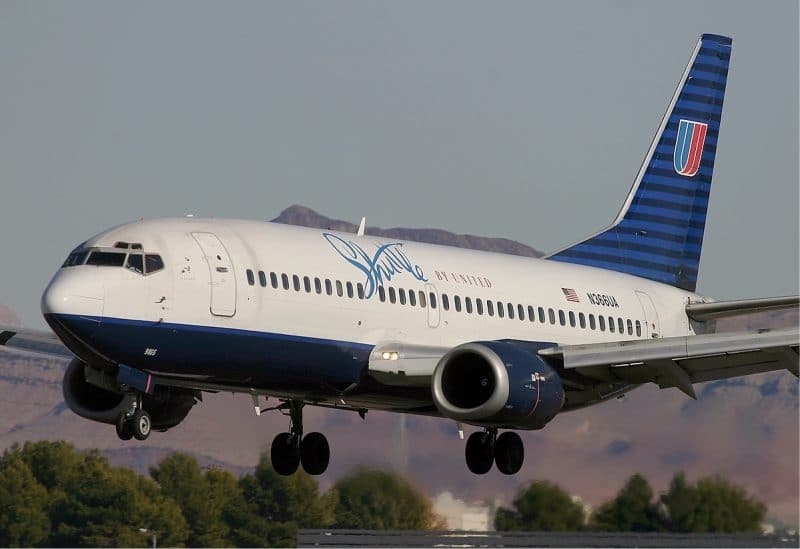
Airlines within an airline sound smart in theory. These five attempts reveal why the model struggled to succeed.
From time to time, traditional airlines attempt to compete with low-cost carriers by introducing a new product. This was particularly the case in the 1990s and early 2000s, when not one, not two, not three, not four, but five different budget airlines were introduced by Delta, United, and American Airlines predecessor US Airways. For a while, trying to start a new airline within an airline was the trendy thing to do. Here are 5 interesting failures.
Delta Express
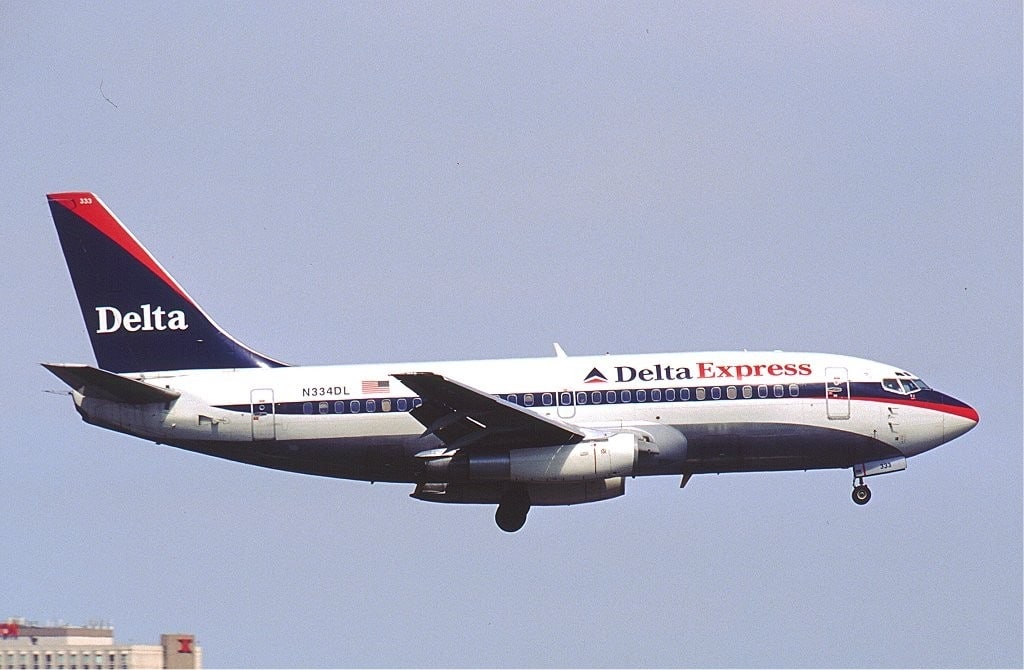
Delta Express Boeing 737-200
Delta Express came first, founded in 1996. Based in Orlando, its primary target was snowbirds and other leisure travelers flying between the Northeast and Florida. Over its life, the airline flew to more than 30 different domestic destinations across 18 states, as far west as Oklahoma City, bringing passengers down to top destinations in Florida. The airline also flew into all New York City airports.
The fleet consisted entirely of Boeing 737-200 aircraft, featuring a livery very similar to Delta’s traditional livery. As a budget airline, Delta Express offered only one class of service, with no meal service or in-flight entertainment.
The bare bones airline had a decent run, lasting seven years, competing with MetroJet (US Airways’ version of the same type of service), Southwest Airlines, and JetBlue. Delta would go on to replace Delta Express with a new, similar, low-cost service, christened Song.
MetroJet
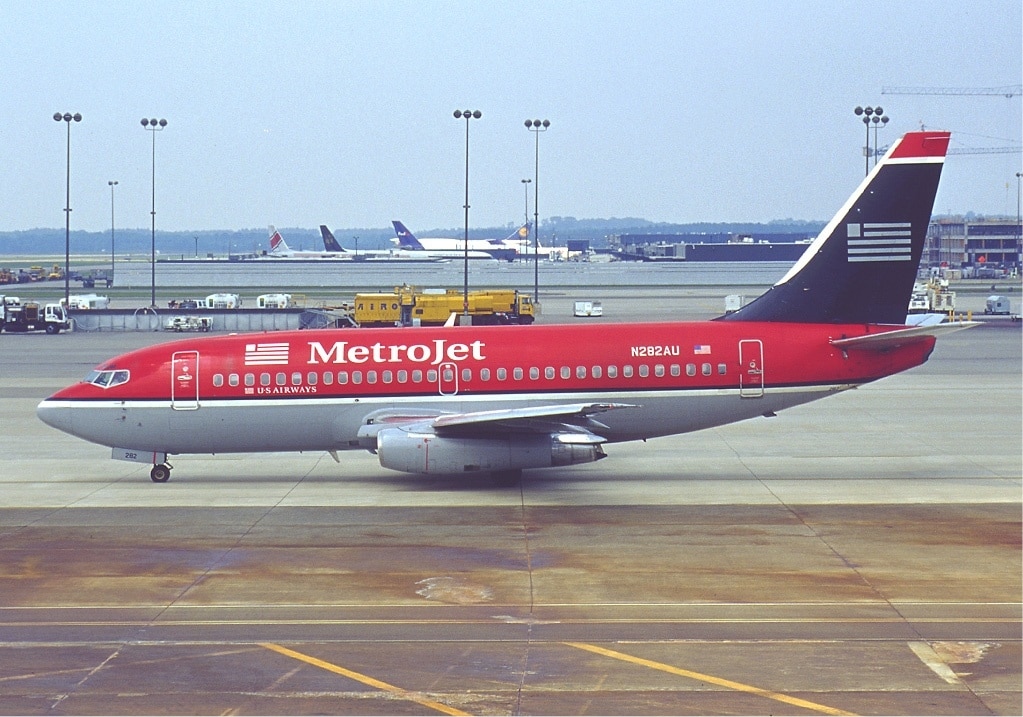
US Airways’ attempt at the airlines within an airline concept was MetroJet, which operated a fleet of Boeing 737-200s between 1998 and 2001.
US Airways’ MetroJet took to the skies very shortly after Delta Express, giving the budget airline within an airline a run for its money from 1998 to 2001. However, while Delta Express focused on ferrying travelers to and from Florida, MetroJet targeted the Northeast as its primary market, competing with Southwest and AirTran Airways, as well as Delta Express to some extent.
From its Baltimore hub, MetroJet initially flew to a short list of destinations, including cities in Ohio, Rhode Island, New Hampshire, and Florida. Later in the airline’s life, it would adopt Delta Express’ tactics and focus more on offering travelers in the Northeast an easy and affordable choice for flights to Florida. Routes from Washington Dulles were also added.
MetroJet operated with a fleet of just under 50 Boeing 737-200 aircraft, with only one choice in service.
Unfortunately, MetroJet was not the profitable venture US Airways had hoped it would be. MetroJet was facing higher operation costs than Southwest, and the Sept. 11, 2001, terrorist attacks were the final nail in MetroJet’s coffin. Operations ceased and were wrapped up by December 2001.
Three more airlines that didn’t work on the next page…
It Was a Controversial Raid with Mixed Results, But the Concept of Precision Attack was Ahead of its Time.
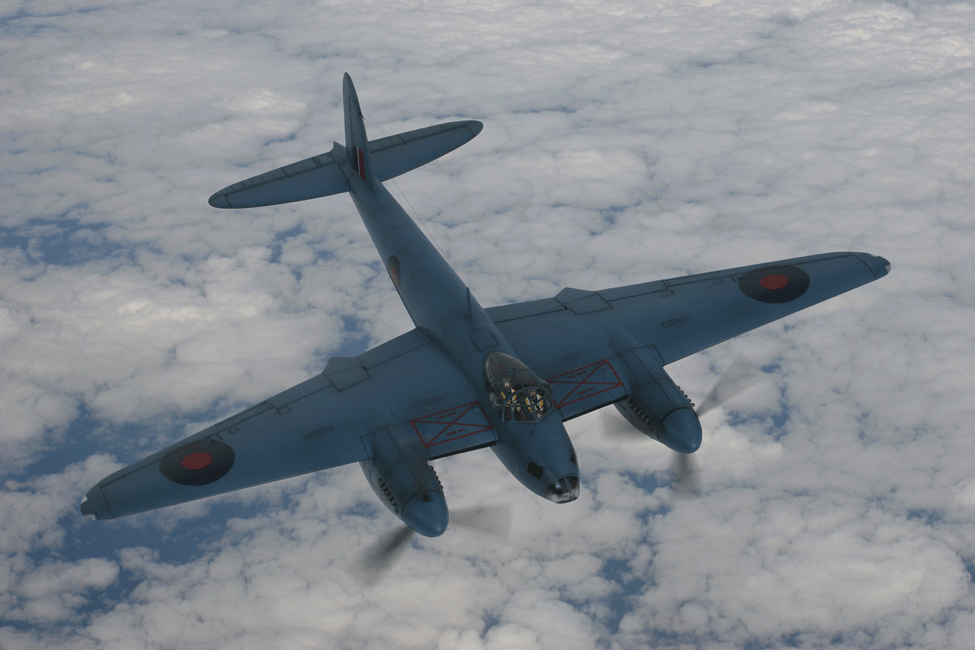
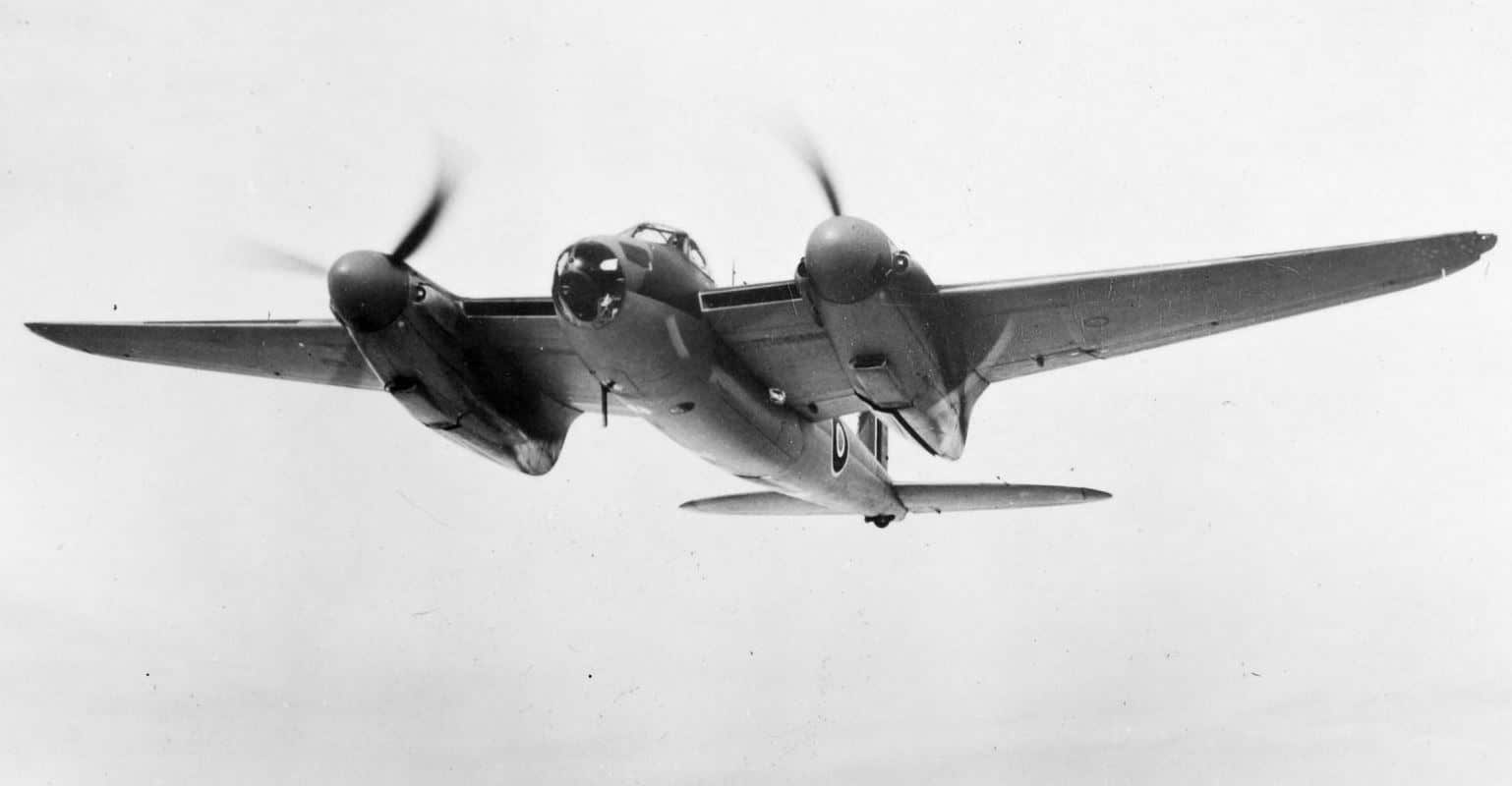
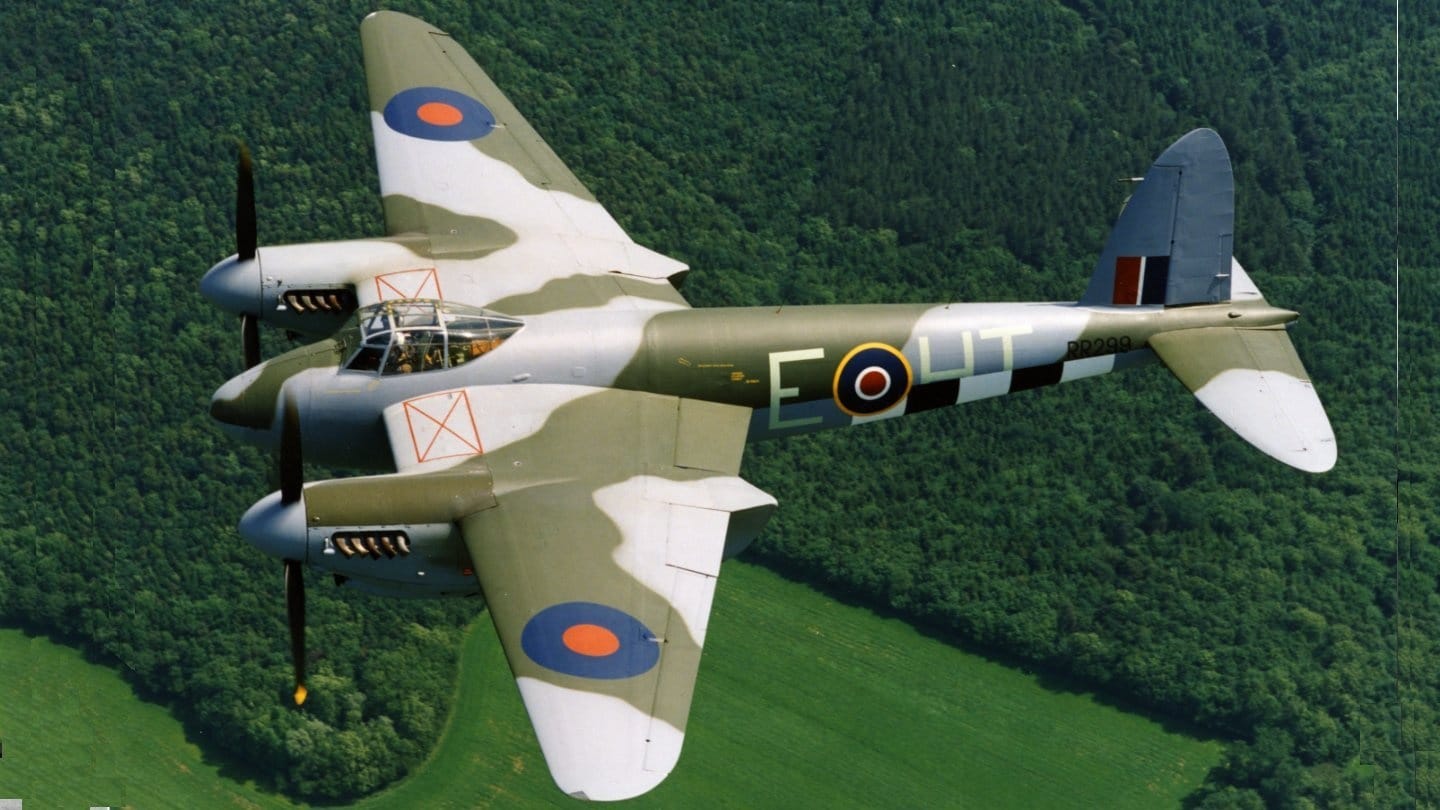
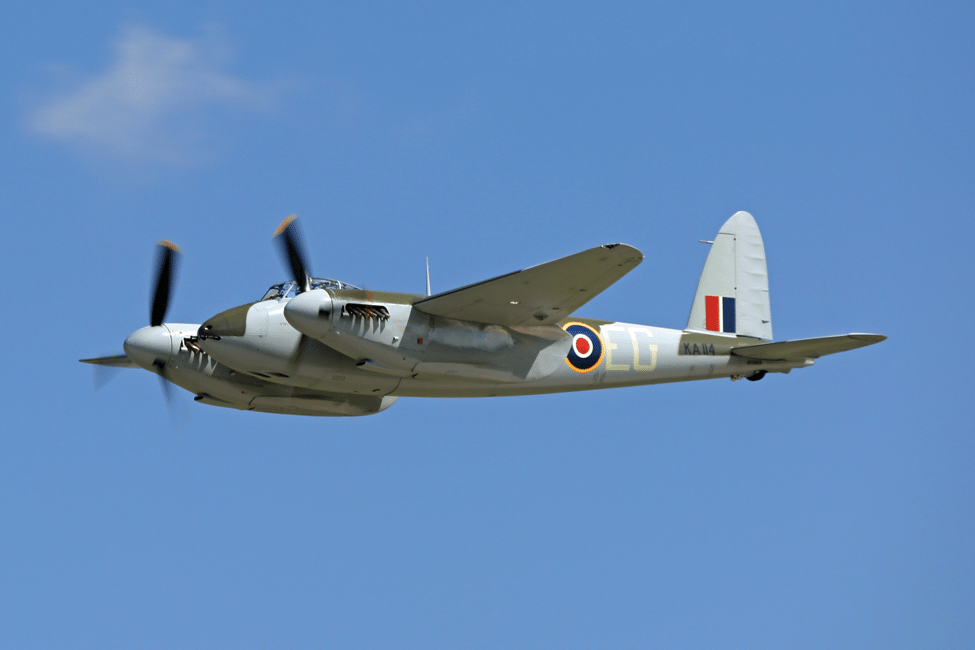
On 18 February 1944, the Royal Air Force sent nine de Havilland Mosquitos and a dozen escorting Hawker Typhoons to attack Amiens Prison in German-occupied northern France. Dubbed Operation Jericho, the attack was carried out with uncommon daring and rare precision. The objective of the raid was to free French Resistance and political prisoners being held in the prison.
The Mosquito bombers succeeded in breaching the walls and buildings of the prison, as well as destroying a barracks housing guards. Out of the prisoners held in the prison, 102 were killed, 74 were wounded, and 258 escaped. The escapees included 79 free French Resistance and political prisoners. Eventually, roughly two-thirds of the escapees were recaptured.
Image via RAF
By mid-1943, many members of the French resistance movement in the Amiens area had been caught by the Germans and imprisoned in Amiens Prison. Collaborators had betrayed some, and the entire movement in the area was at risk. By December 1943, 12 members of the resistance had been executed at the prison, and intelligence determined that more than 100 other prisoners were to be shot on 19 February 1944. French resistance fighter Dominique Penchard began sending information about the prison to London, including details of the layout, defenses, and guard duty rosters.
Image via BAE Systems
When two Allied intelligence officers were captured and sent to Amiens prison, a precision air attack on the prison was requested, and the mission was allocated to the 2nd Tactical Air Force. The prison was located adjacent to a long, straight road and surrounded by high walls. The guards ate in a building adjacent to, but distinctly separate from, the main prison building. It was determined that the most effective time to attack would be lunchtime to eliminate as many of the guards as possible.
Image via BAE Systems
The rest of the ordnance to be dropped had to be allocated so that when it hit the main prison walls, it would breach them, and the cell doors would spring open without destroying the building. It would not be enough to simply destroy the guards’ mess hall. The outer walls would have to be breached in order to allow any of the prisoners to escape. With approximately 700 inmates in the prison, loss of life would be inevitable. However, it was thought that many of the prisoners had already been condemned to death, and the raid would provide at least some chance for escape.
Avgeeks See Aircraft in Movies as Stars in Their Own Right
For Avgeeks, movies featuring airplanes are nearly always must-sees. Well, almost always. The airplanes are often the stars of the movie – whether the movie is good, bad, or horrible – to many, the aircraft get at least co-star credit. Witness Top Gun, Airport (all of them), 12 O’Clock High, Fire Birds, Air Force One, Battle of Britain, Tora Tora Tora, Pearl Harbor, Always, Forever Young, The Right Stuff, Catch-22, Flying Leathernecks, Flight of the Phoenix, Flight of the Intruder, The Bridges at Toko-Ri, Blue Thunder…the list is thousands long, but you get the idea. In these days of computer-generated imagery (CGI), there are more and more movies being made without any real aircraft on the screen.
image via tomas del coro
Central Casting
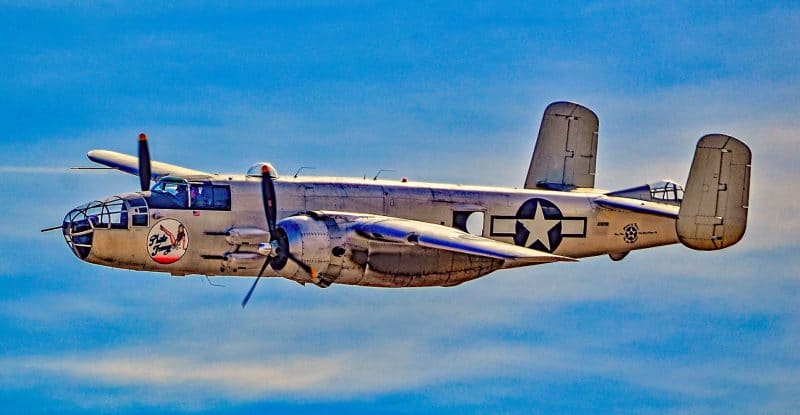
Television shows featuring flight also draw the attention of those of us with our heads in the clouds. Airwolf, Baa Baa Black Sheep (or Black Sheep Squadron in syndication), Magnum P.I., and episodes of everything from Twilight Zone to Batman have all held our rapt attention and drawn our criticism or admiration. Many of the aircraft we’ve seen in a movie or on TV, sometimes going back decades, have starred in several productions. Such is the case with the North American B-25J-25-NC, Army Air Force serial number 44-30423. You’ve almost certainly seen this Mitchell before, but you may not realize how many times.
Image via National Museum of the US Air Force
Born on Date
B-25J-25-NC serial number 44-30423 (NAA Mfg. Number: 108-33698) rolled out of the doors at North American Aviation’s Fairfax assembly plant in Kansas City, Kansas, on 13 January 1945 and was delivered to the US Army Air Forces on 16 January 1945. It’s indicative of the late-war production might of America that 44-30243, a spanking-new, current-model medium bomber, was accepted but declared surplus immediately after being delivered to the Army Air Force. The bomber was first flown to Brookley Army Airfield (AAF) in Mobile for storage and then, in May 1945, flown to Laurel AAF in Mississippi. 423 spent more than a year in storage at Laurel, during which time she was redesignated TB-25J.
Image via National museum of the US Air Force
One Flexible Bomber
On 31 January 1946, 423 was flown to Kelly AAF near San Antonio in Texas and briefly assigned to the 4121st Base Unit at Kelly. On 11 April 1946, the aircraft was flown to Dayton AAF in Ohio for conversion to the EB-25J configuration. Four years to the day later, EB-25J 44-30423 went to Griffis AFB in New York for duty with the 3171st Electronic Research and Development (ERD) Group.
423 was assigned to the 6520th Air Base Group at Hanscom AFB in Massachusetts on 24 June 1952. The aircraft departed Hanscom on 8 June 1953 for depot-level maintenance and returned to Hanscom on 14 September 1953, this time for service with the 6520th, which had been redesignated a Test Wing.
image via national museum of the us air Force
For the Rest of the Photo Fanny Story Bang NEXT PAGE Below
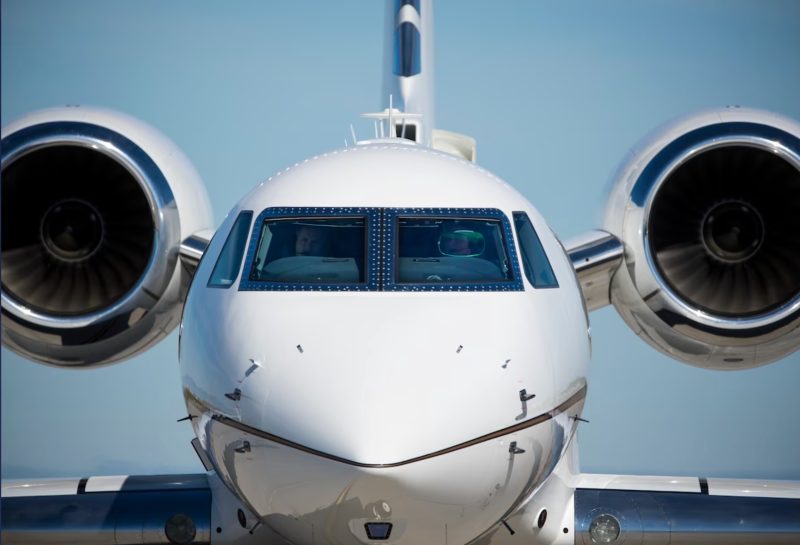
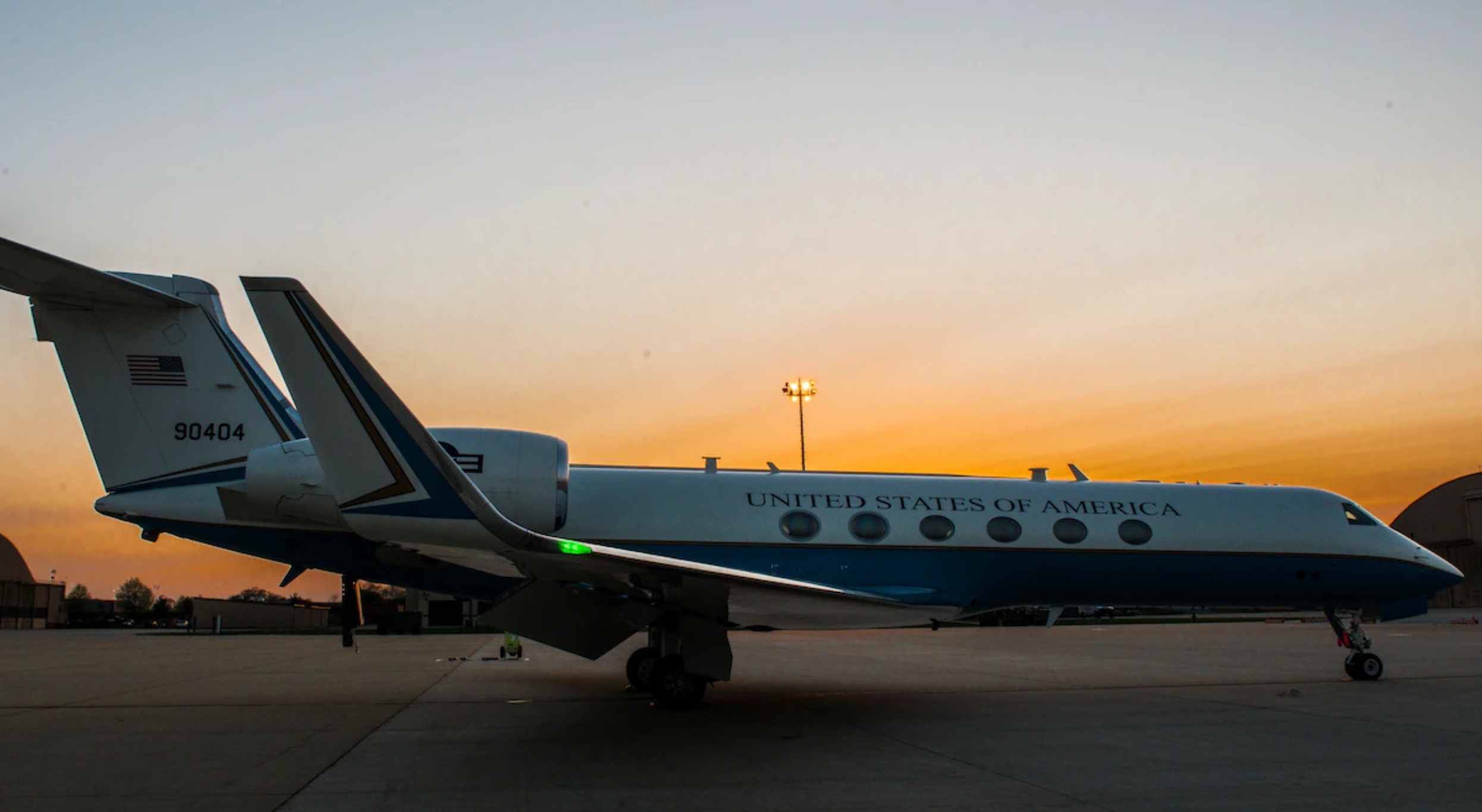
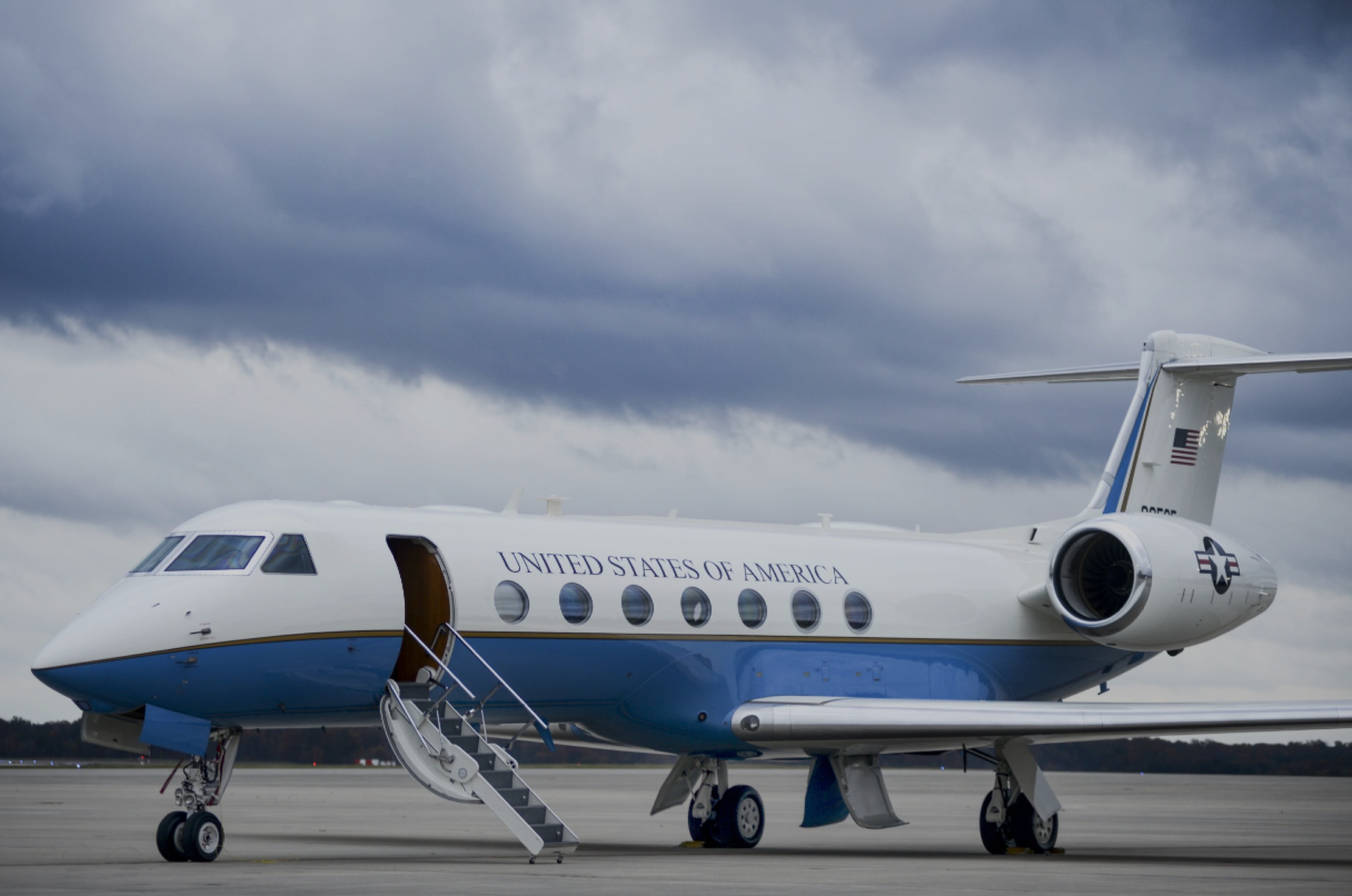
With billowing smoke in the galley and a dual FMC failure on our brand new C-37A (G-V), our crew was surely in the running for the Mackay Trophy for outstanding airmanship … or at least Aircrew of the Quarter.
This one-week “Belgian Boondoggle” mission was meant to validate the capabilities of a brand-new Gulfstream V, recently accepted by Andrews AFB from the plant in Savannah, Georgia. I was one of three pilots on this mission, along with 99th Airlift Squadron operations officer Lieutenant Colonel Nancy Vetere and our 89th Operations Group Commander, Colonel Dave Fadok.
Prepping for Delivery
The jet would soon be delivered to the SACEUR 4-star commander in Brussels, Belgium. His previous aircraft, a mixture of DC-9s and G-IVs, had greatly disappointed him. He was tired of disconnected inflight phone calls that he attempted to make throughout Europe and wanted to make damn sure that this brand-new Gulfstream worked properly.
Our mission, as we chose to accept it, was to fly his soon-to-be executive jet throughout his entire Area of Responsibility (AOR) from Norway to the Baltic region. We departed Andrews in this virgin aircraft, complete with the “new car smell” provided by the 12 blue leather first-class seats, and landed at Chievres Air Base, southwest of Brussels, to begin our mission.
Dual FMC Failure and Smoke in the Galley: CRM 101 14
Our crew of six included three pilots, one flight engineer, one communications system operator, and a flight attendant. Also on board were a host of engineers from Gulfstream, Raytheon, and other divisions who would oversee the quality of the signals and the communication system.
Our first mission took us to the northern reaches of Norway, and we returned over the Netherlands before landing in Belgium. Our final check-out mission was to fly the C-37 into Skopje, Northern Macedonia, which is surrounded by mountainous terrain.
This area was known for signal interference and poor communications. The planned profile was for a descent to the airport pattern altitude and then a planned low approach with a climb out above the terrain and return for a fuel stop in Stuttgart, Germany. After the brief gas-and-go stop, we would return to Chievres Air Base for a final night.
Crew Resource Management: How To Work Together
CRM has been defined in the airline industry as either cockpit resource management or crew resource management and is meant to encourage teamwork and promote clear communication between the crew members. Throughout this long flight over Europe, Lt Col Vetere, Colonel Fadok, and I took turns flying in either the left or right seat as the mission proceeded. Halfway through the flight, I got out of the right seat and went to the aft cabin while Lt Col Vetere continued to fly with Colonel Fadok in the left seat.
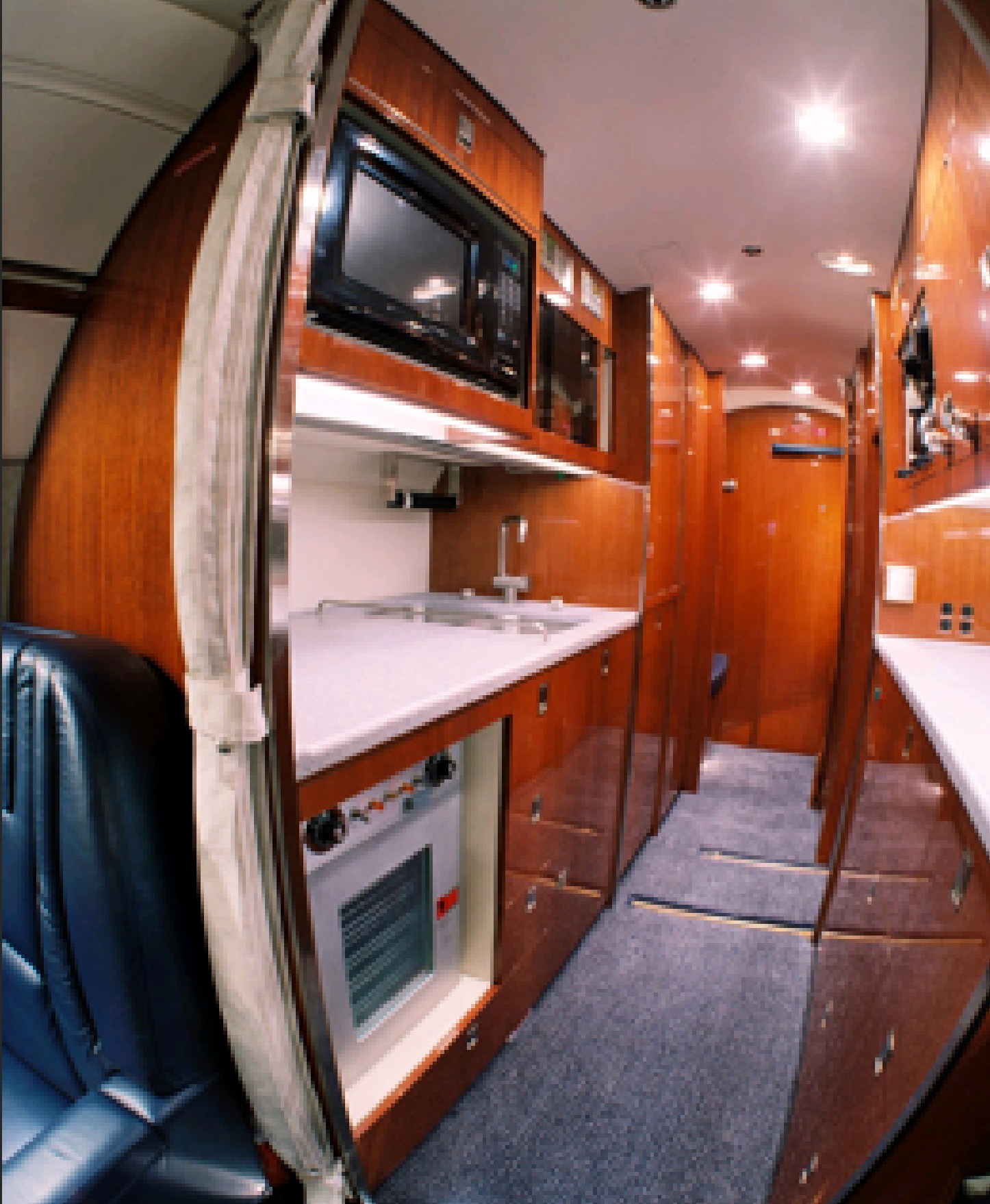
I took a seat near the aft galley as our flight attendant, Staff Sergeant Allison Miller, prepared lunch for the crew and engineers. Allison was one of the best flight attendants in our VIP squadron and took pride in making gourmet meals from scratch in a kitchen the size of one found in an RV camper. Always thoughtful, she planned to treat our team to a peach pie after serving us lunch.
Wanting to know the mission’s timing for her pacing, she asked me, “When are we going to land?”
Knowing we had a fuel stop planned in Stuttgart, Germany, I said, “We’ll land in about two hours.”
Smoke In the Cabin from an Unlikely Source
Dual FMC Failure and Smoke in the Galley: CRM 101 15
She proceeded with her meal preparation and soon placed the pie in her convection oven. The pilot team descended towards the runway at Skopje, and I looked out to see the cloud-covered trees on the surrounding hills.
At 200 feet above the ground, Col Fadok applied full go-around thrust, and the C-37A leaped into a steep climb with both engines churning out 14,000 lbs of thrust. The plane climbed at 15 to 20° nose high as Allison grabbed hold of any cabinet nearby to steady herself.
Suddenly, black smoke began pouring from the convection oven as the sugary syrup of the peach pie spilled over the pan edges and onto the burners.
Sgt Miller glared at me and yelled, “You said we were landing in two hours!”
I told her, “That wasn’t a landing! That was a go around!”
Once safely away from the ground, she removed the pie from the oven and began to wipe out the sugary mess that had created the black smoke. I got out of my seat and offered to help, but she was quite mad and said, “No! I’ve got it!”
By the time she could safely move around, the pie filling had been burning inside the oven, and poor Allison had to chisel that crusty crap off with a knife. At that moment, we had a failure of CRM.
More Challenges
Our operational test flight continued northwest over Bosnia, Croatia, and Slovenia. I now sat in the right seat, well away from Angry Allison, while Colonel Fadok continued to pilot from the left.
One of the Achilles heels of the early G-Vs was a battery power pack in the flight management computer, or FMC. The FMC will go blank in flight if this power source is depleted. As we traced our route along the thin black line of the Jeppesen Airways charts, with waypoints only 5 to 10 nautical miles apart, my right FMC suddenly went blank.
Colonel Fadok and I looked down, noticed this at the same time, and looked back at each other. Hmmmm. Within a minute, our second FMC went blank, and again, we looked down and then back at each other.
The C-37A came equipped with a backup INS, or inertial navigation system, located on the pedestal between us. It could hold nine waypoints, like those found on earlier cargo aircraft such as the KC-10 and C-5.
I knew that Colonel Fadok had flown the KC-10 as a squadron commander at McGuire AFB, NJ, and I asked him, “Sir, do you remember how to load the waypoints into the INS?”
“I think so,” he answered.
I handed him our Jeppesen flight plan and asked, “Would you mind loading the waypoints?”
Colonel Fadok proceeded to load the north and east coordinates of the densely packed waypoints, separated by only a few miles over Eastern Europe. The helpful European air traffic controllers would clear us to a waypoint 50 to 100 miles away every few minutes, negating all of his typing. This happened repeatedly as his fat fingering of waypoints became futile.
He looked at me and said,” You know, this is going to make a great Crew of the Quarter package! I can see it now. Dual FMC failure over Europe and uncontrollable pie smoke in the galley!”
Heroes…by Working Together as a Crew
We successfully navigated to Stuttgart, Germany, landed to take on more fuel, and realigned our single INS for the final leg back to Belgium. Somewhere, there must be a Mackay Aircrew Trophy for the most meritorious flight with our name on it.
The Corsair Proved That Early Technical Setbacks Can Be Overcome
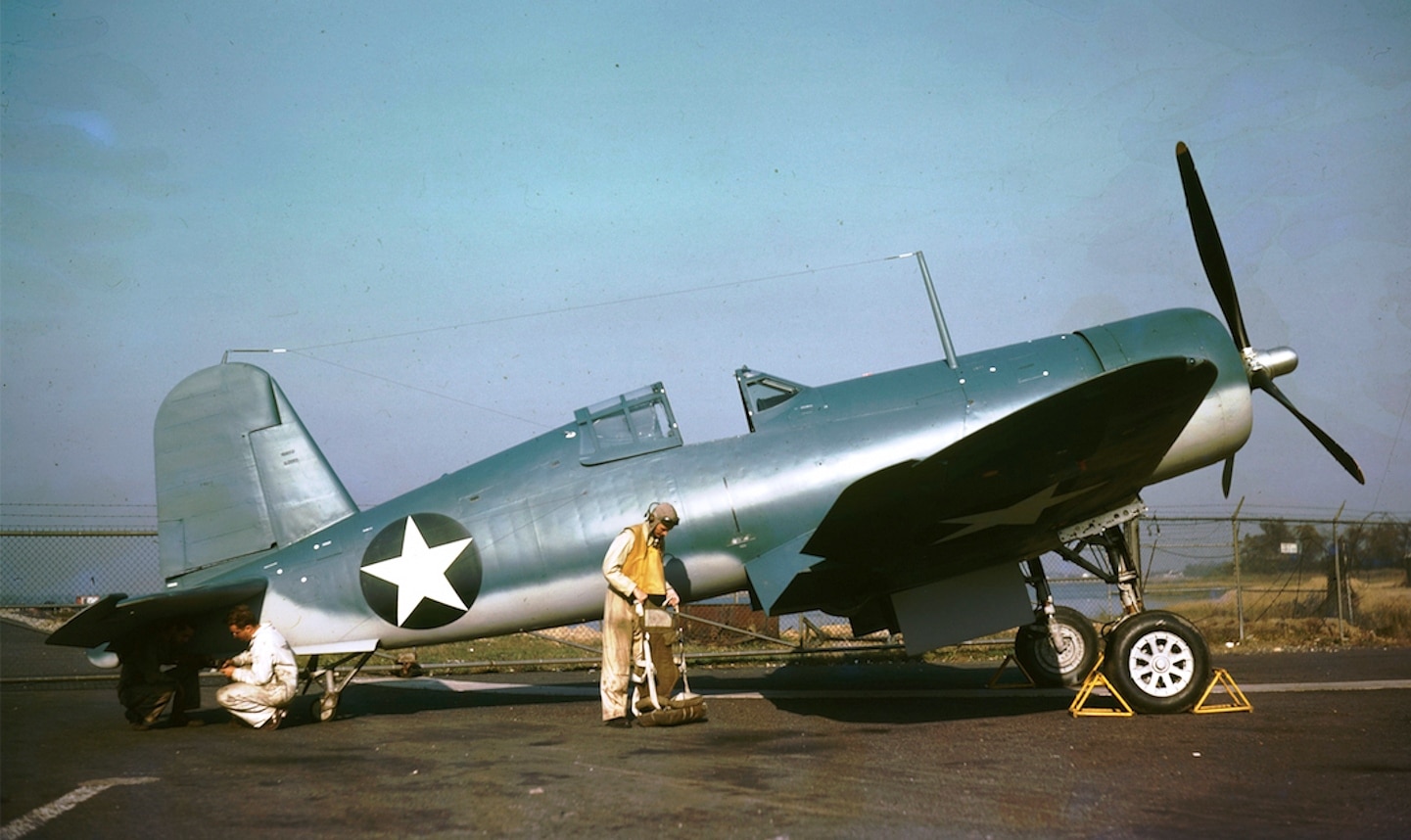
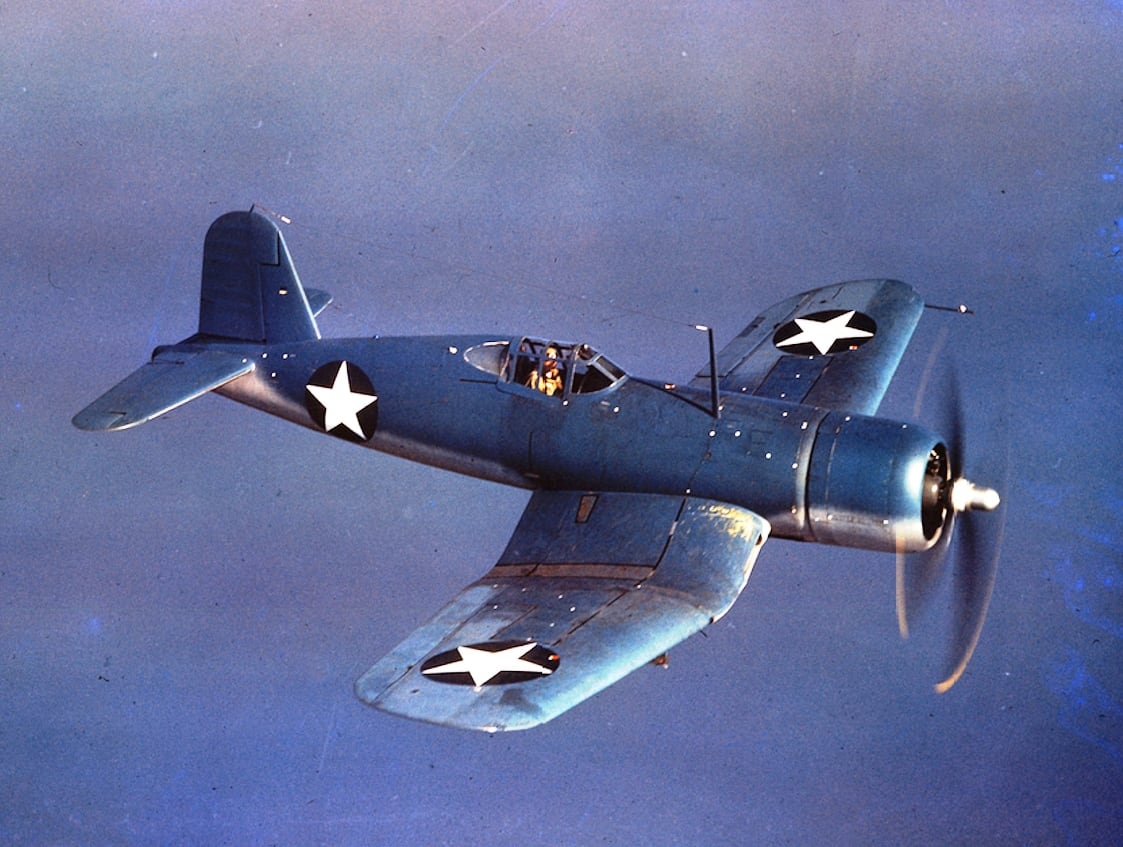
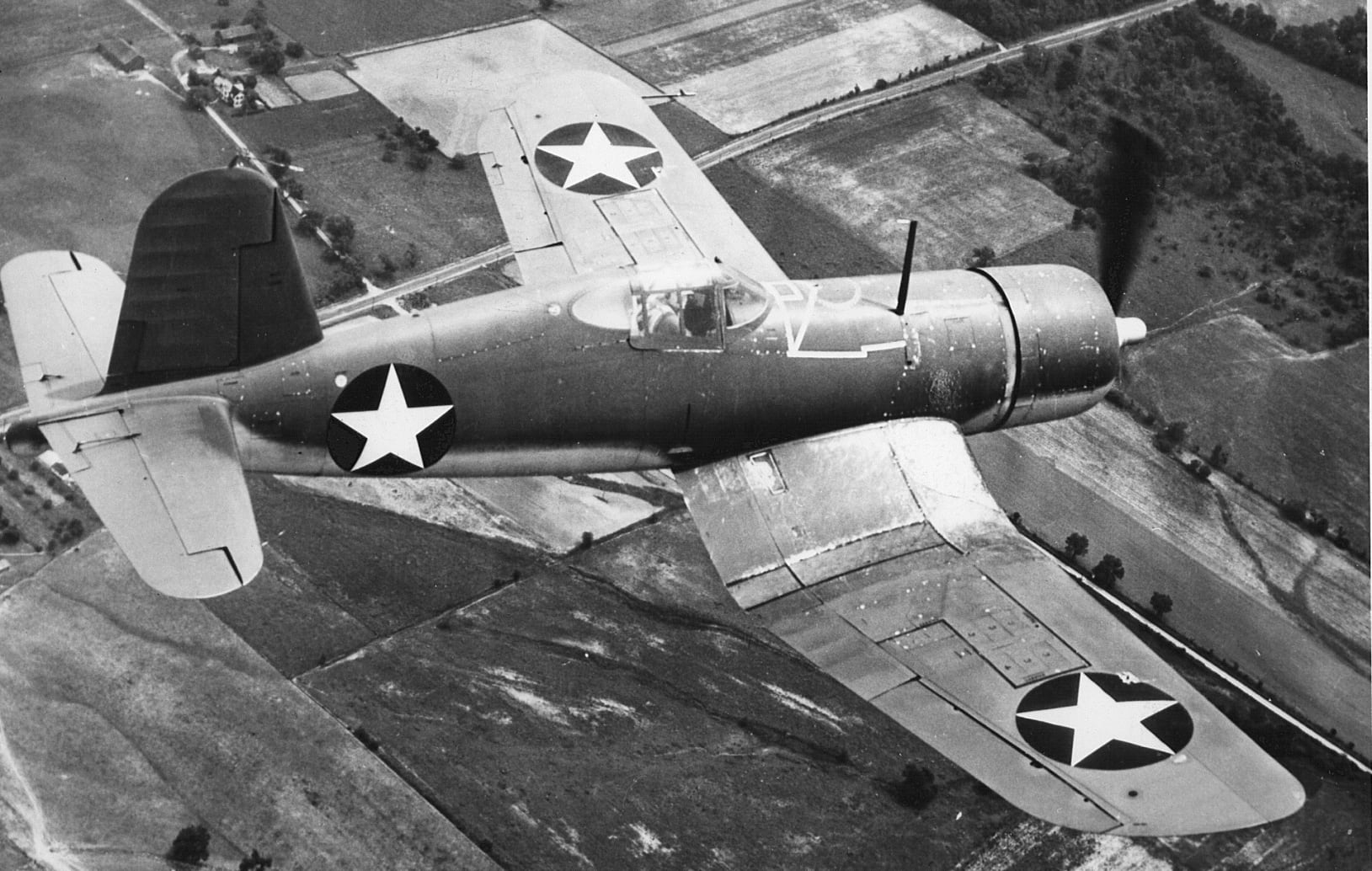
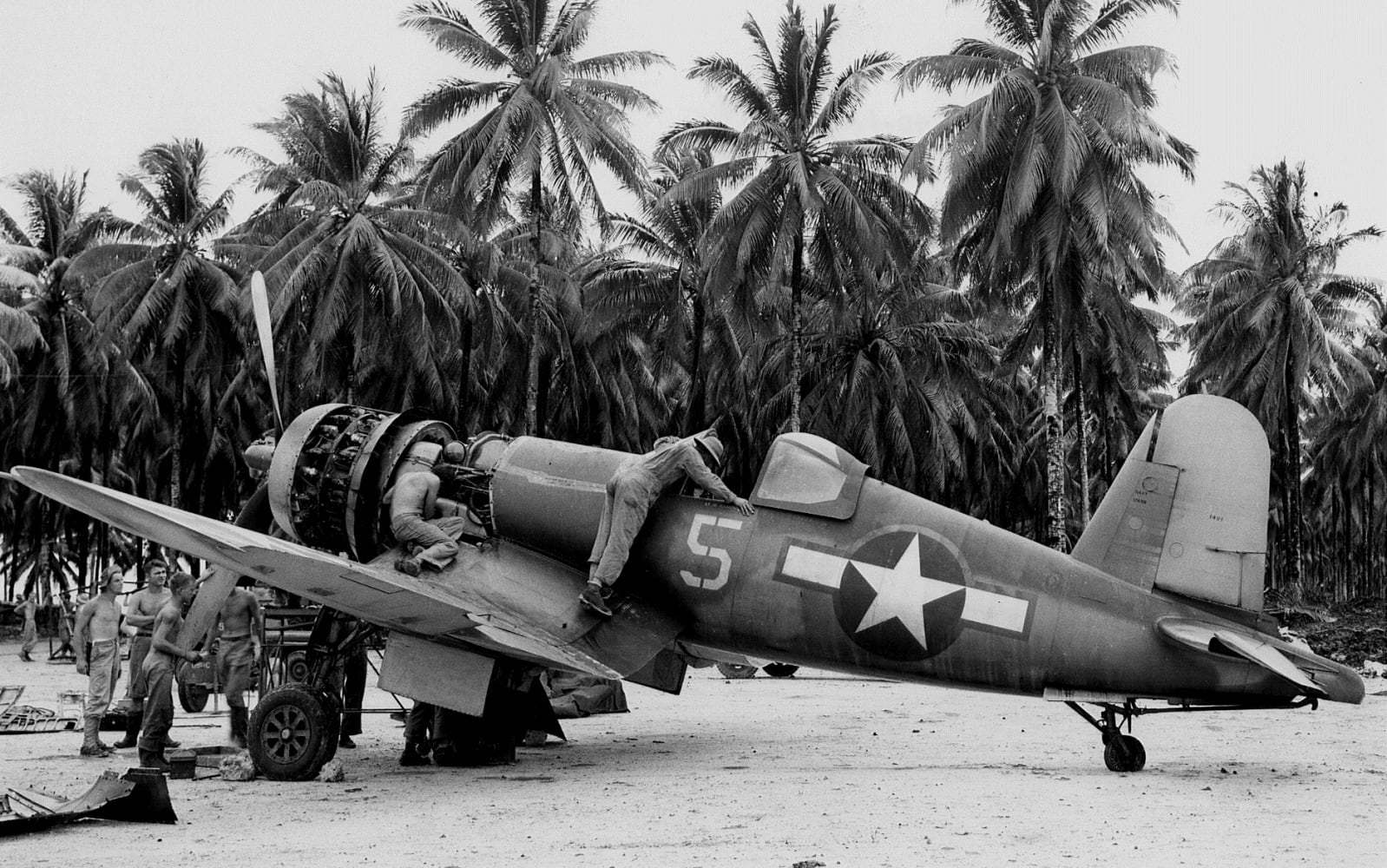
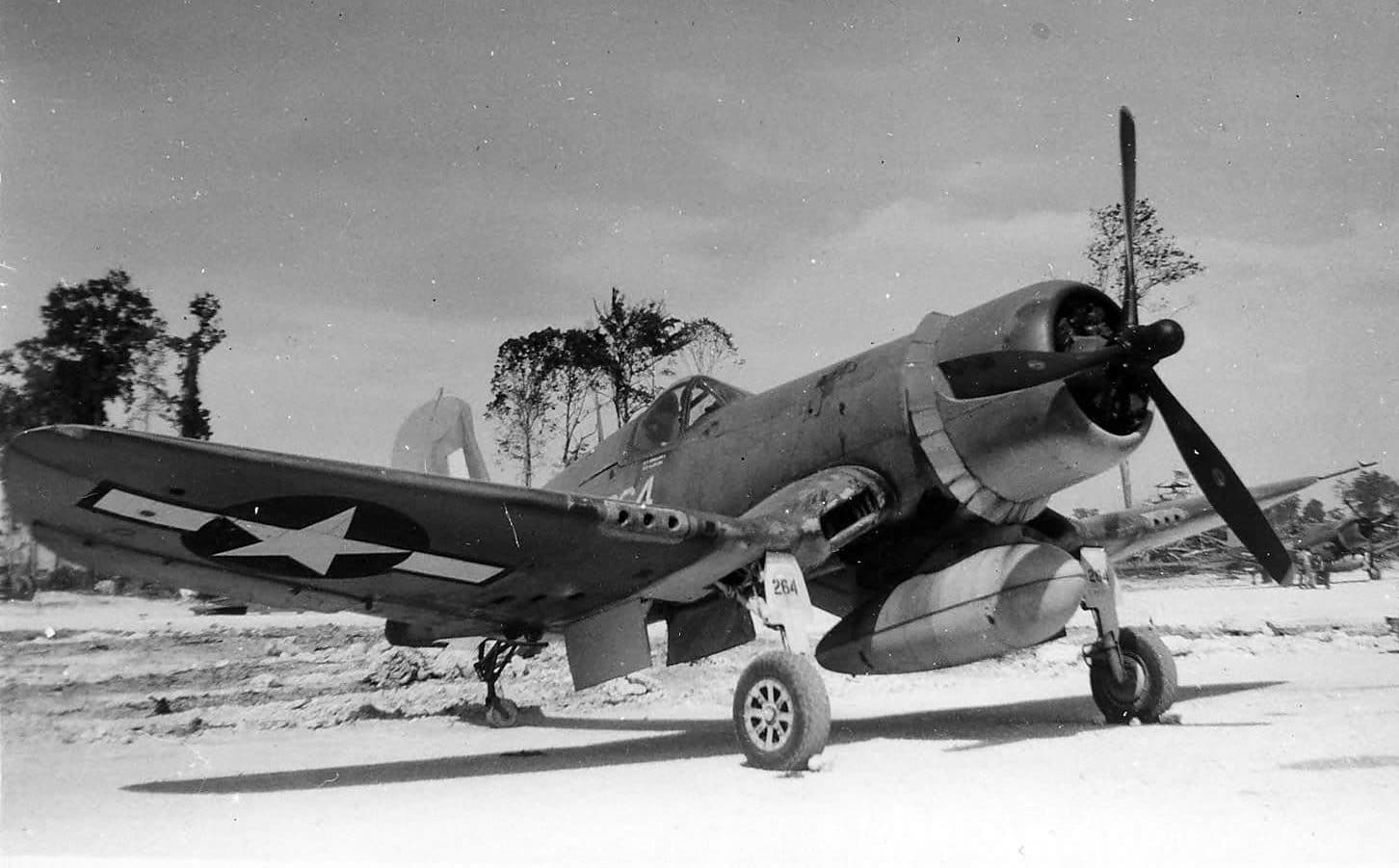
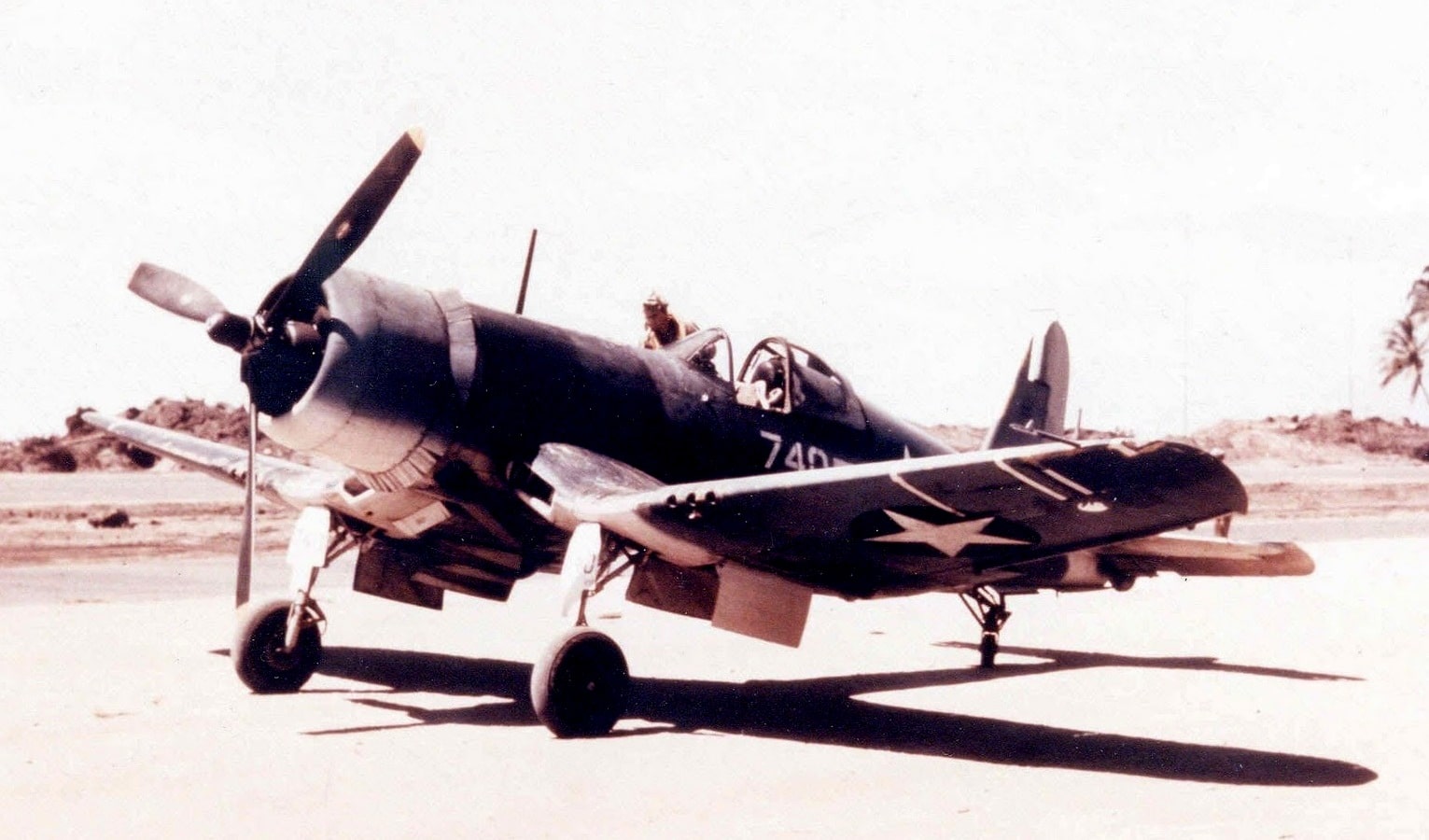
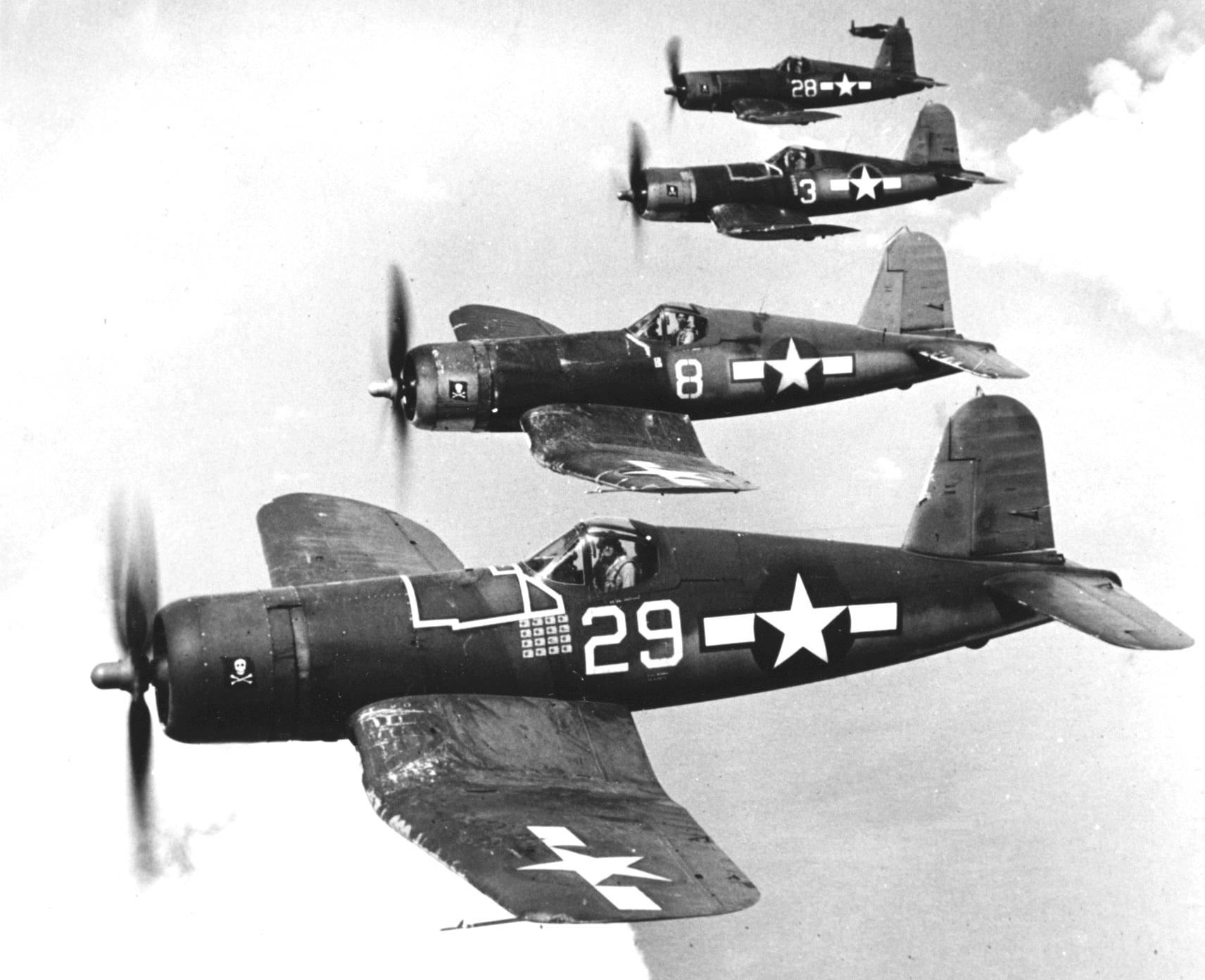
On 13 February 1943, the Vought F4U Corsair flew its first operational mission when Guadalcanal-based Marine Fighter Squadron ONE TWO FOUR (VMF-124) F4U-1 Corsairs escorted U. S. Army Air Corps B-24 Liberator bombers on a raid against Kahili Airfield on Bougainville. They encountered no enemy aircraft on the mission. This mission was the culmination of years of design and development work on what is perhaps the easiest of all World War II aircraft to recognize, thanks to its distinctive wing design.
Image via US Navy/National Archives
Fast Right Out of the Box
In June of 1938, the United States Navy signed a contract with Vought for a prototype bearing the factory designation V-166B, the XF4U-1, bureau number 1443. The F4U was the first airframe ever designed from the outset to mount the R-2800 Double Wasp engine. When the prototype was completed, it had the biggest and most powerful engine, the largest three-blade propeller, and the largest wing on any naval fighter up to that point. The XF4U-1 first flew on 29 May 1940. On 1 October 1940, the XF4U-1 became the first single-engine United States fighter to fly faster than 400 miles per hour (640 kilometers per hour).
Image via US Navy/National Archives
How Those Famous Wings Got Bent
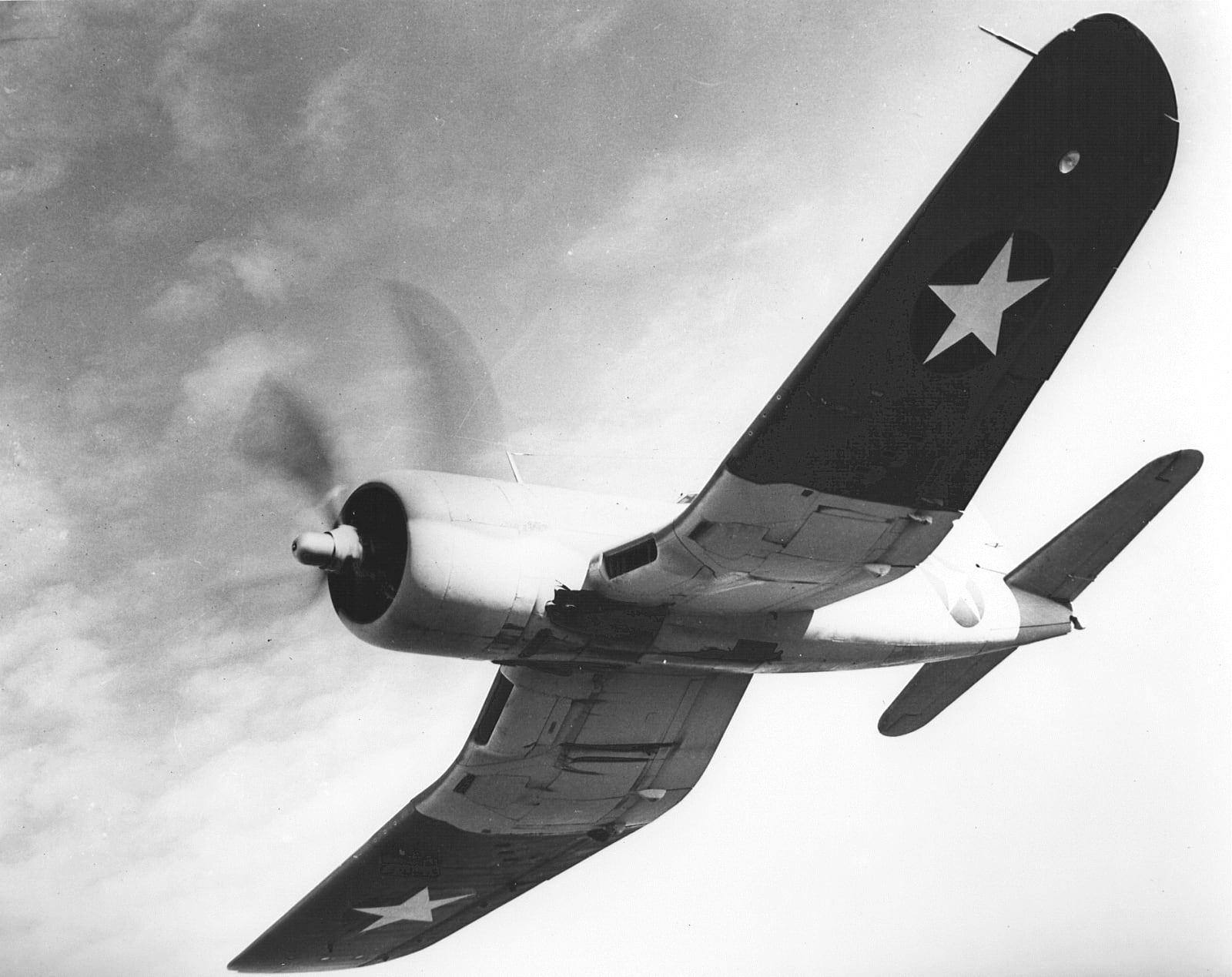
The first production F4U-1 took to the air on 24 June 1942. From the outset, the F4U featured the largest and most powerful radial engine available- the 2,000 horsepower, 18-cylinder Pratt & Whitney R-2800 Double Wasp. The F4U’s propeller was the Hamilton Standard Hydromatic three-blade propeller, measuring 13 feet 4 inches (4.06 meters). In order to accommodate the required folding wing and the size of the chosen propeller, Vought’s solution was an inverted gull wing, which considerably shortened the required length of the main gear legs.
Image via US Navy/National Archives
How and Why the Corsair Was So Fast
The Corsair’s aerodynamics were an advance over those of contemporary naval fighters such as the F4F Wildcat. The F4U was the first U.S. Navy aircraft to feature landing gear that retracted into a fully enclosed wheel well. The oil coolers were mounted in the center section of the wings, alongside the supercharger air intakes, and used openings in the wings’ leading edges rather than protruding scoops. Fuselage panels were made of aluminum and spot-welded to the fuselage frames rather than riveted. But the Corsair’s outer wing panels and control surfaces were fabric-covered.
Image via US Navy/National Archives
Bouncing Aboard Blind
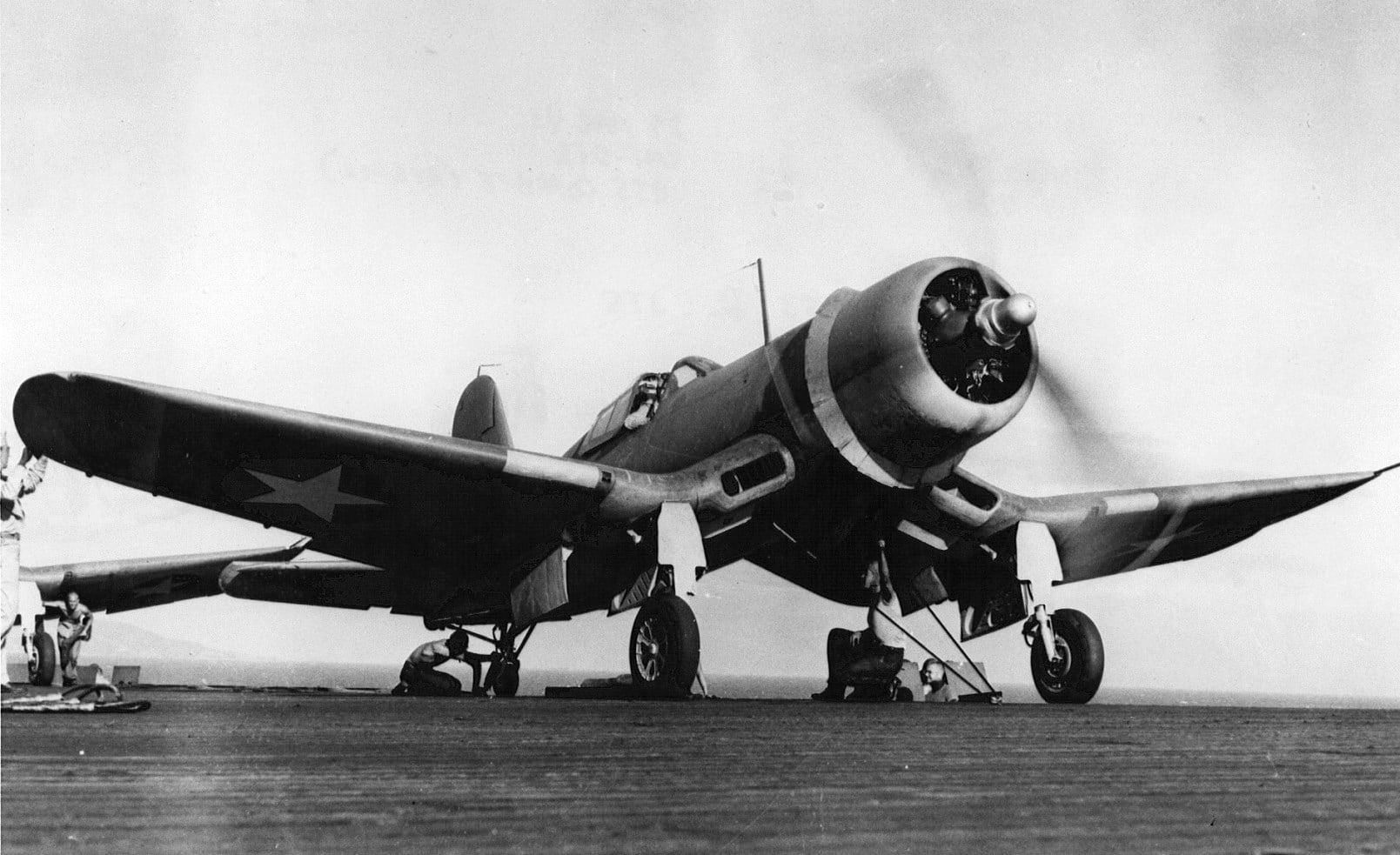
There were some problems encountered during early Navy carrier-suitability trials aboard the escort carrier USS Sangamon (CVE-26) on 25 September 1942. The combination of an aft cockpit and the Corsair’s long nose made landings hazardous for newly-trained pilots. The major hurdle was that the landing gear struts tended to allow the aircraft to bounce too high on landing. Eventually, a bleed valve built into the landing gear legs eased the hydraulic pressure as the aircraft recovered aboard the carrier.
Image via US Navy/National Archives
Flying Leathernecks and the Fleet Air Arm First
The Grumman F6F Hellcat was simpler to build and was suitable for carrier operations “out of the box” once introduced. Because of this, and because the Leathernecks desperately needed fighter aircraft in the Solomons, the Navy chose to release the Corsair initially to the U.S. Marine Corps. The Marines needed better fighter aircraft than the F3F Buffalo and F4F Wildcat.
The type was declared “ready for combat” at the end of 1942, though it was only qualified to operate from land bases until carrier suitability issues were resolved. Only after the landing gear problems were solved was the Corsair deployed regularly aboard US Navy aircraft carriers.
Image via US Navy/National Archives
Speed When and Where You Can Use It
Despite its carrier suitability issues, the F4U-1 was considerably faster than the Grumman F6F Hellcat and only 13 miles per hour (21 kilometers per hour) slower than the Republic P-47 Thunderbolt. All three aircraft were powered by the same R-2800 radial engine. However, the P-47’s highest speed was reached at 30,020 feet (9,150 meters), with the help of an intercooled turbocharger. The F4U-1 reached its maximum speed at only 19,900 feet (6,100 meters) using a single mechanically supercharged engine.
Image via US Navy/National Archives
First Corsair Combat
Twelve Marine Corps F4U-1s of VMF-124, commanded by Major William E. Gise, arrived at Henderson Field on Guadalcanal on 12 February 1943. These were the early “birdcage” version of the Corsair. Their first mission, an escort of Army Air Corps B-24s to Kahili, resulted in no sightings of enemy aircraft. However, their next mission on the 14th saw the F4U’s first combat engagement. The Corsairs went back to Kahili, escorting the B-24s again, along with Army Air Corps P-40s and P-38s.
Japanese fighters shot down two P-40s, four P-38s, two F4Us, and two Liberators.
The American fliers claimed only four of the Japanese fighters. This engagement, often referred to as the “Saint Valentine’s Day Massacre,” did not define the Corsair. The Marines learned quickly how to fight with the Corsair. VMF-124 produced the first Corsair ace, Second Lieutenant Kenneth A. Walsh, who would end the war with 21 kills.
Image via US Navy/National Archives
Baa Baa Black Sheep
Probably the most famous Marine squadron flying the Corsair was the “Black Sheep.” Led by Marine Major Gregory “Pappy” Boyington, VMF-214 started flying their missions in September of 1943 and racked up 97 confirmed aerial victories in only 84 days. Boyington was eventually credited with 22 kills in F4Us before he was shot down himself and made a prisoner of war in January of 1944.
Other notable Corsair aces included the aforementioned Kenneth Walsh, James E. Swett, and Archie Donahue (also of VMF-124), VMF-215’s Robert M. Hanson and Donald Aldrich, and VF-17’s Tommy Blackburn, Roger Hedrick, and Ira Kepford.
Image via US Navy/National Archives
For the rest of the Bent Wing Bird story, bang NEXT PAGE below
The KC-97 Stratofreighter Was the Proving Ground for the KC-135 Stratotanker
It is 1951. The first generation of America’s Air Force, Navy, and Marine Corps tactical jet aircraft have begun service with their respective services. Aerial refueling is a new method of extending both the mission and ferry range of these tactical aircraft and making them (almost) instantly deployable to distant bases on other continents.
Boeing’s KB-29 and KB-50, both modified heavy bomber aircraft, comprise the first generation of aerial refueling aircraft. These initial tankers lack the necessary “give” capacity to provide enough fuel for more than a few tactical aircraft per tanker sortie.
KB-29s image via national museum of the us air force
Finding the Right Fit
Airlifter technology is also evolving. The Curtiss C-46 Commando and the Douglas C-47 Skytrain were the backbone of airlift during and after World War II. The Douglas C-54 Skymaster, and to a lesser extent the Lockheed C-69 Constellation, also carried the World War II war effort abroad and continued to do so while next-generation airlifters like the Boeing C-97 Stratofreighter, Northrop C-119 Flying Boxcar and the C-123 Provider were being developed.
These next-gen airlifters were the most likely aircraft to execute the aerial refueling mission as it was no longer acceptable to modify the nation’s bombers into tankers.
C-97 image via Utah public library
Making the Right Fit Work
The requirements for internal tankage capacity, ability for increased capacity as required, and a fuselage configuration allowing refueling boom installation made the C-97A the logical choice for the second generation of refueling aircraft.
The C-97A, which entered service in 1947, was itself based on the B-50 bomber, though early service test airframes utilized components from the B-29. The cargo hold was essentially added to the lower fuselage, wings, engines, and empennage of the B-50 bomber.
In essence, all that was necessary to turn the C-97 into the KC-97 was to add the refueling boom, sufficient tankage, and the requisite plumbing to connect it all.
C-124 image via ralf manteufel
Old Shaky Takes Over
When the Douglas C-124 Globemaster II entered service in 1950 and began taking over primary long-distance airlifting duties, the Air Force was able to modify or new-build 811 of the 888 C-97s built by Boeing as KC-97s. Some of the KC-97s were later modified back to cargo configuration.
The KC-97s carried fuel for passing gas to refueling aircraft in palletized tanks located in the cargo bay or in the lower bay below the main deck. The refueling boom and operator’s station were located aft in what became, and still is, the standard placement for boom refueling equipment. The KC-97 created the original standard configuration for aerial refueling.
palletized tanks in KC-97 cargo hold. image via air mobility command museum
Service Entry and Improvements
When the KC-97 entered service in 1951, support for Strategic Air Command’s fleet of B-47 strategic bombers was its first and most critically important mission. More powerful R-4360-59B engines were added to the 159 KC-97F variants.
The KC-97G was the definitive dual-role tanker/cargo variant. When acting as a transport, the KC-97G and other dual-role KC-97 variants could carry up to 68,500 pounds of cargo or up to 96 fully-equipped troops. KC-97s in most configurations were capable of offloading 15,000 gallons of fuel when not burdened with cargo.
kc-97g refuels b-47 image via national museum of the us air force
Variants and Refinements
Three EC-97Gs did Electronic Intelligence (ELINT) work for the CIA. Twenty-two HC-97Gs were used by the Air Force Aerospace Rescue and Recovery Service (ARRS). Even with those more powerful engines (the most powerful piston engines available), the pedestrian performance of the KC-97 called out for more. When refueling B-47s and B-52s sidled up to the boom, they were flying at such low speeds that maintaining directional stability was challenging.
The unintended sideways oscillations this sometimes caused would get the hearts of both tanker and tankee crews pumping. The initial solution was to have the tanker plug the boom into the receptacle on the receiving aircraft. Then both the KC-97 and the receiver aircraft would fly together in a shallow dive attitude to maintain enough airspeed to avoid the receiver aircraft stalling while plugged to the boom. This downhill ride was (naturally, if wryly) referred to as “tobogganing.”
KC-97F refuels b-47b. image via US air force
Four Turning and Two Burning
Tobogganing sounds like fun, but not when tons upon tons of volatile fuel are flying in close formation on the edge of a stall. So the engineers got together and hatched the KC-97L. This variant was equipped with a pair of underwing pylons mounting General Electric J47 turbojet engines removed from retired KB-50J tankers.
Tankers so configured toted separate fuel systems for their reciprocating engines (aviation gasoline or avgas) and jet fuel for passage to other aircraft and for their own J47 jets (jet fuel). The added thrust was usually enough to avoid the tobogganing, but still not ideal for heavy and fast jet bombers or tactical aircraft.
Two YC-97Js were equipped with Pratt & Whitney YT34-P-5 turboprop engines as a potential solution, but the modification was not adopted. Until later.
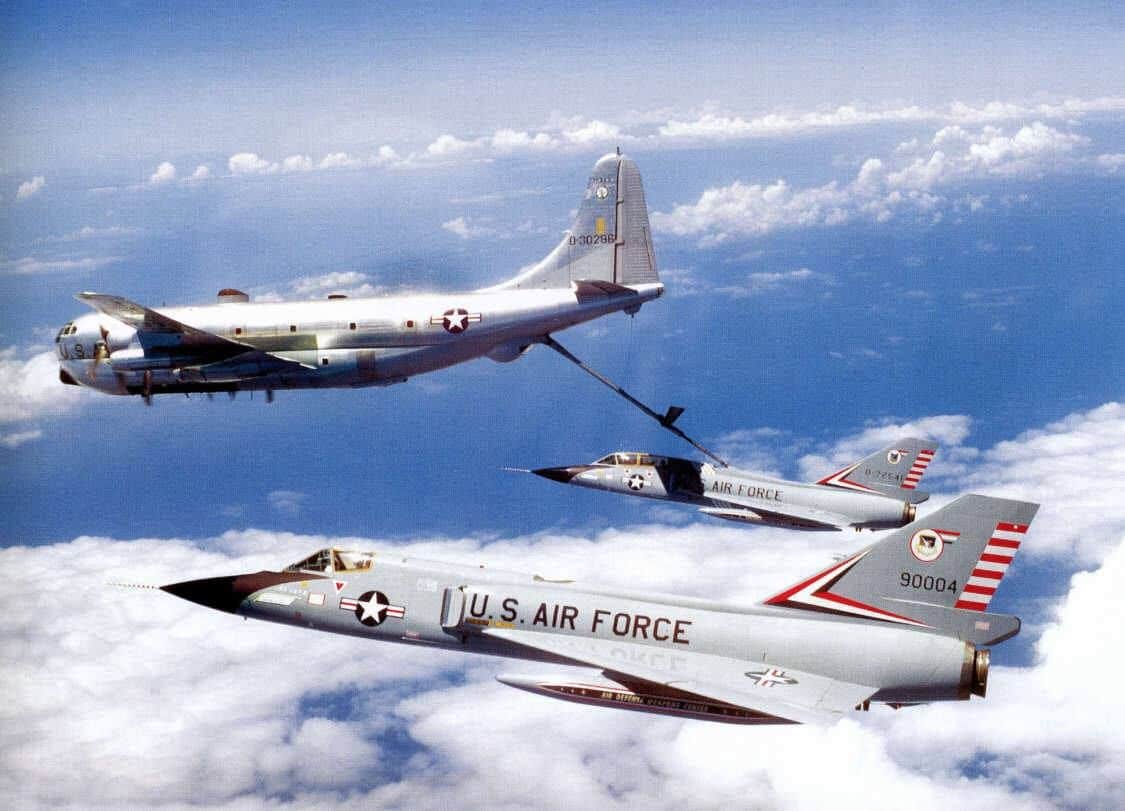
KC-97L refueling F-106B. image via uS Air Force
KC-97 Phased Out
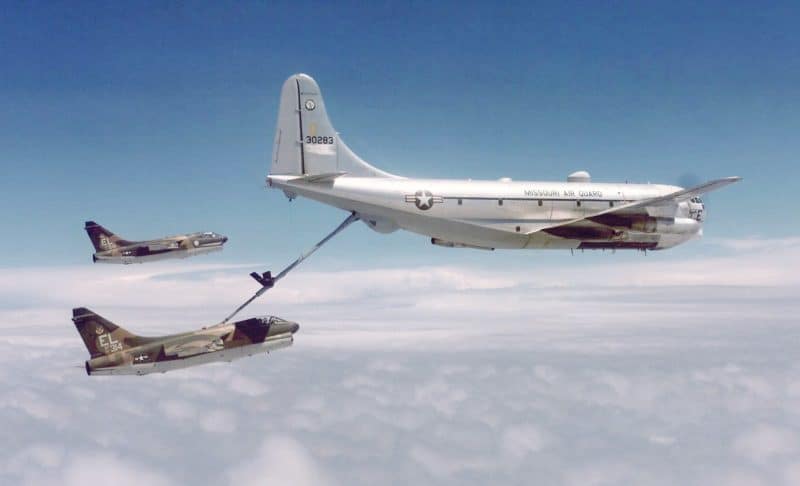
When Boeing’s replacement for the KC-97, the KC-135A Stratotanker, entered service in 1957, Strategic Air Command turned their backs on their KC-97s. But Tactical Air Command (TAC) was plenty happy to have them. When refueling tactical aircraft like the North American F-100 equipped with a refueling probe, the boom was equipped with the required drogue.
Happy to have KC-97s, too, were Air Force Reserve and Air National Guard (ANG) units. KC-97s served across the country and around the world with more than 100 SAC, TAC, Reserve, and ANG Air Refueling Squadrons (ARS) as well as Israel and Spain. In 1978, after 26 years of service, the last ARS KC-97Ls were retired by the Texas Air National Guard and the Utah Air National Guard.
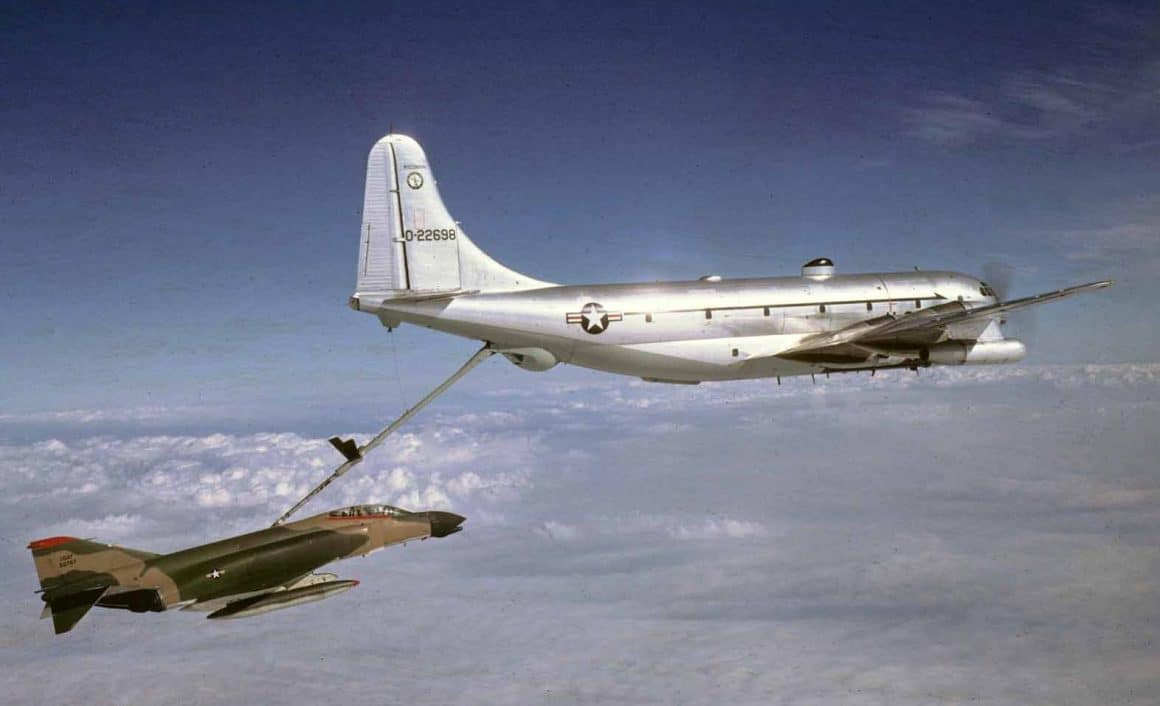
Texas ang KC-97L refuels RF-4C phantom IIs. image via national museum of the us air force
Moving On From the KC-97
We’re fortunate to have more than twenty KC-97s on display in museums and at Air Force Bases today. There are actually two KC-97s still flying- though you might not recognize either of them right off. The first began life as KC-97 52-0828, and that airframe donated its wings, tail, empennage, cockpit, and landing gear to NASA 941- the sole remaining Super Guppy.
The other now-airworthy KC-97G (52-2718) was converted back to the non-tanker C-97G configuration when restored to flight in 2017 by Berlin Airlift Historical Foundation (BAHF) after spending quite a few years in the desert at the Boneyard.
NASA 941 Super guppy. image via Us air force/dvids
Stratofreighter Trivia
On 9 May 1957, KC-97F USAF SN 51-0258 suffered a double engine failure while en route from Sidi Slimane Air Base in Morocco to Lajes in the Azores. The Stratofreighter successfully ditched in the Atlantic roughly 340 miles southeast of the Azores.
The crew of seven all survived the ditching, and 258 did too, floating for ten days after the crew was rescued. The Iowa-class battleship USS Wisconsin (BB-64) was on her way home from the Med when she was called upon to sink 258, which she did with naval gunfire. When it landed in one piece in the open ocean, Boeing’s 377 Stratoliner could also float for quite a while.
KC-97G refueling f-84Fs. image via national museum of the us air force
On 14 December 1959, KC-97G USAF SN 53-0231 of the 384th Air Refueling Squadron based at Westover AFB in Massachusetts, collided with a Strategic Air Command B-52 during a refueling mission. The collision left 231 without her left horizontal stabilizer and elevator, the upper quarter of her vertical stabilizer, and rudder- but with the refueling boom skewered through the aft fuselage!
The KC-97G crew made a no-flap, electrical power off night recovery at Dow AFB in Bangor, Maine. The B-52 recovered safely at Westover- minus two of her crew, who had ejected after the collision and were subsequently rescued safely on the ground. Miraculously, there were no injuries.
KC-97L image via national museum of the us air force
More KC-97 Trivia
On 30 March 1960, KC-97F USAF SN 51-0363 was forced to ditch in heavy seas after losing an engine while en route from Harmon AFB in Newfoundland to MacDill AFB in Tampa, Florida. 363 ditched in the Atlantic Ocean roughly 43 miles from the east coast of Florida, off Cape Canaveral, with the loss of two of the 14 souls on board the aircraft. Slightly more than 55 years later, the wreck of 363 was discovered on the bottom by divers 365 feet down in 2015.
KC-97L refuels F-4D Phantom II, Image via National Museum of the US Air Force.
KC-97s starred (in supporting roles) in a pair of SAC shipping-out films during the 1950s. The first was the 1955 Paramount feature ‘Strategic Air Command’ starring Jimmy Stewart and June Allyson- and a few KC-97Gs hauling support equipment and refueling B-47s.
The second film was the 1957 Warner Brothers movie ‘Bombers B-52’ starring Natalie Wood, Karl Malden, and Efrem Zimbalist Jr.- and KC-97Ls refueling B-52s.
Rollout of the first KC-135A with the last KC-97G on the ramp. Image via boeing
The last KC-97G built by Boeing rolled out of the factory doors and was pushed aside to make room for the first production example of its replacement- Boeing’s own KC-135A Stratotanker.
Turn it up and enjoy this fantastic pass in 5.1 Surround Sound.
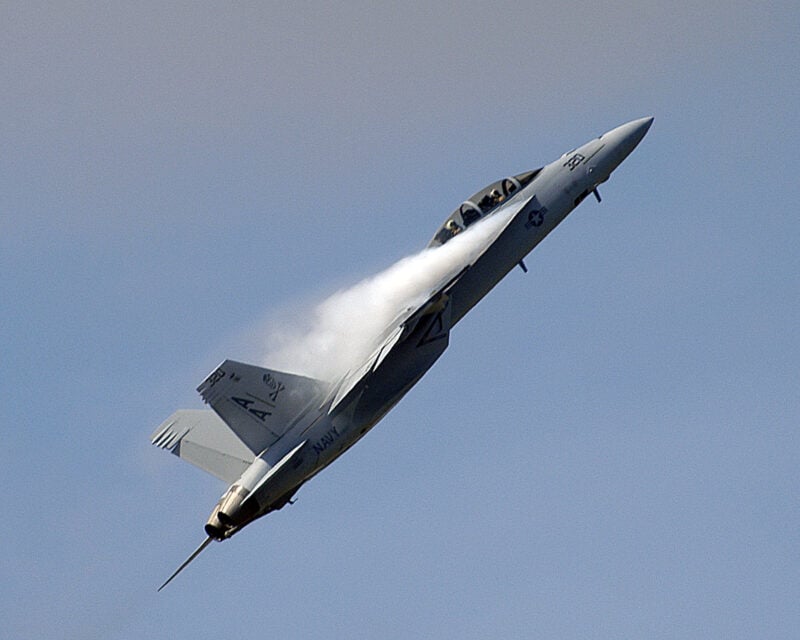
The original F/A-18 Hornet provided many firsts for a tactical fighter aircraft including; digital fly-by-wire flight controls and carbon fiber wings. The original Hornet was designed by McDonnell Douglas and entered active duty in January 1983. The revised F/A-18E Super Hornet improved upon the successes of the F/A-18 Hornet, making its first flight in November 1995.
Boeing archives report, “The first operational F/A-18E/F Super Hornet squadron, VFA-115 Eagles, gained operational capability in June 2001 and deployed into combat aboard the USS Abraham Lincoln (CVN- 72) in July 2002.” (www.boeing.com/defense/fa-18-super-hornet/) Powering the Super Hornet are twin General Electric F414-400 turbofan engines capable of up to 17,000 lbs. of thrust and a top speed of Mach 1.8.
The F/A-18E/F: “Most Cost-Effective Aircraft in US Tactical Aviaton Fleet”
A major highlight of the Super Hornet has been its efficiency, both in the air and during manufacturing. According to Boeing, “Every Super Hornet has been delivered on cost and on schedule. The Super Hornet is the most cost-effective aircraft in the US tactical aviation fleet, costing less per flight hour than any other tactical aircraft in US forces inventory.”
This montage of the F/A-18E Super Hornet performance by VFA-122 Flying Eagles includes a stunning 700 MPH High Speed Pass and a demonstration of the carrier landing approach. During the performance the pilot will experience up to 8 G-Forces as the aircraft maneuvers tight turns.
The audio has been mixed in 5.1 Surround Sound for your listening enjoyment! Prepare to hear the roar of the F/A-18E Super Hornet engines as the Fighter performs several crowd-stunning maneuvers. For optimal results with 5.1 audio, use Surround Headphones or play back on a home theater system.
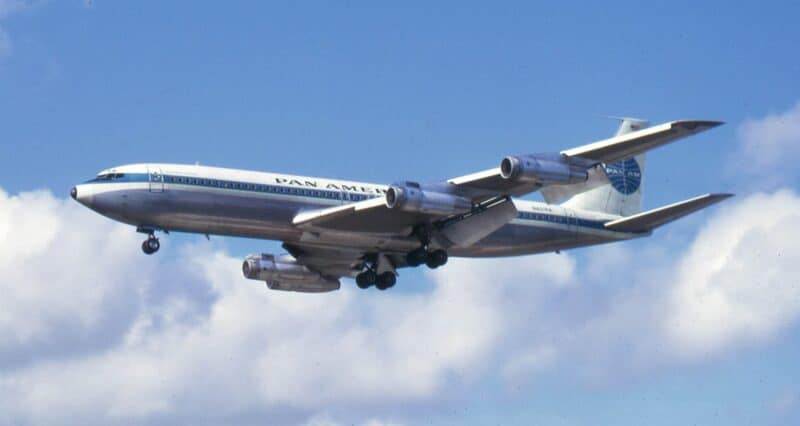
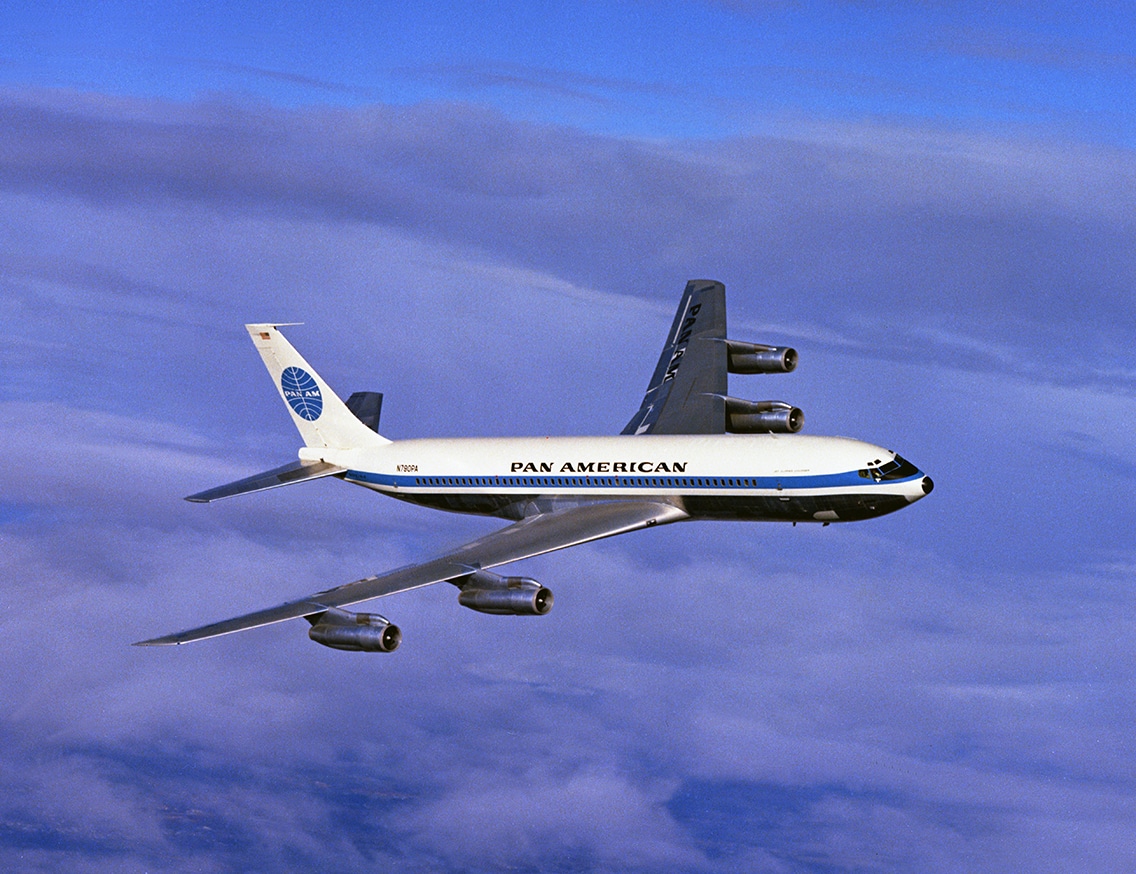
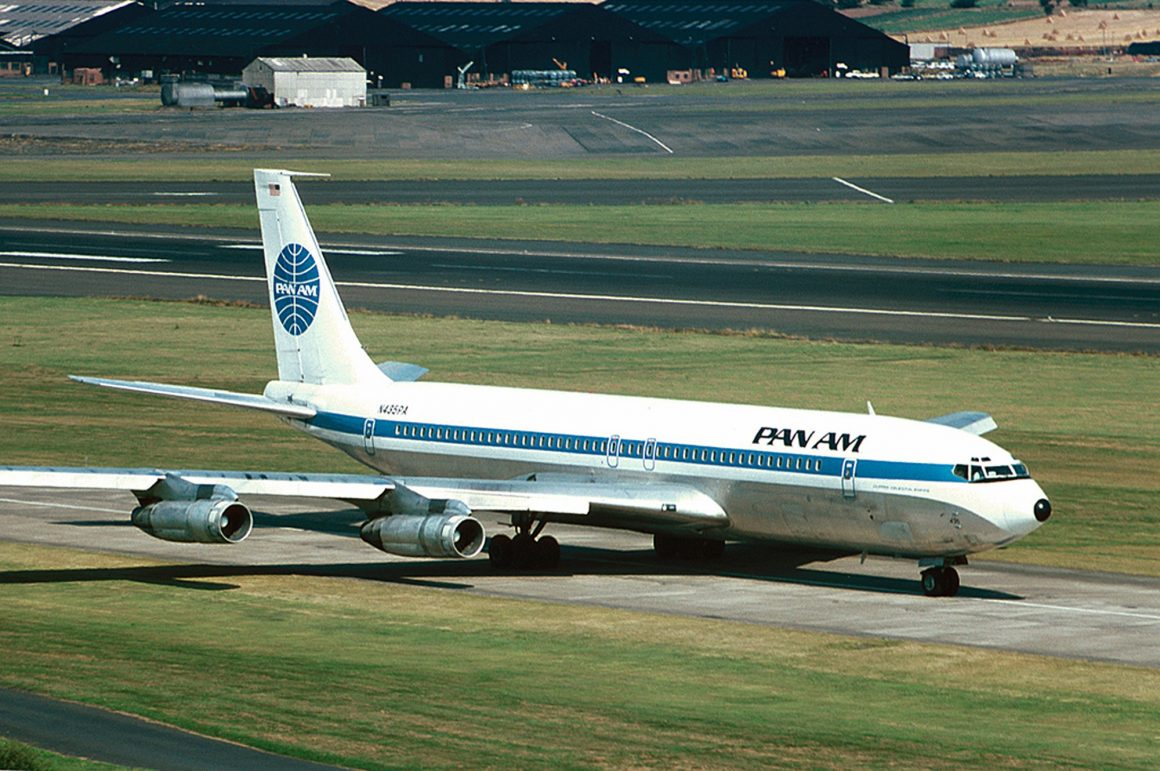
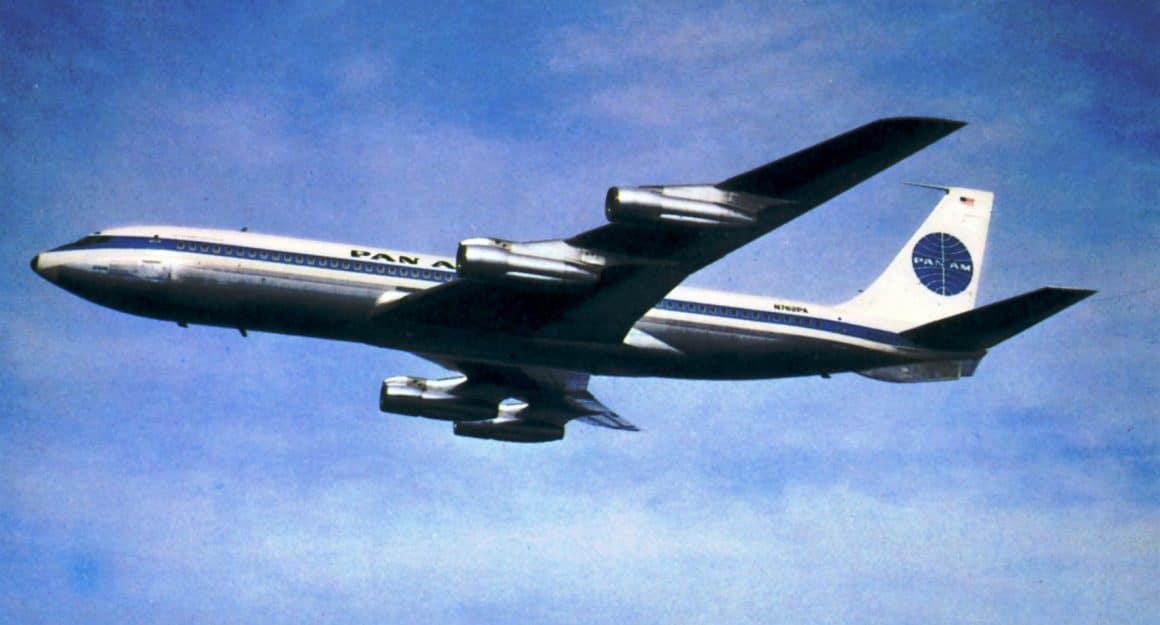
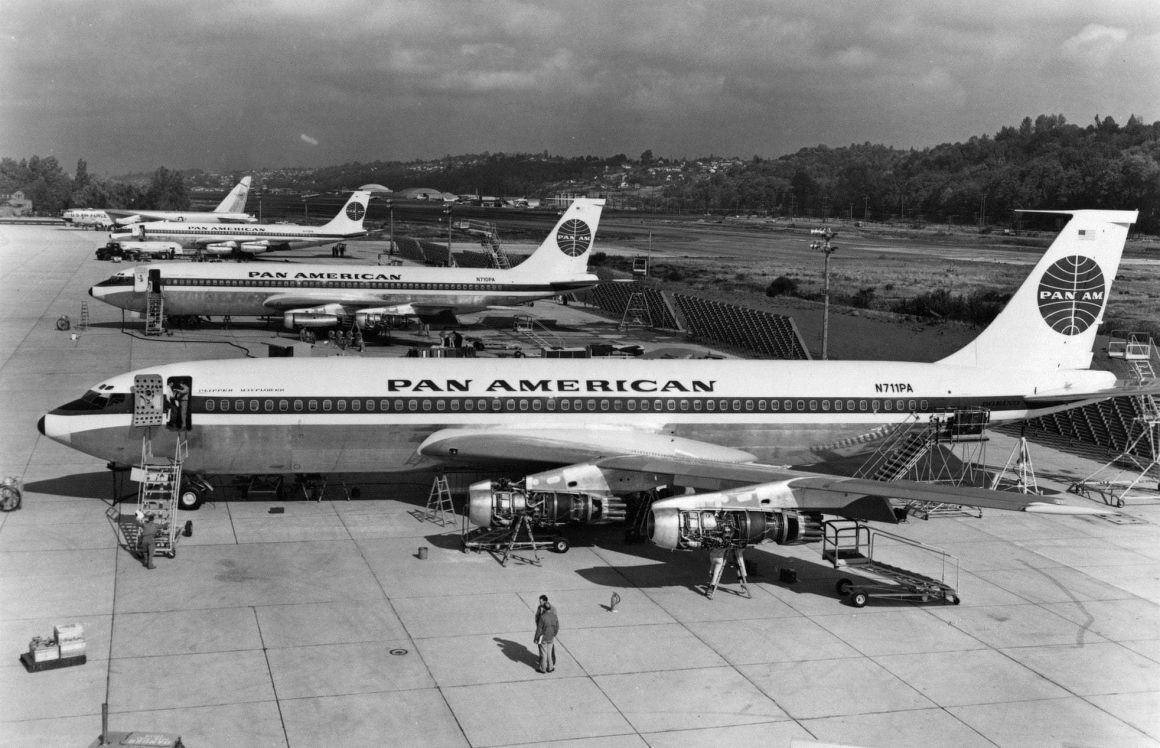
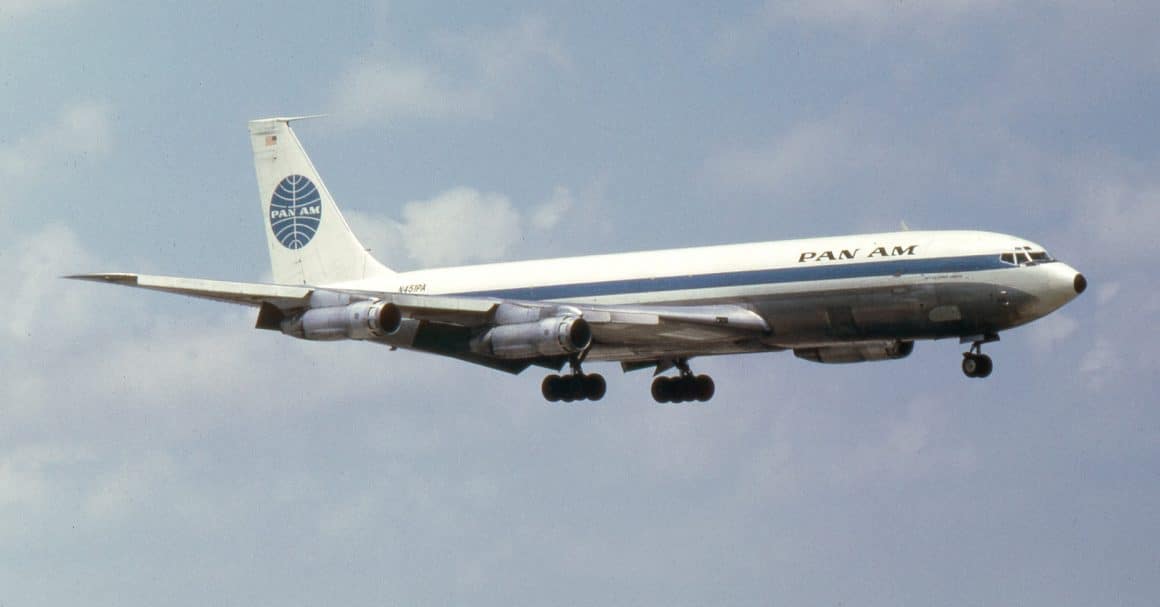
Pan American World Airways began regular Jet Clipper service on 26 October 1958 with the Boeing 707 Jet Clipper. It was the beginning of a new age in travel – very bad news for passenger ships and trains. The commonly recognized name of Airbus back then would have been an oxymoron, for air travel was much more glorious than that by bus.
Just 55 years after the Wright brothers took their first flight, Pan Am set a new standard for luxury and professionalism. Check out this beautiful video of PanAm, part of the Rick Prelinger Archives, posted by the YouTube channel Classic Airliners & Vintage Pop Culture.
We’ve Come a Long Way Since These Days
Back in 1958, pilots actually flew their aircraft because fly-by-wire meant something quite different, something more literal – wire woven through pulleys, cranks, and tension cables to directly connect control surfaces with the pilot’s own hands.
In 1958, however, most things were controlled by hand, not computers, simply because computers were as large as trucks and cars. GPS was just three unrelated English alphabet letters. This meant a lack of dead reckoning skills could mean you and your passengers were dead (at least 25 years before ETOPS- Extended Twin-Engine Operations (Engines Turning Or Passengers Swimming). There was no room for error. Training was the key to the difference between success and failure.
Pan Am Boeing 707 | Image via National Air and Space Museum
It Was Indeed a Different Era
Back in 1958, JFK was known as Idlewild International Airport. The three – count ‘em, THREE members of the flight crew were always male, and the flight attendants (usually female) were stewardesses. Nobody worried about finding seats with extra legroom – because every seat had extra legroom, at least by today’s standards.
People back then actually dressed up in something called their Sunday best to travel, and never needed reminding to pull up their trousers. It would have made airport security much more challenging, but no one had really hijacked a big passenger plane. Yet. But people seemed to be lighting up unfiltered Camels and Marlboros everywhere. That’s why, back then, the ‘NO SMOKING’ sign had an on/off switch, and there was an ashtray in your armrest.
Pan Am Boeing 707 | Image via Don Gilham
Technology Was Also Unproven
Technical types would not be seen in public without a plastic pocket protector filled with a plethora of writing instruments to jot down notes from conversations that took place using rotary dial telephones. In 1958, the commercially successful ball-point pen had been on the market for only 13 years. Teletype machines, punch cards, grease pencils, and paper logs were state-of-the-art. And in 1958, thanks to the 707, Boeing was set to become king of commercial aviation with the DNA for the 727, 737, 757, and even the 747.
image via clipperarctic
Some Very Recognizable Family Traits
Most people know that the 707 was not the first jetliner, but rather the first commercially successful one. Boeing would produce 1,011 passenger 707s, including the smaller 720 series (in addition to 800 military C-135 and C-137 versions, many of which are still flying). The windows on a 707 were not rectangular to distribute the stress, and its fuselage was no mere cylinder but rather a double bubble joined at a crease. This and that distinguished and elegant nose gave the 707 a ten-knot speed advantage over its nemesis, the iconic Douglas DC-8.
image via national air and space museum
The Jet Engine That Launched Ten Thousand Aircraft
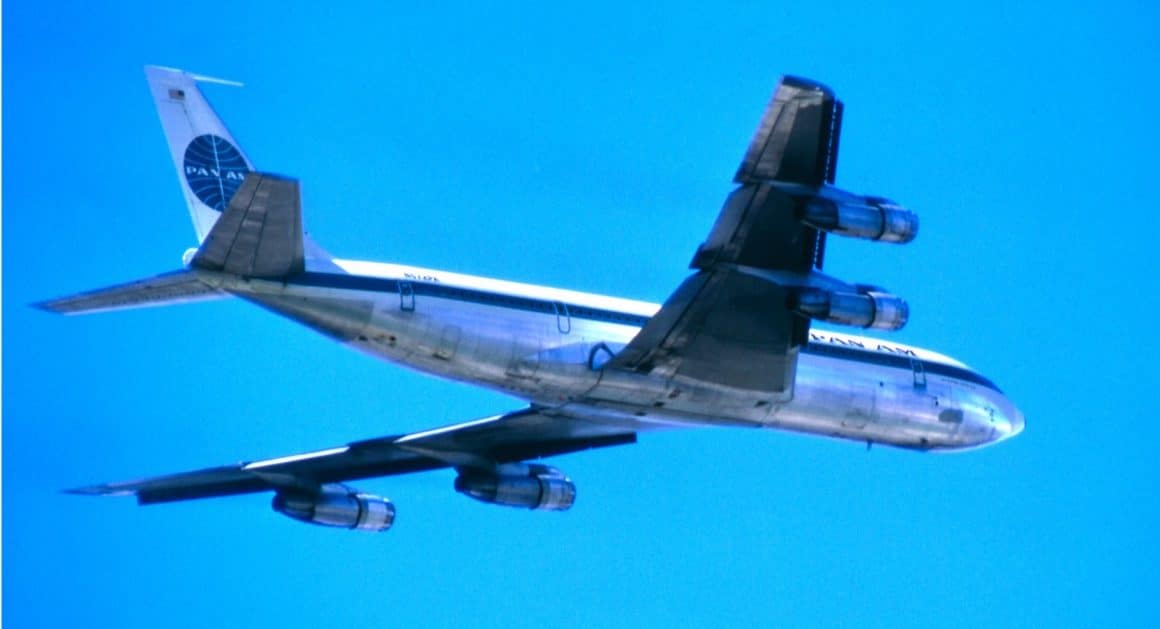
High bypass? What high bypass? Initially powered by the decidedly sooty Pratt and Whitney JT3C-6 turbojet engines (the core of which also powered the Boeing B-52, the Douglas A-3D Skywarrior and F4D Skyray, the McDonnell Douglas F-101 Voodoo, the Vought F-8 Crusader, and the Lockheed U-2 spyplane), those four screaming engines meant someone was headed somewhere. Inside the cabin, especially sitting aft of the wing, the deep roar meant a positive rate of climb was virtually assured.
image via boeing/national archives
Oh the Comforts of Home in the Skies
That same, admittedly very UN first-class, seat provided the best inflight entertainment. Today, there’s nothing like that rumble and roar, and the best that could be said for those plastic tubes they called “headsets” is that they were also decent earplugs. You could watch the that shaking central movie screen or the spectacularly complex 707 wing in action. Remember the spinning, greasy Archimedes screw that appeared when the flaps were fully deployed? What made it all even better was knowing that, except for the rudder (hydraulic assist, actually, with manual operation possible), all other control surfaces, except the spoilers, were manual; the pilot needed 90 turns of the trimming wheel between full pitch limits.
The 707 would not only set the course for Boeing’s dominance of the jet airliner market, but there was a time when three-quarters of all civil airliners were Boeings. The 707 was also featured in popular songs and films like Boeing, Boeing (1965) starring Jerry Lewis and Tony Curtis. There was also Jantzen’s 1957 launch of its ‘707’ swimwear.
image via barry lewis
Every Era Eventually Comes to an End
Inevitably, twenty-three years after Tex Johnston, Boeing’s chief test pilot, barrel-rolled the prototype over Lake Washington, production of the passenger 707 ended in 1978 (the line stayed open for the military until 1991). As an airline, Pan Am is long gone, and its global logo is now more parochially gracing the sides of locomotives and freight cars of a miniature railroad in the northeast of the USA. In 2013, when Tehran-based Saha Air ceased regular passenger operations, so did the world’s last regular passenger service of the Boeing 707. With that, a truly special era in airline travel came to an end.
Sonic booms caused too much damage to be allowed over land in the continental United States.
On 3 February 1964, the Federal Aviation Administration (FAA) launched Operation Bongo Mark 2 to investigate the effects of supersonic transport (SST) flights on cities. The experiment was managed by the FAA, NASA, and the US Air Force. Public opinion, crucial to the experiment, was captured by the University of Chicago’s National Opinion Research Center.
Operation Bongo Mark 2 was not the first series of tests undertaken to measure the effects. In 1958 and 1960, tests were conducted at Wallops Island, VA. In 1960 and 1961, tests were conducted at Nellis Air Force Base outside Las Vegas, NV. St. Louis, MO, served as a test site in 1961 and 1962.
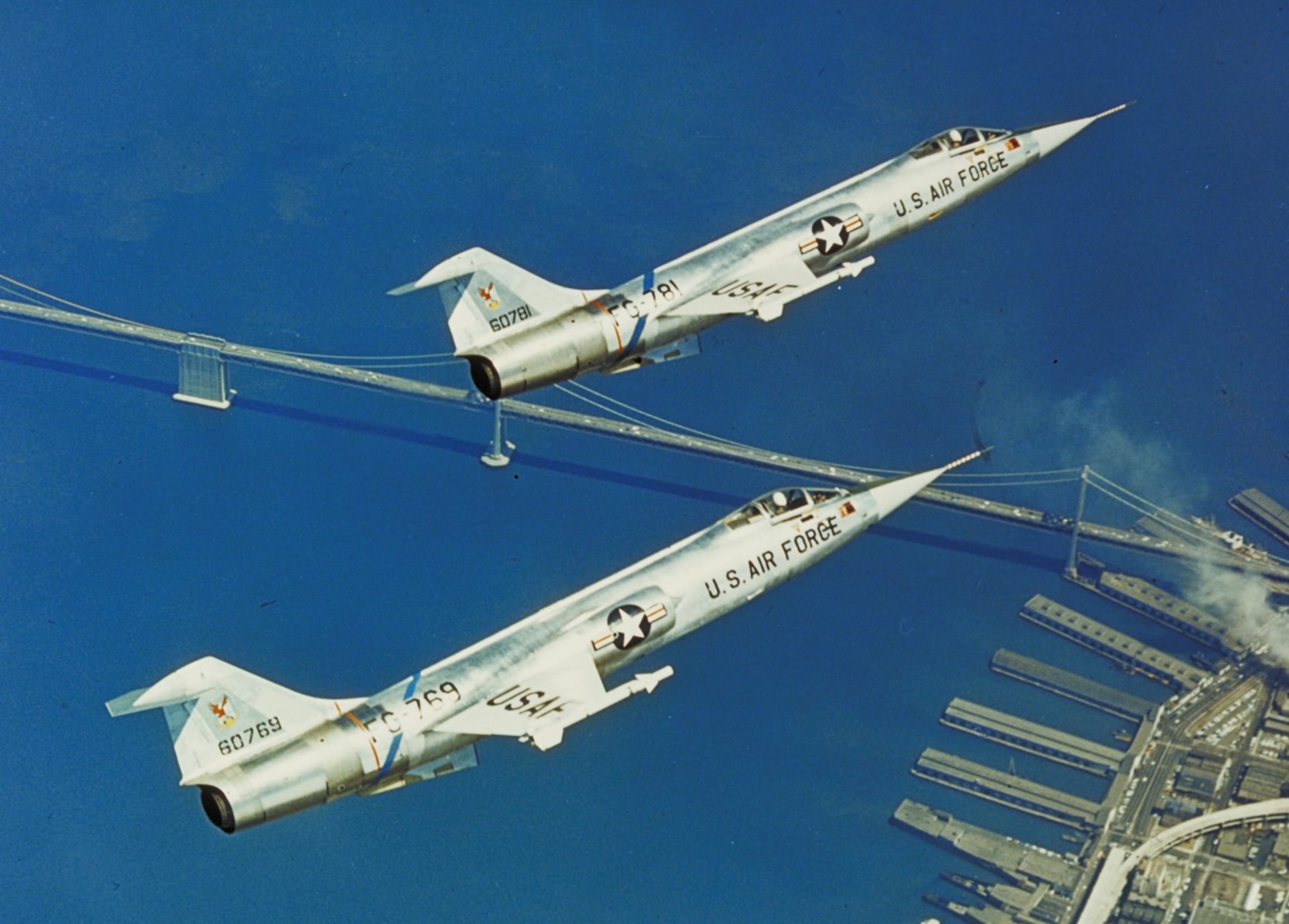
A pair of F-104 Starfighters conducting test missions for Operation Bongo Mark 2 over San Francisco in the 1960s
The difference between these previous tests and the Oklahoma City tests was that the sonic booms’ effects on buildings and structures, as well as on the general public and their opinions about living with sonic booms as a more or less regular occurrence, were not the primary premise for the previous tests. Operation Bongo Mark 2 would be the largest and most comprehensive test of its kind.
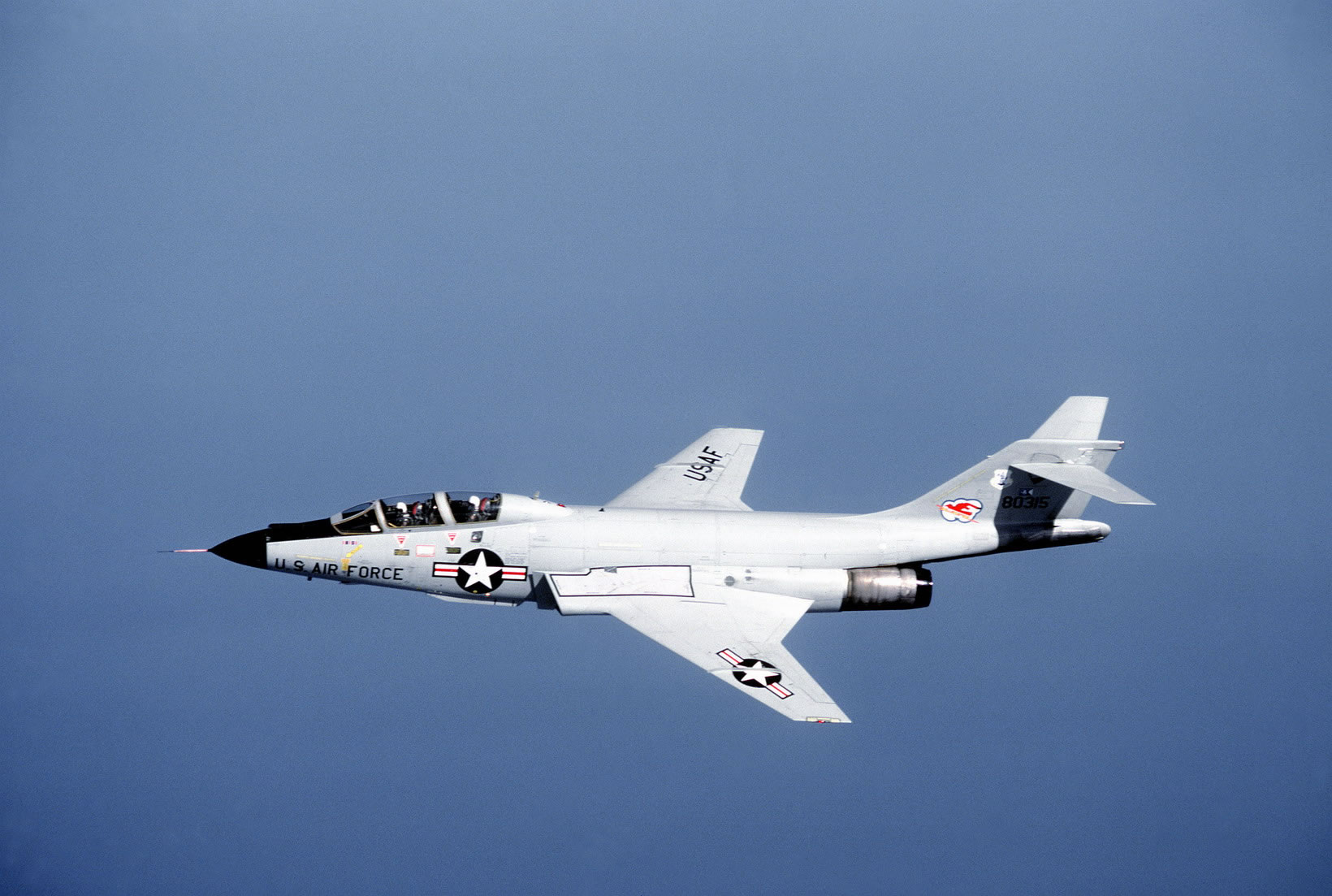
McDonnell F-101 Voodoos participated in Operation Bongo Mark 2 supersonic tests over Oklahoma City
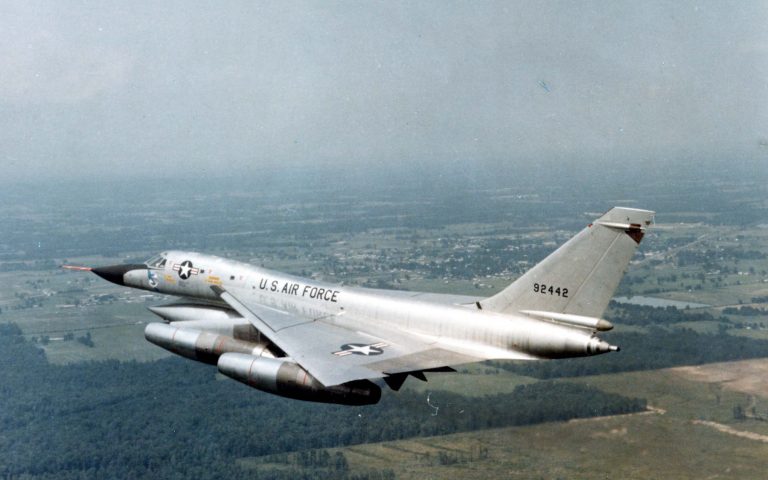
Beginning on 3 February 1964, Convair B-58 Hustler supersonic bombers, along with Lockheed F-104 Starfighter, Convair F-106 Delta Dart, and McDonnell F-101 Voodoo supersonic interceptors, flew through the sound barrier at low altitude over Oklahoma City an average of 8 times per day. The effects of the sonic booms behind the aircraft were roughly 16 miles wide.
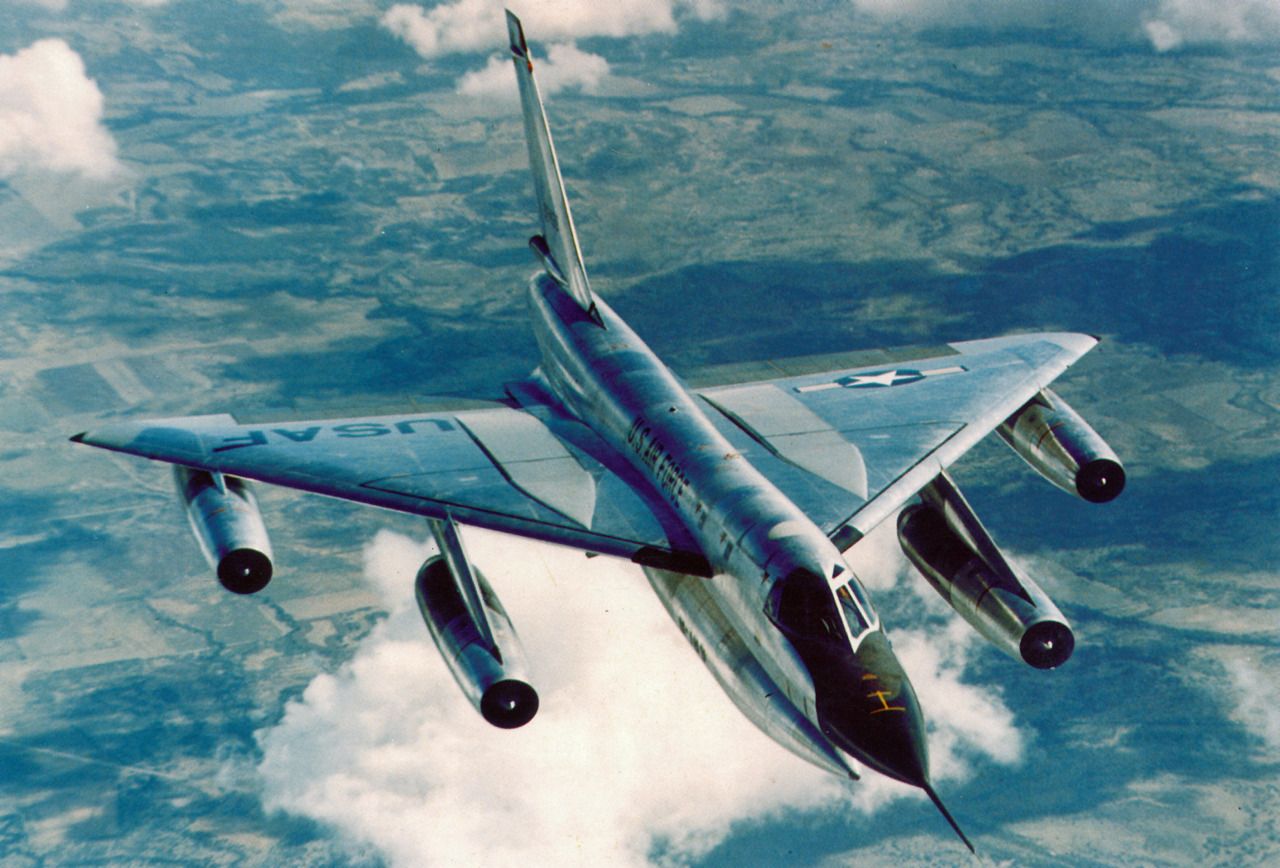
Convair B-58 Hustler was a high-speed strategic bomber developed for the United States Air Force during the Cold War and participated in Operation Bongo Mark 2 missions
The flights were scheduled so that the sonic booms would occur at approximately the same time each day, usually beginning at 0700 local time and concluding in the afternoon. The residents of the city actually timed some of their activities by the sonic booms. It was said that some downtown construction workers began to take their lunch breaks based on the noontime boom.
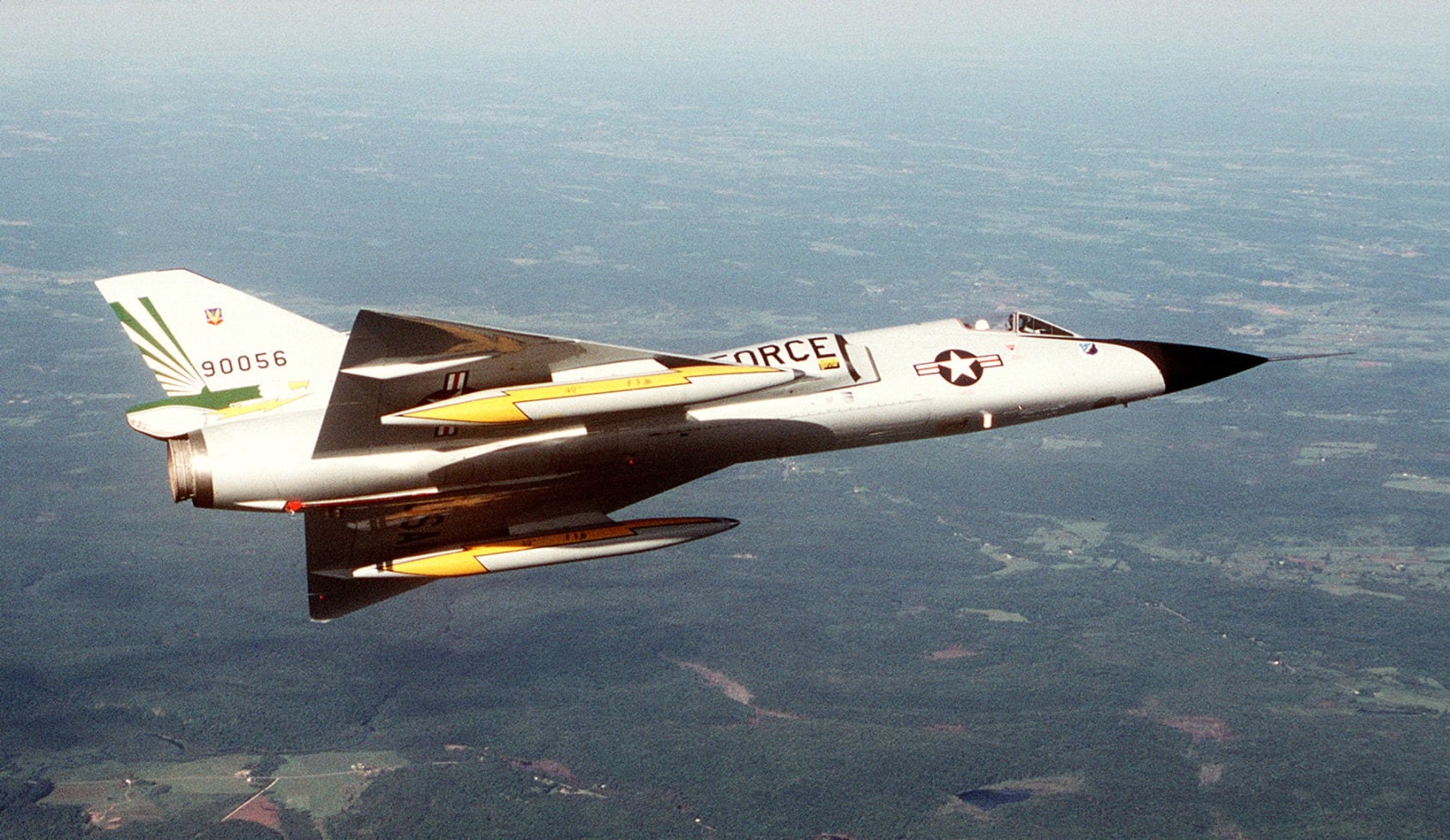
Convair F-106 Delta Dart
When the testing concluded on 29 July 1964, a total of 1,253 sonic booms were created by the supersonic flights over the city. 147 windows were broken in two of the city’s tallest buildings over the first 14 weeks of the experiment.
Even though there were nearly 10,000 complaints of damage to buildings (mostly cracked plaster and glass breakage), public opinion about living with daily sonic booms indicated that 73% of the subjects said they could live with the booms. 25% of the subjects believed they could not live with the booms. Approximately 3% of Oklahoma City residents (roughly 15,000 people at the time) were upset enough to write, phone, sue, or take other action to protest the experiment.
The Lasting Effects of Operation Bongo Mark 2
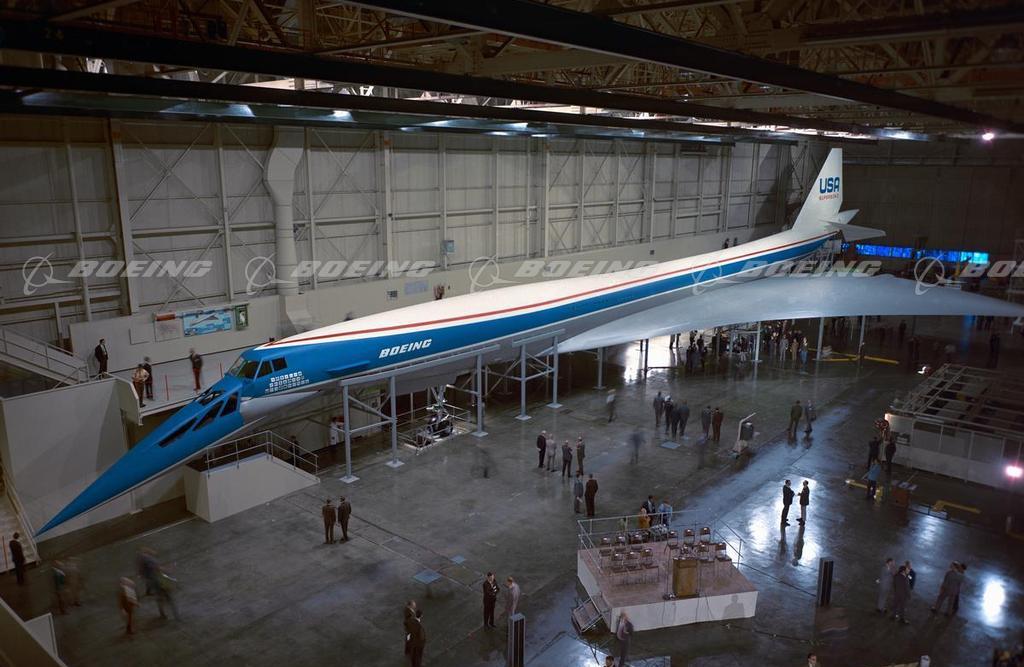
Prototype Boeing SST airliner | IMAGE: Boeing
The lasting effects of Operation Bongo Mark 2 were the cancellation of Boeing’s 2707 supersonic transport design. Eventually, the United States withdrew from SST design altogether, leaving Aerospatiale/BAC (Concorde) and Tupelov (TU-144) as the only builders of SSTs.
Beginning in 1973, supersonic flight over the United States and its territorial waters was banned. The Concorde SST, eventually operated by several airlines and used in regularly scheduled service to and from the United States, was forced to decelerate to subsonic speeds over the ocean.
EDITOR’S NOTE: On 6 June 2025, President Donald Trump signed an executive order to repeal the U.S. ban on commercial supersonic flight over land—a rule in place since 1973 due to disruptive sonic booms—and to push the Federal Aviation Administration (FAA) to establish new regulations that would allow high-speed travel that doesn’t disturb people on the ground. It notes that technological advancements and projects, such as Boom Supersonic’s quiet flight demonstrator, show that supersonic travel could finally be viable again. The order also calls for coordinated research and development across federal agencies to maintain American leadership in this emerging segment of the aviation industry. You can read about the new push for supersonic travel in this story.
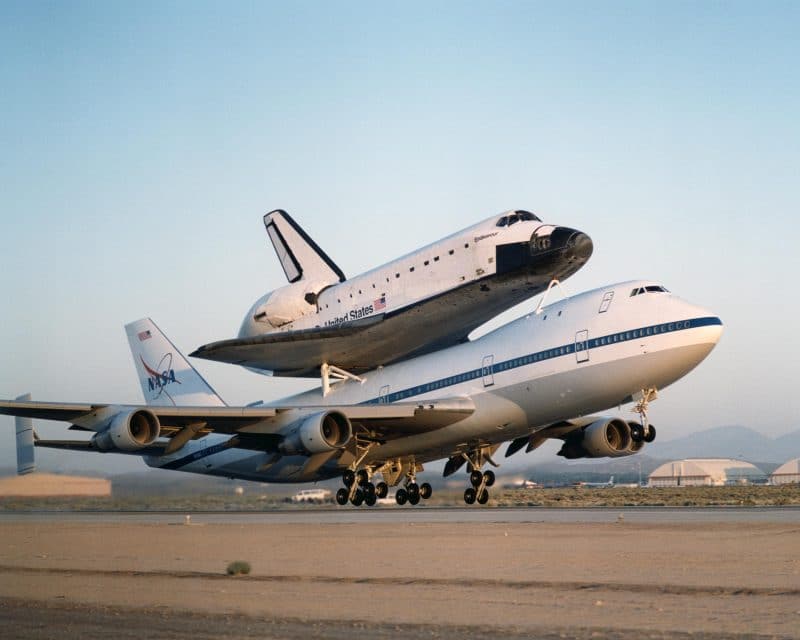
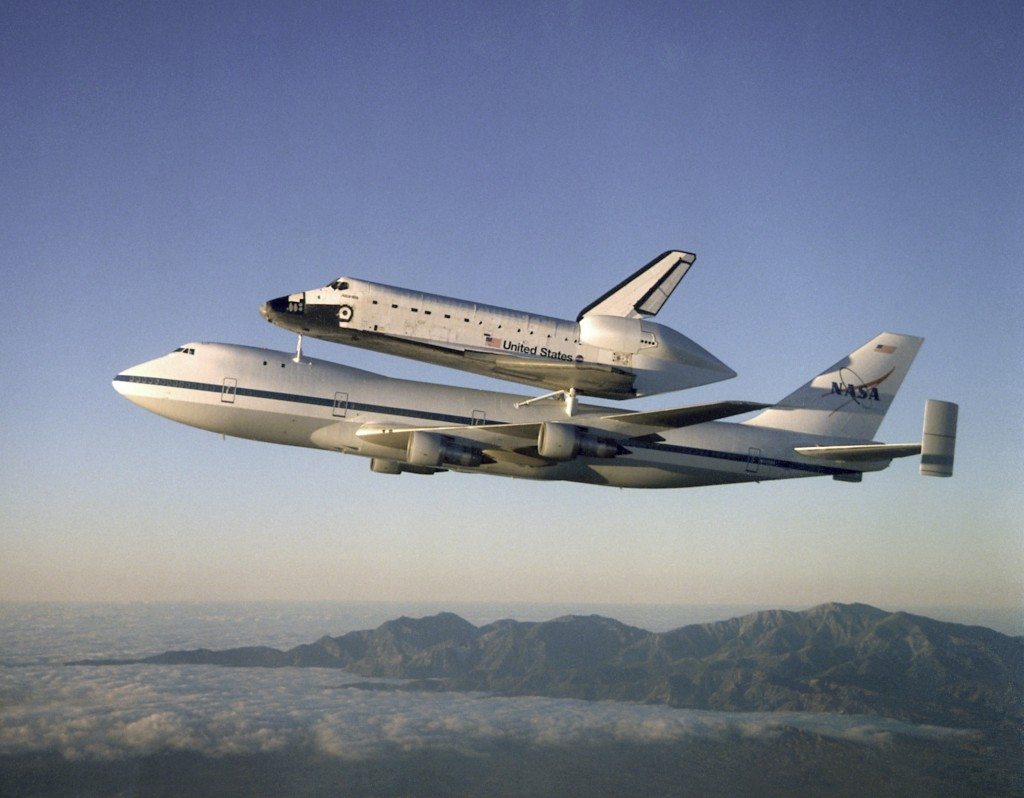
An aircraft of epic proportions, crafted to transport a focal point of American history, the Shuttle Carrier Aircraft is one of the most recognized machines across the nation. It is a Boeing 747 outfitted with two additional vertical stabilizers, advanced instrumentation to monitor orbiter electrical loads, and zero furnishings behind the main forward door to aid in stabilization. Every aspect of this monstrous transport was meticulously planned out.
The 747 Wasn’t The Original Plan, But It Made a Great Platform For Its Mission
Originally, the C-5 Galaxy, a military aircraft with a high-wing design, was considered for this job. However, the wing design and operational issues swayed the program towards the B747. The lower wing design was preferred. With a few modifications, the Boeing 747 became the perfect craft for shuttle transport.
Only two aircraft, dubbed NASA 905 and NASA 911, according to their tail numbers, were modified to transport the shuttles. They were obtained from American Airlines and Japan Airlines, respectively. Due to the size of the transport in flight, the first aircraft, NASA 905, was used heavily for research regarding wake vortices. Through the research, engineers learned how to keep trailing aircraft safe from wake turbulence.
The carriers have a wingspan of nearly 196 feet, a length of roughly 232 feet, and a height to the top of the vertical stabilizer of just over 63 feet. When empty, these aircraft weighed roughly 320,000 pounds, with a maximum takeoff weight of 710,000 pounds. Flight for these complete monstrosities was slow, clocking in at 250 knots, with a range of 1,000 nautical miles.
The Space Shuttle Atlantis is carried on the back of a 747. Photo: NASA
NASA 905 flew 70 of the nearly 90 flights within the shuttle program. It also operated just over 45 of the roughly 55 ferry flights, post-mission. When NASA 911 entered service three years later, it operated 386 flights as the shuttle carrier, but only 66 with the shuttle attached and 17 for the ferry of shuttles post-landing.
After a surplus of 800 flights for NASA, the two Shuttle
Carrier Aircraft were retired. The original, NASA 905, was sent to the Johnson
Space Center’s visitor center and museum, located right outside the main entry.
The inside of NASA 905 was revamped into a museum of its own, reflecting on its
career with the Space Administration. Its last contribution to the space
program was ferrying retired shuttles to their final resting places in museums
across the country.
NASA 911 was retired the same year after landing in California. It’s on display at the Joe Davies Heritage Airpark and is on long-term loan to the city of Palmdale from NASA.
The Shuttle Carriers Were Originally Going To Provide Parts for Another Special NASA 747
Photo: NASA
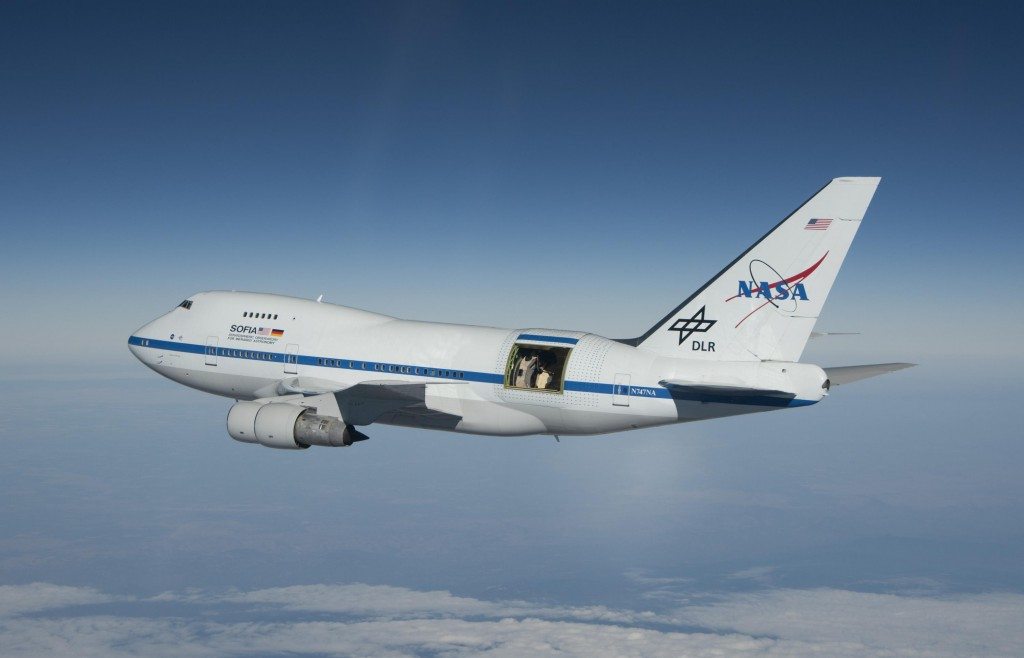
Originally, engineers at NASA hoped to harvest parts of the B747s to aid in maintenance for their Stratospheric Observatory for Infrared Astronomy (SOFIA) aircraft. Ultimately, the number of salvageable parts was negligible, so the decision was made to completely preserve these icons.
These carriers used to turn the heads of all Americans. A sight that gave hope to citizens of the Nation’s global advancement. They served as a reminder of the power and capability of the United States of America, and millions watched the final flights with a somber sense of pride.
You can learn more about the Shuttle Carrier 747s in this video by NASA.
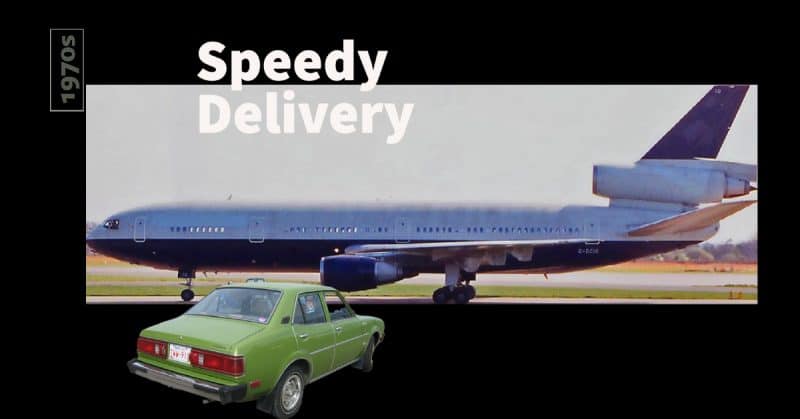
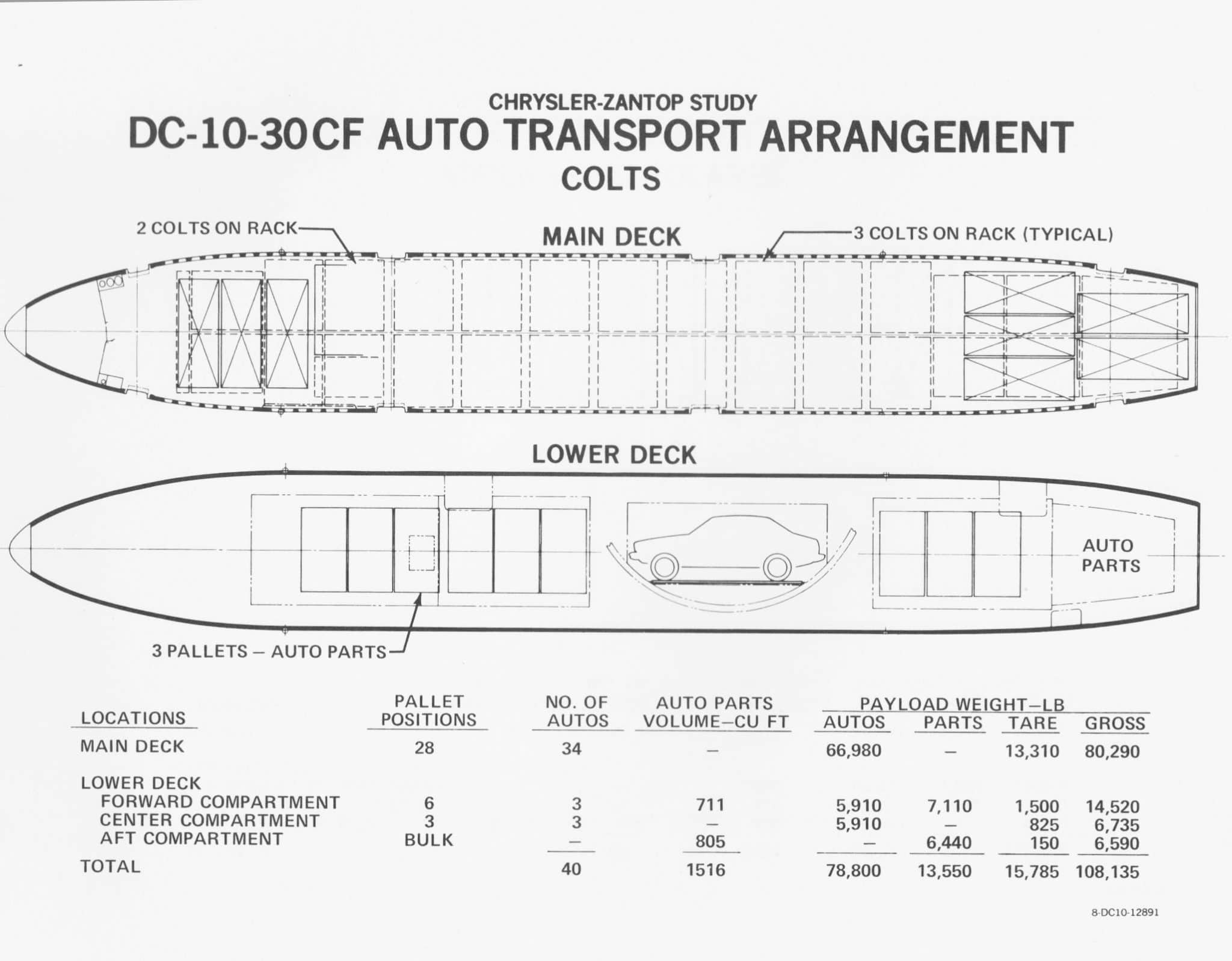
Avgeeks are familiar with cargo aircraft and airlines, from UPS and FedEx, which carry a variety of packages and freight, to outside providers such as Volga-Dnepr, which specialize in outsize freight that won’t fit on typical aircraft freighters (think oversized vehicles, aircraft/spacecraft engines, mining equipment). However, in 1978, McDonnell Douglas proposed their DC-10 aircraft as an airborne car transport for Detroit, specifically Chrysler.
Deliver Fuel-Efficient Cars Faster
Light vehicle sales (think compact cars) were on the rise, and specifically with Chrysler’s vehicle lineup, McDonnell Douglas, in cooperation with Zantop International Airlines, pitched the DC-10 as the ultimate and fastest way to move vehicles between the coasts.
Founded in 1946 as an airborne freight operator for the auto industry, Zantop Air Transport operated a number of Curtiss C-46 aircraft after the war to transport parts and materials for the Detroit auto makers. It sold the operation in 1967, but after the new venture went bankrupt a few years later, the Zantop family restarted the airline as Zantop International Airlines, based in Detroit, Michigan. Zantop operated a fleet of Douglas freighter aircraft from the DC-6 to the DC-8, carrying freight not just for the auto makers, but also for other businesses.
Speedy Delivery For the Dodge Colt
Chrysler Once Proposed Using DC-10s To Deliver Their Dodge Colt Cars 57
Chrysler fits into this picture with Dodge, which sold vehicles considered ‘mid-range’ priced cars. The Dodge Colt was marketed under the Dodge name from 1971 to 1994, but it was not an American-built vehicle.
It was a subcompact car manufactured by Mitsubishi Motors in Japan. The vehicles were built in southern Japan (Okayama, to be exact) for Dodge. They were then loaded onto large ships, which carried the completed vehicles to the west coast of the United States (Los Angeles, San Francisco, and Seattle). From there, the cars were transported to key points in the U.S. for distribution to car dealers.
In Hamtramck, Michigan, just outside of the major city of Detroit, Chrysler/Dodge was manufacturing the Dodge Aspen (also branded as Plymouth Volare), another compact vehicle (albeit larger than the Dodge Colt).
Chrysler Once Proposed Using DC-10s To Deliver Their Dodge Colt Cars 58
Burn Some Dinosaurs, Save A Week
Chrysler Once Proposed Using DC-10s To Deliver Their Dodge Colt Cars 59
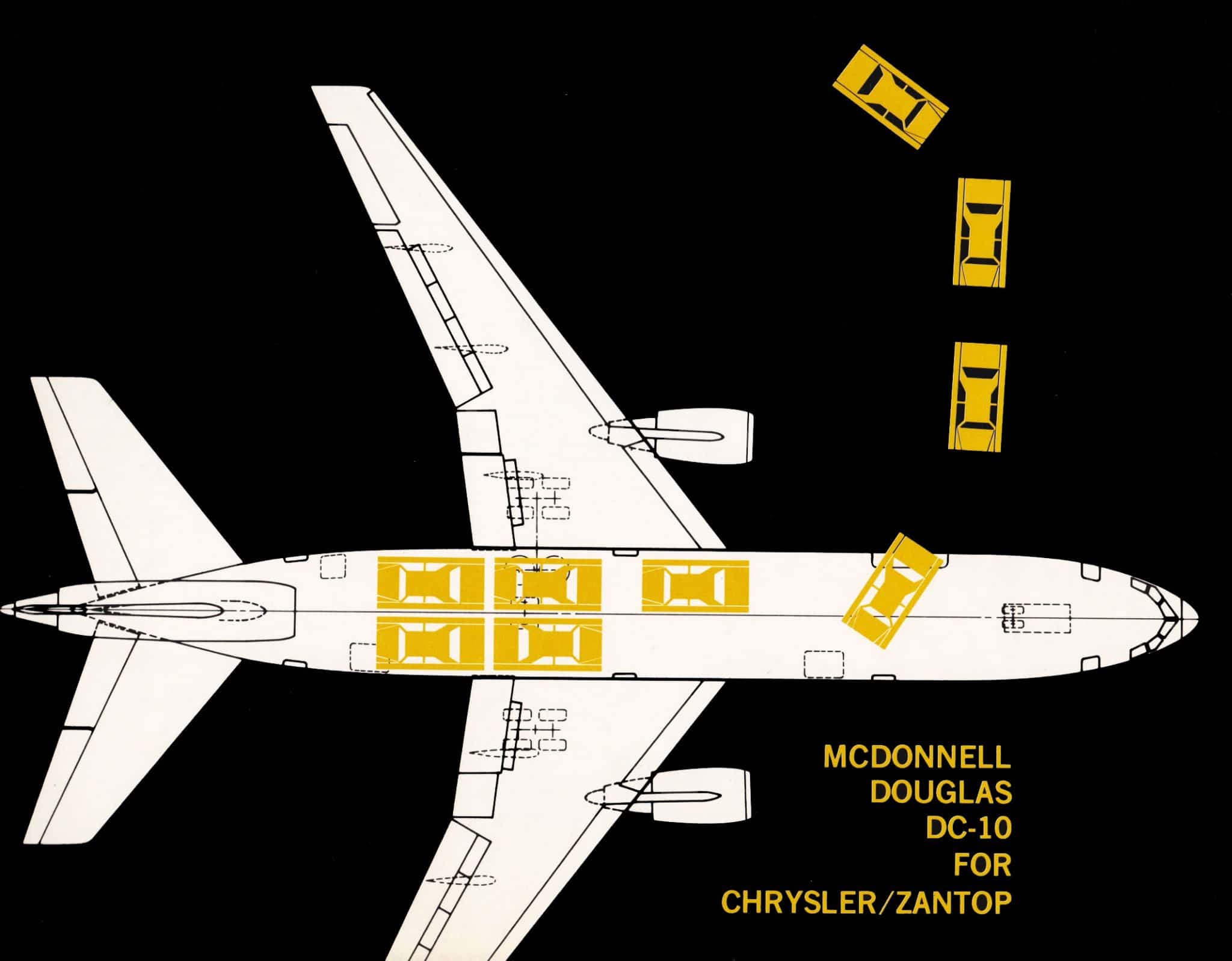
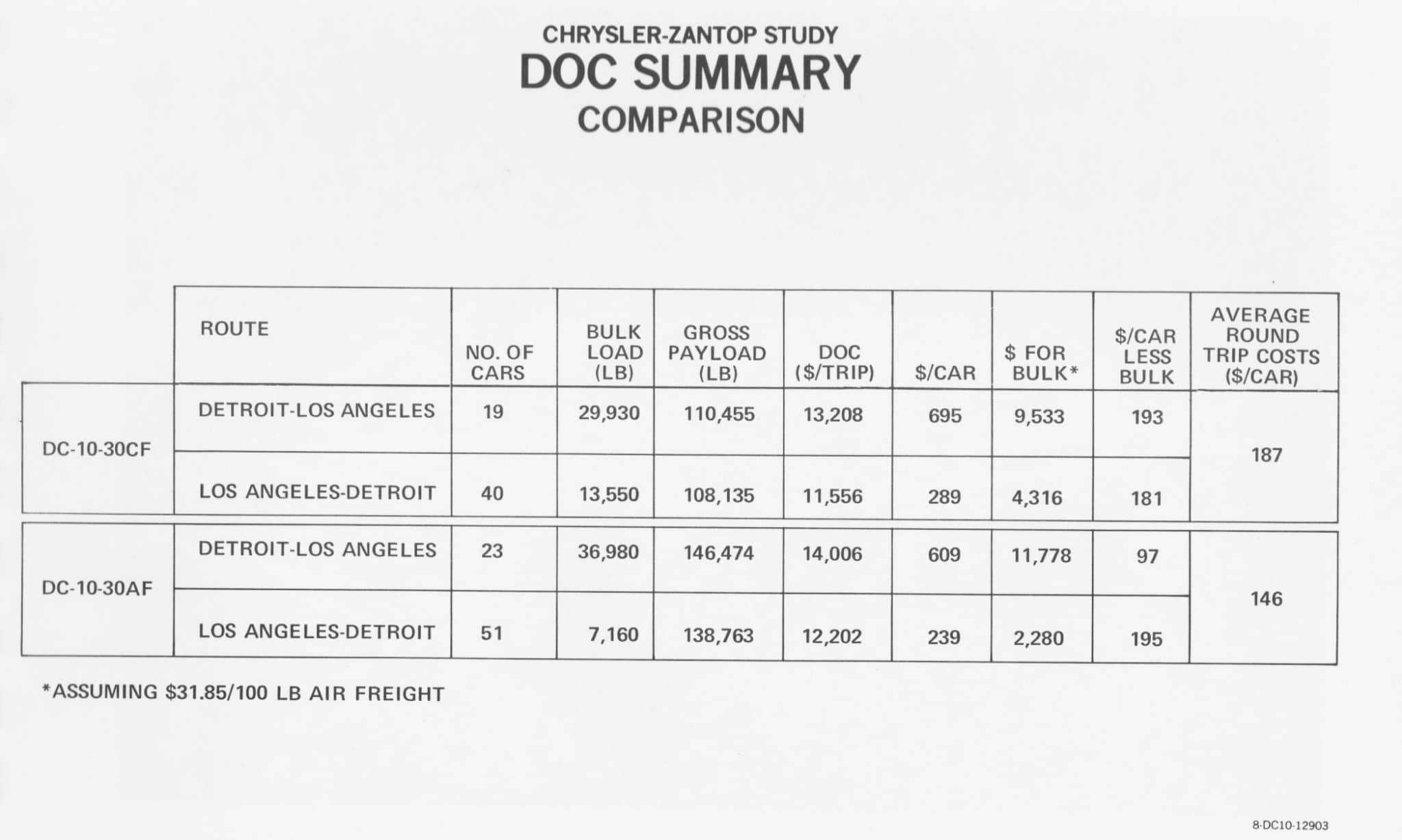
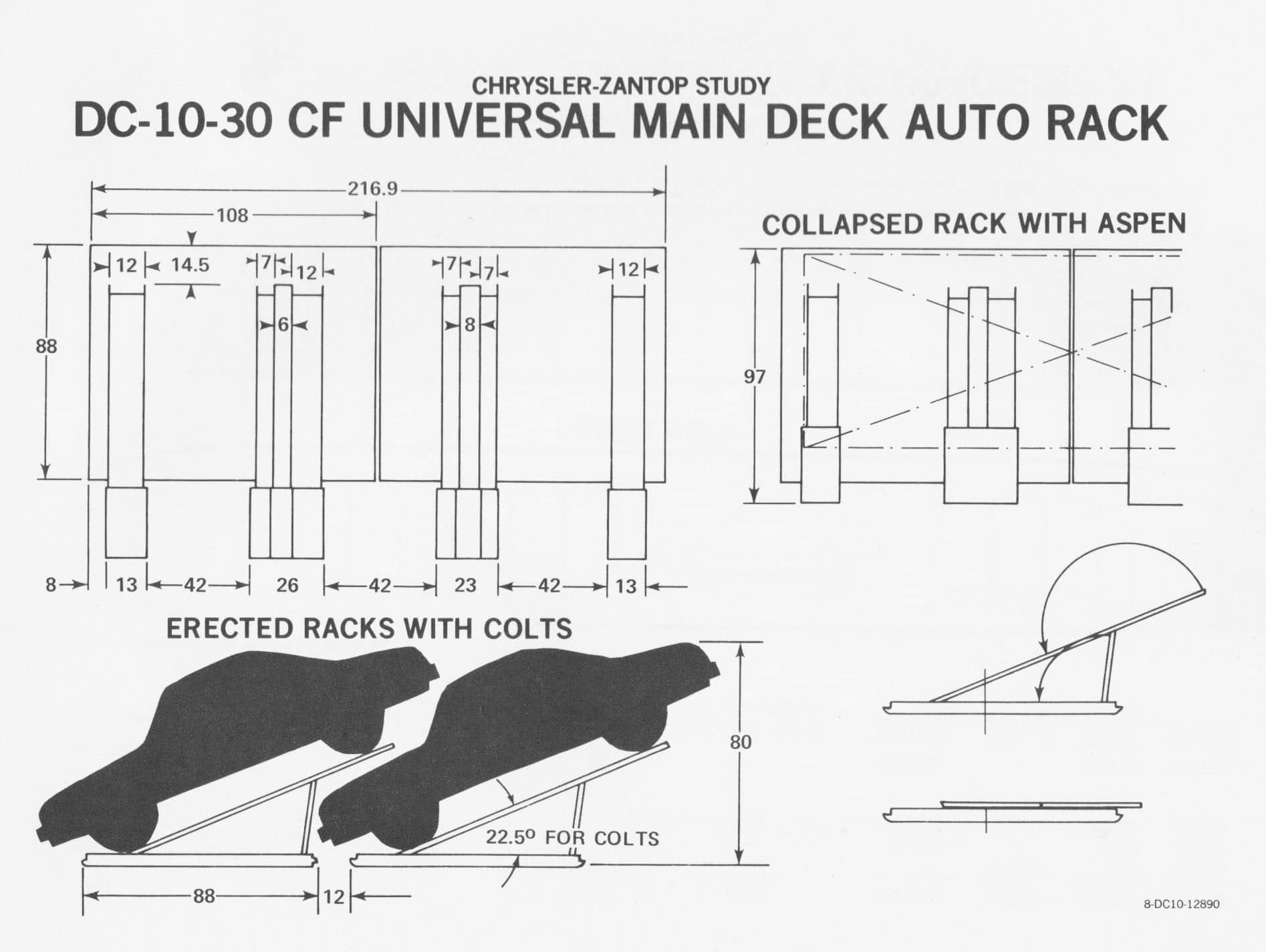
McDonnell Douglas cleverly put together a proposal to use the DC-10 to speed up transporting vehicles between coasts for distribution. On the outbound flight from Detroit, Michigan, the DC-10 would be loaded with 23 Dodge Aspens plus 37,000 pounds of auto parts (for repair) and head to one of three ports (Seattle, San Francisco, Los Angeles). On the return trip, it would carry 51 Dodge Colts and 7,200 pounds worth of parts.
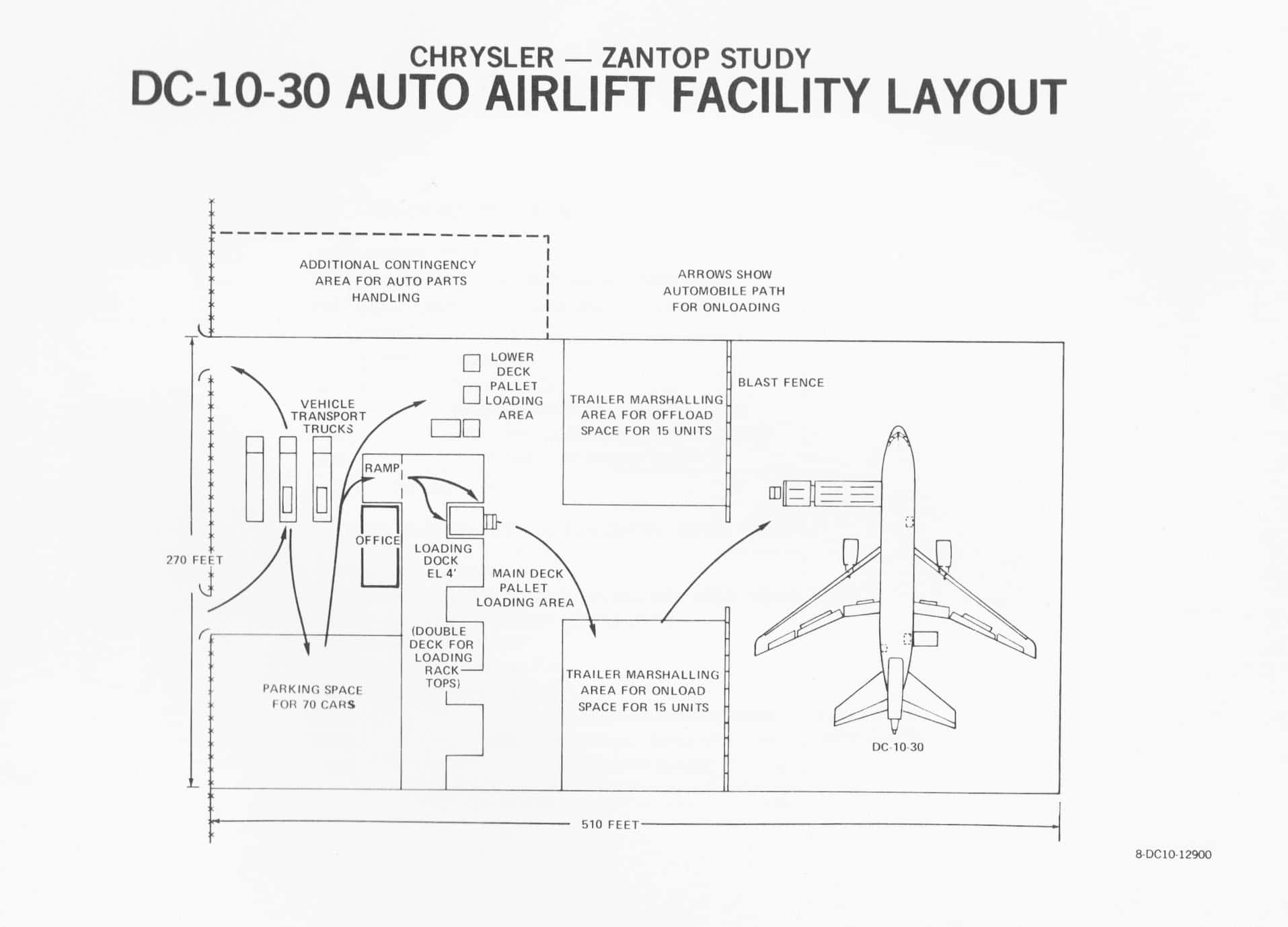
This would save nearly 7 to 10 days from the arrival at the port until cars were transported, but Chrysler-Zantop would need to run two DC-10s with two flights a day each to cover shipping all the inbound cars (assuming they’d want to airlift the nearly 5,400 vehicles inbound each month). The turnaround time was listed as 78 minutes (around 50 minutes to unload/refuel, and 20 minutes to reload and push back).
McDonnell Douglas offered two DC-10-30 aircraft: the Convertible Freighter, which could be reconfigured to a passenger configuration, and a standard freighter. Zantop could run the Convertible Freighter in passenger configuration for their other business when car transport wasn’t needed.
Chrysler Once Proposed Using DC-10s To Deliver Their Dodge Colt Cars 60
They showed an all-economy passenger configuration with 345 seats at nine-abreast, with varying 33, 32, and 31-inch pitch setups. Alternatively, the DC-10 could be equipped to carry 22 large cargo pallets or 30 smaller cargo pallets.
Colts Were In Demand, But It Was Still A Crazy Idea
Chrysler Once Proposed Using DC-10s To Deliver Their Dodge Colt Cars 61
It may seem ludicrous to transport compact cars via air, but because of the oil embargo only a few years earlier, gas prices were still on the rise, as was the demand for fuel-efficient cars, such as Dodge Colts.
To load them up and transport them via air transport didn’t make sense, and that’s why this was nothing more than wishful thinking on McDonnell Douglas’s side. The expense of a widebody aircraft, not to mention the crews and maintenance, never mind the fuel cost, makes a proposal like this a non-starter.
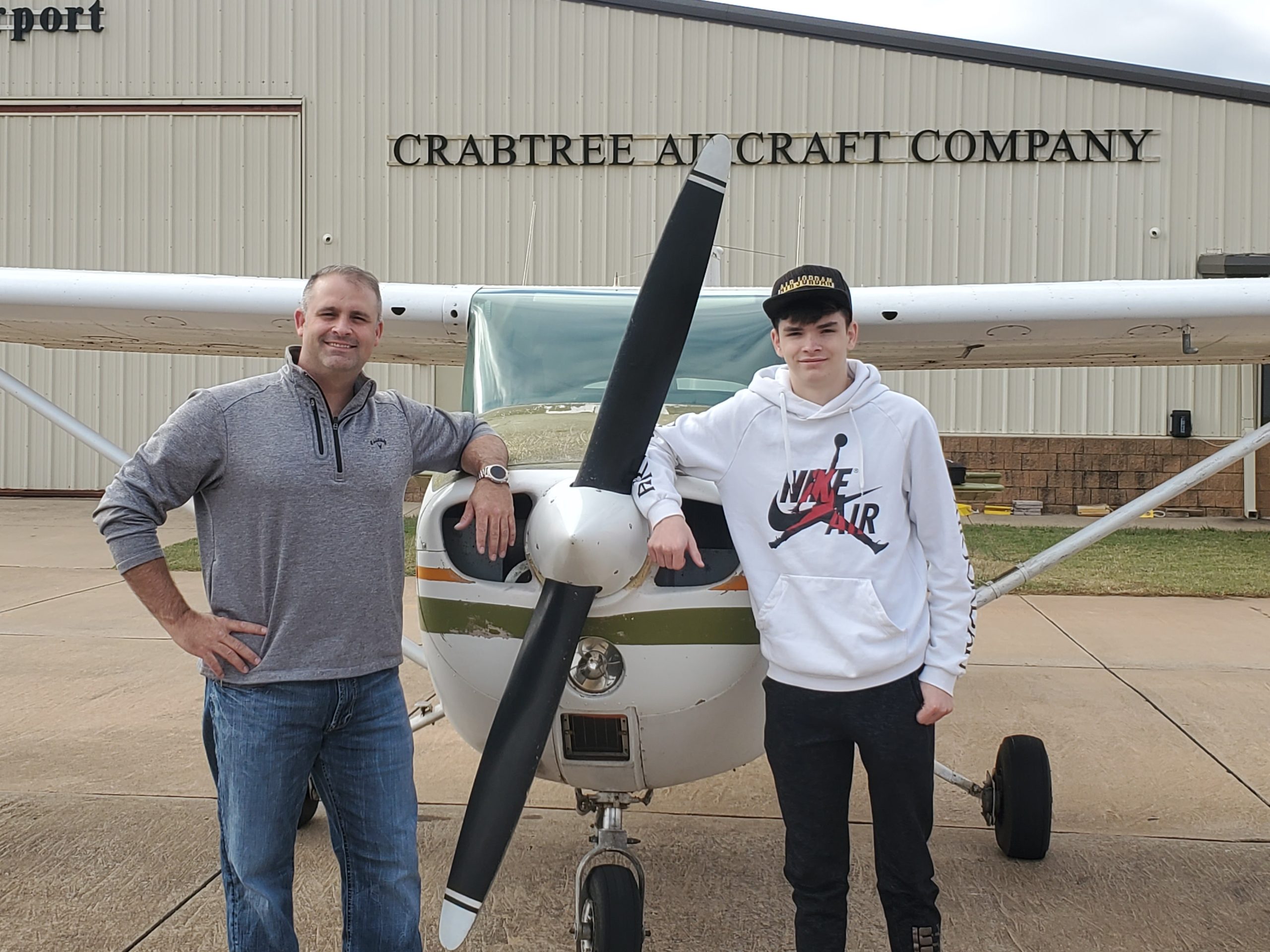
The passion for flying in some families runs deep. For one pilot and father named Jared Black, his love for flying was not only a cherished career but a bond shared with his beloved son, Gavin. Their joy of flight, and then the heartbreaking loss of Gavin in a tragic motorcycle accident have inspired a remarkable initiative that we at Avgeekery want to highlight. It’s called the Gavin Black Memorial Aviation Scholarship. This fund not only keeps Gavin’s memory alive but also paves the way for young aspiring aviators to fulfill their dreams.
A Pilot and a Father
A-10 Pilot's Tragedy Sparks Scholarship For Future Fighter Pilots 67
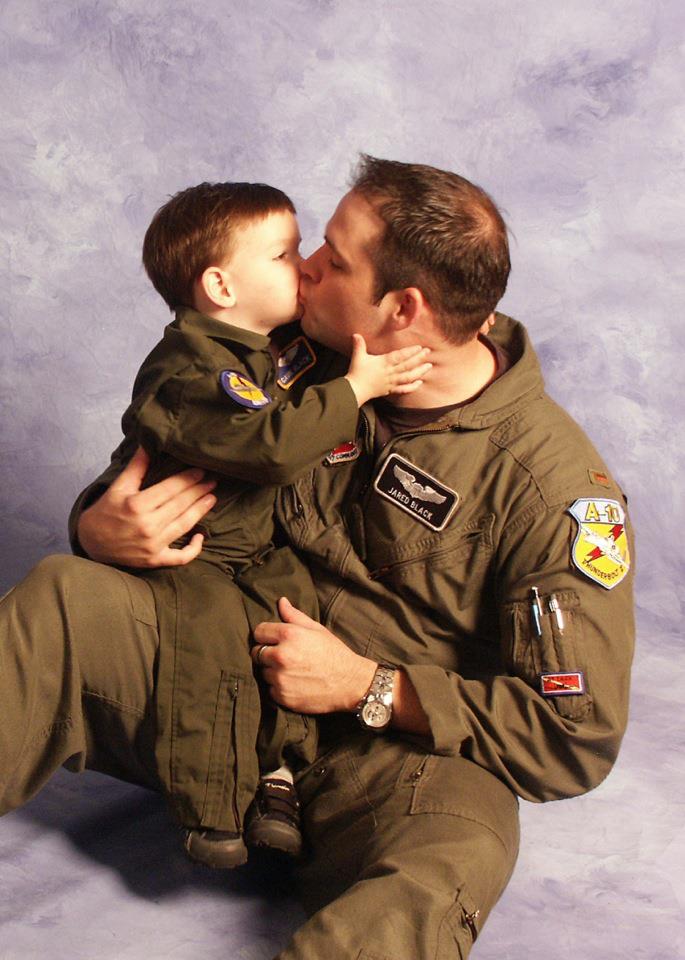
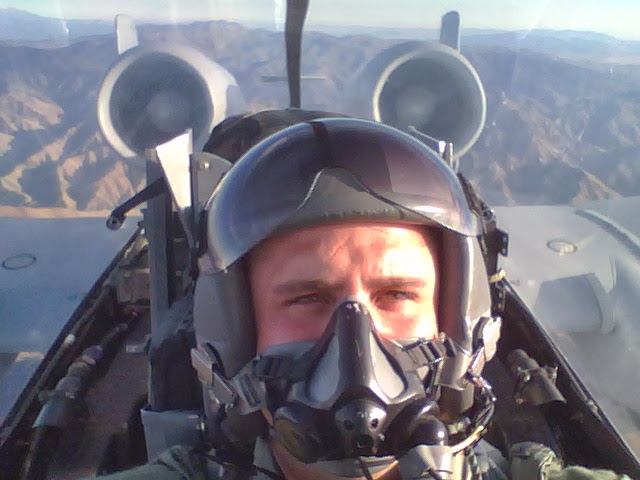
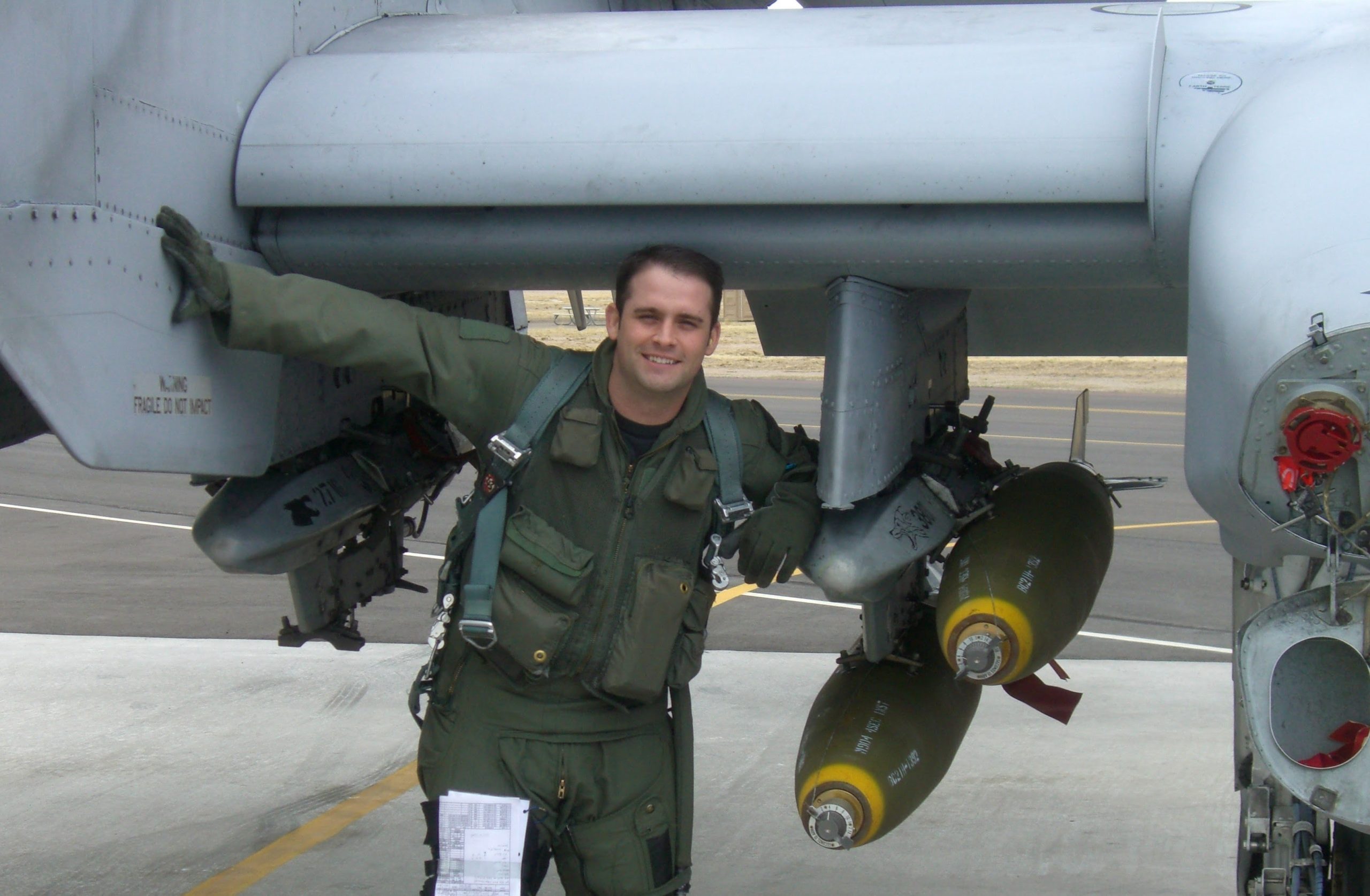
Jared’s journey began on his 16th birthday when he received a gift from his grandfather that would set the course for a lifelong love affair with aviation. With 19 years of service in the US Air Force, he piloted mighty A-10 Warthog and instructed in the T-6A and T-38C. Alongside his military career, he even owned his aircraft, a Bellanca Super Viking was a civilian flight instructor, and held a helicopter Instrument/Commercial license too.
A-10 Pilot's Tragedy Sparks Scholarship For Future Fighter Pilots 68
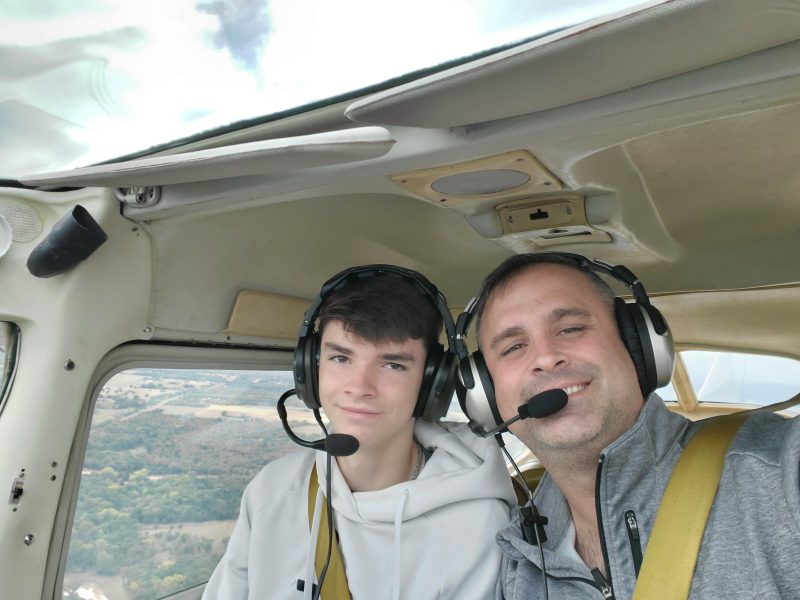
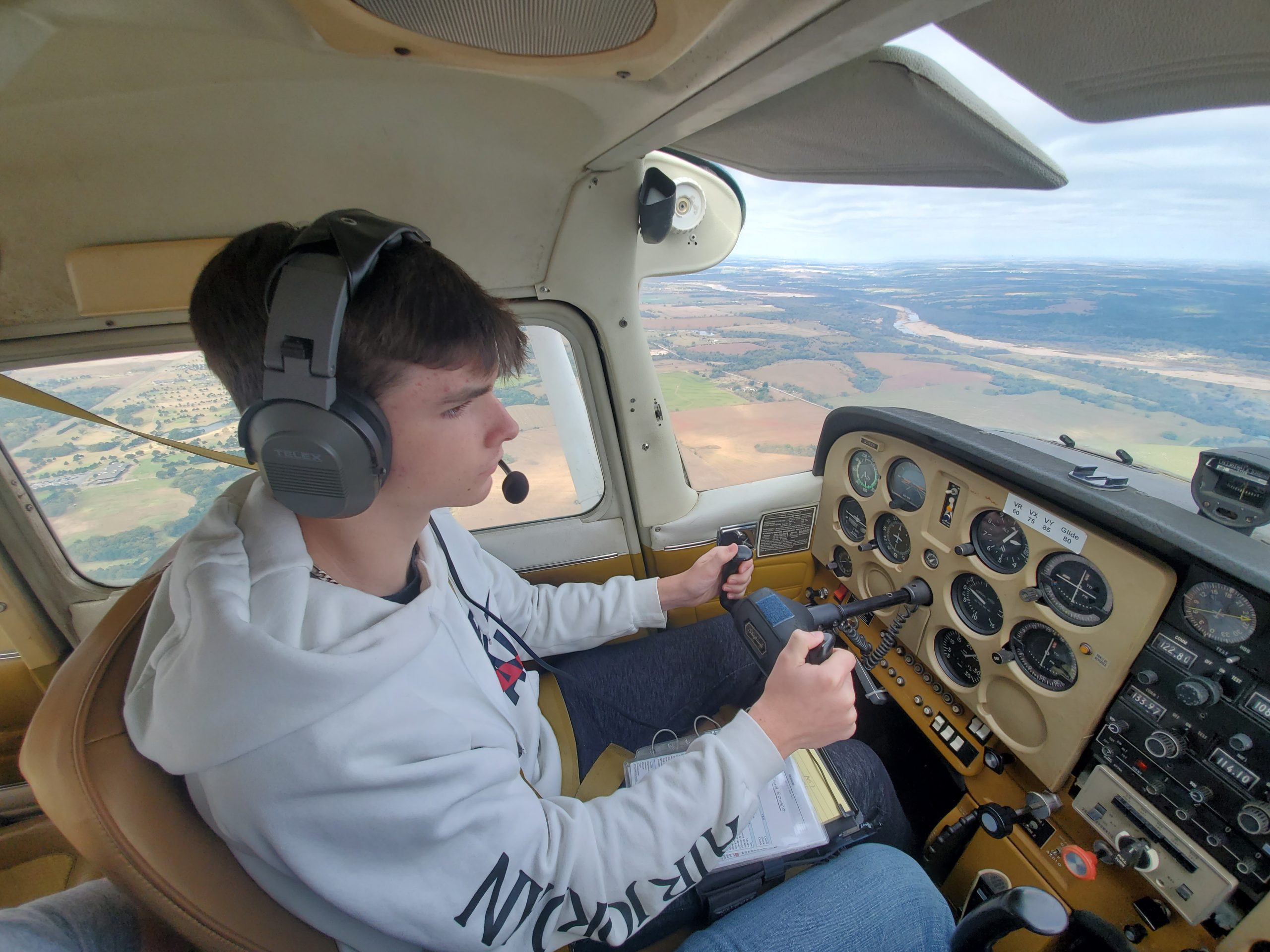
Aviation was not Jared’s only role. He was a loving father as well. Gavin, his son, shared his father’s passion for flying. Gavin’s dream was to follow in his father’s footsteps and become a fighter pilot, aiming for the F-22. On Gavin’s 16th birthday, he received his first flying lesson from his father.
A Legacy of Aviation
A-10 Pilot's Tragedy Sparks Scholarship For Future Fighter Pilots 69
For this family, aviation wasn’t just a hobby; it was a legacy passed down through generations. From his great-grandfather, who flew the Curtis Jenny at the end of WWI, to his grandfather, who served in Vietnam flying KC-135 and B-52 aircraft, and his father and uncle, who flew the KC-135 during Desert Storm, aviation was in their blood. Gavin loved hearing stories and seeing videos of his dad’s flying.
Turning Tragedy into Hope
A-10 Pilot's Tragedy Sparks Scholarship For Future Fighter Pilots 70
The family’s world was shattered in August of 2022 when Gavin tragically passed away in a motorcycle accident at the age of 17. This devastating loss could have led to despair, but it inspired a unique and meaningful mission: to keep Gavin’s memory alive and help other young men and women fulfill their dreams. The Gavin Memorial Scholarship Fund was born, with a narrow focus on aspiring fighter pilots to honor Gavin’s dream. It’s not an easy dream for anyone. On average, only 6% of Air Force UPT graduates end up flying fighters.
Helping Others and Finding Healing
The first recipient of the scholarship, Josh Eccard, was part of Gavin’s JROTC unit with similar dreams. Josh is currently attending training at Oklahoma Aviation. The scholarship’s next recipients will come from the 81st Junior Reserve Officer Training Corps detachment at Edmond North High School, the same detachment Gavin attended. After these initial two scholarships, the plan is to open it up to a wider audience if enough funds are raised.
For Gavin’s father, healing is an ongoing process. The scholarship provides solace in knowing that something good can emerge from the aftermath of tragedy. While it doesn’t erase the pain, it offers hope and purpose, allowing Gavin’s legacy to live on in the dreams of others.
Jared’s Hopes For The Scholarship
A-10 Pilot's Tragedy Sparks Scholarship For Future Fighter Pilots 71
The vision for success with the Gavin Black Memorial Aviation Scholarship extends beyond individual recipients. The hope is to attract large sponsors who can offer financial support and sponsorship opportunities to aspiring aviators. With a 501(c)(3) status as part of the Warriors for Freedom Foundation, the fund can provide tax deductions and advertising benefits to sponsors. Collaborations, such as partnering with Coffee & Cars, offer avenues for raising funds and awareness.
For those who share a passion for aviation, Gavin’s father encourages them to pursue their dreams with vigor. Take advantage of the opportunities that are out there including this scholarship. Don’t be afraid to ask questions or seek help. The thrill of taking control of an aircraft, feeling the ground fall away, is a life-changing experience that’s worth every effort.
Additional Information And How You Can Support The Cause
For those interested in learning more about the Gavin Black Memorial Aviation Scholarship or getting involved, please visit the scholarship’s Facebook group or reach out to Jared via email. Your support can make a difference in the lives of young aviators and keep Gavin’s dream soaring high in the skies.
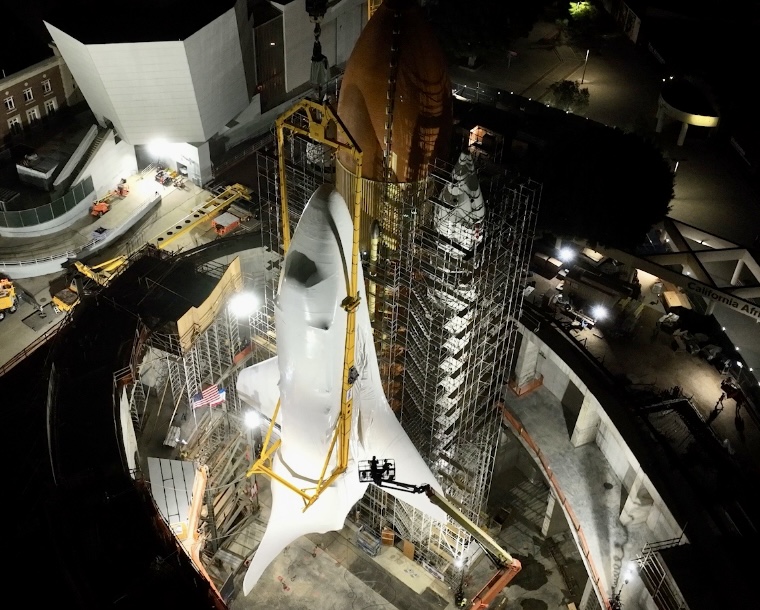
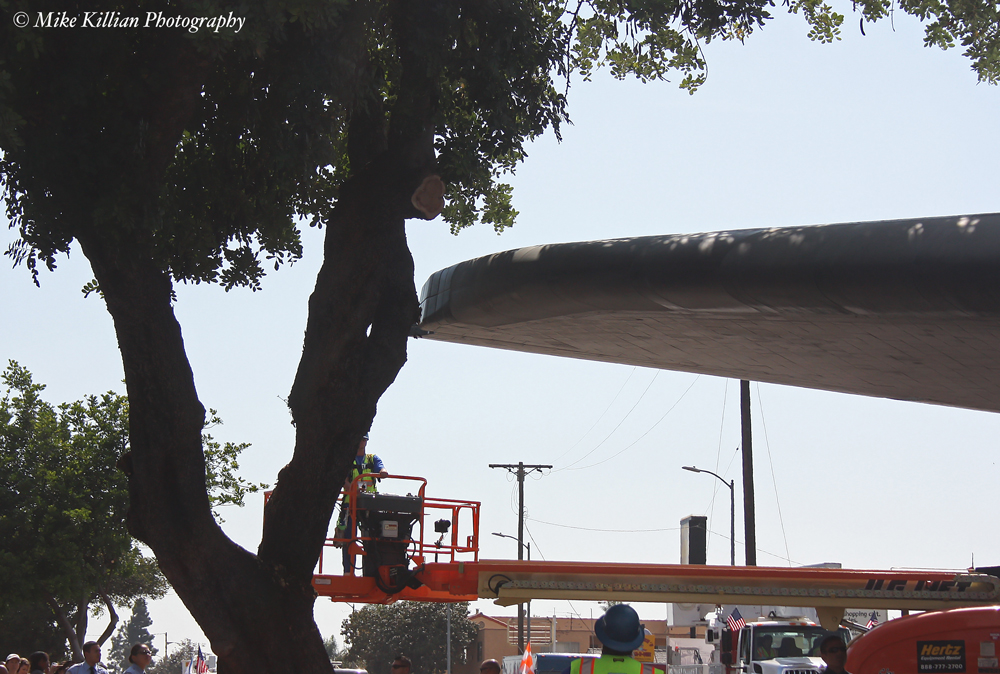
A museum in California has successfully raised space shuttle Endeavour for display in launch position. The California Science Center (CSC) stacked the orbiter to a real external tank and pair of (empty) solid rocket boosters, for what will be the most impressive aerospace display in the world when it’s all finished.
NASA’s last space shuttle to be produced was born from the loss of Challenger. Endeavour flew 25 missions, and was the major player in constructing the International Space Station (ISS). She flew 25 missions over 19 years, and flew 122 million miles with 299 days in orbit.
Photos by mike killian / avgeekery
Endeavour closed out its career in 2011 on mission STS-134. NASA awarded Endeavour, Discovery and Atlantis to museums across the country. The shuttle prototype Enterprise was also relocated.
Endeavour ended up at the California Science Center in Los Angeles, CA. The shuttle’s roots are in Southern California, having been built in Palmdale. Even today, the region is still a major player in the aerospace industry. One example being the recent roll-out of the X-59 quiet supersonic jet tech demonstrator.
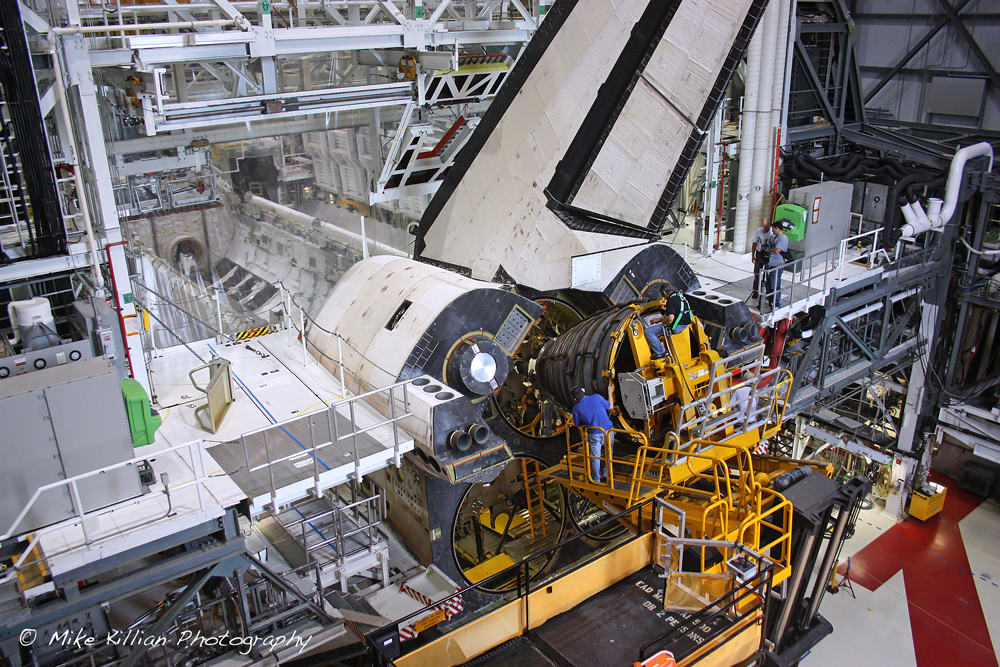
Nasa engineers from united space alliance conduct retirement transition ops on endeavour at kennedy space center (mike killian photo)
Retirement and final flight
Following STS-134, NASA put Endeavour through a thorough retirement transition operation at Kennedy Space Center. This included salvaging heritage hardware for later use (like the engines), and draining the orbiter of toxic propellants.
Some of these operations required powering up Endeavour, to open valves to drain some of the shuttle’s toxic fluids. AvGeekery was one of very few who were invited onboard. Watch our video below.
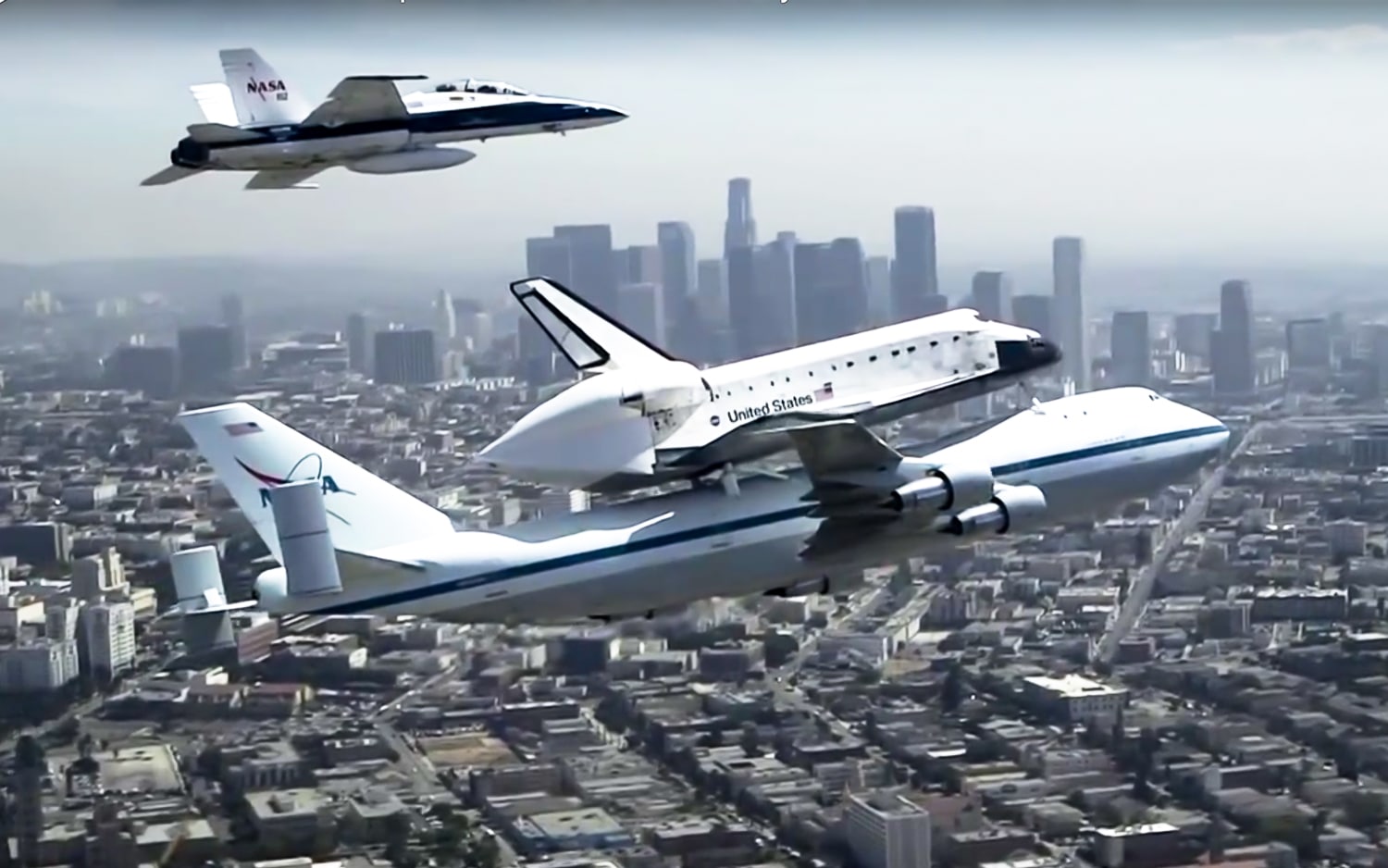
Endeavour was then flown from Florida to California, riding “piggyback” atop a NASA modified 747 shuttle carrier aircraft. That 747 is now on display at Johnson Space Center in Houston, TX.
Million of people watched on live TV and online as NASA overflew cities across the nation on the trip from Florida. On the last day of flying, it gave a salute across California, before landing at LAX. Watch some of the incredible aerial video here.
nasa photo
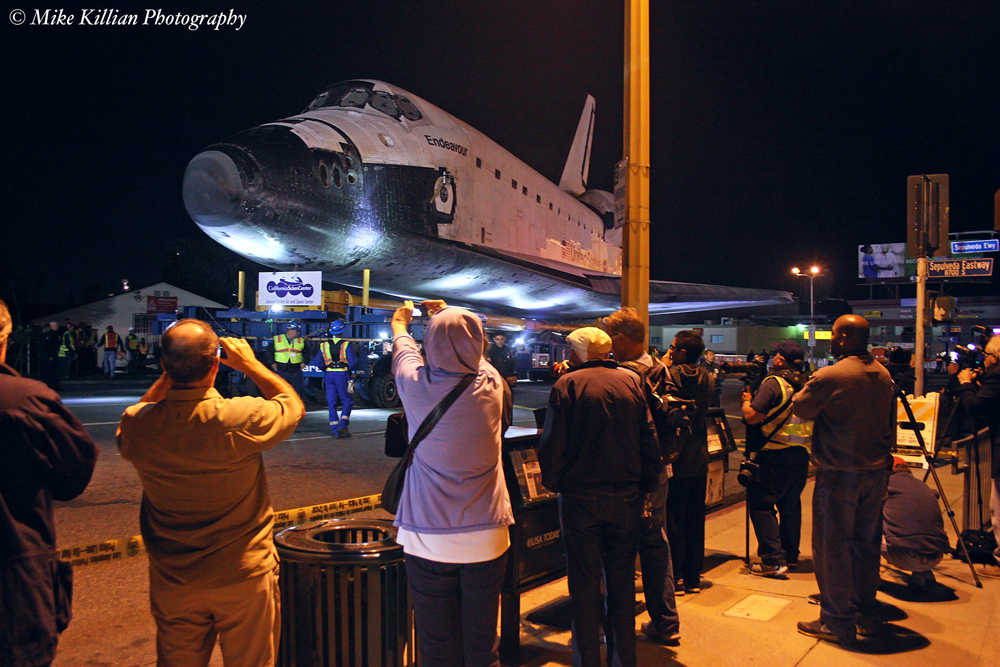
A historic move through LA
In the meantime, both the museum and city of LA, local authorities and DOT, were making preparation to move the huge shuttle across town.
The multi-day transport required removing power lines, cutting down or trimming trees, diverting traffic, and making sure the path was clear. Public safety was the top priority.
Museum Raises Endeavour for Display in Launch Position 79
Over 1 million spectators came out to watch the multi-day move, without a single police report filed related to the event.
In some instances, the 122-foot long shuttle had only inches to spare for its 78-foot wingspan, as it crawled across the city.
Museum Raises Endeavour for Display in Launch Position 80
The 178,000 pound Endeavour has been on display in a shed ever since, while the museum raised the funds to construct an entire new and permanent aerospace exhibit. Endeavour will be the center focus of the new Samuel Oschin Air and Space Center.
Raised and stacked for launch display
A team of experts with decades of experience working with NASA and the shuttle program helped lift and mate Endeavour to the stack. Some were even with NASA from the very first space shuttle launch in 1981.
photos: california science center
The new 200,000 sq ft Samuel Oschin Air and Space Center will be constructed around Endeavour. Therefore, the public won’t see the shuttle again for a few years, until the exhibit is complete.
In addition to Endeavour, the new expansion promises an impressive collection of 100 authentic artifacts integrated with 100 new hands-on exhibits.
Artist rendering of the space shuttle Endeavour inside the California Science Center’s Samuel Oschin Air and Space Center. (CSC)
“Guests of all ages will be encouraged to investigate scientific and engineering principles of atmospheric flight and the exploration of the universe in three major galleries. The Aviation Gallery, Shuttle Gallery, and Space Gallery,” says the CSC.
“The Samuel Oschin Air and Space Center will provide a one-of-a-kind educational opportunity for our Los Angeles community and guests from around the globe.”
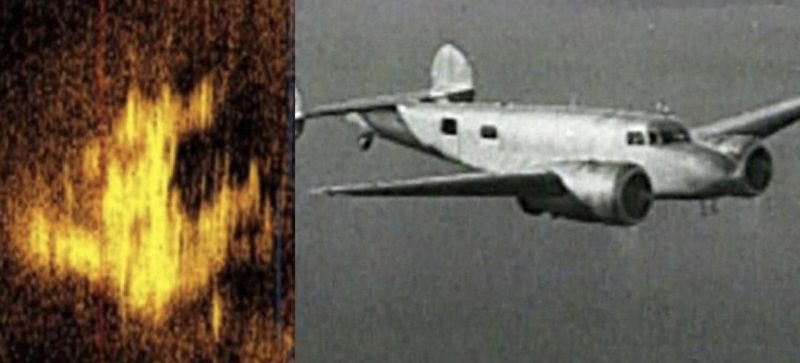
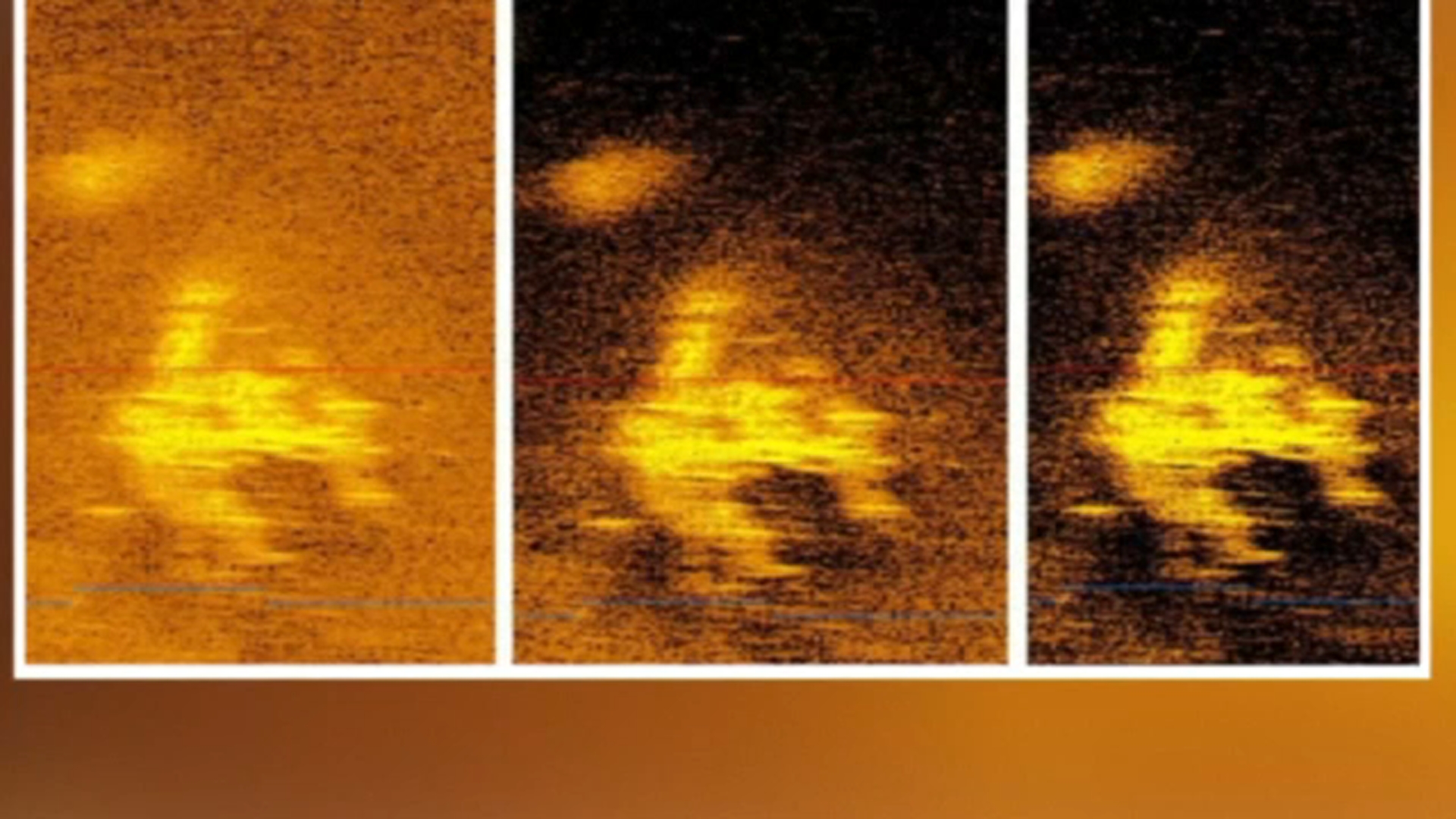
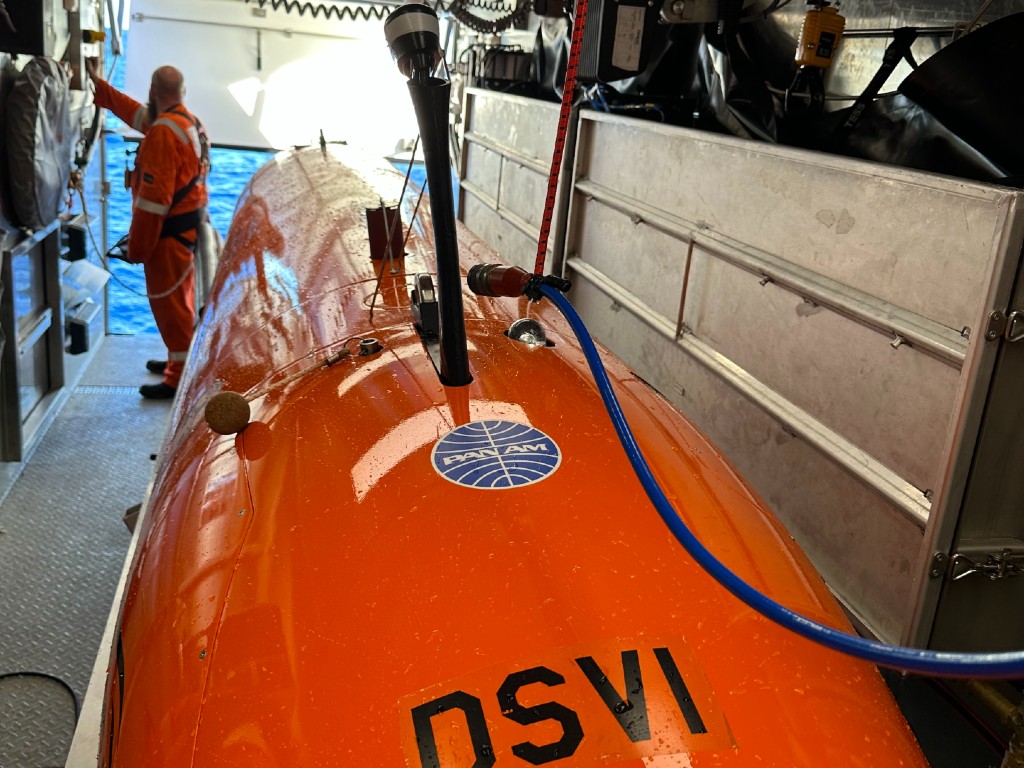
Deep sea surveyors think they found Amelia Earhart’s plane. Sonar images from their recent expedition show what appears to be an aircraft, resting 16,000 feet deep at the bottom of the Pacific.
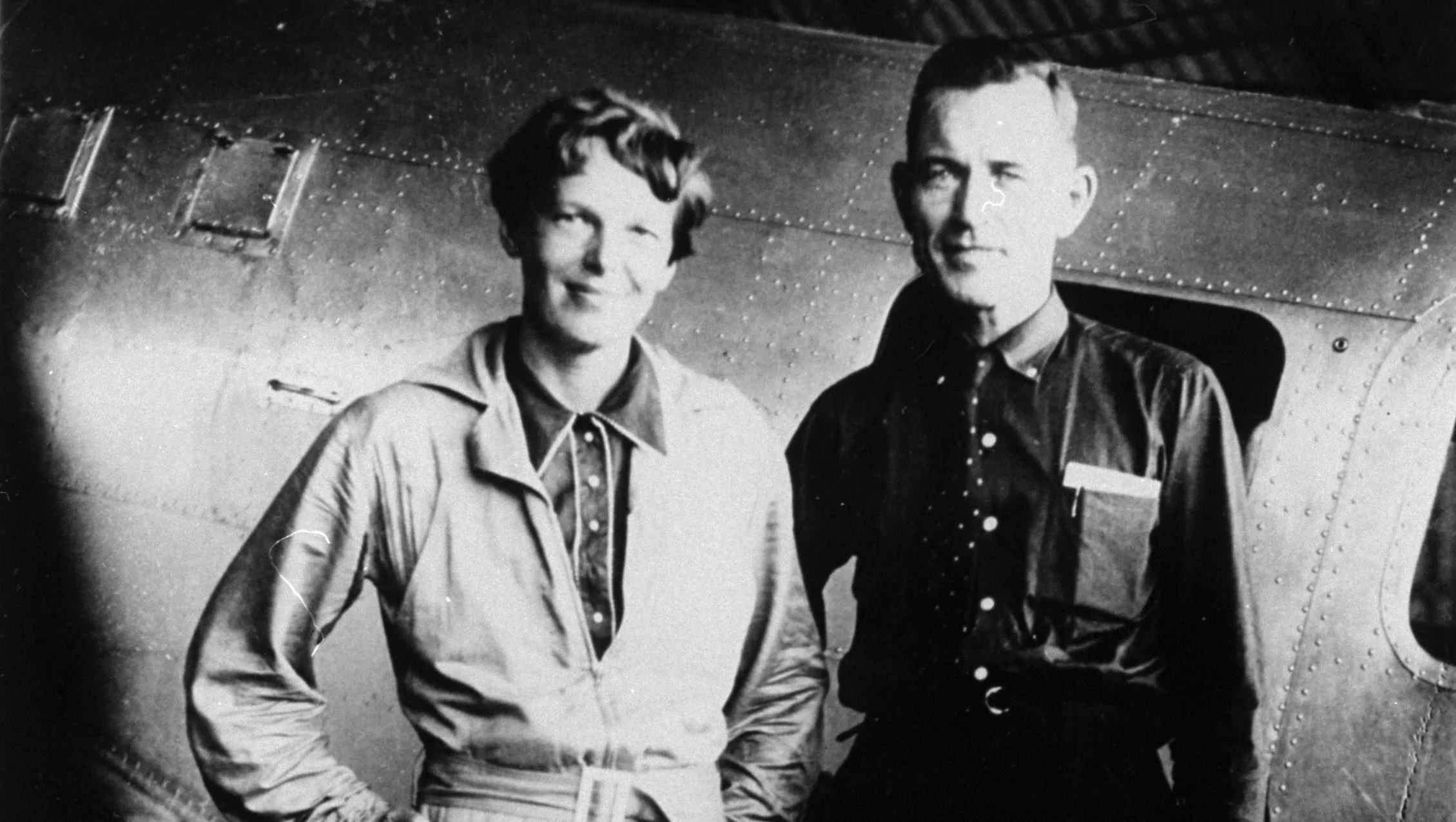
The pioneering aviator and her navigator, Fred Noonan, vanished 86 years ago. They were flying a Lockheed 10-E Electra, when they disappeared during an attempting to see Amelia become the first woman to fly around the world.
earhart and noonan
Many conspiracy theories have come and gone through the decades. Many researchers have also thought they found the plane before too. However, none of it has ever resulted in actually finding them or the plane.
Mystery solved?
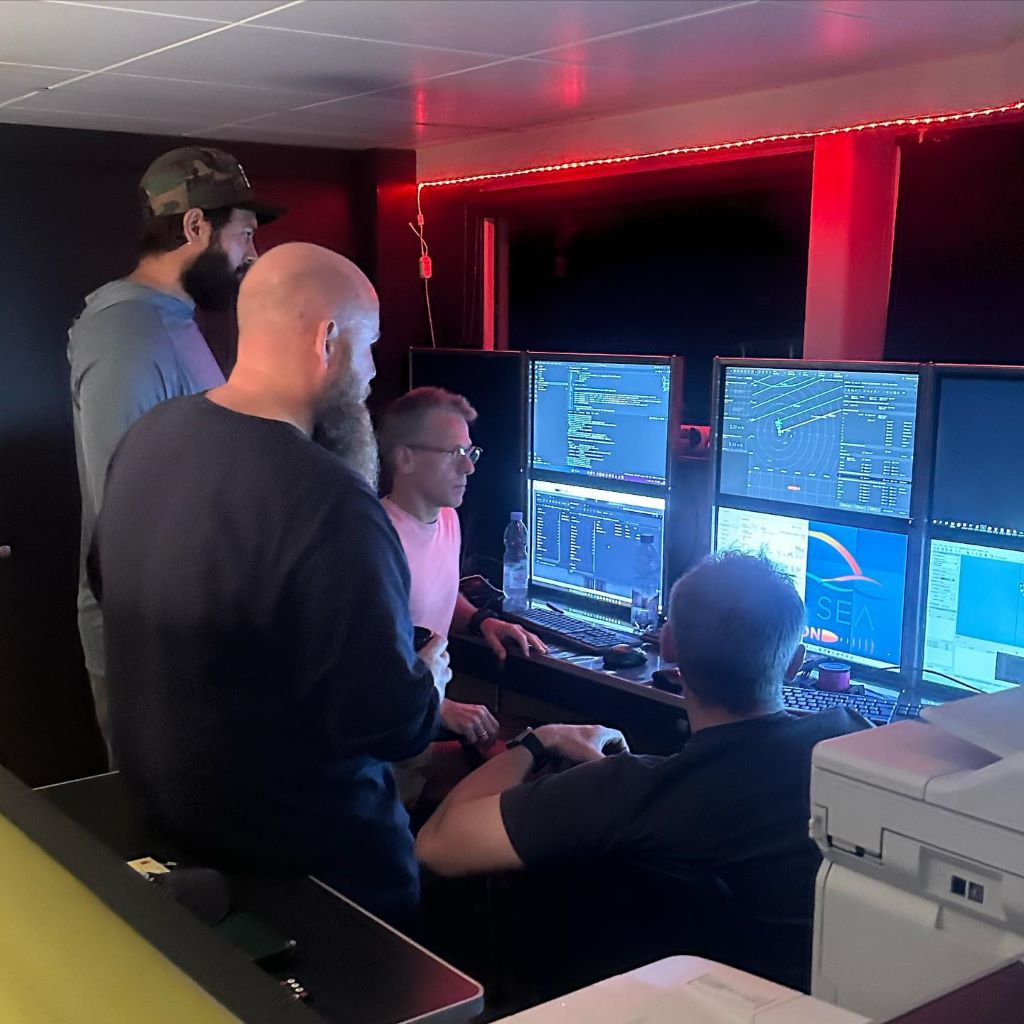
South Carolina based Deep Sea Visions now thinks they may have done it. The 90-day expedition was led by CEO Tony Romeo. He’s also a pilot and real estate investor.
The expedition followed a theory developed in 2010 by former NASA employee and pilot, Liz Smith. She called it the “Date Line Theory,” suggesting that Noonan was exhausted after 17 hours of flying, and simply forgot to turn back the date from July 3 to July 2 as they crossed the International Date Line. Such a mistake would have caused a 60-mile navigational error.
sonar image. Credit deep sea visions
Romeo and his 16-member crew focused their search near Howland Island, where Earhart and Noonan were headed to refuel when they disappeared. They searched more than 5,200 square miles, more than all previous searches combined.
”There’s no known other crashes in the area, and certainly not of that era or with that design of the plane’s tail that you see clearly in the image,” says Romeo.
credit deep sea visions
The team used multi-million dollar sonar technology to capture images of the ocean floor. If what they found is Earhart’s plane, then it is laying almost a mile deeper than the Titanic.
The images really are interesting, and eerily similar to the plane, taking into account crash damage and decay over almost a century. Not to mention half of it is likely buried in mud. Whether it is the plane or not, the images are good enough to warrant further investigation of the site.
Next expedition plans to visit the site
Analyzing data. Credit deep sea visions
Romeo and his team are already planning to do exactly that. Their next expedition will take a remotely operated submersible with cameras into the abyss, to get a closer look at what the sonar image really is, and confirm if it is in fact Earhart’s plane.
”Why can’t a group of unknowns like us go out and solve one of aviation’s greatest mysteries,” says Romeo. “If something inspires you, go do it.”
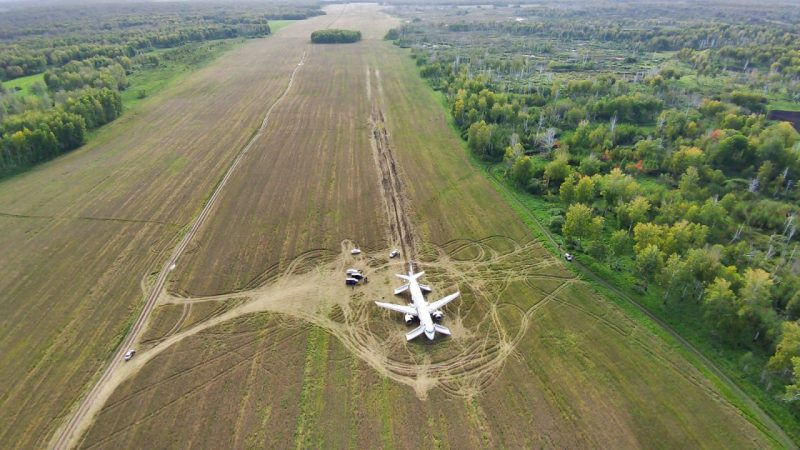
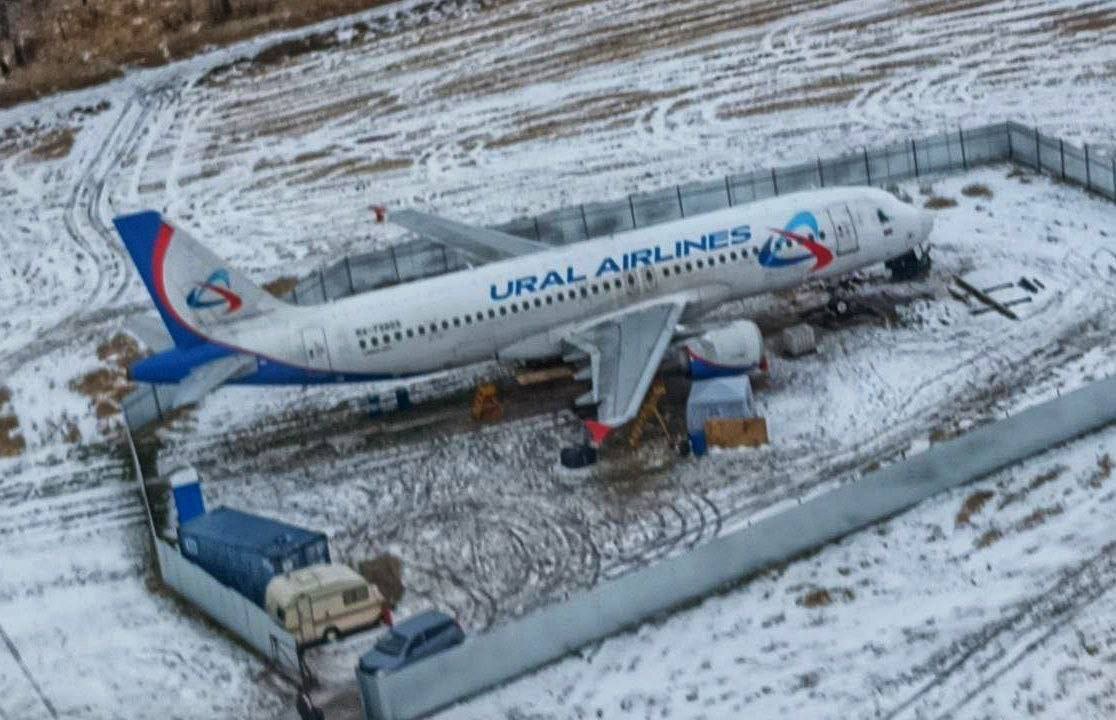
Russian media reports indicate that Ural Airlines has abandoned plans to fly the Airbus A320 that flew flight 1383 from a Siberian wheat field.
The crew of the ill-fated jetliner made an emergency landing in a field during a fuel emergency last September. Miraculously, none of the 159 passengers or six crew sustained injuries or fatalities in the accident.
How Flight 1383 Ended Up in a Wheat Field
Ural Airlines Abandons Plan to Fly Airbus A320 Out of Field 90
Ural Airlines Flight 1383 was operating a scheduled Russian domestic flight between Sochi International Airport (AER) and Omsk Central Airport (OMS) on 12 September 2023.
Nearing the end of an otherwise routine five-hour, 1,690-mile flight, the aircraft began experiencing problems during final approach into Omsk. At an altitude of 2,000 feet, the crew discovered a hydraulic failure in the brakes as they lowered the landing gear.
After initiating go-around procedures, the crew quickly made the decision to divert to Novosibirsk Tolmachevo Airport (OVB), which boasts significantly longer runways than Omsk (11,827 feet vs 8,200 feet).
— Evan Kirstel #B2B #TechFluencer (@EvanKirstel) August 15, 2019
Challenges During Diversion on Ural Airlines 1383
A Ural Airlines Airbus A320 sits in a Russian field after an emergency landing | IMAGE: @SLCScanner on X
Despite the relatively short distance (370 miles) to Novosibirsk, the aircraft encountered unexpected challenges. The hydraulic failure left the landing gear door stuck open, and strong headwinds significantly increased fuel consumption.
As fuel levels dwindled perilously low, the crew was forced to land the aircraft in an open field near the Siberian village of Kamenka, 110 miles from Novosibirsk.
The dramatic emergency landing resulted in minor damage to the aircraft, including issues with the landing gear and engines, which reportedly ingested a small amount of dirt. Ural Airlines officials, however, expressed confidence that the plane would be airworthy again after repairs.
A Ural Airlines Airbus A320 sits abandoned in a Russian field | IMAGE: @FL360aero on X
For months, the airline planned to fly the aircraft out of the field after the completion of on-site repairs. The plan included the construction of a temporary runway in the winter once the brutal Siberian cold sufficiently froze the ground.
However, in December 2023, Ural Airlines CEO Sergey Skuratov axed these plans, citing the economic impracticality of constructing a temporary runway in the field.
A backup plan was also in the works at the time. According to a report from the German news site Flug Revue, officials were also exploring options “regarding the feasibility of restoring the aircraft.”
This idea involved dismantling the aircraft in the field and transporting the parts to Novosibirsk for reassembly. However, this idea was ultimately dismissed as too expensive.
With any hopes of bringing the aircraft back to life rapidly diminishing, the question remained: what would be the fate of the stricken jet?
Decision to Scrap
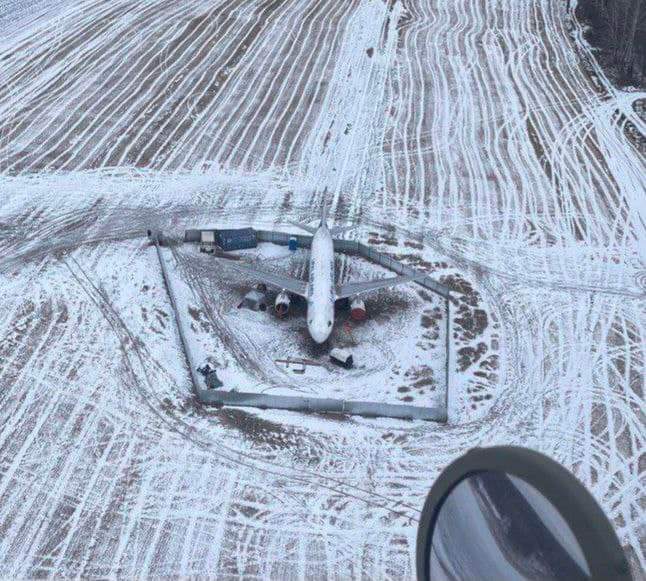
A security fence surrounds the Ural Airlines Airbus A320 | IMAGE: @FL360aero on X
Ultimately, the airline did give up hope of the Airbus ever becoming airworthy again. On 12 January 2024, Ural Airlines officials officially announced that the aircraft would be scrapped and sold for parts.
As the Airbus A320 awaits her inevitable death, a security fence and 24-hour guards protect her from any mischief. Additionally, Russian media reports that Ural Airlines has paid over one million rubles (11,000 USD) to the farmer who owns the field for the use of the site through at least September 2024.
This Wasn’t Ural Airlines’ First Field Landing
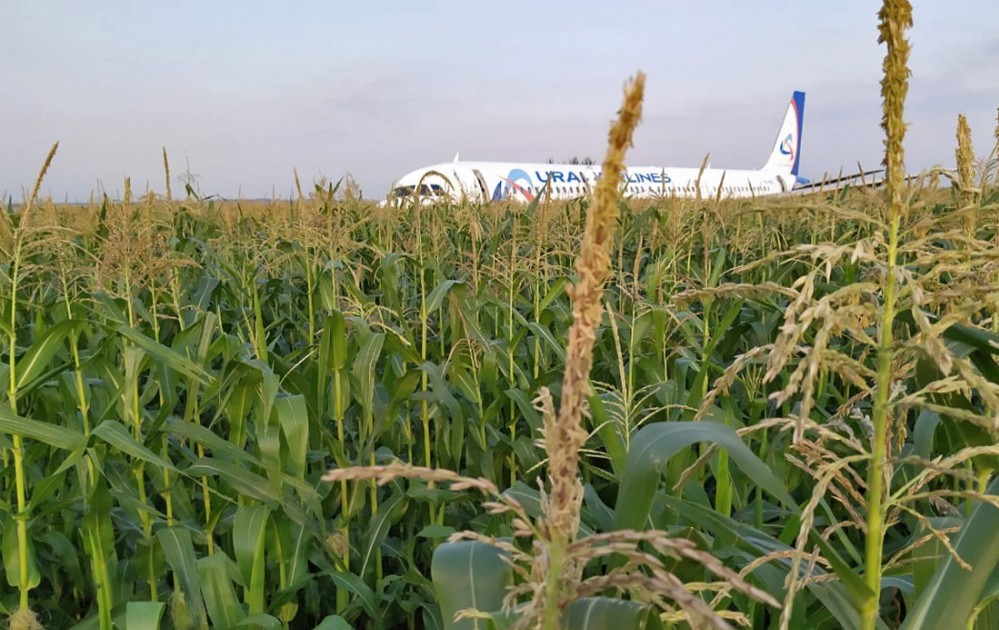
The hull of a Ural Airlines Airbus A321 following the crash landing of Flight 178 in 2019 | IMAGE: By Mchs.gov.ru, CC BY 4.0, https://commons.wikimedia.org/w/index.php?curid=107976234
Interestingly, this incident bears a striking resemblance to a previous emergency landing by Ural Airlines. On 15 August 2019, Flight 178 — an Airbus A321 — crash landed in a cornfield near Moscow shortly after takeoff due to a bird strike. The aircraft was scrapped on-site and sold for parts.
Like Flight 1383, no injuries or deaths occurred due to the emergency landing of Flight 178.
The Airbus A320-214 (registration RA-73805 / MSN 2166) that operated Flight 1383 first flew on 2 February 2004. Air Arabia took delivery of the aircraft on 23 March 2004. Subsequent ownership transitions led it to Air Arabia Maroc in 2011 and eventually to Ural Airlines in 2013.
Throughout aviation history, two primary purposes are well established: travel and warfighting. At times, there has been a significant overlap between the two. In the case of air travel, dozens and dozens of air carriers have come and gone, start-ups absorbed or dissolved, and sometimes major legacy air carriers (TWA is not the least of these) went the way of the buffalo. Today, we’ll take a look at Hughes Airwest, a long-defunct regional airline owned and operated by the iconoclast Howard Hughes.
The Early Years
Before becoming Hughes Airwest, Air West was a conglomerate that was formed in April 1968. It was made up of three regional airlines, which all served a rapidly growing market along the West Coast. These were Pacific Air Lines, Bonanza Air Lines, and West Coast Airlines. Rather than compete over limited routes along the California, Oregon, and Washington coasts, the three airlines form Airwest and operate a mixed fleet of Boeing 727s, Douglas DC-9s, Fairchild F-27s, and, at the smaller end, Piper Navajos.
Enter the Titan
Right after the merger and formation of Airwest, the former TWA owner and legendary Howard Hughes was sniffing around for another business venture, as so many serial entrepreneurs want to do. Hughes bought Air West in 1968 and finalized the purchase in 1970.
The Biggest Banana
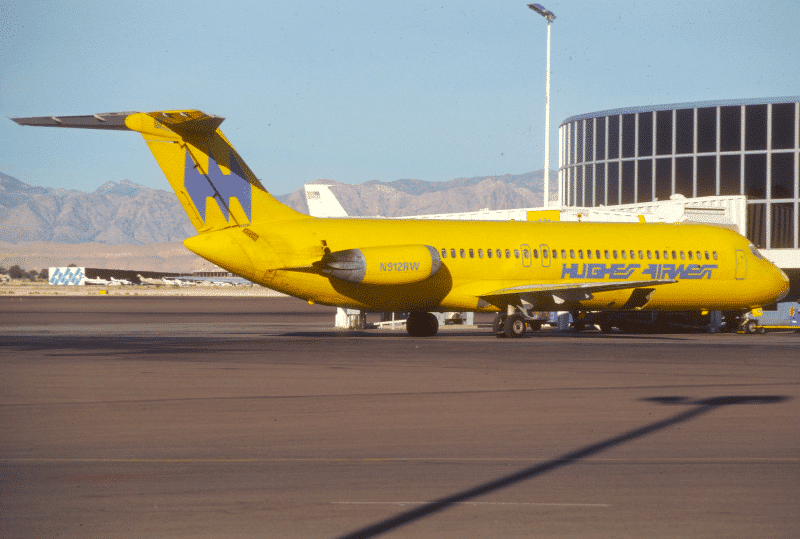
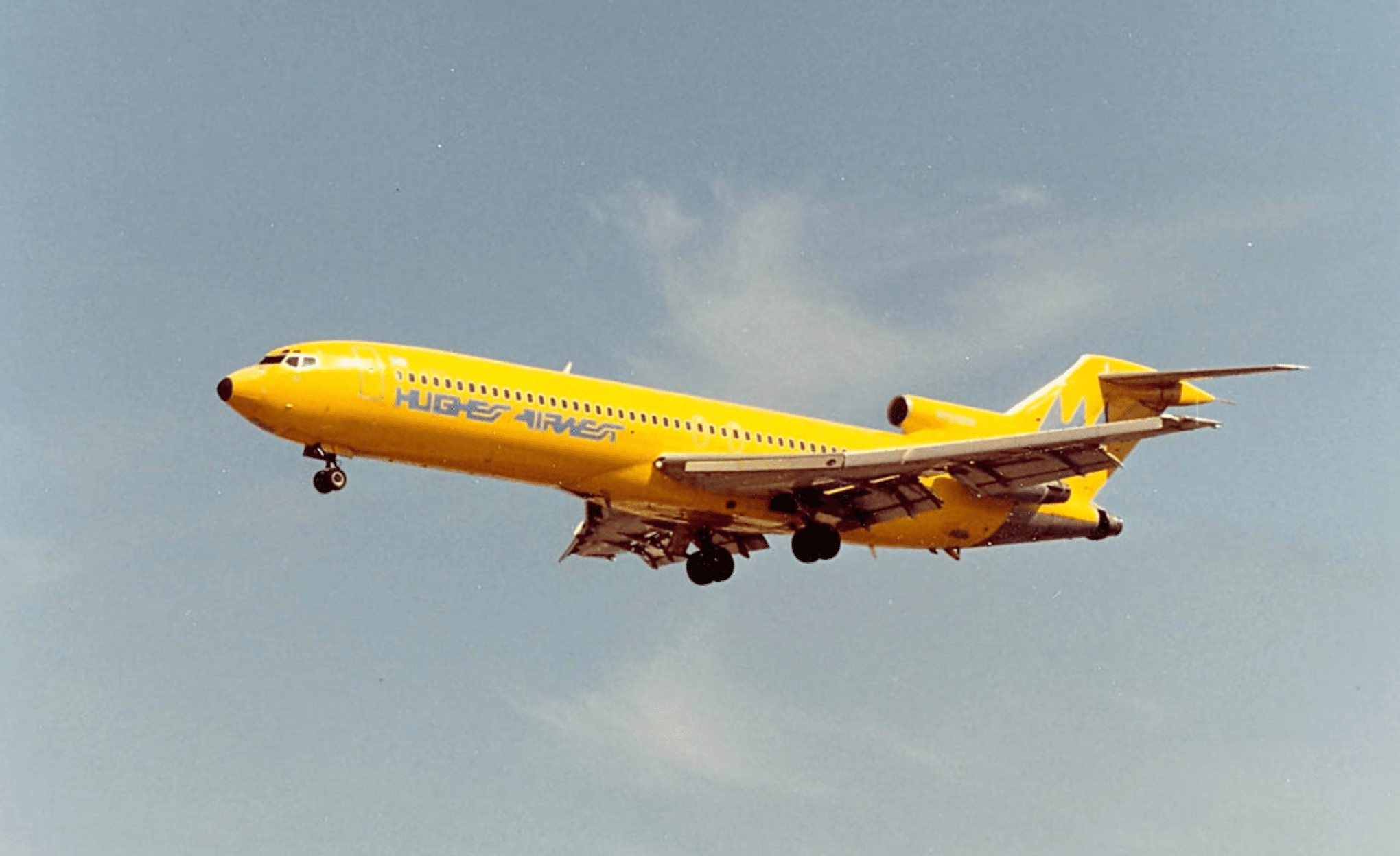
So why the banana reference? Just a nod to the warm, tropical climate that Airwest serviced? Not even close, partner. No, it was just a reference to the obvious. Hughes Airwest airplanes resembled gigantic bananas, and there was no way of getting around it. The Boeing 727 was the biggest banana of the bunch.
A Profitable Venture and Famous Incidents
Hughes Airwest and its fleet of banana-esque DC-9s et al. was a reasonably short-lived endeavor.
During their era, they operated a mixed fleet of 48 bananas out of their central hub in San Francisco. They had eight secondary hubs in the Pacific region, spanning from California to Idaho, Nevada to Washington.
Ultimately, Hughes Airwest flew into an equally yellow sunset in 1980, when it was purchased by Republic Airlines, and its infamous livery was stripped. By the time their services merged with Republic, Hughes Airwest had become a successful regional airline. Their services included international travel to Mexico and routes reaching all across the western states, as well as to Iowa.
Hughes Airwest enjoyed a good safety track record but did have noteworthy incidents.
Unable to see Hughes Airwest DC-9
Early in the tenure of Hughes Airwest, a DC-9-31, N9345, was involved in a midair collision with an F-4B Phantom from the USMC, MCAS El Toro, just outside of LA. Due to the inability to see and avoid and a faulty radar system on the Phantom, the Phantom struck N9345 over Duarte, California.
There were several contributing factors, and this accident ultimately led to legislative reform and review.
In 1972, a banana was targeted for hijacking in a copycat incident of the famous (and successful) hijacking and robbery by D.B. Cooper. Flight 800 was in the process of departing McCarran Airport in Vegas when a young former Army private and paratrooper, Richard LaPoint, claimed to have a bomb and demanded cash, parachutes, and a helmet. Once his demands were met, the jet took off and was trailed by a pair of F-111s.
LaPoint didn’t do much homework because the chutes were hi-viz and had ELTs built in. He decided to punch out over the highly inhospitable plains of eastern Colorado (did I mention it was in January?), without a coat and wearing unlined cowboy boots. He was promptly picked up and likely was thankful that eastern Colorado’s plains are unpleasant enough in the winter with appropriate clothing.
Remembering the Great Hughes Airwest
Landing at San Jose in 1980. Photo by Bill Larkins (Flickr/CC 2.0)
Hughes Airwest, aka the top bananas in the west, had a pretty good run. It was an exciting storyline, if nothing else, from a marketing perspective, branding themselves as the best banana.
They enjoyed a healthy reputation over their time as a regional air carrier. A modest fleet serviced the entire western half of the states and Mexico. We can look back in a historical perspective to a better time and enjoy their bright livery and 70’s branding.
The B-52 low-level missions were exhilarating, requiring intense concentration from all six crewmembers for almost an hour and a half. Each of the three bombing runs started by arriving at the Initial Point (IP) on time. The IP was the last navigation point before we reached the target and the beginning of the bombing run.
From there, the radar navigator provided steering data to the pilot’s display upstairs. As long as the pilot kept the two lines centered and flew the speeds we requested, the bomber arrived at the release point on time. The pre-release checklist was succinctly choreographed, with each step called out by me, the navigator, and replied to over interphone by the appropriate crewmember.
Where Were You When the Space Shuttle Challenger Exploded? 95
Although the B-52 (with a 185-foot wingspan) flew low to evade simulated enemy radar, the bomb release altitude was a bit higher. Seconds before the release the pilots began a short, abrupt climb. This allowed the bombs to be pitched or lobbed toward the target. Finally, the radar nav would announce, “Bombs away,” indicating the weapon had been released.
Practice Makes Perfect
During training missions, the only thing released was an electronic signal for scoring. On a real-world combat mission, a drag chute deployed on the bombs, and they would drift slowly down to the ground as the bomber escaped.
The pilots quickly changed course to the next target and pitched down to 400 feet again, creating negative Gs, and a floating sensation in the cockpit. Any unsecured objects (ink pens or my sharp pointed dividers) floated around the cockpit if we weren’t careful. It was quite a roller coaster ride! About twenty minutes later the sequence repeated itself until the final simulated bomb release.
After the last “Bombs away!” call-out, instead of pitching over, the pilots continued climbing the eight-engine bomber out of the low-level route and back up to high altitude for the flight back to our base. During this climb, I would drop my mask, lean back from my tabletop, and take a long swig of water from a nearby bottle. I could finally relax a bit for the flight home.
Where Were You When the Space Shuttle Challenger Exploded? 96
You Had To Be At Your Best Before A Checkride
B-52 missions required detailed planning from all six crewmembers because the training route covered so much territory as the mission progressed from air refueling to high altitude bomb and missile releases to low level routes and then back to base. Planning a mission took an entire day before the actual flight.
My Heart Sank After Hearing About The Challenger Accident
My final B-52 checkride from Castle AFB was scheduled for January 29, 1986. Mission-planning day was January 28, and as we all huddled around the charts that morning, a major walked in at around 8:45 a.m. telling us the Space Shuttle Challenger had just exploded. It was a somber moment as we let the news sink in.
Where Were You When the Space Shuttle Challenger Exploded? 97
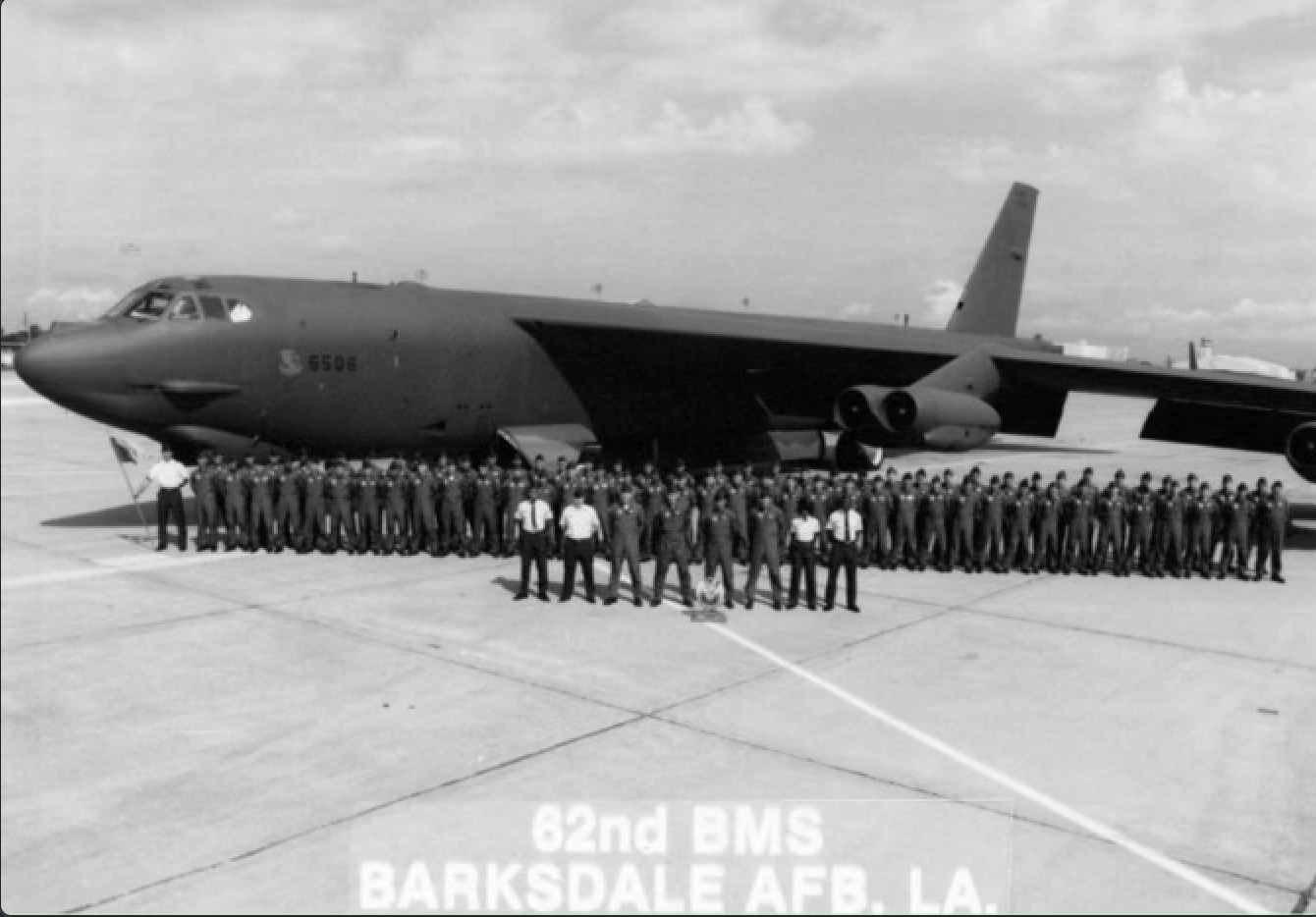
We were told that if we did not feel up to taking our checkride the next day it would be understandable. Although it was a terrible tragedy, we completed the planning, then headed home to watch the news updates about the shuttle explosion and the repeated scenes of the horrific mishap. Our crew knew we were well-prepared for our final evaluation, and all showed up early the next morning to fly our seven-hour checkride. By the end of January, I was a qualified BUFF Nav and my wife, Karin, and I packed up our Monte Carlo SS for the move to Barksdale AFB, near Shreveport, Louisiana.
The Super Bowl match up is set. The Kansas City Chiefs will play the San Francisco 49ers at Allegiant Stadium in Las Vegas on Sunday, February 11th at 3:30pm PT. Over 65,000 people are expected to attend the game itself with many more attending various Super Bowl 58 events in and around the gambling hotspot. Airlines typically add additional flight segments to the Super Bowl city.
This year is no different. American, Delta, Southwest, and United will all be adding additional flights between the team’s hometowns and the Super Bowl host city. What makes this year unique is the flight numbers for some of these added segments.
American Flights Reference NFL’s Romance Story of the Year
Taylor Swift
American Airlines added three unique non-stop flights from Kansas City, MO to Las Vegas on February 10th and returning on the 12th. Of those flights, one flight is clearly in homage to superstar Taylor Swift and Chief’s receiver Travis Kelce. Flight 1989 ireferences Taylor Swift multi-platinum album. The flight departs Kansas City at 12:30pm CT and arrives at Las Vegas at 1:35pm PT. The return flight is Flight 87, a nod to Chiefs receiver Travis Kelce. That flight departs Vegas just after midnight on Monday, February 12th. Flight 87 will either be a flight of celebration or as somber as funeral depending on the outcome of the game.
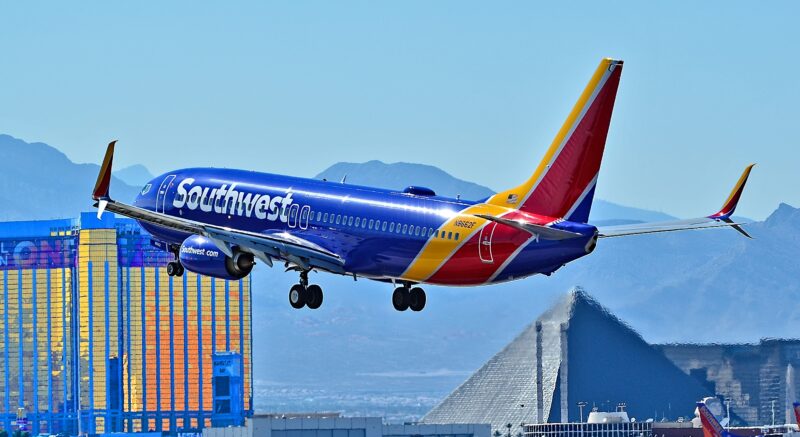
Southwest Adds Flights To Existing Service
Image by Tomás Del Coro via Wikipedia
Southwest Airlines already has extensive service between the team’s cities and Las Vegas. The airline is adding additional segments into Vegas for the game. The flights will be split with 3 additional flights between Kansas City on the Friday before and one on Saturday to Vegas. They are also adding 8 additional flights split between Oakland, San Francisco, and San Jose before the game. Return flights after the game will ensure that fans can get home after spending at least $9,800 a ticket.
Other Airlines Get In On The Action
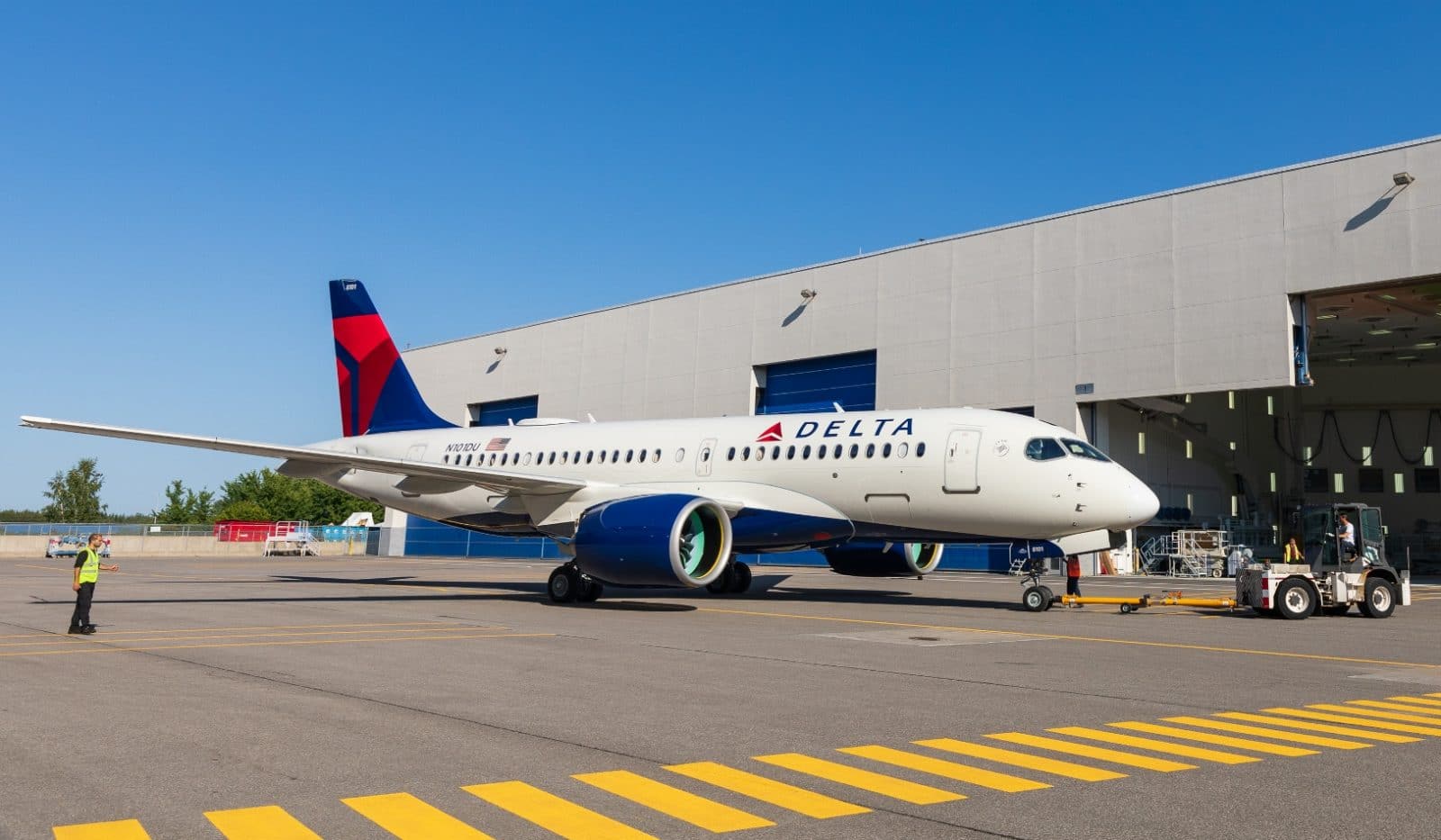
N101DU wears Delta colors. Image via Delta
Delta is adding three non-stop flights from Kansas City to Las Vegas for the Super Bowl and a total of 16 flights to Vegas from across the United States. United is also adding three non-stop flights from Kansas City to Las Vegas before the game with three additional flight options for the return home. They are also getting in on the action with unique flight numbers that they posted today on Instagram.
Super Bowl: Added Flights To Vegas, Some With Taylor Swift Flight Numbers 102
Other prominent options to the game from both Kansas City and the Bay Area include Spirit Airlines and Allegiant.
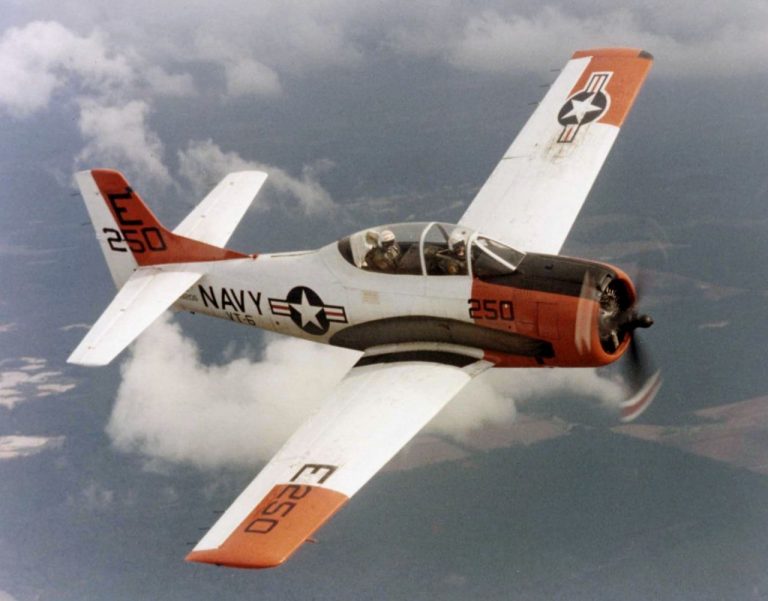
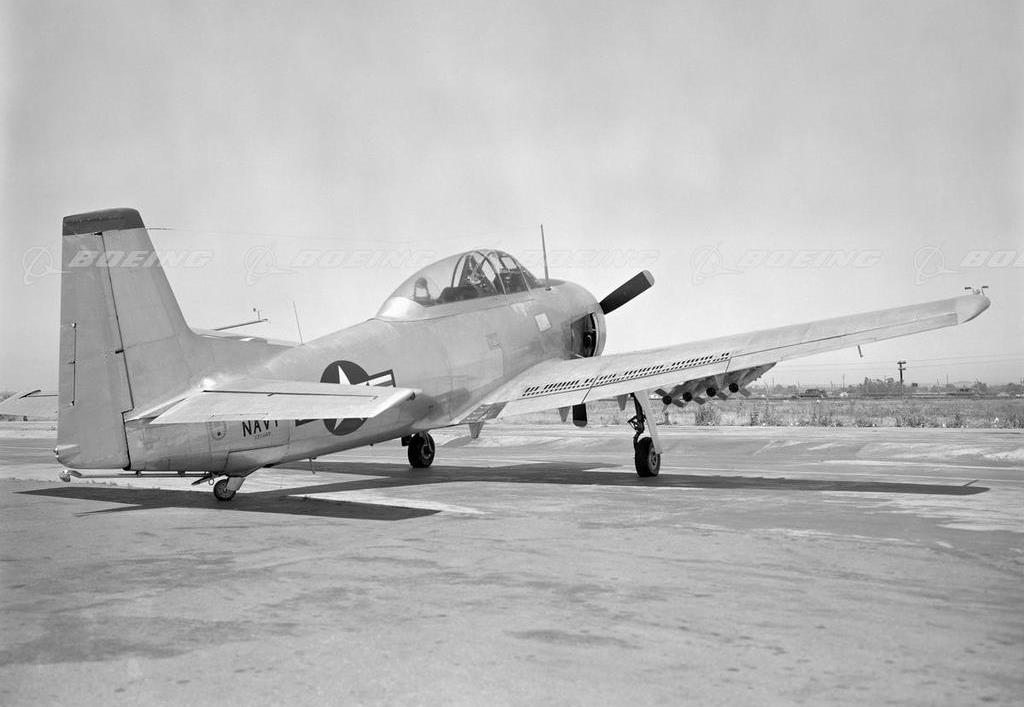
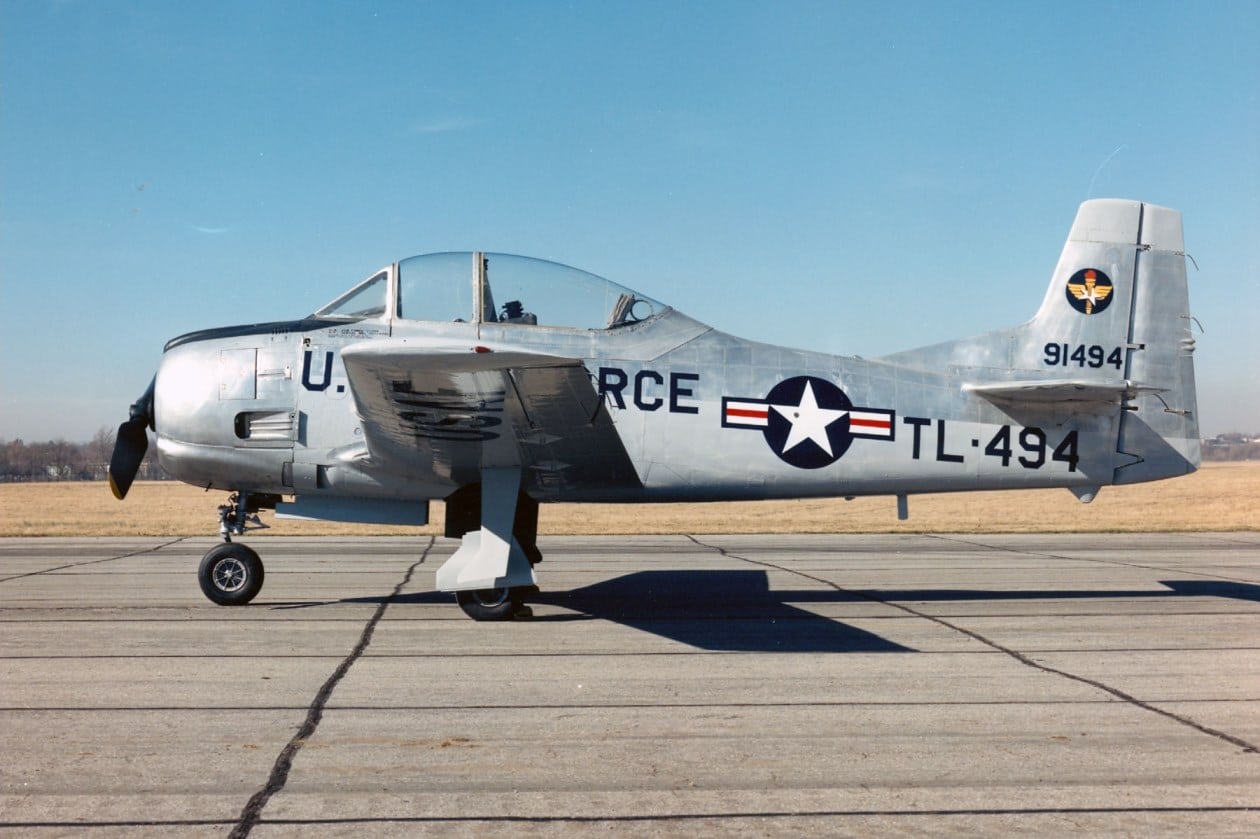
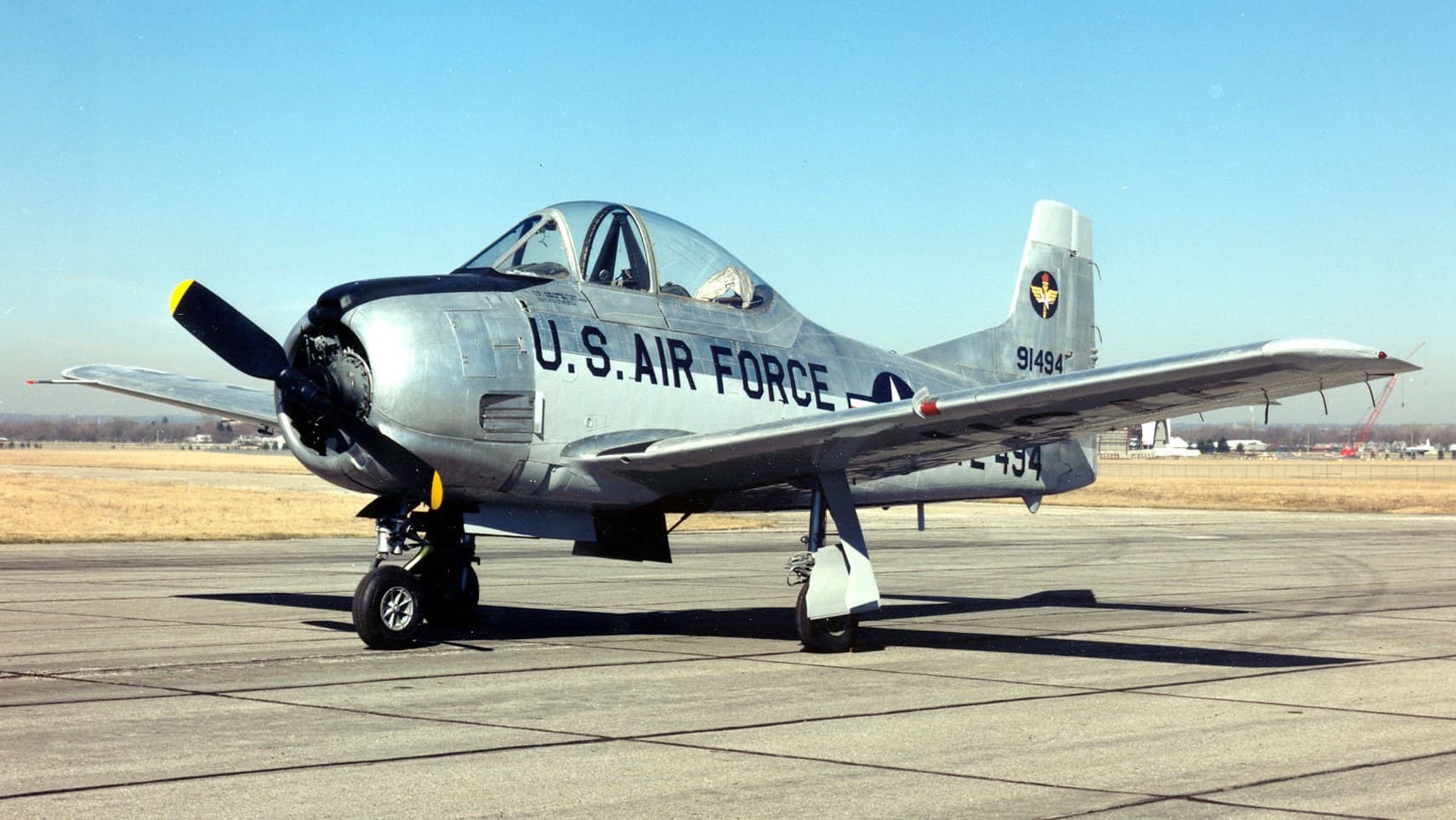
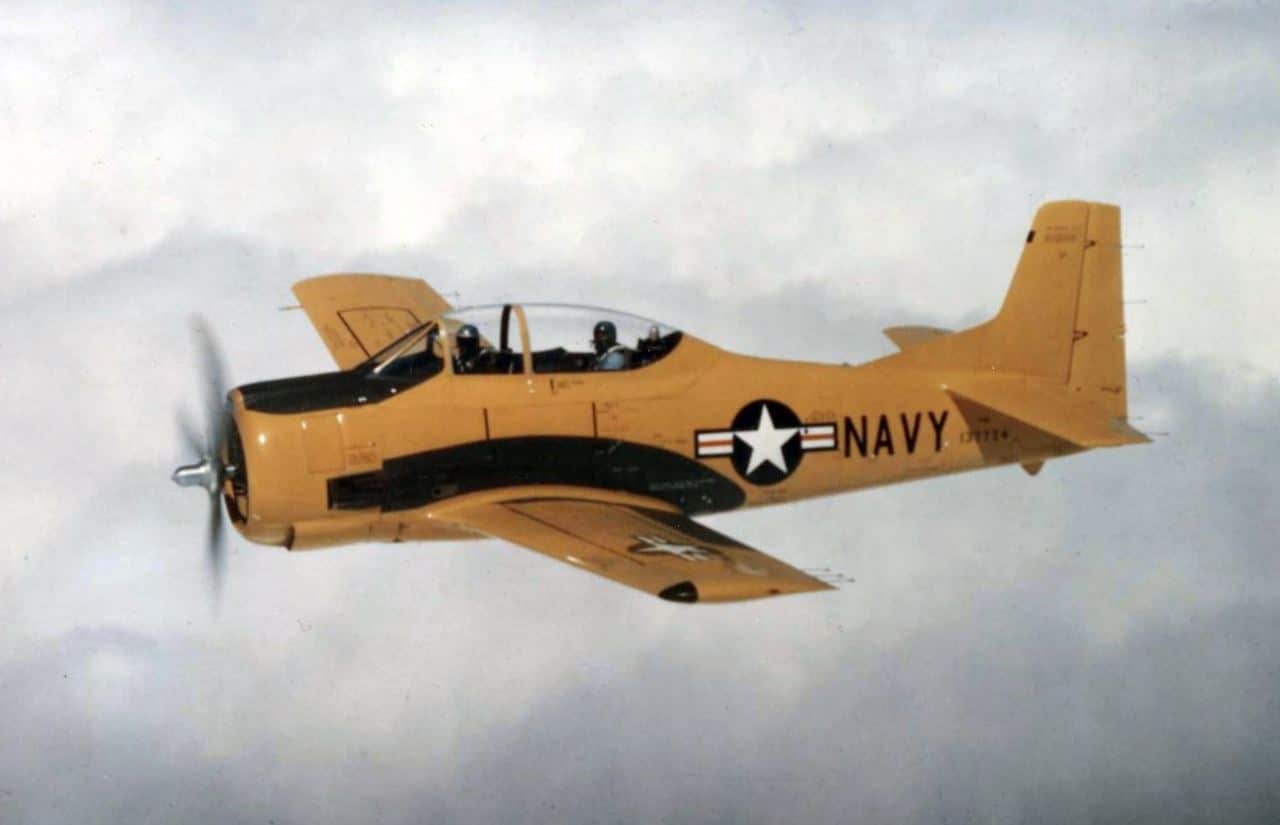
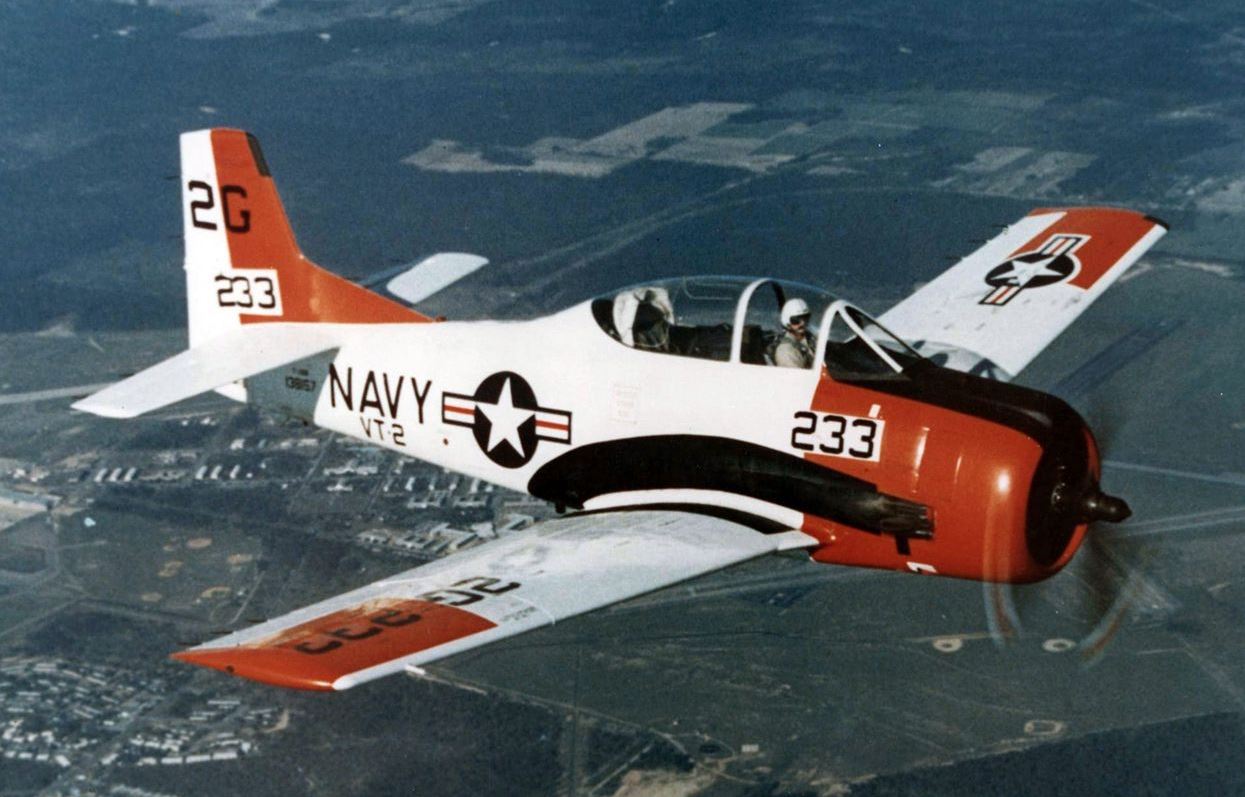
Entire Generations of Aviators Learned to Fly in This Classic Radial Engine Giant– The Mighty T-28 Trojan
When North American Aviation (NAA) began developing what would eventually become the T-28 Trojan trainer in late 1947, they could not have known that their next trainer design would serve in multiple roles for more than 30 years with nearly 30 countries around the world. The Trojan would replace NAA’s previous trainer design, the hugely successful T-6/SNJ Texan, in both United States Air Force (USAF) and US Navy/Marine Corps service.
Image courtesy Boeing
A Taildragger Trojan?
The first T-28 prototype was actually designated XSN2J-1- later changed to XT-28. This development of the T-6 was configured as a taildragger, like the T-6, but all subsequent prototype and production T-28s were equipped with tricycle landing gear. The XT-28 first flew on 24 September 1949. Subsequent USAF suitability testing, performed at Eglin Air Force Base (AFB) by the 3200th Fighter Test Squadron during mid-1950, resulted in contracts being issued for the first of what would become a total of 1,948 T-28 airframes (all models) built between 1950 and 1957.
Official US Air Force photograph
T-28 Trojan for the Air Force
Jet-powered aircraft were in service, and the T-28 Trojan was the first trainer designed to train pilots to fly those early jets. The initial version of the Trojan, the T-28A, was powered by an air-cooled 900-horsepower Wright R-1300-1 Cyclone radial seven-piston engine turning an Aeroproducts two-bladed propeller. The four-stack exhaust configuration of the T-28A resulted in the A model never sounding like it was running smoothly, but that didn’t stop the USAF from taking delivery of some 1,194 T-28As between 1950 and 1953.
Official US Air Force photograph
A Relatively Short Career with ATC
In USAF Air Training Command (ATC) service, the T-28A was reportedly somewhat sluggish in flight but honest, predictable, and generally easy to fly and maintain. During the mid-1950s, with the USAF transitioning to jets, the Air National Guard (ANG) began flying T-28As while runways were being built to accommodate the new jets. Replaced in the USAF pilot training role by the combination of the piston-engine Beech T-34 Mentor and the jet-powered Cessna T-37 Tweet, Air Force T-28As were all but retired by the end of the 1950s, with many stored in the desert outside Tucson in Arizona.
Official US Navy photograph
Powering Up the Navy Trojan
Meanwhile, the Navy was looking at the T-28, but with significant changes to the power plant. Navy T-28B and T-28C variants would be powered by the beefier air-cooled 1,425-horsepower Wright R-1820-86A or -9HD Cyclone radial nine-piston engine turning a three-bladed Hamilton Standard propeller. The T-28B flew for the first time on 6 April 1953. Weighing in at a little more than 8,000 pounds, the Bravo was capable of 300 knots (346 miles per hour) and a service ceiling of 37,000 feet.
Grateful for the many mentors in aviation that launched my flying career.
“Would you like to see our jet?” I asked.
“I suppose so,” Mr. Lovell answered quietly with a smile, and we walked slowly out to the beautiful blue and white Gulfstream G-V with United States of America painted above the line of six oval windows.
We climbed the short fold-out staircase and turned left so he could see the modern glass cockpit of six screens in front of the pilot seats and the panels overhead consisting of only black push-button squares. It was a very smooth, clean cockpit.
I then guided Mr. and Mrs. Lovell down the blue carpeted, cramped hallway and into the VIP cabin adorned with mahogany wood and 12 blue leather First Class-sized chairs, each with its own spacious window. The Lovells each took a seat and looked around the cabin.
“What do you think?” I asked my old mentor.
Mr. Lovell sat with his cane between his legs and replied, “Well, they all fly the same. Keep the shiny side up and wheels on the bottom.” He was trying not to sound impressed.
Reaching out to an old mentor
One of the final trips of my 20-year career was to take Air Force General Ed Eberhart, commander of Northern Command (NORTHCOM) on visits to the Air National Guard and Air Force Reserve bases in the southeast and south-central United States. Our planned final stop would be Ellington Field, just south of my hometown of Houston, Texas. As we flew toward New Orleans, I told the other pilot, my good friend Major “Ice” Icenhour, that I learned to fly at LaPorte Municipal Airport, not far from Ellington. He said, “That’s cool! You should call up your old flight instructor!”
I told him my instructor, Richard Lovell, was a Korean War Navy veteran, and I wasn’t sure if he was even still alive. I had last seen Richard and Sylvia in 1990, when we took our baby boy, Daniel, to visit them in Pasadena, Texas. Ice told me I had to call him and tell him we’d be at Ellington tomorrow.
I really dreaded making that phone call, fearing Sylvia might answer and sadly tell me that Mr. Lovell had passed away. With Ice’s continued prompting, I got up my courage and dialed his number. On the second ring Mr. Lovell answered the phone. What a relief!
Air Force C-37, Image: SSgt Kenny Holston
I told Mr. Lovell we would be flying a new Gulfstream V (Air Force C-37A) into Ellington the next day with a four-star general onboard. Without me prompting, Mr. Lovell asked, “Can we get together for dinner?”
I smiled and told him, “That would be great! And I’d like to show you the aircraft after we land.”
Ellington Field is an joint civilian and military air base open to the public, allowing visitors to park near Base Operations. We taxied our G-V up to the painted cement “red carpet”, where an entourage of colonels waited to greet their visiting four-star general.
The group whisked General Eberhart away to visit the F-16 squadron that had escorted President Bush’s Air Force One 747 on 9/11.
The man that launched my flying career
Once the passengers left, I walked along the red carpet to find Mr. and Mrs. Lovell sitting on an outdoor wooden bench, looking like Ma and Pa Kettle. Mr. Lovell’s once curly hair was now thin and he leaned forward on the bench, supported by his wooden cane.
I owe my flying career to Mr. Lovell. I never called him or knew him as Richard, only Mr. Lovell. He was the owner of a beautiful 1973 Piper 180 horsepower Challenger, a white four-seater with a black and gray stripe down the side. Mr. Lovell was in the Navy during the Korean War, but not as a pilot, and he didn’t deploy overseas.
He laughed about earning the National Defense Service Medal for never going anywhere. He was a short, tough old man; a Navy boxing champ with a permanently crooked nose to prove it. Day in and day out, he dipped Copenhagen … and swallowed it.
During flying lessons over the Texas Gulf Coast as he gave me instructions, he’d suddenly let out a burp, filling the cockpit with the smell of Copenhagen. To this day my Pavlovian response is to equate the smell of dipping tobacco with a Piper four-seater.
A demanding mentor that made me a better pilot
Mr. Lovell was demanding, telling me to “fight for centerline” when landing in a crosswind, and commenting if my landings were a foot or two off centerline. As tough as he was, though, he was also very kind. Mr. Lovell donated his instructor time for free, as a way of giving back to the Aviation Explorers Scouting program.
My flight lessons from 1978 to 1980 started at $22 an hour and eventually rose to $25 an hour. This, at a time of high inflation, when CDs earned 13% and I was making around $3 an hour at the restaurant.
It had been 26 years since he took over as the leader of our Aviation Explorer Post in south Houston. Twenty-four years had passed since I last flew with the 5’ 6” former Navy boxing champion with a permanently crooked nose.
The tough old cuss no longer dipped and swallowed Copenhagen chewing tobacco, but he sucked on the inside of his lower lip out of habit.
As was the case with a lot of young pilots, my training stagnated before I earned my license. Sometimes it was due to family vacations and other times it was because I had to put my restaurant paycheck into car repairs instead of flying lessons.
The result of my poor consistency led to retaking lessons to regain flying proficiency, a common occurrence in private flying.
Appreciating The Man That Launched My Flying Career 110
The FAA requires students to have 20 hours of flight instruction and 20 hours of solo time, including cross-countries, to take their Private License checkride. By the summer of 1980, after my high school graduation, I was approaching 60 hours of flying time and would be leaving for college by mid-August.
He was tough on me, but rightly so
Mr. Lovell was the one who kicked me in the pants to complete the rating, telling me, “If you don’t finish it before starting college then you’ll never finish it!”
He was right. I would have regretted for the rest of my life if I hadn’t finished what I started. I am a pilot today because of that caring, tough old man.
After a quick tour of our jet, I changed clothes and the three of us went out for seafood along the Kemah Boardwalk, between Houston and Galveston. We spent the evening catching up over a fish dinner.
I told them all about my family and my international flying since September 11th. I gladly treated the Lovells to dinner that night as a very small repayment for his patience and graciousness during my teenage years.
Full circle moment: The man who launched my flying career saw me flying a jet
After dinner, Mr. Lovell brought their large four-door Ford sedan up near the restaurant door as I waited with Sylvia. I held the passenger door open for Sylvia and as she started to climb in, she squeezed my elbow, leaned in close to me, and whispered, “You’ll never know how much this means to him.”
My flying career had come full circle. As I prepared to retire from the Air Force and join the ranks of airline pilots, I happily thanked the gruff old guy who taught me to fly.