A surprise Sunday announcement shook up the aviation world today as Allegiant and Sun Country Airlines announced a definitive agreement to merge, creating one of the largest leisure-focused airlines in the United States.
Under the terms of the agreement, Allegiant will acquire Sun Country in a cash and stock transaction that values Sun Country at approximately $1.5 billion, including about $400 million in net debt. The transaction has been unanimously approved by both boards and is expected to close in the second half of 2026, subject to regulatory and shareholder approvals.
Today, we are thrilled to announce that Allegiant and Sun Country are combining to create a leading, more competitive leisure-focused U.S. airline!
Together, we’ll expand service to more popular vacation destinations across the United States, as well as international… pic.twitter.com/ofVkXMVg7d
The future of low-fare travel just took an exciting step forward: we’re combining with @Allegiant to create a leading, more competitive, leisure-focused U.S. airline.
Together, we will provide our combined 22 million annual passengers with expanded service to more popular… pic.twitter.com/ti9mSzOuMX
A Bigger Leisure Airline With Complementary Strengths
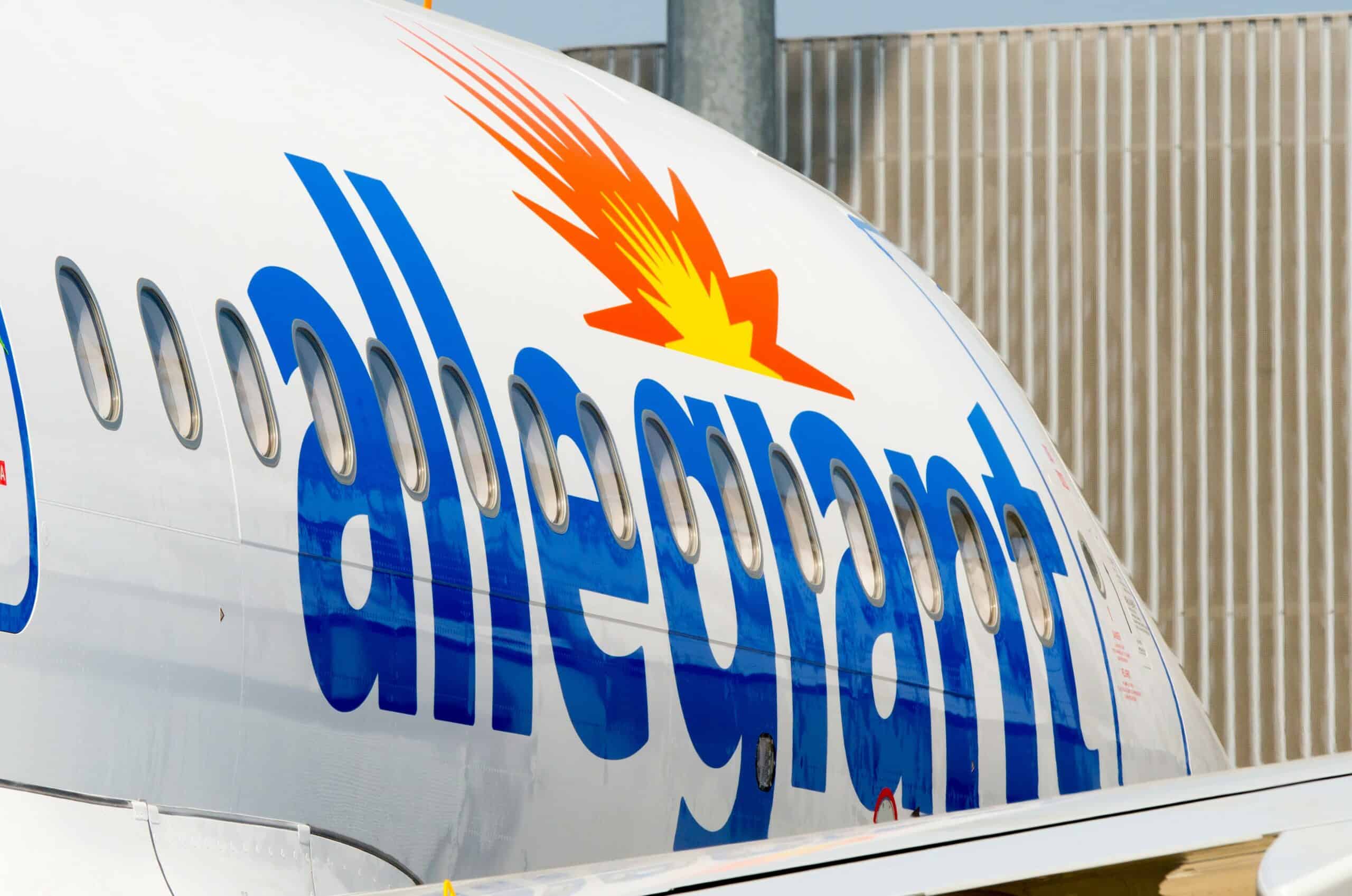
Allegiant Airbus A320 | IMAGE: Allegiant
The combination brings together two carriers built around flexible capacity models, seasonal leisure demand, and diversified operations that include scheduled passenger service, charter flying, and cargo.
Once combined, the airline would serve roughly 22 million passengers annually, flying to nearly 175 cities across more than 650 routes with a fleet of approximately 195 aircraft. The airlines said the merger pairs Allegiant’s strength in small and mid-sized communities with Sun Country’s presence in larger cities and international leisure markets.
Allegiant currently operates a predominantly Airbus narrowbody fleet, centered on A320-family aircraft, while also introducing Boeing 737 MAX aircraft into its operation in late 2024. As of January 2026, Allegiant operates the following aircraft:
28 Airbus A319-100s
83 Airbus A320-200s
16 Boeing 737 MAX 8s
Sun Country operates an all-Boeing fleet, consisting primarily of 737-800 aircraft for passenger service, along with 737-800 converted freighters supporting its cargo operations. Sun Country’s fleet includes:
45 Boeing 737-800s
20 Boeing 737-800BCFs (operated for Amazon Prime Air)
3 Boeing 737-900ERs
Executives stated that the combined airline will benefit from operating both Airbus and Boeing aircraft, allowing for greater flexibility in fleet deployment, sourcing, and long-term capacity planning.
Gregory C. Anderson, Allegiant’s CEO, said the deal expands the airline’s reach while reinforcing its core leisure focus.
“This combination is an exciting next chapter in Allegiant and Sun Country’s shared mission in providing affordable, reliable, and convenient service from underserved communities to premier leisure destinations,” Anderson said. “Together, our complementary networks will expand our reach to more vacation destinations, including international locations.”
Together, our complementary networks will expand our reach to more vacation destinations, including international destinations.
Gregory C. Anderson | Allegiant CEO
Allegiant Route Map as of January 2026 | IMAGE: AllegiantSun Country route map as of January 2026 | IMAGE: Sun Country
What It Means for Passengers
IMAGE: Sun Country
For travelers, the merger of Allegiant and Sun Country will translate into more destination choices, expanded nonstop service, and improved scheduling flexibility. Sun Country’s international network across Mexico, Central America, Canada, and the Caribbean will open new options for Allegiant customers flying from smaller US markets.
The airlines also plan to combine their loyalty programs, creating a significantly larger rewards platform with expanded earning opportunities, richer benefits, and greater flexibility for frequent travelers.
Integrated scheduling and fleet planning are expected to enhance reliability, enabling the airline to quickly adjust capacity to match peak leisure demand and emerging travel trends.
Customers with questions about the Allegiant and Sun Country merger are encouraged to find their answers on an extensive FAQ website.
The airlines have also set up a website dedicated to the merger process at soaringforleisure.com.
Employees, Stability, and Minneapolis-St. Paul
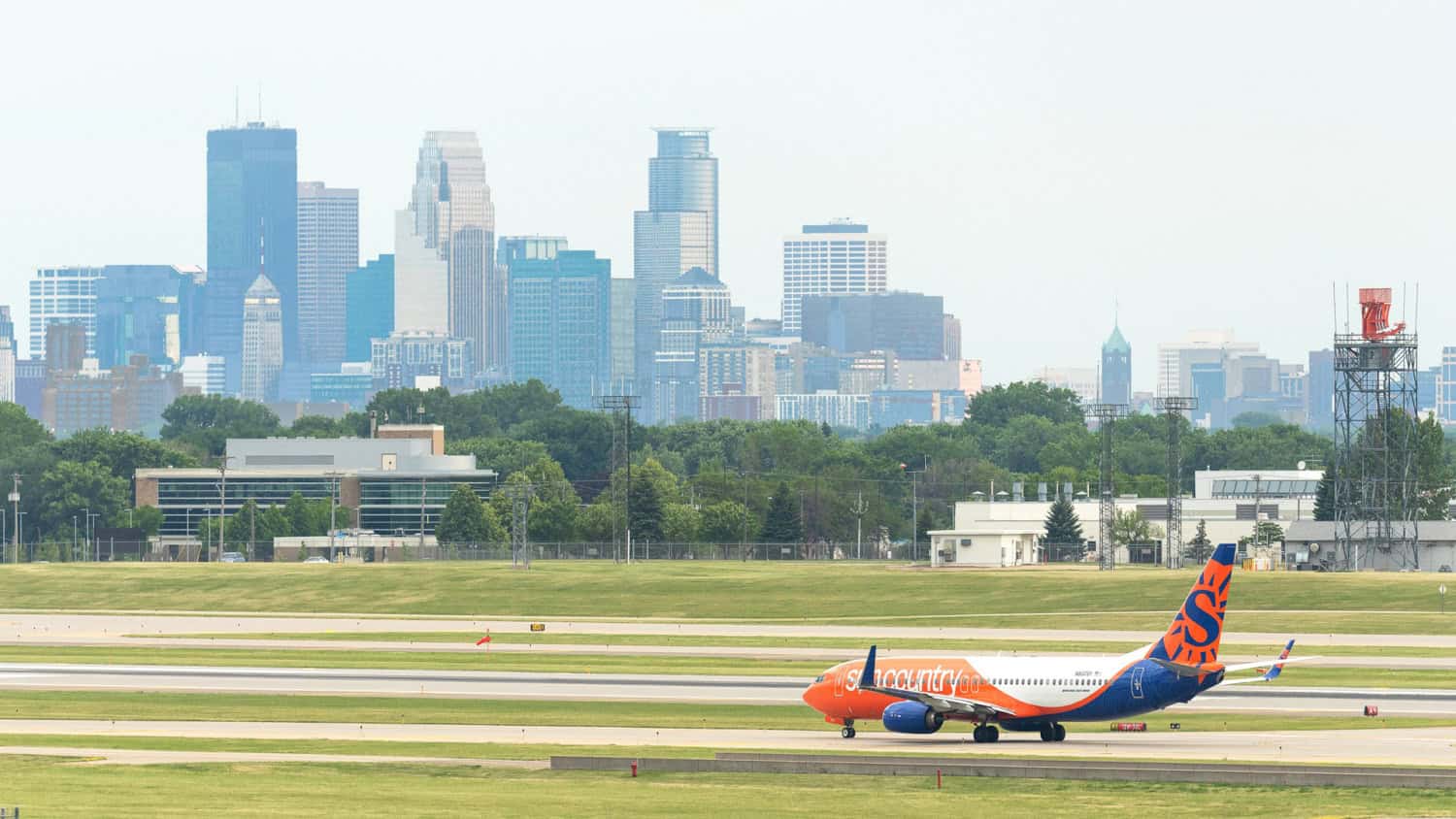
A Sun Country Boeing 737-800 taxis at Minneapolis-Saint Paul International Airport (MSP) | IMAGE: Sun Country
Leadership emphasized that the Allegiant and Sun Country merger will create new opportunities for employees across a larger network and fleet. Sun Country’s long-term charter and cargo partnerships, including its established narrowbody freighter operation, are expected to provide more year-round stability for pilots, crews, and operational teams.
Sun Country President and CEO Jude Bricker described the announcement as a milestone moment for the airline.
“Today marks an exciting next step in our history as we join Allegiant to create one of the leading leisure travel companies in the US,” Bricker said. “We are two customer-centric organizations, deeply committed to delivering affordable travel experiences without compromising on quality.”
Today marks an exciting next step in our history as we join Allegiant to create one of the leading leisure travel companies in the US.
Jude Bricker | Sun Country President and CEO
The combined company will be headquartered at Harry Reid International Airport (LAS) in Las Vegas, and has also committed to maintaining a significant presence at Minneapolis-Saint Paul International Airport (MSP), which will remain an important base of operations and focus city.
Leadership, Operations, and What Comes Next
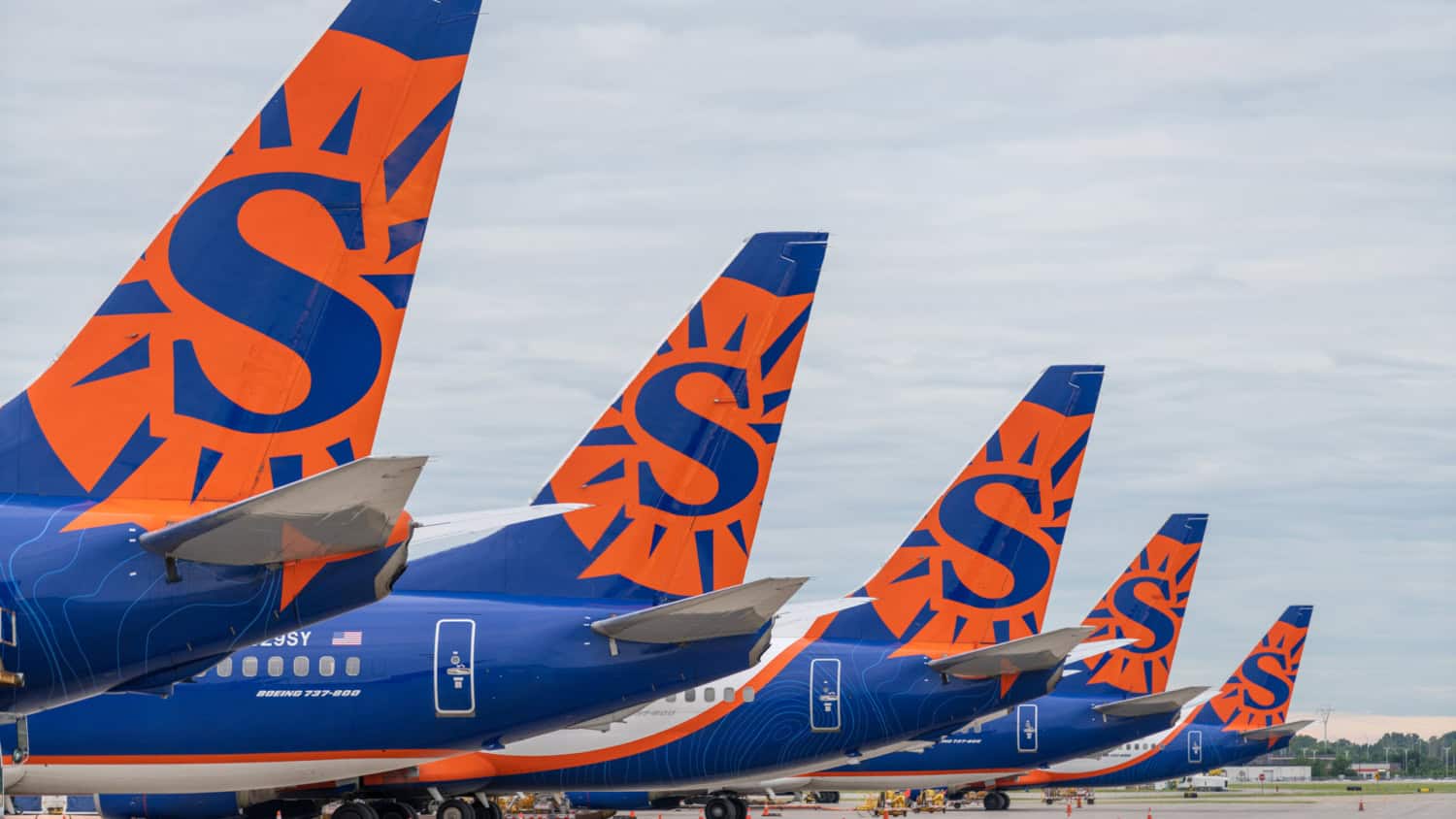
An Allegiant A320 and Sun Country 737 | IMAGE: Allegiant and Sun Country
Following the close of the transaction, Allegiant will remain the parent company, and the combined airline will operate under the Allegiant name. Both airlines will continue operating separately until a single FAA operating certificate is obtained. There will be no immediate changes to ticketing, flight schedules, or the Sun Country brand.
Gregory C. Anderson will lead the combined airline as CEO. Jude Bricker will step down from the CEO role and join the board, also serving as an advisor to support the integration.
After years of speculation about consolidation in the leisure airline space, Sunday’s announcement signals that those pressures are now turning into action. If approved, the Allegiant and Sun Country merger would reshape the US leisure travel landscape with a carrier built around flexible fleets, adaptable networks, and vacation-focused flying.
On 10 January 1990, the McDonnell Douglas MD-11 lifted off for the first time. Thirty-six years later, it remains one of the most polarizing widebody airliners ever built.
Loved by cargo operators, disliked by many passenger airlines, and endlessly debated by pilots, the MD-11’s story is one of ambition, compromise, and timing.
It was, and still is, the largest trijet ever built. And from the moment it entered service, it proved that bigger and more advanced did not always mean better.
A DC-10 Successor With Big Ambitions
MD-11 and DC-10 side by side | IMAGE: By Boeing 757 maya – Own work, Public Domain, https://commons.wikimedia.org/w/index.php?curid=7781266
Although the MD-11 program was formally launched in 1986, McDonnell Douglas had been exploring an updated DC-10 as early as 1976. The goal was straightforward. Build a longer range, more efficient widebody that could compete with emerging twinjets like the Boeing 767 and Airbus A330, and the upcoming Boeing 777.
On paper, the MD-11 appeared to be a major step forward. It retained the DC-10’s basic trijet layout but introduced a larger wingspan with winglets, more powerful General Electric CF6-80C2 or Pratt and Whitney PW4000 engines, and a fully digital glass cockpit. That cockpit eliminated the need for a flight engineer, a key selling point at the time.
In a high-density, all-economy configuration, the MD-11 could seat up to 410 passengers in a 3x4x3 layout. Finnair signed on as the launch customer, and the aircraft entered service in December 1990. Delta Air Lines followed soon after, becoming the first US operator in 1991.
But almost immediately, reality began to diverge from the sales brochure.
Performance Shortfalls And A Difficult Personality
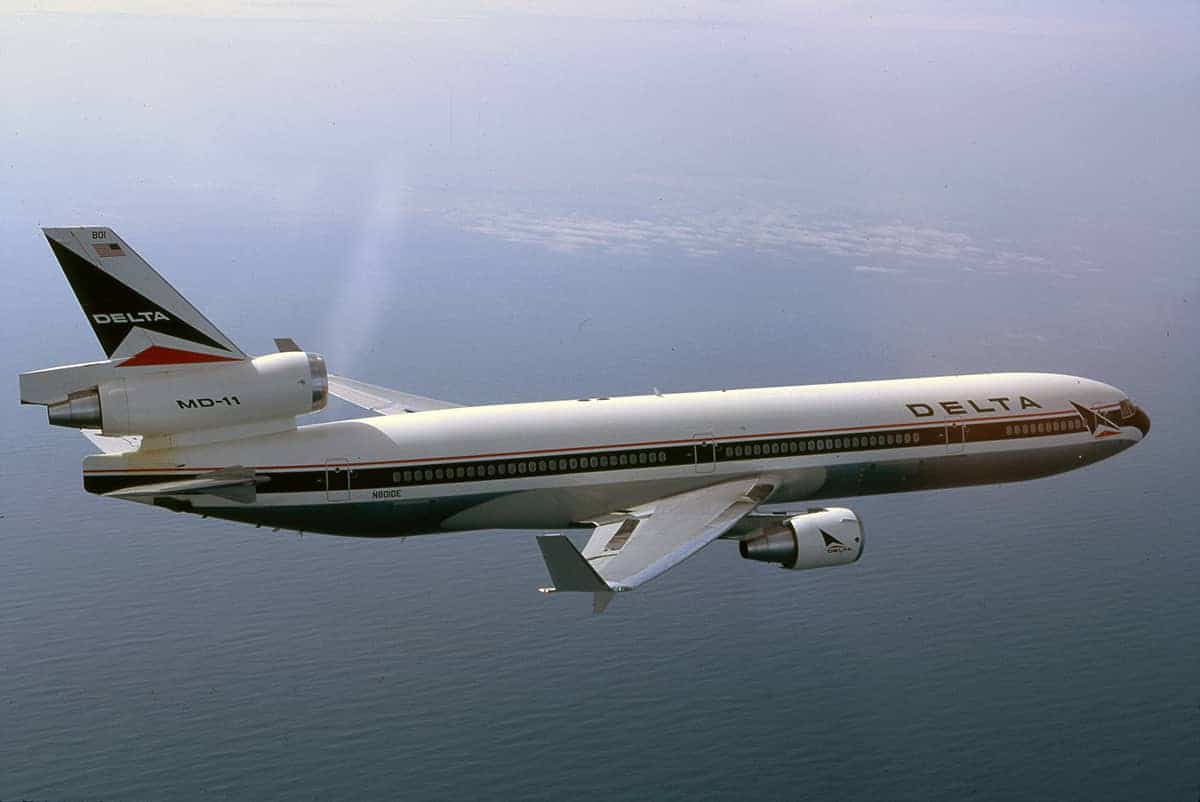
A Delta Air Lines MD-11 in flight | IMAGE: Delta Flight Museum
From the beginning, the MD-11 struggled to meet its promised range and fuel burn targets. Airlines that had planned long-haul missions found that the aircraft simply could not deliver the economics they had expected. As fuel prices fluctuated and twin-engine aircraft capabilities improved rapidly, that gap became harder to ignore.
Pilots, meanwhile, reported that the MD-11 was not the smoothest airplane to fly. Early on, a design flaw in the slat and flap lever made it too easy to bump accidentally, an issue that was corrected relatively quickly. More concerning were the deeper handling characteristics that could not be easily fixed.
To improve fuel efficiency, McDonnell Douglas designed the MD-11 with an unusually aft center of gravity during cruise. This was achieved using a fuel ballast tank in the horizontal stabilizer that would empty before landing, thereby shifting the center of gravity forward. The benefit was a significantly smaller horizontal stabilizer than the DC-10’s, which reduced drag and improved cruise efficiency.
The downside came during takeoff and landing.
The smaller tail reduced pitch stability, especially in the flare. The flight control system attempted to compensate, but that compensation could exaggerate pitch response. A small control input could produce a much larger reaction than pilots expected. In bounced landings, this sensitivity created a real risk of porpoising, where the nose pitches up and down violently. Several hard landings and landing gear failures were traced back to these characteristics.
The MD-11 also had one of the highest wing loadings of any commercial airliner. While this reduced drag and made the aircraft comfortable in cruise, it resulted in landing speeds 10 to 20 knots higher than those of comparable widebodies. That reduced the margin for error close to the ground.
Pilots often described the airplane as feeling “floaty” on final approach, with computers that sometimes seemed to fight them rather than help. Issues with pitch assist and automation behavior reinforced the perception that the airplane was trying to outthink its crew.
Too Late And Caught In The Middle
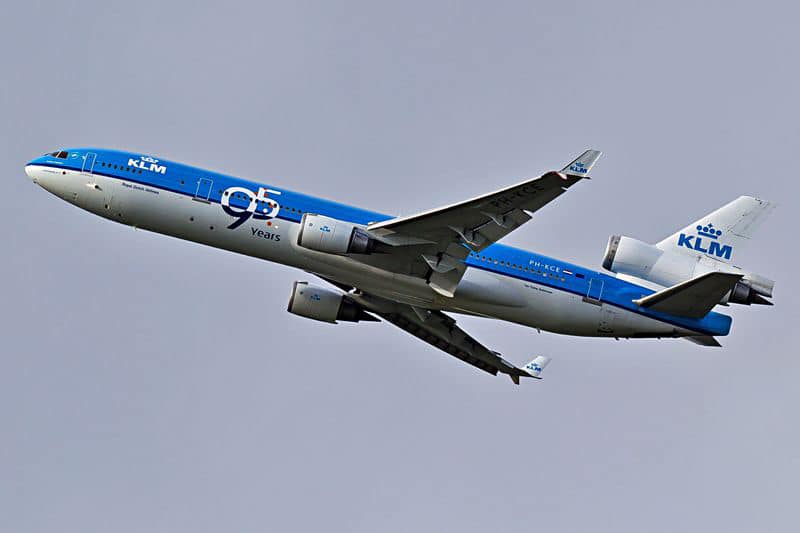
A KLM MD-11 takes off | IMAGE: Kofi Mzunguwamap Facebook
In 1990, McDonnell Douglas launched the Performance Improvement Program (PIP) in partnership with Pratt and Whitney, General Electric, and NASA’s Langley Research Center. The effort focused on reducing weight, increasing fuel capacity, improving engine performance, and refining aerodynamics. By 1995, some of the MD-11s’ lost range had been recovered.
But the timing could not have been worse.
By then, airlines had options. Twin-engine widebodies, such as the Boeing 767, Airbus A330, and later the Boeing 777, offered better fuel efficiency and simpler maintenance. Meanwhile, extended-range ETOPS operations became routine as regulators approved longer diversion times for twin-engine widebodies. In 1995, American Airlines sold its entire MD-11 fleet to FedEx after concluding that even upgraded aircraft could not reliably operate routes like Dallas to Hong Kong.
McDonnell Douglas’s own financial struggles limited further development. After the company merged with Boeing in 1997, the combined manufacturer saw little reason to continue pushing a trijet that competed internally with the 767 and 777. Passenger MD-11 production effectively ended in April 1998, with the final aircraft delivered to Sabena. Freighter production continued briefly, with the last aircraft assembled in 2000 and delivered to Lufthansa Cargo in early 2001.
McDonnell Douglas had once projected sales of more than 300 aircraft. In the end, only 200 were built.
A Second Life As A Freighter And An Uncertain Future
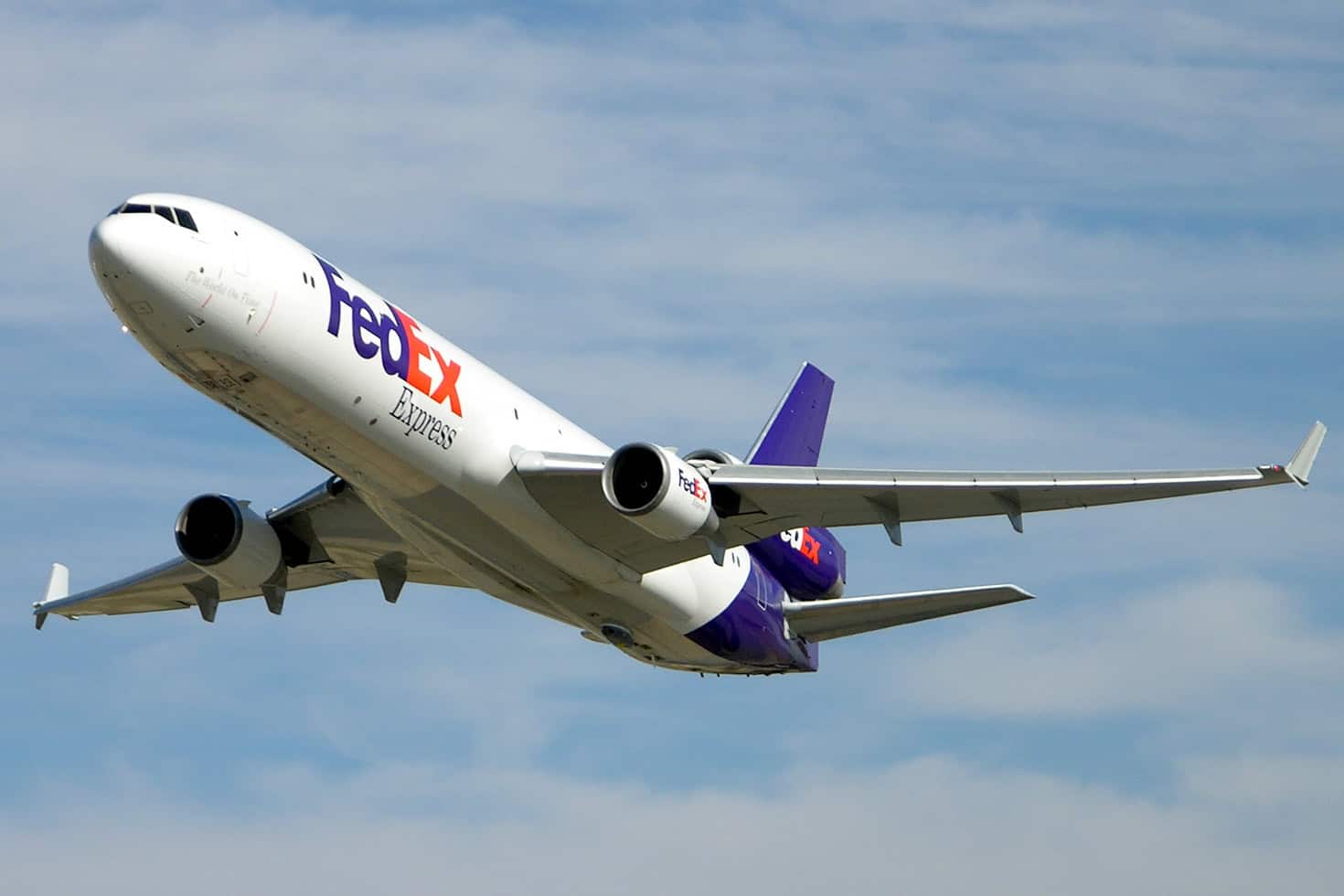
FedEx MD-11 | IMAGE: Alan Radecki Akradecki, CC BY-SA 3.0 , via Wikimedia Commons
While passenger airlines moved on, cargo operators leaned in.
The MD-11’s long fuselage and large internal volume made it ideal for transporting lightweight, high-volume freight, such as express parcels and e-commerce shipments. Even with higher fuel burn per block hour, the aircraft could carry more revenue cargo on many routes than slimmer freighters. As passenger airlines retired the type, cargo operators acquired MD-11s at relatively low capital cost and converted them efficiently.
FedEx and UPS built large fleets around the MD-11, optimizing routes, maintenance, and training to match the aircraft’s strengths and quirks. For cargo, smooth landings and cabin comfort mattered far less than payload and turnaround time.
By 2025, only 71 of the 200 MD-11s built remained in service. Prior to the tragic crash of UPS Flight 2976 in Louisville, Kentucky, in November 2025, only three operators were flying the type: FedEx with 29 aircraft, UPS with 27, and Western Global Airlines with 15.
Days after that crash, the FAA issued an Emergency Airworthiness Directive grounding all MD-11s pending inspection and repair. The National Transportation Safety Board (NTSB) continues to investigate the accident. The MD-11 has been involved in 50 incidents over its lifetime, including 11 hull loss accidents and 261 fatalities, including passengers, crew, and people on the ground.
Despite the grounding, operators do not expect the story to end here. FedEx Chief Financial Officer John Dietrich has stated that the company expects the grounding to be lifted and the MD-11 to return to service in the fourth quarter of its fiscal year (which, for FedEx, runs from March through May). FedEx estimates a $176 million financial impact from the grounding, affecting roughly four percent of its fleet during the busiest season of the year.
Happy 36th birthday, MD-11. With a legacy that doesn’t quite feel finished, we hope to see you in the skies again soon.
Air Midwest Flight 5481 lasted just 37 seconds. This is what investigators uncovered and how the crash changed aviation safety.
On the crisp but calm morning of 08 January 2003, Air Midwest Flight 5481 was supposed to be a short, forgettable hop.
The Beechcraft 1900D was scheduled to fly from Charlotte Douglas International Airport (CLT) to Greenville–Spartanburg International Airport (GSP), a flight that typically took less than an hour and had been flown numerous times before.
Operating as a US Airways Express commuter flight, Flight 5481 was carrying 19 passengers and two pilots. At the controls were Captain Catherine “Katie” Leslie, 25, and First Officer (FO) Jonathan Gibbs, 27. Leslie was the youngest captain at Air Midwest at the time, with more than 1,800 total flight hours, including over 1,100 hours as pilot-in-command (PIC) on the Beechcraft 1900D. Gibbs had logged more than 700 hours on the type. Both pilots were based at CLT.
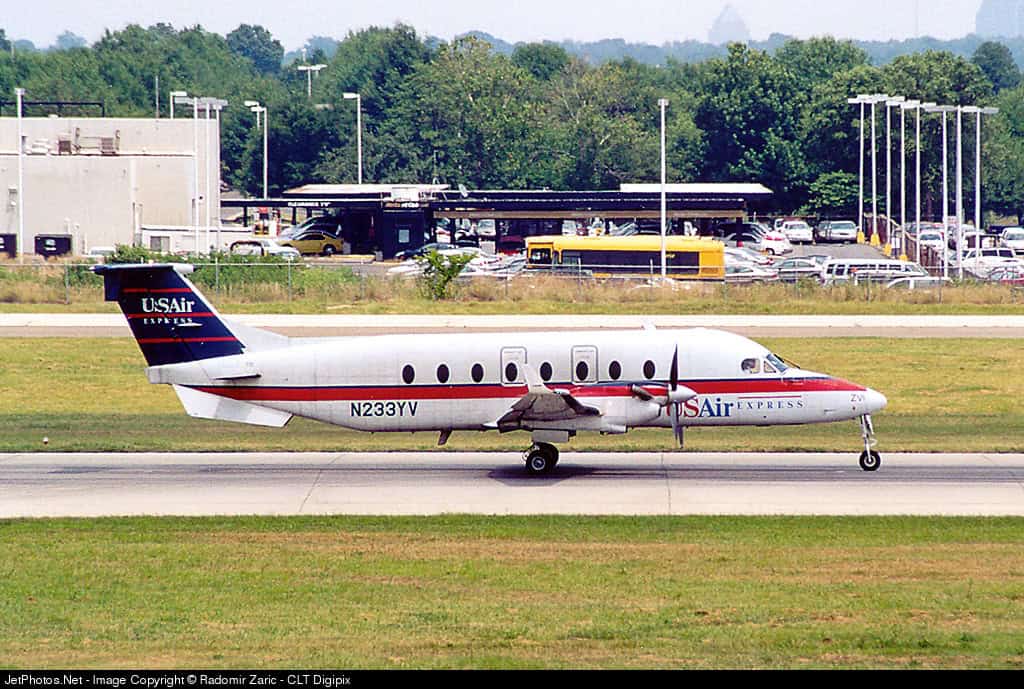
The Beechcraft 1900D, bearing registration N233YV, involved in the Air Midwest Flight 5481 crash | IMAGE: Radomir Zaric – CLT Digipix, JetPhotos.net
The aircraft itself, registration N233YV, had been delivered new to Air Midwest in 1996. By early 2003, it had accumulated more than 15,000 flight hours. Nothing in the flight’s paperwork or preflight checks suggested that this morning would be any different from the many departures before it.
Passengers boarded, bags were loaded, and the crew completed their required weight and balance calculations. According to NTSB records, 23 checked bags were loaded, including two unusually heavy pieces of luggage. The ramp agent recalled telling the captain about the heavy bags, and the captain responded that the weight would be offset by the presence of a child on board.
At approximately 0830 local time, Flight 5481 pushed back from the gate. Seven minutes later, it was cleared to taxi to Runway 18R. At 0846, the tower cleared the flight for takeoff.
Less than a minute later, everything unraveled.
A Fight for Control After Liftoff
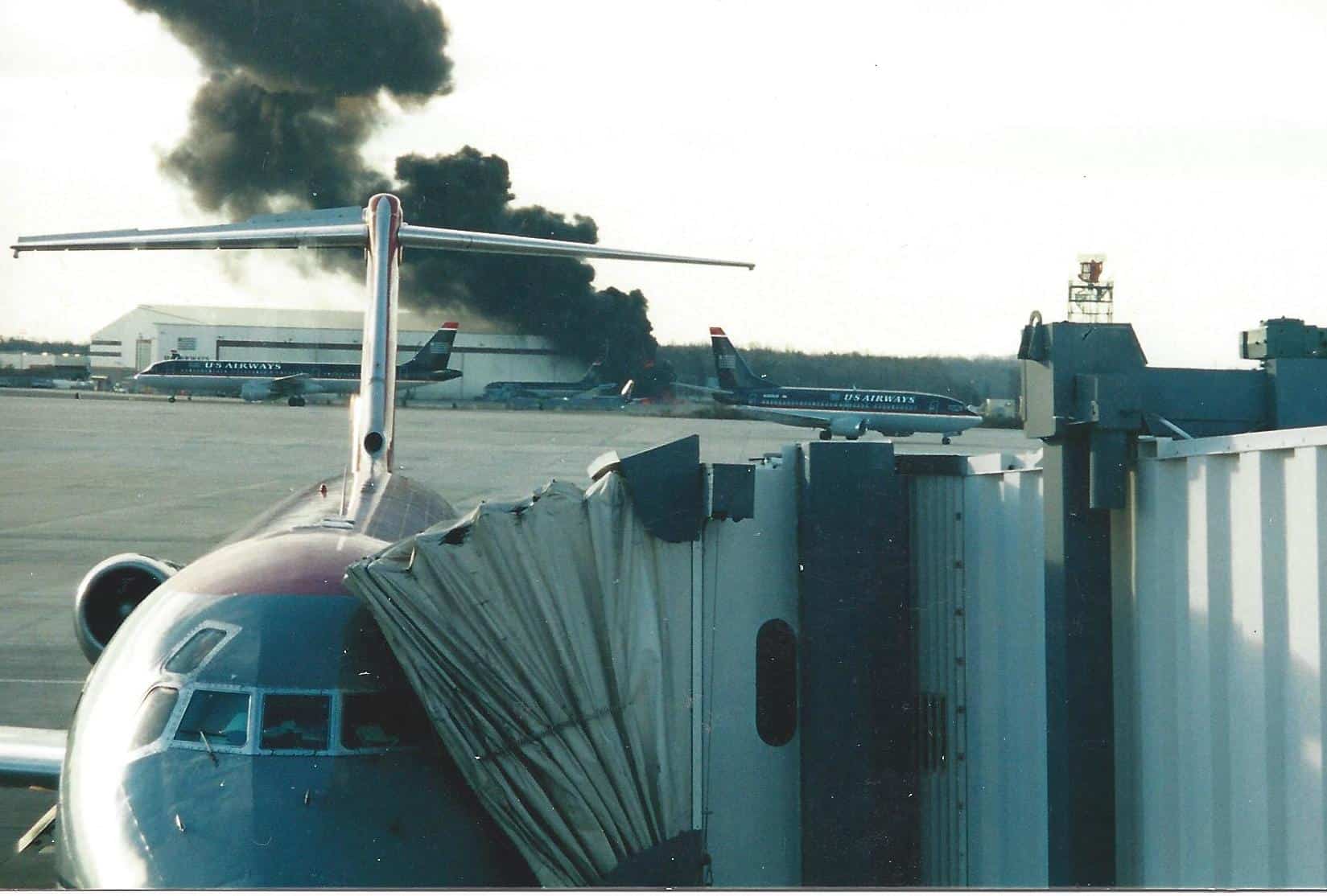
View from the passenger terminal at CLT moments after Air Midwest Flight 5481 impact | IMAGE: By Lookout2 – Own work, CC BY-SA 4.0, https://commons.wikimedia.org/w/index.php?curid=64135694
As the Beechcraft accelerated down Runway 18R, nothing appeared abnormal. The takeoff roll was routine. But immediately after becoming airborne, the aircraft’s nose began pitching sharply upward.
By the time Flight 5481 reached about 90 feet above ground level, its pitch attitude had increased to 20 degrees nose up. Both pilots pushed forward on the control column, attempting to lower the nose. The airplane did not respond as expected.
Instead, the pitch continued to increase. Within seconds, the aircraft reached a dangerous 54-degree nose-up angle, activating the stall warning horn in the cockpit. Captain Leslie declared an emergency over the radio.
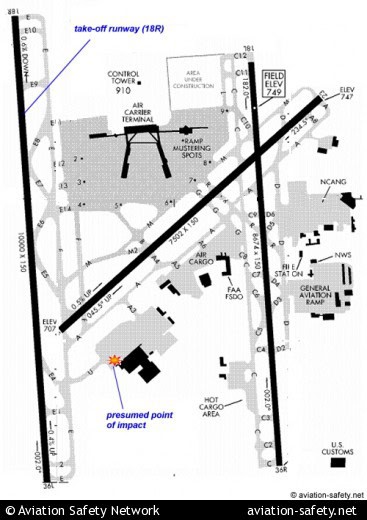
A map of Charlotte Douglas International Airport (CLT) showing the point of impact of Air Midwest Flight 5481 | IMAGE: aviation-safety.net
“We have an emergency for Air Midwest 5481,” Leslie told ATC as she and Gibbs fought for control of the airplane.
Flight data recorder information shows that the airplane climbed to approximately 1,150 feet above ground level before stalling. With insufficient airspeed and no effective pitch control, the aircraft rolled and pitched downward into an uncontrollable descent.
About 37 seconds after takeoff, at approximately 0847, Flight 5481 crashed into a US Airways maintenance hangar on airport property. The impact and post-crash fire destroyed the aircraft.
All 21 people on board were killed. One US Airways mechanic on the ground was treated for smoke inhalation. Miraculously, no one else on the ground was killed or injured.
The immediate question for investigators was painfully clear. How could a modern turboprop, flown by experienced pilots in good weather, become uncontrollable seconds after takeoff?
Two Hidden Failures
The wreckage of Air Midwest Flight 5481 outside of a US Airways maintenance hangar at Charlotte Douglas International Airport (CLT) | IMAGE: NTSB
The National Transportation Safety Board (NTSB) would ultimately determine that the crash of Flight 5481 was caused by a lethal combination of two separate failures. Either one alone might have been survivable. Together, they were catastrophic.
The first problem was weight and balance.
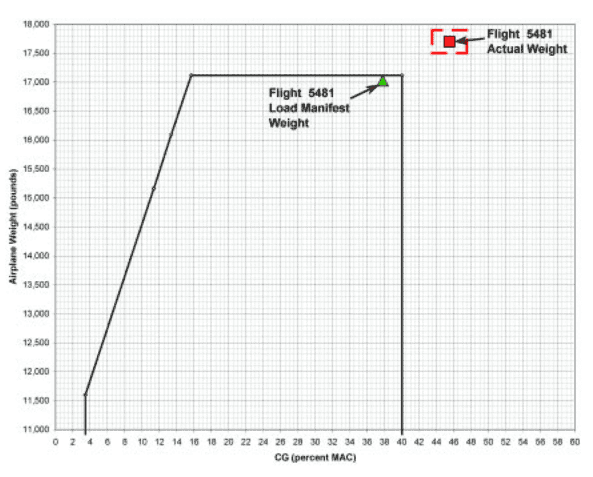
Weight and CG information for Air Midwest Flight 5481 | IMAGE: NTSB
Although the flight crew calculated the aircraft’s takeoff weight as being within limits, those calculations were based on FAA-approved average passenger weights that were badly outdated. The NTSB later found that the actual average passenger weight exceeded the assumed values by more than 20 pounds.
After accounting for the true weight of passengers and baggage, investigators determined that the aircraft was approximately 580 pounds above its maximum allowable takeoff weight. Even more critically, its center of gravity (CG) was about five percent beyond the aft limit. An aft CG makes an aircraft more pitch sensitive. It requires less control input to raise the nose and more force to push it down. That condition alone would have made the airplane harder to control, but not uncontrollable.
The second problem lay hidden in the tail.
Two nights before the crash, the aircraft underwent maintenance at Tri-State Airport (HTS) in Huntington, West Virginia. During that work, elevator control cable tension was adjusted. According to the investigation, the mechanic performing the task had no prior experience working on a Beechcraft 1900D.
Side view of Beech 1900D tail section | IMAGE: NTSB
The elevator cables were adjusted incorrectly. Turnbuckles were set in a way that severely limited elevator travel. As a result, the pilots did not have sufficient nose-down authority available when they needed it most.
Compounding the error, a required post-maintenance operational check was skipped. The same maintenance supervisor who was overseeing the work also served as the quality assurance inspector that night. With no independent review, the aircraft was returned to service with a critical flight control system improperly rigged.
The NTSB concluded that the Federal Aviation Administration (FAA) was aware of serious deficiencies in training and oversight at the maintenance facility at HTS, but had failed to correct them.
Flight 5481 was overloaded, out of balance, and unable to generate enough nose-down elevator authority. It was doomed before it even left the ground.
Lessons from Tragedy: What Changed After Air Midwest Flight 5481
Investigators comb through the wreckage of Air Midwest Flight 5481 | IMAGE: NTSB
In the years following the crash, the legacy of Air Midwest Flight 5481 extended far beyond the wreckage at CLT that January morning. One of its most lasting impacts reshaped how airlines think about a fundamental aspect of flight safety: weight.
At the time of the accident, standard passenger and baggage weights used for weight and balance calculations were based on FAA guidance that had not been meaningfully updated in decades. Those assumptions no longer reflected reality, particularly for small commuter aircraft, where even modest miscalculations could dramatically affect CG.
In May 2003, just months after the crash, the Federal Aviation Administration revised its standard weight assumptions for aircraft with 10 to 19 passenger seats. The new guidance increased the assumed average passenger weight, including carry-on items, from 180 pounds to 190 pounds during summer operations, with an additional five pounds added for winter clothing.
Standard baggage weights were also increased by five pounds (from 25 to 30 lbs).
Although a 2005 FAA survey later showed that average passenger weights had dipped slightly below the revised 2003 standard, the guidance remained in place. One of the many lessons learned from Flight 5481 was that conservative assumptions were safer than outdated ones, especially for aircraft operating close to their performance limits.
The push for accuracy did not end there.
In May 2019, the FAA issued updated advisory guidance emphasizing that weight and balance calculations must accurately reflect current passenger and baggage weights. Rather than relying solely on nationwide averages, the agency encouraged operators to review and update their methods. For some airlines, that meant conducting passenger weight surveys. For others, particularly those flying smaller aircraft, it meant weighing baggage individually or using more precise distribution methods.
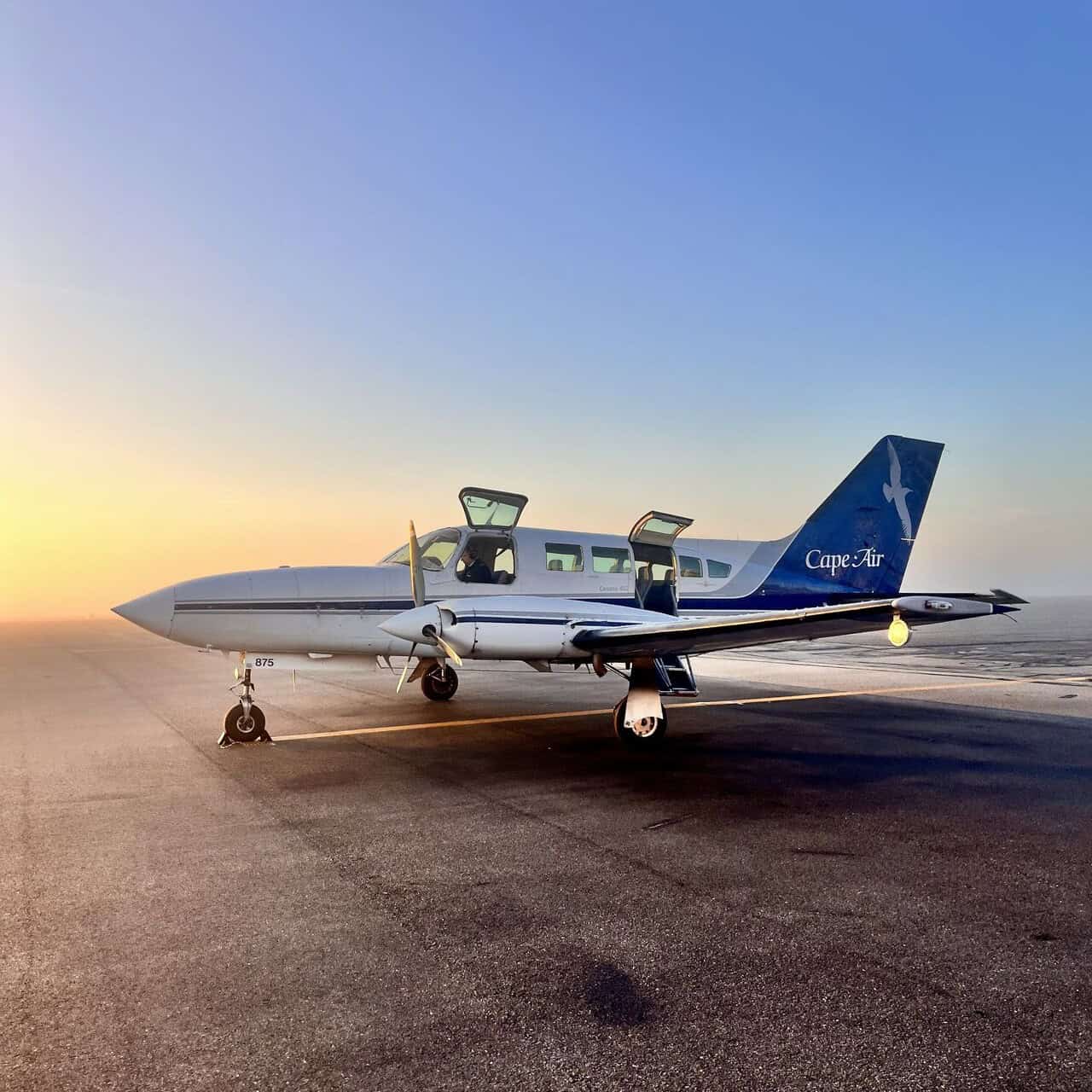
Cape Air Cessna 402C | IMAGE: Cape Air
These changes have occasionally sparked intense public discussion, especially around the idea of weighing passengers before boarding. The FAA guidance makes clear that such measures are optional, not mandatory. They are tools available to operators when accuracy is critical, particularly for smaller aircraft where a few hundred pounds can significantly alter aircraft handling.
Today, it is common practice for many carriers operating small aircraft to obtain passenger weight. While major US airlines rely on average passenger weight assumptions, many small commuter and Part 135 operators use actual passenger weights for safety. These include carriers such as Cape Air, Mokulele Airlines, Southern Airways Express, Key Lime Air, Denver Air Connection, and remote Alaskan carriers such as Bering Air.
For operators flying aircraft like the Cessna 402 and Cessna 208 Caravan, weighing passengers and carry-on items is nothing unusual. With tight CG limits and little margin for payload error, especially in Alaska and island operations, the practice is viewed as common sense rather than an inconvenience. On light aircraft, a few extra pounds in the wrong place can make a noticeable difference.
“Your Losses Will Not Have Been Suffered in Vain”
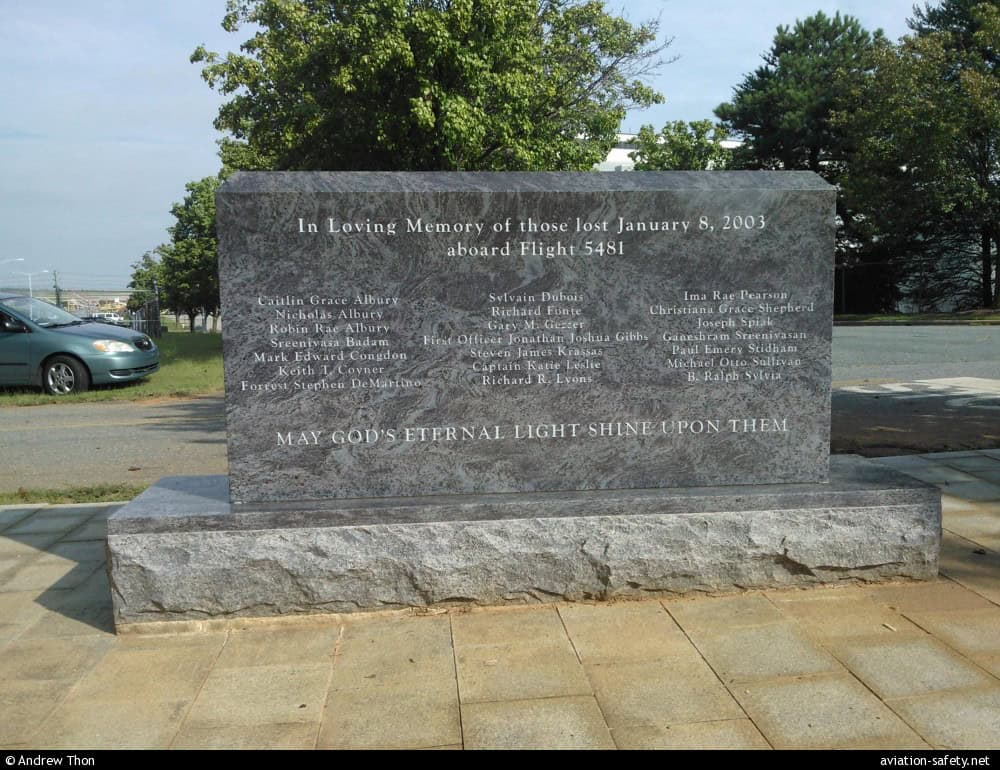
A memorial just outside Charlotte Douglas International Airport (CLT) honoring the victims of Air Midwest Flight 5481 | IMAGE: Andrew Thon, aviation-safety.net
Two years after the crash, on 06 May 2005, Air Midwest took the rare step of publicly acknowledging its role. At a memorial near Charlotte Douglas International Airport, Air Midwest President Greg Stephens addressed the victims’ families.
“Air Midwest and its maintenance provider, Vertex, acknowledge deficiencies, which, together with the wording of the aircraft maintenance manuals, contributed to this accident,” Stephens told the families. “We have taken substantial measures to prevent similar accidents and incidents in the future, so that your losses will not have been suffered in vain.”
Air Midwest would cease operations in 2008. But the accident’s influence continues to shape aviation safety. Flight 5481 served as a tragic wakeup call to the regional airline industry (and, really, the entire aviation industry as a whole) that safety is not defined by a single system or decision. It is built from thousands of small calculations, inspections, and assumptions made long before the wheels ever leave the runway.
When those margins are eroded, even slightly, the consequences can be irreversible.
Alaska Airlines Boeing order includes 105 737-10s and five 787 Dreamliners, signaling major fleet growth and long-haul expansion.
Alaska Airlines just made a big move, and it is a historic one.
The Seattle-based carrier announced today that it has placed the largest fleet order in its history, committing to 105 Boeing 737-10 aircraft and five Boeing 787 Dreamliners. The deal also includes options for an additional 35 737-10s, locking in delivery slots that stretch well into the next decade, through 2035.
It is a clear signal not only of where the airline is headed, but also its confidence in Boeing as the OEM’s woes continue to fade.
These planes will fuel our expansion to more destinations across the globe and ensure our guests travel aboard the newest, most fuel-efficient, and state-of-the-art aircraft.
Ben Minicucci | CEO, Alaska Airlines
“This fleet investment builds on the strong foundation Alaska has created to support steady, scalable, and sustained growth,” said CEO Ben Minicucci. “These planes will fuel our expansion to more destinations across the globe and ensure our guests travel aboard the newest, most fuel-efficient, and state-of-the-art aircraft.”
🛫 2026 is taking off with @AlaskaAir’s largest-ever order: 110 airplanes.
✈️105 737 MAX jets ✈️Five 787 Dreamliner airplanes
This order marks 60 years of partnership since our first delivery to the airline.
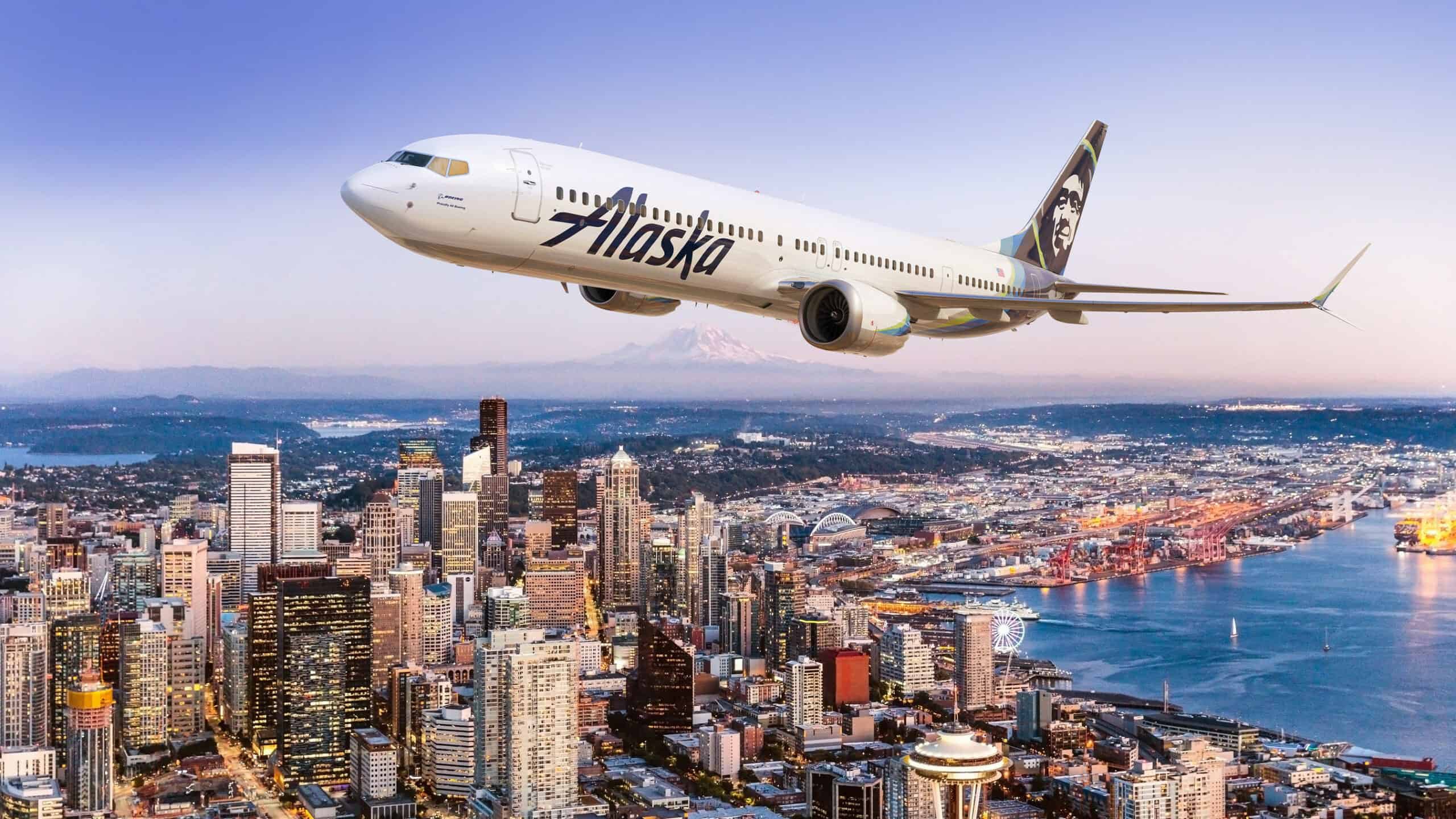
Artist rendering of an Alaska Airlines Boeing 737-10. Alaska Airlines’ Boeing order on 7 January includes 105 737-10s | IMAGE: Boeing
The announcement involved a massive order for the yet-to-be-certified 737-10. Alaska’s order for 105 aircraft, plus 35 options, brings its total Boeing orderbook to 245 airplanes. That figure is in addition to the 94 MAX aircraft already flying in Alaska colors today.
The 737-10s will serve a dual role. Some will support growth, while others will replace older 737s as the airline works to keep its fleet among the youngest and most fuel-efficient in the industry. Alaska already operates the 737-8 and 737-9, and while this order is specifically for the 737-10, the airline retains the flexibility to adjust variants as needed.
Dreamliners, Global Ambition, and a New Livery
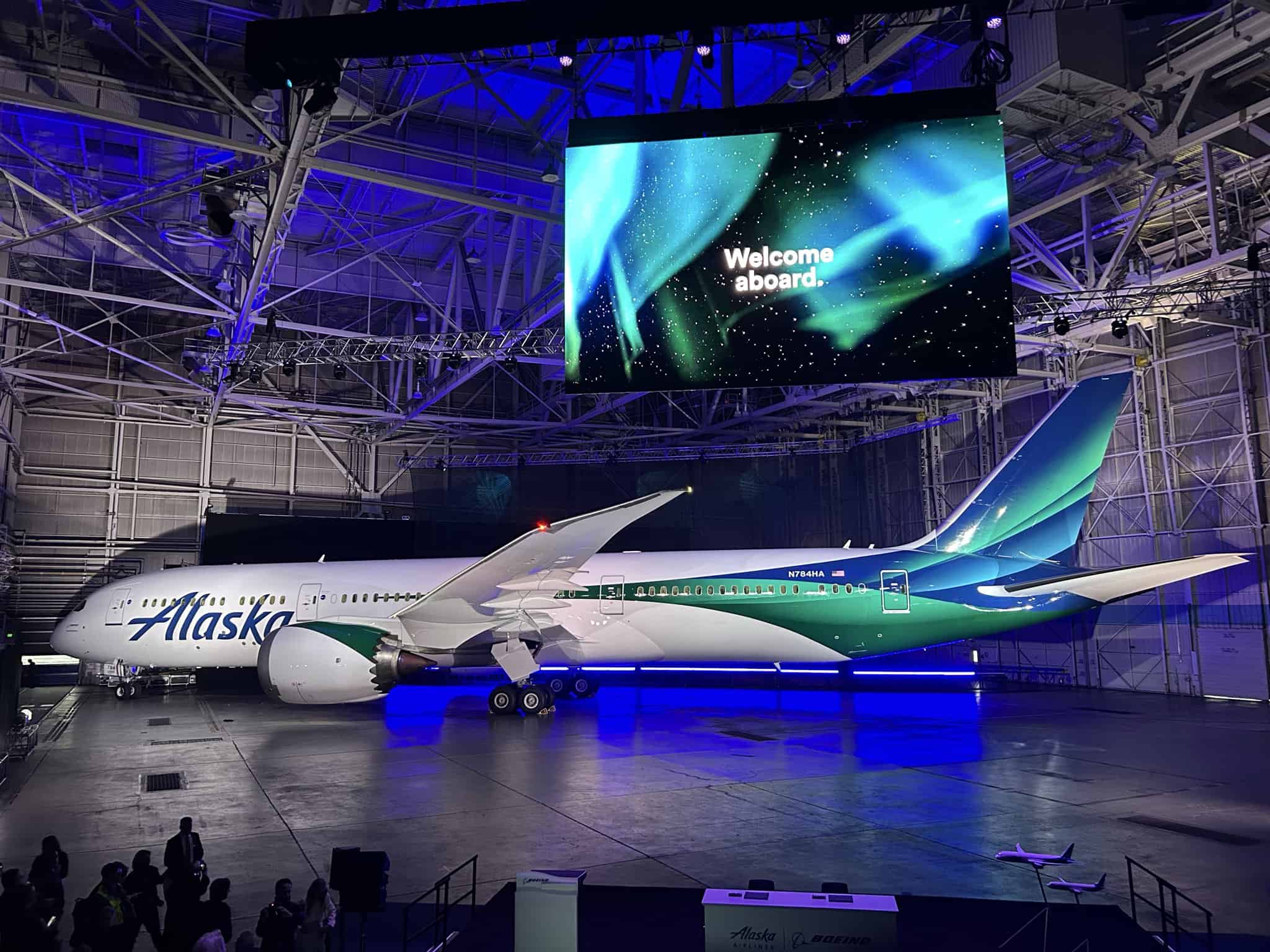
Alaska Airlines’ first Boeing 787 Dreamliner is unveiled on 7 January 2026 in Seattle | IMAGE: Boeing
The widebody portion of the order is just as significant. Alaska exercised all of its remaining 787 options, adding five more Dreamliners to its future fleet. The intention is for these aircraft to be delivered as the larger 787-10 variant.
IMAGE: Alaska Airlines
Those jets will play a key role in Alaska’s Accelerate strategic plan, supporting long-haul growth from Seattle. By 2030, the airline expects to serve at least 12 international destinations across Europe and Asia. With this order, Alaska’s firm 787 fleet now stands at 17 aircraft, with five already in service.
As Alaska celebrates this massive milestone, it is also celebrating the arrival of its very first Dreamliner. The Boeing 787-9 Dreamliner (reg. N784HA) arrived at Seattle’s Boeing Field (BFI) on 6 January. The aircraft, fresh from the paint shop at Fort Worth’s Meacham International Airport (FTW), features the airline’s new global livery design inspired by the aurora borealis that signals its growing international ambitions.
Alaska CEO Ben Minicucci, US DOT Secretary Sean Duffy, Boeing Commercial Airplanes CEO Stephanie Pope, and other officials announce a massive Alaska Airlines Boeing order on 7 Jan 2026 | IMAGE: Boeing
Alaska Air Group currently operates a fleet of 413 aircraft across its carriers. With this order, that number is expected to grow to more than 475 aircraft by 2030 and exceed 550 by 2035.
For Boeing, the announcement marks another milestone in a relationship that now spans six decades. The partnership began with the delivery of a 727, and today Alaska operates hundreds of 737s while steadily building its Dreamliner fleet. And, as mentioned earlier, it signals Alaska’s confidence in the manufacturer as it navigates out of a decade full of highly publicized missteps.
This is a historic airplane order.
Stephanie Pope | President and CEO, Boeing Commercial Airplanes
“This is a historic airplane order,” said Stephanie Pope, president and CEO of Boeing Commercial Airplanes. “All of us at Boeing are proud of Alaska’s success and are honored they have placed their trust in our people and our 737 and 787 airplanes to help grow their airline.”
With new aircraft on the way, international routes in sight, and delivery slots secured well into the future, today’s announcement is a defining moment for Alaska Airlines and a clear statement that the airline is thinking long term and thinking big.
1,000 artist hours. 13 days. 1 epic reveal. Introducing the first @Boeing widebody 787 Dreamliner ft. our new aurora borealis-inspired global design. This stunning aircraft pays tribute to Alaska’s rich history and proudly reflects our bold vision as the country’s fourth largest… pic.twitter.com/nMTG3qKDZa
Avelo deportation flights are ending as the airline closes bases, cuts routes, and reshapes its network ahead of planned growth.
Avelo Airlines is making one of the most consequential moves in its short history, and it is happening on several fronts at once.
On 6 January, the ultra-low-cost carrier (ULCC) confirmed that it will discontinue its deportation charter operations for the US Department of Homeland Security (DHS). At the same time, Avelo announced a major network reset that includes closing multiple crew bases, cutting dozens of routes, and planning a brand new base in North Texas.
Taken together, the changes mark a clear pivot back toward Avelo’s core scheduled passenger operation. While the Avelo deportation flights brought short-term stability, the Houston-based airline now says it no longer fits into its long-term operational and financial strategy.
Complexity and Costs: Why Avelo’s Deportation Operation Is Ending
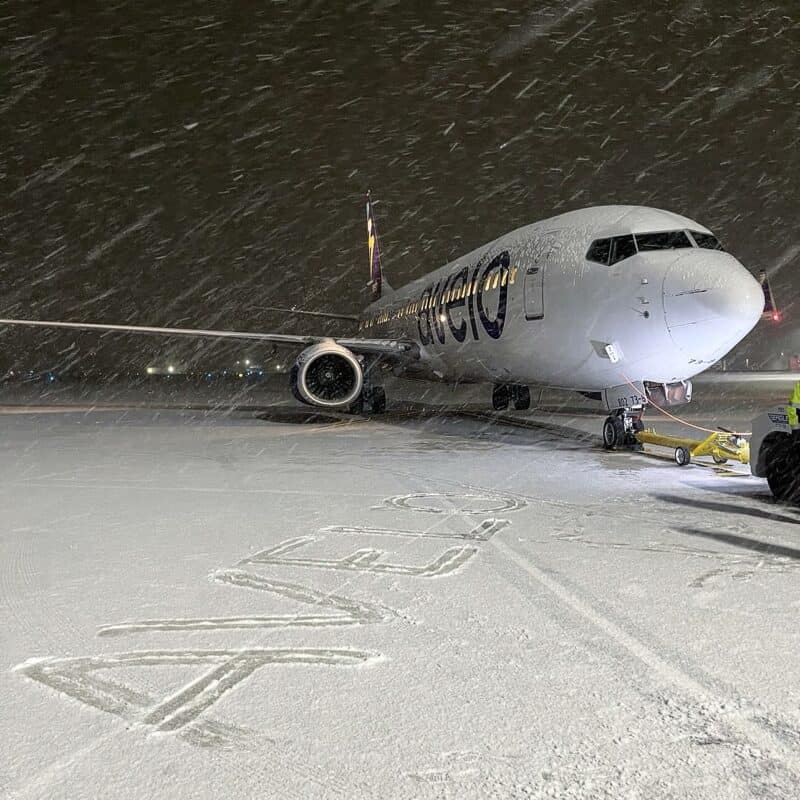
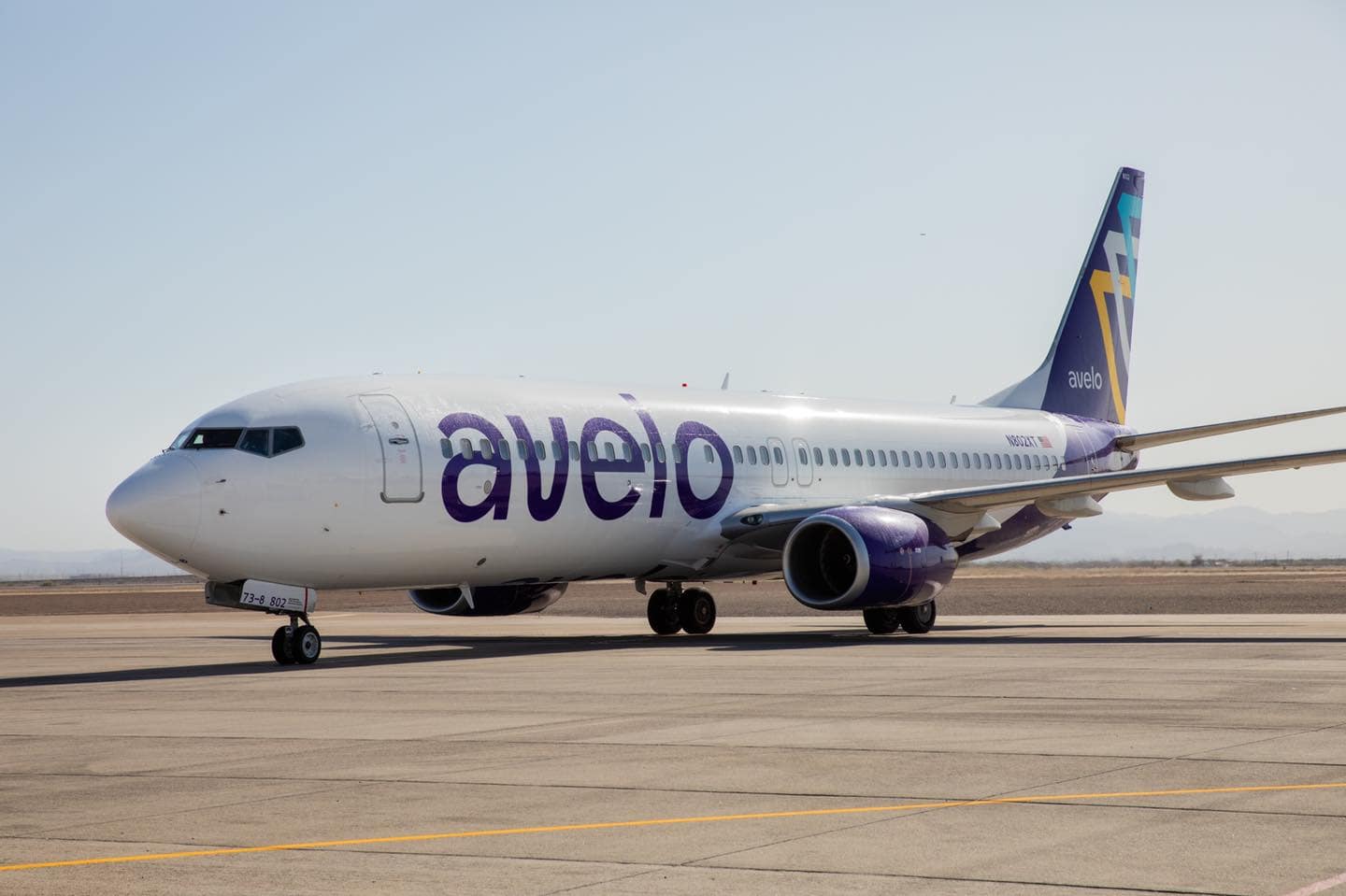
An Avelo Boeing 737 on the ramp at Mesa Gateway Airport (AZA) | IMAGE: Mesa Gateway Airport
Avelo’s deportation flights were based out of Mesa Gateway Airport (AZA) in Arizona and operated under a long-term charter agreement signed in spring 2025. The program used a small subset of the airline’s Boeing 737-800 fleet and dedicated crews based at AZA.
Avelo does not operate scheduled commercial flights out of AZA.
According to airline officials, the decision to exit the program came down to operational complexity and economics.
“The program provided short-term benefits but ultimately did not deliver enough consistent and predictable revenue to overcome its operational complexity and costs,” an Avelo spokesperson told Arizona’s Family.
With the AZA crew base closing on 27 January and the aircraft tied to that operation leaving the fleet, Avelo deportation flying will come to an end. The exact timing of the final charter flight will be determined by the federal government, which controls the schedule.
Aside from nationwide protests over the carrier’s decision to participate in the DHS program, this move removes a non-core operation that required specialized staffing, aircraft utilization, and regulatory coordination outside Avelo’s scheduled passenger network. The whole operation seems inefficient. The government contracts were likely lucrative, but one has to wonder if the controversy was/is worth it.
Bases Close, Texas Opens
Artist rendering of the new passenger terminal under construction at McKinney National Airport (TKI) | IMAGE: McKinney National Airport
Alongside the end of charter flying, Avelo is streamlining its network around a smaller number of core bases.
The airline will close crew bases at AZA, Raleigh-Durham International Airport (RDU), and Wilmington International Airport (ILM) in North Carolina. Commercial service will continue at these airports, but without aircraft and crews permanently stationed there.
Going forward, Avelo plans to concentrate on four primary bases: Tweed New Haven Airport (HVN) in Connecticut, Wilmington Airport (ILG) in Delaware, Concord-Padgett Regional Airport (USA) near Charlotte, North Carolina, and Lakeland Linder International Airport (LAL) in Florida.
Looking ahead, the airline has also confirmed plans to open a new base at McKinney National Airport (TKI) in Texas, scheduled for late 2026. Located about 30 miles north of Dallas, TKI fits Avelo’s strategy of flying from smaller, less congested airports while tapping into large population centers.
The Texas base is expected to support future growth as TKI expands to handle scheduled commercial service.
Route Cuts and a Smaller Fleet
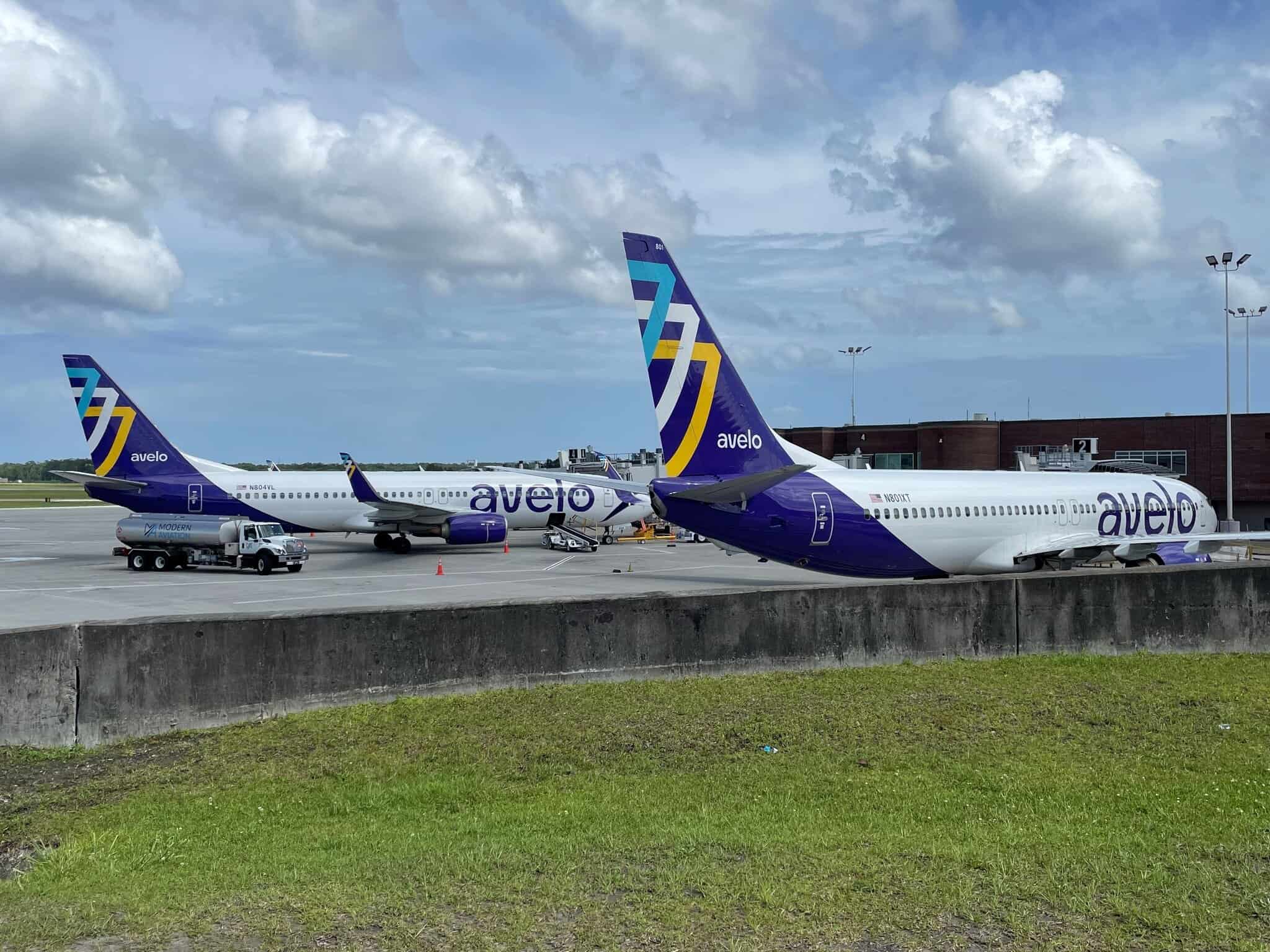
A pair of Avelo Boeing 737s at Wilmington International Airport (ILM) in North Carolina | IMAGE: Wilmington International Airport on Facebook
The network reset also comes with significant route reductions, particularly in North Carolina and the eastern United States.
At Wilmington (ILM), Avelo is dropping service to 11 destinations, including multiple Florida markets and its recently launched international route to Punta Cana (PUJ). Flights will continue from ILM to Nashville (BNA), New Haven (HVN), Tampa (TPA), and Baltimore/Washington International Thurgood Marshall Airport (BWI).
RDU will also see cuts, with several leisure routes ending as Avelo shifts capacity to stronger performing markets.
Fleet changes are part of the picture, as well. Avelo will remove six Boeing 737-700 aircraft, leaving the airline primarily operating the more efficient 737-800. Those aircraft offer better fuel burn and economics, which is increasingly critical as the airline positions itself for long-term sustainability.
The airline states that these moves are supported by a recent recapitalization that has left Avelo with one of the “strongest cash positions in the U.S. airline industry, relative to its size.”
A Reset Before Avelo’s Next Chapter
Artist rendering of an Avelo Airlines E195-E2 over New York | IMAGE: Avelo Airlines
While the changes announced on 6 January are disruptive in the near term, they appear to be designed to simplify the airline ahead of its next growth phase.
Avelo has already placed an order for up to 100 Embraer 195 E2 aircraft, which are expected to begin arriving later this decade. Those jets will enable the airline to open thinner routes, increase frequency, and reduce costs compared to larger narrowbody aircraft.
For such a young carrier, the pace and scale of change have been notable. Avelo has adjusted its business model several times in a relatively short period, underscoring just how difficult it is to find the right balance in today’s ULCC landscape.
While a dual West Coast and East Coast strategy was always going to be challenging for an airline of this size, the latest pullback suggests Avelo is still searching for a sustainable long-term footing. In the ULCC world, small miscalculations can compound quickly. Whether this reset provides the stability the airline is seeking will become clearer in the months ahead.
A long overdue FAA radar replacement marks the first major step toward a brand new US air traffic control (ATC) system.
For decades, the technology guiding aircraft across American skies has quietly relied on radar systems built in the 1980s. They have held up longer than anyone expected, but time has finally caught up. And even though it’s working, it doesn’t mean it’s working well. And with a system as complex as the American ATC system, that’s unacceptable.
On Monday, 5 January, federal officials confirmed that a long anticipated overhaul is officially, finally, underway.
US Transportation Secretary Sean P. Duffy and Airlines for America (A4A) president and CEO Nicholas Calio use visual aids like floppy disks and paper flight strips to demonstrate the antiquity of the American ATC system and the need for its overhaul | IMAGE: US Dept of Transportation
Transportation Secretary Sean P. Duffy and Federal Aviation Administration (FAA) Administrator Bryan Bedford announced that the FAA will begin replacing the nation’s aging radar network as part of a brand new air traffic control system. The effort is funded by the One Big Beautiful Bill and represents one of the most significant aviation infrastructure investments in generations.
Avgeekery has covered the Trump administration’s push to modernize the US air traffic control system in detail over the past year. This FAA radar replacement is the first tangible sign that the initiative is no longer theoretical, but actively moving forward.
FAA Radar Replacement Finally Moves From Talk to Action
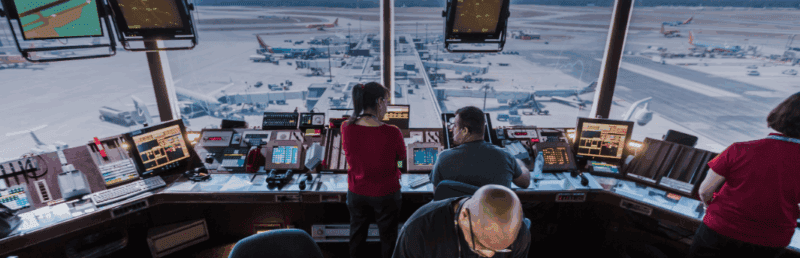
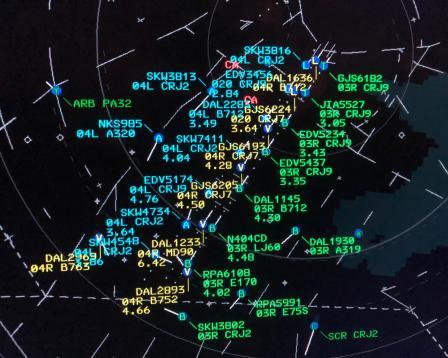
Detroit Metropolitan Wayne County Airport (DTW) triple arrivals radar screen | IMAGE: FAA
The announcement centers on the FAA’s radar replacement effort. Contracts awarded to RTX and Indra will modernize the systems responsible for tracking aircraft across the country. The FAA plans to replace up to 612 radars by June 2028, with the first installations scheduled to begin this quarter in high traffic airspace.
These ground-based radars are essential for detecting and tracking aircraft. Problem is, many of these radars have exceeded their intended service life by several decades. Keeping them running has become increasingly expensive and technically challenging, even as the volume of air traffic continues to increase unabated.
Secretary Duffy called the situation “unacceptable,” pointing out that while the US air travel system remains the safest in the world, relying on technology designed before the internet era limits what the system can do. Bedford echoed that view, emphasizing that the new radars will provide a more reliable surveillance foundation for the National Airspace System and help bring production and support work back to the United States.
We are buying radar systems that will bring production back to the U.S. and provide a vital surveillance backbone to the National Airspace System.
Bryan Bedford | FAA Administrator
As part of the effort, the FAA will also reduce the number of radar configurations currently used nationwide, simplifying maintenance and logistics across facilities.
We’re replacing our aging radar system, delivering on the promise to build a brand-new air traffic control system to enhance the safety and efficiency of our skies. The FAA awarded contracts to RTX and Indra who will contribute to replacing up to 612 radars by June 2028 with… pic.twitter.com/yieoh6jICV
The air traffic control system is safe, but aging equipment increasingly forces the FAA to slow flights when failures occur. In 2025 alone, flight delay minutes caused by equipment issues were roughly 300 percent higher than the average seen over the previous decade.
The FAA radar replacement is designed to address that problem head-on. New, commercially available surveillance radars will be more reliable, easier to support, and better suited to modern traffic demands. That reliability matters not just for efficiency, but for the controllers who rely on consistent, accurate data every minute of every shift.
This radar work is only one piece of a much larger modernization effort. The wide-reaching plan includes thousands of new high-speed network connections, tens of thousands of radios, hundreds of digital voice switches, expanded surface awareness systems at airports, and new tools inside towers and approach facilities nationwide. Alaska will also see major upgrades, including the installation of additional weather stations and camera sites.
Building the System That Comes Next
IMAGE: FAA
Leading the massive modernization project is Peraton, which was named the prime integrator in December to coordinate the construction of the brand-new air traffic control system. The company began work immediately and is already partnering with the FAA on early priorities such as transitioning remaining copper infrastructure to fiber and deploying next-generation communications equipment.
The contract structure is designed to keep the project on track. Performance matters, with incentives tied directly to meeting schedule and quality goals and penalties for delays or missed benchmarks. Oversight will be provided by senior leadership from the US Department of Transportation (DOT) and the FAA through an executive steering committee.
Congress provided a $12.5 billion down payment through the One Big Beautiful Bill to jump-start the effort, although officials acknowledge that additional funding will be required to complete the full program. If the timeline holds, the FAA will deliver the first entirely new air traffic control system since the 1960s by the end of 2028.
The rebuild of America’s air traffic system has officially begun.
From the Boeing 707 to the Ilyushin Il-62, early long-range jet airliners transformed how the world traveled across oceans.
During the late 1950s, as the world’s major aircraft manufacturers transitioned into the jet age, early long-range jet airliners emerged as successors to piston-driven types, such as the Douglas DC-7. These swept-wing, four-engine narrow-body designs laid the foundation for modern intercontinental air travel.
The United States and the Boeing 707 / Douglas DC-8 Rivalry
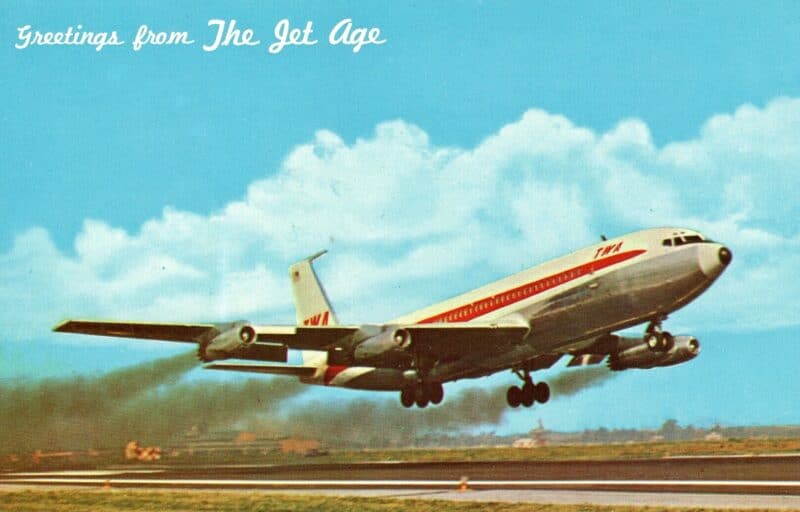
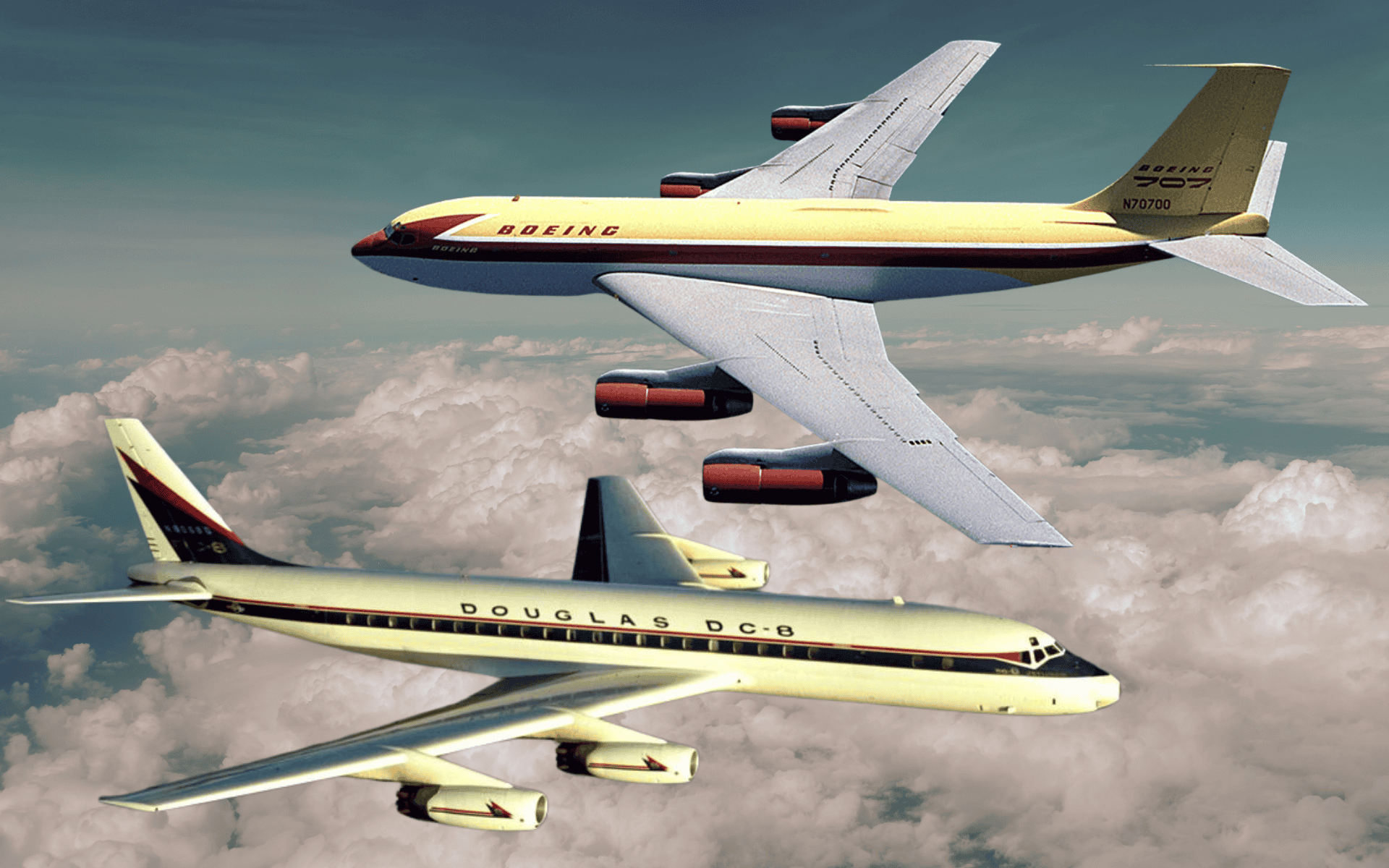
Early long-range jet airliners included types produced by rivals Boeing and Douglas, which produced the 707 and DC-8, respectively
In the United States, Boeing and Douglas quickly became dominant forces in the development of early long-range jet airliners, with the 707 and DC-8 defining the template for intercontinental jet travel.
Long before the 707, Boeing designed the B-247, which could be seen as the first “modern” airliner. It had an all-metal, cantilever, low-wing configuration; cowling-encased engines; and retractable landing gear. During the piston days, Boeing mostly took a back seat to Douglas. It produced the B-307 Stratoliner (the first pressurized airliner), the B-314 Flying Boat, and the B-377 Stratocruiser. The B-377 included a staircase-accessed lower-deck bar and lounge.
During the pure-jet era, the Boeing-Douglas duopoly imbalance shifted. The 367-80 served as the prototype for both the KC-135 military Stratotanker and the 707 airliner. With sleek lines, swept wings, podded engines, and a conventional tail, it influenced many early four-engine, narrow-body jets. It was made in four main versions.
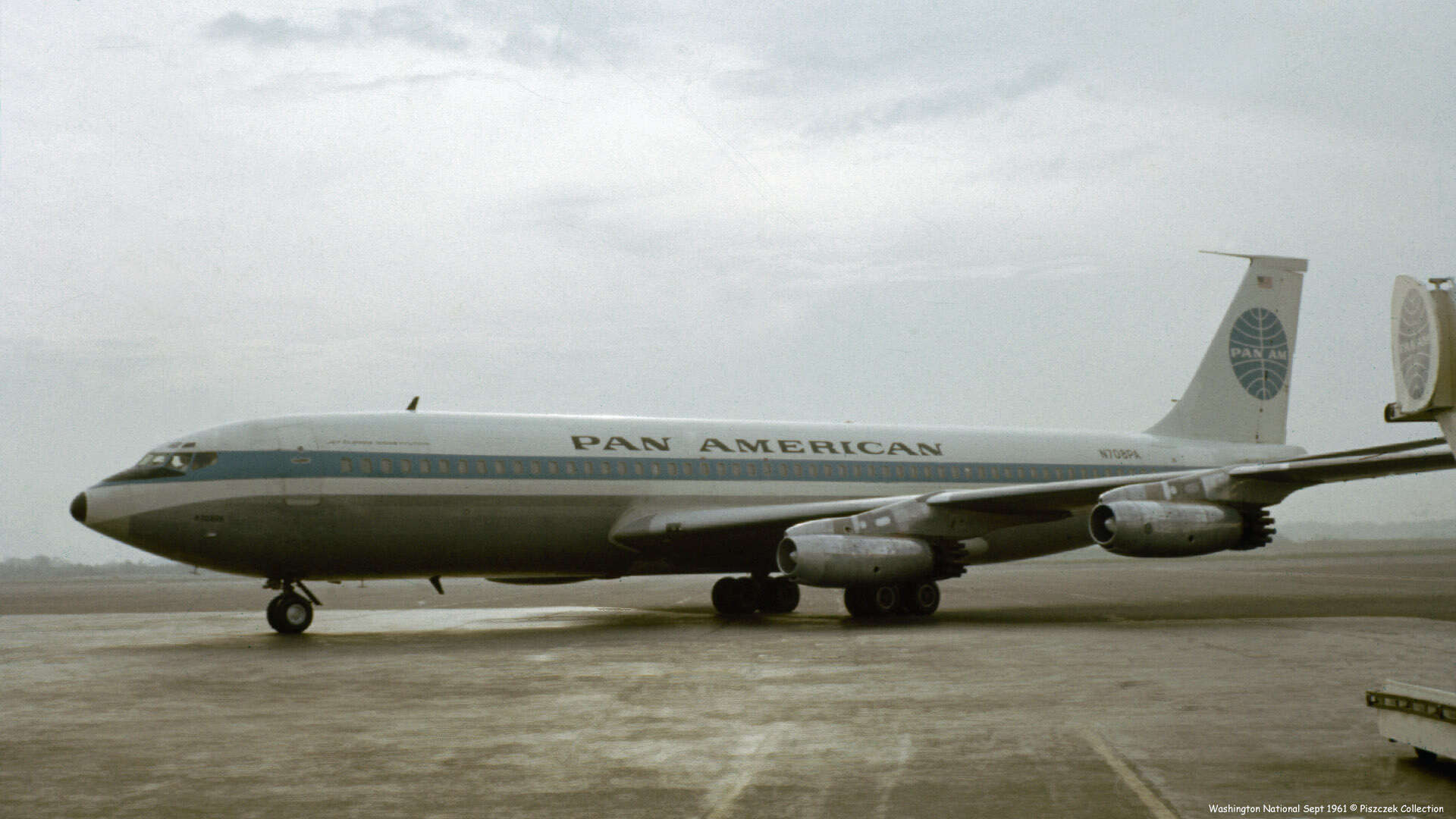
Pan Am operated the world’s first Boeing 707 (reg. N708PA), seen here at Washington National (DCA) in September 1961 | IMAGE: By Pete Piszczek – https://www.flickr.com/photos/79009322@N04/13975557309/, CC BY 2.0, https://commons.wikimedia.org/w/index.php?curid=149812149
The first, the 707-120, was powered by four 11,200-pound-thrust Pratt and Whitney JT3C-6 turbojets and accommodated up to 179 passengers. It had a mixed-payload range of 3,300 nautical miles, but, as the initial version, it was not really a “long-range” jet.
The second variant, the 707-220, used four 15,800-pound-thrust JT4A-3 engines. It was designed for high elevation and temperature, serving airports that require more performance. Only five were built for Braniff International’s South American routes.
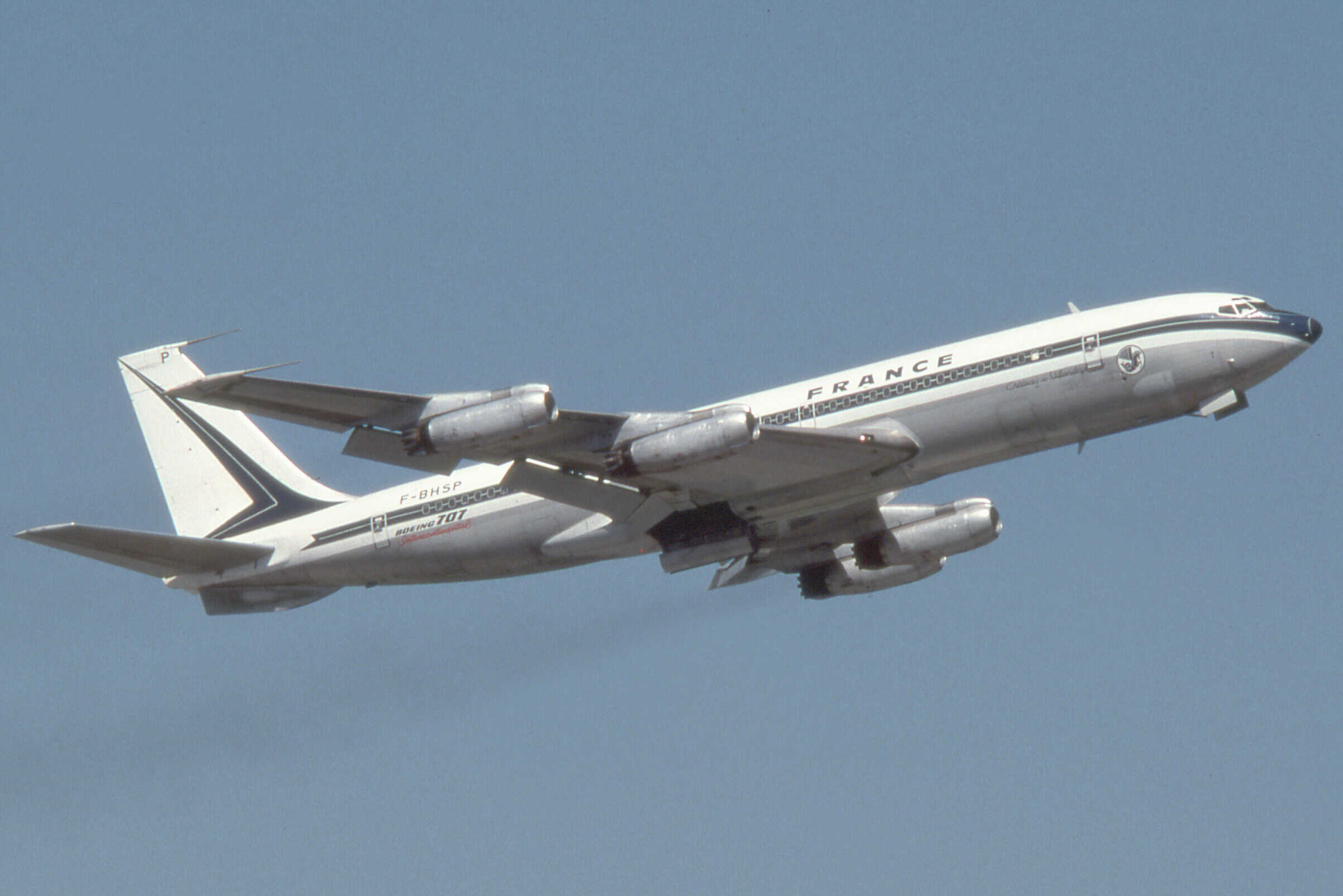
The -320 stretched version of the Boeing 707 in Air France colors, departing London Heathrow (LHR) in 1972 | IMAGE: By clipperarctic – Air France Boeing 707-328, CC BY-SA 2.0, https://commons.wikimedia.org/w/index.php?curid=31454073
The 707-320, the third version, was the first true “long-range” model, boasting a 4,155 nautical-mile full-payload capability. However, a mixed-class arrangement increased this to 5,180 miles.
Equipped with four Pratt & Whitney JT4A turbojets, the 707-320 featured a stretched fuselage that accommodated up to 189 passengers and a re-engineered wing with increased span and area, thereby boosting lift and range.
The fourth major version, the 707-420, featured 17,500 thrust-pound Rolls-Royce Conway aft-fan engines and had a payload-varying range of between 4,225 and 5,270 miles.
The 707-320B, with 18,000 thrust-pound JT3D-3 engines, introduced low-bypass-ratio turbofans, as opposed to the previous “straight-pipe” ones, and was therefore quieter. It had a range of up to 5,385 miles.
Further down the West Coast, in California, the DC-8 marked Douglas’s transition to the jet age, following its highly successful piston series from the DC-1 to the DC-7.
Among early long-range jet airliners, the Douglas DC-8 distinguished itself with exceptional range growth and flexibility across multiple variants.
The DC-8 was built without a prototype and had a fuselage wide enough for six-abreast coach seating, which pushed Boeing to widen its 707 to compete. Several versions often matched Boeing’s design.
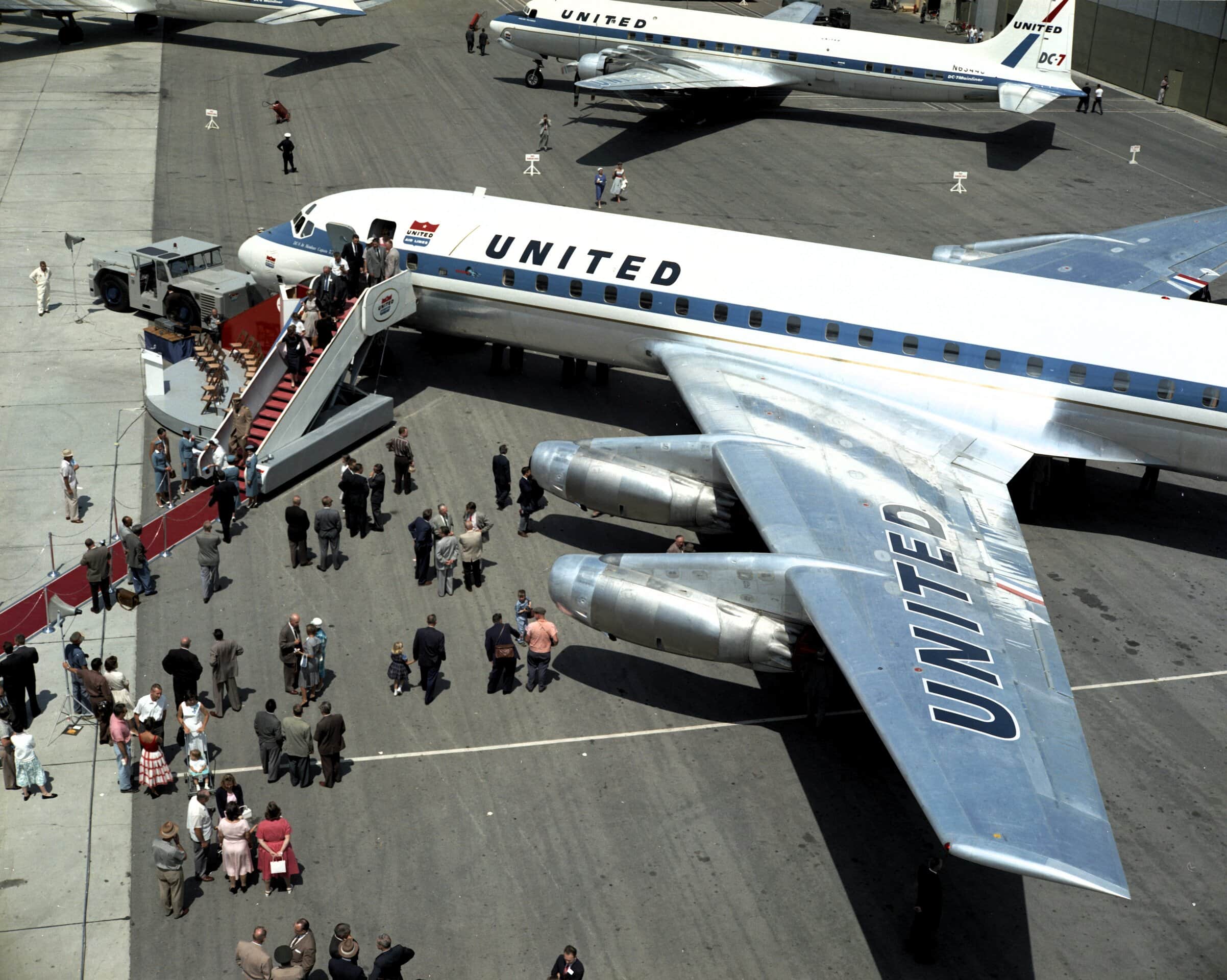
United Airlines takes delivery of its first DC-8-11 in 1959
Powered by four 17,500-pound thrust JT4A-11 or -12 turbojets and introducing a new, chord-increasing wing leading edge, the DC-8-30 Intercontinental was the 707-320’s counterpart and offered transatlantic range to launch operators Pan American and KLM Royal Dutch Airlines.
The DC-8-40, the 707-420’s equivalent, introduced 17,500 thrust-pound Rolls-Royce Conway engines and a 315,000-pound gross weight, and the DC-8-50 was the first turbofan variant with JT3D-1s, giving it a full-payload, 6,000-mile range.
All these aircraft seated 189 in a six-abreast, single-class configuration, but the DC-8-61, with a 36.8-foot longer fuselage, took maximum capacity to 259 and was, for a time, the world’s largest commercial airliner.
The DC-8-63, with the same length but 19,000 thrust-pound JT3D-7 turbofans housed in revised, pencil-thin nacelles, had a 4,500-mile range.
The DC-8-62 retained its powerplants but featured a modest 6.8-foot fuselage stretch. It could seat 200 passengers and had three-foot, drag-reducing wingtip extensions. It became the world’s longest-range commercial airliner until the Boeing 747SP was introduced. The full payload range was 5,214 miles, enabling nonstop flights from the US West Coast to Europe.
In total, 556 DC-8s of all variants were produced.
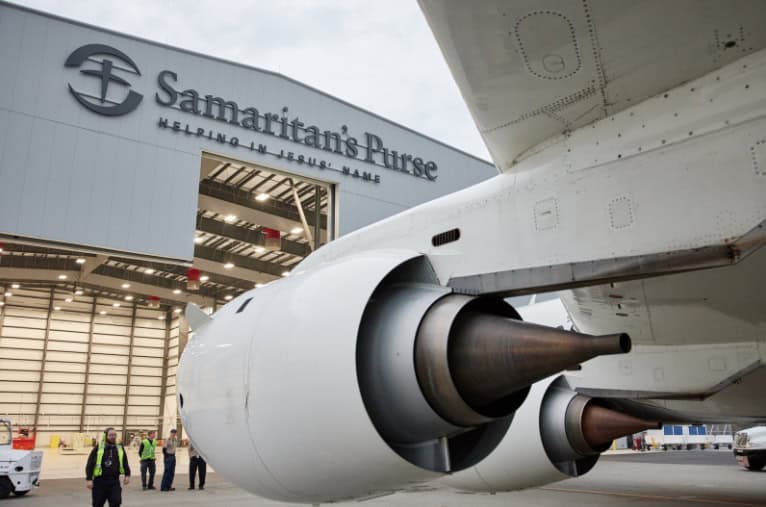
Douglas upgraded some of its -60 series DC-8s to -70 series by installing larger CFM engines during the 1970s | IMAGE: Courtesy of Samaritan’s Purse
Britain’s Quest for Long-Range Jet Performance
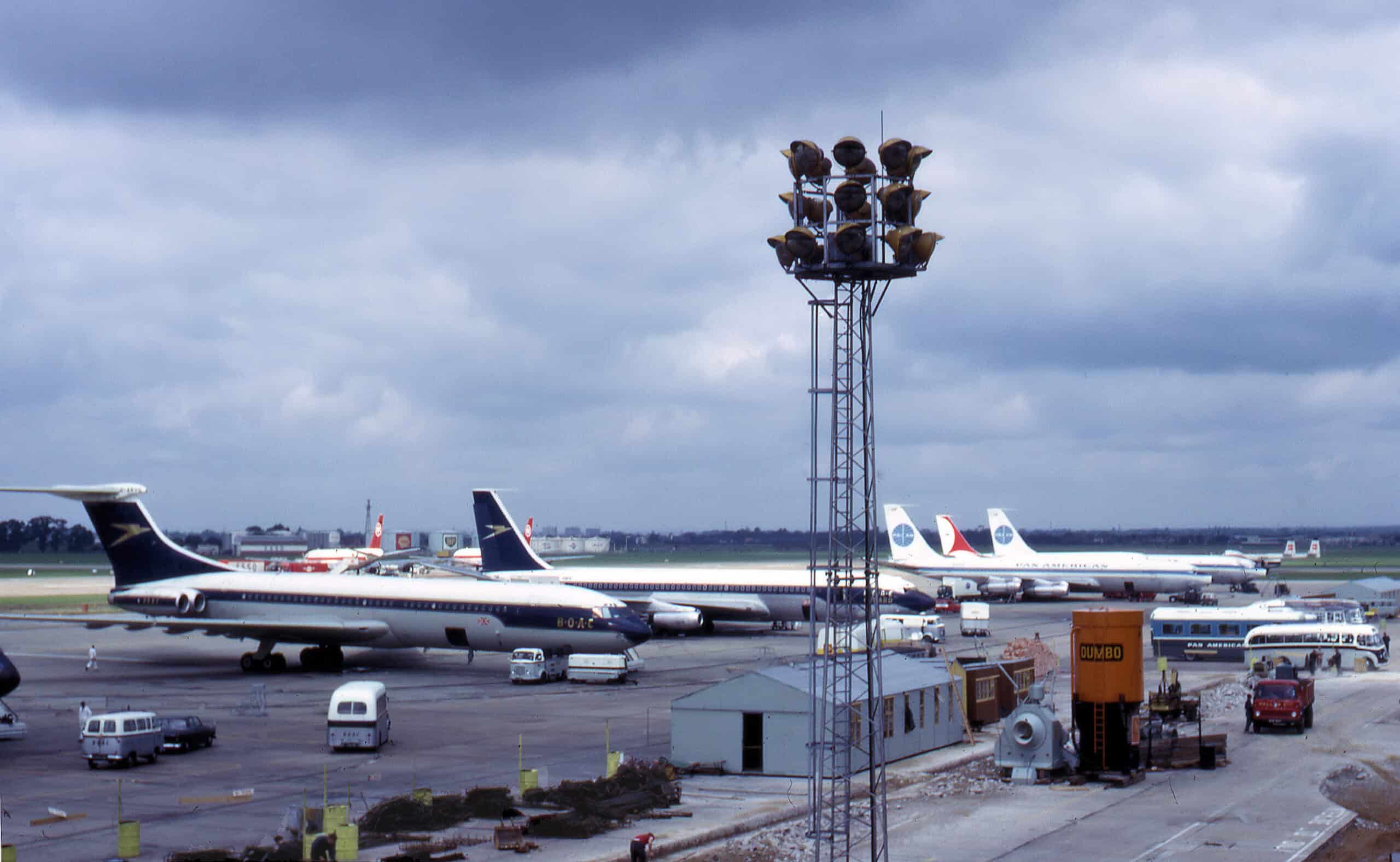
London Heathrow Airport (LHR) in 1965, featuring early long-range jet airliners such as the BOAC Vickers VC-10, BOAC Boeing 707, along with Pan Am and Air India 707s | IMAGE: Public Domain
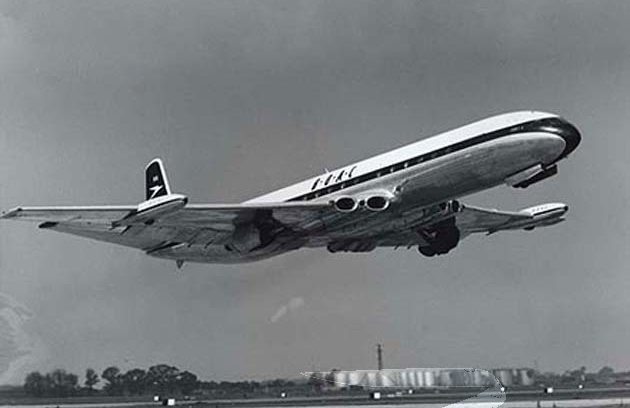
Although the de Havilland DH.106 Comet will be forever known as the world’s first pure-jet commercial airliner, turbojet availability, fuel capacity, and, to a degree, a lack of experience, reduced it to a medium-range aircraft at best, requiring British Overseas Airways Corporation (BOAC) to serve Johannesburg, South Africa, from London with five en route refueling stops.
British Overseas Airways Corporation (BOAC) de Havilland Comet
The Comet 1A added 1,000 Imperial gallons of fuel and increased passenger capacity from 36 to 44. The Comet 2 offered a three-foot fuselage stretch and 65,000 thrust-pound Rolls-Royce RA7 Avon 502 engines. Still, neither succeeded in placing the aircraft in the “long-range” category.
The first transatlantic version, the Comet 3, had an 18.6-foot longer fuselage, pinon tanks for 1,000 extra Imperial gallons of fuel, and 78 single-class passengers. It never entered production. In-flight explosions of earlier versions needed investigation first.
The Comet 4 series later offered greater range. BOAC operated the world’s first transatlantic London-to-New York jet flight on 4 October 1958, three weeks before Pan Am’s 707-120. However, it still required a refueling stop in Gander, Newfoundland (YQX).
Whether the definitive Comet 4C, which combined the Comet 4’s wing and fuel tankage with the Comet 4B’s longer fuselage for seating of just over 100, can be considered a true long-range aircraft is debatable, especially when compared to the Boeing 707-320B and the Douglas DC-8-50, DC-8-62, and DC-8-63.
More accurately classifiable as a “long-range” jetliner than the de Havilland Comet was the Vickers VC10. Although it was not originally conceptualized as a competitor to the two US quad-jets, it was designed instead to offer the performance that neither of them could.
Britain needed a pure-jet type to serve Commonwealth routes in Africa and Asia, which had hot, high-elevation airports and short runways. The design had to meet these tough conditions so BOAC could offer service.
The typical wing-mounted engine layout was unsuitable for demanding Commonwealth routes. Designers pursued maximum lift with a clean, 32-degree swept wing and advanced high-lift Fowler flaps. They concentrated four Rolls-Royce Conway turbofans at the extreme rear fuselage, and adopted a high T-tail to keep the horizontal stabilizer clear of engine exhaust.
The Standard VC10 1101 entered service with BOAC on 29 April 1964, operating between London and Lagos, Nigeria. It was followed by the stretched Super VC10 1152, which was 13 feet longer. The Super VC10 accommodated up to 187 passengers in a single-class, six-abreast configuration and served as a true transatlantic rival to the 707 and DC-8. This fixed the Comet’s range problem.
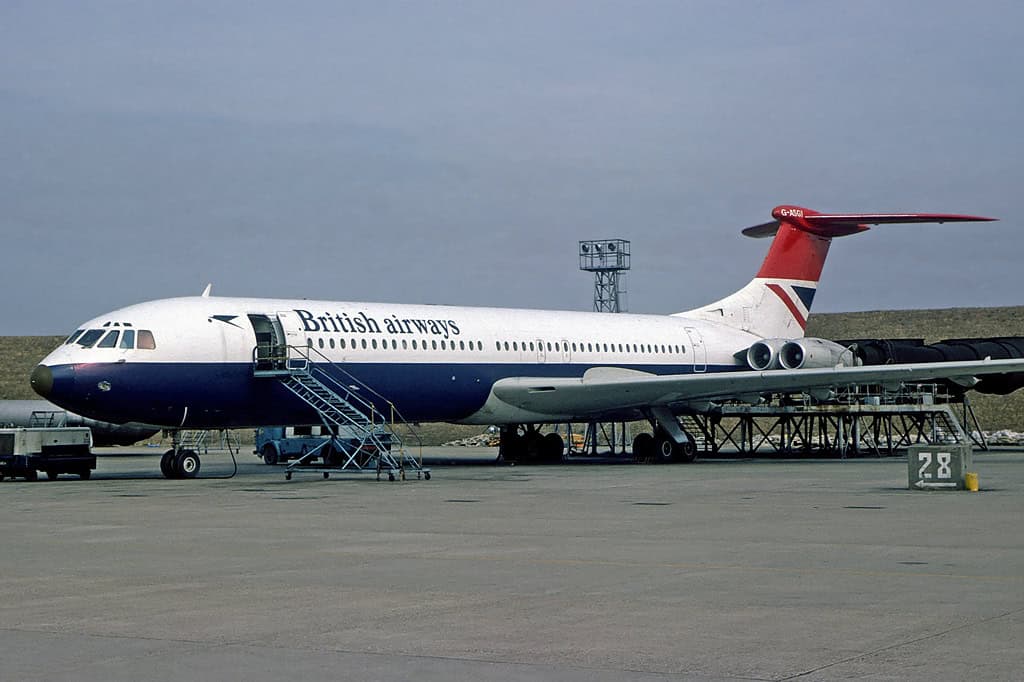
A British Airways Super VC10 undergoes maintenance at London Heathrow Airport (LHR) in September 1975 | IMAGE: By Steve Fitzgerald – http://www.airliners.net/photo/British-Airways/Vickers-Super-VC10/1915910/L/, GFDL 1.2, https://commons.wikimedia.org/w/index.php?curid=17275158
The Super VC10 was quiet and solid. Passengers liked it, and load factors were high. However, its rear-engine, T-tail design made the structure heavier and operations costlier, even though it had almost a 5,000-mile range. This led BOAC to replace the VC10 with the 707, despite objections from the British government.
After airports on Commonwealth routes were equipped with longer runways, the VC10 was no longer needed for them. Production stopped after only 54 Standard and Super VC10s were made, despite the aircraft being a superbly engineered jetliner.
The Boeing 707-320 and Douglas DC-8-30 became the world’s first intercontinental jetliners. However, tucked away in the final assembly hall in Wisley, England, was an airframe taking shape that could have claimed this title two years before the US designs did. This was the Vickers V1000. Unfortunately, it never saw the light of day and, thus, never had the opportunity to prove its worth.
The catalyst for the project was the Ministry of Supply’s (MoS) requirement for a speed-compatible troop transport to accompany the Royal Air Force’s (RAF) V-bombers on long-range missions. Vickers, which produced its own Valiant bomber, logically seemed the choice to meet it, and George Edwards became the program’s chief designer.
It was at the same time that the national carrier BOAC began to assess its own needs for a true transatlantic jetliner, as its Comet 1s offered limited passenger capacity and lacked the range to operate such routes.
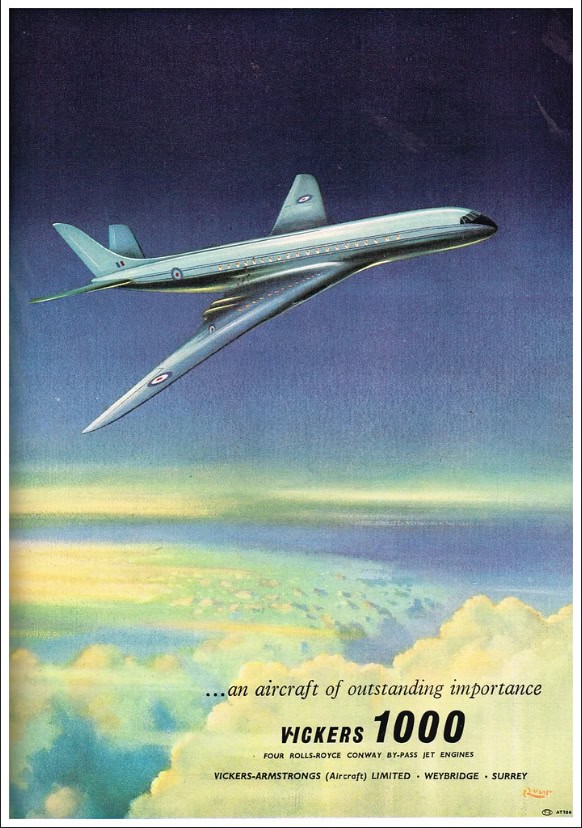
Designed as a larger, longer-range, and more advanced successor, the V1000 measured 146 feet in length and featured a fuselage built with thicker-gauge metal skin. The pressurized aircraft incorporated a multi-pane windscreen, forward and aft passenger doors on the port side, servicing doors on the starboard side, 18 elliptical cabin windows, four overwing emergency exits, and two underfloor baggage and cargo holds.
An ad featuring the proposed Vickers 1000 (V1000) jetliner | IMAGE: aviationancestry.co.uk
A 140-foot, compound-swept wing with a 6.0:1 aspect ratio and 3,263 square feet of area had 38-degree inner and 28-degree outer sweeps, solid milled spars, and advanced flaps. Lateral control used two-section ailerons.
The conventional tail consisted of a swept vertical, fuselage-integral fin with a three-piece rudder and horizontal stabilizers mounted at considerable dihedral to avoid jet exhaust interference.
Power was provided by four wing root-installed, 15,000-thrust-pound Rolls-Royce Conway aft-fan engines, the world’s first low-bypass-ratio turbofans.
Representing Britain’s opportunity to lead the world commercial aviation market with a large-capacity, long-range intercontinental variant of the V1000, designated VC7—and adding to its achievements of having designed the world’s first successful turboprop Viscount and pure-jet Comet —the type, with a 90 percent completed prototype that was only six months from its first flight, was canceled.
The VC7’s transatlantic range, which would have enabled it to both precede and then compete with the quad-jets then under development on the US West Coast, was compromised by structural weight increases, necessitating 17,500 thrust-pound versions of the Conway engine, which Rolls-Royce was amenable to designing. Cost escalations and program delays inevitably made negative inroads into what was Britain’s hope for commercial jet aviation superiority.
Despite the V1000’s and VC7’s design advancements and the anticipated success they could have achieved as both a single aircraft and a representation of the British aircraft industry, being first was only one element in the formula. Being superior was another aspect, and one retrospective view highlights two potential shortcomings that could have impacted sales—namely, a cruise speed that was approximately 40 mph lower than that of the US quad-jets and a higher gross weight.
Soviet Solutions for Intercontinental Jet Travel
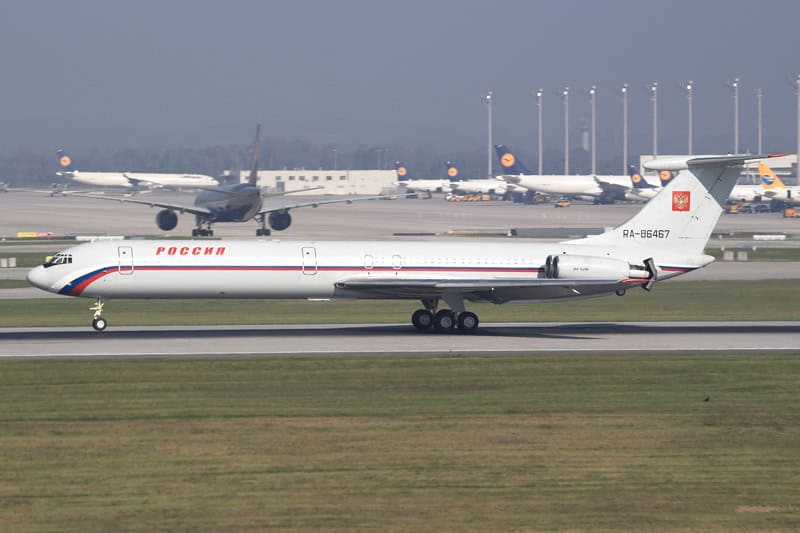
A Rossiya (Russian State Transport Company) Ilyushin Il-62M landing at Munich Airport (MUC) in 2006 | IMAGE: By I, JuergenL, CC BY 2.5, https://commons.wikimedia.org/w/index.php?curid=2362190
Although Russia’s first jet airliner, the Tupolev Tu-104, was an adaptation of the Tu-16 Badger, sharing the same wings, Mikulin turbojets, tail, and undercarriage, this 50-passenger airliner, with a 1,500-mile range, could hardly be considered a long-range one. However, it can be credited with being the first to operate sustained jet service, as the Comet was grounded for four years while the cause of its explosive decompressions was investigated, and the type re-emerged as the stretched Comet 4.
Like Britain, the Soviet Union ultimately fielded a true competitor in the race to develop early long-range jet airliners with the introduction of the Ilyushin Il-62, which featured clean, swept wings, an aft fuselage-mounted 23,150-pound-thrust Kuznetsov NK-8-4 turbofan, and a T-tail, bearing a striking resemblance to the Super VC10.
Accommodating almost 200 in its final version and powered by 23,350 thrust-pound Soloviev D-30KU engines, it featured a 6,400-mile range and enabled Aeroflot to operate intercontinental services to Montreal, New York, and Tokyo with it.
China’s Attempt at an Indigenous Long-Range Jetliner
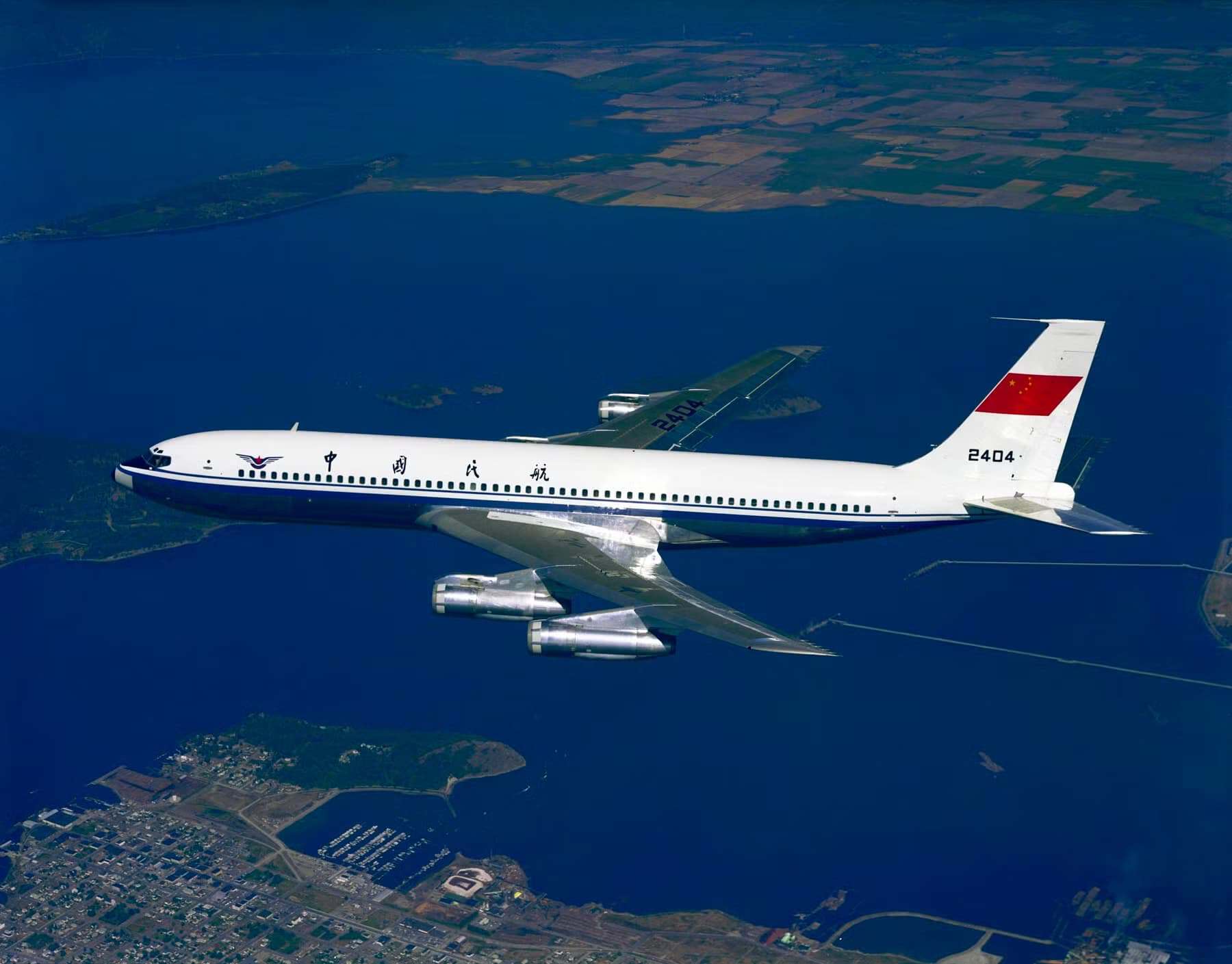
Little-known, the Shanghai Y-10 could have represented the Chinese aircraft manufacturers’ successful attempt to produce a quad-engine, long-range, narrow-body jetliner in the Boeing 707 and Douglas DC-8 class, thus filling national carrier CAAC’s needs for such an indigenous counterpart. But its inferior, reverse-engineered, pieced-together nature, lack of safety, and three-decade-old technology foundation left it little more than an aerial test vehicle that never entered service.
Catalyst to the Shanghai Y-10—Yun-10 or “Transporter-10” in Chinese—was Wang Hongwen, who had significant influence in the Chinese Communist Party and was the youngest member of the Gang of Four. He proposed an aircraft that would fulfill the dual purpose of initiating the country’s indigenous aviation design and manufacturing industry, while maintaining Maoist isolationism.
The overall configuration, based on technical drawings completed in June 1975, was highly suggestive of the Boeing 707, but with a modified cockpit window layout and a shorter fuselage, resulting in an overall length of 140.10 feet.
As had occurred with other western design copies, such as that of the Ilyushin Il-62, which strongly resembled the Vickers VC10 with its four aft-mounted turbofans and t-tail, and the Tupolev Tu-144, which, in essence, was an attempt to offer an Aerospatiale-British Aerospace Concorde equivalent, it appeared to be based upon an existing aircraft.
A lack of aluminum alloy skins and their thicker gauge resulted in higher empty and gross weights, respectively, of 128,133 and 224,872 pounds, which increased fuel consumption and seat-mile costs.
The wings, whose span ultimately became 138.7 feet, gave the delusion that engineers had succeeded in copying those of the 707, but reverse-engineering attempts had failed, and the same process was employed by using those of the Hawker Siddeley Trident.
Power was originally to have been provided by Chinese-designed, Pratt and Whitney JT3D-copied WS-8 engines, but oil leaks forced the use of reverse-engineered engines from a 707 that crashed in Urumqi on 19 December 1971.
Internally, the Shanghai Y-10 could accommodate 124 mixed first- and economy-class passengers, 149 in an all-coach arrangement, or up to 178 in a single-class, high-density one. The five-person cockpit crew consisted of the pilot, copilot, flight engineer, navigator, and radio operator.
Its maximum payload gave it a range of 3,450 miles. Its maximum and cruise speeds were, respectively, 605 and 570 mph, and its service ceiling was 40,450 feet.
Production of the Y-10 commenced in June of 1975 and three airframes were ultimately built—a static test example (01), which was subjected to 1,400 hours of wind-tunnel testing; a flying prototype (02), B-0002, which first flew on 26 September 1980 under the command of Captain Wang Jinda; and a fatigue-test airframe (03), which, like the static-test one, never actually took to the sky.
Aircraft B-0002 nevertheless undertook handling characteristic assessment flights, including one that kept it airborne for four hours and 49 minutes, one that covered 2,236 miles, and one that surmounted Mount Everest. A familiarization tour took it to Beijing, Chengdu, Guangzhou, Harbin, Hefei, Kunming, Lhasa, and Urumqi.
Although CAAC, which could not only have acquired the type, but could have done so on behalf of other Chinese state carriers, failed to place a launch order with the face-saving explanation that its needs had already been met with other types, it found its technology inferior to the point of being viewed as unsafe, leading to program cancellation in 1985 after the single flying prototype had amassed 170 airborne hours during 130 fights.
Operation Absolute Resolve details the aviation-driven mission that brought over 150 aircraft together to support the capture of Nicolás Maduro and his wife in Caracas.
In the early hours of Saturday, 3 January 2026, an aviation-heavy U.S. military operation unfolded over and around Venezuela that culminated in the capture of President Nicolás Maduro and his wife, Cilia Flores.
The mission, known as Operation Absolute Resolve, relied on airpower, coordination, and timing on a scale rarely seen in the Western Hemisphere.
If the date feels familiar, it should. The last time a US operation of comparable scope occurred in the region was exactly 36 years earlier, when American forces captured Panamanian leader Manuel Noriega during Operation Just Cause on 3 January 1990.
Previously unseen footage from last night’s military operation by the United States, showing the moment that strikes targeted several warehouses at the Port of La Guaira to the north of Venezuela’s capital of Caracas. pic.twitter.com/a8OAhfUP2g
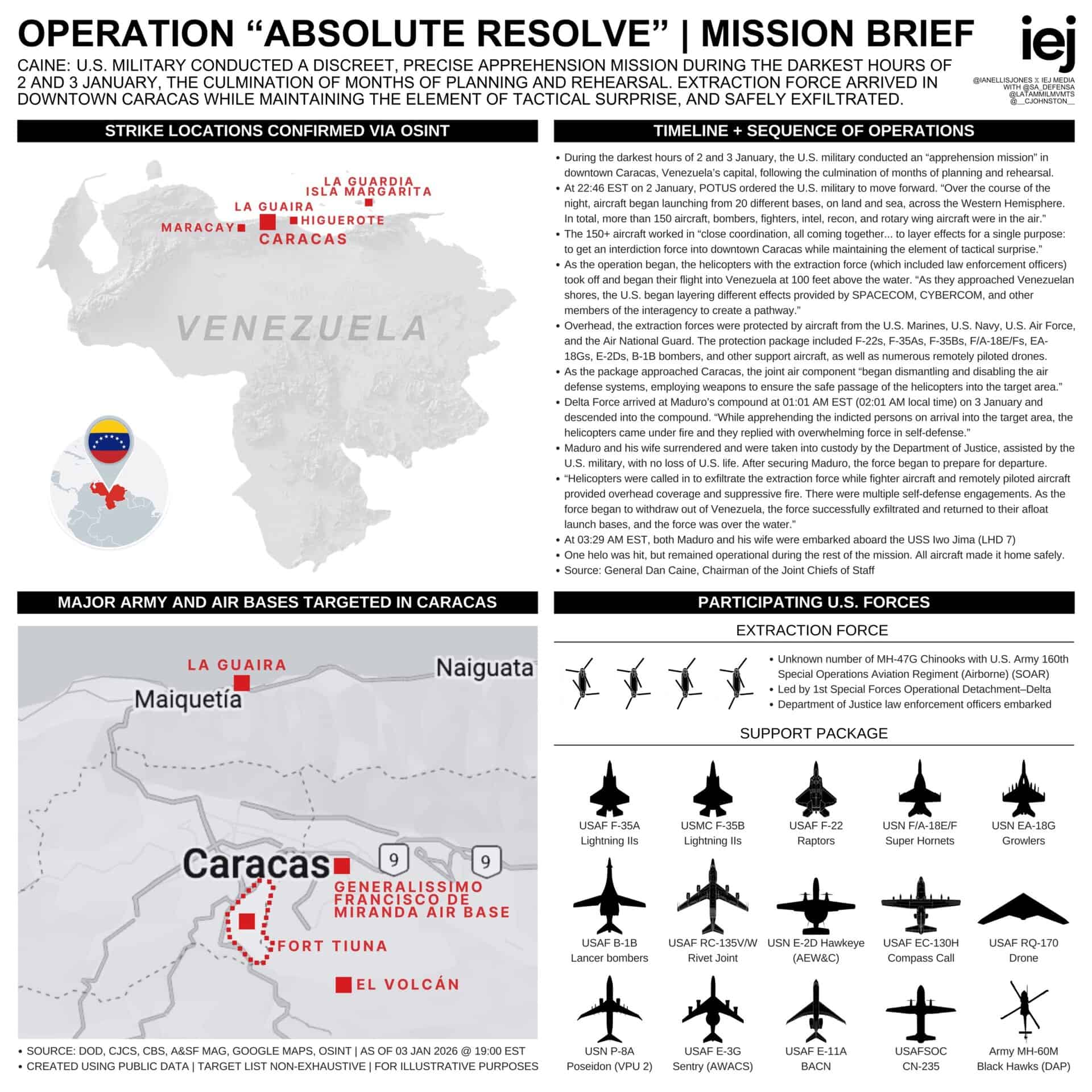
Operation Absolute Resolve mission brief | IMAGE via x.com/ianellisjones
More than 150 aircraft were involved in the strike package that supported Operation Absolute Resolve. Fighters, bombers, surveillance platforms, refueling tankers, and drones launched from at least 20 bases across the Western Hemisphere after President Donald Trump authorized the operation on Friday, 2 January.
The president gave the order to proceed with the operation at approximately 2246 Washington time on 2 January.
Confirmed participants included assets from the US Air Force, US Navy, US Marine Corps, and the Air National Guard. US Army rotary-wing aircraft were also likely involved, though their participation has not yet been formally confirmed.
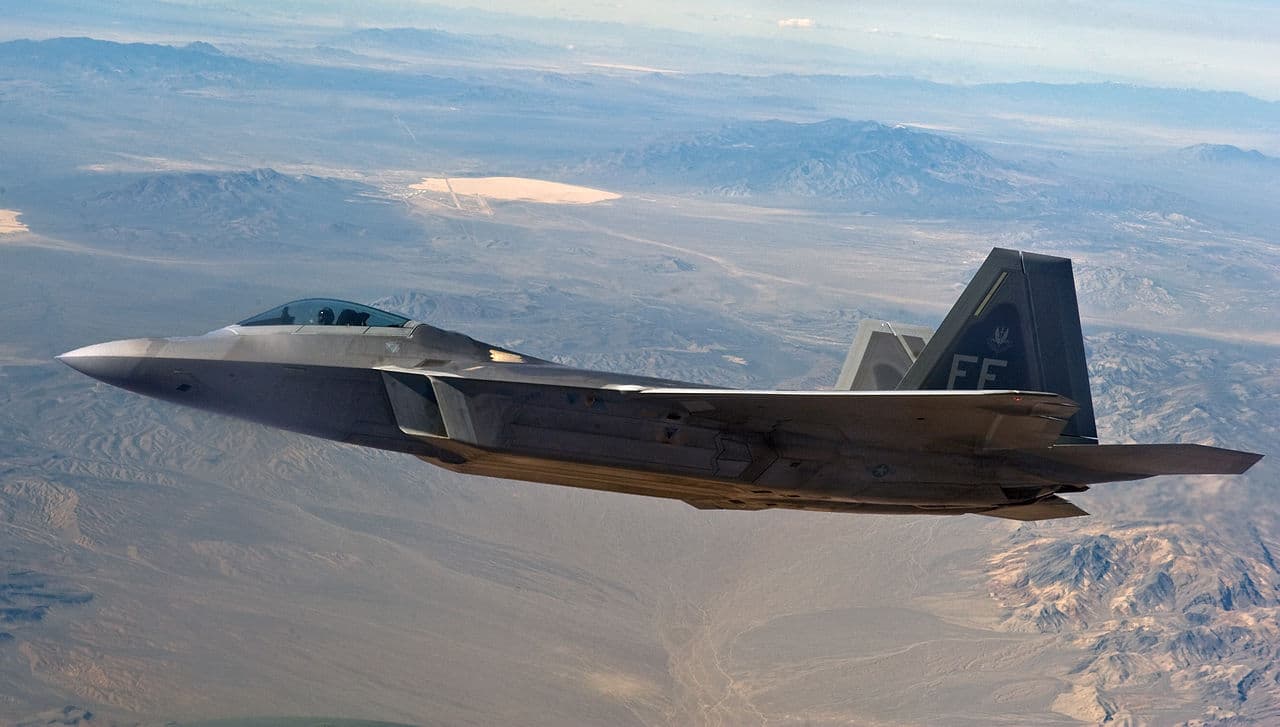
12 F-22 Raptors, likely with the U.S. Air Force’s 1st Fighter Wing based out of Joint Base Langley–Eustis in Virginia, were spotted this morning on the tarmac at Roosevelt Roads Naval Station in Eastern Puerto Rico, with it confirmed that F-22s participated in last night’s… pic.twitter.com/LaoSFomQuO
Open-source imagery indicates that F-22 Raptors were forward-positioned at Roosevelt Roads Naval Station in Puerto Rico, sharing the ramp with Vermont Air National Guard F-35As, US Marine Corps F-35Bs, and other US military aircraft. Naval forces were also active throughout the region, including the aircraft carrier USS Gerald R. Ford and the amphibious assault ship USS Iwo Jima, supported by a network of operating locations across Puerto Rico, the US Virgin Islands, El Salvador, the Dominican Republic, and bases within the continental United States.
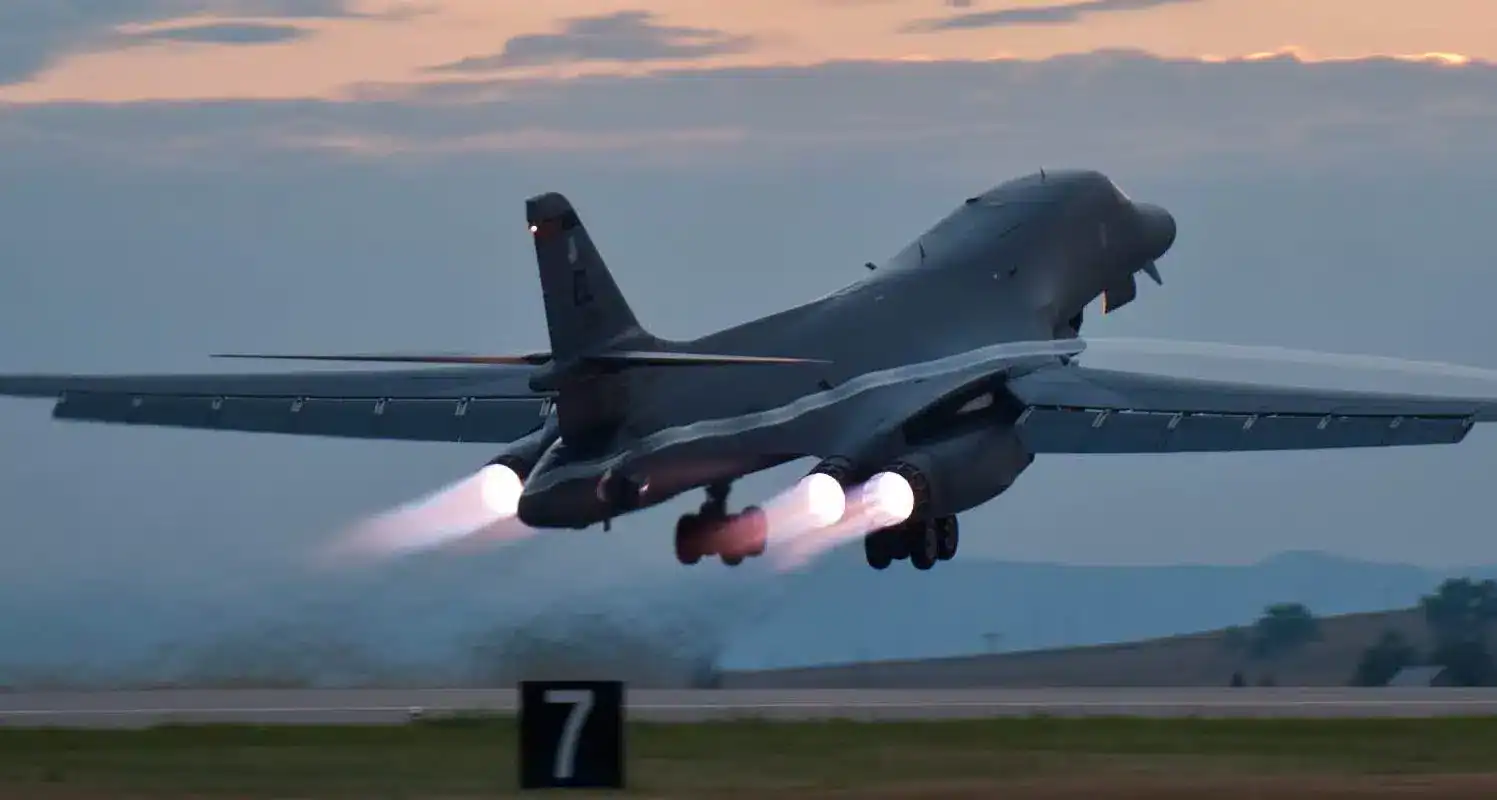
Independent analysts assessing publicly available data suggest that B-1B Lancer bombers launched from Dyess Air Force Base in Texas. In the days leading up to the operation, civilian flight-tracking platforms recorded both F-22s and B-1s heading south from their US home stations, activity that may have reflected training runs, diversionary movements, or missions postponed by unfavorable weather. Separately, videos shared online appeared to capture the presence of an RQ-170 Sentinel stealth reconnaissance drone over Venezuelan airspace.
U.S. RQ-170 stealth drone returning to Puerto Rico this morning.
This is immensely rare footage of the drone, spotted after supporting US strikes on Venezuela last night. pic.twitter.com/XQFpWyIjiW
Operation Absolute Resolve and the Fight for the Air Domain
B-1B Lancer
Months in the making, Operation Absolute Resolve had reportedly been ready to execute since early December 2025. In the weeks leading up to the mission, intelligence-gathering efforts were conducted by agencies including the CIA, NSA, and the National Geospatial-Intelligence Agency (NGA).
On the night of 2–3 January, the weather conditions required for the operation finally materialized. President Trump ordered the operation to proceed. US Space Command and US Cyber Command, working alongside intelligence agencies, helped clear the path for an American rotary-wing interdiction force that approached Caracas at roughly 100 feet above the ocean. Simultaneously, US forces disrupted Venezuelan electrical infrastructure, plunging large parts of the capital into darkness.
Air Force Gen. Dan Caine, Chairman of the Joint Chiefs of Staff, acknowledged the complexity of the mission, saying, “The word integration does not explain the sheer complexity of such a mission, an extraction so precise it involved more than 150 aircraft launching across the western hemisphere in close coordination, all coming together in time and place to layer effects for a single purpose, to get an interdiction force into downtown Caracas while maintaining the element of tactical surprise. Failure of one component of this well-oiled machine would have endangered the entire mission.”
Caine noted that US servicemembers involved ranged in age from 20 to 49. “The goal of our air component is, was, and always will be, to protect the helicopters and the ground force and get them to the target and get them home,” he added.
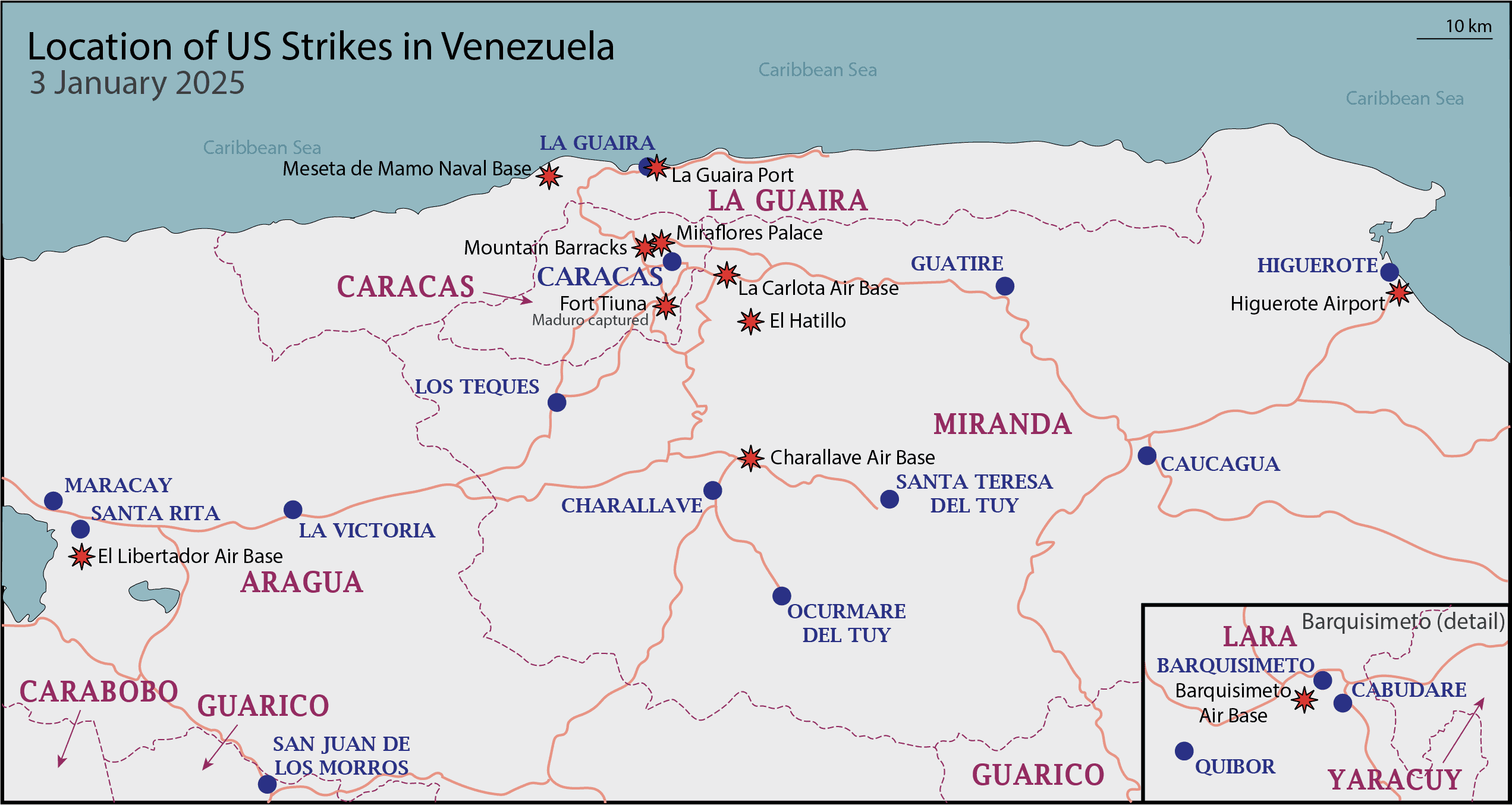
Location of US airstrikes during Operation Absolute Resolve | IMAGE: By Chorchapu – Own work, CC BY 4.0, https://commons.wikimedia.org/w/index.php?curid=181181010
Helicopters Over Caracas
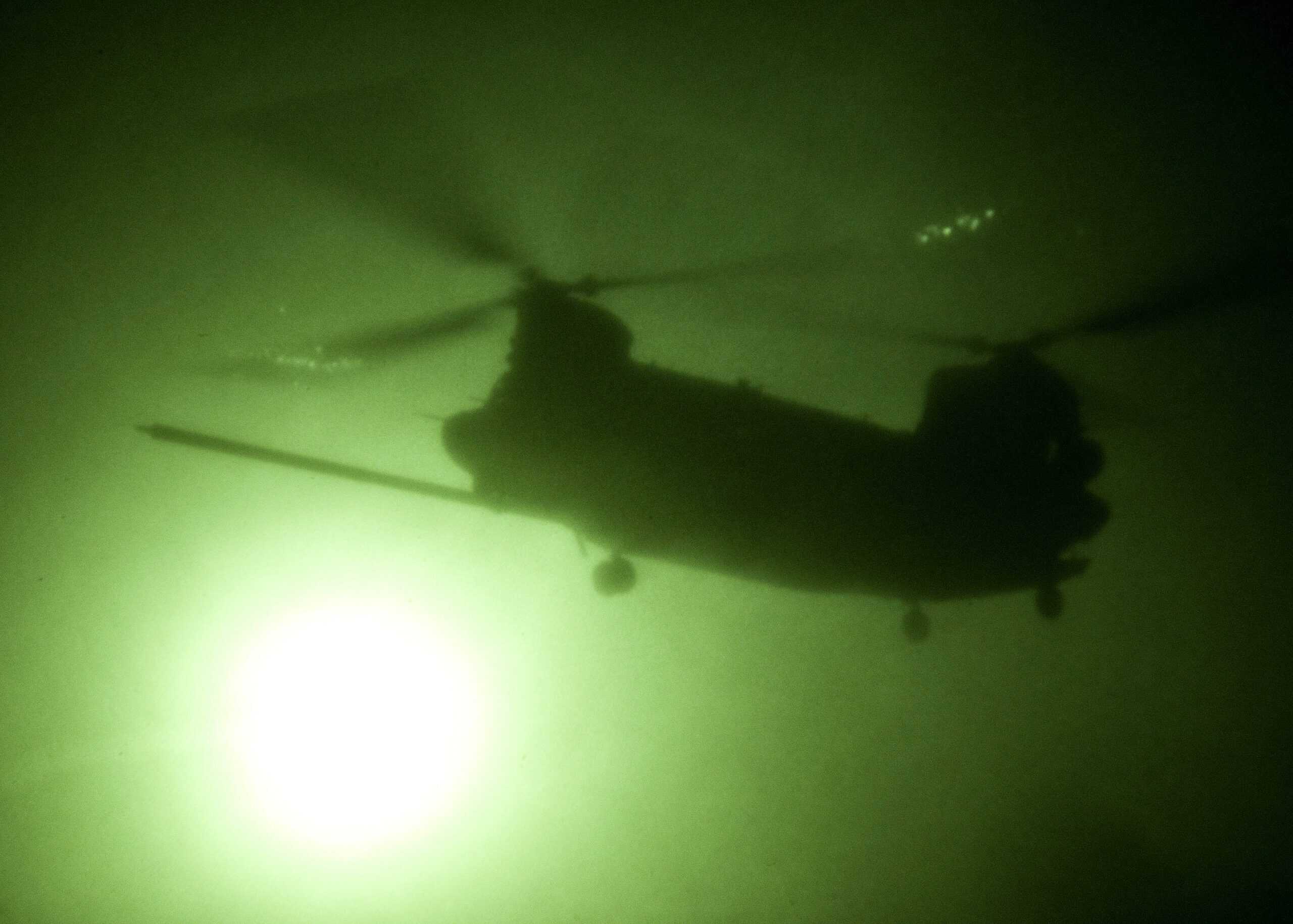
An MH-47 Chinook helicopter conducting night ops | IMAGE: By Sgt. Daniel P. Shook, Combined Joint Special Operations Task Force – Afghanistan Media Operations Center – http://www.soc.mil/uns/Photo/2011/2011/album/slides/393424.html, Public Domain, https://commons.wikimedia.org/w/index.php?curid=18055296
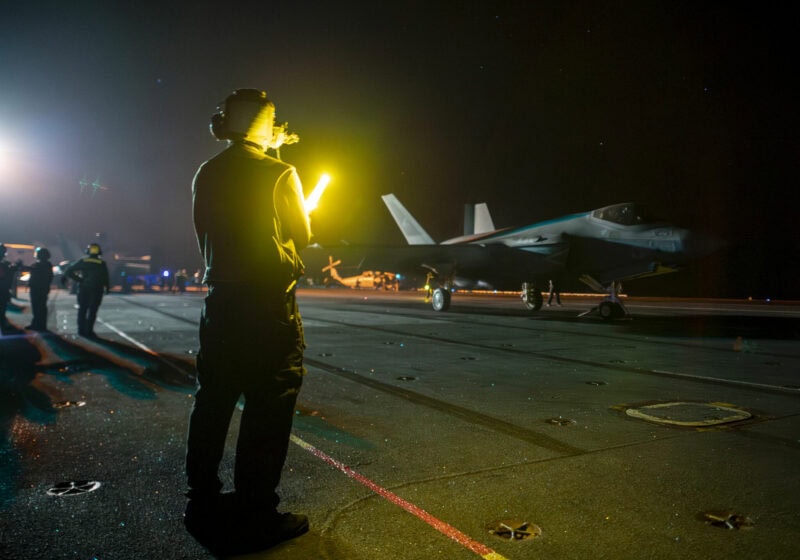
MH-47 Chinook and MH-60 Seahawk helicopters, likely but not yet confirmed to be from the US Army’s 160th Special Operations Aviation Regiment, were seen and heard over Caracas during the operation. Protected by fighters, bombers, and drones, the helicopters encountered no opposition en route to the city.
According to CBS News, members of Delta Force captured Nicolás Maduro and Cilia Flores at their home, which is located within the perimeter of the Fort Tiuna military installation. Prior to their arrival, US forces dismantled Venezuelan air defense systems. Weapons were also employed “to ensure the safe passage of the helicopters into the target area,” Caine said.
Simulation of Operation Absolute Resolve
The helicopters reached the compound at 0101 Caracas time and did come under enemy fire over the premises. As US forces and the FBI took the couple into custody, the helicopters returned for extraction. During the withdrawal, Caine said there were “multiple self-defense engagements.” One American helicopter sustained damage but remained flyable and completed the mission.
President Trump confirmed that several US personnel were injured, though none fatally. US officials told CBS News and CNN that all injured servicemembers are in stable condition. Online sources indicate they were flown to Kelly Field in San Antonio, Texas.
Last night, the weather broke just enough, clearing a path that only the most skilled aviators in the world could maneuver through—ocean, mountain, low cloud ceilings.
Air Force Gen. Dan Caine, Chairman of the Joint Chiefs of Staff
Weather had delayed the operation for days. However, Friday night was different, and Caine said the opportunity had to be taken, saying, “Last night, the weather broke just enough, clearing a path that only the most skilled aviators in the world could maneuver through—ocean, mountain, low cloud ceilings.”
From the Caribbean to New York
Nicolás Maduro arriving at Stewart International Airport (SWF) after being captured on 3 January 2026 during Operation Absolute Resolve | IMAGE: DoD
The operation essentially concluded at 0329 local time when the force was safely back over the water. Maduro and Flores were initially taken aboard the USS Iwo Jima, then transferred to Guantanamo Bay, Cuba.
Captured Venezuelan president Nicolás Maduro on board the USS Iwo Jima | IMAGE: United States Department of Defense
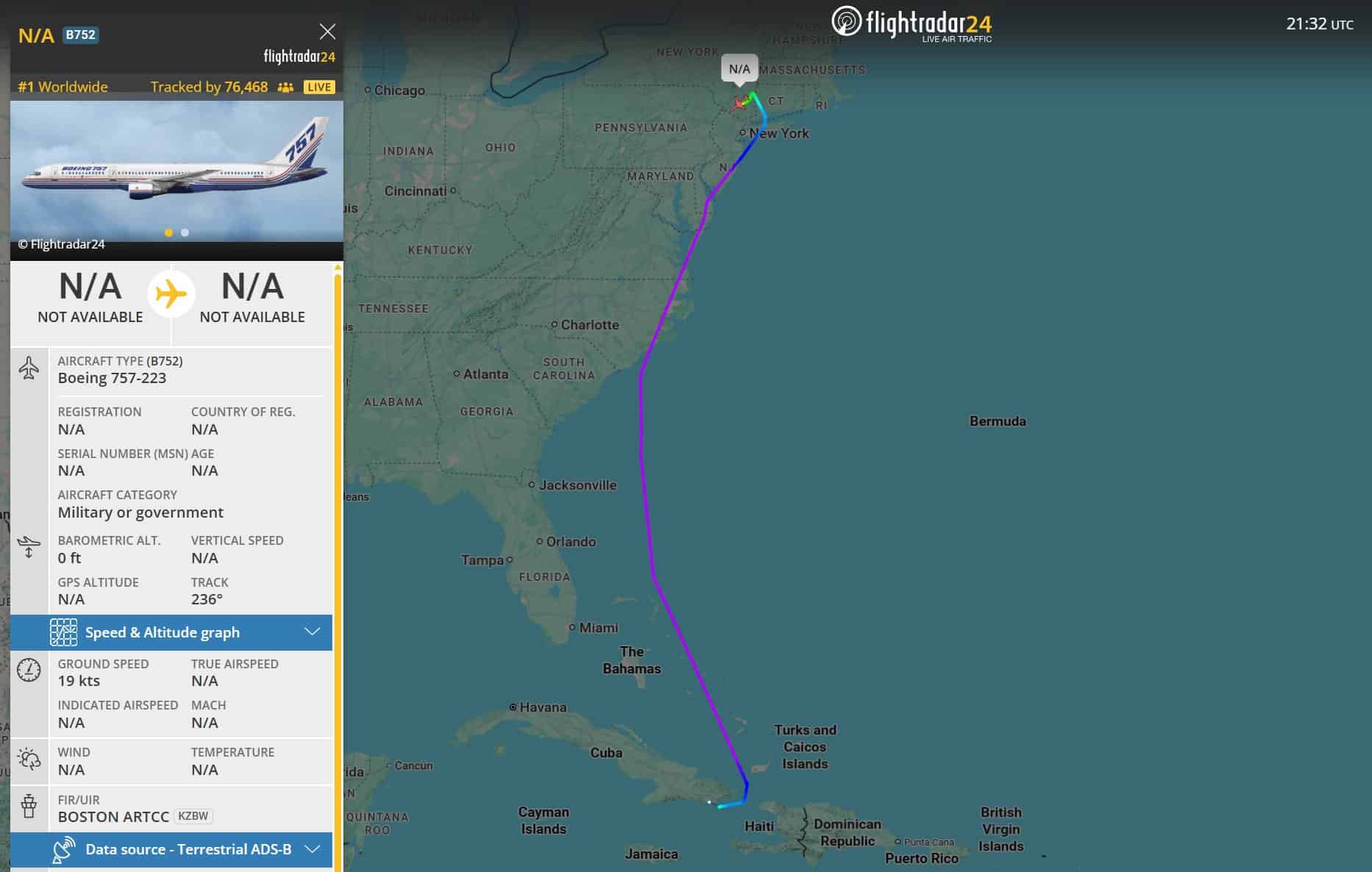
Flight path of the Department of Justice 757 carrying Venezuelan leader Nicolás Maduro and his wife as part of Operation Absolute Resolve | IMAGE: FlightRadar24
From there, they were flown to New York Stewart International Airport (SWF) aboard a Department of Justice Boeing 757, landing at 1632 local time Saturday afternoon, 3 January. Both will be tried in the Southern District of New York on narco-terrorism charges.
It is interesting to note that SWF is a public/military airport and home to the Stewart Air National Guard Base and the 105th Airlift Wing (105 AW). The facility was likely chosen as the US entry point for Maduro because the environment can be controlled, political theater can be minimized, a secure transfer of custody can occur, and it avoids the chaos of a JFK-style media circus. Additionally, as an ANG base, it obviously has secure ramps and hangars, controlled airspace, hardened perimeter security, and the ability to move high-profile detainees without public exposure.
Trump acknowledged the risks involved, noting that a second wave of US airpower had been standing by.
“This is an attack that could have gone very, very badly,” Trump said. “We could have lost a lot of people last night. We could have lost a lot of dignity. We could have lost a lot of equipment. We’re ready to go again if we have to,” he said.
Former Venezuelan President Nicolás Maduro performs a “perp walk” after deplaning earlier tonight at New York Stewart International Airport. pic.twitter.com/f4V45xFtRK
Aircraft used throughout Operation Absolute Resolve included F-22 Raptors securing the airspace, F-35 Lightning II variants providing electronic warfare (EW) support, Navy F/A-18 Super Hornets for traditional air missions and close air support, E/A-18G Growlers jamming radar and communications, E-2D Hawkeyes managing the airborne battlespace, B-1B Lancers striking military infrastructure, and KC-135 Stratotankers enabling long-range operations. Numerous remotely piloted aircraft were also used, though US officials have not specified types.
What we’ve witnessed today is a powerful demonstration of America’s joint force. We think, we develop, we train, we rehearse, we debrief, we rehearse again and again, not to get it right, but to ensure that we cannot get it wrong.
Air Force Gen. Dan Caine, Chairman of the Joint Chiefs of Staff
Reflecting on the mission, Caine said, “What we’ve witnessed today is a powerful demonstration of America’s joint force. We think, we develop, we train, we rehearse, we debrief, we rehearse again and again, not to get it right, but to ensure that we cannot get it wrong.”
Ultimately, Operation Absolute Resolve shows the continued strength and reliability of American airpower. When precision, timing, and coordination matter most, the ability to assemble and employ a complex aviation force across vast distances remains a defining strength. When the mission demands it, the United States still possesses the aviation capability to act decisively, anywhere.
We here at AvGeekery salute the brave men and women involved in Operation Absolute Resolve.
U.S. Air Force F-22 Raptors seen returning this morning to Roosevelt Roads Naval Station in Eastern Puerto Rico, following last night’s military operation against Venezuela. pic.twitter.com/LYlw3iKcVg
Pilot error, complacency, and distraction, coupled with obscuring fog at the most critical point of flight, resulted in the crash of Eastern Air Lines Flight 212, a DC-9-31, on 11 September 1974, and were instrumental in the adoption of new cockpit rules.
The Setup: Crew, Aircraft, and a Short Hop North
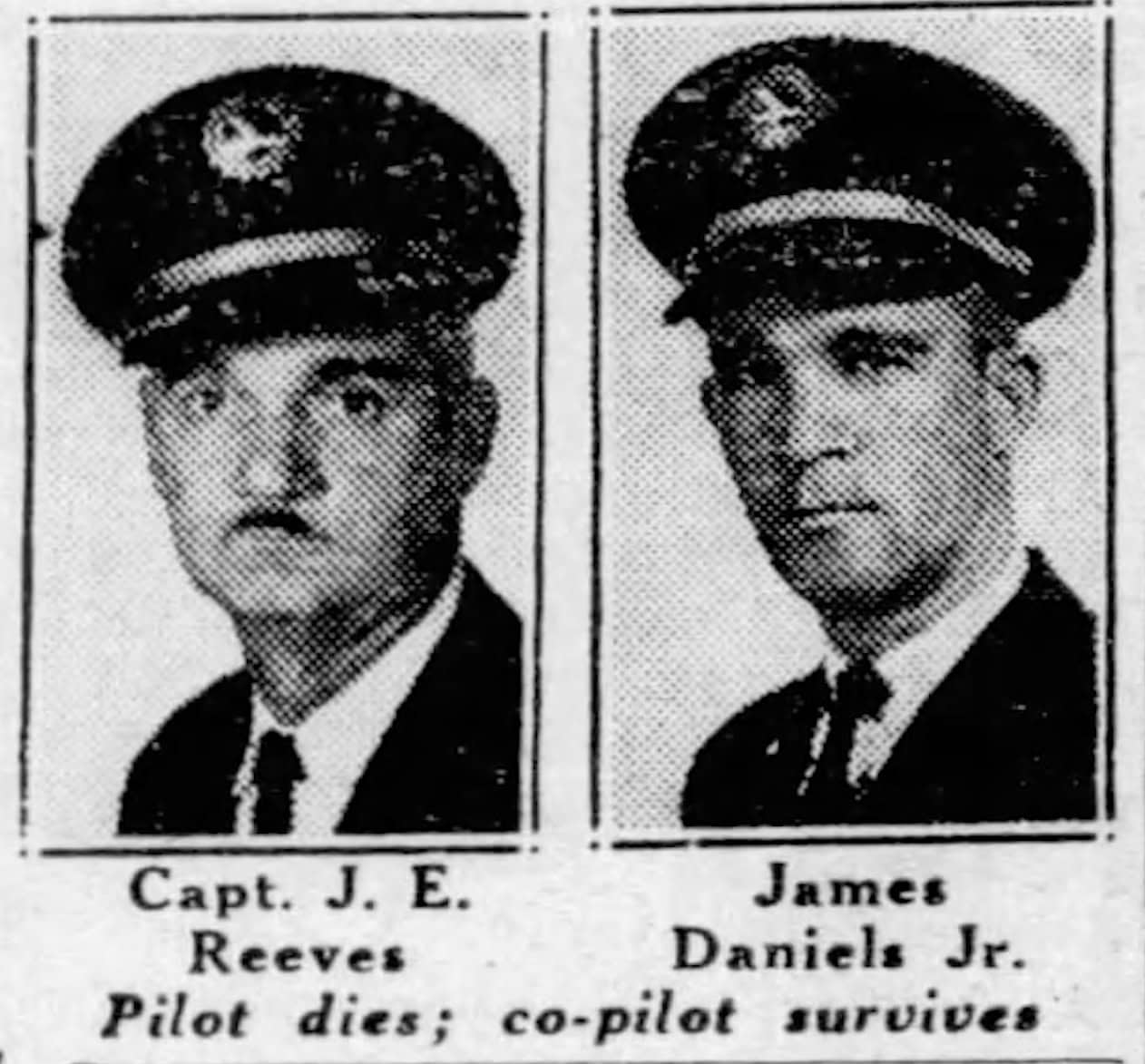
The Captain and First Officer that operated Eastern Air Lines Flight 212 | IMAGE: Charlotte Observer
THE AIRCRAFT
Both manufactured and delivered on 30 January 1969, the aircraft, registered N8984E, underwent its last block overhaul at the carrier’s Miami, Florida, maintenance facility five years later, on 7 January 1974.
THE FLIGHT CREW
Eastern Air Lines Flight 212 was flown by two cockpit crew members and attended to by two cabin attendants.
Of the former, Captain James E. Reeves, 49, held type ratings on the Convair 240, 340, and 440, the Lockheed L-188 Electra, and the Douglas DC-9, and was hired by Eastern on 18 June 1956. He had accrued 8,876 hours as plot-in-command, of which 3,856 were on the DC-9, whose type rating he had achieved on 14 December 1967. His last proficiency and line checks had respectively occurred on 25 April and 8 August, both in 1974. He had had a 13.5-hour rest period before he reported for duty for Flight 212.
He was assisted by First Officer James M. Daniels, Jr., 36, who had been hired by Eastern on 9 May 1966. He held a commercial pilot certificate with multi-engine and instrument ratings. Of his 3,016 hours logged, 2,693 had been in the DC-9. Unlike Reeves, he had had considerable rest before reporting for duty—in this case, a 61-hour total.
Of the two flight attendants, Collette Watson had been hired by Eastern on 11 September 1969 and received her last recurrent training six years later, on 29 July; Eugenia Kerth, who had been hired on 7 January 1970, received her own last recurrent training four years later, on 17 January.
A FERRY FLIGHT FROM ATL TO CHS
The four crew members ferried the aircraft from Atlanta, Georgia, to Charleston, South Carolina, with 17,000 pounds of A-1 jet fuel on board, of which 5,000 were required for the empty sector. The DC-9 had accrued 16,860.6 hours up to this time and was within both its gross weight and balance limits for the flight.
After the ferry flight, the plan was to fly from Charleston to Charlotte, North Carolina, and Chicago-O’Hare International Airport in Illinois.
DEPARTURE FROM CHARLESTON
The DC-9 was fueled with 17,500 pounds of A-1 jet fuel, of which 4,500 were required for the 150-mile, 30-minute segment to Charlotte. With 78 passengers planned for the flight, the DC-9-31 was prepared for its departure. The flight crew, called clearance delivery before their actual pushback, were instructed to turn right after takeoff and intercept the Victor 53 airway, then climb and maintain 3,000 feet until they reached a point 30 miles DME, or distance measuring equipment, north of Charlotte. They were told to expect clearance to their assigned, 16,000-foot altitude. The pilots would contact departure on a frequency of 119.3 and use “1000” as its transponder code, which would appear on radar screens as soon as the cockpit “Ident” button had been pressed.
Although they were offered both Runways 12 and 33 for takeoff, they chose the former. The wind was almost nonexistent, blowing at three knots from 360 degrees with an altimeter setting of 30.12 inches of mercury.
The air speed bug was moved to the 135-knot position, the calculated takeoff speed based upon the aircraft’s gross weight; the jet was configured to 15 degrees of flaps; and the stabilizer trim knob was set to a position between the “five” and the “six.”
First Officer Daniels would be the pilot-flying and Reeves the pilot-not-flying on the next flight.
The jet was instructed to “taxi into position and hold.” aircraft N8984E paused on Runway 12’s threshold, while the final TakeOff Checklist was completed. Tower cleared the Dc-9 for takeoff, “Two twelve rolling” replied Reeves. It was 07:00.
A temporary toe brake restraint after throttle advance enabled the Pratt and Whitney JT8D turbofans, mounted on the aft fuselage sides, to spool up. The crew verified by the center cockpit panel N1, EGT (exhaust gas temperature), N2, and fuel-flow instruments as the jet spooled up.
Thundering through its V1 (go/no-go) and VR 128-knot rotation speeds, Daniels pulled on the yoke and the jet lifted off the runway. First with a nose wheel disengagement, and then the DC-9 peeled its main wheels off the ground.
Maintaining a 210-degree heading as it established a positive climb rate, it retracted its tricycle undercarriage and, with sufficient speed, its trailing edge flaps. Assuming its maximum climb power, its EPR (engine pressure ratio) was set to 196.
After its contact with departure, Eastern Air Lines Flight 212 was instructed to “climb and maintain seven thousand.”
En Route: Nothing Unusual, Until the Fog Took Over
An aircraft navigates through thick fog | IMAGE: Photo by Erwan Hesry on Unsplash
Its relatively short flight plan entailed a 33-mile northwesterly sprint, an 81-mile north-northwesterly one to Columbia, and a final 85-mile northerly one to Charlotte via Victor 53, Victor 37 to a radio navigation station 20 miles south of Charlotte, and ultimately a straight one to its destination.
No longer requiring the increased wing camber achieved with its high-lift devices, Eastern Air Lines Flight 212 retracted its leading-edge slats at 180 knots.
Already cleared to 16,000 feet, the DC-9-31 now climbed out of 7,000, instructed to proceed direct to Fort Mill and contact Jacksonville Center on a frequency of 127.95, which in turn gave it a transponder code of “1100.” The “Ident” button was once again pressed so that it could be uniquely identified by it.
Shallowly ascending through 15,300 feet at a 500-foot-per-minute rate, it attained a 325-knot ground speed.
Since there was no time for catering on the short sector, the flight attendants swept through the coach cabin with trays of coffee cups.
Down Into the Murk: The VOR Approach to Runway 36
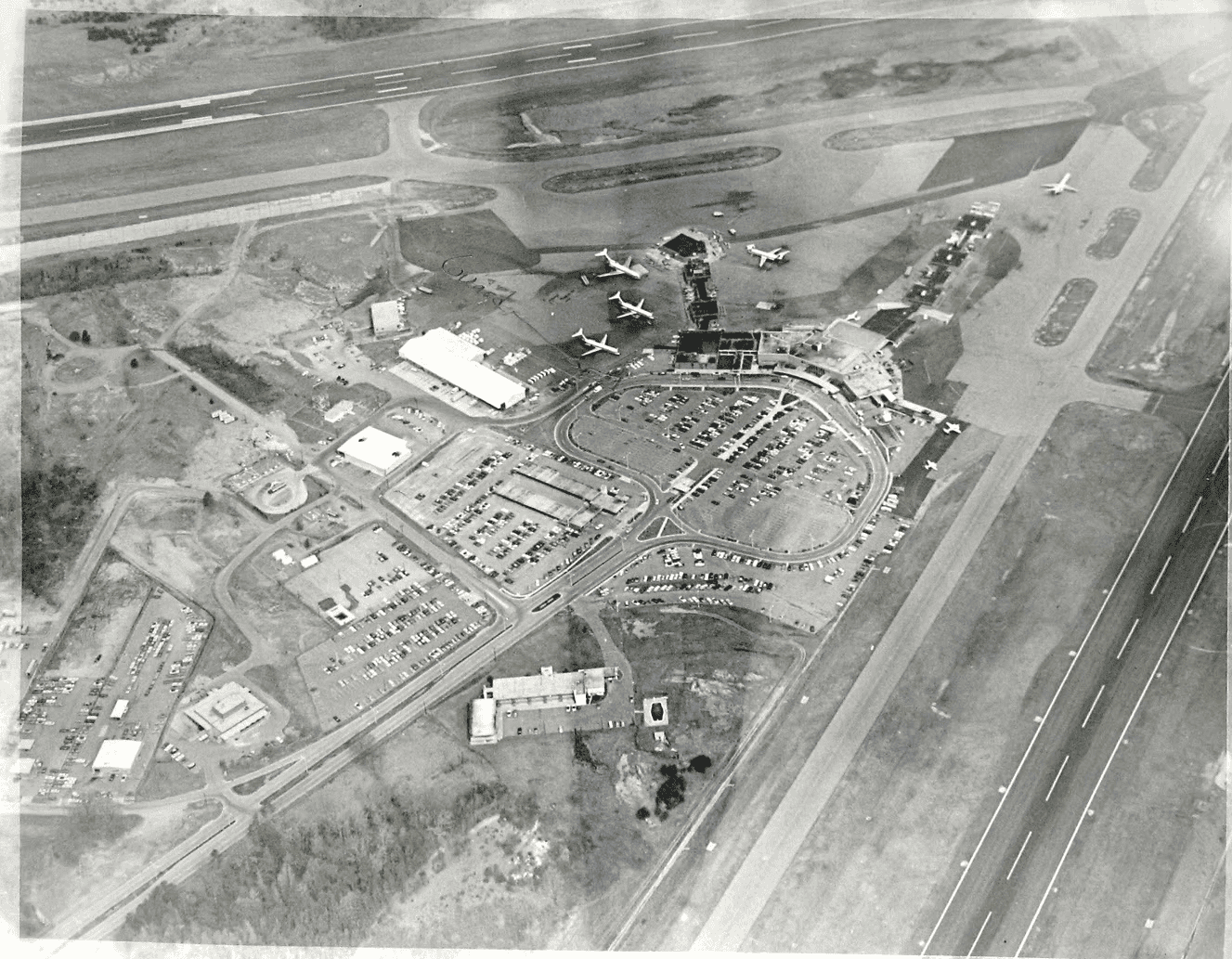
Aerial view of Douglas Municipal Airport (CLT) in the early 1970s | IMAGE: Carolinas Aviation Museum
THE APPROACH TO CHARLOTTE
Eastern Air Lines Flight 212 was handed off to Atlanta Center on a frequency of 127.15, which instructed it to descend and maintain 8,000 feet. The pilots set field elevation.
The aircraft would dock at Gate 5 and take on the maximum allowable 20,000 pounds of fuel for the longer segment to Chicago.
RUNWAY CHANGES AND WEATHER COMPLICATIONS
After it contacted Charlotte Approach Control on 124.0, it was instructed to turn to a 040-degree heading. While the crew was given a choice of runways at Charleston, there would be no option at Charlotte.
To facilitate capacity expansion at what was then known as Douglas Municipal Airport, a second north-south runway, parallel to the existing Runway 5, was being constructed. Because its southern end extended through the approach lights, which themselves stretched 2,000 feet beyond its threshold, the options for an instrument approach that day were limited.
The morning fog from the nearby Catawba River, now collecting over and obscuring Runway 5, mandated a switch to Runway 36 and its nonprecision VOR approach.
“VOR Runway 36 approaches in use,” advised the latest “information uniform” automatic terminal information service (ATIS) recording. “Landing and departing Runway 36. All arriving aircraft make initial contact with Charlotte Approach East on 124.0.”
It also advised of the potentially obscuring conditions: a partially obscured sky, broken ceilings at 4,000 and 12,000 feet, a 1.5-mile visibility, a 67-degree Fahrenheit temperature, wind out of 360 degrees at five knots, and ground fog.
VECTORS, SPEED CONTROL, AND DESCENT PLANNING
Eastern Air Lines Flight 212 was instructed to “descend and maintain 6,000.”
Based upon its 4,500-pound fuel burn off, which gave the aircraft a 90,000-pound landing weight with 13,000 pounds still in its tanks, and a 21-percent center-of-gravity, the DC-9-31 would have a 122-knot VREF speed.
The Descent and In-Range Checklist, which was now complete, included items such as seatbelt sign illumination, fuel boost pump operation, setting the air conditioning and pressurization, and checking the hydraulic pumps. It preceded a Z-shaped vector, which initially required a left turn to a 360-degree heading.
Sufficient speed bleed-off permitted a five-degree extension of the trailing edge flaps.
Now descending through 7,000 feet for 6,000, the crew was instructed to turn further left to a 240-degree heading and, subsequently, to descend and maintain 4,000 feet. A further speed reduction facilitated a 15-degree flap extension. It now contacted Charlotte Approach Control on a frequency of 119.0.
“Eastern 212, continue heading two four zero,” was the approach controller’s instruction. “Descend and maintain 3,000.”
In order to increase the spacing between it and Delta Flight 608, which was now 3.5 miles from the Ross intersection, Flight 212 was required to reduce its speed—in this case, to 160 knots.
The Delta aircraft was further instructed to turn left to a 010-degree heading and was cleared for the VOR approach to Runway 36, while the Eastern DC-9, now six miles from that intersection, was instructed to turn right to 350 degrees.
ALTIMETERS AND THE RISK OF MISINTERPRETATION
As with any aircraft, altitude accuracy was tantamount to clearing obstructions, whether issued by an air traffic controller or noted on standard instrument departure (SID) or standard arrival route (STAR) charts.
Eastern’s DC-9-31s were provisioned with two types of altimeters.
The first, the drum-pointer type, obtained its readings from the air data computer, which was set by the barometric pressure at each airport. Comprised of a turning hand, which measured hundreds of feet, and a number display that indicated thousands and tens of thousands of feet, it could be easily misread. If half of a “3” and half of a “4” were visible, for instance, it indicated a 3,500-foot altitude.
The second altimeter, a counter-drum-pointer type located only on the lower portion of the captain’s instrument panel, more precisely recorded the barometric pressure outside the aircraft and transformed that measurement into a reading. The greater the atmospheric pressure became, the lower was the resultant altimeter reading, since air density decreased with altitude.
Comprised of a rotating head, which indicated hundreds of feet, and a window that displayed thousands (1,000) and ten thousands (10,000) of feet in digits. It was less likely to be misread, but its location made it difficult for the first officer to do so.
A CASUAL COCKPIT AT A CRITICAL MOMENT
Aside from the continued potential of an altimeter misread, the cockpit crew engaged in personal banter during a critical flight phase.
“During the descent, until about two minutes and 30 seconds prior to the sound of impact, the flight crew engaged in conversations not pertinent to the operation of the aircraft,” according to the National Transportation Safety Board’s (NTSB) final report. “These conversations covered a number of subjects, from politics to used cars, and both crewmembers expressed strong views and mild aggravation concerning the subjects discussed. The Safety Board believes that these conversations were distractive and reflected a causal mood and lax cockpit atmosphere, which continued throughout the remainder of the approach and which contributed to the accident.”
Although Charlotte Approach provided clearances, the cockpit crew was still responsible for its vertical guidance, since the nonprecision VOR approach did not provide the vertical and horizontal parameters that an ILS approach with its three-degree glideslope did.
In this case, the DC-9’s VOR receiver did exactly that—namely, receive the Charlotte VOR radio signal emitted by the VOR itself, which was located at the end of Runway 36, enabling the aircraft to follow the 353-degree compass heading to the touchdown point.
MINIMUMS, MISSED APPROACH CRITERIA, AND LOST AWARENESS
According to the approach plate, aircraft were required to cross the Ross intersection, which was located 5.5 miles (DME) south of the runway. However, its minimum descent altitude, or MDA, required it to maintain at least a 1,800-foot altitude above sea level and continue to do so until and unless the runway was visually discernible ahead. If not, they were required to execute a missed approach, which, as per the approach plate, instructed them to “climb to 2,300 feet, make a left turn via the outboard R-229 Charlotte VOR to the York intersection (20.0 DME), or as directed.” They could then attempt the approach again once cleared to do so or fly to a flight plan alternate.
The DC-9, now ten miles from the airport and advised to resume its no-longer-needed to slow for spacing. They were instructed to contact the Charlotte tower on 118.1. It was number two to land.
Subsequently cleared to land, it could descend to the 1,800-foot MDA (1,074 feet above ground level) until passing Ross and intercepting the 353-degree radial to the Charlotte VOR.
Aircraft accidents often result from several factors that, while never anticipated, can lead to a devastating result. This is sometimes referred to as the “perfect storm.” Eastern Air Lines Flight 212’s version of the “perfect storm” began here.
“ALL WE GOT TO DO IS FIND THE AIRPORT”
The Carowinds Tower the crew of Eastern Air Lines Flight 212 thought they saw on the approach to CLT | IMAGE: Carowinds
It plunged through fog, obscuring visibility, and the vectors the aircraft had been subjected to only increased the crew’s disorientation, as Reeves spotted a tower through his window that he believed marked the Carowinds Amusement Park outside of Charlotte.
“It was a strange sight, a startling apparition, protruding from the fog,” according to William Stockton in his book, Final Approach: The Crash of Eastern 212 (Doubleday and Company, 1977, p. 251). “It arrested their attention…The observation tower was unusual. They knew what it was. But it seemed to be in the wrong place in relation to their position after the radar vectors.”
That was because it wasn’t the Carowinds Tower.
Despite a terrain warning sound in the cockpit, it was ignored and silenced. And despite the belief that the aircraft was at 1,650 feet, it was actually at only 650 feet, because neither crew member had noticed the additional altimeter sweep, which would have indicated another 1,000-foot altitude loss.
Awaiting visual runway verification before the DC-9-31 could reinitiate its descent beyond the Ross intersection, the captain said, “Yeah, we’re all ready” at 07:33:52, according to the cockpit voice recorder. “All we got to do is find the airport,” to which Daniels replied, “Yeah.”
But they never would.
“The Blur of Trees”: The Final Seconds
TREES THROUGH THE FOG
Recoiling, applying full power, and pulling the yoke toward his stomach, Daniels desperately tried to extricate the airplane from certain impact the second the blur of trees appeared through the shroud of fog.
Senses and sensations, if any could penetrate, merged into a single, time-suspended void, created by the crashing, tearing, grinding, ripping, rupturing, screaming, wailing, shrieking, exploding, and disintegrating, and the silence of those who perished.
INITIAL IMPACT AND BREAKUP SEQUENCE
“The aircraft struck some small trees and then impacted a cornfield about 100 feet below the airport elevation of 748 feet,” according to the National Transportation Safety Board’s Aircraft Accident Report: Eastern Air Lines Douglas DC-9-31, Report Number NTSB-AAR-75-9. “It struck larger trees, broke up, and burst into flames. It was destroyed by the impact and the ensuing fire.
A UPI story announcing the crash of Eastern Air Lines Flight 212
“At initial impact, the right wingtip struck and broke tree limbs about 25 feet above the ground. About 16 feet above the ground, the left wing struck and sheared a cluster of pine trees.
“The left main landing gear wheel struck the ground 110 feet past the initial impact point. The right main landing gear wheel struck the ground five feet farther down the field. The aircraft’s final descent angle was calculated to have been 4.5 degrees, and its bank attitude 5.5 degrees left wing down. The ground elevation was 620 feet. Wheel imprints were continuous for 50 feet and increased to a depth of 18 inches.
“Broken red glass from the lower fuselage rotating beacon was found within the tail skid and aft fuselage ground marks.
“As the aircraft continued 198 feet beyond the initial impact point, the left wingtip contacted the ground and made a mark 18 feet long.
FIRE, WRECKAGE PATH, AND FINAL RESTING PLACE
“After the aircraft had traveled 550 feet beyond the initial impact point, the left wing contacted other trees, and the wing broke in sections. At this point, ground fire began and spread in the direction of travel of the aircraft until the aircraft came to rest. The right wing and right stabilizer were sheared off.
“The remainder of the aircraft, the fuselage, and part of the empennage section continued through a wooded area. The fuselage breakup was more severe in this area.
“The aircraft wreckage came to rest in a ravine 995 feet from the initial impact point. The cockpit section came to rest on a magnetic heading of 310 degrees. The aft fuselage section came to rest at a magnetic heading of 290 degrees. The wreckage area was 995 feet long and 110 feet wide. No parts of the aircraft were found outside the main wreckage area.
“The nose landing gear was separated from the fuselage and was found in the extended position. The nose gear was not damaged by fire.
“The main landing gears were separated from their attach structure and were extended. The right main gear had been damaged considerably by fire. The left main gear received minor fire damage.
The empennage of Eastern Air Lines Flight 212 lays in ruins | IMAGE: Charlotte Observer
“The outer fan exit ducts of the front compressors on both engines showed evidence of rotational twisting in the direction of fan rotation. The fourth-stage turbine blades of both engines were intact and were not damaged. Neither engine casing had been penetrated. The thrust reversers of both engines were stowed.”
INSIDE THE CABIN
Sustaining two blows to her head, a punctured arm, and several lacerations, Senior Flight Attendant Collette Watson, the least injured, managed to extricate badly wounded First Officer Daniels, who had barely been able to unlock the cockpit door and crawl into the captain’s seat, through the narrow exit.
“Imagine the unreality of the terrible scene,” she recounted in Philip Gerard’s article, “The Courage to Fly” (Our State, 17 August 2021). “The aircraft you’re flying in has just slammed into fog-shrouded trees and broken apart, the nose shoved into a ravine. Fire suddenly erupts everywhere, people are screaming, and the front exit doors are blocked. Choking on thick smoke, you jerk on the cockpit door until the copilot is roused from shock and opens it…”
“Only a flight attendant stationed in the forward cabin was able to offer assistance to surviving passengers in escaping from the aircraft,” the National Transportation Safety Board’s Aircraft Accident Report: Eastern Air Lines Douglas DC-9-31, Report Number NTSB-AAR-75-9, continues. “The captain was killed by impact. The first officer and the flight attendant in the aft cabin received disabling injuries, which prevented them from aiding surviving passengers.
ESCAPE THROUGH THE COCKPIT
“A passenger and the flight attendant in the forward cabin assisted the first officer in making his escape. All three escaped from the aircraft through the left cockpit sliding window.
“The forward cabin doors were unusable because of obstructions and the attitude of the aircraft. No determination of the usability of the overwing exits could be made because of fire damage.
“The auxiliary exit through the tail was operable and, if it had been used, passengers could have cleared the fire area. The aft cabin flight attendant was probably unable to open the exit because of her injuries. The passengers in that area also may have been unable to open the exit, either because of their injuries or because they did not know how to operate the opening mechanism.
“Although the sliding window exit on the left side was the only cockpit exit used, the other cockpit window was usable.
FIRE, SMOKE, AND RESCUE RESPONSE
“All survivors reported that there was fire inside the cabin during the crash sequence. The insignificant levels of cyanide found in toxicological examinations indicated that the lethal factor was primarily the immediate, initial fuel fire. The effects of the fire were fatal to the passengers before the cabin interior materials had a chance to burn and generate a significant amount of cyanide gas. The fuel, which escaped from the ruptured tanks, ignited and moved along the ground with the aircraft wreckage. The fire was concentrated in the center fuselage area.
“The response of the fire and rescue equipment was timely. The firefighting and rescue activities were performed in an exemplary manner.”
A Partially Survivable Crash, a Brutal Post-Impact Reality
In the end, only First Officer Daniels, Flight Attendant Collette Watson, and eight passengers survived, while Captain Reeves, Flight Attendant Kerth, and 70 passengers either immediately or subsequently succumbed to impact and/or smoke inhalation incapacitation. Nevertheless, the NTSB cited three major factors that rendered the accident partially survivable:
The occupiable area of the cabin was compromised when the fuselage broke up.
The intense post-impact fire consumed the occupiable area of the tail section and the entire center section of the cabin.
The occupant restraint system failed in many instances, even though crash forces were within human tolerances.
“The cockpit area and the forward cabin were demolished by impact with trees. The tail section, which included the last five rows of passenger seats, is classed as a survivable area. However, the post-crash fire created a major survival problem in this section.
“Bodies of most of the aircraft occupants were found outside two of the major sections of cabin wreckage, which indicates that the passenger restraint system was disrupted in these sections during cabin disintegration. The exception to the restraint system disruption was the tail section, where most of the occupants who survived the impact died in the post-crash fire.
“Only a small section of the cabin near the tail of the aircraft retained its structural integrity. Most of the structure was destroyed and, in most cases, the occupant restraint system failed. Finally, fire occurred in the cabin during the breakup of the aircraft and continued to burn until extinguished by the fire department.
“All survivors in the rear of the aircraft were either thrown out of the wreckage or escaped through holes in the fuselage. The surviving passenger and the two surviving crew members in the front of the aircraft escaped through a cockpit window.
“The forward cabin entry door was found partially open, but was blocked by a fallen tree. Because of the position of the wreckage, the ground blocked the forward galley door. The center fuselage overwing escape windows were destroyed by fire. The auxiliary exit in the tail of the aircraft was usable; however, it was not used for escape.”
A Lax Cockpit, A Missed Altitude, A Lasting Change
The Eastern Air Lines Flight 212 tragedy led to the implementation of the Sterile Cockpit Rule | IMAGE: By Alex Pereslavtsev – http://www.airliners.net/photo/Transaero-Airlines/Boeing-777-212-ER/1984464/L/, GFDL 1.2, https://commons.wikimedia.org/w/index.php?curid=16594678
“The Safety Board was notified of the accident about 07:55 on 11 September 1974,” according to the NTSB report. “The investigation team went immediately to the scene. Working groups were established for operations, air traffic control, witnesses, weather, human factors, structures, maintenance records, powerplants, systems, the flight data recorder, and the cockpit voice recorder.”
It summarized the accident as follows:
“About 07:34 EDT, on September 11, 1974, Eastern Air Lines Flight 212 crashed 3.3 statute miles short of Runway 36 at Douglas Municipal Airport, Charlotte, North Carolina. The flight was conducting a VOR DME nonprecision approach in visibility restricted by patchy, dense ground fog. Of the 82 persons aboard the aircraft, 11 survived the accident. One survivor died of injuries 29 days after the accident. The aircraft was destroyed by impact and fire.”
First Officer Daniels later testified that Captain Reeves had failed to make the mandatory 500- and 1,000-foot altitude calls during the final approach, especially during deteriorating visibility conditions. Daniels himself believed that he was above 1,000 feet and only realized the altitude error “a split second prior to impact.”
“The National Transportation Safety Board determines that the probable cause of the accident was the flight crew’s lack of altitude awareness at critical points during the approach due to poor cockpit discipline in that the crew did not follow prescribed procedures.”
A direct result of the accident was the Federal Aviation Administration’s implementation of the sterile cockpit rule, which forbids crews from engaging in any activity, conversation, or otherwise between engine start and the reaching of a 10,000-foot altitude during departure and between that 10,000-foot altitude and engine shutdown at the aircraft’s destination during arrival.
EDITOR’S NOTE: The Charlotte Observer produced an excellent write-up on the 50th anniversary of the crash of Eastern Air Lines Flight 212 in 2024. The 50th anniversary report can be viewed here (subscription required).
After more than 80 years, a P-40 fighter pilot shot down in China in 1943 has finally returned home to South Carolina.
It wasn’t the first time 1st Lt. Morton Sher was shot down. At 22 years old he was escorting bombers for breakfast, and flying other hazardous combat missions for dinner in the China-Burma theatre with the 76th Fighter Squadron, 23rd Fighter Group, 14th Air Force. The same unit that carried on the legacy of the famed Flying Tigers.
Restored P-40 flown by Thom Richard, plane belongs to the American AirPower Museum in NY. Photo Credit: Mike Killian
15,000 villagers helped him the first time he was shot down, showing him appreciation and respect for fighting for them. They honored Sher as a hero, fed him, protected him and escorted him through the mountains back to base.
Sher was offered to return home to become an Instructor Pilot. He chose to stay and fight instead.
When he was shot down again, they protected him again, preventing the Japanese from taking his remains after his P-40 went down in a rice field and became engulfed in flames.
Flying Tiger Shot Down in 1943 Finally Returns Home 63
Locals placed a memorial at the site, but his remains were considered destroyed in the fire. Sher was posthumously awarded the Purple Heart, and was classified as killed in action and unrecoverable.
New Photo Opens New Questions
The case was closed until 2012, when a private citizen contacted the Defense POW/MIA Accounting Agency (DPPA) with a photo of the memorial site. They opened an investigation and visited in 2019, but still found no remains.
Turns out, they were wrong. A more extensive investigation in 2024 found the wreckage, and his remains. The Chinese villagers in 1943 hid them to protect the remains from the Japanese. DNA testing using samples from Sher’s nephew confirmed the remains.
Sher’s remains returned home. Photo credit Senior Airman Savannah Carpenter
“This was through team effort,” said Col Brett Waring, 476th Fighter Group commander. “The teams that continue to scour the earth for our missing and KIA are beyond impressive. Morton fought for the Chinese people in that war and theater, and when he was shot down, the local populace protected him when he survived the first shootdown, and then prevented the enemy from taking his aircraft and body when he was killed in action. That speaks to the humanity that connects us all even when other circumstances point towards adversarial actions.”
“Sher spent just over a year in China during World War II,” says Mark Godwin, historian for the 23rd Wing at Moody AFB. “He racked up 3 aerial victories before his untimely death. The Flying Tigers used the Chinese phrase “Ding Hao” during World War II. It means, ‘Very Good, excellent.’ The 76th FS was excellent in World War II. Sher gave his life to protect his fellow Flying Tigers. He should forever be remembered for his courage and sacrifice. Ding Hao!”
After 80 Years, Welcome Home
An Army honor guard member renders a salute to the flag he presented to Carol Fine, Army Air Forces 1st Lt. Morton Sher’s sister, at a cemetery in Greenville, S.C., Dec. 14, 2025. Photo Credit: Senior Airman Savannah Carpenter
Sher’s family had no clue about the extensive investigation that was taking place, until Sher’s nephew received an email from DPAA requesting a DNA sample to confirm the remains.
“I’m just proud that our country cares enough about something like that,” said Bruce Fine, Sher’s nephew. “And they spring into action when they think there’s a lead. It’s made me more proud to be an American than ever before.”
photo credit: Senior Airman Savannah Carpenter
Sher’s remains were flown home to Greenville, South Carolina earlier this month. His family stood together as the honor guard transferred his coffin from the plane to a hearse.
Sher was given full military honors at his long-awaited homecoming on Dec 14. He was laid to rest at Beth Israel Cemetery. Two U.S. Air Force A-10s from the 476th Fighter Group honored him with a flyover too.
photo credit: Senior Airman Savannah Carpenter
“The legacy that we’re honored to carry on today was started by that generation of warriors who left home to fight for another country in a cause that they absolutely believed in,” Waring said. “It was a level of commitment that we are challenged with maintaining. It’s a legacy that goes beyond painted teeth on an airplane or a patch on our shoulder. It’s history, it’s heritage and it’s a legacy that we’re proud to carry on through our generations.”
Is Santa’s Sleigh the Most Reliable Airframe Ever Built? Spoiler: Yes. Yes, it is. And it’s not even close.
Every 24th of December, without fail, Santa launches the most ambitious overnight operation in aviation history. No test flights. No press conferences. No NOTAMs lighting up ForeFlight. Just wheels up, world covered, mission complete.
And perhaps the most impressive part of the whole thing is this. Santa does it every year with only minimal upgrades.
No stretched fuselage. No new engine variant. No midlife refresh program announced at Farnborough. Somehow, Santa’s sleigh just keeps flying.
So how does it work?
Pull up a chair by the fire. Let’s talk sleigh physics, North Pole navigation, and why Santa may quietly be the best operator in the business.
The Airframe: Lightweight, Timeless, and Shockingly Efficient
The amazing and meticulous beauty of Santa’s Sleigh defies the laws of physics
At first glance, Santa’s sleigh looks like a classic legacy platform. Open cockpit. Exposed structure. Zero regard for modern certification standards.
But look closer and the design philosophy becomes clear.
The sleigh is an ultra lightweight composite structure, likely wood infused with centuries of magical resin. Think of it as pre carbon fiber carbon fiber. Strong, flexible, and absurdly durable.
It does not corrode. It does not fatigue. It has never once failed a cold soak test.
And while most operators chase performance gains through heavier systems and newer materials, Santa went the other way. Keep it light. Keep it simple. Keep it flying.
Minimal upgrades. Maximum reliability.
Propulsion: Reindeer Thrust and the Rudolph Advantage
Santa’s Sleigh takes advantage of a mind-boggling reindeer propulsion system | IMAGE: NORAD
The propulsion system is where Santa truly broke the mold.
Eight reindeer provide distributed thrust, redundancy, and natural vector control. Lose one, and the rest compensate instantly. No asymmetric thrust checklist required.
Then there’s Rudolph.
Rudolph is not a gimmick. He is a certified all-weather sensor suite.
That glowing nose is a forward-looking navigation aid optimized for snow, fog, low visibility, and complete whiteout conditions. It cuts through weather that would ground most fleets and renders even the ugliest Christmas Eve forecast irrelevant.
Think of Rudolph as a living combination of radar, lidar, and synthetic vision. Only cuter.
The Physics Problem Everyone Always Asks About
Yes, we’ve all done the math. Payload capacity. Range. Time on task.
Here’s the thing.
Santa’s sleigh does not obey conventional physics. It obeys Christmas physics.
Time dilation plays a significant role. When the sleigh crosses into the upper atmosphere, the aircraft enters a temporal slipstream where time moves more slowly relative to the ground. This allows Santa to complete a global route while the rest of us are still arguing over which cookie to leave out.
It is not impossible. It is just festive.
Navigation: No GPS, No Problem
Norad and the Air Force units of the United States and Canada will track and assist Santa Claus during his voyage. (USAF)
Santa does not rely on GPS, ground based navaids, or satellite augmentation.
He navigates visually, astronomically, and instinctively.
The North Star provides a fixed reference. City glow outlines metropolitan areas. Chimney density confirms residential zones. Tree lights act as low level approach lighting. It is a beautifully analog system that has never once dropped out due to a software update.
If it works, don’t digitize it.
ATC, Clearances, and That Whole Airspace Thing
How NORAD tracks Santa’s Sleigh | IMAGE: NORAD
Does Santa file a flight plan?
Officially, no.
Unofficially, every controller knows exactly where he is. And, of course, NORAD is always on top of it, ensuring smooth sailing for Saint Nick.
Santa operates under a once a year global blanket clearance that supersedes all restricted airspace, temporary flight restrictions, and noise-abatement procedures (word on the street is Santa doesn’t have to obey John Wayne Airport’s Fly Friendly program we wrote about earlier). It is the ultimate waiver, renewed annually by universal goodwill.
Interception attempts have been rumored. None have succeeded. Most pilots report nothing more than a brief radar return, a flash of red light, and an inexplicable urge to go home and hug their families.
NORAD will once again be tracking Santa Claus as he makes his way across the world tomorrow night! 🎅🏼🎄 pic.twitter.com/4JnQTalXEN
The sleigh is meticulously inspected once a year by the elves, who may be small but are terrifyingly thorough. Every runner polished. Every joint checked. Every bell tested. If it does not spark joy, it does not fly.
That is how an aircraft lasts forever.
The Takeaway
In an industry obsessed with the next new thing, Santa reminds us of something important.
Sometimes the best platform is the one that already works.
Keep it light. Keep it simple. Respect the machine. Trust the crew. Fly it with purpose.
And once a year, believe in a little magic.
A Note of Gratitude
No MELs, No Delays: How Santa’s Sleigh Keeps Flying Year After Magical Year 69
This Christmas, we just want to say thank you.
Thank you for choosing to spend a little bit of your time with us throughout the year as we share our love of all things aviation with you, our readers. Whether you’re here for the history, the headlines, the nostalgia, or the pure joy of flight, it means more to us than you know. We love sharing our passion of flight with you.
So, from all of us here at AvGeekery, Merry Christmas to you and yours. May your weather be smooth, your landings be gentle, and your sleigh always be ready for one more flight.
Coulson Aviation 767 is set to reshape Very Large Airtanker (VLAT) operations as legacy firefighting aircraft near retirement.
If you have followed aerial firefighting over the past few years, you already know the uncomfortable truth. The fleet of very large airtankers that agencies have relied on for decades is aging out fast. With the recent grounding of MD-11s and DC-10s, that reality has gone from theoretical to very real.
That backdrop is what makes this week’s announcement from Coulson Aviation such a big deal. Coulson officially launched its Boeing 767 VLAT program, a move that signals the future direction of high-capacity aerial firefighting.
The retirement of older widebody aircraft is creating a serious capacity problem for firefighting agencies worldwide. Platforms like the McDonnell Douglas DC-10 and Boeing MD-11 have delivered massive volumes of retardant when fires demanded it. But as those airframes disappear, so does that capability.
The situation was underscored even further after the crash of UPS Flight 2976, an MD-11, in Louisville earlier this year, which accelerated the grounding of the remaining MD-11 and DC-10 airtankers. The result is a developing shortfall of adequate equipment to fight wildfires.
Coulson’s answer is to step forward before that gap becomes unmanageable.
Why the Boeing 767 Makes Sense
Coulson chose the Boeing 767 because it boasts a long and reliable track record across passenger, cargo, and special mission roles. According to Britt Coulson, President and CEO of Coulson Aviation USA, the appeal is straightforward.
“The 767 is a proven widebody platform with global support, parts availability, modern systems, and compelling operating economics,” Coulson stated. “Our program builds on those strengths and will deliver performance beyond what legacy VLATs can provide.”
The 767 offers global parts availability, modern systems, and operating economics that make sense for decades of service. It is also a platform with enough performance margin to outperform legacy VLATs in payload while burning less fuel in the process.
Ultimately, what makes it most attractive to Coulson is that it is an airplane built for the long haul, rather than a stopgap solution.
Bigger Tank, Same Coulson DNA
The Coulson Aviation 767 program is at working alongside current firefighting aircraft such as the Lockheed C-130 Hercules and the Boeing 737 Fireliner | IMAGE: Coulson Aviation
The Coulson Aviation 767 tanker will feature the largest version yet of the company’s patented RADS retardant delivery system. The tank capacity is expected to exceed that of any VLAT currently flying, while still preserving a surprising capability. The aircraft will retain the ability to carry more than 160 personnel when configured for transport missions.
That flexibility is very much on brand for Coulson. Like the company’s existing fleet, which includes the Lockheed Martin C-130H Hercules and the Boeing 737 Fireliner, the 767 VLAT is being designed as a true multi-mission platform. Engineering, structural analysis, and systems integration planning are already underway.
A Coulson Aviation Lockheed C-130 | IMAGE: Coulson Aviation
Rather than replacing its current aircraft, Coulson sees the 767 VLAT as a force multiplier. The new tanker is designed to complement existing large airtankers, providing agencies with an additional tool when fires require sustained, high-volume retardant delivery over extended periods.
This is also very much a forward-looking investment. Coulson has a long history of building capability ahead of demand, and the 767 VLAT fits squarely into that pattern. As legacy platforms fade out, the industry needs something that can carry the mission forward safely, efficiently, and at scale.
With the Boeing 767 VLAT, Coulson is making it clear that the future of very large airtankers does not have to mean less capacity. If anything, it might mean more, delivered by an airplane built to stick around for decades.
The John Wayne Airport Fly Friendly Program helps reduce general aviation jet noise at John Wayne Airport (SNA) through voluntary actions, smart flying, and annual awards.
Flying in and out of SNA has always come with extra responsibility. The airport sits right in the middle of densely populated neighborhoods in Orange County, California, which means aircraft noise is not just an aviation issue. It is a community one.
An aerial view of John Wayne Airport (SNA) in Orange County, California, showing just how densely populated the surrounding area is to the airport. The airport’s proximity to such densely populated areas has led to the creation of the John Wayne Airport Fly Friendly program. | IMAGE: John Wayne Airport photo Don Ramey Logan.jpg from Wikimedia Commons by Don Ramey Logan, CC-BY 4.0“
That is where the John Wayne Airport Fly Friendly Program comes in. Launched in August 2022, Fly Friendly is a voluntary education and recognition program designed for general aviation (GA) jet operators. Its goal is simple. Reduce noise, encourage smarter and cleaner flying, and recognize operators who make the effort to be good neighbors.
Rather than adding new rules, the program focuses on awareness, measurable performance, and positive reinforcement.
What Fly Friendly Is Trying to Do
IMAGE: John Wayne AIrport
The John Wayne Airport Fly Friendly program is all about education and accountability. The program helps GA jet operators better understand how their aircraft and operating choices affect people on the ground.
Using data from SNA’s extensive Noise Monitoring Station network, operators can see exactly how loud their departures are and how often they fly during the most sensitive hours. From there, the airport encourages operators to make voluntary adjustments that reduce noise and minimize environmental impact.
That can mean flying newer, quieter aircraft. It can also mean adjusting how a flight is flown by following the National Business Aviation Association’s (NBAA) Standard Noise Abatement Departure Procedure, which emphasizes steep climbs, controlled airspeeds, and power reductions once safely airborne.
Operators are also encouraged to avoid non-emergency flights late at night and early in the morning when noise is most noticeable in nearby communities.
How Operators Are Scored
IMAGE: John Wayne Airport
The John Wayne Airport Fly Friendly Program uses a clear, data-driven scoring system that looks at a full calendar year of operations. Operators are grouped into four tiers based on the frequency of their flights at the airport, with charter operators separated from private aircraft owners to ensure fair comparisons.
SNA FAA ATC Tower | IMAGE: John Wayne Airport
Most of the score comes from two measurable categories:
Quietest Departures account for the majority of points. This looks at average noise levels recorded at seven monitoring stations along the departure path, how often unusually loud events occur, and whether an operator is flying the quietest aircraft available today based on FAA Stage 5 noise certification.
Nighttime Noise Reduction rewards operators who voluntarily cut back on non-emergency arrivals and departures during late-night and early-morning hours compared to the year before.
Additionally, operators can earn bonus points for taking an extra step.
Environmental Stewardship and Sustainability points are awarded for financial contributions to local habitat restoration projects through the Irvine Ranch Conservancy or Newport Bay Conservancy.
Most Engaging points recognize operators who actively participate in outreach, such as educating pilots on noise abatement, sharing Fly Friendly materials, or attending Orange County community meetings focused on aviation impacts.
All of these elements are combined into a final score for each operator.
Recognition That Actually Means Something
Private Jets on the tarmac at John Wayne Airport | IMAGE: D Ramey Logan.jpg from Wikimedia Commons by Don Ramey Logan, CC-BY-SA 3.0
Each year, the top three scoring operators in each tier receive Fly Friendly recognition. That adds up to twelve awards annually, with past winners including a mix of well-known charter companies and individual aircraft owners.
What makes Fly Friendly stand out is that it fills a real gap. Commercial airlines at SNA already operate under strict legal agreements that limit the number of flights and noise. GA does not. Fly Friendly creates a way to measure performance, highlight best practices, and encourage improvement without adding another layer of regulation.
IMAGE: John Wayne Airport
The result is quieter departures, fewer late-night flights, and a program that shows cooperation can work when aviation and community interests align.
Let’s be honest. Those of us who live and breathe aviation often roll our eyes at noise abatement programs. Airports do not magically appear overnight, and airplane noise has always been part of the deal when you live nearby. That said, you are never going to make everyone happy.
In a place as noise-sensitive as SNA, the Fly Friendly approach shows that airports can still be good neighbors in ways that are measurable, achievable, and genuinely worth recognizing.
“You better watch out. You better not cry.” His experimental craft and isolated North Pole location didn’t prevent Santa from getting a no-notice check.
Santa had a big job to do last night. He has to do what is seemingly impossible. That is to deliver Christmas gifts to millions of toys to good little boys and girls all around the world in just one night. While airlines like Westjet can deliver joy to a hundred or so passengers, Santa has to deliver joy to the whole world.
The big mission can’t be a reason to rush. Safety is first. Santa’s not the type of guy that would put anyone’s life at risk just to cut a few corners and shave off a couple of minutes on his schedule.
As pilot in command, Santa has to be ready for the unexpected. Even a no-notice checkride by the FAA. While spot checks might make a lesser pilot squirm, St. Nick is no newbie. He’s a pro. Like the airline pilots flying you to grandma’s this year, the jolly ol’ fellow has years of professional experience flying his sleigh.
Santa had to ensure his craft is ready for flight
With deft precision, Santa does his walk-around, checks his performance calculations, and even is ready for the..ehem, unexpected which you’ll see below in his checkride recap video.
This video is a classic and one of our favorites. We love watching it every year and hope you do too!
Avgeekery is wishing you a Merry Christmas
Avgeekery is wishing you a joyous holiday season and a very Merry Christmas. We thank you for being loyal readers of our blog. Our site is a team of aviation professionals that spend their time to make this project a reality.
We love sharing our love of aviation and our expertise in this field with you on a regular basis. And hope that this next year is everything you hoped it will be.
President Donald Trump’s space executive order puts the Moon back at the center of America’s spaceflight plans, pairing familiar goals with firm timelines. The directive touches everything from lunar landings and nuclear power in space to commercial launch infrastructure, setting the stage for some of the most consequential space decisions in years.
The executive order, titled Ensuring American Space Superiority, impacts nearly every aspect of the federal space sector, focusing on timelines, infrastructure, and expectations for NASA and industry in achieving human spaceflight objectives over the next decade.
Ambitious space goals are nothing new. Administrations of both parties have outlined bold visions for the Moon, Mars, and beyond. What makes this order different than those that come before it is not the scope of its ambition, but the specificity of the dates attached to it.
Whether those targets can be met is a question that now shifts from policy to execution.
A 2028 Return to the Moon
These artist’s concepts show SpaceX’s Starship Human Landing System (HLS) on the Moon. NASA is working with SpaceX to develop Starship HLS to carry astronauts from lunar orbit to the Moon’s surface and back for Artemis III and Artemis IV as part of the agency’s Artemis campaign. At about 165 feet (50 m), Starship HLS will be about the same height as a 15-story building. An elevator on Starship HLS will be used to transport crew and cargo between the lander and the Moon’s surface | IMAGE: NASA
The primary objective of the EO is a renewed commitment to returning American astronauts to the lunar surface by 2028 as part of NASA’s Artemis program.
The EO states that a lunar landing would:
“Assert American leadership in space, lay the foundations for lunar economic development, prepare for the journey to Mars, and inspire the next generation of American explorers.”
President Trump’s Space Executive Order: EnsuringAmerican Space Superiority
Beyond a single landing, the order directs NASA to establish “initial elements of a permanent lunar outpost” by 2030. The language is intentionally vague, leaving room for an outpost that could include surface habitats, orbital infrastructure such as the Lunar Gateway, or a mix of both.
President Trump has also directed NASA to spell out, in practical terms, how this would actually work. The agency has been given 90 days to deliver a plan outlining how it will achieve those targets, identifying any remaining technical hurdles, and detailing how supply chain or industrial capacity issues will be addressed without exceeding existing budgets.
A Bit of Background on Artemis
Artemis I | IMAGE: Mike Killian / AmericaSpace
While Trump’s space executive order sets a 2028 target for returning astronauts to the Moon, NASA has adjusted Artemis mission timelines in recent years as development and testing continue across multiple systems.
Artemis is structured as a long-term exploration campaign rather than a single mission, with each flight designed to reduce risk and validate new capabilities before committing crews to more complex objectives.
NASA has consistently stated that Artemis schedules are driven by crew safety and technical readiness, not fixed calendar dates.
The program’s goals extend well beyond a single lunar landing, aiming to establish a sustained human presence in lunar orbit and on the surface, particularly near the Moon’s south pole. NASA has also emphasized that learning how to live and work on the Moon is a necessary step toward future human missions deeper into the solar system.
Nuclear Power Beyond Earth
A key technical element of the EO is its focus on nuclear power in space.
The directive calls for deploying nuclear reactors on the Moon and in orbit, including a lunar surface reactor ready for launch by 2030. To support that effort, the order requires the Office of Science and Technology Policy (OSTP) to develop guidance for a “National Initiative for American Space Nuclear Power” within 60 days.
The push to use nuclear power in space reflects a growing recognition that sustained lunar operations will require reliable, high-output power sources that exceed what solar arrays alone can provide, particularly during long lunar nights.
The International Space Station’s Successor
Artist depiction of The Gateway space station hosts the Orion spacecraft in a polar orbit around the Moon, supporting scientific discovery on the lunar surface during the Artemis IV mission | IMAGE: NASA
The EO also confirms plans to retire the International Space Station (ISS) by 2030 and transition to commercially operated space stations in low-Earth orbit.
Rather than extending ISS operations, the policy directs the government to “spur private sector initiative and a commercial pathway to replace the International Space Station by 2030.”
NASA has already invested in several commercial station concepts, and the order reinforces that timeline while signaling a continued shift of low-Earth orbit activity toward private industry.
Commercial Launch and Infrastructure
A full Moon is in view from Launch Complex 39B at NASA’s Kennedy Space Center in Florida on 14 June 2022 | IMAGE: NASA
The order aims to expand and modernize US launch infrastructure and increase launch and reentry rates through facility upgrades, efficiency gains, and policy reforms.
The White House aims to attract at least $50 billion in new private investment into US space markets by 2028. While the order omits details on how to reach this figure, it instructs federal agencies to prioritize commercial procurement over traditional cost-plus contracts where feasible.
Acquisition Reform and Program Oversight
Both NASA and the Department of Commerce are instructed to identify space programs that are at least 30 percent over budget or 30 percent behind schedule, as well as those misaligned with the order’s priorities.
Instead of simply streamlining procurement, the order seeks to overhaul how agencies acquire space capabilities and accelerate the adoption of commercial options. It requires the Commerce Department to stop relying on NASA for satellite acquisitions, potentially reshaping how NOAA and other civil space assets are bought.
Space Security and Defense Architecture
Northrop Grumman’s missile warning and tracking system | IMAGE: Northrop Grumman
Beyond civil spaceflight, the EO places significant emphasis on defending US interests from Earth orbit through cislunar space.
It directs the integration of commercial abilities into defense space architectures, modernization of military space systems, and the development of prototype next-generation missile defense systems by 2028.
The EO states:
“Superiority in space is a measure of national vision and willpower, and the technologies Americans develop to achieve it contribute substantially to the Nation’s strength, security, and prosperity.”
President Trump’s Space Executive Order: EnsuringAmerican Space Superiority
Defense and civilian agencies are directed to submit plans in the coming months addressing threat detection, acquisition reform, and coordination with allies and partners.
What’s Not in the EO
President Trump’s space executive order does not explicitly provide Mars plans | IMAGE: SpaceX
While Mars is referenced, the EO does not establish a specific timeline for human missions to the Red Planet. Instead, Mars is framed as a longer-term objective enabled by sustained lunar operations.
The order also revokes a 2021 Biden-era executive order governing the National Space Council without providing guidance for a replacement body.
Clear Eyes, Full Hearts, Can’t Lose
(20 July 1969) — Astronaut Edwin E. Aldrin Jr., lunar module pilot of the first lunar landing mission, poses for a photograph beside the deployed United States flag during an Apollo 11 extravehicular activity (EVA) on the lunar surface. The Lunar Module (LM) is on the left, and the footprints of the astronauts are clearly visible in the soil of the moon. Astronaut Neil A. Armstrong, commander, took this picture with a 70mm Hasselblad lunar surface camera. While astronauts Armstrong and Aldrin descended in the LM, the “Eagle”, to explore the Sea of Tranquility region of the moon, astronaut Michael Collins, command module pilot, remained with the Command and Service Modules (CSM) “Columbia” in lunar orbit. Photo credit: NASA
For those of us who keep a keen eye on all things Space-related, Trump’s EO does not introduce radically new ideas. What it does do is set firm milestones.
A 2028 lunar landing. A lunar outpost by 2030. Nuclear power beyond Earth. The end of the ISS era. A heavier reliance on commercial spaceflight.
Whether those goals are met will depend on technical readiness, funding stability, and close coordination between NASA, industry, and national security partners. As a policy document, Ensuring American Space Superiority outlines a clear framework for how the United States intends to operate in space throughout the remainder of the decade.
In just a few years, it will have been six decades since humans first set foot on the Moon. That milestone is more than a date on a calendar. It serves as a reminder of what the country once set out to achieve, and what it proved it could accomplish when ambition, engineering, and purpose aligned.
Setting aside politics and logistics, a return to the Moon would carry a powerful resonance. It would connect generations, honor the engineers and astronauts who came before, and signal that exploration remains part of the national identity. The hardware will matter. The timelines will matter. But so will the moment itself.
The coming years will show whether these ambitions move beyond line items in an executive order and into rockets on the pad, names on flight manifests, and, ultimately, human footprints pressed once more into lunar dust.
The road back is long. But the destination is familiar.
If an airline could wear a city like a jacket, New York Air did it. The little airline had attitude, but it never really gained enough altitude to survive the turbulent era of the late ’80s.
New York Air began operations in 1980 and was based at Hangar 5 at New York’s LaGuardia International Airport (LGA). New York Air was created as an offshoot of Texas Air, designed to compete with the few airlines based in the area by offering frequent and affordable flights in the region.
New York Air was a small airline with only a few destinations and a small fleet, but it had a loyal following. The carrier became famous for one oddly lovable onboard detail: bagged snacks called “The Flying Nosh.”
Then, just as quickly, it disappeared. On 1 February 1987, New York Air ceased operations as it was folded into Continental Airlines as part of Frank Lorenzo’s bigger Texas Air consolidation play.
And if you’re wondering whether it ever truly “made it” in New York, the answer is…well, complicated. New York Air had swagger. It had ideas. It had a brand. But it never quite got enough altitude to survive the late deregulation dogfight.
A Deregulation-Era Upstart with a Simple Plan: Be Cheaper, Friendlier, and Frequent
A New York Air DC-9-32 (reg. N557NY) on approach to Detroit Metropolitan Wayne County Airport (DTW) in August 1983 | IMAGE: By Eduard Marmet – http://www.airliners.net/open.file/0188566/L/, CC BY-SA 3.0, https://commons.wikimedia.org/w/index.php?curid=2962473
In September 1980, Frank Lorenzo’s Texas Air announced plans for a new low-fare airline in the Northeast. The timing mattered: airline deregulation had opened the door for new carriers to expand without the old government guardrails, and Texas Air was eager to take advantage.
New York Air’s first big target was obvious: Eastern Air Shuttle.
Eastern owned the rhythm of the Northeast Corridor, running frequent service between LGA, Boston Logan (BOS), and Washington National (DCA). New York Air planned to run a similar “show up and go” style schedule, but with lower fares, advance reservations, and something Eastern didn’t always emphasize at the time: complimentary drinks and snacks.
There were even early plans for a big operation at Westchester County Airport (HPN), though that never fully materialized.
Built in a Blink: 90 Days from Concept to Cockpit
New York Air moved at a pace that feels almost impossible now.
Its founding president, Neal F. Meehan, had management experience at Continental and Texas International (another Texas Air subsidiary). He assembled a team and, within about 90 days, New York Air had hired, trained, uniformed, and drilled crews and staff across the operation, including pilots, flight attendants, dispatchers, terminal and ramp teams, and reservations personnel.
In one memorable vignette from the airline’s origin story, management interviewed more than 1,000 job candidates in a single day at group interviews held at New York’s Town Hall Theater in November 1980.
The airline’s office and maintenance setup were completed quickly inside Hangar 5 at LGA, which had previously housed American Airlines operations in the 1930s. New York Air gained FAA certification as an adjunct to Texas International’s certificate.
The Inaugural Flight: Big Ambitions, (Really) Tiny Load Factor
A New York Air DC-9-32 (reg. N1310T) taxiing at Washington National (DCA) in May 1985 | IMAGE: AirHistory.net/Bob Garrard
New York Air officially began flying on 19 December 1980, launching with a LGA-to-DCA flight.
Only five seats were filled on that first trip. Yes, five.
At the time, the New York City market actually suffered from a lack of low fares. Therefore, New York Air’s formula of low fares and friendly service caught on quickly. They had low walk-up fares (important at the time because flights could only be booked by a travel agent or over the phone).
The airline improved its load factor quickly, but not quickly enough to avoid losses. By April 1981, it averaged about a 62% load factor, flirting with a break-even point of around 65%, but still reported a loss of $1.5 million. Executives called it a “moderate success,” then raised fares on LGA flights as reality set in.
Early Growth, then the One-Two Punch: Competition and the PATCO Strike
A New York Air McDonnell Douglas DC-9-31 taxiing at Boston Logan (BOS) in August 1984 | IMAGE: AirHistory.net/David Osborne
New York Air expanded fast anyway.
It built a hub-like operation at LGA, added routes to destinations like Cleveland Hopkins (CLE) in April 1981, and established smaller focus operations at BOS and DCA. However, several planned destinations were cut, including Dayton (DAY), Pittsburgh (PIT), and a handful of Upstate New York routes. It also tried LGA-Detroit Metro (DTW) briefly before shifting that flight to Newark (EWR), where it started a secondary operation.
By late 1981, the carrier had ramped up service to destinations such as Cincinnati (CVG) and Louisville (SDF), and had expanded its fleet to thirteen DC-9-30 series aircraft.
Then came a huge external problem: the 1981 PATCO strike.
The strike resulted in delays that discouraged passengers from flying, and the FAA reduced the number of slots at congested Northeastern airports. Big carriers had a workaround. Eastern, for example, could swap in larger aircraft, such as the Airbus A300, keeping passenger volume steadier even with fewer flight slots.
New York Air couldn’t. With a small fleet and limited aircraft size flexibility, the slot reductions and a suddenly more aggressive competitive environment hit hard. The airline ended its Boston shuttle presence in its early form after less than a year.
It tried to maintain a foothold at BOS with routes to Baltimore (BWI) and Orlando (MCO), but BOS proved unprofitable and was shut down by the end of 1982.
“Runaway Shop”: Union Disputes and a Very Public Fight
A New York Air McDonnell Douglas MD-82 on the ramp at LaGuardia Airport (LGA) in August 1985 | IMAGE: AirHistory.net/R.A. Scholefield
New York Air was set up as a non-union airline, which immediately angered organized labor, particularly ALPA and unionized staff at Texas International. Critics branded it a “runaway shop,” arguing Texas Air was creating a parallel non-union operation to sidestep union contracts.
Within a week of New York Air’s launch, Texas International employees were picketing at LGA. Meehan denied the accusations, insisting New York Air was separate and would negotiate if employees chose to unionize.
ALPA didn’t let up.
By mid-1981, ALPA was running what it described as a political-style campaign against the carrier. The messaging was sharp and memorable, including materials calling New York Air “Texas Air’s Bad Apple,” complete with an edited logo featuring a rotten apple. The campaign highlighted operational issues like poor on-time performance and overbooking, and “Please Don’t Fly New York Air” badges appeared.
Even New York Air’s headline-grabbing promotional fares backfired in a way. The airline’s famous “29 cent fare” moment, a limited in-person promotion tied to the inauguration of New York to Boston service, created massive crowds. Local media covered the chaos, and ALPA picketers used the attention to amplify their anti-New York Air message to people waiting in line.
The Pivot: From Low-Cost Upstart to Premium-Leaning Business Carrier
A New York Air timetable from February 1984 | IMAGE: AirTimes
By 1982, the numbers were ugly. The airline reportedly lost $11 million in 1981 and then incurred another $8.2 million loss in the first quarter of 1982.
Meehan resigned as president in July 1982. Michael E. Levine took over leadership, and the airline changed its posture.
New York Air began repositioning as a more full-service product aimed at business travelers, offering a more premium experience while still typically undercutting competitors on fares. Levine trimmed the network, focusing on markets with business demand, and adjusted the shuttle schedule so that LGA departures ran on the hour, rather than every half-hour.
And it leaned hard into onboard touches: complimentary bagels on morning flights, wine and newspapers, plus other “this feels a little nicer than you expected” details.
This is also where New York Air’s snack identity really stuck. The airline was well known for its onboard snack bags, “The Flying Nosh,” which became a mini brand of its own.
Hubs and Experiments: Raleigh-Durham, the Apple Club, and the Dulles Bet
New York Air operations at Washington Dulles International Airport (IAD) in August 1986. In the foreground is a New York Air Connection Shorts 330-200 | IMAGE: AirHistory.net/Bob Garrard
New York Air didn’t just fight for scraps in New York. It tried to build connecting flows too.
For a short time, New York Air operated a mini-hub at Raleigh-Durham (RDU) | IMAGE: Vintage Airliners
In 1983, it launched a small hub operation at Raleigh-Durham (RDU), with service to cities such as Greenville/Spartanburg (GSP) in South Carolina, McGhee Tyson Airport (TYS) in Knoxville, Tennessee, Savannah (SAV) in Georgia, and later MCO, along with feeder flying on commuter partners like Air Virginia and Sunbird Airlines.
At RDU, it also offered a private boarding lounge called the Apple Club, reinforcing that “premium, but still a deal” identity.
The RDU hub ultimately didn’t last, with routes gradually disappearing by the mid-1980s.
The bigger swing came in Washington Dulles (IAD).
In July 1985, New York Air announced it would open a hub at IAD, building a new concourse at a reported cost of $3.6 million, featuring an Apple Club restaurant. By the end of 1985, it had established a sizable schedule there and was increasingly making IAD its operational focus.
A New York Air Connection Beech 1900D, operated by Colgan Airways, on the ramp at Manassas Regional Airport (MNZ), Virginia, in January 1986 | IMAGE: AirHistory.net/Bob Garrard
Meanwhile, New York Air kept LGA and BOS in the mix and, by 1986, began leaning more into regional feed. New York Air Connection was the branded commuter service that helped funnel passengers from smaller markets into the mainline network. Operated by Colgan Air, it used aircraft like the Shorts 330, Beechcraft 1900, and Beech 99s on select routes. The “Connection” branding also popped up on seasonal flying to leisure spots like Martha’s Vineyard (MVY) and Nantucket (ACK), helping New York Air reach beyond its core shuttle-and-business footprint.
New York Air also relied on other feeder partnerships, including Air Virginia and Sunbird Airlines, to support connections through RDU’s short-lived mini-hub.
The Fleet and the Look: DC-9 Muscle, MD-80 Shine, and a Dash of 737
A New York Air Boeing 737-300 at Fort Lauderdale Hollywood International Airport (FLL) in September 1986 | IMAGE: PlaneSpotters.net/René Woerlee
New York Air’s fleet story matched its era. It leaned heavily on proven workhorses, then scaled up as it stabilized.
At its peak, the airline operated 40 aircraft, most in a bold red scheme with the stylized apple tail logo:
20 McDonnell Douglas DC-9-30
12 McDonnell Douglas MD-82
8 Boeing 737-300
The 737-300s arrived after Texas Air ordered 24 of them in 1984, with some delivered to New York Air starting in 1985. It was the first time New York Air operated Boeing jets, and a noticeable shift from its McDonnell Douglas-heavy identity.
And yes, the branding worked. The aircraft were painted bright red and had a clever apple painted on the side as a shout-out to the “Big Apple.” You couldn’t help but think of the gaudy Big Apple at Shea Stadium when you saw that tail.
The End Game: Texas Air Consolidation and the Continental Merge
New York Air/Continental transitional scheme (complete with the “meatball”) on a Douglas DC-9-32 at Atlanta Hartsfield (ATL) in April 1987 | IMAGE: planespotters.net/Martijn Koetsier
By 1986, Texas Air was coordinating its subsidiaries more tightly. New York Air began cooperating with Continental and other Texas Air holdings, including code-sharing and a marketed partnership sometimes branded as a team effort.
Then came the inevitable consolidation move.
In January 1987, Texas Air announced it would merge New York Air, People Express, and Frontier into Continental. New York Air ceased operations on 1 February 1987, and its aircraft were repainted into transitional schemes that read “Continental’s New York Air.” Over time, their cleverly painted aircraft became adorned with “meatballs” on the tail.
Some elements of the shuttle concept lived on under Continental for a time, particularly around EWR, but the New York Air name and identity quickly faded into airline history.
The Legacy: A Small Airline with Big City Personality
At its height, New York Air employed over 2,000 people. Although it only existed for about six years, it left behind a very specific kind of nostalgia.
It was born out of deregulation ambition, took an unapologetic swing at one of the most iconic short-haul markets in the country, and proved that branding and service touches could matter even when you were the underdog.
It had “The Flying Nosh.” It had the apple tail. It had the nerve to challenge Eastern in its own backyard.
And for a brief moment, it made the idea of a scrappy Big Apple airline feel totally believable.
A special Spirit Airlines Christmas plane debuted this week, featuring the carrier’s first-ever holiday livery during one of the busiest and most meaningful travel seasons of the year.
The Spirit Airlines Christmas plane is a welcome change of tone after months of heavy headlines surrounding the carrier.
We have been covering Spirit Airlines a lot lately. Between merger talks, restructuring news, and navigating its second bankruptcy, the recent narrative around the Dania Beach, Florida-based ultra-low-cost airline has often felt serious and weighty.
That is why this week’s reveal of Spirit’s first-ever holiday aircraft livery feels like somewhat of a refreshing palate cleanser.
Instead of court filings and balance sheets, Spirit is leaning into something far more joyful this holiday season. Sweaters. Snowmen. Gingerbread men. And yes, even hot chocolate.
Spreading Cheer Across the Spirit Network
The Spirit Airlines Christmas plane, N628NK | IMAGE: Spirit Airlines
From 19 December 2025 through 5 January 2026, Spirit Airlines expects to operate more than 8,900 flights as travelers head home for the holidays and ring in the new year.
The airline says this season is about delivering value while helping people reconnect when it matters most.
IMAGE: Spirit Airlines
“Delivering the best value on travel means even more when it brings families and friends together for the holidays,” said Rana Ghosh, Senior Vice President and Chief Commercial Officer at Spirit Airlines. “We can’t wait to welcome our Guests on board this holiday season and continue connecting them to the people and places they love most in 2026.”
Spirit’s busiest travel days during the holiday period are expected to be 19 December, 22 December, 26 December, 2 January, and 5 January. Across that stretch, Spirit flights will log nearly 8.9 million miles, which the airline notes is enough distance to wrap holiday lights around the Earth more than 350 times.
IMAGE: Castle Rock Entertainment
Perhaps the most enjoyable aspect of all will be the over 3,000 cups of hot chocolate the carrier expects to serve onboard during the peak holiday travel window.
I can’t help but think about that scene in The Polar Express when the dancers come out with their carts and serve hot chocolate to all the children while singing and dancing. How fun would that be at 35,000 feet?
Meet the Spirit Airlines Christmas Plane
The Spirit Airlines Christmas plane, N628NK | IMAGE: Spirit Airlines
The centerpiece of Spirit’s holiday celebration is aircraft N628NK, an Airbus A320-232, now proudly flying as the Spirit Airlines Christmas plane.
The Airbus is wrapped in an absolutely adorable holiday sweater livery featuring snowmen and gingerbread men, transforming Spirit’s signature yellow into something far more festive. It is playful, unmistakable, and unlike anything Spirit has flown before—and we love it.
The Spirit Airlines Christmas plane, N628NK | IMAGE: Spirit Airlines
The Spirit Airlines Christmas plane will operate throughout the winter season, spreading holiday cheer across the carrier’s network and giving planespotters a fun new target during the colder months.
Bonus points to anyone who can catch the Spirit Christmas plane and Allegiant’sThe SpongeBob Movie: Search for SquarePants plane in the same place at the same time!
A Lighter Note in a Challenging Chapter for Spirit
The Spirit Airlines Christmas plane, N628NK | IMAGE: Spirit Airlines
There is no ignoring the challenges Spirit continues to face as it works through another bankruptcy process.
But this Christmas livery is a reminder of what airlines are really about. Getting people home. Bridging distances. Turning terminals and runways into reunions.
Even on the busiest travel days, even if you are stuck in an airport watching the departure board shuffle yet again, the sight of this A320 taxiing by might be enough to make even the grinchiest of grinches crack a smile.
And, really, isn’t that what Christmas is all about?
Seven people, including former NASCAR driver Greg Biffle, his wife, and their two children were killed Thursday morning when a Cessna Citation II business jet crashed at Statesville Regional Airport (SVH) in North Carolina.
The accident occurred on Thursday, 18 December 2025, at approximately 10:15 a.m. local time, following a brief flight that ended in an attempted return to the airport. Authorities have confirmed seven fatalities, including Greg Biffle, his wife Cristina, their 5-year-old son Ryder, Biffle’s 14-year-old daughter Emma from a previous marriage, Dennis Dutton and his son Jack, and Craig Wadsworth, a longtime member of the NASCAR community.
The aircraft, a Cessna C550 Citation II bearing registration N257BW, was owned by GB Aviation Leasing, a company owned by Biffle.
🚨#BREAKING: Watch as new devastated footage captures the moment when the private jet crash in Statesville, North Carolina, which has caused seven people to parish including former NASCAR driver Greg Biffle, his wife and children in this horrific incident pic.twitter.com/oO5BzNtOYv
The aircraft owned by Greg Biffle that was involved in the accident
What We Know About the Flight
IMAGE: FlightAware
According to FlightAware data, the Citation departed Statesville at 10:06 a.m. local time. The jet climbed to roughly 2,000 feet before descending to around 1,900 feet and leveling off.
Roughly four minutes after departure, the jet initiated a turn back toward SVH, suggesting something had gone wrong. About eight minutes into the flight, as the aircraft appeared to be lining up for an approach to Runway 28, flight tracking data ended.
Images circulating on social media indicate that the aircraft did reach airport property, though it ultimately crashed during the attempted landing.
Early social media reports also cite a friend of the family who claimed to have heard an “unusual sound” as the aircraft departed, though officials have not confirmed any mechanical issues.
FlightAware data shows the flight was headed for Sarasota/Bradenton International Airport (SRQ) in Florida, and then on to Treasure Cay Airport (TCB) in the Bahamas.
🚨#BREAKING: A private jet has has crashed landed at a runway bursting into flames resulting in numerous fatalities ⁰⁰📌#Statesville | #NorthCarolina⁰ At this time, numerous first responders are responding to a major aviation emergency following the crash of a private jet… pic.twitter.com/1DIDvzqSIe
Former NASCAR driver Greg Biffle’s jet was involved in an accident at Statesville Regional Airport (SVH) in North Carolina on 18 Dec 2025 | IMAGE: @OnDisasters via X
Weather conditions at Statesville Regional Airport were poor and rapidly worsening at the time of the accident.
At 1015, METAR data showed heavy drizzle and a ceiling near 1,200 feet. By 1030, the ceiling had reportedly dropped to approximately 400 feet, with visibility reduced to under two miles.
An Investigation is Underway
The scene at Statesville Regional Airport on Thursday, 18 December, after the crash of Greg Biffle’s Citation | IMAGE: Fox 8
Federal Aviation Administration personnel arrived at Statesville Regional Airport around noon Thursday, according to media reports. The National Transportation Safety Board is also expected to participate in the investigation.
No official cause has been determined, and investigators have not yet commented on aircraft systems, pilot actions, or contributing factors.
People Magazine reports that Cristina’s mom, Cathy Grossu, received a text shortly before the accident saying simply, “We’re in trouble.”
Statesville Regional Airport, located roughly 45 miles north of Charlotte, serves a significant amount of corporate aviation traffic and is frequently used by NASCAR teams due to its proximity to the sport’s North Carolina hub. The airport was closed following the accident and will remain closed until further notice, according to authorities.
Remembering Greg Biffle and His Family
Former NASCAR driver Greg “The Biff” Biffle, wife Cristina, and children Emma and Ryder | IMAGE: Cirstina Biffle/Instagram
Greg Biffle, 55, widely known throughout motorsports as “The Biff,” was a prominent figure in American racing. Before becoming a full-time NASCAR Cup Series driver, he won championships in the Truck Series (2000) and Busch Series (2002). He competed full-time in the Cup Series from 2003 to 2016, primarily with team owner Jack Roush.
During his Cup Series career, Biffle earned 19 race wins and recorded six top-10 championship finishes, including a runner-up result in 2005.
NASCAR is devastated by the tragic loss of Greg Biffle, his wife Cristina, daughter Emma, son Ryder, Craig Wadsworth and Dennis and Jack Dutton in a fatal plane crash.
Greg was more than a champion driver, he was a beloved member of the NASCAR community, a fierce competitor, and a friend to so many. His passion for racing, his integrity, and his commitment to fans and fellow competitors alike made a lasting impact on the sport.
On the track, Greg’s talent and tenacity earned him championships in the NASCAR Xfinity Series and NASCAR CRAFTSMAN Truck Series, as well as numerous wins and accolades in the NASCAR Cup Series. Beyond his racing career, he gave of himself for the betterment of our community. Most notably, Greg spent countless hours of his time helping the citizens of North Carolina during the disasters that followed Hurricane Helene. His tireless work saved lives.
Our thoughts and deepest condolences go out to Greg’s entire family, friends, and all who were touched by his life.
NASCAR Official Statement
Biffle signs autographs along pit lane at Pocono Raceway in 2008 | IMAGE: By Ford Racing – Greg Biffle @ Pocono
Biffle was the father of two children. His daughter, Emma Elizabeth, was from his first marriage to Nicole Lunders, while his son, Ryder Jack, was born during his marriage to Cristina Grossu, whom Biffle married in 2023. Both children were killed in the crash alongside Greg Biffle and Cristina Grossu.
Away from the racetrack, Biffle was also deeply involved in aviation and charitable work. He was a licensed helicopter pilot and became widely recognized for his humanitarian efforts following Hurricane Helene, when he used his helicopter to transport supplies to isolated and hard-hit communities across western North Carolina. His actions drew praise from both the aviation and motorsports communities.
The group of family and friends was traveling to Florida to meet others for a gathering planned in celebration of Biffle, who was scheduled to turn 56 years old on Tuesday.
The cause of the crash remains under investigation. As with all aviation accidents, the process is expected to take time, and investigators have urged patience as facts are confirmed.
This is a developing story. AvGeekery will continue to update this article as more confirmed information becomes available.
City leaders see a rare chance to remake Cleveland’s lakefront, while pilots and aviation groups warn that a Burke Lakefront Airport closure would permanently remove critical infrastructure.
CLEVELAND, OHIO — For nearly 80 years, Burke Lakefront Airport (BKL) has quietly done exactly what it was designed to do: serve as Cleveland’s downtown aviation gateway, take pressure off Cleveland Hopkins International Airport (CLE), support general aviation, and connect the city to the national airspace system in ways most people never think about.
Now, Burke is once again at the center of a very public fight.
City and county leaders are actively pushing to close the airport and redevelop its lakefront footprint. Aviation groups, pilots, businesses, and medical operators are pushing just as hard to keep it open. And while no final decision has been made, the debate has reached a critical moment.
At stake is far more than a stretch of waterfront real estate.
A Brief History of Burke Lakefront Airport
TAG Airlines, which operated flights out of BKL, employed a fleet of British-built, eight-passenger DeHavilland DH-104 Doves to operate its impressive flight schedule. At the end of 1969, TAG was operating 22 round-trips per day on weekdays between Downtown Cleveland and Downtown Detroit with several services on weekends | IMAGE: Cleveland Memory Project, Cleveland State University Library Special Collections Creator: Wilbur Evans Company
Burke Lakefront Airport opened in 1947, born out of a long-running effort to give Cleveland a downtown aviation gateway and relieve pressure on Cleveland Hopkins. Built on landfill along Lake Erie, the airport was envisioned as a front door to the city — just minutes from Public Square — at a time when proximity to business districts was considered essential for modern air travel.
The airport was later named for Mayor Thomas A. Burke, under whose leadership the facility expanded significantly. By the late 1950s and 1970s, Burke had added longer paved runways, a control tower, passenger facilities, and the ability to accommodate larger multi-engine aircraft. While scheduled airline service never proved sustainable long-term, Burke found its niche in corporate, general aviation, medical transport, and public safety operations.
Launcher Area at Nike Site CL-67, adjacent to Burke Lakefront Airport. It was one of seven Nike antiballistic missile bases in Cuyahoga County in the late 1950s to defend from Soviet nuclear attack | IMAGE: U.S. National Archives and Records Administration
Over the decades, Burke also became a civic venue. It has hosted the Cleveland National Air Show every Labor Day weekend since 1964 and even served as the course for the Cleveland Grand Prix in the 1980s. For much of its history, it functioned as Cleveland’s primary reliever airport, helping maintain a safer and more efficient regional aviation system.
As Cleveland’s economy and aviation patterns evolved, traffic at Burke declined from its peak years. But the airport never became dormant. Today, it remains an active general aviation reliever, home to flight schools, medical operators, and aviation businesses — infrastructure that supporters argue still plays a critical role in the region and cannot be easily replaced.
Why City Leaders Want Burke Closed
BKL’s proximity to downtown Cleveland is evident in this photo | IMAGE: Cleveland City Hall
Cleveland Mayor Justin Bibb and Cuyahoga County Executive Chris Ronayne argue that Burke Lakefront Airport represents a once-in-a-generation opportunity to reclaim public access to Lake Erie.
In October 2025, Bibb and Ronayne sent formal letters to US Transportation Secretary Sean Duffy, Ohio Senators Bernie Moreno and Jon Husted, and Rep. Shontel Brown, asking for federal assistance to begin the process of decommissioning the airport.
In that letter, they described Burke as a “once-in-a-century opportunity” to repurpose roughly 450 acres of lakefront land for public access and job-creating development.
Ronayne has been even more direct in public comments.
“Burke Lakefront Airport presents us the largest opportunity in the state of Ohio for more public access to the lake,” Ronayne said in a recent interview with Cleveland Fox 8.
IMAGE: Google Earth
City-commissioned studies released in 2024 bolster that argument. According to those reports, Burke operates at an annual loss of roughly $900,000 to $1.2 million and requires subsidies from Cleveland Hopkins International Airport. Aviation activity at Burke has declined by roughly 50 to 60 percent since 2000, and city leaders argue that many of those flights could be absorbed by nearby airports.
The same studies suggest that closing Burke and redeveloping the site with housing, retail, parks, and green space could generate between $90 million and $92 million annually in economic activity.
To proponents of closure, the math is simple.
As one common argument goes: if that land were sitting empty today, no one would seriously propose building an executive airport there. Cleveland, they argue, has an outsized infrastructure footprint from a bygone era and needs to consolidate.
The Browns Factor and a Waterfront Reset
The Burke Lakefront Airport closure debate has intensified since the Cleveland Browns and the City of Cleveland decided to relocate the team to a new stadium near Cleveland Hopkins International Airport (CLE), which is in the background of this image| IMAGE: Cleveland Browns
The timing concerning Burke’s future coincides with another major shift unfolding at BKL’s next-door neighbor immediately to the west.
After decades on Cleveland’s lakefront, the Cleveland Browns are preparing to move out. A $100 million settlement between the city and Browns owners Jimmy and Dee Haslam cleared the way for a new domed stadium in Brook Park, with plans calling for the eventual demolition of the team’s current lakefront stadium.
With that chapter largely settled, city leaders say the focus has shifted from football to the future of the waterfront itself.
Mayor Bibb has described the moment as a chance for Cleveland to “turn the page” and rethink how its lakefront serves the public. In an October interview with News 5 Cleveland, Bibb said the Browns’ relocation allows the city to move beyond years of stadium debates and focus instead on long-term public access, economic development, and connectivity along Lake Erie. That broader vision, he acknowledged, includes reconsidering the role of Burke Lakefront Airport and how its roughly 450 acres fit into a reimagined shoreline.
From City Hall’s perspective, the possible removal of both the Browns stadium and Burke would create a rare, contiguous stretch of lakefront land for redevelopment, parks, housing, and public space. Supporters of closure argue that such an opportunity comes along once in a generation.
Opponents caution that momentum alone is not a substitute for infrastructure planning.
The Aviation Community Pushes Back
FAA Tower at Burke Lakefront Airport (BKL) | IMAGE: By aeroplanepics0112 – Own work, CC BY-SA 3.0, https://commons.wikimedia.org/w/index.php?curid=17853056
Aviation groups strongly disagree, and they are not being subtle about it.
In November 2025, LAPP sent a letter of its own to the same federal officials Bibb and Ronayne contacted, urging them to reject any effort to prematurely close the airport.
“By accepting these grants, the city has agreed to operate and maintain the airport,” the letter states. “Temporary politicians should not be able to ignore or undo commitments made by their predecessors, which will have negative long-term impacts.”
Temporary politicians should not be able to ignore or undo commitments made by their predecessors, which will have negative long-term impacts.
Excerpt from letter sent to federal officials written by members of the Lakefront Airport Preservation Partnership (LAPP)
Kyle Lewis, AOPA’s Great Lakes regional manager, has been especially vocal.
“Burke Lakefront Airport isn’t just used by general aviation pilots,” Lewis said. “Planes take off and land there more than 50,000 times each year, and the airport serves as an important link for public safety, medevac operations, Coast Guard missions and training, flight training, educational opportunities, and more.”
Lewis noted that one medical operator alone conducts more than 500 organ transplant flights per year at Burke, and the Cleveland Clinic has confirmed that most of its roughly 850 annual transplants arrive through the airport.
Relocating that activity is not as simple as drawing lines on a map.
“In cases like this, if a public airport is going to close, the entity running that airport must prove to the FAA that the closure is in the public’s best interest,” Lewis said. “They also must provide a plan for another local airport to absorb the traffic and infrastructure. Mayor Bibb has done none of that.”
Flight Schools, Jobs, and the Pilot Pipeline
A Burke Lakefront Airport closure would negatively impact several flight schools and clubs | IMAGE: T&G Flying Club
One of the quieter but more consequential impacts of closing Burke would be the loss of flight training.
Two flight schools currently operate at BKL, feeding the regional and national pilot pipeline at a time when the industry is still grappling with a pilot shortage. Those schools are not easily relocated. Nearby airports such as Cleveland Hopkins (CLE) and Cuyahoga County Airport (CGF) lack available hangar space and capacity to absorb additional based aircraft, businesses, and students.
Opponents argue that closing Burke would not just displace airplanes. It would dismantle businesses, eliminate jobs, and remove a critical entry point into aviation careers.
Once that infrastructure is gone, it does not come back.
The Air Show Question
An F-16 from the US Air Force Air Demonstration Squadron, the Thunderbirds, approaches Burke Lakefront Airport during the 2021 Cleveland National Air Show | IMAGE: US Air Force Photo by Tech. Sgt. Nicolas A. Myers)
There is also the Cleveland National Air Show.
One of the country’s largest and longest-running air shows has been held at Burke every Labor Day weekend since 1964, drawing tens of thousands of visitors to the lakefront and generating significant economic activity for the region.
What happens to the air show in the event of a Burke Lakefront Airport closure remains an open question. No alternative site has been formally identified, and relocating an event of that scale is far from trivial.
The FAA Roadblock
Inside the BKL FAA Tower on 18 January 1962 | IMAGE: Cleveland Memory Project, Cleveland State University Library Special Collections
Even if city leaders are eager to move quickly, closing Burke is not simply a local decision.
Because Burke has received nearly $20 million in FAA and state airport improvement grants, it is federally obligated to remain open until at least the late 2030s. Estimates suggest Cleveland would need to repay roughly $9 to $10 million in unamortized federal grants, plus additional state funds, to pursue early closure.
The FAA’s process for releasing an airport from those obligations is lengthy and intentionally difficult. The city would need to prove that closure provides a net benefit to the national aviation system and that all displaced operations can be safely and reasonably relocated.
Historically, the FAA has been reluctant to approve the closure of reliever airports, particularly when no viable replacement exists.
That is why Cleveland leaders are now lobbying Congress for a legislative workaround. With congressional action or a special FAA waiver, Burke could close far sooner and at far less cost. Without it, closure before the late 2030s would be a steep uphill battle.
Is There a Middle Ground?
Meigs 2.0? Burke Lakefront Airport Closure Debate Raises High Stakes for Cleveland and Aviation 123
Not everyone in the debate sees it as an all-or-nothing proposition.
Ned Parks, president of the Northeast Ohio Pilots Association, has proposed closing one of Burke’s two runways and allowing development around a reduced but still-functional airport. Ronayne has publicly expressed openness to that idea.
“I think we ought to look at that possible hybrid approach of public access and development and yet remain open to the conversation about some aviation use,” Ronayne told Spectrum News.
That kind of compromise would preserve critical aviation functions while expanding lakefront access. Whether it gains traction remains to be seen.
Oh, and did we mention that Burke was built on the site of a former dump? Goodness knows how much that would complicate any kind of redevelopment process.
Meigs 2.0? A Familiar Warning
Meigs Field Runway a few days after destruction ordered by Mayor Daley. The large X marks were cut into the runway by bulldozers to prevent aircraft from taking off or landing | IMAGE: By Zargnut – Own work, CC0, https://commons.wikimedia.org/w/index.php?curid=148828220
Many observers have drawn comparisons to Chicago’s Meigs Field, which was infamously closed overnight in 2003. While the circumstances differ, the lesson remains relevant.
Chicago could absorb the loss. Cleveland cannot.
The Chicago region is served by four international airports and more than a dozen regional and municipal fields. Cleveland’s aviation ecosystem is far smaller and far less redundant. Once Burke is gone, there is no equivalent replacement waiting in the wings.
What Comes Next for BKL
The passenger terminal at Burke Lakefront Airport (BKL) | IMAGE: By Michael Barera, CC BY-SA 4.0, https://commons.wikimedia.org/w/index.php?curid=42627097
For now, Burke Lakefront Airport remains open, and no final decision has been made. The outcome will likely hinge on federal action in early 2026, as Congress and the FAA weigh competing claims of economic development versus aviation necessity.
This is not a simple debate. Cities evolve. Waterfront access matters. Fiscal responsibility matters.
But so does infrastructure. So does safety. So does training the next generation of pilots. And so does preserving an airport that quietly supports medical flights, public safety, education, and one of the nation’s signature air shows.
Cleveland does not need a Meigs Field 2.0.
The real question is whether the city can find a way to reimagine its lakefront without tearing out a piece of aviation infrastructure that, once gone, will be gone for good.
December 17th. A day to remember and celebrate in aviation history.
First flights. Last flights. Without December 17th, we might not even have a place like Avgeekery to read about aviation and aerospace technology.
The first of many notable first flights we recognize is that of the Wright Brothers, who made four powered, controlled flights in their Wright Flyer at Kitty Hawk, North Carolina, on December 17, 1903. Wilbur and Orville spent years refining the design of their Flyer before achieving success.
Their first flight was only 120 feet—less than the wingspan of many modern aircraft. By the end of the day, they had flown a distance of 850 feet once. Aviation has come a long way!
1935: First Flight of the DC-3
Official US Air Force photograph
Fast forward to 1935. The Douglas DC-3 flew for the first time. This pioneering aircraft entered airline service with American Airlines in 1936. Only 607 DC-3s were built, but add the military C-47 derivatives and the number jumps to 16,079 examples of C-47 Dakotas/Skytrains and C-53 Skytroopers built by Douglas, more than 4,900 Lisunov Li-2 Cabs license-built in the Soviet Union, and 487 L2D Type 0 Tabby transports built by Showa and Nakajima in Japan during World War II.
Hundreds of these experienced DC-3 and derivative airframes still fly today.
1941: David “Buzz” Wagner Becomes America’s First Ace of World War II
Official US Air Force photograph
In 1941, an American Curtiss P-40E Warhawk pilot became the first United States Army Air Corps (USAAC) ace of World War II. First Lieutenant David “Buzz” Wagner was stationed in the Philippines with the 17th Pursuit Squadron Hooters of the 24th Pursuit Group.
Only nine days after the Japanese began their assault on the Philippines, Wagner achieved his fifth aerial victory. Wagner went on to tally eight victories, the final three while flying Bell P-39D Airacobras with the 35th Fighter Squadron Pantones of the 8th Fighter Group, before he was sent home. At the time, he was the youngest Lieutenant Colonel in the USAAC.
1944: Richard Ira Bong Scores 40th and Final Aerial Victory and Becomes America’s “Ace of Aces”
Official US Air Force photograph
In 1944, Major Richard Ira Bong scored his 40th and final aerial victory while flying his P-38J-15-LO Lightning serial number 42-103993 over the Philippines. Bong’s tally of 40 aerial victories is the highest achieved by any other American pilot before or since.
5th Air Force commanding General George Kenney is fond of recounting how he discovered Bong while the two were stationed in the San Francisco area in 1942. Bong was supposedly guilty of buzzing houses and flying loops around the center span of the Golden Gate Bridge. Kenney, then with the 4th Air Force, was to reprimand the young Bong, but leniency was his decision. Dick Bong later became one of Kenney’s “Kids.”
1947: The B-47 Flies for the First Time
Official US Air Force photograph
In 1947, the Boeing B-47 Stratojet strategic bomber flew for the first time. The B-47 became synonymous with Strategic Air Command (SAC) and the nation’s ability to not only defend itself but strike back in the event of, well, the end of the world. Boeing built more than 2,000 of these versatile bombers.
The aircraft were used for electronic and photographic reconnaissance, weather reconnaissance, for testing weapons and systems in development, and as trainers and later as target drones. B-47s also starred in the 1955 movie Strategic Air Command and had a supporting role in 1957’s “Bombers B-52”.
By the time December 17th, 1954, rolled around, Boeing had built the 1,000th B-47 for SAC.
1950: F-86 Sabre Jets Begin Operations over Korea’s MiG Alley in First Known Aerial Combat Between Swept-Wing Fighters
Official US Air Force photograph
In 1950, the North American F-86A Sabre jet fighter began operations over MiG Alley in Korea. Sabres from the 336th Fighter Squadron Rocketeers, led by Lieutenant Colonel Bruce H. Hinton, first tangled with MiG-15 fighters near the Yalu and scored a single kill.
At first, the early-model Sabres, the American pilots, many of whom were World War II veterans and even some aces, were not as evenly matched with the MiGs as they would be when the improved F-86E variants later reached service.
It wasn’t until years later that it became apparent that American F-86 pilots were actually engaged in aerial combat, often against Russian pilots flying those deadly MiG-15s.
1956: The Stoof With A Roof Flies for the First Time
Official US Navy photograph
In 1956, the Grumman E-1 Tracer airborne early warning aircraft flew for the first time. This derivative of Grumman’s versatile S-2 Tracker, also known as the Stoof, was an antisubmarine warfare aircraft better known as the Stoof With a Roof, thanks to the large radar antenna housed in an aerodynamically neutral fairing mounted on top of the fuselage.
Grumman went on to build only 88 Tracers, but they served on American aircraft carriers around the world, protecting the carriers and the task forces with them from attack from airborne, surface, and subsurface threats until they were replaced once and for all in 1977 by Grumman’s E-2 Hawkeye.
Let’s be real here, Avgeeks…Stoof with a Roof is one of the best nicknames for an aircraft. Ever!
1963: Maiden Flight of the C-141 Starlifter
Official US Air Force photograph
In 1963, Lockheed’s C-141 Starlifter flew for the first time. This strategic airlifter went on to serve honorably with the Air Force’s Military Air Transport Service (MATS) and, as time passed, with the Military Airlift Command (MAC) and eventually with the Air Mobility Command (AMC). Starlifters also served in the Air Force Reserve (AFRES) and later in the Air Force Reserve Command (AFRC), primarily in Airlift Wings (AW) and Air Mobility Wings (AMW).
During their 41 years of service, C-141s also equipped Air National Guard (ANG) squadrons and finally one AMW of the Air Education and Training Command (AETC) dedicated to C-141, C-5, C-17, and KC-135 training.
1969: Project Blue Book Officially Ends
F-22 Raptor in flight near Area 51 in Nevada. Official US Air Force photograph
In 1969, the USAF finally closed the book on Project Blue Book, the 22-year investigation into unidentified flying objects (UFOs). This program was actually divided into “eras” based on who was running the vast and divergent investigations into sightings and strange occurrences.
Project Blue Book was supposed to determine if UFOs were a threat to national security and scientifically analyze UFO-related data. Over the course of 22 years, 12,618 UFO reports were investigated. The conclusions were predictable enough. UFOs were never a threat to national security, and there was no evidence that extraterrestrial vehicles were involved. They were never completely unexplained or unexplainable.