The world hasn’t quite been the same since 2019. So much has changed. Back then, the world was ‘a-ok’ with silver bird, American Airlines MD-80s flying passengers to destinations around the country. Once American retired the jet on September 4th, all hell seemed to break loose just a few months later: Coronavirus, masks, recession and war soon followed. The world is just starting to recover.. We’re blaming it all on American retiring the MD-80 fleet.
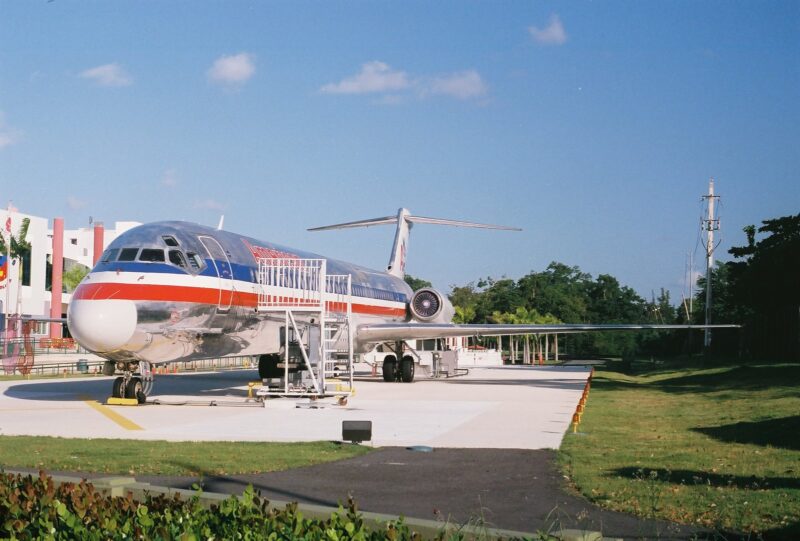
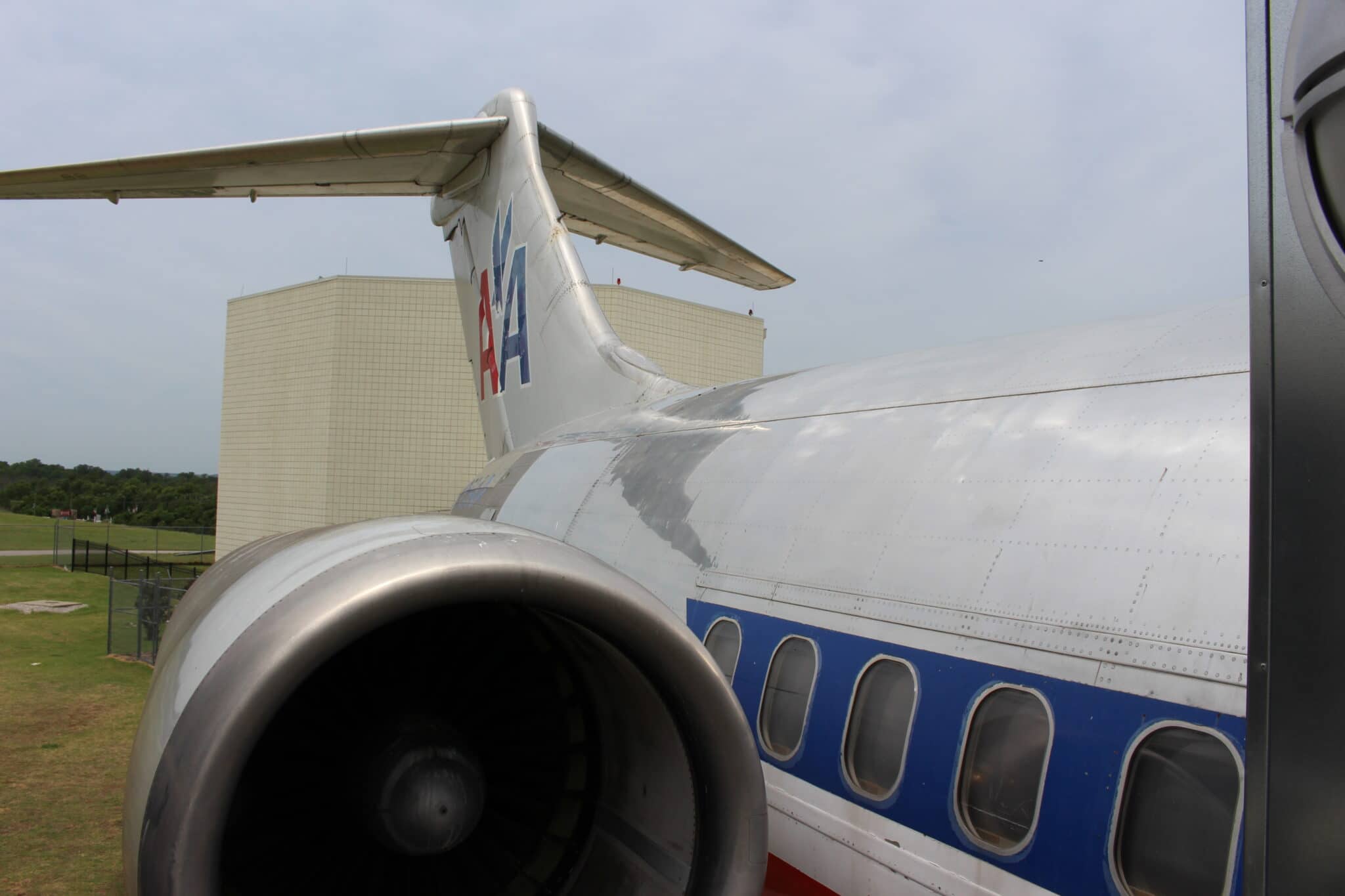
For those just a little nostalgic about the good ole’ days, there are still five cities around the country where you can see seven American Airlines MD-80 in full red, white, blue, and silver livery. Beginning in 2009, American donated a total of 8 jets, seven of which are still in AA colors. Here’s your list:
Four Jets in Oklahoma
Board the MD-80 at the Tulsa Air and Space Museum. Photo: Avgeekery
Tulsa was the home of the world’s largest MD-80 maintenance facility. For almost 30 years, they maintained every American MD-80 that ever flew. American donated not one but two MD-80s to causes around the city. The first one is the most accessible. It is located at the Tulsa Air and Space Museum. With paid admission, you can board the MD-80, sit in a real first-class seat and watch an immersive video projected above you in the cabin. The jet is beautifully preserved, polished regularly, and you can tour it.
Back in 2011, American Airlines donated a MD-80 to Tulsa Tech’s aviation program. They still have the aircraft. We haven’t seen any recent photos though but the jet is located at the Riverside Campus location.
Back in 2015, American donated a MD-80 to Oklahoma State University’s engineering school to serve as a maintenance trainer. Seven years later, the jet’s American titles look a little faded but is still in pretty good shape. Public tours aren’t available but you could always say you are interested in joining the school and they will probably offer a tour!
One of the last MD-80s donated by American arrived at Metro Tech Aviation Academy at Will Rogers Airport in Oklahoma City. The center offers AMT training for high school and adults. While the school nicknamed the jet “Zelda”, we’ve heard that most still call her “Mad Dog.”
Romeoville, Illinois (90 min from Chicago)
Lewis University is home to a pretty robust technical aviation program. American Airlines donated the MD-80 (N501AA) in late 2019. The university has the distinction of maintaining the last American Airlines MD-80 that ever flew. While the jet is no longer airworthy, they keep the jet pristine and run the engines regularly. You can see the aircraft by pulling near the school’s fence located at the airport in Romeoville. Occasionally, they even offer tours of their aviation school.
Miami, Florida
American Airlines donated an MD-80 (N234AA) to the GT Baker aviation technical college back in 2010. American first flew the aircraft to Miami International. They then used a crane to hoist the MD-80 over an adjacent expressway and towed it on major streets to the school. The MD-80 is still there providing technical training to high school and college students. While you can’t get a tour of the jet, you can see the American Airlines jet (sans engines) by driving near the school.
San Juan, Puerto Rico
The Museo Del Nino Des Carolina in Puerto Rico is a children’s museum that hosts one of the two American MD-80s in the world still open to the public. The MD-80 is open for tours will an interior that offers interactive exhibits. The jet was originally donated in 2011.
San Juan is actually home to two retired American Airlines MD-80s. Besides the museum, the other one is located at a local aviation academy. Unfortunately, the aviation academy jet was repainted into a silver and blue scheme with the American Airlines markings removed.
Bonus: Former AA MD-80 jet in TWA colors in Kansas City
Tristar Experience has stored the TWA Wings of Pride MD-80 jet in Kansas city. This aircraft also flew for American for a number of years after the merger with TWA back in 2001. You can learn more about the jet in a story we did back in 2017 here.
1989 started off with VF-32 Swordsmen chalking up a Navy-2, Libya-0 score when they splashed a pair of Libyan Mikoyan-Gurevich Mig-23 Flogger fighters over the Gulf of Sidra. Flying GYPSY 202 (F-14A BuNo 159437) that day was pilot LT Hermon Cook with RIO LCDR Stephen Collins. Flying GYPSY 207 (F-14A BuNo 159610) was VF-32 squadron CO CDR Joseph Connelly along with RIO CDR Leo Enright from the Carrier Air Wing THREE (CVW-3) staff. The 1989 Fighter Fling video was uploaded to YouTube by cmtecarvalho.
1990 began with the first F-14D model Tomcats reaching the Fleet. 1990 was also about Operation Desert Shield. But even before the 90s began, F-14 squadrons VF-191 Satan’s Kittens and VF-194 Red Lightnings were disestablished (in 1988). The 1990 version of the Fighter Fling video was uploaded to YouTube by Bydlo.
Well Fighter Fling 1991 should have been one of the greatest, if not THE greatest, Fighter Flings ever. After all, Tomcats had gone to war during Operation Desert Storm. But Fighter Fling 1991 never got off the ground. Because Tailhook 1991. And the first F-14Ds were delivered during 1991. Just to make the point there’s this video uploaded to YouTube by Triple Nickel.
Earlier today, US Federal Judge Kathryn K. Mizelle of Middle Florida struck down the CDC requirement to wear a mask on all public transportation. According to the order, the mandate is stuck down. In her ruling, the court stated that “the mask mandate exceeds the CDC’s (Center for Disease Control) statutory authority and violated the procedures required for agency rulemaking under the Administrative Procedural Act. Accordingly, the court vacates the Mandate and remands it to the CDC.”
So far, it does not appear that the CDC or the Biden Administration will take action on reimplementing the ban or formally appealing the decision.
Most airlines have remained silent on the issue thus far. Notably, Alaska Airlines posted this statement:
BREAKING: Face masks are officially optional in airports and onboard all Alaska Airlines and Horizon Air flights, effective immediately. Full statement: https://t.co/zVonJVowr7
“Face masks have been like boarding passes for nearly two years — you couldn’t fly without one. But, as of today, masks are optional in airports and onboard aircraft, effective immediately.” In their statement, Alaska added:
[Note: While the Transportation Security Administration, TSA, is no longer enforcing its mask mandate, it may take time for individual airports to roll back their mask requirements. Out of an abundance of caution, we recommend guests defer to local port guidance when traveling, including wearing a mask if directed to do so. Guests must also continue to wear masks on flights both to and from Canada.]
Due to a judicial decision in our federal court system, the mask mandate has been overturned, which means our guests and employees have the option to wear a mask while traveling in the U.S. and at work.
While we are glad this means many of us get to see your smiling faces, we understand some might have mixed feelings. Please remember to be kind to one another and that wearing a mask while traveling is still an option.”
United also posted this Instagram post at 7:55pm ET announcing that masks are optional on their flights.
Other major US airlines have yet to post. It’s difficult to see how any airline would enforce the mask mandate without this overturned ruling backing it. It’s likely that all airlines will drop the mandate this evening. We’ll keep you updated as we learn more.
Bonus: The Memes Are Lit for the Fall of the Mask Mandate
If you follow some of the airline industry meme sites, the memes are pretty funny. It’s been a long two years for flight attendants and crews who have dealt with this issue. We posted a few of the safe for work ones below:
This Extraordinary Real-World Tale of Woe Is Not a Work of Fiction!
Check rides can be stressful. They’re long, expensive, and nerve-racking. It’s easy to feel like all the time, energy, and money you’ve invested in your training comes down to whether you walk away from one flight with a brand-new license or the dreaded pink slip.
For most people, the suspense lasts only a few hours. But when I became a private pilot, the suspense lasted three weeks. As I experienced the check ride from purgatory, I learned a better way to think about FAA examinations. They’re not tests, so much as learning opportunities—chances to become a better pilot who is better equipped to handle turbulence of any and every kind.
Check Ride – Part 1: I’m Ready, Let’s Go!
It was Wednesday, 29 July 2021, 1300 local time at an airfield in central Texas. I’ve passed my written exam, logged the hours, tracked down my maintenance logs, and wrote the examiner’s check. I arrived at the FBO half an hour early. The examiner arrived an hour late, wearing a Hawaiian shirt and flipflops. By the time he collected the fee and reviewed the paperwork, it was 1430. I was on edge. Summer squalls were rolling in. I tried to ignore the weather outside the FBO window and focus on the exam.
“Can an employer legally hire you instead of another applicant because you have your pilot’s license, and the other applicant doesn’t?” The examiner waited as I flipped through the FAR/AIM. I scoured the footnotes and did my best to interpret the legalese. I gave a half-right answer. I was off to a bad start.
image via nick young
“Now say you’re taking off after a Boeing 737. How long should you wait to avoid the wake turbulence?” “Doesn’t it depend on what the wind’s doing?” I asked. He didn’t say anything. I gave an extra cautious answer. He actually snorted. “About 3 minutes,” came his reply. My safety margin had been three times that. It wasn’t exactly a strike, but definitely not a confidence boost either. The interrogation continued.
It was 1600 by the time we finished the oral exam. Outside the angry clouds had developed into a full-blown Texas summer storm. I hated to stretch the exam out another day, but I had no choice. I called for a weather-related discontinuance. The examiner put on his aviators and flip-flopped out of the FBO. See you tomorrow.
Bang NEXT PAGE Below for More of Lauren’s Impossible Check Ride!
Mariners Served With Distinction Around the World for More Than Twenty Years
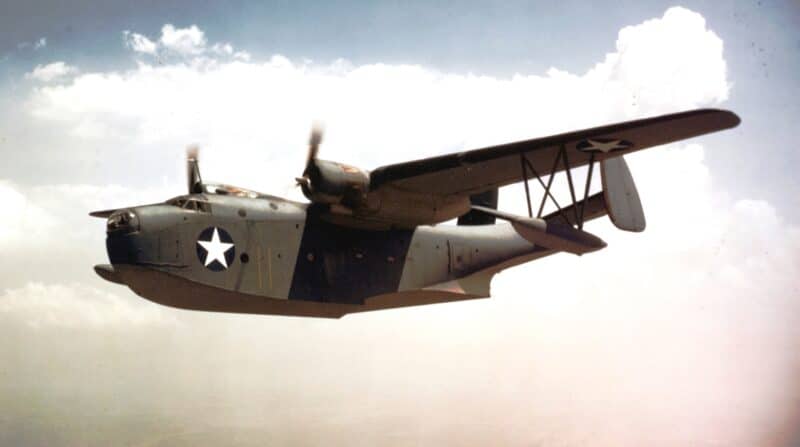
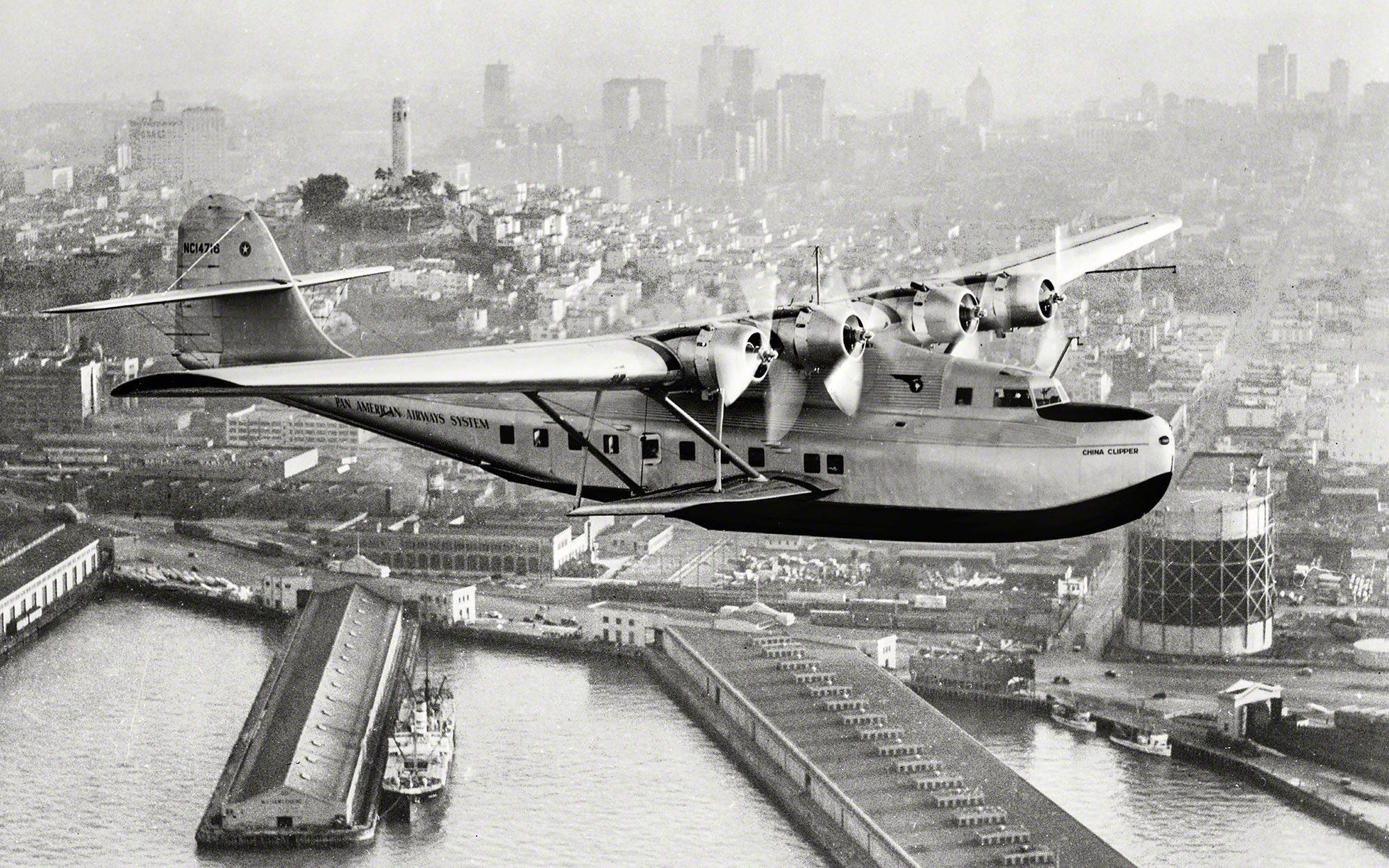
In 1937, when the designers at Glenn L Martin Company penned the Model 162, they leveraged their experience with several previous flying boat and bomber designs. The Martin Model 130 Clipper flying boats were themselves developments of the previous Martin PM-1 and PM-2 biplane flying boats and the P3M monowing flying boat designs. The Navy thought enough of the Model 162 to award a contract to Martin on 30 June 1937 to build a single prototype of the design, which the Navy designated Experimental Patrol Bomber Martin 1 (XPBM-1).
Martin 130 clipper. image via national archives
The Basics
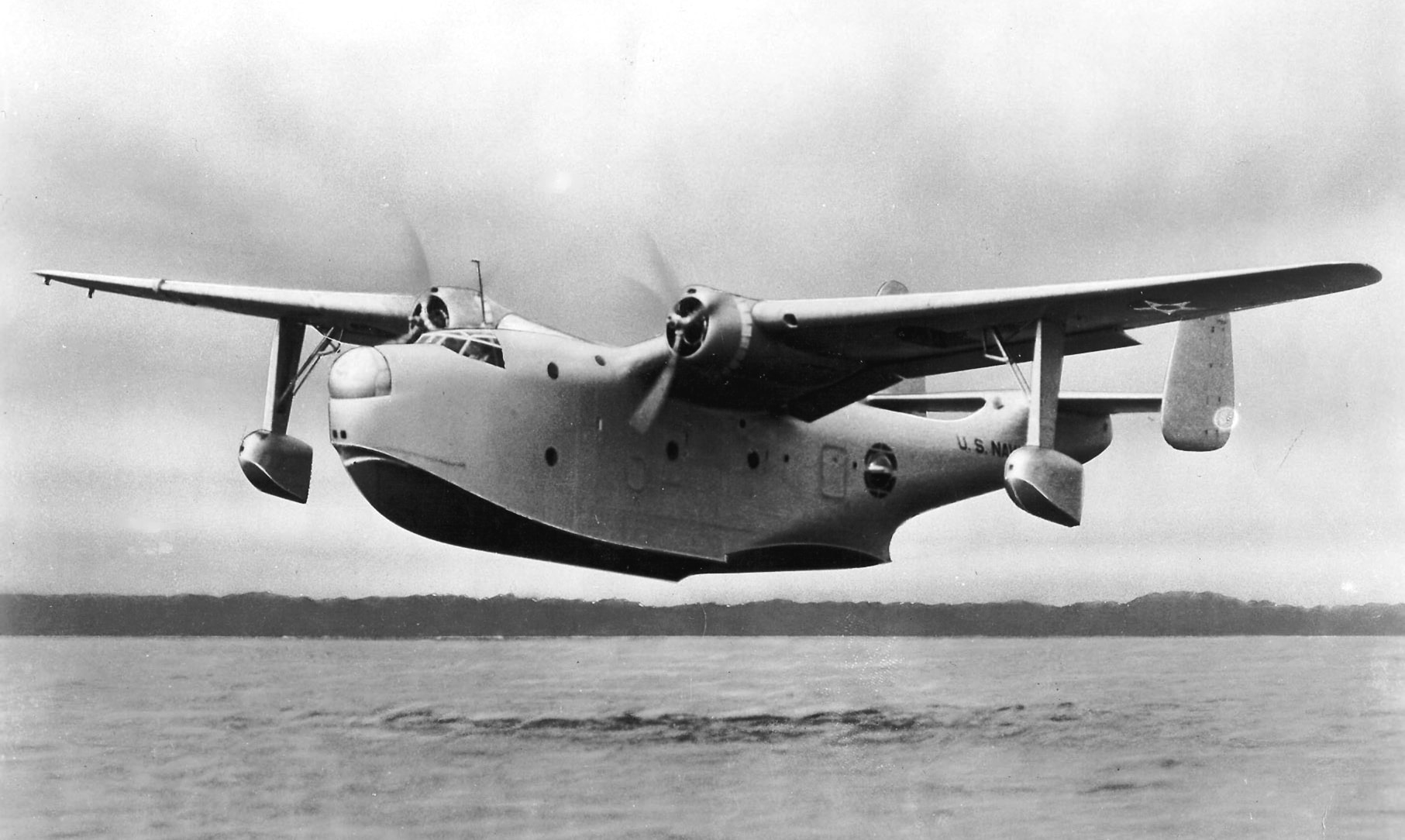
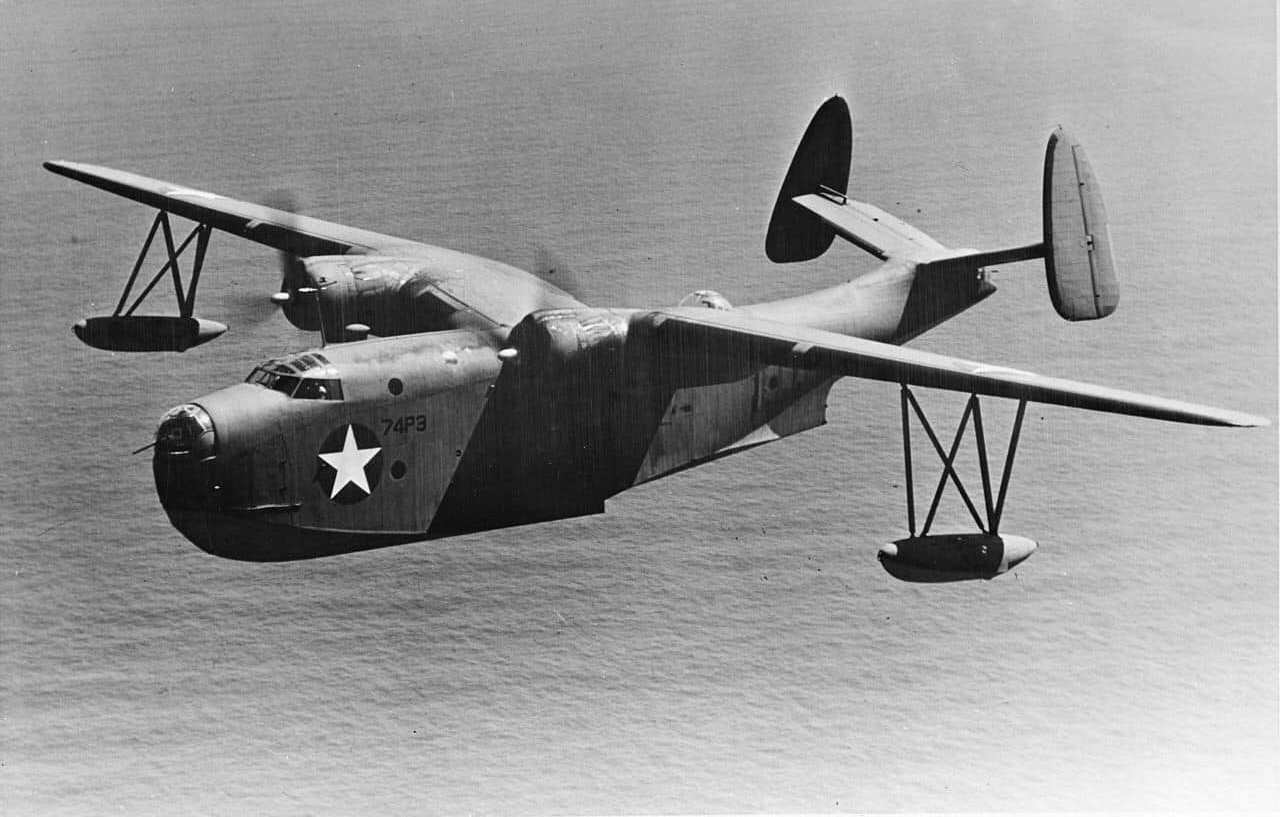
The XPBM-1 design featured a very deep planing hull with shoulder-mounted upturned gull wings, an upturned rear fuselage with a twin vertical stabilizer empennage, and retractable inward-folding wing-mounted stabilizer floats. Initially powered by a pair of nacelle-mounted Wright R-2600-6 Cyclone 14-cylinder air-cooled radial engines developing 1,600 horsepower each and turning three-bladed propellers, the aircraft was considerably larger and heavier than its US Navy contemporary, the Consolidated PBY flying boat. For its initial flights, the XPBM-1 was unarmed but equipped with dummy gun turrets.
XPBM-1 Mariner in flight. Image via National Archives
Few Changes Needed
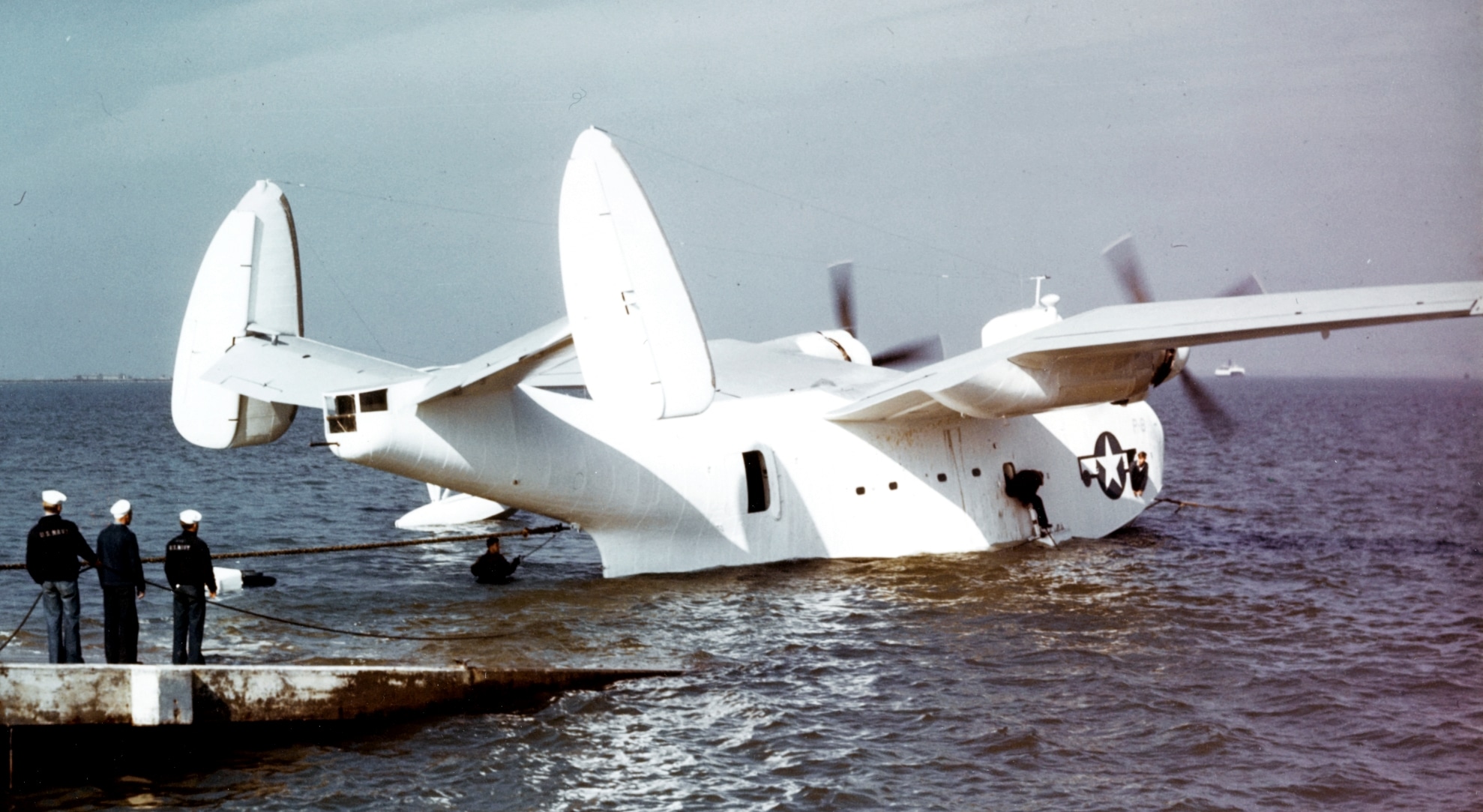
When the XPBM-1 flew for the first time on 18 February 1939, the empennage design proved to be unacceptable due to tail flutter in flight. The Martin team revised the design to give the horizontal stabilizers a pronounced dihedral (nearly matching the dihedral of the inner gull wings) without changing the attachment angle of the vertical stabilizers, resulting in their distinctive inward canted angle. Later PBM variants had small airfoils above and below the outboard horizontal stabilizers at the vertical stabilizers to improve inflight empennage stability. Other design highlights of the XPBM-1 included bomb bays located in the engine nacelles on both wings and flexible fuel tankage options for range improvement.
PBMs in flight. image via national Naval Aviation museum (NNAM)
The PBM Gets Its Name
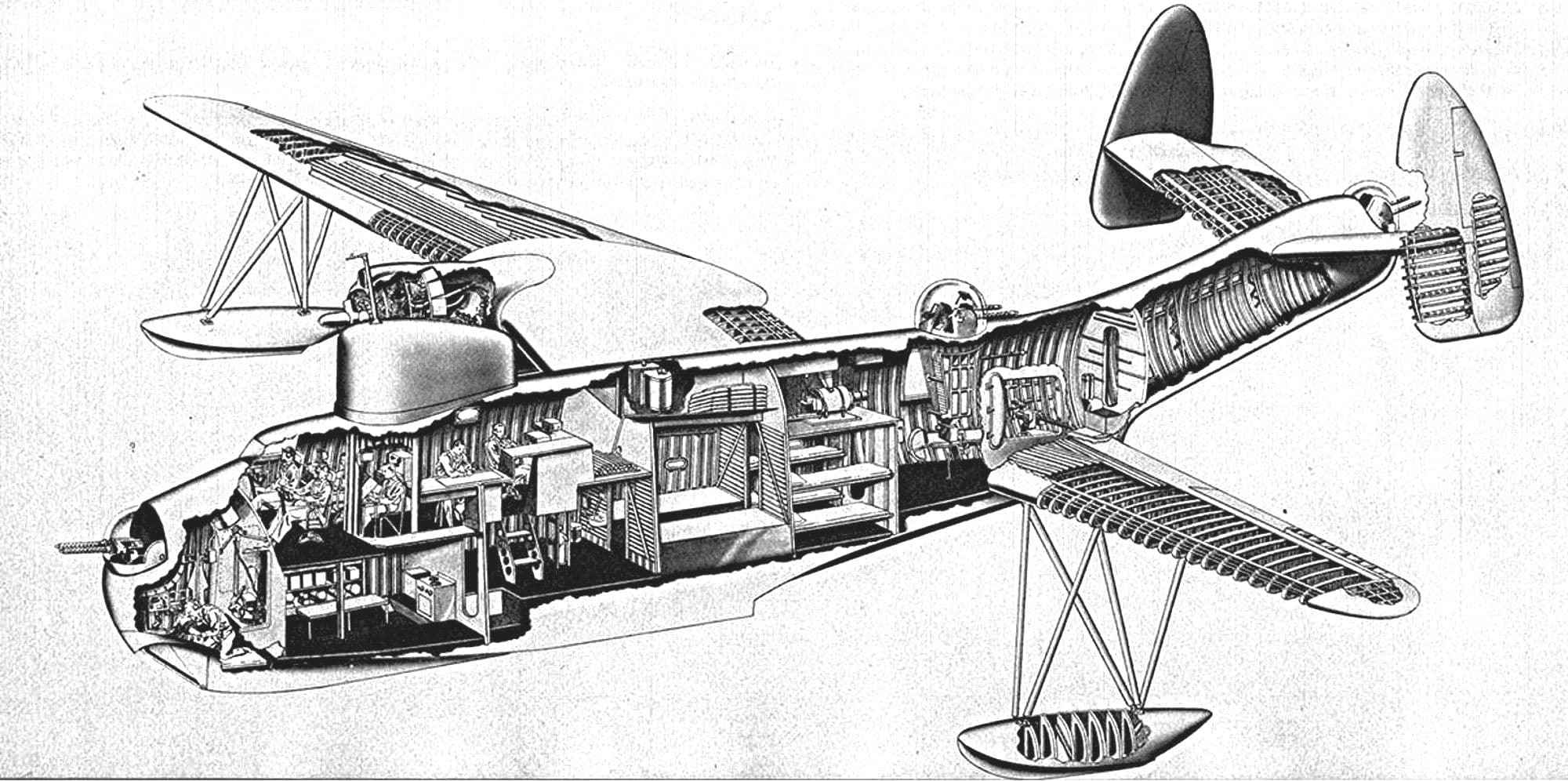
Even before the first flight of the XPBM-1, on 18 December 1937, the Navy ordered 20 production PBM-1s from Martin. In keeping with their custom of giving Martin aircraft monikers beginning with M, Martin dubbed their PBM the Mariner. Though initially crewed by seven, wartime PBM crews usually consisted of three pilots (a patrol plane commander [PPC], an alternate, and a navigator), two ordnance men, two radiomen, and four machinist’s mates. Creature comforts for the crews included a galley, a bunkroom with four bunks, and a head (which consisted of a can with a seat, a paper bag, and a piss tube).
PBM interior (late war variant). image via national archives
Packing a Punch
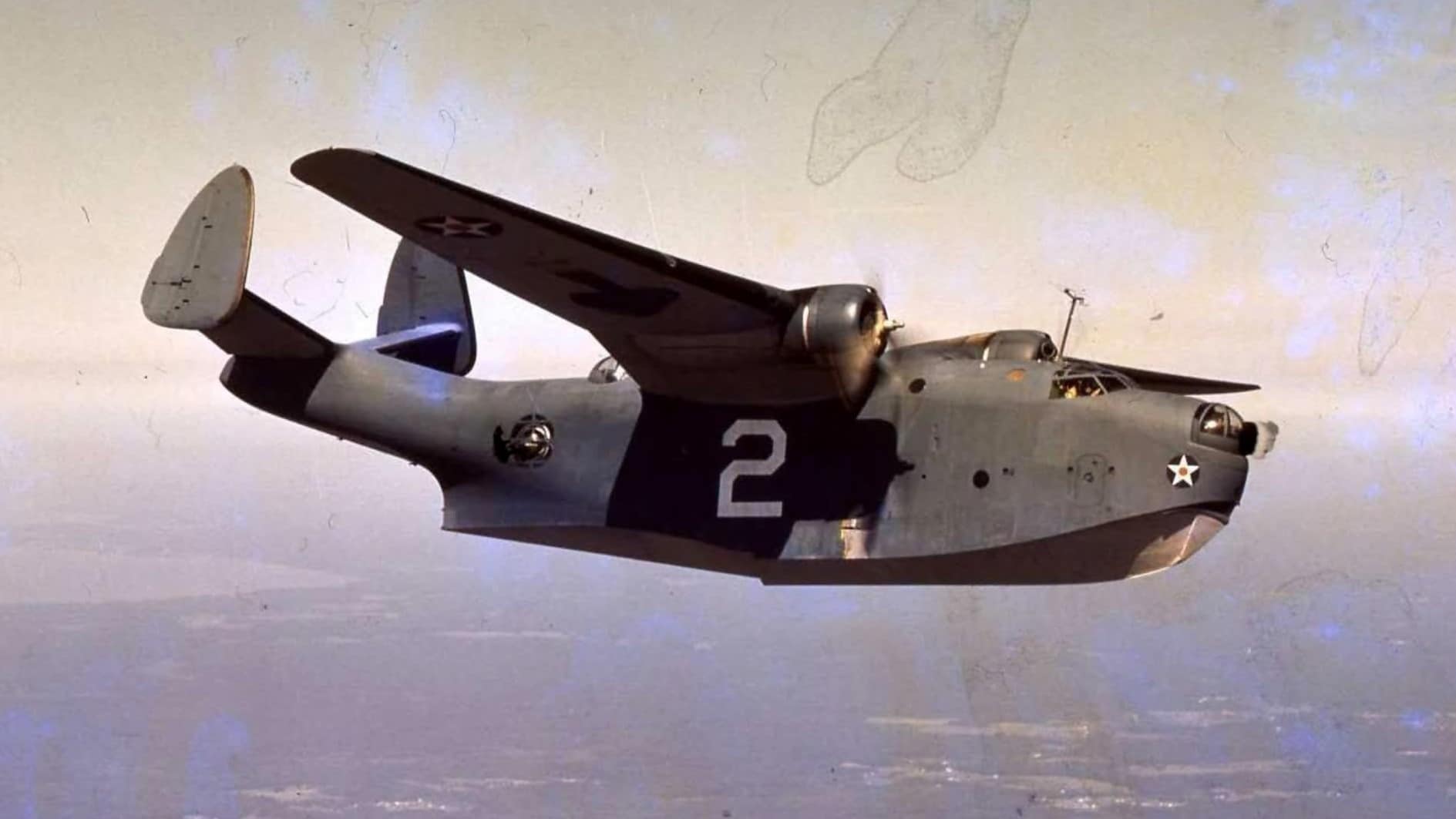
Defensive armament for the PBM-1 variant included a single flex-mounted .50 caliber machine gun in the tail, one flex-mounted .50 mounted on each side of the rear fuselage, a single .50 in a rear dorsal turret, and a single .50 mounted in a nose turret. Payload was up to 2,000 pounds of bombs or depth charges carried in the bomb bays. Torpedo racks were often mounted on the wings between the fuselage and the nacelles. Entering service with Patrol Squadron FIVE FIVE (VP-55) 1 September 1940, many of the PBM-1 Mariners flew Neutrality Patrols over the Atlantic sea lanes until the war started in December the next year. The PBMs had wheeled beaching gear attached to their hulls to facilitate removal from the water for maintenance. An amphibious capability for the PBM was not added until after war’s end.
PBM in flight. image via NNAM
Improving an Already Excellent Design
The next variants of the Mariner to see service were based on the PBM-3. In the fall of 1940, the US Navy ordered 379 PBM-3s. In order to build more Mariners, a new assembly plant was constructed at Middle River in Maryland. PBM-3s were powered by uprated Wright R-2600-12 Cyclones, putting out 1,700 horsepower each, engine nacelles redesigned to include engine cooling fans along with larger bomb bays, and fixed strut-mounted wing floats. Defensive armament changes included powered nose and dorsal turrets, a new powered tail turret, and revised waist gun positions. Only a few of the PBM-3s had rolled off the production line before the uprated Cyclone engines were mated with four-bladed propellers.
PBM in flight circa 1941. image via NNAMPBM-3S. image via NNAM
Each New Trailer Release Has Raised As Many Questions As It Has Answered
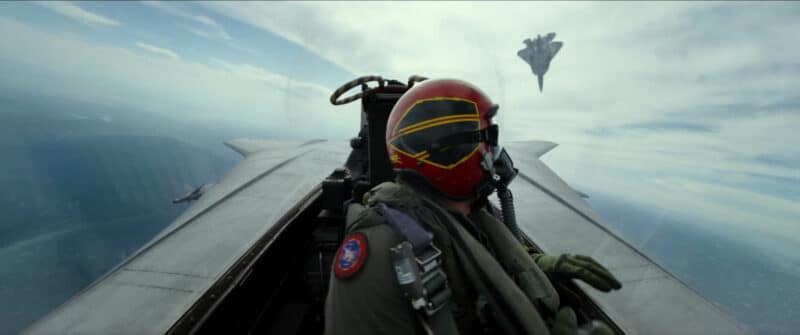
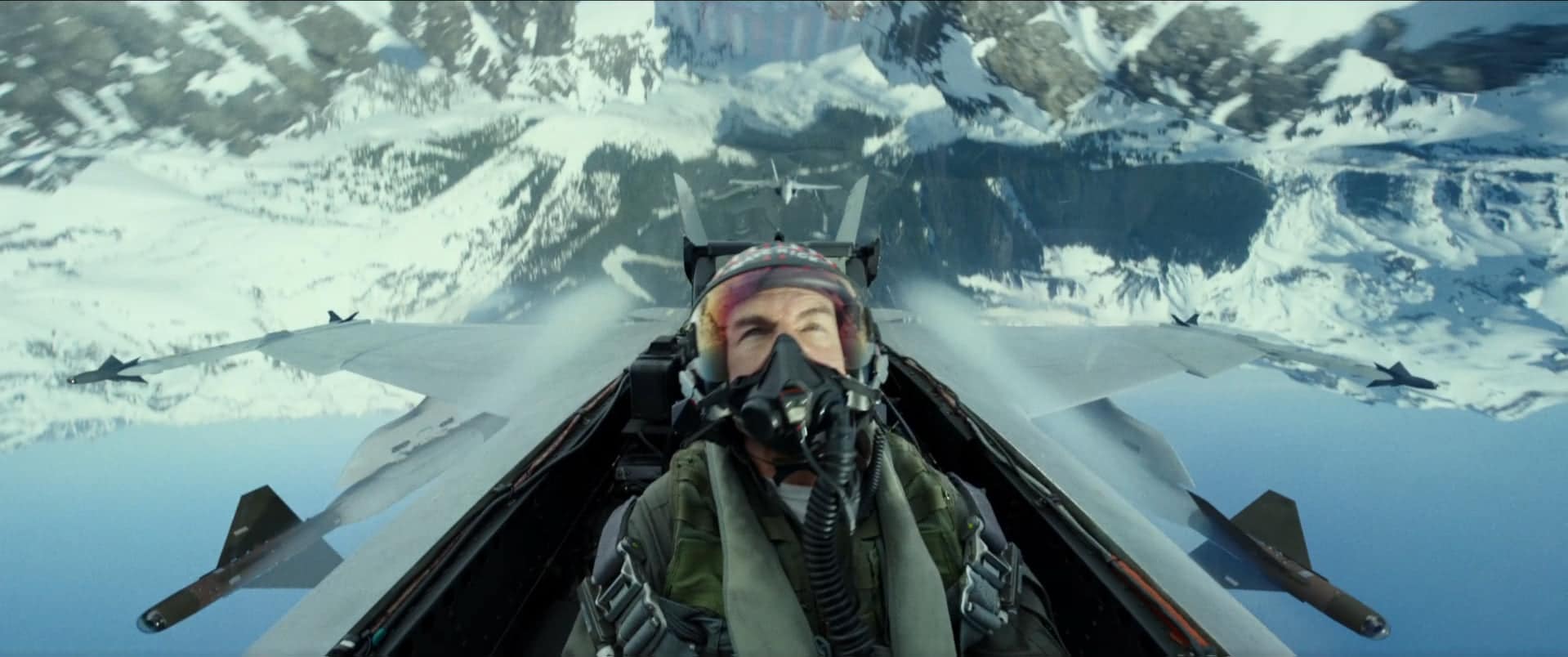
Top Gun: Maverick has been referred to as “a love letter to aviation.” We’re all waiting for what we hope is, at best, the finest aviation film of our lifetimes, and at worst (we hope) simply good entertainment. We’ve been waiting literally for years for the movie to be released, so no matter how good Top Gun: Maverick turns out to be the film will have more than its fair share of critics. We profiled the F-6K/P-51K Mustang Tom Cruise owns and flies in the film. We tracked down the actual jets used for the flying scenes (spoiler alert- some are flying with the Blue Angels now). We’ve hyped the previous trailers. We’ve speculated (along with everybody else who hasn’t been living under a rock for the last couple of years) about the plot, the timelines, and just about every aspect of this highly-anticipated film.
screenshot from top gun: Maverick trailer
Will the Film Live Up to Expectations?
There’s no point in denying it- there were plenty of questionable aspects of the 1986 blockbuster, particularly in the realism department. Former Tomcat RIO and best-selling author Ward Carroll has picked apart the original film, and it’s a forgone conclusion Top Gun: Maverick will get the same treatment from lots of folks- experts and armchair aviators alike. But we’re all hoping for a technically realistic film free of the faux pas left in the original film as edited for its theatrical release. Of course some viewer suspension of disbelief will be necessary, but hopefully not throughout the feature. It’s been reported that there were 800 hours (that’s 33+ days) of footage shot for Top Gun: Maverick. It’s unlikely the kind of recruiting boom that Naval Aviation enjoyed after the release of the original TOP GUN in 1986 will recur, but it’s not impossible.
screen shot from top gun: Maverick trailer
The Latest Trailer
Footage included in the latest trailer (released on 29 March 2022) includes an ever-so-brief glimpse of Bradley ‘Rooster’ Bradshaw (the son of Maverick’s late RIO Nick ‘Goose’ Bradshaw) riding in the backseat of an F-14 Tomcat doing his best to keep eyes on a Sukhoi Su-57 Felon fighter immediately after a merge. This footage seems to support the hypothesis that somehow or other, Maverick and Rooster end up flying an F-14 for a portion of the film- and absolutely have their hands full going up against the Su-57 in a Tomcat! In the trailer that footage appears at the 2:08 mark (but don’t blink- it only lasts for about a second)! The trailer was uploaded to YouTube by Paramount Pictures. Enjoy!
Here is a new behind the scenes trailer showing how the aerial scenes were shot and how the actors trained for the Top Gun: Maverick aerial scenes. The video was released on 18 April 2022 and uploaded to YouTube by Paramount Pictures.
This year’s list of the busiest airports is out. Each year the Airports Council International (ACI) releases a list of the top 10 airports across four different categories. The results show a host of drastic shifts in rankings last year as the world grappled with the ongoing Coronavirus pandemic.
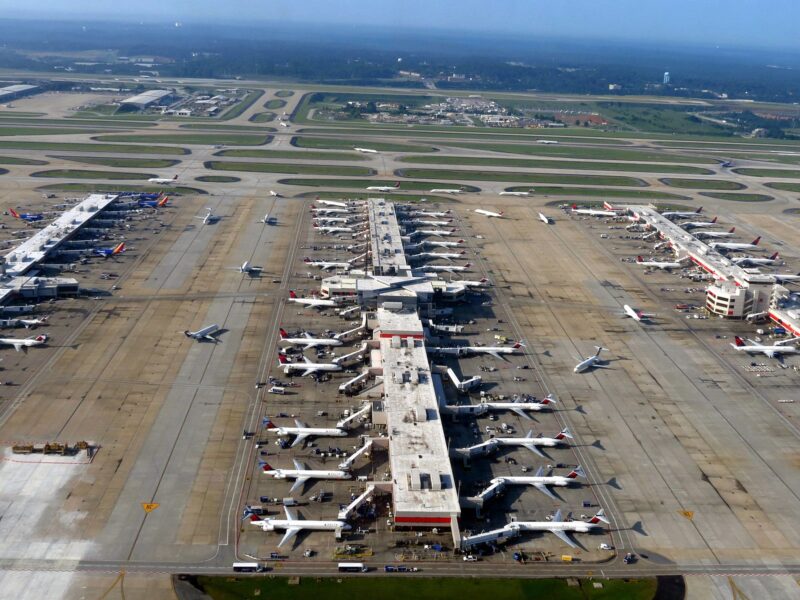
The long and short of this year’s results are that the United States dominated this year’s list. In 2020, a number of Chinese airports rose in prominence as their economy recovered quicker from the first COVID-19 wave as other areas of the world (like Europe and the United States) struggled with wave after wave of the virus. In 2021, that trend reversed as pent-up demand for leisure travel led to a faster than anticipated recovery for air travel. Major US hubs like Atlanta and DFW Airport role to 1st and 2nd place, respectively. Still, their traffic numbers are double digit percentage amounts less than 2019.
2021 Top-Ten Passenger Airports
’21
’20
’19
Airport
2021
% chg vs 2020
% chg vs 2019
1
2
1
ATLANTA, GA
75.7M
76.4
-31.5
2
4
10
DFW Airport
62.46M
58.7
-16.8
3
8
16
DENVER, CO
58.8M
74.4
-14.8
4
13
6
CHICAGO, IL
54.0M
75.1
-36.2
5
15
3
LOS ANGELES, CA
48.0M
66.8
-45.5
6
18
34
CHARLOTTE, NC
43 302 230
59.2
-13.4
7
27
31
ORLANDO, FL
40.35M
86.7
-20.3
8
1
11
GUANGZHOU, CN
40.26M
-8.0
-45.1
9
3
24
CHENGDU, CN
40.1M
-1.5
-28.2
10
22
30
LAS VEGAS, NV
39.75M
78.6
-23.1
Source: Airports Council international: * Total passengers enplaned and deplaned, passengers in transit counted once
Atlanta returned after briefly being dethroned by Guangzhou, China last year. The United States took 8 out the 10 top spots. Making the top 10 list for the first time include growing American Airline hub Charlotte, family vacation destination Orlando, and weekend getaway hotspot at Las Vegas, NV. The shift in the rankings clearly show that leisure travel has recovered but business travel is still lagging behind significantly as workers shift towards remote work.
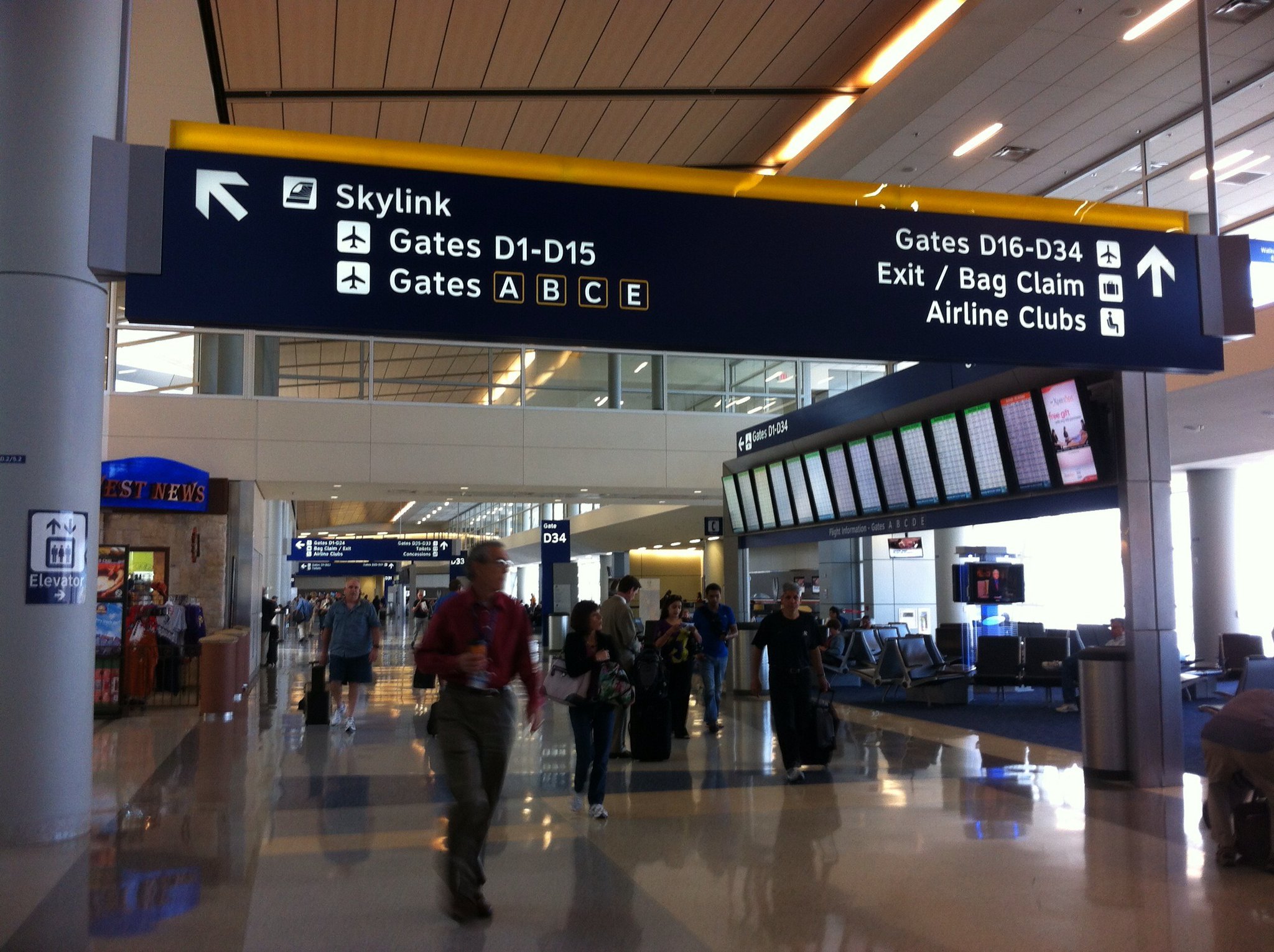
DFW Airport. Photo courtesy Grant Wickes.(FLICKR, CC 2.0)
“The ACI World passenger traffic rankings tell the story of an encouraging trend of recovery, with most of the recurrent busiest airports pre-COVID-19 back at the top,” ACI World Director General Luis Felipe de Oliveira said. “Although we are cautious that recovery could face multiple headwinds, the momentum created by reopening plans by countries could lead to an uptick in travel in the second half of 2022.”
ACI then went on to ask governments to reduce their burdensome travel requirements and restrictions to speed the movement of both passengers and cargo.
Cargo continues to grow
One trend that continues is the growth of air cargo, particularly between the US and Asian markets. This aligns with the fact that supply chain disruptions, medical needs, and delayed products have led to a significantly increased need for express shipping across the globe. Most of this cargo have originated in Asia then transited the main shipping hubs of Memphis, Anchorage, Louisville and Doha.
’21
’20
’19
Airport
2021
% change vs 2020
% change vs 2019
1
2
1
HONG KONG
5.02M
12.5
4.5
2
1
2
MEMPHIS TN
4.48M
-2.9
3.6
3
3
3
SHANGHAI, CN
3.98M
8.0
9.6
4
4
6
ANCHORAGE, AK
3.55M
12.6
29.5
5
6
5
INCHEON, KR
3.33M
18.0
20.4
6
5
4
LOUISVILLE, KY
3.05M
4.6
9.4
7
7
9
TAIPEI, TW
2.81M
20.0
28.9
8
8
13
LOS ANGELES, CA
2.69M
20.7
28.7
9
11
10
TOKYO, JP
2.64M
31.1
25.7
10
9
8
DOHA, QA
2.62M
20.5
18.2
*Cargo: loaded and unloaded freight and mail in metric tonnes
ACI has a great report with additional details and categories. Be sure to check out the full report here.
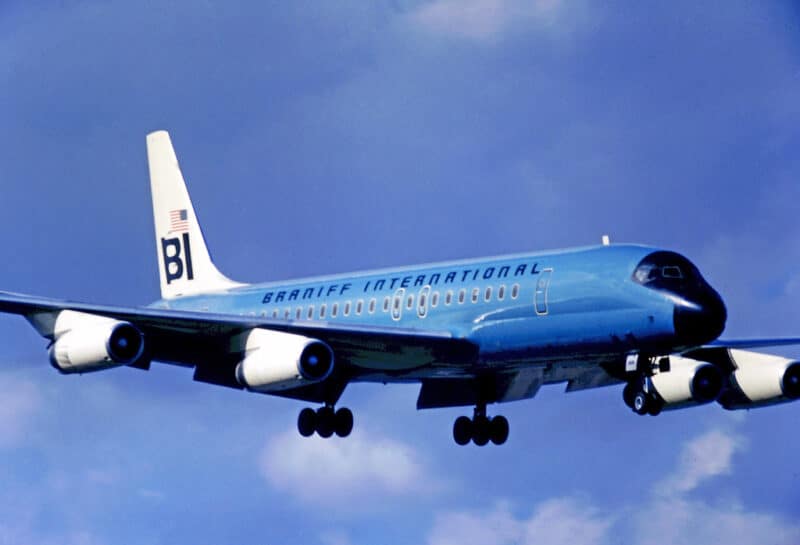
The original Braniff Airways was a legendary and unique airline. It embraced the bold colors of the 1960s and 1970s with their trendy “Flying Colors” livery.
Braniff wasn’t afraid to dream big either. They were the only US airline to operate the Concorde (it was a very unique temporary purchase agreement of British Airways and Air France Concordes–that’s for a future story). At Dallas Love in the 1960s, they introduced a unique tram shuttle from the parking lot to the terminal. As the DFW metroplex grew, Braniff led the charge to move to DFW airport. They were one of the founding airlines at DFW airport, taking over an entire terminal at the giant complex.
Their move to DFW wasn’t without controversy. The larger Braniff Airways unsuccessfully tried to force Southwest Airlines out of Dallas Love. Their move proved unsuccessful, paving the way for a lawsuit by Southwest and eventually forcing Braniff to settle by providing a small fleet of 727s to Southwest free of charge.
nferring a luxury flying experience in the skies. The 747 flew mainly between Hawaii and DFW primarily with later deliveries providing service to London, South America, and occasionally Frankfurt, Germany.
The footage below by Youtube used Starboard76 shows Braniff is primarily from 1974, shortly after Braniff made the move to their new hub at DFW Airport.
At its peak, Braniff flew over 110 jet aircraft, primarily consisting of Boeing 727s, 747s, and DC-8s. Braniff ceased operations in 1982. American and Delta claimed much of Braniff’s market share at DFW Airport after Braniff folded. The airline’s revival was attempted twice. Both efforts failed.
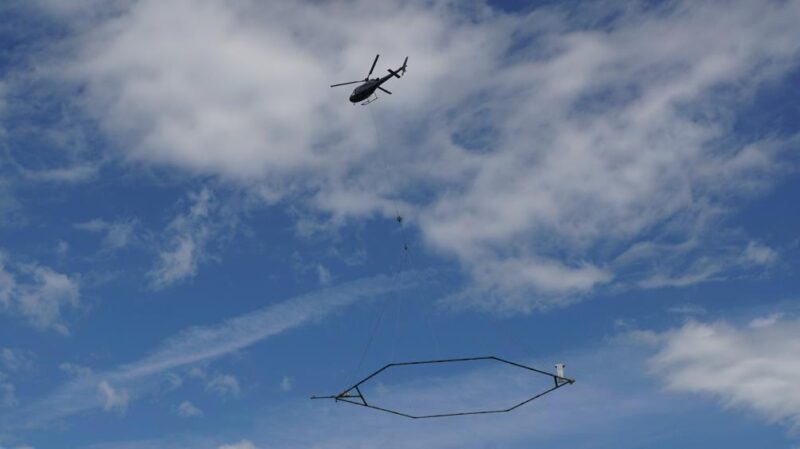
At first glance, it looks like the helicopter is carrying some spooky technology. Or maybe it’s a device to capture large drones, or even a getaway car. The device looks like the perfect contraption to highlight on your site if you were into large governmental conspiracies. If you have ever wondered why a helicopter might be flying with such a device attached to it, the answer may surprise you.
So seriously, what is it?
The device is called a geophysical device. Ever find the answer to something and it still makes you scratch you head and say, “huh”? Us too. So we went digging to find out a little bit more about this unique contraption. What we found was this video:
The long and short is that the helicopter makes a number of passes over a designated area. The helicopter flies about 200 feet over the ground and executes AEM observations also known as airborne electromagnetic surveys. It send signals into the ground which allows it to better understand the makeup of the subsurface to include identifying ground water. This information is used to better understand the rate of usage of ground water–both for where it is being depleted and when it is recharged after rainy season.
According to the California Department of Water Resources, the emitters from the device are safe with the only annoyance (for non-avgeeks) being the sounds of the helicopter making repeated passes over land.
Roscoe Turner was not just an aviator; he was a celebrity as famous as his contemporaries Amelia Earhart and Jimmy Doolittle. His expertise was air racing. He set speed records that won for him numerous trophies, and his photo graced the cover of Time Magazine after an outstanding performance in the 11,000-mile MacRobertson Air Race of 1934.
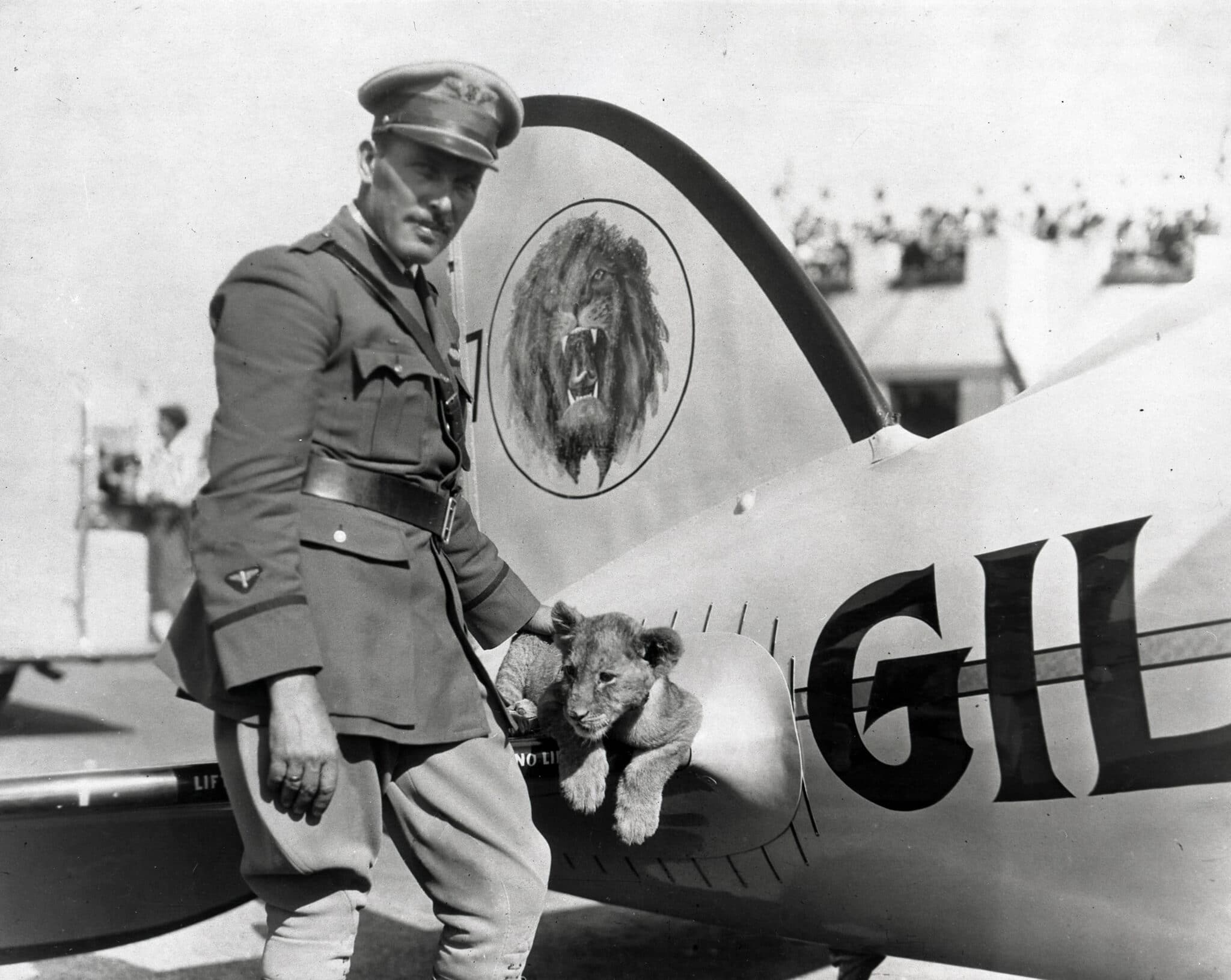
As well known for his flashy appearance and his glamorous lifestyle as he was for his air racing, Turner’s social circle included Hollywood movie stars and other celebrities of the day. He always traveled with Gilmore, his pet lion cub, named after The Gilmore Oil Company, for which he did publicity work.
Roscoe Turner with his pet lion cub ‘Gilmore’. The animal had its own parachute to use when traveling aboard the Gilmore Oil Company’s corporate aircraft, a Lockheed Air Express, with its master. R.E.G. DAVIES COLLECTION
Roscoe Turner retired from air racing in 1939 and founded a fixed base operation (FBO) in Indianapolis to sell and service aircraft, and to offer flying lessons. During World War II, his company was credited with producing 3,500 new fliers for the military.
AN AIRLINE IS BORN
With the war ending, Turner turned to a new venture. He applied to the Civil Aeronautics Board (CAB) – the government agency responsible for regulating America’s airline network – for a certificate to operate one of the new group of airlines to be called feeder, or local service, carriers. Specifically designed to connect small cities and towns of rural America with their big city neighbors, the feeder carriers came with the benefit of guaranteed income: subsidy provided by the government to cover losses incurred in serving small cities.
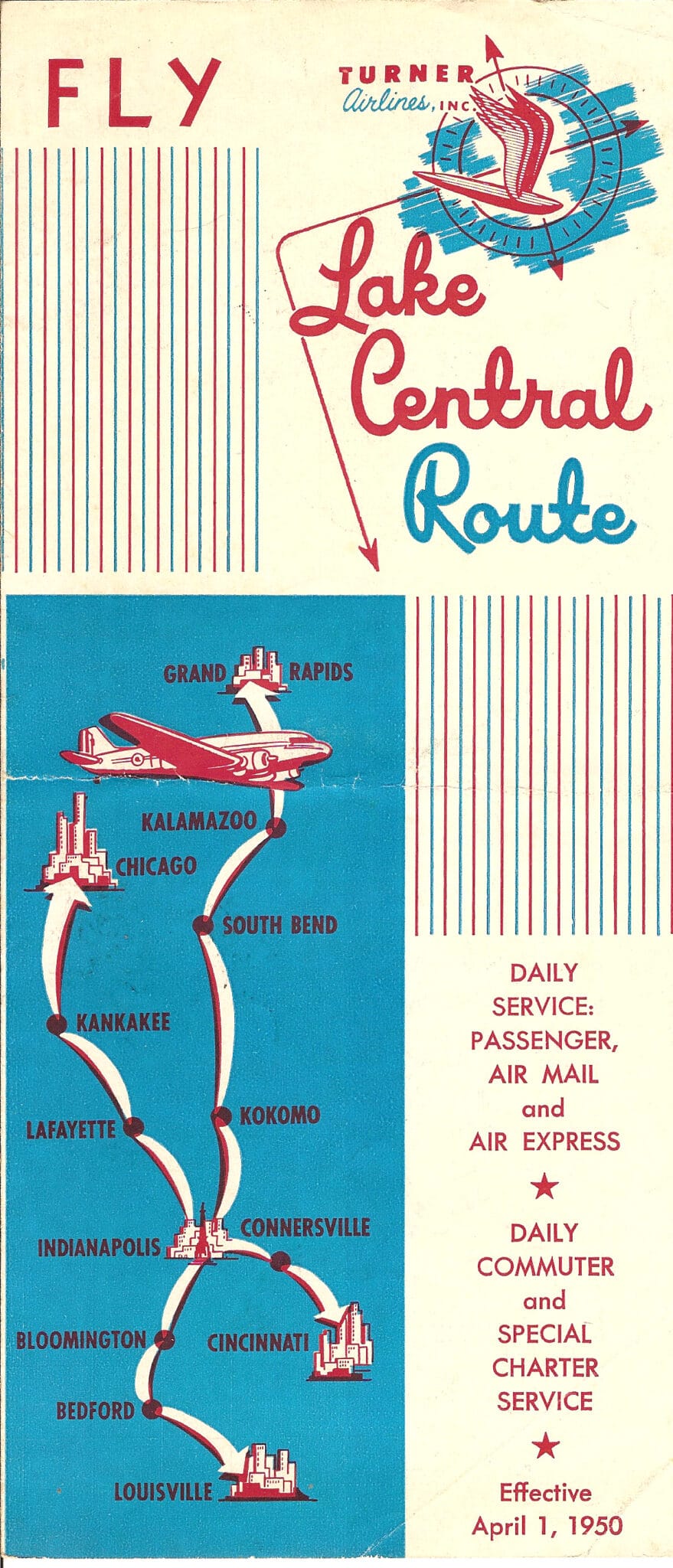
The CAB selected Roscoe Turner’s outfit over several other applicants to operate a local service airline from a hub in Indianapolis. His company was awarded two routes – one from Chicago to Louisville, and another from Grand Rapids, Michigan to Cincinnati – both serving several smaller cities enroute. The two lines intersected at Indianapolis.
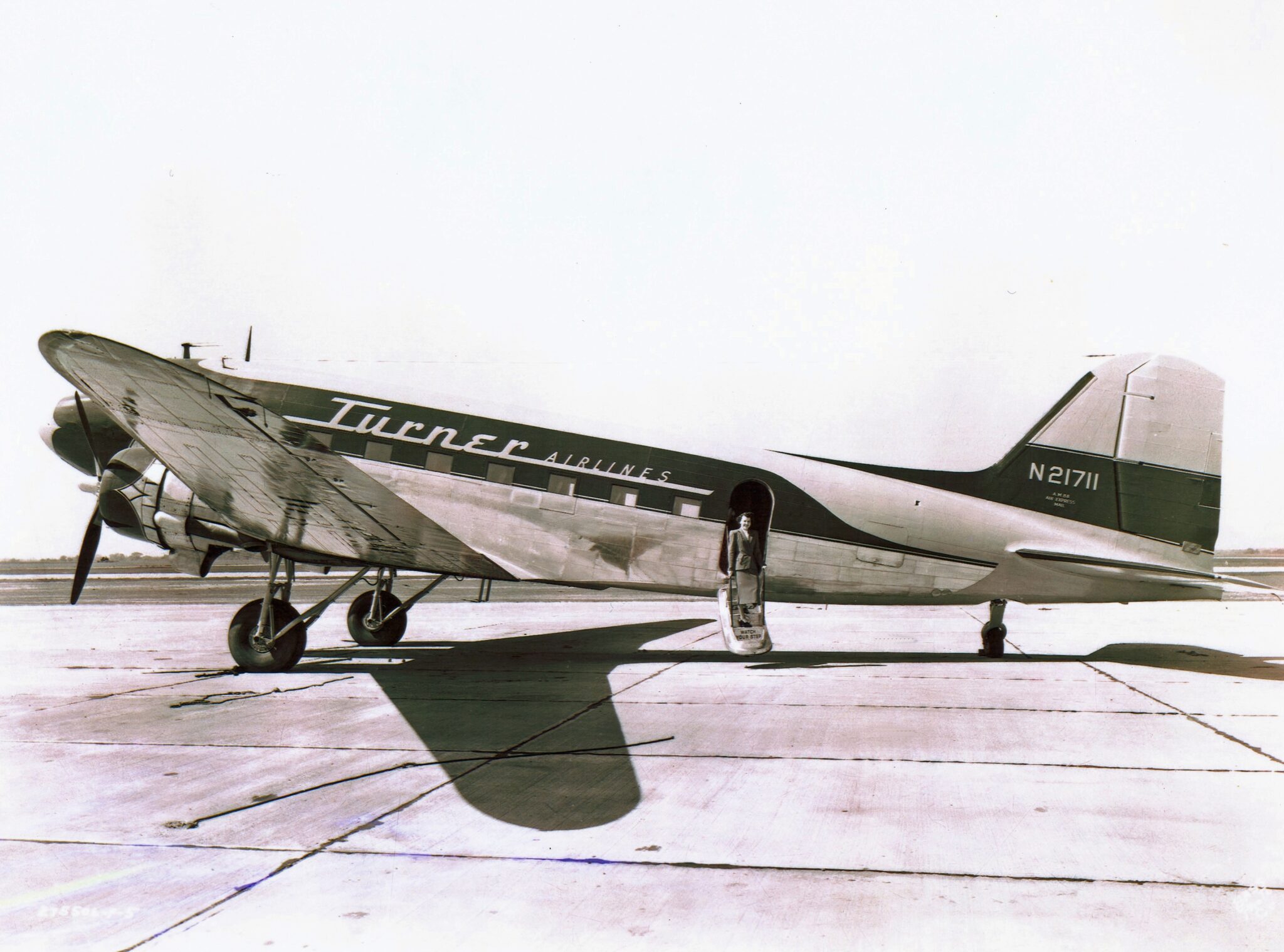
TURNER AIRLINES DC-3. NAMED AFTER its founder, Roscoe Turner, the company was renamed Lake Central in 1950. JON PROCTOR COLLECTION
Feeder airlines were uncharted territory. Aside from their guaranteed subsidies, no one knew if they would make money. Banks and investment firms were wary of risking funds on the experiment. Roscoe Turner was an aviator, not a finance person, and now he needed a lot of money to get his feeder airline into the air.
Turner eventually found his investors in brothers Paul and John Weesner. Paul was president of Nationwide Air Transport Service (NATS), a non-scheduled carrier operating within a gray area of government oversight, while John was president of Nationwide Airlines, an intra-state carrier that operated totally within the State of Michigan under the jurisdiction of state authorities.
Turner’s CAB-certificated company, with its guaranteed subsidy income, looked appealing to the Weesner brothers. They had money and airplanes; Turner had the certificate.
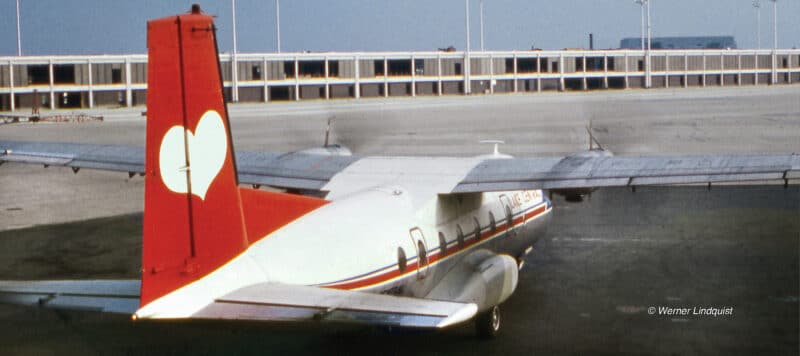
Turner Airlines got airborne on November 12, 1949, with the Weesners holding 75% of the stock. Before the company celebrated its one-year anniversary, Roscoe Turner lost interest in operating an airline. He sold his shares to the Weesners and the name of the company was changed to Lake Central Airlines (LCA).
Lake Central’s original network consisted of two routes that intersected at Indianapolis. DAVID H. STRINGER COLLECTION
The brother’s business practices came under scrutiny by the CAB. They were intermingling the assets, aircraft, and finances of their other companies with those of Lake Central and, even after the airline’s books were audited and corrected, LCA’s ledgers were found to be bleeding red ink. When it came time for the airline’s three-year review by the CAB, it was highly doubtful that Lake Central’s certificate would be renewed.
EMPLOYEES TO THE RESCUE
The CAB could have shut down Lake Central by not renewing the company’s certificate. The Weesner’s casual interlocking relationships, along with the airline’s poor financial performance, would have given the Board reason enough. But the cities being served by Lake Central deserved to keep their air service and the CAB also wanted to transfer several stations in Ohio then being served by TWA to one of the new feeder carriers.
Lake Central was granted a reprieve through December 1954. There was one condition: the Weesners had to go. Their stock was put into a trust and an entirely new Board of Directors was selected. Now, a buyer had to be found for Lake Central.
The Story Continues… Bang NEXT Page below to read more.
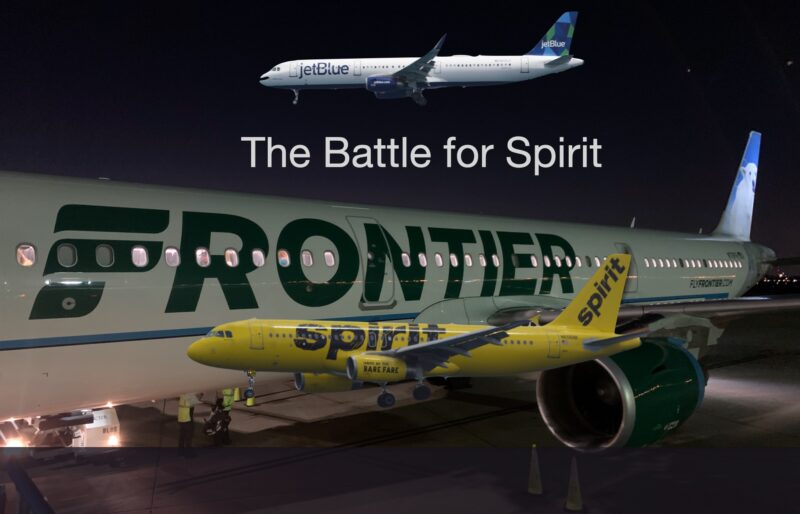
Earlier today, JetBlue Airways submitted an all cash offer to Spirit Airlines for $3.6B, equivalent to $33 a share. According to Spirit, the offer was ‘unsolicited’. In February, Frontier Airlines offered to merge with Spirit Airlines to create the nation’s largest ultra low-cost carrier. That merger proposal was valued at around $26 a share.
Merger With Frontier Made Sense
The unsolicited proposal definitely adds questions to the merger landscape. Up until today, there was little word that the two airlines weren’t on a smooth pass towards integration.
The Frontier and Spirit merger made sense on many levels. Both airlines have received support and guidance from Indigo Partners. Both airlines exclusively operate Airbus A320-series aircraft. The two airlines have similar no-frills policies to include charging for carry-ons, food, and even water bottles. Frontier and Spirit also have a complimentary network. Spirit is a powerhouse low-cost carrier on the Eastern seaboard while Frontier’s strength is in the West. While both carriers have common destinations their route structure currently shares little overlap. Gaining approval for the merger seemed relatively simple as a straightforward merger was unlikely to result in any significant loss of service or jobs for the industry.
JetBlue Might Be a Tougher Sell
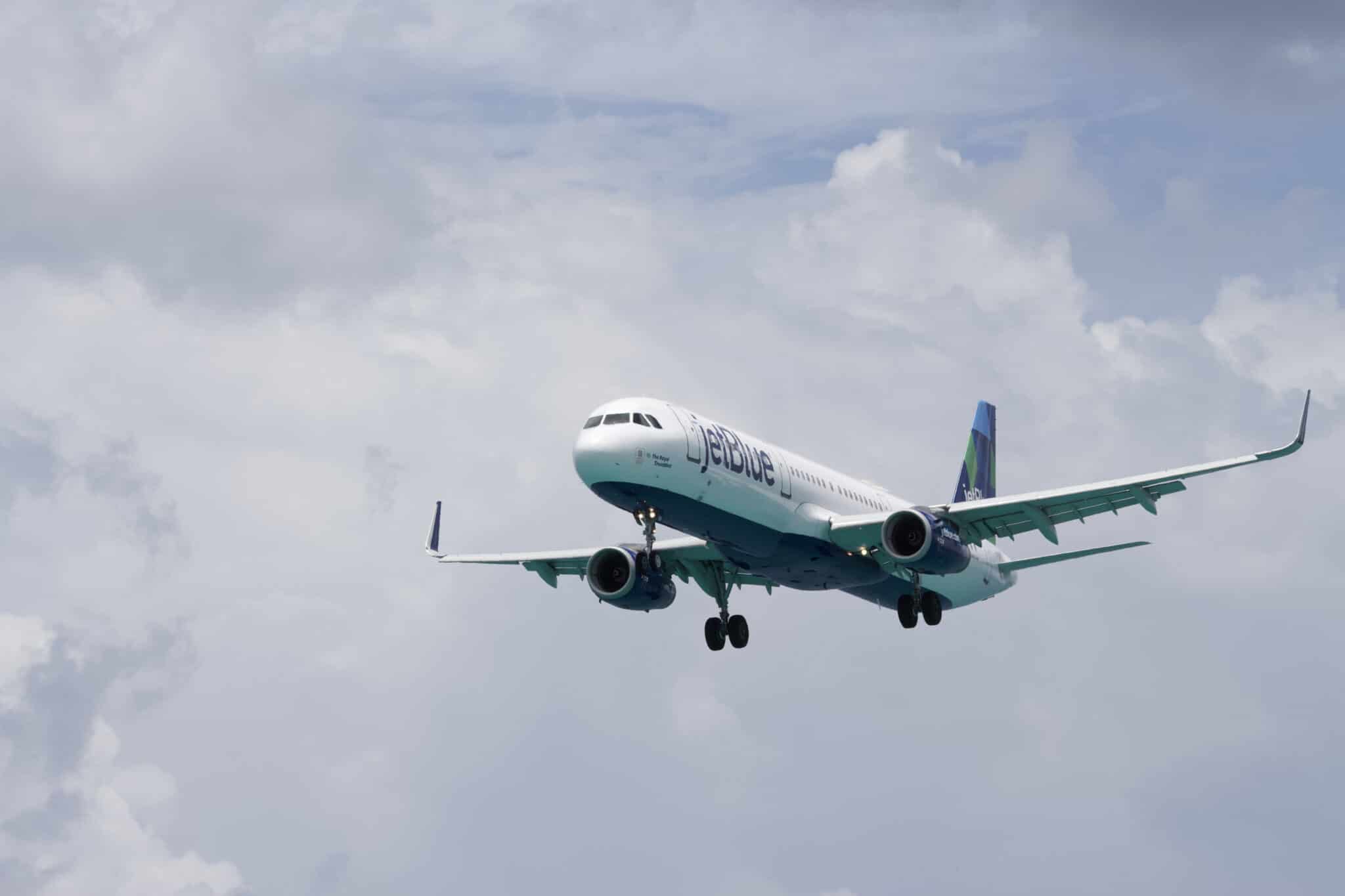
A JetBlue A320 arrives at St. Maarten. (Photo:Avgeekery)
The bid by JetBlue on the other hand is a ‘whole different animal’ (to steal from an old Frontier Airlines tag-line). A merger between Spirit and JetBlue would still result in a common fleet as a majority of JetBlue’s aircraft are Airbus A320s. The airlines though have significant east coast overlap. The style of the carriers are also vastly different. JetBlue distinguishes itself with in-seat entertainment, locally sourced snacks, and its expanding ultra-lux Mint service. It also recently added service to Europe on its new Airbus A321XLR aircraft. The potential that this acquisition could be seen as an opportunity for JetBlue to eliminate a competitor on the East Coast could be seen as a blocker to merger approval.
Despite the potentially challenges with a merger between JetBlue and Spirit, Spirit Airlines said in a filing today that, “Consistent with its fiduciary duties, the Spirit Board of Directors will work with its financial and legal advisors to evaluate JetBlue’s proposal and pursue the course of action it determines to be in the best interests of Spirit and its stockholders. The Board will conduct this evaluation in accordance with the terms of the Company’s merger agreement with Frontier and respond in due course.”
Buckle up, folks! This year’s acquisition season between airlines could be in for a dog fight.
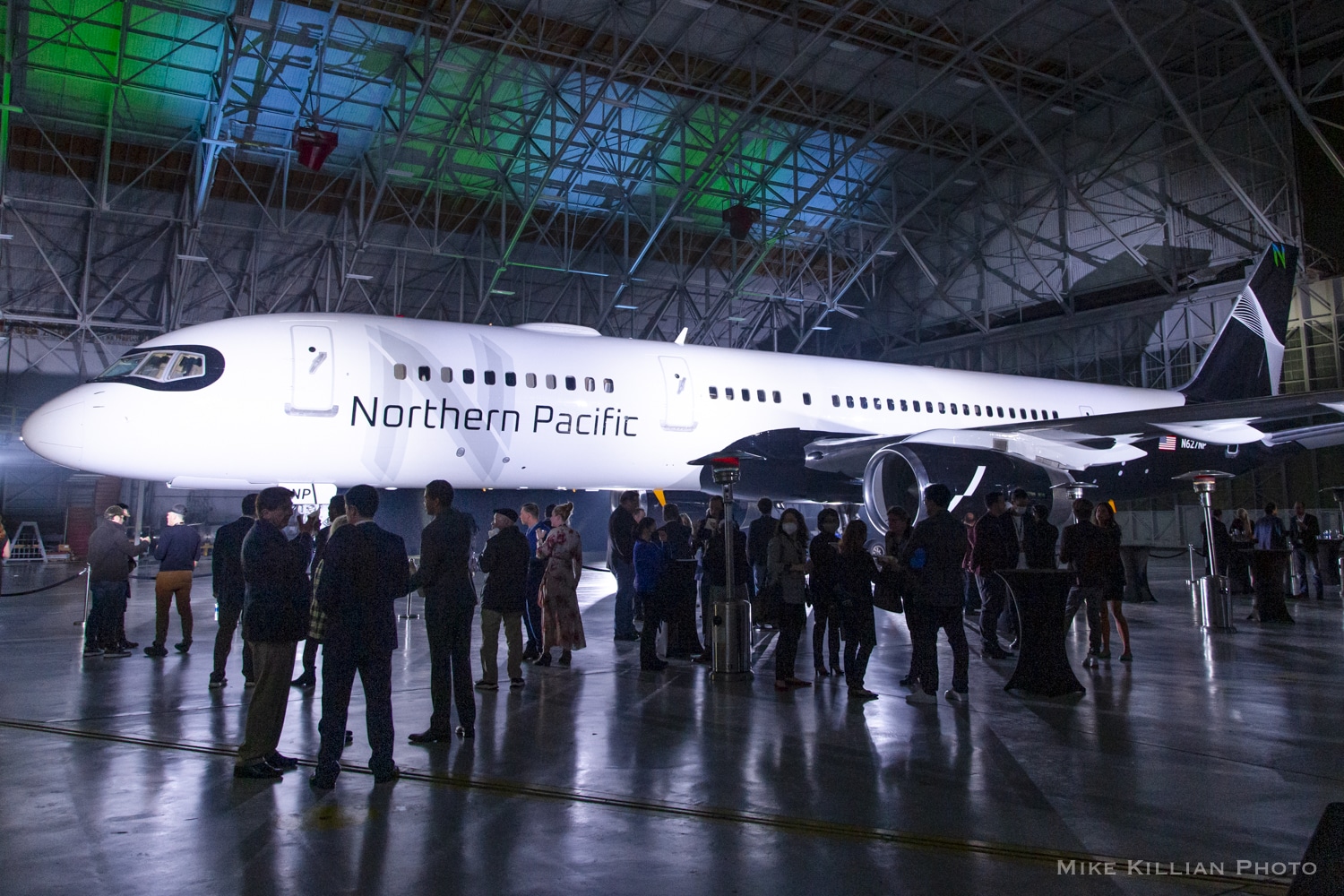
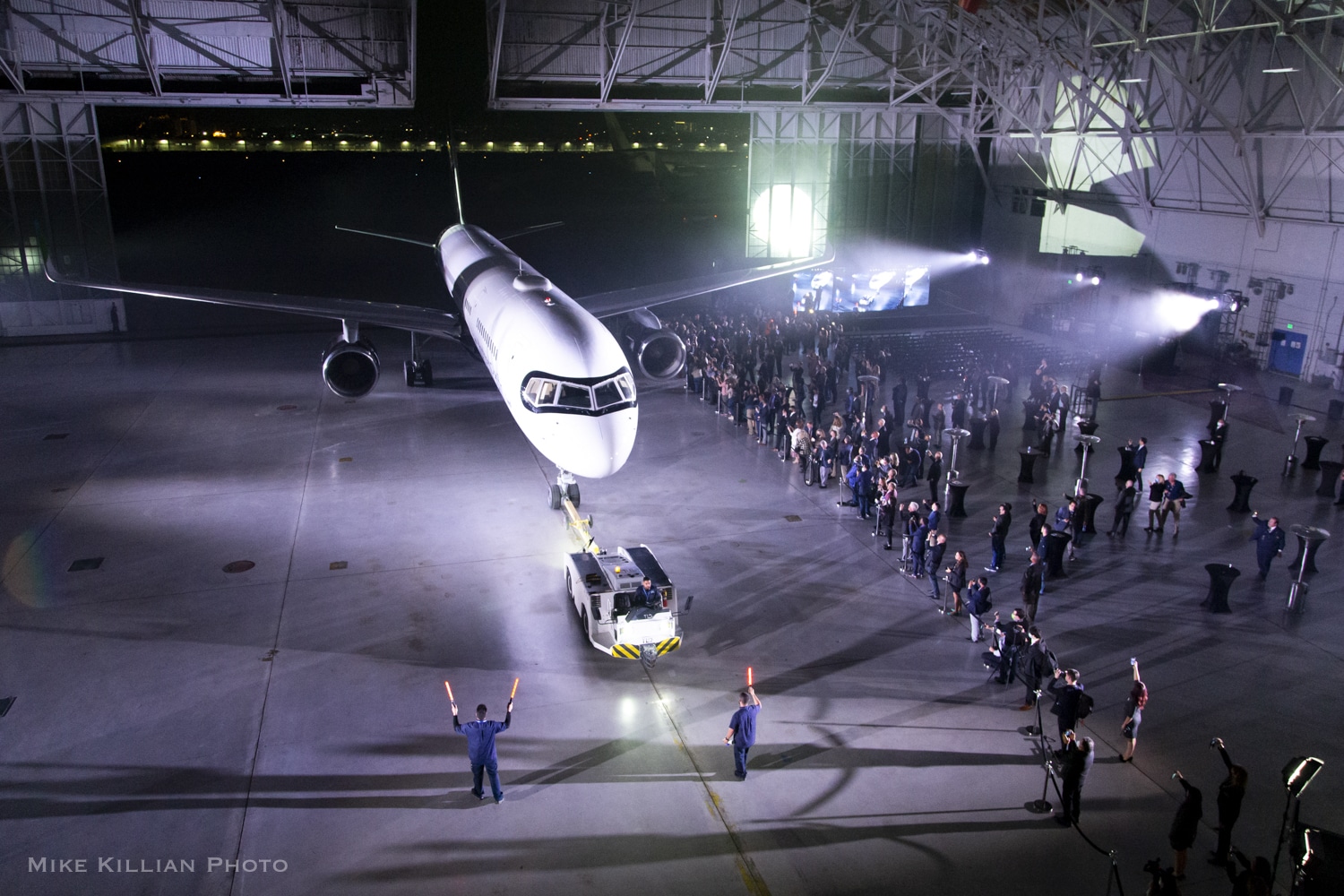
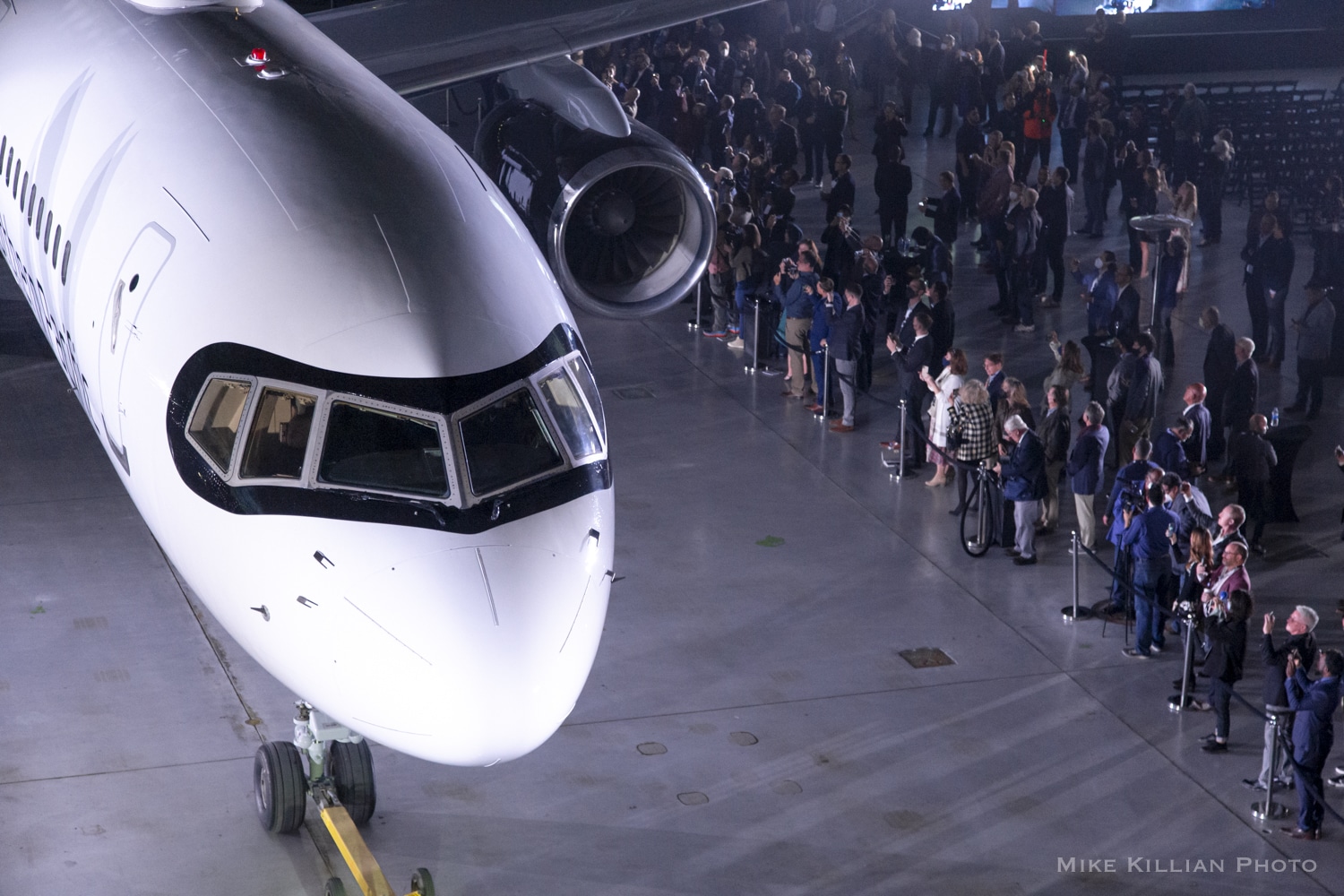
America has a new airline, and a new means of travel to / from Alaska, East Asia and the USA’s lower 48. In January, Northern Pacific Airways unveiled the first plane in their fleet, a Boeing 757-200. They hope to launch their first flight with paying passengers by end of this year, aiming to serve several major cities and establish themselves as a serious low-cost long-haul contender in the fiercely competitive world of airline travel.
Northen Pacific will base at Ted Stevens International Airport in Anchorage, Alaska, leveraging the airport’s empty north terminal and its eight empty gates. The airline is currently working with the U.S. Dept of Transportation to secure routes connecting cities such as San Francisco, Los Angeles, Las Vegas, New York City and Orlando to cities in Japan and South Korea such as Nagoya, Osaka, Seoul, and Tokyo.
Birthing an airliner is a huge gamble even in good times. Just look at two recent failures of WOW or California Pacific Airways who both failed even with a strong economy at the time. Northern Pacific’s CEO Rob McKinney thinks that they’ll have more success. He sees it as a golden opportunity to establish something that may be too difficult or even impossible at any other time:
“In great booming aviation times, to get slots into busy airports or get gate spaces is nearly impossible, but the big airports are now welcoming us and looking for new opportunities,” says McKinney. “It takes a long lead time to launch a global airline. We see this as a time to get something established that would have been nearly impossible any other way, and we’re just optimists. We think that we can stimulate new traffic, and capture traffic that’s pent up that has not been able to go anywhere, as other airlines have scaled back.”
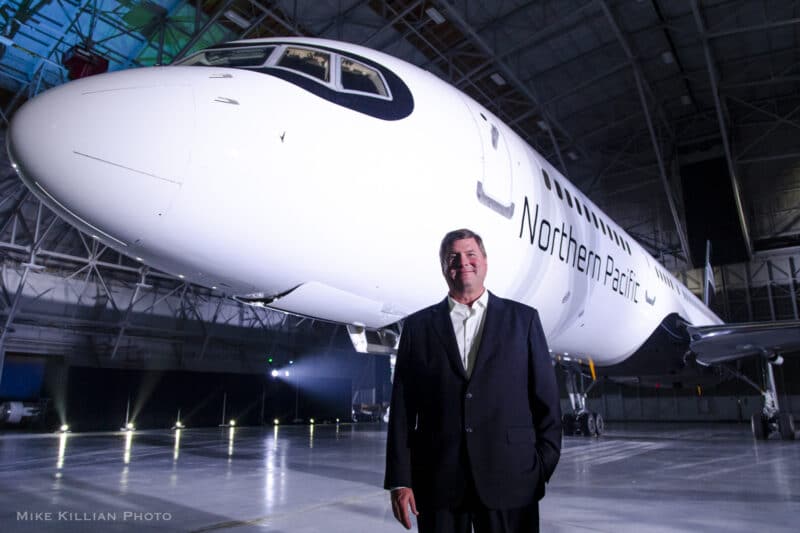
Northern Pacific’s CEO Rob McKinney at the unveiling of the company’s first 757-200. Photo: Mike Killian
A qualified Learjet pilot himself, McKinney is no stranger with turning failing airlines around and bringing them back to life. He was formerly the VP and Director at Hawaiian airline Pacific Wings, which tripled passenger traffic in just three years under his leadership. He then moved to Mokulele Airlines where he was COO and helped them grow from a small air tour company into a fully scheduled commuter airline.
Northern Pacific is a subsidiary of FLOAT Alaska, which also owns regional carrier Ravn Alaska, who operates Dash 8 turboprop flights across the state and is being used as a platform to launch Northern Pacific (McKinney co-founded FLOAT is also CEO of Ravn). McKinney sees Ravn as a fundamental component of Northern Pacific’s stopover model, able to take arrivals from Anchorage out to explore other regions of the state.
Photo: NoRthern Pacific Airways
Why start with 757s?
The timing, combined with the facts that used aircraft are cheaper than new and 757s are readily available, is why Northern Pacific is starting with older 757s. “We look at the 757 as not Mr Right, but Mr Right Now,” says McKinney. “We can acquire them sooner rather than later. And for us, we really think the timing is the play for this opportunity to maximize the post-COVID world. The 757 is not only readily available but they can make the stage length too.”
McKinney’s vision follows the proven model of Icelandair, which flies 757 routes offering low-fare flights between North America and Europe, with the option for stopovers in Iceland. Northern Pacific is banking on the theory that if a one-stop service can work for them, it can work for Northern Pacific between America and Asia as well.
Photo: Mike Killian
“We want to create a hub in Anchorage to replicate what Icelandair has done successfully in Keflavik. Anchorage is the geographic midpoint on a Great Circle routing between Asia and North America. If you take any trans-pacific flight from almost anywhere in Asia to almost anywhere in the continental U.S., you fly right over Anchorage, so by us just doing a quick stop in Anchorage we’re really not taking anybody out of their way, and actually able to offer a more affordable price and a nicer experience.”
They also believe that going through customs and immigration via Anchorage will be easier than other airports such as SFO and LAX, which can see passengers waiting in very long lines for several hours after they’ve already flown a 12+ hour flight.
Their business plan is also modeled after the success of air cargo service at Ted Stevens International, which has become the world’s fourth busiest for cargo, typically serving as a refueling and crew change stop for jumbos flying between Asia and America’s lower 48. McKinney wants to replicate that model, but with passengers instead.
Photo: Mike Killian
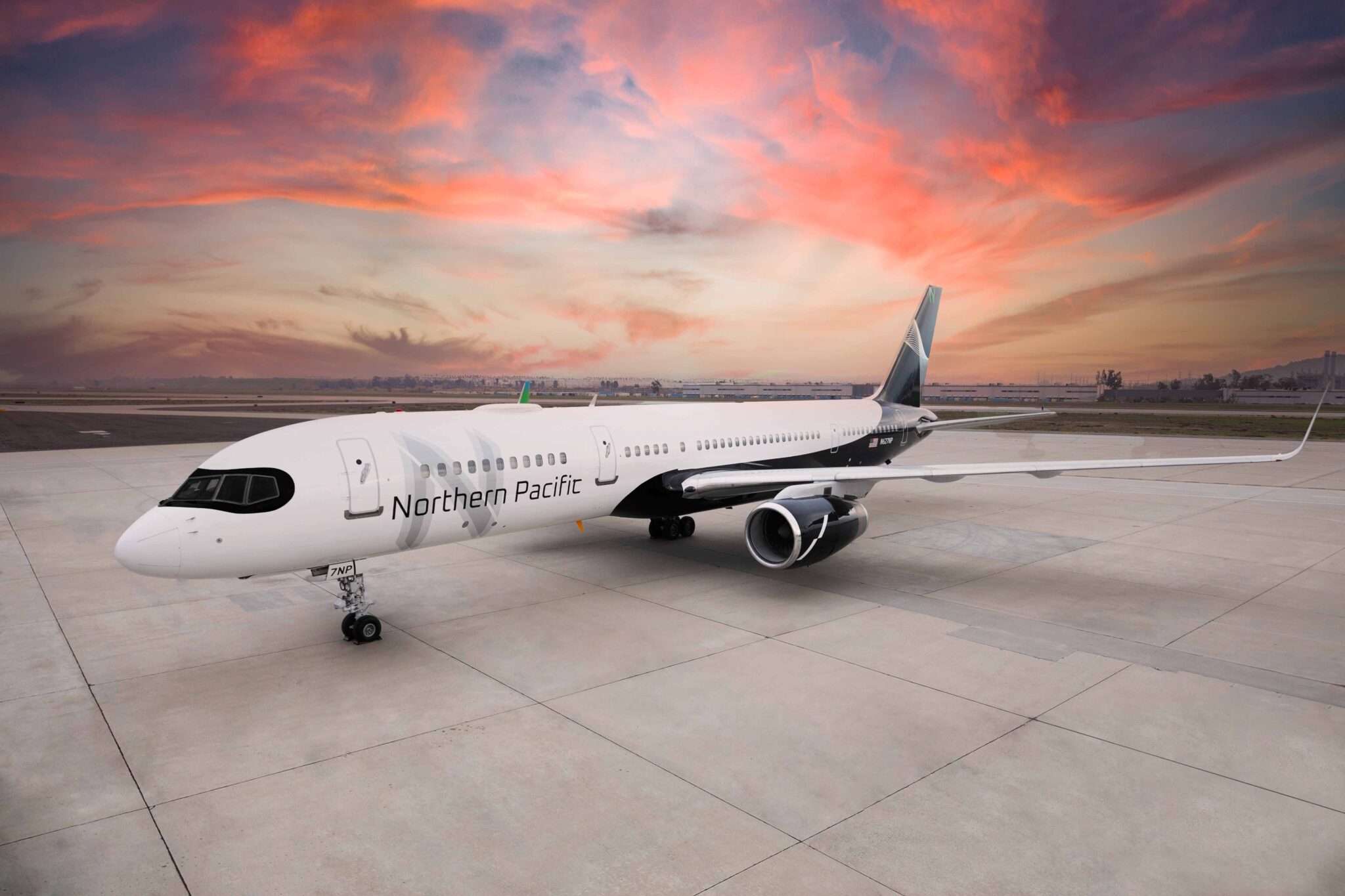
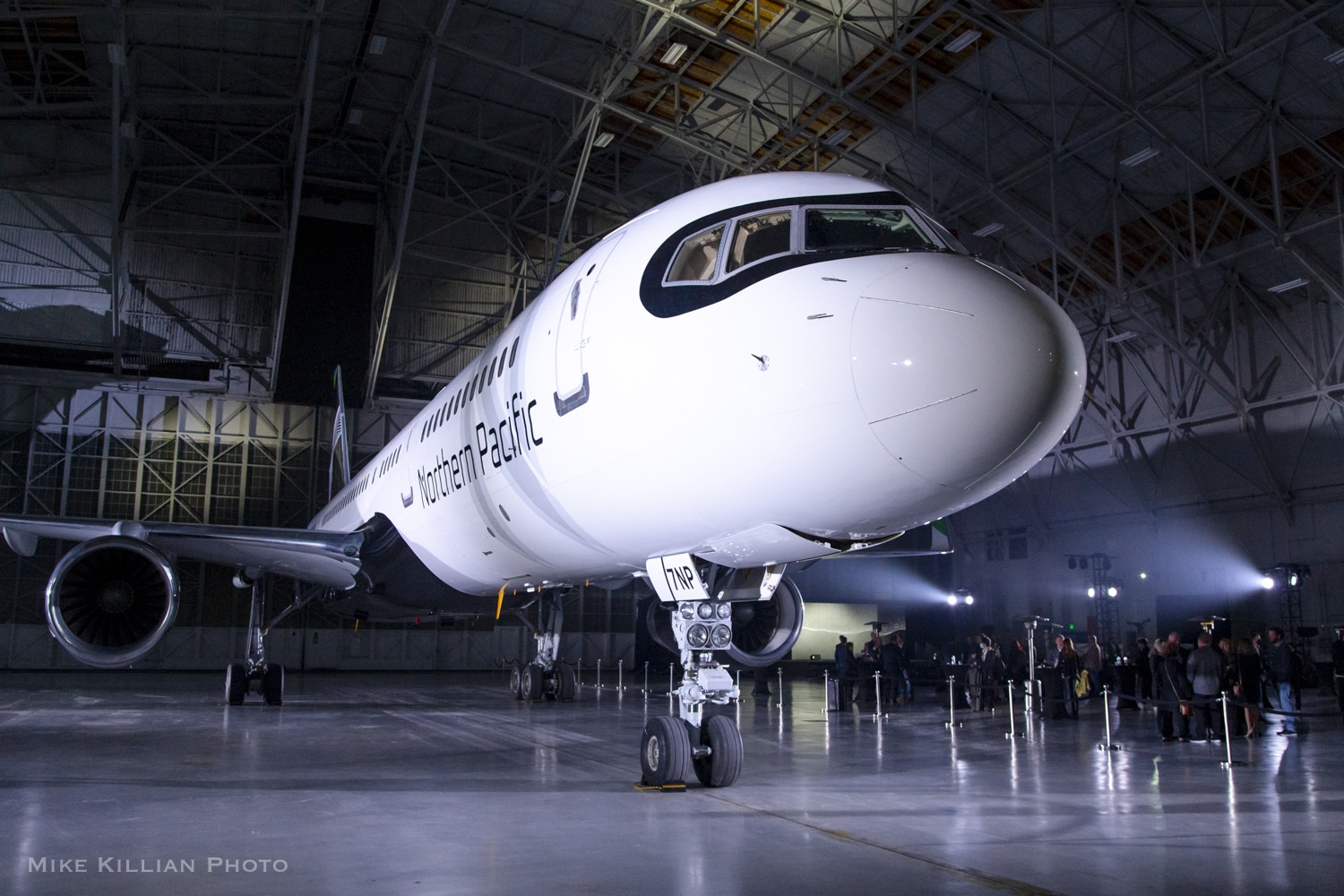
Their first 757-200 (tail number N627NP) in powered by twin Rolls-Royce 36-600 RB211 turbo engines, has a maximum range of 4,400 miles and first served with USAir starting in 1995 (which later became US Airways and eventually merged with American Airlines). It remained in service until American retired its fleet of 757s in early 2020, flying as N630AU and N206UW during its prior career. AerSalethen put it in storage in Roswell, New Mexico, until Northern Pacific purchased it in 2021.
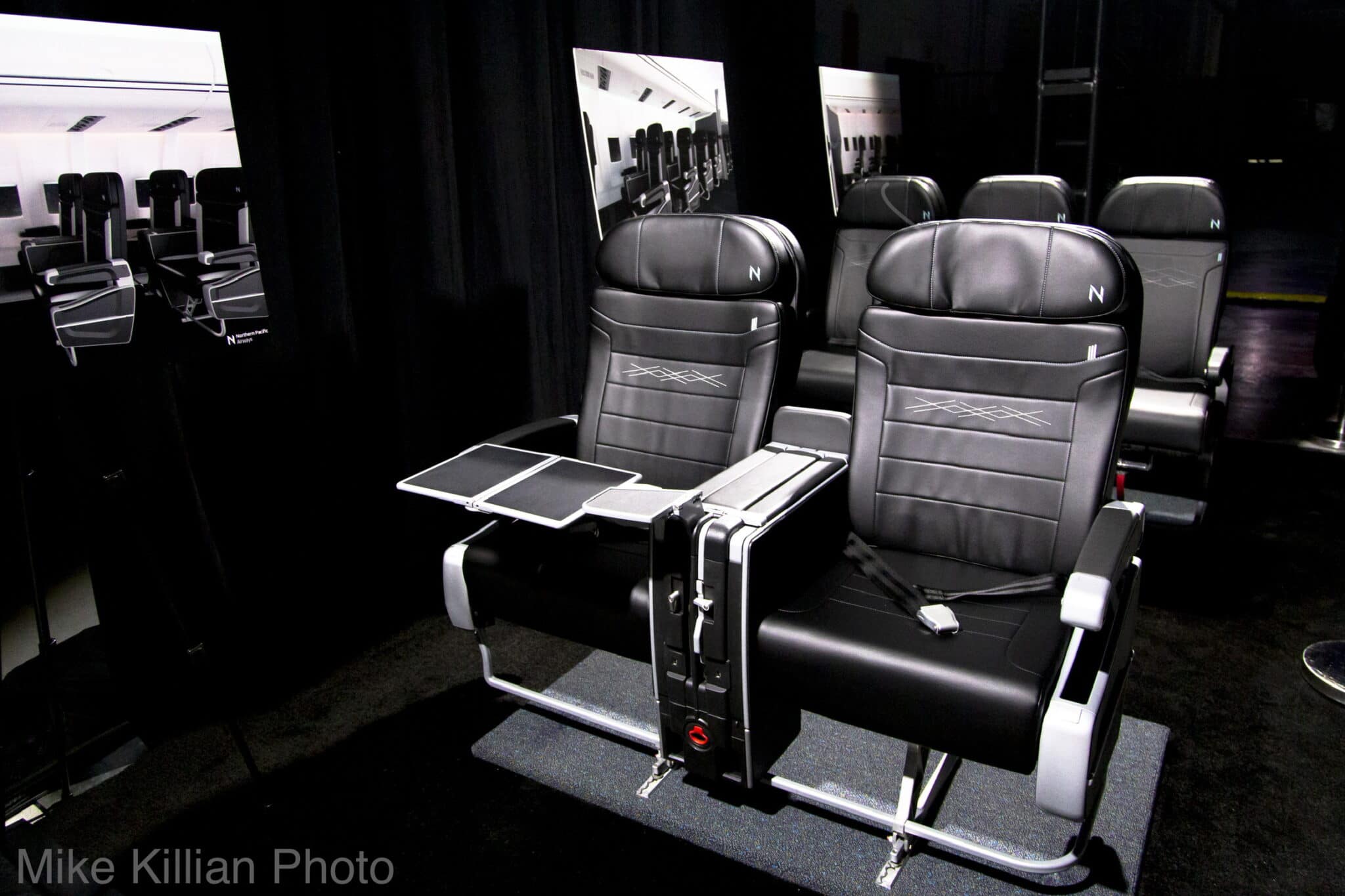
The company has already secured nine 757s, but hopes to acquire three more in time for launch. Some will be former American Airlines, others will be former United, and each will hold roughly 180 seats, featuring a three-class configuration for first / business class, premium economy and economy class passengers. McKinney also says flights will provide fast wifi and state of the art wireless in-flight entertainment (the seats on display did not have seat-back IFE), and they intends to keep the Intelsat 2Ku inflight connectivity technology already installed on the aircraft to offer both captive content and streaming services.
Photo: Mike Killian
Internet will be offered as a paid option, though Northern Pacific is weighing the idea of free access for the premium cabin. Every seat will have power too, as passengers always have their own devices such as smartphones and laptops to use, especially on such long trips. Service in the premium class of travel “will be fairly minimal with amenities and food and possibly enhanced internet but not lie-flat seats, touch screens or any of those types of things,” says McKinney.
Overall, the company is aiming for fares 15-20% cheaper than current prices at competing nonstop routes.
A cryptocurrency frequent flyer program
Northern Pacific will also support what they’re calling a “cutting edge” loyalty program that will be backed by cryptocurrency instead of traditional air miles, using Ravn’s cryptocurrency-based loyalty program, FlyCoin, and assumingits interline agreements.
Photo: Mike Killian
“We believe that’s one of the things that’s going to set us apart, because instead of a point or a mile you’re going to get cryptocurrency that will never decrease in value, it might actually increase in value, and its tradeable into other cryptos or back into fiat money,” says McKinney. “Eventually we think all the other airlines will have to adopt it because that will be the expectation.” Northern Pacific is also hoping to strike an agreement that will allow merchants at their home base in Anchorage to accept FlyCoin as a form of payment.
A unique livery
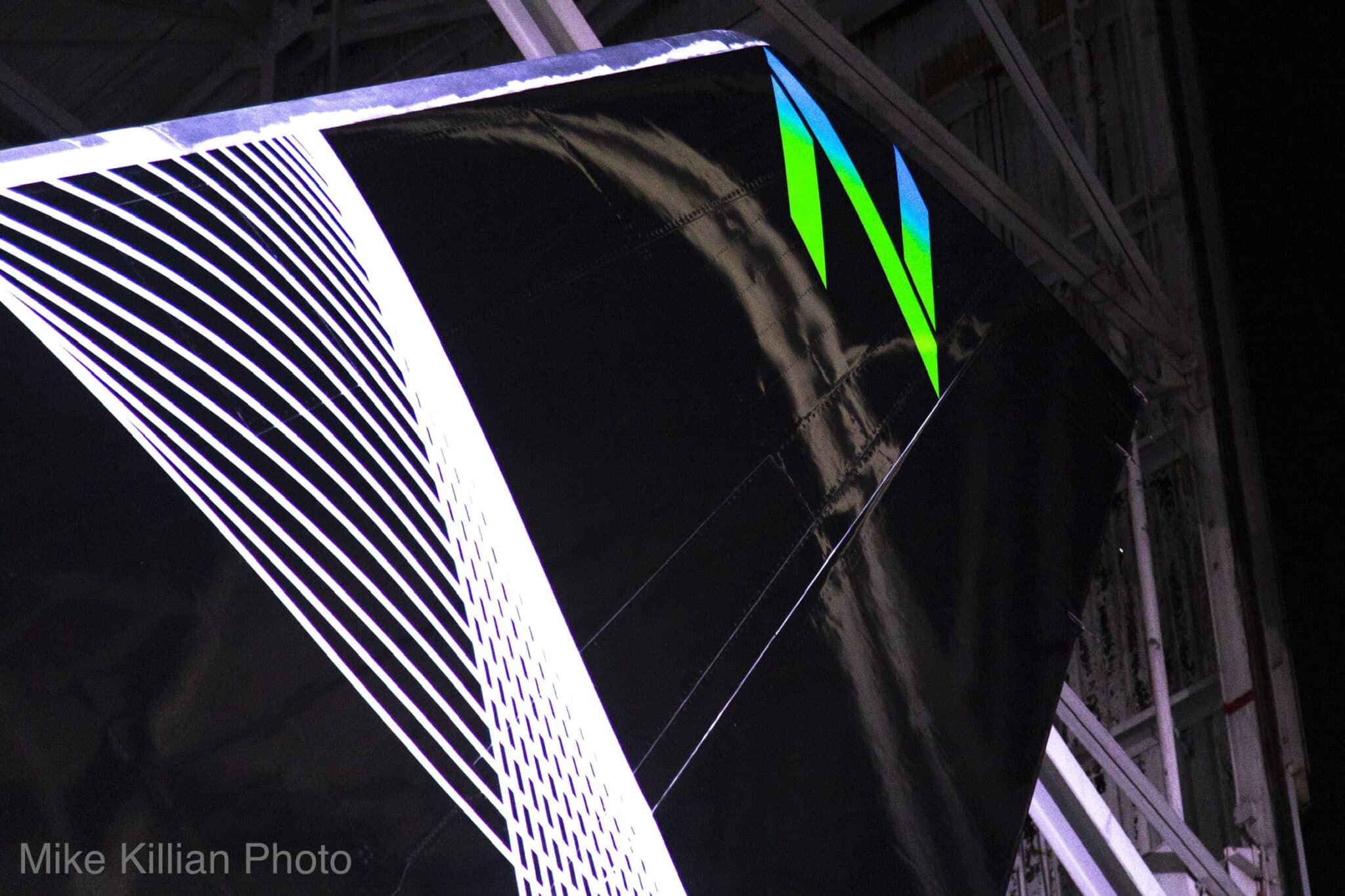
The plane’s livery, designed by Edmond Huot, pays tribute to the company’s roots in Alaska. The theme behind the design is “We Are All Navigators”, and tying that to the journey and path everyone will take through Alaska. Colors and patterns represent snow, mountains and wind, with sharp turquoise winglets representing the Northern Lights. A spiral design on the tail represents airflow and softness, while two white lines on each engine symbolize the wings of a bird and ascension. A subtle but giant “N” is painted on the fuselage, and there is a tiny “N” atop the tip of the tail painted same as the winglets. A bandit mask also outlines the cockpit windows, which was done to modernize the old plane and compliment the bottom of the fuselage and engines.
Photo: Mike Killian
The 757 may be a perfect fit for the company as they start out and grow, but it’s a 25+ year old airframe and unscalable in the bigger picture. Northern Pacific believes they can get to twenty 757 airframes before having to scale up, and they are already in talks with Airbus and Boeing to see what the next version of Northern Pacific will be. There’s only two that really fit the bill until they start scaling up into wide bodies, and that’s either the 737 MAX 9 or 10, or the Airbus A321XLR.
Lofty goals set for an airline that still has to fly its first revenue flight
Ultimately, he hopes to see Northern Pacific operating a fleet of 50 aircraft within the next 5-7 years, generating around 450 jobs in the short term (300 in Anchorage) and boosting tourism across the state, with Ravn as a major player in their model ferrying arrivals from Anchorage to other Alaskan destinations and helping Northern Pacific become a conduit for an influx of new visitors to the state, not just a transport between America and Asia. They want passengers to stopover and see more (and spend more money) exploring Alaska.
Livery on the tail. Photo: Mike Killian
“The numbers are there of how many travelers, and that’s not giving any credit towards spurring new traffic,” says McKinney. “I just believe that if we do the right things with the right machine that it will be a success. We want to encourage people to spend a day or two here and go salmon fishing, or go ride a sled dog on a glacier, or just all kinds of things you can only do here in Alaska.”
Northern Pacific hopes to make Alaska a prime stopover destination
Iceland is now a year-round tourism destination instead of a seasonal one thanks to Icelandair and their relationships with tourism organizations and stakeholders. Northern Pacific hopes to do the same in Alaska, and will even offer packages encouraging customers spend a few days exploring the state, before departing to their final destination. But tourism there in winter has grown slowly over the last decade; it’s still mainly a summer tourist destination, so Northern Pacific will surely need help from Alaska to market and get more travelers visiting during their dark, cold and sometimes brutal winters. Talks are ongoing between the company and various hotels, tour operators and activity providers across the state to leverage the stopover market Northern Pacific hopes to create.
The company also intends to use an Icelandair subsidiary, Loftleidir, to operate three 757s for its initial Asia service, and they are not going head-to-head with larger competitors in the North Pacific like Delta and United, but instead hope to attract younger budget-minded travelers seeking a bargain price.
Photo: Mike Killian
“If we can’t do it, then nobody can,” says Josh Jones, the company’s largest investor and chairman who is a serial entrepreneur from Los Angeles. “And that’s obviously an option, nobody can.”
One of many hurdles Northern Pacific will face is the fact that Alaska tourism has not really been marketed in Asia. Around 60% of visitors to Alaska pre-pandemic were via cruise ships, and Germany and the United Kingdom have been the state’s largest sources of foreign tourists. Strict Covid controls currently in place across Asia will also be an obstacle, and while air travel is gradually rebounding now, trans-Pacific travel has been the slowest region to recover.
Additionally, Chinese carriers are itching to lure budget-minded travelers with cheap one-stop connections, while other startups such as Seoul-based Air Premia are offering nonstop flights to Los Angeles flying Boeing 787-9 widebodies and offering fares 20% cheaper than full-service Korean carriers.
Photo: Mike Killian
On the other hand, there’s not much direct service to Alaska from Asia, or from non-hubs in the lower 48 for that matter, so the old belief that “if you build it they will come” could very well work in Northern Pacific’s favor.
“I’ve pushed the string uphill a lot of times in my career, and most of the time it has worked out,” adds McKinney. “This is the big swing for the fences that will really bring a positive service to people that can get them across the Pacific. We really believe that we are on the forefront of what will make air travel at least less painful, if not fun and something people are excited about.”
We look forward to the jokes every year around this time. Airlines and airports posting funnies. Some so subtle, you might not even suspect its a prank. But then it later hits you and you think, “that can’t be right!” Those are our favorites.
This year though, with war, sickness, and inflation, the day feels a little dimmer than usual. Airlines and aviation accounts seemed to pick up on that mood. Major airlines like Delta, United, and American Airlines all seemed to sleep in today.
Southwest Airlines didn’t go all out but they didn’t pull any punches either. They did make a snarky post, highlighting the fact that they don’t charge bag fees for the first two bags (under 50 pounds, of course).
Even though most airlines were pretty lame this year, one airline did post a funny. Frontier Airlines–who is merging with Sprit Airlines later this year and that IS funny–posted that their famous animal tails will be supplemented by dinosaur photos. We’ll see how many dinosaur pics they receive.
Other Aviation accounts
Reflecting the mood this year, neither Airbus or Boeing took part in the day. One airport did though. DFW Airport posted that they finally made it up to Fort Worth and improved the name of the airport. It’s now known as FWD…chortle!
After nearly five decades, we've decided to give Fort Worth it's well-deserved top billing! Starting today, you can call us 𝐅𝐨𝐫𝐭 𝐖𝐨𝐫𝐭𝐡 𝐃𝐚𝐥𝐥𝐚𝐬 𝐈𝐧𝐭𝐞𝐫𝐧𝐚𝐭𝐢𝐨𝐧𝐚𝐥 𝐀𝐢𝐫𝐩𝐨𝐫𝐭, or 𝐅𝐖𝐃.
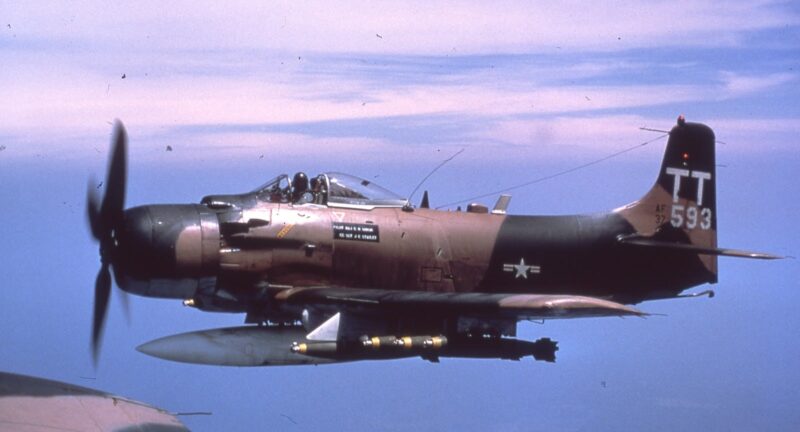
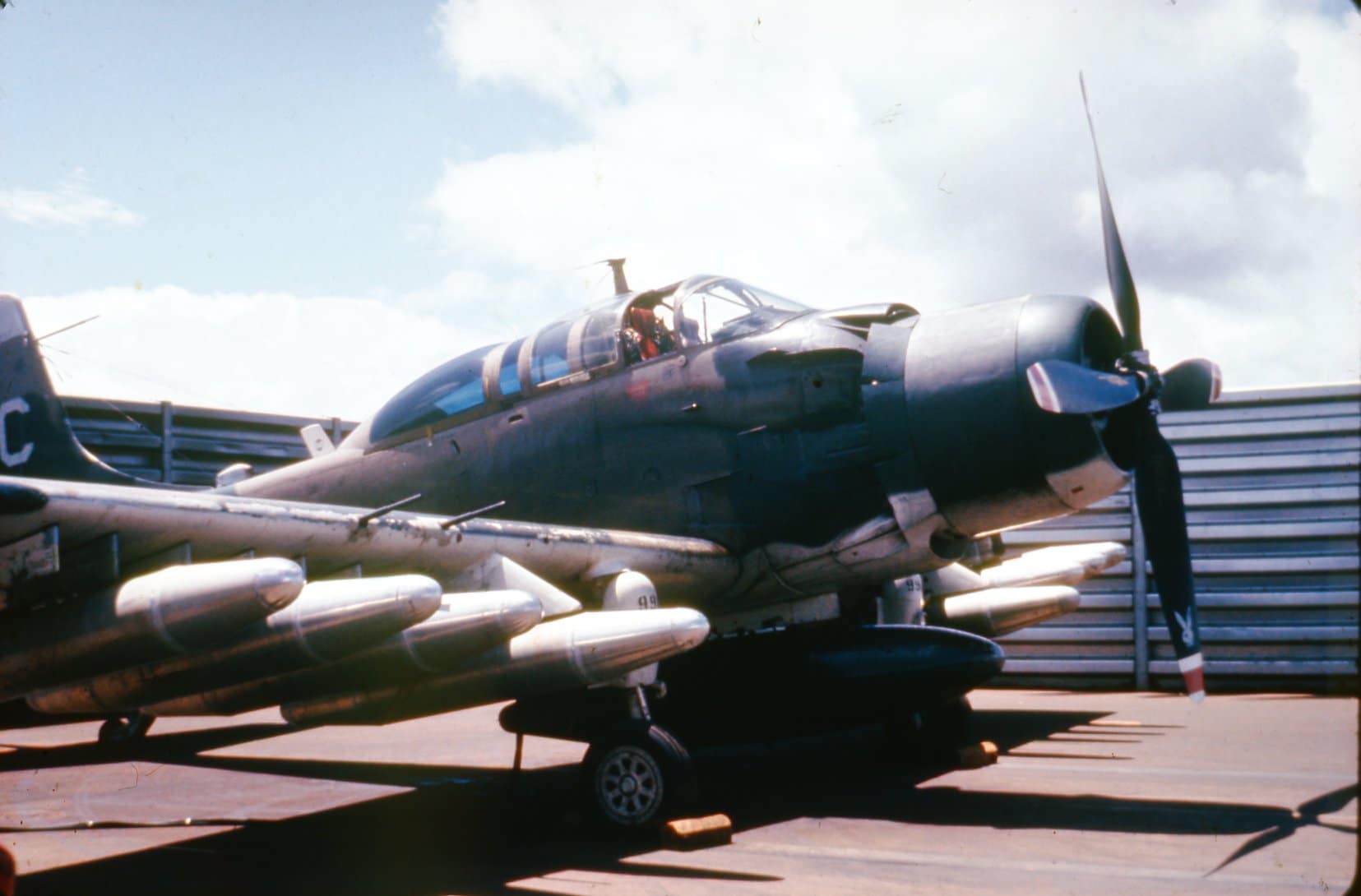
The Douglas A-1 Skyraider (AKA Spad) played an important part in the Vietnam War. Its ability to carry an immense amount and variety of weapons and loiter over the battlefield for extended periods of time made it a powerful weapon. Spads provided close air support to ground forces, attacked enemy supply lines, and, as depicted in the video, protected helicopters rescuing airmen downed in enemy territory.
USAF A-1E image via national archives
Skyraiders Head to Southeast Asia
In the early 1960s, the United States provided South Vietnam with increased military assistance and training to resist communist forces, and the United States provided A-1H Skyraiders to the South Vietnamese Air Force (VNAF). In 1961, US Air Force instructors started training VNAF pilots at Bien Hoa Air Base with Skyraiders in VNAF markings and their tail hooks removed. Gradually, the USAF instructors started flying combat missions with the VNAF pilots over South Vietnam.
A1/A-1E/pho 115
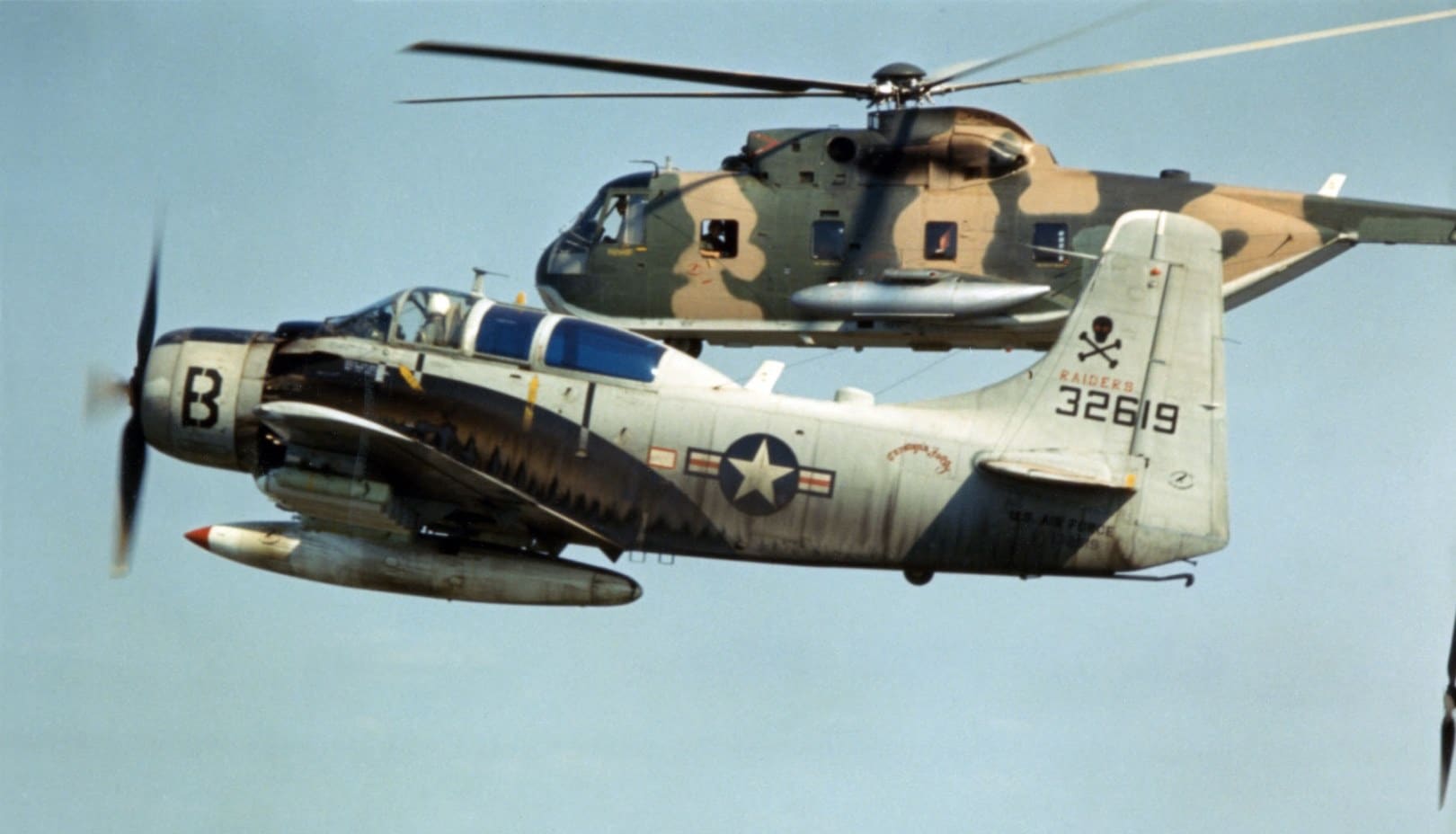
K 19547 – An A-1E Skyraider escorts an HH-3C rescue helicopter as it goes to pick up a downed pilot in Vietnam. 1966
[“Carolyns Folly”, A-1E, 1st Air Commando Squadron]
Credit Photo to the National Museum of the USAF
The Air Force Spad
The first US Air Force Skyraiders, two-seat A-1Es, arrived at Bien Hoa Air Base in May 1964. They were assigned to the 1st Air Commando Squadron (later the 1st SOS), which operated under the call sign Hobo. Other USAF squadrons flew Skyraiders from bases in South Vietnam and Thailand under the call signs Spad, Firefly and Zorro. Wherever they went, the Skyraiders provided critical close air support to ground forces and other operations, such as defoliant spraying or supporting the insertion and extraction of special operations teams inside enemy-held territory along the Ho Chi Minh Trail.
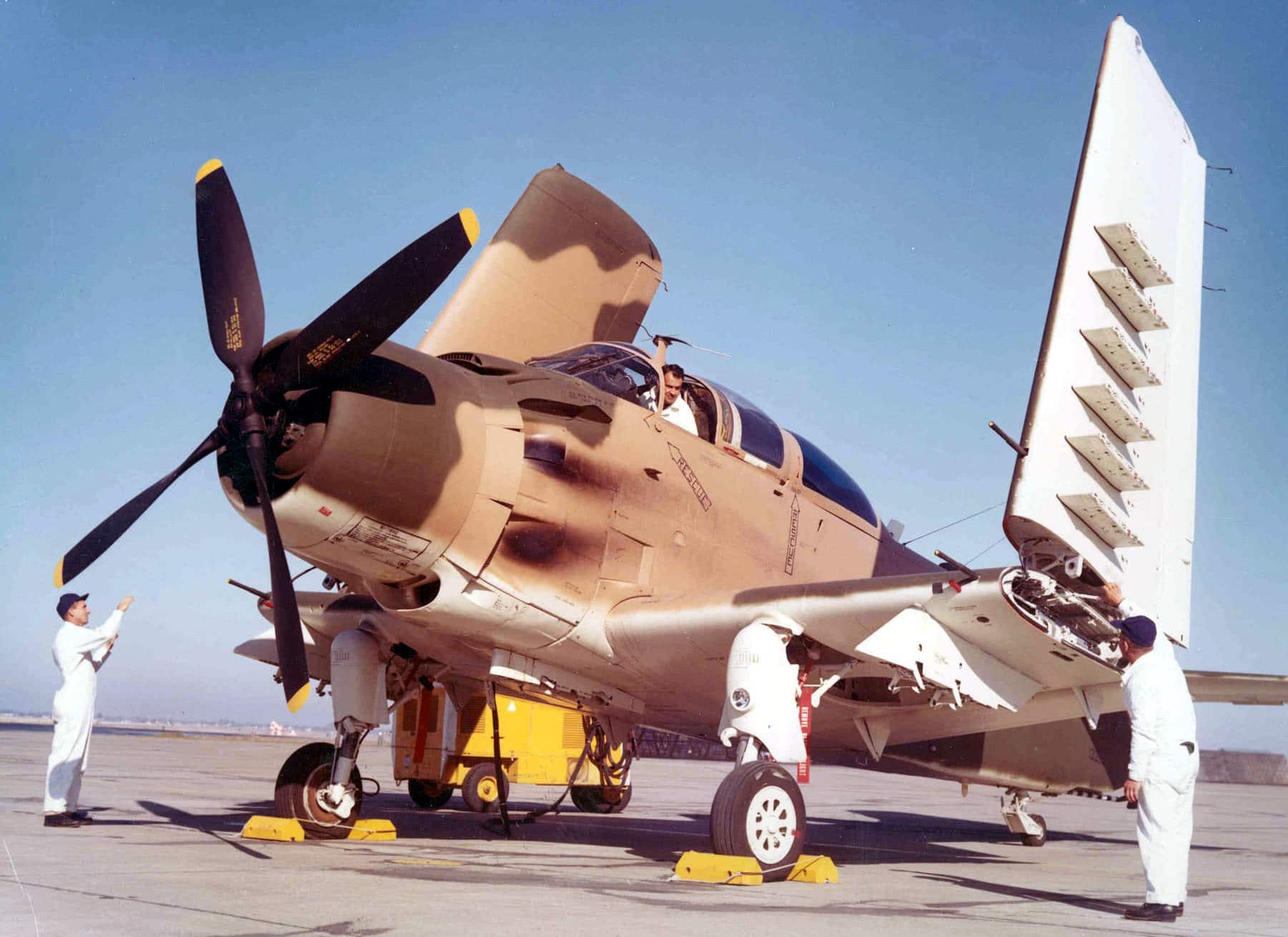
Douglas A-1E with wings folded at McClellan Air Force Base, Calif., on Feb. 15, 1968. (U.S. Air Force photo)
Medal of Honor Machine
Spad pilots were a courageous bunch. On 10 March 1966 A-1E pilot USAF Major Bernard F. Fisher flew a mission for which he was awarded the Medal of Honor for rescuing downed Major Dafford Wayne “Jump” Myers at A Shau Special Forces Camp. On 1 September 1968 USAF Colonel William Atkinson Jones, III (callsign Sandy One) piloted an A-1H on a Sandy mission for which he was awarded the Medal of Honor. In that mission, despite damage to his aircraft and suffering serious burns, he returned to his base and reported the position of a downed American airman.
Enjoy This Collection of Highly Entertaining Air New Zealand Safety Videos
Over the years Air New Zealand has entertained their passengers with funny and timely cabin safety videos. We’ve gathered some of the best examples for you to enjoy. You’ll see lots of recognizable characters, a Kiwi national institution or two, and much more. All were uploaded to YouTube by Air New Zealand.
Learning how to fly is exhilarating but it is also serious business. As a student pilot, you first learn the basics of aircraft control in the plane, typically a Cessna 152 or Cessna 172. Once you master the basics of flight, instructors then add in emergency procedures. The goal is to get a student confident enough to solo a plane by themself and have enough confidence and skills to handle any of the common emergencies.
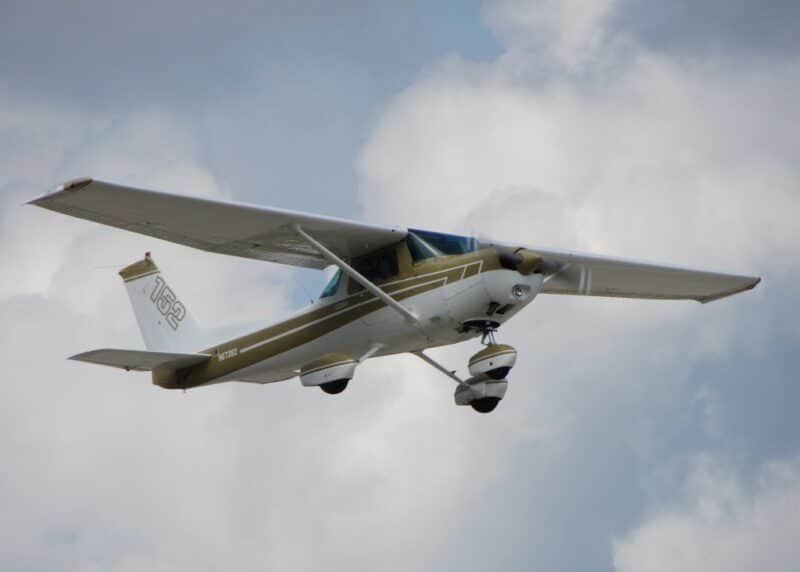
Our friends at VASA Aviation found another ATC gem that is worthy of sharing and learning from. In the audio, a team of 3 pilots, a mechanic, and NORCAL approach all worked together to assist a student pilot in a pickle. He was flying his rented Cessna 152 when the throttle stopped responding to movements. While this is a situation somewhat preferable to losing your engine in flight, it is still dangerous. Even in a light, single engine trainer like a Cessna the situation can quickly turn dangerous for an inexperienced pilot. With a stuck throttle, your primary options are to climb to maintain airspeed, accelerate, or shut off the fuel to the engine and glide to a landing.
In this case, the pilot was well trained even for an unusual situation like a stuck throttle. You can clearly hear his demeanor as calm and confident. He reached out on the CTAF at Watsonville Airport to state his problem. In the beginning of the video, the student pilot was about 3 miles away from the field at 4,000 feet. A CFI who heard his radio call reached out to him on the emergency 121.5 frequency to offer assistance and provide advice. A mechanic on the radio offered to drive to his flight school to connect him to an instructor from the school.
At this point, NORCAL approach overhead the conversation that was taking place on guard. A pilot in the area relayed an update on the situation to the controller. The controller then offered to coordinate emergency vehicles at the airport for the stricken Cessna. By this time the pilot had climbed to 6,700 feet!
Towards the end of the video, you can hear the student pilot link up with an instructor pilot from the flight school. The instructor recommended controlling the power by adjusting the mixture. The student pilot tried it out and was able to control his power via the mixture. The video didn’t capture any additional CTAF communications but the student did land safely.
The trite phase “teamwork makes the dream work” is definitely applicable in this situation. It’s a case of many aviation professionals working together to ensure a fresh aviation landed safely. Well done!
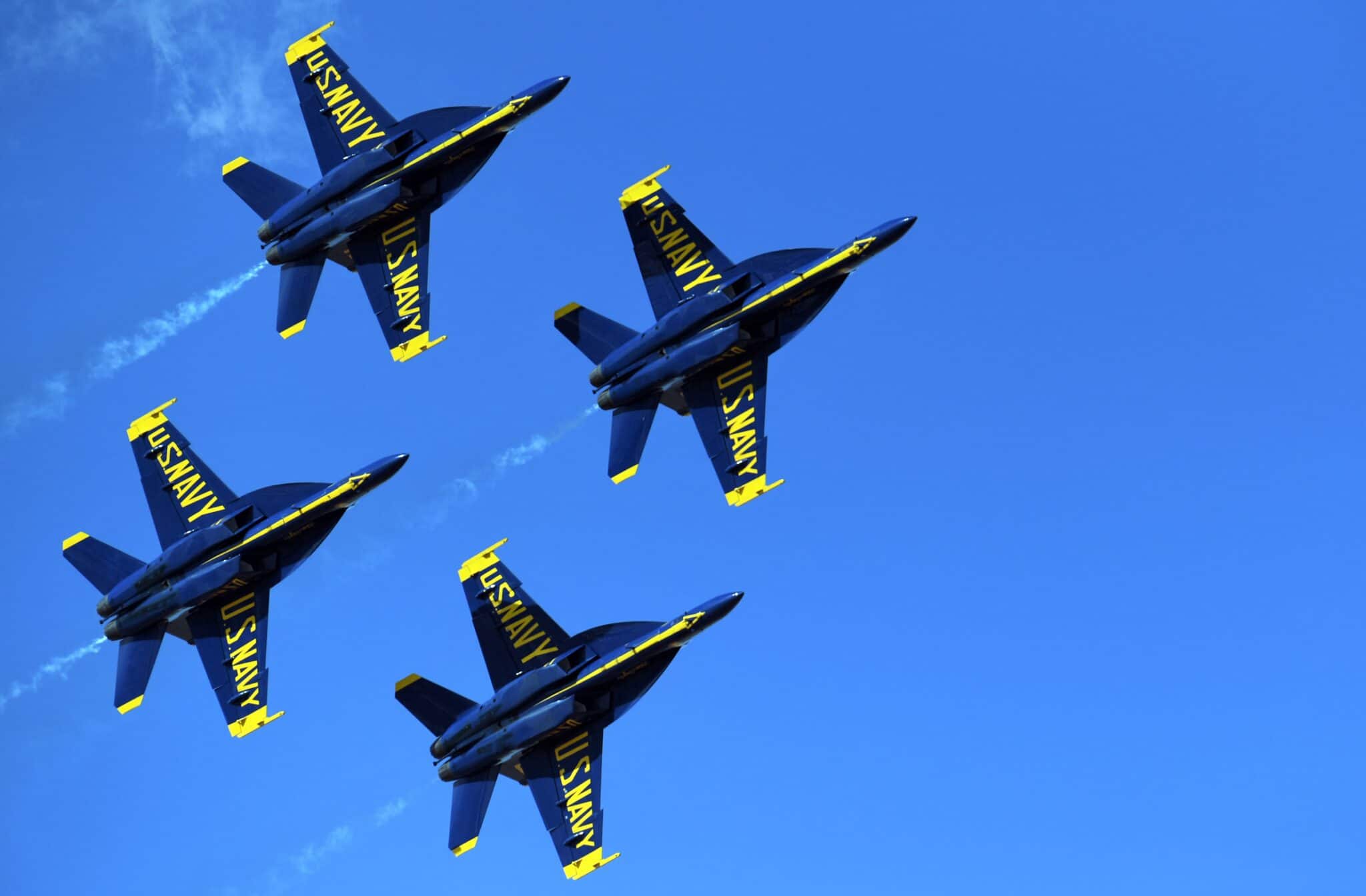
PENSACOLA, Fla. — The U.S. Navy Blue Angels have kicked off their winter training season in southern California eager to sharpen their flying skills during an exhausting ten week period.
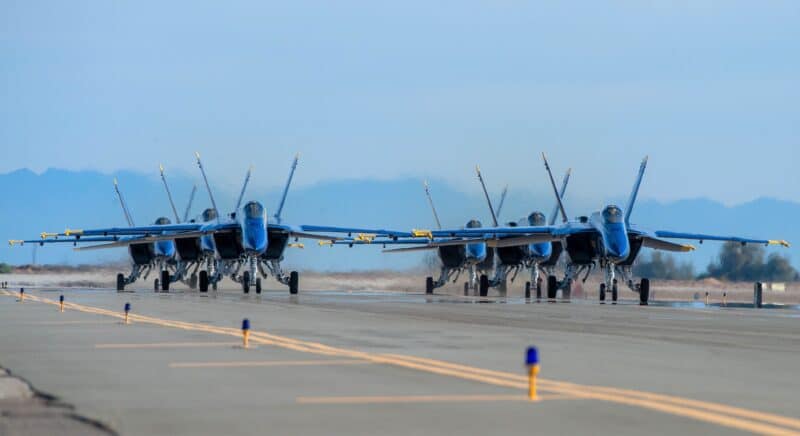
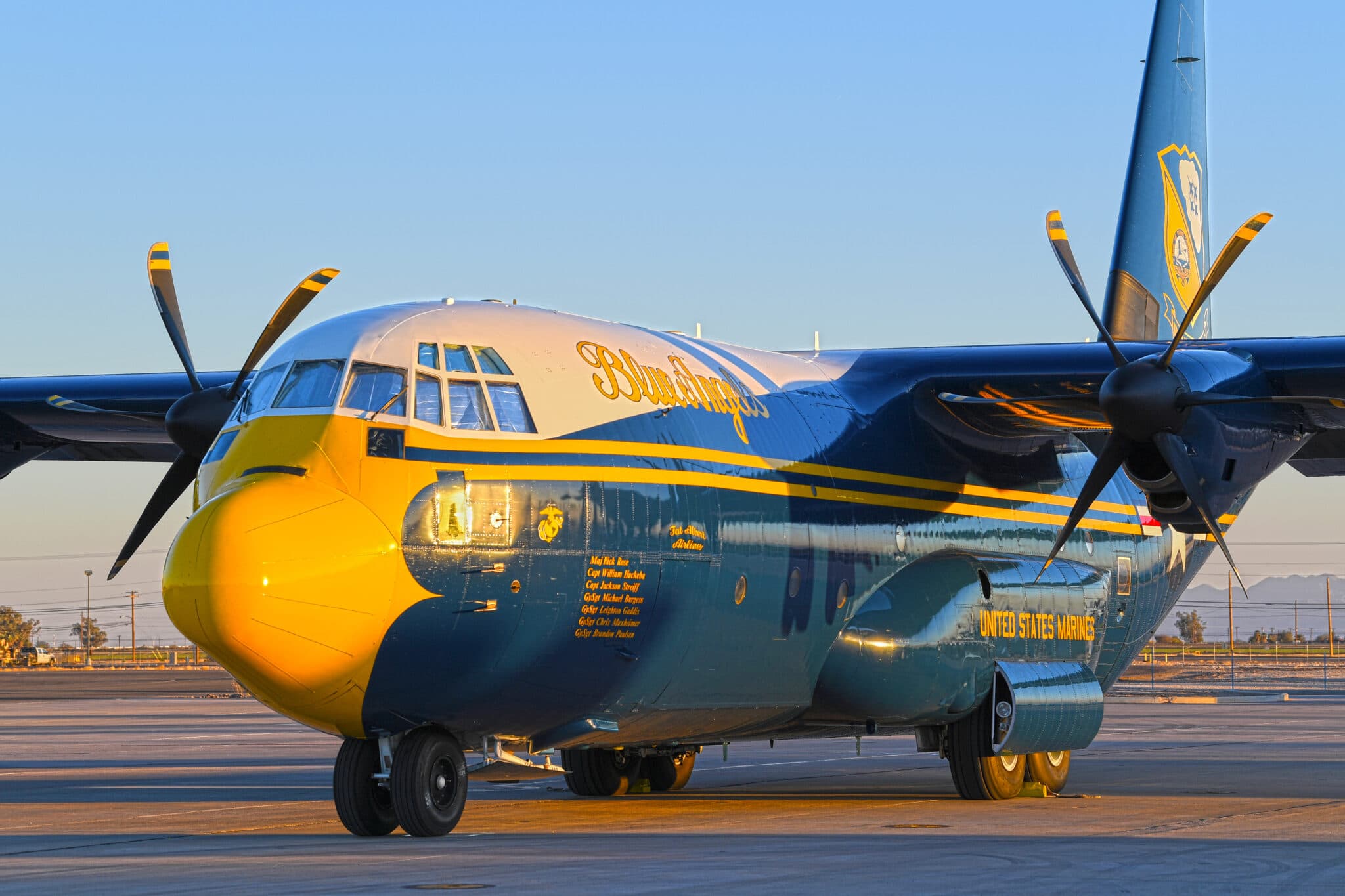
The squadron of F/A-18 E/F Super Hornets and a C-130J Super Hercules departed their home base at NAS Pensacola January 3 on a cross country flight. Their training base at NAF El Centro is located near the desert town of the same name.
Of the squadron’s six pilots, three have never flown a Blue Angels demonstration. Their time in the Imperial Valley will provide the pilots and support crews the time necessary to train prior to their first show.
The C-130J Super Hercules ‘Fat Albert’ sits parked on the apron at Naval Air Facility El Centro. (U.S. Navy)
“We’ve been training in Imperial Valley for over 50 years, and this is where the Blue Angles cut their teeth and where the show is made,” Blue Angels lead pilot Cmdr. Brian Kesselring said.
Pilots, Support Personnel Prepare for 76th Anniversary Season
Most of Blue Angels pilots, maintainers, and logistics personnel from last year are returning in 2022. For a few, this season will mark their third year with the historic flight demonstration squadron.
Navy Capt. Kesselring returns as Boss and Angel 1 for a third season. Pilots Lt. Christopher Kapuschansky, Lt. Scott Goossens, and Maj. Frank Zastoupil will fly as the diamond team. The twin solo pilots this season include Lcdr Cary Rickoff and Lcdr Julius Bratton.
During six straight days each week, the pilots will fly three times a day for ten weeks. They will practice each maneuver — both in the air and during their morning brief.
It will be the job of Maj. Zastoupil to study the formation during flight training. He alone will critique how the new pilots Lt. Kapuschansky and Lt. Goossens are handling the training.
Using daily cockpit and ground video, Zastoupil will show the pilots how they can improve upon each maneuver. These closed door briefs are designed to give the diamond formation a tight precision formation of nearly 18-inches wing tip to canopy.
On the ground, the Blues’ newest advance pilot and show narrator is preparing for the season. Lt. Griffin Stangel is memorizing his loud speaker narration he will provide during each air show visit.
The team’s first air show performance will come at the conclusion of their winter training. NAF El Centro will host an afternoon performance and the first true public demonstration on March 12.
“For a team that spends over 300 days travelling, this is like home because we spend more consecutive days in the Imperial Valley then anywhere else,” Capt. Kesselring explained. “The Imperial Valley and NAF El Centro has a special place in our hearts, and we appreciate the support we receive year in and year out.”
NAF El Centro supports combat training and readiness, including air operations support to operational fleet and training squadrons such as the Blue Angels. (U.S. Navy)
Their training does not stop once they leave El Centro. The Blues normally conduct training flights over NAS Pensacola on Tuesday’s and Wednesday’s before departing to their show site on Thursday.
After packing up their gear and loading their hulking C-130J, the team is scheduled to return home to Pensacola a few days later. The Blue Angels will close out March with weekend visits to New Orleans and Tampa.
In all, the squadron will perform at 31 locations across the United States between March and November. The spirit of their 76th season will include visits to Michigan, Hawai’i, and Atlanta.
(Charles A Atkeison reports on aerospace and technology. Follow his updates via social media @Military_Flight.)
The SLUF Still Had That New Jet Smell When They Made This Familiarization Film
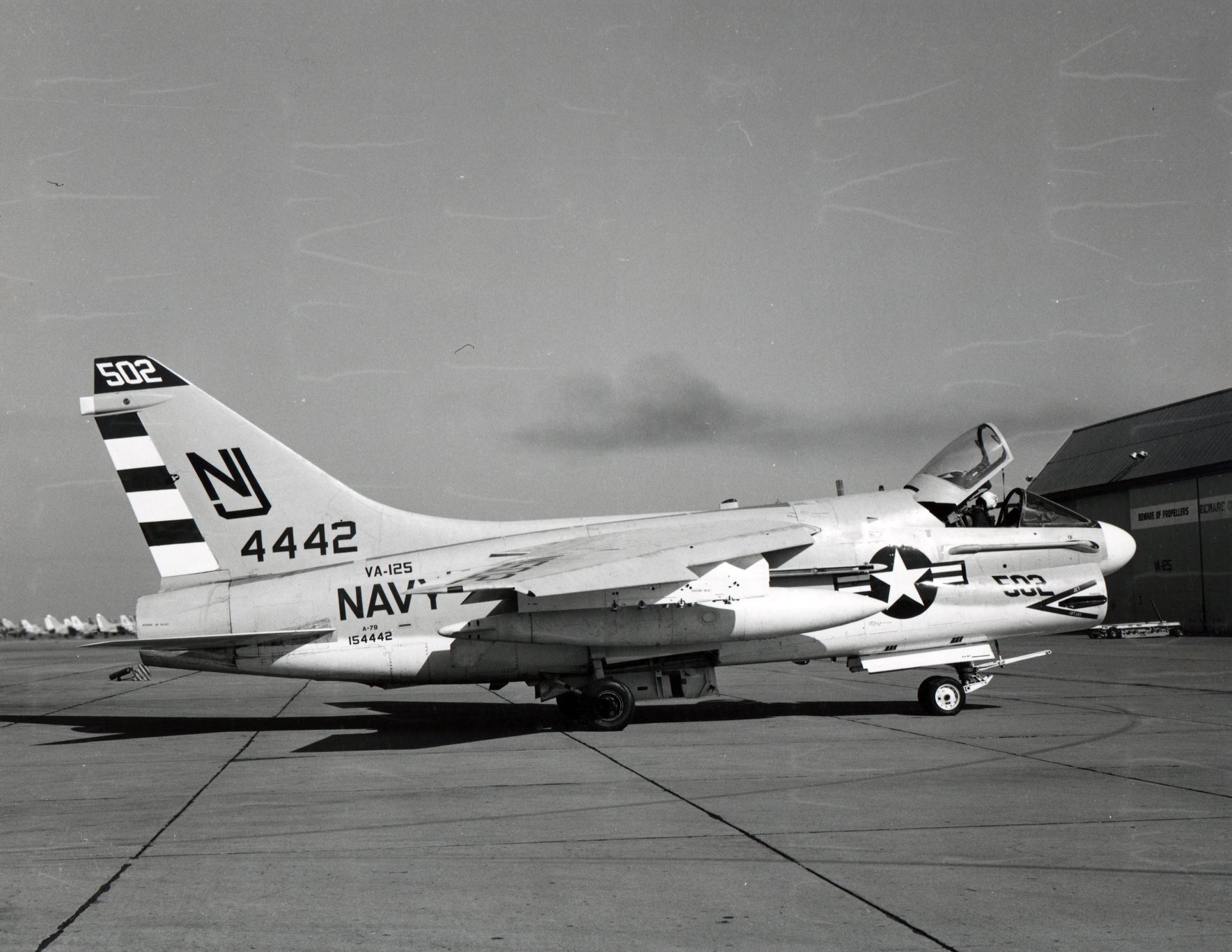
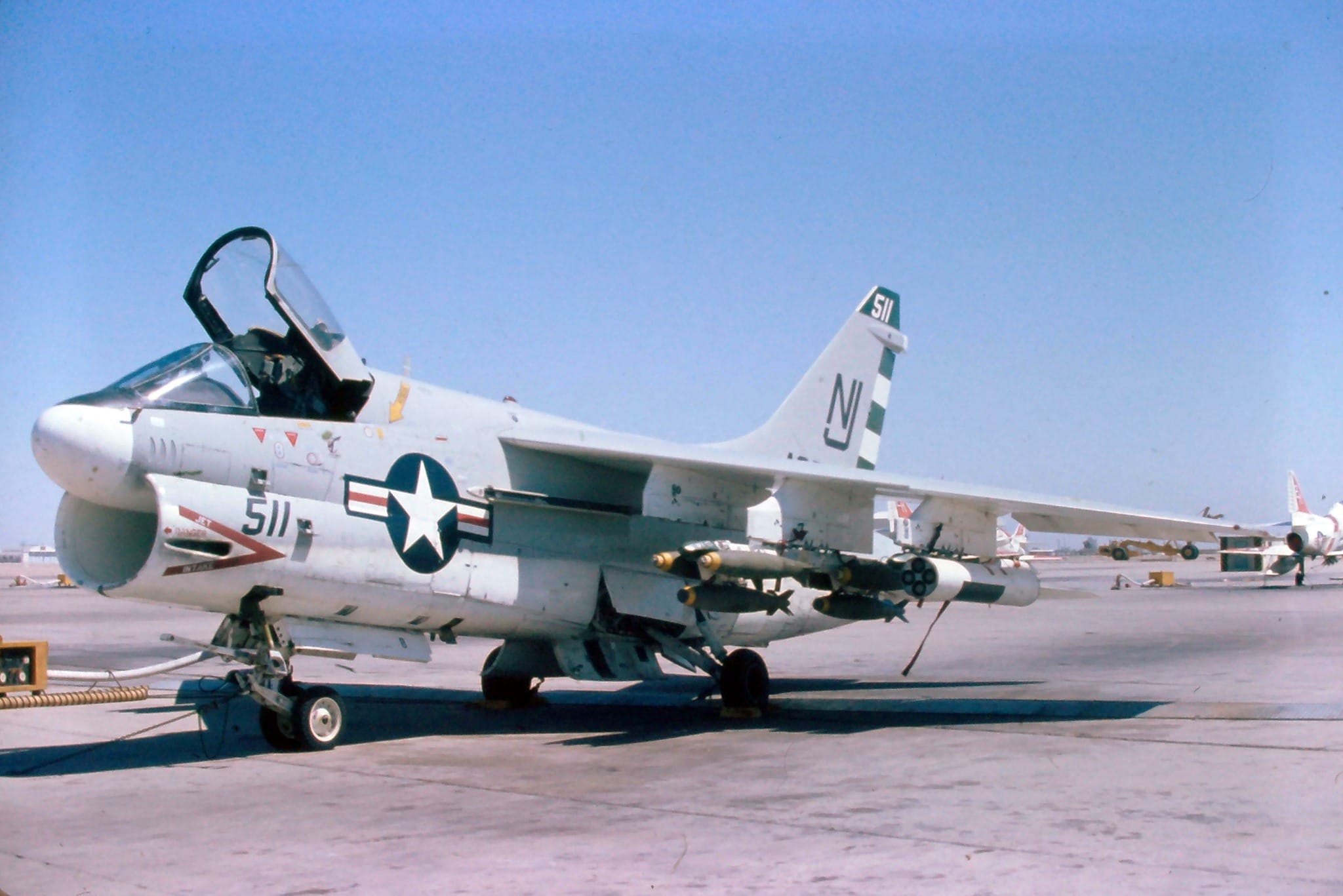
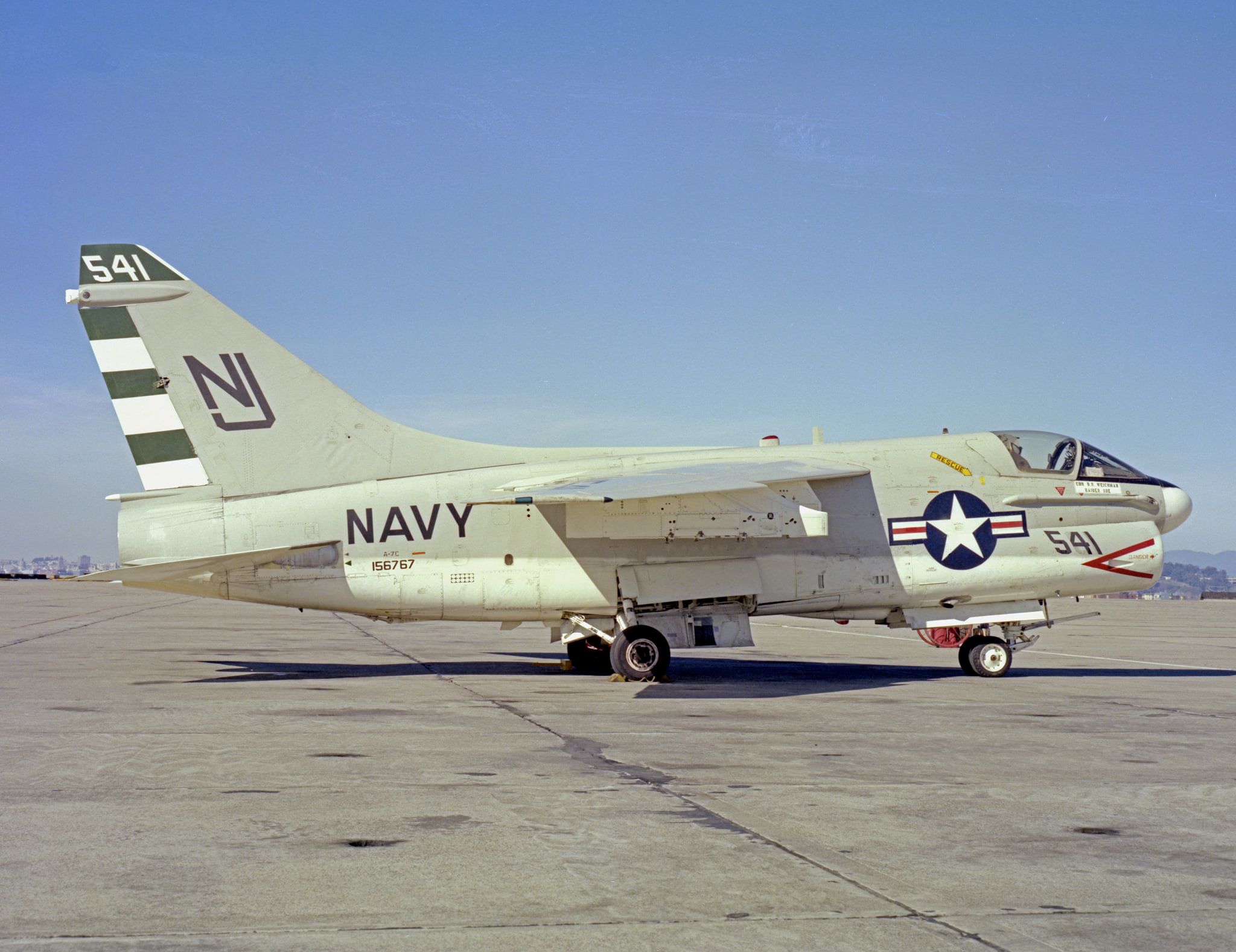
When the Ling Temco Vought A-7A Corsair II deployed to WestPac with VA-147 Argonauts as part of Carrier Air Wing TWO (CVW-2) aboard the USS Ranger (CVA-61) in late 1967, fleet replacement training squadrons like VA-122 Flying Eagles (and later VA-125 Rough Raiders) were already in the business of training and qualifying Corsair II pilots in the intricacies of flying the Short Little Ugly “Fellow” (SLUF) around the boat. Vought had plenty of history building great Naval aircraft. The film “A-7 Familiarization” was produced by the Navy to help ensure Naval Aviators had their A-7A Corsair II procedures on lock. The film was uploaded to YouTube by Periscope Film.
The footage for the film as all shot aboard the Essex-class aircraft carrier USS Oriskany (CVA-34). The VA-122 and VA-125 jets appearing in the film all have histories. For instance, A-7A 153189 started off with VA-125. She went to VA-153 Blue Tail Flies in 1970 and then went to Vietnam. On 1 November 1971 3189’s nose gear collapsed during launch from USS Oriskany (CVA-34) and the jet ditched in the Gulf of Tonkin in front of the carrier. The pilot, CDR Thomas Frank, did not survive the mishap.
image via nnam
The Longest Serving Jet Appearing in the Film?
A-7B 154400 went to VA-122 in 1969. From there 4400 went to VA-125 in 1973 and then to VA-153 in 1977. On 10 March 1977 the jet was heavily damaged in a mishap aboard the Midway-class aircraft carrier USS Franklin D Roosevelt (CVA-42). After repairs were made 4400 continued her career with VA-153 until 1983.
image via nnam
Portuguese SLUF
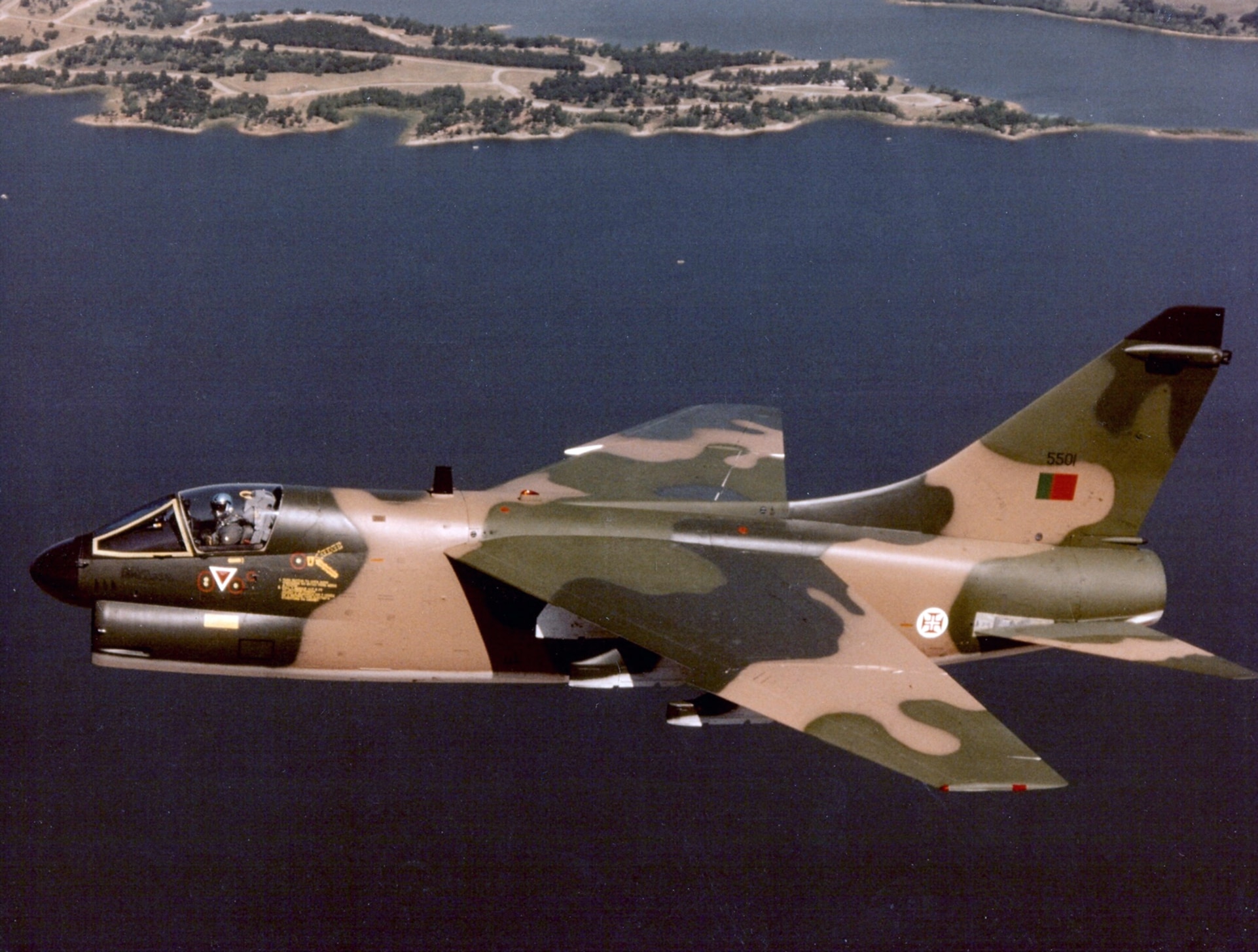
A-7A 153227 initially went to VA-125. Between 1967 and 1969 the jet was assigned to VA-147 and went to Vietnam. The aircraft returned and went to the Naval Air Training Center in 1977. In 1978 3227 went to the boneyard for a spell before being sold to the Portuguese Air Force. After refurbishment to A-7P specifications the jet joined the Força Aérea Portuguesa’s 302 Esquadra in 1984. On 9 March 1989 the jet was ditched at sea off Peniche after a birdstrike.
A-7P image via NNAM
More Portuguese Duty
A-7A 154349 went to VA-125 in 1969. Between 1975 and 1978 the jet served with VA-303 Golden Hawks. 4349 went to the boneyard in January of 1978. 78: In August of 1983 the jet was sold to Portugal and went into service with the Força Aérea Portuguesa’s 302 Esquadra as an A-7P in 1984. On 27 March 1987 the jet was lost in a mishap near Perto de Boticas.
A-7B 154394 went to VA-122 in 1969 and was reassigned to VA-125 in 1970. On 8 March 1970 4394 was written off.
image via nnam
The Final Tally
A-7A 154357 went to VA-125 in 1969. Between 1969 and 1970 the jet served with VA-97 Warhawks. On 2 October 1970 the jet was struck off charge.
A-7B 154393 went to VA-122 in 1969. The jet was then assigned to VA-93 Blue Blazers for their first Vietnam deployment in 1971. On 7 September 1972 4393 crashed into the sea off Hon Nieu Island/Vihn, North Vietnam due to battle damage. The pilot did not survive the mishap.
image via nnam
SLUFs Served For More Than 40 Years!
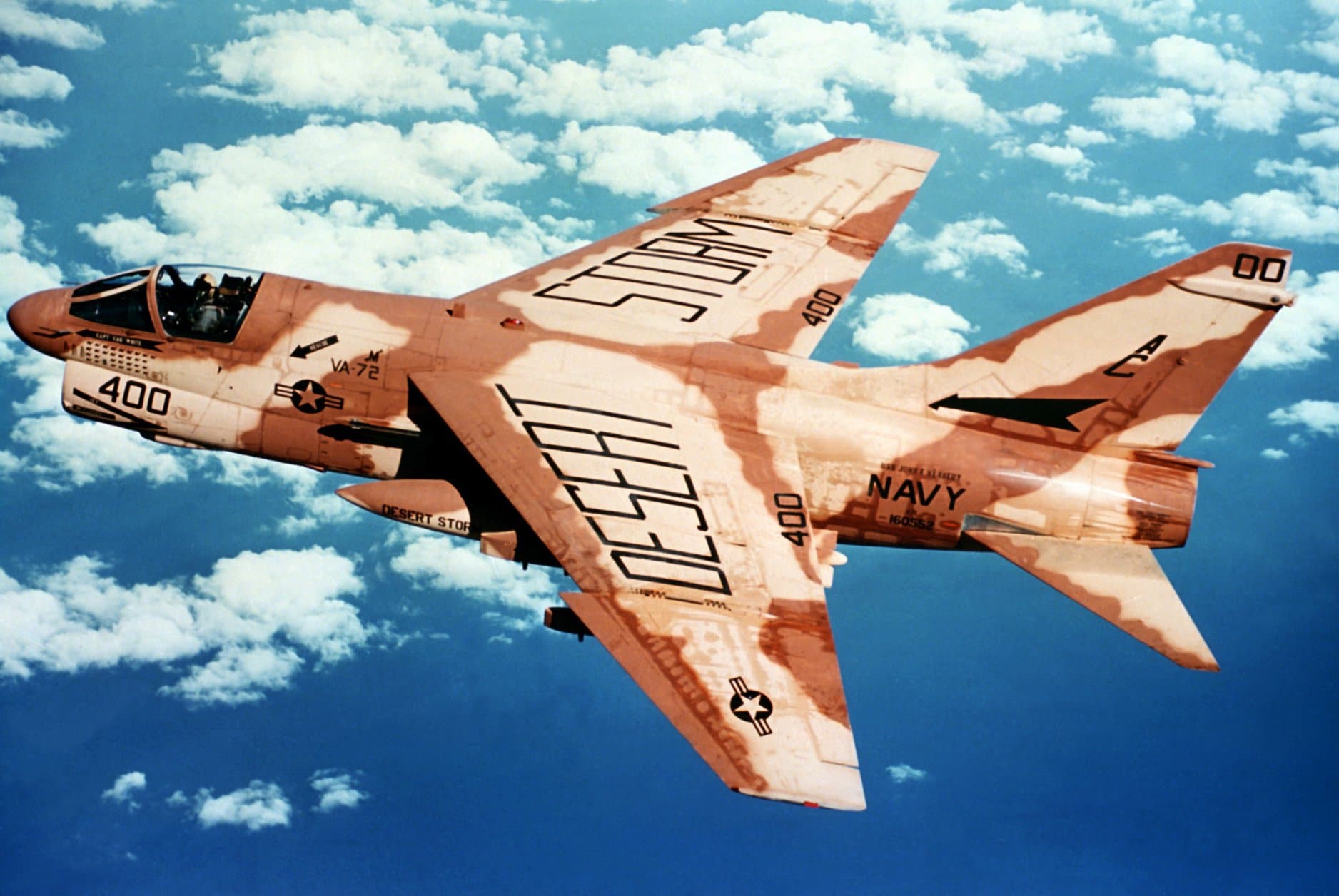
Sea stories about the SLUF are many and varied– they served in every firefight between Vietnam and the Gulf War. The last Navy A-7s were retired by the last fleet operational squadrons (VA-46 and VA-72) in May 1991 shortly after their return from Operation Desert Storm. Corsair IIs were also operated by Greece as the A-7H and TA-7H (retired in 2014), Portugal as the A-7P and TA-7P (retired in 1999), and Thailand (retired in 2007) The Corsair II served for more than 40 years. The Luftwaffe looked at purchasing the A-7D, as did Switzerland (with enough interest to have the designation A-7G dedicated to potential Swiss SLUFs).
The USS Leyte’s Only Combat Deployment Was Memorable for a Variety of Compelling Reasons
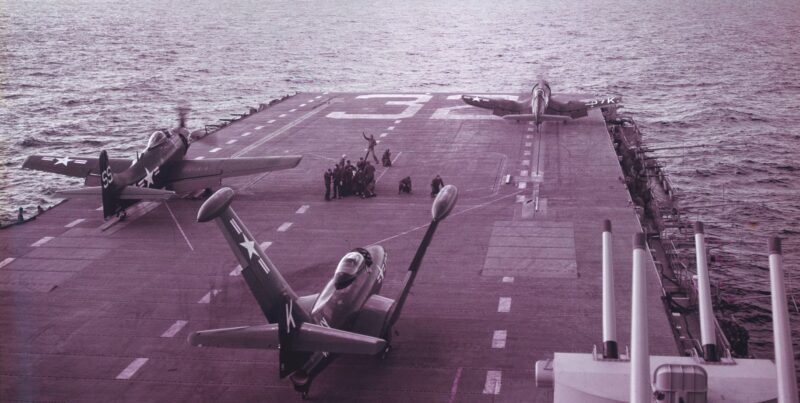
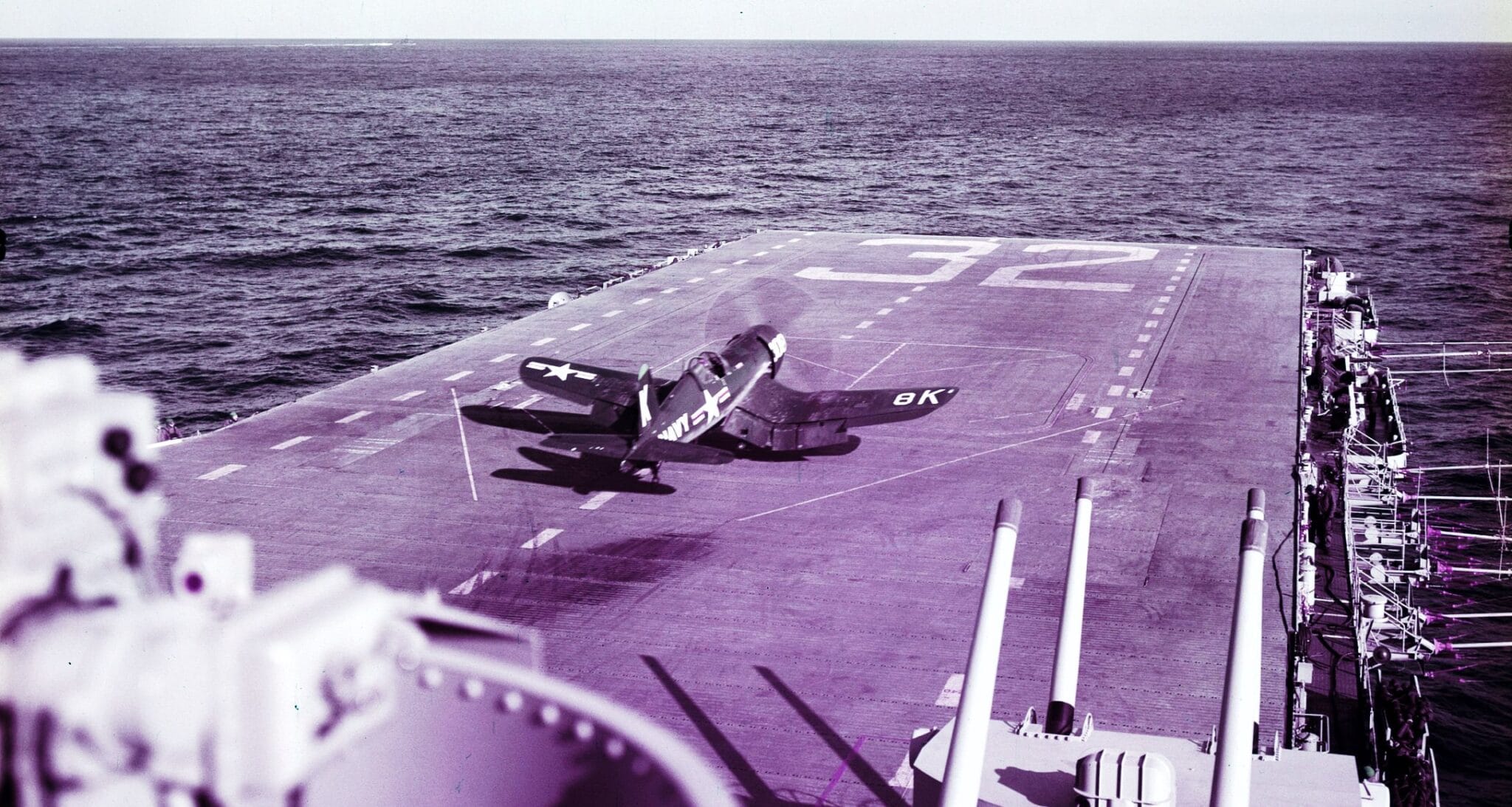
When the Essex-class aircraft carrier USS Leyte (CV-32) sailed for the Western Pacific in 1950, Carrier Air Group THREE (CVG-3) was her embarked air wing. The Leyte was destined to spend the fall of 1950 off the coast of South Korea, launching airstrikes against North Korean and Chinese targets as ordered by Commander, Task Force 77 and the Allied leadership in the region. This great video of the CVG-3 operating from the Leyte was uploaded to YouTube by airailimages.
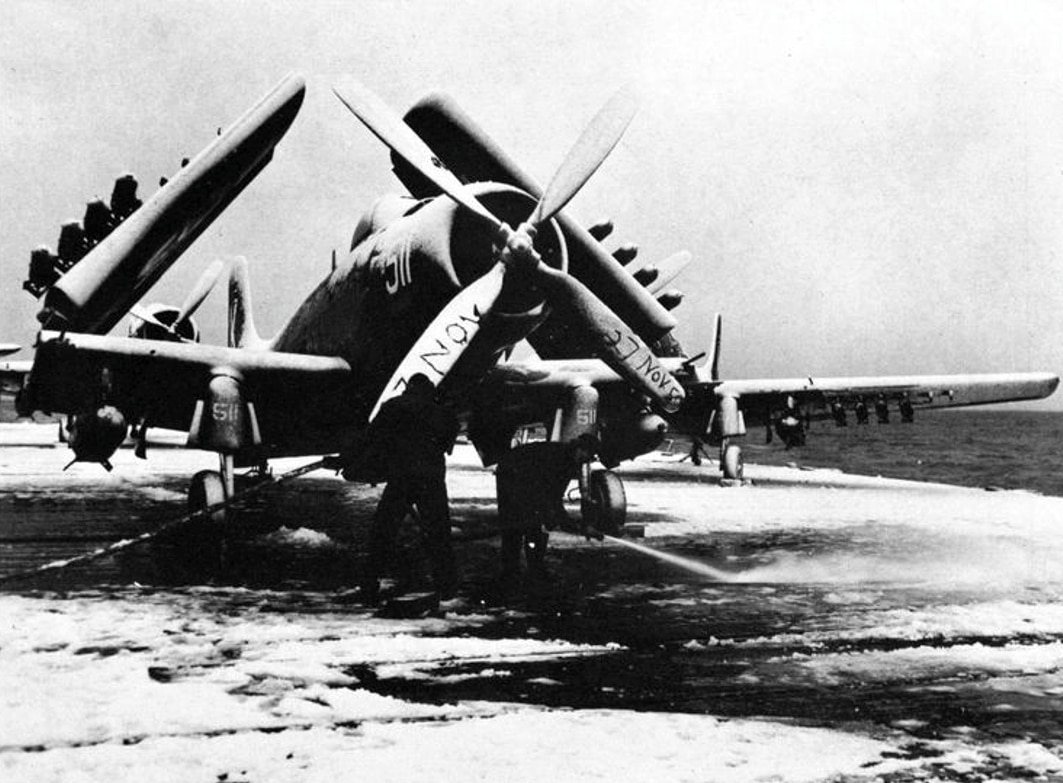
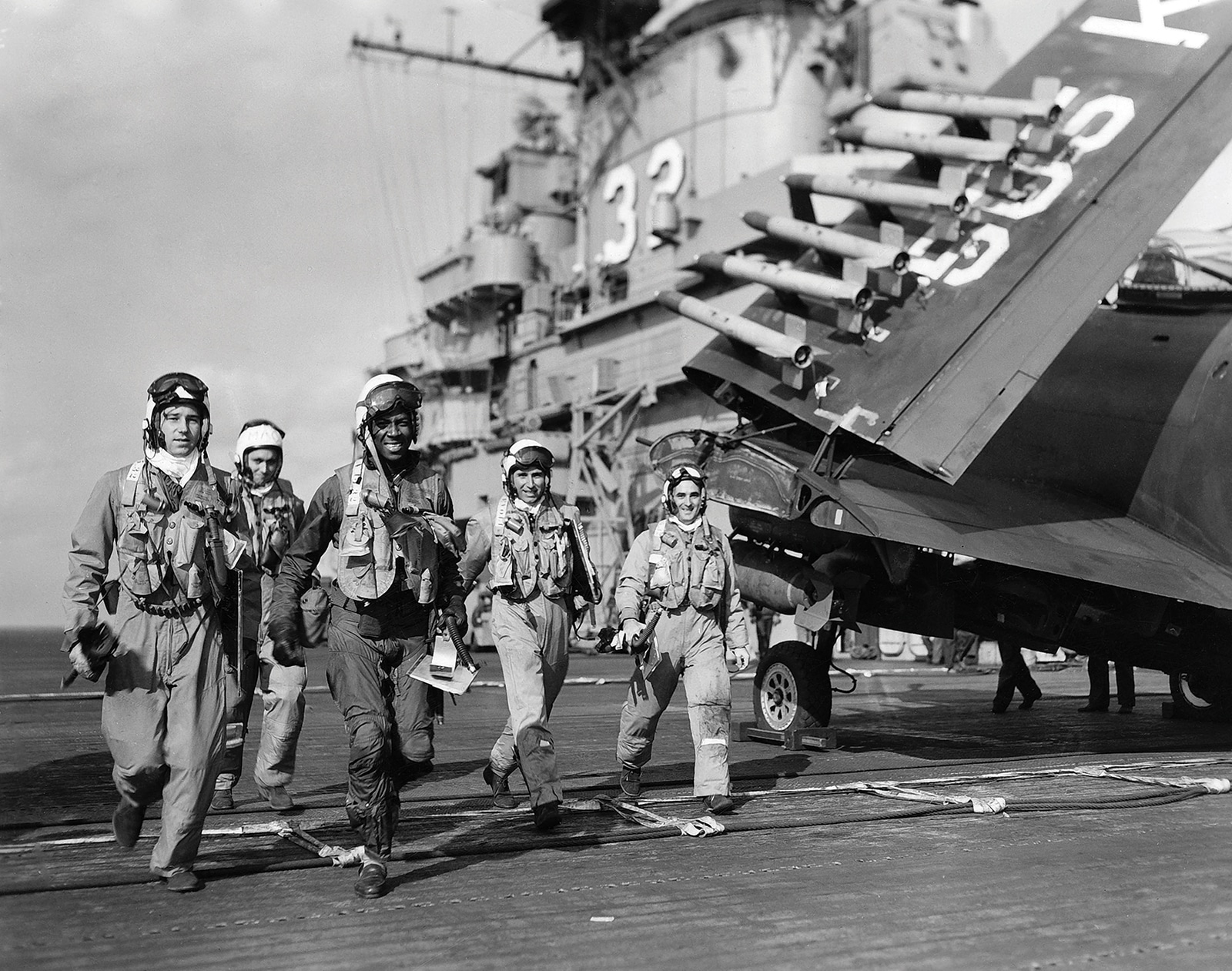
The Leyte arrived at Sasebo in Japan on 8 October and wasted no time before getting into action. From 9 October until 19 January 1951 the Leyte was at sea for 92 days- many of them while hampered by the atrocious weather in the region at that time of the year. Despite the weather CVG-3 logged over 11,000 hours during 3,933 sorties flown against enemy forces while inflicting massive damage upon enemy positions, supplies, transportation, and communications. The first African-American Naval Aviator, Ensign Jesse LeRoy Brown, was killed in action while defending Marines embroiled in the fight at the Chosin reservoir while flying from the Leyte on 4 December 1950.
Ensign Jesse L. Brown, first African-American Naval Aviator aboard Leyte. image via national archives
The Rest of the Leyte Story
The Leyte returned to Norfolk for overhaul 25 February 1951 and was redesignated CVA-32 on 1 October 1952. This was the Leyte’s only deployment to the Pacific. After her initial cruise to the Caribbean and Eastern Pacific, she deployed to the Mediterranean and/or the North Atlantic seven times before being taken out of service as an attack carrier and converted to an antisubmarine aircraft carrier and redesignated CVS-32 on 8 August 1953. The ship spent several years working antisubmarine duty before being redesignated AVT-10 and was deactivated in 1959. She was scrapped in 1970.
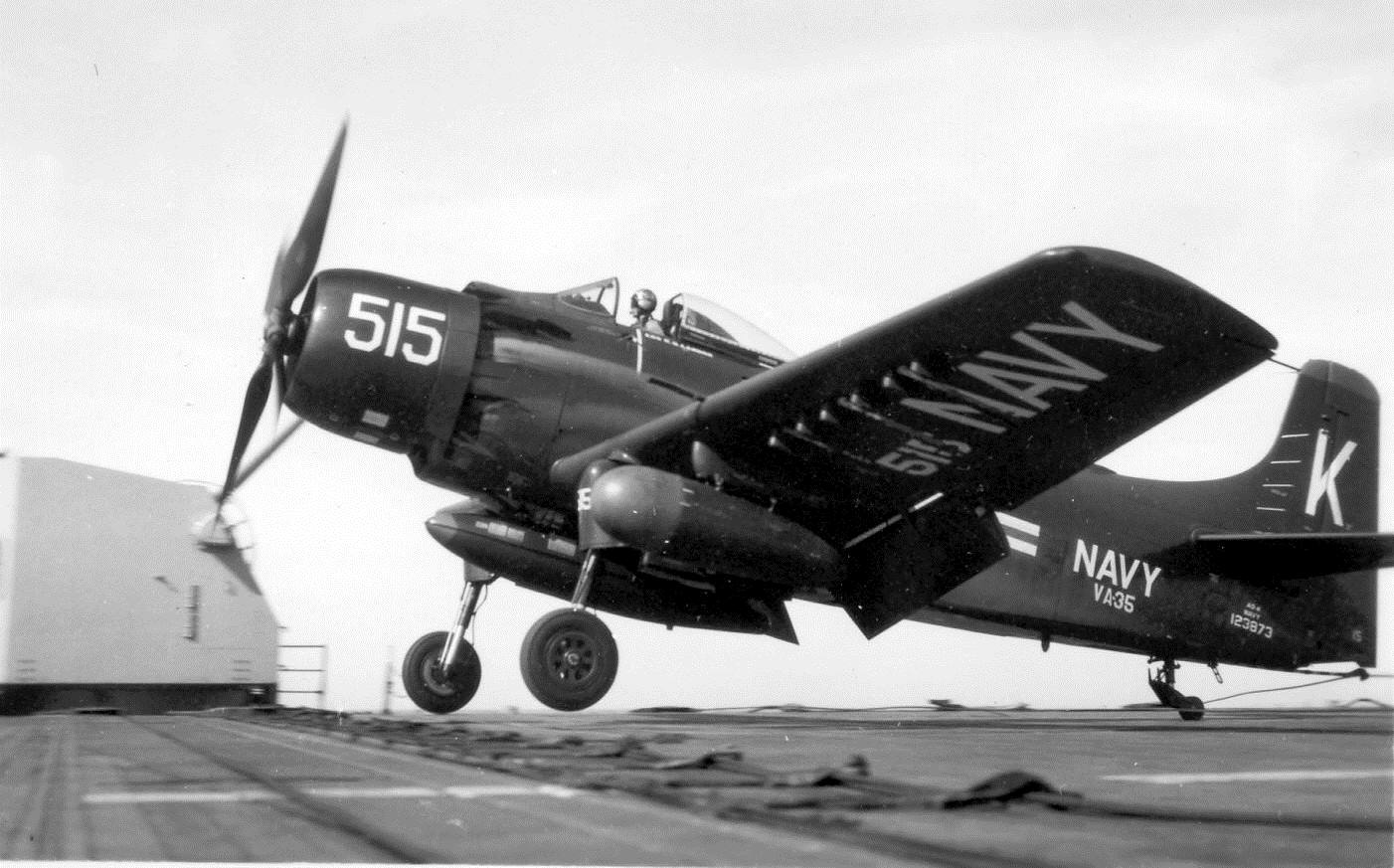
VA-35 Able dog comes aboard. image via national naval aviation museum
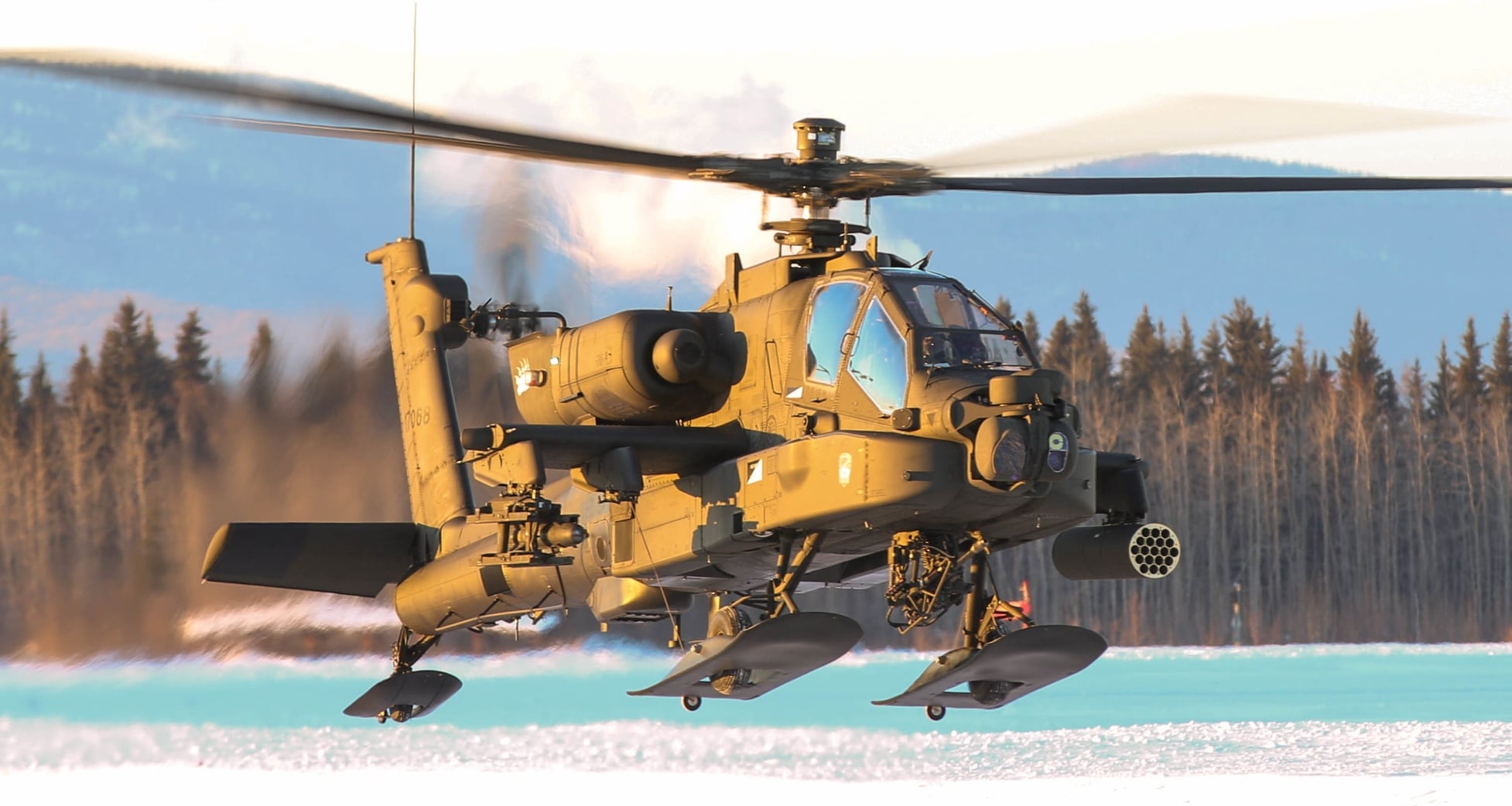
The Apache Has Been in Service for Nearly 40 Years, But It’s Still Absolutely Lethal
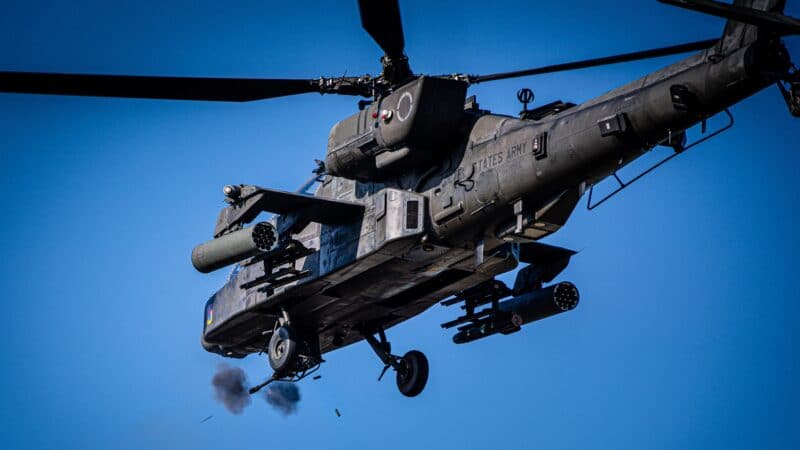
The Boeing AH-64 Apache began as the Hughes Helicopters Model 77. The rotorcraft was developed to compete for the United States Army’s Advanced Attack Helicopter program to replace the AH-1 Cobra.
On 30 September 1975, the prototype YAH-64 flew for the first time. The US Army selected the YAH-64 over the Bell YAH-63 in 1976 and approved full production of the Apache in 1982. McDonnell Douglas purchased Hughes Helicopters in 1984 and continued production and development of the AH-64.
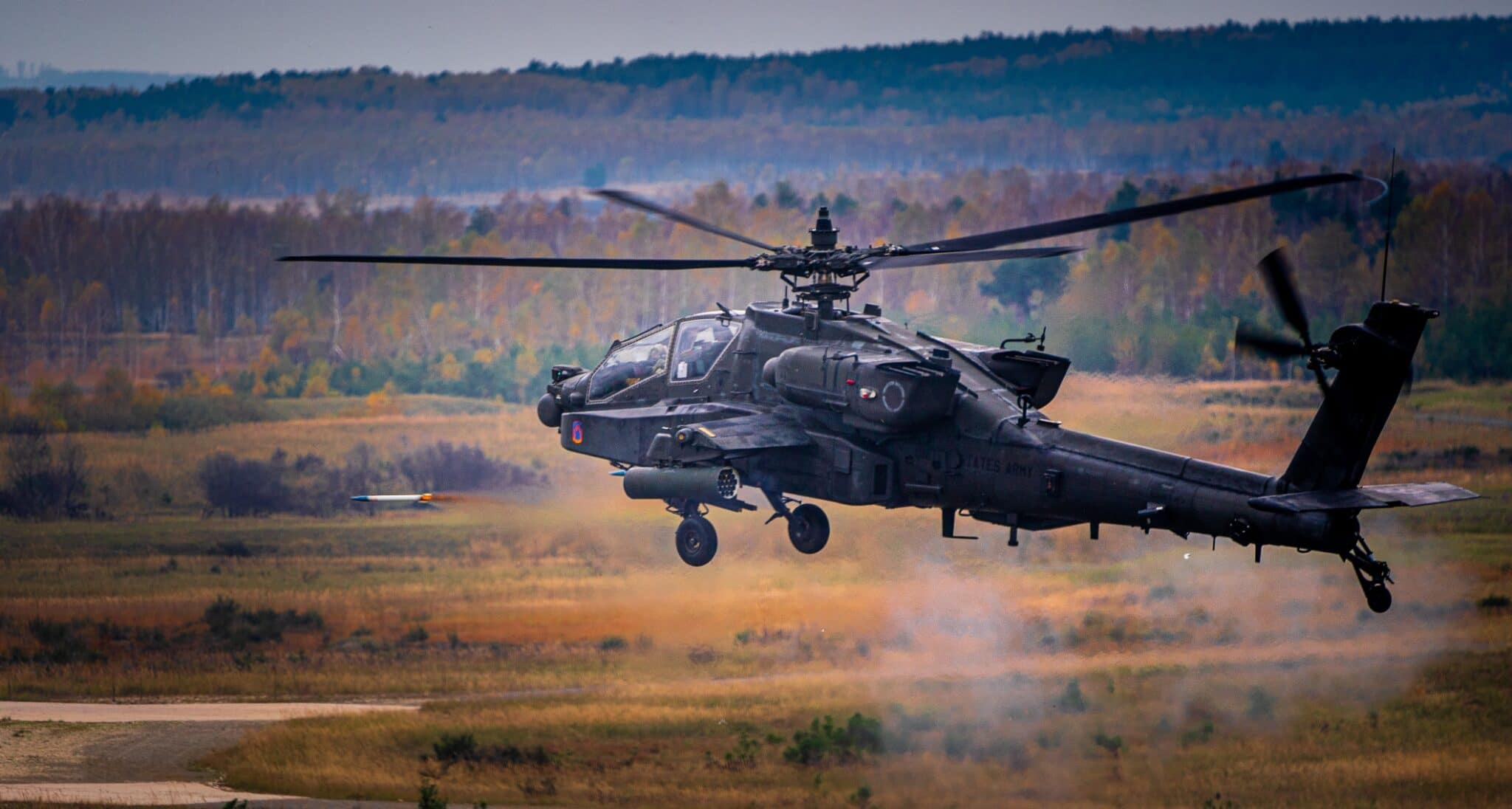
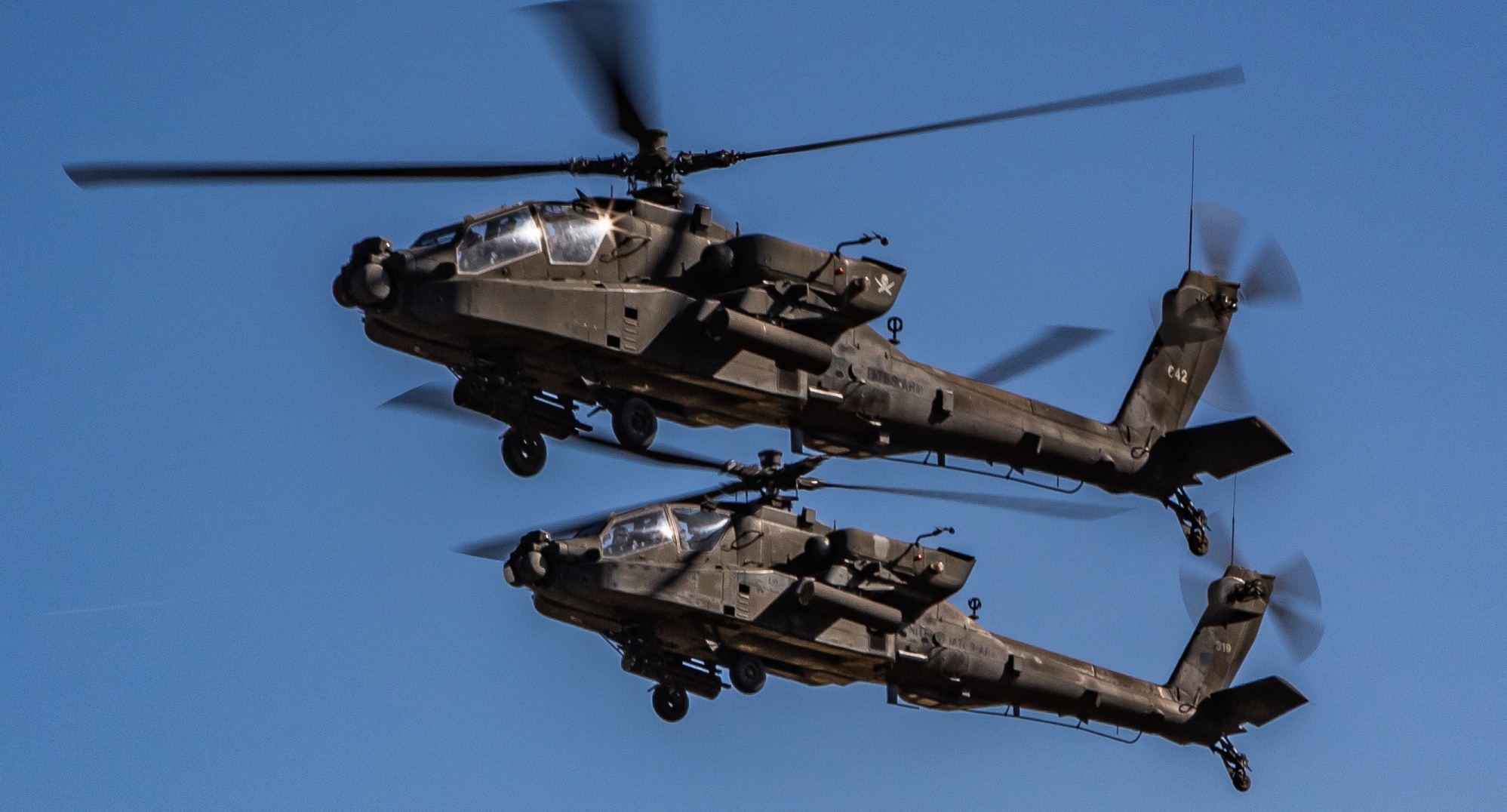
The Apache entered service with the US Army in April 1986, with the AH-64D Apache Longbow following in 1997. Today’s AH-64E is still one badass chopper that still remains absolutely lethal.
Enjoy this video of Apaches in action uploaded to YouTube by Military Archive.
Video credits: U.S. Army videos by Erich Backes, Specialist Alaura Lucas, Corporal Max Elliott, Staff Sergeant Jennifer Reynolds, Major Robert Fellingham, and Gertrud Zach
191029-A-KM584-162 image via DVIDS
Still Making Rotary-Wing Badassery
Boeing Defense, Space & Security now produces the AH-64. More than 2,400 AH-64s have rolled off the assembly lines. With more than 1,200 aircraft in operation, accumulating over 4 million flight hours, including 1.3 million in combat, the AH-64 Apache represents the backbone of the US Army’s attack helicopter fleet and a growing number of international defense forces.
According to Boeing DS&S, the AH-64E will be in production until at least 2028. According to Boeing, the total number of flight hours for US Army Apaches stands at more than 4.8 million ( ! ) with 1.3 million hours of combat hours ( ! ! ).
190914-Z-MA638-0034 image via dvids
Scoring an A on the Test of Time
“The Apache will serve the U.S. Army and its partner nations as the world’s primary attack helicopter into the 2060s. As Boeing and the U.S. Army continue to invest in next generation technologies, the Apache brings affordable Modular Open Systems Architecture capability to serve as a centerpiece in the Multi-Domain Operations (MDO) battlefield for decades to come.” Boeing produced 937 AH-64A Apaches between 1984 and 1997. Some remain in service today. Apaches have been exported to a number of countries, including Egypt, Greece, Israel, India, Singapore, the Netherlands, Japan, Saudi Arabia, Qatar, the United Arab Emirates (UAE), and the UK.
160512-A-PG801-003 image via dvids
Not Your Father’s Apache- Just Better
“With the AH-64E in production until at least 2028, the Apache will serve the US Army and its partner nations as the world’s primary attack helicopter into the 2060s. As Boeing and the US Army continue to invest in next-generation technologies, the Apache brings affordable Modular Open Systems Architecture capability to serve as a centerpiece in the Multi-Domain Operations (MDO) battlefield for decades to come. The AH-64E Version 6 is the most modern configuration of the Apache and is ready for the MDO battlefield. A network-centric, fully integrated weapon system specifically built to dominate in highly contested and complex battle space, the Version 6 Apache includes multiple enhancements to the aircraft’s sensors, software, and weapons performance.”
092115-A-TU438-002 image via dvids
Better Parts = a Better Attack Helicopter
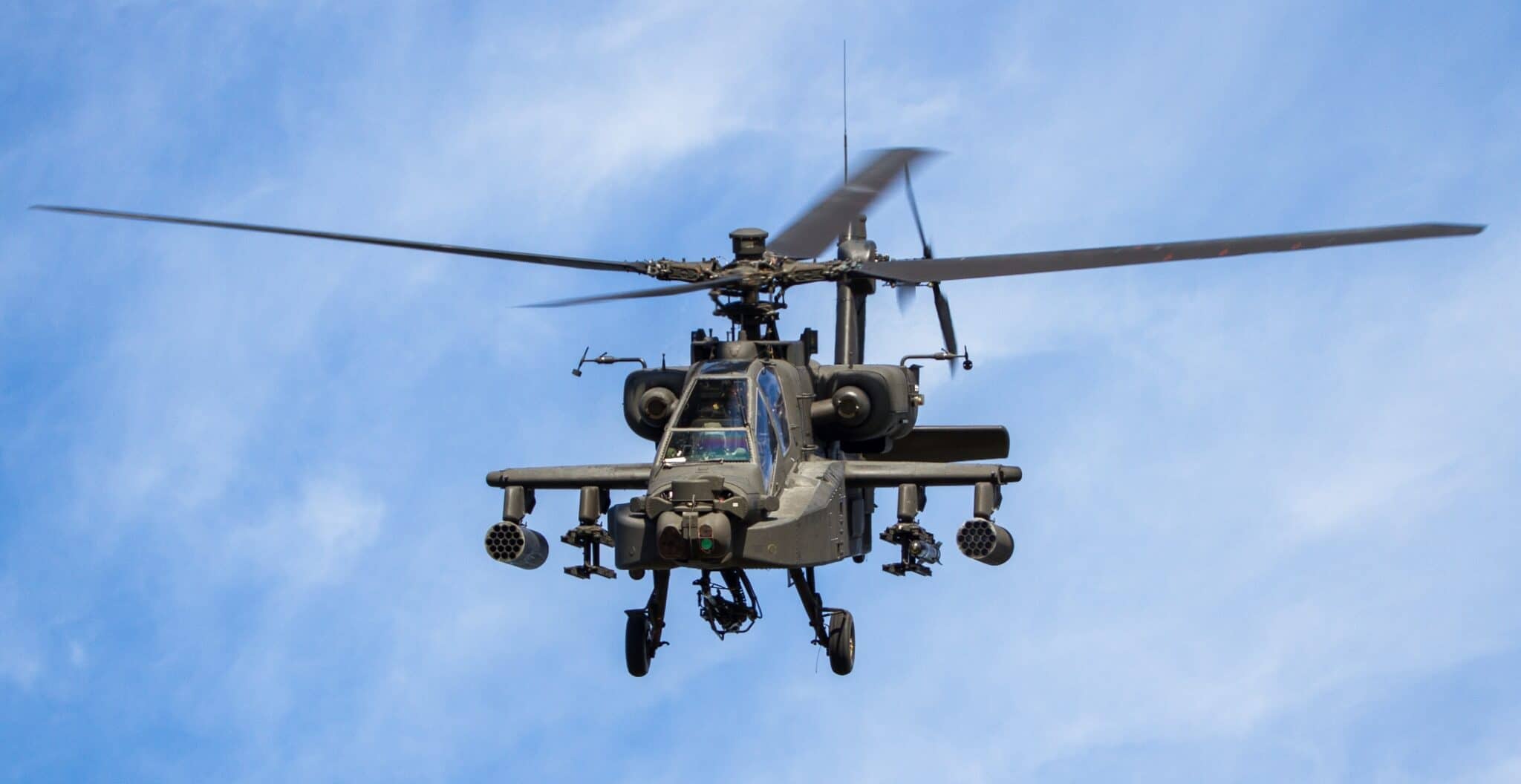
The AH-64E Apache is the most advanced multi-role combat helicopter in the US Army’s arsenal and is also used by a growing number of global defense forces. To date, more than 500 AH-64E model Apaches have been delivered worldwide. The AH-64E features Advanced digital connectivity. Joint Tactical Information Distribution System, more powerful T700-GE-701D engines with upgraded face gear transmission to accommodate more power, capability to control unmanned aerial vehicles (UAVs), and new composite main rotor blades.