Home Blog Page 44

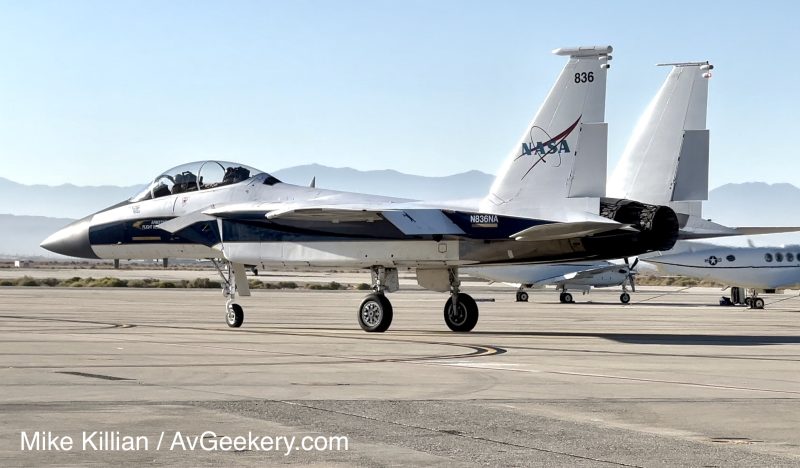
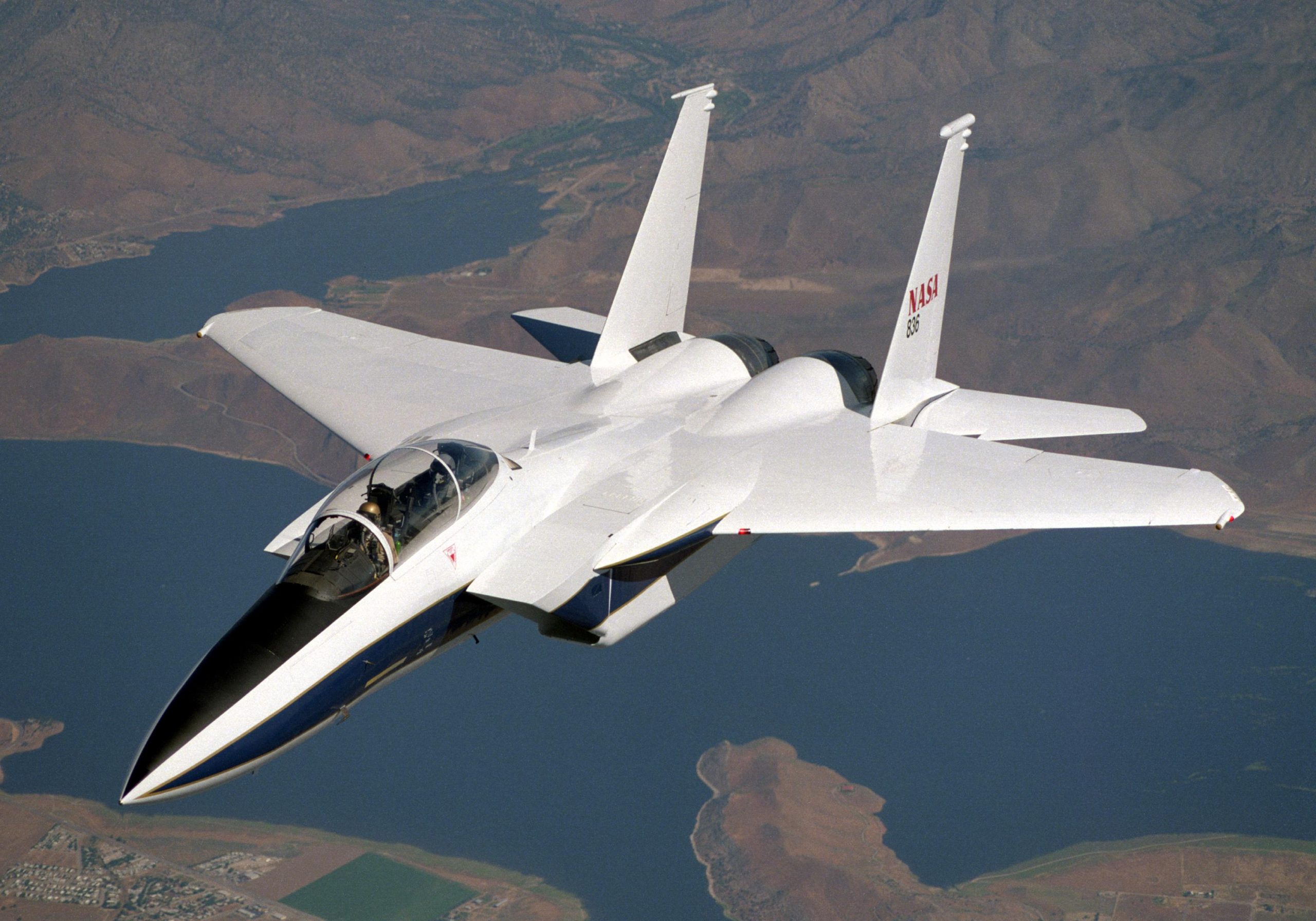
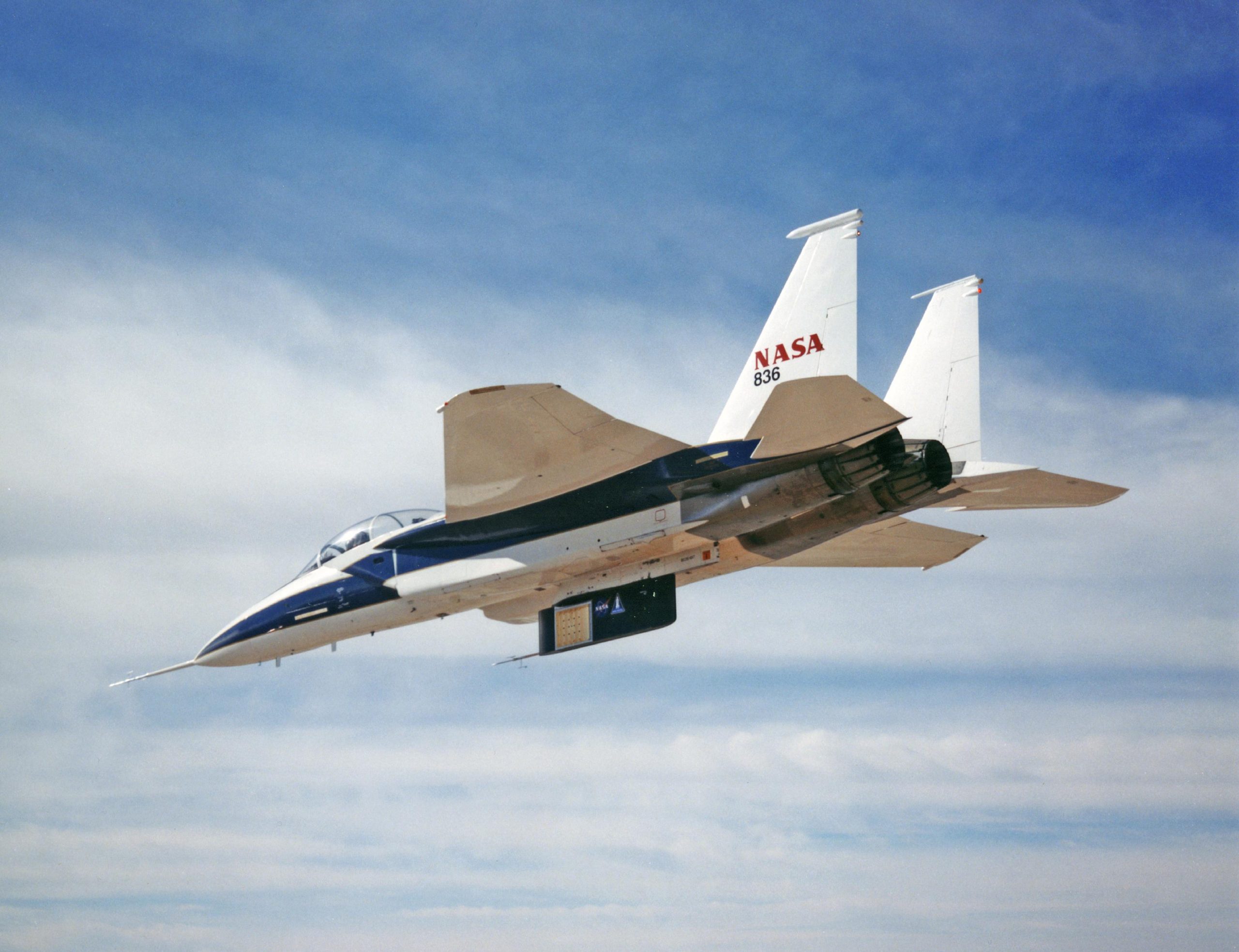
NASA 836: The Oldest and Fastest F-15 in the World

Few planes in aviation history can match the lethality and reputation of the F-15 Eagle. Several variants have been produced over the years, and no end is in sight for the bird as a new generation of EX Eagles comes online.

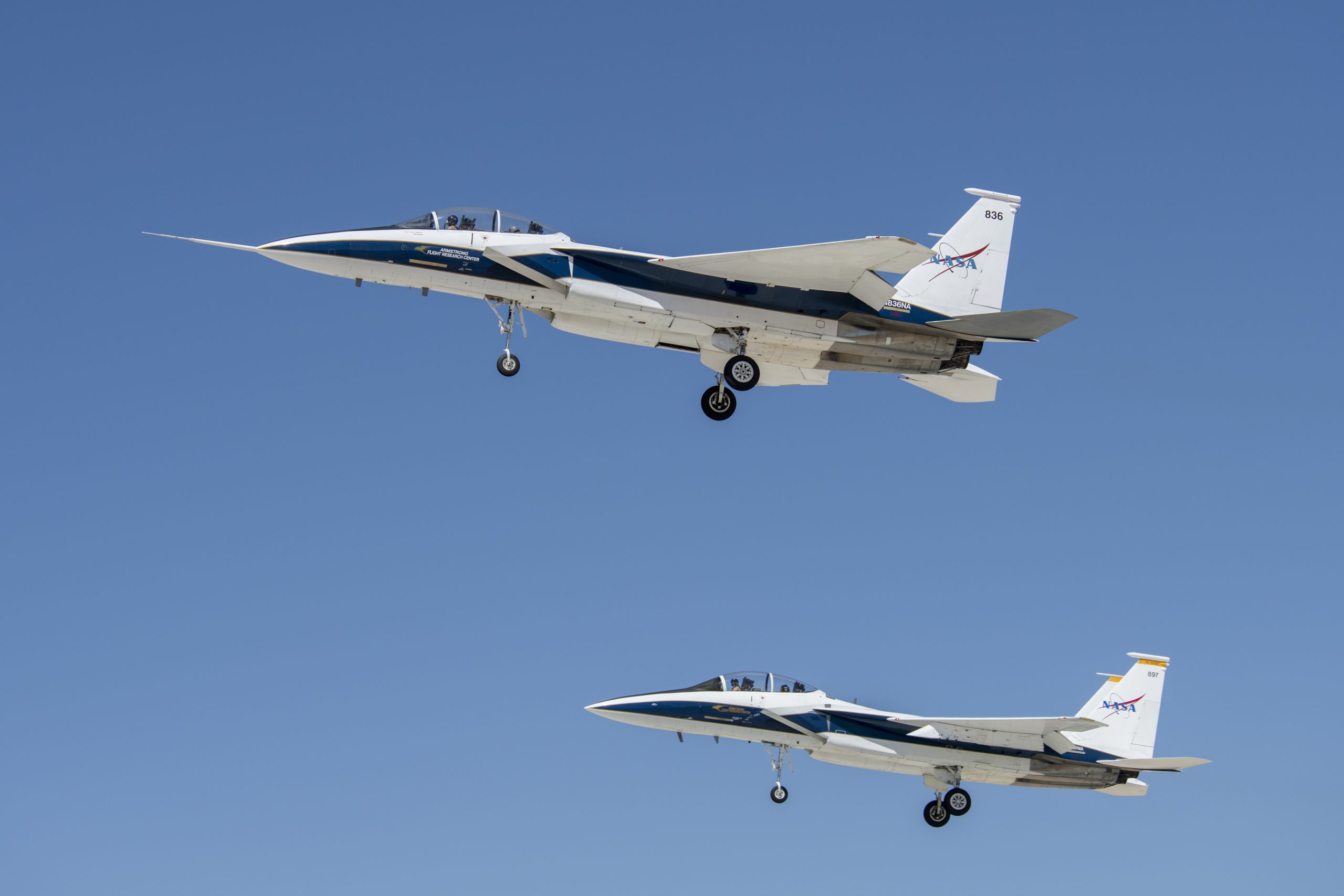
But there’s one Eagle flying which is quite special compared to any other. It’s operated by NASA, and it’s the fastest and oldest F-15 still flying in the world.

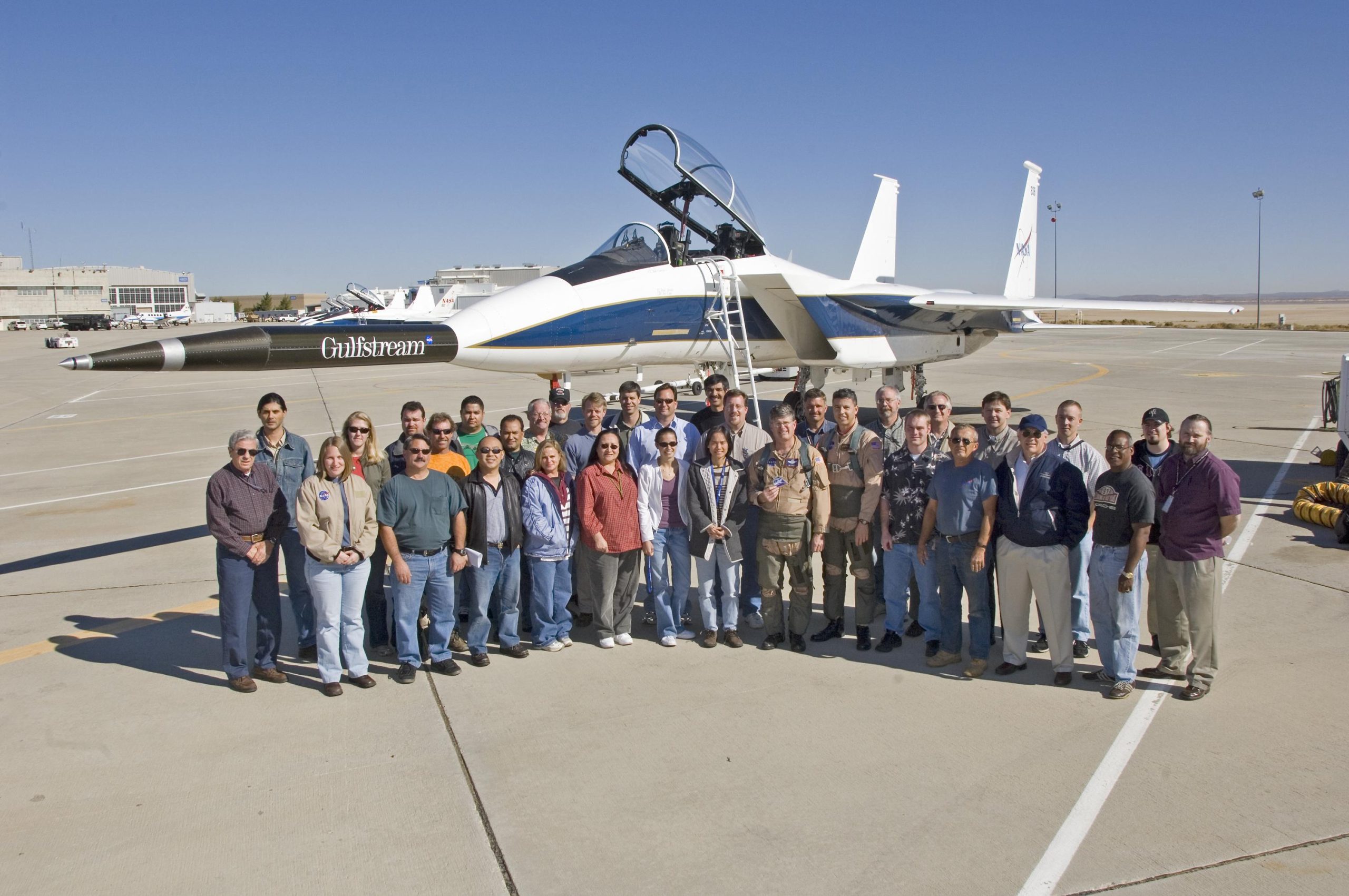
NASA 836 is a highly modified F-15B used primarily for testing advanced propulsion concepts. It’s based at the agency’s Armstrong Flight Research Center at Edwards Air Force Base in Southern California.

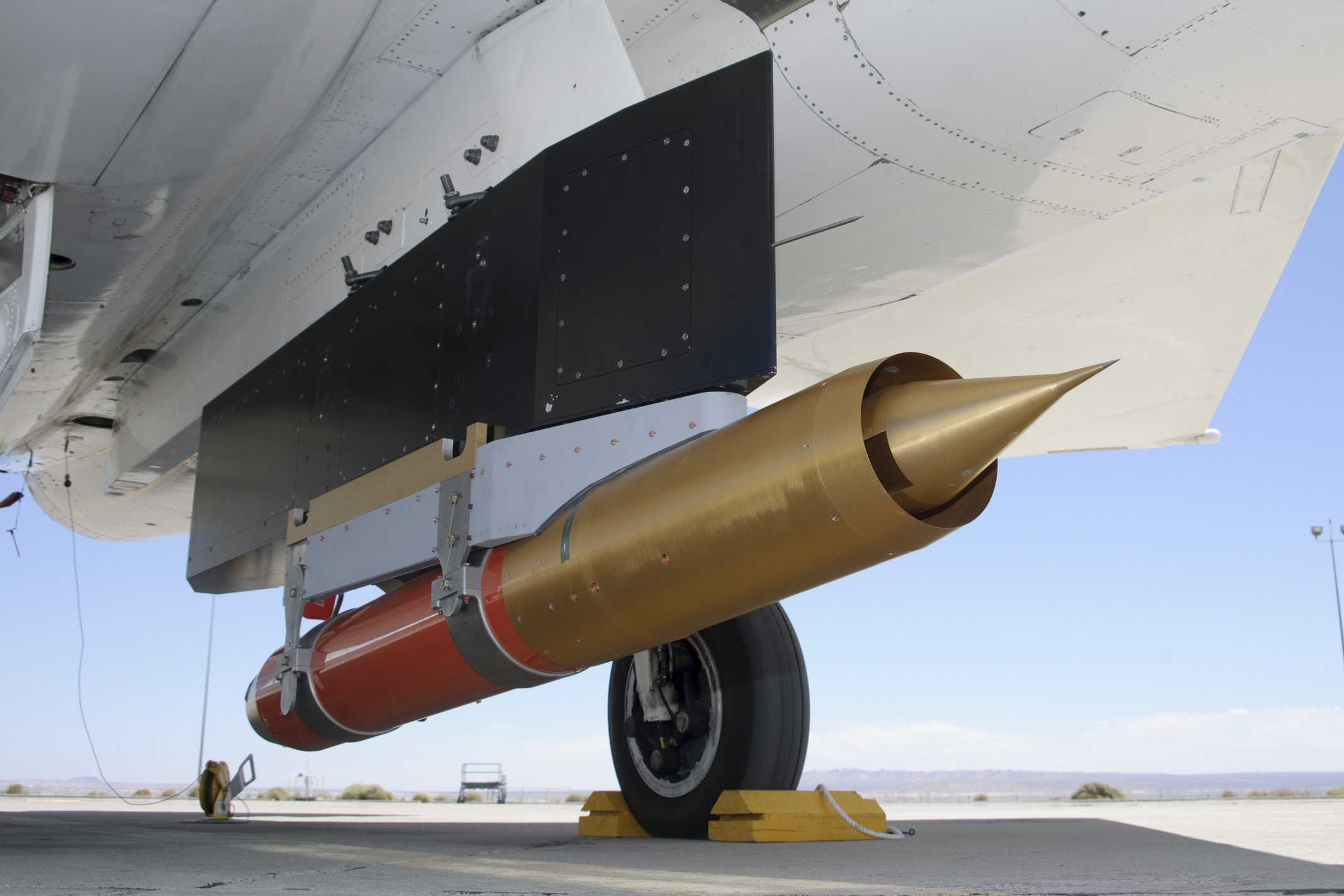
But the supersonic flying wind tunnel also serves NASA and the greater aerospace industry and taxpayer in other ways. It’s used for crew training, pilot proficiency and safety chase support for other research aircraft. It also conducts a wide range of various flight research experiments. It can carry one of several flight test fixtures mounted underneath it to help conduct those experiments.
The channeled center-body inlet design, shown here in a subscale test version mounted underneath NASA's F-15B flight text fixture, could improve airflow and fuel efficiency of jet engines at a wide variety of speeds (NASA photo)
NASA 836: The Oldest and Fastest F-15 in the World 6

1,000 pounds lighter than any other F-15, but with modern engines

The jet first entered service in 1974 with the USAF. NASA acquired it in 1993 from the Hawaii Air National Guard. NASA then modified it to support their test programs. They made it 1,000 pounds lighter than any other F-15 flying in the world, and installed new modern engines.

The age of the jet, combined with its lighter weight and more powerful Pratt and Whitney F100-PW-220 turbofan engines, makes 836 the oldest and fastest flying F-15 in the world. The engines are equipped with more advanced technology and include digital electronic controls, as well as improved durability and reliability.

5C47ECCF 8D91 4070 A98D D1AA9D18D242
NASA 836: The Oldest and Fastest F-15 in the World 7

The engines can produce almost 24,000 pounds of thrust each in full afterburner. The crew regularly take the jet past Mach 2, at altitudes of 40,000 to 60,000 feet. Speeds are limited to Mach 2 when a flight test fixture is mounted beneath the fuselage.

Supersonic flight research

Some experiments and research the jet has conducted include investigating the suppression of sonic booms, improving airflow and fuel efficiency of jet engines at a wide variety of speeds, and even flying space shuttle insulating foam at Mach 2 to better understand how insulating foam loss behaves during launch.

967B4C09 1424 4A8A 88B6 38E99B6358AE
NASA 836: The Oldest and Fastest F-15 in the World 8

Foam loss punched a hole through space shuttle Columbia’s thermal protection in 2003, which killed the crew when they hit reentry. NASA’s F-15 helped make a safe return to flight for the space shuttle program.

The jet operates with a unique data acquisition system onboard. It includes a research airdata system for the jet itself, a GPS navigation package, a nose boom that contains an airdata probe, a digital data recorder and telemetry antennas. An on-board video system also monitors from the rear seat and transmits high-speed video and photography to researchers on the ground.

D9F9C78B 9956 4043 822C BE345602309E
NASA 836: The Oldest and Fastest F-15 in the World 9

More recently, 836 along with NASA’s other F-15 have been conducting Shock-Sensing Probe (SSP) research flights. NASA mounted a data probe on the nose of 836, to test its ability to measure the shock waves of another aircraft flying at supersonic speeds. The jet will fly with NASA’s X-59 soon, using the SSP to measure its unique shock waves in flight, helping validate the X-plane’s ability to reduce loud sonic booms to quiet sonic “thumps.”

NASA’s F-15s are an invaluable asset to America’s aerospace industry. The research trickles down to helping make flight safer and more efficient for everyone.

F651B1F9 C1C6 4827 97F1 8CEF06F32AD8
NASA 836: The Oldest and Fastest F-15 in the World 10

When I visited the crew last year at Edwards, they made sure to point out that their 836 could leave any other F-15 in their dust. If I had something that fast I’d brag about it too. Sure wish they had offered me a ride.

NTSB Says Pilot Posting to Social Media Caused Fatal Crash

0

The NTSB has released their final report on a fatal 2021 crash of a 1966 Cessna 182H in St Louis, Michigan. They found that the likely cause was due to the pilot was posting to social media 35 seconds before the deadly accident occurred.

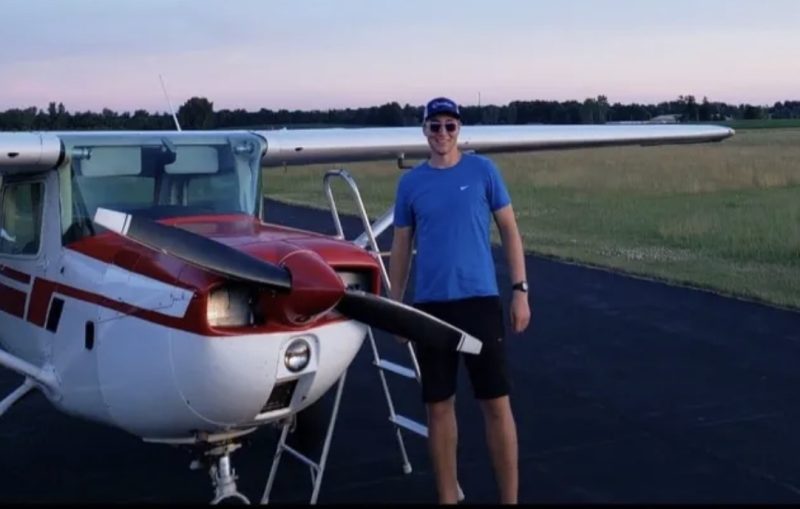
It’s a sad story that was completely preventable. Unfortunately we occasionally see pilots post on social media at inopportune times. For 23 year old Slade Martin it cost him his life.

355819D3 D889 466C 8475 A184262542ED
NTSB Says Pilot Posting to Social Media Caused Fatal Crash 13

NTSB findings

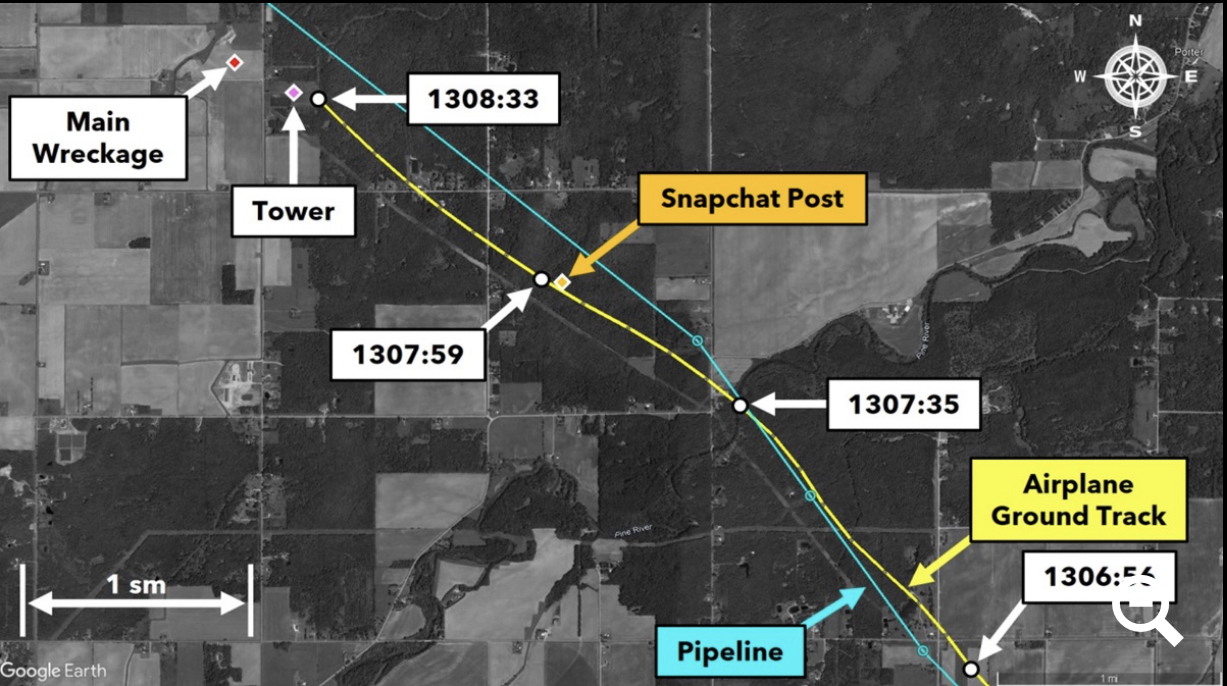
Martin was the only soul onboard, and was posting to Snapchat during a low-level pipeline patrol just before he hit a radio tower guy wire. The plane’s left wing was sheared off, sending the Cessna into the ground 0.3 miles away. It then burst into flames.

“Based on the known information, it is likely the pilot was distracted while he used his mobile device in the minutes before the accident and did not maintain an adequate visual lookout to ensure a safe flight path to avoid the radio tower and its guy wires,” says the NTSB. “Contributing to the accident was the pilot’s unnecessary use of his mobile device during the flight, which diminished his attention/monitoring of the airplane’s flight path.”

Investigators used radar, GPS data and screenshots from a friend of Martin, showing the Snapchat post. Snapchat posts only stay visible for 24 hours. So investigators could not verify until a friend provided screenshots.

9361E274 F8AD 4785 B06D 9C0C7AC5FC2F
NTSB Says Pilot Posting to Social Media Caused Fatal Crash 14

Final minutes before tragedy

No evidence of a mechanical issue or failure was ever found. Below are the NTSB’s findings about Martin’s last minutes before the tragic accident occurred:

“About 15 seconds before the accident, the airplane was about 0.65 miles southeast of the tower in a shallow right turn when it entered a climb from 475 ft agl. At the final radar return, about 600 ft east-southeast of the tower, the airplane’s altitude, calibrated airspeed, and climb rate were about 1,370 ft msl, 104 knots, and 1,575 ft per minute, respectively. The airplane’s final altitude was 370 ft below the top of the radio tower and its ground track was toward the guy wires located on the northeast side of the radio tower. Based on the airplane’s ground track and rapidly increasing climb rate, the pilot was likely trying to avoid the tower guy wires during the final moments of the flight.”

Couple Wants Refund After Flying Next to Farting Dog

0

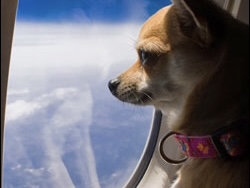
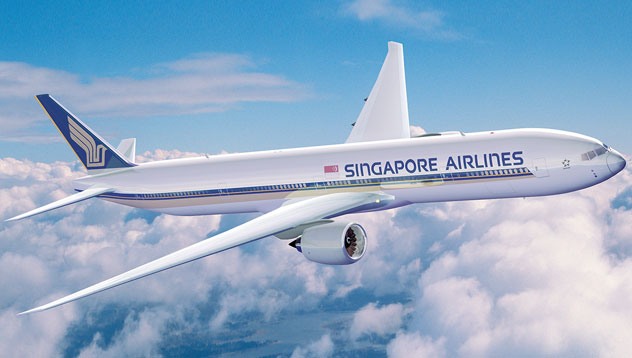
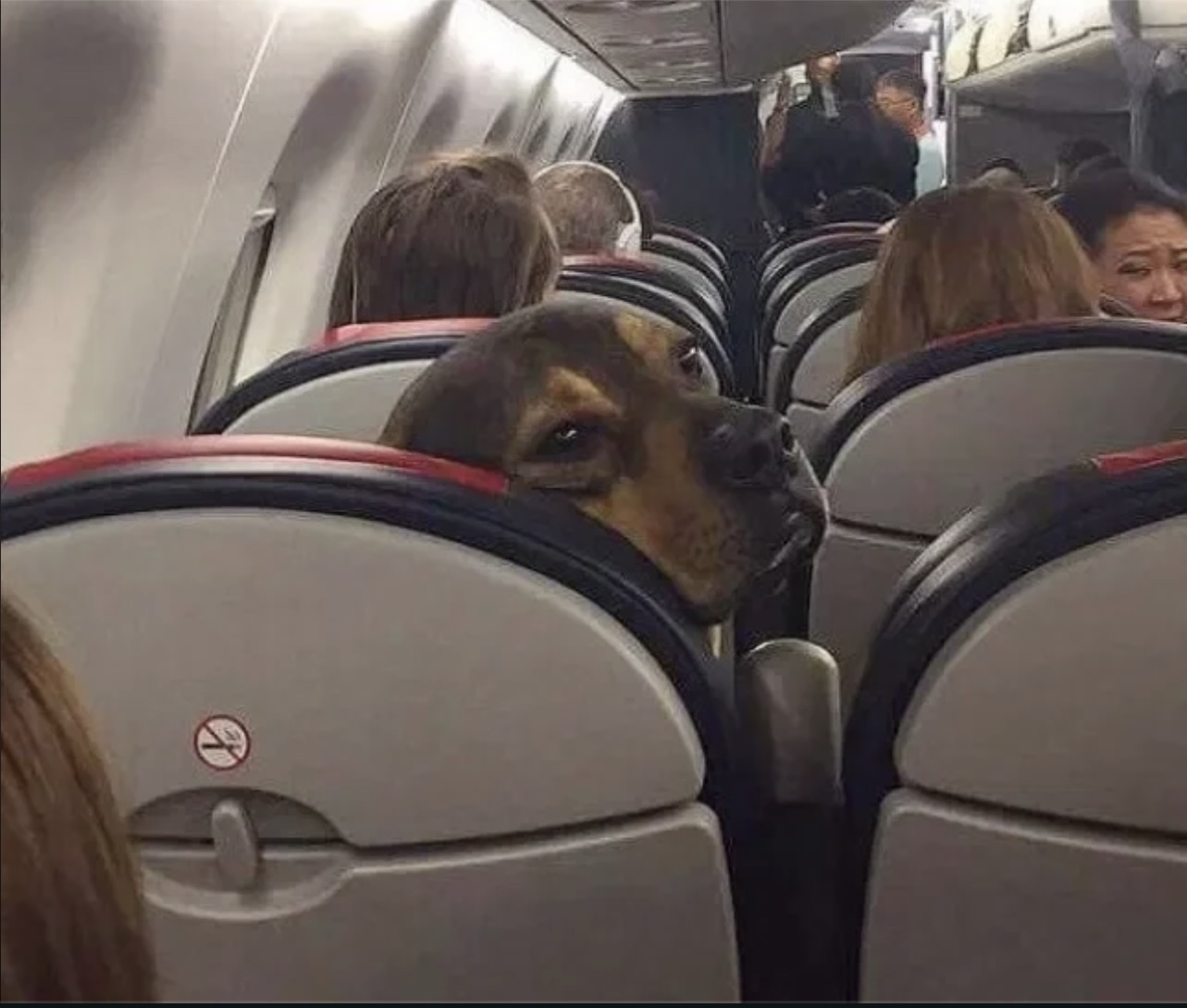
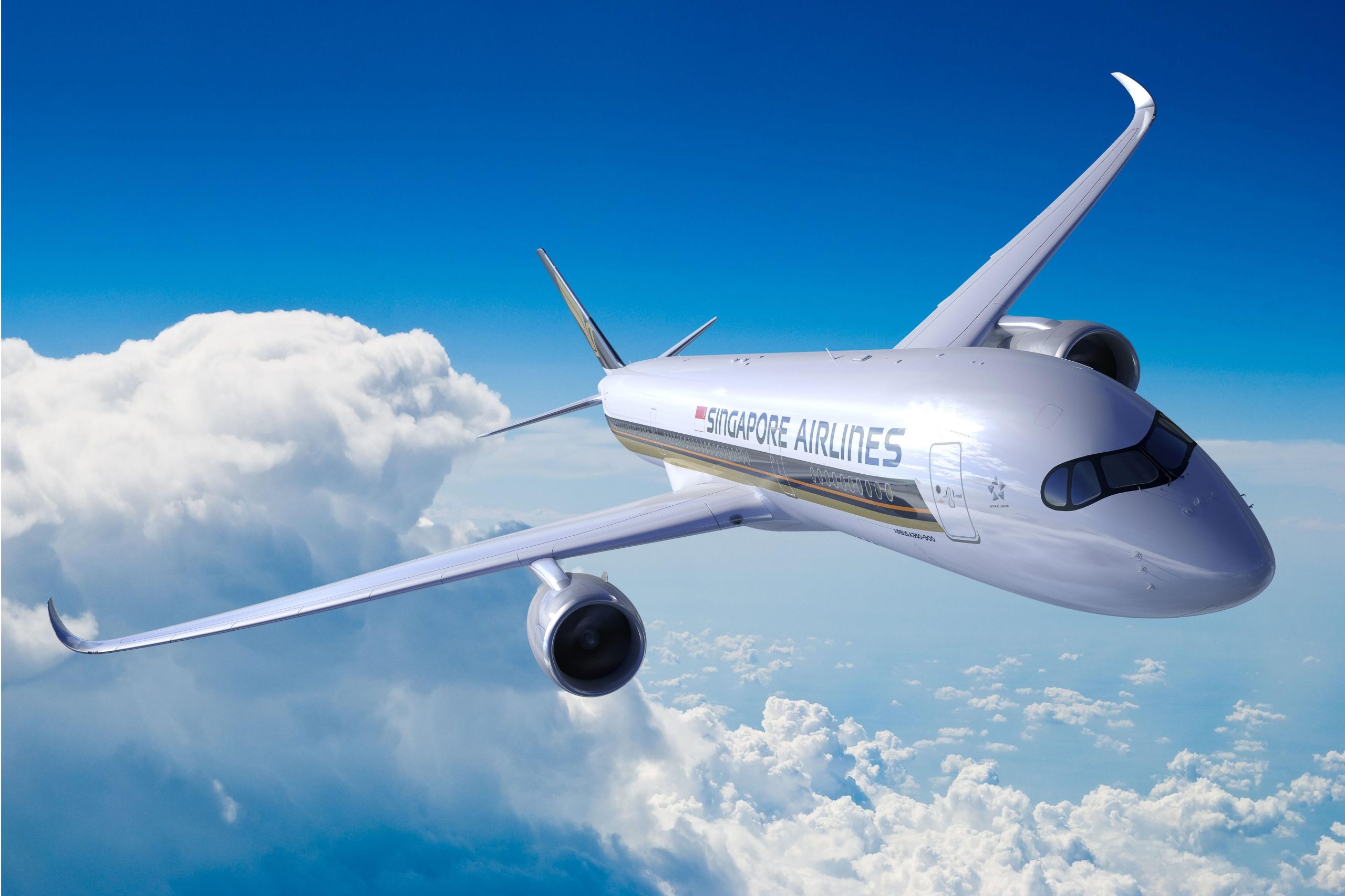
A New Zealand couple is demanding a refund after flying 13 hours next to a flatulent bulldog on Singapore Airlines.

According to the New Zealand news outlet Stuff, the man and woman were flying from Paris home to New Zealand. But they got more than they bargained for, as the small dog next to them started drooling and ripping off a symphony of farts they will never forget.

370E30A3 DF7E 4847 B68C F627B2F35850

Gill and Warren Press were already unhappy that they weren’t warned they’d be sat next to the service dog. They paid extra for premium economy, but cooperated and sat down for the long flight half-way around the world.

It started with snorting

“I thought it was my husband’s phone, but we looked down and realized it was the dog breathing,” said the wife, Gill Press.

The owner and dog had the window, with the dog on the floor, drooling all over Gill’s husband’s leg. They asked for new seats, but premium-economy was full. When offered economy, they refused.

382D7BD7 3D44 47C9 B0CD E663EC71AB8F
Couple Wants Refund After Flying Next to Farting Dog 18

Then the farts started.

Eventually, they just couldn’t take it anymore. The couple finally decided to move to the empty economy seats offered by the flight attendants.

“We didn’t get the experience we paid for”

An incident report was filed. After a couple weeks the airline offered the couple $74 vouchers for their website. The couple refused, at which time the airline offered $200 vouchers for each of them.

Gill says they paid $3000 for their tickets. The vouchers didn’t reflect the difference in value between the premium economy seats they bought, and the economy seats they were relocated to. They want the full amount difference for the time they were in economy.

8C41744B 691C 48AC 98A1 0A786546097A
Couple Wants Refund After Flying Next to Farting Dog 19

“We didn’t receive the experience we paid for,” she said.

Singapore Airlines has repeatedly apologized about the incident. Whether or not the Press’s will get what they want, who knows. But we expect any future flights they won’t be sitting next to a service dog.

Not an isolated incident

Such incidents occur more than most people realize. A dog defecated on its owner on an American Airlines flight in late 2017, before leaping onto a passenger’s lap. Loud and aggressive dogs have bitten passengers, with other incidents reported many times since by passengers and crews.

American surveyed 18,000 passengers during one weekend in May 2018. They found nearly 58 percent said only trained service dogs should be allowed in the cabin. They also surveyed 7,347 employees, with 65 percent saying they have experienced disruptions involving comfort animals. Nearly 25 percent said aggressive and threatening behavior was most common, while 11 percent reported animals peeing and pooping in the cabin.

People have tried flying with peacocks, squirrels, kangaroos, and the list goes on.

NASA’s Frank Rubio Breaks U.S. Record for Longest Spaceflight

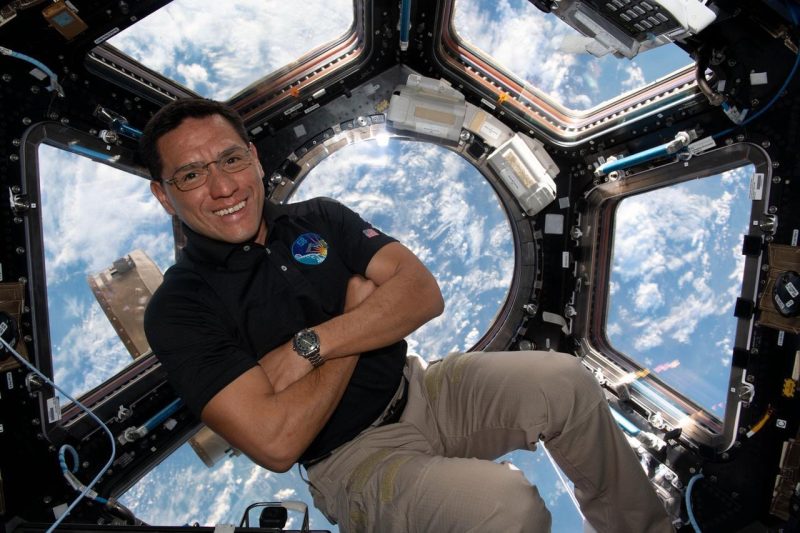
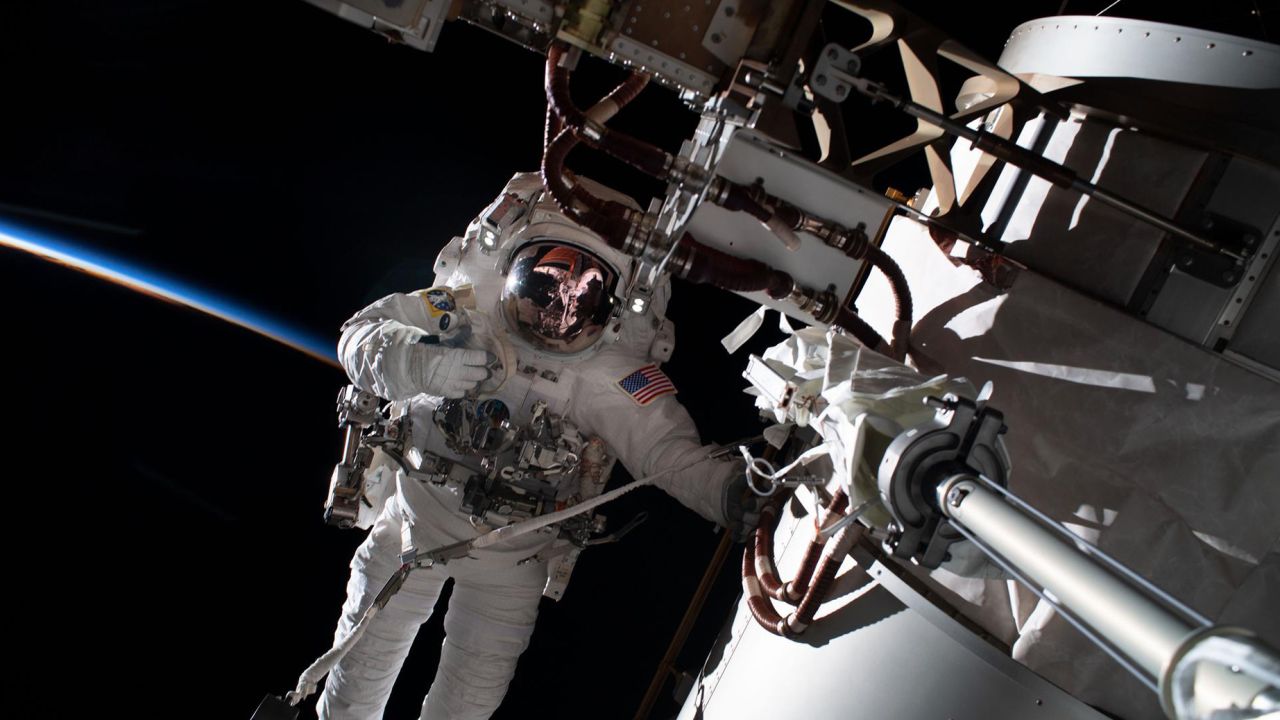
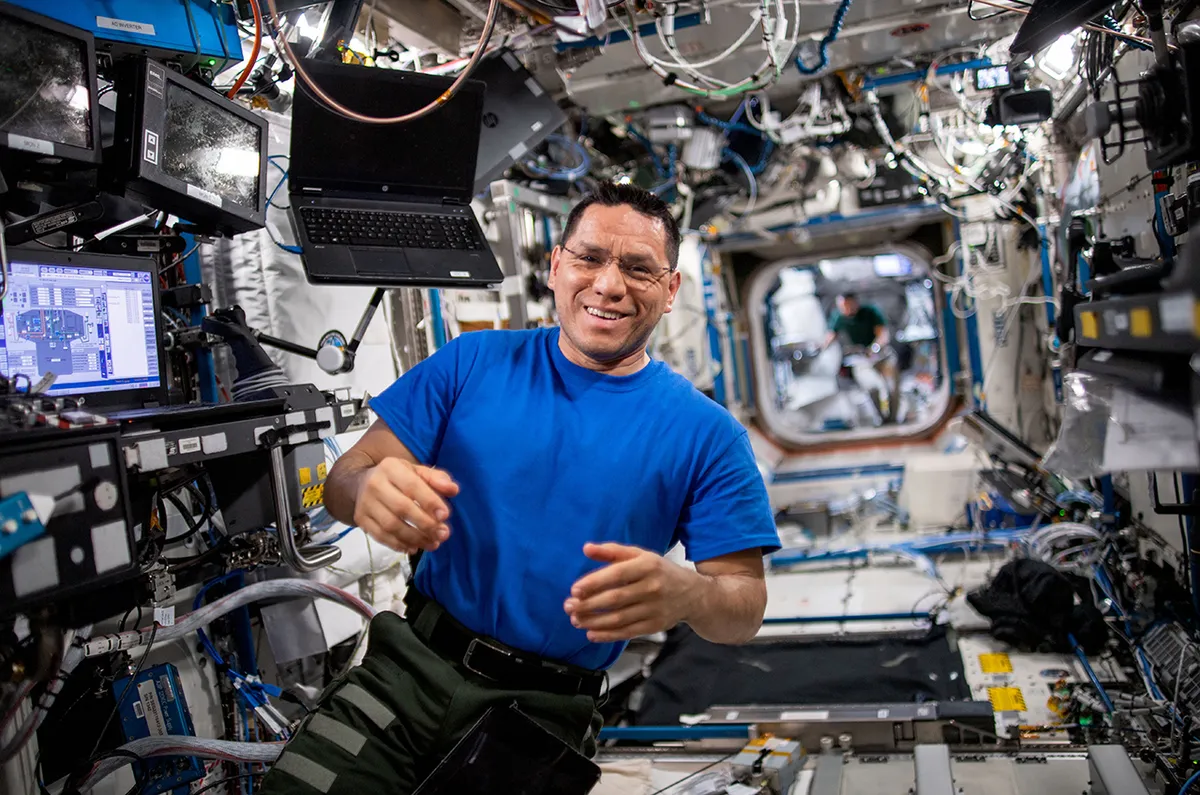
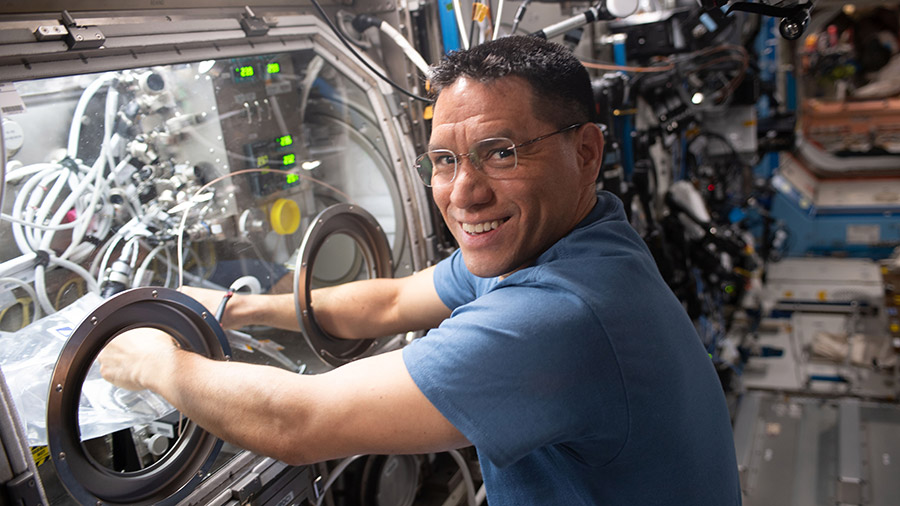
NASA astronaut Frank Rubio has just set a new U.S. spaceflight record, eclipsing the previous record of 355 consecutive days set by astronaut Mark Vande Hei aboard the International Space Station (ISS). And he’s not done yet.

Rubio is a member of Expedition 68, launched on Sep 21, 2022 aboard a Russian Soyuz. It’s his first mission to space too, but it was not supposed to last this long.

74BB31A1 0517 4961 B34E 1C25DB4C1B2B
The Soyuz MS-22 rocket is launched to the International Space Station with Expedition 68 astronaut Frank Rubio of NASA, and cosmonauts Sergey Prokopyev and Dmitri Petelin of Roscosmos onboard, Wednesday, Sept. 21, 2022, from the Baikonur Cosmodrome in Kazakhstan. Photo: NASA

Extended mission

Rubio was only supposed to be on the ISS for 6 months, which is standard. But half-way through the mission, their docked Russian space capsule sprung a coolant leak when it was hit by space debris. But it was bad enough that Russia deemed it unsafe for anyone to fly back to Earth in.

Russia launched a replacement capsule to the ISS for them, and sent the leaking capsule back to Earth empty.

58A74F8B 4837 482D 8F59 775D35B77E5F
NASA’s Frank Rubio Breaks U.S. Record for Longest Spaceflight 24

“Rubio’s journey in space embodies the essence of exploration,” said NASA administrator Bill Nelson in a statement via social media. “As he breaks records as the longest serving NASA US astronaut in space, he also paves the way for future generations of astronauts. Your dedication is truly out of this world, Frank!”

Russia holds the world’s longest spaceflight records

Russian cosmonauts have everyone beat in records for longest space missions. Valeri Polyakov logged 437 continuous days in space in the mid-90s on the MIR space station.

DC542480 FF06 4969 A74E DF0B673C8C7A
NASA’s Frank Rubio Breaks U.S. Record for Longest Spaceflight 25

As for TOTAL time in space over a career on multiple missions? Cosmonauts own that too. Gennadi Padalka has logged 879 days on 5 spaceflights. As for the U.S., former NASA astronaut Peggy Whitson holds the American record, with 675 days.

Rubio will become first American to spend full year in space

Rubio is set to break another American spaceflight record soon too, when he returns to Earth on Sept. 27. When he does, he will have been in space for 371 days. That’s longer than any American has ever been in space on a single flight.

853D85F7 6AFA 4DFE 8356 51207F017475
NASA’s Frank Rubio Breaks U.S. Record for Longest Spaceflight 26

“I think this [duration] is really significant, in the sense that it teaches us that the human body can endure, it can adapt and — as we prepare to push back to the moon and then from there, onward onthopefully Mars and further on into the solar system,” said Rubio in an interview with Good Morning America. “I think it’s really important that we learn just how the human body learns to adapt, and how we can optimize that process so that we can improve our performance as we explore further and further out from Earth.”

Petition Asks FAA to Credit MQ-9 Pilot Hours Towards Certifications

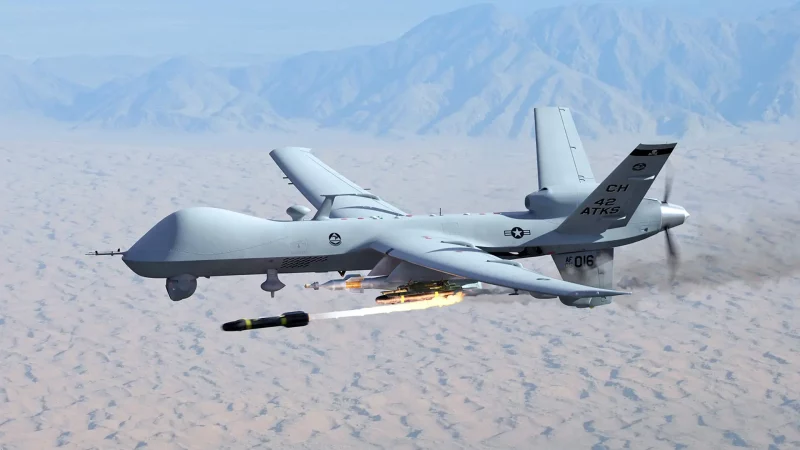
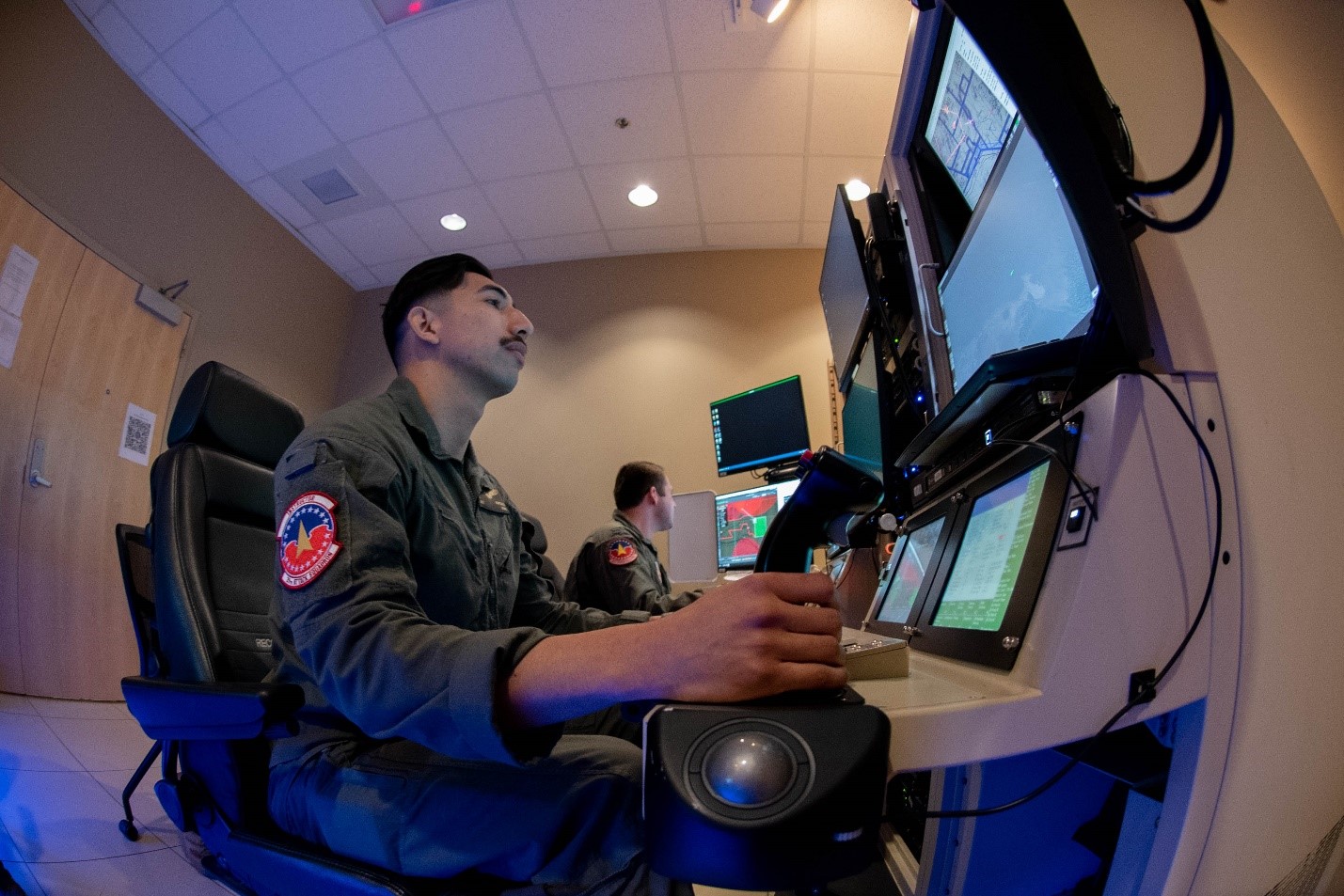
A petition filed with the FAA last month is requesting an update to credit military MQ-9 Reaper pilot hours towards FAA Commercial and Restricted Airline Transport Pilot certificates. This limited change would reduce the total hours required for some military pilots to obtain a restricted or full Airline Transport Pilot (ATP) licences. Supporters also want other Group 5 UAVs (full flight controls, integrated into US and international airspace) included.

Flying a Group 5 UAV is similiar to piloting an conventional aircraft with a full set of controls, instruments, and radios. One of the only differences between a UAV and crewed aircraft is that the UAV pilot’s life is not in danger, nor are they flying people. Pilots still conduct systems checks, fuel planning, airspace planning, weather planning, communication and most other tasks typically associated with professional flight. They also fly the aircraft in a bay not unlike a simulator. They adhere to all FAA and ICAO flight rules and communicate with the appropriate ATC agencies in the airspace where they fly. The aircraft they pilot is also much more complex than a traditional drone, small UAV or even a single engine Cessna. So the question is, why is the experience considered invalid for professional licenses like an ATP?

Petition details

The petition (Docket (FAA-2023-1847) was filed by a USAF drone pilot named Tyler Jackson. And he makes some interesting observations. Some screenshots below:

09632B31 7976 42E9 A313 C4E17197256C
Petition Asks FAA to Credit MQ-9 Pilot Hours Towards Certifications 31

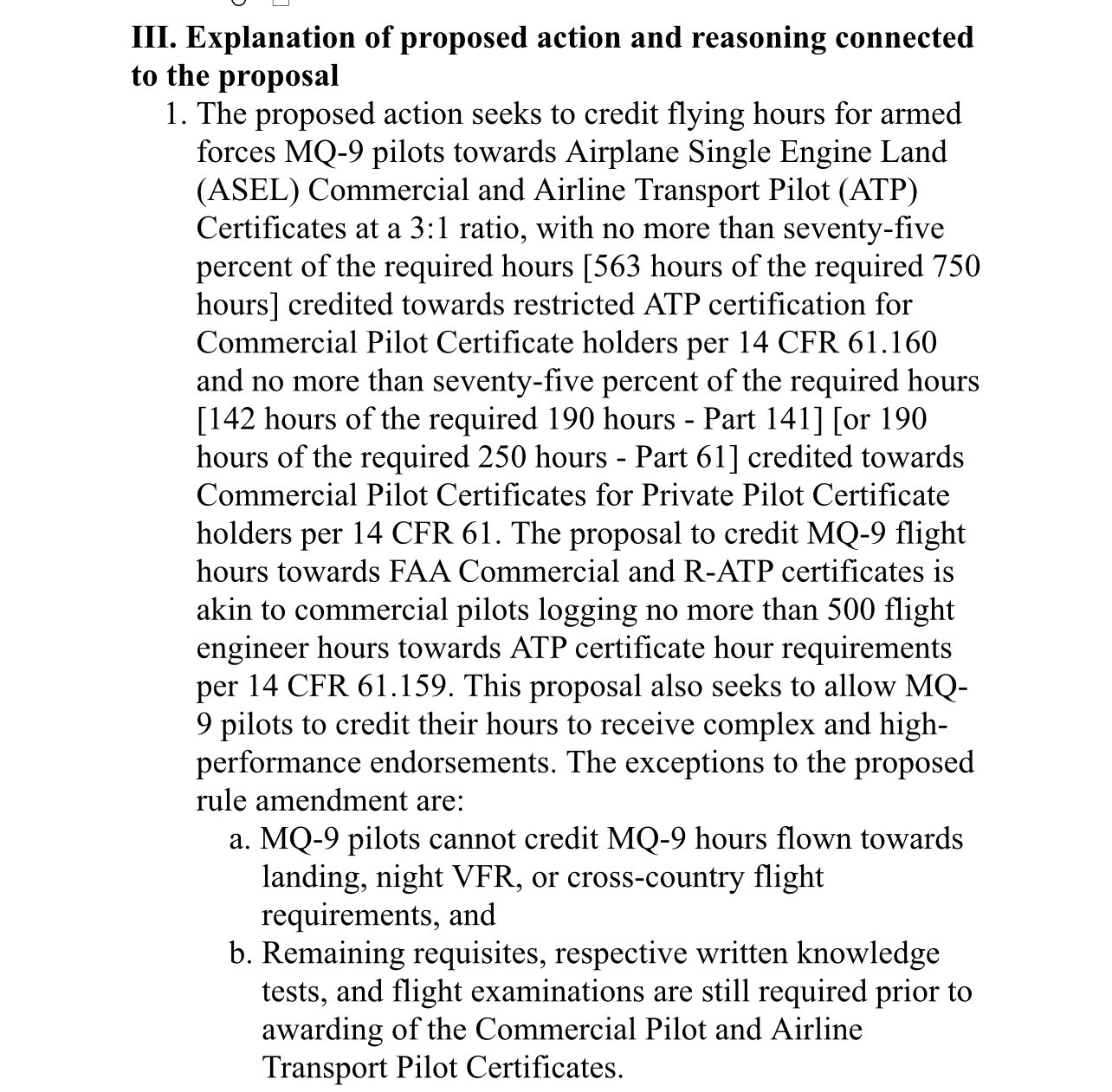
Jackson notes that MQ-9 pilots execute the same duties as their crewed aircraft counterparts. They operate and control the Reaper with traditional aircraft controls, and have all the equipment available and displayed to them for day/night VFR and IFR. They perform, supervise, or direct navigation, surveillance, reconnaissance, and weapons employment operations and have mastered all aspects of advanced aviation. The USAF would not give them Reapers to fly otherwise.

He also notes that MQ-9 pilots have the same responsibilities as their crewed military counterparts. They are graded against many of the same general evaluation criteria, and undergo evaluation on an annual basis in the instrument, qualification, mission, and emergency procedure areas for their aircraft while being held to the same rigorous evaluation criteria. You can read more about that in the petition hyperlinked above.

DE20BF7D EC94 4D0A B098 8C8366BF3528
Petition Asks FAA to Credit MQ-9 Pilot Hours Towards Certifications 32

Reaper pilots are well versed in theory of flight, air navigation, meteorology, flying directives, aircraft operating procedures, and mission tactics.

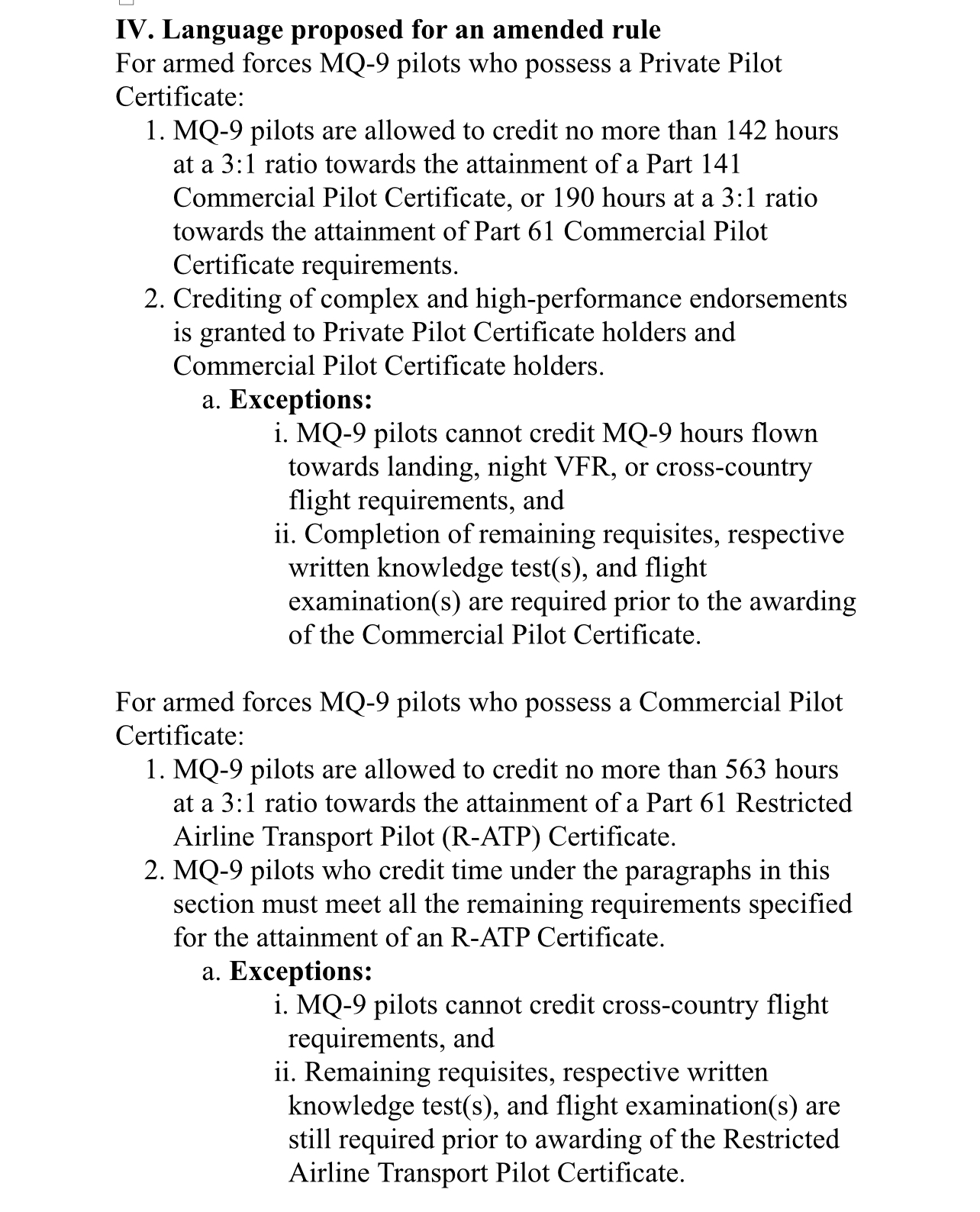
The petition also offers exceptions (see below).

343D5E1A BA51 4DBB 8087 114EAC44CA29
Petition Asks FAA to Credit MQ-9 Pilot Hours Towards Certifications 33

MQ-9 pilots would help with the pilot shortage

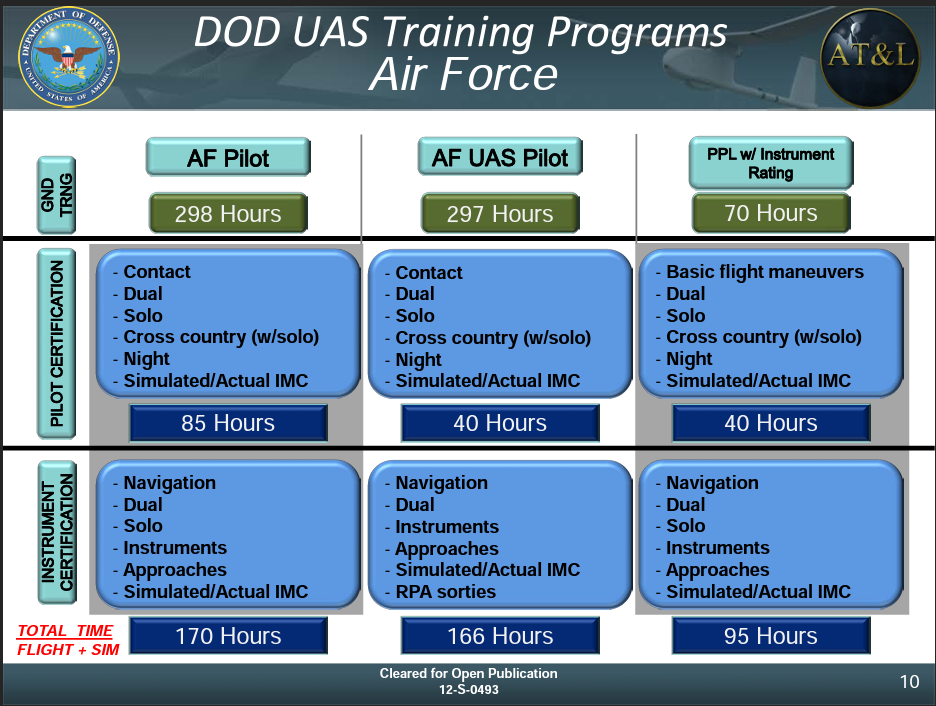
“The exorbitant cost of obtaining flight certificates, whether at the Commercial or ATP levels persists, creating obstacles for potential manned pilot vacancies,” says Jackson in the petition. He adds, “Due to the unconventional nature of flying remotely piloted group 5 aircraft and heavy reliance on simulator-based training during undergraduate flight training for MQ-9 pilots, crediting MQ-9 flying hours towards FAA flight certificates may allow for greater flexibility and experimentation in the aviation industry.”

According to a 2014 Government Accountability Office report, the cost to train a crewed aircraft pilot costs over 8.5 times more than a UAV pilot. There is no lack of interest to pursue aviation careers, but the costs are the major roadblock for many who would otherwise pursue.

4A510EFA 02EA 497B 8914 7B525A02BF6C
Petition Asks FAA to Credit MQ-9 Pilot Hours Towards Certifications 34

Jackson believes the proposed action could encourage adoption of alternative training methodologies, technologies, and approaches to civilian pilot education. Doing so could lower the costs for aspiring pilots by making training and education more affordable.

“The talent pool from the MQ-9 community is vast and could help pilots combine their full breadth of diverse experience and technologically advanced training to be great applicants for future FAA pilot shortages-especially when these applicants may only need 1/3 of their MQ-9 hours to fill the gap in hours to qualify for their restricted ATP,” says a former USAF pilot on the petition. “It has been a shame for many years to not allow these qualified candidates to have any credit for their diversity of well-rounded experience.”

That Time Ric Flair Survived a Horrific Plane Crash

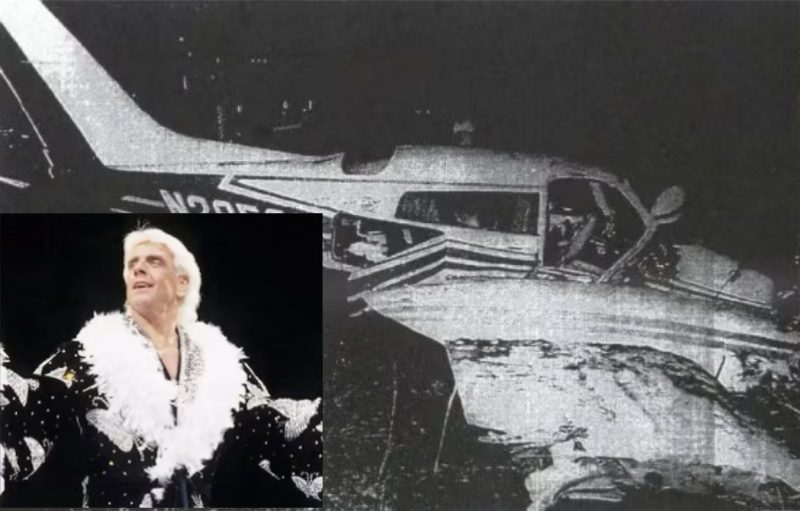
In the history of sports and entertainment, few can top professional wrestling. And there’s a few legends that stand out, who helped make the industry what it is. The “Nature Boy” Ric Flair is one of them. He’s a household name, but a plane crash in 1975 when he was 26 years old almost ended his legendary career just when it was taking off.

“We were going from Charlotte to Wilmington, NC,” recalled Flair in a recent podcast with Joe Rogan. “Five of us went on the plane, but didn’t know at the time that the plane (a Cessna 310) was carrying no fuel because we were 1,400 lbs over gross.”

Overweight plane without enough fuel

The pilot, Joseph Michael Farkas, dumped fuel on takeoff due to being overweight. It would end up being the last plane he ever flew. According to Flair, he didn’t have a pilot license, and previous flights together were questionable.

In another podcast (see below), he recalled “We should have known there was something wrong with the guy, because he hit a jet stream one time… the plane went upside-down.”

Flair thought no big deal. Well, the pilot’s questionable skills would became a very big deal on the way to Wilmington.

“We hit a headwind, about 7,000 or 8,000 ft, and passed the point of no return,” recalled Flair. “He should have landed in Raleigh to refuel, but figured we had enough to make the final 100 miles.”

Flair was joined by friends Johnny Valentine, Bob Bruggers, Tim Woods, and David Crockett. Valentine could see the fuel gauge, and kept looking back at Flair. Shortly after, the right engine stopped. Pulling the reserve fuel did no good since they were empty. It wasn’t too long after before the left engine quit.

DC92C919 0AE7 4DA6 9C7D 5D1B87D9E83A
That Time Ric Flair Survived a Horrific Plane Crash 40

The plane nose-dived like a brick falling out of the sky. Farkas was able to level it out, but hit the treetops approaching the runway at over 200 mph. The Cessna tore through the treetops, just missed a water tower and hit a pole, before crashing to the ground a quarter-mile short of the runway.

Half the souls onboard broke their backs

The plane came to a stop on a railroad embankment. All the seats broke loose, with everyone flying forward like a can being crushed.

6D26327C E7DA 48D4 85CC D455E536CF8A
That Time Ric Flair Survived a Horrific Plane Crash 41
926666A0 9CEC 4732 8713 0F1D79DF6C75
That Time Ric Flair Survived a Horrific Plane Crash 42

Flair’s back was broken. Farkas was unconscious. Valentine’s back was broken. Bruggers back was broken. Woods’ ribs were broken. Crockett suffered head injuries, his mouth was ripped open, several teeth shattered, and he had a shoulder dislocated.

All six were flown to a nearby hospital. The pilot never regained consciousness and died a couple months later. Valentine ended up paralyzed for life. The others were able to heal and recover, although they now had to deal with healing from the mental and emotional trauma of it.

A42D2184 CC64 4015 BE55 F1E305CC0D4F
That Time Ric Flair Survived a Horrific Plane Crash 43

Flair was originally in Valentine’s seat

Flair was originally in Valentine’s seat on the flight, but complained until Valentine switched seats with him because he did not like sitting in front. That one decision changed both of their lives forever.

Crockett wasn’t even supposed to be there. He took his brother’s place on the trip because his brother had the flu and could not go.

59E506F1 4DD0 46F6 B96D CFFA31858D1D
That Time Ric Flair Survived a Horrific Plane Crash 44

Fate is a strange thing.

Doctors told Flair he would never wrestle again. He was back in the ring 6 months later, as the Nature Boy, a persona that the world would come to know. The rest, is history. WOOOOOOOOO!!

Heroic Cobra Pilot Awarded Medal of Honor for Daring Rescue in Vietnam

0

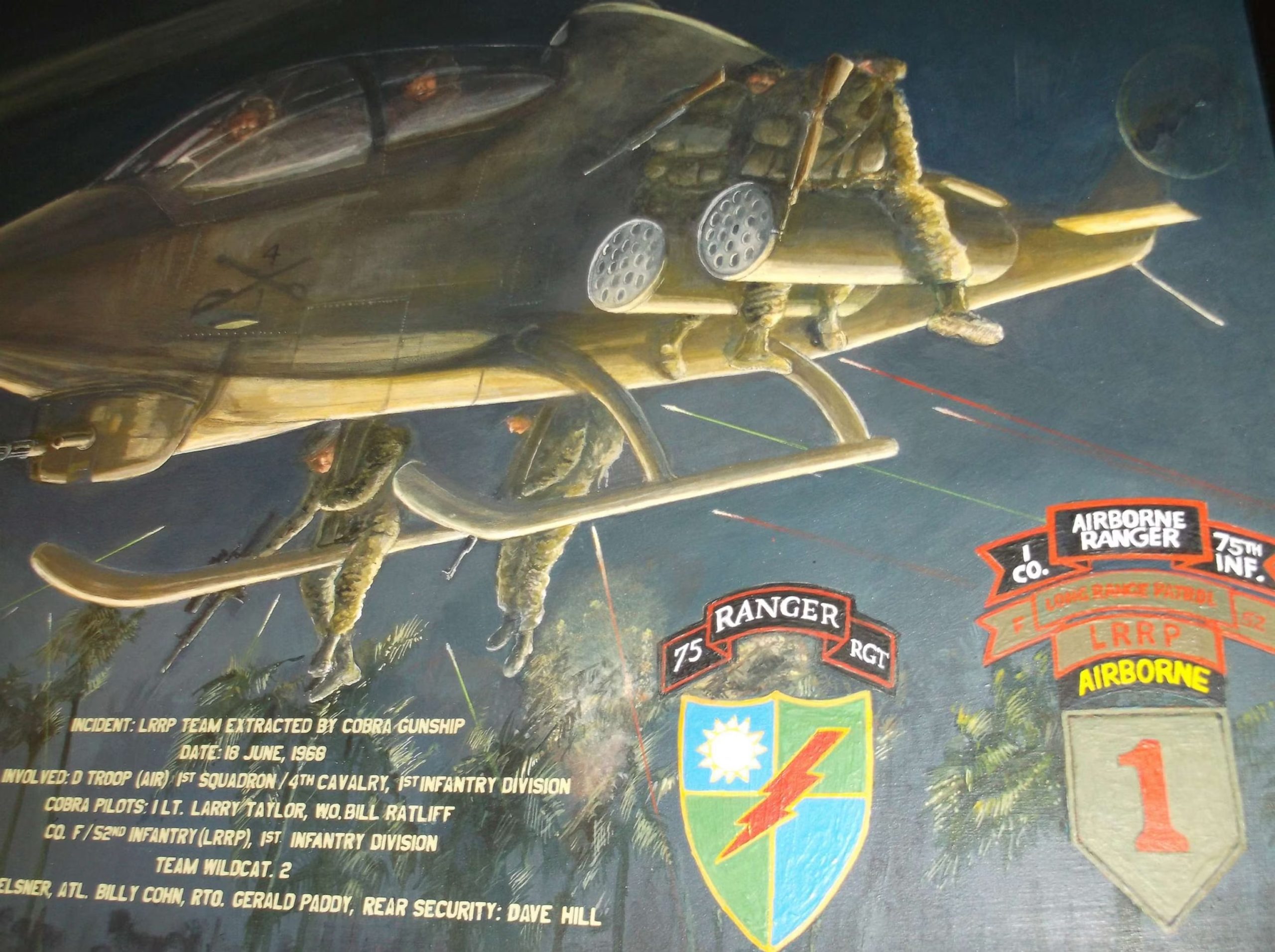
Imagine you’re surrounded with the enemy closing in. You’re running out of ammo, and so is air support, and the only way out, is to grab onto a Cobra attack helicopter anywhere you can and hold on for dear life as it flies you away and you get to live a long blessed life.

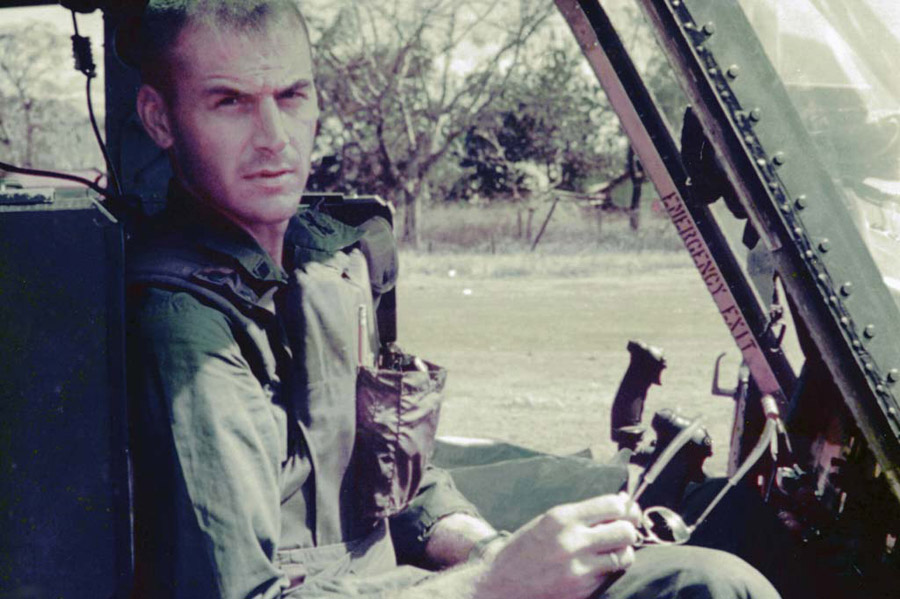
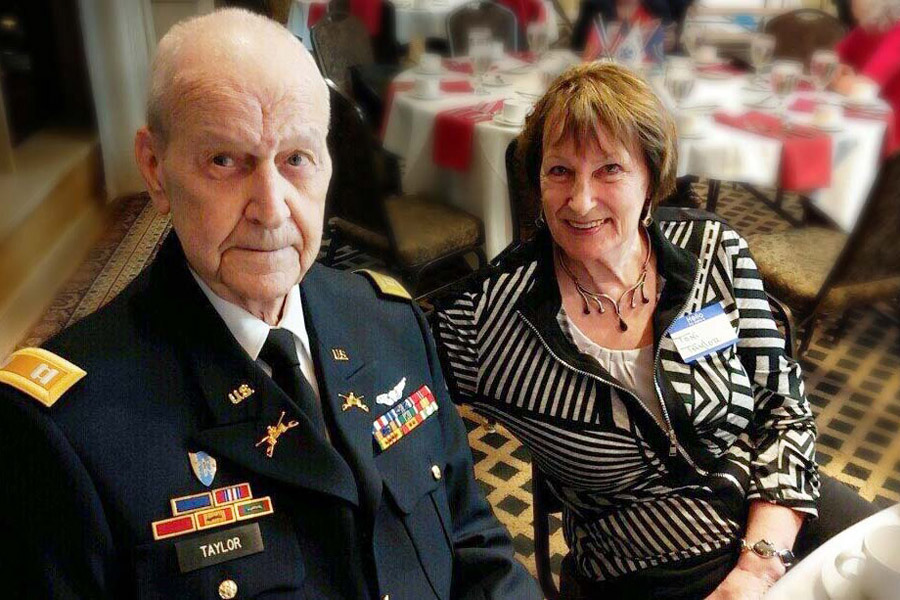
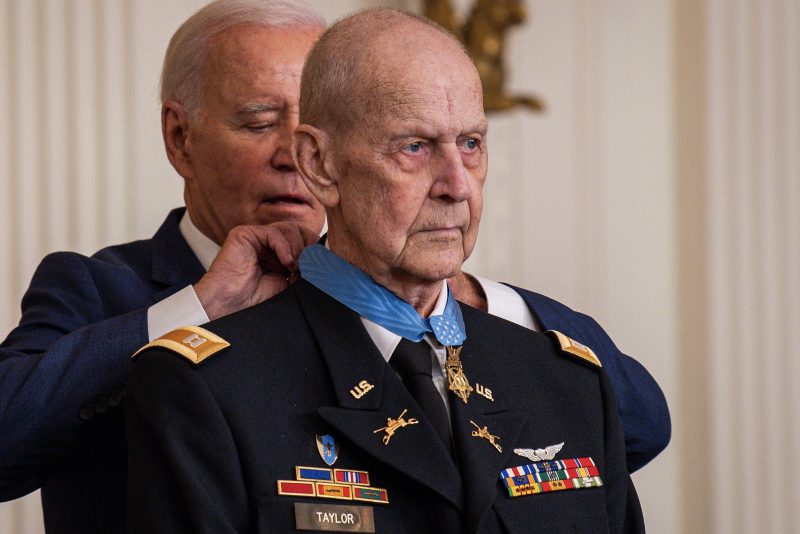
It sounds like an action movie, but it really happened 55 years ago, and the pilot who did it – U.S. Army Capt. Larry L. Taylor – has received the Medal of Honor for his heroism.

“When I called Larry to let him know he finally was receiving this recognition, his response was, ‘I thought you had to do something to receive the Medal of Honor,'” recalled President Joe Biden. “Well, Larry, you sure as hell did something,” said Biden.

A call for help

On the night of June 16, 1968 Taylor acted with “gallantry and intrepidity, going above and beyond the call of duty” to aid 4 soldiers who met trouble on a reconnaissance mission northeast of Saigon. At the time, Taylor was a 1st Lt. team leader with Troop D (Air), 1st Squadron, 4th Cavalry, 1st Infantry Division, near the hamlet of Ap Go Cong.

06BF20C2 9050 446D A905 D389A5773402
Heroic Cobra Pilot Awarded Medal of Honor for Daring Rescue in Vietnam 51

With their night vision, the recon team realized that hostiles had completely surrounded them. They would inevitably be caught, so team leader Bob Elsner called for help.

Taylor got the call, hearing “we’re surrounded, we’re surrounded” on his radio. He and his co-pilot and another Cobra arrived on scene shortly after, but needed Elsner to pop flares so Taylor could locate them. Unfortunately, it also exposed them to the enemy, who immediately opened fire.

13DB36CB CB79 40A5 8E64 8D81D301095A
Heroic Cobra Pilot Awarded Medal of Honor for Daring Rescue in Vietnam 52

All hell breaks loose

Both Cobras rained hell upon their foes with rockets and bullets to save the recon team for over a half-hour. But ammo and fuel does not last long. As they were running out, the enemy was closing in. And all the recon team had left were a few grenades and knives.

A Huey was called, but the request denied because the Army believed it stood 0 chance of surviving. They were on their own, with nothing left to fight with, and no help coming. Both Cobras were ordered to return to base. Taylor refused.

“I knew that if I didn’t go down and get ’em, they wouldn’t make it,” recalls Taylor.

3EEA049F 58B0 4867 8D2C EB7A07860282
Heroic Cobra Pilot Awarded Medal of Honor for Daring Rescue in Vietnam 53

Both Cobras unloaded everything they had left. Taylor used his landing lights to distract the enemy, while the recon team headed for a location Taylor told them. He then flew over to extract them.

“We were able to make a breakout finally because he had directed us through the very weakest portion of the enemy envelopment,” said David Hill, one of the member of the recon team that night. Hill attended the ceremony awarding Taylor’s Medal of Honor.

465EDE08 4240 412C A511 BFBAD98B8E11
Heroic Cobra Pilot Awarded Medal of Honor for Daring Rescue in Vietnam 54

Taylor landed right beside the team

“I’m on the ground for no more than 10 seconds — you and your folks find a place on my ship and I’m gonna get us all out of here,” he ordered.

Cobras only have 2 seats, and both were taken by Taylor and his co-pilot. Under enemy fire, with bullet holes tearing through the helicopter, the soldiers grabbed on anywhere they could, standing on the Cobra’s skids and clinging to its rocket launchers.

With everyone onboard, the soldiers banged the helicopter twice to signal the GO to takeoff. Taylor got airborne without hesitation.

379F7506 118B 4BFF A253 6F7E12362ECD
Heroic Cobra Pilot Awarded Medal of Honor for Daring Rescue in Vietnam 55

Such a feat had never been accomplished, or even attempted, according to the Army.

But they were not free of danger yet. They cleared small arms fire, but with 4 guys handing onto the outside of a flying helicopter, he had to fly carefully. They could easily fall, or cramp and freeze from the 150 mph wind and then fall. Taylor flew them to a nearby water treatment facility under American control.

A8C6286D 63C8 4A17 8F25 DC1F83502468
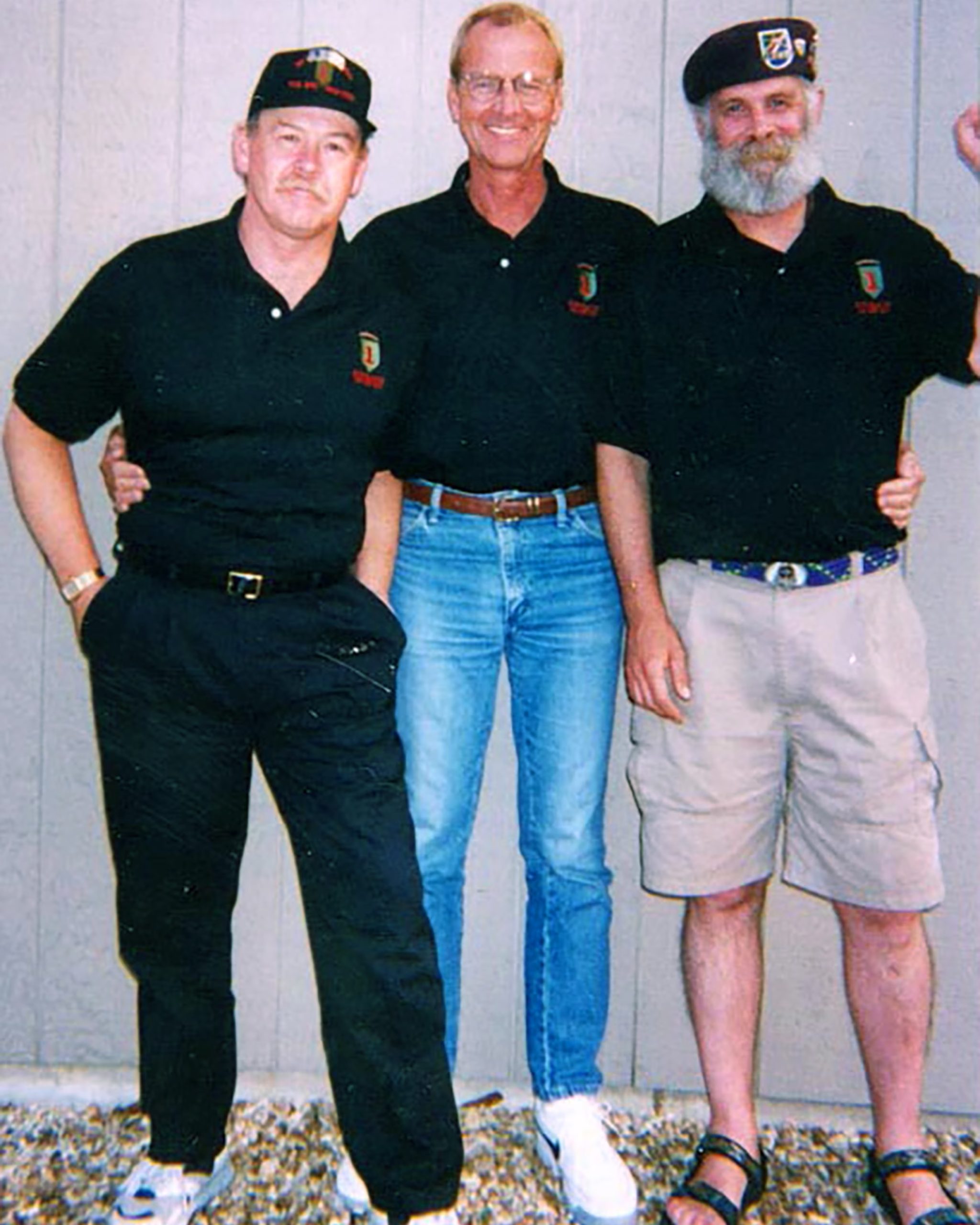
Medal of Honor Recipient Larry Taylor and the Men he saved. Photo: Dave Hill

“The four of them ran out in front of the helicopter, and then they turned around and lined up, and all four of them saluted,” said Taylor.

With that, they went their separate ways and life went on. Hill and Elsner met Taylor again in 1999, where they could finally shake his hand and say thank you.

Now there’s a movie for you, Jerry Bruckheimer.

Vegas Air Races Coming in 2024?

After nearly 60 years, this month will mark the end of the Reno Air Races, which is scheduled for Sep 13-17 at the Reno-Stead airport. But the big question is, what comes next? Will the races continue elsewhere?

The Reno Air Race Association (RARA) has not announced anything, but another organization has, and they are aiming for a new air race event outside of Las Vegas next year. But is it all talk?

New spaceport will host the races

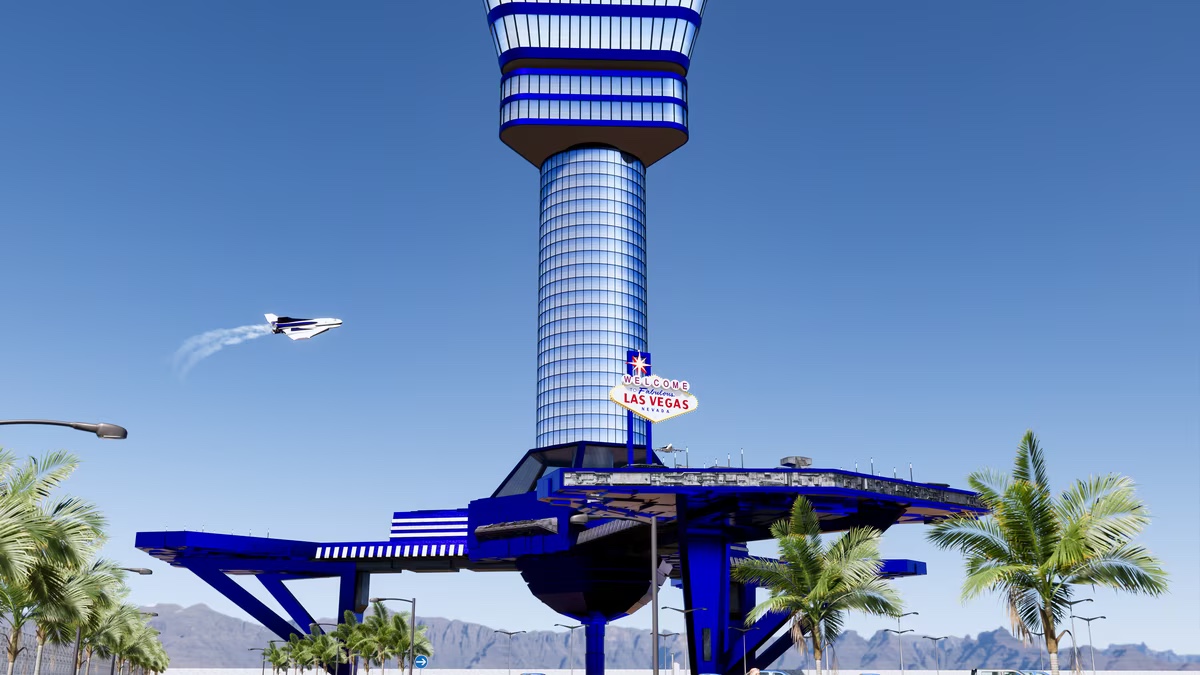
The races would be held 65 miles west of Vegas, near Pahrump, at a new Las Vegas Spaceport. The event is scheduled for Oct. 25-27, 2024.

There’s just one problem. The place doesn’t exist yet. The 240-acre area planned for the spaceport has no infrastructure to support such an event, or anything else. There isn’t even an airport, nor full funding to break ground. Yet.

According to Shelter Realty, the commercial real estate developer only recently began trying to get investors for the reportedly $310 million spaceport plan. They would then form a publicly-traded company and start building.

Last year 39 million tourists spent $12 billion in Vegas on gaming alone. The new spaceport hopes to tap into that purse. The facility would have a launching pad, a runway for spaceplanes, control tower, flight school, and a 200-room resort and casino.

The FAA has already licensed over a dozen spaceports around the country, with several dozen companies currently seeking licenses to operate space vehicles.

Image: Las Vegas Space Center
Vegas Air Races Coming in 2024? 58

The new Vegas races

As for the new Vegas Air Races, local Vegas news station KSNV reports that organizers expect more than 500 vendors and 25,000 spectators, with drone races, rocket launch demos and live music.

Organizers also claim racers will push 500 mph, so it’s safe to assume fans will see an unlimited and jet class, same as in Reno.

Image: Reno Air Races
Vegas Air Races Coming in 2024? 59

“Ensuring safety is paramount as we execute our plan to draw visitors to the Las Vegas Spaceport and establish our brand,” said Robert Lauer, CEO of the Las Vegas Spaceport. “Our upcoming Air Races event in the coming year will serve as a demonstration, not only for the FAA but also for the public, reaffirming our unwavering commitment to safety compliance.”

The entire idea spaceport and races is an ambitious plan, and will no doubt cost a lot more than $310 million. Just ask Elon and SpaceX. But the optimistic timeframe seems unrealistic. Even if they had all the required permits and paperwork and funding to break ground today, a proper large runway resurfacing can take up to a year. Any airport in a year would be bare bones.

Image: Las Vegas Space Center
Vegas Air Races Coming in 2024? 60

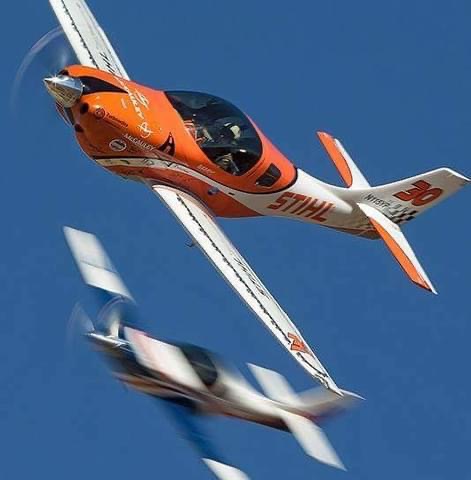
However, it is great that people are trying. The potential is definitely there. One can hope. But some racers flying other races in the meantime, such as Andrew Findlay, who has dominated in the Reno “Sport Class” for years flying as #30 “One Moment Air Racing”.

“Sport class now has accreditation and will be doing future races. We had one in Madras, Oregon last week,” says Findlay. “We are planning a second location the end of October.”

Image: Andrew Findley
Vegas Air Races Coming in 2024? 61

Findlay and several other races like the Vegas idea, but have their doubts for the reasons outlined above. The event itself is doable if the facility is built, but doing it next year seems far-fetched at best.

We shall see.

WATCH: NASA’s Crew-6 Returns to Earth in a Fireball Reentry

0

Four astronauts are back on Earth today, following a nominal return last night from the International Space Station.

Their return wraps up a 6-month stay on the orbiting science outpost. People across half the state of Florida were given a rare and spectacular look at the dramatic fireball reentry. And we captured it on video.

Flying in a fireball like a shooting star

When returning to Earth, spacecraft have to first slam into the atmosphere. This helps to greatly slow down their velocity, but it also creates an enormous amount of friction, which turns into a plasma ball of fire surrounding the spacecraft as hot as the surface of the sun.

Just imagine rubbing your hands together so fast it creates a fireball. It’s the same reason you see a shooting star. It’s dust and rocks from comets and asteroids slamming into our atmosphere with so much friction they explode.

Historically, spacecraft reentry usually occurred over the open ocean, although the space shuttles sometimes reentered across the mainland U.S. (before the Columbia disaster in 2003).

E52942D9 CDD3 4D79 BEF4 C18E64AB2A3F
Roscosmos cosmonaut Andrey Fedyaev, left, NASA astronaut Warren “Woody” Hoburg, second from left, NASA astronaut Stephen Bowen, second from right, and UAE (United Arab Emirates) astronaut Sultan Alneyadi, right, are seen inside the SpaceX Dragon Endeavour spacecraft. Photo Credit: NASA

NASA and SpaceX always have numerous location options for splashing down, in case of bad weather, rough seas or logistical issues at a primary location. Last night’s splashdown was targeted for the coast of Jacksonville, bringing the reentry over the center of the state and within view of millions of people.

A009B1D9 B71E 4925 88BC 02120563A823
WATCH: NASA’s Crew-6 Returns to Earth in a Fireball Reentry 67

It’s as impressive as the launch too. Appearing out of the western horizon like a bright missile streaking east. It was bright it cast shadows 100 miles away (where I was located). Counties close to the reentry path also heard the sonic booms.

The international crew of NASA astronauts Stephen Bowen and Woody Hoburg, as well as UAE (United Arab Emirates) astronaut Sultan Alneyadi and Roscosmos cosmonaut Andrey Fedyaev, spent a total of 186 days in space and logged 79 million miles traveled.

5842324F 27C8 4B84 9591 6097A97CA90B
WATCH: NASA’s Crew-6 Returns to Earth in a Fireball Reentry 68

Lot of science accomplished on the ISS

According to NASA, the crew contributed to a host of science and maintenance activities and technology demonstrations on the ISS. Bowen conducted 3 spacewalks, joined by Hoburg for 2, and Alneyadi for 1, preparing the station for and installing two new Roll-Out Solar Arrays to augment power generation for the ISS.

The crew also contributed to hundreds of experiments and technology demonstrations, including assisting a student robotic challenge, studying plant genetic adaptations to space, and monitoring human health in microgravity to prepare for exploration beyond low Earth orbit and to benefit life on Earth.

C224413F 0446 4480 AA00 789622AC0AA1
WATCH: NASA’s Crew-6 Returns to Earth in a Fireball Reentry 69

The astronauts also released Saskatchewan’s first satellite which tests a new radiation detection and protection system derived from melanin, found in many organisms, including humans.

NASA and SpaceX have definitely worked well together under the agency’s Commercial Crew Program. NASA seeded SpaceX’s development in the first place, under orders from Congress and former President Obama. And now NASA contracts them to fly cargo, supplies and crews to and from the ISS.

Back to the Moon with Artemis

But how much longer the ISS stays in operation is a big unknown. NASA does not need Russia to maintain the ISS, but it sure will be a lot harder without them. Russia has stated numerous times that they plan to pull out of the ISS sooner than later.

E663C353 D61E 4C05 B1CE AC6795EAC48A
WATCH: NASA’s Crew-6 Returns to Earth in a Fireball Reentry 70

NASA meanwhile is looking towards the moon with their Artemis missions, and is funding SpaceX to develop a lander. But those missions might fly only once a year. Artemis-2 won’t even launch until at least late 2024. The first moon landing would be a couple years later.

NASA wants a permanent human presence there, same as with the ISS. They plan to put a station in orbit around the moon to support those plans. The station would be called Gateway, and provide a staging point for surface missions and flights to / from Earth. It will also be a safe haven / lifeboat if anything went wrong with spacecraft, with room for additional modules to be installed.

Subway Puts Restaurant On a Blimp to Promote Their New Subs

Here’s How You Can Dine In The Sky

Subway has made a giant sandwich blimp restaurant to float over a few cities across the nation this month, and they are offering the public a chance to fly on it.

New subs hit the menu

The 180-ft bread zeppelin is part of a marketing campaign called ‘Subway™ in the Sky’, promoting their new Deli Heroes subs and offering selected guests a “brand new dining experience at new heights.”

Photo: Subway
Subway Puts Restaurant On a Blimp to Promote Their New Subs 73

Subway says they are elevating their subs with the new Deli Hero selections. They are named the “Titan Turkey,” the “Grand Slam Ham,” the “Garlic Roast Beef,” and the blimp-shaped “Beast.”

The blimp’s gondola can carry 6 sandwich-lovers at a time. Each person will sample all four Deli Hero subs as they float above the normies on the ground. Subway expects to fly 40 fans per day, with each flight lasting 30-40 minutes.

Photo: Charles B Wheeler Downtown Airport Facebook
Subway Puts Restaurant On a Blimp to Promote Their New Subs 74

How to get a seat On A Subway Blimp

The blimp is in Kansas City this week, but all the seats are taken. Registration was full within the first hour it was open.

But you can still grab seats for the blimp’s other planned stops. It will visit Orlando Sep 19 – 20, and Miami Sep 24 and 26. Just pay attention to when the registrations open. Seats will fill fast and are awarded on a first-come first-serve basis (no purchase necessary).

Anyone interested in registering for a chance to fly can do so here – https://register.subwayinthesky.com

Subway competitor Blimpie has not commented on the stunt. It would seem Subway beat them to the punch.

Remembering Jimmy Buffett-Parrothead, Musician, and Pilot

The world mourns the passing of legendary musician Jimmy Buffett. His songs brought joy to millions for decades, with timeless hits such as Margaritaville and Come Monday, but the singer-songwriter also loved aviation. He was an accomplished pilot for over 30 years.

34126E99 CE21 41CD B774 0B9791B207A1
Image: Jimmy Buffet IG

According to the website Buffett World, he caught the bug in college when a pilot friend took him for a flight. He had other priorities in the first half of his life, but the expensive dream to fly always stayed with him.

D11BF203 B355 48A3 9A47 421F7A7B873B
Remembering Jimmy Buffett-Parrothead, Musician, and Pilot 86

As he earned more success he earned more money, and set a goal to earn his private license by his 40th birthday. He purchased a Lake Renegade amphibian and earned his PPL with single engine land and sea ratings at 39.

He went on to earn a Commercial Pilot License with ratings for multi-engine land and sea aicraft, and an instrument rating for flying in clouds and low weather. Buffett also held type ratings for the Cessna Citation 500-series jets, the Falcon 50 and 900, and the Grumman Albatross.

Jimmy Buffet's FAA certificate.  Source: FAA
Remembering Jimmy Buffett-Parrothead, Musician, and Pilot 87

Buffett owned many planes

06DEE669 EDE6 48C8 9872 D71C6B1E0CD1
Remembering Jimmy Buffett-Parrothead, Musician, and Pilot 88

Jimmy Buffet owned many planes over the years, basing his fleet the last several years out of Palm Beach International (PBI) in south Florida. They even named an aviation departure procedure after him, called the BUFIT ONE Departure, used for aircraft departing south from PBI. Waypoints include JIMEY, BUFIT, PYRUT, FINNS, and UTLEY (named after Buffett’s long-time keyboard player).

He sometimes flew his Albatross Hemisphere Dancer over concert venues, before retiring it in 2003. It’s on display at Margaritaville in Orlando.

He owned six planes as of the date of his passing. They are a N990FL – Falcon 900EX, N920JB – Pilatus PC-12, N208JB – Cessna 208 Caravan, N928J – Grumman Albatross (retired), N48550 – Grumman Goose and N43320 – Boeing E-75 Stearman.

Buffett even got the chance to fly in a TA-4 Skyhawk with the Blue Angels. He also flew in the legendary F-14 Tomcat. He had to undergo Navy survival training prior to the flight, which he later credited for helping save his life when he lost control of his Grumman Widgeon on a water takeoff in Nantucket. The plane nosed over on a big swell and sank (read more here). Buffett swam away unharmed.

A977AF71 C8F2 47D1 AEDF EE3AC66D13D9
Remembering Jimmy Buffett-Parrothead, Musician, and Pilot 89
92977324 C76E 4031 BABE 0EB49C79AAA8
Remembering Jimmy Buffett-Parrothead, Musician, and Pilot 90

Jamaica almost killed Buffett mistaking him for a drug runner

He also survived Jamaican authorities shooting at him in Negril a couple years later, when they mistook his seaplane Hemisphere Dancer for a drug runner. Nobody was hurt, but the plane was given several new bullet holes. He later wrote a song inspired by the event, called Jamaica Mistaica.

U2 singer Bono was with him, along with Buffett’s family. He later recalled the incident:

D63E83B7 0FA3 4DEE 8F31 8C776C789FE2
Remembering Jimmy Buffett-Parrothead, Musician, and Pilot 91

“These boys were shooting all over the place. I felt as if we were in the middle of a James Bond movie… I honestly thought we were all going to die…You can’t believe the relief I felt when I saw the kids were okay.”

Buffett loved the Navy and Marine Corps

Buffett was a long-time supporter of the men and women in the Navy and Marines. He held numerous concerts for sailors and would visit them around the world, including in 2008 when he visited the aircraft carrier Harry S Truman in the Middle East.

5CE37DD7 B1B2 4A93 8FBC 3F9080815A77
Remembering Jimmy Buffett-Parrothead, Musician, and Pilot 92
79A36E90 A9D8 4D07 84B8 B6297272AB9B
Remembering Jimmy Buffett-Parrothead, Musician, and Pilot 93

He was awarded the prestigious “Superior Public Service” award by the Secretary of the Navy. It’s the highest award that can be given to a civilian not employed by the Navy.

The award recognizes Buffett as an “unwavering supporter of the men, women, and families of the Navy and Marine Corps. His dedicated service to our sailors, Marines, wounded warriors, and civilians ensured that they were provided highly visible support and gratitude that greatly enhanced morale and welfare across the Department.”

It’s always 1700 somewhere. Blue skies Jimmy Buffett, 76 years old.

63ED1713 138C 4C16 A59D 7C2C0DF78890
Remembering Jimmy Buffett-Parrothead, Musician, and Pilot 94
5CBC2BD3 B644 49FB 80B0 C6DB7EE768B7
Remembering Jimmy Buffett-Parrothead, Musician, and Pilot 95

-Photos courtesy of Jimmy Buffett’s social media and the US Navy. F-14 photo from reader Tom Crockett (personal friend of the F-14 pilot)

    Watch the T-33 Ace Maker Fly Through Star Wars Canyon

    Star Wars Canyon in Southern California used to be one of the most well-known low level training route in the world for fighter jets. Or at least it was until 2019, when a Navy pilot crashed in the canyon. The pilot was killed, and several onlookers were injured.

    993BA342 B3D1 4294 B58A 9BD521CCE2C0
    Watch the T-33 Ace Maker Fly Through Star Wars Canyon 101

    The place was a favorite among aviation photographers, chasing epic shots of jets maneuvering between canyon walls below them. Both the Navy and Air Force have since stopped using the canyon, citing safety concerns. They will fly above it, but not below the rim.

    Private pilots however ARE still allowed to use the canyon, and do so regularly. Including Gregory WIRED Colyer, who took me on a trip through the canyon (watch below) in one of his T-33 Shooting Stars.

    WATCH: Flying theT-33 Ace Maker through Star Wars Canyon

    The Ace Makers

    He owns 3, and calls them the Ace Makers. Colyer flies them at air shows nationwide throughout the year. He also supports both USAF and Navy Test Pilot Schools, providing students with T-33 flights that they then have to evaluate and write a report about.

    “With the students it’s an unknown aircraft qualification,” says Colyer. “So I give them an hour ground school on the T-33 and then give them a cockpit checkout, then they go through the POH and get all the performance numbers for takeoff and time-to-climb and things like that.

    E2A022D2 02F0 42AE 8A26 C682F09E03C5
    Watch the T-33 Ace Maker Fly Through Star Wars Canyon 102

    “Then we go up and fly their test cards which includes a little bit of everything. Rudder doublets, controllability issues, the aileron boost on and off, aerobatics and low-level flying, just as if they were flying the jet for the first time back in the late 1940s.”

    “The Navy TPS students evaluate the T-33 as a ground attack aircraft too, while the USAF TPS students evaluate it as a primary and advanced trainer,” adds Colyer. “So they are evaluating it for its intended use as if they are back in the 1950s.

    2300FCF7 A6AA 4D6D B6CC 9E1E8FEFCCC3
    Watch the T-33 Ace Maker Fly Through Star Wars Canyon 103

    America’s First Jet Trainer

    The T-33 was America’s first jet trainer, developed by Lockheed’s legendary Skunk Works to train P-80 pilots (F-80). Those pilots were fresh out of WWII and made flying propeller fighters look easy, but the transition to jets with new tech and capabilities was anything but simple. Several crashes occurred, making it clear that a trainer was critically needed.

    Other variants were produced too, including some for combat and photo reconnaissance. Other nations were also granted licenses to develop their own, such as Canada. You can read more in-depth about the T-33 in one of our previous report.

    D2DAF07E 60C6 417C BB02 CFEBEDC841B8
    Watch the T-33 Ace Maker Fly Through Star Wars Canyon 104

    Most nations have stopped using T-33s. The jet was first put into production nearly 80 years ago. But they still thrill avgeeks any time one is spotted, especially those who know their history.

    “The Shooting Star was always one of my favorite jets growing up, being our first jet fighter and watching movies such as Jet Pilot,” says Colyer. “It’s classic lines just sang out to me. I flew a friend’s T-33 in 2007 and knew I had to have one. I felt like I had been flying it all my life. Acquired my first one in early 2008 and 5 hours later I was type rated in her.”

    t-33 jet aircraft in formation
    Official US Air Force Photograph

    More than 7,000 T-33s were built, and since its introduction, the jet has been flown to help train more jet pilots than any other training aircraft type in history. Even the world famous USAF “Thunderbirds” used T-33s once upon a time, serving as the team narrator’s aircraft and being the VIP / Media ride aircraft in the 1950s and 1960s.

    As of mid-2023, 65 T-33s are flying in private hands. Many are also on display at museums around the world.

    The Unexpected Naval Aviator – TV Legend Bob Barker

    The Game Show Host You Know Today Was a Naval Aviator Ready to Go to War Back in the Day

    Updated : TV legend Bob Barker passed away on August 26, 2023 at the age of 99. We have updated this story to commemorate his passing.

    Robert William “Bob” Barker is best known for his career in television. He hosted numerous well-known television shows like Truth or Consequences from 1956 until 1975 and The Price Is Right from 1972 until 2007. Barker also appeared on shows like CBS’ coverage of The Rose Parade, Bonanza, Tattletales, Match Game, The Nanny, The Bold and the Beautiful, and just about every talk show out there during his career, along with many more- and of course his memorable appearance (as himself) in the 1996 Universal movie Happy Gilmore (“I don’t want a piece of you…I want the whole thing!”). Bob Barker is one of the most recognizable names (and faces) in American television history. But…did you know that before Barker became famous, he became a Naval Aviator during World War II?

    image 7
    Bob barker and adam sandler in happy gilmore. image via imdb

    Every Fledgling Pilot Starts Somewhere

    Barker was born on 12 December 1923 in Darrington, Washington. He spent much of his youth on the Rosebud Indian Reservation located in Mission, South Dakota- in part because Barker is one-eighth Sioux Indian. He enlisted in the United States Navy Reserve while attending Drury College in Springfield, Missouri on a basketball scholarship in 1943. Barker reported to William Jewell College in Liberty, Missouri for his initial ground school on 9 June 1943. Barker began his pre-basic flight training at Iowa State University in Ames, Iowa flying Taylorcraft L-2 Grasshoppers.

    120452843 10164283555845174 8384766478735026870 oa
    N2S trainers. image via national archives

    Stearmans, Valiants, and Texans

    Barker then reported to the University of Georgia in Athens for Preflight School, where he also played on the Navy Basketball team. Next Barker made his way to Naval Air Station (NAS) Millington outside Memphis, Tennessee, where he flew the ubiquitous N2S Stearman trainer. After mastering the wily Stearman, Barker reported to NAS Cabaniss Field in Texas, where he flew Vultee SNV Valiant fixed-gear intermediate trainers. After flying the Valiant Barker moved over to NAS Beeville in Texas and on to advanced training in the North American SNJ Texan trainer. Upon completion of his flight training in South Texas, Barker was commissioned as Ensign Robert Barker USNR.

    20901497 10212130103981782 8073738358972994391 o
    SNV trainer. image via national archives

    Learning His Craft in the Wildcat

    Newly-minted Ensign Barker next reported to NAS DeLand near Daytona Beach in Florida. Barker was plugged into the VF pipeline for operational training, so the first fighter aircraft he flew was the Eastern FM-2 Wildcat while learning formation flying, night flying, dog-fighting, aerial gunnery, and practicing field carrier landings. Later during his operational training Barker also spent time at Glenview NAS outside Chicago, from where he flew his FM-2 out to the paddle-wheel carrier USS Wolverine (IX-64) and learned how to land and take off from the boat while it plied the waters of Lake Michigan.

    For the Rest of the Story Bang NEXT PAGE Below

    The Wings of Man: Eastern Air Lines in the 1960s

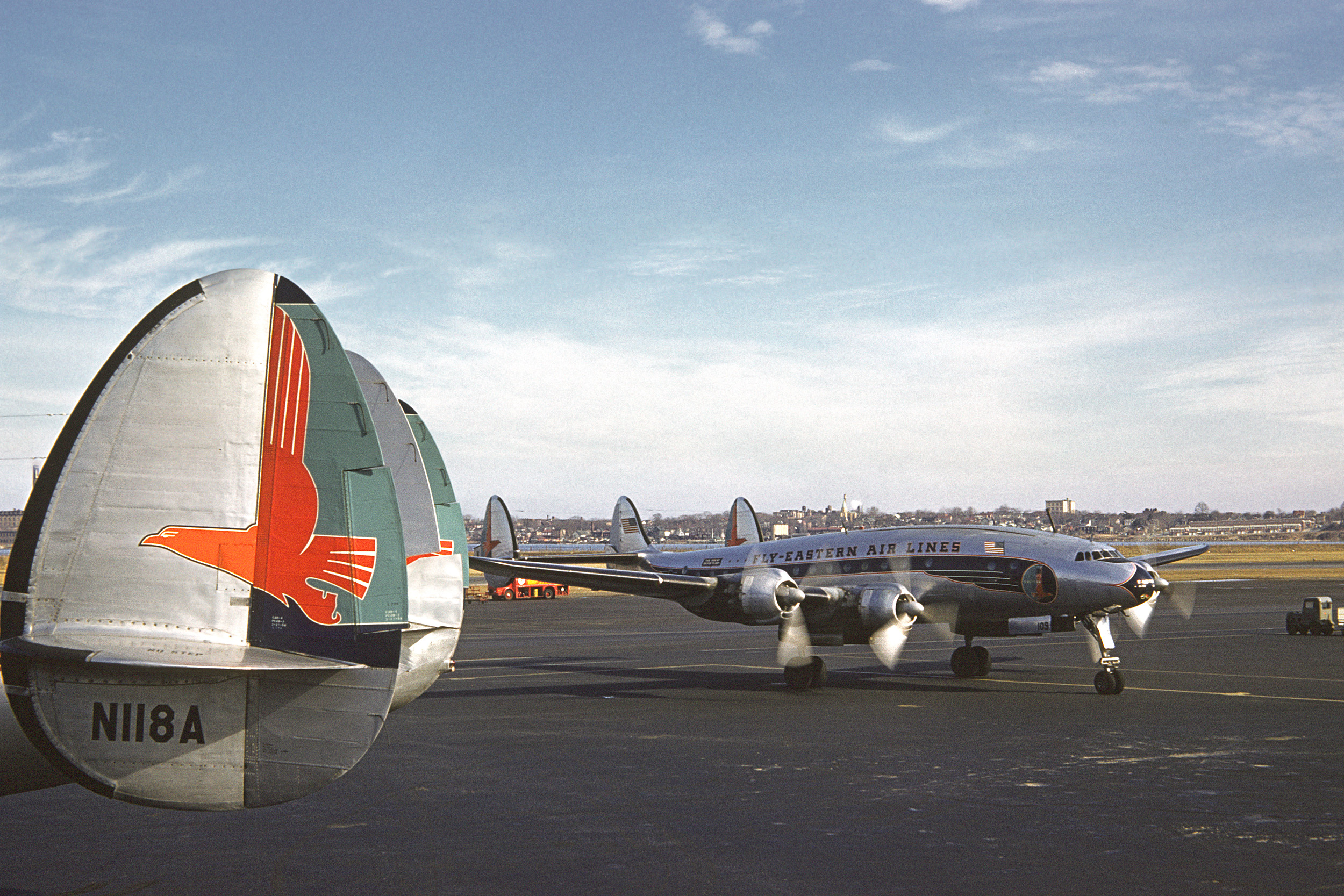
    The Jet Age dawned for the western world in October 1958 with the introduction of both the Boeing 707 and the De Havilland Comet 4 (the first commercial jetliner—the Comet 1, introduced in 1952—suffered design problems and was withdrawn from service in 1954; the Soviets put the first successful jetliner into service – the Tupolev TU-104 – in 1956).

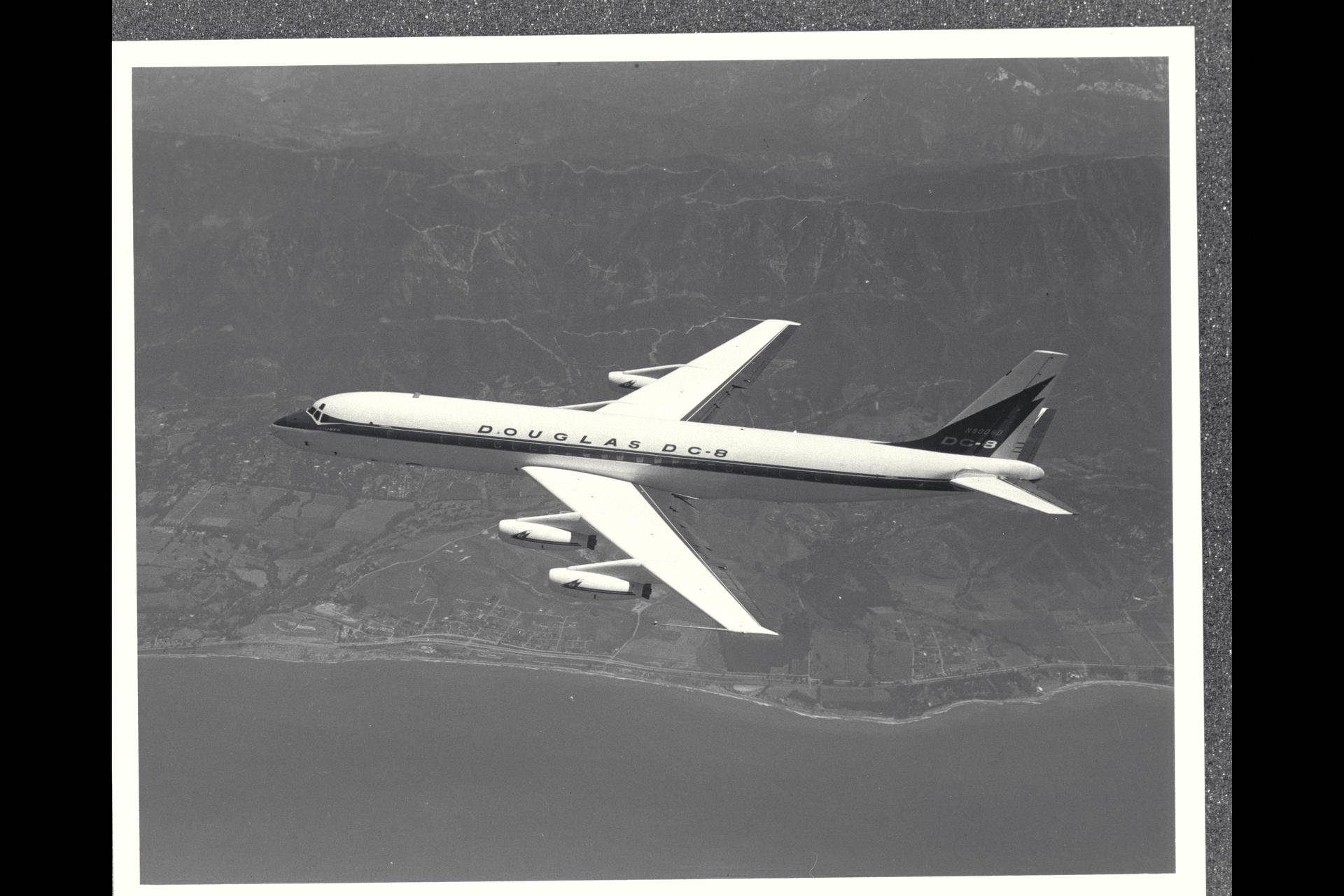
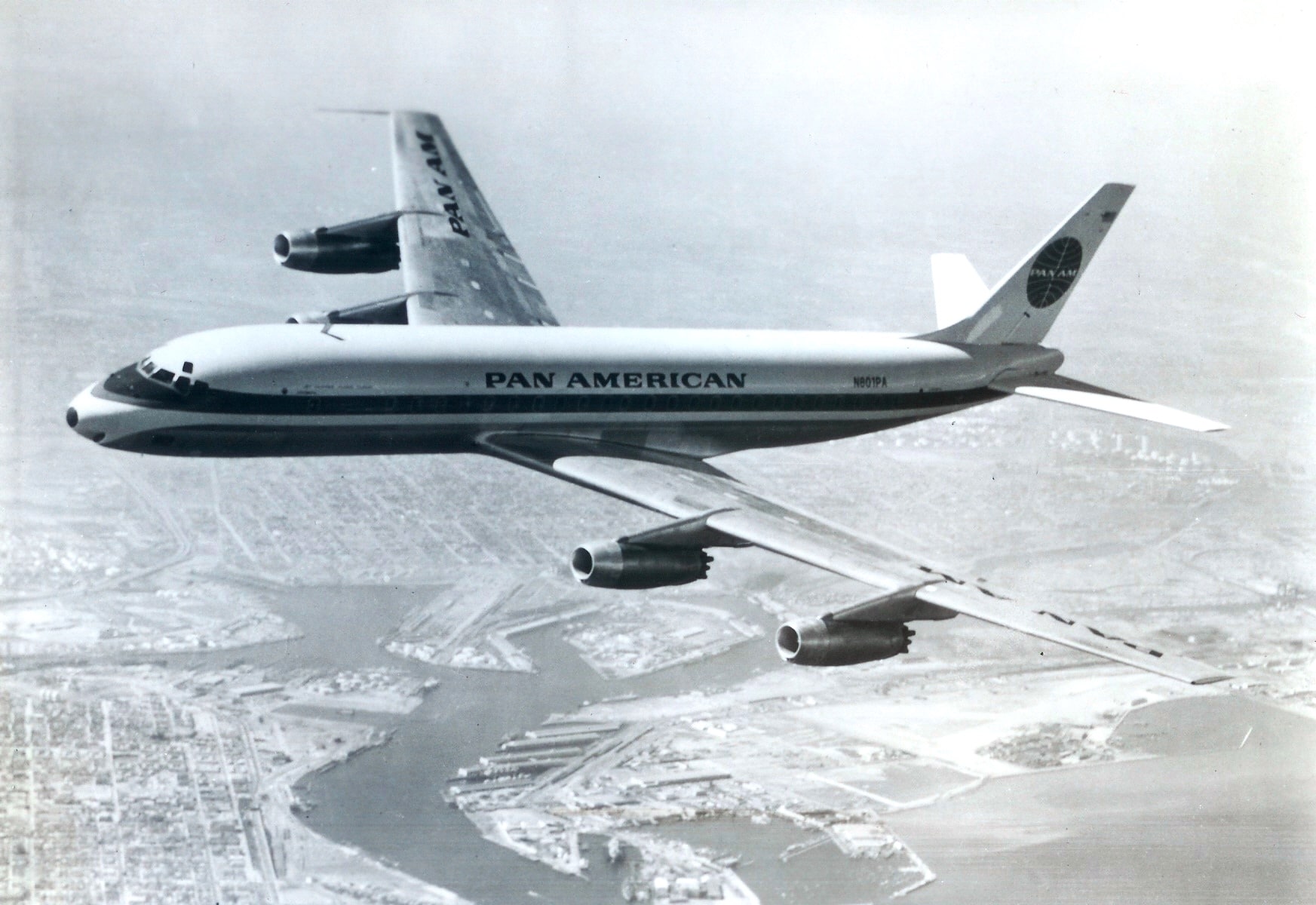
    The Boeing 707 and the Comet 4 were followed by the Douglas DC-8, which flew its first commercial flights in September 1959. With their unprecedented speed and passenger capacity, jetliners carried the promise of a whole new era for commercial aviation.

    N5525 MDW Mel Lawrence 1
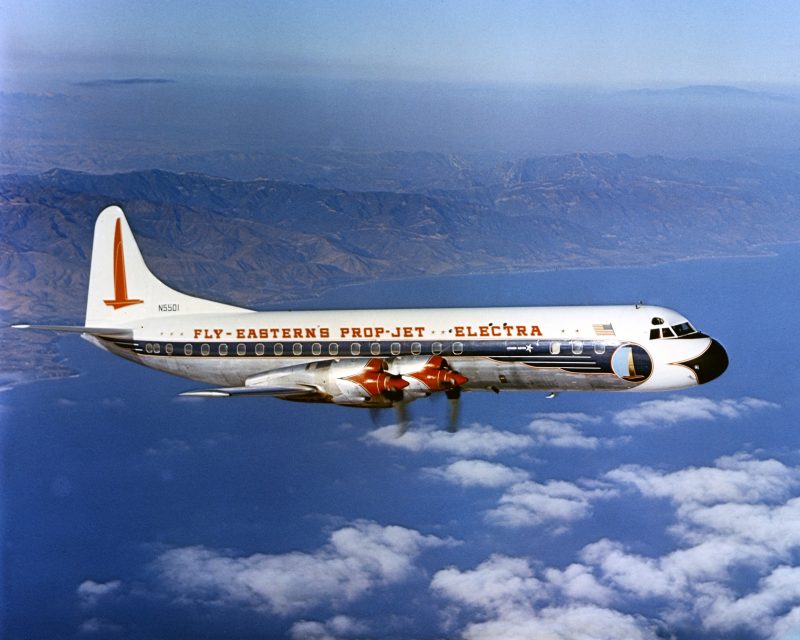
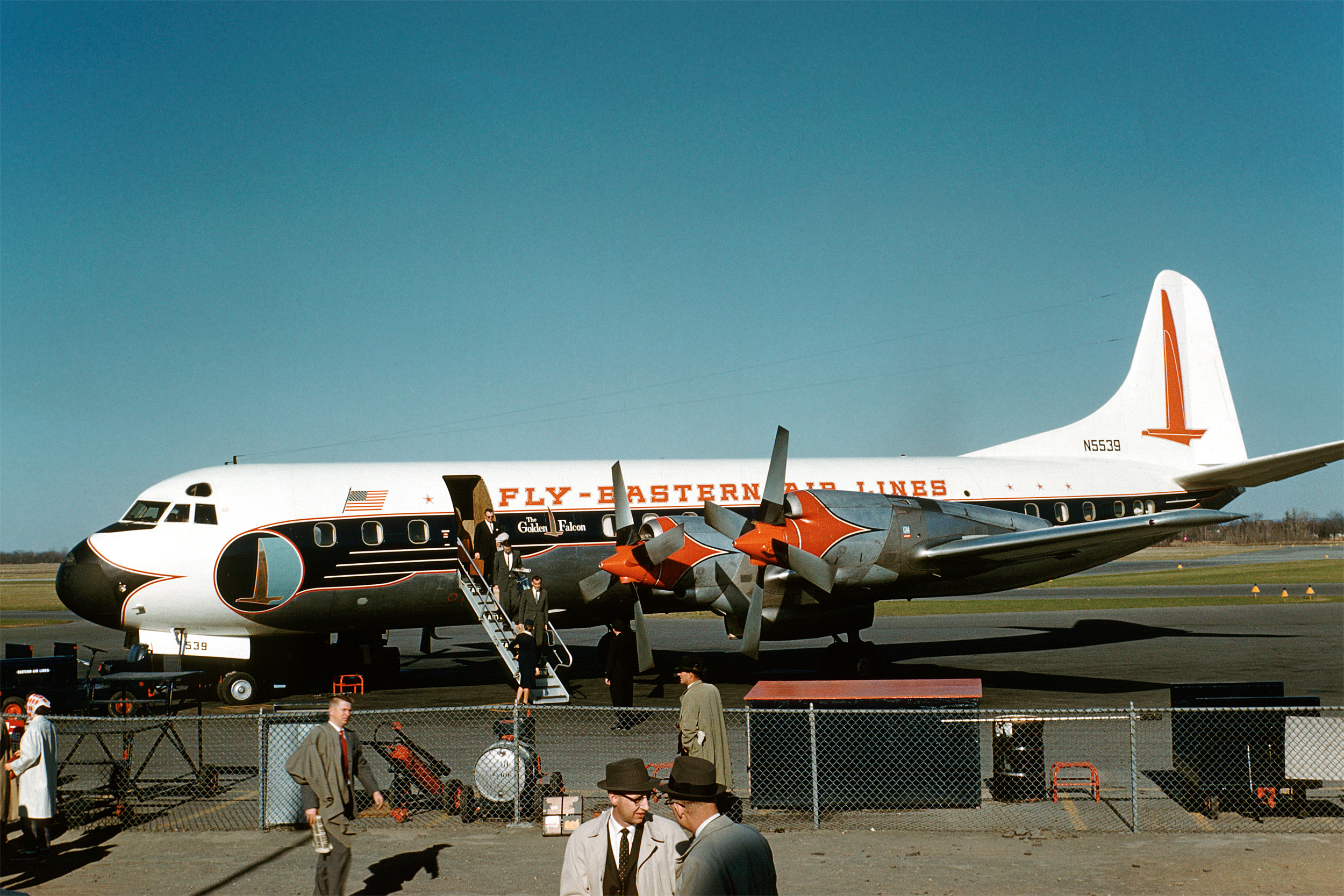
    Eastern’s leader, CAPT. Eddie Rickenbacker, relied upon the turboprop Lockheed L-188 Electra to serve as the company’s top-of-the-line aircraft while other carriers deployed their first jets. This proved to be a tactical error. Mel Lawrence photo.

    THE PROP-JET ELECTRA

    Eastern Air Lines was a latecomer to the Jet Age. While rival airlines were deploying jets over Eastern’s most competitive routes during the winter of 1959-60, all of Eastern’s aircraft were propeller-driven. Captain Eddie Rickenbacker (referred to simply as “The Captain”) – Chairman of the Board and the force behind Eastern – had placed his faith in the turboprop Lockheed L-188 Electra, ordering 40 of them to operate Eastern’s premier services while other carriers broke in the jets. If the new jets suffered any problems, it would be other airlines that endured the bad publicity.

    But it would be the Electras, not the new jetliners, that would generate negative attention. By mid-March 1960, three Electras in service with other airlines had crashed. Two of the accidents were attributed to a design flaw that could result in the separation of wing from fuselage. The Federal Aviation Administration (FAA) mandated that all Electras be flown at reduced speed until the flaw could be corrected. In the public’s eye, the type’s reputation was tarnished, and passengers began avoiding the Electra.

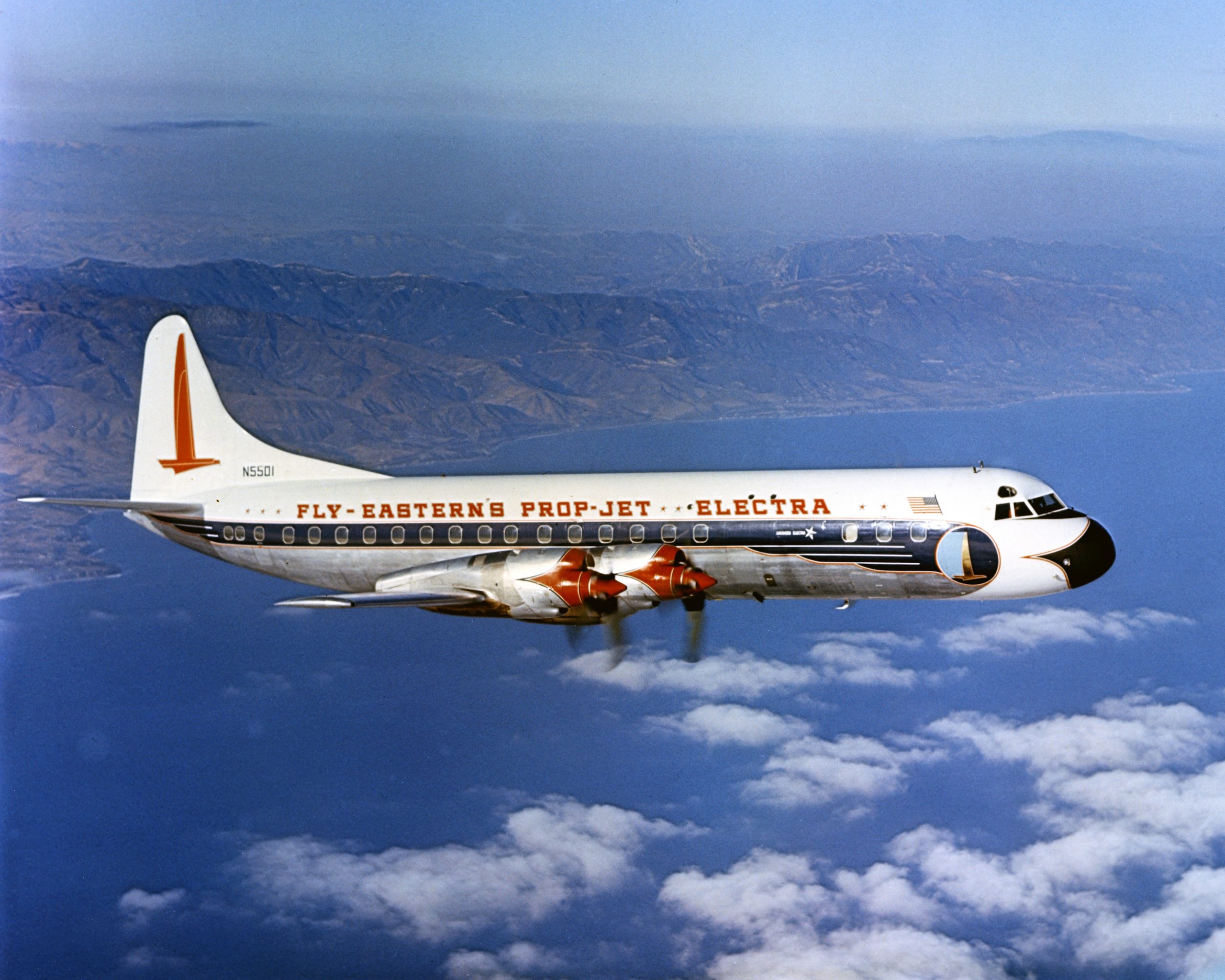
    N5501
    The Electras suffered a design flaw which could exacerbate vibration to the point of creating a condition called whirl mode, which might result in separation of the wing from the fuselage. The reputation of the aircraft was tarnished after several crashes, but the flaw was corrected and the Electras went on to serve safely for many years. Photo: Proctor/Livesey/Thomas Collection.

    Then, on October 4, 1960, an Eastern Electra crashed within seconds after takeoff from Boston’s Logan Airport. The cause of the crash had nothing to do with the design flaw. The accident was the result of an ingestion of birds – starlings – into the engines. But the publicity did not help the reputations of either Eastern or the Electra.

    EASTERN’S FIRST JETS

    Rickenbacker had ordered 26 Douglas DC-8s (-21 models) for Eastern, but eventually scaled the order back to just 15. Eastern’s first jets did not enter scheduled service until January 24, 1960.

    1A DC 8 21 N8601 DAC
    Eastern’s first jets – Douglas DC-8s – did not enter service until January 24, 1960. Douglas Aircraft Company photo.

    While Rickenbacker was still Chairman of the Board, Eastern’s President at the beginning of the 1960s was Malcolm MacIntyre, who insisted on operating free of The Captain’s control. But try as MacIntyre might, Rickenbacker still considered himself to be in charge.

     Rickenbacker had promoted Eastern as a safe airline while other carriers advertised the quality of their service. Air safety greatly improved with the Jet Age. Because the CAB forced all airlines to charge the same fares, a carrier’s selling points would have to be service and convenience. In that regard, Eastern had an image problem.

    In 1960, for the first time in 26 years, Eastern failed to post a profit.

    4 Eddie Rickenbacker 10031668
    Captain Eddie Rickenbacker points out the Golden Falcon title on one of Eastern’s new DC-8s. Photo via Proctor/Livesey/Thomas Collection.

    THE AIR-SHUTTLE

    The best thing to happen at Eastern in 1961 was the introduction of an experimental service in the Northeast Corridor (Washington-New York-Boston) called the Air-Shuttle. This new concept, approved by the CAB, allowed passengers to show up without reservations and purchase tickets on board. The clincher was that no one would be left behind; backup aircraft and standby crews would be available to operate an extra section whenever a scheduled flight reached capacity.

    24 1049 N6211C BOS aahs p001822
    For several years, Eastern relied on aging Lockheed Constellations, painted in a red livery, to operate its popular Air-Shuttle service in the Northeast Corridor. American Aviation Historical Society Photo.

    It took several months to fine-tune the Air-Shuttle, but it became a popular standard of travel. After only 14 months of operation, the Shuttle carried its one-millionth passenger.

    MORE TROUBLES FOR EASTERN

    Fifteen Boeing 720 jetliners began arriving on the property, the first entering service in August 1961. But despite the introduction of the Air-Shuttle and the transfer of several money-losing smaller stations to local airlines, Eastern posted a loss for the second year in a row.

    720 025 N8709E PBI 22565
    Boeing 720s joined Eastern’s fleet beginning in August 1961. Photo via Proctor/Livesey/Thomas Collection.

    In June 1962, the company suffered a 30-day Flight Engineers strike. It was the fourth strike against Eastern in five years.

    Then, on November 30, 1962, an Eastern DC-7B crashed while attempting a go-around in fog at Idlewild Airport, killing 25 of the 51 people aboard.

    1962 was the third year in a row for Eastern to post financial results in red ink.

    THE CAPTAIN HAS TO GO

    Eastern’s Board of Directors decided that change was needed at the top. It was time for The Captain to go. In December 1963, Malcolm MacIntyre left Eastern Air Lines and Eddie Rickenbacker retired. Floyd D. Hall, who had been recruited from TWA, took over as President and CEO of Eastern. He had a big task ahead of him.

    Hall brought a fresh perspective to Eastern. He also brought in several new managers from outside the company—people who could bring fresh ideas and new energy to Eastern.

    727 25 N8101N RNT Boeing K10224 2 after
    Eastern inaugurated the world’s first Boeing 727 service on February 1, 1964. Boeing Company photo.

    On February 1, 1964, Eastern’s employees took great pride in inauguration of the world’s first Boeing 727 service. The new tri-jet—designed for short and medium-haul segments—was a perfect fit for a network in which the average stage length was between 400 and 500 miles. Eastern christened its new birds Whisperjets.

    Celebration of the new aircraft type was tempered by the tragic loss of one of the company’s DC-8s, which crashed into Lake Pontchartrain shortly after takeoff from New Orleans in the early morning darkness of February 25. There were no survivors.

    CV 440 N9303 ATL 12 11 67
    Eastern’s hockey stick livery is displayed on this Convair 440 photographed at Atlanta by Jon Proctor in 1967.

    A NEW SLOGAN AND A NEW LOOK FOR EASTERN

    A new slogan, “See How Much Better An Airline Can Be”, was adopted, and along with the catchphrase came a new logo and aircraft livery. Referred to as the hockey stick paint scheme, the livery consisted of two stripes in different shades of blue running the length of the fuselage, then up at an angle to traverse the tail. The logo, a stylized falcon consisting of two white lines inside of a dark blue circle, was interpreted as the hockey puck.

    Eastern’s management team devoted itself to improving the customer experience. One innovation for First Class passengers was the introduction of Famous Restaurant Flights, advertised as “a whole new approach to in-flight dining services.”

    Eastern posted a profit in 1965 and again in 1966, despite a strike by the International Association of Machinists (IAM) that grounded five airlines – including Eastern – for 43 days that summer.

    DC 9 14 N8910E MIA 1068 via TW
    Fifteen Douglas DC-9-14s joined Eastern’s fleet starting in 1966. N8910E was photographed at Miami. Terry Waddington photo via Proctor/Livesey/Thomas Collection.

    NEW JETS FOR SHORT AND LONG HAULS

    For Eastern’s short-haul routes, Hall ordered 15 Douglas DC-9-14s, the first of which entered service in 1966. In 1967, Eastern became the first airline in the world to operate the stretch -30 series of the DC-9 (Eastern would eventually operate more than 70 of the type).

    For long-hauls, Hall ordered stretch versions of the DC-8 (-61 and -63 models), the first of which also joined the fleet in 1967.

    DC 8 61 EA N8778 DAC
    “Stretched” Douglas DC-8-61s were introduced in 1967. Douglas Aircraft Company photo.

    THE WINGS OF MAN

    During the late 1960s, Young and Rubicam created several taglines for Eastern: “We Want Everyone to Fly,” “Number One to the Sun”, and the iconic slogan, “The Wings of Man.”

    In 1966, the CAB approved Eastern’s acquisition of Mackey Airlines, which served the Bahamas from Florida. And, in 1967, the Civil Aeronautics Board gave Eastern a route to the West Coast: Melbourne/Cape Canaveral to Orlando, Huntsville, St. Louis, Portland and Seattle/Tacoma. This flight served the newly named Space Corridor, linking the Kennedy Space Center at Cape Canaveral with Redstone Arsenal in Huntsville and Boeing’s headquarters in Seattle.

    EAL 1969 03 01
    In addition to “The Wings of Man”, Eastern employed the slogan “Number One to the Sun” in the late 1960s. Timetable from David H. Stringer Collection.

    In preparation for the new era of jumbo jets, Eastern ordered four Boeing 747s for delivery in 1970, but sold all four to TWA before they were delivered. Eastern would, instead, lease three 747s from Pan Am while awaiting delivery of the wide-body jetliner it staked its future on — the Lockheed L-1011 TriStar.

    Eastern Air Lines had made it through the tumultuous Sixties, and there would be more turbulence ahead in the 1970s. But the Wings of Man would navigate through the rough weather and survive another two decades.

    Balls Eight – The incredible B-52 that was the mother of mother ships

    How engineers used a B-52, affectionately referred to as ‘Balls Eight’, to rapidly advance our understanding of supersonic flight.

    The Challenge: The engineers have designed and developed a new aircraft that can fly five times the speed of sound (Mach 5), but it does not carry enough fuel to take off from a runway and climb to its operational altitude.

    Figure 2 NB-52A Preparing for an X-15 flight early in the program.
    NB-52A Preparing for an X-15 flight early in the program.

    The Answer: launch it from another aircraft—the “mother ship”—that will carry it to its operational altitude so it can begin the flight from there. This article outlines a brief history of two B-52 aircraft that would support the X-15 program, one of which (Balls Eight) would continue in the role as a “mother ship” for another 35 years.

    While the B-52 was not the first “mother ship” (a modified B-29 Superfortress bomber was used to launch the Bell X-1 and Chuck Yeager on the first supersonic flight in 1947), this is a brief history of two B-52s that defined and lived the role for nearly fifty years.

    By the time the North American X-15 hypersonic test aircraft was ready for testing, the B-52 Stratofortress was available, and two B-52s were transferred to Edwards AFB to act as mother ships for the X-15.

    Balls Eight Required Many Modifications

    The B-52s required extensive modifications. Due to the low fuselage ground clearance and landing gear arrangement of the B-52, the X-15 had to be mounted on a pylon under the wing of the aircraft, between the right inboard engine and the fuselage. An 8-feet section had to be removed from the right wing flap to allow room for the X-15’s vertical stabilizer.

    X-15 In Flight.
    X-15 In Flight.

    In addition to the wing-mounted pylon, the aircraft were outfitted with liquid oxygen and hydrogen peroxide tanks in the bomb bay area to fuel the X-15 fuel tanks prior to launch.  A launch control station was installed behind the cockpit with all of the instrumentation and controls needed to launch the test aircraft. Also, because the X-15 (and other test aircraft) were not visible from the cockpit, a small window was installed at the launch control station to allow the operator to see the X-15 cockpit.
    The first bomber modified was the third and last B-52A produced, serial number B-52A-0003. After modification in 1959, it was redesignated NB-52A and named “The High and the Mighty.”

    Additional B-52 Modifications

    NB-52B, Balls Eight with the X-15 and a T-38 chase plane (Public Domain)
    NB-52B, Balls Eight with the X-15 and a T-38 chase plane (Public Domain)

    The second was originally delivered to the Air Force in 1954 as an RB-52B, serial number B-52B-0008, equipped to be a reconnaissance aircraft.
    It was transferred to Edwards AFB in 1958 and modified to become an NB-52B. This aircraft was dubbed “Balls Eight” because, in a serial number, a series of zeros were referred to as “balls.”

    Between 1959 and 1968, these two aircraft flew more than 60 captive carry and 199 X-15 launch missions. There were three X-15s in the program, one of which was destroyed in a crash. Today one of the remaining X-15s is on display at the National Air and Space Museum and the other can be seen and the National Museum of the Air Force.

    NB-52A-0003 was retired in 1969 shortly after the end of the X-15 program, having flow 69 of the launch missions plus. Initially, it was stored at Davis Monthan AFB, but later given a home at the Pima Air & Space Museum in Tucson, Arizona. NB-52A-0003 is oldest B-52 in existence.

    Balls Eight Was a Workhorse

    Balls Eight would deliver nearly 50 years of dedicated service to research and development. Retired in 2004, Balls 8 is now on display at the entrance to Edwards Air Force Base.
    “It has been asserted that the Boeing NB-52B Stratofortress, carrying Air Force serial 52-0008, can lay claim to being the airplane that has seen and participated in more history than any other single airplane.

    X-24 Lifting Body used for unpowered landing research that would be applied to the Space Shuttle.
    X-24 Lifting Body used for unpowered landing research that would be applied to the Space Shuttle.

    For forty-five years, the NB-52B was a fixture at Edwards Air Force Base. While the NB-52B is most famous for launching the three North American X-15 rocket planes, it continued to serve in the role of launch platform for a multitude of programs until its final mission on November 16, 2004.”(1)

    Balls Eight Played a Key Role in Space Shuttle Development

    In addition to the X-15, Balls Eight also carried and launched the Martin Marietta X-24 and other lifting body aircraft, followed by HiMAT, the Pegasus rocket and the unmanned scramjet-powered X-43, among others.

    The Martin Marietta X-24A was a piloted, unpowered experimental aircraft developed to test lifting body concepts for unpowered reentry and landing—technology that would later be applied to the Space Shuttle.

    Rockwell’s Highly Maneuverable Aircraft Technology (HiMAT) was an unmanned, powered NASA program to explore a range of technologies including canards, composite materials, digital flight controls, and remote piloting for use in future fighter aircraft.
    Air-Launched Pay-load-to-Orbit rocked first launched from NB-52B Balls Eight.
    Air-Launched Pay-load-to-Orbit rocked first launched from NB-52B Balls Eight.
    Pegasus is an air-launched rocket designed to carry small satellites into low Earth orbit. First launched from Balls Eight in 1990, it remains active as of 2015. The four-stage rocket was launched at 40,000 feet. Later flights have been launched from a modified Lockheed L-1011.
    Balls Eight’s last program was launching another hypersonic vehicle—the X-43A hypersonic research aircraft in 2004.

    Balls Eight was finally retired on December 17, 2004 after 49 years in the air. It was the oldest active B-52 in service at that time. The B-52 was also the only variant still flying other than the H model. Because of its specialized use, however, and many hours spent in being modified for each new mission, it had accumulated fewer flight hours than any other operational B-52 still in service.

    Ref1: Balls Eight – History of the Boeing NB-52B Stratofortress Mothership by Brian Lockett (published April 26, 2015) is available from several online book sellers.

     NB-52B launch aircraft takes off carrying the X-43A (photo by NASA)
    NB-52B launch aircraft takes off carrying the X-43A (photo by NASA)

    Flying A Hellcat Through The Apocalypse

    Editors note: We recognize that the title photo is not of a Hellcat. The author did not have a photo available of his uncle flying the Hellcat.

    It’s July 1st, 1946. The teak deck of the USS Shangri-La is hot to the touch. The Sun at this time of the year in the Pacific is a terror. As an American pilot is climbing into the cockpit of a Grumman F6F Hellcat, numerous servicemen are assisting him. This is a routine procedure, yet, nothing about what he is getting ready to do is routine.

    The pilot is fitted with special gear. Added to his normal jumpsuit was a large lead vest. Formed to his head, was a specially designed lead shield which covered one half of his face and skull. The thought process being that if he were to lose vision or hearing, he could simply remove the lead helmet and maneuver the plane with one eye and one ear.

    The aircraft itself was outfitted with collection canisters and other instruments. The cockpit sported protection as well. Lined with lead, the Hellcat weighed more than normal, requiring a special takeoff procedure just to get off the deck.

    The Unknown Pilots Of The Nuclear Era

    Many people know about the nuclear arms race post World War II. Some might have even heard of Bikini Atoll (after all, it is the home of Spongebob SquarePants). But I’d be willing to bet that not many people know about the type of testing that was conducted, and exactly how American pilots were used.

    The Hellcat Drone

    After launching off the deck of the USS Shangri-La, the heavy Hellcat climbed up to 40,000 feet. The pilot’s mission was to fly up to altitude and remotely via radio, control a separate Grumman F6F Hellcat as it flew through the Atomic Cloud. This mission was two fold: first, the pilot would send the manless, or ‘Drone’, aircraft through the cloud. On the other side, another pilot in the exact same type of aircraft and with the same protective suit on, would then take control of the drone and land it back on the deck of the carrier. Secondly, both pilots would fly around the edges of the massive mushroom cloud.

    Since the plane was outfitted with testing equipment that would collect particles of the fallout as the pilot skirted the edges of the cloud, it was extremely vital to get the birds back on the carrier, hence the lead. Both pilots also had instruments inside the cockpit monitoring their radiation absorption. Whilst flying, both pilots would constantly read these displays out loud, to save them in the flight recorder.

    hellcat pilot
    Flying A Hellcat Through The Apocalypse 126

    At 8:45 on that warm morning, a B-29 dropped a nuclear bomb. Named “Abel”, it exploded 520 feet above Bikini Atoll. As the mushroom cloud rose and rose, our pilot sent the unmanned aircraft through the cloud to the other side, where the other pilot took control. Our pilot then circumnavigated the cloud. The turbulence coming off the cloud would prove to be extremely rough, leaving him to rely on his training to maintain altitude and keep the plane level. While doing all of this, he was continuing to read the displayed data on his instruments into the cockpit voice recorder.

    Sniffers Deployed

    As he flew, the airplane was sucking radioactive air into the pistons, through the block and surely into the cabin of the cockpit. These pilots would later go on to be called “Sniffers”, and our pilot, on this day flying around Abel, would be the first.

    The unpredictability of the turbulence would surely have made hand flying extremely difficult and while the mushroom cloud would intermittently block the view out of the cockpit, the hardest part of looking outside would be the heavy lead helmet covering half of his view.

    While we don’t have evidence of this exact F6F Hellcat, no. 58623, going through Abel, there are many that believe he did. After over 3 hours in the air, he navigated back to USS Shangri-La and landed on the teak deck. Upon touchdown and shutting the engine off, naval servicemen scrubbed every inch of the aircraft and the pilot with soap and water. A desperate attempt to get rid of any lingering radiation.

    Hellcat Promptly disposed of

    Afterwards, the plane was thought to be dumped overboard, ensuring the engine wouldn’t spread radiation from its exhaust in the future. 58623 would never fly again. However, the pilot, my grandfather, would continue to fly for years afterward. I never met him, as he (un)surprisingly succumbed to complications from cancer in the 60’s. The picture attached to this post is him, somewhere in the Pacific theater. Sitting in a Hellcat, just like the one he flew on that day. Though here, he didn’t need the special lead suit.

    As the nuclear arms race raged on, the military eventually allowed pilots to fly through the mushroom clouds from these test bombs. As this proved detrimental and many pilots were lost, they eventually backtracked and banned flying through atomic clouds.

    Apocalypse Ahead

    My uncle is convinced that my grandfather did in fact fly through the center of Abel that day. And while I never got the chance to meet him, I understand the kind of temptation that must have existed. Up in the air, with the weapon of the apocalypse so close you could touch it. I’m certain he did.

    MiG-23 Crashes At Michigan Air Show, Crew Ejected

    0

    The only flying MiG-23 in North America went down this afternoon at the Thunder Over Michigan air show at Willow Run Airport in Ypsilanti.

    Videos circulating online show both crew successfully ejected from the Soviet fighter jet, and their parachutes deployed, as the plane plunged behind a tree line shortly after 4:00pm local.

    The air show was immediately stopped and ended following the incident. Witnesses could hear the ejection, and say the crew ejected over a lake. The plane itself crashed into the parking lot of an apartment complex. Several vehicles were damaged, but no injuries have been reported by authorities on the scene.

    “Ladies and Gentlemen, we have a situation that requires us to stop the show. Please make your way into your vehicles and calmly make your way out of the airfield,” Thunder Over Michigan wrote in a Facebook post. “Please be patient as we control traffic around the area.”

    The jet was based out KGGG in Longview, TX. Pilot Dan Filer and his crew have been restoring other MiG-23s too.

    We will update once the air show and / or local authorities provide an update. The cause of the crash is unknown, but the crew have been recovered and are alive.

    Restoring Cobras And Hueys at the Army Aviation Heritage Foundation

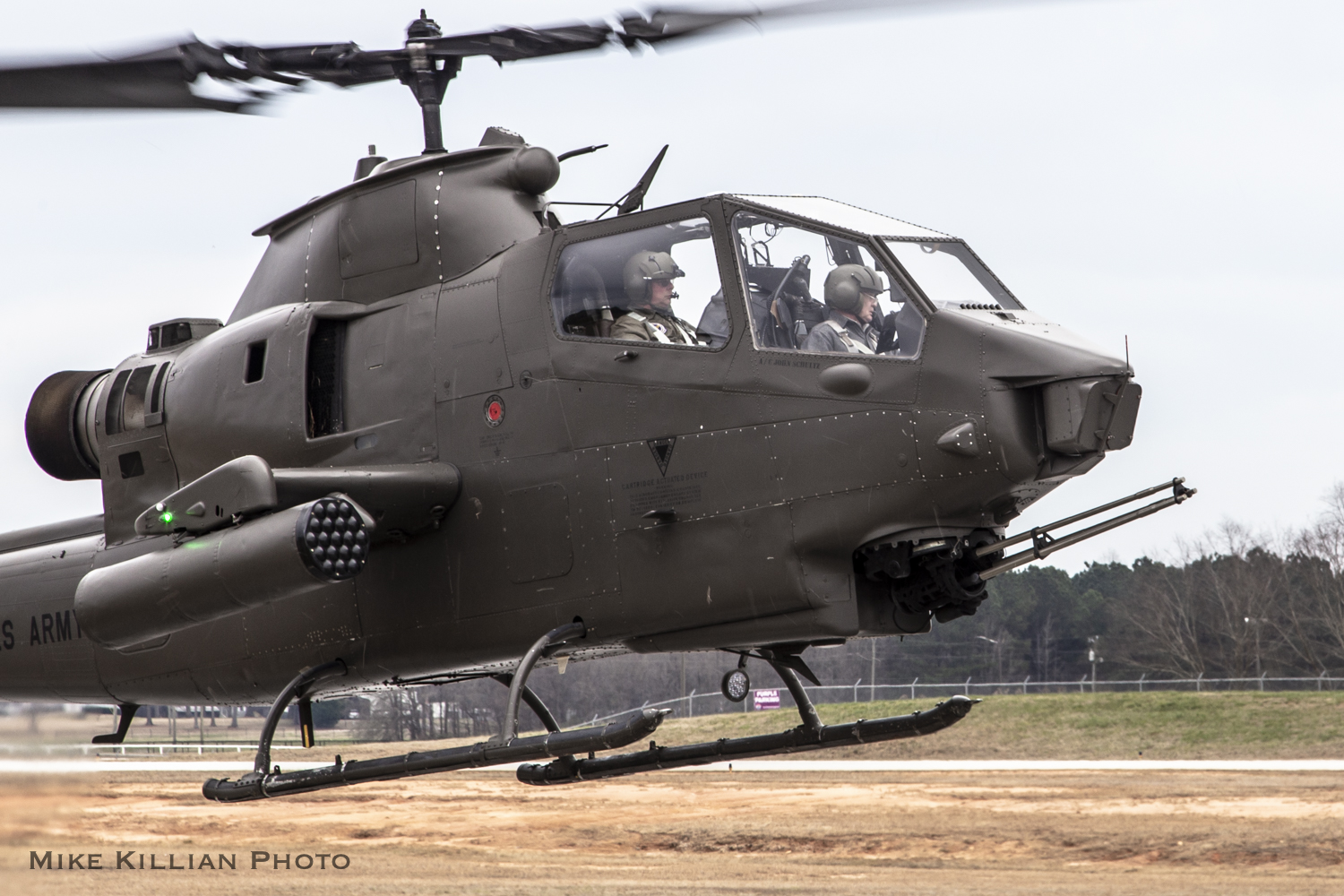
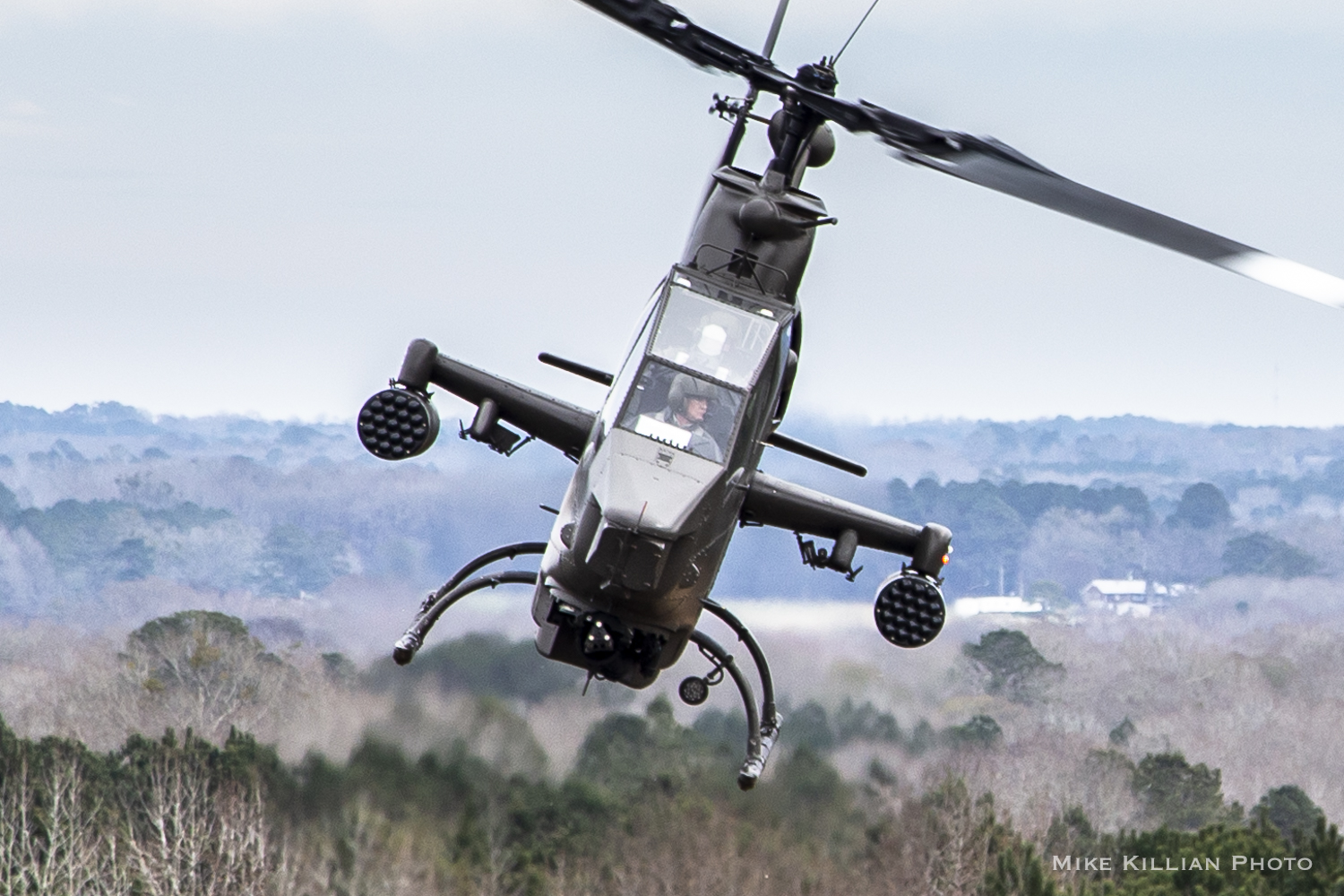
    Restoring Cobras and Hueys at the Army Aviation Heritage Foundation is serious business. Based in Hampton, Georgia, the AAHF are caretakers to these iconic helicopters that once served in multiple historic conflicts.

    It has been 50 years now since direct U.S. military involvement in the Vietnam war ended. Over 58,000 American servicemen were killed and 304,000 wounded, out of 2.7 million who served in the war. But those casualty numbers would have been much higher if not for the Bell UH-1 Huey and AH-1 Cobra.

    Living history

    The AHHF is run by a small staff and over 800 volunteers. Most museums show and tell with static non-flying machines, but it’s quite another experience with real combat veteran aircraft that are still flying. The impact on the public is greater when they can actually hear, feel, see and experience living history in action, and even purchase flights, and that’s exactly what AAHF provides.

    Come take an inside look at the army aviation heritage foundation hq near atlanta (mike killian video)

    Watch the video above for an exclusive 1-on-1 tour with the AAHF at their HQ.

    “The riders who stick out the most are the kids who simply love the flying, but on the more emotional side is the actual veterans and their families,” says Steve Wages, a volunteer and former Director of Operations for the AAHF. “We get a lot of Vietnam veterans, who were so poorly treated when they came home that they really just shut it away and didn’t talk about it, so seeing these aircraft they once served on – or which even saved their lives – brings them to tears,” says Wages.

    4FB05FA1 2FAF 4800 9F47 04D040D160E3
    Restoring Cobras And Hueys at the Army Aviation Heritage Foundation 144

    “It brings closure, and can be very cathartic for them. Some of them haven’t seen or flown on a Huey or Cobra since the war. They kind of relive some of those experiences, and kind of finally let go of them as well. It also provides closure and realization to their families, to see the
    actual aircraft and even fly on them to get a small taste of what their loved ones did. Emotionally it’s overwhelming for them, and is worth all the hard work that we do.”

    21BB4E5F 3D93 447E A8A8 F9859FA200BA
    Restoring Cobras And Hueys at the Army Aviation Heritage Foundation 145

    The non-profit was founded in 1997 to acquire, restore, maintain and fly the historic birds, preserving and presenting the legacy of Army aviation and engaging the public face to face. AAHF accomplishes their mission through aerial demos and static displays at air shows, offering ride programs, facilitating educational tours and supporting various events and STEM outreach programs. They actually run 3 chapters across the country, with the other two being in Mesa, Arizona and St Louis, Missouri.

    9424CADE C0E5 4B3C A592 C58149854ECD
    Restoring Cobras And Hueys at the Army Aviation Heritage Foundation 146

    They currently operate a fleet of five flying UH-1 Hueys and four or five flying AH-1 Cobras, with one of each based at both their other locations. They also have several more helicopters, which are used for static displays, movie props and spare parts to keep the flyable ones in the air.

    Several volunteers are not only combat veterans of Vietnam, but Operation Desert Storm as well. Some are even veterans of both conflicts, and some even served with the same unit in both conflicts.

    3FF9BA04 2BA4 4C8B 9404 3ED66E3F60DF
    Restoring Cobras And Hueys at the Army Aviation Heritage Foundation 147

    Some were shot down, some multiple times even, while others saw crew casualties. Several volunteers even served with the same birds they work on at AAHF.

    Honoring the Helo that Saved Lives

    American forces sustained many injuries in Vietnam, but less fatalities, thanks directly to MEDEVAC Huey crews. Their unprecedented mobility meant that, on average, it took less than one hour from the moment someone was wounded to the
    time they arrived for hospitalization.

    And thanks to the Huey, less than 1% of all Americans who were wounded, who survived the first 24 hours, actually died. Hueys flew over 500,000 missions and airlifted over 900,000 patients, nearly half of which were American.

    F35CB5C3 28AA 46A1 9D04 994DF2E06637
    Restoring Cobras And Hueys at the Army Aviation Heritage Foundation 148

    And The Gunship That Shares Lineage With The Huey

    But the Huey was too wide and slow when it came to attack capabilities. They flew as gunships, but were getting shot out of the sky left and right. Typically, other helicopters would scout ahead of Hueys just before air assaults to gather information about landing zones and enemy locations. But the Hueys were just too slow and couldn’t carry enough firepower.

    So the Army came up with the Cobra. Bell even developed it based on their Huey in order to provide commonality with parts from Hueys the Army already operated, and to streamline supply and training. Thus was born the first purpose-built helicopter gunship to enter military service.

    B829451C F7ED 421D BADB 0ACBC2025EDC
    Restoring Cobras And Hueys at the Army Aviation Heritage Foundation 149

    We could write all day about the history of these helicopters, but most of you already know that stuff, so let’s focus on AAHF.

    From military service to AAHF

    Most of the Cobras owned by AAHF came from Fort Drum, where the Army rebuilt and refurbished hundreds to sell as part of the Army’s Cobra retirement operations. They were stripped of parts, fluids drained, paint blasted off, and had new wire harnesses installed, along with new flight controls, generators, battery compartments and overhauled engines.

    45FA7574 C140 45A0 932B 2FCFBE75A3AA
    Restoring Cobras And Hueys at the Army Aviation Heritage Foundation 150

    Some were gutted for parts and used as military training apparatus, but most were sold to military customers overseas.
    Others were outfitted to fight forest fires and sold to the U.S. Forest Service and other forestry agencies, and more were custom-designed and sold to veterans’ organizations.

    EBFB4D56 5E6C 4082 B8A5 D27CA93C7AC1
    Restoring Cobras And Hueys at the Army Aviation Heritage Foundation 151
    DCB784F8 7334 443F A4CF D44D0B29B4C7
    Restoring Cobras And Hueys at the Army Aviation Heritage Foundation 152


    But AAHF did not have to buy their Cobras from the Fort Drum program. Instead, they acquired 13 on loan from the Army’s Tank Automotive & Armaments Command (TACOM) Loan and Donations Program, which qualifies museums, veteran service organizations, parks and other entities to receive donations of disabled military machinery (the Cobras are no longer weaponized). They track annual reports on the AAHF Cobras, conduct periodic inspections and enforce the terms of the conditional loans. A 14th non-flyable static Cobra was also acquired via more standard channels.

    F76A4ADC B9C8 45A6 B371 7DF6BC445227
    Restoring Cobras And Hueys at the Army Aviation Heritage Foundation 153

    AAHF does however own all their Hueys, which were acquired via a Government Surplus Program, coming mostly from Louisiana and the Georgia National Guard.

    6EE44B62 F114 4738 9D91 894796B6BE57
    Restoring Cobras And Hueys at the Army Aviation Heritage Foundation 154

    When the last Black Hawk flies, it will be slingloaded to the Boneyard by a Huey

    The Army started replacing Hueys with Black Hawks a long time ago, but they still keep many flying for various odd jobs. The Marines still use them in a front-line role, but with more modern versions like the UH-1Y, as Bell continues rolling new Hueys off the assembly line.

    About 85% of AAHF’s existence comes from selling rides. It’s not uncommon to sell 10,000 rides in a year either, most of
    which fly on the Hueys, which can take 10 people up at a time for 10-12 minutes. The Cobras can only fly one rider at a time, and therefore are a lot more expensive.

    The military also occasionally contracts AAHF to support flight training with the Navy Test Pilot School at Pax River, Maryland, where they provide both Hueys and Cobras with instructors to supplement the student training and test pilot course.

    AAHF Operates A Full Time Year Round Inspection Program

    Keeping the old birds operational is no easy feat, and very expensive and time-consuming. AAHF employs paid certified A&P / IA mechanics, along with volunteers working under their own licenses to keep the aircraft in shape. They operate a full time year-round maintenance program cycling all the helicopters through various inspections on a regular basis.

    Under AAHF the helicopters are considered Experimental Exhibition Aircraft operating as Living History Flight Experiences by the FAA, so they are required to be under an approved maintenance program, and what the FAA gave them to use is exactly what the Army used. It is step by step, check by check, and they don’t cut any corners. They double check everything.

    A4B3CFDD 17A0 4361 8F25 BB9A9F2905D6
    Restoring Cobras And Hueys at the Army Aviation Heritage Foundation 155
    B49B3350 A439 45F7 BF0C 0227B155AE86
    Restoring Cobras And Hueys at the Army Aviation Heritage Foundation 156

    Most of the work is all done in-house too, with the exception of big things like transmissions, engines, gear boxes and other life-limited hardware, which are sent to 145 repair stations to be worked on. At any given time you can visit their museum in Georgia and find several helicopters being worked on in different phases of inspections and work.

    And They Maintain A Boneyard

    They also have a boneyard at their HQ in Hampton, where they keep older and un-airworthy helicopters to use for parts.

    7CAD0678 5CEC 4154 B590 D262A43A8AB5
    Restoring Cobras And Hueys at the Army Aviation Heritage Foundation 157
    9D93EA25 89FB 4985 88F6 1C47B18FE76A
    Restoring Cobras And Hueys at the Army Aviation Heritage Foundation 158

    “A lot of times this is the beginning of a rebuild, particularly for static displays”, says Wages. “This is where we pull hard-to-find parts, like panels to resurface and reuse. Most of the boneyard birds had an active service life in various incendiary places. They’ve all had a busy life.”

    All in all, the AAHF has enough spare Hueys and Cobras to keep a handful of both platforms flying for maybe 15 more years, simply because the parts won’t last forever and are not being made anymore. Things like engines and transmission are relatively easy to come by (expensive), but other things are not, such as actuators and systems designed just for the helicopters in their previous service lives.

    The saying “there is nothing as strong as the heart of a volunteer” rings true at AAHF, as everyone shares the same passion for the helicopters and aviation, as well as a mutual respect and appreciation for veterans, keeping the history alive and educating the public. But AAHF is also an opportunity for volunteers who are veterans themselves to exchange stories, bond and come together for the same cause, as they once did in military service. It’s also a chance for them to share their experiences with the public, many of whom may not have ever known or even talked with combat veterans directly.

    5463100A 2039 45E4 8CFD 276B160CF2EF
    Restoring Cobras And Hueys at the Army Aviation Heritage Foundation 159
    43287F59 AD89 456D 9CD3 0ADDBB6550A6
    Restoring Cobras And Hueys at the Army Aviation Heritage Foundation 160

    AAHF Is Grateful For Volunteers

    Several companies, corporations and various organizations help AAHF a great deal in various ways, without whom the
    AAHF would not exist. AAHF is always open to new volunteers, and you do not have to be a veteran to be a AAHF member
    either. They also accept donations to keep their operations going.

    Look up air shows in your region to see when they will visit, or visit www.ArmyAV.org for more information. You can also follow them on Facebook and Instagram, where they provide regular updates on what they are up to.

    The DC-10: This Wide Body Jetliner Never Shook Its Bad Reputation

    DC-10s Actually Had Good Safety Records But Were Overtaken By Newer Designs

    The DC-10 was the first commercial jetliner built by McDonnell Douglas after the merger between McDonnell Aircraft Corporation and Douglas Aircraft Company in 1967. The McDonnell Douglas DC-10-10 jetliner flew for the first time on 29 August 1970.

    The first two airlines to order the new jumbo, American Airlines and United Airlines, ordered 25 and 30 of them respectively- United with an option for another 30 in 1968. The aircraft received its Federal Aviation Administration (FAA) type certificate on 29 July 1971 after undergoing 1,551 hours of testing over 929 flights. On 5 August 1971, the DC-10 began service with American Airlines on a round trip flight between Los Angeles and Chicago.

    6 2
    DC-10-10 rollout ceremony. Image via McDonnell Douglas/Boeing in public domain

    Maxing Out the PAX

    The two launch customers configured their jetliners slightly differently. American DC-10s were set up with 206 seats; United cabins had 222 seats. Maximum passenger capacity of the DC-10 was as many as 380 passengers. Designed and built as a replacement for the company’s highly successful DC-8 series of four engine jetliners, the wide body of the DC-10 allowed increased capacity.

    Equipped with three of the more powerful General Electric CF6 high-bypass turbofan engines, the jet incurred reduced maintenance costs as opposed to four engine jetliners.

    N111AA
    By Aero Icarus [CC BY-SA 4.0 (https://creativecommons.org/licenses/by-sa/4.0)], via Wikimedia Commons

    The 3-Holer Widebody Competition

    The competition between the 10 series and the Lockheed L-1011 Tristar series made for interesting market positioning. Lockheed had exited the commercial airliner market but saw the L-1011 as the right design to get them back into the game.

    The L-1011 was actually more technologically advanced than the DC-10 series but McDonnell Douglas sold 136 more DC-10s than Lockheed sold Tristars– primarily because the L-1011 was more expensive and its entry into service was delayed by nearly a year after the Douglas Jet entered service with American.

    N1852U
    By contri from Yonezawa-Shi Yamagata, Japan (United Airlines DC-10-30 (N1852U/47811/302)) [CC BY-SA 2.0 (https://creativecommons.org/licenses/by-sa/2.0)], via Wikimedia Commons

    All It Takes is One Catastrophe

    The DC-10 was plagued by design flaws in the aircraft’s cargo doors. But the FAA withdrew the DC-10 type certificate on 6 June 1979 after the crash of American Airlines flight 191 in Chicago – the deadliest aviation accident in US history. As a result, 138 US-registered DC-10s were grounded and foreign-owned DC-10s were banned from US airspace – even for ferrying empty aircraft between airports.

    Changes to the leading edge slat actuation and positioning systems, stall warning systems, and power supplies were then incorporated into the 10 fleet, lifting the ban, but not removing the reputation that the jetliner was dangerous.

    Western DC 10 10 Clipperarctic
    By clipperarctic (Western DC-10-10russavia) [CC BY-SA 2.0 (https://creativecommons.org/licenses/by-sa/2.0)], via Wikimedia Commons

    An Undeserved Rep

    Predictably, sales of the DC-10 suffered. In 1983, McDonnell Douglas announced they planned to stop building the jets, though production continued until 1989. Reputations are often easily earned, but much tougher to change.

    The crash of United Flight 232 in Iowa in 1989 didn’t help the case. The Sioux City crash also resulted in upgrades and revisions to the fleet, keeping the jetliner in the air for several more years. The 10’s overall safety record was actually comparable to the other jetliners of its generation.

    4 1
    Eastern Airlines DC-10 via Wikipedia- image in public domain

    For the rest of the story bang NEXT PAGE below.

    Cargo Glider: The Waco CG-4A Hadrian

    The CG-4A Carried Much More Than Just Troops Into Battle

    Waco’s CG-4A cargo glider, nicknamed the Hadrian by the Brits, carried approximately 50 percent of any Airborne Division’s paratroopers into battle during World War II. The 82nd Airborne Division, Eighty Deuce, the 101st Airborne Division, Screaming Eagles, and the 17th Airborne Division, Golden Talons, all utilized cargo gliders to deliver paratroopers and much of their equipment to the battlefield.

    The cargo gliders were force multipliers, not quite doubling the payload of the transports towing them into action. Most CG-4As were towed behind Douglas C-47 Skytrain transports, but Curtiss C-46 Commando transports were employed as glider tugs in the European Theater of Operations (ETO) after March 1945, and Lockheed C-60 Lodestars were capable of towing lightly-loaded CG-4As into the blue.

    USAAF C-60 towing CG-4A Glider
    USAAF C-60 towing CG-4A Glider. Image via National Archives (NARA)

    Carrying the Army’s Heavy Gear to War

    Loading of the CG-4A was completed via an upward-hinged nose section (including the pilot’s and copilot’s seats and flight controls). And load the CG-4A they could with 13 troops and their equipment, or up to 6 litters of wounded men, or other loads including such diverse cargo as a 75 millimeter howitzer, a 37 millimeter anti-tank gun, a Jeep, a weather station, a field kitchen, radar or radio equipment, a mobile repair shop, a small bulldozer, and even a complete photographic laboratory.

    CG-4A Gliders loading up
    CG-4A Gliders loading up. Image via National Archives (NARA)

    When Building a Glider, Make It Light and Cheap

    The CG-4A was designed to be light and to be built quickly, inexpensively, and easily assembled at the airfields from which they would be towed into battle. The design featured straight strut-reinforced and shoulder-mounted high-lift wings totaling 900 square feet in surface area, a conventional empennage, and fixed twin main and single tail wheels. The fuselage structure consisted of steel tubing, and the wings contained wooden frames. The entire structure was fabric-covered.

    CG-4a IN FLIGHT
    CG-4a IN FLIGHT. iMAGE VIA nATIONAL aRCHIVES (nara)

    They Were Bigger Than You Think

    The crew of two, consisting of a pilot and co-pilot, flew the Hadrian into battle at speeds around 100 miles per hour (depending on the tow aircraft- VNE was 150 miles per hour) and at weights up to 8,000 pounds. Measuring 48 feet 8 inches long with an 83 feet 8 inches wingspan, the CG-4A fit somewhere between the Lockheed C-60 Ventura and the Douglas C-47. The CG-4A could take as little as 600-800 feet to land safely (when lightly loaded), but often required up to 3,000 feet when loaded to capacity.

    Gliders opn market garden
    cg-4a GLIDERS PREPARING FOR OPERATION MARKET GARDEN. IMAGE VIA NATIONALARCHIVES (nara)

    Before You Can Fight You Have to Train

    Construction of the first CG-4A began in 1941, with initial flights commencing in May of 1942. To produce glider pilots, the US Army Air Forces activated Sedalia Glider Base near Knob Noster in Missouri on 6 August 1942, renaming the base Sedalia Army Air Field (AAF) in November of the same year. There, the 12th Troop Carrier Command trained glider pilots and copilots along with the paratroopers who would ride into battle with them. Sedalia AAF also trained Curtiss C-46 Commando and Douglas C-47 Skytrain crews to tow the gliders. In 1955, Sedalia AAF became Whiteman Air Force Base (AFB).

    090825 F 1234O 009
    War Theater Number: 12 War Theater: Europe Place: Germany Category: Aircraft, Ground Sub Category: Consolidated Short Caption: Part Of The Success … Caption: Part Of The Success In Glider Snatch Pickups Is The Ground To Plane Teamwork. Here, A Douglas C-47 Of The 9Th Troop Carrier Command, Is Shown Flying Low Over A Glider It Will Snatch From The Ground. The Jeep In The Foreground, Equipped With Radio, Relay Photo Series: WWII Updated Subject: GERMANY,GLIDERS History: Original 4″ x 5″ negative (GPR 162-4) received October 1952 from USAF, Air Adjutant Gen., Records Branch. NARA Reference Number: 342-FH-3A20141-82465AC Record Group: 342 Series: FH

    Building Gliders in Furniture and Refrigerator Factories

    From 1942 until the end of the war in 1945 13,903 CG-4A gliders were built. The Ford Motor Company plant in Kingsford, Michigan, built 4,190 of them, making them the largest but certainly not the only CG-4A production facility. Fifteen other contractors ran 24-hour shifts to build the gliders, including Babcock Aircraft Company in DeLand, Florida, Cessna Aircraft Company in Wichita, Kansas, Commonwealth Aircraft in Kansas City, Missouri, G&A Aircraft in Willow Grove, Pennsylvania, General Aircraft Corporation in Astoria, New York, Gibson Refrigerator in Greenville, Michigan, Laister-Kauffman Corporation in St. Louis, Missouri, and Ward Furniture Company in Fort Smith, Arkansas to name a few.

    C 47As of 88th TCS tow gliders over Normandy in June 1944
    Troop carrier Douglas C-47s tow Waco CG-4A gliders during the invasion of France in June 1944. (U.S. Air Force photo)

    Into Action in the ETO

    CG-4As first saw action in July of 1943 during the Allied invasion of Sicily. Flown 450 miles across the Mediterranean from North Africa, they took part in night-time assaults such as Operation Ladbroke. The next major operation in the European Theater of Operations (ETO) that employed the CG-4A was Operation Overlord– the American airborne landings in Normandy on 6 June 1944.

    The CG-4A was smaller than the British Airspeed Horsa cargo glider and was able to land in smaller spaces. The majority of the CG-4As that landed successfully were either abandoned in place or destroyed. Hadrians also saw combat during Operation Market Garden and every subsequent airborne assault in the ETO. They were even used to deliver supplies and munitions to partisans in Yugoslavia.

    Waco CG 4 Glider 1ATG in Lalaghat India 01
    cg-4aS WAITING TO BE TOWED INT9O ACTION IN THE cbi. iMAGE VIA nATIONAL aRCHIVES (nara)

    To War Against the Rising Sun

    CG-4As also saw combat in the Far East against the Japanese. Seeing action in New Guinea to land engineers in remote areas and for rescues first, the gliders were also used to covertly insert (and then supply) US and British “Chindit” raiders behind Japanese lines in Burma. The Brits utilized CG-4As throughout the China-Burma-India (CBI) theater. CG-4As were also operated by the US Navy, designated LRW-1. The Royal Canadian Air Force also flew the Hadrian.

    Waco CG 4A USAF
    cg-4a AT THE nATIONAL mUSEUM OF THE us aIR fORCE. iMAGE VIA us aIR fORCE

    Interesting Endgame

    Declared surplus after World War II concluded, most of the remaining intact CG-4As were sold off.  Many of them were bought for the wood used in the large shipping boxes used to transport unassembled gliders to their assembly points. Still others were converted into towed camping homes by sawing off the wings and horizontal and vertical tail surfaces. They were then towed (backwards- by their tails) to the great outdoors. A few CG-4As even ended their days as lake side vacation cabins and hunting cabins. The final operational use of the CG-4A took place when the US Air Force utilized ski-equipped CG-4As to support scientific research into floating ice floes in the Arctic during the early 1950s.

    One is displayed at the US Air Force Museum in Dayton, Ohio. Avgeekery made a short video on the glider, which you can view here.

    50f74e7600431
    CRASHEDC cg-4a. IMAGE VIA NATIONAL ARCHIVES (nara)

    Avgeekery Honors The CG-4A Glider and Its Pilots at the Memorial Miniature Golf and Museum at Buda, Texas

    Avgeekery has sponsored a display at Memorial Mini Golf in Buda, Texas. The mini golf course features 18 unique holes that tell the story of World War II. Avgeekery sponsors the hole depicting D-Day, the Longest Day, which is the longest hole in known miniature golf courses. Our contribution is a model of a Waco CG-4A glider.

    Much like the real glider and its ability to move troops and supplies quickly, the model offers a shortcut for golfers to reach the hole with fewer strokes. We see it as a worthy way to honor the many glider pilots and paratroopers who flew aboard the mighty gliders that extended American and Allied power projection to turn the tide of the war in Europe and Asia.