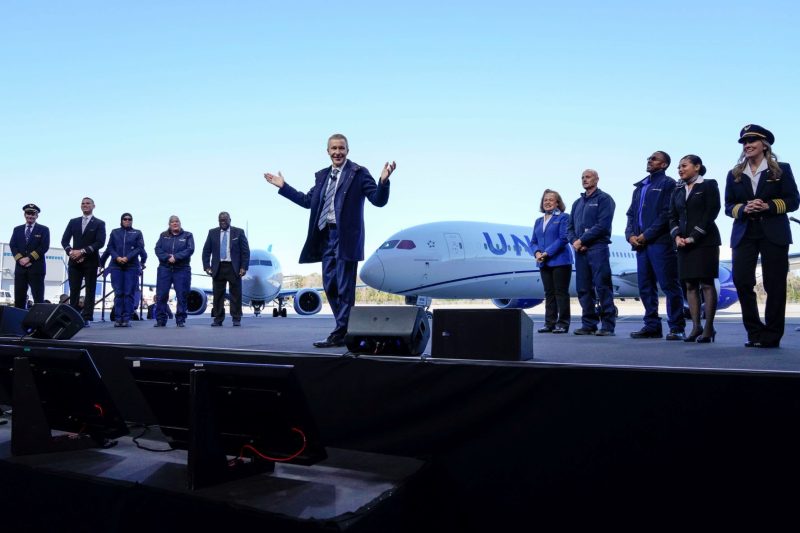
United Airlines on Tuesday said it will purchase up to 200 new Boeing 787 Dreamliners in what will be the largest-ever widebody aircraft order by a U.S. carrier in aviation history.
The announcement includes a firm order for 100 Dreamliners, plus options for an additional 100.
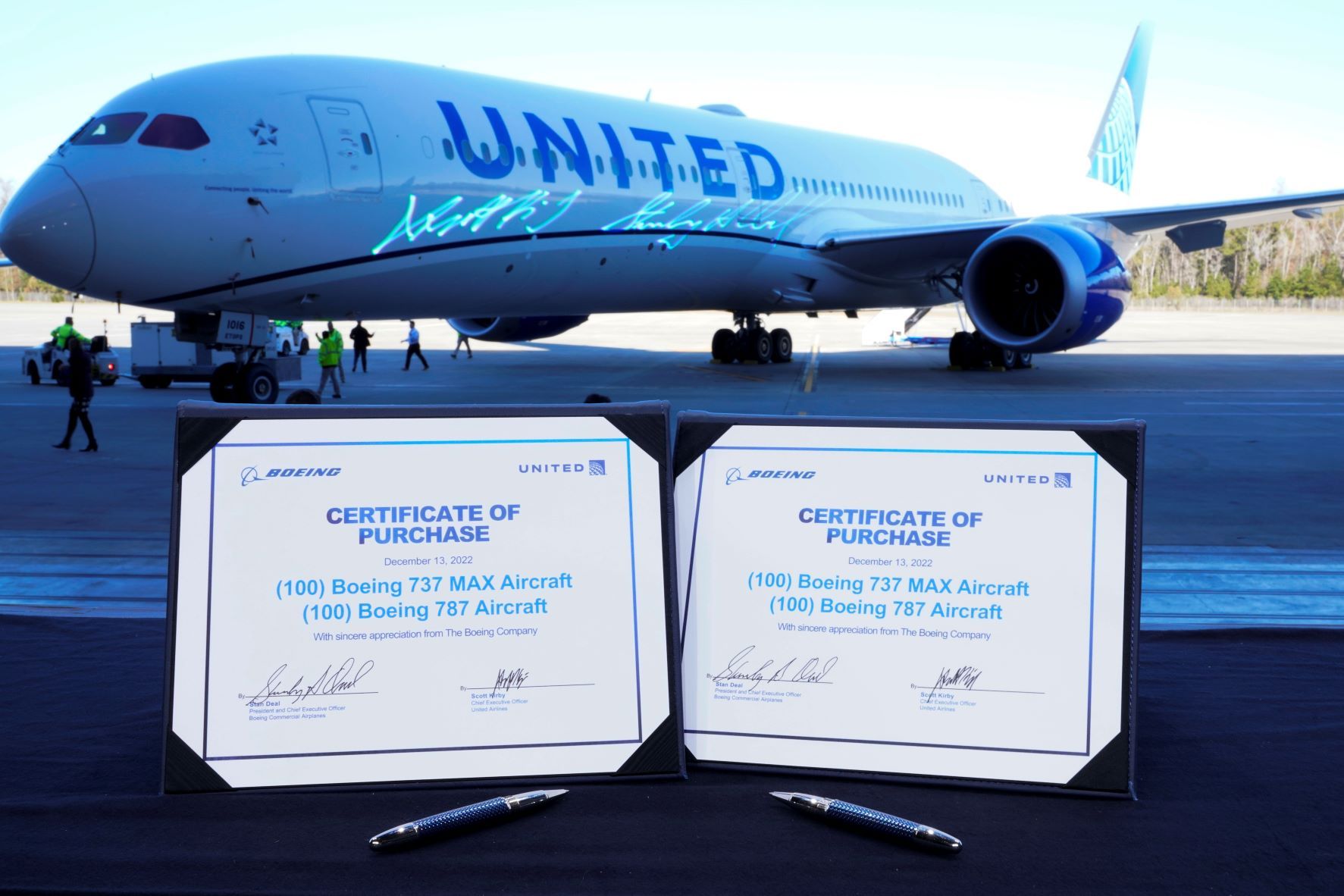
Additionally, the Chicago-based carrier will exercise options to purchase 100 Boeing 737 MAX aircraft – 44 of which it already had an option to purchase, and 56 new orders.
The order represents a huge acceleration in growth for United and a welcome vote of confidence for Boeing, which has seen its fair share of problems with both aircraft types in recent years.
Turns out we were both a size widebody AND narrowbody this holiday season. 🎁
But, what's the difference between the two? Take a look… because we’re headed in the flight direction. 😉 pic.twitter.com/HxjQmm557r
United Expects 700 New Aircraft in its Fleet by 2032
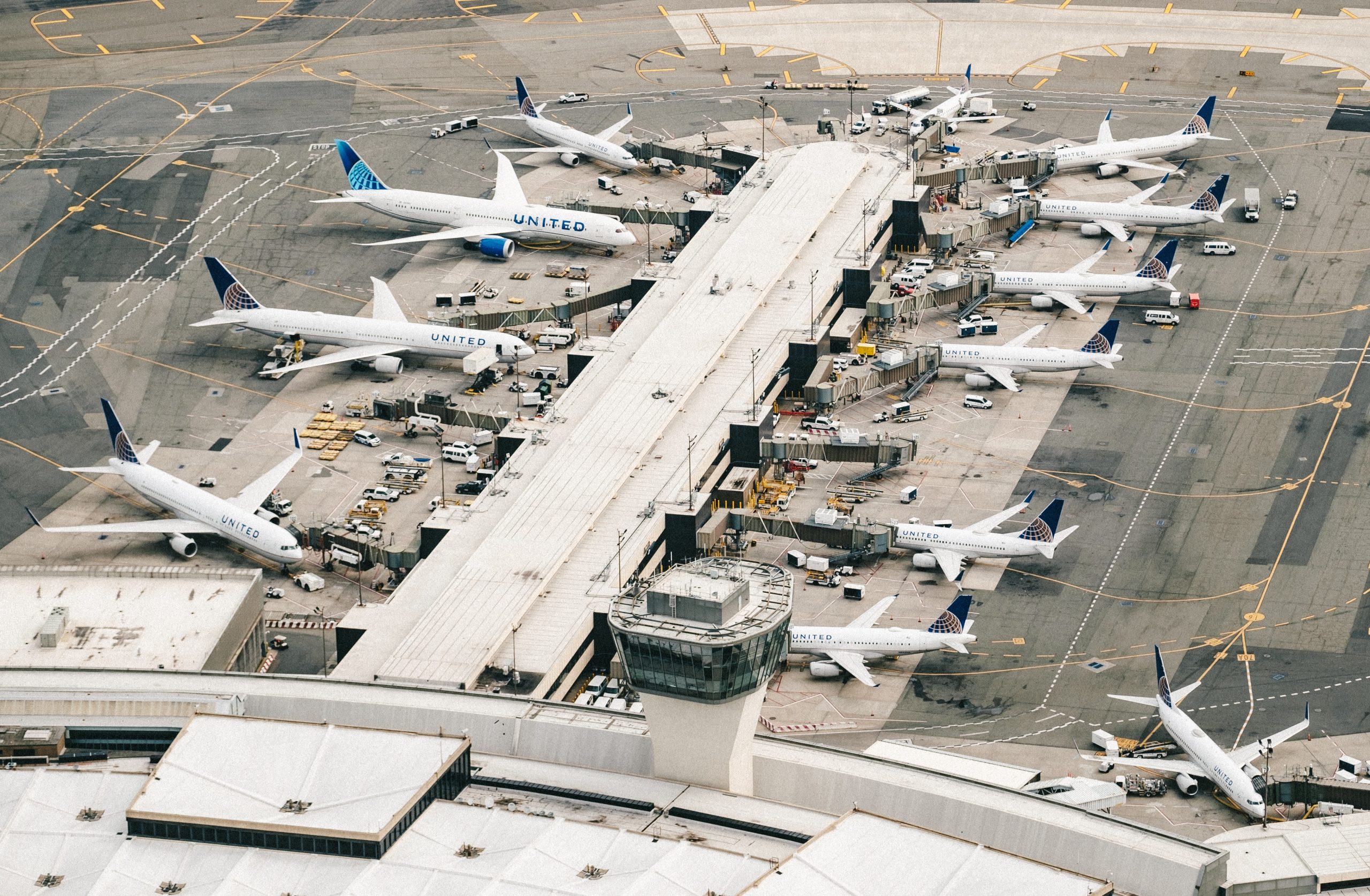
United Airlines aircraft at Newark-Liberty International Airport (EWR) | Photo by Chris Leipelt on Unsplash
The massive order announced Tuesday positions United for an ambitious fleet modernization and growth plan the carrier is calling United Next.
Deliveries of the new Dreamliners will take place between 2024 and 2032. United has the option to choose between the 787-8, -9, or -10 variants, according to a press release from the company.
The Boeing 737 MAX order will include 44 new aircraft slated for delivery between 2024 and 2026 and 56 aircraft for delivery between 2027 and 2028.
With the new aircraft from this order, a staggering 700 new aircraft are set to join United’s fleet by the end of 2032. The carrier expects to receive two aircraft per week beginning in 2023, increasing to three per week by 2024.
We’ve announced an order for up to 200 new @BoeingAirplanes 787 Dreamliners – the largest widebody aircraft order by a U.S. carrier in commercial aviation history – and an additional 100 737 MAX.
In 2023, we plan to welcome more than two new planes to our fleet every week. pic.twitter.com/znwW1FLocc
Boeing and United Airlines announce the largest widebody order in us aviation history | IMAGE: United Airlines
With so many new widebodies joining the fleet, United will be able to retire its aging Boeing 767 and 777 aircraft. The carrier plans to phase out 767 operations by 2030.
United CEO Scott Kirby says the order helps position his airline ahead of the pack in the post-COVID aviation world.
“United emerged from the pandemic as the world’s leading global airline and the flag carrier of the United States,” said Kirby. “This order further solidifies our lead and creates new opportunities for our customers, employees, and shareholders by accelerating our plan to connect more people to more places around the globe and deliver the best experience in the sky.”
The modernization of United’s fleet will also help accelerate its efforts to become a more sustainable airline. With new engines, the use of lightweight composite materials, and improved aerodynamics, the Boeing 787 will lead to a 25 percent decrease in carbon emissions per seat once United’s fleet modernization is complete. In addition, the noise footprint of the 787 is over 60 percent smaller than the aircraft it will replace.
The company has set a goal of being a 100 percent green airline by 2050.
The Dreamliner Order is a Continuation of United’s Aggressive Post-COVID International Growth
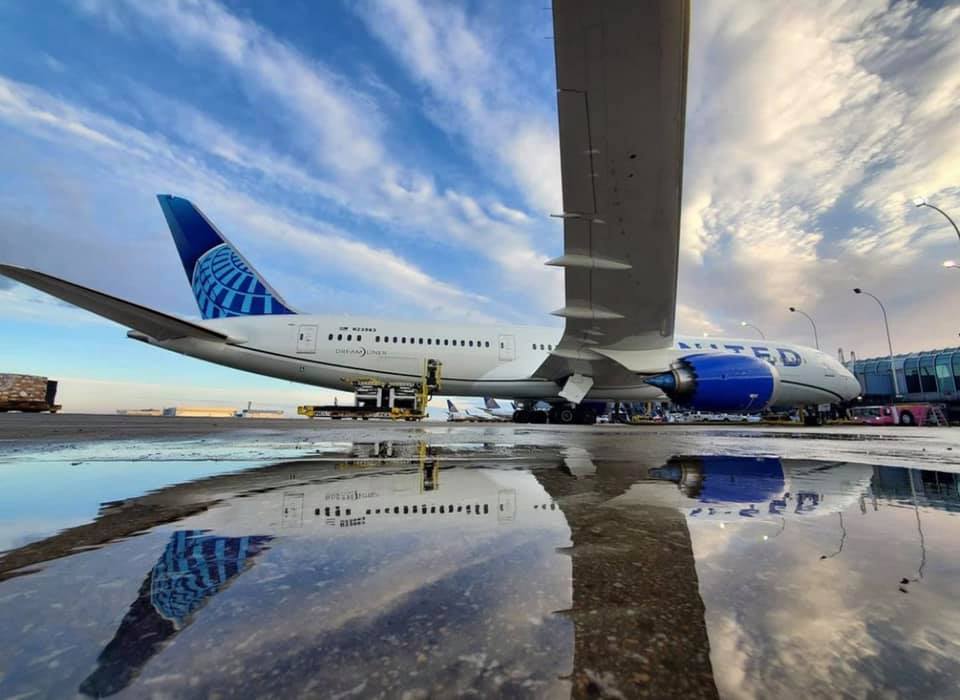
a United Airlines Boeing 787 Dreamliner at Chicago O’Hare International Airport (ORD) | IMAGE: Chicago O’Hare International Airport via Facebook
The massive aircraft order is just another chapter in United’s aggressive post-COVID growth strategy.
In just the last two years, the carrier has added 13 new international destinations, 40 new international routes, and added frequency to ten existing international routes. Less than two months ago, United unveiled three new international gateways for summer 2023: Málaga, Spain (AGP); Stockholm, Sweden (ARN); and Dubai, United Arab Emirates (DXB).
Next summer, United will operate 37 transatlantic routes and 20 transpacific routes – more than any other US carrier.
Along with the addition of new aircraft, United is committed to upgrading the customer experience on its existing fleet. By the end of 2023, all United widebody aircraft will feature its Polaris business-class product, as well as new Premium Plus seating.
In addition, United is in the process of upgrading the interiors of every one of its mainline, narrow-body aircraft by the end of 2025.
Neither Boeing nor United gave any indication as to what the carrier will pay for the gigantic order; however, list prices value the order at more than $37 billion.
And as for its oft-pushed-back order of 45 Airbus A350-900s – well, United says the order remains on the books – for now.
NASA’s first Artemis mission returned to Earth today, making a textbook reentry and splashdown off Baja, California following a 25-day uncrewed flight test to the moon and back.
The Orion spacecraft traveled over 1.4 million miles, breaking numerous records along the way. It flew further beyond the moon than any vehicle made for humans has ever gone (270,000 miles from Earth), and stayed at the moon longer than any spacecraft made for humans has before.
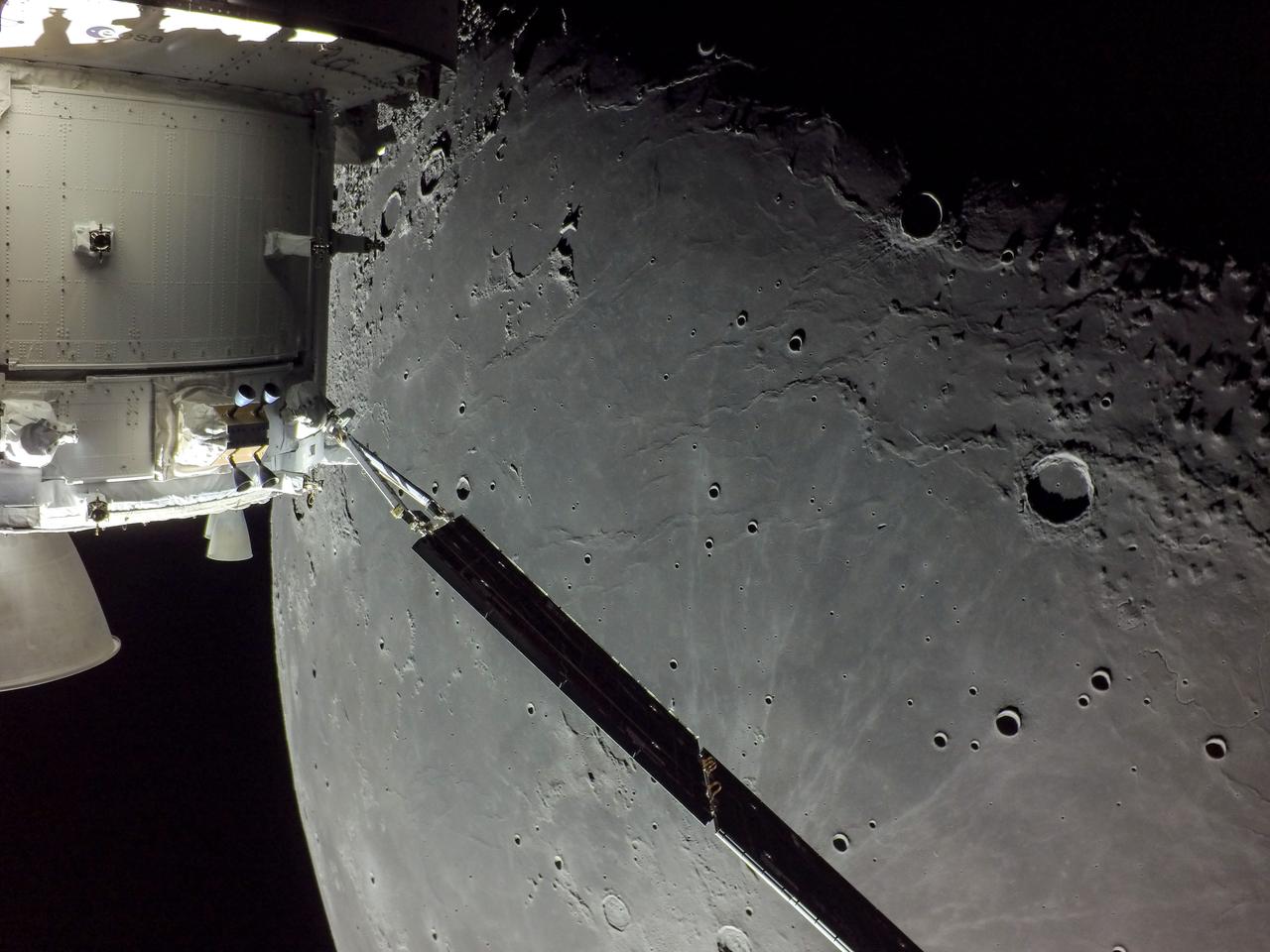
At its closest Orion was just 80 miles above the lunar surface, flying over old Apollo landing sites on the way. At its farthest it was 40,000 miles, returning amazing views of both the moon and Earth together against the black of space. At times NASA even provided live views, when they had the extra bandwidth and were not sending / receiving loads of data to / from the spacecraft.
A new mission control center was made for Artemis too, at the agency’s Johnson Space Center in Houston. Once launched the mission was handed to them from the launch team at Kennedy. From that point on Artemis-1 was in the hands of Lead Flight Director Rick LaBrode.
AvGeekery was invited by NASA recently to meet Rick and see the new Mission Control for ourselves. Watch the video above for our chat with him at his station.
By all accounts, the mission was an enormous success, almost flawless from start to finish, and accomplished what NASA wanted. They intentionally stressed all the new hardware and systems beyond what astronauts will experience, before flying crew, to test validate and prove that they can send humans to the moon and back safely on the new spacecraft and giant Space Launch System rocket (SLS).
THe first launch of nasa’s 322-ft tall sls rocket, kicking ofF artemis-1 on nov 16, 2022 (photo: mike killian)
A new architecture for permanent lunar and deep-space human presence
Artemis is returning American to the moon in a more sustainable way than Apollo, and with 50 years more knowledge and experience gained in the time since, with modern tech incorporated into the design. NASA wants to establish a presence that supports regular lunar visits and operations, and builds foundations for human exploration beyond the moon over the coming decades.
The SLS rocket, Orion and ground support all make up what NASA calls their deep space exploration system, and Artemis-1 was the first integrated test of the new system on a real lunar mission.
It all, however, starts with a successful launch. NASA had some hiccups with fueling procedures for the new 322-ft tall rocket, but once launched the world’s most powerful booster executed flawlessly, thundering off its beachside Florida launch pad at Kennedy Space Center Nov 16 on nearly 9 million pounds of thrust to send Orion on its way.
“The splashdown of the Orion spacecraft – which occurred 50 years to the day of the Apollo 17 Moon landing – is the crowning achievement of Artemis I,” said NASA Administrator Bill Nelson. “For years, thousands of individuals have poured themselves into this mission, which is inspiring the world to work together to reach untouched cosmic shores. Today is a huge win for NASA, the United States, our international partners, and all of humanity.”
Artemis-1 Returned Spectacular Views
Photo: nasa
Orion arrived at the moon on
NASA tested several aspects of Orion needed for future deep space crewed missions, including firing it’s thrusters and propulsion system to maintain course with precision and ensure its crew can get home, communication and navigation systems to maintain contact with the ground and orient Orion, and tested systems and features to handle radiation events. Engineers also tested Orion’s star trackers to determine their sensitivity to thermal variations.
Reentry, the most critical test before putting astronauts onboard
Upon arriving back to Earth the Orion’s service module was jettisoned, followed by the capsule performing a skip entry technique, dipping into the upper atmosphere and using spacecraft’s lift to “skip” back out, then reenter for final descent under parachutes and splash down.
NAVY and NASA recovery crews on the USS Portland were meanwhile on standby at the splashdown point, waiting for the capsule as it came screaming through the atmosphere at Mach 32, shrouded within a fireball hotter than the surface of the sun.
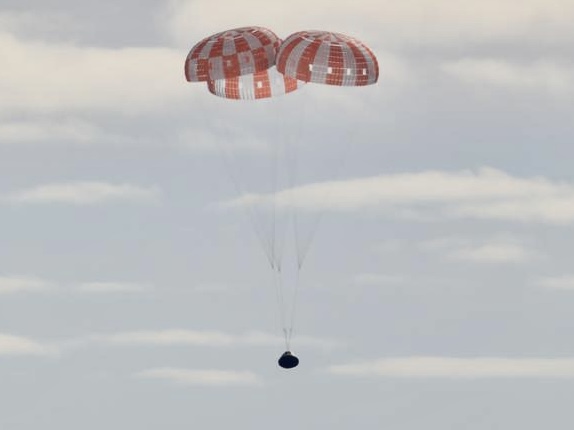
At an altitude of about five miles three small parachutes deployed to pull the forward bay covers away, followed by two drogue parachutes to slow and stabilize Orion for main parachute deployment, which occurred at 9,500 feet as the spacecraft was slowing through 130 mph. Minutes later Orion splashed down at a gentle 20mph, deploying five bright-orange helium-filled bags on the top of the capsule to upright it in the event it stabilizes upside down. It all worked exactly as NASA hoped, as the spacecraft floated upright waiting to be recovered.
Crews in helicopters and inflatable boats however had to wait a couple hours before accessing the capsule, for various reasons, the least of which being waiting for it to vent off ammonia. Engineers also performed several additional tests and data gathering while Orion was in the water, before powering it down handing it over to the recovery team.
lines and tow into the ship well-deck. Then soft-land the capsule into a cradle to secure it.
“This test flight is what we need to prove we can safely fly with crew
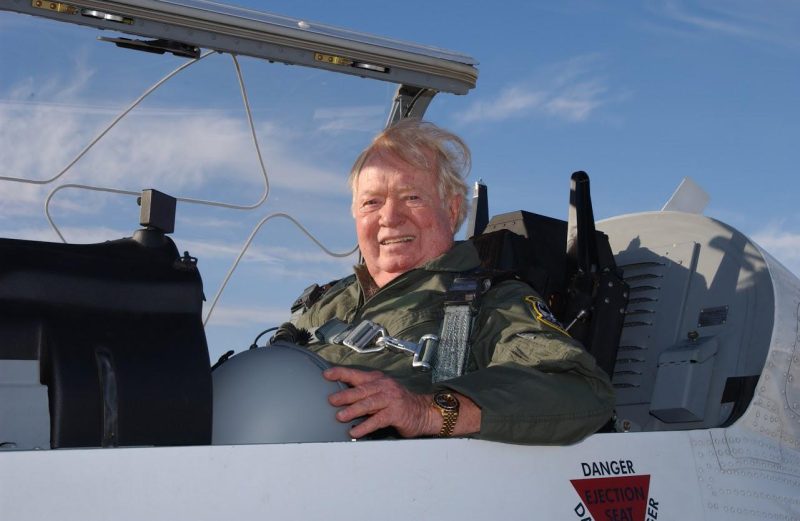
Retired USAF Col. Joe Kittinger has passed away, after a long productive life most famously remembered for jumping from the edge of space before the days of astronauts and rockets, helping gain greater scientific knowledge and making aviation and space travel safer for every pilot ever since. He was 94 years old.
The central-Florida native is most well known for jumping from 102,800 ft in 1960 with Project Excelsior, proving that pilots and astronauts could eject, fall and parachute down from extreme altitudes and survive.
Making History, For All Pilots and Astronauts to Come
It was the culmination of over 10 years of aerospace experiments, testing what the human body could take and gathering research. He experienced temperatures lower than -100 degrees F and was in free-fall for over 4 minutes, reaching over 600 mph before deploying his main parachute at 14,000 ft and landing to the cheers of his waiting crew at White Sands, NM. The whole jump lasted 13 minutes 45 seconds.
“We were ecstatic, because we accomplished what we set out to do,” recalled Kittinger in a interview a few years ago. “We showed that man could go into space and work properly, we showed we can protect him in a space environment, and we showed we can get a man down from high altitude. There was a lot of firsts in the program, and so today, even 5 decades later, every ejection seat in the world used a small drogue chute to stabilize the free-fall from high altitude.”
Kittinger seconds after jumping from almost 20 miles high (USAF photo)
His jump shattered numerous records that held up for over 50 years, including the highest open-gondola balloon ascent, the longest free-fall, and the longest parachute descent.
After Excelsior
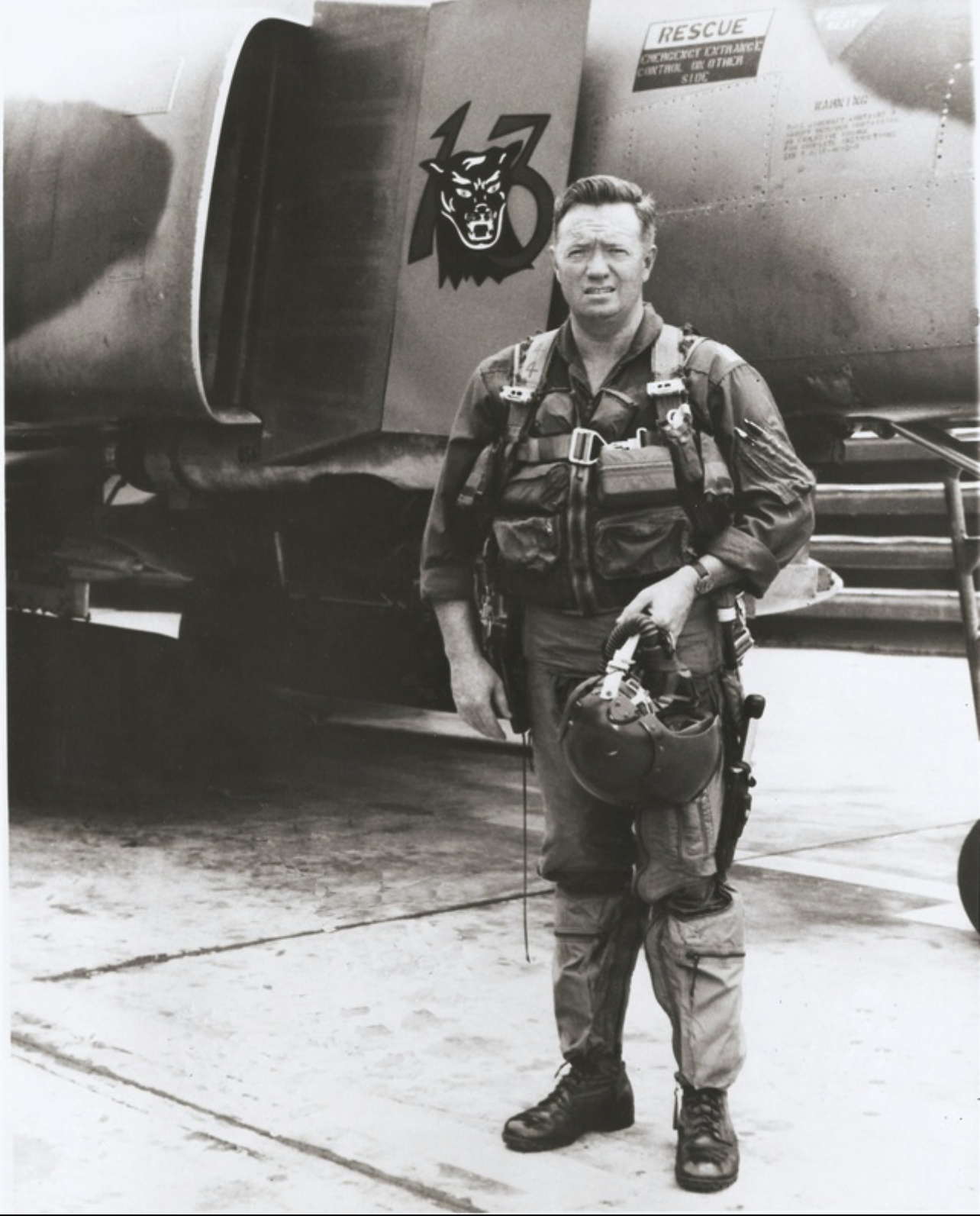
Kittinger’s career in the USAF spanned 29 years, half of which was spent in research and development and as a test pilot. The other half of his career he was a fighter pilot, where he was deployed to Vietnam and flew 483 missions on 3 combat tours, flying A-26s and F-4 Phantoms.
Courtesy photo, joekittinger.com
He had a MiG-21 kill to his credit too, but was shot down and captured just 4 days before he was scheduled to go home. He spent nearly a year as a POW.
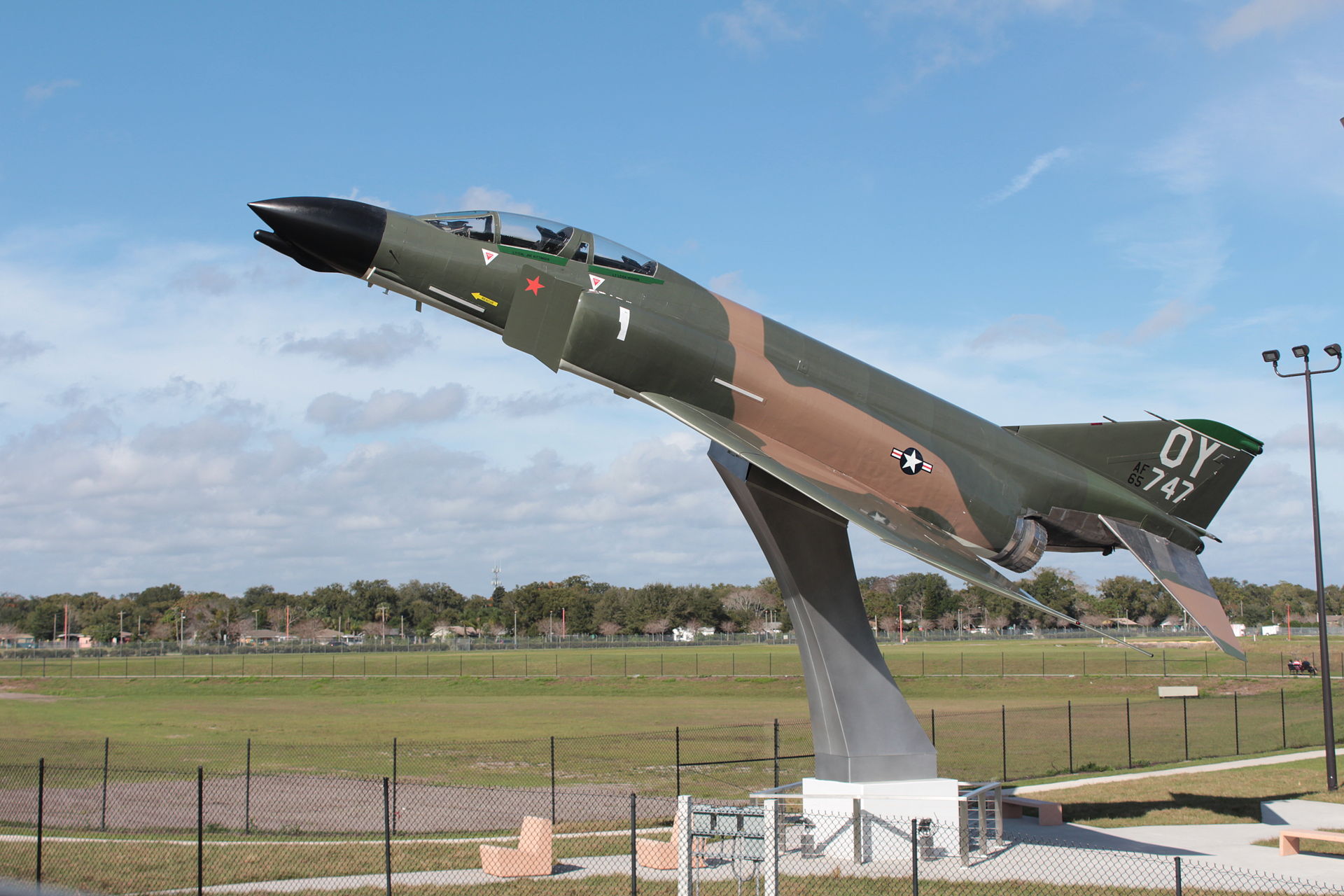
One of the Phantoms he flew in Vietnam is actually on display as a monument in Col. Joe Kittinger Park at Orlando Executive Airport, named in his honor and as a thank you to all Vietnam veterans.
Photo via wikipedia
At a park ceremony in 2011, Kittinger said he loved to ride his bike from “Princeton” elementary to that very spot and dream of becoming a pilot one day. He wanted to give children a place to go where they can watch aircraft take off and land.
There’s even a pavilion with picnic tables and speakers that play the air traffic control transmissions to and from the aircraft at Orlando Executive next door.
Air Force Hero Col Joe Kittinger Passes Away 11
He retired in 1978, and was awarded military decorations including the Distinguished Flying Cross and Distinguished Flying Cross for Project Excelsior. But his love of balloon flight never faded.
A few years later, he set a world record by flying a helium balloon 2,200 miles from Las Vegas to New York in 72 hours. He also became the first person to fly solo by balloon across the Atlantic, and set records for both the longest solo balloon flight and a distance record for type of balloon used.
Monument in Cairo Montenotte, Italy ~ Where Joe landed the Rosie O’Grady’s helium balloon on September 18th, 1984.
Kittinger also had quite a few civilian decorations too, including the Harmon International Trophy (Aeronaut), the Aeronaut Leo Stevens Parachute Medal, the John Jeffries Award for outstanding contributions to medical research, the Aerospace Primus Award, induction into the USAF Special Operations Hall of Fame, the FAI Montgolfier Diplome, the Order of Daedalians Distinguished Achievement Award, induction as a Fellow in the Society of Experimental Test Pilots, the National Aeronautics Association Elder Statesman of Aviation Award, inducted into the National Aviation Hall of Fame in Dayton, Ohio and has won the Barnstormer of the Year Award.
He wrote a fascinating autobiography several years back called “Come Up and Get Me”, which you can order via Amazon HERE.
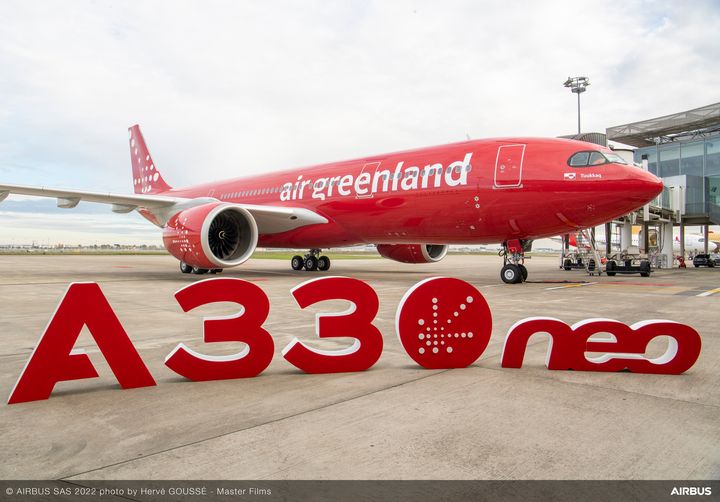
Air Greenland this week took delivery of its brand new Airbus A330-800neo.
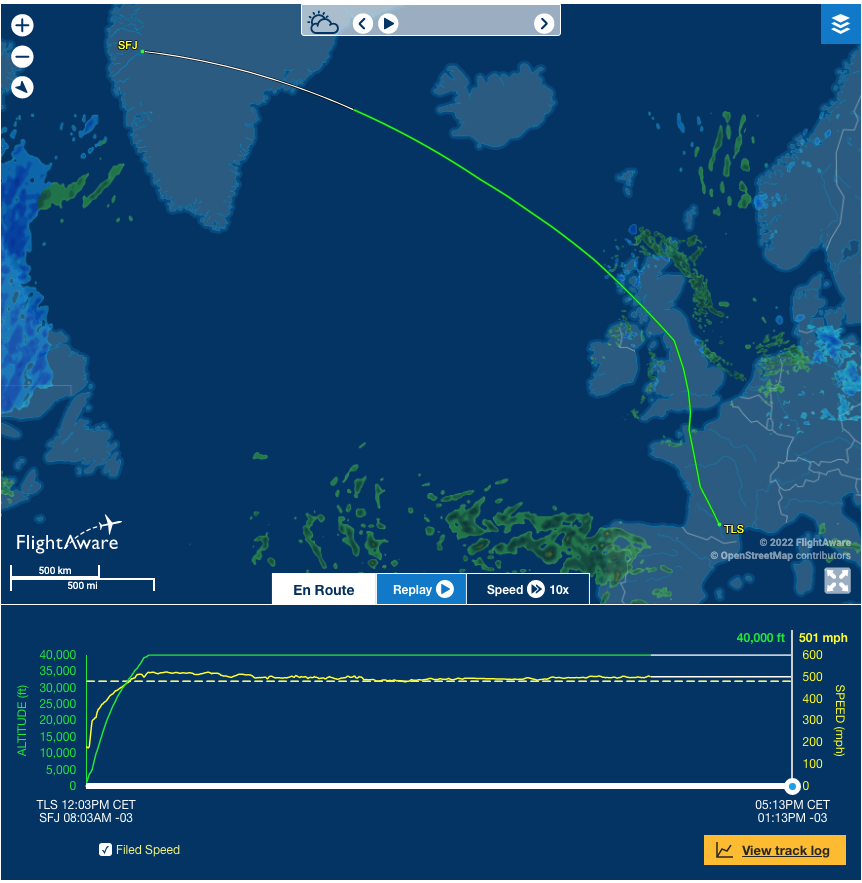
The aircraft, named Tuukkaq (Inuit for harpoon tip), flew its maiden voyage on Wednesday 07 December from Airbus headquarters at Toulouse-Blagnac Airport (TLS) in France to Kangerlussuaq Airport (SFJ) in Greenland.
When Tuukkaq touched down in Kangerlussuaq on Wednesday just after 1300 local time, it marked the end of a years-long journey to replace Air Greenland’s sole long-haul jetliner, an Airbus A330-200, that operates its signature route between Greenland and Denmark.
Its first revenue flight is tentatively set for 27 March for a flight from Greenland’s main international airport in Kangerlussuaq to Copenhagen, Denmark (CPH).
Kangerlussuaq is Greenland’s Main International Airport
An aerial view of Kangerlussuaq Airport (SFJ) in Greenland | IMAGE: Air Greenland
Kangerlussuaq is currently one of only two Greenland airports that can handle widebody jetliners. As such, it serves as the hub for Air Greenland. Passengers wishing to visit the capital city of Nuuk (GOH) must connect in Kangerlussuaq and fly the short 35-minute hop to Nuuk via a 37-seat Dash 8-200.
Expansion projects are currently underway in both Nuuk and Ilulissat (JAV). Once complete, both airports will be able to accept widebody aircraft.
Air Greenland placed the order for the new A330-800neo way back in 2019. As with everything in 2020, pandemic-induced slowdowns resulted in a delivery delay for the new $260 million Airbus.
The new Airbus is Air Greenland’s first-ever purchase of a brand new aircraft. The current A330-200, named Norsaq, is a 24-year-old ex-Sabena bird that Air Greenland acquired in 2002.
The carrier and manufacturer Airbus released pictures of Tuukkaq when it left the paint facility in early August.
Tuukkaq, which bears the registration F-WWCR, is significantly more environmentally friendly than its predecessor, emitting at least 25 percent less CO2 per seat.
Air Greenland is One of Just Four Carriers to Operate the Airbus A330-800neo
Tuukkaq, Air Greenland’s new Airbus A330-800neo | IMAGE: Airbus
The new Airbus will feature 305 seats – a nearly ten percent increase in seating capacity over the 278-seat Norsaq.Tuukkaq features 42 seats in its business class cabin and 263 in economy. It is powered by two Rolls-Royce Trent 7000 engines and features a larger wing with “Sharklets.”
Compared to the much more popular Airbus A330-900neo, the -800 variant is extremely rare. Besides Air Greenland, only three other airlines – Garuda Indonesia, Kuwait Airways, and Uganda Airlines – currently operate the type. Only seven -800s have been delivered out of a total of 11 ordered. Conversely, the larger -900 variant has 267 orders, 82 of which are in service.
With a range of 9,300 miles, the Airbus A330-800neo could open up Air Greenland to additional destinations in North America and Europe in the years to come.
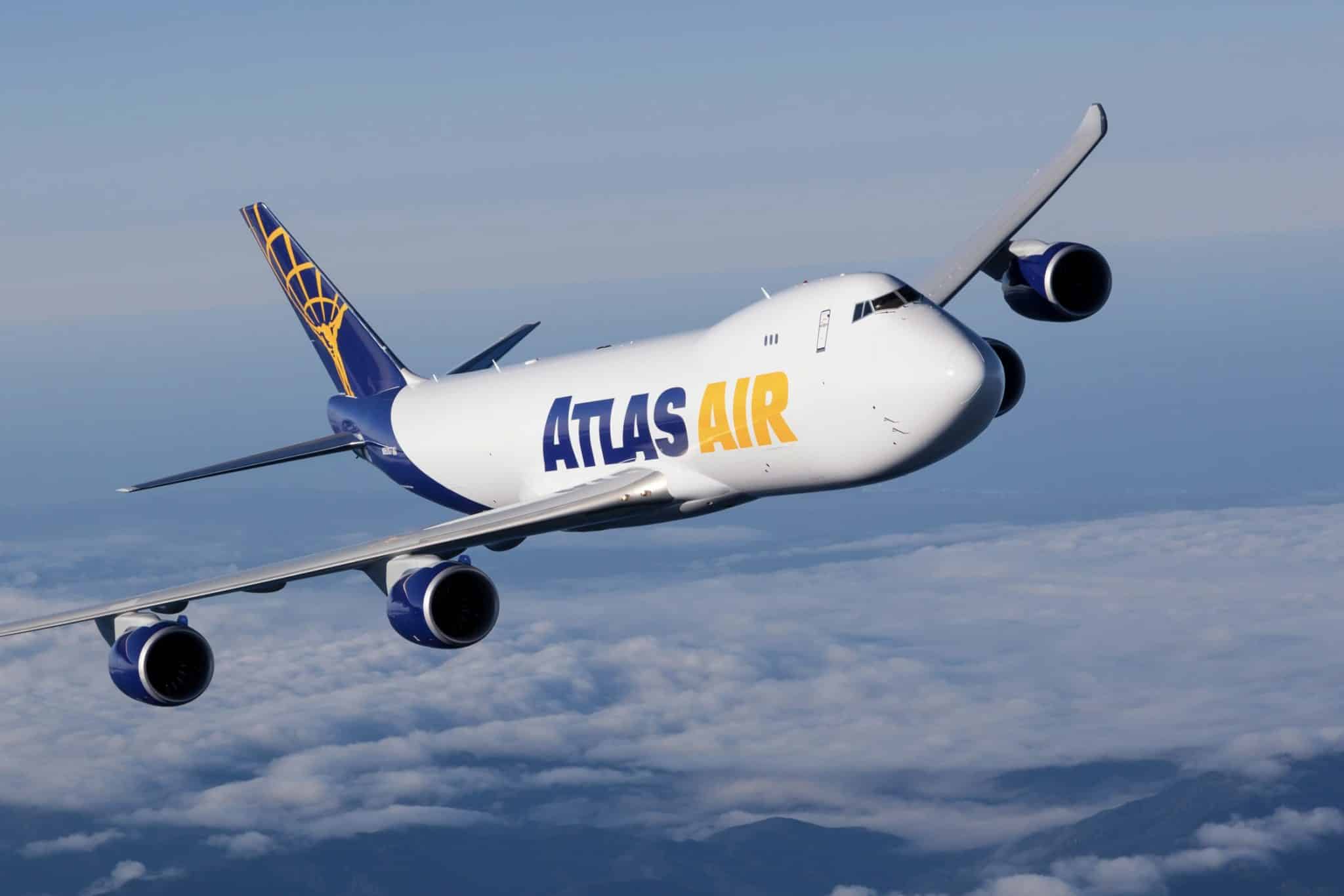
All good things must come to an end, and it’s no different for the Queen of the Skies. On the evening of 6 December 2022, Boeing rolled out their last 747 to ever be produced at the company’s factory in Everett, WA, 52 years after rolling out the first 747.
The 747-8F freighter (#1574, N863GT) will go to Atlas Air, which took the last several 747s for its cargo fleet.
Production Is Ending, But The 747 Will Continue To Fly For Years, Mostly In A Cargo Role
The iconic plane, however, will still serve in the skies for many years to come, as major cargo carriers such as Atlas Air and UPS still use them extensively (both are the largest operators of the 747).
The last ever 747 rolls out of its assembly facility (Boeing photo)
Atlas actually ordered the last three 747s, and they operate more 747s than anyone else (more than 50).
747 Was A Gamble That Paid Off
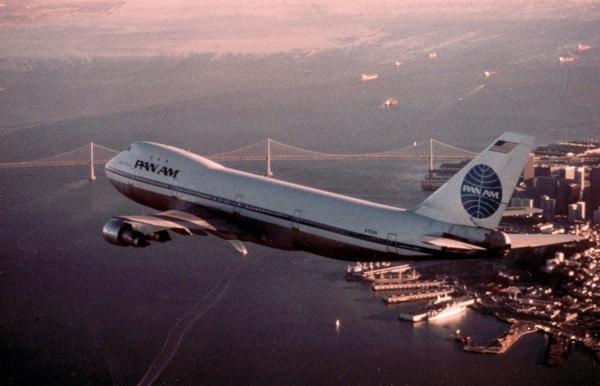
Boeing produced the 747 for more than 54 years. The plane was developed at the request of Pan Am, which in 1966 asked Boeing for the biggest airliner ever. Boeing accepted the challenge, and it nearly bankrupted them.
But the gamble paid off. The first 747 flew its maiden voyage on 9 February 1969. The first commercial flight with Pan Am took place a year later from New York to London, flown by Captain Robert M. Weeks, Captain John Noland, and Flight Engineer August (“Mac”) McKinney.
It ushered in a new era that revolutionized the industry by making international travel accessible to the everyday person.
Pan Am 747 over San Francisco (Pan Am photo)
Other airlines followed with orders for 747s, and it became a staple of international travel. A company wasn’t even considered a major airline unless it had a 747.
747 Served In Many Roles
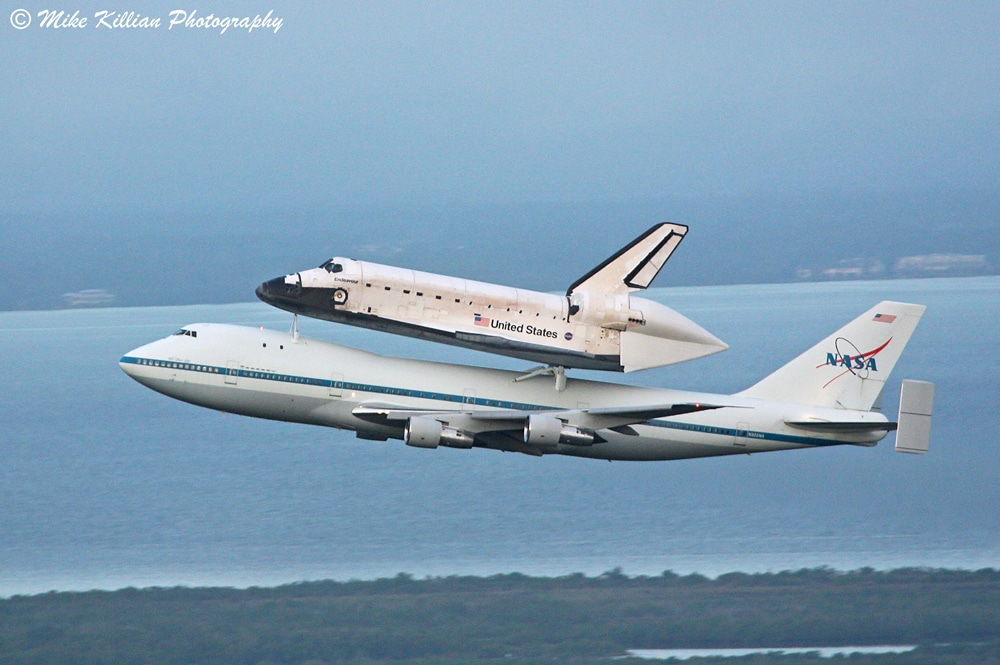
Even NASA found use for them, using a modified 747 to carry their space shuttle fleet piggyback on trips between California and Florida for over 30 years.
Space shuttle Endeavour hitching a piggyback ride cross-country on a modified NASA 747 shuttle carrier aircraft (photo: Mike Killian)
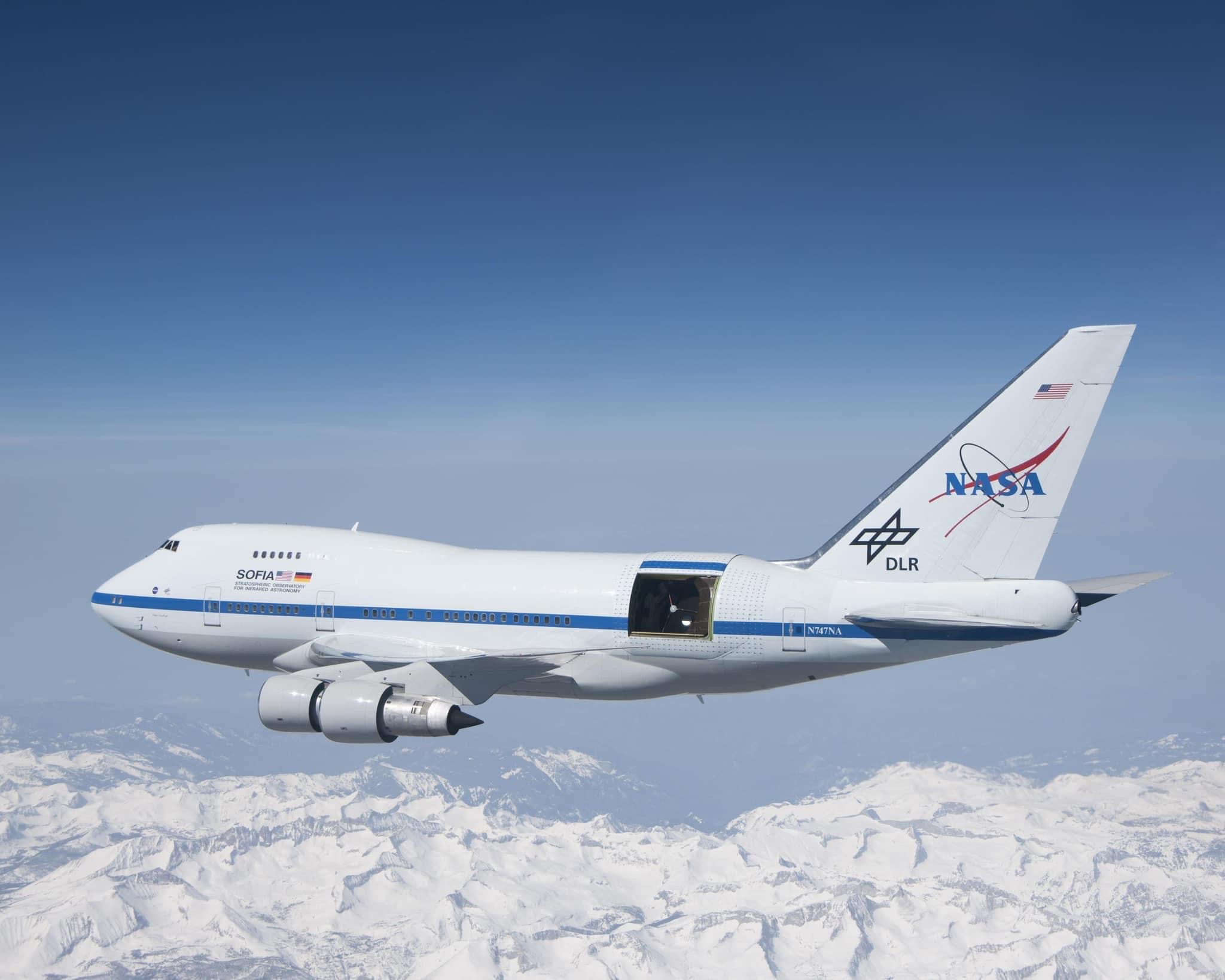
NASA also modified another 747 to carry a flying telescope, which would explore the universe in ways that stationary telescopes on the ground could not. That plane flew its last science mission in 2022 and was retired to its final home at the Pima Air & Space Museum in Tucson, Arizona.
NASA’s 747 SOFIA flying telescope (photo: NASA)
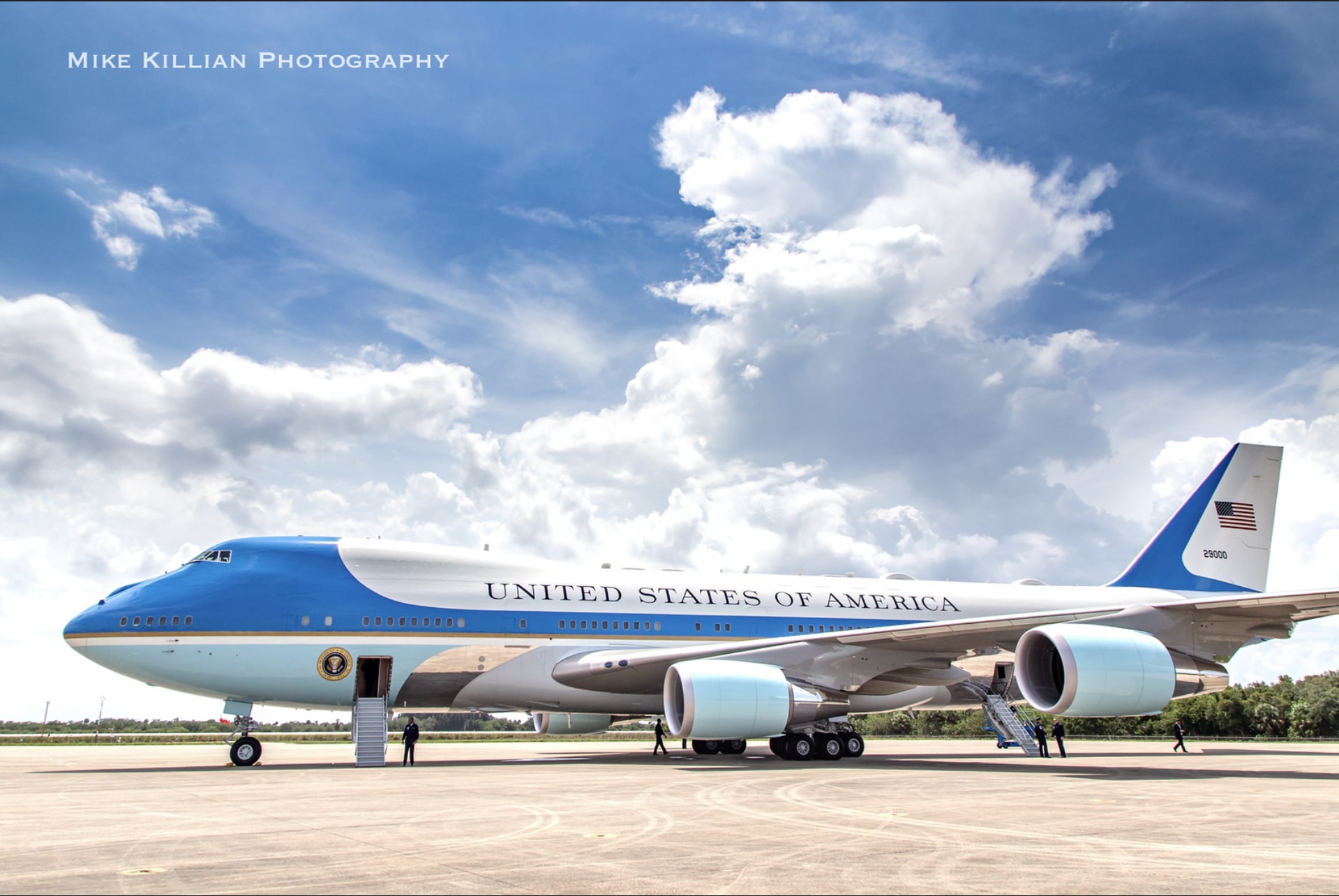
And, of course, the jumbo jet has served as Air Force One, flying six presidents over the years, and will continue to do so for many years to come. Boeing is currently working on two new 747 Air Force Ones to deliver to the Air Force, but they are modified 747s from already produced airframes.
Air Force One 747 (photo: Mike Killian)
But times, of course, do change. Increasing fuel costs and the introduction of newer plane types with improved fuel efficiency and advanced design technology have compelled major airlines to shift away from the 747.
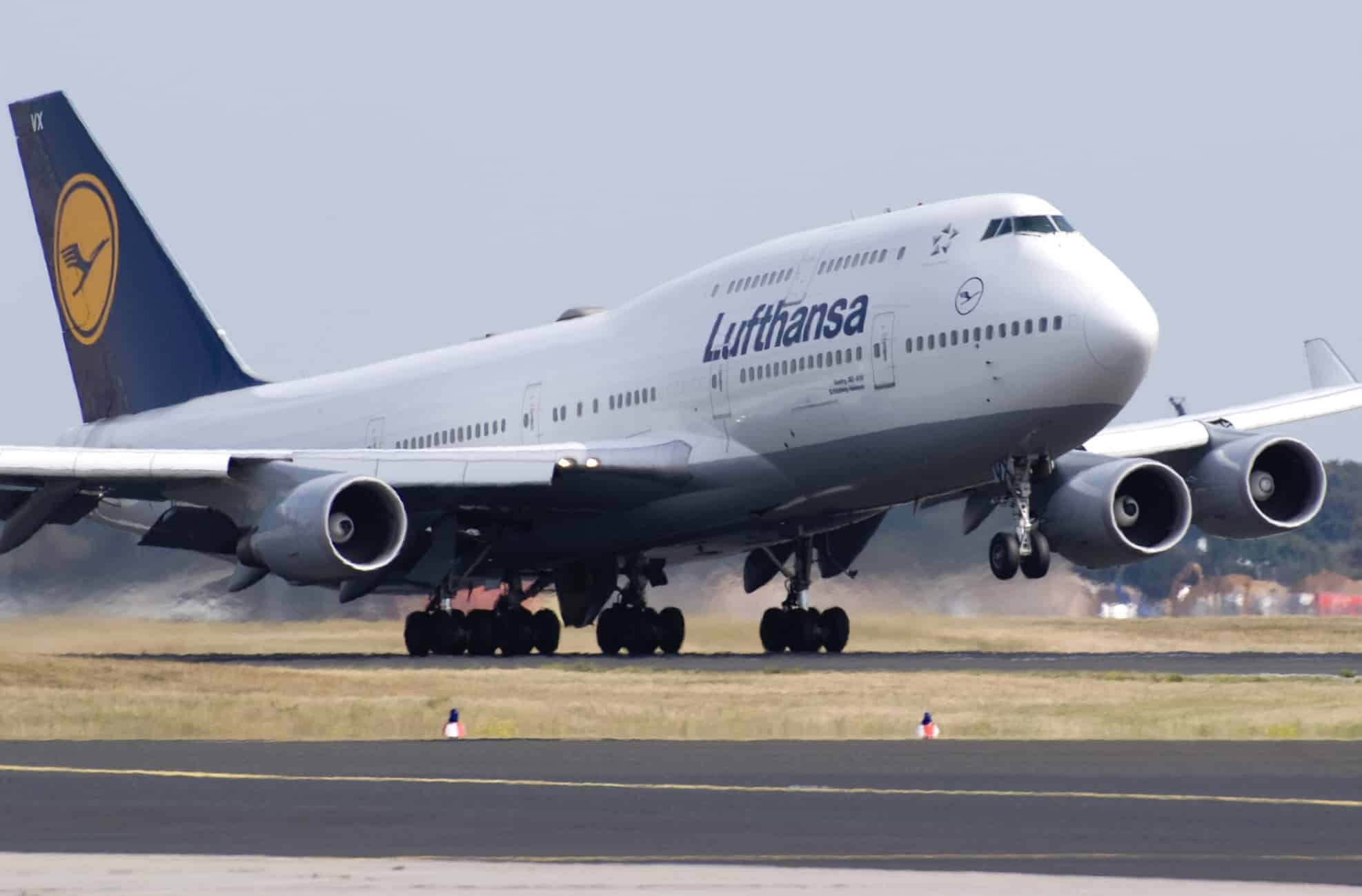
Most now operate as cargo freighters. The global air cargo fleet is expected to grow by more than 60% over the next 20 years. But a few airlines still fly them for passenger travel. They include Asiana Airlines, Mahan Air, Lufthansa, Korean Air, Max Air, and Air China.
PHOTO: LUFTHANSA
Last 747 Will Fly With Atlas Air, The Largest Remaining Operator of the Type
“The 747 will forever hold a special place in aviation history,” said Stan Deal, president and chief executive officer of Boeing Commercial Airplanes. “Atlas Air began operations 28 years ago with a single 747, and it is fitting that they should receive the last, ensuring that the ‘Queen of the Skies’ plays a significant role in the global air cargo market for decades to come.”
PHOTO: ATLAS AIR
Boeing and Atlas Air held a special ceremony on 31 January 2023 to mark the historic handoff of the very last 747. AvGeekery was there to bring our readers the story.
“I can’t emphasize how big of a sense of employee pride there is with this airplane,” said Boeing’s head of communication for the 747, Brianna Jackson, during a media tour of the production facility earlier this year. “There are people here who have worked on this plane for 40 years — their entire career on the 747. They love this airplane and want to see it to the end.”
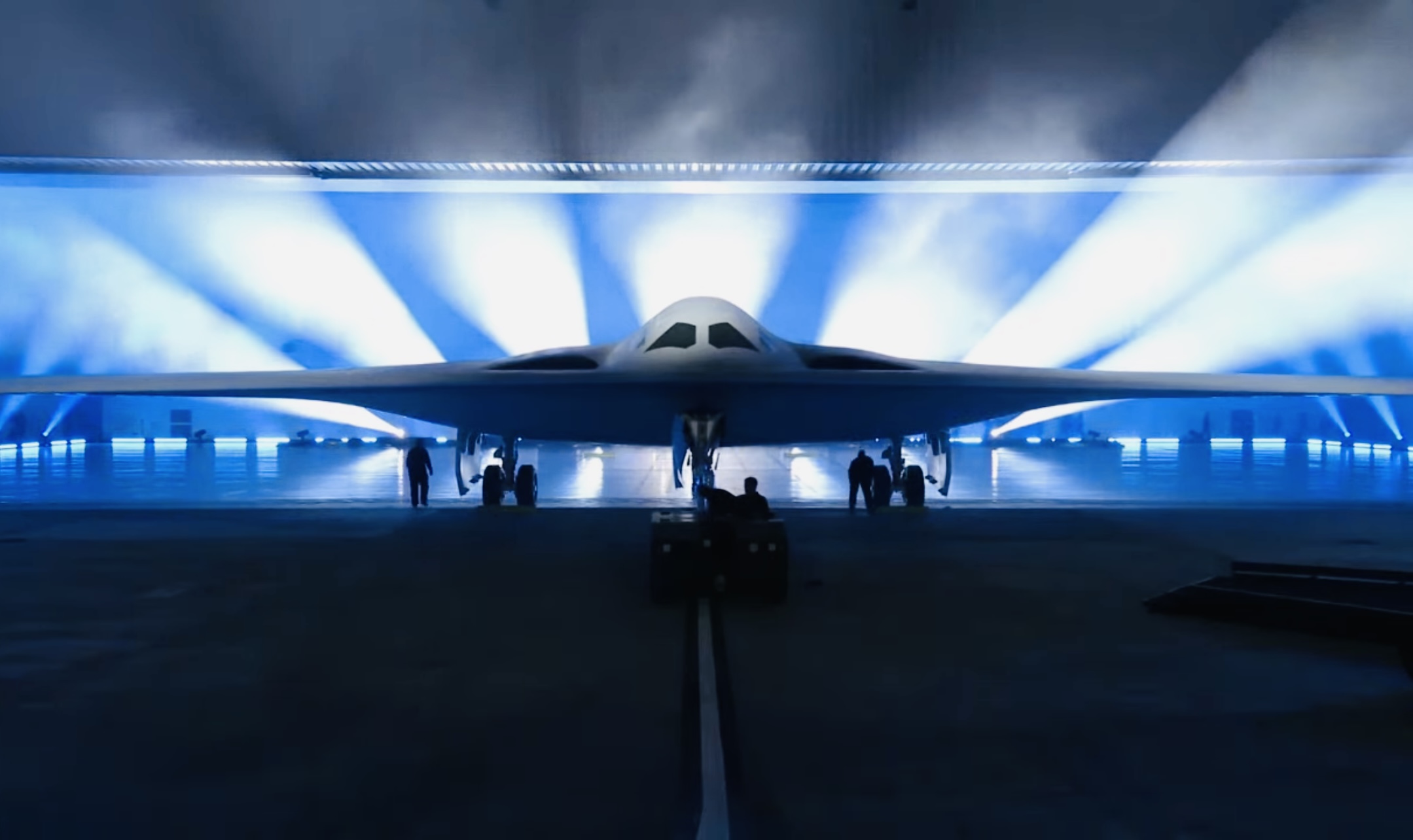
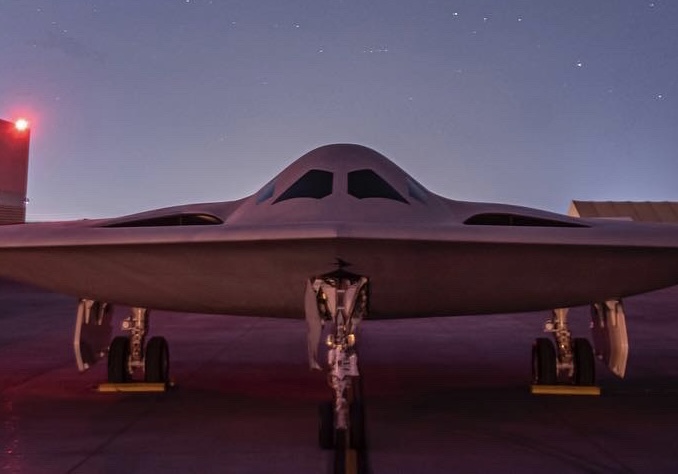
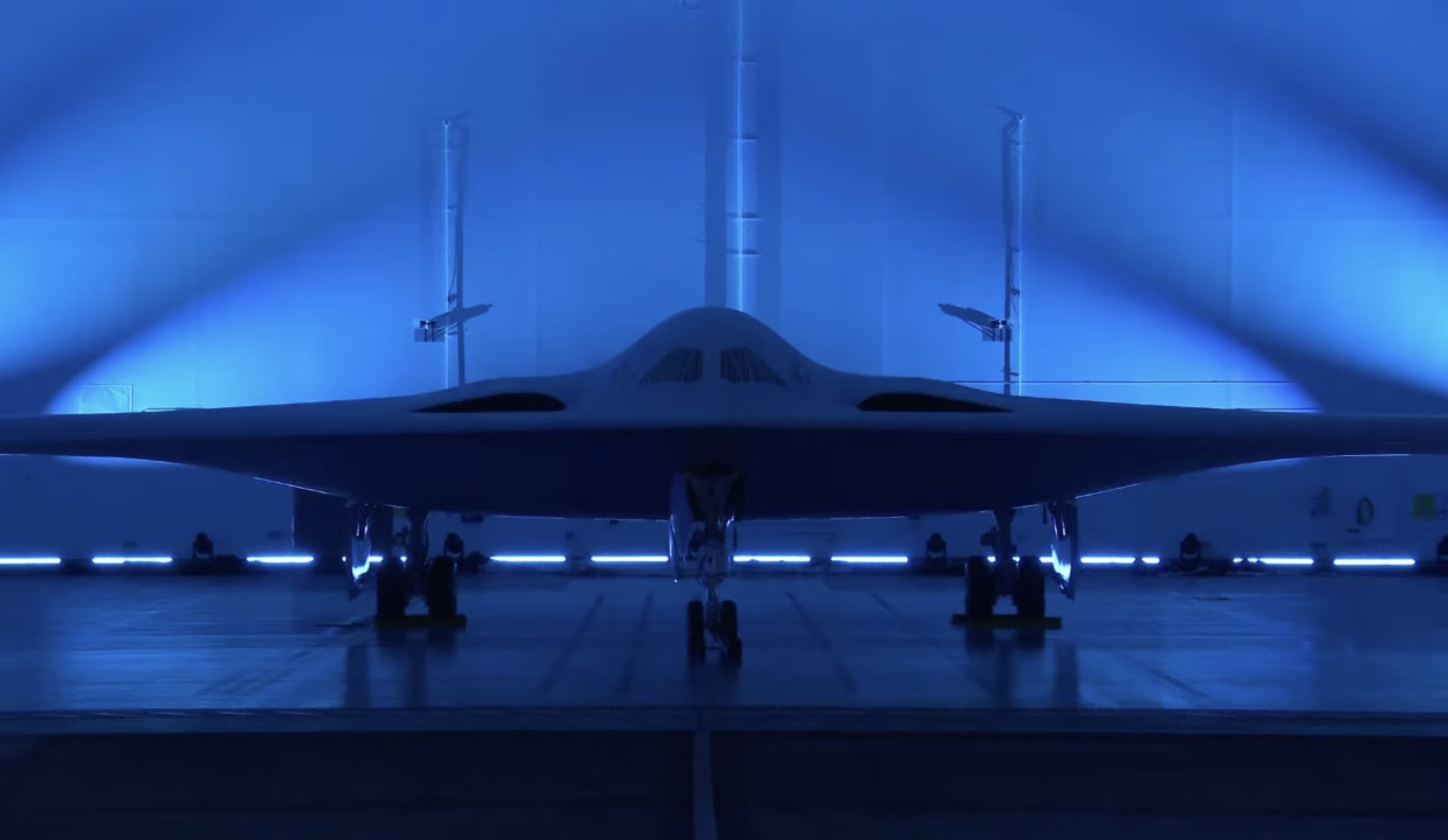
The US Air Force rolled out America’s new B-21 Raider stealth bomber this evening at an unveiling ceremony hosted and sponsored by Northrop Grumman in Palmdale, California.
The new, highly-classified, next generation long-range bomber will over time replace the nation’s aging B-1 and B-2 bombers. The B-21 will be the backbone of America’s 21st century bomber force, consisting of B-21s and B-52s.
The ceremony actually opened with flyovers of a B-52, B-1 and B-2 during the National Anthem. You can watch the ceremony above, which took place at the same facility where Northrop rolled out the world’s first stealth bomber, the B-2, over three decades ago.
The backbone of America’s 21st Century bomber force
Northrop Grumman has been developing the new bomber now for years. Six aircraft are currently in various stages of production and testing. Development, however, has been highly classified. Even the ceremony itself only allowed people to view the plane from the front, bathed most of the time in low-light.
America’s first B-21 Raider stealth bomber unveiled on 2 Dec 2022 (photo: US Air Force)
The bomber’s nose gear door wears the serial number 00001, with the tail code of Edwards Air Force Base painted on its main landing gear doors.
Northrop says their new B-21 is the world’s first sixth-generation combat aircraft, and while they won’t elaborate and what all the plane can do, most people agree a sixth-gen platform would come with better sensors, improved stealth, and the ability to employ energy weapons like lasers.
B-21 Raider (USAF photo)
The USAF says B-21s will fly with high frequency, able to deliver conventional and nuclear munitions with formidable precision, and employ a broad mix of stand-off and direct-attack munitions. They will also accommodate crewed or un-crewed operations, able to adapt over time as missions and threats evolve.
It was built with an open system architecture, making it highly adaptable. So over time, it will be able to employ weapons that haven’t even been invented yet. It’s also multi-functional, able to handle anything from gathering intel to battle management, to integrating with allies and partners, and it will work seamlessly across domains, theaters and the joint force.
America, Meet Your New B-21 Raider Stealth Bomber 27
“We last introduced a new bomber over 30 years ago,” said Air Force Chief of Staff, Gen CQ Brown, Jr. “As we look to the threats posed by our pacing challenge, we must continue to rapidly modernize. The B-21 Raider will provide formidable combat capability across a range of operations in highly contested environments of the future.”
USAF wants at least 100 Raiders in their arsenal
The USAF wants to acquire at least 100. Ellsworth Air Force Base, South Dakota will be the Raider’s first main operating base, and host the Formal Training Unit.
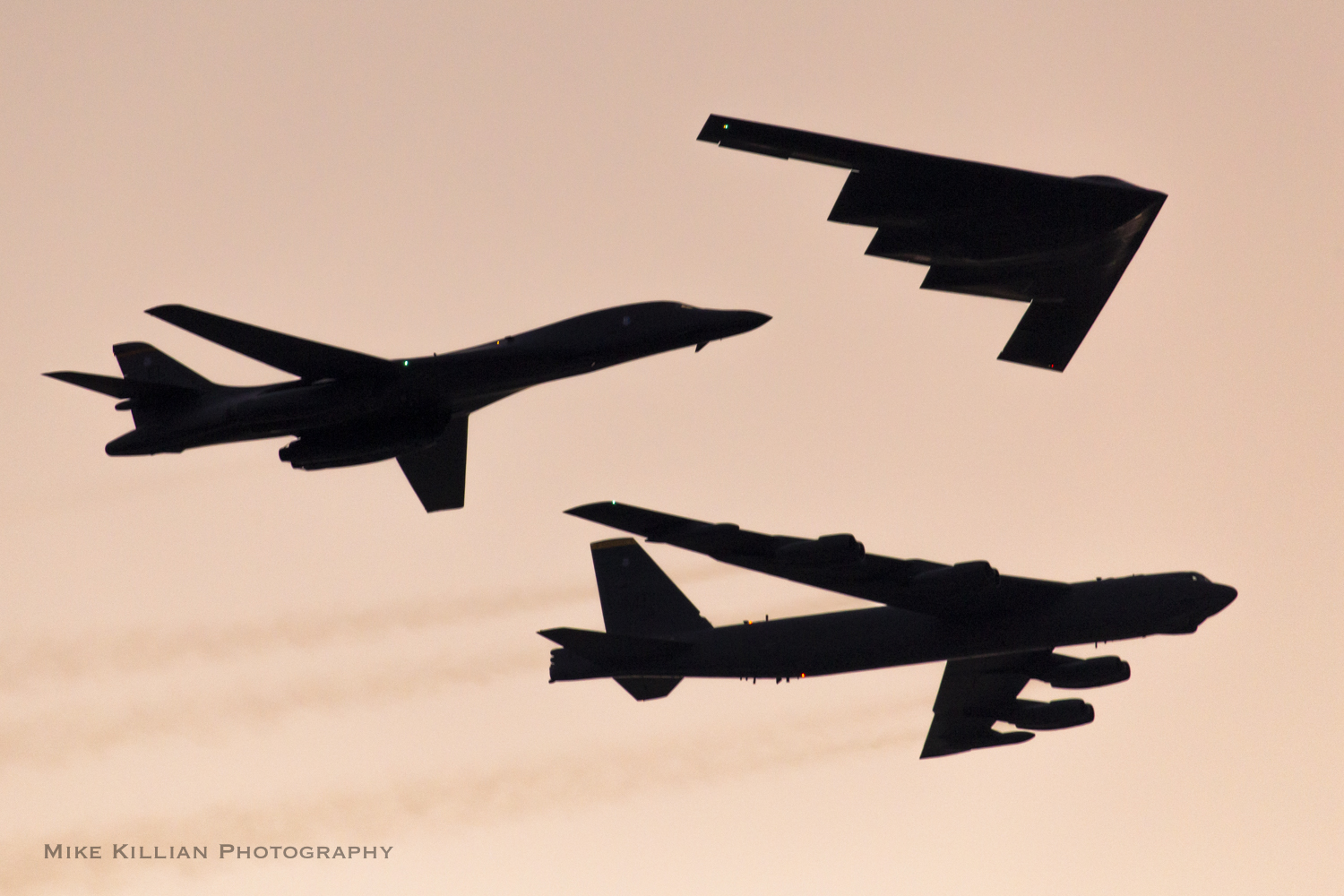
America’s current boMber force in a rare appearance flying formation together. The B-21 raider will replace the B-2 (Lead) and B-1 (left), while it Joins the B-52 (bottom riGht). Photo: mike killian
Whiteman AFB, Missouri, and Dyess AFB, Texas will be second and third main operating bases.
The first test aircraft completed loads calibration testing earlier this year, before undergoing verification and validation testing of its structural design prior to flight. Further integration and ground testing is ongoing.
B-21 Raider (USAF photo)
Following a successful ground test campaign, the first B-21 flight is scheduled for 2023 at Edwards Air Force Base, CA. Edwards hosts the B-21 Combined Test Force.
The B-21 Raider is named after the Doolittle Raiders, who carried out the historic surprise counterattack against Japan following Pearl Harbor on 18 April 1942. The designation B-21 recognizes the Raider as the first bomber of the 21st century.
B-21 Rollout Video
Watch the 2022 Rollout Ceremony for America’s next stealth bomber: The B-21 Raider
It really does not matter what each veteran did during his period of service. The fact is, whether a veteran fought on the front lines during horrific battles or ran the kitchen at a training post, they chose to serve and we should be thankful for their commitment. Assignments are made based on the needs of the service. But each service member must decide how he will perform his assigned duties.
An unlikely and humble servant
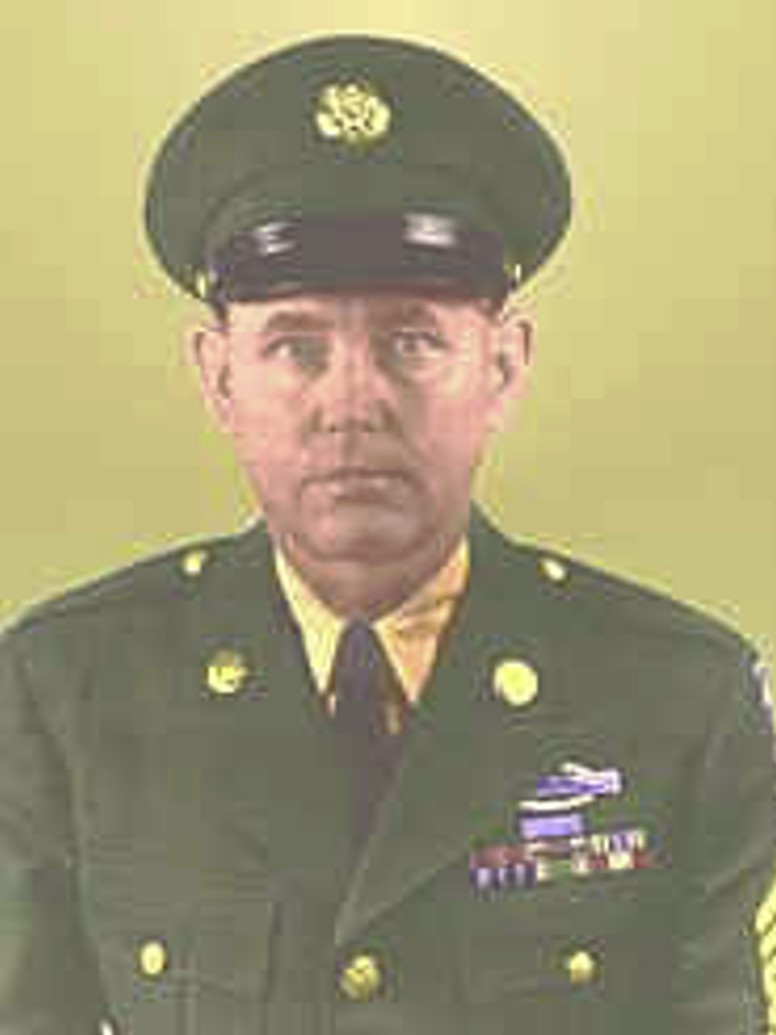
William J Crawford, Medal of Honor Recipient (Wikipedia Image)
William T. Crawford was born in Pueblo in May, 1918. Like many young men at the time, at the outbreak of World War II, he joined the United States Army in 1942. After basic training, he was assigned to the 142nd Infantry Regiment 36th Infantry Division operating in southern Italy.
On the 13th of September 1943, Crawford was acting as a scout, when his company attached Hill 424 in southern Italy. His company was pinned down twice by heavy enemy fire. Crawford, using hand grenades and his rifle destroyed several machinegun nests that had blocked their progress.
After the battle, Crawford was missing in action and presumed dead. Due to his heroic actions that enabled his squad to advance, he was posthumously awarded a Medal of Honor.
The Medal of Honor Citation
“For conspicuous gallantry and intrepidity at risk of life above and beyond the call of duty in action with the enemy near Altavilla, Italy, 13 September 1943. When Company I attacked an enemy-held position on Hill 424, the 3rd Platoon, in which Pvt. Crawford was a squad scout, attacked as base platoon for the company. After reaching the crest of the hill, the platoon was pinned down by intense enemy machine-gun and small-arms fire.
Locating 1 of these guns, which was dug in on a terrace on his immediate front, Pvt. Crawford, without orders and on his own initiative, moved over the hill under enemy fire to a point within a few yards of the gun emplacement and single-handedly destroyed the machine-gun and killed 3 of the crew with a hand grenade, thus enabling his platoon to continue its advance.
When the platoon, after reaching the crest, was once more delayed by enemy fire, Pvt. Crawford again, in the face of intense fire, advanced directly to the front midway between 2 hostile machine-gun nests located on a higher terrace and emplaced in a small ravine. Moving first to the left, with a hand grenade he destroyed 1 gun emplacement and killed the crew; he then worked his way, under continuous fire, to the other and with 1 grenade and the use of his rifle, killed 1 enemy and forced the remainder to flee. Seizing the enemy machine gun, he fired on the withdrawing Germans and facilitated his company’s advance.” [“Medal of Honor recipients – World War II (A–F)”. Medal of Honor citations. United States Army Center of Military History.]
Crawford was actually alive but never formally recognized for his heroism
In fact, Crawford had been captured and was held as a prisoner of war, having been rescued after 19 months.
In 1945, William Crawford married his wife, Ellen Bruce. He re-enlisted in the Army in 1947 and served another 20 years, retiring in 1967 at the rank of Master Sergeant.
A new assignment
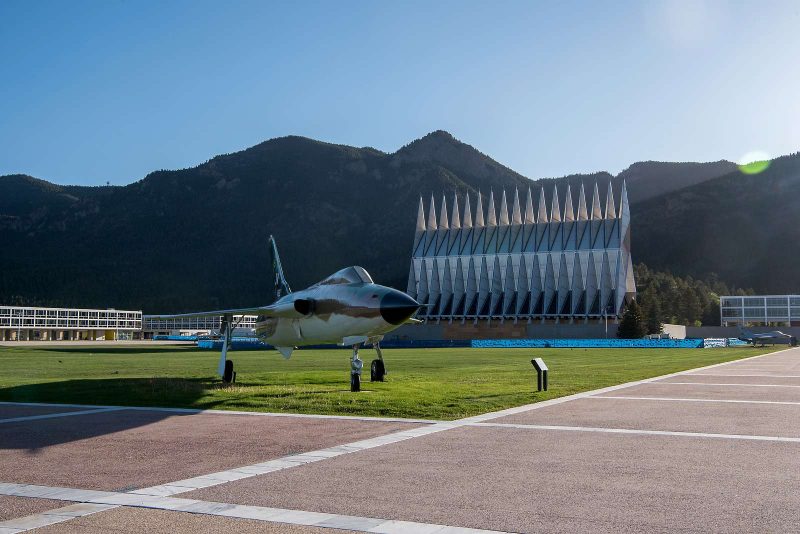
Following his retirement, he got a job as a janitor at the United States Air Force Academy in Colorado, and later became the director of the Lucretia Vaile Museum in Palmer Lake, Co.
His Medal of Honor
What followed was an amazing tale of grit, fortitude and lessons for us all. It was captured in a great story captured by Col Moschgat when he was commander at the 12th Operations Group at Randolph AFB in 2001.
While working as a janitor at the Air Force Academy, he had shared stories about World War II and the battles in Italy, although he never spoke specifically about his personal experience. One of the Cadets, researching information on World War II came across a reference to a Medal of Honor winner, Private William Crawford who was presumed dead. When asked by the cadets about the reference, he admitted “Yep, that’s me.”
When students later asked him about the Medal of Honor, he replied, “That was one day in my life, and it happened a long time ago.”
According to one report, Crawford later mentioned to students and coworkers at the Air Force Academy that he had never received the Medal of Honor.
The cadets at the USAF Academy decided to change this. In 1984, Crawford was a guest of the graduating class. Many past graduates, generals and VIPs attended the graduation of the Class of 1984. President Ronald Reagan arrived and presented the Medal of Honor to Crawford and formally recognized Crawford’s action. See the Crawford’s Obituary. Included in his comments was a reference to “Leadership Lessons” that had been learned from their decorated janitor.
For more than 40 years, Crawford never had a single ceremony or recognition regarding his Medal of Honor award.
Former cadet, later Col Bill Crawford, explained that their janitor had “taught me many valuable, unforgettable leadership lessons. Here are ten I’d like to share with you.” You can read all ten lessons here.
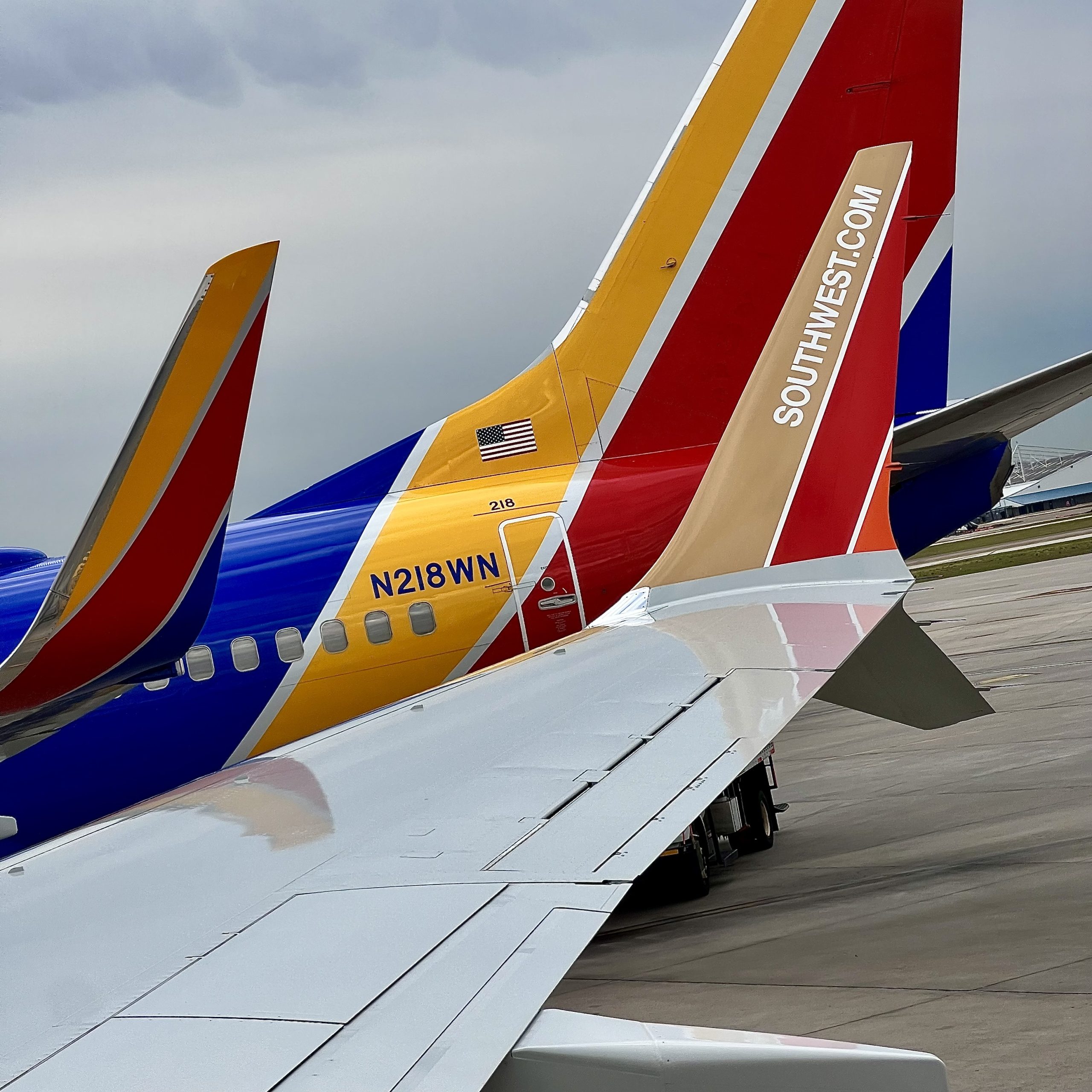
In the early hours of the morning on November 17, 2022, I awoke to a 3:00am alarm. At that time, I didn’t know if I’d be flying that day or not, but I’d soon know the answer. A quick check on FlightRadar24 showed that the aircraft I was trying to intercept was still scheduled to operate the flight I had booked the night before, so I made my way to Tulsa International Airport to catch a 5:00am flight to Houston’s William P. Hobby Airport. Only one aircraft had the power to pull me out of bed that early. An aircraft I’d been eagerly following closely as it neared delivery. That aircraft was Southwest Airlines’ brand new retrojet with the tail number N871HK.
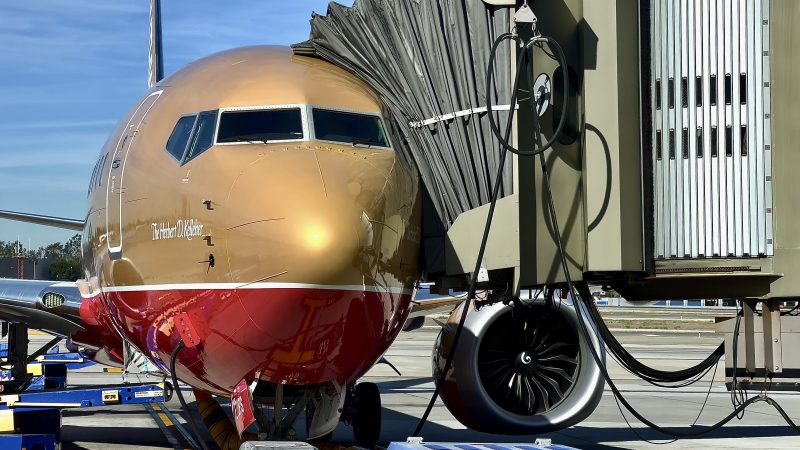
N871HK, a Boeing 737-8 Max has easily been one of the most anticipated aircraft deliveries this year. The aircraft is a flying tribute to Herbert D. Kelleher. One of the co-founders of Southwest Airlines. Sadly, Herb passed away in 2019, but his legacy lives on every day in the company he helped build, and now in the form of his very own aircraft. And this is but one small part of what makes N871HK special. Everything about the aircraft, all the way down to the tail number itself is designed to pay tribute to Herb as a person, and Southwest Airlines as a whole.
What makes this jet so special?
First, the aircraft is appropriately named “The Herbert D. Kelleher.” Meaning Herb will always have a plane dedicated to him, flying around the country as a mobile tribute. Second, the aircraft wears Southwest’s original livery, often called the “Desert Gold” or “Mustard Rocket” livery. It was Southwest’s original or “Classic” livery. And last, even the tail number is no random number. N871HK has just as much meaning behind it as the aircraft’s paint and name. Southwest Airlines first revenue flight took to the skies on June 18, 1971. (871). And HK is, of course, Herb Kelleher’s initials. This aircraft isn’t just a pretty coat of paint. It has deep significance to all the employees at Southwest Airlines.
Southwest Classic Winglet
Wasn’t there already one of these classic golden jets before?
Now, you may be thinking…. Didn’t Southwest already have a plane dedicated to Herb? And you’d be right. Previously Southwest had three Boeing 737-700’s painted in this classic livery. One of which bore the tail number N711HK. It was also called “The Herbert D. Kelleher,” but it was scrapped earlier this year along with its two compatriots after nearly 25 years of service with Southwest. This left Southwest’s fleet void of the classic Desert Gold livery for nearly 6 months. That is until last Thursday.
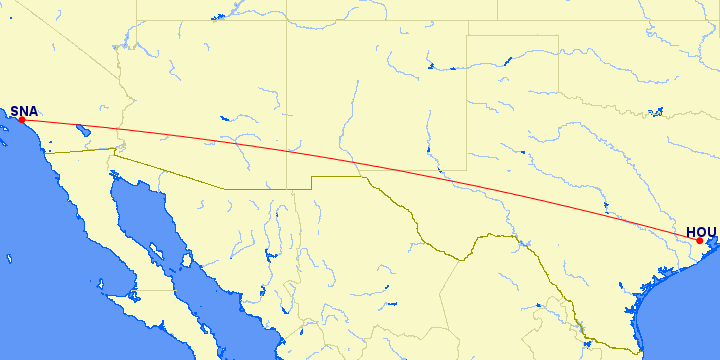
On November 15, 2022, operating flight WN8701, N871HK landed at Phoenix Sky Harbor International Airport on its delivery flight. The aircraft was then made ready for service by Southwest’s maintenance team in Phoenix, and after being on the ground for less than 24 hours, the aircraft was slotted into the schedule. N871HK’s first revenue flight was WN3400 on November 16, 2022, operating between Phoenix, Arizona (PHX) and Dallas, Texas (DAL). I had been watching this closely and had seen that the first revenue flight the aircraft would operate in complete daylight would be the following morning. WN352 with service from Houston, Texas (HOU) to Santa Ana, California (SNA).
My crazy, early wakeup to make this special flight
My flight.
This brings us back to my 3:00am alarm on November 17th. As I mentioned above, after my alarm went off, I promptly checked the aircraft’s scheduling via FlightRadar and saw that N871HK was still scheduled to operate WN352 later that morning. So, off to the airport I went. My flight from Tulsa to Houston departed 10 minutes before N871HK left Nashville, Tennessee (BNA). The location of its first overnight stop. And both my flight and it, were taxiing for takeoff at the same time. My flight from Tulsa was shorter than its flight from Nashville, so after landing in Houston, I was able to eagerly await its arrival at gate 23.
The interior of the jet looks like a standard Southwest 737 MAX.
At around 7:20am N871HK landed in Houston for the first time. It quickly taxied to the gate, where it would turn and burn as it continued to Santa Ana. The flight boarded on time, and at 8:15am, precisely on time, it pushed back with me onboard in seat 20F. The flight was incredibly beautiful and was really the perfect flight to showcase in full 4K. The routing for the flight took us directly over the deserts of the Southwest United States.
The same deserts and part of the country that this Desert Gold livery was inspired by. The flight landed in Santa Ana on time, and fun fact, the aircraft has still yet to take a delay. The Herbert D. Kelleher has a perfect on time performance rating so far.
As always, I recorded the entire flight for my YouTube channel, Skylite Productions. If you so choose, you can watch the entire flight from start to finish in 4K 60fps in the video accompanying this article and you too can take N871HK’s fourth revenue flight with me.
A LATAM Airlines plane crashed into a fire truck on the runway at Jorge Chavez Airport in Lima, Peru today as the plane was taking off.
Videos circulating online this afternoon from various witnesses show the scary incident from different angles as the plane was starting its trip to Juliaca, Peru.
The Airbus A320neo plane (flight LA2213) struck the truck along the plane’s right side, as the truck turned onto the runway.
Data from Flightradar24 showed the plane doing 127 knots at the moment of impact.
LATAM Airlines A320neo has been hit by a vehicle crossing the runway while taking off from Lima Airport in Peru. More to follow. pic.twitter.com/oPchYx7nbM
The impact caused gear collapse and extensive damage to the starboard engine and wing, causing fuel to leak as the plane skidded down the runway throwing sparks, which ignited the fuel into flames, before the plane vanished into smoke and came to a stop.
The LATAM Airlines Airbus A320-271N aircraft (CC-BHB) fuselage is heavily damaged and burnt , MLG and engine sheared , and multiple other damages involving wing and fuselage.
Airport officials say all passengers are ok and were safely evacuated off the aircraft. It is unknown at this time whether those on the truck survived.
The airport was shut down and operations are suspended until Saturday afternoon as crews investigate and clean up the wreckage.
An investigation is underway to figure out why the accident happened.
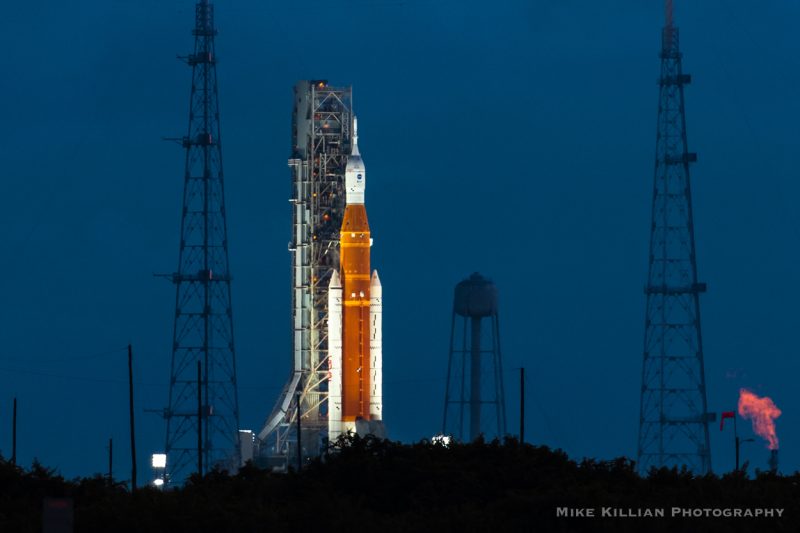
NASA is all systems GO at Kennedy Space Center in Florida tonight, where the space agency’s giant new 322-ft tall Space Launch System (SLS) rocket and Orion spacecraft stand ready to launch the maiden voyage of the Artemis missions, a new era of American human space exploration to return people to the moon.
Liftoff of Artemis-1 is scheduled for 1:04am EST late tonight (early Wednesday morning, Nov 16) from historic pad 39B, from the same stretch of beach that once launched Apollo moon missions and 135 space shuttle flights.
NASA’s live launch coverage (above) starts at 10:30pm EST, although they are also providing live updates throughout various countdown milestones too (like fueling).
More powerful Than Apollo
The mammoth rocket is a bit shorter than the Apollo Saturn V, but it’s more powerful, and evolvable to launch both crews and cargo to the moon. At liftoff it will become the most powerful operational rocket to ever fly, producing nearly 9 million pounds of thrust to send Orion on a month-long un-crewed flight test to the moon and back.
The mission aims to put the entire system through its paces from launch, to flight, to return and splashdown. The spacecraft will be stressed beyond what astronauts will experience, and go through its paces with various tests and checkouts to validate its design and fly from 60 miles above the moon to 40,000 beyond it in a retrograde orbit.
Crewed Missions to Follow
NASA intends to put the first crew on Artemis-2, followed by the first landing on the moon on Artemis-3, using a SpaceX Starship as the lander (read more about that HERE). A small space station called Gateway will be put in lunar orbit too, serving as a staging point between orbit and the surface.
Artemis-1 rolling out to pad 39B for launch (photo: Mike Killian)
“We’re doing really good right now,” said Jeremy Graeber, Assistant Launch Director. “So far everything is going very smoothly”.
So far, so good…
Tonight’s weather forecast is 90% favorable for liftoff. NASA has a 2-hour window to launch too, which opens at 1:04am EST.
Piedmont Airlines is joining a growing list of carriers sweetening the pot by offering previously unheard-of compensation and bonus packages to qualified pilots.
Desperate times call for desperate measures, right?
On Tuesday, the Salisbury, Maryland-based regional airline announced it would begin offering a jaw-dropping $100,000 upfront bonus for pilots qualified for the left seat. For those not quite at that point but are close to upgrading to captain, Piedmont will fork out $75,000.
Company officials said the goal of the incentive is to help position it for robust growth in 2023.
Piedmont Becomes the Latest Airline to Lure Pilots with Lucrative Financial Incentives
A screenshot taken on 15 November 2022 of Piedmont Airlines website | IMAGE: piedmont-airlines.com
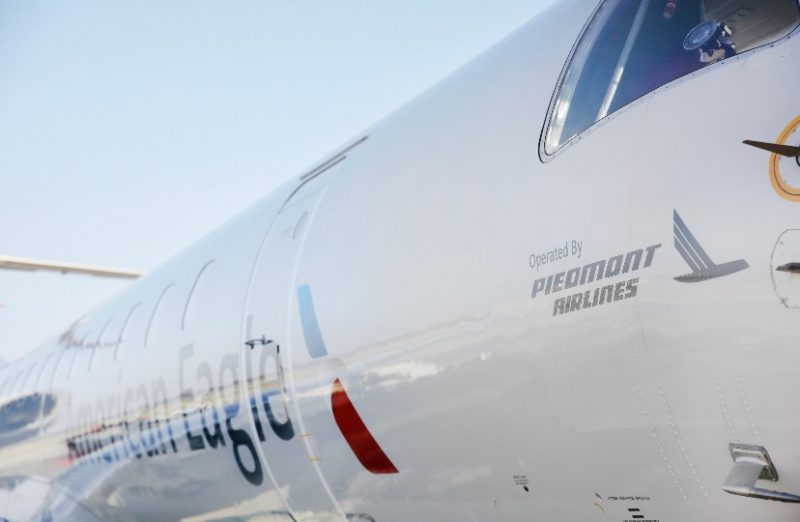
The announcement by Piedmont, which flies exclusively as an American Eagle carrier, comes in a year that has seen its fair share of bold financial incentives to attract employees amid an unprecedented pilot shortage. Companies such as Mesa Airlines, Massachusetts-based startup carrier Connect Airlines, and others are boosting pay and offering other dramatic financial incentives to combat the ongoing pilot shortage.
After striking a deal with the Air Line Pilots Association (ALPA) over the summer, Piedmont itself dramatically raised starting pay for pilots to well above industry averages. Under the new contract, captain pay varies between $146 and $213 per hour, based on total airline experience.
The deal increased pilot pay by 100 percent for new pilots and 400 percent for direct-entry captain applicants.
Piedmont Airlines: Help Us Expand Our Fleet and Our Routes
A Piedmont Airlines Embraer Erj145 in the Hangar | IMAGE: FlyPiedmont via Facebook
Now, Piedmont has become the first carrier to offer a no-questions-asked $100,000 sign-on bonus. CEO Eric Morgan says his airline is uniquely positioned to offer such an incentive.
“Passengers are back, and the demand for travel is high, but our industry hasn’t settled into steady state yet,” said Morgan. “Piedmont has the opportunity to grow even as many other airlines are shrinking. We are in a unique position to say to pilots, ‘come to Piedmont, help us expand our fleet and our routes, and here’s a big check to spend while you do it.’”
The $100K incentive will replace Piedmont’s current pilot retention bonuses, which are set to expire at the end of this year. Additionally, qualified pilots will be paid $100,000 upfront rather than receiving multiple bonuses over five years.
To qualify for the $100,000 bonus, pilots must have at least 950 hours of Part 121 time. Pilots with between 500 and 949 hours of Part 121 time will be eligible for the $75,000 bonus.
It’s a Limited-Time Offer
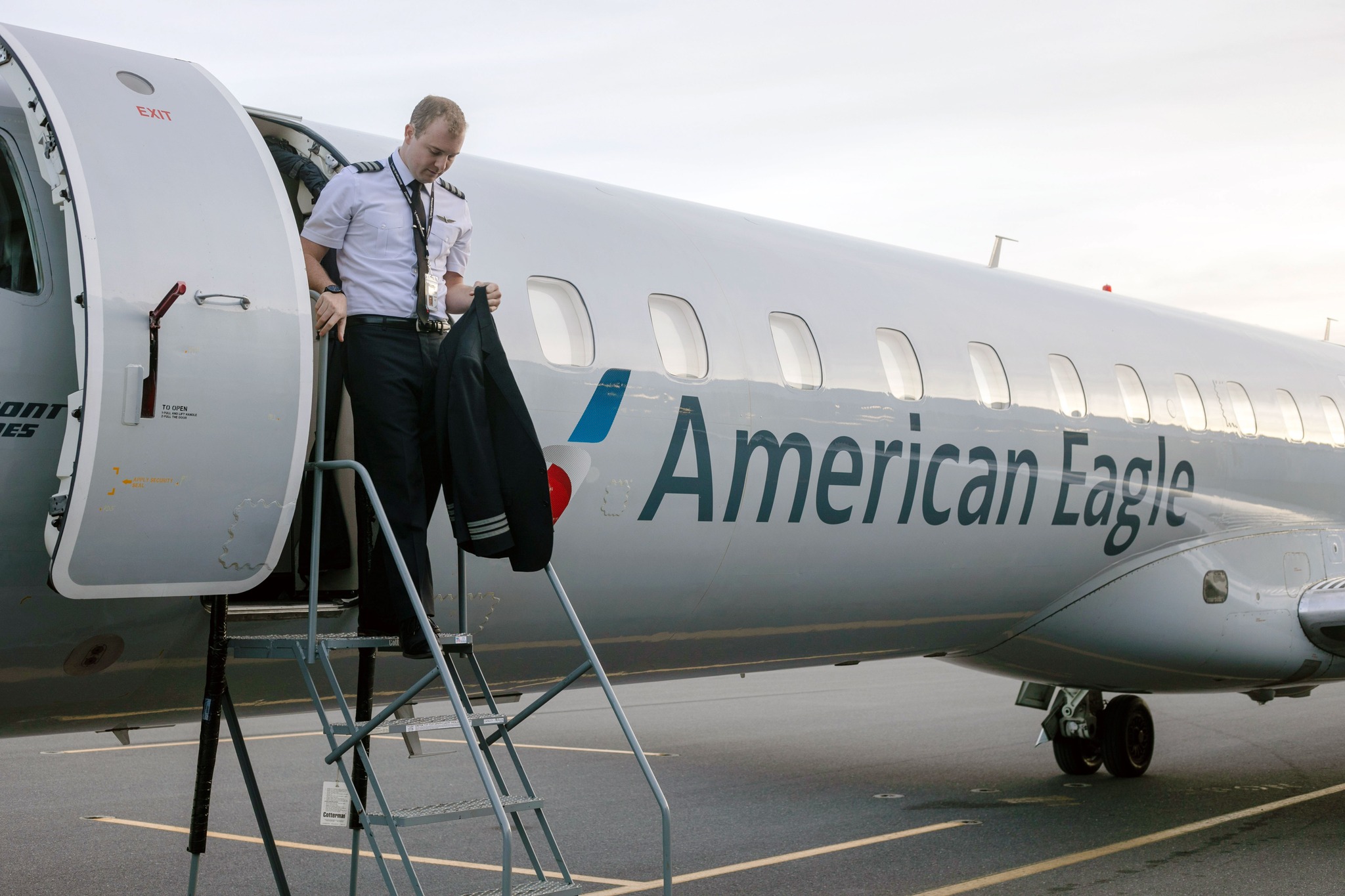
A pilot steps off of a Piedmont Airlines Embraer ERJ145 | IMAGE: FlyPiedmont via Facebook
There is one catch, however. Pilots must apply to the airline and accept a conditional job offer by the end of December.
Morgan says he hopes the bonus offer will help the carrier attract and retain qualified captains needed for projected expansion.
“We’ve done a tremendous amount of work to get all of our resources aligned to grow,” said Morgan. “But we have a gap in 2023-2024 between the number of airplanes we want to fly and the captains we need to fly them. We’re looking for pilots who can bring their knowledge and experience to Piedmont, fly in the left seat, and get us through that 24-month time period. It’s a $100,000 bonus and top-tier pay for a two-year commitment to Piedmont. These pilots will also be able to take advantage of our contractual flow to American.”
The carrier says interested pilots can apply through AirlineApps.com. They can also contact a Piedmont recruiter by emailing FlyPiedmont@aa.com.
Piedmont is Expanding its Fleet with Ex-Envoy Embraer 145s
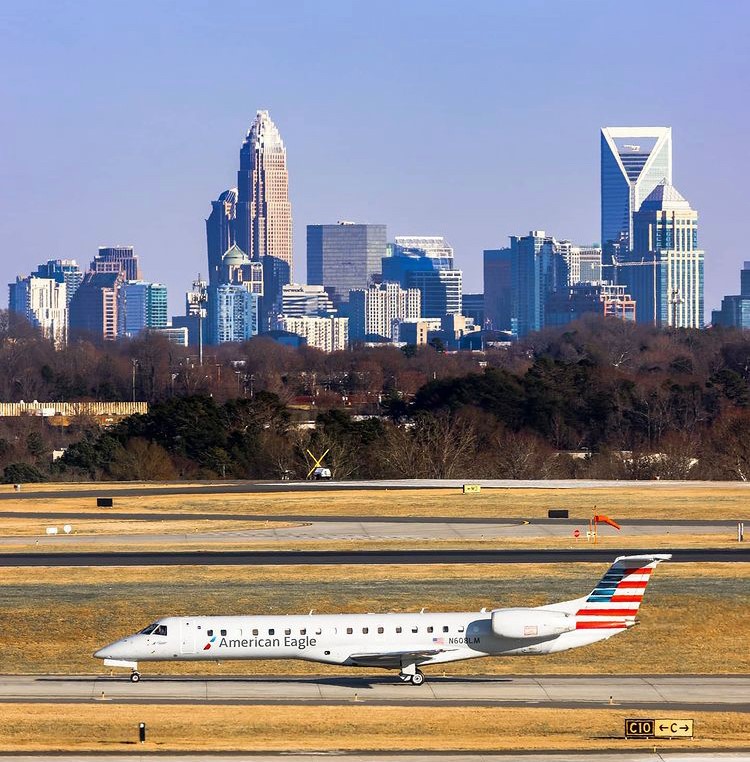
A Piedmont Airlines Embraer ERJ145 taxiing for takeoff at Charlotte Douglas International Airport (CLT) | IMAGE: FlyPiedmont via Facebook
Near-term growth at Piedmont will focus on two of American Airlines’ biggest hubs: Charlotte Douglas International Airport (CLT) and Philadelphia International Airport (PHL). Piedmont will also begin flying new routes out of Chicago O’Hare (ORD) next month.
To facilitate the planned growth, Piedmont is adding 15 ex-Envoy Embraer 145s to its exclusively 50-seat ERJ145 fleet. The carrier took delivery of the first two ERJs last month, bringing the total number of aircraft to 47 – 44 of which are currently in service.
Piedmont Airlines currently serves 55 destinations in the eastern United States. It operates crew bases in Charlotte, Philadelphia, and Harrisburg, PA (MDT).
At about 1:30pm the P-63 flew into the tail of the Texas Raiders B-17 Flying Fortress over Dallas Executive Airport, bringing both planes down in front of thousands of spectators. In the videos you can clearly see the P-63s prop cutting the B-17s fuselage in half, just aft of the wing spar, sending the vintage bomber into the ground as it burst into flames.
It is unknown how many people were on both aircraft, whether people on the ground were hurt, what could have caused the accident, or whether anyone on either plane even survived.
Heartbroken. The lives of several aviators and two pieces of aviation history have been lost in the skies over Dallas today. The P-63 King Cobra collided with the B-17 Flying Fortress during the Wings Over Dallas airshow, destroying both planes. Neither aircrew survived. pic.twitter.com/l6Dyhes3hw
“The videos are heartbreaking,” said Dallas Mayor Eric Johnson. “Please say a prayer for the souls who took to the sky to entertain and educate our families today.”
The FAA and NTSB are investigating. The NTSB will be in charge and provide additional updates, which we will post here.
The National Museum of the Air Force (NMUSAF) has had an A-1E Skyraider on display since 1968. That aircraft is the exact tail number, 132649 that Major Bernard Fisher was flying on March 10, 1966 when he landed at the enemy held airstrip in Ashau valley and rescued a fellow A-1 pilot who had crash landed on that airstrip. Major Fisher was awarded the Medal of Honor for this daring and astonishing accomplishment.
Within two years of Major Fisher’s mission, about the same time his aircraft went on display at the Museum, the A-1H and A-1J became available to USAF Skyraider units in SEA as US Naval aviation units upgraded to jet aircraft. Unlike the two seat A-1E, The A-1H is a single cockpit aircraft and the visibility, especially out the right side, is far superior to the A-1E. In addition, the A-1H is an aerodynamically “cleaner” aircraft, thus able to fly longer missions with the same amount of fuel.
A more capable Skyraider
Until 1968, the “Sandy” mission (SAR helicopter escort and SAR on-scene command) was performed by the A-1E with outstanding results, but incurred heavy losses. The newer, more capable, A-1H assumed the SAR role in 1968 with all four USAF A-1 squadrons flying Sandy missions.
What is amazing is that even though it has been 50 years since the last USAF A-1H Skyraider took to the air on a Sandy mission, there has NEVER been an A-1H displayed in the Museum, but that is soon to change! The Museum has had an A-1H in storage since 1997. It was in sorry shape with many missing parts, especially exterior panels that were no longer available.
The A-1H Restoration
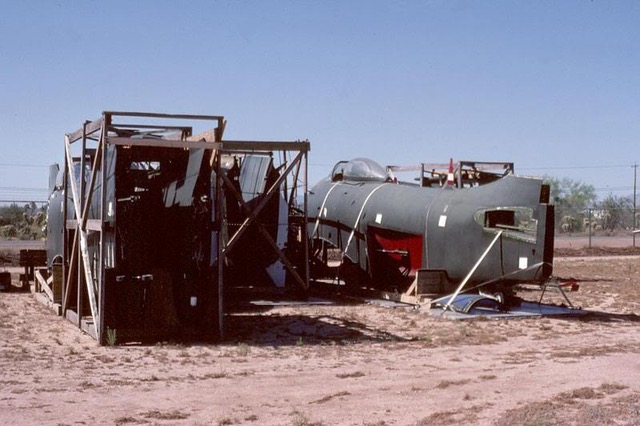
Sometime in 1997, an A-1H and A-1E Skyraider arrived at the 309th Aerospace Maintenance and Regeneration Group (aka Boneyard) near Davis-Monthan AFB in Tucson, AZ. Both crated aircraft were painted overall with varying shades of green. They were Skryaiders abandoned by the VNAF on South Vietnam following the fall of Saigon in April 1975. The speculation is that they were seized by US Customs after they were being exported from Vietnam by an unknown party.
The crates containing an A-1E and an A-1H stand in the desert
sun and sand at “the Boneyard” in Arizona in 1997
Sun and sand at “the Boneyard” in Arizona in 1997
The A-1E wound up at the Hill Aerospace Museum near Ogden, Utah and is currently on display there as a tribute to then Major Bernie Fisher’s Medal of Honor mission. The A-1H made its way to NMUSAF. It was uncrated and partially assembled, but then languished in the storage hangar for several years.
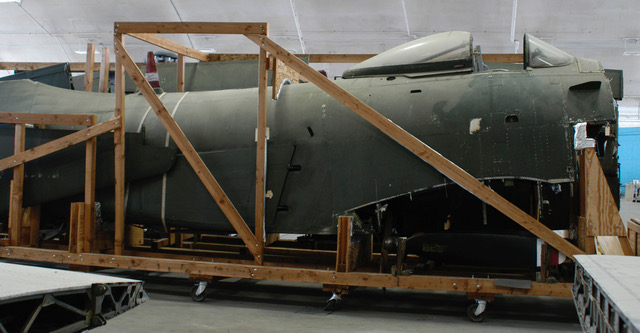
Skyraider A-1H languishes in the boneyard.
Restoration effort were not begun until about 2011 when it was moved back to the Restoration Hangar. These efforts were short lived, however when it was discovered that there numerous missing parts, most notably several armored external panels aft of the engine cowl. Since these parts were not readily available, the restoration effort was shelved and the Skyraider was relocated back to the storage hangar.
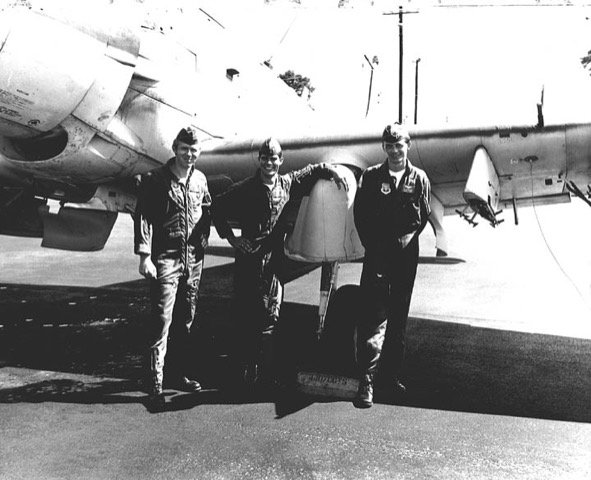
In early 2019, I became increasingly frustrated and decided to act since there still was no plan for the restoration of the A-1H. One of my training classmates at Hurlburt Field for our A-1 checkouts was another first lieutenant by the name to Lance Smith. Lance had all right assignments, including non-flying assignments, and retired as a 4-Star General. I thought that might help get us some “traction” with NMUSAF to get the A-1H restored. Boy howdy did it get traction.
A proposal for a Skyraider A-1H exhibit
1st Lts Byron Hukee (far left) and Lance Smith (center) pose with Capt Buck Buchanan for their obligatory class photo picture at Hurlburt Field
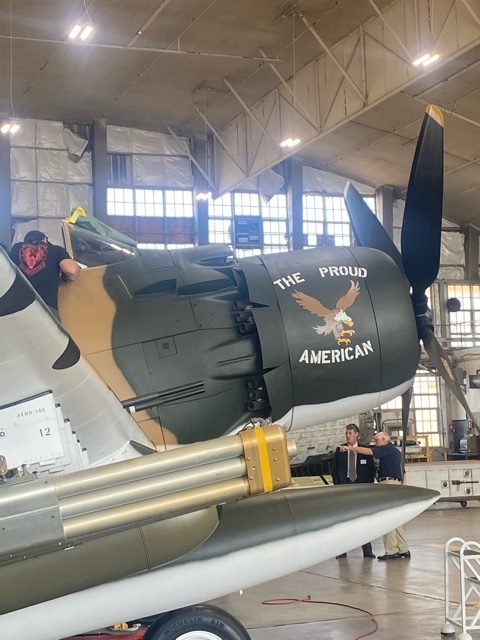
A team of three former and one current Skyraider pilot visited the Museum in November 2019 and pitched a proposal that was ultimately accepted and acted on. The proposal was that the A-1H would be restored AND would become part of a larger more inclusive display exhibit titled Search and Rescue in Southeast Asia (SAR in SEA). The A-1 Skyraider Association and its members and friends raised the necessary funds for the restoration of the A-1H. There will be a dedication ceremony on 18 November (invited guests only) and The Proud American will be on public display thereafter.
Painted To represent a heroic mission
The Museum’s A-1H will be marked as A-1H 139738. This aircraft was flown by LtCol William A. Jones III on 1 September 1968 during a SAR mission for a downed F-4D crew that was down in southern North Vietnam The Skyraider bore the TT tail code of the 602nd SOS. The downed pilot was alive and needed rescue, while the WSO did not survive the Phantom’s ejection sequence. Jones located the survivor but on one of his passes over the survivor, he took heavy automatic weapons fire and his aircraft was damaged to the extent that the Yankee escape system would not function.
His cockpit filled with smoke and flames and his canopy was jettisoned as he tried to extract, but he could not leave the aircraft. In severe pain, be signaled his wingman to take the lead and they were able to reach their home base. After he landed, he refused treatment and told the intelligence personnel where the downed pilot was located. This information was relayed to the Sandys who remained in the SAR area and a successful rescue was accomplished. LtCol Jones was awarded the Medal of Honor for this mission.
Skyraider Nose art: The Proud American
This same A-1H now marked with the TC tail code of the 1st SOS and the nose art of The Proud American, was flown by Captain Ron Smith as a Sandy on one of the most astonishing SAR missions during the entire Vietnam War. An F-4D from the Triple Nickel (555th TFS) was downed on 10 May 1972, the first day of Operation Linebacker. and Roger Locher, Callsign Oyster 01B was down, but alive and evading the enemy. He was about 40 nm from Hanoi and north of Yen Bai Mig base near the Red River.
Over the next 20 days, he moved north to higher terrain away from the Red River. On 1 June, he heard SAM missiles being launched and then saw two F-4s streaking west away from Hanoi. He called on his survival radio, and said “Any U.S. aircraft, if you read Oyster 1 Bravo, come up on Guard.” The call was heard by the F-4s who relayed the information King, the HC-130 that served as the Airborne SAR Command Post. Captain Ron Smith had his Sandy flight nearby along with the Jolly Green Giant HH-53s. Smith proceeded north for a while, then directed his wingman and the Jolly Greens to stay on the safer south side of the Red River Valley in the high terrain.
Smith proceeded across the Red River and started up the other side of the valley where he was able to contact Oyster 02B. He had taken heavy fire near Yen Bai, but he was able to locate Locher’s general position. He took a longer route back to the other Sandy and Jolly Greens and knew there was no way that the Jolly Greens could get across the Red River to the survivor’s location. Without supressing the SAMs and dealing with the MiGs at Yen Bai airfield, there was no way the SAR task force could get Locher. When the Sandy’s and Jolly Greens reached NKP, they discussed their options. They got on the phone to 7th Air Force HQ and actually discussed the task with Gen Vogt.
The decision was made to “shut down” the Linebacker strikes on the next day and put 7th Air Forces entire effort to the SAR effort for Roger Locher. On June 2, 1972, a total of 119 aircraft – from KC-135 refuelers and radar-jamming EB-66s, to F-4 escorts, F-105 Wild Weasels, A-1 Sandys, and rescue helicopters – took off to rescue one of their own. Capt Ron Smith and his wingman, Capt Buck Buchanan led the effort and it went as planned.
After the large AAA guns, Migs and Sam sites were neutralized, led by the Sandys, the Jolly Green helicopter swooped in and snatched Roger Locher out to the North Vietnam jungle. This turned out to be the furthest north successful SAR during the entire Vietnam War. For his efforts, Captain Ron Smith was awarded the Air Force Cross.
A-1H 139738 is believed to be the only fixed wing aircraft to have been flown on both a Medal of Honor and Air Force Cross mission.
The NMUSAF A-1H is nearly completed.
A-1E and A-1H/J Differences
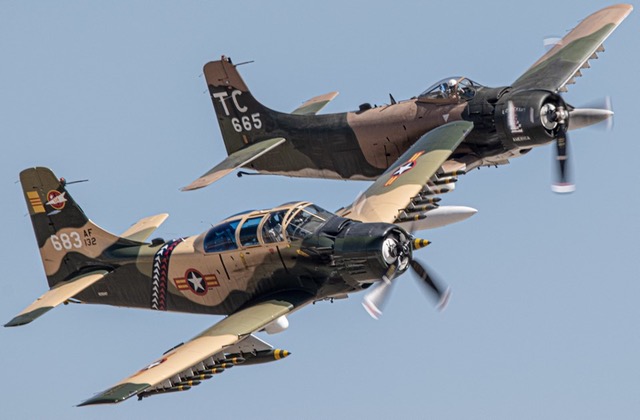
The USAF actually had three different Skyraider models in the two-seat side-by-side configuration and two single-seat bubble canopy models. The A-1H, though older, was essentially the same as the newer A-1J. All three two-seaters, the A-1E, the A-1E-5, and the A-1G, had the wide side-lifting canopy enclosures and a large, normally blue plexiglass covered rear compartment, dubbed the “ Blue Room.”
What differentiated the A-1E from the A-1E-5 was a complete lack of engine and flight controls in the right seat. The A-1G was essentially the same as the A-1E, albeit a slightly newer version of the A-1E. All these versions are commonly referred to as the A-1E.
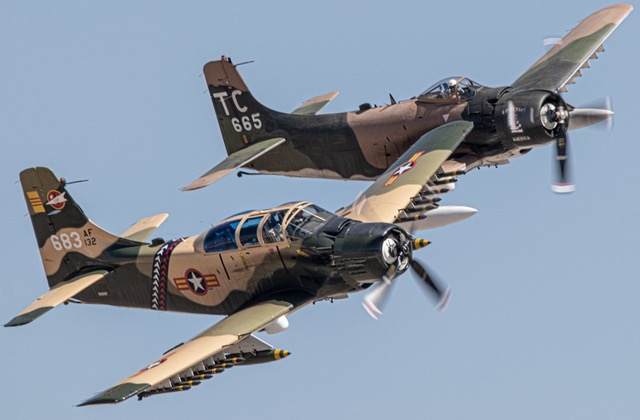
An inflight photo of the A-1E and A-1H clearly showing the differences between the two aircraft.
With a larger front profile compared to the “sleeker” profile of the A-1H/J, there was a noticeable increase in drag and in fuel consumption. Any time you put two exactly same aircraft in the same formation, the wingman typically burns more fuel per hour because he is constantly trying to maintain the proper position, whether it be close formation or tactical formation.
In a perfect world, when the two different types were paired together on a combat mission, it would be better for the A-1E to be in the lead with the A-1H on the wing. But nearly all the time, the flight lead was more experiences and felt entitled to fly the more desirable A-1H/J while the wingman had to learn to manage his fuel better.
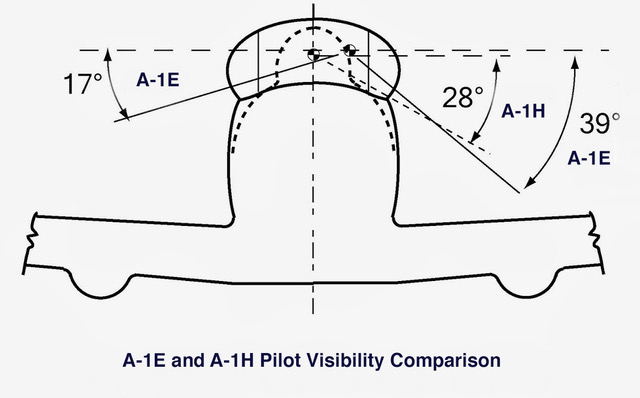
One of the most important differences between the A-1E and A-1H/J was the reduced visibility out the right side of the aircraft in the A-1E. The diagram below shows only a reduced downward visibility of 11 degrees, but it sure seemed to be more. So much so that when maneuvering in the target area, it tended to force us into a left turning attack pattern. Rule 1 of maneuvering was to vary your turn direction and “jink” at least every five seconds to remain unpredictable. Always turning left decreased the unpredictability and increased the chances you might get hit.
Though the downward visibility out the right side of the A-1E shows only a 11° decrease, it was every bit of that and more.
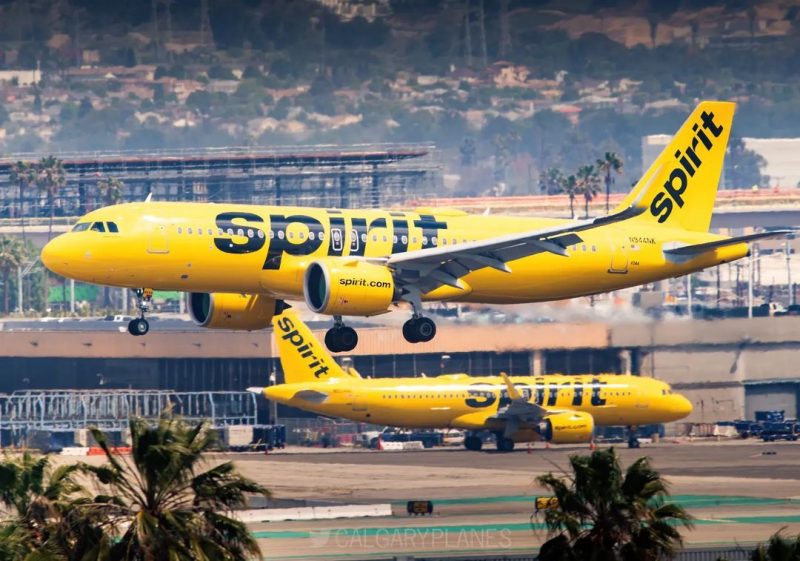
Spirit Airlines will eliminate more than three dozen routes in early 2023, Airline Weekly reports.
The route cuts include flights in the United States, Latin America, and the Caribbean. However, the changes will affect Florida the most, where at least 25 routes will be discontinued.
Spirit Rains on the Sunshine State
A Spirit Airlines Airbus A320neo waits at the gate | IMAGE: Spirit Airlines via Facebook
With such a large presence in Florida, it is understandable that a large reduction in capacity would disproportionately affect the state.
Among the hardest-hit airports are Tampa International (TPA), Fort Lauderdale-Hollywood International (FLL), and Southwest Florida International (RSW), which are losing eight, seven, and seven routes respectively.
Additional routes will be eliminated from Orlando International (MCO) and Miami International (MIA).
The Complete List of Route Cuts
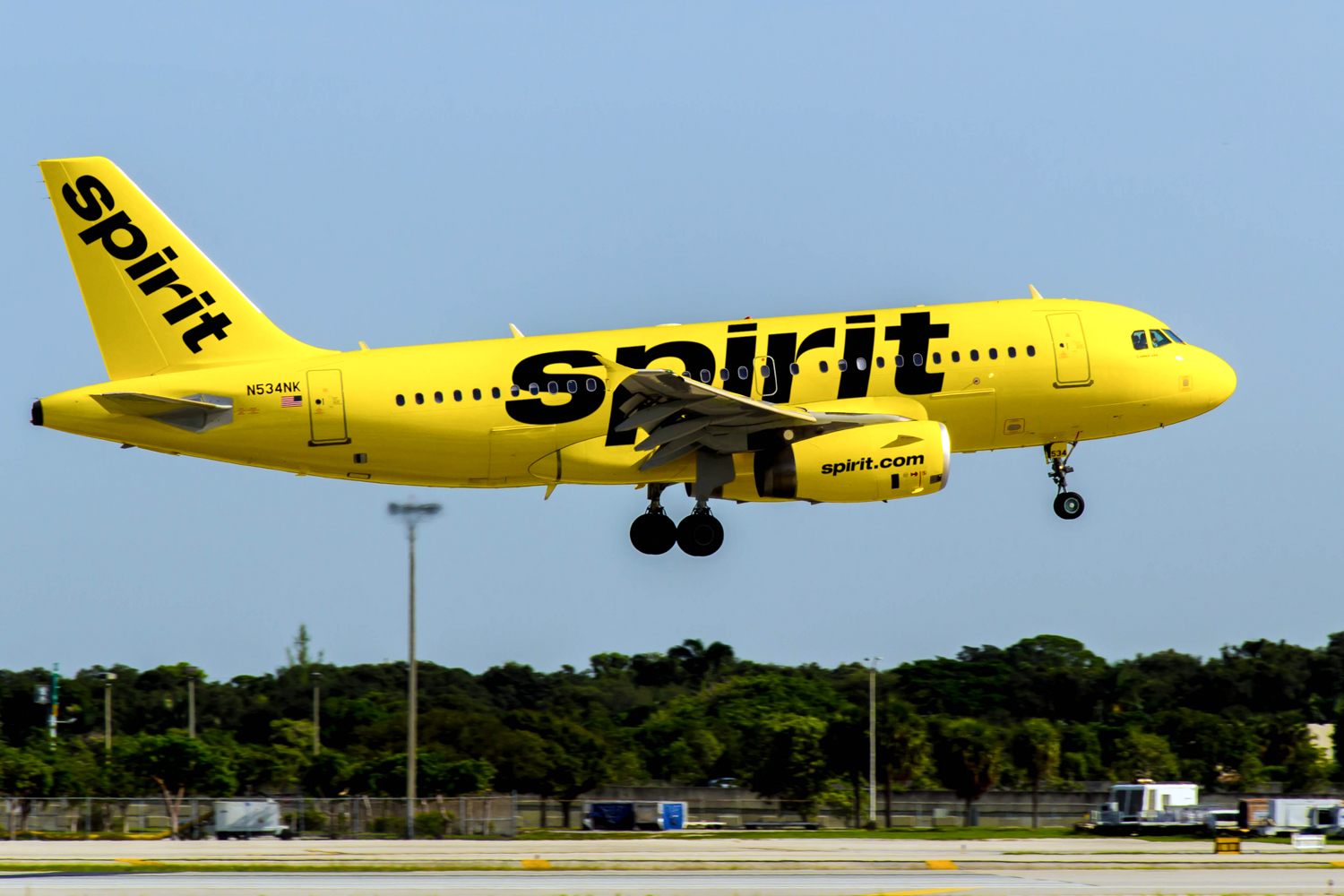
Spirit Airlines Airbus A319 | IMAGE: Spirit Airlines via Facebook
Baltimore/Washington International Thurgood Marshall Airport (BWI) to:
Louis Armstrong New Orleans International Airport (MSY)
Myrtle Beach International Airport (MYR)
Fort Lauderdale-Hollywood International Airport (FLL) to:
Bradley International Airport (BDL)
Arnold Palmer Regional Airport (LBE)
Manchester-Boston Regional Airport (MHT)
Tocumen International Airport Panama (PTY)
Louisville Muhammad Ali International Airport (SDF)
St. Louis Lambert International Airport (STL)
George Bush Intercontinental Airport (IAH) to:
Denver International Airport (DEN)
La Aurora (Guatemala City) International Airport (GUA)
Los Angeles International Airport (LAX) to:
Milwaukee Mitchell International Airport (MKE)
Orlando International Airport (MCO) to:
Minneapolis-St. Paul International Airport (MSP)
El Salvador International Airport (SAL)
Miami International Airport (MIA) to:
Atlantic City International Airport (ACY)
Bradley International Airport (BDL)
Orlando International Airport (MCO)
Philadelphia International Airport (PHL) to:
Rafael Hernández Marin International Airport, Puerto Rico (BQN)
Louis Armstrong New Orleans International Airport (MSY)
Phoenix Sky Harbor International Airport (PHX) to:
Kansas City International Airport (MCI)
Milwaukee Mitchell International Airport (MKE)
St. Louis Lambert International Airport (STL)
Southwest Florida International Airport (RSW) to:
Bradley International Airport (BDL)
Baltimore/Washington International Thurgood Marshall Airport (BWI)
Cleveland Hopkins International Airport (CLE)
John Glenn Columbus International Airport (CMH)
Minneapolis-St.Paul International Airport (MSP)
Philadelphia International Airport (PHL)
St. Louis Lambert International Airport (STL)
Luis Muñoz Marín International Airport (SJU) to:
Atlantic City International Airport (ACY)
Tampa International Airport (TPA) to:
Bradley International Airport (BDL)
Boston Logan International Airport (BOS)
John Glenn Columbus International Airport (CMH)
Newark Liberty International Airport (EWR)
Arnold Palmer Regional Airport (LBE)
Milwaukee Mitchell International Airport (MKE)
Minneapolis-St.Paul International Airport (MSP)
Philadelphia International Airport (PHL)
But Is It Really That Big of a Deal?
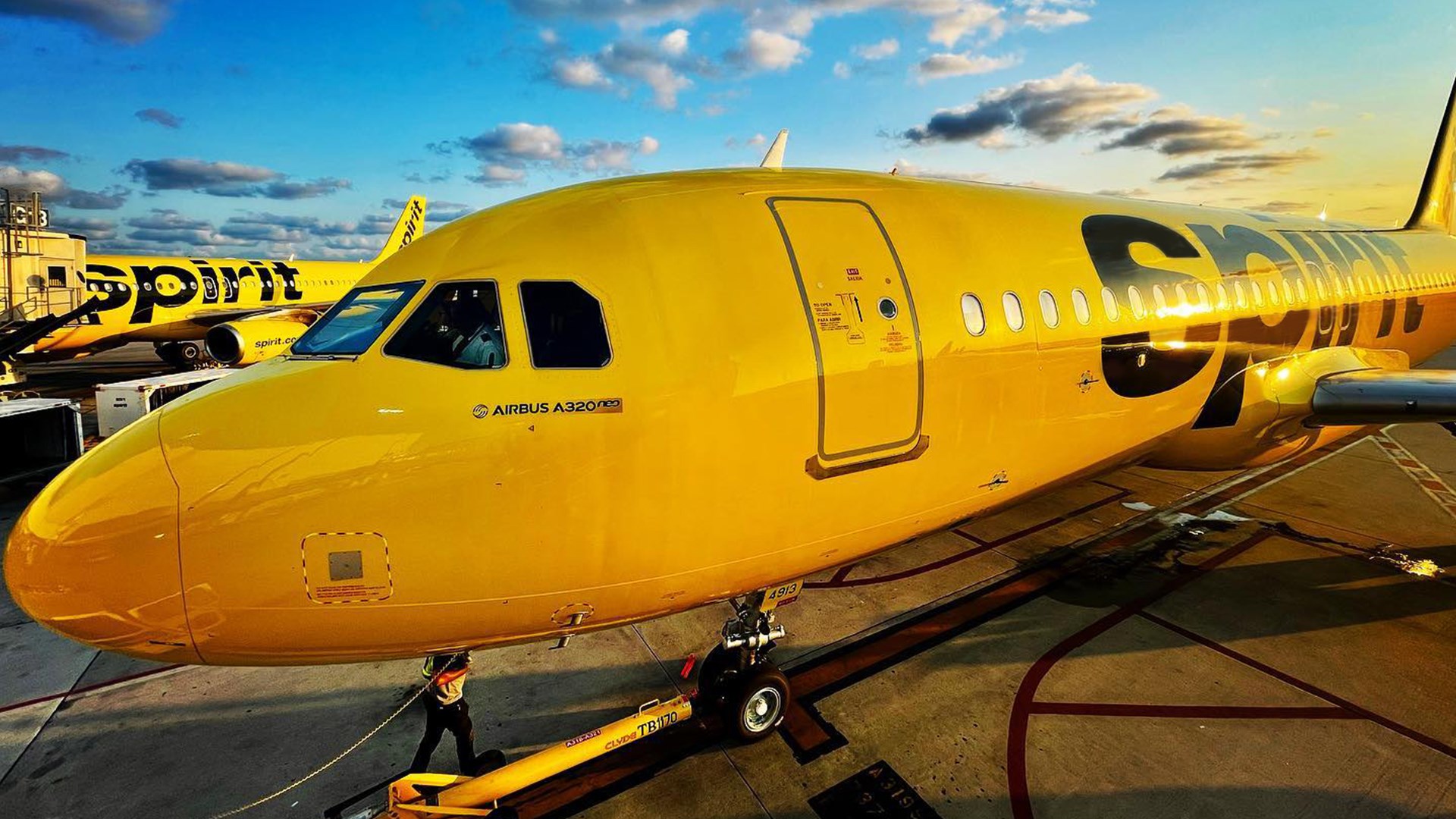
Exterior picture of a Spirit Airlines Airbus A320neo exterior | IMAGE: Spirit Airlines
To put it simply, it depends on who you ask. If you’re a city like Latrobe, Pennsylvania (LBE) – whose sole carrier is Spirit and is losing service to TPA and RSW – the cuts hurt. After the recent (seasonal) elimination of service to Myrtle Beach International (MYR), that leaves MCO as the only city the carrier will serve out of LBE.
Conversely, airports like MCO and TPA won’t feel the effect of the route cuts as much as an airport like LBE.
It is also worth noting that the elimination of 37 routes from the Spirit system isn’t necessarily as drastic a shakeup as it seems. Many routes flown by Spirit are flown on a less-than-daily basis. For instance, cutting a twice-weekly flight between two cities served by Spirit would result in far less of a seat reduction than if a major airline were to eliminate daily service.
Case in point, the route cuts will only result in a five percent reduction in capacity during 1Q23 than 4Q22. Moreover, capacity will be up 11 percent over the year, and 35 percent compared to 2019, according to Airline Weekly.
Will the Cuts be Permanent ?
Spirit Airlines Airbus A319 exterior | IMAGE: Spirit Airlines
While nothing is set in stone, it is possible that at least some of these routes could be reinstated once the carrier extends its booking schedule beyond May 2023.
A spokesperson for the Miramar, Florida-based low-cost carrier told Airline Weekly that the capacity reduction is a product of continued supply chain issues plaguing the industry. Specifically, the spokesperson says aircraft deliveries, engine manufacturing, and overhauls are facing delays.
In addition, staffing issues continue to affect Jacksonville Center, which oversees flights in Floridian airspace. Just last week, U.S. Transportation Secretary Pete Buttigieg urged airlines to utilize over-water Atlantic routes between North Carolina and Florida in an effort to ease congestion.
Once those issues are resolved, Spirit and other airlines will most likely reevaluate their strategy and see where service can be reinstated.
Of course, the other elephant in the room is what JetBlue plans to do with its route structure after its $3.8 billion merger with Spirit is completed in early 2024.
That merger will propel JetBlue to America’s fifth-largest airline.
Transportation Security Administration (TSA) officials at Fort Lauderdale-Hollywood International Airport (FLL) confiscated a firearm found stuffed inside a raw baking hen on Monday.
TSA officials say the weapon was discovered when a female passenger bound for Toussaint Louverture International Airport (PAP) in Port-Au-Prince, Haiti (PAP) attempted to pass through the security checkpoint at FLL. TSA officers spotted the firearm on the x-ray machine and detained the passenger and her poultry.
The Haiti-bound passenger was not permitted to board her flight and was referred to US Customs and Border Protection, according to the Miami Herald.
TSA: Stuffing a Firearm in Your Holiday Bird is a Baste of Time
FLL TSA intercepted a firearm on Monday that had been stuffed in a raw chicken | IMAGE: TSA
TSA took to social media on Monday afternoon to make light of a serious situation via their trademark puns and humor.
“We hate to beak it to you here, but stuffing a firearm in your holiday bird for travel is just a baste of time,” read the post from TSA’s “Travel Tips & Dad Joke Hits” (@tsa) account on Instagram. “This idea wasn’t even half-baked; it was raw, greasy, and obviously unsupervised. The only roast happening here is this poor packing choice!”
Federal regulations prohibit carrying firearms in a carry-on bag – with or without raw chicken.
“Feather you like it or not, there are rules for traveling with guns and ammunition,” continued the pun-packed Instagram post. “So, don’t wing it; roost over the proper packaging info through the link in our bio.”
FLL TSA intercepted a firearm on Monday that had been stuffed in a raw chicken | IMAGE: TSA
According to TSA statistics, more than 700 guns have been confiscated at airports in Florida so far in 2022. FLL TSA officers have confiscated 120 guns so far this year, making it the second-highest total in Florida. Orlando International Airport (MCO) has seen the highest number of firearm discoveries at 129.
TSA stopped more than 5,000 guns at security checkpoints in 2021. Already in 2022, that number has been surpassed. And with the busy holiday season ahead, it appears likely that last year’s record will be broken.
Passengers who attempt to bring an unloaded firearm through a security checkpoint could face fines of up to $2,475. Penalties jump to between $3,000 and $10,000 for loaded firearms. Repeat offenders can be fined up to $13,910. Penalties can change based on factors such as whether the safety is on or if the passenger makes an obvious attempt to conceal the weapon.
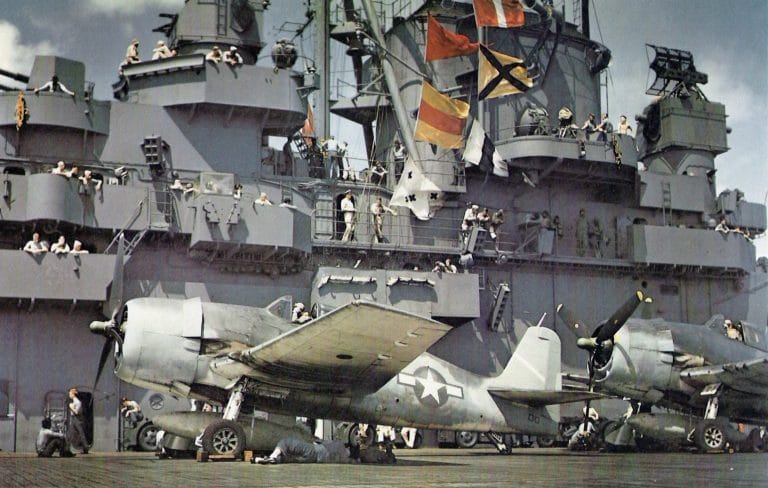
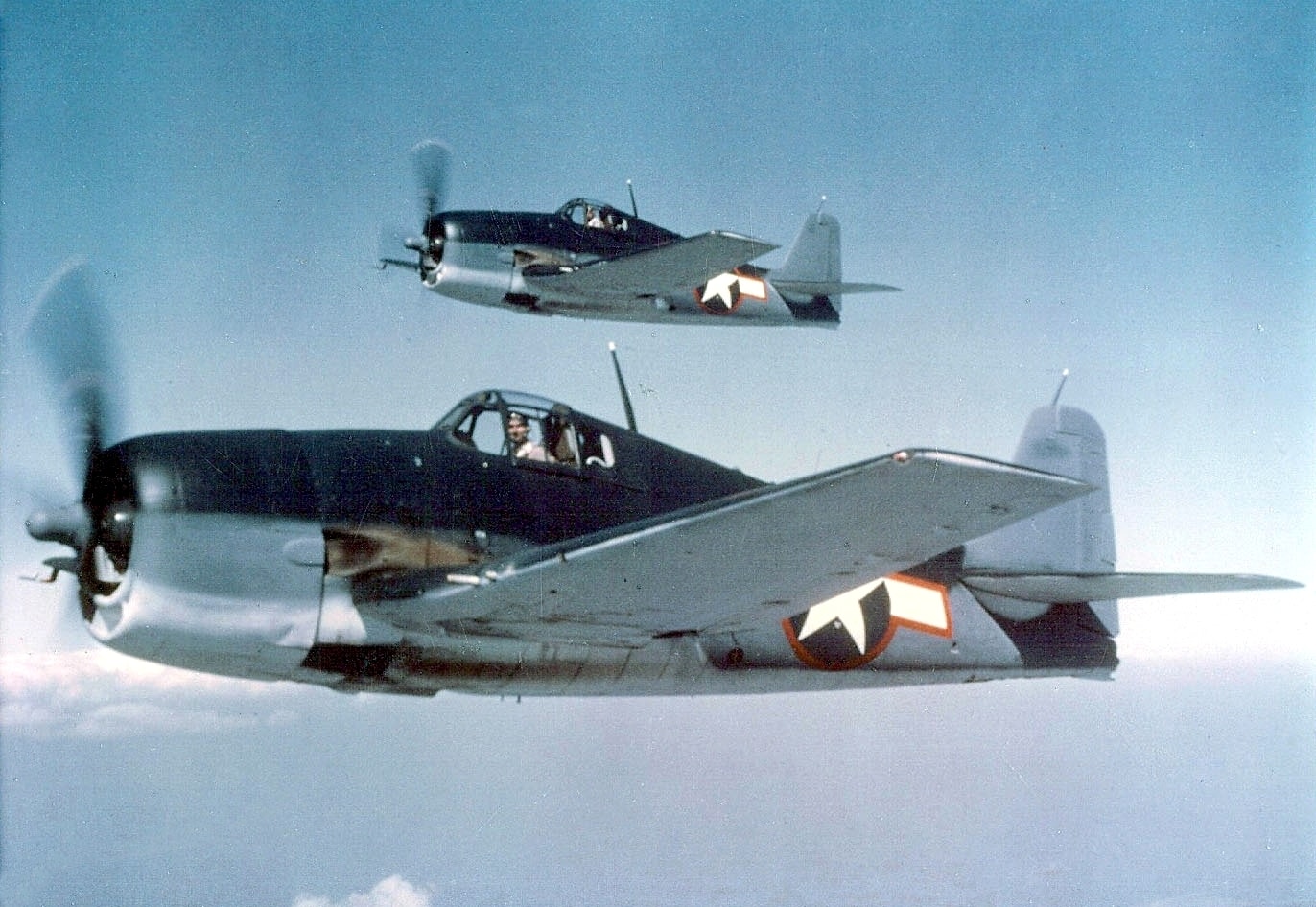
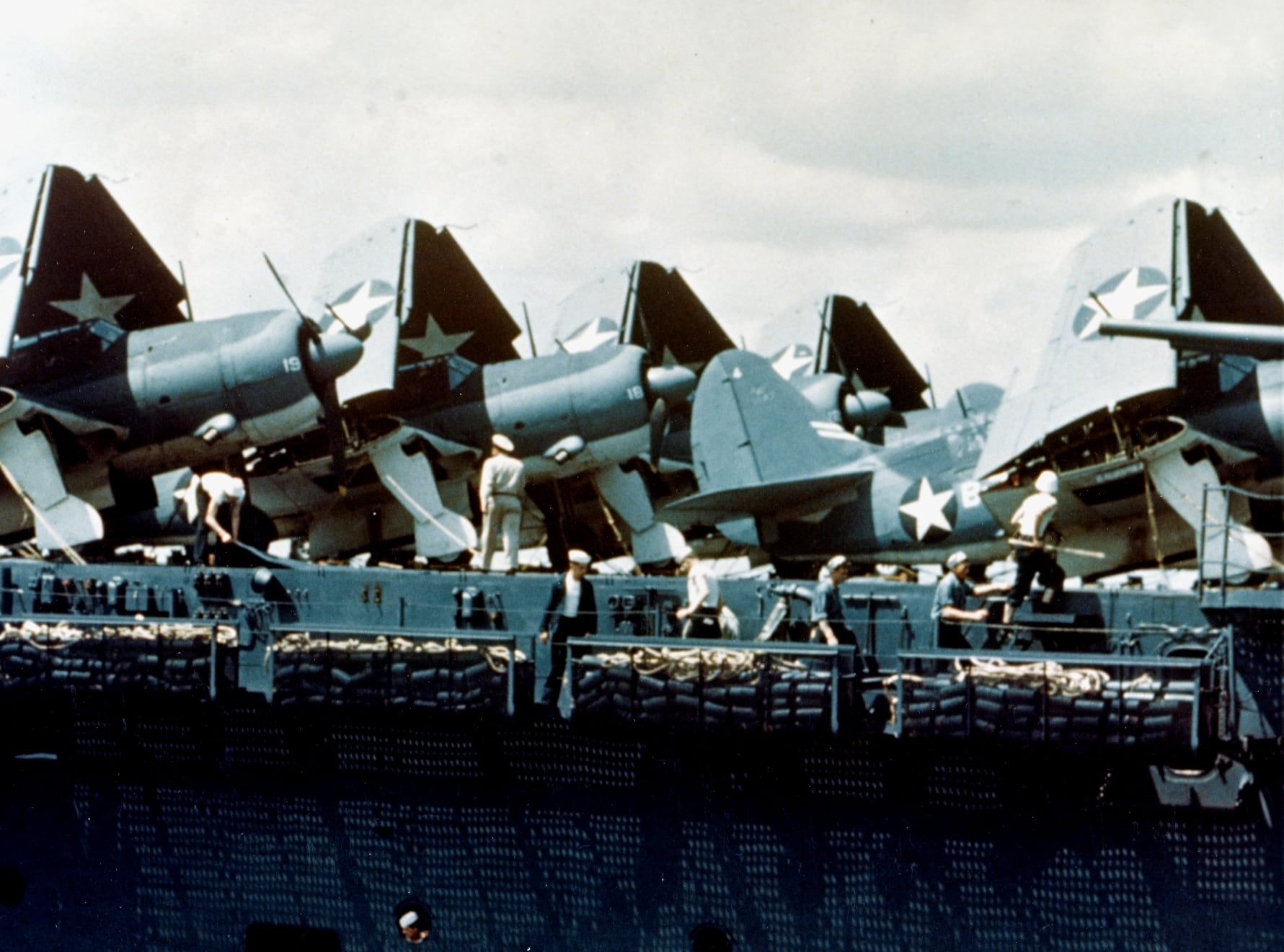
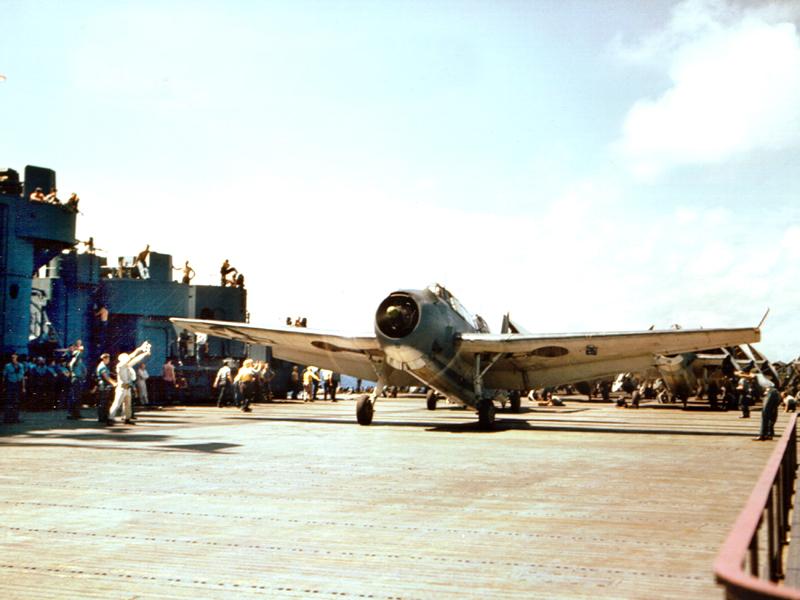
The documentary film “The Fighting Lady” was produced by Twentieth Century-Fox in 1944 and released in 1945. Billed as a “Newsdrama of the Pacific” and shot aboard the Essex-class aircraft carrier USS Yorktown (CV-10), the film stars the Fighting Lady and her crew. A supporting credit went to the carrier’s air group and their Grumman F6F Hellcats, Grumman TBF Avengers, Curtiss SB2C Helldivers, and even a few Douglas SBD Dauntlesses. Famed Naval photographer Lieutenant Commander Edward J Steichen supervised the photography for the film and Naval Reserve Lieutenant (and actor) Robert Taylor narrated it. YouTuber AIRBOYD uploaded the film.
The majority of the footage was indeed shot aboard the Yorktown but some additional scenes were captured aboard another Essex-class carrier, the USS Ticonderoga (CV-14). It’s obvious that some of the footage used in the film was shot earlier (and some later) as aircraft insignia and paintwork are inconsistent, but the film is in good shape and the transfer is very clean overall. Captain “Jocko” Clark’s voice sure sounds like that of a young Harry Morgan, but that could just be the wax in my ears. The film explains a great deal about how the carrier functions and its layout.
Official US Navy Photograph
The Yorktown served the nation for a total of 21 years. She earned 11 Battle Stars during World War II in the Pacific, was decommissioned in 1947 and recommissioned in 1953 as an attack carrier (CVA-10) and later changed to an antisubmarine carrier (CVS-10), before being decommissioned for good in 1970. She served as the recovery ship for Apollo 8. The crew was comprised of Commander Frank Borman, Command Module Pilot James Lovell, and Lunar Module Pilot William Anders. The Fighting Lady also found time to earn five Battle Stars during the Vietnam War.
Official US Navy Photograph
Other Yorktown Screen Credits
When Twentieth Century-Fox made another movie about carrier aviation the Yorktown seemed like the natural choice. But this time around the carrier served as a Japanese carrier for the dawn launch sequences of “Tora Tora Tora”. A bunch of converted T-6 Texan and BT-13 Valiant trainers playing Japanese Zeros, Vals, and Kates in the movie. In 1975 the Yorktown became a museum ship at Patriot’s Point in Mount Pleasant, South Carolina. She starred in at least one additional movie, the 1984 New World Pictures science fiction film “The Philadelphia Experiment.”
On Thursday, Alaska Airlines added Salt Lake City to their Flight Pass program. The popular program also tacked on the added benefit of complimentary MVP or MVP Gold Status with purchase.
What is Alaska’s Flight Pass?
Alaska Airlines Flight Pass offers a subscription service for passengers. (Image: Alaska Airlines)
The Flight Pass program is a monthly subscription service that starts at $49 a month. It’s a unique pricing system that offers frequent fliers the opportunity to travel between intra-Californian destinations along with Phoenix, Las Vegas and now Salt Lake City from numerous California cities.
Even at the highest tiers though, the pass is not unlimited. For a set fee per month, travelers can travel a set amount of times per year. The standard Flight Pass at $49/month allows each customer the opportunity to book up to six roundtrips per year. There are restrictions and fees. For the standard Flight Pass, the holder must purchase their tickets at least 14 days in advance. Passenger/facility fees must be paid when booking the ticket.
Avgeekery is a reader-supported publication. To receive a weekly summary of our stories, consider becoming a free subscriber.
Alaska also offers the Flight Pass Pro program with pricing from $199 to $749 a month depending on how often you want to travel. The main benefit to the Pro program is that you can book your ticket with as little as 2 hours advanced notice. Once again, passenger/facility fees do apply.
Is it worth it?
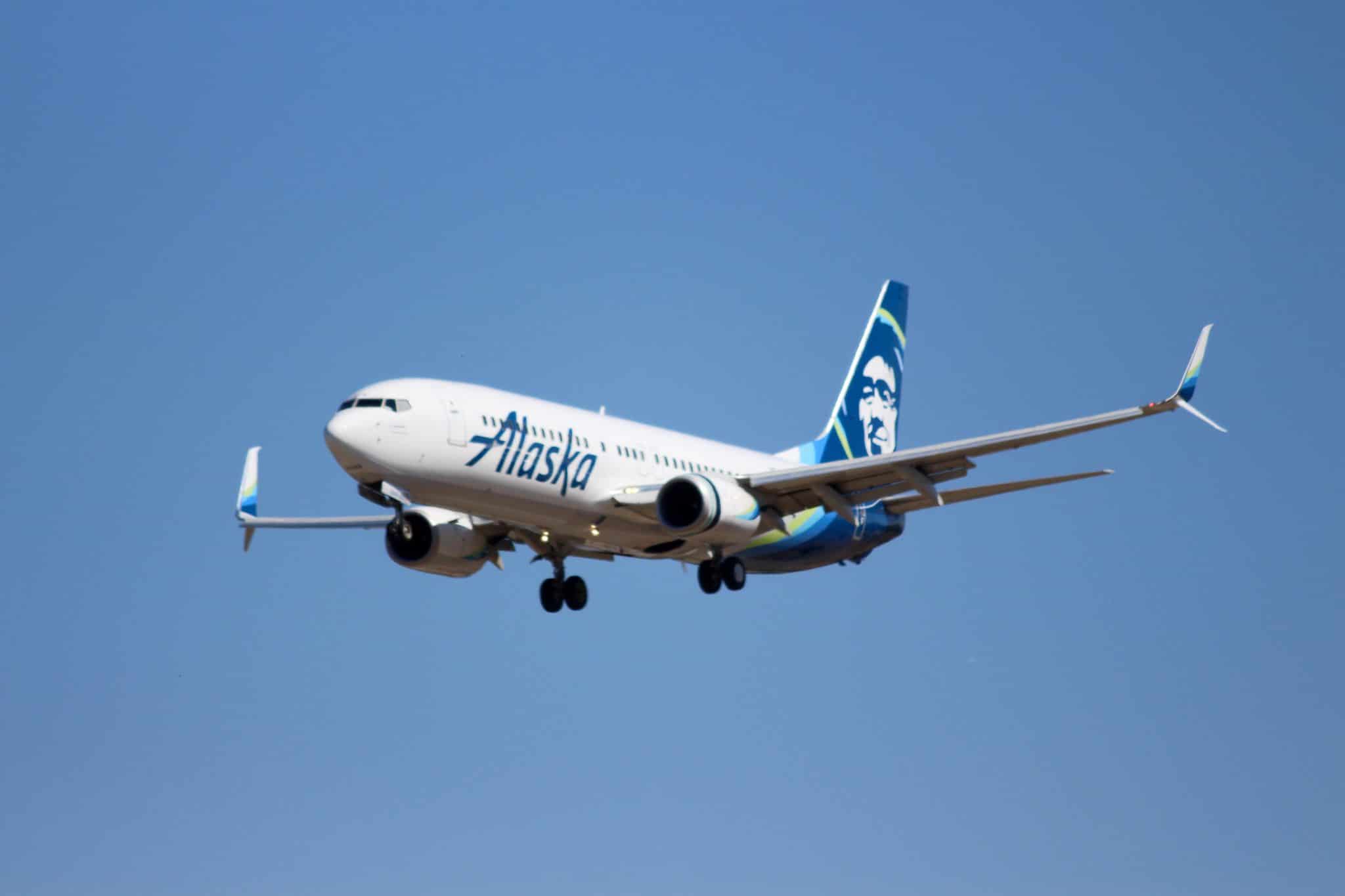
Alaska Airlines (Photo: Avgeekery)
It really depends on how often you travel between the destinations that are part of the program. The standard Flight Pass program could save you money if you visit family or friends regularly. The Pro program could prove beneficial if you need to travel last minute on a semi-regular basis. Also, while most fares are included in the subscription (technically a penny to reserve), Alaska does state that some fares may require an additional purchase during peak times.
The challenge with these types of programs is that you only reap the benefits of the program if you use it. As a subscription, Alaska gets their money no matter what. Customers who sign up commit to at least a 12 month subscription. So it’s not possible just to purchase a $49 plan, use it once, then cancel and bag the savings.
For Alaska Airlines, it’s a dependable and predictable revenue source whether a customer travels frequently or not. The only way they lose money is if the passenger books a seat that they later could have sold for more revenue.
Other Airlines Are Thinking About Doing This Too
Last week, The Points Guy reported that Frontier is also considering a plan to offer a subscription for their flights. It is rumored to be unlimited (with restrictions and limitations). Due to Frontier’s network, it is assumed that their offering would take more of a system-wide approach versus Alaska’s regional offering.
Not a new idea
Offering a subscription service isn’t exactly a new idea. Back in the 1990s, TWA offered a pass system where you could buy passes in advance that you could turn in for a ticket. JetBlue also offered a subscription service for a time. American Airlines once even offered an unlimited first class pass. All these carriers eventually cancelled their offerings.
One of the most unique passes offered was by AirTran. Exclusive to college students, they offered standby passes for a very low price. You can read more about it below:
Icelandair is on track to become the world’s first national flag carrier to operate a 100 percent carbon-free domestic network.
The carrier aims to complete the transition by 2030, according to Icelandair CEO Bogi Nils Bogason.
Icelandair Eyes the Heart Aerospace ES-30
Rendering of a Heart Aerospace ES-30 | IMAGE: Heart Aerospace
Bogason acknowledges uncertainty over whether future carbon-free aircraft will be electric or hydrogen-powered. However, he believes the transition is completely possible.
“We firmly believe it’s realistic that we will be operating a carbon-emission-free aircraft in our domestic operations before the end of this decade,” Bogason told the Financial Times last week. “Our plans are for that, whether it will be hydrogen-powered or a partly electric-powered aircraft.”
To that end, Icelandair intends to partner with Sweden-based Heart Aerospace as it develops a 30-seat hybrid-electric aircraft – the ES-30. The ES-30 will feature battery-powered electric motors and a backup conventional engine with two turbo generators powered by sustainable aviation fuel (SAF).
Get one weekly email with out top stories. No spam, we promise!
The ES-30 will have a zero-emissions range of about 120 miles and an extended range of 250 miles with 30 passengers. It will also have an extended-range flexibility of just under 500 miles with 25 passengers.
Iceland: The Land of Fire and Ice – and Clean Energy
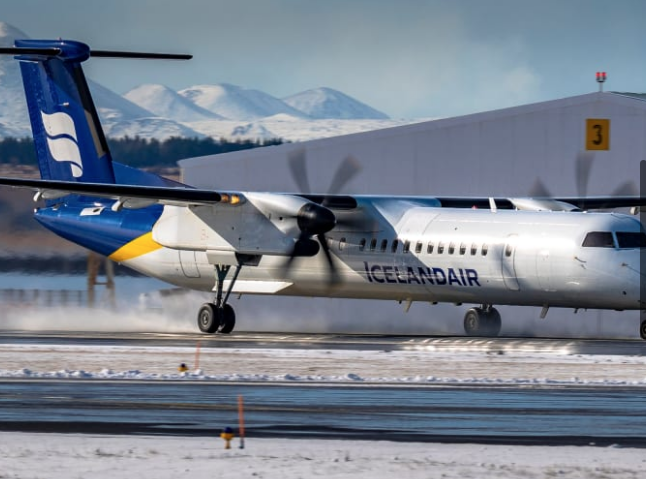
An Icelandair De Havilland Canada DHC-8-400 | IMAGE: Icelandair.com
Icelandair Deputy COO Heida Njola Gudbrandsdottir says it makes sense for Iceland to be a pioneer in clean aviation. Nearly 100 percent of the country’s electric production comes from its vast supply of renewable energy sources such as hydropower, geothermal, and wind.
“We have set ambitious goals to reduce our carbon emissions and one of the measures needed to reach these goals is participating in the development of new technology,” said Gudbrandsdottir. “With short domestic flight routes and ample access to green energy, Iceland is in a unique position to be [at] the forefront of decarbonizing domestic flight. We are very pleased to participate in this development and to help make the energy exchange of aviation a reality.”
Both battery and hydrogen-powered aircraft will likely only be viable on short trips such as the domestic routes within Iceland due to their limited energy density.
Indeed, Icelandair – which is roughly the size of Ohio – operates just three domestic routes from its hub at the capital city of Reykjavik. Unlike Icelandair’s international flights that use Keflavik International Airport (KEF) 30 miles outside of downtown, its domestic flights use Reykjavik City Airport (RKV) which is just over a mile from the city center.
From RKV, Icelandair’s fleet of five Dash-8s serve Akureyri (AEY), Egilsstaðir (EGS), and Ísafjörður (IFJ). With a distance of 237 miles, the flight between RKV and EGS is the longest, clocking in at one hour.
Icelandair Domestic Route Map | GCMaps.com
In addition to its partnership with Heart Aerospace, Icelandair also intends to partner with Los Angeles-based Universal Hydrogen to decarbonize its existing fleet of Dash 8s. To achieve this, Universal Hydrogen would install a hydrogen conversion kit to convert the conventional powertrain into a carbon-free system powered by green hydrogen.
Icelandair’s Goal is Net Zero Emissions by 2050
Rendering of a Heart Aerospace ES-30 | IMAGE: Heart Aerospace
Other carriers, such as United Airlines, Air Canada, US start-up Connect Airlines, Norwegian carrier Wilderøe, and more, each intend to deploy some type of electric or hydrogen-powered aircraft on regional routes in the near future. However, Icelandair’s plans are the most ambitious. And it is presently the only national flag carrier that has announced the transition to entirely carbon-free domestic flights.
If Bogason believes his airline can achieve a carbon-free domestic operation by the end of the decade, much will have to happen between now and then. With the young industry still in the testing and development phase, electric and hydrogen-powered regional aircraft prototypes will need to become commercially viable in roughly seven years.
This may seem like a lot of work – and investment – into an industry that is responsible for just 2.1 percent of all human-induced carbon dioxide emissions. Regardless, Icelandair is taking steps the necessary steps to reduce its share of emissions. And by doing so, it hopes to show the world what is possible in the area of green aviation.
Icelandair is aiming to achieve a company-wide goal of net zero emissions by 2050.
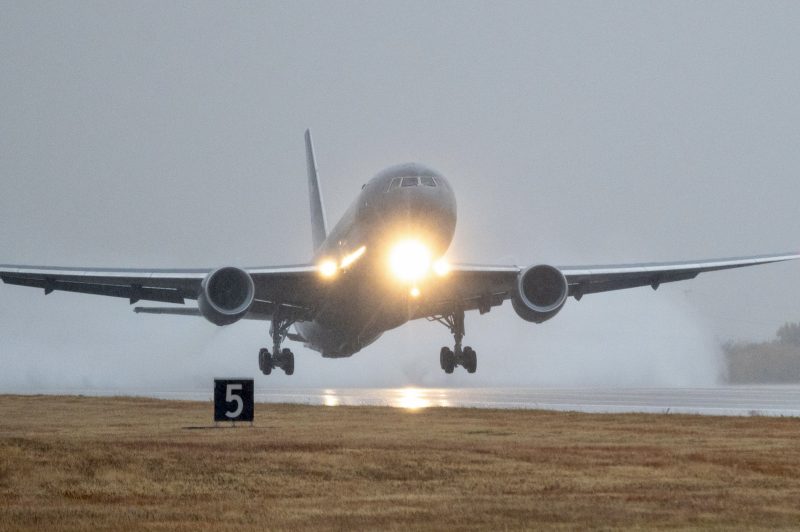
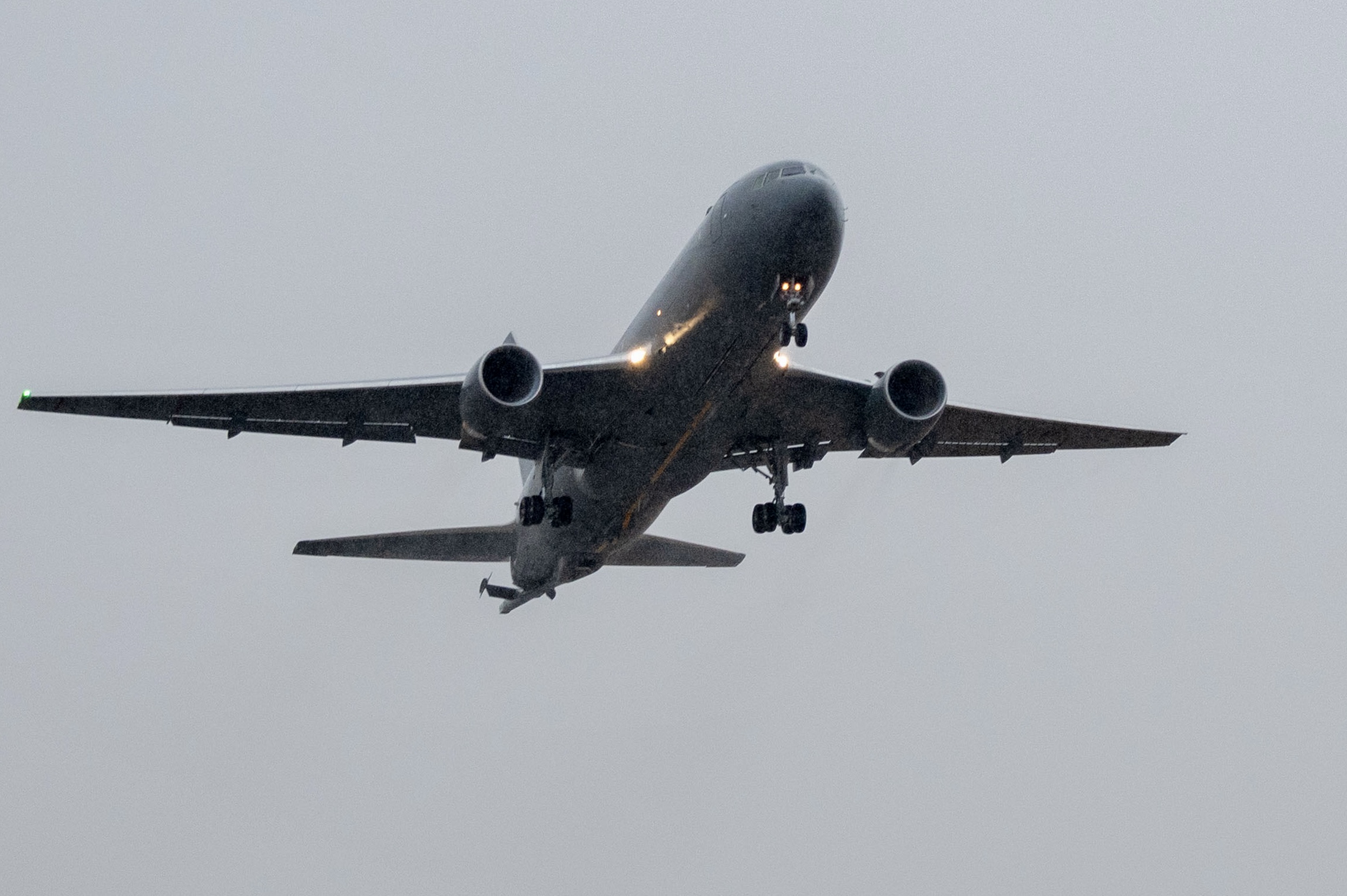
A U.S. Air Force tanker crew from the 22nd Air Refueling Wing at McConnell Air Force Base, Kansas flew a KC-46A Pegasus without a copilot on Oct. 25.
The tanker actually the mission profile twice, with only a single pilot and boom operator, to “validate procedures for operating with a limited aircrew for certain potential high-end combat scenarios,” according to the USAF.
“This employment concept allows the KC-46 to complete its primary mission with a reduced crew complement when needed to rapidly launch aircraft with threats inbound or extend long-range operations in the air with offset crews,” added the USAF.
Learning to Fly a Tanker Without a Copilot
After a thorough pre-brief and planning, the first mission flew the pattern only sortie, followed by a debrief and assessment. The single pilot and boom operator then took off again for a full mission profile, which included aerial refueling.
A KC-46A Pegasus takes off from McConnell Air Force Base, Kansas for the liMited crew flight testing On oct 25 (photo: USAF)
While it was technically single pilot operations, the boom operator was in the cockpit with the pilot, except for boom ops. A second instructor pilot was always on board as a safety observer. A second KC-46 accompanied the latter mission as well, with a full crew of experts to provide assistance by radio, if needed.
Get one weekly email with a recap of each week’s aviation news. No spam, we promise!
“The dynamics of the future operating environment require us to think in ways we might not usually think,” said Gen. Mike Minihan, commander of Air Mobility Command. “Victory will be delivered on the back of the mobility air forces, and doing so means taking a hard look at every tool we have at our disposal.”
“This mission was practiced extensively in flight simulators,” said Col. Nate Vogel, 22nd ARW commander. “Each phase of evaluation has been carefully considered, taking into account crew safety, aircraft capabilities, and existing federal aviation standards. That allowed us to make a deliberate and thorough analysis of what risks and hurdles are present, how to mitigate those, and allowed us to recommend training requirements to familiarize crews with the basic functions and critical controls of unfamiliar crew positions.”
First time a 767 sized airliner has been flown without a copilot
The mission marks the first time a 767 sized airliner has been flown by a single pilot. The Air Force’s KC-46A is a variation of that, built by Boeing to modernize and replace the Air Force’s KC-135 and KC-10 tanker fleets.
Time will tell if the accomplishment eventually kicks off a further push for single pilot cargo ops.
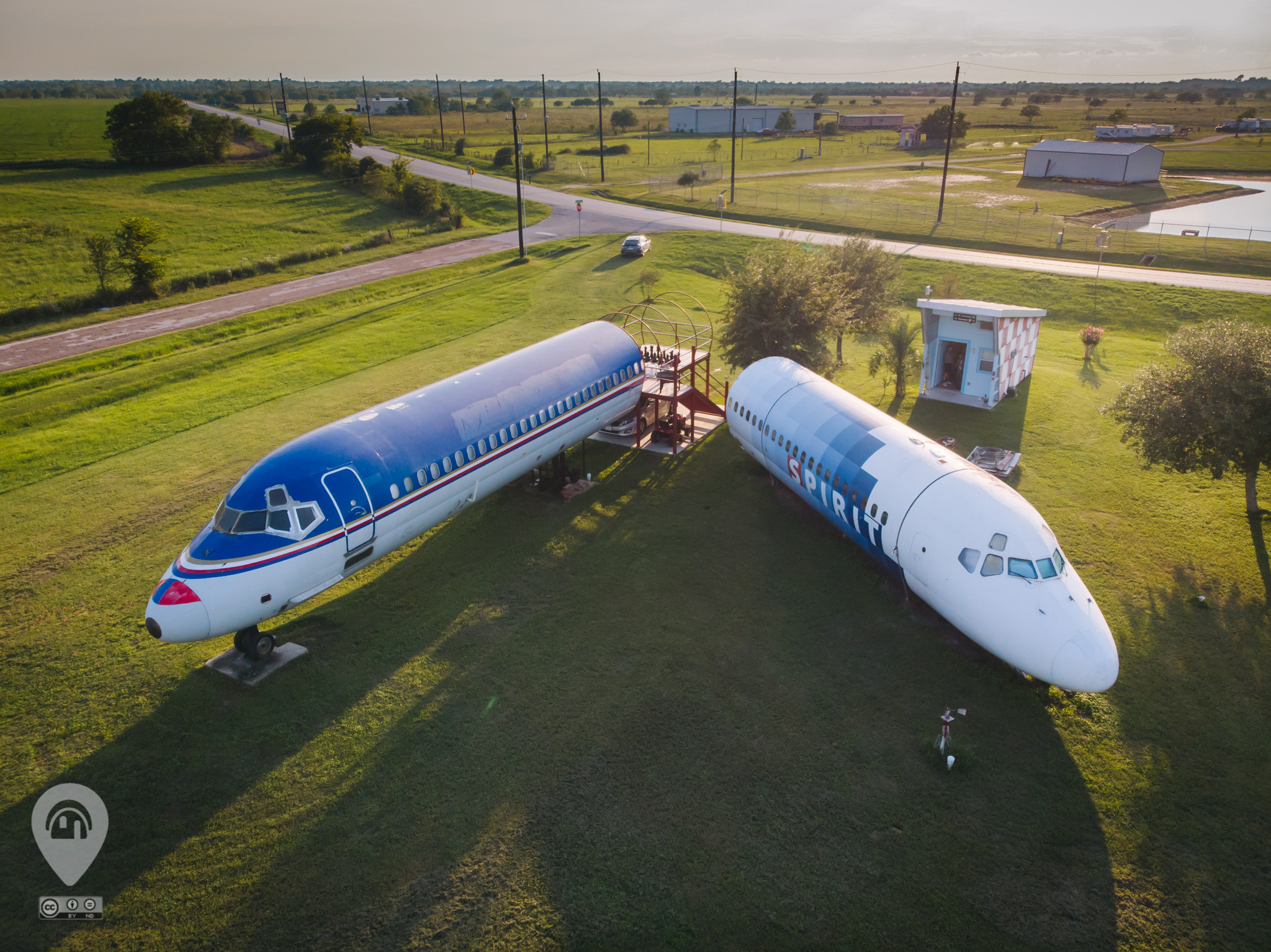
Joe Axline was just 11 years old when he decided he would live in an airplane one day.
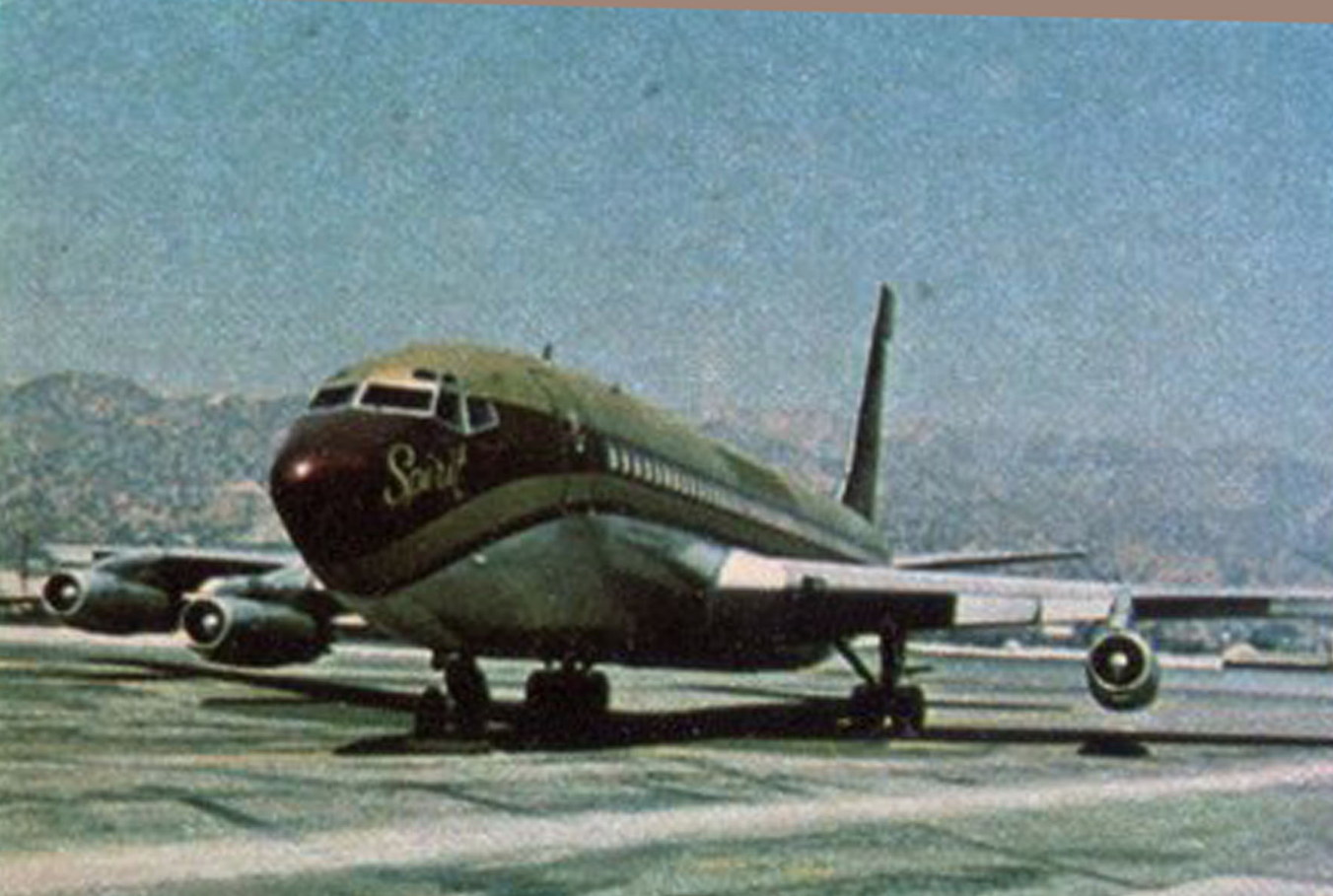
The year was 1973. Axline, the son of an airplane mechanic and pilot, loved to watch “The Magician.” The show was about a master stage illusionist named Tony Blake, who actor Bill Bixby played. Tony used magic to solve crimes. Flying around in his Boeing 720, which served as his mobile lab and his home, he would swoop in and save the day. At the end of each episode, Tony got into his Corvette, drove it into the back of the Boeing 720, and took off. The license plate of the car – and the name of the jet – was “Spirit.”
Tony Blake’s Boeing 720 from ‘The Magicians’ | IMAGE: imdb.com
The short-lived NBC series made quite an impression on Axline.
After getting his pilot’s license at 18, Axline responsibly put aside the dream of living in an airplane to focus on his career, marriage, and kids.
A Dream Becomes Reality
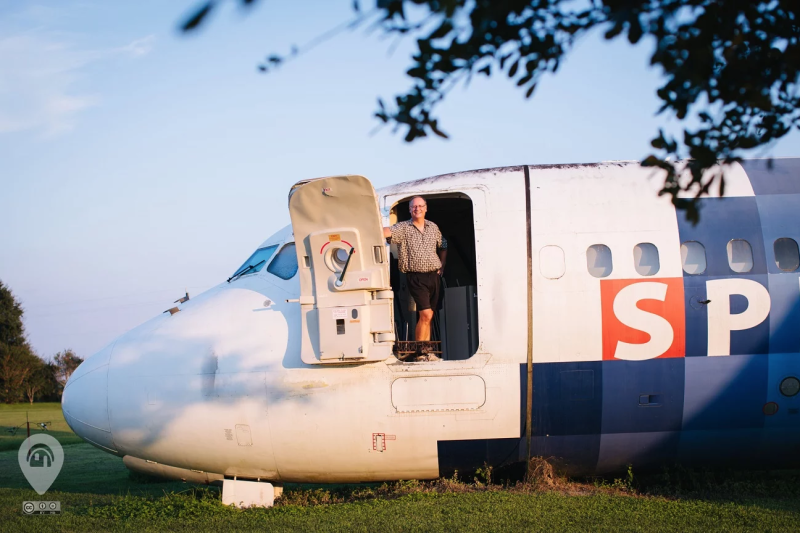
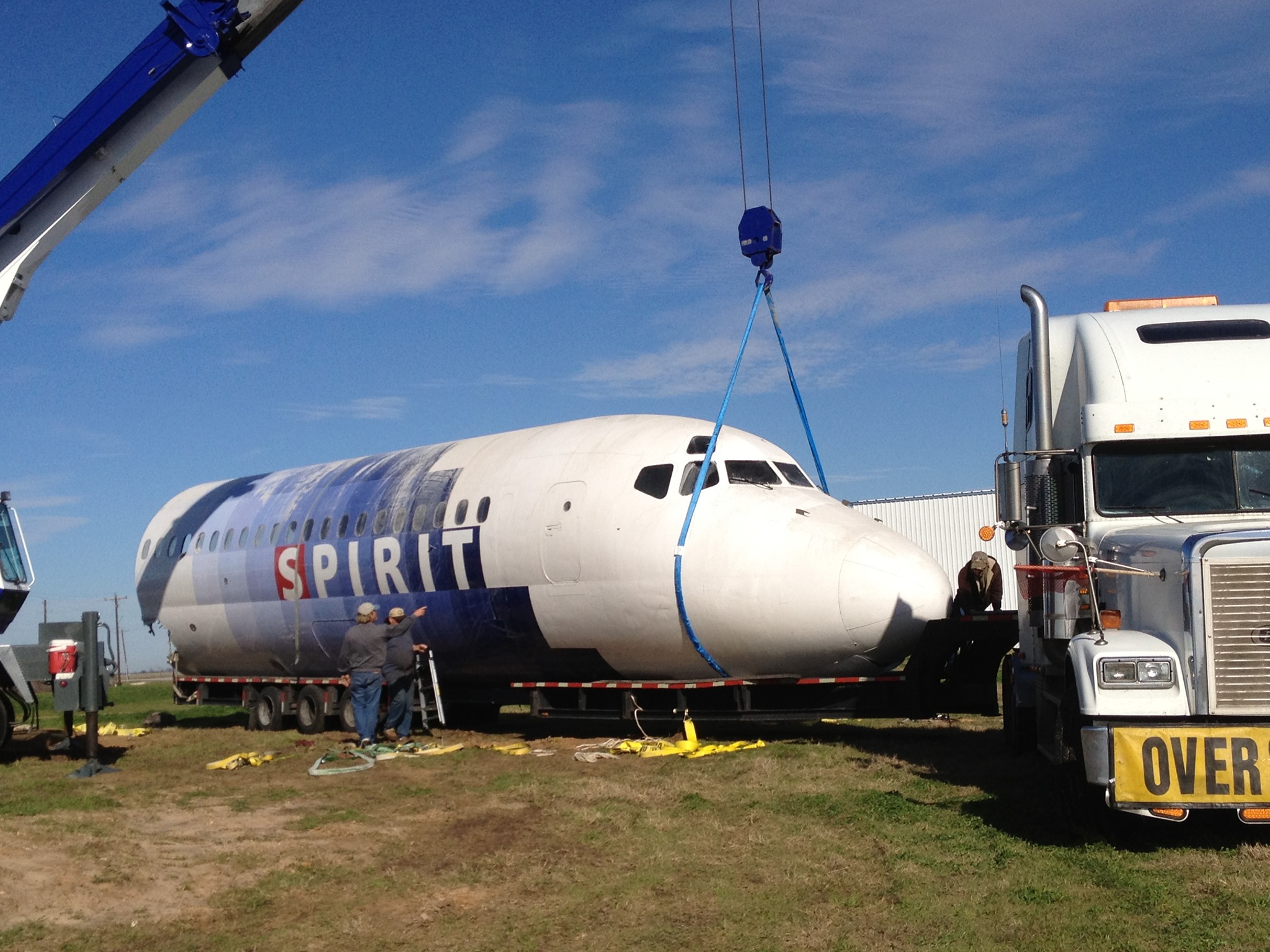
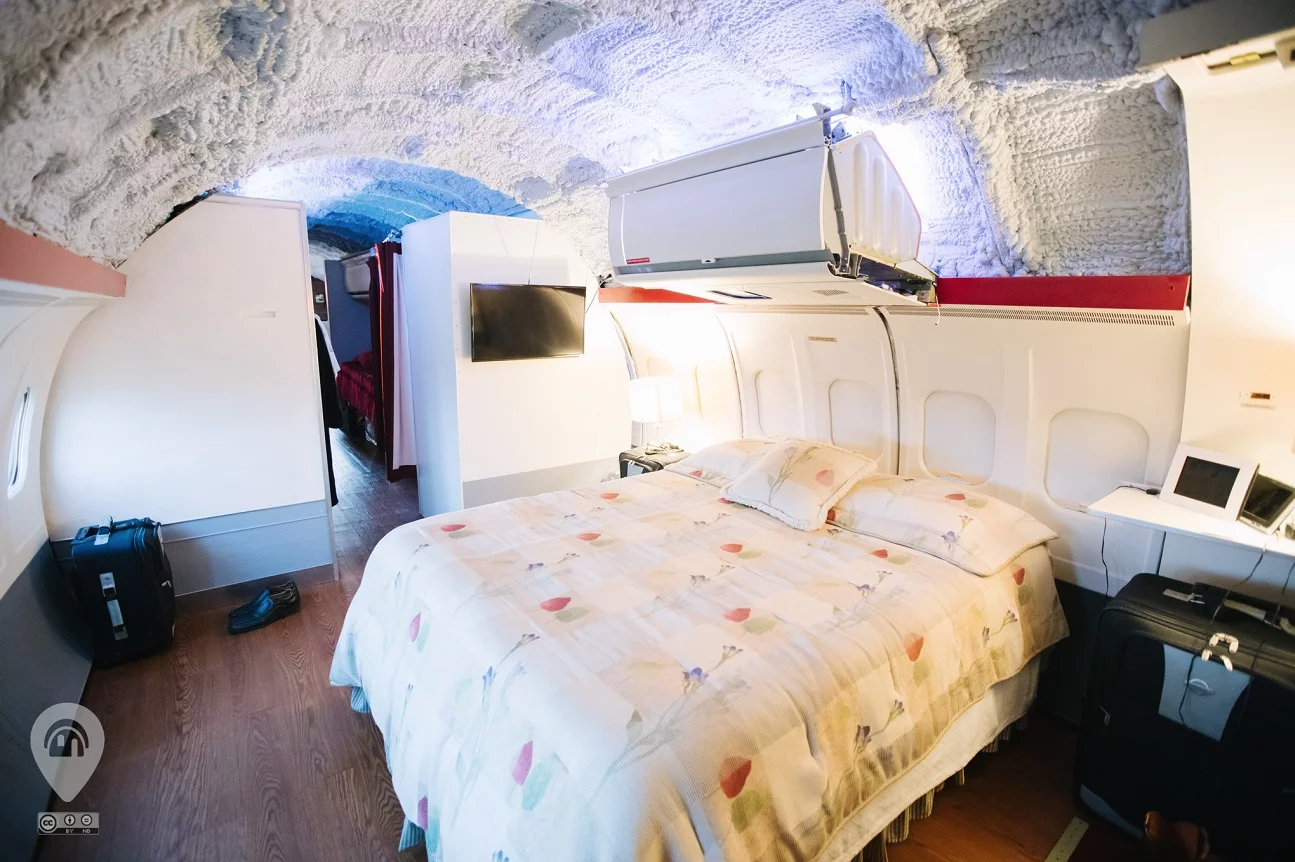
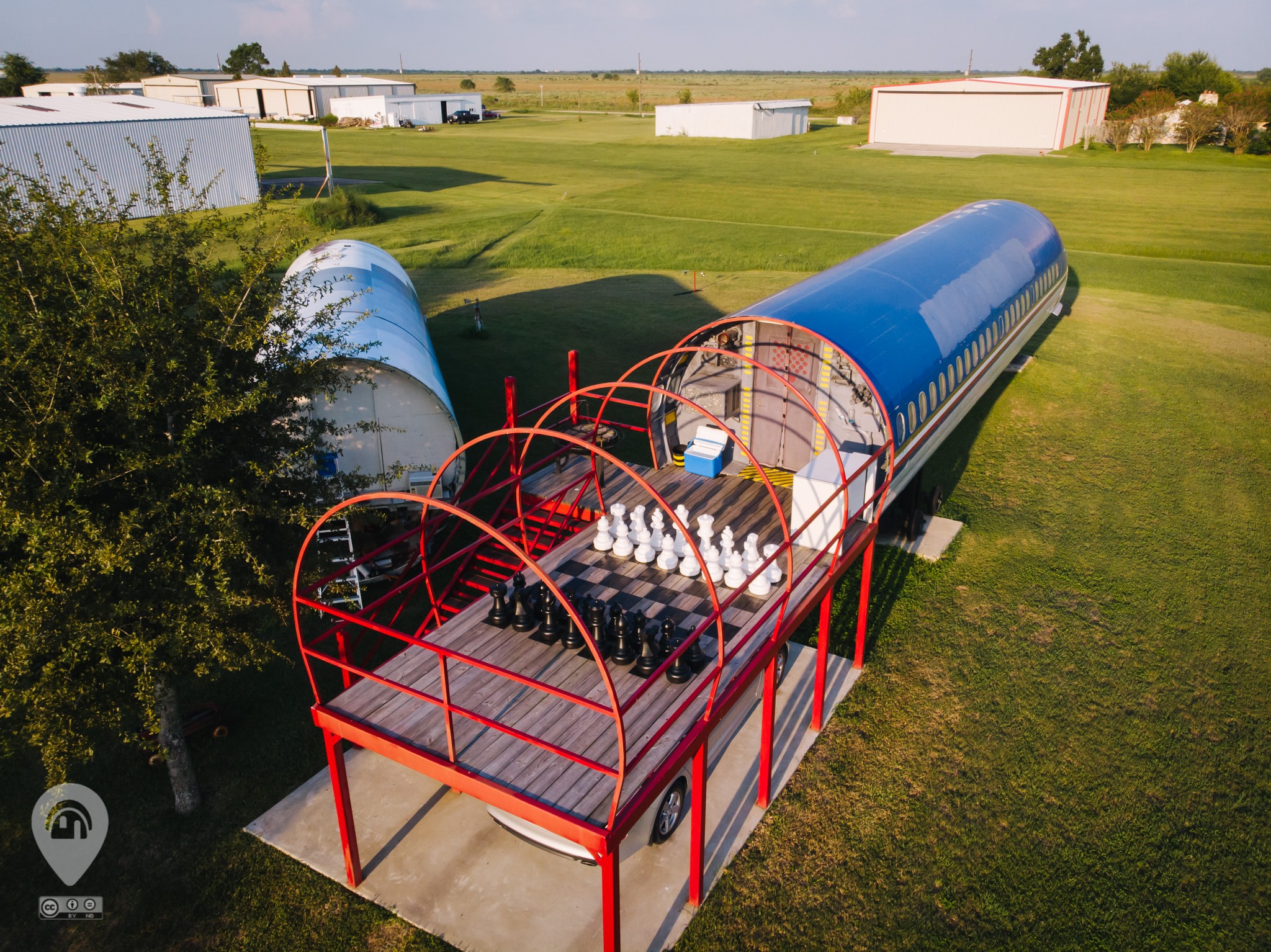
A ex-SAS McDonnell Douglas DC-9-41 used for the main living quarters in Project Freedom | Image: Project Freedom on Facebook
After his marriage came to an end in 2011, Axline’s dream took flight once again. On the day he got divorced, he began to look for a property on which a plane could become his home.
He decided to call the endeavor “Project Freedom.” Axline chose the name after a friend suggested that his divorce finally gave him the freedom to fulfill his lifelong dream of moving into an airplane.
Axline, who had lived with his family in Katy, Texas, a Houston suburb, found a piece of land at the Sport Flyers Airport in nearby Brookshire.
Originally, Axline’s dream was to live in the fuselage of a Boeing 747. However, he quickly discovered that acquiring and transporting a 747 on major highways would be an astronomically expensive logistical nightmare.
Axline heard about a McDonnell Douglas DC-9-41 that was up for auction in Florida. The wingless 50-foot section of the fuselage of the DC-9, an ex-Scandinavian Airlines System (SAS) bird, had spent several years as an attraction inside a mall. After agreeing on a price, he acquired the aircraft and began arranging its transport to Texas.
Shortly after that, Axline purchased a second plane — a McDonnell Douglas MD-81 (also wingless) from a storage facility at Arkansas International Airport (BYH) in Blytheville, Ark. The MD-81 would go on to serve as the primary living space for Axline’s new home.
Making a Plane Into a Home
The master bedroom inside Project Freedom | IMAGE: weirdhomestour.com
The ex-Midwest MD-81 would be the first to arrive in Brookshire. Axline got to work by placing the 60-foot section of fuselage on support columns and gutting the interior. The plane, which Axline named “Freedom,” was completely renovated. He installed a water and sewer system, waterproof electrical wiring, hardwood floors, LED lighting, and insulation foam to protect from the harsh heat and occasional winter cold of south Texas.
The back deck of Joe Axline’s home serves as a carport | IMAGE: Project Freedom Facebook
Freedom’s floorplan consists of a master bedroom, sleeping areas for Axline’s two children, a bathroom, a living room, a small office, a kitchen, and an outdoor deck for entertaining. The deck floor, which contains a giant life-sized chessboard, also serves as a covered carport. Below the cockpit, Axline built a wine room and a library. The cargo hold is a game room. Kitchen countertops feature repurposed sections of the cabin ceiling.
Axline cooks inside his Project Freedom kitchen | IMAGE: Project Freedom on Facebook
Besides keeping the original cockpit in place, Axline kept overhead bins, windows and shades, an original bathroom sink, lights, air vents, oxygen masks, cabinets, and even an old Jeppesen manual.
Project Freedom is a Work in Progress
Axline has built a back deck with life-size chess pieces | IMAGE: Project Freedom on Facebook
A month after the MD-81 arrived, the DC-9 fuselage showed up. Plans call for turning that aircraft, which Axline has dubbed “Spirit,” into a movie theater and craft room.
Axline future plans include connecting Freedom and Spirit with a bridge and building a hangar over his home to give the impression that the planes are at an airport. He says he would also like to add wings to both Freedom and Spirit.
Additionally, he wants to add a mini control tower, model trains, and cars to his landscaping. That way, when people look out of the windows of his home, it gives the illusion of being in the air.
And for those curious about what sleeping in an airplane home is like, the property available to rent on Airbnb.
The Backstory of the Project Freedom Planes
SAS DC-9-41 SE-DDT at Birmingham (UK) International Airport (BHX) on 21 September 1990 | IMAGE: Rob Hodgkins at wikimedia commons
The DC-9 used for Project Freedom is an ex-Scandinavian Airlines System (SAS) bird (reg: SE-DDT/MSN 47779). Delivered to SAS in 1979, she would spend her entire life there as the “Amund Viking” before being stored in the New Mexico desert in 2002.
In 2004, a Florida-based company called Wannado Entertainment purchased the aircraft for use at an attraction planned for the Sawgrass Mills Mall in Sunrise, Fla., just outside Fort Lauderdale. The aircraft would become part of “Wannado City,” an indoor role-playing amusement center for kids. Sponsored by Miramar, Fla.-based Spirit Airlines, the DC-9 fuselage was painted in the carrier’s early-2000s livery and used as the “Spirit Airlines Flight Academy” attraction in Wannado City.
The Project Freedom DC-9 on display in Spirit Airlines livery at Wannado City in Sunrise, Fla. | IMAGE: Project Freedom on Facebook
After years of declining visitor numbers, Wannado City closed in January 2011. Its contents, including the DC-9, were auctioned off.
Project Freedom’s MD-81 was delivered to Swissair in May 1981 (reg: HB-INH). In 1995, she became a SAS bird (reg: OY-KIH), where she would stay for six years. In March 2001, she went to Midwest Express Airlines (which became Midwest Airlines in 2002) as N813ME. Ahead of Midwest’s merger with Frontier Airlines in 2010, N813ME went to storage in Blytheville, Ark.
HB-INH McDonnell Douglas DC-9-81 (MD81) [48007] (Swissair) Geneva Int’l (Cointrin)~HB 29 September 1981 | IMAGE: Ray Barber on flickrMidwest MD-81 N813ME Lands at Fort Lauderdale International Airport (FLL) on 10 October 2006 | IMAGE: Wade DeNero on Planespotters.net
The Dream is Worth It
The Project Freedom homestead in Brookshire, Texas | IMAGE: Project Freedom Facebook
Axline has worked countless hours to make his dream of “living in an airplane” a reality. Since the project began, Axline estimates he has spent close to a quarter million dollars on Project Freedom.
But the dream is worth it, he says.
“Dream big and do something every day towards your dream,” he said in a Facebook post recently. “It may take 50 years to get there, but it’s worth it.”