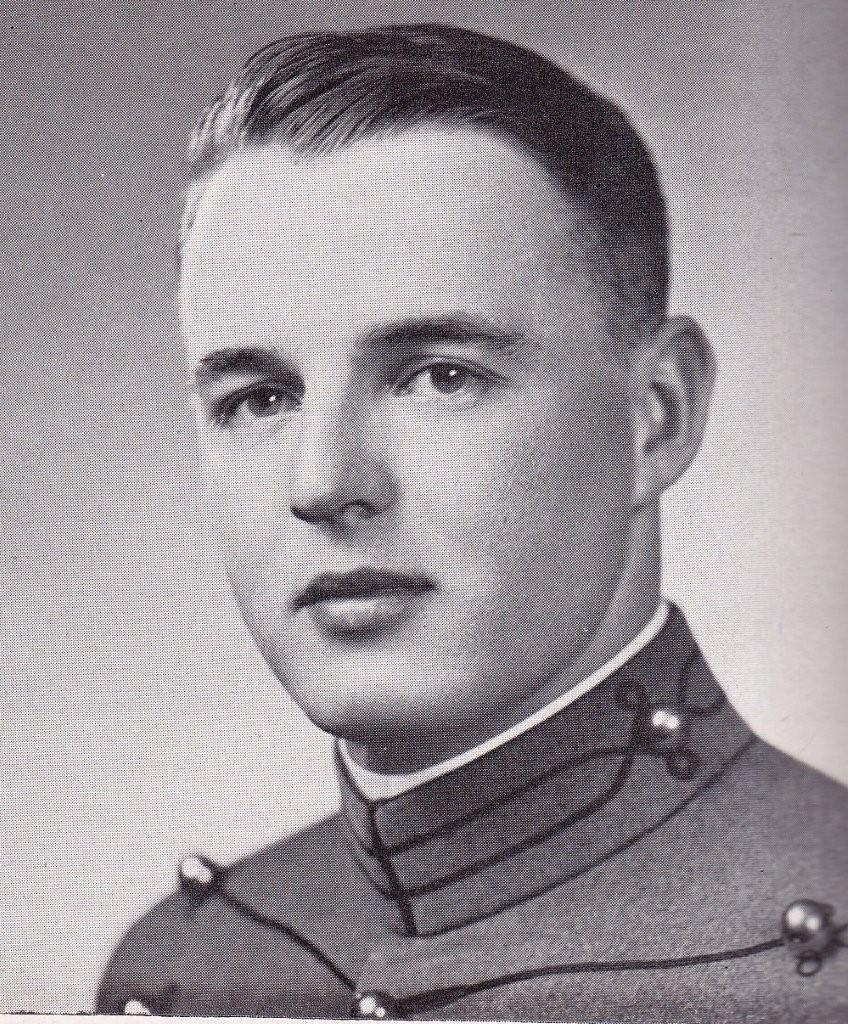
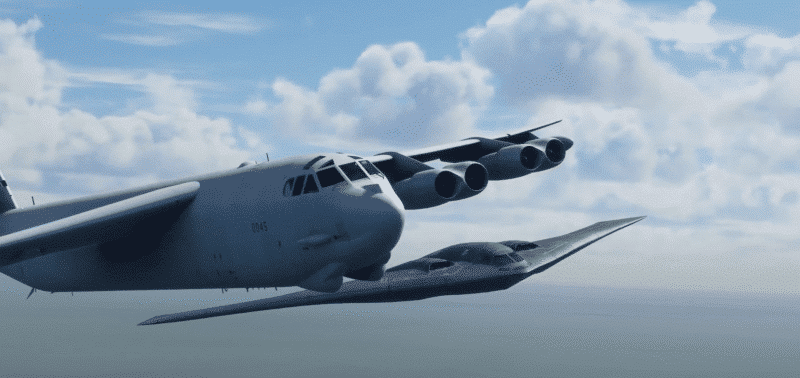
Well, it’s that time of the year again AvGeeks. Whether you are in it for the love of the game, the Xs and Os, because the team of your local metropolitan sprawl happens to be in it, or, speaking for this crew, because of the pre-game flyover (the trifecta of USAF strike bombers this year), it is Super Bowl time. Here’s the story of a pilot turned NFL Pro, Chad Hennings.
Maybe you are inspired by Tom Brady making it to his tenth Super Bowl appearance (like him or not, he is undisputedly the GOAT) or elated by my hometown Kansas City Chiefs’ electrifying performance with their phenom wunderkind Pat Mahomes and his supporting cast. Maybe you’re in it for the beer and chicken wings, which is utterly commendable.
However, we are taking a different angle on the Super Bowl, looking at famous sports crossovers. Perhaps the very most renowned crossover was baseball hall of famer Ted Williams who flew for the Marines in both World War II and the Korean War, which took around five years out of his tremendous playing career. But that is baseball; this is the ultimate day for football.
Famous Football Stars-turned-Soldiers
During the wartime era of the 1940s U.S. Military Academy (West Point) was an incredible winning machine under Red Blaik. Among his crowning achievements were back-to-back Heisman Trophy winners Doc Blanchard and Glenn Davis. Now, Glenn Davis did become a pilot in the Air Force, so he mostly qualifies except he did not play professional athletics.
Photo: US Army
However, I do recall the 1995 Super Bowl quite vividly (Leon Lett should never be able to live down getting his touchdown stripped by Don Beebe). And on that roster was a former A-10 driver.
Chad Hennings: A-10 Pilot Turned Dallas Cowboys Star
While I have always abstained from being a Cowboys fan (Chiefs Kingdom, Baby), as an Av Geek I was very interested in the individual who filled in for Leon while he was doing time on a suspension. Chad Hennings, a 6’6” defensive tackle who was taken relatively late in the 1988 draft by the Dallas Cowboys out of the Air Force Academy (USAFA).
Growing up in rural Eastern Iowa, Hennings was a multi-sport star at Benton Community High School. While he did have several offers, he attended the Air Force Academy, where he initially played tight end. He would later transition to the ball’s defensive side, winning the Outland Trophy in the process, which is no small potatoes.
Upon graduation from the USAFA, Hennings was commissioned as a 2nd lieutenant, where he proceeded to the 80th Flying Training Wing at Sheppard AFB in Wichita Falls, Texas. All of the geeks out there are probably aware that this is home to Euro-NATO Joint Jet Pilot Training (ENJJPT), a highly competitive program.
Back to football. You are probably wondering how Hennings would pull this off, playing in the NFL and flying in the Air Force? Well, he didn’t do it simultaneously. The Air Force was stingy in the late 80’s and denied his request to be released from his service commitment. So he had to settle for merely being a fighter pilot in the meantime.
All jokes aside, this was a serious deal for a good athlete with a career on the gridiron on the line. Football skills are perishable, and he had to focus all of his energy on flying while in UPT.
Hennings Was Too Tall For Most Fighters
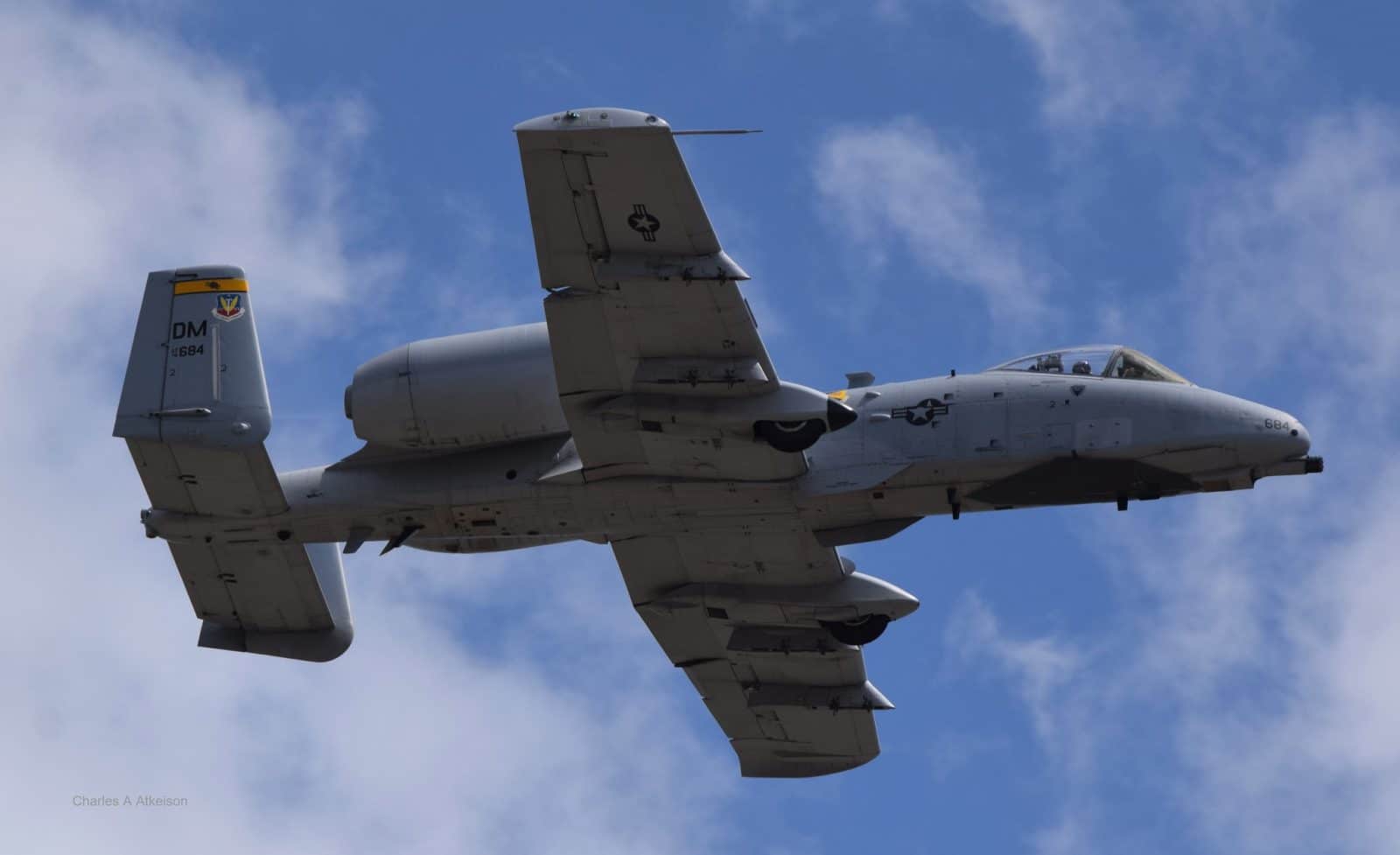
Hennings had limited airframe options due to his robust stature (I imagine the T-38 was cramped) and ended up in the Hawg, flying for the 81st Tactical Fighter Wing at RAF Bentwaters, United Kingdom.
Photo: Charles AtKeison
He did not spend all that much time in the seat, although he flew long enough to participate in the original Persian Gulf war. Thankfully for his future career in the NFL, the Air Force began a substantial drawdown after the Persian Gulf conflict ended, and Hennings was able to separate early from his commitment to his commission as a pilot. The rest, as they say, is history.
He went back to the Air Force reserve for a few more years while on the Cowboys’ active roster, but he hung up his wings for good after his stint at Bentwaters. He served in the capacity of liaison to the USAFA until he entered the inactive ready reserve.
Back on the field, he would play sparingly on special teams during his first handful of years but broke out and earned a starting role in the 1996 season. During his time with the team, of which he played his entire NFL career, he won three Super Bowl rings. I’d say no matter how you slice it; he had a pretty successful career.
A 2015 ESPN Sportscenter shared his story in honor of Veterans Day. It’s worth a watch.
UPDATE: Here is video of the official flyover from Super Bowl 55 from the Super Bowl. Next, we share an external video posted by Channel 10 in Tampa Bay. We also included footage from Mike Killian, an Avgeekery contributor below.
Original Story
The Super Bowl is the big game. And each year there is a big flyover before the game at the National Anthem to kickoff the big event. In past years, the Thunderbirds and Blue Angels have impressed the roaring crowds below. We’ve shared videos of the flyovers on our site and even put together a list of the craziest flyovers in the past. Even one where a C-5 saved us from a terrible rendition of the National Anthem. Nothing though compares to this first-ever flyover planned for Super Bowl LV. An ultra-rare dissimilar formation of B-1, B-2, and B-52 will kick off the game this year. What’s even more impressive is that the designation of the aircraft add up to 55 (B-52+B-1+B-2)!
Simulate the big game and the flyover before it happens
The news coverage of the game is notoriously intense. Players are relentlessly hounded for insights and predictions are made. Each year, the Madden Football game also predicts the score of the game. It’s a simulation that is sometimes scarily accurate.
Fast forward to 2021, Avgeeks now have their own high quality simulation tool. They are using it to simulate the flyover for the big game. Just like Madden Football, the quality of the simulation has increased significantly in recent years. Microsoft Flight Simulator 2020 has photo realistic scenery, upgraded flight mechanics, and graphically intense clouds and flight models.
The flyover posted by FlyFS is pretty amazing. They even added timed music to the event. While the real thing will be better, this video serves as a great preview for one of the rarest formations flown by the US Air Force. Check it out and let us know your thoughts.
Not the first time this formation has flown in real life.
Back in 2017, this rare dissimilar formation of B-52, B-1, and B-2 flew for a photo shoot. Our friend, Sagar Pathak captured the unique formation that will be repeated for this year’s Super Bowl.
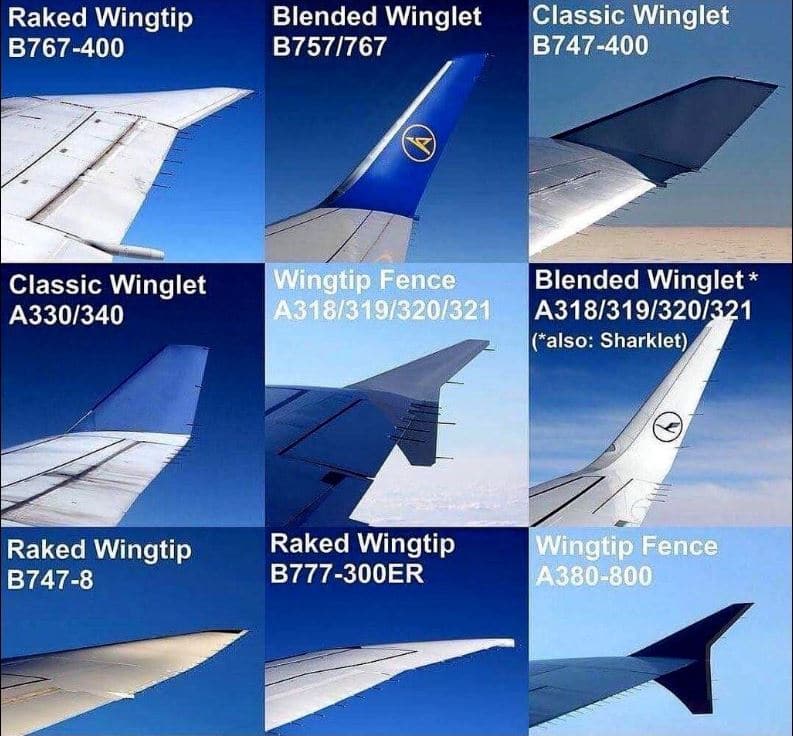
Sure, for us AvGeeks, these funny things on the wingtips make something cool (a wing) look more cool. For what purpose – and how long have these been around?
Types of Winglets: (Wikicommons)
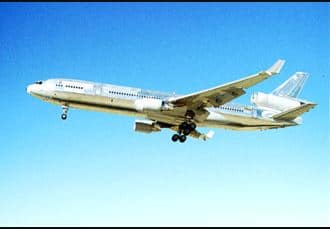
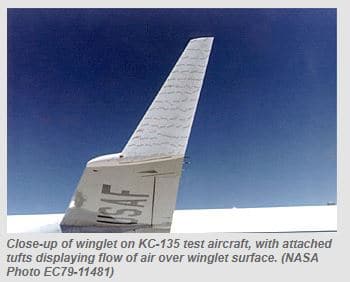
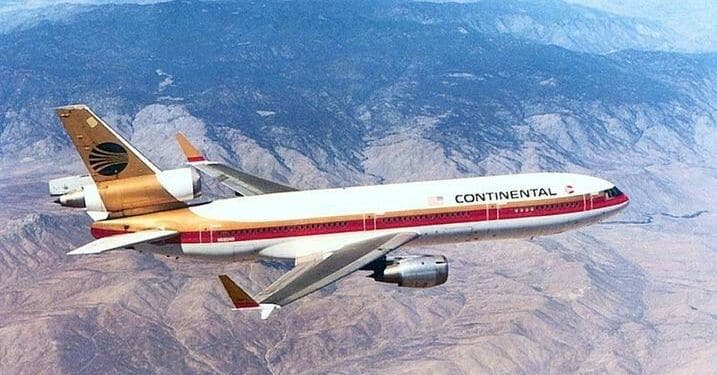
Surprisingly, two aircraft that I am intimately familiar with participated in the development and use of the Winglets, the KC-135 and MD-11.
KC135 Used at Dryden for winglet test: (Source: nasa)installation of winglets on DC-10-10: (source: nasa)
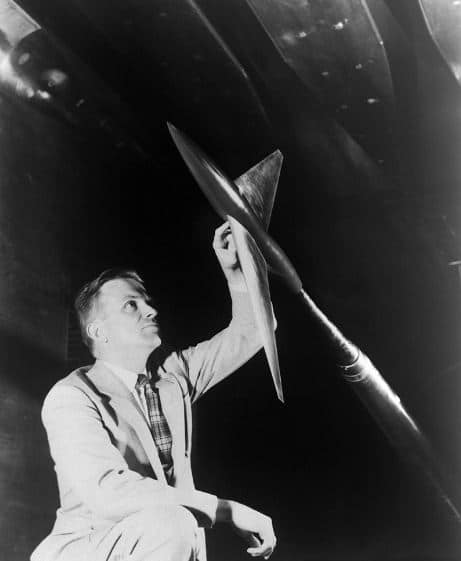
dr richard t. whitcomb, 1955, testing area rule properties: (source: nasa)
As a 30 year old working at National Advisory Committee for Aeronautics (NASA predecessor), Dr. Whitcomb pondered a recent lecture on transonic airflow delivered by Dr. Adolph Busemann. Dr. Whitcomb, with feet on desk, visualized airplane structures and had the Eureka moment that to minimize drag, the length of aircraft body should be smooth creating the Area Rule.
Chronologically second, Whitcomb’s development of the Supercritical Wing delayed drag onset at high subsonic speeds. This created a more efficient wing eventually reducing fuel costs.
Lastly, and the topic for today, Whitcomb studied the airflow of wing tips for soaring birds. He observed that birds’ wingtips curled upwards during flight. This generated an improvement to the end of wing design that he called Winglets.
PURPOSE
During the Oil Crisis of the 1970’s, Oil prices raised considerably. In 2013 dollars from the following chart, oil went from under $20 to over $100 per gallon.
oil price chart in 2013 dollars: (source: treasury)
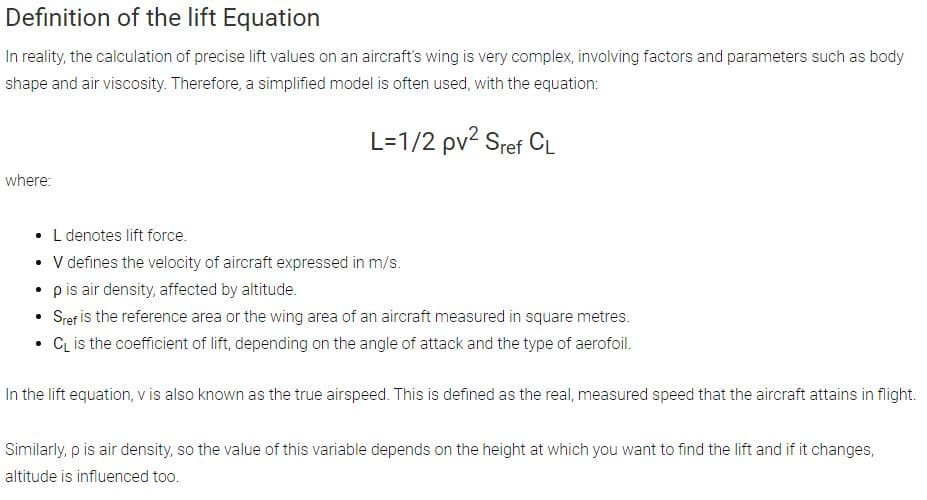
Dr. Whitcomb developed the winglet concept to increase fuel efficiency by reducing overall drag. Consider the lift equation below.
Lift equation
Decreasing induced drag at the wingtips increases lift and makes a more efficient wing, thereby saving fuel. Dr. Whitcomb knew that as air moves across and outward along the wingtip, high pressure below the wing seeks low pressure above the wingtip, creating the the wingtip vortices. The installation of a winglet interrupts and decreases the vortices at the wingtip.
What's Up With a Winglet 12
TESTING
Testing began in 1979 on KC-135s at Dryden Test Facilities at Edwards AFB and engineers validated fuel mileage rate increased by 6.5%.
What's Up With a Winglet 13
In the early 1980’s, McDonnell Douglas used a Continental Airlines DC-10-10 to test the performance improvements using winglets. The range and efficiencies increase by 5% and led to full usage within the production of the follow-on MD-11.
MD 10-10 during testing at dryden: (source: nasa)
Nearly all commercial aircraft and some military aircraft use the winglet technology developed by Dr. Whitcomb. As we AvGeeks traverse the skies using inventions developed by seriously smart people, we truly appreciate any extra fuel available due to winglets.
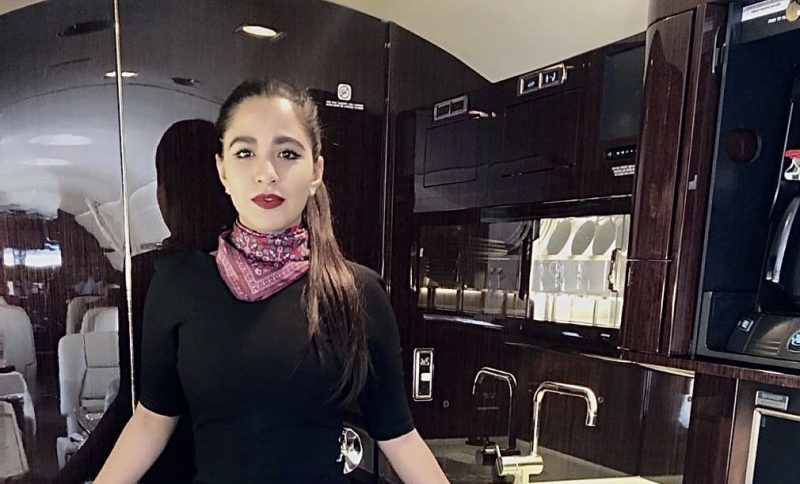
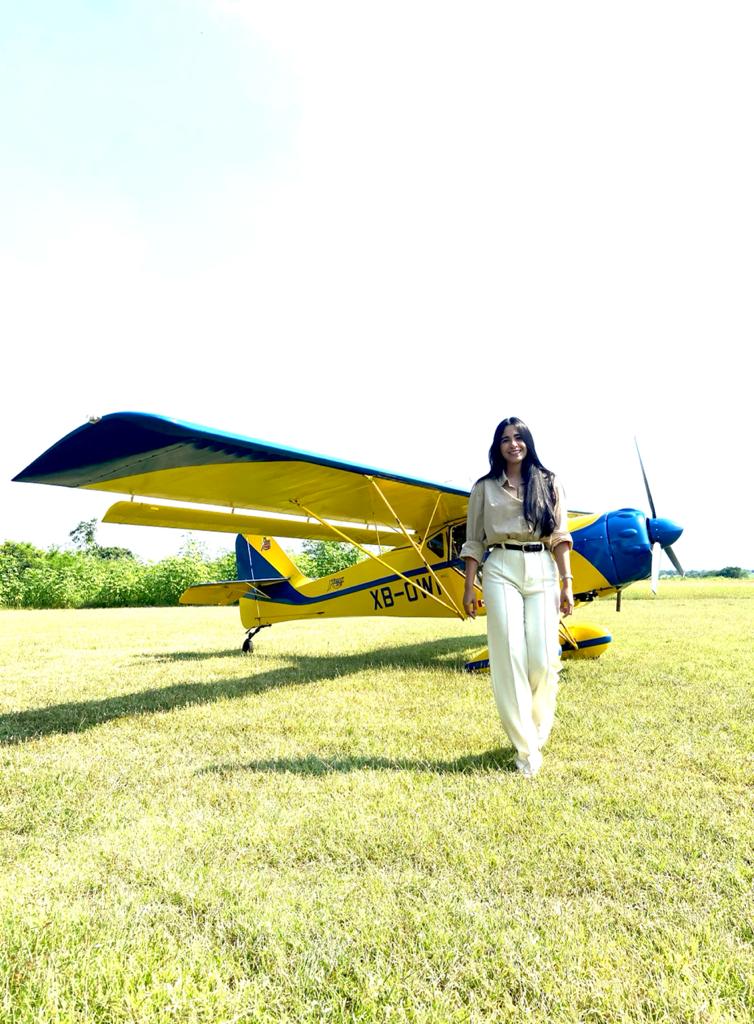
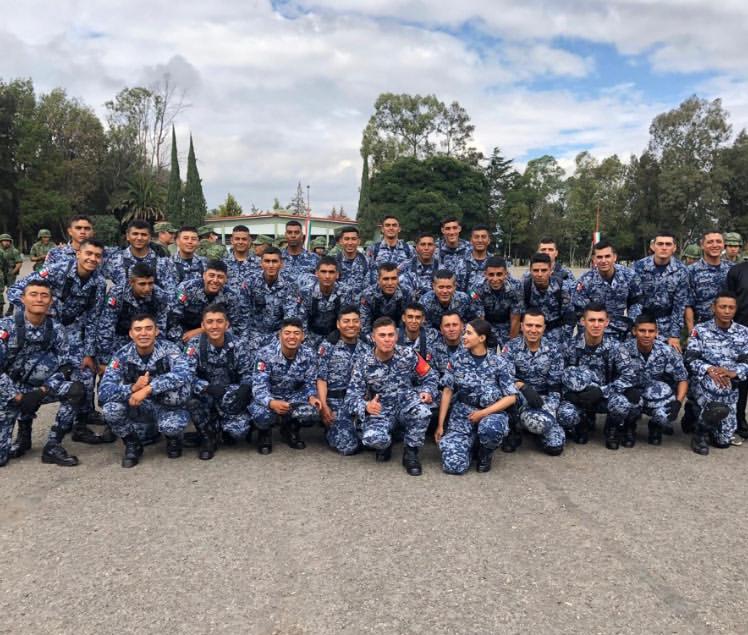
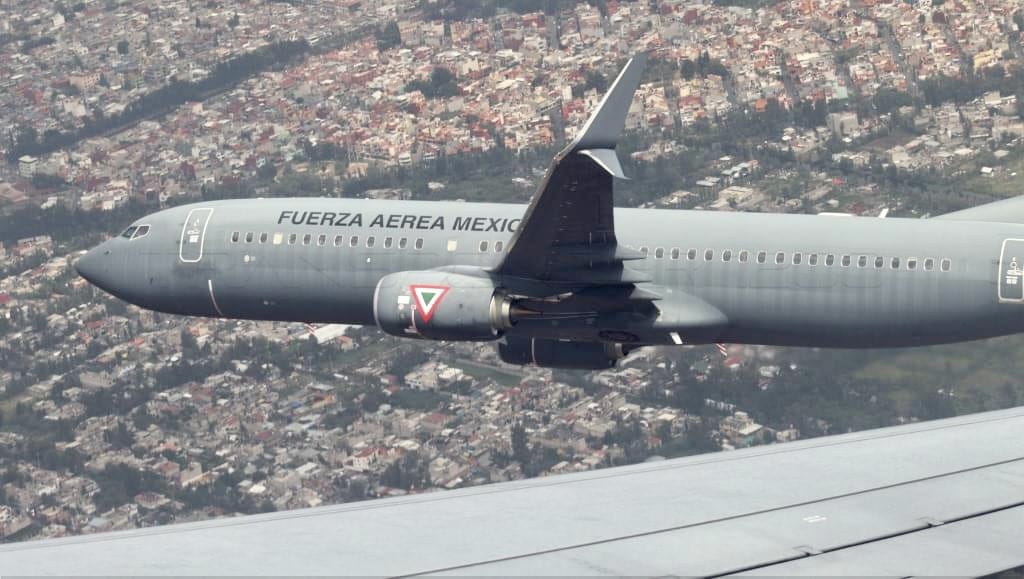
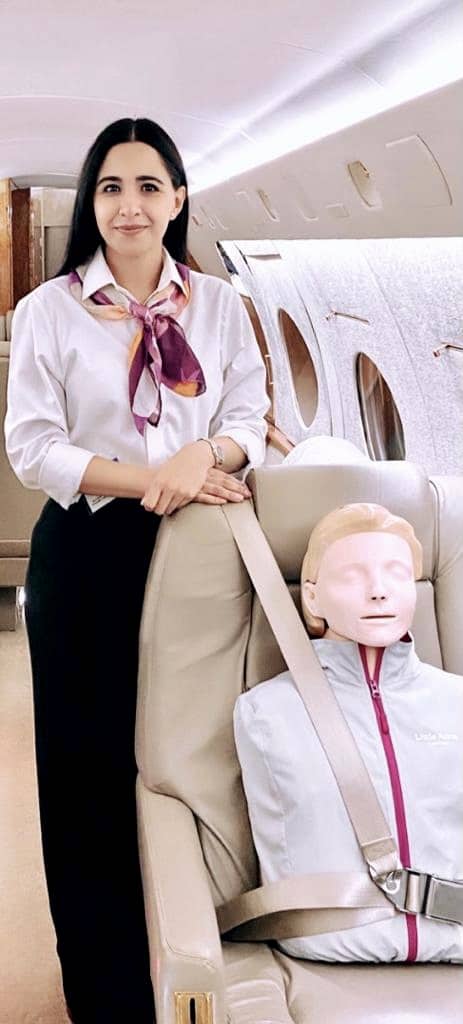
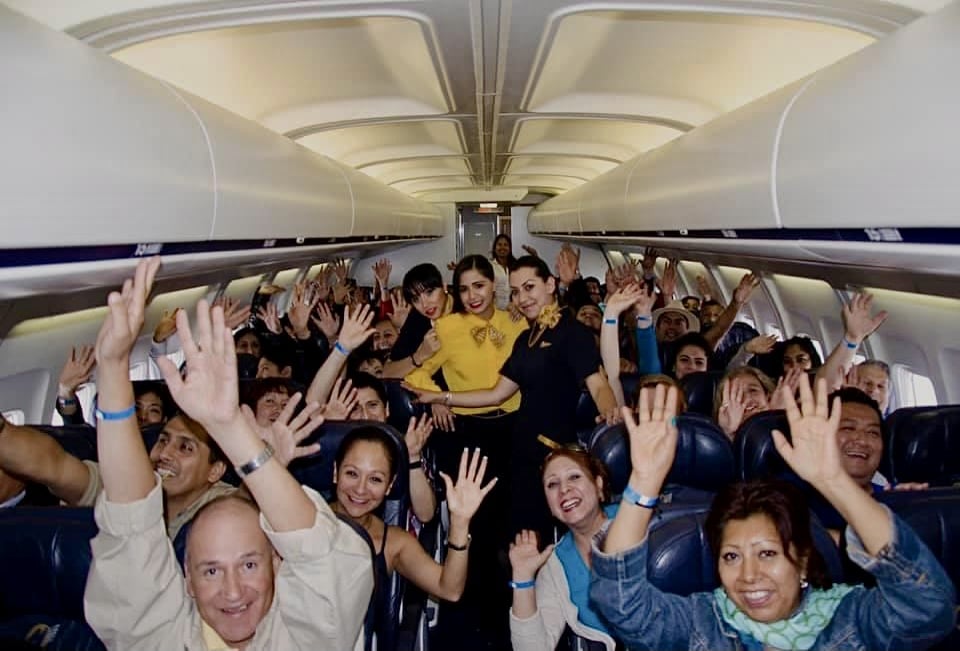
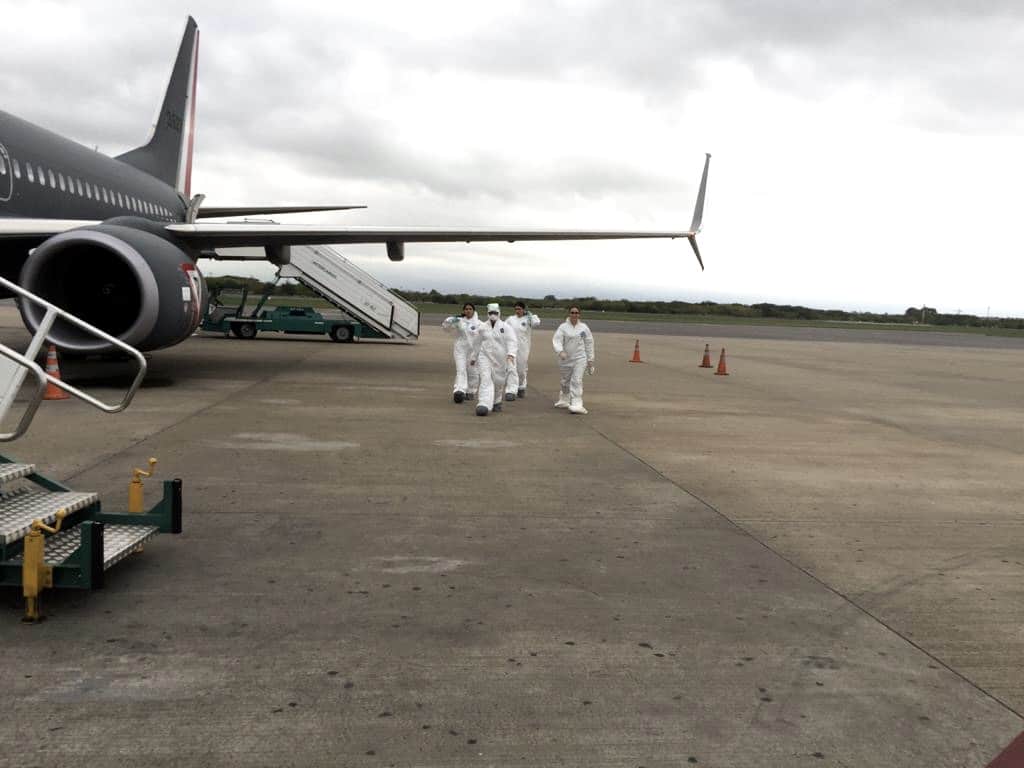
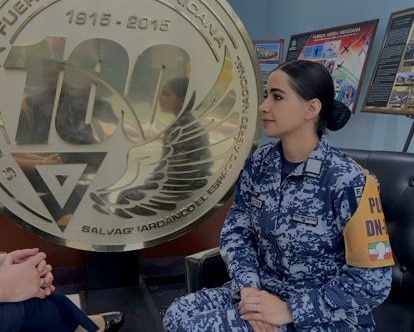
We recently had the honor of talking with Rebeca Palacios Cruz. She is a 31 year old who was a former soldier in the Mexican Air Force. Originally from Veracruz, Mexico, she served as both a Flight Attendant and Air Security Personnel in the Air Force. She recently left the Air Force to continue her aviation career as a pilot.
We Interview A Flight Attendant Who Flew With The Mexican Air Force 22
Studying aviation was my dream, but my most honest answer is because I love the feeling of being literally in the air. I like to be in control of the situation and feel capable of doing it correctly. That is how I overcome my fear of flight. I like the quote:
“Aviation saved my life, now I know who I am and what my purpose is in this world.”
I have many reason why a chose a life in the military. I come from a family with a military tradition. My most important reason though is because I felt the duty to defend the society of my country through the Mexican Air Force. The most gratifying and honorable thing is being able to serve and help through my greatest passion, which is aviation.
We Interview A Flight Attendant Who Flew With The Mexican Air Force 23
I have been a licensed Flight attendant for eleven years, my career began in commercial aviation. I originally flew for ”Magnicharters”, “Interjet” and “Fly Across”, Mexican airlines.
The flight attendant career does not officially exist in the Mexican Air Force, but the function is carried out by airmen. First you are a soldier and then you fulfill the functions of a flight attendant.
We Interview A Flight Attendant Who Flew With The Mexican Air Force 24
The selection is made according to the psychological, cultural, and physical profile as in any armed force. Having the knowledge, license and vocation as a flight attendant is helpful to be selected for the role.
I am qualified in teams: Teams flown in the Mexican Air Force, Mexican Navy, Interjet, Magnicharters and Fly Across.
• Boeing 737-200, 300, 500 and 800.
• Boeing 787.
• Airbus 320.
• Sukhoi Superjet100.
• Embraer 145.
• Learjet 145.
• King Air i350.
• Challenger 605.
• Gulfstream 550.
• Phenom 300.
• Citation Sovereign
• Citation CJ3.
• Legacy 500.
• Casa C295W.
We Interview A Flight Attendant Who Flew With The Mexican Air Force 25
Civil aviation is regulated by the Mexican aeronautical authority (AFAC), where compliance with safety procedures is the most important thing for the flight. As a civil flight attendant, you are in charge of passengers’ comfort with a set schedule.
We Interview A Flight Attendant Who Flew With The Mexican Air Force 26
In military aviation, the completing the mission is the most important thing. The operations are subject to the needs of the service, so most of the time they are not subject to a set schedule.
That’s right, both in civil aviation and military aviation.
On commercial flights, you usually fly to all the scheduled destinations. On military flights, you fly wherever necessary. With the current pandemic, you’ll fly to support health personnel, transportation of other nationals and returnees along with a host of other operations.
We Interview A Flight Attendant Who Flew With The Mexican Air Force 27
The most challenging part personally is to be able to identify and develop the skills required to carry out air operations. You have a desire to do the best you can while also knowing that the easiest day was yesterday.
In the Air Force, it’s knowing that it’s not about you or oneself, but about something greater than yourself: the welfare of a country—both self-denial and loyalty.
Speaking professionally, it is the constant drive to do my duty with as professionally as possible. That goal drives me to always do well with professional excellence.
We Interview A Flight Attendant Who Flew With The Mexican Air Force 28
I’m not finished with aviation yet. The world of aviation is as big as the sky. I’m working on becoming a pilot in the civilian world. Finishing my pilot training and being able to fly for some humanitarian aid organization and getting into the area of aviation safety are what I want to do next.
I would say don’t hesitate to do it! To be an airman (or air soldier in the Mexican Air Force) you have to take into account that military aviation is an arduous path. It is a system based on discipline, and the values of “honor, courage and loyalty”, made up of by honorable men and women of war.
It is also very rewarding because you will be part of the development and history of a nation. My favorite quote is: “Military aviation is the demonstration of love for the country in aviation.”
We Interview A Flight Attendant Who Flew With The Mexican Air Force 29
It has been nearly two years since the 737 MAX was grounded in the aftermath of several crashes. After the redesign of a flight control system, the aircraft has been re-certified by the US FAA and EU EASA and is returning to the skies. Several US and international airlines have already returned their MAX aircraft to scheduled service with others to quickly follow.
One of the requirements for the return to service of this aircraft is that pilots undergo a training session in a simulator. The purpose of the sim ride is to familiarize pilots with the behavior and possible failure modes of various flight control and indication systems. The ride included demonstrations of the normal function of the speed trim system (STS) and Maneuvering Characteristics Augmentation System (MCAS) during a stall and failure scenarios of angle of attack (AOA) and airspeed indicators. Runaway stabilizer trim malfunctions and flight with manual trim were also included. Failures of the MCAS subsystem, which is unique to the MAX, were implicated as contributing causes in two crashes prior to the aircraft being grounded.
Preparation for the ride included an extensive computer based refresher course on MAX systems and procedures and a detailed pre-brief on the planned simulator training events. Flight in high fidelity flight simulators is considered equivalent to flight in an actual aircraft, but superior as a training device as many maneuvers and failure scenarios can not be safely accomplished in an aircraft. That said, the devices cost tens of millions of dollars and training time is scarce and valuable. My airline has procured nine MAX simulators for the purpose of re-qualifying all their pilots in as short a time as possible.
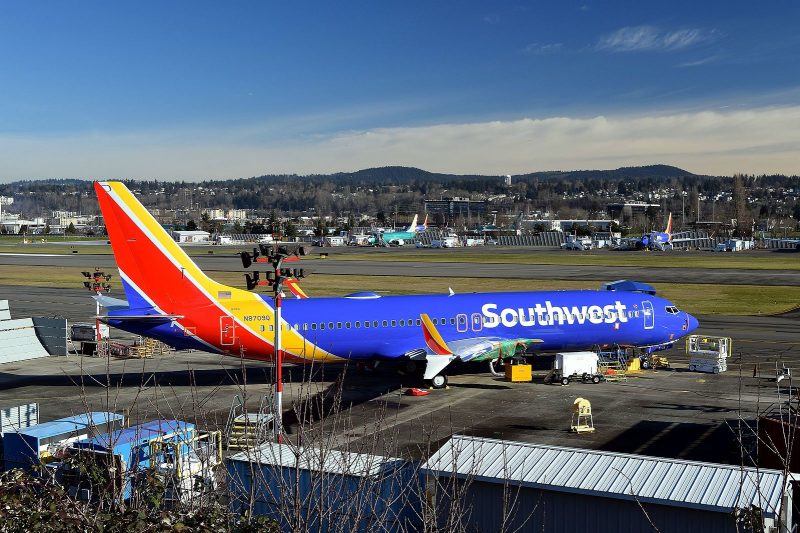
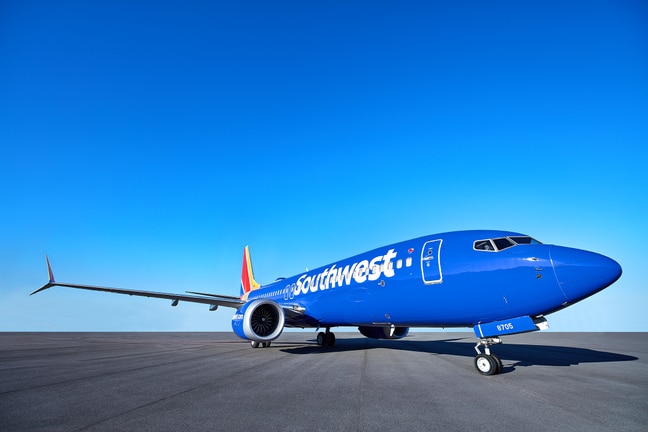
Southwest Airlines plans to return their Boeing 737 MAX aircraft to the skies in Q2 2021.Tomás Del Coro from Las Vegas, Nevada, USA, CC BY-SA 2.0 , via Wikimedia Commons
Stabilizer Trim: What Is It?
The events surrounding the grounding of the MAX center on the stabilizer trim system. I am going to attempt to keep my explanations in reach of a general audience with some basic understanding of the dynamics of flight. There are many online resources available for those who wish for a more in depth explanation of aerodynamics.
The horizontal wing on the tail of a conventional aircraft is known as the horizontal stabilizer (stab). The elevator is attached to the back of the horizontal stabilizer and is a primary flight control. It moves to change the pitch of the aircraft. The horizontal stabilizer itself also moves a bit to “trim” the aircraft for a particular airspeed. Change the speed of the aircraft, and the trim will need to be changed to prevent the pilot (or autopilot) from having to hold constant force on the controls. A pilot can release the controls of a well-trimmed aircraft without it wanting to climb or descend. This condition is also the most aerodynamically efficient configuration resulting in a smaller fuel burn.
On the 737, stab trim is normally controlled electrically by switches on the control column which are activated with the thumb. The switches (two for redundancy) control an electric motor which spins a large wheel next to the pilot’s knee on the center stand. This wheel is mechanically connected to a jack screw which physically moves the stab. The motor has two speeds determined by flap position. The slow speed is used for flaps up and the fast speed activates when the flaps are extended. This wheel also serves as a manual crank to be used if the electric motor fails. Accidentally leaving the crank handle extended is a self-critiquing error as the handle hurts like heck when it hits your knee (so I’ve been told).
It is impossible to miss this wheel turning as it has stripes painted on it. While flying manually (without the autopilot), the pilot will use the thumb switches to activate the electric trim, but when the autopilot is engaged, the autopilot keeps the aircraft in trim using the same system. Therefore, the trim wheel will be seen moving on occasion in automatic flight as the autopilot adjusts the trim.
Starting in the 80s on the “Classic” version of the 737 (models 300 through 500), Boeing introduced a trim subsystem known as “speed trim”. Speed trim would operate in manual flight under certain conditions should the aircraft deviate from the trimmed airspeed. As mentioned above, trim correlates to airspeed. This system would make trim inputs in opposition to any speed deviation to encourage a return to the originally trimmed airspeed. The important thing to note here is that the trim wheel might now be seen moving in manual flight un-commanded by the pilot.
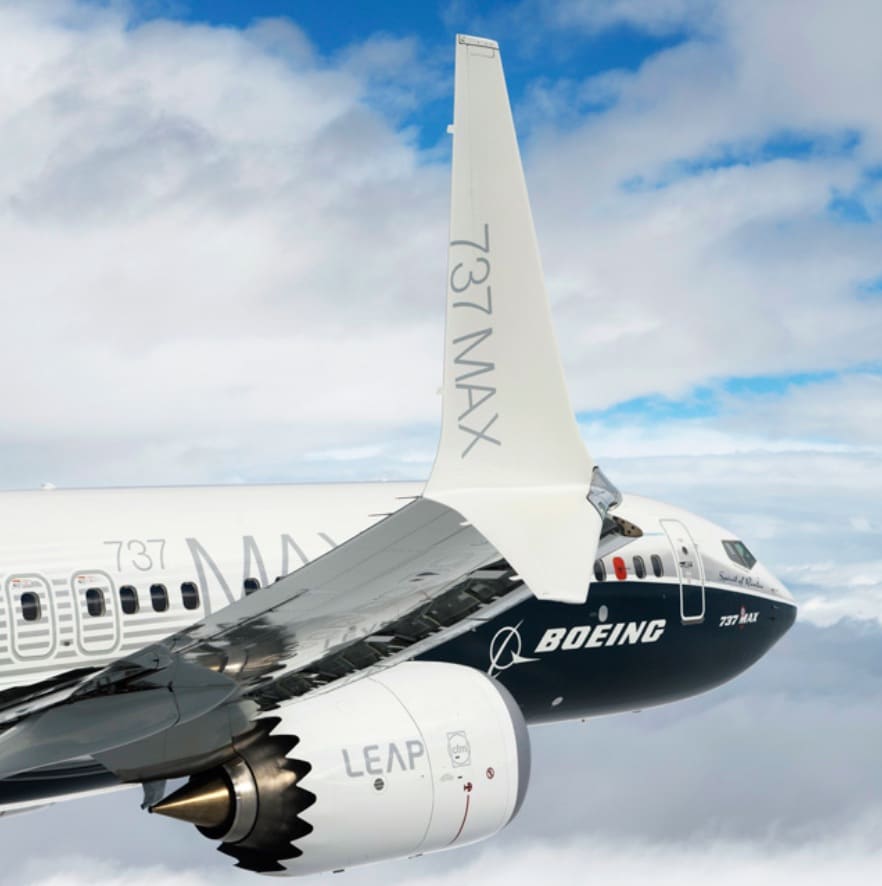
Boeing 737 MAX. Image: Boeing
737 MAX MCAS: What Is It?
MCAS or Maneuvering Characteristics Augmentation System, is another trim subsystem which was introduced on the MAX aircraft. It was found during certification of the MAX that the aircraft had some unwanted handling characteristics when approaching a stall. Specifically, just before stall entry, and well below any normally encountered airspeed, control column pitch forces became lighter when they are required by certification rules to become heavier. MCAS was designed to run the trim forward under these specific conditions to counter this tendency. It uses the high speed rate of the trim motor regardless of flap position.
Why did the MAX handle differently than its predecessors? The aerodynamics is complex, but the larger engines on the MAX had to be placed further forward on the wing to ensure ground clearance. This and other design factors likely caused the handling differences. This is the source of some controversy about whether the MAX should have been given a separate type certificate, but reviewing that subject is not the purpose of this report.
One point I’d like to make about flight control augmentation systems in general is that they are ubiquitous and date back to the 1950s. The existence of an augmentation system does not ipso facto indict the underlying design, but rather is an engineering solution that enhances the flight characteristics of nearly all modern high performance aircraft. I have experience flying aircraft which were virtually un-flyable without augmentation. Even fly-by-wire aircraft flight control systems, which are common today, can be thought of as augmentation systems with 100% control authority.
Lastly, the most important part of the entire electric stab trim system is that it can be deactivated at any time through the use of two stab trim cutout switches located on the center stand directly behind the throttles. These switches remove power from the electric trim system and all subsystems including speed trim, autopilot trim, and MCAS. Following deactivation, the aircraft can still be trimmed by manually cranking the trim wheel.
The MAX Return to Service (RTS) Simulator Ride
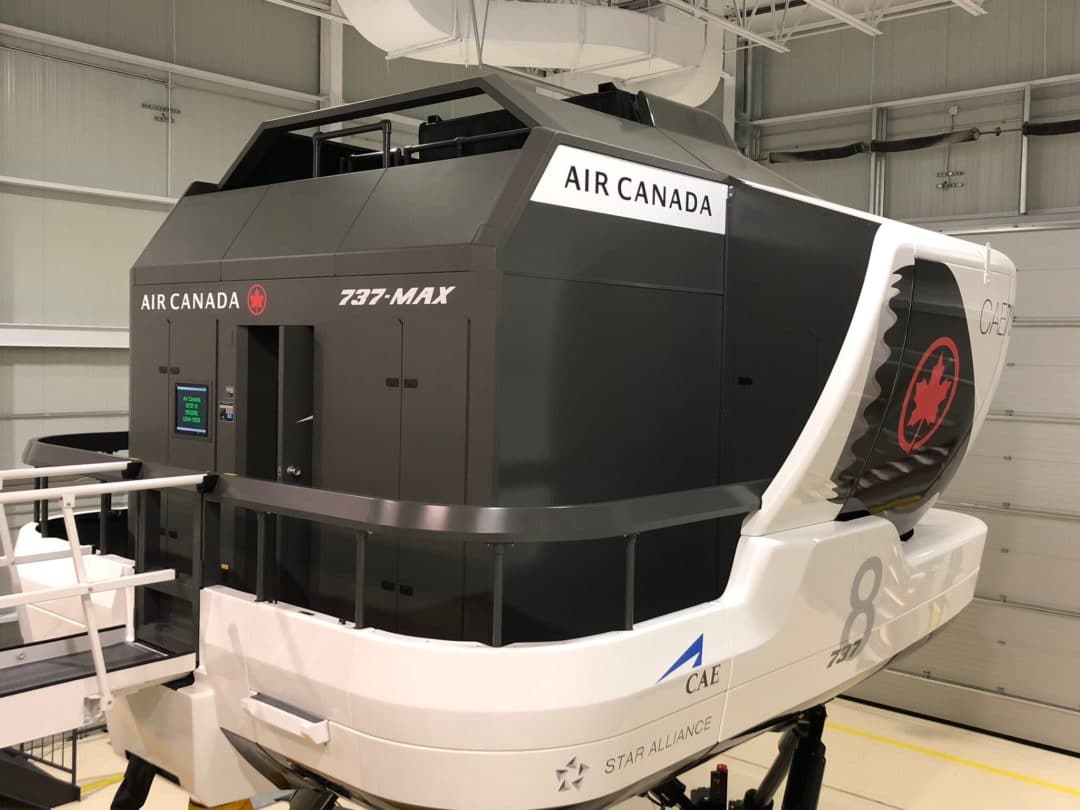
Most Airlines now have a dedicated 737 MAX simulator. Photo: CAE
The simulator session was scheduled for a two hour training event preceded by a one hour pre-brief. The session was designed to cover both normal and non-normal flight profiles. The normal profile included a demonstration of the speed trim system on a routine departure and the expected annunciations and flight control behavior during an approach to stall.
The non-normal profiles demonstrated trim system failures and angle of attack (AOA) and airspeed indicator failures. The trim system failures included the use of the Runaway Stabilizer non-normal checklist and immediate action items, and subsequent flight using only manual trim. The AOA and airspeed failure profiles were designed to replicate the startle effect and confusion that can manifest from multiple annunciations and aural warnings during this type of malfunction. Subsequent use of the Airspeed Unreliable non-normal checklist and known pitch and power settings were required.
The simulator used was a CAE 7000XR series high fidelity simulator with full motion and daylight wrap-around visuals. All of the training events were flown from SeaTac airport in VFR conditions. The sim was initialized for takeoff on RWY 16L with all preflight items having been accomplished. I was paired with a line first officer for the training event.
Speed Trim Demonstration
A normal takeoff and RNAV departure to 10,000 ft were accomplished. During the climb in manual flight, deviations from trimmed flight were purposely introduced through the use of increased or decreased pitch inputs on the control column. The speed trim system was then observed to make trim inputs opposite of the speed deviations to encourage the aircraft to return to its originally trimmed airspeed. Once the originally trimmed airspeed was re-achieved, the speed trim inputs were automatically removed by the system.
The speed trim inputs were accomplished by the slow rate of the trim motor as the flaps were already up. The effect of these inputs was subtle and easily overridden if needed.
Approach to Stall/Stall Demonstration
After level off, we each were directed to pull the power to idle but to maintain altitude in manual flight through pitch control to observe the annunciations and flight control behavior during a stall. The approach to stall maneuver has been a staple of airline training for many years, but typically the maneuver would terminate with the activation of the stick shaker stall warning followed by a recovery. It was felt that exploring actual stall characteristics was unneeded and possibly negative training as this situation would never theoretically materialize in actual line operations. A recovery would always be made upon the activation of the stick shaker.
In the aftermath of the Colgan and some other crashes which served to highlight concern about deficiencies in manual flight skills, the FAA introduced extended envelope training (EET). This training went beyond traditional airline flight training to explore flight handling characteristics in areas of the flight envelope that would never be expected to be seen in line flying. The new thinking was that having some experience in these unusual situations might be of use in case one ever developed.
We were asked to make nose up trim inputs down to the lowest flaps up maneuver speed and afterward to continue to maintain altitude through control column pressure alone. A number of visual and aural alerts displayed and sounded as airspeed continued to decrease. The aural “Airspeed Low” alert sounded followed by the “Buffet Alert” FMC advisory message. The pitch limit indication appeared showing that we were within 5 degrees angle of attack to stick shaker activation. The stick shaker activated upon reaching the airspeed where natural stall warning buffet is computed to commence by the stall warning yaw damper (SWYD) computer.
During this demonstration, rearward control column forces continued to increase. As airspeed decreased below minimum maneuver speed, the speed trim High AOA mode activated thereby adding nose down trim at the slow rate of speed (because the flaps were retracted). This served to increase the necessary force to maintain altitude. Note that the high AOA speed trim feature is not unique to the MAX, but is included on older 737 models.
Eventually, the trim wheel made an abrupt twitch forward at the high rate, but only for a fraction of a turn. This, our instructor told us, was the MCAS system becoming active or “waking up”. What was happening behind the scene was the MCAS logic took a “snapshot” of the existing trim position when its threshold AOA was reached. It then calculated a maximum amount of trim that could be added. Should the trim ever meet this computed limit, the speed trim and MCAS system becomes inhibited for the remainder of the flight. A short time later, MCAS activated adding additional nose down trim at the high rate of trim motor speed. The control forces were now heavier, but still manageable.
Finally, the Elevator Feel Shift (EFS) module increased the system ‘A’ hydraulic pressure to the elevator feel and centering unit as the AOA approached its stall value. The elevator feel and centering unit is how any elevator force is transmitted to the pilots through the control column. Changes in trim go through this unit before they are felt by the pilot. This hydraulic pressure increase dramatically increases forward pressure on the controls and felt like someone was trying to jerk the controls out of my hands. Again, it should be noted that the EFS module is not unique to the MAX but is also included on earlier 737 models.
Full Stall
At this point the aircraft was in a full stall with strong buffet being felt. The controls could still be held aft, but only with two hands on the yoke and significant effort. We were then instructed to release back pressure and to let the aircraft recover and accelerate. The aircraft recovered quickly. The inputs previously made by MCAS and speed trim were automatically removed as airspeed increased and AOA decreased.
This was the end of the demonstration. Both of us ran through this event several times so that we were familiar with the sequence of alerts and flight control inputs. 737 stall behavior is benign with no significant roll or wing drop being noted. Recovery was prompt with back pressure release and flying airspeed was quickly reestablished.
All aircraft with a powered trim system are subject to a condition known as runaway trim. Recall that elevator trim repositions the horizontal stabilizer in order to “trim” the aircraft to a particular airspeed. When properly trimmed, elevator stick forces are minimized. “Trim to relieve stick pressure” was the mantra when I was in USAF pilot training in 1982. It is still true.
The converse that a badly untrimmed aircraft is difficult or impossible to fly is also true. An inoperative trim system is sub-optimal, but one that continues to trim after the trim switch is released, or trims on its own can quickly create a dangerous situation. Stick forces will quickly become so unmanageable that continued controlled flight is not possible. This may manifest as either nose down or nose up trim. Neither is good.
Fortunately, Boeing has always included a non-normal checklist (NNC) to address runaway trim. If correctly followed, this checklist will result in the runaway trim malfunction being corrected, or the electric trim system being deactivated. Recall that the electric system, including speed trim, autopilot trim, and MCAS, has always been able to be deactivated through the use of the stab trim cutout switches located on the center stand.
Our demonstration started with the instructor introducing a runaway nose down rapid rate trim malfunction. The most important step of any non-normal event in an aircraft is identifying the malfunction correctly and then applying the correct non-normal checklist. Many an accident has been the result of a wrong assessment of the problem or the application of the wrong checklist.
Recall that it is now normal for the trim wheel to spin un-commanded by the pilot in manual flight due to inputs by either the speed trim system or MCAS. Since the flaps were up and the aircraft was not in a stall situation, the fast rate trim activation immediately telegraphed a malfunction.This is how an MCAS malfunction might present along with some nuisance alerts. At this point, accomplishing the immediate action items (IAIs) of the Runaway Trim checklist on the Quick Reference Card (QRC) followed by the remaining steps listed in the Quick Reference Handbook (QRH) left us in a situation with the aircraft in manual flight with the electric trim disconnected by the stab trim cutout switches.
Immediate action items are steps on a non-normal checklist that must be performed from memory due to their urgent nature. The Runaway Trim checklist contains several of these steps which include disengaging the autopilot and autothrottles, controlling aircraft pitch and airspeed, and disconnecting the stab trim cutout switches if necessary. This checklist has remained largely unchanged over the many different models of the 737.
At this point, the aircraft had to be flown and trimmed manually using the trim wheel. There is a note in the checklist which emphasizes that reducing airspeed helps to relieve the air loads on the stabilizer which reduces the efforts needed to manually trim. Our malfunction was introduced at about 250 knots. Manual trim at this speed took some effort, but was easily achieved. Slowing to 210 kts allowed the flying pilot to easily fly and trim without assistance from the non-flying pilot.
Close crew coordination is of course required to split the duties of trimming and flying depending upon the situation. Flight in instrument conditions might require the flying pilot to direct the non-flying pilot to manipulate the trim. Instructive to me was the ease with which trim changes through the configuration process were able to be made. We were directed to go around on short final to see the trim changes needed for that maneuver. Using less than full power for the go-around made the maneuver very smooth and controllable.
Unreliable Airspeed Demonstration
One of the most disconcerting and dangerous malfunctions any pilot can face is the loss of reliable airspeed. Airspeed is the oxygen of controlled flight, and loss of reliable airspeed must be quickly recognized and corrected or ameliorated for a successful outcome. The importance of this instrument is why there is a lot of redundancy built in. The 737 has two primary and one auxiliary pitot probes used to measure dynamic air pressure which is then converted to airspeed measurement for the pilot’s primary airspeed indicators along with an auxiliary airspeed indicator.
In addition to the direct measurement of airspeed, the 737 has displays of groundspeed derived from the air data inertial reference unit (ADIRU). While airspeed and groundspeed are not the same, at low altitudes, they are close enough to be useful.
Our demonstration simulated a bird strike or similar damage on takeoff which disabled the captain’s alpha vane AOA transmitter though we were not informed of this beforehand. Immediately after rotation, a cacophony of alerts sounded accompanied by numerous messages on the displays. The indications included AOA Disagree, ALT Disagree, IAS Disagree, Speed Trim Fail, Feel Diff Press, along with erroneous airspeed, altitude, and flight director indications. The stick shaker sounded and did not cease for the entire demonstration.
As I mentioned above, the most important thing in any non-normal situation is to recognize what has failed and more importantly, what has not failed. A quick scan of the first officer’s and auxiliary airspeed indicators told us that it was my instruments that had failed as the other two instruments were in agreement. I transferred control of the aircraft to the first officer who continued the climbout as I then referenced the Unreliable Airspeed checklist.
This checklist is fairly straightforward directing the autopilot and autothrottles to be disengaged if engaged. The flight directors are not to be used as they may also give erroneous information, and lastly for complete airspeed failure, some known pitch and power settings are given which are calculated to keep the aircraft from stalling or overspeeding.
We explored setting these values to see the performance of the aircraft with flaps both retracted and extended. The checklist values will keep the aircraft safe until a more detailed chart in the quick reference handbook, which uses aircraft weight, altitude, and phase of flight to set pitch and power, can be referenced.
Since our situation resulted in useable airspeed indications for the first officer, returning the aircraft to the airport was a matter of accounting for the nuisance stick shaker and other alerts, accomplishing the appropriate checklists and landing. We had been advised to bring ear protection for this segment, and it was worthwhile advice.
Changes Made to the MAX
The changes made to the MAX center around added redundancy to the Speed Trim System (including MCAS), and the Flight Control Computer. Input is now used from both AOA vanes and compared before being routed to the MCAS system. Previously, MCAS received input from only one AOA vane. A difference between input values from the two sensors will inhibit the system. New logic has been added which limits the amount of trim that the MCAS system can add. An exceedance of this limit also inhibits the system.
Additional safeguards, redundancies and self monitors have been added to the flight control computers themselves to prevent erroneous stabilizer trim commands. The odds of a runaway trim scenario are now effectively nil, but the runaway trim procedures and checklists will remain as immediate action items on the quick reference cards and handbooks.
Conclusion
I published my impressions of flying the MAX back in 2018Thoughts on the Boeing 737-MAX 8 By A Captain Who Flies One after I first flew the aircraft. I thought it was a great flying machine back then and I think it will be better than ever after its return. Was the aircraft as well designed as it could have been? Perhaps not, but then in no human endeavor is perfection ever achieved. I do not mean to denigrate the seriousness of the accidents that occurred nor the memory of those lost. Airline crashes are nightmares for all involved.
That said, underlying causes of any accident are complex and many differing narratives develop, some with agendas of their own. Causal chains behind any accident must be considered in total. A focus upon one aspect of an accident in isolation will inevitably lead to a missed or wrong conclusion.
Having now flown both the old and newer versions of the MAX, I am more convinced than ever that this aircraft is rock solid, whatever discrepancies there were have been corrected, and that it has a bright future as the preeminent narrow body airliner.
Airliner technology continues to evolve year-after-year, in the pursuit of better fuel economy which leads to better financial yields for operators. There’s been a number of initiatives over the years from all aircraft manufacturers, but in the 1980s unducted fan (UDF) technology was showing promise for reducing fuel consumption substantially on new model aircraft for the 1990s.
McDonnell Douglas was one of the manufacturers that pursued this new technology for nearly a decade before abandoning it as a future airline powerplant.
Image: McDonnell Douglas
An Attempt To Push Beyond The Turbofan with UDF
Modern jetliners operate on turbofan engines, which quite simply have a ducted fan attached in front of a turbojet engine. Going into detail on turbofan construction and operation would require a separate article; but the turbine creates the bulk of the thrust, the ducted fan creates additional thrust and lowers the overall noise footprint of the engine, and this is what modern jetliners use to operate their aircraft.
In 1973 when OPEC engaged in an oil embargo with nations that were perceived to support Israel during the Yom Kippur War, oil prices shot up overnight resulting in an increase from .36 cents a gallon to .53 cents a gallon.
By 1974, a barrel of oil had quadrupled versus the previous years. The embargo ended six months later, but the price of oil and subsequently gas prices continued to climb. A gallon of gas reached an average of $1.19 a gallon just six years later, a substantial climb in price, nearly four times higher than 1973. But it didn’t stop in 1980, gas just continued to climb in price leading to a serious effort to find and update powerplants to be more fuel efficient.
An Opportunity To Improve Fuel Efficiency
NASA actually led the way to look for new technology and concepts to reduce fuel burn, by working with manufacturers and providing NASA funded research grants. Manufacturers looked at ways to make their aircraft more fuel efficient in light of the overnight fuel crisis which led to increased fuel prices.
Suddenly aircraft that burned massive amounts of fuel were a pain point for airlines. One of the key powerplants that showed promise was Unducted Fan (UDF) technology. Two key powerplant producers, Pratt & Whitney and General Electric invested in this technology with prototype engines, and Boeing and McDonnell Douglas provided aircraft test beds and perceived new aircraft models to present to airline customers.
Additionally, other manufacturers such as Fokker, British Aerospace, and Tupolev all invested in testing out alternative prop-based powerplants to varying degrees over the years.
UDF: The Unducted Fan Emerges As An Option
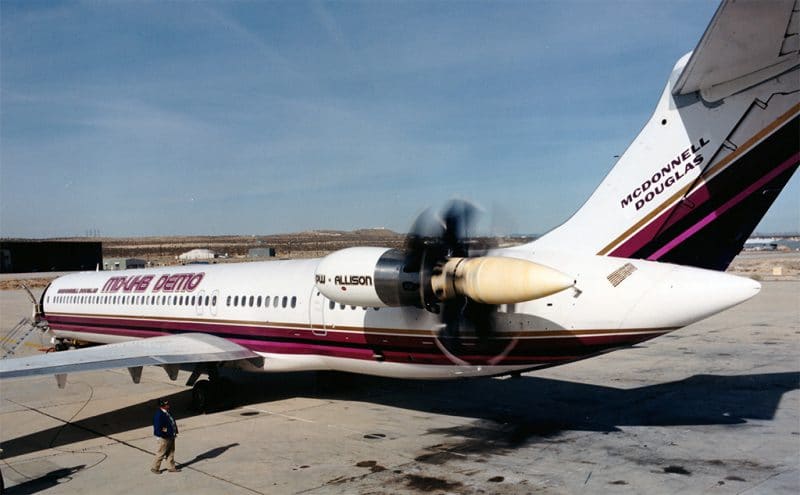
While little information is available, McDonnell Douglas was looking at UDF technology for the newly launched MD-80 series as an option. Interestingly enough, the early rendition in the form of a 1/100 scale model differs considerably from the powerplants that did eventually take flight, featuring forward facing prop fans.
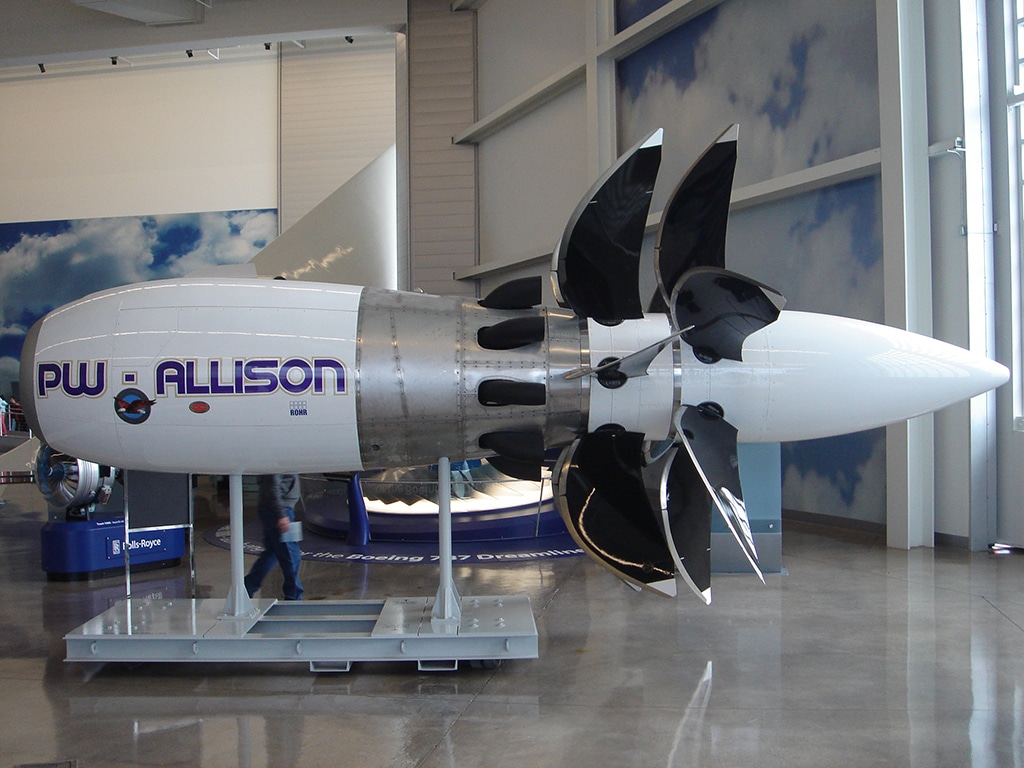
It was a close rendition of the eight bladed Allison 501-M78 and a Hamilton Standard propeller, used in a NASA propfan test. These early units were modified turbofan engines with the fan placed outside the engine nacelle on the same axis as the compressor blades, and assumed this was an early design study from 1981.
“Props” for McDonnell Douglas: Unducted Fans (UDF) Never Took Off 42
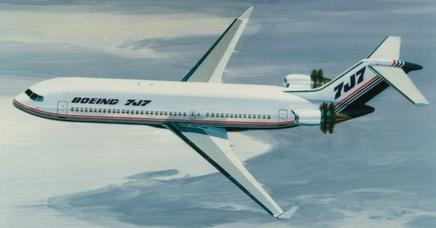
NASA had released their internal studies on propfan technology to engine makers who were interested in pursuing the technology. By 1984 NASA had awarded a contract for $20m to further study and pursue the concept of an open rotor powerplant to General Electric (GE). GE was working closely with Boeing on the UDF as a possible new short haul aircraft powerplant, dubbed the 7J7 for a market introduction in 1991.
The 7J7 was a widebody short haul aircraft with a range of up to 2700 nautical miles initially. But Boeing ended up pitching a hybrid-narrowbody concept at 155 inches to airlines as the final configuration, with a 2-2-2 seating configuration ensuring there was no middle seat. That was depending on the airline customer you talked to, as it was said Boeing kept changing their minds as to what the aircraft was and would be.
UDFs Became All The Rage
Image: NASA
GE unveiled their engine concept at the 1984 Farnborough Air Show, promising up to 30% reduction in fuel burn without decreasing inflight cruise speeds. Two key points for GE’s proposal was twin contra-rotating fans which kept fan blade length to a reasonable size (12 feet) vs. a single prop at nearly 20 feet in diameter.
The second selling point was the lack of a gearbox, which transfers power from the turbine to the propeller. Beginning in 1986, the GE36 flew a considerable number of test flights, achieving a cruise speed of Mach .84 at an altitude of 39,000 feet on Boeing’s test 727 aircraft.
There was significant interest from British Airways as a replacement for its 737-200s, SAS, and American Airlines. However, British Airways selected the Boeing 737-300 instead. American Airlines had concern if the 7J7 could be stretched further using the same powerplant. Internally at Boeing, the 7J7 was viewed as a political football: a possible new line of fuel-efficient aircraft, or the grim reaper for the 737 line. In the end American Airlines went with the Fokker 100 aircraft based on availability.
The engine technology while progressing, wasn’t going fast enough to guarantee a launch of the 7J7 by 1991. With competition brewing from McDonnell Douglas not to mention the newly introduced Airbus A320, Boeing ended up postponing and subsequently canceling an UDF powered aircraft. But McDonnell Douglas pressed on.
Image: NASA
McDonnell Douglas Kept On Developing UDF Concept
Allison Engine Company which already had a head start on a similar concept, partnered with Pratt & Whitney in 1987 to produce a prototype UDF for a test run on an McDonnell Douglas airliner. While Allison had produced a smaller prototype and tested in conjunction with NASA back in 1981, it was playing catch up to the GE36 in 1985, which flew first.
Pratt & Whitney would not be able to develop and certify an original engine design to meet the aircraft launch dates, and thus partnered with Allison to speed up development. The engine was proposed in two sizes, with the smaller variant a 10k shaft horsepower and 23:1 compression ratio, with a three stage boost compressor and power turbine for 100 passenger aircraft; and a larger 15k shaft horsepower aircraft for up to 160 passengers.
The engine was dubbed the 578-DX, but unlike the GE36, the 578-DX would in fact have a reduction gearbox, and claim an additional 7% fuel savings as a result. But having a gearbox meant more maintenance and reliability headaches and airlines were wary. Allison claimed that the gearbox would need an overhaul after 30,000 hours, and was in fact reliable (although this would never be proven).
McDonnell Douglas Goes All In On UDFs
McDonnell Douglas was already planning its next range of airliners based on the successful MD-80 series. The first of these next generation airliners was the MD-90, an updated version of the MD-80 with all new engines and a glass cockpit, better range and less fuel consumption.
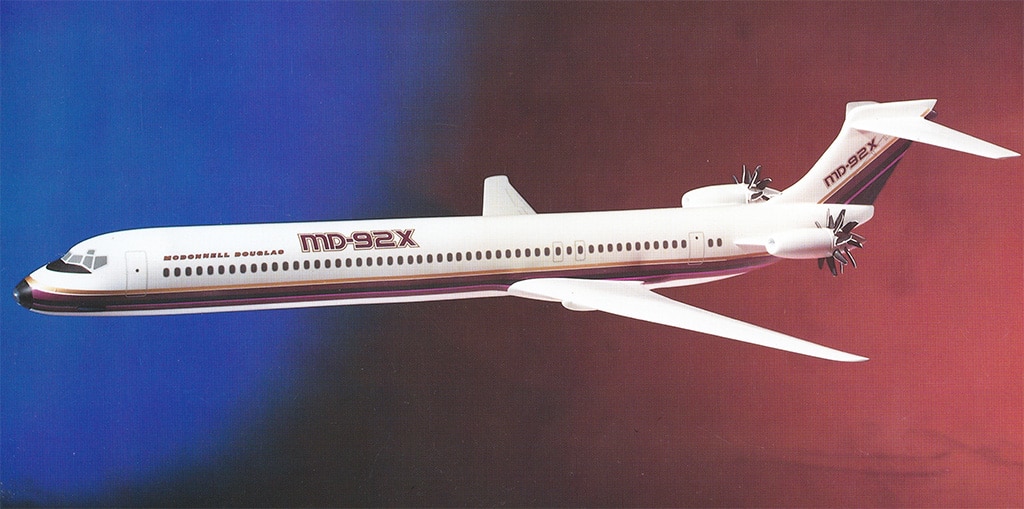
It would also address noise by having a lower noise profile than the current JT8D engines. But this was expected to be a stop-gap measure until UDF technology matured and eventually replaced jet powered MD-80 and 90 aircraft. Subsequently, McDonnell Douglas began marketing the MD-91 and MD-92 aircraft as early as 1985, all powered by UDF engines by GE or P&W.
The MD-91 was a copy of the MD-87 with UDF engines. Photo: McDonnell Douglas
Mutiple MD-9X Varients
The MD-91 would have been the smallest capacity of the offerings, at 114 passengers (2 class) or 130 passengers (all economy) and just under 129 feet in length. It would utilize the MD-87 fuselage, but with the wing shifted 3 feet further back. The MD-90 (traditionally powered) would carry 153 passengers (2-class), or up to 172 passengers in all economy configuration, with a fuselage length of 152 feet.
Finally, the MD-92 was slightly larger at 157 feet in length, utilizing the MD-88 fuselage (lengthened 133 inches forward of the wing), and 165 passengers (2 class) or 173 passengers in all economy. All aircraft would feature a composite horizontal stabilizer, with split powered elevator and rudders and a full glass digital cockpit. There were subsequent other aircraft marketed like the MD-94, but this was proposed to be a clean sheet design to compete with Boeing’s 7J7.
The Jet Is Too Dang Loud!
There was the perception an open rotor aircraft suggests interior noise to passengers. McDonnell Douglas claimed that the interior cabin noise levels of the MD-91/92 would be 80dB, which would make it up to 6dB quieter than the jet powered aircraft.
McDonnell Douglas claimed that the demonstrator registered 82dB during testing, and that airline executives who flew on marketing flights made statements like “very quiet, better than expected” or “airplane very quiet, particularly in the last row.”
This conflicted with reports of other members of the travel industry who said it was very noisy inside, a different type of prop sound, but certainly noticeable and generating some cabin vibration (that would be addressed later on). The marketing test flights were carried out of Long Beach, and flew airline personnel, media, military, and other industries (181 people carried total). The aircraft would fly out of LGB and out over the Pacific Ocean, directly over Catalina Island, then it would turn left and south where it would make a U-turn over San Clemente island and descend back to LGB.
“Props” for McDonnell Douglas: Unducted Fans (UDF) Never Took Off 43
McDonnell Douglas UDF: Ultra-Loud and Ultra Efficient
The GE36 was also tested on the McDonnell Douglas MD-80 testbed for a future MD-9x series of aircraft a year later in 1987. It was modified from an 8×8 blade set up (8 blades on each counter-rotating prop) to an 10×8 with the rear prop containing 8 blades versus the forward props 10 blades.
This configuration resulted in quieter operation, and that a commercial production version would have different blade counts on each prop to achieve the desired noise profile and best performance. Most of the test flights with the McDonnell Douglas MD-80 test bed were performed with the GE36, as the P&W option was way behind schedule.
Most testing on the MD-80 testbed was with the GE36, which achieved a maximum speed of Mach .865 at 37,000 feet. This powerplant would accomplish 165 hours over 93 flight tests, substantially more than the 578-DX.
McDonnell Douglas began to refer to the UDF with another acronym: UHB – Ultra High Bypass, and came up with further variations and aircraft types utilizing the UHB acronym. They were marketed with up to 40% less fuel burn, but ignoring the substantial cost increase to acquire these new powerplants. McDonnell Douglas was even discussing offering powerplant retrofits on existing MD-80 series aircraft.
McDonnell Douglas, Exclusive Purveyor of UDFs (On Paper)
Once Boeing cancelled the 7J7, McDonnell Douglas in marketing materials to airlines began saying you can’t get UDF technology from anyone but McDonnell Douglas. This was all based on the GE36, because up to this point the 578-DX had not flown on an McDonnell Douglas airframe having missed numerous milestones in the schedule due to a variety of issues.
McDonnell Douglas Offers a Military UDF
McDonnell Douglas was so confident in what the UDF offered that it entered a military variant when the Navy began a search for a new patrol aircraft, specifically the Long-Range Anti-Submarine Warfare Capable Aircraft (LRAACA) competition launched in January 1987.
This competition was seeking replacements for the ageing P-3 Orion aircraft. No other manufacturer other than Lockheed had interest in building a derivative to the P-3. But the Navy wasn’t going to just hand Lockheed a contract without bidding it out, and thus expanded the scope to include commercial aircraft derivatives in March of 1987.
McDonnell Douglas submitted an MD-91 derivative, ironic given the MD-91 hadn’t officially flown yet. The designation for the derivative was P-9D, and it was the UDF powered MD-91 but with additional equipment. McDonnell Douglas was offering either engine (P&W or GE) as a choice to the Navy, even though the 578-DX hadn’t flown on the MD-80 test bed.
The P-9D was presented as having a 45%+ lower fuel burn than the current P-3 Orion. The P-9D would have carried the latest electronics and sensors, along with AGM-84 Harpoon Missiles and operating with a crew of 11. Nonetheless, in October of 1988, the Navy selected the Lockheed proposal (P-7) which was significantly lower in cost than the McDonnell Douglas proposal, while also being judged technically superior with less technical risk.
Progress Continued
McDonnell Douglas soldiered on with the commercial MD-91 and MD-92, flying the UDF prototype to the Farnborough Airshow in 1988 equipped with the GE36 engine in hopes of drumming up sales.
The 578-DX would undergo ground testing from late 1987, with scheduled in-flight testing (installed on an MD-80 test bed) planned for early 1988. Due to repeated mechanical and engineering issues encountered on the ground, the 578-DX didn’t take to the air until April of 1989, nearly two years late. But when it did, it reportedly flew without issue at a speed of up to Mach .77 at an altitude of 30,000 feet.
McDonnell Douglas Even Toyed With a DC-10 UDF
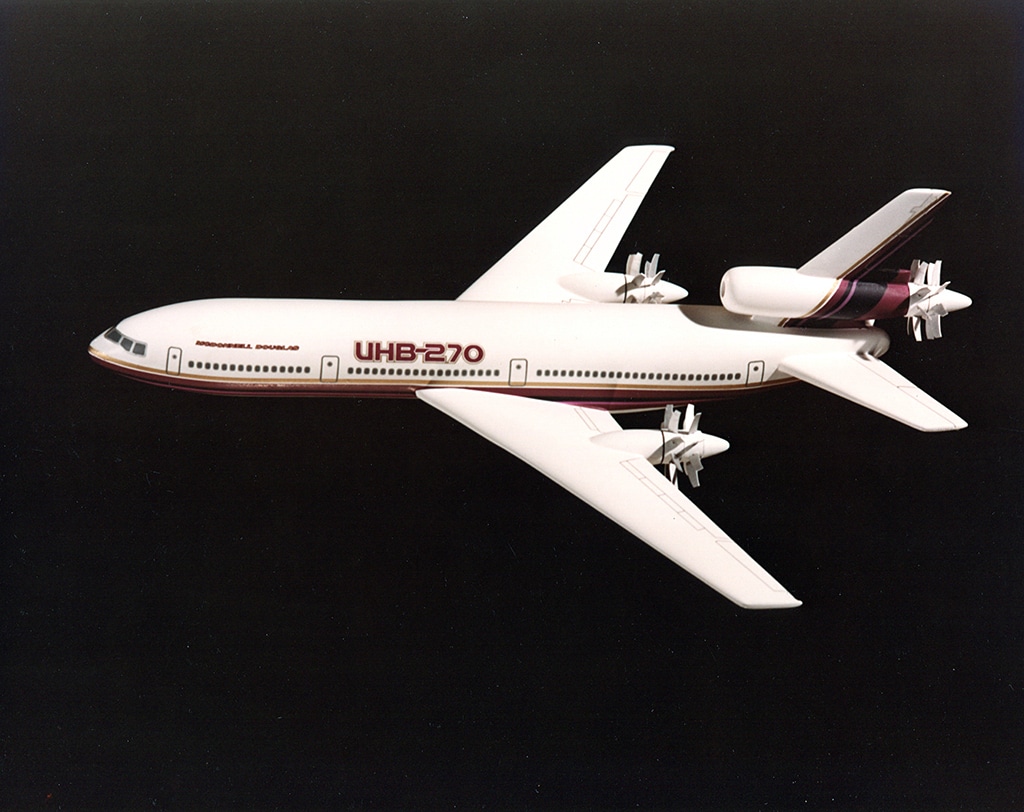
McDonnell Douglas was even experimenting with the idea of replacing the turbofans on the DC-10 with UDF powerplants, with one example being given the conceptual designation “UHB-270”, but never appeared outside of model form.
After years of delay, McDonnell Douglas killed off the UDF variants of its new MD-9x airliners in May of 1989, one month after successful testing of the 578-DX. It was clear that the engine delays would further push the MD-9x series of aircraft further into the mid-late 1990s before airline customers could take delivery. And GE wasn’t interested in moving forward with their UDF unless McDonnell Douglas had firm orders for at least 150 aircraft.
Caught in chicken-and-egg scenario, airlines were generally reluctant to order a brand new type without the manufacturer fully committing to the type. But McDonnell Douglas wasn’t going to commit to anything, from guaranteeing performance data to manufacturing the aircraft without orders.
The End of the Road For The UDF
What killed the UDF concept? Price, price and price. The price of fuel when the UDF concept kicked off was at the top of the market, and climbing by the day. But when the UDF concepts finally flew, the price of gas had begun to drop. From a high of $1.31 a gallon in 1981, by 1986 gas was averaging .86 a gallon.
Gas was no longer perceived as a financial gating issue compared to the early 1980s. The second problem was the price of the powerplant. Pratt & Whitney’s 578-DX was forecast to be 40% higher in cost to purchase than a turbofan that was currently available for Boeing and McDonnell Douglas aircraft. The economics just didn’t quite work the way they expected. Finally, no airline customer put in a firm order for the prop-fan powered airliners. All three of these issues killed the UDF concept.
A proposed DC-10 derivative with UDF Engines. Photo: McDonnell Douglas
But all was not lost, and a lot was learned from the UDF exercise. The technology to build the UDF’s fan blades was used to develop the fan blades for the GE90, one of the engines that powers the Boeing 777 aircraft. The technology using composite materials is now used in many aircraft parts. And there are still companies, GE included, who continue to look at UDF technology.
Remember the good ole days at Los Angeles International Airport? It was filled with four engined domestic flights on widebodies like the Boeing 747-100 and L-1011.
Times have definitely changed at LAX. Today, it is dominated by the Boeing 737 and Airbus A320 series jet along with a host of 787 and 777 flying the international routes. While there are a number of 747 cargo flights, most passenger 747s are now a thing of the past. Even a A380 is becoming rare these days.
In the video, you’ll see a United Boeing 747-100 probably arriving from either Honolulu or Chicago O’hare along with an Eastern Airlines L-1011 preparing to depart to Atlanta. You’ll also see a host of Western Airlines 727s and a TWA 707 at the gate. This two minute video also features international 747 arrivals from Lufthansa and Air France. It’s worth a watch…and makes us pine for the days long gone where both variety, prestige, and size mattered more than efficiency.
The video was posted on YouTube by SDMullis. Check it out!
Most people will say that 2020 was a dumpster fire. The pandemic has caused untold misery with millions infected and over a million dead around the world. The aviation industry has been upended. Airlines have failed and many airlines have retired their fleets (most notably the near worldwide retirement of the A380 and 747 passenger fleets along with the retirement of all MD-90 and most MD-80 aircraft fleets).
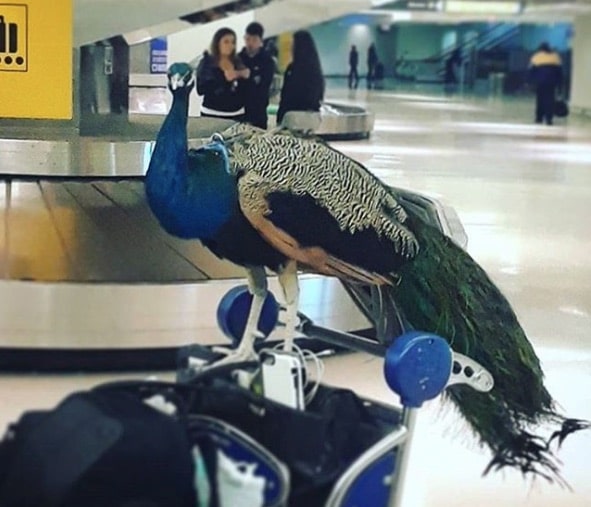
Last year we profiled 5 of the weirdest emotional support
In a year where there is almost nothing to celebrate in the airline industry, there is finally a positive change that most of us can get behind. Alaska Airlines has banned emotional support animals with other airlines adding additional restrictions. If you’ve ever sat next to a growling dog on a flight or had the pleasure of sharing a bulkhead with a miniature horse, you’ll probably rejoice.
Airlines Are Now Adopting More Restrictive Rules On Emotional Support Animals
(Photo: Avgeekery)
Alaska Airlines announced a new policy that will ban any emotional support animal. They are the first major US airline to do so. According to their website:
“Effective January 11, 2021, Alaska will accept only service dogs which are trained to do work or perform tasks for the benefit of a qualified individual with a disability. Emotional support animals will no longer be accepted.”
New Rules For Emotional Service Animals Came After Complaints to the US DOT
Earlier this year, we reported that the US Department of Transportation proposed more restrictive rules on emotional support animals. These rules allowed “airlines to place additional limitations on ESAs and/or prohibit them all together on flights.
The airlines could place other restrictions on ESAs like requiring passengers to check in before most other passenger are required to show. Passengers with ESAs would also be required to show that the animal has a DOT Animal Air Transportation Health Form. Airlines can also place limits on the size and type of animal.”
Additional Restrictions Likely
Other airlines have implemented additional restrictions as well that include limiting the total number of ESAs on a flight and additional documentation requirements. While there are many valid purposes for service animals and even emotional support animals, the abuse of the previous rules have led to additional restrictions.
DELTA AIR LINES REQUIRES ADDITIONAL DOCUMENTATION
Beginning in March of this past year, Delta Air Lines added additional requirements for anyone who wants to travel with an ESA. According to Delta’s website:
“Delta requires that all customers traveling with a service or support animal show proof of health or vaccinations 48 hours in advance. In addition to the current requirement of a letter prepared and signed by a doctor or licensed mental health professional, those with psychiatric service animals and emotional support animals will also need to provide a signed document confirming that their animal can behave to prevent untrained, sometimes aggressive household pets from traveling without a kennel in the cabin. These measures are intended to help ensure that those customers traveling with a trained service or support animal will no longer be at risk of untrained pets attacking their working animal, as has previously been reported.
“The rise in serious incidents involving animals in flight leads us to believe that the lack of regulation in both health and training screening for these animals is creating unsafe conditions across U.S. air travel,” said John Laughter, Delta’s Senior Vice President — Corporate Safety, Security and Compliance. “As a leader in safety, we worked with our Advisory Board on Disability to find a solution that supports those customers with a legitimate need for these animals, while prioritizing a safe and consistent travel experience.”
Return to a more rational cabin where people with real needs are supported but end to abuse of policies?
The hope is that these more restrictive policies will return to a more rational system where individuals with true needs are still supported without unnecessary burden. At the same time, the new policies should discourage pet owners who were abusing the policy to travel with their pets.
Do you have an experience with an unruly emotional service animal? Let us know in the comments below.
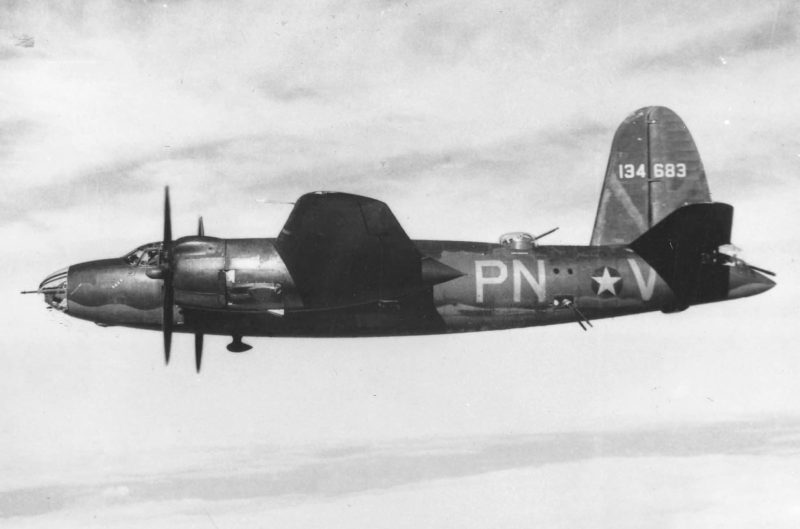
Once called ‘the Widow Maker’, the B-26 Marauder was a notoriously challenging aircraft to fly. The aircraft was especially challenging during approaches and landings due to its undersized wing. The World War II bomber flew approach speeds more like a modern airliner. At the time, approaches of 130+ knots were pretty rare. Add in a malfunction and it was a recipe for some ‘rodeo’-grade flying.
This video includes detailed exchanges on the aircraft systems and a very painfully long pre-flight checklist. It includes excellent acting by Don Porter. He was a fairly well known movie actor from the 1940s and 50s.
You Probably Won’t Be Able To Fly a B-26 Anytime Soon
While this video might prove interesting, its value today is pretty limited. The B-26 is one of the most rare American World War II bombers today. Only a few rare examples remain in museums.
After a crash of a Confederate Air Force’s B-26 in 1995, only one airworthy B-26 Marauder was left. Today, it is owned by Kermit Weeks and displayed at the Fantasy of Flight museum. His example hasn’t flown it in quite a while. Back in 2018, Warbird News mentioned that another partially completed B-26 project was for sale. No word on what happened to it. Platinum Fighter Sales makes no mention of the airplane or the sale on its site.
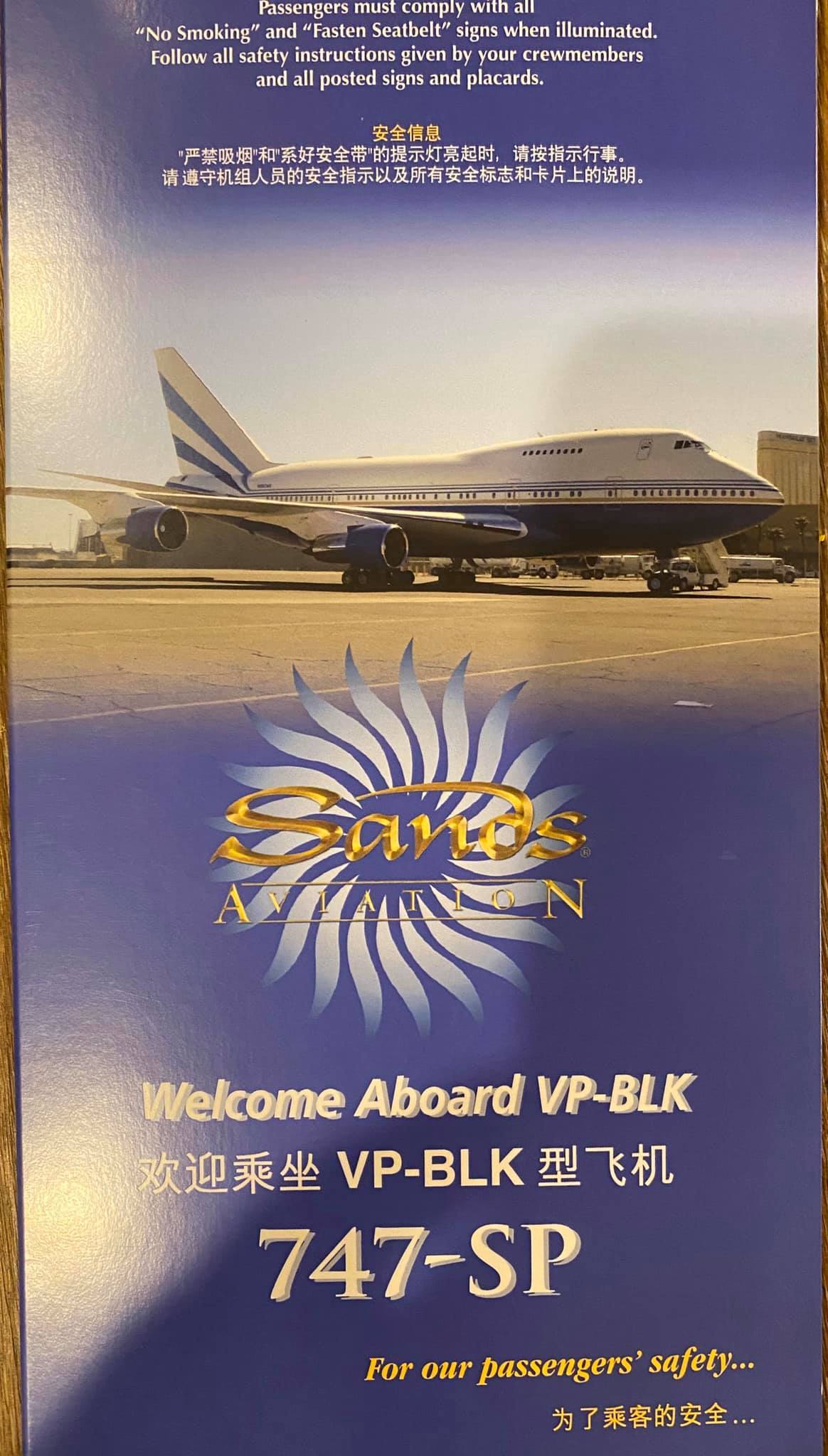
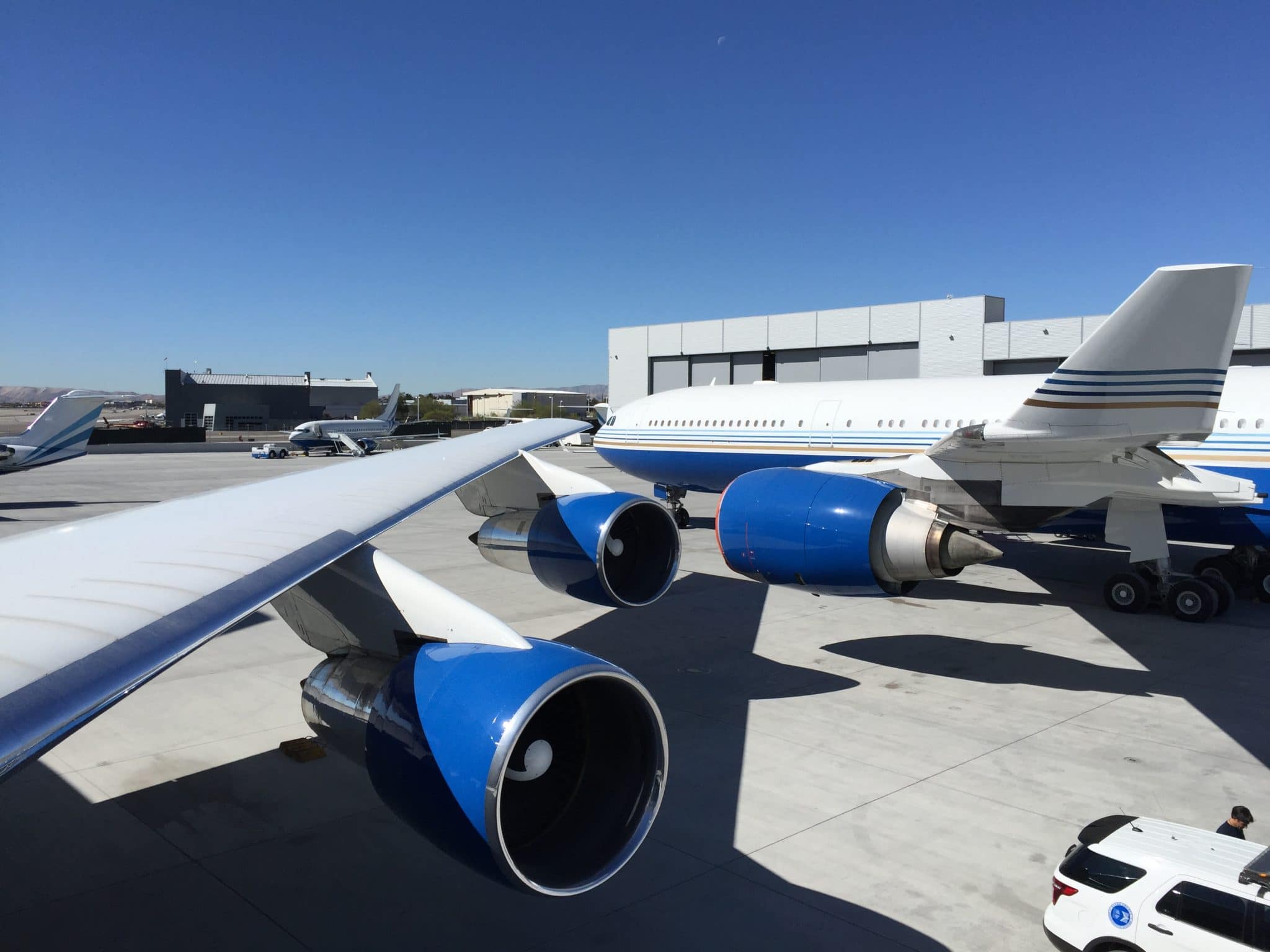
My visit to The Sands Aviation 747. Exclusive video aboard the Boeing 747SP included.
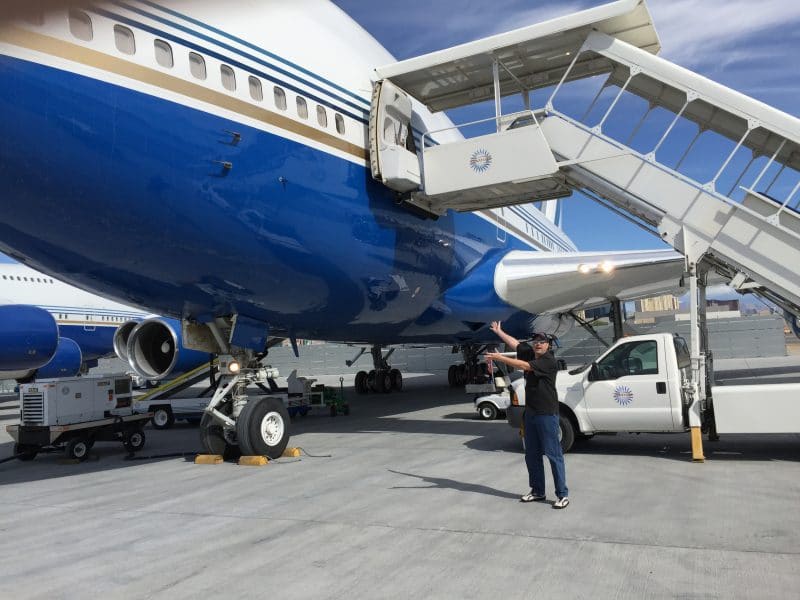
Over the years, there’s been curiosity into the operator of the untitled widebody aircraft at Las Vegas’s McCarran International Airport on the opposite side of the main passenger terminals. No, not the mysterious white 737-600s with a red cheatline, everyone knows who operates that fleet and where those planes travel to daily. I’m talking about the Sands 747!
Adjacent to AECOM, the operator of ‘JANET’, is the nerve center for Sands Aviation, located just off South Las Vegas. The building has no name, no titles, nothing to call attention to it outside of the matching stripes that its fleet wears.
Not secretive, just ultra-private operation
A Glimpse Into Sands Aviation's High Roller 747 49
Many have tried every avenue to get a glimpse into this operation and these aircraft, given the entire operations flies beneath the radar to the public eye. But this is a private operator – it neither runs passenger operations for the public, nor does it charter its aircraft to those interested.
Sands Owner Has Long Loved Aviation
It is owned by the Sands Corporation, of which the Chairman and CEO Sheldon Adelson owns more than 50%. Sheldon’s brief history is he was one of the co-founders of the COMDEX computer show, held in Las Vegas annually.
It was sold in 1995 to the tune of $800million dollars, but Sheldon had already begun his expansion outside of the show purchasing the Sands Hotel in 1989 and expanding its foot print with a convention center added to the hotel. Fast forward to today, and Sheldon’s Las Vegas hotels now include The Venetian and The Palazzo hotels & casinos.
His casino empire expanded internationally to include The Venetian in Macau, along with a Four Seasons and an exclusive invite only resort, the Paiza Mansions. The list of properties is extensive.
But Sheldon’s interest in aviation didn’t start with Sands Aviation. You can trace it back to 1984 when he ran a charter outfit “Five Star Airlines”, which he initially bought two TWA L-1011s to use during the winter months to fly attendees to his newly running COMDEX show in Las Vegas. During the summer months, Sheldon leased them back to TWA.
Sheldon’s empire is built with a number of interconnected companies. In the case of Sands Aviation, the aircraft are owned by Interface Operations, registered in Bermuda along with a series of subsidiaries. Sheldon’s company leases the aircraft to Sands Aviation, even though Sheldon owns the Bermuda based company.
The current aircraft in the fleet range from a series of Gulfstream aircraft (currently 9) along with 2 Boeing 737-300s, a lone Boeing 767-300ER, a solo Boeing 747SP (now that the second aircraft has been damaged and written off), and finally a single Airbus A340-500.
Exclusive Fleet Fills Many Roles…All For High Rollers
This fleet of aircraft is used for a variety of purposes, from shuttling executives of Sands to various locations and properties worldwide, celebrities, and of course high rollers from all over the world.
But these aren’t just any high rollers; they’re often referred to as “whales” because they gamble substantial amounts of money (think $50,000 USD per hand!).
When the author was visiting Sands Aviation back in 2016, one of the assistants was overheard telling an executive that “Mr. (David) Beckham doesn’t want to fly in an aircraft older than 10 years.” The executive chuckled and then responded “tell Beckham he’ll take what we give him” ending the conversation quickly.
During the height of recent wealth in China, Sands Aviation would fly over an empty Boeing 747SP to Macau or other parts of Asia, pick up usually five people (sometimes a high roller and their family/staff, sometimes multiple high rollers and their staff), and fly them back to Las Vegas.
Most of the time the 747SP could do the flights without fuel stops in Anchorage, Alaska. But occasionally, especially during warmer summer months and with stronger head winds, a technical stop would be required westbound regardless.
Eastbound the aircraft had no trouble flying non-stop. It wasn’t unheard of to turn the plane back around and fly it empty to Asia to pick up another handful of high rollers to bring back to Las Vegas.
L-1011 Was The Original High Roller Aircraft
It’s no surprise that one of Sheldon’s early acquisitions for the start of Sands Aviation was also an L-1011. With good range and an incredibly low acquisition cost, the L-1011 was the original high roller aircraft. It was rumored to have a casino-grade roulette table onboard so gambling could occur during flights.
This aircraft would shuttle high rollers from Asia to Sheldon’s properties in Las Vegas. The issue with the L-1011 was it didn’t have the range to operate non-stop to Macau or other parts of China and Singapore. Enter the first Boeing 747SP to arrive, VP-BLK.
The 747SP Hit The Sweet Spot For High Value Shuttles Around The Globe
What many people do not know is that there were two Boeing 747SPs, one which was used to shuttle passengers (VP-BLK), while the second aircraft (VQ-BMS) was Sheldon’s personal aircraft at the time.
Celebrities such as Paris Hilton and Kanye West have publicized their trips on Sands Aviation’s 747SP, but they were always on VP-BLK. VP-BLK got its start with TWA, before eventually becoming a VIP converted aircraft for the United Arab Emirates Amiri Flight. VQ-BMS started out with Pan Am, before eventually becoming an VIP aircraft for the Bahraini Government.
A Second Sands 747 Joins the Fleet
VP-BLK joined the Sands Aviation fleet in 2007, and outside of minor interior modifications removing the more native Middle Eastern decorations, was largely kept as-is. VQ-BMS joined a year later in 2008, and just like VP-BLK, had minor modifications to it but was largely kept as-is. All the SPs carry fly-away kits in case of a mechanical or technical issue.
A Glimpse Into Sands Aviation's High Roller 747 50
The floor plans for both aircraft are uniquely different, and the tour I got of VQ-BMS was absolutely fascinating. Unfortunately because the aircraft was Sheldon’s “home away from home.” I was not permitted to take photographs.
The front of the aircraft had two large couches that converted into beds, with the section aft of the main door featuring the equivalent of a large living room, complete with a massive chair fit for a king. Then again, this aircraft did fly for middle eastern royalty.
Aft of the living room, there was a small section next to the windows on the port side of the aircraft with a curtain that had two hammock beds (I was told that mechanics had slept there when traveling with the aircraft in case of issues), followed by a small business class section for, as I was told, “The guys with the guns” (Sheldon’s personal security detail).
Finally in the rear was a small coach seating section for additional staff as necessary. The upper deck of VQ-BMS had a private but simple looking bedroom with a king-sized bed with the headboard against the windows, and simple end tables with a private bathroom.
Immaculate jets, Immaculate Hangar
A Glimpse Into Sands Aviation's High Roller 747 51
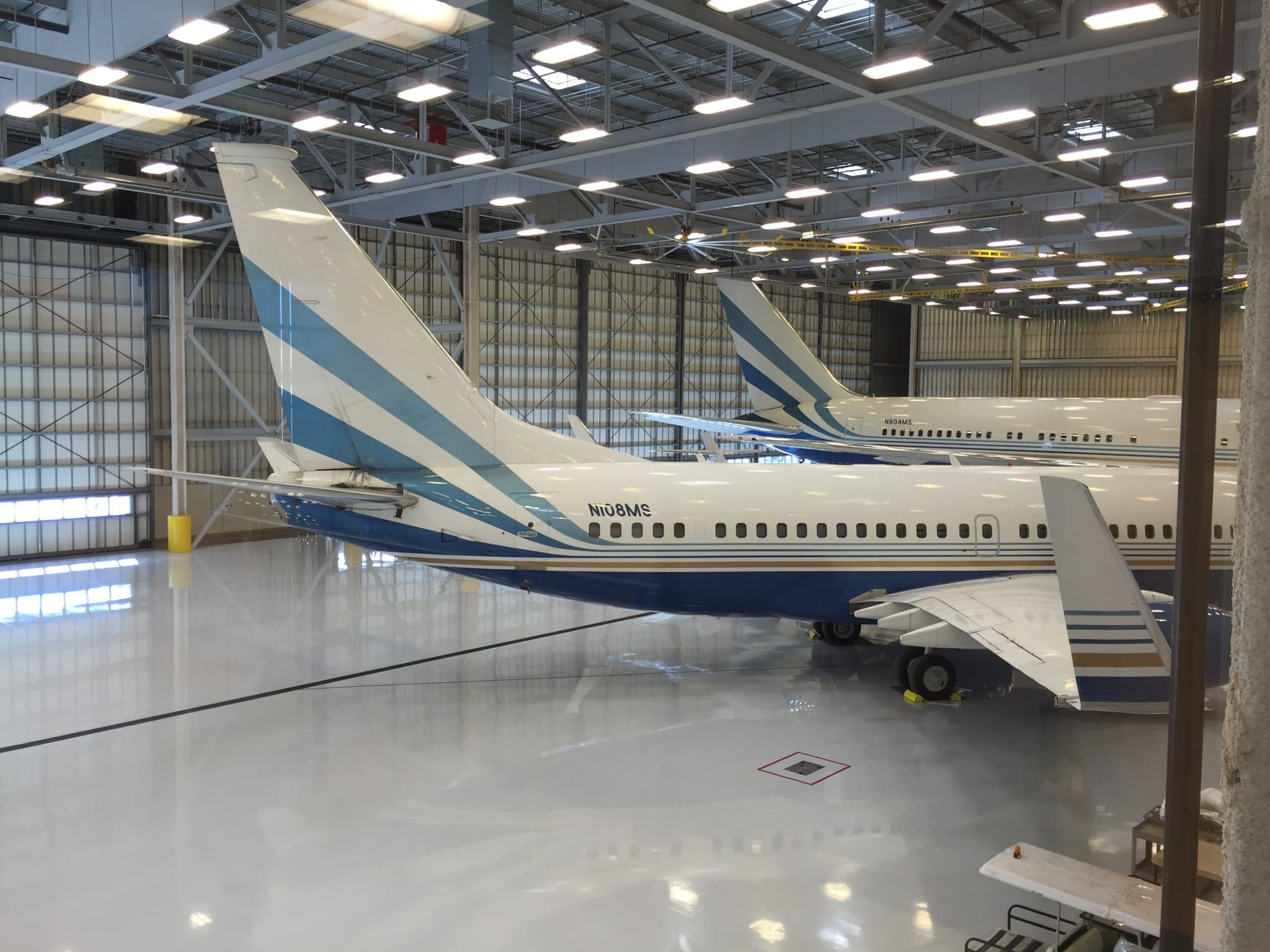
The hangar of Sand’s was polished concrete and had a mirror finish. It was so clean and immaculate, you could eat off the floor! The general offices for the staff that keep Sands Aviation running are located both upstairs (pilots, staff, executives) and downstairs with those that maintain the aircraft, along with an area for spare parts.
Sands does maintain their own aircraft, but heavy checks / maintenance the aircraft are sent out to licensed facilities.
My Visit To Sands Aviation
When I visited Sands Aviation, it was with the notion to produce a documentary on the 747SP specifically, and a coffee table book about Sands Aviation.
Now, it took over a year of communication to get over the hump to even be invited in to discuss further. However, from the beginning, it was made very clear Sands Aviation is a lowkey operation, and senior executives of Sands Corporation were lukewarm on the idea.
As unfortunate as it is, the private aspect of the operation makes doing a film or book a non-starter. Sands Aviation gets requests all the time to do interviews from high end publications, but they always decline.
But some persistence at least resulted in a visit and a test flight for this lucky writer, along with a lifelong friendship with the Chief Pilot for the Airbus A340/Boeing 747SP, Captain Danny Burke.
What is amazing is that many of the key people at Sands Aviation that I spoke with all had a long history in the airline business, and just casually chatting with them brought forth unique and interesting stories from their past endeavors (hence the idea of a book).
Unique Stories Abound with The Sands Crew
A Glimpse Into Sands Aviation's High Roller 747 52
One of the mechanics that joined me on the test flight mentioned there’s a ghost on VQ-BMS, and that others in the company have seen it. They don’t know the origins of what or why, and it doesn’t really bother anyone, but can be unnerving if you don’t know about it.
Captain Danny Burke was the most jovial and friendly individual I encountered. He clearly loved what he did, and would talk your ears off on his history in the airline business. We stayed in touch and I learned he got his start as a pilot with TWA flying Lockheed Constellations, later working his way up to the Boeing 747SP. After he retired from TWA (aged out at 60) he kept flying for private operators, eventually landing at Sands Aviation after some stints flying royalty in the middle east.
The irony to end your airline career on a TWA 747SP, and years later reunite to fly the same aircraft that flew with the same airline.
One of the many stories Danny shared was flying the Convair 880-22, calling it “Smoke, noise, and speed!” He said they’d set the power to 103% for takeoff, then slowly bring it back during the climb and cruise so you wouldn’t ring the Vmo bell.
What he also mentioned was the bell rang a lot on a typical flight from San Francisco to Philadelphia, cruising at Mach .92, and that their aircraft had balance boards to allow the flight controls to move. The subsequent “M” models that Japan Airlines and Cathay Pacific bought had a power rudder, but only when the flaps were extended he noted.
Sands Also Flies A Number Of Charitable Trips
Sheldon would donate the aircraft for a variety of charitable causes, covering the cost to transport whatever endeavor he was participating in. But these events were always kept on the down low, with nary a mention in the press.
One event he does semi-annually is flying up to 50 NFL Hall of Famers for a tour of the Holy Land (Israel). Additionally, he supported the military and would often engage in events including transport for veterans on Sand’s aircraft. Once the Airbus A340-500 arrived in the fleet, Sheldon preferred taking it because it could fly from Las Vegas all the way to Singapore with no technical stop.
My Ride in the Boeing 747SP
During my visit in 2016, when I met Danny, he mentioned they needed to take one of the SP’s (BMS) up for a technical flight, and invited me along.
The crew were great to watch, all having unique personalities and happy to share special stories from their careers. But once the aircraft door was closed, Danny ran a sterile cockpit meaning no talking or interruptions and everyone got down to business. [You can see snippets of this flight on my YouTube page: avgeektv]
We took off on runway 1L north bound turning over Sheldon’s hotels the Venetian and the Palazzo, heading westbound towards California. We climbed to about 10k feet while the flight crew immediately began running all their tests from their checklists, testing out every switch and all functions of the aircraft.
After about an hour and turning left making a complete circle around the Ivanpah Solar Electric farm in California we began our descent and landed again on runway 1L. When the aircraft isn’t scheduled to fly within 20 days, they’re required to take the aircraft up for a test flight and ensure everything is operating.
Danny maintained an apartment in Las Vegas when he was due to fly, but when he was off, he commuted to his home in Tahiti, where he and his wife became citizens. According to his wife, Danny had no plans to retire and planned to fly until the day he died.
That day unfortunately came on October 7, 2019 when Danny passed away. A wonderful and private service was held for him at his son’s home in California, where everyone shared stories of Danny.
Sands Flights Continue
Sands Aviation continues to operate with one less 747SP, VQ-BMS which received damage due to a hurricane, and has since been written off. High roller flights slowed (and even stopped for a while) due to the world economic turmoil that began in 2008 and continued for some time.
It was also rumored that China didn’t like its wealthy citizens running off to Las Vegas to gamble, taking money out of China and depositing it in another country. There have been lots of changes over the past years, including adoption of anti-corruption laws to limit gambling activities.
While there are rumors that Sheldon may sell his U.S. based corporation, nothing has happened as of today, nor is it clear what would happen (if anything) to Sands Aviation. But in the end, it’s clear why high rollers were flown in from China, and why Sheldon may continue to focus on Macau: it accounts for 63% of the revenue that the Sands Corporation brings in.
It must be nice to have a private 747SP pick just you and anyone else you designate to accompany you, and fly you nearly half way around the world.
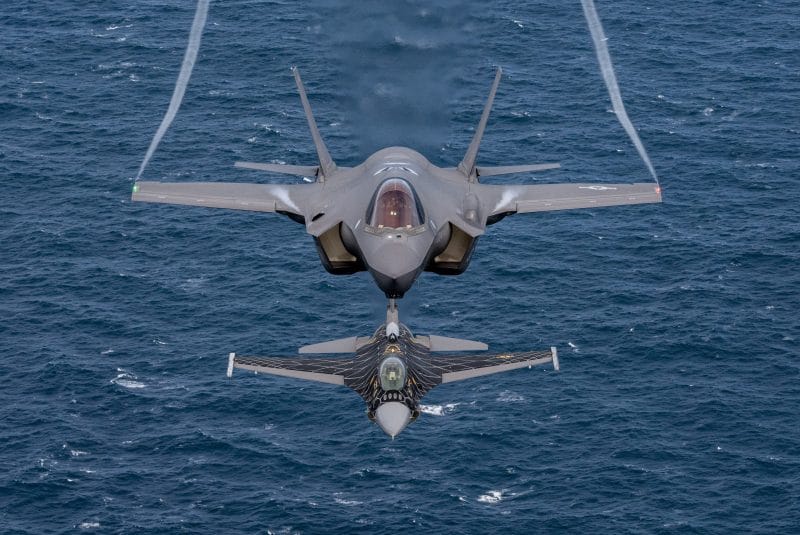
PENSACOLA, Fla. — Aviation photography captured the unique views during the shortened air show season of 2020, as aircraft vapor and rare aerial images spotlight the military and civilian performers.
Gathered are only a few of the incredible imagery related to the 2020 air show season. Each photograph tells a brief story of America’s strength as Covid-19 cancelled two-thirds of the air show season.
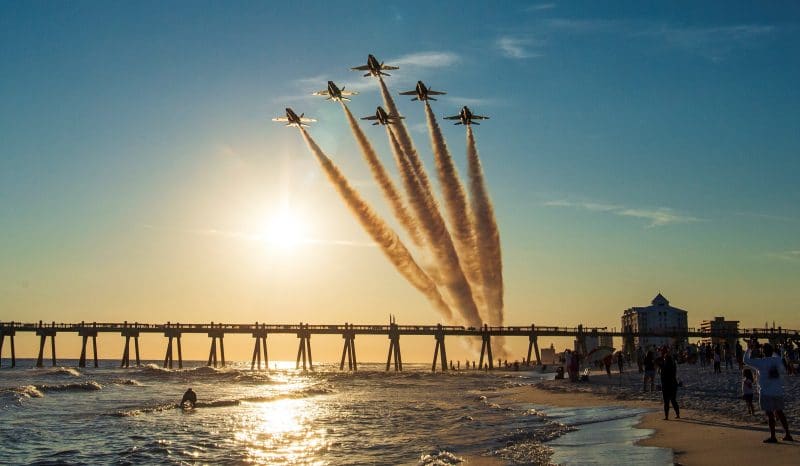
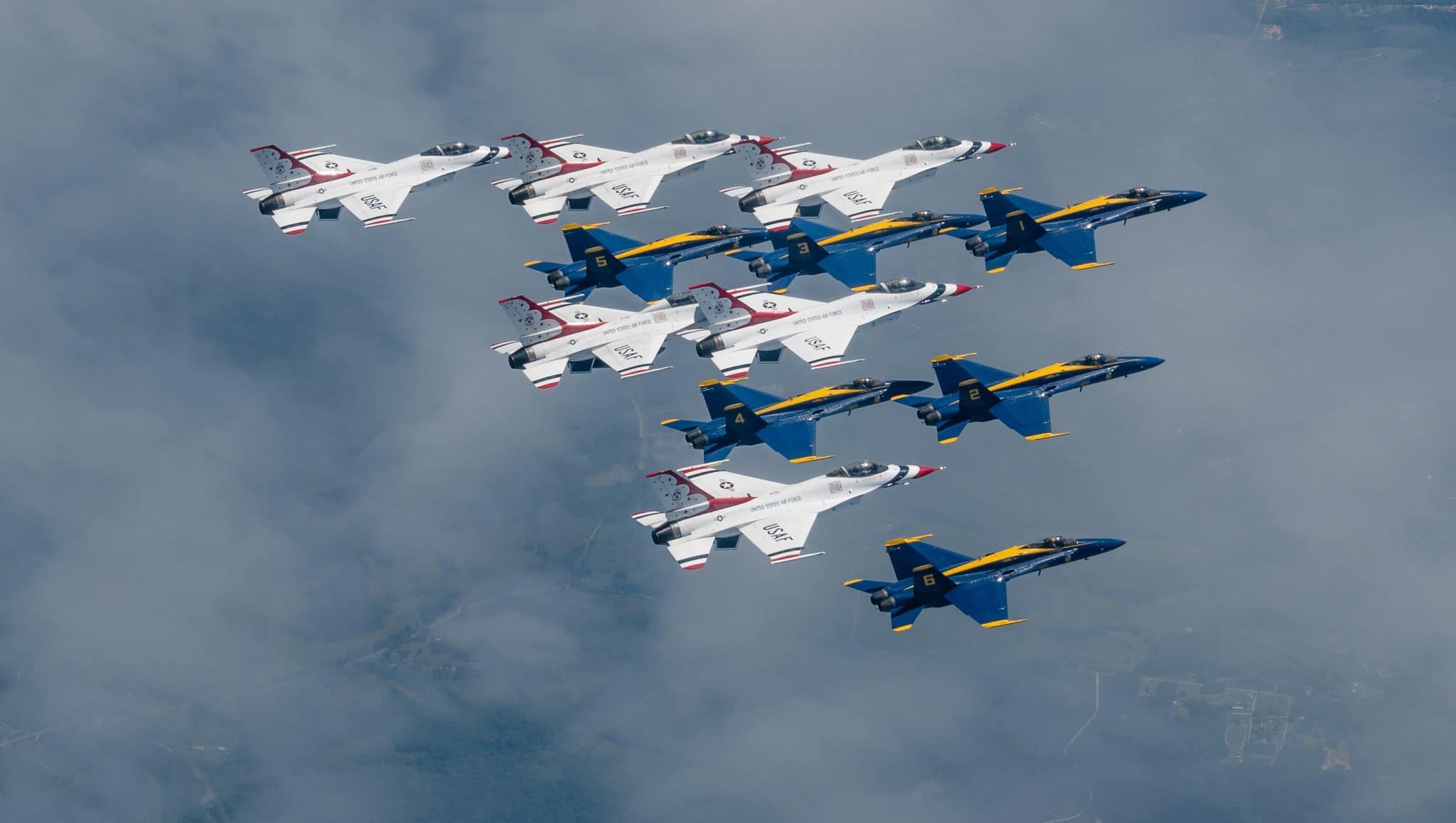
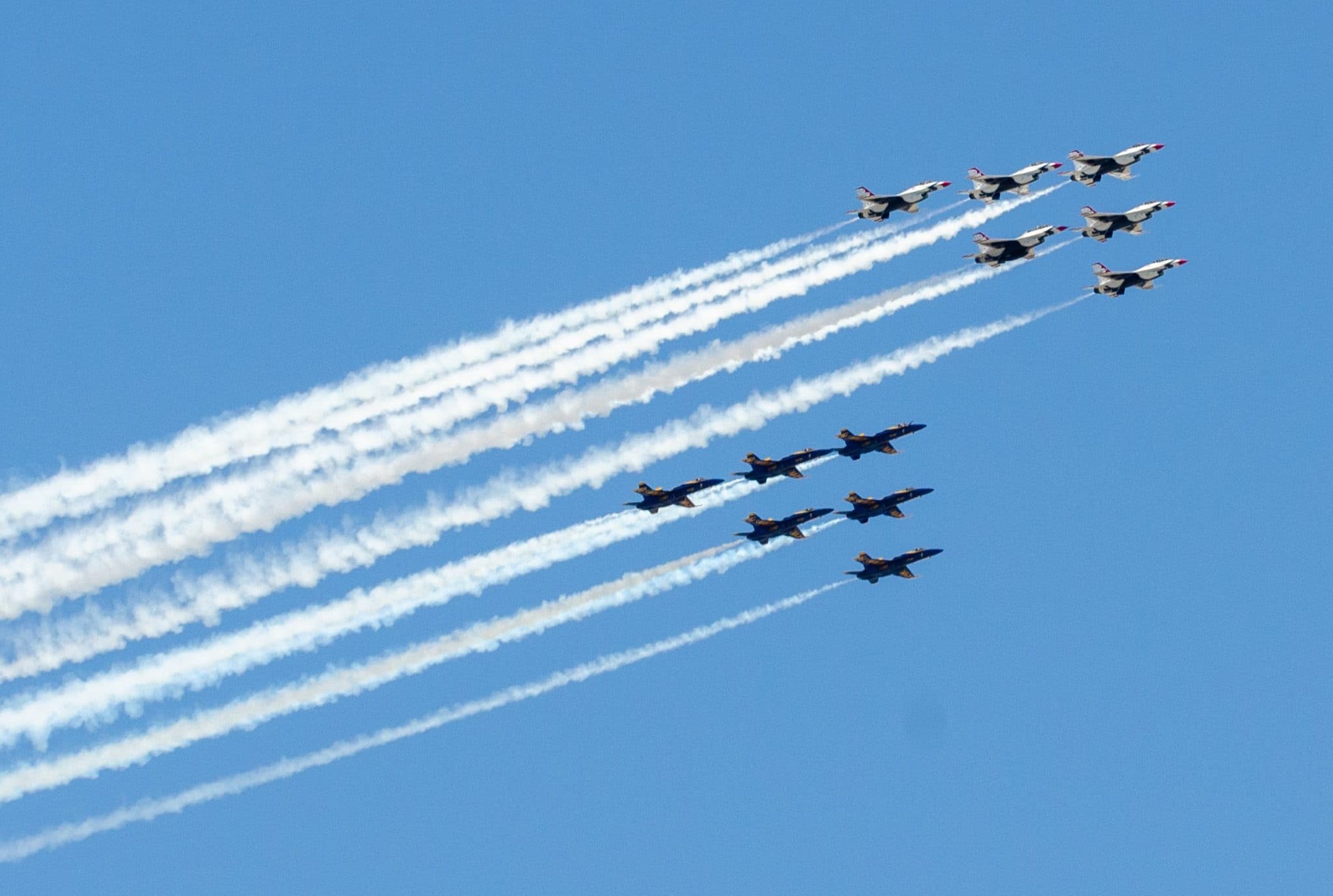
The Blue Angels and Thunderbirds flyovers of major U.S. cities to honor first responders provided a lift as America struggled with Covid concerns. During Operation: America Strong, thousands of on lookers in each city gathered to witness the two squadrons fly together.
The Air Force devised a plan to resume air shows under the “drive-in air show” format in July. Thunder Over Cedar Creek Lake will be remembered as the military’s first step to resume air show performances.
Cedar Creek Lake became the first drive-in air show on Independence Day. The Air Force sent a few aircraft to perform including the F-35A Lightning II and A-10C Thunderbolt II demonstration teams.
The 2020 Airshow Year in Review
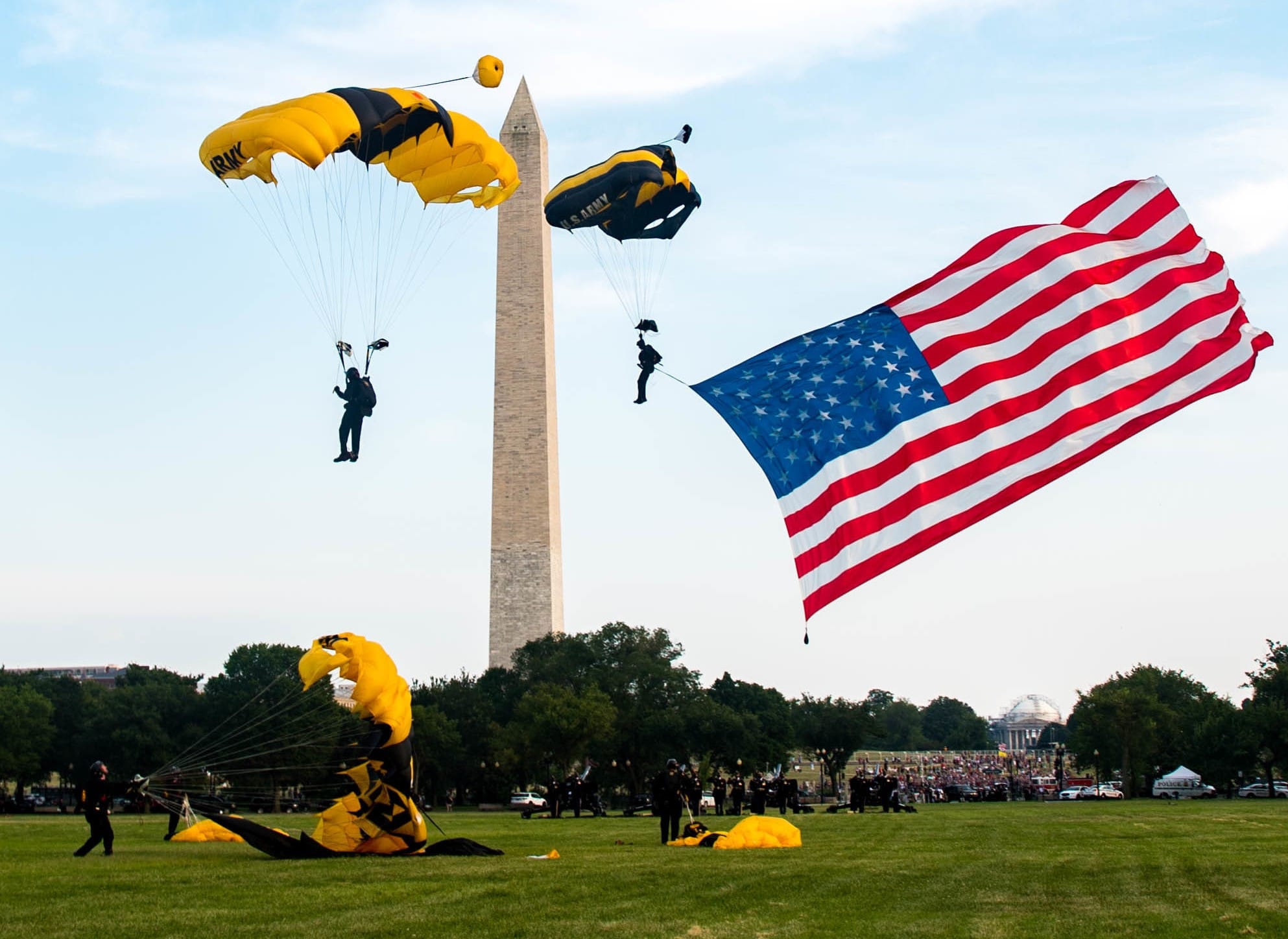
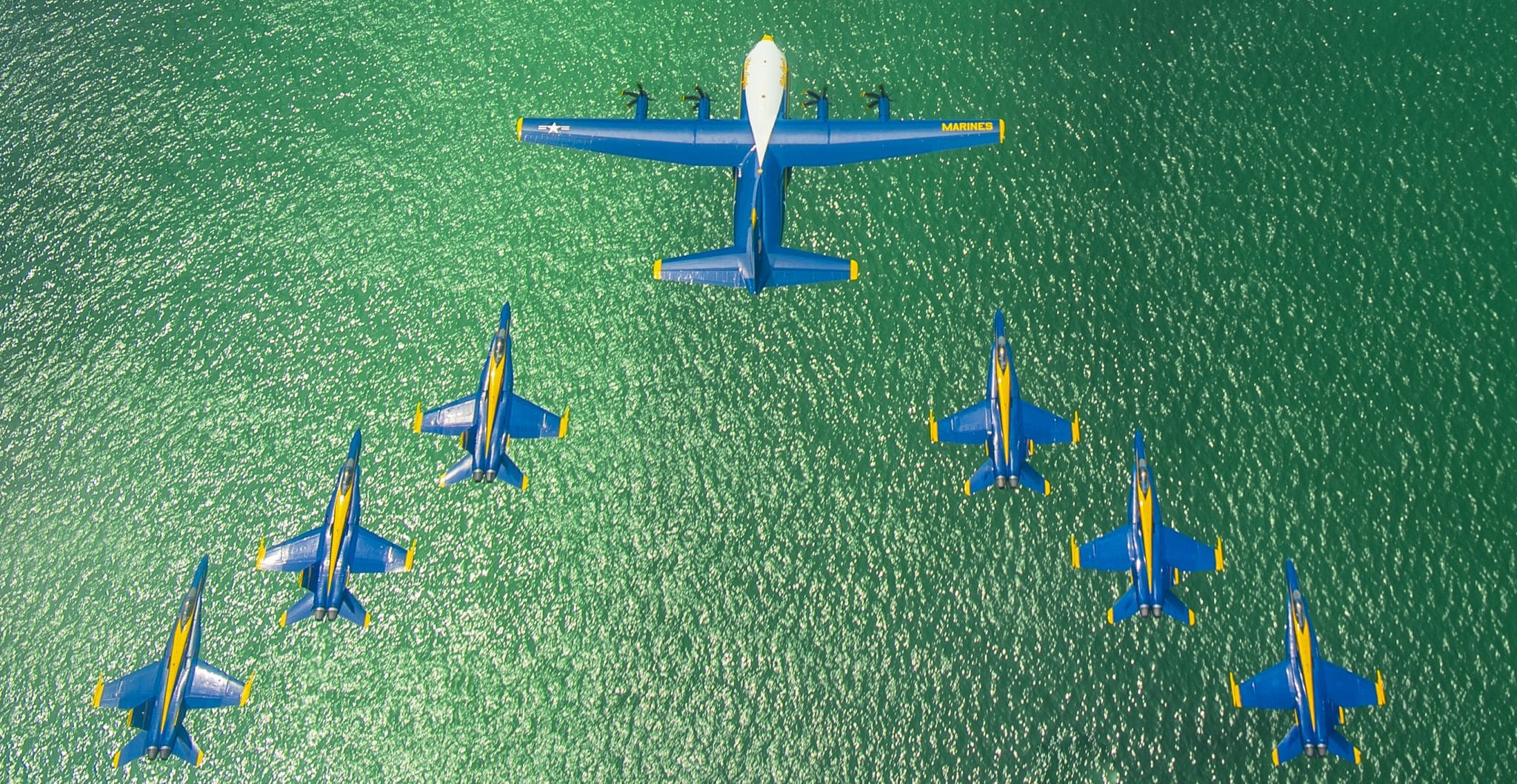
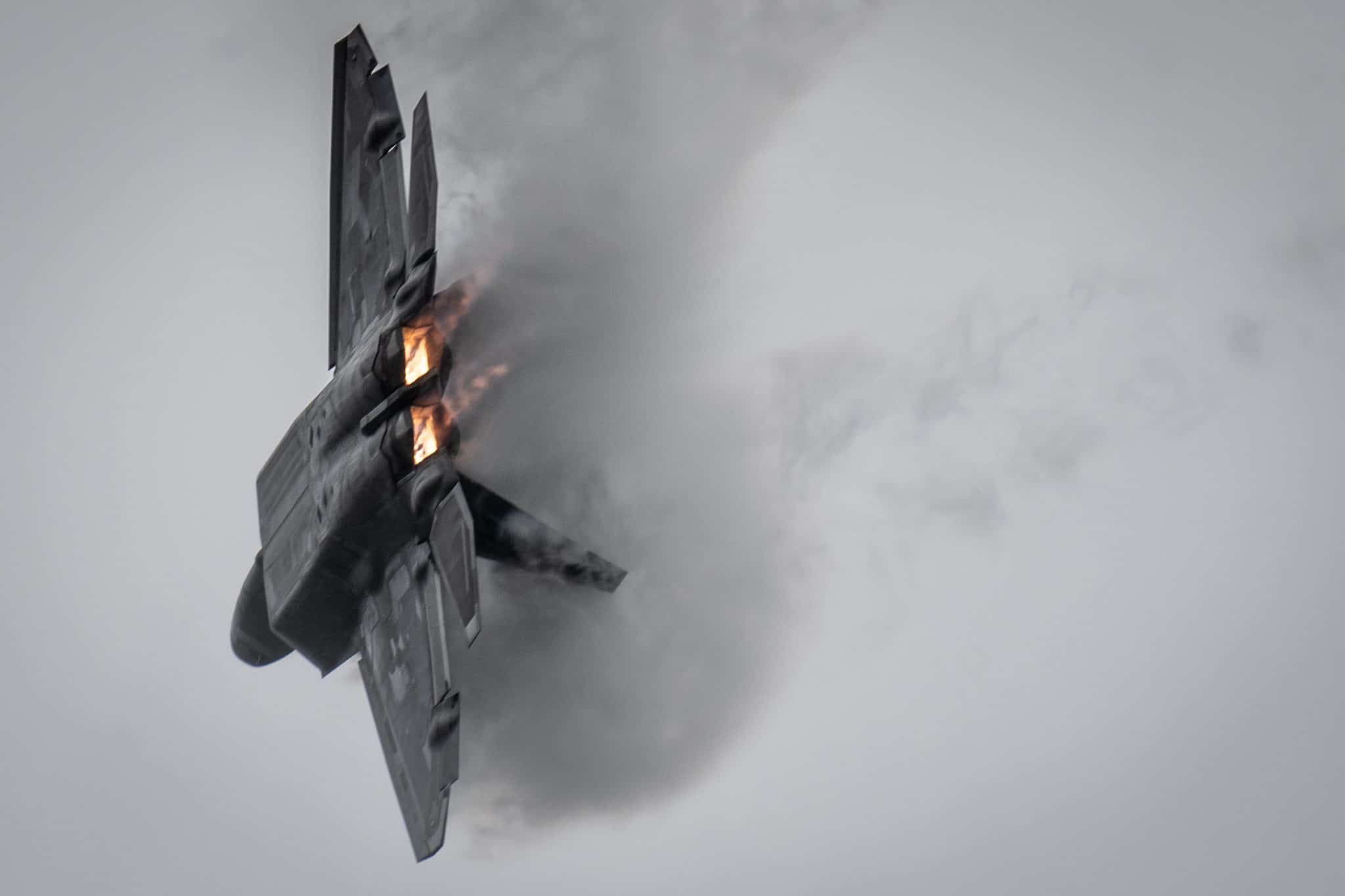
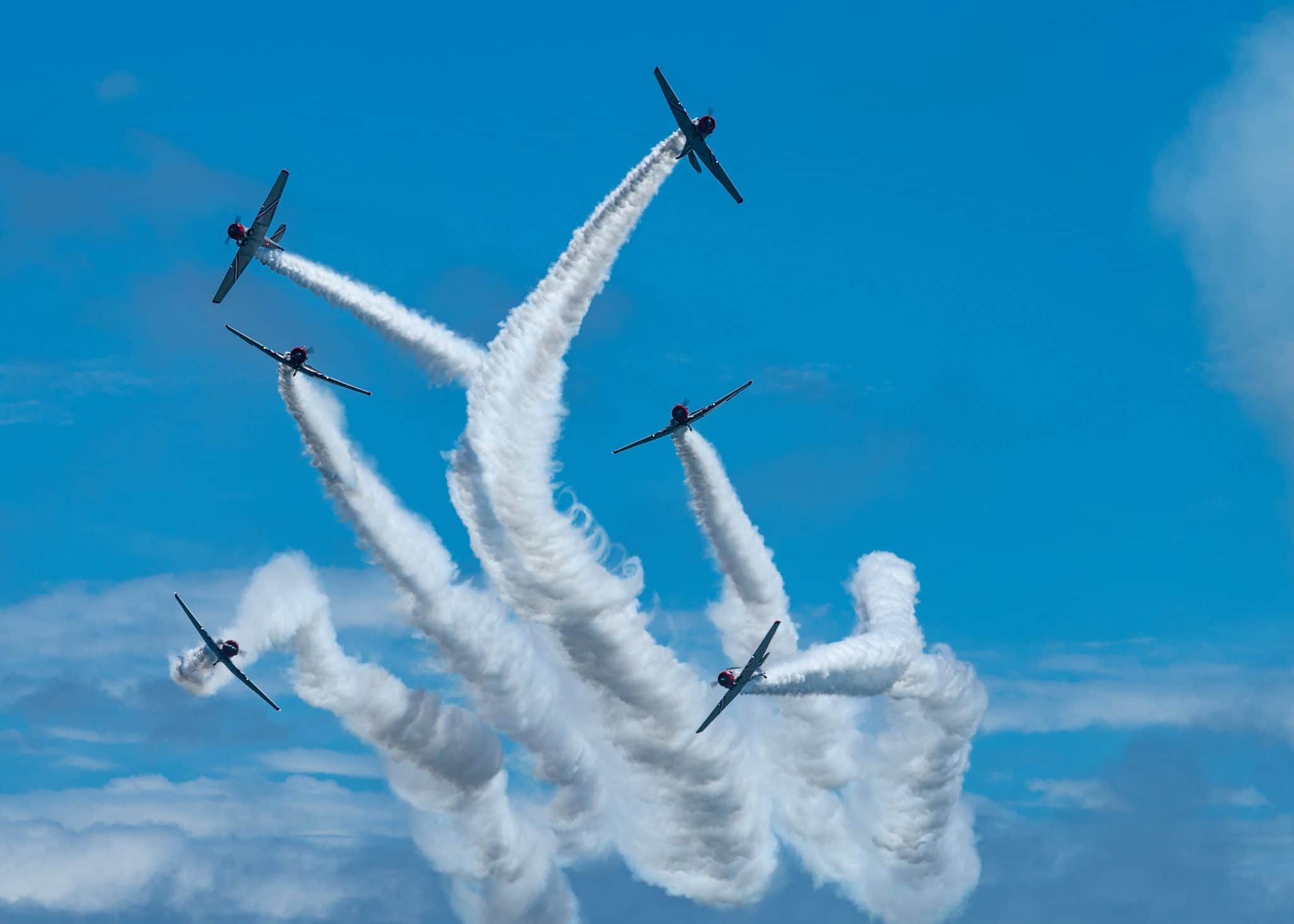
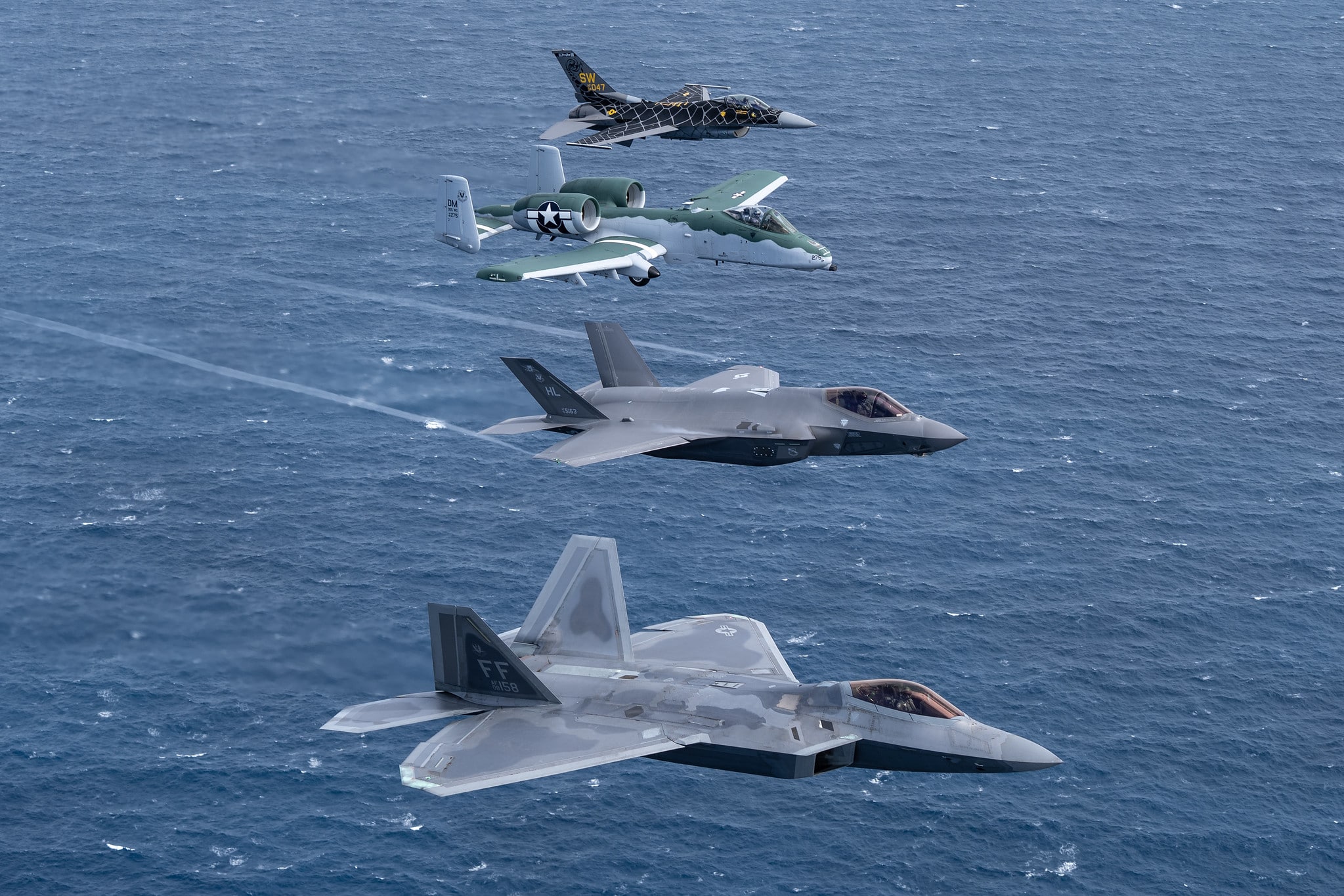
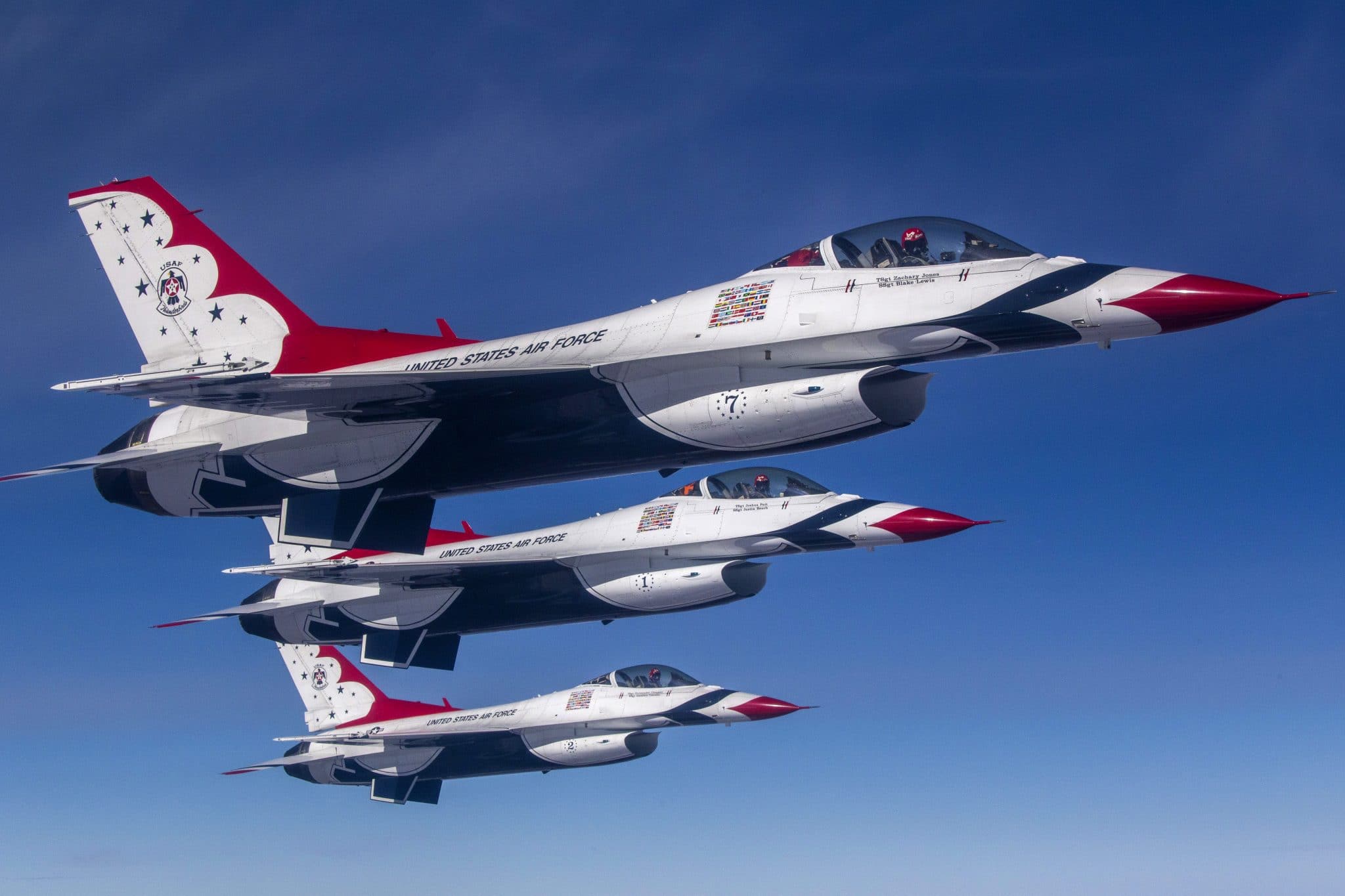
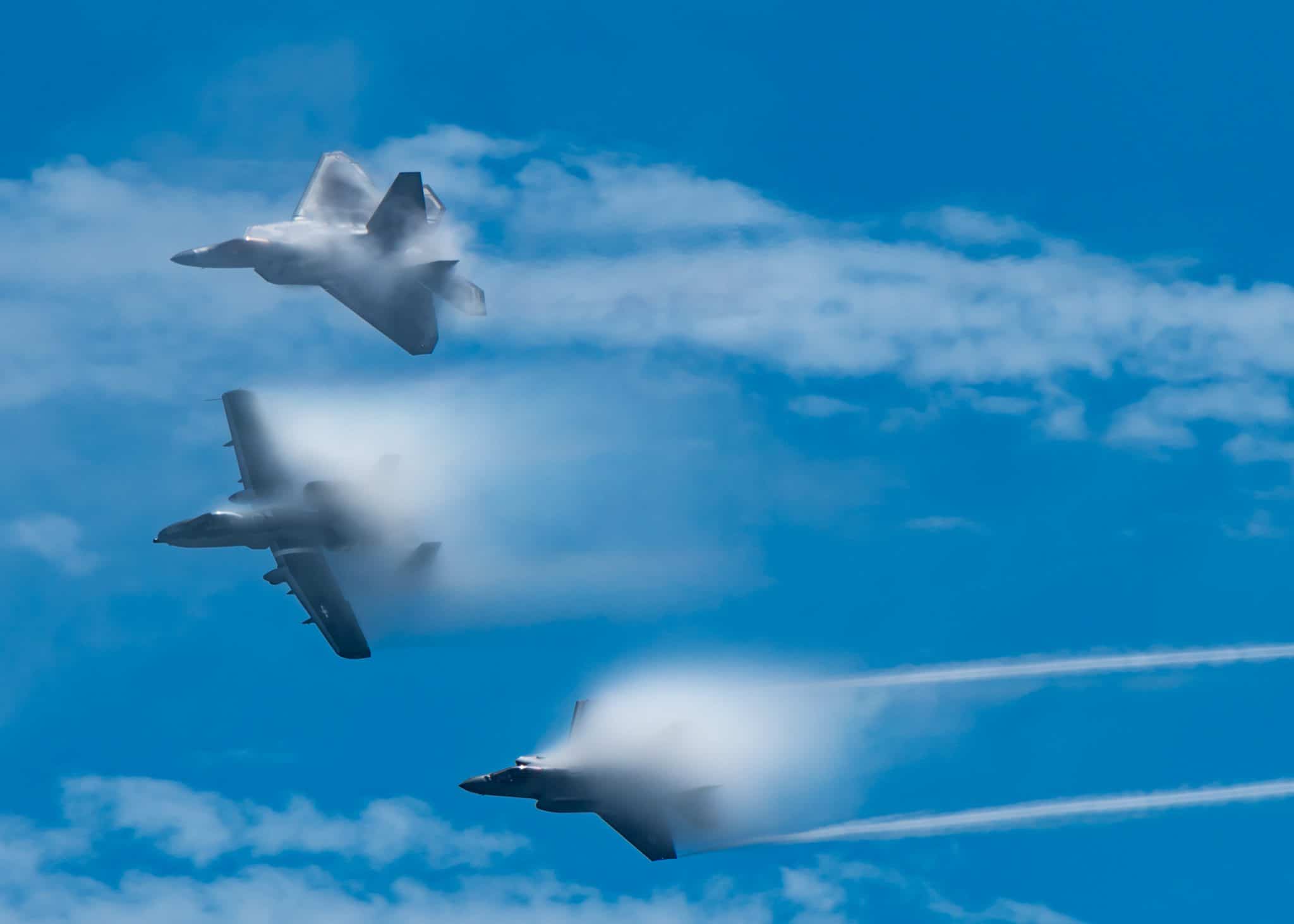
The U.S. Navy Flight Demonstration Squadron, the Blue Angels, and U.S. Air Force Air Demonstration Squadron, the Thunderbirds, honored frontline COVID-19 first responders and essential workers with formation flights over New York City, New Jersey, and Philadelphia on April 28, 2020. (U.S. Navy photo by Lt. Cmdr. Aaron Hicks)U.S. Army Golden Knights parachute onto White House grounds to celebrate the nation’s 244th birthday during Salute to America in Washington, D.C., July 4, 2020. The event provided the Department of Defense with an opportunity to demonstrate the capabilities and professionalism of the Armed Forces. (U.S. Army Photo by Sgt. Kevin Roy)200817-N-YO638-2184 PENSACOLA, Fla. (August 17, 2020) The U.S. Navy Flight Demonstration Squadron, the Blue Angels, C-130 pilots and crew arrive at Naval Air Station Pensacola with the team’s new C-130J Super Hercules, alongside the Blue Angel delta formation. 2020 marked the team’s 50th year utilizing the C-130 as its lead logistics aircraft. (U.S. Navy photo by Mass Communication Specialist 2nd Class Cody Hendrix/Released)U.S. Air Force Maj. Josh Gunderson, F-22 Raptor Demonstration Team commander, utilizes the raw power and thrust vectoring technology of the Raptor during a practice at Joint Base Langley-Eustis, Va., March 31, 2020. The F-22 Raptor’s two Pratt and Whitney F119 Turbofan engines bring a combined 70,000 pounds of thrust, allowing the aircraft to takeoff straight into the vertical. (U.S. Air Force photo by Lt. Sam Eckholm)The GEICO Skytypers air show team break formation during a rehearsal performance for the 2020 OC Air Show Aug 14, 2020, Ocean City Md. The Skytypers fly T-6 Texans in aerial performances at air shows across the country. (U.S. Air Force photo by Capt. Kip Sumner)All four Air Combat Command Single-Ship Demonstration Teams fly together in a special formation in Fort Lauderdale, Fla., Nov. 20, 2020. Consisting of an F-22 Raptor, F-35 Lightning II, A-10 Thunderbolt II, and F-16 Fighting Falcon, this unique formation serves as a representation of all the men and women who serve in our Air Force all across the world. (U.S. Air Force photo by Lt. Sam Eckholm)U.S. Air Force Thunderbird F-16 Fighting Falcons wait to be refueled by KC-10 Extender crewed by Reserve Citizen Airmen with the 78th Air Refueling Squadron, 514th Air Mobility Wing, over the United States Nov. 1, 2018. The 514th is an Air Force Reserve Command unit located at Joint Base McGuire-Dix-Lakehurst, N.J. (U.S. Air Force photo by Master Sgt. Mark C. Olsen)U.S. Air Force Capt. Kristin “Beo” Wolfe, F-35 Demonstration Team pilot, flies alongside Maj. Cody “ShIV” Wilton, A-10 Demonstration Team pilot, and Maj. Joshua “Cabo” Gunderson, F-22 Demonstration Team pilot, fly in a three-ship heritage flight formation Aug. 14, 2020, Ocean City, Md. This rehearsal was one of the first times that vapor has been seen on all three aircraft during a heritage flight. (U.S. Air Force photo by Capt. Kip Sumner)An F-16 Fighting Falcon with the Air Combat Command F-16 Viper Demonstration Team at Shaw Air Force Base, S. C., flies alongside a KC-135 Stratotanker from the 121st Air Refueling Wing, Columbus, Ohio, after being refueled near London, Ontario, Sep. 12, 2020. The F-16 was part of a demonstration team at Airshow London. (U.S. Air National Guard photo by Airman 1st Class Mikayla Gibbs)Jerry “Jive” Kerby, and aircraft performer starts his T-28 Mad Dog at the Wings Over North Georgia Airshow in Rome, Georgia, Oct. 25, 2020. Kerby performed a demonstration during the air show and showcased the maneuverability of his aircraft. (U.S. Air Force photo by Staff Sgt. Sergio A. Gamboa)New York, NY, April 28, 2020–The military’s elite flight demonstration squadrons, the Navy’s Blue Angels and the Air Force’s Thunderbirds, gave a salute to health care workers and others on the front lines in the fight against the coronavirus. A total of 12 fighter jets, six of the Air Force’s F-16C/D Fighting Falcons and half a dozen F-18 C/D Hornets streaked over New York City, Newark, Brooklyn, Queens and Long Island before heading to Trenton, N.J., and Philadelphia. (K.C. Wilsey/FEMA)
For many in the air show community, the name COVID-19 first came up in February with the F-22 demo team’s performance in Singapore.
2020 was highlighted by the America Strong flyovers. Not only by the Blue Angels and Thunderbirds, but by local air national guard aircraft.
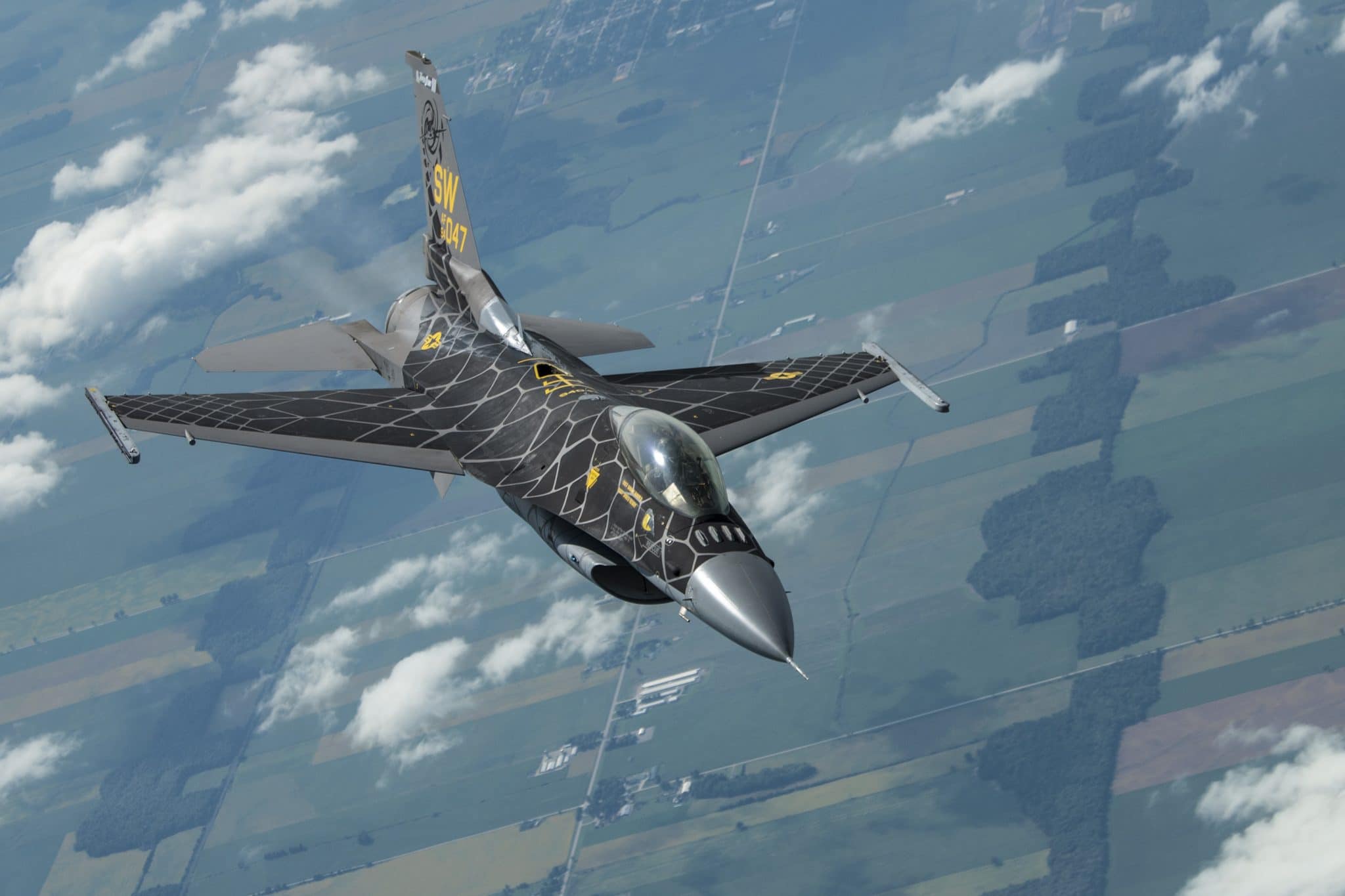
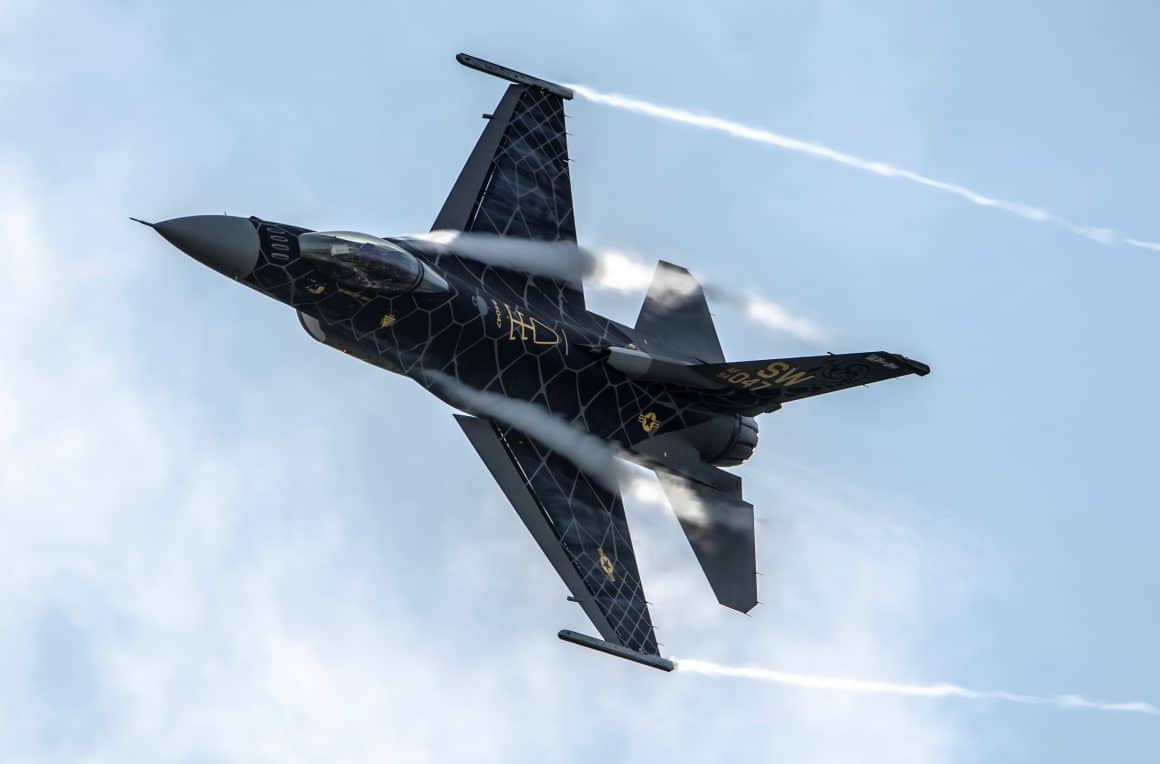
The Air Force F-16C Viper and A-10C demo aircraft received stunning new paint jobs. The first female to lead a single-ship jet team, Capt. Kristin “BEO” Wolfe, became the F-35A demo team’s pilot.
The return of the Blue Angels Fat Albert as the squadron received a new C-130J Super Hercules. The Blues also officially upgraded from their legacy Hornets to the Super Hornets in November.
(Charles A Atkeison reports on aerospace and technology. Follow his updates via social media @Military_Flight.)
NORAD is marking their 65th year tracking St. Nicklaus across the western Hemisphere. Rudolph’s bright red nose gives off an infrared signature allowing satellites and radar to detect Santa, code name Big Red One.
The tiny sleigh is expected to arrive over the east coast of the United States on Thursday at 11:10 p.m. EST, NORAD officials announced. Located in Colorado Springs, the North American Aerospace Defense Command will follow the jolly elf’s travels using radar, satellites, and aircraft.
“In addition to our day-to-day mission of defending North America, we are proud to carry on the tradition of tracking Santa as he travels along his yuletide flight path,” Gen. Terrence O’Shaughnessy, commander of NORAD and U.S. Northern Command, said. “The same radars, satellites, and interceptors employed on December 24 are used year-round to defend Canadian and American airspace from threats.”
NORAD Celebrating 65 Years of Tracking Santa
Aboard the International Space Station 250 miles above, astronauts will train high resolution cameras on Santa’s sleigh. Kate Rubins and Vic Glover will train 400 mm camera lens through the windows of the Cupola module to capture the holiday flight below.
Santa Claus visits the Air Force Thunderbirds recently in preperation for his Christmas Eve flight. (USAF)
NORAD’s multimedia website can allow children to follow Santa’s journey in real time. App stores also offer a special portable app NORAD Tracks Santa which allows users to download and track the holiday voyage.
Volunteers will be in place at NORAD operations center to answer children’s phone calls from across the globe. A special free number to call is 1-877-HI-NORAD, beginning at 6:00 a.m EST on Thursday.
Air Force officials will field questions in eight languages — English, German, Italian, French, Spanish, Japanese, Portuguese, and Chinese.
NORAD’s association with Santa began in 1955. NORAD’s public affairs describes how this holiday spirit took flight.
“A local newspaper advertisement informed children they could call Santa directly – only the contact number in the advertisement was misprinted. Instead of reaching Santa, the phone rang through to the crew commander on duty, U.S. Air Force Colonel Harry Shoup, at the Continental Air Defense Command Operations Center, the predecessor to NORAD.”
“Col. Shoup was quick to realize a mistake had been made, and assured the child he was Santa. Shoup then assigned a duty officer to continue answering calls. Thus, a tradition was born, and continued when NORAD was formed in 1958.”
NORAD officials remind children to fall asleep early on Christmas Eve to ensure a speedy trip by Santa. “We love the opportunity this time of year to be able to say to everyone, ‘Sleep tight. We have the watch’.”
(Charles A Atkeison reports on aerospace and technology. Follow his updates via social media @Military_Flight.)
SAS (aka Scandinavian Air Systems) has operated 4 engine aircraft ever since they first operated the Shorts S.25 Sandringham Mk VI back in 1948. Four engine service continued in one form of the other all the way through 2020. The airline operated the DC-6, DC-7, the DC-8, along with the Convair 990, 747 classics, and A340.
In the wake of the COVID-19 pandemic, airlines have been retiring jets at an unprecedented pace. Over the course of 2020, we’ve seen the last major airlines flying the MD-80 and MD-90s, along with a ridiculous amount of Boeing 747s being retired.
Now we came across this video of SAS sending their final Airbus A340 to the desert. It’s the end of an era for SAS as this video represents their last 4 engined flight ever. While this doesn’t represent the end of SAS , it is a sign of the times that it is now a much smaller airline. Due to the corona virus, very few airlines still fly the A340. We’ll miss this 4 engined ‘hair drier’ plying the skies!
ATLANTA — Shopping for an aviation or space enthusiast, including for ones own list, can be a difficult task during the holiday season.
The military or civilian pilot, maintainer, or air show enthusiast will want something new and unique. The latest technology for the cockpit or the clothes blazoned with their favorite air show performer is a must.
As the Christmas shopping season builds, we have compiled a list of diverse aviation and space flight online stores. Most of the stores listed are based in the United States.
Be sure to shop early, and look for updated discount codes on each site. Look carefully for their estimated delivery time.
We also suggest the gift of air show tickets to your nearest location. Air shows are family friendly events, and inspires future generations in STEM technologies.
Military and civilian aviation theme gifts have become increasingly popular for AvGeeks. (U.S.A.F.)
AvGeekery.com’s List of Top Aviation & Space Shopping Sites
10. Aviation Megastore. This store is based in The Netherlands and they do ship international. Clothing, unique facemasks, and multimedia items are a few of the possible gift ideas for your list.
9. Pilot Outfitters. Great clothes for the AvGeek, a nice selection of aviation toys and gifts, plus beautiful art for the home or office. This site caters to the warbird lover and private pilot.
8. Aircraft Spruce and Specialty Company. Shop for equipment for both inside and outside your aircraft. Radios, novelty, multimedia, and a lot more. This site has literally everything a pilot or aircraft maintainer needs.
7. Space Center Houston’s Space Shop. Find exclusive apparel, toys, and jewelry plus a lot more for your gift plans. Located next door to the Johnson Space Center, this is where the astronauts shop for their gift ideas.
6. Aviation Shop. Aviation themed masks, watches, clothes, and a lot more make this a top site with creative gift ideas.
5. My Pilot Store. Great gift ideas for the aviator or aircraft enthusiast. Gifts for the cockpit, clothes, and training manuals will provide a huge gathering of ideas.
4. Naval Aviation Museum Store. Shop here for gifts for both children and adults from the five branches of service. Blue Angels fans will want to shop from here for top apparel and gifts.
3. Kennedy Space Center Visitor’s Complex Shop. From NASA to SpaceX, popular space flight themed clothes, home, and office items will offer the perfect gift idea. Located a few miles from the launch pads, this is where visiting astronauts and employees shop for their gifts.
2. The Pilot Mall for aviation supplies and gifts. From the latest flight apparel, to top gadgets and flight charts, Pilot Mall is a must shop site. This store is also the only place to find exclusive gifts online from past Sun ‘n Fun Fly-in and Airshow events.
1. Sporty’s Pilot Shop. The Sporty’s gift catalogue was a special treat when it arrived in the mail. Today, their popular website is full of incredible gift ideas. Also, you can scroll down their home page for smart device apps plus tips and recommendations.
(Charles A Atkeison reports on aerospace and technology. Follow his updates via social media @Military_Flight.)
LAS VEGAS — The U.S. Air Force flight demonstration teams released their performance schedules on Tuesday as they begin preparing for the 2021 air show season.
Headed by Air Combat Command, four single-aircraft teams and the Thunderbirds announced formal schedules. The F-22A Raptor, F-35A Lightning II, A-10C Thunderbolt II, and F-16C Viper teams will perform at an air show near you.
2021 Airshow Schedules
The Air Force Thunderbirds 2021 schedule was finalized on Tuesday. The squadron will cover America between March to November, including a few days in eastern Puerto Rico.
The Thunderbirds 68th season will launch with their traditional pre-race flyover of the Daytona 500 in February. Their six F-16C Fighting Falcons demonstrate highspeed passes and close formation flight.
(Air Force Thunderbirds)
“As the jets take to the skies and fly only a few feet from wingtip to wingtip, the crowd gets a glimpse of the awesome skills and capabilities that all fighter pilots must possess,” Thunderbirds spokesperson Capt. Remoshay Nelson said. “The solo pilots integrate their own loud and proud routine, exhibiting some of the maximum capabilities of the F-16 Fighting Falcon.”
(US Air Force)
The F-22A Raptor is scheduled to perform at show sites from coast-to-coast. They plan to visit 18 locations, including one stop in British Columbia.
Major. Joshua “CABO” Gunderson will return as the team’s commander and pilot. In a short message, Maj. Gunderson said, “Can’t wait to see everyone at a show near you.”
(US Air Force)
The F-35A Demo Team‘s schedule will take them across the United States, and include two stops in Canada. The team will also visit Eielson AFB in Alaska’s interior on the edge of the Arctic Circle.
“Capt. Kristin “BEO” Wolfe will be the F-35 Demonstration Team commander and pilot for the 2021 show season,” F-35 Demo spokesperson Capt. Kip Sumner told AvGeekery. “Our team roster will mostly be staying the same for the upcoming show season, since this will be only our third season as the F-35 Demo Team.”
(US Air Force)
The A-10C Demo Team is scheduled to thunder across the U.S., Canada, and the U.K. in 2021. Two separate performances in England will be followed by two separate performances in Canada.
The Warthog will take flight with a new pilot behind the stick. Air Combat Command will announce in January a new A-10 commander and pilot once they have been certified.
(US Air Force)
The Viper Demo Team’s schedule supports performances at 21 show locations. The lead Viper aircraft known as Venom, will also travel to the countries of Colombia and Canada this summer.
Viper’s team commander and pilot Maj. Garret “TORO” Schmitz returns for his second season in March. His second season with the team will see Toro perform over his home state of Utah.
(Charles A Atkeison reports on aerospace and technology. Follow his updates via social media @Military_Flight.)
LAKELAND, Fla. — The final American air show of the year will host performances by the Air Force’s F-35A and F-16C jets this week during the Sun ‘n Fun Holiday Flying Festival and Car Show.
Lakeland Regional Airport will host the holiday festival air show on December 4 and 5. Dozens of vintage planes, warbirds, and modern aircraft will also be on static display.
An evening air show will begin at 4:30 p.m. EST, on Friday, with a second show scheduled for Saturday at 2:30 p.m. A hot air balloon launch is also planned for Saturday morning at 8:00 a.m.
Top Performers to Highlight Last Airshow of 2020
Based at Hill Air Force Base in Utah, the F-35A Lightning II demonstration team will perform both days. Sun n’ Fun will mark the team’s 12th air show site during a season cut short by Covid-19 concerns.
“We had a great 2020 show season and have got a few ideas on how to make 2021 even better,” Capt. Kristin “Beo” Wolfe stated to AvGeekery.com on Tuesday. Wolfe is concluding her first season with the demo team and will return next season.
The F-16C Viper demonstration Team will also conclude their season over Lakeland. Viper commander Maj. Garett “Toro” Schmitz will pilot the jet aircraft to highlight its characteristic high speed maneuvers and climbs.
F-16C Viper Demo pilot Maj. Garret Schmitz performs over south Florida on Nov. 6, 2020. (SrA B. Ingold)
The World Famous GEICO Skytypers is also scheduled to attend the Sun n’ Fun Holiday air show. Officials note the squadron of World War II-era aircraft is scheduled to perform a few random flights and not their usual demonstration.
“We are very pleased to be able to attend and see our fans here in Florida,” GEICO Skytypers lead pilot Larry Arken expressed.
The U.S. Army Special Operations Command Parachute Demonstration Team is scheduled to open each show. Known as the Black Daggers, the team will display the American flag during a jump as the National Anthem is played.
Former Air Force F-15C Eagle pilot Jerry “Jive” Kerby will pilot his RV-8A known as Wild Blue on Friday. Jive’s fourth show of the year will be dedicated to America’s first responders.
“Being able to fly Wild Blue’s night show is especially significant this weekend for Sun ‘n Fun’s Holiday event,” Jive Kerby told AvGeekery. “It gives our Wild Blue Rodeo team a chance to say thank you to our local first responders who never stop working to care for our community.”
The Sun ‘n Fun Holiday Flying Festival and Car Show is free to the public. Tickets for parking are $20.00 and can be purchased online or at the Lakeland gate when you arrive.
(Charles A Atkeison reports on aerospace and technology. Follow his updates via social media @Military_Flight.)
Many sites are sharing a video of a man cooking a steak in a bathroom of a regional jet on what appears to be a Delta Connection flight. Occasionally someone lights up a cigarette in a bathroom and some have been known to try to hook up in one too. While rude behavior on commercial flights isn’t uncommon, lighting a fire in a toilet to cook a steak would be a first. This video first appeared on TicToc before it was removed. Here’s our disclaimer…don’t ever try this. It is dangerous and dumb, even if it is just a prank.
This so damn MUSTY!!!!!! Cooking a steak on an airplane toilet during a panny?????? pic.twitter.com/GDXNbdcSK6
Here’s the deal though. This video is clearly a fake. All bathrooms are required by the FAA to have smoke detectors. If he was really cooking a steak, the smoke detector would have gone off. Flight attendants and passengers also would have seen and smelled smoke in the cabin too.
What this appears to be is a pretty elaborate prank with a flickering fake candle and an uncooked steak along with a partially cooked one as props. It’s still really gross but it appears to be designed more as a commentary on the lack of food and drink options on airlines in light of the pandemic. Creative? Sure. Dangerous? Not in and of itself, but it is still a new low for passenger behavior just to get some likes. Either way…yuck!
“We have the meats!” didn’t really work for an airline. Great Plains Airlines tried to break the mold of a regional carrier. The short-lived airline from the early 2000s tried to shake things up with food and Dornier 328 jets. The airline failed pretty spectacularly from a legal perspective, but most travelers didn’t even notice.
Great Plains Airlines was a local dream for nationwide service
Great Plains Airlines was based in Tulsa, Oklahoma. It acquired the certificate of the second iteration of Ozark Airlines with the intent to provide service to both east and west coast destinations for the local Oklahoma population by flying regional jets to bypass major hubs. The short-lived Ozark Airlines flew out of Branson, Missouri. When the airline failed in 2001, Great Plains Airlines took a series of tax breaks from the state of Oklahoma and investments from local businesses to acquire the operating certificate from the defunct airline and commence service under the Great Plains Airlines brand.
The airline grew rapidly, even if it lacked the infrastructure and aircraft to do so. The airline touted itself as a ‘hometown’ airline for both Tulsa and Oklahoma City. In 2002, the airline expanded rapidly to serve Colorado Springs, Nashville, Albuquerque, and the only non-stop service between Tulsa and Oklahoma City.
A 2002 route map of Great Plains Airlines. Source: GPAIR.com
Just a year later, the airline added BLV (Belleville-St. Louis), Chicago-Midway, and even Washington, DC, as it expanded from two aircraft to four -328 jets and a single -328 turboprop.
Food: Great Plains Airlines’ Differentiator
The airline tried to differentiate itself by offering fast food. As major airlines cut back in the wake of 9/11, GPAir tried to add fast food to lure passengers. In the morning, they offered Krispy Kreme donuts and fresh fruit. In the afternoon, they initially offered Subway sandwiches, later switching to Arby’s market sandwiches. The airline also offered cookies, beer, wine, and soft drinks.
It didn’t work.
Great Plains Airlines Served Arby's and Krispy Kreme Donuts And Failed Miserably 74
Shut down in early 2004, but the legal battle with Great Plains Airlines didn’t end until 2015
Great Plains Airlines never made a profit during its short time flying. The airline’s goal of flying coast to coast was never achieved. Great Plains Airlines shut down in early 2004, but it was far from the end for the company behind the startup. The legal battle dragged on for years, though, after the airline failed.
When Great Plains Airlines started, they received up to $27M in financing to provide coast-to-coast service. That service never materialized. A number of local entities lost out when Great Plains Airlines went belly up. The City of Tulsa mortgaged property to the tune of $30M dollars to finance over $18M in loans to Great Plains Airlines, which was never repaid by the airline. The local paper also invested in the airline in exchange for stock that was worthless. Other suits claimed that the airline was insolvent for more than a year while it continued to pull in additional investment money from multiple sources. Eleven years later, the flurry of suits was eventually settled.
Today, there is no service between Tulsa and the coasts. Tulsa is a mere spoke to major hubs like DFW, Chicago, Atlanta, and Charlotte. Oklahoma City has fared a bit better. Prior to the pandemic, airlines offered service to Washington, DC, San Francisco, Seattle, St. Louis, and Los Angeles.
It’s been a pitiful year for many reasons. COVID-19 laid a painful blow on the airline industry. As avgeeks, we’ve seen the mass retirement of the MD-80, MD-90, most Boeing 747-400s and A380s, along with a host of 757s, 767s, and A330s in just the past 9 months. That’s why when we came across this story, we shouted for joy…yes, really! A rare DC-9-20 is returning to service–in 2020! And it’s not a joke. Here’s video of the jet taxiing in September.
Skydive Perris is preparing to return their lone DC-9-20 back in service. For a number of years, Skydive Perris operated one of the only jet skydive service in the nation for civilian jumpers. Their service operated much like an airline in that passengers would board the jet and sit in an airline seat. Passengers even received a safety briefing. The one notable difference was that once the jet reached altitude, the exit at in the tail would open and the skydivers would jump out in an orderly fashion.
Here’s a video from a flight and jump back in 2007 that we found on Youtube.
DC-9 Modified for a special mission
Their DC-9 last flew in 2013. Prior to service for Perris Skydive, the jet operated for SAS and Allegiant Air. According to their website, the DC-9 can “take 80 jumpers in full airline comfort to 13500′ AGL in a well-appointed cabin with normal airline seats in 4 minutes!”
Some avgeeks have asked Skydive Perris whether they could ride on the classic jet without jumping out. According to Skydive Perris’ Facebook page, the admin responded to ask once it starts flying again. We wish the best for Skydive Perris. Maybe there’s a bit of hope for 2020!
*** Ahem ahem, Ladies and Gentlemen, your attention please ***
Any Type rated DC-9 Pilots out there who want to fly the…
Are you a parent or grandparent looking for the perfect Christmas gift for your little avgeek? We’re here to help make your holiday shopping a bit easier this year. It’s never too early to encourage your little one to become a full-fledged avgeek. We’ve compiled a list of gift ideas for any boy or girl who loves airplanes.
Fat Brain Toys Airport Terminal and Jet Plane Playset
We put this toy first because it is the go-to play toy in our avgeek house. Every morning this talking plane (without engines–odd) is the first thing pulled off the toy shelf. The airport scene is remarkably interactive. It has a control tower, working baggage claim, and a lightup departures and arrivals board with announcements. It even has a security checkpoint for your little TSA-wannabe. It was worth every penny for our family. Order it here.
Green Toys Airplane and Board Book
Every boy and girl deserves an airplane for Christmas. If you’ve lived around a toddler before, you want a toy that is safe, nearly indestructible, and fun. This plane fits the bill. Made in the USA with BPA free PVC, the toy comes with a book that will hold up to even the most destructive tantrums. Click on the link above to order from Amazon.
LEGO DUPLO Town Airport
You can’t go wrong with building blocks! Everyone loves legos. Unfortunately, those little blocks are too small for toddlers. Instead, go for Duplos! These blocks are just like legos but bigger and safer for your little one. This airport set is pretty cute. It features a mini DC-9 (ish) jet, a tower, and enough little people to drive some creative play. You can buy this set from Amazon here.
Good Night Planes Book
Little kids love books before bedtime. And every little one in our family loves this book because it features big, colorful pictures of airplanes. Parents love this book too because you can read it quickly before bed! It’s a board book which means that it is really difficult (nearly impossible) to tear the pages. Order it here.