Spotters were thrilled at the prospect of rare 01R arrivals
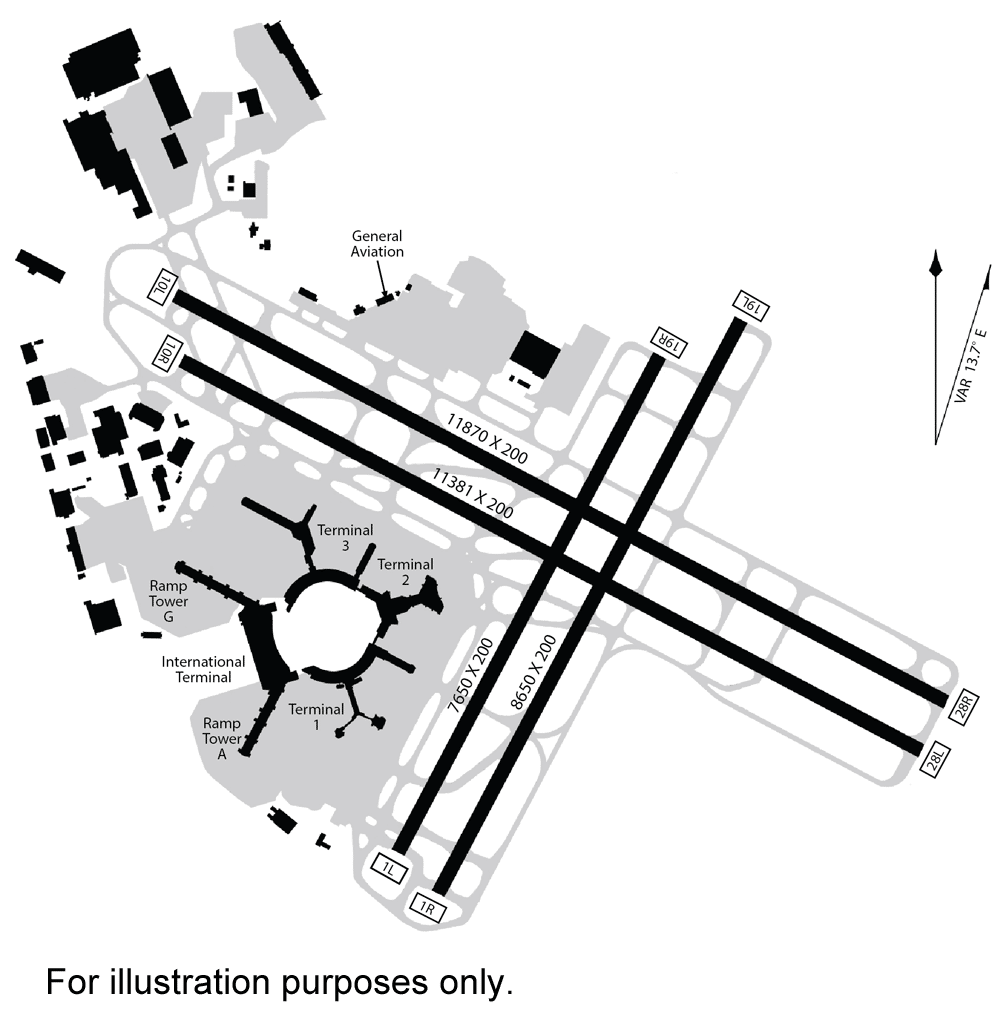
San Francisco International Airport is a spotters paradise. On most days, the wind blows from the northeast. Due to the runway configuration, jets arrive in close parallel on the ’28s’–both runway 28L and 28R while aircraft depart on a mix of the 28’s and runway 01L and 01R. Even on a typical day, the configuration makes for some exciting spotting and beautiful photos from Bayfront Park.
An overview of SFO.
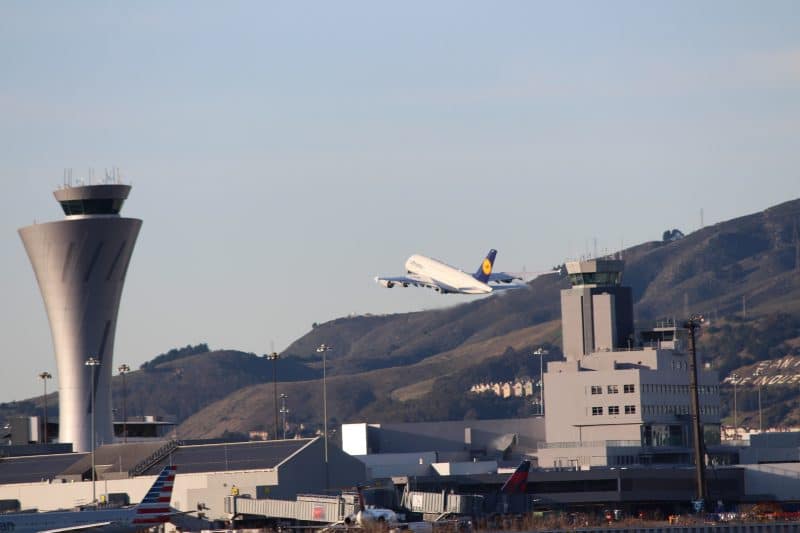
Occasionally when a weather system passes through the area, the flow is reversed where aircraft arrive on the 10’s with some departures from runway 19L and 19R. This means that large aircraft depart directly towards the hills just to the west of the airport. Departures on 19L and 19R only happen a few times a year. It is a rare treat. If you look on YouTube, you’ll see some exciting departure videos from the ’19’s’ including this one by WColby below.
The Holy Grail of Spotting at SFO Happened Today
One of the more rare events in all of aviation spotting happened again on Feb 9, 2020. Due to a strong storm that passed through the Bay area, winds were gusting out of the north (010 heading) at 30 knots gusting to 36 knots around 10am Pacific time today. With no ceiling and great visibility, that meant that the airport switched to arrivals on 01R.
For a period of about two hours, all arrivals took place on the rarely used arrival runway. Later aircraft used a mix of 01R and the 28’s for arrival as the winds shifted slightly and slowly subsided. Arrivals to this runway are challenging. Aircraft on approach align for a visual with the terrain from the hills sloping downward towards the runway. While it makes for great spotting, it is a pain for travelers. Since only a single arrival runway was in use for arrivals, it meant that the FAA implemented a flow control program that led to delays. Delays this afternoon were averaging over an hour on average. While we haven’t seen any videos posted yet from today’s arrivals (we’ll update this story when we do), here are a couple of videos from the last time that a significant number of aircraft arrived on 01R, way back in late 2014.
Night spotting of arrivals on 01R, thanks to our friend HorizontalRain
Awesome 30 minute compilation from 2014 by bayViation yay
Bonus:LowSwiss A340 evening arrival back in 2014 by bayViation yay
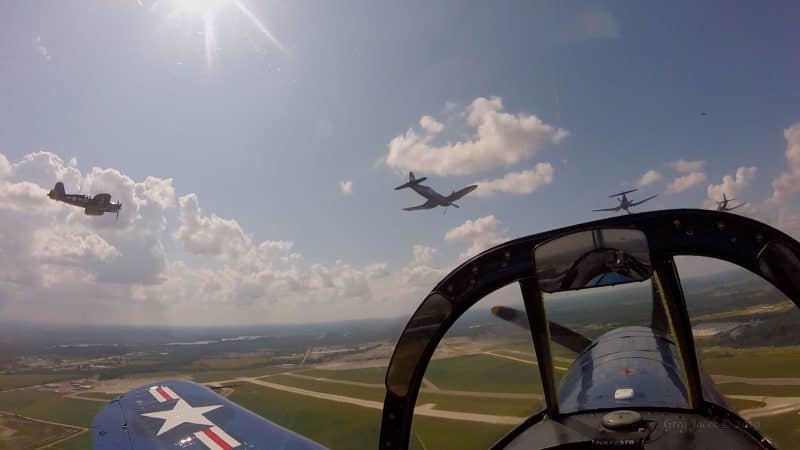
One of our favorite videographer, Greg Jacek from Unique Photo and Video, returns to share F4U Corsair helmet cam footage. We love the 4k HD footage taken from the historic aircraft. Fly along with the 10th Corsair in formation at Thunder Over Michigan 2019.
This year’s airshow brought eleven F4U Corsairs from around the country to one location. Special Thanks to the Pilot and Wings of the North Museum for taking the camera along for a ride. Climb aboard and enjoy the ride in this exclusive F4U Corsair Helmet Cam footage.
About the F4U Corsair
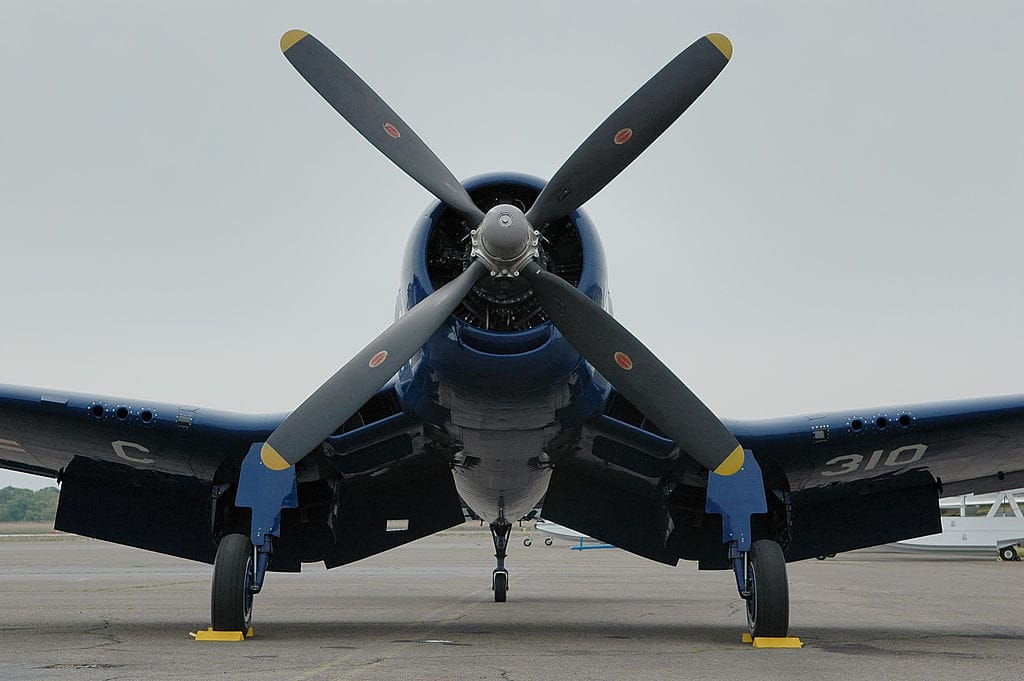
The F4U Corsair began service in 1943 as a carrier based fighter/bomber for the United States Navy and Marines. Corsairs were deployed during World War II and later served in the Korean War. Chance Vought manufactured several variations of the Corsair, including the F4U-4 showcased in the video.
This was the second to last built at the Stratford, CT plant (prior to Vought-Sikorsky moving to Dallas, TX). It was flown frequently by the late Gerald Beck of Wahpeton, North Dakota (Mr. Beck died in summer 2007, current ownership is not known). The plane, formerly a Honduran fighter (FAH 610), was salvaged from the country by Earl Ware in 1981 and later sold to Mr. Beck who restored if over approximately a decade’s time. See above for F4U Corsair Helmet Cam footage.
The F4U-4 was an upgraded aircraft providing a more powerful 2,450 Horsepower Pratt & Whitney R-2800-18W Engine. The Corsair’s distinctive design traits include a substantial 13-foot propeller and angled folding wings for storage on aircraft carriers. The Wings of the North Air Museum, has complied a detailed history of the aircraft, be sure to check out their link below (wotn.org).
The founder of JetBlue and Azul Airlines is back with another airline. David Neeleman is an airline start-up king. Over the course of his career, he has successfully started five successful airlines. Back in the early 1990s, Neeleman founded Morris Air. The airline was an improved copy of Southwest Airlines low cost model based out of Salt Lake City. The airline was so successful that Southwest purchased the airline in 1993, enabling significant Southwest to rapidly expand into the Rocky mountain market. As part of the transaction, Neeleman was contractually obligated to not work for a US competitor for 5 years. He went north to found WestJet in Canada. At the end of that expiration, he founded JetBlue in 2000. Neeleman then moved on to start Azul, connecting small Brazilian cities with quality low-cost service. Almost every concept he has tried has turned into a successful airline.
I wouldn’t bet against the Airline Startup King
Breeze Airways founder David Neeleman
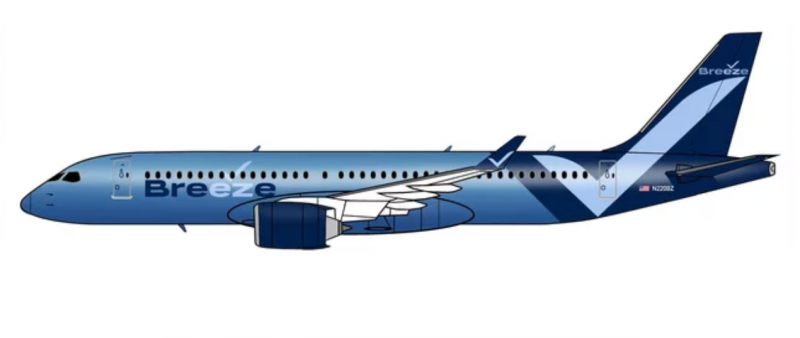
Now, Neeleman is headed back to the US to start a new airline. Although the odds of starting a successful airline in the US are stacked against him, one would be crazy to bet against the ‘airline startup king’. Working under the code-name “Moxy”, the airline was first rumored in 2018 as it placed an order for 60 Airbus A220-300s. This week, we learned more about the new airline. It will officially be called Breeze Airways. The airline will initially take delivery of former Azul Embraer 195s on lease to begin service. Over the next few years, the airline will convert to the A220-300, formerly known as the Bombardier C-Series jet.
No cities are official yet for Breeze Airways
Breeze Airways is still shrouded in mystery. We’ve heard tidbits that the airline will offer point to point service with a focus on high-quality service in a low cost offering. High quality service appears to be pat of the differentiator. The Associated Press has reported some intriguing facts about the airline. The airline has established a headquarters in Cottonwood Heights, Utah. The AP reports that tickets and a host of other services will be purchased via an app. We’ve also seen mentions that wifi will be free onboard and seat pitch will be generous, but the airline will still have ancillary fees like its low cost competitors.
The airline will offer direct service between underserved markets primarily from secondary cities and airports (sounds a little like a combination between Southwest and Allegiant). With its corporate headquarters near Salt Lake City, that opens up the possibility of an airport in the Utah region being the starting place for a hub.
With airline consolidation over the past decade, there has been tremendous consolidation in air service at formerly major hub airports. Former hub airports like Kansas City, St. Louis, Pittsburg, Cincinnati, San Antonio, New Orleans, Milwaukee, Colorado Springs, San Diego, and Cleveland all have gaps where Breeze could fly non-stop to markets currently only served through connections. Growing markets like northwest Arkansas, northeast Florida, Idaho, Teterboro (as an airline destination), Oklahoma City, and Raleigh-Durham also offer ripe opportunities for new non-stop service. Plus, there is even the possibility that Breeze could open up service to airports that currently have no airline service like Fort Worth’s Meacham airport or one of Chicago’s tertiary airports. It’s fun to speculate but we don’t have anything official yet. We’ll be sure to let you know when we hear an update.
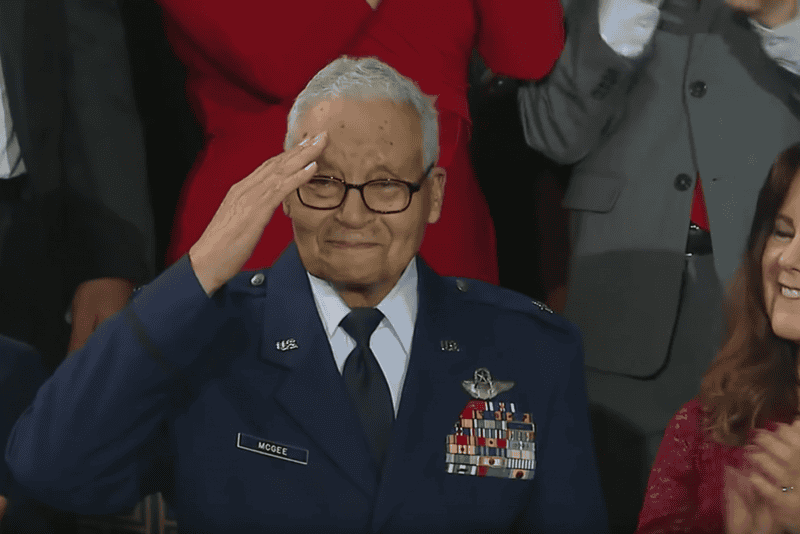
Colonel, now Brigadier General, Charles McGee is one of the last living Tuskegee Airmen. At 100 years old, he is a living legend of aviation and a national hero.
Charles McGee was born in Cleveland, Ohio in 1919. When World War II kicked off, the United States realized that it would take the entire nation to push back Hitler and Imperial Japan. At the time, our nation’s military was segregated. After intense pressure, the US Army decided to train a small group of black men as aviators. McGee was one of the African American aviators trained by the US Army during World War II. He joined the 302nd Fighter Squadron in Italy in 1944. McGee flew the P-39Q Airacobra, P-47D Thunderbolt, and the P-51 Mustang.
McGee’s bravery shown through during the war. He flew 137 combat missions and scored an aerial victory against a Luftwaffe Fw-190. After the war, he continued to serve in the US Air Force. He served in the Korean War and Vietnam, eventually flying the F-4 Phantom. McGee retired as a Colonel in 1973 after amassing 409 combat sorties. Throughout his career, he earned the Distinguished Flying Cross, Legion of Merit, and the Bronze Star.
McGee’s Best Week Ever Begins
At the youthful age of 100, McGee commenced a week of festivities that celebrated his century of service, his dedication to our nation and his humble and honorable impact on busting racial difficulties in our nation. He joyfully held a travel schedule that many people 50 years younger would have found challenging. In one week, he traveled to Miami, Florida for the Super Bowl, then he flew to DC for a flurry of activities.
1.) Colonel McGee Leads The Coin Toss at Super Bowl 54
On Feb 2, 2020, Charles McGee was honored in Miami as he was one of 4 World War II veterans who were all 100 years old. His age coincided with the NFL celebrating their hundredth season.
2.) President Trump Promotes McGee To Brigadier General
On Tuesday, Feb 4, 2020, President Trump officially promoted Col Charles McGee to the rank of Brigadier General. He was the first living centurion to receive a promotion to a one-star general. The ceremony was held in the Oval Office at the White House. It was officiated by President Trump.
3.) General McGee Honored At State Of The Union
In front of a national audience, now General McGee was honored with a standing ovation at the President’s State of the Union address. President Trump began with the story of McGee’s 13 year old great grandson who has dreams of attending the US Air Force Academy and then joining the newly-formed Space Force. He then stated that the young man wanted to follow in the foot steps of his great grandfather, none other than Brigadier General Charles McGee.
It was a touching moment of unity for our nation as one of the last surviving Tuskegee Airmen received a standing ovation with thunderous applause in the house chamber.
4.) NASA Honors General McGee
The next day, NASA hosted Gen McGee as they thanked him for his service and invited him to a Black History Month event. There he shared his wisdom from his time in service during a question and answer session. McGee provided fascinating stories of his service in World War II and his post-war career. The video is well worth the watch. It is posted below for you to see.
OGDEN, UTAH — One of the largest air shows in the United States will host the Air Force Thunderbirds and the F-35A Lightning II this summer at Hill Air Force Base.
The Warriors Over the Wasatch Air and Space Show is scheduled for June 27-28, 2020. The air show is free and open to public.
“We’re excited to host the Thunderbirds, the F-35 Demonstration Team, and all of the other military and civilian performers,” Col. Jon Eberlan, 75th Air Base Wing Commander at Hill AFB, said on Monday. “These events are important for our service’s recruiting efforts and affords us the opportunity to showcase the capabilities of our military.”
The Air Force Thunderbirds conduct a practice performance in November 2019 at Nellis AFB. (USAF)
The Air Force Thunderbirds perform aerial maneuvers aboard six F-16C Fighting Falcon jets. They demonstrate tight precision flying by the diamond team, and the high-speed passes of the two solo jets.
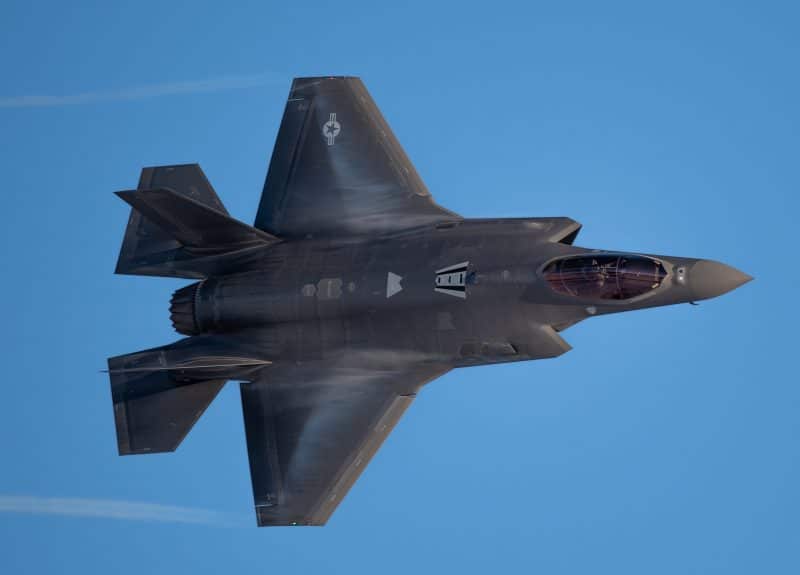
The F-35A Demo Team will demonstrate the handling characteristics of America’s newest fifth-generation fighter. The team recently moved their home base to Hill’s 388th Fighter Wing.
“As the first Airmen to fly the F-35A operationally every day, we know what it can do,” Col. Steven Behmer, commander of the 388th Fighter Wing, added on Monday. “We’re excited to show off its power, speed, and maneuverability to audiences.”
The Army’s Golden Knights parachute team, and top civilian aerobatic pilots will also headline the popular air show. Rob Holland, Matt Younkin, Gary Rower, and more will perform a dizzying array of aerobatics each afternoon.
Hill AFB will use the two-day event to celebrate their 80th anniversary. Col. Eberlan noted the base’s rich history dating back to the weeks prior to America’s entrance into World War II.
“It’s an opportunity to say ‘thank-you’ to our community and the state of Utah for their loyal and continued support of our Airmen, our installation, and our mission.”
(Charles A. Atkeison reports on aerospace and technology. Follow his updates via social media @Military_Flight.)
Boeing recently completed its first test flight of the new 777X aircraft. The aircraft took off in Everett, Washington, and then made a four-hour journey around Washington State before landing in Seattle.
The largest twin engine airliner in the world, the aircraft is reportedly “awesome,” according to the test pilot. But what’s really new with the 777x ? And can it possibly save Boeing from its continuing troubles surrounding the MAX 737?
New Wings (And Foldable Wingtips)
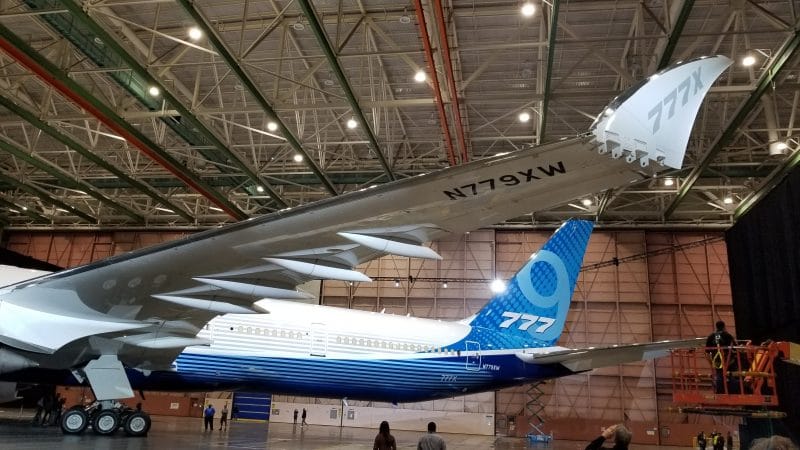
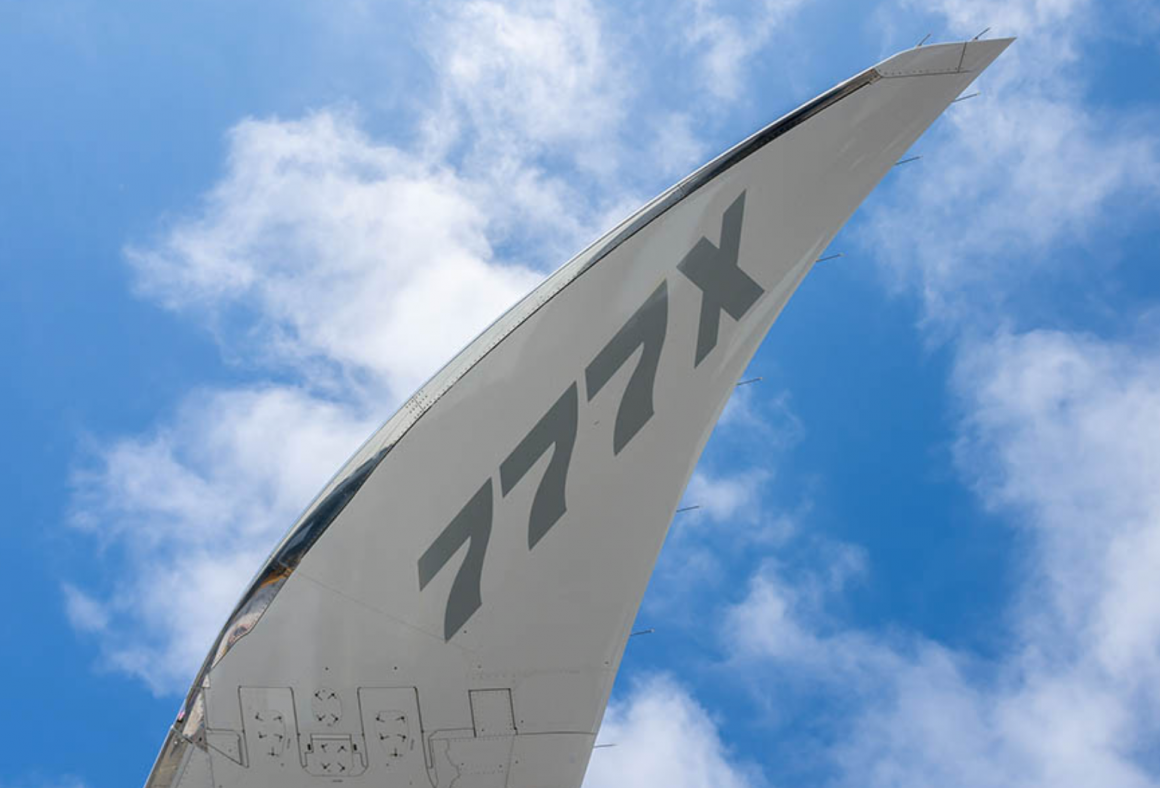
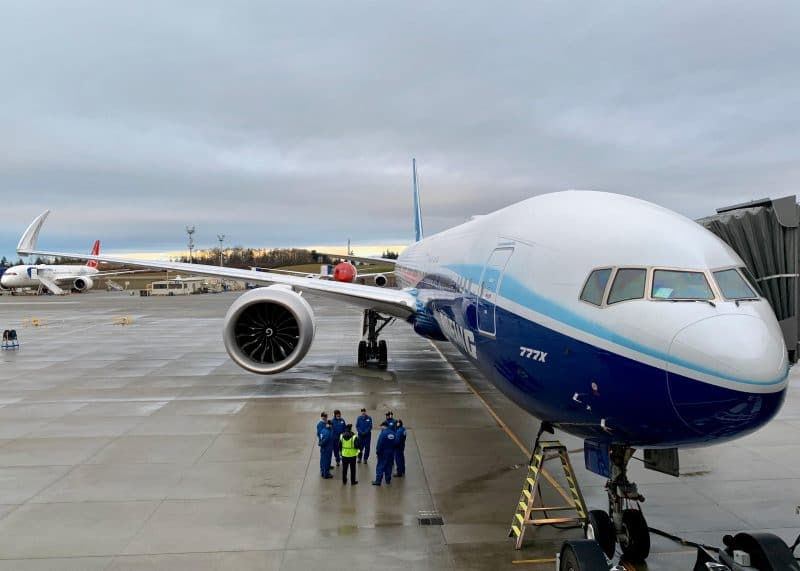
The 777-9 features foldable wingtips to increase the span of the wings while still fitting in existing 777-sized gates. Photo: Boeing
One of the highlighted features of the 777x, which is expected to be delivered to airlines next year, is the foldable wingtips. These make up for the new, carbon wings’ massive width. The wingtips fold while the aircraft is on the ground. Then, the pilot extends them before takeoff, increasing the wingspan from 212 feet (similar to what you see on previous 777 aircraft) to 235 feet. The increased wing size in flight improves aerodynamics, but the folding wingtips mean that the aircraft can still park easily in airlines’ current gates.
New Engines
The new GE9x engines are the largest engines ever put on a twin airliner. Photo: Dan Nevill from Seattle, WA, United States [CC BY (https://creativecommons.org/licenses/by/2.0)]
The 777x’s GE9X engines are the largest jet engines ever built. However, despite the huge size, the 777x will use 10 percent less fuel, produce 10 percent less emissions and offer 10 percent lower operating costs for airlines. The GE9X engines are the most fuel-efficient jet engine ever produced by GE Aviation on a per-pounds-of-thrust basis. Additionally, the engine is the quietest ever produced by GE. The aircraft will have a range of 8,383 nautical miles.
Cabin Updates and a New Passenger Experience
The twin-aisle cabins on the 777x will be based off the previous cabins seen in Boeing 777 and 787 Dreamliner aircraft, but four inches wider in size (due to reduced wall thickness) and with 16 percent larger windows. Windows will also be higher up by several inches, to allow for more light in the cabins. Business-class cabins come with the option for mechanical window shades and dimmable windows. Those features, though, will be up to the individual airlines purchasing the aircraft, of course.
Concave overhead bins allow for more headspace. Boeing also created the overhead bins to be easier to close, requiring, according to the manufacturer, 40 percent less effort. Boeing and GE also report the aircraft will deliver a quieter flying experience.
There are going to be two 777X variants, a 777-8X and 777-9X. The former will be able to fit approximately 375 travelers, while the latter will be able to fit approximately 425 passengers.
Where Can You See the 777X in the Future?
Current 777X customers include All Nippon Airways, British Airways, Cathay Pacific, Emirates, Etihad Airways, Lufthansa, Qatar Airways and Singapore Airlines. Emirates will receive the very first 777X. There are more than 300 total orders for the aircraft thus far, with the majority of those being from the Middle East-based airlines in the list above. But, orders have declined over the last year, with no new orders placed for the aircraft since March 2019. It is important to note that no US airlines have signaled an intent to purchase the massive jet yet either.
Experts expect the buyers will introduce new first- and business-class products on the aircraft, including Lufthansa, Singapore Airlines and Cathay Pacific.
Of course, Boeing will likely be under intense scrutiny as it tests and pushes out the 777X, to ensure there’s no repeat of the 737 MAX tragedies, particularly in light of leaked Boeing communications revealing less than stellar conduct. Additionally, Boeing did have some testing issues with the 777X, including a failed stress test and issues with GE’s new, largest-ever engine; Boeing partially hid details of the failed stress test.
However, for airlines looking for large jets, the 777X will soon be in a class of its own. Airbus is winding down the A380 program and not taking any additional orders. Boeing only builds the 747 in a freighter variant. And while the Airbus A350xwb is an option, it is similar in size to the 787-10 and 777-200 aircraft. When it finally rolls out, the 777-9X will be the largest commercial jet available.
America is getting ready for the Super Bowl. Flyovers before football games are becoming part of our nation’s past time.
We’ve posted before about some of the craziest flyovers that we’ve seen. A few of the flyovers we highlighted in the past were so low and so crazy that a few military pilots lost their wings. That’s not good or safe either! Since then though, there have been a number of flyovers that have been equally unique and awe inspiring. And the best part is that none of them were potentially unsafe or callous. A win for all. Check out our latest list of 5 Kick ass football flyovers as we celebrate Super Bowl 54 weekend.
The Largest NFL Flyover Ever
We’ve posted some amazing videos of flyovers. The Thunderbirds flying over the Super Bowl is always a treat. And back in 2016, we posted a story about the Blue Angels flying over Super Bowl 50 that was down right impressive. As amazing as fast jets flying over a game can be, this particular video is downright amazing.
Back in 2013, the Chiefs hosted a civilian aircraft flyover in support of the cure for Breast Cancer. The flyover was an attempt to break the world record for most aircraft to flyover over a stadium.
In the end, 42 aircraft flew over at precisely the end of the Star Spangled Banner. According to an article at Fox 4 Kansas City, aircraft from 17 states and the District of Columbia participated. It’s an unbelievable sight. You have to see it. Our only regret is that we wish we saw it live.
Rockin’ Guitar Solo and a Huge C-17 equals America
Football and flyovers. There’s nothing better to symbolize America, right? Well, this flyover is an attempt to one-up perfection. Guitar soloist Aidan Fisher is a 17 year old and one amazing guitar player. He played the national anthem solo in front of over 60,000 cheering fans at Cleveland Browns’ First Energy Stadium.
Precisely at the end of his unique rendition of the National Anthem, the massive C-17 flew over playing a perfect symphony to his final notes. If this doesn’t get you psyched for football…nothing will.
Unfortunately, Aidan’s killer riff didn’t result in a Browns victory. They lost to the Seahawks 32-28 in front of their home crowd..
We still have 3 more killer flyovers. This next one is the best timing of a flyover that we’ve ever seen.
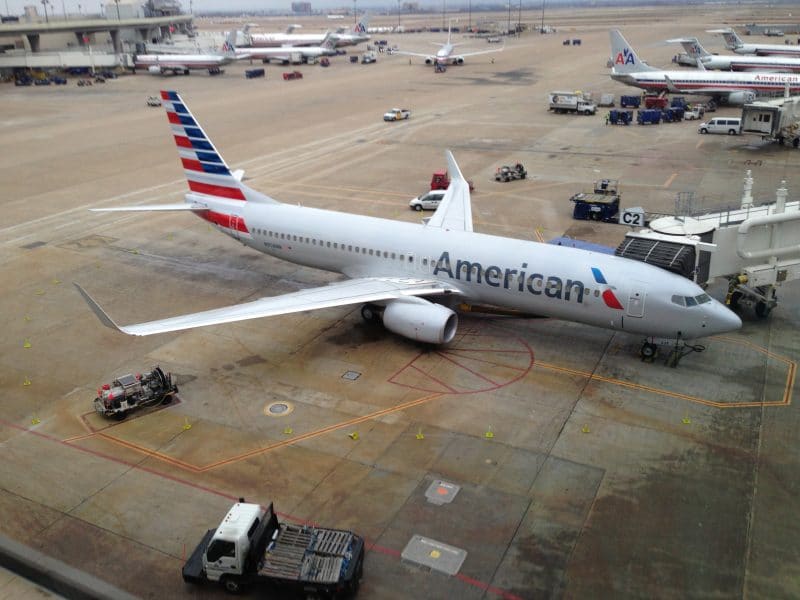
You can put this one in the ‘very weird’ file. A passenger on an American Airlines flight was removed on Thursday after boarding his flight with a military style gas mask.
American Airlines later tweeted that they “worked with local officials to address the issue.” We’re guessing that it probably means that they removed the man from the flight.
Corona Virus is no joke
Beyond poor choices in safety gear, the flu-like Corona virus is leading to some unprecedented ripple effects in the aviation industry. American Airlines, Delta Airlines, and United are all suspending flights to mainland China in response the growing crisis. Outside of war or governmental instability, there has never been a suspension of service to an entire nation on this scale.
In addition, the United States government has banned any foreign national from entering the US if they have traveled within China over the previous 14 days. In addition, any US citizen who traveled within China will face a health inspection upon return and be asked to self-quarantine for 14 days after arrival. The State Department has advised citizens to avoid all travel to China based on the risk of contracting the Corona virus.
.@StateDept is increasing the #China Travel Advisory to Level 4 – Do Not Travel. This is due to the spread of the novel #coronavirus throughout China & the @WHO determination that the outbreak constitutes a Public Health Emergency of International Concern. https://t.co/BIIUdavoP0
While US carriers have suspended air service to/from China due to safety concerns but foreign carriers are still allowed to fly into the US from China. Beginning Sunday Feb 2nd, carriers will be restricted to just 7 US airports who will have additional screening technology available. They include Seattle, New York’s Kennedy, Chicago O’Hare, San Francisco, Los Angeles, Atlanta, and Honolulu. While we don’t have confirmation yet, it is assumed that flights to secondary US cities like San Jose, California or Boston from China will either be suspended or diverted.
MIAMI, Fla. — A pair of Air National Guard units will work with NORAD and Homeland Security on Sunday as they keep a watchful eye on the sky during Super Bowl LIV.
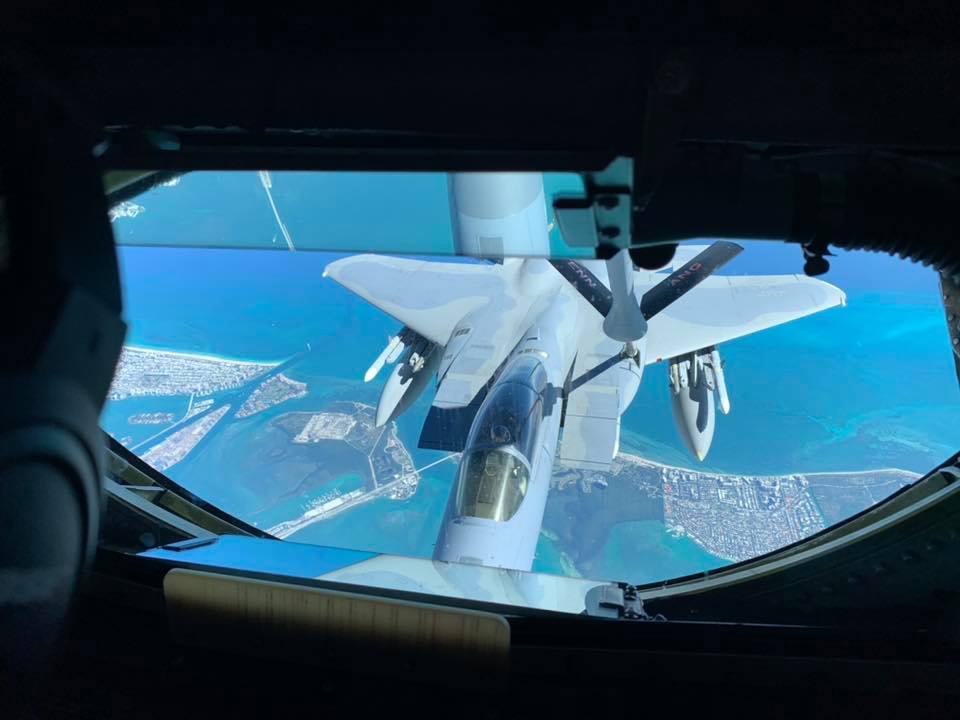
Two Florida Air National Guard 125th Fighter Wing F-15C Eagles based at Tyndall AFB will patrol the region during Super Sunday. Meanwhile, it will be the job of a KC-135R Stratotanker from McGhee Tyson Air National Guard Base in Tennessee to keep the two jets fueled.
A F-15D EAGle participates in Super Bowl LIV Air Defender Media Day at Homestead ARB, Fla. (ANG)
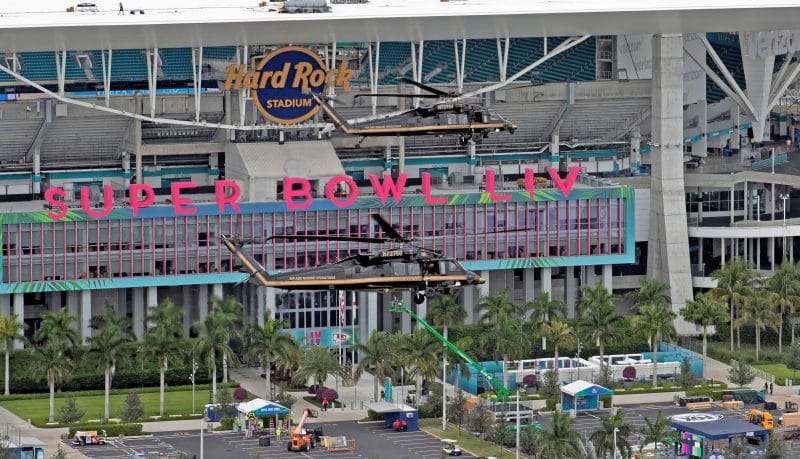
A pair of UH-60 Black Hawk helicopters assigned to the Customs and Border Protection are already on patrol. The Black Hawks are patrolling the area around Hard Rock Stadium in Miami Gardens and the nearby coastline, including Bayfront Park.
“While there is no specific or credible threat to the Super Bowl, it is an extremely high risk and iconic American event,” Acting Secretary of Homeland Security Chad Wolf said on Wednesday. “Not only does an event of this nature lend itself as a possible target for violent actors and potential terrorists, but it’s also an attractive destination for human trafficking activity and the sell of counterfeit goods.”
Homeland Security also reminded the public of the no-drone policy around the Super Bowl region. The FAA has issued several NOTAM‘s for the region effective January 31 to February 2, for aircraft pilots.
“We ask the public respect the no-drone zone and temporary flight restrictions this weekend,” Wolf added. “Those who knowingly use drones unlawfully will be prosecuted.”
A KC-135R Stratotanker from McGhee Tyson ANGB refuels a Tyndall AFB F-15C Eagle on Wednesday. (ANG)
The Navy and Marines will be well represented during the traditional pregame flyover as the National Anthem concludes. Four jets are scheduled to fly in close formation above Hard Rock Stadium.
MCAS Beaufort pilot Maj. Adam Wellington will fly a F-35B Lightning II in the fourth position. He will join a Navy F-35C, a Navy F/A-18E Super Hornet; and Navy pilot Lt. Taylor Burgart Jr of Washington’s VAQ-129 will fly a EA-18G Growler during the Super Bowl flyover at about 6:26 p.m. EST.
Super Bowl LIV is set to kick-off on Sunday at 6:33 p.m. EST. The San Francisco 49ers and the Kansas City Chiefs will play for the Vince Lombardi Trophy.
(Charles A. Atkeison reports on aerospace and technology. Follow his updates via social media @Military_Flight.)
DC-8 Model is a functioning flying machine that looks goregeous
At Avgeekery, we’re suckers for a good airplane model. We love it even better when we see a model that actually flies. Add in real jet engines and our minds are blown.
If you’ve ever built a model (either as a kid or later in life), you’ll have a healthy appreciate for how difficult it is to make an accurate representation of a real jet. Glueing the parts and painting the plane in the exact paint scheme is incredibly difficult. Most of the models we’ve built come with smudges in the paint and landing gear that has to be repaired before even putting in on a shelf. Now let’s take a look at this DC-8 under this lens.
Not only does the model look beautiful but it is actually a large-scale model flying machine. That means that every control surface is functional. There are real model-scale jet engines too. The wing is crafted in such a way to be aerodynamically effective. The landing gear stows similar to the real Diesel 8 and the thing stores enough fuel for the demonstration flight. Plus it has all the required electronics and wiring to permit RC flight. It truly is a work of art mixed with engineering precision.
The video is filmed by Dom Mitchell for the ‘Essential RC‘ YouTube channel. Be sure to check it out and give a like to the film. If you are interested in learning more about RC modeling, you can join their Facebook group here.
About the real DC-8
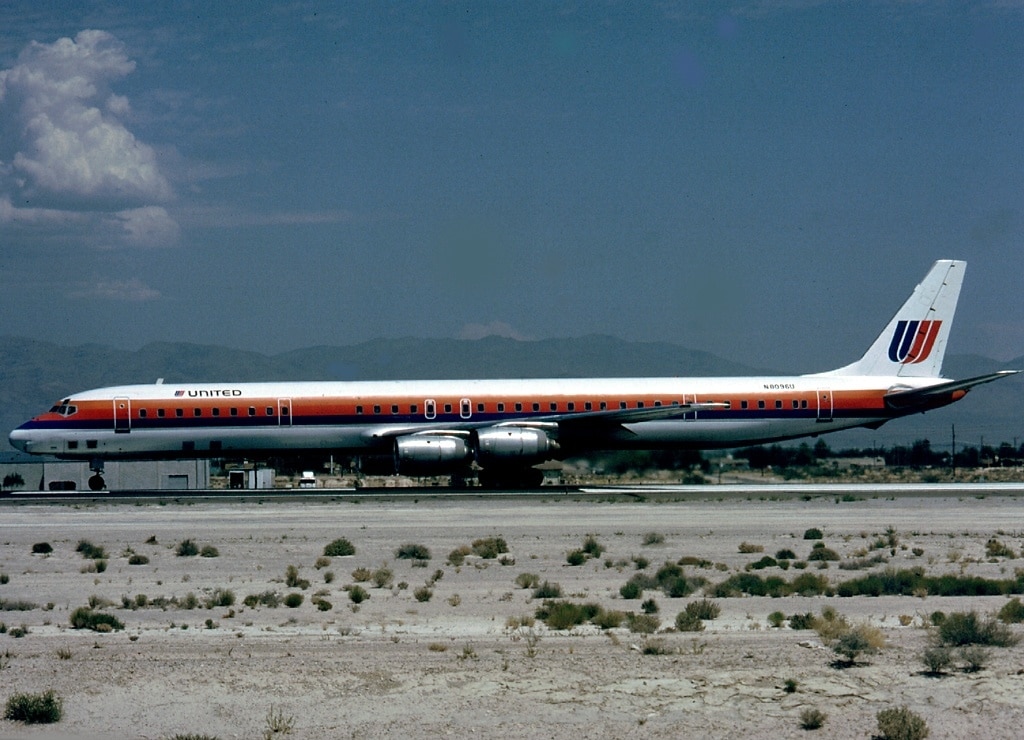
A United DC-8 in las Vegas. Photo by: Guido Allieri – Italy [GFDL (http://www.gnu.org/copyleft/fdl.html) or GFDL (http://www.gnu.org/copyleft/fdl.html)]
The real DC-8 family was Douglas Aircraft response to Boeing’s famous 707. As the first large jet by Douglas, it permitted coast-to-coast and international flight at speeds much higher than the more common propellor driven airliners of the day. The DC-8 first flew with United in 1960. A total of 556 airframes were produced.
While the DC-8 sold less total aircraft than Boeing’s 707, the airplane was particularly robust. The aircraft was built like a tank, very sturdy with expansion in mind. The early ‘short’ DC-8s like the DC-8-21 were good aircraft. The first DC-8s used gas-guzzling turbojet engines. Later versions of the jet incorporated turbofan engines. One advantage of the DC-8 aircraft versus the 707 was that the DC-8 sat higher on the ground than the 707. This allowed it to both accept engine modifications and permit some significant growth of the fuselage, eventually resulting in the stretch DC-8-72 powered by CMF-56 engines–the similar to Boeing 737-300 jets. Because of the DC-8’s robust design, the DC-8 operations far outlasted the venerable Boeing 707.
United eventually retired the DC-8 ‘stretch’ in 1991. Many ex-United DC-8s lumbered on in the freight industry for another 20+ years, finally retiring from cargo carriers like ATI and UPS between 2008 and 2015.
Below is video of a United ‘stretch’ DC-8-71 on pushback from San Jose International Airport back in 1983. It was shared on Youtube by Ryan Bomar.
Boeing’s newest and largest twin-jet took to the skies today for the first time. The huge new jet departed from Paine Field in Everett, Washington shortly after 10am. For Boeing, it was a positive development after so many disappointments including a long delay for the first flight of the 777x and a lingering 737 MAX crisis.
The first Boeing #777X is in flight. After a few hours of flying, the jet will land at Boeing Field in Seattle, Washington.
The Boeing 777-9 represents Boeing’s hope to capture the bulk of large twin, long-haul orders. The -9 is more of an evolution of the 777 verses the original revolution that the original 777 represented. The -9 will offer seating for about 50 more people in a traditional three-class layout and have a similar range to the 777-300er.
The big differences between the 777x family and original 777 family are mainly in terms of efficiency. The jet features a new advanced composite wing with folding wingtips that allow the jet to fit into existing 777 gates without any refit.
BOeing 777x folded wingtips on the new 777-9.
The jet has new GE9x engines which are about 10% more efficient than the GE-90s that powered the original 777s. Boeing is also enhancing comfort with windows that are 15% bigger and a cabin that is similar to the 787 in terms of decor and style.
The testing program for the 777x will continue throughout 2020. The first delivery of the Boeing 777-9 isn’t scheduled until 2021.
UPDATE: Boeing’s Twitter account posted footage of the landing. You can see it linked in the tweet below.
Congratulations to our customers and #777X team on today’s safe and successful flight, the first of many for the 777X as we continue our rigorous test program.
Pet owners love the liberal policies but many passengers aren’t fans of sharing space with questionable ‘service’ animals
Service animals provide a vital role for people in need. They help blind individuals navigate. They provide low sugar alerts for diabetics and they can respond to seizures for epileptics. Real service dogs provide services for those in need.
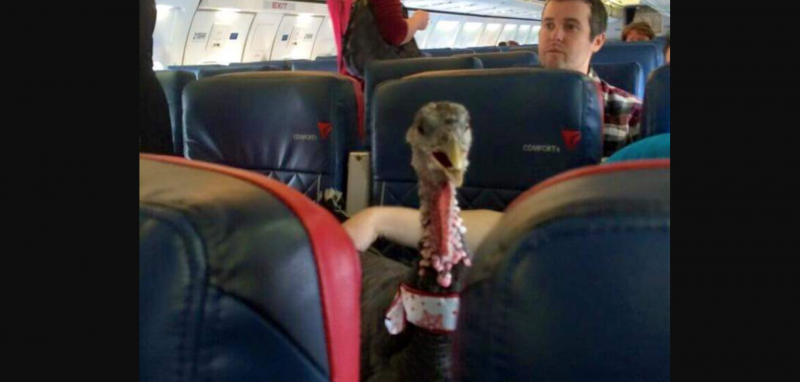
Yet if you’ve flown in the past 10 years, there has been an explosion in flying emotional support animals (ESAs) and questionable service animals at airports and on airplanes whose behavior more resembles an untrained pet than a true service dog. Passengers who fly with these questionable animals have exploited the loose regulations. They claim that their pet is an emotional support animal. They either print off documentation from the internet or get a medical professional to sign off. With a couple papers in hand, pets then effectively fly free. With less and less personal space on planes and a host of pet behavioral issues on flights, people are speaking up. And the good news is that the US Department of Transportation is actually listening.
DOT proposes putting emotional support animals on a leash
In 2018, the Department of Transportation received a total of 115 complaints about service animals. While the overall number is relatively low number, that represents a 64% increase in complaints over 2017. Airlines also received over 3,000 complaints collectively in 2018. In their proposed rule change, the DOT cited that inconsistent rules apply for service animals and emotional support animals. Department of Justice’s official regulations do not recognize emotional support animals as service animals because they have not been trained for a specific task to assist someone with a disability. Yet DOT rules currently cite that ESAs are service animals, permitting them to freely accompany their human in the airport and on aircraft.
In the proposed change, the DOT won’t make ESAs prohibited in airports and on airplanes. Instead, they will allow airlines to place additional limitations on ESAs and/or prohibit them all together on flights. The airline could place other restrictions on ESAs like requiring passengers to check in before most other passenger are required to show. Passengers with ESAs would also be required to show that the animal has a DOT Animal Air Transportation Health Form. Airlines can also place limits on the size and type of animal
Is the change a good thing?
In citing the rationale for the change, the DOT stated that abuse of the current policy does occur. Some passengers are suspected to have flown their pets under the ESA program. Advocates for the change include disabilities groups who say that misbehaving and unusual animals like snakes, rabbits, and even a peacock can erode the trust in the public’s understanding of service animals. Some other advocates worry about the increased burden that ESA owners will have to prove that their animal is a legit need.
There are other reasons that this proposed change makes sense. Many people have allergies to dogs and cats. There have been cases where people who had allergies were denied boarding on a flight while the animal remained. One recent allergic attacks happened in flight. In other cases, people have brought along miniature horses. One lady even tried to bring along a peacock. With limited space in the cabin to begin with, passengers don’t deserve that kind of hassle when traveling.
The public now has 60 days to submit a comment on the policy change. So what do you think…Should the DOT change the policy?
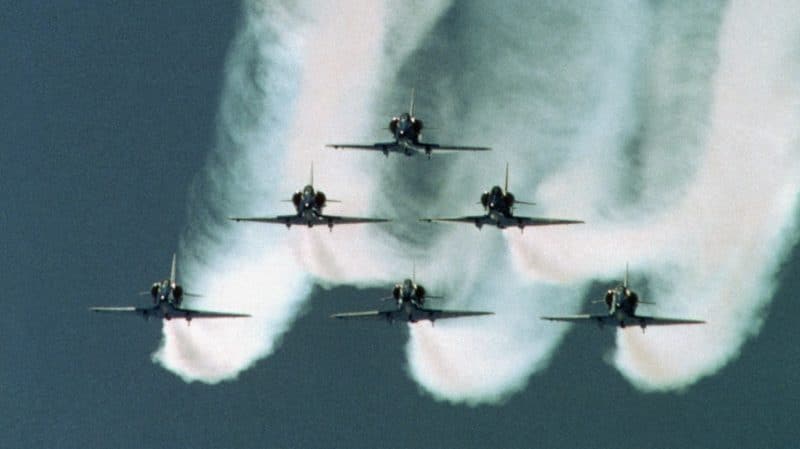
It’s taken a while, but we believe we’ve found the best quality upload of the classic 1986 Blue Angels music video. The visuals are striking (of course) and the music, Van Halen’s Dreams from their 1986 album ‘5150’, just seems to hit all the right notes as an accompaniment to the Blues flying their McDonnell Douglas A-4F Skyhawk jets. The video was uploaded to YouTube by Nikeen Magariño. Enjoy, and be sure to turn that volume up because this particular video has tasty audio that was encoded at higher quality than the norm. After the video (watch it twice…we’ll wait) keep scrolling for the rest of the story.
In 1986, Van Halen said adios to their bombastic crooning frontman David Lee Roth. Sammy “I Can’t Drive 55” Hagar replaced Roth. When 5150 was released, Van Halen decided they would not do any music videos (or have to pay any production costs for them) to support singles from the album. 5150 included eventual hit tracks Best of Both Worlds, Why Can’t This Be Love, Love Walks In, Summer Nights, and Dreams. Those of us of a certain age recall 1986 as the heyday of MTV. When MTV played music videos. Lots of them- and as a result of those videos plenty of bands sold lots of records. But not a single one of those videos was a Van Halen video for a track on 5150- even though WhyCan’t This Be Love reached Billboard’s #1 position that year.
Blue Angels A-4Fs (image via National Naval Aviation Museum)
Piling On
1986 was also the year of ‘Top Gun.’ Inspired by the moderately cheesy melodrama with some great flying scenes (and a memorable line or two), Van Halen’s label (Warner Bros.) decided that Dreams would go just great with the United States Navy Flight Demonstration Team; AKA the Blue Angels. And so WB worked with the Navy and McDonnell Douglas to acquire “stock” footage from Blue Angels performances over the previous few years. There was an element of timing to the venture though. Independence Day weekend was quickly approaching and WB wanted to release a patriotic eye-popping sweet-sounding vid for airplay over that weekend. The story goes that they took all of three (3) days to make what many believe is the finest video depicting the Blues during their Scooter epoch ever made.
Blue Angels A-4Fs (image via National Naval Aviation Museum)
Kismet, or the Law of Unintended Consequences
Everything dovetailed nicely from there. Van Halen approved of the video (they weren’t paying for it). The Navy treated the project as a 40th anniversary tribute to the Blues. McDonnell Douglas got lots of exposure for their tiny but immensely capable A-4F Skyhawk light attack jet. When the video aired it created a sensation. Originally intended to air over the Holiday weekend only, the video instead ended up airing up to 4 (sometimes more) times a day (and aired on all of the MTV networks), and they kept playing it occasionally right up until MTV pretty much quit playing music videos. 5150 did quite well at least in part to the video. The Navy’s Recruiting Command loved the video too- often setting it up for viewing in recruiting offices. During the late 1980s it was everywhere.
Blue Angels A-4Fs (image via National Naval Aviation Museum)
Vintage 1986
In the irony department, 1986 was also the last year the Blues flew the Skyhawk. The Team introduced their new mounts, the McDonnell Douglas F/A-18A Hornet, at the end of their show season and began flying them the next show season. It was the end of one memorable epoch and the beginning of the longest one ever. The 1986 Blue Angels pilots were:
Lead flying A-4F Skyhawk #1 (BuNo 155033) Navy Commander ‘Boss’ Gil Rud
Right Wing flying A-4F Skyhawk #2 (BuNo 154172) Marine Corps Captain Mark Bircher
Left Wing flying A-4F Skyhawk #3 (BuNo 154983) Navy Lieutenant Commander Donnie Cochran
Slot flying A-4F Skyhawk #4 (BuNo 154180) Navy Lieutenant Pat Walsh
Solo flying A-4F Skyhawk #5 (BuNo 154211) Navy Lieutenant Commander Curt Watson
Opposing Solo flying A-4F Skyhawk #6 (BuNo 154904) Navy Lieutenant David Anderson
Narrator flying TA-4J Skyhawk #7 (BuNo 158722) Navy Lieutenant Wayne Molnar
There’s more- see the Addendum below!
Blue Angels A-4Fs (image via National Naval Aviation Museum)
Credit Where Credit is Due
From the comments about this piece I learned that the majority of the footage used in the video was actually shot during the 1977 show season. The pilots from the 1977 Blue Angels who were flying the jets when the majority of the footage was shot were Lead #1 Commander Casey Jones USN, Right Wing #2 Captain Dan Keating USMC, Left Wing #3 Lieutenant Commander Don Simmons USN, Slot #4 Lieutenant Al Cisneros USN (who left me the informative comment- thanks Al!), Solo #5 Lieutenant John Miller USN, and Opposing Solo #6 Lieutenant Vance Parker USN. In 1977 the Narrator (#7) was Lieutenant Bruce Davey USN and the Events Coordinator (#8) was Lieutenant Jim Bauer USN.
I also learned more about the producer of the video. Former Blue Angel Curt Watson singled out John B. Moranville as a person instrumental in the making of the video. Moranville “was the person that took file footage of the Blue Angels and with the permission of Van Halen used their music for this video. John seems to have been forgotten in this endeavor. It was his skill as a producer that made this so successful.” Thanks for your comments Curt!
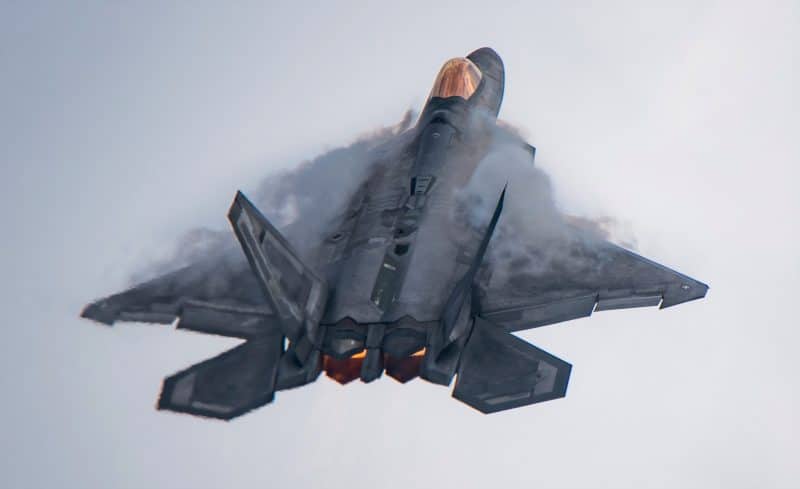
ATLANTA — The Air Force F-22 Raptor Demonstration Team announced on Tuesday the selection of their new air show pilot who will perform during the next two years.
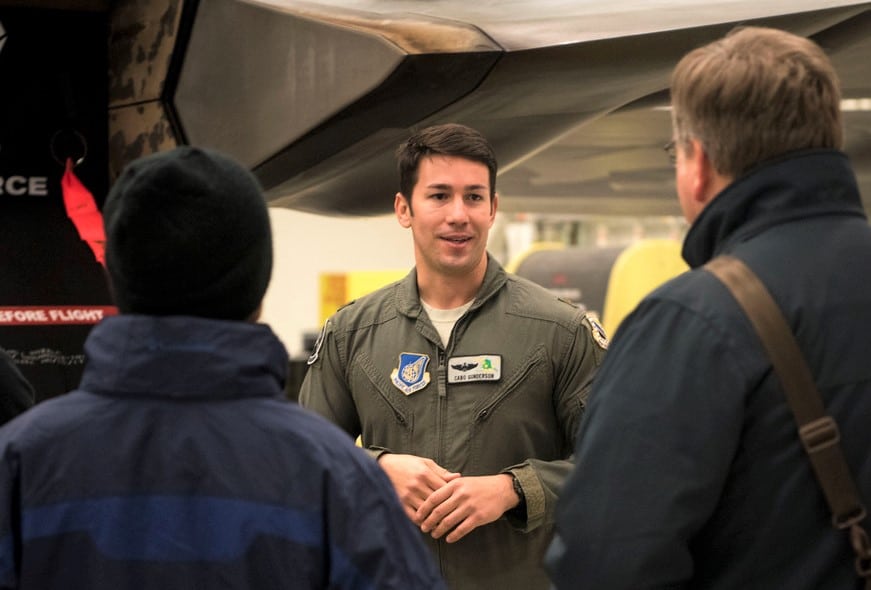
Maj. Joshua ‘Cabo’ Gunderson will serve as the Raptor Demo Team’s commander and pilot during 2020 and 2021 air show seasons. He is coming from the 90th Fighter Squadron at Joint Base Elmendorf-Richardson, Alaska, where he served as 3rd Wing chief of advanced programs.
“It is incredibly humbling to be given the opportunity to serve as the next F-22 Demo Team commander,” Maj. Gunderson said on Tuesday. “The team is comprised of amazing Airmen showcasing American airpower, and I look forward to joining such an impressive legacy for the next two years.”
Gunderson grew up in Tampa, Fla. and attended air shows at nearby MacDill AFB. He graduated from the Air Force Academy in 2008; and later earned his pilots wings at Sheppard AFB in Texas two years later.
Air Force pilot Maj. Joshua Gunderson will lead the F-22 Raptor Demonstration Team into the 2020’s. (USAF)
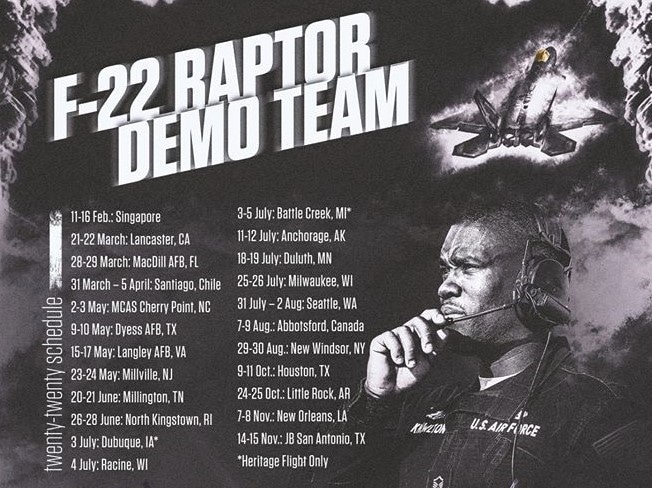
Cabo will command a busy first season with the team as they perform in four different countries. The Raptor Demo are scheduled to attend 22 locations performing either a full demonstration or their popular Heritage Flight.
The team will first travel to Southeast Asia to perform at the Singapore Airshow on February 15 and 16. The squadron’s first U.S. performance is planned for March 21 and 22 at the L.A. County Airshow in Lancaster, Calif.
The F-22 Raptor Demo Team’s 2020 schedule wil carry the team across four countries. (USAF)
“From the first time I saw jets at the MacDill Air Force Base Airfest, I have turned my eyes towards the skies and dreamed of being in the seat of a fighter jet,” he added.
In July, Maj. Gunderson will have a homecoming as the team performs at Elmendorf-Richardson’s 101st anniversary celebration. “Our Air Force is a family, and I am honored to serve along so many,” he added.
(Charles A. Atkeison reports on aerospace and technology. Follow his updates via social media @Military_Flight.)
CAPE CANAVERAL, Fla. — SpaceX achieved a huge milestone in safely launching astronauts from America’s Space Coast this spring as they performed an uncrewed launch abort test of their spacecraft on Sunday.
This flight test of the Crew Dragon’s launch escape system now moves SpaceX and NASA closer to launching astronauts from American soil. While NASA is focused on returning first to the moon, SpaceX will taxi astronauts to and from the International Space Station.
“SpaceX’s in-flight demonstration of Crew Dragon’s launch escape capabilities is designed to provide valuable data toward NASA certifying the spacecraft to begin carrying astronauts to and from the Space Station,” SpaceX Spokesperson James Gleeson said on Saturday.
Historic Abort Test Flight
The commercial company’s Crew Dragon spacecraft launched a top a Falcon 9 rocket at 10:30:00 a.m. EST, from the Kennedy Space Center. The uncrewed vehicle then successfully separated during a planned in-flight abort test.
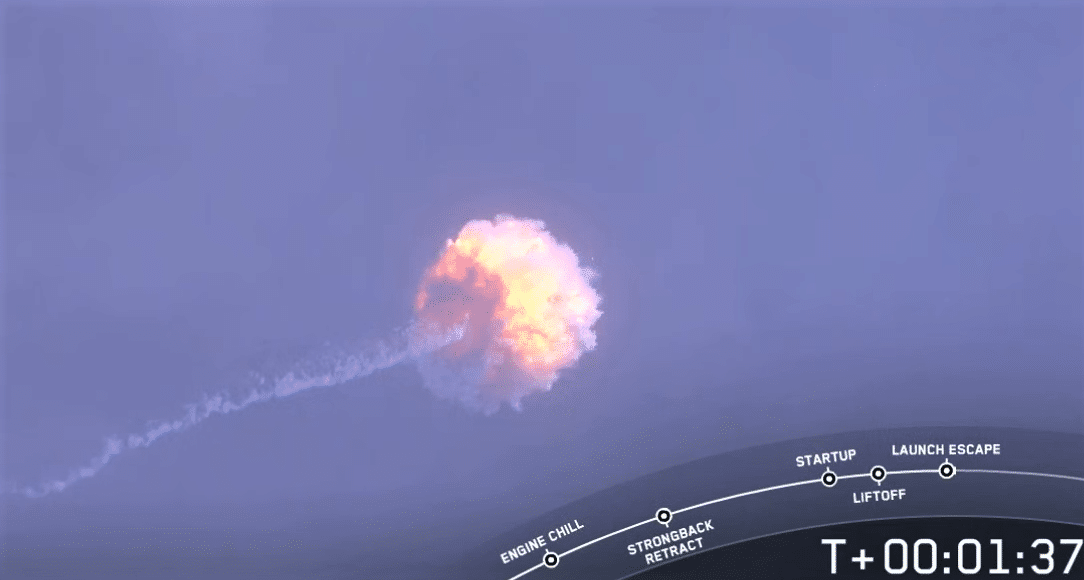
Falcon 9 rocket breaks up from aerodynamic stress during the in-flight abort test on Sunday. (SpaceX)
As the abort sequence occurred in milliseconds, the Falcon’s core stage’s nine Merlin engines shutdown. The Crew Dragon is seperated followed by its SuperDraco thrusters then firing 85 seconds after launch. Eleven seconds later, the Falcon 9 then broke apart due to aerodynamic stress, and broke apart in a fireball off Cape Canaveral.
Once the spacecraft reached its high point of 131,000-feet, the bottom section known as the trunk separated nearly 2 1/2 minutes into the flight.
The Crew Dragon reached a velocity of Mach 2.2. Small thrusters then fired to maneuver the craft for a planned splashdown.
“For this test, Falcon 9’s ascent trajectory (did) mimic a Crew Dragon mission to the International Space Station to best match the physical environments the rocket and spacecraft will encounter during a normal ascent,” Gleeson added. “However, SpaceX configured Crew Dragon to intentionally trigger a launch escape after Max Q, the moment of peak mechanical stress on the rocket.”
Crew Dragon’s trunk section seperates on scheduled during Sunday’s flight test. (SpaceX)
What looks to be a successful test concluded with spacecraft splashdown nine minutes after launch.
“As far as we can tell thus far, it’s a picture perfect mission. It went as well as one can possibly expect,” Elon Musk, founder and chief engineer of SpaceX said on Sunday. “This is a reflection of the dedication and hard work of the SpaceX and NASA teams to achieve this goal. Obviously, I’m super fired up. This is great.”
SpaceX could be ready to launch America’s first astronauts from Cape Canaveral this spring. NASA astronauts Douglas Hurley and Robert Behnken could lift-off a top a Falcon 9 as early as April to spend two weeks in orbit.
Known as Crew Dragon Demo 2 mission, the two veteran astronauts will dock to the space station for an eight day visit. The crew will ferry up science and supplies to the orbiting laboratory, and later return used experiments to ground for analysis.
Sunday’s Falcon 9 launch occurred from the space center’s historic launch pad 39-A. The seaside pad is located near the site of NASA’s pad 39-B where astronauts will launch to the moon and Mars.
(Charles A. Atkeison reports on aerospace and technology. Follow his updates via social media @Military_Flight.)
ROBINS, AFB, Ga. — The thrust. The high G pulls. The spectacular views of our Earth from inside an incredible high performance military aircraft.
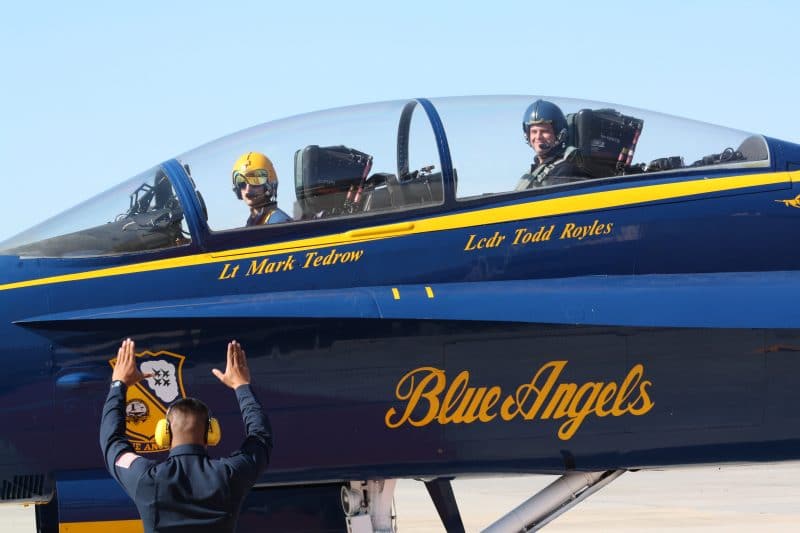
The feeling of pure excitement as I soared aboard a U.S. Navy Blue Angels F/A-18D Hornet. The images tell only half the story of my exclusive flight inside a majestic Blue Angels jet out of Robins, AFB near Macon.
The blue and gold Navy jet sat on the flight line under blue skies awaiting her crew — myself and her pilot Lt. Mark Tedrow. Upon each of my jet’s twin vertical stabilizers is a gold “7”. There are seven Blue Angels jets in service, six of which fly in formation during the air show.
Preflight excitement with my aircraft, a Boeing F/A-18D, as I neared ingress. (All Images by Andy Kalat)
Lt. Tedrow pilots the Angels’ no. 7 aircraft (in 2012). He has logged over 1400 flight hours inside military aircraft after earning his wings of gold in 2006. I was offered this unique flight by Robins, AFB and the Blue Angels staff two months prior, and now one of my life’s goal had arrived.
I have carried a love for aviation since I was a child. My father began putting me behind the controls of Cessna planes as we soared at 20,000 feet when I was just five. He would be in my heart on this day.
Preflight
Dressed in my navy blue flight suit, I climbed aboard the high performance jet with caution. A very narrow ladder which is attached under the jet’s port wing was our entrance up the 15 feet and into the cockpit.
Preflight ingress briefing with the Blue Angels 7 jet chief maintainer on a sunny April afternoon.
The back seat of the cockpit is an aviator’s dream with the same instruments and controls as the pilot’s seat carries. The Blue Angels crew chief assisted my ingress and strapped me in with a 10-point harness to secure me in my rocket seat. Even my ankles and knee’s were strapped down with army green narrow belts.
The Boeing-built Hornet measures 56 feet in length and has a wingspan of 40 feet. The wings surface covers an area of 400 sq. feet.
Lt. Tedrow then followed up to give this military jet rookie a few preflight words and to ensure I was familiar with the cockpit controls.
Earlier, I was briefed on the cockpit’s layout and the ejection seat use. I was informed of how the seat would be used in the event of a bailout. There are several rocket’s under our seats which would fire to clear us up and away from the aircraft in an emergency.
Blue Angels pilot LT. Mark Tedrow offers up an easy going preflight briefing, including what not to touch.
My preflight briefing also included a special exercise I would need to do as we pulled greater than 4G’s (four time one gravity). Known as the HIC maneuver, I would squeeze my legs, take in a half breath and belt out “Hic” using my diaphragm. This would help keep blood flow in my upper torso and pool out of my head which would cause me to black out.
Following the briefing and just before my late-afternoon flight, Georgia’s Governor Nathan Deal congratulated me on my flight in person at the air base. We exchanged short stories. Gov. Deal explaining how shook up he was as his plane hit turbulence a few days earlier.
Ingress
Loaded with 1,000 pounds of fuel, the F/A-18 was ready and it was time to fly as a Naval Aviator. The canopy closed and the jet came to life. Lt. Tedrow brought the craft’s single APU (auxiliary power unit) on line and the engines heated up.
My cockpit’s glass displays began popping up showing me altitude, direction and a wings level attitude. Upon clearance, we began rolling forward and then slowly began a 180-degree turn to taxi out to runway 33 at Robins. I was all smiles as I logged my first feet aboard this magnificent jet.
During the taxi out, Lt. Tedrow kept me comfortable with words of encouragement and what to expect at “lift-off”. He also told me to arm my ejection seat with the safe and arm device to my right.
The F/A-18D received clearance from Robins tower and we began moving down runway 33. Faster and faster we moved as Lt. Tedrow began calling out speeds in knots, “100 knots. 120. 160…”
I held my breath as I looked out the canopy watching the ground rush by us.
We took flight for a few seconds to retract the landing gear at 4:38 p.m. EDT, and then Lt. Tedrow stated here comes lift-off. I began to smile.
Lift-off!
Pointed nearly nose up and with the feeling of six-hundred pounds of sandbags on my chest, the ground left us in a hurry as we soared into the blue skies over central Georgia. Cockpit tones sounded.
It was a rush of adrenaline and unknown. The higher we climbed, the faster we traveled straight up toward 15,000 feet.
Once we reached altitude two minutes later, we flew south toward a designated flight box over southern Georgia to perform feats of aeronautical strength and discipline. We started out with a 180-degree roll which allowed me for the first time in my life to look down upon our planet with a 300-degree field of view.
Looking down from this attitude it is very different than seeing earth right side up. From this cupola, you can see what you are directly over and what’s off to both your left and right sides.
Lt. Tedrow was then ready to shake me up a bit and we were ready to pull some G’s.
We started out with a 5G left banking turn with the nose pitched up slightly. It was strong with the feeling of 800 pounds of sandbags on my chest and the exhilaration of pushing the limit’s of what my body would allow.
I felt great and my stomach never flinched. Lt. Tedrow slowed our aircraft down from about 300 knots to 120 knots and turned the craft toward the left with the nose pointed up as to not stall the Hornet.
I noticed slight vibrations in the wings as we held this attitude for a few moments, and could feel the craft shudder at this point. Next up, it was time to chase that demon in the sky – Mach 1.
As I stated, we had slowed down to about 120 knots and now it was time to travel faster than I have ever flown before. Calling out our air speeds, Lt. Tedrow accelerated the blue and yellow craft faster and faster once again, “200 knots. 300 knots… 400.”
You could feel the craft gaining more energy and we were really moving out now, “500 knots. 560. 600… and there’s Mach .90… .95… .96 and there’s .98 Mach”, Tedrow announced and then throttled down his engines as not to create a sonic boom over the town below.
He explained that he was not allowed to soar beyond Mach 1 over land. The sonic boom would shatter windows and cause slight damage to the area below. However, we achieved Mach .98 or 655 knots or 752 miles per hour.
He noticed I was a chance taker in the air and lined us up for a maneuver which I have waited my whole life to do — fly in zero gravity.
Much like NASA’s KC-135 aircraft, Lt. Tedrow angled the Hornet to allow for a negative G attitude. Thus, for 15 to 20 seconds I was lifted out of my seat as I flew over earth in a microgravity environment.
Talk about an incredible feeling. I looked down while using my mind to capture this one moment in time. I replied to my pilot, “Zero G and I feel fine”, echoing the famous line from astronaut John Glenn during his 1962 flight.
Magnificent!
We flew a few more 360-degree rolls and Tedrow made a second straight vertical climb. My stomach felt great and I can recall never wanting this flight to end.
Forty minutes into my flight, we began to return north to Robins, AFB, but not before we spent a few minutes to scout out the Warner Robins region for tall structures for the upcoming Blue Angels air show.
Our F/A-18 Hornet soared to a low deck over the city of Warner Robins and began a complete circle to inspect and report back on towers and structures 200-feet or higher the six Hornets will need to look out for during their two performances.
I spotted a few grey towers which Lt. Tedrow said he had missed, and he pointed out a few water towers south of the runway. I was proud to help the team out any way I could.
A Journalist's Flight Day with the Navy's Blue Angels 26
As we neared our landing, we let a smoke train out from the rear of the Hornet to say a warm hello to the city down below. As fuel ran low, we began a few turns to bleed off energy as to land with less speed at a gentle 160 knots.
The first turn was the biggest and it was a left banking turn which took us up to 7G’s of pressure on the body. I successfully executed my HIC maneuver.
Lt. Tedrow lined us up with the runway, and we came in for a main gear touch down at 5:25 pm, followed by the nose. “Thank-you, Lt. Tedrow, for a wonderful flight. God bless America,” I exclaimed as we rolled down the runway.
As we rolled to a stop near the Robins flight office, Lt. Tedrow spoke of how well I did, and he explained it was great to have someone up there with him who didn’t leave a mess.
During my flight, a million things rushed through my mind. My family. My late father and his encouragement in aviation. And, the way I’ll view this flight in the years to come.
(Charles A. Atkeison reports on aerospace and technology. Follow his updates via social media @Military_Flight.)
[Editor’s note: This feature was originally published on NBC Atlanta’s 11Alive.com in April 2012, by Charles A Atkeison.]
At Only $9,000,000, you can own a king’s former flying palace
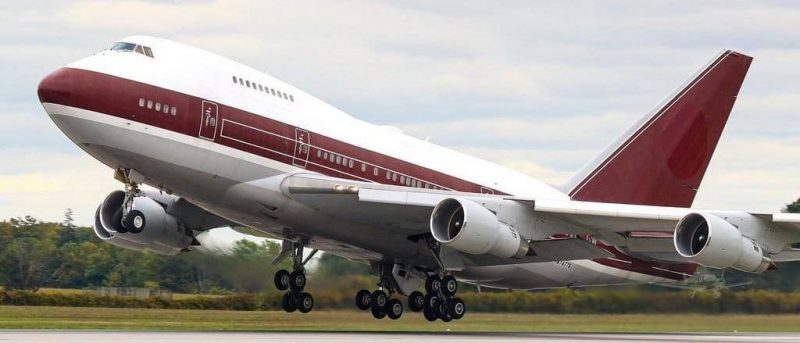
We love looking at airplane classifieds in Controller magazine. There are a host of Cirrus planes, some private jets, and helicopters. All great flying machines. Occasionally, we come across a very unique aircraft. We have to say that this latest ad for a 1979 Boeing 747-SP qualifies as one of the more unique jumbo jets available for purchase on the market today.
Yes, for only a cool $9M, you can own one a Boeing 747-SP with a fantastic history. The jumbo jet used to fly the Qatari Royal family. It mixed accommodation seating for 88 in a mostly luxurious configuration. The nose of the lower deck features a giant bathroom and bedroom. Plus you’ll get a nice reception lounge with seating by rank, a dining room, and plenty of storage. In the back there are a set of business class seats and an economy seating section for your in- laws.
The 747SP is a rare jet that you can own!
The ‘SP’ model is a rarity. This particular jet was even once part of the PanAm fleet! There are only about 10 flyable aircraft left in the world.
The jet was originally designed for a three-cabin configuration with around 330 people. The Boeing 747SP has the characteristic features of a Boeing 747 but is significantly shorter, features a taller tail for stability. It has a modified wing with a simpler flap design to save weight. The jet was designed in the early 1970s as a way to offer jumbo jet amenities on routes that were too distant for the early Boeing 747-100s and -200s.
Only 45 of the Special Performance version of the 747 were ever built, far below the expectations of Boeing. Of those remaining in service, they primarily serve as VIP aircraft for government officials. Sands resorts also operates two of the type in a VVIP configuration.
The Purchase price won’t be your only expense
While $9M is pretty steep, it is actually relatively cheap for a Boeing 747, especially one that used to be owned by Qatari Royal Flight (that’s the Qatari king’s fleet). The problem is that $9M is just your down payment on this luxurious jet setting lifestyle. From there, you’ll have to consider that filling the jet with 50,000 gallons of Jet-A won’t be cheap. While I’m sure you could negotiate a sweet volume discount, FBO fuel prices at places like LAX run between $6-$7 a gallon. That’s about $300,000 to fill ‘er up not including any landing or parking fees.
Then you have to add in the expenses to pay for the 3 person cockpit crew, cabin crew, maintenance crew, ground support. Catering, lav service, cleaning crew, and flight planning costs add up too. And while the airframe is only about half-way through its service life, you’ll still have to shell out money for engine overalls, regular maintenance, a heavy check or two, and storage fees if you decide to park it for more than a couple of days. Even turning on the APU for an hour just so you have some A/C and a reading light will set you back a few grand. Bottom line is that unless your net worth is north of the mid-9 digits, you’ll probably be eating packaged ramen noodles to afford this beauty even if you were a multi-millionaire before you started this buying spree.
While researching this jet, we came across a fellow avgeek, Sam Chui who was lucky enough last year to fly on this exact jet. He profiled his flight and gave an excellent tour. It’s worth a watch:
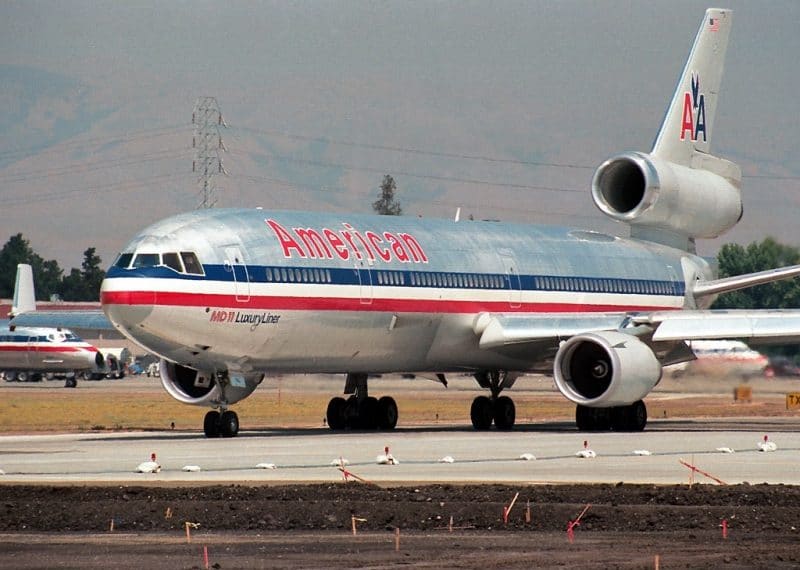
On January 10, 1990, the McDonnellDouglas MD-11 took to the skies for the very first time over Long Beach, California. Like most first flights, it was a moment to celebrate the work and accomplishments of engineers and factory workers. Yet the launch was far from ideal. The joy of a first flight would be short lived.
MD-11 falls short of performance and sales targets
The MD-11 was designed to be the next-generation of the relatively successful DC-10 family. The DC-10 itself had a rough start with the crash of American 191 at O’Hare and subsequent grounding for months. Over time though, the DC-10 became the back bone of international trunk routes for airlines like United, Continental, and American. The hope was that McDonnell Douglas could replicate that success with a larger version that had enough range to fly transpacific with significant cargo.
The company eventually settled on a 18 ft 7inch stretch of the DC-10-30 fuselage with an expected range of 6,800 NM. The type officially launched in 1986 with 10 airlines most notably including Federal Express, Korean Air, and SwissAir. Marquee customers like Singapore Airlines, Delta Air Lines and American Airlines later signed up with firm commitments. The first delivery of the jet was made to Finnair on Dec 7, 1990.
At the time, McDonnell Douglas was short on cash. The MD-11 was originally intended to be a significant step forward for the industry, but limited cash for development meant that compromises had to be made. For one, McDonnell Douglas had relatively limited subscale testing investments during development. It meant that an issue with adverse airflow around the pressure pylons wasn’t discovered until a research project with NASA after launch of the type.
NASA participated in a number of tests with the MD-11. This image is from a test that evaluated how an aircraft could successfully land without control inputs. (Photo: NASA.gov)
At launch, the MD-11 fell significantly short of performance targets and guarantees to the airlines. Range and fuel burn numbers were so disappointing that Singapore Airlines cancelled their order even before any delivery was made. Sales were sluggish too.
American Balked At the Poor MD-11 Performance too
American Airlines originally had 50 MD-11s on order. The aircraft was supposed to both augment the DC-10 and take up the bulk of international flight as the airline expanded its hubs at San Jose and Los Angeles, California. American also wanted to utilize the jet to fly nonstop from DFW to Tokyo.
Unfortunately, the CEO at the time Robert Crandall was “very unhappy” with the performance of the jet. In an Los Angeles Times article from 1991, the Airline disclosed that the jet fell 6% short of fuel consumption targets along with a host of mechanical issues. McDonnell Douglas made improvements shaving off 2%. Still, that meant that American’s newly launched route from Tokyo to San Jose, California required either a fuel stop or load restrictions depending on the weather conditions.
American worked out many of the operational kinks eventually but ended up crafting a deal with FedEx to offload their MD-11s to the cargo airline. American only accepted 19 aircraft in total. By 1999, the MD-11 fleet was retired at American Airlines.
MD-11 Takes Second Fiddle
After a number of performance improvement packages, McDonnell Douglas eventually fixed many of the original issues that plagued the MD-11. But by 1995, Boeing had wooed the market with a competing 777 jet that could outperform the MD-11 with one less engine. MD-11 sales stalled, leading to a total of only 200 aircraft built and sold.
As major airlines offloaded the MD-11, the aircraft found a niche with a few second-tier charter airlines like World Airways. Most passenger MD-11s were either retired early for parts or converted to cargo aircraft. KLM retired their last MD-11 passenger carrying aircraft in 2014, bringing an end to passenger MD-11 operations.
KLM Retired their fleet in 2014.
As of January 2020, around 115 cargo MD-11s fly the skies. Most fly with FedEx and UPS. Many MD-11s are scheduled to be retired within the next few years at major cargo operators like Lufthansa. FedEx is also reducing their dependence on the type.
McDonnell Douglas eventually merged with Boeing bringing an end to any possible further development of the discussed MD-11X or the fanciful MD-12 double decker that resembled the eventual A380. Many analysts expressed that their poor returns on commercial aircraft led to the merger with Boeing. While that analysis is up for debate, a subpar refresh of the DC-10 certainly didn’t help matters.
As we celebrate the beginning of the MD-11’s fourth and most likely last decade of service, check out this video of a beautiful FedEx MD-11 departure filmed by YouTube user BostonAirborne.
CAPE CANAVERAL, Fla. — A new decade of rocket launches began Monday evening as a SpaceX Falcon 9 thundered away from America’s Space Coast to place 60 internet-relay satellites into orbit.
This launch was confirmed as the first official rocket launch under the new U.S. Space Force.
SpaceX is in the midst of building and launching their own network of data and Internet spacecraft known as Starlink. The commercial company hopes to blanket the Earth with thousands of Starlink spacecraft located at about 350 miles above.
The Falcon 9 launched on time at 9:19 p.m. EST, from launch complex 40 at Cape Canaveral AFS. This was the fourth mission for this reusable Falcon first stage.
Riding a top a 300-foot golden flame into the clear night, Falcon’s nine Merlin 1D engines pushed the candle stick rocket skyward. Just over two minutes after launch, the main stage separated, fired it’s thrusters, and began its short journey back to Earth.
Meanwhile, the second stage’s engines continued the payload’s journey to low Earth orbit.
Nearly nine minutes following launch, the Falcon’s first stage booster completed a successful pin-point return. The burnt candle stick touched down on a drone ship in the Atlantic Ocean a few hundred miles off the South Carolina coast.
SpaceX batch of 60 Starlink internet relay spacecraft prior to deployment. (SpaceX)
Sixty-one minutes into the mission, the 60 flat-panel satellites were successfully deployed. Each Starlink weighs 260 Kg and features four array antennas and one large solar array.
“After deployment, over the course of one to four months, the satellites use their on board thrusters to raise from an altitude of 290 km to 550 km,” SpaceX Spokesperson James Gleeson said. “During this phase of flight the satellites are closely clustered and their solar arrays are in a special low-drag configuration, making them appear more visible from the ground.”
SpaceX expects to launch two more Starlink batches of sixty during the next month. That will bring the combined total of Starlink spacecraft to 300.
(Charles A. Atkeison reports on aerospace and technology. Follow his updates via social media @Military_Flight.)
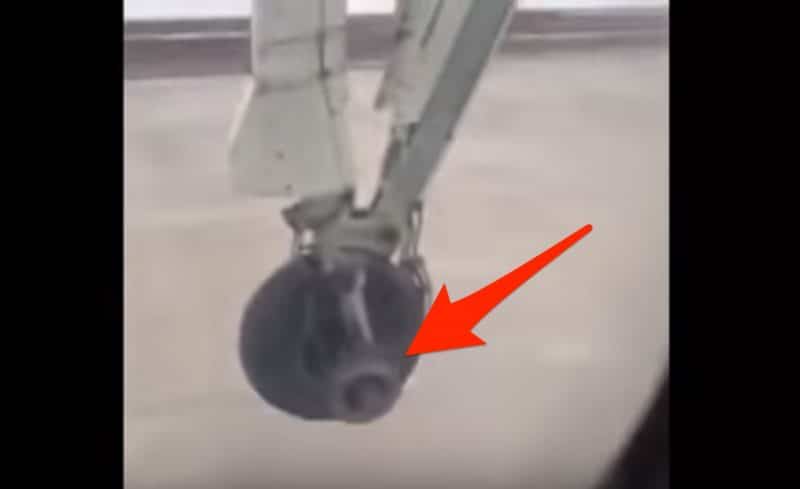
Put this video on the list of things that aren’t supposed to happen. On Friday, Air Canada Express (operated by Jazz) flight AC8684 experienced a loss of one of the right tire of the left main gear on departure.
The Bombardier Dash-8 Q300 turboprop flight was scheduled to operate from Montreal to Saguenay. In the video, you can see the tire sparking on departure. As the aircraft rotates, the wheel separates from the gear assembly. Not a sight you want to see as a passenger (or as a pilot for that matter). The video, posted by Plane Spotting Aviation on YouTube is seen below.
Fortunately, the main landing gear has two tires. The flight made an emergency return where the pilot made a safe landing on the remaining main gear tire without further incident. The cause of the incident has not been released.
About the Dash 8 family
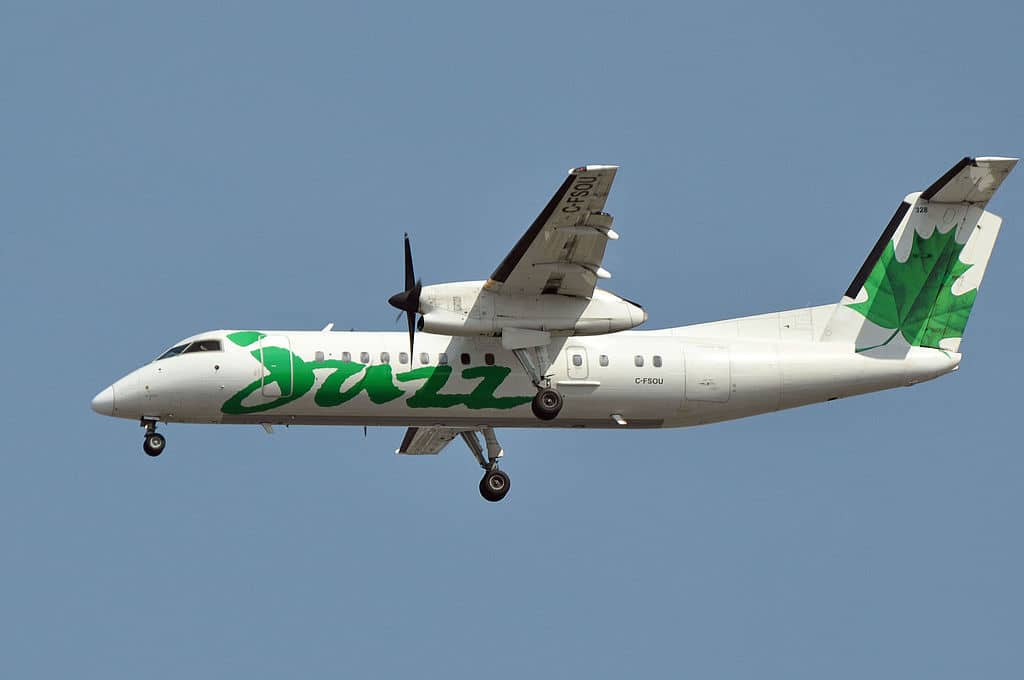
An Air Canada Express (Operated by Jazz) Dash 8-300. Photo by: ERIC SALARD from PARIS, FRANCE [CC BY-SA 2.0 (https://creativecommons.org/licenses/by-sa/2.0)]
The Dash-8 is a rough and tumble turbo-prop family of aircraft. The smallest and oldest -100 offers the ability to connect very small fields to larger transportation network. It accommodates between 37-39 passengers. It first flew in 1984. The larger -300–the same aircraft as the incident in this story– can accommodate between 50-56 passengers. The -300 version first flew in 1989.
The largest -400 (also known as the Q400) is the longest stretch version of the aircraft. It features more powerful engines, a more modern cabin, and can accommodate up to 78 passengers. The Q400 has a service ceiling of 27,000 feet. Unrelated and somewhat infamously, the Q400 was the same type of aircraft that was stolen by a distraught employee and later crashed near Seattle back in 2018.