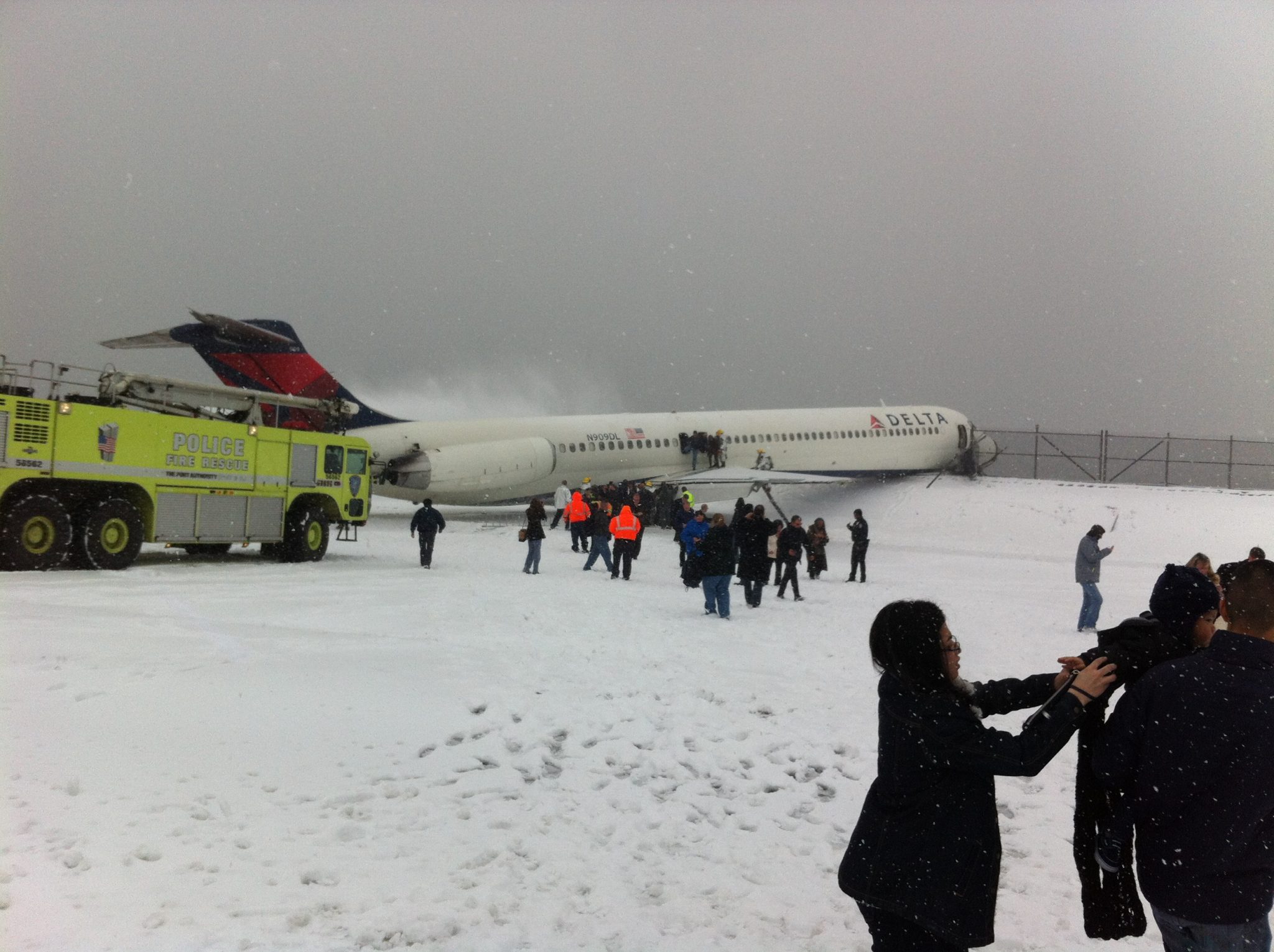
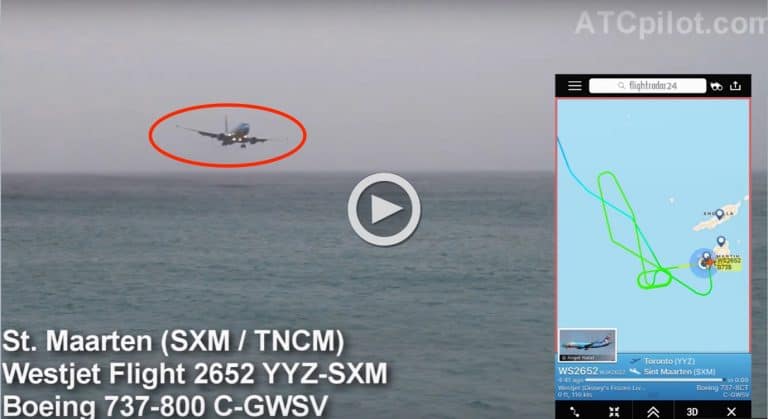
We’ve posted a few videos of arrivals at St. Maarten. We’ve even had one of our own avgeeks profile his trip down to the island. It’s a magical place with pristine beaches, beautiful weather, and (of course) gorgeous low flying planes.
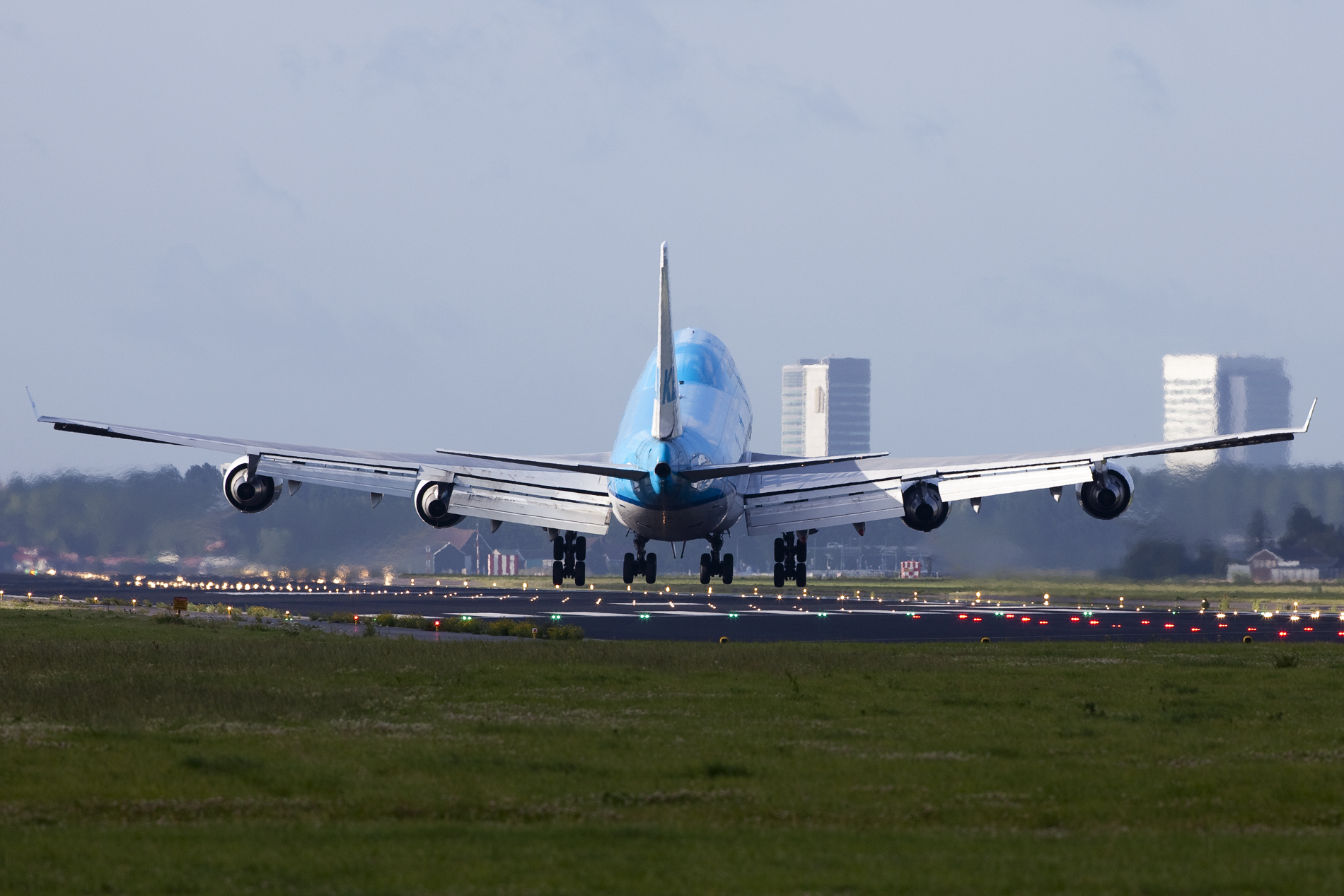
Most of the videos out there though show the beach arrivals. While departures toward Maho Beach aren’t unheard of, they aren’t as frequent due to the prevailing winds at the field. Departures towards the beach are a treat. Who could forget that KLM 747 departure video?
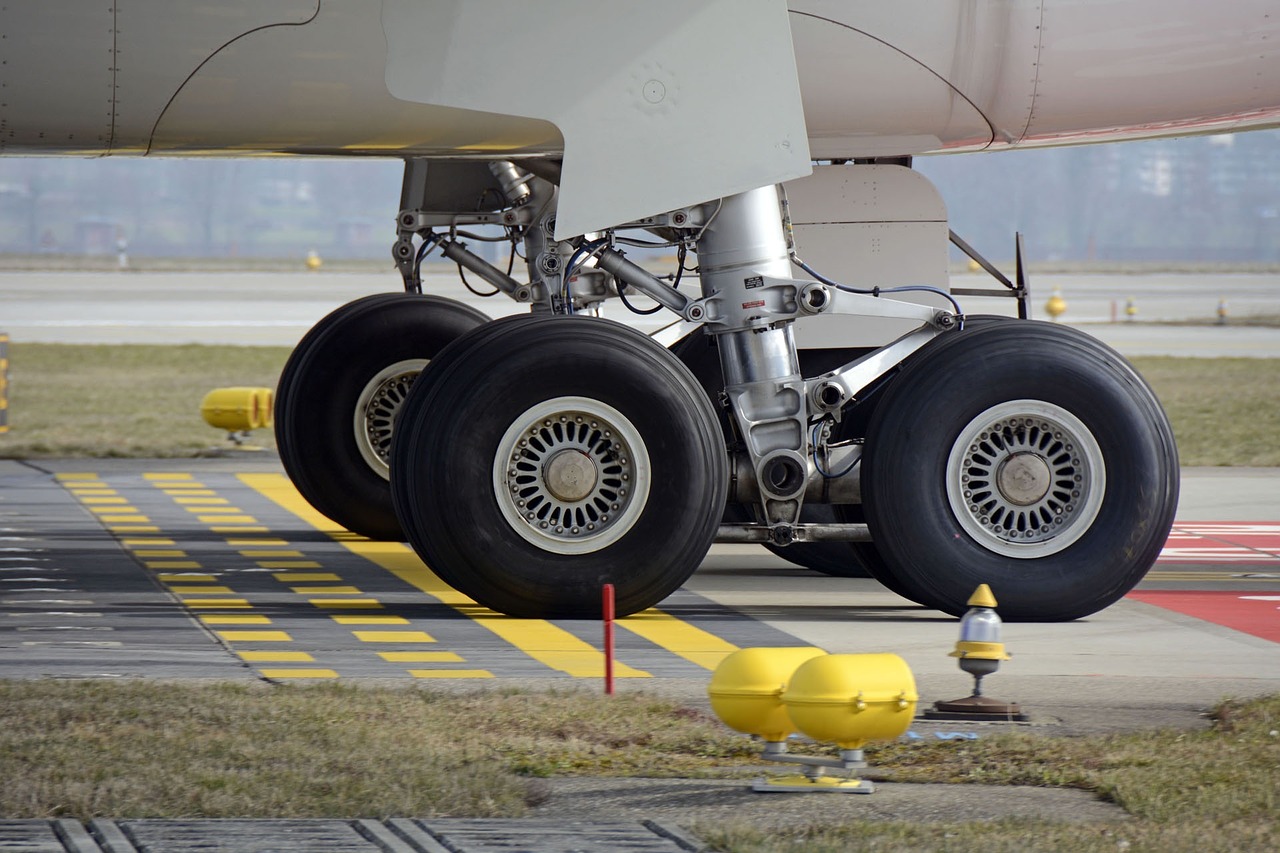
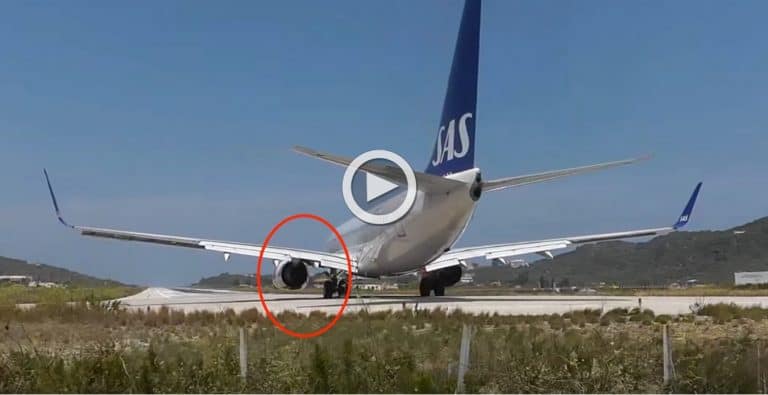
This Insel Air MD-80 video rivals that KLM 747 video. The MD-80 looks to be fully loaded or the pilots are just showboating. We’re not sure. Either way, it makes for an impressive and slightly hair raising departure video. In the video you can clearly see inside the main gear wells on departure. It can’t be more than 15-20 feet over the beach. The videographer sure was jazzed about this departure. His choice language at the end shows just how “wow’ed” he really was.
About the MD-80
The MD-80 is twin engine, single aisle, narrow body commercial jet airliner, manufactured by McDonnell Douglas, and later by Boeing. It is a mid size, medium range airliner. This slender aircraft has a number of variants, including the MD-81, the MD-82, the MD-83, the MD-87, and MD-88. The MD-80 can seat anywhere from 130 to 172 passengers, depending on the variant. Each variant also features upgrades in the cockpit and avionics.
The aircraft took its maiden voyage on October 18th of 1979. However, two MD-80 aircraft were severely damaged during the test flights. Despite the early design issues, the MD-80 underwent improvements. The first variant of the MD-80 was introduced with Swissair in October of 1980. The MD-80 series was eventually modified into the MD-90 series.
Almost 1,200 MD-80 aircraft were built between 1979 and 1999, at a unit cost in the 40 million dollar range.
How Could Such a Forward-Thinking Piece of Machinery Like The SR-71 End Up in a Museum?
On 6 March 1990, pilot Colonel Ed Yielding and reconnaissance systems officer (RSO) Colonel Joseph Vida departed Palmdale in California flying U. S. Air Force SR-71 (serial number 61-17972). This was not just another Senior Crown SR-71 flight. Yielding and Vida landed one hour, four minutes, and 20 seconds later at Dulles International Airport outside Washington DC. The last operational flight of the SR-71 set a new Los Angeles to Washington speed record averaging a scorching 2,124 miles per hour (3,420 kilometers per hour), along with three other records. 972 was then delivered to the National Air and Space Museum for display. It was the final flight of the Air Force’s SR-71 program.
What’s in a Name?
Derived from the Lockheed A-12, the development of which is worthy of its own story, the 32 SR-71s built served with the US Air Force from 1964 until 1990. 12 of them were lost in operational accidents. Not a single SR-71 was lost to enemy action. The “Blackbird” was the most common nickname used to refer to the all-black monster, but “Habu” (Japanese venomous snake- a name bestowed while the SR-71 operated from Okinawa) was a moniker as well. Between the original A-12 and SR-71, these Lockheed “Skunk Works” products were the fastest air-breathing (jet-powered) aircraft inhabiting this planet from inception of the A-12 until the final retirement of the SR-71 by the National Aeronautics and Space Administration (NASA) in 1998.
Rare Materials and Engineering Challenges
The SR-71’s airframe was 85% titanium. Lockheed was forced to pioneer new tooling and fabrication methods just to build the aircraft. Due to the chlorine in tap water, even washing the welded titanium in the airframe components required distilled water. Tools had to be specially manufactured because they too could cause corrosion. Tools wore out quickly during the fabrication process too. Building the SR-71 was one engineering challenge after another.
Hot Stuff
Flying at Mach 3 or more generated friction. Lots of friction. And lots of friction equals lots and lots of heat. For that reason, major portions of the skin of the wings were corrugated. The intense heat would have caused smooth skin (even titanium) to deform and potentially curl up or even split. Conversely, corrugated skin could expand both vertically and horizontally and actually increased longitudinal strength.
Designed to Leak on the Ground
The SR-71s fuselage panels were specially manufactured so they had gaps between them. When the aircraft encountered the heat from in-flight friction the panels would expand and fit properly. It was said that the Blackbird leaked more fuel on the ground than it used in the air. An obvious exaggeration, but the sight of a Blackbird sitting on the tarmac surrounded by dripped puddles of special high-flashpoint JP-7 fuel was a contradiction indeed. If you see a picture of an SR-71 in flight (most of which were captured at low altitude and low speed), chances are you’ll also see fuel streaming back from the as-yet unsealed joints as well.
For the Rest of the Blackbird Story Bang NEXT PAGE Below
Failure or success? It depends how you look at it.
The holy grail of fighter aircraft is one aircraft that meets the operational requirements of both the Air Force and the Navy. The most current attempt at a multi-service design is the Lockheed Martin F-35 “Lighting II.” Historically, the result of such ambitious efforts is an aircraft that does nothing really well, or worked well for one service or had limited combat capabilities.
F-111F (National Museum of the USAF)
The F-111 was an earlier attempt at a supersonic multi-role, multi-service all-weather fighter-bomber. The F-111 was handicapped from the beginning, based on a rather poorly conceived operational specification, with both the Air Force and the Navy pressured to commit to a civilian concept of the “Tactical Fighter Experimental” (TFX) program.
F-111 Formation (Australian Air Force Photo)
The concept called for a single aircraft that was both a nimble, carrier-based Navy fleet-defense interceptor and a more beefy land-based Air Force supersonic strike aircraft. Development focused on the Air Force role, and the F-111B—the naval variant—never made into production.
The F-111 Arrdvark was produced in a variety of models, including the F-111A, F-111D, F-111E, and F-111F, as well as an FB-111A strategic bomber. What the Pentagon had touted as a “cost effective” solution, ironically would be labeled a major aeronautical and financial fiasco in the 1960s. Other designations were assigned to aircraft sold to other nations.
Initially, F-111As had major engine problems. Intense testing by NASA pilots and engineers it was determined that engine inlet dynamics created pressure fluctuations that led to compressor surges and stalls. The engine problems were solved by a major inlet redesign.
The F-111 could operate from tree-top level to altitudes above 60,000 feet (18,200 meters). The major design feature were the variable sweep wings that would allow the pilot to fly from slow approach speeds to supersonic velocity at sea level and more than twice the speed of sound at higher altitudes. The wing angle could be swept to any angle from 16 degrees (full forward for takeoff, landing, and slow flight) to 72.5 degrees (full aft for maximum speeds).
Demonstration of Variable Sweep wings; from Swept forward for takeoff, landing, and slow flight (top left) to fully swept back (bottom right).
In terms of fighter design, the F-111 was unusual in that the two crew members—a pilot and a weapons system/radar operator sat side-by-side in an air-conditioned, pressurized cockpit module that served as an emergency escape vehicle and as a survival shelter on land or water.
In an emergency, both crew members remained in the cockpit and an explosive charge separated the cockpit module from the aircraft. The module descended by parachute. The ejected module included a small portion of the wing fairing to stabilize it during aircraft separation. Airbags cushioned impact and helped keep the module afloat in water. The module could be released at any speed or altitude, even under water. For underwater escape, the airbags raised the module to the surface after it has been separated from the plane.
F-111 Cockpit Escape Capsule (National Museum of the USAF)
Using internal fuel only—tanks in the fuselage and the wings–the plane had a range of more than 2,500 nautical miles. External fuel tanks could be carried on the pylons under the wings and jettisoned if necessary. It also could be refueled in flight via a refueling boom receptacle on top of the aircraft aft of the cockpit.
The F-111 carried conventional or nuclear weapons. It could carry up to nuclear bombs or additional fuel in the internal weapons bay. External ordnance included combinations of bombs, missiles and fuel tanks. The loads nearest the fuselage on each side pivoted as the wings swept back, keeping ordnance parallel to the fuselage.
The F-111 aircraft could dump fuel from an aft nozzle between the engines. The dumped fuel could be ignited when the aircraft afterburners were lit.
The avionics systems included communications, navigation, and electronic counter measure self-defense systems. A radar bombing system was used for precise delivery of weapons on targets during night or bad weather.
The FB-111 also had an automatic terrain-following radar (TFR) system that flew the craft at a constant altitude following the Earth’s contours. It allowed the aircraft to fly in valleys and over mountains, day or night, regardless of weather conditions. The pilot could adjust the ride of the TFR from a “soft” ride to a “hard” ride. In the “soft” mode, the aircraft would anticipate requirements to climb or descent and begin climbs and descents to “smooth” the flight. In the “hard” setting, the aircraft followed the shape of the terrain, making climbs and descents roughly match the rise and fall of the terrain.
Major Variants
F-111A, D, E, and F: The A model first flew in December 1964. The first operational aircraft was delivered in October 1967 to Nellis Air Force Base, Nevada. F-111A models were used for tactical bombing in Southeast Asia. The D. E, and F models incorporated incremental improvements in avionics and weapons systems, aerodynamics and engine performance. These aircraft remained operational through 1995, when they were replaced by the F-16 C/D aircraft.
EF-111 Raven Electronic Warfare Aircraft easily identified by the Pod atop the Vertical fin.
EF-111A Raven: F-111As were converted to serve as electronic warfare platforms. The primary modifications were the ALQ-99 jamming system, N/ALQ-137 self-protection system, and an AN/ALR-62 terminal threat warning system. A total of 42 aircraft were converted to the EF-111A.
FB-111: The FB-111 was assigned to the Strategic Air Command (SAC) as a strategic nuclear-capable attack aircraft. With refueling, the aircraft could reach any target on the globe, and return. In 1990, FB-111s were retired from the SAC role, and converted to the F-111G transferred to the Tactical Air Command as high-performance fighter aircraft.
Using More Than a Dozen Different Aircraft the Aussies and the Yanks Combined for a Near-Total Victory
Beginning on 2 March 1943 and lasting over the next two days, a battle was fought that determined the fate of the Japanese forces engaged against Allied armies on New Guinea. This battle, later known as the Battle of the Bismarck Sea, was not fought between battleships. It was not a night surface action or a destroyer duel. The all-important aircraft carriers were not involved. No Wildcats, Corsairs, Dauntlesses, or Avengers did battle with the Japanese Kates, Vals, or Zeros. Yet, it was such a complete victory for the Allied air forces in the area that the newly-developed and highly effective weapons and tactics used to defeat the Japanese were utilized by the Allies for the rest of the war.
Image via US Navy
Desperately Needed Troops and Supplies Put in Harm’s Way
The Battle of the Bismarck Sea pitted a Japanese convoy carrying urgently needed reinforcing troops and supplies from their bastion of Rabaul on New Britain to Lae on neighboring New Guinea against fighters and bombers of the US Army Air Corps (USAAC) and Royal Australian Air Force (RAAF). Except for a night attack by US Navy PT boats this battle was fought entirely by ships against land-based aircraft.
Success is Where You Find it
The Japanese had successfully landed troops and supplies at Lae before. Even though the Allies were able to decode Japanese radio traffic about a convoy planning to head from Rabaul to New Guinea in January, the attacking USAAC and RAAF aircraft were unable stop it. The convoy, consisting of five transports with five escorting destroyers, succeeded in landing most of their embarked troops and supplies even though the Japanese lost one transport (Nichiryu Maru) and had to beach another one (Myoko Maru) that was heavily damaged.
Image via US Navy
The Snooper Tipped Off the Allies
After a Japanese floatplane type often used for anti-submarine patrols in advance of convoys was sighted on 7 February 1943, General George Kenney (Allied Air Commander- Southwest Pacific) ordered increased aerial reconnaissance coverage of Rabaul believing something was cooking there. A week later there were 79 vessels in port, making it clear that another convoy, destination unknown but inferred, was forming up.
Image via USAF
Code Breakers Reading the Mail
Once naval code breakers were able to decrypt a coded message outlining the Japanese plans for the convoy the American and Australian commanders agreed to hit the convoy in the Vitiaz Strait between the islands of New Guinea and New Britain. This convoy would consist of eight military transport ships with eight escorting destroyers along with air cover consisting of about 100 Japanese fighter aircraft.
It’s a Lot Harder Than It Looks
Hitting a maneuvering ship with a dropped bomb from any altitude is a dicey proposition at best. Up to that point 416 sorties had been flown against Japanese convoys in the New Guinea campaign resulting in only two ships sunk and three damaged. After conferring with experienced RAAF and USAAC pilots, the Allies decided to try bombing from different directions and altitudes simultaneously. Attacks by high altitude bombers would, it was hoped, disperse the convoy and allow more accurate bombing from medium altitude…and low altitude.
Image via USAF
For the Rest of the Bismarck Sea Story Bang NEXT PAGE Below
Did they even turn this helicopter on? Helo appears to hove with the blades perfectly still.
Video has a tendency to make spinning airplane propellors and helicopter blades look warped. It has to do with the shutter speed. The blades are spinning so fast that the refresh rate of the screen and shutter speed create unique blurs and deceptive spinning motions.
But if the shutter speed is fast enough, you’ll be able to capture each blade without a blur. Additionally, if you have a frame rate that is synchronized with the movement of the blades, it will appear as if there is absolutely no movement.
Pretty cool, huh? While you may now know ‘why’ this helo looks like it does in this video, it still looks super weird. Watch for yourself.
Fighter Weapons School at Miramar Turned Good Fighter Pilots into Great Fighter Pilots.
On 3 March 1969 the United States Navy established its Fighter Weapons School at Naval Air Station Miramar outside of San Diego in California. You know the school better as TOP GUN. The school began producing pilots and crews with much improved air combat maneuvering (ACM) skills, who were then able to pass their knowledge on to their squadron mates. TOP GUN also spawned a woefully inaccurate but nonetheless popular 80s movie. But how much do you really know about TOP GUN?
Figuring Out Why Naval Aviators Had Lost the Edge
In 1968, United States Navy Captain Frank Ault was directed by the Chief of Naval Operations, Admiral and Naval Aviator Thomas Moorer, to look into the reasons why the Navy was losing so many aircraft and experienced crews in the skies over Vietnam. More specifically, Moorer and the Navy High Brass were concerned that having procured a fighter aircraft that was not armed with guns might have been a blunder. The Navy and Marine F-4 Phantom IIs were just not scoring kills with their primary (and in most cases only) weapon- the air-to-air missile. Ault’s charter was to figure out why and to propose potential fixes.
Image via US Navy
The Numbers Didn’t Lie
Consider this: Between 2 March 1965 and 1 November 1968 (the days of Operation Rolling Thunder) the United States lost nearly 1000 aircraft in roughly 1 million sorties. Even though both the Navy and Air Force losses were included in these telling statistics, the reasons for the losses were not interpreted by the Navy and the Air Force the same way.
Image via USAF
The Air Force Opinion
Although the Air Force had not commissioned a formal study into the abysmal performance during Rolling Thunder, the Air Force nonetheless came to the conclusion that their losses came about because Vietnamese MiGs, operating primarily at the direction of ground controllers, were routinely being steered by those controllers into positions from which they were both unobserved before they attacked, and most often attacked from behind the Air Force jets. The Air Force interpreted the data and decided that their losses were primarily due to technology.
Air Force Solutions Adopted By All Branches
In order to address what they believed were equipment shortcomings, the Air Force specified and procured the F-4E variant of the Phantom II. The F-4E added an internal M61 Vulcan multi-barrel cannon, additional internal fuel capacity, improved radar homing and warning (RHAW) equipment, more powerful engines, leading-edge maneuvering slats, and more reliable targeting systems for the radar-guided AIM-7 Sparrow and heat-seeking AIM-9 Sidewinder air-to-air missiles. The Air Force also worked with the missile manufacturers to improve quality control during the manufacturing process, which benefitted all parties. The Navy would eventually incorporate some of these improvements into later variants of their Phantom IIs, but did not adopt an internal cannon. Every fighter aircraft developed after the F-4 incorporated an internal gun of some kind.
The Ault Report Reached Different Conclusions
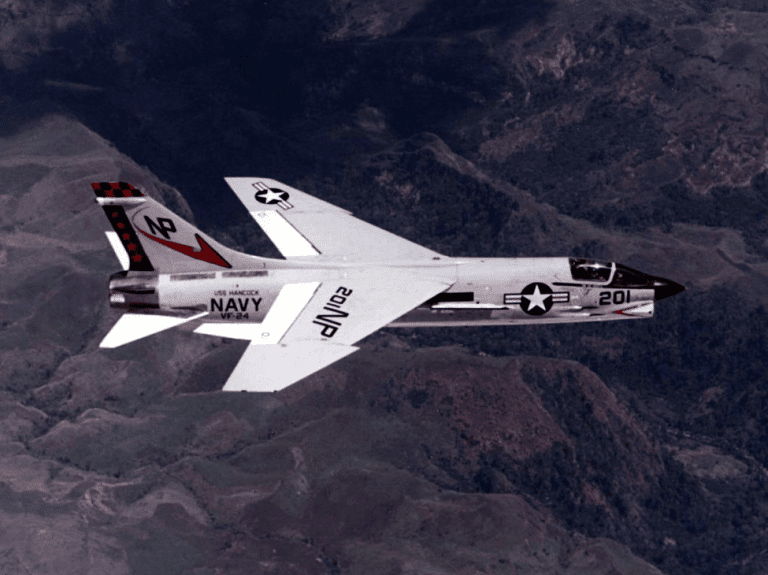
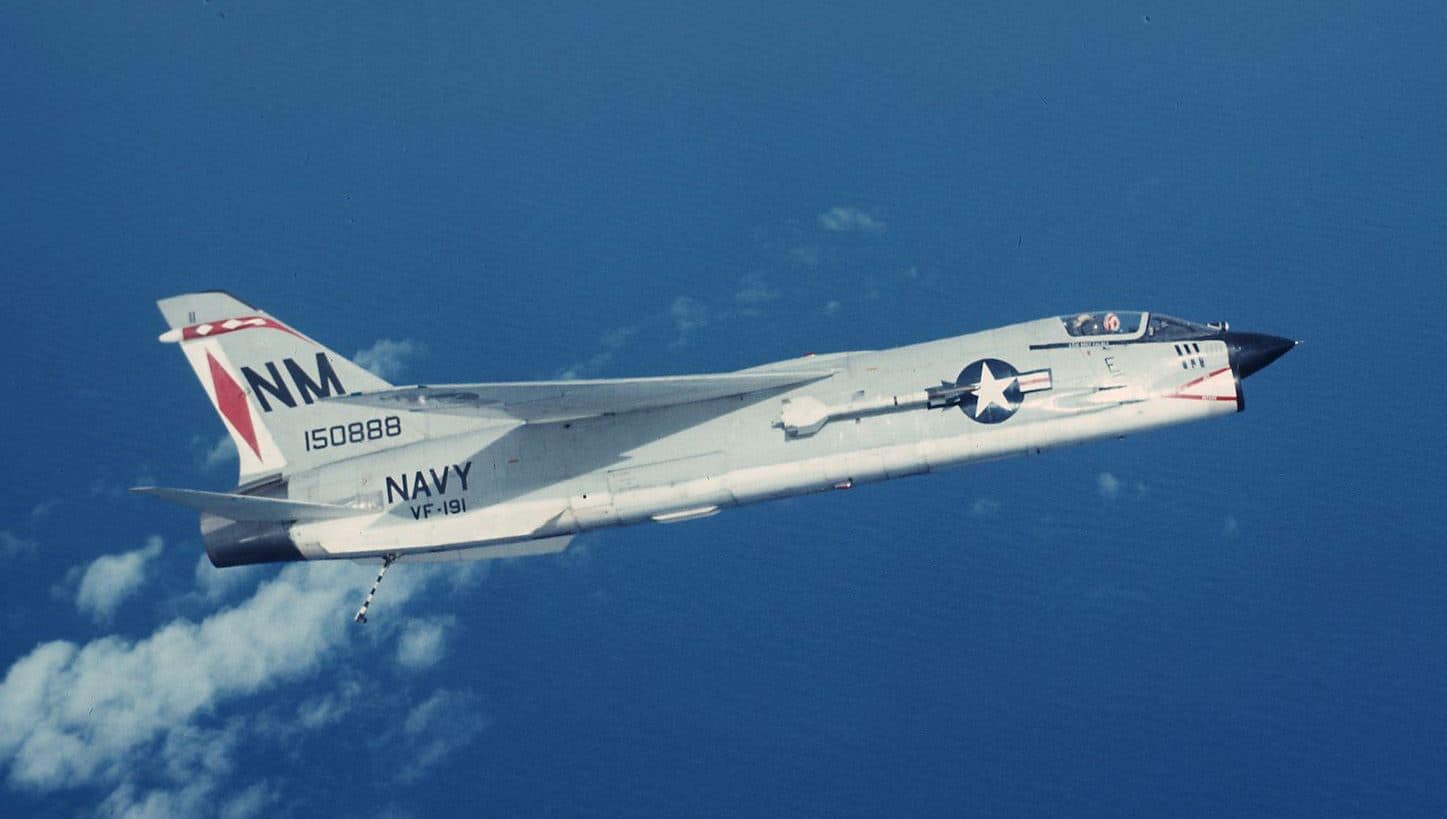
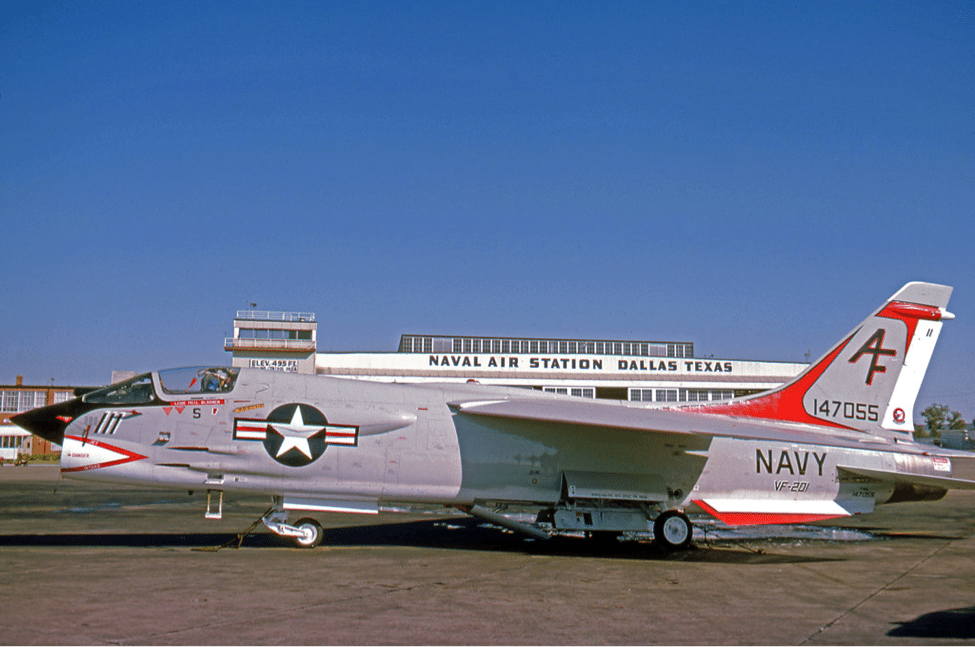
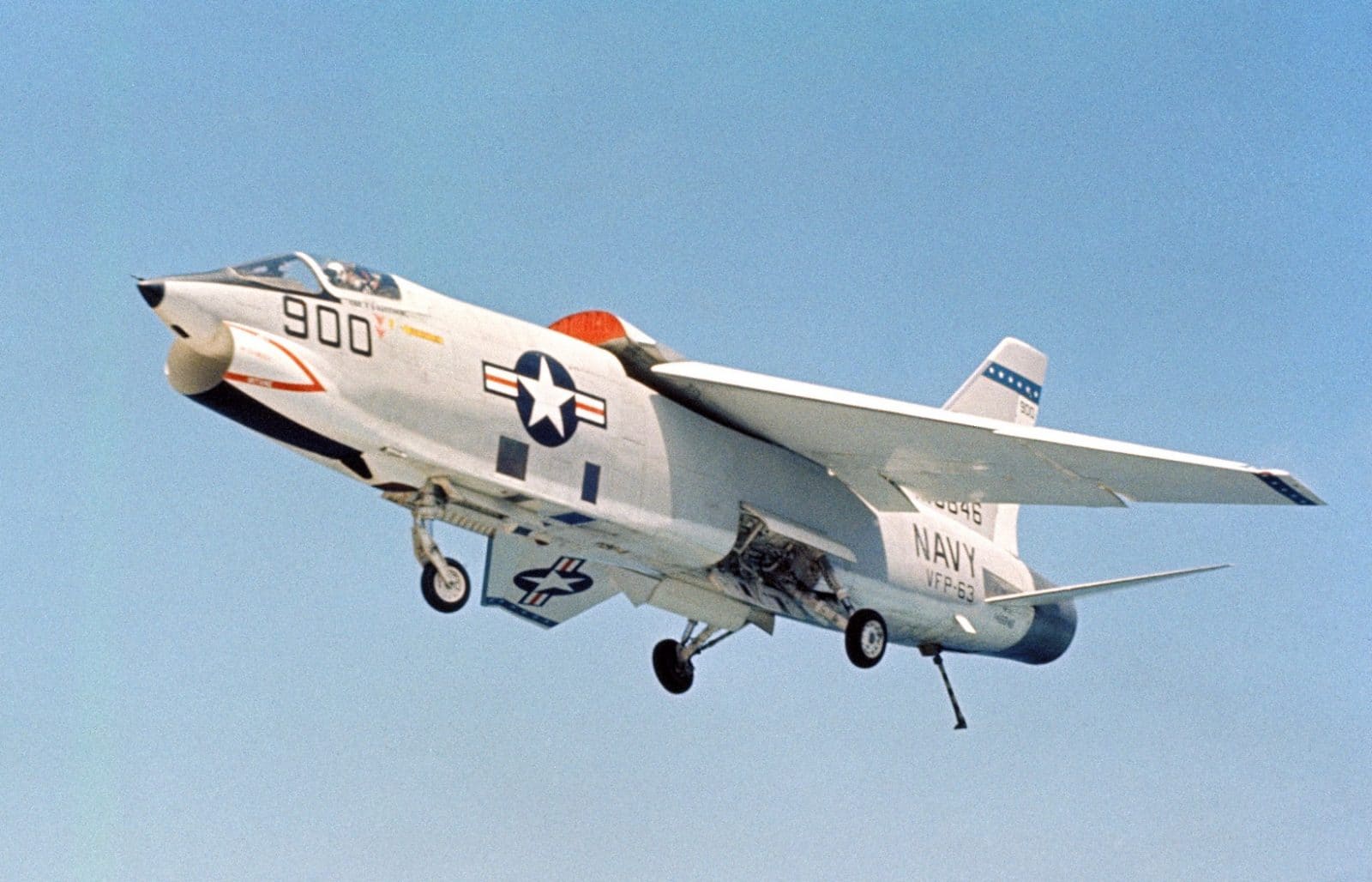
Captain Ault published his report in May of 1968. He reached the conclusion that inadequate air combat maneuvering (ACM) training was the root of the problem. Although he interpreted the poor results attained using the missiles the same way the Air Force did, Ault believed Navy and Marine aircrews were being adequately trained only to maneuver into position to fire their missiles at targets but not in the kind of frenetic maneuvering then taking place in the skies over Vietnam. His conclusions were seconded by the pilots flying the Vought F-8 Crusader. Equipped with four 20 millimeter cannon but a handful to maneuver effectively, the F-8 would also reward pilots who practiced ACM on a regular basis.
Image via US Navy
For More of the TOP GUN Story Bang NEXT PAGE Below.
Tough times call for drastic measures. We came across this video of a RyanAir 737-800 struggling to land at London Stansted Airport during Winter Storm Doris.
In the video, you can see the pilot struggling with both a crosswind and gusty winds. On the approach, the pilot appears to flare but then float as he or she was caught in a gust. The pilot then surprisingly deploys the thrust reversers and plants the plane on the ground. That’s not normal.
What’s wrong with landing this way?
Deploying the thrust reversers prior to touchdown isn’t a very smart way to fly the plane. A good pilot should always be ready to go around. It’s much safer to attempt a second landing than to try to salvage a bad one. In this case, the pilot took advantage of 737 logic that allows the thrust reverser to deploy if the radar altimeter senses less than 10ft of altitude. The landing was relatively uneventful and the pilot and those on board were no worse for the wear.
But what if the gust of wind that he or she corrected for didn’t dissipate but instead grew stronger? By deploying the TRs, the pilot had no choice but to commit to the landing. The TRs would take way too long to stow to accomplish a safe go around in a majority of cases. TR deployment equals total and full commitment to land…full stop.
The video was filmed by ElliotL- CBGSpotterHD. Elliot is an avgeek and spotter with some brilliant videos. Be sure to check out his other work.
No Fuel to Spare, But They Eeked Out a Record That Still Stands.
On 27 February 1947, Colonel Robert E. Thacker (pilot) and Lieutenant John M. Ard (copilot) took off from Hickam Field on Oahu, Hawaii and headed east. Their aircraft, Betty Joe, a P-82B Twin Mustang Air Force serial number 44-65168, landed 14 hours, 31 minutes, and 50 seconds later at La Guardia Field in New York. The flight covered 5,051 miles (8,129 kilometers) and averaged 347.5 miles (559.2 kilometers) per hour.
About That Still-Standing Record
Betty Joe did not stop. Betty Joe did not refuel. Betty Joe took off with a total of 1,816 gallons of fuel and used nearly every drop of it to complete the flight. Thacker and Ard’s flight is still the longest non-stop flight by a piston engine fighter and the fastest flight from Hawaii to New York by a piston engine aircraft. The flight might have been completed in even less time had the pilot jettisoned his empty drop tanks after he drained them as planned!
Genesis of the Twin Mustang
Looking like nothing so much as a pair of P-51H Mustangs joined at the hip or some Photoshopped apparition, the P-82 was originally developed during World War II to fulfill the need for a very long-range escort fighter for B-29s that would be raiding Japan. The design had just barely gotten off the ground when the war ended. The prototype was completed on 25 May 1945. The first flight of the XP-82 was on 26 June 1945.
Image via USAF
The Rare Merlin-Powered Twin Mustang
Oddly enough, initial production P-82s were powered by the Mustang’s Rolls Royce Merlin engine but the remaining production aircraft were all powered by the lower-horsepower Allison V-1710. The Merlin-powered Twin Mustangs eventually became trainers, which meant that P-82 trainers were faster and performed better at altitude than the subsequent Allison-powered production aircraft.
Image via USAF
Deadheading and Scoping the Snoopers
All P-82s became F-82s when the newly-formed United States Air Force changed the P-for-pursuit designation prefix to the F-for-fighter designation prefix on 11 June 1948. Later production aircraft were not equipped with full cockpits and dual controls as the prototype and early variants were. A radar operator occupied the right cockpit in radar-equipped F-82s.
Into Service with SAC First
The F-82E was the first F-82 model to reach operational status in March of 1948, with Strategic Air Command’s 27th Fighter Wing at Kearney Air Force Base in Nebraska. With range and performance that would allow them to escort bombers attacking Russia all the way to the target and back the 27th FW deployed to support air defense and long-range escort missions envisioned due to tensions around the Berlin Airlift. In early 1949, the 27th FW began flying long-range escort mission profiles. Missions from Kearney AFB to Mexico, the Bahamas, Puerto Rico, and nonstop to Washington D.C were all flown.
Image via USAF
For the Rest of the Twin Mustang Tale Bang NEXT PAGE Below.
It Only Took 94 Hours in the Air and More Than 23,000 Miles on the Odometer!
On 26 February 1949 the Boeing B-50A-5-BO Superfortress, Air Force serial number 46-010, named “Lucky Lady II” took off on what was to become the first non-stop around-the-world flight.
Lucky Lady II. Image via Life
That’s Almost 4 Days in the Air!
United States Air Force Captain James G. Gallagher and his crew (including two additional pilots and twice the normal crew complement) departed Carswell Air Force Base in Fort Worth, Texas at 1221 local time and headed east. The Lucky Lady II returned to Carswell 94 hours and one minute later (on 2 March 1949) after flying a total distance of 23,452 miles.
Lucky Lady II refueling. Image via USAF
Slow Bomber Back to Carswell
The Lucky Lady II was a standard B-50A of the 63rd Bomb Squadron, 43rd Bombardment Group and was equipped with the normal B-50A defensive armament consisting of 12 50 caliber machine guns. The bomber did carry an additional fuel tank in its bomb bay to provide additional range. Even with the extra fuel capacity, the B-50 was refueled in midair four times by KB-29 tankers during the mission. Flown primarily at altitudes between 10,000 feet and 20,000 feet, the first non-stop circumnavigation of the planet averaged only 249 miles per hour! ground speed.
The Brass Roll Out the Welcome Back
Strategic Air Command’s commander Lieutenant General Curtis LeMay greeted the Lucky Lady II upon its return to Carswell. Other dignitaries at Carswell for the historic event included Secretary of the Air Force W. Stuart Symington, Air Force Chief of Staff General Hoyt S. Vandenberg, and Major General Roger M. Ramey, commander of the Eighth Air Force. The significance of the event was not lost on LeMay, who took advantage of the opportunity to remark that the Air Force (and of course Strategic Air Command) could now be based entirely in the continental United States and still attack any place in the world that “required the atomic bomb.”
Lucky Lady II after record-setting flight. Image via Life
Record-Setting Crew
For the record-setting flight of the Lucky Lady II, Captain Gallagher was the aircraft commander. 1st Lieutenant Arthur M. Neal was the relief pilot. Captain James H. Morris was copilot. Captain Glenn E. Hacker and 1st Lieutenant Earl L. Rigor were the navigators. 1st Lieutenant Ronald B. Bonner and 1st Lieutenant William F. Caffrey operated the radar. Captain David B. Parmalee was the project officer for this flight and flew as the chief flight engineer. The crew flight engineers were Technical Sergeant Virgil L. Young and Staff Sergeant Robert G. Davis. Technical Sergeant Burgess C. Cantrell and Staff Sergeant Robert R. McLeroy operated the radios. Handling the guns were Technical Sergeant Melvin G. Davis and Staff Sergeant Donald G. Traugh Jr. The Lucky Lady II’s crew was showered with awards including the National Aeronautic Association’s Mackay Trophy and the Air Force Association’s Air Age Trophy. Each crew member also received the Distinguished Flying Cross.
Republic’s Thunderchief Made the Most of 27 Memorable Years in Service.
On 25 February 1984, the Air Force Reserve’s 466th Tactical Fighter Squadron, a part of the 508th Tactical Fighter Wing, made the last operational fight of the Republic F-105D Thunderchief or Thud. The flight occurred 19 years nearly to the day after the F-105 saw its combat debut in Vietnam and a little bit less than 27 years after the F-105 was first accepted for service by the United States Air Force. Air Force Thuds sure packed a lot of service into those 27 years.
F-105D. Image via USAF
Heavyweight Champion
Weighing in at a whopping 50,000 pounds (23,000 kilograms) when it entered service the Thunderchief was the largest single-seat single-engine combat aircraft in history. The F-105 could move at supersonic speeds at sea level and at Mach 2 speeds at altitude. The “Thud” was capable of regularly carrying 14,000 pounds of ordnance and was armed with a 20 millimeter Vulcan Gatling gun.
F-105D. Image via USAF
What’s In a Name?
Without realizing just how effective a weapon the Air Force had in the F-105 yet, derisive nicknames such as “Lead Sled”, “Squat Bomber”, “Hyper Hog”, and “Ultra Hog” were hung on the F-105. It was even said that the Thud was a triple threat in that it could bomb you, it could strafe you, or it could fall on you. Sarcasm aside, the F-105’s strengths, such as its electronics suite and its capabilities, highly responsive controls, and its hair-raising performance, eventually made believers out of pilots who flew the big jet.
Early F-105B. Image via USAF
Another Advanced Century-Series Design Waiting on a Suitable Engine
Initial F-105 prototypes did not perform as expected in part because of aerodynamic inefficiencies like trans-sonic drag in the fuselage design. This led to a redesign of the fuselage with an area ruled “coke bottle” profile similar to that found on the Convair F-102 Delta Dagger and the later F-106 Delta Dart, both of which experienced similar performance improvements after initial models were found to have similar trans-sonic drag issues. The performance of the F-105B was also vastly improved due to the distinctive forward-swept variable-geometry air intakes which regulated airflow to the engine at supersonic speeds and, when eventually installed, the Pratt & Whitney J75 afterburning engine.
Fast Out of the Gate But High-Maintenance Too
Entering service with Tactical Air Command’s 335th Tactical Fighter Squadron in August of 1958 and becoming fully operational in 1959, an F-105B set a world record of 1,216.48 miles per hour (1,958 kilometers per hour). While proven to be quick in the air, maintenance requirements slowed the F-105 to a crawl on the ground, requiring up to 150 hours of maintenance for each flying hour.
Thunderbirds F-105B. Image via USAF
Short Season With the Thunderbirds
For the 1964 show season, the United States Air Force Flight Demonstration Team, otherwise known as the Thunderbirds, modified F-105Bs with fuselage and wing reinforcements, added a smoke generation system. Tragically they flew only six performances with the F-105B before a fatal accident led the team to revert to the F-100 Super Sabre as their show aircraft.
Want proof that you are getting old? The DC-9 is over a half-century old.
Today marks the 52nd birthday for the beloved “Diesel” -9 jet. Back in 1965, Douglas powered up the twin-engine short haul jet for the very first time at Long Beach Airport. The DC-9 took to the skies with the promise of the jet flight comforts on shorter regional flights.
The original DC-9 was a series -10 aircraft. Short and stubby, the first 90 seat passenger jet would be delivered to Delta Air Lines in December of that year. Delta operated the jet until 1993. They later inherited another fleet of DC-9-50s from the Northwest Merger. The final Delta DC-9 flight was flown in 2013.
The DC-9 fleet grew with the -15/-20/-30/-40 and -50 versions each increasing maximum performance and loads. The DC-9 family later gave birth to the MD-80, MD-90 and 717 versions. A total of 976 DC-9s were built with the last original DC-9 produced in 1982.
Even today, there are a few US operators of the original “Diesel” 9 fleet. US Jets and Kalitta Charters both operate small fleets of the elderly jet.
The National World War II (WWII) Museum in New Orleans covers all aspects of WWII. It emphasizes the personal dimensions of combat, often told through first-hand combat accounts of soldiers, sailors, Marines, as well as seen by politicians and civilians.
Still, no account of WWII is complete without recognizing the aircraft that were instrumental (or infamous) throughout the theaters of combat, and the WWII Museum is no exception. Although, unlike any other museum I have visited, all of their aircraft are suspended—none are simply sitting on display.
The First aircraft encountered is a C-47 (military DC-3) Skytrain, the workhorse of the allied forces, carrying and dropping supplies and troops, and towing troop-carrying gliders.
The C-47 above the museum lobby, viewed from the second level inside the Louisiana Memorial Pavilion.
In the Campaigns of Courage building, visitors follow the roads to Berlin and Tokyo. On the road to Berlin, visitors encounter a Bf-109 (commonly known as the ME-109). Designed by Willy Messerschmitt (hence ME-109), it was built by the Bayerische Flugzeugwerke and therefore officially designated as the Bf-109.
While on the road to Tokyo, a restored P-40 Curtiss Warhawk seems to roar overhead in a low attack profile.
Most Museum aircraft are displayed in the US Freedom Pavilion: The Boeing Center. This multi-story building is about twice the height of other museum buildings. Despite the height, viewing aircraft is very easy, and close-up views are easy from three catwalks at different levels. The fourth-floor catwalk provides some impressive views of all aircraft on display.
On display are:
The North American P-52 Mustang, “Bunnie.”
A Douglas SBD Dauntless dive bomber, dive brakes extended.
A Vought F-4U Corsair.
A Boeing B-17E “My Gal Sal.”. There really is no place to stand to get a photo of the entire aircraft without a wide-angle lens. Photos taken from the fourth-floor catwalk.
The North American B-25 Mitchell Bomber—the same type of aircraft featured in “30 Seconds Over Tokyo,” launched from the USS Hornet aircraft carrier. The B-25 exterior gun mounts are shown below.
Grumman TBM Avenger Torpedo Bomber
There are many aircraft not yet represented in the museum’s collection, but the collection is almost certain to grow over the years and space and funding increase. Perhaps a reason to return in a few years.
If You Lose Your Focus on the Flight Deck for Even a Second, You Can Wind Up as a Training Moment
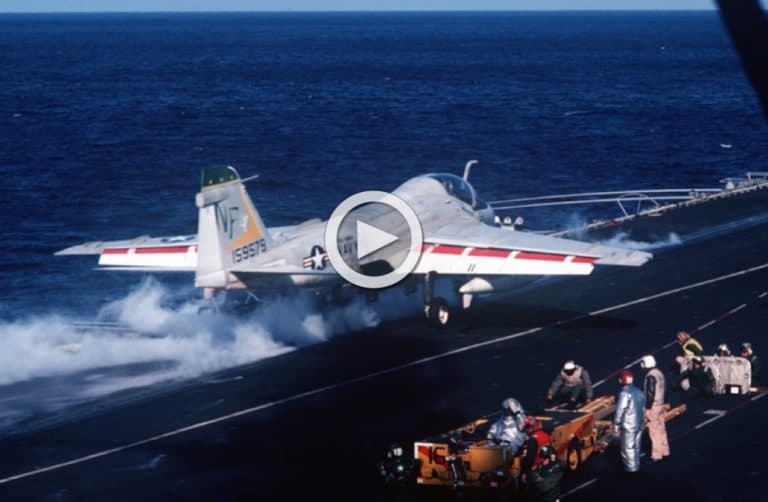
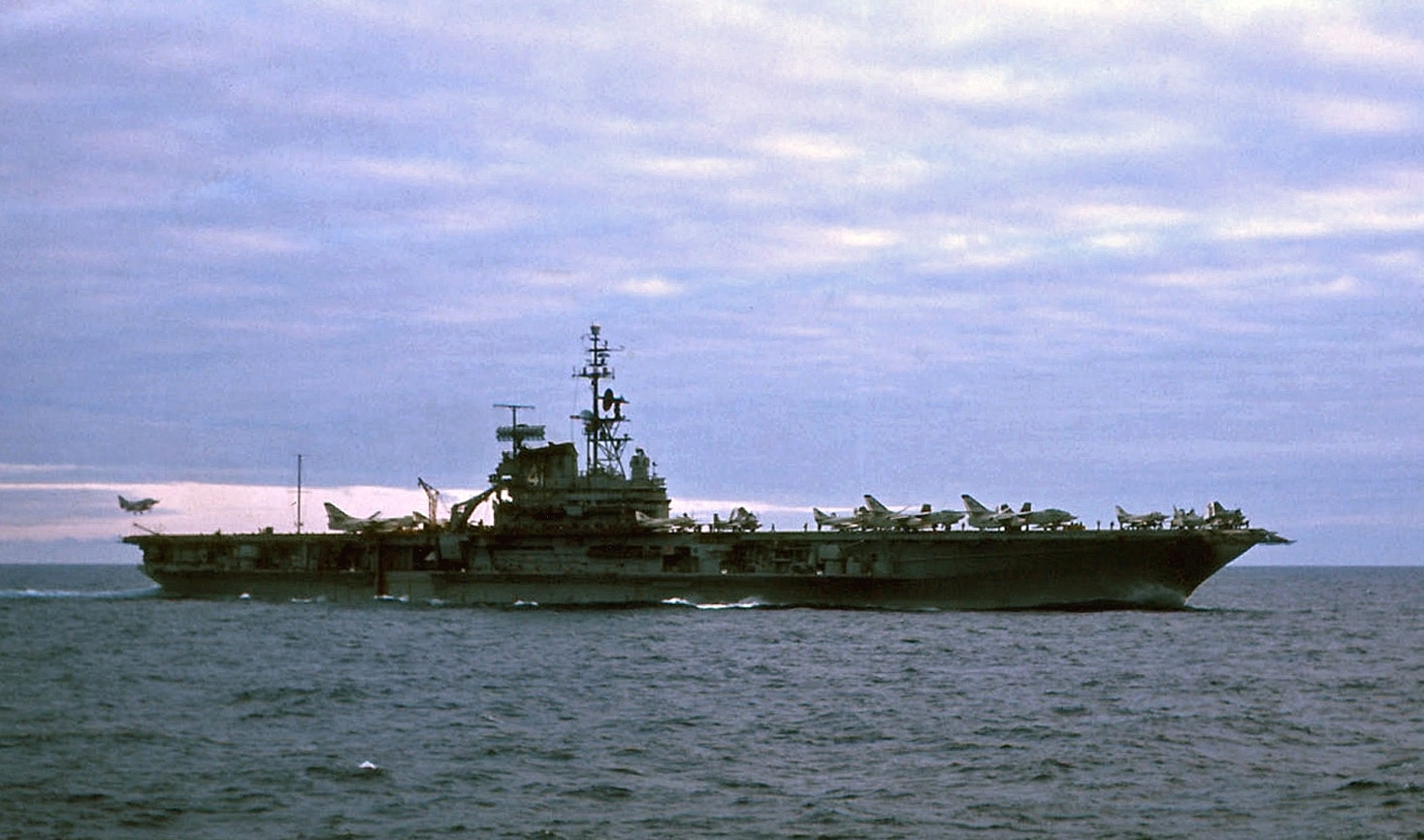
The video starts with Carrier Air Wing 8 flight operations on the flight deck of the USS Theodore Roosevelt (CVN-71). According to the flight deck camera time, it is 03:40:57 in the morning of 20 February 1991. The carrier was one of several carriers launching air strikes in support of US and Coalition forces engaged on the ground during Operation Desert Storm in the Gulf War at the time. In just 15 seconds, a completely avoidable accident involving an Intruder‘s engine intake nearly takes the life of a trainee and downs an operational aircraft for weeks.
Working on a carrier deck is serious business
A VA-65 Fighting TigersGrumman A-6E Intruder is undergoing final safety checks in preparation for the cat shot. In the video, a catapult crewman is processing the hookup process. He ensures that the Intruder’s launch bar is seated in the catapult shuttle. He then signals the catapult operator to take tension on the launch bar against the holdback bar. This step in the catapult launch process occurs several seconds before the pilot of the aircraft is signaled to throttle his engines up for launch. The point is that the A-6E’s engines are not operating at (or even near) military (full) power at the time.
Image via US Navy
It is the next step in the launch process for a quality control inspector to examine the catapult shuttle, launch bar, and holdback bar after the catapult crewman signals for tension on the catapult to ensure that all the parts involved in the launch process are mechanically and structurally ready for the cat shot. If the quality control inspector finds something unsafe or requiring adjustment, the entire hookup process is done over again. Conversely, if the inspector does not find anything, the launch process proceeds to the next step, which in this case would be increasing engine power and doing the control surfaces check.
Image via US Navy
Then things went very wrong
But inexplicably, just after the catapult crewman completes the hookup process and exits the area, 21-year-old Petty Officer and flight deck trainee John David Bridges goes to check the position of the catapult shuttle and holdback bar. Bridges does not crouch down as necessary when operating on the flight deck around the intakes on the aircraft preparing for catapult launch – especially Intruder aircraft. Bridges is standing more or less straight up as he enters the critical zone in front of the port side engine intake on the Intruder. What follows is still used as a training tool for all flight deck crew members. We apologize for making you leave the story to view the video, but it’s required reading. (the YouTube uploader changed the settings for the clip after we published the story)
How did he survive?
Bridges is sucked into the port intake of the Intruder at 03:41:11. His flight deck “cranial” helmet, goggles, float coat, and other personal equipment are sucked off his body and ingested into the jet engine, resulting in the massive flame coming from the exhaust. The catapult officer (Shooter) immediately moves to the port side of the aircraft and signals the pilot to shut down his engines. The pilot, having heard the engine receive heavy foreign object damage (FOD) himself, has likely already begun that process.
Luck Or Design of the A-6 Intruder?
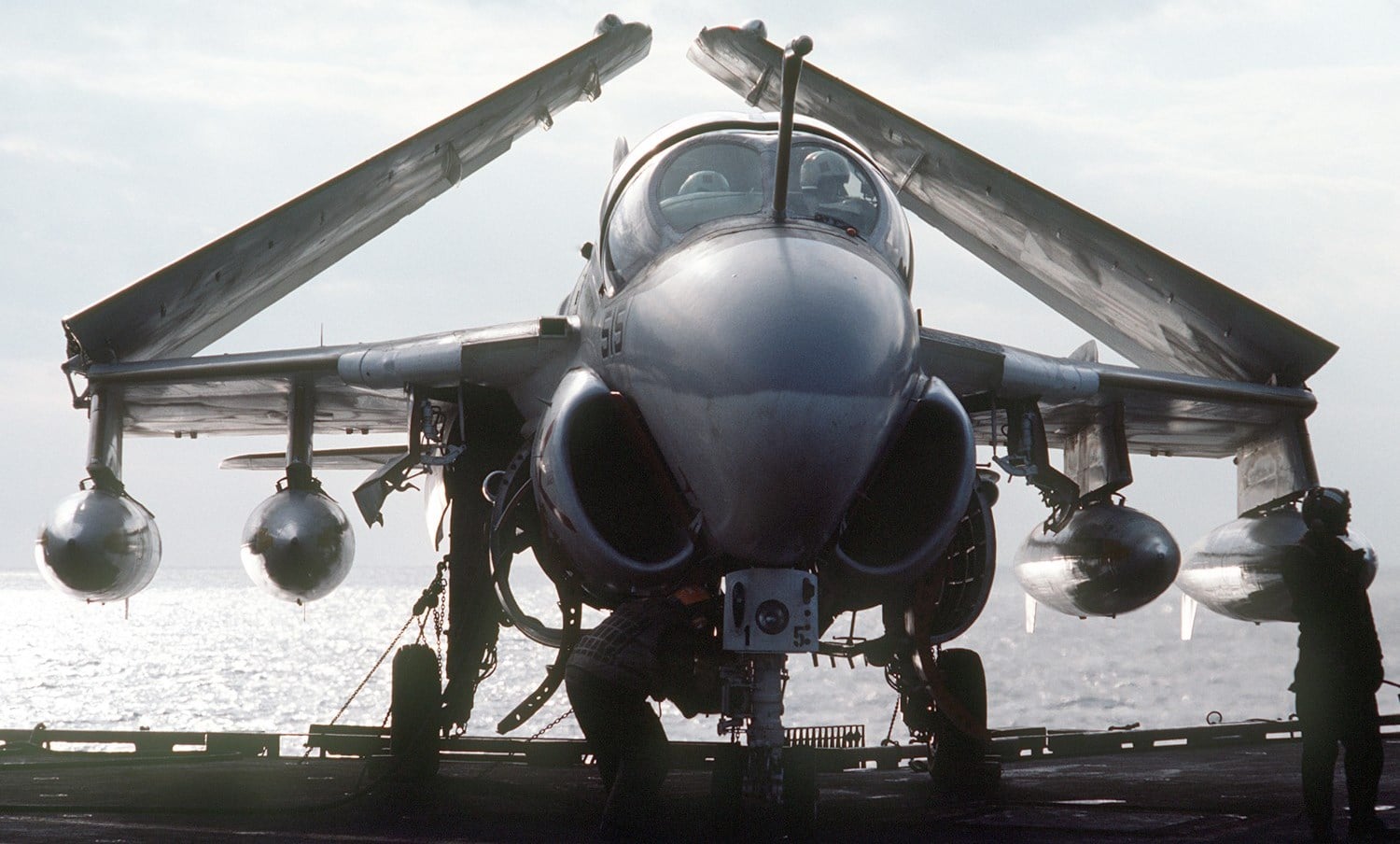
What, you may ask, happened to Bridges? Consider for a moment the design of the Intruder. The aircraft has a relatively high wing, low-slung engines mounted forward on the airframe, and intakes that are mounted only a short height above the flight deck. Seemingly a recipe for disaster, correct? Or at the very least the end of Bridges, right? Not so fast!
What saved Petty Officer Bridges that morning in the Gulf was the internal design of the Intruder intakes and the Pratt & Whitney J-52 engines that power the aircraft.
When mounted in the Intruder, the J-52 has a large cone that protrudes in front of the engine and the first stage compressor fan blades. Those blades, and the hundreds of others behind, would almost certainly have killed Bridges had he made contact with them. But when his “cranial” helmet, goggles, float coat, flashlight, and most likely every other piece of gear he had on him were sucked into the engine before him, the engine was practically destroyed. It was still spinning, in large part due to centrifugal force by the time Bridges reached the engine itself. What really saved him was that he was fortuitously wedged between that engine nose cone and the side of the engine intake.
Image via US Navy
Bridges must have been the luckiest guy on an aircraft carrier
Bridges survived the accident. After roughly three minutes, he was able to extricate himself from the intake once the engine spun down and came to a stop. Understandably reassigned after the ordeal, he received minor injuries and one humongous headache. Other personnel who were onboard the Roosevelt at the time have said that because Bridges’ arm went into the intake first, it was his arm that caused him to get wedged as he was. Whatever the reason, Bridges may be the recipient of the world’s luckiest wedgie!
ATC is safe and handles tens of thousands of flight daily. But upgrades move at a glacial speed. Is it time to fix ATC?
Fixed how, you might ask. The answer is to be separated from the FAA. Notice that I did not use the word “privatize” in the title. There’s a reason for that. For one, the word privatize has become a pejorative and hackles immediately go up whenever the word is used in relation to a government entity. Secondly, the word doesn’t accurately describe the changes that should be implemented to make our Air Traffic Control (ATC) system more efficient, less costly, and yes, safer.
The idea of separating the FAA’s air traffic control system into a separate entity comes up every few years and seems to get batted about by the usual suspects making the usual arguments and then put away until the next putative reformer brings the subject up again. That may indeed be the case with our new administration and Congress, but somehow I feel that this time may be different.
And make no mistake, there are some very entrenched interests who like things just the way they are. Much of this sentiment is simply fear that when a large change is made, certain constituencies will lose out at the expense of others. These are valid concerns and should be addressed to allay fears and reassure all parties that the result will be beneficial, or at least neutral in cost to all players. But so far, 87 countries worldwide have already separated their air traffic control services from government to include Canada, New Zealand and Australia, none of them particularly bastions of unfettered capitalism. It’s time we did as well.
The Advantages
There is no natural order in the universe that states US Air Traffic Control services must be organized under the FAA. The idea that ATC services are too safety sensitive to not be under direct government control falls flat. After all, the airplanes which are themselves being controlled are built, flown, and maintained largely by private individuals or privately owned corporations.
We allow private corporations to build and operate nuclear power stations, railroads, harbors, power grids, and now even space programs. All these operations are still closely regulated by their respective government regulatory agencies as would any separate ATC entity, but many organizational and financial advantages would accrue to a private or government owned ATC corporation.
Placing ATC operations into a corporation separate from a federal agency will allow for a much needed agility in the modernization of our air traffic infrastructure. The FAA has been trying for decades to modernize its ATC services and has succeeded only in spending billions of taxpayer dollars with little to show. Programs with names like the Advanced Automation System and NextGen instituted by laws such as AIR-21 and Vision 100 have proven efficient only in their ability to squander oceans of money.
Having ATC services in a separate organization funded by user fees would allow more predictability in budgeting rather than having managers expending resources on political concerns such as sequestration and appropriations. Separating an operational organization from a regulatory agency is also a better management model which helps prevent regulatory capture by operational concerns. Having access to private capital markets would assist in the finance of long term infrastructure as opposed to the current method of political salesmanship.
The Roadblocks
In virtually every attempt at modernization, political considerations inevitably make any progress difficult or impossible to achieve. Questions about who would end up funding the new ATC organization have made each of the players skeptical of a major overhaul. Each of the major users of our ATC system want to make sure that they don’t pay more under any reorganization. And considering that each group feels that other groups aren’t paying their fair share, reform has been difficult.
The FAA is funded mainly through excise taxes on things like passenger tickets and fuel and not through usage fees. The airlines, which purchase the lion’s share of fuel and carry the most passengers therefore paying the most excise tax, feel that general aviation (GA) and business aviation users consume more ATC services than they pay for. They would like to see the funding mechanism converted into a user fee structure. GA users, who are more numerous and generally well-heeled and politically active, resist these efforts through the activities of groups like the Airplane Owners and Pilots Association (AOPA). Business aviation users fall somewhere in the middle of these two groups but are generally opposed to ATC separation from the FAA for fear that the airlines would dominate such an organization.
Labor Concerns
Federal Aviation Administration Anchorage Air Route Traffic Control Center (Wikipedia Commons)
Any new ATC entity will have to address the concerns of all these groups but must also deal with the concerns of controllers themselves who will feel threatened by any move away from the government umbrella of federal wage rules and federal pensions. Their concerns are valid in that any new ATC entity would certainly employ efficiencies and invest in automation systems which could eventually reduce the numbers of controllers needed to operate the system.
Controllers’ unions must be reassured that their members will not suffer financial penalties in the short term. They must also realize, however, that like pilots, their jobs are ripe for the application of automation and that controller ranks will be reduced over time regardless of who is writing their paychecks. Other operational efficiencies can only help their cause by reducing overall costs.
In Conclusion
An ATC system which is separate from a stodgy and politically reactive agency such as the FAA will have a more stable and reliable source of funding allowing capital improvements to be made without the usual red tape. Badly needed modernization will result in a safer national airspace system due to the deployment of the latest technologies available in the most expeditious manner possible.
A separate agency free of political interference will also be more amenable to fostering a customer centric culture which can then concentrate on a primary goal of service and avoids conflicts of interest with the FAA’s primary regulatory functions. Lastly, representation of all major users and labor in the governance of a new and separate ATC organization would ensure that all interested parties have a seat at the table while avoiding the political paralysis of the current system.
These Were the First Raids on the Home Islands Since the Doolittle Raid Nearly Three Years Before
Between the 16th and 17th of February 1945, US Navy Task Force 58 conducted the first carrier-based strikes against the Japanese home islands since the Doolittle Raid in April of 1942. The raids were intended to destroy as many Japanese aircraft as possible to prevent their interference with the invasion of Iwo Jima in the Bonin Islands, which lies only about 760 miles from Tokyo. Operation Detachment was scheduled for the 19th of February 1945. Airfields, aircraft manufacturing, and aircraft support facilities were also selected for targeted attention by Task Force 58.
The Varsity
For these historic strikes, Task Force 58 consisted of the fleet carriers Saratoga (CV-3), Enterprise (CV-6), Essex (CV-9), Yorktown (CV-10), Hornet (CV-12), Randolph (CV-15), Lexington (CV-16), Bunker Hill (CV-17), Wasp (CV-18), Hancock (CV-19), and Bennington (CV-20). Light carriers San Jacinto (CVL-23), Belleau Wood (CVL-24), Cowpens (CVL-25), Langley (CVL-27), and Cabot (CVL-28) rounded out the carrier force. Escorted by one battle cruiser, five heavy cruisers, nine light cruisers, and 77 destroyers, Task Force 58 was considerably larger and carried more firepower than the vast majority of the other navies on the planet at the time all by itself. The overall force was broken down into five smaller Task Groups, designated Task Groups 58.1 through 58.5.
Image via US Navy
Fighter-Heavy Air Group Composition
Air Group composition on each of the Essex-class carriers was heavily biased toward fighter aircraft thanks to the threat of Japanese Kamikaze attacks on the task force. Operating in such close proximity to the Japanese home islands was risky for the carriers and swarming Kamikaze attacks were anticipated. Therefore, the Air Groups on each of the fleet carriers consisted of a minimum of 72 fighter aircraft. The remaining capacity of the Essex-class carriers (roughly 30 more aircraft each) was split between the Curtiss SB2C Helldiver dive bombers and Grumman TBF Avenger torpedo bombers.
Image via US Navy
What’s in a Number?
Only a few days earlier the force had been designated Task Force 38. Whenever Admiral William “Bull” Halsey commanded the force it was designated Task Force 38. When Admiral Marc “Pete” Mitscher commanded the force it was designated Task Force 58. Admiral Raymond Spruance, commander of the entire Fifth Fleet, was also present, using the cruiser Indianapolis (CA-35) as his flagship.
Image via US Navy
Stealth 1945-Style
The task force sortied from Ulithi Atoll on February 10th and approached Japanese home waters without being detected. To accomplish this, American submarines were used to dispatch any Japanese picket boats lying off the islands. The ships did their best to remain under the thick weather and low ceiling and lack of visibility it provided. US Army Air Forces B-29 and Navy PB4Y bombers scouted ahead of the task force’s course, and radio deception was also employed as a means of ensuring the ships would approach their launch points undetected. Weather for the launch of the strikes was far less than optimal (read horrendous) for carrier operations, but the initial fighter sweeps, consisting of Grumman F6F Hellcats and Vought F4U Corsairs, hit the airfields around Tokyo Bay right on time.
Image via US Navy
We’re Open 24 Hours a Day
Targets were assigned by Task Group. Task Group 58.5, which counted among its strength the night-fighting F6F-5N Hellcat night fighters, maintained coverage over the Japanese airfields during the evening and night time hours thereby preventing the Japanese from mounting any successful attacks on the carriers. Combined with the marauding pilots attacking their targets during the day, there were American aircraft over the Tokyo area and Tokyo Bay taking out targets of opportunity for nearly two solid days.
The Numbers Don’t Lie
The final tally belied the intensity of the aerial combat. Navy carrier aircraft flew 2,761 total sorties and 738 engaged sorties, attacking shipping in Tokyo Bay as well as several aircraft engine and airframe plants. But even though the weather over Japan was cold enough to freeze the guns in their wings, American pilots claimed 341 Japanese planes shot down and 190 destroyed on the ground. Screening destroyers sunk several Japanese picket boats. The U.S. losses amounted to a total of 60 aircraft (of all types) lost in combat and 28 more (of all types) lost due to operational or non-combat causes.
Image via US Navy
Time for the Next Big Show
After completing their strikes against Japan, Task Force 58 departed the area and set course for Iwo Jima, where the pilots would fly support missions for the Marines fighting on Iwo.
Uhoh! You wouldn’t want to be the pilots of that Jet Airways 777-300ER.
One of the primary responsibilities of airline pilots during cruise is to communicate with air traffic controllers. European airspace is busy and handoffs between controllers happen often. If you are a pilot flying in Western Europe, you need to bring your “A-Game” to the cockpit. Even with paying attention, mistakes happen. With interruptions, radio static, and accents, it’s easy to miss a frequency handoff. That’s why every pilot is also supposed to monitor Guard frequency on 121.5. Guard is the safety net frequency for controllers to communicate with a jet on the wrong frequency.
Unfortunately, there was some sort of breakdown with communication between the crew on Jet Airways flight 118 and Eurocontrol. The crew was non-responsive as the jet transitioned between the Netherlands and German airspace. When situations like this happen, the controllers will usually first attempt to raise the jet on guard. If that fails, the controllers will typically attempt to ask other aircraft on the frequency to raise the flight. If possible, they’ll also attempt to communicate with the jet by other means to include CPDLC (if logged on) or via the company.
In this case, nothing worked. The German Air Force launched two Eurofighters to intercept the Boeing 777 jet. They approached on the left side in an attempt to make contact with the jet and ensure that nothing was wrong with the aircraft or the crew.
What’s even more impressive was that a British Airways jet was 1,000 feet above the jet and someone filmed it. The crew establish contact (after pulling the seat cushions out of their butt) and safely continued on to London Heathrow for landing. While it was a bad day for the crew of Jet Airways flight 118, the video is pure avgeekery gold.
The video was originally posted by Mark Stewart on YouTube but taken down. This version was uploaded to YouTube by Harbi Channel.
“Looks like you had a little bit of bumpiness there.” It was a gusty day in February. Experienced Boeing test pilots didn’t flinch.
On Feb 19, 1982, N757A (Callsign: Boeing 757) took to the skies for the first time. It carried Boeing’s hopes and dreams for a new era. The 757’s first flight wasn’t easy, though. Winds were expected to be strong all day. The weather was within testing limits on departure from Renton Municipal, though. On the first flight, the jet took to the skies, cycled the gear, performed initial flap buffet testing, and came back to land. On arrival, the winds grew stronger and gustier than expected. Tower reported gusts up to 38 knots (that’s about 45 mph!)! The experienced Boeing test pilots didn’t flinch. With perfectly coordinated crosswind controls, John Armstrong and Lew Wallack guided the jet to a successful landing.
While 727 and 737’s had successfully plied the skies for the past 20+ years, high fuel prices and a stagnant economy meant that airlines were looking for a new fleet that was more fuel efficient and could open new transcontinental markets without the capacity of existing DC-10s and 747s. The Boeing 757 and 767 were game changers. They represented a new generation of ‘glass’ cockpits with CRT panels instead of analog gauges and high bypass engines that ‘sipped’ fuel. The 757 had the ability to operate in hot and high airports, just like the 727.
The certification of the 757 and 767 was the first time that Boeing attempted to build two jets under a common type rating. They succeeded. 1,049 757’s were delivered between 1982 and 2002. 15 years after production ended, most aviation analysts still wonder what will fill the gap between the larger 737 and A321s and the 767/787/A350 in airline’s lineups.
If This Happened Today The Story Would Probably End Very Differently
At just past midnight on 17 February 1974, United States Army Private First Class Robert K Preston commandeered unarmed Bell UH-1B Iroquois (Huey) helicopter, US Army serial 62-1920, from Tipton Airfield at Fort Meade, Maryland. After absconding with the rotorcraft, Preston went on a night time joyride over the countryside outside of Washington D.C. for roughly an hour before things went seriously awry.
Image via US Army
Seeing the Sights During a Hairy Joy Ride
PFC Preston, who washed out of the Army Helicopter Pilot training program during the instrumentation phase but still held a fixed-wing private pilot’s license, led several State Police helicopters on a wild catch-me-if-you-can chase in the skies over the Capital. Preston buzzed automobiles on the Baltimore-Washington Parkway and landed briefly on the White House lawn. Yes…THAT White House. Although presenting as a huge target and potential disaster waiting to happen, Preston was not fired upon by the Executive Protective Service. Quickly returning to the night skies, Preston hovered near the Washington Monument- close enough to convince the State Police helicopters in chase that he intended to collide with the monument.
If You Have to Land Somewhere…
By now under fire from the escorting State Police helicopters, Preston returned to the White House and this time received fire from the Executive Protective Service on the White House grounds. Preston then hovered over the South Lawn for about six minutes before landing his buckshot and submachine gun-riddled chopper about 100 yards from the West Wing.
Image via WhiteHouse.gov
Jilted Chopper Jockey Just Showing Off?
According to reports at the time, Preston had enrolled in the JROTC program at Rutherford High School in Panama City, Florida and had longtime aspirations to a career in the military. After being taken into custody for his antics over Washington that night, Preston indicated he was upset over not being allowed to continue his training to be a helicopter pilot, and staged the incident to showcase his skills as a rotary wing pilot.
Well Obviously He Could Fly a Helicopter
By all accounts, Preston’s flying was exceptional. The word “masterful” was used to describe his flying. “One hell of a pilot,” said another witness. Preston was slightly wounded by the buckshot shot at him. After a short foot chase, he was tackled and taken into custody before he gained entry to the West Wing. At his court martial, Preston admitted stealing the chopper, saying that the Army had unjustly extended his term of enlistment after he had washed out of flight school.
Preston’s Huey on display at NAS-JRB Willow Grove. Image via US Navy
A Light Sentence…For What He Did?
Found guilty of “wrongful appropriation and breach of the peace,” Preston was sentenced to a year in prison and fined $2400. Because he had already served six months when convicted, this effectively amounted to a six-month sentence. Preston eventually served two months of hard labor at Fort Riley, Kansas, before being granted a general discharge from the Army for unsuitability.
The President and Family Were Not Home
At the time of the incident, President Richard Nixon, who was dealing with Watergate himself, was in Florida. First Lady Pat Nixon was in Indiana. In fact, none of the Presidential family was at the White House at the time of the incident.
This Fighter Jet Was One of the USSR’s Most Famous Exports.
On February 14th 1955 the first of more than 11,000 Mikoyan-Gurevich MiG-21s made its maiden flight. Approximately 60 countries have flown the MiG-21, and even after more than 60 years more than 3,000 of the supersonic fighters are still in service with more than 40 countries. The MiG-21 is the most-produced supersonic jet aircraft in aviation history and the most-produced combat aircraft since the Korean War, and at one point it was in production for longer than any combat aircraft.
Mikoyan-Gurevich Developed In-House
The MiG-21 “Fishbed” jet fighter was a continuation of Soviet jet fighter designs, starting with the subsonic MiG-15 and MiG-17, and the supersonic MiG-19. Development of what would become the MiG-21 began in the early 1950s, when the Mikoyan-Gurevich Design Bureau finished a preliminary design study for a prototype supersonic interceptor.
image via rob schleiffert
The Original Iron-Curtain Lightweight Fighter
The MiG-21 was the first Soviet aircraft to combine both fighter and interceptor characteristics in a single airframe. It was a lightweight fighter somewhat comparable at the time of its introduction to the American Lockheed F-104 Starfighter and Northrop F-5 Freedom Fighter and the French Dassault Mirage III.
Short Legs
The MiG-21’s short range was typical of the interceptor mission. Low fuel capacity and resultant short endurance of the MiG-21F, MiG-21PF, MiG-21PFM, MiG-21S, MiG-21SM, MiG-21M, and MiG-21MF variants was incrementally improved, but the MiG-21MT and MiG-21SMT variants had increased range of 250 kilometers (155 miles). However, the increase in fuel capacity and endurance inevitably resulted in decreased performance.
image via us air force
Never Really Meant to Be a Dogfighter
The MiG-21 has never been considered a dogfighter. The airplane’s delta wing, which while a good design for a fast-climbing interceptor, was not a good design for any kind of turning or maneuvering in air combat due to “speed bleed.” However, the light weight of the aircraft meant it could climb at prodigious rates. The design’s G-limits were increased from +7Gs in the early variants to +8.5Gs in the later variants. The Soviet Union eventually developed the MiG-29 to replace the MiG-21 and other second-generation fighters to counter the newer American F-14, F-15, F-16, and F/A-18 and other third generation NATO fighter designs.
Never Exactly a High-Tech Warrior
The MiG-21’s simple controls, engine, weapons, and avionics were typical of Soviet-era military aircraft designs. The use of a tail with the delta wing aids stability and control at the extremes of the flight envelope, enhancing safety for lower-skilled pilots. These characteristics enhanced its marketability as an export aircraft to developing countries with limited training programs and available pilots. While technologically inferior to the more advanced fighters it often faced, low production and maintenance costs made it a favorite of nations buying Eastern Bloc military hardware. Russian, Israeli and Romanian companies now offer upgrade packages to MiG-21 operators, designed to bring the aircraft up to a modern standard, with greatly upgraded avionics and armaments.
Building a Bunch of MiGs
A total of 10,645 MiG-21 aircraft were built in the USSR. The aircraft were produced in three factories. The first, referred to as AZ30 in Moscow, produced 3,203 MiG-21s. The second factory, GAZ 21 in Gorky, produced 5,765 MiG-21s. The third factory, TAZ 31 in Tbilisi, produced 1,678 aircraft. 194 more MiG-21s were built under license in Czechoslovakia. Hindustan Aeronautics of India built 657 MiG-21s as well. China has built well over 2,400 copies of the MiG-21 designated F-7.
image via us air force
More North Vietnamese Aces But Not a Favorite
The MiG-21 was designed for very short ground-controlled interception (GCI) missions. It often flew this type of mission in the skies over North Vietnam. The first MiG-21s for North Vietnam arrived directly from the Soviet Union by ship in April 1966. Although 13 of North Vietnam’s flying aces attained their status while flying the MiG-21 and only three became aces in the MiG-17, many North Vietnamese pilots preferred the MiG-17 because the high wing loading of the MiG-21 made it relatively less maneuverable and MiG-17 had better visibility. Although the MiG-21 lacked the long-range radar, missiles, and heavy bomb load of its contemporary multi-mission U.S. fighters, it still proved a challenging adversary in the hands of experienced pilots when employed in the high-speed hit-and-run attacks under GCI control favored by the Vietnamese.
image via national museum of the us air force
For More Russian Love (and the VIDEO) Bang NEXT PAGE Below.
The Corsair Proved That Early Technical Setbacks Can Be Overcome
On 13 February 1943, the Vought F4U Corsair flew its first operational mission when Guadalcanal-based Marine Fighter Squadron ONE TWO FOUR (VMF-124) F4U-1 Corsairs escorted U. S. Army Air Corps B-24 Liberator bombers on a raid against Kahili Airfield on Bougainville. They encountered no enemy aircraft on the mission. This mission was the culmination of years of design and development work on what is perhaps the easiest of all World War II aircraft to recognize due to its unique wing design.
Image via US Navy/National Archives
Fast Right Out of the Box
In June of 1938, the United States Navy signed a contract with Vought for a prototype bearing the factory designation V-166B, the XF4U-1, bureau number 1443. The F4U was the first airframe ever designed from the outset to mount the R-2800 Double Wasp engine. When the prototype was completed it had the biggest and most powerful engine, the largest three-blade propeller, and the largest wing on any naval fighter up to that point. The XF4U-1 first flew on 29 May 1940. On 1 October 1940, the XF4U-1 became the first single-engine United States fighter to fly faster than 400 miles per hour (640 kilometers per hour).
Image via US Navy/National Archives
How Those Famous Wings Got Bent
The first production F4U-1 took to the air on 24 June 1942. From the outset the F4U featured the largest and most powerful radial engine available- the 2,000 horsepower, 18-cylinder Pratt & Whitney R-2800 Double Wasp. The F4U’s propeller was the Hamilton Standard Hydromatic three-blade propeller, measuring 13 feet 4 inches (4.06 meters). In order to accommodate the required folding wing and the size of the chosen propeller, Vought’s solution was an inverted gull wing, which considerably shortened the required length of the main gear legs.
Image via US Navy/National Archives
How and Why the Corsair Was So Fast
The Corsair’s aerodynamics were an advance over those of contemporary naval fighters such as the F4F Wildcat. The F4U was the first U.S. Navy aircraft to feature landing gear that retracted into a fully enclosed wheel well. The oil coolers were mounted in the center-section of the wings, alongside the supercharger air intakes, and used openings in the leading edges of the wings, rather than protruding scoops. Fuselage panels were made of aluminum and were spot-welded to the fuselage frames instead of riveted to them. But the Corsair’s outer wing panels and control surfaces were fabric-covered.
Image via US Navy/National Archives
Bouncing Aboard Blind
There were some problems encountered during early Navy carrier suitability trials on the escort carrier USS Sangamon (CVE-26) on 25 September 1942. The combination of an aft cockpit and the Corsair’s long nose made landings hazardous for newly-trained pilots. The major hurdle was that the landing gear struts tended to allow the aircraft to bounce too high on landing. Eventually a bleed valve built into the landing gear legs eased the hydraulic pressure as the aircraft recovered aboard the carrier.
Image via US Navy/National Archives
Flying Leathernecks and the Fleet Air Arm First
The Grumman F6F Hellcat was simpler to build and was suitable for carrier operations “out of the box” once introduced. Because of this, and because the Leathernecks desperately needed fighter aircraft in the Solomons, the Navy chose to release the Corsair initially to the U.S. Marine Corps. The Marines had to have better fighter aircraft than the F3F Buffalo and F4F Wildcat. The type was declared “ready for combat” at the end of 1942, though only qualified to operate from land bases until carrier suitability issues were worked out. Only after the landing gear problems were solved was the Corsair deployed regularly aboard US Navy aircraft carriers.
Image via US Navy/National Archives
Speed When and Where You Can Use It
Whatever its issues with carrier suitability, the F4U-1 was considerably faster than the Grumman F6F Hellcat and only 13 miles per hour (21 kilometers per hour) slower than the Republic P-47 Thunderbolt. All three aircraft were powered by the same R-2800 radial engine. However, the P-47’s highest speed was reached at 30,020 feet (9,150 meters) and with the help of an intercooled turbocharger. The F4U-1 reached its maximum speed at only 19,900 feet (6,100 meters) using a single mechanically supercharged engine.
Image via US Navy/National Archives
First Corsair Combat
Twelve Marine Corps F4U-1s of VMF-124, commanded by Major William E. Gise, arrived at Henderson Field on Guadalcanal on 12 February 1943. These were the early “birdcage” version of the Corsair. Their first mission, an escort of Army Air Corps B-24s to Kahili, resulted in no sightings of enemy aircraft. However, their next mission on the 14th saw the first combat engagement of the F4U. The Corsairs went back to Kahili escorting the B-24s again, along with Army Air Corps P-40s and P-38s. Japanese fighters shot down two P-40s, four P-38s, two F4Us, and two Liberators. The American fliers claimed only four of the Japanese fighters. This engagement, often referred to as the “Saint Valentine’s Day Massacre,” did not define the Corsair. The Marines learned quickly how to fight with the Corsair. VMF-124 produced the first Corsair ace, Second Lieutenant Kenneth A. Walsh, who would end the war with 21 kills.
Image via US Navy/National Archives
Baa Baa Black Sheep
Probably the most famous Marine squadron flying the Corsair was the “Black Sheep.” Led by Marine Major Gregory “Pappy” Boyington, VMF-214 started flying their missions in September of 1943 and racked up 97 confirmed aerial victories in only 84 days. Boyington was eventually credited with 22 kills in F4Us before he was shot down himself and made a prisoner of war in January of 1944. Other notable Corsair aces included the aforementioned Kenneth Walsh, James E. Swett, and Archie Donahue (also of VMF-124), VMF-215’s Robert M. Hanson and Donald Aldrich, and VF-17’s Tommy Blackburn, Roger Hedrick, and Ira Kepford.
Image via US Navy/National Archives
For the rest of the Bent Wing Bird story, bang NEXT PAGE below