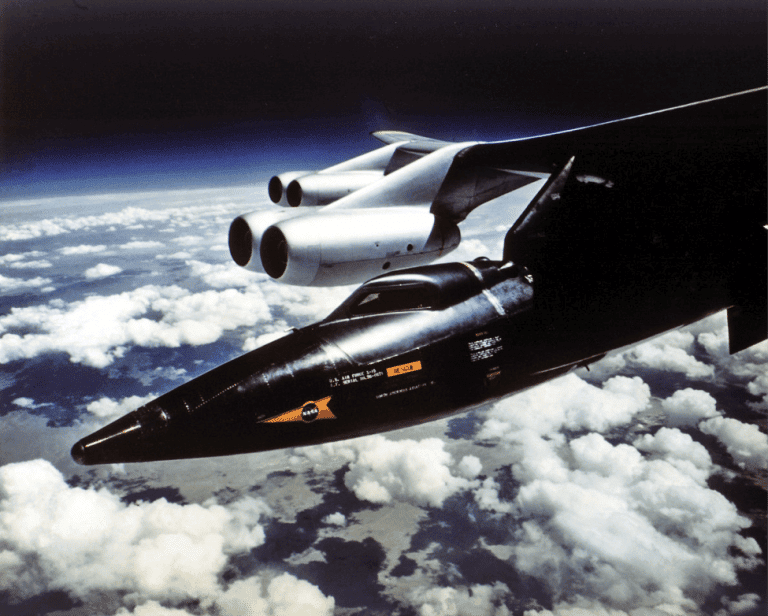
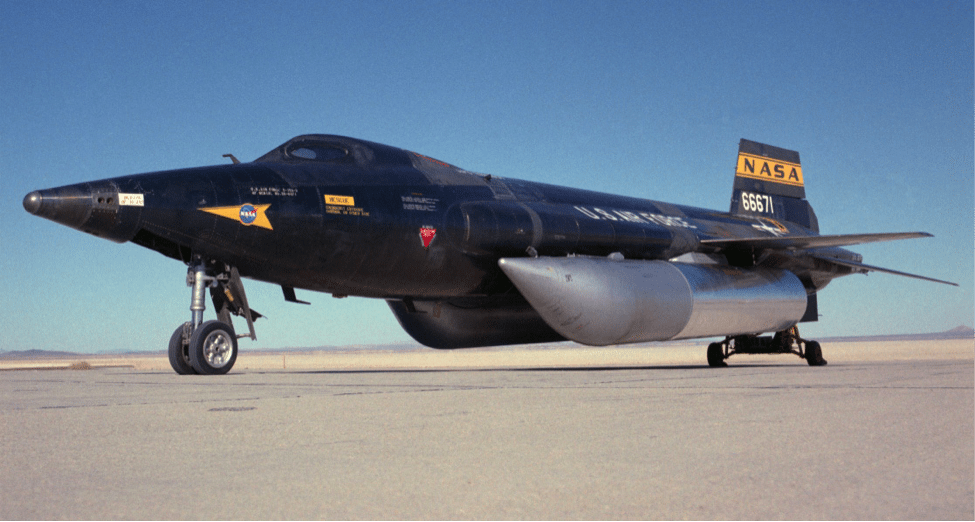
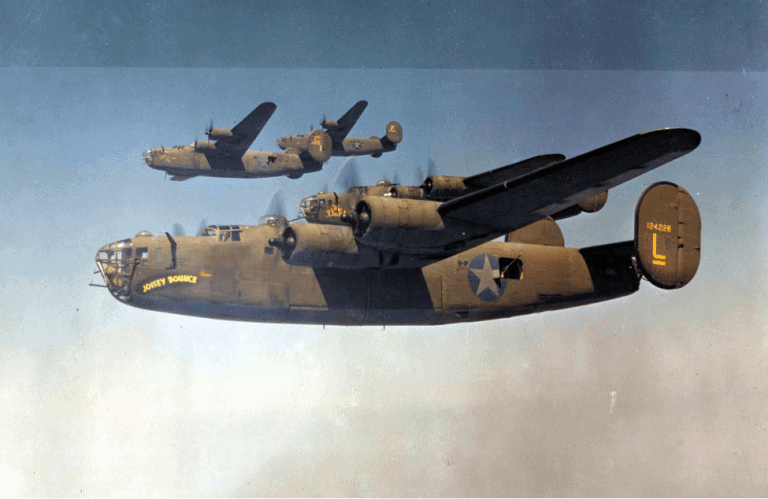
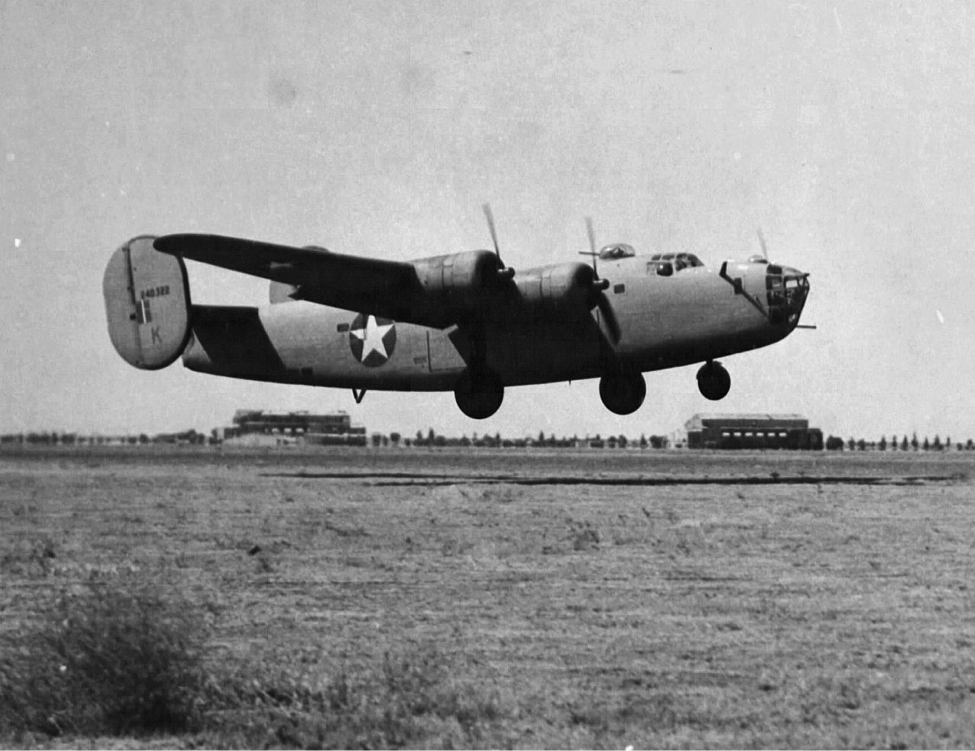
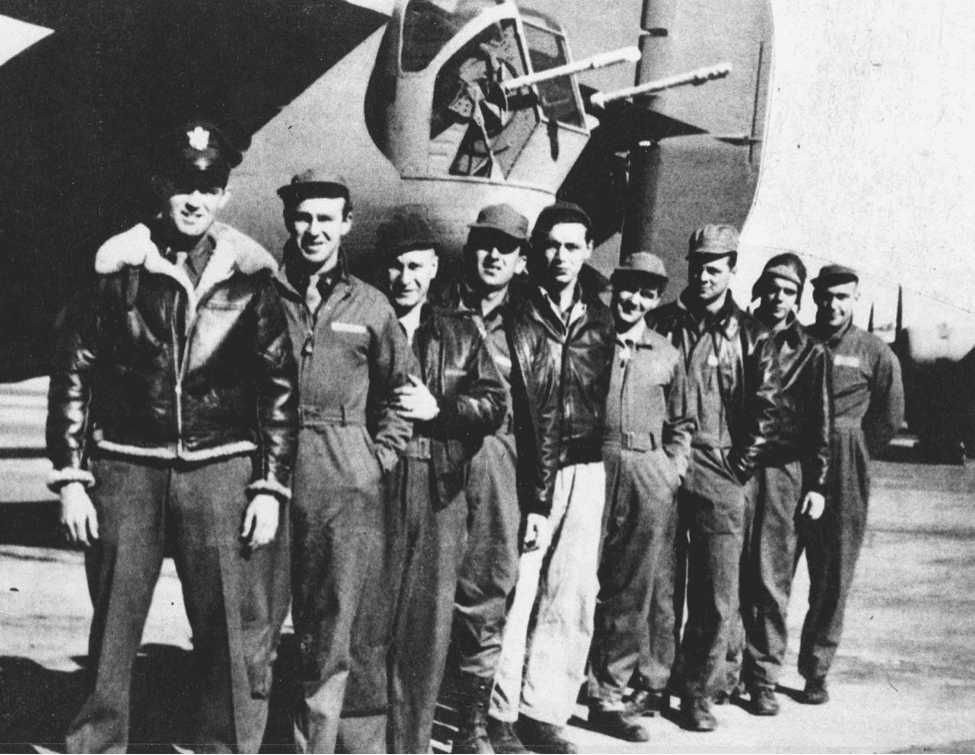
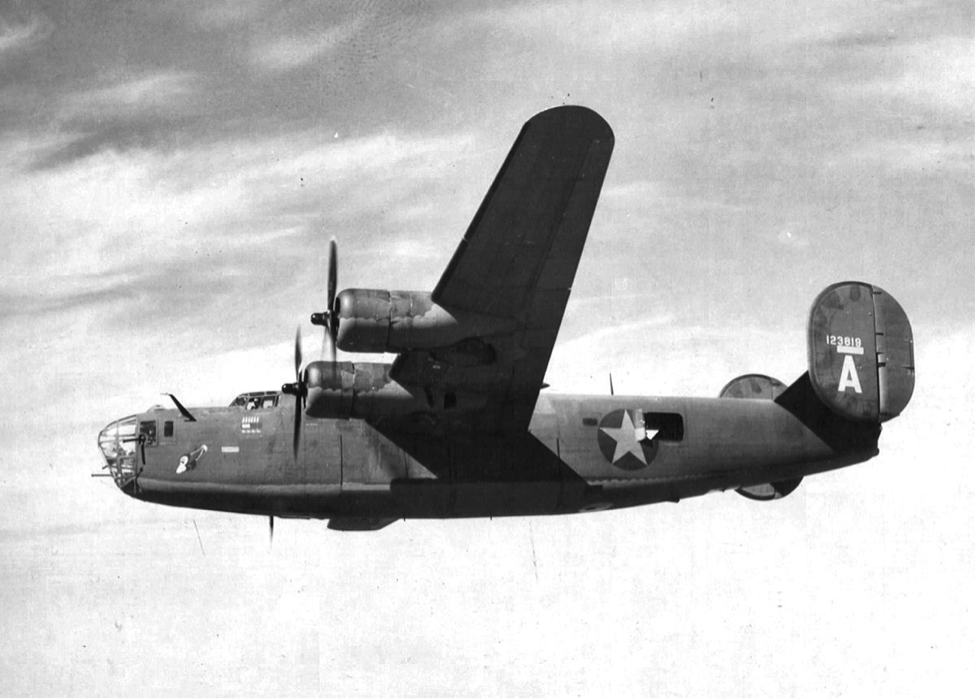
Today’s retrospective is the National Aeronautics and Space Administration (NASA) film “Research Project X-15.” Shot during the mid-1960s at various NASA locations and Edward Air Force Base (AFB) in California, the film highlights the development of not only the X-15, but several of the other previous X planes as well. Interviews with designers, builders, and pilots highlight the narrative history of a program that peeled back the mysteries needing to be solved in order to explore space and visit the moon. Flown by well-known test pilots like Neil Armstrong, Scott Crossfield, Joe Walker, and Pete Knight on 199 total missions, the X-15 was a program far ahead of its time in many ways.
NASA X-15 carried by the NB-52B mothership 52-008 The Challenger and a T-38 Talon chase plane alongside.
Featured prominently in the film are the B-52 motherships The High and Mighty One (NB-52A Air Force serial number 52-003- Balls 3) and The Challenger (NB-52B Air Force serial number 52-008- Balls 8). 52-003 was retired in 1969 and can now be viewed at the Pima County Air Museum in Tucson, Arizona. 52-008 remained in service supporting NASA and private space initiatives until December 17th 2004, when the venerable aircraft was retired to gate guard duty at Edwards AFB and replaced by a slightly younger, but far less experienced, B-52H mothership.
X-15A2 (Air Force serial number 56-6671) with external fuel tanks fitted.
The three X-15s were flown to investigate high-speed, high-altitude flight characteristics between June of 1959 and October of 1968. X-15s set world speed records of Mach 6.7 and altitude records of 354,200 feet. Those speed and altitude records stood for almost 40 years. Information gained from the highly successful X-15 program contributed to development of the NASA Mercury, Gemini, Apollo, and Space Shuttle manned space flight programs, as well as development of materials and systems used in high-speed high-altitude aircraft designed and built after the program came to its conclusion. Other programs followed the X-15 but for sheer envelope-pushing the X-15 Research Project was unmatched before or since.
ATLANTA, Ga. — Delta Air Lines state-of-the-art flight museum is flying high this week with the addition of a new jet aircraft as it expands the spotlight on the company’s rich history as an air transportation service and the people behind their wings.
The history of the iconic airline with it’s roots planted deep in the American south, through to the modern flight services of today are showcased with rare artifacts and actual aircraft poised inside and outside of the Delta Flight Museum in Atlanta.
As Delta celebrates eighty-eight years of passenger service in June, its newly renovated museum is located inside two former Delta flight hangers. Today, they house a modern glimpse into the company’s history featuring several static displays of the airline’s historic planes and the only full motion Boeing 747 flight simulator in the United States.
“Today with operations to 65 countries on six continents, it’s hard to image those early days in Atlanta when Delta flew to just 16 cities,” said Fred Cannon, Executive Director of the Delta Flight Museum. “Hangers one and two were next to the airfield and housed Delta’s aircraft maintenance operations — at the time the largest in the southeast.”
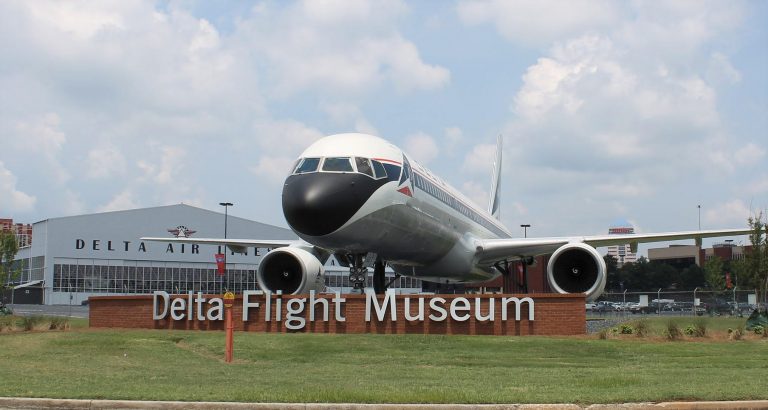
As guests arrive at the museum’s parking lot a majestic Boeing 757, supporting it’s original Delta colors, greets visitors to the historic aviation grounds located on the shoulder of the world’s busiest airport, Atlanta’s Hartsfield-Jackson.
Adjacent to the 757 is the newly opened 747 Experience featuring the first 747-400 aircraft. The retired Delta 747 stands poised awaiting visitors for a unique inside tour. Known within Delta as ship 6301, this 747 flew over 61 million miles during its 26 year history with Northwest Airlines, and later Delta, following the 2009 merger by the two companies.
Delta Air Lines early beginnings is a historic timeline of aviation firsts with fascinating antidotes mixed in for flavor. A popular farm dusting business was purchased by a group led by C.E. Woolman in 1928, and was renamed for the Mississippi Delta, the region where Delta Air Operations was originally based near Monroe, Louisiana.
Catherine Fitzgerald, Mr. Woolman’s assistant, first suggested the company’s name in 1928, and by the following year, Delta leaped skyward with it’s first commercial passenger flight out of Dallas. It was on June 29, 1929, when stunt flyer turned commercial airman Johnny Howe became the first Delta Airlines pilot departing Dallas at 8:00 a.m. en route to Shreveport and then Monroe.
The single prop Travel Air S-6000-B aircraft carried one passenger on that first flight into Shreveport, and picked up an additional passenger that same day. The next year, Delta began passenger service to Atlanta for only a few months, and then full time service resumed in 1934.
When was Delta’s first in-flight meal served? In 1936, as the co-pilot of the company’s new Lockheed 10 Electra got up to offer box lunches with coffee to the nearly fourteen passengers. The airline’s first “stewardesses” were later added to flight crews beginning in 1940, according to the museum. And, in 1941, the airline moved it’s headquarters from Monroe to the twin Atlanta hangers located on the edge of the then expanding airfield.
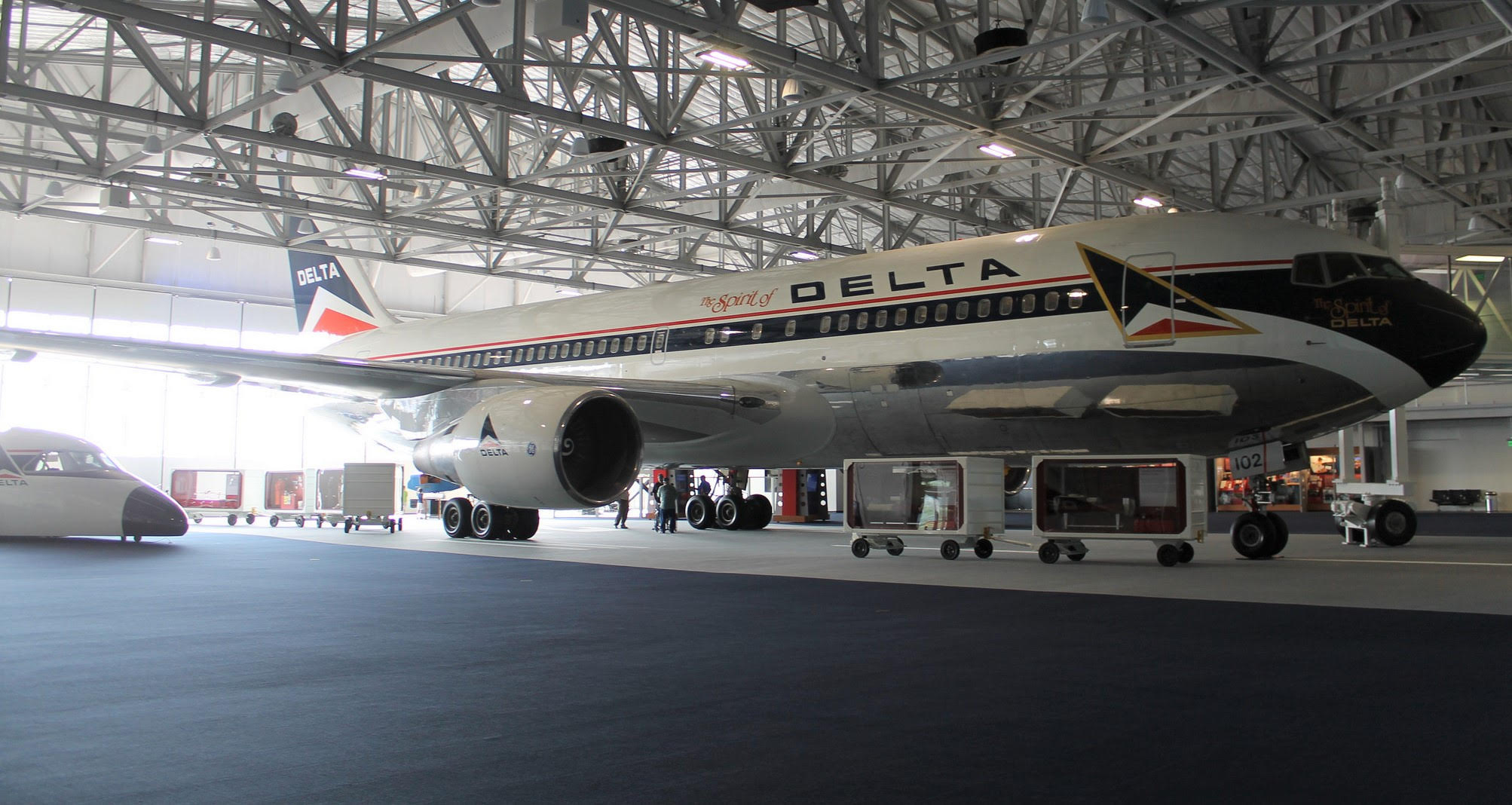
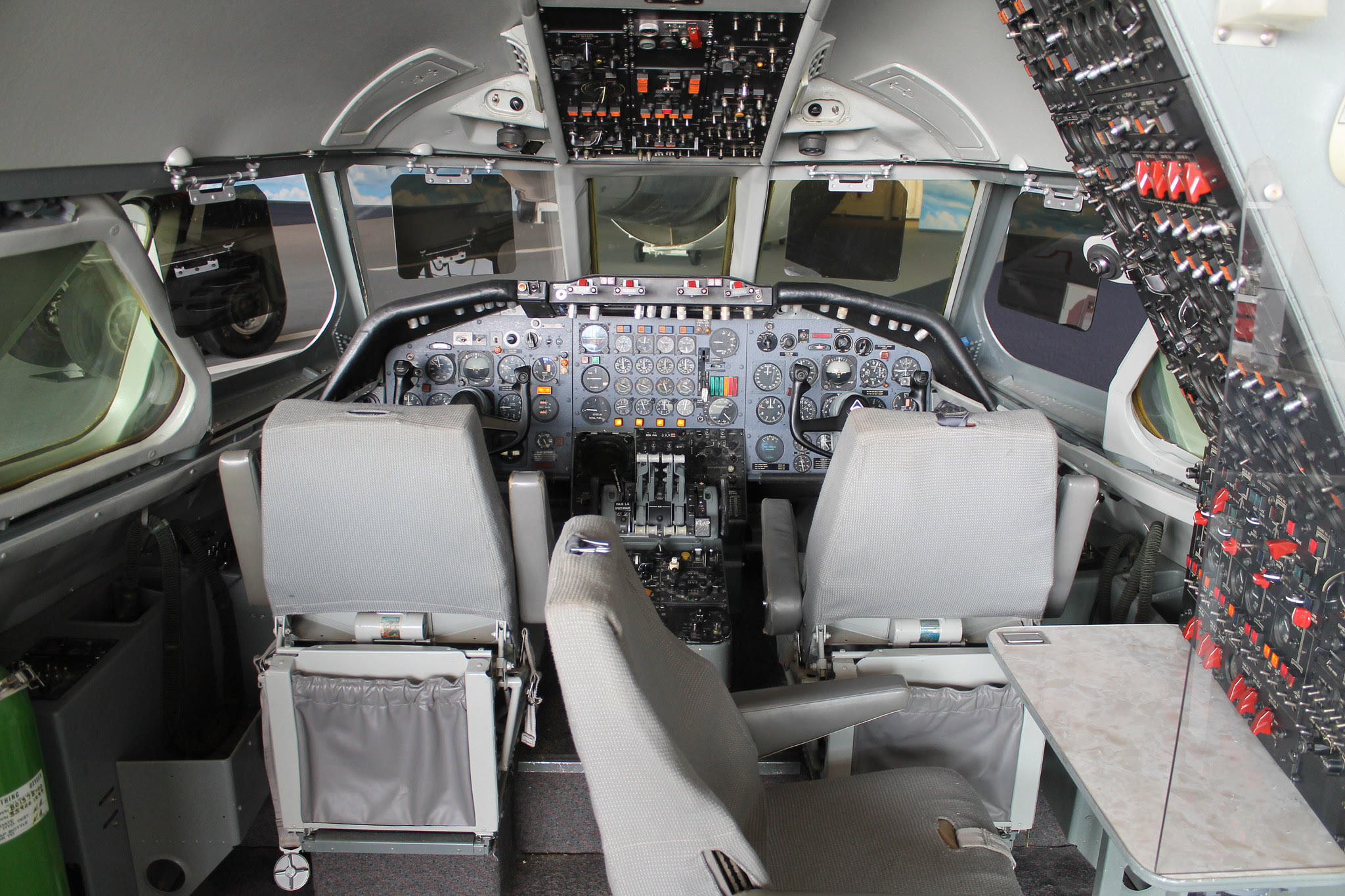
Inside Hanger 2 rests the airline’s first Boeing 767 known as the “Spirit of Delta”. The 159-foot long aircraft was dedicated at company wide event in December 1982, and was later retired in 2006. The B767 could ferry 204 passengers and a crew of eight cross country with a range of 2,100 miles.
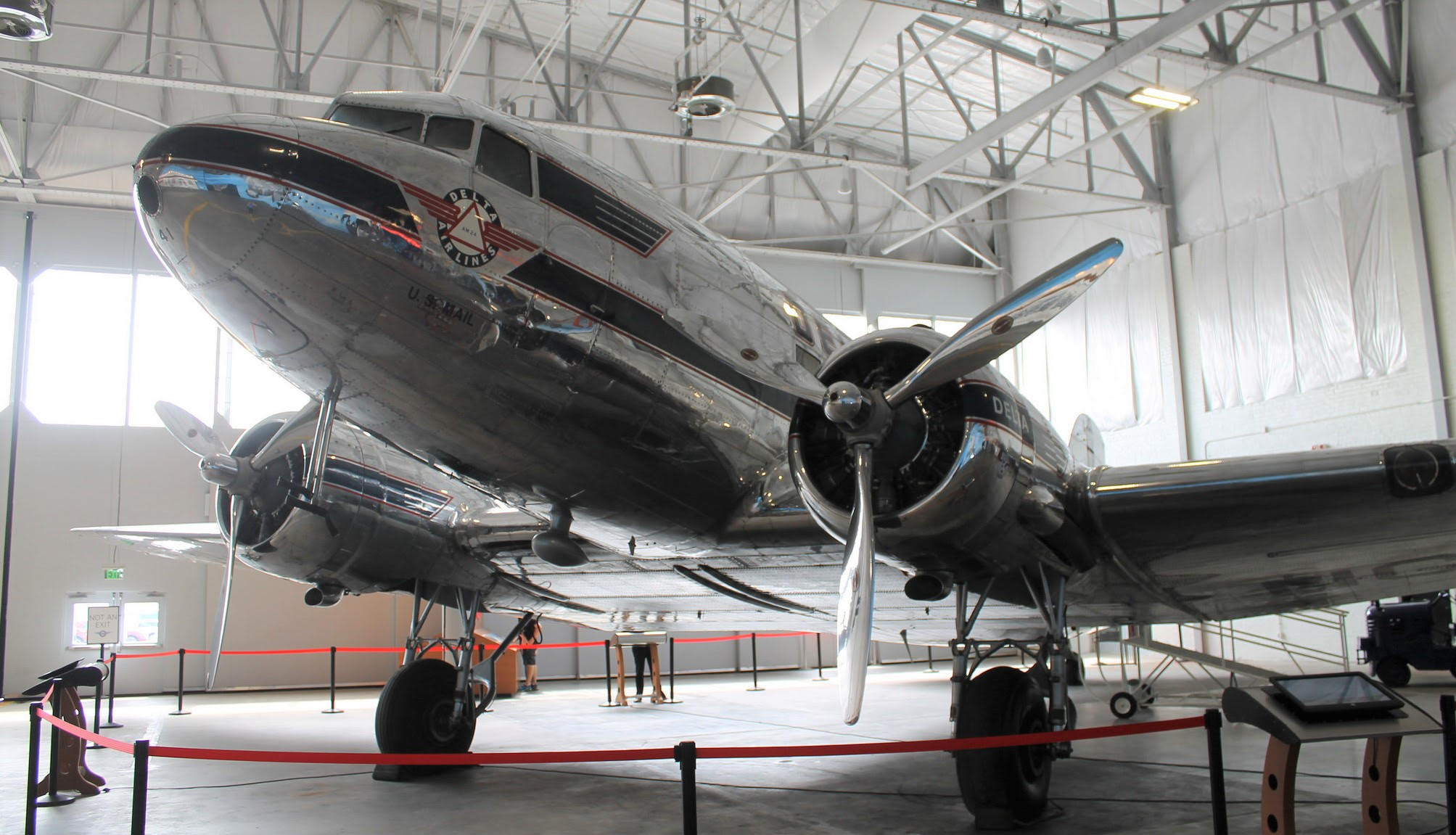
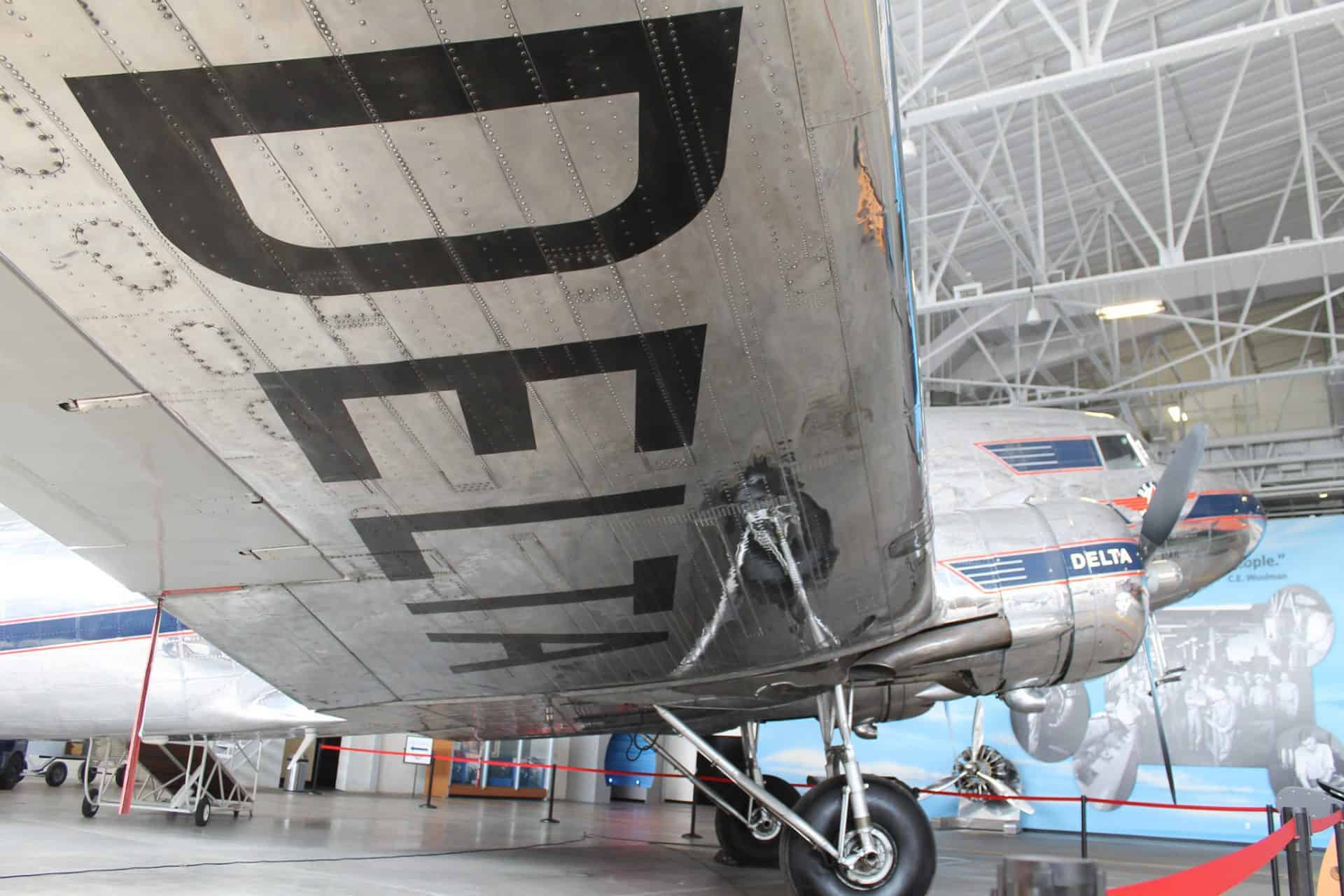
A silvery Douglas Aircraft DC-3 looks incredible as she sits in Hanger 1 just as she did sixty years earlier. The 65-foot long twin prop could stay aloft for 1,400 miles as she carried up to 21 passengers and a crew of three at speeds of up to 170 m.p.h.
An actual Delta Airlines full motion Boeing 737 flight simulator located in one corner of Hanger 2 of the open air museum. “This is not a toy, it’s the real deal,” states museum director Tiffany Ming as she described the sim which was used by the company to train it’s pilots. The simulator’s one hour time limit is a bit pricey, however it is the perfect gift for aviation buffs interested in the experience.
The Delta Flight Museum is located at 1060 Delta Blvd, Atlanta, just east of Interstate 85, and north of the Hartsfield-Jackson Airport. The museum is open Monday, Tuesday, Thursday thru Saturday from 10:30 a.m. to 4:30 p.m., and Sunday from 12 p.m. to 4:30 p.m. Tickets very by age and can be purchased online or inside at the gift shop. Visit their site at www.deltamuseum.org for updated information and times.
(Charles Atkeison reports on aerospace and technology. Follow his updates via Twitter @Military_Flight.)
I love to fly. Like many things in life there is a tenuous chain of events that lead me to flying…and to my wife, my love, my front-seater, and the mother of our children — Tracy.
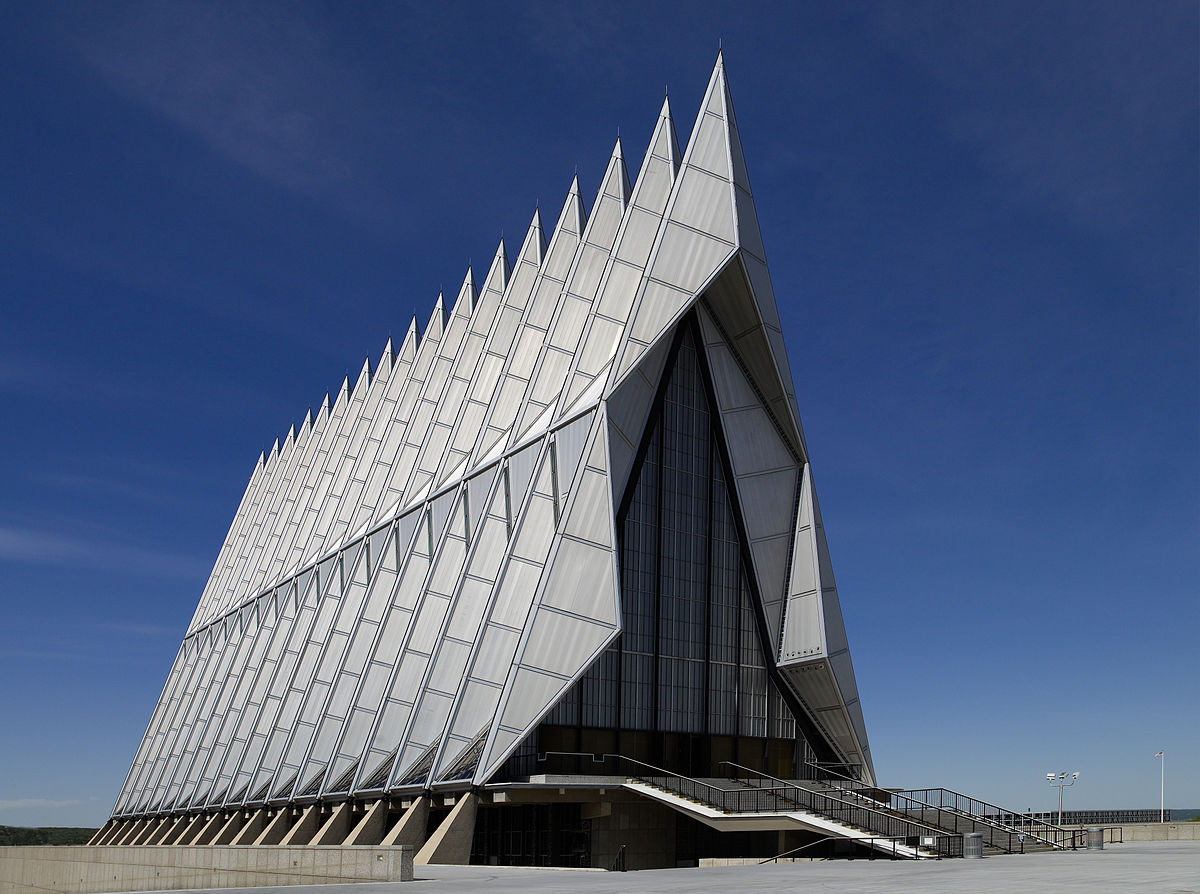
In 1968 I was in high school. A junior. I had just started wearing glasses to see distances whereas my two older brothers had worn glasses most of their lives. (Interestingly, none of my younger siblings wore glasses at all — eyes get better with each kid?) My counselor (Mr. Victor Long, whom I visit to this day and ride bikes and play racquetball with occasionally — he can easily outride me and usually beats me in racquetball) asked me if I ever thought about going to the USAF Academy after graduation from high school. As I recall my reaction was something like “The Air Force what?” I applied, was accepted, and in June 1969 walked up the “Bring Me Men…” ramp along with 1400 other members of the Class of 73. I later learned that I was competing for one of about 300 NPQ (“not pilot qualified”) slots, so getting in was tighter than I realized.
Late in my junior year at the Academy I was walking back to the dormitory with fellow cadet, John Eisenhart. (In the 80s I returned the favor and helped John get a job at IBM when Air Florida folded. IBM didn’t hold him; he got a job with Continental a few years later.) He asked me what I was going to do after graduation. Since I was not pilot qualified due to my glasses I was planning on taking an engineering job somewhere in the USAF. (I majored in electrical engineering — a decision I made based on some guidance from my mother back when I was in high school — a decision I have never regretted. EE was one of the “hardest” majors at the Academy. I thrived on it and all of the academics at the Academy…well, most. I didn’t do so well in economics or political science.) He told me about a program, approved by the Air Force, to evaluate a technique for improving vision — orthokeratology. Basically, you wear contact lenses — “hard” contacts — that are flatter than the curvature of your cornea. Overtime and with series of flatter and flatter lenses, your cornea is reshaped — flattened. Ever so slightly, but enough to alter the focal point of your eye back on to the retina thus improving your vision. (Or something like that.) Within a few months I was seeing 20/20. On about April 1, 1973 (senior year), we had to take our contacts out and leave them out. (As cadets we lived by the Honor Code: “I will not lie, steal, or cheat, or tolerate anyone among us who does.” Though there have been numerous “honor scandals” at the Air Force Academy, the huge majority of the 30,000+ graduates of the Academy all abided by this code to the letter. It guides me today in my daily life though I must admit I am not as fervent in following the code as I was at the Academy.) I did not put my contacts in after April 1 in an effort to keep my 20/20 vision and have never worn them since.
On about May 1, 1973, I went to the eye doctor for the first of four exams. The exams always consisted of reading the eye chart, which was conducted by a technician, and then a peek inside my eye by the ophthalmologist. As days passed my vision got worse and worse. It was obvious the effect of orthokeratology was temporary. Due to the environment in which USAF pilots fly, contact lenses were not allowed — pull 6 Gs in your fighter, lose a contact lens, and then what? — nor are they allowed to use the orthokeratology contacts as “retainers”. (Glasses are OK, obviously. I always wore them when I flew with a spare pair in my g-suit pocket.) I got through the first three tests but my acuity was worse with each test. On the fourth — and last — exam, my acuity was greater than 20/50 — the limit for pilot qualification. Sadly, I went down the hall to visit the ophthalmologist for the last time. I don’t remember his name but I should have found out and sent a thank you Christmas card to him every year since then. He looked at my chart and did something he never normally did: Asked me to read the letter chart. I tried as hard as I could to make out the letters. Apparently, this second reading it was good enough for him. He changed my acuity numbers from whatever they were to 20/50 — I was bound for pilot training.
Three months later on the first day of pilot training, the 50 or so members of my class were gathered around a large rectangle of folding tables in the ballroom of the officers’ club at Williams Air Force Base for in-processing. That morning, one of the presenters asked us if we had had a physical within the last six months. I had been through the ringer prior to graduation just three months before so didn’t have to raise my hand. Those that hadn’t included a classmate of mine from the Academy. He, like me, was wearing glasses for distance vision that day. The exam included an eye test; he didn’t pass this time and he was shipped off to navigator training. I got to stick around and complete Undergraduate Pilot Training (UPT) in October 1974 and got my Air Force Wings. To this day, I wear my wings on my flight suit and my flight jacket. I am truly honored to have had the opportunity to attend the Academy and go to pilot training. They were defining moments in my life.
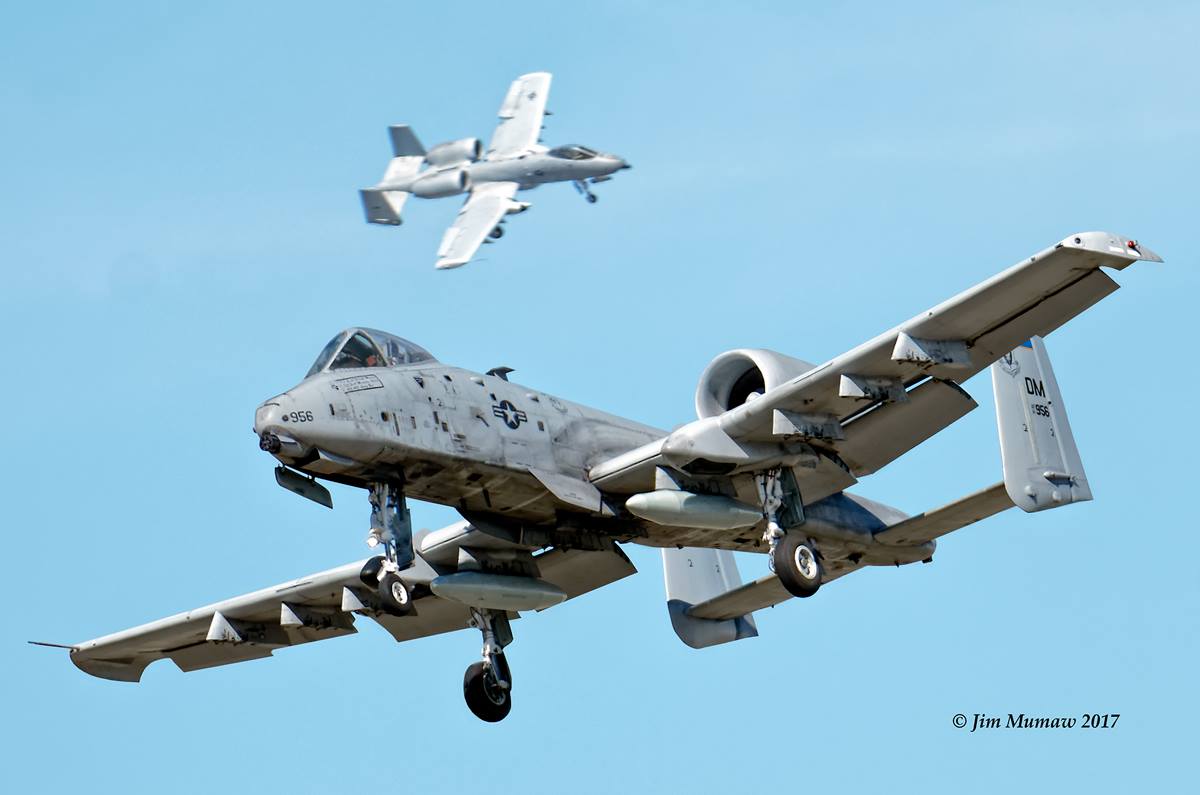
I went on to fly in the USAF in six different airplanes. Most notable: LTV A-7D Corsair II — the “SLUF” — one of the first attack aircraft with good “magic” stuff, computed weapons delivery system and inertial nav, and the Fairchild-Republic A-10A Thunderbolt II — the “Warthog” — back before it had any of the “magic” and we dropped bombs shot the gun as I imagine the P-47 Thunderbolt pilots did back in WWII: hard sight and Kentucky windage. Well, I guess the gun we carried was a little better. After leaving the USAF I flew in the Colorado Air National Guard (the “Redeyes”) and as a civilian pilot. A particular airplane attracted my attention — one that would be fun to fly and would give me an opportunity to share flying as I had done in the USAF: the Beech T-34 Mentor. In the early 80s I had my first taste of flying the T-34 at Buckley Air National Guard Base near Denver, Colorado. When I moved back to San Diego, I looked for an opportunity to fly the T-34 and found it at the North Island Navy Flying Club: Beech T-34B N795FC. I joined the club in January 1994 shortly after 5FC arrived. Two years later I met Tracy at the club when she started taking lessons. The rest is history and, as Tracy often says, was meant to be.
The Operation Was a Show of Force But No Happy Ending
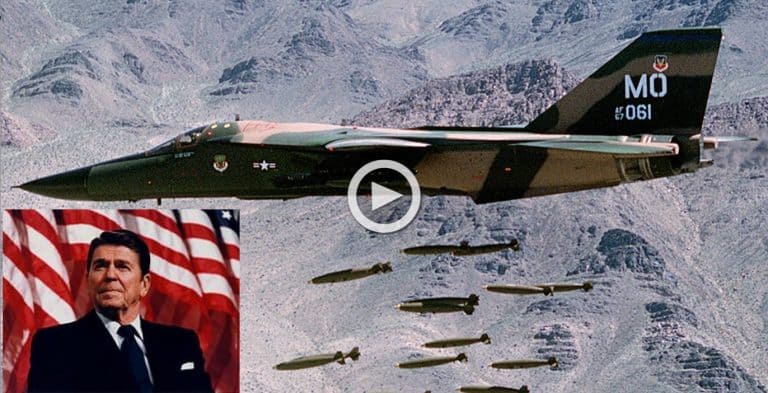
At 0200 local time on 14 April 1986, United States Air Force (USAF), United States Navy (USN), and United States Marine Corps (USMC) aircraft attacked targets in Tripoli and Benghazi, Libya. The attack was code named Operation El Dorado Canyon. The raid was President Ronald Reagan’s response to several Libyan-sponsored terrorist attacks in Europe, among them the 1985 Rome and Venice airport attacks that killed 19 and wounded approximately 150 people. On the night of 5 April 1986 Libyan agents bombed the “La Belle” nightclub in West Berlin, killing a Turkish woman and two American Army Sergeants, Kenneth T. Ford and James E. Goins. Also injured were 50 US military personnel among the total of 230 hurt. The gloves were about to come off.
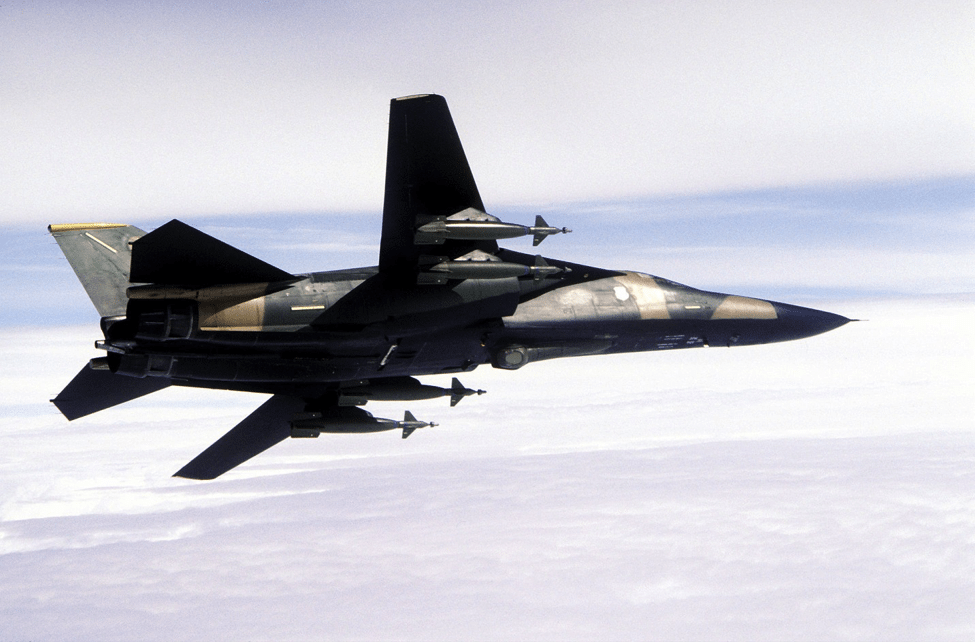
USAF F-111E in flight
Navy 2 Libya 0
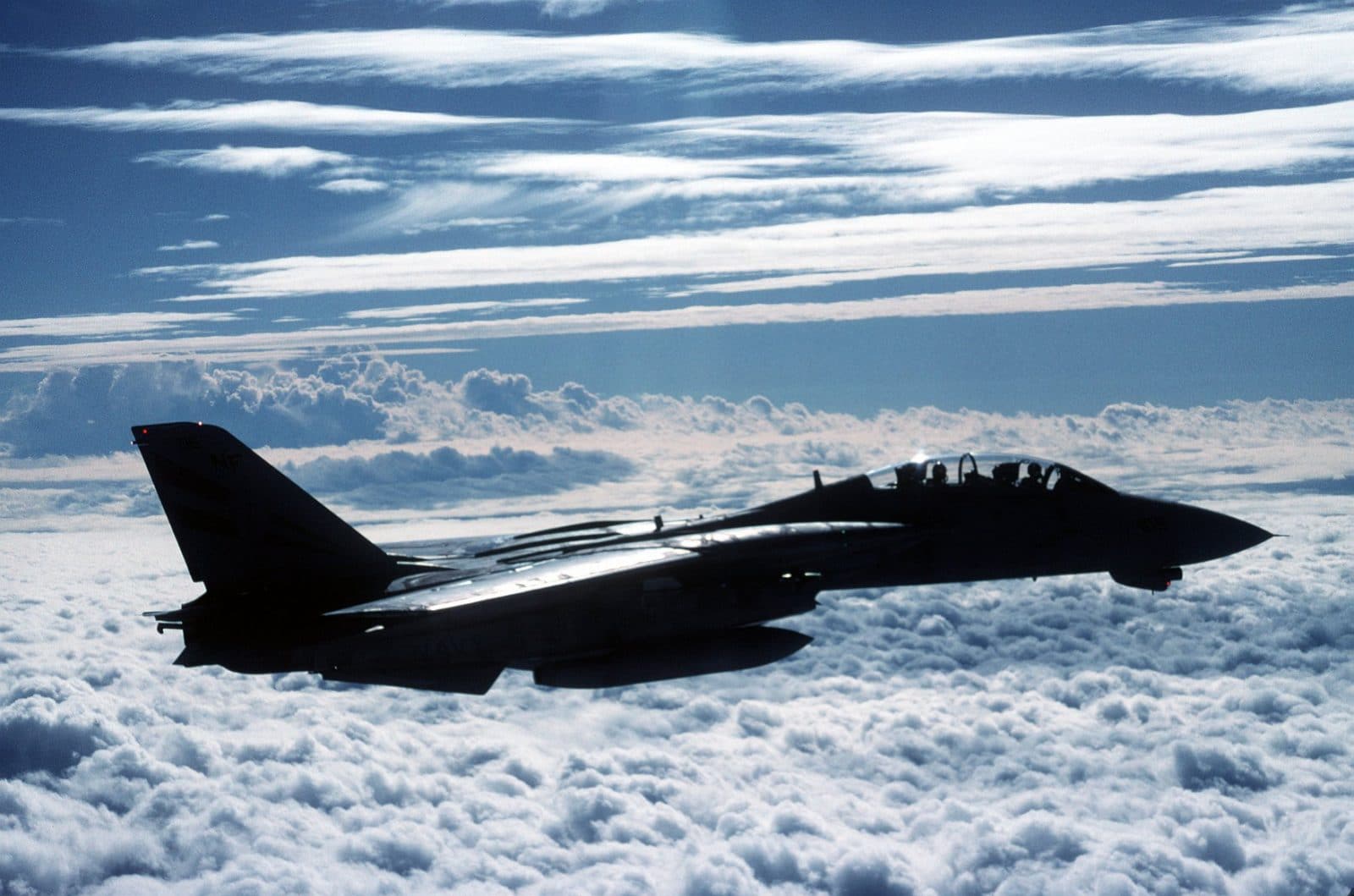
Libya had been a thorn in the world’s side ever since Muammar Gaddafi had risen to power. Gaddafi was unapologetic about his support for terrorism, even saying publicly that he would continue to support terrorism. Previous confrontations had not gone well for Gaddafi. During a United States freedom of navigation exercise during August of 1981, two Libyan SU-22 Fitter pilots mixed it up with VF-41 Black Aces F-14A Tomcats. The T-shirts that magically appeared seemingly within minutes on every Navy base and air station around the world proclaimed: Navy 2. Libya 0. This engagement went down in history as the Gulf of Sidra Incident.
Image via US Navy
Going It Alone While “Allies” Sit It Out
President Reagan, having worked for several days after the LaBelle bombing with European and Arab countries to try and arrive at some kind of diplomatic resolution to the Gaddafi problem, decided on 14 April to attack terrorism-related targets in Libya. Unfortunately he got little or no support from any of the European countries. France, Italy and Spain not only denied overflight permission for the strikes; they also denied the use of any bases by the Americans. This would mean that the USAF bombers would have to fly from their bases in the United Kingdom around the entire European land mass in order to reach their Libyan targets- turning a long but manageable duration mission into a 15 hour, 5,500 mile marathon. It would be the longest mission flown by tactical aircraft to date. Go find your most uncomfortable chair and sit in it without getting up and moving around. For 15 hours. In the for-what-it’s-worth department, the French president was said to have denied the Americans his support because he wasn’t interested in a limited response, but wanted a stronger response that would remove Gaddafi from power. Does that make your six feel any better after hour ten in that chair?
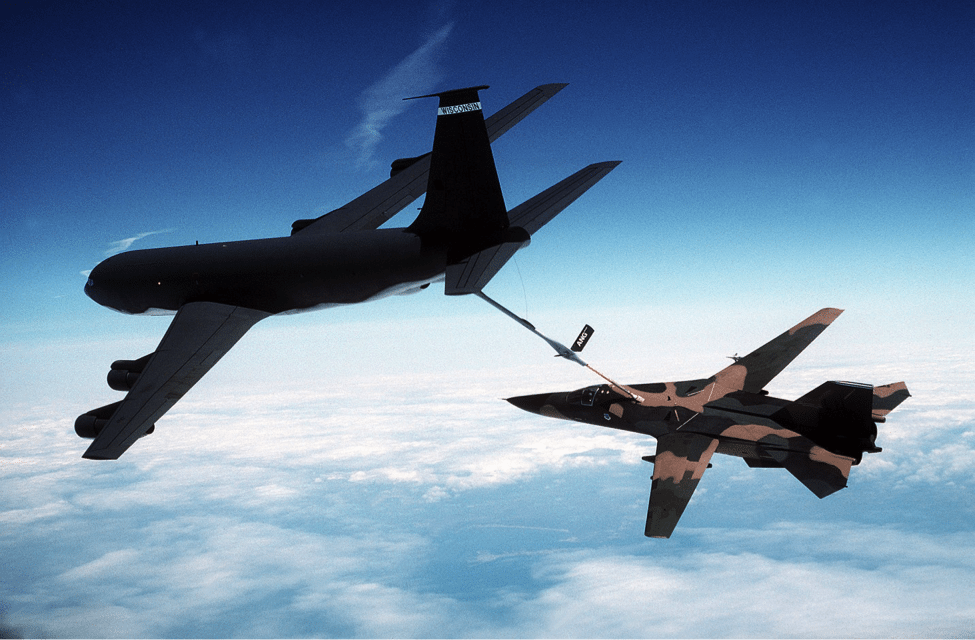
USAF F-111E refuels from a Wisconsin Air National Guard KC-135 tanker.
Training for the Real-World Mission
One little-known aspect of the operation is that during October of 1985 ten of the F-111E Aardvarks of the 20th Tactical Fighter Wing (TFW) flew a practice long-duration bombing mission from their base at RAF Upper Heyford in the UK to Newfoundland, Canada and back again. Referred to as Operation Ghost Rider (cool name!), this training mission was conceived to work out any potential kinks in the plan so a similar mission could be flown the following year. Perhaps even against Libya. Information and tactics used by the 20th TFW were passed down the line to the 48th TFW, equipped with F-111F model ‘Varks.
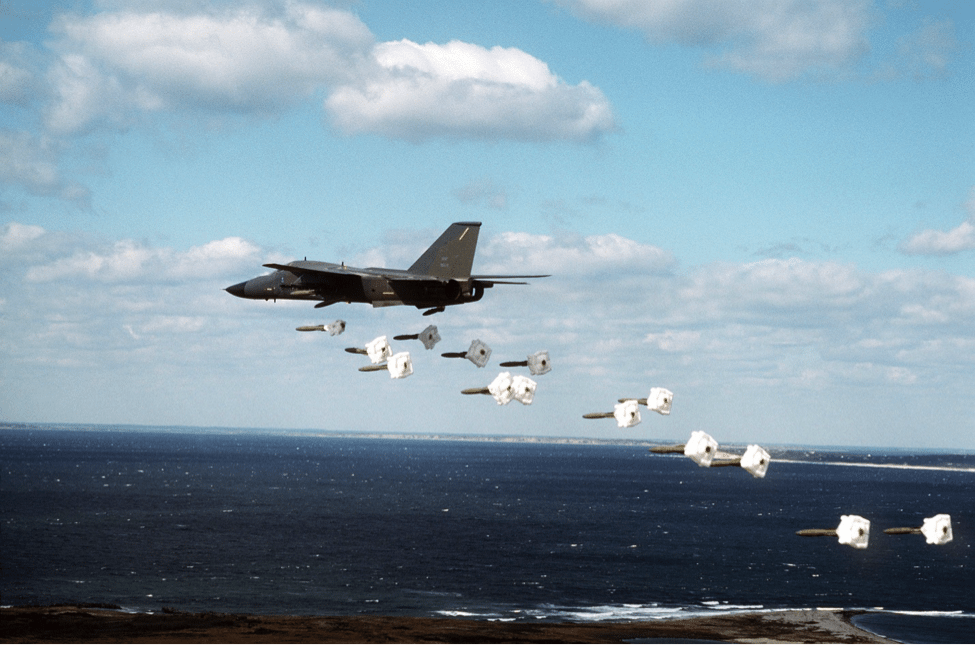
USAF F-111F drops retarded bombs on a target range.
Air Force Order of Battle
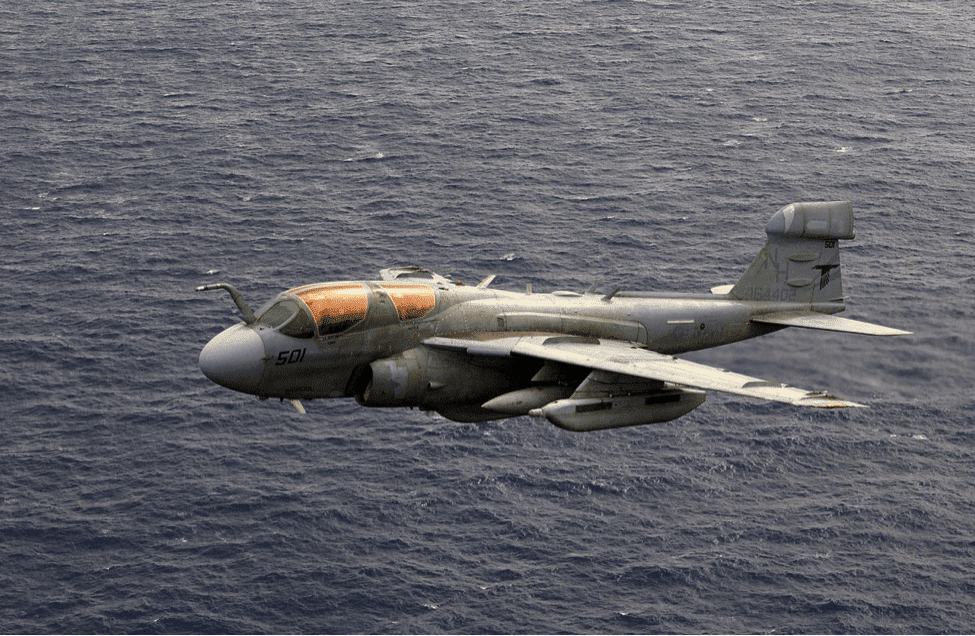
The order of battle for Operation Eldorado Canyon, which would be the first Air Force combat mission since the war in Vietnam, started with the 24 (including six spare) F-111F Aardvarks of the 48th TFW, based at RAF Lakenheath in the UK. These Pave Tack infrared targeting designator-equipped bombers would drop precision-guided Paveway bombs on their Libyan military targets. Providing electronic countermeasures support would be five (1 spare) EF-111A Ravens of the 42nd Electronic Combat Squadron (ECS) out of RAF Upper Heyford. 19 McDonnell Douglas KC-10A Extender and ten Boeing KC-135 Stratotanker aerial refueling tankers from RAF Mildenhall and RAF Fairford would provide the total of six aerial refuelings the USAF bombers and jammers would require to fly their assigned missions. The additional tanker assets needed to support the mission were moved in to the bases in the UK under the cover of a NATO exercise dubbed Salty Nation.
US Navy EA-6B Prowler of VAQ-135 Black Ravens in flight
For the Rest of the El Dorado Canyon Story Bang NEXT PAGE Below
Gene Hambleton Landed in the Middle of the Largest NVA Offensive of the War…and Lived to Tell About It.
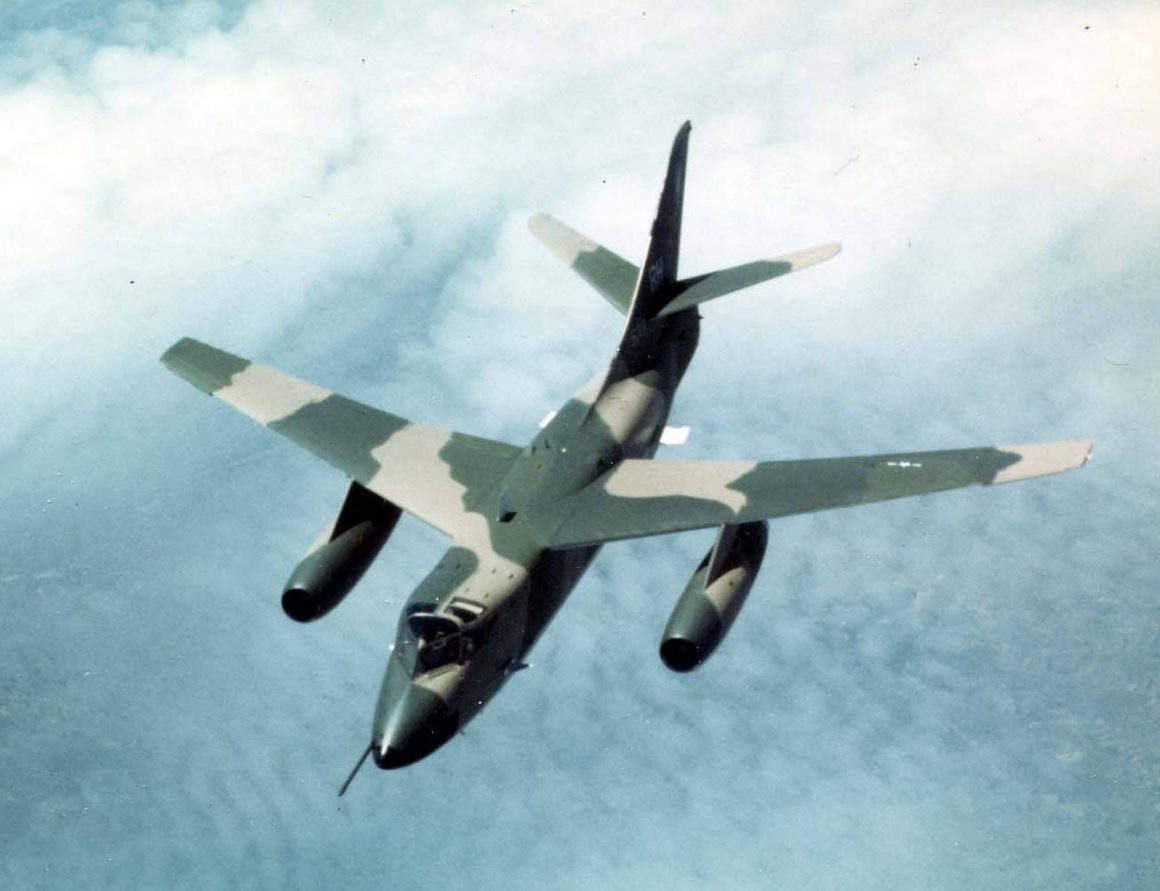
On April 2, 1972 over South Vietnam, two United States Air Force (USAF) Douglas EB-66 Destroyers were escorting a cell of three Boeing B-52D Stratofortresses tasked to bomb Ho Chi Minh Trail access points in Quang Tri Province. The EB-66s were there to provide search and guidance radar jamming for the B-52D big ugly fat…fellows (BUFFs) and to gather electronic signals intelligence. The call sign of the first EB-66C as Bat 21. The 1972 Easter Offensive was in its third day. Roughly 30,000 North Vietnamese Army (NVA) troops had crossed the De-Militarized Zone (DMZ) and were headed south. What happened next would be debated for its human cost, and celebrated for its ingenuity and bravery by all involved.
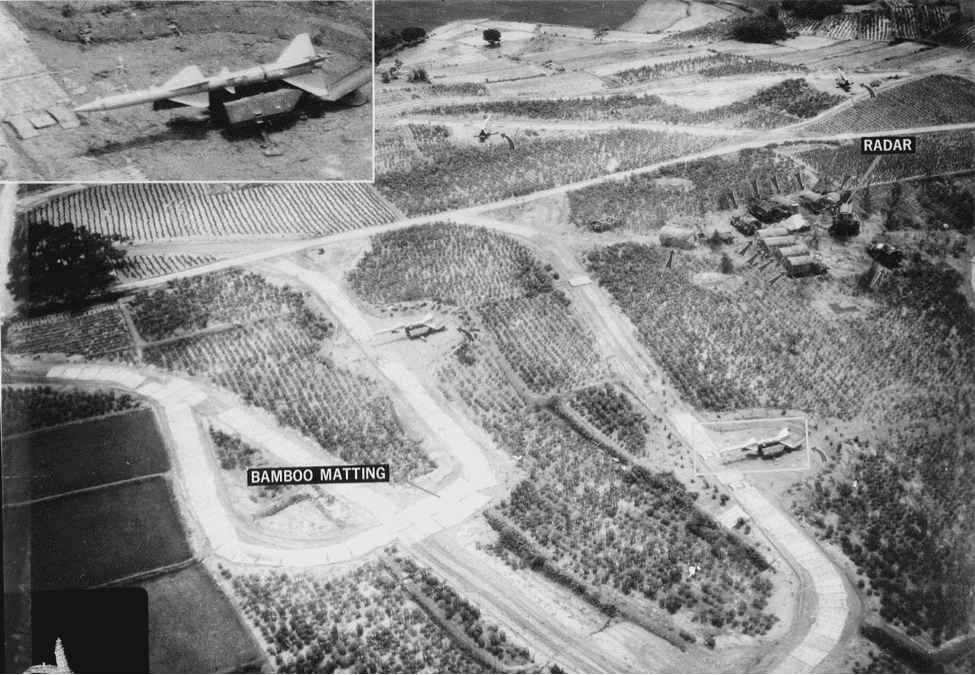
Typical North Vietnamese SA-2 Guideline SAM site
Drawdown Puts a Senior Nav Aboard
B-52D BUFFs had been flying “Arc Light” bombing missions in support of the defenders on the ground but had been increasingly tracked and fired upon by surface-to-air missiles (SAMs). The BUFFs needed more electronic support and the 42nd Tactical Electronic Warfare Squadron (42nd TEWS) was tasked to provide that support. Like many other organizations, manpower had been depleted by the personnel draw down in the 42nd TEWS. As a result, a senior navigator by the name of Iceal Hambleton, better known as Gene, assigned himself to fly as the navigator in one of the EB-66s slated for the mission of April 2nd. Ironically, Hambleton had tracked NVA SA-2 Guideline SAMs south of the DMZ before, but others continued to question their presence so in South Vietnam.
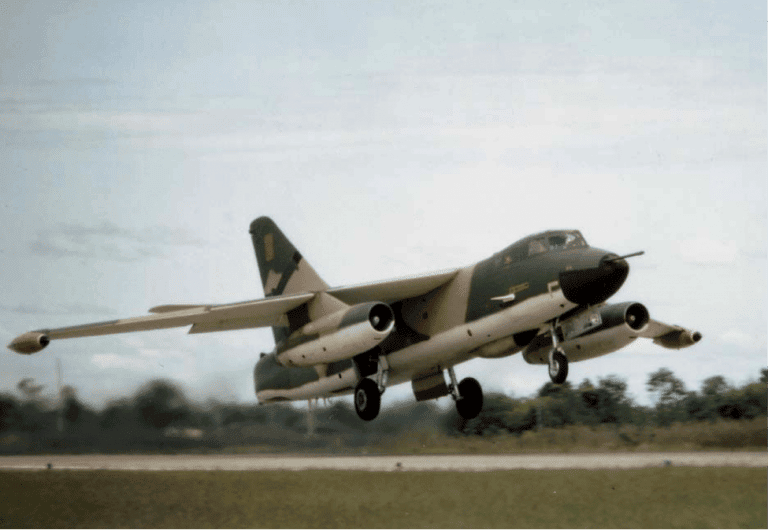
Douglas EB-66 Destroyer on the tarmac in Thailand
Out of the Frying Pan…
Douglas EB-66C Destroyer, Air Force serial number 54-0466, was flying over Quang Tri Province, just south of the DMZ, when the NVA shot a volley of SAMs at the two EB-66s. Hambleton’s EB-66C was hit by a SA-2 while flying at 29,000 feet over northern South Vietnam. Hambleton called for the crew to eject and pulled his seat ejection handles just before the stricken EB-66 was hit by a second SA-2 and destroyed. Hambleton was the sole survivor of a crew totaling six. As he floated down in his parachute he realized he had shrapnel wounds from his aircraft exploding, a ripped finger, and four compressed vertebra from the force of the ejection. Remember those 30,000 NVA troops pouring over the border? Hambleton floated down in his parachute right into the middle of their advance, yet a fortuitous low cloud bank hid him as he descended in a dry rice paddy.
image via national museum of the us air force
Right in the Middle of the NVA Advance
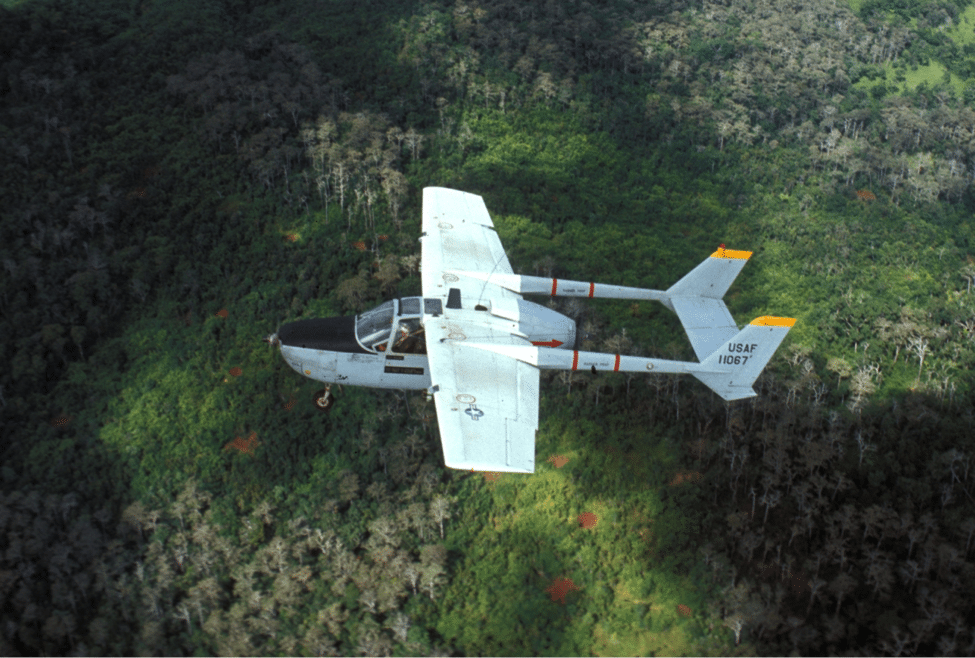
Hambleton (call sign Bat 21 Bravo) was in radio contact with Air Force Forward Air Controllers (FACs) flying a Cessna O-2 in the vicinity even before he landed. Even though the FACs saw the EB-66 get shot down, they were still unprepared for the number of NVA troops and the sheer amount of NVA arms and equipment in the area. The FACs fixed Hambleton’s position and relayed it to an HC-130P combat search and rescue (CSAR) tanker aircraft (call sign King 22) in order to get a rescue force spun up. Friendly forces had just destroyed a bridge in the area, so now Hambleton had a front row seat (less than 100 meters away) for the re-routed NVA advance to the south.
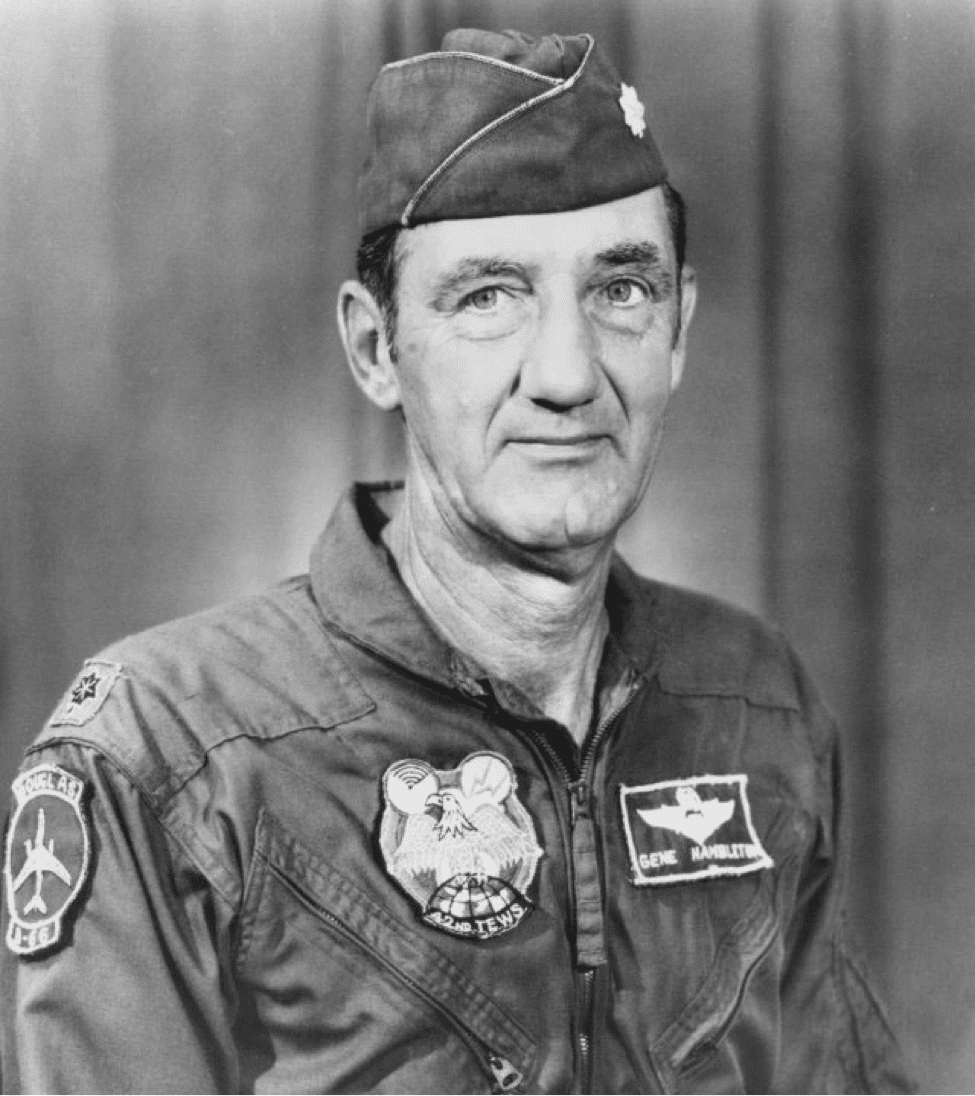
Lieutenant Colonel Iceal “Gene” Hambleton, USAF
Hambleton Was Much More Than Just a Senior Navigator
Lieutenant Colonel Iceal Hambleton was not just another Air Force World War II veteran and senior navigator. Hambleton had worked on Strategic Air Command’s (SAC’s) Jupiter, Titan I, and Titan II intercontinental ballistic missile (ICBM) programs. He had even been Deputy Chief of Operations at SAC’s 390th Strategic Missile Wing. He had firsthand knowledge of the innermost workings of America’s atomic weapons delivery systems and likely targeting information as well. Gene Hambleton simply could not be captured. It is highly likely that the North Vietnamese (and by extension the Soviets) knew of Hambleton’s assignment to the 42nd TEWS, based in Thailand, and if they found out he had been shot down they would make every effort to grab Hambleton. On the other hand, the United States Air Force, Navy, Marines, and even the South Vietnamese, were about to make every effort to rescue Gene Hambleton.
Cessna O-2 FAC aircraft in flight over Vietnam
For More of the Ballad of Bat 21 Bravo Bang NEXT PAGE Below.
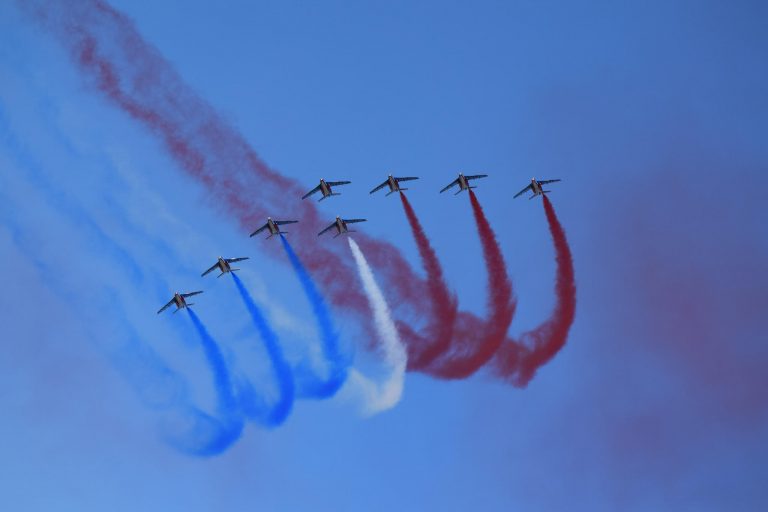
The precision aerobatics of the French Air Force’s own demonstration team Patrouille de France is exciting airshow crowds across America this spring as their ten jets perform an exciting display of maneuvers
Patrouille de France is only in North America through May as the squadron makes their first visit here in 30 years. The team is marking the 100th anniversary of the U.S. entry into World War I to aid France and England, and will include ceremonial events on the ground at each airshow stop. as they remember the centennial.
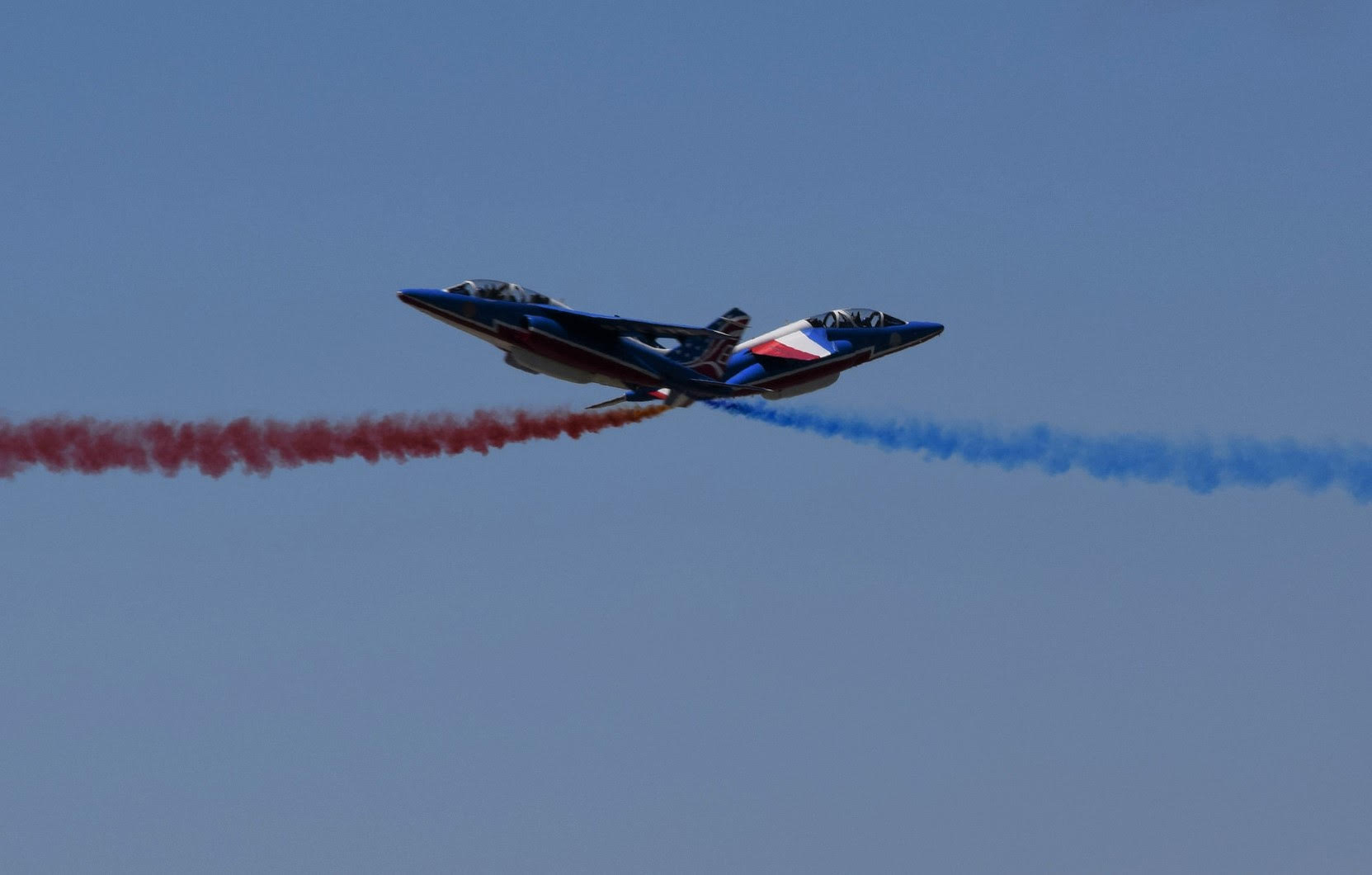
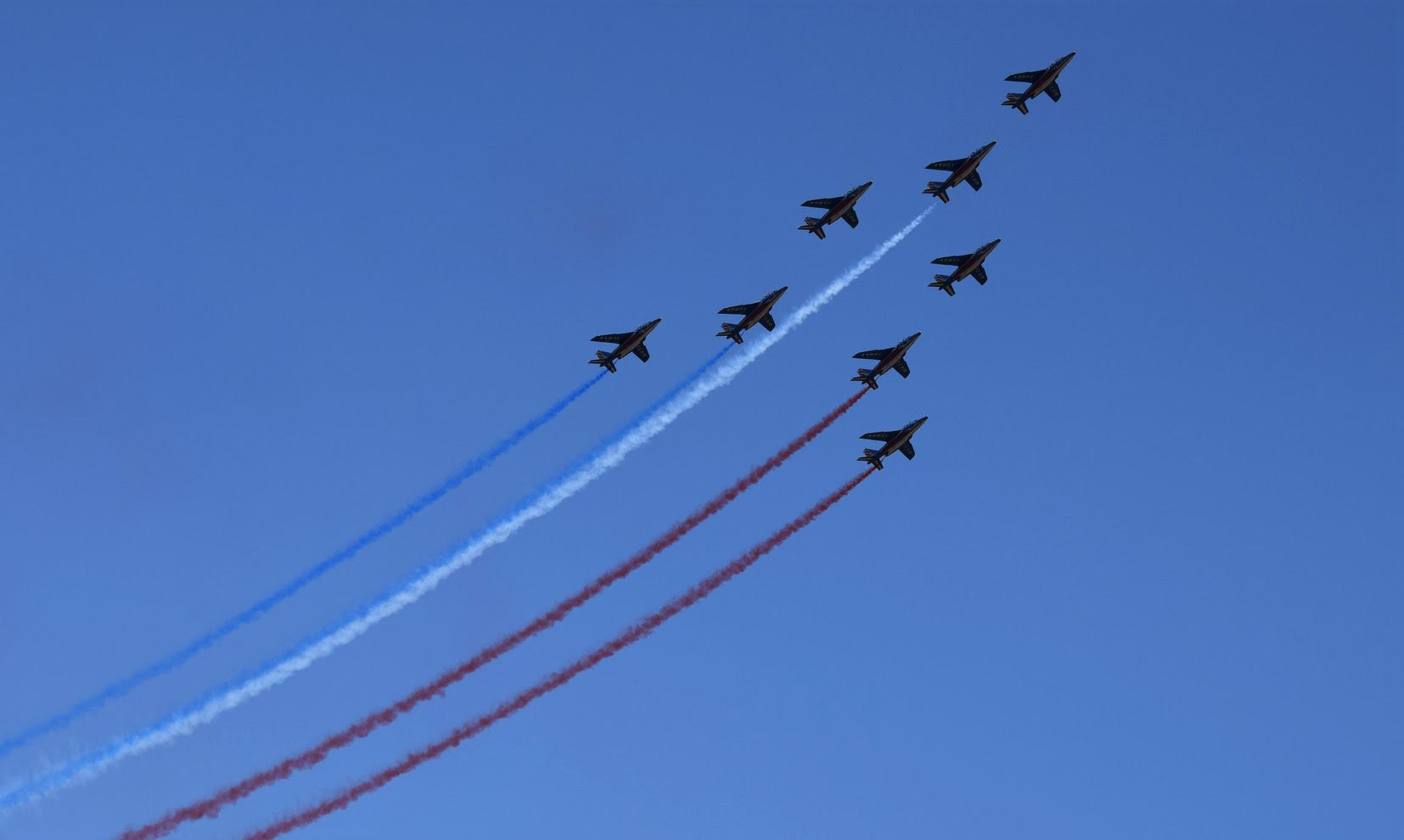
In the sky, the blue, white, and red contrails of Patrouille de France’s eight Alpha jets flying in tight formation is becoming a major highlight at recent airshows in Florida and Alabama. To many, the French Air Force aerobatics won their hearts as the team’s narrator expressed wishes of love and greetings from France to America.
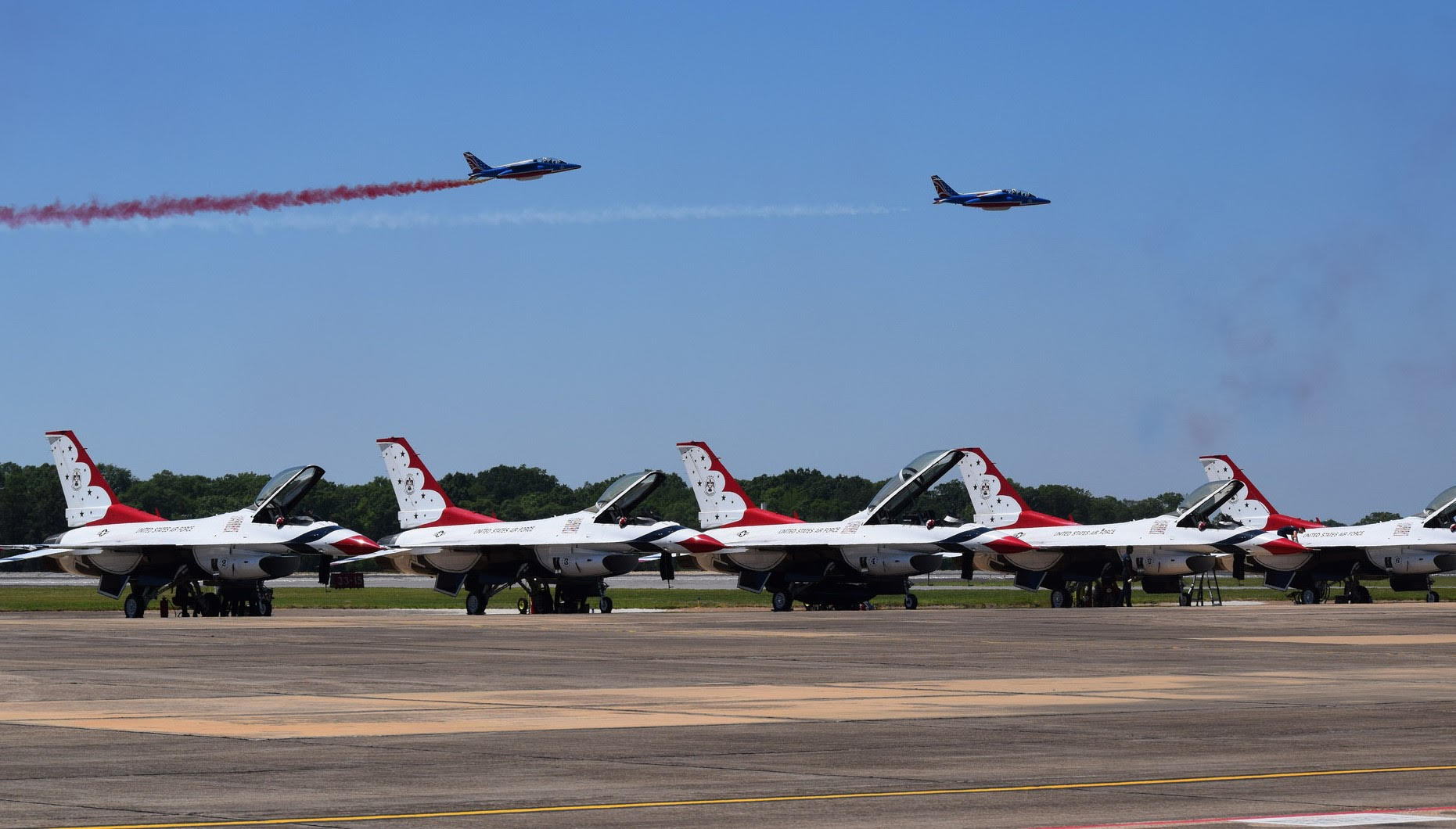
AvGeekery.com caught up with the team at Maxwell AFB in Montgomery as they co-headlined the base’s Open House and Airshow on April 8 and 9 with the USAF Thunderbirds. The two teams engaged in discussions and the Birds even welcomed two of France’s elite to fly with their team.
“At Maxwell, Captain Dubois and Captain Tardif, had the chance to fly with the Thunderbirds in the back seat of their F-16s,” said Patrouille de France spokesperson LTT Antonia Buroni on Sunday. “These fine flights have strengthened the ties that bind us to the American Air Force patrol. It was also an exchange about our ways of working, which proved very enriching. We are delighted to have been able to embark with them.”
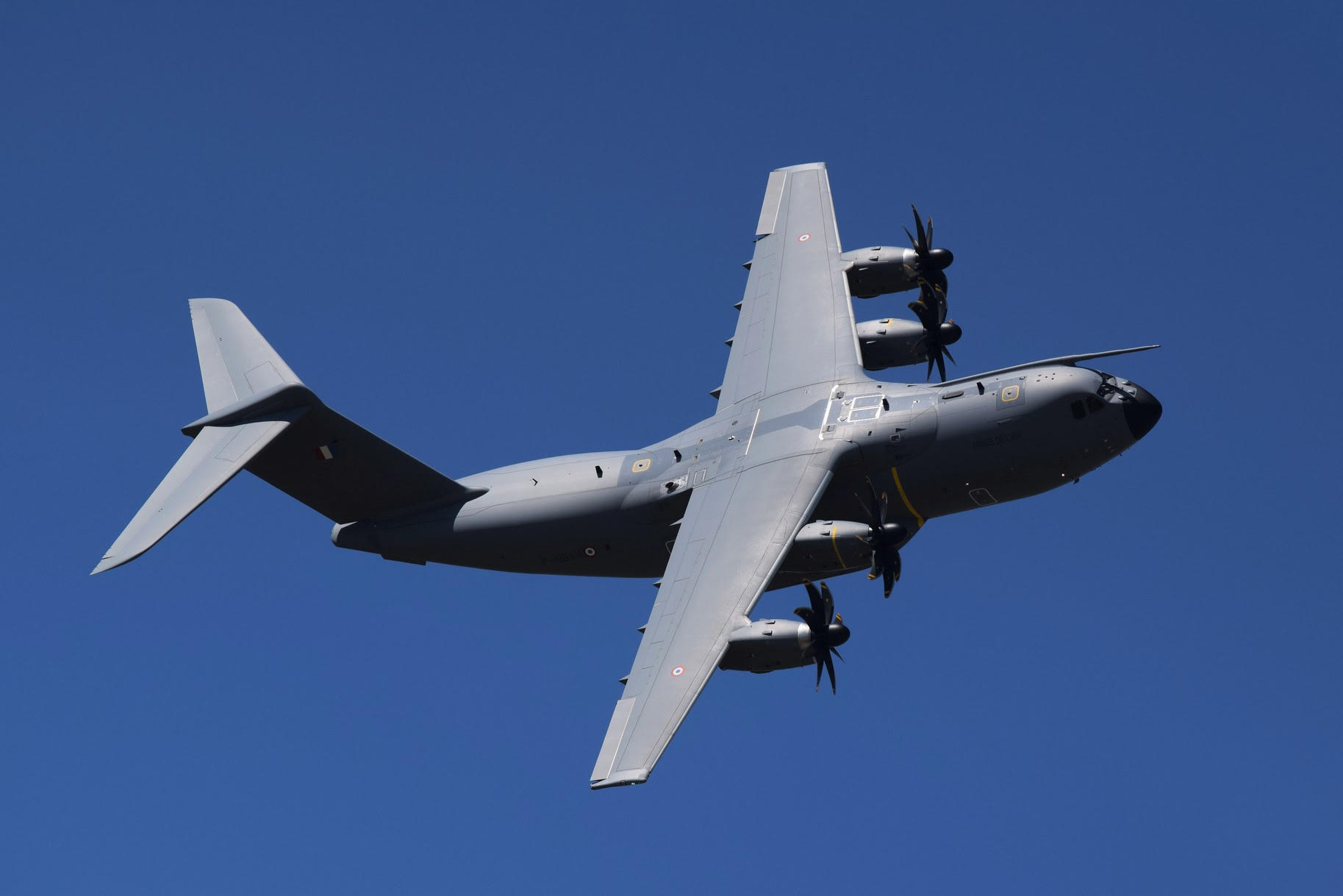
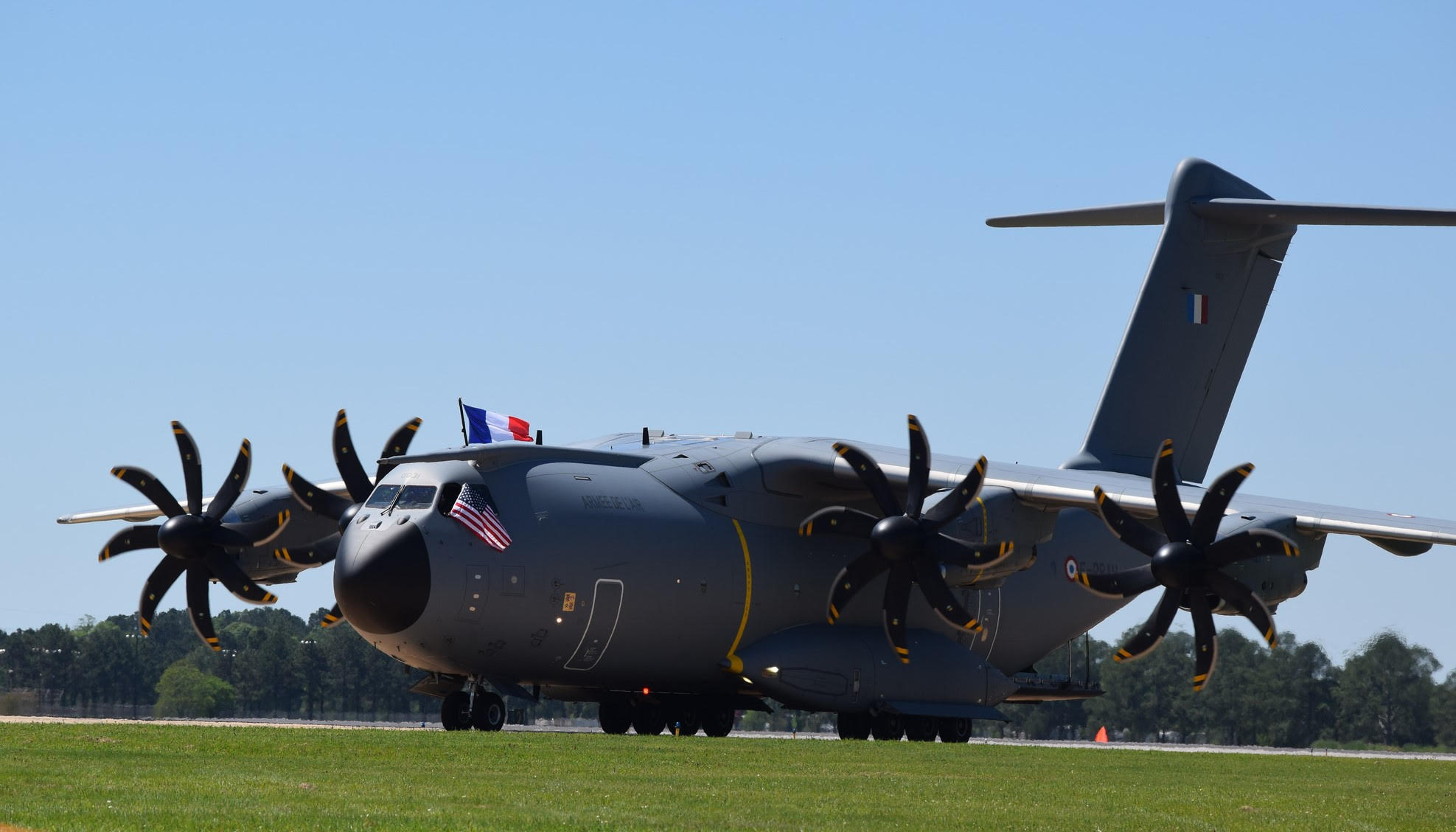
The team’s cargo and personnel craft, an Airbus A400M Atlas, performs a flight demo an hour prior to the Alpha jets. The hulking gray aircraft will demonstrate a high pitch take-off, flat passes, and incredible wing tipped passes before the crowd.
Each pilot flies under the call sign of Athos 1 thru 8, and has currently been with the team for over a year. Lead by flight leader and Athos 1, Commander Christophe, each pilot carries over 2000 hours of flight time behind the stick of the French jets.
Known as the world’s oldest demonstration team in world beginning in 1931, many of Patrouille de France maneuvers are cutting edge providing a deeper dimension during their show flying with two jets more than their U.S. counterpart, the Thunderbirds or the Navy’s Blue Angels. A few of their eight jet formations include the Diamond, Apollo, Fleche, and Canard.
“For two days, we presented our series to the public, who came to attend this meeting at this air base located in the town of Montgomery,” LTT Buroni added. “The audience of the meeting was able to attend in-flight demonstrations of several types of aircraft, including pallet dropping by the eight C-130 Hercules stationed on the Maxwell base, as well as the Eurofighter Typhoon Royal Air Force British.”
Two hours following their April 9 flight demo at Maxwell, Patrouille de France jets and cargo craft departed for Pensacola for two days with the Blue Angels. The squadron will perform a fly over of the Grand Canyon on April 13, followed by stops in Sacramento, California this weekend, and a brief visit with the Thunderbirds at their home in Las Vegas on April 17 and 18. Their brief tour of North America will conclude on May 2 in Quebec.
(Charles A. Atkeison reports on aerospace and science. Follow his updates on social media via @Military_Flight.)
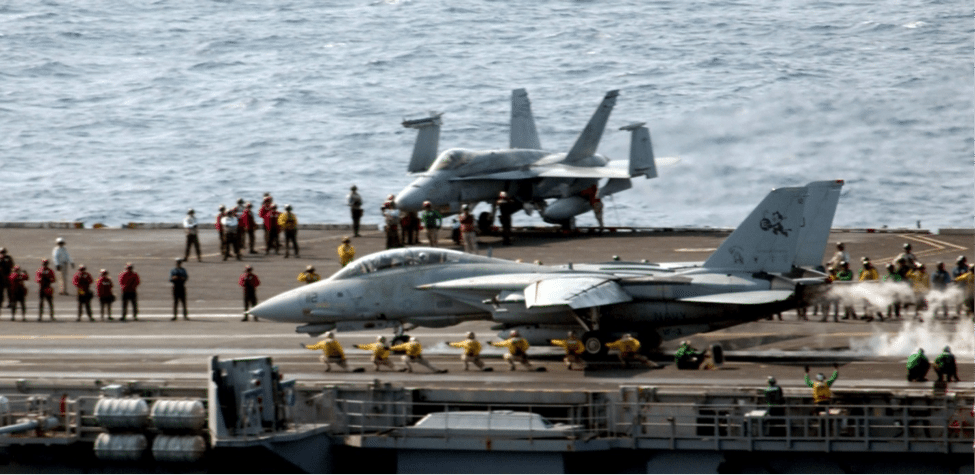
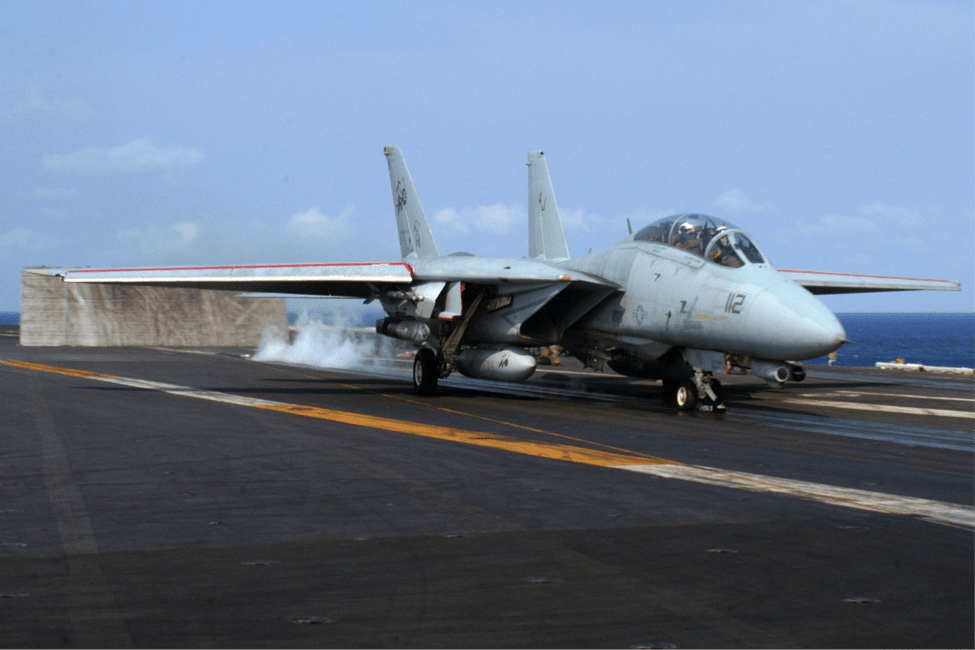
An era came to a close on July 28th 2006 aboard the aircraft carrier USS Theodore Roosevelt (CVN-71) when pilot Lieutenant Blake Coleman and radar intercept officer (RIO) Lieutenant Commander Dave Lauderbaugh were launched off catapult three at 1642. They were flying F-14D TomcatBuNo 163417. The VF-31 Tomcatters aircraft Coleman and Lauderbaugh were flying that afternoon over the Atlantic Ocean was the last, the final, F-14 Tomcat ever catapulted off an aircraft carrier.
F-14D Tomcat BuNo 163417, VF-31 side number 112, is launched from catapult 3 aboard USS Theodore Roosevelt (CVN-71).
The Final Fighter Fling
We plan to do a more in-depth article about the F-14 Tomcat the next time a significant Tomcat anniversary rolls around. Our video selection is related to the end of the Tomcat era. It’s a bittersweet look at the state of Naval Aviation at the time when F-14 Tomcat squadrons were in the process of transitioning to Super Hornets. There are some veiled digs at Hornets and Hornet types and some that aren’t veiled even a little bit. Plenty of great flying footage and some great music made the final edit too. You’re definitely good for several LOL moments (even if you weren’t a fighter guy) and maybe even a sigh or a sniffle. It was a tough time for the VF community, but the producers, in this writer’s opinion anyway, nailed it. We hope you enjoy this, the not quite completely 100% PC (call it PC-ish) last Fighter Fling video ever produced: Fighter Fling 2004.
Tomcats joined the fleet in 1973. Born from experience and lessons learned in the skies over Vietnam and tasked with defending the largest of American naval assets (and the biggest targets), Tomcats were capable of so much more than the previous Navy fleet defenders like the F-8 Crusader and the F-4 Phantom II. Both were great jets, but the Tomcat and its Phoenix missile system were built for cold war fleet defense by shooting down large numbers of attackers beyond the horizon. A high compliment can be paid to the Tomcat; it never had to do the job for which it and its missiles system were primarily designed. One of the most complicated and sophisticated aircraft ever deployed aboard aircraft carriers, the Tomcat was flown by the very best of the naval aviators coming out of Naval Air Training Command, which was fitting because the Tomcat demanded the very best of her crews.
Felix 112 rides the shuttle down the deck for the last time.
The Bombcat Bows Out
Later in its service life the Tomcat took up bombing as a way to pay some of the bills. Equipped with the Low Altitude Navigation and Targeting Infrared for Night (LANTIRN) pod, the “Bombcat” became a very accurate bomber without letting itself go as a fighter. When the Tomcat was retired many Tomcat pilots were able to transition to its replacement, the McDonnell Douglas (Boeing) F/A-18E and F/A-18F Super Hornets. Although the F/A-18F primarily took over the fleet defense role, both F/A-18 Super Hornet variants are considered dual-role, fighter and attack, aircraft.
VF-31 performing a “bat” turn for the crew of the carrier USS Theodore Roosevelt (CVN-71).
Author’s note: There is conflicting information about Felix 112’s identity for this event. Some sources indicate that the jet Coleman and Lauderbaugh were flying that day was BuNo 164341. I went with the official Navy history of the event, as I nearly always do, which indicates the jet was BuNo 163417. Even Grumman documentation indicates 163417 was retired to AMARG in March 2006- months before the event. Now 164341 did land without the canopy or the VIP passenger in the back seat one memorable day, but that’s another story.
This Star of Multiple Movies Is Also a Stellar Trainer and War Machine
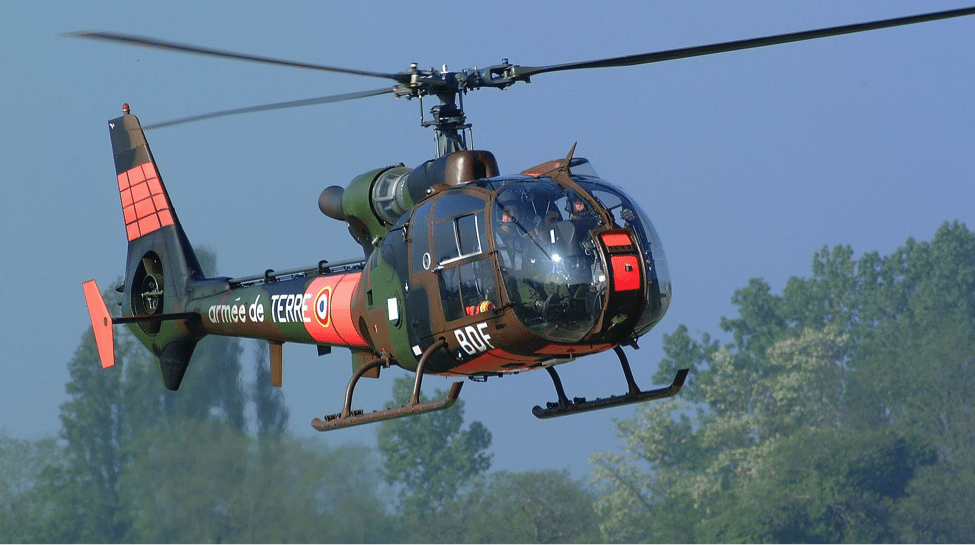
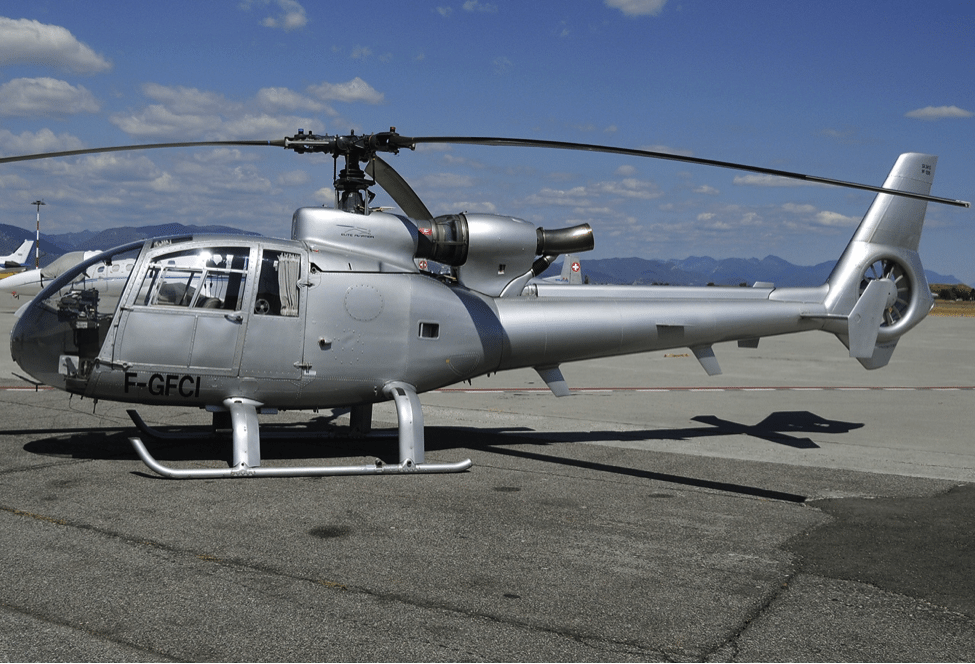
On April 7th 1967 the Aerospatiale (Airbus Helicopters) Gazelle helicopter flew for the first time. The Gazelle was one of the most advanced helicopter designs in the world when it was introduced and several newer designs have utilized its then-unique Fenestron tail fan system. The Gazelle combines relatively small overall size (less than 40 feet long) with the ability to carry five passengers. Originally conceived as a replacement for the successful Sud Aviation SE 3XX Alouette (Lark) series of helicopters, the SA 34X Gazelle series has been adapted to perform dozens of missions and roles for both military and civil operators. And that sound. No other chopper sounds quite like a Gazelle!
Royal Navy training variant of the Gazelle.
Teaming Up to Build a Winner
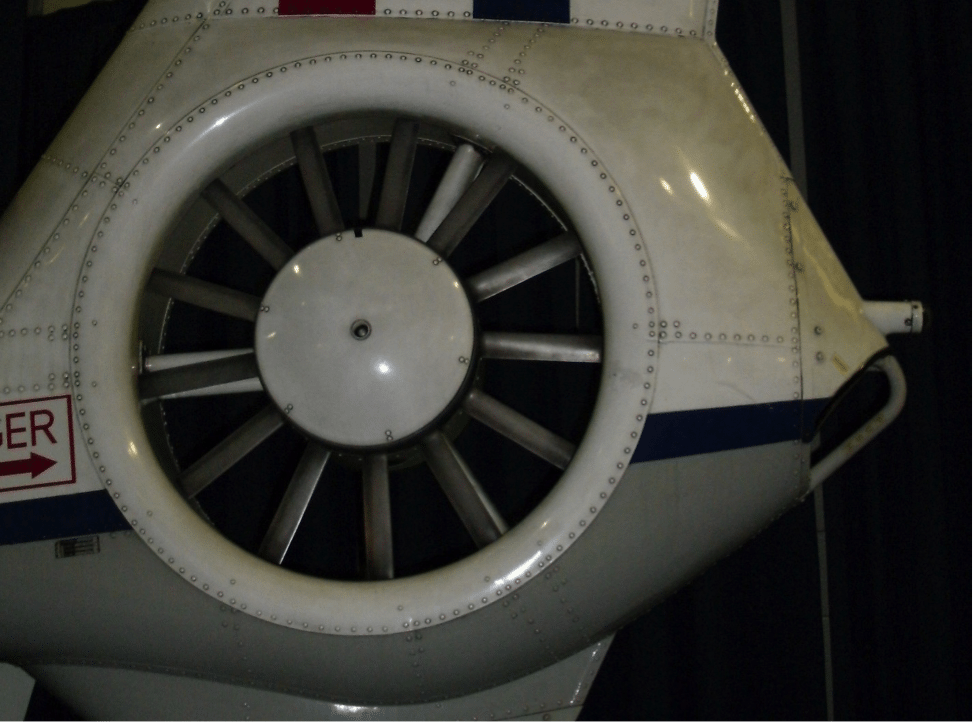
While the Gazelle is clearly a relative of the Alouette, the similarities are superficial only. In 1963 Sud Aviation became aware of both British and French military requirements for a new utility helicopter design. The two largest helicopter builders in their respective countries, Westland of Britain and Sud Aviation of France, entered into an agreement to design and build the new Gazelle. The design of the cabin was predicated on the ability carry a litter patient, so although it is roomy it is also aerodynamically efficient and adaptable. Simple where it needed to be, with skid landing gear and an industry standard turbine engine turning a three bladed main rotor, yet innovative with features like the Fenestron tail fan and long-life components with low maintenance requirements, the Gazelle was built with longevity and usability in mind.
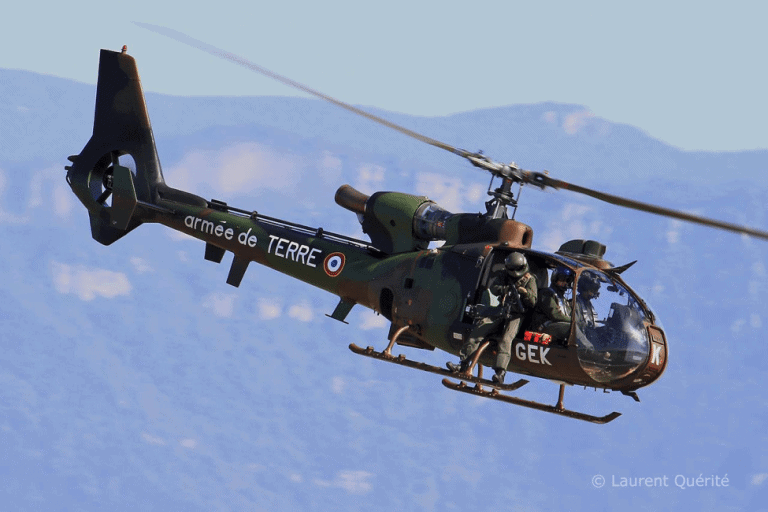
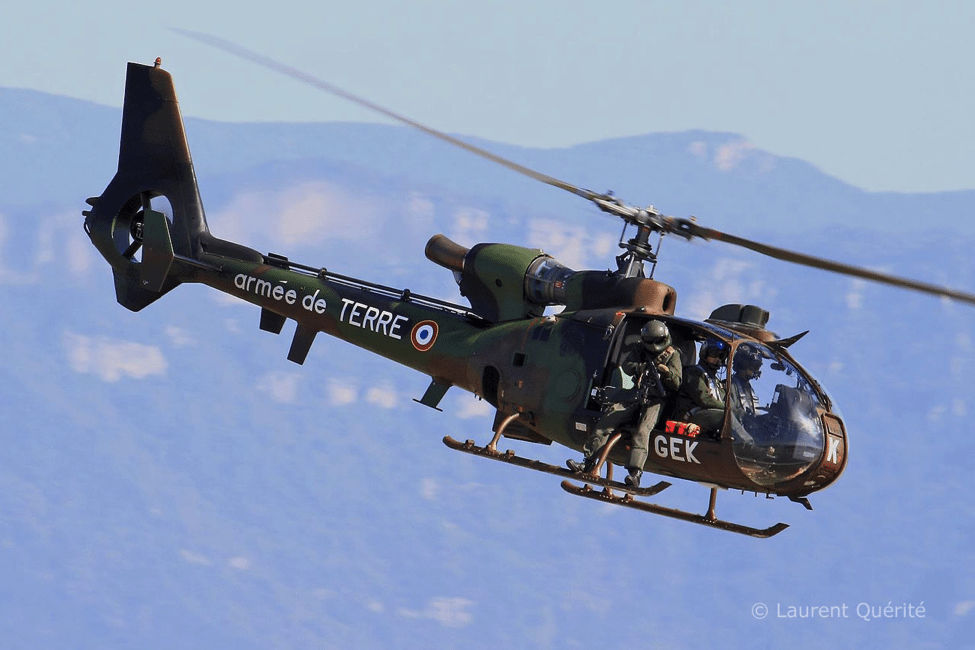
French Army Gazelle used for training in flight.
Getting It Right and Keeping It Right
It took several years of development work to get the Gazelle into production. The prototype itself was not equipped with either the Fenestron tail fan or the intended rigid main rotor system. Once the two companies got things worked out in 1969, production of the Gazelle began. The first production Gazelle took flight on August 6th 1971. Since then, like so many other aircraft, the Gazelle has been refined and improved with more powerful engines and more robust transmissions. Avionics have been upgraded. Smaller but important upgrades to cockpit panel lighting, seating, and a host of other improvements have kept Gazelles flying in military and civil hands around the world.
Closeup of the Fenestron tail fan used on the Gazelle.
Everywhere With the Brits
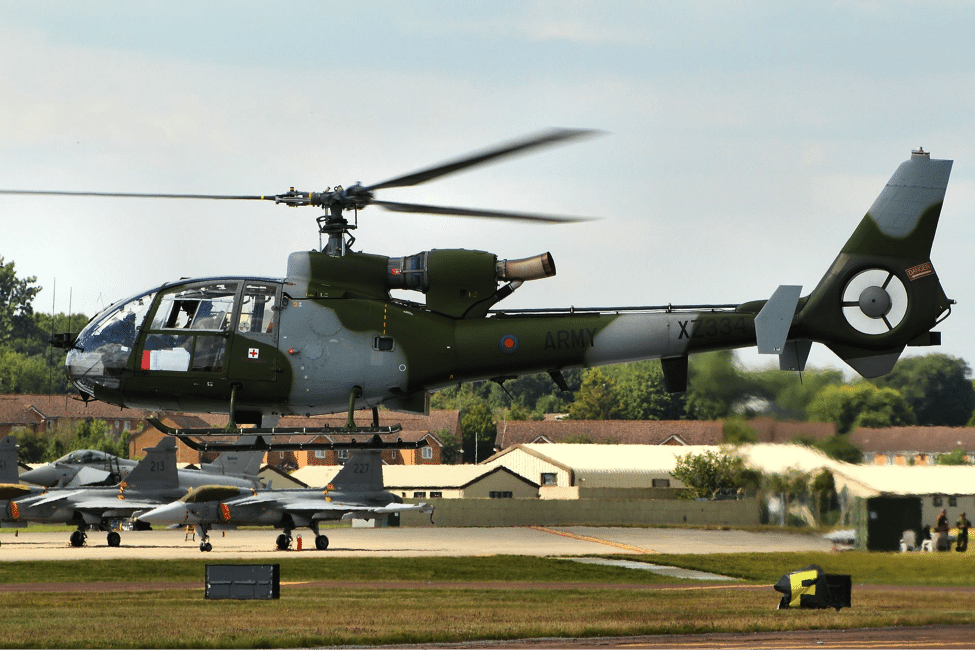
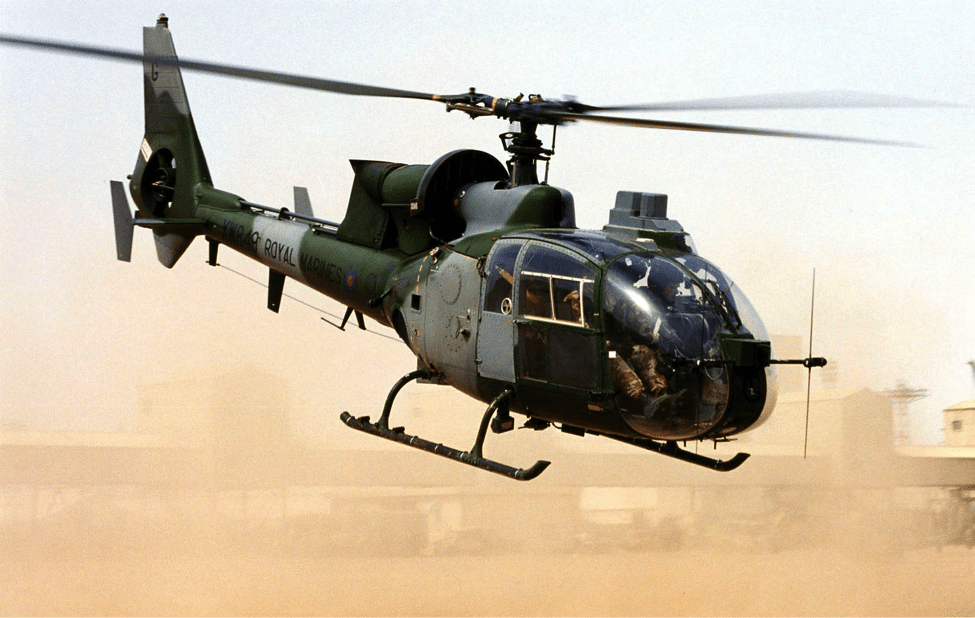
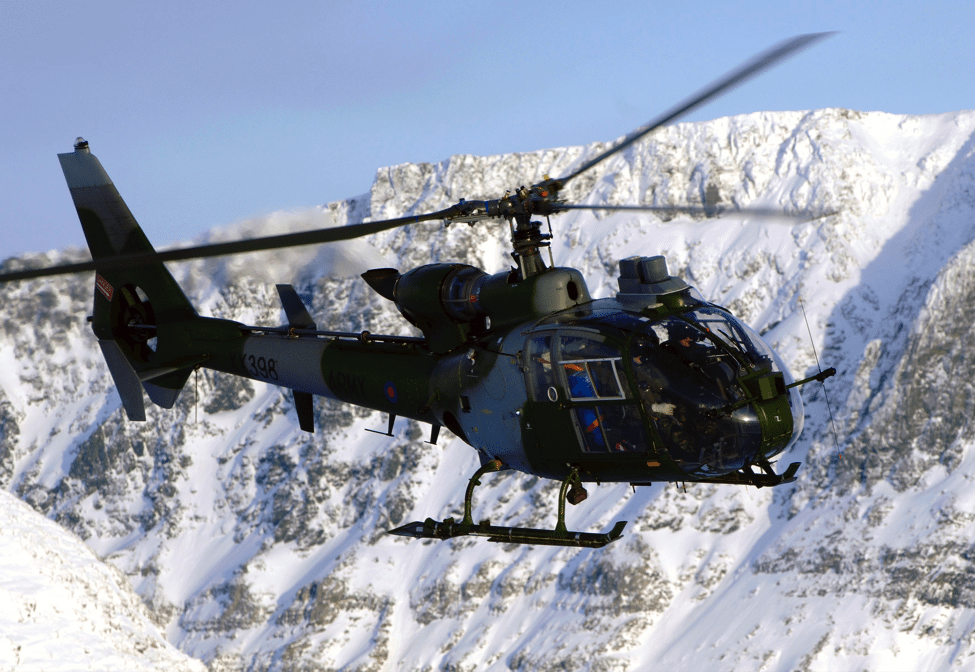
For the British, the Gazelle is one of only two aircraft (the other being DeHavilland’s Chipmunk) flown by the Royal Air Force (RAF), The Royal Navy (RN), The Royal Army (RA), and the Royal Marines (RM). Used primarily for training by both the RAF and RN, the Marines and the Army have used the Gazelle in combat during Operation Corporate (1982 Falklands), Operation Granby (1990-1992 Gulf War I), Operation Grapple (1993-2003 Balkans), Operation Joint Endeavour (1996 Bosnia), Operation Guardian (1999 Kosovo), Operation Barras (2000 Sierra Leone), Operation Fingal (2002 Afghanistan), Operation Telic (2003-2008 Iraq) and Operation Herrick (2006-2014 Afghanistan). One of the Gazelle’s strengths is adaptability, and British Gazelles have been fitted with laser target designators, thermal imaging systems, Doppler radar, Nightsun illumination equipment, machine guns, and guided missiles. The Brits have also found that the Gazelle is tough and reliable, reporting the highest combat availability of any British helicopter type in Iraq and Afghanistan.
A French Army Gazelle with an outrider on the starboard skid.
French Twist
The French have been utilizing Gazelles since 1973. The majority of the French machines are powered by uprated versions of the Turbomeca Astazou engine to support additional weapons and guidance systems. French combat experience in Chad (1980s), the former Yugoslavia (1990s), Djibouti (1991–1992), Somalia (1993), Cote d’Ivoire (2002–present), Afghanistan (2002–present), and Mali (2013) were supported by Gazelles. French Gazelles have fired missiles at Somali pirates and Iraqi tanks. Equipped in many cases with guided Mistral air-to-air missiles or Euromissile HOT anti-tank missiles with sighting systems and designators mounted on top of the cabin, the French have sold hundreds of these pocket-sized tank killers to countries lacking budgets for the high-tech, high-cost attack helicopters being developed today. Gazelles have also been built under license by SOKO in Yugoslavia and the Arab British helicopter Company in Egypt. Production totals have exceeded 1,100 airframes.
British Royal Marines Gazelle pictured somewhere hot and sandy.
Adaptability is Built-In
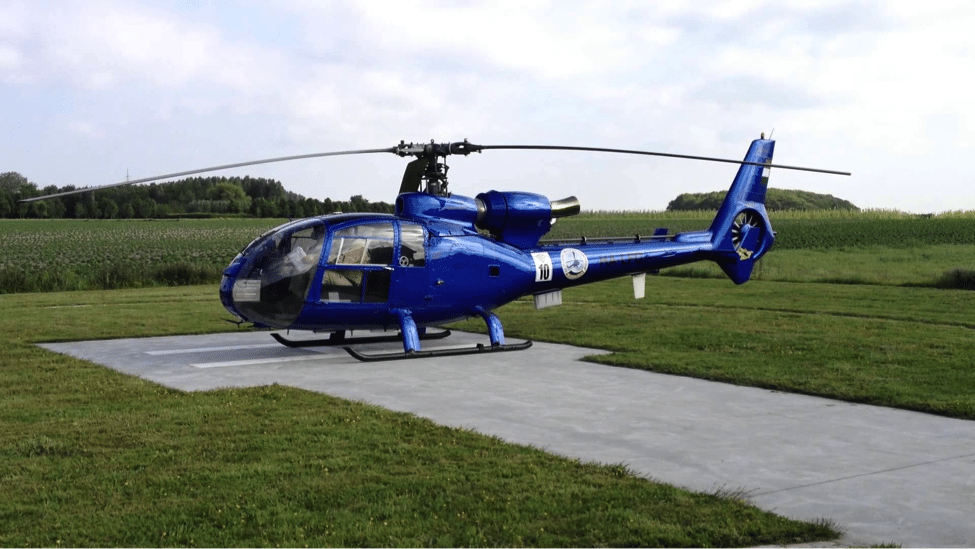
Gazelles have been adapted and upgraded with ferry tanks, infrared (IR) signature suppression systems, externally mounted cannon and machine guns with ammunition supplies in the cabin, rescue winches, particle filters for sandy environments, cabin heaters, emergency floatation equipment, high landing skids, engine anti-icing systems, and adjustable landing lights. Civilian examples of the Gazelle are also equipped with a baggage compartment. Gazelles utilized by law enforcement agencies can be equipped with stabilized camera mounts and lights along with other specialized surveillance imaging equipment. Military Gazelles have been upgraded with the latest armament options, 3D navigational displays, electronic flight instrumentation system (EFIS) cockpit displays, night-vision goggle compatibility, ballistic armor packages, direct voice input (DVI) systems for voice control of aircraft systems, and advanced autopilot systems.
A French civil Gazelle at rest.
Ease of Maintenance
Ease of maintenance and pilot-friendly operations are hallmarks of the Gazelle. Bearings in the Gazelle are life-rated without need for continuous application of lubrication. Most fluid tanks don’t require constant inspection. When the helicopter was designed emphasis was placed on minimal maintenance requirements. Minimal maintenance usually means low operating costs. Many components in the Gazelle were designed for a 700 hour service life, and some critical components have service lives of up to 1200 hours before replacement is required. The Gazelle was also the first helicopter to be rated for single pilot instrument flight conditions (IFR) flight. Surprisingly the Gazelle is not equipped with a throttle or a trimming system. A sophisticated autopilot system aids the pilot and keeps workloads manageable.
British Army Gazelle equipped with advanced electronics mounted on the top of the cabin.
Team Player
Current and former military operators of the Gazelle helicopter series include Angola, Bosnia and Herzegovina, Burundi, Cameroon, Chad, People’s Republic of China, Cyprus, Ecuador, Egypt, France, Gabon, Guinea, Iraq, Ireland, Kenya, Kuwait, Lebanon, Montenegro, Morocco, Qatar, Rwanda, Senegal, Serbia, Republika Srpska, Syria, the United Kingdom, United Arab Emirates, and Yugoslavia. Civil operators of the Gazelle are found all around the world.
A Hungarian-registered civil Gazelle on the pad.
Movie Star Chopper
Gazelles have starred in many movies and television shows over the years. Perhaps the Gazelle with the most screen cred isn’t really a Gazelle at all. Used as the basis for the highly modified and just as heavily armed “anti-riot” helicopter star of the 1978 Columbia/Rastar movie Blue Thunder, and the exceedingly short-lived television series of the same name, was a Gazelle, but Avgeeks knew that as soon as they heard it. At least when it wasn’t in “whisper mode” that is. Clint Eastwood’s character Ben Shockley was chased and liberally shot at from a pesky but maneuverable Gazelle in the 1977 Warner Bothers film The Gauntlet. How many more movies or television shows do you know of in which Gazelles were used?
Meet the Latest and Most Advanced Generation of the Ageless Herc
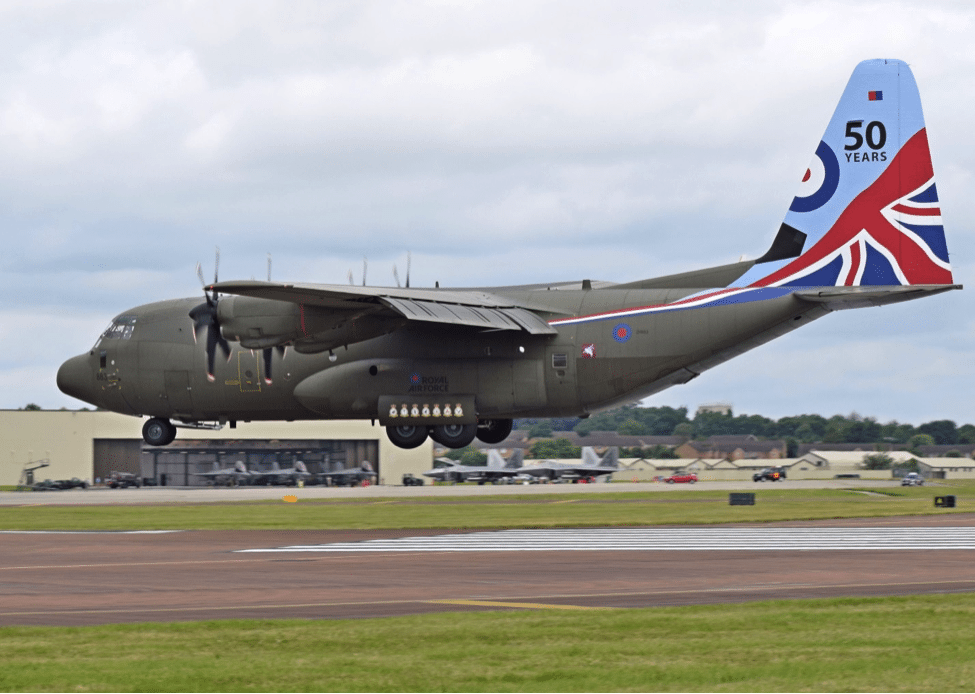
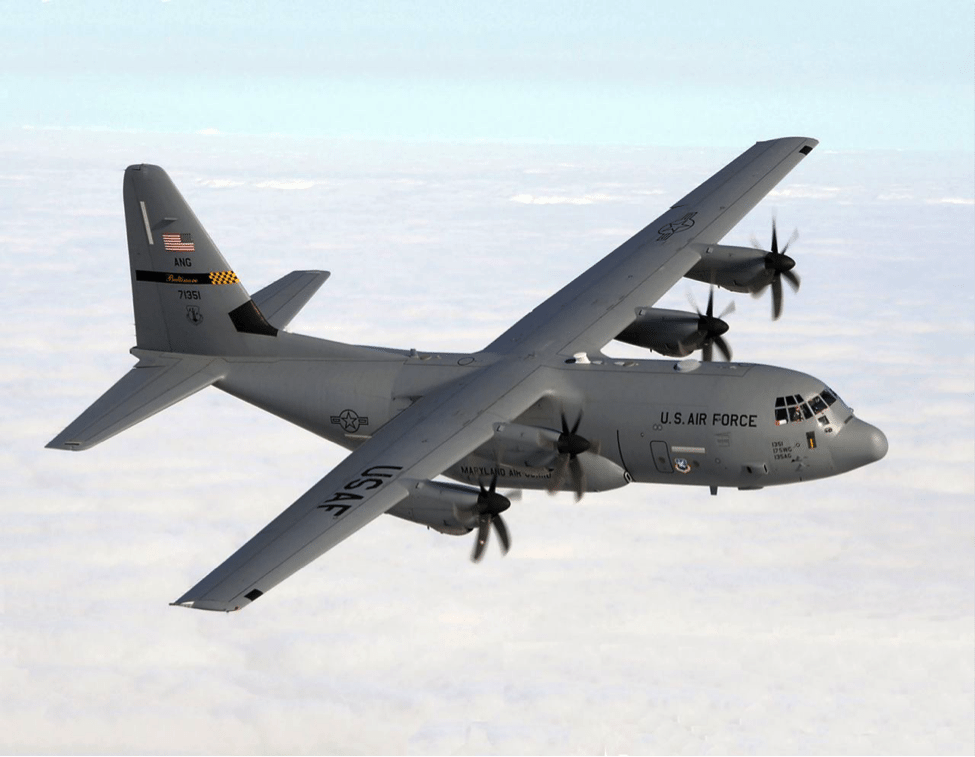
On 5 April 1996 the prototype Lockheed Martin C-130J Super Hercules flew for the first time. While the J model Herc looks a lot like its predecessors, there are more differences than meet the eye. One external cue is the presence of the six scimitar-bladed Dowty composite propellers, but the engines driving them are not the Allison T-56 turboshafts that have powered previous Hercules variants for the past 63 years. No, the C-130J is powered by more powerful and efficient Rolls-Royce (Allison) AE 2100 D3 turboshaft engines housed in revised nacelles. Those revised nacelles are another spotter’s tell. The rest of the differences between the J and previous models are primarily systems upgrades.
RAF Hercules C5 on approach.
From the Sales Brochure
The C-130J comes equipped with a Honeywell dual-embedded global positioning system / inertial navigation system (GPS/INS) along with an enhanced traffic alerting and collision avoidance system (E-TCAS), the SKE2000 station keeping system, the Northrop Grumman low-power color radar display with digital moving map, Elbit Systems global digital map unit, a ground collision avoidance system, the TacView portable mission display and InegrFlight commercial GPS landing system sensor unit, and an instrument landing system (ILS). In the cockpit the J model has dual Flight Dynamics head-up displays, four L-3 multifunction liquid crystal displays (LCDs) for flight control and navigation systems and additional LCDs for selectable systems displays. BAE Systems dual mission computers operate and monitor the aircraft systems and advise the crew of status. With all those black boxes the Super Herc should be able to fly itself!
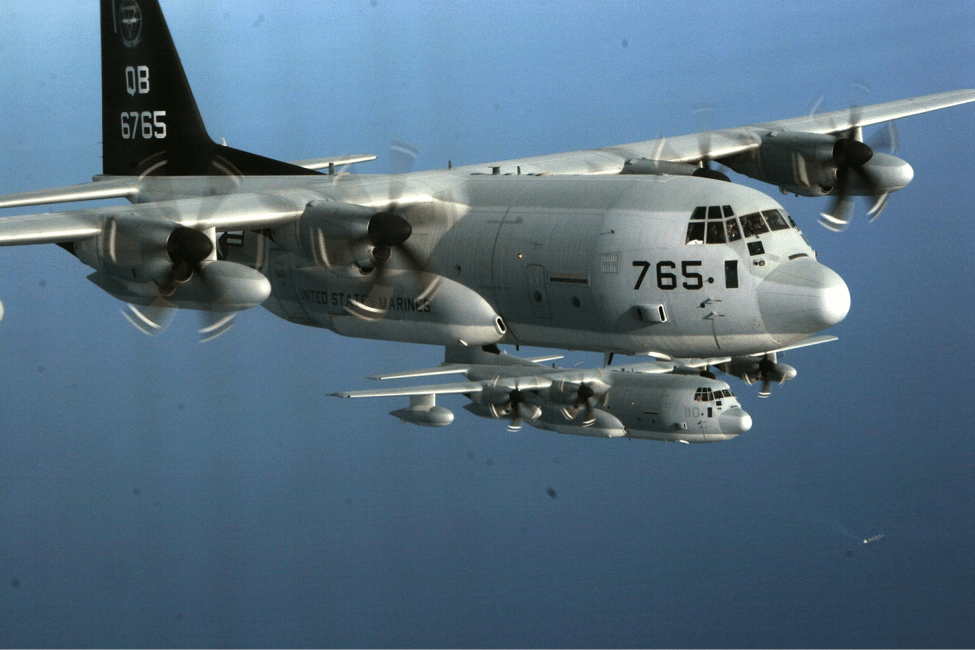
US Marine Corps KC-130J tankers in flight
Getting Defensive
Defensive systems on board C-130Js include the ATK AN/AAR-47 missile warning system, the BAE Systems AN/ALR-56M radar warning receiver, the BAE Systems Integrated Defense Solutions AN/ALE-47 countermeasures system that can select and deploy chaff, flares, and POET and GEN-X active expendable decoys. Also included in the C-130J defensive systems suite is the Lockheed Martin AN/ALQ-157 Large Aircraft Infrared Countermeasures (LAIRCM). Special missions C-130Js also sport next-generation radio frequency countermeasures (RFCM) systems designed to protect the Herc from anti-aircraft weapons, radars and other threats that use electromagnetic signals. The C-130J is not an easy aircraft to bring down.
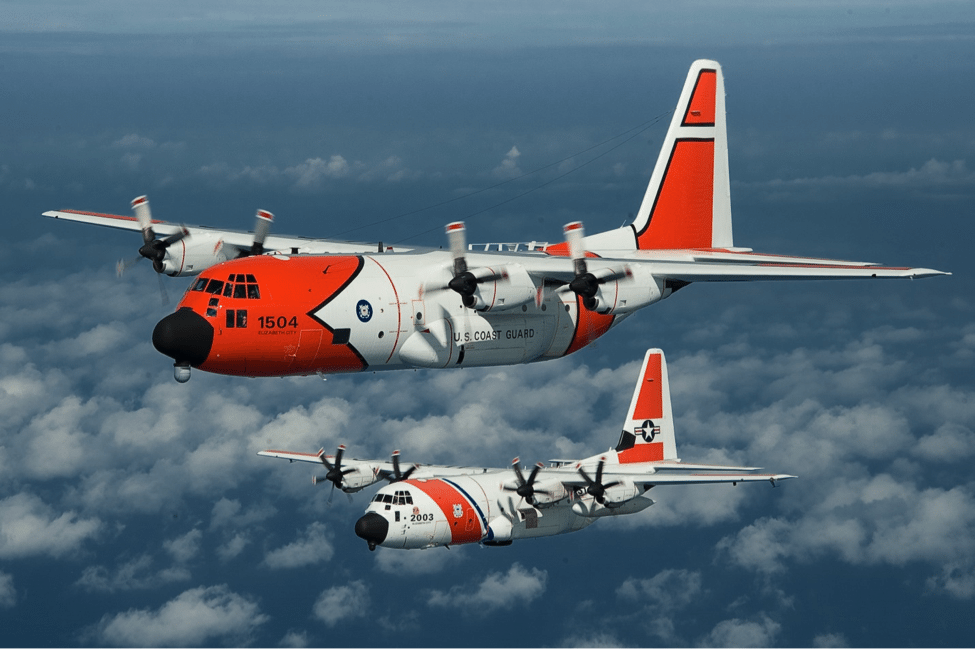
US Coast Guard HC-130J in flight
The Record-Setting Hercules
The Lockheed (Lockheed Martin) C-130 Hercules series of tactical airlifter aircraft has been in continuous production longer than any military aircraft in history and has been in continuous service for 63 years and counting. The first customer for the C-130J model was the Royal Air Force (RAF) in the United Kingdom, which ordered 25 aircraft, taking delivery beginning in 1999. The RAF designations for their C-130Js are Hercules C5 (C-130J) and Hercules C4 (C-130J-30). The C-130J-30 adds an additional 15 total feet of cargo hold length to the basic C-130J aircraft. What may have sold the RAF on the C-130J is its improved performance. The J model Herc has 40% more range, a 21% higher maximum speed, and a 41% shorter takeoff distance than the previous C-130E and C-130H models.
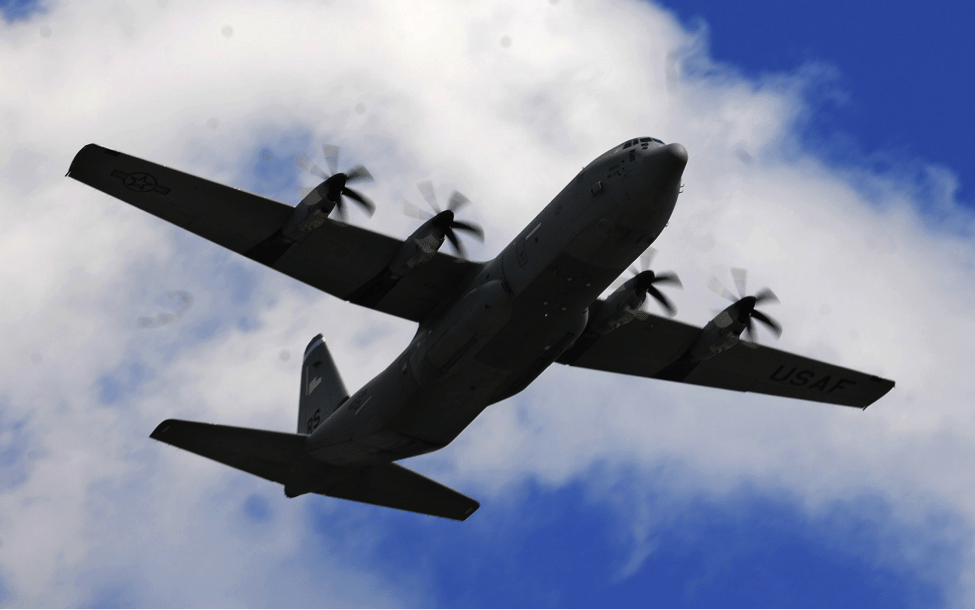
US Air Force C-130J in flight
Operations Requiring Special Talents
Normally a crew of three can handle the C-130J- two pilots and one loadmaster. No navigator or flight engineer is required for standard C-130J cargo or transport missions. However, special missions J Hercs such as the AC-130J Ghostrider gunship, the EC-130J Commando Solo III broadcast communications bird, the MC-130J Commando II combat support tanker, the HC-130J Combat King II rescue support tanker, and the WC-130J Hurricane Hunter weather reconnaissance aircraft add additional systems and crew as necessary to perform their missions. These spec-ops birds are few in number but capable of many specialized high risk we-were-never-there missions.
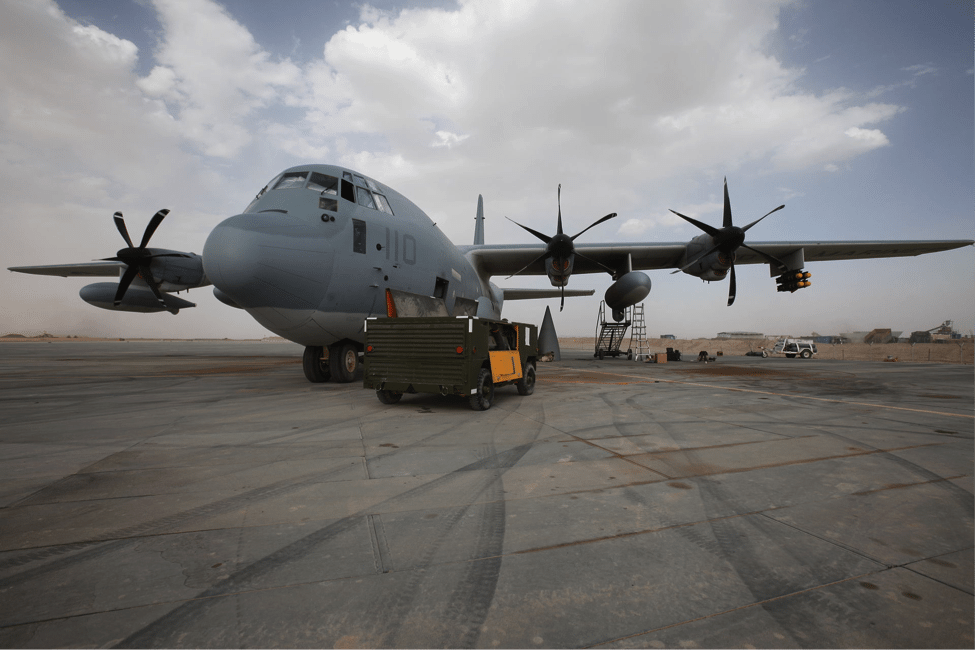
US Marine Corps KC-130J with ISR / Weapon Mission Kit installed. Note Hellfire missiles under port wing
Presto- Your Tanker is Now a Gunship
A unique capability of the Marine KC-130J tanker is the ability to add the ISR / Weapon Mission Kit. This kit enables the KC-130J to be able to serve as a gunship with the ability to fire Hellfire or Griffin missiles, deliver precision-guided bombs, and fire 30 millimeter cannon rounds at a variety of targets. Designated Harvest HAWK (Hercules Airborne Weapons Kit), the system can be added to or removed from the standard USMC KC-130J tanker in a single day. Though not equipped with quite the same sensors and systems as the Air Force Ghostriders, Marine Harvest HAWK KC-130Js pack quite a punch.
US Air Force C-130J in flight
Bringing the Rain
C-130Js are used is to deploy The Modular Airborne Fire Fighting System (MAFFS). MAFFS is a self-contained system that is loaded into the cargo hold of the C-130J (and other Herc variants) which adapts the Hercules to perform aerial tanker missions against wildfires. In turn the Hercules / MAFFS combination allows the United States Forest Service (USFS) to utilize Air Force Reserve (AFRES) and Air National Guard (ANG) Hercs as supplemental firefighting aircraft during peak fire conditions. The improved MAFFS II deployed for the first time aboard a C-130J during a July 2010 wildfire. The 146th Airlift Wing of the California Air National Guard was the first ANG or AFRES to transition to the MAFFS II system in 2008.
US Air Force C-130J in flight
The International J
In addition to the United States Air Force, United States Marine Corps (the new Blue Angels support airlifter “Fat Albert” is a C-130J), and the United States Coast Guard, current and planned operators of the C-130J Super Hercules include Australia, Canada, Denmark, Egypt, France, Germany, India, Iraq, Israel, Italy, Kuwait, Libya, Mexico, Mongolia, Norway, Oman, Saudi Arabia, South Korea, Tunisia, Qatar, United Arab Emirates, and the United Kingdom. The more than 300 C-130Js built by Lockheed Martin have collectively amassed more than one million flight hours. C-130Js have also seen combat in Iraq and Afghanistan. Operations Odyssey Dawn and Unified Protector against Libya were supported by C-130Js as well.
US Coast Guard HC-130H (foreground) and HC-130J (background) in flight
The Rime of the Ancient Airlifter
Today the future for the Hercules looks bright. Make no mistake about the C-130J- it can do things few other airlifters can do. But the list of aircraft that have served as long as the Hercules has is mighty short. Someone always seems to be saying the Herc needs to be replaced. More than sixty years they say. Long in the tooth they say. Well the trouble with that is that even though a few have tried, no suitable replacement for this venerable airlifter has been rolled out yet. Let me know when that happens…if I’m still around myself that is!
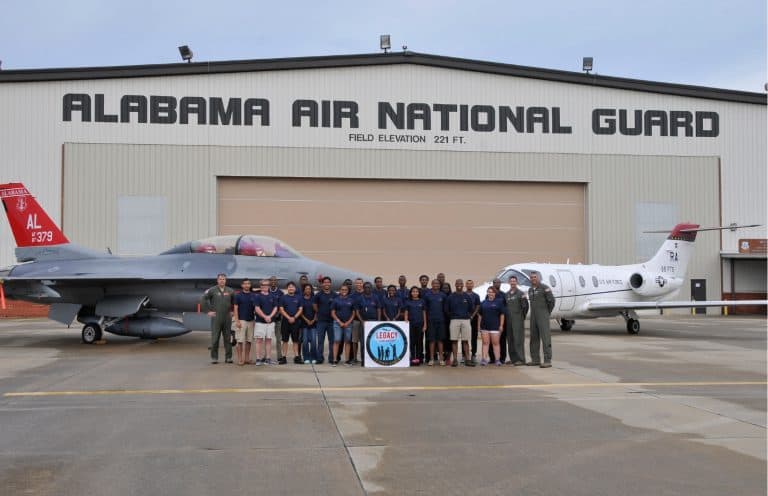
Last summer, original Tuskegee Airman Lt O. Lawton Wilkerson once again took to the skies in an AT-6. Not only did he fly in a plane that began his flying career nearly 75 years earlier, but he also flew it at the same place he learned how to fly – at Moton Field in Tuskegee, AL.
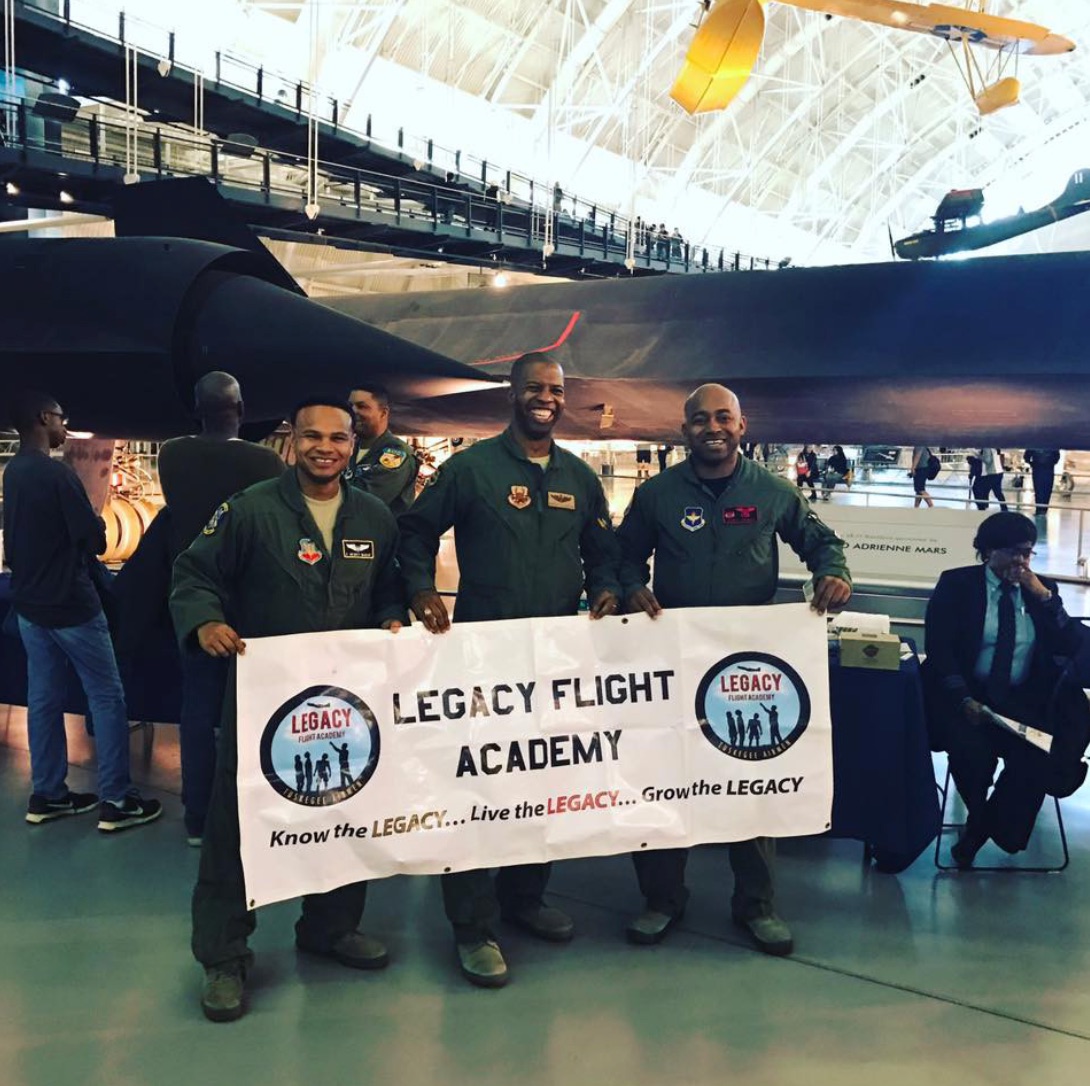
Lt Wilkerson was the honored guest of the Legacy Flight Academy (LFA), a 501(c)(3) non-profit organization that conducts character-based youth aviation programs that draw upon the LEGACY of the Tuskegee Airmen. He was at Tuskegee to share his experiences with students from the Double Victory Flight Program, LFA’s 2-week character-development and flight training program.
“I don’t consider myself a hero, the war was over before I finished training,” he often says since he was a member of the Tuskegee Airmen’s lesser known 477th Bombardment Group. ‘Wilk’, as everyone calls him, continued sharing his story to the group of parents and youth assembled to hear him speak at the National Park Service’s historical site. “So the war ended and they didn’t know what to do with us. So, we just ended up ferrying the B-25 to different bases across the country until they figured it out.” Wilk ended up leaving the Service and eventually, we all figured out what to do with the Tuskegee Airmen – honor them for the heroes that they are!
Enter in the Legacy Flight Academy. LFA’s mission is to uphold and sustain the legacy of the Tuskegee Airmen while encouraging youth to pursue aerospace and Science, Technology, Engineering, and Math (STEM) careers. Since 2015, LFA has provided over 250 youth with a free airplane flight and educated over 20,000 more with the inspirational story of The Tuskegee Airmen.
For full disclosure, the founder of LFA happens to be a good friend of mind as we struggled through our aeronautical engineering degree together from the US Air Force Academy. But don’t be mistaken, I would be impressed and inspired by LFA even if I didn’t know him, or the several other Air Force officers who volunteer their time to serve the community and honor such amazing men and women.
LFA conducts a 3-tiered program to increase awareness, provide orientation, and ensure preparation for youth to pursue aerospace careers. While their programs focus on under-represented and under-privleged youth, participation in their programs is open to anyone and their message is certainly for everyone! They teach that the Tuskegee Airmen embodied values that are beneficial to young and old alike, black or white, male or female – it is the L.E.A.G.A.C.Y. that LFA is focused on: Loyalty, Excellence, Goals, Attitude, Courage and integritY.
There’s no way to share all that LFA has accomplished or how dedicated they are in this short space, but just a few highlights of their success include being special guests at the White House Conference for Inclusive STEM Education, featured during the Smithsonian National Air and Space Museum Family Day, and of course, providing an original hero with a thrill and experience he will never forget.
Today, 9 April, LFA will be conducting their first #Tuskegee99 fundraiser with the goal of 99 donors to donate $99 on the 99th day of the year to honor the 99th Pursuit Squadron (the first Tuskegee Airmen unit) and to help them promote the Tuskegee Airmen Legacy. With the goal of providing 500 free flights in 2017 and reaching at least 25,000 youth and adults with this inspirational message, I’m definitely going to support them and I think that several members of the AVGeekery community will as well.
Visit their website for more information and stay tuned because we’re going to keep highlighting the incredible LEGACY of the Tuskegee Airmen and the great work by LFA to ensure that their legacy not only survives, but that it thrives!
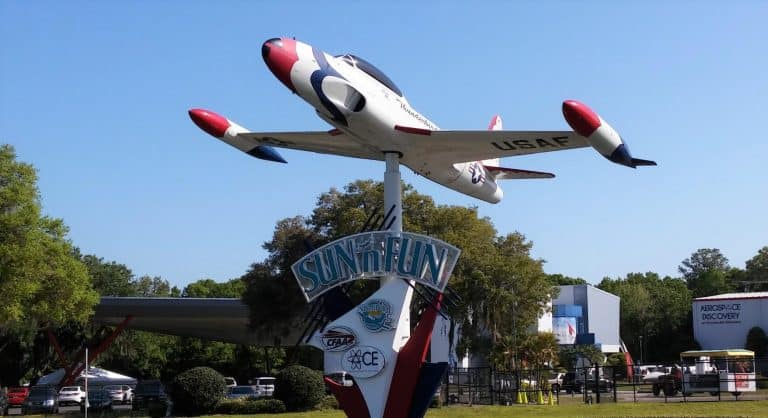
Top civilian aerobatic teams and the latest military fighter jets will headline the largest aviation gathering in the southeast this week drawing large crowds to the excitement of the annual Sun-N-Fun Fly-in and Expo airshow.
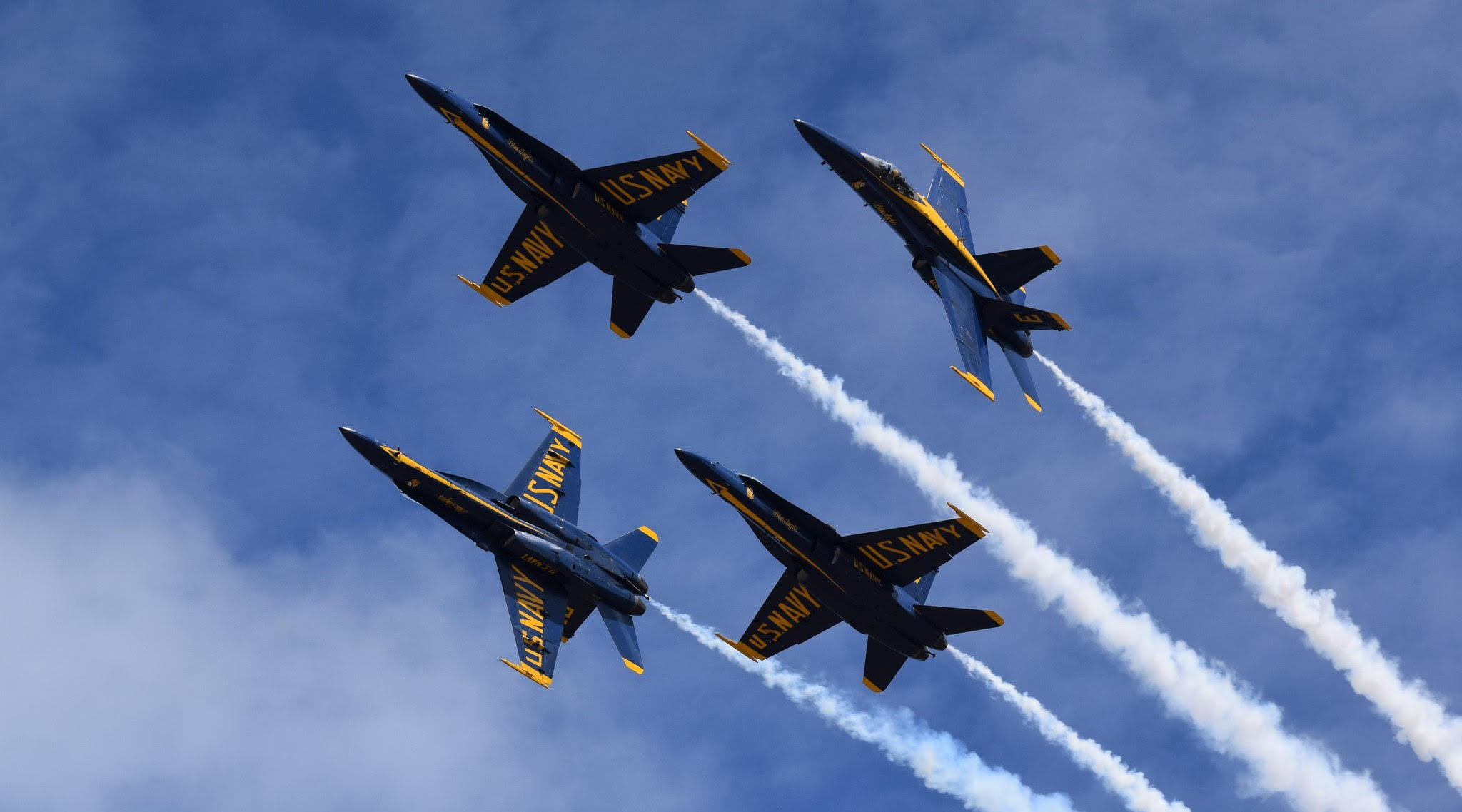
The U.S. Navy Blue Angels will headline Sun-n-Fun’s three-day formal airshow this weekend marking their return to top airshow event since 2014. Lead by second year Commander and Boss Ryan J. Bernacchi in Angel 1, the Diamond Team includes LT Damon Kroes, LT Nate Scott, LT Lance Benson. The dynamic two solo pilots who push the envelope of what the Hornet can do are lead solo CDR Frank Weisser and opposing solo LT Tyler Davies.
The voice of America’s Pride this season will be that of LT Brandon Hempler. Hempler, Blue Angel 7 pilot, and LT Dave Steepe, will also serve as the advance pilot and events coordinator, respectfully.
“We’re extremely excited to attend Sun-N-Fun,” LT Hempler said during an interview with this aerospace journalist. “We’re gonna put on a great show. Not just the flying, but the maintainers who are out there as we perform the walk down of the jets. They’re an important part of the team as well.”
The Air Force’s F-16 Fighting Falcon demonstration team of Shaw, AFB in South Carolina will perform each afternoon this week. Major John “Rain” Waters will pilot his F-16 performing many maneuvers which Air Force pilots use during actual combat situations. Maj. Waters will conclude his demo as he joins up with one or two P-51 Mustangs and a A-10 Wathog (scheduled) for the traditional Heritage Flight.
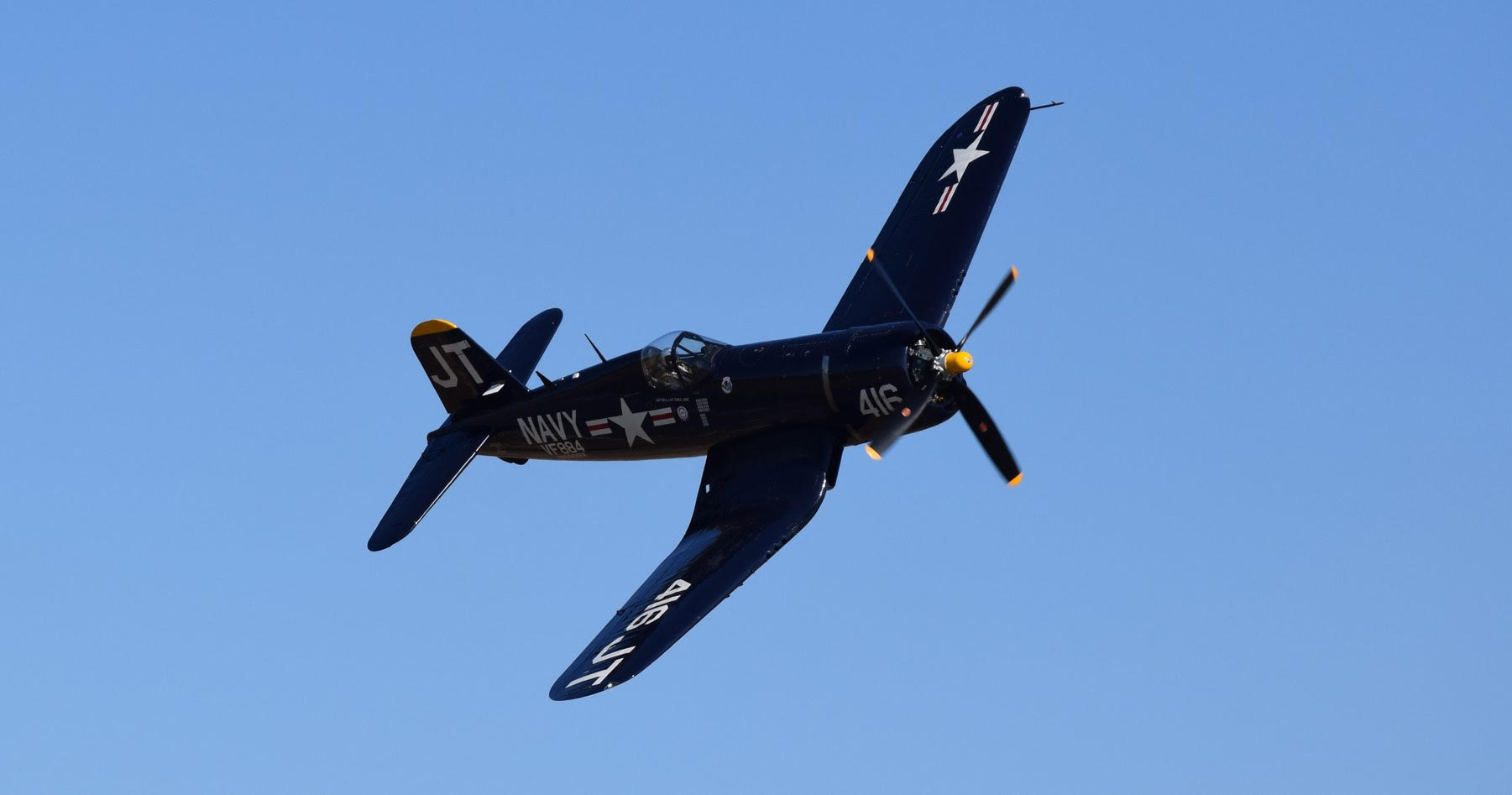
In contrast, Sun-N-Fun will showcase the largest collection of warbirds on display, including AT-6 Texan/ SNJ-2, P-51 Mustang, and F-4U Corsair. Two B-25 Mitchell Bombers will also be on static display and are scheduled to fly on select days.
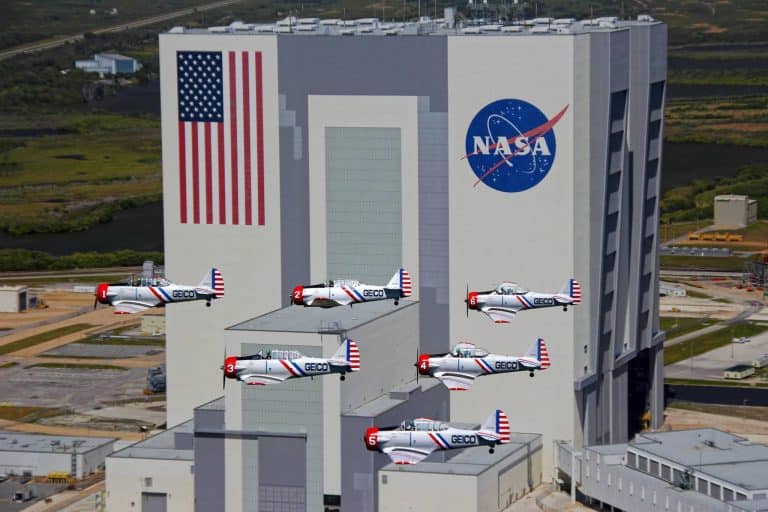
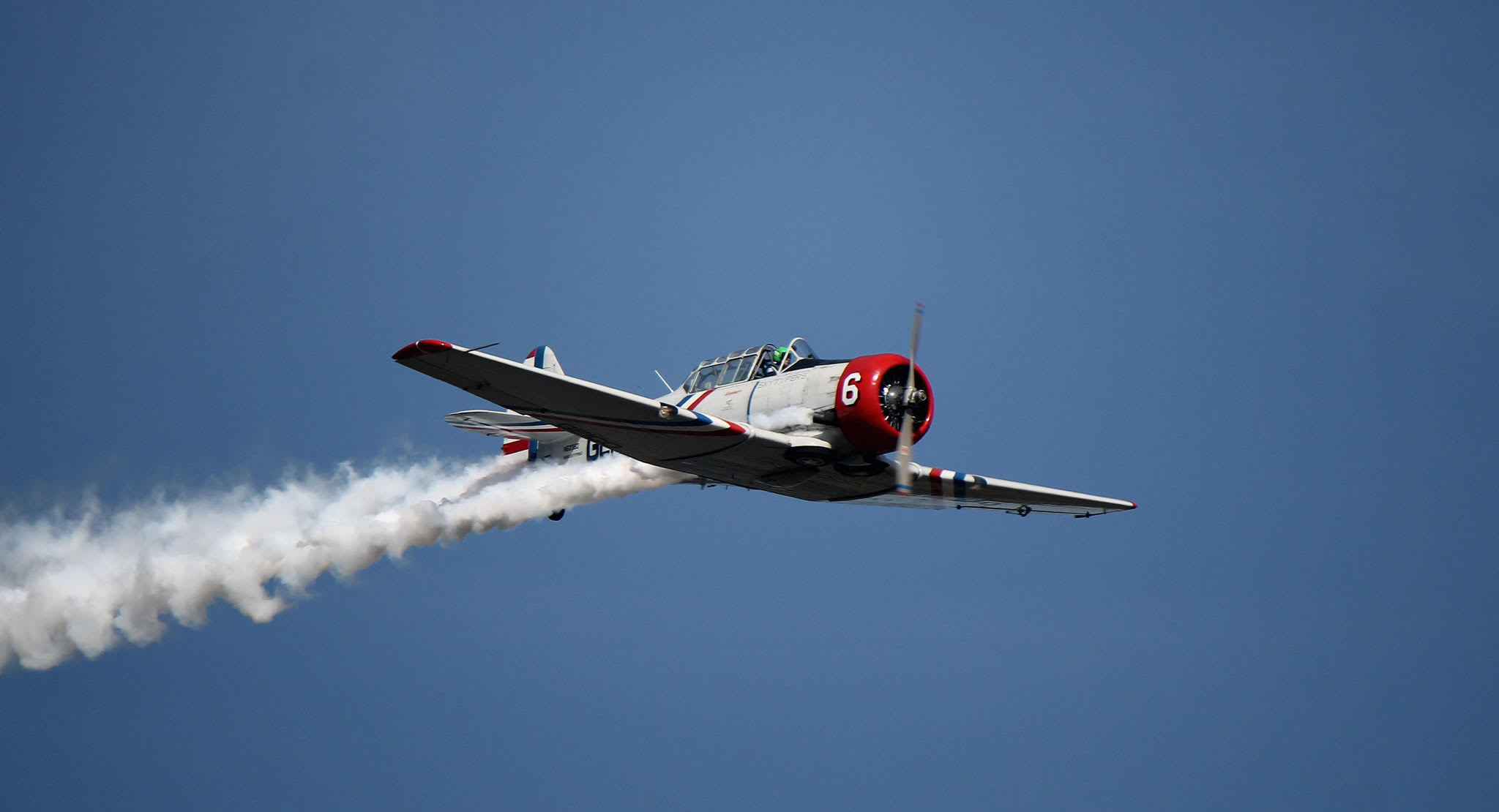
The aircraft known as the Pilot Maker will be well represented at Sun-N-Fun this weekend as, up first, the World Famous GEICO Skytypers Airshow Team performs on Friday, Saturday, and Sunday. The GEICO Skytypers six SNJ-2 aircraft will perform the aerial demonstrations used by the pilots of America’s Greatest Generation during World War II and Korea.
Skytyper 7 pilot Ken Johansen discussed with AvGeekery.com his love for this airshow on Wednesday, “Flying at Sun-N-Fun is special because of the number of aviation enthusiasts, and the variety of classic aircraft and pilots represented. It’s a great venue to have so early in our season.”
The pilots of AeroShell Aerobatic Team — Mark Henley, Steve Gustafson, Jimmy Fordham, and Bryan Regan — will perform above the Lakeland airport aboard the Army’s version of the Navy’s SNJ-2, the AT-6 Texan. AeroShell’s four aircraft will perform several aerobatic maneuvers used by the Army Air Corps. 70 years ago.
“This is the ultimate in aviation and good times,” said longtime Sun-N-Fun attendee William Fields of Mobile, Alabama. “Each year, my wife and I fly into Lakeland to camp and watch the air show. I never miss it.”
Classroom workshops teaching the latest in aircraft design and mechanics will highlight the expo side of the week long event. Private aircraft owners will use Sun-N-Fun to network with fellow pilots and buy or sell their aircraft.
A small group of aviation enthusiasts laid the ground work for the aeronautical event in 1974, and since that moment it has grown into the second largest airshow and aviation gathering in North America. Today, the annual six day event covers over 2,000 acres just east of Tampa.
“The Fly-In is our largest fundraiser of the year,” said President and CEO of SUN ‘n FUN John Leenhouts on Tuesday. “Proceeds from all events on the SUN ‘n FUN Convention Campus throughout the year support Aerospace Center for Excellence STEM education programs, including over $430,000 annually in scholarships for students pursuing aerospace and aviation careers.”
Tickets to the family friendly event are available online or at the gate. Gates open each day at 8:00 a.m. EDT through Sunday, and the air show begins at 1:00 p.m.
(Charles A. Atkeison reports on aerospace and science. Follow his updates on social media via @Military_Flight.)
This B-24D Liberator’s Crew Never Stood a Chance Against the Endless Sahara.
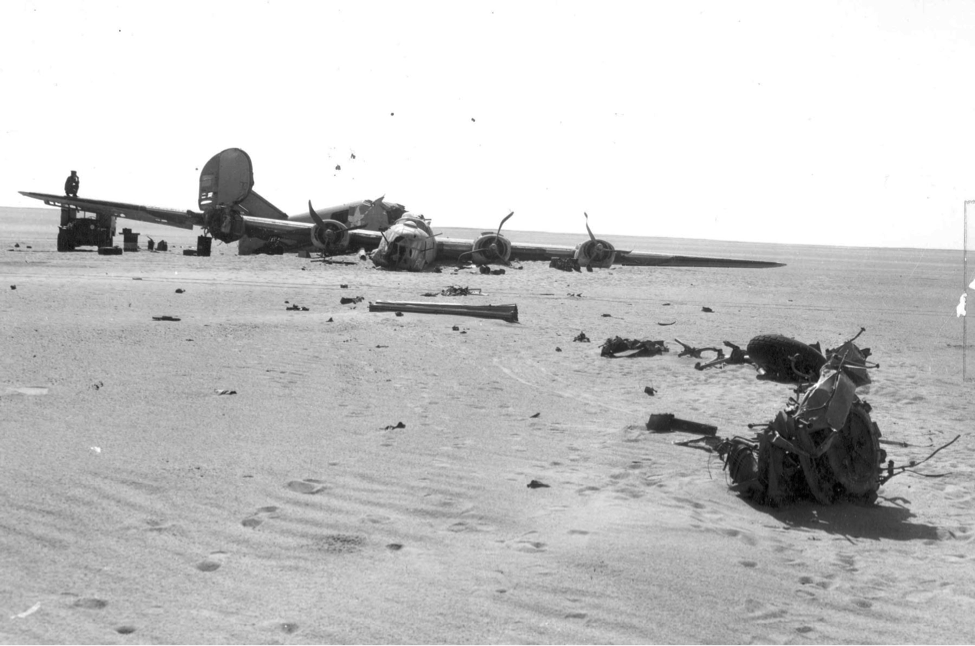
On 4 April 1943, the Consolidated B-24D Liberator “Lady Be Good” and her crew of nine men took off on their first combat mission from Soluch airstrip in Benina near Benghazi in Libya to bomb the harbor of the Italian city of Naples…but flew into history instead. The aircraft disappeared without a trace. Written off as one of the thousands of American heavy bombers lost during the war, the Lady would most likely remain undiscovered and her disappearance would almost certainly remain unsolved. At least until 15 years later.
A Consolidated B-24D Liberator pictured during landing at a Libyan airbase.
The Lady’s Crew
The Lady , also known as Consolidated B-24D Liberator serial number 41-24301 (MSN 1096), was assigned to the United States Army Air Force (USAAF) 514th Bomb Squadron of the 376th Bomb Group (Heavy). Part of a 25 bomber mission that day, the Lady was supposed to bomb Naples harbor as a part of the second wave of a two-wave attack. The Lady was crewed on that fateful day by pilot First Lieutenant William J. Hatton from Whitestone in New York, co-pilot Second Lieutenant Robert F. Toner from North Attleborough in Massachusetts, navigator Second Lieutenant D.P. Hays from Lee’s Summit in Missouri, bombardier Second Lieutenant John S. Woravka from Cleveland in Ohio, flight engineer Technical Sergeant Harold J. Ripslinger from Saginaw in Michigan, radio operator Technical Sergeant Robert E. LaMotte from lake Linden in Michigan, gunner and assistant flight engineer Staff Sergeant Guy E. Shelley from New Cumberland in Pennsylvania, gunner and assistant radio operator Staff Sergeant Vernon L. Moore from New Boston in Ohio, and gunner Staff Sergeant Samuel E. Adams from Eureka in Illinois.
The crew of the Lady Be Good photographed prior to their first, and last, mission.
Fateful Decision to Continue the Mission
The Lady’s departure from Soluch Airstrip near Benina, Libya was routine but the Liberator ran into a Sahara desert sandstorm with high winds and obscured visibility which prevented the aircraft from joining up with the rest of the formation. Most of the other aircraft returned to Soluch upon encountering the sandstorm but the Lady continued the mission. Upon reaching Naples at approximately 1950 local time the primary target was obscured so only two of the B-24Ds dropped their bombs on the primary. Two others, including the Lady, jettisoned their bombs in the Mediterranean. The Lady flew back to the Soluch airstrip at Benina alone.
Consolidated B-24D Liberator in flight
Flight to Oblivion
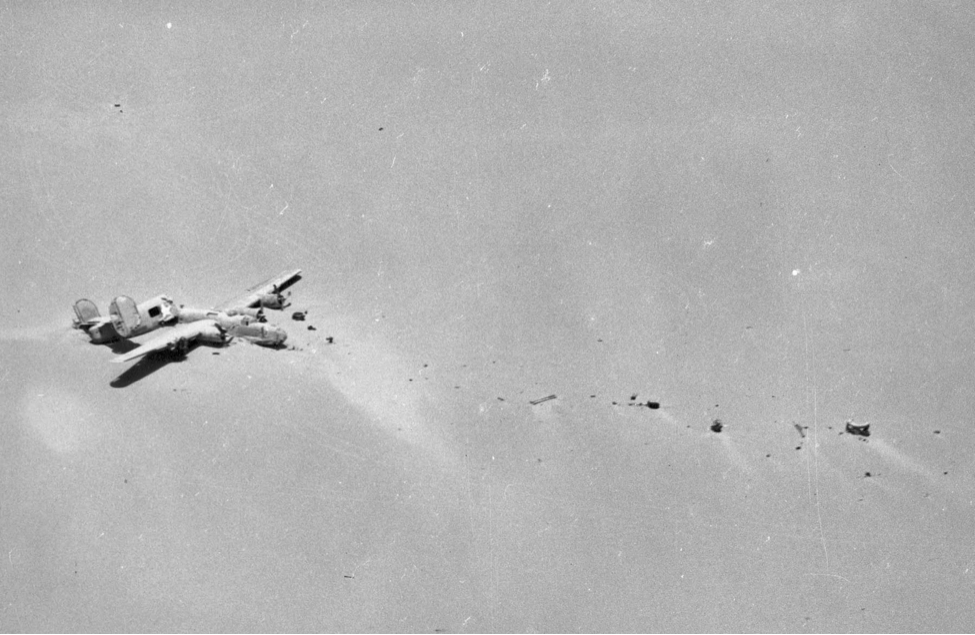
At 0012 local time command pilot Hatton radioed Soluch to indicate that his automatic direction finder (ADF) was not working properly. He asked for steer back to the base that the Lady never received. By all accounts the Lady overflew Soluch Airstrip but failed to observe flares fired from the ground to attract the crew’s attention. The Liberator continued its flight…deeper into the Sahara desert until 0200 local time when the crew abandoned the Lady, parachuting to the desert ground. The B-24D flew another 16 miles before she crashed landed in the Calanshio Sand Sea. A search and rescue mission was immediately mounted from Soluch but all efforts to locate the Lady and her crew failed to find any trace of the aircraft or the men. At that point the fate of the Lady Be Good became another unsolved mystery of the Sahara.
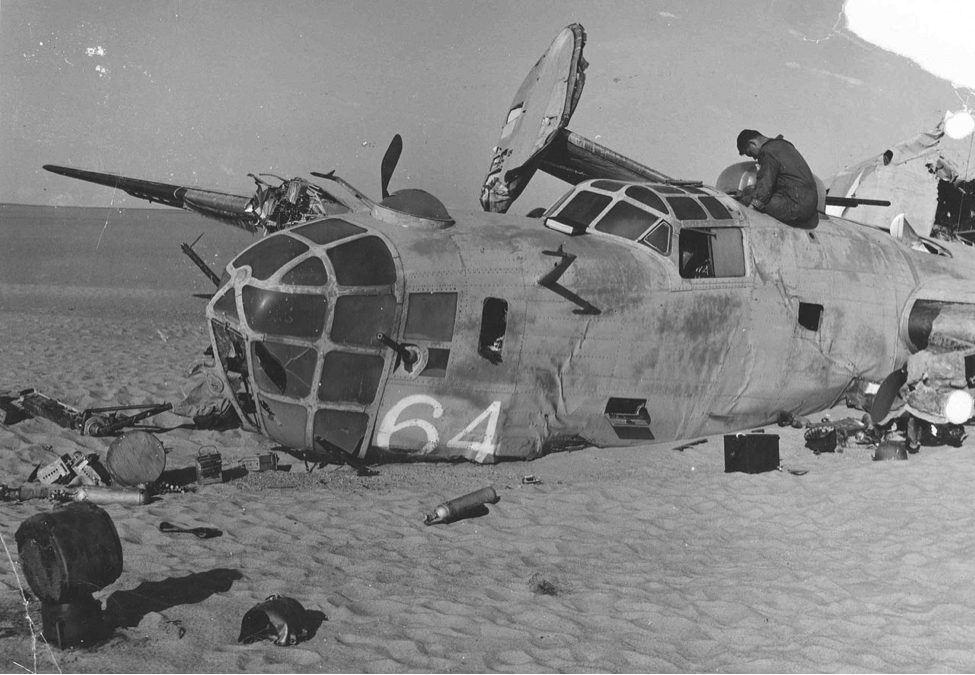
The wreck of the Lady Be Good.
Lost and Then Found
The first to sight wreckage of a B-24D that could be the Lady was a British Petroleum (BP) oil exploration team roaming the Libyan deserts on 9 November 1958. When the Brits contacted the nearest American base (Wheelus Air Force Base near Tripoli in Libya), they were told that there were no records of an American plane that had been lost in the area. As a result, no immediate attempt to examine the wreckage was made but the BP team marked the location of the wreckage on their maps. Sighted from the air again on 16 May 1958 and 15 June 1958, a recovery team finally arrived at the wreck on 26 May 1959.
The wreck of the Lady Be Good.
Like She Wanted to Land on Her Own
From the condition of the wreck it was deduced that after the crew abandoned the aircraft the Lady continued flying southward. The wreckage was in large part intact and there was evidence that suggested one engine was still operating at the time of impact. This in turn suggested that the Liberator lost altitude only gradually in a shallow descent, eventually belly landing on the desert sands. Although the plane was broken into two large pieces the desert had not ravaged the Lady quite as much as the recovery team expected.
The wreck of the Lady Be Good photographed by the recovery team.
For the Rest of the Lady Be Good Story Bang NEXT PAGE Below
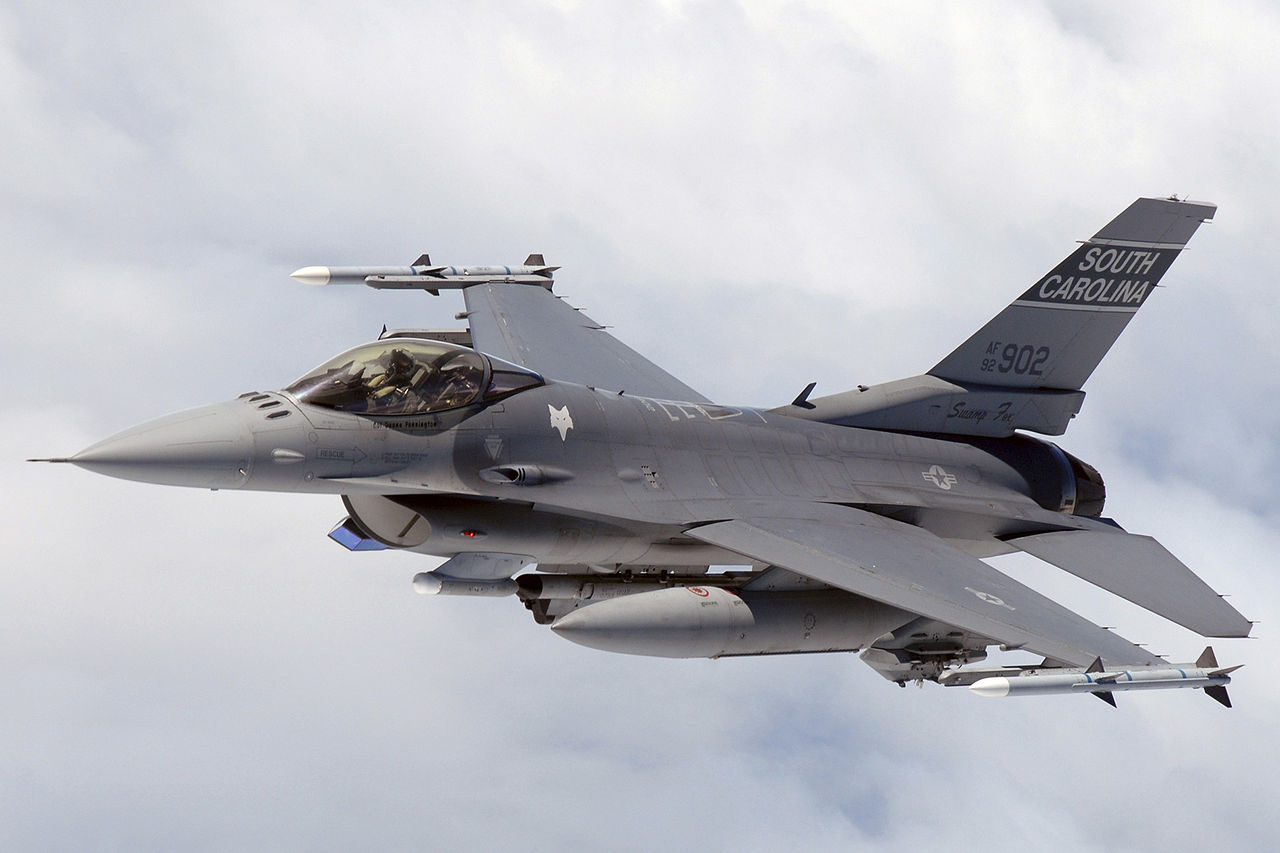
Today’s video is remarkable. If you’re a pilot, a bona-fide Avgeek, or just an enthusiast, you will definitely enjoy this ride! The footage was captured during a United States Air Force F-16 Viper Demonstration Team flight. But that’s not all folks. While the demonstration itself (shown from both the pilot’s perspective as well as from the ground) is a great watch, the video also includes the same two perspectives from the slot position in a four-ship Heritage Flight over the airshow.
The F-16 is getting long in the tooth. That’s no secret. But it’s also a highly capable and versatile jet that still has a lot of good years left. While we won’t get into the entire history of the F-16 in this piece, suffice it to say that since it became operational with the Air Force in 1979, more than 4500 of them have been built and operated by 26 countries in addition to the United States Air Force, Navy, and Marine Corps. It is the job of the Air Combat Command F-16 Viper Demonstration Team, based at Shaw Air Force Base in South Carolina, to make lasting memories with the F-16. They do it well.
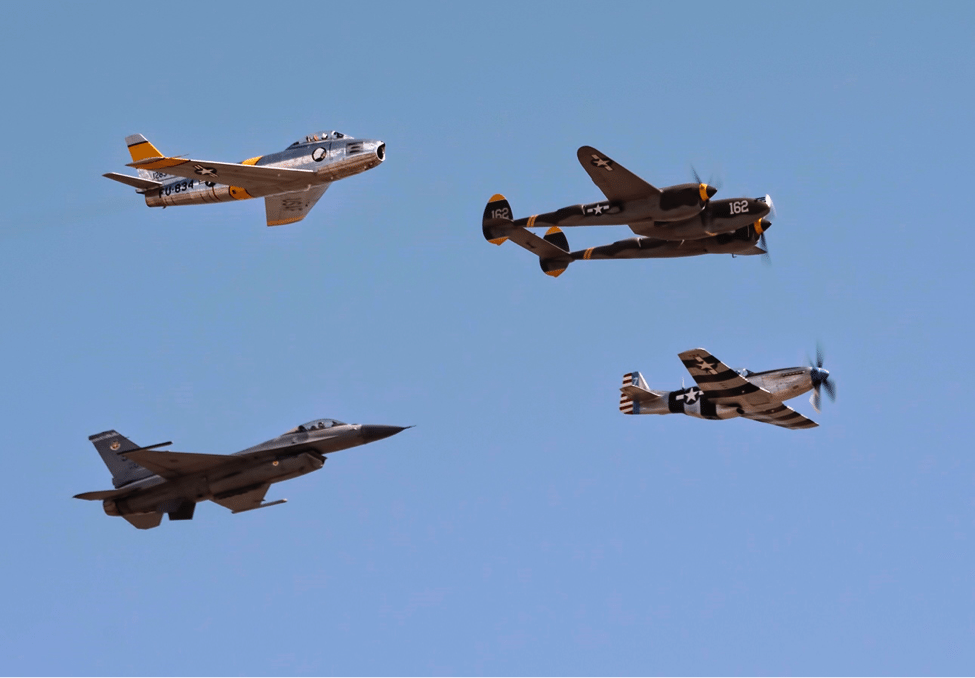
The Heritage Flight consists of the Lockheed P-38J Lightning “23 Skidoo” in the lead, the North American P-15D Mustang “Fragile But Agile” flying left wing, the North American F-86 Sabre “Jolley Roger” flying right wing, and the Viper Demo F-16C flying the slot position. Heritage Flights take place at many airshows with warbirds in attendance, but it’s rare to be able to see what one looks like from the slot position in a four ship diamond formation.
Shot during the Planes of Fame Airshow at Chino in California during 2016 in HD video and high quality audio by the Air Force and YouTuber spencerhughes2255, the video will definitely give you an appreciation for what a demo pilot like Major Craig Baker (call sign Rocket) endures during a typical 10 minute Viper flight. When the Viper Demo pilot recovers, take a look at all those warbirds on the tarmac. Chino has been one of the hotbeds of warbird activity seemingly since the dawn of flight, but it still takes one’s breath away to see so many classic airframes in the same place…and that’s just on a typical Chino day! Enjoy the video!
CAPE CANAVERAL, Fla. — Col. Buzz Aldrin’s voyage aboard Apollo 11 to become mankind’s second human to walk on the Moon will still top the excitement of his jet flight on Sunday with the Air Force’s Thunderbirds over America’s Space Coast.
Photo: USAF Thunderbirds
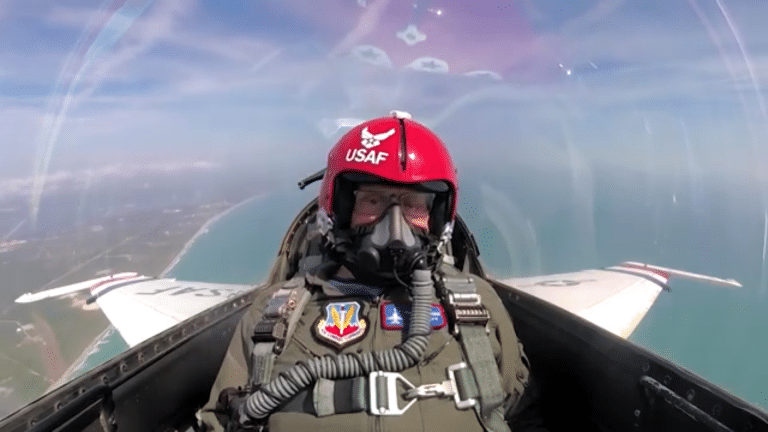
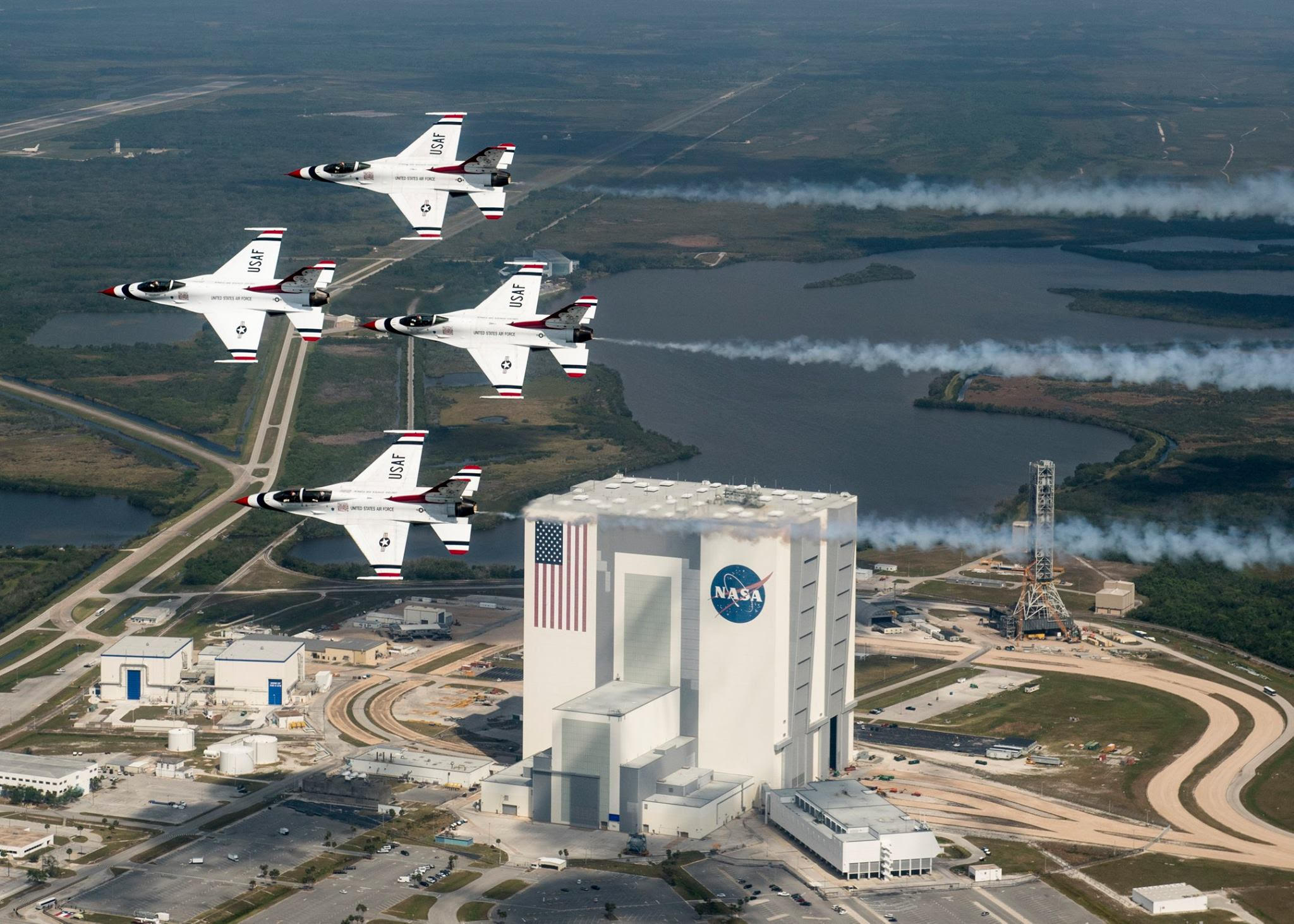
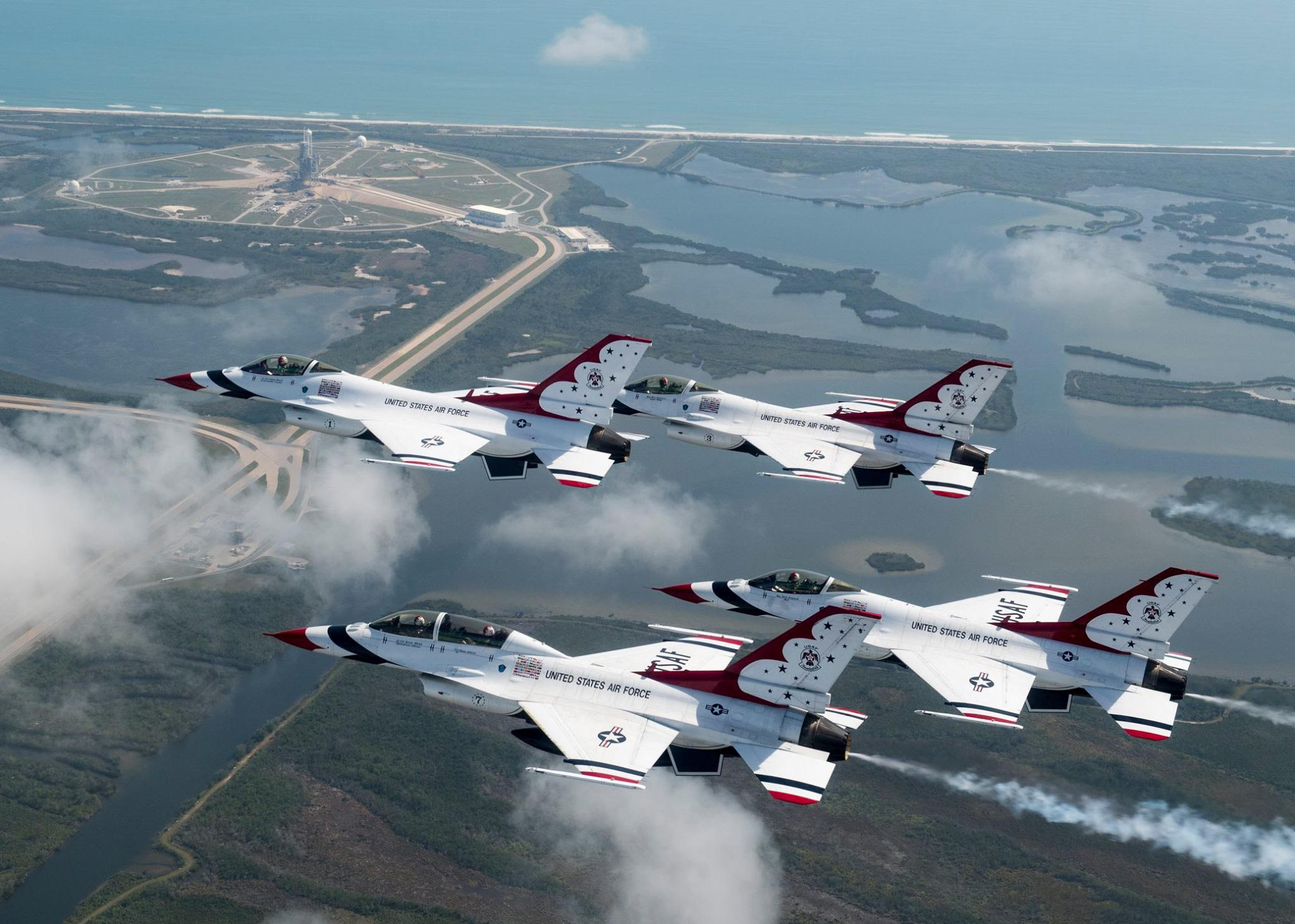
Retired Air Force Col. and astronaut Buzz Aldrin departed Melbourne International Airport on Sunday morning in the backseat of Thunderbird 7 and flew in the diamond formation above the Kennedy Space Center and launch complex 39-A. The Apollo 11 veteran had lifted off with Neil Armstrong and Michael Collins nearly 48 years earlier from the same launch pad.
Aldrin, who turned 87 in January, became the oldest person to ever fly with the Thunderbirds. His 22-minute flight also covered the beaches of Cocoa Beach and Cape Canaveral.
Photo: USAF Thunderbirds
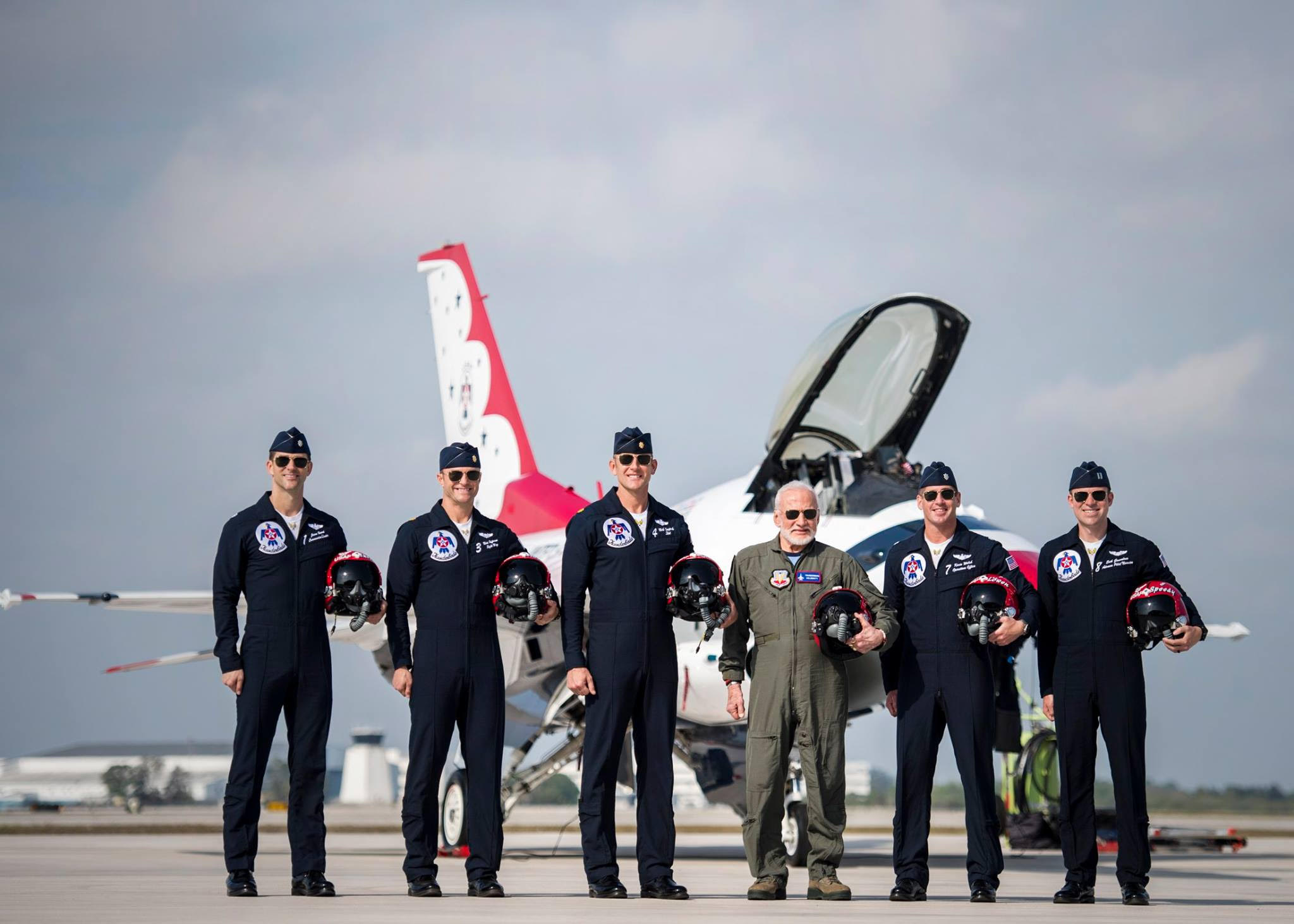
The active space promoter working to get America to Mars arrived about 7:00 a.m. for the Thunderbirds traditional preflight briefing and suit-up, including helmet checks. Buzz showed his serious side during the briefing speaking little as he focused on what he will experience in flight.
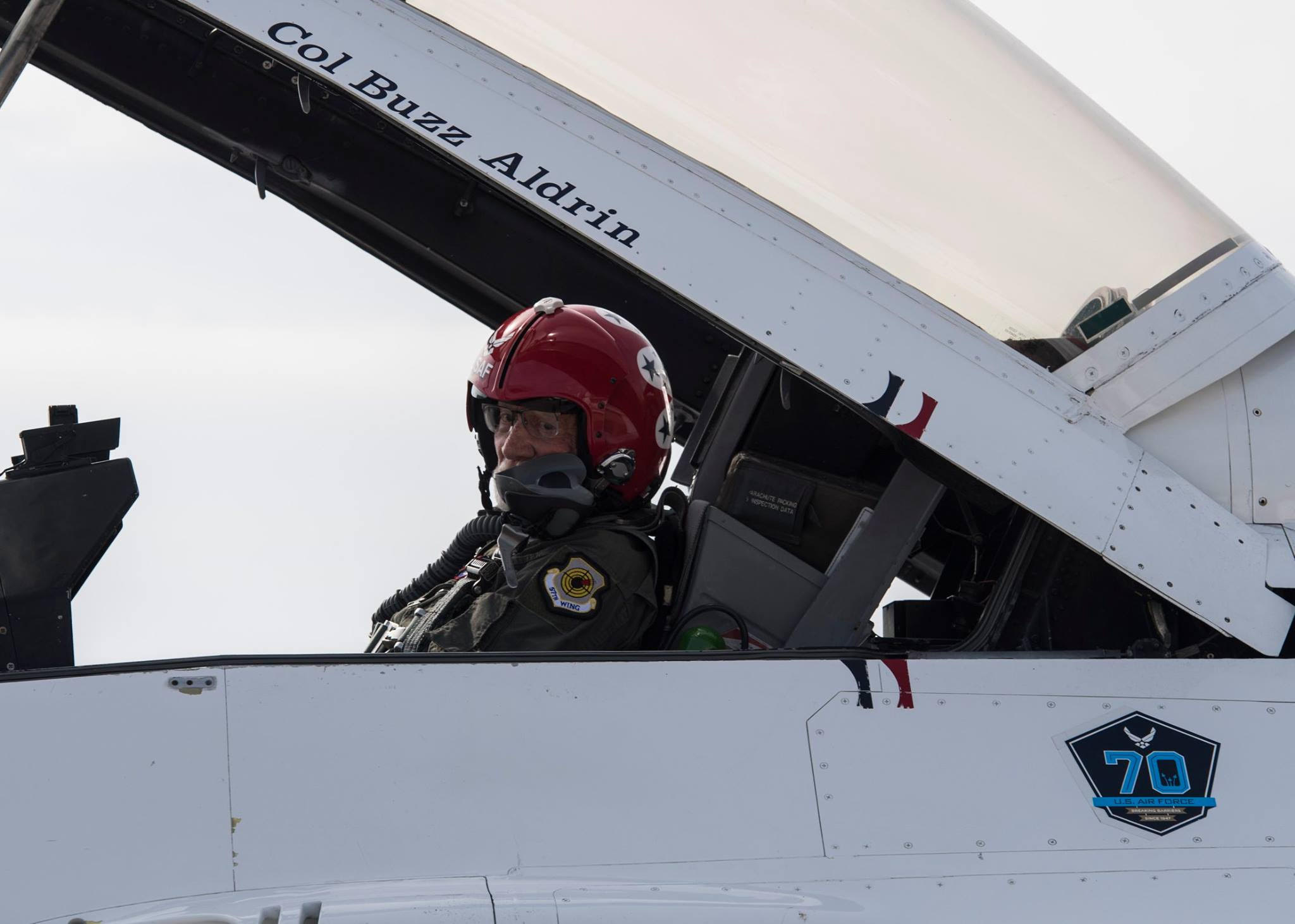
Once aboard the F-16D Fighting Falcon, he paused at the top of the jet’s ladder for a few images with his name blazoned on side of the aircraft. Following ingress, Dr. Aldrin was guided by his Thunderbird 7 pilot LT. Col. Kevin Walsh as he donned his helmet, learned about the cockpit displays, and the arming of his rocket powered ejection seat.
Photo: USAF Thunderbirds
“In 1969, Buzz Aldrin broke barriers and set foot on the moon,” Thunderbirds spokesperson Capt. Sara Harper said from the flight line on Sunday. “He is a true American hero and pioneer. We are proud of his accomplishments and the legacy he represents every day.”
Photo: USAF Thunderbirds
Cheers from the flight line erupted as Walsh steered him and Buzz back to the tarmac and parked. Buzz looked fit as he left the aircraft and he did not get sick in flight.
(Charles A. Atkeison reports on aerospace and science. Follow his updates on social media via @Military_Flight.)
WestJet makes announcement with a new video highlighting how Canadian they are.
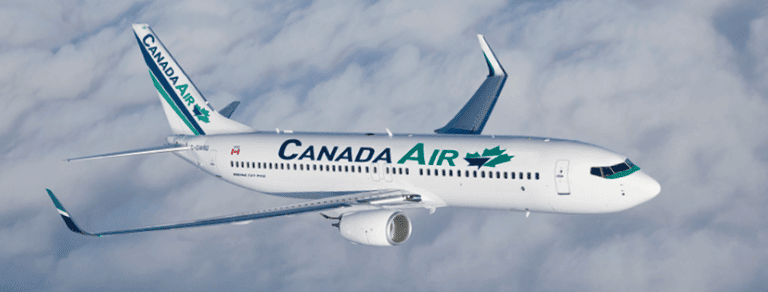
This time of year, its nearly impossible to tell truth from fake news. WestJet had some April Fools fun by letting the world know that Canadians are better than any other country. Their friendliness, diversity, and generosity sets Canadians apart from the rest of the world. In honor of the 150th birthday of Canada, WestJet has decided to change its name to Canada Air. In front of a Boeing 737-700, WestJet unveiled its new and shortest-lived livery.
It’s all fake news…
Only its not real. We’ve been had by another April Fools joke!
To be honest, it wasn’t their best viral video gig. The commercial was a bridge too far. After all, why would anyone change the name of Canada’s second largest airline to a name that is the inverse of their main competitor? It still made us chuckle though. And true avgeeks wouldn’t mind seeing a new paint scheme with colors that kind of like the old Hartford Whalers logo.
While enjoyable, we have to say that this wasn’t their best work. WestJet’s Christmas videos are amazing and hit viewers right in the ‘feels’. Still though, kudos to an airline for finding ways to keep the flying experience light hearted.
The precision flight of the GEICO Skytypers six aircraft will take to the skies above America’s Space Coast this weekend as they join the Air Force Thunderbirds and top civilian aerobatic pilots at the Air and Space Show.
The Skytypers soar aboard six sleek 1940 SNJ-2 single-prop aircraft. The silver SNJ, Navy’s version of the Army’s T-6 Texan, was used by the pilots of the second World War and Korea to practice their flying skills and prepare for combat in the skies.
The squadron’s popularity has risen as they continue to co-headline many of the nation’s top air shows performing with both the Blue Angels and the Air Force Thunderbirds. The team is slotted to perform at around 1:20 p.m. on each day.
“It’s a very dynamic demo with a lot of things happening very quickly with some maneuvers a tribute to the era of the generation of these World War II airplanes,” Skytyper 1 and commanding officer Larry Arken stated on Friday as we stood on the flight line. “Other things are done for the spectators view like a heart or a bomb burst, and other maneuvers are tactical maneuvers which the military still uses.”
The squadron is lead by Arken, with Chris Thomas, Ken Johansen, Chris Orr, Steve Salmirs, and Tom Daly as pilots of aircraft 2 thru 6. Skytyper 7 pilots include Jim Record and Bob Johansen as the team’s advance pilots. The Skytypers 20 minute demonstration will tell the story of the dizzying maneuvers executed by the pilots 70 years ago during air-to-air combat.
“There is no better place to begin our 2017 season than on Florida’s Space Coast!” Team spokesperson Brenda Little said as the World Famous GEICO Skytypers Air Show Team prepared to rehearse on Friday. “This air show has become a favorite for a few of the team members.”
On the ground, the Skytypers spend their time at each air show site visiting hospitals and education centers with their public outreach program. The team has also been know to host student groups at the air show for a group discussion plane side, and the chance to climb aboard their aircraft.
Melbourne International Airport will be center stage for the two-day air show designed to spark interest in both aviation and honor the United States military. Beautiful weather will keep aviators on time each day as the opening ceremonies get underway at 11:30 a.m. Tickets for the air show remain available for both days via their web site or at the gate.
The dynamic sky show will begin with the National Anthem followed by the civilian pilots performances. A rare performance of an F-35 Lightning II is scheduled to take to the air at about 2:00 p.m., and will take part in the traditional airshow remembrance moment known as the Heritage Flight. The Thunderbirds will take-off minutes later aboard their sleek F-16C Fighting Falcons at about 3:10 p.m. to begin their 40-minute flight demonstration.
Melbourne airshow officials promises a fleet of vintage and current aircraft, both civilian and military, will be on display this weekend. Guests can get up close with several historic aircraft poised on the airport’s tarmac as aircraft engines echo and jets screech across the sky above.
(Charles A. Atkeison reports on aerospace and science. Follow his updates on social media via @Military_Flight.)
The A3D Was Larger Than Life and Twice as Heavy But Did Every Job Exceedingly Well
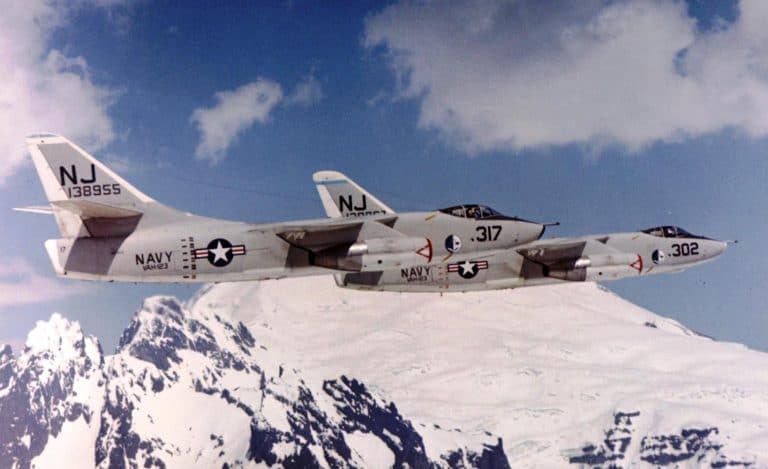
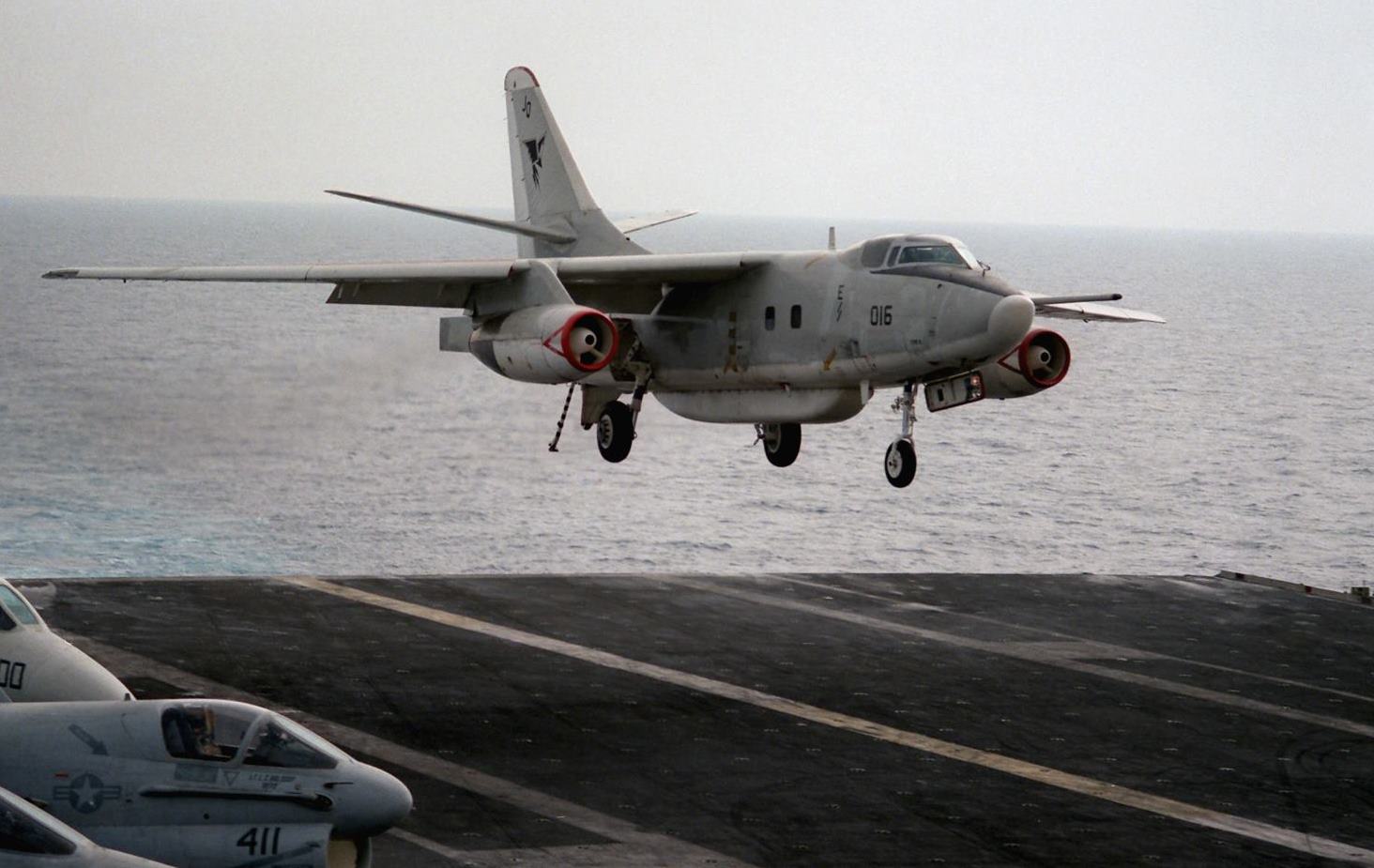
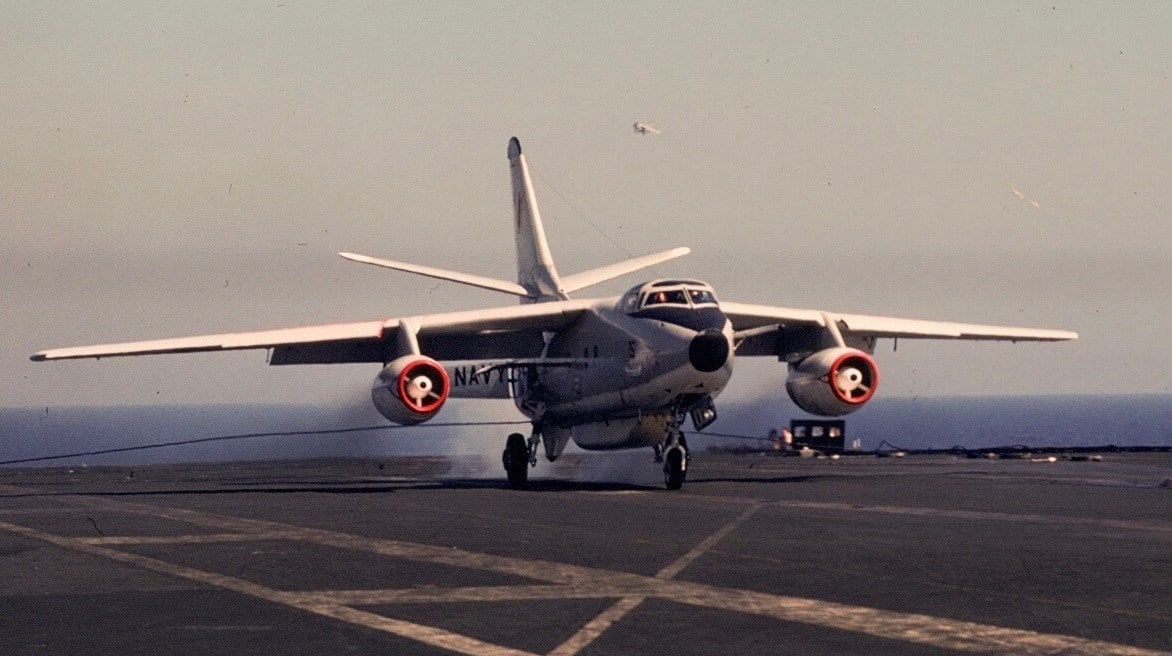
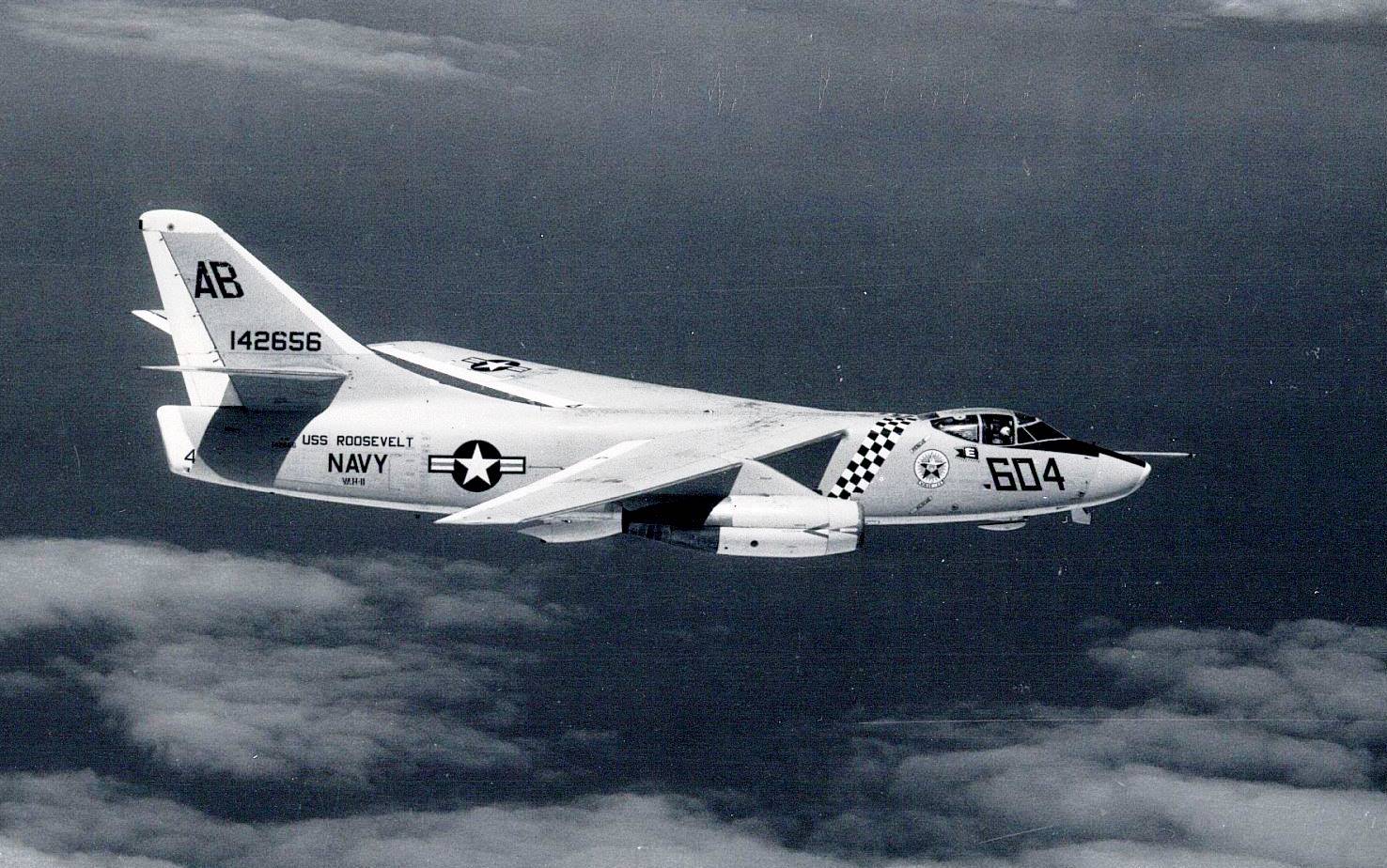
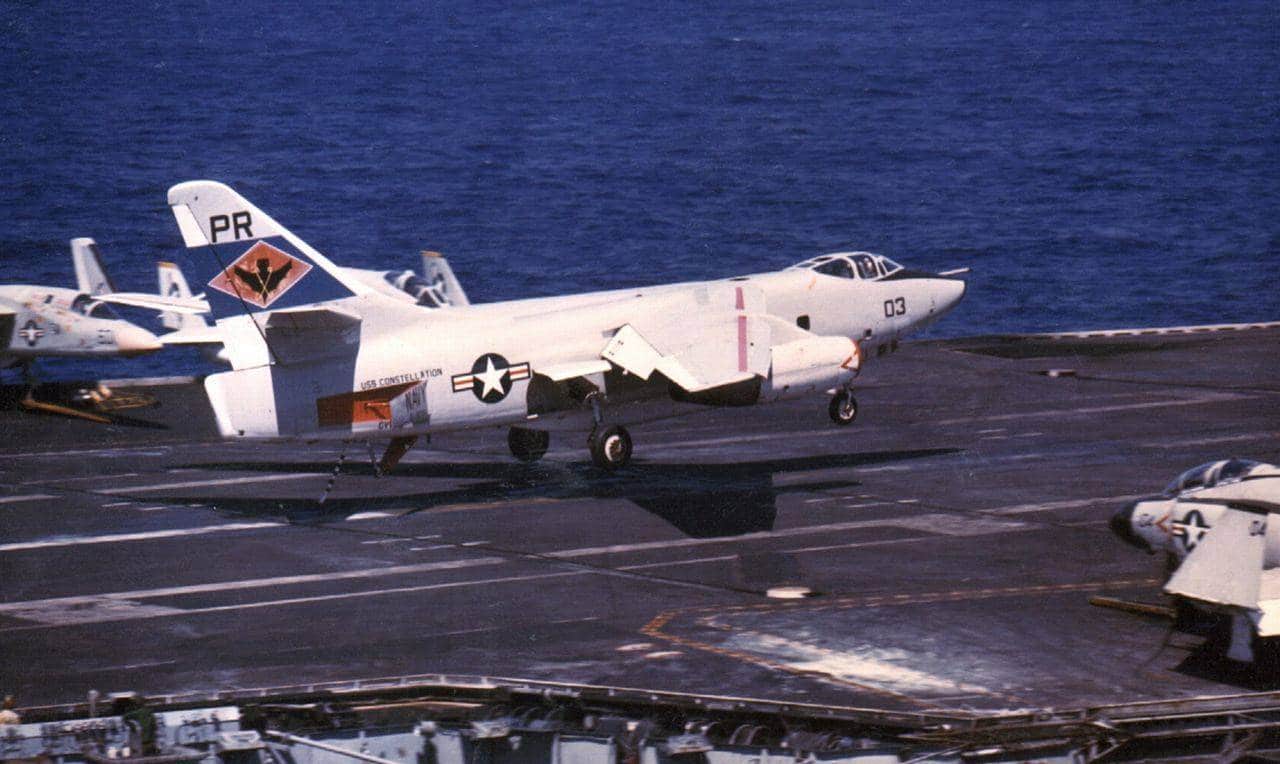
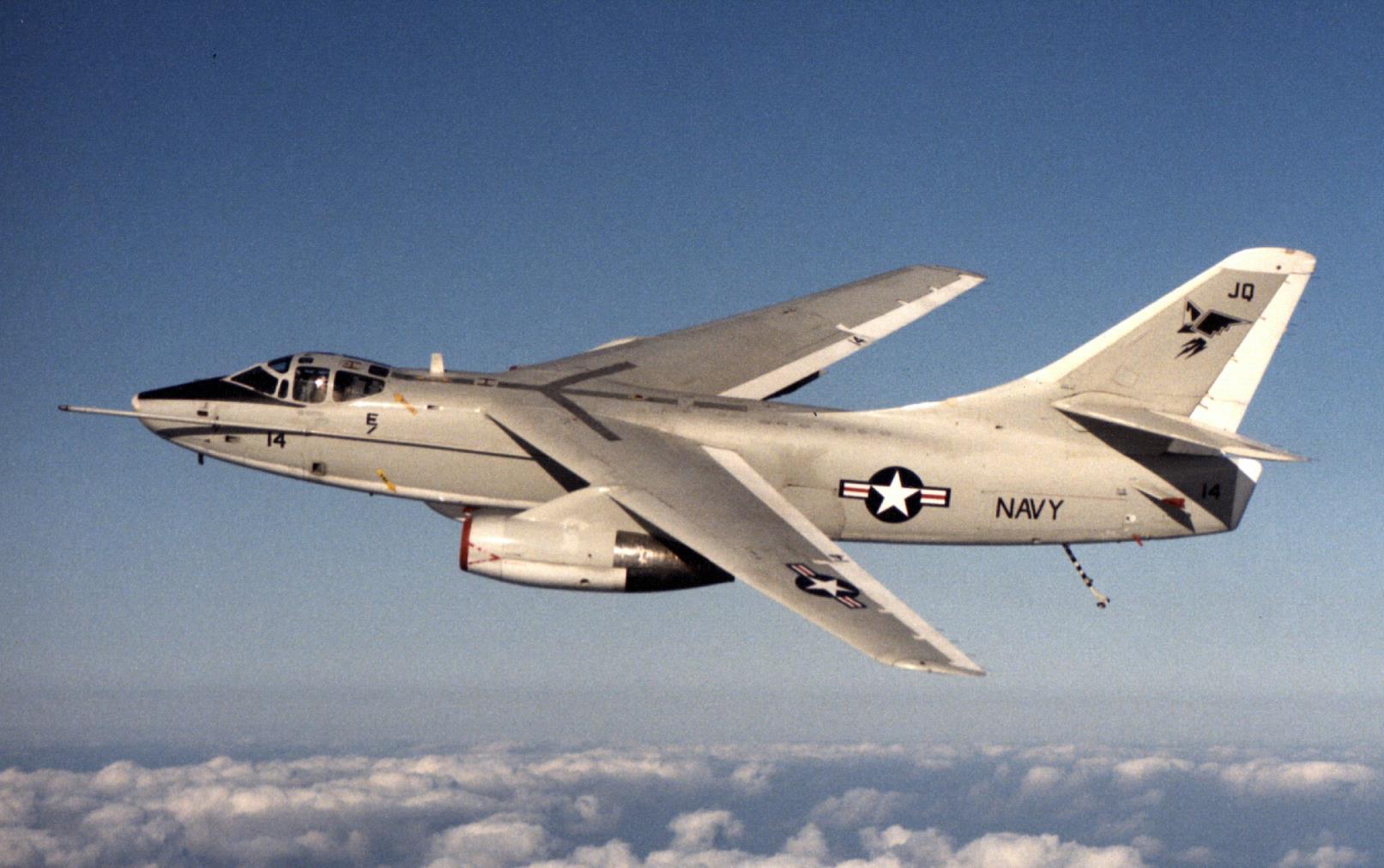
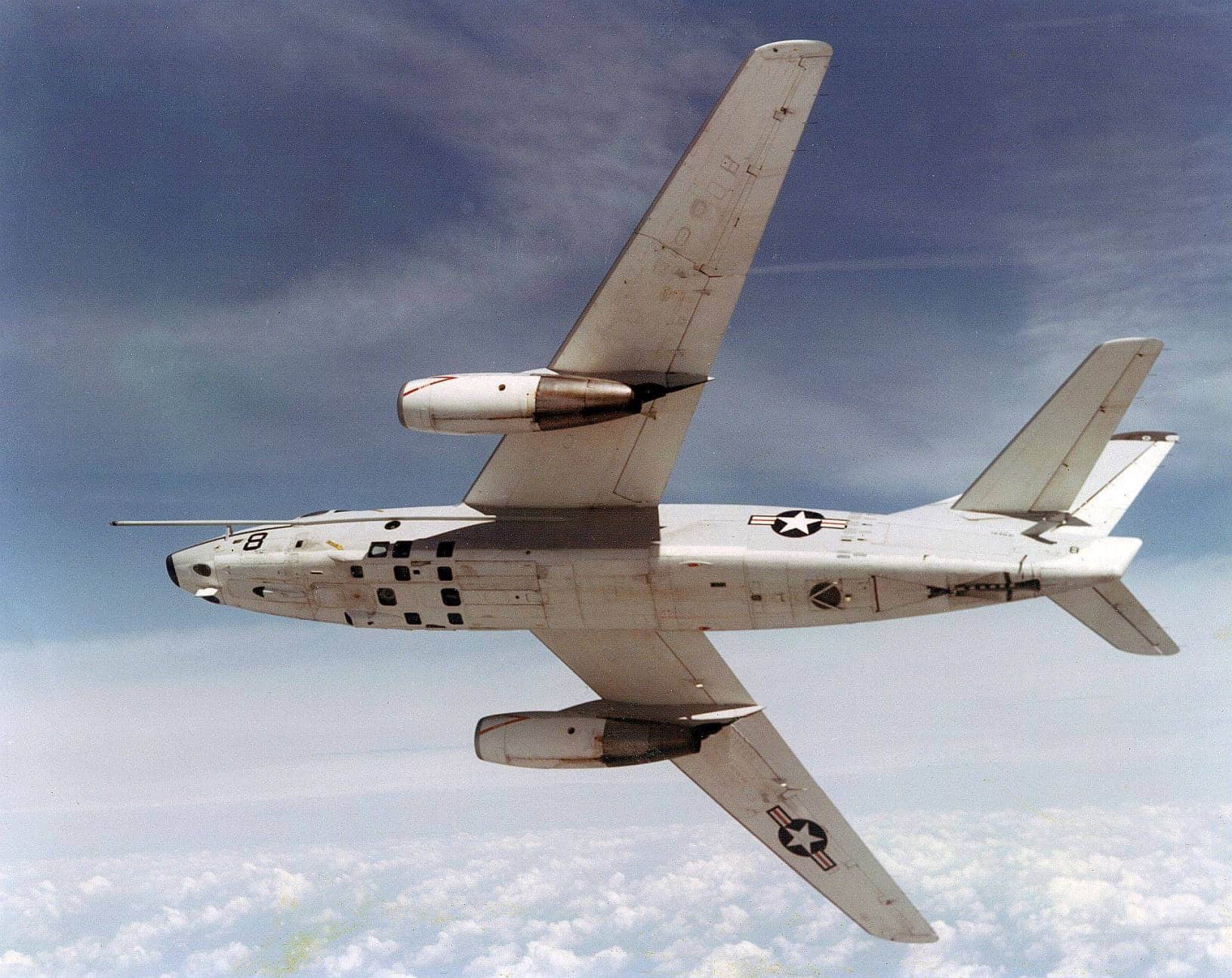
On March 31st 1956 the Douglas A3D-1 Skywarrior entered service with United States Navy Heavy Attack Squadron One (VAH-1) Smokin’ Tigers. Better known as “The Whale”, the A3D would go on to perform several roles over its 35 year career with the Navy. Only 282 Whales were built between 1956 and 1962, but they did everything asked of them well. Whales were the largest and heaviest aircraft ever to deploy aboard and routinely operate from aircraft carriers. The combination of that size and weight, coupled with the narrow track of the Whale’s landing gear, made every carrier recovery an adventure. In order to operate Whales, carriers had to turn their arresting gear engines and catapult systems “up to 11.”
Image via US Navy
Big For a Sinister Reason
The first operational Navy carrier-based strategic (atomic) bomber was the hybrid jet and propeller driven North American AJ Savage. Douglas was asked to design an all-jet powered, carrier-based strategic bomber in 1948. The new design would operate from the proposed “super-carrier” United States class, therefore size was less of a consideration than payload. The atomic bombs of the day were exceedingly large and heavy, so the loaded weight requirement for the design was 100,000 pounds. That’s a whopping 50 tons to you and me! Whale indeed.
Image via US Navy
Penned by a Legend and His Team
Ed Heinemann of the Douglas design team, considering the possibility that the carrier United States might be cancelled, designed the A3D to operate from the aircraft carriers in service at the time. While still whale-like at 68,000 pounds loaded weight, the Skywarrior was comparatively svelte and considerably smaller than the other designs in consideration. Within weeks the United States was indeed cancelled, and the Navy Bureau of Aeronautics (BuAer) awarded the contract to Douglas on September 29th 1949. Don’t confuse the Whale with the Air Force’s Douglas B-66 Destroyer. The Destroyer started out as a modified Skywarrior but paths diverged quickly. In service the two aircraft shared few common parts or assemblies.
Image via US Navy
Waiting for the Power to Shine
Douglas had their hands full designing and building an aircraft as large and heavy as the A3D for carrier use. The prototype XA3D-1 Skywarrior first flew on October 28th 1952. Besieged by issues with the available engines and complicated landing gear required by the design, it took another four years to get the A3D into service. Ironically the Skywarrior would eventually operate from the decks of all Navy attack aircraft carrier classes- from the smaller Essex-class all the way up to the Nimitz-class.
Image via US Navy
Finally- a Turbojet Engine Worthy of the Name
The A3D was not really a revolutionary design apart from its sheer size and weight. Equipped with folding wings as well as a folding vertical stabilizer, the Whale was always the easiest aircraft to identify on a carrier deck- it was still huge even when all folded up. The original J40 engines intended to power the aircraft turned out to be unsuitable and they were replaced with the widely-used and proven Pratt & Whitney J57 turbojets- which also powered everything from Boeing B-52 Stratofortresses and 707 commercial airliners to Lockheed U-2s and Vought F-8 Crusaders. A distinctive A3D design feature is the hollow point bullet-shaped oil cooler installed in each nacelle in front of the engine.
Image via US Navy
Crews and Tales of Tails
Skywarriors carried crews ranging in size from three to seven or even more- none of whom sat in ejection seats. The less popular and more morbid nickname for the Whale became “All 3 Dead”, derived from the aircraft designator but referring to the lack of a way to quickly exit the aircraft in extremis. Electronic warfare, VIP transport, and training versions of the Whale carried personnel in the pressurized bomb bay. The A3D-1 Whales were equipped with twin remote controlled 20 millimeter cannon mounted in their tails. Electronic countermeasures “boat tails” replaced the guns in short order on most of the Whales. Others simply had the guns removed and the original production tail left in place.
Image via US Navy
Record Cross-Country
On July 31st 1956, an A3D-1 Skywarrior flew nonstop and unrefueled from Hawaii to New Mexico (3200 miles) in just 5 hours and 40 minutes. In 1957 two A3D-1s launched from the aircraft carrier Bonne Homme Richard (CVA-19) and trapped aboard the aircraft carrier USS Saratoga (CVA-60). This flight is unremarkable except that Bonnie Dick was steaming in the Pacific Ocean and Super Sara was underway in the Atlantic Ocean at the time.
They Landed Without Clearance, Then Took Off From a Taxiway While Under Fire- But They Evacuated Hundreds.
This video, titled “Last Flight Out of Da Nang”, recounts the heroic efforts of World Airways to fly refugees out of the besieged South Vietnamese city of Da Nang and take them to comparatively safe Saigon. First aired on the CBS Evening News on March 30th 1975, the story is told through news broadcast footage, interviews with World Airways chairman Edward Daly, and pilots and airline officials involved in the effort. This is truly eye-opening stuff. Other broadcasts relating to World’s involvement in the rescue effort that aired on subsequent broadcasts are also included in the video.
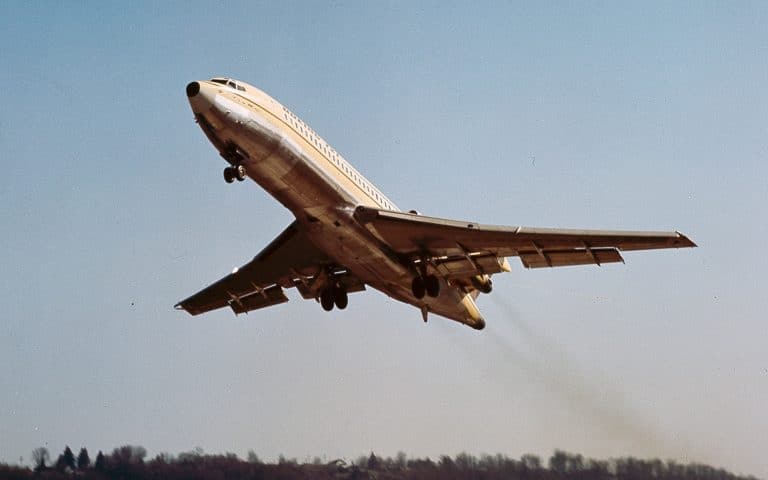
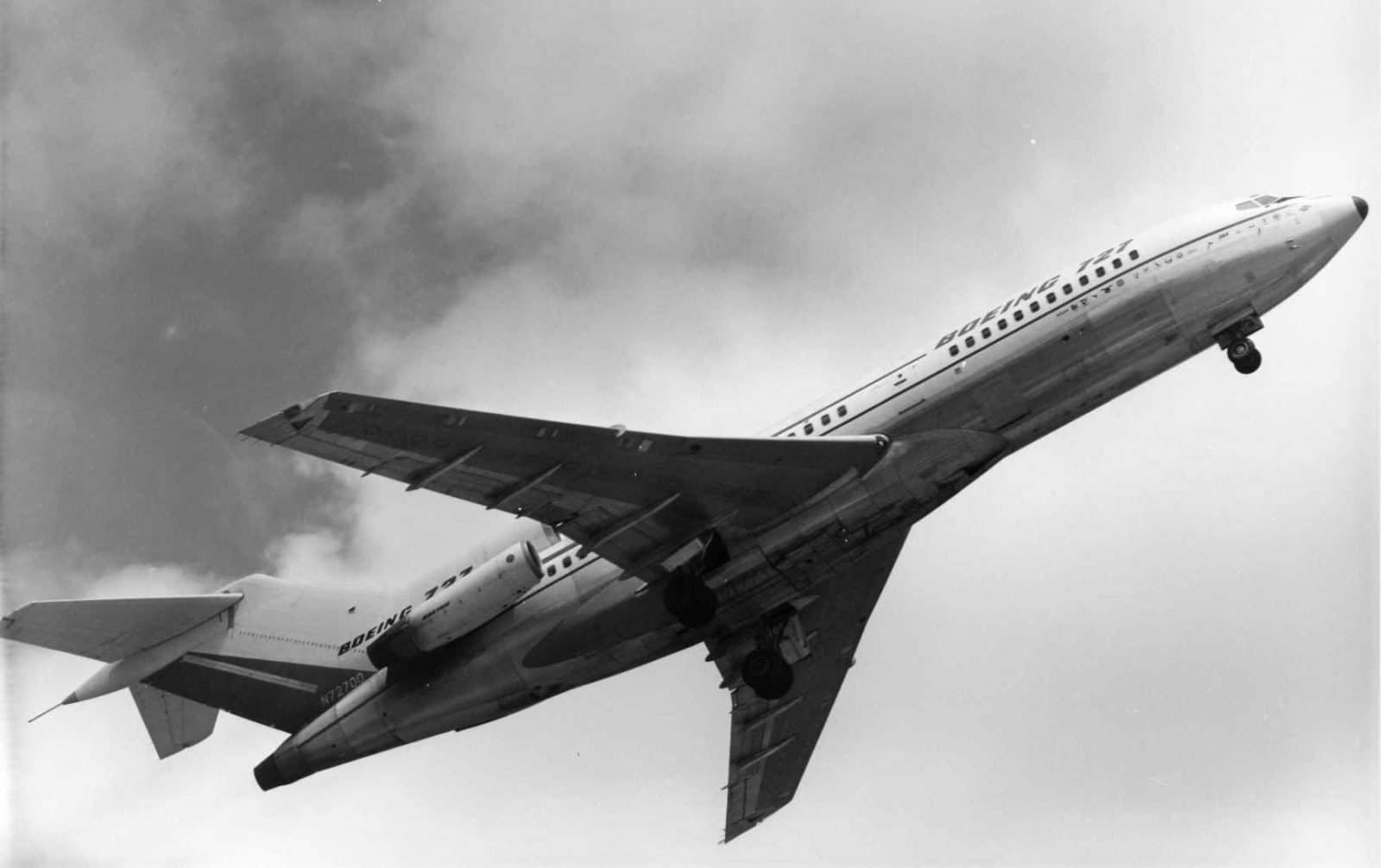
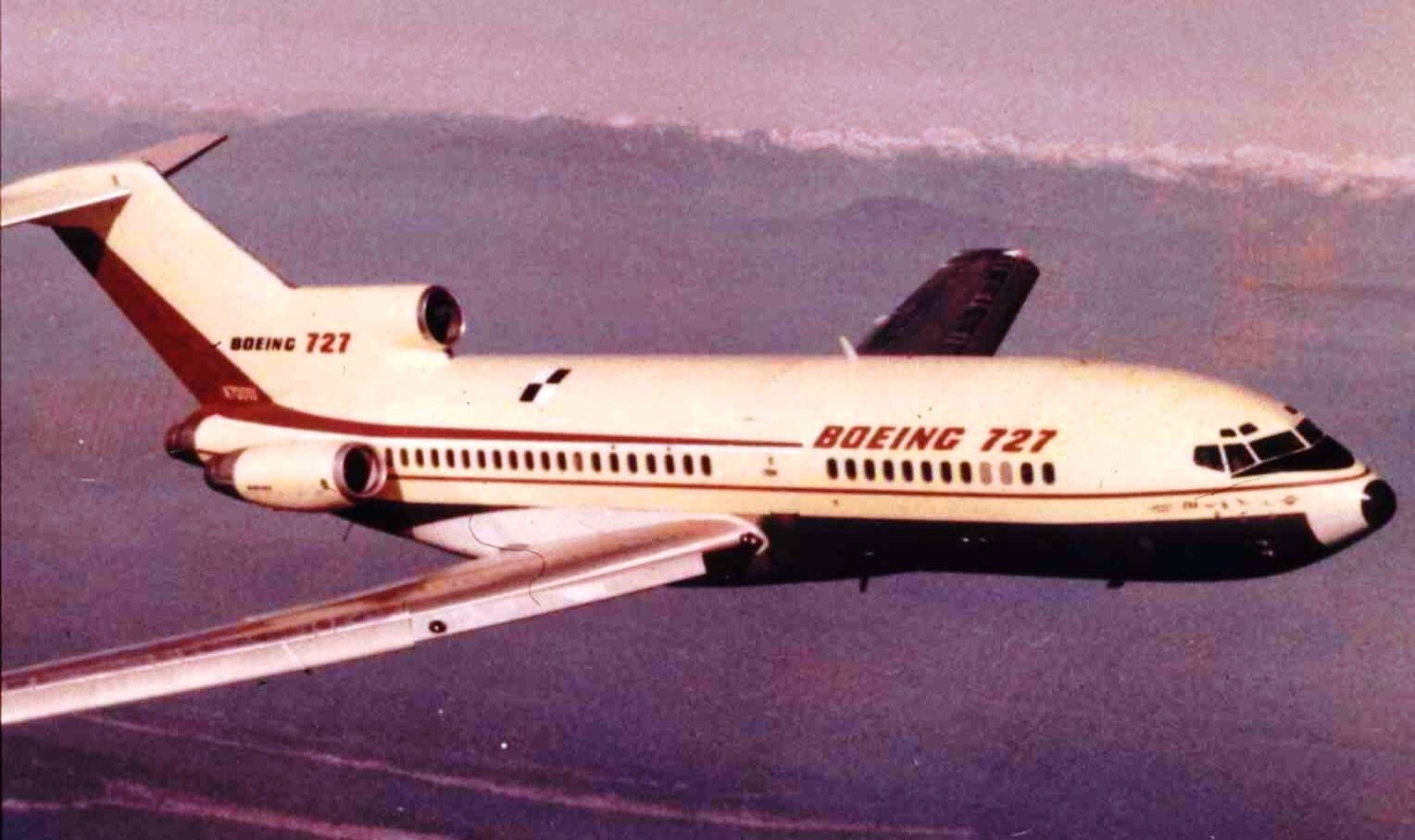
World Airways became a key military contractor during the Vietnam War. For the majority of America’s involvement in Vietnam they flew troops and equipment back and forth between World’s base at Oakland International Airport and Southeast Asia. Flying a mix of Boeing 707, 727, and Douglas DC-8 aircraft, World would be thrust into a maelstrom of humanity and nearly lose several hundred lives while attempting to help refugee women and children get out of Da Nang.
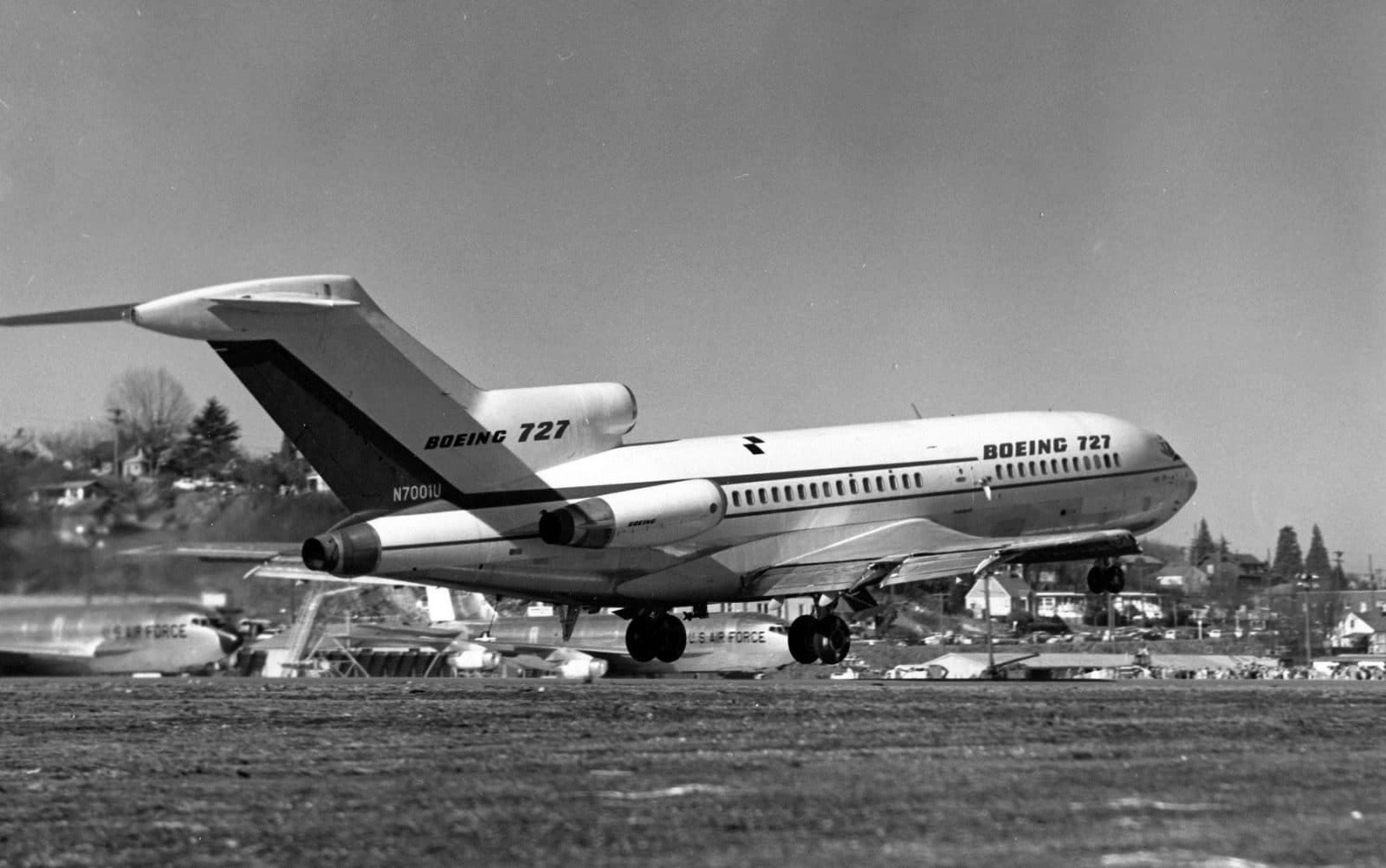
727 via Boeing
Against All the Rules and Most Odds
World and Daly were chartered by the United States Government to make 20 evacuation flights out of Da Nang. When the United States Embassy cancelled contract after only three flights, Daly took matters into his own hands. On March 29th 1975 Daly took two World Airways 727-100s into Da Nang without clearance or permission. One of the 727s was unable to land. The other 727 was carrying Daly. Forced to lift off from a taxiway when the runways were blocked by abandoned vehicles and humanity, the airliner was fired upon and sustained severe damage to the fuel tanks and flaps. The 727 had used its under-tail air stair to load the passengers. Daly was forced to stand his ground at the air stair so the aircraft would not be too overloaded to take off at all. As it was, 268 people were crammed into the cabin and another 60 or so jammed themselves into the cargo holds which had been left open on the ground.
In a masterful piece of flying, the World Airways pilots landed the overloaded aircraft, nearly out of fuel, with the damage to the wings and flaps causing controllability problems, main landing gear unable to retract due to human beings in the gear wells, and the aft air stair stuck in the open position, some 90 minutes after leaving Da Nang. The human side of this tragedy is that World and Daly had flown into Da Nang to rescue refugee women and children. Instead, aside from the five women and two or three children aboard, the flight carried nearly all South Vietnamese military personnel- about 300 of them.
727 via Boeing
Continued Support for the South Vietnamese
World Airways and Daly flew a DC-8 freighter into Saigon a few days later and rescued 58 Vietnamese orphans. Dubbed “Operation Baby Lift” by President Ford, this flight was the impetus for the continuing effort to bring nearly 3,000 orphans to the United States. Footage of the aftermath of this flight (a much more joyous occasion) is included in the video as well.
Warning: You Are Likely to Lose All Track of Time Watching This Film!
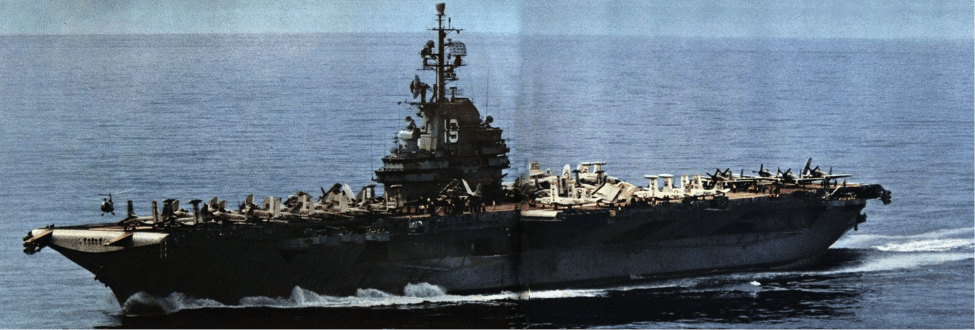
Today’s look back at aviation history is a real knee slapper that would probably never get made in this day and age. The film, “Launch ‘Em”, was made by Carrier Air Group 12 while returning to the United States after their 1955-1956 Far East deployment aboard the carrier USS Hancock (CV-19). A gag film in the finest traditions of Naval Aviation, this one will make you laugh out loud even if you’re not familiar with the goings on aboard an aircraft carrier. It is said that the film was made scarce during the 1960s because it was “politically incorrect” (they had that back then?) but I think the viewing public these days is sophisticated enough to realize the flick is a comedy from beginning to end- entirely unlike some of our more recently highlighted films such as Ready on Arrival.
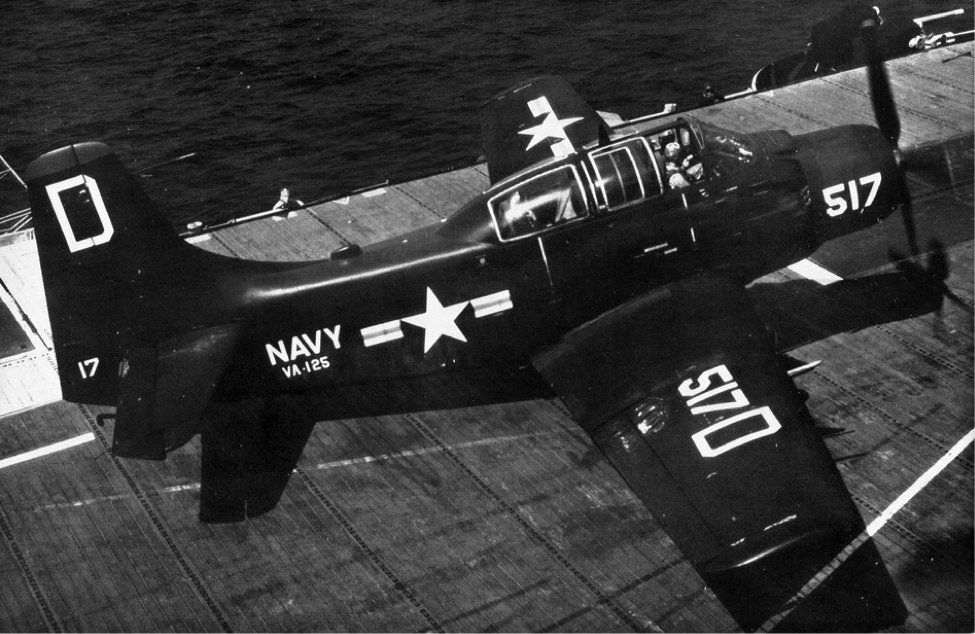
AD-5 Skyraider of VA-125 Rough Raiders pictured on the flight deck of USS Hancock in 1955.
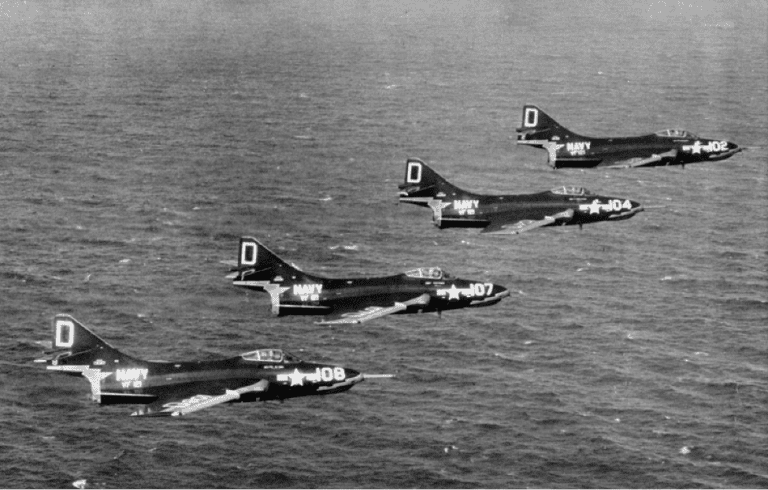
At the time of the making of this comedy film, Carrier Air Group 12 consisted of VF-121 Pacemakers flying Grumman F9F-8 Cougars, VF-124 Gunfighters flying Vought F7U-3 Cutlasses, VA-125 Rough Raiders flying Douglas AD-5 and AD-6 Skyraiders, VMJ-1 Detachment G flying McDonnell F2H-2P (photo) Banshees, VC-3 Blue Nemesis Detachment G flying McDonnell F2H-3 Banshees, VC-6 Firebees Detachment G flying North American AJ-2 Savages, VC-61 Eyes of the Fleet Detachment G flying Grumman F9F-6P (photo) Panthers, VC-35 Night Hecklers Detachment G flying Douglas AD-5N (night attack) Skyraiders, VC-11 Early Eleven Detachment G flying Douglas AD-5W (early warning) Skyraiders, and HU-1 Pacific Fleet Angels Detachment G flying Piasecki HUP helos.
USS Hancock (CV-19) pictured during her 1955-1956 Far East deployment with Carrier Air Group 12 embarked.
VF-121 receives top billing in the film but it’s obvious many of the air group personnel and ship’s company were also involved in this celluloid caper. Thankfully the CAG wakes up from his exceedingly bad dream at the end of the film. Literally a laugh a minute, “Launch ‘Em” is the forefather of Fighter Fling, Rhino Ball, and other gag / cruise videos still being produced (and thoroughly enjoyed) today.
Thanks to Periscope Film for uploading a watchable copy of the film and to our Facebook followers for suggesting it.
Great weather and top military and civilian aerobatic performers drew better than expected crowds as coastal Georgia’s Wings Over the Golden Isles launched its inaugural airshow event during the three-day weekend.
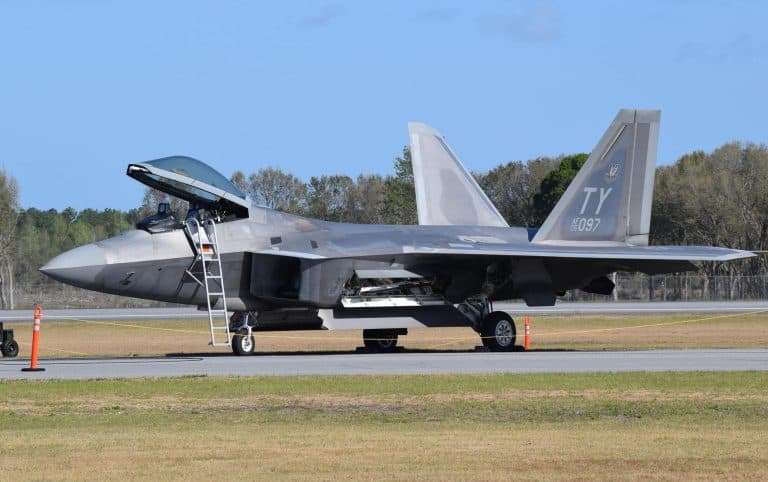
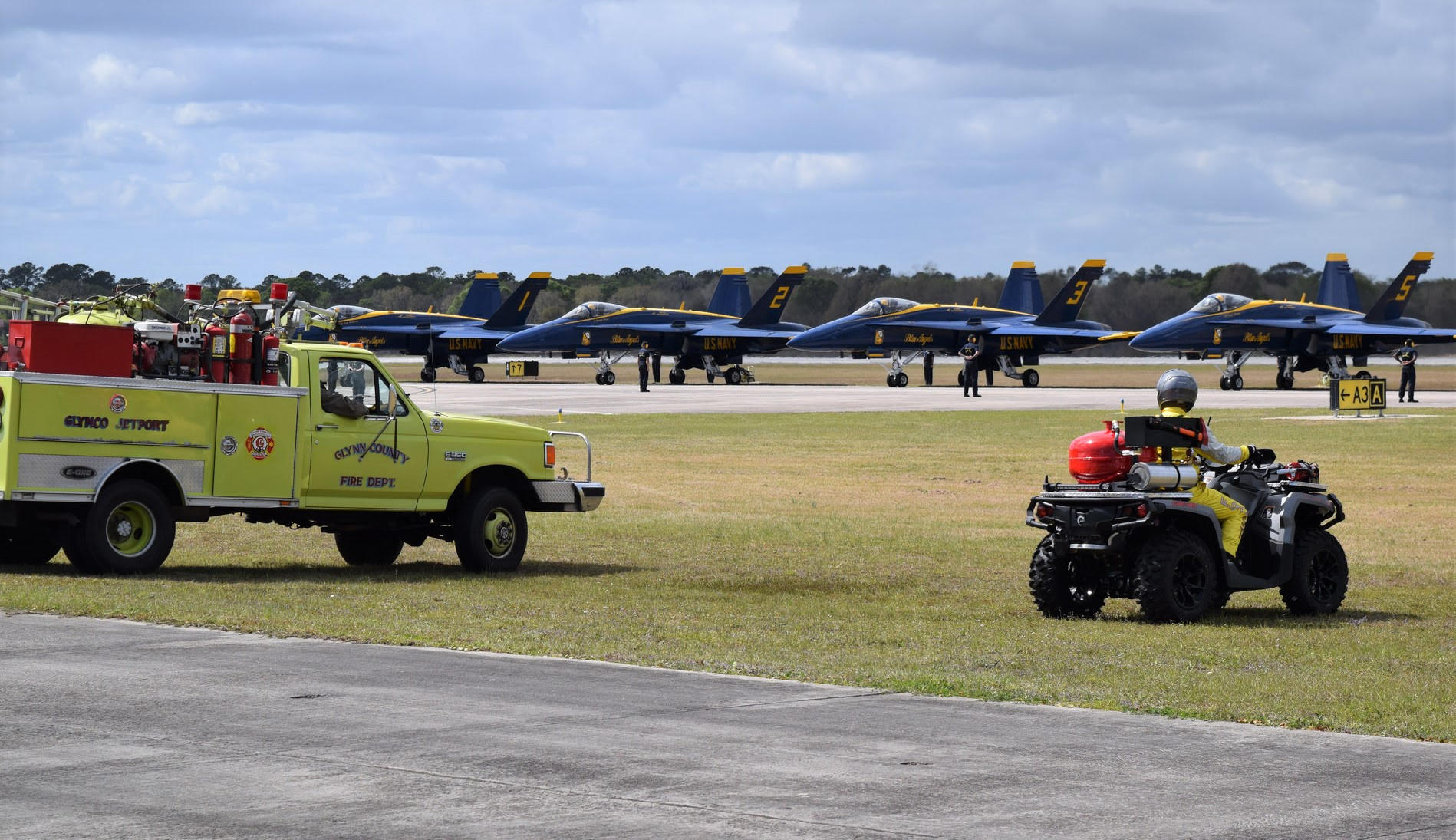
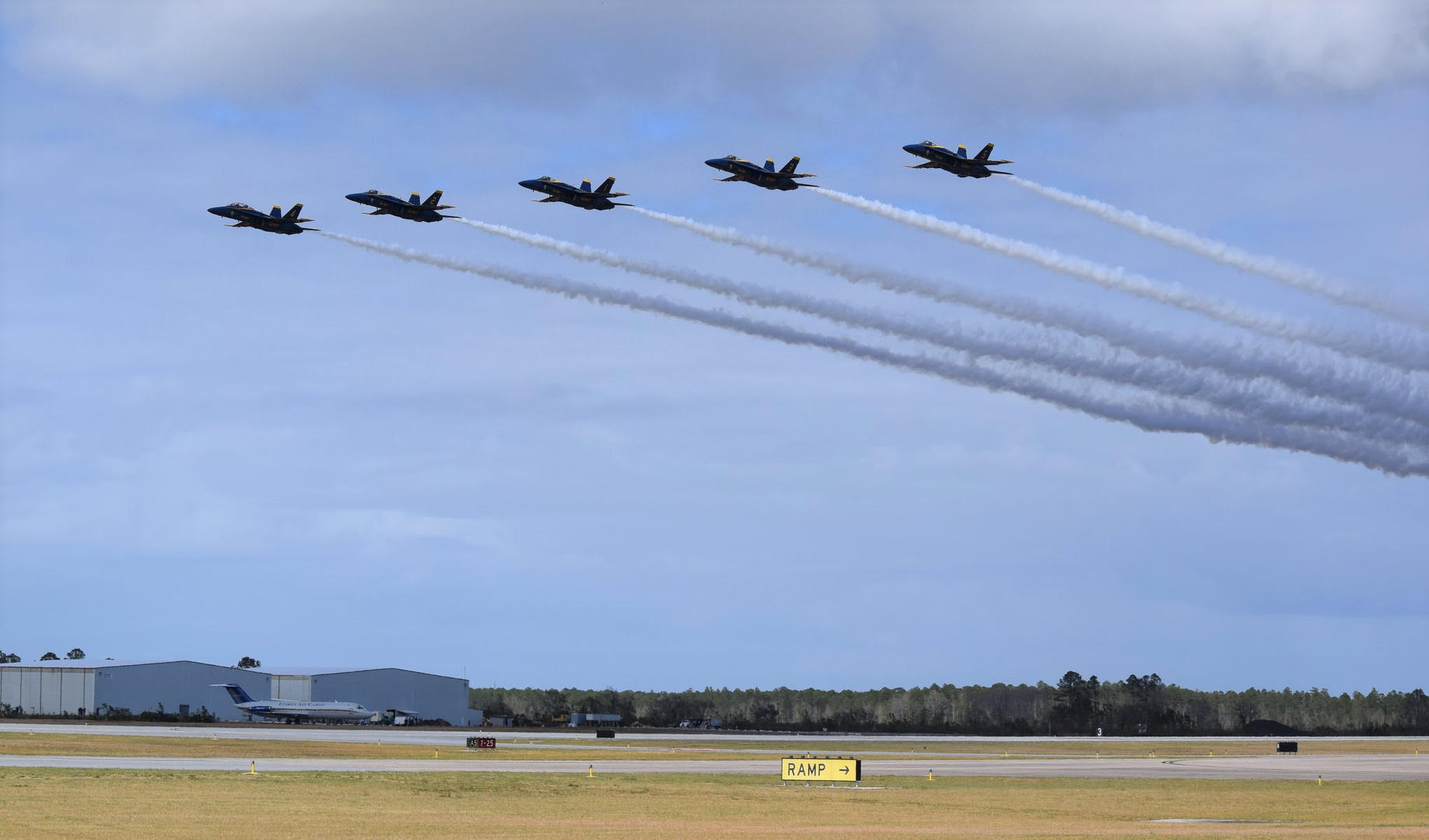
Headline performers included the U.S. Navy’s Blue Angels, the Air Force F-22 Raptor, and AeroShell Aerobatic Team to the Peach State’s first coastal airshow in two decades. Air show management estimated by Sunday afternoon 55,000 visitors attended during the entire weekend.
“JLC AirShow Management is very appreciative of the support from the local community and hopes to make this an annual event for the Golden Isles area,” JLC AirShow Management president John L. Cowman said on Sunday. Organizers did hint that Brunswick would love to have the airshow back again next Spring.
“Local law enforcement, Fire officials, and the Brunswick-Golden Isles Airport were in place, and were tremendous and encouraging for a possible 2018 show,” Airshow spokesperson Brenda Little said at the close of Sunday’s final events. “We had expected 50,000 to attend, and so the extra 5% was a warm welcome for us and the entire airshow community.”
The airshow officially opened Friday night with the power of the F-22 and several civilian performers lighting up the darkening sky brief show. As night fell upon the airport, the patriotic music of Ladies for Liberty kicked-off a concert special headlined by the southern rock band .38 Special.
It wasn’t just the flying which attracted extra visitors to the Golden Isles air show. Saturday’s Parade of Veterans offered a unique tribute to those men and women who had served and are currently serving in the United States Armed Forces.
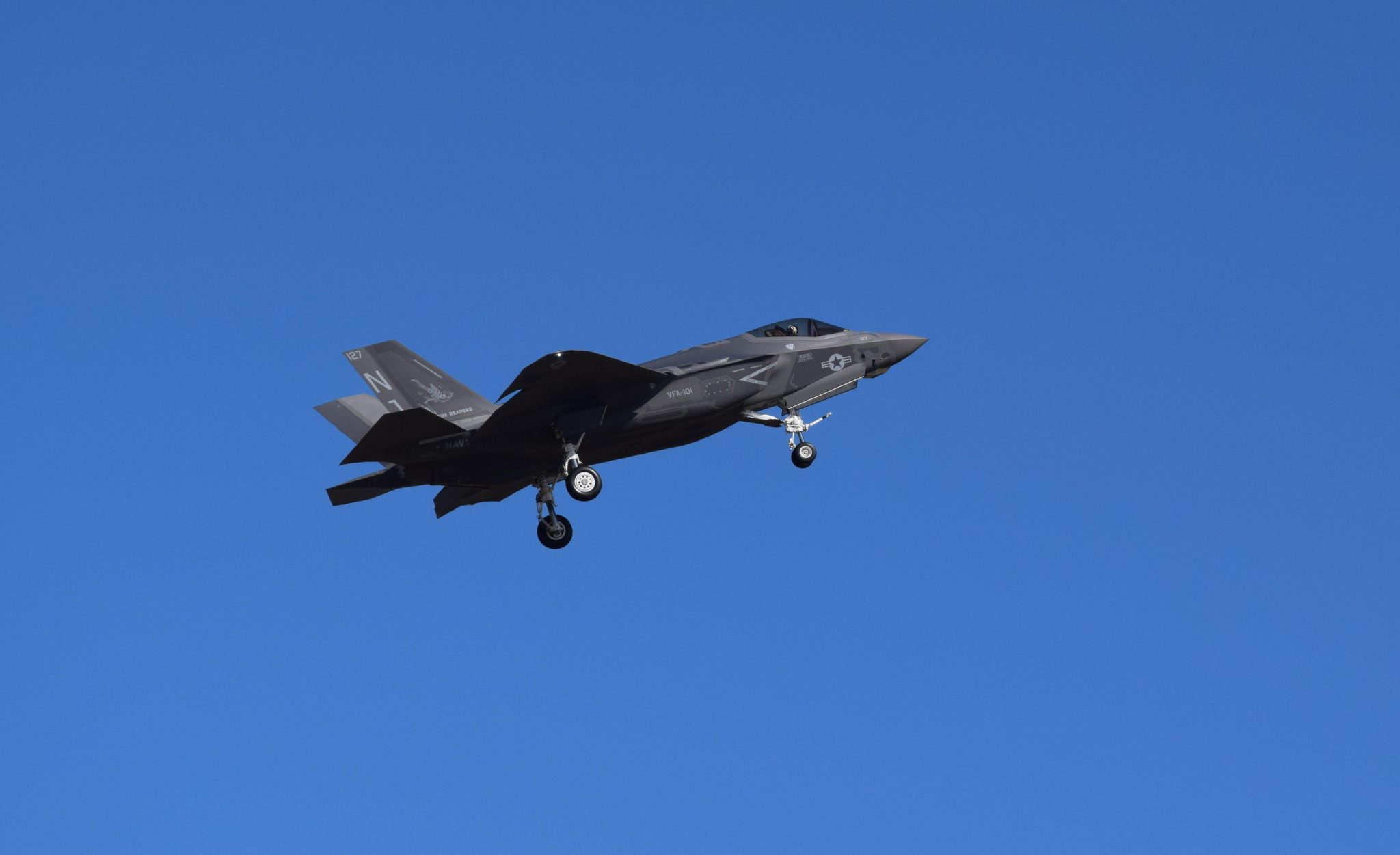
Bob Braack’s Smoke-n-Thunder JetCar, Michael Goulian piloting his Extra 330SC; Scott Yoak and his Quicksilver P-51D; and Buck Roetman and his yellow Christen Eagle also performed over the Golden Isles airfield. Several aircraft on static display attracted crowds of photographers each day as the rarely seen Navy’s F-35C Lightning II, and Donald Trump’s own Trump One stood poised near the airport’s flight line.
As April arrives, so will the 75th anniversary of the Doolitle Raiders flight to Tokyo. That mission occurred just four months following Pearl Harbor, and gave needed boost to the Allies fighting in the Pacific theater. On hand, a similar B-25 Mitchell Bomber performed during the show, and was later moved closer to the crowd for an upclose look at the historic aircraft.
(Charles Atkeison reports on aerospace and technology. Follow his live updates on social media via @Military_Flight.)