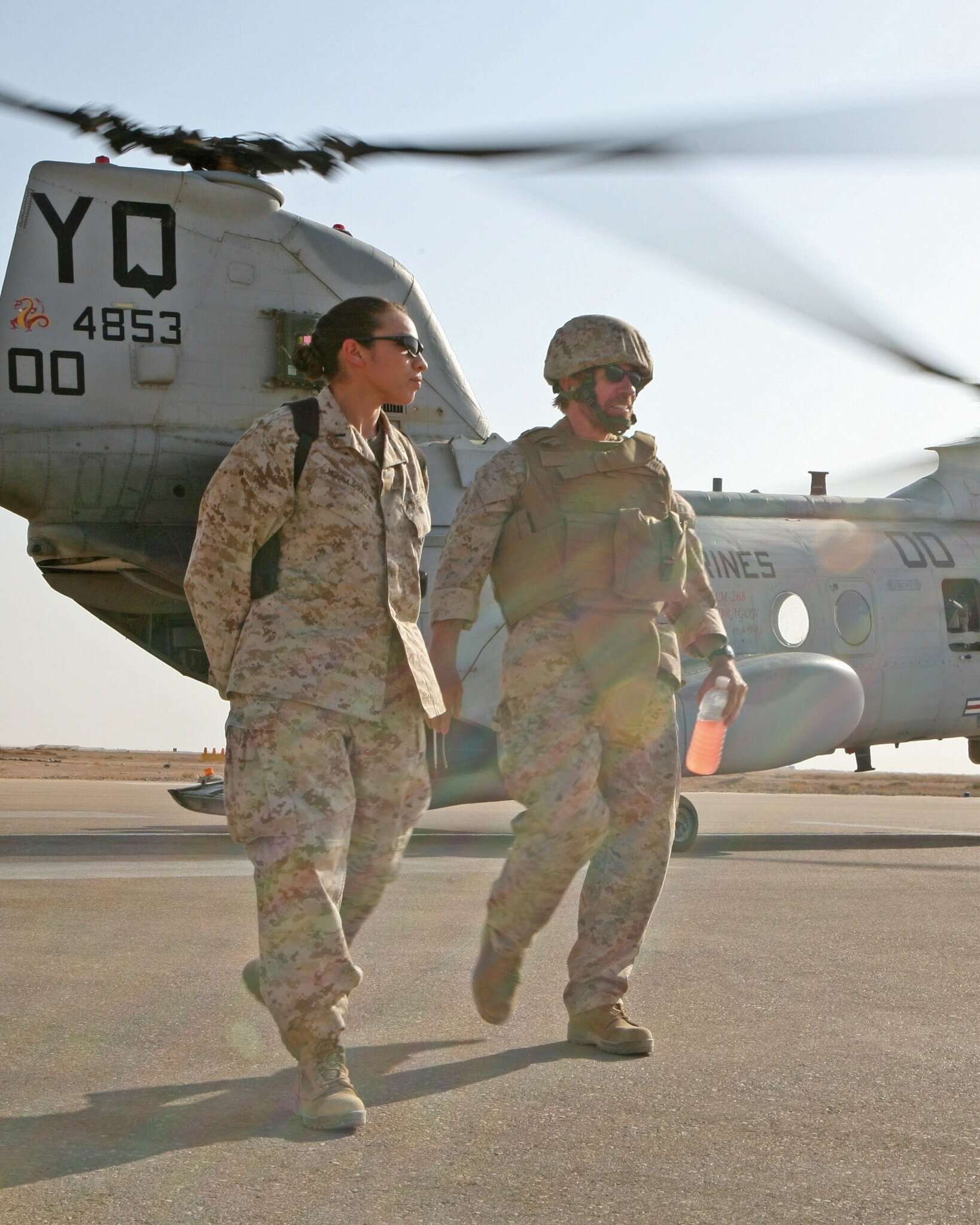
Boeing’s successful Chinook autonomous landing highlights the Army’s progress toward adding more autonomy to its helicopter fleet.
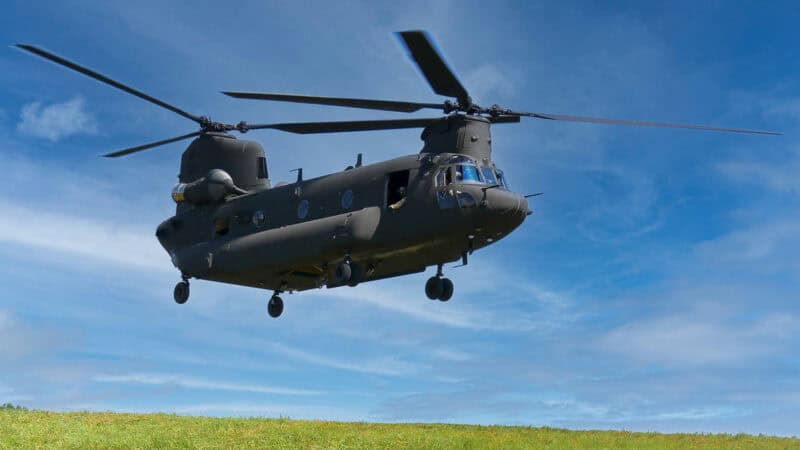
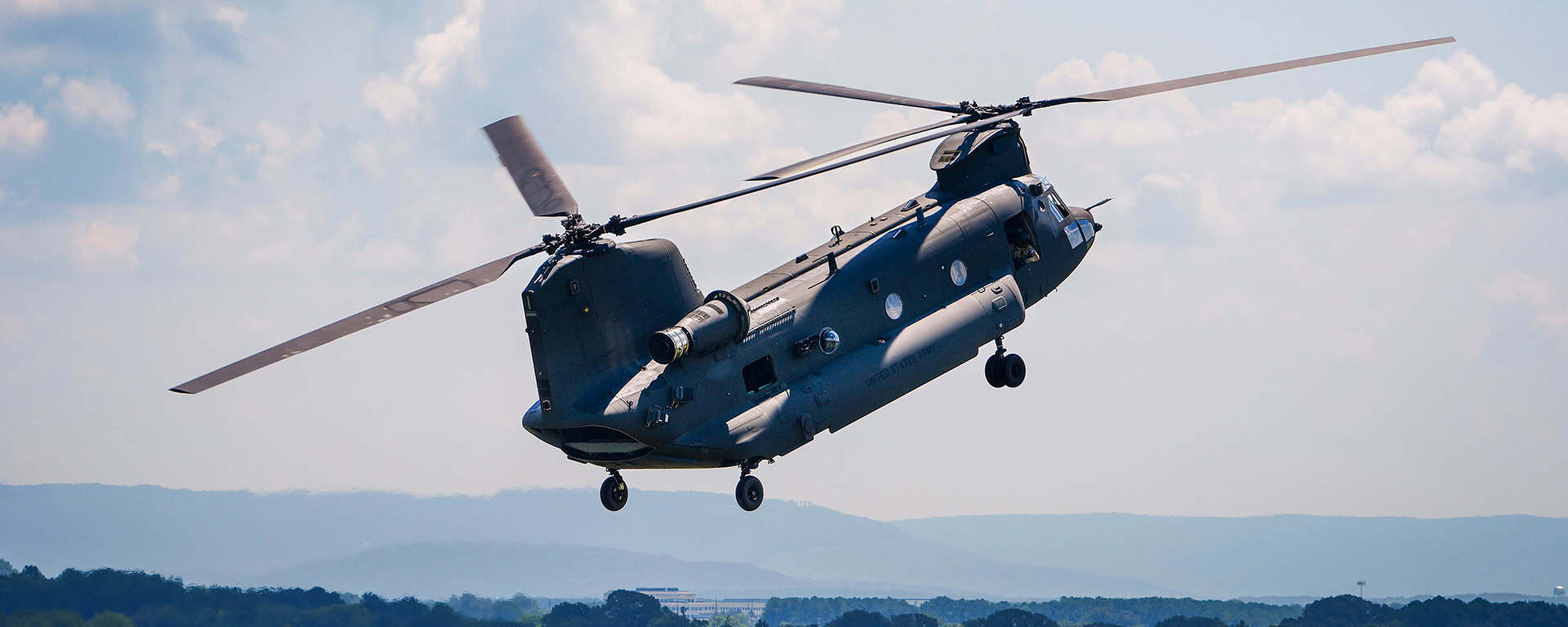
On 16 April 2026, Boeing announced that a US Army CH-47F Chinook completed a fully automated approach and landing in a recent flight test. This is an important step forward for military helicopter autonomy.
According to Boeing, the aircraft used its Approach-to-X (A2X) technology, part of the Digital Automatic Flight Control System, to land autonomously without pilot input. The helicopter landed with all four wheels on the runway. Boeing called this a supervised-autonomy demonstration, meaning it was not a fully unmanned flight.
The system allows pilots to choose key details such as the landing zone, approach angle, speed, and final altitude. Once these are set, the software manages the flight path and landing controls, but pilots can take over if needed.
“We built the interface and control laws around how pilots would naturally fly an approach,” said Deanna DiBernardi, H-47 Human Factors Engineering lead at Boeing. “Our goal is to reduce pilot workload so crews can maintain more eyes-out awareness in a tactical situation.”
Our goal is to reduce pilot workload so crews can maintain more eyes-out awareness in a tactical situation.
Deanna DiBernardi | Boeing
Since its first flight in January 2026, the A2X system has completed more than 150 automated approaches. These tests included hovering at 100 feet and landing on the ground, with an average final position error of less than five feet.
Part of the Army’s Long-Term Push Toward Autonomy
IMAGE: Boeing
This demonstration is part of the Army’s effort to add autonomy to its current fleet while keeping pilots involved. The aim is not to replace crews, but to reduce their workload during difficult parts of a flight and improve performance in challenging situations.
Boeing says this technology helps crews stay alert during critical moments, such as approach and landing, especially when visibility is low due to dust, darkness, or bad weather. These are the times when accuracy and managing workload are most important.
“Improving DAFCS [Digital Automatic Flight Control System] is just one of the ways we’re making the Chinook even more capable than it already is,” said Heather McBryan, Boeing’s vice president and program manager for Cargo Programs. “The Army wants to add layers of optimally crewed capability quickly, and we’re working side by side with them to make those upgrades a reality.”
The Chinook test is part of the Army’s endeavor to add autonomy to different platforms, including pilot-optional versions of the Sikorsky UH-60 Black Hawk. These projects point to a future in which aircraft may require fewer crew members while still maintaining human oversight.
Boeing says it will continue improving the A2X software through additional flight tests before releasing the final version for the Army’s fleet.
A 60-Year-Old Helicopter, Reimagined
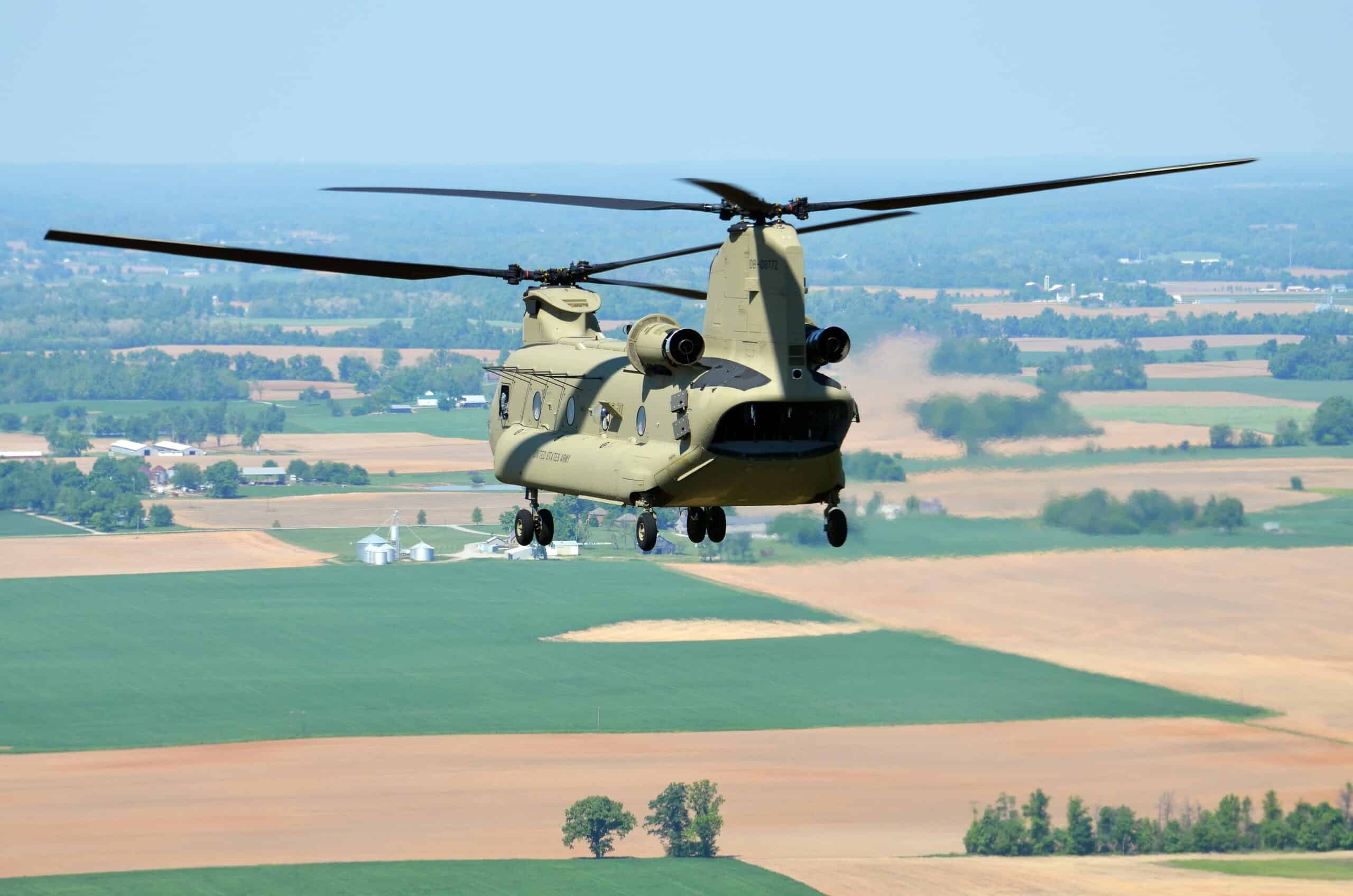
IMAGE: US Army
This achievement adds new capabilities to one of the military’s longest-serving helicopters. Since 1962, the Boeing CH-47 Chinook has been the Army’s main heavy-lift helicopter, supporting missions from troop and artillery transport to disaster relief, medical evacuation, and humanitarian aid.
The current CH-47F model features improved engines, a digital cockpit, and advanced flight controls to increase reliability and performance in difficult conditions. These upgrades already help it operate well in low visibility and busy environments, making it suitable for new autonomy features.
Programs like A2X demonstrate that older aircraft can be updated with modern software, keeping them useful for years rather than replacing them. This practical approach allows the Army to upgrade proven helicopters while gradually adding new features.
If this capability is successfully implemented, it could change how Chinook crews manage one of the most demanding parts of flight. By moving some of the workload from the cockpit to software, the aircraft is not just evolving but also redefining what a long-serving helicopter can do in modern operations.
Top Gun 3 is happening. And if you’ve ever looked up at a jet and felt something, you already understand why it matters.
There are certain movie lines that don’t just belong to film. They belong to aviation.
“Talk to me, Goose.” “The need for speed.” “Negative, Ghost Rider.”
You don’t even have to be a pilot to hear those and picture a jet tearing across the sky. That’s the kind of cultural footprint Top Gun left behind. And now, decades after the original and a wildly successful return in 2022, the story isn’t over yet.
Last week at CinemaCon, Paramount announced that Top Gun 3 is officially in the works. The script is being written, and Tom Cruise will return with producer Jerry Bruckheimer. There’s no release date or director yet, which only adds to the anticipation. For avgeeks, the runway is clear…we just don’t know what’s about to take off.
More Than Just Another Sequel
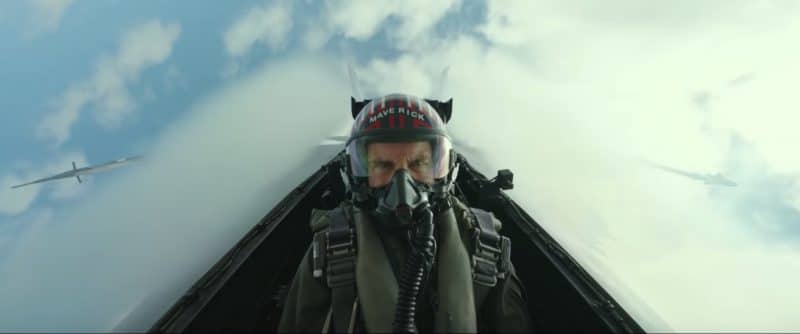
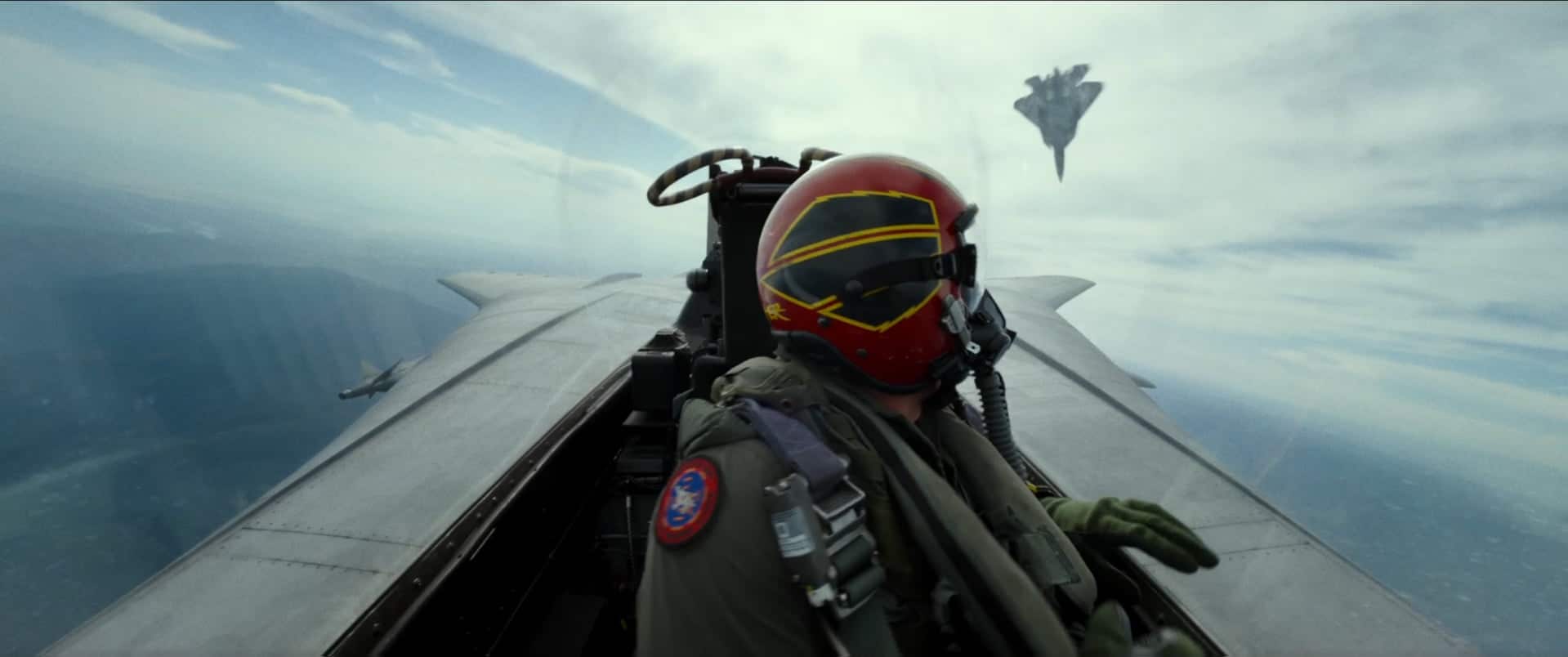
Screenshot from Top Gun: Maverick Trailer
The original Top Gun didn’t just succeed as a movie. It became part of aviation’s identity. It turned the F-14 into a symbol and made carrier aviation feel larger than life. For many, it was the spark that made them look up when they heard a jet overhead and wonder what it would be like to be in that cockpit.
Top Gun: Maverick followed, honoring the original while moving the story forward. Instead of just relying on nostalgia, it brought realism by using real aircraft and real challenges. Audiences could feel the speed, the G-forces, and the tension in a way that’s rare in movies today.
That’s why this third movie feels special. It’s more than just another chapter. It’s about capturing a new moment in aviation and saving it on film. Each Top Gun movie reflects its time, and this one will too.
The Question Every AvGeek Is Asking
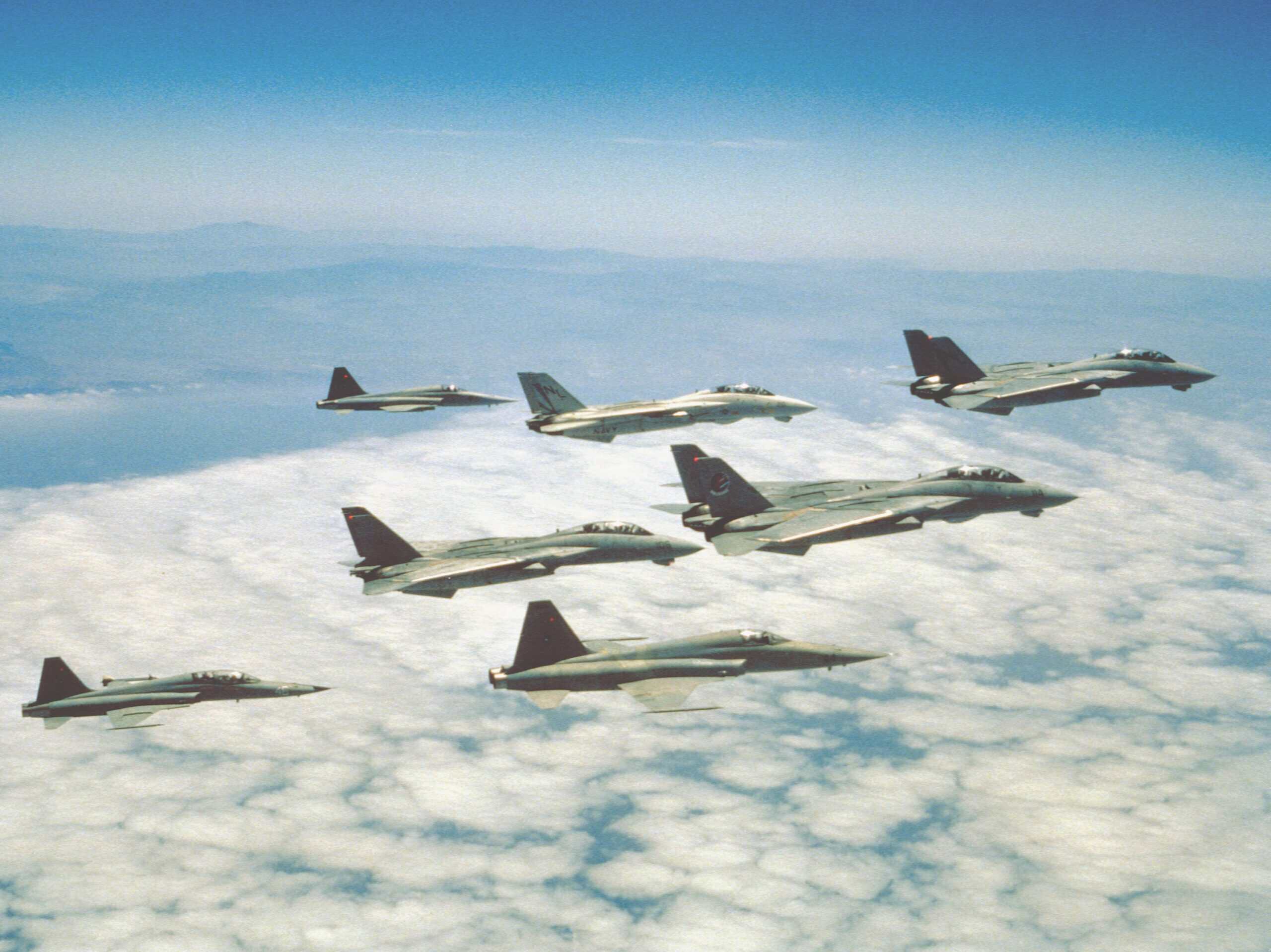
U.S. Navy F-14A Tomcats from VF-51 “Screaming Eagles” and VF-111 “Sundowners” fly alongside F-5 Tiger IIs from the Navy Fighter Weapons School—jets that brought the iconic dogfight scenes in *Top Gun* to life. Look closely and you’ll spot some Hollywood-style markings on at least one Tomcat | IMAGE: Public Domain
Naturally, the first thought isn’t about plot. It’s about aircraft. Obviously.
The original featured the Tomcat. Maverick focused on the Super Hornet and today’s missions. So what will Top Gun 3 showcase?
We don’t know yet, and that’s part of the excitement.
Will the movie stick with today’s aircraft? Will it move toward next-generation jets? Or will it focus even more on the human side of flying, like Maverick did so well?
No matter what direction the film takes, one thing is clear: the details will matter. After the last movie, expectations are high. The flying needs to feel real, and the radio chatter has to sound authentic. It’s the small touches—often noticed only by avgeeks—that make it believable for everyone.
Carrying the Legacy Forward
Val Kilmer and Tom Cruise during the filming of Top Gun in 1985 | IMAGE: Paramount
Top Gun: Maverick gave us one last moment with Val Kilmer as Iceman, and it didn’t need to do much to land. It just felt real.
With Kilmer’s passing in 2025, that presence won’t be there this time. And it doesn’t need to be recreated. If anything, it’s something the film can carry forward in the same way aviation usually honors its own… quietly, and with respect.
Right now, all we have is confirmation. A script in progress. Familiar names returning. But if history tells us anything, it won’t stop there. This franchise has a way of reaching beyond the screen. They spark curiosity, pull people into aviation, and remind those already in it why they fell in love with it in the first place.
Sooner or later, a Top Gun 3 trailer will drop, and we’ll all start dissecting every frame. But even before that, you can already picture it. The engines spooling up. The jet holding short. The pause before the throttles go forward.
And if they get it right, don’t be surprised if we’re all watching through a slightly blurry canopy.
When We Needed a Morale Boost the Most, Doolittle’s Raiders Delivered
The situation in America was looking very bleak during early 1942. Germany’s war machine was running at full power in Europe. To the West, Japan’s conquests were looking extremely daunting as well. The devastating blow by the Japanese to the Pacific fleet at Pearl Harbor meant that any American attack on Japanese territory would be even more difficult. It would require years of hard-fought battles to even get close enough to be able to launch an attack on the Japanese islands. While bleak, the situation was not hopeless.
An Idea Becomes a Mission
One Army Air Corps officer, Lt. Col. Jimmy Doolittle, had an idea. He hypothesized that a North American B-25 Mitchell medium bomber could be lightened enough to take off on a carrier deck and have enough gas to bomb Japan before safely landing in China. This attack would strike fear into the enemy and boost morale at home.
In theory, it sounded great. The problem, though, was that no bomber in the inventory was even remotely capable of taking off in the short operating distances of a carrier deck, nor could the planes carry enough fuel and bombs to make the attack possible.
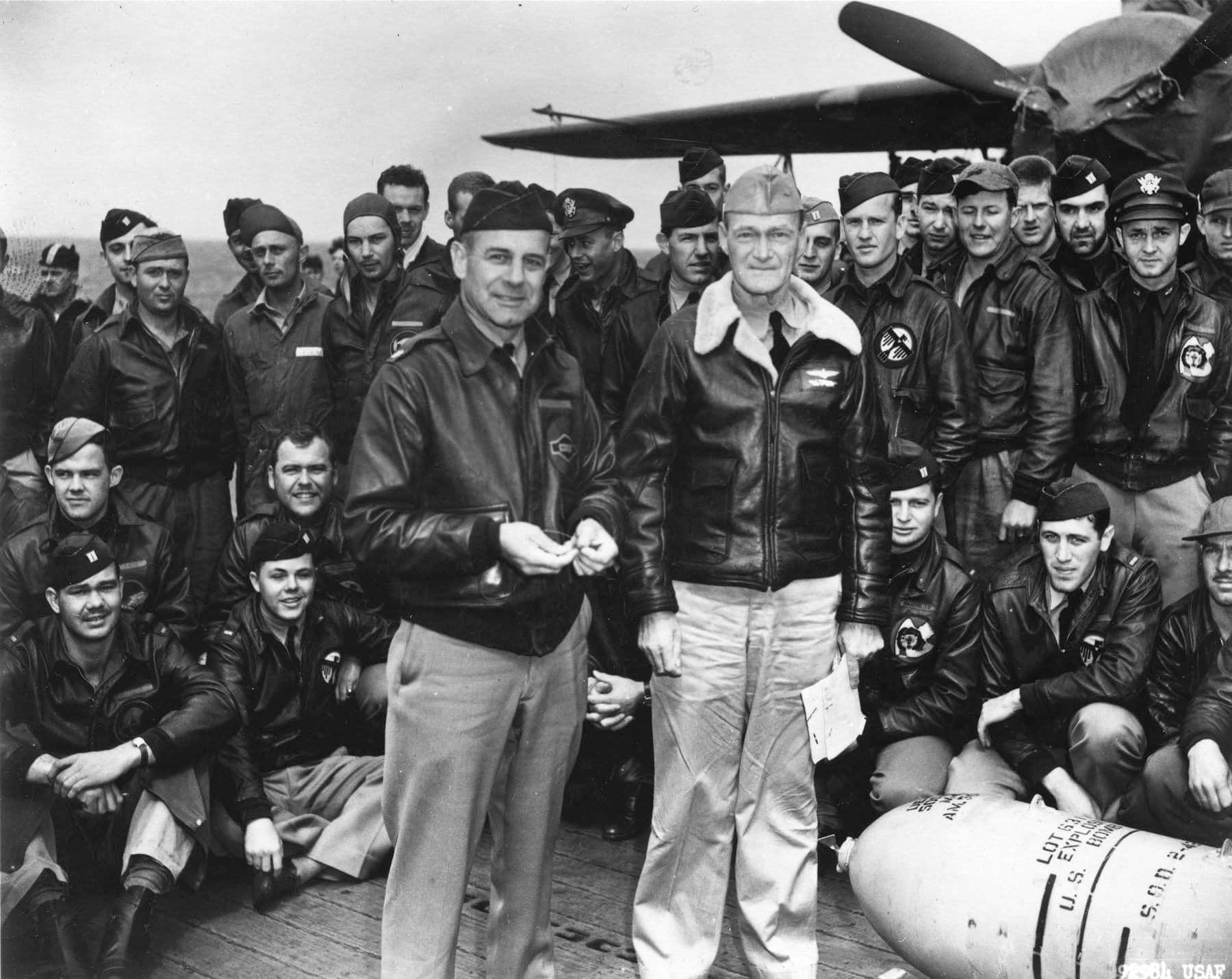
Doolittle (right center) and his raiders. image via national archives
Against All Odds, the Raiders Delivered
Lt Col Doolittle wasn’t deterred. No matter how many people thought he was crazy, he worked tirelessly to lighten up the aircraft enough to allow for a takeoff on such a short deck. Over time, he refined the procedures, perfected the payload, practiced the mission, and secured the support of his superiors.
On 18 April 1942, Doolittle commanded the first B-25, launching off the aircraft carrier Hornet (CV-8) and flew towards Japan. The 16 aircraft that launched that day successfully dropped bombs on Japanese territory. 15 of the 16 aircraft landed in Chinese territory, while one aircraft crash-landed in the Soviet Union. Through his planning and with a little bit of luck, 69 of the 80 aircrew survived without being captured or killed.
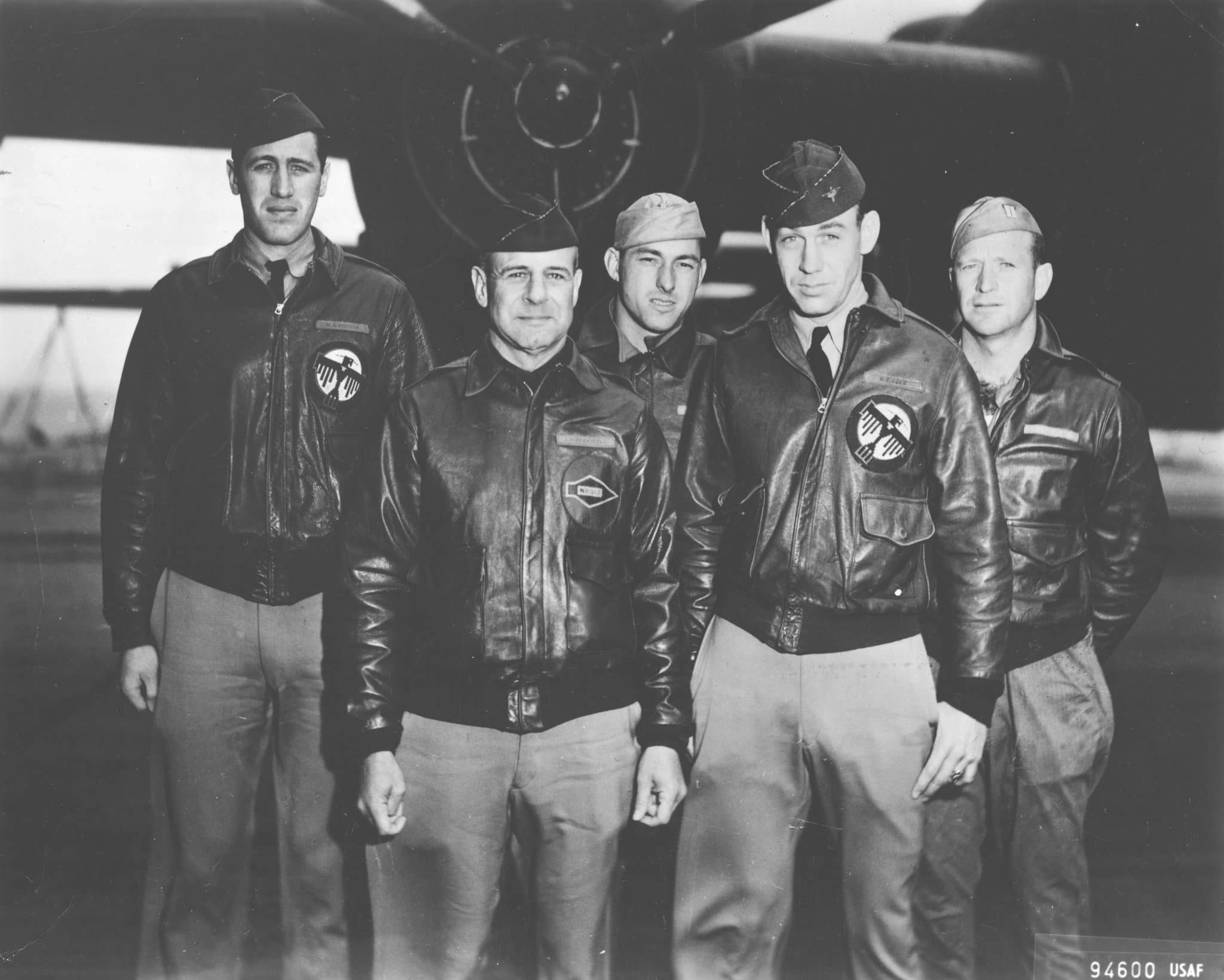
Crew No. 1 (Plane #40-2344, target Tokyo): 34th Bombardment Squadron, Lt. Col. James H. Doolittle, pilot; Lt. Richard E. Cole, copilot; Lt. Henry A. Potter, navigator; SSgt. Fred A. Braemer, bombardier; SSgt. Paul J. Leonard, flight engineer/gunner. (U.S. Air Force photo)
More Than Just Bombs Over Tokyo
While the damage done by the attack was minimal, it demonstrated that Japan was vulnerable and served as a huge morale boost back home. Doolittle’s innovative plan was the catalyst that inspired America in a time of despair. His ingenuity gave a nation hope. His leadership endures as an example of how great leaders should lead in challenging conditions: From the front. Take a moment today to recognize and remember the heroism displayed by the Doolittle raiders.
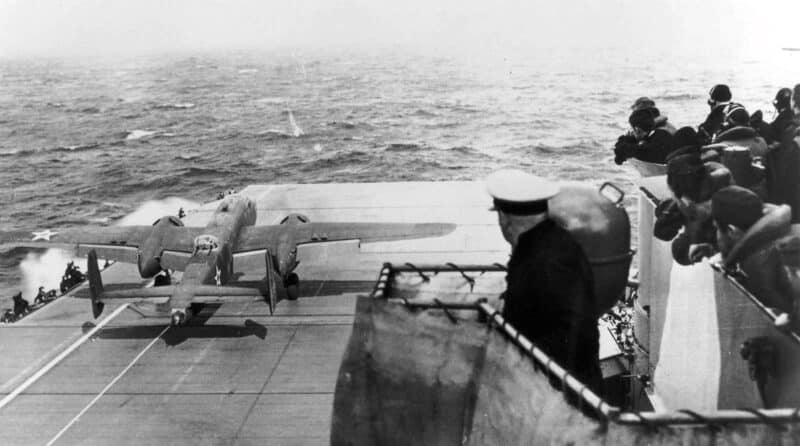
raiders warming up aboard the Hornet 18 April 1942
A potential Europe jet fuel shortage shows how global tensions are driving fuel prices higher and putting pressure on airlines worldwide.
On 16 April 2026, the Associated Press published a headline that seemed almost unbelievable.
Europe could be down to just six weeks of jet fuel.
International Energy Agency chief Fatih Birol gave that warning, calling this possibly “the largest energy crisis we have ever faced.”
The main issue, of course, is the Strait of Hormuz, a key chokepoint for global energy. Normally, about 20 percent of the world’s traded oil passes through it. But with the ongoing conflict involving the United States, Israel, and Iran, that flow has been disrupted.
“It’s a dire strait now,” Birol said. He warned that the longer this disruption lasts, the greater the impact will be on the global economy, fuel prices, and, especially, aviation.
Aviation is feeling the effects most. Airlines already run on thin margins and rely on carefully managed fuel supplies. In this industry, six weeks is a very short time.
Europe has about 6 weeks of jet fuel left, the head of the International Energy Agency tells the AP, as he warns of flight cancellations. https://t.co/pykhCuDM98
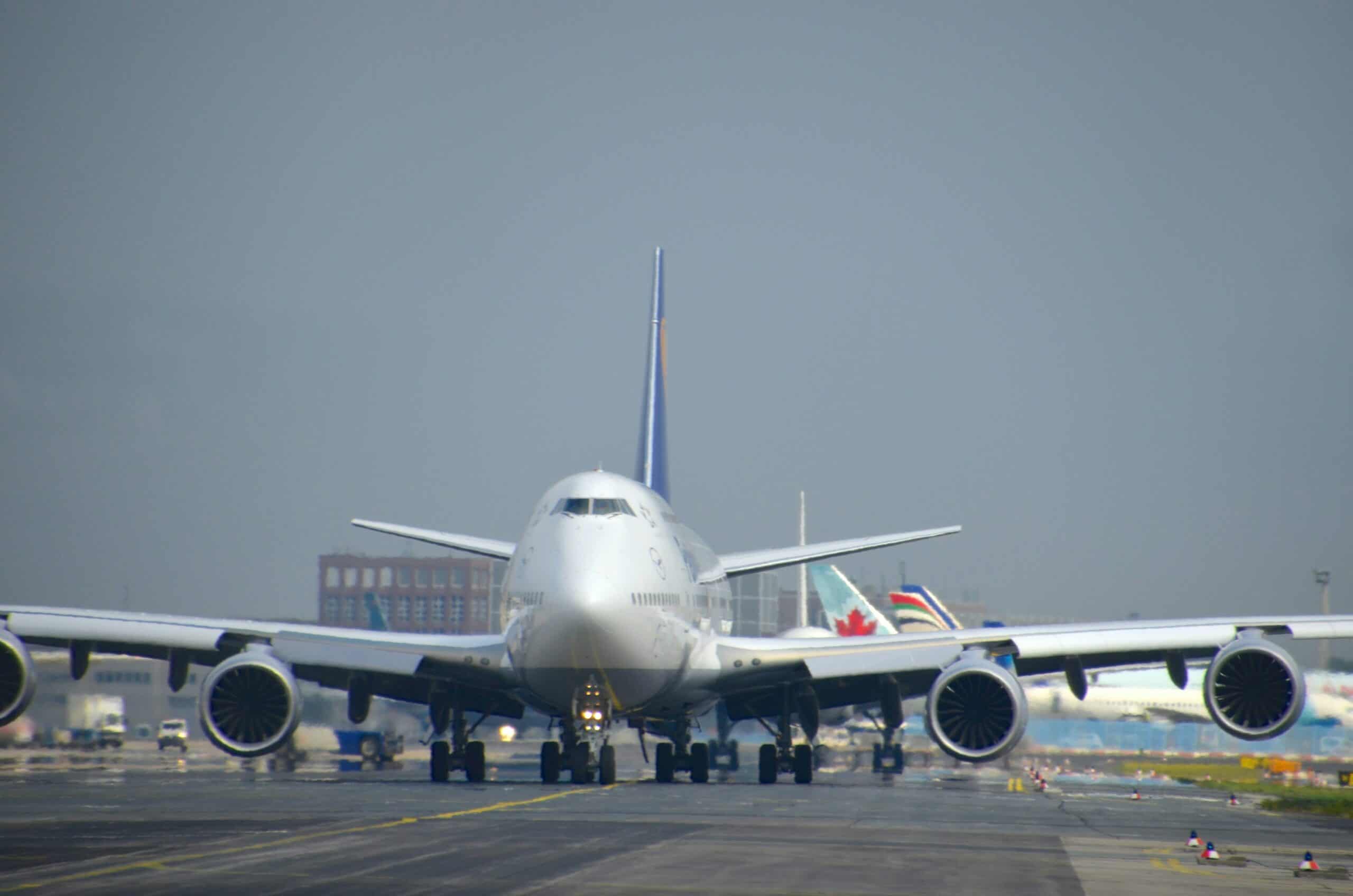
Lufthansa Boeing 747-800 at Frankfurt Airport (FRA) | IMAGE: Photo by Ralf Kutscher on Unsplash
Jet fuel doesn’t simply show up at airports. It comes from a complex global system that includes oil production, refining, shipping, and storage. If any part of this chain is disrupted, the effects are felt quickly.
Right now, several parts of that system are under strain.
Over 110 oil tankers and many LNG carriers are currently stuck in the Persian Gulf, unable to pass through Hormuz. Even if the strait opens soon, damaged infrastructure in the region could delay a full return to normal production for months or even years.
Birol was blunt about aviation’s short-term prospects.
“If we are not able to open the Strait of Hormuz, I can tell you soon we will hear the news that some flights from city A to city B might be canceled as a result of lack of jet fuel.”
We are already seeing some early warning signs.
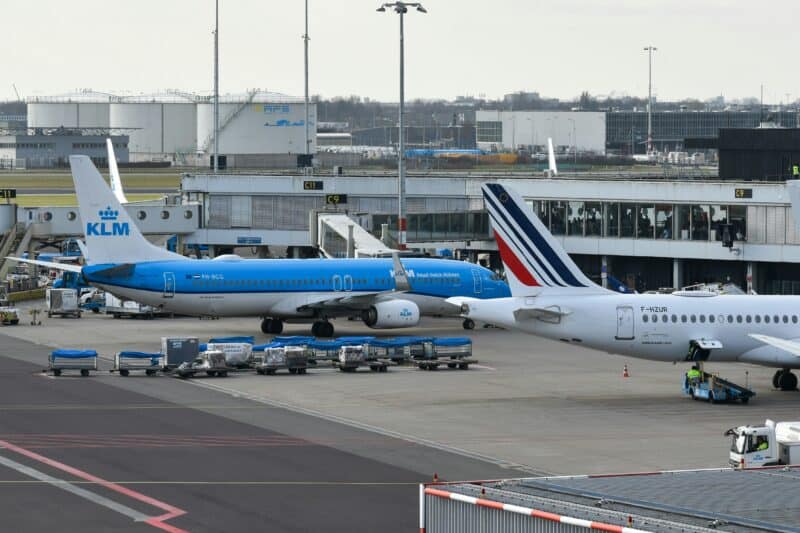
Airlines across Europe are dealing with rising kerosene costs. Ticket prices are going up, and profit margins are shrinking. While carriers like KLM and easyJet say they are not facing shortages yet, they are definitely feeling the financial pressure.
It’s becoming clear that yet another global aviation crisis is developing.
Lufthansa Starts Cutting Back
Airbus A340-600 D-AIHP taking off from Munich Airport (MUC) | IMAGE: Lufthansa
One of Europe’s biggest airline groups is already taking action.
Lufthansa has announced it will cut capacity and ground less efficient planes as fuel costs rise. These changes are significant.
The group will remove Lufthansa CityLine’s 27 planes from its summer schedule earlier than planned. It will also retire its last Airbus A340-600s by October and ground more Boeing 747-400s. For long-haul flights, six intercontinental planes will be cut.
Chief Financial Officer Till Streichert explained that higher fuel prices resulting from the Hormuz disruption are forcing the airline to make changes now rather than wait.
Their plan is straightforward: fly fewer planes, focus on efficiency, and limit their risk from unpredictable fuel markets.
We have seen airlines use this approach in past crises, but the speed of these changes now shows how seriously they view the current situation.
Trouble Deepens for Spirit
Exterior picture of a Spirit Airlines Airbus A320neo exterior | IMAGE: Spirit Airlines
Meanwhile, on the other side of the Atlantic, the pressure is different but just as strong.
Rising fuel prices have disrupted Spirit’s restructuring plans. Talks with creditors are getting more complicated, and some are even considering liquidation.
That’s a big change. Just a few weeks ago, Spirit was planning to exit bankruptcy by summer, though as a smaller airline than before.
Fuel is always a major cost for airlines, but for ultra-low-cost carriers like Spirit, profit margins are even slimmer. Spirit has already cut its network and dropped unprofitable routes. Now, the numbers just aren’t adding up.
Analysts say that if fuel prices stay high, Spirit could face hundreds of millions of dollars in extra costs. That’s a huge challenge for a company already in bankruptcy.
Legacy airlines with premium cabins and more pricing power can handle some of this pressure. Spirit doesn’t have that advantage. While big carriers also feel the impact, it’s much harder for airlines like Spirit.
Could things get better before this turns into a full crisis? It depends.
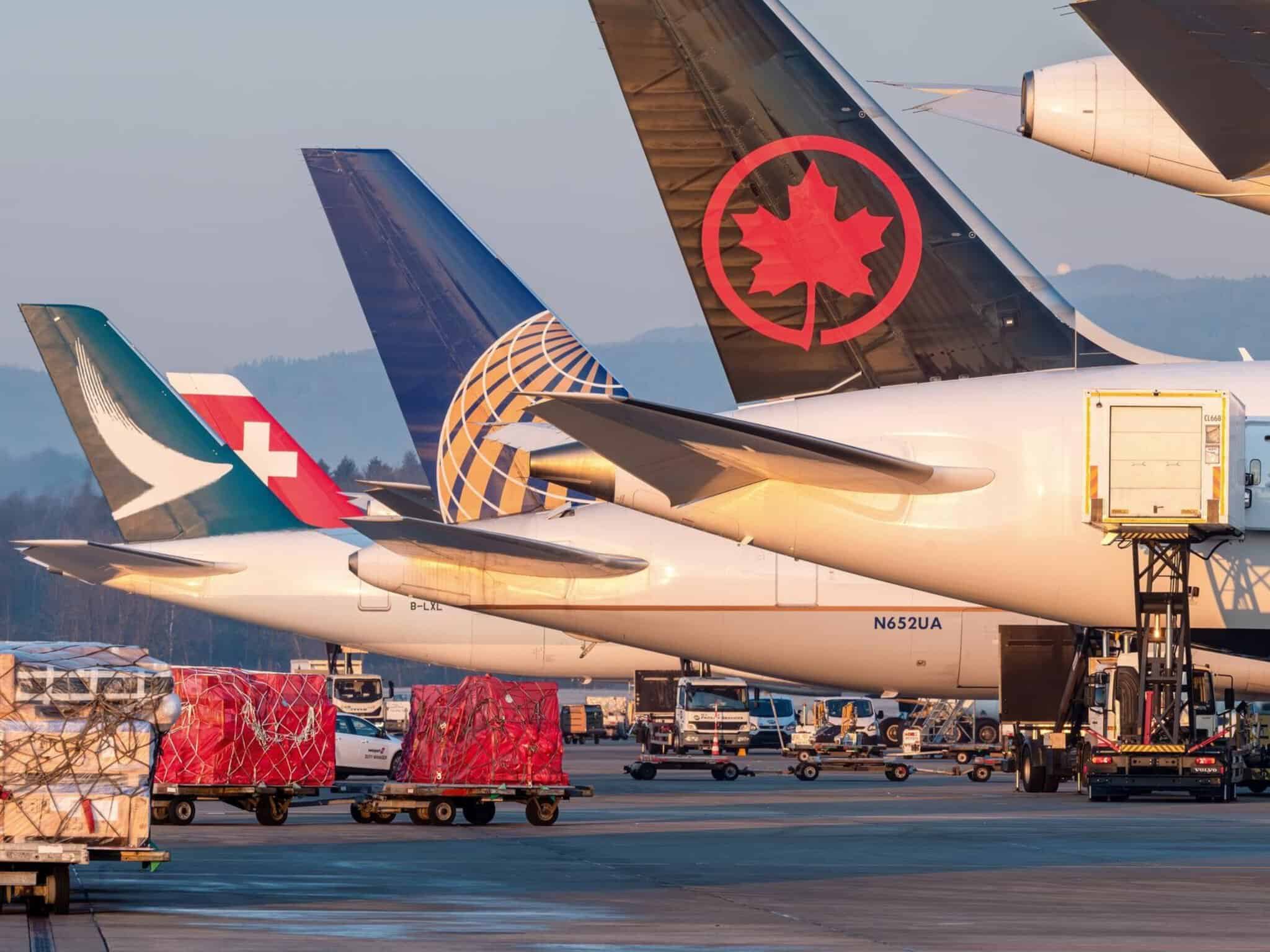
Lineup of widebody jets at Zurich Airport (ZRH) | IMAGE: Zurich Airport Facebook
What sets this moment apart is the problem’s widespread scope.
This isn’t just an airline or aviation issue. It’s a global energy crisis, and aviation is feeling the effects first.
When fuel costs go up, ticket prices rise too. Fewer planes mean fewer flights. If this continues, real fuel shortages could start to decide which routes airlines can fly.
Birol made it clear: no country is safe from these effects.
If the Strait of Hormuz stays blocked much longer, airlines may soon have to worry less about prices and more about whether they can get fuel at all.
Right now, the idea that Europe has only six weeks of jet fuel is just a warning, not a sure thing.
Still, for people in the industry, even considering this possibility is deeply unsettling at best…and downright frightening at worst.
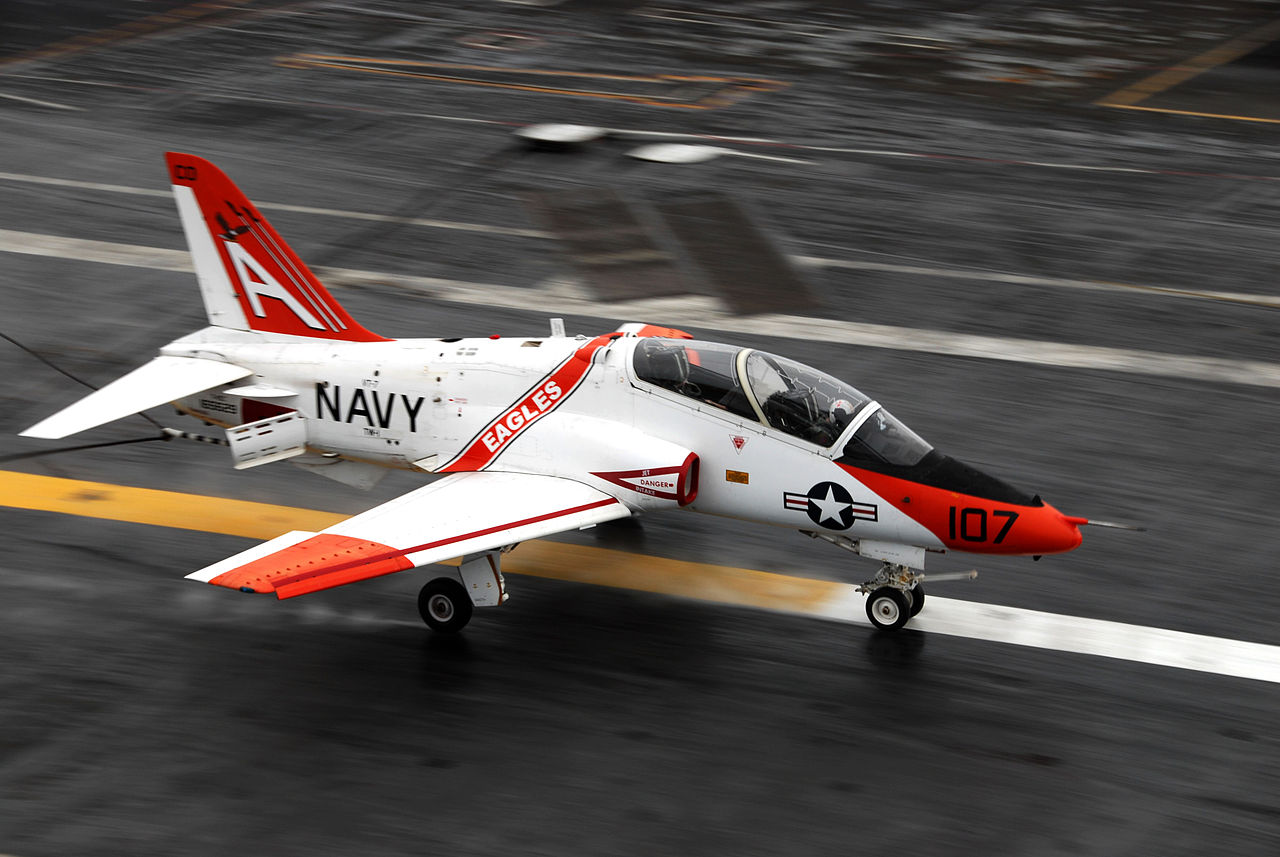
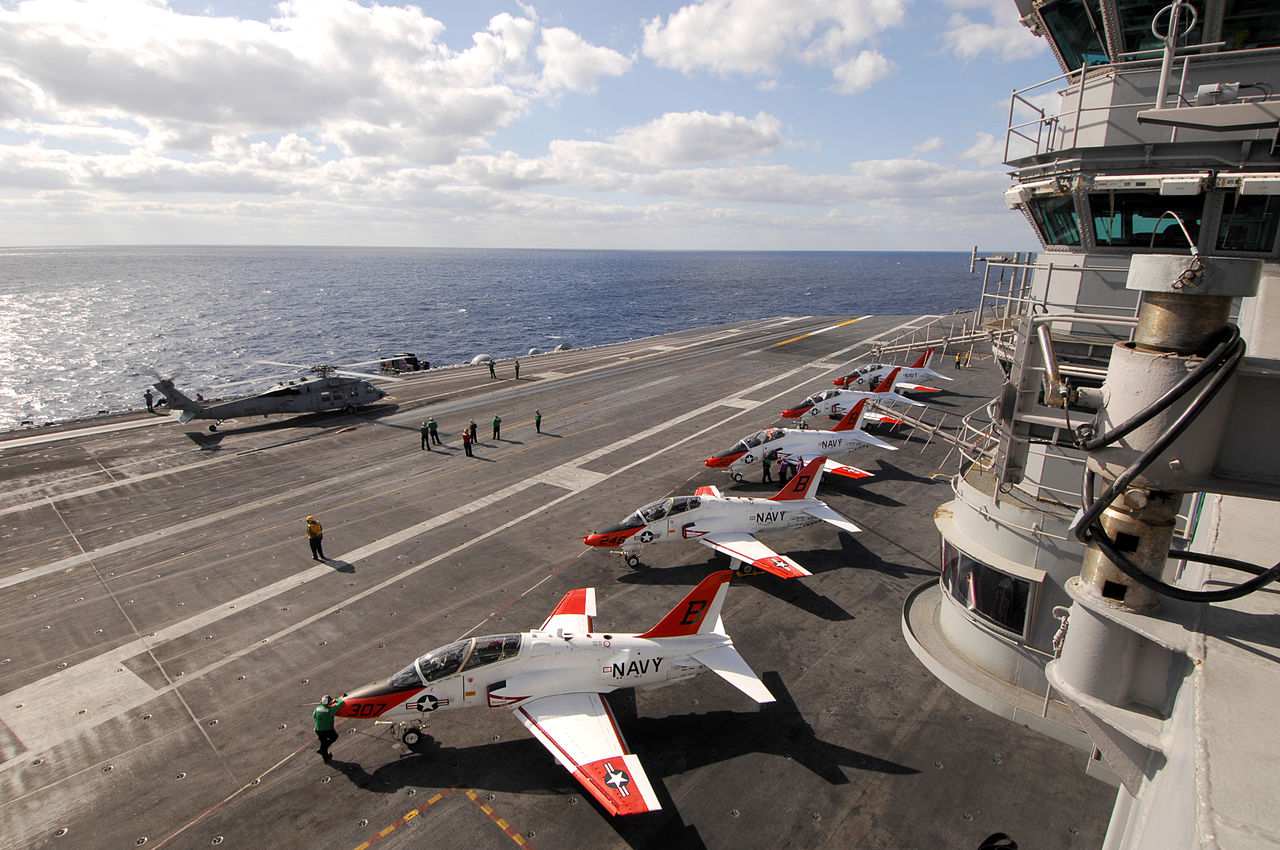
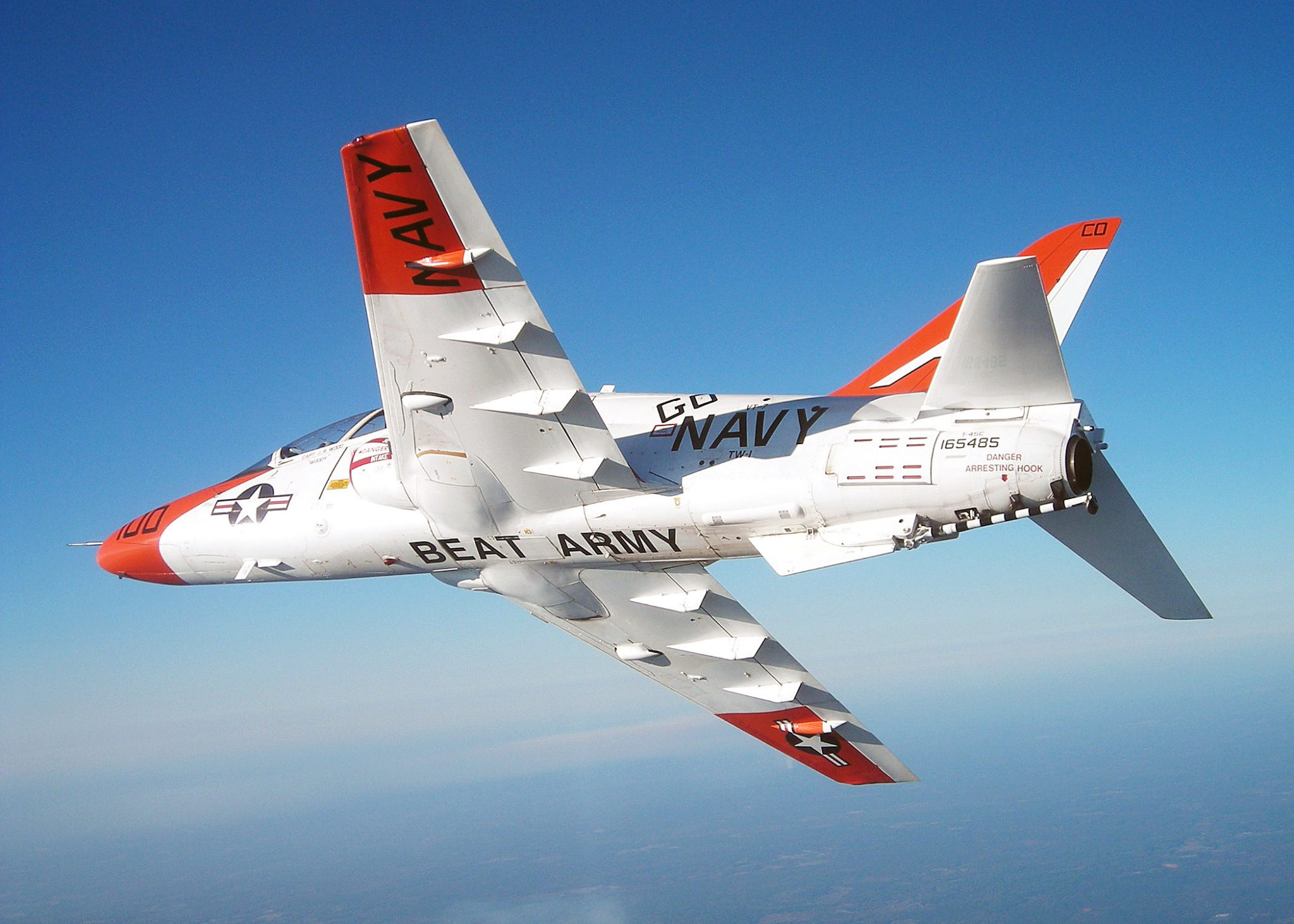
You Never Forget Your First Trap on a T-45 Goshawk— Especially If It’s an OK Three Wire
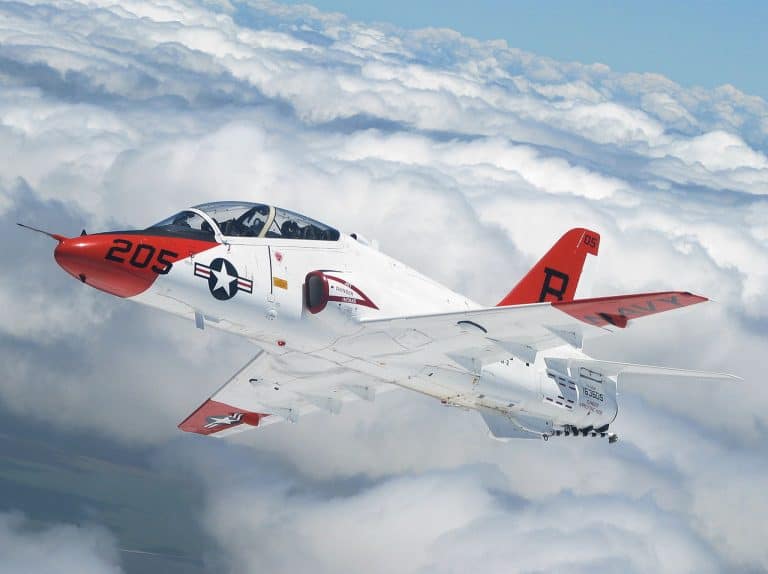
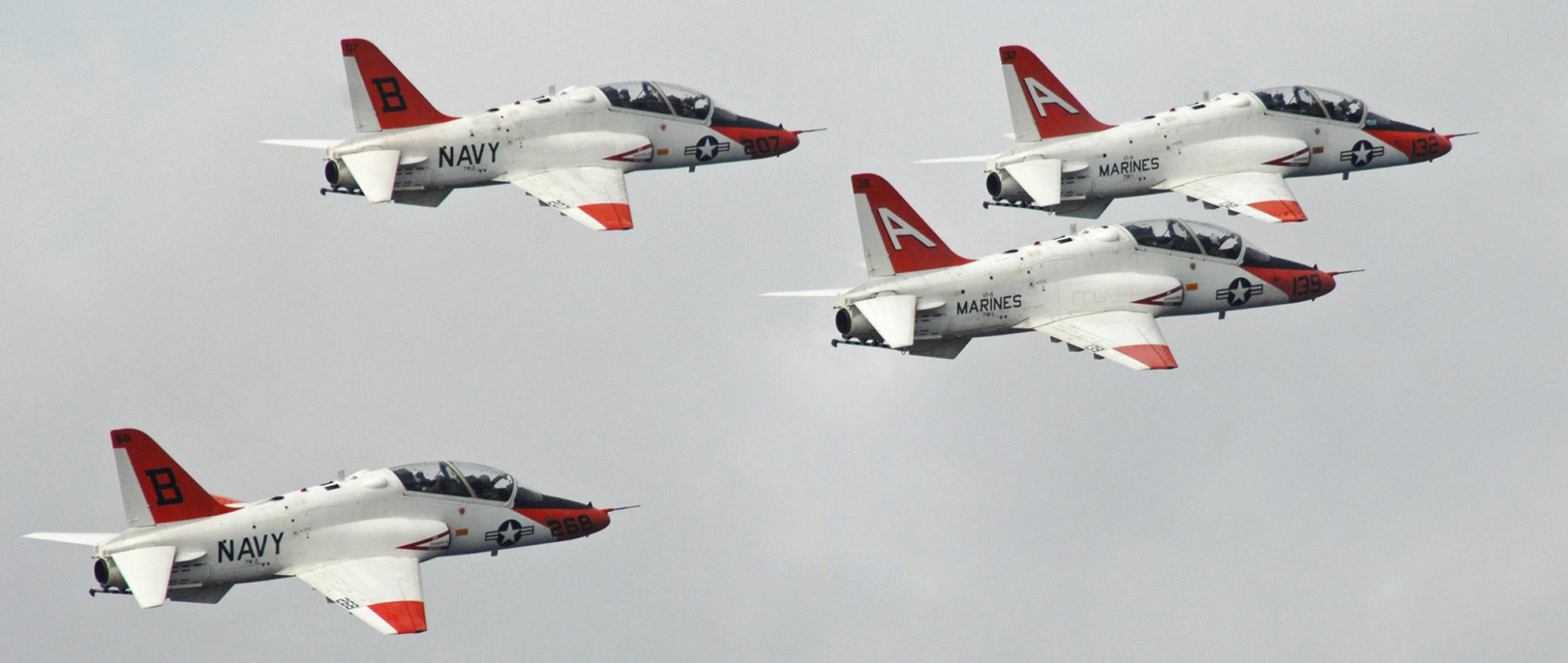
Today’s feature is Goshawk Ball, featuring the T-45 Goshawk of United States Navy (USN) Training Squadron 7 (VT-7) Eagles and VT-9 Tigers of Training Air Wing One (Tail code A– TW-1). TW-1 is based at Naval Air Station (NAS) Meridian, north-northeast of the town of Meridian in Mississippi.
The video is a high-def look at the student naval aviators and their training in the air. A few laughs, a pounding soundtrack, great videography, and some carrier qualification footage—this one has it all.
Image via US Navy
Replacing a Couple of Legends
When the USN started looking for a replacement for its aging North American T-2 Buckeye intermediate trainers and Douglas TA-4 Skyhawk advanced trainers during the mid-1970s, McDonnell Douglas and British Aerospace teamed up to propose what amounted to a navalized version of the very successful BAe Hawk Mark 60 trainer.
Image via US Navy
A Few Tweaks Required
In order to make the T-45 Goshawk suitable for operations around an aircraft carrier, the British aircraft received a beefier airframe, wing leading edge slats, after fuselage strakes, landing gear modifications to make them stronger and wider, a ventral fin to enhance directional stability, and modifications to the outer wing and tail shapes to enhance low-speed controllability. Somebody bolted on a nose gear launch bar and a tail hook, too. Presto–meet the Goshawk. The T-45A went into service in 1991.
Image via US Navy
Keeping The Goshawk in the Groove
Today’s T-45C differs from the original variant primarily in the cockpit. The original analog gauges used in the initial T-45A variant have been replaced by multi-function displays (MFDs), and a Head-Up Display (HUD) has been added. When the last of the 221 T-45s built came out of the factory in November of 2009, like every other Goshawk, it already had some miles on it.
The rear fuselage (everything behind the cockpit), engine air inlets, vertical stabilizer, and wings of the jet were built in England and shipped to McDonnell Douglas (Boeing) for mating with the remainder of the airframe (built by McDonnell Douglas) and final assembly here in the States. All early-model Goshawks have been reworked to meet the T-45C specification.
Image via US Navy
Gulf Coast Goshawks
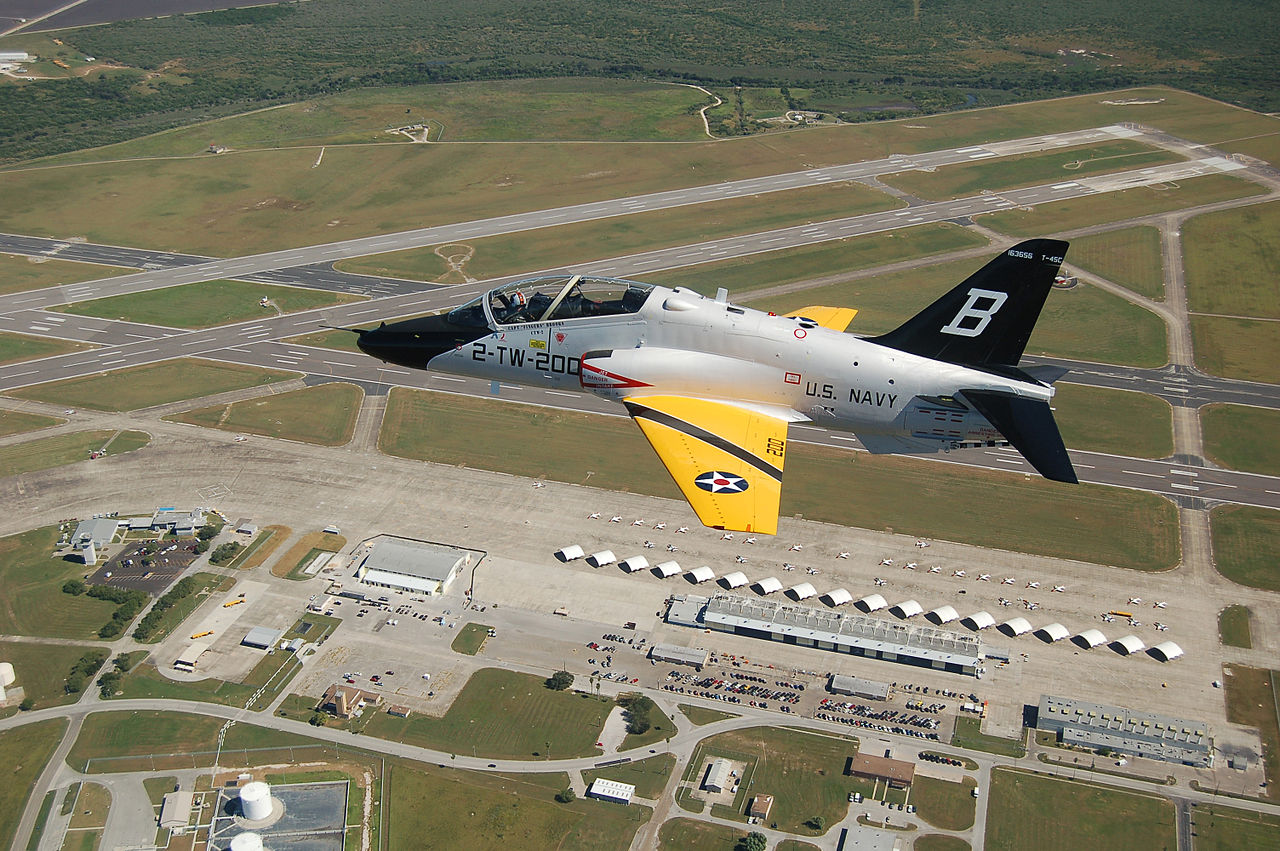
In addition to TW-1, TW-2 (Tail code B– VT-21 Red Hawks and VT-22 Golden Eagles) at NAS Kingsville in South Texas also employs the T-45C for the Intermediate and Advanced portions of the Navy / Marine Corps Strike Pilot Training Program.
When the T-45 finally began replacing the T-2C and TA-4 in service, an entire integrated training system package came with the jet, including high-fidelity operational and instrument flight simulators, computer-assisted training curriculum and academics, and McDonnell Douglas (Boeing) support for the entire training system.
Image via US Navy
For the Rest of the T-45 Goshawk Story (and a Sweet Video) Bang NEXT PAGE Below
The Douglas Skystreak was more than a record-setter. It provided the data that made the leap to supersonic flight possible.
On 15 March 1944, as Allied forces prepared for the invasions of Normandy and the Marianas, a different kind of battle was already taking shape behind closed doors.
At the National Advisory Committee for Aeronautics (NACA) Langley Laboratory, officials from the Army Air Forces and the Navy met to talk about the future of flight. Their main focus was high-speed aerodynamics. By the end of the year, they had a plan. The Army Air Forces would try to break the sound barrier, while the Navy would take a careful approach, studying the risky and little-understood transonic region just below that speed.
That decision led to the creation of one of the most important, yet often overlooked, research aircraft of the jet age: the Douglas Skystreak.
Built to Explore the Unknown
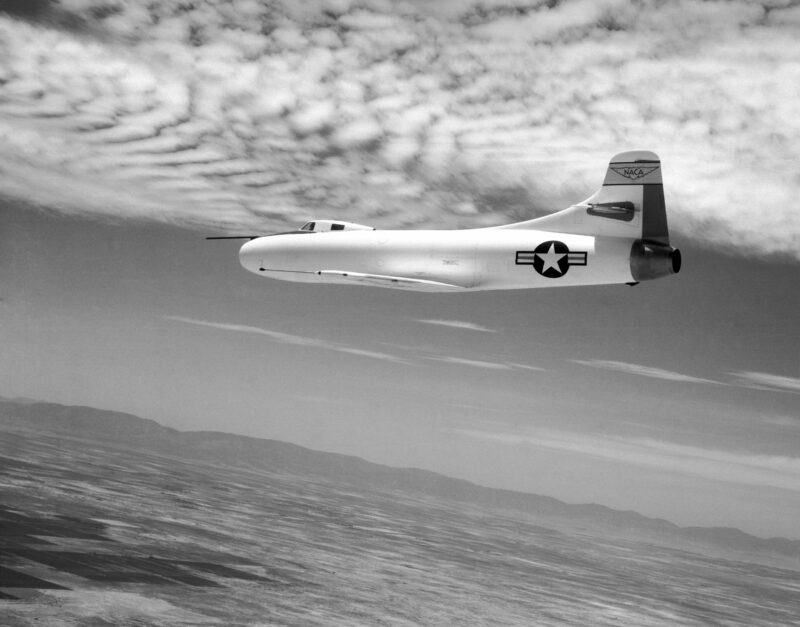
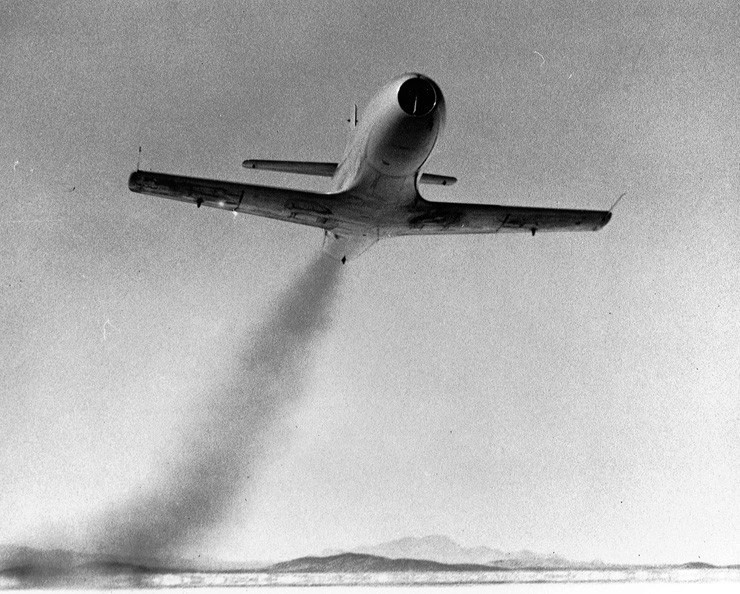
Douglas Skystreak in flight over Muroc Army Airfield | IMAGE: US Navy
Douglas Aircraft Company designed the D-558-I Skystreak in 1945. It was not built to be glamorous, but to find answers.
The Navy wanted a true research aircraft. It needed to take off and land on its own, use current engine technology, and carry at least 500 pounds of instruments to collect real flight data.
Douglas engineers built a straight-wing aircraft with a round fuselage and a single Allison J35 turbojet engine that produced about 5,000 pounds of thrust. But the Skystreak stood out not for its shape, but for what was inside.
The aircraft was equipped with sensors that measured pressure and control forces. One wing had hundreds of tiny holes to collect airflow data. All over the plane, measurement points sent data to researchers trying to understand flight near Mach 1.
Even the escape system showed how experimental the program was. Since ejection seats were still new, Douglas designed a nose section that could be released. In an emergency, the front of the plane could separate so the pilot could bail out safely.
This machine was built not just for combat or speed, but to help people understand flight.
Speed Records and Low-Level Runs
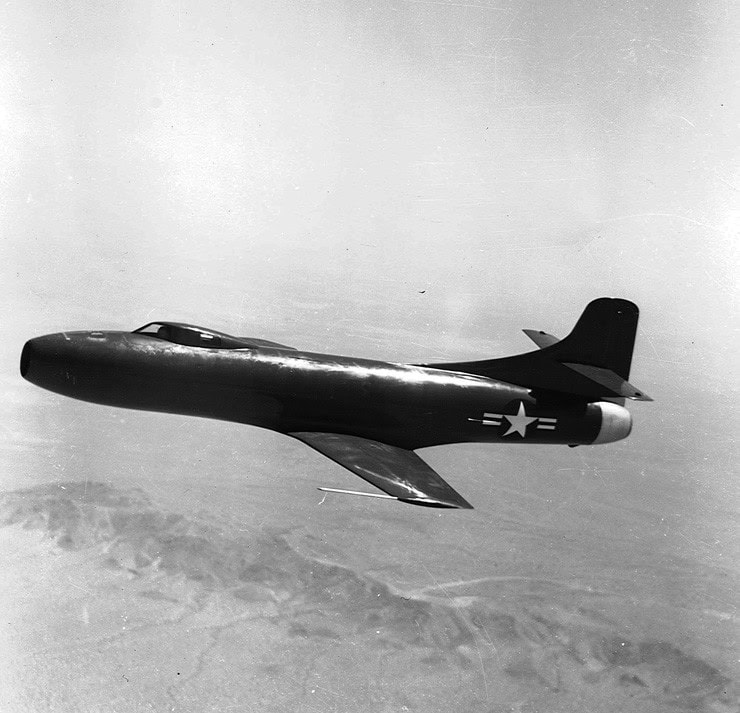
Douglas Skystreak high-speed, low-altitude pass over Muroc Army Airfield (later Edwards AFB) | IMAGE: US Navy
The Douglas Skystreak first flew on 14 April 1947 at Muroc Army Airfield (now Edwards Air Force Base), piloted by Douglas test pilot Eugene F. May. Early flights showed some problems with the landing gear, but by summer, the plane was ready for its main mission.
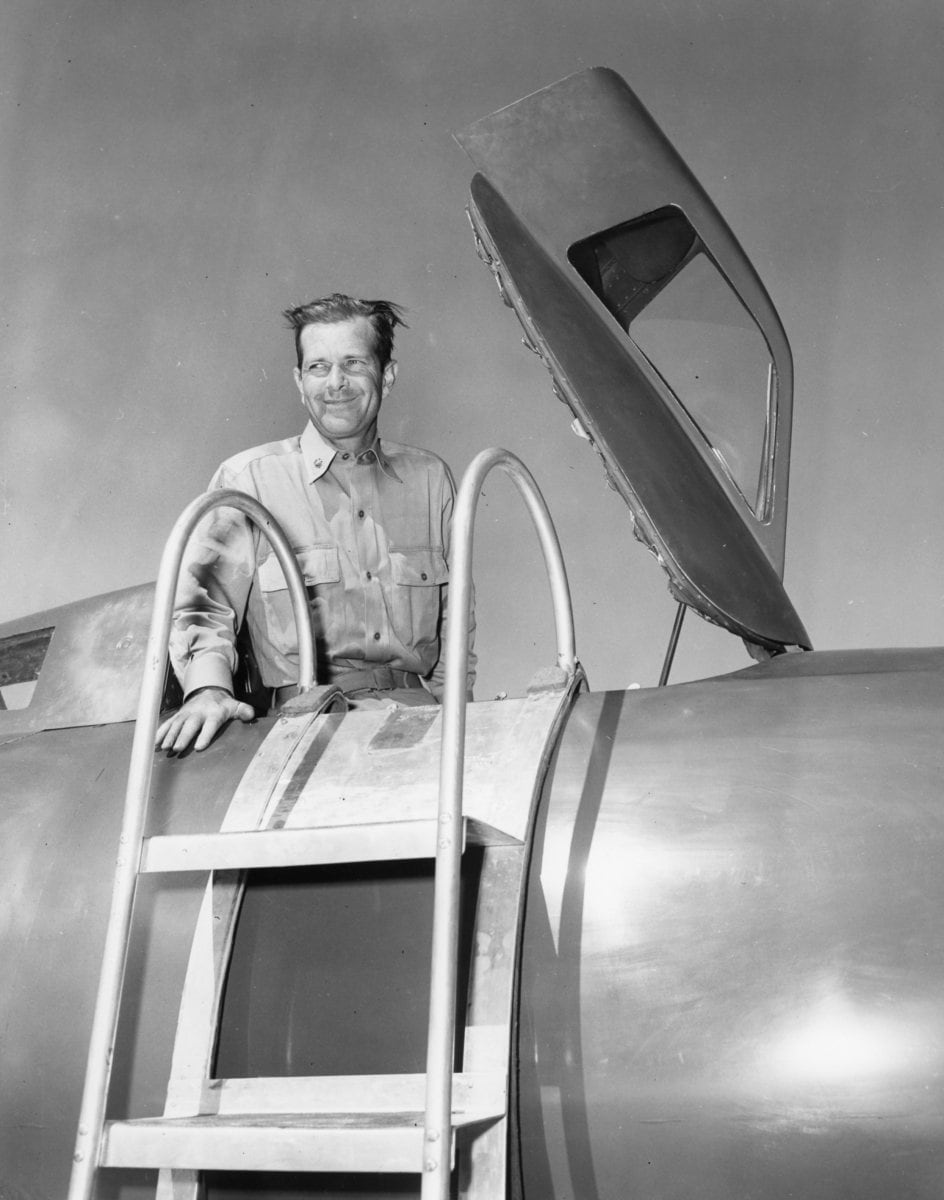
Commander Turner F. Caldwell in the cockpit of the Douglas Skystreak | IMAGE: US Navy
On 20 August 1947, Navy Commander Turner F. Caldwell lined up for a world speed record attempt.
Caldwell flew just 75 feet above the desert, making four passes over a 3-kilometer course marked with a black stripe and green smoke. He made tight turns at each end to save fuel. When he finished, the Skystreak had averaged 640.7 mph, beating the previous record set by Colonel Albert Boyd in a modified P-80R Shooting Star.
For the first time in decades, the US Navy held the world airspeed record.
But this record did not last long.
Five days later, Marine pilot Marion Carl flew the second Skystreak. Because the cockpit was small, he wore a cloth flight helmet. Carl pushed the plane even harder.
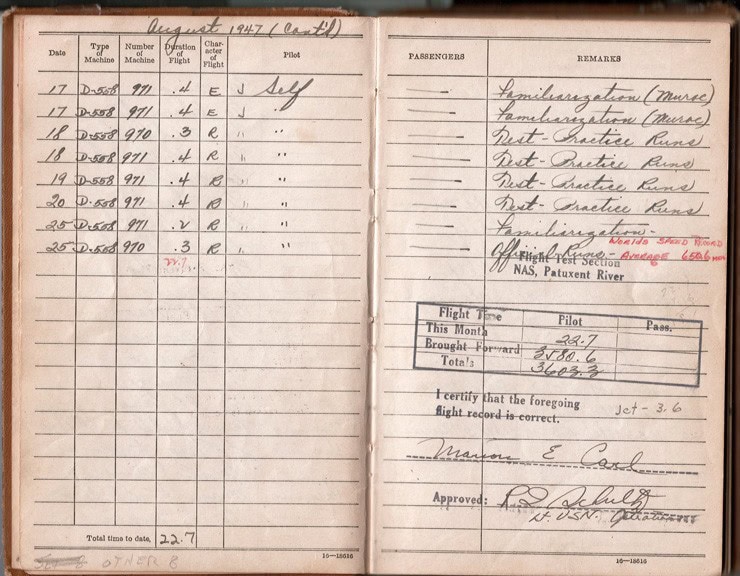
He flew as low as 25 feet and set a new record of about 650.6 mph. After landing, he said, “The ship is a beautiful one to fly, and I had no trouble whatever.”
Lieutenant Colonel Marion Carl’s August 1947 flight log includes his record-setting Skystreak flight | IMAGE: National Naval Aviation Museum
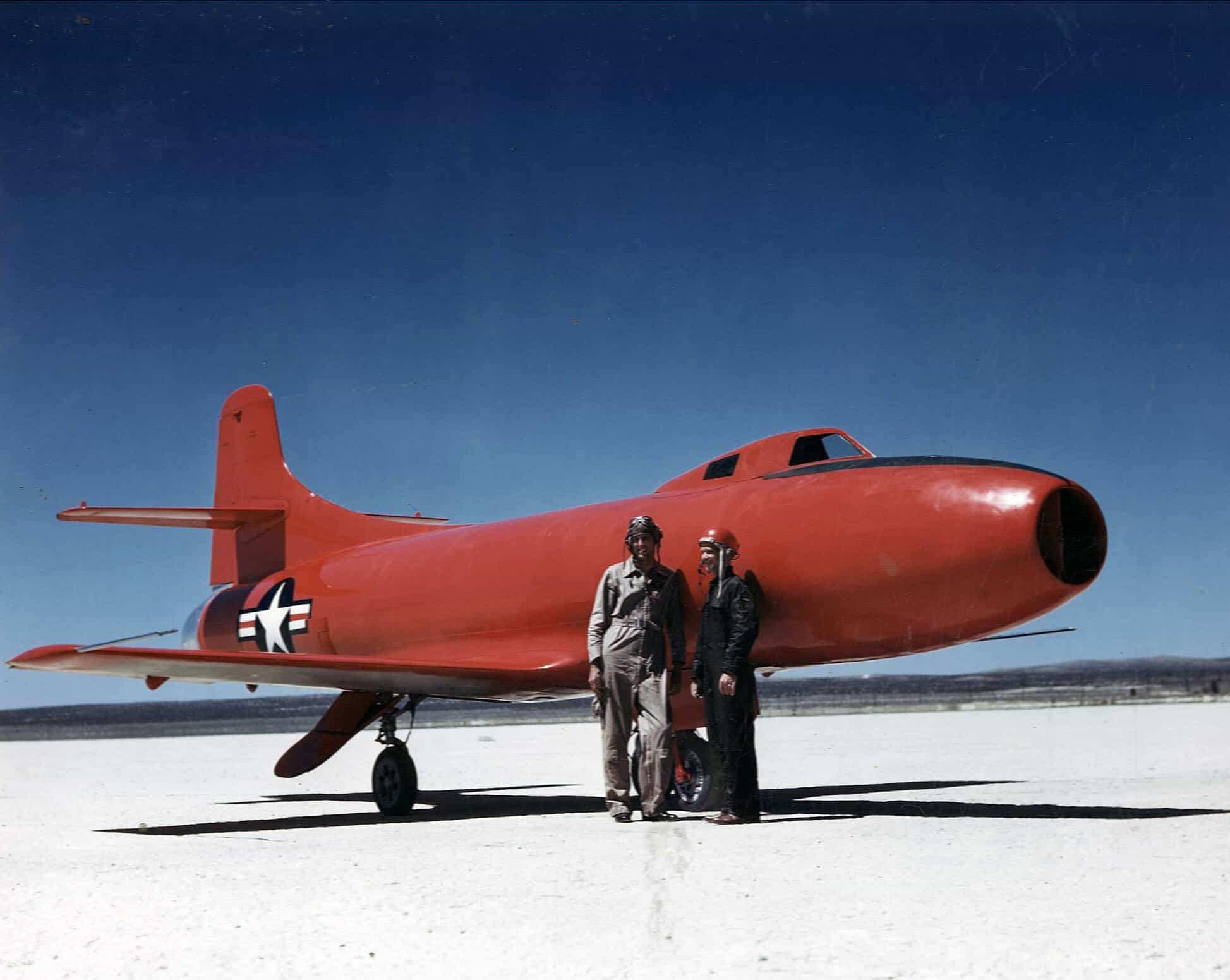
The press called the aircraft the “Crimson Test Tube” because of its bright red paint and its experimental role.
But just weeks later, people turned their attention to the rocket-powered Bell X-1 and its pilot Chuck Yeager, who broke the sound barrier on 14 October 1947.
The Skystreak was only in the spotlight for a short time, but its impact lasted much longer.
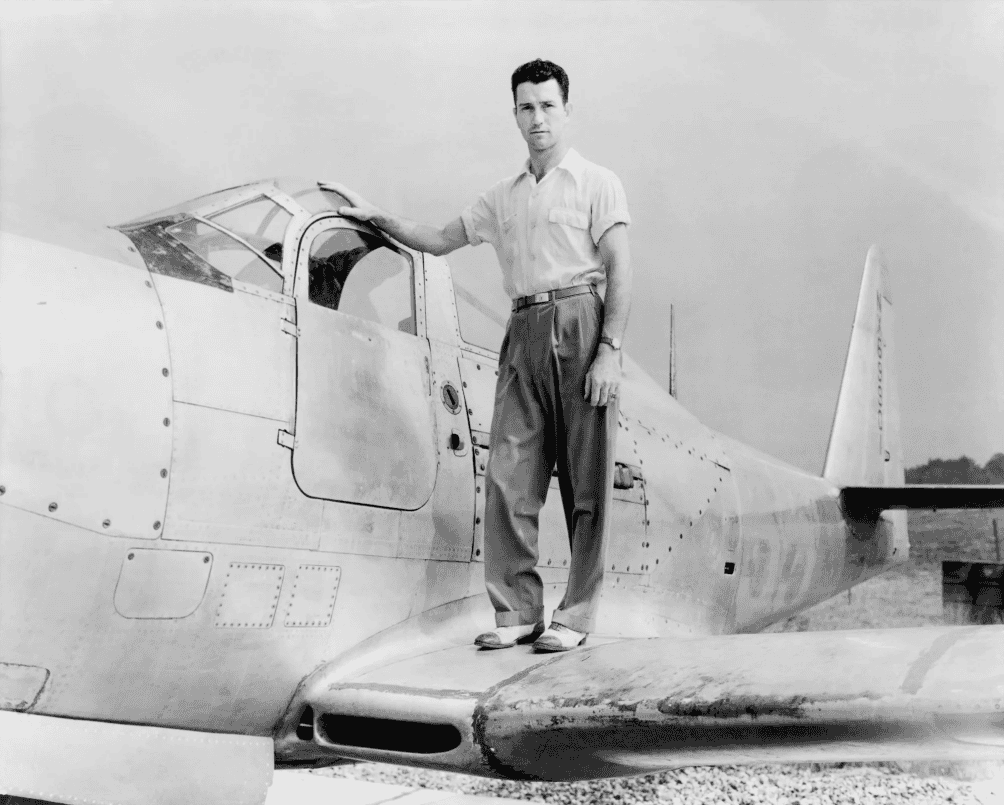
The D-558-1 Skystreak with record-setting pilots Commander Turner F. Caldwell and Lieutenant Colonel Marion Carl, USMC. Nicknamed by the press: “The Crimson Test Tube.” | IMAGE: US NAVY
Data, Risk, and the Long Road to Understanding
NACA pilot Howard C. “Tick” Lilly died when the engine compressor of the second Skystreak failed during takeoff on 3 May 1948 | IMAGE: US Navy
While the X-1 made headlines, the Skystreak quietly continued its research work.
The program used three Skystreak aircraft to complete 229 flights between 1947 and 1953. These flights collected important data on handling, stability, buffeting, and aerodynamic loads in the transonic range.
But this work was not without risk.
On 3 May 1948, NACA pilot Howard C. Lilly died when the engine compressor of the second Skystreak failed during takeoff. The failure severed the control cables, leaving the plane uncontrollable.
This tragedy led to immediate design changes, including the addition of backup control systems and increased protection for critical components. These lessons helped improve other research aircraft programs at the time.
The third Skystreak continued the program, flying often until 1953. Its missions helped researchers better understand flight near the speed of sound, provided data to confirm wind tunnel tests, and guided future aircraft designs.
BY THE NUMBERS: DOUGLAS D-558-I SKYSTREAK
Specification
Value
Crew
1
Length
35 ft 8.5 in
Wingspan
25 ft
Powerplant
1 × Allison J35-A-11 turbojet
Thrust
5,000 lbf
Max Speed
651 mph
Fuel Capacity
230 gallons
Instrument Payload
500+ lb
Total Flights
229
Max Mach (Level Flight)
~0.99
The Skystreak Paved the Way for the Future
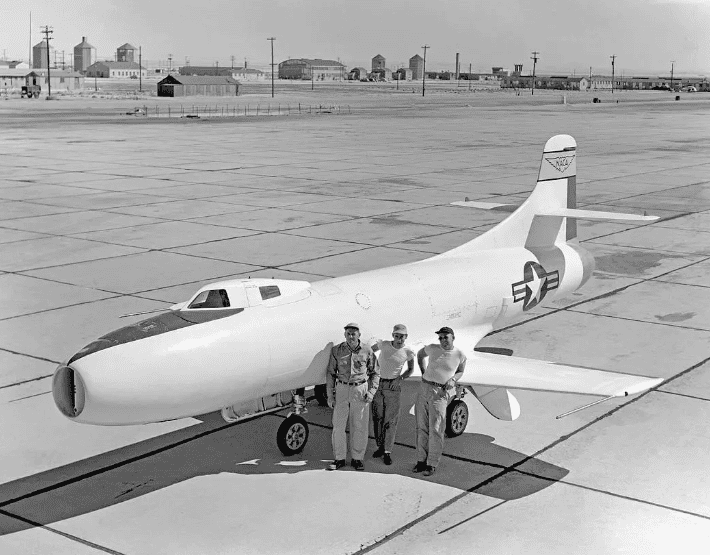
Douglas Skystreak on the ramp at South Base of Muroc Army Air Field (now Edwards AFB) | IMAGE: NASA
By the time the Douglas Skystreak program ended on 10 June 1953, aviation had already entered the supersonic era.
But getting there was not the result of just one flight.
Because the Skystreak could fly for long periods at transonic speeds, engineers obtained reliable, repeatable data for the first time. This helped researchers learn how planes behaved as they neared the speed of sound, and just as importantly, how to control them.
This knowledge directly influenced the design of the next generation of jet fighters, leading to improved stability systems and the widespread adoption of all-moving horizontal stabilizers.
The Skystreak may have been overshadowed by bigger milestones. It was not the first to break the sound barrier, and it did not make as many headlines.
But without the Skystreak, those milestones might not have happened as soon as they did.
The Skystreak was not the plane that made history in one big moment.
It was the plane that made those historic moments possible.
The Boeing vs Airbus delivery race is off to a strong start in 2026. Here’s how the first quarter played out.
On 14 April 2026, Boeing shared its first-quarter delivery numbers, offering an early look at how the company is progressing in its closely watched recovery. The announcement focused on delivery counts, but the results show steady progress, gradual growth, and cautious optimism as Boeing works to regain momentum across its commercial and defense divisions.
Boeing reported 173 total deliveries in Q1 2026, including 143 commercial aircraft and 30 defense, space, and security platforms. That represents a 10.9 percent increase over Q1 2025, when the company delivered 156 total units.
In the grand scheme of things, this is not a huge jump. However, it is the steady improvement Boeing has aimed for after years of production problems, quality issues, and supply chain setbacks.
Commercial Deliveries: Narrowbody Strength Leads the Way
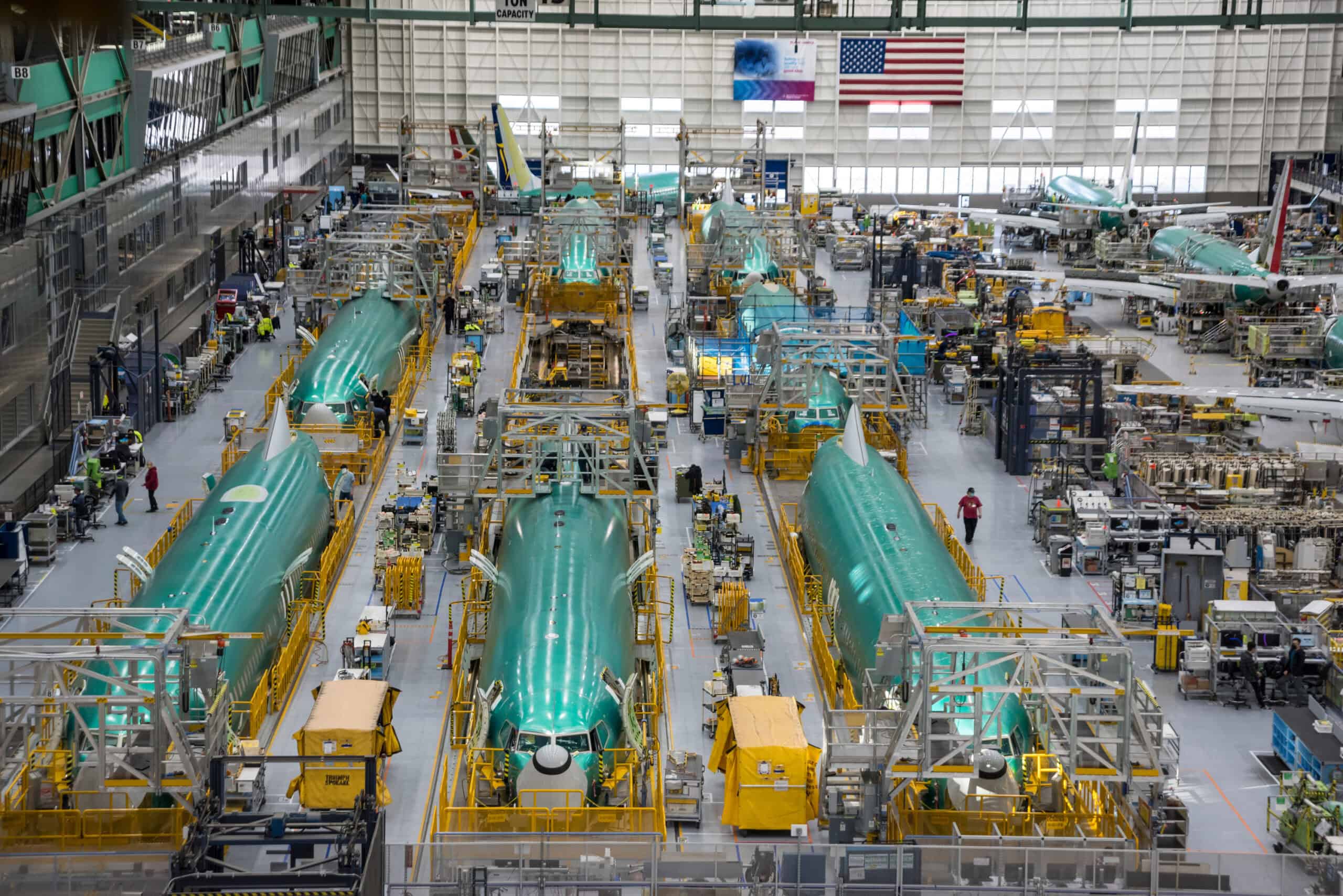
Renton Factory Interior View | IMAGE: Boeing
Boeing’s commercial airplane division still relies heavily on the 737 program, which made up most of its deliveries in the first quarter.
Program
Q1 2026 Deliveries
Q1 2025 Deliveries
Change
737
114
105
+9
767
6
5
+1
777
8
7
+1
787
15
13
+2
Total
143
130
+13 (+10.0%)
The numbers show growth in all major commercial programs, with the 737 still leading the way. This steady output is important because, for Boeing, the narrowbody line is more than just a production driver; it is a key indicator of operational health.
Widebody programs also saw modest gains. Deliveries of the 787 Dreamliner increased compared to last year, showing Boeing’s ongoing efforts to stabilize production and address supply chain and certification delays related to interiors and seating.
There were some short-term challenges this quarter. A wiring issue on about 25 737 MAX jets required rework and slowed deliveries. Chief Financial Officer Jay Malave said this was mostly a timing issue, with about 10 deliveries moving to the second quarter, but full-year expectations remain unchanged.
This perspective matters because, instead of pointing to wider production problems, the issue appears contained and manageable, suggesting that Boeing’s recovery is on track rather than facing new setbacks.
Defense and Space: Steady Growth and Program Mix Shifts
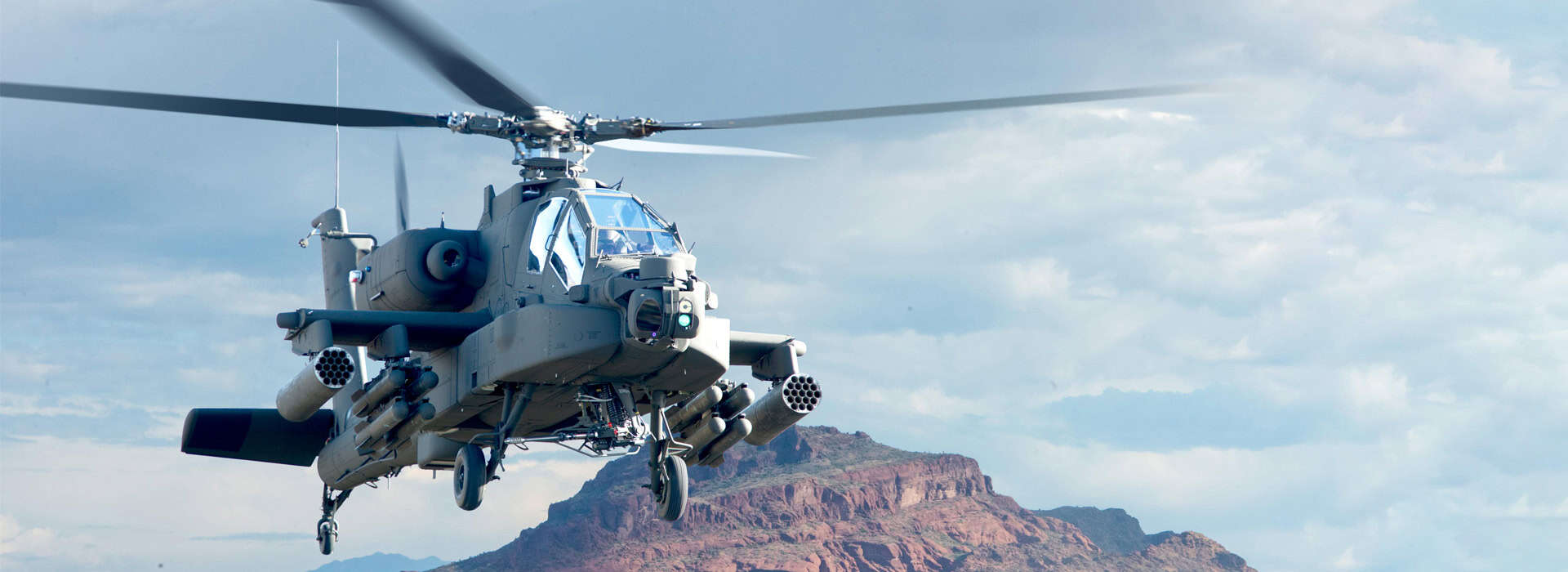
AH-64 Apache | IMAGE: Boeing
Boeing’s Defense, Space and Security segment delivered 30 units in Q1 2026, up from 26 in Q1 2025, a 15.4 percent increase.
Program
Q1 2026
Q1 2025
Change
AH-64 Apache (remanufactured)
15
11
+4
KC-46 Tanker
4
0
+4
MH-139
2
1
+1
Other programs
—
—
Mixed
Total
30
26
+4 (+15.4%)
The numbers show a diverse range of products. Growth mainly came from remanufactured rotorcraft and tanker deliveries, especially the AH-64 Apache and KC-46 programs. Meanwhile, deliveries of some traditional fighters, such as the F/A-18, declined.
This shows a bigger trend in Boeing’s defense business, where support, upgrades, and specialized mission aircraft are becoming more important alongside the construction of new planes.
Boeing vs Airbus: A Quarter That Stands Out
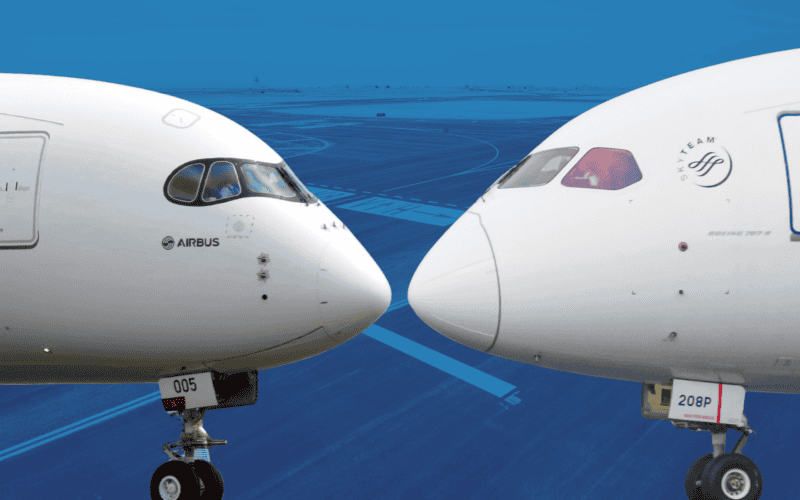
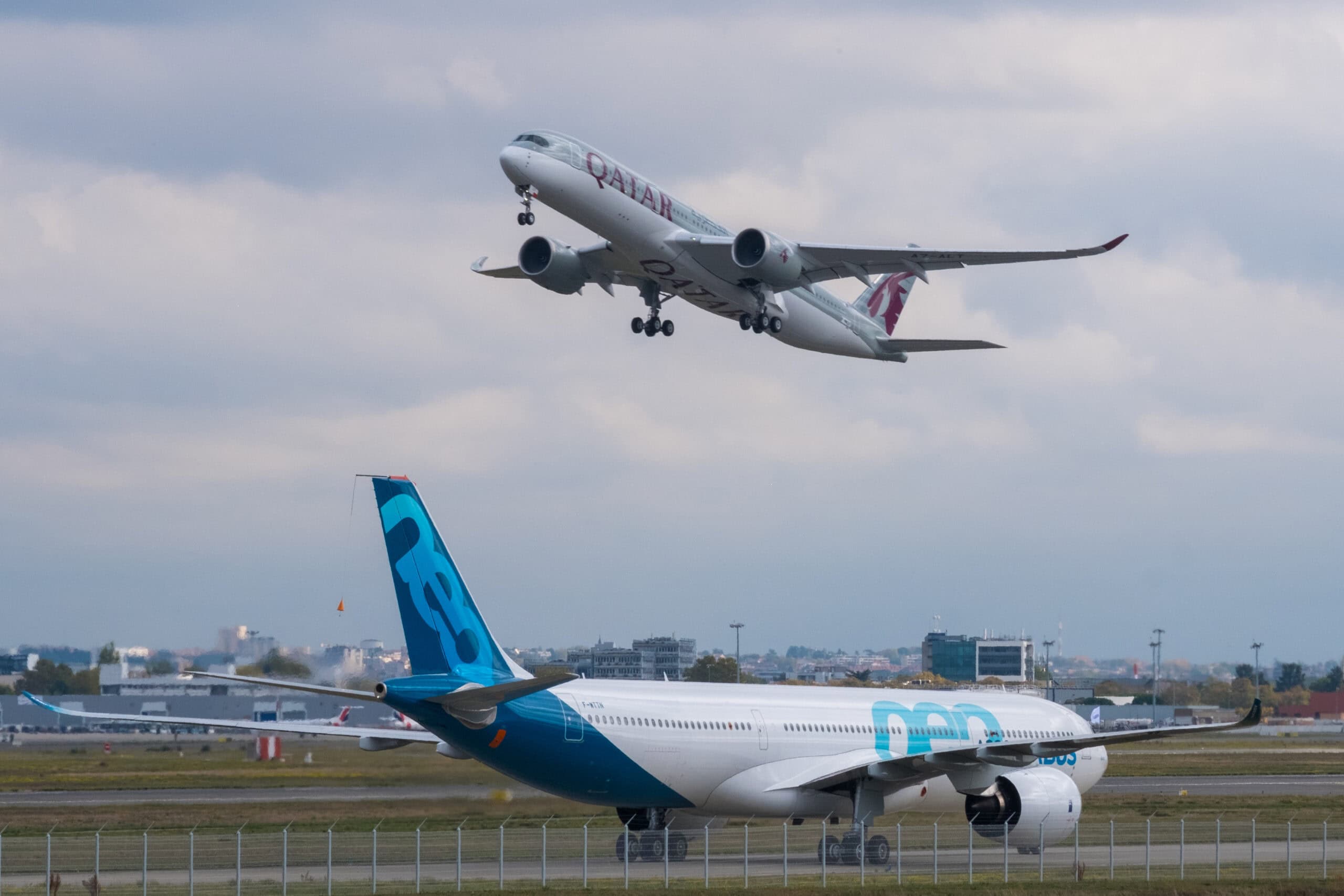
An Airbus A330neo and a Qatar Airways Airbus A350-900 at Toulouse-Blagnac Airport, France | IMAGE: By Alex Cheban – Own work, CC BY-SA 4.0, https://commons.wikimedia.org/w/index.php?curid=63524610
For years now, Airbus has held a steady edge in the delivery race. That is what makes Q1 2026 stand out.
Manufacturer
Q1 2026 Deliveries
Q1 2025 Deliveries
Change
Boeing
143
130
+10.0%
Airbus
114
136
-16.2%
Boeing delivered 29 more commercial aircraft than Airbus in the first quarter, a reversal that would have seemed unlikely just a couple of years ago.
The reasons are straightforward. Boeing is improving, while Airbus has faced its own supply chain problems, especially engine shortages for the A320neo family.
It’s also important to look at the mix. Boeing’s strong results came not only from narrowbody planes, but also from a solid performance in widebodies. The company delivered 29 widebody aircraft across the 767, 777, and 787 programs, while Airbus delivered 14 twin-aisle planes in the same period.
This doesn’t suddenly change the long-term balance between the two companies. Airbus still has a huge backlog and big goals for the year. But for Boeing, leading even one quarter is a meaningful sign. It shows that the company’s recovery efforts are starting to pay off.
Looking Ahead to Q2: Momentum with Caution
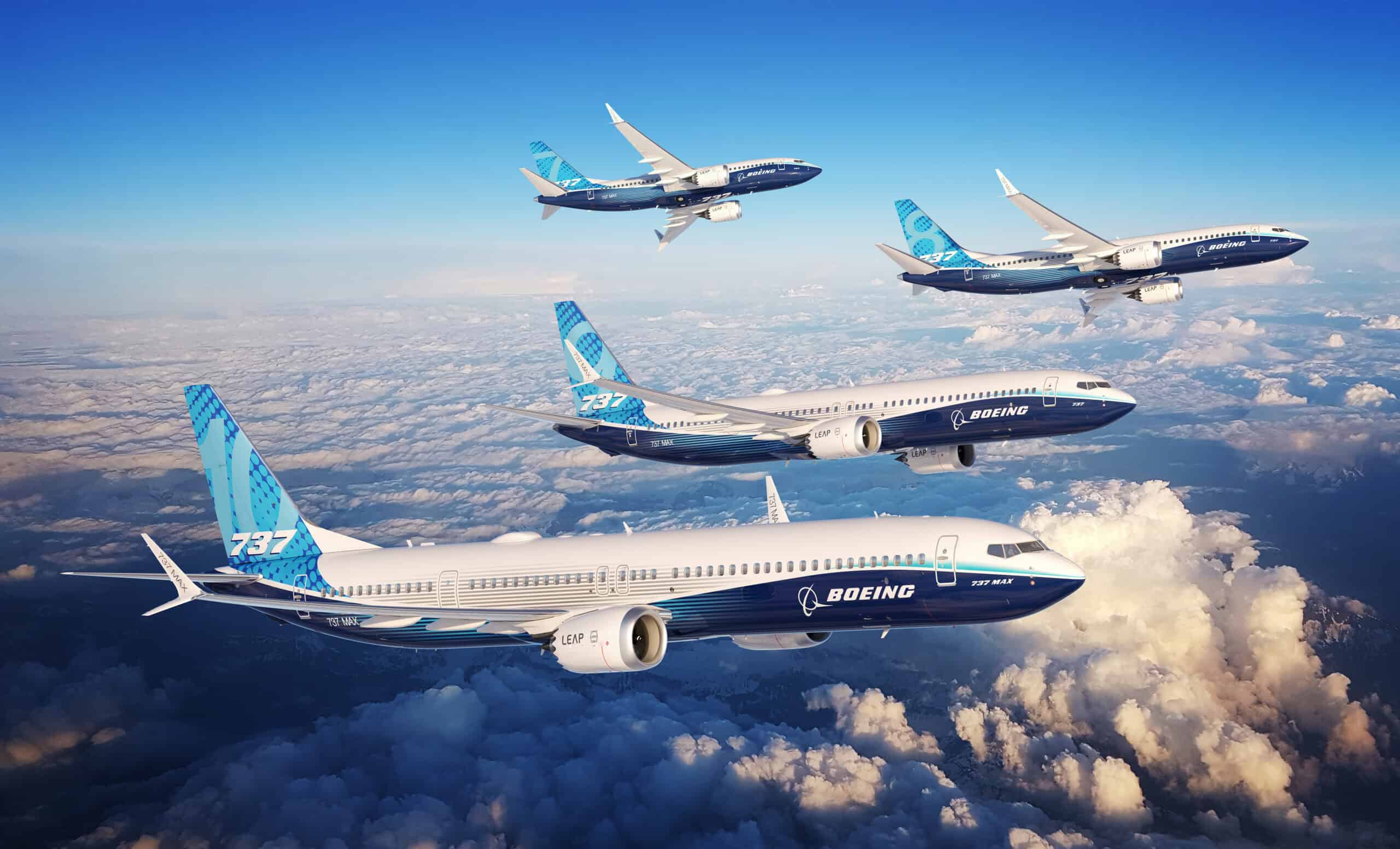
The Boeing 737 MAX Family | IMAGE: Boeing
If the first quarter shows us anything, it’s that Boeing’s recovery is now real.
Deliveries are rising. Production is becoming more stable. And when problems arise, like the 737 wiring fix, they are managed rather than spreading to other programs.
The second quarter will be important to watch. Some delayed 737 deliveries should move into Q2, potentially giving Boeing an early advantage. Still, challenges remain, especially with supply chain reliability and certification timelines for interior parts on planes like the 787.
Boeing will share its full financial results on 22 April 2026, which will provide more context for these delivery numbers.
For a company that has spent years rebuilding trust with regulators, customers, and travelers, this steady, measurable progress might be the most important sign yet.
Boeing is no longer in freefall.
Instead, it is steadily working its way back, one delivery at a time.
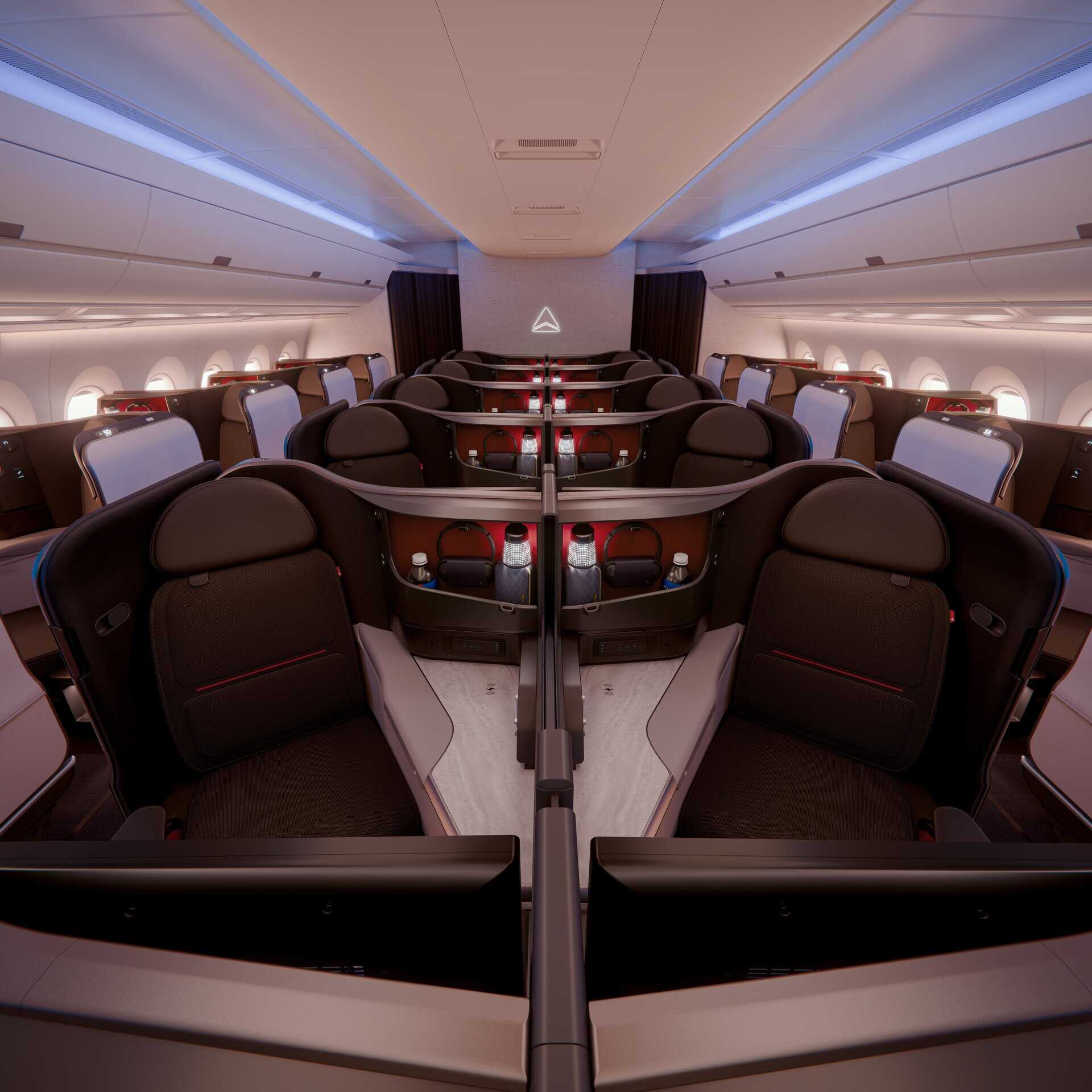
Delta Air Lines is stepping up its premium cabin offerings by launching its next-generation Delta One suite and upgrading and standardizing the onboard experience across several widebody fleets.
This update focuses on the new Airbus A350-1000 and a complete retrofit of the Airbus A330-200 and A330-300 aircraft.
This project follows two years of design work, shaped by over ten years of customer and employee feedback. It is one of Delta’s most significant cabin investments to date, with more than $1 billion spent to meet the growing demand for premium travel.
After redefining premium travel, we’re raising the bar again – coming soon on our new A350-1000s. The only U.S. airline flying them.
This means: 💺 all-new Delta One suites with 3+ inch longer beds 📺 our largest screens yet (24” in Delta One) 🔌 outlets and Bluetooth at every… pic.twitter.com/98MQAwW954
A reverse herringbone layout uses the A350-1000’s wider fuselage to add 3+ inches of flat-bed space for stretching out | IMAGE: Delta
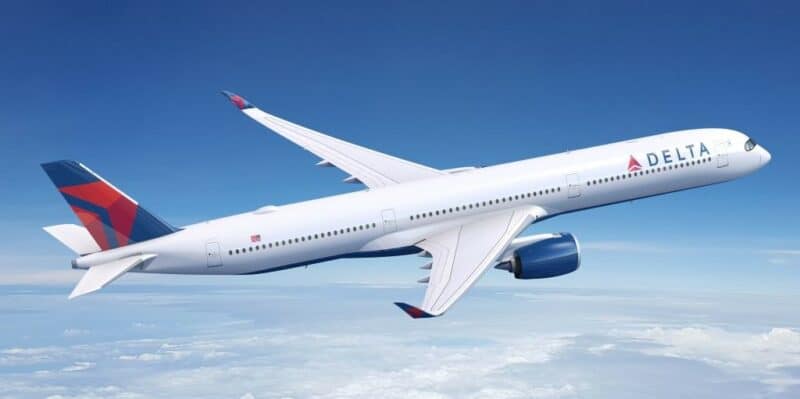
Delta’s new Delta One suite will first appear on the Airbus A350-1000, which is expected to join the fleet in early 2027. This plane will become Delta’s flagship for long-haul international flights, with about half of its seats set aside for premium cabins.
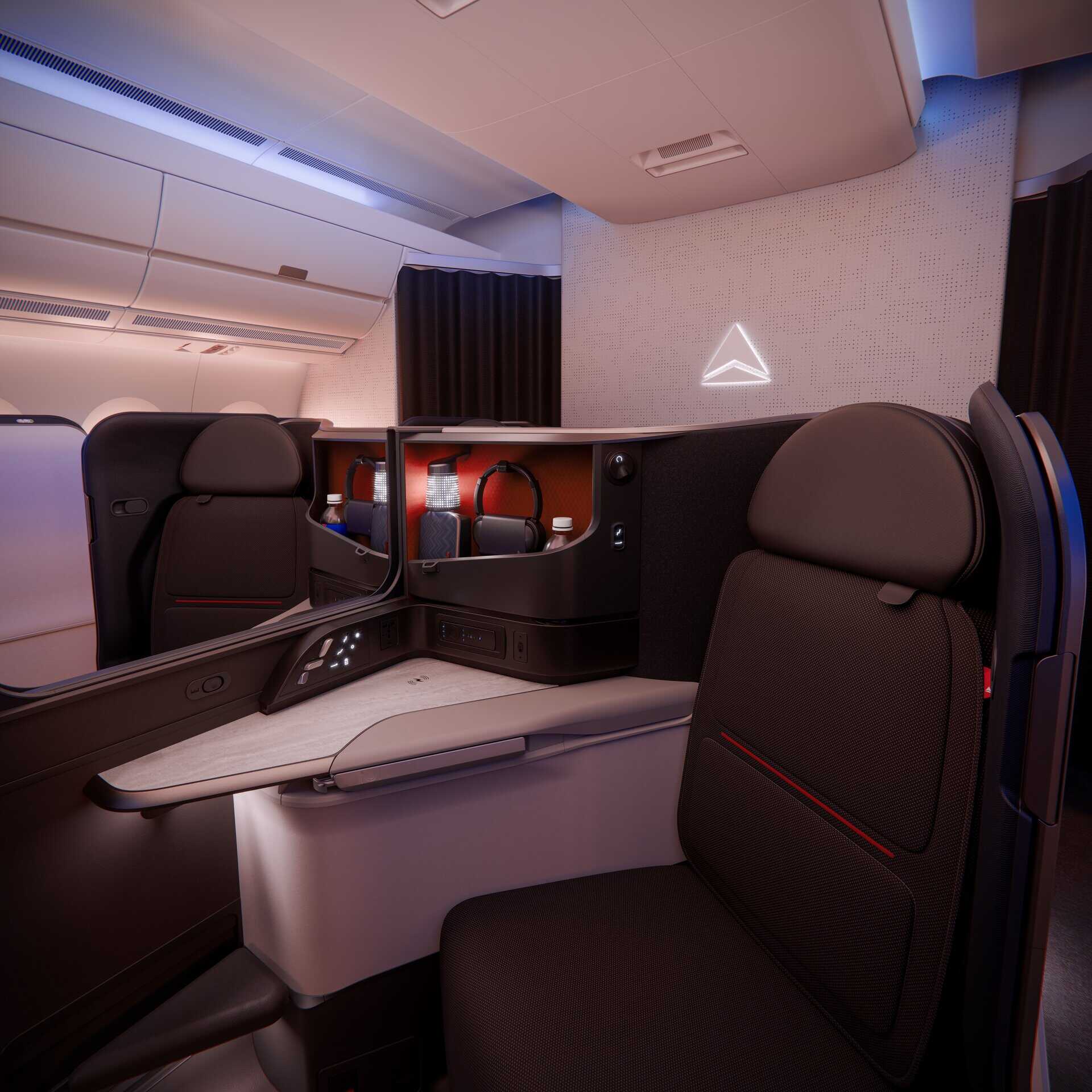
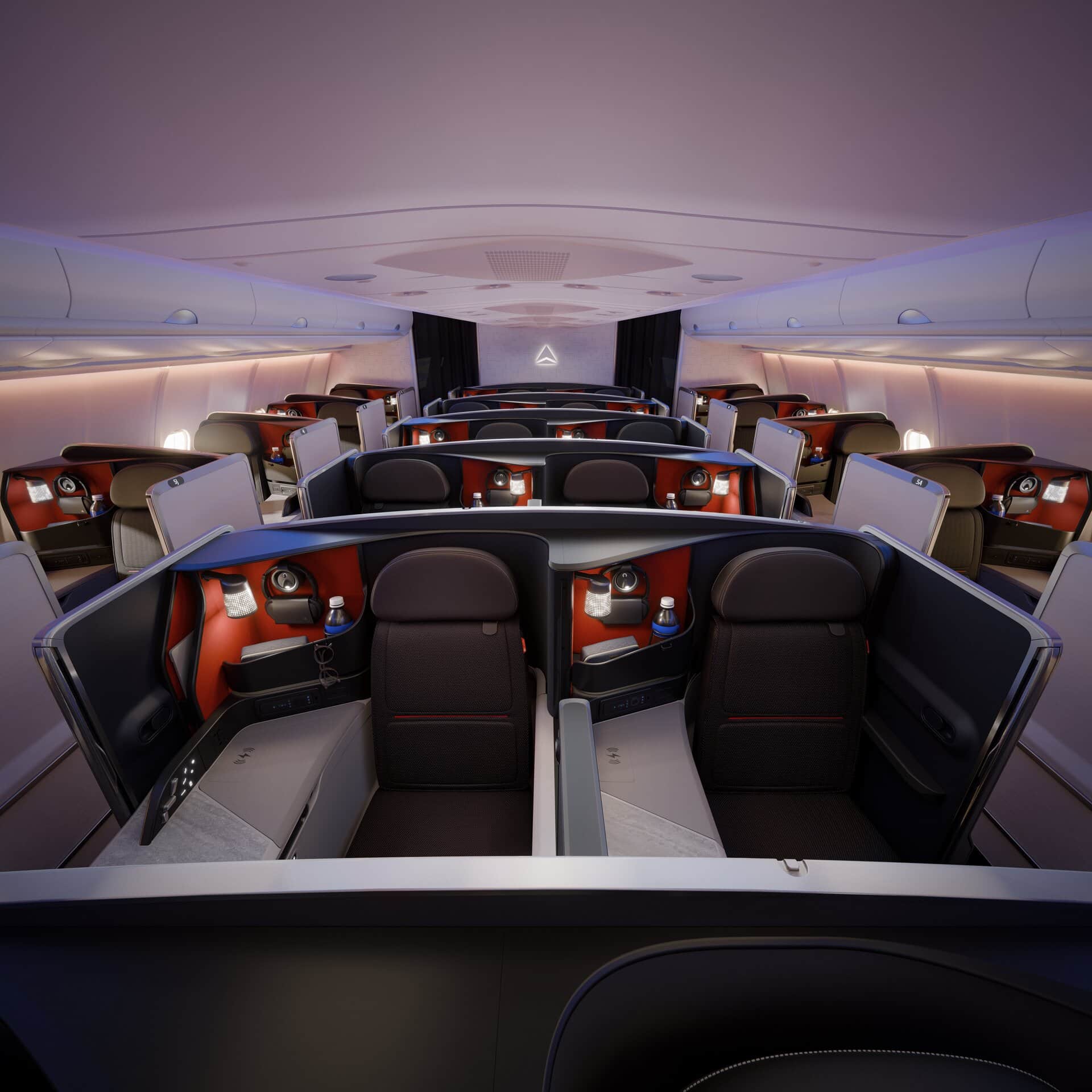
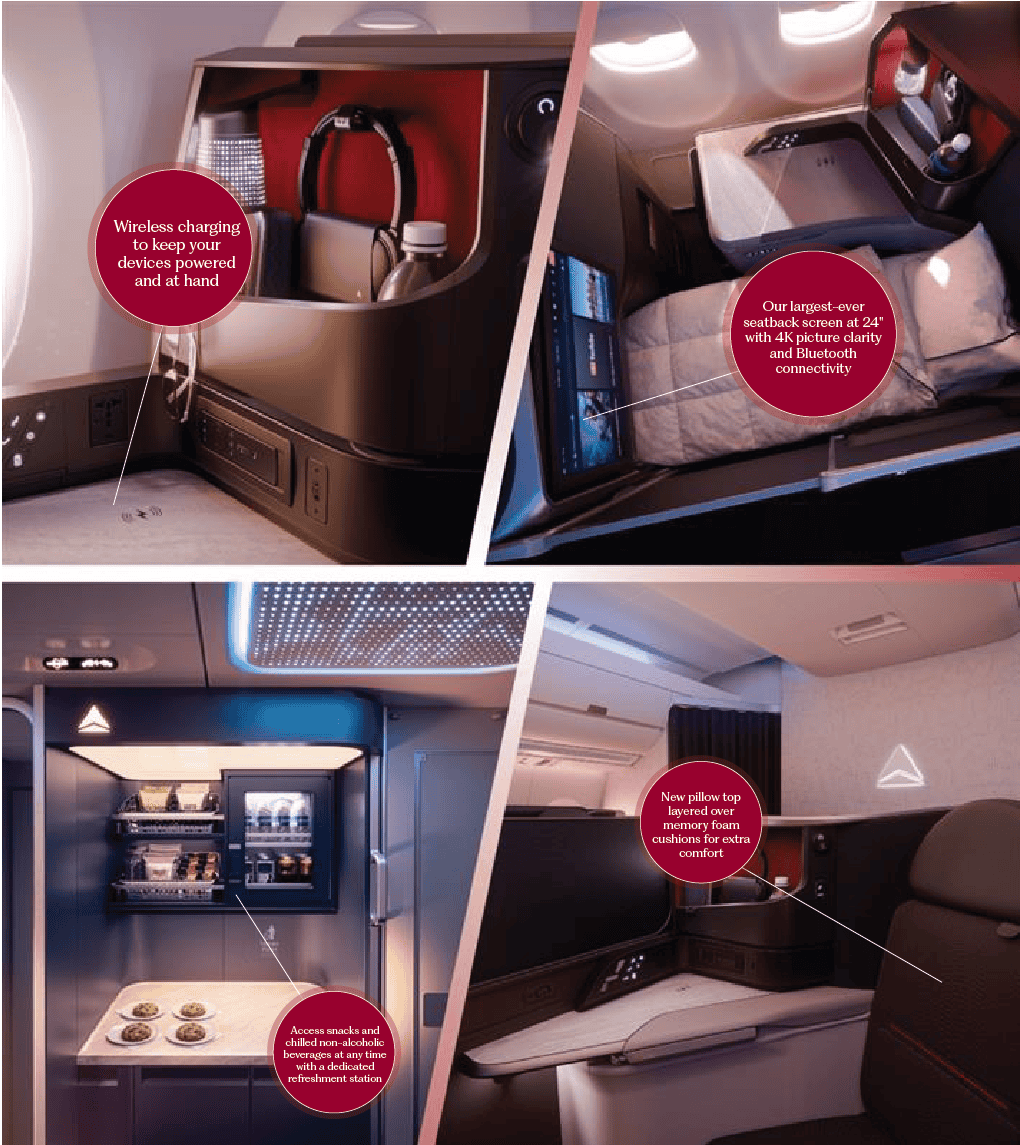
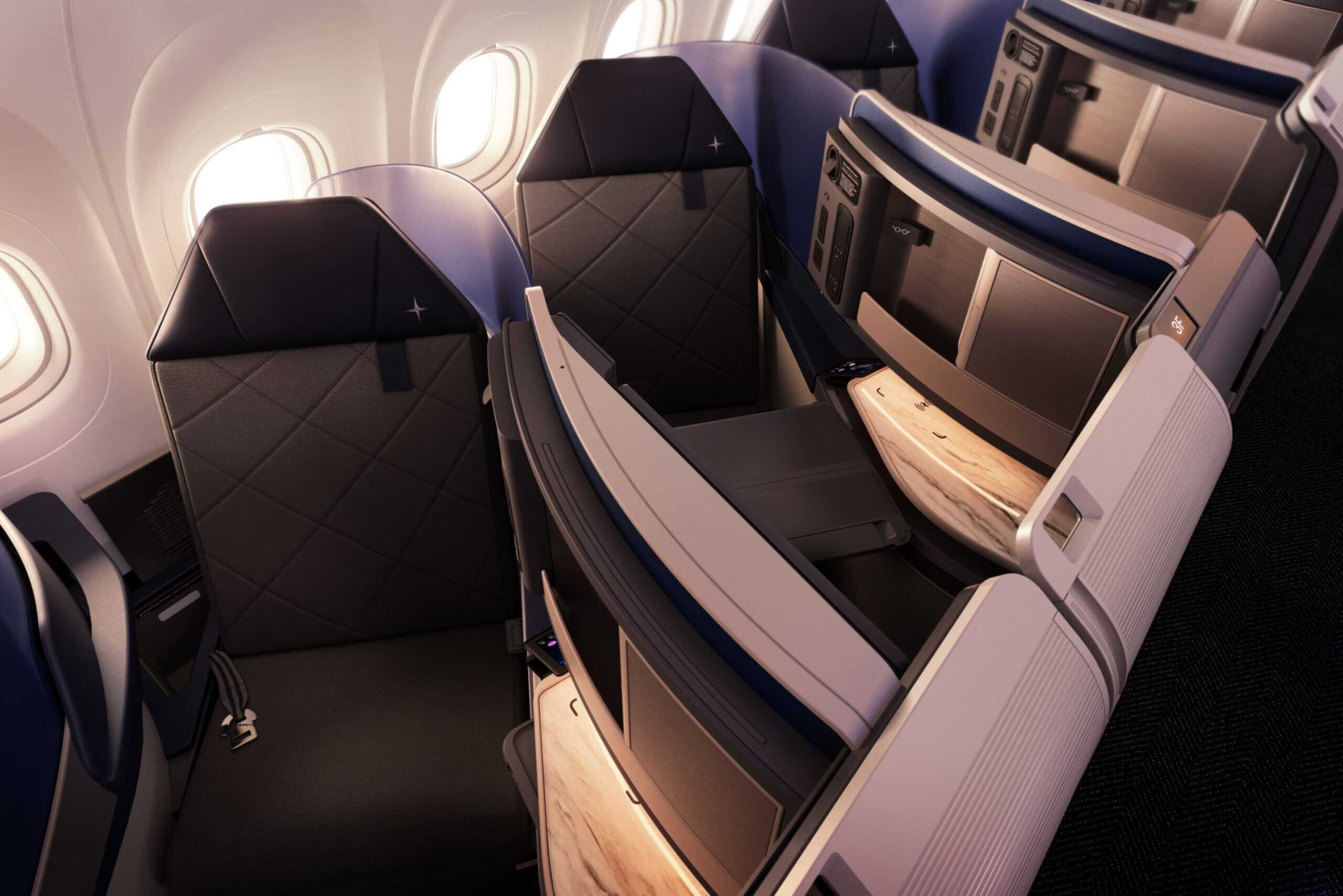
The updated suite improves on Delta’s original all-suite design from 2017, which made Delta the first US airline with a fully enclosed business-class cabin. The new suite is more comfortable and user-friendly, with a lie-flat bed that is over 3 inches longer, reaching more than 6.5 feet. There is now a pillow-top layer on the memory foam cushion, and extra storage for shoes, electronics, and glasses.
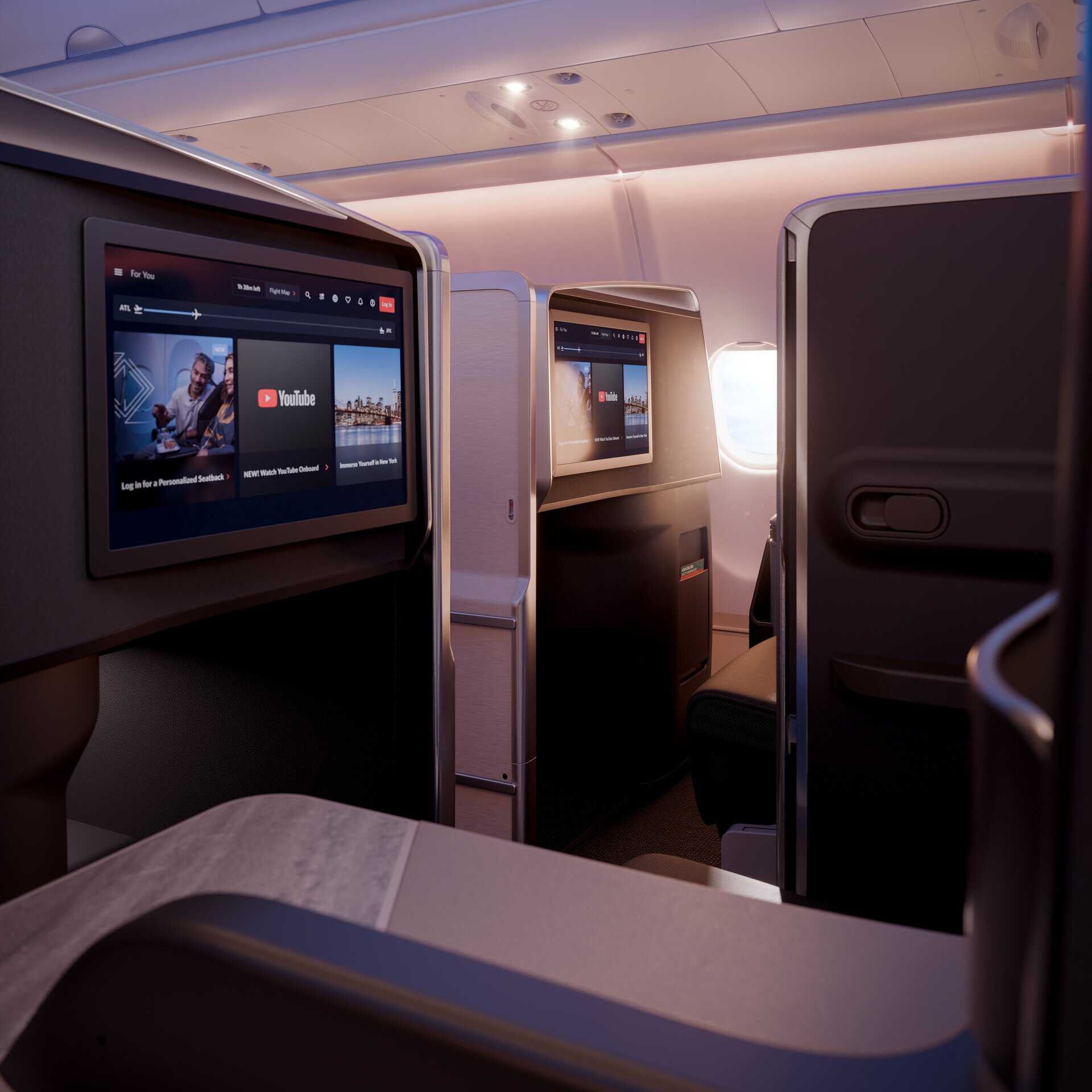
Each suite comes with a 24-inch seatback screen, the biggest Delta has used so far, offering high-definition quality and more entertainment options. Passengers can connect their own Bluetooth headphones, and there are wireless charging pads and USB-C charging ports for devices during the flight.
The suites are set up in a reverse-herringbone layout, which angles window seats outward for better views and more privacy. Center seats have a divider that can be moved, so people traveling together can choose to open up the space or keep it private.
Delta One Suite on board the A350-1000, featuring the eyeglass hook and other amenities | IMAGE: DeltaA new pillow-top cushion adds a plush layer to the memory foam seat, enhancing comfort alongside the mattress pad and Missoni bedding | IMAGE: DeltaSmart storage in the next-generation Delta One suite includes a shoe cubby and an easy-reach tray | IMAGE: Delta
A330 Fleet Gains Suites for the First Time
At the same time as the A350-1000 launch, Delta will update its Airbus A330-200 and A330-300 planes with Delta One suites. This will be the first time these aircraft have fully enclosed business-class seats.
This update is part of a full cabin refresh, not just for premium seats. The A330 suites will be similar to those on the A350-1000, with features like privacy doors, better cushions, wireless charging, and improved seat controls.
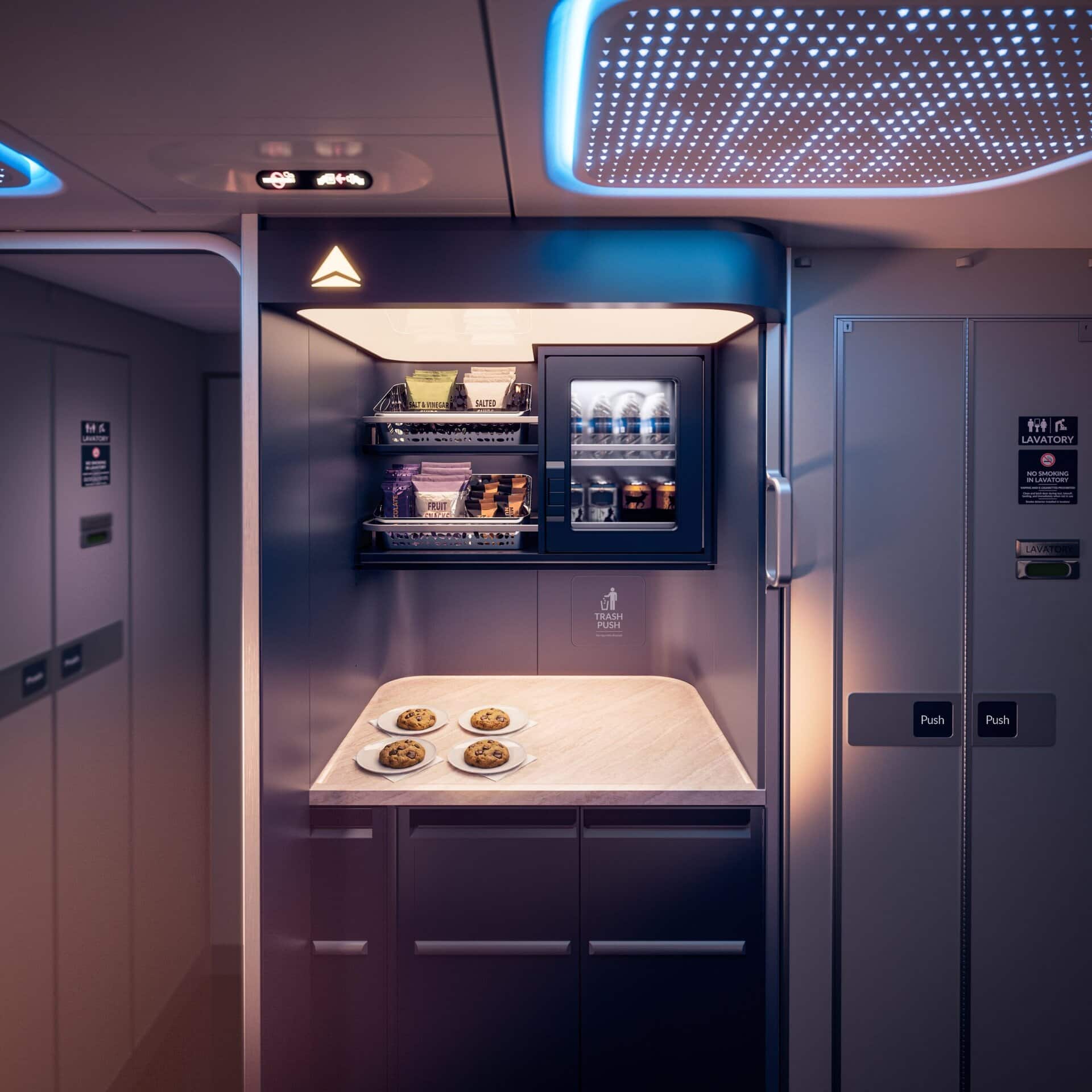
Both aircraft will also have a self-service snack station for Delta One passengers. On the A350-1000, it will be near the main entry door, and on the A330, it will be at the front of the cabin. This gives passengers access to snacks and drinks at any time, not just during meal service.
This change is meant to give passengers more control over their onboard experience, especially on long flights where people have different sleep and activity schedules.
Delta One suites on the A330-200/300 feature 20-inch 4K LED screens | IMAGE: DeltaDelta One Suites in the business class cabin on Delta’s Airbus A330-200/300s | IMAGE: DeltaDelta One flat-bed seats on board the A330-200/300, complemented by Missoni bedding with a lumbar pillow that doubles as a mattress pad | IMAGE: Delta
Standardizing the Experience Across All Cabins
Although the Delta One suite is the main highlight, Delta is upgrading every cabin. The A350-1000 and updated A330 planes will also feature better seats in Delta Premium Select, Delta Comfort, and Main Cabin.
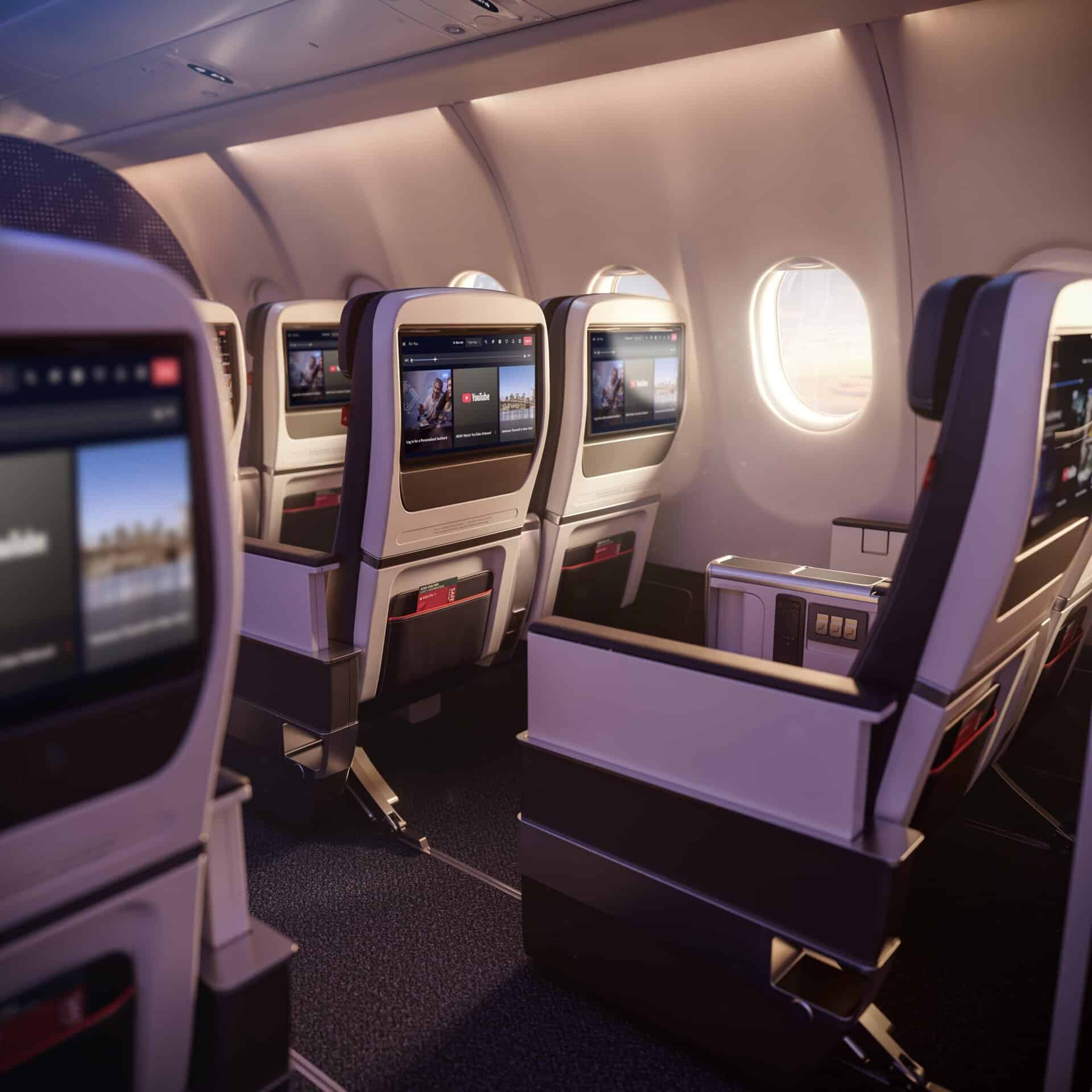
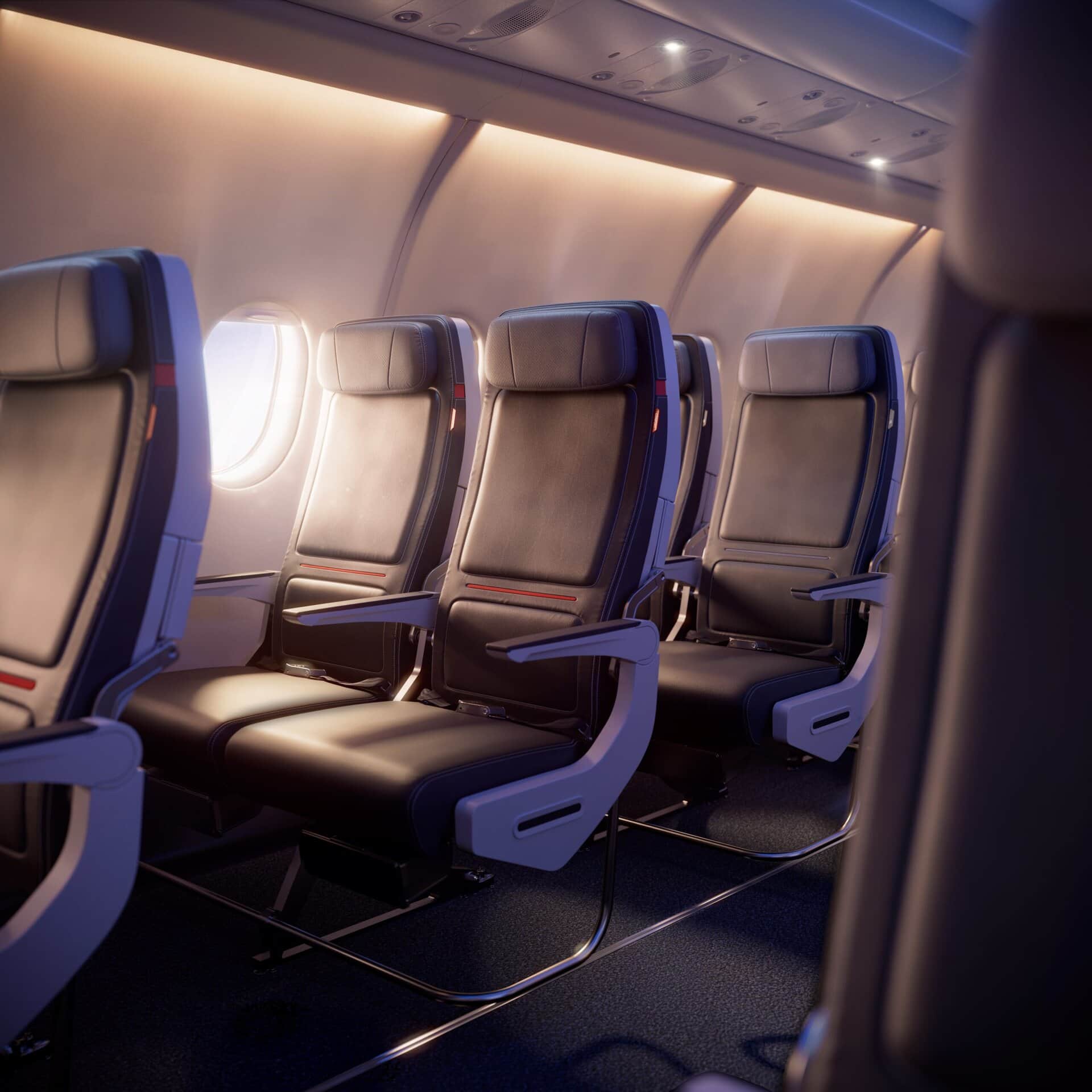
Every seat will have a memory foam cushion, USB-C and universal AC power outlets, and bigger seatback screens with 4K QLED resolution. The new entertainment system, built with Thales technology, will offer more content and personalized features through Delta’s digital platform.
Passengers in Main Cabin and Delta Comfort will notice some key improvements, like an extra inch of legroom and new seatbacks with built-in shelves for personal items.
The cabin lighting has been redesigned to match different phases of the flight, using changing colors to support meals, rest, and adjustment to new time zones.
Delta Premium Select seats feature larger 4K screens at 16 inches | IMAGE: DeltaDelta A330-200/300s will feature memory foam cushions for the new seats in Delta Comfort and Delta Main to ensure continuous comfort on long-haul journeys | IMAGE: DeltaDelta One passengers on the A350-1000 and A330-200/300 can access snacks and chilled non-alcoholic drinks anytime at a dedicated refreshment station | IMAGE: Delta
A Push Toward Premium and Consistency
This announcement is part of Delta’s long-term plan to add more premium seats and make the onboard experience more consistent across its global fleet. Delta expects over 800 planes to have the new interior design in the next five years.
By 2030, Delta expects about 90% of its Delta One seats to be suites with sliding doors, showing its commitment to privacy and top-tier service in the business class segment.
This move follows industry trends, as airlines worldwide, including major US competitors, are investing more in premium cabins because these seats generate higher revenue. Delta has seen higher returns from premium ticket sales, which supports its choice to invest more in these products.
Delta is also focused on consistency. By using similar designs, technology, and comfort features across different planes and cabin classes, the airline wants to give passengers a more uniform experience no matter which route or aircraft they fly.
Bringing in the A350-1000 and updating the A330 fleet are the next steps in this plan. These changes combine small upgrades with a bigger move toward more premium seats and modernizing the whole fleet.
Shot down over Iran, an F-15E airman survived for days until a critical signal helped US forces locate and rescue him.
When an American aircraft goes down in hostile territory, everything that follows is built around one objective.
Find them.
Bring them home.
Every airman who climbs into a combat aircraft knows this truth. It’s built into the training, the equipment, and the quiet understanding that if the worst happens, they will not be left behind.
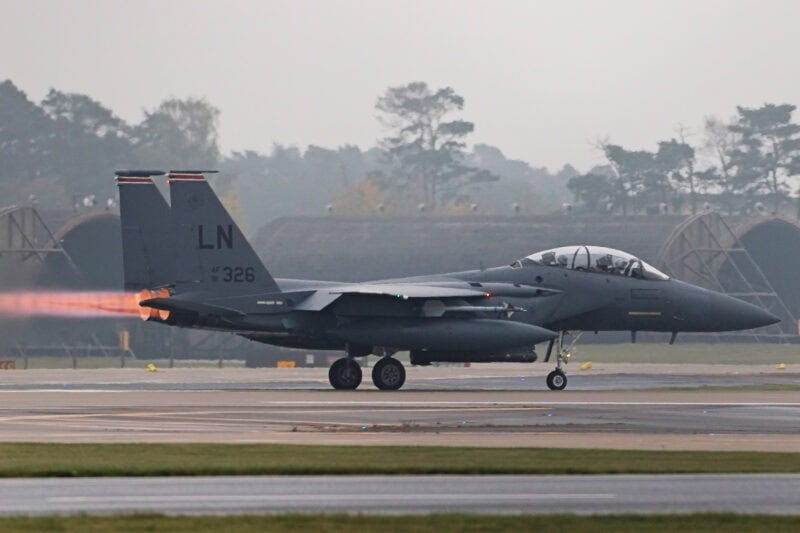
When a US Air Force F-15E Strike Eagle crashed in Iran on Good Friday, that system faced a real test. Within hours, US forces began a full-scale combat search-and-rescue (CSAR) mission. It soon became one of the most intense CSAR operations in recent years.
Aircraft surged into contested airspace. Helicopters pushed low and fast. Tankers, fighters, and surveillance assets all played their part.
But before any of that could work, rescuers needed one thing.
A signal.
The First Step in Any Rescue
Combat Survivor Evader Locator, or CSEL | IMAGE: Boeing
That signal came from a device most aircrew hope they never have to use.
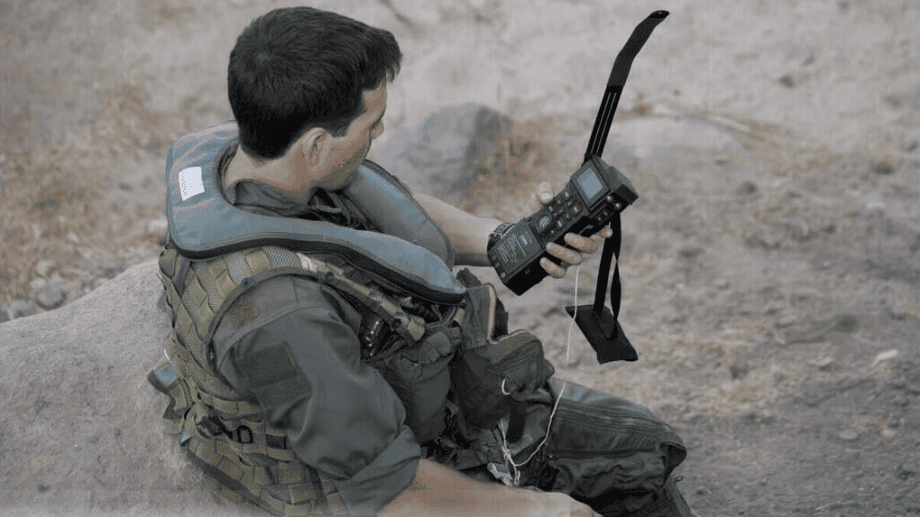
The Combat Survivor Evader Locator, or CSEL, is a survival radio that US Air Force and Navy aircrew carry as standard gear. Made by Boeing, it is the Pentagon’s main tool for finding isolated personnel.
The unit is small and tough, built right into an aircrew member’s survival vest. It is made to keep working after the violent forces of ejection and to be easy to reach even under extreme stress.
It is one of the few pieces of equipment that pilots or weapons systems officers carry, hoping they never actually need it.
But when it does, it becomes everything.
The CSEL allows a downed airman to transmit encrypted GPS coordinates and status updates via satellite to rescue forces.
According to US Navy descriptions, it “provides secure two-way over-the-horizon, near real-time data communications” along with precise military-grade GPS positioning.
Those transmissions are designed to be brief, encrypted, and difficult to detect, reducing the risk of interception by enemy forces.
In layman’s terms, it turns a single individual on the ground into a connected part of a much larger rescue network.
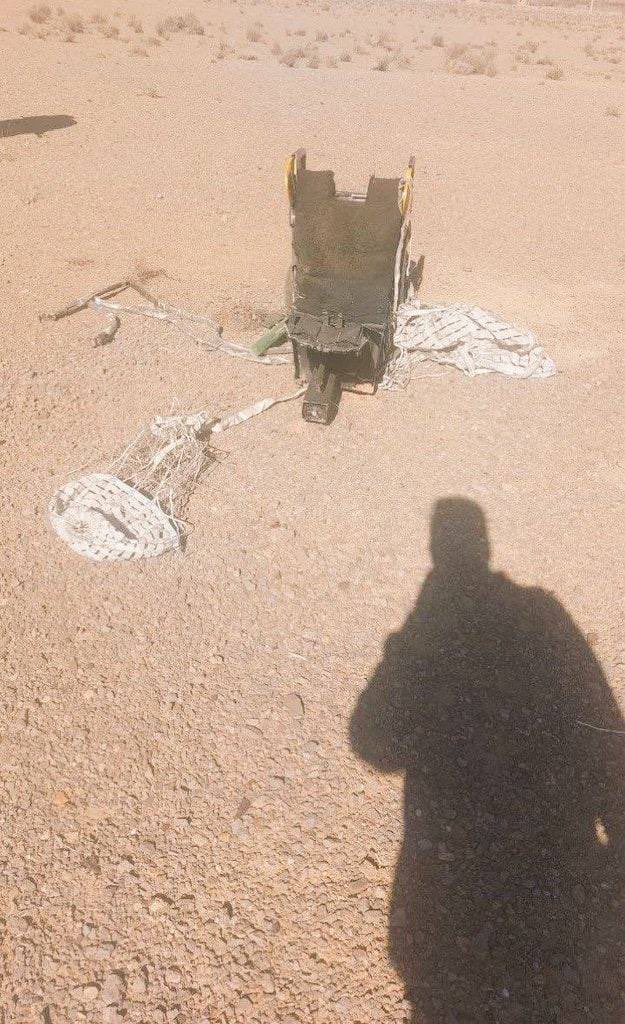
After the F-15E was shot down on 3 April, both crew members ejected into Iranian territory, triggering an immediate rescue effort.
A purported photo of the ejection seat from the downed F-15E over Iran on 3 April 2026 | IMAGE: X
The pilot was located and recovered relatively quickly.
The weapons systems officer (WSO) was not.
Injured and alone, he left the crash site and headed into the mountains, following his survival training to improve his chances of escape and rescue.
For nearly two days, he remained on the ground while Iranian forces searched the area.
During that time, officials say he used the CSEL intermittently. transmitting position and status without revealing himself through voice communications.
President Donald Trump later referenced the device during a White House briefing, describing it as a “very sophisticated beeper-type apparatus” that “worked really well…amazingly…saved his life.”
Those signals gave US forces something to work with.
From that point, the rescue operation moved in.
The System That Comes Alive
A promotional image from Boeing showing the use of the CSEL | IMAGE: Boeing
Combat search-and-rescue is one of the most complex missions in military aviation.
It is a coordinated system of aircraft and crew built to operate under pressure, often in the most dangerous conditions imaginable.
In this case, that system included helicopters flying low through contested airspace, supported by refueling aircraft, fighters, and surveillance platforms.
An A-10 Thunderbolt II providing overwatch during the operation was itself hit by enemy fire, forcing the pilot to eject after reaching friendly territory.
Rescue helicopters also took damage while pressing into the area to recover personnel.
The operation was large and risky. But none of it would have mattered without knowing where to go. That is where the CSEL showed its worth.
It was the first link in the chain.
The Signal That Brought Him Home
The rescue involved what officials described as one of the most complex CSAR missions in recent memory, with hundreds of personnel and a large air package operating deep inside hostile territory.
According to reporting from The New York Times, the operation included hundreds of special operations forces, including members of US Naval Special Warfare Development Group (SEAL Team Six), supported by dozens of fighter and strike aircraft, helicopters, and a full suite of intelligence capabilities spanning cyber and space.
Senior military officials described it as “one of the most challenging and complex in the history of US Special Operations,” citing the mountainous terrain, the airman’s injuries, and Iranian forces rapidly converging on the area.
On the ground, the WSO evaded capture for more than 24 hours. Even though he had sustained injuries during the ejection, he managed to climb a 7,000-foot ridgeline towards safety. American aircraft struck Iranian convoys moving toward the area, using precision fires to keep enemy forces at a distance while rescue teams closed in.
As US Special Forces approached the site, they fired to suppress advancing forces, creating just enough space to complete the extraction without escalating into a broader firefight.
Even then, the mission wasn’t over.
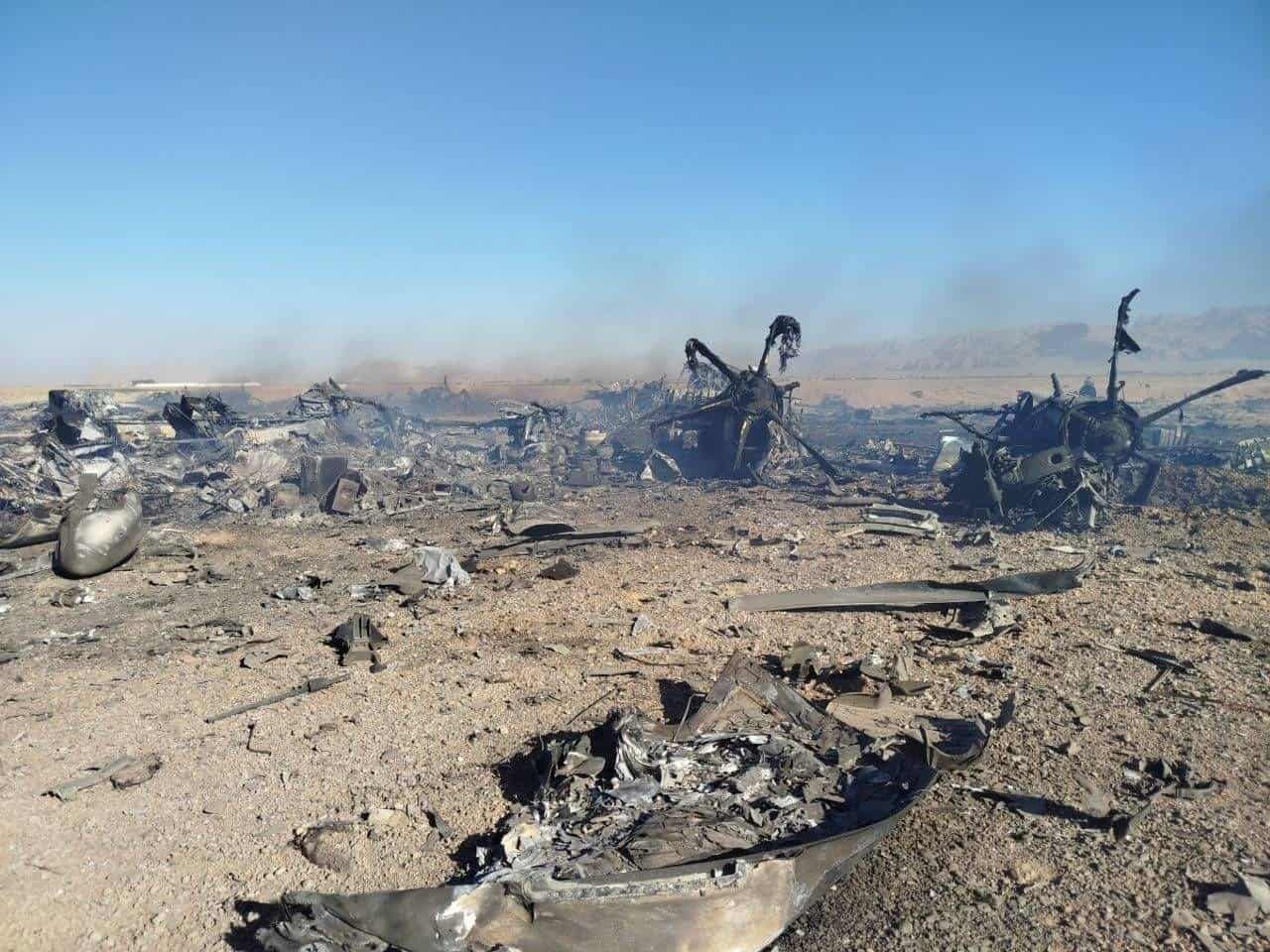
Wreckage of American MC-130J aircraft destroyed by American forces while on a mission to find the missing F-15E WSO
At a makeshift landing site, two MC-130Js tasked with exfiltrating personnel became stranded in soft ground due to mechanical issues. With time and risk mounting, commanders decided to bring in additional aircraft to complete the evacuation and destroyed the disabled planes on the ground to prevent them from falling into enemy hands.
Aircraft were damaged. Others were deliberately lost. Equipment was abandoned or destroyed. The risk level was extreme.
But none of that would have mattered if rescuers didn’t know where to go.
The Signal That Made the Difference
IMAGE: @sentdefender via X
That’s when the CSEL showed how valuable it really was.
It didn’t fly the helicopters. It didn’t hold back enemy forces. It didn’t carry out the rescue itself.
What it did was simple, but just as important.
It linked a single downed airman hiding in the mountains to the full strength of the US military. He was tied into a huge network of aircraft already in motion, crews ready to go, and a system designed to bring him home.
And in the end, that link made all the difference between a recovery and a very different outcome. It was a beautiful display of America’s unwavering ethos: we don’t leave our warfighters behind.
As the news unfolded about the successful rescue in the early hours before the sun rose on Easter Sunday, I couldn’t help but smile at the timing. Shot down on Friday. Found and brought home on Sunday.
For many, this week is about loss on Friday and hope restored on Sunday.
This mission could have very easily ended in tragedy, but it didn’t.
Call it training. Call it technology. Call it coordination at the highest level.
Or call it something that, just for a moment, felt a little like a miracle.
An airport photo shoot becomes a story about community, connection, and aviation.
At most airports, the ramp is a place of motion and noise.
Fuel trucks rumble past. Propellers tick as they cool. Line technicians move quickly between aircraft, preparing them for their next flight. It is a place built for efficiency, where aircraft arrive, refuel, and depart again within minutes.
But for one evening last summer at Youngstown–Warren Regional Airport (YNG), a small airport and Air Reserve Station in northeastern Ohio, the pace slowed down.
Instead of marshaling wands and dragging fuel hoses, there was a camera. Instead of a departing aircraft, there were engagement portraits. And instead of the usual rush of ramp activity, the airport community gathered for something more personal.
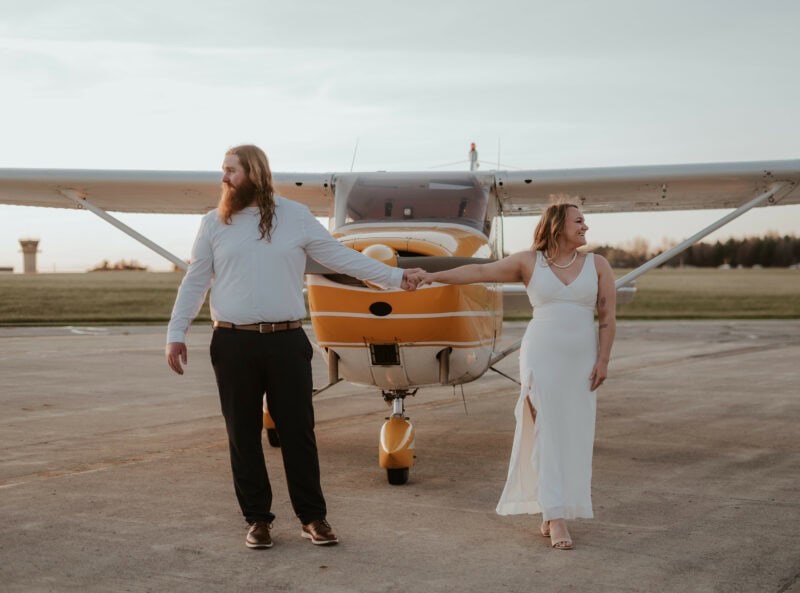
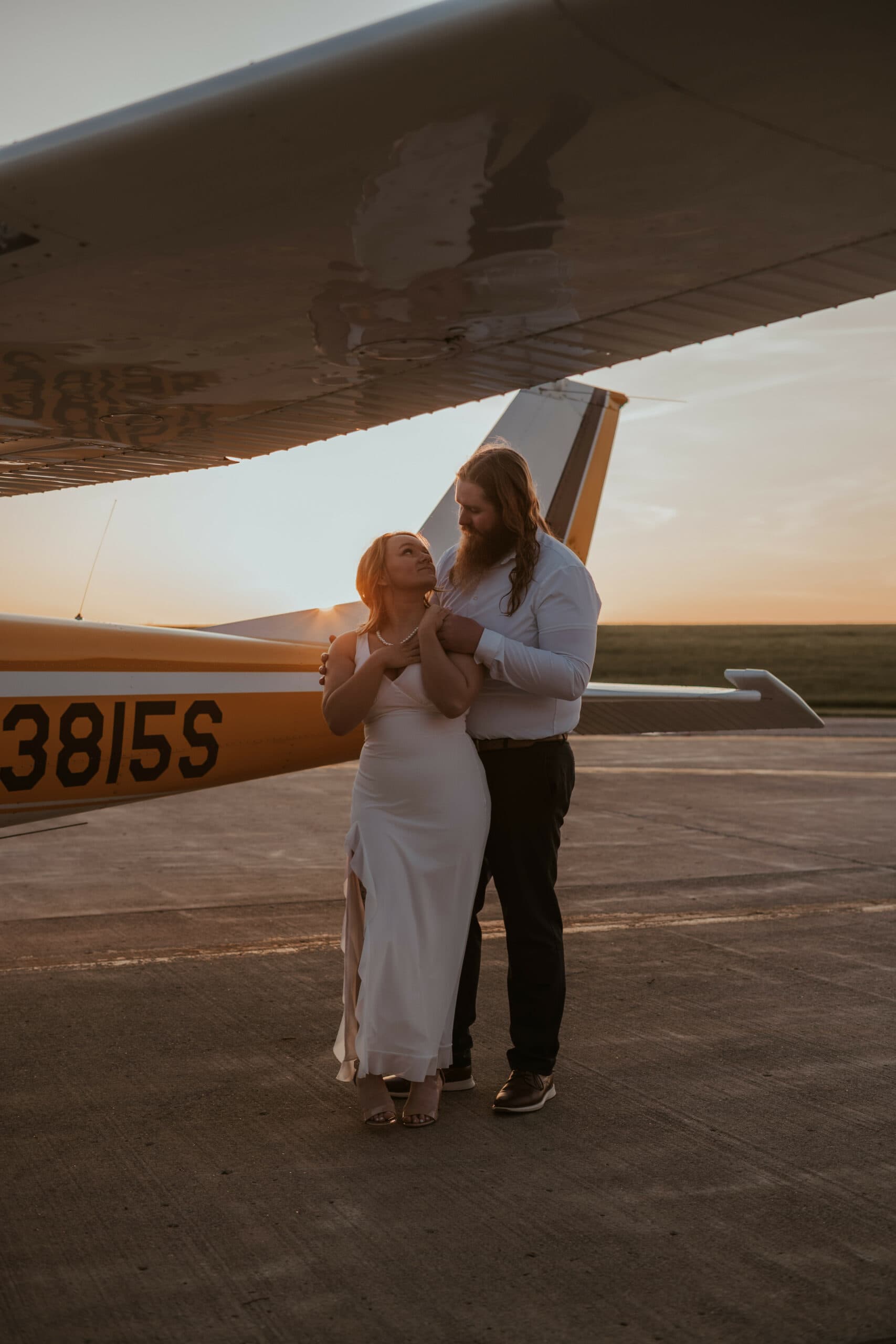
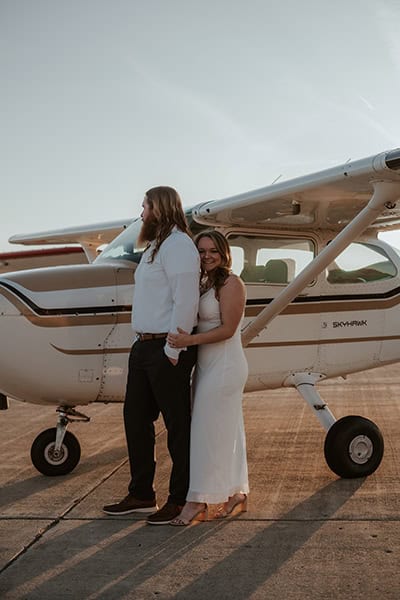
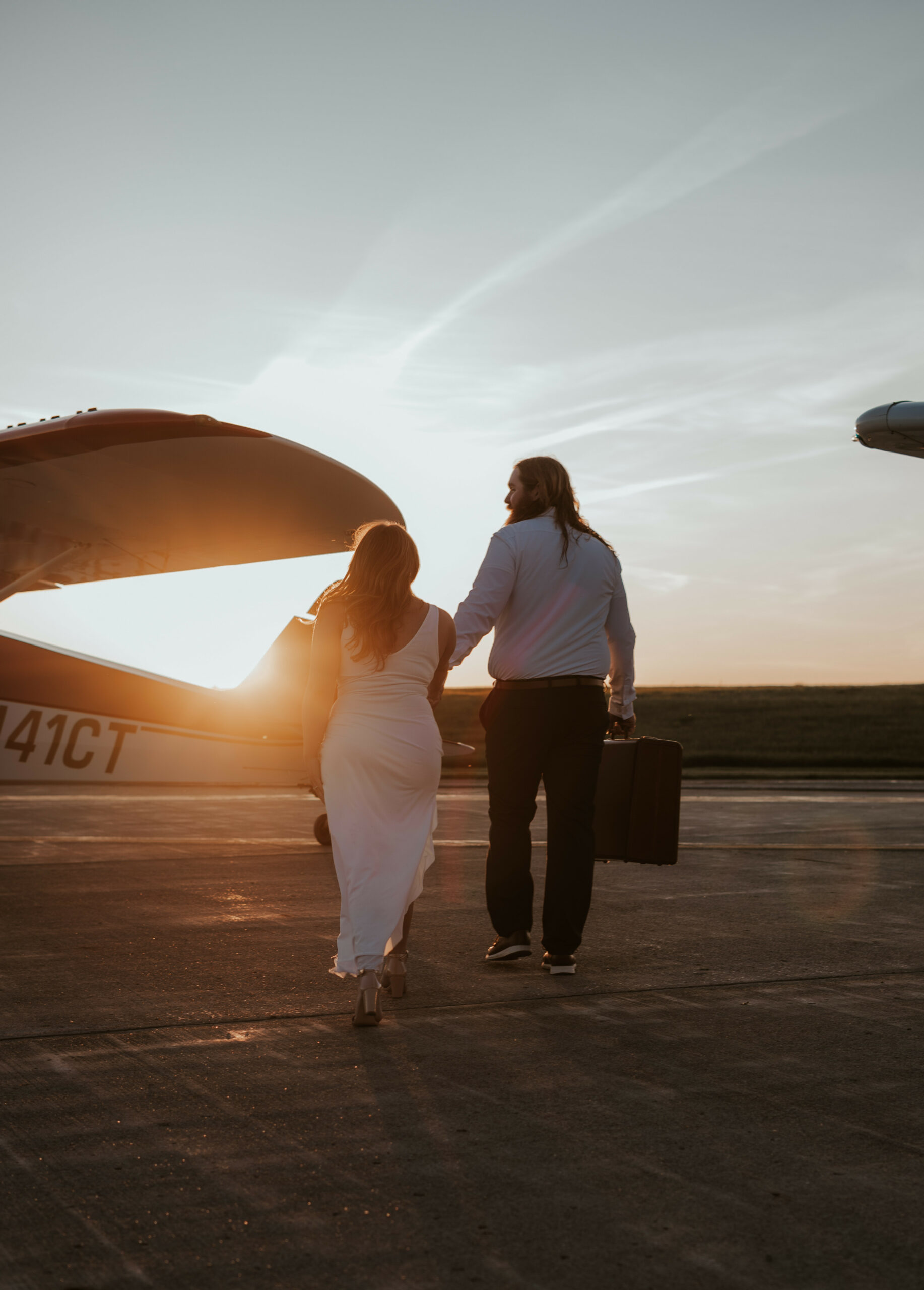
The portraits were captured by photographer Amanda Johnson of Vienna, Ohio, who worked with the couple and members of the local aviation community to stage the session among aircraft on the ramp.
For William McDermott, a service line technician at the airport, it was a chance to celebrate a major milestone in the very place that helped shape his life in aviation.
“Working at YNG means being part of something bigger and having a hand in assisting arriving and departing aircraft,” McDermott said.
The People Who Keep the Ramp Moving
IMAGE: Youngstown-Warren Regional Airport
Behind every general aviation airport is a small army of people who keep aircraft moving safely and efficiently. Among them are service line technicians, the men and women responsible for fueling airplanes, guiding pilots to parking, and making sure aircraft are ready for their next flight.
It is work that often goes unnoticed by travelers and even by many pilots.
“People often think ramp work is just physical labor,” McDermott explained. “But it requires technical knowledge and a keen understanding of aviation. It’s not just about fueling planes. It’s about ensuring the safety and efficiency of every flight.”
It’s not just about fueling planes. It’s about ensuring the safety and efficiency of every flight.
William McDermott
That sense of professionalism and pride is something recognized by those who work alongside him every day.
Mike Hillman, owner of Jets FBO at YNG, says McDermott has become an important part of the airport’s culture.
“I think many of his co-workers look up to Will as someone who knows it all, but isn’t a pretentious guy,” Hillman said. “People like to work with Will and like being around him.”
Hillman believes the best service line technicians have a few key qualities.
“Common sense and caring,” he said. “So much of what we do takes careful forethought. You have to be sharp, and you have to care about the safety of others and their property.”
At airports like Youngstown–Warren, that dedication helps make the airport feel like more than just a workplace.
“I feel a sense of family when I am in YNG,” Hillman said.
When the Airport Becomes Personal
IMAGE: AMJ Photography
For Will and his now wife, Lydia, the airport is more than just a place to work. It’s a big part of their life together.
“Aviation has always been William’s career, so it’s naturally shaped our life together,” Lydia said. “The days can be long and demanding, and the schedule isn’t always easy, but it’s been steady. His job has provided stability and opportunity.”
When they started planning their engagement photos, picking a location was easy.
“The airport is such a big part of his world, and by extension mine too,” Lydia explained. “Instead of choosing a random pretty location, we wanted somewhere that actually meant something to us.”
“The airport is such a big part of his world, and by extension mine too. Instead of choosing a random pretty location, we wanted somewhere that actually meant something to us.”
Lydia McDermott
The result was something both unexpected and meaningful.
“The ramp is usually all business. Fast-paced, loud, and structured,” she said. “So seeing it turned into something soft and personal was really special. It made this huge, industrial space feel intimate.”
For Will, the experience was just as powerful.
“It was surreal and special,” he said. “It felt like I was celebrating a personal milestone in a place that’s shaped so much of who I am.”
Including the airport in this special moment felt natural.
“The airport has been a huge part of my life,” he said. “It symbolizes not only my work but also the environment that has supported and inspired me along the way.”
A Community That Shows Up
IMAGE: AMJ Photography
Stories like this rarely happen in isolation at small airports. They happen because of the people who make up the aviation community.
Members of the Experimental Aircraft Association (EAA) Chapter 117 at YNG helped support the session, bringing aircraft and their enthusiasm to the ramp.
IMAGE: AMJ Photography
For chapter member Anthony DeGaten, helping was simply part of what the aviation community does.
“Our aviation culture is similar to others, with a diverse group of people with aviation binding us together,” DeGaten said.
When the chapter learned about the engagement portraits, the response was immediate.
“Somebody in our aviation community needed our assistance in helping them make their day very special,” he said.
Support like that is not unusual within EAA circles.
“Absolutely,” DeGaten said when asked if the chapter regularly steps up for members. “Not only our EAA aviation community, but also helping to promote aviation as a whole.”
At Youngstown–Warren Regional Airport, that sense of community is still strong.
“It’s alive and well at our airport,” he said. “We just want to bring people together through our many activities to make things fun and exciting.”
Aviation’s Small World
IMAGE: AMJ Photography
While aviation spans the globe, many who work in the industry describe it as a surprisingly small world.
Hillman sees that every day, through the connections that form between pilots, mechanics, line technicians, and airport staff.
“Aviation is a very large national community, but a very small one,” he said. “You see people and talk with them from all over the country every day, your entire career.”
That shared experience often leads people in aviation to support one another.
“For whatever reason, that sense of connection prompts the aviation community to support its members well,” Hillman said.
It is a culture that continues to strengthen local airports like YNG.
DeGaten believes the story unfolding there reflects something larger about aviation itself.
“The story is still being written,” he said. “We are more successful together in helping our community and others. In many instances, the presence of a local EAA chapter helps build a tight community and a stronger airport environment.”
Why General Aviation Still Matters
IMAGE: AMJ Photography
For Will, the sense of shared purpose is evident every day on the ramp.
“The aviation community at YNG is tight-knit and supportive,” he said. “Everyone works together to ensure smooth operations. There’s a shared sense of pride and responsibility in keeping things running safely and efficiently.”
He believes general aviation still plays an important role in communities all over the country.
“It connects communities and provides opportunities for travel and business that other modes of transport can’t match,” he said.
[General aviation] connects communities and provides opportunities for travel and business that other modes of transport can’t match.
William McDermott
Hillman sees another factor quietly helping the industry as well.
“Commercial aviation is our best advertising,” he said. “The misery of airline travel pushes more people to general aviation every day.”
A Moment That Captured Something Bigger
IMAGE: AMJ Photography
For Lydia, the photographs taken that evening represent more than just an engagement milestone.
Through Amanda Johnson’s lens, the busy ramp at YNG became something different for a few quiet moments that evening.
“I hope they remind us of this season,” she said. “Building our future, supporting each other’s dreams, and choosing each other in the middle of busy schedules and big goals.”
The photos also show something special about the place where they were taken.
Airports are often thought of as places people pass through.
But at small general aviation fields across the country, they’re also places where friendships blossom, careers grow, and communities come together.
At Youngstown–Warren Regional Airport, one evening on the ramp simply reminded everyone of something they already knew.
Aviation is not just about airplanes.
It is about the people like Will who keep them flying every single day.
A very special thanks to Amanda Johnson, owner and lead photographer at AMJ Photography, for providing the photos used in this story. Amanda serves clients in her hometown of Philadelphia, as well as in Northeast Ohio and Western Pennsylvania. She is based in Vienna, Ohio.
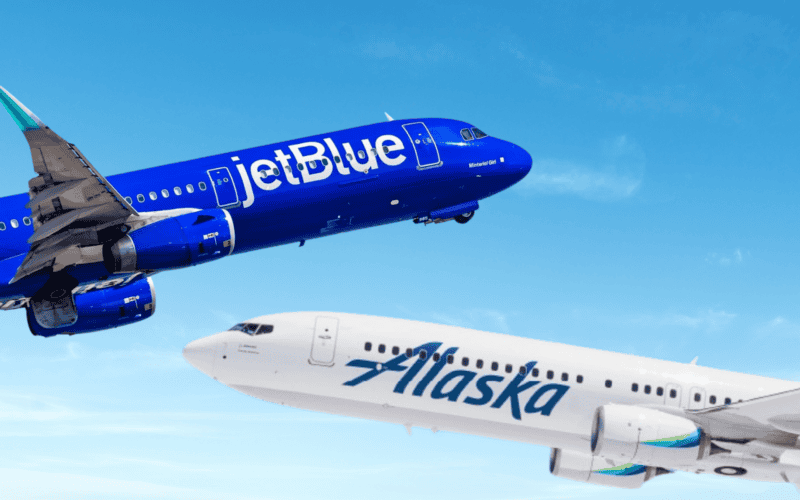
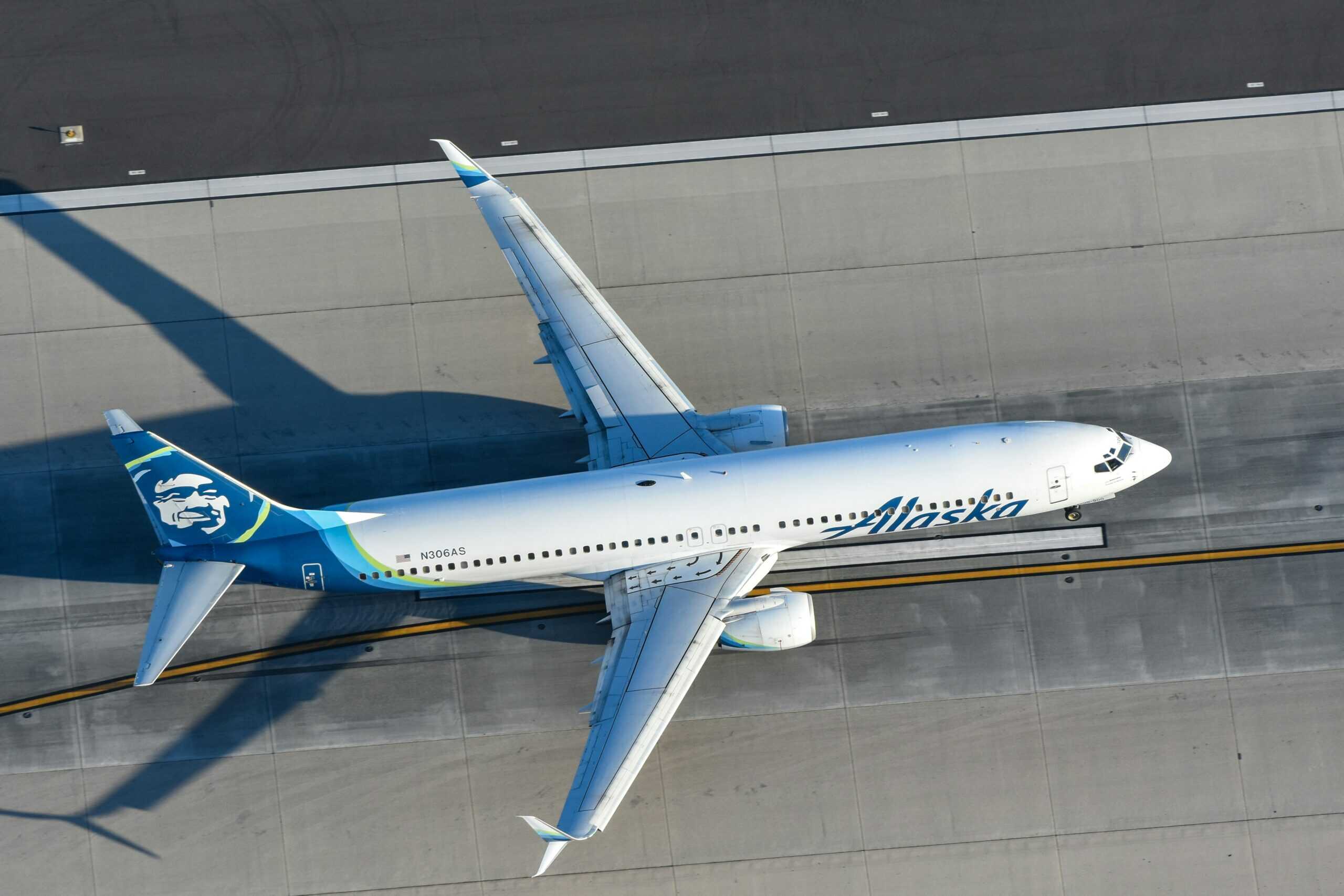
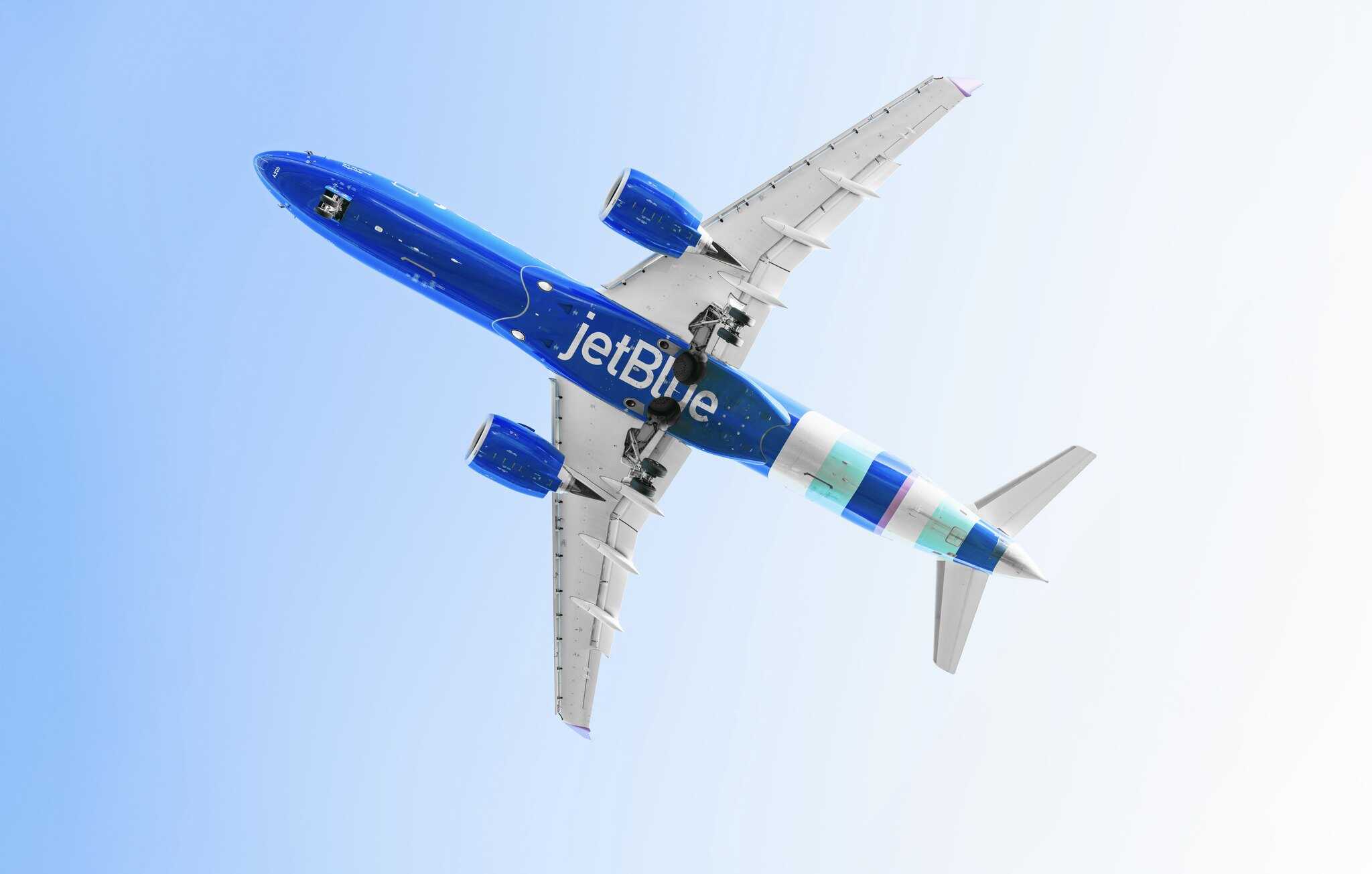
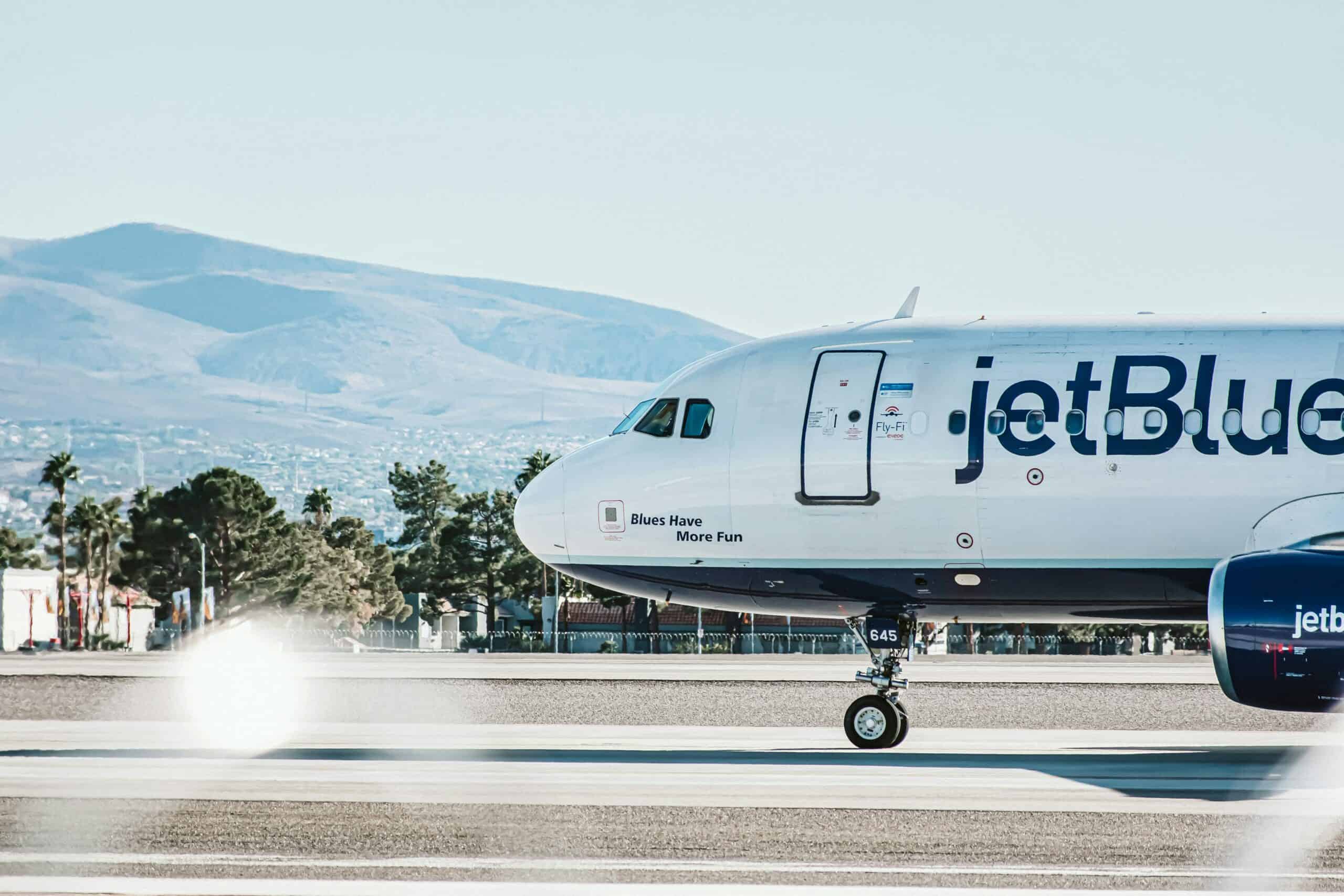
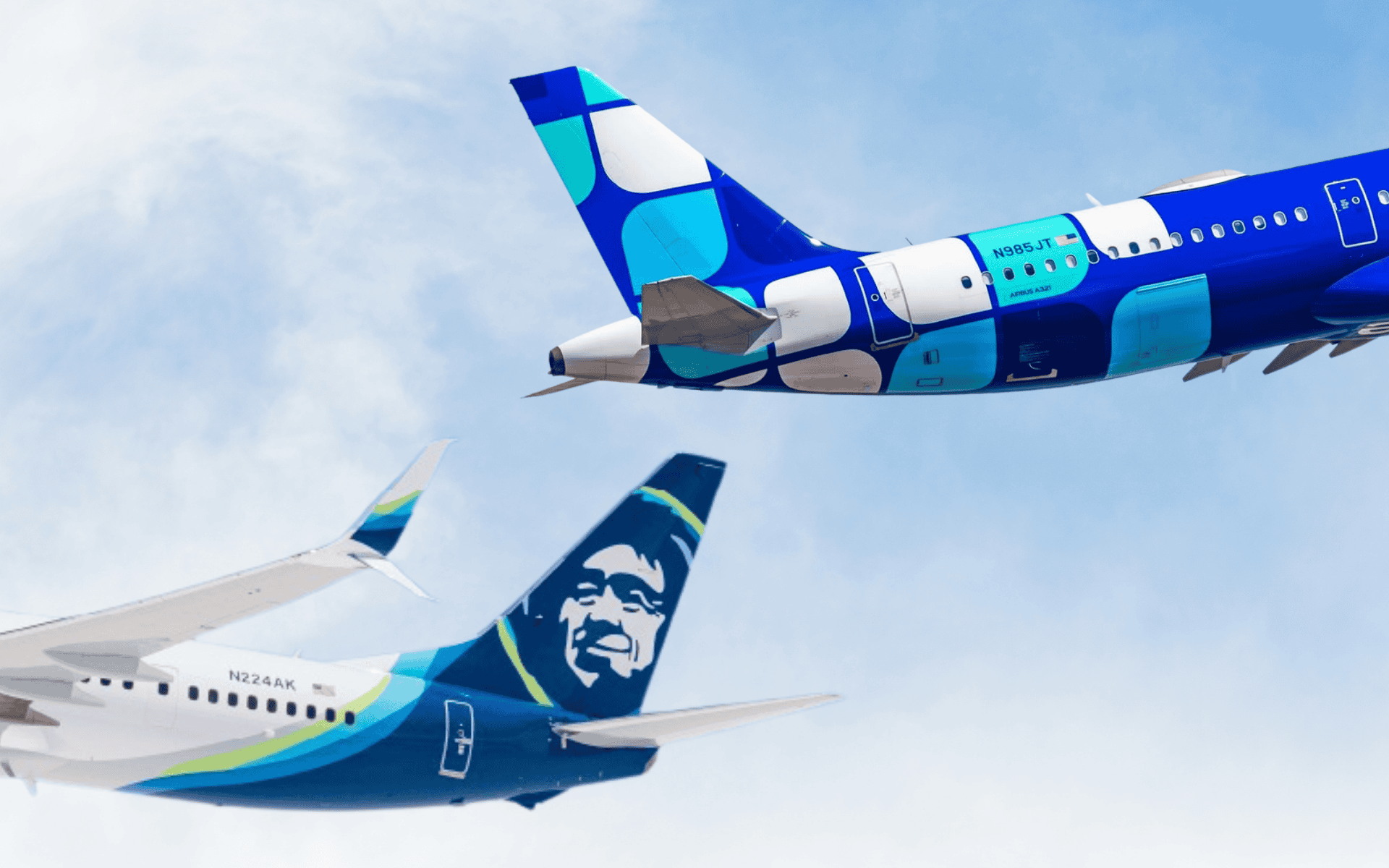
JetBlue merger speculation returns as the airline explores strategic options. A new report from Semafor says the carrier is exploring options, including a possible merger with Alaska Airlines.
This isn’t new for JetBlue. The airline has spent years considering mergers, including its recent failed attempt to buy Spirit Airlines and earlier partnerships that fell apart due to regulatory issues.
Right now, there is no deal, no confirmed talks, and everything is still in the early stages.
This Isn’t JetBlue’s First Rodeo
A Spirit Airlines jet taxis past a JetBlue Airbus at the gate at Fort Lauderdale-Hollywood International Airport (FLL) | IMAGE: Photo by Randolph Rojas on Unsplash
JetBlue’s latest move is part of a long history of merger talks and strategic planning.
JetBlue’s $3.8 billion bid for Spirit Airlines made headlines from 2022 to early 2024, but a federal court blocked the deal over antitrust concerns. Before that, JetBlue tried to grow through partnerships like its Northeast Alliance with American Airlines, which was also stopped by a judge.
Back in 2016, JetBlue and Alaska Airlines both tried to buy Virgin America. Alaska won the deal and used it to grow its presence on the West Coast.
Given this history, it’s not surprising that JetBlue is once again looking at mergers or sales as it tries to grow.
What the Semafor Report Says
IMAGE: JetBlue
According to a Semafor report, JetBlue has hired advisers to explore a possible sale. The company has also run internal models to see how mergers with Alaska Airlines, United Airlines, or Southwest Airlines might be viewed by regulators in Washington.
It is important to point out that these plans are still in the early stages. It’s not clear if JetBlue has talked with any of the airlines or received any official interest.
JetBlue did not provide a comment to Semafor, saying only that it is focused on internal discussions and its current turnaround plan.
“We’ve made meaningful progress on our multi-year JetForward strategy and are focused on executing the plan,” a company spokesperson said.
Alaska, Southwest, and United also did not provide a comment.
Why Alaska Keeps Coming Up
An Alaska Airlines Boeing 737-900 departs Los Angeles International Airport (LAX) | IMAGE: Photo by David Syphers on Unsplash
Analysts and industry experts have long seen Alaska Airlines as a logical partner for JetBlue, especially when looking at their route networks.
Alaska Airlines is strong on the West Coast and in the Pacific. JetBlue has a big presence in the Northeast, especially at New York’s JFK and Boston’s Logan (BOS) airports, and also flies to Florida, the Caribbean, and Europe.
Because their routes don’t overlap much, a merger between JetBlue and Alaska might be easier to get approved by regulators than JetBlue’s proposed deal with Spirit, which raised concerns about less competition, particularly in Florida.
However, a deal would still have challenges. Alaska is currently busy integrating its purchase of Hawaiian Airlines, which is a top priority right now.
The Strategic Question for JetBlue
IMAGE: JetBlue
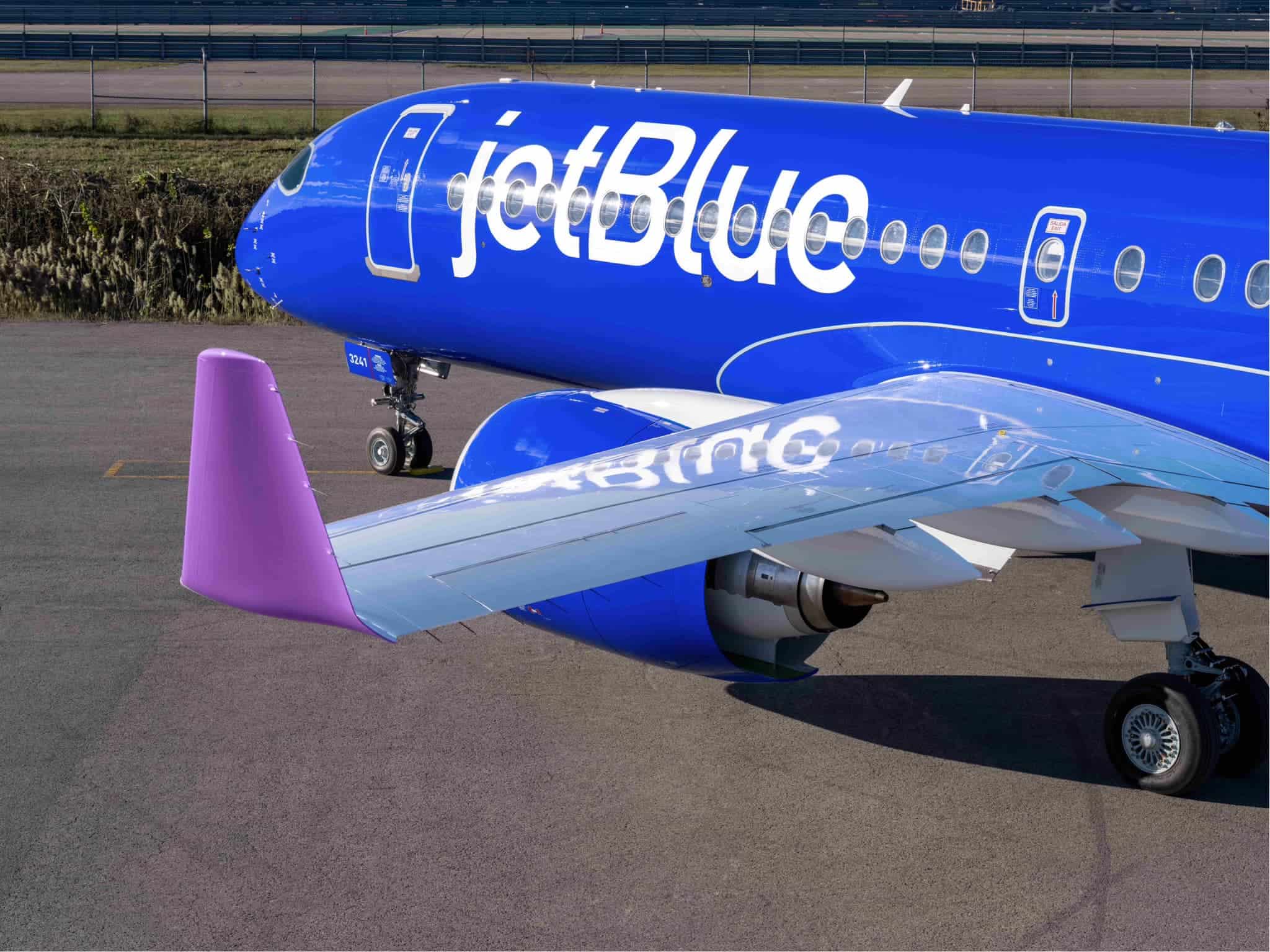
JetBlue keeps coming up in merger talks because it faces a big challenge: competing in a US airline industry where bigger carriers and ultra-low-cost (ULCC) rivals are tough competition.
JetBlue built its brand on customer perks like free Wi-Fi and a more comfortable economy class, but it’s getting harder to keep that edge as competition changes.
JetBlue also faces pressure because it operates mainly in expensive, competitive markets. Rivals are adding more premium options, and ULCCs keep pushing prices down.
Because of these challenges, many believe JetBlue may need to get bigger – through a partnership, acquisition, or merger – to stay competitive in the long run.
Even if regulators are more open to mergers now, any deal between major US airlines would still attract significant attention from authorities.
The Semafor report points out that JetBlue’s internal planning has focused on how different deal structures might be seen in Washington, showing how important antitrust issues would be in any deal.
Recent airline mergers have had mixed results. Alaska’s purchase of Hawaiian Airlines went ahead with little resistance, but JetBlue’s attempt to buy Spirit was blocked. This shows how details like route overlap and market impact can affect regulatory decisions.
For Now, Still Speculation
Report: JetBlue Merger Speculation Heats Up Again, With Alaska Airlines Among Potential Fits 59
Despite all the talk, everything right now is still just speculation based on early planning.
JetBlue hasn’t committed to any deal, potential partners haven’t said anything publicly, and there’s no sign that formal talks have started.
Still, the report highlights a bigger point: JetBlue’s name always comes up when people talk about airline mergers in the United States. It’s unclear if anything will happen this time, but it’s just the latest chapter in JetBlue’s ongoing story.
From MIA to ORD, this study ranks the best US airports for planespotting based on traffic, runway layout, and viewing access.
If you’ve ever planned a trip around an airport perimeter fence line or timed a layover just to catch a heavy arrival, you already know that not all airports are created equal for plane spotting. Some deliver constant movement and widebody variety, while others make you wait or search for a good view.
A new study from Upgraded Points for 2026 tries to answer the question once and for all. They looked at 50 of the busiest US airports and compared them using 11 factors that matter to spotters, such as daily flights, runway size, weather, parking, and the number of places to watch planes. The goal was to find out which airports offer the best, most reliable experience for anyone who loves watching airplanes.
The top spots go to the usual big airports, but it is interesting to see why they scored so well.
Where the Action Never Stops
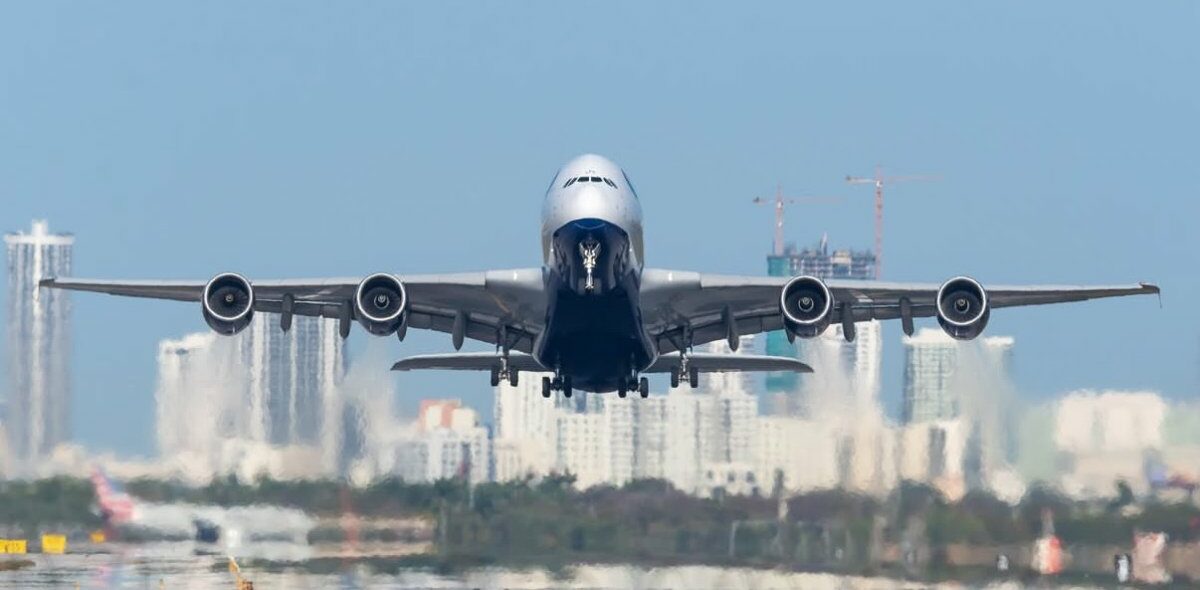
Miami International Airport (MIA) is at the top of the list of best US airports for planespotting in 2026 | IMAGE: @iflymia on Facebook
#1: MIA
Miami International Airport (MIA) comes in first, and it is easy to understand why. It has over 1,300 daily movements and 18 places to spot planes, making it both busy and easy to access. The well-known “Holes” viewing area lets photographers shoot right through the fence, and there is also a popular unofficial spot by Runway 12 on the north side. All of this makes MIA one of the best places in the country to spend a whole day watching planes.
#2-5: JFK, DFW, LAX, ORD
Right behind MIA are airports like New York Kennedy (JFK), Dallas Fort Worth (DFW), Los Angeles (LAX), and Chicago O’Hare (ORD). These big hubs always offer big variety. They have several long runways, steady international traffic, and all kinds of equipment, from small regional jets to large long-haul aircraft.
O’Hare, in particular, stands out for sheer volume. The study found it handles 2,349 daily takeoffs and landings, more than double the average of the airports in the study. If your idea of a good spotting session involves never putting the camera down, this is about as close as it gets.
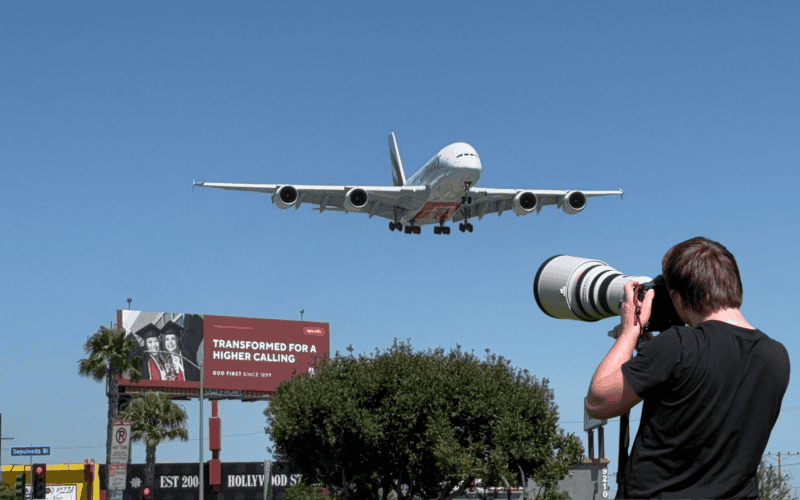
How easy it is to get around also matters more than you might think. LAX, for example, has the best short-term parking in the study, so it is easy to move between spotting locations depending on which runway is in use. One of the most iconic places to spot planes in America is at LAX, right next to the In-N-Out on S. Sepulveda Blvd., and immediately adjacent to Runway 24R.
At DFW, Founders Plaza gives spotters a dedicated viewing area, so you do not have to search for a good vantage point.
The Underrated Advantage of Conditions
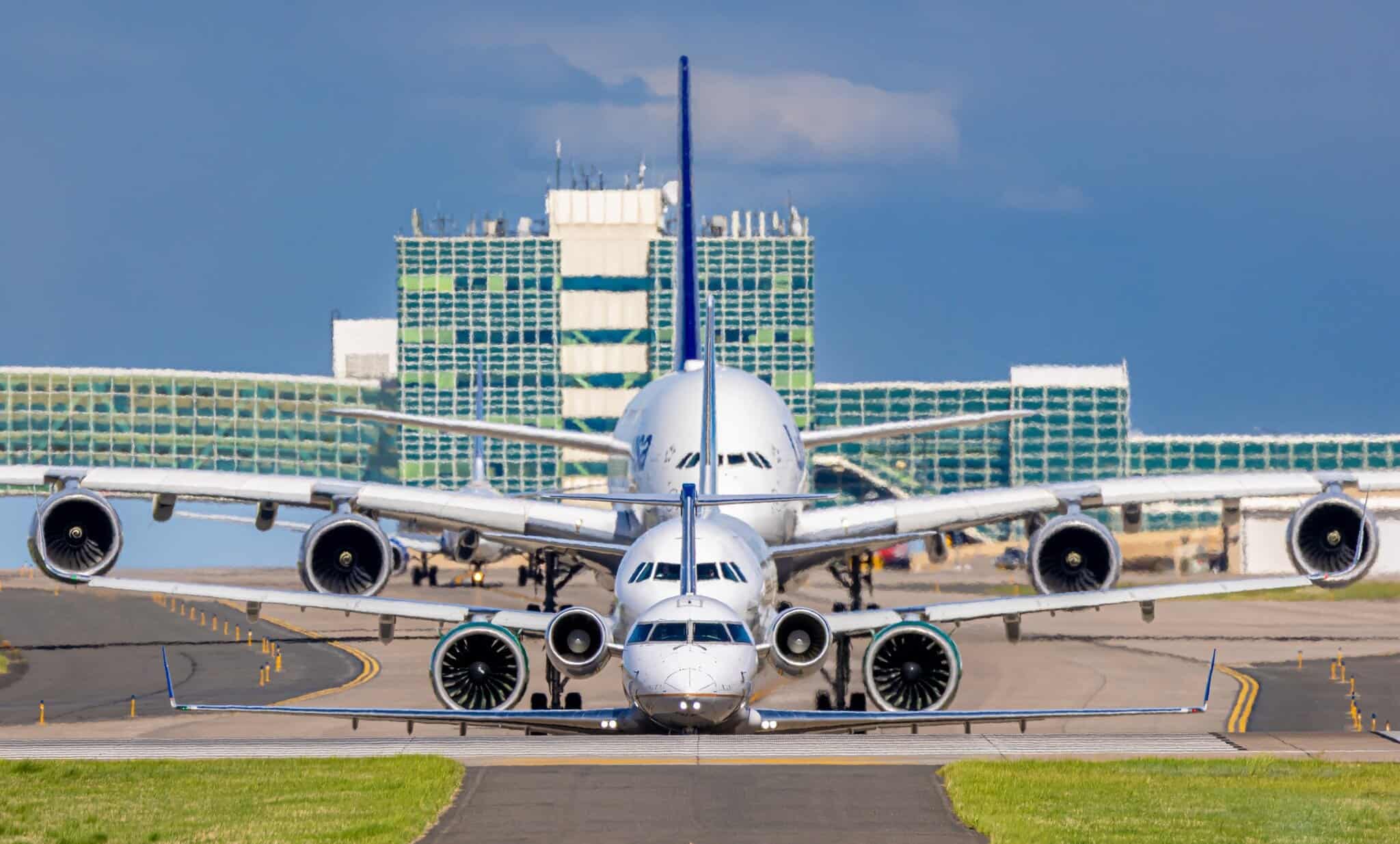
DEN is one of the best US airports for planespotting in 2026, as evidenced here with a CRJ, an A320, and an A380 lined up waiting for departure | IMAGE: @denverinternationalairport on Facebook
Besides traffic, the study points out something every spotter learns quickly: conditions are important.
#6-10: DEN, LAS, SFO, PHX, FLL
Rounding out the top ten best US airports for planespotting in 2026 are airports like Denver (DEN), which stands out for its long runways, averaging 12,667 feet. That not only supports larger aircraft, but it also often means longer takeoff rolls, giving you just a few extra seconds to track a departure. And let’s not forget that DEN’s spectacular location offers views that cannot be beaten.
Farther west, Las Vegas Harry Reid International (LAS) and Phoenix Sky Harbor (PHX) benefit from consistently clear weather, where fog is rarely a factor. That reliability can make or break a spotting session, especially if you are planning a full day around it. San Francisco (SFO), on the other hand, offers one of the most recognizable approaches in the country over the bay, even if marine layers occasionally complicate things (but it can make for stunning photos).
Back east, Fort Lauderdale-Hollywood International (FLL) has several great spots for planespotting, including an official viewing park and the top of the Hibiscus parking garage.
#11-15: ATL, MSP, HNL, IAH, MCO
Further down the list, airports like Hartsfield-Jackson Atlanta (ATL), Minneapolis–Saint Paul (MSP), Daniel K. Inouye (HNL), Houston Intercontinental (IAH), and Orlando International (MCO) still offer great experiences, even if each has its own trade-offs. ATL has the most traffic but fewer dedicated viewing areas. HNL offers a unique backdrop, with planes arriving over the Pacific and zero annual fog days. MSP and FLL are known for their designated viewing areas, making it easy to settle in and enjoy a day full of action.
Planespotters Unite!
A British Airways Boeing 777-300ER on short final for Runway 24R at LAX | IMAGE: Dave Hartland
This study really shows what most spotters already know from experience: the best airports are the ones that give you options.
It is not just about traffic. It is about whether you can see the planes, take photos, and stay in one spot long enough to enjoy it. That means good views, reliable weather, and places to park or set up without having to constantly relocate.
The top airports in this ranking tend to hit that balance. High traffic keeps things interesting, while accessible viewing areas and consistent conditions make it easier to take advantage of it.
If you are planning a trip or even just looking for a new local spot, the takeaway is pretty simple. Big hubs are a good starting point, but the real difference comes down to how easy the airport makes it to watch the action.
United Airlines will add 250+ aircraft by 2028, including the new CRJ-450 regional jet and expanded premium seating across its fleet.
United Airlines has made its intentions clear. The company is not taking a slow approach to the future; it is moving forward quickly.
The airline plans to receive more than 250 new aircraft by April 2028, marking the largest two-year fleet expansion of any airline.
This marks the next step in United’s ongoing effort to focus its brand on a more premium experience. CEO Scott Kirby says the airline has been working toward this goal for years.
“For more than a decade, we’ve invested billions of dollars in our product, service, and technology,” Kirby said in a press release dated 24 March 2026. “Today we accelerate our plans and elevate our offerings to the next level.”
United keeps using the word “elevate,” but what it really comes down to is consistency. The airline wants the experience to feel familiar, whether you are flying coast to coast, across the ocean, or into a smaller regional airport.
A Premium Experience on Every Aircraft
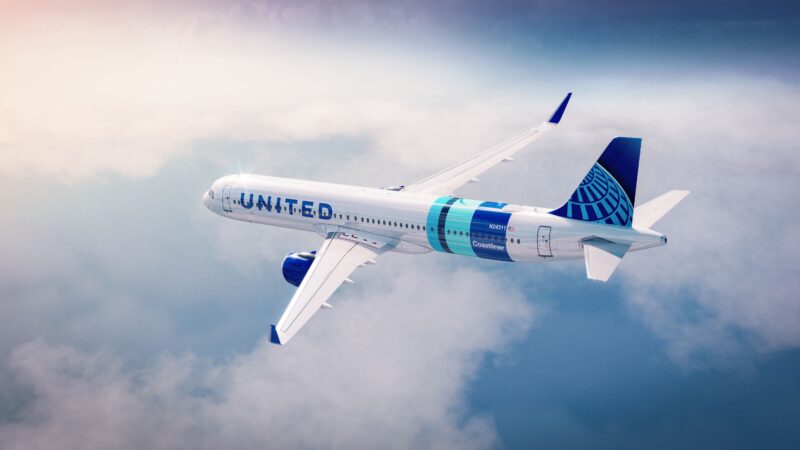
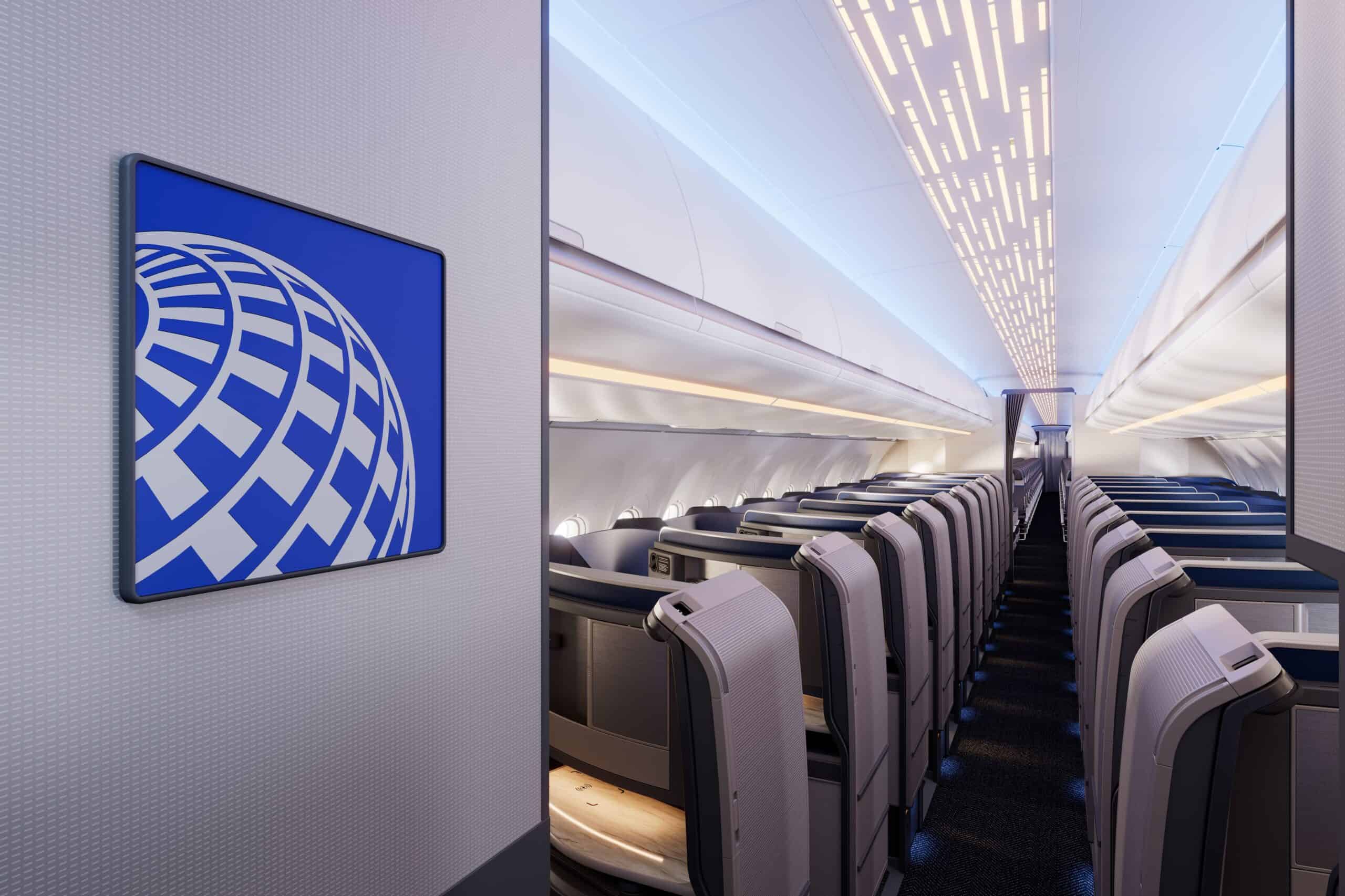
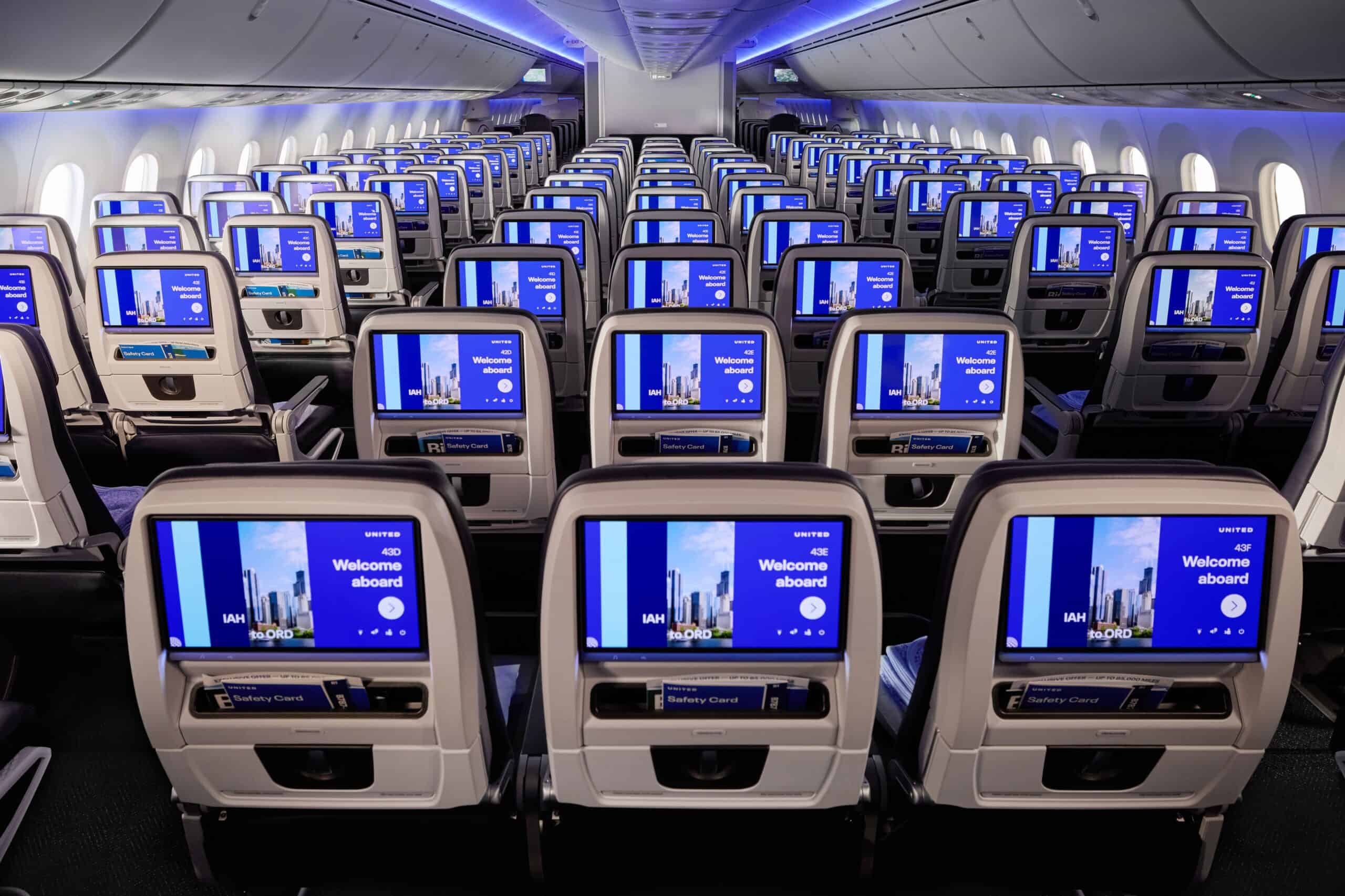
The entrance on United’s Airbus A321 “Coastliner” | IMAGE: United Airlines
Nearly every part of this announcement focuses on the same goal: more premium seats, more premium routes, and more premium options throughout the fleet.
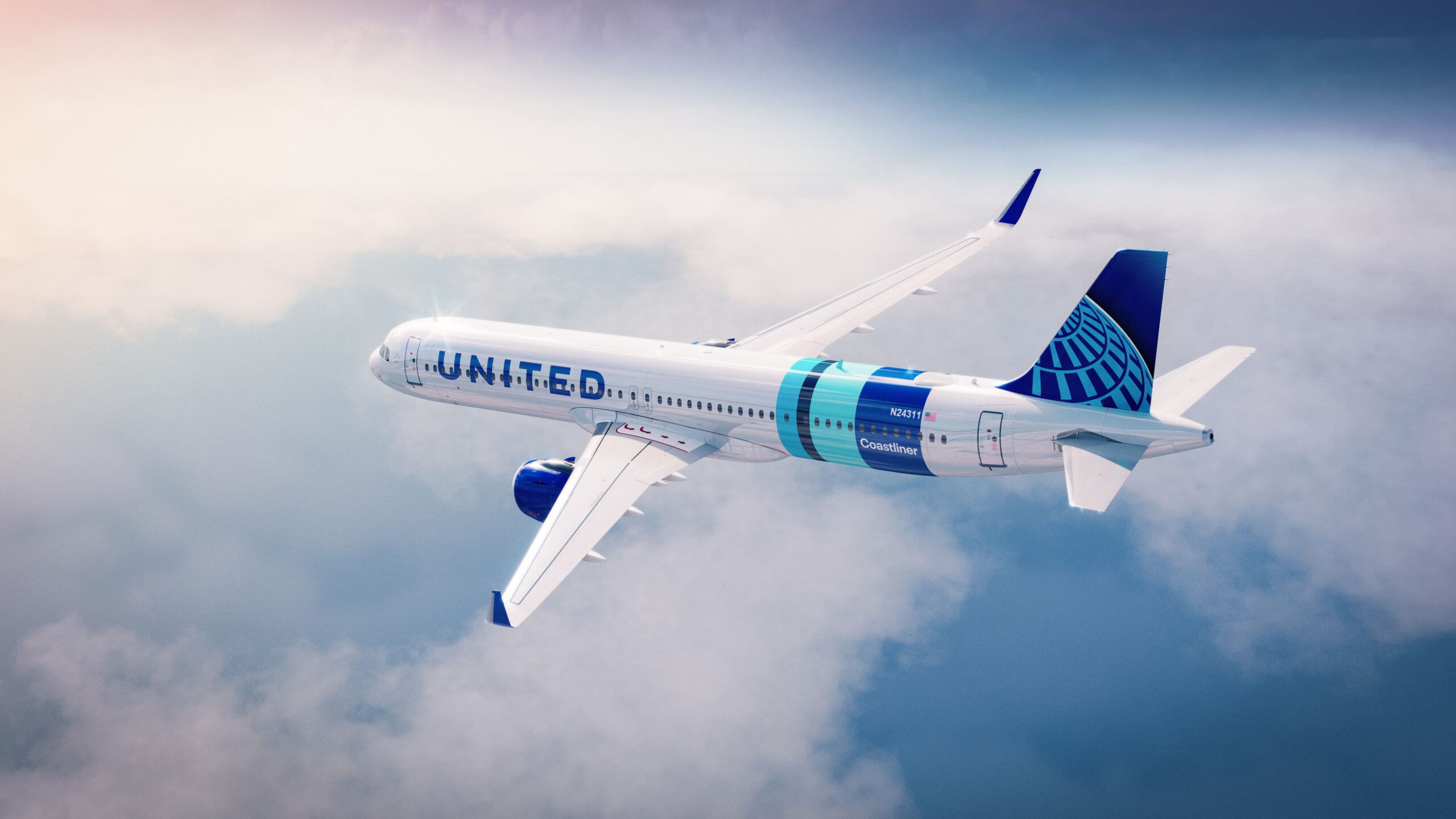
For example, consider the new Airbus A321neo “Coastliner.”
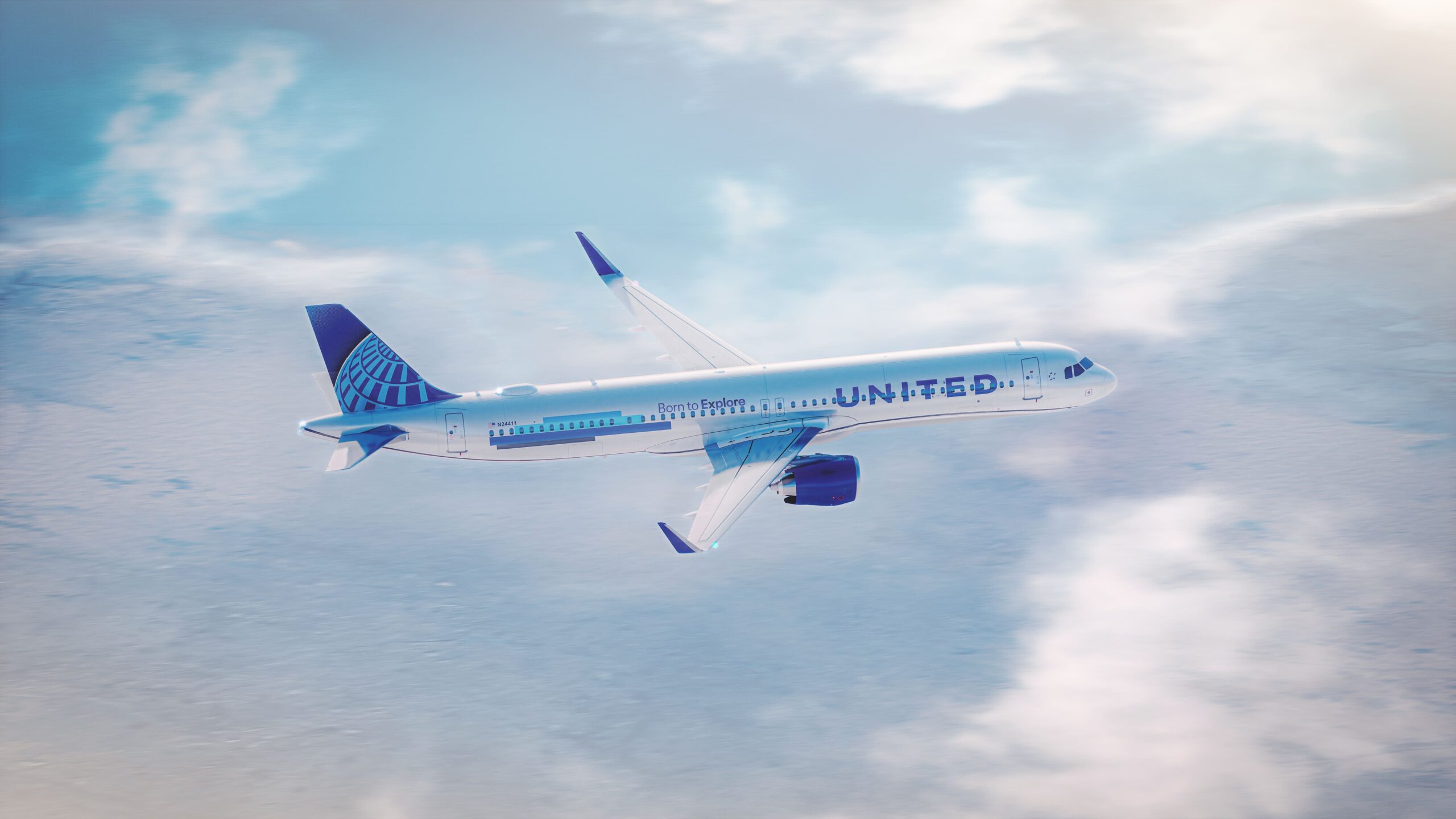
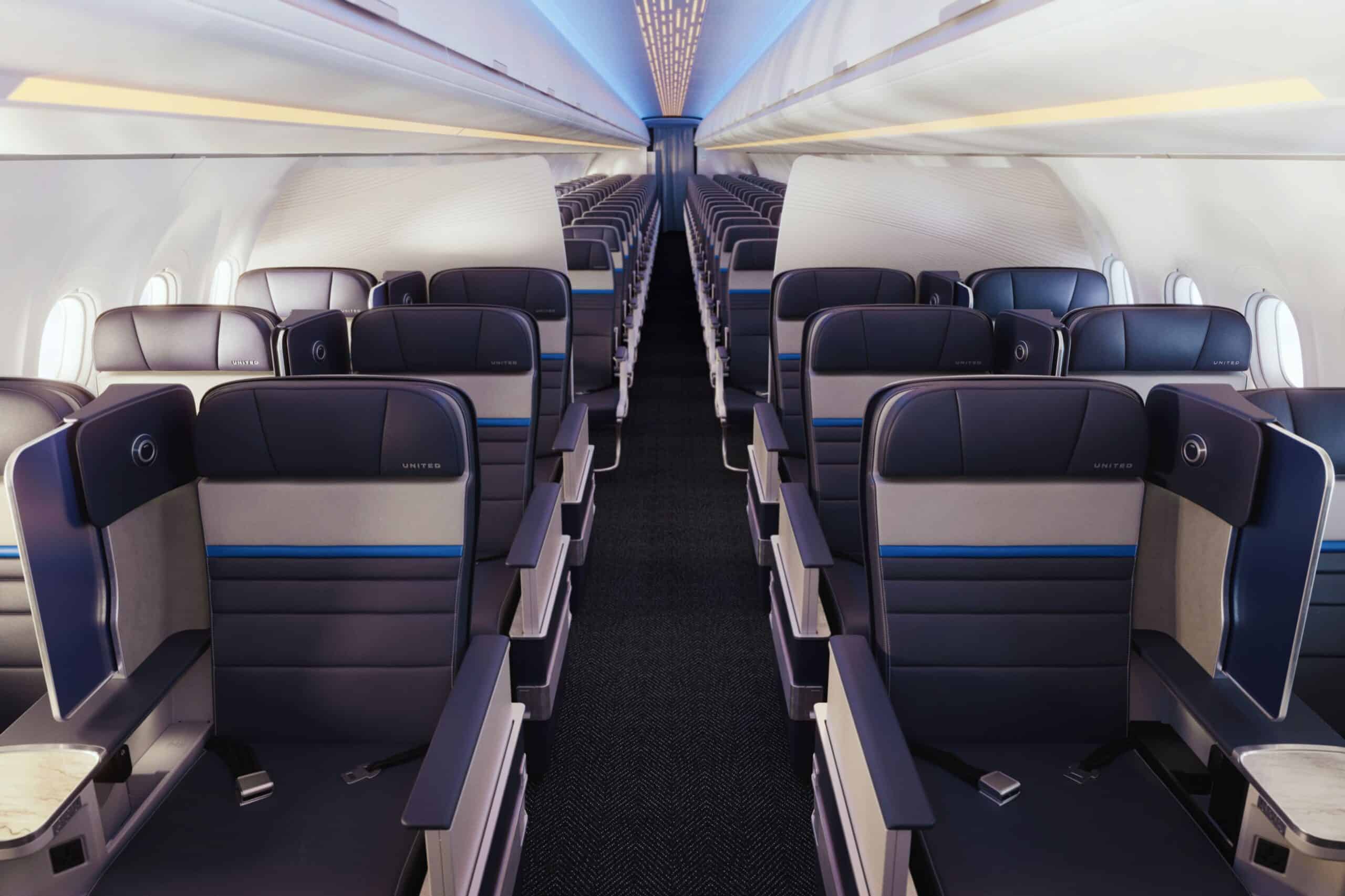
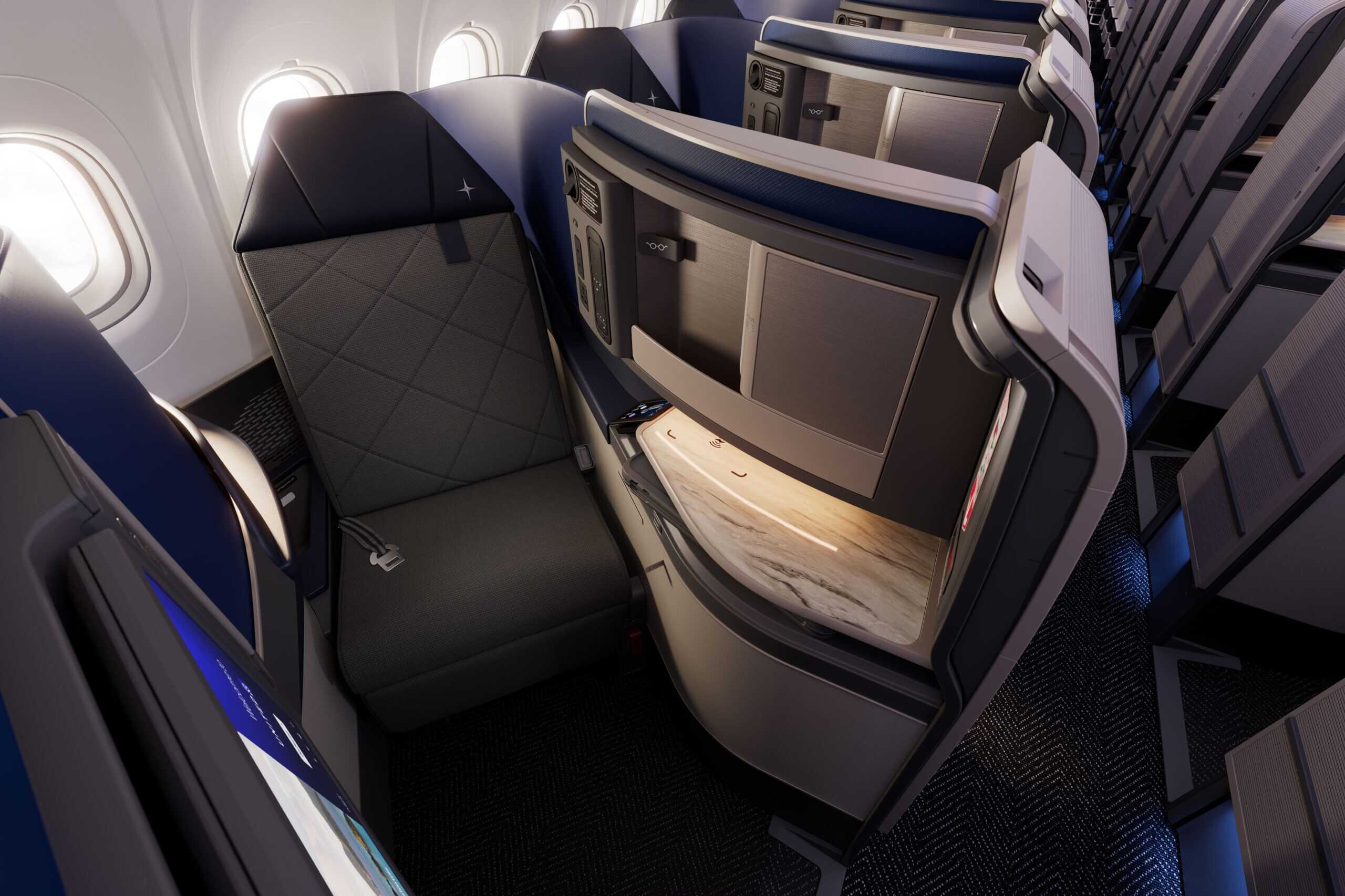
This narrowbody aircraft is usually used for domestic flights. However, United is equipping it with lie-flat Polaris business class seats, which are typically found on widebody planes flying long international routes.
Additionally, passengers flying Polaris on these transcontinental routes will have access to United’s Polaris lounges. This is the first time domestic travelers will have this benefit.
The Airbus A321XLR will begin replacing Boeing 757s on less-traveled international routes. These jets will have more premium seats than the planes they replace and are expected to open new destinations in Europe and South America.
Lie-flat seats in Polaris aboard United’s Boeing 787-9 Dreamliner | IMAGE: United Airlines
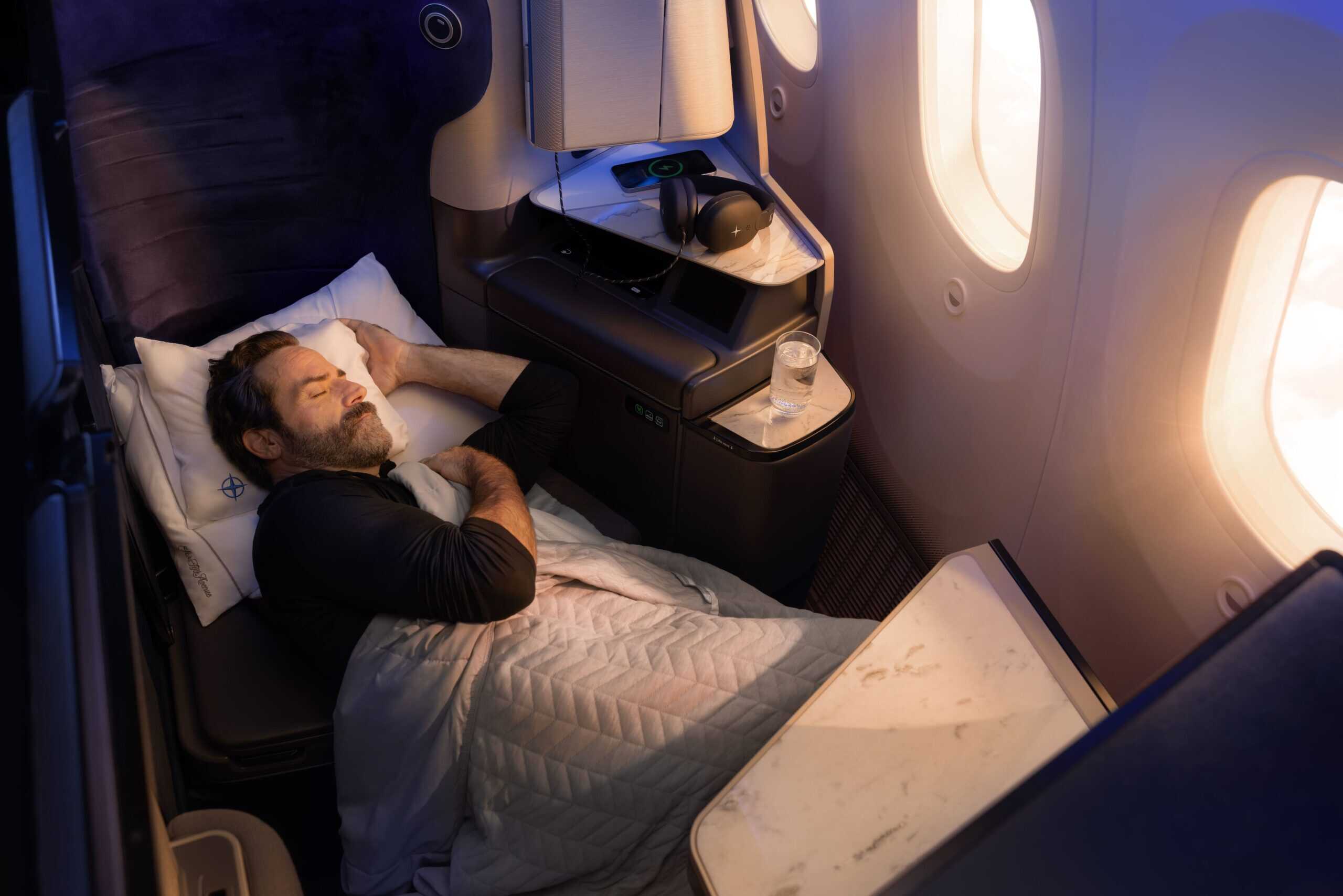
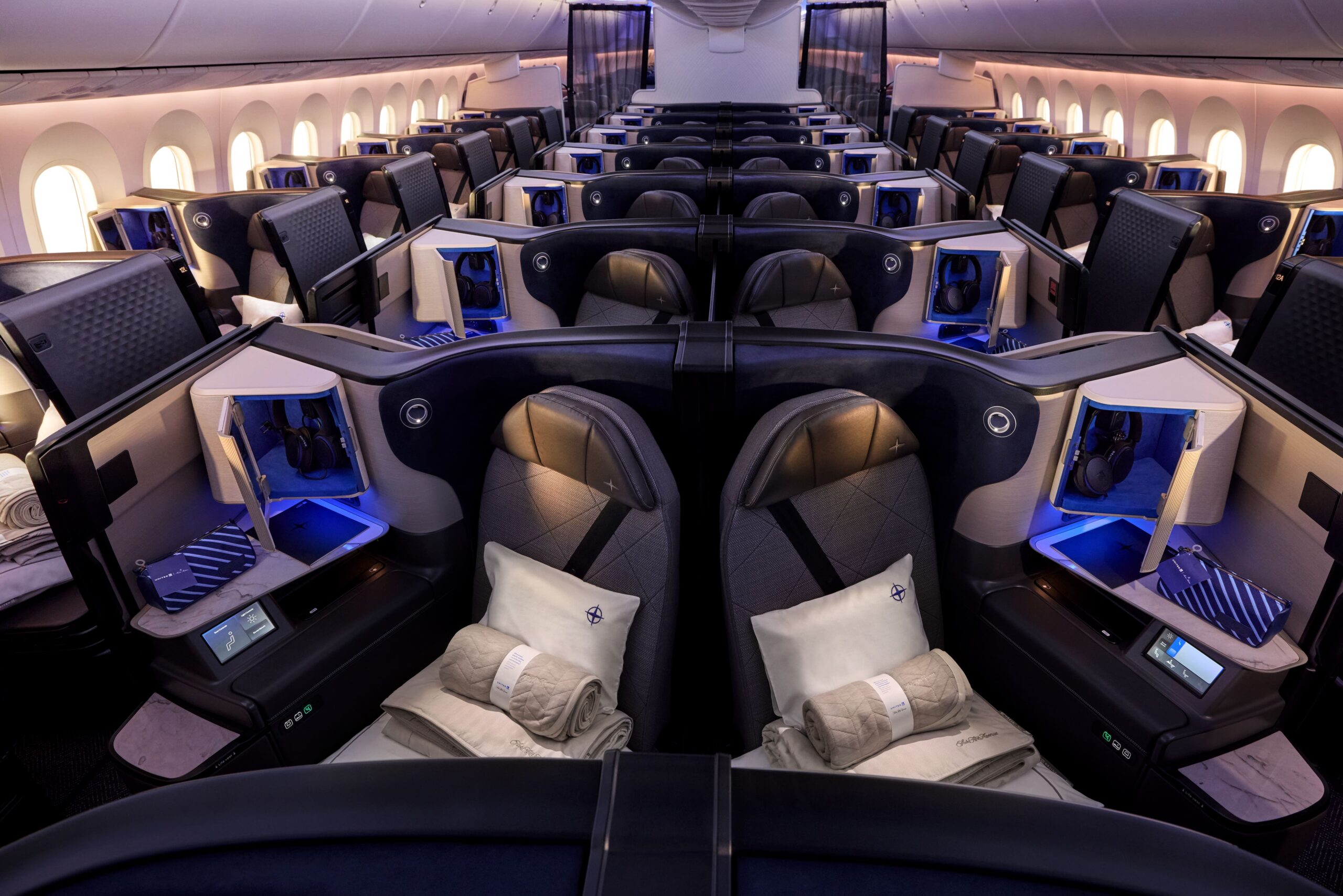
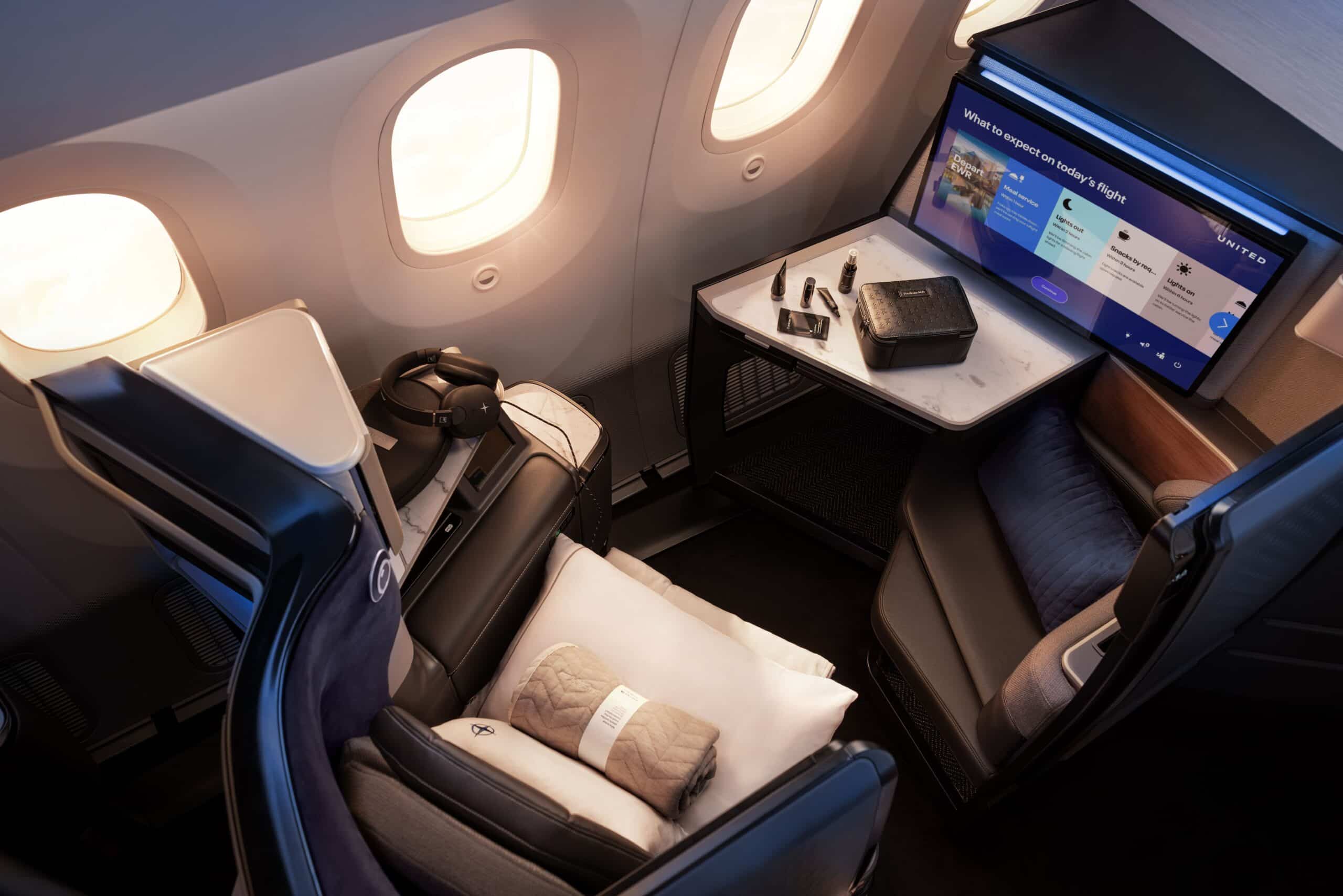
For long-haul flights, United is introducing its updated Boeing 787-9 with the new “Elevated” interior. The main feature is the Polaris Studio suite, which is larger, more private, and includes upgrades like bigger screens, wireless charging, and improved dining.
Put it all together, and you can see what United is trying to do. It is not just adding airplanes. It is trying to make the experience feel familiar and premium, no matter which aircraft you end up on.
As Chief Commercial Officer Andrew Nocella put it, the goal is to give customers “more premium amenity and seat choices” across the entire network.
Introducing the A321XLR and Coastliner A321neo, two new aircraft with the United Elevated interior both featuring:
✨ Lie-flat United Polaris business class seats with all-aisle access 💺 For the first time on a single-aisle plane — United Premium Plus (with a →retractable←… pic.twitter.com/5RdrnSPFqb
The CRJ-450: Transforming United’s Least Popular Aircraft
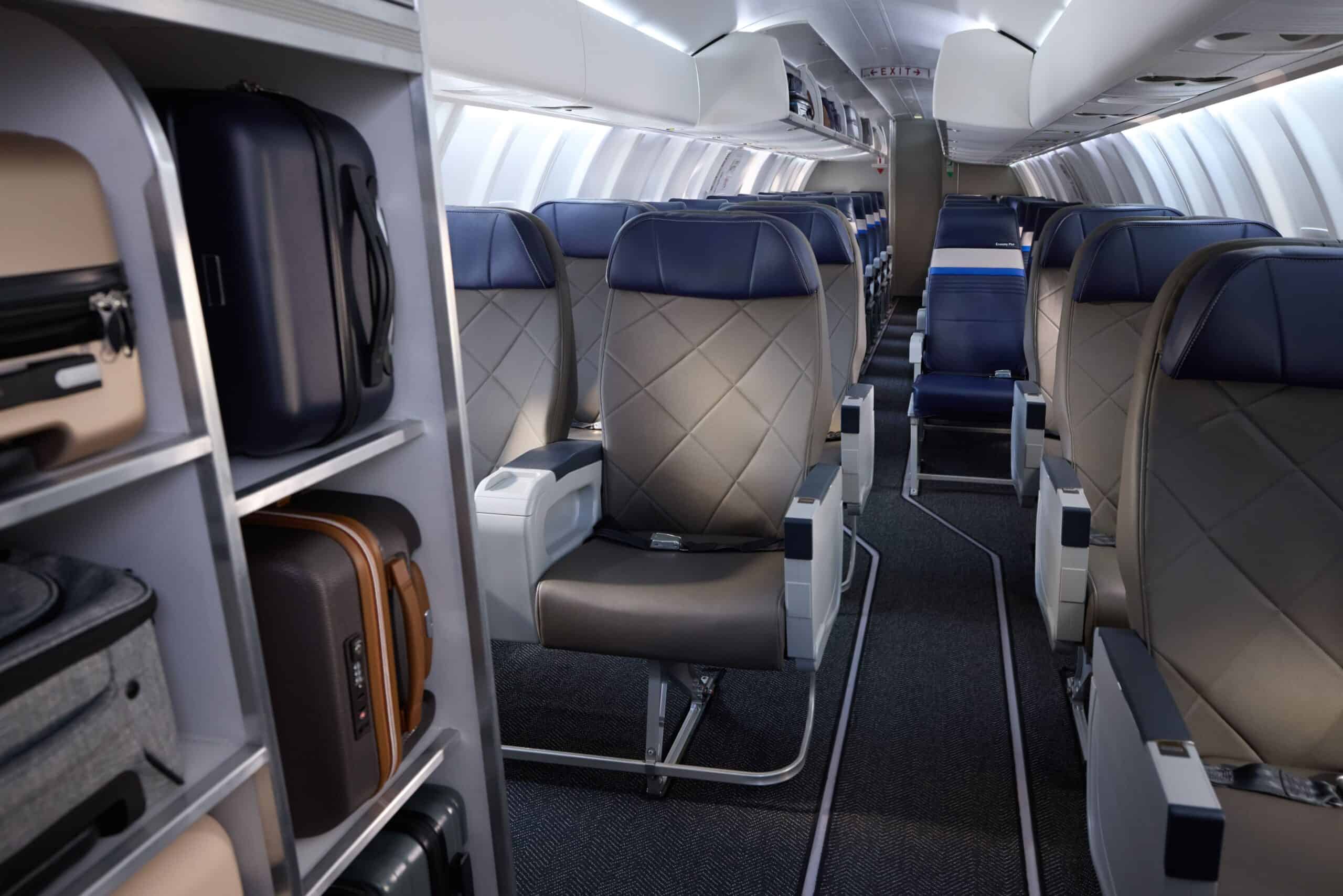
United Express CRJ-450 interior | IMAGE: United Airlines
And then there is the airplane that feels like it comes from a completely different conversation.
The CRJ-450.
Anyone who has flown on a CRJ-200 likely has an opinion about it. It has long been one of the least popular aircraft in US aviation, known for its cramped cabins, limited storage, and basic amenities. The “Nickelback of the skies,” if you will.
United is not retiring the CRJ-200. Instead, the airline is reimagining it. Before forming an opinion, it is worth seeing what changes United is making.
IMAGE: United Airlines
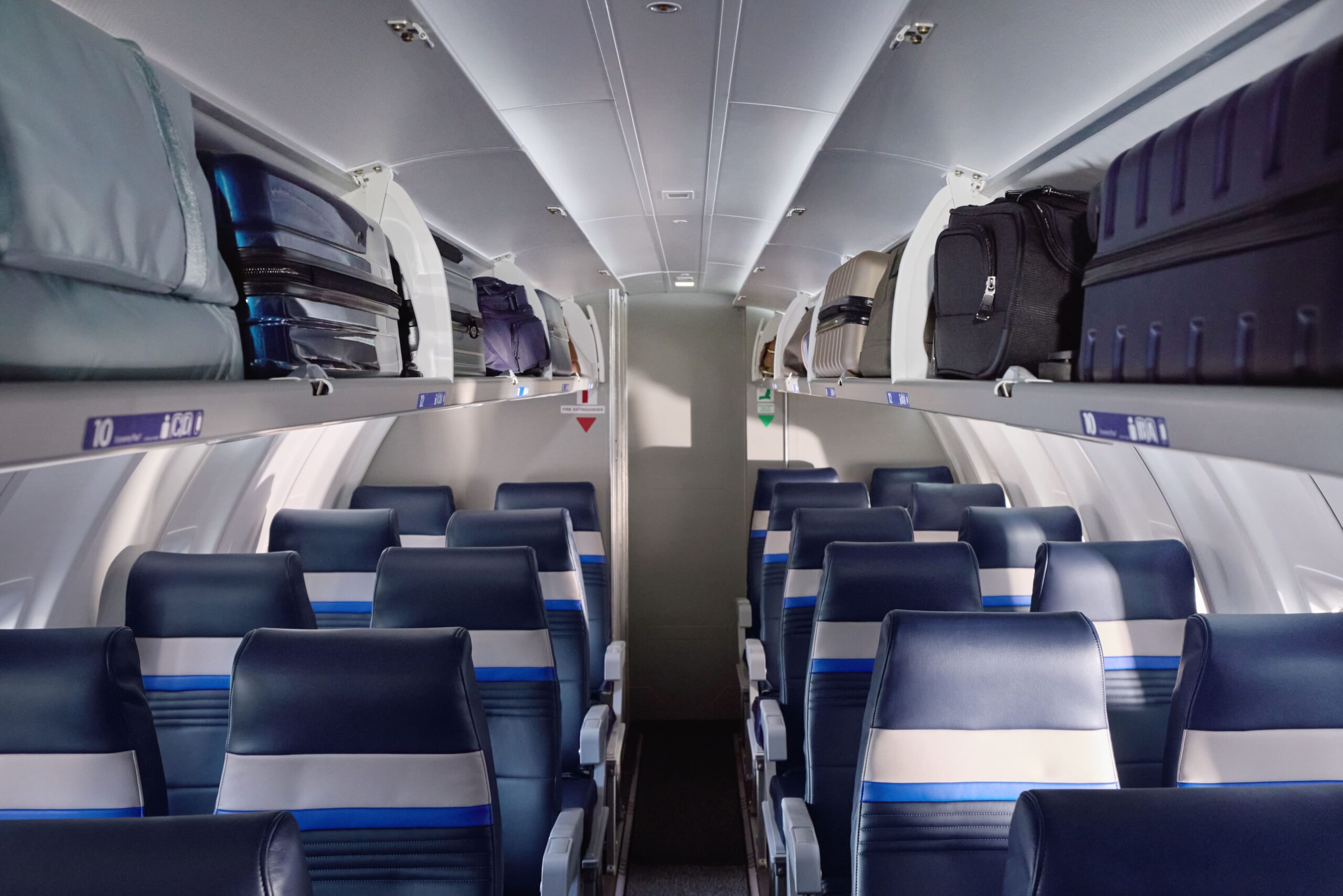
The CRJ-450 is a modified CRJ-200, with seating reduced from 50 to 41. Rather than fitting in more passengers, United is using the extra space to create a premium layout, which is uncommon for regional jets.
The aircraft will feature seven first-class seats and 34 economy seats, including extra-legroom Economy Plus.
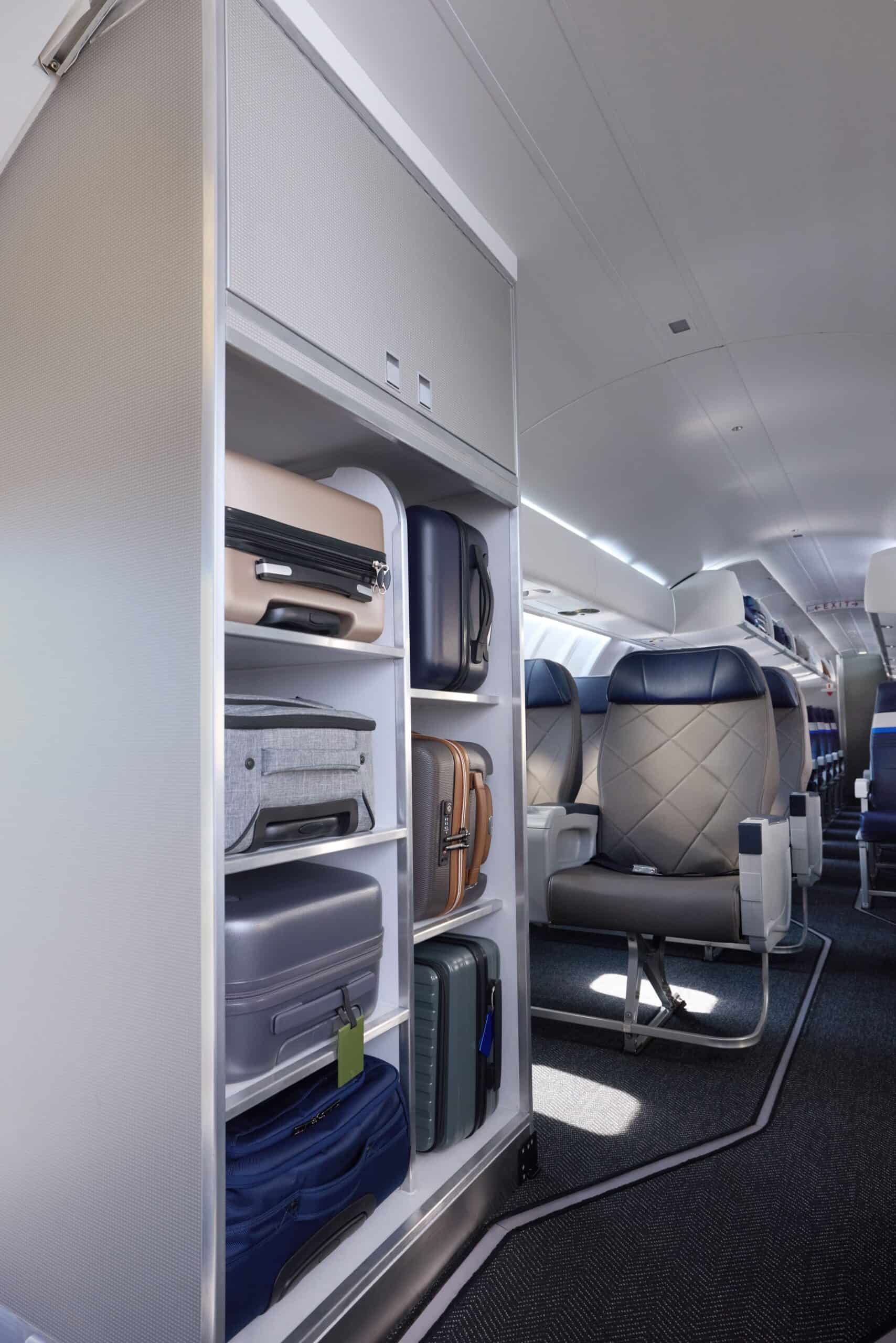
Up front, the overhead bins are gone entirely. In their place is a dedicated luggage closet, which opens up the cabin and eliminates one of the most frustrating parts of flying on smaller jets. In the back, larger bins mean more passengers can actually bring their carry-ons onboard.
These jets will also feature Starlink Wi-Fi, which is widely considered the fastest in-flight internet available. MileagePlus members will have access to this service for free.
SkyWest will operate these planes under the United Express brand, with service beginning this fall. Their main purpose is to connect smaller cities to United’s hubs at Chicago O’Hare (ORD) and Denver (DEN). United plans to have 50 of these aircraft in service by April 2028.
Why is United investing so much in a small regional jet?
Part of the answer comes down to pilot contract scope clauses. United has stricter limits than its competitors on how many larger regional jets it can operate. But smaller 50-seat aircraft are not capped the same way.
United CRJ-450 interior | IMAGE: United Airlines
So instead of walking away from those aircraft, United is redesigning them.
United is using the same approach it took with the CRJ-550, of which it expects to operate 120 by April 2028. The difference now is that this strategy is being applied to one of the least popular planes in the fleet.
Nocella summed up the intent clearly: “What we’ve done here, with the 450 and the 550, is to bring a consistent level of service across all of our aircraft.”
That said, this is not a magic transformation. The CRJ-450 is still, at its core, a CRJ-200. It is a significant upgrade, but it is not suddenly turning regional flying into a widebody experience.
But it certainly helps elevate the CRJ experience and gives it a more private-adjacent feel.
A New Option for Economy Travelers Who Want More Space
United Relax Row transforms a row in Economy to a couch | IMAGE: United Airlines
One of the more surprising additions in United’s announcement is not in business class or first class. It is in economy.
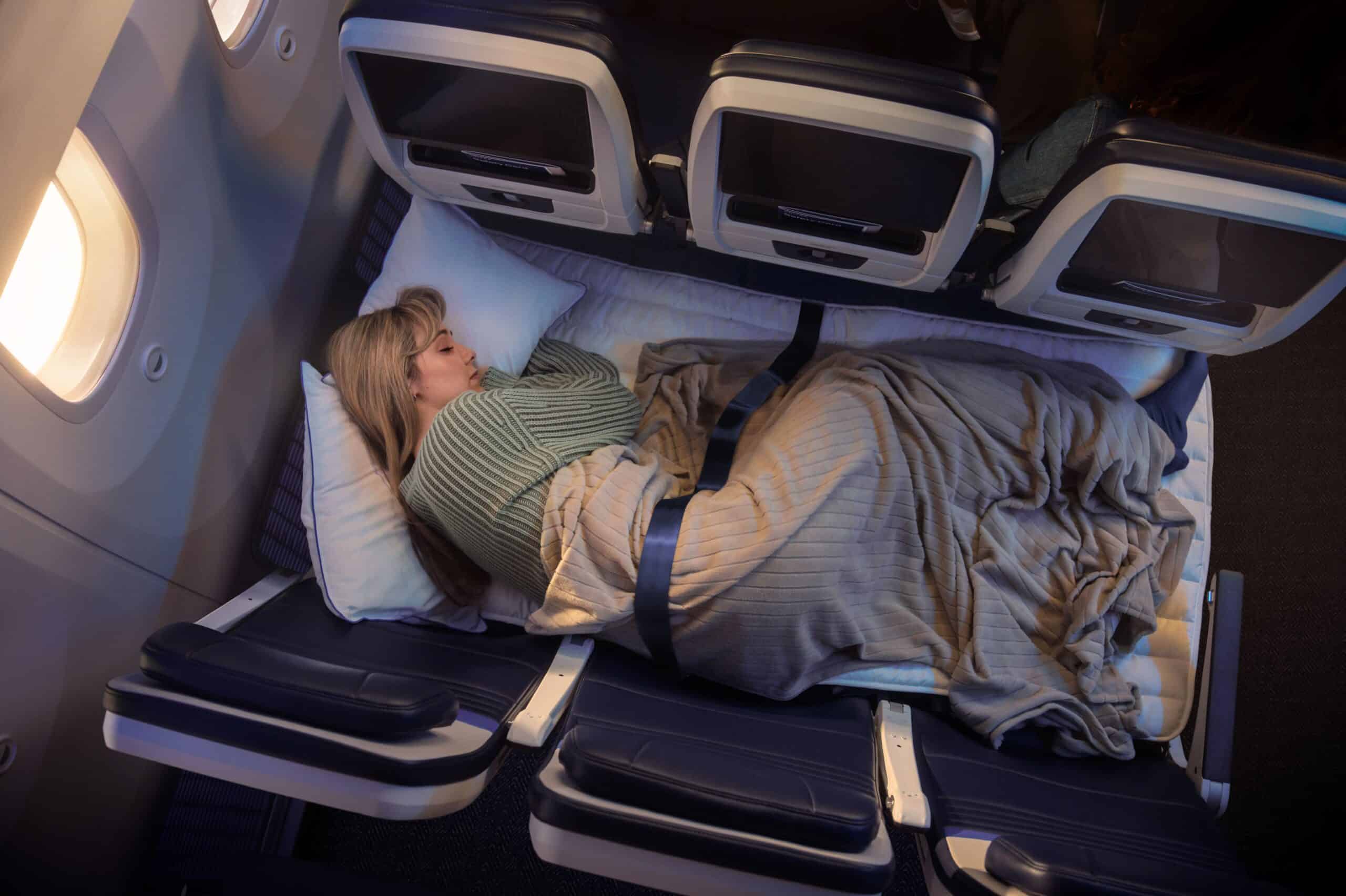
United is introducing what it calls the “United Relax Row,” a redesigned row of three economy seats that can convert into a lie-flat, couch-like space after takeoff. It is a concept aimed at long-haul travelers who want more room without stepping up to a premium cabin.
United Relax Row
The setup features adjustable leg rests that fold upward to create a flat surface, giving passengers the ability to stretch out, rest, or sleep in a way that is not typically possible in economy. The product is positioned for families with small children, couples, and even solo travelers who simply want more personal space on longer flights.
To go with that added space, United is bundling in a set of upgraded amenities. Passengers will receive a custom mattress pad, extra pillows, specially sized blankets, and, for families, a plush toy and children’s travel kit designed to make the experience more comfortable.
United Relax Row
United plans to roll out the Relax Row starting in 2027, with the goal of installing it on more than 200 Boeing 787 and 777 aircraft by 2030. Each aircraft could feature up to 12 of these sections, positioned between standard economy and Premium Plus.
According to Chief Commercial Officer Andrew Nocella, the idea is to extend the airline’s premium push beyond its traditional cabins. “Customers traveling in United Economy on long-haul flights deserve an option for more space and comfort,” he said, adding that United is currently the only North American airline offering a product like it.
The entire row is alllllll yours.
Welcome to United Relax Row, three adjacent United Economy seats with adjustable leg rests that can each be raised or lowered to create a cozy lie-flat space for stretching out…
The first deliveries from this expansion, including the A321neo Coastliner, A321XLR, and updated 787-9, will enter service in 2026. The CRJ-450 will join later this year under SkyWest, focusing on connecting smaller markets to two of United’s main hubs.
United expects most of these aircraft to be in service by 2028.
By the end of the decade, United will have a much more modern fleet, with more premium seats, better connections from smaller markets, and new onboard products on both mainline and regional planes.
It’s another signal of where the industry is heading, with airlines placing a greater emphasis on premium cabins and higher-value travelers.
A321XLR
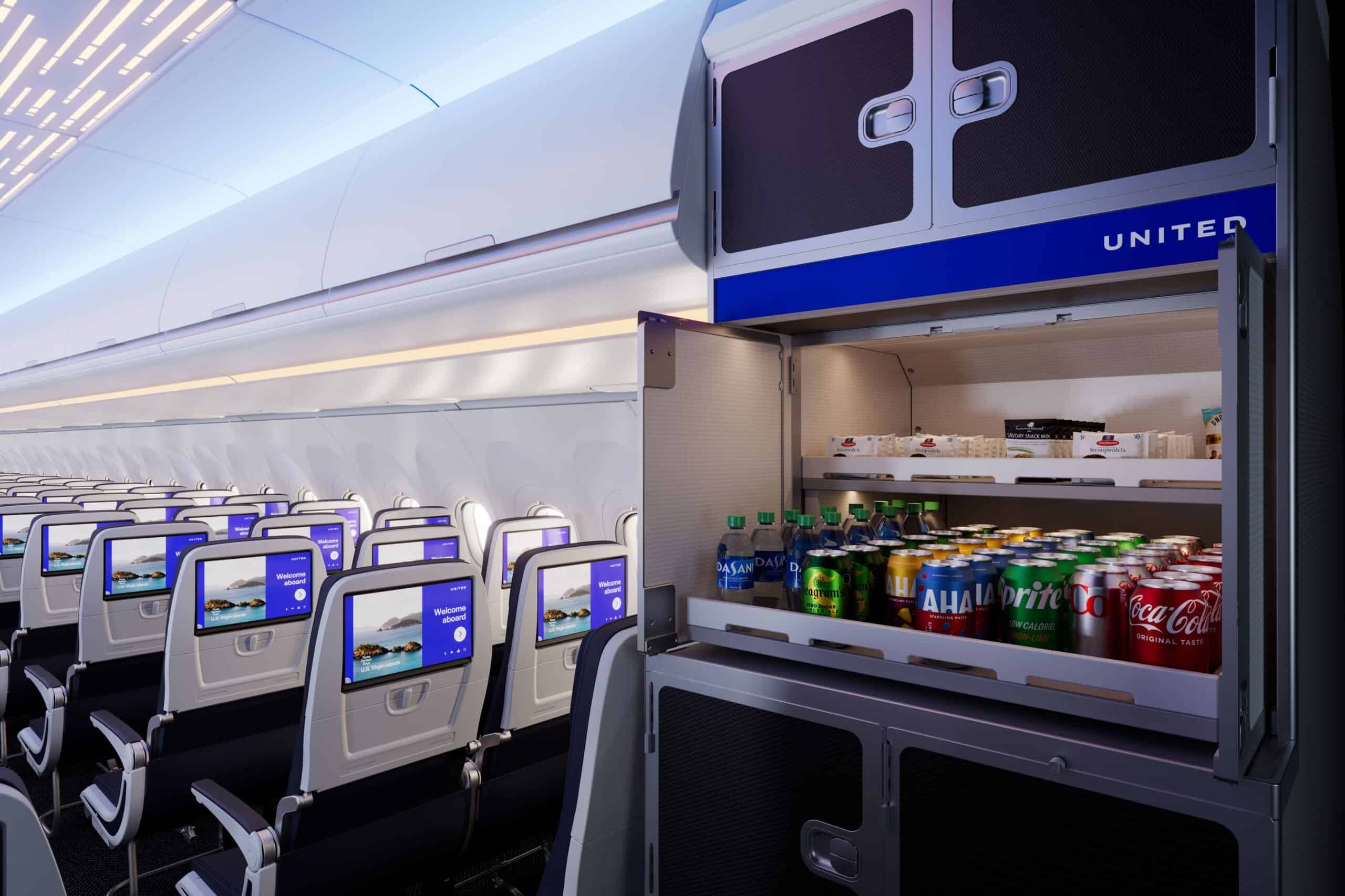
United Airbus A321XLR Polaris SeatingUnited A321XLR Polaris seats | IMAGE: United AIrlinesUnited Airbus A321XLR snack barUnited A321XLR Cabin
Boeing 787-9 Dreamliner
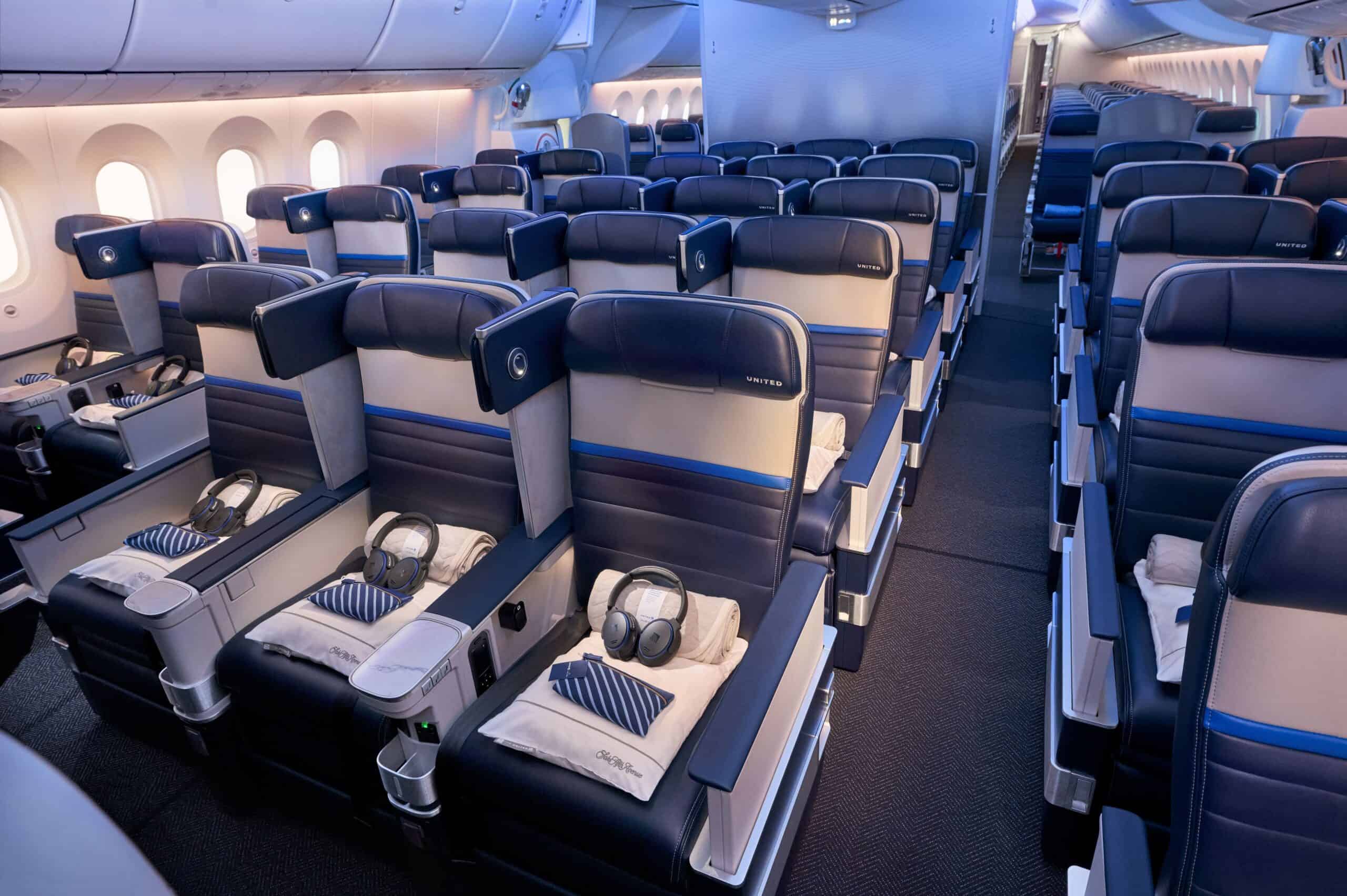
United 787-9 Elevated Polaris CabinUnited Boeing 787-9 Elevated Premium Plus cabinUnited’s Boeing 787 Elevated interior | IMAGE: United AirlinesUnited Boeing 787-9 Elevated Polaris Studio with amenitiesUnited Boeing 787-9 Elevated Polaris Studio Suite
A321 Coastliner
United A321 Coastliner PolarisIMAGE: United Airlines
If you’ve noticed dramatic headlines about ICE at airports starting Monday, 23 March 2026, you’re not the only one.
The news has been fast and sometimes confusing. So what’s really going on, and what isn’t?
Is ICE really being deployed to airports?
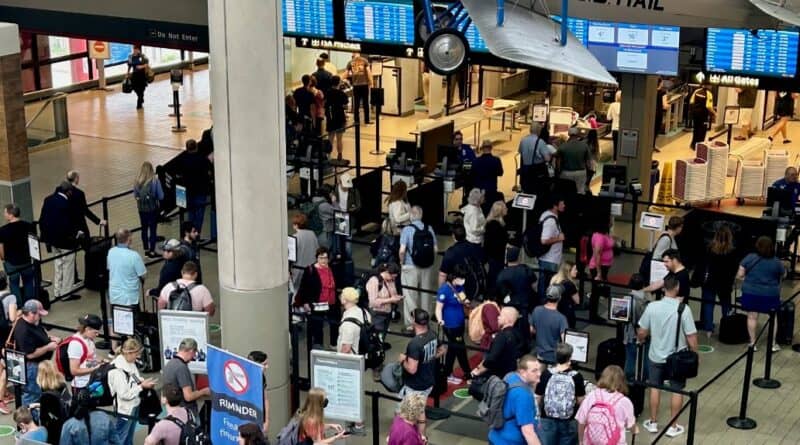
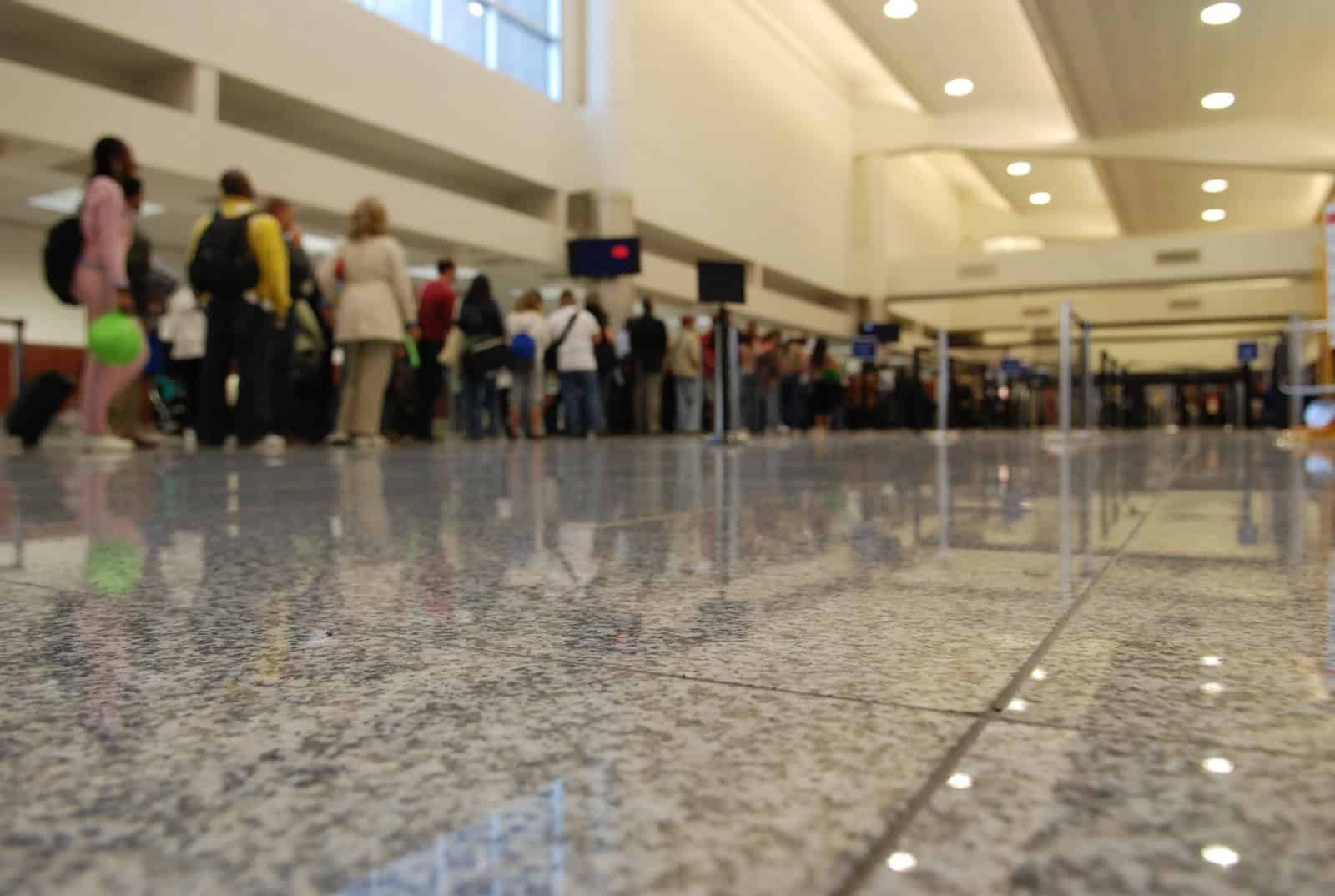
Yes, that’s confirmed. US Immigration and Customs Enforcement (ICE) agents will help at several US airports starting Monday morning, 23 March 2026. This is happening because the TSA is facing major staffing shortages due to the ongoing partial government shutdown. TSA officers haven’t been paid for weeks—some for over five weeks—which has led to more absences, over 400 resignations, and long security lines at busy airports during peak spring break travel.
Why is this happening right now?
This situation comes down to too much pressure on airport operations. Passenger numbers are rising, but TSA staff is stretched thin at a busy time. ICE agents are being brought in to help keep lines moving and reduce delays. President Donald Trump first mentioned the idea publicly and later confirmed it, saying it’s both a practical fix for the TSA shortage and part of a larger debate over federal funding.
Who is running this operation?
Officials say that Tom Homan, the White House border czar, is leading this effort and working with both ICE and TSA leaders. Homan called ICE agents a “force multiplier” and stressed that their job is to support TSA, not take over.
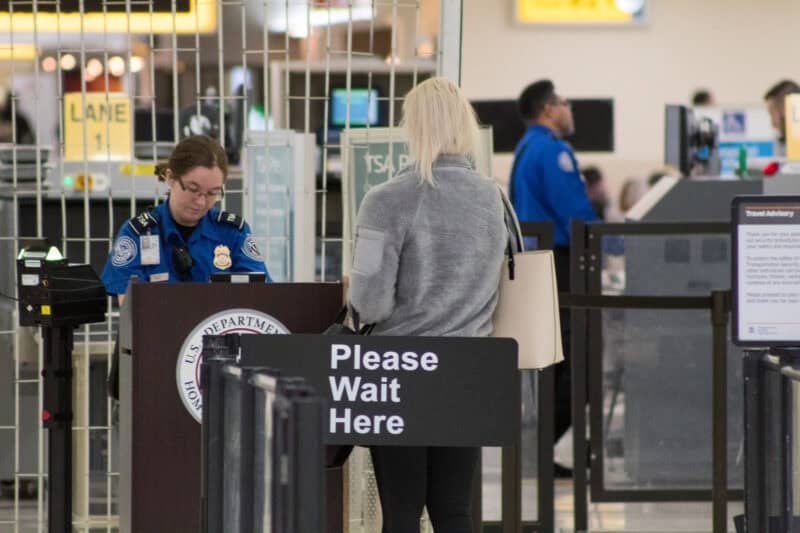
IMAGE: DHS/TSA
So what will ICE agents actually be doing at airports?
It’s important to clear up any confusion here. ICE agents are not taking over security screening. They won’t be running X-ray machines, checking passengers, or inspecting bags. Officials have made that clear.
Instead, ICE agents will help with support tasks like watching exits, managing passenger flow, guiding travelers, and helping control crowds in busy areas. This lets TSA officers focus on their main job of screening, where they’re most needed.
Will ICE be checking documents or IDs?
They might check documents or IDs in a limited way, but they won’t replace TSA’s screening process. ICE’s role is expected to stay focused on support, not main security duties.
Does this mean increased immigration enforcement at airports?
This is a common misunderstanding. ICE already works at airports as part of its usual duties, which include investigations and enforcement actions involving people in the United States illegally. Officials have said this new deployment doesn’t change that mission. Those activities will go on as usual, along with the new support tasks.
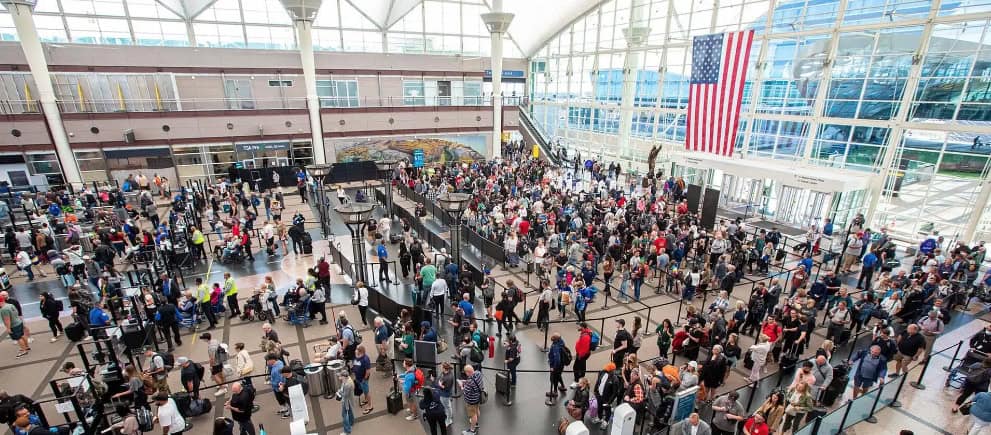
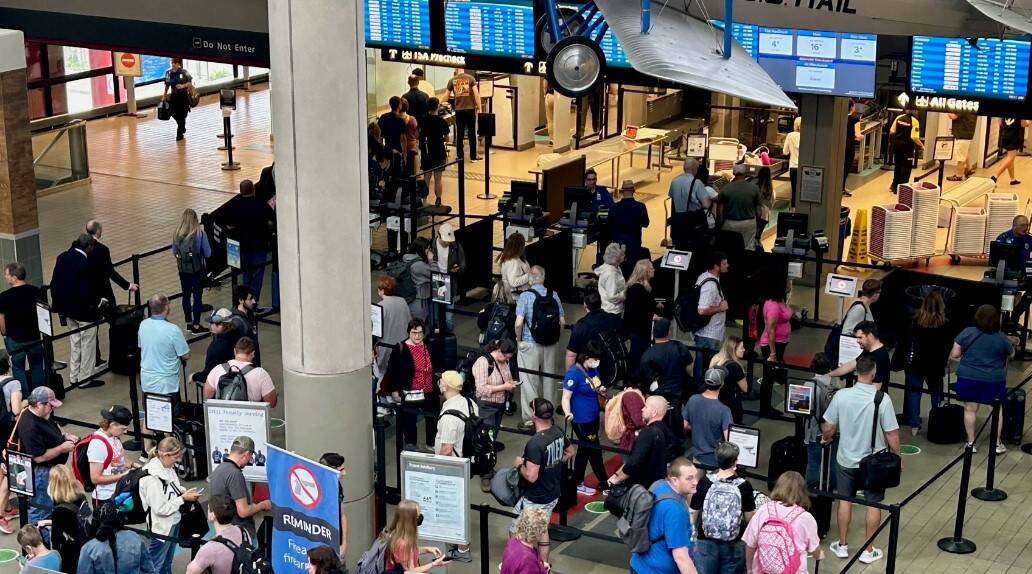
IMAGE: Denver International Airport Facebook
Which airports are involved?
The list of airports is still being worked out. Right now, there isn’t a full public list of which airports will receive ICE support or how many agents will be sent. Major airports with the longest waits are being prioritized, and one report says Hartsfield-Jackson Atlanta International Airport (ATL) will likely be among the first.
How long will this last?
There isn’t a set end date. Officials say this is a temporary measure, but it could last “for as long as it takes” to fix the funding problems and get TSA staffing back to normal.
So what’s the reality here?
ICE is not taking over airport security. TSA is still in charge of screening, and that isn’t changing. The only change is who is helping with the overall operation.
ICE at airports may sound alarming (and the media does a great job at fanning the flames), but the full picture tells a different story. This is not a takeover of airport security or a fundamental shift in how passengers are screened. It is a temporary, targeted response to a staffing shortfall at a critical moment for air travel. TSA remains in charge of screening operations, while ICE steps in to support the system. In a situation shaped as much by politics as logistics, the reality is far more measured than the headlines suggest.
One year after its reveal, the F-47 is no longer just a far-flung concept. Here’s how America’s next air superiority fighter is progressing.
On 21 March 2025, the US Air Force introduced the F-47 to the world. It was presented as a generational leap forward, the centerpiece of a new era in air dominance, and the long-term successor to the F-22 Raptor.
Back then, the aircraft seemed almost out of reach. It was a sixth-generation fighter known more for its promises than for any details that were shared.
A year later, things are clearer. The F-47 has moved beyond being just an idea and is now an active program.
From Announcement to Momentum
Shown is a graphical artist rendering of the Next Generation Air Dominance (NGAD) Platform. The rendering highlights the Air Force’s sixth-generation fighter, the F-47. The NGAD Platform will bring lethal, next-generation technologies to ensure air superiority for the Joint Force in any conflict. | IMAGE: U.S. Air Force
Over the past year, the F-47 has gone from being just a headline to becoming a real piece of hardware.
After Boeing won the Next Generation Air Dominance (NGAD) contract in March 2025, the program moved into the Engineering and Manufacturing Development (EMD) phase. The first airframes are already being built at Boeing’s St. Louis facility. From the start, the Air Force has used digital engineering and advanced design tools to accelerate development and lower risks early on.
Importantly, the program is still meeting its early goals. The first flight is still planned for 2028, showing both ambition and confidence in how things are going.
For a sixth-generation fighter, having this much stability so early in development is impressive.
A Fighter Designed for a Different Fight
IMAGE: USAF
Even though most details about the F-47 are still classified, the Air Force has shared a clear idea of what the aircraft is designed to accomplish.
The platform is expected to exceed Mach 2, operate at ranges greater than 1,000 nautical miles, and serve as the central node in a larger “family of systems.”
This capability is what sets the F-47 apart from any other asset to date.
Instead of flying solo, the F-47 will team up with Collaborative Combat Aircraft – semi-autonomous drones that help it reach farther, stay safer, and spread out its abilities across the battlefield. This means the F-47 will act less like a lone fighter and more like a command center within a bigger, connected force.
This approach aligns with how the Air Force sees future conflicts…not as separate battles, but as coordinated operations across different domains, where sharing information, maintaining range, and working together are key to success.
Still, the aircraft itself is mostly hidden from view. Aside from a few official images, the Air Force has shared little about what it will finally look like. This kind of secrecy is normal for such an important program and is to be expected.
Could this be the F-47?
A screenshot from a video Pratt & Whitney released showing what some believe is the F-47. | IMAGE: Pratt & Whitney
In the past year, there have been no official glimpses of what the F-47 may look like apart from the renderings released in March 2025. However, some believe a video may actually show the new fighter.
In February 2026, a short video from Pratt & Whitney showed a tailless, delta-winged stealth aircraft that many think may be connected to the program. The short 30-second clip features Pratt & Whitney’s XA103 engine. The XA103 is a next-gen adaptive cycle engine for the Boeing F-47, producing up to 40,000 pounds of thrust while improving efficiency and thermal management. Its three-stream design lets it switch between fuel-efficient cruising and high-thrust combat modes.
However, the XA103 is not what catches the eye in this clip. It is the jet it powers.
The video shown below is still publicly available, so it is unlikely to have been posted in error.
The only question is: what airplane is in the video? It’s still unclear if this image shows the real design or something else.
And that ambiguity may be the point.
Today’s defense programs work in a world where being too visible can be risky. Controlling what information is shared, and when, is part of the overall plan. For those watching, it means some questions will stay unanswered for now.
Is this the underside of the F-47? | IMAGE: Pratt & Whitney
The Timeline Ahead and the Bridge to the Future
As the program moves forward, the focus is shifting from what the F-47 will become to how it will actually be put into service.
The first flight is still planned for 2028. The F-47 is expected to enter service in the mid-2030s, which shows both how complex the project is and how carefully the Air Force is moving forward.
Speaking at the McAleese Defense Programs Conference in March 2026, Rep. Rob Wittman (R-VA), Chairman of the House Armed Services Tactical Air and Land Forces Subcommittee, emphasized the importance of sustaining current capabilities as the next generation comes online.
“The question then becomes, what do we do in the meantime?” Wittman said. “We have to maintain a fleet of F-18s, and then we have to maintain the F-22. That’s the only way we create that bridge to the sixth-generation aircraft.”
The word ‘bridge’ carries a lot of meaning here.
The Air Force is continuing to invest in current platforms with the steady development of the F-47, creating a layered approach to air dominance that prioritizes readiness today while building capability for tomorrow.
Instead of hurrying the F-47 into service, the goal is to deliver a system that is fully integrated, flexible, and able to adapt as needs change.
One Year In, A Program Taking Shape
The Pratt & Whitney XA103 is a next-gen adaptive cycle engine for the Boeing F-47, producing up to 40,000 pounds of thrust with improved efficiency and thermal management. Its three-stream design lets it switch between fuel-efficient cruising and high-thrust combat modes | IMAGE: Pratt & Whitney
A year after its debut, the F-47 is starting to become more real.
The program is moving forward as planned. Major milestones are still on schedule. The Air Force is using lessons from past projects to guide how the F-47 is designed, built, and maintained.
The careful pace reflects the scale of the effort. The F-47 represents a new chapter in air dominance, one built around integration, range, and adaptability.
After one year, the direction is clear. The groundwork is being set, the system is coming together, and the next era of air dominance is getting closer. While much is still hidden, the future is starting to take shape.
United flight cuts begin as jet fuel prices spike. FAA restrictions at Chicago O’Hare are making the busy summer schedule even tighter.
United Airlines is the first to take action.
This week, United announced it will cut about 5 percent of its planned flights over the next few months due to rising jet fuel prices following Operation Epic Fury and the growing conflict with Iran. The move is a direct response to higher costs and shows how the industry is having to adapt, even as some airlines continue to grow.
This is happening at a particularly complicated moment for Chicago O’Hare (ORD).
In recent months, both United and American Airlines have been aggressively expanding at the airport, adding flights, increasing frequencies, and reconnecting a wide range of markets to one of the country’s most important hubs. That includes cities like Kalamazoo (AZO), Erie (ERI), Lincoln (LNK), Lansing (LAN), Tri-Cities (TRI), Champaign-Urbana (CMI), Bloomington-Normal (BMI), Allentown (ABE), and Columbia (CAE).
Now, that expansion is facing two constraints that are converging simultaneously.
At ORD, the Federal Aviation Administration (FAA) plans to limit flights this summer because airlines scheduled more flights than the airport can realistically handle. At the same time, rapidly rising fuel prices are making airlines rethink which flights make financial sense.
Each of these challenges would be manageable on its own.
Together, they are forcing airlines to adjust their plans.
A Tactical Pullback in a High-Fuel Cost Environment
IMAGE: United Airlines
United CEO Scott Kirby described the cuts as a short-term response to higher costs, not a change in the airline’s long-term plans.
Jet fuel prices have more than doubled in the last three weeks. If prices stay this high, Kirby said it could mean an additional $11 billion in yearly fuel costs. For context, United’s best year made less than $5 billion in profit.
Meanwhile, demand is still strong. Kirby said United had its ten biggest revenue weeks ever in the past ten weeks.
This situation is key for United right now. Planes are full, but higher fuel costs are cutting into profits.
“We’re ready, we have a plan, and we’re going to continue executing that plan,” Kirby said in a recent update.
We’re ready, we have a plan, and we’re going to continue executing that plan.
Scott Kirby | United Airlines CEO
United is cutting flights that can’t cover these higher costs right now. The airline will reduce about 3 percent of off-peak flights, such as red-eyes and flights on less busy days like Tuesdays and Wednesdays. It has also suspended service to Tel Aviv (TLV) and Dubai (DXB) and cut about 1% of capacity at Chicago O’Hare.
Altogether, this means about 5 percent of planned flights will be cut for now, but Kirby expects to bring back the full schedule by fall 2026.
Kirby stressed that these cuts are targeted. United is not laying off staff or delaying new planes. The airline still plans to take delivery of about 120 new aircraft this year, including 20 Boeing 787s, and over 100 more by 2028.
United is planning for oil prices to possibly reach $175 per barrel and stay above $100 until 2027.
Demand Is Strong. Margins Are Under Pressure.
American Airlines at Chicago O’Hare International Airport (ORD) on 28 December 2018 | IMAGE: Miguel Ángel Sanz on Unsplash
This slowdown is not because of weak demand.
Recent bookings show that travel demand is still strong, even with higher fares. But airlines have thin profit margins, and fuel is still one of their biggest costs.
When fuel prices rise this fast, even strong demand can’t make up for the higher costs on every route.
That’s why airlines start by cutting less profitable flights first.
United is the first major US carrier to announce major flight cuts due to high fuel prices. Other airlines have said they might do the same if prices stay high, and some international airlines have already changed schedules or raised fares.
The airline industry is reaching a point where just growing isn’t enough. Even with strong demand, making a profit is now the main challenge.
Chicago O’Hare: Expansion Meets Operational Limits
Aerial view of O’Hare | IMAGE: Chicago O’Hare International Airport (ORD)
While United is cutting flights, Chicago O’Hare – United’s largest hub – is also facing its own capacity constraints.
The FAA has stepped in after airlines scheduled more than 3,080 daily operations on peak days for the summer 2026 season. The agency has indicated that approximately 2,800 daily operations is a more sustainable level given current runway, terminal, and air traffic control capacity.
That gap prompted the FAA to initiate a schedule reduction process to prevent widespread delays and operational disruption.
This creates a second layer of pressure.
A United Boeing 737 MAX lands at ORD as an American Eagle CRJ-700 and a United Express Embraer 175 await takeoff | IMAGE: Chicago O’Hare International Airport (ORD)
Both United and American have been rapidly expanding at ORD. United has been pushing toward roughly 780 daily departures, while American has been building toward more than 500. The combined schedules would have made this summer one of the busiest in the airport’s history.
Now, airlines have to change those plans just weeks after making them.
For United, part of its announced 5 percent capacity reduction is already tied directly to anticipated cuts at O’Hare as the FAA process moves forward.
This means United is not just reacting to higher fuel costs. It also has to adjust because O’Hare can’t handle all the growth it had planned.
When airlines cut flights, the impact goes beyond just one city or market.
United says it will mainly cut less profitable flights, especially those during off-peak times or on routes that make less money. This is a common strategy when costs go up.
This situation is more complicated because several problems are happening at once. Fuel prices are rising fast, and it’s not clear how things will turn out. FAA limits are cutting available flights at a major hub, and airlines have just expanded their schedules, especially at O’Hare.
That combination requires adjustment across the network.
Some routes may see reduced frequencies. Others could be delayed or modified seasonally. In some cases, newly announced service may not launch exactly as originally planned.
This is particularly relevant for recently added or expanded routes at ORD, including the recent service announcements to small and mid-size communities across the US.
There has been no indication that any of these specific routes are being cut.
But flights to these types of communities are usually more affected by cost changes and schedule adjustments. When airlines update their schedules, these types of routes are often among the first to see changes in frequency or timing.
These routes are not the reason for the cuts.
But these routes may be where the effects show up first. For some small and mid-sized communities, these new flights were a lifeline for airports that have struggled since COVID-era service reductions.
The Bottom Line
IMAGE: Chicago O’Hare International Airport (ORD)
United says these flight cuts are temporary and plans to bring back the full schedule by fall 2026.
United’s long-term plans haven’t changed. The airline is still getting new planes and investing in its hubs and infrastructure.
But the short-term situation is changing.
Fuel prices are going up quickly. Limits at big hubs like Chicago O’Hare are slowing growth. Airlines now have to rethink how many flights they can run with today’s costs.
As a result, airlines are making adjustments.
Just a few weeks ago, the focus at ORD was on growth, with more flights, more destinations, and better connections.
Now, the focus is on finding balance.
How airlines manage this balance in the next few months will affect not just the summer 2026 schedule, but also the future of network planning for US airlines.
Long before he became an action legend and internet folklore, Chuck Norris wore Air Force blue. His roots in military life, his unwavering support for America’s troops, and his love of aviation make his passing one of the tough ones.
The Legend Before the Legend
Norris died on 19 March 2026, at the age of 86, with his family announcing the news the following day on social media.
For most people, his name brings to mind the roundhouse kick, the squint, the beard, his legendary toughness, and the lasting image of Walker, Texas Ranger. In the coming days, you’ll see and hear a lot about that side of him.
But there’s another side of Chuck Norris to remember today. Before Hollywood turned him into a legend, the United States Air Force helped shape the man he became.
That part of his story deserves more than a passing obituary mention. Norris joined the Air Force in 1958 after high school and served as an Air Policeman (now called Security Forces). He was stationed at Osan Air Base in South Korea and later at March Air Force Base in California (now known as March Air Reserve Base), leaving the service in 1962 as an Airman First Class (A1C).
Those were the Cold War years, with real flightlines, real aircraft, real responsibilities, and real military stakes. He might not have flown fighters or bombers, but he was part of the team that kept them safe and mission-ready.
And in true Chuck Norris fashion, even that chapter feels bigger in hindsight. The man the internet later decided could land on Runway 37 actually did spend part of his formative years on Air Force bases, surrounded by the smell of jet fuel, the discipline of military routine, and the seriousness of national defense.
Many of you reading this understand. Wearing the uniform shapes you. Working around aircraft, security, and mission readiness leaves a lasting impression. For Norris, it helped create one of the most famous tough-guy images in American pop culture.
The Air Force Years That Changed Everything
USAF Airman Chuck Norris | IMAGE: Chuck Norris
If you want to understand Chuck Norris (his real name was Carlos Ray Norris), you have to start in Korea. While serving in the Air Force in South Korea, he began training in martial arts, first learning judo and then Tang Soo Do. That experience changed his life. Without Osan, there’s no championship run, no Bruce Lee connection, no action-movie stardom, and no Chuck Norris as we knew him.
Norris later said his military service gave him discipline, character, and self-confidence – the same traits that became the foundation of his career and public image.
That’s part of what made him so interesting. Chuck Norris never seemed like a manufactured action star. Even as his image grew larger than life, there was always something real underneath. The Air Force gave him that foundation, structure, and purpose. It showed him the path he’d follow for the rest of his life. From an aviation point of view, his story began not on a soundstage, but on real air bases during the Cold War when American airpower helped hold the world together.
After leaving the Air Force, Norris became a martial arts champion, instructor, actor, and eventually a global icon. Many of his movies featured aviation or military themes, such as The Delta Force and the Missing in Action films, which resonated with patriotic audiences. These roles helped build his image as a defender and fighter, someone who stood with service members at the sharp end of danger. For many Americans, Chuck Norris didn’t just play heroes…he was one. He played the kind of hero people wanted to believe still existed.
He also loved flying as a civilian. Over the years, several reports described Norris as a licensed pilot who owned private planes and flew single-engine aircraft, even around his Texas ranch. That part of his story just makes sense. Of course Chuck Norris flew. Of course he enjoyed the freedom, independence, and self-reliance of general aviation. It fits his character, like the aviation version of walking into a room and somehow already owning it.
I wouldn’t blame any AvGeek for smiling at that thought today.
He Never Stopped Showing Up for the Troops
Chuck Norris visits the 386th Air Expeditionary Wing in 2006 | AF photo/ Staff Sgt. Ian Carrier
Many celebrities support the troops from afar. Chuck Norris actually showed up, time and again. Official military reports document his visits with deployed service members, including the 386th Air Expeditionary Wing in Southwest Asia and Marines in Iraq.
A 2006 Air Force photo shows him with members of the 386th Expeditionary Security Forces Squadron, a fitting full-circle moment for someone who once wore the same uniform.
Chuck Norris, center, visits airmen of the Air Force’s 386th Air Expeditionary Wing security forces in Iraq, 2007 | IMAGE: Air Force Staff Sgt. Tia Schroeder
For him, supporting the troops wasn’t just symbolic. It was personal. Indeed, his younger brother, Wieland Norris, was killed in Vietnam in 1970 while serving with the 101st Airborne Division. Chuck Norris dedicated the Missing in Action trilogy to his brother’s memory, and that loss stayed with him. That’s why his support for troops and veterans always felt genuine. There was real weight behind it: real family, real grief, real loyalty.
Norris was named ‘Veteran of the Year’ in 2001 | USAF Photo by Lou Hernandez) +
Over the years, Norris became a strong advocate for veterans. He worked with the Department of Veterans Affairs to help hospitalized veterans and used his platform to raise awareness about the challenges many face when returning to civilian life. In 2001, he was named Veteran of the Year, and in 2007, Marine Corps Commandant Gen. James T. Conway made him an Honorary Marine.
He later took part in Marine Corps outreach, including the “Protect What You’ve Earned” (PYWE) campaign. These honors showed his long-term commitment, not just his on-screen image.
General James Conway, 34th Commandant of the Marine Corps, and Mr. Chuck Norris pose for a photo with the Honorary Marine citation presented to Mr. Norris during a dinner held in his honor on March 28, 2007. The dinner was held at the Home of the Commandants located at Marine Barracks, Washington, D.C.(Official USMC Photo by Sgt. Christopher M. Tirado)
He also spoke up for military aviation. In 2015, Norris publicly supported efforts to save the A-10 Thunderbolt II from retirement, praising its role in protecting troops on the ground. Of all the planes he could have supported, it was the Warthog—the tough, reliable aircraft built to stay in the fight. The A-10 is often called the Chuck Norris of airplanes, and that comparison might actually sell both of them short.
People will remember the jokes, and that’s okay. They’ll remember that Chuck Norris never asked for clearances, only stated his intentions. They’ll remember he was the only man who could land on Runway 37, and that hijackers squawk 7400 when he’s on board. But beneath all the fun was something real: an Air Force veteran, a proud supporter of the military, and a man who never forgot where his discipline and duty came from.
Chuck Norris Has Flown West at 86: Remembering the Air Force Veteran, Troop Champion, and Aviation Tough Guy 108
For our readers, that’s the Chuck Norris worth honoring today. Not just the action star, the meme, or the punchline. He was the veteran shaped by air bases and military service, the troop advocate who always showed up, and the aviation-loving tough guy who felt at home around American airpower. Chuck Norris has flown west. And somewhere beyond the horizon, you know the tower didn’t clear him to land.
He told them how it would be.
IMAGE: USMCActor Chuck Norris places corporal chevrons on U.S. Marine Corps Cpl. John Wright during a promotion ceremony at Camp Taqaddum in the Al Anbar province of Iraq Nov. 2, 2006. Norris is in Iraq on a United Service Organizations (USO) tour. Wright is an intelligence analyst with 1st Marine Logistics Group (Forward), which is deployed with I Marine Expeditionary Force (Forward) in support of Operation Iraqi Freedom. DoD photo by Sgt. Alicia J. Brito, U.S. Marine Corps. (Released)Chuck Norris Has Flown West at 86: Remembering the Air Force Veteran, Troop Champion, and Aviation Tough Guy 109IMAGE: USMC
FAA helicopter aircraft separation rule follows DCA review, tightening safety in mixed helicopter and airplane operations.
The Federal Aviation Administration (FAA) has issued a General Notice (GENOT) that ends the use of visual separation between helicopters and airplanes near busy airports. The goal of the new policy is to improve safety in complex and congested airspace.
Transportation Secretary Sean P. Duffy and FAA Administrator Bryan Bedford announced the new rule on 18 March 2026. Air traffic controllers now have to use radar to keep aircraft apart, instead of depending on pilots to “see and avoid” in busy airspace. This change applies to Class B and Class C airspace, as well as Terminal Radar Service Areas (TRSA), where helicopters and airplanes often cross paths.
Under the new rules, controllers must keep set distances between helicopters and other aircraft when their flight paths cross. This means air traffic control, not pilots, is now in charge of managing the spacing.
From FAR 91.113 to Radar-Based Separation
Chart indicating Helicopter Routes 2 and 4 near DCA | IMAGE: FAA
The FAA’s decision directly addresses the limitations of visual separation, as defined in 14 CFR § 91.113, which requires pilots to “see and avoid” other aircraft, regardless of the flight rules. While this rule is still important, especially in general aviation and VFR flights, the agency now admits it is not enough to keep busy, complex airspace safe.
Visual separation depends a lot on human judgment. Pilots have to keep looking for other aircraft, judge their movement, and follow right-of-way rules as they fly. But the FAA’s year-long safety review showed this approach can fail, especially when things like speed, workload, lighting, and crowded airspace come together.
“Following the mid-air collision near Ronald Reagan Washington National Airport, we looked at similar operations across the national airspace,” Bedford said. “We identified an overreliance on pilot ‘see and avoid’ operations that contribute to safety events involving helicopters and airplanes.”
In practice, the GENOT does not get rid of “see and avoid” as a rule. Instead, it stops ATC from using it to separate aircraft in places where radar is available and works better.
Data-Driven Shift Following DCA Review
A new FAA helicopter aircraft separation rule aims to prevent another tragedy such as the midair collision near DCA in January 2025 | IMAGE: USCG
The new rule is based on a detailed FAA safety review that began after the January 2025 midair collision between an Army Black Hawk helicopter and an American Airlines CRJ-700 that was on short final to Runway 33 at DCA. The review used cross-traffic data, incident reports, and advanced tools like AI to study mixed-use airspace across the National Airspace System.
“Using innovative data analysis, the safety team at the FAA has identified the need for enhanced protocols at all airports across the National Airspace System,” Duffy said.
The FAA also cited recent incidents to support the change. On 27 February 2026, American Airlines Flight 1657 had to make an abrupt turn to avoid a police helicopter while on final to San Antonio International Airport (SAT). Another close call occurred on 2 March 2026, at Hollywood Burbank Airport, when a Beechcraft 99 and a helicopter entered the same approach corridor before the helicopter maneuvered away.
Although these situations ended safely, they show the risks of depending only on visual spotting in crowded airspace.
‘See and Avoid’ Still Vital to Safe Operations
US Army Sikorsky UH-60L Black Hawk 00-26860 | IMAGE: By usertim1683 – https://www.flickr.com/photos/9282811@N08/45940855941/, CC BY-SA 2.0, https://commons.wikimedia.org/w/index.php?curid=169034347
For helicopter operators, the main change will be in procedures. Flights that used to get quick clearances through terminal airspace may now be rerouted or delayed as controllers follow radar-based separation rules.
The FAA said that priority flights, like medical evacuations and law enforcement missions, will still get fast handling. In these cases, airplane traffic may be delayed or rearranged to let urgent helicopter flights through.
The GENOT is part of a bigger change that began after the DCA accident. In the past year, the FAA has gradually limited helicopter flights near Washington National, stopped mixed traffic in important corridors, updated helicopter routes, and required some operators to use ADS-B Out. The agency has also started using tools like Time Based Flow Management (TBFM) to better organize traffic in congested areas.
This new policy changes how aircraft are kept apart in the busiest parts of the system. “See and avoid” is still an important rule, but in today’s crowded airspace, the FAA says it can’t be the main way to prevent accidents anymore.
Now, keeping aircraft separated will rely mainly on radar, where controllers have the best view of the airspace.
The idea of ‘government shutdown airport closures’ is no longer just a theory. Federal officials are now warning that smaller airports across the country could actually close as the funding lapse pushes TSA staffing to the breaking point.
Caught in the middle of the governmental dysfunction are tens of thousands of Transportation Security Officers, still reporting for duty, still securing the traveling public, and still doing it without pay.
A Warning the Industry Can’t Ignore
IMAGE: DHS/TSA
It was not framed as a possibility. It was framed as a reality that may be approaching fast.
In a 17 March interview on Fox & Friends, Acting Deputy TSA Administrator Adam Stahl issued one of the most direct warnings yet about the ongoing Department of Homeland Security (DHS) funding lapse.
“As the weeks continue, if this continues, it’s not hyperbole to suggest that we may have to quite literally shut down airports, particularly smaller ones, if callout rates go up,” Stahl said. “A lot of those officers can’t afford to come in.”
It’s not hyperbole to suggest that we may have to quite literally shut down airports.
Adam Stahl | Acting Deputy TSA Administrator
To understand the gravity of that warning, it helps to step back and look at the bigger picture.
The partial government shutdown began on 14 February 2026, after DHS funding expired amid a congressional stalemate over immigration policy and broader agency funding. More than 260,000 federal workers have been affected. Roughly 50,000 TSA officers, deemed essential, have been required to continue working without pay for over a month.
They received only a partial paycheck on 28 February and missed a full paycheck on 14 March.
This is the third time in under a year that TSA workers have gone without pay because of a shutdown.
And the consequences are no longer theoretical.
The Strain Is Showing at Checkpoints Nationwide
Government shutdown airport closures are a real possibility due to the partial government shutdown, which is causing long lines at checkpoints all over the country | IMAGE: TSA
For years, TSA staffing has been a careful balancing act. Now, that balance is falling apart.
BREAKING🚨: HOUSTON AIRPORT CHAOS: Now a giant DISASTER SHELTER SLEEPOVER 😱
Wild footage shows emergency cots lined up across terminal floors as insane TSA lines stretch for HOURS—causing mass missed flights & stranding passengers overnight.
Normally, absentee rates are below 2%, but during the shutdown, they have jumped to over 10% nationwide. At big airports like Atlanta, New York JFK, and Houston, call-out rates have stayed around 20% since mid-February. Recently, Houston saw rates over 50%, and New Orleans and Atlanta have gone above 30%.
Meanwhile, between 300 and 366 TSA officers have left the agency since the shutdown started, according to DHS and Transportation Secretary Sean Duffy.
Anyone who has been to an airport lately can see the impact. Security lines stretch for hours. Passengers are told to arrive four or even five hours early. Some checkpoints are closed because there aren’t enough staff. Airports are doing everything they can to keep things running.
TSA tried to ease the strain by sending extra officers from its National Deployment Force to the hardest-hit airports. But now, that backup is used up.
“We’re doing absolutely everything we can,” Stahl said. “We have a national deployment office force, and we’ve fully depleted that. So, at this point, we’re fully stretched, and so frankly, there’s not much else we can do.”
The system has reached its limit and is running out of options.
And smaller airports, which often operate with minimal staffing to begin with, are the most vulnerable. Without enough officers to safely screen passengers, closure is not a dramatic scenario. It becomes the only option left.
The Human Cost Behind the Crisis
IMAGE: DHS
It’s easy to focus on the numbers, but it’s much harder to ignore what those numbers mean for real people.
🚨 Massive TSA lines are reportedly “snaking all the way out to the parking garage” at some airports, with travelers warned wait times could reach three hours or more amid the DHS funding standoff.pic.twitter.com/8byDQCSOJ4
Union leaders have warned that many TSA officers have exhausted all available financial options. Reports have surfaced of agents facing eviction notices, vehicle repossessions, empty refrigerators, and overdrawn bank accounts. Some have taken extreme measures just to stay afloat, including selling blood plasma. Others have been forced to sleep in their cars or struggle to afford care for their children.
These are the people responsible for securing the nation’s airports.
They are showing up to work without pay. They are standing at checkpoints, scanning bags, and watching over the traveling public while their own financial stability collapses.
And yes, some are calling out. Some are leaving.
That should not be surprising. It should be expected.
But here is the uncomfortable truth the aviation industry is now grappling with.
In what world is this acceptable?
Airport security is not optional. It is not a secondary function that can be paused or stretched indefinitely. It is a foundational layer of the entire aviation system. Without it, nothing moves.
Airlines have already begun sounding the alarm. With spring break travel underway and a projected 171 million passengers expected to fly in the coming weeks, executives are warning that the system is nearing a breaking point. House Speaker Mike Johnson acknowledged that airports are “reaching a breaking point,” while airline CEOs have called for immediate action to get TSA workers paid.
And yet, the stalemate continues as both sides of the aisle frustratingly play politics with the lives of those they have been elected to represent.
Democrats have pushed for partial funding measures that exclude certain DHS components without policy changes. Republicans have pushed for a full appropriations bill. Negotiations remain unresolved.
Meanwhile, the people holding the system together are working for free.
Where This Goes Next
IMAGE: Denver International Airport Facebook
As of now, no airports have been closed due to TSA staffing shortages.
But the warning has been issued. Clearly. Publicly. Without ambiguity.
“It’s not hyperbole.”
That is not language the aviation world hears often from senior officials. And it should not be taken lightly.
If absentee rates continue to climb, if more officers walk away, if relief does not come soon, the idea of small airport closures will move from warning to reality.
And when that happens, it will not just be a TSA problem. It will be an aviation problem. A national problem.
Because once you start shutting down parts of the system, the ripple effects do not stay small.
Southern Airways Flight 49 became one of aviation history’s most extraordinary hijackings, sending a DC-9 across multiple countries during a tense 30-hour saga.
Demonstrating its ruggedness, endurance, and reliability, the McDonnell-Douglas DC-9, one of the original short-range, low-capacity twinjets along with the Sud-Aviation SE.210 Caravelle and the British Aircraft Corporation BAC-111, was subjected to a more than 30-hour hijacking that took it from Canada to Cuba and numerous US cities in between.
Captain William Haas
First Officer Harold Johnson
Piloted by Captain William R. Haas and First Officer Harold Johnson, the aircraft was commandeered on a multi-sector flight from Memphis to Miami with intermediate stops in Birmingham, Montgomery, and Orlando on 10 November 1972.
Accommodating 75 passengers, who were attended to by two cabin personnel—Karen Ellis and Dionna Holman—aircraft 904, operating as Flight 49, departed Memphis International Airport (MEM) at 1810 local time and routinely made the short hop to Birmingham (BHM), where it landed at 1850, disgorging 45 passengers, before redeparting for the 15-minute sector to Montgomery (MGM). It would never arrive.
As it began its descent from 10,000 feet, a black man rose from his seat and forced his way into the cockpit with a gun instead, demanding, “Head north, captain! This is a hijacking!”
Unable to reach any destination of any considerable distance, the aircraft was forced to divert to Jackson Municipal Airport (JAN) in Mississippi, first to refuel. During the brief flight, at which time it was determined that there were actually three hijackers on board who were later identified as Melvin C. Cale, Henry D. Jackson, and Louis Moore, the male passengers were ordered to remove all but their shorts so that they could be sure that they concealed no firearms, after which the flight attendants were instructed to serve beverages to reinitiate some degree of normality.
Landing on JAN’s Runway 15L shortly after 2000 local, the DC-9-10 decelerated and remained on it as a lone attendant refueled it, and then departed once again at 2035, now bound for Detroit, both destination and target of the hijackers’ rage.
Demands, Diversions, and Rising Tension
During the subsequent climb, their motive was revealed. Having been unfairly treated in the Michigan city, racially profiled, and arrested for crimes that they claimed that they did not commit, they now sought revenge. Yet to minimize tension in the cabin, they instructed the two flight attendants to serve the catered dinner of salad, steak, and potatoes, which they themselves consumed, along with copious amounts of alcoholic beverages. These apparently calmed them to the point where they were persuaded to permit the passengers to redress. What could now be considered “routine” inside the aircraft, however, did not extend to the conditions outside of it.
Detroit Metropolitan Wayne County Airport (DTW) had closed due to heavy rain and fog, and when the DC-9 reached the area, it was forced to circle. It was during this time that the hijackers stated their demands, reduced to ten and ten—that is, $10 million and ten parachutes.
But two hours of circling resulted in no weather improvement and only depleted fuel, forcing it to divert to nearby Cleveland Hopkins International Airport (CLE), where the ransom money, the parachutes, and stimulants to keep the crew alert could be flown for transfer to the hijacked DC-9.
Landing at 0100, the aircraft was refueled, but was informed that the one carrying the supplies, which would originate in Chicago, would not arrive in CLE for at least two more hours. Beginning to feel betrayed, the hijackers lost all trust when they glimpsed seven figures approaching the DC-9, despite emphatic orders to the contrary, and ordered it to take off immediately.
Already poised on the runway’s threshold with its engines running the entire time, it accelerated, and Captain Haas rotated it, enabling it to climb skyward. It was ordered to set course for Toronto.
A Long Night Over North America
IMAGE: Manhattan Project National Park
The supply plane had intermittently taken off from Chicago and set its own course for the Canadian destination, where it landed at 04:31. The Southern DC-9 maintained a circular holding pattern until that had occurred and was thus able to land on Runway 5R at Toronto Pearson International Airport (YYZ), parking at its threshold with its engines running.
Control tower personnel, attempting to fatigue the hijackers, delayed the dispatch of the fuel truck, prompting tense, tedious bargaining that soon erupted into impatient fury. They threatened to return to the sky if the truck were not immediately available, but with only 7,300 pounds of fuel on board, they would not have even been able to reach the US border.
At 0537, it finally materialized, but their now mollified temper just as quickly reignited. The fuel truck attendant, instructed to wear nothing but a bathing suit and bring the mounting list of supplies, which now included food, water, coffee, and the stimulants, only carried the money, in the amount of $500,000, transported from Chicago, while the remaining items were not to be found. Perhaps the greatest anger-feeding fact, however, was the discovery that the money had not been provided by the city of Detroit, which the hijackers deemed the rightful rectifier of their injustices. Instead, it had been supplied by Southern Airways itself.
Unsatisfied, they once again ordered the aircraft airborne, which occurred at 0615, and it headed south for what was intended as its longest sector, a southern one to a destination they believed was the only one where they could achieve full satisfaction: Cuba.
Because the aircraft lacked the range to cover such a distance, it briefly landed in Lexington, Kentucky, at 0935, only to take off again 20 minutes later.
When negotiations for the $10 million once again failed, the three hijackers threatened to crash the airplane into the Atomic Energy Commission facilities at Oak Ridge, Tennessee, and it was not until the early afternoon that a Learjet carrying the demanded ransom money touched down at Chattanooga’s Lovell Field (CHA), enabling the Southern DC-9 to follow closely on its heels 35 minutes later. The requested fuel truck, again operated by a lone attendant, approached the aircraft with the long list of provisions that now included buckets of fried chicken, sandwiches, soft drinks, coffee, tea, beer, stimulants, bullet-proof vests, and riot helmets, enabling him to pass them to the first officer through his right cockpit window.
Once refueled, the aircraft retook off and climbed to 21,000 feet, where the hijackers popped the stimulants into the crew members’ mouths. It was later revealed that they were only made of sugar. Yet the elusively delivered ransom money once again proved unsatisfactory, because it was learned that it had once again come from the airline itself. Proving that they sought revenge more than the monetary reward, they freely distributed it to the crew and the passengers. It failed to serve their purpose.
Maintaining a southeasterly course at 33,000 feet, the DC-9 overflew Georgia and Florida and eventually passed out over the Caribbean Sea, reaching Cuban airspace at 1600 local time on 11 November and landing on Runway 5 at Havana’s José Martí International Airport (HAV) 50 minutes later.
Havana, Orlando, and a Desperate Escape
Image: By clipperarctic from Wikimedia Commons
After it had parked, Jackson, who believed he would be granted sanctuary by Fidel Castro, disembarked and spoke to a local official, who claimed that Castro himself was unavailable (though he was actually in the tower, observing the situation the whole time).
Surmising that he would not be given the friendly welcome he had envisioned, he reboarded the aircraft and demanded sufficient fuel for an escape, but it was not quickly provided, and only after the first officer himself had deplaned to supervise the refueling was it able to take off at 1900 — 21 hours into its ordeal.
Making the short hop to Key West, Florida, to top off its tanks at the Boca Chica Naval Air Station, it was once again in the air, the hijackers now announcing its new destination, which they believed would provide the sanctuary that Cuba had not been able to: Switzerland.
The DC-9-10’s range was only about 1,500 miles, while the Atlantic stretched for more than twice that. If it continued on its present course, Captain Haas explained to the hijackers, it would run out of fuel, ditch into the ocean, and all would fall prey to shark pools, even if they survived the actual plunge into the water. He ultimately convinced them to return to Orlando, where they could transfer to a long-range, quad-engine Air Force jet, suitably equipped with overwater navigation, crossing the Atlantic by way of New York, Newfoundland, Ireland, and Great Britain.
The DC-9 landed at Orlando’s McCoy Jetport (MCO) at 2115, a landing that would later prove to be the beginning of the end.
A Final Flight and an Impossible Landing
Southern Airways Flight 49: Hijacked, Shot At, and Forced to Take Off Without Tires 128
A fuel truck parked at its end, and for the first time since the ordeal had started the previous evening, the hijackers permitted the engines to be turned off to accept their vitally needed fuel, one at a time.
Invisible to the hijackers because of the darkness, however, FBI agents had positioned themselves on parallel Runway 36L, and they began shooting at the DC-9’s tires in order to incapacitate it. The hijackers themselves retaliated, opening the cockpit windows and returning fire.
Now with the firm conviction that they had been betrayed, they ordered First Officer Johnson to stand up and pumped a bullet into his right arm, and then demanded that the captain take off, despite the tire damage and Johnson’s wounded condition.
What they demanded, Haas felt, was impossible, if not suicidal. Nevertheless, virtually assured death by the grenade held only inches from his face, he was left without choice or even reason: he advanced the throttles.
Jolting down the runway at ever-mounting speed and spitting fire-threatening sparks, the twinjet slowly and sluggishly accelerated, its metal rims, like flints, becoming glowingly hot and ejecting rubber shards from the no-longer existent tires that were ingested by the engines. Rotating, during which the nose wheel was elevator-coaxed off the surface, the DC-9 sat on its main wheel rims before, impossibly, taking to the sky, surmounting friction and speed, then disappearing into the darkness, left only briefly visible until its anti-collision lights disappeared.
Survival in Havana and Lasting Consequences
Southern Airways Flight 49: Hijacked, Shot At, and Forced to Take Off Without Tires 129
During its climb out, the hijackers plotted their next course of action, considering the reception they had received in both Havana and Orlando and concluding that the former had been decidedly friendlier than the latter. It was therefore to the former that they now elected to go. It would, without question, be the aircraft’s final destination, and many elements indicated that it would not necessarily be safely reached.
No tires remained on the main wheels, leaving only friction—and potentially fire—causing metal-to-surface contact. One of the engines was severely low on oil, and some of its fan blades had been bent by the ingested rubber. The first officer was bleeding, in pain, and only half-conscious. The aircraft could not be pressurized, leaving it to cruise at altitudes no higher than 10,000 feet. The two pilots, malnourished and dehydrated, had not slept for 48 hours and had been pushed to their emotional, physical, and psychological limits, having been under the constant threat of death. And they now faced their second landing in a communist country with an incapacitated airplane.
Aware of Flight 49’s return, Castro ordered that the airport be prepared for its emergency landing and alerted hospitals of the imminent arrival of the wounded. But even foaming the runway would not aid the situation: there was insufficient substance available to do so.
As the flight attendants prepared the passengers for the landing, the hijackers, for the first time, realized the severity of the situation they had created. While they had continually threatened the safety and lives of everyone on board, they were now in the same situation, and their weapons could do nothing to resolve it. They symbolically surrendered them to the two attendants as verification of this fact.
At 2315, the lights of Havana became visible through the cockpit windows. Although flight deck instrumentation indicated that the landing gear had successfully extended, Captain Haas was unsure whether it was in the locked position due to damage sustained during the Orlando shootout and takeoff, prompting him to descend to 300 feet and request visual tower verification. He also lowered a periscopic device in the passenger cabin to further verify their position.
Approaching HAV’s 12,000-foot-long, light-lined Runway 23, the passengers now in their crash positions, the twinjet shed its remaining altitude and passed over its threshold. The engines were throttled back, and the ear-piercing emission from its Pratt and Whitney JT8D turbofans died down.
Flaring, the aircraft settled onto the concrete with its main wheel metal rims, from which sparks and smoke erupted upon contact. Violently jolting, it settled and decelerated until the aircraft was drained of its momentum and came to a full stop, enabling the passengers to evacuate through the overwing emergency exits, which had been opened before touchdown, and leave the aircraft for the first time in some 29 hours. The molten metal was doused with fire-retarding foam.
All miraculously survived, despite some injuries. The hijackers were arrested. The captain was met by Fidel Castro, who gave him a bear hug. The first officer was carried off the aircraft in a stretcher, and he, along with the wounded passengers, was taken to the city’s hospital, while the remainder of the passengers and crew members were treated to a dinner in the terminal.
The three hijackers served eight years in a Cuban prison in cells that Castro described as “four-by-four-by-four foot” in dimension, but all were subsequently extradited to the United States. Cale and Moore served an additional 20 years there, while Jackson served another five over that for his shooting of the first officer.
As a result of the 30-hour ordeal, the FAA implemented tighter security measures at 531 domestic airports, resulting in the mandatory screening of all passengers, crew members, and their luggage. Flight crews were also rigidly trained for skyjacking situations. Relations with Cuba temporarily improved, since Castro demonstrated that he would accept no tolerance for such attempts and refused to grant any immunity or freedom to those who sought sanctuary by employing such extreme methods.
Both the crew’s expertise and the DC-9’s design integrity were credited with ensuring the passengers’ ultimate safety and survival. Although the circumstances the Southern Airways one was subjected to exceeded those for which it had been certified, it demonstrated two of its original design goals—namely, ruggedness and reliability. And while the hijackers’ original purpose of alerting the world to the alleged injustices that occurred in the City of Detroit was successful, the way in which they sought to do so—inflict the same treatment on innocent others that they were allegedly subjected to—only resulted in their own loss of freedom.
Southern Airways Flight 49: Hijacked, Shot At, and Forced to Take Off Without Tires 130